EP2167992B1 - Identifizieren von vegetationsattributen aus lidar-daten - Google Patents
Identifizieren von vegetationsattributen aus lidar-daten Download PDFInfo
- Publication number
- EP2167992B1 EP2167992B1 EP08771622A EP08771622A EP2167992B1 EP 2167992 B1 EP2167992 B1 EP 2167992B1 EP 08771622 A EP08771622 A EP 08771622A EP 08771622 A EP08771622 A EP 08771622A EP 2167992 B1 EP2167992 B1 EP 2167992B1
- Authority
- EP
- European Patent Office
- Prior art keywords
- vegetation
- umbrella
- item
- crown
- lidar data
- Prior art date
- Legal status (The legal status is an assumption and is not a legal conclusion. Google has not performed a legal analysis and makes no representation as to the accuracy of the status listed.)
- Not-in-force
Links
- 238000000034 method Methods 0.000 claims abstract description 22
- 238000012545 processing Methods 0.000 claims description 24
- 238000007781 pre-processing Methods 0.000 claims description 6
- 230000004044 response Effects 0.000 claims description 2
- 241000894007 species Species 0.000 description 67
- 239000011121 hardwood Substances 0.000 description 9
- 241000218631 Coniferophyta Species 0.000 description 8
- 238000009826 distribution Methods 0.000 description 7
- 238000005516 engineering process Methods 0.000 description 4
- 238000005070 sampling Methods 0.000 description 4
- 210000000481 breast Anatomy 0.000 description 3
- 230000003287 optical effect Effects 0.000 description 3
- 230000009286 beneficial effect Effects 0.000 description 2
- 230000005540 biological transmission Effects 0.000 description 2
- 238000004891 communication Methods 0.000 description 2
- 238000001914 filtration Methods 0.000 description 2
- 230000006870 function Effects 0.000 description 2
- 238000003306 harvesting Methods 0.000 description 2
- 239000002994 raw material Substances 0.000 description 2
- 238000012360 testing method Methods 0.000 description 2
- 239000002028 Biomass Substances 0.000 description 1
- 241000196324 Embryophyta Species 0.000 description 1
- 238000013459 approach Methods 0.000 description 1
- 238000004364 calculation method Methods 0.000 description 1
- 238000001514 detection method Methods 0.000 description 1
- 201000010099 disease Diseases 0.000 description 1
- 208000037265 diseases, disorders, signs and symptoms Diseases 0.000 description 1
- 238000000605 extraction Methods 0.000 description 1
- 230000036541 health Effects 0.000 description 1
- 238000010191 image analysis Methods 0.000 description 1
- 238000012986 modification Methods 0.000 description 1
- 230000004048 modification Effects 0.000 description 1
- 230000008569 process Effects 0.000 description 1
- 238000001228 spectrum Methods 0.000 description 1
Images


Classifications
-
- G—PHYSICS
- G01—MEASURING; TESTING
- G01S—RADIO DIRECTION-FINDING; RADIO NAVIGATION; DETERMINING DISTANCE OR VELOCITY BY USE OF RADIO WAVES; LOCATING OR PRESENCE-DETECTING BY USE OF THE REFLECTION OR RERADIATION OF RADIO WAVES; ANALOGOUS ARRANGEMENTS USING OTHER WAVES
- G01S17/00—Systems using the reflection or reradiation of electromagnetic waves other than radio waves, e.g. lidar systems
- G01S17/88—Lidar systems specially adapted for specific applications
- G01S17/89—Lidar systems specially adapted for specific applications for mapping or imaging
-
- A—HUMAN NECESSITIES
- A01—AGRICULTURE; FORESTRY; ANIMAL HUSBANDRY; HUNTING; TRAPPING; FISHING
- A01G—HORTICULTURE; CULTIVATION OF VEGETABLES, FLOWERS, RICE, FRUIT, VINES, HOPS OR SEAWEED; FORESTRY; WATERING
- A01G23/00—Forestry
-
- G—PHYSICS
- G01—MEASURING; TESTING
- G01S—RADIO DIRECTION-FINDING; RADIO NAVIGATION; DETERMINING DISTANCE OR VELOCITY BY USE OF RADIO WAVES; LOCATING OR PRESENCE-DETECTING BY USE OF THE REFLECTION OR RERADIATION OF RADIO WAVES; ANALOGOUS ARRANGEMENTS USING OTHER WAVES
- G01S17/00—Systems using the reflection or reradiation of electromagnetic waves other than radio waves, e.g. lidar systems
- G01S17/88—Lidar systems specially adapted for specific applications
Definitions
- attributes of a sample of the vegetation are manually obtained and extrapolated to a larger set of vegetation. For example, sampling may be performed to assess the vegetation's height, volume, age, biomass, and species, among other attributes.
- This information that characterizes the attributes of the vegetation may be used in a number of different ways.
- the sample data may be used to quantify the inventory of raw materials that are available for harvest.
- by comparing attributes of a sample set of vegetation over time one may determine whether a disease is compromising the health of the vegetation.
- LiDAR Light Detection and Ranging
- a laser pulse may be transmitted from a source location, such as an aircraft or satellite, to a target location on the ground.
- the distance to the target location may be quantified by measuring the time delay between transmission of the pulse and receipt of one or more reflected return signals.
- the intensity of a reflected return signal may provide information about the attributes of the target.
- a target on the ground will reflect return signals in response to a laser pulse with varying amounts of intensity. For example, a species of vegetation with a high number of leaves will, on average, reflect return signals with higher intensities than vegetation with a smaller number of leaves.
- LiDAR optical remote scanning technology has attributes that make it well-suited for identifying the attributes of vegetation.
- the wavelengths of a LiDAR laser pulse are typically produced in the ultraviolet, visible, or near infrared areas of the electromagnetic spectrum. These short wavelengths are very accurate in identifying the horizontal and vertical location of leaves, branches, etc.
- LiDAR offers the ability to perform high sampling intensity, extensive aerial coverage, as well as the ability to penetrate the top layer of a vegetation canopy.
- a single LiDAR pulse transmitted to target vegetation will typically produce a plurality of return signals that each provide information about attributes of the vegetation.
- a drawback of existing systems is an inability to identify the location of individual trees, bushes, and other vegetation that is scanned using LiDAR instrumentation.
- raw LiDAR data may be collected in which a forest is scanned at a high sampling intensity sufficient to produce data that describes the position and reflective attributes of individual items of vegetation. It would be beneficial to have a system in which the raw LiDAR data is processed in order to identify the location of the individual items of vegetation.
- D1 WULDER ET AL: "Local Maximum Filtering for the Extraction of Tree Locations and Basal Area from High Spatial Resolution Imagery", REMOTE SENS. ENVIRON., vol. 73, 2000 , pages 103-114 ) discloses the use of local maximum filtering to locate trees on high spatial resolution imagery.
- D3 ( HYVPP ⁇ : "Feasibility for estimation of single tree characteristics using laser scanner” IEEE GEOSCIENCE AND REMOTE SENSING SYMPOSIUM 2000, PISCATAWAY, NJ, USA, vol. 3, 24 July 2000 ) discloses a similar method.
- aspects of the present invention are directed at using LiDAR data to identify attributes of vegetation.
- a method is provided that identifies the location of individual items of vegetation from raw LiDAR data.
- the method includes selecting a coordinate position represented in the LiDAR data that generated a return signal. Then, a determination is made regarding whether the selected coordinate position is inside a geographic area allocated to a previously identified item of vegetation. If the selected coordinate position is not within a geographic area allocated to a previously identified item of vegetation, the method determines that the selected coordinate position is associated with a new item of vegetation. In this instance, a digital representation of the new item of vegetation is generated.
- the present invention may be described in the context of computer-executable instructions, such as program modules being executed by a computer.
- program modules include routines, programs, applications, widgets, objects, components, data structures, and the like, that perform tasks or implement particular abstract data types.
- the present invention may also be practiced in distributed computing environments where tasks are performed by remote processing devices that are linked through a communication network.
- program modules may be located on local and/or remote computing storage media.
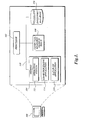
- FIGURE 1 an exemplary computer 100 with components that are capable of implementing aspects of the present invention will be described.
- the computer 100 may be any one of a variety of devices including, but not limited to, personal computing devices, server-based computing devices, mini and mainframe computers, laptops, or other electronic devices having some type of memory.
- FIGURE 1 does not show the typical components of many computers, such as a keyboard, a mouse, a printer, a display, etc.
- the computer 100 depicted in FIGURE 1 includes a processor 102, a memory 104, a computer-readable medium drive 108 (e.g., disk drive, a hard drive, CD-ROM/DVD-ROM, etc.), that are all communicatively connected to each other by a communication bus 110.
- the memory 104 generally comprises Random Access Memory (“RAM”), Read-Only Memory (“ROM”), flash memory, and the like.
- the memory 104 stores an operating system 112 for controlling the general operation of the computer 100.
- the operating system 112 may be a general purpose operating system, such as a Microsoft ® operating system, a Linux operating system, or a UNIX ® operating system.
- the operating system 112 may be a special purpose operating system designed for non-generic hardware.
- the operating system 112 controls the operation of the computer by, among other things, managing access to the hardware resources and input devices.
- the operating system 112 performs functions that allow a program to read data from the computer-readable media drive 108.
- raw LiDAR data may be made available to the computer 100 from the computer-readable media drive 108.
- a program installed on the computer 100 may interact with the operating system 112 to access LiDAR data from the computer-readable media drive 108.
- the memory 104 additionally stores program code and data that provides a LiDAR processing application 114.
- the LiDAR processing application 114 comprises computer-executable instructions that, when executed by the processor 102, applies an algorithm to a set of raw LiDAR data to identify the location of individual items of vegetation scanned using LiDAR instrumentation.
- LiDAR is an optical remote scanning technology that may be used to identify distances to remote targets.
- a series of laser pulses may be transmitted from an aircraft, satellite, or other source location to target locations on the ground. The distance to vegetation impacted with the laser pulse (leaves, branches, etc.) is determined by measuring the time delay between transmission of the laser pulse and receipt of a return signal.
- the intensity of the return signal varies depending on attributes of the vegetation that is contacted.
- the LiDAR processing application 114 uses distance and intensity values represented in the raw LiDAR data to identify the location of individual items of vegetation (e.g., trees, plants, etc.) from which the raw LiDAR data was collected.
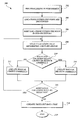
- an exemplary embodiment of a routine implemented by the LiDAR processing application 114 that identifies the location of individual items of vegetation is described below with reference to FIGURE 2 .
- the LiDAR processing application 114 comprises computer-executable instructions that, when executed, by the processor 102, applies an algorithm that identifies the species of an individual item of vegetation. More specifically, the LiDAR processing application 114 implements functionality that identifies attributes of an individual item of vegetation including, but not limited to, height, crown parameters, branching patterns, among others. When a distinguishing attribute of the vegetation is know, processing is performed to identify the species of the vegetation. In this regard, an exemplary embodiment of a routine implemented by the LiDAR processing application 114 that is configured to identify species information from LiDAR data is described below with reference to FIGURE 6 .
- the memory 104 additionally stores program code and data that provides a database application 116.
- the LiDAR processing application 114 may identify certain vegetation attributes from LiDAR data.
- the database application 116 is configured to store information that describes these vegetation attributes identified by the LiDAR processing Application 114 in the inventory database 118.
- the database 116 may generate queries for the purpose of interacting with the inventory database118. Accordingly, the inventory database 118 may be populated with a large collection of data that describes the attributes of vegetation from which LiDAR data was collected.
- FIGURE 1 depicts an exemplary architecture for the computer 100 with components that may be used to implement one or more embodiments of the present invention.
- the computer 100 may include fewer components than those shown in FIGURE 1 .
- the crown identification routine 200 begins at block 202 where pre-processing is performed to translate raw LiDAR data into a standardized format that may be shared.
- the pre-processing performed, at block 202 may translate raw LiDAR data into a format that adheres to the American Society of Photogrammetry and Remote Sensing ("ASPRS") .LAS binary file standard.
- ASPRS American Society of Photogrammetry and Remote Sensing
- the ASPRS .LAS file format is a binary file format that is configures to store three-dimensional data points collected using LiDAR instrumentation.
- the .LAS file format includes well-defined records and fields that are readily accessible to software systems implemented by aspects of the present invention.
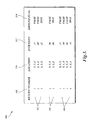
- a sample set 300 of LiDAR data that may be included in an ASPRS LAS file is depicted in FIGURE 3 .
- the sample set 300 of LiDAR data includes the records 302, 304 and 306 that each correspond to a laser pulse generated from LiDAR instrumentation.
- the records 302-306 depicted in FIGURE 3 are organized into columns that include a return number column 308, a location column 310, and intensity column 312, and a ground flag column 314.
- each laser pulse generated from LiDAR instrumentation may be associated with a plurality of reflected return signals.
- the return number column 308 identifies return signals based on the chronological order in which the return signals were received.
- the location column 310 identifies a three-tuple of coordinates (e.g., X, Y, and Z) of the location that generated the return signal.
- the three-tuple of coordinates in the location column 310 adheres to the Universal Transverse Mercator ("UTM") coordinate system.
- UTM Universal Transverse Mercator
- GIS Geographic Information System
- the UTM coordinate system may be used to map raw LiDAR data to the UTM coordinate system.
- the sample set 300 of LiDAR data depicted in FIGURE 3 includes an intensity column 312 that identifies the intensity of a corresponding return signal.
- the intensity with which a return signal is reflected from a target location depends on a number of different factors. More specifically, the amount of surface area contacted by the LiDAR pulse affects the intensity value, as well as the physical characteristics of the subject matter that is contacted. For example, the more surface area that is contacted by the LiDAR pulse, the higher in intensity of the return signal.
- the data provided in the ground flag column 314 indicates whether the particular return signal was identified as being the ground or floor below a vegetation canopy.
- the pre-processing performed at block 202 to generate the sample set 300 of data may include translating raw LiDAR data into a well-defined format. Moreover, in the embodiment depicted in FIGURE 3 , pre-processing is performed to identify return signals that were generated from contacting the ground or floor below the vegetation canopy. As described in further detail below, identifying return signals that are reflected from the ground or floor below a vegetation canopy may be used to identify the height of an item of vegetation.
- coordinate positions that are within the bounds of a selected polygon are identified.
- aspects of the present invention sequentially process locations inside a predetermined geographic area (e.g., polygon) before other geographic areas are selected for processing. Accordingly, the geographic area occupied by a selected polygon is compared to the coordinate positions in a set of raw LiDAR data that generated return signals. In this regard, an intersection operation is performed for the purpose of identifying coordinate positions in a set of LiDAR data that are within the selected polygon. As described in further detail below, the locations of vegetation within the selected polygon are identified before other geographic areas are selected.
- coordinate positions that generated a return signal within the selected polygon are sorted based on their absolute height above sea level.
- the coordinate position identified as being the highest is placed in the first position in the sorted data.
- the lowest coordinate position is placed into the last position in the sorted data.
- a location in the LiDAR data that generated a return signal is selected for processing.
- aspects of the present invention sequentially select locations represented in the sorted data, at block 206, based on the location's absolute height. In this regard, the highest location in the sorted data is selected first with the lowest location being selected last.
- the invention generates a digital crown umbrella for each item of vegetation which represents an initial estimation of the area occupied by the vegetation.
- the result of the test performed at block 210 is "YES,” and the crown identification routine 200 proceeds to block 214, described in further detail below.
- the crown identification routine 200 determines that the result of the test performed at block 210 is "NO" and proceeds to block 212.
- a digital crown umbrella is created that represents an initial estimate of the area occupied by an individual item of vegetation. If block 212 is reached, the location selected at block 208 is identified as being the highest location in an individual item of vegetation. In this instance, a digital crown umbrella is created so that all other locations in the LiDAR data may be allocated to an individual item of vegetation. In this regard, the digital crown umbrella is an initial estimate of the area occupied by an item of vegetation. However, as described in further detail below, the area allocated to an individual item of vegetation may be modified as a result of processing other locations represented in the data.
- the size of the digital crown umbrella created at block 212 is estimated based on a set of known information.
- data obtained by aspects of the present invention include an indicator of which location represented in a LiDAR record is associated with the ground or floor below a vegetation canopy.
- the highest location that generated a return signal was identified.
- the height of an individual item of vegetation may be estimated by identifying the difference between the highest location of an item of vegetation that generated a return signal and the ground or floor below the vegetation canopy.
- the size of the digital crown umbrella may be estimated based on the height of the vegetation, among other factors.
- a digital branch umbrella which represents the area occupied by a branch
- the location selected at block 208 is below a digital crown umbrella created during a previous iteration of the crown identification routine 200.
- the selected location that generated a return signal may represent a component of the vegetation, such as a branch, leaf, etc.
- a digital branch umbrella is created that potentially extends the area allocated to an item of vegetation.
- a digital crown umbrella represents an initial estimate of the area occupied by an individual item of vegetation.
- additional processing of LiDAR data may indicate that an individual item of vegetation is larger than the initial estimate as represented in the digital crown umbrella.
- the area allocated to an item of vegetation may be expanded to account for additional processing of the LiDAR data.
- FIGURE 4 the relationship between digital crown and branch umbrellas that may be used to represent an area occupied by an item of vegetation will be described.
- a tree 400 is depicted in FIGURE 4 with three locations 402, 404, and 406 that were contacted by a laser pulse.
- the crown identification routine 200 when location 402 is selected, the crown identification routine 200 generates the digital crown umbrella 408 to provide an initial estimate of the area occupied by the tree 400. Thereafter, when location 404 is selected, a determination is made that the location 404 is below the digital crown umbrella 408. In this instance, the crown identification routine 200 creates the digital branch umbrella 410.
- the digital branch umbrella 412 expands the area 414 that was initially allocated to the tree 400 by aspects of the present invention. In this way, a top-down hierarchical approach is used to initially estimate the area occupied by the tree 400 with modifications being performed to enlarge this area, if appropriate.
- aspects of the present invention sequentially select locations represented in LiDAR data that generated a return signal. Typically, all of the locations represented in a file of LiDAR data are selected and processed sequentially. Thus, when each record in a file of LiDAR data has been selected, the crown identification routine 200 proceeds to block 218, described in further detail below. Conversely, if additional locations will be selected, the crown identification routine 200 proceeds back to block 208, and blocks 208-216 repeat until all of the locations represented in the file have been selected.
- a tree list data file is created with data that describes attributes of individual items of vegetation.
- aspects of the present invention identify certain attributes of each item of vegetation from which LiDAR data was collected.
- the tree list data file may be used to update the contents of a database such as the inventory database 118 ( FIGURE 1 ) that tracks an inventory of raw materials available for harvest.
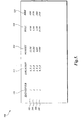
- the tree list data file includes a plurality of records 502-508 that each correspond to an item of vegetation.
- the records 502-508 are organized into columns that include an identifier column 510, a location column 512, a height column 514, a height to live crown (“HTLC”) column 516, and a diameter at breast height (“DBH”) column 518.
- the identifier column 510 includes a unique numeric identifier for each item of vegetation identified by the crown identification routine 200.
- the location column 512 includes a three-tuple of coordinates that identifies the location of a corresponding item of vegetation.
- the height of an item of vegetation represented in the height column 514 may be calculated by identifying the difference between the highest location that generates a return signal with the ground or floor below a vegetation canopy.
- the tree list data file 500 includes a HTLC column 516.
- HTLC column 516 an item of vegetation such as a tree will include live branches and leaves on the upper part of the tree.
- the portion of the tree that includes live branches and leaves is typically referred to as a "live crown.”
- live crown a portion of the tree beginning from the base of the tree will not have live branches or leaves.
- the distance from the base of the tree to the live crown is identified in the HTLC column 516.
- the DBH column 518 includes a common metric known as diameter at breast height that may be estimated based on the height of the vegetation, height to live crown, among other factors.
- the processing performed at block 218 to create a tree list data file may include generating estimates about the attributes of vegetation from LiDAR data. For example, for each item of vegetation represented in the tree list data file, the height to the live crown and diameter at breast height are estimated using LiDAR data to generate the estimates.
- Implementations of the present invention are not limited to the crown identification routine 200 depicted in FIGURE 2 .
- Other routines may include additional steps or eliminate steps shown in FIGURE 2 .
- the steps depicted in FIGURE 2 may also be performed in a different order than shown.
- the creation of the tree list data file is described with reference to FIGURE 2 as being performed separate from other steps of the routine 200.
- the tree list data file may be populated dynamically as the LiDAR data is being processed.
- the crown identification routine 200 depicted in FIGURE 2 provides just one example of the manner in which an embodiment of the invention may be implemented.
- the species identification routine 600 is configured to perform processing in conjunction with the crown identification routine 200 described above with reference to FIGURE 2 .
- LiDAR data associated with individual items of vegetation is analyzed in order to obtain species information.
- the species identification routine 600 begins at block 602, where a geographic region is identified where a set of LiDAR data was collected. As described in further detail below, and in accordance with one embodiment, aspects of the present invention use species attribute templates created from samples collected in a particular geographic region to identify species information. Thus, the species identification routine 600 identifies the geographic region from which LiDAR data was collected so that a comparison may be performed using an appropriate species attribute template. In this regard, the geographic region where a set of LiDAR data was collected is readily known and may be represented in the LiDAR data itself. For example, when the raw LiDAR data is collected, information may be included in a binary LAS file to identify the geographic region where the LiDAR scanning is being performed.
- an individual item of vegetation such as a tree, bush, etc.
- aspects of the present invention sequentially select individual items of vegetation and identify the species of the selected item.
- the crown identification routine 200 described above with reference to FIGURE 2 generates a tree list data file.
- Each record in the tree list data file contains location information and other data describing attributes of an individual item of vegetation.
- the species identification routine 600 may sequentially select records represented in the tree list data file and perform processing to obtain species information about an item of vegetation represented in a selected record.
- a comparison is performed to determine whether the item of vegetation selected a block 604 is from a hardwood or conifer species.
- aspects of the present invention may be used to identify the species of a selected item of vegetation.
- hardwood species Alder, Birch, Oak, etc.
- conifer species Douglas Fir, Noble Fir, etc.
- hardwood species also have less surface area to reflect electromagnetic waves.
- the average intensity in return signals is largely a function of the amount of foliage on a tree and provides a highly reliable indicator as to whether a tree is from a hardwood or conifer species.
- the intensity of reflected return signals is provided from the raw LiDAR data that is processed by aspects of the present invention.
- a comparison is performed, at block 606, to determine whether the average intensity of the return signals generated from an item of vegetation is above or below a threshold that is used to differentiate between conifer and hardwood species. If the average intensity is below the pre-determined threshold, than the species identification routine 600 determines that the selected item is a hardwood species. Conversely, if the average intensity is above the predetermined threshold, the selected item is identified as a conifer species.
- an appropriate species attribute template used to make a species determination is identified.
- sample sets of LiDAR data from different known species are collected in various geographic locations.
- attributes of the different species may be identified and represented in one or more species attribute templates. For example, calculations may be performed that quantify aspects of a tree's branching pattern, crown shape, amount of foliage, and the like.
- sample data that is represented in a species attribute template may serve as a "signature" to uniquely identify a species.
- the appropriate species attribute template that represents data collected from known species is identified. In this regard, when block 608 is reached, a determination was previously made whether the selected item of vegetation is from a hardwood or conifer species.
- attribute templates are created that are specific to particular geographic regions and categories of vegetation. For example, if the selected item is a conifer species from the western United States, a species attribute template created from sample conifers in the western United States is selected at block 608. By way of another example, if the selected vegetation is a hardwood species from the southern United States, a species attribute template created from sample hardwoods in the southern United States is selected at block 608.
- a comparison is performed to identify the species of the selected item of vegetation. More specifically, an attribute of the item of vegetation selected at block 604 is compared to the species attribute template identified at block 608. As described in further detail below, the comparison performed at block 610 is configured to identify a species represented in the species attribute template that maintains the same or similar attributes as the selected item of vegetation.
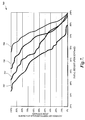
- an exemplary species attribute template 700 is depicted in FIGURE 7 .
- the exemplary species attribute template 700 may be referenced, at block 610, to identify a species from which sample LiDAR data was obtained with the same or similar attribute as a selected item of vegetation.
- the x-axis of the species attribute template 700 corresponds to the total height of an item of vegetation represented as a percentage.
- the y-axis corresponds to the number of LiDAR points generating return signals that are higher in the crown than a selected location.
- FIGURE 7 depicts the distributions 702, 704, 706, and 708 of sample LiDAR data collected from different species of vegetation.
- the distributions 702-708 plot the number of LiDAR points generating return signals that are higher in the crown than a selected vertical location.
- the species represented in distribution 702 reflects LiDAR return signals starting at lower vertical locations relative to the species represented in distributions 704-708.
- LiDAR return signals start being generated for this species at approximately 30% (thirty percent) of the sample's total height.
- LiDAR return signals start being generated at respectively higher vertical locations.
- the species attribute template indicates that branches and foliage that generate return signals tend to start at a lower location for the species represented in distribution 702.
- the species attribute template 700 describes one crown attribute that may be used to differentiate between species.
- the vertical locations where return signals are reflected relative to total height may be used to identify species information.
- species attribute template 700 depicted in FIGURE 7 provides an example of one data set that may be used by aspects of the present invention to identify species information for an item of vegetation.
- all of the items of vegetation represented in a tree list data file are selected and processed sequentially.
- the species identification routine 600 proceeds to clock 614, where it terminates.
- the species identification routine 600 proceeds back to block 604, and blocks 604-612 repeat until all of the items of vegetation represented in the tree list data file have been selected.
Landscapes
- Physics & Mathematics (AREA)
- Engineering & Computer Science (AREA)
- Computer Networks & Wireless Communication (AREA)
- Electromagnetism (AREA)
- General Physics & Mathematics (AREA)
- Radar, Positioning & Navigation (AREA)
- Remote Sensing (AREA)
- Life Sciences & Earth Sciences (AREA)
- Biodiversity & Conservation Biology (AREA)
- Ecology (AREA)
- Forests & Forestry (AREA)
- Environmental Sciences (AREA)
- Image Processing (AREA)
- Management, Administration, Business Operations System, And Electronic Commerce (AREA)
- Optical Radar Systems And Details Thereof (AREA)
- Navigation (AREA)
- Instructional Devices (AREA)
Claims (17)
- Verfahren zum Verarbeiten von LiDAR-Daten, um die Lage von einzelnen Vegetationsposten zu identifizieren,
wobei das Verfahren umfasst:Auswählen einer in den LiDAR-Daten repräsentierten Koordinatenposition, welche ein Rücksignal erzeugt hat;Bestimmen, ob die ausgewählte Koordinatenposition unterhalb eines vorher erzeugten digitalen Kronenschirms oder Zweigschirms liegt, welcher einen geographischen Bereich definiert, der einem vorher identifizierten Vegetationsposten zugeordnet wurde;Bestimmen, falls die ausgewählte Koordinatenposition nicht unterhalb des digitalen Kronenschirms oder Zweigschirms liegt, dass ein neuer Vegetationsposten identifiziert wurde;Erzeugen einer digitalen Darstellung des neuen Vegetationspostens, welche einen digitalen Kronenschirm umfasst. - Verfahren nach Anspruch 1, ferner umfassend:Erzeugen, falls die ausgewählte Koordinatenposition unterhalb eines digitalen Kronenschirms oder Zweigschirms liegt, welcher einen geographischen Bereich definiert, der einem vorher identifizierten Vegetationsposten zugeordnet wurde, eines neuen digitalen Zweigschirms,welcher den dem vorher identifizierten Vegetationsposten zugeordneten geographischen Bereich vergrößern kann.
- Verfahren nach Anspruch 1,
wobei das Auswählen einer Koordinatenposition, welche ein Rücksignal erzeugt hat, ein Überführen von LiDAR Rohdaten in ein standardisiertes Format umfasst. - Verfahren nach Anspruch 1 oder Anspruch 2,
wobei Koordinatenpositionen innerhalb der Grenzen eines durch ein Polygon definierten geographischen Bereichs ausgewählt werden, bevor Koordinatenpositionen außerhalb des Polygons ausgewählt werden. - Verfahren nach einem der vorhergehenden Ansprüche,
wobei Koordinatenpositionen nacheinander höhenbasiert ausgewählt werden. - Verfahren nach einem der vorhergehenden Ansprüche,
wobei das Erzeugen einer digitalen Darstellung des neuen Vegetationspostens, ein Schätzen des Durchmessers des neuen Vegetationspostens umfasst. - System zum Verarbeiten von LiDAR-Daten, um die Lage von einzelnen Vegetationsposten zu identifizieren,
wobei das System umfasst:eine Sammelkomponente, welche betreibbar ist, um Koordinatenpositionen zu identifizieren, welche Rücksignale erzeugen, als Antwort darauf, dass sie von einem Laserimpuls kontaktiert wurden;eine Vorverarbeitungskomponente zum Überführen von LiDAR-Daten, welche durch die Sammelkomponente erhalten wurden, in ein standardisiertes Format; undeine Kronenidentifizierungskomponente, welche betreibbar ist, um die Lage von einzelnen Vegetationsposten aus LiDAR-Daten, welche durch die Sammelkomponente erhalten wurden, zu identifizieren,wobei das Identifizieren der Lage von einzelnen Vegetationsposten umfasst:Auswählen von Koordinatenpositionen, welche in den LiDAR-Daten dargestellt sind, nacheinander auf Grundlage einer Höhe; undZuordnen der ausgewählten Koordinatenpositionen zu einzelnen Vegetationsposten, unter Verwendung von digitalen Kronenschirmen, um den geographischen Bereich, in welchem die Vegetationsposten lokalisiert sind, abzubilden, durch Ausführen des Verfahrens nach einem der Ansprüche 1 bis 6. - System nach Anspruch 7,
wobei die Vorverarbeitungskomponente ferner dazu ausgebildet ist, Rücksignale zu identifizieren, welche durch Kontaktieren des Bodens unterhalb eines Vegetationskronendachs zurück geliefert worden sind. - System nach Anspruch 7 oder Anspruch 8,
wobei das Überführen von LiDAR-Daten in ein standardisiertes Format, ein Erzeugen einer Datei gemäß dem .LAS Dateiformat umfasst. - System nach einem der Ansprüche 7 bis 9,
wobei die Kronenidentifizierungskomponente ferner dazu ausgebildet ist, eine Baumliste zu erzeugen, welche Attribute von einzelnen Vegetationsposten beschreibt. - System nach einem der Ansprüche 7 bis 10,
wobei die Kronenidentifizierungskomponente ferner dazu ausgebildet ist, eine Datenbank mit Daten, welche die Attribute von einzelnen Vegetationsposten beschreibt, zu aktualisieren. - System nach einem der Ansprüche 7 bis 11,
wobei die Kronenidentifizierungskomponente ferner dazu ausgebildet ist, Koordinatenpositionen basierend auf einer Höhe zu sortieren und die Koordinatenpositionen von der höchsten zu der niedrigsten auszuwählen. - Computervorrichtung, umfassend:einen Speicher zum Speichern von Daten; undeine Verarbeitungseinheit, welche mit dem Speicher kommunikativ gekoppelt ist, wobei die Verarbeitungseinheit betreibbar ist um:LiDAR-Daten in den Speicher zu laden, wobei die LiDAR-Daten Koordinatenpositionen umfassen, welche, wenn sie von einem Laserimpuls kontaktiert werden, Rücksignale erzeugen;für jede Koordinatenposition in den LiDAR-Daten:zu bestimmen, ob die Koordinatenposition unterhalb eines vorher erzeugten digitalen Kronenschirms oder Zweigschirms liegt, welcher einen geographischen Bereich definiert, der einem vorher identifizierten Vegetationsposten zugeordnet wurde;falls die Koordinatenposition nicht unterhalb eines digitalen Kronenschirms oder Zweigschirms liegt, zu bestimmen, dass ein neuer Vegetationsposten identifiziert wurde; undeine digitale Darstellung des neuen Vegetationspostens zu erzeugen, umfassend ein Festlegen eines neuen digitalen Kronenschirms, um einen durch den neuen Vegetationsposten eingenommenen geographischen Bereich darzustellen.
- Computervorrichtung nach Anspruch 13,
wobei, falls die Koordinatenposition unterhalb eines digitalen Kronenschirms oder Zweigschirms liegt, welcher einen geographischen Bereich definiert, der einem vorher identifizierten Vegetationsposten zugeordnet wurde, ein neuer digitaler Zweigschirm erzeugt wird, um die Koordinatenposition darzustellen. - Computervorrichtung nach Anspruch 14,
wobei der neue digitale Zweigschirm den geographischen Bereich, welcher einem vorher identifizierten Vegetationsposten zugeordnet wurde, vergrößern kann. - Computervorrichtung nach einem der Ansprüche 13 bis 15,
wobei die Verarbeitungseinheit ferner dazu ausgebildet ist, eine Datei mit Baumlistendaten zu erzeugen, welche die Höhe bis zur Lebenskrone ("live crown") / grünen Krone eines Vegetationspostens identifiziert. - Computervorrichtung nach einem der Ansprüche 13 bis 16,
wobei Koordinatenpositionen innerhalb von Grenzen eines Polygons ausgewählt werden, bevor Koordinatenpositionen außerhalb der Polygonsgrenzen ausgewählt werden.
Applications Claiming Priority (2)
| Application Number | Priority Date | Filing Date | Title |
|---|---|---|---|
| US11/767,084 US7720605B2 (en) | 2007-06-22 | 2007-06-22 | Identifying vegetation attributes from LiDAR data |
| PCT/US2008/067710 WO2009002859A1 (en) | 2007-06-22 | 2008-06-20 | Identifying vegetation attributes from lidar data |
Publications (3)
| Publication Number | Publication Date |
|---|---|
| EP2167992A1 EP2167992A1 (de) | 2010-03-31 |
| EP2167992B1 true EP2167992B1 (de) | 2011-05-25 |
| EP2167992B8 EP2167992B8 (de) | 2011-09-14 |
Family
ID=39739773
Family Applications (1)
| Application Number | Title | Priority Date | Filing Date |
|---|---|---|---|
| EP08771622A Not-in-force EP2167992B8 (de) | 2007-06-22 | 2008-06-20 | Identifizieren von vegetationsattributen aus lidar-daten |
Country Status (13)
| Country | Link |
|---|---|
| US (2) | US7720605B2 (de) |
| EP (1) | EP2167992B8 (de) |
| CN (1) | CN101680951B (de) |
| AR (1) | AR067127A1 (de) |
| AT (1) | ATE511109T1 (de) |
| AU (1) | AU2008268567B2 (de) |
| BR (1) | BRPI0813143A2 (de) |
| CA (1) | CA2689851C (de) |
| CL (1) | CL2008001845A1 (de) |
| NZ (1) | NZ582216A (de) |
| UY (1) | UY31174A1 (de) |
| WO (1) | WO2009002859A1 (de) |
| ZA (1) | ZA200908814B (de) |
Families Citing this family (31)
| Publication number | Priority date | Publication date | Assignee | Title |
|---|---|---|---|---|
| FI117490B (fi) * | 2004-03-15 | 2006-10-31 | Geodeettinen Laitos | Menetelmä puustotunnusten määrittämiseksi laserkeilaimen, kuvainformaation ja yksittäisten puiden tulkinnan avulla |
| US7474964B1 (en) * | 2007-06-22 | 2009-01-06 | Weyerhaeuser Company | Identifying vegetation attributes from LiDAR data |
| US8275547B2 (en) * | 2009-09-30 | 2012-09-25 | Utility Risk Management Corporation, Llc | Method and system for locating a stem of a target tree |
| US8352410B2 (en) * | 2009-12-17 | 2013-01-08 | Utility Risk Management Corporation, Llc | Method and system for estimating vegetation growth relative to an object of interest |
| US8577611B2 (en) | 2010-03-30 | 2013-11-05 | Weyerhaeuser Nr Company | System and method for analyzing trees in LiDAR data using views |
| US8538695B2 (en) * | 2010-06-30 | 2013-09-17 | Weyerhaeuser Nr Company | System and method for analyzing trees in LiDAR data using views |
| KR20180129991A (ko) | 2010-11-05 | 2018-12-05 | 노파르티스 아게 | Il-17 길항제를 사용한 류마티스성 관절염의 치료 방법 |
| US8680994B2 (en) | 2010-12-30 | 2014-03-25 | Utility Risk Management Corporation, Llc | Method for locating vegetation having a potential to impact a structure |
| US9063544B2 (en) | 2012-09-19 | 2015-06-23 | The Boeing Company | Aerial forest inventory system |
| US9606236B2 (en) * | 2012-10-17 | 2017-03-28 | Weyerhaeuser Nr Company | System for detecting planted trees with LiDAR data |
| US9198363B2 (en) | 2012-12-12 | 2015-12-01 | The Boeing Company | Tree metrology system |
| US9069104B2 (en) * | 2012-12-12 | 2015-06-30 | International Business Machines Corporation | Pathway management using model analysis and forecasting |
| WO2015098063A1 (en) * | 2013-12-25 | 2015-07-02 | Panasonic Intellectual Property Management Co., Ltd. | Image output apparatus, image output method, and image output system, the image output comprising the detection of a specified substance in a predetermined region |
| GB2530104A (en) * | 2014-09-15 | 2016-03-16 | Point4Uk Ltd | Vegetation catergorisation |
| CN104462809A (zh) * | 2014-12-04 | 2015-03-25 | 中国科学院东北地理与农业生态研究所 | 一种基于遥感与gis相结合的草地生产力估算方法 |
| CN104915958A (zh) * | 2015-06-04 | 2015-09-16 | 广东中城规划设计有限公司 | 一种从机载激光点云数据识别植被的方法 |
| CN104866840A (zh) * | 2015-06-04 | 2015-08-26 | 广东中城规划设计有限公司 | 一种从机载激光点云数据识别架空电力线的方法 |
| CN104951752A (zh) * | 2015-06-04 | 2015-09-30 | 广东中城规划设计有限公司 | 一种从机载激光点云数据提取房屋的方法 |
| US9969492B2 (en) * | 2015-09-04 | 2018-05-15 | Nutech Ventures | Crop height estimation with unmanned aerial vehicles |
| US10046187B2 (en) | 2015-10-09 | 2018-08-14 | Leonard E. Doten | Wildfire aerial fighting system utilizing lidar |
| US12399279B1 (en) | 2016-02-15 | 2025-08-26 | Red Creamery Llc | Enhanced hybrid LIDAR with high-speed scanning |
| US12399278B1 (en) | 2016-02-15 | 2025-08-26 | Red Creamery Llc | Hybrid LIDAR with optically enhanced scanned laser |
| US11556000B1 (en) | 2019-08-22 | 2023-01-17 | Red Creamery Llc | Distally-actuated scanning mirror |
| US12123950B2 (en) | 2016-02-15 | 2024-10-22 | Red Creamery, LLC | Hybrid LADAR with co-planar scanning and imaging field-of-view |
| CN105557672A (zh) * | 2016-02-16 | 2016-05-11 | 江苏省农业科学院 | 一种果树靶标探测系统 |
| SE541287C2 (en) * | 2017-02-27 | 2019-06-11 | Katam Tech Ab | Forest surveying apparatus and method using video sequences to generate 3D models |
| US11215597B2 (en) | 2017-04-11 | 2022-01-04 | Agerpoint, Inc. | Forestry management tool for assessing risk of catastrophic tree failure due to weather events |
| US11360970B2 (en) | 2018-11-13 | 2022-06-14 | International Business Machines Corporation | Efficient querying using overview layers of geospatial-temporal data in a data analytics platform |
| CN114981302A (zh) | 2019-09-20 | 2022-08-30 | 诺华股份有限公司 | 使用白细胞介素-17(il-17)拮抗剂治疗自身免疫性疾病的方法 |
| US11436712B2 (en) | 2019-10-21 | 2022-09-06 | International Business Machines Corporation | Predicting and correcting vegetation state |
| US20250166382A1 (en) * | 2023-07-19 | 2025-05-22 | Robert Kabera | Risk Adjusted Vegetation Management System and Method |
Family Cites Families (3)
| Publication number | Priority date | Publication date | Assignee | Title |
|---|---|---|---|---|
| FI112402B (fi) * | 1999-10-28 | 2003-11-28 | Diware Oy | Menetelmä puustotunnusten määrittämiseksi sekä tietokoneohjelma menetelmän suorittamiseksi |
| AUPR301401A0 (en) * | 2001-02-09 | 2001-03-08 | Commonwealth Scientific And Industrial Research Organisation | Lidar system and method |
| US7046841B1 (en) * | 2003-08-29 | 2006-05-16 | Aerotec, Llc | Method and system for direct classification from three dimensional digital imaging |
-
2007
- 2007-06-22 US US11/767,084 patent/US7720605B2/en active Active
-
2008
- 2008-06-20 CA CA2689851A patent/CA2689851C/en active Active
- 2008-06-20 CL CL2008001845A patent/CL2008001845A1/es unknown
- 2008-06-20 EP EP08771622A patent/EP2167992B8/de not_active Not-in-force
- 2008-06-20 NZ NZ582216A patent/NZ582216A/en not_active IP Right Cessation
- 2008-06-20 CN CN2008800204923A patent/CN101680951B/zh not_active Expired - Fee Related
- 2008-06-20 AT AT08771622T patent/ATE511109T1/de not_active IP Right Cessation
- 2008-06-20 AU AU2008268567A patent/AU2008268567B2/en not_active Ceased
- 2008-06-20 WO PCT/US2008/067710 patent/WO2009002859A1/en not_active Ceased
- 2008-06-20 BR BRPI0813143-0A2A patent/BRPI0813143A2/pt not_active Application Discontinuation
- 2008-06-23 AR ARP080102684A patent/AR067127A1/es not_active Application Discontinuation
- 2008-06-23 UY UY31174A patent/UY31174A1/es not_active Application Discontinuation
-
2009
- 2009-12-10 ZA ZA200908814A patent/ZA200908814B/xx unknown
-
2010
- 2010-02-18 US US12/707,857 patent/US7974813B2/en active Active
Also Published As
| Publication number | Publication date |
|---|---|
| WO2009002859A1 (en) | 2008-12-31 |
| US7720605B2 (en) | 2010-05-18 |
| EP2167992A1 (de) | 2010-03-31 |
| CL2008001845A1 (es) | 2008-12-26 |
| BRPI0813143A2 (pt) | 2014-12-23 |
| CA2689851C (en) | 2014-03-25 |
| CA2689851A1 (en) | 2008-12-31 |
| CN101680951A (zh) | 2010-03-24 |
| ZA200908814B (en) | 2010-08-25 |
| US20080319668A1 (en) | 2008-12-25 |
| AU2008268567A1 (en) | 2008-12-31 |
| NZ582216A (en) | 2012-04-27 |
| ATE511109T1 (de) | 2011-06-15 |
| UY31174A1 (es) | 2009-01-30 |
| EP2167992B8 (de) | 2011-09-14 |
| AR067127A1 (es) | 2009-09-30 |
| US20100318296A1 (en) | 2010-12-16 |
| AU2008268567B2 (en) | 2011-05-19 |
| US7974813B2 (en) | 2011-07-05 |
| CN101680951B (zh) | 2012-08-22 |
Similar Documents
| Publication | Publication Date | Title |
|---|---|---|
| EP2167992B1 (de) | Identifizieren von vegetationsattributen aus lidar-daten | |
| CA2689849C (en) | Identifying vegetation attributes from lidar data | |
| Klápště et al. | Sensitivity analysis of parameters and contrasting performance of ground filtering algorithms with UAV photogrammetry-based and LiDAR point clouds | |
| Ferrara et al. | An automated approach for wood-leaf separation from terrestrial LIDAR point clouds using the density based clustering algorithm DBSCAN | |
| Sumnall et al. | Comparison of small-footprint discrete return and full waveform airborne lidar data for estimating multiple forest variables | |
| Van Leeuwen et al. | Retrieval of forest structural parameters using LiDAR remote sensing | |
| Lindberg et al. | Delineation of tree crowns and tree species classification from full-waveform airborne laser scanning data using 3-D ellipsoidal clustering | |
| Gatziolis et al. | Challenges to estimating tree height via LiDAR in closed-canopy forests: A parable from Western Oregon | |
| Karjalainen et al. | The transferability of airborne laser scanning based tree-level models between different inventory areas | |
| Shamsoddini et al. | Improving lidar-based forest structure mapping with crown-level pit removal | |
| Kathuria et al. | Development of an automated individual tree detection model using point cloud LiDAR data for accurate tree counts in a Pinus radiata plantation | |
| Maltamo et al. | A comparative study of the use of laser scanner data and field measurements in the prediction of crown height in boreal forests | |
| AU2012227155B2 (en) | Identifying vegetation attributes from lidar data | |
| Yu | Methods and techniques for forest change detection and growth estimation using airborne laser scanning data | |
| Smreček et al. | Automated tree detection and crown delineation using airborne laser scanner data in heterogeneous East-Central Europe forest with different species mix | |
| Peng et al. | Estimating branch angle distributions from terrestrial laser scanning data using an instance segmentation-based contraction method | |
| Mauri | Assessment of tree segmentation algorithms based on UAV LiDAR data for Above Ground Biomass estimation | |
| Harikumar et al. | An approach to conifer stem localization and modeling in high density airborne LiDAR data | |
| Surový et al. | A Note on Statistical Techniques and Biological Background in Analysis of Remote Sensed Data in Forest Inventory | |
| Torralba Pérez et al. | Analyzing TLS Scan Distribution and Point Density for the Estimation of Forest Stand Structural Parameters | |
| Sun | Evaluating the quality of ground surfaces generated from Terrestrial Laser Scanning (TLS) data | |
| Pádua et al. | Forestry Remote Sensing from Unmanned Aerial Vehicles: A Review Focusing on the Data, Processing and Potentialities | |
| Ayrey | The Development of Regional Forest Inventories Through Novel Means | |
| Kuzmich et al. | Using Airborne Laser Scanning Time Series Data to Model Spatio-Temporal Patterns in Bird Habitat Across Multiple Woodlands | |
| Hayashi | Evaluation of Airborne LiDAR as a Tool for Obtaining Sustainable Forest Management of Maine's Forests |
Legal Events
| Date | Code | Title | Description |
|---|---|---|---|
| PUAI | Public reference made under article 153(3) epc to a published international application that has entered the european phase |
Free format text: ORIGINAL CODE: 0009012 |
|
| 17P | Request for examination filed |
Effective date: 20100120 |
|
| AK | Designated contracting states |
Kind code of ref document: A1 Designated state(s): AT BE BG CH CY CZ DE DK EE ES FI FR GB GR HR HU IE IS IT LI LT LU LV MC MT NL NO PL PT RO SE SI SK TR |
|
| AX | Request for extension of the european patent |
Extension state: AL BA MK RS |
|
| 17Q | First examination report despatched |
Effective date: 20100421 |
|
| DAX | Request for extension of the european patent (deleted) | ||
| GRAP | Despatch of communication of intention to grant a patent |
Free format text: ORIGINAL CODE: EPIDOSNIGR1 |
|
| GRAS | Grant fee paid |
Free format text: ORIGINAL CODE: EPIDOSNIGR3 |
|
| GRAA | (expected) grant |
Free format text: ORIGINAL CODE: 0009210 |
|
| AK | Designated contracting states |
Kind code of ref document: B1 Designated state(s): AT BE BG CH CY CZ DE DK EE ES FI FR GB GR HR HU IE IS IT LI LT LU LV MC MT NL NO PL PT RO SE SI SK TR |
|
| REG | Reference to a national code |
Ref country code: GB Ref legal event code: FG4D |
|
| REG | Reference to a national code |
Ref country code: CH Ref legal event code: EP |
|
| RAP2 | Party data changed (patent owner data changed or rights of a patent transferred) |
Owner name: WEYERHAEUSER NR COMPANY |
|
| REG | Reference to a national code |
Ref country code: IE Ref legal event code: FG4D |
|
| REG | Reference to a national code |
Ref country code: DE Ref legal event code: R096 Ref document number: 602008007230 Country of ref document: DE Effective date: 20110707 |
|
| REG | Reference to a national code |
Ref country code: SE Ref legal event code: TRGR |
|
| REG | Reference to a national code |
Ref country code: NL Ref legal event code: VDEP Effective date: 20110525 |
|
| PG25 | Lapsed in a contracting state [announced via postgrant information from national office to epo] |
Ref country code: PT Free format text: LAPSE BECAUSE OF FAILURE TO SUBMIT A TRANSLATION OF THE DESCRIPTION OR TO PAY THE FEE WITHIN THE PRESCRIBED TIME-LIMIT Effective date: 20110926 Ref country code: LT Free format text: LAPSE BECAUSE OF FAILURE TO SUBMIT A TRANSLATION OF THE DESCRIPTION OR TO PAY THE FEE WITHIN THE PRESCRIBED TIME-LIMIT Effective date: 20110525 Ref country code: HR Free format text: LAPSE BECAUSE OF FAILURE TO SUBMIT A TRANSLATION OF THE DESCRIPTION OR TO PAY THE FEE WITHIN THE PRESCRIBED TIME-LIMIT Effective date: 20110525 Ref country code: NO Free format text: LAPSE BECAUSE OF FAILURE TO SUBMIT A TRANSLATION OF THE DESCRIPTION OR TO PAY THE FEE WITHIN THE PRESCRIBED TIME-LIMIT Effective date: 20110825 |
|
| PG25 | Lapsed in a contracting state [announced via postgrant information from national office to epo] |
Ref country code: CY Free format text: LAPSE BECAUSE OF FAILURE TO SUBMIT A TRANSLATION OF THE DESCRIPTION OR TO PAY THE FEE WITHIN THE PRESCRIBED TIME-LIMIT Effective date: 20110525 Ref country code: IS Free format text: LAPSE BECAUSE OF FAILURE TO SUBMIT A TRANSLATION OF THE DESCRIPTION OR TO PAY THE FEE WITHIN THE PRESCRIBED TIME-LIMIT Effective date: 20110925 Ref country code: LV Free format text: LAPSE BECAUSE OF FAILURE TO SUBMIT A TRANSLATION OF THE DESCRIPTION OR TO PAY THE FEE WITHIN THE PRESCRIBED TIME-LIMIT Effective date: 20110525 Ref country code: GR Free format text: LAPSE BECAUSE OF FAILURE TO SUBMIT A TRANSLATION OF THE DESCRIPTION OR TO PAY THE FEE WITHIN THE PRESCRIBED TIME-LIMIT Effective date: 20110826 Ref country code: BE Free format text: LAPSE BECAUSE OF FAILURE TO SUBMIT A TRANSLATION OF THE DESCRIPTION OR TO PAY THE FEE WITHIN THE PRESCRIBED TIME-LIMIT Effective date: 20110525 Ref country code: ES Free format text: LAPSE BECAUSE OF FAILURE TO SUBMIT A TRANSLATION OF THE DESCRIPTION OR TO PAY THE FEE WITHIN THE PRESCRIBED TIME-LIMIT Effective date: 20110905 Ref country code: SI Free format text: LAPSE BECAUSE OF FAILURE TO SUBMIT A TRANSLATION OF THE DESCRIPTION OR TO PAY THE FEE WITHIN THE PRESCRIBED TIME-LIMIT Effective date: 20110525 Ref country code: AT Free format text: LAPSE BECAUSE OF FAILURE TO SUBMIT A TRANSLATION OF THE DESCRIPTION OR TO PAY THE FEE WITHIN THE PRESCRIBED TIME-LIMIT Effective date: 20110525 |
|
| PG25 | Lapsed in a contracting state [announced via postgrant information from national office to epo] |
Ref country code: NL Free format text: LAPSE BECAUSE OF FAILURE TO SUBMIT A TRANSLATION OF THE DESCRIPTION OR TO PAY THE FEE WITHIN THE PRESCRIBED TIME-LIMIT Effective date: 20110525 Ref country code: MT Free format text: LAPSE BECAUSE OF FAILURE TO SUBMIT A TRANSLATION OF THE DESCRIPTION OR TO PAY THE FEE WITHIN THE PRESCRIBED TIME-LIMIT Effective date: 20110525 |
|
| PG25 | Lapsed in a contracting state [announced via postgrant information from national office to epo] |
Ref country code: CZ Free format text: LAPSE BECAUSE OF FAILURE TO SUBMIT A TRANSLATION OF THE DESCRIPTION OR TO PAY THE FEE WITHIN THE PRESCRIBED TIME-LIMIT Effective date: 20110525 Ref country code: EE Free format text: LAPSE BECAUSE OF FAILURE TO SUBMIT A TRANSLATION OF THE DESCRIPTION OR TO PAY THE FEE WITHIN THE PRESCRIBED TIME-LIMIT Effective date: 20110525 |
|
| PG25 | Lapsed in a contracting state [announced via postgrant information from national office to epo] |
Ref country code: DK Free format text: LAPSE BECAUSE OF FAILURE TO SUBMIT A TRANSLATION OF THE DESCRIPTION OR TO PAY THE FEE WITHIN THE PRESCRIBED TIME-LIMIT Effective date: 20110525 Ref country code: PL Free format text: LAPSE BECAUSE OF FAILURE TO SUBMIT A TRANSLATION OF THE DESCRIPTION OR TO PAY THE FEE WITHIN THE PRESCRIBED TIME-LIMIT Effective date: 20110525 Ref country code: SK Free format text: LAPSE BECAUSE OF FAILURE TO SUBMIT A TRANSLATION OF THE DESCRIPTION OR TO PAY THE FEE WITHIN THE PRESCRIBED TIME-LIMIT Effective date: 20110525 Ref country code: RO Free format text: LAPSE BECAUSE OF FAILURE TO SUBMIT A TRANSLATION OF THE DESCRIPTION OR TO PAY THE FEE WITHIN THE PRESCRIBED TIME-LIMIT Effective date: 20110525 |
|
| REG | Reference to a national code |
Ref country code: IE Ref legal event code: MM4A |
|
| PLBE | No opposition filed within time limit |
Free format text: ORIGINAL CODE: 0009261 |
|
| STAA | Information on the status of an ep patent application or granted ep patent |
Free format text: STATUS: NO OPPOSITION FILED WITHIN TIME LIMIT |
|
| REG | Reference to a national code |
Ref country code: DE Ref legal event code: R119 Ref document number: 602008007230 Country of ref document: DE Effective date: 20120103 |
|
| PG25 | Lapsed in a contracting state [announced via postgrant information from national office to epo] |
Ref country code: DE Free format text: LAPSE BECAUSE OF NON-PAYMENT OF DUE FEES Effective date: 20120103 Ref country code: IE Free format text: LAPSE BECAUSE OF NON-PAYMENT OF DUE FEES Effective date: 20110620 |
|
| 26N | No opposition filed |
Effective date: 20120228 |
|
| REG | Reference to a national code |
Ref country code: FR Ref legal event code: ST Effective date: 20120406 |
|
| PG25 | Lapsed in a contracting state [announced via postgrant information from national office to epo] |
Ref country code: IT Free format text: LAPSE BECAUSE OF FAILURE TO SUBMIT A TRANSLATION OF THE DESCRIPTION OR TO PAY THE FEE WITHIN THE PRESCRIBED TIME-LIMIT Effective date: 20110525 |
|
| PG25 | Lapsed in a contracting state [announced via postgrant information from national office to epo] |
Ref country code: FR Free format text: LAPSE BECAUSE OF NON-PAYMENT OF DUE FEES Effective date: 20110725 |
|
| REG | Reference to a national code |
Ref country code: CH Ref legal event code: PL |
|
| REG | Reference to a national code |
Ref country code: CH Ref legal event code: PL |
|
| GBPC | Gb: european patent ceased through non-payment of renewal fee |
Effective date: 20120620 |
|
| PG25 | Lapsed in a contracting state [announced via postgrant information from national office to epo] |
Ref country code: GB Free format text: LAPSE BECAUSE OF NON-PAYMENT OF DUE FEES Effective date: 20120620 Ref country code: MC Free format text: LAPSE BECAUSE OF NON-PAYMENT OF DUE FEES Effective date: 20110630 Ref country code: LI Free format text: LAPSE BECAUSE OF NON-PAYMENT OF DUE FEES Effective date: 20120630 Ref country code: CH Free format text: LAPSE BECAUSE OF NON-PAYMENT OF DUE FEES Effective date: 20120630 |
|
| PG25 | Lapsed in a contracting state [announced via postgrant information from national office to epo] |
Ref country code: LU Free format text: LAPSE BECAUSE OF NON-PAYMENT OF DUE FEES Effective date: 20110620 |
|
| PG25 | Lapsed in a contracting state [announced via postgrant information from national office to epo] |
Ref country code: BG Free format text: LAPSE BECAUSE OF FAILURE TO SUBMIT A TRANSLATION OF THE DESCRIPTION OR TO PAY THE FEE WITHIN THE PRESCRIBED TIME-LIMIT Effective date: 20110825 |
|
| PG25 | Lapsed in a contracting state [announced via postgrant information from national office to epo] |
Ref country code: TR Free format text: LAPSE BECAUSE OF FAILURE TO SUBMIT A TRANSLATION OF THE DESCRIPTION OR TO PAY THE FEE WITHIN THE PRESCRIBED TIME-LIMIT Effective date: 20110525 |
|
| PG25 | Lapsed in a contracting state [announced via postgrant information from national office to epo] |
Ref country code: HU Free format text: LAPSE BECAUSE OF FAILURE TO SUBMIT A TRANSLATION OF THE DESCRIPTION OR TO PAY THE FEE WITHIN THE PRESCRIBED TIME-LIMIT Effective date: 20110525 |
|
| PGFP | Annual fee paid to national office [announced via postgrant information from national office to epo] |
Ref country code: SE Payment date: 20170613 Year of fee payment: 10 Ref country code: FI Payment date: 20170609 Year of fee payment: 10 |
|
| REG | Reference to a national code |
Ref country code: SE Ref legal event code: EUG |
|
| PG25 | Lapsed in a contracting state [announced via postgrant information from national office to epo] |
Ref country code: SE Free format text: LAPSE BECAUSE OF NON-PAYMENT OF DUE FEES Effective date: 20180621 Ref country code: FI Free format text: LAPSE BECAUSE OF NON-PAYMENT OF DUE FEES Effective date: 20180620 |