EP2161349A1 - use of a copper-based white alloy for producing naturally anticaterial articles and method for producing the same - Google Patents
use of a copper-based white alloy for producing naturally anticaterial articles and method for producing the same Download PDFInfo
- Publication number
- EP2161349A1 EP2161349A1 EP09008026A EP09008026A EP2161349A1 EP 2161349 A1 EP2161349 A1 EP 2161349A1 EP 09008026 A EP09008026 A EP 09008026A EP 09008026 A EP09008026 A EP 09008026A EP 2161349 A1 EP2161349 A1 EP 2161349A1
- Authority
- EP
- European Patent Office
- Prior art keywords
- alloy
- copper
- manganese
- cold
- anyone
- Prior art date
- Legal status (The legal status is an assumption and is not a legal conclusion. Google has not performed a legal analysis and makes no representation as to the accuracy of the status listed.)
- Granted
Links
Images
Classifications
-
- C—CHEMISTRY; METALLURGY
- C22—METALLURGY; FERROUS OR NON-FERROUS ALLOYS; TREATMENT OF ALLOYS OR NON-FERROUS METALS
- C22F—CHANGING THE PHYSICAL STRUCTURE OF NON-FERROUS METALS AND NON-FERROUS ALLOYS
- C22F1/00—Changing the physical structure of non-ferrous metals or alloys by heat treatment or by hot or cold working
- C22F1/08—Changing the physical structure of non-ferrous metals or alloys by heat treatment or by hot or cold working of copper or alloys based thereon
-
- C—CHEMISTRY; METALLURGY
- C22—METALLURGY; FERROUS OR NON-FERROUS ALLOYS; TREATMENT OF ALLOYS OR NON-FERROUS METALS
- C22C—ALLOYS
- C22C9/00—Alloys based on copper
- C22C9/05—Alloys based on copper with manganese as the next major constituent
Definitions
- the present invention relates to the use of a copper-based white alloy for producing naturally antibacterial articles, which simultaneously have an excellent mechanical resistance, an easy machinability, a high cleaning ease and an appearance similar to that of stainless steel.
- the invention further relates to a method for producing these articles.
- copper and brasses have aesthetical and technological features which are generally considered inappropriate to validly replace stainless steel, for instance in the manufacturing of articles such as sanitaryware, sinks, tables, working surfaces for canteens or laboratories, basins for sanitary use, lockers, both because the mechanical features are typically much poorer than those of stainless steel, and because they are not white, but are instead of different colours such as red, pink and yellow.
- the use of copper and alloys thereof in the health field has been for the time being limited to components intended to remain hidden, for instance those of hydraulic or conditioning systems, such as finned heat exchangers.
- manganese may have a whitening effect on copper similar to that of nickel
- the only known white alloys which do not contain nickel and are not brasses are the so-called “manganins", used for manufacturing electrical resistors due to the low conductivity manganese imparts alloyed copper, already from a few percentage points.
- the use is therefore provided of a copper-based white alloy for producing articles having antibacterial properties, preferably intended to be employed in the health and/or food field, in which the desired white colour is imparted by the addition of manganese in the alloy, according to claim 1.
- the manganese, and possible other alloying elements, except for impurities are present in an amount such as to determine machinability, colour and surface properties of the alloy similar to those of stainless steel and simultaneously intrinsic antibacterial properties of the articles on respective exposed surfaces thereof.
- the employed alloy does not contain aluminium, except as an impurity and preferably, neither zinc nor other alloying elements, but exclusively manganese and copper.
- Tin in case it is required, may also be contained as further alloying element, but again in very low percentages, preferably below 2% so as not to produce in use the segregation of precipitates or low-melting phases which impart fragility to the alloy.
- said alloy exclusively contains, except for impurities, copper and manganese, copper being prevailing.
- the content of manganese ranges, in any case, in varying percentages between 15% and up to 40% by weight and preferably in an amount such as to obtain a crystalline structure of the alloy, exclusively in alpha phase, at ambient temperature.
- the optimal nominal composition of the alloy according to the use of the invention is 80% copper and 20% manganese.
- composition of the alloy according to the use of the invention is in any case such as to display on the surface antibacterial properties directed at least against microorganisms selected from the group consisting of: E.coli, MSRA, Listeria monocytogenes.
- the invention also relates to a method for producing articles, in particular intended to be employed in the health and/or food field, provided with intrinsic antibacterial properties, according to claim 9.
- the method of the invention comprises the steps of:
- the alloy contains manganese in a varying weight percentage between 15% and 40% and does not contain aluminium, and preferably neither zinc, except as impurities.
- the first and second predetermined percentages of sectional reduction are on the order of 90% and the step of complete re-crystallization annealing of the cold semifinished article is performed at a temperature ranging between 550°C and 750°C and for about 4 hours, if performed in a static furnace or for a total time of about 45 minutes, if performed in a tunnel type furnace.
- a step of abrasive brushing is performed so as to remove a surface layer of the cold annealed semifinished article having a thickness of about 4 microns.
- the antibacterial properties of copper alloys experimentally tested on many different bacterial strains are probably due to the surface migration, and therefore on the exposed surfaces of articles made with these alloys, of copper atoms, a migration that is interrupted by the presence of aluminium in the alloy.
- the presence of aluminium in the alloy, unless the latter is present only as an impurity (the presence of impurities is in any case inevitable) must be avoided.
- the plate was subjected to a hot rolling process bringing it to 740°C for 3.5 hours and was subsequently rolled thus obtaining in subsequent steps a reduction in the section of about 90%; the thickness was in particular reduced from 115 mm to 10 mm in 8 steps, thus reaching a final temperature of about 660-670°; the hot-rolled product was cooled down to about 350°C before forcedly cooling down to ambient temperature with water.
- the rolled product was then examined and analysed to detect the depth and nature of the surface layers oxidised and depleted of alloying elements (manganese).
- Table 2 Thickness of the oxidising layers measured on both sides of the longitudinal section of Cu80Mn20 hot-rolled plate
- Top - edge 1 Mean MAX. m MIN. m ST.DEV. m Side A 25.48 73.71 3.98 18.65 Side B 24.28 47.81 10.76 9.09
- Top - edge 2 Mean m MAX. m MIN. m ST.DEV.
- the depth of the detected layers of oxidation and depletion of Mn were relatively high and discontinuous, but such that said layers could easily and totally be removed by the normal milling/scalping operations which are generally performed after hot-rolling.
- the hot-rolled product after the milling/scalping operation and subsequent removal of the oxidised layers and with depletion of manganese, was subjected to a cold-rolling operation, again obtaining a reduction in the section of about 90% (from 10 to 0.7 mm of thickness) in subsequent steps, with the consequent work hardening and increase of hardness.
- the cold-rolled product was then subjected to a heat annealing treatment in a static furnace in a reducing atmosphere at 600°C for 4 hours for the re-crystallization. This treatment has been selected on the basis of a series of laboratory tests at different temperatures, in order to identify the optimal treatment, as shown in table 4.
- Table 4 Structure and size of the grain of Cu80Mn20 samples after one hour of heat treatment at increasing temperatures.
- Mean size of the grain (mm) Heat treatment 1 mm thickness 0.5 mm thickness 400 °C / 1 hour Fibrous structure Fibrous structure 450 °C / 1 hour Fibrous structure Fibrous structure 500 °C / 1 hour Re-crystallization start Re-crystallization start 550 °C / 1 hour 0.005 0.0075 600°C / 1 hour 0.0075 0.0075 650 °C / 1 hour 0.010 0.015
- the depletion involves a layer which is no more than 4-5 microns, which may easily be removed with a common operation of abrasive brushing after the heat treatment.
- the tested CuMn20 alloy is suitable to replace the stainless steel in any application, such as the manufacture of furniture, tools, work surfaces, etc., having a considerable hardness and high mechanical resistance, well beyond those of brasses.
- the antimicrobial properties of three different copper alloys were compared, and specifically the CuMn20 alloy (alloy 3) according to the invention, previously prepared according to the previous examples, a CuSn6Zn6 alloy (alloy 2) and a CuZn10 alloy (alloy 1), with two different reference materials and specifically DHP copper AISI 304 steel (stainless steel).
- sample specimens were incubated at 37°C.
- the test was repeated 6 times, varying the time of contact in incubation.
- Each sample specimen was tested for the following times: 0, 5, 10, 20, 40 and 80 minutes.
- the sample specimen was recovered and treated with an aqueous solution to remove the pathogens; the solution was then diluted and incorporated in agar and a microscopical count was finally carried out on the survived microbial cells.
- the antimicrobial activity of the previously prepared and machined alloy, CuMn20 is substantially very similar to that of copper DHP against all of the tested pathogenic microorganisms, while stainless steel is substantially devoid thereof.
- the antimicrobial activity of the CuMn20 alloy is also comparable (or better), with the content of copper being the same, with respect to that of the other tested alloys, which however have a mechanical resistance and hardness that make them unsuitable to replace steel and, especially, do not have a colour comparable to that of steel, while the CuMn20 alloy according to the invention has a white metal colour comparable to that of steel.
- the double-hole extrusion of the ingots was performed so as to obtain wires with a diameter of 26 mm, with a 4000 ton press in a range of extrusion temperatures from 770 to 800 °C, spraying the outputted wires with water coming from appropriate sprayers to limit oxidation of the alloy and/or the depletion of Mn.
- the power absorbed by the press expressed in tons, varies from 2000 to 2300 due to the high mechanical features of the Cu80Mn20 alloy. From the metallographic point of view, the best results both as regards the mean diameter of the grain and as regards the homogeneity thereof, were obtained with an extrusion temperature equivalent to 780°C.
- the wires were subjected to a final step of cold drawing to a 2mm- or 1.80mm-diameter, so as to obtain a work hardening of 7.4% or, respectively, of 25% and therefore give rise, with the same alloy, to a final wire material in a medium-hard or hard physical state.
- the possible brushing ensured the absence of surface layers of oxide or of layers depleted of Mn.
- Billets of Cu80Mn20 alloy were extruded under water to tubes having a 100mm-diameter, 11mm-thickness wall, so as to limit the formation of surface oxides and/or layers depleted of Mn.
- the extrusion of the billet in the form of a tube was performed in a range of extrusion temperatures in the range between 790 and 805°C.
- the power absorbed by the press expressed in bars, was about 290, which is an acceptable value considering the high mechanical features of the Cu80Mn20 alloy.
- a cold plastic deformation processing was performed using a pilgrim mill set at 70 hits/minute with a feed of 11.11 mm until tubes having a 45mm-diameter by a 2.25-wall thickness were obtained and later the semifinished products obtained thereby were subjected to a single operation of rectilinear cold drawing to a 35mm-diameter by 1.90 mm-thickness and a following annealing at 650°C for 4 hours in a reducing atmosphere.
Landscapes
- Chemical & Material Sciences (AREA)
- Engineering & Computer Science (AREA)
- Materials Engineering (AREA)
- Mechanical Engineering (AREA)
- Metallurgy (AREA)
- Organic Chemistry (AREA)
- Physics & Mathematics (AREA)
- Thermal Sciences (AREA)
- Crystallography & Structural Chemistry (AREA)
- Heat Treatment Of Steel (AREA)
- Micro-Organisms Or Cultivation Processes Thereof (AREA)
- Adornments (AREA)
- Apparatus For Disinfection Or Sterilisation (AREA)
Abstract
Description
- The present invention relates to the use of a copper-based white alloy for producing naturally antibacterial articles, which simultaneously have an excellent mechanical resistance, an easy machinability, a high cleaning ease and an appearance similar to that of stainless steel. The invention further relates to a method for producing these articles.
- It has been known since ancient times (ancient Egypt) that copper has disinfectant properties. More recently, copper and its alloys (brasses) have been investigated for their bactericidal properties on some pathogen microorganisms [H. T. Michels, ASTM Standardization NEWS, October 2006, pp. 29-31] and compared to stainless steel, on the surface of which the same pathogens that manage to survive on copper and alloys thereof only for a few hours, can instead survive 30 days or more, in the absence of disinfectant treatment. US-EP approved tests have shown the antimicrobial abilities of copper and brasses against Staphylococcus aureus, Enterobacter aerogenes, E. Coli O157:H7, Pseudomonas aeruginosa and MRSA (methicillin resistant Stafilococcus aureus).
- However, copper and brasses have aesthetical and technological features which are generally considered inappropriate to validly replace stainless steel, for instance in the manufacturing of articles such as sanitaryware, sinks, tables, working surfaces for canteens or laboratories, basins for sanitary use, lockers, both because the mechanical features are typically much poorer than those of stainless steel, and because they are not white, but are instead of different colours such as red, pink and yellow. For all of these reasons, the use of copper and alloys thereof in the health field has been for the time being limited to components intended to remain hidden, for instance those of hydraulic or conditioning systems, such as finned heat exchangers.
- There are also known, for producing jewels having an appearance similar to silver and for producing accessories for clothes, such as buttons and zips, white copper alloys, such as copper and nickel alloys, which however are nowadays increasingly less used due to the allergising effects of nickel, and the so-called "white brasses", which are alloys of copper and zinc with the addition of manganese and/or aluminium, which have progressively replaced the previous, such as for instance the alloys disclosed in
EP1306453B1 or inUS6863746B , in the latter case the disclosed alloy being used to perform weldings on articles made of white gold. - Although manganese may have a whitening effect on copper similar to that of nickel, the only known white alloys which do not contain nickel and are not brasses, are the so-called "manganins", used for manufacturing electrical resistors due to the low conductivity manganese imparts alloyed copper, already from a few percentage points.
- It is an object of the present invention to therefore allow the replacement of stainless steel for producing articles intended to be employed in the health and/or food field or for which the intrinsic antibacterial properties are in any case important, with a material that has an appearance similar to that of stainless steel, has a low tendency to get dirty, may easily be cleaned with common cleaning products and, especially, has intrinsic antibacterial features, so as not to require frequent disinfection operations which are required instead by stainless steel when used in health and/or food applications.
- It is also an object of the invention to provide a method for producing articles, in particular intended to be employed in the health and/or food field, which are naturally, i.e. intrinsically, provided with antibacterial abilities, so as not to require frequent disinfections of the exposed surfaces.
- According to the present invention, the use is therefore provided of a copper-based white alloy for producing articles having antibacterial properties, preferably intended to be employed in the health and/or food field, in which the desired white colour is imparted by the addition of manganese in the alloy, according to
claim 1. - In particular, the manganese, and possible other alloying elements, except for impurities, are present in an amount such as to determine machinability, colour and surface properties of the alloy similar to those of stainless steel and simultaneously intrinsic antibacterial properties of the articles on respective exposed surfaces thereof.
- According to the invention, the employed alloy does not contain aluminium, except as an impurity and preferably, neither zinc nor other alloying elements, but exclusively manganese and copper. Tin, in case it is required, may also be contained as further alloying element, but again in very low percentages, preferably below 2% so as not to produce in use the segregation of precipitates or low-melting phases which impart fragility to the alloy.
- In the preferred embodiment, said alloy exclusively contains, except for impurities, copper and manganese, copper being prevailing.
- The content of manganese ranges, in any case, in varying percentages between 15% and up to 40% by weight and preferably in an amount such as to obtain a crystalline structure of the alloy, exclusively in alpha phase, at ambient temperature. The optimal nominal composition of the alloy according to the use of the invention is 80% copper and 20% manganese.
- The composition of the alloy according to the use of the invention is in any case such as to display on the surface antibacterial properties directed at least against microorganisms selected from the group consisting of: E.coli, MSRA, Listeria monocytogenes.
- The invention also relates to a method for producing articles, in particular intended to be employed in the health and/or food field, provided with intrinsic antibacterial properties, according to claim 9.
- In particular, the method of the invention comprises the steps of:
- melting a plate or a cylindrical ingot made of a copper-based alloy containing manganese as the main alloying element, in an amount such as to make the alloy white in colour and to impart a crystalline structure in alpha phase at ambient temperature thereto;
- subjecting the plate or ingot to a series of hot plastic deformation machining treatments in sequence (rolling or drawing or extrusion), to obtain a first, predetermined percentage of sectional reduction;
- subjecting the hot semifinished article to a series of cold plastic deformation machining treatments in sequence (rolling or drawing), to obtain a second, predetermined percentage of sectional reduction;
- subjecting the cold semifinished article thus obtained to one or more heat annealing treatments of complete re-crystallization, in a reducing atmosphere;
- subjecting the hot and/or cold semifinished article to at least one step of removing a surface layer thereof with a low manganese contents; and
- obtaining a desired article with the cold annealed semifinished article.
- According to the preferred embodiment, the alloy contains manganese in a varying weight percentage between 15% and 40% and does not contain aluminium, and preferably neither zinc, except as impurities.
- Furthermore, the first and second predetermined percentages of sectional reduction are on the order of 90% and the step of complete re-crystallization annealing of the cold semifinished article is performed at a temperature ranging between 550°C and 750°C and for about 4 hours, if performed in a static furnace or for a total time of about 45 minutes, if performed in a tunnel type furnace.
- A step of abrasive brushing is performed so as to remove a surface layer of the cold annealed semifinished article having a thickness of about 4 microns.
- Thereby, complex articles such as sinks, basins, tanks, working surfaces of tables, furniture tops, plates, bathroom details, as well as tubes, bars or wires, for instance to produce handrails, handles, knobs, sieves, may be obtained according to the invention and substantially without virtually any scraps, the articles having the appearance of stainless steel and being provided at the same time with very good natural or intrinsic antibacterial properties, which substantially make common sterilisation operations with disinfectants useless or at least redundant. Similar stainless steel articles are usually subjected to these disinfection operations, by the way with results which are always less effective as many bacterial strains have developed a considerable resistance to commonly used disinfectants and to antibiotics and have therefore become a continuous danger, in particular in a hospital environment, such as MRSA or E- coli O157:H7.
- Furthermore, according to the results of the experiments performed by the Applicant, the antibacterial properties of copper alloys experimentally tested on many different bacterial strains, are probably due to the surface migration, and therefore on the exposed surfaces of articles made with these alloys, of copper atoms, a migration that is interrupted by the presence of aluminium in the alloy.
- Therefore, according to the invention, the presence of aluminium in the alloy, unless the latter is present only as an impurity (the presence of impurities is in any case inevitable) must be avoided.
- A preferred embodiment of the invention will now be disclosed by way of mere non-limitative example with reference to the figures of the attached drawings, wherein:
-
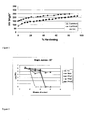
figure 1 shows a diagram that compares the mechanical properties of the alloy according to the invention with another copper alloy and with a stainless steel; and -
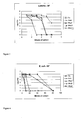
figures 2 to 4 comparatively show the biological properties of some copper alloys, among which the alloy of the invention, and of stainless steel, for different types of germs. - Further features of the invention will be apparent from the following examples for carrying out the invention.
- Two 900 kg plates were prepared by casting, the plates having dimensions 1800 x 500 x 115 mm (length x width x thickness) and each having the mean composition shown in Table 1.
Table 1 Mean chemical composition Melting Cu Mn Fe Ni Sn Pb N. % % % % % % P 88500 81.2 18.8 0.015 0.03 <0.01 0.01 P 88501 80.0 20.0 0.02 0.035 <0.01 0.01 - The plate was subjected to a hot rolling process bringing it to 740°C for 3.5 hours and was subsequently rolled thus obtaining in subsequent steps a reduction in the section of about 90%; the thickness was in particular reduced from 115 mm to 10 mm in 8 steps, thus reaching a final temperature of about 660-670°; the hot-rolled product was cooled down to about 350°C before forcedly cooling down to ambient temperature with water.
- The rolled product was then examined and analysed to detect the depth and nature of the surface layers oxidised and depleted of alloying elements (manganese).
- The results which were obtained are shown in tables 2 and 3, which follow.
Table 2 Thickness of the oxidising layers measured on both sides of the longitudinal section of Cu80Mn20 hot-rolled plate Top - edge 1Mean MAX. m MIN. m ST.DEV. m Side A 25.48 73.71 3.98 18.65 Side B 24.28 47.81 10.76 9.09 Top - centre Mean MAX. m MIN. m ST.DEV. m SIDE A 13.14 27.52 4.42 6.4 SIDE B 17.23 85.79 3.98 17.7 Top - edge 2Mean m MAX. m MIN. m ST.DEV. m Side A 13.26 28.73 6.78 6.07 Side B 37.75 100 5.18 27.46 Bottom - edge 1Mean m MAX. m MIN. m ST.DEV.m Side A 20.81 41.04 5.98 9.82 Side B 17.42 35.48 6.77 7.39 Bottom - centre Mean m MAX. m MIN. m ST.DEV.m Side A 17.92 39.06 9.57 6.51 Side B 5.45 12.9 3.59 2.26 Bottom - edge 2Mean m MAX. m MIN. m ST.DEV.m Side A 16.91 28.68 7.17 6.58 Side B 39.33 110.05 9.38 29.61 Table 3 Chemical composition along a linear profile (from the outer surface to 17.5 microns deep) Position Top Bottom Edge Centre Edge Centre Wt%
Mnwt%
Cuwt%
Mnwt%
Cuwt%
Mnwt%
Cuwt%
Mnwt%
Cu 0 30 70 58 42 21.7 78.3 44.3 55.7 1.75 12.1 87.9 10.7 89.3 0.5 99.5 8.6 91.4 3.5 18.8 81.2 19.9 80.1 12.3 87.7 17.1 82.9 5.25 20.5 79.5 20.4 79.6 18.2 81.8 19.6 80.4 7 20.7 79.3 20.5 79.5 19.8 80.2 20.5 79.5 8.75 20.3 79.7 20.1 79.9 20.2 79.8 20.8 79.2 10.5 20.3 79.7 23.6 76.4 20.4 79.6 20.4 79.6 12.25 20 80 20.2 79.8 21 79 20.4 79.6 14 20.1 79.9 19.9 80.1 21 79 20.7 79.3 15.75 19.3 80.7 19.9 80.1 21.2 78.8 19.9 80.1 17.5 19.5 80.5 20.2 79.8 21 79 20 80 - As may be appreciated, the depth of the detected layers of oxidation and depletion of Mn were relatively high and discontinuous, but such that said layers could easily and totally be removed by the normal milling/scalping operations which are generally performed after hot-rolling.
- Subsequently, the hot-rolled product, after the milling/scalping operation and subsequent removal of the oxidised layers and with depletion of manganese, was subjected to a cold-rolling operation, again obtaining a reduction in the section of about 90% (from 10 to 0.7 mm of thickness) in subsequent steps, with the consequent work hardening and increase of hardness. The cold-rolled product was then subjected to a heat annealing treatment in a static furnace in a reducing atmosphere at 600°C for 4 hours for the re-crystallization. This treatment has been selected on the basis of a series of laboratory tests at different temperatures, in order to identify the optimal treatment, as shown in table 4.
Table 4 Structure and size of the grain of Cu80Mn20 samples after one hour of heat treatment at increasing temperatures. Mean size of the grain (mm) Heat treatment 1 mm thickness 0.5 mm thickness 400 °C / 1 hour Fibrous structure Fibrous structure 450 °C / 1 hour Fibrous structure Fibrous structure 500 °C / 1 hour Re-crystallization start Re-crystallization start 550 °C / 1 hour 0.005 0.0075 600°C / 1 hour 0.0075 0.0075 650 °C / 1 hour 0.010 0.015 - Test specimens of the rolled material were subjected to the common tests for identifying the mechanical properties, in comparison to reference materials (other copper alloys and stainless steel). The results which were obtained are shown in
figure 1 , where the hardness curves of the different materials are shown as a function of the strain hardening, and in the following tables.Table 5 Material HV E
(GPa)Rp(0,2)
(MPa)Rm
(MPa)A50mm
(%)CuMn20 119 118 260 470 32 CuZn20 77 110 115 330 47 AISI 304-316 129 193 205 515 40 Tab.2 Comparison between different materials Table 6 Material IE
(mm)IB R
(%)H
(%)L.D.R. CuMn20 10,6 70 ≃100 4,9 2,12 CuZn20 10,6-12 66-68 ≃96-100 - 1,94-2,00 AISI 304-316 11-12 - ≃50-60* - 2,18-2,25* Tab.3 Formability propertie Table 7 Cu80Mn20 Cu80Zn20 Aisi 304 temper Rp (Mpa) Rm (Mpa) Rp (Mpa) Rm (Mpa) Rp (Mpa) Rm (Mpa) Annealed 256 493 115 330 205 515 1/4 Hard 308 498 300 420 413 690 1/2 Hard 564 597 440 510 606 827 Hard 820 860 480 570 772 1020 - Finally, whether there was a surface depletion of manganese due to the heat annealing treatment was identified on the different sample specimens. The results which were obtained are shown in table 8.
Table 8 Position µm from the surface wt%Mn wt %Cu 0 19.8 80.2 1.75 12.6 87.3 3.5 16.2 83.8 5.25 19.2 80.8 7 19.9 80.1 8.75 19.7 80.3 10.5 20.2 79.8 12.25 20.3 79.7 14 20.5 79.5 15.75 20.4 79.6 17.5 20.5 79.5 - As may be noted, the depletion involves a layer which is no more than 4-5 microns, which may easily be removed with a common operation of abrasive brushing after the heat treatment.
- From the comparison among the various materials, it may also be noted that the tested CuMn20 alloy is suitable to replace the stainless steel in any application, such as the manufacture of furniture, tools, work surfaces, etc., having a considerable hardness and high mechanical resistance, well beyond those of brasses.
- The antimicrobial properties of three different copper alloys were compared, and specifically the CuMn20 alloy (alloy 3) according to the invention, previously prepared according to the previous examples, a CuSn6Zn6 alloy (alloy 2) and a CuZn10 alloy (alloy 1), with two different reference materials and specifically DHP copper AISI 304 steel (stainless steel).
- Three different pathogen microorganisms were used for the tests, specifically E. coli, MSRA and Listeria monocytogenes.
- Flat sheet sample specimens, made of the tested alloys and of the reference materials, each of a size equivalent to about 5.5 cm2 were treated with 10 microlitres of microbial cell suspension in water, having a concentration of about 108 cell units per millilitre.
- Subsequently, the sample specimens were incubated at 37°C. The test was repeated 6 times, varying the time of contact in incubation. Each sample specimen was tested for the following times: 0, 5, 10, 20, 40 and 80 minutes.
- After each incubation step was finished, the sample specimen was recovered and treated with an aqueous solution to remove the pathogens; the solution was then diluted and incorporated in agar and a microscopical count was finally carried out on the survived microbial cells.
- The results which were obtained are shown in
figures 2 ,3 and 4 . - As may be noted, the antimicrobial activity of the previously prepared and machined alloy, CuMn20 is substantially very similar to that of copper DHP against all of the tested pathogenic microorganisms, while stainless steel is substantially devoid thereof. The antimicrobial activity of the CuMn20 alloy is also comparable (or better), with the content of copper being the same, with respect to that of the other tested alloys, which however have a mechanical resistance and hardness that make them unsuitable to replace steel and, especially, do not have a colour comparable to that of steel, while the CuMn20 alloy according to the invention has a white metal colour comparable to that of steel.
- Four cylindrical ingots were prepared having a diameter of 305 mm using standard copper ingot moulds with an inner graphite insert so as to render less drastic the cooling of the metal in the ingot mould and therefore avoid the formation of contraction cracks. The metal was taken to a temperature of 1140°C in the melting furnace and, after the analytical controls to verify the adherence to the nominal composition, was poured in the holding furnace; the casting started when the metal reached the temperature of 1100 °C.
- The chemical composition resulting from the mean of the two samples of cast withdrawn respectively at the beginning and at the end of each casting is shown in table 9.
Table 9 Mean chemical composition of the cylindrical ingots in Cu80Mn20. Melting N. Cu % Mn % Fe % Ni % Sn % Pb % L88277 80.9 19.04 0.025 0.032 <0.01 <0.01 L88278 79.8 20.10 0.012 0.028 <0.01 0.01 L88279 79.5 20.40 0.017 0.039 <0.01 0.01 L88280 79.7 20.20 0.020 0.035 <0.01 <0.01 - Subsequently, the double-hole extrusion of the ingots was performed so as to obtain wires with a diameter of 26 mm, with a 4000 ton press in a range of extrusion temperatures from 770 to 800 °C, spraying the outputted wires with water coming from appropriate sprayers to limit oxidation of the alloy and/or the depletion of Mn. In these conditions the power absorbed by the press, expressed in tons, varies from 2000 to 2300 due to the high mechanical features of the Cu80Mn20 alloy. From the metallographic point of view, the best results both as regards the mean diameter of the grain and as regards the homogeneity thereof, were obtained with an extrusion temperature equivalent to 780°C. Later, the extruded products were rolled to a diameter of 20 mm and an annealing was performed for 3 hours at 650°C in a reducing atmosphere. Different cold plastic deformation (drawing) operations were then performed from a semifinished product having a 20mm-diameter to a wire having a 2.08mm-diameter, performing an intermediate step of milling from 5.70 to 5.30 mm to remove the layers of oxidation and depletion of Mn, the depth of which was less than that identified for the corresponding layers of example 1 for the rolled products. Finally, after a complete re-crystallization annealing performed at 650°C for 3 hours in a reducing atmosphere, the wires were subjected to a final step of cold drawing to a 2mm- or 1.80mm-diameter, so as to obtain a work hardening of 7.4% or, respectively, of 25% and therefore give rise, with the same alloy, to a final wire material in a medium-hard or hard physical state. As a final step, the possible brushing ensured the absence of surface layers of oxide or of layers depleted of Mn.
- The values of the mechanical features which may be obtained by means of the drawing operations, depending on the different possible strain hardening, are shown in table 10.
Table 10 Summary of the mean values of Rm, Rp and HV measured during the cold plastic deformation cycle as a function of the percentage strain hardening the Cu80Mn20 wire undergoes. Strain Rm Rp HV hardening MPa MPa 500g/15" 0 490 240 150 7.4 540 310 170 25 717 450 195 37 790 580 215 55 827 710 235 85 875 835 250 - Billets of Cu80Mn20 alloy were extruded under water to tubes having a 100mm-diameter, 11mm-thickness wall, so as to limit the formation of surface oxides and/or layers depleted of Mn.
- The extrusion of the billet in the form of a tube was performed in a range of extrusion temperatures in the range between 790 and 805°C. In these conditions, the power absorbed by the press, expressed in bars, was about 290, which is an acceptable value considering the high mechanical features of the Cu80Mn20 alloy.
- Subsequently, a cold plastic deformation processing was performed using a pilgrim mill set at 70 hits/minute with a feed of 11.11 mm until tubes having a 45mm-diameter by a 2.25-wall thickness were obtained and later the semifinished products obtained thereby were subjected to a single operation of rectilinear cold drawing to a 35mm-diameter by 1.90 mm-thickness and a following annealing at 650°C for 4 hours in a reducing atmosphere. Subsequently, a series of coil drawing operations (to the spinners) were performed up to a 9.52mm-diameter by a 0.45mm-thickness as well as a final annealing at 650°C for 4 hours in a funnel type furnace with a reducing atmosphere. The possible final brushing ensured the absence of surface layers of oxide and/or of layers depleted of Mn.
Claims (15)
- Use of a copper-based white alloy for producing articles preferably intended to be employed in the health and/or food field, wherein the desired white colour is imparted by adding manganese to the alloy, and wherein the latter and possibly other alloying elements, except for impurities, are present in an amount such as to determine machinability, colour and surface properties of the alloy, similar to those of stainless steel, and simultaneously intrinsic antibacterial properties of the articles on corresponding exposed surfaces thereof.
- Use according to claim 1, characterized in that said alloy does not contain aluminium, except as an impurity.
- Use according to claim 1 or 2, characterized in that said alloy does not contain zinc, except as an impurity.
- Use according to anyone of the preceding claims, characterized in that said alloy may contain, in a lower percentage, tin in any case in an amount such as not to produce the segregation of precipitates or of low-melting and/or fragile phases in use.
- Use according to anyone of claims from 1 to 3, characterized in that said alloy exclusively contains copper and manganese, except for impurities, copper being prevailing.
- Use according to anyone of the preceding claims, characterized in that the manganese content in the alloy ranges in varying percentages between 15% and up to 40% by weight and in any case in an amount such as to obtain a crystalline structure of the alloy, preferably in alpha phase, at ambient temperature.
- Use according to claim 6, characterized in that the nominal composition of said alloy is 80% copper and 20% manganese, the percentages being expressed by weight.
- Use according to anyone of the preceding claims, characterized in that said alloy displays on the surface antibacterial properties directed at least towards the microorganisms selected from the group consisting in: E.coli, MSRA, Listeria monocytogenes.
- A method for producing articles, preferably intended to be employed in the health and/or food field, provided with intrinsic antibacterial properties, characterised in that it comprises the steps of:- melting a plate or a cylindrical ingot made of a copper-based alloy containing manganese as the main alloying element, in an amount such as to make the alloy white in colour and to impart a crystalline structure in alpha phase at ambient temperature thereto;- subjecting the plate or ingot to a series of hot plastic deformation machining treatments in sequence (rolling or drawing or extrusion), to obtain a first, predetermined percentage of sectional reduction;- subjecting the hot semifinished article to a series of cold plastic deformation machining treatments in sequence (rolling or drawing), to obtain a second, predetermined percentage of sectional reduction;- subjecting the cold semifinished article thus obtained to one or more heat annealing treatments of complete re-crystallization, in a reducing atmosphere;- subjecting the hot and/or cold semifinished article to at least one step of removing a surface layer thereof with a low manganese contents; and- obtaining a desired article with the cold annealed semifinished article.
- The method according to claim 9, characterized in that said alloy contains manganese in a varying weight percentage between 15% and 40% and does not contain aluminium, and preferably neither zinc, except as impurities.
- The method according to claim 9 or 10,
characterized in that said first and second predetermined percentages of sectional reduction are on the order of 90%. - The method according to anyone of claims from 9 to 11, characterized in that said step of complete re-crystallization annealing of the cold semifinished article is performed at a temperature ranging between 550°C and 750°C, in either a static or a tunnel type furnace, and in a reducing atmosphere.
- The method according to anyone of claims from 9 to 12, characterized in that the hot semifinished article is subjected to a step of surface milling for removing the oxidised, low manganese layers.
- The method according to anyone of claims from 9 to 13, characterized in that the cold annealed semifinished article is subjected to a step of abrasive brushing.
- The method according to claim 14,
characterized in that said step of abrasive brushing is performed so as to remove a surface layer of the cold annealed semifinished article having a thickness equal to 4 microns.
Applications Claiming Priority (1)
| Application Number | Priority Date | Filing Date | Title |
|---|---|---|---|
| ITTO2008A000649A IT1392421B1 (en) | 2008-09-01 | 2008-09-01 | USE OF A COPPER-BASED WHITE ALLOY FOR THE PRODUCTION OF NATURALLY ANTI-BACTERIAL PRODUCTS AND THE METHOD FOR THE SAME PRODUCTION OF THEMSELVES |
Publications (2)
| Publication Number | Publication Date |
|---|---|
| EP2161349A1 true EP2161349A1 (en) | 2010-03-10 |
| EP2161349B1 EP2161349B1 (en) | 2018-10-17 |
Family
ID=41009891
Family Applications (1)
| Application Number | Title | Priority Date | Filing Date |
|---|---|---|---|
| EP09008026.8A Active EP2161349B1 (en) | 2008-09-01 | 2009-06-19 | Method for producing a copper-based white alloy for producing naturally antibacterial articles |
Country Status (3)
| Country | Link |
|---|---|
| EP (1) | EP2161349B1 (en) |
| ES (1) | ES2695752T3 (en) |
| IT (1) | IT1392421B1 (en) |
Citations (9)
| Publication number | Priority date | Publication date | Assignee | Title |
|---|---|---|---|---|
| DE1224937B (en) * | 1963-06-07 | 1966-09-15 | Kurt Dies Dr Ing | Use of copper alloys for objects subject to sliding, friction and wear and a process for producing the same |
| US3725052A (en) * | 1969-09-13 | 1973-04-03 | Foundation Res Inst Electric A | Non-magnetic resilient manganese-copper alloy having a substantially temperature-free elastic modulus |
| CA964408A (en) * | 1971-03-03 | 1975-03-18 | Olin Corporation | Copper alloy and article |
| JPS6072695A (en) * | 1983-09-28 | 1985-04-24 | Maruyasu Kogyo Kk | Brazing alloy for stainless steel |
| US5725682A (en) * | 1995-02-02 | 1998-03-10 | Mazda Motor Corporation | Brazing method |
| WO2000068447A1 (en) * | 1999-05-05 | 2000-11-16 | Olin Corporation | Copper alloy with a golden visual appearance |
| EP1306453B1 (en) | 2001-10-26 | 2005-01-12 | YKK Corporation | Elements of slide fasteners and accessories made of nickel-free white copper alloy |
| US6863746B2 (en) | 2001-08-02 | 2005-03-08 | Keith Weinstein | White gold compositions without nickel and palladium |
| EP1880776A1 (en) * | 2006-07-19 | 2008-01-23 | Europa Metalli S.p.A. | Method for the production of tubes |
-
2008
- 2008-09-01 IT ITTO2008A000649A patent/IT1392421B1/en active
-
2009
- 2009-06-19 ES ES09008026T patent/ES2695752T3/en active Active
- 2009-06-19 EP EP09008026.8A patent/EP2161349B1/en active Active
Patent Citations (9)
| Publication number | Priority date | Publication date | Assignee | Title |
|---|---|---|---|---|
| DE1224937B (en) * | 1963-06-07 | 1966-09-15 | Kurt Dies Dr Ing | Use of copper alloys for objects subject to sliding, friction and wear and a process for producing the same |
| US3725052A (en) * | 1969-09-13 | 1973-04-03 | Foundation Res Inst Electric A | Non-magnetic resilient manganese-copper alloy having a substantially temperature-free elastic modulus |
| CA964408A (en) * | 1971-03-03 | 1975-03-18 | Olin Corporation | Copper alloy and article |
| JPS6072695A (en) * | 1983-09-28 | 1985-04-24 | Maruyasu Kogyo Kk | Brazing alloy for stainless steel |
| US5725682A (en) * | 1995-02-02 | 1998-03-10 | Mazda Motor Corporation | Brazing method |
| WO2000068447A1 (en) * | 1999-05-05 | 2000-11-16 | Olin Corporation | Copper alloy with a golden visual appearance |
| US6863746B2 (en) | 2001-08-02 | 2005-03-08 | Keith Weinstein | White gold compositions without nickel and palladium |
| EP1306453B1 (en) | 2001-10-26 | 2005-01-12 | YKK Corporation | Elements of slide fasteners and accessories made of nickel-free white copper alloy |
| EP1880776A1 (en) * | 2006-07-19 | 2008-01-23 | Europa Metalli S.p.A. | Method for the production of tubes |
Non-Patent Citations (4)
| Title |
|---|
| H. T. MICHELS, ASTM STANDARDIZATION NEWS, October 2006 (2006-10-01), pages 29 - 31 |
| MUKHERJEE, D. ET AL: "Antifouling properties of copper-manganese alloys", TOOL & ALLOY STEELS , 27(9), 287-9 CODEN: TASTDL; ISSN: 0377-9408, 1993, XP009122240 * |
| MUKHERJEE, D. ET AL: "Corrosion resistant and antifouling behavior of Cu-Mn alloys in sea-water", BULLETIN OF ELECTROCHEMISTRY , 9(8-10), 427-9 CODEN: BUELE6; ISSN: 0256-1654, 1993, XP009122244 * |
| MUKHERJEE, D. ET AL: "SRB-cidal properties of some copper-manganese alloys", BULLETIN OF ELECTROCHEMISTRY , 6(5), 499-500 CODEN: BUELE6; ISSN: 0256-1654, 1990, XP009122239 * |
Also Published As
| Publication number | Publication date |
|---|---|
| IT1392421B1 (en) | 2012-03-02 |
| EP2161349B1 (en) | 2018-10-17 |
| ES2695752T3 (en) | 2019-01-10 |
| ITTO20080649A1 (en) | 2010-03-02 |
Similar Documents
| Publication | Publication Date | Title |
|---|---|---|
| EP2728024B1 (en) | Silver-white copper alloy and method for its manufacture | |
| KR100528090B1 (en) | Metal article with fine uniform structures and textures and process of making same | |
| TWI237665B (en) | Silver containing copper alloy | |
| EP2558564B1 (en) | 2xxx series aluminum lithium alloys having low strength differential | |
| EP2952596B1 (en) | Lead-free easy-to-cut corrosion-resistant brass alloy with good thermoforming performance | |
| EP2078760A1 (en) | Beta titanium alloy | |
| CN100547102C (en) | A kind of duplex antibacterial stainless steel and its manufacturing method | |
| EP1018564B1 (en) | Stainless steel product having excellent antimicrobial activity and method for production thereof | |
| WO2018131373A1 (en) | Copper alloy material for resistance material, production method therefor and resistor | |
| KR20220050197A (en) | Aluminum flat rolled product with high recycling content for lightweight packaging solution and manufacturing method therefor | |
| CA2712392C (en) | White copper-base alloy | |
| JP6477127B2 (en) | Copper alloy rod and copper alloy member | |
| CN106133163B (en) | 6XXX alloy extrusions suitable for turning and anodizing with low roughness | |
| KR101723324B1 (en) | Aluminum alloy sheet for packaging container and method for manufacturing same | |
| KR101796191B1 (en) | Copper alloy with excellent antibiosis, discoloration-resistance and formability, and method for producing same | |
| EP2161349A1 (en) | use of a copper-based white alloy for producing naturally anticaterial articles and method for producing the same | |
| JPH10306352A (en) | Highly workable ferritic stainless steel sheet excellent in antibacterial properties and surface properties and method for producing the same | |
| JP3309769B2 (en) | Cu-containing stainless steel sheet and method for producing the same | |
| EP3662092B1 (en) | Automotive outer panel made from a 6xxx-series aluminium alloy sheet product | |
| CN101586215A (en) | Ferrite antibacterial stainless steel and manufacture method thereof | |
| KR20220018403A (en) | Alloy material with antibacterial activity | |
| JP2005232511A (en) | Austenitic stainless steel with excellent antibacterial and hot workability | |
| EP4119692A1 (en) | Ferrite-based stainless steel having improved surface characteristics and method for manufacturing same | |
| JPH10140289A (en) | Highly workable ferritic stainless steel sheet excellent in antibacterial properties and surface properties and method for producing the same | |
| EP1336665B1 (en) | Cold reduced enamelling steel sheet and an enamelled structure comprising a component of such a steel sheet |
Legal Events
| Date | Code | Title | Description |
|---|---|---|---|
| PUAI | Public reference made under article 153(3) epc to a published international application that has entered the european phase |
Free format text: ORIGINAL CODE: 0009012 |
|
| AK | Designated contracting states |
Kind code of ref document: A1 Designated state(s): AT BE BG CH CY CZ DE DK EE ES FI FR GB GR HR HU IE IS IT LI LT LU LV MC MK MT NL NO PL PT RO SE SI SK TR |
|
| AX | Request for extension of the european patent |
Extension state: AL BA RS |
|
| 17P | Request for examination filed |
Effective date: 20100709 |
|
| 17Q | First examination report despatched |
Effective date: 20100805 |
|
| STAA | Information on the status of an ep patent application or granted ep patent |
Free format text: STATUS: EXAMINATION IS IN PROGRESS |
|
| GRAP | Despatch of communication of intention to grant a patent |
Free format text: ORIGINAL CODE: EPIDOSNIGR1 |
|
| STAA | Information on the status of an ep patent application or granted ep patent |
Free format text: STATUS: GRANT OF PATENT IS INTENDED |
|
| INTG | Intention to grant announced |
Effective date: 20180705 |
|
| GRAS | Grant fee paid |
Free format text: ORIGINAL CODE: EPIDOSNIGR3 |
|
| GRAA | (expected) grant |
Free format text: ORIGINAL CODE: 0009210 |
|
| STAA | Information on the status of an ep patent application or granted ep patent |
Free format text: STATUS: THE PATENT HAS BEEN GRANTED |
|
| AK | Designated contracting states |
Kind code of ref document: B1 Designated state(s): AT BE BG CH CY CZ DE DK EE ES FI FR GB GR HR HU IE IS IT LI LT LU LV MC MK MT NL NO PL PT RO SE SI SK TR |
|
| REG | Reference to a national code |
Ref country code: GB Ref legal event code: FG4D |
|
| REG | Reference to a national code |
Ref country code: CH Ref legal event code: EP |
|
| REG | Reference to a national code |
Ref country code: IE Ref legal event code: FG4D |
|
| REG | Reference to a national code |
Ref country code: DE Ref legal event code: R096 Ref document number: 602009055068 Country of ref document: DE Ref country code: AT Ref legal event code: REF Ref document number: 1054114 Country of ref document: AT Kind code of ref document: T Effective date: 20181115 |
|
| REG | Reference to a national code |
Ref country code: ES Ref legal event code: FG2A Ref document number: 2695752 Country of ref document: ES Kind code of ref document: T3 Effective date: 20190110 |
|
| RAP2 | Party data changed (patent owner data changed or rights of a patent transferred) |
Owner name: KME ITALY S.P.A. |
|
| REG | Reference to a national code |
Ref country code: NL Ref legal event code: MP Effective date: 20181017 |
|
| REG | Reference to a national code |
Ref country code: LT Ref legal event code: MG4D |
|
| REG | Reference to a national code |
Ref country code: AT Ref legal event code: MK05 Ref document number: 1054114 Country of ref document: AT Kind code of ref document: T Effective date: 20181017 |
|
| PG25 | Lapsed in a contracting state [announced via postgrant information from national office to epo] |
Ref country code: NL Free format text: LAPSE BECAUSE OF FAILURE TO SUBMIT A TRANSLATION OF THE DESCRIPTION OR TO PAY THE FEE WITHIN THE PRESCRIBED TIME-LIMIT Effective date: 20181017 |
|
| PG25 | Lapsed in a contracting state [announced via postgrant information from national office to epo] |
Ref country code: FI Free format text: LAPSE BECAUSE OF FAILURE TO SUBMIT A TRANSLATION OF THE DESCRIPTION OR TO PAY THE FEE WITHIN THE PRESCRIBED TIME-LIMIT Effective date: 20181017 Ref country code: BG Free format text: LAPSE BECAUSE OF FAILURE TO SUBMIT A TRANSLATION OF THE DESCRIPTION OR TO PAY THE FEE WITHIN THE PRESCRIBED TIME-LIMIT Effective date: 20190117 Ref country code: PL Free format text: LAPSE BECAUSE OF FAILURE TO SUBMIT A TRANSLATION OF THE DESCRIPTION OR TO PAY THE FEE WITHIN THE PRESCRIBED TIME-LIMIT Effective date: 20181017 Ref country code: HR Free format text: LAPSE BECAUSE OF FAILURE TO SUBMIT A TRANSLATION OF THE DESCRIPTION OR TO PAY THE FEE WITHIN THE PRESCRIBED TIME-LIMIT Effective date: 20181017 Ref country code: LV Free format text: LAPSE BECAUSE OF FAILURE TO SUBMIT A TRANSLATION OF THE DESCRIPTION OR TO PAY THE FEE WITHIN THE PRESCRIBED TIME-LIMIT Effective date: 20181017 Ref country code: AT Free format text: LAPSE BECAUSE OF FAILURE TO SUBMIT A TRANSLATION OF THE DESCRIPTION OR TO PAY THE FEE WITHIN THE PRESCRIBED TIME-LIMIT Effective date: 20181017 Ref country code: LT Free format text: LAPSE BECAUSE OF FAILURE TO SUBMIT A TRANSLATION OF THE DESCRIPTION OR TO PAY THE FEE WITHIN THE PRESCRIBED TIME-LIMIT Effective date: 20181017 Ref country code: NO Free format text: LAPSE BECAUSE OF FAILURE TO SUBMIT A TRANSLATION OF THE DESCRIPTION OR TO PAY THE FEE WITHIN THE PRESCRIBED TIME-LIMIT Effective date: 20190117 Ref country code: IS Free format text: LAPSE BECAUSE OF FAILURE TO SUBMIT A TRANSLATION OF THE DESCRIPTION OR TO PAY THE FEE WITHIN THE PRESCRIBED TIME-LIMIT Effective date: 20190217 |
|
| PG25 | Lapsed in a contracting state [announced via postgrant information from national office to epo] |
Ref country code: GR Free format text: LAPSE BECAUSE OF FAILURE TO SUBMIT A TRANSLATION OF THE DESCRIPTION OR TO PAY THE FEE WITHIN THE PRESCRIBED TIME-LIMIT Effective date: 20190118 Ref country code: PT Free format text: LAPSE BECAUSE OF FAILURE TO SUBMIT A TRANSLATION OF THE DESCRIPTION OR TO PAY THE FEE WITHIN THE PRESCRIBED TIME-LIMIT Effective date: 20190217 Ref country code: SE Free format text: LAPSE BECAUSE OF FAILURE TO SUBMIT A TRANSLATION OF THE DESCRIPTION OR TO PAY THE FEE WITHIN THE PRESCRIBED TIME-LIMIT Effective date: 20181017 |
|
| REG | Reference to a national code |
Ref country code: DE Ref legal event code: R097 Ref document number: 602009055068 Country of ref document: DE |
|
| PG25 | Lapsed in a contracting state [announced via postgrant information from national office to epo] |
Ref country code: CZ Free format text: LAPSE BECAUSE OF FAILURE TO SUBMIT A TRANSLATION OF THE DESCRIPTION OR TO PAY THE FEE WITHIN THE PRESCRIBED TIME-LIMIT Effective date: 20181017 Ref country code: DK Free format text: LAPSE BECAUSE OF FAILURE TO SUBMIT A TRANSLATION OF THE DESCRIPTION OR TO PAY THE FEE WITHIN THE PRESCRIBED TIME-LIMIT Effective date: 20181017 |
|
| PLBE | No opposition filed within time limit |
Free format text: ORIGINAL CODE: 0009261 |
|
| STAA | Information on the status of an ep patent application or granted ep patent |
Free format text: STATUS: NO OPPOSITION FILED WITHIN TIME LIMIT |
|
| PG25 | Lapsed in a contracting state [announced via postgrant information from national office to epo] |
Ref country code: SK Free format text: LAPSE BECAUSE OF FAILURE TO SUBMIT A TRANSLATION OF THE DESCRIPTION OR TO PAY THE FEE WITHIN THE PRESCRIBED TIME-LIMIT Effective date: 20181017 Ref country code: EE Free format text: LAPSE BECAUSE OF FAILURE TO SUBMIT A TRANSLATION OF THE DESCRIPTION OR TO PAY THE FEE WITHIN THE PRESCRIBED TIME-LIMIT Effective date: 20181017 Ref country code: RO Free format text: LAPSE BECAUSE OF FAILURE TO SUBMIT A TRANSLATION OF THE DESCRIPTION OR TO PAY THE FEE WITHIN THE PRESCRIBED TIME-LIMIT Effective date: 20181017 |
|
| 26N | No opposition filed |
Effective date: 20190718 |
|
| PG25 | Lapsed in a contracting state [announced via postgrant information from national office to epo] |
Ref country code: SI Free format text: LAPSE BECAUSE OF FAILURE TO SUBMIT A TRANSLATION OF THE DESCRIPTION OR TO PAY THE FEE WITHIN THE PRESCRIBED TIME-LIMIT Effective date: 20181017 |
|
| PG25 | Lapsed in a contracting state [announced via postgrant information from national office to epo] |
Ref country code: MC Free format text: LAPSE BECAUSE OF FAILURE TO SUBMIT A TRANSLATION OF THE DESCRIPTION OR TO PAY THE FEE WITHIN THE PRESCRIBED TIME-LIMIT Effective date: 20181017 |
|
| REG | Reference to a national code |
Ref country code: CH Ref legal event code: PL |
|
| GBPC | Gb: european patent ceased through non-payment of renewal fee |
Effective date: 20190619 |
|
| REG | Reference to a national code |
Ref country code: BE Ref legal event code: MM Effective date: 20190630 |
|
| PG25 | Lapsed in a contracting state [announced via postgrant information from national office to epo] |
Ref country code: TR Free format text: LAPSE BECAUSE OF FAILURE TO SUBMIT A TRANSLATION OF THE DESCRIPTION OR TO PAY THE FEE WITHIN THE PRESCRIBED TIME-LIMIT Effective date: 20181017 |
|
| PG25 | Lapsed in a contracting state [announced via postgrant information from national office to epo] |
Ref country code: GB Free format text: LAPSE BECAUSE OF NON-PAYMENT OF DUE FEES Effective date: 20190619 Ref country code: IE Free format text: LAPSE BECAUSE OF NON-PAYMENT OF DUE FEES Effective date: 20190619 |
|
| PG25 | Lapsed in a contracting state [announced via postgrant information from national office to epo] |
Ref country code: BE Free format text: LAPSE BECAUSE OF NON-PAYMENT OF DUE FEES Effective date: 20190630 Ref country code: LU Free format text: LAPSE BECAUSE OF NON-PAYMENT OF DUE FEES Effective date: 20190619 Ref country code: LI Free format text: LAPSE BECAUSE OF NON-PAYMENT OF DUE FEES Effective date: 20190630 Ref country code: CH Free format text: LAPSE BECAUSE OF NON-PAYMENT OF DUE FEES Effective date: 20190630 |
|
| PG25 | Lapsed in a contracting state [announced via postgrant information from national office to epo] |
Ref country code: CY Free format text: LAPSE BECAUSE OF FAILURE TO SUBMIT A TRANSLATION OF THE DESCRIPTION OR TO PAY THE FEE WITHIN THE PRESCRIBED TIME-LIMIT Effective date: 20181017 |
|
| PG25 | Lapsed in a contracting state [announced via postgrant information from national office to epo] |
Ref country code: MT Free format text: LAPSE BECAUSE OF FAILURE TO SUBMIT A TRANSLATION OF THE DESCRIPTION OR TO PAY THE FEE WITHIN THE PRESCRIBED TIME-LIMIT Effective date: 20181017 Ref country code: HU Free format text: LAPSE BECAUSE OF FAILURE TO SUBMIT A TRANSLATION OF THE DESCRIPTION OR TO PAY THE FEE WITHIN THE PRESCRIBED TIME-LIMIT; INVALID AB INITIO Effective date: 20090619 |
|
| PG25 | Lapsed in a contracting state [announced via postgrant information from national office to epo] |
Ref country code: MK Free format text: LAPSE BECAUSE OF FAILURE TO SUBMIT A TRANSLATION OF THE DESCRIPTION OR TO PAY THE FEE WITHIN THE PRESCRIBED TIME-LIMIT Effective date: 20181017 |
|
| PGFP | Annual fee paid to national office [announced via postgrant information from national office to epo] |
Ref country code: DE Payment date: 20250626 Year of fee payment: 17 |
|
| PGFP | Annual fee paid to national office [announced via postgrant information from national office to epo] |
Ref country code: FR Payment date: 20250624 Year of fee payment: 17 |
|
| PGFP | Annual fee paid to national office [announced via postgrant information from national office to epo] |
Ref country code: ES Payment date: 20250710 Year of fee payment: 17 |
|
| PGFP | Annual fee paid to national office [announced via postgrant information from national office to epo] |
Ref country code: IT Payment date: 20250623 Year of fee payment: 17 |