EP2155760B1 - Organic metal complexes derivative and organic light emitting devices using the same - Google Patents
Organic metal complexes derivative and organic light emitting devices using the same Download PDFInfo
- Publication number
- EP2155760B1 EP2155760B1 EP08766270.6A EP08766270A EP2155760B1 EP 2155760 B1 EP2155760 B1 EP 2155760B1 EP 08766270 A EP08766270 A EP 08766270A EP 2155760 B1 EP2155760 B1 EP 2155760B1
- Authority
- EP
- European Patent Office
- Prior art keywords
- group
- direct bond
- substituted
- deuterium
- halogen
- Prior art date
- Legal status (The legal status is an assumption and is not a legal conclusion. Google has not performed a legal analysis and makes no representation as to the accuracy of the status listed.)
- Active
Links
- 0 CCCC1*(CCC(C2(C)[C@@](C)C(C)(C)C(C)C2CCC=C)=CC)C1 Chemical compound CCCC1*(CCC(C2(C)[C@@](C)C(C)(C)C(C)C2CCC=C)=CC)C1 0.000 description 49
- XCOGGQHQRTYTOW-UHFFFAOYSA-N CC(CC1)C=CC1C(F)(F)F Chemical compound CC(CC1)C=CC1C(F)(F)F XCOGGQHQRTYTOW-UHFFFAOYSA-N 0.000 description 1
- VKGYHJTWLDUGJV-UHFFFAOYSA-O CC1[NH2+]C(CC2CC2)CC1 Chemical compound CC1[NH2+]C(CC2CC2)CC1 VKGYHJTWLDUGJV-UHFFFAOYSA-O 0.000 description 1
- UVSXEKCUHKYXPF-GWZAYLFESA-N N[C@H](C1)/C1=C/C=C(/N)\S Chemical compound N[C@H](C1)/C1=C/C=C(/N)\S UVSXEKCUHKYXPF-GWZAYLFESA-N 0.000 description 1
Images
Classifications
-
- C—CHEMISTRY; METALLURGY
- C07—ORGANIC CHEMISTRY
- C07F—ACYCLIC, CARBOCYCLIC OR HETEROCYCLIC COMPOUNDS CONTAINING ELEMENTS OTHER THAN CARBON, HYDROGEN, HALOGEN, OXYGEN, NITROGEN, SULFUR, SELENIUM OR TELLURIUM
- C07F5/00—Compounds containing elements of Groups 3 or 13 of the Periodic Table
- C07F5/06—Aluminium compounds
- C07F5/069—Aluminium compounds without C-aluminium linkages
-
- C—CHEMISTRY; METALLURGY
- C07—ORGANIC CHEMISTRY
- C07F—ACYCLIC, CARBOCYCLIC OR HETEROCYCLIC COMPOUNDS CONTAINING ELEMENTS OTHER THAN CARBON, HYDROGEN, HALOGEN, OXYGEN, NITROGEN, SULFUR, SELENIUM OR TELLURIUM
- C07F5/00—Compounds containing elements of Groups 3 or 13 of the Periodic Table
- C07F5/06—Aluminium compounds
-
- C—CHEMISTRY; METALLURGY
- C07—ORGANIC CHEMISTRY
- C07F—ACYCLIC, CARBOCYCLIC OR HETEROCYCLIC COMPOUNDS CONTAINING ELEMENTS OTHER THAN CARBON, HYDROGEN, HALOGEN, OXYGEN, NITROGEN, SULFUR, SELENIUM OR TELLURIUM
- C07F15/00—Compounds containing elements of Groups 8, 9, 10 or 18 of the Periodic Table
-
- C—CHEMISTRY; METALLURGY
- C07—ORGANIC CHEMISTRY
- C07F—ACYCLIC, CARBOCYCLIC OR HETEROCYCLIC COMPOUNDS CONTAINING ELEMENTS OTHER THAN CARBON, HYDROGEN, HALOGEN, OXYGEN, NITROGEN, SULFUR, SELENIUM OR TELLURIUM
- C07F3/00—Compounds containing elements of Groups 2 or 12 of the Periodic Table
- C07F3/06—Zinc compounds
-
- C—CHEMISTRY; METALLURGY
- C09—DYES; PAINTS; POLISHES; NATURAL RESINS; ADHESIVES; COMPOSITIONS NOT OTHERWISE PROVIDED FOR; APPLICATIONS OF MATERIALS NOT OTHERWISE PROVIDED FOR
- C09K—MATERIALS FOR MISCELLANEOUS APPLICATIONS, NOT PROVIDED FOR ELSEWHERE
- C09K11/00—Luminescent materials, e.g. electroluminescent or chemiluminescent
- C09K11/06—Luminescent materials, e.g. electroluminescent or chemiluminescent containing organic luminescent materials
-
- H—ELECTRICITY
- H10—SEMICONDUCTOR DEVICES; ELECTRIC SOLID-STATE DEVICES NOT OTHERWISE PROVIDED FOR
- H10K—ORGANIC ELECTRIC SOLID-STATE DEVICES
- H10K85/00—Organic materials used in the body or electrodes of devices covered by this subclass
- H10K85/30—Coordination compounds
- H10K85/321—Metal complexes comprising a group IIIA element, e.g. Tris (8-hydroxyquinoline) gallium [Gaq3]
-
- C—CHEMISTRY; METALLURGY
- C09—DYES; PAINTS; POLISHES; NATURAL RESINS; ADHESIVES; COMPOSITIONS NOT OTHERWISE PROVIDED FOR; APPLICATIONS OF MATERIALS NOT OTHERWISE PROVIDED FOR
- C09K—MATERIALS FOR MISCELLANEOUS APPLICATIONS, NOT PROVIDED FOR ELSEWHERE
- C09K2211/00—Chemical nature of organic luminescent or tenebrescent compounds
- C09K2211/10—Non-macromolecular compounds
- C09K2211/1018—Heterocyclic compounds
- C09K2211/1025—Heterocyclic compounds characterised by ligands
- C09K2211/1029—Heterocyclic compounds characterised by ligands containing one nitrogen atom as the heteroatom
- C09K2211/1033—Heterocyclic compounds characterised by ligands containing one nitrogen atom as the heteroatom with oxygen
-
- C—CHEMISTRY; METALLURGY
- C09—DYES; PAINTS; POLISHES; NATURAL RESINS; ADHESIVES; COMPOSITIONS NOT OTHERWISE PROVIDED FOR; APPLICATIONS OF MATERIALS NOT OTHERWISE PROVIDED FOR
- C09K—MATERIALS FOR MISCELLANEOUS APPLICATIONS, NOT PROVIDED FOR ELSEWHERE
- C09K2211/00—Chemical nature of organic luminescent or tenebrescent compounds
- C09K2211/18—Metal complexes
- C09K2211/186—Metal complexes of the light metals other than alkali metals and alkaline earth metals, i.e. Be, Al or Mg
-
- H—ELECTRICITY
- H10—SEMICONDUCTOR DEVICES; ELECTRIC SOLID-STATE DEVICES NOT OTHERWISE PROVIDED FOR
- H10K—ORGANIC ELECTRIC SOLID-STATE DEVICES
- H10K2101/00—Properties of the organic materials covered by group H10K85/00
- H10K2101/10—Triplet emission
-
- H—ELECTRICITY
- H10—SEMICONDUCTOR DEVICES; ELECTRIC SOLID-STATE DEVICES NOT OTHERWISE PROVIDED FOR
- H10K—ORGANIC ELECTRIC SOLID-STATE DEVICES
- H10K50/00—Organic light-emitting devices
- H10K50/10—OLEDs or polymer light-emitting diodes [PLED]
- H10K50/11—OLEDs or polymer light-emitting diodes [PLED] characterised by the electroluminescent [EL] layers
-
- Y—GENERAL TAGGING OF NEW TECHNOLOGICAL DEVELOPMENTS; GENERAL TAGGING OF CROSS-SECTIONAL TECHNOLOGIES SPANNING OVER SEVERAL SECTIONS OF THE IPC; TECHNICAL SUBJECTS COVERED BY FORMER USPC CROSS-REFERENCE ART COLLECTIONS [XRACs] AND DIGESTS
- Y02—TECHNOLOGIES OR APPLICATIONS FOR MITIGATION OR ADAPTATION AGAINST CLIMATE CHANGE
- Y02E—REDUCTION OF GREENHOUSE GAS [GHG] EMISSIONS, RELATED TO ENERGY GENERATION, TRANSMISSION OR DISTRIBUTION
- Y02E10/00—Energy generation through renewable energy sources
- Y02E10/50—Photovoltaic [PV] energy
- Y02E10/549—Organic PV cells
-
- Y—GENERAL TAGGING OF NEW TECHNOLOGICAL DEVELOPMENTS; GENERAL TAGGING OF CROSS-SECTIONAL TECHNOLOGIES SPANNING OVER SEVERAL SECTIONS OF THE IPC; TECHNICAL SUBJECTS COVERED BY FORMER USPC CROSS-REFERENCE ART COLLECTIONS [XRACs] AND DIGESTS
- Y10—TECHNICAL SUBJECTS COVERED BY FORMER USPC
- Y10S—TECHNICAL SUBJECTS COVERED BY FORMER USPC CROSS-REFERENCE ART COLLECTIONS [XRACs] AND DIGESTS
- Y10S428/00—Stock material or miscellaneous articles
- Y10S428/917—Electroluminescent
Definitions
- the present invention relates to a novel organic metal complex derivative and an organic light emitting device using the same.
- organic light emitting phenomenon refers to a phenomenon in which electric energy is converted to light energy by means of an organic material.
- the organic light emitting device using the organic light emitting phenomenon has a structure usually comprising an anode, a cathode and an organic material layer interposed therebetween.
- the organic material layer may be mostly formed in a multilayer structure comprising layers of different materials, for example, a hole injecting layer, a hole transporting layer, a light emitting layer, an electron transporting layer, an electron injecting layer and the like, in order to improve efficiency and stability of the organic light emitting device.
- the organic light emitting device having such a structure, when a voltage is applied between two electrodes, holes from the anode and electrons from a cathode are injected into the organic material layer, the holes and the electrons injected are combined together to form excitons. Further, when the excitons drop to a ground state, lights are emitted.
- Such the organic light emitting device is known to have characteristics such as self-luminescence, high brightness, high efficiency, low drive voltage, wide viewing angle, high contrast, and high-speed response.
- the materials used for the organic material layer of the organic light emitting device can be classified into a light emitting material and a charge transporting material, for example, a hole injecting material, a hole transporting material, an electron transporti ng material, and an electron injecting material, according to their functions.
- the light emitting material can be classified into a high molecular weight type and a low molecular weight type, according to their molecular weight, and divided into a fluorescent material from singlet excited states and a phosphorescent material from triplet excited states according to their light emitting mechanism. Further, the light emitting material can be classified into a blue, green, or red light emitting material and a yellow or orange light emitting material required for giving more natural color, according to a light emitting color.
- an efficiency of a device is lowered owing to maximum luminescence wavelength moved to a longer wavelength due to the interaction between the molecules, the deterioration of color purity and the reduction in light emitting efficiency when only one material is used for the light emitting material, and therefore a host/dopant system can be used as the light emitting material for the purpose of enhancing the color purity and the light emitting efficiency through energy transfer. It is based on the principle that if a small amount of a dopant having a smaller energy band gap than a host which forms a light emitting layer, excitons which are generated in the light emitting layer are transported to the dopant, thus emitting a light having a high efficiency.
- the wavelength of the host is moved according to the wavelength of the dopant, a light having a desired wavelength can be obtained according the kind of the dopant.
- a material constituting the organic material layer in the device for example, a hole injecting material, a hole transporting material, a light emitting material, an electron transporting material, and an electron injecting material should be essentially composed of a stable and efficient material.
- a stable and efficient organic material layer material for the organic light emitting device has not yet been fully realized. Accordingly, the development of new materials is continuously desired. The development of such a material is equally required to the above-mentioned other organic electronic devices.
- the present inventors have synthesized an organic metal complex derivative having a novel structure, and they found that the derivative exhibits the effect of reducing voltage in an organic light emitting device.
- the present invention provides an organic metal complex derivative according to claim 1.
- the present invention provides an organic electronic device according to claim 5.
- the present invention provides an organic light emitting device according to claim 7.
- the compound of the present invention is a novel organic metal complex derivative, and can be used for the organic material layer of an organic electronic device and organic light emitting device.
- the bidentate Schiff base ligand preferably includes a compound represented by the following Formula 3. wherein R 3 to R 6 are the same as or different from each other, and may be selected 6 from the group consisting of a C 1 ⁇ C 40 alkyl group unsubstituted or substituted with one or more groups selected from the group consisting of halogen, deuterium, an amino group, a nitrile group, a nitro group, a C 1 ⁇ C 40 alkyl group, a C 1 ⁇ C 40 alkenyl group, a C 1 ⁇ C 40 alkoxy group, a C 3 ⁇ C 40 cycloalkyl group, a C 2 ⁇ C 40 heterocycloalkyl group, a C 6 ⁇ C 40 aryl group and a C 5 ⁇ C 40 heteroaryl group; a C 3 ⁇ C 40 cycloalkyl group unsubstituted or substituted with one or more groups selected from the group consisting of halogen, deuterium, an amino group,
- the tetradentate Schiff base ligand is preferably a compound represented by the following Formula 4.
- the organic metal complex derivative represented by Formula 1 according to the present invention is selected from the group consisting of the following Formulae 1-1 to 1-210.
- Y is a hydroxyaryl-N-hetero ring
- the organic metal complex derivative represented by Formula 1 of the present invention can be used due to its structural property as an organic material layer in an organic electronic device and organic light emitting device.
- the organic metal complex derivative according to the present invention can be applied to the organic light emitting device by a typical preparation method of organic light emitting device.
- the organic light emitting device has a structure comprising a first electrode, a second electrode, and organic material layers disposed therebetween, and can be prepared by using typical method and materials, except for using the organic metal complex derivative according to the present invention as the organic material layer of organic light emitting device.
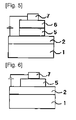
- the structure of the organic light emitting device according to the present invention is illustrated in FIGs. 2 to 6 .
- the organic light emitting device can be prepared by depositing a metal, a metal oxide having conductivity, or an alloy thereof on a substrate using a PVD (physical vapor deposition) process such as sputtering and e-beam evaporation to form an anode; forming an organic material layer comprising a hole injecting layer, a hole transporting layer, a light emitting layer, and an electron transporting layer on the anode; and depositing a material, which can be used as a cathode, thereon.
- the organic light emitting device can be prepared by sequentially depositing a cathode material, an organic material layer, and an anode material on a substrate.
- the organic material layer may be of a multilayer structure containing a hole injecting layer, a hole transporting layer, a light emitting layer, an electron transporting layer, and the like, but not limited thereto, and may be of a monolayer structure. Further, the organic material layer can be produced to have a fewer number of layers, by using a variety of polymeric materials, by means of a solvent process rather than a deposit process, such as spin coating, dip coating, doctor blading, screen printing, ink jet printing, and heat transfer processes.
- the anode material is preferably a material having a large work function to facilitate hole injection usually to an organic material layer.
- Specific examples of the anode material which can be used in the present invention include metals such as vanadium, chromium, copper, zinc and gold, or an alloy thereof; metal oxides such as zinc oxide, indium oxide, indium-tin oxide (ITO), and indium zinc oxide (IZO); a combination of a metal and an oxide such as ZnO:Al and SnO 2 :Sb; conductive polymers such as poly(3-methylthiophene), poly[3,4-(ethylene-1,2-dioxy)thiophene] (PEDT), polypyrrole, and polyaniline, but not limited thereto.
- the cathode material is preferably a material having a small work function to facilitate electron injection usually to an organic material layer.
- Specific examples of the cathode material include metals such as magnesium, calcium, sodium, potassium, titanium, indium, yttrium, lithium, gadolinium, aluminum, silver, tin and lead, or an alloy thereof; multilayer structure materials such as LiF/Al and LiO 2 /Al, but not limited thereto.
- the following materials can be used for a hole injecting material, a hole transporting material, a light emitting material, and electron transporting material.
- the hole injecting material is a material facilitating hole injection from an anode at low voltage.
- the HOMO (highest occupied molecular orbital) level of the hole injecting material is preferably located between the work function of the anode materials and the HOMO level of its neighboring organic material layer.
- Specific examples of the hole injecting material include organic materials of metal porphyrin, oligothiophene, and arylamine series, organic materials of hexanitrile hexaazatriphenylene and quinacridone series, organic materials of perylene series, and conductive polymers of anthraquinone, polyaniline, and polythiophene series, but are not limited thereto.
- the hole transporting material is preferably a material having high hole mobility, which can transfer holes from the anode or the hole injecting layer toward the light emitting layer.
- Specific examples thereof include organic materials of arylamine series, conductive polymers, and block copolymers having both conjugated portions and nonconjugated portions, but are not limited thereto.
- the light emitting material are a material capable of emitting visible light by accepting and recombining holes from the hole transporting layer and electrons from the electron transporting layer, preferably a material having high quantum efficiency for fluorescence and phosphorescence.
- Specific examples thereof include 8-hydroxyquinoline aluminum complex (Alq 3 ); compounds of carbazole series; dimerized styryl compounds; BAlq; 10-hydroxybenzoquinoline-metal compounds; compounds of benzoxazole, benzthiazole, and benzimidazole series; polymers of poly(p-phenylenevinylene) (PPV) series; spiro compounds; and compounds of polyfluorene and rubrene series, but are not limited thereto.
- PV poly(p-phenylenevinylene)
- the electron transporting material is suitably a material having high electron mobility, which can transfer electrons from the cathode to the light emitting layer.
- a material having high electron mobility which can transfer electrons from the cathode to the light emitting layer.
- Specific examples thereof include 8-hydroxyquinoline aluminum complex (Alq 3 ); complexes including Alq ; organic radical compounds; and hydroxyflavone-metal complexes, but are not limited thereto.
- the organic light emitting device according to the invention may be of a front-side, backside or double-sided light emission according to the materials used.
- the compound according to the invention can function in an organic electronic device including an organic solar cell, an organic photoconductor, and an organic transistor, according to a principle similar to that applied to the organic light emitting device.
- the compoundB (2.2 g, 9.4 mmol) and 4-hydroxyphenylboronic acid (1.3 g, 9.4 mmol) were dissolved in tetrahydrofuran (90 mL), and then 2M K 2 CO 3 (90 mL) was added thereto. Temperature was increased to 50°C, and then tetrabistriphenylphosphinopalladium(Pd(PPh 3 ) 4 )(108 mg, 9.4 ⁇ 10 -2 mmol) was added thereto, and temperature was increased to 65°C, followed by stirring for 1 hr. Temperature was reduced to room temperature, and then an aqueous layer was removed.
- a compound C was obtained in the same manner as in the preparation method of compound A, except for using 2-naphthylboronic acid instead of phenylboronic acid.
- a compound D was obtained in the same manner as in the preparation method of compound B, except for using the compound C instead of the compound A.
- a ligand 2 was obtained in the same manner as in the preparation method of ligand 1, except for using the compound D instead of the compound B.
- a ligand 3 was obtained in the same manner as in the preparation method of ligand 1, except for using the compound E instead of the compound B.
- An aluminum complex compound of Formula 1-46 was obtained in the same manners as in Example 1, except for using the ligand 2 prepared in Preparation Example 2 instead of the ligand 1 of Example 1.
- the aluminum complex represented by Formula 1-46 was analyzed by NMR and MS analysis.
- An aluminum complex compound of Formula 1-143 was obtained in the same manners as in Example 1, except for using the ligand 3 prepared in Preparation Example 3 instead of the ligand 1 of Example 1.
- a glass substrate (Coming 7059 glass) on which a thin film of ITO (indium tin oxide) was coated to a thickness of 1000 ⁇ was immersed in distilled water containing a detergent to wash the substrate with ultrasonic waves.
- the detergent was a product commercially available from Fisher Co. and the distilled water has been filtered previously by using a filter commercially available from Millipore Co.
- ITO was washed for 30 minutes, and then washing with ultrasonic waves was repeated twice for 10 minutes by using distilled water. After the completion of washing with distilled water, washing with ultrasonic waves was carried out by using solvents such as isopropyl alcohol, acetone and methanol.
- HAT hexanitrile hexaazatriphenylene
- an aluminum complex represented by Formula 1-38 was doped with Btp2Ir(acac) (4%), and vacuum-deposited to form a red light emitting layer.
- Alq was sequentially vacuum-deposited to a thickness of 200 ⁇ thus to form an electron transporting layer.
- lithium fluoride (LiF) and aluminum were sequentially vacuum-deposited to a thickness of 12 ⁇ and 2000 ⁇ respectively.
- a cathode was formed to prepare an organic light emitting device.
- the deposition rate of the organic material was maintained at 0.4 to 0.7 ⁇ /sec and the deposition rates of lithium fluoride and aluminum of the cathode were maintained at 0.3 ⁇ /sec and 2 ⁇ /sec, respectively.
- the vacuum degree during deposition was maintained at 2 ⁇ 10 -7 ⁇ 5 ⁇ 10 -8 torr.
- a glass substrate (Corning 7059 glass) on which a thin film of ITO (indium tin oxide) was coated to a thickness of 1000 ⁇ was immersed in distilled water containing a detergent to wash the substrate with ultrasonic waves.
- the detergent was a product commercially available from Fisher Co. and the distilled water has been filtered previously by using a filter commercially available from Millipore Co.
- ITO was washed for 30 minutes, and then washing with ultrasonic waves was repeated twice for 10 minutes by using distilled water. After the completion of washing with distilled water, washing with ultrasonic waves was carried out by using solvents such as isopropyl alcohol, acetone and methanol.
- hexanitrile hexaazatriphenylene 500 ⁇
- 4,4'-bis[N-(1-naphthyl)-N-phenylamino] biphenyl 400 ⁇
- the following BAlq compound doped with 4% Btp2Ir(acac) 300 ⁇
- Alq 3 200 ⁇
- lithium fluoride (LiF) and aluminum were sequentially vacuum-deposited to a thickness of 12 ⁇ and 2000 ⁇ respectively.
- a cathode was formed to prepare an organic light emitting device.
- the deposition rate of the organic material was maintained at 0.4 to 0.7 ⁇ /sec and the deposition rates of lithium fluoride and aluminum of the cathode were maintained at 0.3 ⁇ /sec and 2 ⁇ /sec, respectively.
- the vacuum degree during deposition was maintained at 2 ⁇ 10 -7 ⁇ 5 ⁇ 10 -8 torr.
Landscapes
- Chemical & Material Sciences (AREA)
- Organic Chemistry (AREA)
- Engineering & Computer Science (AREA)
- Materials Engineering (AREA)
- Inorganic Chemistry (AREA)
- Electroluminescent Light Sources (AREA)
- Photovoltaic Devices (AREA)
- Photoreceptors In Electrophotography (AREA)
Description
- The present invention relates to a novel organic metal complex derivative and an organic light emitting device using the same.
- This application claims priority benefits from Korean Patent Application No.
10-2007-0057103, filed on June 12, 2007 - In general, the term "organic light emitting phenomenon" refers to a phenomenon in which electric energy is converted to light energy by means of an organic material. The organic light emitting device using the organic light emitting phenomenon has a structure usually comprising an anode, a cathode and an organic material layer interposed therebetween. Herein, the organic material layer may be mostly formed in a multilayer structure comprising layers of different materials, for example, a hole injecting layer, a hole transporting layer, a light emitting layer, an electron transporting layer, an electron injecting layer and the like, in order to improve efficiency and stability of the organic light emitting device. In the organic light emitting device having such a structure, when a voltage is applied between two electrodes, holes from the anode and electrons from a cathode are injected into the organic material layer, the holes and the electrons injected are combined together to form excitons. Further, when the excitons drop to a ground state, lights are emitted. Such the organic light emitting device is known to have characteristics such as self-luminescence, high brightness, high efficiency, low drive voltage, wide viewing angle, high contrast, and high-speed response.
- The materials used for the organic material layer of the organic light emitting device can be classified into a light emitting material and a charge transporting material, for example, a hole injecting material, a hole transporting material, an electron transporti ng material, and an electron injecting material, according to their functions. The light emitting material can be classified into a high molecular weight type and a low molecular weight type, according to their molecular weight, and divided into a fluorescent material from singlet excited states and a phosphorescent material from triplet excited states according to their light emitting mechanism. Further, the light emitting material can be classified into a blue, green, or red light emitting material and a yellow or orange light emitting material required for giving more natural color, according to a light emitting color.
- On the other hand, an efficiency of a device is lowered owing to maximum luminescence wavelength moved to a longer wavelength due to the interaction between the molecules, the deterioration of color purity and the reduction in light emitting efficiency when only one material is used for the light emitting material, and therefore a host/dopant system can be used as the light emitting material for the purpose of enhancing the color purity and the light emitting efficiency through energy transfer. It is based on the principle that if a small amount of a dopant having a smaller energy band gap than a host which forms a light emitting layer, excitons which are generated in the light emitting layer are transported to the dopant, thus emitting a light having a high efficiency. Here, since the wavelength of the host is moved according to the wavelength of the dopant, a light having a desired wavelength can be obtained according the kind of the dopant.
- In order to allow the organic light emitting device to fully exhibit the above-mentioned excellent characteristics, a material constituting the organic material layer in the device, for example, a hole injecting material, a hole transporting material, a light emitting material, an electron transporting material, and an electron injecting material should be essentially composed of a stable and efficient material. However, the development of a stable and efficient organic material layer material for the organic light emitting device has not yet been fully realized. Accordingly, the development of new materials is continuously desired. The development of such a material is equally required to the above-mentioned other organic electronic devices.
- POLYHEDRON, 2003, 22(21), 2943-2952 discloses [C6H4O{CH=NPh}]2Al{ON=CMeC4H3S} which differ from a compound of formula I wherein Y is N-phenylsalicylideneiminato (a bidentate Schiff base), n is 2, L is -O-A-C4H3S only in that A is -N=CMe- instead of a direct bond, an aryl or an aryl-aryl optionally substituted group. No mention of the optic properties of said complex is made.
-
US 2003/040627 A1 disclose the use of aluminum tris(8-hydroxyquinoline) (Alq3) as an electron injection layer in a light emitting device. - The present inventors have synthesized an organic metal complex derivative having a novel structure, and they found that the derivative exhibits the effect of reducing voltage in an organic light emitting device.
- Accordingly, it is an object of the present invention to provide an organic metal complex derivative and an organic light emitting device using the same.
- The present invention provides an organic metal complex derivative according to
claim 1. - In addition, the present invention provides an organic electronic device according to
claim 5. - In addition, the present invention provides an organic light emitting device according to claim 7.
- Preferred embodiments are disclosed in the subclaims.
- The compound of the present invention is a novel organic metal complex derivative, and can be used for the organic material layer of an organic electronic device and organic light emitting device.
-
-
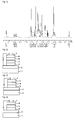
FIG. 1 is a 1H-NMR graph according to Formula 1-38 of the present invention, and -
FIGs. 2 to 6 are cross-sectional views illustrating the structure of the organic light emitting device according to the present invention. -
- 1: substrate 2: Anode
- 3: Hole injecting layer 4: Hole transporting layer
- 5: Light emitting layer 6: Electron transporting layer
- 7: Cathode
- Hereinafter, the present invention will be described in more detail.
- In Y of
Formula 1, the bidentate Schiff base ligand preferably includes a compound represented by the followingFormula 3.
- In Y of
Formula 1, the tetradentate Schiff base ligand is preferably a compound represented by the following Formula 4.
- wherein R4to R6 and R'4 to R'6 are the same as defined in R4 to R6 of
Formula 3, - E may be selected from the group consisting of a C1∼C40 alkylene group unsubstituted or substituted with one or more groups selected from the group consisting of halogen, deuterium, a nitrile group, a nitro group, a C1∼C40 alkyl group, a C2 ∼C40 alkenyl group, a C1∼C40 alkoxy group, a C3∼C40 cycloalkyl group, a C2∼C40 heterocycloalkyl group, a C6∼C40 aryl group and a C5∼C40 heteroaryl group; a C5∼C40 cycloalkylene group unsubstituted or substituted with one or more groups selected from the group consisting of halogen, deuterium, a nitrile group, a nitro group, a C1∼C40 alkyl group, a C2∼C40 alkenyl group, a C1∼C40 alkoxy group, a C3∼C40 cycloalkyl group, a C2∼C40 heterocycloalkyl group, a C6∼C40 aryl group and a C5∼C40 heteroaryl group; a C2∼C40 heterocycloalkylene group unsubstituted or substituted with one or more groups selected from the group consisting of halogen, deuterium, a nitrile group, a nitro group, a C10∼C40 alkyl group, a C2∼C40 alkenyl group, a C1∼C40 C1∼C40 alkoxy group, a C3∼C40 cycloalkyl group, a C2~C40 heterocycloalkyl group, a C6∼C40 aryl group, and a C5~C40 heteroaryl group; a C2∼C40 alkenylene group unsubstituted or substituted with one or more groups selected from the group consisting of halogen, deuterium, a nitrile group, a nitro group, a C1~C40 alkyl group, a C1∼C40 alkenyl group, a C1C2∼40 alkoxy group, a C3∼C40 cycloalkyl group, a C2∼C40 heterocycloalkyl group, a C6∼C40 aryl group and a C5∼C40 heteroaryl group; a C6~C40 arylene group unsubstituted or substituted with one or more groups selected from the group consisting of halogen, deuterium, a nitrile group, a nitro group, a C1∼C40 alkyl group, a C2∼C40 alkenyl group, a C1∼C40 alkoxy group, a C2∼C40 cycloalkyl group, a C2∼C40 heterocycloalkyl group, a C6∼C40 aryl group and a C5~C40 heteroaryl group; and a C5∼C40 heteroarylene group un-substituted or substituted with one or more groups selected from the group consisting of halogen, deuterium, a nitrile group, a nitro group, a C1∼C40 alkyl group, a C2∼40 alkenyl group, a C1∼C40 alkoxy group, a C2∼40 cycloalkyl group, a C2∼40 heterocycloalkyl group, a C C2∼40 aryl group and a C5∼C40 heteroaryl group, or may form an aliphatic, aromatic, heteroaliphatic, or heteroaromatic condensed ring or a spiro bond, together with the adjacent group.
- In particular, the organic metal complex derivative represented by
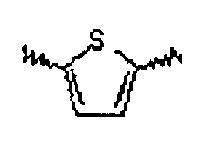
Formula 1 according to the present invention is selected from the group consisting of the following Formulae 1-1 to 1-210. In this connection, Y is a hydroxyaryl-N-hetero ring - Table 1
[Table 1] Formula M A B 1 C 1-2 Al direct bond 
1 D 1-3 Al direct bond 
1 
1-4 Al direct bond 
1 
1-5 Al direct bond 
1 
1-6 Al direct bond 
1 
1-7 Al direct bond 
1 
1-8 Al direct bond 
1 
1-9 Al direct bond 
1 
1-10 Al direct bond 
1 
1-11 Al direct bond 
1 
1-12 Al direct bond 
1 
1-13 Al direct bond 
1 
1-14 Al direct bond 
1 
1-15 Al direct bond 
1 
1-16 Al direct bond 
1 
1-17 Al direct bond 
1 
1-18 Al direct bond 
1 
1-19 Al direct bond 
1 
1-20 Al direct bond 
1 
1-21 Al direct bond 
1 
1-22 Al direct bond 
1 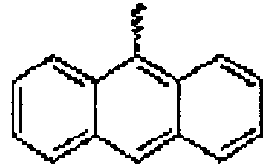
1-23 Al direct bond 
1 
1-24 Al direct bond 
1 
1-25 Al direct bond 
1 
1-26 Al direct bond 
1 
1-27 Al direct bond 
1 
1-28 Al direct bond 
1 
1-29 Al direct bond 
1 
1-30 Al direct bond 
1 
1-31 Al direct bond 
1 
1-32 Al direct bond 
1 
1-33 Al direct bond 
1 
1-34 Al direct bond 
1 
1-35 Al direct bond 
1 
1-37 Al 

1 D 1-38 Al 

1 
1-39 Al 

1 
1-40 Al 

1 
1-41 Al 

1 
1-42 Al 

1 
1-43 Al 

1 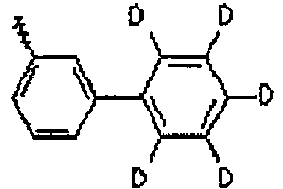
1-44 Al 

1 
1-45 Al 

1 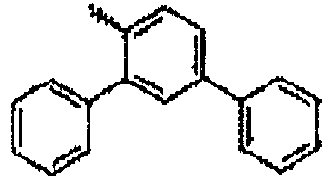
1-46 Al 

1 
1-47 Al 

1 
1-48 Al 

1 
1-49 Al 

1 
1-50 Al 

1 
1-51 Al 

1 
1-52 Al 

1 
1-53 Al 

1 
1-54 Al 

1 
1-55 Al 

1 
1-56 Al 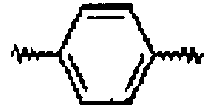

1 
1-57 Al 

1 
1-58 Al 

1 
1-59 Al 

1 
1-60 Al 

1 
1-61 Al 

1 
1-62 Al 

1 
1-63 Al 

1 
1-64 Al 

1 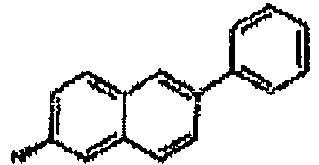
1-65 Al 

1 
1-66 Al 

1 
1-67 Al 

1 
1-68 Al 

1 
1-69 Al 

1 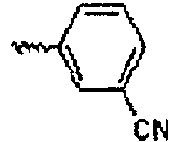
1-70 Al 

1 
1-72 Al 

1 D 1-73 Al 

1 
1-74 Al 

1 
1-75 Al 

1 
1-76 Al 

1 
1-77 Al 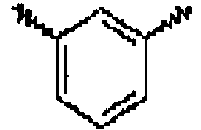

1 
1-78 Al 

1 
1-79 Al 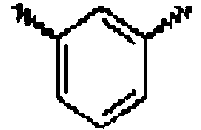

1 
1-80 Al 

1 
1-81 Al 

1 
1-82 Al 

1 
1-83 Al 

1 
1-84 Al 

1 
1-85 Al 

1 
1-86 Al 

1 
1-87 Al 

1 
1-88 Al 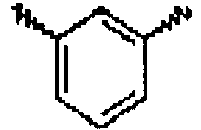

1 
1-89 Al 

1 
1-90 Al 

1 
1-91 Al 

1 
1-92 Al 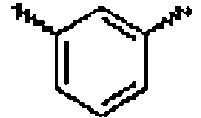

1 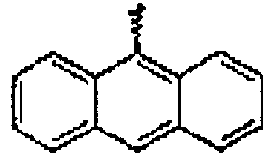
1-93 Al 

1 
1-94 Al 

1 
1-95 Al 

1 
1-96 Al 

1 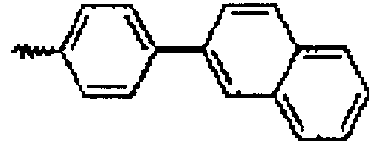
1-97 Al 

1 
1-98 Al 

1 
1-99 Al 

1 
1-100 Al 

1 
1-101 Al 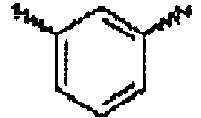

1 
1-102 Al 

1 
1-103 Al 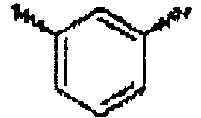

1 
1-104 Al 

1 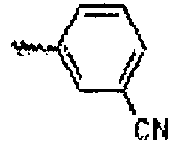
1 -105 Al 

1 
1-107 Al 

1 D 1-108 Al 

1 
1-109 Al 

1 
1-110 Al 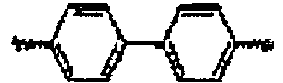

1 
1-111 Al 

1 
1-112 Al 

1 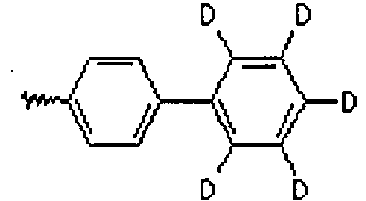
1-113 Al 

1 
1-114 Al 

1 
1-115 Al 

1 
1-116 Al 

1 
1-117 Al 

1 
1-118 Al 

1 
1-119 Al 

1 
1-120 Al 

1 
1-121 Al 

1 
1-122 Al 

1 
1-123 Al 

1 
1-124 Al 

1 
1-125 Al 

1 
1-126 Al 

1 
1-127 Al 

1 
1-128 Al 

1 
1-129 Al 

1 
1-130 Al 

1 
1-131 Al 

1 
1-132 Al 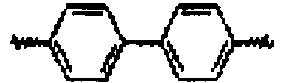

1 
1-133 Al 

1 
1-134 Al 

1 
1-135 Al 

1 
1-136 Al 

1 
1-137 Al 

1 
1-138 Al 

1 
1-139 Al 

1 
1-140 Al 

1 
1-142 Al 

1 D 1-143 Al 

1 
1-144 Al 
1 
1-145 Al 

1 
1-146 Al 

1 
1-147 Al 

1 
1-148 Al 

1 
1-149 Al 

1 
1-150 Al 

1 
1-151 Al 

1 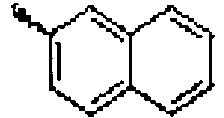
1-152 Al 

1 
1-153 Al 

1 
1-154 Al 

1 
1-155 Al 

1 
1-156 Al 

1 
1-157 Al 

1 
1-158 Al 

1 
1-159 Al 

1 
1-160 Al 

1 
1-161 Al 

1 
1-162 Al 

1 
1-163 Al 

1 
1-164 Al 

1 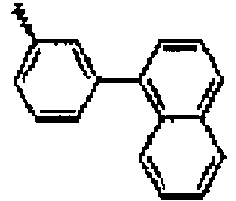
1-165 Al 

1 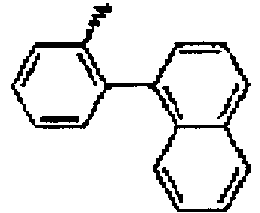
1-166 Al 

1 
1-167 Al 

1 
1-168 Al 

1 
1-169 Al 

1 
1-170 Al 

1 
1-171 Al 

1 
1-172 Al 

1 
1-173 Al 

1 
1-174 Al 

1 
1-175 Al 

1 
1-177 Al 
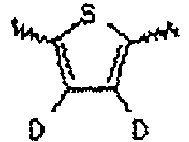
1 D 1-178 Al 

1 
1-179 Al 

1 
1-180 Al 

1 
1-181 Al 

1 
1-182 Al 

1 
1-183 Al 

1 
1-184 Al 

1 
1-185 Al 

1 
1-186 Al 

1 
1-187 Al 

1 
1-188 Al 

1 
1-189 Al 

1 
1-190 Al 

1 
1-191 Al 

1 
1-192 Al 

1 
1-193 Al 

1 
1-194 Al 

1 
1-195 Al 

1 
1-196 Al 

1 
1-197 Al 

1 
1-198 Al 

1 
1-199 Al 

1 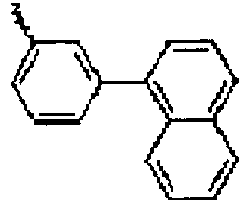
1-200 Al 

1 
1-201 Al 

1 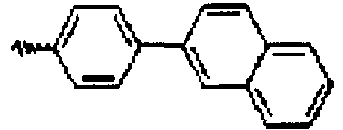
1-202 Al 

1 
1-203 Al 

1 
1-204 Al 

1 
1-205 Al 

1 
1-206 Al 

1 
1-207 Al 

1 
1-208 Al 

1 
1-209 Al 

1 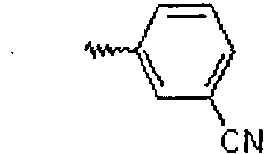
1-210 Al 

1 
- The organic metal complex derivative represented by Formula 1 of the present invention can be used due to its structural property as an organic material layer in an organic electronic device and organic light emitting device.
- The organic metal complex derivative according to the present invention can be applied to the organic light emitting device by a typical preparation method of organic light emitting device.
- In one embodiment of the present invention, the organic light emitting device has a structure comprising a first electrode, a second electrode, and organic material layers disposed therebetween, and can be prepared by using typical method and materials, except for using the organic metal complex derivative according to the present invention as the organic material layer of organic light emitting device. The structure of the organic light emitting device according to the present invention is illustrated in
FIGs. 2 to 6 . - For example, the organic light emitting device according to the present invention can be prepared by depositing a metal, a metal oxide having conductivity, or an alloy thereof on a substrate using a PVD (physical vapor deposition) process such as sputtering and e-beam evaporation to form an anode; forming an organic material layer comprising a hole injecting layer, a hole transporting layer, a light emitting layer, and an electron transporting layer on the anode; and depositing a material, which can be used as a cathode, thereon. Alternatively, the organic light emitting device can be prepared by sequentially depositing a cathode material, an organic material layer, and an anode material on a substrate.
- The organic material layer may be of a multilayer structure containing a hole injecting layer, a hole transporting layer, a light emitting layer, an electron transporting layer, and the like, but not limited thereto, and may be of a monolayer structure. Further, the organic material layer can be produced to have a fewer number of layers, by using a variety of polymeric materials, by means of a solvent process rather than a deposit process, such as spin coating, dip coating, doctor blading, screen printing, ink jet printing, and heat transfer processes.
- The anode material is preferably a material having a large work function to facilitate hole injection usually to an organic material layer. Specific examples of the anode material which can be used in the present invention include metals such as vanadium, chromium, copper, zinc and gold, or an alloy thereof; metal oxides such as zinc oxide, indium oxide, indium-tin oxide (ITO), and indium zinc oxide (IZO); a combination of a metal and an oxide such as ZnO:Al and SnO2 :Sb; conductive polymers such as poly(3-methylthiophene), poly[3,4-(ethylene-1,2-dioxy)thiophene] (PEDT), polypyrrole, and polyaniline, but not limited thereto.
- The cathode material is preferably a material having a small work function to facilitate electron injection usually to an organic material layer. Specific examples of the cathode material include metals such as magnesium, calcium, sodium, potassium, titanium, indium, yttrium, lithium, gadolinium, aluminum, silver, tin and lead, or an alloy thereof; multilayer structure materials such as LiF/Al and LiO2/Al, but not limited thereto.
- Generally, the following materials can be used for a hole injecting material, a hole transporting material, a light emitting material, and electron transporting material.
- The hole injecting material is a material facilitating hole injection from an anode at low voltage. The HOMO (highest occupied molecular orbital) level of the hole injecting material is preferably located between the work function of the anode materials and the HOMO level of its neighboring organic material layer. Specific examples of the hole injecting material include organic materials of metal porphyrin, oligothiophene, and arylamine series, organic materials of hexanitrile hexaazatriphenylene and quinacridone series, organic materials of perylene series, and conductive polymers of anthraquinone, polyaniline, and polythiophene series, but are not limited thereto.
- The hole transporting material is preferably a material having high hole mobility, which can transfer holes from the anode or the hole injecting layer toward the light emitting layer. Specific examples thereof include organic materials of arylamine series, conductive polymers, and block copolymers having both conjugated portions and nonconjugated portions, but are not limited thereto.
- The light emitting material are a material capable of emitting visible light by accepting and recombining holes from the hole transporting layer and electrons from the electron transporting layer, preferably a material having high quantum efficiency for fluorescence and phosphorescence. Specific examples thereof include 8-hydroxyquinoline aluminum complex (Alq3); compounds of carbazole series; dimerized styryl compounds; BAlq; 10-hydroxybenzoquinoline-metal compounds; compounds of benzoxazole, benzthiazole, and benzimidazole series; polymers of poly(p-phenylenevinylene) (PPV) series; spiro compounds; and compounds of polyfluorene and rubrene series, but are not limited thereto.
- The electron transporting material is suitably a material having high electron mobility, which can transfer electrons from the cathode to the light emitting layer. Specific examples thereof include 8-hydroxyquinoline aluminum complex (Alq3); complexes including Alq ; organic radical compounds; and hydroxyflavone-metal complexes, but are not limited thereto.
- The organic light emitting device according to the invention may be of a front-side, backside or double-sided light emission according to the materials used.
- The compound according to the invention can function in an organic electronic device including an organic solar cell, an organic photoconductor, and an organic transistor, according to a principle similar to that applied to the organic light emitting device.
- Hereinafter, the present invention will be described in detail in light of Examples. The present invention may, however, be embodied in many different forms and should not be construed as being limited to the Examples set forth herein. Rather, these Examples are provided such that this disclosure will be thorough and complete and will fully convey the concept of the present invention to those skilled in the art.
-

- 2-bromothiophene (1.7 g, 10.3 mmol) and phenylboronic acid (1.4 g, 11.4 mmol) were dissolved in tetrahydrofuran (20 mL), and then 2 M K CO3 (20 mL) was added 2 thereto. Temperature was increased to 50°C, and then tetrabistriphenylphosphinopalladium (Pd(PPh3)4) (120 mg, 0.1 mmol) was added thereto, and temperature was increased to 65°C, followed by stirring for 4 hrs. Temperature was reduced to room temperature, and then an aqueous layer was removed. An organic layer was dried over magnesium sulfate anhydride to remove residual water, and then filtered to remove magnesium sulfate anhydride. The solvent was completely removed from the organic layer by distillation under reduced pressure, and then hexane was added thereto at room temperature, followed by stirring for 10 min. The produced precipitate was filtered out, and the filtrate was cooled to -10°C, followed by slowly stirring for 1 hr. The produced precipitate was filtered out, and then the filtrate was dried under vacuum at room temperature to give a compound A (1.5 g) with a yield of 94%.
- The compoundA (1.5 g, 9.4 mmol) was completely dissolved in chloroform (100 mL ), and then N-bromosuccinimide (1.7 g, 9.4 mmol) was slowly added thereto, followed by stirring at room temperature for 30 min. The solvent was completely removed by distillation under reduced pressure, and then ethanol was added thereto at 0°C, followed by stirring for 20 min. The produced precipitate was filtered out, and then the filtrate was dried under vacuum at room temperature to give a compound B (2.2 g) with a yield of 100%.
- The compoundB (2.2 g, 9.4 mmol) and 4-hydroxyphenylboronic acid (1.3 g, 9.4 mmol) were dissolved in tetrahydrofuran (90 mL), and then 2M K2CO3 (90 mL) was added thereto. Temperature was increased to 50°C, and then tetrabistriphenylphosphinopalladium(Pd(PPh3)4)(108 mg, 9.4 × 10⁻² mmol) was added thereto, and temperature was increased to 65°C, followed by stirring for 1 hr. Temperature was reduced to room temperature, and then an aqueous layer was removed. An organic layer was dried over magnesium sulfate anhydride to completely remove residual water, and then filtered. The solvent was completely removed from the filtrate by distillation under reduced pressure, and then the resultant was added to chloroform (100 mL), and stirred under heating for 1 hr. Temperature was reduced to room temperature, and filtered, dried to give a ligand 1 (1.8 g) with a yield of 76%.
- MS: [M+H]+=252
-

- A compound C was obtained in the same manner as in the preparation method of compound A, except for using 2-naphthylboronic acid instead of phenylboronic acid.
- A compound D was obtained in the same manner as in the preparation method of compound B, except for using the compound C instead of the compound A.
- A
ligand 2 was obtained in the same manner as in the preparation method ofligand 1, except for using the compound D instead of the compound B. - MS: [M+H]+=303
-

- 2-bromo-6-naphthol (2 g, 9.0 mmol)), bis(pinacolato)diboron (2.5 g, 9.9 mmol), and potassium acetate (1.8 g, 17.9 mmol) were added to 1,4-dioxane (50 mL), and temperature was increased to 50°C. Then, palladium(diphenylphosphinoferrocene)chloride (73 mg, 9.0 × 10 -2 mmol) were added thereto, and the mixture was stirred under heating for 5 hrs. Temperature was reduced to room temperature, and the mixture was diluted with water (50 mL), and extracted with dichloromethane (3 × 50 mL). An organic extract was dried over magnesium sulfate anhydride, and concentrated under vacuum. The resultant was washed with ethanol, and dried under vacuum to give a compound E (1.2 g) with a yield of 79%.
- A
ligand 3 was obtained in the same manner as in the preparation method ofligand 1, except for using the compound E instead of the compound B. - MS: [M+H]+=303
-

- 1.9 M triethyl aluminum (1 equivalent) in toluene was added to anhydrous toluene, and then 8-hydroxyquinaldine (2 equivalents) in anhydrous toluene was slowly added thereto. Then, the mixture was stirred under heating until the color became transparent yellow. The ligand 1 (1 equivalent) prepared in Preparation Example 1 was dissolved in anhydrous toluene or anhydrous tetrahydrofuran, and then slowly added thereto, followed by stirring under heating for 1 to 4 hrs. Then, temperature was reduced to room temperature to produce the precipitate. Ethanol was added thereto, and then the precipitate was filtered. The filtered solid was recrystallized using dichloromethane or toluene and ethanol, and then dried under vacuum to obtain an aluminum complex. Th e aluminum complex represented by Formula 1-38 was analyzed by NMR and MS analysis.
- MS: [M-H]-=593, [M-L-H]-=341, [L-H]-=251; Tm: 109.4°C, Tg: 247.36°C
-

- An aluminum complex compound of Formula 1-46 was obtained in the same manners as in Example 1, except for using the
ligand 2 prepared in Preparation Example 2 instead of theligand 1 of Example 1. The aluminum complex represented by Formula 1-46 was analyzed by NMR and MS analysis. - MS: [M-H]-=645, [M-L-H]-=341, [L-H]-=302
-

- An aluminum complex compound of Formula 1-143 was obtained in the same manners as in Example 1, except for using the
ligand 3 prepared in Preparation Example 3 instead of theligand 1 of Example 1. - MS: [M-H]-=645, [M-L-H]-=341, [L-H]-=302
- A glass substrate (Coming 7059 glass) on which a thin film of ITO (indium tin oxide) was coated to a thickness of 1000Å was immersed in distilled water containing a detergent to wash the substrate with ultrasonic waves. At this time, the detergent was a product commercially available from Fisher Co. and the distilled water has been filtered previously by using a filter commercially available from Millipore Co. ITO was washed for 30 minutes, and then washing with ultrasonic waves was repeated twice for 10 minutes by using distilled water. After the completion of washing with distilled water, washing with ultrasonic waves was carried out by using solvents such as isopropyl alcohol, acetone and methanol.
- On the ITO electrode thus prepared, the following hexanitrile hexaazatriphenylene (HAT) (500Å) was vacuum-deposited to form a hole injecting layer.
-

- On the hole injecting layer, the following 4,4'-bis[N-(1-naphthyl)-N-phenylamino] biphenyl (NPB) (400Å) was vacuum-deposited to form a hole transporting layer.
-

- On the hole transporting layer, an aluminum complex represented by Formula 1-38 was doped with Btp2Ir(acac) (4%), and vacuum-deposited to form a red light emitting layer.
-

- On the red light emitting layer, Alq was sequentially vacuum-deposited to a thickness of 200 Å thus to form an electron transporting layer.
-

- On the electron transporting layer, lithium fluoride (LiF) and aluminum were sequentially vacuum-deposited to a thickness of 12Å and 2000Å respectively. A cathode was formed to prepare an organic light emitting device.
- In the above process, the deposition rate of the organic material was maintained at 0.4 to 0.7 Å/sec and the deposition rates of lithium fluoride and aluminum of the cathode were maintained at 0.3 Å/sec and 2 Å/sec, respectively. The vacuum degree during deposition was maintained at 2×10⁻⁷ ∼ 5×10⁻⁸ torr.
- When a forward electric field of 6.3 V was applied to the organic light emitting device as prepared above, red light emission of 12.1 cd/A was observed with x = 0.66, and y = 0.34 based on the 1931 CIE color coordinate at a current density of 25 mA/cm2
- A glass substrate (Corning 7059 glass) on which a thin film of ITO (indium tin oxide) was coated to a thickness of 1000 Å was immersed in distilled water containing a detergent to wash the substrate with ultrasonic waves. At this time, the detergent was a product commercially available from Fisher Co. and the distilled water has been filtered previously by using a filter commercially available from Millipore Co. ITO was washed for 30 minutes, and then washing with ultrasonic waves was repeated twice for 10 minutes by using distilled water. After the completion of washing with distilled water, washing with ultrasonic waves was carried out by using solvents such as isopropyl alcohol, acetone and methanol.
- On the ITO electrode, hexanitrile hexaazatriphenylene (500Å), and 4,4'-bis[N-(1-naphthyl)-N-phenylamino] biphenyl (NPB) (400Å), the following BAlq compound doped with 4% Btp2Ir(acac) (300Å), and Alq3 (200Å) were sequentially coated by thermal vacuum deposition to form a hole injecting layer, a hole transporting layer, a light emitting layer, and an electron transporting layer, respectively.
-

- On the electron transporting layer, lithium fluoride (LiF) and aluminum were sequentially vacuum-deposited to a thickness of 12 Å and 2000 Å respectively. A cathode was formed to prepare an organic light emitting device.
- In the above process, the deposition rate of the organic material was maintained at 0.4 to 0.7 Å/sec and the deposition rates of lithium fluoride and aluminum of the cathode were maintained at 0.3 Å/sec and 2 Å/sec, respectively. The vacuum degree during deposition was maintained at 2×10⁻⁷ ∼ 5×10⁻⁸ torr.
- When a forward electric field of 7.3 V was applied to the organic light emitting device as prepared above, red light emission of 10.7 cd/A was observed with x = 0.65, and y = 0.34 based on the 1931 CIE color coordinate at a current density of 25 mA/cm2
Claims (7)
- An organic metal complex derivative represented by the following Formula 1:
 wherein Y is a ligand consisting of 8-hydroxy-2-methylquinoline, a bidentate Schiff base ligand, or a tetradentate Schiff base ligand,n is 1 to 3,M is Al,L is
---O-A-[B]1-C
wherein 1 is 1,O is oxygen,A is selected from the group consisting of a direct bond; phenylene; biphenylene; naphthalene; and phenylene-naphthalene;B is a compound represented by the following Formula 2, wherein X is any one selected from -O- and -S-,R1 and R2 are the same as or different from each other, and are selected from the group consisting of hydrogen and deuterium, andC is selected from the group consisting of deuterium; and as follows:


- The organic metal complex derivative according to claim 1, wherein the bidentate Schiff base ligand is represented by the following Formula 3:

- The organic metal complex derivative according to claim 1, wherein the tetradentate Schiff base ligand is represented by the following Formula 4:
 wherein R4 to R6 and R'4 to R'6 are the same as or different from each other, and are selected from the group consisting of a C1∼C40 alkyl group unsubstituted or substituted with one or more groups selected from the group consisting of halogen, deuterium, an amino group, a nitrile group, a nitro group, a C1∼C40 alkyl group, a C2∼C40 alkenyl group, a C1∼C40 alkoxy group, a C3∼C40 cycloalkyl group, a C2∼C40 heterocycloalkyl group, a C6∼C40 aryl group and a C5∼C40 heteroaryl group; a C3∼C40 cycloalkyl group unsubstituted or substituted with one or more groups selected from the group consisting of halogen, deuterium, an amino group, a nitrile group, a nitro group, a C1∼C40 alkyl group, a C2∼C40 alkenyl group, a C1∼C40 alkoxy group, a C3∼C40 cycloalkyl group, a C2∼C40 heterocycloalkyl group, a C6∼C40 aryl group and a C5∼C40 heteroaryl group; a C2∼C40 heterocycloalkyl group unsubstituted or substituted with one or more groups selected from the group consisting of halogen, deuterium, an amino group, a nitrile group, a nitro group, a C1∼C40 alkyl group, a C2∼C40 alkenylgroup, a C1∼C40 alkoxy group, a C3∼C40 cycloalkyl group, a C2∼C40 heterocycloalkyl group, a C6∼C40 aryl group, and a C5∼C40 heteroaryl group; a C2∼C40 alkenyl group unsubstituted or substituted with one or more groups selected from the group consisting of halogen, deuterium, an amino group, a nitrile group, a nitro group, a C1∼C40 alkyl group, a C2∼C40 alkenyl group, a C1∼C40 alkoxy group, a C3∼C40 cycloalkyl group, a C2∼C40 heterocycloalkyl group, a C6∼C40 aryl group and a C5∼C40 heteroaryl group; a C1∼C40 alkoxy group unsubstituted or substituted with one or more groups selected from the group consisting of halogen, deuterium, an amino group, a nitrile group, a nitro group, a C1∼C40 alkyl group, a C2∼C40 alkenyl group, a C1∼C40 alkoxy group, a C3∼C40 cycloalkyl group, a C2∼C40 heterocycloalkyl group, a C6∼C40 aryl group and a C5∼C40 heteroaryl group; an amino group unsubstituted or substituted with one or more groups selected from the group consisting of halogen, deuterium, an amino group, a nitrile group, a nitro group, a C1∼C40 alkyl group, a C2∼C40 alkenyl group, a C1∼C40 alkoxy group, a C3∼C40 cycloalkyl group, a C2∼C40 heterocycloalkyl group, a C6∼C40 aryl group and a C5∼C40 heteroaryl group; a C6∼C40 aryl group unsubstituted or substituted with one or more groups selected from the group consisting of halogen, deuterium, an amino group, a nitrile group, a nitro group, a C1∼C40 alkyl group, a C2∼C40 alkenyl group, a C1∼C40 alkoxy group, a C3∼C40 cycloalkyl group, a C2∼C40 heterocycloalkyl group, a C6∼C40 aryl group and a C5∼C40 heteroaryl group; and a C5∼C40 heteroaryl group un- substituted or substituted with one or more groups selected from the group consisting of halogen, deuterium, an amino group, a nitrile group, a nitro group, a C1∼C40 alkyl group, a C2∼C40 alkenyl group, a C1∼C40 alkoxy group, a C3∼C40 cycloalkyl group, a C2∼C40 heterocycloalkyl group, a C6-C40 aryl group and a C5∼C40 heteroaryl group, or forms an aliphatic, aromatic, heteroaliphatic, or heteroaromatic condensed ring or a spiro bond, together with the adjacent group, andE is selected from the group consisting of a C1∼C40 alkylene group unsubstituted or substituted with one or more groups selected from the group consisting of halogen, deuterium, a nitrile group, a nitro group, a C1∼C40 alkyl group, a C2∼C40 alkenyl group, a C1∼C40 alkoxy group, a C3∼C40 cycloalkyl group, a C2∼C40 heterocycloalkyl group, a C6∼C40 aryl group and a C5∼C40 heteroaryl group; a C3∼C40 cylcloalkylene group unsubstituted or substituted with one or more groups selected from the group consisting of halogen, deuterium, a nitrile group, a nitro group, a C1∼C40 alkyl group, a C2∼C40 alkenyl group, a C1∼C40 alkoxy group, a C3∼C40 cycloalkyl group, a C2∼C40 heterocycloalkyl group, a C6∼C40 aryl group and a C5∼C40 heteroaryl group; a C2∼C40 heterocycloalkylene group unsubstituted or substituted with one or more groups selected from the group consisting of halogen, deuterium, an amino group, a nitrile group, a nitro group, a C1∼C40 alkyl group, a C2∼C40 alkenylgroup, a C1∼C40 alkoxy group, a C3∼C40 cycloalkyl group, a C2∼C40 hetero- cycloalkyl group, a C6∼C40 aryl group, and a C5∼C40 heteroaryl group; a C2∼C40 alkenyl group unsubstituted or substituted with one or more groups selected from the group consisting of halogen, deuterium, a nitrile group, a nitro group, a C1∼C40 alkyl group, a C2∼C40 alkenyl group, a C1∼C40 alkoxy group, a C3∼C40 cycloalkyl group, a C2∼C40 heterocycloalkyl group, a C6∼C40 aryl group and a C5∼C40 heteroaryl group; a C6∼C40 arylene group unsubstituted or substituted with one or more groups selected from the group consisting of halogen, deuterium, a nitrile group, a nitro group, a C1∼C40 alkyl group, a C2∼C40 alkenyl group, a C1∼C40 alkoxy group, a C3∼C40 cycloalkyl group, a C3∼C40 heterocycloalkyl group, a C6∼C40 aryl group and a C5∼C40 heteroaryl group; and a C5∼C40 heteroarylene group un- substituted or substituted with one or more groups selected from the group consisting of halogen, deuterium, a nitrile group, a nitro group, a C1∼C40 alkyl group, a C2∼C40 alkenyl group, a C1∼C40 alkoxy group, a C3∼C40 cycloalkyl group, a C2∼C40 heterocycloalkyl group, a C6∼C40 aryl group and a C5∼C40 heteroaryl group, or forms an aliphatic, aromatic, heteroaliphatic, or heteroaromatic condensed ring or a spiro bond, together with the adjacent group.
 - The organic metal complex derivative according to claim 1, wherein the organic metal complex derivative represented by Formula 1 is selected from the group consisting of the following Formulae 1-1 to 1-210:
Formula M A B 1 C 1-1 Al direct bond 
1 H 1-2 Al direct bond 
1 D 1-3 Al direct bond 
1 
1-4 Al direct bond 
1 
1-5 Al direct bond 
1 
1-6 Al direct bond 
1 
1-7 Al direct bond 
1 
1-8 Al direct bond 
1 
1-9 Al direct bond 
1 
1-10 Al direct bond 
1 
1-11 Al direct bond 
1 
1-12 Al direct bond 
1 
1-13 Al direct bond 
1 
1-14 Al direct bond 
1 
1-15 Al direct bond 
1 
1-16 Al direct bond 
1 
1-17 Al direct bond 
1 
1-18 Al direct bond 
1 
1-19 Al direct bond 
1 
1-20 Al direct bond 
1 
1-21 Al direct bond 
1 
1-22 Al direct bond 
1 
1-23 Al direct bond 
1 
1-24 Al direct bond 
1 
1-25 Al direct bond 
1 
1-26 Al direct bond 
1 
1-27 Al direct bond 
1 
1-28 Al direct bond 
1 
1-29 Al direct bond 
1 
1-30 Al direct bond 
1 
1-31 Al direct bond 
1 
1-32 Al direct bond 
1 
1-33 Al direct bond 
1 
1-34 Al direct bond 
1 
1-35 Al direct bond 
1 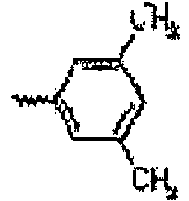
1-37 Al 

1 D 1-38 Al 

1 
1-39 Al 

1 
1-40 Al 

1 
1-41 Al 

1 
1-42 Al 

1 
1-43 Al 

1 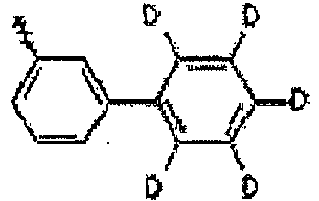
1-44 Al 

1 
1-45 Al 

1 
1-46 Al 

1 
1-47 Al 

1 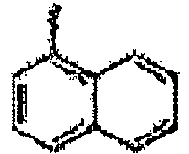
1-48 Al 

1 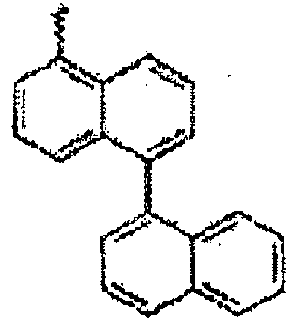
1-49 Al 

1 
1-50 Al 

1 
1-51 Al 

1 
1-52 Al 

1 
1-53 Al 

1 
1-54 Al 

1 
1-55 Al 

1 
1-56 Al 

1 
1-57 Al 

1 
1-58 Al 

1 
1-59 Al 

1 
1-60 Al 

1 
1-61 Al 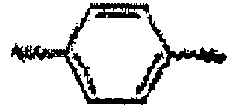

1 
1-62 Al 

1 
1-63 Al 

1 
1-64 Al 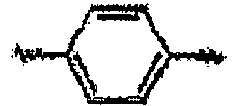

1 
1-65 Al 

1 
1-66 Al 

1 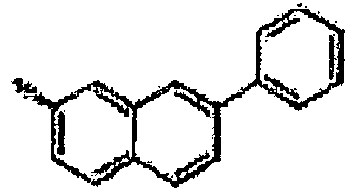
1-67 Al 

1 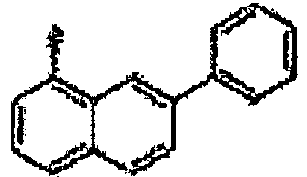
1-68 Al 

1 
1-69 Al 

1 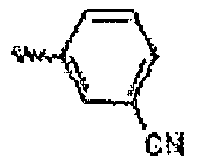
1-70 Al 

1 
1-72 Al 

1 D 1-73 Al 

1 
1-74 Al 

1 
1-75 Al 

1 
1-76 Al 

1 
1-77 Al 

1 
1-78 Al 

1 
1-79 Al 

1 
1-80 Al 

1 
1-81 Al 

1 
1-82 Al 

1 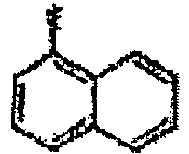
1-83 Al 

1 
1-84 Al 

1 
1-85 Al 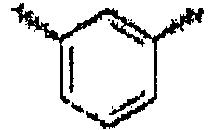

1 
1-86 Al 

1 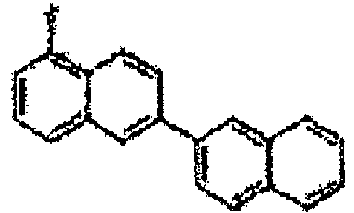
1-87 Al 

1 
1-88 Al 

1 
1-89 Al 

1 
1-90 Al 

1 
1-91 Al 

1 
1-92 Al 

1 
1-93 Al 

1 
1-94 Al 

1 
1-95 Al 

1 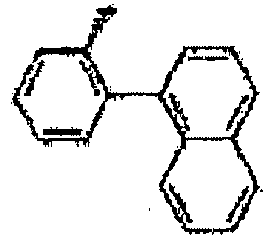
1-96 Al 

1 
1-97 Al 

1 
1-98 Al 

1 
1-99 Al 

1 
1-100 Al 

1 
1-101 Al 

1 
1-102 Al 

1 
1-103 Al 

1 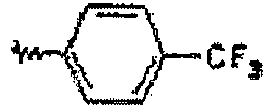
1-104 Al 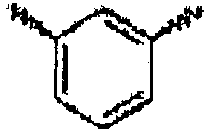

1 
1-105 Al 

1 
1-107 Al 

1 D 1-108 Al 

1 
1-109 Al 

1 
1-110 Al 

1 
1-111 Al 

1 
1-112 Al 

1 
1-113 Al 

1 
1-114 Al 

1 
1-115 Al 

1 
1-116 Al 

1 
1-117 Al 

1 
1-118 Al 

1 
1-119 Al 

1 
1-120 Al 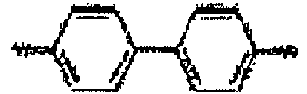

1 
1-121 Al 

1 
1-122 Al 

1 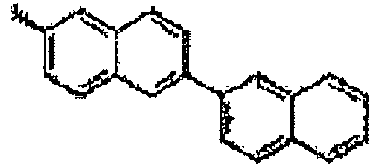
1-123 Al 

1 
1-124 Al 

1 
1-125 Al 

1 
1-126 Al 

1 
1-127 Al 

1 
1-128 Al 

1 
1-129 Al 

1 
1-130 Al 

1 
1-131 Al 

1 
1-132 Al 

1 
1-133 Al 

1 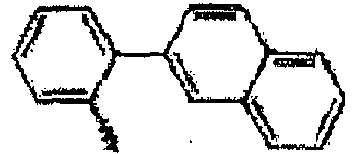
1-134 Al 

1 
1-135 Al 

1 
1-136 Al 

1 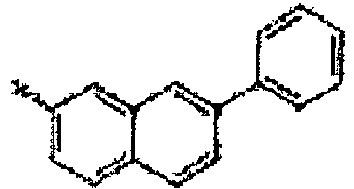
1-137 Al 

1 
1-138 Al 

1 
1-139 Al 

1 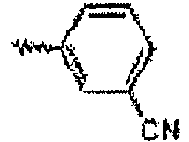
1-140 Al 

1 
1-142 Al 

1 D 1-143 Al 

1 
1-144 Al 

1 
1-145 Al 

1 
1-146 Al 

1 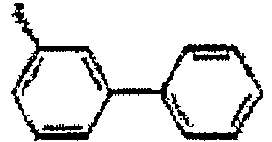
1-147 Al 

1 
1-148 Al 

1 
1-149 Al 

1 
1-150 Al 

1 
1-151 Al 

1 
1-152 Al 

1 
1-153 Al 

1 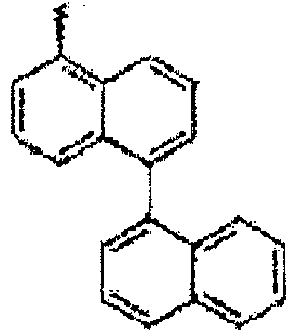
1-154 Al 

1 
1-155 Al 

1 
1-156 Al 

1 
1-157 Al 

1 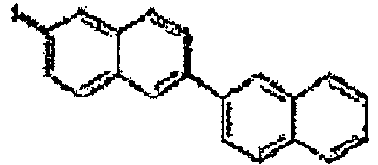
1-158 Al 

1 
1-159 Al 

1 
1-160 Al 

1 
1-161 Al 

1 
1-162 Al 

1 
1-163 Al 

1 
1-164 Al 

1 
1-165 Al 

1 
1-166 Al 

1 
1-167 Al 

1 
1-168 Al 

1 
1-169 Al 

1 
1-170 Al 

1 
1-171 Al 

1 
1-172 Al 

1 
1-173 Al 

1 
1-174 Al 

1 
1-175 Al 

1 
1-177 Al 

1 D 1-178 Al 

1 
1-179 Al 

1 
1-180 Al 

1 
1-181 Al 

1 
1-182 Al 

1 
1-183 Al 

1 
1-184 Al 

1 
1-185 Al 

1 
1-186 Al 

1 
1-187 Al 

1 
1-188 Al 

1 
1-189 Al 

1 
1-190 Al 

1 
1-191 Al 

1 
1-192 Al 

1 
1-193 Al 

1 
1-194 Al 

1 
1-195 Al 

1 
1-196 Al 

1 
1-197 Al 

1 
1-198 Al 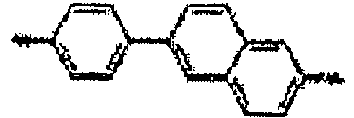

1 
1-199 Al 

1 
1-200 Al 

1 
1-201 Al 

1 
1-202 Al 

1 
1-203 Al 

1 
1-204 Al 

1 
1-205 Al 

1 
1-206 Al 

1 
1-207 Al 

1 
1-208 Al 

1 
1-209 Al 

1 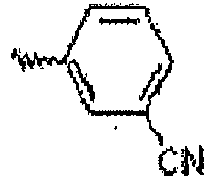
1-210 Al 

1 
- An organic electronic device comprising a first electrode, a second electrode, and one or more organic material layers disposed therebetween, wherein at least one layer of the organic material layers contains a light-emitting layer, the light-emitting layer comprises the organic metal complex derivative of any one of claims 1 to 4,
- The organic electronic device according to claim 5, wherein the organic electronic device is selected from the group consisting of an organic photovoltaic cell, an organic photoconductor (OPC), and an organic transistor.
- An organic light emitting device having a forward structure which is prepared by sequentially depositing an anode, one or more organic material layers, and a cathode on a substrate, or having a reverse structure which is prepared by sequentially depositing a cathode, one or more organic material layers, and an anode on a substrate, wherein at least one layer of the organic material layers comprises the organic metal complex derivative of any one of claims 1 to 4.
Applications Claiming Priority (2)
| Application Number | Priority Date | Filing Date | Title |
|---|---|---|---|
| KR20070057103 | 2007-06-12 | ||
| PCT/KR2008/003308 WO2008153338A2 (en) | 2007-06-12 | 2008-06-12 | Organic metal complexes derivative and organic light emitting devices using the same |
Publications (3)
| Publication Number | Publication Date |
|---|---|
| EP2155760A2 EP2155760A2 (en) | 2010-02-24 |
| EP2155760A4 EP2155760A4 (en) | 2012-02-01 |
| EP2155760B1 true EP2155760B1 (en) | 2014-03-05 |
Family
ID=40130318
Family Applications (1)
| Application Number | Title | Priority Date | Filing Date |
|---|---|---|---|
| EP08766270.6A Active EP2155760B1 (en) | 2007-06-12 | 2008-06-12 | Organic metal complexes derivative and organic light emitting devices using the same |
Country Status (6)
| Country | Link |
|---|---|
| US (1) | US8846212B2 (en) |
| EP (1) | EP2155760B1 (en) |
| JP (1) | JP5276097B2 (en) |
| KR (1) | KR100951765B1 (en) |
| CN (1) | CN101679459B (en) |
| WO (1) | WO2008153338A2 (en) |
Families Citing this family (12)
| Publication number | Priority date | Publication date | Assignee | Title |
|---|---|---|---|---|
| KR100963378B1 (en) * | 2007-08-31 | 2010-06-14 | 주식회사 엘지화학 | Organometallic Complex Derivatives and Organic Light-Emitting Devices Using the Same |
| TW200948929A (en) * | 2008-02-22 | 2009-12-01 | Toyo Ink Mfg Co | Material for organic electro-luminescence element and organic electro-luminescence element |
| DE102012209520A1 (en) * | 2012-06-06 | 2013-12-12 | Osram Opto Semiconductors Gmbh | Metal complexes as p-dopants for organic electronic matrix materials |
| KR102026645B1 (en) * | 2013-02-07 | 2019-09-30 | 덕산네오룩스 주식회사 | Compound for an organic electronic element, organic electronic element using the same, and an electronic device thereof |
| US9735373B2 (en) | 2013-06-10 | 2017-08-15 | Universal Display Corporation | Organic electroluminescent materials and devices |
| KR101974184B1 (en) | 2016-07-29 | 2019-04-30 | 주식회사 엘지화학 | Metal-organic hybrid struc-tures built with multi-directional polydentate ligands |
| JP6675771B2 (en) | 2016-07-29 | 2020-04-01 | エルジー・ケム・リミテッド | Multidirectional ligands for organometallic complexes |
| KR102156494B1 (en) | 2018-03-08 | 2020-09-16 | 주식회사 엘지화학 | Organometallic compound and organic light emitting device comprising same |
| CN108461640B (en) * | 2018-03-16 | 2020-01-31 | 中国科学院长春应用化学研究所 | Crystalline organic electroluminescent diode and application thereof |
| KR102202771B1 (en) | 2018-04-25 | 2021-01-14 | 주식회사 엘지화학 | Compound and organic light emitting device comprising same |
| JP7847734B2 (en) * | 2023-03-13 | 2026-04-20 | Jsr株式会社 | Film forming method |
| JP2024129739A (en) * | 2023-03-13 | 2024-09-27 | Jsr株式会社 | Film formation method |
Family Cites Families (13)
| Publication number | Priority date | Publication date | Assignee | Title |
|---|---|---|---|---|
| US5150006A (en) * | 1991-08-01 | 1992-09-22 | Eastman Kodak Company | Blue emitting internal junction organic electroluminescent device (II) |
| JP2982699B2 (en) | 1995-08-04 | 1999-11-29 | 東洋インキ製造株式会社 | Material for forming electron injection layer of multilayer organic electroluminescence device |
| US6001284A (en) * | 1995-08-04 | 1999-12-14 | Toyo Ink Manufacturing Co., Ltd. | Organoelectroluminescence device material and organoelectroluminescence device for which the material is adapted |
| JP3129216B2 (en) | 1995-12-26 | 2001-01-29 | 東レ株式会社 | Light emitting element |
| JPH1167449A (en) | 1997-08-11 | 1999-03-09 | Toyo Ink Mfg Co Ltd | Light emitting material for organic electroluminescent device and organic electroluminescent device using the same |
| US6281375B1 (en) * | 1998-08-03 | 2001-08-28 | Cargill, Incorporated | Biodegradable high oxidative stability oils |
| TW538114B (en) * | 1999-07-12 | 2003-06-21 | Ibm | Material for use in a light emitting device and highly efficient electroluminescent device |
| US20020037427A1 (en) * | 2000-03-31 | 2002-03-28 | Toshiki Taguchi | Organic light emitting device material, amine compound, heterocyclic compound and organic light emitting devices using the same |
| TW565604B (en) * | 2001-04-25 | 2003-12-11 | Toray Industries | Pyrromethene metal complex, material of luminescent element using it and luminescent element |
| US7067202B2 (en) * | 2001-06-15 | 2006-06-27 | Sanyo Electric Co., Ltd. | Luminescent organometallic compound and light emitting device |
| US7179544B2 (en) * | 2002-12-17 | 2007-02-20 | Fuji Photo Film Co., Ltd. | Organic electroluminescent element |
| US6998492B2 (en) * | 2003-05-16 | 2006-02-14 | Semiconductor Energy Laboratory Co., Ltd. | Organometallic complex and light-emitting element containing the same |
| KR101272435B1 (en) * | 2004-12-30 | 2013-06-07 | 이 아이 듀폰 디 네모아 앤드 캄파니 | Organometallic complexes |
-
2008
- 2008-06-12 KR KR1020080055455A patent/KR100951765B1/en active Active
- 2008-06-12 EP EP08766270.6A patent/EP2155760B1/en active Active
- 2008-06-12 JP JP2010512082A patent/JP5276097B2/en active Active
- 2008-06-12 WO PCT/KR2008/003308 patent/WO2008153338A2/en not_active Ceased
- 2008-06-12 US US12/452,015 patent/US8846212B2/en active Active
- 2008-06-12 CN CN200880020007.2A patent/CN101679459B/en active Active
Also Published As
| Publication number | Publication date |
|---|---|
| US20100117064A1 (en) | 2010-05-13 |
| WO2008153338A2 (en) | 2008-12-18 |
| JP5276097B2 (en) | 2013-08-28 |
| KR20080109671A (en) | 2008-12-17 |
| US8846212B2 (en) | 2014-09-30 |
| EP2155760A4 (en) | 2012-02-01 |
| WO2008153338A3 (en) | 2009-02-26 |
| JP2010531808A (en) | 2010-09-30 |
| CN101679459A (en) | 2010-03-24 |
| CN101679459B (en) | 2015-04-01 |
| EP2155760A2 (en) | 2010-02-24 |
| KR100951765B1 (en) | 2010-04-09 |
Similar Documents
| Publication | Publication Date | Title |
|---|---|---|
| EP1937616B1 (en) | New binaphthalene derivatives, preparation method thereof and organic electronic device using the same | |
| US8846212B2 (en) | Organic metal complexes derivative and organic light emitting devices using the same | |
| CN101395105B (en) | Novel anthracene derivative and organic electronic device using the same | |
| KR102768679B1 (en) | Organic light emitting device, composition for organic layer of organic light emitting device and manufacturing method of organic light emitting device | |
| EP3015465B1 (en) | Heterocyclic compound and organic light-emitting device comprising same | |
| EP2660300B1 (en) | Novel compound, and organic light-emitting device using same | |
| US8431246B2 (en) | Organic metal complexs derivative and organic light emitting device using the same | |
| US20110114934A1 (en) | New anthracene derivative and an organic electronic device using the same | |
| EP1794259A4 (en) | NOVEL COMPOUND AND ORGANIC ELECTROLUMINESCENT DEVICE USING SUCH COMPOUND (9) | |
| KR102768533B1 (en) | An organic electronic element comprising compound for organic electronic element and an electronic device thereof | |
| KR101137197B1 (en) | New chrysene derivatives and organic electronic diode using the same | |
| KR20250033203A (en) | An organic electronic element comprising compound for organic electronic element and an electronic device thereof | |
| CN109293583B (en) | Quinazoline-containing heterocyclic compound and application thereof in organic photoelectric device | |
| KR20160140763A (en) | Triarylamine derivative and use of same | |
| KR101396647B1 (en) | New anthracene derivatives, preparation method thereof and organic electronic device using the same | |
| TW202229266A (en) | Heterocyclic compound, organic light emitting device and composition for forming organic material layer | |
| KR102805843B1 (en) | Organic light emitting device | |
| TW202334124A (en) | Heterocyclic compound, organic light emitting device and composition for organic material layer of organic light emitting device comprising same | |
| KR102692161B1 (en) | Heterocyclic compound, organic light emitting device comprising same and composition for organic layer of organic light emitting device | |
| KR102816772B1 (en) | Heterocyclic compound, organic light emitting device, and composition for organic material layer of organic light emitting device | |
| KR102907134B1 (en) | Heterocyclic compound, organic light emitting device, and composition for organic material layer of organic light emitting device | |
| KR20240117683A (en) | Compound for organic optoelectronic device, organic optoelectronic device and display device | |
| KR20250106594A (en) | Organic optoelectronic device and display device |
Legal Events
| Date | Code | Title | Description |
|---|---|---|---|
| PUAI | Public reference made under article 153(3) epc to a published international application that has entered the european phase |
Free format text: ORIGINAL CODE: 0009012 |
|
| 17P | Request for examination filed |
Effective date: 20091208 |
|
| AK | Designated contracting states |
Kind code of ref document: A2 Designated state(s): AT BE BG CH CY CZ DE DK EE ES FI FR GB GR HR HU IE IS IT LI LT LU LV MC MT NL NO PL PT RO SE SI SK TR |
|
| AX | Request for extension of the european patent |
Extension state: AL BA MK RS |
|
| RIN1 | Information on inventor provided before grant (corrected) |
Inventor name: KIM, KONG-KYEOM Inventor name: LEE, DAE-WOONG Inventor name: LEE, JAE-CHOL Inventor name: KIM, SEONG-SO Inventor name: NAM, HYUN Inventor name: BAE, JAE-SOON |
|
| A4 | Supplementary search report drawn up and despatched |
Effective date: 20111230 |
|
| RIC1 | Information provided on ipc code assigned before grant |
Ipc: C07F 5/06 20060101AFI20111223BHEP |
|
| DAX | Request for extension of the european patent (deleted) | ||
| 17Q | First examination report despatched |
Effective date: 20121023 |
|
| GRAP | Despatch of communication of intention to grant a patent |
Free format text: ORIGINAL CODE: EPIDOSNIGR1 |
|
| INTG | Intention to grant announced |
Effective date: 20131122 |
|
| GRAS | Grant fee paid |
Free format text: ORIGINAL CODE: EPIDOSNIGR3 |
|
| GRAA | (expected) grant |
Free format text: ORIGINAL CODE: 0009210 |
|
| AK | Designated contracting states |
Kind code of ref document: B1 Designated state(s): AT BE BG CH CY CZ DE DK EE ES FI FR GB GR HR HU IE IS IT LI LT LU LV MC MT NL NO PL PT RO SE SI SK TR |
|
| REG | Reference to a national code |
Ref country code: GB Ref legal event code: FG4D |
|
| REG | Reference to a national code |
Ref country code: CH Ref legal event code: EP |
|
| REG | Reference to a national code |
Ref country code: AT Ref legal event code: REF Ref document number: 654813 Country of ref document: AT Kind code of ref document: T Effective date: 20140315 |
|
| REG | Reference to a national code |
Ref country code: IE Ref legal event code: FG4D |
|
| REG | Reference to a national code |
Ref country code: DE Ref legal event code: R096 Ref document number: 602008030627 Country of ref document: DE Effective date: 20140417 |
|
| REG | Reference to a national code |
Ref country code: AT Ref legal event code: MK05 Ref document number: 654813 Country of ref document: AT Kind code of ref document: T Effective date: 20140305 |
|
| REG | Reference to a national code |
Ref country code: NL Ref legal event code: VDEP Effective date: 20140305 |
|
| PG25 | Lapsed in a contracting state [announced via postgrant information from national office to epo] |
Ref country code: LT Free format text: LAPSE BECAUSE OF FAILURE TO SUBMIT A TRANSLATION OF THE DESCRIPTION OR TO PAY THE FEE WITHIN THE PRESCRIBED TIME-LIMIT Effective date: 20140305 Ref country code: NO Free format text: LAPSE BECAUSE OF FAILURE TO SUBMIT A TRANSLATION OF THE DESCRIPTION OR TO PAY THE FEE WITHIN THE PRESCRIBED TIME-LIMIT Effective date: 20140605 |
|
| REG | Reference to a national code |
Ref country code: LT Ref legal event code: MG4D |
|
| PG25 | Lapsed in a contracting state [announced via postgrant information from national office to epo] |
Ref country code: CY Free format text: LAPSE BECAUSE OF FAILURE TO SUBMIT A TRANSLATION OF THE DESCRIPTION OR TO PAY THE FEE WITHIN THE PRESCRIBED TIME-LIMIT Effective date: 20140305 Ref country code: SE Free format text: LAPSE BECAUSE OF FAILURE TO SUBMIT A TRANSLATION OF THE DESCRIPTION OR TO PAY THE FEE WITHIN THE PRESCRIBED TIME-LIMIT Effective date: 20140305 Ref country code: FI Free format text: LAPSE BECAUSE OF FAILURE TO SUBMIT A TRANSLATION OF THE DESCRIPTION OR TO PAY THE FEE WITHIN THE PRESCRIBED TIME-LIMIT Effective date: 20140305 Ref country code: AT Free format text: LAPSE BECAUSE OF FAILURE TO SUBMIT A TRANSLATION OF THE DESCRIPTION OR TO PAY THE FEE WITHIN THE PRESCRIBED TIME-LIMIT Effective date: 20140305 |
|
| PG25 | Lapsed in a contracting state [announced via postgrant information from national office to epo] |
Ref country code: HR Free format text: LAPSE BECAUSE OF FAILURE TO SUBMIT A TRANSLATION OF THE DESCRIPTION OR TO PAY THE FEE WITHIN THE PRESCRIBED TIME-LIMIT Effective date: 20140305 Ref country code: LV Free format text: LAPSE BECAUSE OF FAILURE TO SUBMIT A TRANSLATION OF THE DESCRIPTION OR TO PAY THE FEE WITHIN THE PRESCRIBED TIME-LIMIT Effective date: 20140305 |
|
| PG25 | Lapsed in a contracting state [announced via postgrant information from national office to epo] |
Ref country code: RO Free format text: LAPSE BECAUSE OF FAILURE TO SUBMIT A TRANSLATION OF THE DESCRIPTION OR TO PAY THE FEE WITHIN THE PRESCRIBED TIME-LIMIT Effective date: 20140305 Ref country code: IS Free format text: LAPSE BECAUSE OF FAILURE TO SUBMIT A TRANSLATION OF THE DESCRIPTION OR TO PAY THE FEE WITHIN THE PRESCRIBED TIME-LIMIT Effective date: 20140705 Ref country code: BG Free format text: LAPSE BECAUSE OF FAILURE TO SUBMIT A TRANSLATION OF THE DESCRIPTION OR TO PAY THE FEE WITHIN THE PRESCRIBED TIME-LIMIT Effective date: 20140605 Ref country code: BE Free format text: LAPSE BECAUSE OF FAILURE TO SUBMIT A TRANSLATION OF THE DESCRIPTION OR TO PAY THE FEE WITHIN THE PRESCRIBED TIME-LIMIT Effective date: 20140305 Ref country code: CZ Free format text: LAPSE BECAUSE OF FAILURE TO SUBMIT A TRANSLATION OF THE DESCRIPTION OR TO PAY THE FEE WITHIN THE PRESCRIBED TIME-LIMIT Effective date: 20140305 Ref country code: EE Free format text: LAPSE BECAUSE OF FAILURE TO SUBMIT A TRANSLATION OF THE DESCRIPTION OR TO PAY THE FEE WITHIN THE PRESCRIBED TIME-LIMIT Effective date: 20140305 Ref country code: NL Free format text: LAPSE BECAUSE OF FAILURE TO SUBMIT A TRANSLATION OF THE DESCRIPTION OR TO PAY THE FEE WITHIN THE PRESCRIBED TIME-LIMIT Effective date: 20140305 |
|
| PG25 | Lapsed in a contracting state [announced via postgrant information from national office to epo] |
Ref country code: SK Free format text: LAPSE BECAUSE OF FAILURE TO SUBMIT A TRANSLATION OF THE DESCRIPTION OR TO PAY THE FEE WITHIN THE PRESCRIBED TIME-LIMIT Effective date: 20140305 Ref country code: PL Free format text: LAPSE BECAUSE OF FAILURE TO SUBMIT A TRANSLATION OF THE DESCRIPTION OR TO PAY THE FEE WITHIN THE PRESCRIBED TIME-LIMIT Effective date: 20140305 Ref country code: ES Free format text: LAPSE BECAUSE OF FAILURE TO SUBMIT A TRANSLATION OF THE DESCRIPTION OR TO PAY THE FEE WITHIN THE PRESCRIBED TIME-LIMIT Effective date: 20140305 |
|
| REG | Reference to a national code |
Ref country code: DE Ref legal event code: R097 Ref document number: 602008030627 Country of ref document: DE |
|
| PG25 | Lapsed in a contracting state [announced via postgrant information from national office to epo] |
Ref country code: PT Free format text: LAPSE BECAUSE OF FAILURE TO SUBMIT A TRANSLATION OF THE DESCRIPTION OR TO PAY THE FEE WITHIN THE PRESCRIBED TIME-LIMIT Effective date: 20140707 |
|
| PLBE | No opposition filed within time limit |
Free format text: ORIGINAL CODE: 0009261 |
|
| STAA | Information on the status of an ep patent application or granted ep patent |
Free format text: STATUS: NO OPPOSITION FILED WITHIN TIME LIMIT |
|
| PG25 | Lapsed in a contracting state [announced via postgrant information from national office to epo] |
Ref country code: MC Free format text: LAPSE BECAUSE OF FAILURE TO SUBMIT A TRANSLATION OF THE DESCRIPTION OR TO PAY THE FEE WITHIN THE PRESCRIBED TIME-LIMIT Effective date: 20140305 Ref country code: LU Free format text: LAPSE BECAUSE OF FAILURE TO SUBMIT A TRANSLATION OF THE DESCRIPTION OR TO PAY THE FEE WITHIN THE PRESCRIBED TIME-LIMIT Effective date: 20140612 Ref country code: DK Free format text: LAPSE BECAUSE OF FAILURE TO SUBMIT A TRANSLATION OF THE DESCRIPTION OR TO PAY THE FEE WITHIN THE PRESCRIBED TIME-LIMIT Effective date: 20140305 |
|
| REG | Reference to a national code |
Ref country code: CH Ref legal event code: PL |
|
| 26N | No opposition filed |
Effective date: 20141208 |
|
| REG | Reference to a national code |
Ref country code: DE Ref legal event code: R097 Ref document number: 602008030627 Country of ref document: DE Effective date: 20141208 |
|
| REG | Reference to a national code |
Ref country code: IE Ref legal event code: MM4A |
|
| PG25 | Lapsed in a contracting state [announced via postgrant information from national office to epo] |
Ref country code: IT Free format text: LAPSE BECAUSE OF FAILURE TO SUBMIT A TRANSLATION OF THE DESCRIPTION OR TO PAY THE FEE WITHIN THE PRESCRIBED TIME-LIMIT Effective date: 20140305 |
|
| PG25 | Lapsed in a contracting state [announced via postgrant information from national office to epo] |
Ref country code: LI Free format text: LAPSE BECAUSE OF NON-PAYMENT OF DUE FEES Effective date: 20140630 Ref country code: CH Free format text: LAPSE BECAUSE OF NON-PAYMENT OF DUE FEES Effective date: 20140630 Ref country code: IE Free format text: LAPSE BECAUSE OF NON-PAYMENT OF DUE FEES Effective date: 20140612 |
|
| PG25 | Lapsed in a contracting state [announced via postgrant information from national office to epo] |
Ref country code: SI Free format text: LAPSE BECAUSE OF FAILURE TO SUBMIT A TRANSLATION OF THE DESCRIPTION OR TO PAY THE FEE WITHIN THE PRESCRIBED TIME-LIMIT Effective date: 20140305 |
|
| PG25 | Lapsed in a contracting state [announced via postgrant information from national office to epo] |
Ref country code: MT Free format text: LAPSE BECAUSE OF FAILURE TO SUBMIT A TRANSLATION OF THE DESCRIPTION OR TO PAY THE FEE WITHIN THE PRESCRIBED TIME-LIMIT Effective date: 20140305 |
|
| REG | Reference to a national code |
Ref country code: FR Ref legal event code: PLFP Year of fee payment: 9 |
|
| PG25 | Lapsed in a contracting state [announced via postgrant information from national office to epo] |
Ref country code: GR Free format text: LAPSE BECAUSE OF FAILURE TO SUBMIT A TRANSLATION OF THE DESCRIPTION OR TO PAY THE FEE WITHIN THE PRESCRIBED TIME-LIMIT Effective date: 20140606 |
|
| PG25 | Lapsed in a contracting state [announced via postgrant information from national office to epo] |
Ref country code: HU Free format text: LAPSE BECAUSE OF FAILURE TO SUBMIT A TRANSLATION OF THE DESCRIPTION OR TO PAY THE FEE WITHIN THE PRESCRIBED TIME-LIMIT; INVALID AB INITIO Effective date: 20080612 Ref country code: TR Free format text: LAPSE BECAUSE OF FAILURE TO SUBMIT A TRANSLATION OF THE DESCRIPTION OR TO PAY THE FEE WITHIN THE PRESCRIBED TIME-LIMIT Effective date: 20140305 |
|
| REG | Reference to a national code |
Ref country code: FR Ref legal event code: PLFP Year of fee payment: 10 |
|
| REG | Reference to a national code |
Ref country code: FR Ref legal event code: PLFP Year of fee payment: 11 |
|
| PGFP | Annual fee paid to national office [announced via postgrant information from national office to epo] |
Ref country code: GB Payment date: 20260526 Year of fee payment: 19 |
|
| PGFP | Annual fee paid to national office [announced via postgrant information from national office to epo] |
Ref country code: DE Payment date: 20260520 Year of fee payment: 19 |
|
| PGFP | Annual fee paid to national office [announced via postgrant information from national office to epo] |
Ref country code: FR Payment date: 20260527 Year of fee payment: 19 |