EP2148544A1 - Home agent redundancy in a cellular system - Google Patents
Home agent redundancy in a cellular system Download PDFInfo
- Publication number
- EP2148544A1 EP2148544A1 EP09176153A EP09176153A EP2148544A1 EP 2148544 A1 EP2148544 A1 EP 2148544A1 EP 09176153 A EP09176153 A EP 09176153A EP 09176153 A EP09176153 A EP 09176153A EP 2148544 A1 EP2148544 A1 EP 2148544A1
- Authority
- EP
- European Patent Office
- Prior art keywords
- subscriber unit
- home agent
- secondary home
- registration
- agents
- Prior art date
- Legal status (The legal status is an assumption and is not a legal conclusion. Google has not performed a legal analysis and makes no representation as to the accuracy of the status listed.)
- Withdrawn
Links
Images



Classifications
-
- H—ELECTRICITY
- H04—ELECTRIC COMMUNICATION TECHNIQUE
- H04W—WIRELESS COMMUNICATION NETWORKS
- H04W60/00—Affiliation to network, e.g. registration; Terminating affiliation with the network, e.g. de-registration
-
- H—ELECTRICITY
- H04—ELECTRIC COMMUNICATION TECHNIQUE
- H04W—WIRELESS COMMUNICATION NETWORKS
- H04W28/00—Network traffic management; Network resource management
- H04W28/02—Traffic management, e.g. flow control or congestion control
- H04W28/08—Load balancing or load distribution
- H04W28/088—Load balancing or load distribution among core entities
-
- H—ELECTRICITY
- H04—ELECTRIC COMMUNICATION TECHNIQUE
- H04W—WIRELESS COMMUNICATION NETWORKS
- H04W60/00—Affiliation to network, e.g. registration; Terminating affiliation with the network, e.g. de-registration
- H04W60/001—Registration rejection or failure
-
- H—ELECTRICITY
- H04—ELECTRIC COMMUNICATION TECHNIQUE
- H04L—TRANSMISSION OF DIGITAL INFORMATION, e.g. TELEGRAPHIC COMMUNICATION
- H04L69/00—Network arrangements, protocols or services independent of the application payload and not provided for in the other groups of this subclass
- H04L69/40—Network arrangements, protocols or services independent of the application payload and not provided for in the other groups of this subclass for recovering from a failure of a protocol instance or entity, e.g. service redundancy protocols, protocol state redundancy or protocol service redirection
-
- H—ELECTRICITY
- H04—ELECTRIC COMMUNICATION TECHNIQUE
- H04W—WIRELESS COMMUNICATION NETWORKS
- H04W24/00—Supervisory, monitoring or testing arrangements
- H04W24/04—Arrangements for maintaining operational condition
-
- H—ELECTRICITY
- H04—ELECTRIC COMMUNICATION TECHNIQUE
- H04W—WIRELESS COMMUNICATION NETWORKS
- H04W8/00—Network data management
- H04W8/02—Processing of mobility data, e.g. registration information at HLR [Home Location Register] or VLR [Visitor Location Register]; Transfer of mobility data, e.g. between HLR, VLR or external networks
- H04W8/06—Registration at serving network Location Register, VLR or user mobility server
- H04W8/065—Registration at serving network Location Register, VLR or user mobility server involving selection of the user mobility server
-
- H—ELECTRICITY
- H04—ELECTRIC COMMUNICATION TECHNIQUE
- H04W—WIRELESS COMMUNICATION NETWORKS
- H04W80/00—Wireless network protocols or protocol adaptations to wireless operation
- H04W80/04—Network layer protocols, e.g. mobile IP [Internet Protocol]
-
- H—ELECTRICITY
- H04—ELECTRIC COMMUNICATION TECHNIQUE
- H04W—WIRELESS COMMUNICATION NETWORKS
- H04W84/00—Network topologies
- H04W84/02—Hierarchically pre-organised networks, e.g. paging networks, cellular networks, WLAN [Wireless Local Area Network] or WLL [Wireless Local Loop]
- H04W84/04—Large scale networks; Deep hierarchical networks
- H04W84/042—Public Land Mobile systems, e.g. cellular systems
Definitions
- the present invention relates generally to cellular wireless communication systems; and more particularly to the servicing of packet data communications within such cellular wireless communication networks.
- cellular wireless communication systems cellular systems
- PSTN public switched telephone network
- Internet Internet
- IP Internet Protocol
- cellular systems that service IP communications typically support standardized operations, e. g. , IETF (RFC 2002), 3GPP2 (TIA/EIA/ISD-835), and other standards.
- IETF RRC 2002
- 3GPP2 TIA/EIA/ISD-835
- agents are defined that, when deployed, oversee and control the transfer of packetized IP communications (IP packets) between the subscriber units and the Internet. Examples of these agents include home agents and foreign agents.
- each subscriber unit is associated with a particular home agent. The home agent oversees and manages the IP communications serviced by the cellular wireless network.
- each subscriber unit has a corresponding home agent, during initial registration operations, the subscriber unit must register with its assigned home agent.
- each subscriber unit is hard-coded with the IP address of its assigned home agent during its initial programming.
- the subscriber unit queries its assigned home agent using the hard-coded IP address and requests registration.
- operation according to the present invention programs the subscriber unit with a plurality of IP addresses, each corresponding to a home agent of the service provider.
- IP addresses include the IP addresses of a primary home agent and a secondary home agent. Upon an initial registration attempt, the subscriber unit attempts to register with its primary home agent. Should this operation fail, the subscriber unit attempts registration with its assigned secondary home agents.
- a primary home agent IP address and a single secondary home agent IP address are stored within the memory of the subscriber unit when it is initially programming by the service provider. This methodology may be extended to include more than a single secondary home agent IP address so that the identity of multiple secondary home agents are programmed.
- the subscriber unit will rank order a plurality of secondary home agents for which it has been programmed. Such ranking may be based upon the generation of a random number and with the random number used to rank the plurality of secondary home agents.
- a date or time of day is employed in rank ordering the plurality of secondary home agents.
- Each of these methodologies will therefore distribute load among the plurality of secondary home agents.
- a primary home agent to which a plurality of the subscriber units have been assigned fails, a single secondary home agent will not be overloaded by each of the subscriber units that have been previously assigned to a failed primary home agent.
- the service provider's network may from time to time initiate parameter updating with the subscriber unit to set or reset the primary and/or secondary home agents for the subscriber unit. While such operation may not reprogram the primary home agent for already registered subscriber units, such operation is desirable to reprogram the secondary home agents for the subscriber unit.
- FIG. 1 is a system diagram illustrating a cellular system that services data communications according to the present invention.
- Some of the components of the cellular system of FIG. 1 service only data communications while other components service both voice and data communications.
- Components that service both voice and data communications include base stations 102,104, 106, and 108.
- Base Station Controllers (BSCs) 120 and 122 also service both voice and data communications.
- Each of the base stations 102 through 108 couples to a servicing base station controller (BSC).
- BSC base station controller
- base stations 102 and 104 couple to BSC 120.
- BSC base station controller
- base stations 106 and 108 couple to BSC 122.
- Base stations 102 through 108 service subscriber units 110 through 118.
- the subscriber units 110-118 include handheld telephones 110 and 118, which service both voice and data communications.
- handheld data unit 116 and laptop computers 112 and 114 access the cellular wireless communication system to service their data communication requirements.
- these devices 112,114 and 116 may also service voice communication service in a packetized manner, e. g., Voice over Internet Protocol (VoIP).
- VoIP Voice over Internet Protocol
- the base stations 102-108 may route voice communications differently than they route data communications.
- voice communications are packetized communications while voice communications are circuit switched communications.
- voice communications and data communications will be packetized communications.
- both the voice communications and data communications are serviced using the same or similar network connections.
- voice communications may require interworking between existing telephone networks, e. g. , PSTN, in the cellular wireless communication systems.
- each BSC 120 and 122 couples to a Mobile Switching Center (MSC) 150 that couples to the Public Switched Telephone Network (PSTN) 152 to service voice communications.
- MSC Mobile Switching Center
- PSTN Public Switched Telephone Network
- IWF Interworking Function
- other voice communications may be routed via the Internet 132 or another packet data network to their destination.
- BSCs 120 and 122 couples to the service provider's IP network 130 via packet control functions (PCFs) 126 and 128 and Packet Data Service Nodes (PSDNs) 124 and 134.
- the PCFs may reside in various configurations with respect to BSCs 120 and 122 and the service provider's IP network 130.
- PCF 126 is a stand alone device, couples to BSC 120, and couples to the service provider's IP network 130 via PDSN 134.
- PCF 128 resides within PDSN 124 that couples directly to both BSC 122 and the service provider's IP network 130.
- the PCFs 126 and 128 service all packetized IP communications that the base stations 102 through 108 service.
- the service provider IP network 130 couples directly to the Internet 132. However, in other embodiments, this connection may be via a firewall or some other intermediate device. Also coupled to the service provider's IP network 130 are home agents (HAs) 138 and 140 and a foreign agent (FA) 142. Generally speaking, the FA 142 services IP communications for those subscriber units visiting the service provider's IP network 130 while the HAs 138 and 140 service IP communications for the service provider IP networks 130 home subscriber units.
- HAs home agents
- FA foreign agent
- a second service provider IP network 136 couples to the Internet 132 and includes HAs 146 and 148 and FA 144.
- Service provider IP network 136 may be operated by a service provider other than that which operates service provider IP network 130. However, a common service provider may operate both service provider IP network 130 and service provider IP network 136 even though these service provider IP networks 130 and 136 service different geographic areas.
- a subscriber unit e. g. , subscriber unit 110
- subscriber unit 110 initially registers for data communication services, it must register with a corresponding HA. In such case, the subscriber unit 110 initially contacts a servicing base station 102 and requests to be registered with its primary HA 138 (for which it was programmed). This registration request is directed to the IP address of the primary HA 138.
- the base station 102 via its servicing BSC 120, PCF 126, PDSN 134, and service provider network 130, forwards the registration request to the primary HA 138. If the HA 138 is operational, the HA 138 registers the subscriber unit 110 for data services. Subsequently, the cellular system will support the data services.
- HA 138 should HA 138 be nonfunctional due to catastrophic failure or other events, the HA 138 will not respond to the registration request initiated by subscriber unit 110. According to the prior art operation, upon the HA's 138 failure to service the registration request, the subscriber unit 110 would simply receive no response. This lack of response would preclude subscriber unit 110 from receiving data service.
- the subscriber unit 110 is programmed to include both a primary HA assignment and at least one secondary HA assignment.
- the subscriber unit 110 initiates registration with a secondary HA.
- the subscriber unit 110 identifies HA 140 as a secondary HA for subscriber unit 110.
- the subscriber unit 110 then initiates registration with HA 140 after a failed registration operation with HA 138. If registration with HA 140 is successful, HA 140 subsequently services the subscriber unit's 110 IP communications.
- the principles of the present invention may be extended so that HAs that couple to different portions of the subscriber provider's IP network may also serve as secondary HAs.
- HA 138 while serving as the primary HA for subscriber unit 110, has experienced catastrophic failure.
- the subscriber unit 110 initially attempts registration with HA 138 but HA 138 fails to respond.
- subscriber unit 110 attempts registration with secondary HA 146 that couples to service provider IP network 136.
- HA 146 responds to the registration request and services subsequent data communications for the subscriber unit 110.
- FIG. 2 is a logic diagram illustrating operation according to the present invention. Operation commences with the subscriber unit initiating registration operations for data communications (step 202). In such case, the subscriber unit sends a registration request with the programmed IP address corresponding to its primary HA (step 204). If this registration operation is successful, as determined at step 206, the registration operation is completed (step 208) and operation ends.
- the subscriber unit determines a secondary HA and its corresponding IP address (step 210). The subscriber unit then sends a registration request to the secondary HA (step 212). If this registration operation with the secondary HA is successful, as determined at step 214, operation proceeds to step 208 where registration with the secondary HA is completed.
- the subscriber unit determines a next selected secondary HA (step 216). The subscriber unit then attempts registration with the next selected secondary HA (step 218). If such attempted registration is successful, as determined at step 220, the registration is completed (step 208) and operation ends. However, if such attempted registration with the third HA is not successful, as determined at step 220, operation may continue until the list of secondary HAs is exhausted. If all HAs are exhausted without a successful registration, operation ends unsuccessfully. However, in all contemplated deployments of the present invention at least one secondary HA will be available to service a registration request.
- FIGs. 3A and 3B are logic diagrams illustrating operations for rank ordering a plurality of secondary home agents according to the present invention.
- a service provider initially assigns HAs to its subscriber units in an attempt to distribute load among the HAs.
- the operations of FIG. 3A and FIG. 3B provide techniques for distributing load across secondary HAs should a primary HA fail. These techniques provide great benefits by distributing load among a plurality of secondary HAs instead of simply shifting all load previously serviced by a failed primary HA to a single secondary HA.
- the subscriber unit in selecting a secondary HA, the subscriber unit first determines a random number (step 302). Then, based upon the random number generated by the subscriber unit, the subscriber unit rank orders its assigned secondary HAs (step 304). Then, based upon this rank ordering of secondary HAs, the subscriber unit attempts registration with the secondary HAs (step 306).
- the subscriber unit determines a current date (or time of day) (step 352). Then, based upon the date (or the time of day), the subscriber unit rank orders all of the secondary HAs to which it has been assigned (step 354). Next, based upon its rank ordering of the secondary HAs, the subscriber unit attempts registration with secondary HAs according to the rank ordering (step 356).
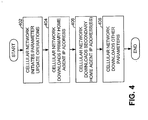
- FIG. 4 is a logic diagram illustrating methodologies for programming or reprogramming home agent identities in a subscriber unit according to the present invention.
- FIG. 4 Because from time to time the service provider will add HAs to its network, the static assignments that have been previously made regarding primary and secondary HAs will become outdated. Thus, the operations of FIG. 4 are employed to reassign primary and secondary HAs for particular subscriber units.
- Parameter updating operations are generally defined by various operating standards. In these parameter-updating operations, a service center that is operated by the service provider initiates parameter update sessions with subscriber units. In these parameter update sessions, the service center provides programming information to the subscriber units. Such programming information includes subscriber unit settings, such as primary and secondary HA information, and may include new software instructions.
- cellular network initiates parameter update operations with the subscriber unit (step 402). Then, the cellular network optionally downloads a primary HA IP address to the subscriber unit (step 404). Next, the cellular network downloads at least one secondary HA IP address to the subscriber unit (step 406). Further, the cellular network downloads other parameters to the subscriber unit during this particular parameter updating operation (step 408).
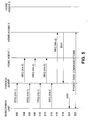
- FIG. 5 is a message flow diagram illustrating operation according to the present invention. As is shown in FIG. 5 , a subscriber unit initiates registration with its assigned primary HA and, upon failure in this registration operation, the subscriber unit initiates registration with a secondary HA.
- the subscriber unit attempts registration with its primary HA.
- the subscriber unit sends a registration request with to its primary HA, HA-1, via a servicing FA.
- the FA forwards the registration request to the primary HA, HA-1.
- the subscriber unit at step 506 retransmits the registration request via the FA to the primary HA, HA-1.
- the FA also forwards this registration request to HA-1 at step 508. After the HA-1 again fails to respond to the registration request, the subscriber unit attempts registration for a last time at step 510. At step 512, the FA forwards this last registration request to HA-1.
- the subscriber unit After three tries without a response from HA-1, the subscriber unit selects a first secondary HA, HA-2, and attempts registration with HA-2. In such case, at step 514, the subscriber unit sends a registration request to HA-2. At step 516, the FA forwards the registration request to HA-2. At step 518, HA-2 responds to the registration request with a registration request confirmation message. The HA-2 sends this response to FA at step 518 and the FA forwards the message to the subscriber unit at step 520. The subscriber unit is then registered with HA-2 and HA-2 services the subscriber unit's data communications at step 522.
- FIG. 6 is a block diagram illustrating the components of subscriber unit that operates according to the present invention.
- the mobile station 602 supports standardized operations that are compatible with the teachings of the present invention, with modification.
- the mobile station 602 includes an RF unit 604, a processor 606, and a memory 608.
- the RF unit 604 couples to an antenna 605 that may be located internal or external to the case of the mobile station 602.
- the processor 606 may be an Application Specific Integrated Circuit (ASIC) or another type of processor that is capable of operating the mobile station 602 according to the present invention.
- the memory 608 includes both static and dynamic components, e. g. , DRAM, SRAM, ROM, EEPROM, etc.
- the memory 608 may be partially or fully contained upon an ASIC that also includes the processor 606.
- a user interface 610 includes a display, a keyboard, a speaker, a microphone, and a data interface, and may include other user interface components.
- the RF unit 604, the processor 606, the memory 608, and the user interface 610 couple via one or more communication buses/links.
- a battery 612 also couples to and powers the RF unit 604, the processor 606, the memory 608, and the user interface 610.
- IP address of a primary HA, HA-1, and a plurality of secondary HAs, HA-2, HA-3, etc. 616 are stored in memory 608. During operation according to the present invention, these IP addresses are employed for registration according to the operations described with reference to FIGs. 1-5 . These HA IP addresses may be programmed into the mobile station 602 at the time of manufacture, during a service provisioning operation, such as an over-the-air service provisioning operation, or during a parameter updating operation.
- the structure of the mobile station 602 illustrated is only an example of one mobile station structure. Many other varied mobile station structures could be operated according to the teachings of the present invention.
Landscapes
- Engineering & Computer Science (AREA)
- Computer Networks & Wireless Communication (AREA)
- Signal Processing (AREA)
- Mobile Radio Communication Systems (AREA)
Abstract
Description
- The present invention relates generally to cellular wireless communication systems; and more particularly to the servicing of packet data communications within such cellular wireless communication networks.
- The structure and operation of cellular wireless communication systems (cellular systems) is generally known. In such cellular systems, mobile subscriber units communicate wirelessly with base stations. The base stations couple the serviced communications via various cellular system elements to the public switched telephone network (PSTN), the Internet, and/or to other communication networks.
- While cellular wireless communication systems were originally constructed to solely service voice communications, they have since been modified to support data communications as well. Cellular systems now support Internet Protocol (IP) based packetized communications, among others. These IP communications are relayed between the subscriber unit and the Internet (or another IP network) via the cellular system.
- In relaying IP based communications between the subscriber unit and the Internet, the cellular system must recognize that the service communication is an IP communication and must process the communication accordingly. Thus, cellular systems that service IP communications typically support standardized operations, e. g. , IETF (RFC 2002), 3GPP2 (TIA/EIA/ISD-835), and other standards. According to these standards, various agents are defined that, when deployed, oversee and control the transfer of packetized IP communications (IP packets) between the subscriber units and the Internet. Examples of these agents include home agents and foreign agents. In these standards, each subscriber unit is associated with a particular home agent. The home agent oversees and manages the IP communications serviced by the cellular wireless network.
- Because each subscriber unit has a corresponding home agent, during initial registration operations, the subscriber unit must register with its assigned home agent. In order to facilitate these registration operations, each subscriber unit is hard-coded with the IP address of its assigned home agent during its initial programming. Thus, when the subscriber unit initiates registration, it queries its assigned home agent using the hard-coded IP address and requests registration.
- However, because the IP address of its assigned home agent is hard-coded in its memory, if the assigned home agent is not operational (not an uncommon event) when the subscriber unit attempts registration, a failure in registration results. This failure in registration will preclude the subscriber unit from receiving IP communication service from its cellular system provider. The corresponding subscriber will immediately recognize this failure and will take steps to remedy this failure. An immediate remedy for this problem will be to contact the service provider. However, the serviced provider cannot remedy this problem without receiving and reprogramming the phone.
- Thus, there is a need in the art for a system and corresponding method of operation to overcome these operational problems.
- In order to overcome the above-cited shortcomings, among other shortcomings of the prior art, operation according to the present invention programs the subscriber unit with a plurality of IP addresses, each corresponding to a home agent of the service provider.
- These programmed IP addresses include the IP addresses of a primary home agent and a secondary home agent. Upon an initial registration attempt, the subscriber unit attempts to register with its primary home agent. Should this operation fail, the subscriber unit attempts registration with its assigned secondary home agents.
- In one embodiment of the present invention, a primary home agent IP address and a single secondary home agent IP address are stored within the memory of the subscriber unit when it is initially programming by the service provider. This methodology may be extended to include more than a single secondary home agent IP address so that the identity of multiple secondary home agents are programmed.
- According to another operation of the present invention, should the primary home agent fail to service the registration request, the subscriber unit will rank order a plurality of secondary home agents for which it has been programmed. Such ranking may be based upon the generation of a random number and with the random number used to rank the plurality of secondary home agents. In another operation according to the present invention, a date or time of day is employed in rank ordering the plurality of secondary home agents.
- Each of these methodologies will therefore distribute load among the plurality of secondary home agents. Thus, when a primary home agent to which a plurality of the subscriber units have been assigned fails, a single secondary home agent will not be overloaded by each of the subscriber units that have been previously assigned to a failed primary home agent.
- According to another operation of the present invention, the service provider's network may from time to time initiate parameter updating with the subscriber unit to set or reset the primary and/or secondary home agents for the subscriber unit. While such operation may not reprogram the primary home agent for already registered subscriber units, such operation is desirable to reprogram the secondary home agents for the subscriber unit.
- Thus, when additional home agents are added to the service provider's IP network in order to service additional load, such reprogramming is employed to more evenly distribute the subscriber unit load among the plurality of agents.
- These, and other features and advantages of the present invention will become apparent from the following detailed description of the invention made with reference to the accompanying drawings.
- A better understanding of the present invention can be obtained when the following detailed description of the preferred embodiment is considered in conjunction with the following drawings, in which:
-
FIG. 1 is a system diagram illustrating a cellular system that services data communications according to the present invention ; -
FIG. 2 is a logic diagram illustrating operation according to the present invention; -
FIGs. 3A and 3B are logic diagrams illustrating operations for rank ordering a plurality of secondary home agents according to the present invention; -
FIG. 4 is a logic diagram illustrating methodologies for programming or reprogramming home agent identities in a subscriber unit according to the present invention; -
FIG. 5 is a message flow diagram illustrating operation according to the present invention; and -
FIG. 6 is a block diagram illustrating the components of a subscriber unit that operates according to the present invention. -
FIG. 1 is a system diagram illustrating a cellular system that services data communications according to the present invention. Some of the components of the cellular system ofFIG. 1 service only data communications while other components service both voice and data communications. Components that service both voice and data communications include base stations 102,104, 106, and 108. Further, Base Station Controllers (BSCs) 120 and 122 also service both voice and data communications. Each of thebase stations 102 through 108 couples to a servicing base station controller (BSC). In such case,base stations base stations -
Base stations 102 through 108service subscriber units 110 through 118. As shown, the subscriber units 110-118 includehandheld telephones handheld data unit 116 andlaptop computers - According to one operation of the cellular system of
FIG. 1 , the base stations 102-108 may route voice communications differently than they route data communications. - Such is the case because, in current generation cellular systems, data communications are packetized communications while voice communications are circuit switched communications. However, in next generation cellular systems, both voice communications and data communications will be packetized communications. In such case, both the voice communications and data communications are serviced using the same or similar network connections. However, even in such next generation the cellular wireless communication systems, voice communications may require interworking between existing telephone networks, e. g. , PSTN, in the cellular wireless communication systems.
- Thus, in a current generation cellular system, each
BSC provider IP network 130 to thePSTN 152 via an Interworking Function (IWF) 154. Further, other voice communications may be routed via theInternet 132 or another packet data network to their destination. -
BSCs IP network 130 via packet control functions (PCFs) 126 and 128 and Packet Data Service Nodes (PSDNs) 124 and 134. The PCFs may reside in various configurations with respect toBSCs IP network 130. As is shown,PCF 126 is a stand alone device, couples toBSC 120, and couples to the service provider'sIP network 130 viaPDSN 134. However,PCF 128 resides withinPDSN 124 that couples directly to bothBSC 122 and the service provider'sIP network 130. In the illustrated embodiment, thePCFs base stations 102 through 108 service. - The service
provider IP network 130 couples directly to theInternet 132. However, in other embodiments, this connection may be via a firewall or some other intermediate device. Also coupled to the service provider'sIP network 130 are home agents (HAs) 138 and 140 and a foreign agent (FA) 142. Generally speaking, theFA 142 services IP communications for those subscriber units visiting the service provider'sIP network 130 while theHAs provider IP networks 130 home subscriber units. - A second service
provider IP network 136 couples to theInternet 132 and includes HAs 146 and 148 andFA 144. Serviceprovider IP network 136 may be operated by a service provider other than that which operates serviceprovider IP network 130. However, a common service provider may operate both serviceprovider IP network 130 and serviceprovider IP network 136 even though these serviceprovider IP networks subscriber unit 110, initially registers for data communication services, it must register with a corresponding HA. In such case, thesubscriber unit 110 initially contacts aservicing base station 102 and requests to be registered with its primary HA 138 (for which it was programmed). This registration request is directed to the IP address of theprimary HA 138. Thebase station 102 via itsservicing BSC 120,PCF 126,PDSN 134, andservice provider network 130, forwards the registration request to theprimary HA 138. If theHA 138 is operational, theHA 138 registers thesubscriber unit 110 for data services. Subsequently, the cellular system will support the data services. - However, should
HA 138 be nonfunctional due to catastrophic failure or other events, theHA 138 will not respond to the registration request initiated bysubscriber unit 110. According to the prior art operation, upon the HA's 138 failure to service the registration request, thesubscriber unit 110 would simply receive no response. This lack of response would precludesubscriber unit 110 from receiving data service. - According to the present invention, the
subscriber unit 110 is programmed to include both a primary HA assignment and at least one secondary HA assignment. Thus, should theprimary HA 138 fail to service the registration request, thesubscriber unit 110 initiates registration with a secondary HA. In continuation of the prior example, withHA 138 failing to respond to the registration request from thesubscriber unit 110, thesubscriber unit 110 identifiesHA 140 as a secondary HA forsubscriber unit 110. In such case, thesubscriber unit 110 then initiates registration withHA 140 after a failed registration operation withHA 138. If registration withHA 140 is successful,HA 140 subsequently services the subscriber unit's 110 IP communications. - The principles of the present invention may be extended so that HAs that couple to different portions of the subscriber provider's IP network may also serve as secondary HAs.
- In this embodiment,
HA 138, while serving as the primary HA forsubscriber unit 110, has experienced catastrophic failure. Thus, during a registration operation, thesubscriber unit 110 initially attempts registration withHA 138 butHA 138 fails to respond. Then,subscriber unit 110 attempts registration withsecondary HA 146 that couples to serviceprovider IP network 136.HA 146 responds to the registration request and services subsequent data communications for thesubscriber unit 110. -
FIG. 2 is a logic diagram illustrating operation according to the present invention. Operation commences with the subscriber unit initiating registration operations for data communications (step 202). In such case, the subscriber unit sends a registration request with the programmed IP address corresponding to its primary HA (step 204). If this registration operation is successful, as determined atstep 206, the registration operation is completed (step 208) and operation ends. - However, if the attempted registration operation with the primary HA is unsuccessful, as determined at
step 206, the subscriber unit determines a secondary HA and its corresponding IP address (step 210). The subscriber unit then sends a registration request to the secondary HA (step 212). If this registration operation with the secondary HA is successful, as determined atstep 214, operation proceeds to step 208 where registration with the secondary HA is completed. - However, if attempted registration with the first selected secondary HA is not successful, the subscriber unit determines a next selected secondary HA (step 216). The subscriber unit then attempts registration with the next selected secondary HA (step 218). If such attempted registration is successful, as determined at
step 220, the registration is completed (step 208) and operation ends. However, if such attempted registration with the third HA is not successful, as determined atstep 220, operation may continue until the list of secondary HAs is exhausted. If all HAs are exhausted without a successful registration, operation ends unsuccessfully. However, in all contemplated deployments of the present invention at least one secondary HA will be available to service a registration request. -
FIGs. 3A and 3B are logic diagrams illustrating operations for rank ordering a plurality of secondary home agents according to the present invention. As was previously described, a service provider initially assigns HAs to its subscriber units in an attempt to distribute load among the HAs. However, no such mechanism exists for distributing load among secondary HAs should the primary HA fail. In order to address this deficiency, the operations ofFIG. 3A and FIG. 3B provide techniques for distributing load across secondary HAs should a primary HA fail. These techniques provide great benefits by distributing load among a plurality of secondary HAs instead of simply shifting all load previously serviced by a failed primary HA to a single secondary HA. - Referring particularly to
FIG. 3A , in selecting a secondary HA, the subscriber unit first determines a random number (step 302). Then, based upon the random number generated by the subscriber unit, the subscriber unit rank orders its assigned secondary HAs (step 304). Then, based upon this rank ordering of secondary HAs, the subscriber unit attempts registration with the secondary HAs (step 306). - Referring now to
FIG. 3B , using another technique for rank ordering secondary HAs, the subscriber unit determines a current date (or time of day) (step 352). Then, based upon the date (or the time of day), the subscriber unit rank orders all of the secondary HAs to which it has been assigned (step 354). Next, based upon its rank ordering of the secondary HAs, the subscriber unit attempts registration with secondary HAs according to the rank ordering (step 356). -
FIG. 4 is a logic diagram illustrating methodologies for programming or reprogramming home agent identities in a subscriber unit according to the present invention. - Because from time to time the service provider will add HAs to its network, the static assignments that have been previously made regarding primary and secondary HAs will become outdated. Thus, the operations of
FIG. 4 are employed to reassign primary and secondary HAs for particular subscriber units. Parameter updating operations are generally defined by various operating standards. In these parameter-updating operations, a service center that is operated by the service provider initiates parameter update sessions with subscriber units. In these parameter update sessions, the service center provides programming information to the subscriber units. Such programming information includes subscriber unit settings, such as primary and secondary HA information, and may include new software instructions. - Referring particularly to
FIG. 4 , in a first operation, cellular network initiates parameter update operations with the subscriber unit (step 402). Then, the cellular network optionally downloads a primary HA IP address to the subscriber unit (step 404). Next, the cellular network downloads at least one secondary HA IP address to the subscriber unit (step 406). Further, the cellular network downloads other parameters to the subscriber unit during this particular parameter updating operation (step 408). -
FIG. 5 is a message flow diagram illustrating operation according to the present invention. As is shown inFIG. 5 , a subscriber unit initiates registration with its assigned primary HA and, upon failure in this registration operation, the subscriber unit initiates registration with a secondary HA. - In such operation, at
step 502, the subscriber unit attempts registration with its primary HA. In this operation, the subscriber unit sends a registration request with to its primary HA, HA-1, via a servicing FA. Atstep 504, the FA forwards the registration request to the primary HA, HA-1. After a period of time without a response, the subscriber unit atstep 506 retransmits the registration request via the FA to the primary HA, HA-1. - The FA also forwards this registration request to HA-1 at
step 508. After the HA-1 again fails to respond to the registration request, the subscriber unit attempts registration for a last time atstep 510. Atstep 512, the FA forwards this last registration request to HA-1. - After three tries without a response from HA-1, the subscriber unit selects a first secondary HA, HA-2, and attempts registration with HA-2. In such case, at
step 514, the subscriber unit sends a registration request to HA-2. Atstep 516, the FA forwards the registration request to HA-2. Atstep 518, HA-2 responds to the registration request with a registration request confirmation message. The HA-2 sends this response to FA atstep 518 and the FA forwards the message to the subscriber unit atstep 520. The subscriber unit is then registered with HA-2 and HA-2 services the subscriber unit's data communications atstep 522. -
FIG. 6 is a block diagram illustrating the components of subscriber unit that operates according to the present invention. Themobile station 602 supports standardized operations that are compatible with the teachings of the present invention, with modification. Themobile station 602 includes anRF unit 604, aprocessor 606, and amemory 608. TheRF unit 604 couples to anantenna 605 that may be located internal or external to the case of themobile station 602. Theprocessor 606 may be an Application Specific Integrated Circuit (ASIC) or another type of processor that is capable of operating themobile station 602 according to the present invention. Thememory 608 includes both static and dynamic components, e. g. , DRAM, SRAM, ROM, EEPROM, etc. In some embodiments, thememory 608 may be partially or fully contained upon an ASIC that also includes theprocessor 606. Auser interface 610 includes a display, a keyboard, a speaker, a microphone, and a data interface, and may include other user interface components. TheRF unit 604, theprocessor 606, thememory 608, and theuser interface 610 couple via one or more communication buses/links. Abattery 612 also couples to and powers theRF unit 604, theprocessor 606, thememory 608, and theuser interface 610. - The IP address of a primary HA, HA-1, and a plurality of secondary HAs, HA-2, HA-3, etc. 616 are stored in
memory 608. During operation according to the present invention, these IP addresses are employed for registration according to the operations described with reference toFIGs. 1-5 . These HA IP addresses may be programmed into themobile station 602 at the time of manufacture, during a service provisioning operation, such as an over-the-air service provisioning operation, or during a parameter updating operation. - The structure of the
mobile station 602 illustrated is only an example of one mobile station structure. Many other varied mobile station structures could be operated according to the teachings of the present invention. - The invention disclosed herein is susceptible to various modifications and alternative forms. Specific embodiments therefore have been shown by way of example in the drawings and detailed description. It should be understood, however, that the drawings and detailed description thereto are not intended to limit the invention to the particular form disclosed, but on the contrary, the invention is to cover all modifications, equivalents and alternatives of the present invention as defined by the claims.
- The invention may be further understood with reference to the following clauses:
- 1. A method for registering a subscriber unit with a home agent in a cellular system, the method CHARACTERIZED BY:
- storing addresses for a plurality of home agents in the subscriber unit, wherein the plurality of home agents includes a primary home agent and at least one secondary home agent;
- attempting registration with the primary home agent;
- failing to achieve registration with the primary home agent;
- selecting a secondary home agent from the at least one secondary home agent; and
- attempting registration with the secondary home agent.
- 2. The method of
clause 1, wherein the at least one secondary home agent comprises a plurality of secondary home agents and the method is further CHARACTERIZED BY:- rank ordering the plurality of secondary home agents into at least a first secondary home agent and a second secondary home agent.
- 3. The method of
clause 2, further CHARACTERIZED BY:- attempting registration with the first secondary home agent;
- failing to achieve registration with the first secondary home agent; and
- attempting registration with the second secondary home agent.
- 4. The method of
clause 2, wherein rank ordering the plurality of secondary home agents into at least a first secondary home agent and a second secondary home agent
CHARACTERIZED BY:- generating a random number; and
- using the random number to rank order the plurality of secondary home agents.
- 5. The method of
clause 2, wherein rank ordering the plurality of secondary home agents into at least a first secondary home agent and a second secondary home agent
CHARACTERIZED BY:- determining a current date; and
- using the current date to rank order the plurality of secondary home agents.
- 6. The method of
clause 2, wherein rank ordering the plurality of secondary home agents into at least a first secondary home agent and a second secondary home agent
CHARACTERIZED BY:- determining a current time; and
- using the current time to rank order the plurality of secondary home agents.
- 7. The method of
clause 1, wherein the plurality of addresses for the home agents stored in the subscriber unit is programmed by a service provider prior to delivering the subscriber unit to its subscriber. - 8. The method of
clause 1, wherein the plurality of addresses for the home agents stored in the subscriber unit is programmed by the service provider using over the air access. - 9. The method of
clause 1, wherein at least some of the plurality of addresses for the home agents stored in the subscriber unit is reprogrammed by the service provider using over the air access. - 10. A method for registering a subscriber unit with a home agent in a cellular system, the method CHARACTERIZED BY:
- storing addresses for a plurality of home agents in the subscriber unit, wherein the plurality of home agents includes a primary home agent and a plurality of secondary home agents;
- attempting registration with the primary home agent;
- failing to achieve registration with the primary home agent;
- rank ordering the plurality of secondary home agents into at least a first secondary home agent and a second secondary home agent; and
- attempting registration with the first secondary home agent.
- 11. The method of clause 10, further CHARACTERIZED BY:
- failing to achieve registration with the first secondary home agent; and
- attempting registration with the second secondary home agent
- 12. The method of clause 10, wherein rank ordering the plurality of secondary home agents into at least a first secondary home agent and a second secondary home agent
CHARACTERIZED BY:- generating a random number; and
- using the random number to rank order the plurality of secondary home agents.
- 13. The method of clause 10, wherein rank ordering the plurality of secondary home agents into at least a first secondary home agent and a second secondary home agent
CHARACTERIZED BY:- determining a current date; and
- using the current date to rank order the plurality of secondary home agents.
- 14. The method of clause 10, wherein rank ordering the plurality of secondary home agents into at least a first secondary home agent and a second secondary home agent
CHARACTERIZED BY:- determining a current time; and
- using the current time to rank order the plurality of secondary home agents.
- 15. A subscriber unit that operates within a cellular system, the mobile unit
CHARACTERIZED BY:- an antenna;
- a radio frequency unit coupled to the antenna ; and
- at least one digital processor coupled to the radio frequency unit that executes software instructions causing the subscriber unit to:
- store addresses for a plurality of home agents in the subscriber unit, wherein the plurality of home agents includes a primary home agent and at least one secondary home agent;
- attempt registration with the primary home agent;
- failing to achieve registration with the primary home agent;
- select a secondary home agent from the at least one secondary home agent; and
- attempt registration with the secondary home agent.
- 16. The subscriber unit of clause 15, wherein the at least one secondary home agent comprises a plurality of secondary home agents) and execution of the software instructions further causes the subscriber unit to:
- rank order the plurality of secondary home agents into at least a first secondary home agent and a second secondary home agent.
- 17. The subscriber unit of clause 16, wherein execution of the software instructions further causes the subscriber unit to:
- attempt registration with the first secondary home agent;
- fail to achieve registration with the first secondary home agent; and
- attempt registration with the second secondary home agent.
- 18. The subscriber unit of clause 17, wherein in rank ordering the plurality of secondary home agents into at least a first secondary home agent and a second secondary home agent, execution of the software instructions further causes the subscriber unit to:
- generate a random number; and
- use the random number to rank order the plurality of secondary home agents.
- 19. The subscriber unit of clause 17, wherein in rank ordering the plurality of secondary home agents into at least a first secondary home agent and a second secondary home agent, execution of the software instructions further causes the subscriber unit to:
- determine a current date; and
- use the current date to rank order the plurality of secondary home agents.
- 20. The subscriber unit of clause 17, wherein in rank ordering the plurality of secondary home agents into at least a first secondary home agent and a second secondary home agent, execution of the software instructions further causes the subscriber unit to:
- determine a current time ; and
- use the current time to rank order the plurality of secondary home agents.
- 21. The subscriber unit of clause 15, wherein the plurality of addresses for the home agents stored in the subscriber unit is programmed by a service provider prior to delivering the subscriber unit to its subscriber.
- 22. The subscriber unit of clause 15, wherein the plurality of addresses for the home agents stored in the subscriber unit is programmed by the service provider using over the air access.
- 23. The subscriber unit of clause 15, wherein at least some of the plurality of addresses for the home agents stored in the subscriber unit is reprogrammed by the service provider using over the air access.
Claims (11)
- A method for registering a subscriber unit (110, 112, 114, 116, 118) upon initial use within a cellular system, the method comprising:programming Internet Protocol, IP, addresses for a plurality of home agents (138, 140, 146) in the subscriber unit (110, 112, 114, 116, 118) prior to an initial registration attempt with a primary home agent (138), wherein the plurality of home agents (138, 140, 146) includes the primary home agent (138) and a plurality of secondary home agents (140, 146);attempting the initial registration attempt with the primary home agent (138);when the subscriber unit (110, 112, 114, 116, 118) fails to achieve registration via the initial registration attempt with the primary home agent (138) of the plurality of home agents (140, 146), selecting a first secondary home agent (140) from the plurality of secondary home agents (140, 146) based upon a rank ordering of the plurality of secondary home agents (140, 146); andattempting registration with the selected first secondary home agent (140).
- The method of claim 2, further comprising:when the subscriber (110, 112, 114, 116, 118) unit fails to achieve registration with the first secondary home agent_(140), selecting a second secondary home agent (146); andattempting registration with the second secondary home agent (146).
- The method of claim 1, wherein the rank ordering of the plurality of secondary home agents (140, 146) comprises:the subscriber unit (110, 112, 114, 116, 118) generating a random number; andthe subscriber unit (110, 112, 114, 116, 118) using the random number to rank order the plurality of secondary home agents (140, 146).
- The method of claim 1, wherein the rank ordering of the plurality of secondary home agents comprises:the subscriber unit (110, 112, 114, 116, 118) determining a current date; andthe subscriber unit (110, 112, 114, 116, 118) using the current date to rank order the plurality of secondary home agents (140, 146).
- The method of claim 1, wherein the rank ordering the plurality of secondary home agents (140, 146) comprises:the subscriber unit (110, 112, 114, 116, 118) determining a current time; andthe subscriber unit (110, 112, 114, 116, 118) using the current time to rank order the plurality of secondary home agents (140, 146).
- A subscriber unit (110, 112, 114, 116, 118) that operates within a cellular system, the subscriber unit (110, 112, 114, 116, 118) comprising:an antenna (605);a radio frequency unit (604) coupled to the antenna (605); andat least one digital processor (606) coupled to the radio frequency unit (604) that, upon execution of software instructions, causes the subscriber unit (110, 112, 114, 116, 118) to:retrieve Internet Protocol, IP, addresses, stored in the subscriber unit (602), for a plurality of home agents (138, 140, 146) in the subscriber unit (602) for an initial registration attempt with a primary home agent (138), wherein the stored IP addresses for the plurality of home agents (138, 140, 146) includes a primary home agent (138) and a plurality of secondary home agents (140, 146) which have been stored prior to the registration attempt to avoid registration failure that precludes the subscriber unit (602) from receiving Internet Protocol, IP, communications;attempt the registration with the primary home agent (138);when failing to achieve registration with the primary home agent (138) via the initial registration attempt, selecting a first secondary home agent (140) from the plurality of secondary home agents (140, 146) based upon a rank ordering of the plurality of secondary home agents (140, 146); andattempt registration with the first secondary home agent (140).
- The subscriber unit of claim 6, wherein execution of the software instructions further causes the subscriber unit (602) to:rank order the plurality of secondary home agents (140, 146) into at least a first secondary home agent (140) and a second secondary home agent (146).
- The subscriber unit of claim 7, wherein execution of the software instructions further causes the subscriber unit (602) to:when the subscriber unit (602) fails to achieve registration with the first secondary home agent (14), selecting a second secondary home agent (146); andwhen failing to achieve registration with the first secondary home agent (140), attempt registration with the second secondary home agent (146).
- The subscriber unit (602) of claim 7, wherein in rank ordering the plurality of secondary home agents (140, 146) into at least a first secondary home agent (140) and a second secondary home agent (146), execution of the software instructions further causes the subscriber unit (602) to:generate a random number; anduse the random number to rank order the plurality of secondary home agents (140, 146).
- The subscriber unit (602) of claim 7, wherein in rank ordering the plurality of secondary home agents (140, 146) into at least a first secondary home agent (140) and a second secondary home agent (146), execution of the software instructions further causes the subscriber unit (602) to:determine a current date; anduse the current date to rank order the plurality of secondary home agents (140, 146).
- The subscriber unit (602) of claim 7, wherein in rank ordering the plurality of secondary home agents (140, 146) into at least a first secondary home agent (140) and a second secondary home agent (146), execution of the software instructions further causes the subscriber unit (602) to:determine a current time; anduse the current time to rank order the plurality of secondary home agents (140, 146).
Applications Claiming Priority (2)
| Application Number | Priority Date | Filing Date | Title |
|---|---|---|---|
| US09/981,268 US20030073439A1 (en) | 2001-10-17 | 2001-10-17 | Home agent redundancy in a cellular system |
| EP02801451A EP1438809B1 (en) | 2001-10-17 | 2002-10-11 | Home agent redundancy in a cellular system |
Related Parent Applications (1)
| Application Number | Title | Priority Date | Filing Date |
|---|---|---|---|
| EP02801451A Division EP1438809B1 (en) | 2001-10-17 | 2002-10-11 | Home agent redundancy in a cellular system |
Publications (1)
| Publication Number | Publication Date |
|---|---|
| EP2148544A1 true EP2148544A1 (en) | 2010-01-27 |
Family
ID=25528247
Family Applications (2)
| Application Number | Title | Priority Date | Filing Date |
|---|---|---|---|
| EP09176153A Withdrawn EP2148544A1 (en) | 2001-10-17 | 2002-10-11 | Home agent redundancy in a cellular system |
| EP02801451A Expired - Lifetime EP1438809B1 (en) | 2001-10-17 | 2002-10-11 | Home agent redundancy in a cellular system |
Family Applications After (1)
| Application Number | Title | Priority Date | Filing Date |
|---|---|---|---|
| EP02801451A Expired - Lifetime EP1438809B1 (en) | 2001-10-17 | 2002-10-11 | Home agent redundancy in a cellular system |
Country Status (5)
| Country | Link |
|---|---|
| US (1) | US20030073439A1 (en) |
| EP (2) | EP2148544A1 (en) |
| CN (1) | CN100380877C (en) |
| DE (1) | DE60235026D1 (en) |
| WO (1) | WO2003034659A1 (en) |
Families Citing this family (18)
| Publication number | Priority date | Publication date | Assignee | Title |
|---|---|---|---|---|
| US7409549B1 (en) | 2001-12-11 | 2008-08-05 | Cisco Technology, Inc. | Methods and apparatus for dynamic home agent assignment in mobile IP |
| US7284057B2 (en) * | 2002-02-27 | 2007-10-16 | Cisco Technology, Inc. | Methods and apparatus for Mobile IP Home Agent clustering |
| US7587498B2 (en) * | 2002-05-06 | 2009-09-08 | Cisco Technology, Inc. | Methods and apparatus for mobile IP dynamic home agent allocation |
| JP4289030B2 (en) * | 2002-07-30 | 2009-07-01 | パナソニック株式会社 | Mobility management method and mobile terminal |
| JP4111793B2 (en) * | 2002-09-26 | 2008-07-02 | 富士通株式会社 | Relay system |
| FR2870420B1 (en) * | 2004-05-17 | 2006-09-08 | Alcatel Sa | DEVICE FOR MANAGING A MOBILITY PROTOCOL FOR AN EQUIPMENT OF AN IP COMMUNICATIONS NETWORK, FOR SERVICE CONTINUITY |
| KR101086349B1 (en) * | 2004-07-30 | 2011-11-23 | 텔레콤 이탈리아 소시에떼 퍼 아찌오니 | Network and computer program product related to operation control method and system of communication network |
| ATE492130T1 (en) * | 2004-09-30 | 2011-01-15 | Telecom Italia Spa | METHOD AND SYSTEM FOR CONTROLLING MOBILITY IN A COMMUNICATIONS NETWORK, RELATED NETWORK AND COMPUTER PROGRAM PRODUCT THEREOF |
| US8223687B2 (en) | 2005-11-23 | 2012-07-17 | Cisco Technology, Inc. | Method for providing home agent geographic redundancy via a service redundancy protocol |
| US8565070B2 (en) * | 2005-11-23 | 2013-10-22 | Cisco Technology, Inc. | System and method for active geographic redundancy |
| US8437305B2 (en) * | 2005-11-23 | 2013-05-07 | Cisco Technology, Inc. | Method for providing home agent geographic redundancy |
| US7899456B2 (en) * | 2005-12-16 | 2011-03-01 | International Business Machines Corporation | Method for faster mobility handoff of a mobile node |
| US7747251B1 (en) * | 2006-01-23 | 2010-06-29 | Sprint Spectrum L.P. | Dynamic selection by a mobile station of its home agent using its preferred roaming list (PRL) |
| US20070218862A1 (en) * | 2006-03-14 | 2007-09-20 | Tatman Lance A | System and method for making measurements in customer devices across different service provider networks |
| JP4869057B2 (en) * | 2006-12-27 | 2012-02-01 | 富士通株式会社 | Network connection recovery method, AAA server, and radio access network gateway device |
| US8125954B2 (en) * | 2007-05-04 | 2012-02-28 | Futurewei Technologies, Inc. | System for FA relocation with context transfer in wireless networks |
| US8264956B2 (en) * | 2009-02-27 | 2012-09-11 | Cisco Technology, Inc. | Service redundancy in wireless networks |
| US8499336B2 (en) | 2010-11-23 | 2013-07-30 | Cisco Technology, Inc. | Session redundancy among a server cluster |
Citations (3)
| Publication number | Priority date | Publication date | Assignee | Title |
|---|---|---|---|---|
| WO2000024216A2 (en) * | 1998-10-22 | 2000-04-27 | Telefonaktiebolaget Lm Ericsson (Publ) | Dynamic hlr redundancy in a radio telecommunications network |
| EP1058421A2 (en) * | 1999-06-02 | 2000-12-06 | Nortel Networks Limited | Dynamic home agent discovery method and system |
| EP1120945A1 (en) * | 2000-01-27 | 2001-08-01 | TELEFONAKTIEBOLAGET LM ERICSSON (publ) | Assignment of a serveraddress to a terminal |
Family Cites Families (14)
| Publication number | Priority date | Publication date | Assignee | Title |
|---|---|---|---|---|
| ZA931077B (en) * | 1992-03-05 | 1994-01-04 | Qualcomm Inc | Apparatus and method for reducing message collision between mobile stations simultaneously accessing a base station in a cdma cellular communications system |
| US5590092A (en) * | 1995-01-05 | 1996-12-31 | Ericsson Inc. | Systems and methods for generating a current time of day in a cellular radiotelephone |
| DE69822516T2 (en) * | 1997-12-17 | 2005-02-03 | British Telecommunications Public Ltd. Co. | MOBILE DATENLEITWEG |
| US6195705B1 (en) * | 1998-06-30 | 2001-02-27 | Cisco Technology, Inc. | Mobile IP mobility agent standby protocol |
| US6636498B1 (en) * | 1999-01-08 | 2003-10-21 | Cisco Technology, Inc. | Mobile IP mobile router |
| US6560217B1 (en) * | 1999-02-25 | 2003-05-06 | 3Com Corporation | Virtual home agent service using software-replicated home agents |
| US6314465B1 (en) * | 1999-03-11 | 2001-11-06 | Lucent Technologies Inc. | Method and apparatus for load sharing on a wide area network |
| US6487406B1 (en) * | 1999-06-16 | 2002-11-26 | Telcordia Technologies, Inc. | PCS-to-mobile IP internetworking |
| US6473413B1 (en) * | 1999-06-22 | 2002-10-29 | Institute For Information Industry | Method for inter-IP-domain roaming across wireless networks |
| FI20000574A7 (en) * | 2000-03-13 | 2001-09-14 | Nokia Mobile Phones Ltd | Load balancing in a telecommunications system supporting IP mobility |
| US6691227B1 (en) * | 2000-09-08 | 2004-02-10 | Reefedge, Inc. | Location-independent packet routing and secure access in a short-range wireless networking environment |
| US20020078238A1 (en) * | 2000-09-14 | 2002-06-20 | Troxel Gregory Donald | Routing messages between nodes at a foreign sub-network |
| US6771623B2 (en) * | 2000-12-01 | 2004-08-03 | Telefonaktiebolaget Lm Ericsson (Publ) | Method for ensuring reliable mobile IP service |
| US7212505B2 (en) * | 2001-03-19 | 2007-05-01 | Intel Corporation | Roaming in a communication network |
-
2001
- 2001-10-17 US US09/981,268 patent/US20030073439A1/en not_active Abandoned
-
2002
- 2002-10-11 DE DE60235026T patent/DE60235026D1/en not_active Expired - Lifetime
- 2002-10-11 EP EP09176153A patent/EP2148544A1/en not_active Withdrawn
- 2002-10-11 WO PCT/IB2002/004190 patent/WO2003034659A1/en not_active Ceased
- 2002-10-11 CN CNB02820607XA patent/CN100380877C/en not_active Expired - Fee Related
- 2002-10-11 EP EP02801451A patent/EP1438809B1/en not_active Expired - Lifetime
Patent Citations (3)
| Publication number | Priority date | Publication date | Assignee | Title |
|---|---|---|---|---|
| WO2000024216A2 (en) * | 1998-10-22 | 2000-04-27 | Telefonaktiebolaget Lm Ericsson (Publ) | Dynamic hlr redundancy in a radio telecommunications network |
| EP1058421A2 (en) * | 1999-06-02 | 2000-12-06 | Nortel Networks Limited | Dynamic home agent discovery method and system |
| EP1120945A1 (en) * | 2000-01-27 | 2001-08-01 | TELEFONAKTIEBOLAGET LM ERICSSON (publ) | Assignment of a serveraddress to a terminal |
Non-Patent Citations (6)
| Title |
|---|
| C. PERKINS: "Request for Comments: 2002, IP Mobility Support", NETWORK WORKING GROUP, REQUEST FOR COMMENTS, October 1996 (1996-10-01), pages 1 - 70 |
| C. PERKINS: "Request for Comments: 2002, IP Mobility Support", NETWORK WORKING GROUP, REQUEST FOR COMMENTS: 2002, CATEGORY: STANDARDS TRACK , IP MOBILITY SUPPORT, October 1996 (1996-10-01), pages 1 - 79, XP002222715, Retrieved from the Internet <URL:http://www.ietf.org/rfc/rfc2002.txt?number=2002> [retrieved on 20021128] * |
| F. HEISSENHUBER ET AL., HOME AGENT REDUNDANCY AND LOAD BALANCING IN MOBILE IPV6, 11 November 1999 (1999-11-11), pages 235 - 244 |
| HEISSENHUBER F ET AL: "HOME AGENT REDUNDANCY AND LOAD BALANCING IN MOBILE IPV6", BROADBAND COMMUNICATIONS. PROCEEDINGS OF THE INTERNATIONALIFIP-IEEE CONFERENCE ON BROADBAND COMMUNICATIONS, XX, XX, 10 November 1999 (1999-11-10), pages 235 - 244, XP009002035 * |
| JUE J P ET AL: "DESIGN AND ANALYSIS OF A REPLICATED SERVER ARCHITECTURE FOR SUPPORTING IP-HOST MOBILITY", MOBILE COMPUTING AND COMMUNICATIONS REVIEW, ACM, NEW YORK, NY, US, vol. 2, no. 3, 1 July 1998 (1998-07-01), pages 16 - 23, XP000768934, ISSN: 1091-1669 * |
| PERKINS C E: "MOBILE NETWORKING THROUGH MOBILE IP", IEEE INTERNET COMPUTING, IEEE SERVICE CENTER, PISCATAWAY, NJ, US, vol. 2, no. 1, 1998, pages 58 - 69, XP000764776, ISSN: 1089-7801 * |
Also Published As
| Publication number | Publication date |
|---|---|
| EP1438809B1 (en) | 2010-01-06 |
| CN100380877C (en) | 2008-04-09 |
| CN1572088A (en) | 2005-01-26 |
| DE60235026D1 (en) | 2010-02-25 |
| EP1438809A1 (en) | 2004-07-21 |
| WO2003034659A1 (en) | 2003-04-24 |
| US20030073439A1 (en) | 2003-04-17 |
Similar Documents
| Publication | Publication Date | Title |
|---|---|---|
| EP1438809B1 (en) | Home agent redundancy in a cellular system | |
| JP4512602B2 (en) | Automatic network selection method and apparatus using steering PLMN | |
| US6865387B2 (en) | Software reconfiguration of communications apparatus | |
| JP4615172B2 (en) | Cell communication system | |
| US7702760B2 (en) | Configuration method and system | |
| US8219080B2 (en) | Methods and apparatus for producing a user-controlled PLMN list for a SIM/USIM card with use of a user agent application | |
| RU2409907C2 (en) | Internet protocol combination and mobility method | |
| US6957066B1 (en) | Method and apparatus for registering a mobile device | |
| JP3738737B2 (en) | Communication system and communication method between mobile terminals | |
| US20040264427A1 (en) | Selection of connection settings | |
| US20230284007A1 (en) | Communication method, device, and storage medium | |
| JP2005094774A (en) | Demand-based provisioning for mobile communication devices | |
| WO2004014027A2 (en) | Mobility managing method and mobile terminal | |
| WO2003063441A1 (en) | Multiple mobile ip sessions with dynamically allocated home ip address | |
| KR20060103332A (en) | Method and apparatus for network selection with home network priority in regional boundary area | |
| EP1595353A2 (en) | Methods and apparatus for the utilization of core based nodes for state transfer | |
| WO2012138269A1 (en) | Delivery of internet based service to user equipment | |
| US6671510B1 (en) | Wireless telephone system and operation method therefor | |
| US20040141477A1 (en) | Method, system and mobile host for mobility pattern based selection of a local mobility agent | |
| KR101010816B1 (en) | Apparatus and Method for Promoting Mobility Management | |
| EP2278835A1 (en) | Method and device for deploying evolved nodes | |
| HK1139812A (en) | Home agent redundancy in a cellular system | |
| JP2002199424A (en) | Mobile communication system and portable information terminal menu display setting method | |
| JP2009512278A (en) | Process for migrating mobile unit identifiers from mobile unit identification numbers to international mobile unit identification numbers | |
| JP2026017886A (en) | Radio station, radio communication system, and circuit switching method |
Legal Events
| Date | Code | Title | Description |
|---|---|---|---|
| PUAI | Public reference made under article 153(3) epc to a published international application that has entered the european phase |
Free format text: ORIGINAL CODE: 0009012 |
|
| 17P | Request for examination filed |
Effective date: 20091116 |
|
| AC | Divisional application: reference to earlier application |
Ref document number: 1438809 Country of ref document: EP Kind code of ref document: P |
|
| AK | Designated contracting states |
Kind code of ref document: A1 Designated state(s): DE FR GB |
|
| RAP1 | Party data changed (applicant data changed or rights of an application transferred) |
Owner name: TELEFONAKTIEBOLAGET LM ERICSSON (PUBL) |
|
| REG | Reference to a national code |
Ref country code: HK Ref legal event code: DE Ref document number: 1139812 Country of ref document: HK |
|
| RAP1 | Party data changed (applicant data changed or rights of an application transferred) |
Owner name: ERICSSON AB |
|
| 17Q | First examination report despatched |
Effective date: 20120524 |
|
| GRAP | Despatch of communication of intention to grant a patent |
Free format text: ORIGINAL CODE: EPIDOSNIGR1 |
|
| INTG | Intention to grant announced |
Effective date: 20140102 |
|
| STAA | Information on the status of an ep patent application or granted ep patent |
Free format text: STATUS: THE APPLICATION IS DEEMED TO BE WITHDRAWN |
|
| 18D | Application deemed to be withdrawn |
Effective date: 20140513 |
|
| REG | Reference to a national code |
Ref country code: HK Ref legal event code: WD Ref document number: 1139812 Country of ref document: HK |