EP2145956A2 - Polymerase - Google Patents
Polymerase Download PDFInfo
- Publication number
- EP2145956A2 EP2145956A2 EP09010518A EP09010518A EP2145956A2 EP 2145956 A2 EP2145956 A2 EP 2145956A2 EP 09010518 A EP09010518 A EP 09010518A EP 09010518 A EP09010518 A EP 09010518A EP 2145956 A2 EP2145956 A2 EP 2145956A2
- Authority
- EP
- European Patent Office
- Prior art keywords
- polymerase
- dna
- polymerases
- dna polymerase
- mismatch
- Prior art date
- Legal status (The legal status is an assumption and is not a legal conclusion. Google has not performed a legal analysis and makes no representation as to the accuracy of the status listed.)
- Granted
Links
- 108010014303 DNA-directed DNA polymerase Proteins 0.000 claims abstract description 144
- 102000016928 DNA-directed DNA polymerase Human genes 0.000 claims abstract description 143
- 239000000758 substrate Substances 0.000 claims abstract description 107
- 150000007523 nucleic acids Chemical class 0.000 claims description 123
- 102000039446 nucleic acids Human genes 0.000 claims description 118
- 108020004707 nucleic acids Proteins 0.000 claims description 118
- 108090000623 proteins and genes Proteins 0.000 claims description 67
- 230000000694 effects Effects 0.000 claims description 52
- 230000035772 mutation Effects 0.000 claims description 42
- 239000000203 mixture Substances 0.000 claims description 37
- 208000035657 Abasia Diseases 0.000 claims description 31
- 238000010348 incorporation Methods 0.000 claims description 28
- 238000012163 sequencing technique Methods 0.000 claims description 13
- 238000012408 PCR amplification Methods 0.000 claims description 12
- 239000013598 vector Substances 0.000 claims description 3
- 125000003275 alpha amino acid group Chemical group 0.000 claims 3
- 238000000034 method Methods 0.000 abstract description 99
- 230000001747 exhibiting effect Effects 0.000 abstract description 2
- 108020004414 DNA Proteins 0.000 description 77
- 238000003752 polymerase chain reaction Methods 0.000 description 74
- 239000003094 microcapsule Substances 0.000 description 73
- 239000002585 base Substances 0.000 description 72
- 239000000047 product Substances 0.000 description 64
- 238000006243 chemical reaction Methods 0.000 description 53
- 125000003729 nucleotide group Chemical group 0.000 description 52
- 239000002773 nucleotide Substances 0.000 description 43
- 230000010076 replication Effects 0.000 description 40
- OZFPSOBLQZPIAV-UHFFFAOYSA-N 5-nitro-1h-indole Chemical compound [O-][N+](=O)C1=CC=C2NC=CC2=C1 OZFPSOBLQZPIAV-UHFFFAOYSA-N 0.000 description 36
- 230000011637 translesion synthesis Effects 0.000 description 33
- 230000003321 amplification Effects 0.000 description 29
- 238000003199 nucleic acid amplification method Methods 0.000 description 29
- 150000001413 amino acids Chemical group 0.000 description 24
- 238000003556 assay Methods 0.000 description 24
- 239000000839 emulsion Substances 0.000 description 24
- 238000002474 experimental method Methods 0.000 description 24
- 230000001965 increasing effect Effects 0.000 description 23
- 238000002965 ELISA Methods 0.000 description 22
- 239000000872 buffer Substances 0.000 description 22
- 239000012634 fragment Substances 0.000 description 22
- 238000013519 translation Methods 0.000 description 22
- 239000000523 sample Substances 0.000 description 21
- 102100034343 Integrase Human genes 0.000 description 17
- 108010092799 RNA-directed DNA polymerase Proteins 0.000 description 17
- 102000004190 Enzymes Human genes 0.000 description 16
- 108090000790 Enzymes Proteins 0.000 description 16
- 238000013518 transcription Methods 0.000 description 16
- 230000035897 transcription Effects 0.000 description 16
- 230000003902 lesion Effects 0.000 description 15
- 241000014654 Adna Species 0.000 description 14
- 238000007792 addition Methods 0.000 description 14
- 238000009396 hybridization Methods 0.000 description 14
- 230000008569 process Effects 0.000 description 13
- TWRXJAOTZQYOKJ-UHFFFAOYSA-L Magnesium chloride Chemical compound [Mg+2].[Cl-].[Cl-] TWRXJAOTZQYOKJ-UHFFFAOYSA-L 0.000 description 12
- 238000000338 in vitro Methods 0.000 description 12
- 108010006785 Taq Polymerase Proteins 0.000 description 11
- 239000011324 bead Substances 0.000 description 11
- 210000004027 cell Anatomy 0.000 description 11
- 108060002716 Exonuclease Proteins 0.000 description 10
- 102000013165 exonuclease Human genes 0.000 description 10
- 239000000499 gel Substances 0.000 description 10
- 239000003921 oil Substances 0.000 description 10
- 102000004169 proteins and genes Human genes 0.000 description 10
- KDCGOANMDULRCW-UHFFFAOYSA-N 7H-purine Chemical compound N1=CNC2=NC=NC2=C1 KDCGOANMDULRCW-UHFFFAOYSA-N 0.000 description 9
- 238000004458 analytical method Methods 0.000 description 9
- 229960002685 biotin Drugs 0.000 description 9
- 239000011616 biotin Substances 0.000 description 9
- 239000006166 lysate Substances 0.000 description 9
- 239000012528 membrane Substances 0.000 description 9
- 238000002493 microarray Methods 0.000 description 9
- 239000012071 phase Substances 0.000 description 9
- 230000001915 proofreading effect Effects 0.000 description 9
- 238000001228 spectrum Methods 0.000 description 9
- YBJHBAHKTGYVGT-ZKWXMUAHSA-N (+)-Biotin Chemical compound N1C(=O)N[C@@H]2[C@H](CCCCC(=O)O)SC[C@@H]21 YBJHBAHKTGYVGT-ZKWXMUAHSA-N 0.000 description 8
- 241000588724 Escherichia coli Species 0.000 description 8
- XSQUKJJJFZCRTK-UHFFFAOYSA-N Urea Chemical compound NC(N)=O XSQUKJJJFZCRTK-UHFFFAOYSA-N 0.000 description 8
- 239000008346 aqueous phase Substances 0.000 description 8
- 230000004048 modification Effects 0.000 description 8
- 238000012986 modification Methods 0.000 description 8
- 238000006467 substitution reaction Methods 0.000 description 8
- 239000004094 surface-active agent Substances 0.000 description 8
- 238000002944 PCR assay Methods 0.000 description 7
- 235000001014 amino acid Nutrition 0.000 description 7
- 239000000539 dimer Substances 0.000 description 7
- 230000002209 hydrophobic effect Effects 0.000 description 7
- 235000018102 proteins Nutrition 0.000 description 7
- 239000000243 solution Substances 0.000 description 7
- 239000001226 triphosphate Substances 0.000 description 7
- RTZKZFJDLAIYFH-UHFFFAOYSA-N Diethyl ether Chemical compound CCOCC RTZKZFJDLAIYFH-UHFFFAOYSA-N 0.000 description 6
- IAZDPXIOMUYVGZ-UHFFFAOYSA-N Dimethylsulphoxide Chemical compound CS(C)=O IAZDPXIOMUYVGZ-UHFFFAOYSA-N 0.000 description 6
- LFQSCWFLJHTTHZ-UHFFFAOYSA-N Ethanol Chemical compound CCO LFQSCWFLJHTTHZ-UHFFFAOYSA-N 0.000 description 6
- ZHNUHDYFZUAESO-UHFFFAOYSA-N Formamide Chemical compound NC=O ZHNUHDYFZUAESO-UHFFFAOYSA-N 0.000 description 6
- PEDCQBHIVMGVHV-UHFFFAOYSA-N Glycerine Chemical compound OCC(O)CO PEDCQBHIVMGVHV-UHFFFAOYSA-N 0.000 description 6
- 108091034117 Oligonucleotide Proteins 0.000 description 6
- 108010090804 Streptavidin Proteins 0.000 description 6
- 238000013459 approach Methods 0.000 description 6
- RGWHQCVHVJXOKC-SHYZEUOFSA-J dCTP(4-) Chemical compound O=C1N=C(N)C=CN1[C@@H]1O[C@H](COP([O-])(=O)OP([O-])(=O)OP([O-])([O-])=O)[C@@H](O)C1 RGWHQCVHVJXOKC-SHYZEUOFSA-J 0.000 description 6
- 238000010790 dilution Methods 0.000 description 6
- 239000012895 dilution Substances 0.000 description 6
- GNBHRKFJIUUOQI-UHFFFAOYSA-N fluorescein Chemical compound O1C(=O)C2=CC=CC=C2C21C1=CC=C(O)C=C1OC1=CC(O)=CC=C21 GNBHRKFJIUUOQI-UHFFFAOYSA-N 0.000 description 6
- 229910001629 magnesium chloride Inorganic materials 0.000 description 6
- -1 nucleoside triphosphate Chemical class 0.000 description 6
- 238000012216 screening Methods 0.000 description 6
- 235000011178 triphosphate Nutrition 0.000 description 6
- 108091032973 (ribonucleotides)n+m Proteins 0.000 description 5
- 241000972773 Aulopiformes Species 0.000 description 5
- KCXVZYZYPLLWCC-UHFFFAOYSA-N EDTA Chemical compound OC(=O)CN(CC(O)=O)CCN(CC(O)=O)CC(O)=O KCXVZYZYPLLWCC-UHFFFAOYSA-N 0.000 description 5
- 238000012286 ELISA Assay Methods 0.000 description 5
- 241000589500 Thermus aquaticus Species 0.000 description 5
- 241000589499 Thermus thermophilus Species 0.000 description 5
- 239000001164 aluminium sulphate Substances 0.000 description 5
- 238000005842 biochemical reaction Methods 0.000 description 5
- 230000008859 change Effects 0.000 description 5
- SUYVUBYJARFZHO-RRKCRQDMSA-N dATP Chemical compound C1=NC=2C(N)=NC=NC=2N1[C@H]1C[C@H](O)[C@@H](COP(O)(=O)OP(O)(=O)OP(O)(O)=O)O1 SUYVUBYJARFZHO-RRKCRQDMSA-N 0.000 description 5
- SUYVUBYJARFZHO-UHFFFAOYSA-N dATP Natural products C1=NC=2C(N)=NC=NC=2N1C1CC(O)C(COP(O)(=O)OP(O)(=O)OP(O)(O)=O)O1 SUYVUBYJARFZHO-UHFFFAOYSA-N 0.000 description 5
- 238000012217 deletion Methods 0.000 description 5
- 230000037430 deletion Effects 0.000 description 5
- 230000006870 function Effects 0.000 description 5
- 239000001257 hydrogen Substances 0.000 description 5
- 229910052739 hydrogen Inorganic materials 0.000 description 5
- 238000011534 incubation Methods 0.000 description 5
- 238000002955 isolation Methods 0.000 description 5
- 239000003446 ligand Substances 0.000 description 5
- 238000007834 ligase chain reaction Methods 0.000 description 5
- 238000000329 molecular dynamics simulation Methods 0.000 description 5
- 102220200577 rs752220575 Human genes 0.000 description 5
- 235000019515 salmon Nutrition 0.000 description 5
- 239000000126 substance Substances 0.000 description 5
- 230000003612 virological effect Effects 0.000 description 5
- QKNYBSVHEMOAJP-UHFFFAOYSA-N 2-amino-2-(hydroxymethyl)propane-1,3-diol;hydron;chloride Chemical compound Cl.OCC(N)(CO)CO QKNYBSVHEMOAJP-UHFFFAOYSA-N 0.000 description 4
- 241000894006 Bacteria Species 0.000 description 4
- 230000004544 DNA amplification Effects 0.000 description 4
- AHCYMLUZIRLXAA-SHYZEUOFSA-N Deoxyuridine 5'-triphosphate Chemical compound O1[C@H](COP(O)(=O)OP(O)(=O)OP(O)(O)=O)[C@@H](O)C[C@@H]1N1C(=O)NC(=O)C=C1 AHCYMLUZIRLXAA-SHYZEUOFSA-N 0.000 description 4
- 241000701959 Escherichia virus Lambda Species 0.000 description 4
- 108091028043 Nucleic acid sequence Proteins 0.000 description 4
- CZPWVGJYEJSRLH-UHFFFAOYSA-N Pyrimidine Chemical compound C1=CN=CN=C1 CZPWVGJYEJSRLH-UHFFFAOYSA-N 0.000 description 4
- 239000007983 Tris buffer Substances 0.000 description 4
- 239000013504 Triton X-100 Substances 0.000 description 4
- 229920004890 Triton X-100 Polymers 0.000 description 4
- 230000027455 binding Effects 0.000 description 4
- 235000020958 biotin Nutrition 0.000 description 4
- 239000004202 carbamide Substances 0.000 description 4
- 230000008878 coupling Effects 0.000 description 4
- 238000010168 coupling process Methods 0.000 description 4
- 238000005859 coupling reaction Methods 0.000 description 4
- NHVNXKFIZYSCEB-XLPZGREQSA-N dTTP Chemical compound O=C1NC(=O)C(C)=CN1[C@@H]1O[C@H](COP(O)(=O)OP(O)(=O)OP(O)(O)=O)[C@@H](O)C1 NHVNXKFIZYSCEB-XLPZGREQSA-N 0.000 description 4
- 238000004945 emulsification Methods 0.000 description 4
- 238000005538 encapsulation Methods 0.000 description 4
- 238000005516 engineering process Methods 0.000 description 4
- WJRBRSLFGCUECM-UHFFFAOYSA-N hydantoin Chemical compound O=C1CNC(=O)N1 WJRBRSLFGCUECM-UHFFFAOYSA-N 0.000 description 4
- 229940091173 hydantoin Drugs 0.000 description 4
- 238000001727 in vivo Methods 0.000 description 4
- 238000005259 measurement Methods 0.000 description 4
- 101150088264 pol gene Proteins 0.000 description 4
- 229920002401 polyacrylamide Polymers 0.000 description 4
- 229920000136 polysorbate Polymers 0.000 description 4
- 238000000746 purification Methods 0.000 description 4
- 230000035484 reaction time Effects 0.000 description 4
- 238000011160 research Methods 0.000 description 4
- 102220235713 rs1131691885 Human genes 0.000 description 4
- 102220271322 rs761562625 Human genes 0.000 description 4
- 238000012360 testing method Methods 0.000 description 4
- 210000003813 thumb Anatomy 0.000 description 4
- 230000007704 transition Effects 0.000 description 4
- LENZDBCJOHFCAS-UHFFFAOYSA-N tris Chemical compound OCC(N)(CO)CO LENZDBCJOHFCAS-UHFFFAOYSA-N 0.000 description 4
- XLYOFNOQVPJJNP-UHFFFAOYSA-N water Substances O XLYOFNOQVPJJNP-UHFFFAOYSA-N 0.000 description 4
- 108020000992 Ancient DNA Proteins 0.000 description 3
- 108090001008 Avidin Proteins 0.000 description 3
- 108050006400 Cyclin Proteins 0.000 description 3
- 230000004543 DNA replication Effects 0.000 description 3
- 241000282313 Hyaenidae Species 0.000 description 3
- 102000001706 Immunoglobulin Fab Fragments Human genes 0.000 description 3
- 108010054477 Immunoglobulin Fab Fragments Proteins 0.000 description 3
- 102100036691 Proliferating cell nuclear antigen Human genes 0.000 description 3
- 108091028733 RNTP Proteins 0.000 description 3
- 101710114792 Repair DNA polymerase X Proteins 0.000 description 3
- 108020004566 Transfer RNA Proteins 0.000 description 3
- 239000003945 anionic surfactant Substances 0.000 description 3
- 230000008901 benefit Effects 0.000 description 3
- 230000000903 blocking effect Effects 0.000 description 3
- 230000003197 catalytic effect Effects 0.000 description 3
- 239000013592 cell lysate Substances 0.000 description 3
- 230000001413 cellular effect Effects 0.000 description 3
- 239000003153 chemical reaction reagent Substances 0.000 description 3
- 238000011109 contamination Methods 0.000 description 3
- 238000009826 distribution Methods 0.000 description 3
- 239000003995 emulsifying agent Substances 0.000 description 3
- 230000003993 interaction Effects 0.000 description 3
- 238000011835 investigation Methods 0.000 description 3
- 238000002372 labelling Methods 0.000 description 3
- 150000002632 lipids Chemical class 0.000 description 3
- 239000002502 liposome Substances 0.000 description 3
- 238000004020 luminiscence type Methods 0.000 description 3
- 239000003550 marker Substances 0.000 description 3
- 239000000463 material Substances 0.000 description 3
- 230000007246 mechanism Effects 0.000 description 3
- 230000000051 modifying effect Effects 0.000 description 3
- 231100000350 mutagenesis Toxicity 0.000 description 3
- 238000002703 mutagenesis Methods 0.000 description 3
- 231100000310 mutation rate increase Toxicity 0.000 description 3
- 239000002777 nucleoside Substances 0.000 description 3
- 239000013612 plasmid Substances 0.000 description 3
- 238000006116 polymerization reaction Methods 0.000 description 3
- 108090000765 processed proteins & peptides Proteins 0.000 description 3
- 239000011541 reaction mixture Substances 0.000 description 3
- 102220113532 rs61748993 Human genes 0.000 description 3
- YMVDTXSRLFAIKI-UHFFFAOYSA-N 7h-purine Chemical compound C1=NC=C2NC=NC2=N1.C1=NC=C2NC=NC2=N1 YMVDTXSRLFAIKI-UHFFFAOYSA-N 0.000 description 2
- 102000040352 A family Human genes 0.000 description 2
- 108091072132 A family Proteins 0.000 description 2
- QGZKDVFQNNGYKY-UHFFFAOYSA-N Ammonia Chemical compound N QGZKDVFQNNGYKY-UHFFFAOYSA-N 0.000 description 2
- JOASISFQKHWIOA-UHFFFAOYSA-N C1CCC1.CC1=CNC(=O)NC1=O.CC1=CNC(=O)NC1=O Chemical class C1CCC1.CC1=CNC(=O)NC1=O.CC1=CNC(=O)NC1=O JOASISFQKHWIOA-UHFFFAOYSA-N 0.000 description 2
- 241000282314 Crocuta Species 0.000 description 2
- 241000282311 Crocuta crocuta Species 0.000 description 2
- 101710099953 DNA mismatch repair protein msh3 Proteins 0.000 description 2
- 230000004568 DNA-binding Effects 0.000 description 2
- 108090000626 DNA-directed RNA polymerases Proteins 0.000 description 2
- 102000004163 DNA-directed RNA polymerases Human genes 0.000 description 2
- DHMQDGOQFOQNFH-UHFFFAOYSA-N Glycine Chemical compound NCC(O)=O DHMQDGOQFOQNFH-UHFFFAOYSA-N 0.000 description 2
- HTTJABKRGRZYRN-UHFFFAOYSA-N Heparin Chemical compound OC1C(NC(=O)C)C(O)OC(COS(O)(=O)=O)C1OC1C(OS(O)(=O)=O)C(O)C(OC2C(C(OS(O)(=O)=O)C(OC3C(C(O)C(O)C(O3)C(O)=O)OS(O)(=O)=O)C(CO)O2)NS(O)(=O)=O)C(C(O)=O)O1 HTTJABKRGRZYRN-UHFFFAOYSA-N 0.000 description 2
- 241000725303 Human immunodeficiency virus Species 0.000 description 2
- 241000713772 Human immunodeficiency virus 1 Species 0.000 description 2
- 101710163270 Nuclease Proteins 0.000 description 2
- 239000004952 Polyamide Substances 0.000 description 2
- 229920001213 Polysorbate 20 Polymers 0.000 description 2
- 239000004793 Polystyrene Substances 0.000 description 2
- 108010066717 Q beta Replicase Proteins 0.000 description 2
- 101100064044 Schizosaccharomyces pombe (strain 972 / ATCC 24843) pol1 gene Proteins 0.000 description 2
- FAPWRFPIFSIZLT-UHFFFAOYSA-M Sodium chloride Chemical compound [Na+].[Cl-] FAPWRFPIFSIZLT-UHFFFAOYSA-M 0.000 description 2
- 241000209140 Triticum Species 0.000 description 2
- 235000021307 Triticum Nutrition 0.000 description 2
- 238000013019 agitation Methods 0.000 description 2
- 229960000723 ampicillin Drugs 0.000 description 2
- AVKUERGKIZMTKX-NJBDSQKTSA-N ampicillin Chemical compound C1([C@@H](N)C(=O)N[C@H]2[C@H]3SC([C@@H](N3C2=O)C(O)=O)(C)C)=CC=CC=C1 AVKUERGKIZMTKX-NJBDSQKTSA-N 0.000 description 2
- 238000000137 annealing Methods 0.000 description 2
- 230000009286 beneficial effect Effects 0.000 description 2
- 230000015572 biosynthetic process Effects 0.000 description 2
- 238000007413 biotinylation Methods 0.000 description 2
- 238000006555 catalytic reaction Methods 0.000 description 2
- HVYWMOMLDIMFJA-DPAQBDIFSA-N cholesterol Chemical compound C1C=C2C[C@@H](O)CC[C@]2(C)[C@@H]2[C@@H]1[C@@H]1CC[C@H]([C@H](C)CCCC(C)C)[C@@]1(C)CC2 HVYWMOMLDIMFJA-DPAQBDIFSA-N 0.000 description 2
- 239000000084 colloidal system Substances 0.000 description 2
- HAAZLUGHYHWQIW-KVQBGUIXSA-N dGTP Chemical compound C1=NC=2C(=O)NC(N)=NC=2N1[C@H]1C[C@H](O)[C@@H](COP(O)(=O)OP(O)(=O)OP(O)(O)=O)O1 HAAZLUGHYHWQIW-KVQBGUIXSA-N 0.000 description 2
- 230000029087 digestion Effects 0.000 description 2
- 238000006073 displacement reaction Methods 0.000 description 2
- 238000010494 dissociation reaction Methods 0.000 description 2
- 230000005593 dissociations Effects 0.000 description 2
- 239000000975 dye Substances 0.000 description 2
- MHMNJMPURVTYEJ-UHFFFAOYSA-N fluorescein-5-isothiocyanate Chemical compound O1C(=O)C2=CC(N=C=S)=CC=C2C21C1=CC=C(O)C=C1OC1=CC(O)=CC=C21 MHMNJMPURVTYEJ-UHFFFAOYSA-N 0.000 description 2
- 230000004927 fusion Effects 0.000 description 2
- 229960002897 heparin Drugs 0.000 description 2
- 229920000669 heparin Polymers 0.000 description 2
- 239000007788 liquid Substances 0.000 description 2
- 239000002736 nonionic surfactant Substances 0.000 description 2
- 239000002245 particle Substances 0.000 description 2
- 238000002823 phage display Methods 0.000 description 2
- JTJMJGYZQZDUJJ-UHFFFAOYSA-N phencyclidine Chemical compound C1CCCCN1C1(C=2C=CC=CC=2)CCCCC1 JTJMJGYZQZDUJJ-UHFFFAOYSA-N 0.000 description 2
- 108700004029 pol Genes Proteins 0.000 description 2
- 101150055096 polA gene Proteins 0.000 description 2
- 229920002647 polyamide Polymers 0.000 description 2
- 229920001223 polyethylene glycol Polymers 0.000 description 2
- 239000000256 polyoxyethylene sorbitan monolaurate Substances 0.000 description 2
- 235000010486 polyoxyethylene sorbitan monolaurate Nutrition 0.000 description 2
- 229920001184 polypeptide Polymers 0.000 description 2
- 229920002223 polystyrene Polymers 0.000 description 2
- 102000004196 processed proteins & peptides Human genes 0.000 description 2
- 238000000159 protein binding assay Methods 0.000 description 2
- 150000003212 purines Chemical class 0.000 description 2
- 150000003230 pyrimidines Chemical class 0.000 description 2
- 230000003362 replicative effect Effects 0.000 description 2
- 210000001995 reticulocyte Anatomy 0.000 description 2
- 210000003705 ribosome Anatomy 0.000 description 2
- 102220223790 rs148885547 Human genes 0.000 description 2
- 102200043236 rs5036 Human genes 0.000 description 2
- 102220065891 rs57793737 Human genes 0.000 description 2
- 238000000926 separation method Methods 0.000 description 2
- 239000003381 stabilizer Substances 0.000 description 2
- 238000010561 standard procedure Methods 0.000 description 2
- 239000012089 stop solution Substances 0.000 description 2
- 229910052717 sulfur Inorganic materials 0.000 description 2
- 239000011593 sulfur Substances 0.000 description 2
- RWQNBRDOKXIBIV-UHFFFAOYSA-N thymine Chemical compound CC1=CNC(=O)NC1=O RWQNBRDOKXIBIV-UHFFFAOYSA-N 0.000 description 2
- 210000001519 tissue Anatomy 0.000 description 2
- UNXRWKVEANCORM-UHFFFAOYSA-N triphosphoric acid Chemical compound OP(O)(=O)OP(O)(=O)OP(O)(O)=O UNXRWKVEANCORM-UHFFFAOYSA-N 0.000 description 2
- 230000007306 turnover Effects 0.000 description 2
- 229910021642 ultra pure water Inorganic materials 0.000 description 2
- 239000012498 ultrapure water Substances 0.000 description 2
- 238000011144 upstream manufacturing Methods 0.000 description 2
- NLIVDORGVGAOOJ-MAHBNPEESA-M xylene cyanol Chemical compound [Na+].C1=C(C)C(NCC)=CC=C1C(\C=1C(=CC(OS([O-])=O)=CC=1)OS([O-])=O)=C\1C=C(C)\C(=[NH+]/CC)\C=C/1 NLIVDORGVGAOOJ-MAHBNPEESA-M 0.000 description 2
- ZORQXIQZAOLNGE-UHFFFAOYSA-N 1,1-difluorocyclohexane Chemical compound FC1(F)CCCCC1 ZORQXIQZAOLNGE-UHFFFAOYSA-N 0.000 description 1
- NWUYHJFMYQTDRP-UHFFFAOYSA-N 1,2-bis(ethenyl)benzene;1-ethenyl-2-ethylbenzene;styrene Chemical compound C=CC1=CC=CC=C1.CCC1=CC=CC=C1C=C.C=CC1=CC=CC=C1C=C NWUYHJFMYQTDRP-UHFFFAOYSA-N 0.000 description 1
- 238000012584 2D NMR experiment Methods 0.000 description 1
- ASJWEHCPLGMOJE-UHFFFAOYSA-N 4a,4b-dimethylhexahydro-1,3,6,8-tetraazabiphenylene-2,4,5,7-tetrone Chemical compound N1C(=O)NC(=O)C2(C)C3(C)C(=O)NC(=O)NC3C21 ASJWEHCPLGMOJE-UHFFFAOYSA-N 0.000 description 1
- WYLUZALOENCNQU-UHFFFAOYSA-N 5-hydroxyimidazolidine-2,4-dione Chemical compound OC1NC(=O)NC1=O WYLUZALOENCNQU-UHFFFAOYSA-N 0.000 description 1
- PSWCIARYGITEOY-UHFFFAOYSA-N 6-nitro-1h-indole Chemical compound [O-][N+](=O)C1=CC=C2C=CNC2=C1 PSWCIARYGITEOY-UHFFFAOYSA-N 0.000 description 1
- FHVDTGUDJYJELY-UHFFFAOYSA-N 6-{[2-carboxy-4,5-dihydroxy-6-(phosphanyloxy)oxan-3-yl]oxy}-4,5-dihydroxy-3-phosphanyloxane-2-carboxylic acid Chemical compound O1C(C(O)=O)C(P)C(O)C(O)C1OC1C(C(O)=O)OC(OP)C(O)C1O FHVDTGUDJYJELY-UHFFFAOYSA-N 0.000 description 1
- 108091023037 Aptamer Proteins 0.000 description 1
- 241000589151 Azotobacter Species 0.000 description 1
- 102000040350 B family Human genes 0.000 description 1
- 108091072128 B family Proteins 0.000 description 1
- 208000005623 Carcinogenesis Diseases 0.000 description 1
- 102000053642 Catalytic RNA Human genes 0.000 description 1
- 108090000994 Catalytic RNA Proteins 0.000 description 1
- HMFHBZSHGGEWLO-SOOFDHNKSA-N D-ribofuranose Chemical compound OC[C@H]1OC(O)[C@H](O)[C@@H]1O HMFHBZSHGGEWLO-SOOFDHNKSA-N 0.000 description 1
- 102000053602 DNA Human genes 0.000 description 1
- 108010071146 DNA Polymerase III Proteins 0.000 description 1
- 102000007528 DNA Polymerase III Human genes 0.000 description 1
- 230000006820 DNA synthesis Effects 0.000 description 1
- 102000007260 Deoxyribonuclease I Human genes 0.000 description 1
- 108010008532 Deoxyribonuclease I Proteins 0.000 description 1
- 102000016911 Deoxyribonucleases Human genes 0.000 description 1
- 108010053770 Deoxyribonucleases Proteins 0.000 description 1
- 108700034637 EC 3.2.-.- Proteins 0.000 description 1
- 241000701867 Enterobacteria phage T7 Species 0.000 description 1
- 241000588722 Escherichia Species 0.000 description 1
- 241000702315 Escherichia virus phiX174 Species 0.000 description 1
- 241000206602 Eukaryota Species 0.000 description 1
- 208000034454 F12-related hereditary angioedema with normal C1Inh Diseases 0.000 description 1
- 102000008857 Ferritin Human genes 0.000 description 1
- 108050000784 Ferritin Proteins 0.000 description 1
- 238000008416 Ferritin Methods 0.000 description 1
- 241000287227 Fringillidae Species 0.000 description 1
- 241000193385 Geobacillus stearothermophilus Species 0.000 description 1
- 239000004471 Glycine Substances 0.000 description 1
- 101100175482 Glycine max CG-3 gene Proteins 0.000 description 1
- 229920002527 Glycogen Polymers 0.000 description 1
- 101900297506 Human immunodeficiency virus type 1 group M subtype B Reverse transcriptase/ribonuclease H Proteins 0.000 description 1
- KFZMGEQAYNKOFK-UHFFFAOYSA-N Isopropanol Chemical compound CC(C)O KFZMGEQAYNKOFK-UHFFFAOYSA-N 0.000 description 1
- 108010054278 Lac Repressors Proteins 0.000 description 1
- 238000005481 NMR spectroscopy Methods 0.000 description 1
- 239000000020 Nitrocellulose Substances 0.000 description 1
- 241000283973 Oryctolagus cuniculus Species 0.000 description 1
- 108010039918 Polylysine Proteins 0.000 description 1
- 108010021757 Polynucleotide 5'-Hydroxyl-Kinase Proteins 0.000 description 1
- 102000008422 Polynucleotide 5'-hydroxyl-kinase Human genes 0.000 description 1
- ONIBWKKTOPOVIA-UHFFFAOYSA-N Proline Natural products OC(=O)C1CCCN1 ONIBWKKTOPOVIA-UHFFFAOYSA-N 0.000 description 1
- 108010008281 Recombinant Fusion Proteins Proteins 0.000 description 1
- 102000007056 Recombinant Fusion Proteins Human genes 0.000 description 1
- 102000006382 Ribonucleases Human genes 0.000 description 1
- 108010083644 Ribonucleases Proteins 0.000 description 1
- 108091028664 Ribonucleotide Proteins 0.000 description 1
- PYMYPHUHKUWMLA-LMVFSUKVSA-N Ribose Natural products OC[C@@H](O)[C@@H](O)[C@@H](O)C=O PYMYPHUHKUWMLA-LMVFSUKVSA-N 0.000 description 1
- 229930182558 Sterol Natural products 0.000 description 1
- 241000205091 Sulfolobus solfataricus Species 0.000 description 1
- NINIDFKCEFEMDL-UHFFFAOYSA-N Sulfur Chemical compound [S] NINIDFKCEFEMDL-UHFFFAOYSA-N 0.000 description 1
- QAOWNCQODCNURD-UHFFFAOYSA-N Sulfuric acid Chemical compound OS(O)(=O)=O QAOWNCQODCNURD-UHFFFAOYSA-N 0.000 description 1
- 239000004098 Tetracycline Substances 0.000 description 1
- 108010034949 Thyroglobulin Proteins 0.000 description 1
- 102000009843 Thyroglobulin Human genes 0.000 description 1
- 229910021627 Tin(IV) chloride Inorganic materials 0.000 description 1
- 108010020713 Tth polymerase Proteins 0.000 description 1
- FJWGYAHXMCUOOM-QHOUIDNNSA-N [(2s,3r,4s,5r,6r)-2-[(2r,3r,4s,5r,6s)-4,5-dinitrooxy-2-(nitrooxymethyl)-6-[(2r,3r,4s,5r,6s)-4,5,6-trinitrooxy-2-(nitrooxymethyl)oxan-3-yl]oxyoxan-3-yl]oxy-3,5-dinitrooxy-6-(nitrooxymethyl)oxan-4-yl] nitrate Chemical compound O([C@@H]1O[C@@H]([C@H]([C@H](O[N+]([O-])=O)[C@H]1O[N+]([O-])=O)O[C@H]1[C@@H]([C@@H](O[N+]([O-])=O)[C@H](O[N+]([O-])=O)[C@@H](CO[N+]([O-])=O)O1)O[N+]([O-])=O)CO[N+](=O)[O-])[C@@H]1[C@@H](CO[N+]([O-])=O)O[C@@H](O[N+]([O-])=O)[C@H](O[N+]([O-])=O)[C@H]1O[N+]([O-])=O FJWGYAHXMCUOOM-QHOUIDNNSA-N 0.000 description 1
- JLCPHMBAVCMARE-UHFFFAOYSA-N [3-[[3-[[3-[[3-[[3-[[3-[[3-[[3-[[3-[[3-[[3-[[5-(2-amino-6-oxo-1H-purin-9-yl)-3-[[3-[[3-[[3-[[3-[[3-[[5-(2-amino-6-oxo-1H-purin-9-yl)-3-[[5-(2-amino-6-oxo-1H-purin-9-yl)-3-hydroxyoxolan-2-yl]methoxy-hydroxyphosphoryl]oxyoxolan-2-yl]methoxy-hydroxyphosphoryl]oxy-5-(5-methyl-2,4-dioxopyrimidin-1-yl)oxolan-2-yl]methoxy-hydroxyphosphoryl]oxy-5-(6-aminopurin-9-yl)oxolan-2-yl]methoxy-hydroxyphosphoryl]oxy-5-(6-aminopurin-9-yl)oxolan-2-yl]methoxy-hydroxyphosphoryl]oxy-5-(6-aminopurin-9-yl)oxolan-2-yl]methoxy-hydroxyphosphoryl]oxy-5-(6-aminopurin-9-yl)oxolan-2-yl]methoxy-hydroxyphosphoryl]oxyoxolan-2-yl]methoxy-hydroxyphosphoryl]oxy-5-(5-methyl-2,4-dioxopyrimidin-1-yl)oxolan-2-yl]methoxy-hydroxyphosphoryl]oxy-5-(4-amino-2-oxopyrimidin-1-yl)oxolan-2-yl]methoxy-hydroxyphosphoryl]oxy-5-(5-methyl-2,4-dioxopyrimidin-1-yl)oxolan-2-yl]methoxy-hydroxyphosphoryl]oxy-5-(5-methyl-2,4-dioxopyrimidin-1-yl)oxolan-2-yl]methoxy-hydroxyphosphoryl]oxy-5-(6-aminopurin-9-yl)oxolan-2-yl]methoxy-hydroxyphosphoryl]oxy-5-(6-aminopurin-9-yl)oxolan-2-yl]methoxy-hydroxyphosphoryl]oxy-5-(4-amino-2-oxopyrimidin-1-yl)oxolan-2-yl]methoxy-hydroxyphosphoryl]oxy-5-(4-amino-2-oxopyrimidin-1-yl)oxolan-2-yl]methoxy-hydroxyphosphoryl]oxy-5-(4-amino-2-oxopyrimidin-1-yl)oxolan-2-yl]methoxy-hydroxyphosphoryl]oxy-5-(6-aminopurin-9-yl)oxolan-2-yl]methoxy-hydroxyphosphoryl]oxy-5-(4-amino-2-oxopyrimidin-1-yl)oxolan-2-yl]methyl [5-(6-aminopurin-9-yl)-2-(hydroxymethyl)oxolan-3-yl] hydrogen phosphate Polymers Cc1cn(C2CC(OP(O)(=O)OCC3OC(CC3OP(O)(=O)OCC3OC(CC3O)n3cnc4c3nc(N)[nH]c4=O)n3cnc4c3nc(N)[nH]c4=O)C(COP(O)(=O)OC3CC(OC3COP(O)(=O)OC3CC(OC3COP(O)(=O)OC3CC(OC3COP(O)(=O)OC3CC(OC3COP(O)(=O)OC3CC(OC3COP(O)(=O)OC3CC(OC3COP(O)(=O)OC3CC(OC3COP(O)(=O)OC3CC(OC3COP(O)(=O)OC3CC(OC3COP(O)(=O)OC3CC(OC3COP(O)(=O)OC3CC(OC3COP(O)(=O)OC3CC(OC3COP(O)(=O)OC3CC(OC3COP(O)(=O)OC3CC(OC3COP(O)(=O)OC3CC(OC3COP(O)(=O)OC3CC(OC3COP(O)(=O)OC3CC(OC3CO)n3cnc4c(N)ncnc34)n3ccc(N)nc3=O)n3cnc4c(N)ncnc34)n3ccc(N)nc3=O)n3ccc(N)nc3=O)n3ccc(N)nc3=O)n3cnc4c(N)ncnc34)n3cnc4c(N)ncnc34)n3cc(C)c(=O)[nH]c3=O)n3cc(C)c(=O)[nH]c3=O)n3ccc(N)nc3=O)n3cc(C)c(=O)[nH]c3=O)n3cnc4c3nc(N)[nH]c4=O)n3cnc4c(N)ncnc34)n3cnc4c(N)ncnc34)n3cnc4c(N)ncnc34)n3cnc4c(N)ncnc34)O2)c(=O)[nH]c1=O JLCPHMBAVCMARE-UHFFFAOYSA-N 0.000 description 1
- AZRNEVJSOSKAOC-VPHBQDTQSA-N [[(2r,3s,5r)-5-[5-[(e)-3-[6-[5-[(3as,4s,6ar)-2-oxo-1,3,3a,4,6,6a-hexahydrothieno[3,4-d]imidazol-4-yl]pentanoylamino]hexanoylamino]prop-1-enyl]-2,4-dioxopyrimidin-1-yl]-3-hydroxyoxolan-2-yl]methoxy-hydroxyphosphoryl] phosphono hydrogen phosphate Chemical compound O1[C@H](COP(O)(=O)OP(O)(=O)OP(O)(O)=O)[C@@H](O)C[C@@H]1N1C(=O)NC(=O)C(\C=C\CNC(=O)CCCCCNC(=O)CCCC[C@H]2[C@H]3NC(=O)N[C@H]3CS2)=C1 AZRNEVJSOSKAOC-VPHBQDTQSA-N 0.000 description 1
- ASJWEHCPLGMOJE-LJMGSBPFSA-N ac1l3rvh Chemical compound N1C(=O)NC(=O)[C@@]2(C)[C@@]3(C)C(=O)NC(=O)N[C@H]3[C@H]21 ASJWEHCPLGMOJE-LJMGSBPFSA-N 0.000 description 1
- 230000004913 activation Effects 0.000 description 1
- 230000006978 adaptation Effects 0.000 description 1
- GFFGJBXGBJISGV-UHFFFAOYSA-N adenyl group Chemical group N1=CN=C2N=CNC2=C1N GFFGJBXGBJISGV-UHFFFAOYSA-N 0.000 description 1
- 238000001261 affinity purification Methods 0.000 description 1
- 229940072056 alginate Drugs 0.000 description 1
- 235000010443 alginic acid Nutrition 0.000 description 1
- 229920000615 alginic acid Polymers 0.000 description 1
- HMFHBZSHGGEWLO-UHFFFAOYSA-N alpha-D-Furanose-Ribose Natural products OCC1OC(O)C(O)C1O HMFHBZSHGGEWLO-UHFFFAOYSA-N 0.000 description 1
- 229910021529 ammonia Inorganic materials 0.000 description 1
- 238000003491 array Methods 0.000 description 1
- 230000001580 bacterial effect Effects 0.000 description 1
- 239000011230 binding agent Substances 0.000 description 1
- 230000003851 biochemical process Effects 0.000 description 1
- 230000008827 biological function Effects 0.000 description 1
- 230000005540 biological transmission Effects 0.000 description 1
- 238000010352 biotechnological method Methods 0.000 description 1
- 150000001615 biotins Chemical class 0.000 description 1
- 230000006287 biotinylation Effects 0.000 description 1
- 238000009395 breeding Methods 0.000 description 1
- 230000001488 breeding effect Effects 0.000 description 1
- 230000036952 cancer formation Effects 0.000 description 1
- 239000002775 capsule Substances 0.000 description 1
- 231100000504 carcinogenesis Toxicity 0.000 description 1
- 230000015556 catabolic process Effects 0.000 description 1
- 239000003054 catalyst Substances 0.000 description 1
- 150000001768 cations Chemical class 0.000 description 1
- 238000007385 chemical modification Methods 0.000 description 1
- 239000002962 chemical mutagen Substances 0.000 description 1
- 239000007795 chemical reaction product Substances 0.000 description 1
- 235000012000 cholesterol Nutrition 0.000 description 1
- 238000003776 cleavage reaction Methods 0.000 description 1
- 238000010367 cloning Methods 0.000 description 1
- 230000002860 competitive effect Effects 0.000 description 1
- 230000000295 complement effect Effects 0.000 description 1
- 239000002299 complementary DNA Substances 0.000 description 1
- 238000010668 complexation reaction Methods 0.000 description 1
- 230000001351 cycling effect Effects 0.000 description 1
- 230000006378 damage Effects 0.000 description 1
- 230000009615 deamination Effects 0.000 description 1
- 238000006481 deamination reaction Methods 0.000 description 1
- 238000006731 degradation reaction Methods 0.000 description 1
- KHWCHTKSEGGWEX-UHFFFAOYSA-N deoxyadenylic acid Natural products C1=NC=2C(N)=NC=NC=2N1C1CC(O)C(COP(O)(O)=O)O1 KHWCHTKSEGGWEX-UHFFFAOYSA-N 0.000 description 1
- KXGVEGMKQFWNSR-LLQZFEROSA-N deoxycholic acid Chemical compound C([C@H]1CC2)[C@H](O)CC[C@]1(C)[C@@H]1[C@@H]2[C@@H]2CC[C@H]([C@@H](CCC(O)=O)C)[C@@]2(C)[C@@H](O)C1 KXGVEGMKQFWNSR-LLQZFEROSA-N 0.000 description 1
- 229960003964 deoxycholic acid Drugs 0.000 description 1
- 239000005549 deoxyribonucleoside Substances 0.000 description 1
- 238000001514 detection method Methods 0.000 description 1
- 239000010432 diamond Substances 0.000 description 1
- ICGKZMLAJWCJEJ-UHFFFAOYSA-N diphosphono hydrogen phosphate;5-nitro-1h-indole Chemical group [O-][N+](=O)C1=CC=C2NC=CC2=C1.OP(O)(=O)OP(O)(=O)OP(O)(O)=O ICGKZMLAJWCJEJ-UHFFFAOYSA-N 0.000 description 1
- 239000003623 enhancer Substances 0.000 description 1
- 230000002708 enhancing effect Effects 0.000 description 1
- 230000001036 exonucleolytic effect Effects 0.000 description 1
- 239000012467 final product Substances 0.000 description 1
- 210000003811 finger Anatomy 0.000 description 1
- 239000007850 fluorescent dye Substances 0.000 description 1
- 230000037433 frameshift Effects 0.000 description 1
- 239000012458 free base Substances 0.000 description 1
- 238000001502 gel electrophoresis Methods 0.000 description 1
- 102000054767 gene variant Human genes 0.000 description 1
- 238000007429 general method Methods 0.000 description 1
- 230000002068 genetic effect Effects 0.000 description 1
- 239000011521 glass Substances 0.000 description 1
- 229940096919 glycogen Drugs 0.000 description 1
- 230000013595 glycosylation Effects 0.000 description 1
- 238000006206 glycosylation reaction Methods 0.000 description 1
- 239000001963 growth medium Substances 0.000 description 1
- 208000016861 hereditary angioedema type 3 Diseases 0.000 description 1
- 238000002744 homologous recombination Methods 0.000 description 1
- 230000006801 homologous recombination Effects 0.000 description 1
- 229920001519 homopolymer Polymers 0.000 description 1
- 150000001469 hydantoins Chemical class 0.000 description 1
- 239000004615 ingredient Substances 0.000 description 1
- 239000003112 inhibitor Substances 0.000 description 1
- 238000003780 insertion Methods 0.000 description 1
- 230000037431 insertion Effects 0.000 description 1
- 238000007689 inspection Methods 0.000 description 1
- 239000003456 ion exchange resin Substances 0.000 description 1
- 229920003303 ion-exchange polymer Polymers 0.000 description 1
- 230000000155 isotopic effect Effects 0.000 description 1
- 238000012933 kinetic analysis Methods 0.000 description 1
- 238000003367 kinetic assay Methods 0.000 description 1
- 239000007791 liquid phase Substances 0.000 description 1
- 235000018977 lysine Nutrition 0.000 description 1
- 150000002669 lysines Chemical class 0.000 description 1
- 150000002678 macrocyclic compounds Chemical class 0.000 description 1
- 238000007885 magnetic separation Methods 0.000 description 1
- 238000012423 maintenance Methods 0.000 description 1
- 238000004519 manufacturing process Methods 0.000 description 1
- 239000011159 matrix material Substances 0.000 description 1
- 239000011325 microbead Substances 0.000 description 1
- 239000002480 mineral oil Substances 0.000 description 1
- 235000010446 mineral oil Nutrition 0.000 description 1
- 238000003541 multi-stage reaction Methods 0.000 description 1
- 231100000219 mutagenic Toxicity 0.000 description 1
- 239000003471 mutagenic agent Substances 0.000 description 1
- 230000003505 mutagenic effect Effects 0.000 description 1
- 238000007857 nested PCR Methods 0.000 description 1
- 229920001220 nitrocellulos Polymers 0.000 description 1
- 150000003833 nucleoside derivatives Chemical class 0.000 description 1
- 229920002113 octoxynol Polymers 0.000 description 1
- 230000003287 optical effect Effects 0.000 description 1
- 239000001301 oxygen Substances 0.000 description 1
- 229910052760 oxygen Inorganic materials 0.000 description 1
- 125000004430 oxygen atom Chemical group O* 0.000 description 1
- 239000008188 pellet Substances 0.000 description 1
- 125000002467 phosphate group Chemical group [H]OP(=O)(O[H])O[*] 0.000 description 1
- 150000003904 phospholipids Chemical class 0.000 description 1
- 150000008300 phosphoramidites Chemical class 0.000 description 1
- 230000002186 photoactivation Effects 0.000 description 1
- 230000000704 physical effect Effects 0.000 description 1
- 239000013600 plasmid vector Substances 0.000 description 1
- 230000008488 polyadenylation Effects 0.000 description 1
- 229920000656 polylysine Polymers 0.000 description 1
- 229920000642 polymer Polymers 0.000 description 1
- 239000000244 polyoxyethylene sorbitan monooleate Substances 0.000 description 1
- 235000010482 polyoxyethylene sorbitan monooleate Nutrition 0.000 description 1
- 210000002729 polyribosome Anatomy 0.000 description 1
- 229920000053 polysorbate 80 Polymers 0.000 description 1
- 230000003389 potentiating effect Effects 0.000 description 1
- 238000011533 pre-incubation Methods 0.000 description 1
- 230000002028 premature Effects 0.000 description 1
- 238000002360 preparation method Methods 0.000 description 1
- 238000012545 processing Methods 0.000 description 1
- 230000002035 prolonged effect Effects 0.000 description 1
- 125000006239 protecting group Chemical group 0.000 description 1
- 238000002708 random mutagenesis Methods 0.000 description 1
- 230000009257 reactivity Effects 0.000 description 1
- 238000011084 recovery Methods 0.000 description 1
- 230000001105 regulatory effect Effects 0.000 description 1
- 230000002040 relaxant effect Effects 0.000 description 1
- 108091008146 restriction endonucleases Proteins 0.000 description 1
- 230000002441 reversible effect Effects 0.000 description 1
- 238000012552 review Methods 0.000 description 1
- 239000002336 ribonucleotide Substances 0.000 description 1
- 125000002652 ribonucleotide group Chemical group 0.000 description 1
- 108091092562 ribozyme Proteins 0.000 description 1
- 239000012898 sample dilution Substances 0.000 description 1
- 230000007017 scission Effects 0.000 description 1
- 238000010187 selection method Methods 0.000 description 1
- 238000013207 serial dilution Methods 0.000 description 1
- FZHAPNGMFPVSLP-UHFFFAOYSA-N silanamine Chemical compound [SiH3]N FZHAPNGMFPVSLP-UHFFFAOYSA-N 0.000 description 1
- 238000002741 site-directed mutagenesis Methods 0.000 description 1
- 239000011780 sodium chloride Substances 0.000 description 1
- NRHMKIHPTBHXPF-TUJRSCDTSA-M sodium cholate Chemical compound [Na+].C([C@H]1C[C@H]2O)[C@H](O)CC[C@]1(C)[C@@H]1[C@@H]2[C@@H]2CC[C@H]([C@@H](CCC([O-])=O)C)[C@@]2(C)[C@@H](O)C1 NRHMKIHPTBHXPF-TUJRSCDTSA-M 0.000 description 1
- FQENQNTWSFEDLI-UHFFFAOYSA-J sodium diphosphate Chemical compound [Na+].[Na+].[Na+].[Na+].[O-]P([O-])(=O)OP([O-])([O-])=O FQENQNTWSFEDLI-UHFFFAOYSA-J 0.000 description 1
- JAJWGJBVLPIOOH-IZYKLYLVSA-M sodium taurocholate Chemical compound [Na+].C([C@H]1C[C@H]2O)[C@H](O)CC[C@]1(C)[C@@H]1[C@@H]2[C@@H]2CC[C@H]([C@@H](CCC(=O)NCCS([O-])(=O)=O)C)[C@@]2(C)[C@@H](O)C1 JAJWGJBVLPIOOH-IZYKLYLVSA-M 0.000 description 1
- 238000000638 solvent extraction Methods 0.000 description 1
- 239000001593 sorbitan monooleate Substances 0.000 description 1
- 235000011069 sorbitan monooleate Nutrition 0.000 description 1
- 229940035049 sorbitan monooleate Drugs 0.000 description 1
- 241000894007 species Species 0.000 description 1
- 238000007619 statistical method Methods 0.000 description 1
- 150000003432 sterols Chemical class 0.000 description 1
- 235000003702 sterols Nutrition 0.000 description 1
- 125000001424 substituent group Chemical group 0.000 description 1
- 230000004083 survival effect Effects 0.000 description 1
- 230000008685 targeting Effects 0.000 description 1
- 229960002180 tetracycline Drugs 0.000 description 1
- 229930101283 tetracycline Natural products 0.000 description 1
- 235000019364 tetracycline Nutrition 0.000 description 1
- 150000003522 tetracyclines Chemical class 0.000 description 1
- 235000019818 tetrasodium diphosphate Nutrition 0.000 description 1
- 238000005382 thermal cycling Methods 0.000 description 1
- 229940113082 thymine Drugs 0.000 description 1
- 229960002175 thyroglobulin Drugs 0.000 description 1
- HPGGPRDJHPYFRM-UHFFFAOYSA-J tin(iv) chloride Chemical compound Cl[Sn](Cl)(Cl)Cl HPGGPRDJHPYFRM-UHFFFAOYSA-J 0.000 description 1
- 125000003944 tolyl group Chemical group 0.000 description 1
- 238000012546 transfer Methods 0.000 description 1
- 230000014621 translational initiation Effects 0.000 description 1
- 230000001960 triggered effect Effects 0.000 description 1
- 125000002264 triphosphate group Chemical class [H]OP(=O)(O[H])OP(=O)(O[H])OP(=O)(O[H])O* 0.000 description 1
- 238000002604 ultrasonography Methods 0.000 description 1
- 238000009281 ultraviolet germicidal irradiation Methods 0.000 description 1
- 241001515965 unidentified phage Species 0.000 description 1
- 108700026220 vif Genes Proteins 0.000 description 1
Images











Classifications
-
- C—CHEMISTRY; METALLURGY
- C12—BIOCHEMISTRY; BEER; SPIRITS; WINE; VINEGAR; MICROBIOLOGY; ENZYMOLOGY; MUTATION OR GENETIC ENGINEERING
- C12N—MICROORGANISMS OR ENZYMES; COMPOSITIONS THEREOF; PROPAGATING, PRESERVING, OR MAINTAINING MICROORGANISMS; MUTATION OR GENETIC ENGINEERING; CULTURE MEDIA
- C12N9/00—Enzymes; Proenzymes; Compositions thereof; Processes for preparing, activating, inhibiting, separating or purifying enzymes
- C12N9/10—Transferases (2.)
- C12N9/12—Transferases (2.) transferring phosphorus containing groups, e.g. kinases (2.7)
- C12N9/1241—Nucleotidyltransferases (2.7.7)
- C12N9/1252—DNA-directed DNA polymerase (2.7.7.7), i.e. DNA replicase
Definitions
- the present invention relates to DNA polymerases.
- the invention relates to a method for the generation of DNA polymerases which exhibit a relaxed substrate specificity. Uses of engineered polymerases produced using the methods of the invention are also described.
- Some other naturally occurring polymerases are less stringent with regard to their substrate specificity.
- viral reverse transcriptases like HIV-1 reverse transcriptase or AMV reverse transcriptase and polymerases capable of translesion synthesis such as polY-family polymerases, pol X (Vaisman et al, 2001, JBC) or pol X (Washington (2002), PNAS; or the unusual polB-family polymerase pol X (Johnson, Nature), all extend 3' mismatches with elevated efficiency compared to high fidelity polymerases.
- the disadvantage of the use of translesion synthesis polymerases for biotechnological uses is that they depend on cellular processivity factors for their activity, such as PCNA. Moreover such polymerases are not stable at the temperatures at which certain biotechnological techniques are performed, such as PCR. Furthermore most Translesion synthesis polymerases have a much reduced fidelity, which would severely compromise their utility for cloning.
- CSR compartmentalized self-replication
- the present inventors modified the principles of directed evolution, (in particular compartmentalised self replication) described in GB97143002 , 986063936 and GB 01275643 in the name of the present inventors, to relax the steric control of high fidelity DNA polymerases and consequently to expand the substrate range of such polymerases. All of the documents listed above are herein incorporated by reference.
- mutants were generated which not only exhibited the ability to extend the A*G and C*C tranversion mismatches used in the CSR selection, but also surprisingly exhibited a generic ability to extend mispaired 3' termini. This finding is especially significant since Taq polymerase is not able to extend 3' mismatches (Kwok wt al, (1990), Huang (1992).
- the mutant polymerases generated also exhibit high catalytic turnover, concomitant with other high fidelity polymerases and are capable of efficient amplification of DNA figments up to 26kb.
- the present invention provides a method for the generation of an engineered DNA polymerase with an expanded substrate range which comprises the step of preparing and expressing nucleic acid encoding an engineered DNA polymerase utilising template nucleic acid and flanking primers which bear one or more distorting 3' termini/ends.
- 'flanking primers which bear a 3' distorting terminus/end' refer to those primers which possess at their 3' ends one or more group/s, preferably nucleotide group/s which deviate from cognate base-pairing geometry.
- Such deviations from cognate base-pairing geometry includes but is not limited to: nucleotide mismatches, base lesions (i.e. modified or damaged bases) or entirely unnatural, synthetic base substitutes..
- the flanking primer/s bear one or more nucleotide mismatches at their 3' end/terminus.
- the flanking primers may have one, two, three, four, or five or more nucleotide mismatches at the 3' primer end. More advantageously, the one or more nucleotide mismatches are consecutive mismatches. More advantageously, according to the above aspects of the invention, the flanking primers have one or two nucleotide mismatches at the 3' primer end. Most preferably according to the above aspects of the invention, the flanking primers have one nucleotide mismatch at their 3' primer end.
- mismatches are transversion mismatches i.e. apposing purines with purines and pyrimidines with pyrimidines.
- transversion mismatches are G.A and C.C. This type of primer terminus distortion is referred to herein as 'primer mismatch distortion'.
- flanking primers bearing distorting 3' termini/ends' includes within its scope flanking primers bearing one or more unatural base analogues at the 3' termini/end of the one or more flanking primers so that distortion of the cognate DNA duplex geometry is created.
- the method of the invention may be used to expand the substrate range of any DNA polymerase which lacks an intrinsic 3-5' exonuclease proofreading activity or where a 3-5' exonuclease proofreading activity has been disabled, e.g. through mutation.
- Suitable DNA polymerases include po1A, po1B (see e.g. Patre1 & Loeb, Nature Struc Biol 2001 ) po1C, po1D, polY, po1X and reverse transcriptases (RT) but preferably are processive, high-fidelity polymerases.
- an engineered DNA polymerase with an expanded substrate range is generated from a pol A-family DNA polymerase.
- the DNA polymerase is generated from a repertoire of pol A DNA polymerase nucleic acid as template nucleic acid.
- the pol A polymerase is Taq polymerase and the flanking primers used in the generation of the polymerase are one or more of those primers selected from the group consisting of the following: 5'-CAG GAA ACA GCT ATG ACA AAA ATC TAG ATA ACG AGG GA-3'; A•G mismatch); 5'GTA AAA CGA CGG CCA GTA CCA CCG AAC TGC GGG TGA CGC CAA GCC-3' C*C mismatch.
- the nucleic acid encoding the engineered polymerase according to the invention is generated using PCR using one or more flanking primers listed herein.
- the method of the present invention involves the use of compartmentalised self replication, and consists of the steps listed below:
- the method of the invention comprises the use of one or more DNA polymerases and flanking primers which bears one or more nucleotide mismatches at their 3'primer ends.
- the term 'engineered DNA polymerase' refers to a DNA polymerase which has a nucleic acid sequence which is not 100% identical at the nucleic acid level to the one or more DNA polymerase/s or fragments thereof, from which it is derived, and which is synthetic.
- an engineered DNA polymerase may belong to any family of DNA polymerase.
- an engineered DNA polymerase according to the invention is a pol A DNA polymerase.
- an engineered DNA polymerase according to the invention does not include a polymerase with a 3-5' exonuclease activity under the conditions used for the polymerisation reaction.
- This definition includes polymerases in which the 3-5' exonuclease is not part of the polymerase polypeptide chain but is associated non-covalently with the active polymerase).
- Such a proofreading activity would remove any 3' mismatches incorporated according to the method of the invention, and thus would prevent a polymerase according to the invention possessing an expanded substrate range as defined herein.
- the term 'expanded substrate range' (of an engineered DNA polymerase) means that substrate range of an engineered DNA polymerase according to the present invention is broader than that of the one or more DNA polymerases, or fragments thereof from which it is derived.
- the term 'a broader substrate range' refers to the ability of an engineered polymerase according to the present invention to extend one or more 3'distorting ends, advantageously transversion mismatches (purine*purine, pyrimidine*pyrimidine) for example A*A, C*C, G*G, T*T and G*A, which the one or more polymerase/s from which it is derived cannot extend.
- a DNA polymerase which exhibits a relaxed substrate range as herein defined has the ability not only to extend the 3' distorting endsused in its generation, IE those of the flanking primers) but also exhibits a generic ability to extend 3' distorting ends (for example A*G, A*A, G*G mismatches).
- 'expanded substrate range' includes a wider spectrum of unnatural nucleotide substrates including ⁇ S dNTPs, dye-labelled nucleotides, damaged DNA templates and so on. More details are given in the Examples.
- the DNA polymerase generated using CSR technology is a pol A polymerase and it is generated using flanking primers selected from the group consisting of the following: 5'-CAG GAA ACA GCT ATG ACA AAA ATC TAG ATA ACG AGG GA-3'; A•G mismatch); 5'GTA AAA CGA CGG CCA GTA CCA CCG AAC TGC GGG TGA CGC CAA GCC-3' C*C mismatch.
- any DNA polymerase flanking primer which incorporates a 3' mismatch will work with any suitable repertoire.
- the process of mismatch extension will vary in characteristics from polymerase to polymerase, and will also vary according to the experimental conditions. For example, G*A and C*C are the most disfavoured mismatches for extension by Taq polymerase (Huang et al, 92). Other mismatches are favoured for extension by other polymerases and this can be routinely determined by the skilled person.
- the present inventors generated a number of pol A polymerase mutants.
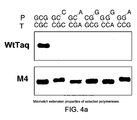
- Two of the mutants named M1 and M4 not only exhibit the ability to extend tlie G*A and C*C transversion mismatches used in the CSR selection, but also surprisingly exhibit a generically enhanced ability to extend 3' mismatched termini.
- the present invention provides an engineered DNA polymerase which exhibits an expanded substrate range.
- an engineered polymerase is obtainable using one or more method/s of the present invention.
- the DNA polymerase is a pol A polymerase.
- the engineered DNA polymerase is obtained using the method of the invention.
- the present invention provides a pol A DNA polymerase with an expanded substrate range, or the nucleic acid encoding it, wherein the DNA polymerase is designated M1 or M4 as shown in fig 1 and fig 2 respectively and depicted as SEQ No 1 and SEQ No 2 respectively.
- the engineered DNA polymerase as herein defined is that polymerase designated M1 in fig 1 and depicted SEQ No 1.
- the invention provides a pol A DNA polymerase with an expanded substrate range, wherein the polymerase exhibits at least 95% identity to one or more of the amino acid sequences designated M1 and M4 as shown in fig 1 and fig 2 respectively and depicted SEQ No 1 and SEQ No 2 respectively and which comprises any one or more of the following mutations: E520G, D144G, L254P, E520G, E524G, N583S, 1.1-D144G, L254P, E520G, E524G, N583S, V113I, A129V, L245R, E315K, G364D, G403R, E432D, P481A, I614M, R704W, D144G, G370D, E742G, K56E, I63T, K127R, M317I, Q680R, R343G, G370D, E520G, G12A, A109T, D251E, P3
- the invention provides a pol A DNA polymerase with an expanded substrate range, or the nucleic acid encoding it, wherein the polymerase exhibits at least 95% identity to one or more of the amino acid sequences designated M1 and M4 as shown in fig 1 and fig 2 respectively and depicted SEQ 1 and 2 respectively and which comprises any one or more of the following mutations: G84A, D144G, K314R, E520G, F598L, A608V, E742G, D58G, R74P, A109T, L245R, R343G, G370D, E520G, N583S, E694K, A743P.
- the invention provides a pol A DNA polymerase with an expanded substrate range, or the nucleic acid encoding it, wherein the polymerase exhibits at least 95% identity to one or more of the amino acid sequences designated M1 and M4 as shown in fig 1 and fig 2 respectively and depicted SEQ 1 and 2 respectively and which comprises any one or more of the following mutations: G84A, D144G, K314R, E520G, F598L, A608V, E742G.
- the mutation 'E520G' describes a DNA polymerase according to the invention in which glycine is present at position 520 of the amino acid sequence.
- the present inventors were surprised to find that E520, which is located at the tip of the thumb domain at a distance 20A from the 3'OH of the mismatched primer terminus, would be involved in mismatch recognition or extension .
- the mutation of E520 to G520 is clearly important in such roles however as the present inventors have demonstrated. This aspect of the invention is described further in the detailed description of the invention.
- a 'blend' of more than one polymerase refers to a mixture of 2 or more, 3 or more 4 or more, 5 or more enginerred polymerases.
- 'blends' refers to a mixture of 6, 7, 8, 9 or 10 or more 'engineered polymerases'.
- RT viral reverse transcriptases
- TLS translesion synthesis
- polY-family polymerases pol ⁇ Vaisman 2001JBC
- pol ⁇ Washington 2002 PNAS
- unusual po1B-family polymerase pol ⁇ Johnson Nature
- mutant polA polymerases according to the present invention share significant functional similarities with other polymerases found in nature but so far represent, the only known member of the polA-family polymerases that are proficient in mismatch extension (ME) and translesion synthesis (TLS).
- ME mismatch extension
- TLS translesion synthesis
- M1 and M4 combine mismatch extension (ME) and translesion synthesis (TLS) with high processivity and in the case of M1 are capable of efficient amplification of DNA fragments of up to 26kb.
- ME mismatch extension
- TLS translesion synthesis
- the present invention provides a nucleic acid construct which is capable of encoding a pol A DNA polymerase which exhibits an expanded substrate range, wherein said pol A DNA polymerase is depicted in fig 1 and fig 2 as SEQ No 1 or SEQ No 2 and is designated M1 and M4 respectively.
- the nucleic acid construct encodes the M1 pol A polymerase as described herein.
- the invention provides a pol A DNA polymerase with an expanded substrate range, in particular which is capable of mismatch extension, wherein the DNA polymerase comprises, preferably consists of the amino acid sequence of any one or more of the clones designated herein as 3B5, 3B8, 3C12 and 3D1.
- the invention provides a pol A DNA polymerase with an expanded substrate range, in particular which is capable of abasic site bypass, wherein the DNA polymerase comprises, preferably consists of the amino acid sequence of any one or more of the clones designated herein as 3A10, 3B6 and 3B 11.
- the invention provides a pol A DNA polymerase with an expanded substrate range, in particular which is capable of DNA replication involving the incorporation of unatural base analogues into the newly replicated DNA, wherein the pol A DNA polymerase comprises, preferably consists of the amino acid sequence of any one or more of the clones designated herein as 4D11 and 5D4.
- the present invention provides a pol A DNA polymerase with an expanded substrate range, wherein the polymerase exhibits at least 95% identity to one or more of the amino acid sequences designated 3B5, 3B8, 3C12, 3D1, 3A10, 3B6, 3B11, 4D11 and 5D4. which comprises any one or more of the mutations (with respect to either of the three parent genes Taq, Tth, Tfl) or gene segments found in clones 3B5, 3B8, 3C12, 3D1, 3A10, 3B6, 3B11, 4D11 and 5D4.
- the present invention provides a vector comprising a nucleic acid construct according to the present invention.
- the present invention provides the use of a DNA polymerase according to the present invention in any one or more of the following applications selected from the group consisting of the following: PCR amplification, sequencing of damaged DNA templates, the incorporation of unnatural base analogues into DNA and the creation of novel polymerase activities.
- the use is of a 'blend' of DNA polymerases according to the invention or selected according to the method of the invention.
- the use of blends of polymerases will be familiar to those skilled in the art and is described in Barnes, W. M. (1994) Proc. Natl. Acad. Sci. USA 91, 2216-2220 which is herein incorporated by reference.
- the DNA polymerase is a pol A DNA polymerase.
- it is generated using CSR technology using flanking primers bearing one or more 3' mismatch pairs of interest as described herein.
- Other suitable methods include screening after activity preselection (see Patel & Loeb 01) and phage display with proximity coupled template-primer duplex substrate (Jestin 01, Xue, 02. CST is also ideally suited as the present inventors have demonstrated.
- a polymerase according to the invention is in PCR amplification and the polymerase is M1 as herein described.
- engineered DNA polymerase ' refers to a DNA polymerase which has a nucleic acid sequence which is not 100% identical at the nucleic acid level to the one or more DNA polymerase/s or fragments thereof, from which it is derived, and which has been generated using one or more biotechnological methods.
- an engineered DNA polymerase according to the invention is a pol-A family DNA polymerase or a pol-B family DNA polymerase.
- an engineered DNA polymerase according to the invention is a pol-A family DNA polymerase.
- the term 'engineered DNA polymerase' also includes within its scope fragments, derivatives and homologues of an 'engineered DNA polymerase' as herein defined so long as it exhibits the requisite property of possessing an expanded substrate range as defined herein.
- an engineered DNA polymerase according to the invention does not include a polymerase with a 3-5' exonuclease activity under the conditions used for the polymerisation reaction. Such a proofreading activity would remove any 3' mismatches incorporated according to the method of the invention, and thus would prevent a polymerase according to the invention possessing an expanded substrate range as defined herein.
- 'flanking primers which bear a 3' distorting terminus' refer to those DNA polymerase primers which possess at their 3' ends one or more group/s, preferably nucleotide group/s which deviate from cognate base-pairing geometry.
- Such deviations from cognate base-pairing geometry includes but is not limited to: nucleotide mismatches, base lesions (i.e. modified or damaged bases) or entirely unnatural, synthetic base substitutes at the 3 end of a flanking primer used according to the methods of the invention.
- the flanking primer/s bear one or more nucleotide mismatches at their 3' end.
- the flanking primers may have one, two, three, four, or five or more nucleotide mismatches at the 3' primer end.
- the flanking primers Preferably according to the above aspects of the invention, the flanking primers have one or two nucleotide mismatches at the 3' primer end.
- the flanking primers Most preferably according to the above aspects of the invention, the flanking primers have one nucleotide mismatch at their 3' primer end.
- the term ' expanded substrate range ' (of an engineered DNA polymerase) means that substrate range of an engineered DNA polymerase according to the present invention is broader than that of one or more DNA polymerases, or fragments thereof from which it is derived.
- the term 'a broader sustrate range' refers to the ability of an engineered polymerase according to the present invention to extend one or more 3'distorting ends, advantageously transversion mismatches (purine*purine, pyrimidine*pyrimidine) for example A*A, C*C, G*G, T*T and G*A, which the one or more polymerase/s from which it is derived cannot extend.
- a DNA polymerase which exhibits a relaxed substrate range as herein defined has the ability not only to extene the 2' distorting end used in its generation, IE those of the flanking primers) but also exhibits a generic ability to extend 3' distorting end (for example A*G, A*A, G*G mismatches).
- the inventors modified the methods of compartmentalised self replication and surprisingly generated DNA polymerases which exhibited an expanded substrate range as herein defined.
- Example 1 The present inventors used recently developed oil in water emulsions but modified the composition of the surfactant as well as the oil to water ratio. Details are given in Example 1. These modifications greatly increased the heat stability of the compartments and allowed PCR yields in the emulsion to approach those of PCR in solution. Further details of the method of compartmentalised self replication are given below.
- microcapsules used according to the method of the invention require appropriate physical properties to allow the working of the invention.
- the contents of each microcapsule must be isolated from the contents of the surrounding microcapsules, so that there is no or little exchange of the nucleic acids and gene products between the microcapsules over the timescale of the experiment.
- the method of the present invention requires that there are only a limited number of nucleic acids per microcapsule. This ensures that the gene product of an individual nucleic acid will be isolated from other nucleic acids. Thus, coupling between nucleic acid and gene product will be highly specific. The enrichment factor is greatest with on average one or fewer nucleic acids per microcapsule, the linkage between nucleic acid and the activity of the encoded gene product being as tight as is possible, since the gene product of an individual nucleic acid will be isolated from the products of all other nucleic acids.
- nucleic acid there is a single nucleic acid, or fewer, per microcapsule.
- the formation and the composition of the microcapsules must not abolish the function of the machinery the expression of the nucleic acids and the activity of the gene products.
- any microencapsulation system used must fulfil these three requirements.
- the appropriate system(s) may vary depending on the precise nature of the requirements in each application of the invention, as will be apparent to the skilled person.
- microencapsulation procedures are available (see Benita, 1996) and may be used to create the microcapsules used in accordance with the present invention. Indeed, more than 200 microencapsulation methods have been identified in the literature (Finch, 1993).
- lipid vesicles liposomes
- non-ionic surfactant vesicles van Hal et al ., 1996.
- lipid vesicles liposomes
- van Hal et al ., 1996 closed-membranous capsules of single or multiple bilayers of non-covalently assembled molecules, with each bilayer separated from its neighbour by an aqueous compartment.
- liposomes the membrane is composed of lipid molecules; these are usually phospholipids but sterols such as cholesterol may also be incorporated into the membranes (New, 1990).
- RNA and DNA polymerisation can be performed within liposomes (Chakrabarti et al., 1994; Oberholzer et al., 1995a; Oberholzer et al., 1995b; Walde et al ., 1994; Wick & Luisi, 1996).
- aqueous phase With a membrane-enveloped vesicle system much of the aqueous phase is outside the vesicles and is therefore non-compartmentalised. This continuous, aqueous phase should be removed or the biological systems in it inhibited or destroyed (for example, by digestion of nucleic acids with DNase or RNase) in order that the reactions are limited to the microcapsules (Luisi et al., 1987).
- Enzyme-catalysed biochemical reactions have also been demonstrated in microcapsules generated by a variety of other methods. Many enzymes are active in reverse micellar solutions (Bru & Walde, 1991; Bru & Walde, 1993; Creagh et al., 1993; Haber et al., 1993; Kumar et al., 1989; Luisi & B., 1987; Mao & Walde, 1991; Mao et al ., 1992; Perez et al., 1992; Walde et al., 1994; Walde et al., 1993; Walde et al ., 1988) such as the AOT-isooctane-water system (Menger & Yamada, 1979).
- Microcapsules can also be generated by interfacial polymerisation and interfacial complexation (Whateley, 1996). Microcapsules of this sort can have rigid, nonpermeable membranes, or semipermeable membranes. Semipermeable microcapsules bordered by cellulose nitrate membranes, polyamide membranes and lipid-polyamide membranes can all support biochemical reactions, including multienzyme systems (Chang, 1987; Chang, 1992; Lim, 1984). Alginate/polylysine microcapsules (Lim & Sun, 1980), which can be formed under very mild conditions, have also proven to be very biocompatible, providing, for example, an effective method of encapsulating living cells and tissues (Chang, 1992; Sun et al ., 1992).
- Non-membranous microencapsulation systems based on phase partitioning of an aqueous environment in a colloidal system, such as an emulsion, may also be used.
- the microcapsules of the present invention are formed from emulsions; heterogeneous systems of two immiscible liquid phases with one of the phases dispersed in the other as droplets of microscopic or colloidal size (Becher, 1957; Sherman, 1968; Lissant, 1974; Lissant, 1984).
- Emulsions may be produced from any suitable combination of immiscible liquids.
- the emulsion of the present invention has water (containing the biochemical components) as the phase present in the form of finely divided droplets (the disperse, internal or discontinuous phase) and a hydrophobic, immiscible liquid (an 'oil') as the matrix in which these droplets are suspended (the nondisperse, continuous or external phase).
- water containing the biochemical components
- an 'oil' hydrophobic, immiscible liquid
- W/O water-in-oil'
- This has the advantage that the entire aqueous phase containing the biochemical components is compartmentalised in discreet droplets (the internal phase).
- the external phase being a hydrophobic oil, generally contains none of the biochemical components and hence is inert.
- the emulsion may be stabilised by addition of one or more surface-active agents (surfactants).
- surfactants are termed emulsifying agents and act at the water/oil interface to prevent (or at least delay) separation of the phases.
- Many oils and many emulsifiers can be used for the generation of water-in-oil emulsions; a recent compilation listed over 16,000 surfactants, many of which are used as emulsifying agents (Ash and Ash, 1993).
- Suitable oils include light white mineral oil and non-ionic surfactants (Schick, 1966) such as sorbitan monooleate (Span TM 80; ICI) and polyoxyethylenesorbitan monooleate (Tween TM 80; ICI) and Triton-X-100.
- non-ionic surfactants such as sorbitan monooleate (Span TM 80; ICI) and polyoxyethylenesorbitan monooleate (Tween TM 80; ICI) and Triton-X-100.
- anionic surfactants may also be beneficial.
- Suitable surfactants include sodium cholate and sodium taurocholate. Particularly preferred is sodium deoxycholate, preferably at a concentration of 0.5% w/v, or below. Inclusion of such surfactants can in some cases increase the expression of the nucleic acids and/or the activity of the gene products. Addition of some anionic surfactants to a non-emulsified reaction mixture completely abolishes translation. During emulsification, however, the surfactant is transferred from the aqueous phase into the interface and activity is restored. Addition of an anionic surfactant to the mixtures to be emulsified ensures that reactions proceed only after compartmentalisation.
- stirrers such as magnetic stir-bars, propeller and turbine stirrers, paddle devices and whisks
- homogenisers including rotor-stator homogenisers, high-pressure valve homogenisers and jet homogenisers
- colloid mills ultrasound and 'membrane emulsification' devices
- Aqueous microcapsules formed in water-in-oil emulsions are generally stable with little if any exchange of nucleic acids or gene products between microcapsules. Additionally, we have demonstrated that several biochemical reactions proceed in emulsion microcapsules. Moreover, complicated biochemical processes, notably gene transcription and translation are also active in emulsion microcapsules. The technology exists to create emulsions with volumes all the way up to industrial scales of thousands of litres (Becher, 1957; Sherman, 1968; Lissant, 1974; Lissant, 1984).
- the preferred microcapsule size will vary depending upon the precise requirements of any individual selection process that is to be performed according to the present invention. In all cases, there will be an optimal balance between gene library size, the required enrichment and the required concentration of components in the individual microcapsules to achieve efficient expression and reactivity of the gene products.
- Example 1 Details of one example of an emulsion used when performing the method of the present invention are given in Example 1.
- the processes of expression must occur within each individual microcapsule provided by the present invention. Both in vitro transcription and coupled transcription-translation become less efficient at sub-nanomolar DNA concentrations. Because of the requirement for only a limited number of DNA molecules to be present in each microcapsule, this therefore sets a practical upper limit on the possible microcapsule size.
- the mean volume of the microcapsules is less that 5.2 x 10 -16 m 3 , (corresponding to a spherical microcapsule of diameter less than 10 ⁇ m, more preferably less than 6.5 x 10 -17 m 3 (5 ⁇ m), more preferably about 4.2 x 10 -18 m 3 (2 ⁇ m) and ideally about 9 x 10 -18 m 3 (2.6 ⁇ m).
- the effective DNA or RNA concentration in the microcapsules may be artificially increased by various methods that will be well-known to those versed in the art. These include, for example, the addition of volume excluding chemicals such as polyethylene glycols (PEG) and a variety of gene amplification techniques, including transcription using RNA polymerases including those from bacteria such as E . coli (Roberts, 1969; Blattner and Dahlberg, 1972; Roberts et al ., 1975; Rosenberg et al ., 1975) , eukaryotes e. g. (Weil et al .
- PEG polyethylene glycols
- thermostable for example, the coupled transcription-translation systems could be made from a thermostable organism such as Thermus aquaticus
- microcapsule volume 5.2 x 10 -16 m 3 (corresponding to a sphere of diameter 10um).
- microcapsule size must be sufficiently large to accommodate all of the required components of the biochemical reactions that are needed to occur within the microcapsule. For example, in vitro , both transcription reactions and coupled transcription-translation reactions require a total nucleoside triphosphate concentration of about 2mM.
- RNA molecules of nucleoside triphosphate per microcapsule 8.33 x 10 -22 moles.
- this number of molecules must be contained within a microcapsule of volume 4.17 x 10 -19 litres (4.17 x 10 -22 m 3 which if spherical would have a diameter of 93nm.
- the ribosomes necessary for the translation to occur are themselves approximately 20nm in diameter.
- the preferred lower limit for microcapsules is a diameter of approximately 100nm.
- the microcapsule volume is preferably of the order of between 5.2 x 10 -22 m 3 and 5.2 x 10 -16 m 3 corresponding to a sphere of diameter between 0.1um and 10um, more preferably of between about 5.2 x 10 -19 m 3 and 6.5 x 10 -17 m 3 (lum and 5um). ' Sphere diameters of about 2.6um are most advantageous.
- compartments droplets of 2.6um mean diameter
- Escherichia are 1.1-1.5 x 2.0-6.0 um rods
- Azotobacter are 1.5-2.0 um diameter ovoid cells.
- Darwinian evolution is based on a 'one genotype one phenotype' mechanism.
- the concentration of a single compartmentalised gene, or genome drops from 0.4 nM in a compartment of 2 um diameter, to 25 pM in a compartment of 5 um diameter.
- the prokaryotic transcription/translation machinery has evolved to operate in compartments of ⁇ 1-2 um diameter, where single genes are at approximately nanomolar concentrations.
- a single gene, in a compartment of 2.6 um diameter is at a concentration of 0.2 nM. This gene concentration is high enough for efficient translation. Compartmentalisation in such a volume also ensures that even if only a single molecule of the gene product is formed it is present at about 0.2 nM, which is important if the gene product is to have a modifying activity of the nucleic acid itself.
- the volume of the microcapsule should thus be selected bearing in mind not only the requirements for transcription and translation of the nucleic acid/nucleic acid, but also the modifying activity required of the gene product in the method of the invention.
- the size of emulsion microcapsules may be varied simply by tailoring the emulsion conditions used to form the emulsion according to requirements of the selection system.
- the size of the microcapsules is selected not only having regard to the requirements of the transcription/translation system, but also those of the selection system employed for the nucleic acid/nucleic acid construct.
- the components of the selection system such as a chemical modification system, may require reaction volumes and/or reagent concentrations which are not optimal for transcription/translation.
- such requirements may be accommodated by a secondary re-encapsulation step; moreover, they may be accommodated by selecting the microcapsule size in order to maximise transcription/translation and selection as a whole.
- Empirical determination of optimal microcapsule volume and reagent concentration for example as set forth herein, is preferred.
- nucleic acid/nucleic acid in accordance with the present invention is as described above.
- a nucleic acid is a molecule or construct selected from the group consisting of a DNA molecule, an RNA molecule, a partially or wholly artificial nucleic acid molecule consisting of exclusively synthetic or a mixture of naturally-occurring and synthetic bases, any one of the foregoing linked to a polypeptide, and any one of the foregoing linked to any other molecular group or construct.
- the other molecular group or construct may be selected from the group consisting of nucleic acids, polymeric substances, particularly beads, for example polystyrene beads, magnetic substances such as magnetic beads, labels, such as fluorophores or isotopic labels, chemical reagents, binding agents such as macrocycles and the like.
- the nucleic acid portion of the nucleic acid may comprise suitable regulatory sequences, such as those required for efficient expression of the gene product, for example promoters, enhancers, translational initiation sequences, polyadenylation sequences, splice sites and the like.
- Example 1 Details of a preferred method of performing the method of the invention are given in Example 1. However, those skilled in the art will appreciate that the examples given are non-limiting and methods for product selection are discussed in more general terms below.
- a ligand or substrate can be connected to the nucleic acid by a variety of means that will be apparent to those skilled in the art (see, for example, Hermanson, 1996). Any tag will suffice that allows for the subsequent selection of the nucleic acid. Sorting can be by any method which allows the preferential separation, amplification or survival of the tagged nucleic acid. Examples include selection by binding (including techniques based on magnetic separation, for example using Dynabeads TM ), and by resistance to degradation (for example by nucleases, including restriction endonucleases).
- nucleic acid molecule may be linked to a ligand or substrate is through biotinylation. This can be done by PCR amplification with a 5'-biotinylation primer such that the biotin and nucleic acid are covalently linked.
- the ligand or substrate to be selected can be attached to the modified nucleic acid by a variety of means that will be apparent to those of skill in the art.
- a biotinylated nucleic acid may be coupled to a polystyrene microbead (0.035 to 0.2um in diameter) that is coated with avidin or streptavidin, that will therefore bind the nucleic acid with very high affinity.
- This bead can be derivatised with substrate or ligand by any suitable method such as by adding biotinylated substrate or by covalent coupling.
- a biotinylated nucleic acid may be coupled to avidin or streptavidin complexed to a large protein molecule such as thyroglobulin (669 Kd) or ferritin (440 Kd).
- This complex can be derivatised with substrate or ligand, for example by covalent coupling to the alpha-amino group of lysines or through a non-covalent interaction such as biotin-avidin.
- the substrate may be present in a form unlinked to the nucleic acid but containing an inactive "tag” that requires a further step to activate it such as photoactivation (e.g. of a "caged" biotin analogue, (Sundberg et al., 1995; Pirrung and Huang, 1996)).
- the catalyst to be selected then converts the substrate to product.
- the "tag” could then be activated and the "tagged” substrate and/or product bound by a tag-binding molecule (e.g. avidin or streptavidin) complexed with the nucleic acid.
- a tag-binding molecule e.g. avidin or streptavidin
- the nucleic acids encoding active enzymes can be enriched using an antibody or other molecule which binds, or reacts specifically with the "tag". Although both substrates and product have the molecular tag, only the nucleic acids encoding active gene product will co-purify.
- Isolation refers to the process of separating an entity from a heterogeneous population, for example a mixture, such that it is free of at least one substance with which it was associated before the isolation process.
- isolation refers to purification of an entity essentially to homogeneity.
- Sorting of an entity refers to the process of preferentially isolating desired entities over undesired entities.
- the method of the present invention permits the sorting of desired nucleic acids from pools (libraries or repertoires) of nucleic acids which contain the desired nucleic acid. Selecting is used to refer to the process (including the sorting process) of isolating an entity according to a particular property thereof.
- nucleic acid/nucleic acid from a nucleic acid library for example a mutant taq library
- Libraries of nucleic acids can be created in a variety of different ways, including the following.
- Libraries of genes can also be made by encoding all (see for example Smith, 1985; Parmley and Smith, 1988) or part of genes (see for example Lowman et al., 1991) or pools of genes (see for example Nissim et al., 1994) by a randomised or doped synthetic oligonucleotide. Libraries can also be made by introducing mutations into a nucleic acid or pool of nucleic acids 'randomly' by a variety of techniques in vivo , including; using 'mutator strains', of bacteria such as E . coli mutD5 (Liao et al., 1986; Yamagishi et al ., 1990; Low et al., 1996).
- Random mutations can also be introduced both in vivo and in vitro by chemical mutagens, and ionising or UV irradiation (see Friedberg et al., 1995), or incorporation of mutagenic base analogues (Freese, 1959; Zaccolo et al., 1996).
- 'Random' mutations can also be introduced into genes in vitro during polymerisation for example by using error-prone polymerases (Leung et al., 1989).
- the repertoire of nucleic fragments used is a mutant Taq repertoire which has been mutated using error prone PCR. Details are given in Examples 1.
- the term 'random' may be in terms of random positions with random repertoire of amino acids at those positions or it may be selected (predetermined) positions with random repertoire of amino acids at those selected positions.
- the microcapsules according to the invention will comprise further components required for the sorting process to take place.
- Other components of the system will for example comprise those necessary for transcription and/or translation of the nucleic acid. These are selected for the requirements of a specific system from the following; a suitable buffer, an in vitro transcription/replication system and/or an in vitro translation system containing all the necessary ingredients, enzymes and cofactors, RNA polymerase, nucleotides, nucleic acids (natural or synthetic), transfer RNAs, ribosomes and amino acids, and the substrates of the reaction of interest in order to allow selection of the modified gene product
- a suitable buffer will be one in which all of the desired components of the biological system are active and will therefore depend upon the requirements of each specific reaction system. Buffers suitable for biological and/or chemical reactions are known in the art and recipes provided in various laboratory texts, such as Sambrook et al., 1989.
- the in vitro translation system will usually comprise a cell extract, typically from bacteria (Zubay, 1973; Zubay, 1980; Lesley et al ., 1991; Lesley, 1995), rabbit reticulocytes (Pelham and Jackson, 1976), or wheat germ (Anderson et al., 1983).
- a cell extract typically from bacteria (Zubay, 1973; Zubay, 1980; Lesley et al ., 1991; Lesley, 1995), rabbit reticulocytes (Pelham and Jackson, 1976), or wheat germ (Anderson et al., 1983).
- Many suitable systems are commercially available (for example from Promega) including some which will allow coupled transcription/translation (all the bacterial systems and the reticulocyte and wheat germ TNT TM extract systems from Promega).
- the mixture of amino acids used may include synthetic amino acids if desired, to increase the possible number or variety of proteins produced in the library. This can be accomplished by charging tRNAs with artificial amino acids and using these tRNAs for the in vitro translation of
- the enrichment of the pool of nucleic acids for those encoding the molecules of interest can be assayed by non-compartmentalised in vitro transcription/replication or coupled transcription-translation reactions.
- the selected pool is cloned into a suitable plasmid vector and RNA or recombinant protein is produced from the individual clones for further purification and assay.
- Microcapsules may be identified by virtue of a change induced by the desired gene product which either occurs or manifests itself at the surface of the microcapsule or is detectable from the outside as described in section iii (Microcapsule Sorting). This change, when identified, is used to trigger the modification of the gene within the compartment.
- microcapsule identification relies on a change in the optical properties of the microcapsule resulting from a reaction leading to luminescence, phosphorescence or fluorescence within the microcapsule. Modification of the gene within the microcapsules would be triggered by identification of luminescence, phosphorescence or fluorescence.
- identification of luminescence, phosphorescence or fluorescence can trigger bombardment of the compartment with photons (or other particles or waves) which leads to modification of the nucleic acid.
- Modification of the nucleic acid may result, for example, from coupling a molecular "tag", caged by a photolabile protecting group to the nucleic acids: bombardment with photons of an appropriate wavelength leads to the removal of the cage. Afterwards, all microcapsules are combined and the nucleic acids pooled together in one environment. Nucleic acids encoding gene products exhibiting the desired activity can be selected by affinity purification using a molecule that specifically binds to, or reacts specifically with, the "tag".
- the selection procedure may comprise two or more steps. First, transcription/replication and/or translation of each nucleic acid of a nucleic acid library may take place in a first microcapsule. Each gene product is then linked to the nucleic acid which encoded it (which resides in the same microcapsule). The microcapsules are then broken, and the nucleic acids attached to their respective gene products optionally purified. Alternatively, nucleic acids can be attached to their respective gene products using methods which do not rely on encapsulation.
- phage display Smith, G.P., 185
- polysome display Movable Markis et al., 1994
- RNA-peptide fusion Robots and Szostak, 1997)
- lac repressor peptide fusion Cull, et al., 1992.
- each purified nucleic acid attached to its gene product is put into a second microcapsule containing components of the reaction to be selected. This reaction is then initiated. After completion of the reactions, the microcapsules are again broken and the modified nucleic acids are selected. In the case of complicated multistep reactions in which many individual components and reaction steps are involved, one or more intervening steps may be performed between the initial step of creation and linking of gene product to nucleic acid, and the final step of generating the selectable change in the nucleic acid.
- genetic material comprised in the nucleic acids may be amplified and the process repeated in iterative steps.
- Amplification may be by the polymerase chain reaction (Saiki et al., 1988) or by using one of a variety of other gene amplification techniques including, Q ⁇ replicase amplification (Cahill, Foster and Mahan, 1991; Chetverin and Spirin, 1995; Katanaev, Kurnasov and Spirin, 1995); the ligase chain reaction (LCR) (Landegren et al., 1988; Barany, 1991); the self-sustained sequence replication system (Fahy, Kwoh and Gingeras, 1991) and strand displacement amplification (Walker et al., 1992).
- LCR ligase chain reaction
- High fidelity DNA polymerases such as Pol A(like Taq polymerase) and Pol-B family polymerases which lack a 3'-5' exonuclease proofreading capability show a strict blockage to the extension of distorted or mismatched 3' primer termini to avoid propagation of misincorporations. While the degree of blockage varies considerably depending on the nature of the mismatch, some transversion (purine-purine /pyrimidine-pyrimidine) mismatches are extended up to 10 6 -fold less efficiently than matched termini (Huang 92). Likewise, many unnatural base analogues, while incorporated efficiently, act as strong terminators (Kool, Loakes).
- the present inventors have modified the principles described in Ghadessy, F. G et al (2001) Proc. Nat Acad. Sci, USA, 93, 4552-4557 (compartmentalised self replication) and Ghadessy 2003, and outlined above. Both these documents are herein incorporated by reference.
- the present inventors have used these modified techniques to develop a method by which the substrates specificity of high fidelity DNA polymerases may be expanded in a generic way.
- the inventors have exemplified the technique by expanding the substrate specificity of the high-fidelity pol-A family polymerases.
- the present inventors created two repertoires of randomly mutated Taq genes, as described in Ghadessy, F. G et al (2001) referred to above. Three cycles of mismatch extension CSR was performed using flanking primers bearing the mismatches A*G and C*C at their 3' ends. Selected clones were ranked using a PCR extension assay described herein.
- the inventors have generated DNA polymerases which exhibit a relaxed substrate specificity/expanded substrate range.
- the term ' expanded substrate range ' (of an engineered DNA polymerase) means that substrate range of an engineered DNA polymerase according to the present invention is broader than that of the one or more DNA polymerases, or fragments thereof from which it is derived.
- the term 'a broader substrate range' refers to the ability of an engineered polymerase according to the present invention to extend one or more 3' mismatches, for example A*A, G*A, G*G, T*T, C*C, which the one or more polymerase/s from which it is derived cannot extend.
- a DNA polymerase which exhibits a relaxed substrate range as herein defined has the ability not only to extend the 3' mismatches used in its generation, (IE those of the flanking primers), but also exhibits a generic ability to extend 3' mismatches (for example A*G, A*A, G*G).
- the two best mutants M1 (G84A, D144G, K314R, E520G, F598L, A608V, E742G) and M4 (D58G, R74P, A109T, L245R, R343G, G370D, E520G, N583S, E694K, A743P) were chosen for further investigation.
- M1 and M4 not only had greatly increased ability to extend the G*A and C•C transversion mismatches used in the CSR selection, but appeared to have acquired a more generic ability to extend 3' mispaired termini, including other strongly disfavoured transversion mismatches (such as A•G, A•A, G•G) ( Fig. 1B ), which wtTaq polymerase was unable to extend, as previously reported (Kwok et al 1990, Huang 92).
- Nucleic acid sequences encoding M1 and M4 pol A DNA polymerase mutants are depicted SEQ No 1 and SEQ No 2 respectively and are shown in Fig 1 and fig 2 respectively.
- E520G a mutation that is shared by all but one of the four best clones of the final selection. Curiously, E520 is located at the very tip of the thumb domain at a distance of 20A from the 3' OH of the mismatched primer terminus and its involvement in mismatch recognition or extension is unclear. However, E520G is clearly important for mismatch extension as backmutation reduces mismatch extension in both M1 and M4 to near wt levels ( Fig. 2 ).
- RT viral reverse transcriptases
- TLS translesion synthesis
- polY-family polymerases pol ⁇ Vaisman 2001JBC
- pol ⁇ Washington 2002 PNAS
- unusual polB-family polymerase pol ⁇ Johnson Nature
- the selected polymerases share significant functional similarities with preexisting polymerases but represent, to our knowledge, the only known polA-family polymerases that are proficient in mismatch extension (ME) and translesion synthesis (TLS).
- M1 and M4 combine ME and TLS with high processivity and in the case of M1 are capable of efficient amplification of DNA fragments of up to 26kb.
- ME may play a crucial role in allowing error-prone yet processive replication of a multi-kb viral genome.
- proficient mismatch extension is also a necessary prerequisite for their biological function as unpaired and distorted primer termini necessarily occur opposite lesions in the DNA template strand.
- the ability of TLS polymerases to traverse replication blocking lesions in DNA is thought to arise from a relaxed geometric selection in the active site (Goodman 02).
- the ability of M1 and M4 to process both bulky mispairs and a distorting CPD (cys-syn thymidine-thymidine dimer) dimer makes it plausible that, in analogy to TLS polymerases, they also have acquired a more open active site. Indeed, modelling showed that a CPD dimer can not be accommodated in the wtTaq polymerase active site without mayor steric clashes (Trincao01).
- M1 (and to a lesser degree M4) also display a much increased ability to incorporate extend and replicate different types of unnatural nucleotide substrates that deviate to varying degrees from the canonical nucleobase structure.
- ⁇ S substitution is the most conservative.
- the sulfur anion is significantly larger than oxygen anion and coordinates cations poorly, which may be among the reasons why the wt enzyme will not tolerate full ⁇ S substitution.
- Fluorescently-labelled nucleotides like aS nucleotides retain base-pairing potential but include a bulky and hydrophobic substituent that must be accomodated by the polymerase active site. Steric clashes in the active site are allievated by the presence of a long, flexible linker.
- the hydrophobic analogue 5NI represents the most drastic departure from standard nucleotide chemistry we investigated. Comparable in size to a purine base, 5NI competely lacks any hydrogen bonding potential but like the natural bases, favours the anti-position with respect to the ribose sugar as judged by NMR (J. Gallego, D.L. and P.H., unpublished results). Therefore, a 5NI•A or 5NI•G basepair would closely resemble a purine-purine transversion mismatch and may cause similar distortions to the canonical DNA duplex geometry.
- the 53exoD is too distant from the active site to have direct effects on mismatch extension. It is, however, thought to be crucial for polymerase processivity and may thus influence mismatch extension (24). Indeed, the Stoffel fragment of Taq polymerase (26), which lacks the 53exoD, displays both reduced processivity and more stringent mismatch discrimination (27). Mutations in the 53exoD of M1 and M4 may therefore contribute to mismatch extension by enhancing polymerase processivity. Together with the ability to bypass abasic sites (generated in large DNA fragments during thermocycling) this may also contribute to the proficiency of M1 at long PCR ( Fig. 5 ).
- E520 is located at the very tip of the thumb domain at the end of the H2 helix at a distance of 20A from the 3' OH of the mismatched primer terminal base (P1) (2). Mechanistic aspects of the involvement of the E520G mutation in mismatch recognition or extension are therefore not obvious either. It is worth noting though that adjacent regions, especially the preceding loop connecting helices H1 and H2 and parts of helix I, make extensive contacts with the template-primer duplex between P3-P7 (2). It has previously been observed that mismatch incorporation affects extension kinetics up to the P4 position (24). E520G may modify the structure of these regions to ease passage of mismatches and increase elongation efficiency post incorporation. Base flipping, i.e.
- a change in the mutation spectrum towards a more even distribution of transition and transversion mutations may be an effective solution to accelerate adaptation, while maintaining a healthy distance from the error threshold.
- This may also make M1 a useful tool for protein engineering as the bias of Taq (and other DNA polymerases) for transition mutations limits the regions of sequence space that can be accessed effectively using PCR mutagenesis
- Table 1 Mutation spectrum of wtTaq and M1 in PCR Transitions Transversions Deletions AT->GC GC->AT AT->TA AT->CG GC->TA GC->CG WtTaq* 25 9 8 2 3 1 3 M1* 25 16 15 4 5 10 1 *Mutations derived from sequencing of 40 clones (800bp) each.
- DNA polymerases according to the present invention in particular M1 and M4 respectively as depicted in SEQ No 1 and SEQ No 2 possess the following properties:
- the unusual properties of the DNA polymerases according to the present invention may have immediate uses for example for the improved incorporation of dye-modified nucleotides in sequencing and array labelling and/or the amplification of ultra-long DNA targets. They may prove useful in the amplification of damaged DNA templates in forensics or paelobiology, may permit an expansion of the chemical repertoire of aptamers or deoxi-ribozymes (Benner, Barbas, ribozyme review) and may aid efforts to expand the genetic alphabet (Benner, Schultz).
- the altered mutation spectrum of M1 may make a useful tool in random mutagenesis experiments as the strong bias of Taq and other polymerases towards (A->G, T->C) transitions limits the combinatorial diversity accessible through PCR mutagenesis. Furthermore, the ability of M1 & M4 to extend 3' ends in which the last base is mismatched with the template strand and the ability of H10 (see example 6) to extend 3' ends in which the last two bases are mismatched with the template strand may extend the scope of DNA shuffling methods (Stemmer) by allowing to recombine more distantly related sequences.
- DNA polymerases according to the invention in particular pol A polymerases, for example M1 and M4 pol A polymerases as herein described may serve as a useful framework for mutagenesis and evolution towards polymerases capable of utilizing an ever wider array of modified nucleotide substrates.
- the inventors anticipate that directed evolution may ultimately permit modification of polymerase chemistry itself, allowing the creation of amplifiable DNA-like polymers of defined sequence thus extending molecular evolution to material science.
- PCR A PCR assay was used to screen and rank clones. Briefly, clones were normalized for activity in PCR with matched primers 3, 4 and activity with mismatched primers 1 and 2 (1 ⁇ M each) determined at minimal cycle number (15-25 cycles). Extension capability for different mismatches was determined by the same assay using mismatch primers 2 (C•C mismatch), 5 (A•A mismatch), 6 (G•G mismatch), 7 (G•A mismatch) with matched primer 3 or primer 1 (A•G mismatch) with matched primer 4.
- mismatch primers 2 C•C mismatch
- 5 A•A mismatch
- 6 G•G mismatch
- 7 G•A mismatch
- Template affinity assays An equilibrium binding assay (12) was used to determine relative affinity of polymerases for the mismatched primer-templates used in the kinetics assays. Polymerases were preincubated at 60°C in 1xTaq buffer with 50nM 32 P-labeled matched primer-template and 50nM unlabeled mismatched competitor primer-templates. Reactions were initiated by simultaneous addition of dCTP (200 ⁇ M ) and trap DNA ( Xba I / Sal I-restricted sheared salmon sperm DNA, 4.5 mg/ml). Prior experiments demonstrated trap-effectiveness over the time period used (15 seconds).
- Template primers 22 (undamaged) or 23 (containing a synthetic abasic site) were synthesized by Lofstrand Laboratories (Gaithersburg, MD).
- Template primer 24 (containing a single cis-syn thymine dimer), was synthesized as described (34).
- Primer 25 was 32 P-labeled and annealed to one of the three templates 22, 23, 24 (at a primer template ratio of molar 1:1.5) and extended in 40mM Tris•HCl at pH 8.0, 5mM MgCl 2 , 100 ⁇ M of each dNTP, 10mM DTT, 250 ⁇ g/ml BSA, 2.5% glycerol, 10 nM primer-template DNA and 0.1 Unit of polymerase at 60°C for various times.
- Primer 26 was 32 P-labeled and annealed to template primer 27 (containing a single 5-nitroindole) in 1xTaq buffer, 0.1 or 0.5U of the polymerase was added and reactions incubated at 60°C for 15 mins, after which 40 ⁇ M of each dNTP were added and incubation at 60°C continued for various times.
- Mutation rates were determined using the mutS ELISA assay (Genecheck, Ft. Collins, CO) or by performing 2x50 cycles of PCR on three different templates and sequencing the cloned products.
- Translesion synthesis Transversion mispairs represent distorting deviations from the cognate duplex structure.
- M1 and M4 were capable of processing other deviations of the DNA structure such as lesions in the template strand.
- Using a gel-extension assay we investigated their ability to traverse an abasic site and a cis-syn thymine pyrmidine dimer (CPD) template strand lesion.
- CPD cis-syn thymine pyrmidine dimer
- both M1 and M4 are able to extend past the lesion and to the end of the template.
- the size of the final product is similar to that observed on the undamaged template indicating that bypass occurred without deletions.
- Perhaps the most striking example of the proficiency of M1 and M4 to bypass template lesions is observed on the CPD-containing template ( Fig. 5 ).
- wtTaq utilizes a fraction of the available template and is only able to insert a base opposite the 3'T of the dimer after prolonged reaction conditions.
- both M1 and M4 are able to readily extend all of the primer to the 3'T of the dimer.
- TLS trans-lesion synthesis
- Unnatural substrates We reasoned that relaxed geometric selection might also aid the incorporation of unnatural base analogues, some of which inhibit or arrest polymerase activity due to poor geometric fit or lack of interaction with either polymerase or template strand.
- a first, conservative example are phosphothioate nucleotide triphosphates ( ⁇ S dNTPs), in which one of the oxygen atoms in the ⁇ phosphate group is replaced by sulfur.
- ⁇ S dNTPs are generally well accepted as substrates by DNA polymerases but when we replaced all four dNTPs with their ⁇ S counterparts in PCR wtTaq failed to generate any amplification products, while M1 (and to lesser extent M4) were able to generate PCR products of up to 2kbp, indicating that they could utilize ⁇ S dNTPs with much increased efficiency compared to the wt enzyme ( Fig. 6 ). As expected, the resulting ⁇ S DNA was completely resistant to cleavage by DNA endonucleases (not shown). Nucleotides bearing bulky adducts such as fluorescent dyes are widely used in applications such as dye terminator sequencing or array labelling.
- Amplification product size with wtTaq is generally limited to fragments a few kb long but can be extended to much longer targets by inclusion of a proofreading polymerase (Barnes 92).
- a proofreading polymerase Barnes 92.
- M1 was able to efficiently amplify of targets up to 26kb ( Fig. 7 ), using standard PCR conditions in the absence of auxiliary polymerases or other processivity factors.
- wtTaq enzyme failed to amplify targets >9kb.
- the molecular basis for the product size limitation in the wt enzyme is thought to be premature termination due to an inability to extend mismatches following nucleotide misincorporation. These are thought to be removed by the proofreading polymerase allowing extension to resume.
- Staggered extension protocol (StEP, (Zhao, Giver et al. 1998)). This technique allows two or more genes of interest from different species to be randomly recombined to produce chimeras, the sequence of which contains parts of the original input parent genes..
- Thermus aquaticus (Taq) wild type and T8 (a previously selected 11 fold more thermostable Taq variant (Ghadessy, Ong et al. 2001)), Thermus thermophilus (Tth) and Thermus flavus (Tfl) polymerases had previously been amplified from genomic DNA and cloned into pASK75 (Skerra 1994) and tested for activity. These genes were then shuffled using the staggered extension protocol (StEP) as described (Zhao, Giver et al. 1998) with (CAG GAA ACA GCT ATG ACA AAA ATC TAG ATA ACG
- Example 7 Selection of two mismatch extension polymerase.
- the aqueous phase was ether extracted, PCR purified (Qiagen, Chatsworth, CA) with an additional 35% GnHCl, digested with Dpn I to remove methylated plasmid DNA, treated with ExoSAP (USB) to remove residual primers, reamplified with outnested primers and recloned and transformed into E. coli as above.
- the resultant clones were screened and ranked by PCR assay. Briefly, 2 ⁇ l of induced cells were added to 20 ⁇ l of PCR mix with the relevant mismatch primers. Clones that produced a band were then subjected to further analysis and the most active clones were sequenced.
- clone H10 has significant activity on the primers with two mismatches.
- H10 is a chimera of T. aquaticus wild type (residues 4 to 20 and 221 to 640), T8 (residues 1 to 3 and 641 to 834) and T. thermophilus (residues 21 to 220).
- H10 has five detectable crossover sites and 13 point mutations, of which 4 are silent (F74 ⁇ I, F280 ⁇ L, P300 ⁇ S, T387 ⁇ A, A441 ⁇ V, A519 ⁇ V Q536 ⁇ R, R679 ⁇ G, F699 ⁇ L).
- Example 8 Selecting for a 4 mismatch extension polymerase.
- CSR emulsification and selection was performed on the StEP Taq, Tth and Tfl library essentially as described (Ghadessy, Ong et al. 2001).
- the library had previously been cloned into pASK75 (see example 6).
- the aqueous phase was ether extracted and replication products were purified using a PCR purification kit (Qiagen, Chatsworth, CA) including a wash with an 35% GnHCl.
- the induced library was emulsified as above with the additional presence of biotinylated dUTP and incubated at 94°C 5 minutes, 50°C 1 minute and 72 °C 1 minute.
- the aqueous phase was ether extracted, the DNA in the aqueous phase was precipitated by addition of 1/10 volume of 3M NaAc, 1 ⁇ l glycogen and 2.5 volumes of 100% ethanol. This was then incubated for 1 hour at -20 °C, spun for at 13000rpm for 30 minutes in a benchtop microcentrifuge, washed with 70% ethanol and resuspended in 50 ⁇ l buffer EB (Qiagen).
- the plasmid DNA of the ten best clones was then purified and shuffled as described above (StEP, (Zhao, Giver et al. 1998)). This was then purified, cut and cloned and the resultant library was subjected to another round of CSR as described (Ghadessy, Ong et al. 2001). The same two sets of mismatch primers with four mismatches at their 3' end were used in the emulsion as two separate sources source of selective pressure. This was then dealt with as above and the resultant clones were screened and ranked by PCR assay (as above).
- the best clones from the second round were combined with the best clones from the first round on a 96 well plate and were subjected to further screening.
- A1 is Tth polymerase; A2 Tfl; A3 Taq; A4 M1; A5 M4; A6 H10 (see previous example.
- 1A7 to ID12 are first round clones (where 1 indicates that these are first round clones), 2E1 to 2H12 are second round clones (where 2 indicates that these are second round clones)
- Example 9 Hairpin ELISA to measure polymerase activity.
- the below protocol is a sensitive method to measure polymerase activity both for the incorporation of unnatural nucleotide substrates (added to the reaction mixture) or the extension or replication of unnatural nucleotide substrates (incorporated as part of the hairpin oligo).
- the assay comprises a hairpin oligonucleotide which constitutes both primer and template in one.
- a hairpin oligonucleotide which constitutes both primer and template in one.
- a biotinylated dU residue which allows capture of the hairpin oligonucleotide on streptavidin-coated surfaces.
- Extension reactions are carried out in the presence of small amounts of a labelled nucleotide typically DIG-16-dUTP.
- Product is captured (for example on a streptavidin coated ELISA plate ) and incorporation of labelled nucleotide into the product strand is measured (using for example an anti-DIG antibody) and taken as a measure of polymerase activity.
- Extension reactions are carried out in 1x Taq buffer including 1-100nM of hairpin primer and 100 ⁇ M dNTP mixture (comprising 0.3-30% dUTP-DIG), typically incubated at 94°C for 1-5mm, followed by incubation at 50°C for 1-5min, followed by incubation at 72°C for 1-5min. (1-10 ⁇ l) Reaction products are added to Streptavidin coated ELISA plates (Streptawell, Roche) in 200 ⁇ l PBS, 0.2% Tween20 (PBST) and incubated at room temperature for 10min to 1h.
- PBST 0.2% Tween20
- ELISA plates are washed 3x in PBST and 200 ⁇ l of anti-DIG-POD Fab2 fragment (Roche) diluted 1/2000 in PBST is added and the plate is incubated at room temperature for 10min to 1h. The plate is washed 3-4x in PBST and developed with an appropriate POD substrate.
- Example 10 Haimin-ELISAs to test nucleotide analogue incorporation by mismatch extension clones
- Clones previously selected for their ability to extend from a 4 basepair mismatch were assayed for their ability to incorporate a variety of nucleotide analogues.
- Clones were grown at 30°C overnight in 200 ⁇ l 2XTY + ampicillin (100 ⁇ g/ml). A 150 ⁇ l (2xTY + ampicillin 100 ⁇ g/ml) overday culture was started from the overnight and grown for 3 hours at 37°C. After 3 hours protein expression was induced by the addition of 50 ⁇ l of 2XTY + anhydrous tetracycline (8ng/ml) to the culture which was then allowed to grow for a further 3h at 37°C.
- the cells were pelleted at 2254xg for 5 minutes and the growth medium removed by aspiration after which the cell pellet was resuspended in 100 ⁇ l 1xTaq buffer (10mM Tris-HCl, pH 9.0, 1.5mM MgCl 2 , 50mM KCl, 0.1% Triton X-100, 0.01% (w/v) stabiliser; HT Biotechnology Ltd). Resuspended cells were lysed by incubation at 85°C for 10 minutes and the cell debris was pelleted at 2254xg for 5 minutes.
- 1xTaq buffer 10mM Tris-HCl, pH 9.0, 1.5mM MgCl 2 , 50mM KCl, 0.1% Triton X-100, 0.01% (w/v) stabiliser; HT Biotechnology Ltd.
- reaction conditions were:
- the plate was washed 3X in PBS-Tween and 200 ⁇ l of the substrate added (per ml 100 ⁇ l of 1M NaAc pH 6.0, 10 ⁇ l of DAB, 1 ⁇ l of H 2 O 2 , the reaction was allowed to develop after which it was stopped by adding 100 ⁇ l of 1M H 2 SO 4 .
- Clones selected for 4-mismatch extension were assayed for activity with different substrates using an ELISA assay.
- the hydantion phosphoramidite was synthesised by standard procedures starting from the hydantoin free base. Glycosylation of the silylated hydantoin base in the presence of tin(IV) chloride with the ditoluoyl (alpha) chlorosugar gave rise to two N-glycosylated products which were separated and characterised by 2D-NMR experiments. The tolyl groups were removed with ammonia to yield the free nucleoside which was dimethoxytritylated and phosphytylated in the usual manner.
- sequences of the clones referred to in Examples are shown below:
- the first sequence provided in each section is the nucleic acid sequence.
- the second sequence provided is the corresponding amino acid sequence of the clone.
- a list of polymerases selected to extend four mismatches were assayed for their ability to extend abasic sites in PCR ( Figure 10 ).
- C12 and D1 which can also extend four mismatched primers in PCR, as well as A10, B6 and B8, which cannot, all produced an amplification product.
- Example 12 Abasic site bypass by mismatch extension clone in PCR
- a list of polymerases selected to extend four mismatches were assayed for their ability to extend abasic sites in PCR ( Figure 10 ).
- C12 and D1 which can also extend four mismatched primers in PCR, as well as A10, B6 and B8, which cannot, all produced an amplification product.
- Example 13 Translesion synthesis activity by mismatch extension clone as determined by primer extension assays.
- Radiolabeled primer-template DNAs were prepared by annealing the 5'[ 32 P] labeled 20mer primer to one of the two following 51mer templates (at a primer template ratio of molar 1:1.5).
- 1) undamaged DNA (UNDT51T); 5'-AGC TAC CAT GCC TGC ACG AAT TCG GCA TCC GTC GCG ACC ACG GTC GCA GCG-3'; 2) an oligo (LABA51T) containing a synthetic abasic site (indicated as an X in bold font); 5'-AGC TAC CAT GCC TGC ACG ACA X CG GCA TCC GTC GCG ACC ACG GTC GCA GCG-3'.
- Standard replication reactions of 10 ⁇ l contained 40mM Tris•HCl at pH 8.0, 5mM MgCl 2 , 100 ⁇ M of each ultrapure dNTP (Amersham Pharmacia Biotech, NJ), 10mM DTT, 250 ⁇ g/ml BSA, 2.5% glycerol, 10 nM 5'[32P] primer-template DNA and 0.1 Unit of polymerase. After incubation at 60°C for various times reactions were terminated by the addition of 10 ⁇ l of 95% formamide/ 10 mM EDTA and the samples heated to 100°C for 5 min. Reaction mixtures (5 ⁇ l) were subjected to 20 % polyacrylamide/7 M Urea gel electrophoresis and replication products visualized by PhosphorImager analysis.
- Polymerases A10 was the most active and was chosen for further analysis (Figure 26JRF nomenclature) on abasic sites and cyclobutane thymine-thymine dimers (CPD). A10 was clearly better at both abasic site and CPD extension and bypass than both wild type and M1.
- Example 14 Error rate investigation of mismatch extension clones as determined by MutS ELISA.
- MutS is an E. coli derived mismatch binding protein that binds single base pair mismatches or small (1-4 base) additions or deletions. It can be used to monitor PCR fidelity in an ELISA based assay (Debbie et al., 1997).
- Immobilised Mismatch Binding protein plates (Genecheck, Ft Collins, USA) were used for fidelity measurements as per manufacturer's instructions, essentially as described in (Debbie et al., 1997).
- the mutation rate of D1 was compared that of wt Taq and M1 M1 was already known to have a modestly increased mutation rate (approximately 2 fold) (Ghadessy et al., 2004).
- the data presented here suggests that D1 has a 2 fold increased error rate compared to M1 and a four fold increased error rate compared to wt Taq . This corresponds approximately to a 1 in 2500 error ratio and is sufficiently low to not be problematic for many applications.
- Example 15 Investigation of mismatch extension clones for the amplification of damaged DNA such as is found in ancient samples.
- DNA recovered from ancient samples is invariably damaged, limiting the information it can yield.
- Polymerases that can bypass damage might therefore be useful in increasing the information that can be recovered from ancient samples of DNA.
- M1 has a slightly reduced kcat/Km, 14% of Taq wild type, and is hence slightly less efficient in PCR. Therefore, M1 was blended with a commercial preparation of Taq ( SuperTaq (HT biotechnology Ltd)) in a ratio of 1 unit to 10 and compared to Taq in the absence of M1. It was hoped that if M1 could bypass the blocking lesions, then the wild type Taq would amplify the resulting translesion synthesis product. On two separate occasions, the M1/SuperTaq mix was able to produce an amplification product whereas SuperTaq alone did not (see figure 12 for one example)
- the DNA was cloned and sequence and found to differ in two positions (A71 ⁇ G, 77A ⁇ G) from the expected sequence. This could either be a miscoding lesion resulting from a deamination of C or a population variant sequence not seen previously in aDNA. Indeed, both mutations exist in modern spotted hyena ( Crocuta crocuta ), arguing for the second interpretation. Of the 10 sequences obtained from the same successful PCR, two each had a further unique single mutation, an A to G in different places. These are most likely errors incurred during amplification. Such errors are frequently seen in aDNA PCR and are one reason why multiple sequences need to be obtained from the same PCR product.
- the activity of the blend was checked against the activity of SuperTaq by a PCR activity dilution series. By this measure, the blend was less active than SuperTaq, by a factor of two.
- the aDNA is amplified over 28 cycles with either SuperTaq or the blend.
- the first PCR is diluted 20 fold in a secondary clean room and amplified with SuperTaq using in-nested primers. This is the approach subsequently used to compare SuperTaq and the blend
- Example 16 Selection of a polymerases capable of replicating the unnatural base analogue 5-nitroindol (5NI)
- flanking primers 5'-CAG GAA ACA GCT ATG ACA AAA ATC TAG ATA ACG AGG GCA 5NI-3', 5'-GTA AAA CGA CGG CCA GTA CCA CCG AAC TGC GGG TGA CGC CAA GC5NI-3' comprising 5NI (or a derivative) at their 3' ends.
- flanking primers (5'-CAG GAA ACA GCT ATG ACA AAA ATC TAG ATA 5NICG AGG GCA 5NI-3', 5'-GTA AAA CGA CGG CCA GTA CCA C5NIG AAC TGC GGG TGA CGC CAA GC5NI-3') comprising internal 5NI (or a derivative) as well as 3' terminal 5NI (or a derivative) to increase selection pressure for 5NI replication.
- Example 17 Expanded spectrum of polymerases selected for replication of 5NI
- Round 5 polymerases selected for replication of 5NI were tested for activity with a range of substrates using the hairpin ELISA assay described in example 8.
- tUTP and ceATP were kind gifts from the laboratory of P. Herdewijin, Rega Institute, Katholieke Universiteit Leuven, Belgium. Results are shown in Figure 14
- ELISA protocol was a described except that The DIG labelled dUTP in the extension reaction was replaced with Fluorescein 12-dATP (Perkin-Elmer) (at 3% of dATP) and the incorporation of Fluorescein 12-dATP was detected by anti-Fluorescein-POD Fab fragments (Roche).
- Primer 5'- Template 3'- ATTATGCTGAGTGATATCCCTCTXGTCA X A,T,C,G
- Example 19 Array manufacture and hybridization using M1.
- Targets were prepared by PCR amplification of 2.5kb Taq gene using primers 29, 28 or 2kb of the HIV pol gene using primers 30, 31.
- Salmon sperm DNA (Invitrogen) was prepared at 100ng/ul in 50% DMSO.
- FITC and Cy5 probes were prepared by PCR amplification of 0.4kb fragment of Taq using primers 8, 28 with either 100% (FITC100 M1 ) or 10% of dATP (FTTC10 M1 , FITC10 Taq ) replaced by FITC-12-dATP or 10% of dCTP replaced by Cy5-dCTP (Cy5 Taq ). Cy5 and Cy3 random 20mers (MWG) were used at 250nM.
- Targets were purified using PCR purification kit (Qiagen) and prepared in 50% DMSO and spotted onto GAPSII aminosilane-coated glass slides (Coming) using a MicroGrid (BioRobotics). Array hybridizations were performed according to standard protocols :
- the frequency of fluorophore incorporation per 1000 nucleotides (FOI) is commonly used to specify the fluorescence intensity of a probe.
- FOIs of microarray probes commonly range from 10-50, while FITC100 M1 has an FOI of 295.
- Example 20 Mutation rates & spectra of selected polymerases M1 and M4.
- Mutation rates were determined using the mutS ELISA assay 26 (Genecheck, Ft. Colfins, CO) according to manufacturers instructions. Alternatively, amplification products derived from 2x50 cycles of PCR of 2 targets with different GC content (HIV pol (38% GC), Taq (68% GC)) were cloned, 40 clones (800bp each) were sequenced and mutations (wt Taq (51), M1 (75)) analyzed.
- HAV pol 38% GC
- Taq 68% GC
- Termination probabilities were calculated according to the method of Kokoska et al.
- Oligonucleotide primer 32 (5'-GCG GTG TAG AGA CGA GTG CGG AG-3') was 32 P-labelled and annealed to the template 33 (5'-CTC TCA CAA GCA GCC AGG CAA GCT CCG CAC TCG TCT CTA CAC CGC TCC GC-3') (at a primer/template ratio of molar 1/1.5).
- wt Taq (0.0025nM; 0.025nM; 0.25nM), M1 (0.05nM; 0.5nM; 5nM), and M4 (0.05nM; 0.5nM; 5nM) were preincubated with the primer-template DNA substrates (10nM) in 10mM Tris-HCl at pH 9.0, 5mM MgCl 2 , 50mM KCl, 0.1% Triton X 100 at 25°C for 15min. Reactions were initiated by addition of 100 ⁇ M dNTPs with or without trap DNA (1000-fold excess of unlabeled primer-templates). Reactions were performed at 60°C for 2min.
- Termination probabilities ( ⁇ ) were calculated according to the method of Kokoska et al 1 , whereby ⁇ at a particular template position was calculated as the intensity of the band at this position divided by the sum of the intensity of this band and the band intensities of all longer products.
Landscapes
- Health & Medical Sciences (AREA)
- Life Sciences & Earth Sciences (AREA)
- Chemical & Material Sciences (AREA)
- Molecular Biology (AREA)
- Organic Chemistry (AREA)
- Engineering & Computer Science (AREA)
- Bioinformatics & Cheminformatics (AREA)
- Zoology (AREA)
- Wood Science & Technology (AREA)
- Genetics & Genomics (AREA)
- Microbiology (AREA)
- Biotechnology (AREA)
- Biomedical Technology (AREA)
- Biochemistry (AREA)
- General Engineering & Computer Science (AREA)
- General Health & Medical Sciences (AREA)
- Medicinal Chemistry (AREA)
- Measuring Or Testing Involving Enzymes Or Micro-Organisms (AREA)
- Enzymes And Modification Thereof (AREA)
- Micro-Organisms Or Cultivation Processes Thereof (AREA)
Abstract
Description
- The present invention relates to DNA polymerases. In particular the invention relates to a method for the generation of DNA polymerases which exhibit a relaxed substrate specificity. Uses of engineered polymerases produced using the methods of the invention are also described.
- Accurate DNA replication is of fundamental importance to all life ensuring the maintenance and transmission of the genome and limiting tumorigenesis in higher organisms. High-fidelity DNA polymerases perform an astonishing feat of molecular recognition, incorporating the correct nucleotide triphosphate (dNTP) substrate molecules as specified by the template base with minimal error rates. For example, even without exonucleolytic proofreading, the replicative DNA polymerase III from E.coli on average only makes one error in ∼105 base pairs (Schaaper JBC 1993).
- As energetic differences between correctly and mispaired nucleotides per se are much too small to give rise to a 105 fold discrimination, the structure of the polymerase active site in high-fidelity polymerases has evolved to enhance those differences. Recent structural studies of the A-family (Pol I-like) DNA polymerases from Thermus aquaticus (Taq) (Li 98), phage T7 (Ellenberger) and B. stearothermophilus (Bst) (Beese) in particular have revealed how conformational changes during the catalytic cycle may exclude non-cognate base-pairing geometries because of steric clashes within the closed active site. As a result of these tight steric constraints, not only are mismatched nucleotides excluded but catalysis becomes exquisitely sensitive to even slight distortions in the primer-template duplex. This precludes or greatly diminishes the replication of modified or damaged DNA templates, the incorporation of modified or unnatural deoxinucleotide triphosphates (dNTP) and the extension of mismatched or unnatural 3' termini.
- While desirable in nature, such stringent substrate discrimination is limiting for many applications in biotechnology. Specifically, it restricts the use of unnatural or modified nucleotide bases and the applications they enable. It also precludes the efficient PCR amplification of damaged DNA templates.
- Some other naturally occurring polymerases are less stringent with regard to their substrate specificity. For example, viral reverse transcriptases like HIV-1 reverse transcriptase or AMV reverse transcriptase and polymerases capable of translesion synthesis such as polY-family polymerases, pol X (Vaisman et al, 2001, JBC) or pol X (Washington (2002), PNAS; or the unusual polB-family polymerase pol X (Johnson, Nature), all extend 3' mismatches with elevated efficiency compared to high fidelity polymerases. The disadvantage of the use of translesion synthesis polymerases for biotechnological uses is that they depend on cellular processivity factors for their activity, such as PCNA. Moreover such polymerases are not stable at the temperatures at which certain biotechnological techniques are performed, such as PCR. Furthermore most Translesion synthesis polymerases have a much reduced fidelity, which would severely compromise their utility for cloning.
- Using another approach, the availability of high-resolution structures has guided efforts to rationally alter the substrate specificity of high fidelity DNA polymerases by site-directed mutagenesis e.g. to increase acceptance of dideoxi- (ddNTPs) (Li 99) or ribonucleotides (rNTPs) (Astatke 98). In vivo complementation followed by screening has also yielded polymerase variants with increased rNTP incorporation and limited bypass of template lesions (Patel 01). Recently, two different in vitro strategies for selection of polymerase activity have been described (Jestin 00, Ghadessy 01, Xia 02). One is based on the proximal attachent of polymerase and template-primer duplex on the same phage particle and has allowed the isolation mutants of Taq polymerase, which incorporate rNTPs and dNTPs with comparable efficiency (Xia 02). However, such methods are complex, prone to error and are laborious.
- Recently, the technique of compartmentalized self-replication (CSR) (Ghadessy 01), which is based on the self-replication of polymerase genes by the encoded polymerases within discrete, non-communicating compartments has allowed the selection of mutants of Taq polymerase with increased thermostability and/or resistance to the potent inhibitor heparin (Ghadessy et al 01).
- However, there still remains a need in the art for an efficient and simple method for relaxing the substrate specificity of high fidelity DNA polymerases whilst maintaining high catalytic turnover and processivity of DNA fragments up to several tens of kb. Such polymerases will be of particular use in applications such as PCR amplification and sequencing of damaged DNA templates, for the incorporation of unnatural base analogues into DNA (such as is required for sequencing or array labelling) and as a starting point for the creation of novel polymerase activities using compartmentalised self replication or other methods.
- The present inventors modified the principles of directed evolution, (in particular compartmentalised self replication) described in
GB97143002 986063936 GB 01275643 - They surprisingly found that by performing the technique of compartmentalised self replication referenced above, using repertoires of randomly mutated Taq genes, and flanking primers bearing the mismatches A*G and C*C at their 3' terminus/end, then mutants were generated which not only exhibited the ability to extend the A*G and C*C tranversion mismatches used in the CSR selection, but also surprisingly exhibited a generic ability to extend mispaired 3' termini. This finding is especially significant since Taq polymerase is not able to extend 3' mismatches (Kwok wt al, (1990), Huang (1992). The mutant polymerases generated also exhibit high catalytic turnover, concomitant with other high fidelity polymerases and are capable of efficient amplification of DNA figments up to 26kb.
- Thus in a first aspect the present invention provides a method for the generation of an engineered DNA polymerase with an expanded substrate range which comprises the step of preparing and expressing nucleic acid encoding an engineered DNA polymerase utilising template nucleic acid and flanking primers which bear one or more distorting 3' termini/ends.
- As herein defined 'flanking primers which bear a 3' distorting terminus/end' refer to those primers which possess at their 3' ends one or more group/s, preferably nucleotide group/s which deviate from cognate base-pairing geometry. Such deviations from cognate base-pairing geometry includes but is not limited to: nucleotide mismatches, base lesions (i.e. modified or damaged bases) or entirely unnatural, synthetic base substitutes.. According to the above aspects of the invention, advantageously, the flanking primer/s bear one or more nucleotide mismatches at their 3' end/terminus.
- Advantageously, according to the above aspects of the invention the flanking primers may have one, two, three, four, or five or more nucleotide mismatches at the 3' primer end. More advantageously, the one or more nucleotide mismatches are consecutive mismatches. More advantageously, according to the above aspects of the invention, the flanking primers have one or two nucleotide mismatches at the 3' primer end. Most preferably according to the above aspects of the invention, the flanking primers have one nucleotide mismatch at their 3' primer end.
- More specifically the term 'distorting 3' termini/ends' includes within its scope the phenomenon f whereby, for example, either the 3' terminal base ( 1-mismatch) or the 3' terminal and upstream base (2-mismatch, 3-mismatch, 4-mismatch and so on) are not complementary to the template base. Preferably mismatches are transversion mismatches i.e. apposing purines with purines and pyrimidines with pyrimidines. Preferably transversion mismatches are G.A and C.C. This type of primer terminus distortion is referred to herein as 'primer mismatch distortion'.
- In addition, and as eluded to above, the term 'flanking primers bearing distorting 3' termini/ends' includes within its scope flanking primers bearing one or more unatural base analogues at the 3' termini/end of the one or more flanking primers so that distortion of the cognate DNA duplex geometry is created.
- The method of the invention may be used to expand the substrate range of any DNA polymerase which lacks an intrinsic 3-5' exonuclease proofreading activity or where a 3-5' exonuclease proofreading activity has been disabled, e.g. through mutation. Suitable DNA polymerases include po1A, po1B (see e.g. Patre1 & Loeb, Nature Struc Biol 2001) po1C, po1D, polY, po1X and reverse transcriptases (RT) but preferably are processive, high-fidelity polymerases.
- Advantageously, an engineered DNA polymerase with an expanded substrate range according to the invention is generated from a pol A-family DNA polymerase. Advantageously, the DNA polymerase is generated from a repertoire of pol A DNA polymerase nucleic acid as template nucleic acid. Preferably the pol A polymerase is Taq polymerase and the flanking primers used in the generation of the polymerase are one or more of those primers selected from the group consisting of the following: 5'-CAG GAA ACA GCT ATG ACA AAA ATC TAG ATA ACG AGG GA-3'; A•G mismatch); 5'GTA AAA CGA CGG CCA GTA CCA CCG AAC TGC GGG TGA CGC CAA GCC-3' C*C mismatch.
- More advantageously, according to the above aspect of the invention, the nucleic acid encoding the engineered polymerase according to the invention is generated using PCR using one or more flanking primers listed herein.
- Advantageously, the method of the present invention involves the use of compartmentalised self replication, and consists of the steps listed below:
- (a) preparing nucleic acid encoding a engineered DNA polymerase, wherein the polymerase is generated using a repertoire of nucleic acid molecules encoding one or more DNA polymerases and flanking primers which bears a 3'distorting end.
- (b) compartmentalising the nucleic acid of step (a) into microcapsules;
- (c) expressing the nucleic acid to produce their respective DNA polymerase within the microcapsules;
- (d) sorting the nucleic acid encoding the engineered DNA polymerase which exhibits an expanded substrate range; and
- (e) expressing the engineered DNA polymerase which exhibits an expanded substrate range.
- Most advantageously, the method of the invention comprises the use of one or more DNA polymerases and flanking primers which bears one or more nucleotide mismatches at their 3'primer ends.
- According to the above aspects of the invention, the term 'engineered DNA polymerase' refers to a DNA polymerase which has a nucleic acid sequence which is not 100% identical at the nucleic acid level to the one or more DNA polymerase/s or fragments thereof, from which it is derived, and which is synthetic. According to the invention, an engineered DNA polymerase may belong to any family of DNA polymerase. Advantageously, an engineered DNA polymerase according to the invention is a pol A DNA polymerase. As referred to above the term 'engineered DNA polymerase' also includes within its scope fragments, derivatives and homologues of an 'engineered DNA polymerase' as herein defined so long as it exhibits the requisite property of possessing an expanded substrate range as defined herein. In addition, it is an essential feature of the present invention that an engineered DNA polymerase according to the invention does not include a polymerase with a 3-5' exonuclease activity under the conditions used for the polymerisation reaction. (This definition includes polymerases in which the 3-5' exonuclease is not part of the polymerase polypeptide chain but is associated non-covalently with the active polymerase). Such a proofreading activity would remove any 3' mismatches incorporated according to the method of the invention, and thus would prevent a polymerase according to the invention possessing an expanded substrate range as defined herein.
- As defined herein the term 'expanded substrate range' (of an engineered DNA polymerase) means that substrate range of an engineered DNA polymerase according to the present invention is broader than that of the one or more DNA polymerases, or fragments thereof from which it is derived. The term 'a broader substrate range' refers to the ability of an engineered polymerase according to the present invention to extend one or more 3'distorting ends, advantageously transversion mismatches (purine*purine, pyrimidine*pyrimidine) for example A*A, C*C, G*G, T*T and G*A, which the one or more polymerase/s from which it is derived cannot extend. That is, essentially, a DNA polymerase which exhibits a relaxed substrate range as herein defined has the ability not only to extend the 3' distorting endsused in its generation, IE those of the flanking primers) but also exhibits a generic ability to extend 3' distorting ends (for example A*G, A*A, G*G mismatches). Preferably, 'expanded substrate range' (of an engineered DNA polymerase) includes a wider spectrum of unnatural nucleotide substrates including αS dNTPs, dye-labelled nucleotides, damaged DNA templates and so on. More details are given in the Examples.
- According to the above aspect of the invention advantageously the DNA polymerase generated using CSR technology is a pol A polymerase and it is generated using flanking primers selected from the group consisting of the following: 5'-CAG GAA ACA GCT ATG ACA AAA ATC TAG ATA ACG AGG GA-3'; A•G mismatch); 5'GTA AAA CGA CGG CCA GTA CCA CCG AAC TGC GGG TGA CGC CAA GCC-3' C*C mismatch.
- One skilled in the art will appreciate that in essence, any DNA polymerase flanking primer which incorporates a 3' mismatch will work with any suitable repertoire. The process of mismatch extension will vary in characteristics from polymerase to polymerase, and will also vary according to the experimental conditions. For example, G*A and C*C are the most disfavoured mismatches for extension by Taq polymerase (Huang et al, 92). Other mismatches are favoured for extension by other polymerases and this can be routinely determined by the skilled person.
- One skilled in the art will also appreciate that it is an essential feature of the present invention that the methods described herein will only work for polymerases which are devoid of 3-5' exonuclease activity proofreading under the conditions used for the polymerisation reaction, as such activity would result in the removal of the incorporated mismatches.
- Using the method of the invention, the present inventors generated a number of pol A polymerase mutants. Two of the mutants named M1 and M4 not only exhibit the ability to extend tlie G*A and C*C transversion mismatches used in the CSR selection, but also surprisingly exhibit a generically enhanced ability to extend 3' mismatched termini.
- Thus in a further aspect the present invention provides an engineered DNA polymerase which exhibits an expanded substrate range. Preferably such an engineered polymerase is obtainable using one or more method/s of the present invention.
- According to the above aspect of the invention, preferably the DNA polymerase is a pol A polymerase.
- According to the above aspect of the invention, preferably the engineered DNA polymerase is obtained using the method of the invention.
- In a further aspect still, the present invention provides a pol A DNA polymerase with an expanded substrate range, or the nucleic acid encoding it, wherein the DNA polymerase is designated M1 or M4 as shown in
fig 1 andfig 2 respectively and depicted asSEQ No 1 andSEQ No 2 respectively. - According to the above aspect of the invention, preferably the engineered DNA polymerase as herein defined is that polymerase designated M1 in
fig 1 and depictedSEQ No 1. - In yet a further aspect the invention provides a pol A DNA polymerase with an expanded substrate range, wherein the polymerase exhibits at least 95% identity to one or more of the amino acid sequences designated M1 and M4 as shown in
fig 1 andfig 2 respectively and depictedSEQ No 1 andSEQ No 2 respectively and which comprises any one or more of the following mutations: E520G, D144G, L254P, E520G, E524G, N583S, 1.1-D144G, L254P, E520G, E524G, N583S, V113I, A129V, L245R, E315K, G364D, G403R, E432D, P481A, I614M, R704W, D144G, G370D, E742G, K56E, I63T, K127R, M317I, Q680R, R343G, G370D, E520G, G12A, A109T, D251E, P387L, A608V, R617K, D655E, T710N, E742G, A109T, D144G, V155I, P298L, G370D, I614M, E694K, R795G, E39K, R343G, G370D, E520G, T539A, M747V, K767R, G84A, D144G, K314R, E520G, F598L, A608V, E742G, D58G, R74P, A109T, L245R, R343G, G370D, E520G, N583S, E694K, A743P. - Advantageously, the invention provides a pol A DNA polymerase with an expanded substrate range, or the nucleic acid encoding it, wherein the polymerase exhibits at least 95% identity to one or more of the amino acid sequences designated M1 and M4 as shown in
fig 1 andfig 2 respectively and depictedSEQ - Most advantageously, the invention provides a pol A DNA polymerase with an expanded substrate range, or the nucleic acid encoding it, wherein the polymerase exhibits at least 95% identity to one or more of the amino acid sequences designated M1 and M4 as shown in
fig 1 andfig 2 respectively and depictedSEQ - According to the above aspect of the invention the mutation 'E520G' describes a DNA polymerase according to the invention in which glycine is present at position 520 of the amino acid sequence. The present inventors were surprised to find that E520, which is located at the tip of the thumb domain at a distance 20A from the 3'OH of the mismatched primer terminus, would be involved in mismatch recognition or extension . The mutation of E520 to G520 is clearly important in such roles however as the present inventors have demonstrated. This aspect of the invention is described further in the detailed description of the invention.
- The present inventors consider that the method of the invention is applicable to the generation of 'blends' of engineered DNA polymerases with an expanded substrate range. According to the present invention the term a 'blend' of more than one polymerase refers to a mixture of 2 or more, 3 or more 4 or more, 5 or more enginerred polymerases. Preferably the term 'blends' refers to a mixture of 6, 7, 8, 9 or 10 or more 'engineered polymerases'.
- It is important to note that the extension of mismatched 3' primer termini is a feature of naturally occurring polymerases. Viral reverse transcriptases (RT) like HIV-1 RT or AMV RT and polymerases capable of translesion synthesis (TLS) such as the polY-family polymerases pol τ (Vaisman 2001JBC) or pol κ (Washington 2002 PNAS) or the unusual po1B-family polymerase polζ (Johnson Nature), all extend 3' mismatches with elevated efficiency compared to high-fidelity polymerases. Thus, the mutant polA polymerases according to the present invention share significant functional similarities with other polymerases found in nature but so far represent, the only known member of the polA-family polymerases that are proficient in mismatch extension (ME) and translesion synthesis (TLS).
- In contrast to TLS polymerases, which are distributive and depend on cellular processivity factors such as PCNA, M1 and M4 combine mismatch extension (ME) and translesion synthesis (TLS) with high processivity and in the case of M1 are capable of efficient amplification of DNA fragments of up to 26kb.
- In a further aspect still the present invention provides a nucleic acid construct which is capable of encoding a pol A DNA polymerase which exhibits an expanded substrate range, wherein said pol A DNA polymerase is depicted in
fig 1 andfig 2 asSEQ No 1 orSEQ No 2 and is designated M1 and M4 respectively. - According to the above aspect of the invention, preferably the nucleic acid construct encodes the M1 pol A polymerase as described herein.
- In a further aspects the invention provides a pol A DNA polymerase with an expanded substrate range, in particular which is capable of mismatch extension, wherein the DNA polymerase comprises, preferably consists of the amino acid sequence of any one or more of the clones designated herein as 3B5, 3B8, 3C12 and 3D1.
- In yet a further aspect the invention provides a pol A DNA polymerase with an expanded substrate range, in particular which is capable of abasic site bypass, wherein the DNA polymerase comprises, preferably consists of the amino acid sequence of any one or more of the clones designated herein as 3A10, 3B6 and
3B 11. - In a further aspect still the invention provides a pol A DNA polymerase with an expanded substrate range, in particular which is capable of DNA replication involving the incorporation of unatural base analogues into the newly replicated DNA, wherein the pol A DNA polymerase comprises, preferably consists of the amino acid sequence of any one or more of the clones designated herein as 4D11 and 5D4.
- In a further aspect the present invention provides a pol A DNA polymerase with an expanded substrate range, wherein the polymerase exhibits at least 95% identity to one or more of the amino acid sequences designated 3B5, 3B8, 3C12, 3D1, 3A10, 3B6, 3B11, 4D11 and 5D4. which comprises any one or more of the mutations (with respect to either of the three parent genes Taq, Tth, Tfl) or gene segments found in clones 3B5, 3B8, 3C12, 3D1, 3A10, 3B6, 3B11, 4D11 and 5D4.
- In a further aspect still, the present invention provides a vector comprising a nucleic acid construct according to the present invention.
- In a further aspect still the present invention provides the use of a DNA polymerase according to the present invention in any one or more of the following applications selected from the group consisting of the following: PCR amplification, sequencing of damaged DNA templates, the incorporation of unnatural base analogues into DNA and the creation of novel polymerase activities.
- According to the above aspect of the invention, preferably the use is of a 'blend' of DNA polymerases according to the invention or selected according to the method of the invention. The use of blends of polymerases will be familiar to those skilled in the art and is described in Barnes, W. M. (1994) Proc. Natl. Acad. Sci. USA 91, 2216-2220 which is herein incorporated by reference.
- According to the above aspect of the invention, preferably the DNA polymerase is a pol A DNA polymerase. Advantageously, it is generated using CSR technology using flanking primers bearing one or more 3' mismatch pairs of interest as described herein. Other suitable methods include screening after activity preselection (see Patel & Loeb 01) and phage display with proximity coupled template-primer duplex substrate (Jestin 01, Xue, 02. CST is also ideally suited as the present inventors have demonstrated.
- According to the above aspect of the invention, preferably the use of a polymerase according to the invention is in PCR amplification and the polymerase is M1 as herein described.
- According to the above aspect of the invention, advantageously, the creation of novel polymerase activities is produced using the technique of compartmentalised self replication as described herein.
- The term 'engineered DNA polymerase' refers to a DNA polymerase which has a nucleic acid sequence which is not 100% identical at the nucleic acid level to the one or more DNA polymerase/s or fragments thereof, from which it is derived, and which has been generated using one or more biotechnological methods. Advantageously, an engineered DNA polymerase according to the invention is a pol-A family DNA polymerase or a pol-B family DNA polymerase. More advantageously, an engineered DNA polymerase according to the invention is a pol-A family DNA polymerase.As referred to above the term 'engineered DNA polymerase' also includes within its scope fragments, derivatives and homologues of an 'engineered DNA polymerase' as herein defined so long as it exhibits the requisite property of possessing an expanded substrate range as defined herein. In addition, it is an essential feature of the present invention that an engineered DNA polymerase according to the invention does not include a polymerase with a 3-5' exonuclease activity under the conditions used for the polymerisation reaction. Such a proofreading activity would remove any 3' mismatches incorporated according to the method of the invention, and thus would prevent a polymerase according to the invention possessing an expanded substrate range as defined herein.
- As herein defined 'flanking primers which bear a 3' distorting terminus' refer to those DNA polymerase primers which possess at their 3' ends one or more group/s, preferably nucleotide group/s which deviate from cognate base-pairing geometry. Such deviations from cognate base-pairing geometry includes but is not limited to: nucleotide mismatches, base lesions (i.e. modified or damaged bases) or entirely unnatural, synthetic base substitutes at the 3 end of a flanking primer used according to the methods of the invention. According to the above aspects of the invention, advantageously, the flanking primer/s bear one or more nucleotide mismatches at their 3' end. Advantageously, according to the above aspects of the invention the flanking primers may have one, two, three, four, or five or more nucleotide mismatches at the 3' primer end. Preferably according to the above aspects of the invention, the flanking primers have one or two nucleotide mismatches at the 3' primer end. Most preferably according to the above aspects of the invention, the flanking primers have one nucleotide mismatch at their 3' primer end.
- As defined herein the term 'expanded substrate range' (of an engineered DNA polymerase) means that substrate range of an engineered DNA polymerase according to the present invention is broader than that of one or more DNA polymerases, or fragments thereof from which it is derived. The term 'a broader sustrate range' refers to the ability of an engineered polymerase according to the present invention to extend one or more 3'distorting ends, advantageously transversion mismatches (purine*purine, pyrimidine*pyrimidine) for example A*A, C*C, G*G, T*T and G*A, which the one or more polymerase/s from which it is derived cannot extend. That is, essentially, a DNA polymerase which exhibits a relaxed substrate range as herein defined has the ability not only to extene the 2' distorting end used in its generation, IE those of the flanking primers) but also exhibits a generic ability to extend 3' distorting end (for example A*G, A*A, G*G mismatches).
- Further aspects of the invention are set out below in the following numbered paragraphs:-
- 1. A method for the generation of an engineered DNA polymerase with an expanded substrate range which comprises the step of preparing and expressing nucleic acid encoding an engineered DNA polymerase wherein the method comprises the use of template nucleic acid and primers which bear one ore more distorting 3' termini.
- 2. A method for the generation of a engineered DNA polymerase with an expanded substrate range which comprises the steps of:
- (a) preparing nucleic acid encoding a engineered DNA polymerase, wherein the polymerase is generated using a repertoire of nucleic acid molecules encoding one or more DNA polymerases and primers which bear distorting 3' termini.
- (b) compartmentalising the nucleic acid of step (a) into microcapsules;
- (c) expressing the nucleic acid to produce their respective DNA polymerase within the microcapsules;
- (d) sorting the nucleic acid encoding the engineered DNA polymerase which exhibits an expanded substrate range; and
- (e) expressing the engineered DNA polymerase which exhibits an expanded substrate range.
- 3. A method according to
paragraph 1 orparagraph 2 wherein the distorting 3' terminus of the primers is effected by any one ore more of the following techniques: the presence of one nucleotide mismatch bases at the 3'end of the one or more primers (primer mismatch distortion); the presence of two nucleotide mismatch bases at the 3'end of the one or more flanking primers (primer mismatch distortion); the presence of three mucleotide mismatch bases at the 3'end of the one or more flanking primers (primer mismatch distortion); the presence of four nucleotide mismatch bases at the 3'end of the one or more flanking primers (primer mismatch distortion) and the presence of one or more unnatural bases at the 3' end of one ore more flanking primers or combinations thereof. - 4. A method according to
paragraph 3 wherein the distorting 3' terminus of the primers is effected by the presence of one ore more unnatural bases at the 3' end of one or more flanking primers; wherein at least one unnatural base is 5nitroindole triphosphate (5NITP). - 5. A method according to
paragraph 4 wherein the flanking primers bear one or more nucleotide mismatches at their 3'end. - 6. A method according to any preceding paragraph wherein the engineered DNA polymerase is a pol A DNA polymerase.
- 7. A method according to
paragraph 6 wherein the pol A polymerase is generated from one or more repertoires of randomly mutated Taq genes. - 8. A method according to
paragraph 6 wherein the pol A polymerase is generated from reertoires generated by recombining related pol A genes. - 9. A method according to
paragraph 7 wherein the pol A polymerase is generated from repertoires generated by recombining one or more polA genes selected from the group consisting of the following: Thermus aquaticus (Taq), Thermus thermophilus (Tth) and Thermus flavus (Tfl). - 10. A method according to any of
paragraphs 3 to 9 wherein the pol A polymerase is generated from repertoires of Taq genes and wherein the pol A DNA polymerase is generated using 3' mismatch flanking primers selected from the group consisting of the following: 5'-CAG GAA ACA GCT ATG ACA AAA ATC TAG ATA ACG AGG GA-3'; A•G mismatch); 5'GTA AAA CGA CGG CCA GTA CCA CCG AAC TGC GGG TGA CGC CAA GCC-3' C*C mismatch. - 11. A method according to any of
paragraphs 3 to 9 wherein the pol A polymerase is generated from repertoires of Taq genes or from repertoires of chimeras of Taq, Tth and Tfl genes wherein the pol A DNA polymerase is generated using flanking primers with four msmatches at their 3' end (underlined) selected from the group consisting of the following: 5'-CAG GAA ACA GCT ATG ACA AAA GTG AAA TGA ATA GTT CGA CTTTT-3'; 5'-GTA AAA CGA CGG CCA GTC TTC ACA GGT CAA GCT TAT TAA GGTG-3'; 5'-CAG GAA ACA GCT ATG ACC ATT GAT AGA GTT ATT TTA CCA CAGGG-3'; 5'-GTA AAA CGA CGG CCA GTC TTC ACA GGT CAA GCT TAT TAA GGTG-3' - 12. A method according to any of
paragraphs 3 to 9 wherein the pol A polymerase is generated from repertoires of Taq genes from repertoires of chimera of Taq, Tth and Tfl genes wherein the pol A DNA polymerase is generated using flanking primers with containing unnatural base analogues at their 3' end (X), with X for example being 5-nitroindole or derivatives selected from the group consisting of the following: (5'-CAG GAA ACA GCT ATG ACA AAA ATC TAG ATA ACG AGG GCA X-3', 5'-GTA AAA CGA CGG CCA GTA CCA CCG AAC TGC GGG TGA CGC CAA GCX-3') of primers with containng unnatural base analogues at their 3' ends and internally (X), with X for example being 6-nitroindole or derivatives, selected from the group consisting of the following: (5'-CAG GAA CAC GCT ATG ACA AAA ATC TAG ATA XCG AGG GCA X-3', 5'-GTA AAA CGA CGG CCA GTA CCA CXG AAC TGC GGG TGA CGC CAA GCX-3'). - 13. A method for the generation of an engineered DNA polymerase with an expanded substrate range according to any of
paragraphs 1 to 12 which comprises the step of preparing and expressing nucleic acid encoding a blend of engineered polymerases. - 14. An engineered DNA polymerase which exhibits an expanded substrate range.
- 15. An engineered DNA polymerase which exhibits an expanded substrate range obtainable using the method of any preceding paragraph.
- 16. An engineered DNA polymerase which exhibits an expanded substrate range which is obtained using the method of
paragraph 12. - 17. An engineered DNA polymerase according to
paragraph 15 orparagraph 16 which is an engineered pol A polymerase. - 18. A pol A DNA polymerase with an expanded substrate range, or the nucleic acid encoding it, wherein the DNA polymerase is designated M1 or M4 as shown in
fig 1 and2 respectively and depicted asSEQ No 1 andSEQ No 2 respectively. - 19. A pol A DNA polymerase with an expanded substrate range, wherein the polymerase exhibits at least 95% identity to one or more of the amino acid sequences designated M1 and M4 as shown in
fig 1 andfig 2 respectively and depictedSEQ No 1 andSEQ No 2 respectively and which comprises any one or more of the following mutations: E520G, D144G, L254P, E520G, E524G, N583S, 1.1- D144G, L254P, E520G, E524G, N583S, V113I, A129V, L245R, E315K, G364D, G403R, E432D, P481A, I614M, R704W, D144G, G370D, E742G, K56E, I63T, K127R, M317I, Q680R, R343G, G370D, E520G, G12A, A109T, D251E, P387L, A608V, R617K, D655E, T710N, E742G, A109T, D144G, V155I, P298L, G370D, I614M, E694K, R795G, E39K, R343G, G370D, E520G, T539A, M747V, K767R, G84A, D144G, K314R, E520G, F598L, A608V, E742G, D58G, R74P, A109T, L245R, R343G, G370D, E520G, N583S, E694K, A743P. - 20. A pol A DNA polymerase with an expanded substrate range, in particular which is capable of mismatch extension, wherein the DNA polymerase comprises, preferably consists of the amino acid sequence of any one or more of the clones designated herein as 3B5, 3B8 and 3C12 and3Dl.
- 21. A pol A DNA polymerase with an expanded substrate range, in particular which is capable of abasic site bypass, wherein the DNA polymerase comprises preferably constists of the amino acid sequence of any one or more of the clones designated herein as 3A10, 3B6 and 3V11.
- 22. A pol DNA polymerase with an expanded substrate range, in particular which is capable of DNA replicaton involving the incorporation of unnatural base analogues into the newly replicated DNA, wherein the pol A DNA polymerase comprises, preferably consist of the amino acid sequence of any one ore more of the clones designated herein as 4D11 and 5D4.
- 23. A pol A DNA polymerase with an expanded substrate range, wherein the polymerase exhibits at least 95% identity to one or more of the amino acid sequences designated 3B5, 3B8, 3C12, 3D1, 3A10, 3B6, 3B11, 4D11 and 5D4, which comprises any on or more of the mutations (with respect to either of the three patent genes Taq, Tth, Tfl) or gene segments found in clones 3B5, 3B8, 3C12, 3D1, 3A10, 3B6, 3B11, 4D11 and 5D4.
- 24. A nucleic acid construct encoding an engineered polymerase according to any of
paragraphs 15 to 23. - 25. A nucleic acid construct encoding an engineered pol A DNA polymerase which exhibits an expanded substrate range, wherein said pol A DNA polymerase is depicted in
fig 1 andfig 2 respectively asSEQ No 1 orSEQ No 2 and is designated M1 and M4 respectively. - 26. A vector comprising a nucleic acid construct according to
paragraph 24 orparagraph 25. - 27. The use of an engineered DNA polymerase according to any of
paragraphs 15 to 23 in any one or more of the following applications selected from the group consisting of the following: PCR amplification, sequencing of damaged DNA templates, the incorporation of unatural base analogues into DNA and the creation of novel polymerase activities. - 28. The use of a blend of engineered polymerases according to
paragraph 27. - 29. The use according to
paragraph 27 orparagraph 28 wherein the engineered polymerase is derived from at least Taq polymerase. - 30. The use according to
paragraph 27 orparagraph 28 wherein the engineered pol A polymerase is M1 or M4 as depicted infig 1 andfig 2 and designatedSEQ No 1 andSEQ No 2 respectively. - 31. The use according to any of
paragraphs 27 orparagraph 28 of M1 DNA polymerase as depicted infig 1 and designatedSEQ No 1. - 32. The use according to
paragraph 27 orparagraph 28 of any one or more pol A polymerases in the list consisting of the following: 3B5, 3B8, 3C12, 3D1, 3A10, 3B6, 3B11, 4D11 and 5D4. -
-
Figure 1 shows the M1 nucleic acid (a) and amino acid sequence (b) -
Figure 2 shows the M4 nucleic acid (a) and amino acid sequence (b) -
Figure 3 shows the general scheme of mismatch extension CSR selection. Self-replication of the pol gene by the encoded polymerase requires extension of flanking primers bearing G·A and C·C 3' mismatches. Polymerases capable of mismatch extension (Pol*) replicate their own encoding gene (pol*), while Polx cannot extend mismatches into replication products. -
Fig. 4 . Mismatch extension properties of selected polymerases. (A) Polymerase activity in PCR for matched 3' end and mismatches. Only mutant poplymerases M4 and M1 (not shown) generate amplification products using primers with 3' transversion mismatches. (B) Mismatch extension PCR assay. Mismatch extension capability in PCR with matched vs. mismatched flanking primers). Different polymerases (black diamonds) and derivatives (open squares, triangles) are shown in separate columns. -
Fig. 5 . Lesion bypass activity (A) wtTaq, (B) M1, (C) M4. Each polymerase was assayed over time for its ability to extend a radiolabeled primer annealed to either an undamaged template, or a template containing an abasic site or a cis-syn cyclobutane thymine-thymine dimer (CPD). Template sequence was identical except for three bases located immediately downstream of the primer (N1-3). The local sequence context in the N1-3 region is given on the right hand side of each respective panel. X= abasic site; T-T = CPD. -
Fig. 6 . Polymerase activity on unnatural substrates. (A) Polymerase activity in PCR using all αS dNTPs. αS DNA amplification products of 0.4kb, 0.8kb and 2kb, are obtained with M1 but not with wtTaq (wt). φX, HaeIII-digested phage φX174 DNA marker. λH, HindIII-digested phage λ DNA marker. (B) Polymerase activity in PCR with complete replacement of dATP with FITC-12-dATP (left) or dTTP with Biotin-16-dUTP (right). Only M1 yields amplification products. M, 1kb DNA ladder (Invitrogen). (C) Bypass of a 5-nitroindol template (5NI) base. Polymerase activity was assayed over time for its ability to extend a radiolabeled primer annealed to a template containing a 5NI template base. -
Fig. 7 . Long range PCR. PCR amplification of fragments of increasing length from a phage λ DNA template. WtTaq (wt) fails to generate amplification products larger than 8.8kb while M1 is able to amplify fragments of > 25kb. λH, HindIII-digested phage λ DNA marker. -
Fig. 8 . Hairpin-ELISAs to test nucleotide analogue incorporation by mismatch extension clones. -
Fig 9 . Clones 3B5. 3B8, 3C12 and 3D1 (where 3 indicates that these are third round clones) were able to extend primers containing four mismatches. -
Fig 10 . A list of polymerases selected to extend four mismatches were assayed for their ability to extend abasic sites in PCR. -
Figure 11 . Seven polymerases were assayed for their ability to bypass abasic sites in a primer extension assay. -
Figure 12 .. Several samples of cave hyena (Crocuta spelaea) were extracted and analysed. -
Figure 13 . Appropriate primers for use in the method of the invention. See example 15 for details. -
Figure 14 . Polymerases selected for replication of 5NI were tested for activity with a range of substrates using the hairpin ELISA assay described in example 8. See example 16 for details. -
Figure 15 . Polymerases selected for replication of 5NI were tested for activity with a range of substrates. Polymerase 4D11. P is primer, Ch is the chase reaction. Reaction times in minutes. See example 16 for details. -
Figure 16 . Polymerases selected for replication of 5NI were tested for activity with a range of substrates Polymerase 5D4. P is primer, Ch is the chase reaction. Reaction times in minutes. See example 16 for details. -
Figure 17 . Polymerases selected for replication of 5NI were tested for activity with a range of substrates Polymerase 4D11. P is primer, Ch is the chase reaction. Reaction times in minutes. See example 16 for details. -
Figure 18 .. Polymerases selected for replication of 5NI were tested for activity with a range of substrates Polymerase 5D4. P is primer, Ch is the chase reaction. Reaction times in minutes. See example 16 for details. -
Figure 19 . Microarray hybridisations of FITC-labelled probes. Microarrays contained 5 replicate features of serial dilutions of Taq, RT and genomic salmon sperm DNA target sequences, as indicated. Labelled randomers were used to visualise the microarray and assess the availability of target sequences for hybridisation. Array cohybridisations were performed with a Cy5-labelled Taq probe (Cy5Taq), as a reference, and equivalent unlabelled or FITC-labelled probes (FITC10Taq , FITC10M1, FITC100M1). Single examples from 3 replicate experiments are displayed for each co-hybridisation. -
Figure 20 ,Figure 21 . Microarray signals from FITC-labelled probes. Mean FITC fluorescence signal of FITC-labelled probes (FITC10Taq , FITC10M1, FITC100M1) for each co-hybridisation is plotted against the Cy5 fluorescence signal of the .reference probe (Cy5Taq) for A) Taq, B) RT and C) genomic salmon sperm DNA target sequences, as indicated. D) Microarray background signals from FITC-labelled probes are determined using 3 replicate microarrays for each co-hybridisation experiment of a Cy5-labelled Taq probe (Cy5Taq), as a reference, and unlabeled or FITC-labelled probes (FTTC10Taq, FTTC10M1, FITC100M1). Background information was generated by measuring fluorescence signal from 12 non-feature areas of each microarray. Mean pixel intensities were generated and used to derive a ratiometric value for each non-feature area. A mean of the mean ratio +/- 1 standard deviation is displayed for each co-hybridisation experiment. -
Figure 22 . Fidelity. (A) MutS ELISA. Relative replication fidelity of wtTaq, M1 and M4 was determined using mutS ELISA of two different DNA fragments (either a 0.4kb or 2.5kb region of the cloned Taq gene) obtained by PCR and probed at two different concentrations. (B) Spectra of nucleotide substitutions observed in PCR fragments amplified with either wtTaq or M1. Types of substitutions are given as % of total substitutions (wtTaq: 48, M1: 74). Equivalent substitutions on either strand (e.g. G->A, C->T) were added together (GC->AT). Observed -1 delections (wtTaq: 3, M1: 1) are not shown. -
Figure 23 . Processivity of wtTaq, M1 and M4 was measured at three different polymerase concentrations in the absence (A) or presence (B) of trap DNA. The processivity for nucleotide incorporation at each position was variable but essentially identical for all three polymerases. For example, the probability of enzyme dissociation is higher at positions 2-5 compared topositions positions 2 through 5 varied from 15-25% for wtTaq and M1 and from 13-35% for M4, while atpositions - In a preferred embodiment the present invention provides a method for the generation of an engineered DNA polymerase with an expanded substrate range which comprises the steps of:
- (a) preparing nucleic acid encoding a mutant DNA polymerase, wherein the polymerase is generated using flanking primers which bear a 3' distorting end
- (b) compartmentalising the nucleic acid of step (a) into microcapsules;
- (c) expressing the nucleic acid to produce their respective DNA polymerase within the microcapsules;
- (d) sorting the nucleic acid encoding the mutant DNA polymerase which exhibits an expanded substrate range; and
- (e) expressing the mutant DNA polymerase which exhibits an expanded substrate range.
- The techniques of directed evolution and compartmentalised self replication are detailed in
GB 97143002 GB 98063936 GB 01275643 - The inventors modified the methods of compartmentalised self replication and surprisingly generated DNA polymerases which exhibited an expanded substrate range as herein defined.
- In particular, the inventors realised that for self-replication of Taq polymerase, compartments must remain stable at the high temperatures of PCR thermocycling. Encapsulation of PCRs has been described previously for lipid vesicles (Oberholzer, T., Albrizio, M. & Luisi, P. L. (1995) Chem. Biol. 2, 677-82 and fixed cells and tissues (Haase, A. T., Retzel, E. F. & Staskus, K. A. (1990) Proc. Natl. Acad. Sci. USA 87, 4971-5; Embleton, M. J., Gorochov, G., Jones, P. T. & Winter, G. (1992) Nucleic Acids ) but with low efficiencies.
- The present inventors used recently developed oil in water emulsions but modified the composition of the surfactant as well as the oil to water ratio. Details are given in Example 1. These modifications greatly increased the heat stability of the compartments and allowed PCR yields in the emulsion to approach those of PCR in solution. Further details of the method of compartmentalised self replication are given below.
- The microcapsules used according to the method of the invention require appropriate physical properties to allow the working of the invention.
- First, to ensure that the nucleic acids and gene products may not diffuse between microcapsules, the contents of each microcapsule must be isolated from the contents of the surrounding microcapsules, so that there is no or little exchange of the nucleic acids and gene products between the microcapsules over the timescale of the experiment.
- Second, the method of the present invention requires that there are only a limited number of nucleic acids per microcapsule. This ensures that the gene product of an individual nucleic acid will be isolated from other nucleic acids. Thus, coupling between nucleic acid and gene product will be highly specific. The enrichment factor is greatest with on average one or fewer nucleic acids per microcapsule, the linkage between nucleic acid and the activity of the encoded gene product being as tight as is possible, since the gene product of an individual nucleic acid will be isolated from the products of all other nucleic acids. However, even if the theoretically optimal situation of, on average, a single nucleic acid or less per microcapsule is not used, a ratio of 5, 10, 50, 100 or 1000 or more nucleic acids per microcapsule may prove beneficial in sorting a large library. Subsequent rounds of sorting, including renewed encapsulation with differing nucleic acid distribution, will permit more stringent sorting of the nucleic acids. Preferably, there is a single nucleic acid, or fewer, per microcapsule.
- Third, the formation and the composition of the microcapsules must not abolish the function of the machinery the expression of the nucleic acids and the activity of the gene products.
- Consequently, any microencapsulation system used must fulfil these three requirements. The appropriate system(s) may vary depending on the precise nature of the requirements in each application of the invention, as will be apparent to the skilled person.
- A wide variety of microencapsulation procedures are available (see Benita, 1996) and may be used to create the microcapsules used in accordance with the present invention. Indeed, more than 200 microencapsulation methods have been identified in the literature (Finch, 1993).
- These include membrane enveloped aqueous vesicles such as lipid vesicles (liposomes) (New, 1990) and non-ionic surfactant vesicles (van Hal et al., 1996). These are closed-membranous capsules of single or multiple bilayers of non-covalently assembled molecules, with each bilayer separated from its neighbour by an aqueous compartment. In the case of liposomes the membrane is composed of lipid molecules; these are usually phospholipids but sterols such as cholesterol may also be incorporated into the membranes (New, 1990). A variety of enzyme-catalysed biochemical reactions, including RNA and DNA polymerisation, can be performed within liposomes (Chakrabarti et al., 1994; Oberholzer et al., 1995a; Oberholzer et al., 1995b; Walde et al., 1994; Wick & Luisi, 1996).
- With a membrane-enveloped vesicle system much of the aqueous phase is outside the vesicles and is therefore non-compartmentalised. This continuous, aqueous phase should be removed or the biological systems in it inhibited or destroyed (for example, by digestion of nucleic acids with DNase or RNase) in order that the reactions are limited to the microcapsules (Luisi et al., 1987).
- Enzyme-catalysed biochemical reactions have also been demonstrated in microcapsules generated by a variety of other methods. Many enzymes are active in reverse micellar solutions (Bru & Walde, 1991; Bru & Walde, 1993; Creagh et al., 1993; Haber et al., 1993; Kumar et al., 1989; Luisi & B., 1987; Mao & Walde, 1991; Mao et al., 1992; Perez et al., 1992; Walde et al., 1994; Walde et al., 1993; Walde et al., 1988) such as the AOT-isooctane-water system (Menger & Yamada, 1979).
- Microcapsules can also be generated by interfacial polymerisation and interfacial complexation (Whateley, 1996). Microcapsules of this sort can have rigid, nonpermeable membranes, or semipermeable membranes. Semipermeable microcapsules bordered by cellulose nitrate membranes, polyamide membranes and lipid-polyamide membranes can all support biochemical reactions, including multienzyme systems (Chang, 1987; Chang, 1992; Lim, 1984). Alginate/polylysine microcapsules (Lim & Sun, 1980), which can be formed under very mild conditions, have also proven to be very biocompatible, providing, for example, an effective method of encapsulating living cells and tissues (Chang, 1992; Sun et al., 1992).
- Non-membranous microencapsulation systems based on phase partitioning of an aqueous environment in a colloidal system, such as an emulsion, may also be used.
- Preferably, the microcapsules of the present invention are formed from emulsions; heterogeneous systems of two immiscible liquid phases with one of the phases dispersed in the other as droplets of microscopic or colloidal size (Becher, 1957; Sherman, 1968; Lissant, 1974; Lissant, 1984).
- Emulsions may be produced from any suitable combination of immiscible liquids. Preferably the emulsion of the present invention has water (containing the biochemical components) as the phase present in the form of finely divided droplets (the disperse, internal or discontinuous phase) and a hydrophobic, immiscible liquid (an 'oil') as the matrix in which these droplets are suspended (the nondisperse, continuous or external phase). Such emulsions are termed 'water-in-oil' (W/O). This has the advantage that the entire aqueous phase containing the biochemical components is compartmentalised in discreet droplets (the internal phase). The external phase, being a hydrophobic oil, generally contains none of the biochemical components and hence is inert.
- The emulsion may be stabilised by addition of one or more surface-active agents (surfactants). These surfactants are termed emulsifying agents and act at the water/oil interface to prevent (or at least delay) separation of the phases. Many oils and many emulsifiers can be used for the generation of water-in-oil emulsions; a recent compilation listed over 16,000 surfactants, many of which are used as emulsifying agents (Ash and Ash, 1993). Suitable oils include light white mineral oil and non-ionic surfactants (Schick, 1966) such as sorbitan monooleate (
Span ™80; ICI) and polyoxyethylenesorbitan monooleate (Tween ™ 80; ICI) and Triton-X-100.. - The use of anionic surfactants may also be beneficial. Suitable surfactants include sodium cholate and sodium taurocholate. Particularly preferred is sodium deoxycholate, preferably at a concentration of 0.5% w/v, or below. Inclusion of such surfactants can in some cases increase the expression of the nucleic acids and/or the activity of the gene products. Addition of some anionic surfactants to a non-emulsified reaction mixture completely abolishes translation. During emulsification, however, the surfactant is transferred from the aqueous phase into the interface and activity is restored. Addition of an anionic surfactant to the mixtures to be emulsified ensures that reactions proceed only after compartmentalisation.
- Creation of an emulsion generally requires the application of mechanical energy to force the phases together. There are a variety of ways of doing this which utilise a variety of mechanical devices, including stirrers (such as magnetic stir-bars, propeller and turbine stirrers, paddle devices and whisks), homogenisers (including rotor-stator homogenisers, high-pressure valve homogenisers and jet homogenisers), colloid mills, ultrasound and 'membrane emulsification' devices (Becher, 1957; Dickinson, 1994).
- Aqueous microcapsules formed in water-in-oil emulsions are generally stable with little if any exchange of nucleic acids or gene products between microcapsules. Additionally, we have demonstrated that several biochemical reactions proceed in emulsion microcapsules. Moreover, complicated biochemical processes, notably gene transcription and translation are also active in emulsion microcapsules. The technology exists to create emulsions with volumes all the way up to industrial scales of thousands of litres (Becher, 1957; Sherman, 1968; Lissant, 1974; Lissant, 1984).
- The preferred microcapsule size will vary depending upon the precise requirements of any individual selection process that is to be performed according to the present invention. In all cases, there will be an optimal balance between gene library size, the required enrichment and the required concentration of components in the individual microcapsules to achieve efficient expression and reactivity of the gene products.
- Details of one example of an emulsion used when performing the method of the present invention are given in Example 1.
- The processes of expression must occur within each individual microcapsule provided by the present invention. Both in vitro transcription and coupled transcription-translation become less efficient at sub-nanomolar DNA concentrations. Because of the requirement for only a limited number of DNA molecules to be present in each microcapsule, this therefore sets a practical upper limit on the possible microcapsule size. Preferably, the mean volume of the microcapsules is less that 5.2 x 10⁻¹⁶ m3, (corresponding to a spherical microcapsule of diameter less than 10µm, more preferably less than 6.5 x 10⁻¹⁷ m3 (5µm), more preferably about 4.2 x 10⁻¹⁸ m3 (2µm) and ideally about 9 x 10-18 m3 (2.6µm).
- The effective DNA or RNA concentration in the microcapsules may be artificially increased by various methods that will be well-known to those versed in the art. These include, for example, the addition of volume excluding chemicals such as polyethylene glycols (PEG) and a variety of gene amplification techniques, including transcription using RNA polymerases including those from bacteria such as E. coli (Roberts, 1969; Blattner and Dahlberg, 1972; Roberts et al., 1975; Rosenberg et al., 1975) , eukaryotes e. g. (Weil et al. , 1979; Manley et al., 1983) and bacteriophage such as T7, T3 and SP6 (Melton et al., 1984); the polymerase chain reaction (PCR) (Saiki et al., 1988); Qβ replicase amplification (Miele et al., 1983; Cahill et al., 1991; Chetverin and Spirin, 1995; Katanaev et al., 1995); the ligase chain reaction (LCR) (Landegren et al., 1988; Barany, 1991); and self-sustained sequence replication system (Fahy et al., 1991) and strand displacement amplification (Walker et al., 1992). Even gene amplification techniques requiring thermal cycling such as PCR and LCR could be used if the emulsions and the in vitro transcription or coupled transcription-translation systems are thermostable (for example, the coupled transcription-translation systems could be made from a thermostable organism such as Thermus aquaticus).
- Increasing the effective local nucleic acid concentration enables larger microcapsules to be used effectively. This allows a preferred practical upper limit to the microcapsule volume of about 5.2 x 10⁻¹⁶ m3 (corresponding to a sphere of diameter 10um).
- The microcapsule size must be sufficiently large to accommodate all of the required components of the biochemical reactions that are needed to occur within the microcapsule. For example, in vitro, both transcription reactions and coupled transcription-translation reactions require a total nucleoside triphosphate concentration of about 2mM.
- For example, in order to transcribe a gene to a single short RNA molecule of 500 bases in length, this would require a minimum of 500 molecules of nucleoside triphosphate per microcapsule (8.33 x 10⁻²² moles). In order to constitute a 2mM solution, this number of molecules must be contained within a microcapsule of volume 4.17 x 10⁻¹⁹ litres (4.17 x 10⁻²² m3 which if spherical would have a diameter of 93nm.
- Furthermore, particularly in the case of reactions involving translation, it is to be noted that the ribosomes necessary for the translation to occur are themselves approximately 20nm in diameter. Hence, the preferred lower limit for microcapsules is a diameter of approximately 100nm.
- Therefore, the microcapsule volume is preferably of the order of between 5.2 x 10⁻²² m3 and 5.2 x 10⁻¹⁶ m3 corresponding to a sphere of diameter between 0.1um and 10um, more preferably of between about 5.2 x 10⁻¹⁹ m3 and 6.5 x 10⁻¹⁷ m3 (lum and 5um). ' Sphere diameters of about 2.6um are most advantageous.
- It is no coincidence that the preferred dimensions of the compartments (droplets of 2.6um mean diameter) closely resemble those of bacteria, for example, Escherichia are 1.1-1.5 x 2.0-6.0 um rods and Azotobacter are 1.5-2.0 um diameter ovoid cells. In its simplest form, Darwinian evolution is based on a 'one genotype one phenotype' mechanism. The concentration of a single compartmentalised gene, or genome, drops from 0.4 nM in a compartment of 2 um diameter, to 25 pM in a compartment of 5 um diameter. The prokaryotic transcription/translation machinery has evolved to operate in compartments of∼1-2 um diameter, where single genes are at approximately nanomolar concentrations. A single gene, in a compartment of 2.6 um diameter is at a concentration of 0.2 nM. This gene concentration is high enough for efficient translation. Compartmentalisation in such a volume also ensures that even if only a single molecule of the gene product is formed it is present at about 0.2 nM, which is important if the gene product is to have a modifying activity of the nucleic acid itself. The volume of the microcapsule should thus be selected bearing in mind not only the requirements for transcription and translation of the nucleic acid/nucleic acid, but also the modifying activity required of the gene product in the method of the invention.
- The size of emulsion microcapsules may be varied simply by tailoring the emulsion conditions used to form the emulsion according to requirements of the selection system. The larger the microcapsule size, the larger is the volume that will be required to encapsulate a given nucleic acid/nucleic acid library, since the ultimately limiting factor will be the size of the microcapsule and thus the number of microcapsules possible per unit volume.
- The size of the microcapsules is selected not only having regard to the requirements of the transcription/translation system, but also those of the selection system employed for the nucleic acid/nucleic acid construct. Thus, the components of the selection system, such as a chemical modification system, may require reaction volumes and/or reagent concentrations which are not optimal for transcription/translation. As set forth herein, such requirements may be accommodated by a secondary re-encapsulation step; moreover, they may be accommodated by selecting the microcapsule size in order to maximise transcription/translation and selection as a whole. Empirical determination of optimal microcapsule volume and reagent concentration, for example as set forth herein, is preferred.
- A "nucleic acid/nucleic acid" in accordance with the present invention is as described above. Preferably, a nucleic acid is a molecule or construct selected from the group consisting of a DNA molecule, an RNA molecule, a partially or wholly artificial nucleic acid molecule consisting of exclusively synthetic or a mixture of naturally-occurring and synthetic bases, any one of the foregoing linked to a polypeptide, and any one of the foregoing linked to any other molecular group or construct. Advantageously, the other molecular group or construct may be selected from the group consisting of nucleic acids, polymeric substances, particularly beads, for example polystyrene beads, magnetic substances such as magnetic beads, labels, such as fluorophores or isotopic labels, chemical reagents, binding agents such as macrocycles and the like.
- The nucleic acid portion of the nucleic acid may comprise suitable regulatory sequences, such as those required for efficient expression of the gene product, for example promoters, enhancers, translational initiation sequences, polyadenylation sequences, splice sites and the like.
- Details of a preferred method of performing the method of the invention are given in Example 1. However, those skilled in the art will appreciate that the examples given are non-limiting and methods for product selection are discussed in more general terms below.
- A ligand or substrate can be connected to the nucleic acid by a variety of means that will be apparent to those skilled in the art (see, for example, Hermanson, 1996). Any tag will suffice that allows for the subsequent selection of the nucleic acid. Sorting can be by any method which allows the preferential separation, amplification or survival of the tagged nucleic acid. Examples include selection by binding (including techniques based on magnetic separation, for example using Dynabeads™), and by resistance to degradation (for example by nucleases, including restriction endonucleases).
- One way in which the nucleic acid molecule may be linked to a ligand or substrate is through biotinylation. This can be done by PCR amplification with a 5'-biotinylation primer such that the biotin and nucleic acid are covalently linked.
- The ligand or substrate to be selected can be attached to the modified nucleic acid by a variety of means that will be apparent to those of skill in the art. A biotinylated nucleic acid may be coupled to a polystyrene microbead (0.035 to 0.2um in diameter) that is coated with avidin or streptavidin, that will therefore bind the nucleic acid with very high affinity. This bead can be derivatised with substrate or ligand by any suitable method such as by adding biotinylated substrate or by covalent coupling.
- Alternatively, a biotinylated nucleic acid may be coupled to avidin or streptavidin complexed to a large protein molecule such as thyroglobulin (669 Kd) or ferritin (440 Kd). This complex can be derivatised with substrate or ligand, for example by covalent coupling to the alpha-amino group of lysines or through a non-covalent interaction such as biotin-avidin. The substrate may be present in a form unlinked to the nucleic acid but containing an inactive "tag" that requires a further step to activate it such as photoactivation (e.g. of a "caged" biotin analogue, (Sundberg et al., 1995; Pirrung and Huang, 1996)). The catalyst to be selected then converts the substrate to product. The "tag" could then be activated and the "tagged" substrate and/or product bound by a tag-binding molecule (e.g. avidin or streptavidin) complexed with the nucleic acid. The ratio of substrate to product attached to the nucleic acid via the "tag" will therefore reflect the ratio of the substrate and product in solution.
- When all reactions are stopped and the microcapsules are combined, the nucleic acids encoding active enzymes can be enriched using an antibody or other molecule which binds, or reacts specifically with the "tag". Although both substrates and product have the molecular tag, only the nucleic acids encoding active gene product will co-purify.
- The terms "isolating", "sorting" and "selecting", as well as variations thereof, are used herein. Isolation, according to the present invention, refers to the process of separating an entity from a heterogeneous population, for example a mixture, such that it is free of at least one substance with which it was associated before the isolation process. In a preferred embodiment, isolation refers to purification of an entity essentially to homogeneity. Sorting of an entity refers to the process of preferentially isolating desired entities over undesired entities. In as far as this relates to isolation of the desired entities, the terms "isolating" and "sorting" are equivalent The method of the present invention permits the sorting of desired nucleic acids from pools (libraries or repertoires) of nucleic acids which contain the desired nucleic acid. Selecting is used to refer to the process (including the sorting process) of isolating an entity according to a particular property thereof.
- Initial selection of a nucleic acid/nucleic acid from a nucleic acid library (for example a mutant taq library) using the present invention will in most cases require the screening of a large number of variant nucleic acids. Libraries of nucleic acids can be created in a variety of different ways, including the following.
- Pools of naturally occurring nucleic acids can be cloned from genomic DNA or cDNA (Sambrook et al., 1989); for example, mutant Taq libraries or other DNA polymerase libraries, made by PCR amplification repertoires of taq or other DNA polymerase genes have proved very effective sources of DNA polymerase fragments. Further details are given in the examples.
- Libraries of genes can also be made by encoding all (see for example Smith, 1985; Parmley and Smith, 1988) or part of genes (see for example Lowman et al., 1991) or pools of genes (see for example Nissim et al., 1994) by a randomised or doped synthetic oligonucleotide. Libraries can also be made by introducing mutations into a nucleic acid or pool of nucleic acids 'randomly' by a variety of techniques in vivo, including; using 'mutator strains', of bacteria such as E. coli mutD5 (Liao et al., 1986; Yamagishi et al., 1990; Low et al., 1996). Random mutations can also be introduced both in vivo and in vitro by chemical mutagens, and ionising or UV irradiation (see Friedberg et al., 1995), or incorporation of mutagenic base analogues (Freese, 1959; Zaccolo et al., 1996). 'Random' mutations can also be introduced into genes in vitro during polymerisation for example by using error-prone polymerases (Leung et al., 1989). In a preferred embodiment of the method of the invention, the repertoire of nucleic fragments used is a mutant Taq repertoire which has been mutated using error prone PCR. Details are given in Examples 1. According to the method of the invention, the term 'random' may be in terms of random positions with random repertoire of amino acids at those positions or it may be selected (predetermined) positions with random repertoire of amino acids at those selected positions.
- Further diversification can be introduced by using homologous recombination either in vivo (see Kowalczykowski et al., 1994 or in vitro (Stemmer, 1994a; Stemmer, 1994b)).
- In addition to the nucleic acids described above, the microcapsules according to the invention will comprise further components required for the sorting process to take place. Other components of the system will for example comprise those necessary for transcription and/or translation of the nucleic acid. These are selected for the requirements of a specific system from the following; a suitable buffer, an in vitro transcription/replication system and/or an in vitro translation system containing all the necessary ingredients, enzymes and cofactors, RNA polymerase, nucleotides, nucleic acids (natural or synthetic), transfer RNAs, ribosomes and amino acids, and the substrates of the reaction of interest in order to allow selection of the modified gene product
- A suitable buffer will be one in which all of the desired components of the biological system are active and will therefore depend upon the requirements of each specific reaction system. Buffers suitable for biological and/or chemical reactions are known in the art and recipes provided in various laboratory texts, such as Sambrook et al., 1989.
- The in vitro translation system will usually comprise a cell extract, typically from bacteria (Zubay, 1973; Zubay, 1980; Lesley et al., 1991; Lesley, 1995), rabbit reticulocytes (Pelham and Jackson, 1976), or wheat germ (Anderson et al., 1983). Many suitable systems are commercially available (for example from Promega) including some which will allow coupled transcription/translation (all the bacterial systems and the reticulocyte and wheat germ TNT™ extract systems from Promega). The mixture of amino acids used may include synthetic amino acids if desired, to increase the possible number or variety of proteins produced in the library. This can be accomplished by charging tRNAs with artificial amino acids and using these tRNAs for the in vitro translation of the proteins to be selected (Ellman et al., 1991; Benner, 1994; Mendel et al., 1995).
- After each round of selection the enrichment of the pool of nucleic acids for those encoding the molecules of interest can be assayed by non-compartmentalised in vitro transcription/replication or coupled transcription-translation reactions. The selected pool is cloned into a suitable plasmid vector and RNA or recombinant protein is produced from the individual clones for further purification and assay.
- Microcapsules may be identified by virtue of a change induced by the desired gene product which either occurs or manifests itself at the surface of the microcapsule or is detectable from the outside as described in section iii (Microcapsule Sorting). This change, when identified, is used to trigger the modification of the gene within the compartment. In a preferred aspect of the invention, microcapsule identification relies on a change in the optical properties of the microcapsule resulting from a reaction leading to luminescence, phosphorescence or fluorescence within the microcapsule. Modification of the gene within the microcapsules would be triggered by identification of luminescence, phosphorescence or fluorescence. For example, identification of luminescence, phosphorescence or fluorescence can trigger bombardment of the compartment with photons (or other particles or waves) which leads to modification of the nucleic acid. A similar procedure has been described previously for the rapid sorting of cells (Keij et al., 1994). Modification of the nucleic acid may result, for example, from coupling a molecular "tag", caged by a photolabile protecting group to the nucleic acids: bombardment with photons of an appropriate wavelength leads to the removal of the cage. Afterwards, all microcapsules are combined and the nucleic acids pooled together in one environment. Nucleic acids encoding gene products exhibiting the desired activity can be selected by affinity purification using a molecule that specifically binds to, or reacts specifically with, the "tag".
- It will be also be appreciated that according to the present invention, it is not necessary for all the processes of transcription/replication and/or translation, and selection to proceed in one single step, with all reactions taking place in one microcapsule. The selection procedure may comprise two or more steps. First, transcription/replication and/or translation of each nucleic acid of a nucleic acid library may take place in a first microcapsule. Each gene product is then linked to the nucleic acid which encoded it (which resides in the same microcapsule). The microcapsules are then broken, and the nucleic acids attached to their respective gene products optionally purified. Alternatively, nucleic acids can be attached to their respective gene products using methods which do not rely on encapsulation. For example phage display (Smith, G.P., 185), polysome display (Mattheakkis et al., 1994), RNA-peptide fusion (Roberts and Szostak, 1997) or lac repressor peptide fusion (Cull, et al., 1992).
- In the second step of the procedure, each purified nucleic acid attached to its gene product is put into a second microcapsule containing components of the reaction to be selected. This reaction is then initiated. After completion of the reactions, the microcapsules are again broken and the modified nucleic acids are selected. In the case of complicated multistep reactions in which many individual components and reaction steps are involved, one or more intervening steps may be performed between the initial step of creation and linking of gene product to nucleic acid, and the final step of generating the selectable change in the nucleic acid.
- In all the above configurations, genetic material comprised in the nucleic acids may be amplified and the process repeated in iterative steps. Amplification may be by the polymerase chain reaction (Saiki et al., 1988) or by using one of a variety of other gene amplification techniques including, Qβ replicase amplification (Cahill, Foster and Mahan, 1991; Chetverin and Spirin, 1995; Katanaev, Kurnasov and Spirin, 1995); the ligase chain reaction (LCR) (Landegren et al., 1988; Barany, 1991); the self-sustained sequence replication system (Fahy, Kwoh and Gingeras, 1991) and strand displacement amplification (Walker et al., 1992).
- High fidelity DNA polymerases such as Pol A(like Taq polymerase) and Pol-B family polymerases which lack a 3'-5' exonuclease proofreading capability show a strict blockage to the extension of distorted or mismatched 3' primer termini to avoid propagation of misincorporations. While the degree of blockage varies considerably depending on the nature of the mismatch, some transversion (purine-purine /pyrimidine-pyrimidine) mismatches are extended up to 106-fold less efficiently than matched termini (Huang 92). Likewise, many unnatural base analogues, while incorporated efficiently, act as strong terminators (Kool, Loakes).
- The present inventors have modified the principles described in Ghadessy, F. G et al (2001) Proc. Nat Acad. Sci, USA, 93, 4552-4557 (compartmentalised self replication) and Ghadessy 2003, and outlined above. Both these documents are herein incorporated by reference. The present inventors have used these modified techniques to develop a method by which the substrates specificity of high fidelity DNA polymerases may be expanded in a generic way.
- The inventors have exemplified the technique by expanding the substrate specificity of the high-fidelity pol-A family polymerases. In particular, the present inventors created two repertoires of randomly mutated Taq genes, as described in Ghadessy, F. G et al (2001) referred to above. Three cycles of mismatch extension CSR was performed using flanking primers bearing the mismatches A*G and C*C at their 3' ends. Selected clones were ranked using a PCR extension assay described herein.
- Selected mutants exhibited the ability to extend the G*A and C*C tranversion mismatches used in the CSR selection, but also exhibited a generic ability to extend mispaired 3' termini. These results are surprising, especially since Taq polymerase is unable to extend such mismatches (Kwok et al, (1990); Huang (1992).
- Thus, using this approach, the inventors have generated DNA polymerases which exhibit a relaxed substrate specificity/expanded substrate range.
- According to the present invention, the term 'expanded substrate range' (of an engineered DNA polymerase) means that substrate range of an engineered DNA polymerase according to the present invention is broader than that of the one or more DNA polymerases, or fragments thereof from which it is derived. The term 'a broader substrate range' refers to the ability of an engineered polymerase according to the present invention to extend one or more 3' mismatches, for example A*A, G*A, G*G, T*T, C*C, which the one or more polymerase/s from which it is derived cannot extend. That is, essentially, a DNA polymerase which exhibits a relaxed substrate range as herein defined has the ability not only to extend the 3' mismatches used in its generation, (IE those of the flanking primers), but also exhibits a generic ability to extend 3' mismatches (for example A*G, A*A, G*G).
- The two best mutants M1 (G84A, D144G, K314R, E520G, F598L, A608V, E742G) and M4 (D58G, R74P, A109T, L245R, R343G, G370D, E520G, N583S, E694K, A743P) were chosen for further investigation.
- M1 and M4 not only had greatly increased ability to extend the G*A and C•C transversion mismatches used in the CSR selection, but appeared to have acquired a more generic ability to extend 3' mispaired termini, including other strongly disfavoured transversion mismatches (such as A•G, A•A, G•G) (
Fig. 1B ), which wtTaq polymerase was unable to extend, as previously reported (Kwok et al 1990, Huang 92). - Nucleic acid sequences encoding M1 and M4 pol A DNA polymerase mutants are depicted
SEQ No 1 andSEQ No 2 respectively and are shown inFig 1 andfig 2 respectively. - Despite very similar properties, M1 and M4 (and indeed other selected clones) have few mutations in common, suggesting there are multiple molecular solutions to the mismatch extension phenotype. One exception was E520G, a mutation that is shared by all but one of the four best clones of the final selection. Curiously, E520 is located at the very tip of the thumb domain at a distance of 20A from the 3' OH of the mismatched primer terminus and its involvement in mismatch recognition or extension is unclear. However, E520G is clearly important for mismatch extension as backmutation reduces mismatch extension in both M1 and M4 to near wt levels (
Fig. 2 ). - The only other feature clearly shared by both M1 and M4 are mutations targeting residues, which may be involved in flipping out the +1 template base. Residue E742 mutated in M1 (E742G) forms a direct contact with the flipped out +1 base on the template strand (Li et al), while in M4 the adjacent residue A743 is mutated to proline (A743P), which may disrupt interactions by distorting local backbone conformation. Back mutation of E742G in M1 reduced mismatch extension, but only by ca. 20% indicating that it does not contribute decisively to mismatch extension.
- Surprisingly, mutations in the N-
terminal 5'-3' exonuclease domain (53exoD) also appear to be contributing to mismatch extension as suggested by the 2-4 fold increased mismatch extension ability of chimeras of the 53exoD of M1, M4 and polD of wtTaq (Fig. 4 ). How they promote mismatch extension is unclear but given the apparent distance of the 53exoD from the active site (Utz 99, Eom 96) is unlikely to involve direct effects on extension catalysis. Increased affinity for primer-template duplex could also increase mismatch extension (Huang 92) but dissociation constants of wtTaq, M1 and M4 for matched and mismatched primer-template duplex were indistinguishable as judged by an equilibrium binding assay (Huang 92) (not shown). - Extension of mismatched 3' primer termini is a feature of naturally occurring polymerases. Viral reverse transcriptases (RT) like HIV-1 RT or AMV RT and polymerases capable of translesion synthesis (TLS) such as the polY-family polymerases pol τ (Vaisman 2001JBC) or pol κ (Washington 2002 PNAS) or the unusual polB-family polymerase polζ (Johnson Nature), all extend 3' mismatches with elevated efficiency compared to high-fidelity polymerases. Thus, the selected polymerases share significant functional similarities with preexisting polymerases but represent, to our knowledge, the only known polA-family polymerases that are proficient in mismatch extension (ME) and translesion synthesis (TLS). In contrast to TLS polymerases, which are distributive and depend on cellular processivity factors such as PCNA (Prakash refs for eta/kappa and iota), M1 and M4 combine ME and TLS with high processivity and in the case of M1 are capable of efficient amplification of DNA fragments of up to 26kb.
- In the case of viral RTs, ME may play a crucial role in allowing error-prone yet processive replication of a multi-kb viral genome. For TLS polymerases, proficient mismatch extension is also a necessary prerequisite for their biological function as unpaired and distorted primer termini necessarily occur opposite lesions in the DNA template strand. The ability of TLS polymerases to traverse replication blocking lesions in DNA is thought to arise from a relaxed geometric selection in the active site (Goodman 02). The ability of M1 and M4 to process both bulky mispairs and a distorting CPD (cys-syn thymidine-thymidine dimer) dimer makes it plausible that, in analogy to TLS polymerases, they also have acquired a more open active site. Indeed, modelling showed that a CPD dimer can not be accommodated in the wtTaq polymerase active site without mayor steric clashes (Trincao01).
- M1 (and to a lesser degree M4) also display a much increased ability to incorporate extend and replicate different types of unnatural nucleotide substrates that deviate to varying degrees from the canonical nucleobase structure. Of these the αS substitution is the most conservative. However, the sulfur anion is significantly larger than oxygen anion and coordinates cations poorly, which may be among the reasons why the wt enzyme will not tolerate full αS substitution. Fluorescently-labelled nucleotides like aS nucleotides retain base-pairing potential but include a bulky and hydrophobic substituent that must be accomodated by the polymerase active site. Steric clashes in the active site are allievated by the presence of a long, flexible linker. Indeed, we find biotin-16-dUTP amuch better substrate for M1 than biotin-11-dUTP, while wtTaq cannot utilize either. The hydrophobic analogue 5NI represents the most drastic departure from standard nucleotide chemistry we investigated. Comparable in size to a purine base, 5NI competely lacks any hydrogen bonding potential but like the natural bases, favours the anti-position with respect to the ribose sugar as judged by NMR (J. Gallego, D.L. and P.H., unpublished results). Therefore, a 5NI•A or 5NI•G basepair would closely resemble a purine-purine transversion mismatch and may cause similar distortions to the canonical DNA duplex geometry. Elegant experiments using isosteric non-hydrogen bonding base analogues have shown that Watson-Crick hydrogen bonding per se is not required for efficient insertion or replication (reviewed by Kool 02). However, while many non-hydrogen-bonding hydrophobic base analogues are efficiently incorporated, they subsequently lead to termination, both at the 3' end and as a template base (Kool , Romesberg).
- Structural and biochemical studies have previously identified regions of the polymerase structure that are important for mismatch discrimination such as motif A (involved in binding the incoming dNTP), the O-helix (motif B) and residues involved in minor groove hydrogen bonding (24, 25). Inspection of the sequence of M1 and M4 reveals a conspicuous absence of mutations in these regions. Rather mutations in M1 and M4 implicate regions of the polymerase not previously associated with substrate recognition such as the tip of the thumb subdomain (E520), the +1 template base-flipping function (E742, A743) in the finger subdomain and the 5-3' exonuclease domain (53exoD).
- The 53exoD is too distant from the active site to have direct effects on mismatch extension. It is, however, thought to be crucial for polymerase processivity and may thus influence mismatch extension (24). Indeed, the Stoffel fragment of Taq polymerase (26), which lacks the 53exoD, displays both reduced processivity and more stringent mismatch discrimination (27). Mutations in the 53exoD of M1 and M4 may therefore contribute to mismatch extension by enhancing polymerase processivity. Together with the ability to bypass abasic sites (generated in large DNA fragments during thermocycling) this may also contribute to the proficiency of M1 at long PCR (
Fig. 5 ). E520 is located at the very tip of the thumb domain at the end of the H2 helix at a distance of 20A from the 3' OH of the mismatched primer terminal base (P1) (2). Mechanistic aspects of the involvement of the E520G mutation in mismatch recognition or extension are therefore not obvious either. It is worth noting though that adjacent regions, especially the preceding loop connecting helices H1 and H2 and parts of helix I, make extensive contacts with the template-primer duplex between P3-P7 (2). It has previously been observed that mismatch incorporation affects extension kinetics up to the P4 position (24). E520G may modify the structure of these regions to ease passage of mismatches and increase elongation efficiency post incorporation. Base flipping, i.e. rotation of the designated base out of the DNA helix axis is a common mechanism among DNA modifying enzymes (e.g. glycosylases) but its precise role for polymerase function is less clear. It has been speculated that flipping out of the +1 template base may contribute to polymerase fidelity by preventing out-of-register base-pairing (25) of the 3' nucleotide to cognate upstream template bases. Interference with this mechanism therefore might promote apparent mismatch extension but would produce -1 base deletions. However, neither primer extensions nor sequencing of PCR products generated with M1 or M4 using primers with 3' G•A and C•C mismatches revealed any template slippage but on the contrary, confirmed in-register extension of the mismatches (not shown). The utility of reduced base-flipping in the context of the TLS capability of M1 and M4 is easier to understand, especially on the CPD dimer, as the two covalently linked thymine template bases would be refractory to flipping out. Indeed, TLS polymerases, which are naturally able to bypass CPD dimers, appear to lack a base-flipping function (28). - Examination of the extension and incorporation kinetics of the mutant polymerases suggests that they have a significantly increased propensity to not only extend but also incorporate transversion mispairs and consequently should have a significantly increased mutation rate compared to the wt enzyme. More relaxed geometric selection in the active site might also be expected to come at the price of significantly reduced fidelity as indeed is the case for TLS polymerases (23). However, measurement of the overall mutation rate using the MutS assay (not shown) and sequencing of PCR products generated by M1 indicated only a modest (< 2-fold) increase in the mutation rate (Table 1) mostly due to an increased propensity for transversions. As discussed previously (10), CSR should select for optimal self-mutation rates within the error threshold (31). A change in the mutation spectrum towards a more even distribution of transition and transversion mutations may be an effective solution to accelerate adaptation, while maintaining a healthy distance from the error threshold. This may also make M1 a useful tool for protein engineering as the bias of Taq (and other DNA polymerases) for transition mutations limits the regions of sequence space that can be accessed effectively using PCR mutagenesis
Table 1: Mutation spectrum of wtTaq and M1 in PCR Transitions Transversions Deletions AT->GC GC->AT AT->TA AT->CG GC->TA GC->CG WtTaq* 25 9 8 2 3 1 3 M1* 25 16 15 4 5 10 1 *Mutations derived from sequencing of 40 clones (800bp) each. - In summary DNA polymerases according to the present invention, in particular M1 and M4 respectively as depicted in
SEQ No 1 andSEQ No 2 possess the following properties: - (1) DNA Translesion synthesis
- (2) A generic ability to incorporate unnatural base analogues into DNA.
- (3) M1 has the ability to efficiently amplify DNA targets up to 26kb.
- Directed evolution towards extension of distorting transversion mismatches like G·A or C·C by CSR yields novel, "unfussy" polymerases with an ability to perform not only efficient mismatch extension and TLS but also accept a range of unnatural nucleotide substrates. The present inventors have shown that the evolution of TLS from a high-fidelity, polA-family, pol B family or other polymerases requires but few mutations, suggesting that TLS and relaxed substrate recognition are functionally connected and may represent a default state of polymerase function rather than a specialization.
- The unusual properties of the DNA polymerases according to the present invention, in particular M1 and M4 may have immediate uses for example for the improved incorporation of dye-modified nucleotides in sequencing and array labelling and/or the amplification of ultra-long DNA targets. They may prove useful in the amplification of damaged DNA templates in forensics or paelobiology, may permit an expansion of the chemical repertoire of aptamers or deoxi-ribozymes (Benner, Barbas, ribozyme review) and may aid efforts to expand the genetic alphabet (Benner, Schultz). The altered mutation spectrum of M1 may make a useful tool in random mutagenesis experiments as the strong bias of Taq and other polymerases towards (A->G, T->C) transitions limits the combinatorial diversity accessible through PCR mutagenesis. Furthermore, the ability of M1 & M4 to extend 3' ends in which the last base is mismatched with the template strand and the ability of H10 (see example 6) to extend 3' ends in which the last two bases are mismatched with the template strand may extend the scope of DNA shuffling methods (Stemmer) by allowing to recombine more distantly related sequences.
- In addition, DNA polymerases according to the invention, in particular pol A polymerases, for example M1 and M4 pol A polymerases as herein described may serve as a useful framework for mutagenesis and evolution towards polymerases capable of utilizing an ever wider array of modified nucleotide substrates. The inventors anticipate that directed evolution may ultimately permit modification of polymerase chemistry itself, allowing the creation of amplifiable DNA-like polymers of defined sequence thus extending molecular evolution to material science.
- The invention will now be described by the following examples which are in no way limiting of the invention claimed herein.
-
1: 5'-CAG GAA ACA GCT ATG ACA AAA ATC TAG ATA ACG AGG GA-3'; A•G mismatch 2: 5'-GTA AAA CGA CGG CCA GTA CCA CCG AAC TGC GGG TGA CGC CAA GCC-3'; C•C mismatch 3: 5'-AAA AAT CTA GAT AAC GAG GGC AA-3' 4: 5'-ACC ACC GAA CTG CGG GTG ACG CCA AGC G-3' 5: 5'-GAA CTG CGG GTG ACG CCA AGC GCA 3'; A•A mismatch 6: 5'-CC GAA CTG CGG GTG ACG CCA AGC GG 3'; G•G mismatch 7: 5'-GAA CTG CGG GTG ACG CCA AGC GCG-3'; G•A mismatch 8: 5'-AAA AAT CTA GAT AAC GAG GGC AA-3' 9: 5'-CGG ACT GGC CAA GAT TAG AGA GTA TGG-3' 10: 5'-GAT TTC CAC GGA TAA GAC TCC GCA TCC-3' 11: 5'-GGCAGACGATGATGCAGATAACCAGAGC-3' 12: 5'-GCC GAT AGA TAG CCA CGG ACT TCG TAG-3' 13: 5'-GGA GTA GAT GCT TGC TTT TCT GAG CC-3' 14: 5'-GAG TTC GTG CTT ACC GCA GAA TGC AG-3' 15: 5'-ACC GAA CTG CGG GTG ACG CCA AGC G 3' 16: 5'-ACC GAA CTG CGG GTG ACG CCA AGC C 3' 17: 5'-ACC GAA CTG CGG GTG ACG CCA AGC A 3' 18: 5'-AAA CAG CGC TTG GCG TCA CCC GCA GTT CGG T-3' 19: 5'-AAA CAG GGC TTG GCG TCA CCC GCA GTT CGG T-3' 20: 5'-AAA CAG AGC TTG GCG TCA CCC GCA GTT CGG T-3' 21: 5'-AAA CAC CGC TTG GCG TCA CCC GCA GTT CGG T-3' 22: 5'-AGC TAC CAT GCC TGC ACG AAT TCG GCA TCC GTC GCG ACC ACG GTC GCA GCG-3' (undamaged) 23: 5'-AGC TAC CAT GCC TGC ACG ACA XCG GCA TCC GTC GCG ACC ACG GTC GCA GCG-3'; X= abasic site 24: 5'-AGC TAC CAT GCC TGC ACG AAX XCG GCA TCC GTC GCG ACC ACG GTC GCA GCG-3, XX= CPD dimer 25: 5'-CGT GGT CGC GAC GGA TGC CG-3' 26: 5'-TAA TAC GAC TCA CTA TAG GGA GA-3' 27: 5'-ACT GXT CTC CCT ATA GTG ACT CGT ATT A-3'; X=5NI - DNA manipulation and protein expression. Expression of Taq clones for screening and CSR selection was as described (10). For kinetic measurements and gel extension assays, polymerases were purified as described (32) using a Biorex70 ion exchange resin (BioRad). All PCR and primer extensions were performed in 1x Taq buffer (50mM KCl/10mM Tris•HCl (pH 9.0) / 0.1% Triton X-100 / 1.5mM MgCl2), with dNTPs (0.25mM (Amersham Pharmacia Biotech, NJ)) and appropriate primers unless specified otherwise. Primer sequences are provided in Supplementary information. Primer extension reactions were terminated by addition of 95% formamide/ 10 mM EDTA and analysed on 20 % polyacrylamide / 7 M Urea gels.
- CSR selection. Activity preselected libraries L1* and L2* (10) were combined and 3 rounds of CSR selection carried out as described (10) except using primers 1: (A•G mismatch) and 2: (C•C mismatch) and 15 cycles of (94°
C 1 min, 55°C 1 min, 72°C 8 min).Round 2 clones were recombined by staggered extension process (StEP) PCR shuffling (33) as described . Forround 3, CSR cycles were reduced to 10 and annealing times to 30 sec. - PCR. A PCR assay was used to screen and rank clones. Briefly, clones were normalized for activity in PCR with matched
primers mismatched primers 1 and 2 (1µM each) determined at minimal cycle number (15-25 cycles). Extension capability for different mismatches was determined by the same assay using mismatch primers 2 (C•C mismatch), 5 (A•A mismatch), 6 (G•G mismatch), 7 (G•A mismatch) with matchedprimer 3 or primer 1 (A•G mismatch) with matchedprimer 4. Incorporation of unnatural substrates in 50 cycle PCR was carried out using standard conditions and 50µM αS dNTPs (Promega) or 50µM FITC-12-dATP (Perkin-Elmer), Rhodamine-5-dUTP (Perkin-Elmer) or Biotin-16-dUTP (Roche) with equivalent amounts of the other 3 dNTPs (all 50µM). Long PCR was carried out using a two-step cycling protocol as described (22) 94°C for 2 minutes, followed by 20 cycles of (94°C 15 sec, 68°C 30 min) using 5ng of phage λ DNA (New England Biolabs) template and eitherprimers primer 12 orprimer 13 withprimers - Single nucleotide incorporation/extension kinetics. Kinetic parameters were determined using a gel-based assay essentially as described (16).
Primers template strands 18, 19, 20 (template base = C, G, A respectively) or 21 (template base C different context). Duplex substrates were used at 50nM final concentration in 1 X Taq buffer with various concentrations of enzyme and dNTP. Reactions were carried out at 60°C for times whereby <20% of primer-template was utilized at the highest concentration of dNTP. - Template affinity assays. An equilibrium binding assay (12) was used to determine relative affinity of polymerases for the mismatched primer-templates used in the kinetics assays. Polymerases were preincubated at 60°C in 1xTaq buffer with 50nM 32P-labeled matched primer-template and 50nM unlabeled mismatched competitor primer-templates. Reactions were initiated by simultaneous addition of dCTP (200µM ) and trap DNA (XbaI / SalI-restricted sheared salmon sperm DNA, 4.5 mg/ml). Prior experiments demonstrated trap-effectiveness over the time period used (15 seconds).
- Translesion Replication Assay. Template primers 22 (undamaged) or 23 (containing a synthetic abasic site) were synthesized by Lofstrand Laboratories (Gaithersburg, MD). Template primer 24 (containing a single cis-syn thymine dimer), was synthesized as described (34).
Primer 25 was 32P-labeled and annealed to one of the threetemplates - 5NI replication assay.
Primer 26 was 32P-labeled and annealed to template primer 27 (containing a single 5-nitroindole) in 1xTaq buffer, 0.1 or 0.5U of the polymerase was added and reactions incubated at 60°C for 15 mins, after which 40µM of each dNTP were added and incubation at 60°C continued for various times. - Fidelity assays. Mutation rates were determined using the mutS ELISA assay (Genecheck, Ft. Collins, CO) or by performing 2x50 cycles of PCR on three different templates and sequencing the cloned products.
- Kinetic analysis. Extension and incorporation kinetics of M1 and M4 for a selection of mismatches were measured using a gel-based steady-state kinetic assay (Goodman) (Tables 1 & 2). M1 and M4 respectively extend a C•C mispair 390 and 75-fold more efficiently than wtTaq. Examination of the other most disfavored mismatches (G•A, A•G, A•A, G•G) reveals generic, although less pronounced, increases of extension efficiencies, as suggested by the PCR assay (
Fig. 4 ,fig 5 ). The gain in extension efficiency derives predominantly from increased relative Vmax values for the mutant polymerases, while Km for nucleotide substrates remains largely unchanged. For most DNA polymerases the relative efficiency of extending a given mispair (f0ext) is similar to the relative efficiency of forming it (finc) (Goodman 1993, Goodman 1990, Washington 2001).Indeed, M1 and M4 respectively incorporate dCTP opposite template base C 206- and 29-fold more efficiently than wtTaq (Table 2).Table 2: Steady-state kinetic parameters for extension kinetics by wtTaq and mutant polymerases. 3'-Terminal Base pair * Polymerase Vmax (%Min-1) Km (µM) f † f ext ‡ Ratio of f ext § C·G WtTaq 1477.0 0.016 92312.5 - - M1 308.0 0.02 15400 - - M4 817.0 0.012 68083 - - C·C WtTaq 0.2 39.9 0.00546 5.9 x 10⁻⁸ 1.0 M1 9.2 25.8 0.356 2.3 x 10⁻⁵ 390.0 M4 11.1 36.6 0.303 4.5 x 10⁻⁶ 75.3 G·A WtTaq 1.6 32.8 0.05 5.4 x 10⁻⁷ 1.0 M1 2.4 22.0 0.111 7.2 x 10⁻⁶ 13.3 M4 7.5 29.0 0.26 3.8 x 10⁻⁶ 7.0 A·G WtTaq 28.0 45.2 0.02 2.1 x 10⁻⁷ 1.0 M1 44.6 280.2 0.02 1.3 x 10⁻⁶ 6.2 M4 50.0 259.0 0.1 1.5 x 10⁻⁶ 7.0 A·A WtTaq 1.7 27.3 0.062 6.7 x 10⁻⁷ 1.0 M1 1.5 40.9 0.037 2.4 x 10⁻⁶ 3.6 M4 8.5 32.9 0.259 3.8 x 10⁻⁶ 5.7 G·G WtTaq 20.4 174.0 0.117 1.3 x 10⁻⁶ 1.0 M1 29.6 67.0 0.44 2.9 x 10⁻⁵ 22.5 M4 70.6 107.0 0.66 9.7 x 10⁻⁶ 7.6 * Template base : 3' primer base; Incorporated base is dCTP
† f, enzyme efficiency = Vmax / Km
‡ f ext, f(mismatched 3'terminus) / f(matched terminus)
§ f ext(mutant polymerase) / f ext (wtTaq)Table 2: Steady-state kinetic parameters for incorporation kinetics by wtTaq and mutant polymerases. Base pair* Polymerase Vmax (%Min-1) Km (µM) f † f ine ‡ Ratio of f inc § G: dCTP WtTaq 1477 0.016 92312.5 - - M1 308 0.02 15400 - - M4 817 0.012 68083 - - G: dGTP WtTaqa 57.47 365.27 0.157 1.7 x 10⁻⁶ 1 M1 215.98 377.1 0.573 3.72x 10⁻⁵ 21.88 M4 656.46 82.34 7.97 1.17 x 10⁻⁴ 68.82 G:dATP WtTaq 1973.68 258.53 7.63 8.27 x 10⁻⁵ 1 M1 681.82 257.2 2.65 1.72 x 10⁻⁴ 2.08 M4 1935.48 157.77 12.27 1.80 x 10⁻⁴ 2.18 G:dTTP WtTaq 25.08 1.64 15.29 1.65 x 10⁻⁴ 1 M1 10.19 1.65 6.18 4.01 x 10⁻⁴ 2.43 M4 63.20 5.10 12.39 1.82 x 10⁻⁴ 1.1 C: dGTP WtTaq 2356.02 0.0366 64285.69 - M1 111.66 0.0387 2884.55 - M4 335.42 0.01 33542 - C: dCTP WtTaq 3.3 1330.89 0.0025 3.86 x 10⁻⁸ 1 M1 6.08 264.14 0.023 7.97 x 10⁻⁶ 206.74 M4 52.63 1390.63 0.0378 1.13 x 10⁻⁶ 29.22 * Template base: incoming nucleotide
† f, enzyme efficiency = Vmax / Km
‡ f inc,f(incorrect dNTP) /f(correct dNTP)
§ f ine (mutant polymerase) /f inc (wtTaq) - Translesion synthesis. Transversion mispairs represent distorting deviations from the cognate duplex structure. We therefore investigated if M1 and M4 were capable of processing other deviations of the DNA structure such as lesions in the template strand. Using a gel-extension assay we investigated their ability to traverse an abasic site and a cis-syn thymine pyrmidine dimer (CPD) template strand lesion. In control assays using an undamaged template, wtTaq, M1 and M4 efficiently and rapidly extended primers to the end of the template (
Fig. 5 ). On the template containing an abasic site, wtTaq efficiently inserts a base opposite the lesion but, further extension is largely abolished. In contrast, both M1 and M4 are able to extend past the lesion and to the end of the template. The size of the final product is similar to that observed on the undamaged template indicating that bypass occurred without deletions. Perhaps the most striking example of the proficiency of M1 and M4 to bypass template lesions is observed on the CPD-containing template (Fig. 5 ). Under the assay conditions, wtTaq utilizes a fraction of the available template and is only able to insert a base opposite the 3'T of the dimer after prolonged reaction conditions. In contrast, both M1 and M4 are able to readily extend all of the primer to the 3'T of the dimer. In addition, there is also considerable extension of these primers to the 5'T of the CPD. As with the abasic template, a significant fraction of these primers are subsequently fully extended to the end of the template in an error-free manner without deletions. We estimate that trans-lesion synthesis (TLS) by M1 and M4 may only be 2-5 fold less efficient than that observed with a naturally occurring TLS polymerase, Dpo4 from S. solfataricus (Boudsocq et al (2001), Nucleic Acid Res, 29, 46072001) on the same template. - Unnatural substrates. We reasoned that relaxed geometric selection might also aid the incorporation of unnatural base analogues, some of which inhibit or arrest polymerase activity due to poor geometric fit or lack of interaction with either polymerase or template strand. A first, conservative example are phosphothioate nucleotide triphosphates (αS dNTPs), in which one of the oxygen atoms in the α phosphate group is replaced by sulfur. As part of a dNTP mixture, αS dNTPs are generally well accepted as substrates by DNA polymerases but when we replaced all four dNTPs with their αS counterparts in PCR wtTaq failed to generate any amplification products, while M1 (and to lesser extent M4) were able to generate PCR products of up to 2kbp, indicating that they could utilize αS dNTPs with much increased efficiency compared to the wt enzyme (
Fig. 6 ). As expected, the resulting αS DNA was completely resistant to cleavage by DNA endonucleases (not shown). Nucleotides bearing bulky adducts such as fluorescent dyes are widely used in applications such as dye terminator sequencing or array labelling. Although generally well tolerated they are incorporated considerably less efficiently than the natural dNTP substrates and can cause permature termination in homopolymeric runs, presumably because of steric crowding due to the bulky dye molecules. In PCR the effect is potentiated because both template and product strands are labelled. When we replaced dUTP with Biotin-16-dUTP or dATP with FITC-12-dATP in PCR, wtTaq was unable to generate any amplification products, while M1 was able to generate 2.7 kb amplification products fully labelled with Biotin-16-dUTP or a 0.4kb fully labelled with FITC-12-dATP (Fig. 6 ). Recently, there has been significant interest in hydrophobic, non-hydrogen bonding base-analogues and the applications they may enable. One of these is the candiate "universal base" 5-nitroindole (5NI) (Loakes & Brown 96), which, like other hydrophobic, strongly stacking base analogues , is readily accepted as a substrate, but once incorporated, acts as a strong terminator both at the 3' end and as a template base. In contrast, M4 and in particular M1 efficiently bypass template strand 5NI (Fig. 6 ) and to a lesser degree, extend 5NI at the 3' end (not shown). - Long PCR. Amplification product size with wtTaq is generally limited to fragments a few kb long but can be extended to much longer targets by inclusion of a proofreading polymerase (Barnes 92). We found that the selected polymerases, in particular M1 was able to efficiently amplify of targets up to 26kb (
Fig. 7 ), using standard PCR conditions in the absence of auxiliary polymerases or other processivity factors. Under the same conditions wtTaq enzyme failed to amplify targets >9kb. The molecular basis for the product size limitation in the wt enzyme is thought to be premature termination due to an inability to extend mismatches following nucleotide misincorporation. These are thought to be removed by the proofreading polymerase allowing extension to resume. Our results that a generic mismatch extension ability to results in a similarly extended amplification range supports this concept. - Libraries of chimeric polymerase gene variants were constructed using a gene shuffling technique called Staggered extension protocol (StEP, (Zhao, Giver et al. 1998)). This technique allows two or more genes of interest from different species to be randomly recombined to produce chimeras, the sequence of which contains parts of the original input parent genes..
- Thermus aquaticus (Taq) wild type and T8 (a previously selected 11 fold more thermostable Taq variant (Ghadessy, Ong et al. 2001)), Thermus thermophilus (Tth) and Thermus flavus (Tfl) polymerases had previously been amplified from genomic DNA and cloned into pASK75 (Skerra 1994) and tested for activity. These genes were then shuffled using the staggered extension protocol (StEP) as described (Zhao, Giver et al. 1998) with (CAG GAA ACA GCT ATG ACA AAA ATC TAG ATA ACG
- TGA CGC CAA GCG), recloned into pASK75 and transformed into E. coli TG1. The library size was scored by dilution assays and determining the ratio of clones containing insert using PCR screening and was approximately 108. A diagnostic restriction digest of 20 clones produced 20 unique restriction patterns, indicating that the library was diverse. Subsequent sequencing of selected chimeras showed an average of 4 to 6 crossovers per gene.
- CSR emulsification and selection was performed on the StEP Taq, Tth and Tfl library essentially as described (Ghadessy, Ong et al. 2001). Mismatch primers with two mismatches at their 3' end (5'-GTA AAA CGA CGG CCA GTT TAT TAA CCA CCG AAC TGC-3', 5'-CAG GAA ACA GCT ATG ACT CGA CAA AAA TCT AGA TAA CGA CC-3') were in the emulsion as the source of selective pressure. The aqueous phase was ether extracted, PCR purified (Qiagen, Chatsworth, CA) with an additional 35% GnHCl, digested with DpnI to remove methylated plasmid DNA, treated with ExoSAP (USB) to remove residual primers, reamplified with outnested primers and recloned and transformed into E. coli as above.
- The resultant clones were screened and ranked by PCR assay. Briefly, 2 µl of induced cells were added to 20 µl of PCR mix with the relevant mismatch primers. Clones that produced a band were then subjected to further analysis and the most active clones were sequenced.
- In particular, clone H10 has significant activity on the primers with two mismatches. H10 is a chimera of T. aquaticus wild type (
residues 4 to 20 and 221 to 640), T8 (residues 1 to 3 and 641 to 834) and T. thermophilus (residues 21 to 220). H10 has five detectable crossover sites and 13 point mutations, of which 4 are silent (F74→I, F280→L, P300→S, T387→A, A441→V, A519→V Q536→R, R679→G, F699→L). - CSR emulsification and selection was performed on the StEP Taq, Tth and Tfl library essentially as described (Ghadessy, Ong et al. 2001). The library had previously been cloned into pASK75 (see example 6). The aqueous phase was ether extracted and replication products were purified using a PCR purification kit (Qiagen, Chatsworth, CA) including a wash with an 35% GnHCl. 7 µl of purified replication products (from 48) were digested with 1 µl DpnI (20 Units) to remove plasmid DNA and treated with 2 µl ExoSAP (USB) to remove residual primers for 1h at 37°C and reamplified with outnested primers (GTAAAACGACGGCCAGT and CAGGAAACAGCTATGAC, 94 °
C 2 minutes, and then 30cycles of 94 °C 30 seconds, 50 °C for 30 seconds and 72 °C for 5 minutes with a final 65 °C for 10 minutes). Reamplification products were digested with XbaI and SalI, recloned into pASK75 and transformed into E. coli as above. - In parallel an alternative selection approach was used: the induced library was emulsified as above with the additional presence of biotinylated dUTP and incubated at 94°
C 5 minutes, 50°C 1 minute and 72 °C 1 minute. The aqueous phase was ether extracted, the DNA in the aqueous phase was precipitated by addition of 1/10 volume of 3M NaAc, 1 µl glycogen and 2.5 volumes of 100% ethanol. This was then incubated for 1 hour at -20 °C, spun for at 13000rpm for 30 minutes in a benchtop microcentrifuge, washed with 70% ethanol and resuspended in 50 µl buffer EB (Qiagen). 20ul of Dynabeads (DynaL Biotech) were washed twice and resuspended in 20µl of bead buffer (10mM Tris pH 7.5, 1mM EDTA, 0.2M NaCl) The washed beads were then mixed with the selection in a total volume of 0.5 ml bead buffer and then incubated overnight under constant agitation at room temperature to capture biotinylated products. Beads were washed twice in bead buffer, twice in buffer EB and finally resuspended in 50 µl bead buffer. The resuspended beads were reamplified with outnested primers (sequences and programme as above) and recloned and transformed into E. coli as above. - Two sets of mismatch primers with four mismatches at their 3' end (underlined) (5'-CAG GAA ACA GCT ATG ACA AAA GTG AAA TGA ATA GTT CGA CTTTT-3' and 5'-GTA AAA CGA CGG CCA GTC TTC ACA GGT CAA GCT TAT TAA GGTG-3' as the first set and 5'-CAG GAA ACA GCT ATG ACC ATT GAT AGA GTT ATT TTA CCA CAGGG-3' and 5'-GTA AAA CGA CGG CCA GTC TTC ACA GGT CAA GCT TAT TAA GGTG-3' as the second set) were used in the emulsion as two separate sources source of selective pressure.
- The resultant clones from both CSR and CST were screened and ranked by PCR assay. Briefly, 2 µl of induced cells were added to 20 µl of PCR mix with the relevant 4 mismatch primers. Clones that produced a band were then subjected to further analysis and their activity on single, double and quadruple mismatch primers (single mismatch primers: 5'-CAG GAA ACA GCT ATG ACA AAA ATC TAG ATA ACG AGG GA-3' and 5'-GTA AAA CGA CGG CCA GTA CCA CCG AAC TGC GGG TGA CGC CAA GCC 3'; double mismatch primers: CAG GAA ACA GCT ATG ACT CGA CAA AAA TCT AGA TAA CGA CC and GTA AAA CGA CGG CCA GTT TAT TAA CCA CCG AAC TGC; four mismatch primers above.) was investigated. Polymerases that could extend all of these mismatches were found, though many polymerases could do only one of the mismatches and none could do all.
- The plasmid DNA of the ten best clones was then purified and shuffled as described above (StEP, (Zhao, Giver et al. 1998)). This was then purified, cut and cloned and the resultant library was subjected to another round of CSR as described (Ghadessy, Ong et al. 2001). The same two sets of mismatch primers with four mismatches at their 3' end were used in the emulsion as two separate sources source of selective pressure. This was then dealt with as above and the resultant clones were screened and ranked by PCR assay (as above). Once again, polymerases that could extend all of these mismatches were found (see Table), though many polymerases could do only one of the mismatches and none could do all. There was a notable increase in clones displaying mismatch activity over the first round.
- The best clones from the second round were combined with the best clones from the first round on a 96 well plate and were subjected to further screening.
- The following table is a summary of the results.

- A1 is Tth polymerase; A2 Tfl; A3 Taq; A4 M1; A5 M4; A6 H10 (see previous example. 1A7 to ID12 are first round clones (where 1 indicates that these are first round clones), 2E1 to 2H12 are second round clones (where 2 indicates that these are second round clones)
- The best first and second round clones were shuffled as described above and subjected to another round of CSR. The same two sets of mismatch primers with four mismatches at their 3' end were used in the emulsion as two separate sources of selective pressure. This was then dealt with as above and the resultant clones were screened and ranked by PCR assay (as above). Once again, polymerases that could extend all of these mismatches were found. In particular, clones 3B5. 3B8, 3C12 and 3D1 (where 3 indicates that these are third round clones) were able to extend primers containing four mismatches. See
figure 9 - Some promising clones were sequenced. All of the polymerases displayed a similar composition: the first part of the protein, roughly corresponding to the 5-3 exonuclease domain of the polymerase, was derived from Tth, whilst the remaining part of the protein was derived from Taq. Four point mutations (L33→P, E78→K, D145→G and E822→K) re-occurred in the majority of sequenced mutants and one (B10) had acquired an extra 16 amino acids at its C terminus through a frame shift at position 2499. Tfl was highly underrepresented, although some of its sequence was present.
- The below protocol is a sensitive method to measure polymerase activity both for the incorporation of unnatural nucleotide substrates (added to the reaction mixture) or the extension or replication of unnatural nucleotide substrates (incorporated as part of the hairpin oligo).
- The assay comprises a hairpin oligonucleotide which constitutes both primer and template in one. In contains as part of the hairpin a biotinylated dU residue, which allows capture of the hairpin oligonucleotide on streptavidin-coated surfaces.
- The oligonucleotide folds up into a hairpin with a 5' overhang, which serves as the template strand for the polymerase (typical sequence: 5'- AGC TAC CAT GCC TGC ACG CAG TCG GCA TCC GTC GCG ACC ACG TT5 TTC GTG GTC GCG ACG GAT GCC G -3', bases involved in hairpin formation are underlined, 3' base is in bold, 5= dU-biotin).
- Extension reactions are carried out in the presence of small amounts of a labelled nucleotide typically DIG-16-dUTP. Product is captured ( for example on a streptavidin coated ELISA plate ) and incorporation of labelled nucleotide into the product strand is measured (using for example an anti-DIG antibody) and taken as a measure of polymerase activity.
- Extension reactions are carried out in 1x Taq buffer including 1-100nM of hairpin primer and 100µM dNTP mixture (comprising 0.3-30% dUTP-DIG), typically incubated at 94°C for 1-5mm, followed by incubation at 50°C for 1-5min, followed by incubation at 72°C for 1-5min. (1-10µl) Reaction products are added to Streptavidin coated ELISA plates (Streptawell, Roche) in 200µl PBS, 0.2% Tween20 (PBST) and incubated at room temperature for 10min to 1h. ELISA plates are washed 3x in PBST and 200µl of anti-DIG-POD Fab2 fragment (Roche) diluted 1/2000 in PBST is added and the plate is incubated at room temperature for 10min to 1h. The plate is washed 3-4x in PBST and developed with an appropriate POD substrate.
- Clones previously selected for their ability to extend from a 4 basepair mismatch were assayed for their ability to incorporate a variety of nucleotide analogues.
- Clones were grown at 30°C overnight in 200µl 2XTY + ampicillin (100µg/ml).
A 150µl (2xTY + ampicillin 100µg/ml) overday culture was started from the overnight and grown for 3 hours at 37°C. After 3 hours protein expression was induced by the addition of 50µl of 2XTY + anhydrous tetracycline (8ng/ml) to the culture which was then allowed to grow for a further 3h at 37°C. The cells were pelleted at 2254xg for 5 minutes and the growth medium removed by aspiration after which the cell pellet was resuspended in 100µl 1xTaq buffer (10mM Tris-HCl, pH 9.0, 1.5mM MgCl2, 50mM KCl, 0.1% Triton X-100, 0.01% (w/v) stabiliser; HT Biotechnology Ltd). Resuspended cells were lysed by incubation at 85°C for 10 minutes and the cell debris was pelleted at 2254xg for 5 minutes. - Reactions were performed in a final volume of 12.5µl comprising:
- 1x Taq buffer (10mM Tris-HCl, pH 9.0, 1.5mM MgCl2, 50mM KCl, 0.1% Triton X-100, 0.01% (w/v) stabiliser; HT Biotechnology Ltd).
- 50 pmoles of primer.
- 25 µM of each dNTP (minus the nucleotide analogue) of which 10% (2.5µM) of the dTTP is digoxigenin-11-dUTP and 90% (22.5µM) is dTTP.
- 25 µM the nucleotide analogue.
- 2.5 µl of cell lysate.
- The reaction conditions were:
- 95°
C 5 minutes; 50 °C 5 minutes; 72°C 5 minutes. - 5 µl of the extension reaction was added to 200µl of PBS-Tween (1x PBS; 0.2% Tween 20) in StreptaWell high bind plates (Roche) and allowed to bind for 30 minutes at room temperature.The plate was washed 3X in PBS-Tween after which was added 200µl PBS-Tween + anti-digioxigenin-POD Fab fragments (antibody diluted 1/2000; Roche). The antibody was allowed to bind for 30 minutes at room temperature.
- The plate was washed 3X in PBS-Tween and 200µl of the substrate added (per ml 100µl of 1M NaAc pH 6.0, 10µl of DAB, 1µl of H2O2, the reaction was allowed to develop after which it was stopped by adding 100µl of 1M H2SO4.
- The ability of clones selected for 4-mismatch extension to incorporate Fluorescein 12-dATP (Perkin Elmer) was assayed using the primer FITC4. The lysates used were concentrated 4-fold.
- The ability of clones selected for 4-mismatch extension to incorporate Biotin 11-dATP (Perkin Elmer) was assayed using the primer FITC10. The lysates used were concentrated 4-fold.
- The ability of clones selected for 4-mismatch extension to incorporate Cy5-dCTP (Amersham Biosciences) was assayed using the primer ELISAC4P. The lysates used were concentrated 4-fold.
- The ability of clones selected for 4-mismatch extension to incorporate CyDye 3-dUTP (Amersham Biosciences) was assayed using the primer ELISAT3P. The lysates used were concentrated 4-fold. The DIG labelled dUTP in the extension reaction was replaced with Fluorescein 12-dATP and the incorporation of Fluorescein 12-dATP was detected by anti-Fluorescein-POD Fab fragments (Roche).
- The ability of clones selected for 4-mismatch extension to bypass abasic sites was assayed using the primer PscreenlAbas (AGC TAC CAT GCC
TGC ACG CAG 1 CG GCA TCC GTC GCG ACC ACG TT5 TTC GTG GTC GCG ACG GAT GCC G, 1= abasic site
5= dU biotin). The lysates used were concentrated 4-fold. - Clones selected for 4-mismatch extension were assayed for activity with different substrates using an ELISA assay.
- A1= Tth Wild-type
- A2= Tfl Wild-type
- A3= Taq Wild-type
- A4= Taq mutant M
- A5= Taq mutant M4
- A6= Taq mutant H10
- Rows A-D Clones isolated after 1 round of 4-mismatch selection
- Rows E-H Clones isolated after 2 rounds of 4-mismatch selection
- The results are shown in
Figure 8 .
Experiment V. Abasic site and 5-hydroxyhydantoin bypass
Polymerases 3A10 and 3D1 were investigated further for their ability to bypass abasic sites and 5-hydroxy hydantoins, which are both known to exist in damaged DNA such as found in ancient samples , using the ELISA based activity screen as described above. Both polymerases were more proficient at lesion bypass than wild type Taq by up to two orders of magnitude. - The hydantion phosphoramidite was synthesised by standard procedures starting from the hydantoin free base. Glycosylation of the silylated hydantoin base in the presence of tin(IV) chloride with the ditoluoyl (alpha) chlorosugar gave rise to two N-glycosylated products which were separated and characterised by 2D-NMR experiments. The tolyl groups were removed with ammonia to yield the free nucleoside which was dimethoxytritylated and phosphytylated in the usual manner. The hairpin primer to assay hydantoin bypass was: 5'-AGC TAC CAT GCC TGC ACG CAG XCG GCA TCC GTC GCG ACC ACG TTY TTC GTG GTC GCG ACG GAT GCC G-3', X=hydantoin, Y=Biotin-dU.
- The sequences of the clones referred to in Examples are shown below: For the avoidance of any doubt, the first sequence provided in each section is the nucleic acid sequence. The second sequence provided is the corresponding amino acid sequence of the clone.


- Above: nucleic acid sequence of the clone

- Above is the amino acid sequence of the clone


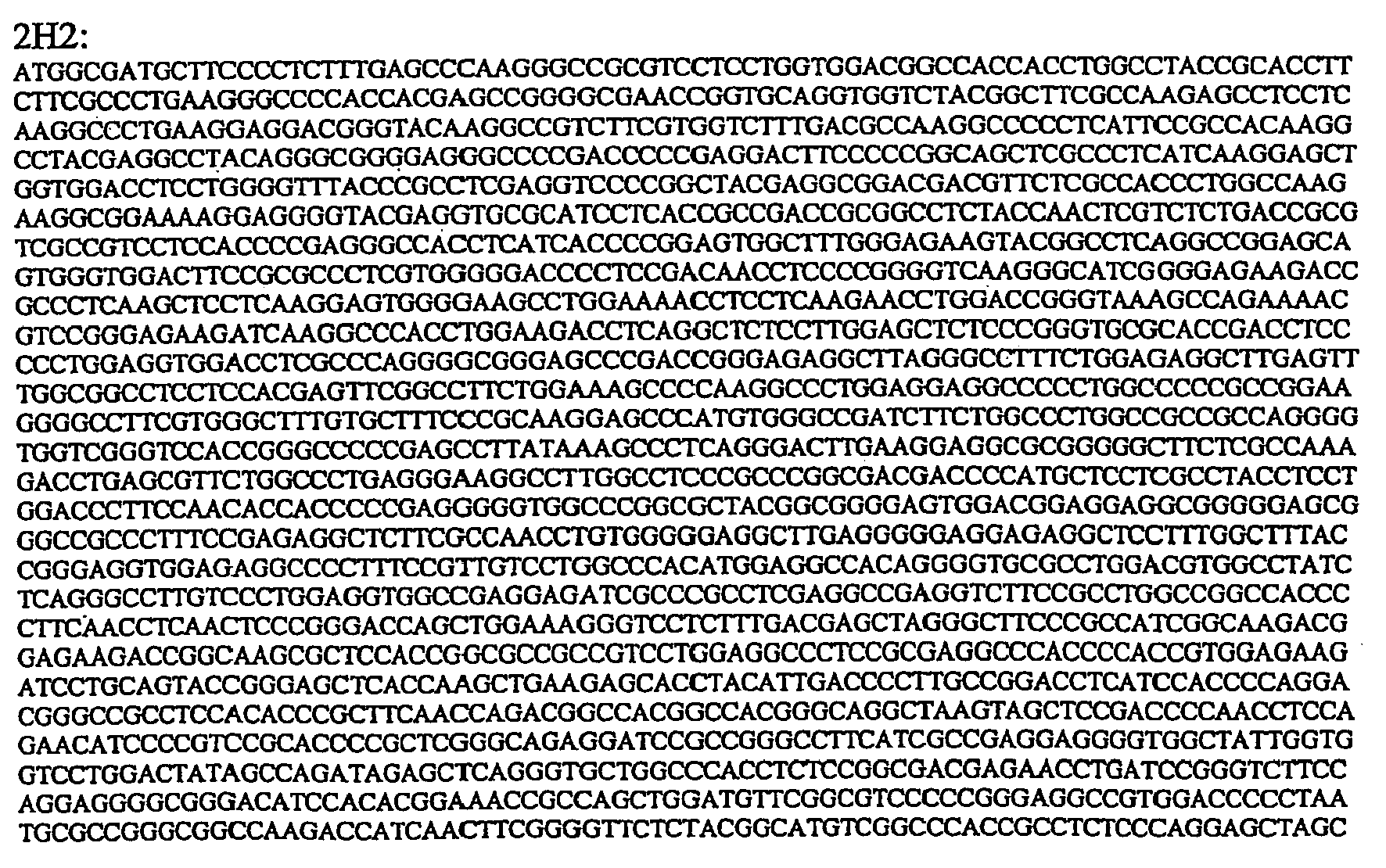


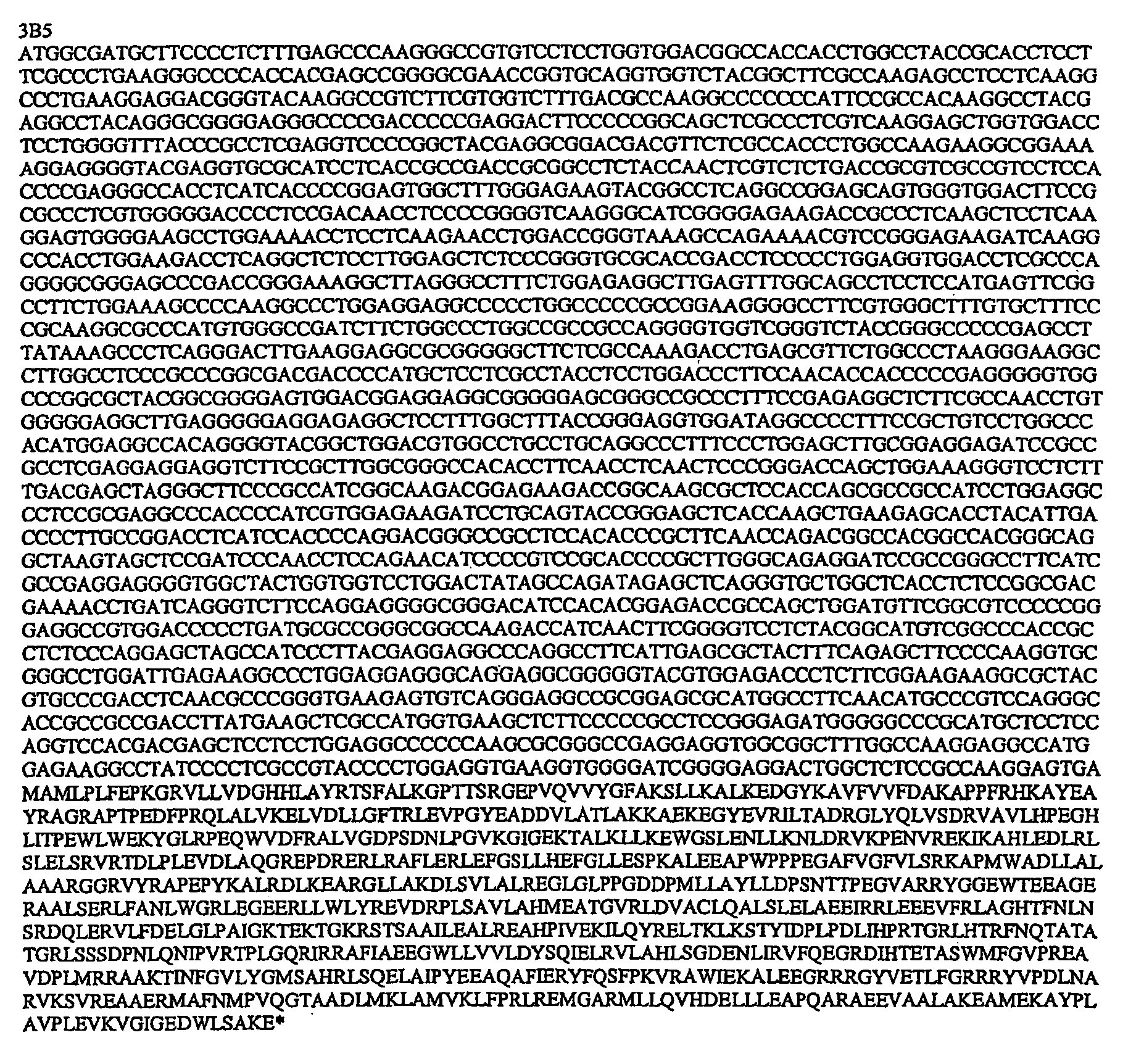


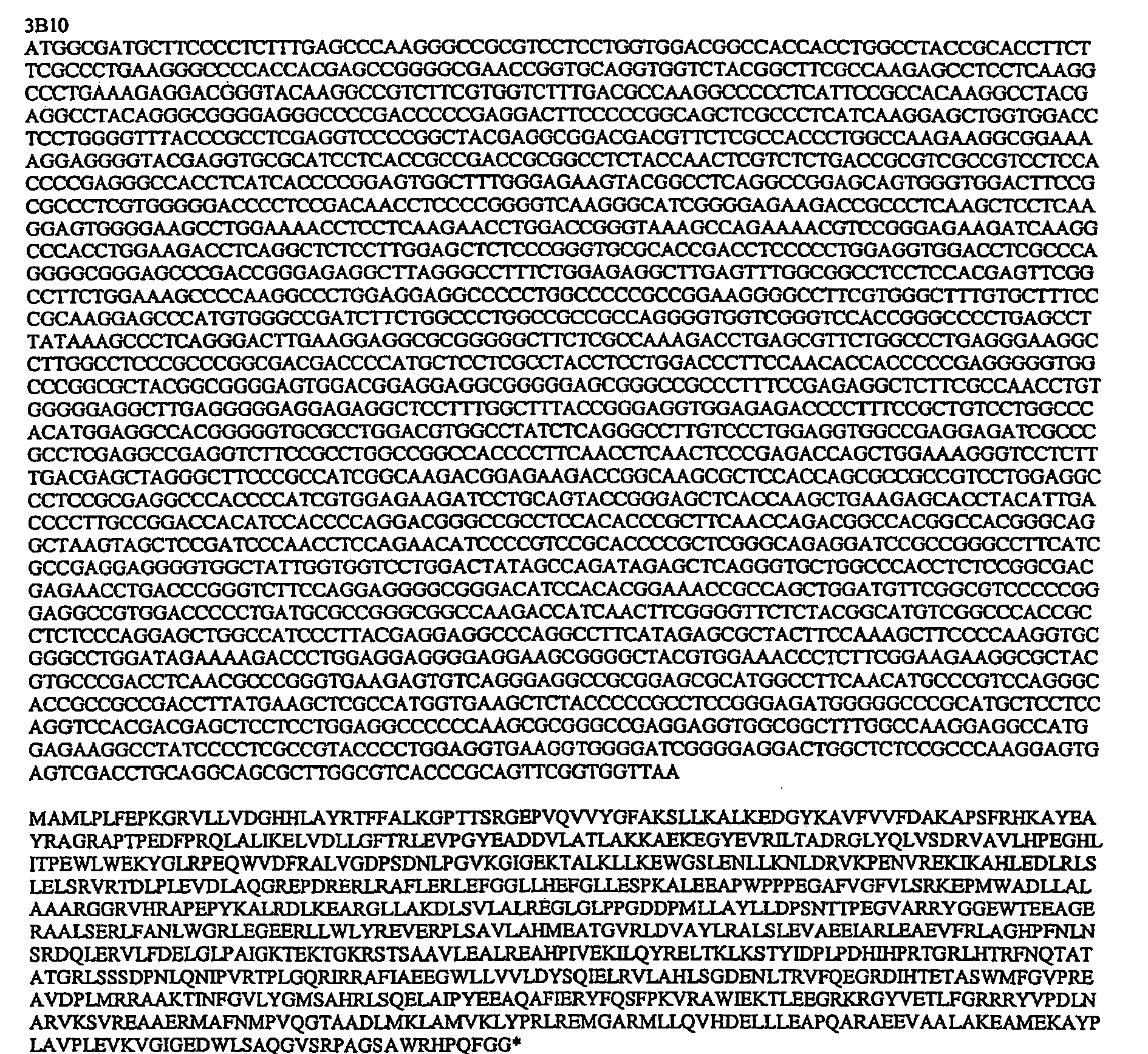


- A list of polymerases selected to extend four mismatches were assayed for their ability to extend abasic sites in PCR (
Figure 10 ). C12 and D1, which can also extend four mismatched primers in PCR, as well as A10, B6 and B8, which cannot, all produced an amplification product. - A list of polymerases selected to extend four mismatches were assayed for their ability to extend abasic sites in PCR (
Figure 10 ). C12 and D1, which can also extend four mismatched primers in PCR, as well as A10, B6 and B8, which cannot, all produced an amplification product. - Seven polymerases were assayed for their ability to bypass abasic sites in a primer extension assay (
Figure 11 ). - Primer extension assays were essentially as described in (Ghadessy et al., 2004). Briefly, undamaged oligonucleotides and a 51mer containing a synthetic abasic site were synthesized by Lofstrand Laboratories (Gaithersburg, MD) using standard techniques and were gel purified prior to use. A 20mer primer (LES_20P) with the
sequence 5'-CGTGGTCGCGACGGATGCCG-3' was 5'-labeled with [32P]ATP (5000 Ci/mmole; 1 Ci=37 GBq) (Pharmacia ) using T4 polynucleotide kinase (Invitrogen, Carlsbad CA). Radiolabeled primer-template DNAs were prepared by annealing the 5'[32P] labeled 20mer primer to one of the two following 51mer templates (at a primer template ratio of molar 1:1.5). 1) undamaged DNA (UNDT51T); 5'-AGC TAC CAT GCC TGC ACG AAT TCG GCA TCC GTC GCG ACC ACG GTC GCA GCG-3'; 2) an oligo (LABA51T) containing a synthetic abasic site (indicated as an X in bold font); 5'-AGC TAC CAT GCC TGC ACG ACA XCG GCA TCC GTC GCG ACC ACG GTC GCA GCG-3'. Standard replication reactions of 10 µl contained 40mM Tris•HCl at pH 8.0, 5mM MgCl2, 100µM of each ultrapure dNTP (Amersham Pharmacia Biotech, NJ), 10mM DTT, 250 µg/ml BSA, 2.5% glycerol, 10nM 5'[32P] primer-template DNA and 0.1 Unit of polymerase. After incubation at 60°C for various times reactions were terminated by the addition of 10 µl of 95% formamide/ 10 mM EDTA and the samples heated to 100°C for 5 min. Reaction mixtures (5 µl) were subjected to 20 % polyacrylamide/7 M Urea gel electrophoresis and replication products visualized by PhosphorImager analysis. - Polymerases A10 was the most active and was chosen for further analysis (Figure 26JRF nomenclature) on abasic sites and cyclobutane thymine-thymine dimers (CPD). A10 was clearly better at both abasic site and CPD extension and bypass than both wild type and M1.
- Relaxed specificity might be expected to be achieved at the cost of lower fidelity. We used a MutS ELISa to investigate this possibility.
- MutS is an E. coli derived mismatch binding protein that binds single base pair mismatches or small (1-4 base) additions or deletions. It can be used to monitor PCR fidelity in an ELISA based assay (Debbie et al., 1997).
- Immobilised Mismatch Binding protein plates (Genecheck, Ft Collins, USA) were used for fidelity measurements as per manufacturer's instructions, essentially as described in (Debbie et al., 1997).
- The mutation rate of D1 was compared that of wtTaq and M1 M1 was already known to have a modestly increased mutation rate (approximately 2 fold) (Ghadessy et al., 2004). The data presented here suggests that D1 has a 2 fold increased error rate compared to M1 and a four fold increased error rate compared to wtTaq. This corresponds approximately to a 1 in 2500 error ratio and is sufficiently low to not be problematic for many applications.
- DNA recovered from ancient samples is invariably damaged, limiting the information it can yield. Polymerases that can bypass damage (such as abasic site or hydantoins) might therefore be useful in increasing the information that can be recovered from ancient samples of DNA.
- Several samples of cave hyena (Crocuta spelaea) were extracted and analysed. Of those, seven samples (see
Figure 12 for the list) failed to ever produce an amplification product. - These samples were chosen to test the efficacy of the expanded substrate spectrum polymerases.
- M1 has a slightly reduced kcat/Km, 14% of Taq wild type, and is hence slightly less efficient in PCR. Therefore, M1 was blended with a commercial preparation of Taq (SuperTaq (HT biotechnology Ltd)) in a ratio of 1 unit to 10 and compared to Taq in the absence of M1. It was hoped that if M1 could bypass the blocking lesions, then the wild type Taq would amplify the resulting translesion synthesis product. On two separate occasions, the M1/SuperTaq mix was able to produce an amplification product whereas SuperTaq alone did not (see
figure 12 for one example) - The DNA was cloned and sequence and found to differ in two positions (A71→G, 77A →G) from the expected sequence. This could either be a miscoding lesion resulting from a deamination of C or a population variant sequence not seen previously in aDNA. Indeed, both mutations exist in modern spotted hyena (Crocuta crocuta), arguing for the second interpretation. Of the 10 sequences obtained from the same successful PCR, two each had a further unique single mutation, an A to G in different places. These are most likely errors incurred during amplification. Such errors are frequently seen in aDNA PCR and are one reason why multiple sequences need to be obtained from the same PCR product.
- Contamination problems prevented an exhaustive analysis of the benefits of M1 polymerase. However, this result strongly suggested that a suitable altered polymerase could be usefully applied to aDNA.
- Polymerases that displayed interesting properties: B5, B8, C12 and D1, which can extend mismatches as well as A10, B6 and B10 which are proficient at abasic site bypass were purified. In order to keep the number of experiments manageable, they were blended in equal volumes with M1, SuperTaq and heparin purified wild-type Taq. This mix of polymerases was used in almost all subsequent experiments and is referred to as the blend.
- To ensure that no polymerase would negatively affect the PCR through its mutant activity, each one was individually blended with SuperTaq and used to perform an aDNA PCR with an ancient sample known to contain amplifiable DNA. All PCRs were successful (data not shown), indicating that it was unlikely that any of the mutant enzymes would be a liability in the blend.
- The activity of the blend was checked against the activity of SuperTaq by a PCR activity dilution series. By this measure, the blend was less active than SuperTaq, by a factor of two.
- The conditions that are usually used in aDNA PCR did not transfer readily to the blend or to SuperTaq as they had been optimised for AmpliTaqGold (Applied Biosystems), a chemically modified version of Taq that allows a hot start and slow enzyme release through heat activation. Manual hot starts are not advisable in aDNA analysis because opening the PCR tube outside the clean room prior to thermocycling carries a high risk of contamination. Furthermore, alternative hot start techniques could not be utilised either: antibodies used to inactivate wtTaq at low temperatures might not bind to the chimerical proteins selected from the Molecular Breeding library and hot start buffers proved ineffective (data not shown). A new two step nested PCR strategy was used. In the first step, the aDNA is amplified over 28 cycles with either SuperTaq or the blend. In the second step, the first PCR is diluted 20 fold in a secondary clean room and amplified with SuperTaq using in-nested primers. This is the approach subsequently used to compare SuperTaq and the blend
- Briefly, 2 µl of ancient sample were added to a 20 µl PCR in SuperTaq buffer (HT Biotech) with 1 µM of the appropriate primers (see
Figure 13 ), 2µM of each deoxyribonucleoside triphosphate (dNTP) as well as 0.1 µl of SuperTaq or an equal volume of mutant polymerases and amplified for 28 cycles. This PCR was set up in a clean room following precautions appropriate for aDNA.. The first step PCR was then diluted 1 in 20 in a secondary clean room and thermocycled for a further 32 cycles with the same buffer and dNTPs conditions, using in-nested primers and SuperTaq. No template controls were used to test for contamination. - A two fold dilution series of aDNA with equal volumes of SuperTaq and the blend (and therefore approximately equal activities, with the blend slightly less active) was performed and repeated this four times
- This experiment showed that the blend was more likely to produce a band at a lower concentration of aDNA than SuperTaq. This therefore represented the second experiment that indicated that the mismatch extension polymerases were more proficient at amplifying aDNA than wild-type Taq.
- Sample heterogeneity and the inherent stochasticity of aDNA analysis make the interpretation of a single positive or negative PCR problematic. To address this, multiple PCRs of a same sample and count the number of successful PCR amplifications at a limiting sample dilution were performed. Comparison of SuperTaq with the blend would allowed a statistical analysis. As the amount of aDNA required for this type of approach is large, samples previously shown to be of high quality were chosen and tested at limiting dilutions to increase the amount of material available for analysis. A short target sequence was chosen to allow maximal dilutions.
- This has the additional advantage that at a sufficiently high dilution, the undamaged DNA will have been diluted out, leaving only damaged template. In such conditions, the difference between a polymerase that can bypass blocking lesions and one that cannot should become clearly apparent.
- A total of nine experiments at limiting amounts of aDNA, where the PCR would only be stochastically successful (
Figures 14 and15 ) were performed. In eight out of nine experiments, the blend resulted in more successful PCRs than SuperTaq. The probability of this occurring by chance is 1.76%, as determined by binomial distribution analysis. It is commonly accepted that chance can be dismissed as an explanation when an event is expected to occur at 5% probability or less. - We can therefore state that this effect is not due to chance and that the blend is repeatedly performing better than SuperTaq in the conditions of the experiment. This proves beyond reasonable doubt that the mismatch extension polymerases are a more sensitive tool for the recovery of ancient DNA sequences.
- We selected for extension and bypass of 5NI directly from the polymerase chimera library described in example 8 using an analogous strategy to the mismatch selection using flanking primers (5'-CAG GAA ACA GCT ATG ACA AAA ATC TAG ATA ACG AGG GCA 5NI-3', 5'-GTA AAA CGA CGG CCA GTA CCA CCG AAC TGC GGG TGA CGC CAA GC5NI-3') comprising 5NI (or a derivative) at their 3' ends. After
round 3 , we used flanking primers (5'-CAG GAA ACA GCT ATG ACA AAA ATC TAG ATA 5NICG AGG GCA 5NI-3', 5'-GTA AAA CGA CGG CCA GTA CCA C5NIG AAC TGC GGG TGA CGC CAA GC5NI-3') comprising internal 5NI (or a derivative) as well as 3' terminal 5NI (or a derivative) to increase selection pressure for 5NI replication. - Five rounds of selection yielded a number of clones with greatly increased ability to replicate 5NI. Among the best clones were round 4 clone 4D11 and
round 5 clone 5D4:


-
Round 5 polymerases selected for replication of 5NI were tested for activity with a range of substrates using the hairpin ELISA assay described in example 8. tUTP and ceATP were kind gifts from the laboratory of P. Herdewijin, Rega Institute, Katholieke Universiteit Leuven, Belgium. Results are shown inFigure 14 - The ability of
round 5 clones selected for 5NI replication extension to sequentially incorporate 2 or 3 of the TNA UTP derivative (3', 2')-beta-L-tbreonyl-UTP was assayed using the hairpin primers (ELISAT2p: 5'-TAG CTC GGT AA CGC CGG CTT CCG TCG CGA CCA CGT TX TTC GTG GTC GCG ACG GAA GCC G-3' , ELISAT3p: 5'-TAG CTC GGT AAA CGC CGG CTT CCG TCG CGA CCA CGT TX TTC GTG GTC GCG ACG GAA GCC G-3' (X=dU-biotin (Glen research)). The lysates used were concentrated 4-fold. ELISA protocol was a described except that The DIG labelled dUTP in the extension reaction was replaced with Fluorescein 12-dATP (Perkin-Elmer) (at 3% of dATP) and the incorporation of Fluorescein 12-dATP was detected by anti-Fluorescein-POD Fab fragments (Roche). - The ability of
round 5 clones selected for 5NI replication extension to sequentially incorporate the cyclohexenyl ATP derivative ceATP was assayed using the hairpin primers (ELISA2p: 5'-TAG CTC GGA TTTT CGC CGG CTT CCG TCG CGA CCA CGT TX TTC GTG GTC GCG ACG GAA GCC G-3' , (X=dU-biotin (Glen research)). The lysates used were concentrated 4-fold. - The ability of
round 5 clones selected for 5NI replication extension to sequentially incorporate the fluorescent dye-labelled nucleotides Cy5-dCTP and Cy3-dCTP (Amersham Biosciences) was assayed using the hairpin primers (ELISA2p: 5'- TAG CTA CCA GGG CTC CGG CTT CCG TCG CGA CCA CGT TXT TCG TGG TCG CGA CGG AAG CCG -3' , (X=dU-biotin (Glen research)). The lysates used were concentrated 4-fold. - The ability of
round 5 clones selected for 5NI replication extension to bypass an abasic site was assayed using the hairpin primer (PScreen1abas: 5'-AGC TAC CAT GCC TGC ACG CAG YCG GCA TCC GTC GCG ACC ACG TTX TTC GTG GTC GCG ACG GAT GCC G -3' , (X=dU-biotin, Y=abasic site (Glen research)). The lysates used were concentrated 4-fold. -
Primer 5'-TAATACGACTCACTATAGGGAGA Template 3'- ATTATGCTGAGTGATATCCCTCT5ATCGAT 
- Primer extension reactions were carried out as follows:
- 50pmol of 32P-labelled primer and 100pmol of template in a volume of 44µl were annealed in 1X Taq buffer. 4D11 or 5D4 polymerase as cell lysate (6µl) was addled and reactions were incubated at 50°C for 15 minutes followed by addition of one dNTP (1µl in total volume of 50µl, final dNTP concentration 40µM). 8µl samples were taken at various time points and added to 8µl stop solution (7M urea, 100mM EDTA containing xylene cyanol F). At the end of the time course the remaining 3 dNTPs were added (final concentration each dNTP 40µM) and reactions incubated at 50°C for a further 30 minutes. Reaction samples were electrophoretically separated using 20% polyacrylamide gels at 25W for 4 hours. The resultant gels were dried and scanned using a phosphorimager (Molecular Dynamics). Data was processed using the program ImageQuant (Molecular Dynamics). Results are shown in Figures 35, 36:
- Similar reactions using Taq, Tth and Tfl wild-type polymerases under identical conditions leads to almost undetectable extension reactions (data not shown).
-
Primer 5'-
Template 3'- ATTATGCTGAGTGATATCCCTCTXGTCA X=A,T,C,G - Primer extension reactions were carried out as follows:
- 50pmol of 32P-labelled primer and 100pmol of template in a volume of 44µl were annealed in 1X Taq buffer. 4D11 or 5D4 polymerase as cell lysate (6µl) was added and reactions were incubated at 50°C for 15 minutes followed by addition of d5NITP (1µl in total volume of 50µl, final dNTP concentration 40µM). 8µl samples were taken at various time points and added to 8µl stop solution (7M urea, 100mM EDTA containing xylene cyanol F). At the end of the time course the 4 native dNTPs were added (final concentration each dNTP 40µM) and reactions incubated at 50°C for a further 30 minutes. Reaction samples were electrophoretically separated using 20% polyacrylamide gels at 25W for 4 hours. The resultant gels were dried and scanned using a phosphorimager (Molecular Dynamics). Data was processed using the program ImageQuant (Molecular Dynamics). Results are shown in
Figures 17, 18 ): - The NI-NI self-pair is also formed exceptionally well, though further extension is reduced (data not shown). Similar reactions using Taq, Tth and Tfl wild-type polymerases under identical conditions leads to almost undetectable extension reactions (data not shown).
- Targets were prepared by PCR amplification of 2.5kb Taq
gene using primers gene using primers 30, 31. Salmon sperm DNA (Invitrogen) was prepared at 100ng/ul in 50% DMSO. FITC and Cy5 probes were prepared by PCR amplification of 0.4kb fragment ofTaq using primers - Printed slides were baked for 2hr at 80°C, incubated with agitation for 30min at 42°C in 5x SSC/0.1% BSA Fraction V (Roche)/0.1% SDS, boiled for 2min in ultrapure water, washed 20x in ultrapure water at room temperature (RT), rinsed in propan-2-ol and dried in a clean airstream. 50ng of FITC- and Cy5-labelled probes were prepared in 20µl of hybridization buffer (1mM Tris-HCl pH7.4, 50mM tetrasodium pyrophosphate, 1x Denhardts solution, 40% deionised formamide, 0.1% SDS, 100µg/ml sheared salmon sperm DNA). Each sample was heated to 95°C for 5min, centrifuged for 2min, applied to the surface of an array and covered with a 22x22 mm HybriSlip (Sigma). Hybridizations were performed at 48°C for 16hr in a hybridization chamber (Corning). Arrays were washed once with 2xSSC/0.1% SDS at 65°C for 5min once with 0.2xSSC at RT for 5min and twice with 0.05xSSC at RT for 5min. Slides were dried in a clean airstream, scanned with an ArrayWoRx autoloader (Applied Precision Instruments) and the array images analysed using SoftWoRx tracker (Molecularware).
- Complete substitution of natural nucleotides with their unnatural counterparts altered the properties of the resulting amplification products. For example, fully alphaS substituted DNA was completely resistant to nuclease digestion (not shown).
- The 0.4kb fragment, in which all adenines (dA) on both strands had been replaced with FITC-12-dAMP (FITC100M1), displayed extremely bright fluorescence. The frequency of fluorophore incorporation per 1000 nucleotides (FOI) is commonly used to specify the fluorescence intensity of a probe. FOIs of microarray probes commonly range from 10-50, while FITC100M1 has an FOI of 295. To investigate if such a high level of ffuorophore substitution would affect hybridisation characteristics we performed a series of microarray experiments. We compared the fluorescent signal generated by FITC100M1 with equivalent probes generated using either wtTaq or M1 and replacing only 10% of dAMP with FITC-12-dAMP (FITC10Taq, FITC10M1 (FOI=30)). In competitive co-hybridisation with a standard Cy5-labelled probe (Cy5Taq), FITC100M1, hybridised specifically only with its cognate Taq polymerase target sequence and not with any non-cognate control DNA. Hybridisation of FITC100M1 generated an up to 20-fold higher specific signal than equimolar amounts of the FITC10 probes (
Fig. 20 ) without showing increased background binding (Figs. 19 ,21 ). - Mutation rates were determined using the mutS ELISA assay26 (Genecheck, Ft. Colfins, CO) according to manufacturers instructions. Alternatively, amplification products derived from 2x50 cycles of PCR of 2 targets with different GC content (HIV pol (38% GC), Taq (68% GC)) were cloned, 40 clones (800bp each) were sequenced and mutations (wtTaq (51), M1 (75)) analyzed.
- Promiscuous mismatch extension might be expected to come at the price of reduced fidelity, as misincorporation no longer leads to termination. Measurement of the overall mutation rate using both the MutS assay (
Fig 22A ) and direct sequencing of amplification products, however, indicated an only modestly (1.6 fold) increased mutation rate in M1 (or M4). However, M1 displays a significantly altered mutation spectrum compared to wtTaq, with a clearly increased propensity for transversions, in particular G/C->C/G transversions (Fig 22B ). - Naturally occurring translesion polymerases are mostly poorly processive. We therefore investigated, if processivity of M1 and M4 was similarly reduced but found that, even at the lowest enzyme concentrations, primer extension and termination probabilities by M1 and M4 closely matched those of wtTaq (
Fig.23 ), indicating that both M1 and M4 exhibit processivity equal (or higher) than wtTaq. This is also reflected in the striking proficiency of M1 in long-range PCR (see example 6). - Processivity was measured using a primer extension assay the presence and absence of trap DNA. Termination probabilities were calculated according to the method of Kokoska et al.
- Oligonucleotide primer 32 (5'-GCG GTG TAG AGA CGA GTG CGG AG-3') was 32P-labelled and annealed to the template 33 (5'-CTC TCA CAA GCA GCC AGG CAA GCT CCG CAC TCG TCT CTA CAC CGC TCC GC-3') (at a primer/template ratio of
molar 1/1.5). wtTaq (0.0025nM; 0.025nM; 0.25nM), M1(0.05nM; 0.5nM; 5nM), and M4 (0.05nM; 0.5nM; 5nM) were preincubated with the primer-template DNA substrates (10nM) in 10mM Tris-HCl at pH 9.0, 5mM MgCl2, 50mM KCl, 0.1% Triton X 100 at 25°C for 15min. Reactions were initiated by addition of 100µM dNTPs with or without trap DNA (1000-fold excess of unlabeled primer-templates). Reactions were performed at 60°C for 2min. Preincubation of polymerases with the trap DNA substrate and labelled primer-template before the addition of dNTPs completely abolished primer extension (not shown) demonstrating trap effectiveness. Thus, in the presence of trap DNA, all DNA synthesis resulted from a single DNA binding event. Gel band intensities were calculated using a Phosphoimager and ImageQuant (both Molecular Dynamics) software. Percentage of polymerase molecules, which extended primers to the end of the template was calculated using the formula: In x 100% /(I1+I2+...+In), where In is the intensity of the band atposition position - All publications mentioned in the above specification are herein incorporated by reference. Various modifications and variations of the described methods and system of the present invention will be apparent to those skilled in the art without departing from the scope and spirit of the present invention. Although the present invention has been described in connection with specific preferred embodiments, it should be understood that the invention as claimed should not be unduly limited to such specific embodiments. Indeed, various modifications of the described modes for carrying out the invention which are obvious to those skilled in biochemistry, molecular biology and biotechnology or related fields are intended to be within the scope of the following claims.
-
- 1. Schaaper, R M. (1993) J. Biol. Chem. 268, 23762-23765.
- 2. Li, Y., Korolev, S. & Waksman, G. (1998) Embo J. 17, 7514-7525.
- 3. Doublié, S., Tabor, S., Long, A. M., Richardson, C. C. & Ellenberger, T. (1998) Nature 391, 251-258.
- 4. Johnson, S. J., Taylor, J. S. & Beese, L. S. (2003) Proc. Natl. .
- 5. Li, Y., Mitaxov, V. & Waksman, G. (1999) Proc. Natl. .
- 6. Astatke, M., Ng, K., Grindley, N. D. & Joyce, C. M. (1998) Proc. Natl. .
- 7. Patel, P. H. & Loeb, L. A. (2000) J. Biol. Chem. 275, 40266-40272.
- 8. Jestin, J. L., Kristensen, P. & Winter, G. (1999) Angew. Chem. Int. Ed. 38, 1124-1127.
- 9. Xia, G., Chen, L., Sera, T., Fa, M., Schultz, P. G. & Romesberg, F. E. (2002) Proc. Natl. .
- 10. Ghadessy, F. J., Ong, J. L. & Holliger, P. (2001) Proc. Natl. .
- 11. Tawfik, D. S. & Griffiths, A. D. (1998) .
- 12. Huang, M.-M., Arnheim, N. & Goodman, M. F. (1992) Nucleic Acids Res. 20, 4567-4573.
- 13. Kool, E. T. (2000) Curr. Op. Chem. Biol. 4,602-608.
- 14. Kwok, S., Kellogg, D. E., McKinney, N., Spasic, D., Goda, L., Levenson, C. & Sninsky, J. J. (1990) Nucleic Acids Res 18, 999-1005.
- 15. Eom, S. H., Wang, J. & Steitz, T. A. (1996) Nature 382, 278-281.
- 16. Creighton, S., Bloom, L. B. & Goodman, M. F. (1995) Meth. Enzymol. 262, 232-56.
- 17. Mendelman, L. V., Petruska, J. & Goodman, M. F. (1990) J. Biol. Chem. 265, 2338-2346.
- 18. Boudsocq, F., Iwai, S., Hanaoka, F. & Woodgate, R (2001) .
- 19. Verma, S. & Eckstein, F. (1998) Annu. Rev. Biochem. 67, 99-134.
- 20. Loakes, D. (2001) .
- 21. Berger, M., Wu, Y., Ogawa, A. K., McMinn, D. L., Schultz, P. G. & Romesberg, F. E. (2000) Nucleic Acids Res, 2911-2914.
- 22. Barnes, W. M. (1994) Proc. Natl. Acad. Sci. USA 91, 2216-2220.
- 23. Goodman, M. F. (2002) Annu. Rev. Biochem. 71, 17-50.
- 24. Kunkel, T. A. & Bebenek, K. (2000) Annu. Rev. Biochem. 69, 497-529.
- 25. Patel, P. H., Suzuki, M., Adman, E., Shinkai, A. & Loeb, L. A. (2001) J. Mol. Biol. 18, 823-837.
- 26. Lawyer, F. C., Stoffel, S., Saiki, R. K., Chang, S. Y., Landre, P. A., Abramson, R. D. & Gelfand, D. H. (1993) PCR Meth. Appl. 2, 275-87.
- 27. Tada, M., Omata, M., Kawai, S., Saisho, H., Ohto, M., Saiki, R. K. & Sninsky, J. J. (1993) .
- 28. Ling, H., Boudsocq, F., Woodgate, R. & Yang, W. (2001) .
- 29. Trincao, J., Johnson, R. E., Escalante, C. R., Prakash, S., Prakash, L. & Aggarwal, A. K. (2001) Mol. .
- 30. Cho, Y. S., Zhu, F. C., Luxon, B. A. & Gorenstein, D. G. J .
- 31. Eigen, M. (1971) Naturwissenschaften 58, 465-523.
- 32. Engelke, D. R., Krikos, A., Bruck, M. E. & Ginsburg, D. (1990) Anal. Biochem. 191, 396-400.
- 33. Zhao, H., Giver, L., Shao, Z., Affholter, J. A. & Arnold, F. H. (1998) Nature Biotechnol. 16, 258-61.
- 34. Murata, T., Iwai, S. & Ohtsuka, E. (1990) Nucleic Acids Res 18, 7279-7286.
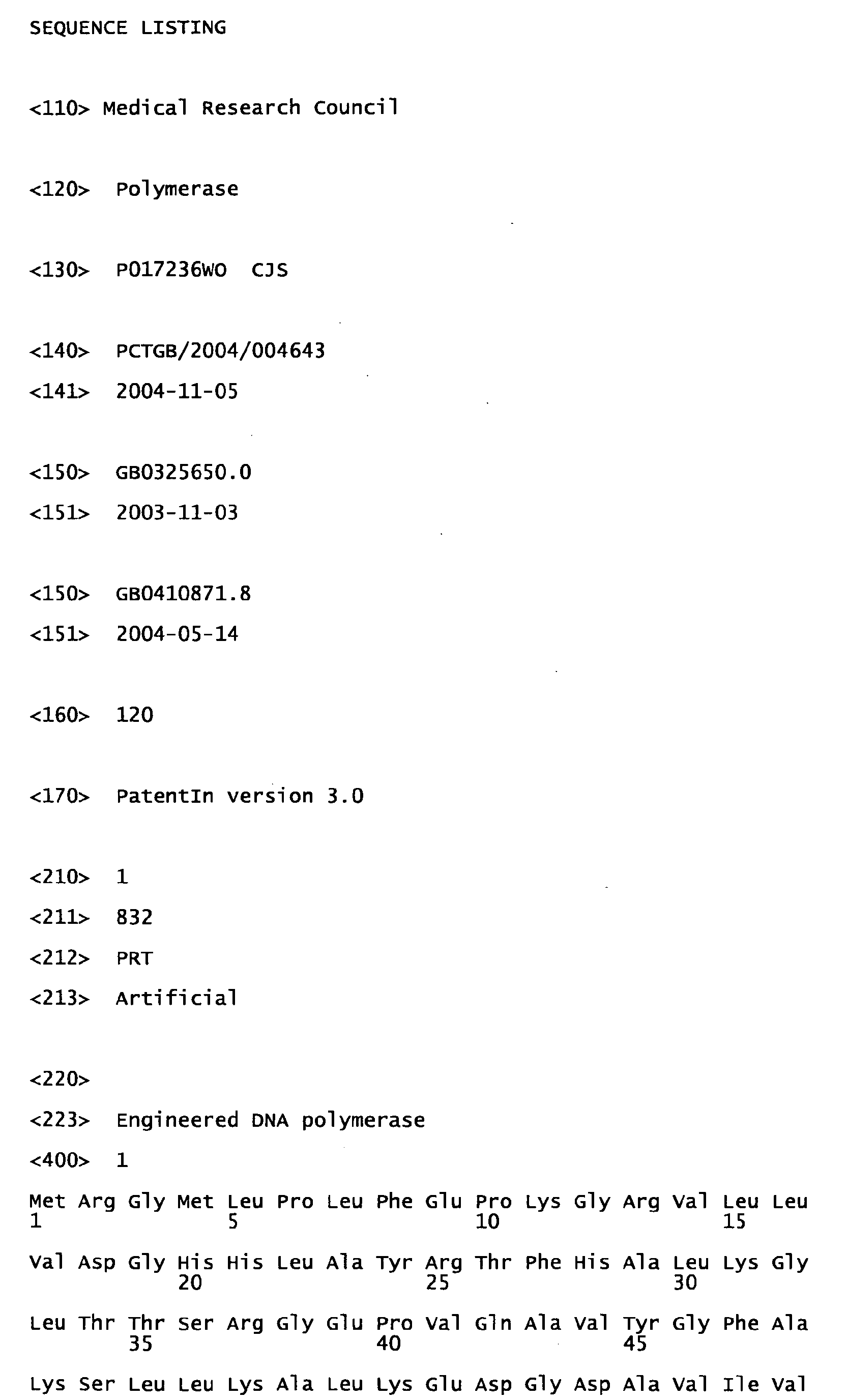
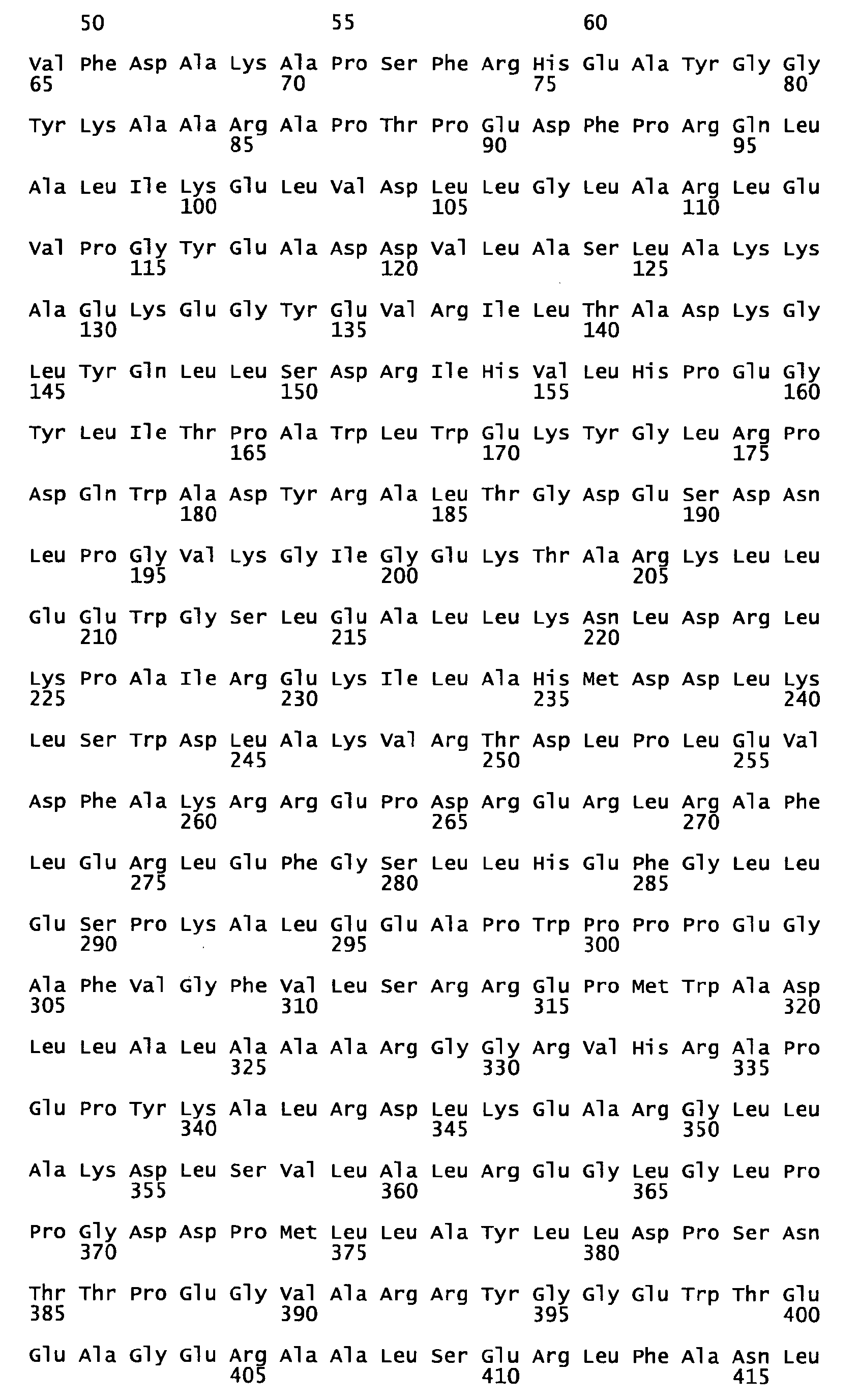


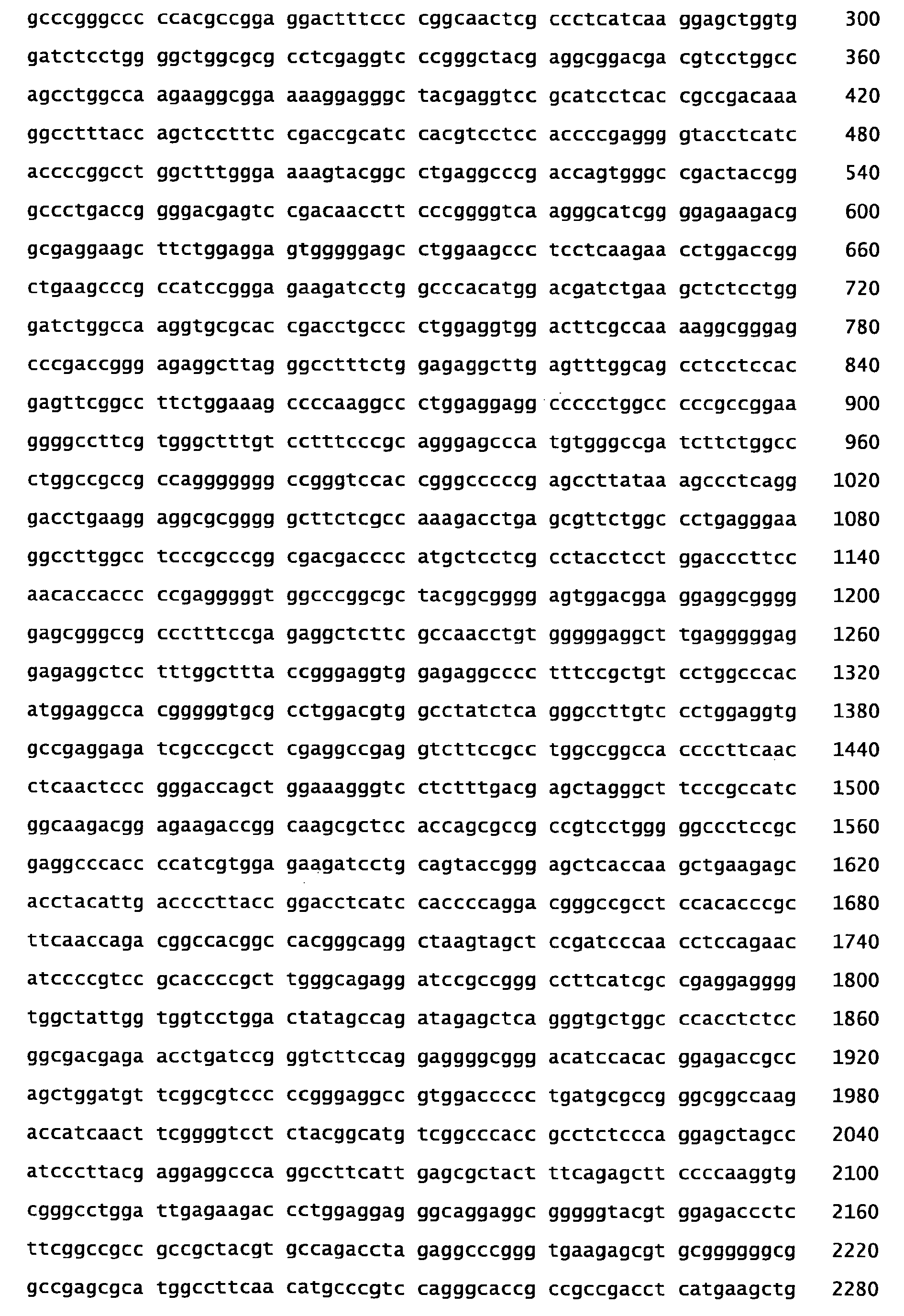
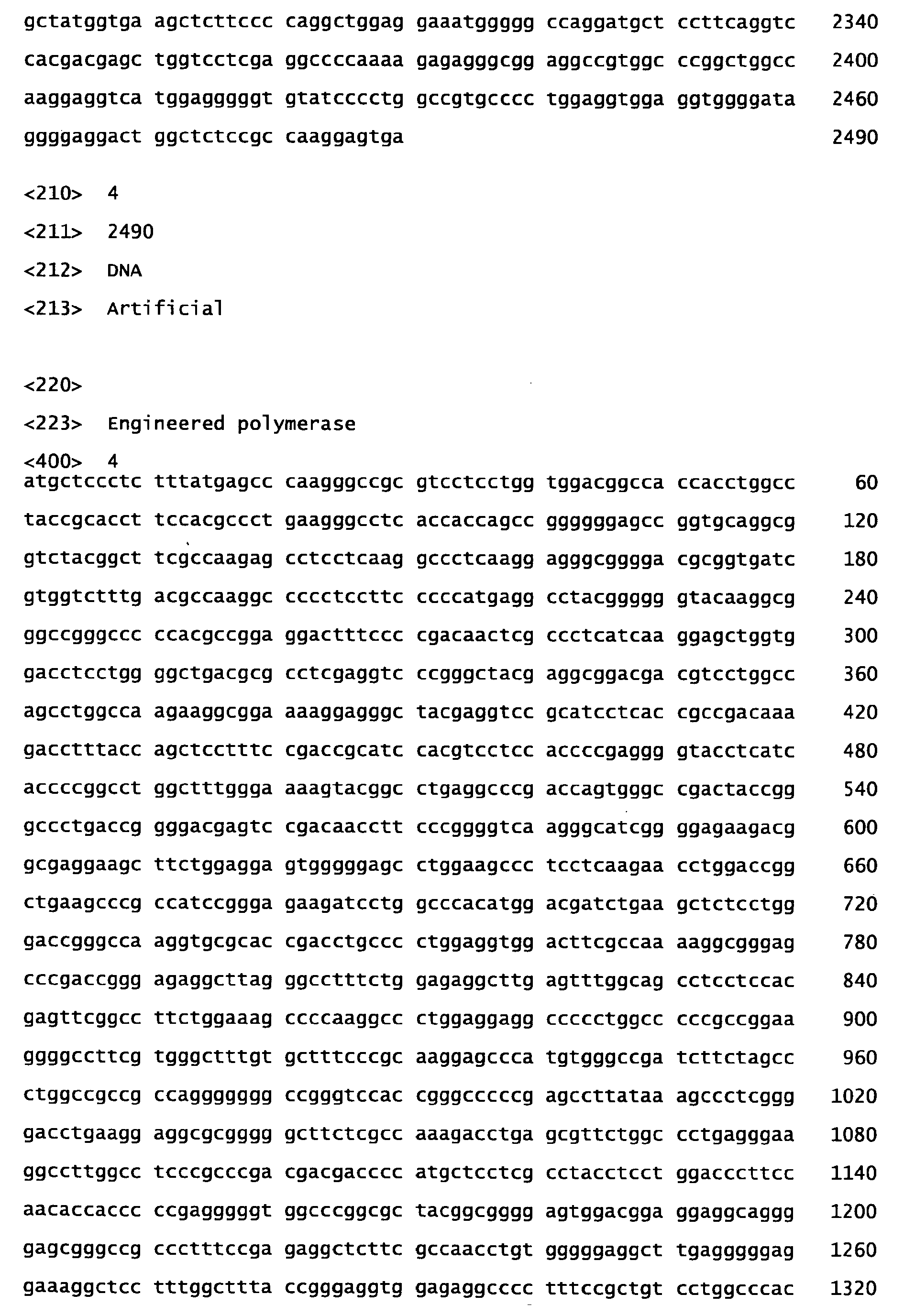


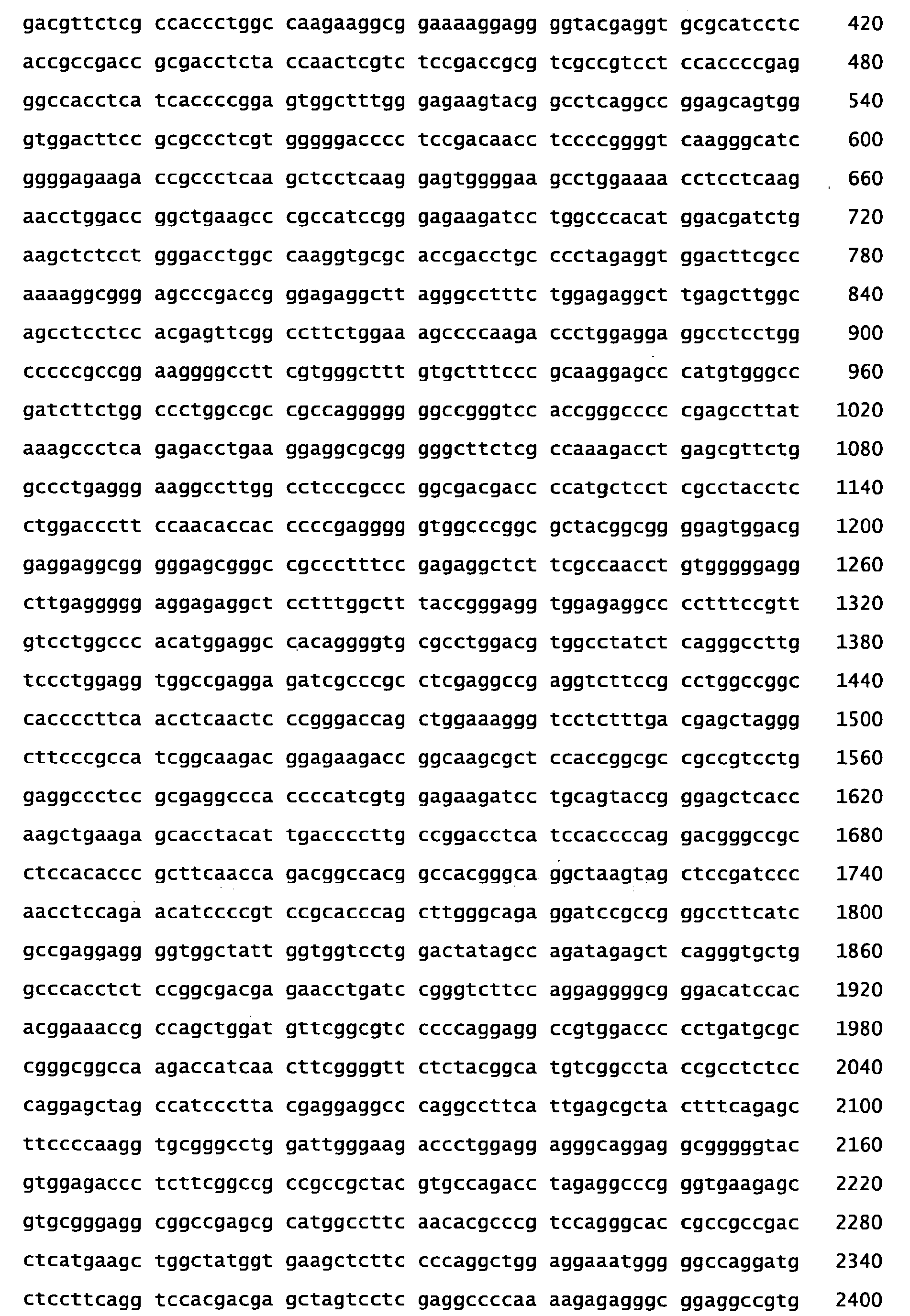


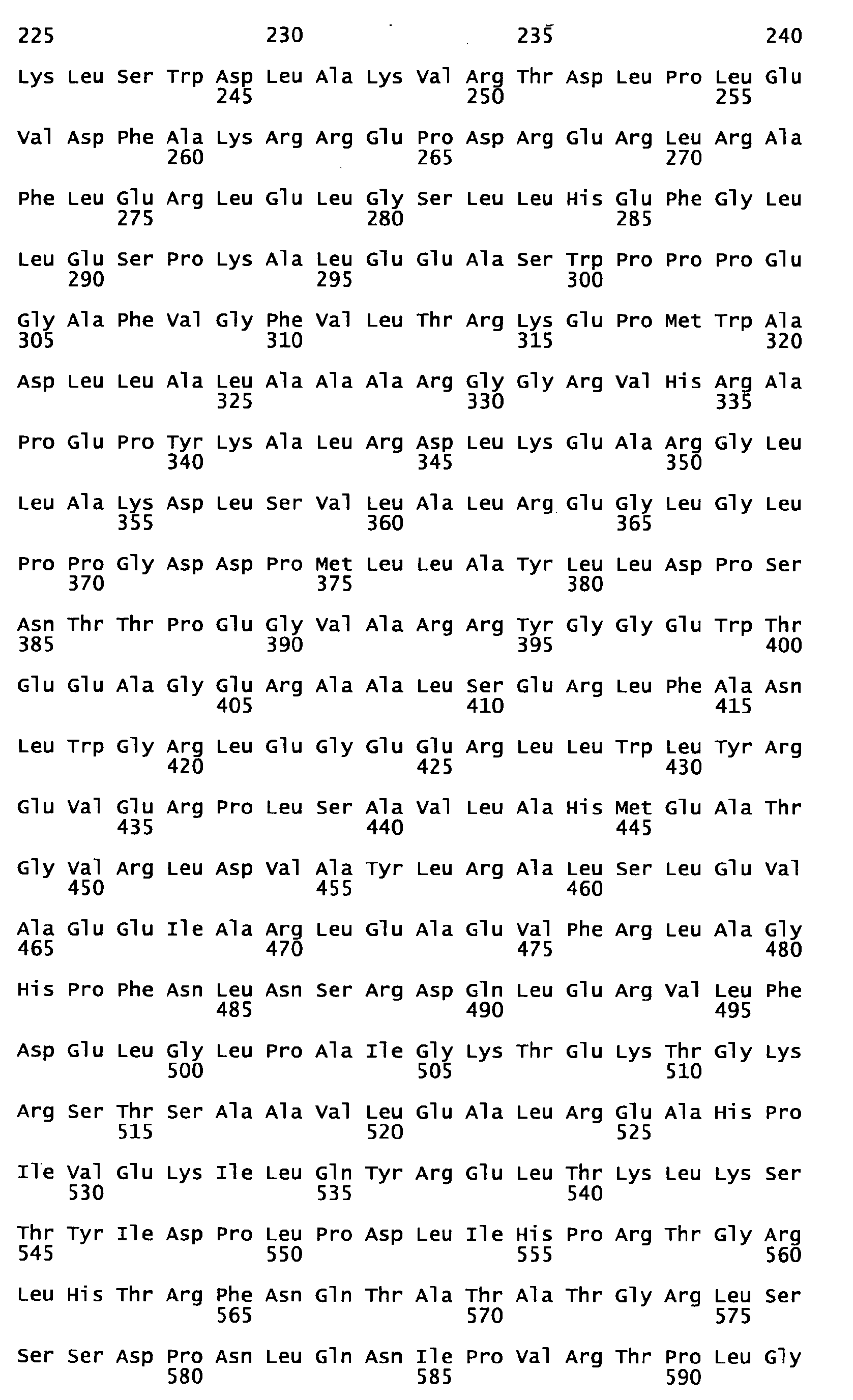


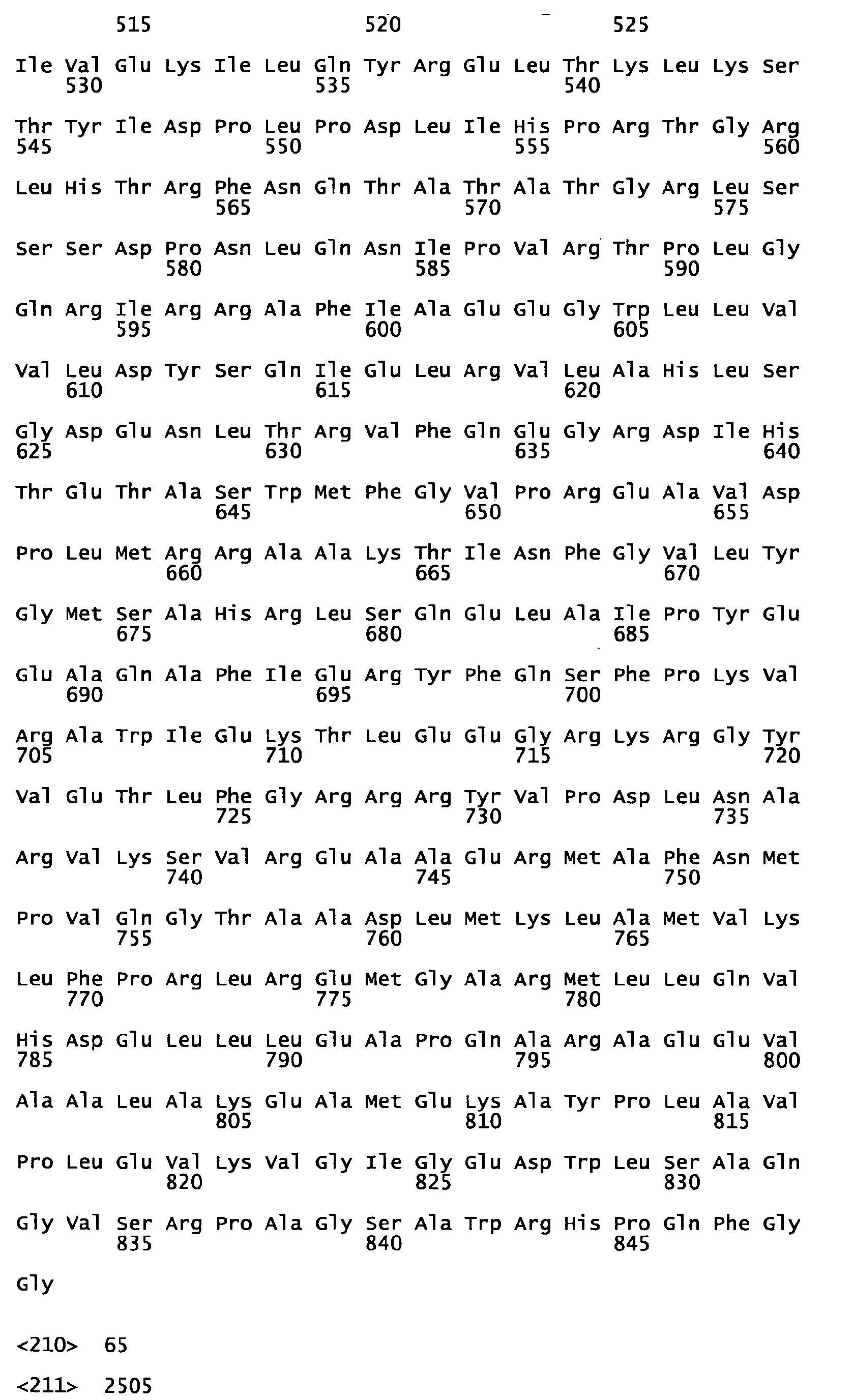


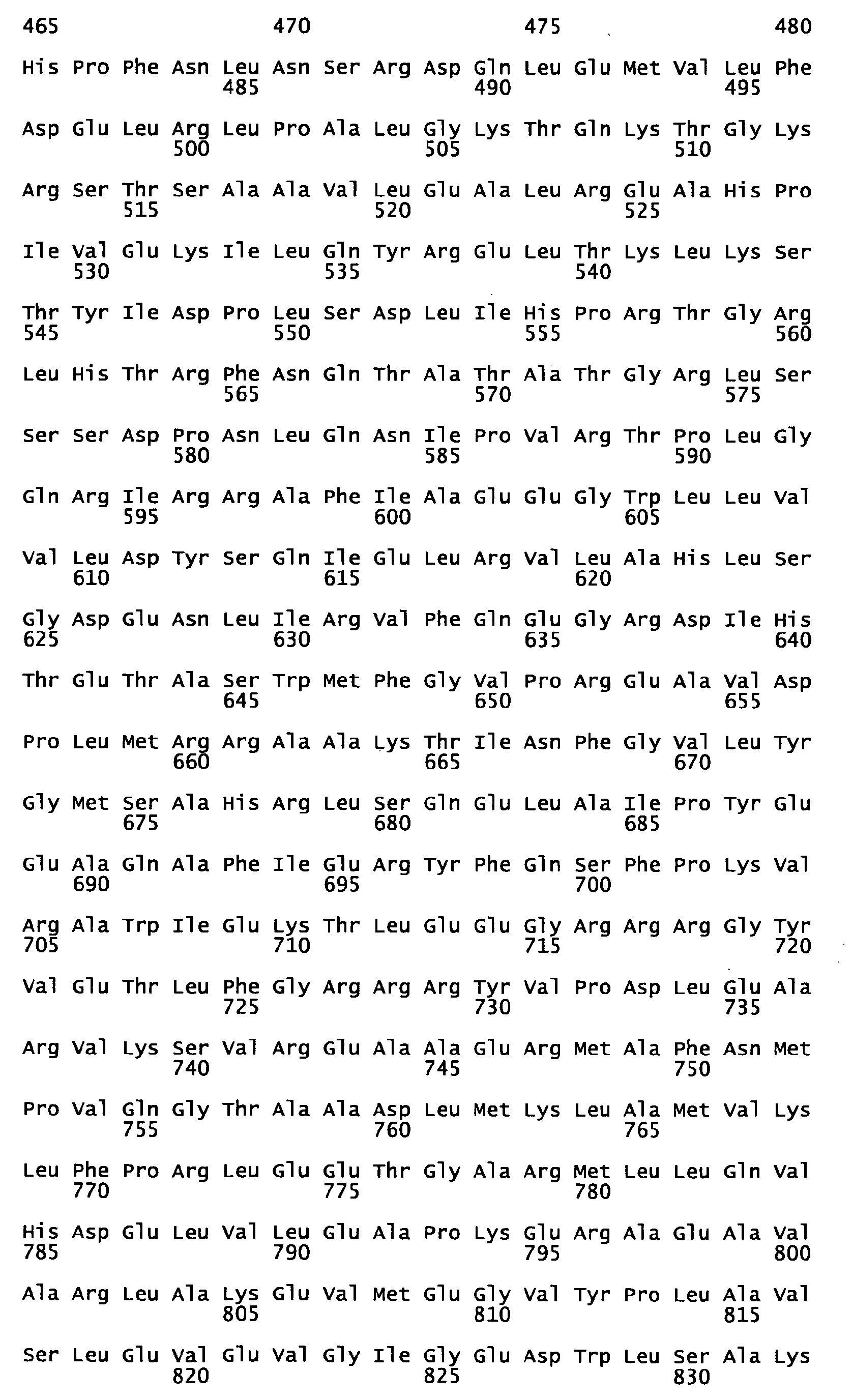






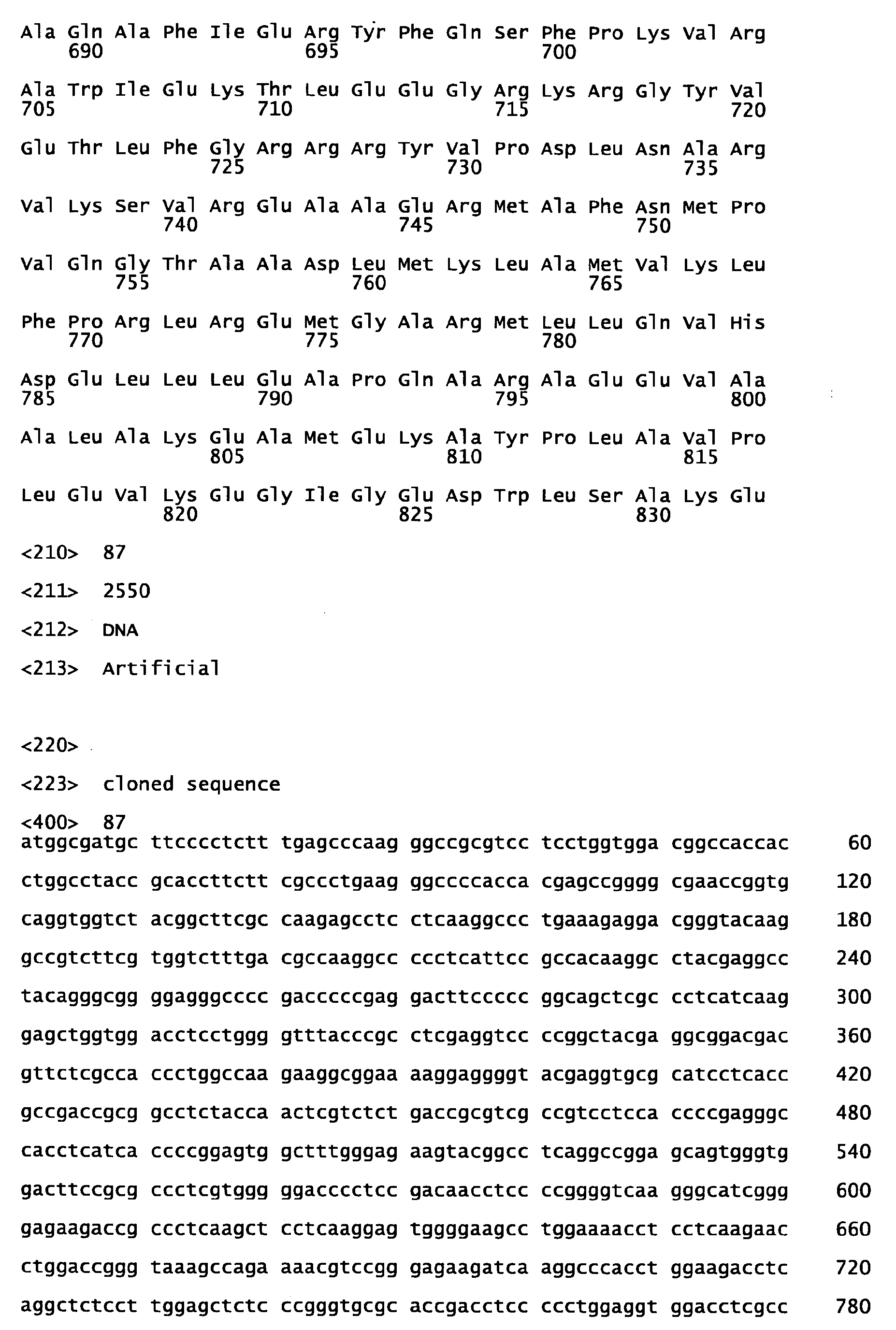


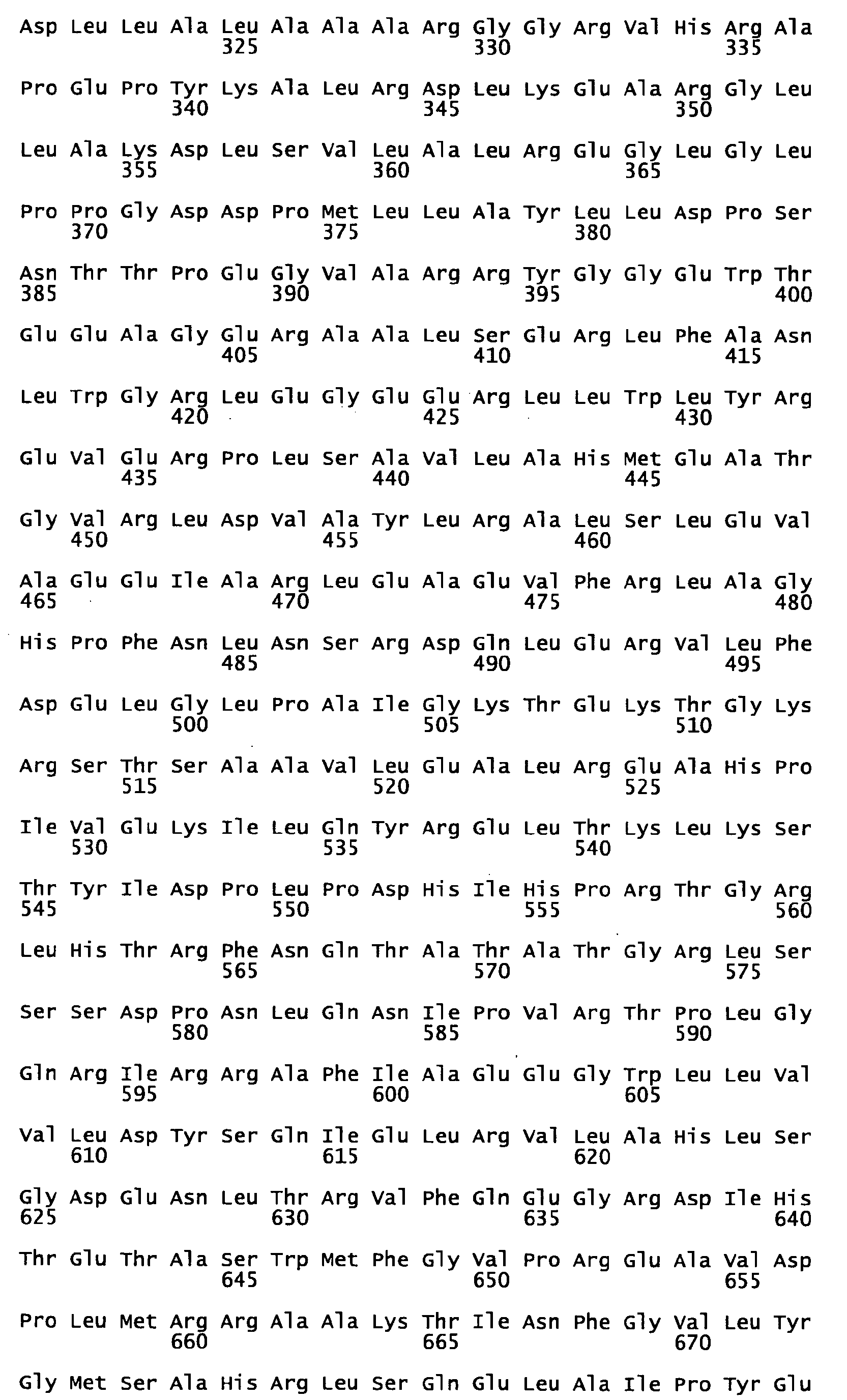


Claims (8)
- A pol A DNA polymerase with an expanded substrate range, which is capable of abasic site bypass, wherein the polymerase exhibits at least 95% identity to one or more of the amino acid sequences designated 3A10, 3B6 and 3B11, which comprises any one or more of the mutations (with respect to either of the three parent genes Taq, Tth, Tf1) or gene segments found in clones 3A10, 3B6 and 3B11.
- A pol A DNA polymerase according to claim 1, wherein the DNA polymerase comprises the amino acid sequence of any one or more of the clones designated herein as 3A10, 3B6 and 3B11.
- A pol A DNA polymerase according to claim 2, wherein the DNA polymerase consists essentially of the amino acid sequence of any one or more of the clones designated herein as 3A10, 3B6 and 3B11.
- A nucleic acid construct encoding an engineered polymerase according to any of claims 1 to 3.
- A vector comprising a nucleic acid construct according to claim 4.
- The use of an engineered DNA polymerase according to any of claims 1 to 3 in any one or more of the following applications selected from the group consisting of the following: PCR amplification, sequencing of damaged DNA templates, the incorporation of unatural base analogues into DNA and the creation of novel polymerase activities.
- The use of a blend of engineered polymerases according to claim 6.
- The use according to claim 6 or claim 7 of any one or more pol A polymerases in the list consisting of the following: 3A10, 3B6 or 3B 11.
Applications Claiming Priority (3)
| Application Number | Priority Date | Filing Date | Title |
|---|---|---|---|
| GB0325650A GB0325650D0 (en) | 2003-11-03 | 2003-11-03 | Polymerase |
| GB0410871A GB0410871D0 (en) | 2004-05-14 | 2004-05-14 | Polymerase |
| EP04798372A EP1685246A2 (en) | 2003-11-03 | 2004-11-03 | Polymerase |
Related Parent Applications (1)
| Application Number | Title | Priority Date | Filing Date |
|---|---|---|---|
| EP04798372A Division EP1685246A2 (en) | 2003-11-03 | 2004-11-03 | Polymerase |
Publications (3)
| Publication Number | Publication Date |
|---|---|
| EP2145956A2 true EP2145956A2 (en) | 2010-01-20 |
| EP2145956A3 EP2145956A3 (en) | 2010-02-10 |
| EP2145956B1 EP2145956B1 (en) | 2015-06-17 |
Family
ID=34575755
Family Applications (3)
| Application Number | Title | Priority Date | Filing Date |
|---|---|---|---|
| EP06026916A Withdrawn EP1801213A3 (en) | 2003-11-03 | 2004-11-03 | Polymerase |
| EP04798372A Withdrawn EP1685246A2 (en) | 2003-11-03 | 2004-11-03 | Polymerase |
| EP09010518.0A Expired - Lifetime EP2145956B1 (en) | 2003-11-03 | 2004-11-03 | Polymerase |
Family Applications Before (2)
| Application Number | Title | Priority Date | Filing Date |
|---|---|---|---|
| EP06026916A Withdrawn EP1801213A3 (en) | 2003-11-03 | 2004-11-03 | Polymerase |
| EP04798372A Withdrawn EP1685246A2 (en) | 2003-11-03 | 2004-11-03 | Polymerase |
Country Status (7)
| Country | Link |
|---|---|
| US (3) | US20070020653A1 (en) |
| EP (3) | EP1801213A3 (en) |
| AU (2) | AU2004288017B2 (en) |
| CA (1) | CA2544841C (en) |
| DK (1) | DK2145956T3 (en) |
| ES (1) | ES2546945T3 (en) |
| WO (1) | WO2005045015A2 (en) |
Cited By (1)
| Publication number | Priority date | Publication date | Assignee | Title |
|---|---|---|---|---|
| US10280411B2 (en) | 2015-10-27 | 2019-05-07 | Pacific Biosciences of California, In.c | Methods, systems, and reagents for direct RNA sequencing |
Families Citing this family (52)
| Publication number | Priority date | Publication date | Assignee | Title |
|---|---|---|---|---|
| US7846693B2 (en) | 2003-09-04 | 2010-12-07 | Human Genetic Signatures Pty. Ltd. | Nucleic acid detection assay |
| GB0325653D0 (en) | 2003-11-03 | 2003-12-10 | Medical Res Council | CST emulsions |
| EP1801213A3 (en) | 2003-11-03 | 2007-10-24 | Medical Research Council | Polymerase |
| US20070048748A1 (en) * | 2004-09-24 | 2007-03-01 | Li-Cor, Inc. | Mutant polymerases for sequencing and genotyping |
| US7833942B2 (en) | 2004-12-03 | 2010-11-16 | Human Genetic Signatures Pty. Ltd. | Methods for simplifying microbial nucleic acids by chemical modification of cytosines |
| CA2609218C (en) | 2005-05-26 | 2016-10-11 | Human Genetic Signatures Pty Ltd | Isothermal strand displacement amplification using primers containing a non-regular base |
| US8343738B2 (en) | 2005-09-14 | 2013-01-01 | Human Genetic Signatures Pty. Ltd. | Assay for screening for potential cervical cancer |
| US20080050738A1 (en) * | 2006-05-31 | 2008-02-28 | Human Genetic Signatures Pty Ltd. | Detection of target nucleic acid |
| US8962293B2 (en) | 2006-10-18 | 2015-02-24 | Roche Molecular Systems, Inc. | DNA polymerases and related methods |
| US20090305345A1 (en) | 2006-10-23 | 2009-12-10 | Medical Research Council | Polymerase |
| US8026091B2 (en) | 2007-07-13 | 2011-09-27 | Roche Molecular Systems, Inc. | DNA polymerases and related methods |
| US8685675B2 (en) | 2007-11-27 | 2014-04-01 | Human Genetic Signatures Pty. Ltd. | Enzymes for amplification and copying bisulphite modified nucleic acids |
| EP2222850A4 (en) * | 2007-12-20 | 2011-12-07 | Human Genetic Signatures Pty | REMOVAL OF CONTAMINANTS ASSOCIATED WITH NUCLEIC ACID AMPLIFICATION |
| US20090226906A1 (en) * | 2008-03-05 | 2009-09-10 | Helicos Biosciences Corporation | Methods and compositions for reducing nucleotide impurities |
| WO2011014885A1 (en) * | 2009-07-31 | 2011-02-03 | Agilent Technologies, Inc. | Thermostable type-a dna polymerase mutants with increased polymerization rate and resistance to inhibitors |
| ES2561885T3 (en) | 2011-04-11 | 2016-03-01 | F. Hoffmann-La Roche Ag | Enhanced activity DNA polymerases |
| CA2839964C (en) * | 2011-07-28 | 2019-03-12 | F. Hoffmann-La Roche Ag | Dna polymerases with improved activity |
| GB201113430D0 (en) | 2011-08-03 | 2011-09-21 | Fermentas Uab | DNA polymerases |
| US11208636B2 (en) | 2011-08-10 | 2021-12-28 | Life Technologies Corporation | Polymerase compositions, methods of making and using same |
| US20130040365A1 (en) | 2011-08-10 | 2013-02-14 | Life Technologies Corporation | Polymerase compositions, methods of making and using same |
| EP2753710B1 (en) | 2011-09-07 | 2017-01-11 | Human Genetic Signatures Pty Ltd | Molecular detection assay |
| ES2569723T3 (en) | 2011-12-08 | 2016-05-12 | F. Hoffmann-La Roche Ag | DNA polymerases with enhanced activity |
| ES2668448T3 (en) | 2011-12-08 | 2018-05-18 | F. Hoffmann-La Roche Ag | DNA polymerases with enhanced activity |
| CN103998603B (en) * | 2011-12-08 | 2016-05-25 | 霍夫曼-拉罗奇有限公司 | Have and improve active archaeal dna polymerase |
| WO2013128281A1 (en) | 2012-02-28 | 2013-09-06 | Population Genetics Technologies Ltd | Method for attaching a counter sequence to a nucleic acid sample |
| EP2931884B1 (en) * | 2012-12-13 | 2017-03-08 | Roche Diagnostics GmbH | Dna polymerases with improved activity |
| HRP20200250T1 (en) | 2013-08-08 | 2020-05-29 | The Scripps Research Institute | SITE-SPECIFIC ENZYME MARKING OF NUCLEIC ACIDS AND IN VITRO IMPLEMENTATION OF NON-NATURAL NUCLEOTIDS |
| US9758773B2 (en) * | 2014-02-14 | 2017-09-12 | Agilent Technologies, Inc. | Thermostable type-A DNA polymerase mutant with increased resistance to inhibitors in blood |
| TWI638047B (en) | 2014-04-09 | 2018-10-11 | 史基普研究協會 | Import of unnatural or modified nucleoside triphosphates into cells via nucleic acid triphosphate transporters |
| US11091745B2 (en) | 2015-05-12 | 2021-08-17 | Dna Polymerase Technology, Inc. | Mutant polymerases and uses thereof |
| US10760071B2 (en) * | 2015-07-24 | 2020-09-01 | The Regents Of The University Of California | System for continuous mutagenesis in vivo to facilitate directed evolution |
| EP3377648B1 (en) | 2015-11-16 | 2021-01-06 | Stratos Genomics, Inc. | Dp04 polymerase variants |
| WO2017106767A1 (en) | 2015-12-18 | 2017-06-22 | The Scripps Research Institute | Production of unnatural nucleotides using a crispr/cas9 system |
| JP6934477B2 (en) | 2016-01-19 | 2021-09-15 | ボード オブ リージェンツ ザ ユニヴァーシティ オブ テキサス システム | Thermostable reverse transcriptase |
| US20190218257A1 (en) | 2016-06-24 | 2019-07-18 | The Scripps Research Institute | Novel nucleoside triphosphate transporter and uses thereof |
| WO2018031625A2 (en) | 2016-08-09 | 2018-02-15 | Integrated Dna Technologies, Inc. | Rnase h mutants in an emulsion |
| US11708566B2 (en) | 2017-05-04 | 2023-07-25 | Stratos Genomics, Inc. | DP04 polymerase variants |
| WO2019014262A1 (en) | 2017-07-11 | 2019-01-17 | The Scripps Research Institute | Incorporation of unnatural nucleotides and methods of use in vivo thereof |
| JP7325341B2 (en) | 2017-07-11 | 2023-08-14 | シンソークス,インク. | Incorporation of non-natural nucleotides and method thereof |
| KR20240141853A (en) | 2017-08-03 | 2024-09-27 | 신톡스, 인크. | Cytokine conjugates for the treatment of autoimmune diseases |
| WO2019084538A1 (en) | 2017-10-27 | 2019-05-02 | Board Of Regents, The University Of Texas System | Tumor specific antibodies and t-cell receptors and methods of identifying the same |
| CA3084812A1 (en) | 2017-12-11 | 2019-06-20 | Stratos Genomics, Inc. | Dpo4 polymerase variants with improved accuracy |
| SG11202006101WA (en) | 2017-12-29 | 2020-07-29 | Scripps Research Inst | Unnatural base pair compositions and methods of use |
| US10961518B2 (en) | 2018-01-19 | 2021-03-30 | Bio-Rad Laboratories, Inc. | Mutant DNA polymerases |
| EP3923974A4 (en) | 2019-02-06 | 2023-02-08 | Synthorx, Inc. | IL-2 CONJUGATES AND METHODS OF USE THEREOF |
| CN116200364A (en) | 2019-03-10 | 2023-06-02 | 武汉爱博泰克生物科技有限公司 | Mutant Taq polymerases for amplification in elevated salt concentrations or body fluids |
| US10865441B2 (en) * | 2019-03-13 | 2020-12-15 | Abclonal Science, Inc. | Mutant Taq polymerase for faster amplification |
| KR102666776B1 (en) * | 2019-05-10 | 2024-05-21 | 삼성디스플레이 주식회사 | Method of manufacturing thin film transistor, method of manufacturing display apparatus and thin film transistor substrate |
| US11613738B2 (en) | 2019-05-14 | 2023-03-28 | Abclonal Science, Inc. | Mutant Taq polymerase resistant to inhibition of amplification in the presence of cyanine dye |
| AU2020291535A1 (en) | 2019-06-14 | 2022-01-20 | The Scripps Research Institute | Reagents and methods for replication, transcription, and translation in semi-synthetic organisms |
| WO2024097151A1 (en) * | 2022-10-31 | 2024-05-10 | Cleveland State University | Antibiotic-resistant artificial nucleoside, composition and method |
| CN121555464A (en) * | 2025-10-29 | 2026-02-24 | 珠海宝锐生物科技有限公司 | Taq DNA polymerase mutant and preparation method and application thereof |
Citations (1)
| Publication number | Priority date | Publication date | Assignee | Title |
|---|---|---|---|---|
| GB1275643A (en) | 1969-02-13 | 1972-05-24 | Scragg & Sons | Spin-finish condenser |
Family Cites Families (7)
| Publication number | Priority date | Publication date | Assignee | Title |
|---|---|---|---|---|
| US6759226B1 (en) * | 2000-05-24 | 2004-07-06 | Third Wave Technologies, Inc. | Enzymes for the detection of specific nucleic acid sequences |
| JP2004521606A (en) | 2000-05-24 | 2004-07-22 | サード・ウェーブ・テクノロジーズ・インク | RNA detection method |
| GB0022458D0 (en) * | 2000-09-13 | 2000-11-01 | Medical Res Council | Directed evolution method |
| CA2459718A1 (en) * | 2001-09-14 | 2003-08-14 | Applera Corporation | Thermus scotoductus nucleic acid polymerases |
| US20030134292A1 (en) * | 2001-10-30 | 2003-07-17 | Farchaus Joseph W. | Thermostable DNA polymerases and methods of making same |
| GB0127564D0 (en) * | 2001-11-16 | 2002-01-09 | Medical Res Council | Emulsion compositions |
| EP1801213A3 (en) | 2003-11-03 | 2007-10-24 | Medical Research Council | Polymerase |
-
2004
- 2004-11-03 EP EP06026916A patent/EP1801213A3/en not_active Withdrawn
- 2004-11-03 DK DK09010518.0T patent/DK2145956T3/en active
- 2004-11-03 AU AU2004288017A patent/AU2004288017B2/en not_active Expired
- 2004-11-03 CA CA2544841A patent/CA2544841C/en not_active Expired - Lifetime
- 2004-11-03 ES ES09010518.0T patent/ES2546945T3/en not_active Expired - Lifetime
- 2004-11-03 EP EP04798372A patent/EP1685246A2/en not_active Withdrawn
- 2004-11-03 WO PCT/GB2004/004643 patent/WO2005045015A2/en not_active Ceased
- 2004-11-03 EP EP09010518.0A patent/EP2145956B1/en not_active Expired - Lifetime
-
2006
- 2006-05-03 US US11/417,403 patent/US20070020653A1/en not_active Abandoned
-
2009
- 2009-08-10 US US12/538,392 patent/US20090305292A1/en not_active Abandoned
-
2010
- 2010-01-05 AU AU2010200031A patent/AU2010200031B2/en not_active Expired
-
2012
- 2012-06-19 US US13/527,342 patent/US9096835B2/en not_active Expired - Lifetime
Patent Citations (1)
| Publication number | Priority date | Publication date | Assignee | Title |
|---|---|---|---|---|
| GB1275643A (en) | 1969-02-13 | 1972-05-24 | Scragg & Sons | Spin-finish condenser |
Non-Patent Citations (43)
| Title |
|---|
| ASTATKE, M. ET AL., PROC. NATL. ACAD SCI. USA, vol. 95, 1998, pages 3402 - 3407 |
| BARNES, W. M., PROC. NATL. ACAD. SCI. USA, vol. 91, 1994, pages 2216 - 2220 |
| BERGER, M. ET AL., NUCLEIC ACIDS RES, 2000, pages 2911 - 2914 |
| BOUDSOCQ ET AL., NUCLEIC ACID RES, vol. 29, 2001, pages 4607 |
| BOUDSOCQ, F. ET AL., NUCLEIC ACIDS RES, vol. 29, 2001, pages 4607 - 4616 |
| CHO, Y. S. ET AL., J BIOMOL STRUCT DYN, vol. 11, pages 685 - 702 |
| CREIGHTON, S.; BLOOM, L. B.; GOODMAN, M. F., METH. ENZYMOL., vol. 262, 1995, pages 232 - 56 |
| DOUBLIÉ, S. ET AL., NATURE, vol. 391, 1998, pages 251 - 258 |
| EIGEN, M., NATURWISSENSCHAFTEN, vol. 58, 1971, pages 465 - 523 |
| EMBLETON, M. J. ET AL., NUCLEIC ACIDS, 1992 |
| ENGELKE, D. R. ET AL., ANAL. BIOCHEM., vol. 191, 1990, pages 396 - 400 |
| EOM, S. H.; WANG, J.; STEITZ, T. A., NATURE, vol. 382, 1996, pages 278 - 281 |
| GHADESSY, F. G ET AL., PROC. NAT ACAD. SCI, USA, vol. 93, 2001, pages 4552 - 4557 |
| GHADESSY, F. J.; ONG, J. L.; HOLLIGER, P., PROC. NATL. ACAD SCI. USA, vol. 98, 2001, pages 4552 - 4557 |
| GOODMAN, M. F., ANNU. REV. BIOCHEM., vol. 71, 2002, pages 17 - 50 |
| HAASE, A. T.; RETZEL, E. F.; STASKUS, K. A., PROC. NATL. ACAD. SCI. USA, vol. 87, 1990, pages 4971 - 5 |
| HUANG, M.-M.; ARNHEIM, N.; GOODMAN, M. F., NUCLEIC ACIDS RES., vol. 20, 1992, pages 4567 - 4573 |
| JESTIN, J. L.; KRISTENSEN, P.; WINTER, G., ANGEW. CHEM. INT. ED., vol. 38, 1999, pages 1124 - 1127 |
| JOHNSON, S. J.; TAYLOR, J. S.; BEESE, L. S., PROC. NATL. ACAD. SCI. USA, vol. 100, 2003, pages 38895 - 38900 |
| KOOL, E. T., CURR. OP. CHEM. BIOL., vol. 4, 2000, pages 602 - 608 |
| KUNKEL, T. A.; BEBENEK, K., ANNU. REV. BIOCHEM., vol. 69, 2000, pages 497 - 529 |
| KWOK, S. ET AL., NUCLEIC ACIDS RES, vol. 18, 1990, pages 999 - 1005 |
| LAWYER, F. C. ET AL., PCR METH. APPL., vol. 2, 1993, pages 275 - 87 |
| LI, Y.; KOROLEV, S.; WAKSMAN, G., EMBO J., vol. 17, 1998, pages 7514 - 7525 |
| LI, Y.; MITAXOV, V.; WAKSMAN, G., PROC. NATL. ACAD. SCI. USA, vol. 96, 1999, pages 9491 - 9496 |
| LING, H. ET AL., CELL, vol. 107, 2001, pages 91 - 102 |
| LOAKES, D., NUCLEIC ACIDS RES, vol. 29, 2001, pages 2437 - 2447 |
| MENDEHNAN, L. V.; PETRUSKA, J.; GOODMAN, M. F., J. BIOL. CHEM., vol. 265, 1990, pages 2338 - 2346 |
| MURATA, T.; IWAI, S.; OHTSUKA, E., NUCLEICACIDS RES, vol. 18, 1990, pages 7279 - 7286 |
| OBERHOLZER, T.; ALBRIZIO, M.; LUISI, P. L., CHEM. BIOL., vol. 2, 1995, pages 677 - 82 |
| PATEL, P. H. ET AL., J. MOL. BIOL., vol. 18, 2001, pages 823 - 837 |
| PATEL, P. H.; LOEB, L. A., J. BIOL CHEM., vol. 275, 2000, pages 40266 - 40272 |
| PATREL; LOEB, NATURE STRUC BIOL, pages 2601 |
| SCHAAPER, JBC, 1993 |
| SCHAAPER, R. M., J. BIOL. CHEM., vol. 268, 1993, pages 23762 - 23765 |
| TADA, M. ET AL., CANCER RES, vol. 53, 1993, pages 2472 - 2474 |
| TAWFIK, D. S.; GRIFFITHS, A. D., NATURE BIOTECHNOL, vol. 16, 1998, pages 652 - 656 |
| TRINCAO, J. ET AL., MOL. CELL, vol. 8, 2001, pages 417 - 426 |
| VAISMAN, JBC, 2001 |
| VERMA, S.; ECKSTEIN, F., ANNU. REV. BIOCHEM., vol. 67, 1998, pages 99 - 134 |
| WASHINGTON, PNAS, 2002 |
| XIA, G. ET AL., PROC. NATL. ACAD. SCI. USA, vol. 99, 2002, pages 6597 - 6602 |
| ZHAO, H. ET AL., NATURE BIOTECHNOL., vol. 16, 1998, pages 258 - 61 |
Cited By (1)
| Publication number | Priority date | Publication date | Assignee | Title |
|---|---|---|---|---|
| US10280411B2 (en) | 2015-10-27 | 2019-05-07 | Pacific Biosciences of California, In.c | Methods, systems, and reagents for direct RNA sequencing |
Also Published As
| Publication number | Publication date |
|---|---|
| EP1801213A3 (en) | 2007-10-24 |
| EP2145956A3 (en) | 2010-02-10 |
| ES2546945T3 (en) | 2015-09-30 |
| WO2005045015A2 (en) | 2005-05-19 |
| AU2004288017B2 (en) | 2009-10-08 |
| AU2010200031A1 (en) | 2010-01-28 |
| EP1801213A2 (en) | 2007-06-27 |
| EP2145956B1 (en) | 2015-06-17 |
| AU2004288017A1 (en) | 2005-05-19 |
| DK2145956T3 (en) | 2015-09-21 |
| EP1685246A2 (en) | 2006-08-02 |
| WO2005045015A3 (en) | 2005-12-22 |
| US9096835B2 (en) | 2015-08-04 |
| US20070020653A1 (en) | 2007-01-25 |
| US20140127694A1 (en) | 2014-05-08 |
| CA2544841A1 (en) | 2005-05-19 |
| US20090305292A1 (en) | 2009-12-10 |
| CA2544841C (en) | 2014-03-25 |
| AU2010200031B2 (en) | 2013-03-07 |
Similar Documents
| Publication | Publication Date | Title |
|---|---|---|
| EP2145956B1 (en) | Polymerase | |
| US7514210B2 (en) | Compartmentalised self replication method for in vitro evolution of molecular libraries | |
| EP2074211B1 (en) | DNA polymerases incorporating dye-labelled nucleotide analogues | |
| EP2563913B1 (en) | Enzymes | |
| AU2001286103A1 (en) | Directed evolution method | |
| JP2009504162A (en) | Mutant reverse transcriptase and methods of use | |
| JP2024028958A (en) | Composition and method for orderly and continuous synthesis of complementary DNA (cDNA) from multiple discontinuous templates | |
| ZA200603524B (en) | Polymerase | |
| HK1121501A (en) | Directed evolution method |
Legal Events
| Date | Code | Title | Description |
|---|---|---|---|
| PUAI | Public reference made under article 153(3) epc to a published international application that has entered the european phase |
Free format text: ORIGINAL CODE: 0009012 |
|
| PUAI | Public reference made under article 153(3) epc to a published international application that has entered the european phase |
Free format text: ORIGINAL CODE: 0009012 |
|
| PUAL | Search report despatched |
Free format text: ORIGINAL CODE: 0009013 |
|
| AC | Divisional application: reference to earlier application |
Ref document number: 1685246 Country of ref document: EP Kind code of ref document: P |
|
| AK | Designated contracting states |
Kind code of ref document: A2 Designated state(s): AT BE BG CH CY CZ DE DK EE ES FI FR GB GR HU IE IS IT LI LU MC NL PL PT RO SE SI SK TR |
|
| RIN1 | Information on inventor provided before grant (corrected) |
Inventor name: GHADESSY, FARID Inventor name: HOLLIGER, PHILIPP Inventor name: D'ABBADIE, MARC |
|
| AK | Designated contracting states |
Kind code of ref document: A3 Designated state(s): AT BE BG CH CY CZ DE DK EE ES FI FR GB GR HU IE IS IT LI LU MC NL PL PT RO SE SI SK TR |
|
| 17P | Request for examination filed |
Effective date: 20100326 |
|
| 17Q | First examination report despatched |
Effective date: 20110104 |
|
| GRAP | Despatch of communication of intention to grant a patent |
Free format text: ORIGINAL CODE: EPIDOSNIGR1 |
|
| INTG | Intention to grant announced |
Effective date: 20150108 |
|
| GRAS | Grant fee paid |
Free format text: ORIGINAL CODE: EPIDOSNIGR3 |
|
| GRAA | (expected) grant |
Free format text: ORIGINAL CODE: 0009210 |
|
| AC | Divisional application: reference to earlier application |
Ref document number: 1685246 Country of ref document: EP Kind code of ref document: P |
|
| AK | Designated contracting states |
Kind code of ref document: B1 Designated state(s): AT BE BG CH CY CZ DE DK EE ES FI FR GB GR HU IE IS IT LI LU MC NL PL PT RO SE SI SK TR |
|
| RAP1 | Party data changed (applicant data changed or rights of an application transferred) |
Owner name: MEDICAL RESEARCH COUNCIL |
|
| REG | Reference to a national code |
Ref country code: GB Ref legal event code: FG4D |
|
| REG | Reference to a national code |
Ref country code: CH Ref legal event code: EP |
|
| REG | Reference to a national code |
Ref country code: AT Ref legal event code: REF Ref document number: 731970 Country of ref document: AT Kind code of ref document: T Effective date: 20150715 |
|
| REG | Reference to a national code |
Ref country code: IE Ref legal event code: FG4D |
|
| REG | Reference to a national code |
Ref country code: DE Ref legal event code: R096 Ref document number: 602004047383 Country of ref document: DE |
|
| REG | Reference to a national code |
Ref country code: DK Ref legal event code: T3 Effective date: 20150916 |
|
| REG | Reference to a national code |
Ref country code: ES Ref legal event code: FG2A Ref document number: 2546945 Country of ref document: ES Kind code of ref document: T3 Effective date: 20150930 |
|
| REG | Reference to a national code |
Ref country code: SE Ref legal event code: TRGR |
|
| PG25 | Lapsed in a contracting state [announced via postgrant information from national office to epo] |
Ref country code: FI Free format text: LAPSE BECAUSE OF FAILURE TO SUBMIT A TRANSLATION OF THE DESCRIPTION OR TO PAY THE FEE WITHIN THE PRESCRIBED TIME-LIMIT Effective date: 20150617 |
|
| REG | Reference to a national code |
Ref country code: AT Ref legal event code: MK05 Ref document number: 731970 Country of ref document: AT Kind code of ref document: T Effective date: 20150617 |
|
| REG | Reference to a national code |
Ref country code: FR Ref legal event code: PLFP Year of fee payment: 12 |
|
| PG25 | Lapsed in a contracting state [announced via postgrant information from national office to epo] |
Ref country code: BG Free format text: LAPSE BECAUSE OF FAILURE TO SUBMIT A TRANSLATION OF THE DESCRIPTION OR TO PAY THE FEE WITHIN THE PRESCRIBED TIME-LIMIT Effective date: 20150917 Ref country code: GR Free format text: LAPSE BECAUSE OF FAILURE TO SUBMIT A TRANSLATION OF THE DESCRIPTION OR TO PAY THE FEE WITHIN THE PRESCRIBED TIME-LIMIT Effective date: 20150918 |
|
| REG | Reference to a national code |
Ref country code: NL Ref legal event code: FP |
|
| PG25 | Lapsed in a contracting state [announced via postgrant information from national office to epo] |
Ref country code: EE Free format text: LAPSE BECAUSE OF FAILURE TO SUBMIT A TRANSLATION OF THE DESCRIPTION OR TO PAY THE FEE WITHIN THE PRESCRIBED TIME-LIMIT Effective date: 20150617 |
|
| PG25 | Lapsed in a contracting state [announced via postgrant information from national office to epo] |
Ref country code: PL Free format text: LAPSE BECAUSE OF FAILURE TO SUBMIT A TRANSLATION OF THE DESCRIPTION OR TO PAY THE FEE WITHIN THE PRESCRIBED TIME-LIMIT Effective date: 20150617 Ref country code: PT Free format text: LAPSE BECAUSE OF FAILURE TO SUBMIT A TRANSLATION OF THE DESCRIPTION OR TO PAY THE FEE WITHIN THE PRESCRIBED TIME-LIMIT Effective date: 20151019 Ref country code: RO Free format text: LAPSE BECAUSE OF NON-PAYMENT OF DUE FEES Effective date: 20150617 Ref country code: IS Free format text: LAPSE BECAUSE OF FAILURE TO SUBMIT A TRANSLATION OF THE DESCRIPTION OR TO PAY THE FEE WITHIN THE PRESCRIBED TIME-LIMIT Effective date: 20151017 Ref country code: SK Free format text: LAPSE BECAUSE OF FAILURE TO SUBMIT A TRANSLATION OF THE DESCRIPTION OR TO PAY THE FEE WITHIN THE PRESCRIBED TIME-LIMIT Effective date: 20150617 Ref country code: CZ Free format text: LAPSE BECAUSE OF FAILURE TO SUBMIT A TRANSLATION OF THE DESCRIPTION OR TO PAY THE FEE WITHIN THE PRESCRIBED TIME-LIMIT Effective date: 20150617 Ref country code: AT Free format text: LAPSE BECAUSE OF FAILURE TO SUBMIT A TRANSLATION OF THE DESCRIPTION OR TO PAY THE FEE WITHIN THE PRESCRIBED TIME-LIMIT Effective date: 20150617 |
|
| REG | Reference to a national code |
Ref country code: DE Ref legal event code: R097 Ref document number: 602004047383 Country of ref document: DE |
|
| PLBE | No opposition filed within time limit |
Free format text: ORIGINAL CODE: 0009261 |
|
| STAA | Information on the status of an ep patent application or granted ep patent |
Free format text: STATUS: NO OPPOSITION FILED WITHIN TIME LIMIT |
|
| 26N | No opposition filed |
Effective date: 20160318 |
|
| PG25 | Lapsed in a contracting state [announced via postgrant information from national office to epo] |
Ref country code: LU Free format text: LAPSE BECAUSE OF FAILURE TO SUBMIT A TRANSLATION OF THE DESCRIPTION OR TO PAY THE FEE WITHIN THE PRESCRIBED TIME-LIMIT Effective date: 20151103 Ref country code: MC Free format text: LAPSE BECAUSE OF FAILURE TO SUBMIT A TRANSLATION OF THE DESCRIPTION OR TO PAY THE FEE WITHIN THE PRESCRIBED TIME-LIMIT Effective date: 20150617 |
|
| REG | Reference to a national code |
Ref country code: IE Ref legal event code: MM4A |
|
| PG25 | Lapsed in a contracting state [announced via postgrant information from national office to epo] |
Ref country code: SI Free format text: LAPSE BECAUSE OF FAILURE TO SUBMIT A TRANSLATION OF THE DESCRIPTION OR TO PAY THE FEE WITHIN THE PRESCRIBED TIME-LIMIT Effective date: 20150617 |
|
| PG25 | Lapsed in a contracting state [announced via postgrant information from national office to epo] |
Ref country code: IE Free format text: LAPSE BECAUSE OF NON-PAYMENT OF DUE FEES Effective date: 20151103 |
|
| REG | Reference to a national code |
Ref country code: FR Ref legal event code: PLFP Year of fee payment: 13 |
|
| PG25 | Lapsed in a contracting state [announced via postgrant information from national office to epo] |
Ref country code: HU Free format text: LAPSE BECAUSE OF FAILURE TO SUBMIT A TRANSLATION OF THE DESCRIPTION OR TO PAY THE FEE WITHIN THE PRESCRIBED TIME-LIMIT; INVALID AB INITIO Effective date: 20041103 |
|
| PG25 | Lapsed in a contracting state [announced via postgrant information from national office to epo] |
Ref country code: CY Free format text: LAPSE BECAUSE OF FAILURE TO SUBMIT A TRANSLATION OF THE DESCRIPTION OR TO PAY THE FEE WITHIN THE PRESCRIBED TIME-LIMIT Effective date: 20150617 |
|
| PG25 | Lapsed in a contracting state [announced via postgrant information from national office to epo] |
Ref country code: TR Free format text: LAPSE BECAUSE OF FAILURE TO SUBMIT A TRANSLATION OF THE DESCRIPTION OR TO PAY THE FEE WITHIN THE PRESCRIBED TIME-LIMIT Effective date: 20150617 |
|
| REG | Reference to a national code |
Ref country code: FR Ref legal event code: PLFP Year of fee payment: 14 |
|
| REG | Reference to a national code |
Ref country code: GB Ref legal event code: 732E Free format text: REGISTERED BETWEEN 20180419 AND 20180425 |
|
| REG | Reference to a national code |
Ref country code: DE Ref legal event code: R082 Ref document number: 602004047383 Country of ref document: DE Representative=s name: D YOUNG & CO LLP, DE |
|
| REG | Reference to a national code |
Ref country code: CH Ref legal event code: NV Representative=s name: MICHELI AND CIE SA, CH |
|
| REG | Reference to a national code |
Ref country code: ES Ref legal event code: PC2A Owner name: UNITED KINGDOM RESEARCH AND INNOVATION Effective date: 20180927 |
|
| REG | Reference to a national code |
Ref country code: FR Ref legal event code: TP Owner name: UNITED KINGDOM RESEARCH AND INNOVATION, GB Effective date: 20181008 |
|
| REG | Reference to a national code |
Ref country code: NL Ref legal event code: PD Owner name: UNITED KINGDOM RESEARCH AND INNOVATION; GB Free format text: DETAILS ASSIGNMENT: CHANGE OF OWNER(S), ASSIGNMENT; FORMER OWNER NAME: MEDICAL RESEARCH COUNCIL Effective date: 20180920 |
|
| REG | Reference to a national code |
Ref country code: BE Ref legal event code: FP Effective date: 20150911 Ref country code: BE Ref legal event code: PD Owner name: UNITED KINGDOM RESEARCH AND INNOVATION; GB Free format text: DETAILS ASSIGNMENT: CHANGE OF OWNER(S), CESSION; FORMER OWNER NAME: MEDICAL RESEARCH COUNCIL Effective date: 20181012 |
|
| REG | Reference to a national code |
Ref country code: DE Ref legal event code: R082 Ref document number: 602004047383 Country of ref document: DE Representative=s name: D YOUNG & CO LLP, DE Ref country code: DE Ref legal event code: R081 Ref document number: 602004047383 Country of ref document: DE Owner name: UNITED KINGDOM RESEARCH AND INNOVATION, GB Free format text: FORMER OWNER: MEDICAL RESEARCH COUNCIL, SWINDON, GB |
|
| P01 | Opt-out of the competence of the unified patent court (upc) registered |
Effective date: 20230518 |
|
| PGFP | Annual fee paid to national office [announced via postgrant information from national office to epo] |
Ref country code: NL Payment date: 20231122 Year of fee payment: 20 |
|
| PGFP | Annual fee paid to national office [announced via postgrant information from national office to epo] |
Ref country code: GB Payment date: 20231019 Year of fee payment: 20 |
|
| PGFP | Annual fee paid to national office [announced via postgrant information from national office to epo] |
Ref country code: ES Payment date: 20231215 Year of fee payment: 20 |
|
| PGFP | Annual fee paid to national office [announced via postgrant information from national office to epo] |
Ref country code: SE Payment date: 20231123 Year of fee payment: 20 Ref country code: IT Payment date: 20231130 Year of fee payment: 20 Ref country code: FR Payment date: 20231122 Year of fee payment: 20 Ref country code: DK Payment date: 20231122 Year of fee payment: 20 Ref country code: DE Payment date: 20231120 Year of fee payment: 20 Ref country code: CH Payment date: 20231201 Year of fee payment: 20 |
|
| PGFP | Annual fee paid to national office [announced via postgrant information from national office to epo] |
Ref country code: BE Payment date: 20231121 Year of fee payment: 20 |
|
| REG | Reference to a national code |
Ref country code: DE Ref legal event code: R071 Ref document number: 602004047383 Country of ref document: DE |
|
| REG | Reference to a national code |
Ref country code: DK Ref legal event code: EUP Expiry date: 20241103 |
|
| REG | Reference to a national code |
Ref country code: NL Ref legal event code: MK Effective date: 20241102 |
|
| REG | Reference to a national code |
Ref country code: CH Ref legal event code: PL |
|
| REG | Reference to a national code |
Ref country code: ES Ref legal event code: FD2A Effective date: 20241126 |
|
| REG | Reference to a national code |
Ref country code: GB Ref legal event code: PE20 Expiry date: 20241102 |
|
| REG | Reference to a national code |
Ref country code: BE Ref legal event code: MK Effective date: 20241103 |
|
| REG | Reference to a national code |
Ref country code: SE Ref legal event code: EUG |
|
| PG25 | Lapsed in a contracting state [announced via postgrant information from national office to epo] |
Ref country code: GB Free format text: LAPSE BECAUSE OF EXPIRATION OF PROTECTION Effective date: 20241102 |
|
| PG25 | Lapsed in a contracting state [announced via postgrant information from national office to epo] |
Ref country code: ES Free format text: LAPSE BECAUSE OF EXPIRATION OF PROTECTION Effective date: 20241104 |
|
| PG25 | Lapsed in a contracting state [announced via postgrant information from national office to epo] |
Ref country code: GB Free format text: LAPSE BECAUSE OF EXPIRATION OF PROTECTION Effective date: 20241102 Ref country code: ES Free format text: LAPSE BECAUSE OF EXPIRATION OF PROTECTION Effective date: 20241104 |