EP2145483B1 - Hypothetical reference decoder for multiview video coding - Google Patents
Hypothetical reference decoder for multiview video coding Download PDFInfo
- Publication number
- EP2145483B1 EP2145483B1 EP08742877.7A EP08742877A EP2145483B1 EP 2145483 B1 EP2145483 B1 EP 2145483B1 EP 08742877 A EP08742877 A EP 08742877A EP 2145483 B1 EP2145483 B1 EP 2145483B1
- Authority
- EP
- European Patent Office
- Prior art keywords
- views
- hrd
- parameters
- interoperability
- flag
- Prior art date
- Legal status (The legal status is an assumption and is not a legal conclusion. Google has not performed a legal analysis and makes no representation as to the accuracy of the status listed.)
- Active
Links
Images





Classifications
-
- H—ELECTRICITY
- H04—ELECTRIC COMMUNICATION TECHNIQUE
- H04N—PICTORIAL COMMUNICATION, e.g. TELEVISION
- H04N19/00—Methods or arrangements for coding, decoding, compressing or decompressing digital video signals
- H04N19/60—Methods or arrangements for coding, decoding, compressing or decompressing digital video signals using transform coding
- H04N19/61—Methods or arrangements for coding, decoding, compressing or decompressing digital video signals using transform coding in combination with predictive coding
-
- H—ELECTRICITY
- H04—ELECTRIC COMMUNICATION TECHNIQUE
- H04N—PICTORIAL COMMUNICATION, e.g. TELEVISION
- H04N19/00—Methods or arrangements for coding, decoding, compressing or decompressing digital video signals
- H04N19/50—Methods or arrangements for coding, decoding, compressing or decompressing digital video signals using predictive coding
- H04N19/597—Methods or arrangements for coding, decoding, compressing or decompressing digital video signals using predictive coding specially adapted for multi-view video sequence encoding
-
- H—ELECTRICITY
- H04—ELECTRIC COMMUNICATION TECHNIQUE
- H04N—PICTORIAL COMMUNICATION, e.g. TELEVISION
- H04N13/00—Stereoscopic video systems; Multi-view video systems; Details thereof
-
- H—ELECTRICITY
- H04—ELECTRIC COMMUNICATION TECHNIQUE
- H04N—PICTORIAL COMMUNICATION, e.g. TELEVISION
- H04N19/00—Methods or arrangements for coding, decoding, compressing or decompressing digital video signals
- H04N19/42—Methods or arrangements for coding, decoding, compressing or decompressing digital video signals characterised by implementation details or hardware specially adapted for video compression or decompression, e.g. dedicated software implementation
-
- H—ELECTRICITY
- H04—ELECTRIC COMMUNICATION TECHNIQUE
- H04N—PICTORIAL COMMUNICATION, e.g. TELEVISION
- H04N19/00—Methods or arrangements for coding, decoding, compressing or decompressing digital video signals
- H04N19/70—Methods or arrangements for coding, decoding, compressing or decompressing digital video signals characterised by syntax aspects related to video coding, e.g. related to compression standards
Definitions
- This application relates to a hypothetical reference decoder for Multiview Video Coding in compressed video systems.
- a hypothetical reference decoder is valuable in compressed video systems because it serves to validate an encoded bitstream for compliance to a standard.
- a coding standard such as H.264/AVC
- MVC Multiview Video Coding
- the H.264/AVC standard has rules (also referred to as requirements, constraints, or operational specifications) defining an HRD.
- the HRD conformance is a normative part of the H.264/MPEG-4 AVC standard. Any AVC bitstream has to be compliant to the HRD built according to the rules.
- bit-rate variations of compressed bitstream need to be smoothed using buffering mechanisms at the encoder and decoder.
- the sizes of the physical buffers are finite, and hence the encoder constrains the bit-rate variations to fit within the buffer limitations.
- Video coding standards do not mandate specific encoder or decoder buffering mechanisms, but they require encoders to control bit-rate fluctuations so that a hypothetical reference decoder (HRD) (or Virtual Buffer Verifier (VBV)) of a given buffer size would decode the video bit stream without suffering from buffer overflow or underflow.
- HRD hypothetical reference decoder
- VBV Virtual Buffer Verifier
- the HRD is based on an idealized decoder model.
- the purpose of a HRD is to place basic buffering constraints on the variations in bit-rate over time in a coded stream. These constraints in turn enable higher layers to multiplex the stream and cost-effective decoders to decode it in real-time.
- H.264/AVC will be used as an example.
- the invention can be extended to other video coding models or standards.
- SVC hypothetical reference decoder 22. JVT meeting; 79. MPEG meeting; 13-01-2007 - 20-01-2007 ; Marrakech,MA; (Joint Video Team of ISO/IEC JTC1/SC29/WG11 and ITU-T SG.16), 2007-01-21, JVT-V068, XP030006876 proposes to modify H.264/AVC hypothetical reference decoder (HRD) for SVC, wherein HRD constraint are defined for each interoperability point of SVC.
- HRD hypothetical reference decoder
- This invention proposes several methods to define a Hypothetical Reference Decoder (HRD) for Multiview Video Coding (MVC).
- HRD Hypothetical Reference Decoder
- MVC Multiview Video Coding
- the reference software achieves multi-view prediction by encoding each view with a single encoder and taking into consideration the cross-view references.
- Each view is coded as a separate bitstream by the encoder in its original resolution and later all the bitstreams are combined to form a single bitstream.
- a user can decode one or more views based on its application.
- no HRD rules are defined for MVC.
- MVC coded views in total.
- the decoder can have the flexibility to decode any M (1 ⁇ M ⁇ N ) views simultaneously.
- Each combination of M views denotes an interoperability point (IOP).
- IOP interoperability point
- MVC HRD defines HRD constraints for each IOP.
- the problem with this solution is there are so many combinations, up to (2 N -1). Even if a limitation is added for M, where M ⁇ 32, the total number of combinations is still big.
- the present invention describes methods to provide rules for a Hypothetical Reference Decoder for Multiview Video Coding where the rules are specified for each interoperable point.
- HRD related parameters are placed in sequence parameter set (SPS) and SEI messages.
- SPS sequence parameter set
- SPS contains the syntax structure VUI parameters, as illustrated in Table 1 Table 1 Sequence Parameter Set seq_parameter_set_rbsp( ) ⁇ C Descriptor profile_idc 0 u(8) ... sequence_parameter_set_id 0 ue(v) ...
- vui_parameters_present_flag 0 u(1) if(vui_parameters_present_flag) vui_parameters( ) 0 rbsp_trailing_bits( ) 0 ⁇ syntax elements num_units_in_tick, time_scale, fixed_frame_rate_flag and low_delay_hrd_flag and syntax structure HRD parameters are placed in the syntax structure VUI parameters, as shown in Table 2. Table 2 VUI parameters ...
- timing_info_present_flag 0 u(1) if( timing_info_present_flag ) ⁇ num_units_in_tick 0 u(32) time_scale 0 u(32) fixed_frame_rate_flag 0 u(1) ⁇ nal_hrd_parameters_present_flag 0 u(1) if( nal_hrd_parameters_present_flag ) hrd_parameters( ) vcl_hrd_parameters_present_flag 0 u(1) if( vcl_hrd_parameters_present_flag ) hrd_parameters( ) if( nal_hrd_parameters_present_flag
- Syntax structure HRD_parameters contains syntax to specify the buffer size and bit rate, etc.
- the buffer period SEI and picture timing SEI specified the initial coded picture buffer removal delay before decoding a picture and the parameters to derive the timing of each picture.
- the HRD related parameters placed in the SPS in combine with the parameters placed in buffering period SEI and picture time SEI, a set of HRD constraints is defined for a H.264/MPEG-4 AVC bitstream.
- the reference software achieves multi-view prediction by encoding each view with a single encoder and taking into consideration the cross-view references.
- Each view is coded as a separate bitstream by the encoder in its original resolution and later all the bitstreams are combined to form a single bitstream.
- the user can decode one or more views based on its application.
- the MVC encoder and decoder diagrams are shown in Fig. 2 and Fig. 3 respectively. In the current specification, no HRD rules are defined for MVC.
- classes A, B, and C of implementations are described. While class A is directed to the invention as claimed, classes B and C are not part of the claimed invention but useful for understanding the invention.
- MVC coded views in total.
- the decoder can have the flexibility to decode any M (1 ⁇ M ⁇ N ) views simultaneously.
- Each combination of M views denotes an interoperability point (IOP).
- IOP interoperability point
- the present invention proposes that a MVC HRD defines HRD constraints for each IOP. The problem with this solution is there are so many combinations, up to (2 N -1). Even if a limitation is added for M, where M ⁇ 32, the total number of combinations is still big.
- Table 3 is taken from the AVC standard, and relates to the AVC-HRD.
- the additions to the AVC standard Tables are shown using italic font.
- a new SEI message, multiview nesting SEI is introduced in table 4.
- the flowchart of VUI encoding and decoding processes are shown in Fig. 4 and Fig. 5 respectively.
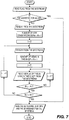
- the flowchart of multiview nesting SEI encoding and decoding processes are shown in Fig. 6 and Fig. 7 respectively.
- MVC HRD for a set of IOPs, and derive other sets of IOPs from this set.
- MVC HRD only defines HRD constraints for decoding each of the possible single views, and the HRD parameters for decoding more than one view is derived from the relevant single view parameters. This approach allows one to send fewer parameters than the first approach, but it adds more complexity for derivation.
- An HRD is defined for each view.
- the flowchart of VUI encoding and decoding processes are shown in Fig. 8 and Fig. 9 respectively.
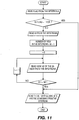
- the flowchart of multiview nesting SEI encoding and decoding processes are shown in Fig. 10 and Fig. 11 respectively.
- the HRD parameters of each IOP are derived by the HRD parameters of the views associated with the IOP.
- An example is given in figure 1 .
- the worst case may be defined as, for example, the case that requires the largest buffer size, longest delay, highest bitrate, most bits consumption of transmitting any M views, etc. So one can only define 1 set of HRD parameters for decoding each M views. That is, one defines a set of HRD parameters for the worst case single view, and a set of HRD parameters for the worst case 2-view combination, etc., up to a set of HRD parameters for the worst case N-1 - view combination, and a set of HRD parameters for the (worst case) N-view combination.
- timing_info_present_flag num_units_in_tick, time_scale
- nal_hrd_parameters_present_flag vcl_hrd_parameters_present_flag
- low_delay_hrd_flag pic_struct_present_flag
- Figures 4 through 13 show various flow charts for writing or reading the particular syntax that is identified.
- an HRD may be provided using the above features for other standards.
- an HRD may be provided for MVC using variations of the implementations described above. Such variations may include, for example, implementations that use other high-level syntax, use syntax that is not high level, provide HRD parameters for other IOPs. Accordingly, although implementations described herein may be described in the context of high-level syntax for H.264, implementing one of the three principal implementations described herein, such descriptions should in no way be taken as limiting the features and concepts to such implementations or contexts.
- the implementations described herein may be implemented in, for example, a method or process, an apparatus, or a software program. Even if only discussed in the context of a single form of implementation (for example, discussed only as a method), the implementation or features discussed may also be implemented in other forms (for example, an apparatus or program).
- An apparatus may be implemented in, for example, appropriate hardware, software, and firmware.
- the methods may be implemented in, for example, an apparatus such as, for example, a computer or other processing device. Additionally, the methods may be implemented by instructions being performed by a processing device or other apparatus, and such instructions may be stored on a computer readable medium such as, for example, a CD, or other computer readable storage device, or an integrated circuit.
- implementations may also produce a signal formatted to carry information that may be, for example, stored or transmitted.
- the information may include, for example, instructions for performing a method, or data produced by one of the described implementations.
- a signal may be formatted to carry as data the rules for writing or reading the syntax of a described embodiment, or to carry as data the actual syntax written by a described embodiment.
- implementations may be implemented in either, or both, an encoder and a decoder.
- implementations are contemplated by this invention.
- additional implementations may be created by combining, deleting, modifying, or supplementing various features of the disclosed implementations.
Landscapes
- Engineering & Computer Science (AREA)
- Multimedia (AREA)
- Signal Processing (AREA)
- Compression Or Coding Systems Of Tv Signals (AREA)
- Testing, Inspecting, Measuring Of Stereoscopic Televisions And Televisions (AREA)
Description
- This application relates to a hypothetical reference decoder for Multiview Video Coding in compressed video systems.
- A hypothetical reference decoder (HRD) is valuable in compressed video systems because it serves to validate an encoded bitstream for compliance to a standard. In a coding standard such as H.264/AVC, there are numerous interoperability points within the Multiview Video Coding (MVC) feature of the standard. MVC allows the decoder to decode one or more views simultaneously, and decoding of one view may need information from other views. The H.264/AVC standard has rules (also referred to as requirements, constraints, or operational specifications) defining an HRD. The HRD conformance is a normative part of the H.264/MPEG-4 AVC standard. Any AVC bitstream has to be compliant to the HRD built according to the rules. Currently, there is no rule defined for a MVC HRD. Previous HRDs do not have sufficient rules to allow them to validate bitstreams like those of the MVC in AVC.
- In many cases, the bit-rate variations of compressed bitstream need to be smoothed using buffering mechanisms at the encoder and decoder. The sizes of the physical buffers are finite, and hence the encoder constrains the bit-rate variations to fit within the buffer limitations. Video coding standards do not mandate specific encoder or decoder buffering mechanisms, but they require encoders to control bit-rate fluctuations so that a hypothetical reference decoder (HRD) (or Virtual Buffer Verifier (VBV)) of a given buffer size would decode the video bit stream without suffering from buffer overflow or underflow.
- The HRD is based on an idealized decoder model. The purpose of a HRD is to place basic buffering constraints on the variations in bit-rate over time in a coded stream. These constraints in turn enable higher layers to multiplex the stream and cost-effective decoders to decode it in real-time. In the following discussion, H.264/AVC will be used as an example. However, the invention can be extended to other video coding models or standards.
- L. Zhu et al." SVC hypothetical reference decoder", 22. JVT meeting; 79. MPEG meeting; 13-01-2007 - 20-01-2007; Marrakech,MA; (Joint Video Team of ISO/IEC JTC1/SC29/WG11 and ITU-T SG.16), 2007-01-21, JVT-V068, XP030006876 proposes to modify H.264/AVC hypothetical reference decoder (HRD) for SVC, wherein HRD constraint are defined for each interoperability point of SVC.
- This invention proposes several methods to define a Hypothetical Reference Decoder (HRD) for Multiview Video Coding (MVC).
- In the current H.264 / MPEG-4 AVC based implementation of MVC, the reference software achieves multi-view prediction by encoding each view with a single encoder and taking into consideration the cross-view references. Each view is coded as a separate bitstream by the encoder in its original resolution and later all the bitstreams are combined to form a single bitstream. At the decoder, a user can decode one or more views based on its application. In the current specification, no HRD rules are defined for MVC.
- In MVC, assume there are N coded views in total. The decoder can have the flexibility to decode any M (1 ≤ M ≤ N) views simultaneously. Each combination of M views denotes an interoperability point (IOP). To allow the best flexibility, in this category, the present invention proposes that MVC HRD defines HRD constraints for each IOP. The problem with this solution is there are so many combinations, up to (2N-1). Even if a limitation is added for M, where M ≤ 32, the total number of combinations is still big. The present invention describes methods to provide rules for a Hypothetical Reference Decoder for Multiview Video Coding where the rules are specified for each interoperable point.
-
-
Figure 1 shows HRD parameters of view combinations which are derived by the HRD parameters of single views. -
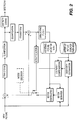
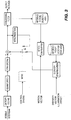
Figure 2 shows a Multiview Video Coding encoder. -
Figure 3 shows a Multiview Video Coding decoder. -
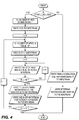
Figure 4 shows Video Usability Information for MVC encoding process ofcategory 1. -
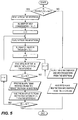
Figure 5 shows Video Usability Information for MVC decoding process ofcategory 1. -
Figure 6 shows Multiview nesting SEI encoding process ofcategory 1. -
Figure 7 shows Multiview nesting SEI decoding process ofcategory 1. -
Figure 8 shows Video Usability Information for MVC encoding process ofcategory 2. -
Figure 9 shows Video Usability Information for MVC decoding process ofcategory 2. -
Figure 10 shows Multiview nesting SEI encoding process ofcategory 2 & 3. -
Figure 11 shows Multiview nesting SEI decoding process ofcategory 2 & 3. -
Figure 12 shows Video Usability Information for MVC encoding process of category 3. -
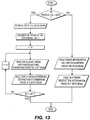
Figure 13 shows Video Usability Information for MVC decoding process of category 3. - In the current H.264/MPEG-4 AVC reference implementations, HRD related parameters are placed in sequence parameter set (SPS) and SEI messages.
- SPS contains the syntax structure VUI parameters, as illustrated in Table 1
Table 1 Sequence Parameter Set seq_parameter_set_rbsp( ) { C Descriptor profile_idc 0 u(8) ... sequence_parameter_set_id 0 ue(v) ... vui_parameters_present_flag 0 u(1) if(vui_parameters_present_flag) vui_parameters( ) 0 rbsp_trailing_bits( ) 0 } Table 2 VUI parameters ... timing_info_present_flag 0 u(1) if( timing_info_present_flag ) { num_units_in_tick 0 u(32) time_scale 0 u(32) fixed_frame_rate_flag 0 u(1) } nal_hrd_parameters_present_flag 0 u(1) if( nal_hrd_parameters_present_flag ) hrd_parameters( ) vcl_hrd_parameters_present_flag 0 u(1) if( vcl_hrd_parameters_present_flag ) hrd_parameters( ) if( nal_hrd_parameters_present_flag | | vcl_hrd_parameters_present_flag ) low_delay_hrd_flag 0 u(1) ... - Syntax structure HRD_parameters contains syntax to specify the buffer size and bit rate, etc.
- The buffer period SEI and picture timing SEI specified the initial coded picture buffer removal delay before decoding a picture and the parameters to derive the timing of each picture.
- Based on the current AVC implementation, the HRD related parameters placed in the SPS, in combine with the parameters placed in buffering period SEI and picture time SEI, a set of HRD constraints is defined for a H.264/MPEG-4 AVC bitstream.
- However, the current AVC implementation only support one set of HRD parameters, which doesn't fit the multiple IOPs contained in the MVC bitstream.
- In the current H.264 / MPEG-4 AVC based implementation of MVC, the reference software achieves multi-view prediction by encoding each view with a single encoder and taking into consideration the cross-view references. Each view is coded as a separate bitstream by the encoder in its original resolution and later all the bitstreams are combined to form a single bitstream. At decoder, the user can decode one or more views based on its application. The MVC encoder and decoder diagrams are shown in
Fig. 2 andFig. 3 respectively. In the current specification, no HRD rules are defined for MVC. - Many of the described embodiments use the framework of H.264 / MPEG-4 AVC based implementation of MVC. The similar idea can be applied to other video coding standards. For example, the feature of specifying particular parameters for one or more operating points (such as, an interoperability point) can be applied to standards other than the H.264/MPEG-4 AVC standard.
- Three separate classes A, B, and C of implementations are described. While class A is directed to the invention as claimed, classes B and C are not part of the claimed invention but useful for understanding the invention.
- In MVC, assuming there are N coded views in total. The decoder can have the flexibility to decode any M (1 ≤ M ≤ N) views simultaneously. Each combination of M views denotes an interoperability point (IOP). To allow the best flexibility, in this category, the present invention proposes that a MVC HRD defines HRD constraints for each IOP. The problem with this solution is there are so many combinations, up to (2N-1). Even if a limitation is added for M, where M ≤ 32, the total number of combinations is still big.
- An embodiment of this solution is presented below.
- All combinations of views are combined in the following modifications to the AVC-HRD rules. Table 3 is taken from the AVC standard, and relates to the AVC-HRD. The additions to the AVC standard Tables are shown using italic font. A new SEI message, multiview nesting SEI, is introduced in table 4. The flowchart of VUI encoding and decoding processes are shown in
Fig. 4 andFig. 5 respectively. And the flowchart of multiview nesting SEI encoding and decoding processes are shown inFig. 6 andFig. 7 respectively. - 1. VUI parameters: As can be seen, Table 3 shows that syntax of VUI parameter in the AVC standard has been modified by introducing an "if-then" statement that tests the variable "profile_idc". If "profile_idc" is equal to "MVC", then a loop if performed one or more times to test one or more points (that is, IOPs). If "profile_idc" is not equal to "MVC", then "AVC" is presumed to be the relevant standard, and an "else" is executed to test one point for AVC compliance (using existing AVC-HRD rules). Lines 30-60 are executed if the "profile_idc" is MVC, otherwise, lines 63-88 are executed. The variable "num_view_combinations_minus1" (line 30) provides the number of IOPs in the loop. Within the main loop, a sub-loop for each IOP (lines 33-34) provides the view_ids associated with the IOP. For each sub-loop, "num_views_minus1[i]" (line 32) provides the number of views associated with the ith IOP, and "view_id[i][j]" (line 34) provides the view_id of the jth view of the ith IOP. Lines 35-59 provide syntaxes for the ith IOP. There can be up to (2N-1) IOPs for an MVC bitstream. This compares to a single checking point for an AVC bitstream.
- 2. A new SEI message, multiview nesting SEI, is defined in Table 4. A multiview nesting SEI message concerns an access unit. A multiview nest SEI message contains one and only one SEI message, which is referred to as the nested SEI message. The scope to which the nested SEI message applies is indicated by the syntaxes from lines 2-10. "num_view_combinations_minus1", "num_views_minus1[i]" and "view_id[i][j]" share the same semantics of those in the VUI parameters.
- 3. Buffering period SEI message and the Picture timing SEI message (which are part of AVC) can be implemented as a SEI message payload embedded in multiview nesting SEI message. The syntax of Buffering period SEI and Picture timing SEI remain the same as in AVC. The Buffering period SEI message and the Picture timing SEI messages for the AVC compatible view shall not be nested in the multiview nesting SEI. This allows for AVC compatibility.
- num_view_combinations_minus1 plus 1 indicates the number of view combinations supported by the bitstream referring to the same seq_parameter_set_id in the SPS which contains this hrd_parameters().
- num_views_minus1[i] indicates the number of views associated with the ith IOP.
- view_id[i][j] indicates the view_id of the jth view of the ith IOP.
- timing_info_present_flag[i] specifies the timing_info_present_flag value of the ith IOP.
- num_units_in_tick[i] specifies the num_units_in_tick value of the ith IOP.
- time_scale[i] specifies the time_scale value of the ith IOP.
- fixed_frame_rate_flag[i] specifies the fixed_frame_rate_flag value of the ith IOP.
- nal_hrd_parameters_present_flag[i] specifies the nal_hrd_parameters_present_flag value of the ith IOP.
- vcl_hrd_parameters_present_flag[i] specifies the vcl_hrd_parameters_present_flag value of the ith IOP.
- low_delay_hrd_flag[i] specifies the low_delay_hrd_flag value of the ith IOP.
- pic_struct_present_flag[i] specifies the pic_struct_present_flag value of the ith IOP.
- all_view_combinations_in_au_flag equal to 1 indicates that the nested SEI message applies to all the view combinations of the access unit.
- all_view_combinations_in_au_flag equal to 0 indicates that the applicable scope of the nested SEI message is signaled by the the syntax elements num_view_combinations_minus1, num_views_minus1[i] and view_id[i][j].
- num_view_combinations_minus1 plus 1 indicates the number of view combinations supported by the bitstream.
- num_views_minus1[i] indicates the number of views associated with the ith IOP.
- view_id[i][j] indicates the view_id of the jth view of the ith IOP.
- In this category, it is proposed to define MVC HRD for a set of IOPs, and derive other sets of IOPs from this set. In one example is a proposal that MVC HRD only defines HRD constraints for decoding each of the possible single views, and the HRD parameters for decoding more than one view is derived from the relevant single view parameters. This approach allows one to send fewer parameters than the first approach, but it adds more complexity for derivation.
- An example of this solution is presented below:
An HRD is defined for each view. The maximum number of sets of HRD parameters sending is M, where M=1...N. So, if there are N views, this example would send N sets of HRD parameters. The flowchart of VUI encoding and decoding processes are shown inFig. 8 andFig. 9 respectively. And the flowchart of multiview nesting SEI encoding and decoding processes are shown inFig. 10 andFig. 11 respectively. - 1. VUI parameters: As can be seen,
shows that syntax of VUI parameter in the AVC standard has been modified by introducing an "if-then" statement that tests the variable "profile_idc". If "profile_idc" is equal to "MVC", then a loop if performed one or more times to test one or more points. If "profile_idc" is not equal to "MVC", then "AVC" is presumed to be the relevant standard, and an "else" is executed to test one point for AVC compliance (using existing AVC-HRD rules). Lines 30-58 are executed if the "profile_idc" is MVC, otherwise, lines 61-85 are executed. The variable "num_views_minus1" (line 30) provides the number of views in the loop. "view_id[i]" (line 32) provides the view_id of the ith view. Lines 33-58 provide syntaxes for the ith view. There can be up to M views (M=1...N) in an MVC bitstream. This compares to a single checking point for an AVC bitstream. - 2. A new SEI message, multiview nesting SEI, is defined in Table 6. A multiview nesting SEI message concerns an access unit. A multiview nesting SEI message contains one and only one SEI message, which is referred to as the nested SEI message. The scope to which the nested SEI message applies is indicated by the syntaxes from lines 2-7. "num_views_minus1" and "view_id[i]" share the same semantics of those in the VUI parameters.
- 3. Buffering period SEI message and the Picture timing SEI message can be as a SEI message payload embedded in multiview nesting SEI message. The syntax of Buffering period SEI and Picture timing SEI remain the same as in AVC. The Buffering period SEI message and the Picture timing SEI messages for the AVC compatible view shall not be nested in the multview nesting SEI.
- The HRD parameters of each IOP (view combination) are derived by the HRD parameters of the views associated with the IOP. An example is given in
figure 1 .Table 5: VUI parameters syntax 1 vui_parameters( ) { C Descriptor 2 aspect_ratio_info_present_flag 0 u(1) 3 if( aspect_ratio_info_present_flag ) { 4 aspect_ratio_idc 0 u(8) 5 if( aspect_ratio_idc = = Extended_SAR ) { 6 sar_width 0 u(16) 7 sar_height 0 u(16) 8 } 9 } 10 overscan_info_present_flag 0 u(1) 11 if( overscan_info_present_flag ) 12 overscan_appropriate_flag 0 u(1) 13 video_signal_type_present_flag 0 u(1) 14 if( video_signal_type_present_flag ) { 15 video_format 0 u(3) 16 video_full_range_flag 0 u(1) 17 colour_description_present_flag 0 u(1) 18 if( colour_description_present_flag ) { 19 colour_primaries 0 u(8) 20 transfer_characteristics 0 u(8) 21 matrix_coefficients 0 u(8) 22 } 23 } 24 chroma_loc_info_present_flag 0 u(1) 25 if( chroma_loc_info_present_flag ) { 26 chroma_sample_loc_type_top_field 0 ue(v) 27 chroma_sample_loc_type_bottom_field 0 ue(v) 28 } 29 if( profile_idc == 'MVC) { 30 num_views_minus1 0 ue(v) 31 for( i = 0; i <= num_views_minus1; i++ ) { 32 view_id[ i ] 0 u(5) 33 timing_info_present_flag[i ] 0 u(1) 34 if( timing_info_present_flag[ i ] ) { 35 num_units_in_tick[ i ] 0 u(32) 36 time_scale[ i ] 0 u(32) 37 fixed_frame_rate_flag[ i ] 0 u(1) 38 } 39 nal_hrd_parameters_present_flag[ i ] 0 u(1) 40 if( nal_hrd_parameters_present_flag[ i ] ) 41 hrd_parameters( ) 42 vcl_hrd_parameters_present_flag[ i ] 0 u(1) 43 if( vcl_hrd_parameters_present_flag[ i ]) 44 hrd_parameters( ) 45 if( nal_hrd_parameters_present_ flag[ i ] | | vcl_hrd_parameters_present_flag[ i ] ) 46 low_delay_hrd_flag[ i ] 0 u(1) 47 pic_struct_present_flag[ i ] 0 u(1) 48 bitstream_restriction_flag 0 u(1) 49 if( bitstream_restriction_flag) { 50 motion_vectors_over_pic_boundaries_flag 0 u(1) 51 max_bytes_per_pic_denom 0 ue(v) 52 max_bits_per_mb_denom 0 ue(v) 53 log2_max_mv_length_horizontal 0 ue(v) 54 log2_max_mv_length_vertical 0 ue(v) 55 num_reorder_frames 0 ue(v) 56 max_dec_frame_buffering 0 ue(v) 57 } 58 } 59 } 60 else{ 61 timing_info_present_flag 0 u(1) 62 if( timing_info_present_flag ) { 63 num_units_in_tick 0 u(32) 64 time_scale 0 u(32) 65 fixed_frame_rate_flag 0 u(1) 66 } 67 nal_hrd_parameters_present_flag 0 u(1) 68 if( nal_hrd_parameters_present_flag ) 69 hrd_parameters( ) 70 vcl_hrd_parameters_present_flag 0 u(1) 71 if( vcl_hrd_parameters_present_flag ) 72 hrd_parameters( ) 73 if( nal_hrd_parameters_present_flag | | vcl_hrd_parameters_present_flag ) 74 low_delay_hrd_flag 0 u(1) 75 pic_struct_present_flag 0 u(1) 76 bitstream_restriction_flag 0 u(1) 77 if( bitstream_restriction_flag ) { 78 motion_vectors_over_pic_boundaries_flag 0 u(1) 79 max_bytes_per_pic_denom 0 ue(v) 80 max_bits_per_mb_denom 0 ue(v) 81 log2_max_mv_length_horizontal 0 ue(v) 82 log2_max_mv_length_vertical 0 ue(v) 83 num_reorder_frames 0 ue(v) 84 max_dec_frame_buffering 0 ue(v) 85 } 86 } 87 } - num_views_minus1 indicates the total number of views in the bitstream.
- view_id[i] indicates the view_id of the ith view.
- timing_info_present_flag[i] specifies the timing_info_present_flag value of the ith view.
- num_units_in_tick[i] specifies the num_units_in_tick value of the ith view.
- time_scale[i] specifies the time_scale value of the ith IOP.
- fixed_frame_rate_flag[i] specifies the fixed_frame_rate_flag value of the ith view.
- nal_hrd_parameters_present_flag[i] specifies the nal_hrd_parameters_present_flag value of the ith view.
- vcl_hrd_parameters_present_flag[i] specifies the vcl_hrd_parameters_present_flag value of the ith view.
- low_delay_hrd_flag[i] specifies the low_delay_hrd_flag value of the ith view.
- pic_struct_present_flag[i] specifies the pic_struct_present_flag value of the ith view.
- timing_info_present_flag, num_units_in_tick, time_scale,
- nal_hrd_parameters_present_flag, vcl_hrd_parameters_present_flag,
- low_delay_hrd_flag and pic_struct_present_flag have the same semantics as in AVC.
- all_views_in_au_flag equal to 1 indicates that the nested SEI message applies to all the views of the access unit. all_views_in_au_flag equal to 0 indicates that the applicable scope of the nested SEI message is signaled by the syntax elements num_views_minus1 and view_id[i].
- num_views_minus1 plus 1 indicates the number of views supported by the bitstream.
- view_id[i] indicates the view_id of the ith view.
- In this category, it is proposed that MVC HRD only defines HRD constraints for the worst case of decoding M (M=1,...,N) views. The worst case may be defined as, for example, the case that requires the largest buffer size, longest delay, highest bitrate, most bits consumption of transmitting any M views, etc. So one can only define 1 set of HRD parameters for decoding each M views. That is, one defines a set of HRD parameters for the worst case single view, and a set of HRD parameters for the worst case 2-view combination, etc., up to a set of HRD parameters for the worst case N-1 - view combination, and a set of HRD parameters for the (worst case) N-view combination. In total, only define N sets of HRD parameters, which are used to test HRD conformance for 1, 2, ..., and up to N views. The disadvantage of this approach is that it requires sending higher constraints than what one particular case might need. But one can save the bits for sending all HRD parameters and one does not derive any parameters.
- An example of this solution is presented below. The maximum number of sets of HRD parameters sending is M, where M=1..N. The flowchart of VUI encoding and decoding processes are shown in
Fig. 12 andFig. 13 respectively. - 1. VUI parameters: As can be seen, Table 7 shows that syntax of VUI parameter in the AVC standard has been modified by introducing an "if-then" statement that tests the variable "profile_idc". If "profile_idc" is equal to "MVC", then a loop if performed one or more times to test one or more points. If "profile_idc" is not equal to "MVC", then "AVC" is presumed to be the relevant standard, and an "else" is executed to test one point for AVC compliance (using existing AVC-HRD rules). Lines 30-57 are executed if the "profile_idc" is MVC, otherwise, lines 60-84 are executed. The variable "num_views_minus1" (line 30) provides the number of views in the bitstream. Lines 32-56 provide syntaxes for HRD related parameters associated with the highest HRD constraints of decoding any i views of the (num_views_minus1+1) views.
Note that Table 7 differs from Table 5. See, for example, line 32 of Table 5, reciting "view_id[i]". - 2. Buffering period SEI message and the Picture timing SEI message can be as a SEI message payload embedded in multiview nesting SEI message. The syntax of the multiview nesting SEI message can share the one defined in Table 6. The nesting Buffering period and Picture timing SEI message is associated with the highest HRD constraints of decoding any (num_views_minus1+1) views of total number of views sending in the bitstream. The syntax of Buffering period SEI and Picture timing SEI remain the same as in AVC. The Buffering period SEI message and the Picture timing SEI messages for the AVC compatible view shall not be nested in the multview nesting SEI.
- num_views_minus1 indicates the total number of views in the bitstream.
- timing_info_present_flag[i] specifies the timing_info_present_flag value for decoding i views.
- num_units_in_tick[i] specifies the num_units_in_tick value for decoding i views.
- time_scale[i] specifies the time_scale value for decoding i views.
- fixed_frame_rate_flag[i] specifies the fixed_frame_rate_flag value for decoding i views.
- nal_hrd_parameters_present_flag[i] specifies the nal_hrd_parameters_present_flag value for decoding i views.
- vcl_hrd_parameters_present_flag[i] specifies the vcl_hrd_parameters_present_flag value for decoding i views.
- low_delay_hrd_flag[i] specifies the low_delay_hrd_flag value for decoding i views.
- pic_struct_present_flag[i] specifies the pic_struct_present_flag value for decoding i views.
- The parameters timing_info_present_flag, num_units_in_tick, time_scale, nal_hrd_parameters_present_flag, vcl_hrd_parameters_present_flag, low_delay_hrd_flag and pic_struct_present_flag have the same semantics as in AVC.
-
Figures 4 through 13 show various flow charts for writing or reading the particular syntax that is identified. - Several implementations are described herein that, for example, provide rules for writing and/or reading a description of an HRD for MVC. This allows an HRD to be defined and used in MVC.
- However, features and aspects of described implementations may also be adapted for other implementations. For example, as indicated above, an HRD may be provided using the above features for other standards. Additionally, an HRD may be provided for MVC using variations of the implementations described above. Such variations may include, for example, implementations that use other high-level syntax, use syntax that is not high level, provide HRD parameters for other IOPs. Accordingly, although implementations described herein may be described in the context of high-level syntax for H.264, implementing one of the three principal implementations described herein, such descriptions should in no way be taken as limiting the features and concepts to such implementations or contexts.
- The implementations described herein may be implemented in, for example, a method or process, an apparatus, or a software program. Even if only discussed in the context of a single form of implementation (for example, discussed only as a method), the implementation or features discussed may also be implemented in other forms (for example, an apparatus or program). An apparatus may be implemented in, for example, appropriate hardware, software, and firmware. The methods may be implemented in, for example, an apparatus such as, for example, a computer or other processing device. Additionally, the methods may be implemented by instructions being performed by a processing device or other apparatus, and such instructions may be stored on a computer readable medium such as, for example, a CD, or other computer readable storage device, or an integrated circuit.
- As should be evident to one of skill in the art, implementations may also produce a signal formatted to carry information that may be, for example, stored or transmitted. The information may include, for example, instructions for performing a method, or data produced by one of the described implementations. For example, a signal may be formatted to carry as data the rules for writing or reading the syntax of a described embodiment, or to carry as data the actual syntax written by a described embodiment.
- Additionally, many implementations may be implemented in either, or both, an encoder and a decoder.
- Further, other implementations are contemplated by this invention. For example, additional implementations may be created by combining, deleting, modifying, or supplementing various features of the disclosed implementations.
- The previous description provides some of the various implementations. It is not intended to be exhaustive but merely to provide a short description of a small number of the many possible implementations.
| 1 | vui_parameters( ) { | C | Descriptor |
| 2 | aspect_ratio_info_present_flag | 0 | u(1) |
| 3 | if( aspect_ratio_info_present_flag ) { | ||
| 4 | aspect_ratio_idc | 0 | u(8) |
| 5 | if( aspect_ratio_idc = = Extended_SAR ) { | ||
| 6 | sar_width | 0 | u(16) |
| 7 | sar_height | 0 | u(16) |
| 8 | } | ||
| 9 | } | ||
| 10 | overscan_info_present_flag | 0 | u(1) |
| 11 | if( overscan_info_present_flag ) | ||
| 12 | overscan_appropriate_flag | 0 | u(1) |
| 13 | video_signal_type_present_flag | 0 | u(1) |
| 14 | if( video_signal_type_present_flag ) { | ||
| 15 | video_format | 0 | u(3) |
| 16 | video_full_range_flag | 0 | u(1) |
| 17 | colour_description_present_flag | 0 | u(1) |
| 18 | if( colour_description_present_flag ) { | ||
| 19 | colour_primaries | 0 | u(8) |
| 20 | transfer_characteristics | 0 | u(8) |
| 21 | matrix_coefficients | 0 | u(8) |
| 22 | } | ||
| 23 | } | ||
| 24 | chroma_loc_info_present_flag | 0 | u(1) |
| 25 | if( chroma_loc_info_present_flag ) { | ||
| 26 | chroma_sample_loc_type_top_field | 0 | ue(v) |
| 27 | chroma_sample_loc_type_bottom_field | 0 | ue(v) |
| 28 | } | ||
| 29 | if( profile_idc == 'MVC) { | ||
| 30 | num_view_combinations_minus1 | 0 | ue(v) |
| 31 | for( i = 0; i <= num_view_combinations_minus1; i++ ) { | ||
| 32 | num_views_minus1[ i ] | 0 | u(5) |
| 33 | for( j = 0; j <= num_views_minus1[ i ]; j++) | ||
| 34 | view_id[ i ][j] | 0 | u(5) |
| 35 | timing_info_present_flag[ i ] | 0 | u(1) |
| 36 | if(timing_info_present_flag[i ]) { | ||
| 37 | num_units_in_tick[ i ] | 0 | u(32) |
| 38 | time_scale[ i ] | 0 | u(32) |
| 39 | fixed_frame_rate_flag[ i ] | 0 | u(1) |
| 40 | } | ||
| 41 | nal_hrd_parameters_present_flag[ i ] | 0 | u(1) |
| 42 | if( nal_hrd_parameters_present_flag[ i ] ) | ||
| 43 | hrd_parameters( ) | ||
| 44 | vcl_hrd_parameters_present_flag[ i ] | 0 | u(1) |
| 45 | if( vcl_hrd_parameters_present_flag[ i ]) | ||
| 46 | hrd_parameters( ) | ||
| 47 | if( nal_hrd_parameters_present_flag[i] | | vcl_hrd_parameters_present_flag[ i ] ) | ||
| 48 | low_delay_hrd_flag[ i ] | 0 | u(1) |
| 49 | pic_struct_present_flag[ i ] | 0 | u(1) |
| 50 | bitstream_restriction_flag | 0 | u(1) |
| 51 | if( bitstream_restriction_flag ) { | ||
| 52 | motion_vectors_over_pic_boundaries_flag | 0 | u(1) |
| 53 | max_bytes_per_pic_denom | 0 | ue(v) |
| 54 | max_bits_per_mb_denom | 0 | ue(v) |
| 55 | /og2_max_mv_/ength_horizontal | 0 | ue(v) |
| 56 | log2_max_mv_length_vertical | 0 | ue(v) |
| 57 | num_reorder_frames | 0 | ue(v) |
| 58 | max_dec_frame_buffering | 0 | ue(v) |
| 59 | } | ||
| 60 | } | ||
| 61 | } | ||
| 62 | else{ | ||
| 63 | timing_info_present_flag | 0 | u(1) |
| 64 | if( timing_info_present_flag ) { | ||
| 65 | num_units_in_tick | 0 | u(32) |
| 66 | time_scale | 0 | u(32) |
| 67 | fixed_frame_rate_flag | 0 | u(1) |
| 68 | } | ||
| 69 | nal_hrd_parameters_present_flag | 0 | u(1) |
| 70 | if( nal_hrd_parameters_present_flag ) | ||
| 71 | hrd_parameters( ) | ||
| 72 | vcl_hrd_parameters_present_flag | 0 | u(1) |
| 73 | if( vcl_hrd_parameters_present_flag ) | ||
| 74 | hrd_parameters( ) | ||
| 75 | if( nal_hrd_parameters_present_flag | | vcl_hrd_parameters_present_flag ) | ||
| 76 | low_delay_hrd_flag | 0 | u(1) |
| 77 | pic_struct_present_flag | 0 | u(1) |
| 78 | bitstream_restriction_flag | 0 | u(1) |
| 79 | if( bitstream_restriction_flag ) { | ||
| 80 | motion_vectors_over_pic_boundaries_flag | 0 | u(1) |
| 81 | max_bytes_per_pic_denom | 0 | ue(v) |
| 82 | max_bits_per_mb_denom | 0 | ue(v) |
| 83 | log2_max_mv_length_horizontal | 0 | ue(v) |
| 84 | log2_max_mv_length_vertical | 0 | ue(v) |
| 85 | num_reorder_frames | 0 | ue(v) |
| 86 | max_dec_frame_buffering | 0 | ue(v) |
| 87 | } | ||
| 88 | } | ||
| 89 | } |
| 1 | multiview_nesting(payloadSize ) { | | Descriptor | |
| 2 | all_view_combinations_in_au_flag | 5 | u(1) | |
| 3 | if(all_view_combinations_in_au_flag = = 0) { | |||
| 4 | num_view_combinations_minus1 | 5 | ue(v) | |
| 5 | for( i = 0; i <= num_view_combinations_minus1; i++ ) { | |||
| 6 | num_views_minus1[ i ] | 0 | u(5) | |
| 7 | for( j = 0; j <= num_views_minus1[i]; j++ ) | |||
| 8 | view_id[ i ][j] | 0 | u(5) | |
| 9 | } | |||
| 10 | } | |||
| 11 | while( !byte_aligned( ) ) ) | |||
| 12 | sei_nesting_zero_bit /* equal to 0 */ | 5 | f(1) | |
| 13 | sei_message( ) | 5 | ||
| 14 | } |
| 1 | multiview_nesting( payloadSize ) { | | Descriptor | |
| 2 | all_views_in_au_flag | 5 | u(1) | |
| 3 | if(all_views_in_au_flag = = 0) { | |||
| 4 | num_views_minus1 | 5 | ue(v) | |
| 5 | for( i = 0; i <= num_views_minus1; i++ ) | |||
| 6 | view_id[ i] | 0 | u(5) | |
| 7 | } | |||
| 8 | while(!byte_aligned( )) | |||
| 9 | sei_nesting_zero_bit /* equal to 0 */ | 5 | f(1) | |
| 10 | sei_message( ) | 5 | ||
| 11 | } |
| 1 | vui_parameters( ) { | C | Descriptor |
| 2 | aspect_ratio_info_present_flag | 0 | u(1) |
| 3 | if( aspect_ratio_info_present_flag ) { | ||
| 4 | aspect_ratio_idc | 0 | u(8) |
| 5 | if( aspect_ratio_idc = = Extended_SAR ) { | ||
| 6 | sar_width | 0 | u(16) |
| 7 | sar_height | 0 | u(16) |
| 8 | } | ||
| 9 | } | ||
| 10 | overscan_info_present_flag | 0 | u(1) |
| 11 | if( overscan_info_present_flag ) | ||
| 12 | overscan_appropriate_flag | 0 | u(1) |
| 13 | video_signal_type_present_flag | 0 | u(1) |
| 14 | if( video_signal_type_present_flag ) { | ||
| 15 | video_format | 0 | u(3) |
| 16 | video_full_range_flag | 0 | u(1) |
| 17 | colour_description_present_flag | 0 | u(1) |
| 18 | if( colour_description_present_flag ) { | ||
| 19 | colour_primaries | 0 | u(8) |
| 20 | transfer_characteristics | 0 | u(8) |
| 21 | matrix_coefficients | 0 | u(8) |
| 22 | } | ||
| 23 | } | ||
| 24 | chroma_loc_info_present_flag | 0 | u(1) |
| 25 | if( chroma_loc_info_present_flag ) { | ||
| 26 | chroma_sample_loc_type_top_field | 0 | ue(v) |
| 27 | chroma_sample_loc_type_bottom_field | 0 | ue(v) |
| 28 | } | ||
| 29 | if( profile_idc == 'MVC) { | ||
| 30 | num_views_minus1 | 0 | ue(v) |
| 31 | for( i = 0; i <= num_views_minus1; i++ ) { | ||
| 32 | timing_info_present_flag[ i ] | 0 | u(1) |
| 33 | if( timing_info_present_flag[ i ] ) { | ||
| 34 | num_units_in_tick[ i ] | 0 | u(32) |
| 35 | time_scale[ i ] | 0 | u(32) |
| 36 | fixed_frame_rate_flag[ i ] | 0 | u(1) |
| 37 | } | ||
| 38 | nal_hrd_parameters_present_flag[ i ] | 0 | u(1) |
| 39 | if( nal_hrd_parameters_present_flag[ i ] ) | ||
| 40 | hrd_parameters( ) | ||
| 41 | vcl_hrd_parameters_present_flag[ i ] | 0 | u(1) |
| 42 | if( vcl_hrd_parameters_present_flag[ i ]) | ||
| 43 | hrd_parameters( ) | ||
| 44 | if( nal_hrd_parameters_present_flag[ i ] | | vcl_hrd_parameters_present_flag[ i ] ) | ||
| 45 | low_delay_hrd_flag[ i ] | 0 | u(1) |
| 46 | pic_struct_present_flag[ i ] | 0 | u(1) |
| 47 | bitstream_restriction_flag | 0 | u(1) |
| 48 | if( bitstream_restriction_flag ){ | ||
| 49 | motion_vectors_over_pic_boundaries_flag | 0 | u(1) |
| 50 | max_bytes_per_pic_denom | 0 | ue(v) |
| 51 | max_bits_per_mb_denom | 0 | ue(v) |
| 52 | log2_max_mv_length_horizontal | 0 | ue(v) |
| 53 | log2_max_mv_length_vertical | 0 | ue(v) |
| 54 | num_reorder_frames | 0 | ue(v) |
| 55 | max_dec_frame_buffering | 0 | ue(v) |
| 56 | } | ||
| 57 | } | ||
| 58 | } | ||
| 59 | else{ | ||
| 60 | timing_info_present_flag | 0 | u(1) |
| 61 | if( timing_info_present_flag ) { | ||
| 62 | num_units_in_tick | 0 | u(32) |
| 63 | time_scale | 0 | u(32) |
| 64 | fixed_frame_rate_flag | 0 | u(1) |
| 65 | } | ||
| 66 | nal_hrd_parameters_present_flag | 0 | u(1) |
| 67 | if( nal_hrd_parameters_present_flag ) | ||
| 68 | hrd_parameters( ) | ||
| 69 | vcl_hrd_parameters_present_flag | 0 | u(1) |
| 70 | if( vcl_hrd_parameters_present_flag ) | ||
| 71 | hrd_parameters( ) | ||
| 72 | if( nal_hrd_parameters_present_flag | | vcl_hrd_parameters_present_flag ) | ||
| 73 | low_delay_hrd_flag | 0 | u(1) |
| 74 | pic_struct_present_flag | 0 | u(1) |
| 75 | bitstream_restriction_flag | 0 | u(1) |
| 76 | if( bitstream_restriction_flag ) { | ||
| 77 | motion_vectors_over_pic_boundaries_flag | 0 | u(1) |
| 78 | max_bytes_per_pic_denom | 0 | ue(v) |
| 79 | max_bits_per_mb_denom | 0 | ue(v) |
| 80 | log2_max_mv_length_horizontal | 0 | ue(v) |
| 81 | log2_max_mv_length_vertical | 0 | ue(v) |
| 82 | num_reorder_frames | 0 | ue(v) |
| 83 | max_dec_frame_buffering | 0 | ue(v) |
| 84 | } | ||
| 85 | } | ||
| 86 | } |
Claims (13)
- An apparatus for decoding multiview video, comprising:means for reading view information of one or more views associated with each interoperability point of 2N-1 interoperability points in multiview video coding from a bitstream, N being the number of coded views in total in said multiview video, the view information being indicative of the number of views associated with each interoperability point and a view identifier for each of the one or more views of each interoperability point, an interoperability point of said 2N-1 interoperability points corresponding to a combination of M views of said multiview video, 1 ≤ M ≤ N; andmeans for reading HRD (hypothetical reference decoder) parameters and bitstream restriction information for each interoperability point from the bitstream, the HRD parameters including at least a buffer size, a bit rate, an initial coded picture buffer removal delay and parameters indicative of timing of each picture for each interoperability point.
- An apparatus for encoding multiview video, comprising:means for obtaining view information of one or more views associated with each interoperability point of 2N-1 interoperability points, N being the number of coded views in total in said multiview video, the view information indicative of the number views associated with each interoperability point and a view identifier for each of the one or more views of each interoperability point, an interoperability point of said 2N-1 interoperability points corresponding to a combination of M views of said multiview video, 1 ≤ M ≤ N;means for writing view information of the one or more views for each interoperability point to a bitstream; andmeans for specifying HRD (Hypothetical Reference Decoder) parameters and bitstream restriction information for each interoperability point in the bitstream, the HRD parameters including at least a buffer size, a bit rate, an initial coded picture buffer removal delay and parameters indicative of timing of each picture for each interoperability point.
- The apparatus of claim 1 or 2, wherein the HRD parameters and bitstream restriction information are defined in high level syntax.
- The apparatus of claim 3, wherein the high level syntax is comprised of at least one of sequence parameter set (SPS), video usability information (VUI), picture parameter set (PPS), slice header, nal_unit header, or supplemental enhancement information (SEI) message.
- The apparatus of any one of claims 1-4, wherein the implementation of reading or specifying the HRD parameters and bitstream restriction information loops through all views and their combinations.
- A method for decoding multiview video, comprising:reading view information of one or more views associated with each interoperability point of 2N-1 interoperability points in multiview video coding from a bitstream, N being the number of coded views in total in said multiview video, the view information being indicative of the number of views associated with each interoperability point and a view identifier for each of the one or more views of each interoperability point, an interoperability point of said 2N-1 interoperability points corresponding to a combination of the M views of said multiview video, 1 ≤ M ≤ N; andreading HRD (hypothetical reference decoder) parameters and bitstream restriction information for each interoperability point from the bitstream, the HRD parameters including at least a buffer size, a bit rate, an initial coded picture buffer removal delay and parameters indicative of timing of each picture for each interoperability point.
- A method for encoding multiview video, comprising:obtaining view information of one or more views associated with each interoperability point of 2N-1 interoperability points, N being the number of coded views in total in said multiview video, the view information indicative of the number views associated with each interoperability point and a view identifier for each of the one or more views of each interoperability point, an interoperability point of said 2N-1 interoperability points corresponding to a combination of M views of said multiview video, 1 ≤ M ≤ N;writing view information of the one or more views for each interoperability point to a bitstream; andspecifying HRD (Hypothetical Reference Decoder) parameters and bitstream restriction information for each interoperability point in the bitstream, the HRD parameters including at least a buffer size, a bit rate, an initial coded picture buffer removal delay and parameters indicative of timing of each picture for each interoperability point.
- The method of claim 6 or 7, wherein the HRD parameters and bitstream restriction information are defined in high level syntax.
- The method of claim 8, wherein the high level syntax is comprised of at least one of sequence parameter set (SPS), video usability information (VUI), picture parameter set (PPS), slice header, nal_unit header, or supplemental enhancement information (SEI) message.
- The method of any one of claims 6-9, wherein the implementation of reading or specifying the HRD parameters and bitstream restriction information loops through all views and their combinations.
- A video signal, including:view information of one or more views associated with each interoperability point of 2N-1 interoperability points, N being the number of coded views in total in said multiview video, the view information being indicative of the number views associated with each interoperability point and a view identifier for each of the one or more views of each interoperability point, an interoperability point of said 2N-1 interoperability points corresponding to a combination of M views of said multiview video, 1 ≤ M ≤ N; andHRD (Hypothetical Reference Decoder) parameters and bitstream restriction information for each interoperability point in the bitstream, the HRD parameters including at least a buffer size, a bit rate, an initial coded picture buffer removal delay and parameters indicative of timing of each picture for each interoperability point.
- The signal of claim 11, wherein the HRD parameters and bitstream restriction information are defined in high level syntax.
- The signal of claim 12, wherein the high level syntax is comprised of at least one of sequence parameter set (SPS), video usability information (VUI), picture parameter set (PPS), slice header, nal_unit header, or supplemental enhancement information (SEI) message.
Applications Claiming Priority (2)
| Application Number | Priority Date | Filing Date | Title |
|---|---|---|---|
| US92380007P | 2007-04-17 | 2007-04-17 | |
| PCT/US2008/004821 WO2008130528A2 (en) | 2007-04-17 | 2008-04-14 | Hypothetical reference decoder for multiview video coding |
Publications (2)
| Publication Number | Publication Date |
|---|---|
| EP2145483A2 EP2145483A2 (en) | 2010-01-20 |
| EP2145483B1 true EP2145483B1 (en) | 2020-10-21 |
Family
ID=39768494
Family Applications (1)
| Application Number | Title | Priority Date | Filing Date |
|---|---|---|---|
| EP08742877.7A Active EP2145483B1 (en) | 2007-04-17 | 2008-04-14 | Hypothetical reference decoder for multiview video coding |
Country Status (7)
| Country | Link |
|---|---|
| US (1) | US8761265B2 (en) |
| EP (1) | EP2145483B1 (en) |
| JP (4) | JP5263901B2 (en) |
| KR (3) | KR101615967B1 (en) |
| CN (1) | CN101658040B (en) |
| BR (1) | BRPI0809585A2 (en) |
| WO (1) | WO2008130528A2 (en) |
Families Citing this family (18)
| Publication number | Priority date | Publication date | Assignee | Title |
|---|---|---|---|---|
| WO2008130528A2 (en) * | 2007-04-17 | 2008-10-30 | Thomson Licensing | Hypothetical reference decoder for multiview video coding |
| TW201336313A (en) | 2009-04-28 | 2013-09-01 | 松下電器產業股份有限公司 | Image decoding method, image coding method, image decoding apparatus, and image coding apparatus |
| US8948241B2 (en) * | 2009-08-07 | 2015-02-03 | Qualcomm Incorporated | Signaling characteristics of an MVC operation point |
| JP2011119906A (en) * | 2009-12-02 | 2011-06-16 | Sony Corp | Image processor and image processing method |
| US10158873B2 (en) | 2011-11-30 | 2018-12-18 | Qualcomm Incorporated | Depth component removal for multiview video coding (MVC) compatible three-dimensional video coding (3DVC) |
| US20140003534A1 (en) * | 2012-07-02 | 2014-01-02 | Sony Corporation | Video coding system with temporal scalability and method of operation thereof |
| US9635369B2 (en) * | 2012-07-02 | 2017-04-25 | Qualcomm Incorporated | Video parameter set including HRD parameters |
| US10110890B2 (en) * | 2012-07-02 | 2018-10-23 | Sony Corporation | Video coding system with low delay and method of operation thereof |
| US10021394B2 (en) | 2012-09-24 | 2018-07-10 | Qualcomm Incorporated | Hypothetical reference decoder parameters in video coding |
| US8989508B2 (en) * | 2012-09-28 | 2015-03-24 | Sharp Kabushiki Kaisha | Electronic device for signaling a sub-picture buffer parameter |
| US9319703B2 (en) * | 2012-10-08 | 2016-04-19 | Qualcomm Incorporated | Hypothetical reference decoder parameter syntax structure |
| CA2895093A1 (en) * | 2012-12-26 | 2014-07-03 | Sony Corporation | Image processing device and method |
| US9521393B2 (en) | 2013-01-07 | 2016-12-13 | Qualcomm Incorporated | Non-nested SEI messages in video coding |
| US9374581B2 (en) | 2013-01-07 | 2016-06-21 | Qualcomm Incorporated | Signaling of picture order count to timing information relations for video timing in video coding |
| US9918091B2 (en) * | 2014-06-20 | 2018-03-13 | Qualcomm Incorporated | Systems and methods for assigning a minimum value to a syntax structure in a parameter set |
| US9716900B2 (en) * | 2014-06-20 | 2017-07-25 | Qualcomm Incorporated | Extensible design of nesting supplemental enhancement information (SEI) messages |
| JP6497874B2 (en) | 2014-08-28 | 2019-04-10 | キヤノン株式会社 | Image processing apparatus, image processing method, and program |
| IL317326A (en) | 2018-12-07 | 2025-01-01 | Interdigital Vc Holdings Inc | Managing coding tools combinations and restrictions |
Family Cites Families (11)
| Publication number | Priority date | Publication date | Assignee | Title |
|---|---|---|---|---|
| US20050254575A1 (en) | 2004-05-12 | 2005-11-17 | Nokia Corporation | Multiple interoperability points for scalable media coding and transmission |
| EP2538674A1 (en) | 2004-12-10 | 2012-12-26 | Electronics and Telecommunications Research Institute | Apparatus for universal coding for multi-view video |
| KR20080066784A (en) | 2005-10-11 | 2008-07-16 | 노키아 코포레이션 | Efficient Decoded Picture Buffer Management for Scalable Video Coding |
| CN100463527C (en) * | 2005-10-18 | 2009-02-18 | 宁波大学 | A method for disparity estimation of multi-viewpoint video images |
| US9131247B2 (en) | 2005-10-19 | 2015-09-08 | Thomson Licensing | Multi-view video coding using scalable video coding |
| ZA200805337B (en) | 2006-01-09 | 2009-11-25 | Thomson Licensing | Method and apparatus for providing reduced resolution update mode for multiview video coding |
| KR101245251B1 (en) | 2006-03-09 | 2013-03-19 | 삼성전자주식회사 | Method and apparatus for encoding and decoding multi-view video to provide uniform video quality |
| KR100934671B1 (en) * | 2006-03-30 | 2009-12-31 | 엘지전자 주식회사 | Method and apparatus for decoding / encoding video signal |
| CN100438632C (en) * | 2006-06-23 | 2008-11-26 | 清华大学 | A coding method for interactive multi-viewpoint video |
| CN100415002C (en) * | 2006-08-11 | 2008-08-27 | 宁波大学 | Coding and compression method of multi-mode and multi-viewpoint video signal |
| WO2008130528A2 (en) * | 2007-04-17 | 2008-10-30 | Thomson Licensing | Hypothetical reference decoder for multiview video coding |
-
2008
- 2008-04-14 WO PCT/US2008/004821 patent/WO2008130528A2/en not_active Ceased
- 2008-04-14 EP EP08742877.7A patent/EP2145483B1/en active Active
- 2008-04-14 JP JP2010504061A patent/JP5263901B2/en active Active
- 2008-04-14 KR KR1020097020010A patent/KR101615967B1/en active Active
- 2008-04-14 US US12/450,584 patent/US8761265B2/en active Active
- 2008-04-14 BR BRPI0809585-0A patent/BRPI0809585A2/en not_active Application Discontinuation
- 2008-04-14 CN CN2008800120627A patent/CN101658040B/en active Active
- 2008-04-14 KR KR1020147025781A patent/KR101633576B1/en active Active
- 2008-04-14 KR KR1020157018319A patent/KR101741050B1/en active Active
-
2012
- 2012-11-15 JP JP2012251431A patent/JP5475855B2/en active Active
-
2014
- 2014-02-04 JP JP2014019316A patent/JP2014112922A/en active Pending
-
2016
- 2016-05-10 JP JP2016094379A patent/JP6233984B2/en active Active
Non-Patent Citations (6)
| Title |
|---|
| CHEN Y ET AL: "View scalable SEI message for MVC", 23. JVT MEETING; 80. MPEG MEETING; 21-04-2007 - 27-04-2007; SAN JOSÃ ,US; (JOINT VIDEO TEAM OF ISO/IEC JTC1/SC29/WG11 AND ITU-T SG.16 ),, no. JVT-W037, 23 April 2007 (2007-04-23), XP030006997 * |
| LIHUA ZHU ET AL: "SVC Hypothetical Reference Decoder", JOINT VIDEO TEAM (JVT) OF ISO/IEC MPEG & ITU-T VCEG, 21 January 2007 (2007-01-21), Marrakech, Morocco, pages 1 - 7, XP055425515, Retrieved from the Internet <URL:http://wftp3.itu.int/av-arch/jvt-site/2007_01_Marrakech/JVT-V068.zip> [retrieved on 20171115] * |
| LUO J ET AL: "MVC HRD & VUI high-level syntax", 25. JVT MEETING; 82. MPEG MEETING; 21-10-2007 - 26-10-2007; SHENZHEN,CN; (JOINT VIDEO TEAM OF ISO/IEC JTC1/SC29/WG11 AND ITU-T SG.16 ),, no. JVT-Y043, 25 October 2007 (2007-10-25), XP030007248 * |
| THOMAS WIEGAND ET AL: "Meeting Report, Draft 7", 22. JVT MEETING; 79. MPEG MEETING; 13-01-2007 - 20-01-2007; MARRAKECH,MA; (JOINT VIDEO TEAM OF ISO/IEC JTC1/SC29/WG11 AND ITU-T SG.16), vol. JVT-V200, 28 February 2007 (2007-02-28), pages 1 - 70, XP055425918 * |
| VETRO A ET AL: "Joint Draft 2.0 on Multiview Video Coding", JOINT VIDEO TEAM (JVT) OF ISO/IEC MPEG & ITU-T VCEG(ISO/IEC JTC1/SC29/WG11 AND ITU-T SG16 Q6), XX, XX, no. JVT-V209, 21 January 2007 (2007-01-21), pages 1 - 28, XP002523392 * |
| ZHU L ET AL: "SVC hypothetical reference decoder", 22. JVT MEETING; 79. MPEG MEETING; 13-01-2007 - 20-01-2007; MARRAKECH,MA; (JOINT VIDEO TEAM OF ISO/IEC JTC1/SC29/WG11 AND ITU-T SG.16 ),, no. JVT-V068, 21 January 2007 (2007-01-21), XP030006876 * |
Also Published As
| Publication number | Publication date |
|---|---|
| JP2016167867A (en) | 2016-09-15 |
| JP2010525662A (en) | 2010-07-22 |
| JP5475855B2 (en) | 2014-04-16 |
| JP6233984B2 (en) | 2017-11-22 |
| WO2008130528A2 (en) | 2008-10-30 |
| US20100091882A1 (en) | 2010-04-15 |
| KR101615967B1 (en) | 2016-04-28 |
| WO2008130528A3 (en) | 2009-08-20 |
| EP2145483A2 (en) | 2010-01-20 |
| JP2014112922A (en) | 2014-06-19 |
| KR20100014574A (en) | 2010-02-10 |
| KR101633576B1 (en) | 2016-06-27 |
| KR101741050B1 (en) | 2017-05-29 |
| US8761265B2 (en) | 2014-06-24 |
| JP2013070411A (en) | 2013-04-18 |
| JP5263901B2 (en) | 2013-08-14 |
| KR20150086557A (en) | 2015-07-28 |
| KR20140127881A (en) | 2014-11-04 |
| CN101658040B (en) | 2013-09-11 |
| BRPI0809585A2 (en) | 2014-09-23 |
| CN101658040A (en) | 2010-02-24 |
Similar Documents
| Publication | Publication Date | Title |
|---|---|---|
| US8761265B2 (en) | Hypothetical reference decoder for multiview video coding | |
| EP3700221B1 (en) | Coding systems | |
| EP3518547B1 (en) | Methods and apparatus for video usability information (vui) for scalable video coding (svc) | |
| CN101663893B (en) | encoding method | |
| US11412265B2 (en) | Decoding multi-layer images | |
| HK40065952A (en) | Methods and apparatus for video usability information (vui) for scalable video coding (svc) | |
| HK40012187A (en) | Methods and apparatus for video usability information (vui) for scalable video coding (svc) | |
| HK40012187B (en) | Methods and apparatus for video usability information (vui) for scalable video coding (svc) |
Legal Events
| Date | Code | Title | Description |
|---|---|---|---|
| PUAI | Public reference made under article 153(3) epc to a published international application that has entered the european phase |
Free format text: ORIGINAL CODE: 0009012 |
|
| 17P | Request for examination filed |
Effective date: 20091104 |
|
| AK | Designated contracting states |
Kind code of ref document: A2 Designated state(s): AT BE BG CH CY CZ DE DK EE ES FI FR GB GR HR HU IE IS IT LI LT LU LV MC MT NL NO PL PT RO SE SI SK TR |
|
| AX | Request for extension of the european patent |
Extension state: AL BA MK RS |
|
| RAP1 | Party data changed (applicant data changed or rights of an application transferred) |
Owner name: THOMSON LICENSING |
|
| DAX | Request for extension of the european patent (deleted) | ||
| STAA | Information on the status of an ep patent application or granted ep patent |
Free format text: STATUS: EXAMINATION IS IN PROGRESS |
|
| 17Q | First examination report despatched |
Effective date: 20170217 |
|
| STAA | Information on the status of an ep patent application or granted ep patent |
Free format text: STATUS: REQUEST FOR EXAMINATION WAS MADE |
|
| REG | Reference to a national code |
Ref country code: DE Ref legal event code: R079 Ref document number: 602008063376 Country of ref document: DE Free format text: PREVIOUS MAIN CLASS: H04N0007500000 Ipc: H04N0019700000 |
|
| PUAG | Search results despatched under rule 164(2) epc together with communication from examining division |
Free format text: ORIGINAL CODE: 0009017 |
|
| STAA | Information on the status of an ep patent application or granted ep patent |
Free format text: STATUS: EXAMINATION IS IN PROGRESS |
|
| 17Q | First examination report despatched |
Effective date: 20171124 |
|
| B565 | Issuance of search results under rule 164(2) epc |
Effective date: 20171124 |
|
| RIC1 | Information provided on ipc code assigned before grant |
Ipc: H04N 19/70 20140101AFI20171121BHEP Ipc: H04N 19/597 20140101ALI20171121BHEP Ipc: H04N 19/61 20140101ALI20171121BHEP |
|
| RAP1 | Party data changed (applicant data changed or rights of an application transferred) |
Owner name: INTERDIGITAL VC HOLDINGS, INC. |
|
| RAP1 | Party data changed (applicant data changed or rights of an application transferred) |
Owner name: INTERDIGITAL VC HOLDINGS, INC. |
|
| GRAP | Despatch of communication of intention to grant a patent |
Free format text: ORIGINAL CODE: EPIDOSNIGR1 |
|
| STAA | Information on the status of an ep patent application or granted ep patent |
Free format text: STATUS: GRANT OF PATENT IS INTENDED |
|
| INTG | Intention to grant announced |
Effective date: 20200528 |
|
| RIN1 | Information on inventor provided before grant (corrected) |
Inventor name: ZHU, LIHUA Inventor name: YIN, PENG Inventor name: LUO, JIANCONG Inventor name: PANDIT, PURVIN, BIBHAS |
|
| GRAS | Grant fee paid |
Free format text: ORIGINAL CODE: EPIDOSNIGR3 |
|
| GRAA | (expected) grant |
Free format text: ORIGINAL CODE: 0009210 |
|
| STAA | Information on the status of an ep patent application or granted ep patent |
Free format text: STATUS: THE PATENT HAS BEEN GRANTED |
|
| AK | Designated contracting states |
Kind code of ref document: B1 Designated state(s): AT BE BG CH CY CZ DE DK EE ES FI FR GB GR HR HU IE IS IT LI LT LU LV MC MT NL NO PL PT RO SE SI SK TR |
|
| REG | Reference to a national code |
Ref country code: GB Ref legal event code: FG4D |
|
| REG | Reference to a national code |
Ref country code: CH Ref legal event code: EP |
|
| REG | Reference to a national code |
Ref country code: DE Ref legal event code: R096 Ref document number: 602008063376 Country of ref document: DE |
|
| REG | Reference to a national code |
Ref country code: IE Ref legal event code: FG4D |
|
| REG | Reference to a national code |
Ref country code: AT Ref legal event code: REF Ref document number: 1327057 Country of ref document: AT Kind code of ref document: T Effective date: 20201115 |
|
| REG | Reference to a national code |
Ref country code: AT Ref legal event code: MK05 Ref document number: 1327057 Country of ref document: AT Kind code of ref document: T Effective date: 20201021 |
|
| REG | Reference to a national code |
Ref country code: NL Ref legal event code: MP Effective date: 20201021 |
|
| PG25 | Lapsed in a contracting state [announced via postgrant information from national office to epo] |
Ref country code: GR Free format text: LAPSE BECAUSE OF FAILURE TO SUBMIT A TRANSLATION OF THE DESCRIPTION OR TO PAY THE FEE WITHIN THE PRESCRIBED TIME-LIMIT Effective date: 20210122 Ref country code: FI Free format text: LAPSE BECAUSE OF FAILURE TO SUBMIT A TRANSLATION OF THE DESCRIPTION OR TO PAY THE FEE WITHIN THE PRESCRIBED TIME-LIMIT Effective date: 20201021 Ref country code: PT Free format text: LAPSE BECAUSE OF FAILURE TO SUBMIT A TRANSLATION OF THE DESCRIPTION OR TO PAY THE FEE WITHIN THE PRESCRIBED TIME-LIMIT Effective date: 20210222 Ref country code: NL Free format text: LAPSE BECAUSE OF FAILURE TO SUBMIT A TRANSLATION OF THE DESCRIPTION OR TO PAY THE FEE WITHIN THE PRESCRIBED TIME-LIMIT Effective date: 20201021 Ref country code: NO Free format text: LAPSE BECAUSE OF FAILURE TO SUBMIT A TRANSLATION OF THE DESCRIPTION OR TO PAY THE FEE WITHIN THE PRESCRIBED TIME-LIMIT Effective date: 20210121 |
|
| REG | Reference to a national code |
Ref country code: LT Ref legal event code: MG4D |
|
| PG25 | Lapsed in a contracting state [announced via postgrant information from national office to epo] |
Ref country code: ES Free format text: LAPSE BECAUSE OF FAILURE TO SUBMIT A TRANSLATION OF THE DESCRIPTION OR TO PAY THE FEE WITHIN THE PRESCRIBED TIME-LIMIT Effective date: 20201021 Ref country code: IS Free format text: LAPSE BECAUSE OF FAILURE TO SUBMIT A TRANSLATION OF THE DESCRIPTION OR TO PAY THE FEE WITHIN THE PRESCRIBED TIME-LIMIT Effective date: 20210221 Ref country code: AT Free format text: LAPSE BECAUSE OF FAILURE TO SUBMIT A TRANSLATION OF THE DESCRIPTION OR TO PAY THE FEE WITHIN THE PRESCRIBED TIME-LIMIT Effective date: 20201021 Ref country code: BG Free format text: LAPSE BECAUSE OF FAILURE TO SUBMIT A TRANSLATION OF THE DESCRIPTION OR TO PAY THE FEE WITHIN THE PRESCRIBED TIME-LIMIT Effective date: 20210121 Ref country code: PL Free format text: LAPSE BECAUSE OF FAILURE TO SUBMIT A TRANSLATION OF THE DESCRIPTION OR TO PAY THE FEE WITHIN THE PRESCRIBED TIME-LIMIT Effective date: 20201021 Ref country code: LV Free format text: LAPSE BECAUSE OF FAILURE TO SUBMIT A TRANSLATION OF THE DESCRIPTION OR TO PAY THE FEE WITHIN THE PRESCRIBED TIME-LIMIT Effective date: 20201021 Ref country code: SE Free format text: LAPSE BECAUSE OF FAILURE TO SUBMIT A TRANSLATION OF THE DESCRIPTION OR TO PAY THE FEE WITHIN THE PRESCRIBED TIME-LIMIT Effective date: 20201021 |
|
| PG25 | Lapsed in a contracting state [announced via postgrant information from national office to epo] |
Ref country code: HR Free format text: LAPSE BECAUSE OF FAILURE TO SUBMIT A TRANSLATION OF THE DESCRIPTION OR TO PAY THE FEE WITHIN THE PRESCRIBED TIME-LIMIT Effective date: 20201021 |
|
| REG | Reference to a national code |
Ref country code: DE Ref legal event code: R097 Ref document number: 602008063376 Country of ref document: DE |
|
| PG25 | Lapsed in a contracting state [announced via postgrant information from national office to epo] |
Ref country code: SK Free format text: LAPSE BECAUSE OF FAILURE TO SUBMIT A TRANSLATION OF THE DESCRIPTION OR TO PAY THE FEE WITHIN THE PRESCRIBED TIME-LIMIT Effective date: 20201021 Ref country code: RO Free format text: LAPSE BECAUSE OF FAILURE TO SUBMIT A TRANSLATION OF THE DESCRIPTION OR TO PAY THE FEE WITHIN THE PRESCRIBED TIME-LIMIT Effective date: 20201021 Ref country code: CZ Free format text: LAPSE BECAUSE OF FAILURE TO SUBMIT A TRANSLATION OF THE DESCRIPTION OR TO PAY THE FEE WITHIN THE PRESCRIBED TIME-LIMIT Effective date: 20201021 Ref country code: EE Free format text: LAPSE BECAUSE OF FAILURE TO SUBMIT A TRANSLATION OF THE DESCRIPTION OR TO PAY THE FEE WITHIN THE PRESCRIBED TIME-LIMIT Effective date: 20201021 Ref country code: LT Free format text: LAPSE BECAUSE OF FAILURE TO SUBMIT A TRANSLATION OF THE DESCRIPTION OR TO PAY THE FEE WITHIN THE PRESCRIBED TIME-LIMIT Effective date: 20201021 |
|
| PLBE | No opposition filed within time limit |
Free format text: ORIGINAL CODE: 0009261 |
|
| STAA | Information on the status of an ep patent application or granted ep patent |
Free format text: STATUS: NO OPPOSITION FILED WITHIN TIME LIMIT |
|
| PG25 | Lapsed in a contracting state [announced via postgrant information from national office to epo] |
Ref country code: DK Free format text: LAPSE BECAUSE OF FAILURE TO SUBMIT A TRANSLATION OF THE DESCRIPTION OR TO PAY THE FEE WITHIN THE PRESCRIBED TIME-LIMIT Effective date: 20201021 |
|
| 26N | No opposition filed |
Effective date: 20210722 |
|
| PG25 | Lapsed in a contracting state [announced via postgrant information from national office to epo] |
Ref country code: IT Free format text: LAPSE BECAUSE OF FAILURE TO SUBMIT A TRANSLATION OF THE DESCRIPTION OR TO PAY THE FEE WITHIN THE PRESCRIBED TIME-LIMIT Effective date: 20201021 |
|
| PG25 | Lapsed in a contracting state [announced via postgrant information from national office to epo] |
Ref country code: SI Free format text: LAPSE BECAUSE OF FAILURE TO SUBMIT A TRANSLATION OF THE DESCRIPTION OR TO PAY THE FEE WITHIN THE PRESCRIBED TIME-LIMIT Effective date: 20201021 Ref country code: MC Free format text: LAPSE BECAUSE OF FAILURE TO SUBMIT A TRANSLATION OF THE DESCRIPTION OR TO PAY THE FEE WITHIN THE PRESCRIBED TIME-LIMIT Effective date: 20201021 |
|
| PG25 | Lapsed in a contracting state [announced via postgrant information from national office to epo] |
Ref country code: LU Free format text: LAPSE BECAUSE OF NON-PAYMENT OF DUE FEES Effective date: 20210414 |
|
| REG | Reference to a national code |
Ref country code: BE Ref legal event code: MM Effective date: 20210430 |
|
| PG25 | Lapsed in a contracting state [announced via postgrant information from national office to epo] |
Ref country code: CH Free format text: LAPSE BECAUSE OF NON-PAYMENT OF DUE FEES Effective date: 20210430 Ref country code: LI Free format text: LAPSE BECAUSE OF NON-PAYMENT OF DUE FEES Effective date: 20210430 |
|
| PG25 | Lapsed in a contracting state [announced via postgrant information from national office to epo] |
Ref country code: IE Free format text: LAPSE BECAUSE OF NON-PAYMENT OF DUE FEES Effective date: 20210414 |
|
| PG25 | Lapsed in a contracting state [announced via postgrant information from national office to epo] |
Ref country code: IS Free format text: LAPSE BECAUSE OF FAILURE TO SUBMIT A TRANSLATION OF THE DESCRIPTION OR TO PAY THE FEE WITHIN THE PRESCRIBED TIME-LIMIT Effective date: 20210221 |
|
| PG25 | Lapsed in a contracting state [announced via postgrant information from national office to epo] |
Ref country code: BE Free format text: LAPSE BECAUSE OF NON-PAYMENT OF DUE FEES Effective date: 20210430 |
|
| PG25 | Lapsed in a contracting state [announced via postgrant information from national office to epo] |
Ref country code: HU Free format text: LAPSE BECAUSE OF FAILURE TO SUBMIT A TRANSLATION OF THE DESCRIPTION OR TO PAY THE FEE WITHIN THE PRESCRIBED TIME-LIMIT; INVALID AB INITIO Effective date: 20080414 Ref country code: CY Free format text: LAPSE BECAUSE OF FAILURE TO SUBMIT A TRANSLATION OF THE DESCRIPTION OR TO PAY THE FEE WITHIN THE PRESCRIBED TIME-LIMIT Effective date: 20201021 |
|
| P01 | Opt-out of the competence of the unified patent court (upc) registered |
Effective date: 20230514 |
|
| PG25 | Lapsed in a contracting state [announced via postgrant information from national office to epo] |
Ref country code: MT Free format text: LAPSE BECAUSE OF FAILURE TO SUBMIT A TRANSLATION OF THE DESCRIPTION OR TO PAY THE FEE WITHIN THE PRESCRIBED TIME-LIMIT Effective date: 20201021 |
|
| PG25 | Lapsed in a contracting state [announced via postgrant information from national office to epo] |
Ref country code: TR Free format text: LAPSE BECAUSE OF FAILURE TO SUBMIT A TRANSLATION OF THE DESCRIPTION OR TO PAY THE FEE WITHIN THE PRESCRIBED TIME-LIMIT Effective date: 20201021 |
|
| PGFP | Annual fee paid to national office [announced via postgrant information from national office to epo] |
Ref country code: GB Payment date: 20260421 Year of fee payment: 19 |
|
| PGFP | Annual fee paid to national office [announced via postgrant information from national office to epo] |
Ref country code: DE Payment date: 20260421 Year of fee payment: 19 |
|
| PGFP | Annual fee paid to national office [announced via postgrant information from national office to epo] |
Ref country code: FR Payment date: 20260423 Year of fee payment: 19 |