EP2145008B1 - Substratselektives cofermentationsverfahren - Google Patents
Substratselektives cofermentationsverfahren Download PDFInfo
- Publication number
- EP2145008B1 EP2145008B1 EP08742679.7A EP08742679A EP2145008B1 EP 2145008 B1 EP2145008 B1 EP 2145008B1 EP 08742679 A EP08742679 A EP 08742679A EP 2145008 B1 EP2145008 B1 EP 2145008B1
- Authority
- EP
- European Patent Office
- Prior art keywords
- selective
- sugar
- glucose
- xylose
- cell
- Prior art date
- Legal status (The legal status is an assumption and is not a legal conclusion. Google has not performed a legal analysis and makes no representation as to the accuracy of the status listed.)
- Not-in-force
Links
Images







Classifications
-
- C—CHEMISTRY; METALLURGY
- C12—BIOCHEMISTRY; BEER; SPIRITS; WINE; VINEGAR; MICROBIOLOGY; ENZYMOLOGY; MUTATION OR GENETIC ENGINEERING
- C12P—FERMENTATION OR ENZYME-USING PROCESSES TO SYNTHESISE A DESIRED CHEMICAL COMPOUND OR COMPOSITION OR TO SEPARATE OPTICAL ISOMERS FROM A RACEMIC MIXTURE
- C12P7/00—Preparation of oxygen-containing organic compounds
- C12P7/02—Preparation of oxygen-containing organic compounds containing a hydroxy group
- C12P7/04—Preparation of oxygen-containing organic compounds containing a hydroxy group acyclic
- C12P7/06—Ethanol, i.e. non-beverage
- C12P7/065—Ethanol, i.e. non-beverage with microorganisms other than yeasts
-
- C—CHEMISTRY; METALLURGY
- C12—BIOCHEMISTRY; BEER; SPIRITS; WINE; VINEGAR; MICROBIOLOGY; ENZYMOLOGY; MUTATION OR GENETIC ENGINEERING
- C12N—MICROORGANISMS OR ENZYMES; COMPOSITIONS THEREOF; PROPAGATING, PRESERVING, OR MAINTAINING MICROORGANISMS; MUTATION OR GENETIC ENGINEERING; CULTURE MEDIA
- C12N1/00—Microorganisms; Compositions thereof; Processes of propagating, maintaining or preserving microorganisms or compositions thereof; Processes of preparing or isolating a composition containing a microorganism; Culture media therefor
- C12N1/22—Processes using, or culture media containing, cellulose or hydrolysates thereof
-
- C—CHEMISTRY; METALLURGY
- C12—BIOCHEMISTRY; BEER; SPIRITS; WINE; VINEGAR; MICROBIOLOGY; ENZYMOLOGY; MUTATION OR GENETIC ENGINEERING
- C12N—MICROORGANISMS OR ENZYMES; COMPOSITIONS THEREOF; PROPAGATING, PRESERVING, OR MAINTAINING MICROORGANISMS; MUTATION OR GENETIC ENGINEERING; CULTURE MEDIA
- C12N1/00—Microorganisms; Compositions thereof; Processes of propagating, maintaining or preserving microorganisms or compositions thereof; Processes of preparing or isolating a composition containing a microorganism; Culture media therefor
- C12N1/36—Adaptation or attenuation of cells
-
- C—CHEMISTRY; METALLURGY
- C12—BIOCHEMISTRY; BEER; SPIRITS; WINE; VINEGAR; MICROBIOLOGY; ENZYMOLOGY; MUTATION OR GENETIC ENGINEERING
- C12P—FERMENTATION OR ENZYME-USING PROCESSES TO SYNTHESISE A DESIRED CHEMICAL COMPOUND OR COMPOSITION OR TO SEPARATE OPTICAL ISOMERS FROM A RACEMIC MIXTURE
- C12P39/00—Processes involving microorganisms of different genera in the same process, simultaneously
-
- C—CHEMISTRY; METALLURGY
- C12—BIOCHEMISTRY; BEER; SPIRITS; WINE; VINEGAR; MICROBIOLOGY; ENZYMOLOGY; MUTATION OR GENETIC ENGINEERING
- C12P—FERMENTATION OR ENZYME-USING PROCESSES TO SYNTHESISE A DESIRED CHEMICAL COMPOUND OR COMPOSITION OR TO SEPARATE OPTICAL ISOMERS FROM A RACEMIC MIXTURE
- C12P7/00—Preparation of oxygen-containing organic compounds
- C12P7/02—Preparation of oxygen-containing organic compounds containing a hydroxy group
- C12P7/04—Preparation of oxygen-containing organic compounds containing a hydroxy group acyclic
- C12P7/06—Ethanol, i.e. non-beverage
-
- C—CHEMISTRY; METALLURGY
- C12—BIOCHEMISTRY; BEER; SPIRITS; WINE; VINEGAR; MICROBIOLOGY; ENZYMOLOGY; MUTATION OR GENETIC ENGINEERING
- C12P—FERMENTATION OR ENZYME-USING PROCESSES TO SYNTHESISE A DESIRED CHEMICAL COMPOUND OR COMPOSITION OR TO SEPARATE OPTICAL ISOMERS FROM A RACEMIC MIXTURE
- C12P7/00—Preparation of oxygen-containing organic compounds
- C12P7/02—Preparation of oxygen-containing organic compounds containing a hydroxy group
- C12P7/04—Preparation of oxygen-containing organic compounds containing a hydroxy group acyclic
- C12P7/06—Ethanol, i.e. non-beverage
- C12P7/08—Ethanol, i.e. non-beverage produced as by-product or from waste or cellulosic material substrate
- C12P7/10—Ethanol, i.e. non-beverage produced as by-product or from waste or cellulosic material substrate substrate containing cellulosic material
-
- C—CHEMISTRY; METALLURGY
- C12—BIOCHEMISTRY; BEER; SPIRITS; WINE; VINEGAR; MICROBIOLOGY; ENZYMOLOGY; MUTATION OR GENETIC ENGINEERING
- C12P—FERMENTATION OR ENZYME-USING PROCESSES TO SYNTHESISE A DESIRED CHEMICAL COMPOUND OR COMPOSITION OR TO SEPARATE OPTICAL ISOMERS FROM A RACEMIC MIXTURE
- C12P7/00—Preparation of oxygen-containing organic compounds
- C12P7/02—Preparation of oxygen-containing organic compounds containing a hydroxy group
- C12P7/04—Preparation of oxygen-containing organic compounds containing a hydroxy group acyclic
- C12P7/06—Ethanol, i.e. non-beverage
- C12P7/14—Multiple stages of fermentation; Multiple types of microorganisms or re-use of microorganisms
-
- C—CHEMISTRY; METALLURGY
- C12—BIOCHEMISTRY; BEER; SPIRITS; WINE; VINEGAR; MICROBIOLOGY; ENZYMOLOGY; MUTATION OR GENETIC ENGINEERING
- C12P—FERMENTATION OR ENZYME-USING PROCESSES TO SYNTHESISE A DESIRED CHEMICAL COMPOUND OR COMPOSITION OR TO SEPARATE OPTICAL ISOMERS FROM A RACEMIC MIXTURE
- C12P7/00—Preparation of oxygen-containing organic compounds
- C12P7/02—Preparation of oxygen-containing organic compounds containing a hydroxy group
- C12P7/04—Preparation of oxygen-containing organic compounds containing a hydroxy group acyclic
- C12P7/16—Butanols
-
- C—CHEMISTRY; METALLURGY
- C12—BIOCHEMISTRY; BEER; SPIRITS; WINE; VINEGAR; MICROBIOLOGY; ENZYMOLOGY; MUTATION OR GENETIC ENGINEERING
- C12P—FERMENTATION OR ENZYME-USING PROCESSES TO SYNTHESISE A DESIRED CHEMICAL COMPOUND OR COMPOSITION OR TO SEPARATE OPTICAL ISOMERS FROM A RACEMIC MIXTURE
- C12P7/00—Preparation of oxygen-containing organic compounds
- C12P7/24—Preparation of oxygen-containing organic compounds containing a carbonyl group
- C12P7/26—Ketones
- C12P7/28—Acetone-containing products
-
- C—CHEMISTRY; METALLURGY
- C12—BIOCHEMISTRY; BEER; SPIRITS; WINE; VINEGAR; MICROBIOLOGY; ENZYMOLOGY; MUTATION OR GENETIC ENGINEERING
- C12P—FERMENTATION OR ENZYME-USING PROCESSES TO SYNTHESISE A DESIRED CHEMICAL COMPOUND OR COMPOSITION OR TO SEPARATE OPTICAL ISOMERS FROM A RACEMIC MIXTURE
- C12P7/00—Preparation of oxygen-containing organic compounds
- C12P7/40—Preparation of oxygen-containing organic compounds containing a carboxyl group including Peroxycarboxylic acids
-
- C—CHEMISTRY; METALLURGY
- C12—BIOCHEMISTRY; BEER; SPIRITS; WINE; VINEGAR; MICROBIOLOGY; ENZYMOLOGY; MUTATION OR GENETIC ENGINEERING
- C12P—FERMENTATION OR ENZYME-USING PROCESSES TO SYNTHESISE A DESIRED CHEMICAL COMPOUND OR COMPOSITION OR TO SEPARATE OPTICAL ISOMERS FROM A RACEMIC MIXTURE
- C12P7/00—Preparation of oxygen-containing organic compounds
- C12P7/40—Preparation of oxygen-containing organic compounds containing a carboxyl group including Peroxycarboxylic acids
- C12P7/44—Polycarboxylic acids
- C12P7/46—Dicarboxylic acids having four or less carbon atoms, e.g. fumaric acid, maleic acid
-
- C—CHEMISTRY; METALLURGY
- C12—BIOCHEMISTRY; BEER; SPIRITS; WINE; VINEGAR; MICROBIOLOGY; ENZYMOLOGY; MUTATION OR GENETIC ENGINEERING
- C12P—FERMENTATION OR ENZYME-USING PROCESSES TO SYNTHESISE A DESIRED CHEMICAL COMPOUND OR COMPOSITION OR TO SEPARATE OPTICAL ISOMERS FROM A RACEMIC MIXTURE
- C12P7/00—Preparation of oxygen-containing organic compounds
- C12P7/40—Preparation of oxygen-containing organic compounds containing a carboxyl group including Peroxycarboxylic acids
- C12P7/52—Propionic acid; Butyric acids
-
- C—CHEMISTRY; METALLURGY
- C12—BIOCHEMISTRY; BEER; SPIRITS; WINE; VINEGAR; MICROBIOLOGY; ENZYMOLOGY; MUTATION OR GENETIC ENGINEERING
- C12P—FERMENTATION OR ENZYME-USING PROCESSES TO SYNTHESISE A DESIRED CHEMICAL COMPOUND OR COMPOSITION OR TO SEPARATE OPTICAL ISOMERS FROM A RACEMIC MIXTURE
- C12P7/00—Preparation of oxygen-containing organic compounds
- C12P7/40—Preparation of oxygen-containing organic compounds containing a carboxyl group including Peroxycarboxylic acids
- C12P7/56—Lactic acid
-
- C—CHEMISTRY; METALLURGY
- C12—BIOCHEMISTRY; BEER; SPIRITS; WINE; VINEGAR; MICROBIOLOGY; ENZYMOLOGY; MUTATION OR GENETIC ENGINEERING
- C12P—FERMENTATION OR ENZYME-USING PROCESSES TO SYNTHESISE A DESIRED CHEMICAL COMPOUND OR COMPOSITION OR TO SEPARATE OPTICAL ISOMERS FROM A RACEMIC MIXTURE
- C12P2203/00—Fermentation products obtained from optionally pretreated or hydrolyzed cellulosic or lignocellulosic material as the carbon source
-
- Y—GENERAL TAGGING OF NEW TECHNOLOGICAL DEVELOPMENTS; GENERAL TAGGING OF CROSS-SECTIONAL TECHNOLOGIES SPANNING OVER SEVERAL SECTIONS OF THE IPC; TECHNICAL SUBJECTS COVERED BY FORMER USPC CROSS-REFERENCE ART COLLECTIONS [XRACs] AND DIGESTS
- Y02—TECHNOLOGIES OR APPLICATIONS FOR MITIGATION OR ADAPTATION AGAINST CLIMATE CHANGE
- Y02E—REDUCTION OF GREENHOUSE GAS [GHG] EMISSIONS, RELATED TO ENERGY GENERATION, TRANSMISSION OR DISTRIBUTION
- Y02E50/00—Technologies for the production of fuel of non-fossil origin
- Y02E50/10—Biofuels, e.g. bio-diesel
Definitions
- lignocellulosic biomass to any useful fermentation product follows a series of general process operations which include identifying the biomass, harvesting it, various separation/extraction steps, pretreatments, conversion and subsequent purification steps. Although the particular substrate and chemical product determine the details of each operation, the complex structure of biomass invariably necessitates that its components be broken down by various depolymerization strategies.
- Fermentation is the biological process in which sugar substrates, such as glucose and xylose, are converted into fermentation products, such as ethanol. While the term fermentation is usually reserved for anaerobic processes, analogous microbial processes similarly convert sugar substrates into products under a controlled aerobic environment or under conditions of partial oxygenation.
- sugar substrates such as glucose and xylose
- fermentation is usually reserved for anaerobic processes
- analogous microbial processes similarly convert sugar substrates into products under a controlled aerobic environment or under conditions of partial oxygenation.
- One major limitation is that, regardless of a microorganism's ability to metabolize multiple substrates, a single substrate persistently remains the preferred substrate and the consumption of the sugars is asynchronous. Invariably, a multitude of substrates remains long after the preferred substrate has been metabolized. Numerous attempts to engineer microorganisms capable of equally metabolizing more than one substrate have been made ( Dien et al., 2002, J. Industr. Micro.
- a single microorganism alone is unable to convert multiple sugars simultaneously. Instead, any given microorganism has a complex regulatory network which forces sugars to be metabolized sequentially. This sequential nature invariably reduces the overall rate of a fermentation process to generate the desired product.
- Hydrolysis of the lignocellulosic biomass releases variety of sugars, including hexoses (e.g., glucose, mannose), pentoses (e.g., xylose, arabinose), and oligosaccharides, that are released by the hydrolysis of lignocellulosic biomass, and no single microorganism is capable of fermenting all these sugars.
- hexoses e.g., glucose, mannose
- pentoses e.g., xylose, arabinose
- oligosaccharides that are released by the hydrolysis of lignocellulosic biomass, and no single microorganism is capable of fermenting all these sugars.
- Many ethanologenic microbes, including yeast prefer to use glucose as a substrate. Even when yeast cells are modified genetically to use xylose, they ferment all glucose before switching to the much slower xylose fermentation. Conversion rates can vary greatly depending on such factors as the type of sugar substrate being fermented, environmental conditions (
- pentose sugars which compose biomass can significant; for example, 12% pentose sugars have been reported for Pinus spp. and 26% for Populus spp. ( Saddler and Mackie, 1990, Biomass 22:293 ). Acid/enzymatic hydrolysis of agricultural materials also generates a significant fraction of pentoses. For example, hydrolysis of peanut hulls results in a mixture containing 44% pentoses ( Chandrakant and Bisaria, 2000, Appl. Micro. Biotechnol. 53:301 ). In order to achieve high yields and productivities, both pentose and hexose fractions must be fully and efficiently utilized. Complicating the matter is the fact that hydrolysis also leads to the formation of acetic acid, which is a known inhibitor to any of the microorganisms that might be used to ferment these sugars into products such as ethanol.
- Bacteria are also frequently used for fermentation processes, but are unable to efficiently metabolize sugar mixtures.
- the metabolism of glucose prevents efficient xylose consumption and as a result many researchers have attempted to improve the efficiency of xylose consumption.
- Introducing a mutation into the ptsG gene of Escherichia coli can reduce glucose-mediated repression of xylose consumption ( Dien et al., 2002, J. Industr. Micro. 29:221 .). For example, in batch culture with the ethanologenic E.
- a second shortcoming is that a single microorganism strain, which has been engineered to consume both glucose and xylose, tends to be unstable.
- a study using a chemostat demonstrated that the presence of both sugars caused an increase over time in the by-product (and inhibitor) acetic acid, which ultimately led to a 20% decrease in ethanol yield ( Dumsday et al., 1999, J. Indust. Micro. Biotechnol. 23:701 ).
- hydrolysis of real biomass typically generates compounds which inhibit the subsequent conversion of sugars by fermentation.
- xylose is acetylated in lignocellulose ( Timmel, 1967, Wood Sci. Technol. 1:45 ; Chesson et al., 1993, J. Sci. Food Agric. 34:1330 ), and therefore acetic acid is an unavoidable product of hemicellulose depolymerization.
- acetic acid concentration is an acetic acid concentration of only 0.08% has been demonstrated to inhibit a subsequent fermentation to generate ethanol ( van Zyl et al., 1991, Enzyme Micro. Technol. 13:82 ).
- acetic acid inhibits xylose conversion more than it affects glucose conversion.
- S . cerevisiae engineered to metabolize xylose for example, acetic acid reduced ethanol yield from xylose by 50% ( Helle et al., 2003, Enzyme Microbial Technol. 33:786 ).
- Acetic acid itself, and not merely the pH causes the inhibition. Therefore, base neutralization traditionally applied to acid treated lignocellulosic hydrolysates does not eliminate the inhibitory affects of acetic acid.
- Previous approaches to convert this mixture of sugars and inhibitors have not been able to achieve the rate of conversion necessary to make the process economically viable.
- a novel approach that successfully overcomes the inability to convert a mixture of sugars and inhibitors and increases the yields of fermentation product per amount of biomass would represent a significant and long awaited advance in the field.
- the invention provides a method for producing a biochemical as defined by the claims that includes concurrently contacting a lignocellulosic hydrolysate, with a plurality of sugar-selective cells under conditions to allow the plurality of sugar-selective cells to produce the biochemical.
- the method optionally includes the additional steps of hydrolyzing a lignocellulosic biomass to produce the hydrolyzed lignocellulosic biomass, and/or purifying the resulting biochemical product.
- Exemplary biochemicals that can be produced using the method of the invention include ethanol, butanol, succinate, lactate, fumarate, pyruvate, butyric acid and acetone.
- the plurality of sugar-selective cells is in accordance with the present invention as defined in the claims.
- the plurality of sugar-selective cells being also described herein may include at least one hexose-selective cell and at least one pentose-selective cell.
- the plurality of sugar-selective cells described herein may include first and second sugar-selective cells.
- the first sugar-selective cell metabolizes a first sugar that cannot be metabolized by the second sugar-selective cell.
- the second sugar-selective cell metabolizes a second sugar that cannot be metabolized by the first sugar-selective cell.
- first and second sugars are different, and may be selected from the group consisting of glucose, xylose, arabinose, galactose, or mannose. Moreover, at least one of the sugar-selective cells may not metabolize at least two of those sugars, or at least three of those sugars. At least one of the sugar-selective cells may metabolize only one sugar that is independently selected from the group consisting of glucose, xylose, arabinose, galactose, and mannose.
- the sugar selective cells described herein may be single-celled microorganisms, such as yeast or bacteria.
- Cells suitable for use in the method described herein include cells of Escherichia coli, Zymomonas mobilis, Corynebacterium glutamicum, Lactic Acid Bacteria, Saccharomyces cerevisiae, Pichia stipitis and Ambrosioryma monospora.
- the plurality of cells may include a first E. coli cell wherein at least one gene involved in glucose metabolism has been modified or deleted so as to prevent the first E. coli cell from consuming glucose; and a second E. coli cell wherein at least one gene involved in xylose metabolism has been modified or deleted so as to prevent the second E. coli cell from consuming xylose.
- the plurality of sugar-selective cells may include at least one cell that has been genetically engineered for enhanced ethanol production.
- Production of the biochemical can also optionally be enhanced when at least one of plurality of sugar-selective cells has been genetically engineered to express or overexpress at least one enzyme selected from the group consisting of an alcohol dehydrogenase enzyme and a pyruvate decarboxylase enzyme.
- Some methods described herein make use of an inhibitor-selective cell to metabolize one or more inhibitors, such as acetic acid, furfural and hydroxymethyl furfural (HMF), commonly found in lignocellulosic hydrolysates.
- the lignocellulosic hydrolysate is contacted with at least one inhibitor-selective cell under conditions to allow the inhibitor-selective cell to metabolize the inhibitor.
- the inhibitor-selective cell may convert the inhibitor into the desired biochemical.
- Contact of the inhibitor-selective cell with the lignocellulosic hydrolysate can occur prior to contacting the hydrolysate with the plurality of sugar-selective cells, as part of a two stage process, or concurrent with contacting the hydrolysate with the plurality of sugar-selective cells, as part of a single stage process.
- the inhibitor-selective cell described herein may be a bacteria or yeast, such as an E. coli cell, wherein at least one gene involved in glucose metabolism has been modified or deleted so as to prevent the cell from consuming glucose, and at least one gene involved in xylose metabolism has been modified or deleted so as to prevent the cell from consuming xylose.
- the inhibitor-selective cell may have been genetically engineered such that it cannot metabolize any sugar selected from the group consisting of glucose, xylose, arabinose, galactose and mannose.
- a method for producing a biochemical that includes concurrently contacting an organic material with a plurality of substrate-selective cells under conditions to allow the plurality of substrate-selective cells to produce the biochemical.
- the substrates for which the cells are selective can include any carbon substrate, including but not limited to sugars, inhibitors, hydrocarbons and the like.
- the plurality of substrate-selective cells includes at least one sugar-selective cell and at least one inhibitor-selective cell.
- Also described herein is a method for removing acetate from a mixture, such as a lignocellulosic hydrolysate, that includes acetate as well as one or more sugars, such as glucose and xylose.
- a mixture such as a lignocellulosic hydrolysate
- the mixture is contacted with an acetate-selective cell, such as an E. coli cell, under conditions to allow the acetate-selective cell to consume acetate.
- an acetate-selective cell such as an E. coli cell
- At least one gene involved in glucose metabolism, as well as at least one gene involved in xylose metabolism may have been modified or deleted from the acetate-selective cell so as to prevent the cell from consuming glucose and xylose.
- the acetate-selective cell may have been genetically engineered such that it cannot metabolize any sugar selected from the group consisting of glucose, xylose, arabinose, galactose and mannose.
- the acetate-selective cell may produce a biochemical selected from the group consisting of ethanol, butanol, succinate, lactate, fumarate, pyruvate, butyric acid and acetone.
- Also described herein is a method for converting a lignocellulosic hydrolysate into a biochemical using a two stage process.
- a lignocellulosic hydrolysate comprising at least one inhibitor and a plurality of sugars is contacted with at least one microorganism that can only consume an inhibitor, to yield a detoxified hydrolysate.
- the detoxified hydrolysate is contacted with a plurality of microorganisms, wherein each microorganism independently consumes only one sugar in the hydrolysate, under conditions to allow the plurality of microorganisms to produce the biochemical.
- the present invention as defined by the claims includes an acetate-selective E. coli cell, in which at least one gene involved in glucose metabolism has been modified or deleted so as to prevent the cell from consuming glucose, and a modification or deletion of at least one gene involved in xylose metabolism so as to prevent the cell from consuming xylose.
- the acetate-selective cell may have been genetically engineered such that it cannot metabolize any sugar selected from the group consisting of glucose, xylose, arabinose, galactose and mannose.
- a genetically engineered microorganism that cannot utilize either glucose or xylose as a carbon source, wherein the corresponding wild-type microorganism utilizes both glucose and xylose as a carbon source. Also included is a genetically engineered microorganism that cannot utilize either glucose or arabinose as a carbon source, wherein the corresponding wild-type microorganism utilizes both glucose and arabinose as a carbon source.
- the microorganism may be an E. coli, Z. mobilis, C. glutamicum, Lactic Acid Bacteria, S. cerevisiae, P. stipitis or A. monospora.
- a genetically engineered bacterium that cannot utilize either glucose or xylose as a carbon source. Further described herein is a genetically engineered bacterium that cannot utilize either glucose or arabinose as a carbon source. Also included is a genetically engineered bacterium that cannot utilize either glucose or galactose as a carbon source.
- the bacterium may be an E. coli, Z. mobilis, C. glutamicum, or Lactic Acid Bacteria.
- Yet other exemplary compounds described herein include Pichia stipitis that cannot utilize either glucose or xylose as a carbon source; Pichia stipitis that cannot utilize either glucose or arabinose as a carbon source; Ambrosiozyma monospora that cannot utilize either glucose or xylose as a carbon source; and Ambrosiozyma monospora that cannot utilize either glucose or arabinose as a carbon source.
- the invention further includes a composition as defined by the claims comprising first and second sugar-selective cells, wherein the first sugar-selective cell metabolizes a first sugar that cannot be metabolized by the second sugar-selective cell, and the second sugar-selective cell metabolizes a second sugar that cannot be metabolized by the first sugar-selective cell, and wherein the first and second sugars are independently selected from the group consisting of glucose, xylose, arabinose, galactose, and mannose.
- at least one of the sugar-selective cells can metabolize only one sugar independently selected from the group consisting of glucose, xylose, arabinose, galactose, and mannose.
- the composition further includes an inhibitor-selective cell, such as an inhibitor-selective cell that has been genetically modified such that it cannot metabolize any sugar selected from the group consisting of glucose, xylose, arabinose, galactose and mannose.
- the sugar-selective cells include in accordance with the invention E. coli and S . cerevisiae.
- at least one of the sugar-selective cells has been genetically engineered for enhanced ethanol production.
- at least one of the sugar-selective cells has been genetically engineered to express or overexpress at least one enzyme selected from the group consisting of an alcohol dehydrogenase enzyme and a pyruvate decarboxylase enzyme.
- the composition optionally further includes a lignocellulosic hydrolysate.
- compositions as defined in the claims that includes a plurality of microorganisms of the same species, being in accordance with the claims E. coli or S. cerevisiae, wherein each microorganism independently utilizes only one sugar, such as glucose, xylose, arabinose, galactose, and mannose, that is present in a lignocellulosic hydrolysate.
- acids for example, the term acetate
- acetate acetic acid
- the present invention is defined by the claims. Described herein is a novel biological method that permits efficient conversion of a complex organic material to a desired biochemical product.
- the method described allows multiple sugars in a complex mixture to be consumed concurrently and independently. Each sugar is converted into the desired product at relatively high yield, and the process can adapt to fluctuating sugar concentrations without leading to the accumulation of any one sugar.
- the method can readily be extended to remove inhibitory compounds from hydrolysates.
- the complex organic material that serves as the "input” for the method described may be a biomass, such as a lignocellulosic biomass.
- biomass can include any plant, vegetation, or waste product that can be used as a fuel or used as an energy source.
- Cellulosic or lignocellulosic biomass is typically a plant biomass composed of cellulose, hemicellulose and/or lignin, often with smaller amounts of proteins, lipids (fats, waxes and oils) and ash. It should be noted that the terms “cellulosic biomass” and “lignocellulosic biomass” are used interchangeably herein.
- Cellulosic biomass feedstocks include agricultural plant wastes (e.g., corn stover, leaves and stalks, cereal straws, sugarcane bagasse), plant wastes from industrial processes (e.g., wood residues, sawdust, paper pulp, wood chips, municipal paper waste) and energy crops grown specifically for fuel production, such as switchgrass.
- agricultural plant wastes e.g., corn stover, leaves and stalks, cereal straws, sugarcane bagasse
- plant wastes from industrial processes e.g., wood residues, sawdust, paper pulp, wood chips, municipal paper waste
- energy crops grown specifically for fuel production such as switchgrass.
- the method described herein can also be practiced using crops and feedstocks such as corn, sugarcane, wheat or barley, and grasses such as switchgrass and hemp.
- the organic material such as the biomass, may be hydrolyzed.
- the principal monomeric sugars found in the lignocellulosic hydrolysate are glucose, xylose, mannose, galactose and arabinose. These sugars have been found up to the following percentages in various lignocellulosic hydrolysates: arabinose, 17%; galactose, 15%; glucose, 50%; mannose, 36%; xylose, 74%.
- the organic material is converted into the desired biochemical product or products (the "outputs" of the method) by way of a biological process. Efficient conversion of inputs to desired outputs is accomplished by utilizing a plurality of genetically engineered "substrate-selective" cells, each of which has been independently metabolically engineered to result in enhanced consumption of one particular substrate in relation to another, as described in more detail below.
- biochemical products include, but are not limited to, ethanol, butanol, succinate, lactate, fumarate, pyruvate, butyric acid and acetone.
- Other biochemicals that can be produced using the biological method described herein include lysine, gluconate, citrate, malate, and whole-cell yeast biomass. The method described herein may produce ethanol.
- the method described herein encompasses concurrently contacting an organic material, such as a hydrolyzed biomass, with a plurality of substrate-selective cells, under conditions to allow formation of a desired product.
- the organic material may be mixed with two or more different substrate-selective cells at the same time, in a co-culture, in a single bioreactor.
- the plurality of substrate-selective cells may include at least one, or at least two, cells that are selective for sugars (sugar-selective cells).
- the sugar-selective cells may include at least one hexose-selective (HSC), at least one pentose-selective cell (PSC), or a combination thereof.
- HSC hexose-selective
- PSC pentose-selective cell
- the method described herein may concurrently utilize at least one hexose-selective cell and at least one pentose-selective
- the method described herein further includes the use of at least one substrate-selective cell that is an inhibitor-selective cell (ISC).
- ISC inhibitor-selective cell
- the inhibitor-selective cell can be contacted with the hydrolyzed biomass either prior to, or concurrently with, contacting the biomass with the plurality of sugar-selective cells.
- Also described herein is contacting a hydrolyzed biomass with at least one sugar-selective cell and at least one inhibitor-selective cell, under conditions to allow formation of a desired product.
- Contacting the hydrolyzed biomass with the different substrate-selective cells can occur concurrently or sequentially. If sequential, the hydrolyzed biomass may be first contacted with the inhibitor-selective cell.
- a hexose-selective cell used in the method described herein may be a glucose-selective cell, but can include any other hexose-selective cell such as cells that are selective for glucose, mannose, galactose, allose and fructose.
- a pentose-selective cell used in the method described herein may be a xylose-selective cell, but can include any other pentose-selective cell such as cells that are selective for xylose, arabinose, ribose, and ribulose.
- a inhibitor-selective cell for use in the method described herein may be an acetate-selective cell (ASC).
- Acetate consumption in E. coli is mediated by acetyl CoA synthase ( acs ), isocitrate lyase ( aceA ), malate synthase ( aceB ) and isocitrate dehydrogenase ( icdA ).
- acetyl CoA synthase acs
- aceA isocitrate lyase
- aceB malate synthase
- icdA isocitrate dehydrogenase
- Many other organisms Saccharomyces cerevisiae and Pseudomonas spp., Pichia stipitis, Bacillus cereus have at least some of these enzymes to degrade acetate however it should be noted that the names of the genes are usually different. For example, in S.
- an acetate-selective bacterial cell may have deletions in genes involved in the uptake of the all the competing substrates: glucose, mannose, galactose, xylose and arabinose. To that end, the genes manZ, ptsG, glk, xylA, galK, araA may be knocked out to yield an acetate-selective cell. As described in more detail below, the inhibitor-selective cell can be contacted with the hydrolyzed biomass either prior to, or concurrent with at least one, or at least two, sugar-selective cells.
- substrate-selective cell “sugar-selective cell,” “hexose-selective cell,” “pentose-selective cell,” “inhibitor-selective cell,” “glucose-selective cell,” “xylose-selective cell,” “acetate-selective cell,” and the like are not intended to refer to just a single, physical cell, but include many such cells, as in a typical cell culture.
- a mixture described herein that contains, for example, one "xylose-selective cell” and one "glucose-selective cell” means a co-culture of xylose-selective cells and glucose-selective cells.
- a mixture that contains two "hexose-selective cells” means a co-culture of first hexose-selective cells (e.g., glucose-selective cells) and second (different) hexose-selective cells (e.g., galactose-selective cells).
- Described herein is not only a method of producing a desired product from a biomass using a plurality of substrate-selective cells, but also the various substrate-selective cells, alone or in combination, as described herein. More particularly, also described herein is a composition that includes a plurality of substrate-selective cells and, optionally, a lignocellulosic biomass or hydrolysate.
- Cells useful in the method described herein include animal, plant, yeast, protozoan, and bacterial cells.
- Bacterial cells and yeast cells are in common use for large-scale industrial fermentations.
- Examples of bacterial cells for use in the method described herein include Escherichia coli, Zymomonas mobilis, Corynebacterium glutamicum, Lactic Acid Bacteria such as Lactobacillus or Lactococcus, Pseudomonas spp. and Bacillus spp. such as B. subtilis and B. cereus.
- Lactic Acid Bacteria have several characteristics which make them well suited for the biological production of biochemical products.
- Yeast cells include Saccharomyces cerevisiae, Pichia stipitis and Ambrosiozyma monospora: While cells of single cell microorganisms such as bacteria, yeast and protozoa are expressly described, the method can also be practiced using animal or plant cell cultures derived from multicellular organisms.
- Metabolic engineering involves the targeted and purposeful alteration (using genetic engineering techniques) of an organism's metabolic pathways to redesign them to utilize different proportions or combinations of substrates, or to produce different proportions or combinations of products.
- metabolic engineering encompasses genetically overexpressing particular enzymes at selected points in a metabolic pathway, and/or blocking the synthesis of other enzymes, to overcome or circumvent metabolic "bottlenecks.”
- a goal of metabolic engineering is to optimize the rate and conversion of a substrate into a desired product.
- the present disclosure employs a plurality of genetically engineered microorganisms which overcomes the numerous limitations currently encountered in the field when utilizing a single microorganism.
- Cells useful herein have been metabolically engineered to result in enhanced consumption of one particular substrate in relation to another. At least one metabolic pathway of the cells has been disrupted or altered.
- disruption or alteration of a metabolic pathway encompasses disruption in the cellular process for uptake of the substrate from the extracellular environment that reduces or eliminates the ability of the cell to internalize the substrate, as well as a disruption or alteration of an intracellular process involve in the utilization of the substrate.
- the cells used herein are metabolically engineered to be "substrate-selective.”
- a cell is "substrate-selective" when it preferentially utilizes a single organic substrate as a carbon source.
- Carbohydrates sucrose
- substrate-selective cells described herein include cells that have been engineered to preferentially utilize a particular sugar, inhibitor molecule, hydrocarbon or any other carbon source, without limitation. Such cells are readily identified, designed and selected for use in the method described herein by one of skill in the art based upon the composition of the organic material to be metabolized, and the nature of the desired product.
- a cell that selectively metabolizes glucose can be made by reducing or eliminating the metabolism of any or all competing substrates such as xylose, galactose, and arabinose. More specifically, a cell that normally consumes both glucose and xylose can be made glucose-selective by reducing or eliminating the cell's ability to metabolize xylose, and xylose-selective by reducing or eliminating the cell's ability to metabolize glucose.
- a cell that normally consumes glucose, xylose and arabinose can be made glucose-selective by reducing or eliminating xylose metabolism, arabinose metabolism, or both; can be made xylose-selective by reducing or eliminating arabinose metabolism, glucose metabolism, or both; and can be made arabinose-selective by reducing or eliminating glucose metabolism, xylose metabolism, or both. More generally, if a cell can metabolize n sugars (where n > 1), the cell can be made selective for a particular sugar by reducing or eliminating the metabolism of at least 1 other sugar, up to n -1 other sugars in the most preferred embodiment.
- a plurality of sugar-selective cells useful in the method described herein thus includes at least a first sugar-selective cell that metabolizes a first sugar that cannot be metabolized by a second sugar-selective cell, and a second sugar-selective cell that metabolizes a second sugar that cannot be metabolized by the first sugar-selective cell.
- a selected sugar such as glucose, xylose, arabinose, galactose
- inhibitor such as acetic acid or a furfural
- a substrate-selective cell functions independently of other (different) substrate-selective cells, as well as independently of other substrates present in the mixture.
- each strain would be expected to act optimally on just one of these sugars and be unaffected by the presence of the other sugar or the other organism.
- a glucose specific microorganism could be engineered by eliminating the pathways necessary for metabolism of arabinose, galactose and xylose.
- metabolic pathways of each strain could be further engineered to optimize yield and productivity of a particular product, such as ethanol.
- a reduction or elimination in the cell's ability to metabolize a particular substrate can be detected in any convenient manner. For example, if a gene has been physically disrupted, e.g., by mutagenesis, deletion, or the like, the disruption can be detected using DNA sequencing or other routine DNA detection procedures. Phenotypically, a reduction or elimination in the cell's ability to metabolize a particular substrate can be detected by comparing the cell's metabolic behavior relative to a mixture of sugars before and after the modification. If the metabolism of at least one sugar is essentially unchanged, but with respect to a second sugar if that sugar is metabolized slower or not at all, one can conclude that there has been a reduction or elimination of the cell's ability to metabolize the second sugar.
- the pathway(s) for metabolizing one or more competing substrates in the substrate-selective cell may be completely disrupted (e.g., via a "knockout" of an essential gene), such that the competing substrate or substrates otherwise metabolized by the cell are not metabolized at a detectable level.
- a knockout of a competing metabolic pathway can be accomplished by modifying or deleting one or more genes involved in metabolizing the competing substrate, as necessary, so as to prevent the cell from metabolizing the competing substrate.
- disruption of a metabolic pathway can be effected at any level of gene expression (e.g., DNA replication, transcription or translation), or post-translationally.
- enzymatic function can be inhibited when the enzyme is targeted by a molecular inhibitor, such as an antibody or a small molecule inhibitor.
- RNA message into an enzyme can be disrupted, for example, by introducing a small interfering RNA, a short-hairpin RNA, or a hybridization probe into the bacteria, plant, or animal cell. Transcription of a gene encoding an enzyme can be disrupted, for example, by targeting the gene with a molecular inhibitor or physically altering the gene to prevent or confound gene replication or transcription. Cells can be metabolically engineered through the introduction of polynucleotides, as well as the directed mutagenesis of coding regions. Common gene disruption techniques include mutagenesis, gene deletion or knock-out, and heterologous gene transformation.
- a particularly useful method for metabolically engineering a substrate-selective cell is to "knock out" an essential gene in the metabolic pathway of a competing substrate.
- a knock-out technique can be used to render a cell unable to utilize a selected sugar as a carbon source.
- a bacterial strain that is unable to use glucose as a carbon source can be constructed by knocking out the genes encoding for glucosephosphotransferase ( ptsG ), mannosephosphotransferase ( manZ ) and glucokinase ( glk ) (see Example I). The resulting strain may still be able to metabolize xylose and other sugars, depending on what other functioning metabolic pathways it contains, but not glucose or mannose.
- Particularly preferred targets for metabolically engineering cells useful in the method described herein are molecules involved in carbohydrate transport and metabolism.
- a metabolic pathway involved in the metabolism of a selected sugar can be disrupted by affecting the production or activity of one or more enzymes required, either directly or indirectly, to convert the substrate into the product.
- knocking out the production of a receptor molecule needed for uptake or transport of the substrate from the extracellular environment also reduces or eliminates a cell's ability to metabolize the substrate.
- the phosphotransferase systems of bacteria can translocate a wide range of carbon sources into the cytoplasm of bacteria.
- the overall process can be represented as phosphoenolpyruvate + carbohydrate ⁇ pyruvate + carbohydrate-P where the carbohydrate is phosphorylated and translocated across the cytoplasmic membrane so it can be catabolyzed.
- carbohydrate is phosphorylated and translocated across the cytoplasmic membrane so it can be catabolyzed.
- There are many phosphotransferase systems which can translocate a wide variety of carbohydrates.
- glucose is unusual in that it can be translocated by any of three different phosphotransferase systems: a glucose-specific glucose PTS that can only translocate glucose, a general glucose PTS that can translocate ribitol, sorbose and other carbohydrates in addition to glucose, and the mannose PTS which can translocate glucose in addition to mannose.
- a glucose-specific glucose PTS that can only translocate glucose
- a general glucose PTS that can translocate ribitol
- sorbose and other carbohydrates in addition to glucose
- mannose PTS which can translocate glucose in addition to mannose.
- periplasmic binding protein-dependent (BPD) ABC transporter system where the carbohydrate is translocated across the cytoplasmic membrane and subsequently phosphorylated so it can be catabolyzed.
- BPD periplasmic binding protein-dependent
- the periplasmic BPD ABC transporter systems all utilize a periplasmic binding protein, an inner or cytoplasmic membrane protein and an ATPase protein to facilitate transport.
- the sugars that comprise lignocellulosic hydrolysates include arabinose, galactose, glucose, mannose, and xylose.
- the great majority of bacteria can utilize these sugars as their primary carbon source.
- Escherichia coli as well as many of the Lactic Acid Bacteria can utilize all of these sugars.
- Bacterial strains that are unable to utilize arabinose, galactose, mannose, and xylose as carbon sources can be constructed by eliminating one gene from the respective sugar pathway as indicated in the following table. The exception is glucose: to construct a bacterial strain that is incapable of utilizing glucose, either the manX, manY or manZ gene must be eliminated in addition to the glk and ptsG genes.
- a cell that cannot utilize glucose as a carbon source can be created, for example, by disrupting the following three genes: ptsG ; manZ, manY or manX ; and glk. Such a strain will not be able to use mannose, either.
- a cell that cannot use xylose as a carbon source can be created, for example, by disrupting one of the following genes: xylA , xylB , or xylE.
- a cell that cannot utilize arabinose as a carbon source can be created, for example, by disrupting one of the following genes: araA, araB, araF, araH, or araG.
- a cell that cannot use galactose as a carbon source can be created, for example, by disrupting one of the following genes: galK, mglB, mglC, or mglA.
- a cell. that cannot use mannose as a carbon source can be created, for example, by disrupting one of the following genes: manX, manY or manZ.
- substrate-selective strains useful in the method described herein include:
- yeasts While many yeasts can utilize all of the sugars found in lignocellulosic hydrolysates, the notable exception is Saccharomyces cerevisiae which is unable to use pentose sugars as a carbon source. S. cerevisiae lacks several of the key enzymes involved in arabinose and xylose utilization. Yeast strains that are unable to utilize arabinose, galactose, or xylose, can be constructed by eliminating one gene from the respective sugar pathway as indicated in the following table.
- HXT1, HXT2, HXT3, HXT4, HXT6, HXT7, and SNF3 genes or the GLK1, HXK1, and HXK2 genes must be eliminated.
- a yeast cell that cannot utilize glucose as a carbon source can be created, for example, by disrupting the following three genes: GLK1, HXK1, and HXK2.
- a yeast cell that cannot utilize glucose as a carbon source can also be created by disrupting the following seven genes: HXT1, HXT2, HXT3, HXT4, HXT6, HXT7, and SNF3.
- a yeast cell that cannot utilize arabinose as a carbon source can be created, for example, by disrupting one of the following genes: GRE, LAD1, or ALX1. It is preferable not to delete the XYL2 or XKS1 genes since these genes are also utilized in xylose catabolism.
- a yeast cell that cannot utilize galactose as a carbon source can be created, for example, by disrupting one of the following genes: GAL2, GAL1, GAL7, or GAL10.
- a yeast cell that cannot utilize xylose as a carbon source can be created, for example, by disrupting one of the following genes: XYL1, XYL2, or XKS1.
- the substrate-selective cell used in the method described herein includes at least one metabolic pathway for the production of the desired product, for example ethanol. If the native, wild-type cell does not include an ethanol production pathway, genetic engineering can be used to introduce such a pathway so as to render the cell ethanologenic. If the native cell includes an ethanol pathway, the cell can optionally be further metabolically engineered to optimize the ethanol production pathway.
- the substrate-selective cell described herein is engineered to overexpress an alcohol dehydrogenase enzyme and a pyruvate decarboxylase enzyme.
- Pyruvate is converted by pyruvate decarboxylase to acetaldehyde, which is subsequently converted to ethanol by alcohol dehydrogenase.
- the conversion of pyruvate to ethanol is rate-limiting in the production of ethanol, and results in excess substrate being converted to other byproducts such as acetic acid and succinic acid.
- pLOI308 Ingram et al., 1987, Appl. Environ. Microbiol. 53:2420 ; Ingram and Conway, 1988, Appl. Environ. Microbiol. 54:397 ), that elevates ethanol formation in E . coli.
- This plasmid uses the Zymomonas mobilis pyruvate decarboxylase and alcohol dehydrogenase B genes.
- the cell may be transformed with a "production of ethanol" (PET) operon in which the alcohol dehydrogenase gene and the pyruvate decarboxylase gene from Z . mobilis have been placed under control of the Lac promoter.
- PET production of ethanol
- alcohol dehydrogenase gene and pyruvate decarboxylase cause ethanol to be the major product of E. coli fermentations.
- ethanol production can be optimized by knocking out by-product pathways in order to guide additional substrates, and force more carbon, into the ethanol production pathway.
- By-product pathways genes that can be knocked-out in order to enhance ethanol production include, but are not limited to, pyruvate formate lyase, fumarate reductase, and lactate dehydrogenase.
- Bio conversion of organic material, such as a biomass, to a desired product, such as ethanol can involve one or more of the following steps, in any order: harvesting the biomass, performing separation or extraction steps on the biomass, pretreating the biomass, hydrolyzing the biomass, contacting the biomass with substrate-selective cells described herein under conditions to convert a component of the hydrolysate into a desired product (i.e., fermentation), and subsequent isolation and/or purification of the product.
- a biological approach to the production of ethanol typically involves four or five stages.
- a "pretreatment” phase can be used to make the lignocellulosic material such as wood or straw amenable to hydrolysis. Pretreatment assists in liberating the cellulose from the lignin and makes it more accessible to hydrolysis. Pretreatments are done through physical (mechanical) and/or chemical means. Pretreatment techniques include acid hydrolysis, steam explosion, ammonia fiber expansion, alkaline wet oxidation and ozone pretreatment.
- Hydrolysis is used to break down the long molecules in the cellulosic biomass into simple sugars, such as monomeric sugars, prior to subjecting the mixture to biological conversion of the sugars into the desired products.
- Hydrolysis can be effected using chemical, physical or enzymatic means.
- the most commonly used method of chemical hydrolysis is acid hydrolysis. Dilute acid can be used under high heat and high pressure, or more concentrated acid can be used at lower temperatures and pressures.
- the products from this hydrolysis are neutralized, and microbial fermentation as described herein can then be used to produce the desired product, such as ethanol.
- the mixture can be cleared of inhibitors by contacting it with a cell that is selective for the inhibitor, as a carbon substrate, in accordance with the method described herein.
- an enzymatic hydrolysis process can be used.
- Cellulose chains can be broken into glucose molecules by cellulase enzymes.
- Lignocellulosic biomass can be enzymatically hydrolyzed at a relatively mild condition (50 deg C and pH5), thus enabling effective cellulose breakdown without the formation of byproducts that would otherwise inhibit enzyme activity.
- the sugars in the hydrolysate are separated from residual materials, such as lignin.
- the mixture is subjected to biological production of the product(s) using a plurality of substrate-selective cells as described herein.
- the resulting product such as ethanol or lactate, may then be isolated and purified. In methods where ethanol is produced, isolation and purification can be accomplished by distillation.
- Biological fermentation which is sometimes termed "microbial fermentation” when microorganisms are used, yields the desired product, such as ethanol or lactate.
- desired product such as ethanol or lactate.
- fermentation as used herein is not limited to a strict biochemical meaning of an anaerobic process of converting carbon substrates into acids and alcohols; rather the word “fermentation” is used more broadly as in the art of industrial microbiology, such that it is meant to encompass any large-scale production of biochemicals using microorganisms. As such, a “fermentation” can be either aerobic or anaerobic.
- Bio fermentation during which substrate-selective cells described herein are contacted with the biomass hydrolysate under conditions to convert a component of the hydrolysate into a desired product, may take any form, without limitation.
- it may be a batch fermentation, a fed-batch fermentation, a steady-state fermentation or a continuous fermentation. Fermentation may be done under either aerobic or anaerobic culture conditions, or both in a sequential manner.
- biological processing of the hydrolyzed biomass may be carried out in a single bioreactor, in a co-fermentation that includes the plurality of sugar-selective cells and the hydrolyzed biomass.
- the plurality of sugar-selective cells operates independently and concurrently on the hydrolyzed biomass and, as noted elsewhere herein, can be responsive to changes in the relative proportions of the sugars in the fermenter.
- inhibitor-selective cells in addition to sugar-selective cells
- either a single stage process (all cells concurrently and independently operating on the biomass in a single bioreactor) or a dual stage process (inhibitor-selective cells operating on the biomass first, followed by contact with the sugar-selective cells) can be used, as set forth in more detail below.
- the substrate-selective cells used in a particular stage of the fermentation process described herein may be either all bacterial cells, or all yeast cells.
- acetate-selective E. coli cells could be used in Stage 1 in a first reactor, followed by a second reactor in Stage 2 containing a collection of yeasts having various sugar-selectivities.
- ISC inhibitor-selective cell
- ASC acetate-selective cell
- the inhibitor-selective cell e.g., an acetate-selective cell
- at least one, or at least two, sugar-selective cells are contacted with the hydrolysate concurrently.
- the inhibitor-selective cell is first contacted with the hydrolysate in order to metabolize the acetic acid generated during hydrolysis (Stage 1).
- the hydrolysate is then contacted with the sugar-selective cells to metabolize the sugar monomers present in the mixture (Stage 2).
- the inhibitor-selective cells may lyse after the acetate is fully consumed, thereby providing additional nutrients for the sugar-selective cells.
- Stage 1 In a process using acetate-selective cells in Stage 1, it is advantageous to maintain Stage 1 as a continuous (or fed-batch) process to maintain a zero acetate concentration as a result of substrate limitation.
- Stage 2 which may be conducted batch fermentation, linear fed-batch fermentation, or exponential fed-batch fermentation (Example VIII).
- the two stage process may operate in fed-batch or continuous mode under carbon (i.e., acetate) limitation.
- Acetate consumption in Stage 1 may be performed under aerobic conditions.
- Stage 2 can be anaerobic or aerobic, depending on the cells used and the identity of the biochemical being produced.
- Optimal production of the fermentation product ethanol or lactate, for example, during Stage 2 may be accomplished under anaerobic conditions.
- a dual stage fermentation may be when an optional inhibitor-selective cell is used.
- the cultures can be supplemented with additional nutrients in Stage 1, Stage 2, or both; or in the single stage when a single stage process is used.
- hexose and pentose sugars which are present in lignocellulosic hydrolysates obtained from organic material.
- the problem is that a single microorganism is unable to metabolize multiple sugars concurrently. Instead, any given microorganism has a complex regulatory network which forces sugars to be metabolized sequentially. This sequential nature invariably reduces the overall rate of a fermentation process to generate the desired product.
- Another significant disadvantage in current one-organism processes is that the metabolic pathways to convert glucose into a desired product at optimal yield and productivity do not generally correspond to the metabolic pathways to convert xylose into the same product. Ideally, a process converting xylose and glucose concurrently into a single product would permit these pathways to operate independently of one another, with glucose metabolism not influencing xylose metabolism and vice versa.
- each cell within the plurality by independently metabolizing a specific substrate, is able to fully utilize that substrate resulting in maximum yield of a single metabolic product, whereas a single cell attempting to metabolize a number of different substrates often yields a number of different products.
- inhibitors are depleted, production efficiency is improved, and yields of fermentation products are enhanced.
- the process described herein is able to handle varying mixtures of sugars and is also able to contend with the fluctuating presence of some inhibitors such as acetic acid without loss of yield or productivity.
- the disclosure provides a plurality of cells capable of both eliminating inhibitors and concurrently converting hexose and pentose sugars into a desired fermentation product. Described herein are methods of making and using the various metabolically engineered cellsdescribed herein.
- the process simultaneously uses two substrate-selective strains, one which is unable to consume glucose and one which is unable to consume xylose.
- the xylose-selective (glucose deficient) strain CGSC5457 (ZSC113) has mutations in the glk, ptsG and manZ genes while the glucose-selective (xylose deficient) strain ALS1008 has a mutation in the xylA gene.
- the goal of this study was to characterize xylose-selective and glucose-selective strains of Escherichia coli. Specifically, we set out to construct E. coli strains which independently will only consume xylose or glucose without any loss in consumption rate and which can be used together, acting in concert to consume sugar mixtures effectively.
- CGSC5457 (ZSC113) was obtained from the E. coli Genetic Stock Culture (Yale University).
- DY330 contains a lambda cI857 lysogen and is used to induce the genes which constitute the lambda Red recombination system ( Yu et al., 2000, Proc Natl Acad Sci USA. 97:5978 ).
- the xylA gene which encodes D-xylose isomerase was knocked out using the lambda Red recombination system. Primers were designed which could amplify the tetA gene and promoter from pWM41 ( Metcalf et al., 1996, Plasmid. 35:1 .) bracketed by the first and last 50 bases of the xylA coding sequence.
- the tetA gene codes for the tetracycline resistance protein.
- the forward primer 5' ATGCAAGCCTATTTTGACCAGCTCGATCGCGTTCGTTATGAAGGCTC AAAACATCTCAATGGCTAAGGCG 3' contains the first 50 bases of the xylA coding sequence followed by bases 1349 - 1368 of TRN10TETR (Accession Number J01830) from pWM41 while the reverse primer 5' TTATTTGTCGAACAGATAATGGTTTACCAGATTTTCCAGTTGTTCCTG GC GGC TGGTTTATGCATATCGC (SEQ ID NO:2) 3' contains the last 50 bases of the xylA coding sequence followed by bases 3020 - 3039 of TRN10TETR from pWM41.
- the bases from pWM41 are underlined in the primers.
- the two primers were used to amplify a 1,791 bp fragment from pWM41 DNA using the polymerase chain reaction (PCR) with Pfu polymerase.
- PCR polymerase chain reaction
- the resulting DNA was gel-isolated and electroporated into DY330 electrocompetent cells which were prepared as described ( Yu et al., 2000, Proc. Natl. Acad. Sci. USA 97:5978 ). Tet(R) colonies were then selected.
- the presence of the xylA::Tet knockout was confirmed by the inability of DY330 xylA::Tet to grow in minimal xylose media.
- ALS1008 (MG1655 xylA :: Tet) was constructed by transducing xylA ::Tet from DY330 xylA ::Tet into MG1655 using P1 transduction.
- a single strain was first grown in a tube containing 10 mL BXG medium, then 5 mL transferred to 50 mL BXG medium in a 250 mL shake flask. All flasks were incubated at 37°C and 250 rpm (19 mm pitch). For those fermentations in which a single strain was used, when the OD of the shake flask culture reached approximately 4, the contents of the shake flask were diluted with BXG medium so that 100 mL having an effective OD of 2.0 was used to inoculate the fermenter.
- Basal medium contained (per L): 13.3 g KH 2 PO 4 , 4.0 g (NHa) 2 HPO 4 , 1.2 g MgSO 4 ⁇ 7H 2 O,13.0 mg Zn(CH 3 COO) 2 ⁇ 2H 2 O, 1.5 mg CuCl 2 ⁇ 2H 2 O, 15.0 mg MnCl 2 ⁇ 4H 2 O, 2.5 mg CoCl 2 ⁇ 6H 2 O, 3.0 mg H 3 BO 3 , 2.5 mg Na 2 MoO 4 ⁇ 2H 2 O, 100 mg Fe(III)citrate, 8.4 mg Na 2 EDTA ⁇ 2H 2 O, 1.7 g citric acid, and 0.0045 g thiamine-HCl.
- BXG medium comprised basal medium with 15 g/
- the pH was controlled at 6.7 using 15% (w/v) NH 4 OH, and the temperature was controlled at 37°C.
- optical density at 600 nm (OD) (UV-650 spectrophotometer, Beckman Instruments, San Jose, Calif.) was used to monitor cell growth, and this value was correlated to dry cell mass.
- OD optical density at 600 nm
- Previously described liquid chromatography methods were used to quantify xylose and glucose ( Eiteman et al., 1997, Anal. Chem. Acta 338:69 ) and other organic compounds ( Chesson et al., 1993, J. Sci. Food Agric. 34:1330 ).
- the fraction of the microbial population that constituted each strain was determined by plating serial dilutions of cultures onto both LB and LB-tetracycline plates.
- Escherichia coli ZSC113 and E. coli ALS1008 are unable to consume glucose and xylose, respectively.
- the xylose-selective strain ZSC113 has mutations in the three genes involved in glucose uptake ( Curtis and Epstein, 1975 J Bacteriol. 122:1189 ), rendering it unable to consume glucose: ptsG codes for the Enzyme IICB Glc of the phosphotransferase system (PTS) for carbohydrate transport ( Postma et al., 1993 Microbiol Rev. 57:543 ), manZ codes for the IID Man domain of the mannose PTS permease ( Huber and Erni, 1996, Eur J Biochem.
- glk codes for glucokinase ( Curtis and Epstein, 1975 J Bacteriol. 122:1189 ).
- strain ALS1008 which has a knockout in the xylA gene encoding for xylose isomerase, rendering ALS1008 unable to consume xylose.
- ZSC113 would be expected to consume the xylose selectively while ALS1008 should exclusively consume the glucose.
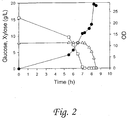
- a defined medium containing both 8 g/L xylose and 15 g/L glucose was inoculated with a single wild-type strain, MG1655, and grown aerobically ( Fig. 2 ).
- the glucose/xylose mixture was chosen to reflect the concentrations of glucose and xylose that are found in typical lignocellulosic hydrolysates.
- diauxic growth as reported by many other studies when a single strain is inoculated into a medium containing two or more carbon sources. The important observations were that glucose and xylose were consumed sequentially, and that the complete consumption of this mixture required about 8.5 hours.
- the growth rate is controlled by the rate that the limiting substrate is supplied. Moreover, the concentration of that substrate remains at zero.
- each organism should independently be controlled by and adapt to the quantity of the carbon source present that it can consume. We wished to test this hypothesis using a fed-batch process in which the two-carbohydrate feed increased exponentially at a nominal rate of 0.1 h -1 , far below the maximum growth rate of either strain.
- the composition of the feed changed in discrete shifts in order to simulate a variable concentration that might be encountered in a real process.
- this feed was replaced by feed concentrations of 30:30, at 30 h to 30:60, and then finally to 20:60 at 40 h.
- 30 h, 40 h and 50 h we determined the fraction of the population which was the glucose-consuming strain ALS1008 (and thus by difference the fraction which was the xylose-consuming strain ZSC113).
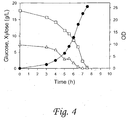
- the xylose and glucose concentrations in the fermenter remained at zero ( Fig. 5 ), demonstrating that each substrate individually limited the process.
- the distribution of the microbial population responded in unison with the shift in substrate concentrations.
- the population was 35% ZSC113 (i.e., the xylose-consuming strain).
- the population was 50% ZSC113.
- Wild-type E. coli is a mixed acid fermenter, and generates acetate, lactate, formate, ethanol and succinate under anaerobic conditions, with the yield of each depending on the strain and carbon source ( Clark, 1989, FEMS Microbiol. Rev. 63:223 ).
- the strains used for this study of substrate-selective uptake did not generate an elevated concentration of any product during the aerobic studies (beyond the expectation for wild-type strains).
- ZSC113 and ALS1008 do not have any additional mutations which would cause the product distribution to be different from the wild-type parent MG1655. We thus wanted to examine how ZSC113 and ALS1008 behaved under anaerobic conditions in which products would accumulate. Three experiments were conducted under anaerobic conditions, analogous to those conducted under aerobic conditions previously.
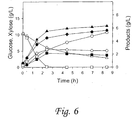
- wild-type MG1655 was grown under aerobic conditions as before to consume 15 g/L glucose and 8 g/L xylose. When both substrates were nearly consumed (after about 8.5 h as shown in Fig. 2 ), we added enough glucose and xylose into the fermenter approximately to return both concentrations to their initial levels. Anaerobic conditions were initiated under an atmosphere of 100% CO 2 , and the products were measured during the anaerobic growth phase ( Fig. 6 ). In this culture of a single strain (having an OD of 21) 10 g/L of glucose was consumed in about 2.5 h (4 g/Lh), equivalent to a specific glucose consumption rate of 630 mg/gh.
- xylose was consumed at a rate of 310 mg/gh (2 g/Lh). However, after 4 h of anaerobic conditions, the xylose consumption rate decreased to less than 150 mg/gh (1 g/Lh), and continued to slow. Nearly 4 g xylose/L remained after 9 h of anaerobic conditions. It must be noted that the organism consumed glucose then xylose in the aerobic phase preceding these anaerobic conditions (as shown in Fig. 2 ), and therefore at the time of the switch to anaerobic conditions the xylose-consuming pathways were fully induced.
- the two substrate-selective strains ALS1008 and ZSC113 were grown individually on the mixed substrate medium, the one depleted substrate added back, and then anaerobic conditions commenced.
- xylose-consuming strain ZSC113 xylose was consumed at a constant rate of 1.4 g/Lh during the anaerobic phase and glucose was not consumed ( Fig. 7a ).
- This single organism was present only at an OD of 9.5, so that on a specific basis the xylose consumption rate was 500 mg/gh, greater than the highest rate observed in the xylose portion of the fermentation using the wild-type MG1655.
- the products formed from the two-sugar fermentation were the same as those generated during either one of the single-sugar fermentations, although the distribution of products changed slightly.
- the succinate yield from xylose using ZSC113 was 0.48 mol/mol
- the succinate yield from glucose using ALS1008 was 0.30 mol/mol.
- the observed succinate yield by two organisms was 0.41 mol/mol sugar consumed, a value between the yields of the individual strains on the two substrates.
- formate was generated with the highest yield (1.24 mol/mol glucose, 1.58 mol/mol xylose, and 1.46 mol/mol sugar mixture), and lactate was generated the least.
- E. coli readily consumes acetic acid as a sole carbon/energy source ( El-Mansi et al., 2006, Curr. Opin. Microbiol. 9:173 ), but it generally will not consume acetate in the presence of other substrates from which the cells can derive more energy. Of course, the presence of acetate diminishes the rates at which other substrates are consumed. However, E. coli can be forced to grow on acetate and prevented from consuming glucose or xylose (for example) by knocking out the genes which encode for glucose and xylose consumption. We refer to such a strain as "acetate-selective" because of the three substrates, acetate is its exclusive carbon nutrient. When exposed to a hydrolysate containing acetate, xylose and glucose, only the acetate will be consumed. This approach is merely an extension of the substrate-selective concept introduced above for xylose and glucose mixtures.
- ALS1060 has four knockouts of genes coding for proteins involved in xylose and glucose utilization (these genes were described above): ptsG, manZ, glk, and xylA. These four mutations should prevent the consumption of either xylose or glucose by ALS1060, but have no known affect on acetate metabolism.
- ALS1060 was grew in a batch process using a medium containing an extremely high proportion of acetate: 10 g/L acetate, 10 g/L xylose and 20 g/L glucose.
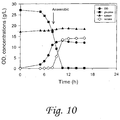
- ALS1060 consumed 10 g/L acetate at a growth rate of 0.16 h -1 , but left xylose and glucose unconsumed even after 40 hours ( Fig. 9 ).
- the significant lag phase observed in this experiment can be attributed to using the poor MG1655 strain and the sudden exposure to 10 g/L acetate.
- Acetate consumption depends on the cellular balance between the glyoxylate shunt and isocitrate dehydrogenase ( Holms, 1986, Curr Top Cell Regul 28:69 ), and different E. coli strains would be expected to behave quite differently.
- Our selection of MG1655 was merely to provide evidence that the concept would work; this strain turned out not to be a good acetate-grower.
- the envisioned continuous/fed-batch process has for the elimination of acetic acid and the simultaneous conversion of sugar mixtures, as exemplified by xylose and glucose.
- acetic acid and the simultaneous conversion of sugar mixtures, as exemplified by xylose and glucose.
- the acetate-selective strain cannot grow in the absence of acetic acid, these cells will ultimately lyse in the second stage.
- the cellular nutrients derived from acetate utilization are available to support growth of cells present in Stage 2. So, the inhibitor actually enhances product formation by enriching the hydrolysate with growth nutrients. It does not matter if the cells consume additional nutrients such as nitrogen, phosphorus, sulfur. These nutrients are conserved and become readily available to the organisms in the second stage.
- the goal of the first stage is only to consume acetate (quickly) and not consume any sugars.
- metabolic engineering strategies can focus on improving the individual production strains independently. For example, additional work can be devoted to improving the glucose-selective strain for ethanol production without concern for the impact of these changes on the conversion of xylose or on acetate tolerance/degradation. We do not need to compromise one objective for another.
- the system adapts to fluctuations in the feed stream; that is, cultures actually grow in concert with the feed composition. For example, the system would respond to an increase in acetate concentration merely by increasing the cell density in Stage 1. Regardless of the perturbation of acetate in the feed (within a large range, as long as the cells remain carbon limited), this inhibitor will be completely removed in Stage 1. Similarly, as we have already observed, the system responds to an increase in the feed xylose concentration by increasing the cell density of the xylose-selective strain in Stage 2 (with no change in the cell density of any other strain). Using a fed-batch process would prevent sugar accumulation, and each strain would convert its target sugar at high yield and productivity. Operational robustness is the hallmark of this process strategy, and it constitutes a major advance toward the utilization of lignocellulosic biomass.
- Example I we demonstrated that the concept of substrate-selective uptake works.
- E. coli we demonstrated that a xylose-selective strain will consume only xylose and a glucose-selective strain consumes only glucose in a mixture of these two sugars and without impacting each other.
- Example II we demonstrated that acetate can be selectively removed from a mixture of acetate, glucose and xylose.
- strains used in these studies were not isogenic, not derived from optimally-growing strains and did not generate any product such as ethanol.
- glucose must first be phosphorylated before it can be further metabolized by E. coli.
- the principal route to phosphorylate glucose is by the phosphotransferase system (PTS). Because the PTS phosphorylates several sugars, some of the enzymes involved have broad specificities and can phosphorylate more than one sugar ( Postma et al., 1993, Microbiol Rev. 57:543 ).
- PTS phosphotransferase system
- Glucose can be phosphorylated by two different enzymes of the PTS, glucosephosphotransferase and mannosephosphotransferase encoded respectively by the ptsG and manZ genes (originally designated as gpt and mpt ).
- glucose can be phosphorylated by the enzyme glucokinase which is encoded by the glk gene ( Curtis and Epstein, 1975, J. Bacteriol. 122(3):1189 ).
- Strains that are unable to use glucose as a carbon source can be constructed by knocking out the genes encoding for glucosephosphotransferase ( ptsG ), mannosephosphotransferase ( manZ ) and glucokinase ( glk ).
- Xylose is transported into E. coli by the xylose transport system and once internalized must be isomerized to xylulose by xylose isomerase and phosphorylated to xylulose-phosphate by xylose kinase before it can be metabolized ( David and Weismeyer, 1970, Biochim. Biophys. Acta. 201:497 ).
- Strains that are unable to utilize xylose as a carbon source can be constructed by knocking out the gene encoding for xylose isomerase ( xylA ).
- Arabinose is another sugar found in biomass hydrolysates, accounting for about 5% of the total sugar.
- the consumption of arabinose into E. coli is essentially analogous to the xylose uptake process. Arabinose consumption can be eliminated by knocking out the araA gene.
- the hexose galactose is a component in lignocellulosic hydrolysate, but is commonly found at concentrations of 1% or less ( Lee, 1997, Appl. Microbiol. Biotechnol. 65:56 ).
- Galactose uptake is mediated by galactokinase encoded by the galK gene, and galactose uptake is eliminated in a galK mutant. Because the composition of galactose in hydrolysate is so low, eliminating galactose uptake may be unnecessary.
- Mannose is phosphorylated exclusively by the mannose-specific components of the PTS (e.g., mannosephosphotransferase) encoded by manX, manY and manZ. Preventing glucose uptake by the triple mutations as described above ( manZ ) also prevents mannose consumption. Similarly, knocking out xylA and araA (and galK ) has no impact on mannose consumption. Using the strategy outlined so far, we cannot construct a strain which consumes mannose but not glucose.
- strains In order to consume all the sugars present in lignocellulosic hydrolysates simultaneously, strains are constructed which are expected to consume each one of these sugars alone. Thus, the following strains will be constructed:
- the lambda Red recombination system ( Yu et al., 2000, Proc Natl Acad Sci U S A 97:5978 ; Datsenko and Wanner, 2000, Proc Natl Acad Sci U S A. 97:6640 ) may also be employed to construct the required gene knockouts.
- substrate-selective strains that we construct can be compared to similar publicly available strains (such as CGSC5457 from the E. coli Genetic Stock Center that contains mutations in the glk, ptsG, and manZ genes and thus also can not consume glucose).
- the 4 substrate-selective B strains (one for each of glucose, xylose, arabinose and galactose) are expected to be useful platforms for other researchers to develop processes for the formation of various products from the five sugars (including mannose).
- the sugar-selective KO11 strain of Example IV is expected to be ethanologenic, since KO11 is ethanologenic.
- ethanol pathways will be introduced into those strains.
- the four sugar-selective B strains will be transformed with pLOI308 ( Ingram et al., 1987, Appl. Environ. Microbiol. 53:2420 ; Ingram and Conway, 1988, Appl. Environ. Microbiol. 54:397 ), one of the better characterized plasmids that elevates ethanol formation in E. coli.
- This plasmid uses the Zymomonas mobilis pyruvate decarboxylase and alcohol dehydrogenase genes.
- pyruvate is converted by pyruvate decarboxylase to acetaldehyde, which is subsequently converted to ethanol by alcohol dehydrogenase.
- acetaldehyde is subsequently converted to ethanol by alcohol dehydrogenase.
- these enzymes comprise nearly 10% of the soluble protein of wild-type Z . mobilis cells grown with glucose as the substrate ( Doelle et al., 1993, Crit. Rev. Biotechnol. 13:57 ), enabling this organism to maintain a high conversion efficiency to ethanol.
- the result is expected to be two sets of ethanologenic, sugar-selective strains of E. coli (four each derived from B and KO11; 8 total).
- This example relates to the characterization of processes to metabolize sugar mixtures, ultimately in the presence of acetic acid (as described below in a subsequent section).
- Initial studies will be performed on synthetic mixtures of 2-5 sugars (selected from the list of mannose, galactose, glucose, xylose and arabinose), while subsequent studies will be conducted on real hydrolysates supplemented with additional nutrients as required (e.g., nitrogen and phosphate sources). These studies will use the 8 strains generated from Example V, with 4 strains present in a co-culture at the same time when all 5 sugars are present.
- the microbial growth rate is determined by the nutrient feed rate (dilution rate), but the biomass concentration is determined by the limiting nutrient concentration.
- These maximum growth rates will help establish the maximum feed-rate of an envisioned fed-batch process. Operating a biological process at the maximum growth rate does not in general result in the maximum practical product formation rate for a variety of reasons such as oxygen requirement (for an aerobic process), heat duty, reduced biomass yield, genetic regulation of cells, etc.
- oxygen requirement for an aerobic process
- heat duty reduced biomass yield
- genetic regulation of cells etc.
- the cells should respond to changes in the concentration of either substrate merely by increasing the biomass as we have observed in preliminary studies.
- a strain of E. coli is constructed which consumes acetate but not any of the five principal sugars in biomass hydrolysate as described in Example II. This process will require knockouts of all the sugar uptake systems.
- This approach works for xylose and glucose, the two principal sugars in most lignocellulosic hydrolysates.
- the strain(s) used to make these knockouts are those that exhibit high growth rate and high biomass yield on acetate. Tolerance of the organism to high acetate concentration is not important (within a range) because we envision the process operating in fed-batch or continuous mode under carbon (i.e., acetate) limitation. Under these circumstances the concentration of acetate in the fermenter will be maintained at zero and cell "tolerance" to the acetate will not be relevant. However, the rate at which acetate is consumed will directly affect the productivity of the entire process. Therefore, the cells should ideally be able to grow at a high growth rate which will enable the process to run at a high (dilution) rate without any negative consequences.
- E. coli strains on acetate have not been a comprehensive comparison of the growth rate of E. coli strains on acetate as the sole carbon source.
- B strains are preferred because these strains appear to have an elevated expression of enzymes in the glyoxylate shunt ( van de Walle and Shiloach, 1998, Biotechnol. Bioeng.
- E. coli Once suitable strains of E. coli are identified, they must be made acetate-selective, i.e., they will need deletions in genes involved in the uptake of glucose, mannose, galactose, xylose and arabinose. In the two strains selected for their "best" acetate metabolism, the six genes manZ, ptsG, glk, xylA, galK, araA will be knocked out as described in Example IV.
- the initial studies will use simulated hydrolysates.
- the first stage in the process involves the removal of acetic acid by feeding an acetate-containing hydrolysate into the reactor so that the organisms grow continuously and the acetate-free stream with cells exits the vessel continuously.
- the acetate concentration in the hydrolysate that are acceptable, and the rates for which the process can be conducted.
- We will determine the long-term stability of the process. The acetate consumption rate determined from such data will be helpful in sizing a pilot/commercial process.
- Stage 2 will be fed the stream exiting Stage 1. It is advantageous to maintain Stage 1 as a continuous (or fed-batch) process to maintain a zero acetate concentration as a result of substrate limitation.
- the matching of this continuous process with Stage 2 will be a significant aspect of this part of the research project.
- Three different bioprocess modes will be examined for Stage 2, including: 1) batch, 2) linear fed-batch, and 3) exponential fed-batch.
- a batch process will be conducted by fermenting a discrete portion of the (continuous) effluent from Stage 1. Such a process will require storing some of the Stage 1 effluent in a tank.
- a linear fed-batch will be conducted by synchronizing the Stage 1 effluent rate with the feeding rate to Stage 2.
- An exponential fed-batch accomplished via a programmable pump, will involve holding a portion of the Stage 1 effluent initially and gradually increasing the rate of feeding to match a desired cell growth rate.
- We routinely perform exponential fed-batch processes e.g., Smith et al., 2006, Appl. Microbiol. Biotechnol. 28:1695 ) as they are advantageous to control growth and product formation rates carefully.
- the focus of this portion of the research will be to study the kinetics of sugar consumption subsequent to acetate removal. Process stability, mode of operation, robustness to varying feed compositions and sensitivity to inoculation approaches will all be addressed in this portion of the project.
- So-called facultative homofermentative strains of Lactic Acid Bacteria are of great interest because they are able to consume either xylose or glucose (and other sugars), and many also have a high tolerance to low pH and temperatures exceeding 50°C. These qualities make these microorganisms particularly relevant for the production of lactic acid (currently manufactured commercially) and other products including ethanol.
- the substrate-selective approach described herein can be advantageously utilized in this organism. Strains of Lactobacillus and Lactococcus which are able to consume selectively xylose and glucose will be constructed. Other researchers have explored ethanol production in Lactobacillus ( Nichols et al., 2003, J Indust. Microbiol. Biotechnol. 30:315 ).
- Lactic Acid Bacteria isogenic xylose-selective and glucose-selective strains of Lactic Acid Bacteria.
- a Lactic Acid Bacteria strain that can consume both xylose and glucose is chosen as the starting strain for developing the isogenic xylose-selective and glucose-selective strains.
- Lactic Acid Bacteria possess glucose-specific uptake pathways in addition to the general PTS which facilitates the import of a variety of sugars.
- the cytoplasmic phosphocarrier enzymes of the PTS have been identified in several Lactic Acid Bacteria species and are encoded by the ptsH and ptsI genes which reside in an operon, and as in E.
- Lactic Acid Bacteria ptsHI deletion mutants are still able to metabolize glucose ( Stentz et al., 1997, Appl. Environ. Microbiol. 63:2111 ; Luesink et al., 1999, J. Bacteriol. 181:764 ; Viana e al., 2000, Mol. Microbiol. 36:570 ).
- the glucokinase homologue has not been identified in a Lactic Acid Bacteria species in which the ptsHI operon has also been characterized, we will start with a Lactic Acid Bacteria species in which ptsHI has been deleted in order to construct a xylose-selective Lactic Acid Bacteria strain.
- Lactobacillus casei, Lactobacillus sake, and Lactococcus lactis are species of Lactic Acid Bacteria in which the ptsHI genes have been characterized and which also can utilize xylose as a sugar source ( Zhang et al., 1995, Appl. Biochem. Biotechnol. 51/52:527 ; Erlandson et al., 2000, Appl Environ Microbiol. 66:3974 ). Similar to the E. coli studies in which we select a strain for acetate consumption (Example VII), we will first compare these three candidate Lactic Acid Bacteria to determine their growth rates in minimal xylose media to choose a preferred strain for these studies.
- ptsHI derivatives of each of these three strains are available ( Stentz et al., 1997, Appl. Environ. Microbiol. 63:2111 ; Luesink et al., 1999, J. Bacteriol. 181:764 ; Viana e al., 2000, Mol. Microbiol. 36:570 ), and a ptsHI deletion derivative of the selected strain will be mutagenized in order to generate a Lactic Acid Bacteria that is incapable of growing on minimal glucose media.
- nitrosoguanidine and ethyl methanesulfonate will be employed as mutagens and if necessary antibiotic enrichment procedures and MacConkey Glucose selective plates will be used to identify a Lactic Acid Bacteria ptsHI mutant that is xylose-selective and incapable of metabolizing glucose.
- Lactic Acid Bacteria strains which contain mutations in either the genes that encode for the xylose transporter or isomerase or xylulokinase enzymes cannot utilize xylose as a sole carbon source ( Lokman et al., 1991, Mol Gen Genet. 230:161 ; Chaillou et al., 1998, Appl. Environ. Microbiol. 64:4720 ; Erlandson et al., 2000, Appl Environ Microbiol. 66:3974 ).
- Chemical mutagenesis will be employed to generate a Lactic Acid Bacteria xyl mutant using the same "optimal" strain as described above. The result will be two isogenic strains of a species of Lactic Acid Bacteria, one which is xylose-selective and a second which is glucose-selective.
- Lactic Acid Bacteria Analogous to the more comprehensive research completed for E. coli in the above Examples, as part of this experiment with Lactic Acid Bacteria, we will complete fermentations of a medium composed of xylose and glucose using the substrate-selective strains.
- a unique aspect of many Lactic Acid Bacteria is their tendency to switch between heterofermentative and homofermentative conditions as a function of growth rate and redox conditions ( Garrigues et al., 1997, J. Bacteriol. 179:5282 ).
- Saccharomyces cerevisiae This yeast ferments ethanol very efficiently and can tolerate the highest ethanol concentrations of any known microorganism.
- S. cerevisiae to produce fuel ethanol from lignocellulosic hydrolysates is problematic, because it cannot utilize the pentose sugars xylose and arabinose which are two of the most abundant sugars that are found in lignocellulosic hydrolysates.
- researchers have attempted to solve this problem by constructing new S. cerevisiae derivatives that contain the genes required for xylose utilization. These new yeast derivatives can utilize xylose, however, when these yeasts are fed a mixed carbon source that contain glucose and xylose, the glucose must be consumed first, before any xylose can be utilized.
- S. cerevisiae strains that cannot utilize galactose can be constructed by deleting the GAL2, GAL1, GAL7, or GAL10 genes. These strains will be able to utilize glucose as a carbon source.
- S. cerevisiae strains that cannot utilize glucose can be constructed by deleting the GLK1, HXK1, and HXK2 genes or the HXT1, HXT2, HXT3, HXT4, HXT6, HXT7, and SNF3 genes. These strains will be able to utilize galactose as a carbon source.
- S. cerevisiae strains that cannot utilize galactose can be constructed by deleting the GAL2, GAL1, GAL7, or GAL10 genes. These strains will be able to utilize glucose as a carbon source.
- S. cerevisiae strains that cannot utilize glucose can be constructed by deleting the GLK1, HXK1, and HXK2 genes or the HXT1, HXT2, HXT3, HXT
- cerevisiae strains that can utilize xylose or arabinose can be constructed by importing these pathways from other yeasts such as Pichia stipitis or Ambrosiozyma monospora which are able to utilize these sugars. By knocking out the genes that are required for glucose and galactose utilization in S. cerevisiae strains that have been genetically modified to consume xylose and/or arabinose, new strains can be created which are only able to utilize xylose and/or arabinose. Concurrent use of a combination of these strains would be able to produce ethanol very efficiently.
- Escherichia coli strains ALS1073 ( xylA pflB ::Cam) and ALS1074 ( ptsG manZ glk pfIB ::Cam) were derived from MG1655 (wild-type, F-, ⁇ -). In a batch culture, ALS1073 will not consume xylose, while ALS1074 will not consume glucose.
- the pflB mutation prevents growth under anaerobic conditions, but causes the accumulation of significant lactate ( de Graef et al., 1999, J Bacteriol 181:2351 ).
- a single strain was first grown in a tube containing 10 mL B2X3G medium, then 5 mL transferred to 50 mL B2X3G medium in a 250 mL shake flask. All flasks were incubated at 37°C and 250 rpm (19 mm pitch). For those fermentations in which a single strain was used, when the OD of the shake flask culture reached approximately 4, the contents of the shake flask were diluted with B2X3G medium so that 100 mL having an effective OD of 2.0 was used to inoculate the fermenter.
- Basal medium contained (per L): 13.3 g KH 2 PO 4 , 4.0 g (NH 4 ) 2 HPO 4 , 1.2 g MgSO 4 ⁇ 7H 2 O, 13.0 mg Zn(CH 3 COO) 2 ⁇ 2H 2 O, 1.5 mg CuCl 2 ⁇ 2H 2 O, 15.0 mg MnCl 2 ⁇ 4H 2 O, 2.5 mg CoCl 2 ⁇ 6H 2 O, 3.0 mg H 3 BO 3 , 2.5 mg Na 2 MoO 4 ⁇ 2H 2 O, 100 mg Fe(III)citrate, 8.4 mg Na 2 EDTA ⁇ 2H 2 O, 1.7 g citric acid, and 0.0045 g thiamine ⁇ HCl.
- B2X3G medium comprised basal medium with 20 g/L xylose and 30 g/L glucose. The shake flask medium was adjusted to a pH of 7.0 with 20% NaOH.
- optical density at 600 nm (OD) (UV-650 spectrophotometer, Beckman Instruments, San Jose, Calif.) was used to monitor cell growth, and this value was correlated to dry cell mass.
- OD optical density at 600 nm
- Previously described liquid chromatography methods were used to quantify xylose and glucose ( Eiteman and Chastain, 1997, Anal Chem Acta 338:69 ) and other organic compounds ( Chesson et al., 1993, J Sci Food Agric 34:1330 ).
- Escherichia coli ALS1074 and ALS1073 are unable to consume glucose and xylose, respectively.
- the xylose-selective strain ALS1074 has mutations in the three genes involved in glucose uptake ( Curtis and Epstein, 1975, J Bacteriol 122:1189 ), rendering it unable to consume glucose: ptsG codes for the Enzyme IICB Glc of the phosphotransferase system (PTS) for carbohydrate transport ( Postma et al., 1993, Microbiol Rev 57:543 ), manZ codes for the IID Man domain of the mannose PTS permease ( Huber and Erni, 1996, Eur J Biochem 239:810 ), glk codes for glucokinase ( Curtis and Epstein, 1975, J Bacteriol 122:1189 ).
- ALS1073 has a knockout in the xylA gene encoding for xylose isomerase, rendering ALS1073 unable to consume xylose. In a medium composed of a mixture of these two sugars, ALS1074 would be expected to consume the xylose selectively while ALS1073 should exclusively consume the glucose.
- Each strain also has a mutation in pflB encoding for pyruvate formate lyase. This mutation under anaerobic conditions creates a severe metabolic bottleneck at pyruvate, curtailing growth in the absence of acetate and diverting most carbon to lactate ( de Graef et al., 1999, J Bacteriol 181:2351 ).
- ALS1074 consumed 4 g/L xylose during the 8 h aerobic growth phase to an OD of 4.5 ( Fig. 11 ). During the anaerobic phase, the remaining 13.3 g/L xylose was converted to 13 g/L lactate at a yield near 1.0 g/g. The conversion of xylose to lactate was completed after 14 h. The rate of xylose consumption by ALS1074 appears slower than observed for the rate of glucose consumption by ALS1073 (shown in Fig. 10 ). However, this observation must be considered in light of the significant difference in cell biomass concentration between the two experiments-the cell concentration for the xylose-only consumption using ALS1074 was 40% of the concentration for glucose-only consumption using ALS1073.
- the specific rate of xylose consumption was 0.92 g/g ⁇ h at the onset of the anaerobic phase, whereas the rate of xylose consumption was 0.49 g/g ⁇ h during the latter portion of the anaerobic phase.
- both ALS1073 and ALS1074 were inoculated into a single bioreactor containing the xylose-glucose defined medium.
- the culture had consumed about 4 g/L xylose and 10 g/L glucose to achieve an OD of 16 ( Fig. 12 ).
- the remaining glucose was consumed in less than 3 h, and the xylose was consumed in about 12 h.
- the process described in this study demonstrates the simultaneous conversion of sugar mixtures into one particular product: lactate.
- two strains were used which are each selective in their consumption of the two carbon sources present, xylose and glucose. Excluding substrate consumption in a strain by gene deletions represents a new approach for the conversion of multiple substrates into a desired product. If additional carbon sources were present, then additional mutations and strains would be necessary to ensure each strain exclusively converted one substrate into the desired product.
Landscapes
- Chemical & Material Sciences (AREA)
- Organic Chemistry (AREA)
- Life Sciences & Earth Sciences (AREA)
- Engineering & Computer Science (AREA)
- Wood Science & Technology (AREA)
- Zoology (AREA)
- Health & Medical Sciences (AREA)
- Biotechnology (AREA)
- Genetics & Genomics (AREA)
- Bioinformatics & Cheminformatics (AREA)
- General Health & Medical Sciences (AREA)
- Microbiology (AREA)
- Biochemistry (AREA)
- General Engineering & Computer Science (AREA)
- Chemical Kinetics & Catalysis (AREA)
- General Chemical & Material Sciences (AREA)
- Medicinal Chemistry (AREA)
- Tropical Medicine & Parasitology (AREA)
- Virology (AREA)
- Biomedical Technology (AREA)
- Cell Biology (AREA)
- Preparation Of Compounds By Using Micro-Organisms (AREA)
- Micro-Organisms Or Cultivation Processes Thereof (AREA)
Claims (19)
- Verfahren zur Produktion einer biochemischen Substanz, umfassend: gleichzeitiges Zusammenbringen eines Lignocellulose-Hydrolysates mit (a) einer Anzahl gentechnisch veränderter zuckerselektiver Escherichia coli-Zellen; oder (b) einer Anzahl gentechnisch veränderter zuckerselektiver Saccharomyces cerevisiae-Zellen; wobei die Anzahl zuckerselektiver Zellen erste und zweite zuckerselektive Zellen umfasst, wobei die erste zuckerselektive Zelle einen ersten Zucker metabolisiert, der nicht durch die zweite zuckerselektive Zelle metabolisiert werden kann, und die zweite zuckerselektive Zelle einen zweiten Zucker metabolisiert, der nicht durch die erste zuckerselektive Zelle metabolisiert werden kann, unter Bedingungen, die es ermöglichen, dass die Anzahl gentechnisch veränderter zuckerselektiver Zellen die biochemische Substanz produziert; wobei die ersten und zweiten Zucker unabhängig aus der Gruppe, bestehend aus Glucose, Xylose, Arabinose oder Galactose, ausgewählt sind.
- Verfahren nach Anspruch 1, zudem umfassend das Reinigen der biochemischen Substanz.
- Verfahren nach einem der vorhergehenden Ansprüche, wobei die biochemische Substanz ausgewählt ist aus der Gruppe, bestehend aus Ethanol, Butanol, Succinat, Lactat, Fumarat, Pyruvat, Buttersäure und Aceton.
- Verfahren nach einem der vorhergehenden Ansprüche, wobei die biochemische Substanz Ethanol ist, und wobei mindestens eine der Anzahl zuckerselektiver Zellen in Bezug auf gesteigerte Ethanolproduktion gentechnisch verändert wurde.
- Zusammensetzung, umfassend: (a) eine Anzahl gentechnisch veränderter zuckerselektiver E. coli-Zellen; oder (b) eine Anzahl gentechnisch veränderter zuckerselektiver S. cerevisiae-Zellen, wobei die Anzahl gentechnisch veränderter zuckerselektiver Zellen erste und zweite zuckerselektive Zellen umfasst, wobei die erste zuckerselektive Zelle einen ersten Zucker metabolisiert, der nicht durch die zweite zuckerselektive Zelle metabolisiert werden kann, und die zweite zuckerselektive Zelle einen zweiten Zucker metabolisiert, der nicht durch die erste zuckerselektive Zelle metabolisiert werden kann, wobei die ersten und zweiten Zucker unabhängig aus der Gruppe, bestehend aus Glucose, Xylose, Arabinose und Galactose, ausgewählt sind.
- Zusammensetzung nach Anspruch 5, zudem umfassend ein Lignocellulose-Hydrolysat.
- Zusammensetzung nach Anspruch 5 oder 6, zudem umfassend mindestens eine inhibitorselektive E. coli-Zelle, wobei die inhibitorselektive Zelle eine acetatselektive Zelle ist.
- Verfahren oder Zusammensetzung nach einem der vorhergehenden Ansprüche, wobei die Anzahl zuckerselektiver Zellen mindestens eine hexoseselektive Zelle und mindestens eine pentoseselektive Zelle umfasst.
- Verfahren oder Zusammensetzung nach einem der vorhergehenden Ansprüche, wobei mindestens eine der Anzahl zuckerselektiver Zellen mindestens zwei Zucker, unabhängig voneinander ausgewählt aus der Gruppe, bestehend aus Glucose, Xylose, Arabinose und Galactose, nicht metabolisieren kann.
- Verfahren oder Zusammensetzung nach einem der vorhergehenden Ansprüche, wobei mindestens eine der Anzahl zuckerselektiver Zellen nur einen Zucker, ausgewählt aus der Gruppe, bestehend aus Glucose, Xylose, Arabinose und Galactose, metabolisieren kann.
- Verfahren oder Zusammensetzung nach einem der vorhergehenden Ansprüche, wobei die Anzahl zuckerselektiver Zellen umfasst:eine erste Zelle, die eine Modifikation oder Deletion von mindestens einem Gen umfasst, das am Glucosemetabolismus beteiligt ist, so dass es verhindert wird, dass die erste Zelle Glucose verbraucht; undeine zweite Zelle, die eine Modifikation oder Deletion von mindestens einem Gen umfasst, das am Xylosemetabolismus beteiligt ist, so dass es verhindert wird, dass die zweite Zelle Xylose verbraucht.
- Verfahren oder Zusammensetzung nach einem der vorhergehenden Ansprüche, wobei mindestens eine der Anzahl zuckerselektiver Zellen in Bezug auf gesteigerte Ethanolproduktion gentechnisch verändert wurde.
- Verfahren nach einem der Ansprüche 1 bis 4 und 8 bis 12, zudem umfassend das Zusammenbringen des Lignocellulose-Hydrolysates mit mindestens einer inhibitorselektiven E. coli-Zelle unter Bedingungen, die es ermöglichen, dass die inhibitorselektive Zelle den Inhibitor metabolisiert, wobei die inhibitorselektive Zelle eine acetatselektive Zelle ist.
- Verfahren nach Anspruch 13, wobei das Zusammenbringen des Lignocellulose-Hydrolysates mit mindestens einer inhibitorselektiven Zelle vor oder zeitgleich mit dem Zusammenbringen des Lignocellulose-Hydrolysates mit der Anzahl zuckerselektiver Zellen erfolgt.
- Verfahren nach Anspruch 14, umfassend:eine erste Stufe, umfassend das Zusammenbringen des Lignocellulose-Hydrolysates mit mindestens einer inhibitorselektiven Zelle unter Bedingungen, die es ermöglichen, dass die inhibitorselektive Zelle den Inhibitor metabolisiert, so dass ein entgiftetes Hydrolysat erhalten wird; undeine zweite Stufe, umfassend das Zusammenbringen des entgifteten Hydrolysates mit der Anzahl zuckerselektiver Zellen zur Produktion der biochemischen Substanz;wobei die inhibitorselektive Zelle eine acetatselektive Zelle ist.
- Verfahren oder Zusammensetzung nach einem der Ansprüche 7 oder 13 bis 15, wobei die inhibitorselektive Zelle eine Modifikation oder Deletion von mindestens einem Gen umfasst, das am Glucosemetabolismus beteiligt ist, so dass es verhindert wird, dass die Zelle Glucose verbraucht, und eine Modifikation oder Deletion von mindestens einem Gen, das am Xylosemetabolismus beteiligt ist, so dass es verhindert wird, dass die Zelle Xylose verbraucht.
- Verfahren oder Zusammensetzung nach einem der Ansprüche 7 oder 13 bis 16, wobei die inhibitorselektive Zelle gentechnisch verändert wurde, so dass sie keinerlei Zucker, ausgewählt aus der Gruppe, bestehend aus Glucose, Xylose, Arabinose und Galactose, metabolisieren kann.
- Zusammensetzung, umfassend (a) eine Anzahl gentechnisch veränderter zuckerselektiver E. coli-Zellen; oder (b) eine Anzahl gentechnisch veränderter zuckerselektiver S. cerevisiae-Zellen; wobei jeder Zellstamm in der Anzahl gentechnisch veränderter zuckerselektiver Zellen unabhängig nur einen Zucker nutzt, der in einem Lignocellulose-Hydrolysat vorhanden ist.
- Gentechnisch veränderte E. coli-Zelle, wobei mindestens ein Gen, das am Glucose-Metabolismus beteiligt ist, so modifiziert oder deletiert wurde, dass es verhindert wird, dass die Zelle Glucose verbraucht, und mindestens ein Gen, das am XyloseMetabolismus beteiligt ist, so modifiziert oder deletiert wurde, dass es verhindert wird, dass die Zelle Xylose verbraucht.
Applications Claiming Priority (3)
| Application Number | Priority Date | Filing Date | Title |
|---|---|---|---|
| US92247307P | 2007-04-09 | 2007-04-09 | |
| US435607P | 2007-11-27 | 2007-11-27 | |
| PCT/US2008/004577 WO2008124162A2 (en) | 2007-04-09 | 2008-04-09 | Substrate-selective co-fermentation process |
Publications (2)
| Publication Number | Publication Date |
|---|---|
| EP2145008A2 EP2145008A2 (de) | 2010-01-20 |
| EP2145008B1 true EP2145008B1 (de) | 2016-03-16 |
Family
ID=39650612
Family Applications (1)
| Application Number | Title | Priority Date | Filing Date |
|---|---|---|---|
| EP08742679.7A Not-in-force EP2145008B1 (de) | 2007-04-09 | 2008-04-09 | Substratselektives cofermentationsverfahren |
Country Status (6)
| Country | Link |
|---|---|
| EP (1) | EP2145008B1 (de) |
| AU (1) | AU2008236563B2 (de) |
| CA (1) | CA2682026C (de) |
| DK (1) | DK2145008T3 (de) |
| NZ (2) | NZ580197A (de) |
| WO (1) | WO2008124162A2 (de) |
Families Citing this family (8)
| Publication number | Priority date | Publication date | Assignee | Title |
|---|---|---|---|---|
| US9212346B2 (en) | 2007-04-09 | 2015-12-15 | University Of Georgia Research Foundation, Inc. | Substrate-selective co-fermentation process |
| US8551758B2 (en) * | 2007-04-09 | 2013-10-08 | University Of Georgia Research Foundation, Inc. | Substrate-selective co-fermentation process |
| WO2010147642A1 (en) | 2009-06-15 | 2010-12-23 | Massachusetts Institute Of Technology | Production of triacylglycerides, fatty acids, and their derivatives |
| TWI414606B (zh) * | 2009-10-30 | 2013-11-11 | Atomic Energy Council | 提升木質纖維素轉化酒精濃度之方法 |
| WO2011079388A1 (en) | 2009-12-30 | 2011-07-07 | Iogen Energy Corporation | Modified yeast strains exhibiting enhanced fermentation of lignocellulosic hydrolysates |
| CN103154234B (zh) * | 2010-10-13 | 2016-08-17 | 帝斯曼知识产权资产管理有限公司 | 发酵戊糖和葡萄糖的酵母细胞 |
| NZ743055A (en) * | 2013-03-08 | 2020-03-27 | Xyleco Inc | Equipment protecting enclosures |
| EP3645702A4 (de) * | 2017-06-30 | 2021-11-03 | Zimitech, Inc. | Gentechnisch hergestellte mikroorganismen zur verbesserten verwendung von oligosacchariden |
Family Cites Families (4)
| Publication number | Priority date | Publication date | Assignee | Title |
|---|---|---|---|---|
| US4400470A (en) * | 1981-01-14 | 1983-08-23 | Wisconsin Alumni Research Foundation | Use of co-cultures in the production of ethanol by the fermentation of biomass |
| FR2692908B1 (fr) * | 1992-06-24 | 1994-10-07 | Agronomique Inst Nat Rech | Procédé de cofermentation du glucose et du xylose en éthanol par culture mixte de microorganismes. |
| US20050108823A1 (en) * | 2003-11-24 | 2005-05-26 | Renata Chabot | Method for limiting the movement of an infant in a particular direction |
| AU2004295648B2 (en) * | 2003-12-01 | 2009-05-28 | Swetree Technologies Ab | Fermentation process, starter culture and growth medium |
-
2008
- 2008-04-09 NZ NZ580197A patent/NZ580197A/xx unknown
- 2008-04-09 WO PCT/US2008/004577 patent/WO2008124162A2/en not_active Ceased
- 2008-04-09 AU AU2008236563A patent/AU2008236563B2/en not_active Ceased
- 2008-04-09 EP EP08742679.7A patent/EP2145008B1/de not_active Not-in-force
- 2008-04-09 CA CA2682026A patent/CA2682026C/en active Active
- 2008-04-09 DK DK08742679.7T patent/DK2145008T3/en active
- 2008-04-09 NZ NZ598775A patent/NZ598775A/en unknown
Also Published As
| Publication number | Publication date |
|---|---|
| DK2145008T3 (en) | 2016-06-20 |
| NZ580197A (en) | 2013-03-28 |
| CA2682026C (en) | 2018-01-16 |
| EP2145008A2 (de) | 2010-01-20 |
| AU2008236563A1 (en) | 2008-10-16 |
| WO2008124162A3 (en) | 2009-04-23 |
| WO2008124162A2 (en) | 2008-10-16 |
| NZ598775A (en) | 2014-03-28 |
| CA2682026A1 (en) | 2008-10-16 |
| AU2008236563B2 (en) | 2014-06-19 |
Similar Documents
| Publication | Publication Date | Title |
|---|---|---|
| US8551758B2 (en) | Substrate-selective co-fermentation process | |
| US9212346B2 (en) | Substrate-selective co-fermentation process | |
| Eiteman et al. | A co-fermentation strategy to consume sugar mixtures effectively | |
| EP2145008B1 (de) | Substratselektives cofermentationsverfahren | |
| Gu et al. | Utilization of economical substrate-derived carbohydrates by solventogenic clostridia: pathway dissection, regulation and engineering | |
| US8623622B2 (en) | Genetically-engineered ethanol-producing bacteria and methods of using | |
| Suo et al. | Metabolic engineering of Clostridium tyrobutyricum for enhanced butyric acid production from undetoxified corncob acid hydrolysate | |
| US7226735B2 (en) | Xylose-fermenting recombinant yeast strains | |
| WO2011140386A2 (en) | Detoxification of biomass derived acetate via metabolic conversion to ethanol, acetone, isopropanol, or ethyl acetate | |
| WO2011022651A1 (en) | Production of propanols, alcohols, and polyols in consolidated bioprocessing organisms | |
| McMillan | Hemicellulose conversion to ethanol | |
| Nosrati‐Ghods et al. | Ethanol from biomass hydrolysates by efficient fermentation of glucose and xylose–a review | |
| Yan et al. | Increasing carbon source uptake rates to improve chemical productivity in metabolic engineering | |
| Teramoto et al. | Effects of potential inhibitors present in dilute acid-pretreated corn stover on fermentative hydrogen production by Escherichia coli | |
| Liu et al. | Metabolic engineering and adaptive evolution of Clostridium beijerinckii to increase solvent production from corn stover hydrolysate | |
| Jiang et al. | Glycerol production from undetoxified lignocellulose hydrolysate by a multiresistant engineered Candida glycerinogenes | |
| Ma et al. | Metabolically engineer Clostridium saccharoperbutylacetonicum for comprehensive conversion of acid whey into valuable biofuels and biochemicals | |
| Ge et al. | Construction and optimization of efficient glucose–xylose co-fermenting yeast Yarrowia lipolytica for green and sustainable succinic acid production from lignocellulosic biomass | |
| US8563283B2 (en) | Strains of Escherichia coli modified by metabolic engineering to produce chemical compounds from hydrolyzed lignocellulose, pentoses, hexoses and other carbon sources | |
| Shanmugam et al. | Principles and practice of designing microbial biocatalysts for fuel and chemical production | |
| Grassi et al. | New contributions for industrial n-butanol fermentation: An optimized Clostridium strain and the use of xylooligosaccharides as a fermentation additive | |
| Beltrán-Arredondo et al. | Valorisation of agroindustrial residues acid hydrolyzates as carbon sources for ethanol production by native yeast strains with different fermentative capabilities | |
| Lou et al. | Integration of metabolic and evolutionary processes to construct efficient xylose-utilizing strain of Zymomonas mobilis for lignocellulosic ethanol production | |
| Werlang et al. | d-lactate production from spirulina (Arthrospira platensis) biomass using lactogenic Escherichia coli | |
| Shanmugam et al. | Advanced fermentation technologies: Conversion of biomass to ethanol by organisms other than yeasts, a case for Escherichia coli |
Legal Events
| Date | Code | Title | Description |
|---|---|---|---|
| PUAI | Public reference made under article 153(3) epc to a published international application that has entered the european phase |
Free format text: ORIGINAL CODE: 0009012 |
|
| 17P | Request for examination filed |
Effective date: 20091104 |
|
| AK | Designated contracting states |
Kind code of ref document: A2 Designated state(s): AT BE BG CH CY CZ DE DK EE ES FI FR GB GR HR HU IE IS IT LI LT LU LV MC MT NL NO PL PT RO SE SI SK TR |
|
| AX | Request for extension of the european patent |
Extension state: AL BA MK RS |
|
| RIN1 | Information on inventor provided before grant (corrected) |
Inventor name: ALTMAN, ELLIOT Inventor name: EITEMAN, MARK, A. |
|
| 17Q | First examination report despatched |
Effective date: 20100211 |
|
| DAX | Request for extension of the european patent (deleted) | ||
| REG | Reference to a national code |
Ref country code: DE Ref legal event code: R079 Ref document number: 602008042820 Country of ref document: DE Free format text: PREVIOUS MAIN CLASS: C12P0007100000 Ipc: C12P0007060000 |
|
| GRAJ | Information related to disapproval of communication of intention to grant by the applicant or resumption of examination proceedings by the epo deleted |
Free format text: ORIGINAL CODE: EPIDOSDIGR1 |
|
| GRAP | Despatch of communication of intention to grant a patent |
Free format text: ORIGINAL CODE: EPIDOSNIGR1 |
|
| GRAP | Despatch of communication of intention to grant a patent |
Free format text: ORIGINAL CODE: EPIDOSNIGR1 |
|
| RIC1 | Information provided on ipc code assigned before grant |
Ipc: C12P 7/10 20060101ALI20150908BHEP Ipc: C12P 39/00 20060101ALI20150908BHEP Ipc: C12P 7/40 20060101ALI20150908BHEP Ipc: C12P 7/06 20060101AFI20150908BHEP Ipc: C12N 15/10 20060101ALI20150908BHEP Ipc: C12P 7/46 20060101ALI20150908BHEP Ipc: C12N 1/22 20060101ALI20150908BHEP Ipc: C12N 1/36 20060101ALI20150908BHEP Ipc: C12P 7/16 20060101ALI20150908BHEP Ipc: C12P 7/52 20060101ALI20150908BHEP Ipc: C12P 7/28 20060101ALI20150908BHEP Ipc: C12P 7/56 20060101ALI20150908BHEP Ipc: C12P 7/14 20060101ALI20150908BHEP |
|
| INTG | Intention to grant announced |
Effective date: 20151002 |
|
| GRAS | Grant fee paid |
Free format text: ORIGINAL CODE: EPIDOSNIGR3 |
|
| GRAA | (expected) grant |
Free format text: ORIGINAL CODE: 0009210 |
|
| AK | Designated contracting states |
Kind code of ref document: B1 Designated state(s): AT BE BG CH CY CZ DE DK EE ES FI FR GB GR HR HU IE IS IT LI LT LU LV MC MT NL NO PL PT RO SE SI SK TR |
|
| REG | Reference to a national code |
Ref country code: GB Ref legal event code: FG4D |
|
| REG | Reference to a national code |
Ref country code: CH Ref legal event code: EP |
|
| REG | Reference to a national code |
Ref country code: IE Ref legal event code: FG4D |
|
| REG | Reference to a national code |
Ref country code: AT Ref legal event code: REF Ref document number: 781292 Country of ref document: AT Kind code of ref document: T Effective date: 20160415 |
|
| REG | Reference to a national code |
Ref country code: FR Ref legal event code: PLFP Year of fee payment: 9 |
|
| REG | Reference to a national code |
Ref country code: DE Ref legal event code: R096 Ref document number: 602008042820 Country of ref document: DE |
|
| REG | Reference to a national code |
Ref country code: DK Ref legal event code: T3 Effective date: 20160617 |
|
| REG | Reference to a national code |
Ref country code: NL Ref legal event code: FP |
|
| REG | Reference to a national code |
Ref country code: LT Ref legal event code: MG4D |
|
| PG25 | Lapsed in a contracting state [announced via postgrant information from national office to epo] |
Ref country code: FI Free format text: LAPSE BECAUSE OF FAILURE TO SUBMIT A TRANSLATION OF THE DESCRIPTION OR TO PAY THE FEE WITHIN THE PRESCRIBED TIME-LIMIT Effective date: 20160316 Ref country code: NO Free format text: LAPSE BECAUSE OF FAILURE TO SUBMIT A TRANSLATION OF THE DESCRIPTION OR TO PAY THE FEE WITHIN THE PRESCRIBED TIME-LIMIT Effective date: 20160616 Ref country code: HR Free format text: LAPSE BECAUSE OF FAILURE TO SUBMIT A TRANSLATION OF THE DESCRIPTION OR TO PAY THE FEE WITHIN THE PRESCRIBED TIME-LIMIT Effective date: 20160316 Ref country code: GR Free format text: LAPSE BECAUSE OF FAILURE TO SUBMIT A TRANSLATION OF THE DESCRIPTION OR TO PAY THE FEE WITHIN THE PRESCRIBED TIME-LIMIT Effective date: 20160617 |
|
| REG | Reference to a national code |
Ref country code: AT Ref legal event code: MK05 Ref document number: 781292 Country of ref document: AT Kind code of ref document: T Effective date: 20160316 |
|
| PG25 | Lapsed in a contracting state [announced via postgrant information from national office to epo] |
Ref country code: LT Free format text: LAPSE BECAUSE OF FAILURE TO SUBMIT A TRANSLATION OF THE DESCRIPTION OR TO PAY THE FEE WITHIN THE PRESCRIBED TIME-LIMIT Effective date: 20160316 Ref country code: SE Free format text: LAPSE BECAUSE OF FAILURE TO SUBMIT A TRANSLATION OF THE DESCRIPTION OR TO PAY THE FEE WITHIN THE PRESCRIBED TIME-LIMIT Effective date: 20160316 Ref country code: BE Free format text: LAPSE BECAUSE OF NON-PAYMENT OF DUE FEES Effective date: 20160430 Ref country code: LV Free format text: LAPSE BECAUSE OF FAILURE TO SUBMIT A TRANSLATION OF THE DESCRIPTION OR TO PAY THE FEE WITHIN THE PRESCRIBED TIME-LIMIT Effective date: 20160316 |
|
| REG | Reference to a national code |
Ref country code: DE Ref legal event code: R083 Ref document number: 602008042820 Country of ref document: DE |
|
| PG25 | Lapsed in a contracting state [announced via postgrant information from national office to epo] |
Ref country code: PL Free format text: LAPSE BECAUSE OF FAILURE TO SUBMIT A TRANSLATION OF THE DESCRIPTION OR TO PAY THE FEE WITHIN THE PRESCRIBED TIME-LIMIT Effective date: 20160316 Ref country code: EE Free format text: LAPSE BECAUSE OF FAILURE TO SUBMIT A TRANSLATION OF THE DESCRIPTION OR TO PAY THE FEE WITHIN THE PRESCRIBED TIME-LIMIT Effective date: 20160316 Ref country code: IS Free format text: LAPSE BECAUSE OF FAILURE TO SUBMIT A TRANSLATION OF THE DESCRIPTION OR TO PAY THE FEE WITHIN THE PRESCRIBED TIME-LIMIT Effective date: 20160716 |
|
| RIN2 | Information on inventor provided after grant (corrected) |
Inventor name: EITEMAN, MARK, A. Inventor name: ALTMAN, ELLIOT |
|
| PG25 | Lapsed in a contracting state [announced via postgrant information from national office to epo] |
Ref country code: AT Free format text: LAPSE BECAUSE OF FAILURE TO SUBMIT A TRANSLATION OF THE DESCRIPTION OR TO PAY THE FEE WITHIN THE PRESCRIBED TIME-LIMIT Effective date: 20160316 Ref country code: RO Free format text: LAPSE BECAUSE OF FAILURE TO SUBMIT A TRANSLATION OF THE DESCRIPTION OR TO PAY THE FEE WITHIN THE PRESCRIBED TIME-LIMIT Effective date: 20160316 Ref country code: PT Free format text: LAPSE BECAUSE OF FAILURE TO SUBMIT A TRANSLATION OF THE DESCRIPTION OR TO PAY THE FEE WITHIN THE PRESCRIBED TIME-LIMIT Effective date: 20160718 Ref country code: CZ Free format text: LAPSE BECAUSE OF FAILURE TO SUBMIT A TRANSLATION OF THE DESCRIPTION OR TO PAY THE FEE WITHIN THE PRESCRIBED TIME-LIMIT Effective date: 20160316 Ref country code: ES Free format text: LAPSE BECAUSE OF FAILURE TO SUBMIT A TRANSLATION OF THE DESCRIPTION OR TO PAY THE FEE WITHIN THE PRESCRIBED TIME-LIMIT Effective date: 20160316 Ref country code: SK Free format text: LAPSE BECAUSE OF FAILURE TO SUBMIT A TRANSLATION OF THE DESCRIPTION OR TO PAY THE FEE WITHIN THE PRESCRIBED TIME-LIMIT Effective date: 20160316 |
|
| REG | Reference to a national code |
Ref country code: CH Ref legal event code: PL |
|
| REG | Reference to a national code |
Ref country code: DE Ref legal event code: R097 Ref document number: 602008042820 Country of ref document: DE |
|
| PG25 | Lapsed in a contracting state [announced via postgrant information from national office to epo] |
Ref country code: BE Free format text: LAPSE BECAUSE OF FAILURE TO SUBMIT A TRANSLATION OF THE DESCRIPTION OR TO PAY THE FEE WITHIN THE PRESCRIBED TIME-LIMIT Effective date: 20160316 Ref country code: IT Free format text: LAPSE BECAUSE OF FAILURE TO SUBMIT A TRANSLATION OF THE DESCRIPTION OR TO PAY THE FEE WITHIN THE PRESCRIBED TIME-LIMIT Effective date: 20160316 |
|
| PLBE | No opposition filed within time limit |
Free format text: ORIGINAL CODE: 0009261 |
|
| STAA | Information on the status of an ep patent application or granted ep patent |
Free format text: STATUS: NO OPPOSITION FILED WITHIN TIME LIMIT |
|
| REG | Reference to a national code |
Ref country code: IE Ref legal event code: MM4A |
|
| PG25 | Lapsed in a contracting state [announced via postgrant information from national office to epo] |
Ref country code: CH Free format text: LAPSE BECAUSE OF NON-PAYMENT OF DUE FEES Effective date: 20160430 Ref country code: LI Free format text: LAPSE BECAUSE OF NON-PAYMENT OF DUE FEES Effective date: 20160430 |
|
| 26N | No opposition filed |
Effective date: 20161219 |
|
| PG25 | Lapsed in a contracting state [announced via postgrant information from national office to epo] |
Ref country code: BG Free format text: LAPSE BECAUSE OF FAILURE TO SUBMIT A TRANSLATION OF THE DESCRIPTION OR TO PAY THE FEE WITHIN THE PRESCRIBED TIME-LIMIT Effective date: 20160616 |
|
| REG | Reference to a national code |
Ref country code: FR Ref legal event code: PLFP Year of fee payment: 10 |
|
| REG | Reference to a national code |
Ref country code: FR Ref legal event code: RU Effective date: 20170329 |
|
| PG25 | Lapsed in a contracting state [announced via postgrant information from national office to epo] |
Ref country code: SI Free format text: LAPSE BECAUSE OF FAILURE TO SUBMIT A TRANSLATION OF THE DESCRIPTION OR TO PAY THE FEE WITHIN THE PRESCRIBED TIME-LIMIT Effective date: 20160316 Ref country code: IE Free format text: LAPSE BECAUSE OF NON-PAYMENT OF DUE FEES Effective date: 20160409 |
|
| REG | Reference to a national code |
Ref country code: FR Ref legal event code: D7 Effective date: 20170724 |
|
| PG25 | Lapsed in a contracting state [announced via postgrant information from national office to epo] |
Ref country code: CY Free format text: LAPSE BECAUSE OF FAILURE TO SUBMIT A TRANSLATION OF THE DESCRIPTION OR TO PAY THE FEE WITHIN THE PRESCRIBED TIME-LIMIT Effective date: 20160316 Ref country code: HU Free format text: LAPSE BECAUSE OF FAILURE TO SUBMIT A TRANSLATION OF THE DESCRIPTION OR TO PAY THE FEE WITHIN THE PRESCRIBED TIME-LIMIT; INVALID AB INITIO Effective date: 20080409 |
|
| PG25 | Lapsed in a contracting state [announced via postgrant information from national office to epo] |
Ref country code: MT Free format text: LAPSE BECAUSE OF NON-PAYMENT OF DUE FEES Effective date: 20160430 Ref country code: LU Free format text: LAPSE BECAUSE OF NON-PAYMENT OF DUE FEES Effective date: 20160409 Ref country code: MC Free format text: LAPSE BECAUSE OF FAILURE TO SUBMIT A TRANSLATION OF THE DESCRIPTION OR TO PAY THE FEE WITHIN THE PRESCRIBED TIME-LIMIT Effective date: 20160316 Ref country code: TR Free format text: LAPSE BECAUSE OF FAILURE TO SUBMIT A TRANSLATION OF THE DESCRIPTION OR TO PAY THE FEE WITHIN THE PRESCRIBED TIME-LIMIT Effective date: 20160316 |
|
| PG25 | Lapsed in a contracting state [announced via postgrant information from national office to epo] |
Ref country code: FR Free format text: LAPSE BECAUSE OF NON-PAYMENT OF DUE FEES Effective date: 20180430 |
|
| PG25 | Lapsed in a contracting state [announced via postgrant information from national office to epo] |
Ref country code: FR Free format text: LAPSE BECAUSE OF NON-PAYMENT OF DUE FEES Effective date: 20180430 |
|
| PGRI | Patent reinstated in contracting state [announced from national office to epo] |
Ref country code: FR Effective date: 20190722 |
|
| PGFP | Annual fee paid to national office [announced via postgrant information from national office to epo] |
Ref country code: NL Payment date: 20220419 Year of fee payment: 15 |
|
| PGFP | Annual fee paid to national office [announced via postgrant information from national office to epo] |
Ref country code: GB Payment date: 20220407 Year of fee payment: 15 Ref country code: FR Payment date: 20220420 Year of fee payment: 15 Ref country code: DK Payment date: 20220421 Year of fee payment: 15 Ref country code: DE Payment date: 20220419 Year of fee payment: 15 |
|
| REG | Reference to a national code |
Ref country code: DE Ref legal event code: R119 Ref document number: 602008042820 Country of ref document: DE |
|
| REG | Reference to a national code |
Ref country code: DK Ref legal event code: EBP Effective date: 20230430 |
|
| REG | Reference to a national code |
Ref country code: NL Ref legal event code: MM Effective date: 20230501 |
|
| GBPC | Gb: european patent ceased through non-payment of renewal fee |
Effective date: 20230409 |
|
| PG25 | Lapsed in a contracting state [announced via postgrant information from national office to epo] |
Ref country code: GB Free format text: LAPSE BECAUSE OF NON-PAYMENT OF DUE FEES Effective date: 20230409 |
|
| PG25 | Lapsed in a contracting state [announced via postgrant information from national office to epo] |
Ref country code: NL Free format text: LAPSE BECAUSE OF NON-PAYMENT OF DUE FEES Effective date: 20230501 Ref country code: GB Free format text: LAPSE BECAUSE OF NON-PAYMENT OF DUE FEES Effective date: 20230409 Ref country code: FR Free format text: LAPSE BECAUSE OF NON-PAYMENT OF DUE FEES Effective date: 20230430 Ref country code: DE Free format text: LAPSE BECAUSE OF NON-PAYMENT OF DUE FEES Effective date: 20231103 |
|
| PG25 | Lapsed in a contracting state [announced via postgrant information from national office to epo] |
Ref country code: DK Free format text: LAPSE BECAUSE OF NON-PAYMENT OF DUE FEES Effective date: 20230430 |