EP2141759B1 - Secondary battery - Google Patents
Secondary battery Download PDFInfo
- Publication number
- EP2141759B1 EP2141759B1 EP09251687A EP09251687A EP2141759B1 EP 2141759 B1 EP2141759 B1 EP 2141759B1 EP 09251687 A EP09251687 A EP 09251687A EP 09251687 A EP09251687 A EP 09251687A EP 2141759 B1 EP2141759 B1 EP 2141759B1
- Authority
- EP
- European Patent Office
- Prior art keywords
- active material
- electrode active
- secondary battery
- negative electrode
- battery according
- Prior art date
- Legal status (The legal status is an assumption and is not a legal conclusion. Google has not performed a legal analysis and makes no representation as to the accuracy of the status listed.)
- Active
Links
Images
Classifications
-
- H—ELECTRICITY
- H01—ELECTRIC ELEMENTS
- H01M—PROCESSES OR MEANS, e.g. BATTERIES, FOR THE DIRECT CONVERSION OF CHEMICAL ENERGY INTO ELECTRICAL ENERGY
- H01M4/00—Electrodes
- H01M4/02—Electrodes composed of, or comprising, active material
- H01M4/13—Electrodes for accumulators with non-aqueous electrolyte, e.g. for lithium-accumulators; Processes of manufacture thereof
- H01M4/131—Electrodes based on mixed oxides or hydroxides, or on mixtures of oxides or hydroxides, e.g. LiCoOx
-
- H—ELECTRICITY
- H01—ELECTRIC ELEMENTS
- H01M—PROCESSES OR MEANS, e.g. BATTERIES, FOR THE DIRECT CONVERSION OF CHEMICAL ENERGY INTO ELECTRICAL ENERGY
- H01M10/00—Secondary cells; Manufacture thereof
- H01M10/05—Accumulators with non-aqueous electrolyte
- H01M10/052—Li-accumulators
-
- H—ELECTRICITY
- H01—ELECTRIC ELEMENTS
- H01M—PROCESSES OR MEANS, e.g. BATTERIES, FOR THE DIRECT CONVERSION OF CHEMICAL ENERGY INTO ELECTRICAL ENERGY
- H01M10/00—Secondary cells; Manufacture thereof
- H01M10/05—Accumulators with non-aqueous electrolyte
- H01M10/052—Li-accumulators
- H01M10/0525—Rocking-chair batteries, i.e. batteries with lithium insertion or intercalation in both electrodes; Lithium-ion batteries
-
- H—ELECTRICITY
- H01—ELECTRIC ELEMENTS
- H01M—PROCESSES OR MEANS, e.g. BATTERIES, FOR THE DIRECT CONVERSION OF CHEMICAL ENERGY INTO ELECTRICAL ENERGY
- H01M10/00—Secondary cells; Manufacture thereof
- H01M10/05—Accumulators with non-aqueous electrolyte
- H01M10/056—Accumulators with non-aqueous electrolyte characterised by the materials used as electrolytes, e.g. mixed inorganic/organic electrolytes
-
- H—ELECTRICITY
- H01—ELECTRIC ELEMENTS
- H01M—PROCESSES OR MEANS, e.g. BATTERIES, FOR THE DIRECT CONVERSION OF CHEMICAL ENERGY INTO ELECTRICAL ENERGY
- H01M10/00—Secondary cells; Manufacture thereof
- H01M10/05—Accumulators with non-aqueous electrolyte
- H01M10/058—Construction or manufacture
- H01M10/0587—Construction or manufacture of accumulators having only wound construction elements, i.e. wound positive electrodes, wound negative electrodes and wound separators
-
- H—ELECTRICITY
- H01—ELECTRIC ELEMENTS
- H01M—PROCESSES OR MEANS, e.g. BATTERIES, FOR THE DIRECT CONVERSION OF CHEMICAL ENERGY INTO ELECTRICAL ENERGY
- H01M10/00—Secondary cells; Manufacture thereof
- H01M10/42—Methods or arrangements for servicing or maintenance of secondary cells or secondary half-cells
-
- H—ELECTRICITY
- H01—ELECTRIC ELEMENTS
- H01M—PROCESSES OR MEANS, e.g. BATTERIES, FOR THE DIRECT CONVERSION OF CHEMICAL ENERGY INTO ELECTRICAL ENERGY
- H01M4/00—Electrodes
- H01M4/02—Electrodes composed of, or comprising, active material
- H01M4/13—Electrodes for accumulators with non-aqueous electrolyte, e.g. for lithium-accumulators; Processes of manufacture thereof
- H01M4/134—Electrodes based on metals, Si or alloys
-
- H—ELECTRICITY
- H01—ELECTRIC ELEMENTS
- H01M—PROCESSES OR MEANS, e.g. BATTERIES, FOR THE DIRECT CONVERSION OF CHEMICAL ENERGY INTO ELECTRICAL ENERGY
- H01M4/00—Electrodes
- H01M4/02—Electrodes composed of, or comprising, active material
- H01M4/36—Selection of substances as active materials, active masses, active liquids
- H01M4/38—Selection of substances as active materials, active masses, active liquids of elements or alloys
-
- H—ELECTRICITY
- H01—ELECTRIC ELEMENTS
- H01M—PROCESSES OR MEANS, e.g. BATTERIES, FOR THE DIRECT CONVERSION OF CHEMICAL ENERGY INTO ELECTRICAL ENERGY
- H01M4/00—Electrodes
- H01M4/02—Electrodes composed of, or comprising, active material
- H01M4/36—Selection of substances as active materials, active masses, active liquids
- H01M4/38—Selection of substances as active materials, active masses, active liquids of elements or alloys
- H01M4/386—Silicon or alloys based on silicon
-
- H—ELECTRICITY
- H01—ELECTRIC ELEMENTS
- H01M—PROCESSES OR MEANS, e.g. BATTERIES, FOR THE DIRECT CONVERSION OF CHEMICAL ENERGY INTO ELECTRICAL ENERGY
- H01M4/00—Electrodes
- H01M4/02—Electrodes composed of, or comprising, active material
- H01M4/36—Selection of substances as active materials, active masses, active liquids
- H01M4/48—Selection of substances as active materials, active masses, active liquids of inorganic oxides or hydroxides
-
- H—ELECTRICITY
- H01—ELECTRIC ELEMENTS
- H01M—PROCESSES OR MEANS, e.g. BATTERIES, FOR THE DIRECT CONVERSION OF CHEMICAL ENERGY INTO ELECTRICAL ENERGY
- H01M4/00—Electrodes
- H01M4/02—Electrodes composed of, or comprising, active material
- H01M4/36—Selection of substances as active materials, active masses, active liquids
- H01M4/48—Selection of substances as active materials, active masses, active liquids of inorganic oxides or hydroxides
- H01M4/485—Selection of substances as active materials, active masses, active liquids of inorganic oxides or hydroxides of mixed oxides or hydroxides for inserting or intercalating light metals, e.g. LiTi2O4 or LiTi2OxFy
-
- H—ELECTRICITY
- H01—ELECTRIC ELEMENTS
- H01M—PROCESSES OR MEANS, e.g. BATTERIES, FOR THE DIRECT CONVERSION OF CHEMICAL ENERGY INTO ELECTRICAL ENERGY
- H01M4/00—Electrodes
- H01M4/02—Electrodes composed of, or comprising, active material
- H01M4/36—Selection of substances as active materials, active masses, active liquids
- H01M4/48—Selection of substances as active materials, active masses, active liquids of inorganic oxides or hydroxides
- H01M4/50—Selection of substances as active materials, active masses, active liquids of inorganic oxides or hydroxides of manganese
- H01M4/505—Selection of substances as active materials, active masses, active liquids of inorganic oxides or hydroxides of manganese of mixed oxides or hydroxides containing manganese for inserting or intercalating light metals, e.g. LiMn2O4 or LiMn2OxFy
-
- H—ELECTRICITY
- H01—ELECTRIC ELEMENTS
- H01M—PROCESSES OR MEANS, e.g. BATTERIES, FOR THE DIRECT CONVERSION OF CHEMICAL ENERGY INTO ELECTRICAL ENERGY
- H01M4/00—Electrodes
- H01M4/02—Electrodes composed of, or comprising, active material
- H01M4/36—Selection of substances as active materials, active masses, active liquids
- H01M4/48—Selection of substances as active materials, active masses, active liquids of inorganic oxides or hydroxides
- H01M4/52—Selection of substances as active materials, active masses, active liquids of inorganic oxides or hydroxides of nickel, cobalt or iron
- H01M4/525—Selection of substances as active materials, active masses, active liquids of inorganic oxides or hydroxides of nickel, cobalt or iron of mixed oxides or hydroxides containing iron, cobalt or nickel for inserting or intercalating light metals, e.g. LiNiO2, LiCoO2 or LiCoOxFy
-
- H—ELECTRICITY
- H01—ELECTRIC ELEMENTS
- H01M—PROCESSES OR MEANS, e.g. BATTERIES, FOR THE DIRECT CONVERSION OF CHEMICAL ENERGY INTO ELECTRICAL ENERGY
- H01M50/00—Constructional details or processes of manufacture of the non-active parts of electrochemical cells other than fuel cells, e.g. hybrid cells
- H01M50/10—Primary casings; Jackets or wrappings
- H01M50/147—Lids or covers
-
- H—ELECTRICITY
- H01—ELECTRIC ELEMENTS
- H01M—PROCESSES OR MEANS, e.g. BATTERIES, FOR THE DIRECT CONVERSION OF CHEMICAL ENERGY INTO ELECTRICAL ENERGY
- H01M10/00—Secondary cells; Manufacture thereof
- H01M10/42—Methods or arrangements for servicing or maintenance of secondary cells or secondary half-cells
- H01M2010/4292—Aspects relating to capacity ratio of electrodes/electrolyte or anode/cathode
-
- H—ELECTRICITY
- H01—ELECTRIC ELEMENTS
- H01M—PROCESSES OR MEANS, e.g. BATTERIES, FOR THE DIRECT CONVERSION OF CHEMICAL ENERGY INTO ELECTRICAL ENERGY
- H01M4/00—Electrodes
- H01M4/02—Electrodes composed of, or comprising, active material
- H01M4/13—Electrodes for accumulators with non-aqueous electrolyte, e.g. for lithium-accumulators; Processes of manufacture thereof
- H01M4/139—Processes of manufacture
- H01M4/1395—Processes of manufacture of electrodes based on metals, Si or alloys
-
- Y—GENERAL TAGGING OF NEW TECHNOLOGICAL DEVELOPMENTS; GENERAL TAGGING OF CROSS-SECTIONAL TECHNOLOGIES SPANNING OVER SEVERAL SECTIONS OF THE IPC; TECHNICAL SUBJECTS COVERED BY FORMER USPC CROSS-REFERENCE ART COLLECTIONS [XRACs] AND DIGESTS
- Y02—TECHNOLOGIES OR APPLICATIONS FOR MITIGATION OR ADAPTATION AGAINST CLIMATE CHANGE
- Y02E—REDUCTION OF GREENHOUSE GAS [GHG] EMISSIONS, RELATED TO ENERGY GENERATION, TRANSMISSION OR DISTRIBUTION
- Y02E60/00—Enabling technologies; Technologies with a potential or indirect contribution to GHG emissions mitigation
- Y02E60/10—Energy storage using batteries
-
- Y—GENERAL TAGGING OF NEW TECHNOLOGICAL DEVELOPMENTS; GENERAL TAGGING OF CROSS-SECTIONAL TECHNOLOGIES SPANNING OVER SEVERAL SECTIONS OF THE IPC; TECHNICAL SUBJECTS COVERED BY FORMER USPC CROSS-REFERENCE ART COLLECTIONS [XRACs] AND DIGESTS
- Y02—TECHNOLOGIES OR APPLICATIONS FOR MITIGATION OR ADAPTATION AGAINST CLIMATE CHANGE
- Y02P—CLIMATE CHANGE MITIGATION TECHNOLOGIES IN THE PRODUCTION OR PROCESSING OF GOODS
- Y02P70/00—Climate change mitigation technologies in the production process for final industrial or consumer products
- Y02P70/50—Manufacturing or production processes characterised by the final manufactured product
Definitions
- a secondary battery is fabricated by placing an electrode assembly, composed of a positive electrode plate, a negative electrode plate, and a separator disposed therebetween, and an electrolyte, in a can made of aluminum or an aluminum alloy. An opening of the can is then sealed with a cap assembly.
- the positive electrode active material may have an irreversible capacity (relative to weight) that is larger than that of the negative electrode active material. More specifically, the irreversible capacity of the positive electrode active material, may be from 12 to 17 mAh/g higher than the irreversible capacity the negative electrode active material. According to such a difference in the irreversible capacity, the content of at least one selected from the group consisting of silicon, a silicon oxide, and a silicon alloy may be in the range of 2 to 6% by weight, based on the total weight of the negative electrode active material.
- a secondary battery including an electrode assembly formed by winding the anode, the cathode, and a separator disposed therebetween.
- the secondary battery may further include a can for housing the electrode assembly and a cap assembly for sealing an opening of the can.
- the positive electrode 100 includes a positive current collector 110, coated portions 120, and a positive electrode tab 150.
- the positive current collector 110 is formed of a rectangular aluminum foil.
- the coated portions 120 are formed by coating both sides of the positive current collector 110 with a positive electrode active material 130.
- the positive electrode active material 130 can comprise a lithium nickel oxide.
- the lithium nickel oxide may comprise Ni, Co, and Mn (NCM-based compound).
- the NCM-based compound may be represented by the formula: Li a Ni x Mn y Co z O 2 .
- the coating portions 220 are formed by coating a negative electrode active material 230 on the negative current collector 210.
- the negative active material can include a binder and a material that can reversibly intercalate lithium ions, through an electrochemical reaction. Electrons can be collected by the negative current collector 210, and then fed to an external circuit.
- the separator 300 is formed of a porous material that is permeable to ions and is electrically insulating.
- the separator 300 may be formed of polyethylene (PE), polypropylene (PP), or a composite film thereof.
- the separator 300 is generally wider than the anode 100 and cathode 200, so as to prevent a short circuit that may possibly occur at the top and bottom edges of the anode 100 and the cathode 200.
- FIG. 2 illustrates an exploded view of a secondary battery 10, according to aspects of the present invention.
- the electrode assembly 1000 is fabricated by stacking the separator 300 between the positive electrode 200 and the negative electrode 100, and winding the resulting structure into a jellyroll-type shape. Therefore, it is possible to significantly improve the capacity of a lithium secondary battery that includes the electrode assembly 1000.
- the cap assembly 3000 includes an electrode terminal 3100, a gasket 3200, a cap plate 3300, an insulating plate 3400, and a terminal plate 3500, which are stacked on an insulating case 3600.
- the cap assembly 3000 is attached to the opening 2000a of the can 2000, to seal of the can 2000.
- the active material, a polyvinylidene fluoride binder, and a carbon conductive material (Super P) were dispersed at a weight ratio of 92:4:4, in N-methyl-2-pyrrolidone, to prepare a positive electrode active material slurry.
- the resulting slurry was coated on aluminum foil having a thickness of 15 ⁇ m, dried, and rolled, to fabricate an anode including a positive electrode active material.
- Example 1 and Comparative Example 2 exhibited the same negative electrode chargeable capacities (2316 mAh). However, Example 1 included 4.445 g of the negative electrode active material, whereas Comparative Example 2 included 6 g of the comparative negative electrode active material. Therefore, it can be seen that Comparative Example 2 required an additional 1.505 g of the comparative negative electrode active material, in order to achieve the same negative electrode chargeable capacity as Example 1.
Landscapes
- Chemical & Material Sciences (AREA)
- Chemical Kinetics & Catalysis (AREA)
- Electrochemistry (AREA)
- General Chemical & Material Sciences (AREA)
- Engineering & Computer Science (AREA)
- Inorganic Chemistry (AREA)
- Manufacturing & Machinery (AREA)
- Materials Engineering (AREA)
- Secondary Cells (AREA)
- Battery Electrode And Active Subsutance (AREA)
Abstract
Description
- Aspects of the present invention relate to a negative electrode active material and a secondary battery including the same.
- Research into secondary batteries is currently being conducted, with an emphasis towards producing a secondary battery that is ultra-light weight, has a high-energy density, a high-output voltage, a low self-discharge rate, is environmentally friendly, and has a long lifespan. A secondary battery may be broadly classified as a nickel- hydrogen (Ni-MH) battery or a lithium ion (Li-ion) battery, depending on the type of electrode active material included therein. Particularly, a lithium ion battery may be categorized according to the type of electrolyte included therein, e.g., a liquid electrolyte, a solid polymer electrolyte, or a gel-like electrolyte. Further, a secondary battery may be further classified according to the type of container that houses an electrode assembly, such as a can-type, a pouch-type, and the like
- A lithium ion battery has a higher energy density per unit weight and a higher average voltage (3.6V/cell) than other types of secondary batteries, such as a NiCad battery and a nickel/hydrogen battery, which have an average voltage of 1.2V Further, a lithium ion battery exhibits a variety of advantages, such as a self-discharge rate of less than 5% per month, at 20°C, which is about 1/3 the self-discharge rate of a NiCad battery or a nickel/hydrogen battery. In addition, lithium ion batteries are environmentally friendly, as they do not include heavy metals, such as cadmium (Cd) and mercury (Hg), and are capable of being charged and discharged more than 1000 times, under normal operation conditions. Recent advancements of information and communication technologies have provided a strong demand for the rapid development of improved lithium ion batteries.
- Generally, a secondary battery is fabricated by placing an electrode assembly, composed of a positive electrode plate, a negative electrode plate, and a separator disposed therebetween, and an electrolyte, in a can made of aluminum or an aluminum alloy. An opening of the can is then sealed with a cap assembly.
- Each of the positive electrode plate and negative electrode plate includes a positive electrode active material and a negative electrode active material, which are capable of reversibly intercalating lithium ions. The positive electrode active material can include lithium cobalt oxide, lithium manganese oxide, lithium nickel oxide, or the like.
- The lithium nickel oxide generally has a low content of cobalt and therefore, is less susceptible to the fluctuation in the price of cobalt, as compared to the lithium cobalt oxide. In addition, lithium nickel oxide is more economical, due to having a high manganese content. To this end, a great deal of research has been actively focused on developing a positive electrode active material that includes a lithium nickel oxide compound.
- However, lithium nickel oxide exhibits poor initial charge/discharge efficiency, and therefore, suffers from a large initial irreversible capacity. This results in a need for a comparatively larger amount of the negative electrode active material, leading to a reduction in battery capacity.
US 2005/0019659 discloses a positive active material that contains a composite oxide constituted of at least lithium, manganese, nickel, cobalt, and oxygen. The positive active material is disclosed for use in a non-aqueous electrolyte battery.
EP 1 742 281 discloses a positive electrode material comprising a layered lithium-nickel-manganese-cobalt composite oxide.
WO 2006/098216 discloses a non-aqueous electrolyte secondary battery that has a positive electrode active material that contains a lithium-containing complex oxide having an aluminium atom in the composition.
US 2006/0068290 discloses a lithium secondary battery in which the positive electrode active material is a lithium-transition metal composite oxide with a layered structure.
US 2007/0037063 discloses a rechargeable lithium battery comprising a positive active material containing a compound capable of reversibly intercalating and deintercalating lithium ions or a material capable of forming a compound containing lithium by reversibly reacting with lithium. - The present invention sets out to provide a secondary battery having an enhanced capacity, due to having a significantly reduced amount of an negative electrode active material. The secondary battery includes a positive electrode active material that includes a lithium nickel oxide, which has a high irreversible capacity.
- In accordance with an aspect of the present invention, provided is a secondary battery as set out in claim 1. Preferred features are set out in claims 2 to 13.
- According to aspects of the present invention, the positive electrode active material may have an irreversible capacity (relative to weight) that is larger than that of the negative electrode active material. More specifically, the irreversible capacity of the positive electrode active material, may be from 12 to 17 mAh/g higher than the irreversible capacity the negative electrode active material. According to such a difference in the irreversible capacity, the content of at least one selected from the group consisting of silicon, a silicon oxide, and a silicon alloy may be in the range of 2 to 6% by weight, based on the total weight of the negative electrode active material.
- According to aspects of the present invention, the non-aqueous electrolyte may include a lithium salt and a non-aqueous organic solvent. The lithium salt may be at least one selected from the group consisting of LiPF6, LiBF4, LiSbF6, LiAsF6, LiClO4, LiCF3SO3, Li(CF3SO2)2N, LiC4F9SO3, LiAlO4, LiAlCl4, LIN(CxF2x+1SO2)(CyF2y+1SO2) (x and y are natural numbers), LiCl, and Lil. The non-aqueous organic solvent may be at least one selected from the group consisting of a carbonate, an ester, an ether, and a ketone.
- According to aspects of the present invention, provided is a secondary battery including an electrode assembly formed by winding the anode, the cathode, and a separator disposed therebetween. The secondary battery may further include a can for housing the electrode assembly and a cap assembly for sealing an opening of the can.
- Aspects of the present invention provide a secondary battery having an improved capacity, due to having a significantly reduced amount of a negative electrode active material, even when a lithium nickel oxide is included in a positive electrode active material.
- The above and other features of the invention are set out in the appended claims.
- Additional aspects and/or advantages of the invention will be set forth in part in the description which follows and, in part, will be obvious from the description, or may be learned by practice of the invention.
- The above and/or other aspects and advantages of the invention will become apparent and more readily appreciated from the following description of the embodiments, taken in conjunction with the accompanying drawings, of which:
-
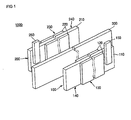
FIG. 1 schematically shows an exploded perspective view of an electrode assembly, accordance with one embodiment of the present invention; and -
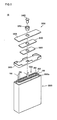
FIG. 2 shows an exploded view of a secondary battery including the electrode assembly ofFIG. 1 . - Reference will now be made in detail to embodiments of the present invention, examples of which are illustrated in the accompanying drawings, wherein like reference numerals refer to the like elements throughout. The embodiments are described below, in order to explain the aspects of the present invention, by referring to the figures.
- Those skilled in the art will appreciate that various modifications, additions and substitutions are possible without departing from the scope of the invention as disclosed in the accompanying claims. Unless otherwise defined, all technical and scientific terms used herein have the same meaning as commonly understood by one of ordinary skill in the relevant art. It will be further understood that terms, such as those defined in commonly used dictionaries, should be interpreted as having a meaning that is consistent with their meaning in the context of the specification and relevant art, and should not be interpreted in an idealized or overly formal sense unless expressly so defined herein. Well-known functions or constructions may not be described in detail for brevity and/or clarity.
-
FIG. 1 is an exploded perspective view of an electrode assembly, according to the present invention. Referring toFIG. 1 , theelectrode assembly 1000 includes apositive electrode 100, anegative electrode 200, aseparator 300, and a non-aqueous electrolyte (not shown). - The
positive electrode 100 includes a positivecurrent collector 110, coatedportions 120, and apositive electrode tab 150. The positivecurrent collector 110 is formed of a rectangular aluminum foil. The coatedportions 120 are formed by coating both sides of the positivecurrent collector 110 with a positive electrodeactive material 130. The positive electrodeactive material 130 can comprise a lithium nickel oxide. The lithium nickel oxide may comprise Ni, Co, and Mn (NCM-based compound). The NCM-based compound may be represented by the formula: LiaNixMnyCozO2. - The positive
current collector 110 includesnon-coated portions 140, which are not coated with the positive electrodeactive material 130. Thepositive electrode tab 150 is fixed to one of the non-coatedportions 140, by ultrasonic welding, for example. Thepositive electrode tab 150 is generally formed of nickel, and an upper end thereof protrudes above an upper end of the positivecurrent collector 110. - The
negative electrode 200 includes a negativecurrent collector 210, anegative electrode tab 250, coatedportions 220, andnon-coated portions 240. The negativecurrent collector 210 is made of a material that does not form an alloy with lithium, at a deposition potential of lithium metal in an organic electrolyte. For example, the negativecurrent collector 210 may be formed of a rectangular copper foil. - The
coated portions 220 are formed on opposing sides of the negativecurrent collector 210, at a central portion thereof. Thenon-coated portions 240 are disposed at ends of the negativecurrent collector 210. Thenegative electrode tab 250 protrudes upward from one of thenon-coated portions 240, at an end of the negativecurrent collector 210. - The
coating portions 220 are formed by coating a negative electrodeactive material 230 on the negativecurrent collector 210. The negative active material can include a binder and a material that can reversibly intercalate lithium ions, through an electrochemical reaction. Electrons can be collected by the negativecurrent collector 210, and then fed to an external circuit. - Generally, a conventional secondary battery includes a larger amount of a negative electrode active material than a positive electrode active material. This is intended to prevent the deposition of lithium on the cathode. In other words, the irreversible capacity of the negative electrode active material is higher, so the capacity of the positive electrode active material may not be completely achieved. In order to avoid such a problem, a capacity of the negative electrode active material is generally higher than that of the positive electrode active material.
- According to aspects of the present invention, a secondary battery (not shown) includes the
electrode assembly 1000 having the lithium nickel oxide as a positive electrodeactive material 130. The lithium nickel oxide has a higher initial discharge capacity, as compared to lithium cobalt oxide, and therefore, a smaller amount of the lithium nickel oxide can provide the same capacity as a larger amount of the lithium cobalt oxide. However, an initial irreversible capacity of the lithium nickel oxide is higher than that of the negative active material. Therefore a relatively larger amount of the negative active material is generally used. - Generally when the lithium nickel oxide is used as a positive electrode active material, the capacity of the negative electrode active material should be 1.2 to 1.3 times higher than that of the positive electrode active material. However, including a relatively larger amount of the negative electrode active material results in a decreased capacity of the secondary battery. In a secondary battery, in accordance with one embodiment of the present invention, the negative electrode
active material 230 includes at least one silicon compound having a high irreversible capacity. The silicon compound can be selected from the group consisting of silicon, a silicon oxide, and a silicon alloy. In some embodiments, the silicon oxide is SiO. - The silicon compound consumes the irreversible capacity of the
anode 100. Accordingly, even when a small amount of the silicon compound in included in the negative electrode active material, the capacity of the negative electrode active material is 1.1-fold higher than that of the positive electrode active material. In addition, a depth of charge is obtained that corresponds to when the negative electrode active material capacity is 1.2 to 1.3 times higher than the capacity of the positive electrode active material. That is, the secondary battery including silicon oxide can achieve a higher cell capacity, as compared to a secondary battery without such a silicon compound. As a consequence, the amount of the negative electrode active material can be decreased, so the capacity of the secondary battery is correspondingly increased. Table 1, below, shows the irreversible capacities of a variety of positive electrode active materials and negative electrode active materials.Table 1 LCO NCM523 Graphite SiO Initial charge capacity (mAh/g) 160 190 386 3000 Initial discharge capacity (mAh/g) 156 167 360 1000 - The negative electrode active material may include from about 2 to 6% by weight of the silicon oxide, based on the total weight of the negative electrode active material. If the content of the silicon material is lower than about 2% by weight, the irreversible capacity of the positive electrode active material may not be sufficiently consumed, which results in the deposition of lithium on the cathode. On the other hand, if a content of the silicon material is higher than 6% by weight, it may be difficult to achieve a desired battery capacity. The negative electrode active material has a larger irreversible capacity, by weight, relative to the weight of the positive electrode active material, due to the silicone oxide.
- The
separator 300 is formed of a porous material that is permeable to ions and is electrically insulating. For example, theseparator 300 may be formed of polyethylene (PE), polypropylene (PP), or a composite film thereof. Further, theseparator 300 is generally wider than theanode 100 andcathode 200, so as to prevent a short circuit that may possibly occur at the top and bottom edges of theanode 100 and thecathode 200. - The non-aqueous electrolyte includes a lithium salt and a non-aqueous organic solvent. The non-aqueous electrolyte may further include other additives for improving charge/discharge characteristics of the battery and preventing overcharging of the battery. The lithium salt serves as a lithium ion source for the basic operation of the lithium battery. On the other hand, the non-aqueous organic solvent acts as a migration medium for the lithium ions.
- Examples of the lithium salt include LiPF6, LiBF4, LiSbF6, LiAsF6, LiClO4, LiCF3SO3, Li(CF3SO2)2N, LiC4F9SO3, LiAlO4, LiAlCl4, LiN(CxF2x+1SO2)(CyF2y+1SO2) (x and y are natural numbers), LiCl, and Lil. These materials may be used alone or in combination.
- Examples of the non-aqueous organic solvent may include a carbonate, an ester, and an ether. In order to facilitate the dissociation of the ions, the organic solvent should generally have a high dielectric constant (polar) and a low viscosity. The solvent can be a mixed solvent, including a solvent with a high dielectric constant and viscosity, and a solvent having a low dielectric constant and viscosity.
-
FIG. 2 illustrates an exploded view of asecondary battery 10, according to aspects of the present invention. As shown inFIG. 2 , theelectrode assembly 1000 is fabricated by stacking theseparator 300 between thepositive electrode 200 and thenegative electrode 100, and winding the resulting structure into a jellyroll-type shape. Therefore, it is possible to significantly improve the capacity of a lithium secondary battery that includes theelectrode assembly 1000. - The
electrode assembly 1000 is inserted into acan 2000, and anopening 2000a of thecan 2000 is sealed by acap assembly 3000. Thecan 2000 generally rectangular and may be formed of a light-weight metal, such as aluminum (Al). Thecan 2000 may also serve as a terminal. - The
cap assembly 3000 includes anelectrode terminal 3100, agasket 3200, acap plate 3300, an insulatingplate 3400, and aterminal plate 3500, which are stacked on an insulatingcase 3600. Thecap assembly 3000 is attached to theopening 2000a of thecan 2000, to seal of thecan 2000. - The
electrode terminal 3100 is inserted through thegasket 3200, thecap plate 3300, the insulatingplate 3400, and a terminal through-hole of theterminal plate 3500. Theelectrode terminal 3100 is electrically connected to thenegative electrode tab 250 of theelectrode assembly 1000. Thepositive electrode tab 150 can be electrically connected to either side of thecap plate 3300, or to the can itself. - Aspects of the present invention will be described in more detail, with reference to the following Examples and Comparative Examples. These examples should not be construed as limiting the scope of the present invention.
- 100 g of CoCO3, having an average particle size of 0.1 to 2 µm, was added to 200 ml of ethanol, to prepare a cobalt-based precursor solution. Nickel hydroxide, manganese hydroxide, and cobalt hydroxide were precipitated at a stoichiometric ratio, by a precipitation method, to prepare [Ni1/3Mn1/3Co1/3]O, which was then stirred into the above ethanol solution. The resultant solution was applied to cobalt-based precursor solution. After the solvent was removed, a CoCO3 powder that was coated with the [Ni1/3Mn1/3Co1/3]O and Li2CO3 were mixed at a molar ratio of 1:1, and the resulting mixture was calcined at 800°C, for 5 hours, under an oxygen atmosphere and then cooled, to thereby prepare an active material. The active material included aggregated particles of the LiCoO2, having a particle size of 0.1 to 2 µm, that were coated with the [Ni1/3Mn1/3Co1/3]O2.
- The active material, a polyvinylidene fluoride binder, and a carbon conductive material (Super P) were dispersed at a weight ratio of 92:4:4, in N-methyl-2-pyrrolidone, to prepare a positive electrode active material slurry. The resulting slurry was coated on aluminum foil having a thickness of 15 µm, dried, and rolled, to fabricate an anode including a positive electrode active material.
- Artificial graphite and SiO powder were prepared in the amounts shown in Table 2, below, and suspended in an aqueous carboxymethyl cellulose solution. A styrene-butadiene rubber binder was added to the resulting suspension, to prepare a negative electrode active material slurry. The resulting slurry was coated on copper foil having a thickness of 10 µm, dried, and rolled, to fabricate a cathode.
- A polyethylene (PE) film separator having a thickness of 16 µm was disposed between the as-fabricated electrodes, and the resulting electrode assembly was wound, compressed and inserted into a rectangular can. Then, an electrolyte was injected into the can, to fabricate a lithium secondary battery. The electrolyte was a solution of 1 M LiPF6 that was dissolved in a mixed solvent of ethylene carbonate/diethyl carbonate/dimethyl carbonate/fluorobenzene (3:5:1:1, v/v).
- Comparative Examples 1 and 2 included comparative negative electrode active materials that did not include SiO. Comparative Example 1 and Example 1 included equivalent amounts of their respective negative electrode active materials. Comparative Example 2 included a larger amount of the comparative negative electrode active material, than was included in Comparative Example 1, so as to achieve the same chargeable capacity as Example 1. Other conditions for Comparative Examples 1 and 2 were the same as in Example 1.

- Example 1 included 4.445 g of the negative electrode active material and 0.2 g of SiO, whereas Comparative Example 1 included 4.445 g of the comparative negative electrode active material. As a result, Example 1 exhibited an increase of about 600 mAh in the chargeable capacity of the negative electrode, as compared to Comparative Example 1. Further, Comparative Example 1 exhibited lithium deposition on its cathode, during charging.
- Example 1 and Comparative Example 2 exhibited the same negative electrode chargeable capacities (2316 mAh). However, Example 1 included 4.445 g of the negative electrode active material, whereas Comparative Example 2 included 6 g of the comparative negative electrode active material. Therefore, it can be seen that Comparative Example 2 required an additional 1.505 g of the comparative negative electrode active material, in order to achieve the same negative electrode chargeable capacity as Example 1.
- The results of Example 1 and Comparative Examples 1 and 2 indicated that the 0.2 g of the SiO included in the negative electrode active material was sufficient to achieve a chargeable capacity of 2316 mAh, with 4.445g of the negative electrode active material as a reference amount, whereas an additional 1.505 g of the comparative negative electrode active material was needed to obtain the same chargeable capacity, under the same conditions. Therefore, a small amount of the silicon material can be used to substantially reduce the total amount of the negative electrode active material. The secondary battery can achieve the same cell capacity with less of the negative electrode active material, due to the addition of the silicon material. Accordingly, the capacity of the secondary battery increased.
- Although a few embodiments of the present invention have been shown and described, it would be appreciated by those skilled in the art that changes may be made in these embodiments, without departing from the principles of the invention, the scope of which is defined in the claims and their equivalents.
Claims (13)
- A secondary battery comprising:a positive electrode (100) comprising a positive electrode active material comprising a lithium nickel oxide;a negative electrode (200) comprising a negative electrode active material comprising at least one silicon material selected from the group consisting of silicon, a silicon oxide, and a silicon alloy;a separator (300) interposed between the positive electrode (100) and the negative electrode (200); anda non-aqueous electrolyte;wherein the negative electrode active material comprises from 2% to 6% by weight of the silicon material, based on the total weight of the negative electrode active material.
- A secondary battery according to claim 1, wherein the silicon material comprises SiO.
- A secondary battery according to claim 1 or 2, wherein the positive electrode active material further comprises Ni, Co, and Mn.
- A secondary battery according to any preceding claim, wherein an irreversible capacity of the positive electrode active material is larger than an irreversible capacity of the negative electrode active material.
- A secondary battery according to any preceding claim, wherein the non-aqueous electrolyte comprises a lithium salt and a non-aqueous organic solvent.
- A secondary battery according to claim 5, wherein the lithium salt is at least one selected from the group consisting of LiPF6, LiBF4, LiSbF6, LiAsF6, LiClO4, LiCF3SO3, Li(CF3SO2)2N, LiC4FeSO3, LiAlO4, LiAlCl4, LiN(CxF2x+1SO2)(CyF2y+1SO2) (x and y are natural numbers), LiCl and Lil.
- A secondary battery according to claim 5 or 6, wherein the non-aqueous organic solvent is at least one selected from the group consisting of an ester, an ether, and a ketone.
- A secondary battery according to Claim 7, wherein the ester comprises a carbonate.
- A secondary battery according to any preceding claim, wherein:the separator is disposed between the positive electrode and the negative electrode and is then wound therewith to form an electrode assembly, andthe battery further comprises a can for housing the electrode assembly and a cap assembly for closing an open part of the can.
- A secondary battery according to any preceding claim, wherein the negative electrode active material comprises carbon.
- A secondary battery according to any preceding claim, wherein the positive electrode active material and the negative electrode active material each further comprise a binder.
- A secondary battery according to any preceding claim, wherein the anode comprises a positive current collector and the positive electrode active material is coated on the positive current collector.
- A secondary battery according to any preceding claim, wherein the cathode comprises a negative current collector and the negative electrode material is coated on the negative current collector.
Applications Claiming Priority (1)
| Application Number | Priority Date | Filing Date | Title |
|---|---|---|---|
| KR1020080062673A KR101126826B1 (en) | 2008-06-30 | 2008-06-30 | Secondary battery |
Publications (2)
| Publication Number | Publication Date |
|---|---|
| EP2141759A1 EP2141759A1 (en) | 2010-01-06 |
| EP2141759B1 true EP2141759B1 (en) | 2011-08-31 |
Family
ID=40941275
Family Applications (1)
| Application Number | Title | Priority Date | Filing Date |
|---|---|---|---|
| EP09251687A Active EP2141759B1 (en) | 2008-06-30 | 2009-06-30 | Secondary battery |
Country Status (6)
| Country | Link |
|---|---|
| US (1) | US9450240B2 (en) |
| EP (1) | EP2141759B1 (en) |
| JP (1) | JP2010015986A (en) |
| KR (1) | KR101126826B1 (en) |
| CN (1) | CN101621132B (en) |
| AT (1) | ATE522942T1 (en) |
Families Citing this family (27)
| Publication number | Priority date | Publication date | Assignee | Title |
|---|---|---|---|---|
| KR100689632B1 (en) * | 2005-02-01 | 2007-03-09 | 주식회사 골든벨금속 | Household pottery using silver nano and manufacturing method |
| US8277974B2 (en) * | 2008-04-25 | 2012-10-02 | Envia Systems, Inc. | High energy lithium ion batteries with particular negative electrode compositions |
| US9290445B2 (en) * | 2008-10-20 | 2016-03-22 | Xenoport, Inc. | Methods of synthesizing a levodopa ester prodrug |
| US8399513B2 (en) * | 2008-10-20 | 2013-03-19 | Xenoport, Inc. | Levodopa prodrug mesylate hydrate |
| US9012073B2 (en) * | 2008-11-11 | 2015-04-21 | Envia Systems, Inc. | Composite compositions, negative electrodes with composite compositions and corresponding batteries |
| KR20120128125A (en) | 2009-11-03 | 2012-11-26 | 엔비아 시스템즈 인코포레이티드 | High capacity anode materials for lithium ion batteries |
| KR101084068B1 (en) * | 2009-11-25 | 2011-11-16 | 삼성에스디아이 주식회사 | Lithium secondary battery |
| JP4868556B2 (en) * | 2010-04-23 | 2012-02-01 | 日立マクセルエナジー株式会社 | Lithium secondary battery |
| WO2012026705A2 (en) * | 2010-08-23 | 2012-03-01 | 주식회사 엘지화학 | Improved jelly-roll structure, and secondary battery having same |
| JP2012212629A (en) * | 2011-03-31 | 2012-11-01 | Fuji Heavy Ind Ltd | Manufacturing method of lithium ion power storage device |
| US9601228B2 (en) | 2011-05-16 | 2017-03-21 | Envia Systems, Inc. | Silicon oxide based high capacity anode materials for lithium ion batteries |
| JP5753027B2 (en) * | 2011-08-22 | 2015-07-22 | ユー・ディー・シー アイルランド リミテッド | ORGANIC ELECTROLUMINESCENT ELEMENT, COMPOUND, AND LIGHT EMITTING DEVICE, DISPLAY DEVICE AND LIGHTING DEVICE USING THE ELEMENT |
| WO2013043449A1 (en) * | 2011-09-21 | 2013-03-28 | 3M Innovative Properties Company | High capacity lithium-ion electrochemical cells and methods of making same |
| US9139441B2 (en) | 2012-01-19 | 2015-09-22 | Envia Systems, Inc. | Porous silicon based anode material formed using metal reduction |
| US10553871B2 (en) | 2012-05-04 | 2020-02-04 | Zenlabs Energy, Inc. | Battery cell engineering and design to reach high energy |
| US9780358B2 (en) | 2012-05-04 | 2017-10-03 | Zenlabs Energy, Inc. | Battery designs with high capacity anode materials and cathode materials |
| KR20140024587A (en) | 2012-08-20 | 2014-03-03 | 삼성에스디아이 주식회사 | Rechargeable lithium battery |
| JP6071336B2 (en) * | 2012-08-30 | 2017-02-01 | 株式会社東芝 | Non-aqueous electrolyte secondary battery and battery module using the same |
| JPWO2014068931A1 (en) * | 2012-10-30 | 2016-09-08 | 三洋電機株式会社 | Nonaqueous electrolyte secondary battery |
| US10020491B2 (en) | 2013-04-16 | 2018-07-10 | Zenlabs Energy, Inc. | Silicon-based active materials for lithium ion batteries and synthesis with solution processing |
| US10886526B2 (en) | 2013-06-13 | 2021-01-05 | Zenlabs Energy, Inc. | Silicon-silicon oxide-carbon composites for lithium battery electrodes and methods for forming the composites |
| WO2015024004A1 (en) | 2013-08-16 | 2015-02-19 | Envia Systems, Inc. | Lithium ion batteries with high capacity anode active material and good cycling for consumer electronics |
| JP6983867B2 (en) * | 2017-03-16 | 2021-12-17 | 三洋電機株式会社 | Non-aqueous electrolyte secondary battery |
| KR102297246B1 (en) * | 2017-11-30 | 2021-09-03 | 주식회사 엘지에너지솔루션 | Positive electrode for lithium secondary battery and lithium secondary battery including the same |
| US11094925B2 (en) | 2017-12-22 | 2021-08-17 | Zenlabs Energy, Inc. | Electrodes with silicon oxide active materials for lithium ion cells achieving high capacity, high energy density and long cycle life performance |
| WO2020185013A1 (en) * | 2019-03-12 | 2020-09-17 | 주식회사 엘지화학 | Secondary battery |
| KR20250098983A (en) * | 2023-12-22 | 2025-07-01 | 주식회사 엘지에너지솔루션 | Lithium secondary battery |
Family Cites Families (25)
| Publication number | Priority date | Publication date | Assignee | Title |
|---|---|---|---|---|
| WO1998053511A1 (en) * | 1997-05-19 | 1998-11-26 | Toyo Tanso Co., Ltd. | Carbonaceous material for the anode of lithium ion secondary cell and lithium ion secondary cell made by using the carbonaceous material |
| JP2000021392A (en) | 1998-07-06 | 2000-01-21 | Fuji Photo Film Co Ltd | Nonaqueous secondary battery |
| US6485864B1 (en) * | 1999-02-26 | 2002-11-26 | Adchemco Corporation | Production process of material for lithium-ion secondary batteries, material obtained by the process, and batteries |
| CN1159780C (en) * | 1999-06-01 | 2004-07-28 | Nec东金株式会社 | Non-water electrolytic solution secondary cell and preparation process thereof |
| JP2001210326A (en) | 2000-01-27 | 2001-08-03 | Hitachi Maxell Ltd | Non-aqueous electrolyte secondary battery |
| JP4137350B2 (en) * | 2000-06-16 | 2008-08-20 | 三星エスディアイ株式会社 | Negative electrode material for lithium secondary battery, electrode for lithium secondary battery, lithium secondary battery, and method for producing negative electrode material for lithium secondary battery |
| EP1295851A4 (en) | 2000-11-16 | 2008-08-20 | Hitachi Maxell | LITHIUM CONTENT COMPOSITE OXIDE AND NONAQUEOUS SECONDARY CELL USING THE SAME, AND METHOD FOR MANUFACTURING THE SAME |
| US7691535B2 (en) | 2002-03-27 | 2010-04-06 | Gs Yuasa Corporation | Active substance of positive electrode and non-aqueous electrolyte battery containing the same |
| CN1199300C (en) | 2002-06-21 | 2005-04-27 | 中国科学院上海微系统与信息技术研究所 | High specific capacity Si-C composite material for cathode of Li ion cell, and mfg. method thereof |
| EP1573835B1 (en) * | 2002-11-26 | 2017-05-03 | Showa Denko K.K. | Electrode material comprising silicon and/or tin particles and production method and use thereof |
| JP4949018B2 (en) | 2004-03-16 | 2012-06-06 | パナソニック株式会社 | Lithium secondary battery |
| DE102004016766A1 (en) | 2004-04-01 | 2005-10-20 | Degussa | Nanoscale silicon particles in negative electrode materials for lithium-ion batteries |
| ATE523906T1 (en) | 2004-04-27 | 2011-09-15 | Mitsubishi Chem Corp | LAYER LITHIUM-NICKEL-MANGANESE-COBALT COMPOSITE OXIDE POWDER FOR THE MATERIAL OF A POSITIVE ELECTRODE OF A LITHIUM SECONDARY BATTERY, PRODUCTION PROCESS THEREOF, POSITIVE ELECTRODE OF A LITHIUM SECONDARY BATTERY THEREOF AND LITHIUM SECONDARY BATTERY |
| KR20070020130A (en) * | 2004-07-29 | 2007-02-16 | 스미토모 티타늄 가부시키가이샤 | SiO powder for secondary battery and manufacturing method thereof |
| JP4868786B2 (en) | 2004-09-24 | 2012-02-01 | 三洋電機株式会社 | Lithium secondary battery |
| CN100550484C (en) | 2005-03-17 | 2009-10-14 | 松下电器产业株式会社 | Nonaqueous electrolyte secondary battery |
| US9190647B2 (en) | 2005-03-17 | 2015-11-17 | Panasonic Intellectual Property Management Co., Ltd. | Nonaqueous electrolyte secondary battery with high temperature and storage characteristics |
| JP4794893B2 (en) * | 2005-04-12 | 2011-10-19 | パナソニック株式会社 | Non-aqueous electrolyte secondary battery |
| KR100684733B1 (en) | 2005-07-07 | 2007-02-20 | 삼성에스디아이 주식회사 | Lithium secondary battery |
| JP4533822B2 (en) | 2005-08-24 | 2010-09-01 | 株式会社東芝 | Nonaqueous electrolyte battery and negative electrode active material |
| JP5137301B2 (en) | 2005-09-08 | 2013-02-06 | 三洋電機株式会社 | Nonaqueous electrolyte secondary battery |
| US20070065720A1 (en) | 2005-09-22 | 2007-03-22 | Masaki Hasegawa | Negative electrode for lithium ion secondary battery and lithium ion secondary battery prepared by using the same |
| JP2007200862A (en) | 2005-12-28 | 2007-08-09 | Sanyo Electric Co Ltd | Nonaqueous electrolyte secondary battery |
| KR100875126B1 (en) | 2006-11-13 | 2008-12-22 | 한국과학기술원 | Electrode for lithium secondary battery having improved cycle performance and lithium secondary battery using same |
| KR100868883B1 (en) | 2007-02-05 | 2008-11-14 | 사회복지법인 삼성생명공익재단 | Detection of Neuroblastoma Cells |
-
2008
- 2008-06-30 KR KR1020080062673A patent/KR101126826B1/en active Active
-
2009
- 2009-04-02 US US12/417,068 patent/US9450240B2/en active Active
- 2009-05-12 CN CN2009101352863A patent/CN101621132B/en active Active
- 2009-06-30 AT AT09251687T patent/ATE522942T1/en not_active IP Right Cessation
- 2009-06-30 EP EP09251687A patent/EP2141759B1/en active Active
- 2009-06-30 JP JP2009154992A patent/JP2010015986A/en active Pending
Also Published As
| Publication number | Publication date |
|---|---|
| ATE522942T1 (en) | 2011-09-15 |
| KR20100002695A (en) | 2010-01-07 |
| US9450240B2 (en) | 2016-09-20 |
| JP2010015986A (en) | 2010-01-21 |
| US20090325061A1 (en) | 2009-12-31 |
| KR101126826B1 (en) | 2012-03-23 |
| EP2141759A1 (en) | 2010-01-06 |
| CN101621132B (en) | 2012-08-15 |
| CN101621132A (en) | 2010-01-06 |
Similar Documents
| Publication | Publication Date | Title |
|---|---|---|
| EP2141759B1 (en) | Secondary battery | |
| CN1332461C (en) | Positive electrode active material and non-aqueous electrolyte secondary cell | |
| US7601463B2 (en) | Nonaqueous electrolyte secondary battery | |
| US7745049B2 (en) | Nonaqueous electrolyte secondary battery and battery module | |
| US9083062B2 (en) | Battery packs for vehicles and high capacity pouch secondary batteries for incorporation into compact battery packs | |
| US8435675B2 (en) | Non-aqueous electrolyte secondary battery with high capacity and good life characteristics | |
| JP3866740B2 (en) | Non-aqueous electrolyte secondary battery, assembled battery and battery pack | |
| JP4837614B2 (en) | Lithium secondary battery | |
| US20180062171A1 (en) | Cathode active material and non-aqueous electrolyte secondary battery using the same | |
| US20030082453A1 (en) | Secondary battery positive electrode and secondary battery using the same | |
| US9306216B2 (en) | Negative active material, method of preparing the same, negative electrode for lithium secondary battery including negative active material, and lithium secondary battery including negative electrode | |
| JP3436600B2 (en) | Rechargeable battery | |
| US10840508B2 (en) | Lithium ion secondary battery | |
| EP4270548A1 (en) | Electrode, nonaqueous electrolyte battery, and battery pack | |
| KR100802851B1 (en) | Nonaqueous Electrolyte Secondary Battery | |
| EP3859855A1 (en) | Secondary battery | |
| JPH10208777A (en) | Non-aqueous electrolyte secondary battery | |
| JP3054829B2 (en) | Manufacturing method of non-aqueous electrolyte secondary battery | |
| JP2002075460A (en) | Lithium secondary battery | |
| KR100378012B1 (en) | Positive active material composition for lithium secondary battery and lithium secondary battery using same | |
| JP2005019086A (en) | Nonaqueous electrolyte secondary battery | |
| JP2000133315A (en) | Lithium secondary battery | |
| JP2001110406A (en) | Non-aqueous electrolyte secondary battery | |
| JPH10116628A (en) | Lithium secondary battery |
Legal Events
| Date | Code | Title | Description |
|---|---|---|---|
| PUAI | Public reference made under article 153(3) epc to a published international application that has entered the european phase |
Free format text: ORIGINAL CODE: 0009012 |
|
| 17P | Request for examination filed |
Effective date: 20090708 |
|
| AK | Designated contracting states |
Kind code of ref document: A1 Designated state(s): AT BE BG CH CY CZ DE DK EE ES FI FR GB GR HR HU IE IS IT LI LT LU LV MC MK MT NL NO PL PT RO SE SI SK TR |
|
| GRAP | Despatch of communication of intention to grant a patent |
Free format text: ORIGINAL CODE: EPIDOSNIGR1 |
|
| GRAS | Grant fee paid |
Free format text: ORIGINAL CODE: EPIDOSNIGR3 |
|
| GRAA | (expected) grant |
Free format text: ORIGINAL CODE: 0009210 |
|
| AK | Designated contracting states |
Kind code of ref document: B1 Designated state(s): AT BE BG CH CY CZ DE DK EE ES FI FR GB GR HR HU IE IS IT LI LT LU LV MC MK MT NL NO PL PT RO SE SI SK TR |
|
| REG | Reference to a national code |
Ref country code: CH Ref legal event code: EP Ref country code: GB Ref legal event code: FG4D |
|
| REG | Reference to a national code |
Ref country code: IE Ref legal event code: FG4D |
|
| REG | Reference to a national code |
Ref country code: DE Ref legal event code: R096 Ref document number: 602009002386 Country of ref document: DE Effective date: 20111110 |
|
| REG | Reference to a national code |
Ref country code: NL Ref legal event code: VDEP Effective date: 20110831 |
|
| LTIE | Lt: invalidation of european patent or patent extension |
Effective date: 20110831 |
|
| PG25 | Lapsed in a contracting state [announced via postgrant information from national office to epo] |
Ref country code: IS Free format text: LAPSE BECAUSE OF FAILURE TO SUBMIT A TRANSLATION OF THE DESCRIPTION OR TO PAY THE FEE WITHIN THE PRESCRIBED TIME-LIMIT Effective date: 20111231 Ref country code: NO Free format text: LAPSE BECAUSE OF FAILURE TO SUBMIT A TRANSLATION OF THE DESCRIPTION OR TO PAY THE FEE WITHIN THE PRESCRIBED TIME-LIMIT Effective date: 20111130 Ref country code: NL Free format text: LAPSE BECAUSE OF FAILURE TO SUBMIT A TRANSLATION OF THE DESCRIPTION OR TO PAY THE FEE WITHIN THE PRESCRIBED TIME-LIMIT Effective date: 20110831 Ref country code: SE Free format text: LAPSE BECAUSE OF FAILURE TO SUBMIT A TRANSLATION OF THE DESCRIPTION OR TO PAY THE FEE WITHIN THE PRESCRIBED TIME-LIMIT Effective date: 20110831 Ref country code: FI Free format text: LAPSE BECAUSE OF FAILURE TO SUBMIT A TRANSLATION OF THE DESCRIPTION OR TO PAY THE FEE WITHIN THE PRESCRIBED TIME-LIMIT Effective date: 20110831 Ref country code: LT Free format text: LAPSE BECAUSE OF FAILURE TO SUBMIT A TRANSLATION OF THE DESCRIPTION OR TO PAY THE FEE WITHIN THE PRESCRIBED TIME-LIMIT Effective date: 20110831 Ref country code: HR Free format text: LAPSE BECAUSE OF FAILURE TO SUBMIT A TRANSLATION OF THE DESCRIPTION OR TO PAY THE FEE WITHIN THE PRESCRIBED TIME-LIMIT Effective date: 20110831 |
|
| REG | Reference to a national code |
Ref country code: AT Ref legal event code: MK05 Ref document number: 522942 Country of ref document: AT Kind code of ref document: T Effective date: 20110831 |
|
| PG25 | Lapsed in a contracting state [announced via postgrant information from national office to epo] |
Ref country code: LV Free format text: LAPSE BECAUSE OF FAILURE TO SUBMIT A TRANSLATION OF THE DESCRIPTION OR TO PAY THE FEE WITHIN THE PRESCRIBED TIME-LIMIT Effective date: 20110831 Ref country code: AT Free format text: LAPSE BECAUSE OF FAILURE TO SUBMIT A TRANSLATION OF THE DESCRIPTION OR TO PAY THE FEE WITHIN THE PRESCRIBED TIME-LIMIT Effective date: 20110831 Ref country code: SI Free format text: LAPSE BECAUSE OF FAILURE TO SUBMIT A TRANSLATION OF THE DESCRIPTION OR TO PAY THE FEE WITHIN THE PRESCRIBED TIME-LIMIT Effective date: 20110831 Ref country code: GR Free format text: LAPSE BECAUSE OF FAILURE TO SUBMIT A TRANSLATION OF THE DESCRIPTION OR TO PAY THE FEE WITHIN THE PRESCRIBED TIME-LIMIT Effective date: 20111201 Ref country code: CY Free format text: LAPSE BECAUSE OF FAILURE TO SUBMIT A TRANSLATION OF THE DESCRIPTION OR TO PAY THE FEE WITHIN THE PRESCRIBED TIME-LIMIT Effective date: 20110831 |
|
| PG25 | Lapsed in a contracting state [announced via postgrant information from national office to epo] |
Ref country code: BE Free format text: LAPSE BECAUSE OF FAILURE TO SUBMIT A TRANSLATION OF THE DESCRIPTION OR TO PAY THE FEE WITHIN THE PRESCRIBED TIME-LIMIT Effective date: 20110831 |
|
| PG25 | Lapsed in a contracting state [announced via postgrant information from national office to epo] |
Ref country code: CZ Free format text: LAPSE BECAUSE OF FAILURE TO SUBMIT A TRANSLATION OF THE DESCRIPTION OR TO PAY THE FEE WITHIN THE PRESCRIBED TIME-LIMIT Effective date: 20110831 Ref country code: SK Free format text: LAPSE BECAUSE OF FAILURE TO SUBMIT A TRANSLATION OF THE DESCRIPTION OR TO PAY THE FEE WITHIN THE PRESCRIBED TIME-LIMIT Effective date: 20110831 |
|
| PG25 | Lapsed in a contracting state [announced via postgrant information from national office to epo] |
Ref country code: IT Free format text: LAPSE BECAUSE OF FAILURE TO SUBMIT A TRANSLATION OF THE DESCRIPTION OR TO PAY THE FEE WITHIN THE PRESCRIBED TIME-LIMIT Effective date: 20110831 Ref country code: RO Free format text: LAPSE BECAUSE OF FAILURE TO SUBMIT A TRANSLATION OF THE DESCRIPTION OR TO PAY THE FEE WITHIN THE PRESCRIBED TIME-LIMIT Effective date: 20110831 Ref country code: PL Free format text: LAPSE BECAUSE OF FAILURE TO SUBMIT A TRANSLATION OF THE DESCRIPTION OR TO PAY THE FEE WITHIN THE PRESCRIBED TIME-LIMIT Effective date: 20110831 Ref country code: EE Free format text: LAPSE BECAUSE OF FAILURE TO SUBMIT A TRANSLATION OF THE DESCRIPTION OR TO PAY THE FEE WITHIN THE PRESCRIBED TIME-LIMIT Effective date: 20110831 Ref country code: PT Free format text: LAPSE BECAUSE OF FAILURE TO SUBMIT A TRANSLATION OF THE DESCRIPTION OR TO PAY THE FEE WITHIN THE PRESCRIBED TIME-LIMIT Effective date: 20120102 |
|
| PG25 | Lapsed in a contracting state [announced via postgrant information from national office to epo] |
Ref country code: DK Free format text: LAPSE BECAUSE OF FAILURE TO SUBMIT A TRANSLATION OF THE DESCRIPTION OR TO PAY THE FEE WITHIN THE PRESCRIBED TIME-LIMIT Effective date: 20110831 |
|
| PLBE | No opposition filed within time limit |
Free format text: ORIGINAL CODE: 0009261 |
|
| STAA | Information on the status of an ep patent application or granted ep patent |
Free format text: STATUS: NO OPPOSITION FILED WITHIN TIME LIMIT |
|
| 26N | No opposition filed |
Effective date: 20120601 |
|
| REG | Reference to a national code |
Ref country code: DE Ref legal event code: R097 Ref document number: 602009002386 Country of ref document: DE Effective date: 20120601 |
|
| PG25 | Lapsed in a contracting state [announced via postgrant information from national office to epo] |
Ref country code: MC Free format text: LAPSE BECAUSE OF NON-PAYMENT OF DUE FEES Effective date: 20120630 |
|
| PG25 | Lapsed in a contracting state [announced via postgrant information from national office to epo] |
Ref country code: MK Free format text: LAPSE BECAUSE OF FAILURE TO SUBMIT A TRANSLATION OF THE DESCRIPTION OR TO PAY THE FEE WITHIN THE PRESCRIBED TIME-LIMIT Effective date: 20110831 |
|
| REG | Reference to a national code |
Ref country code: IE Ref legal event code: MM4A |
|
| PG25 | Lapsed in a contracting state [announced via postgrant information from national office to epo] |
Ref country code: IE Free format text: LAPSE BECAUSE OF NON-PAYMENT OF DUE FEES Effective date: 20120630 |
|
| PG25 | Lapsed in a contracting state [announced via postgrant information from national office to epo] |
Ref country code: BG Free format text: LAPSE BECAUSE OF FAILURE TO SUBMIT A TRANSLATION OF THE DESCRIPTION OR TO PAY THE FEE WITHIN THE PRESCRIBED TIME-LIMIT Effective date: 20111130 |
|
| PG25 | Lapsed in a contracting state [announced via postgrant information from national office to epo] |
Ref country code: MT Free format text: LAPSE BECAUSE OF FAILURE TO SUBMIT A TRANSLATION OF THE DESCRIPTION OR TO PAY THE FEE WITHIN THE PRESCRIBED TIME-LIMIT Effective date: 20110831 |
|
| REG | Reference to a national code |
Ref country code: CH Ref legal event code: PL |
|
| PG25 | Lapsed in a contracting state [announced via postgrant information from national office to epo] |
Ref country code: LI Free format text: LAPSE BECAUSE OF NON-PAYMENT OF DUE FEES Effective date: 20130630 Ref country code: CH Free format text: LAPSE BECAUSE OF NON-PAYMENT OF DUE FEES Effective date: 20130630 Ref country code: TR Free format text: LAPSE BECAUSE OF FAILURE TO SUBMIT A TRANSLATION OF THE DESCRIPTION OR TO PAY THE FEE WITHIN THE PRESCRIBED TIME-LIMIT Effective date: 20110831 |
|
| PG25 | Lapsed in a contracting state [announced via postgrant information from national office to epo] |
Ref country code: LU Free format text: LAPSE BECAUSE OF NON-PAYMENT OF DUE FEES Effective date: 20120630 |
|
| PG25 | Lapsed in a contracting state [announced via postgrant information from national office to epo] |
Ref country code: HU Free format text: LAPSE BECAUSE OF FAILURE TO SUBMIT A TRANSLATION OF THE DESCRIPTION OR TO PAY THE FEE WITHIN THE PRESCRIBED TIME-LIMIT Effective date: 20090630 Ref country code: ES Free format text: LAPSE BECAUSE OF FAILURE TO SUBMIT A TRANSLATION OF THE DESCRIPTION OR TO PAY THE FEE WITHIN THE PRESCRIBED TIME-LIMIT Effective date: 20110831 |
|
| REG | Reference to a national code |
Ref country code: FR Ref legal event code: PLFP Year of fee payment: 8 |
|
| REG | Reference to a national code |
Ref country code: FR Ref legal event code: PLFP Year of fee payment: 9 |
|
| REG | Reference to a national code |
Ref country code: FR Ref legal event code: PLFP Year of fee payment: 10 |
|
| P01 | Opt-out of the competence of the unified patent court (upc) registered |
Effective date: 20230528 |
|
| PGFP | Annual fee paid to national office [announced via postgrant information from national office to epo] |
Ref country code: DE Payment date: 20250604 Year of fee payment: 17 |
|
| PGFP | Annual fee paid to national office [announced via postgrant information from national office to epo] |
Ref country code: GB Payment date: 20250529 Year of fee payment: 17 |
|
| PGFP | Annual fee paid to national office [announced via postgrant information from national office to epo] |
Ref country code: FR Payment date: 20250610 Year of fee payment: 17 |