EP2140017B1 - Process for producing isobutanol - Google Patents
Process for producing isobutanol Download PDFInfo
- Publication number
- EP2140017B1 EP2140017B1 EP08780577A EP08780577A EP2140017B1 EP 2140017 B1 EP2140017 B1 EP 2140017B1 EP 08780577 A EP08780577 A EP 08780577A EP 08780577 A EP08780577 A EP 08780577A EP 2140017 B1 EP2140017 B1 EP 2140017B1
- Authority
- EP
- European Patent Office
- Prior art keywords
- seq
- isobutanol
- dna
- primer
- kivd
- Prior art date
- Legal status (The legal status is an assumption and is not a legal conclusion. Google has not performed a legal analysis and makes no representation as to the accuracy of the status listed.)
- Active
Links
Images
Classifications
-
- C—CHEMISTRY; METALLURGY
- C12—BIOCHEMISTRY; BEER; SPIRITS; WINE; VINEGAR; MICROBIOLOGY; ENZYMOLOGY; MUTATION OR GENETIC ENGINEERING
- C12P—FERMENTATION OR ENZYME-USING PROCESSES TO SYNTHESISE A DESIRED CHEMICAL COMPOUND OR COMPOSITION OR TO SEPARATE OPTICAL ISOMERS FROM A RACEMIC MIXTURE
- C12P7/00—Preparation of oxygen-containing organic compounds
- C12P7/02—Preparation of oxygen-containing organic compounds containing a hydroxy group
- C12P7/04—Preparation of oxygen-containing organic compounds containing a hydroxy group acyclic
- C12P7/16—Butanols
-
- C—CHEMISTRY; METALLURGY
- C12—BIOCHEMISTRY; BEER; SPIRITS; WINE; VINEGAR; MICROBIOLOGY; ENZYMOLOGY; MUTATION OR GENETIC ENGINEERING
- C12N—MICROORGANISMS OR ENZYMES; COMPOSITIONS THEREOF; PROPAGATING, PRESERVING, OR MAINTAINING MICROORGANISMS; MUTATION OR GENETIC ENGINEERING; CULTURE MEDIA
- C12N9/00—Enzymes; Proenzymes; Compositions thereof; Processes for preparing, activating, inhibiting, separating or purifying enzymes
- C12N9/0004—Oxidoreductases (1.)
- C12N9/0006—Oxidoreductases (1.) acting on CH-OH groups as donors (1.1)
-
- C—CHEMISTRY; METALLURGY
- C12—BIOCHEMISTRY; BEER; SPIRITS; WINE; VINEGAR; MICROBIOLOGY; ENZYMOLOGY; MUTATION OR GENETIC ENGINEERING
- C12N—MICROORGANISMS OR ENZYMES; COMPOSITIONS THEREOF; PROPAGATING, PRESERVING, OR MAINTAINING MICROORGANISMS; MUTATION OR GENETIC ENGINEERING; CULTURE MEDIA
- C12N9/00—Enzymes; Proenzymes; Compositions thereof; Processes for preparing, activating, inhibiting, separating or purifying enzymes
- C12N9/10—Transferases (2.)
- C12N9/1022—Transferases (2.) transferring aldehyde or ketonic groups (2.2)
-
- C—CHEMISTRY; METALLURGY
- C12—BIOCHEMISTRY; BEER; SPIRITS; WINE; VINEGAR; MICROBIOLOGY; ENZYMOLOGY; MUTATION OR GENETIC ENGINEERING
- C12N—MICROORGANISMS OR ENZYMES; COMPOSITIONS THEREOF; PROPAGATING, PRESERVING, OR MAINTAINING MICROORGANISMS; MUTATION OR GENETIC ENGINEERING; CULTURE MEDIA
- C12N9/00—Enzymes; Proenzymes; Compositions thereof; Processes for preparing, activating, inhibiting, separating or purifying enzymes
- C12N9/10—Transferases (2.)
- C12N9/1096—Transferases (2.) transferring nitrogenous groups (2.6)
-
- C—CHEMISTRY; METALLURGY
- C12—BIOCHEMISTRY; BEER; SPIRITS; WINE; VINEGAR; MICROBIOLOGY; ENZYMOLOGY; MUTATION OR GENETIC ENGINEERING
- C12N—MICROORGANISMS OR ENZYMES; COMPOSITIONS THEREOF; PROPAGATING, PRESERVING, OR MAINTAINING MICROORGANISMS; MUTATION OR GENETIC ENGINEERING; CULTURE MEDIA
- C12N9/00—Enzymes; Proenzymes; Compositions thereof; Processes for preparing, activating, inhibiting, separating or purifying enzymes
- C12N9/88—Lyases (4.)
-
- Y—GENERAL TAGGING OF NEW TECHNOLOGICAL DEVELOPMENTS; GENERAL TAGGING OF CROSS-SECTIONAL TECHNOLOGIES SPANNING OVER SEVERAL SECTIONS OF THE IPC; TECHNICAL SUBJECTS COVERED BY FORMER USPC CROSS-REFERENCE ART COLLECTIONS [XRACs] AND DIGESTS
- Y02—TECHNOLOGIES OR APPLICATIONS FOR MITIGATION OR ADAPTATION AGAINST CLIMATE CHANGE
- Y02E—REDUCTION OF GREENHOUSE GAS [GHG] EMISSIONS, RELATED TO ENERGY GENERATION, TRANSMISSION OR DISTRIBUTION
- Y02E50/00—Technologies for the production of fuel of non-fossil origin
- Y02E50/10—Biofuels, e.g. bio-diesel
Definitions
- the invention relates to a method for the production of isobutanol by fermentation using a recombinant microbial host. Specifically, the method employs a decrease in temperature during fermentation that results in more robust tolerance of the production host to the isobutanol product.
- Butanol is an important industrial chemical, useful as a fuel additive, as a feedstock chemical in the plastics industry, and as a foodgrade extractant in the food and flavor industry. Each year 10 to12 billion pounds of butanol are produced by petrochemical means and the need for this commodity chemical will likely increase.
- Isobutanol is produced biologically as a by-product of yeast fermentation. It is a component of "fusel oil” that forms as a result of incomplete metabolism of amino acids by this group of fungi. Isobutanol is specifically produced from catabolism of L-valine. After the amine group of L-valine is harvested as a nitrogen source, the resulting ⁇ -keto acid is decarboxylated and reduced to isobutanol by enzymes of the so-called Ehrlich pathway ( Dickinson et al., J. Biol. Chem. 273(40):25752-25756 (1998 )). Yields of fusel oil and/or its components achieved during beverage fermentation are typically low.
- the concentration of isobutanol produced in beer fermentation is reported to be less than 16 parts per million ( Garcia et al., Process Biochemistry 29:303-309 (1994 )).
- Addition of exogenous L-valine to the fermentation increases the yield of isobutanol, as described by Dickinson et al ., supra, wherein it is reported that a yield of isobutanol of 3 g/L is obtained by providing L-valine at a concentration of 20 g/L in the fermentation.
- the use of valine as a feed-stock would be cost prohibitive for industrial scale isobutanol production. Jansen et al.
- Harada Hakko Kyokaishi 20:155-156 (1962 ) discloses that the yield of 1-butanol in acetone-butanol-ethanol (ABE) fermentation is increased from 18.4%-18.7% to 19.1%-21.2% by lowering the temperature from 30 °C to 28 °C when the growth of the bacteria reaches a maximum.
- Jones et al. (Microbiol. Rev. 50(4):484-524 (1986 )) review the role of temperature in ABE fermentation.
- the present invention addresses this need through the discovery of a method for producing isobutanol by fermentation using a recombinant microbial host, which employs a decrease in temperature during fermentation, resulting in more robust tolerance of the production host to the isobutanol product.
- the invention provides a method for the production of isobutanol by fermentation using a recombinant microbial host, which employs a decrease in temperature during fermentation that results in more robust tolerance of the production host to the isobutanol product.
- the invention provides a method for the production of isobutanol comprising:
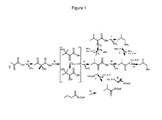
- Figure 1 shows four different isobutanol biosynthetic pathways.
- the steps labeled “a”, “b”, “c”, “d”, “e”, “f”, “g”, “h”, “i”, “j” and “k” represent the substrate to product conversions described below.
- the following sequences conform with 37 C.F.R. 1.821-1.825 ("Requirements for Patent Applications Containing Nucleotide Sequences and/or Amino Acid Sequence Disclosures - the Sequence Rules") and are consistent with World Intellectual Property Organization (WIPO) Standard ST.25 (1998) and the sequence listing requirements of the EPO and PCT (Rules 5.2 and 49.5(a-bis), and Section 208 and Annex C of the Administrative Instructions).
- WIPO World Intellectual Property Organization
- nucleotide and amino acid sequence data comply with the rules set forth in 37 C.F.R. ⁇ 1.822.
- Table 1 Summary of Gene and Protein SEQ ID Numbers Description SEQ ID NO: Nucleic acid SEQ ID NO: Peptide Klebsiella pneumoniae budB (acetolactate synthase) 1 2 Bacillus subtilis alsS (acetolactate synthase) 78 178 Lactococcus lactis als (acetolactate synthase) 179 180 E. coli ilvC (acetohydroxy acid reductoisomerase) 3 4 S. cerevisiae IL V5 (acetohydroxy acid reductoisomerase) 80 181 M.
- maripaludis ilvC Keratin-acid reductoisomerase 182 183 B. subtilis ilvC (acetohydroxy acid reductoisomerase) 184 185 E. coli ilvD (acetohydroxy acid dehydratase) 5 6 S. cerevisiae ILV3 (Dihydroxyacid dehydratase) 83 186 M. maripaludis ilvD (Dihydroxy-acid dehydratase) 187 188 B.
- subtilis ilvD (dihydroxy-acid dehydratase) 189 190 Lactococcus lactis kivD (branched-chain ⁇ -keto acid decarboxylase), codon optimized 7 8 Lactococcus lactis kivD (branched-chain ⁇ -keto acid decarboxylase), 191 8 Lactococcus lactis kdcA (branched-chain alpha-ketoacid decarboxylase) 192 193 Salmonella typhimurium (indolepyruvate decarboxylase) 194 195 Clostridium acetobutylicum pdc (Pyruvate decarboxylase) 196 197 E .
- subtilis bkdAB branched-chain alpha-keto acid dehydrogenase E1 subunit
- subtilis bkdB branched-chain alpha-keto acid dehydrogenase E2 subunit
- IpdV branched-chain alpha-keto acid dehydrogenase E3 subunit
- putida bkdA1 keto acid dehydrogenase E1-alpha subunit
- putida bkdA2 keto acid dehydrogenase E1-beta subunit
- putida bkdB transacylase E2
- putida 1pdV lipoamide dehydrogenase
- putida 1pdV lipoamide dehydrogenase
- beijerinckii ald coenzyme A acylating aldehyde dehydrogenase
- acetobutylicum adhe 1 aldehyde dehydrogenase
- acetobutylicum adhe alcohol-aldehyde dehydrogenase
- putida nahO acetaldehyde dehydrogenase
- thermophilus acetaldehyde dehydrogenase 229 230 E. coli avtA (valine-pyruvate transaminase) 231 232 B. licheniformis avtA (valine-pyruvate transaminase) 233 234 E. coli ilvE (branched chain amino acid aminotransferase) 235 236 S. cerevisiae BAT2 (branched chain amino acid aminotransferase) 237 238 M. thermoautotrophicum (branched chain amino acid aminotransferase) 239 240 S. coelicolor (valine dehydrogenase) 241 242 B.
- subtilis bcd leucine dehydrogenase 243 244 S .
- viridifaciens valine decarboxyase 245 246 A. denitrificans aptA (omega-amino acid:pyruvate transaminase) 247 248 R .
- eutropha alanine-pyruvate transaminase 249 250 S. oneidensis (beta alanine-pyruvate transaminase) 251 252 P. putida (beta alanine-pyruvate transaminase) 253 254 S .
- cinnamonensis icm isobutyrl-CoA mutase 255 256 S . cinnamonensis icmB (isobutyrl-CoA mutase) 257 258 S. coelicolor SCO5415 (isobutyrl-CoA mutase) 259 260 S. coelicolor SCO4800 (isobutyrl-CoA mutase) 261 262 S. avermitilis icmA (isobutyrl-CoA mutase) 263 264 S. avermitilis icmB (isobutyrl-CoA mutase) 265 266
- SEQ ID Nos:11-38, 40-69, 72-75, 85-138, 144, 145, 147-157, 159-176 are the nucleotide sequences of oligonucleotide cloning, screening or sequencing primers used in the Examples described herein.
- SEQ ID NO:39 is the nucleotide sequence of the cscBKA gene cluster described in Example 20.
- SEQ ID NO:70 is the nucleotide sequence of the glucose isomerase promoter 1.6GI described in Example 17.
- SEQ ID NO:71 is the nucleotide sequence of the 1.5GI promoter described in Example 17.
- SEQ ID NO:76 is the nucleotide sequence of the GPD promoter described in Example 21.
- SEQ ID NO:77 is the nucleotide sequence of the CYC1 terminator described in Example 21.
- SEQ ID NO:79 is the nucleotide sequence of the FBA promoter described in Example 21.
- SEQ ID NO:81 is the nucleotide sequence of ADH1 promoter described in Example 21.
- SEQW ID NO:82 is the nucleotide sequence of ADH1 terminator described in Example 21.
- SEQ ID NO:84 is the nucleotide sequence of GPM promoter described in Example 21.
- SEQ ID NO:139 is the amino acid sequence of sucrose hydrolase (CscA).
- SEQ ID NO:140 is the amino acid sequence of D-fructokinase (CscK).
- SEQ ID NO:141 is the amino acid sequence of sucrose permease (CscB).
- SEQ ID NO:142 is the nucleotide sequence of plasmid pFP988DssPspac described in Example 24.
- SEQ ID NO:143 is the nucleotide sequence of plasmid pFP988DssPgroE described in Example 24.
- SEQ ID NO:146 is the nucleotide sequence of the pFP988Dss vector fragment described in Example 24.
- SEQ ID NO:177 is the nucleotide sequence of the pFP988 integration vector described in Example 25.
- SEQ ID NO:267 is the nucleotide sequence of plasmid pC194 described in Example 25.
- the present invention relates to a method for the production of isobutanol using recombinant microorganisms that employs a decrease in temperature during fermentation, resulting in more robust tolerance of the production host to the isobutanol product and therefore a higher titer of isobutanol.
- the present invention meets a number of commercial and industrial needs.
- Butanol is an important industrial commodity chemical with a variety of applications, where its potential as a fuel or fuel additive is particularly significant. Although only a four-carbon alcohol, butanol has an energy content similar to that of gasoline and can be blended with any fossil fuel.
- Butanol is favored as a fuel or fuel additive as it yields only CO 2 and little or no SO x or NO x when burned in the standard internal combustion engine. Additionally butanol is less corrosive than ethanol, the most preferred fuel additive to date.
- butanol In addition to its utility as a biofuel or fuel additive, butanol has the potential of impacting hydrogen distribution problems in the emerging fuel cell industry. Fuel cells today are plagued by safety concerns associated with hydrogen transport and distribution. Butanol can be easily reformed for its hydrogen content and can be distributed through existing gas stations in the purity required for either fuel cells or vehicles.
- the present invention produces isobutanol from plant derived carbon sources, avoiding the negative environmental impact associated with standard petrochemical processes for butanol production.
- compositions comprising, “comprising,” “includes,” “including,” “has,” “having,” “contains” or “containing,” or any other variation thereof, are intended to cover a non-exclusive inclusion.
- a composition, a mixture, process, method, article, or apparatus that comprises a list of elements is not necessarily limited to only those elements but may include other elements not expressly listed or inherent to such composition, mixture, process, method, article, or apparatus.
- “or” refers to an inclusive or and not to an exclusive or. For example, a condition A or B is satisfied by any one of the following: A is true (or present) and B is false (or not present), A is false (or not present) and B is true (or present), and both A and B are true (or present).
- invention or “present invention” as used herein is not intended to refer to any single embodiment of the particular invention but encompasses all possible embodiments as described in the specification and the claims.
- the term "about" modifying the quantity of an ingredient or reactant of the invention employed refers to variation in the numerical quantity that can occur, for example, through typical measuring and liquid handling procedures used for making concentrates or use solutions in the real world; through inadvertent error in these procedures; through differences in the manufacture, source, or purity of the ingredients employed to make the compositions or carry out the methods; and the like.
- the term “about” also encompasses amounts that differ due to different equilibrium conditions for a composition resulting from a particular initial mixture. Whether or not modified by the term “about”, the claims include equivalents to the quantities.
- the term “about” means within 10% of the reported numerical value, preferably within 5% of the reported numerical value.
- isobutanol biosynthetic pathway refers to an enzyme pathway to produce isobutanol.
- acetolactate synthase and "acetolactate synthetase” are used intechangeably herein to refer to an enzyme that catalyzes the conversion of pyruvate to acetolactate and CO 2 .
- Preferred acetolactate synthases are known by the EC number 2.2.1.6 9 ( Enzyme Nomenclature 1992, Academic Press, San Diego ).
- Bacillus subtilis GenBank Nos: CAB15618 (SEQ ID NO:178), Z99122 (SEQ ID NO:78), NCBI (National Center for Biotechnology Information) amino acid sequence, NCBI nucleotide sequence, respectively
- Klebsiella pneumoniae GenBank Nos: AAA25079 (SEQ ID NO:2), M73842 (SEQ ID NO:1)
- Lactococcus lactis GenBank Nos: AAA25161 (SEQ ID NO:180), L16975 (SEQ ID NO:179)
- acetohydroxy acid isomeroreductase and “acetohydroxy acid reductoisomerase” are used interchangeably herein to refer to an enzyme that catalyzes the conversion of acetolactate to 2,3-dihydroxyisovalerate using NADPH (reduced nicotinamide adenine dinucleotide phosphate) as an electron donor.
- NADPH reduced nicotinamide adenine dinucleotide phosphate
- Preferred acetohydroxy acid isomeroreductases are known by the EC number 1.1.1.86 and sequences are available from a vast array of microorganisms, including, but not limited to, Escherichia coli (GenBank Nos: NP_418222 (SEQ ID NO:4), NC_000913 (SEQ ID NO:3)), Saccharomyces cerevisiae (GenBank Nos: NP_013459 (SEQ ID NO:181), NC_001144 (SEQ ID NO:80)), Methanococcus maripaludis (GenBank Nos: CAF30210 (SEQ ID NO:183), BX957220 (SEQ ID NO:182)), and Bacillus. subtilis (GenBank Nos: CAB14789 (SEQ ID NO:185), Z99118 (SEQ ID NO:184)).
- acetohydroxy acid dehydratase refers to an enzyme that catalyzes the conversion of 2,3-dihydroxyisovalerate to ⁇ -ketoisovalerate.
- Preferred acetohydroxy acid dehydratases are known by the EC number 4.2.1.9. These enzymes are available from a vast array of microorganisms, including, but not limited to, E . coli (GenBank Nos: YP_026248 (SEQ ID NO:6), NC_000913 (SEQ ID NO:5)), S . cerevisiae (GenBank Nos: NP_012550 (SEQ ID NO:186), NC_001142 (SEQ ID NO:83)), M .
- branched-chain ⁇ -keto acid decarboxylase refers to an enzyme that catalyzes the conversion of ⁇ -ketoisovalerate to isobutyraldehyde and CO 2 .
- Preferred branched-chain ⁇ -keto acid decarboxylases are known by the EC number 4.1.1.72 and are available from a number of sources, including, but not limited to, Lactococcus lactis (GenBank Nos: AAS49166 (SEQ ID NO:193), AY548760 (SEQ ID NO:192); CAG34226 (SEQ ID NO:8), AJ746364 (SEQ ID NO:191), Salmonella typhimurium (GenBank Nos: NP_461346 (SEQ ID NO:195), NC_003197 (SEQ ID NO:194)), and Clostridium acetobutylicum (GenBank Nos: NP_149189 (SEQ ID NO:197), NC_001988 (SEQ ID NO:196
- branched-chain alcohol dehydrogenase refers to an enzyme that catalyzes the conversion of isobutyraldehyde to isobutanol.
- Preferred branched-chain alcohol dehydrogenases are known by the EC number 1.1.1.265, but may also be classified under other alcohol dehydrogenases (specifically, EC 1.1.1.1 or 1.1.1.2). These enzymes utilize NADH (reduced nicotinamide adenine dinucleotide) and/or NADPH as electron donor and are available from a number of sources, including, but not limited to, S .
- branched-chain keto acid dehydrogenase refers to an enzyme that catalyzes the conversion of ⁇ -ketoisovalerate to isobutyryl-CoA (isobutyryl-coenzyme A), using NAD + (nicotinamide adenine dinucleotide) as electron acceptor.
- NAD + nicotinamide adenine dinucleotide
- Preferred branched-chain keto acid dehydrogenases are known by the EC number 1.2.4.4. These branched-chain keto acid dehydrogenases are comprised of four subunits and sequences from all subunits are available from a vast array of microorganisms, including, but not limited to, B.
- subtilis GenBank Nos: CAB14336 (SEQ ID NO:206), Z99116 (SEQ ID NO:205); CAB14335 (SEQ ID NO:208), Z99116 (SEQ ID NO:207); CAB14334 (SEQ ID NO:210), Z99116 (SEQ ID NO:209); and CAB14337 (SEQ ID NO:212), Z99116 (SEQ ID NO:211)) and Pseudomonas putida (GenBank Nos: AAA65614 (SEQ ID NO:214), M57613 (SEQ ID NO:213); AAA65615 (SEQ ID NO:216), M57613 (SEQ ID NO:215); AAA65617 (SEQ ID NO:218), M57613 (SEQ ID NO:217); and AAA65618 (SEQ ID NO:220), M57613 (SEQ ID NO:219)).
- acylating aldehyde dehydrogenase refers to an enzyme that catalyzes the conversion of isobutyryl-CoA to isobutyraldehyde, using either NADH or NADPH as electron donor.
- Preferred acylating aldehyde dehydrogenases are known by the EC numbers 1.2.1.10 and 1.2.1.57. These enzymes are available from multiple sources, including, but not limited to, Clostridium beijerinckii (GenBank Nos: AAD31841 (SEQ ID NO:222), AF157306 (SEQ ID NO:221)), C.
- acetobutylicum GenBank Nos: NP_149325 (SEQ ID NO:224), NC_001988 (SEQ ID NO:223); NP_149199 (SEQ ID NO:226), NC_001988 (SEQ ID NO:225)), P. putida (GenBank Nos: AAA89106 (SEQ ID NO:228), U13232 (SEQ ID NO:227)), and Thermus thermophilus (GenBank Nos: YP_145486 (SEQ ID NO:230), NC_006461 (SEQ ID NO:229)).
- transaminase refers to an enzyme that catalyzes the conversion of ⁇ -ketoisovalerate to L-valine, using either alanine or glutamate as amine donor.
- Preferred transaminases are known by the EC numbers 2.6.1.42 and 2.6.1.66. These enzymes are available from a number of sources. Examples of sources for alanine-dependent enzymes include, but are not limited to, E .
- coli GenBank Nos: YP_026231 (SEQ ID NO:232), NC_000913 (SEQ ID NO:231)) and Bacillus licheniformis (GenBank Nos: YP_093743 (SEQ ID NO:234), NC_006322 (SEQ ID NO:233)).
- sources for glutamate-dependent enzymes include, but are not limited to, E . coli (GenBank Nos: YP_026247 (SEQ ID NO:236), NC_000913 (SEQ ID NO:235)), S .
- valine dehydrogenase refers to an enzyme that catalyzes the conversion of ⁇ -ketoisovalerate to L-valine, using NAD(P)H as electron donor and ammonia as amine donor.
- Preferred valine dehydrogenases are known by the EC numbers 1.4.1.8 and 1.4.1.9 and are available from a number of sources, including, but not limited to, Streptomyces coelicolor (GenBank Nos: NP_628270 (SEQ ID NO:242), NC_003888 (SEQ ID NO:241)) and B. subtilis (GenBank Nos: CAB14339 (SEQ ID NO:244), Z99116 (SEQ ID NO:243)).
- valine decarboxylase refers to an enzyme that catalyzes the conversion of L-valine to isobutylamine and CO 2 .
- Preferred valine decarboxylases are known by the EC number 4.1.1.14. These enzymes are found in Streptomycetes, such as for example, Streptomyces viridifaciens (GenBank Nos: AAN10242 (SEQ ID NO:246), AY116644 (SEQ ID NO:245)).
- omega transaminase refers to an enzyme that catalyzes the conversion of isobutylamine to isobutyraldehyde using a suitable amino acid as amine donor.
- Preferred omega transaminases are known by the EC number 2.6.1.18 and are available from a number of sources, including, but not limited to, Alcaligenes denitrificans (AAP92672 (SEQ ID NO:248), AY330220 (SEQ ID NO:247)), Ralstonia eutropha (GenBank Nos: YP_294474 (SEQ ID NO:250), NC_007347 (SEQ ID NO:249)), Shewanella oneidensis (GenBank Nos: NP_719046 (SEQ ID NO:252), NC_004347 (SEQ ID NO:251)), and P. putida (GenBank Nos: AAN66223 (SEQ ID NO:254), AE016776 (SEQ ID NO:25)
- isobutyryl-CoA mutase refers to an enzyme that catalyzes the conversion of butyryl-CoA to isobutyryl-CoA. This enzyme uses coenzyme B 12 as cofactor.
- Preferred isobutyryl-CoA mutases are known by the EC number 5.4.99.13. These enzymes are found in a number of Streptomycetes, including, but not limited to, Streptomyces cinnamonensis (GenBank Nos: AAC08713 (SEQ ID NO:256), U67612 (SEQ ID NO:255); CAB59633 (SEQ ID NO:258), AJ246005 (SEQ ID NO:257)), S .
- a facultative anaerobe refers to a microorganism that can grow in both aerobic and anaerobic environments.
- carbon substrate or “fermentable carbon substrate” refers to a carbon source capable of being metabolized by host organisms disclosed herein and particularly carbon sources selected from the group consisting of monosaccharides, oligosaccharides, polysaccharides, and one-carbon substrates or mixtures thereof.
- gene refers to a nucleic acid fragment that is capable of being expressed as a specific protein, optionally including regulatory sequences preceding (5' non-coding sequences) and following (3' non-coding sequences) the coding sequence.
- “Native gene” refers to a gene as found in nature with its own regulatory sequences.
- “Chimeric gene” refers to any gene that is not a native gene, comprising regulatory and coding sequences that are not found together in nature. Accordingly, a chimeric gene may comprise regulatory sequences and coding sequences that are derived from different sources, or regulatory sequences and coding sequences derived from the same source, but arranged in a manner different than that found in nature.
- Endogenous gene refers to a native gene in its natural location in the genome of an organism.
- a “foreign gene” or “heterologous gene” refers to a gene not normally found in the host organism, but that is introduced into the host organism by gene transfer.
- Foreign genes can comprise native genes inserted into a non-native organism, or chimeric genes.
- a “transgene” is a gene that has been introduced into the genome by a transformation procedure.
- an "isolated nucleic acid fragment” or “isolated nucleic acid molecule” or “genetic construct” will be used interchangeably and will mean a polymer of RNA or DNA that is single- or double-stranded, optionally containing synthetic, non-natural or altered nucleotide bases.
- An isolated nucleic acid fragment in the form of a polymer of DNA may be comprised of one or more segments of cDNA, genomic DNA or synthetic DNA.
- a nucleic acid fragment is "hybridizable" to another nucleic acid fragment, such as a cDNA, genomic DNA, or RNA molecule, when a single-stranded form of the nucleic acid fragment can anneal to the other nucleic acid fragment under the appropriate conditions of temperature and solution ionic strength.
- Hybridization and washing conditions are well known and exemplified in Sambrook, J., Fritsch, E. F. and Maniatis, T. Molecular Cloning: A Laboratory Manual, 2nd ed., Cold Spring Harbor Laboratory: Cold Spring Harbor, NY (1989), particularly Chapter 11 and Table 11.1 therein. The conditions of temperature and ionic strength determine the "stringency" of the hybridization.
- Stringency conditions can be adjusted to screen for moderately similar fragments (such as homologous sequences from distantly related organisms), to highly similar fragments (such as genes that duplicate functional enzymes from closely related organisms).
- Post-hybridization washes determine stringency conditions.
- One set of preferred conditions uses a series of washes starting with 6X SSC, 0.5% SDS at room temperature for 15 min, then repeated with 2X SSC, 0.5% SDS at 45 °C for 30 min, and then repeated twice with 0.2X SSC, 0.5% SDS at 50 °C for 30 min.
- a more preferred set of stringent conditions uses higher temperatures in which the washes are identical to those above except for the temperature of the final two 30 min washes in 0.2X SSC, 0.5% SDS was increased to 60 °C.
- Another preferred set of highly stringent conditions uses two final washes in 0.1X SSC, 0.1 % SDS at 65 °C.
- An additional set of stringent conditions include hybridization at 0.1X SSC, 0.1% SDS, 65 °C and washes with 2X SSC, 0.1 % SDS followed by 0.1X SSC, 0.1% SDS, for example.
- Hybridization requires that the two nucleic acids contain complementary sequences, although depending on the stringency of the hybridization, mismatches between bases are possible.
- the appropriate stringency for hybridizing nucleic acids depends on the length of the nucleic acids and the degree of complementation, variables well known in the art. The greater the degree of similarity or homology between two nucleotide sequences, the greater the value of Tm for hybrids of nucleic acids having those sequences.
- the relative stability (corresponding to higher T m ) of nucleic acid hybridizations decreases in the following order: RNA:RNA, DNA:RNA, DNA:DNA.
- the length for a hybridizable nucleic acid is at least about 10 nucleotides.
- a minimum length for a hybridizable nucleic acid is at least about 15 nucleotides; more preferably at least about 20 nucleotides; and most preferably the length is at least about 30 nucleotides.
- the temperature and wash solution salt concentration may be adjusted as necessary according to factors such as length of the probe.
- a "substantial portion" of an amino acid or nucleotide sequence is that portion comprising enough of the amino acid sequence of a polypeptide or the nucleotide sequence of a gene to putatively identify that polypeptide or gene, either by manual evaluation of the sequence by one skilled in the art, or by computer-automated sequence comparison and identification using algorithms such as BLAST ( Altschul, S. F., et al., J. Mol. Biol., 215:403-410 (1993 )). In general, a sequence of ten or more contiguous amino acids or thirty or more nucleotides is necessary in order to putatively identify a polypeptide or nucleic acid sequence as homologous to a known protein or gene.
- gene specific oligonucleotide probes comprising 20-30 contiguous nucleotides may be used in sequence-dependent methods of gene identification (e.g., Southern hybridization) and isolation (e.g., in situ hybridization of bacterial colonies or bacteriophage plaques).
- short oligonucleotides of 12-15 bases may be used as amplification primers in PCR in order to obtain a particular nucleic acid fragment comprising the primers.
- a "substantial portion" of a nucleotide sequence comprises enough of the sequence to specifically identify and/or isolate a nucleic acid fragment comprising the sequence.
- adenosine is complementary to thymine and cytosine is complementary to guanine.
- homology and “homologous” are used interchangeably herein. They refer to nucleic acid fragments wherein changes in one or more nucleotide bases do not affect the ability of the nucleic acid fragment to mediate gene expression or produce a certain phenotype. These terms also refer to modifications of the nucleic acid fragments of the instant discloure such as deletion or insertion of one or more nucleotides that do not substantially alter the functional properties of the resulting nucleic acid fragment relative to the initial, unmodified fragment. It is therefore understood, as those skilled in the art will appreciate, that the disclosure encompasses more than the specific exemplary sequences.
- homologous nucleic acid sequences encompassed by this disclosure are also defined by their ability to hybridize, under moderately stringent conditions (e.g., 0.5 X SSC, 0.1 % SDS, 60 °C) with the sequences exemplified herein, or to any portion of the nucleotide sequences disclosed herein and which are functionally equivalent to any of the nucleic acid sequences disclosed herein.
- moderately stringent conditions e.g., 0.5 X SSC, 0.1 % SDS, 60 °C
- Codon degeneracy refers to the nature in the genetic code permitting variation of the nucleotide sequence without effecting the amino acid sequence of an encoded polypeptide.
- the skilled artisan is well aware of the "codon-bias" exhibited by a specific host cell in usage of nucleotide codons to specify a given amino acid. Therefore, when synthesizing a gene for improved expression in a host cell, it is desirable to design the gene such that its frequency of codon usage approaches the frequency of preferred codon usage of the host cell.
- identity is a relationship between two or more polypeptide sequences or two or more polynucleotide sequences, as determined by comparing the sequences.
- identity also means the degree of sequence relatedness between polypeptide or polynucleotide sequences, as the case may be, as determined by the match between strings of such sequences.
- Identity and similarity can be readily calculated by known methods, including but not limited to those described in: 1.) Computational Molecular Biology (Lesk, A. M., Ed.) Oxford University: NY (1988 ); 2.) Biocomputing: Informatics and Genome Projects (Smith, D.
- Preferred methods to determine identity are designed to give the best match between the sequences tested. Methods to determine identity and similarity are codified in publicly available computer programs. Sequence alignments and percent identity calculations may be performed using the MegAlign TM program of the LASERGENE bioinformatics computing suite (DNASTAR Inc., Madison, WI). Multiple alignment of the sequences is performed using the "Clustal method of alignment” which encompasses several varieties of the algorithm including the "Clustal V method of alignment" corresponding to the alignment method labeled Clustal V (described by Higgins and Sharp, CABIOS. 5:151-153 (1989 ); Higgins, D.G. et al., Comput. Appl.
- Clustal W method of alignment is available and corresponds to the alignment method labeled Clustal W (described by Higgins and Sharp, CABIOS. 5:151-153 (1989 ); Higgins, D.G. et al., Comput. Appl. Biosci. 8:189-191(1992 )) and found in the MegAlignTM v6.1 program of the LASERGENE bioinformatics computing suite (DNASTAR Inc.).
- polypeptides from other species, wherein such polypeptides have the same or similar function or activity.
- percent identities include, but are not limited to: 24%, 30%, 35%, 40%, 45%, 50%, 55%, 60%, 65%, 70%, 75%, 80%, 85%, 90%, or 95%, or any integer percentage from 24% to 100% may be useful in describing the present disclosure such as 25%, 26%, 27%, 28%, 29%, 30%, 31%, 32%, 33%, 34%, 35%, 36%, 37%, 38%, 39%, 40%, 41%, 42%, 43%, 44%, 45%, 46%, 47%, 48%, 49%, 50%, 51%, 52%, 53%, 54%, 55%, 56%, 57%, 58%, 59%, 60%, 61%, 62%, 63%, 64%, 65%, 66%, 67%, 68%, 69%, 70%, 71%,
- Suitable nucleic acid fragments not only have the above homologies but typically encode a polypeptide having at least 50 amino acids, preferably at least 100 amino acids, more preferably at least 150 amino acids, still more preferably at least 200 amino acids, and most preferably at least 250 amino acids.
- sequence analysis software refers to any computer algorithm or software program that is useful for the analysis of nucleotide or amino acid sequences.
- Sequence analysis software may be commercially available or independently developed. Typical sequence analysis software will include, but is not limited to: 1.) the GCG suite of programs (Wisconsin Package Version 9.0, Genetics Computer Group (GCG), Madison, WI); 2.) BLASTP, BLASTN, BLASTX ( Altschul et al., J. Mol. Biol., 215:403-410 (1990 )); 3.) DNASTAR (DNASTAR, Inc. Madison, WI); 4.) Sequencher (Gene Codes Corporation, Ann Arbor, MI); and 5.) the FASTA program incorporating the Smith-Waterman algorithm ( W.
- coding sequence refers to a DNA sequence that codes for a specific amino acid sequence.
- Suitable regulatory sequences refer to nucleotide sequences located upstream (5' non-coding sequences), within, or downstream (3' non-coding sequences) of a coding sequence, and which influence the transcription, RNA processing or stability, or translation of the associated coding sequence. Regulatory sequences may include promoters, translation leader sequences, introns, polyadenylation recognition sequences, RNA processing site, effector binding site and stem-loop structure.
- promoter refers to a DNA sequence capable of controlling the expression of a coding sequence or functional RNA.
- a coding sequence is located 3' to a promoter sequence. Promoters may be derived in their entirety from a native gene, or be composed of different elements derived from different promoters found in nature, or even comprise synthetic DNA segments. It is understood by those skilled in the art that different promoters may direct the expression of a gene in different tissues or cell types, or at different stages of development, or in response to different environmental or physiological conditions. Promoters which cause a gene to be expressed in most cell types at most times are commonly referred to as "constitutive promoters". It is further recognized that since in most cases the exact boundaries of regulatory sequences have not been completely defined, DNA fragments of different lengths may have identical promoter activity.
- operably linked refers to the association of nucleic acid sequences on a single nucleic acid fragment so that the function of one is affected by the other.
- a promoter is operably linked with a coding sequence when it is capable of effecting the expression of that coding sequence (i.e., that the coding sequence is under the transcriptional control of the promoter).
- Coding sequences can be operably linked to regulatory sequences in sense or antisense orientation.
- expression refers to the transcription and stable accumulation of sense (mRNA) or antisense RNA derived from the nucleic acid fragment disclosed herein. Expression may also refer to translation of mRNA into a polypeptide.
- transformation refers to the transfer of a nucleic acid fragment into a host organism, resulting in genetically stable inheritance.
- Host organisms containing the transformed nucleic acid fragments are referred to as “transgenic” or “recombinant” or “transformed” organisms.
- Plasmid and vector refer to an extra chromosomal element often carrying genes which are not part of the central metabolism of the cell, and usually in the form of circular double-stranded DNA moledules.
- Such elements may be autonomously replicating sequences, genome integrating sequences, phage or nucleotide sequences, linear or circular, of a single- or double-stranded DNA or RNA, derived from any source, in which a number of nucleotide sequences have been joined or recombined into a unique construction which is capable of introducing a promoter fragment and DNA sequence for a selected gene product along with appropriate 3' untranslated sequence into a cell.
- Transformation vector refers to a specific vector containing a foreign gene and having elements in addition to the foreign gene that facilitates transformation of a particular host cell.
- cognate degeneracy refers to the nature in the genetic code permitting variation of the nucleotide sequence without effecting the amino acid sequence of an encoded polypeptide.
- the skilled artisan is well aware of the "codon-bias" exhibited by a specific host cell in usage of nucleotide codons to specify a given amino acid. Therefore, when synthesizing a gene for improved expression in a host cell, it is desirable to design the gene such that its frequency of codon usage approaches the frequency of preferred codon usage of the host cell.
- codon-optimized refers to genes or coding regions of nucleic acid molecules for transformation of various hosts, refers to the alteration of codons in the gene or coding regions of the nucleic acid molecules to reflect the typical codon usage of the host organism without altering the polypeptide encoded by the DNA.
- Carbohydrate utilizing microorganisms employ the Embden-Meyerhof-Parnas (EMP) pathway, the Entner-Doudoroff pathway and the pentose phosphate cycle as the central, metabolic routes to provide energy and cellular precursors for growth and maintenance.
- EMP Embden-Meyerhof-Parnas
- These pathways have in common the intermediate glyceraldehyde-3-phosphate and, ultimately, pyruvate is formed directly or in combination with the EMP pathway.
- pyruvate is transformed to acetyl-coenzyme A (acetyl-CoA) via a variety of means.
- Acetyl-CoA serves as a key intermediate, for example, in generating fatty acids, amino acids and secondary metabolites.
- the combined reactions of sugar conversion to pyruvate produce energy (e.g. adenosine-5'-triphosphate, ATP) and reducing equivalents (e.g. reduced nicotinamide adenine dinucleotide, NADH, and reduced nicotinamide adenine dinucleotide phosphate, NADPH).
- energy e.g. adenosine-5'-triphosphate, ATP
- reducing equivalents e.g. reduced nicotinamide adenine dinucleotide, NADH, and reduced nicotinamide adenine dinucleotide phosphate, NADPH.
- NADH and NADPH must be recycled to their oxidized forms (NAD + and NADP + , respectively).
- the reducing equivalents may be used to augment the energy pool; alternatively, a reduced carbon by-product may be formed.
- isobutanol can be produced from carbohydrate sources by recombinant microorganisms comprising one of four complete isobutanol biosynthetic pathways, as shown in Figure 1 .
- the preferred isobutanol pathway ( Figure 1 , steps a to e), comprises the following substrate to product conversions:
- This pathway combines enzymes known to be involved in well-characterized pathways for valine biosynthesis (pyruvate to ⁇ -ketoisovalerate) and valine catabolism ( ⁇ -ketoisovalerate to isobutanol). Since many valine biosynthetic enzymes also catalyze analogous reactions in the isoleucine biosynthetic pathway, substrate specificity is a major consideration in selecting the gene sources. For this reason, the primary genes of interest for the acetolactate synthase enzyme are those from Bacillus ( a / sS ) and Klebsiella (budB).
- acetolactate synthases are known to participate in butanediol fermentation in these organisms and show increased affinity for pyruvate over ketobutyrate ( Gollop et al., J. Bacteriol. 172(6):3444-3449 (1990 ); Holtzclaw et al., J. Bacteriol. 121 (3):917-922 (1975 )).
- the second and third pathway steps are catalyzed by acetohydroxy acid reductoisomerase and dehydratase, respectively.
- These enzymes have been characterized from a number of sources, such as for example, E . coli ( Chunduru et al., Biochemistry 28(2):486-493 (1989 ); Flint et al., J. Biol.
- Another pathway for converting pyruvate to isobutanol comprises the following substrate to product conversions ( Figure 1 , steps a,b,c,f,g,e):
- the first three steps in this pathway are the same as those described above.
- the ⁇ -ketoisovalerate is converted to isobutyryl-CoA by the action of a branched-chain keto acid dehydrogenase.
- yeast can only use valine as a nitrogen source
- many other organisms can use valine as the carbon source as well.
- These organisms have branched-chain keto acid dehydrogenase ( Sokatch et al. J. Bacteriol. 148(2):647-652 (1981 )), which generates isobutyryl-CoA.
- Isobutyryl-CoA may be converted to isobutyraldehyde by an acylating aldehyde dehydrogenase.
- Dehydrogenases active with the branched-chain substrate have been described, but not cloned, in Leuconostoc and Propionibacterium ( Kazahaya et al., J. Gen. Appl. Microbiol. 18:43-55 (1972 ); Hosoi et al., J. Ferment. Technol. 57:418-427 (1979 )).
- acylating aldehyde dehydrogenases known to function with straight-chain acyl-CoAs i.e.
- butyryl-CoA may also work with isobutyryl-CoA.
- the isobutyraldehyde is then converted to isobutanol by a branched-chain alcohol dehydrogenase, as described above for the first pathway.
- Another pathway for converting pyruvate to isobutanol comprises the following substrate to product conversions ( Figure 1 , steps a,b,c,h,i,j,e):
- valine dehydrogenase catalyzes reductive amination and uses ammonia; K m values for ammonia are in the millimolar range ( Priestly et al., Biochem J. 261 (3):853-861 (1989 ); Vancura et al., J. Gen. Microbiol. 134(12):3213-3219 (1988 ) Zink et al., Arch. Biochem. Biophys. 99:72-77 (1962 ); Sekimoto et al. J.
- Transaminases typically use either glutamate or alanine as amino donors and have been characterized from a number of organisms ( Lee-Peng et al,. J. Bacteriol. 139(2):339-345 (1979 ); Berg et al., J. Bacteriol. 155(3):1009-1014 (1983 )).
- An alanine-specific enzyme may be desirable, since the generation of pyruvate from this step could be coupled to the consumption of pyruvate later in the pathway when the amine group is removed (see below).
- the next step is decarboxylation of valine, a reaction that occurs in valanimycin biosynthesis in Streptomyces ( Garg et al., Mol. Microbiol. 46(2):505-517 (2002 )).
- the resulting isobutylamine may be converted to isobutyraldehyde in a pyridoxal 5'-phosphate-dependent reaction by, for example, an enzyme of the omega-aminotransferase family.
- an enzyme from Vibrio fluvialis has demonstrated activity with isobutylamine ( Shin et al., Biotechnol. Bioeng. 65(2):206-211 (1999 )).
- omega-aminotransferase from Alcaligenes denitrificans has been cloned and has some activity with butylamine ( Yun et al., Appl. Environ. Microbiol. 70(4):2529-2534 (2004 )). In this direction, these enzymes use pyruvate as the amino acceptor, yielding alanine. As mentioned above, adverse affects on the pyruvate pool may be offset by using a pyruvate-producing transaminase earlier in the pathway. The isobutyraldehyde is then converted to isobutanol by a branched-chain alcohol dehydrogenase, as described above for the first pathway.
- the fourth isobutanol biosynthetic pathway comprises the substrate to product conversions shown as steps k,g,e in Figure 1 .
- a number of organisms are known to produce butyrate and/or butanol via a butyryl-CoA intermediate ( Dürre et al., FEMS Microbiol. Rev. 17(3):251-262 (1995 ); Abbad-Andaloussi et al., Microbiology 142(5):1149-1158 (1996 )).
- Isobutanol production may be engineered in these organisms by addition of a mutase able to convert butyryl-CoA to isobutyryl-CoA ( Figure 1 , step k).
- lactis kivd gene for alpha-ketoisovalerate decarboxylase strain IFPL730 gi
- Microbial hosts for isobutanol production may be selected from bacteria, cyanobacteria, filamentous fungi and yeasts.
- the microbial host used for isobutanol production is preferably tolerant to isobutanol so that the yield is not limited by isobutanol toxicity.
- Microbes that are metabolically active at high titer levels of isobutanol are not well known in the art.
- 1-butanol-tolerant mutants have been isolated from solventogenic Clostridia, little information is available concerning the butanol tolerance of other potentially useful bacterial strains. Most of the studies on the comparison of alcohol tolerance in bacteria suggest that 1-butanol is more toxic than ethanol (de Cavalho et al., Microsc. Res.
- the microbial hosts selected for the production of isobutanol are preferably tolerant to isobutanol and should be able to convert carbohydrates to isobutanol.
- the criteria for selection of suitable microbial hosts include the following: intrinsic tolerance to isobutanol, high rate of glucose utilization, availability of genetic tools for gene manipulation, and the ability to generate stable chromosomal alterations.
- Suitable host strains with a tolerance for isobutanol may be identified by screening based on the intrinsic tolerance of the strain.
- the intrinsic tolerance of microbes to isobutanol may be measured by determining the concentration of isobutanol that is responsible for 50% inhibition of the growth rate (IC50) when grown in a minimal medium.
- IC50 values may be determined using methods known in the art.
- the microbes of interest may be grown in the presence of various amounts of isobutanol and the growth rate monitored by measuring the optical density at 600 nanometers. The doubling time may be calculated from the logarithmic part of the growth curve and used as a measure of the growth rate.
- the concentration of isobutanol that produces 50% inhibition of growth may be determined from a graph of the percent inhibition of growth versus the isobutanol concentration.
- the host strain should have an IC50 for isobutanol of greater than about 0.5%.
- the microbial host for isobutanol production should also utilize glucose at a high rate.
- Most microbes are capable of utilizing carbohydrates. However, certain environmental microbes cannot utilize carbohydrates to high efficiency, and therefore would not be suitable hosts.
- the ability to genetically modify the host is essential for the production of any recombinant microorganism.
- the mode of gene transfer technology may be by electroporation, conjugation, transduction or natural transformation.
- a broad range of host conjugative plasmids and drug resistance markers are available.
- the cloning vectors are tailored to the host organisms based on the nature of antibiotic resistance markers that can function in that host.
- the microbial host also has to be manipulated in order to inactivate competing pathways for carbon flow by deleting various genes. This requires the availability of either transposons to direct inactivation or chromosomal integration vectors. Additionally, the production host should be amenable to chemical mutagenesis so that mutations to improve intrinsic isobutanol tolerance may be obtained.
- suitable microbial hosts for the production of isobutanol include, but are not limited to, members of the genera Clostridium , Zymomonas, Escherichia, Salmonella, Rhodococcus, Pseudomonas, Bacillus, Lactobacillus, Enterococcus, Alcaligenes, Klebsiella, Paenibacillus, Arthrobacter, Corynebacterium, Brevibacterium, Pichia, Candida, Hansenula and Saccharomyces.
- Preferred hosts include: Escherichia coli, Alcaligenes eutrophus, Bacillus licheniformis, Paenibacillus macerans, Rhodococcus erythropolis, Pseudomonas putida, Lactobacillus plantarum, Enterococcus faecium, Enterococcus gallinarium, Enterococcus faecalis, Bacillus subtilis and Saccharomyces cerevisiae.
- Recombinant organisms containing the necessary genes that will encode the enzymatic pathway for the conversion of a fermentable carbon substrate to isobutanol may be constructed using techniques well known in the art.
- Genes encoding the enzymes of the isobutanol biosynthetic pathway of the disclosure for example, acetolactate synthase, acetohydroxy acid isomeroreductase, acetohydroxy acid dehydratase, branched-chain ⁇ -keto acid decarboxylase, and branched-chain alcohol dehydrogenase, may be isolated from various sources, as described above.
- Genes encoding the enzymes of the isobutanol pathways disclosed herein may be isolated from various sources, as described above.
- Vectors or cassettes useful for the transformation of a variety of host cells are common and commercially available from companies such as EPICENTRE ® (Madison, WI), Invitrogen Corp. (Carlsbad, CA), Stratagene (La Jolla, CA), and New England Biolabs, Inc. (Beverly, MA).
- EPICENTRE ® Madison, WI
- Invitrogen Corp. Carlsbad, CA
- Stratagene La Jolla, CA
- New England Biolabs, Inc. Bact al.
- Suitable vectors comprise a region 5' of the gene which harbors transcriptional initiation controls and a region 3' of the DNA fragment which controls transcriptional termination. Both control regions may be derived from genes homologous to the transformed host cell, although it is to be understood that such control regions may also be derived from genes that are not native to the specific species chosen as a production host.
- Initiation control regions or promoters which are useful to drive expression of the relevant pathway coding regions in the desired host cell are numerous and familiar to those skilled in the art. Virtually any promoter capable of driving these genetic elements is suitable for the present invention including, but not limited to, CYC1 , HIS3 , GAL1 , GAL10 , ADH1, PGK, PHO5 , GAPDH, ADC1, TRP1, URA3, LEU2, ENO, TPI, CUP1, FBA, GPD, and GPM (useful for expression in Saccharomyces ); AOX1 (useful for expression in Pichia ); and lac, ara, tet, trp, IP L , IP R , T7, tac , and trc (useful for expression in Escherichia coli, Alcaligenes, and Pseudomonas ); the amy, apr, npr promoters and various phage promoters useful for expression in Bacill
- Termination control regions may also be derived from various genes native to the preferred hosts. Optionally, a termination site may be unnecessary, however, it is most preferred if included.
- Certain vectors are capable of replicating in a broad range of host bacteria and can be transferred by conjugation.
- the complete and annotated sequence of pRK404 and three related vectors-pRK437, pRK442, and pRK442(H) are available. These derivatives have proven to be valuable tools for genetic manipulation in Gram-negative bacteria ( Scott et al., Plasmid 50(1):74-79 (2003 )).
- Several plasmid derivatives of broad-host-range Inc P4 plasmid RSF1010 are also available with promoters that can function in a range of Gram-negative bacteria. Plasmid pAYC36 and pAYC37, have active promoters along with multiple cloning sites to allow for the heterologous gene expression in Gram-negative bacteria.
- thermosensitive variant of the broad-host-range replicon pWV101 has been modified to construct a plasmid pVE6002 which can be used to effect gene replacement in a range of Gram-positive bacteria ( Maguin et al., J. Bacteriol. 174(17):5633-5638 (1992 )).
- in vitro transposomes are available to create random mutations in a variety of genomes from commercial sources such as EPICENTRE ® .
- Vectors or cassettes useful for the transformation of E . coli are common and commercially available from the companies listed above.
- the genes of an isobutanol biosynthetic pathway may be isolated from various sources, cloned into a modified pUC19 vector and transformed into E . coli NM522, as described in Examples 10 and 11.
- E . coli-Rhodococcus shuttle vectors are available for expression in R . erythropolis, including, but not limited to, pRhBR17 and pDA71 ( Kostichka et al., Appl. Microbiol. Biotechnol. 62:61-68(2003 )). Additionally, a series of promoters are available for heterologous gene expression in R . eythropolis (see for example Nakashima et al., Appl. Environ. Microbiol. 70:5557-5568 (2004 ), and Tao et al., Appl. Microbiol. Biotechnol. 2005 , DOI 10.1007/s00253-005-0064).
- Targeted gene disruption of chromosomal genes in R. erythropolis may be created using the method described by Tao et al., supra, and Brans et al. (Appl. Environ. Microbiol. 66: 2029-2036 (2000 )).
- heterologous genes required for the production of isobutanol may be cloned initially in pDA71 or pRhBR71 and transformed into E. coli .
- the vectors may then be transformed into R . erythropolis by electroporation, as described by Kostichka et al., supra.
- the recombinants may be grown in synthetic medium containing glucose and the production of isobutanol can be followed using methods known in the art.
- the genes of an isobutanol biosynthetic pathway may be isolated from various sources, cloned into a modified pUC19 vector and transformed into Bacillus subtilis BE1010, as described in Example 12.
- the five genes of an isobutanol biosynthetic pathway can be split into two operons for expression, as described in Example 24.
- the three genes of the pathway bubB , ilvD , and kivD ) were integrated into the chromosome of Bacillus subtilis BE1010 ( Payne and Jackson, J. Bacteriol. 173:2278-2282 (1991 )).
- the remaining two genes ( ilvC and bdhB ) were cloned into an expression vector and transformed into the Bacillus strain carrying the integrated isobutanol genes
- B. licheniformis Most of the plasmids and shuttle vectors that replicate in B. subtilis may be used to transform B. licheniformis by either protoplast transformation or electroporation.
- the genes required for the production of isobutanol may be cloned in plasmids pBE20 or pBE60 derivatives ( Nagarajan et al., Gene 114:121-126 (1992 )).
- Methods to transform B . licheniformis are known in the art (for example see Fleming et al. Appl. Environ. Microbiol., 61(11):3775-3780 (1995 )).
- the plasmids constructed for expression in B. subtilis may be transformed into B. licheniformis to produce a recombinant microbial host that produces isobutanol.
- Plasmids may be constructed as described above for expression in B. subtilis and used to transform Paenibacillus macerans by protoplast transformation to produce a recombinant microbial host that produces isobutanol.
- yeast promoters can be used in constructing expression cassettes for genes encoding an isobutanol biosynthetic pathway, including, but not limited to constitutive promoters FBA, GPD, ADH1, and GPM, and the inducible promoters GAL1, GAL10, and CUP1.
- Suitable transcriptional terminators include, but are not limited to FBAt, GPDt, GPMt, ERG10t, GAL1t, CYC1, and ADH1.
- suitable promoters, transcriptional terminators, and the genes of an isobutanol biosynthetic pathway may be cloned into E. coli -yeast shuttle vectors as described in Example 21.
- the Lactobacillus genus belongs to the Lactobacillales family and many plasmids and vectors used in the transformation of Bacillus subtilis and Streptococcus may be used for lactobacillus.
- suitable vectors include pAM ⁇ 1 and derivatives thereof ( Renault et al., Gene 183:175-182 (1996 ); and O'Sullivan et al., Gene 137:227-231 (1993 )); pMBB1 and pHW800, a derivative of pMBB1 ( Wyckoff et al. Appl. Environ. Microbiol. 62:1481-1486 (1996 )); pMG1, a conjugative plasmid ( Tanimoto et al., J.
- the Enterococcus genus belongs to the Lactobacillales family and many plasmids and vectors used in the transformation of Lactobacillus, Bacillus subtilis, and Streptococcus may be used for Enterococcus.
- suitable vectors include pAM ⁇ 1 and derivatives thereof ( Renault et al., Gene 183:175-182 (1996 ); and O'Sullivan et al., Gene 137:227-231 (1993 )); pMBB1 and pHW800, a derivative of pMBB1 ( Wyckoff et al. Appl. Environ. Microbiol.
- faecalis using the nisA gene from Lactococcus may also be used ( Eichenbaum et al., Appl. Environ. Microbiol. 64:2763-2769 (1998 ). Additionally, vectors for gene replacement in the E . faecium chromosome may be used ( Nallaapareddy et al., Appl. Environ. Microbiol. 72:334-345 (2006 )). For example, expression of an isobutanol biosynthetic pathway in Enterococcus faecalis is described in Example 26.
- Fermentation media used in the present invention must contain suitable carbon substrates.
- suitable substrates may include but are not limited to monosaccharides such as glucose and fructose, oligosaccharides such as lactose or sucrose, polysaccharides such as starch or cellulose or mixtures thereof and unpurified mixtures from renewable feedstocks such as cheese whey permeate, cornsteep liquor, sugar beet molasses, and barley malt.
- the carbon substrate may also be one-carbon substrates such as carbon dioxide, or methanol for which metabolic conversion into key biochemical intermediates has been demonstrated.
- methylotrophic organisms are also known to utilize a number of other carbon containing compounds such as methylamine, glucosamine and a variety of amino acids for metabolic activity.
- methylotrophic yeast are known to utilize the carbon from methylamine to form trehalose or glycerol ( Bellion et al., Microb. Growth C1 Compd., [Int. Symp.], 7th (1993), 415-32. Editor(s): Murrell, J. Collin; Kelly, Don P. Publisher: Intercept, Andover, UK ).
- various species of Candida will metabolize alanine or oleic acid ( Sulter et al., Arch. Microbiol. 153:485-489 (1990 )).
- the source of carbon utilized in the present invention may encompass a wide variety of carbon containing substrates and will only be limited by the choice of organism.
- preferred carbon substrates are glucose, fructose, and sucrose.
- Sucrose may be derived from renewable sugar sources such as sugar cane, sugar beets, cassava, sweet sorghum, and mixtures thereof.
- Glucose and dextrose may be derived from renewable grain sources through saccharification of starch based feedstocks including grains such as corn, wheat, rye, barley, oats, and mixtures thereof.
- fermentable sugars may be derived from renewable cellulosic or lignocellulosic biomass through processes of pretreatment and saccharification, as described, for example, in co-owned and co-pending U.S.
- Biomass refers to any cellulosic or lignocellulosic material and includes materials comprising cellulose, and optionally further comprising hemicellulose, lignin, starch, oligosaccharides and/or monosaccharides. Biomass may also comprise additional components, such as protein and/or lipid. Biomass may be derived from a single source, or biomass can comprise a mixture derived from more than one source; for example, biomass may comprise a mixture of corn cobs and corn stover, or a mixture of grass and leaves.
- Biomass includes, but is not limited to, bioenergy crops, agricultural residues, municipal solid waste, industrial solid waste, sludge from paper manufacture, yard waste, wood and forestry waste.
- biomass include, but are not limited to, corn grain, corn cobs, crop residues such as corn husks, corn stover, grasses, wheat, wheat straw, barley, barley straw, hay, rice straw, switchgrass, waste paper, sugar cane bagasse, sorghum, soy, components obtained from milling of grains, trees, branches, roots, leaves, wood chips, sawdust, shrubs and bushes, vegetables, fruits, flowers, animal manure, and mixtures thereof.
- fermentation media In addition to an appropriate carbon source, fermentation media must contain suitable minerals, salts, cofactors, buffers and other components, known to those skilled in the art, suitable for the growth of the cultures and promotion of the enzymatic pathway necessary for isobutanol production.
- the recombinant microbial production host which produces isobutanol is seeded into a fermentation medium comprising a fermentable carbon substrate to create a fermentation culture.
- the production host is grown in the fermentation culture at a first temperature for a first period of time.
- the first temperature is from about 25 °C to about 40 °C.
- Suitable fermentation media used in the present invention include common commercially prepared media such as Luria Bertani (LB) broth, Sabouraud Dextrose (SD) broth or Yeast Medium (YM) broth.
- Other defined or synthetic growth media may also be used, and the appropriate medium for growth of the particular microorganism will be known by one skilled in the art of microbiology or fermentation science.
- agents known to modulate catabolite repression directly or indirectly e.g., cyclic adenosine 2':3'-monophosphate, may also be incorporated into the fermentation medium.
- Suitable pH ranges for the fermentation are between pH 5.0 to pH 9.0, where pH 6.0 to pH 8.0 is preferred as the initial condition.
- Fermentations may be performed under aerobic or anaerobic conditions, where anaerobic or microaerobic conditions are preferred.
- the first period of time to grow the production host at the first temperature may be determined in a variety of ways.
- a metabolic parameter of the fermentation culture may be monitored.
- the metabolic parameter that is monitored may be any parameter known in the art, including, but not limited to the optical density, pH, respiratory quotient, fermentable carbon substrate utilization, CO 2 production, and isobutanol production.
- additional fermentable carbon substrate may be added, the pH may be adjusted, oxygen may be added for aerobic cells, or other culture parameters may be adjusted to support the metabolic activity of the culture. Though nutrients and culture conditions are supportive of growth, after a period of time the metabolic activity of the fermentation culture decreases as determined by the monitored parameter described above.
- a decrease in metabolic activity may be indicated by a decrease in one or more of the following parameters: rate of optical density change, rate of pH change, rate of change in respiratory quotient (if the host cells are aerobic), rate of fermentable carbon substrate utilization, rate of isobutanol production, rate of change in CO 2 production, or rate of another metabolic parameter.
- the decrease in metabolic activity is related to the sensitivity of the host cells to the production of isobutanol and/or the presence of isobutanol in the culture.
- the temperature of the fermentation culture is lowered to reduce the sensitivity of the host cells to isobutanol and thereby allow further production of isobutanol.
- the lowering of the temperature coincides with a change in the metabolic parameter that is monitored.
- the change in metabolic activity is a decrease in the rate of isobutanol production.
- Isobutanol production may be monitored by analyzing the amount of isobutanol present in the fermentation culture medium as a function of time using methods well known in the art, such as using high performance liquid chromatography (HPLC) or gas chromatography (GC), which are described in the Examples herein. GC is preferred due to the short assay time.
- HPLC high performance liquid chromatography
- GC gas chromatography
- the lowering of the temperature of the fermentation culture may occur at a predetermined time.
- the first period of time may be predetermined by establishing a correlation between a metabolic parameter of the fermentation culture and time in a series of test fermentations runs.
- a correlation between a metabolic parameter, as described above, and time of culture growth may be established for any isobutanol producing host by one skilled in the art.
- the specific correlation may vary depending on conditions used including, but not limited to, carbon substrate, fermentation conditions, and the specific recombinant isobutanol producing microbial production host. The correlation is most suitably made between isobutanol production or specific glucose consumption rate and time of culture growth.
- the temperature of the fermentation culture in subsequent fermentation runs is lowered at the predetermined time. For example, if it is determined by monitoring a metabolic parameter in the test fermentation runs that the rate of production of isobutanol decreases after 12 hours, the temperature in subsequent fermentations runs is lowered after 12 hours without the need to monitor isobutanol production in the subsequent runs.
- the temperature of the fermentation culture is lowered to a second temperature.
- the second temperature is about 3 °C to about 25 °C lower than the first temperature.
- Reduction in temperature to enhance tolerance of the host cells to isobutanol is balanced with maintaining the temperature at a level where the cells continue to be metabolically active for isobutanol production.
- a fermentation culture that has been grown at about 35 °C may be reduced in temperature to about 28 °C; or a culture grown at about 30 °C may be reduced in temperature to about 25 °C.
- the change in temperature may be done gradually over time or may be made as a step change.
- the production host is incubated at the second temperature for a second period of time, so that isobutanol production continues.
- the second period of time may be determined in the same manner as the first period of time described above, e.g., by monitoring a metabolic parameter or by using a predetermined time.
- the temperature lowering and incubation steps may be repeated one or more times to more finely balance metabolic activity for isobutanol production and isobutanol sensitivity.
- a culture that has been grown at about 35 °C may be reduced in temperature to about 32 °C, followed by an incubation period.
- a metabolic parameter of the fermentation culture may be monitored as described above, or a predetermined time may be used. It is particularly suitable to monitor the production of isobutanol during this incubation period.
- the temperature may be reduced a second time. For example, the temperature may be reduced from about 32 °C to about 28 °C.
- the temperature lowering and incubation steps may be repeated a third time where the temperature is reduced, for example, to about 20 °C.
- the production host is incubated at the lowered temperature so that isobutanol production continues.
- the steps may be repeated further as necessary to obtain the desired isobutanol titer.
- the present process employs a batch method of fermentation.
- a classical batch fermentation is a closed system where the composition of the medium is set at the beginning of the fermentation and not subject to artificial alterations during the fermentation. Thus, at the beginning of the fermentation the medium is inoculated with the desired organism or organisms, and fermentation is permitted to occur without adding anything to the system.
- a "batch" fermentation is batch with respect to the addition of carbon source and attempts are often made at controlling factors such as pH and oxygen concentration.
- the metabolite and biomass compositions of the system change constantly up to the time the fermentation is stopped.
- cells moderate through a static lag phase to a high growth log phase and finally to a stationary phase where growth rate is diminished or halted. If untreated, cells in the stationary phase will eventually die.
- Cells in log phase generally are responsible for the bulk of production of end product or intermediate.
- a variation on the standard batch system is the Fed-Batch system.
- Fed-Batch fermentation processes are also suitable in the present invention and comprise a typical batch system with the exception that the substrate is added in increments as the fermentation progresses.
- Fed-Batch systems are useful when catabolite repression is apt to inhibit the metabolism of the cells and where it is desirable to have limited amounts of substrate in the media. Measurement of the actual substrate concentration in Fed-Batch systems is difficult and is therefore estimated on the basis of the changes of measurable factors such as pH, dissolved oxygen and the partial pressure of waste gases such as CO 2 .
- Batch and Fed-Batch fermentations are common and well known in the art and examples may be found in Thomas D.
- Continuous fermentation is an open system where a defined fermentation medium is added continuously to a bioreactor and an equal amount of conditioned media is removed simultaneously for processing. Continuous fermentation generally maintains the cultures at a constant high density where cells are primarily in log phase growth.
- Continuous fermentation allows for the modulation of one factor or any number of factors that affect cell growth or end product concentration.
- one method will maintain a limiting nutrient such as the carbon source or nitrogen level at a fixed rate and allow all other parameters to moderate.
- a number of factors affecting growth can be altered continuously while the cell concentration, measured by media turbidity, is kept constant.
- Continuous systems strive to maintain steady state growth conditions and thus the cell loss due to the medium being drawn off must be balanced against the cell growth rate in the fermentation.
- the present invention may be practiced using either batch, fed-batch or continuous processes and that any known mode of fermentation would be suitable. Additionally, it is contemplated that cells may be immobilized on a substrate as whole cell catalysts and subjected to fermentation conditions for isobutanol production.
- the bioproduced isobutanol may be isolated from the fermentation medium using methods known in the art. For example, solids may be removed from the fermentation medium by centrifugation, filtration, decantation, or the like. Then, the isobutanol may be isolated from the fermentation medium, which has been treated to remove solids as described above, using methods such as distillation, liquid-liquid extraction, or membrane-based separation. Because isobutanol forms a low boiling point, azeotropic mixture with water, distillation can only be used to separate the mixture up to its azeotropic composition. Distillation may be used in combination with another separation method to obtain separation around the azeotrope.
- isobutanol may be isolated using azeotropic distillation using an entrainer (see for example Doherty and Malone, Conceptual Design of Distillation Systems, McGraw Hill, New York, 2001 ).
- the isobutanol-water mixture forms a heterogeneous azeotrope so that distillation may be used in combination with decantation to isolate and purify the isobutanol.
- the isobutanol containing fermentation broth is distilled to near the azeotropic composition.
- the azeotropic mixture is condensed, and the isobutanol is separated from the fermentation medium by decantation.
- the decanted aqueous phase may be returned to the first distillation column as reflux.
- the isobutanol-rich decanted organic phase may be further purified by distillation in a second distillation column.
- the isobutanol may also be isolated from the fermentation medium using liquid-liquid extraction in combination with distillation.
- the isobutanol is extracted from the fermentation broth using liquid-liquid extraction with a suitable solvent.
- the isobutanol-containing organic phase is then distilled to separate the isobutanol from the solvent.
- Distillation in combination with adsorption may also be used to isolate isobutanol from the fermentation medium.
- the fermentation broth containing the isobutanol is distilled to near the azeotropic composition and then the remaining water is removed by use of an adsorbent, such as molecular sieves ( Aden et al. Lignocellulosic Biomass to Ethanol Process Design and Economics Utilizing Co-Current Dilute Acid Prehydrolysis and Enzymatic Hydrolysis for Corn Stover, Report NREL/TP-510-32438, National Renewable Energy Laboratory, June 2002 ).
- molecular sieves Aden et al. Lignocellulosic Biomass to Ethanol Process Design and Economics Utilizing Co-Current Dilute Acid Prehydrolysis and Enzymatic Hydrolysis for Corn Stover, Report NREL/TP-510-32438, National Renewable Energy Laboratory, June 2002 ).
- distillation in combination with pervaporation may be used to isolate and purify the isobutanol from the fermentation medium.
- the fermentation broth containing the isobutanol is distilled to near the azeotropic composition, and then the remaining water is removed by pervaporation through a hydrophilic membrane ( Guo et al., J. Membr. Sci. 245, 199-210 (2004 )).
- Microbial strains were obtained from The American Type Culture Collection (ATCC), Manassas, VA, unless otherwise noted.
- oligonucleotide primers to use in the following Examples are given in Table 4. All the oligonucleotide primers are synthesized by Sigma-Genosys (Woodlands, TX). Table 4 Oligonucleotide Cloning, Screening, and Sequencing Primers Name Sequence Description SEQ ID NO: N80 budB forward 11 N81 budB reverse 12 N100 ilvC forward 13 N101 ilvC reverse 14 N102 ilvD forward 15 N103 ilvD reverse 16 N104 yqhD forward 17 N105 yqhD reverse 18 N110 budB forward 19 N111 budB reverse 20 N112 ilvC forward 21 N113 ilvC reverse 22 N114 ilvD forward 23 N115 ilvD reverse 24 N116 kivD forward 25 N117 kivD reverse 26 N118 yqhD forward 27 N119 yqhD reverse 28 BenNF Npr forward 29 BenASR Npr reverse 30 N110.2 budB forward 31
- the concentration of isobutanol in the culture media can be determined by a number of methods known in the art.
- HPLC high performance liquid chromatography
- a specific high performance liquid chromatography (HPLC) method utilized a Shodex SH-1011 column with a Shodex SH-G guard column, both purchased from Waters Corporation (Milford, MA), with refractive index (RI) detection.
- RI refractive index
- Chromatographic separation was achieved using 0.01 M H 2 SO 4 as the mobile phase with a flow rate of 0.5 mL/min and a column temperature of 50 °C.
- Isobutanol had a retention time of 46.6 min under the conditions used.
- gas chromatography (GC) methods are available.
- a specific GC method utilized an HP-INNOWax column (30 m x 0.53 mm id, 1 ⁇ m film thickness, Agilent Technologies, Wilmington, DE), with a flame ionization detector (FID).
- the carrier gas was helium at a flow rate of 4.5 mL/min, measured at 150 °C with constant head pressure; injector split was 1:25 at 200 °C; oven temperature was 45 °C for 1 min, 45 to 220 °C at 10 °C/min, and 220 °C for 5 min; and FID detection was employed at 240 °C with 26 mL/min helium makeup gas.
- the retention time of isobutanol was 4.5 min.
- Lactobacillus plantarum PN0512 Increased tolerance of Lactobacillus plantarum PN0512 to 1-butanol, isobutanol and 2-butanol at decreased growth temperatures
- Tolerance levels of bacterial strain Lactobacillus plantarum PN0512 were determined at 25 °C, 30 °C and 37 °C as follows.
- the strain was cultured in S30L medium (i.e., 10 mM ammonium sulfate, 5 mM potassium phosphate buffer, pH 7.0, 50 mM MOPS, pH 7.0, 2 mM MgCl 2 , 0.7 mM CaCl 2 , 50 ⁇ M MnCl 2 , 1 ⁇ M FeCl 3 , 1 ⁇ M ZnCl 2 , 1.72 ⁇ M CuCl 2 , 2.53 ⁇ M CoCl 2 , 2.42 ⁇ M Na 2 MoO 4 , 2 ⁇ M thiamine hydrochloride, 10 mM glucose, and 0.2% yeast extract).
- S30L medium i.e., 10 mM ammonium sulfate, 5 mM potassium phosphate buffer, pH 7.0, 50 mM MOPS,
- the 1-butanol exposure at 0 °C was done after allowing the overnight cultures to cool on ice for about 15 min.
- a series of solutions of 1-butanol at different concentrations in LB medium was made and 90 ⁇ L aliquots were put in microfuge tubes. To these were added 10 ⁇ L of the overnight cultures and the tubes were immediately placed in shaking incubators at 42 °C or 28 °C or left on ice for 30 min.
- a 10 -2 dilution was done by placing 2 ⁇ L of the treated culture into 198 ⁇ L of LB medium in wells of a microplate. Then, 5 ⁇ L of the undiluted treated cultures were spotted on LB agar plates.
- E. coli strain MG1655 was allowed to grow overnight in MOPS 0.2% glucose medium (Teknova, Half Moon Bay, CA) at 42 °C or 28 °C. The following day, the cultures were diluted into fresh medium and allowed to grow at the same temperature until in the log phase of growth. The OD 600 was 0.74 for the 28 °C culture and was 0.72 for the 42 °C culture. Both of these log phase cultures were exposed to 1-butanol at 42 °C, 28 °C and 0 °C as follows. A series of solutions of 1-butanol at different concentrations in MOPS 0.2% glucose medium was made and 90 ⁇ L aliquots were put in microfuge tubes.
- E . coli strain BW25113 The Coli Genetic Stock Center (CGSC), Yale University; # 7636) was grown overnight in LB medium (Teknova, Half Moon Bay, CA) with shaking at 250 rpm at 37 °C. Survival of MEK shock was tested at exposure temperatures of 28 °C or 37 °C. A series of solutions of MEK at different concentrations in LB medium was made and 90 ⁇ L aliquots were put in microfuge tubes.
- This Example demonstrates that the toxic effects of 1-butanol and 2-butanol on various microbial cells was reduced at lower temperatures. This was demonstrated by incubating E. coli (strain MG1655; ATCC # 700926), and L. plantarum (strain PN0512; ATCC # PTA-7727) with either 1-butanol or 2-butanol at different temperatures and then determining the fraction of the cells that survived the treatment at the different temperatures.
- the concentration at which 1-butanol kills E. coli cells was affected by the treatment temperature. At 0 °C, concentrations of 1-butanol as high as 4.5% v/v had no toxic effect on E. coli cells during a one hour treatment. At 30 °C, E. coli cells were killed when treated with 3% v/v 1-butanol for one hour. At 37 °C, E. coli cells were killed when treated with 2% v/v 1-butanol for one hour.
- the concentration at which 1-butanol kills L. plantarum PN0512 cells was affected by the treatment temperature. At 0 °C, concentrations of 1-butanol as high as 4.5% v/v had no toxic effect on L. plantarum PN0512 cells during a one hour treatment. At 23 °C, L. plantarum PN0512 cells were killed when treated with 3.5% v/v 1-butanol for one hour. At 37 °C, L. plantarum PN0512 cells were killed when treated with 2.5 % v/v 1-butanol for one hour.
- the purpose of this Example was to clone the budB gene from Klebsiella pneumoniae and express it in E. coli BL21-Al.
- the budB gene was amplified from Klebsiella pneumoniae strain ATCC 25955 genomic DNA using PCR, resulting in a 1.8 kbp product.
- Genomic DNA was prepared using the Gentra Puregene kit (Gentra Systems, Inc., Minneapolis, MN; catalog number D-5000A).
- Gentra Puregene kit Gentra Systems, Inc., Minneapolis, MN; catalog number D-5000A.
- the budB gene was amplified from Klebsiella pneumoniae genomic DNA by PCR using primers N80 and N81 (see Table 2), given as SEQ ID NOs:11 and 12, respectively.
- Other PCR amplification reagents were supplied in manufacturers' kits, for example, Finnzymes PhusionTM High-Fidelity PCR Master Mix (New England Biolabs Inc., Beverly, MA; catalog no. F-531) and used according to the manufacturer's protocol.
- Amplification was carried out in a DNA Thermocycler GeneAmp 9700 (PE Applied Biosystems, Foster city, CA).
- the entry vector pENTRSDD-TOPO allowed directional cloning and provided a Shine-Dalgarno sequence for the gene of interest.
- the destination vector pDEST14 used a T7 promoter for expression of the gene with no tag.
- the forward primer incorporated four bases (CACC) immediately adjacent to the translational start codon to allow directional cloning into pENTRSDD-TOPO (Invitrogen) to generate the plasmid pENTRSDD-TOPObudB.
- CACC cACC
- the pENTR construct was transformed into E. coli Top10 (Invitrogen) cells and plated according to manufacturer's recommendations.
- Transformants were grown overnight and plasmid DNA was prepared using the QIAprep Spin Miniprep kit (Qiagen, Valencia, CA; catalog no. 27106) according to manufacturer's recommendations. Clones were sequenced to confirm that the genes inserted in the correct orientation and to confirm the sequence.
- the nucleotide sequence of the open reading frame (ORF) for this gene and the predicted amino acid sequence of the enzyme are given as SEQ ID NO:1 and SEQ ID NO:2, respectively.
- the budB gene was transferred to the pDEST 14 vector by recombination to generate pDEST14budB.
- the pDEST14budB vector was transformed into E . coli BL21-Al cells (Invitrogen). Transformants were inoculated into Luria Bertani (LB) medium supplemented with 50 ⁇ g/mL of ampicillin and grown overnight. An aliquot of the overnight culture was used to inoculate 50 mL of LB supplemented with 50 ⁇ g/mL of ampicillin. The culture was incubated at 37 °C with shaking until the OD 600 reached 0.6-0.8.
- LB Luria Bertani
- the culture was split into two 25-mL cultures and arabinose was added to one of the flasks to a final concentration of 0.2% w/v.
- the negative control flask was not induced with arabinose.
- the flasks were incubated for 4 h at 37 °C with shaking.
- Cells were harvested by centrifugation and the cell pellets were resuspended in 50 mM MOPS, pH 7.0 buffer.
- the cells were disrupted either by sonication or by passage through a French Pressure Cell.
- the whole cell lysate was centrifuged yielding the supernatant or cell free extract and the pellet or the insoluble fraction.
- Acetolactate synthase activity in the cell free extracts is measured using the method described by Bauerle et al. (Biochim. Biophys. Acta 92(1):142-149 (1964 )).
- the purpose of this prophetic Example is to describe how to clone the ilvc gene from E. coli K12 and express it in E. coli BL21-Al.
- the ilvC gene is amplified from E. coli genomic DNA using PCR.
- the ilvC gene is cloned and expressed in the same manner as the budB gene described in Example 5.
- Genomic DNA from E. coli is prepared using the Gentra Puregene kit (Gentra Systems, Inc., Minneapolis, MN; catalog number D-5000A).
- the ilvC gene is amplified by PCR using primers N100 and N101 (see Table 2), given as SEQ ID NOs:13 and 14, respectively, creating a 1.5 kbp product.
- the forward primer incorporates four bases (CCAC) immediately adjacent to the translational start codon to allow directional cloning into pENTR/SD/D-TOPO (Invitrogen) to generate the plasmid pENTRSDD-TOPOilvC.
- Clones are sequenced to confirm that the genes are inserted in the correct orientation and to confirm the sequence.
- the nucleotide sequence of the open reading frame (ORF) for this gene and the predicted amino acid sequence of the enzyme are given as SEQ ID NO:3 and SEQ ID NO:4, respectively.
- the ilvC gene is transferred to the pDEST 14 (Invitrogen) vector by recombination to generate pDEST1 4ilvC.
- the pDEST14ilvC vector is transformed into E. coli BL21-Al cells and expression from the T7 promoter is induced by addition of arabinose.
- a protein of the expected molecular weight of about 54 kDa, as deduced from the nucleic acid sequence, is present in the induced culture, but not in the uninduced control.
- Acetohydroxy acid reductoisomerase activity in the cell free extracts is measured using the method described by Arfin and Umbarger (J. Biol. Chem. 244(5):1118-1127 (1969 )).
- the purpose of this prophetic Example is to describe how to clone the ilvD gene from E. coli K12 and express it in E. coli BL21-Al.
- the ilvD gene is amplified from E. coli genomic DNA using PCR.
- the ilvD gene is cloned and expressed in the same manner as the budB gene described in Example 5.
- Genomic DNA from E. coli is prepared using the Gentra Puregene kit (Gentra Systems, Inc., Minneapolis, MN; catalog number D-5000A).
- the ilvD gene is amplified by PCR using primers N102 and N103 (see Table 2), given as SEQ ID NOs:15 and 16, respectively, creating a 1.9 kbp product.
- the forward primer incorporates four bases (CCAC) immediately adjacent to the translational start codon to allow directional cloning into pENTR/SD/D-TOPO (Invitrogen) to generate the plasmid pENTRSDD-TOPOilvD.
- Clones are submitted for sequencing to confirm that the genes are inserted in the correct orientation and to confirm the sequence.
- the nucleotide sequence of the open reading frame (ORF) for this gene and the predicted amino acid sequence of the enzyme are given as SEQ ID NO:5 and SEQ ID NO:6, respectively.
- the ilvD gene is transferred to the pDEST 14 (Invitrogen) vector by recombination to generate pDEST14ilvD.
- the pDEST14ilvD vector is transformed into E. coli BL21-Al cells and expression from the T7 promoter is induced by addition of arabinose.
- a protein of the expected molecular weight of about 66 kDa, as deduced from the nucleic acid sequence, is present in the induced culture, but not in the uninduced control.
- Acetohydroxy acid dehydratase activity in the cell free extracts is measured using the method described by Flint et al. (J. Biol. Chem. 268(20):14732-14742 (1993 )).
- a DNA sequence encoding the branched-chain keto acid decarboxylase (kivD) from L. lactis is obtained from GenScript (Piscataway, NJ). The sequence obtained is codon-optimized for expression in both E. coli and B. subtilis and is cloned into pUC57, to form pUC57-kivD.
- the codon-optimized nucleotide sequence of the open reading frame (ORF) for this gene and the predicted amino acid sequence of the enzyme are given as SEQ ID NO:7 and SEQ ID NO:8, respectively.
- Ndel and BamHI restriction sites are utilized to clone the 1.7 kbp kivD fragment from pUC57-kivD into vector pET-3a (Novagen, Madison, WI). This creates the expression clone pET-3a-kivD.
- the pET-3a-kivD vector is transformed into E. coli BL21-Al cells and expression from the T7 promoter is induced by addition of arabinose.
- a protein of the expected molecular weight of about 61 kDa, as deduced from the nucleic acid sequence, is present in the induced culture, but not in the uninduced control.
- Branched-chain keto acid decarboxylase activity in the cell free extracts is measured using the method described by Smit et al. (Appl. Microbiol. Biotechnol. 64:396-402 (2003 )).
- the purpose of this prophetic Example is to describe how to clone the yqhD gene from E. coli K12 and express it in E. coli BL21-Al.
- the yqhD gene is amplified from E. coli genomic DNA using PCR.
- the yqhD gene is cloned and expressed in the same manner as the budB gene described in Example 5.
- Genomic DNA from E. coli is prepared using the Gentra Puregene kit (Gentra Systems, Inc., Minneapolis, MN; catalog number D-5000A).
- the yqhD gene is amplified by PCR using primers N104 and N105 (see Table 2), given as SEQ ID NOs:17 and 18, respectively, creating a 1.2 kbp product.
- the forward primer incorporates four bases (CCAC) immediately adjacent to the translational start codon to allow directional cloning into pENTR/SD/D-TOPO (Invitrogen) to generate the plasmid pENTRSDD-TOPOyqhD.
- Clones are submitted for sequencing to confirm that the genes are inserted in the correct orientation and to confirm the sequence.
- the nucleotide sequence of the open reading frame (ORF) for this gene and the predicted amino acid sequence of the enzyme are given as SEQ ID NO 9 and SEQ ID NO:10, respectively.
- the yqhD gene is transferred to the pDEST 14 (Invitrogen) vector by recombination to generate pDEST14yqhD.
- the pDEST14ilvD vector is transformed into E. coli BL21-Al cells and expression from the T7 promoter is induced by addition of arabinose.
- a protein of the expected molecular weight of about 42 kDa, as deduced from the nucleic acid sequence, is present in the induced culture, but not in the uninduced control.
- Branched-chain alcohol dehydrogenase activity in the cell free extracts is measured using the method described by Sulzenbacher et al. (J. Mol. Biol. 342(2):489-502 (2004 )).
- This prophetic Example is to describe how to construct a transformation vector comprising the genes encoding the five steps in an isobutanol biosynthetic pathway. All genes are placed in a single operon under the control of a single promoter. The individual genes are amplified by PCR with primers that incorporate restriction sites for later cloning and the forward primers contain an optimized E. coli ribosome binding site (AAAGGAGG). PCR products are TOPO cloned into the pCR 4Blunt-TOPO vector and transformed into E . coli Top10 cells (Invitrogen). Plasmid DNA is prepared from the TOPO clones and the sequence of the genes is verified.
- Restriction enzymes and T4 DNA ligase are used according to manufacturer's recommendations.
- restriction fragments are gel-purified using QIAquick Gel Extraction kit (Qiagen).
- Qiagen QIAquick Gel Extraction kit
- the genes are subcloned into a modified pUC19 vector as a cloning platform.
- the pUC19 vector is modified by HindIII/Sapl digestion, creating pUC19dHS. The digest removes the lac promoter adjacent to the MCS (multiple cloning site), preventing transcription of the operons in the vector.
- the budB gene is amplified from K. pneumoniae ATCC 25955 genomic DNA by PCR using primer pair N110 and N111 (see Table 2), given as SEQ ID NOs:19 and 20, respectively, creating a 1.8 kbp product.
- the forward primer incorporates SphI and AfIII restriction sites and a ribosome binding site (RBS).
- the reverse primer incorporates PacI and NsiI restriction sites.
- the PCR product is cloned into pCR4 Blunt-TOPO creating pCR4 Blunt-TOPO-budB. Plasmid DNA is prepared from the TOPO clones and the sequence of the gene is verified.
- the ilvC gene is amplified from E . coli K12 genomic DNA by PCR using primer pair N112 and N113 (see Table 2) given as SEQ ID NOs:21 and 22, respectively, creating a 1.5 kbp product.
- the forward primer incorporates SalI and NheI restriction sites and a RBS.
- the reverse primer incorporates a XbaI restriction site.
- the PCR product is cloned into pCR4 Blunt-TOPO creating pCR4 Blunt-TOPO-ilvC. Plasmid DNA is prepared from the TOPO clones and the sequence of the gene is verified.
- the ilvD gene is amplified from E . coli K12 genomic DNA by PCR using primer pair N114 and N115 (see Table 2) given as SEQ ID NOs:23 and 24, respectively, creating a 1.9 kbp product.
- the forward primer incorporates a XbaI restriction site and a RBS.
- the reverse primer incorporates a BamHI restriction site.
- the PCR product is cloned into pCR4 Blunt-TOPO creating pCR4 Blunt-TOPO-ilvD. Plasmid DNA is prepared from the TOPO clones and the sequence of the gene is verified.
- the kivD gene is amplified from pUC57-kivD (described in Example 8) by PCR using primer pair N116 and N117 (see Table 2), given as SEQ ID NOs:25 and 26, respectively, creating a 1.7 bp product.
- the forward primer incorporates a BamHI restriction site and a RBS.
- the reverse primer incorporates a SacI restriction site.
- the PCR product is cloned into pCR4 Blunt-TOPO creating pCR4 Blunt-TOPO-kivD. Plasmid DNA is prepared from the TOPO clones and the sequence of the gene is verified.
- the yqhD gene is amplified from E . coli K12 genomic DNA by PCR using primer pair N118 and N119 (see Table 2) given as SEQ ID NOs:27 and 28, respectively, creating a 1.2 kbp product.
- the forward primer incorporates a Sacl restriction site.
- the reverse primer incorporates Spel and EcoRI restriction sites.
- the PCR product is cloned into pCR4 Blunt-TOPO creating pCR4 Blunt-TOPO-yqhD. Plasmid DNA is prepared from the TOPO clones and the sequence of the gene is verified.
- the yqhD gene is excised from pCR4 Blunt-TOPO- yqhD with SacI and EcoRI, releasing a 1.2 kbp fragment. This is ligated with pUC19dHS, which has previously been digested with SacI and EcoRI. The resulting clone, pUC19dHS-yqhD, is confirmed by restriction digest.
- the ilvC gene is excised from pCR4 Blunt-TOPO-ilvC with SalI and Xbal, releasing a 1.5 kbp fragment. This is ligated with pUC19dHS-yqhD, which has previously been digested with SalI and Xbal.
- pUC19dHS-ilvC-yqhD is confirmed by restriction digest.
- the budB gene is then excised from pCR4 Blunt-TOPO- budB with Sphl and Nsil, releasing a 1.8 kbp fragment.
- pUC19dHS-ilvC-yqhD is digested with Sphl and PstI and ligated with the SphI/NsiI budB fragment (Nsil and PstI generate compatible ends), forming pUC19dHS-budB-ilvC-yqhD.
- a 1.9 kbp fragment containing the ilvD gene is excised from pCR4 Blunt-TOPO-ilvD with Xbal and BamHI and ligated with pUC19dHS-budB-ilvC-yqhD, which is digested with these same enzymes, forming pUC19dHS-budB-ilvC-ilvD-yqhD.
- kivD is excised from pCR4 Blunt-TOPO-kivD with BamHI and SacI, releasing a 1.7 kbp fragment.
- This fragment is ligated with pUC19dHS-budB-ilvC-ilvD-yqhD, which has previously been digested with BamHI and Sacl, forming pUC19dHS-budB-ilvC-ilvD-kivD-yqhD.
- the pUC19dHS-budB-ilvC-ilvD-kivD-yqhD vector is digested with AflII and Spel to release a 8.2 kbp operon fragment that is cloned into pBenAS, an E.coli-B. subtilis shuttle vector.
- Plasmid pBenAS is created by modification of the pBE93 vector, which is described by Nagarajan, ( WO 93/24631 , Example 4).
- NPR Bacillus amyloliquefaciens neutral protease promoter
- signal sequence signal sequence
- the phoA gene are removed with a Ncol/Hindlll digest of pBE93.
- the NPR promoter is PCR amplified from pBE93 by primers BenNF and BenASR, given as SEQ ID NOS:29 and 30, respectively.
- Primer BenASR incorporates AflII, Spel, and HindIII sites downstream of the promoter.
- the PCR product is digested with Ncol and HindIII and the fragment is cloned into the corresponding sites in the vector creating pBenAS.
- the operon fragment is subcloned into the AfIII and Spel sites in pBenAS creating pBen-budB-ilvC-ilvD-kivD-yqhD.
- the plasmid pBen-budB-ilvC-ilvD-kivD-yqhD constructed as described in Example 10, is transformed into E. coli NM522 (ATCC No. 47000) to give E. coli strain NM522/pBen-budB-ilvC-ilvD-kivD-yqhD and expression of the genes in the operon is monitored by SDS-PAGE analysis, enzyme assay and Western blot analysis. For Western blots, antibodies are raised to synthetic peptides by Sigma-Genosys (The Woodlands, TX).
- E. coli strain NM522/pBen-budB-ilvC-ilvD-kivD-yqhD is inoculated into a 250 mL shake flask containing 50 mL of medium and shaken at 250 rpm and 35 °C.
- the medium is composed of: glucose (5 g/L), MOPS (0.05 M), ammonium sulfate (0.01 M), potassium phosphate, monobasic (0.005 M), S10 metal mix (1% (v/v)) yeast extract (0.1% (w/v)), casamino acids (0.1% (w/v)), thiamine (0.1 mg/L), proline (0.05 mg/L), and biotin (0.002 mg/L), and is titrated to pH 7.0 with KOH.
- S10 metal mix contains: MgCl 2 (200 mM), CaCl 2 (70 mM), MnCl 2 (5 mM), FeCl 3 (0.1 mM), ZnCl 2 (0.1 mM), thiamine hydrochloride (0.2 mM), CuSO 4 (172 ⁇ M), CoCl 2 (253 ⁇ M), and Na 2 MoO 4 (242 ⁇ M).
- isobutanol is detected by HPLC or GC analysis, using methods that are well known in the art, for example, as described in the General Methods section above.
- Example 11 The purpose of this prophetic Example is to describe how to express an isobutanol biosynthetic pathway in Bacillus subtilis. The same approach as described in Example 11 is used.
- the plasmid pBen-budB-ilvC-ilvD-kivD-yqhD constructed as described in Example 10, is used. This plasmid is transformed into Bacillus subtilis BE1010 ( J. Bacteriol. 173:2278-2282 (1991 )) to give B. subtilis strain BE1010/pBen-budB-ilvC-ilvD-kivD-yqhD and expression of the genes in each operon is monitored as described in Example 11.
- B. subtilis strain BE1010/pBen-budB-ilvC-ilvD-kivD-yqhD is inoculated into a 250 mL shake flask containing 50 mL of medium and shaken at 250 rpm and 35 °C for 18 h.
- the medium is composed of: dextrose (5 g/L), MOPS (0.05 M), glutamic acid (0.02 M), ammonium sulfate (0.01 M), potassium phosphate, monobasic buffer (0.005 M), S10 metal mix (as described in Example 11, 1 % (v/v)), yeast extract (0.1 % (w/v)), casamino acids (0.1% (w/v)), tryptophan (50 mg/L), methionine (50 mg/L), and lysine (50 mg/L), and is titrated to pH 7.0 with KOH. After 18 h, isobutanol is detected by HPLC or GC analysis using methods that are well known in the art, for example, as described in the General Methods section above.
- the budB gene was cloned into the vector pTrc99A.
- the budB gene was first amplified from pENTRSDD-TOPObudB (described in Example 5) using primers (N110.2 and N111.2, given as SEQ ID NOs:31 and 32, respectively) that introduced Sac I, Spel and Mfe l sites at the 5' end and BbvC I, Afl II , and BamH I sites at the 3' end.
- the resulting 1.75 kbp PCR product was cloned into pCR4-Blunt TOPO (Invitrogen) and the DNA sequence was confirmed (using N130Seq sequencing primers F1-F4 and R1-R4, given as SEQ ID NOs:40-47, respectively).
- the budB gene was then excised from this vector using Sac I and BamH I and cloned into pTrc99A ( Amann et al. Gene 69(2):301-315 (1988 )), generating pTrc99A::budB.
- the pTrc99A::budB vector was transformed into E.
- Acetolactate synthase activity in the cell free extracts was measured as described in Example 5. Three hours after induction with IPTG, an acetolactate synthase activity of 8 units/mg was detected. The control strain carrying only the pTrc99A plasmid exhibited 0.03 units/mg of acetolactate synthase activity.
- the purpose of this Example was to clone the ilvC gene from E. coli K12 and express it in E. coli TOP10.
- the ilvC gene was amplified from E. coli K12 strain FM5 (ATCC 53911) genomic DNA using PCR.
- the ilvC gene was cloned and expressed in a similar manner as described for the cloning and expression of ilvC in Example 6 above.
- PCR was used to amplify ilvC from the E. coli FM5 genome using primers N112.2 and N113.2 (SEQ ID NOs:33 and 34, respectively).
- the primers created Sac I and Afll II sites and an optimal RBS at the 5' end and Not l, Nhe I and BamH I sites at the 3' end of ilvC.
- the 1.5 kbp PCR product was cloned into pCR4Blunt TOPO according to the manufacturer's protocol (Invitrogen) generating pCR4Blunt TOPO::ilvC.
- the sequence of the PCR product was confirmed using sequencing primers (N131SeqF1-F3, and N131SeqR1-R3, given as SEQ ID NOs:48-53, respectively).
- sequencing primers N131SeqF1-F3, and N131SeqR1-R3, given as SEQ ID NOs:48-53, respectively.
- the ilvC gene was excised from pCR4Blunt TOPO::ilvC using Sac I and BamHI and cloned into pTrc99A.
- the pTrc99A::ilvC vector was transformed into E. coli TOP 10 cells and expression from the Trc promoter was induced by addition of IPTG, as described in Example 13. Cell-free extracts were prepared as described in Example 5.
- Acetohydroxy acid reductoisomerase activity in the cell free extracts was measured as described in Example 6. Three hours after induction with IPTG, an acetohydroxy acid reductoisomerase activity of 0.026 units/mg was detected. The control strain carrying only the pTrc99A plasmid exhibited less than 0.001 units/mg of acetohydroxy acid reductoisomerase activity.
- the purpose of this Example was to clone the ilvD gene from E. coli K12 and express it in E. coli Top10.
- the ilvD gene was amplified from E. coli K12 strain FM5 (ATCC 53911) genomic DNA using PCR.
- the ilvD gene was cloned and expressed in a similar manner as the ilvC gene described in Example 14.
- PCR was used to amplify ilvD from the E. coli FM5 genome using primers N114.2 and N115.2 (SEQ ID NOs:35 and 36, respectively).
- the primers created Sac I and Nhe I sites and an optimal RBS at the 5' end and Bsu36 I , PacI and BamH I sites at the 3' end of ilvD.
- the 1.9 kbp PCR product was cloned into pCR4Blunt TOPO according to the manufacturer's protocol (Invitrogen) generating pCR4Blunt TOPO::ilvD.
- the sequence of the PCR product was confirmed (sequencing primers N132SeqF1-F4 and N132SeqR1-R4, given as SEQ ID NOs:54-61, respectively).
- the ilvD gene was excised from plasmid pCR4Blunt TOPO::ilvD using Sac I and BamH I, and cloned into pTrc99A.
- the pTrc99A::ilvD vector was transformed into E. coli TOP10 cells and expression from the Trc promoter was induced by addition of IPTG, as described in Example 13. Cell-free extracts were prepared as described in Example 5.
- Acetohydroxy acid dehydratase activity in the cell free extracts was measured as described in Example 7. Three hours after induction with IPTG, an acetohydroxy acid dehydratase activity of 46 units/mg was measured. The control strain carrying only the pTrc99A plasmid exhibited no detectable acetohydroxy acid dehydratase activity.
- the purpose of this Example was to clone the kivD gene from Lactococcus lactis and express it in E. coli TOP10.
- the kivD gene was cloned and expressed in a similar manner as that described for ilvC in Example 14 above.
- PCR was used to amplify kivD from the plasmid pUC57-kivD (see Example 8, above) using primers N116.2 and N117.2 (SEQ ID NOs:37 and 38, respectively).
- the primers created Sac I and Pac I sites and an optimal RBS at the 5' end and Pci l , Avr II, Bgl II and BamH I sites at the 3' end of kivD.
- the 1.7 kbp PCR product was cloned into pCR4Blunt TOPO according to the manufacturer's protocol (Invitrogen) generating pCR4Blunt TOPO::kivD.
- the sequence of the PCR product was confirmed using primers N133SeqF1-F4 and N133SeqR1-R4 (given as SEQ ID NOs:62-69, respectively).
- the kivD gene was excised from plasmid pCR4Blunt TOPO::kivD using Sac I and BamH I, and cloned into pTrc99A.
- the pTrc99A::kivD vector was transformed into E. coli TOP10 cells and expression from the Trc promoter was induced by addition of IPTG, as described in Example 13. Cell-free extracts were prepared as described in Example 5.
- Branched-chain keto acid decarboxylase activity in the cell free extracts was measured as described in Example 8, except that Purpald® reagent (Aldrich, Catalog No. 162892) was used to detect and quantify the aldehyde reaction products. Three hours after induction with IPTG, a branched-chain keto acid decarboxylase activity of greater than 3.7 units/mg was detected. The control strain carrying only the pTrc99A plasmid exhibited no detectable branched-chain keto acid decarboxylase activity.
- E. coli contains a native gene (yqhD) that was identified as a 1,3-propanediol dehydrogenase ( U.S. Patent No. 6,514,733 ).
- the YqhD protein has 40% identity to AdhB (encoded by adhB) from Clostridium, a putative NADH-dependent butanol dehydrogenase.
- AdhB encoded by adhB
- the yqhD gene was placed under the constitutive expression of a variant of the glucose isomerase promoter 1.6GI (SEQ ID NO. 70) in E. coli strain MG1655 1.6yqhD::Cm ( WO 2004/033646 ) using ⁇ Red technology ( Datsenko and Wanner, Proc. Natl. Acad. Sci.
- MG1655 1.6yqhD::Cm contains a FRT-CmR-FRT cassette so that the antibiotic marker can be removed.
- the native promoter was replaced by the 1.5GI promoter ( WO 2003/089621 ) (SEQ ID NO. 71), creating strain MG1655 1.5GI-yqhD::Cm, thus, replacing the 1.6GI promoter of MG1655 1.6yqhD::Cm with the 1.5GI promoter.
- Strain MG1655 1.5GI-yqhD::Cm was grown in LB medium to mid-log phase and cell free extracts were prepared as described in Example 5. This strain was found to have NADPH-dependent isobutyraldehyde reductase activity when the cell extracts were assayed by following the decrease in absorbance at 340 nm at pH 7.5 and 35 °C.
- a P1 lysate was prepared from MG1655 1.5GI yqhD::Cm and the cassette was transferred to BL21 (DE3) (Invitrogen) by transduction, creating BL21 (DE3) 1.5GI-yqhD::Cm.
- This Example was to construct a transformation vector comprising the first four genes (i.e., budB, ilvC, ilvD and kivD ) in an isobutanol biosynthetic pathway.
- the ilvC gene was obtained from pTrc99A::ilvC (described in Example 14) by digestion with Afl II and BamH I and cloned into pTrc99A::budB (described in Example 13), which was digested with Afl II and BamH I to produce plasmid pTrc99A::budB-ilvC.
- the ilvD and kivD genes were obtained from pTrc99A::ilvD (described in Example 15) and pTrc99A::kivD (described in Example 16), respectively, by digestion with Nhe l and Pac l (ilvD) and Pac I and BamH I (kivD). These genes were introduced into pTrc99A::budB-ilvC,which was first digested with Nhe l and BamH I , by three-way ligation. The presence of all four genes in the final plasmid, pTrc99A::budB-ilvC-ilvD-kivD, was confirmed by PCR screening and restriction digestion.
- E. coli isobutanol production strains pTrc99A::budB-ilvC-ilvD-kivD (described in Example 18) was transformed into E. coli MG1655 1.5GI yqhD::Cm and E. coli BL21 (DE3) 1.5GI yqhD::Cm (described in Example 17). Transformants were initially grown in LB medium containing 50 ⁇ g/mL kanamycin and 100 ⁇ g/mL carbenicillin.
- the cells from these cultures were used to inoculate shake flasks (approximately 175 mL total volume) containing 50 or 170 mL of TM3a/glucose medium (with appropriate antibiotics) to represent high and low oxygen conditions, respectively.
- TM3a/glucose medium contained (per liter): glucose (10 g), KH 2 PO 4 (13.6 g), citric acid monohydrate (2.0 g), (NH 4 ) 2 SO 4 (3.0 g), MgSO 4 ⁇ 7H 2 O (2.0 g), CaCl 2 ⁇ 2H 2 O (0.2 g), ferric ammonium citrate (0.33 g), thiamine HCl (1.0 mg), yeast extract (0.50 g), and 10 mL of trace elements solution. The pH was adjusted to 6.8 with NH 4 OH.
- the trace elements solution contained: citric acid H 2 O (4.0 g/L), MnSO 4 ⁇ H 2 O (3.0 g/L), NaCl (1.0 g/L), FeSO 4 ⁇ 7H 2 O (0.10 g/L), CoCl 2 ⁇ 6H 2 O (0.10 g/L), ZnSO 4 ⁇ 7H 2 O (0.10 g/L), CuSO 4 ⁇ 5H 2 O (0.010 g/L), H 3 BO 3 (0.010 g/L), and Na 2 MoO 4 . 2H 2 O (0.010 g/L).
- the flasks were inoculated at a starting OD 600 of ⁇ 0.01 units and incubated at 34 °C with shaking at 300 rpm.
- the flasks containing 50 mL of medium were closed with 0.2 ⁇ m filter caps; the flasks containing 150 mL of medium were closed with sealed caps.
- IPTG was added to a final concentration of 0.04 mM when the cells reached an OD 600 of ⁇ 0.4 units.
- HPLC Showa Denko America, Inc.
- a sucrose utilization gene cluster cscBKA was isolated from genomic DNA of a sucrose-utilizing E . coli strain derived from ATCC strain 13281.
- the sucrose utilization genes ( cscA, cscK, and cscB ) encode a sucrose hydrolase (CscA), given as SEQ ID NO:139, D-fructokinase (CscK), given as SEQ ID NO:140, and sucrose permease (CscB), given as SEQ ID NO:141.
- the sucrose-specific repressor gene cscR was not included so that the three genes cscBKA were expressed constitutively from their native promoters in E . coli.
- Genomic DNA from the sucrose-utilizing E . coli strain was digested to completion with BamH I and EcoR I . Fragments having an average size of about 4 kbp were isolated from an agarose gel and were ligated to plasmid pLitmus28 (New England Biolabs), digested with BamH I and EcoR I and transformed into ultracompetent E. coli TOP1 0F' cells (Invitrogen). The transformants were streaked onto MacConkey agar plates containing 1% sucrose and ampicillin (100 ⁇ g/mL) and screened for the appearance of purple colonies.
- Plasmid DNA was isolated from the purple transformants, and sequenced with M13 Forward and Reverse primers (Invitrogen), and Scr1-4 (given as SEQ ID NOs:72-75, respectively).
- the plasmid containing cscB, cscK, and cscA ( cscBKA ) genes was designated pScr1.
- sucrose utilization plasmid that was compatible with the isobutanol pathway plasmid (Example 18)
- the operon from pScr1 was subcloned into pBHR1 (MoBiTec, Goettingen, Germany).
- the cscBKA genes were isolated by digestion of pScr1 with Xho l (followed by incubation with Klenow enzyme to generate blunt ends) and then by digestion with Age l.
- the resulting 4.2 kbp fragment was ligated into pBHR1 that had been digested with Nae l and Age l, resulting in the 9.3 kbp plasmid pBHR1::cscBKA.
- sucrose plasmid pBHR1::cscBKA was transformed into E. coli BL21 (DE3) 1.5 yqhD /pTrc99A::budB-ilvC-ilvD-kivD and E. coli MG1655 1.5yqhD /pTrc99A::budB-ilvC-ilvD-kivD (described in Example 19) by electroporation. Transformants were first selected on LB medium containing 100 ⁇ g/mL ampicillin and 50 ⁇ g/mL kanamycin and then screened on MacConkey sucrose (1%) plates to confirm functional expression of the sucrose operon.
- isobutanol For production of isobutanol, strains were grown in TM3a minimal defined medium (described in Example 19) containing 1% sucrose instead of glucose, and the culture medium was analyzed for the amount of isobutanol produced, as described in Example 19, except that samples were taken 14 h after induction. Again, no isobutanol was detected in control strains carrying only the pTrc99A vector (results not shown). Molar selectivities and titers of isobutanol produced by MG1655 1.5yqhD carrying pTrc99A::budB-ilvC-ilvD-kivD are shown in Table 14. Similar results were obtained with the analogous BL21 (DE3) strain.
- the primers given in Table 15, were designed to include restriction sites for cloning promoter/gene/terminator products into E. coli -yeast shuttle vectors from the pRS400 series ( Christianson et al. Gene 110:119-122 (1992 )) and for exchanging promoters between constructs. Primers for the 5' ends of ILV5 and ILV3 (N138 and N155, respectively, given as SEQ ID NOs: 95 and 107, respectively) generated new start codons to eliminate mitochondrial targeting of these enzymes.
- cultures were grown to an OD 600 of 1.0 in synthetic complete medium ( Methods in Yeast Genetics, 2005, Cold Spring Harbor Laboratory Press, Cold Spring Harbor, NY, pp. 201-202 ) lacking any metabolite(s) necessary for selection of the expression plasmid(s), harvested by centrifugation (2600 x g for 8 min at 4 °C), washed with buffer, centrifuged again, and frozen at -80 °C. The cells were thawed, resuspended in 20 mM Tris-HCl, pH 8.0 to a final volume of 2 mL, and then disrupted using a bead beater with 1.2 g of glass beads (0.5 mm size).
- Plasmids pRS423::CUP1-alsS+FBA-ILV3 and pHR81::FBA-ILV5+GPM-kivD (described in Example 21) were transformed into Saccharomyces cerevisiae YJR148w to produce strain YJR148w/pRS423::CUP1-alsS+FBA-ILV3/ pHR81::FBA-ILV5+ GPM-kivD.
- a control strain was prepared by transforming vectors pRS423 and pHR81 (described in Example 21) into Saccharomyces cerevisiae YJR148w (strain YJR148w/pRS423/pHR81). Strains were maintained on standard S.
- cerevisiae synthetic complete medium ( Methods in Yeast Genetics, 2005, Cold Spring Harbor Laboratory Press, Cold Spring Harbor, NY, pp. 201-202 ) containing either 2% glucose or sucrose but lacking uracil and histidine to ensure maintenance of plasmids.
- strain YJR148w/pRS423::CUP1-alsS+FBA-ILV3/ pHR81::FBA-ILV5+ GPM-kivD produced consistently higher levels of isobutanol than the control strain.
- Plasmids pRS425::CUP1-alsS+FBA-ILV3 and pRS426::GAL1-ILV5+GPM-kivD were transformed into Saccharomyces cerevisiae YJR148w to produce strain YJR148w/pRS425::CUP1-alsS+ FBA-ILV3/pRS426::GAL1-ILV5+ GPM-kivD.
- a control strain was prepared by transforming vectors pRS425 and pRS426 (described in Example 21) into Saccharomyces cerevisiae YJR148w (strain YJR148w/pRS425/pRS426). Strains were maintained on synthetic complete medium, as described in Example 22.
- the purpose of this Example was to express an isobutanol biosynthetic pathway in Bacillus subtilis.
- the five genes of the isobutanol pathway (pathway steps (a) through (e) in Figure 1 ) were split into two operons for expression.
- Bacillus integration vectors pFP988DssPspac and pFP988DssPgroE were used for the chromosomal integration of the three genes, budB (SEQ ID NO:1), ilvD (SEQ ID NO:5), and kivD (SEQ ID NO:7).
- Both plasmids contain an E . coli replicon from pBR322, an ampicillin antibiotic marker for selection in E . coli and two sections of homology to the sacB gene in the Bacillus chromosome that direct integration of the vector and intervening sequence by homologous recombination.
- spac promoter PgroE
- groEL groEL promoter
- the promoter region also contains the lacO sequence for regulation of expression by a lacI repressor protein.
- the sequences of pFP988DssPspac (6,341 bp) and pFP988DssPgroE (6,221 bp) are given as SEQ ID NO:142 and SEQ ID NO:143 respectively.
- the cassette with three genes budB-ilvD-kivD was constructed by deleting the ilvC gene from plasmid pTrc99a budB-ilvC-ilvD-kivD.
- the construction of the plasmid pTrc99A::budB-ilvC-ilvD-kivD is described in Example 18.
- Plasmid pTrc99A::budB-ilvC-ilvD-kivD was digested with AflII and Nhel, treated with the Klenow fragment of DNA polymerase to make blunt ends, and the resulting 9.4 kbp fragment containing pTrc99a vector, budB, ilvD, and kivD was gel-purified.
- the 9.4 kbp vector fragment was self-ligated to create pTrc99A::budB-ilvD-kivD, and transformed into DH5 ⁇ competent cells (Invitrogen).
- a clone of pTrc99a budB-ilvD-kivD was confirmed for the ilvC gene deletion by restriction mapping.
- the resulting plasmid pTrc99A::budB-ilvD-kivD was digested with Sacl and treated with the Klenow fragment of DNA polymerase to make blunt ends.
- the plasmid was then digested with BamHI and the resulting 5,297 bp budB-ilvD-kivD fragment was gel-purified.
- the 5,297 bp budB-ilvD-kivD fragment was ligated into the Smal and BamHI sites of the integration vector pFP988DssPspac.
- the ligation mixture was transformed into DH5 ⁇ competent cells. Transformants were screened by PCR amplification of the 5.3 kbp budB-ilvD-kivD fragment with primers T-budB(BamHI) (SEQ ID NO:144) and B-kivD(BamHI) (SEQ ID NO:145).
- the correct clone was named pFP988DssPspac-budB-ilvD-kivD.
- Plasmid pFP988DssPspac-budB-ilvD-kivD was prepared from the E. coli transformant, and transformed into B. subtilis BE1010 competent cells, which had been prepared as described by Doyle et al. (J. Bacteriol. 144:957 (1980 )). Competent cells were harvested by centrifugation and the cell pellets were resuspended in a small volume of the supernatant. To one volume of competent cells, two volumes of SPII-EGTA medium ( Methods for General and Molecular Bacteriology, P. Gerhardt et al., Ed., American Society for Microbiology, Washington, DC (1994 )) was added.
- Transformants were screened by PCR amplification with primers N130SeqF1 (SEQ ID NO:40) and N130SeqR1 (SEQ ID NO:44) for budB, and N133SeqF1 (SEQ ID NO:62) and N133SeqR1 (SEQ ID NO:66) for kivD.
- Positive integrants showed the expected 1.7 kbp budB and 1.7 kbp kivD PCR products.
- Two positive integrants were identified and named B . subtilis BE101010 ⁇ sacB::Pspac-budB-ilvD-kivD #2-3-2 and B. subtilis BE101010 ⁇ sacB::Pspac-budB-ilvD-kivD #6-12-7.
- a 6,039 bp pFP988Dss vector fragment given as SEQ ID NO:146, was excised from an unrelated plasmid by restriction digestion with Xhol and BamHI, and was gel-purified.
- the PgroE promoter was PCR-amplified from plasmid pHT01 with primers T-groE(Xhol) (SEQ ID NO:147) and B-groEL(Spel,BamH1) (SEQ ID NO:148).
- the PCR product was digested with Xhol and BamHI, ligated with the 6,039 bp pFP988Dss vector fragment, and transformed into DH5 ⁇ competent cells.
- Transformants were screened by PCR amplification with primers T-groE(Xhol) and B-groEL(Spel,BamH1). Positive clones showed the expected 174 bp PgroE PCR product and were named pFP988DssPgroE. The plasmid pFP988DssPgroE was also confirmed by DNA sequence.
- Plasmid pFP988DssPspac-budB-ilvD-kivD was digested with Spel and Pmel and the resulting 5,313 bp budB-ilvD-kivD fragment was gel-purified.
- the budB-ilvD-kivD fragment was ligated into Spel and Pmel sites of pFP988DssPgroE and transformed into DH5 ⁇ competent cells.
- Positive clones were screened for a 1,690 bp PCR product by PCR amplification with primers T-groEL (SEQ ID NO:149) and N111 (SEQ ID NO:20). The positive clone was named pFP988DssPgroE-budB-ilvD-kivD.
- Plasmid pFP988DssPgroE-budB-ilvD-kivD was prepared from the E . coli transformant, and transformed into Bacillus subtilis BE1010 competent cells as described above. Transformants were screened by PCR amplification with primers N130SeqF1 (SEQ ID NO:40) and N130SeqR1 (SEQ ID NO:44) for budB, and N133SeqF1 (SEQ ID NO:62) and N133SeqR1 (SEQ ID NO:66) for kivD. Positive integrants showed the expected 1.7 kbp budB and 1.7 kbp kivD PCR products. Two positive integrants were isolated and named B. subtilis BE1010 ⁇ sacB::PgroE-budB-ilvD-kivD #1-7 and B. subtilis BE101010 ⁇ sacB::PgroE-budB-ilvD-kivD #8-16.
- Plasmid Expression of ilvC and bdhB genes Two remaining isobutanol genes, ilvC and bdhB, were expressed from a plasmid. Plasmid pHT01 (MoBitec), a Bacillus-E. coli shuttle vector, was used to fuse an ilvC gene from B. subtilis to a PgroE promoter so that the ilvC gene was expressed from the PgroE promoter containing a lacO sequence. The ilvc gene, given as SEQ ID NO:186, was PCR-amplified from B.
- subtilis BR151 ATCC 33677 genomic DNA with primers T-ilvCB.s.(BamHI) (SEQ ID NO:150) and B-ilvCB.s.(Spel BamHI) (SEQ ID NO:151).
- the 1,067 bp ilvC PCR product was digested with BamHI and ligated into the BamHI site of pHT01.
- the ligation mixture was transformed into DH5 ⁇ competent cells. Positive clones were screened for a 1,188 bp PCR product by PCR amplification with primers T-groEL and B-ilvB.s.(Spel BamHI).
- the positive clone was named pHT01-ilvC(B.s). Plasmid pHT01-ilvC(B.s) was used as a template for PCR amplification of the PgroE- ilvC fused fragment.
- Plasmid pBD64 ( Minton et al., Nucleic Acids Res. 18:1651(1990 )) is a fairly stable vector for expression of foreign genes in B . subtilis and contains a repB gene and chloramphenicol and kanamycin resistance genes for selection in B. subtilis. This plasmid was used for expression of ilvC and bdhB under the control of a PgroE promoter. To clone PgroE- ilvC , bdhB and a lacI repressor gene into plasmid pBD64, a one-step assembly method was used ( Tsuge et al., Nucleic Acids Res. 31:e133 (2003 )).
- a 3,588 bp pBD64 fragment containing a repB gene, which included the replication function, and the kanamycin antibiotic marker was PCR-amplified from pBD64 with primers T-BD64(DraIII) (SEQ ID NO:152), which introduced a DraIII sequence (CAC CGA GTG), and B-BD64(DraIII) (SEQ ID NO:153), which introduced a DraIII sequence (CAC CTG GTG).
- a 1,327 bp lacI repressor gene was PCR-amplified from pMUTIN4 ( Vagner et al., Microbiol.
- T-laclq(DraIII) SEQ ID NO:154
- B-laclq(Dralll) SEQ ID NO:155
- Dralll sequence CAC GGG GTG
- a 1,224 bp PgroE- ilvC fused cassette was PCR-amplified from pHT01-ilvC(B.s) with T-groE(DraIII) (SEQ ID NO:156), which introduced a DraIII sequence (CAC CCC GTG), and B-B.s.ilvC(DraIII) (SEQ ID NO:157), which introduced a DraIII sequence (CAC CGT GTG).
- a 1.2 kbp bdhB gene (SEQ ID NO:158) was PCR-amplified from Clostridium acetobutylicum (ATCC 824) genomic DNA with primers T-bdhB(DraIII) (SEQ ID NO:159), which introduced a DraIII sequence (CAC ACG GTG), and B-bdhB(rrnBT1DraIII) (SEQ ID NO:160), which introduced a DraIII sequence (CAC TCG GTG).
- the three underlined letters in the variable region of the DraIII recognition sequences were designed for specific base-pairing to assemble the four fragments with an order of pBD64- lacI -PgroE ilvC - bdhB .
- Each PCR product with DraIII sites at both ends was digested separately with DraIII, and the resulting DraIII fragments, 3,588 bp pBD64, lacI , PgroE ilvC , and bdhB were gel-purified using a QIAGEN gel extraction kit (QIAGEN).
- QIAGEN QIAGEN gel extraction kit
- a mixture containing an equimolar concentration of each fragment with a total DNA concentration of 30 to 50 ⁇ g /100 ⁇ L was prepared for ligation.
- the ligation solution was then incubated at 16 °C overnight.
- the ligation generated high molecular weight tandem repeat DNA.
- the ligated long, linear DNA mixture was directly transformed into competent B . subtilis BE1010, prepared as described above. B.
- subtilis preferentially takes up long repeated linear DNA forms, rather than circular DNA to establish a plasmid.
- the culture was spread onto an LB plate containing 10 ⁇ g/ml of kanamycin for selection.
- Positive recombinant plasmids were screened by DraIII digestion, giving four fragments with an expected size of 3,588 bp (pBD64), 1,327 bp ( lacI ), 1,224 bp (PgorE- ilvC ), and 1,194 bp ( bdhB ).
- the positive plasmid was named pBDPgroE-ilvC(B.s.)-bdhB.
- B. subtilis BE1010 Demonstration of isobutanol production from glucose or sucrose by B. subtilis BE1010 ⁇ sacB::PgroE-budB-ilvD-kivD/pBDPgroE-ilvC(B.s.)-bdhB .
- B. subtilis expressing the five genes of the isobutanol biosynthetic pathway, competent cells of the two integrants B. subtilis BE101010 ⁇ sacB-PgroE-budB-ilvD-kivD #1-7 and B .
- subtilis BE1010 ⁇ sacB::PgroE-budB-ilvD-kivD #8-16 were prepared as described above, and transformed with plasmid pBDPgroE-ilvC(B.s.)-bdhB, yielding B. subtilis BE1010 ⁇ sacB::PgroE-budB-ilvD-kivD #1-7/pBDPgroE-ilvC(B.s.)-bdhB and B . subtilis BE101010 ⁇ sacB::PgroE-budB-ilvD-kivD #8-16/pBDPgroE-ilvC(B.s.)-bdhB.
- the two recombinant strains were inoculated in either 25 mL or 100 mL of glucose medium containing kanamycin (10 ⁇ g /mL) in 125 mL flasks to simulate high and low oxygen conditions, respectively, and aerobically grown at 37 °C with shaking at 200 rpm.
- the medium consisted of 10 mM (NH 4 ) 2 SO 4 , 5 mM potassium phosphate buffer (pH 7.0), 100 mM MOPS/KOH buffer (pH 7.0), 20 mM glutamic acid/KOH (pH 7.0), 2% S10 metal mix, 1% glucose, 0.01 % yeast extract, 0.01 % casamino acids, and 50 ⁇ g/mL each of L-tryptophan, L-methionine, and L-lysine.
- the S10 metal mix consisted of 200 mM MgCl 2 , 70 mM CaCl 2 , 5 mM MnCl 2 , 0.1 mM FeCl 3 , 0.1 mM ZnCl 2 , 0.2 mM thiamine hydrochloride, 0.172 mM CuSO 4 , 0.253 mM CoCl 2 , and 0.242 mM Na 2 MoO 4 .
- the cells were induced with 1.0 mM isopropyl- ⁇ -D-thiogalactopyranoiside (IPTG) at early-log phase (OD 600 of approximately 0.2).
- subtilis b (induced) high 0.87 1.6 B. subtilis a (induced) low 0.06 0.1 B. subtilis b (induced) low 0.14 0.3
- B. subtilis a is B . subtilis BE1010 ⁇ sacB::PgroE-budB-ilvD-kivD #1-7/pBDPgroE-ilvC(B.s.)-bdhB
- B. subtilis b is B. subtilis BE101010 ⁇ sacB::PgroE-budB-ilvD-kivD #8-16/pBDPgroE-ilvC(B.s.)-bdhB
- the isolate of B. subtilis BE1010 ⁇ sacB::PgroE-budB-ilvD-kivD #1-7/pBDPgroE-ilvC(B.s.)-bdhB was also examined for isobutanol production from sucrose, essentially as described above.
- the recombinant strain was inoculated in 25 mL or 75 mL of sucrose medium containing kanamycin (10 ⁇ g /mL) in 125 mL flasks to simulate high and medium oxygen levels, and grown at 37 °C with shaking at 200 rpm.
- the sucrose medium was identical to the glucose medium except that glucose (10 g/L) was replaced with 10 g/L of sucrose.
- the cells were uninduced, or induced with 1.0 mM isopropyl-p-D-thiogalactopyranoiside (IPTG) at early-log phase (OD 600 of approximately 0.2).
- IPTG isopropyl-p-D-thiogalactopyranoiside
- RI refractive index
- the purpose of this prophetic Example is to describe how to express an isobutanol biosynthetic pathway in Lactobacillus plantarum.
- the five genes of the isobutanol pathway, encoding five enzyme activities, are divided into two operons for expression.
- the budB, ilvD and kivD genes, encoding the enzymes acetolactate synthase, acetohydroxy acid dehydratase, and branched-chain ⁇ -keto acid decarboxylase, respectively, are integrated into the chromosome of Lactobacillus plantarum by homologous recombination using the method described by Hols et al. ( Appl. Environ. Microbiol. 60:1401-1413 (1994)).
- the remaining two genes (ilvC and bdhB, encoding the enzymes acetohydroxy acid reductoisomerase and butanol dehydrogenase, respectively) are cloned into an expression plasmid and transformed into the Lactobacillus strain carrying the integrated isobutanol genes. Lactobacillus plantarum is grown in MRS medium (Difco Laboratories, Detroit, MI) at 37 °C, and chromosomal DNA is isolated as described by Moreira et al. ( BMC Microbiol. 5:15 (2005)).
- the budB-ilvD-kivD cassette under the control of the synthetic P11 promoter (Rud et al., Microbiology 152:1011-1019 (2006)) is integrated into the chromosome of Lactobacillus plantarum ATCC BAA-793 (NCIMB 8826) at the IdhL1 locus by homologous recombination.
- NCIMB 8826 Lactobacillus plantarum ATCC BAA-793
- IdhL1 locus by homologous recombination.
- a DNA fragment from Lactobacillus plantarum (Genbank NC_004567) with homology to IdhL is PCR amplified with primers LDH EcoRV F (SEQ ID NO:161) and LDH AatIIR (SEQ ID NO:162).
- the 1986 bp PCR fragment is cloned into pCR4Blunt-TOPO and sequenced.
- the pCR4Blunt-TOPO-IdhL1 clone is digested with EcoRV and Aatll releasing a 1982 bp IdhL1 fragment that is gel-purified.
- the integration vector pFP988, given as SEQ ID NO:177 is digested with HindIII and treated with Klenow DNA polymerase to blunt the ends.
- the linearized plasmid is then digested with Aatll and the 2931 bp vector fragment is gel purified.
- the EcoRV/AatII IdhL1 fragment is ligated with the pFP988 vector fragment and transformed into E . coli Top10 cells. Transformants are selected on LB agar plates containing ampicillin (100 ⁇ g/mL) and are screened by colony PCR to confirm construction of pFP988-IdhL.
- the Cm gene with its promoter is PCR amplified from pC194 (GenBank NC_002013, SEQ ID NO:267) with primers Cm F (SEQ ID NO:163) and Cm R (SEQ ID NO:164), amplifying a 836 bp PCR product.
- This PCR product is cloned into pCR4Blunt-TOPO and transformed into E . coli Top10 cells, creating pCR4Blunt-TOPO-Cm.
- the Cm cassette is digested from pCR4Blunt-TOPO-Cm as an 828 bp Mlul/Swal fragment and is gel purified.
- the IdhL-homology containing integration vector pFP988-IdhL is digested with Mlul and Swal and the 4740 bp vector fragment is gel purified.
- the Cm cassette fragment is ligated with the pFP988-IdhL vector creating pFP988-DldhL::Cm.
- budB-ilvD-kivD cassette from pFP988DssPspac-budB-ilvD-kivD, described in Example 24, is modified to replace the amylase promoter with the synthetic P11 promoter. Then, the whole operon is moved into pFP988-DIdhL::Cm.
- the P11 promoter is built by oligonucleotide annealing with primer P11 F-Stul (SEQ ID NO:165) and P11 R-Spel (SEQ ID NO:166). The annealed oligonucleotide is gel-purified on a 6% Ultra PAGE gel (Embi Tec, San Diego, CA).
- the plasmid pFP988DssPspac-budB-ilvD-kivD containing the amylase promoter, is digested with Stul and Spel and the resulting 10.9 kbp vector fragment is gel-purified.
- the isolated P11 fragment is ligated with the digested pFP988DssPspac-budB-ilvD-kivD to create pFP988-P11-budB-ilvD-kivD.
- Plasmid pFP988-P11-budB-ilvD-kivD is then digested with Stul and BamHI and the resulting 5.4 kbp P11-budB-ilvD-kivD fragment is gel-purified.
- pFP988-DIdhL::Cm is digested with Hpal and BamHI and the 5.5 kbp vector fragment isolated.
- the budB-ilvD-kivD operon is ligated with the integration vector pFP988-DldhL::Cm to create pFP988-DldhL-P11-budB-ilvD-kivD::Cm.
- Electrocompetent cells of L. plantarum are prepared as described by Aukrust, T.W., et al. (In: Electroporation Protocols for Microorganisms; Nickoloff, J.A., Ed.; Methods in Molecular Biology, Vol. 47; Humana Press, Inc., Totowa, NJ, 1995, pp 201-208 ).
- MRSSM medium MRS medium supplemented with 0.5 M sucrose and 0.1 M MgCl 2
- Electroporated cells are plated for selection on MRS plates containing chloramphenicol (10 ⁇ g/mL) and incubated at 37 °C.
- Transformants are initially screened by colony PCR amplification to confirm integration, and initial positive clones are then more rigorously screened by PCR amplification with a battery of primers.
- Plasmid Expression of ilvC and bdhB genes The remaining two isobutanol genes are expressed from plasmid pTRKH3 ( O'Sullivan DJ and Klaenhammer TR, Gene 137:227-231 (1993 )) under the control of the L . plantarum IdhL promoter ( Ferain et al., J. Bacteriol. 176:596-601 (1994 )).
- the IdhL promoter is PCR amplified from the genome of L. plantarum ATCC BAA-793 using primers PldhL F-HindIII (SEQ ID NO:167) and PldhL R-BamHI (SEQ ID NO:168).
- the 411 bp PCR product is cloned into pCR4Blunt-TOPO and sequenced.
- the resulting plasmid, pCR4Blunt-TOPO-PldhL is digested with Hindlll and BamHI releasing the PldhL fragment.
- Plasmid pTRKH3 is digested with HindIII and Sphl and the gel-purified vector fragment is ligated with the PldhL fragment and the gel-purified 2.4 kbp BamHI/SphI fragment containing ilvC(B.s.)-bdhB from the Bacillus expression plasmid pBDPgroE-ilvC(B.s.)-bdhB (Example 24) in a three-way ligation.
- the ligation mixture is transformed into E . coli Top 10 cells and transformants are grown on Brain Heart Infusion (BHI, Difco Laboratories, Detroit, MI) plates containing erythromycin (150 mg/L). Transformants are screened by PCR to confirm construction.
- the resulting expression plasmid, pTRKH3-ilvC(B.s.)-bdhB is transformed into L. plantarum ⁇ ldhL1::budB-ilvD-kivD::Cm by electroporation, as described above.
- L. plantarum ⁇ ldhL1::budB-ilvD-kivD::Cm containing pTRKH3-ilvC(B.s.)-bdhB is inoculated into a 250 mL shake flask containing 50 mL of MRS medium plus erythromycin (10 ⁇ g/mL) and grown at 37 °C for 18 to 24 h without shaking, after which isobutanol is detected by HPLC or GC analysis, as described in the General Methods section.
- Plasmid pTRKH3 O'Sullivan DJ and Klaenhammer TR, Gene 137:227-231 (1993 )
- pTRKH3 contains an E . coli plasmid p15A replication origin, the pAM ⁇ 1 replicon, and two antibiotic resistance selection markers for tetracycline and erythromycin. Tetracycline resistance is only expressed in E . coli, and erythromycin resistance is expressed in both E. coli and Gram-positive bacteria.
- Plasmid pAM ⁇ 1 derivatives can replicate in E . faecalis ( Poyart et al., FEMS Microbiol. Lett. 156:193-198 (1997 )).
- the inducible nisA promoter (PnisA) which has been used for efficient control of gene expression by nisin in a variety of Gram-positive bacteria including Enterococcus faecalis ( Eichenbaum et al., Appl. Environ. Microbiol. 64:2763-2769 (1998 )), is used to control expression of the five desired genes encoding the enzymes of the isobutanol biosynthetic pathway.
- the plasmid pTrc99A::budB-ilvC-ilvD-kivD (described in Example 18), which contains the isobutanol pathway operon, is modified to replace the E . coli ilvC gene (SEQ ID NO:3) with the B. subtilis ilvC gene (SEQ ID NO:184). Additionally, the bdhB gene(SEQ ID NO:158) from Clostridium acetobutylicum is added to the end of the operon.
- the bdhB gene from pBDPgroE-ilvC(B.s.)-bdhB (described in Example 24) is amplified using primers F-bdhB-Avrll (SEQ ID NO:169) and R-bdhB-BamHI (SEQ ID NO:170), and then TOPO cloned and sequenced.
- the 1194 bp bdhB fragment is isolated by digestion with AvrII and BamHI, followed by gel purification.
- This bdhB fragment is ligated with pTrc99A::budB-ilvC-ilvD-kivD that has previously been digested with AvrII and BamHI and the resulting fragment is gel purified.
- the ligation mixture is transformed into E . coli Top10 cells by electroporation and transformants are selected following overnight growth at 37 °C on LB agar plates containing ampicillin (100 ⁇ g/mL). The transformants are then screened by colony PCR to confirm the correct clone containing pTrc99A::budB-ilvC-ilvD-kivD-bdhB.
- ilvC (B.s.) is amplified from pBDPgroE-ilvC(B.s.)-bdhB (described in Example 24) using primers F-ilvC(B.s.)-AfIII (SEQ ID NO:171) and R-ilvC(B.s.)-NotI (SEQ ID NO:172).
- the PCR product is TOPO cloned and sequenced.
- the 1051 bp ilvC ( B.s .) fragment is isolated by digestion with AfIII and NotI followed by gel purification.
- This fragment is ligated with pTrc99A::budB-ilvC-ilvD-kivD-bdhB that has been cut with AfIII and Notl to release the E . coli ilvC (the 10.7 kbp vector band is gel purified prior to ligation with ilvC ( B.s .)).
- the ligation mixture is transformed into E . coli Top10 cells by electroporation and transformants are selected following overnight growth at 37 °C on LB agar plates containing ampicillin (100 ⁇ g/mL). The transformants are then screened by colony PCR to confirm the correct clone containing pTrc99A::budB-ilvC(B.s.)-ilvD-kivD-bdhB.
- the nisA promoter ( Chandrapati et al., Mol. Microbiol. 46(2):467-477 (2002 )) is PCR-amplified from Lactococcus lactis genomic DNA with primers F-PnisA(HindIII) (SEQ ID NO:173) and R-PnisA(Spel BamHI) (SEQ ID NO:174) and then TOPO cloned. After sequencing, the 213 bp nisA promoter fragment is isolated by digestion with HindIII and BamHI followed by gel purification.
- Plasmid pTRKH3 is digested with HindIII and BamHI and the vector fragment is gel-purified.
- the linearized pTRKH3 is ligated with the PnisA fragment and transformed into E. coli Top10 cells by electroporation.
- Transformants are selected following overnight growth at 37 °C on LB agar plates containing erythromycin (25 ⁇ g/mL). The transformants are then screened by colony PCR to confirm the correct clone of pTRKH3-PnisA.
- Plasmid pTRKH3-PnisA is digested with Spel and BamHI, and the vector is gel-purified.
- Plasmid pTrc99A::budB-ilvC(B.s)-ilvD-kivD-bdhB, described above, is digested with Spel and BamHI, and the 7.5 kbp fragment is gel-purified.
- the 7.5 kbp budB-ilvC (B.s) -ilvD-kivD-bdhB fragment is ligated into the pTRKH3-PnisA vector at the Spel and BamHI sites. The ligation mixture is transformed into E .
- coli Top10 cells by electroporation and transformants are selected following overnight growth on LB agar plates containing erythromycin (25 ⁇ g/mL) at 37 °C. The transformants are then screened by colony PCR. The resulting plasmid is named pTRKH3-PnisA-budB-ilvC(B.s)-ilvD-kivD-bdhB. This plasmid is prepared from the E . coli transformants and transformed into electrocompetent E . faecalis V583 cells by electroporation using methods known in the art ( Aukrust, T.W., et al.
- the second plasmid containing nisA regulatory genes, nisR and nisK, the add9 spectinomycin resistance gene, and the pSH71 origin of replication is transformed into E . faecalis V583/ pTRKH3-PnisA-budB-ilvC(B.s)-ilvD-kivD-bdhB by electroporation.
- the plasmid containing pSH71 origin of replication is compatible with pAM ⁇ 1 derivatives in E . faecalis (Eichenbaum et al., supra ). Double drug resistant transformants are selected on LB agar plates containing erythromycin (25 ⁇ g/mL) and spectinomycin (100 ⁇ g/mL), grown at 37 °C.
- an expression plasmid pTRKH3-PnisA-budB-ilvC(B.s)-ilvD-kivD-bdhB
- pSH71-nisRK a regulatory plasmid
- Tolerance levels were determined for yeast strain Saccharomyces cerevisiae BY4741 (ATCC 201388) at 25 °C and 30 °C as follows.
- the strain was cultured in YPD medium. Overnight cultures in the absence of any test compound were started in 25 mL of YPD medium in 150 mL flasks with incubation at 30 °C or at 25 °C in shaking water baths. The next morning, each overnight culture was diluted into a 500 mL flask containing 300 mL of fresh medium to an initial OD600 of about 0.1. The flasks were incubated in shaking water baths at 30 °C or 25 °, using the same temperature as used for each overnight culture.
Landscapes
- Organic Chemistry (AREA)
- Chemical & Material Sciences (AREA)
- Engineering & Computer Science (AREA)
- Zoology (AREA)
- Life Sciences & Earth Sciences (AREA)
- Wood Science & Technology (AREA)
- Chemical Kinetics & Catalysis (AREA)
- Microbiology (AREA)
- General Chemical & Material Sciences (AREA)
- Biotechnology (AREA)
- Health & Medical Sciences (AREA)
- Biochemistry (AREA)
- Bioinformatics & Cheminformatics (AREA)
- General Engineering & Computer Science (AREA)
- General Health & Medical Sciences (AREA)
- Genetics & Genomics (AREA)
- Preparation Of Compounds By Using Micro-Organisms (AREA)
- Micro-Organisms Or Cultivation Processes Thereof (AREA)
Description
- The invention relates to a method for the production of isobutanol by fermentation using a recombinant microbial host. Specifically, the method employs a decrease in temperature during fermentation that results in more robust tolerance of the production host to the isobutanol product.
- Butanol is an important industrial chemical, useful as a fuel additive, as a feedstock chemical in the plastics industry, and as a foodgrade extractant in the food and flavor industry. Each year 10 to12 billion pounds of butanol are produced by petrochemical means and the need for this commodity chemical will likely increase.
- Methods for the chemical synthesis of isobutanol are known, such as oxo synthesis, catalytic hydrogenation of carbon monoxide (Ullmann's Encyclopedia of Industrial Chemistry, 6th edition, 2003, Wiley-VCHVerlag GmbH and Co., Weinheim, Germany, Vol. 5, pp. 716-719) and Guerbet condensation of methanol with n-propanol (Carlini et al., J. Mol. Catal. A:Chem. 220:215-220 (2004)). These processes use starting materials derived from petrochemicals and are generally expensive and are not environmentally friendly. The production of isobutanol from plant-derived raw materials would minimize greenhouse gas emissions and would represent an advance in the art.
- Isobutanol is produced biologically as a by-product of yeast fermentation. It is a component of "fusel oil" that forms as a result of incomplete metabolism of amino acids by this group of fungi. Isobutanol is specifically produced from catabolism of L-valine. After the amine group of L-valine is harvested as a nitrogen source, the resulting α-keto acid is decarboxylated and reduced to isobutanol by enzymes of the so-called Ehrlich pathway (Dickinson et al., J. Biol. Chem. 273(40):25752-25756 (1998)). Yields of fusel oil and/or its components achieved during beverage fermentation are typically low. For example, the concentration of isobutanol produced in beer fermentation is reported to be less than 16 parts per million (Garcia et al., Process Biochemistry 29:303-309 (1994)). Addition of exogenous L-valine to the fermentation increases the yield of isobutanol, as described by Dickinson et al., supra, wherein it is reported that a yield of isobutanol of 3 g/L is obtained by providing L-valine at a concentration of 20 g/L in the fermentation. However, the use of valine as a feed-stock would be cost prohibitive for industrial scale isobutanol production. Jansen et al. report the use of a high-throughput screening approach in microtiter plates to study the effects of pH, temperature and salt concentration on growth of Z. rouxii and formation of fusel alcohols from branched-chain amino acids (FEMS Yeast Research, 3, (2003), 313-318). The biosynthesis of isobutanol directly from sugars would be economically viable and would represent an advance in the art.
- Recombinant microbial production hosts expressing an isobutanol biosynthetic pathway have been described (Donaldson et al., copending and commonly owned U.S. Patent Application Publication No.
US2007 0092957 A1 ). However, biological production of isobutanol is believed to be limited by butanol toxicity to the host microorganism used in the fermentation. - Some microbial strains that are tolerant to isobutanol are known in the art (Bramucci et al., copending and commonly owned
U.S. Patent Application Nos. 11/743220 (US 2007 259411 ). The documentUS 2007/0092957 A1 especially discloses a method for producing isobutanol comprising: - a) providing a recombinant microbial production host which produces isobutanol, wherein said recombinant microbial host comprises DNA molecules encoding polypeptides that catalyse each of the following substrate to product conversions:
- i) pyruvate to acetolactate
- ii) acetolactate to 2,3-dihydroxyisovalerate
- iii) 2,3-dihydroxyisovalerate to alpha-ketoisovalerate
- iv) alpha-ketoisovalerate to isobutyraldehyde and
- v) isobutyraldehyde to isobutanol,
- b) seeding the production host of a) into a fermentation medium comprising a fermentable carbon substrate to create a fermentation culture
- c) incubating said production host at the temperature of about 25 °C to about 40 °C, whereby isobutanol is produced.
- There have been reports describing the effect of temperature on the tolerance of some microbial strains to ethanol. For example, Amartey et al. (Biotechnol. Lett. 13(9):627-632 (1991)) disclose that Bacillus stearothermophillus is less tolerant to ethanol at 70 °C than at 60 °C. Herrero et al. (Appl. Environ. Microbiol. 40(3):571-577 (1980)) report that the optimum growth temperature of a wild-type strain of Clostridium thermocellum decreases as the concentration of ethanol challenge increases, whereas the optimum growth temperature of an ethanol-tolerant mutant remains constant. Brown et al. (Biotechnol. Lett. 4(4):269-274 (1982)) disclose that the yeast Saccharomyces uvarum is more resistant to growth inhibition by ethanol at temperatures 5 °C and 10 °C below its growth optimum of 35 °C. However, fermentation became more resistant to ethanol inhibition with increasing temperature. Additionally, Van Uden (CRC Crit. Rev. Biotechnol. 1(3):263-273 (1984)) report that ethanol and other alkanols depress the maximum and the optimum growth temperature for growth of Saccharomyces cerevisiae while thermal death is enhanced. Moreover,
Lewis et al. (U.S. Patent Application Publication No. 2004/0234649 ) describe methods for producing high levels of ethanol during fermentation of plant material comprising decreasing the temperature during saccharifying, fermenting, or simultaneously saccharifying and fermenting. - Much less is known about the effect of temperature on the tolerance of microbial strains to butanols. Harada (Hakko Kyokaishi 20:155-156 (1962)) discloses that the yield of 1-butanol in acetone-butanol-ethanol (ABE) fermentation is increased from 18.4%-18.7% to 19.1%-21.2% by lowering the temperature from 30 °C to 28 °C when the growth of the bacteria reaches a maximum. Jones et al. (Microbiol. Rev. 50(4):484-524 (1986)) review the role of temperature in ABE fermentation. They report that the solvent yields of three different solvent producing strains remains fairly constant at 31 % at 30 °C and 33 °C, but decreases to 23 to 25% at 37 °C. Similar results were reported for Clostridium acetobutylicum for which solvent yields decreased from 29% at 25 °C to 24% at 40 °C. In the latter case, the decrease in solvent yield was attributed to a decrease in acetone production while the yield of 1-butanol was unaffected. However,
Carnarius (U.S. Patent No. 2,198,104 ) reports that an increase in the butanol ratio is obtained in the ABE process by decreasing the temperature of the fermentation from 30 °C to 24 °C after 16 hours. However, the effect of temperature on the production of isobutanol by recombinant microbial hosts is not known in the art. - There is a need, therefore, for a cost-effective process for the production of isobutanol by fermentation that provides higher yields than processes known in the art. The present invention addresses this need through the discovery of a method for producing isobutanol by fermentation using a recombinant microbial host, which employs a decrease in temperature during fermentation, resulting in more robust tolerance of the production host to the isobutanol product.
- The invention provides a method for the production of isobutanol by fermentation using a recombinant microbial host, which employs a decrease in temperature during fermentation that results in more robust tolerance of the production host to the isobutanol product.
- Accordingly, the invention provides a method for the production of isobutanol comprising:
- a) providing a recombinant microbial production host which produces isobutanol, wherein said recombinant microbial host comprises DNA molecules encoding polypeptides that catalyse each of the following substrate to product conversions:
- i) pyruvate to acetolactate;
- ii) acetolactate to 2,3-dihydroxyisovalerate;
- iii) 2,3-dihydroxyisovalerate to α-ketoisovalerate;
- iv) α-ketoisovalerate to isobutyraldehyde; and
- v) isobutyraldehyde to isobutanol;
- b) seeding the production host of (a) into a fermentation medium comprising a fermentable carbon substrate to create a fermentation culture;
- c) growing the production host in the fermentation culture at a first temperature for a first period of time, wherein the first temperature is from about 25 °C to about 40 °C;
- d) lowering the temperature of the fermentation culture to a second temperature; and
- e) incubating the production host at the second temperature of step (d) for a second period of time;
- Also disclosed herein is a method for the production of isobutanol comprising:
- a) providing a recombinant microbial production host which produces isobutanol;
- b) seeding the production host of (a) into a fermentation medium comprising a fermentable carbon substrate to create a fermentation culture;
- c) growing the production host in the fermentation culture at a first temperature for a first period of time;
- d) lowering the temperature of the fermentation culture to a second temperature; and
- e) incubating the production host at the second temperature of step (d) for a second period of time;
- The invention can be more fully understood from the following detailed description, figure, and the accompanying sequence descriptions, which form a part of this application.
-
Figure 1 shows four different isobutanol biosynthetic pathways. The steps labeled "a", "b", "c", "d", "e", "f", "g", "h", "i", "j" and "k" represent the substrate to product conversions described below. The following sequences conform with 37 C.F.R. 1.821-1.825 ("Requirements for Patent Applications Containing Nucleotide Sequences and/or Amino Acid Sequence Disclosures - the Sequence Rules") and are consistent with World Intellectual Property Organization (WIPO) Standard ST.25 (1998) and the sequence listing requirements of the EPO and PCT (Rules 5.2 and 49.5(a-bis), and Section 208 and Annex C of the Administrative Instructions). The symbols and format used for nucleotide and amino acid sequence data comply with the rules set forth in 37 C.F.R. §1.822.Table 1 Summary of Gene and Protein SEQ ID Numbers Description SEQ ID NO: Nucleic acid SEQ ID NO: Peptide Klebsiella pneumoniae budB (acetolactate synthase) 1 2 Bacillus subtilis alsS (acetolactate synthase) 78 178 Lactococcus lactis als (acetolactate synthase) 179 180 E. coli ilvC (acetohydroxy acid reductoisomerase) 3 4 S. cerevisiae IL V5 (acetohydroxy acid reductoisomerase) 80 181 M. maripaludis ilvC (Ketol-acid reductoisomerase) 182 183 B. subtilis ilvC (acetohydroxy acid reductoisomerase) 184 185 E. coli ilvD (acetohydroxy acid dehydratase) 5 6 S. cerevisiae ILV3 (Dihydroxyacid dehydratase) 83 186 M. maripaludis ilvD (Dihydroxy-acid dehydratase) 187 188 B. subtilis ilvD (dihydroxy-acid dehydratase) 189 190 Lactococcus lactis kivD (branched-chain α-keto acid decarboxylase), codon optimized 7 8 Lactococcus lactis kivD (branched-chain α-keto acid decarboxylase), 191 8 Lactococcus lactis kdcA (branched-chain alpha-ketoacid decarboxylase) 192 193 Salmonella typhimurium (indolepyruvate decarboxylase) 194 195 Clostridium acetobutylicum pdc (Pyruvate decarboxylase) 196 197 E. coli yqhD (branched-chain alcohol dehydrogenase) 9 10 S. cerevisiae YPR1 (2-methylbutyraldehyde reductase) 198 199 S. cerevisiae ADH6 (NADPH-dependent cinnamyl alcohol dehydrogenase) 200 201 Clostridium acetobutylicum bdhA (NADH-dependent butanol dehydrogenase A) 202 203 Clostridium acetobutylicum bdhB Butanol dehydrogenase 158 204 B. subtilis bkdAA (branched-chain keto acid dehydrogenase E1 subunit) 205 206 B. subtilis bkdAB (branched-chain alpha-keto acid dehydrogenase E1 subunit) 207 208 B. subtilis bkdB (branched-chain alpha-keto acid dehydrogenase E2 subunit) 209 210 B. subtilis IpdV (branched-chain alpha-keto acid dehydrogenase E3 subunit) 211 212 P. putida bkdA1 (keto acid dehydrogenase E1-alpha subunit) 213 214 P. putida bkdA2 (keto acid dehydrogenase E1-beta subunit) 215 216 P. putida bkdB (transacylase E2) 217 218 P. putida 1pdV (lipoamide dehydrogenase) 219 220 C. beijerinckii ald (coenzyme A acylating aldehyde dehydrogenase) 221 222 C. acetobutylicum adhe1 (aldehyde dehydrogenase) 223 224 C. acetobutylicum adhe (alcohol-aldehyde dehydrogenase) 225 226 P. putida nahO (acetaldehyde dehydrogenase) 227 228 T. thermophilus (acetaldehyde dehydrogenase) 229 230 E. coli avtA (valine-pyruvate transaminase) 231 232 B. licheniformis avtA (valine-pyruvate transaminase) 233 234 E. coli ilvE (branched chain amino acid aminotransferase) 235 236 S. cerevisiae BAT2 (branched chain amino acid aminotransferase) 237 238 M. thermoautotrophicum (branched chain amino acid aminotransferase) 239 240 S. coelicolor (valine dehydrogenase) 241 242 B. subtilis bcd (leucine dehydrogenase) 243 244 S. viridifaciens (valine decarboxyase) 245 246 A. denitrificans aptA (omega-amino acid:pyruvate transaminase) 247 248 R. eutropha (alanine-pyruvate transaminase) 249 250 S. oneidensis (beta alanine-pyruvate transaminase) 251 252 P. putida (beta alanine-pyruvate transaminase) 253 254 S. cinnamonensis icm (isobutyrl-CoA mutase) 255 256 S. cinnamonensis icmB (isobutyrl-CoA mutase) 257 258 S. coelicolor SCO5415 (isobutyrl-CoA mutase) 259 260 S. coelicolor SCO4800 (isobutyrl-CoA mutase) 261 262 S. avermitilis icmA (isobutyrl-CoA mutase) 263 264 S. avermitilis icmB (isobutyrl-CoA mutase) 265 266 - SEQ ID NOs:11-38, 40-69, 72-75, 85-138, 144, 145, 147-157, 159-176 are the nucleotide sequences of oligonucleotide cloning, screening or sequencing primers used in the Examples described herein.
- SEQ ID NO:39 is the nucleotide sequence of the cscBKA gene cluster described in Example 20.
- SEQ ID NO:70 is the nucleotide sequence of the glucose isomerase promoter 1.6GI described in Example 17.
- SEQ ID NO:71 is the nucleotide sequence of the 1.5GI promoter described in Example 17.
- SEQ ID NO:76 is the nucleotide sequence of the GPD promoter described in Example 21.
- SEQ ID NO:77 is the nucleotide sequence of the CYC1 terminator described in Example 21.
- SEQ ID NO:79 is the nucleotide sequence of the FBA promoter described in Example 21.
- SEQ ID NO:81 is the nucleotide sequence of ADH1 promoter described in Example 21.
- SEQW ID NO:82 is the nucleotide sequence of ADH1 terminator described in Example 21.
- SEQ ID NO:84 is the nucleotide sequence of GPM promoter described in Example 21.
- SEQ ID NO:139 is the amino acid sequence of sucrose hydrolase (CscA).
- SEQ ID NO:140 is the amino acid sequence of D-fructokinase (CscK).
- SEQ ID NO:141 is the amino acid sequence of sucrose permease (CscB).
- SEQ ID NO:142 is the nucleotide sequence of plasmid pFP988DssPspac described in Example 24.
- SEQ ID NO:143 is the nucleotide sequence of plasmid pFP988DssPgroE described in Example 24.
- SEQ ID NO:146 is the nucleotide sequence of the pFP988Dss vector fragment described in Example 24.
- SEQ ID NO:177 is the nucleotide sequence of the pFP988 integration vector described in Example 25.
- SEQ ID NO:267 is the nucleotide sequence of plasmid pC194 described in Example 25.
- The present invention relates to a method for the production of isobutanol using recombinant microorganisms that employs a decrease in temperature during fermentation, resulting in more robust tolerance of the production host to the isobutanol product and therefore a higher titer of isobutanol. The present invention meets a number of commercial and industrial needs. Butanol is an important industrial commodity chemical with a variety of applications, where its potential as a fuel or fuel additive is particularly significant. Although only a four-carbon alcohol, butanol has an energy content similar to that of gasoline and can be blended with any fossil fuel. Butanol is favored as a fuel or fuel additive as it yields only CO2 and little or no SOx or NOx when burned in the standard internal combustion engine. Additionally butanol is less corrosive than ethanol, the most preferred fuel additive to date.
- In addition to its utility as a biofuel or fuel additive, butanol has the potential of impacting hydrogen distribution problems in the emerging fuel cell industry. Fuel cells today are plagued by safety concerns associated with hydrogen transport and distribution. Butanol can be easily reformed for its hydrogen content and can be distributed through existing gas stations in the purity required for either fuel cells or vehicles.
- Finally the present invention produces isobutanol from plant derived carbon sources, avoiding the negative environmental impact associated with standard petrochemical processes for butanol production.
- The following definitions and abbreviations are to be used for the interpretation of the claims and the specification.
- As used herein, the terms "comprises," "comprising," "includes," "including," "has," "having," "contains" or "containing," or any other variation thereof, are intended to cover a non-exclusive inclusion. For example, a composition, a mixture, process, method, article, or apparatus that comprises a list of elements is not necessarily limited to only those elements but may include other elements not expressly listed or inherent to such composition, mixture, process, method, article, or apparatus. Further, unless expressly stated to the contrary, "or" refers to an inclusive or and not to an exclusive or. For example, a condition A or B is satisfied by any one of the following: A is true (or present) and B is false (or not present), A is false (or not present) and B is true (or present), and both A and B are true (or present).
- Also, the indefinite articles "a" and "an" preceding an element or component of the invention are intended to be nonrestrictive regarding the number of instances (i.e. occurrences) of the element or component. Therefore "a" or "an" should be read to include one or at least one, and the singular word form of the element or component also includes the plural unless the number is obviously meant to be singular.
- The term "invention" or "present invention" as used herein is not intended to refer to any single embodiment of the particular invention but encompasses all possible embodiments as described in the specification and the claims.
- As used herein, the term "about" modifying the quantity of an ingredient or reactant of the invention employed refers to variation in the numerical quantity that can occur, for example, through typical measuring and liquid handling procedures used for making concentrates or use solutions in the real world; through inadvertent error in these procedures; through differences in the manufacture, source, or purity of the ingredients employed to make the compositions or carry out the methods; and the like. The term "about" also encompasses amounts that differ due to different equilibrium conditions for a composition resulting from a particular initial mixture. Whether or not modified by the term "about", the claims include equivalents to the quantities. In one embodiment, the term "about" means within 10% of the reported numerical value, preferably within 5% of the reported numerical value.
- The term "isobutanol biosynthetic pathway" refers to an enzyme pathway to produce isobutanol.
- The terms "acetolactate synthase" and "acetolactate synthetase" are used intechangeably herein to refer to an enzyme that catalyzes the conversion of pyruvate to acetolactate and CO2. Preferred acetolactate synthases are known by the EC number 2.2.1.6 9 (Enzyme Nomenclature 1992, Academic Press, San Diego). These enzymes are available from a number of sources, including, but not limited to, Bacillus subtilis (GenBank Nos: CAB15618 (SEQ ID NO:178), Z99122 (SEQ ID NO:78), NCBI (National Center for Biotechnology Information) amino acid sequence, NCBI nucleotide sequence, respectively), Klebsiella pneumoniae (GenBank Nos: AAA25079 (SEQ ID NO:2), M73842 (SEQ ID NO:1)), and Lactococcus lactis (GenBank Nos: AAA25161 (SEQ ID NO:180), L16975 (SEQ ID NO:179)).
- The terms "acetohydroxy acid isomeroreductase" and "acetohydroxy acid reductoisomerase" are used interchangeably herein to refer to an enzyme that catalyzes the conversion of acetolactate to 2,3-dihydroxyisovalerate using NADPH (reduced nicotinamide adenine dinucleotide phosphate) as an electron donor. Preferred acetohydroxy acid isomeroreductases are known by the EC number 1.1.1.86 and sequences are available from a vast array of microorganisms, including, but not limited to, Escherichia coli (GenBank Nos: NP_418222 (SEQ ID NO:4), NC_000913 (SEQ ID NO:3)), Saccharomyces cerevisiae (GenBank Nos: NP_013459 (SEQ ID NO:181), NC_001144 (SEQ ID NO:80)), Methanococcus maripaludis (GenBank Nos: CAF30210 (SEQ ID NO:183), BX957220 (SEQ ID NO:182)), and Bacillus. subtilis (GenBank Nos: CAB14789 (SEQ ID NO:185), Z99118 (SEQ ID NO:184)).
- The term "acetohydroxy acid dehydratase" refers to an enzyme that catalyzes the conversion of 2,3-dihydroxyisovalerate to α-ketoisovalerate. Preferred acetohydroxy acid dehydratases are known by the EC number 4.2.1.9. These enzymes are available from a vast array of microorganisms, including, but not limited to, E. coli (GenBank Nos: YP_026248 (SEQ ID NO:6), NC_000913 (SEQ ID NO:5)), S. cerevisiae (GenBank Nos: NP_012550 (SEQ ID NO:186), NC_001142 (SEQ ID NO:83)), M. maripaludis (GenBank Nos: CAF29874 (SEQ ID NO:188), BX957219 (SEQ ID NO:187)), and B. subtilis (GenBank Nos: CAB14105 (SEQ ID NO:190), Z99115 (SEQ ID NO:189)).
- The term "branched-chain α-keto acid decarboxylase" refers to an enzyme that catalyzes the conversion of α-ketoisovalerate to isobutyraldehyde and CO2. Preferred branched-chain α-keto acid decarboxylases are known by the EC number 4.1.1.72 and are available from a number of sources, including, but not limited to, Lactococcus lactis (GenBank Nos: AAS49166 (SEQ ID NO:193), AY548760 (SEQ ID NO:192); CAG34226 (SEQ ID NO:8), AJ746364 (SEQ ID NO:191), Salmonella typhimurium (GenBank Nos: NP_461346 (SEQ ID NO:195), NC_003197 (SEQ ID NO:194)), and Clostridium acetobutylicum (GenBank Nos: NP_149189 (SEQ ID NO:197), NC_001988 (SEQ ID NO:196)).
- The term "branched-chain alcohol dehydrogenase" refers to an enzyme that catalyzes the conversion of isobutyraldehyde to isobutanol. Preferred branched-chain alcohol dehydrogenases are known by the EC number 1.1.1.265, but may also be classified under other alcohol dehydrogenases (specifically, EC 1.1.1.1 or 1.1.1.2). These enzymes utilize NADH (reduced nicotinamide adenine dinucleotide) and/or NADPH as electron donor and are available from a number of sources, including, but not limited to, S. cerevisiae (GenBank Nos: NP_010656 (SEQ ID NO:199), NC_001136 (SEQ ID NO:198); NP_014051 (SEQ ID NO:201) NC_001145 (SEQ ID NO:200)), E. coli (GenBank Nos: NP_417484 (SEQ ID NO:10), NC_000913 (SEQ ID NO:9)), and C. acetobutylicum (GenBank Nos: NP_349892 (SEQ ID NO:203), NC_003030 (SEQ ID NO:202); NP_349891 (SEQ ID NO:204), NC_003030 (SEQ ID NO:158)).
- The term "branched-chain keto acid dehydrogenase" refers to an enzyme that catalyzes the conversion of α-ketoisovalerate to isobutyryl-CoA (isobutyryl-coenzyme A), using NAD+ (nicotinamide adenine dinucleotide) as electron acceptor. Preferred branched-chain keto acid dehydrogenases are known by the EC number 1.2.4.4. These branched-chain keto acid dehydrogenases are comprised of four subunits and sequences from all subunits are available from a vast array of microorganisms, including, but not limited to, B. subtilis (GenBank Nos: CAB14336 (SEQ ID NO:206), Z99116 (SEQ ID NO:205); CAB14335 (SEQ ID NO:208), Z99116 (SEQ ID NO:207); CAB14334 (SEQ ID NO:210), Z99116 (SEQ ID NO:209); and CAB14337 (SEQ ID NO:212), Z99116 (SEQ ID NO:211)) and Pseudomonas putida (GenBank Nos: AAA65614 (SEQ ID NO:214), M57613 (SEQ ID NO:213); AAA65615 (SEQ ID NO:216), M57613 (SEQ ID NO:215); AAA65617 (SEQ ID NO:218), M57613 (SEQ ID NO:217); and AAA65618 (SEQ ID NO:220), M57613 (SEQ ID NO:219)).
- The term "acylating aldehyde dehydrogenase" refers to an enzyme that catalyzes the conversion of isobutyryl-CoA to isobutyraldehyde, using either NADH or NADPH as electron donor. Preferred acylating aldehyde dehydrogenases are known by the EC numbers 1.2.1.10 and 1.2.1.57. These enzymes are available from multiple sources, including, but not limited to, Clostridium beijerinckii (GenBank Nos: AAD31841 (SEQ ID NO:222), AF157306 (SEQ ID NO:221)), C. acetobutylicum (GenBank Nos: NP_149325 (SEQ ID NO:224), NC_001988 (SEQ ID NO:223); NP_149199 (SEQ ID NO:226), NC_001988 (SEQ ID NO:225)), P. putida (GenBank Nos: AAA89106 (SEQ ID NO:228), U13232 (SEQ ID NO:227)), and Thermus thermophilus (GenBank Nos: YP_145486 (SEQ ID NO:230), NC_006461 (SEQ ID NO:229)).
- The term "transaminase" refers to an enzyme that catalyzes the conversion of α-ketoisovalerate to L-valine, using either alanine or glutamate as amine donor. Preferred transaminases are known by the EC numbers 2.6.1.42 and 2.6.1.66. These enzymes are available from a number of sources. Examples of sources for alanine-dependent enzymes include, but are not limited to, E. coli (GenBank Nos: YP_026231 (SEQ ID NO:232), NC_000913 (SEQ ID NO:231)) and Bacillus licheniformis (GenBank Nos: YP_093743 (SEQ ID NO:234), NC_006322 (SEQ ID NO:233)). Examples of sources for glutamate-dependent enzymes include, but are not limited to, E. coli (GenBank Nos: YP_026247 (SEQ ID NO:236), NC_000913 (SEQ ID NO:235)), S. cerevisiae (GenBank Nos: NP_012682 (SEQ ID NO:238), NC_001142 (SEQ ID NO:237)) and Methanobacterium thermoautotrophicum (GenBank Nos: NP_276546 (SEQ ID NO:240), NC_000916 (SEQ ID NO:239)).
- The term "valine dehydrogenase" refers to an enzyme that catalyzes the conversion of α-ketoisovalerate to L-valine, using NAD(P)H as electron donor and ammonia as amine donor. Preferred valine dehydrogenases are known by the EC numbers 1.4.1.8 and 1.4.1.9 and are available from a number of sources, including, but not limited to, Streptomyces coelicolor (GenBank Nos: NP_628270 (SEQ ID NO:242), NC_003888 (SEQ ID NO:241)) and B. subtilis (GenBank Nos: CAB14339 (SEQ ID NO:244), Z99116 (SEQ ID NO:243)).
- The term "valine decarboxylase" refers to an enzyme that catalyzes the conversion of L-valine to isobutylamine and CO2. Preferred valine decarboxylases are known by the EC number 4.1.1.14. These enzymes are found in Streptomycetes, such as for example, Streptomyces viridifaciens (GenBank Nos: AAN10242 (SEQ ID NO:246), AY116644 (SEQ ID NO:245)).
- The term "omega transaminase" refers to an enzyme that catalyzes the conversion of isobutylamine to isobutyraldehyde using a suitable amino acid as amine donor. Preferred omega transaminases are known by the EC number 2.6.1.18 and are available from a number of sources, including, but not limited to, Alcaligenes denitrificans (AAP92672 (SEQ ID NO:248), AY330220 (SEQ ID NO:247)), Ralstonia eutropha (GenBank Nos: YP_294474 (SEQ ID NO:250), NC_007347 (SEQ ID NO:249)), Shewanella oneidensis (GenBank Nos: NP_719046 (SEQ ID NO:252), NC_004347 (SEQ ID NO:251)), and P. putida (GenBank Nos: AAN66223 (SEQ ID NO:254), AE016776 (SEQ ID NO:253)).
- The term "isobutyryl-CoA mutase" refers to an enzyme that catalyzes the conversion of butyryl-CoA to isobutyryl-CoA. This enzyme uses coenzyme B12 as cofactor. Preferred isobutyryl-CoA mutases are known by the EC number 5.4.99.13. These enzymes are found in a number of Streptomycetes, including, but not limited to, Streptomyces cinnamonensis (GenBank Nos: AAC08713 (SEQ ID NO:256), U67612 (SEQ ID NO:255); CAB59633 (SEQ ID NO:258), AJ246005 (SEQ ID NO:257)), S. coelicolor (GenBank Nos: CAB70645 (SEQ ID NO:260), AL939123 (SEQ ID NO:259); CAB92663 (SEQ ID NO:262), AL939121 (SEQ ID NO:261)), and Streptomyces avermitilis (GenBank Nos: NP_824008 (SEQ ID NO:264), NC_003155 (SEQ ID NO:263); NP_824637 (SEQ ID NO:266), NC_003155 (SEQ ID NO:265)).
- The term "a facultative anaerobe" refers to a microorganism that can grow in both aerobic and anaerobic environments.
- The term "carbon substrate" or "fermentable carbon substrate" refers to a carbon source capable of being metabolized by host organisms disclosed herein and particularly carbon sources selected from the group consisting of monosaccharides, oligosaccharides, polysaccharides, and one-carbon substrates or mixtures thereof.
- The term "gene" refers to a nucleic acid fragment that is capable of being expressed as a specific protein, optionally including regulatory sequences preceding (5' non-coding sequences) and following (3' non-coding sequences) the coding sequence. "Native gene" refers to a gene as found in nature with its own regulatory sequences. "Chimeric gene" refers to any gene that is not a native gene, comprising regulatory and coding sequences that are not found together in nature. Accordingly, a chimeric gene may comprise regulatory sequences and coding sequences that are derived from different sources, or regulatory sequences and coding sequences derived from the same source, but arranged in a manner different than that found in nature. "Endogenous gene" refers to a native gene in its natural location in the genome of an organism. A "foreign gene" or "heterologous gene" refers to a gene not normally found in the host organism, but that is introduced into the host organism by gene transfer. Foreign genes can comprise native genes inserted into a non-native organism, or chimeric genes. A "transgene" is a gene that has been introduced into the genome by a transformation procedure.
- As used herein, an "isolated nucleic acid fragment" or "isolated nucleic acid molecule" or "genetic construct" will be used interchangeably and will mean a polymer of RNA or DNA that is single- or double-stranded, optionally containing synthetic, non-natural or altered nucleotide bases. An isolated nucleic acid fragment in the form of a polymer of DNA may be comprised of one or more segments of cDNA, genomic DNA or synthetic DNA.
- A nucleic acid fragment is "hybridizable" to another nucleic acid fragment, such as a cDNA, genomic DNA, or RNA molecule, when a single-stranded form of the nucleic acid fragment can anneal to the other nucleic acid fragment under the appropriate conditions of temperature and solution ionic strength. Hybridization and washing conditions are well known and exemplified in Sambrook, J., Fritsch, E. F. and Maniatis, T. Molecular Cloning: A Laboratory Manual, 2nd ed., Cold Spring Harbor Laboratory: Cold Spring Harbor, NY (1989), particularly Chapter 11 and Table 11.1 therein. The conditions of temperature and ionic strength determine the "stringency" of the hybridization. Stringency conditions can be adjusted to screen for moderately similar fragments (such as homologous sequences from distantly related organisms), to highly similar fragments (such as genes that duplicate functional enzymes from closely related organisms). Post-hybridization washes determine stringency conditions. One set of preferred conditions uses a series of washes starting with 6X SSC, 0.5% SDS at room temperature for 15 min, then repeated with 2X SSC, 0.5% SDS at 45 °C for 30 min, and then repeated twice with 0.2X SSC, 0.5% SDS at 50 °C for 30 min. A more preferred set of stringent conditions uses higher temperatures in which the washes are identical to those above except for the temperature of the final two 30 min washes in 0.2X SSC, 0.5% SDS was increased to 60 °C. Another preferred set of highly stringent conditions uses two final washes in 0.1X SSC, 0.1 % SDS at 65 °C. An additional set of stringent conditions include hybridization at 0.1X SSC, 0.1% SDS, 65 °C and washes with 2X SSC, 0.1 % SDS followed by 0.1X SSC, 0.1% SDS, for example.
- Hybridization requires that the two nucleic acids contain complementary sequences, although depending on the stringency of the hybridization, mismatches between bases are possible. The appropriate stringency for hybridizing nucleic acids depends on the length of the nucleic acids and the degree of complementation, variables well known in the art. The greater the degree of similarity or homology between two nucleotide sequences, the greater the value of Tm for hybrids of nucleic acids having those sequences. The relative stability (corresponding to higher Tm) of nucleic acid hybridizations decreases in the following order: RNA:RNA, DNA:RNA, DNA:DNA. For hybrids of greater than 100 nucleotides in length, equations for calculating Tm have been derived (see Sambrook et al., supra, 9.50-9.51). For hybridizations with shorter nucleic acids, i.e., oligonucleotides, the position of mismatches becomes more important, and the length of the oligonucleotide determines its specificity (see Sambrook et al., supra, 11.7-11.8). In one embodiment the length for a hybridizable nucleic acid is at least about 10 nucleotides. Preferably a minimum length for a hybridizable nucleic acid is at least about 15 nucleotides; more preferably at least about 20 nucleotides; and most preferably the length is at least about 30 nucleotides. Furthermore, the skilled artisan will recognize that the temperature and wash solution salt concentration may be adjusted as necessary according to factors such as length of the probe.
- A "substantial portion" of an amino acid or nucleotide sequence is that portion comprising enough of the amino acid sequence of a polypeptide or the nucleotide sequence of a gene to putatively identify that polypeptide or gene, either by manual evaluation of the sequence by one skilled in the art, or by computer-automated sequence comparison and identification using algorithms such as BLAST (Altschul, S. F., et al., J. Mol. Biol., 215:403-410 (1993)). In general, a sequence of ten or more contiguous amino acids or thirty or more nucleotides is necessary in order to putatively identify a polypeptide or nucleic acid sequence as homologous to a known protein or gene. Moreover, with respect to nucleotide sequences, gene specific oligonucleotide probes comprising 20-30 contiguous nucleotides may be used in sequence-dependent methods of gene identification (e.g., Southern hybridization) and isolation (e.g., in situ hybridization of bacterial colonies or bacteriophage plaques). In addition, short oligonucleotides of 12-15 bases may be used as amplification primers in PCR in order to obtain a particular nucleic acid fragment comprising the primers. Accordingly, a "substantial portion" of a nucleotide sequence comprises enough of the sequence to specifically identify and/or isolate a nucleic acid fragment comprising the sequence. The instant specification teaches the complete amino acid and nucleotide sequence encoding particular fungal proteins. The skilled artisan, having the benefit of the sequences as reported herein, may now use all or a substantial portion of the disclosed sequences for purposes known to those skilled in this art. Accordingly, the instant specification comprises the complete sequences as reported in the accompanying Sequence Listing, as well as substantial portions of those sequences as defined above.
- The term "complementary" is used to describe the relationship between nucleotide bases that are capable of hybridizing to one another. For example, with respect to DNA, adenosine is complementary to thymine and cytosine is complementary to guanine.
- The terms "homology" and "homologous" are used interchangeably herein. They refer to nucleic acid fragments wherein changes in one or more nucleotide bases do not affect the ability of the nucleic acid fragment to mediate gene expression or produce a certain phenotype. These terms also refer to modifications of the nucleic acid fragments of the instant discloure such as deletion or insertion of one or more nucleotides that do not substantially alter the functional properties of the resulting nucleic acid fragment relative to the initial, unmodified fragment. It is therefore understood, as those skilled in the art will appreciate, that the disclosure encompasses more than the specific exemplary sequences.
- Moreover, the skilled artisan recognizes that homologous nucleic acid sequences encompassed by this disclosure are also defined by their ability to hybridize, under moderately stringent conditions (e.g., 0.5 X SSC, 0.1 % SDS, 60 °C) with the sequences exemplified herein, or to any portion of the nucleotide sequences disclosed herein and which are functionally equivalent to any of the nucleic acid sequences disclosed herein.
- "Codon degeneracy" refers to the nature in the genetic code permitting variation of the nucleotide sequence without effecting the amino acid sequence of an encoded polypeptide. The skilled artisan is well aware of the "codon-bias" exhibited by a specific host cell in usage of nucleotide codons to specify a given amino acid. Therefore, when synthesizing a gene for improved expression in a host cell, it is desirable to design the gene such that its frequency of codon usage approaches the frequency of preferred codon usage of the host cell.
- The term "percent identity", as known in the art, is a relationship between two or more polypeptide sequences or two or more polynucleotide sequences, as determined by comparing the sequences. In the art, "identity" also means the degree of sequence relatedness between polypeptide or polynucleotide sequences, as the case may be, as determined by the match between strings of such sequences. "Identity" and "similarity" can be readily calculated by known methods, including but not limited to those described in: 1.) Computational Molecular Biology (Lesk, A. M., Ed.) Oxford University: NY (1988); 2.) Biocomputing: Informatics and Genome Projects (Smith, D. W., Ed.) Academic: NY (1993); 3.) Computer Analysis of Sequence Data, Part I (Griffin, A. M., and Griffin, H. G., Eds.) Humania: NJ (1994); 4.) Sequence Analysis in Molecular Biology (von Heinje, G., Ed.) Academic (1987); and 5.) Sequence Analysis Primer (Gribskov, M. and Devereux, J., Eds.) Stockton: NY (1991).
- Preferred methods to determine identity are designed to give the best match between the sequences tested. Methods to determine identity and similarity are codified in publicly available computer programs. Sequence alignments and percent identity calculations may be performed using the MegAlign™ program of the LASERGENE bioinformatics computing suite (DNASTAR Inc., Madison, WI). Multiple alignment of the sequences is performed using the "Clustal method of alignment" which encompasses several varieties of the algorithm including the "Clustal V method of alignment" corresponding to the alignment method labeled Clustal V (described by Higgins and Sharp, CABIOS. 5:151-153 (1989); Higgins, D.G. et al., Comput. Appl. Biosci., 8:189-191 (1992)) and found in the MegAlign™ program of the LASERGENE bioinformatics computing suite (DNASTAR Inc.). For multiple alignments, the default values correspond to GAP PENALTY=10 and GAP LENGTH PENALTY=10. Default parameters for pairwise alignments and calculation of percent identity of protein sequences using the Clustal method are KTUPLE=1, GAP PENALTY=3, WINDOW=5 and DIAGONALS SAVED=5. For nucleic acids these parameters are KTUPLE=2, GAP PENALTY=5, WINDOW=4 and DIAGONALS SAVED=4. After alignment of the sequences using the Clustal V program, it is possible to obtain a "percent identity" by viewing the "sequence distances" table in the same program. Additionally the "Clustal W method of alignment" is available and corresponds to the alignment method labeled Clustal W (described by Higgins and Sharp, CABIOS. 5:151-153 (1989); Higgins, D.G. et al., Comput. Appl. Biosci. 8:189-191(1992)) and found in the MegAlign™ v6.1 program of the LASERGENE bioinformatics computing suite (DNASTAR Inc.). Default parameters for multiple alignment (GAP PENALTY=10, GAP LENGTH PENALTY=0.2, Delay Divergen Seqs(%)=30, DNA Transition Weight=0.5, Protein Weight Matrix=Gonnet Series, DNA Weight Matrix=IUB). After alignment of the sequences using the Clustal W program, it is possible to obtain a "percent identity" by viewing the "sequence distances" table in the same program.
- It is well understood by one skilled in the art that many levels of sequence identity are useful in identifying polypeptides, from other species, wherein such polypeptides have the same or similar function or activity. Useful examples of percent identities include, but are not limited to: 24%, 30%, 35%, 40%, 45%, 50%, 55%, 60%, 65%, 70%, 75%, 80%, 85%, 90%, or 95%, or any integer percentage from 24% to 100% may be useful in describing the present disclosure such as 25%, 26%, 27%, 28%, 29%, 30%, 31%, 32%, 33%, 34%, 35%, 36%, 37%, 38%, 39%, 40%, 41%, 42%, 43%, 44%, 45%, 46%, 47%, 48%, 49%, 50%, 51%, 52%, 53%, 54%, 55%, 56%, 57%, 58%, 59%, 60%, 61%, 62%, 63%, 64%, 65%, 66%, 67%, 68%, 69%, 70%, 71%, 72%, 73%, 74%, 75%, 76%, 77%, 78%, 79%, 80%, 81%, 82%, 83%, 84%, 85%, 86%, 87%, 88%, 89%, 90%, 91%, 92%, 93%, 94%, 95%, 96%, 97%, 98% or 99%. Suitable nucleic acid fragments not only have the above homologies but typically encode a polypeptide having at least 50 amino acids, preferably at least 100 amino acids, more preferably at least 150 amino acids, still more preferably at least 200 amino acids, and most preferably at least 250 amino acids.
- The term "sequence analysis software" refers to any computer algorithm or software program that is useful for the analysis of nucleotide or amino acid sequences. "Sequence analysis software" may be commercially available or independently developed. Typical sequence analysis software will include, but is not limited to: 1.) the GCG suite of programs (Wisconsin Package Version 9.0, Genetics Computer Group (GCG), Madison, WI); 2.) BLASTP, BLASTN, BLASTX (Altschul et al., J. Mol. Biol., 215:403-410 (1990)); 3.) DNASTAR (DNASTAR, Inc. Madison, WI); 4.) Sequencher (Gene Codes Corporation, Ann Arbor, MI); and 5.) the FASTA program incorporating the Smith-Waterman algorithm (W. R. Pearson, Comput. Methods Genome Res., [Proc. Int. Symp.] (1994), Meeting Date 1992, 111-20. Editor(s): Suhai, Sandor. Plenum: New York, NY). Within the context of this application it will be understood that where sequence analysis software is used for analysis, that the results of the analysis will be based on the "default values" of the program referenced, unless otherwise specified. As used herein "default values" will mean any set of values or parameters that originally load with the software when first initialized.
- As used herein the term "coding sequence" refers to a DNA sequence that codes for a specific amino acid sequence. "Suitable regulatory sequences" refer to nucleotide sequences located upstream (5' non-coding sequences), within, or downstream (3' non-coding sequences) of a coding sequence, and which influence the transcription, RNA processing or stability, or translation of the associated coding sequence. Regulatory sequences may include promoters, translation leader sequences, introns, polyadenylation recognition sequences, RNA processing site, effector binding site and stem-loop structure.
- The term "promoter" refers to a DNA sequence capable of controlling the expression of a coding sequence or functional RNA. In general, a coding sequence is located 3' to a promoter sequence. Promoters may be derived in their entirety from a native gene, or be composed of different elements derived from different promoters found in nature, or even comprise synthetic DNA segments. It is understood by those skilled in the art that different promoters may direct the expression of a gene in different tissues or cell types, or at different stages of development, or in response to different environmental or physiological conditions. Promoters which cause a gene to be expressed in most cell types at most times are commonly referred to as "constitutive promoters". It is further recognized that since in most cases the exact boundaries of regulatory sequences have not been completely defined, DNA fragments of different lengths may have identical promoter activity.
- The term "operably linked" refers to the association of nucleic acid sequences on a single nucleic acid fragment so that the function of one is affected by the other. For example, a promoter is operably linked with a coding sequence when it is capable of effecting the expression of that coding sequence (i.e., that the coding sequence is under the transcriptional control of the promoter). Coding sequences can be operably linked to regulatory sequences in sense or antisense orientation.
- The term "expression", as used herein, refers to the transcription and stable accumulation of sense (mRNA) or antisense RNA derived from the nucleic acid fragment disclosed herein. Expression may also refer to translation of mRNA into a polypeptide.
- As used herein the term "transformation" refers to the transfer of a nucleic acid fragment into a host organism, resulting in genetically stable inheritance. Host organisms containing the transformed nucleic acid fragments are referred to as "transgenic" or "recombinant" or "transformed" organisms.
- The terms "plasmid" and "vector" refer to an extra chromosomal element often carrying genes which are not part of the central metabolism of the cell, and usually in the form of circular double-stranded DNA moledules. Such elements may be autonomously replicating sequences, genome integrating sequences, phage or nucleotide sequences, linear or circular, of a single- or double-stranded DNA or RNA, derived from any source, in which a number of nucleotide sequences have been joined or recombined into a unique construction which is capable of introducing a promoter fragment and DNA sequence for a selected gene product along with appropriate 3' untranslated sequence into a cell. "Transformation vector" refers to a specific vector containing a foreign gene and having elements in addition to the foreign gene that facilitates transformation of a particular host cell.
- As used herein the term "codon degeneracy" refers to the nature in the genetic code permitting variation of the nucleotide sequence without effecting the amino acid sequence of an encoded polypeptide. The skilled artisan is well aware of the "codon-bias" exhibited by a specific host cell in usage of nucleotide codons to specify a given amino acid. Therefore, when synthesizing a gene for improved expression in a host cell, it is desirable to design the gene such that its frequency of codon usage approaches the frequency of preferred codon usage of the host cell.
- The term "codon-optimized" as it refers to genes or coding regions of nucleic acid molecules for transformation of various hosts, refers to the alteration of codons in the gene or coding regions of the nucleic acid molecules to reflect the typical codon usage of the host organism without altering the polypeptide encoded by the DNA.
- Standard recombinant DNA and molecular cloning techniques used herein are well known in the art and are described by Sambrook, J., Fritsch, E. F. and Maniatis, T., Molecular Cloning: A Laboratory Manual, Second Edition, Cold Spring Harbor Laboratory Press, Cold Spring Harbor, NY (1989) (hereinafter "Maniatis"); and by Silhavy, T. J., Bennan, M. L. and Enquist, L. W., Experiments with Gene Fusions, Cold Spring Harbor Laboratory Press, Cold Spring Harbor, NY (1984); and by Ausubel, F. M. et al., Current Protocols in Molecular Biology, published by Greene Publishing Assoc. and Wiley-Interscience (1987).
- Carbohydrate utilizing microorganisms employ the Embden-Meyerhof-Parnas (EMP) pathway, the Entner-Doudoroff pathway and the pentose phosphate cycle as the central, metabolic routes to provide energy and cellular precursors for growth and maintenance. These pathways have in common the intermediate glyceraldehyde-3-phosphate and, ultimately, pyruvate is formed directly or in combination with the EMP pathway. Subsequently, pyruvate is transformed to acetyl-coenzyme A (acetyl-CoA) via a variety of means. Acetyl-CoA serves as a key intermediate, for example, in generating fatty acids, amino acids and secondary metabolites. The combined reactions of sugar conversion to pyruvate produce energy (e.g. adenosine-5'-triphosphate, ATP) and reducing equivalents (e.g. reduced nicotinamide adenine dinucleotide, NADH, and reduced nicotinamide adenine dinucleotide phosphate, NADPH). NADH and NADPH must be recycled to their oxidized forms (NAD+ and NADP+, respectively). In the presence of inorganic electron acceptors (e.g. O2, NO3 - and SO4 2-), the reducing equivalents may be used to augment the energy pool; alternatively, a reduced carbon by-product may be formed. As described by Donaldson et al., supra, isobutanol can be produced from carbohydrate sources by recombinant microorganisms comprising one of four complete isobutanol biosynthetic pathways, as shown in
Figure 1 . - Three of the pathways comprise conversion of pyruvate to isobutanol via a series of enzymatic steps. The preferred isobutanol pathway (
Figure 1 , steps a to e), comprises the following substrate to product conversions: - a) pyruvate to acetolactate, as catalyzed for example by acetolactate synthase,
- b) acetolactate to 2,3-dihydroxyisovalerate, as catalyzed for example by acetohydroxy acid isomeroreductase,
- c) 2,3-dihydroxyisovalerate to α-ketoisovalerate, as catalyzed for example by acetohydroxy acid dehydratase,
- d) α-ketoisovalerate to isobutyraldehyde, as catalyzed for example by a branched-chain keto acid decarboxylase, and
- e) isobutyraldehyde to isobutanol, as catalyzed for example by, a branched-chain alcohol dehydrogenase.
- This pathway combines enzymes known to be involved in well-characterized pathways for valine biosynthesis (pyruvate to α-ketoisovalerate) and valine catabolism (α-ketoisovalerate to isobutanol). Since many valine biosynthetic enzymes also catalyze analogous reactions in the isoleucine biosynthetic pathway, substrate specificity is a major consideration in selecting the gene sources. For this reason, the primary genes of interest for the acetolactate synthase enzyme are those from Bacillus (a/sS) and Klebsiella (budB). These particular acetolactate synthases are known to participate in butanediol fermentation in these organisms and show increased affinity for pyruvate over ketobutyrate (Gollop et al., J. Bacteriol. 172(6):3444-3449 (1990); Holtzclaw et al., J. Bacteriol. 121 (3):917-922 (1975)). The second and third pathway steps are catalyzed by acetohydroxy acid reductoisomerase and dehydratase, respectively. These enzymes have been characterized from a number of sources, such as for example, E. coli (Chunduru et al., Biochemistry 28(2):486-493 (1989); Flint et al., J. Biol. Chem. 268(29):14732-14742 (1993)). The final two steps of the preferred isobutanol pathway are known to occur in yeast, which can use valine as a nitrogen source and, in the process, secrete isobutanol. α-Ketoisovalerate can be converted to isobutyraldehyde by a number of keto acid decarboxylase enzymes, such as for example pyruvate decarboxylase. To prevent misdirection of pyruvate away from isobutanol production, a decarboxylase with decreased affinity for pyruvate is desired. So far, there are two such enzymes known in the art (Smit et al., Appl. Environ. Microbiol. 71(1):303-311 (2005); de la Plaza et al., FEMS Microbiol. Lett. 238(2):367-374 (2004)). Both enzymes are from strains of Lactococcus lactis and have a 50-200-fold preference for ketoisovalerate over pyruvate. Finally, a number of aldehyde reductases have been identified in yeast, many with overlapping substrate specificity. Those known to prefer branched-chain substrates over acetaldehyde include, but are not limited to, alcohol dehydrogenase VI (ADH6) and Ypr1p (Larroy et al., Biochem. J. 361 (Pt 1):163-172 (2002); Ford et al., Yeast 19(12):1087-1096 (2002)), both of which use NADPH as electron donor. An NADPH-dependent reductase, YqhD, active with branched-chain substrates has also been recently identified in E. coli (Sulzenbacher et al., J. Mol. Biol. 342(2):489-502 (2004)).
-
- a) Pyruvate to acetolactate, is catalyzed by acetolactate synthase. The skilled person will appreciate that polypeptides having acetolactate synthase activity isolated from a variety of sources will be useful in the present invention independent of sequence homology. Example of suitable acetolactate synthase enzymes are available from a number of sources, for example, Bacillus subtilis (GenBank Nos: CAB15618 (SEQ ID NO:178), Z99122 (SEQ ID NO:78), NCBI (National Center for Biotechnology Information) amino acid sequence, NCBI nucleotide sequence, respectively), Klebsiella pneumoniae (GenBank Nos: AAA25079 (SEQ ID NO:2), M73842 (SEQ ID NO:1)), and Lactococcus lactis (GenBank Nos: AAA25161 (SEQ ID NO:180), L16975 (SEQ ID NO:179)). Preferred acetolactate synthase enzymes are those that have at least 80% - 85% identity to SEQ ID NO:2, SEQ ID NO:178, and SEQ ID: 180 where at least 85% - 90% identity is more preferred and where at least 95% identity based on the Clustal W method of alignment using the default parameters of GAP PENALTY=10, GAP LENGTH PENALTY=0.1, and Gonnet 250 series of protein weight matrix, is most preferred.
- b) Acetolactate to 2,3-dihydroxyisovalerate, is catalyzed by acetohydroxy acid isomeroreductase. The skilled person will appreciate that polypeptides having acetohydroxy acid isomeroreductase activity isolated from a variety of sources will be useful in the present invention independent of sequence homology. Example of suitable acetohydroxy acid isomeroreductase enzymes are available from a number of sources, for example, Escherichia coli (GenBank Nos: NP_418222 (SEQ ID NO:4), NC_000913 (SEQ ID NO:3)), Saccharomyces cerevisiae (GenBank Nos: NP_013459 (SEQ ID NO:181), NC_001144 (SEQ ID NO:80)), Methanococcus maripaludis (GenBank Nos: CAF30210 (SEQ ID NO:183), BX957220 (SEQ ID NO:182)), and Bacillus. subtilis (GenBank Nos: CAB14789 (SEQ ID NO:185), Z99118 (SEQ ID NO:184)). Preferred acetohydroxy acid isomeroreductase enzymes are those that have at least 80% - 85% identity to SEQ ID NO:4, SEQ ID NO:181, SEQ ID NO:183, and SEQ ID NO:185, where at least 85% - 90% identity is more preferred and where at least 95% identity based on the Clustal W method of alignment using the default parameters of GAP PENALTY=10, GAP LENGTH PENALTY=0.1, and Gonnet 250 series of protein weight matrix, is most preferred.
- c) 2,3-dihydroxyisovalerate to α-ketoisovalerate, as catalyzed for example by acetohydroxy acid dehydratase. The skilled person will appreciate that polypeptides having acetohydroxy acid dehydratase activity isolated from a variety of sources will be useful in the present invention independent of sequence homology. Example of suitable acetohydroxy acid dehydratase enzymes are available from a number of sources, for example, E. coli (GenBank Nos: YP_026248 (SEQ ID NO:6), NC_000913 (SEQ ID NO:5)), S. cerevisiae (GenBank Nos: NP_012550 (SEQ ID NO:186), NC_001142 (SEQ ID NO:83)), M. maripaludis (GenBank Nos: CAF29874 (SEQ ID NO:188), BX957219 (SEQ ID NO:187)), and B. subtilis (GenBank Nos: CAB14105 (SEQ ID NO:190), Z99115 (SEQ ID NO:189)). Preferred acetohydroxy acid dehydratase enzymes are those that have at least 80% - 85% identity to SEQ ID NO:6, SEQ ID NO:186, SEQ ID NO:188, and SEQ ID NO:190, where at least 85% - 90% identity is more preferred and where at least 95% identity based on the Clustal W method of alignment using the default parameters of GAP PENALTY=10, GAP LENGTH PENALTY=0.1, and Gonnet 250 series of protein weight matrix, is most preferred.
- d) α-ketoisovalerate to isobutyraldehyde, as catalyzed for example by a branched-chain keto acid decarboxylase. The skilled person will appreciate that polypeptides having branched-chain keto acid decarboxylase activity isolated from a variety of sources will be useful in the present invention independent of sequence homology. Example of suitable branched-chain keto acid decarboxylase enzymes are available from a number of sources, for example, Lactococcus lactis (GenBank Nos: AAS49166 (SEQ ID NO:193), AY548760 (SEQ ID NO:192); CAG34226 (SEQ ID NO:8), AJ746364 (SEQ ID NO:191), Salmonella typhimurium (GenBank Nos: NP_461346 (SEQ ID NO:195), NC_003197 (SEQ ID NO:194)), and Clostridium acetobutylicum (GenBank Nos: NP_149189 (SEQ ID NO:197), NC_001988 (SEQ ID NO:196)). Preferred branched-chain keto acid decarboxylase enzymes are those that have at least 80% - 85% identity to SEQ ID NO:8, SEQ ID NO:193, SEQ
ID NO:195, and SEQ ID NO:197, where at least 85% - 90% identity is more preferred and where at least 95% identity based on the Clustal W method of alignment using the default parameters of GAP PENALTY=10, GAP LENGTH PENALTY=0.1, and Gonnet 250 series of protein weight matrix, is most preferred. - e) Isobutyraldehyde to isobutanol, as catalyzed for example by, a branched-chain alcohol dehydrogenase. The skilled person will appreciate that polypeptides having branched-chain alcohol dehydrogenase activity isolated from a variety of sources will be useful in the present invention independent of sequence homology. Example of suitable branched-chain alcohol dehydrogenase enzymes are available from a number of sources, for example, S. cerevisiae (GenBank Nos: NP_010656 (SEQ ID NO:199), NC_001136 (SEQ ID NO:198); NP_014051 (SEQ ID NO:201) NC_001145 (SEQ ID NO:200)), E. coli (GenBank Nos: NP_417484 (SEQ ID NO:10), NC_000913 (SEQ ID NO:9)), and C. acetobutylicum (GenBank Nos: NP_349892 (SEQ ID NO:203), NC_003030 (SEQ ID NO:202); NP_349891 (SEQ ID NO:204), NC_003030 (SEQ ID NO:158)). Preferred branched-chain alcohol dehydrogenase enzymes are those that have at least 80% - 85% identity to SEQ ID NO:10, SEQ ID NO:199, SEQ ID NO:201, SEQ ID NO:203, and SEQ ID NO:204.where at least 85% - 90% identity is more preferred and where at least 95% identity based on the Clustal W method of alignment using the default parameters of GAP PENALTY=10, GAP LENGTH PENALTY=0.1, and Gonnet 250 series of protein weight matrix, is most preferred.
- Additional pathways are discussed below and in commonly owned and copending (
US 11/586315 US 2007 0092957 ). - Another pathway for converting pyruvate to isobutanol comprises the following substrate to product conversions (
Figure 1 , steps a,b,c,f,g,e): - a) pyruvate to acetolactate, as catalyzed for example by acetolactate synthase,
- b) acetolactate to 2,3-dihydroxyisovalerate, as catalyzed for example by acetohydroxy acid isomeroreductase,
- c) 2,3-dihydroxyisovalerate to α-ketoisovalerate, as catalyzed for example by acetohydroxy acid dehydratase,
- f) α-ketoisovalerate to isobutyryl-CoA, as catalyzed for example by a branched-chain keto acid dehydrogenase,
- g) isobutyryl-CoA to isobutyraldehyde, as catalyzed for example by an acylating aldehyde dehydrogenase, and
- e) isobutyraldehyde to isobutanol, as catalyzed for example by, a branched-chain alcohol dehydrogenase.
- The first three steps in this pathway (a,b,c) are the same as those described above. The α-ketoisovalerate is converted to isobutyryl-CoA by the action of a branched-chain keto acid dehydrogenase. While yeast can only use valine as a nitrogen source, many other organisms (both eukaryotes and prokaryotes) can use valine as the carbon source as well. These organisms have branched-chain keto acid dehydrogenase (Sokatch et al. J. Bacteriol. 148(2):647-652 (1981)), which generates isobutyryl-CoA. Isobutyryl-CoA may be converted to isobutyraldehyde by an acylating aldehyde dehydrogenase. Dehydrogenases active with the branched-chain substrate have been described, but not cloned, in Leuconostoc and Propionibacterium (Kazahaya et al., J. Gen. Appl. Microbiol. 18:43-55 (1972); Hosoi et al., J. Ferment. Technol. 57:418-427 (1979)). However, it is also possible that acylating aldehyde dehydrogenases known to function with straight-chain acyl-CoAs (i.e. butyryl-CoA), may also work with isobutyryl-CoA. The isobutyraldehyde is then converted to isobutanol by a branched-chain alcohol dehydrogenase, as described above for the first pathway.
- Another pathway for converting pyruvate to isobutanol comprises the following substrate to product conversions (
Figure 1 , steps a,b,c,h,i,j,e): - a) pyruvate to acetolactate, as catalyzed for example by acetolactate synthase,
- b) acetolactate to 2,3-dihydroxyisovalerate, as catalyzed for example by acetohydroxy acid isomeroreductase,
- c) 2,3-dihydroxyisovalerate to α-ketoisovalerate, as catalyzed for example by acetohydroxy acid dehydratase,
- h) α-ketoisovalerate to valine, as catalyzed for example by valine dehydrogenase or transaminase,
- i) valine to isobutylamine, as catalyzed for example by valine decarboxylase,
- j) isobutylamine to isobutyraldehyde, as catalyzed for example by omega transaminase, and
- e) isobutyraldehyde to isobutanol, as catalyzed for example by, a branched-chain alcohol dehydrogenase.
- The first three steps in this pathway (a,b,c) are the same as those described above. This pathway requires the addition of a valine dehydrogenase or a suitable transaminase. Valine (and or leucine) dehydrogenase catalyzes reductive amination and uses ammonia; Km values for ammonia are in the millimolar range (Priestly et al., Biochem J. 261 (3):853-861 (1989); Vancura et al., J. Gen. Microbiol. 134(12):3213-3219 (1988) Zink et al., Arch. Biochem. Biophys. 99:72-77 (1962); Sekimoto et al. J. Biochem (Japan) 116(1):176-182 (1994)). Transaminases typically use either glutamate or alanine as amino donors and have been characterized from a number of organisms (Lee-Peng et al,. J. Bacteriol. 139(2):339-345 (1979); Berg et al., J. Bacteriol. 155(3):1009-1014 (1983)). An alanine-specific enzyme may be desirable, since the generation of pyruvate from this step could be coupled to the consumption of pyruvate later in the pathway when the amine group is removed (see below). The next step is decarboxylation of valine, a reaction that occurs in valanimycin biosynthesis in Streptomyces (Garg et al., Mol. Microbiol. 46(2):505-517 (2002)). The resulting isobutylamine may be converted to isobutyraldehyde in a pyridoxal 5'-phosphate-dependent reaction by, for example, an enzyme of the omega-aminotransferase family. Such an enzyme from Vibrio fluvialis has demonstrated activity with isobutylamine (Shin et al., Biotechnol. Bioeng. 65(2):206-211 (1999)). Another omega-aminotransferase from Alcaligenes denitrificans has been cloned and has some activity with butylamine (Yun et al., Appl. Environ. Microbiol. 70(4):2529-2534 (2004)). In this direction, these enzymes use pyruvate as the amino acceptor, yielding alanine. As mentioned above, adverse affects on the pyruvate pool may be offset by using a pyruvate-producing transaminase earlier in the pathway. The isobutyraldehyde is then converted to isobutanol by a branched-chain alcohol dehydrogenase, as described above for the first pathway.
- The fourth isobutanol biosynthetic pathway comprises the substrate to product conversions shown as steps k,g,e in
Figure 1 . A number of organisms are known to produce butyrate and/or butanol via a butyryl-CoA intermediate (Dürre et al., FEMS Microbiol. Rev. 17(3):251-262 (1995); Abbad-Andaloussi et al., Microbiology 142(5):1149-1158 (1996)). Isobutanol production may be engineered in these organisms by addition of a mutase able to convert butyryl-CoA to isobutyryl-CoA (Figure 1 , step k). Genes for both subunits of isobutyryl-CoA mutase, a coenzyme B12-dependent enzyme, have been cloned from a Streptomycete (Ratnatilleke et al., J. Biol. Chem. 274(44):31679-31685 (1999)). The isobutyryl-CoA is converted to isobutyraldehyde (step g inFigure 1 ), which is converted to isobutanol (step e inFigure 1 ). - Thus, in providing multiple recombinant pathways from pyruvate to isobutanol, there exist a number of choices to fulfill the individual conversion steps, and the person of skill in the art will be able to utilize publicly available sequences to construct the relevant pathways. A listing of a representative number of genes known in the art and useful in the construction of isobutanol biosynthetic pathways are listed below in Table 2.
Table 2 Sources of Isobuatnol Biosvnthetic Pathway Genes Gene GenBank Citation acetolactate synthase Z99122, Bacillus subtilis complete genome (section 19 of 21): from 3608981 to 3809670 gi|32468830|emb|Z99122.2|BSUB0019[32468830] M73842, Klebsiella pneumoniae acetolactate synthase (iluk) gene, complete cds gi|149210|gb|M73842.1|KPNILUK[149210] L16975, Lactococcus lactis alpha-acetolactate synthase (als) gene, complete cds gi|473900|gb|L16975.1|LACALS[473900] acetohydroxy acid isomeroreductase NC_000913, Escherichia coli K12, complete genome gi|49175990|ref|NC_000913.2|[49175990] NC_001144, Saccharomyces cerevisiae chromosome XII, complete chromosome sequence gi|42742286|ref|NC_001144.3|[42742286] BX957220, Methanococcus maripaludis S2 complete genome; segment 2/5 gi|44920669|emb|BX957220.1|[44920669] Z99118, Bacillus subtilis complete genome (section 15 of 21): from 2812801 to 3013507 gi|32468802|emb|Z99118.2|BSUB0015[32468802] acetohydroxy acid dehydratase NC_000913, Escherichia coli K12, complete genome gi|49175990|ref|NC_000913.2|[49175990] NC_001142, Saccharomyces cerevisiae chromosome X, co mplete chromosome sequence gi|42742252|ref|NC_001142.5|[42742252] BX957219, Methanococcus maripaludis S2 complete genome; segment 1/5 gi|45047123|emb|BX957219.1|[45047123] Z99115, Bacillus subtilis complete genome (section 12 of 21): from 2207806 to 2409180 gi|32468778|emb|Z99115.2|BSUB0012[32468778] branched-chain α-keto acid decarboxylase AY548760, Lactococcus lactis branched-chain alpha-ketoacid decarboxylase (kdcA) gene, complete cds gi|44921616|gb|AY548760.1|[44921616] AJ746364, Lactococcus lactis subsp. lactis kivd gene for alpha-ketoisovalerate decarboxylase, strain IFPL730 gi|51870501|emb|AJ746364.1|[51870501] NC_003197, Salmonella typhimurium LT2, complete genome gi|16763390|ref|NC_003197.1|[16763390] NC_001988, Clostridium acetobutylicum ATCC 824 plasmid pSOL1, complete sequence gi|15004705|ref|NC_001988.2|[15004705] branched-chain alcohol dehydrogenase NC_001136, Saccharomyces cerevisiae chromosome IV, complete chromosome sequence gi|50593138|ref|NC_001136.6|[50593138] NC_001145, Saccharomyces cerevisiae chromosome XIII, complete chromosome sequence gi|44829554|ref|NC_001145.2|[44829554] NC_000913, Escherichia coli K12, complete genome gi|49175990|ref|NC_000913.2|[49175990] NC_003030, Clostridium acetobutylicum ATCC 824, complete genome gi|15893298|ref|NC_003030.1|[15893298] branched-chain keto acid dehydrogenase Z99116, Bacillus subtilis complete genome (section 13 of 21): from 2409151 to 2613687 gi|32468787|emb|Z99116.2|BSUB0013[32468787] M57613, Pseudomonas putida branched-chain keto acid dehydrogenase operon (bkdA1, bkdA1 and bkdA2), transacylase E2 (bkdAB), bkdR and lipoamide dehydrogenase (IpdV) genes, complete cds gi|790512|gb|M57613.1|PSEBKDPPG2[790512] acylating aldehyde AF157306, Clostridium beijerinckii strain NRRL B593 dehydrogenase hypothetical protein, coenzyme A acylating aldehyde dehydrogenase (ald), acetoacetate:butyrate/acetate coenzyme A transferase (ctfA), acetoacetate:butyrate/acetate coenzyme A transferase (ctfB), and acetoacetate decarboxylase (adc) genes, complete cds gi|47422980|gb|AF 157306.2|[47422980] NC_001988, Clostridium acetobutylicum ATCC 824 plasmid pSOL1, complete sequence gi|15004705|ref|NC_001988.2|[15004705] U13232, Pseudomonas putida NCIB9816 acetaldehyde dehydrogenase (nahO) and 4-hydroxy-2-oxovalerate aldolase (nahM) genes, complete cds, and 4-oxalocrotonate decarboxylase (nahK) and 2-oxopent-4-enoate hydratase (nahL) genes, partial cds gi|595671|gb|U13232.1|PPU13232[595671] transaminase NC_000913, Escherichia coli K12, complete genome gi|49175990|ref|NC_000913.2|[49175990] NC_006322, Bacillus licheniformis ATCC 14580, complete genome gi|52783855|ref|NC_006322.1|[52783855] NC_001142, Saccharomyces cerevisiae chromosome X, complete chromosome sequence gi|42742252|ref|NC_001142.5|[42742252] NC_000916, Methanothermobacter thermautotrophicus str. Delta H, complete genome gi|15678031|ref|NC_000916.1|[15678031] valine dehydrogenase NC_003888, Streptomyces coelicolor A3(2), complete genome gi|32141095|ref|NC_003888.3|[32141095] Z99116, Bacillus subtilis complete genome (section 13 of 21): from 2409151 to 2613687 gi|32468787|emb|Z99116.2|BSUB0013[32468787] valine decarboxylase AY116644, Streptomyces viridifaciens amino acid aminotransferase gene, partial cds; ketol-acid reductoisomerase, acetolactate synthetase small subunit, acetolactate synthetase large subunit, complete cds; azoxy antibiotic valanimycin gene cluster, complete sequence; and putative transferase, and putative secreted protein genes, complete cds gi|27777548|gb|AY116644.1|[27777548] omega transaminase AY330220, Achromobacter denitrificans omega-amino acid:pyruvate transaminase (aptA) gene, complete cds gi|33086797|gb|AY330220.1|[33086797] NC_007347, Ralstonia eutropha JMP134 chromosome 1, complete sequence gi|73539706|ref|NC_007347.1|[73539706] NC_004347, Shewanella oneidensis MR-1, complete genome gi|24371600|ref|NC_004347.1|[24371600] NZ_AAAG02000002, Rhodospirillum rubrum Rrub02_2, whole genome shotgun sequence gi|48764549|ref|NZ_AAAG02000002.1|[48764549] AE016776, Pseudomonas putida KT2440 section 3 of 21 of the complete genome gi|26557019|gb|AE016776.1|[26557019] isobutyryl-CoA mutase U67612, Streptomyces cinnamonensis coenzyme B12-dependent isobutyrylCoA mutase (icm) gene, complete cds gi|3002491|gb|U67612.1|SCU67612[3002491] AJ246005, Streptomyces cinnamonensis icmB gene for isobutyryl-CoA mutase, small subunit gi|6137076|emb|AJ246005.1|SC1246005[6137076] AL939123, Streptomyces coelicolor A3(2) complete genome; segment 20/29 gi|24430032|emb|AL939123.1|SC0939123[24430032] AL9939121, Streptomyces coelicolor A3(2) complete genome; segment 18/29 gi|24429533|emb|AL939121.1|SC0939121 [24429533] NC_003155, Streptomyces avermitilis MA-4680, complete genome gi|57833846|ref|NC_003155.3|[57833846] - Microbial hosts for isobutanol production may be selected from bacteria, cyanobacteria, filamentous fungi and yeasts. The microbial host used for isobutanol production is preferably tolerant to isobutanol so that the yield is not limited by isobutanol toxicity. Microbes that are metabolically active at high titer levels of isobutanol are not well known in the art. Although 1-butanol-tolerant mutants have been isolated from solventogenic Clostridia, little information is available concerning the butanol tolerance of other potentially useful bacterial strains. Most of the studies on the comparison of alcohol tolerance in bacteria suggest that 1-butanol is more toxic than ethanol (de Cavalho et al., Microsc. Res. Tech. 64:215-22 (2004) and Kabelitz et al., FEMS Microbiol. Lett. 220:223-227 (2003)). Tomas et al. (J. Bacteriol. 186:2006-2018 (2004)) report that the yield of 1-butanol during fermentation in Clostridium acetobutylicum may be limited by 1-butanol toxicity. The primary effect of 1-butanol on Clostridium acetobutylicum is disruption of membrane functions (Hermann et al., Appl. Environ. Microbiol. 50:1238-1243 (1985)).
- The microbial hosts selected for the production of isobutanol are preferably tolerant to isobutanol and should be able to convert carbohydrates to isobutanol. The criteria for selection of suitable microbial hosts include the following: intrinsic tolerance to isobutanol, high rate of glucose utilization, availability of genetic tools for gene manipulation, and the ability to generate stable chromosomal alterations.
- Suitable host strains with a tolerance for isobutanol may be identified by screening based on the intrinsic tolerance of the strain. The intrinsic tolerance of microbes to isobutanol may be measured by determining the concentration of isobutanol that is responsible for 50% inhibition of the growth rate (IC50) when grown in a minimal medium. The IC50 values may be determined using methods known in the art. For example, the microbes of interest may be grown in the presence of various amounts of isobutanol and the growth rate monitored by measuring the optical density at 600 nanometers. The doubling time may be calculated from the logarithmic part of the growth curve and used as a measure of the growth rate. The concentration of isobutanol that produces 50% inhibition of growth may be determined from a graph of the percent inhibition of growth versus the isobutanol concentration. Preferably, the host strain should have an IC50 for isobutanol of greater than about 0.5%.
- The microbial host for isobutanol production should also utilize glucose at a high rate. Most microbes are capable of utilizing carbohydrates. However, certain environmental microbes cannot utilize carbohydrates to high efficiency, and therefore would not be suitable hosts.
- The ability to genetically modify the host is essential for the production of any recombinant microorganism. The mode of gene transfer technology may be by electroporation, conjugation, transduction or natural transformation. A broad range of host conjugative plasmids and drug resistance markers are available. The cloning vectors are tailored to the host organisms based on the nature of antibiotic resistance markers that can function in that host.
- The microbial host also has to be manipulated in order to inactivate competing pathways for carbon flow by deleting various genes. This requires the availability of either transposons to direct inactivation or chromosomal integration vectors. Additionally, the production host should be amenable to chemical mutagenesis so that mutations to improve intrinsic isobutanol tolerance may be obtained.
- Based on the criteria described above, suitable microbial hosts for the production of isobutanol include, but are not limited to, members of the genera Clostridium, Zymomonas, Escherichia, Salmonella, Rhodococcus, Pseudomonas, Bacillus, Lactobacillus, Enterococcus, Alcaligenes, Klebsiella, Paenibacillus, Arthrobacter, Corynebacterium, Brevibacterium, Pichia, Candida, Hansenula and Saccharomyces. Preferred hosts include: Escherichia coli, Alcaligenes eutrophus, Bacillus licheniformis, Paenibacillus macerans, Rhodococcus erythropolis, Pseudomonas putida, Lactobacillus plantarum, Enterococcus faecium, Enterococcus gallinarium, Enterococcus faecalis, Bacillus subtilis and Saccharomyces cerevisiae.
- Recombinant organisms containing the necessary genes that will encode the enzymatic pathway for the conversion of a fermentable carbon substrate to isobutanol may be constructed using techniques well known in the art. Genes encoding the enzymes of the isobutanol biosynthetic pathway of the disclosure, for example, acetolactate synthase, acetohydroxy acid isomeroreductase, acetohydroxy acid dehydratase, branched-chain α-keto acid decarboxylase, and branched-chain alcohol dehydrogenase, may be isolated from various sources, as described above. Genes encoding the enzymes of the isobutanol pathways disclosed herein may be isolated from various sources, as described above.
- Methods of obtaining desired genes from a bacterial genome are common and well known in the art of molecular biology. For example, if the sequence of the gene is known, suitable genomic libraries may be created by restriction endonuclease digestion and may be screened with probes complementary to the desired gene sequence. Once the sequence is isolated, the DNA may be amplified using standard primer-directed amplification methods such as polymerase chain reaction (
U.S. 4,683,202 ) to obtain amounts of DNA suitable for transformation using appropriate vectors. Tools for codon optimization for expression in a heterologous host are readily available. Some tools for codon optimization are available based on the GC content of the host organism. The GC content of some exemplary microbial hosts is given Table 3.Table 3 GC Content of Microbial Hosts Strain % GC B. licheniformis 46 B. subtilis 42 C. acetobutylicum 37 E. coli 50 P. putida 61 A. eutrophus 61 Paenibacillus macerans 51 Rhodococcus erythropolis 62 Brevibacillus 50 Paenibacillus polymyxa 50 - Once the relevant pathway genes are identified and isolated they may be transformed into suitable expression hosts by means well known in the art. Vectors or cassettes useful for the transformation of a variety of host cells are common and commercially available from companies such as EPICENTRE® (Madison, WI), Invitrogen Corp. (Carlsbad, CA), Stratagene (La Jolla, CA), and New England Biolabs, Inc. (Beverly, MA). Typically the vector or cassette contains sequences directing transcription and translation of the relevant gene, a selectable marker, and sequences allowing autonomous replication or chromosomal integration. Suitable vectors comprise a region 5' of the gene which harbors transcriptional initiation controls and a region 3' of the DNA fragment which controls transcriptional termination. Both control regions may be derived from genes homologous to the transformed host cell, although it is to be understood that such control regions may also be derived from genes that are not native to the specific species chosen as a production host.
- Initiation control regions or promoters, which are useful to drive expression of the relevant pathway coding regions in the desired host cell are numerous and familiar to those skilled in the art. Virtually any promoter capable of driving these genetic elements is suitable for the present invention including, but not limited to, CYC1, HIS3, GAL1, GAL10, ADH1, PGK, PHO5, GAPDH, ADC1, TRP1, URA3, LEU2, ENO, TPI, CUP1, FBA, GPD, and GPM (useful for expression in Saccharomyces); AOX1 (useful for expression in Pichia); and lac, ara, tet, trp, IPL, IPR, T7, tac, and trc (useful for expression in Escherichia coli, Alcaligenes, and Pseudomonas); the amy, apr, npr promoters and various phage promoters useful for expression in Bacillus subtilis, Bacillus licheniformis, and Paenibacillus macerans; nisA (useful for expression Gram-positive bacteria, Eichenbaum et al. Appl. Environ. Microbiol. 64(8):2763-2769 (1998)); and the synthetic P11 promoter (useful for expression in Lactobacillus plantarum, Rud et al., Microbiology 152:1011-1019 (2006)).
- Termination control regions may also be derived from various genes native to the preferred hosts. Optionally, a termination site may be unnecessary, however, it is most preferred if included.
- Certain vectors are capable of replicating in a broad range of host bacteria and can be transferred by conjugation. The complete and annotated sequence of pRK404 and three related vectors-pRK437, pRK442, and pRK442(H) are available. These derivatives have proven to be valuable tools for genetic manipulation in Gram-negative bacteria (Scott et al., Plasmid 50(1):74-79 (2003)). Several plasmid derivatives of broad-host-range Inc P4 plasmid RSF1010 are also available with promoters that can function in a range of Gram-negative bacteria. Plasmid pAYC36 and pAYC37, have active promoters along with multiple cloning sites to allow for the heterologous gene expression in Gram-negative bacteria.
- Chromosomal gene replacement tools are also widely available. For example, a thermosensitive variant of the broad-host-range replicon pWV101 has been modified to construct a plasmid pVE6002 which can be used to effect gene replacement in a range of Gram-positive bacteria (Maguin et al., J. Bacteriol. 174(17):5633-5638 (1992)). Additionally, in vitro transposomes are available to create random mutations in a variety of genomes from commercial sources such as EPICENTRE®.
- The expression of an isobutanol biosynthetic pathway in various preferred microbial hosts is described in more detail below.
- Vectors or cassettes useful for the transformation of E. coli are common and commercially available from the companies listed above. For example, the genes of an isobutanol biosynthetic pathway may be isolated from various sources, cloned into a modified pUC19 vector and transformed into E. coli NM522, as described in Examples 10 and 11.
- A series of E. coli-Rhodococcus shuttle vectors are available for expression in R. erythropolis, including, but not limited to, pRhBR17 and pDA71 (Kostichka et al., Appl. Microbiol. Biotechnol. 62:61-68(2003)). Additionally, a series of promoters are available for heterologous gene expression in R. eythropolis (see for example Nakashima et al., Appl. Environ. Microbiol. 70:5557-5568 (2004), and Tao et al., Appl. Microbiol. Biotechnol. 2005, DOI 10.1007/s00253-005-0064). Targeted gene disruption of chromosomal genes in R. erythropolis may be created using the method described by Tao et al., supra, and Brans et al. (Appl. Environ. Microbiol. 66: 2029-2036 (2000)).
- The heterologous genes required for the production of isobutanol, as described above, may be cloned initially in pDA71 or pRhBR71 and transformed into E. coli. The vectors may then be transformed into R. erythropolis by electroporation, as described by Kostichka et al., supra. The recombinants may be grown in synthetic medium containing glucose and the production of isobutanol can be followed using methods known in the art.
- Methods for gene expression and creation of mutations in B. subtilis are also well known in the art. For example, the genes of an isobutanol biosynthetic pathway may be isolated from various sources, cloned into a modified pUC19 vector and transformed into Bacillus subtilis BE1010, as described in Example 12. Additionally, the five genes of an isobutanol biosynthetic pathway can be split into two operons for expression, as described in Example 24. The three genes of the pathway (bubB, ilvD, and kivD) were integrated into the chromosome of Bacillus subtilis BE1010 (Payne and Jackson, J. Bacteriol. 173:2278-2282 (1991)). The remaining two genes (ilvC and bdhB) were cloned into an expression vector and transformed into the Bacillus strain carrying the integrated isobutanol genes
- Most of the plasmids and shuttle vectors that replicate in B. subtilis may be used to transform B. licheniformis by either protoplast transformation or electroporation. The genes required for the production of isobutanol may be cloned in plasmids pBE20 or pBE60 derivatives (Nagarajan et al., Gene 114:121-126 (1992)). Methods to transform B. licheniformis are known in the art (for example see Fleming et al. Appl. Environ. Microbiol., 61(11):3775-3780 (1995)). The plasmids constructed for expression in B. subtilis may be transformed into B. licheniformis to produce a recombinant microbial host that produces isobutanol.
- Plasmids may be constructed as described above for expression in B. subtilis and used to transform Paenibacillus macerans by protoplast transformation to produce a recombinant microbial host that produces isobutanol.
- Methods for gene expression and creation of mutations in Alcaligenes eutrophus are known in the art (see for example Taghavi et al., Appl. Environ. Microbiol., 60(10):3585-3591 (1994)). The genes for an isobutanol biosynthetic pathway may be cloned in any of the broad host range vectors described above, and electroporated to generate recombinants that produce isobutanol. The poly(hydroxybutyrate) pathway in Alcaligenes has been described in detail, a variety of genetic techniques to modify the Alcaligenes eutrophus genome is known, and those tools can be applied for engineering an isobutanol biosynthetic pathway.
- Methods for gene expression in Pseudomonas putida are known in the art (see for example
Ben-Bassat et al., U.S. Patent No. 6,586,229 ). The isobutanol pathway genes may be inserted into pPCU18 and this ligated DNA may be electroporated into electrocompetent Pseudomonas putida DOT-T1 C5aAR1 cells to generate recombinants that produce isobutanol. - Methods for gene expression in Saccharomyces cerevisiae are known in the art (see for example Methods in Enzymology, Volume 194, Guide to Yeast Genetics and Molecular and Cell Biology (Part A, 2004, Christine Guthrie and Gerald R. Fink (Eds.), Elsevier Academic Press, San Diego, CA). Expression of genes in yeast typically requires a promoter, followed by the gene of interest, and a transcriptional terminator. A number of yeast promoters can be used in constructing expression cassettes for genes encoding an isobutanol biosynthetic pathway, including, but not limited to constitutive promoters FBA, GPD, ADH1, and GPM, and the inducible promoters GAL1, GAL10, and CUP1. Suitable transcriptional terminators include, but are not limited to FBAt, GPDt, GPMt, ERG10t, GAL1t, CYC1, and ADH1. For example, suitable promoters, transcriptional terminators, and the genes of an isobutanol biosynthetic pathway may be cloned into E. coli-yeast shuttle vectors as described in Example 21.
- The Lactobacillus genus belongs to the Lactobacillales family and many plasmids and vectors used in the transformation of Bacillus subtilis and Streptococcus may be used for lactobacillus. Non-limiting examples of suitable vectors include pAMβ1 and derivatives thereof (Renault et al., Gene 183:175-182 (1996); and O'Sullivan et al., Gene 137:227-231 (1993)); pMBB1 and pHW800, a derivative of pMBB1 (Wyckoff et al. Appl. Environ. Microbiol. 62:1481-1486 (1996)); pMG1, a conjugative plasmid (Tanimoto et al., J. Bacteriol. 184:5800-5804 (2002)); pNZ9520 (Kleerebezem et al., Appl. Environ. Microbiol. 63:4581-4584 (1997)); pAM401 (Fujimoto et al., Appl. Environ. Microbiol. 67:1262-1267 (2001)); and pAT392 (Arthur et al., Antimicrob. Agents Chemother. 38:1899-1903 (1994)). Several plasmids from Lactobacillus plantarum have also been reported (e.g., van Kranenburg R, Golic N, Bongers R, Leer RJ, de Vos WM, Siezen RJ, Kleerebezem M. Appl. Environ. Microbiol. 2005 Mar; 71 (3): 1223-1230). For example, expression of an isobutanol biosynthetic pathway in Lactobacillus plantarum is described in Example 25.
- The Enterococcus genus belongs to the Lactobacillales family and many plasmids and vectors used in the transformation of Lactobacillus, Bacillus subtilis, and Streptococcus may be used for Enterococcus. Non-limiting examples of suitable vectors include pAMβ1 and derivatives thereof (Renault et al., Gene 183:175-182 (1996); and O'Sullivan et al., Gene 137:227-231 (1993)); pMBB1 and pHW800, a derivative of pMBB1 (Wyckoff et al. Appl. Environ. Microbiol. 62:1481-1486 (1996)); pMG1, a conjugative plasmid (Tanimoto et al., J. Bacteriol. 184:5800-5804 (2002)); pNZ9520 (Kleerebezem et al., Appl. Environ. Microbiol. 63:4581-4584 (1997)); pAM401 (Fujimoto et al., Appl. Environ. Microbiol. 67:1262-1267 (2001)); and pAT392 (Arthur et al., Antimicrob. Agents Chemother. 38:1899-1903 (1994)). Expression vectors for E. faecalis using the nisA gene from Lactococcus may also be used (Eichenbaum et al., Appl. Environ. Microbiol. 64:2763-2769 (1998). Additionally, vectors for gene replacement in the E. faecium chromosome may be used (Nallaapareddy et al., Appl. Environ. Microbiol. 72:334-345 (2006)). For example, expression of an isobutanol biosynthetic pathway in Enterococcus faecalis is described in Example 26.
- Fermentation media used in the present invention must contain suitable carbon substrates. Suitable substrates may include but are not limited to monosaccharides such as glucose and fructose, oligosaccharides such as lactose or sucrose, polysaccharides such as starch or cellulose or mixtures thereof and unpurified mixtures from renewable feedstocks such as cheese whey permeate, cornsteep liquor, sugar beet molasses, and barley malt. Additionally the carbon substrate may also be one-carbon substrates such as carbon dioxide, or methanol for which metabolic conversion into key biochemical intermediates has been demonstrated. In addition to one and two carbon substrates methylotrophic organisms are also known to utilize a number of other carbon containing compounds such as methylamine, glucosamine and a variety of amino acids for metabolic activity. For example, methylotrophic yeast are known to utilize the carbon from methylamine to form trehalose or glycerol (Bellion et al., Microb. Growth C1 Compd., [Int. Symp.], 7th (1993), 415-32. Editor(s): Murrell, J. Collin; Kelly, Don P. Publisher: Intercept, Andover, UK). Similarly, various species of Candida will metabolize alanine or oleic acid (Sulter et al., Arch. Microbiol. 153:485-489 (1990)). Hence it is contemplated that the source of carbon utilized in the present invention may encompass a wide variety of carbon containing substrates and will only be limited by the choice of organism.
- Although it is contemplated that all of the above mentioned carbon substrates and mixtures thereof are suitable in the present invention, preferred carbon substrates are glucose, fructose, and sucrose. Sucrose may be derived from renewable sugar sources such as sugar cane, sugar beets, cassava, sweet sorghum, and mixtures thereof. Glucose and dextrose may be derived from renewable grain sources through saccharification of starch based feedstocks including grains such as corn, wheat, rye, barley, oats, and mixtures thereof. In addition, fermentable sugars may be derived from renewable cellulosic or lignocellulosic biomass through processes of pretreatment and saccharification, as described, for example, in co-owned and co-pending
U.S. Patent Application Publication No. 2007/0031918A1 . Biomass refers to any cellulosic or lignocellulosic material and includes materials comprising cellulose, and optionally further comprising hemicellulose, lignin, starch, oligosaccharides and/or monosaccharides. Biomass may also comprise additional components, such as protein and/or lipid. Biomass may be derived from a single source, or biomass can comprise a mixture derived from more than one source; for example, biomass may comprise a mixture of corn cobs and corn stover, or a mixture of grass and leaves. Biomass includes, but is not limited to, bioenergy crops, agricultural residues, municipal solid waste, industrial solid waste, sludge from paper manufacture, yard waste, wood and forestry waste. Examples of biomass include, but are not limited to, corn grain, corn cobs, crop residues such as corn husks, corn stover, grasses, wheat, wheat straw, barley, barley straw, hay, rice straw, switchgrass, waste paper, sugar cane bagasse, sorghum, soy, components obtained from milling of grains, trees, branches, roots, leaves, wood chips, sawdust, shrubs and bushes, vegetables, fruits, flowers, animal manure, and mixtures thereof. - In addition to an appropriate carbon source, fermentation media must contain suitable minerals, salts, cofactors, buffers and other components, known to those skilled in the art, suitable for the growth of the cultures and promotion of the enzymatic pathway necessary for isobutanol production.
- In the present method, the recombinant microbial production host which produces isobutanol is seeded into a fermentation medium comprising a fermentable carbon substrate to create a fermentation culture. The production host is grown in the fermentation culture at a first temperature for a first period of time. The first temperature is from about 25 °C to about 40 °C.
- Suitable fermentation media used in the present invention include common commercially prepared media such as Luria Bertani (LB) broth, Sabouraud Dextrose (SD) broth or Yeast Medium (YM) broth. Other defined or synthetic growth media may also be used, and the appropriate medium for growth of the particular microorganism will be known by one skilled in the art of microbiology or fermentation science. The use of agents known to modulate catabolite repression directly or indirectly, e.g., cyclic adenosine 2':3'-monophosphate, may also be incorporated into the fermentation medium.
- Suitable pH ranges for the fermentation are between pH 5.0 to pH 9.0, where pH 6.0 to pH 8.0 is preferred as the initial condition.
- Fermentations may be performed under aerobic or anaerobic conditions, where anaerobic or microaerobic conditions are preferred.
- The first period of time to grow the production host at the first temperature may be determined in a variety of ways. For example, during this period of growth a metabolic parameter of the fermentation culture may be monitored. The metabolic parameter that is monitored may be any parameter known in the art, including, but not limited to the optical density, pH, respiratory quotient, fermentable carbon substrate utilization, CO2 production, and isobutanol production. During this period of growth, additional fermentable carbon substrate may be added, the pH may be adjusted, oxygen may be added for aerobic cells, or other culture parameters may be adjusted to support the metabolic activity of the culture. Though nutrients and culture conditions are supportive of growth, after a period of time the metabolic activity of the fermentation culture decreases as determined by the monitored parameter described above. For example, a decrease in metabolic activity may be indicated by a decrease in one or more of the following parameters: rate of optical density change, rate of pH change, rate of change in respiratory quotient (if the host cells are aerobic), rate of fermentable carbon substrate utilization, rate of isobutanol production, rate of change in CO2 production, or rate of another metabolic parameter. The decrease in metabolic activity is related to the sensitivity of the host cells to the production of isobutanol and/or the presence of isobutanol in the culture. When decreased metabolic activity is detected, the temperature of the fermentation culture is lowered to reduce the sensitivity of the host cells to isobutanol and thereby allow further production of isobutanol. In one embodiment, the lowering of the temperature coincides with a change in the metabolic parameter that is monitored.
- In one embodiment, the change in metabolic activity is a decrease in the rate of isobutanol production. Isobutanol production may be monitored by analyzing the amount of isobutanol present in the fermentation culture medium as a function of time using methods well known in the art, such as using high performance liquid chromatography (HPLC) or gas chromatography (GC), which are described in the Examples herein. GC is preferred due to the short assay time.
- Alternatively, the lowering of the temperature of the fermentation culture may occur at a predetermined time. The first period of time may be predetermined by establishing a correlation between a metabolic parameter of the fermentation culture and time in a series of test fermentations runs. A correlation between a metabolic parameter, as described above, and time of culture growth may be established for any isobutanol producing host by one skilled in the art. The specific correlation may vary depending on conditions used including, but not limited to, carbon substrate, fermentation conditions, and the specific recombinant isobutanol producing microbial production host. The correlation is most suitably made between isobutanol production or specific glucose consumption rate and time of culture growth. Once the predetermined time has been established from the correlation, the temperature of the fermentation culture in subsequent fermentation runs is lowered at the predetermined time. For example, if it is determined by monitoring a metabolic parameter in the test fermentation runs that the rate of production of isobutanol decreases after 12 hours, the temperature in subsequent fermentations runs is lowered after 12 hours without the need to monitor isobutanol production in the subsequent runs.
- After the first period of time, the temperature of the fermentation culture is lowered to a second temperature. Typically, the second temperature is about 3 °C to about 25 °C lower than the first temperature. Reduction in temperature to enhance tolerance of the host cells to isobutanol is balanced with maintaining the temperature at a level where the cells continue to be metabolically active for isobutanol production. For example, a fermentation culture that has been grown at about 35 °C may be reduced in temperature to about 28 °C; or a culture grown at about 30 °C may be reduced in temperature to about 25 °C. The change in temperature may be done gradually over time or may be made as a step change. The production host is incubated at the second temperature for a second period of time, so that isobutanol production continues. The second period of time may be determined in the same manner as the first period of time described above, e.g., by monitoring a metabolic parameter or by using a predetermined time.
- Additionally, the temperature lowering and incubation steps may be repeated one or more times to more finely balance metabolic activity for isobutanol production and isobutanol sensitivity. For example, a culture that has been grown at about 35 °C may be reduced in temperature to about 32 °C, followed by an incubation period. During this period a metabolic parameter of the fermentation culture may be monitored as described above, or a predetermined time may be used. It is particularly suitable to monitor the production of isobutanol during this incubation period. When monitoring indicates a decrease in metabolic activity or at a predetermined time, the temperature may be reduced a second time. For example, the temperature may be reduced from about 32 °C to about 28 °C. The temperature lowering and incubation steps may be repeated a third time where the temperature is reduced, for example, to about 20 °C. The production host is incubated at the lowered temperature so that isobutanol production continues. The steps may be repeated further as necessary to obtain the desired isobutanol titer.
- The present process employs a batch method of fermentation. A classical batch fermentation is a closed system where the composition of the medium is set at the beginning of the fermentation and not subject to artificial alterations during the fermentation. Thus, at the beginning of the fermentation the medium is inoculated with the desired organism or organisms, and fermentation is permitted to occur without adding anything to the system. Typically, however, a "batch" fermentation is batch with respect to the addition of carbon source and attempts are often made at controlling factors such as pH and oxygen concentration. In batch systems the metabolite and biomass compositions of the system change constantly up to the time the fermentation is stopped. Within batch cultures cells moderate through a static lag phase to a high growth log phase and finally to a stationary phase where growth rate is diminished or halted. If untreated, cells in the stationary phase will eventually die. Cells in log phase generally are responsible for the bulk of production of end product or intermediate.
- A variation on the standard batch system is the Fed-Batch system. Fed-Batch fermentation processes are also suitable in the present invention and comprise a typical batch system with the exception that the substrate is added in increments as the fermentation progresses. Fed-Batch systems are useful when catabolite repression is apt to inhibit the metabolism of the cells and where it is desirable to have limited amounts of substrate in the media. Measurement of the actual substrate concentration in Fed-Batch systems is difficult and is therefore estimated on the basis of the changes of measurable factors such as pH, dissolved oxygen and the partial pressure of waste gases such as CO2. Batch and Fed-Batch fermentations are common and well known in the art and examples may be found in Thomas D. Brock in Biotechnology: A Textbook of Industrial Microbiology, Second Edition (1989) Sinauer Associates, Inc., Sunderland, MA., or Deshpande, Mukund V., Appl. Biochem. Biotechnol., 36:227, (1992) .
- Although the present invention is performed in batch mode it is contemplated that the method would be adaptable to continuous fermentation methods. Continuous fermentation is an open system where a defined fermentation medium is added continuously to a bioreactor and an equal amount of conditioned media is removed simultaneously for processing. Continuous fermentation generally maintains the cultures at a constant high density where cells are primarily in log phase growth.
- Continuous fermentation allows for the modulation of one factor or any number of factors that affect cell growth or end product concentration. For example, one method will maintain a limiting nutrient such as the carbon source or nitrogen level at a fixed rate and allow all other parameters to moderate. In other systems a number of factors affecting growth can be altered continuously while the cell concentration, measured by media turbidity, is kept constant. Continuous systems strive to maintain steady state growth conditions and thus the cell loss due to the medium being drawn off must be balanced against the cell growth rate in the fermentation. Methods of modulating nutrients and growth factors for continuous fermentation processes as well as techniques for maximizing the rate of product formation are well known in the art of industrial microbiology and a variety of methods are detailed by Brock, supra.
- It is contemplated that the present invention may be practiced using either batch, fed-batch or continuous processes and that any known mode of fermentation would be suitable. Additionally, it is contemplated that cells may be immobilized on a substrate as whole cell catalysts and subjected to fermentation conditions for isobutanol production.
- The bioproduced isobutanol may be isolated from the fermentation medium using methods known in the art. For example, solids may be removed from the fermentation medium by centrifugation, filtration, decantation, or the like. Then, the isobutanol may be isolated from the fermentation medium, which has been treated to remove solids as described above, using methods such as distillation, liquid-liquid extraction, or membrane-based separation. Because isobutanol forms a low boiling point, azeotropic mixture with water, distillation can only be used to separate the mixture up to its azeotropic composition. Distillation may be used in combination with another separation method to obtain separation around the azeotrope. Methods that may be used in combination with distillation to isolate and purify isobutanol include, but are not limited to, decantation, liquid-liquid extraction, adsorption, and membrane-based techniques. Additionally, isobutanol may be isolated using azeotropic distillation using an entrainer (see for example Doherty and Malone, Conceptual Design of Distillation Systems, McGraw Hill, New York, 2001).
- The isobutanol-water mixture forms a heterogeneous azeotrope so that distillation may be used in combination with decantation to isolate and purify the isobutanol. In this method, the isobutanol containing fermentation broth is distilled to near the azeotropic composition. Then, the azeotropic mixture is condensed, and the isobutanol is separated from the fermentation medium by decantation. The decanted aqueous phase may be returned to the first distillation column as reflux. The isobutanol-rich decanted organic phase may be further purified by distillation in a second distillation column.
- The isobutanol may also be isolated from the fermentation medium using liquid-liquid extraction in combination with distillation. In this method, the isobutanol is extracted from the fermentation broth using liquid-liquid extraction with a suitable solvent. The isobutanol-containing organic phase is then distilled to separate the isobutanol from the solvent.
- Distillation in combination with adsorption may also be used to isolate isobutanol from the fermentation medium. In this method, the fermentation broth containing the isobutanol is distilled to near the azeotropic composition and then the remaining water is removed by use of an adsorbent, such as molecular sieves (Aden et al. Lignocellulosic Biomass to Ethanol Process Design and Economics Utilizing Co-Current Dilute Acid Prehydrolysis and Enzymatic Hydrolysis for Corn Stover, Report NREL/TP-510-32438, National Renewable Energy Laboratory, June 2002).
- Additionally, distillation in combination with pervaporation may be used to isolate and purify the isobutanol from the fermentation medium. In this method, the fermentation broth containing the isobutanol is distilled to near the azeotropic composition, and then the remaining water is removed by pervaporation through a hydrophilic membrane (Guo et al., J. Membr. Sci. 245, 199-210 (2004)).
- The present invention is further defined in the following Examples. It should be understood that these Examples, while indicating preferred embodiments of the invention, are given by way of illustration only.
- Standard recombinant DNA and molecular cloning techniques used in the Examples are well known in the art and are described by Sambrook, J., Fritsch, E. F. and Maniatis, T. Molecular Cloning: A Laboratory Manual; Cold Spring Harbor Laboratory Press: Cold Spring Harbor, NY (1989) (Maniatis) and by T. J. Silhavy, M. L. Bennan, and L. W. Enquist, Experiments with Gene Fusions, Cold Spring Harbor Laboratory Press, Cold Spring Harbor, N.Y. (1984) and by Ausubel, F. M. et al., Current Protocols in Molecular Biology, pub. by Greene Publishing Assoc. and Wiley-Interscience (1987).
- Materials and methods suitable for the maintenance and growth of bacterial cultures are well known in the art. Techniques suitable for use in the following Examples may be found as set out in Manual of Methods for General Bacteriology (Phillipp Gerhardt, R. G. E. Murray, Ralph N. Costilow, Eugene W. Nester, Willis A. Wood, Noel R. Krieg and G. Briggs Phillips, eds), American Society for Microbiology, Washington, DC. (1994)) or by Thomas D. Brock in Biotechnology: A Textbook of Industrial Microbiology, Second Edition, Sinauer Associates, Inc., Sunderland, MA (1989). All reagents, restriction enzymes and materials used for the growth and maintenance of bacterial cells were obtained from Aldrich Chemicals (Milwaukee, WI), BD Diagnostic Systems (Sparks, MD), Life Technologies (Rockville, MD), or Sigma Chemical Company (St. Louis, MO) unless otherwise specified.
- Microbial strains were obtained from The American Type Culture Collection (ATCC), Manassas, VA, unless otherwise noted.
- The oligonucleotide primers to use in the following Examples are given in Table 4. All the oligonucleotide primers are synthesized by Sigma-Genosys (Woodlands, TX).
Table 4 Oligonucleotide Cloning, Screening, and Sequencing Primers Name Sequence Description SEQ ID NO: N80 
budB forward 11 N81 
budB reverse 12 N100 
ilvC forward 13 N101 
ilvC reverse 14 N102 
ilvD forward 15 N103 
ilvD reverse 16 N104 
yqhD forward 17 N105 
yqhD reverse 18 N110 
budB forward 19 N111 
budB reverse 20 N112 
ilvC forward 21 N113 
ilvC reverse 22 N114 
ilvD forward 23 N115 
ilvD reverse 24 N116 
kivD forward 25 N117 
kivD reverse 26 N118 
yqhD forward 27 N119 
yqhD reverse 28 BenNF 
Npr forward 29 BenASR 
Npr reverse 30 N110.2 
budB forward 31 
N111.2 
budB reverse 32 N112.2 
ilvC forward 33 N113.2 
ilvC reverse 34 N114.2 
ilvD forward 35 N115.2 
ilvD reverse 36 N116.2 
kivD forward 37 N117.2 
kivD reverse 38 N130SeqF1 TGTTCCAACCTGATCACCG sequencing primer 40 N130SeqF2 GGAAAACAGCAAGGCGCT sequencing primer 41 N130SeqF3 CAGCTGAACCAGTTTGCC sequencing primer 42 N130SeqF4 AAAATACCAGCGCCTGTCC sequencing primer 43 N130SeqR1 TGAATGGCCACCATGTTG sequencing primer 44 N130SeqR2 GAGGATCTCCGCCGCCTG sequencing primer 45 N130SeqR3 AGGCCGAGCAGGAAGATC sequencing primer 46 N130SeqR4 TGATCAGGTTGGAACAGCC sequencing primer 47 N131SeqF1 AAGAACTGATCCCACAGGC sequencing primer 48 N131SeqF2 ATCCTGTGCGGTATGTTGC sequencing primer 49 N131SeqF3 ATTGCGATGGTGAAAGCG sequencing primer 50 N131SeqR1 ATGGTGTTGGCAATCAGCG sequencing primer 51 N131SeqR2 GTGCTTCGGTGATGGTTT sequencing primer 52 N131SeqR3 TTGAAACCGTGCGAGTAGC sequencing primer 53 N132SeqF1 TATTCACTGCCATCTCGCG sequencing primer 54 N132SeqF2 CCGTAAGCAGCTGTTCCT sequencing primer 55 N132SeqF3 GCTGGAACAATACGACGTTA sequencing primer 56 N132SeqF4 TGCTCTACCCAACCAGCTTC sequencing primer 57 N132SeqR1 ATGGAAAGACCAGAGGTGCC sequencing primer 58 N132SeqR2 TGCCTGTGTGGTACGAAT sequencing primer 59 N132SeqR3 TATTACGCGGCAGTGCACT sequencing primer 60 N132SeqR4 GGTGATTTTGTCGCAGTTAGAG sequencing primer 61 N133SeqF1 TCGAAATTGTTGGGTCGC sequencing primer 62 N133SeqF2 GGTCACGCAGTTCATTTCTAAG sequencing primer 63 N133SeqF3 TGTGGCAAGCCGTAGAAA sequencing primer 64 N133SeqF4 AGGATCGCGTGGTGAGTAA sequencing primer 65 N133SeqR1 GTAGCCGTCGTTATTGATGA sequencing primer 66 N133SeqR2 GCAGCGAACTAATCAGAGATTC sequencing primer 67 N133SeqR3 TGGTCCGATGTATTGGAGG sequencing primer 68 N133SeqR4 TCTGCCATATAGCTCGCGT sequencing primer 69 Scr1 CCTTTCTTTGTGAATCGG sequencing primer 72 Scr2 AGAAACAGGGTGTGATCC sequencing primer 73 Scr3 AGTGATCATCACCTGTTGCC sequencing primer 74 Scr4 AGCACGGCGAGAGTCGACGG sequencing primer 75 T-budB (BamHI) 
budB forward 144 B-kivD (BamHI) 
kivD reverse 145 T-groE(Xhol) 
PgroE forward 147 B-groEL(Spel, BamH1) 
PgroE reverse 148 T-groEL 
PgroE forward 149 T-ilvCB.s. (BamHI) 
ilvC forward 150 B-ilvCB.s. (SpelBamHI) 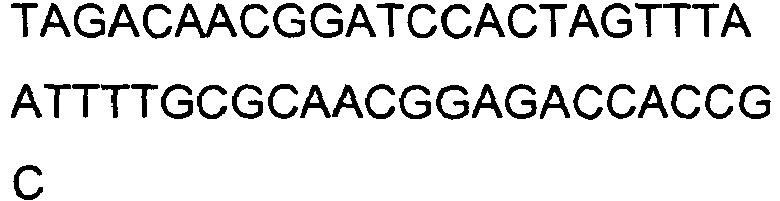
ilvC reverse 151 T-BD64 (DraIII) 
pBD64 forward 152 B-BD64 (DraIII) 
pBD64 reverse 153 
T-laclq (DraIII) 
laclq forward 154 B-laclq (DraIII) 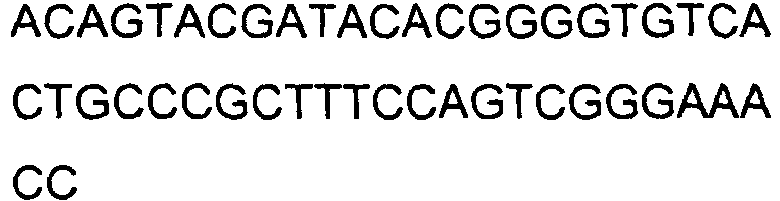
laclq reverse 155 T-groE (Dralll) 
PgroE forward 156 B-B.s.ilvC (DraIII) 
ilvC reverse 157 T-bdhB (DraIII) 
bdhB forward 159 B-bdhB (rrnBT1DraIII) 
bdhB reverse 160 LDH EcoRV F 
IdhL forward 161 LDH AatIIR 
IdhL reverse 162 Cm F 
Cm forward 163 Cm R 
Cm reverse 164 P11 F-Stul 
P11 promoter forward 165 P11 R-Spel 
P11 promoter reverse 166 PldhL F-HindIII 
IdhL forward 167 PldhL R- 
IdhL reverse 168 BamHI 
F-bdhB-AvrII 
bdhB forward 169 R-bdhB-BamHl 
bdhB reverse 170 F-ilvC(B.s.)-AfIII 
ilvC forward 171 R-ilvC(B.s.)-Notl 
ivIC reverse 172 F-PnisA(Hindlll) 
nisA promoter forward 173 R-PnisA(Spel BamHI) 
nisA promoter reverse 174 - The concentration of isobutanol in the culture media can be determined by a number of methods known in the art. For example, a specific high performance liquid chromatography (HPLC) method utilized a Shodex SH-1011 column with a Shodex SH-G guard column, both purchased from Waters Corporation (Milford, MA), with refractive index (RI) detection. Chromatographic separation was achieved using 0.01 M H2SO4 as the mobile phase with a flow rate of 0.5 mL/min and a column temperature of 50 °C. Isobutanol had a retention time of 46.6 min under the conditions used. Alternatively, gas chromatography (GC) methods are available. For example, a specific GC method utilized an HP-INNOWax column (30 m x 0.53 mm id, 1 µm film thickness, Agilent Technologies, Wilmington, DE), with a flame ionization detector (FID). The carrier gas was helium at a flow rate of 4.5 mL/min, measured at 150 °C with constant head pressure; injector split was 1:25 at 200 °C; oven temperature was 45 °C for 1 min, 45 to 220 °C at 10 °C/min, and 220 °C for 5 min; and FID detection was employed at 240 °C with 26 mL/min helium makeup gas. The retention time of isobutanol was 4.5 min.
- The meaning of abbreviations is as follows: "s" means second(s), "min" means minute(s), "h" means hour(s), "psi" means pounds per square inch, "nm" means nanometers, "d" means day(s), "µL" means microliter(s), "mL" means milliliter(s), "L" means liter(s), "mm" means millimeter(s), "nm" means nanometers, "mM" means millimolar, "µM" means micromolar, "M" means molar, "mmol" means millimole(s), "µmol" means micromole(s)", "g" means gram(s), "µg" means microgram(s) and "ng" means nanogram(s), "PCR" means polymerase chain reaction, "OD" means optical density, "OD600" means the optical density measured at a wavelength of 600 nm, "kDa" means kilodaltons, "g" means the gravitation constant, "bp" means base pair(s), "kbp" means kilobase pair(s), "% w/v" means weight/volume percent, % v/v" means volume/volume percent, "IPTG" means isopropyl-β-D-thiogalactopyranoiside, "RBS" means ribosome binding site, "nt" means not tested, "HPLC" means high performance liquid chromatography, and "GC" means gas chromatography. The term "molar selectivity" is the number of moles of product produced per mole of sugar substrate consumed and is reported as a percent.
- Tolerance levels of bacterial strain Lactobacillus plantarum PN0512 (ATCC # PTA-7727) were determined at 25 °C, 30 °C and 37 °C as follows. The strain was cultured in S30L medium (i.e., 10 mM ammonium sulfate, 5 mM potassium phosphate buffer, pH 7.0, 50 mM MOPS, pH 7.0, 2 mM MgCl2, 0.7 mM CaCl2, 50 µM MnCl2, 1 µM FeCl3, 1 µM ZnCl2, 1.72 µM CuCl2, 2.53 µM CoCl2, 2.42 µM Na2MoO4, 2 µM thiamine hydrochloride, 10 mM glucose, and 0.2% yeast extract). An overnight culture in the absence of any test compound was started in 15 mL of the S30L medium in a 150 mL flask, with incubation at 37 °C in a shaking water bath. The next morning, the overnight culture was diluted into three 500 mL flasks containing 150 mL of fresh medium to an initial OD600 of about 0.08. Each flask was incubated in a shaking water bath, one each at 25 °C, 30 °C and 37 °C. Each large culture was allowed to acclimate at the test temperature for at least 0.5 h. After the acclimation period, each large culture was split into flasks in the absence (control) and in the presence of various amounts of 1-butanol, isobutanol or 2-butanol, as listed in Tables 5, 6, and 7, respectively. Growth was followed by measuring OD600 for six hours after addition of the compounds. The results are summarized in Tables 5, 6, and 7 below.
Table 5. Growth of L. plantarum PN0512 in the presence of 1-butanol at different temperatures Concentration 1-butanol (% w/v) 37 °C 30 °C 25 °C 0.0 + + + 1.0 + nt nt 1.2 + nt nt 1.4 + nt nt 1.5 + + + 1.6 + nt nt 1.8 + nt nt 2.0 + + + 2.1 + nt nt 2.2 + nt nt 2.3 + nt nt 2.4 - + + 2.5 - nt nt 2.7 - + nt 2.9 - - + 3.1 - - + 3.2 nt - - 3.3 nt nt - 3.4 nt - - Table 6. Growth of L. plantarum PN0512 in the presence of isobutanol at different temperatures Concentration isobutanol (% w/v) 37 °C 30 °C 25 °C 0.0 + + + 0.5 + nt nt 1.0 + nt nt 1.5 + + + 1.6 + nt nt 1.8 + nt nt 2.0 + + + 2.1 + nt nt 2.3 + nt nt 2.4 + + + 2.5 + nt nt 2.7 + + + 2.9 + + + 3.1 + + + 3.3 nt - + 3.4 - nt nt 3.5 nt nt + 3.6 nt nt - 3.8 - nt nt 4.3 - nt nt Table 7. Growth of L. plantarum PN0512 in the presence of 2-butanol at different temperatures Concentration 2-butanol (% w/v) 37 °C 30 °C 25 °C 0.0 + + + 1.8 + nt nt 2.1 + nt nt 2.5 + nt nt 2.9 + + + 3.1 + nt nt 3.5 + nt nt 3.6 + nt nt 3.8 + + + 4.0 nt + nt 4.3 + + + 4.5 - + nt 4.7 - + + 4.9 nt - + 5.2 - nt + 5.6 - nt - 6.0 - nt nt 6.4 - nt nt 7.3 - nt nt "+" = growth observed as an increase in OD600.
"-" = no growth observed, i.e. no change in OD600. - All three butanols showed a similar effect of temperature on growth inhibition of L. plantarum PN0512. The concentration that resulted in full growth inhibition was greater at 25 °C than at 37 °C. In the case of 1-butanol, growth was observed at 37 °C in 2.3% 1-butanol, but not 2.4%. However, at 30 °C growth was observed in 2.7%, but not 2.9%, and at 25 °C growth was observed even in 3.1% 1-butanol. Thus, the concentration of 1-butanol that completely inhibited growth increased as growth temperature decreased. Likewise, in the case of isobutanol, growth was observed in 3.5% at 25 °C while growth was observed in 3.1% at 30 °C and 37 °C, but not in 3.3% or 3.4%. Similarly, in the case of 2-butanol growth was observed at 37 °C in 4.3%, but not in 4.5%; at 30 °C in 4.7%, but not in 4.9%; and at 25 °C in 5.2 %. Thus the tolerance of L. plantarum PN0512 to butanols increased with decreased growth temperature.
- The effect of growth and exposure temperature on survival of Escherichia coli in the presence of 1-butanol was tested using stationary phase cultures in a rich medium and log phase cultures in a defined medium. For the stationary phase studies, E. coli strain MG1655 (ATCC # 700926) was grown overnight in LB medium (Teknova, Half Moon Bay, CA) with shaking at 250 rpm at 42 °C, 29 °C or 28 °C. Survival of 1-butanol shock was tested at exposure temperatures of 0 °C, 28 °C or 42 °C. The 1-butanol exposure at 28 °C or 42 °C was started immediately after removing the overnight cultures from the growth incubators. The 1-butanol exposure at 0 °C was done after allowing the overnight cultures to cool on ice for about 15 min. A series of solutions of 1-butanol at different concentrations in LB medium was made and 90 µL aliquots were put in microfuge tubes. To these were added 10 µL of the overnight cultures and the tubes were immediately placed in shaking incubators at 42 °C or 28 °C or left on ice for 30 min. To stop the effect of 1-butanol on the cultures, a 10-2 dilution was done by placing 2 µL of the treated culture into 198 µL of LB medium in wells of a microplate. Then, 5 µL of the undiluted treated cultures were spotted on LB agar plates. Subsequent 10-fold serial dilutions of 10-3, 10-4, 10-5 and 10-6 of the exposed cultures were done by serial pipetting of 20 µL, starting with the 10-2 dilution cultures, into 180 µL of LB medium in the microplate, using a multi-channel pipette. Prior to each transfer, the cultures were mixed by pipetting up and down six times. Each dilution (5 µL) was spotted onto an LB plate using a multi-channel pipette and allowed to soak into the plate. The plates were inverted and incubated overnight at 37 °C. The number of colonies for each dilution was counted and the % growth inhibition was calculated by comparison with a control culture that had not been exposed to 1-butanol. Survival of 0% was recorded when no colonies in the spots of the undiluted or any of the serial dilutions were observed. The results are shown in Table 8.
Table 8. Survival of stationary phase E. coli in 1-butanol at 42 °C, 28 °C, or 0 °C Grown at 42 °C Grown at 29 °C Grown at 42 °C Grown at 28 °C Grown at 42 °C Grown at 29 °C 1-Butanol % (w/v) % survival after 30 min exposure at 42 °C % survival after 30 min exposure at 28 °C % survival after 30 min exposure at 0 °C 1.0 100 100 100 100 100 100 1.5 0.1 0.1 100 100 100 100 2.0 0 0.1 100 100 100 100 2.5 0 0 100 100 100 100 3.0 0 0 100 100 100 100 3.5 0 0 3 10 100 100 4.0 0 0 0.0004 0.0003 100 100 5.0 nt nt nt nt 1 1 6.0 nt nt nt nt 0 0.001 7.0 nt nt nt nt 0 0 - A similar study was done with log-phase cultures of E. coli grown in a defined medium. E. coli strain MG1655 was allowed to grow overnight in MOPS 0.2% glucose medium (Teknova, Half Moon Bay, CA) at 42 °C or 28 °C. The following day, the cultures were diluted into fresh medium and allowed to grow at the same temperature until in the log phase of growth. The OD600 was 0.74 for the 28 °C culture and was 0.72 for the 42 °C culture. Both of these log phase cultures were exposed to 1-butanol at 42 °C, 28 °C and 0 °C as follows. A series of solutions of 1-butanol at different concentrations in MOPS 0.2% glucose medium was made and 90 µL aliquots were put in microfuge tubes. To these were added 10 µL of the log phase cultures and the tubes were immediately placed in shaking incubators at 42 °C or 28 °C or left on ice for 30 min. To stop the effect of 1-butanol on the cultures, a 10-2 dilution was done by placing 2 µL of the treated culture into 198 µL of LB medium in wells of a microplate. Then 5 µL of the undiluted treated cultures were spotted on LB agar plates. Subsequent 10-fold serial dilutions of 10-3, 10-4, 10-5 and 10-6 of the exposed cultures were done by serial pipetting of 20 µL, starting with the 10-2 dilution cultures, into 180 µL of LB medium in the microplate, using a multi-channel pipette. Prior to each transfer, the cultures were mixed by pipetting up and down six times. Each dilution (5 µL) was spotted onto an LB plate using a multi-channel pipette and allowed to soak into the plate. The plates were inverted and incubated overnight at 37 °C. The number of colonies for each dilution was counted and the % growth inhibition was calculated by comparison with a control culture that had not been exposed to 1-butanol. Survival of 0% was recorded when no colonies in the spots of the undiluted or any of the serial dilutions were observed. The results are shown in Table 9.
Table 9. Survival of log-phase E. coli in 1-butanol at 42 °C, 28 °C, or 0 °C Grown at 42 °C Grown at 28 °C Grown at 42 °C Grown at 28 °C Grown at 42 °C Grown at 29 °C 1-Butanol % (w/v) % survival after 30 min exposure at 42 °C % survival after 30 min exposure at 28 °C % survival after 30 min exposure at 0 °C 1.0 100 100 nt nt nt nt 1.5 0 0 100 100 nt nt 2.0 0 0 100 100 nt nt 2.5 0 0 0.1 50 100 100 3.0 0 0 0 0 100 100 3.5 0 0 0.01 0 100 100 4.0 0 0 0.001 0 100 100 4.5 nt nt 0 0 100 100 5.0 nt nt nt nt 10 50 6.0 nt nt nt nt 1 1 - For both the stationary phase and log-phase cultures of E. coli MG1655, the growth temperature had very little, if any, effect on the survival of a 1-butanol shock. However, the exposure temperature had a major effect on the survival of E. coli to 1-butanol shock. As can be seen from the data in Tables 8 and 9, the tolerance of E. coli MG1655 to 1-butanol increased with decreasing exposure temperature.
- The effect of exposure temperature on survival of Escherichia coli in the presence of 2-butanone (also referred to herein as methyl ethyl ketone or MEK) was tested as follows. E. coli strain BW25113 (The Coli Genetic Stock Center (CGSC), Yale University; # 7636) was grown overnight in LB medium (Teknova, Half Moon Bay, CA) with shaking at 250 rpm at 37 °C. Survival of MEK shock was tested at exposure temperatures of 28 °C or 37 °C. A series of solutions of MEK at different concentrations in LB medium was made and 90 µL aliquots were put in microfuge tubes. To these were added 10 µL of the overnight culture and the tubes were immediately placed in shaking incubators at 37 °C or 28 °C for 30 min. To stop the effect of MEK on the cultures, a 10-2 dilution was done by placing 2 µL of the MEK treated culture into 198 µL of LB medium in wells of a microplate. Then 5 µL of the undiluted treated cultures were spotted on LB agar plates. Subsequent 10-fold serial dilutions of 10-3, 10-4, 10-5 and 10-6 of the exposed cultures were done by serial pipetting of 20 µL, starting with the 10-2 dilution cultures, into 180 µL of LB medium in the microplate, using a multi-channel pipette. Prior to each transfer, the cultures were mixed by pipetting up and down six times. Each dilution (5 µL) was spotted onto LB plates using a multi-channel pipette and allowed to soak into the plate. The plates were inverted and incubated overnight at 37 °C. The number of colonies for each dilution was counted and the % growth inhibition was calculated by comparison with a control culture that had not been exposed to MEK. Survival of 0% was recorded when no colonies in the spots of the undiluted or any of the serial dilutions were observed. The results, given as the average of duplicate experiments, are shown in Table 10.
Table 10. Survival of E. coli in MEK at 37 °C and 28 °C MEK % w/v % Survival at 37 °C % Survival at 28 °C 0 100 100 4 100 100 6 0 100 8 0 0.002 - Reducing the exposure temperature from 37 °C to 28 °C dramatically improved survival of E. coli to MEK treatment. At 37 °C there was full survival at 4% w/v and no survival at 6% w/v, while at 28 °C there was full survival at 6% w/v. Thus, the tolerance of E. coli to MEK increased with decreasing exposure temperature.
- This Example demonstrates that the toxic effects of 1-butanol and 2-butanol on various microbial cells was reduced at lower temperatures. This was demonstrated by incubating E. coli (strain MG1655; ATCC # 700926), and L. plantarum (strain PN0512; ATCC # PTA-7727) with either 1-butanol or 2-butanol at different temperatures and then determining the fraction of the cells that survived the treatment at the different temperatures.
- Using overnight cultures or cells from plates, 30 mL cultures of the microorganisms to be tested were started in the following culture media:
- E. coli - Miller's LB medium (Teknova, Half Moon Bay, CA):
- L. plantarum PN0512 - Lactobacilli MRS Broth (BD Diagnostic Systems, Sparks, MD).
- The results of experiments in which E. coli cells were treated with 1-butanol at temperatures of 0, 30, and 37 °C are shown Table 11.
Table 11. Percentage of E. coli cells surviving in 1-butanol at 0, 30 and 37 °C 1-butanol % v/v % Survival at 0 °C % Survival at 30 °C % Survival at 37 °C 0 100 100 100 1 nt 100 72 1.5 nt 100 20 2 nt 100 0 2.5 100 23 0 3 100 0 0 3.5 100 0 nt 4 100 nt nt 4.5 100 nt nt - The concentration at which 1-butanol kills E. coli cells was affected by the treatment temperature. At 0 °C, concentrations of 1-butanol as high as 4.5% v/v had no toxic effect on E. coli cells during a one hour treatment. At 30 °C, E. coli cells were killed when treated with 3% v/v 1-butanol for one hour. At 37 °C, E. coli cells were killed when treated with 2% v/v 1-butanol for one hour.
- The results of experiments in which L. plantarum PN0512 cells were treated with 1-butanol at temperatures of 0, 23, and 37 °C for one hour are shown Table 12.
Table 12. Percentage of L. plantarum PN0512 cells surviving in 1-butanol at 0, 23 and 37 °C 1-butanol % v/v % Survival at 0 °C % Survival at 23 °C % Survival at 37 °C 0 100 100 100 1 nt nt 80 1.5 nt nt 58 2 nt 100 29 2.5 nt 100 8 3 100 82 0 3.5 100 0 0 4 100 0 nt 4.5 100 0 nt 5 0 nt nt 5.5 0 nt nt - The concentration at which 1-butanol kills L. plantarum PN0512 cells was affected by the treatment temperature. At 0 °C, concentrations of 1-butanol as high as 4.5% v/v had no toxic effect on L. plantarum PN0512 cells during a one hour treatment. At 23 °C, L. plantarum PN0512 cells were killed when treated with 3.5% v/v 1-butanol for one hour. At 37 °C, L. plantarum PN0512 cells were killed when treated with 2.5 % v/v 1-butanol for one hour.
- The purpose of this Example was to clone the budB gene from Klebsiella pneumoniae and express it in E. coli BL21-Al. The budB gene was amplified from Klebsiella pneumoniae strain ATCC 25955 genomic DNA using PCR, resulting in a 1.8 kbp product.
- Genomic DNA was prepared using the Gentra Puregene kit (Gentra Systems, Inc., Minneapolis, MN; catalog number D-5000A). The budB gene was amplified from Klebsiella pneumoniae genomic DNA by PCR using primers N80 and N81 (see Table 2), given as SEQ ID NOs:11 and 12, respectively. Other PCR amplification reagents were supplied in manufacturers' kits, for example, Finnzymes Phusion™ High-Fidelity PCR Master Mix (New England Biolabs Inc., Beverly, MA; catalog no. F-531) and used according to the manufacturer's protocol. Amplification was carried out in a DNA Thermocycler GeneAmp 9700 (PE Applied Biosystems, Foster city, CA).
- For expression studies the Gateway cloning technology (Invitrogen Corp., Carlsbad, CA) was used. The entry vector pENTRSDD-TOPO allowed directional cloning and provided a Shine-Dalgarno sequence for the gene of interest. The destination vector pDEST14 used a T7 promoter for expression of the gene with no tag. The forward primer incorporated four bases (CACC) immediately adjacent to the translational start codon to allow directional cloning into pENTRSDD-TOPO (Invitrogen) to generate the plasmid pENTRSDD-TOPObudB. The pENTR construct was transformed into E. coli Top10 (Invitrogen) cells and plated according to manufacturer's recommendations. Transformants were grown overnight and plasmid DNA was prepared using the QIAprep Spin Miniprep kit (Qiagen, Valencia, CA; catalog no. 27106) according to manufacturer's recommendations. Clones were sequenced to confirm that the genes inserted in the correct orientation and to confirm the sequence. The nucleotide sequence of the open reading frame (ORF) for this gene and the predicted amino acid sequence of the enzyme are given as SEQ ID NO:1 and SEQ ID NO:2, respectively.
- To create an expression clone, the budB gene was transferred to the pDEST 14 vector by recombination to generate pDEST14budB. The pDEST14budB vector was transformed into E. coli BL21-Al cells (Invitrogen). Transformants were inoculated into Luria Bertani (LB) medium supplemented with 50 µg/mL of ampicillin and grown overnight. An aliquot of the overnight culture was used to inoculate 50 mL of LB supplemented with 50 µg/mL of ampicillin. The culture was incubated at 37 °C with shaking until the OD600 reached 0.6-0.8. The culture was split into two 25-mL cultures and arabinose was added to one of the flasks to a final concentration of 0.2% w/v. The negative control flask was not induced with arabinose. The flasks were incubated for 4 h at 37 °C with shaking. Cells were harvested by centrifugation and the cell pellets were resuspended in 50 mM MOPS, pH 7.0 buffer. The cells were disrupted either by sonication or by passage through a French Pressure Cell. The whole cell lysate was centrifuged yielding the supernatant or cell free extract and the pellet or the insoluble fraction. An aliquot of each fraction (whole cell lysate, cell free extract and insoluble fraction) was resuspended in SDS (MES) loading buffer (Invitrogen), heated to 85 °C for 10 min and subjected to SDS-PAGE analysis (NuPAGE 4-12% Bis-Tris Gel, catalog no. NP0322Box, Invitrogen). A protein of the expected molecular weight of about 60 kDa, as deduced from the nucleic acid sequence, was present in the induced culture but not in the uninduced control.
- Acetolactate synthase activity in the cell free extracts is measured using the method described by Bauerle et al. (Biochim. Biophys. Acta 92(1):142-149 (1964)).
- The purpose of this prophetic Example is to describe how to clone the ilvc gene from E. coli K12 and express it in E. coli BL21-Al. The ilvC gene is amplified from E. coli genomic DNA using PCR.
- The ilvC gene is cloned and expressed in the same manner as the budB gene described in Example 5. Genomic DNA from E. coli is prepared using the Gentra Puregene kit (Gentra Systems, Inc., Minneapolis, MN; catalog number D-5000A). The ilvC gene is amplified by PCR using primers N100 and N101 (see Table 2), given as SEQ ID NOs:13 and 14, respectively, creating a 1.5 kbp product. The forward primer incorporates four bases (CCAC) immediately adjacent to the translational start codon to allow directional cloning into pENTR/SD/D-TOPO (Invitrogen) to generate the plasmid pENTRSDD-TOPOilvC. Clones are sequenced to confirm that the genes are inserted in the correct orientation and to confirm the sequence. The nucleotide sequence of the open reading frame (ORF) for this gene and the predicted amino acid sequence of the enzyme are given as SEQ ID NO:3 and SEQ ID NO:4, respectively.
- To create an expression clone, the ilvC gene is transferred to the pDEST 14 (Invitrogen) vector by recombination to generate pDEST1 4ilvC. The pDEST14ilvC vector is transformed into E. coli BL21-Al cells and expression from the T7 promoter is induced by addition of arabinose. A protein of the expected molecular weight of about 54 kDa, as deduced from the nucleic acid sequence, is present in the induced culture, but not in the uninduced control.
- Acetohydroxy acid reductoisomerase activity in the cell free extracts is measured using the method described by Arfin and Umbarger (J. Biol. Chem. 244(5):1118-1127 (1969)).
- The purpose of this prophetic Example is to describe how to clone the ilvD gene from E. coli K12 and express it in E. coli BL21-Al. The ilvD gene is amplified from E. coli genomic DNA using PCR.
- The ilvD gene is cloned and expressed in the same manner as the budB gene described in Example 5. Genomic DNA from E. coli is prepared using the Gentra Puregene kit (Gentra Systems, Inc., Minneapolis, MN; catalog number D-5000A). The ilvD gene is amplified by PCR using primers N102 and N103 (see Table 2), given as SEQ ID NOs:15 and 16, respectively, creating a 1.9 kbp product. The forward primer incorporates four bases (CCAC) immediately adjacent to the translational start codon to allow directional cloning into pENTR/SD/D-TOPO (Invitrogen) to generate the plasmid pENTRSDD-TOPOilvD. Clones are submitted for sequencing to confirm that the genes are inserted in the correct orientation and to confirm the sequence. The nucleotide sequence of the open reading frame (ORF) for this gene and the predicted amino acid sequence of the enzyme are given as SEQ ID NO:5 and SEQ ID NO:6, respectively.
- To create an expression clone, the ilvD gene is transferred to the pDEST 14 (Invitrogen) vector by recombination to generate pDEST14ilvD. The pDEST14ilvD vector is transformed into E. coli BL21-Al cells and expression from the T7 promoter is induced by addition of arabinose. A protein of the expected molecular weight of about 66 kDa, as deduced from the nucleic acid sequence, is present in the induced culture, but not in the uninduced control.
- Acetohydroxy acid dehydratase activity in the cell free extracts is measured using the method described by Flint et al. (J. Biol. Chem. 268(20):14732-14742 (1993)).
- The purpose of this prophetic example is to describe how to clone the kivD gene from Lactococcus lactis and express it in E. coli BL21-Al.
- A DNA sequence encoding the branched-chain keto acid decarboxylase (kivD) from L. lactis is obtained from GenScript (Piscataway, NJ). The sequence obtained is codon-optimized for expression in both E. coli and B. subtilis and is cloned into pUC57, to form pUC57-kivD. The codon-optimized nucleotide sequence of the open reading frame (ORF) for this gene and the predicted amino acid sequence of the enzyme are given as SEQ ID NO:7 and SEQ ID NO:8, respectively.
- To create an expression clone Ndel and BamHI restriction sites are utilized to clone the 1.7 kbp kivD fragment from pUC57-kivD into vector pET-3a (Novagen, Madison, WI). This creates the expression clone pET-3a-kivD. The pET-3a-kivD vector is transformed into E. coli BL21-Al cells and expression from the T7 promoter is induced by addition of arabinose. A protein of the expected molecular weight of about 61 kDa, as deduced from the nucleic acid sequence, is present in the induced culture, but not in the uninduced control.
- Branched-chain keto acid decarboxylase activity in the cell free extracts is measured using the method described by Smit et al. (Appl. Microbiol. Biotechnol. 64:396-402 (2003)).
- The purpose of this prophetic Example is to describe how to clone the yqhD gene from E. coli K12 and express it in E. coli BL21-Al. The yqhD gene is amplified from E. coli genomic DNA using PCR.
- The yqhD gene is cloned and expressed in the same manner as the budB gene described in Example 5. Genomic DNA from E. coli is prepared using the Gentra Puregene kit (Gentra Systems, Inc., Minneapolis, MN; catalog number D-5000A). The yqhD gene is amplified by PCR using primers N104 and N105 (see Table 2), given as SEQ ID NOs:17 and 18, respectively, creating a 1.2 kbp product. The forward primer incorporates four bases (CCAC) immediately adjacent to the translational start codon to allow directional cloning into pENTR/SD/D-TOPO (Invitrogen) to generate the plasmid pENTRSDD-TOPOyqhD. Clones are submitted for sequencing to confirm that the genes are inserted in the correct orientation and to confirm the sequence. The nucleotide sequence of the open reading frame (ORF) for this gene and the predicted amino acid sequence of the enzyme are given as SEQ ID NO 9 and SEQ ID NO:10, respectively.
- To create an expression clone, the yqhD gene is transferred to the pDEST 14 (Invitrogen) vector by recombination to generate pDEST14yqhD. The pDEST14ilvD vector is transformed into E. coli BL21-Al cells and expression from the T7 promoter is induced by addition of arabinose. A protein of the expected molecular weight of about 42 kDa, as deduced from the nucleic acid sequence, is present in the induced culture, but not in the uninduced control.
- Branched-chain alcohol dehydrogenase activity in the cell free extracts is measured using the method described by Sulzenbacher et al. (J. Mol. Biol. 342(2):489-502 (2004)).
- The purpose of this prophetic Example is to describe how to construct a transformation vector comprising the genes encoding the five steps in an isobutanol biosynthetic pathway. All genes are placed in a single operon under the control of a single promoter. The individual genes are amplified by PCR with primers that incorporate restriction sites for later cloning and the forward primers contain an optimized E. coli ribosome binding site (AAAGGAGG). PCR products are TOPO cloned into the pCR 4Blunt-TOPO vector and transformed into E. coli Top10 cells (Invitrogen). Plasmid DNA is prepared from the TOPO clones and the sequence of the genes is verified. Restriction enzymes and T4 DNA ligase (New England Biolabs, Beverly, MA) are used according to manufacturer's recommendations. For cloning experiments, restriction fragments are gel-purified using QIAquick Gel Extraction kit (Qiagen). After confirmation of the sequence, the genes are subcloned into a modified pUC19 vector as a cloning platform. The pUC19 vector is modified by HindIII/Sapl digestion, creating pUC19dHS. The digest removes the lac promoter adjacent to the MCS (multiple cloning site), preventing transcription of the operons in the vector.
- The budB gene is amplified from K. pneumoniae ATCC 25955 genomic DNA by PCR using primer pair N110 and N111 (see Table 2), given as SEQ ID NOs:19 and 20, respectively, creating a 1.8 kbp product. The forward primer incorporates SphI and AfIII restriction sites and a ribosome binding site (RBS). The reverse primer incorporates PacI and NsiI restriction sites. The PCR product is cloned into pCR4 Blunt-TOPO creating pCR4 Blunt-TOPO-budB. Plasmid DNA is prepared from the TOPO clones and the sequence of the gene is verified.
- The ilvC gene is amplified from E. coli K12 genomic DNA by PCR using primer pair N112 and N113 (see Table 2) given as SEQ ID NOs:21 and 22, respectively, creating a 1.5 kbp product. The forward primer incorporates SalI and NheI restriction sites and a RBS. The reverse primer incorporates a XbaI restriction site. The PCR product is cloned into pCR4 Blunt-TOPO creating pCR4 Blunt-TOPO-ilvC. Plasmid DNA is prepared from the TOPO clones and the sequence of the gene is verified.
- The ilvD gene is amplified from E. coli K12 genomic DNA by PCR using primer pair N114 and N115 (see Table 2) given as SEQ ID NOs:23 and 24, respectively, creating a 1.9 kbp product. The forward primer incorporates a XbaI restriction site and a RBS. The reverse primer incorporates a BamHI restriction site. The PCR product is cloned into pCR4 Blunt-TOPO creating pCR4 Blunt-TOPO-ilvD. Plasmid DNA is prepared from the TOPO clones and the sequence of the gene is verified.
- The kivD gene is amplified from pUC57-kivD (described in Example 8) by PCR using primer pair N116 and N117 (see Table 2), given as SEQ ID NOs:25 and 26, respectively, creating a 1.7 bp product. The forward primer incorporates a BamHI restriction site and a RBS. The reverse primer incorporates a SacI restriction site. The PCR product is cloned into pCR4 Blunt-TOPO creating pCR4 Blunt-TOPO-kivD. Plasmid DNA is prepared from the TOPO clones and the sequence of the gene is verified.
- The yqhD gene is amplified from E. coli K12 genomic DNA by PCR using primer pair N118 and N119 (see Table 2) given as SEQ ID NOs:27 and 28, respectively, creating a 1.2 kbp product. The forward primer incorporates a Sacl restriction site. The reverse primer incorporates Spel and EcoRI restriction sites. The PCR product is cloned into pCR4 Blunt-TOPO creating pCR4 Blunt-TOPO-yqhD. Plasmid DNA is prepared from the TOPO clones and the sequence of the gene is verified.
- To construct the isobutanol pathway operon, the yqhD gene is excised from pCR4 Blunt-TOPO-yqhD with SacI and EcoRI, releasing a 1.2 kbp fragment. This is ligated with pUC19dHS, which has previously been digested with SacI and EcoRI. The resulting clone, pUC19dHS-yqhD, is confirmed by restriction digest. Next, the ilvC gene is excised from pCR4 Blunt-TOPO-ilvC with SalI and Xbal, releasing a 1.5 kbp fragment. This is ligated with pUC19dHS-yqhD, which has previously been digested with SalI and Xbal. The resulting clone, pUC19dHS-ilvC-yqhD, is confirmed by restriction digest. The budB gene is then excised from pCR4 Blunt-TOPO-budB with Sphl and Nsil, releasing a 1.8 kbp fragment. pUC19dHS-ilvC-yqhD is digested with Sphl and PstI and ligated with the SphI/NsiI budB fragment (Nsil and PstI generate compatible ends), forming pUC19dHS-budB-ilvC-yqhD. A 1.9 kbp fragment containing the ilvD gene is excised from pCR4 Blunt-TOPO-ilvD with Xbal and BamHI and ligated with pUC19dHS-budB-ilvC-yqhD, which is digested with these same enzymes, forming pUC19dHS-budB-ilvC-ilvD-yqhD. Finally, kivD is excised from pCR4 Blunt-TOPO-kivD with BamHI and SacI, releasing a 1.7 kbp fragment. This fragment is ligated with pUC19dHS-budB-ilvC-ilvD-yqhD, which has previously been digested with BamHI and Sacl, forming pUC19dHS-budB-ilvC-ilvD-kivD-yqhD.
- The pUC19dHS-budB-ilvC-ilvD-kivD-yqhD vector is digested with AflII and Spel to release a 8.2 kbp operon fragment that is cloned into pBenAS, an E.coli-B. subtilis shuttle vector. Plasmid pBenAS is created by modification of the pBE93 vector, which is described by Nagarajan, (
WO 93/24631 - The purpose of this prophetic Example is to describe how to express an isobutanol biosynthetic pathway in E. coli.
- The plasmid pBen-budB-ilvC-ilvD-kivD-yqhD, constructed as described in Example 10, is transformed into E. coli NM522 (ATCC No. 47000) to give E. coli strain NM522/pBen-budB-ilvC-ilvD-kivD-yqhD and expression of the genes in the operon is monitored by SDS-PAGE analysis, enzyme assay and Western blot analysis. For Western blots, antibodies are raised to synthetic peptides by Sigma-Genosys (The Woodlands, TX).
- E. coli strain NM522/pBen-budB-ilvC-ilvD-kivD-yqhD is inoculated into a 250 mL shake flask containing 50 mL of medium and shaken at 250 rpm and 35 °C. The medium is composed of: glucose (5 g/L), MOPS (0.05 M), ammonium sulfate (0.01 M), potassium phosphate, monobasic (0.005 M), S10 metal mix (1% (v/v)) yeast extract (0.1% (w/v)), casamino acids (0.1% (w/v)), thiamine (0.1 mg/L), proline (0.05 mg/L), and biotin (0.002 mg/L), and is titrated to pH 7.0 with KOH. S10 metal mix contains: MgCl2 (200 mM), CaCl2 (70 mM), MnCl2 (5 mM), FeCl3 (0.1 mM), ZnCl2 (0.1 mM), thiamine hydrochloride (0.2 mM), CuSO4 (172 µM), CoCl2 (253 µM), and Na2MoO4 (242 µM). After 18 h, isobutanol is detected by HPLC or GC analysis, using methods that are well known in the art, for example, as described in the General Methods section above.
- The purpose of this prophetic Example is to describe how to express an isobutanol biosynthetic pathway in Bacillus subtilis. The same approach as described in Example 11 is used.
- The plasmid pBen-budB-ilvC-ilvD-kivD-yqhD, constructed as described in Example 10, is used. This plasmid is transformed into Bacillus subtilis BE1010 (J. Bacteriol. 173:2278-2282 (1991)) to give B. subtilis strain BE1010/pBen-budB-ilvC-ilvD-kivD-yqhD and expression of the genes in each operon is monitored as described in Example 11.
- B. subtilis strain BE1010/pBen-budB-ilvC-ilvD-kivD-yqhD is inoculated into a 250 mL shake flask containing 50 mL of medium and shaken at 250 rpm and 35 °C for 18 h. The medium is composed of: dextrose (5 g/L), MOPS (0.05 M), glutamic acid (0.02 M), ammonium sulfate (0.01 M), potassium phosphate, monobasic buffer (0.005 M), S10 metal mix (as described in Example 11, 1 % (v/v)), yeast extract (0.1 % (w/v)), casamino acids (0.1% (w/v)), tryptophan (50 mg/L), methionine (50 mg/L), and lysine (50 mg/L), and is titrated to pH 7.0 with KOH. After 18 h, isobutanol is detected by HPLC or GC analysis using methods that are well known in the art, for example, as described in the General Methods section above.
- To create another acetolactate synthase expression clone, the budB gene was cloned into the vector pTrc99A. The budB gene was first amplified from pENTRSDD-TOPObudB (described in Example 5) using primers (N110.2 and N111.2, given as SEQ ID NOs:31 and 32, respectively) that introduced SacI, Spel and Mfel sites at the 5' end and BbvCI, AflII, and BamHI sites at the 3' end. The resulting 1.75 kbp PCR product was cloned into pCR4-Blunt TOPO (Invitrogen) and the DNA sequence was confirmed (using N130Seq sequencing primers F1-F4 and R1-R4, given as SEQ ID NOs:40-47, respectively). The budB gene was then excised from this vector using SacI and BamHI and cloned into pTrc99A (Amann et al. Gene 69(2):301-315 (1988)), generating pTrc99A::budB. The pTrc99A::budB vector was transformed into E. coli TOP10 cells and the transformants were inoculated into LB medium supplemented with 50 µg/mL of ampicillin and grown overnight at 37 °C. An aliquot of the overnight culture was used to inoculate 50 mL of LB medium supplemented with 50 µg/mL of ampicillin. The culture was incubated at 37 °C with shaking until the OD600 reached 0.6 to 0.8. Expression of budB from the Trc promoter was then induced by the addition of 0.4 mM IPTG. Negative control flasks were also prepared that were not induced with IPTG. The flasks were incubated for 4 h at 37 °C with shaking. Cell-free extracts were prepared as described in Example 5.
- Acetolactate synthase activity in the cell free extracts was measured as described in Example 5. Three hours after induction with IPTG, an acetolactate synthase activity of 8 units/mg was detected. The control strain carrying only the pTrc99A plasmid exhibited 0.03 units/mg of acetolactate synthase activity.
- The purpose of this Example was to clone the ilvC gene from E. coli K12 and express it in E. coli TOP10. The ilvC gene was amplified from E. coli K12 strain FM5 (ATCC 53911) genomic DNA using PCR.
- The ilvC gene was cloned and expressed in a similar manner as described for the cloning and expression of ilvC in Example 6 above. PCR was used to amplify ilvC from the E. coli FM5 genome using primers N112.2 and N113.2 (SEQ ID NOs:33 and 34, respectively). The primers created SacI and AfllII sites and an optimal RBS at the 5' end and Notl, NheI and BamHI sites at the 3' end of ilvC. The 1.5 kbp PCR product was cloned into pCR4Blunt TOPO according to the manufacturer's protocol (Invitrogen) generating pCR4Blunt TOPO::ilvC. The sequence of the PCR product was confirmed using sequencing primers (N131SeqF1-F3, and N131SeqR1-R3, given as SEQ ID NOs:48-53, respectively). To create an expression clone, the ilvC gene was excised from pCR4Blunt TOPO::ilvC using SacI and BamHI and cloned into pTrc99A. The pTrc99A::ilvC vector was transformed into E. coli TOP10 cells and expression from the Trc promoter was induced by addition of IPTG, as described in Example 13. Cell-free extracts were prepared as described in Example 5.
- Acetohydroxy acid reductoisomerase activity in the cell free extracts was measured as described in Example 6. Three hours after induction with IPTG, an acetohydroxy acid reductoisomerase activity of 0.026 units/mg was detected. The control strain carrying only the pTrc99A plasmid exhibited less than 0.001 units/mg of acetohydroxy acid reductoisomerase activity.
- The purpose of this Example was to clone the ilvD gene from E. coli K12 and express it in E. coli Top10. The ilvD gene was amplified from E. coli K12 strain FM5 (ATCC 53911) genomic DNA using PCR.
- The ilvD gene was cloned and expressed in a similar manner as the ilvC gene described in Example 14. PCR was used to amplify ilvD from the E. coli FM5 genome using primers N114.2 and N115.2 (SEQ ID NOs:35 and 36, respectively). The primers created SacI and NheI sites and an optimal RBS at the 5' end and Bsu36I, PacI and BamHI sites at the 3' end of ilvD. The 1.9 kbp PCR product was cloned into pCR4Blunt TOPO according to the manufacturer's protocol (Invitrogen) generating pCR4Blunt TOPO::ilvD. The sequence of the PCR product was confirmed (sequencing primers N132SeqF1-F4 and N132SeqR1-R4, given as SEQ ID NOs:54-61, respectively). To create an expression clone, the ilvD gene was excised from plasmid pCR4Blunt TOPO::ilvD using SacI and BamHI, and cloned into pTrc99A. The pTrc99A::ilvD vector was transformed into E. coli TOP10 cells and expression from the Trc promoter was induced by addition of IPTG, as described in Example 13. Cell-free extracts were prepared as described in Example 5.
- Acetohydroxy acid dehydratase activity in the cell free extracts was measured as described in Example 7. Three hours after induction with IPTG, an acetohydroxy acid dehydratase activity of 46 units/mg was measured. The control strain carrying only the pTrc99A plasmid exhibited no detectable acetohydroxy acid dehydratase activity.
- The purpose of this Example was to clone the kivD gene from Lactococcus lactis and express it in E. coli TOP10.
- The kivD gene was cloned and expressed in a similar manner as that described for ilvC in Example 14 above. PCR was used to amplify kivD from the plasmid pUC57-kivD (see Example 8, above) using primers N116.2 and N117.2 (SEQ ID NOs:37 and 38, respectively). The primers created SacI and PacI sites and an optimal RBS at the 5' end and Pcil, AvrII, BglII and BamHI sites at the 3' end of kivD. The 1.7 kbp PCR product was cloned into pCR4Blunt TOPO according to the manufacturer's protocol (Invitrogen) generating pCR4Blunt TOPO::kivD. The sequence of the PCR product was confirmed using primers N133SeqF1-F4 and N133SeqR1-R4 (given as SEQ ID NOs:62-69, respectively). To create an expression clone, the kivD gene was excised from plasmid pCR4Blunt TOPO::kivD using SacI and BamHI, and cloned into pTrc99A. The pTrc99A::kivD vector was transformed into E. coli TOP10 cells and expression from the Trc promoter was induced by addition of IPTG, as described in Example 13. Cell-free extracts were prepared as described in Example 5.
- Branched-chain keto acid decarboxylase activity in the cell free extracts was measured as described in Example 8, except that Purpald® reagent (Aldrich, Catalog No. 162892) was used to detect and quantify the aldehyde reaction products. Three hours after induction with IPTG, a branched-chain keto acid decarboxylase activity of greater than 3.7 units/mg was detected. The control strain carrying only the pTrc99A plasmid exhibited no detectable branched-chain keto acid decarboxylase activity.
- E. coli contains a native gene (yqhD) that was identified as a 1,3-propanediol dehydrogenase (
U.S. Patent No. 6,514,733 ). The YqhD protein has 40% identity to AdhB (encoded by adhB) from Clostridium, a putative NADH-dependent butanol dehydrogenase. The yqhD gene was placed under the constitutive expression of a variant of the glucose isomerase promoter 1.6GI (SEQ ID NO. 70) in E. coli strain MG1655 1.6yqhD::Cm (WO 2004/033646 ) using λ Red technology (Datsenko and Wanner, Proc. Natl. Acad. Sci. U.S.A. 97:6640 (2000)). MG1655 1.6yqhD::Cm contains a FRT-CmR-FRT cassette so that the antibiotic marker can be removed. Similarly, the native promoter was replaced by the 1.5GI promoter (WO 2003/089621 ) (SEQ ID NO. 71), creating strain MG1655 1.5GI-yqhD::Cm, thus, replacing the 1.6GI promoter of MG1655 1.6yqhD::Cm with the 1.5GI promoter. - Strain MG1655 1.5GI-yqhD::Cm was grown in LB medium to mid-log phase and cell free extracts were prepared as described in Example 5. This strain was found to have NADPH-dependent isobutyraldehyde reductase activity when the cell extracts were assayed by following the decrease in absorbance at 340 nm at pH 7.5 and 35 °C.
- To generate a second expression strain containing 1.5GI yqhD::Cm, a P1 lysate was prepared from MG1655 1.5GI yqhD::Cm and the cassette was transferred to BL21 (DE3) (Invitrogen) by transduction, creating BL21 (DE3) 1.5GI-yqhD::Cm.
- The purpose of this Example was to construct a transformation vector comprising the first four genes (i.e., budB, ilvC, ilvD and kivD) in an isobutanol biosynthetic pathway.
- To construct the transformation vector, first, the ilvC gene was obtained from pTrc99A::ilvC (described in Example 14) by digestion with AflII and BamHI and cloned into pTrc99A::budB (described in Example 13), which was digested with AflII and BamHI to produce plasmid pTrc99A::budB-ilvC. Next, the ilvD and kivD genes were obtained from pTrc99A::ilvD (described in Example 15) and pTrc99A::kivD (described in Example 16), respectively, by digestion with Nhel and Pacl (ilvD) and PacI and BamHI (kivD). These genes were introduced into pTrc99A::budB-ilvC,which was first digested with Nhel and BamHI, by three-way ligation. The presence of all four genes in the final plasmid, pTrc99A::budB-ilvC-ilvD-kivD, was confirmed by PCR screening and restriction digestion.
- To create E. coli isobutanol production strains, pTrc99A::budB-ilvC-ilvD-kivD (described in Example 18) was transformed into E. coli MG1655 1.5GI yqhD::Cm and E. coli BL21 (DE3) 1.5GI yqhD::Cm (described in Example 17). Transformants were initially grown in LB medium containing 50 µg/mL kanamycin and 100 µg/mL carbenicillin. The cells from these cultures were used to inoculate shake flasks (approximately 175 mL total volume) containing 50 or 170 mL of TM3a/glucose medium (with appropriate antibiotics) to represent high and low oxygen conditions, respectively. TM3a/glucose medium contained (per liter): glucose (10 g), KH2PO4 (13.6 g), citric acid monohydrate (2.0 g), (NH4)2SO4 (3.0 g), MgSO4·7H2O (2.0 g), CaCl2·2H2O (0.2 g), ferric ammonium citrate (0.33 g), thiamine HCl (1.0 mg), yeast extract (0.50 g), and 10 mL of trace elements solution. The pH was adjusted to 6.8 with NH4OH. The trace elements solution contained: citric acid H2O (4.0 g/L), MnSO4·H2O (3.0 g/L), NaCl (1.0 g/L), FeSO4·7H2O (0.10 g/L), CoCl2·6H2O (0.10 g/L), ZnSO4·7H2O (0.10 g/L), CuSO4·5H2O (0.010 g/L), H3BO3 (0.010 g/L), and Na2MoO4. 2H2O (0.010 g/L).
- The flasks were inoculated at a starting OD600 of ≤ 0.01 units and incubated at 34 °C with shaking at 300 rpm. The flasks containing 50 mL of medium were closed with 0.2 µm filter caps; the flasks containing 150 mL of medium were closed with sealed caps. IPTG was added to a final concentration of 0.04 mM when the cells reached an OD600 of ≥ 0.4 units. Approximately 18 h after induction, an aliquot of the broth was analyzed by HPLC (Shodex Sugar SH1011 column (Showa Denko America, Inc. NY) with refractive index (RI) detection) and GC (Varian CP-WAX 58(FFAP) CB, 0.25 mm X 0.2 µm X 25 m (Varian, Inc., Palo Alto, CA) with flame ionization detection (FID)) for isobutanol content, as described in the General Methods section. No isobutanol was detected in control strains carrying only the pTrc99A vector (results not shown). Molar selectivities and titers of isobutanol produced by strains carrying pTrc99A::budB-ilvC-ilvD-kivD are shown in Table 13. Significantly higher titers of isobutanol were obtained in the cultures grown under low oxygen conditions.
Table 13 Production of Isobutanol by E. coli Strains Grown on Glucose Strain O2 Conditions Isobutanol mM* Molar Selectivity (%) MG1655 1.5GI yqhD/ pTrc99A:: bud B-ilvC-ilvD-kivD High 0.4 4.2 MG1655 1.5GI yqhD/ pTrc99A::budB-ilvC-ilvD-kivD Low 9.9 39 BL21 (DE3) 1.5GI yqhD/ pTrc99A::budB-ilvC-ilvD-kivD High 0.3 3.9 BL21 (DE3) 1.5GI yqhD/ pTrc99A::budB-ilvC-ilvD-kivD Low 1.2 12 *Determined by HPLC. - Since the strains described in Example 19 were not capable of growth on sucrose, an additional plasmid was constructed to allow utilization of sucrose for isobutanol production. A sucrose utilization gene cluster cscBKA, given as SEQ ID NO:39, was isolated from genomic DNA of a sucrose-utilizing E. coli strain derived from ATCC strain 13281. The sucrose utilization genes (cscA, cscK, and cscB) encode a sucrose hydrolase (CscA), given as SEQ ID NO:139, D-fructokinase (CscK), given as SEQ ID NO:140, and sucrose permease (CscB), given as SEQ ID NO:141. The sucrose-specific repressor gene cscR was not included so that the three genes cscBKA were expressed constitutively from their native promoters in E. coli.
- Genomic DNA from the sucrose-utilizing E. coli strain was digested to completion with BamHI and EcoRI. Fragments having an average size of about 4 kbp were isolated from an agarose gel and were ligated to plasmid pLitmus28 (New England Biolabs), digested with BamHI and EcoRI and transformed into ultracompetent E. coli TOP1 0F' cells (Invitrogen). The transformants were streaked onto MacConkey agar plates containing 1% sucrose and ampicillin (100 µg/mL) and screened for the appearance of purple colonies. Plasmid DNA was isolated from the purple transformants, and sequenced with M13 Forward and Reverse primers (Invitrogen), and Scr1-4 (given as SEQ ID NOs:72-75, respectively). The plasmid containing cscB, cscK, and cscA (cscBKA) genes was designated pScr1.
- To create a sucrose utilization plasmid that was compatible with the isobutanol pathway plasmid (Example 18), the operon from pScr1 was subcloned into pBHR1 (MoBiTec, Goettingen, Germany). The cscBKA genes were isolated by digestion of pScr1 with Xhol (followed by incubation with Klenow enzyme to generate blunt ends) and then by digestion with Agel. The resulting 4.2 kbp fragment was ligated into pBHR1 that had been digested with Nael and Agel, resulting in the 9.3 kbp plasmid pBHR1::cscBKA.
- The sucrose plasmid pBHR1::cscBKA was transformed into E. coli BL21 (DE3) 1.5 yqhD /pTrc99A::budB-ilvC-ilvD-kivD and E. coli MG1655 1.5yqhD /pTrc99A::budB-ilvC-ilvD-kivD (described in Example 19) by electroporation. Transformants were first selected on LB medium containing 100 µg/mL ampicillin and 50 µg/mL kanamycin and then screened on MacConkey sucrose (1%) plates to confirm functional expression of the sucrose operon. For production of isobutanol, strains were grown in TM3a minimal defined medium (described in Example 19) containing 1% sucrose instead of glucose, and the culture medium was analyzed for the amount of isobutanol produced, as described in Example 19, except that samples were taken 14 h after induction. Again, no isobutanol was detected in control strains carrying only the pTrc99A vector (results not shown). Molar selectivities and titers of isobutanol produced by MG1655 1.5yqhD carrying pTrc99A::budB-ilvC-ilvD-kivD are shown in Table 14. Similar results were obtained with the analogous BL21 (DE3) strain.
Table 14 Production of Isobutanol by E. coli strain MG1655 1.5yqhD /pTrc99A:: budB-ilvC-ilvD-kivD/pBHR1::cscBKA Grown on Sucrose O2 Conditions IPTG, mM Isobutanol, mM* Molar Selectivity, % High 0.04 0.17 2 High 0.4 1.59 21 Low 0.04 4.03 26 Low 0.4 3.95 29 *Determined by HPLC. - To express isobutanol pathway genes in Saccharomyces cerevisiae, a number of E. coli-yeast shuttle vectors were constructed. A PCR approach (Yu, et al. Fungal Genet. Biol. 41:973-981 (2004)) was used to fuse genes with yeast promoters and terminators. Specifically, the GPD promoter (SEQ ID NO:76) and CYC1 terminator (SEQ ID NO:77) were fused to the alsS gene from Bacillus subtilis (SEQ ID NO:78), the FBA promoter (SEQ ID NO:79) and CYC1 terminator were fused to the ILV5 gene from S. cerevisiae (SEQ ID NO:80), the ADH1 promoter (SEQ ID NO:81) and ADH1 terminator (SEQ ID NO:82) were fused to the ILV3 gene from S. cerevisiae (SEQ ID NO:83), and the GPM promoter (SEQ ID NO:84) and ADH1 terminator were fused to the kivD gene from Lactococcus lactis (SEQ ID NO:7). The primers, given in Table 15, were designed to include restriction sites for cloning promoter/gene/terminator products into E. coli-yeast shuttle vectors from the pRS400 series (Christianson et al. Gene 110:119-122 (1992)) and for exchanging promoters between constructs. Primers for the 5' ends of ILV5 and ILV3 (N138 and N155, respectively, given as SEQ ID NOs: 95 and 107, respectively) generated new start codons to eliminate mitochondrial targeting of these enzymes.
- All fused PCR products were first cloned into pCR4-Blunt by TOPO cloning reaction (Invitrogen) and the sequences were confirmed (using M13 forward and reverse primers (Invitrogen) and the sequencing primers provided in Table 15. Two additional promoters (CUP1 and GAL1) were cloned by TOPO reaction into pCR4-Blunt and confirmed by sequencing; primer sequences are indicated in Table 15. The plasmids that were constructed are described in Table 16. The plasmids were transformed into either Saccharomyces cerevisiae BY4743 (ATCC 201390) or YJR148w (ATCC 4036939) to assess enzyme specific activities using the enzyme assays described in Examples 5-8 and Examples 13-16. For the determination of enzyme activities, cultures were grown to an OD600 of 1.0 in synthetic complete medium ( Methods in Yeast Genetics, 2005, Cold Spring Harbor Laboratory Press, Cold Spring Harbor, NY, pp. 201-202) lacking any metabolite(s) necessary for selection of the expression plasmid(s), harvested by centrifugation (2600 x g for 8 min at 4 °C), washed with buffer, centrifuged again, and frozen at -80 °C. The cells were thawed, resuspended in 20 mM Tris-HCl, pH 8.0 to a final volume of 2 mL, and then disrupted using a bead beater with 1.2 g of glass beads (0.5 mm size). Each sample was processed on high speed for 3 minutes total (with incubation on ice after each minute of beating). Extracts were cleared of cell debris by centrifugation (20,000 x g for 10 min at 4 °C).
Table 15 Primer Sequences for Cloning and Sequencing of S. cerevisiae Expression Vectors Name Sequence Description SEQ ID NO: N98SeqF1 
B. subtilis alsS sequencing primer 85 N98SeqF2 
B. subtilis alsS sequencing primer 86 N98SeqF3 
B. subtilis alsS sequencing primer 87 N98SeqF4 
B. subtilis alsS sequencing primer 88 N99SeqR1 
B. subtilis alsS sequencing primer 89 N99SeqR2 
B. subtilis alsS sequencing primer 90 N99SeqR3 
B. subtilis alsS sequencing primer 91 N99SeqR4 
B. subtilis alsS sequencing primer 92 N136 
FBA promoter forward primer with SacII/BglII sites 93 N137 
FBA promoter reverse primer with BbvCl site and ILV5-annealing region 94 N138 
ILV5 forward primer (creates alternate start cod on) 95 N139 
ILV5 reverse primer 96 N140 
CYC terminator forward primer with PacI site and ILV5-annealing region 97 N141 
CYC terminator reverse primer with Notl site 98 N142 
GPM promoter forward primer with BamHI site 99 N143 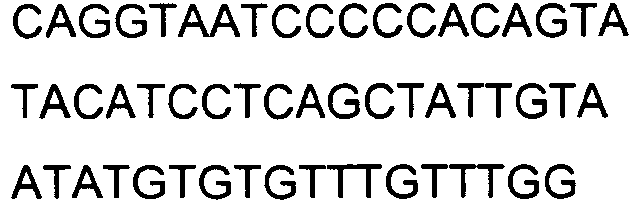
GPM promoter reverse primer with BbvCI site and kivD-annealing region 100 N144 
kivD forward primer 101 N145 
kivD reverse primer 102 N146 
ADH terminator forward primer with PacI site and kivD-annealing region 103 N147 
ADH terminator reverse primer with Spel site 104 N151 
alsS reverse primer 105 N152 
CYC terminator forward primer with Pacl site and alsS-annealing region 106 N155 
ILV3 forward primer (alternate start codon) 107 N156 
ILV3 reverse primer 108 N157 
ADH terminator 109 
forward primer with PacI site and ILV3-annealing region N158 
ADH promoter forward primer with BamHI site 110 N159 
ADH promoter reverse primer with BbvCI site and ILV3-annealing region 111 N160SeqF1 GAAAACGTGGCATCCTCTC FBA::ILV5::CYC sequencing primer 112 N160SeqF2 
FBA::ILV5::CYC sequencing primer 113 N160SeqF3 
FBA::ILV5::CYC sequencing primer 114 N160SeqF4 
FBA::ILV5::CYC sequencing primer 115 N160SeqF5 
FBA::ILV5::CYC sequencing primer 116 N160SeqR1 
FBA::ILV5::CYC sequencing primer 117 N160SeqR2 
FBA::ILV5::CYC sequencing primer 118 N160SeqR3 
FBA::ILV5::CYC sequencing primer 119 N160SeqR4 
FBA::ILV5::CYC sequencing primer 120 N160SeqR5 
FBA::ILV5::CYC sequencing primer 121 N161SeqF1 ACGGTATACGGCCTTCCTT ADH::ILV3::ADH sequencing primer 122 N161SeqF2 
ADH::ILV3::ADH sequencing primer 123 N161SeqF3 
ADH::ILV3::ADH sequencing primer 124 N161SeqF4 
ADH::ILV3::ADH sequencing primer 125 N161SeqF5 
ADH::ILV3::ADH sequencing primer 126 N161SeqF6 
ADH::ILV3::ADH sequencing primer 127 N161SeqR1 
ADH::ILV3::ADH sequencing primer 128 N161SeqR2 CCAAACCGTAACCCATCAG ADH::ILV3::ADH sequencing primer 129 N161SeqR3 CACAGATTGGGTACCACCA ADH::ILV3::ADH sequencing primer 130 N161SeqR4 
ADH::ILV3::ADH sequencing primer 131 N161SeqR5 CATAGCTTTCAAACCCGCT ADH::ILV3::ADH sequencing primer 132 N161SeqR6 
ADH::ILV3::ADH sequencing primer 133 N162 
alsS forward primer 134 N189 
GPD forward primer with SaclI/BglII sites 135 N190.1 
GPD promoter reverse primer with BbvCl site and alsS-annealing region 136 N176 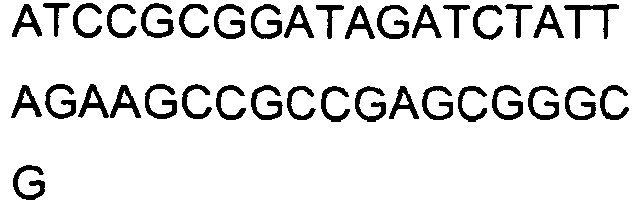
GAL1 promoter forward primer with SaclI/BglII sites 137 N177 
GAL1 promoter reverse with BbvCl site 138 N191 
CUP1 promoter forward primer with SacII/BglII sites 175 N192 
CUP1 promoter reverse with BbvCI site 176 Table 16 E. coli-Yeast Shuttle Vectors Carrying Isobutanol Pathway Genes Plasmid Name Construction pRS426 [ATCC No. 77107], URA3 selection - pRS426::GPD::alsS::CYC GPD::alsS::CYC PCR product digested with SacII/NotI cloned into pRS426 digested with same pRS426::FBA::ILV5::CYC FBA::ILV5::CYC PCR product digested with SacII/NotI cloned into pRS426 digested with same pRS425 [ATCC No. 77106], LEU2 selection - pRS425::ADH::ILV3::ADH ADH::ILV3::ADH PCR product digested with BamHI/SpeI cloned into pRS425 digested with same pRS425::GPM::kivD::ADH GPM::kivD::ADH PCR product digested with BamHI/SpeI cloned into pRS425 digested with same pRS426::CUP1::alsS 7.7 kbp SacII/BbvCI fragment from pRS426::GPD::alsS::CYC ligated with SacII/BbvCI CUP1 fragment pRS426::GAL1::ILV5 7 kbp SacII/BbvCI fragment from pRS426::FBA::ILV5::CYC ligated with SacII/BbvCI GAL1 fragment pRS425::FBA::ILV3 8.9 kbp BamHI/BbvCl fragment from pRS425::ADH::ILV3::ADH ligated with 0.65 kbp BglII/BbvCl FBA fragment from pRS426::FBA::ILV5::CYC pRS425::CUP1-alsS+FBA-ILV3 2.4 kbp SacII/NotI fragment from pRS426::CUP1::alsS cloned into pRS425::FBA::ILV3 cut with SacIl/NotI pRS426::FBA-ILV5+GPM-kivD 2.7 kbp BamHI/Spel fragment from pRS425::GPM::kivD::ADH cloned into pRS426::FBA::ILV5::CYC cut with BamHI/SpeI pRS426::GAL1-FBA+GPM-kivD 8.5 kbp SacIl/NotI fragment from pRS426:: FBA-ILV5+GPM-kivD ligated with 1.8 kbp SacIl/NotI fragment from pRS426::GAL1::ILV5 pRS423 [ATCC No. 77104], HIS3 selection - pRS423::CUP1-alsS+FBA-ILV3 5.2 kbp SacI/SalI fragment from pRS425::CUP1-alsS+FBA-ILV3 ligated into pRS423 cut with SacI/SalI pHR81 [ATCC No. 87541], URA3 and leu2-d selection - pHR81::FBA-ILV5+GPM-kivD 4.7 kbp SacI/BamHI fragment from pRS426::FBA-ILV5+GPM-kivD ligated into pHR81 cut with SacI/BamHI - Plasmids pRS423::CUP1-alsS+FBA-ILV3 and pHR81::FBA-ILV5+GPM-kivD (described in Example 21) were transformed into Saccharomyces cerevisiae YJR148w to produce strain YJR148w/pRS423::CUP1-alsS+FBA-ILV3/ pHR81::FBA-ILV5+ GPM-kivD. A control strain was prepared by transforming vectors pRS423 and pHR81 (described in Example 21) into Saccharomyces cerevisiae YJR148w (strain YJR148w/pRS423/pHR81). Strains were maintained on standard S. cerevisiae synthetic complete medium (Methods in Yeast Genetics, 2005, Cold Spring Harbor Laboratory Press, Cold Spring Harbor, NY, pp. 201-202) containing either 2% glucose or sucrose but lacking uracil and histidine to ensure maintenance of plasmids.
- For isobutanol production, cells were transferred to synthetic complete medium lacking uracil, histidine and leucine. Removal of leucine from the medium was intended to trigger an increase in copy number of the pHR81-based plasmid due to poor transcription of the leu2-d allele (Erhart and Hollenberg, J. Bacteriol. 156:625-635 (1983)). Aerobic cultures were grown in 175 mL capacity flasks containing 50 mL of medium in an Innova4000 incubator (New Brunswick Scientific, Edison, NJ) at 30 °C and 200 rpm. Low oxygen cultures were prepared by adding 45 mL of medium to 60 mL serum vials that were sealed with crimped caps after inoculation and kept at 30 °C. Sterile syringes were used for sampling and addition of inducer, as needed. Approximately 24 h after inoculation, the inducer CuSO4 was added to a final concentration of 0.03 mM. Control cultures for each strain without CuSO4 addition were also prepared. Culture supernatants were analyzed 18 or 19 h and 35 h after CuSO4 addition by both GC and HPLC for isobutanol content, as described above in Example 19. The results for S. cerevisiae YJR148w/pRS423::CUP1-alsS+FBA-ILV3/pHR81::FBA-ILV5+GPM-kivD grown on glucose are presented in Table 17. For the results given in Table 17, the samples from the aerobic cultures were taken at 35 h and the samples from the low oxygen cultures were taken at 19 h and measured by HPLC.
- The results for S. cerevisiae YJR148w/pRS423::CUP1-alsS+FBA-ILV3/pHR81::FBA-ILV5+GPM-kivD grown on sucrose are presented in Table 18. The results in this table were obtained with samples taken at 18 h and measured by HPLC.
Table 17 Production of Isobutanol by S. cerevisiae YJR148w/pRS423::CUP1-alsS+FBA-ILV3/pHR81::FBA-ILV5+GPM-kivD Grown on Glucose Strain O2 level Isobutanol, mM Molar Selectivity % YJR148w/pRS423/pHR81 (control) Aerobic 0.12 0.04 YJR148w/pRS423/pHR81 (control) Aerobic 0.11 0.04 YJR148w/pRS423::CUP1-alsS+FBA- Aerobic 0.97 0.34 ILV3/ pHR81::FBA-ILV5+ GPM-kivD a YJR148w/pRS423::CUP1-alsS+FBA-ILV3/ pHR81::FBA-ILV5+ GPM-kivD b Aerobic 0.93 0.33 YJR148w/pRS423::CU P1-alsS+FBA-ILV3/ pHR81::FBA-ILV5+ GPM-kivD c Aerobic 0.85 0.30 YJR148w/pRS423/pHR81 (control) Low 0.11 0.1 YJR148w/pRS423/pHR81 (control) Low 0.08 0.1 YJR148w/pRS423::CUP1-alsS+FBA-ILV3/ pHR81::FBA-ILV5+ GPM-kivD a Low 0.28 0.5 YJR148w/pRS423::CUP1-alsS+FBA-ILV3/ pHR81::FBA-ILV5+ GPM-kivD b Low 0.20 0.3 YJR148w/pRS423::CUP1-alsS+FBA-ILV3/ pHR81::FBA-ILV5+ GPM-kivD c Low 0.33 0.6 Table 18 Production of Isobutanol by S. cerevisiae YJR148w/pRS423::CUP1-alsS+FBA-ILV3/pHR81::FBA-ILV5+GPM-kivD Grown on Sucrose Strain O2 Level Isobutanol mM Molar Selectivity, % YJR148w/pRS423/pHR81 (control) Aerobic 0.32 0.6 YJR148w/pRS423/pHR81 (control) Aerobic 0.17 0.3 YJR148w/pRS423::CUP1-alsS+FBA-ILV3/ pHR81::FBA-ILV5+ GPM-kivD a Aerobic 0.68 1.7 YJR148w/pRS423::CUP1-alsS+FBA-ILV3/ pHR81::FBA-ILV5+ GPM-kivD b Aerobic 0.54 1.2 YJR148w/pRS423::CUP1-alsS+FBA-ILV3/ pHR81::FBA-ILV5+ GPM-kivD c Aerobic 0.92 2.0 YJR148w/pRS423/pHR81 (control) Low 0.18 0.3 YJR148w/pRS423/pHR81 (control) Low 0.15 0.3 YJR148w/pRS423::CUP1-alsS+FBA-ILV3/ pHR81::FBA-ILV5+ GPM-kivD a Low 0.27 1.2 YJR148w/pRS423::CUP1-alsS+FBA-ILV3/ pHR81::FBA-ILV5+ GPM-kivD b Low 0.30 1.1 YJR148w/pRS423::CUP1-alsS+FBA-ILV3/ pHR81::FBA-ILV5+ GPM-kivD c Low 0.21 0.8 Strain suffixes "a", "b", and "c" indicate separate isolates. - The results indicate that, when grown on glucose or sucrose under both aerobic and low oxygen conditions, strain YJR148w/pRS423::CUP1-alsS+FBA-ILV3/ pHR81::FBA-ILV5+ GPM-kivD produced consistently higher levels of isobutanol than the control strain.
- Plasmids pRS425::CUP1-alsS+FBA-ILV3 and pRS426::GAL1-ILV5+GPM-kivD (described in Example 21) were transformed into Saccharomyces cerevisiae YJR148w to produce strain YJR148w/pRS425::CUP1-alsS+ FBA-ILV3/pRS426::GAL1-ILV5+ GPM-kivD. A control strain was prepared by transforming vectors pRS425 and pRS426 (described in Example 21) into Saccharomyces cerevisiae YJR148w (strain YJR148w/pRS425/pRS426). Strains were maintained on synthetic complete medium, as described in Example 22.
- For isobutanol production, cells were transferred to synthetic complete medium containing 2% galactose and 1% raffinose, and lacking uracil and leucine. Aerobic and low oxygen cultures were prepared as described in Example 22. Approximately 12 h after inoculation, the inducer CuSO4 was added up to a final concentration of 0.5 mM. Control cultures for each strain without CuSO4 addition were also prepared. Culture supernatants were sampled 23 h after CuSO4 addition for determination of isobutanol by HPLC, as described in Example 22. The results are presented in Table 19. Due to the widely different final optical densities observed and associated with quantifying the residual carbon source, the concentration of isobutanol per OD600 unit (instead of molar selectivities) is provided in the table to allow comparison of strains containing the isobutanol biosynthetic pathway genes with the controls.
Table 19 Production of Isobutanol by S. cerevisiae YJR148w/pRS425::CUP1-alsS+FBA-ILV3/pRS426::GAL1-ILV5+GPM-kivD Grown on Galactose and Raffinose Strain O2 level CuSO4, mM Isobutanol mM mM Isobutanol per OD unit YJR148w/pRS425/pRS426 (control) Aerobic 0.1 0.12 0.01 YJR148w/pRS425/pRS426 (control) Aerobic 0.5 0.13 0.01 YJR148w/pRS425::CUP1-alsS+ FBA-ILV3/pRS426::GALl-ILV5+ GPM-kivD a Aerobic 0 0.20 0.03 YJR148w/pRS425::CUP1-alsS+ FBA-ILV3/pRS426::GALl-ILV5+ GPM-kivD b Aerobic 0.03 0.82 0.09 YJR148w/pRS425::CUP1-alsS+ FBA-ILV3/pRS426::GAL1-ILV5+ GPM-kivD c Aerobic 0.1 0.81 0.09 YJR148w/pRS425::CUP1-alsS+ FBA-ILV3/pRS426::GAL1-ILV5+ GPM-kivD d Aerobic 0.5 0.16 0.04 YJR148w/pRS425::CUP1-alsS+ FBA-ILV3/pRS426::GAL1-ILV5+ GPM-kivD e Aerobic 0.5 0.18 0.01 YJR148w/pRS425/pRS426 (control) Low 0.1 0.042 0.007 YJR148w/pRS425/pRS426 (control) Low 0.5 0.023 0.006 YJR148w/pRS425::CUP1-alsS+ FBA-ILV3/pRS426::GAL1-ILV5+ GPM-kivD a Low 0 0.1 0.04 YJR148w/pRS425::CUP1-alsS+ Low 0.03 0.024 0.02 FBA-ILV3/pRS426::GAL1-ILV5+ GPM-kivD b YJR148w/pRS425::CUP1-alsS+ FBA-ILV3/pRS426::GAL1-ILV5+ GPM-kivD c Low 0.1 0.030 0.04 YJR148w/pRS425::CUP1-alsS+ FBA-ILV3/pRS426::GAL1-ILV5+ GPM-kivD d Low 0.5 0.008 0.02 YJR148w/pRS425::CUP1-alsS+ FBA-ILV3/pRS426::GALl-ILV5+ GPM-kivD e Low 0.5 0.008 0.004 Strain suffixes "a", "b", "c", "d" and "e" indicate separate isolates. - The results indicate that in general, higher levels of isobutanol per optical density unit were produced by the YJR148w/pRS425::CUP1-alsS+ FBA-ILV3/pRS426::GAL1-ILV5+ GPM-kivD strain compared to the control strain under both aerobic and low oxygen conditions.
- The purpose of this Example was to express an isobutanol biosynthetic pathway in Bacillus subtilis. The five genes of the isobutanol pathway (pathway steps (a) through (e) in
Figure 1 ) were split into two operons for expression. The three genes budB, ilvD, and kivD, encoding acetolactate synthase, acetohydroxy acid dehydratase, and branched-chain keto acid decarboxylase, respectively, were integrated into the chromosome of B. subtilis BE1010 (Payne and Jackson, J. Bacteriol. 173:2278-2282 (1991)). The two genes ilvC and bdhB, encoding acetohydroxy acid isomeroreductase and butanol dehydrogenase, respectively, were cloned into an expression vector and transformed into the Bacillus strain carrying the integrated isobutanol genes. - Integration of the three genes, budB, ilvD and kivD into the chromosome of B. subtilis BE1010. Bacillus integration vectors pFP988DssPspac and pFP988DssPgroE were used for the chromosomal integration of the three genes, budB (SEQ ID NO:1), ilvD (SEQ ID NO:5), and kivD (SEQ ID NO:7). Both plasmids contain an E. coli replicon from pBR322, an ampicillin antibiotic marker for selection in E. coli and two sections of homology to the sacB gene in the Bacillus chromosome that direct integration of the vector and intervening sequence by homologous recombination. Between the sacB homology regions is a spac promoter (PgroE) on pFP988DssPspac or a groEL promoter (PgroE) on pFP988DssPgroE, and a selectable marker for Bacillus, erythromycin. The promoter region also contains the lacO sequence for regulation of expression by a lacI repressor protein. The sequences of pFP988DssPspac (6,341 bp) and pFP988DssPgroE (6,221 bp) are given as SEQ ID NO:142 and SEQ ID NO:143 respectively.
- The cassette with three genes budB-ilvD-kivD was constructed by deleting the ilvC gene from plasmid pTrc99a budB-ilvC-ilvD-kivD. The construction of the plasmid pTrc99A::budB-ilvC-ilvD-kivD is described in Example 18. Plasmid pTrc99A::budB-ilvC-ilvD-kivD was digested with AflII and Nhel, treated with the Klenow fragment of DNA polymerase to make blunt ends, and the resulting 9.4 kbp fragment containing pTrc99a vector, budB, ilvD, and kivD was gel-purified. The 9.4 kbp vector fragment was self-ligated to create pTrc99A::budB-ilvD-kivD, and transformed into DH5α competent cells (Invitrogen). A clone of pTrc99a budB-ilvD-kivD was confirmed for the ilvC gene deletion by restriction mapping. The resulting plasmid pTrc99A::budB-ilvD-kivD was digested with Sacl and treated with the Klenow fragment of DNA polymerase to make blunt ends. The plasmid was then digested with BamHI and the resulting 5,297 bp budB-ilvD-kivD fragment was gel-purified. The 5,297 bp budB-ilvD-kivD fragment was ligated into the Smal and BamHI sites of the integration vector pFP988DssPspac. The ligation mixture was transformed into DH5α competent cells. Transformants were screened by PCR amplification of the 5.3 kbp budB-ilvD-kivD fragment with primers T-budB(BamHI) (SEQ ID NO:144) and B-kivD(BamHI) (SEQ ID NO:145). The correct clone was named pFP988DssPspac-budB-ilvD-kivD.
- Plasmid pFP988DssPspac-budB-ilvD-kivD was prepared from the E. coli transformant, and transformed into B. subtilis BE1010 competent cells, which had been prepared as described by Doyle et al. (J. Bacteriol. 144:957 (1980)). Competent cells were harvested by centrifugation and the cell pellets were resuspended in a small volume of the supernatant. To one volume of competent cells, two volumes of SPII-EGTA medium (Methods for General and Molecular Bacteriology, P. Gerhardt et al., Ed., American Society for Microbiology, Washington, DC (1994)) was added. Aliquots (0.3 mL) of cells were dispensed into test tubes and then 2 to 3 µg of plasmid pFP988DssPspac-budB-ilvD-kivD was added to the tubes. The tubes were incubated for 30 min at 37 °C with shaking, after which 0.1 mL of 10% yeast extract was added to each tube and they were further incubated for 60 min. Transformants were grown for selection on LB plates containing erythromycin (1.0 µg/mL) using the double agar overlay method (Methods for General and Molecular Bacteriology, supra). Transformants were screened by PCR amplification with primers N130SeqF1 (SEQ ID NO:40) and N130SeqR1 (SEQ ID NO:44) for budB, and N133SeqF1 (SEQ ID NO:62) and N133SeqR1 (SEQ ID NO:66) for kivD. Positive integrants showed the expected 1.7 kbp budB and 1.7 kbp kivD PCR products. Two positive integrants were identified and named B. subtilis BE1010 ΔsacB::Pspac-budB-ilvD-kivD #2-3-2 and B. subtilis BE1010 ΔsacB::Pspac-budB-ilvD-kivD #6-12-7.
- Assay of the enzyme activities in integrants B. subtilis BE1010 ΔsacB::Pspac-budB-ilvD-kivD #2-3-2 and B. subtilis BE1010 ΔsacB::Pspac-budB-ilvD-kivD #6-12-7 indicated that the activities of BudB, IIvD and KivD were low under the control of the spac promoter (Pspac). To improve expression of functional enzymes, the Pspac promoter was replaced by a PgroE promoter from plasmid pHT01 (MoBitec, Goettingen, Germany).
- A 6,039 bp pFP988Dss vector fragment, given as SEQ ID NO:146, was excised from an unrelated plasmid by restriction digestion with Xhol and BamHI, and was gel-purified. The PgroE promoter was PCR-amplified from plasmid pHT01 with primers T-groE(Xhol) (SEQ ID NO:147) and B-groEL(Spel,BamH1) (SEQ ID NO:148). The PCR product was digested with Xhol and BamHI, ligated with the 6,039 bp pFP988Dss vector fragment, and transformed into DH5α competent cells. Transformants were screened by PCR amplification with primers T-groE(Xhol) and B-groEL(Spel,BamH1). Positive clones showed the expected 174 bp PgroE PCR product and were named pFP988DssPgroE. The plasmid pFP988DssPgroE was also confirmed by DNA sequence.
- Plasmid pFP988DssPspac-budB-ilvD-kivD was digested with Spel and Pmel and the resulting 5,313 bp budB-ilvD-kivD fragment was gel-purified. The budB-ilvD-kivD fragment was ligated into Spel and Pmel sites of pFP988DssPgroE and transformed into DH5α competent cells. Positive clones were screened for a 1,690 bp PCR product by PCR amplification with primers T-groEL (SEQ ID NO:149) and N111 (SEQ ID NO:20). The positive clone was named pFP988DssPgroE-budB-ilvD-kivD.
- Plasmid pFP988DssPgroE-budB-ilvD-kivD was prepared from the E. coli transformant, and transformed into Bacillus subtilis BE1010 competent cells as described above. Transformants were screened by PCR amplification with primers N130SeqF1 (SEQ ID NO:40) and N130SeqR1 (SEQ ID NO:44) for budB, and N133SeqF1 (SEQ ID NO:62) and N133SeqR1 (SEQ ID NO:66) for kivD. Positive integrants showed the expected 1.7 kbp budB and 1.7 kbp kivD PCR products. Two positive integrants were isolated and named B. subtilis BE1010 ΔsacB::PgroE-budB-ilvD-kivD #1-7 and B. subtilis BE1010 ΔsacB::PgroE-budB-ilvD-kivD #8-16.
- Plasmid Expression of ilvC and bdhB genes. Two remaining isobutanol genes, ilvC and bdhB, were expressed from a plasmid. Plasmid pHT01 (MoBitec), a Bacillus-E. coli shuttle vector, was used to fuse an ilvC gene from B. subtilis to a PgroE promoter so that the ilvC gene was expressed from the PgroE promoter containing a lacO sequence. The ilvc gene, given as SEQ ID NO:186, was PCR-amplified from B. subtilis BR151 (ATCC 33677) genomic DNA with primers T-ilvCB.s.(BamHI) (SEQ ID NO:150) and B-ilvCB.s.(Spel BamHI) (SEQ ID NO:151). The 1,067 bp ilvC PCR product was digested with BamHI and ligated into the BamHI site of pHT01. The ligation mixture was transformed into DH5α competent cells. Positive clones were screened for a 1,188 bp PCR product by PCR amplification with primers T-groEL and B-ilvB.s.(Spel BamHI). The positive clone was named pHT01-ilvC(B.s). Plasmid pHT01-ilvC(B.s) was used as a template for PCR amplification of the PgroE-ilvC fused fragment.
- Plasmid pBD64 (Minton et al., Nucleic Acids Res. 18:1651(1990)) is a fairly stable vector for expression of foreign genes in B. subtilis and contains a repB gene and chloramphenicol and kanamycin resistance genes for selection in B. subtilis. This plasmid was used for expression of ilvC and bdhB under the control of a PgroE promoter. To clone PgroE-ilvC, bdhB and a lacI repressor gene into plasmid pBD64, a one-step assembly method was used (Tsuge et al., Nucleic Acids Res. 31:e133 (2003)). A 3,588 bp pBD64 fragment containing a repB gene, which included the replication function, and the kanamycin antibiotic marker was PCR-amplified from pBD64 with primers T-BD64(DraIII) (SEQ ID NO:152), which introduced a DraIII sequence (CACCGAGTG), and B-BD64(DraIII) (SEQ ID NO:153), which introduced a DraIII sequence (CACCTGGTG). A 1,327 bp lacI repressor gene was PCR-amplified from pMUTIN4 (Vagner et al., Microbiol. 144:3097-3104 (1998)) with T-laclq(DraIII) (SEQ ID NO:154), which introduced a DraIII sequence (CACCAGGTG) and B-laclq(Dralll) (SEQ ID NO:155), which introduced a Dralll sequence (CACGGGGTG). A 1,224 bp PgroE-ilvC fused cassette was PCR-amplified from pHT01-ilvC(B.s) with T-groE(DraIII) (SEQ ID NO:156), which introduced a DraIII sequence (CACCCCGTG), and B-B.s.ilvC(DraIII) (SEQ ID NO:157), which introduced a DraIII sequence (CACCGTGTG). A 1.2 kbp bdhB gene (SEQ ID NO:158) was PCR-amplified from Clostridium acetobutylicum (ATCC 824) genomic DNA with primers T-bdhB(DraIII) (SEQ ID NO:159), which introduced a DraIII sequence (CACACGGTG), and B-bdhB(rrnBT1DraIII) (SEQ ID NO:160), which introduced a DraIII sequence (CACTCGGTG). The three underlined letters in the variable region of the DraIII recognition sequences were designed for specific base-pairing to assemble the four fragments with an order of pBD64-lacI-PgroEilvC-bdhB. Each PCR product with DraIII sites at both ends was digested separately with DraIII, and the resulting DraIII fragments, 3,588 bp pBD64, lacI, PgroEilvC, and bdhB were gel-purified using a QIAGEN gel extraction kit (QIAGEN). A mixture containing an equimolar concentration of each fragment with a total DNA concentration of 30 to 50 µg /100 µL was prepared for ligation. The ligation solution was then incubated at 16 °C overnight. The ligation generated high molecular weight tandem repeat DNA. The ligated long, linear DNA mixture was directly transformed into competent B. subtilis BE1010, prepared as described above. B. subtilis preferentially takes up long repeated linear DNA forms, rather than circular DNA to establish a plasmid. After transformation the culture was spread onto an LB plate containing 10 µg/ml of kanamycin for selection. Positive recombinant plasmids were screened by DraIII digestion, giving four fragments with an expected size of 3,588 bp (pBD64), 1,327 bp (lacI), 1,224 bp (PgorE-ilvC), and 1,194 bp (bdhB). The positive plasmid was named pBDPgroE-ilvC(B.s.)-bdhB.
- Demonstration of isobutanol production from glucose or sucrose by B. subtilis BE1010 ΔsacB::PgroE-budB-ilvD-kivD/pBDPgroE-ilvC(B.s.)-bdhB. To construct the recombinant B. subtilis expressing the five genes of the isobutanol biosynthetic pathway, competent cells of the two integrants B. subtilis BE1010 ΔsacB-PgroE-budB-ilvD-kivD #1-7 and B. subtilis BE1010 ΔsacB::PgroE-budB-ilvD-kivD #8-16 were prepared as described above, and transformed with plasmid pBDPgroE-ilvC(B.s.)-bdhB, yielding B. subtilis BE1010 ΔsacB::PgroE-budB-ilvD-kivD #1-7/pBDPgroE-ilvC(B.s.)-bdhB and B. subtilis BE1010 ΔsacB::PgroE-budB-ilvD-kivD #8-16/pBDPgroE-ilvC(B.s.)-bdhB.
- The two recombinant strains were inoculated in either 25 mL or 100 mL of glucose medium containing kanamycin (10 µg /mL) in 125 mL flasks to simulate high and low oxygen conditions, respectively, and aerobically grown at 37 °C with shaking at 200 rpm. The medium consisted of 10 mM (NH4)2SO4, 5 mM potassium phosphate buffer (pH 7.0), 100 mM MOPS/KOH buffer (pH 7.0), 20 mM glutamic acid/KOH (pH 7.0), 2% S10 metal mix, 1% glucose, 0.01 % yeast extract, 0.01 % casamino acids, and 50 µg/mL each of L-tryptophan, L-methionine, and L-lysine. The S10 metal mix consisted of 200 mM MgCl2, 70 mM CaCl2, 5 mM MnCl2, 0.1 mM FeCl3, 0.1 mM ZnCl2, 0.2 mM thiamine hydrochloride, 0.172 mM CuSO4, 0.253 mM CoCl2, and 0.242 mM Na2MoO4. The cells were induced with 1.0 mM isopropyl-β-D-thiogalactopyranoiside (IPTG) at early-log phase (OD600 of approximately 0.2). At 24 h after inoculation, an aliquot of the broth was analyzed by HPLC (Shodex Sugar SH1011 column) with refractive index (RI) detection for isobutanol content, as described in the General Methods section. The HPLC results are shown in Table 20.
Table 20 Production of Isobutanol from Glucose by B. subtilis BE1010 ΔsacB::PgroE-budB-ilvD-kivD/pBDPgroE-ilvC(B.s.)-bdhB Strains Strain O2 Level isobutanol, mM molar selectivity, % B. subtilis a (induced) high 1.00 1.8 B. subtilis b (induced) high 0.87 1.6 B. subtilis a (induced) low 0.06 0.1 B. subtilis b (induced) low 0.14 0.3 B. subtilis a is B. subtilis BE1010 ΔsacB::PgroE-budB-ilvD-kivD #1-7/pBDPgroE-ilvC(B.s.)-bdhB
B. subtilis b is B. subtilis BE1010 ΔsacB::PgroE-budB-ilvD-kivD #8-16/pBDPgroE-ilvC(B.s.)-bdhB - The isolate of B. subtilis BE1010 ΔsacB::PgroE-budB-ilvD-kivD #1-7/pBDPgroE-ilvC(B.s.)-bdhB was also examined for isobutanol production from sucrose, essentially as described above. The recombinant strain was inoculated in 25 mL or 75 mL of sucrose medium containing kanamycin (10 µg /mL) in 125 mL flasks to simulate high and medium oxygen levels, and grown at 37 °C with shaking at 200 rpm. The sucrose medium was identical to the glucose medium except that glucose (10 g/L) was replaced with 10 g/L of sucrose. The cells were uninduced, or induced with 1.0 mM isopropyl-p-D-thiogalactopyranoiside (IPTG) at early-log phase (OD600 of approximately 0.2). At 24 h after inoculation, an aliquot of the broth was analyzed by HPLC (Shodex Sugar SH1011 column) with refractive index (RI) detection for isobutanol content, as described in the General Methods section. The HPLC results are given in Table 21.
Table 21 Production of Isobutanol from Sucrose by B. subtilis Strain BE1010 ΔsacB::PgroE-budB-ilvD-kivD/pBDPgroE-ilvC(B.s.)-bdhB Strain O2 Level isobutanol, mM molar selectivity, % B. subtilis a (uninduced) high Not detected Not detected B. subtilis a (induced) high 0.44 4.9 B. subtilis a (induced) medium 0.83 8.6 B. subtilis a is B. subtilis BE1010 ΔsacB::PgroE-budB-ilvD-kivD #1-7/pBDPgroE-ilvC(B.s.)-bdhB - The purpose of this prophetic Example is to describe how to express an isobutanol biosynthetic pathway in Lactobacillus plantarum. The five genes of the isobutanol pathway, encoding five enzyme activities, are divided into two operons for expression. The budB, ilvD and kivD genes, encoding the enzymes acetolactate synthase, acetohydroxy acid dehydratase, and branched-chain α-keto acid decarboxylase, respectively, are integrated into the chromosome of Lactobacillus plantarum by homologous recombination using the method described by Hols et al. (Appl. Environ. Microbiol. 60:1401-1413 (1994)). The remaining two genes (ilvC and bdhB, encoding the enzymes acetohydroxy acid reductoisomerase and butanol dehydrogenase, respectively) are cloned into an expression plasmid and transformed into the Lactobacillus strain carrying the integrated isobutanol genes. Lactobacillus plantarum is grown in MRS medium (Difco Laboratories, Detroit, MI) at 37 °C, and chromosomal DNA is isolated as described by Moreira et al. (BMC Microbiol. 5:15 (2005)).
- Integration. The budB-ilvD-kivD cassette under the control of the synthetic P11 promoter (Rud et al., Microbiology 152:1011-1019 (2006)) is integrated into the chromosome of Lactobacillus plantarum ATCC BAA-793 (NCIMB 8826) at the IdhL1 locus by homologous recombination. To build the IdhL integration targeting vector, a DNA fragment from Lactobacillus plantarum (Genbank NC_004567) with homology to IdhL is PCR amplified with primers LDH EcoRV F (SEQ ID NO:161) and LDH AatIIR (SEQ ID NO:162). The 1986 bp PCR fragment is cloned into pCR4Blunt-TOPO and sequenced. The pCR4Blunt-TOPO-IdhL1 clone is digested with EcoRV and Aatll releasing a 1982 bp IdhL1 fragment that is gel-purified. The integration vector pFP988, given as SEQ ID NO:177, is digested with HindIII and treated with Klenow DNA polymerase to blunt the ends. The linearized plasmid is then digested with Aatll and the 2931 bp vector fragment is gel purified. The EcoRV/AatII IdhL1 fragment is ligated with the pFP988 vector fragment and transformed into E. coli Top10 cells. Transformants are selected on LB agar plates containing ampicillin (100 µg/mL) and are screened by colony PCR to confirm construction of pFP988-IdhL.
- To add a selectable marker to the integrating DNA, the Cm gene with its promoter is PCR amplified from pC194 (GenBank NC_002013, SEQ ID NO:267) with primers Cm F (SEQ ID NO:163) and Cm R (SEQ ID NO:164), amplifying a 836 bp PCR product. This PCR product is cloned into pCR4Blunt-TOPO and transformed into E. coli Top10 cells, creating pCR4Blunt-TOPO-Cm. After sequencing to confirm that no errors are introduced by PCR, the Cm cassette is digested from pCR4Blunt-TOPO-Cm as an 828 bp Mlul/Swal fragment and is gel purified. The IdhL-homology containing integration vector pFP988-IdhL is digested with Mlul and Swal and the 4740 bp vector fragment is gel purified. The Cm cassette fragment is ligated with the pFP988-IdhL vector creating pFP988-DldhL::Cm.
- Finally the budB-ilvD-kivD cassette from pFP988DssPspac-budB-ilvD-kivD, described in Example 24, is modified to replace the amylase promoter with the synthetic P11 promoter. Then, the whole operon is moved into pFP988-DIdhL::Cm. The P11 promoter is built by oligonucleotide annealing with primer P11 F-Stul (SEQ ID NO:165) and P11 R-Spel (SEQ ID NO:166). The annealed oligonucleotide is gel-purified on a 6% Ultra PAGE gel (Embi Tec, San Diego, CA). The plasmid pFP988DssPspac-budB-ilvD-kivD, containing the amylase promoter, is digested with Stul and Spel and the resulting 10.9 kbp vector fragment is gel-purified. The isolated P11 fragment is ligated with the digested pFP988DssPspac-budB-ilvD-kivD to create pFP988-P11-budB-ilvD-kivD. Plasmid pFP988-P11-budB-ilvD-kivD is then digested with Stul and BamHI and the resulting 5.4 kbp P11-budB-ilvD-kivD fragment is gel-purified. pFP988-DIdhL::Cm is digested with Hpal and BamHI and the 5.5 kbp vector fragment isolated. The budB-ilvD-kivD operon is ligated with the integration vector pFP988-DldhL::Cm to create pFP988-DldhL-P11-budB-ilvD-kivD::Cm.
- Integration of pFP988-DldhL-P11-budB-ilvD-kivD::Cm into L. plantarum BAA-793 to form L. plantarum ΔldhL1::budB-ilvD-kivD::Cm comprising exogenous budB, ilvD, and kivD genes. Electrocompetent cells of L. plantarum are prepared as described by Aukrust, T.W., et al. (In: Electroporation Protocols for Microorganisms; Nickoloff, J.A., Ed.; Methods in Molecular Biology, Vol. 47; Humana Press, Inc., Totowa, NJ, 1995, pp 201-208). After electroporation, cells are outgrown in MRSSM medium (MRS medium supplemented with 0.5 M sucrose and 0.1 M MgCl2) as described by Aukrust et al. supra for 2 h at 37 °C without shaking. Electroporated cells are plated for selection on MRS plates containing chloramphenicol (10 µg/mL) and incubated at 37 °C. Transformants are initially screened by colony PCR amplification to confirm integration, and initial positive clones are then more rigorously screened by PCR amplification with a battery of primers.
- Plasmid Expression of ilvC and bdhB genes. The remaining two isobutanol genes are expressed from plasmid pTRKH3 (O'Sullivan DJ and Klaenhammer TR, Gene 137:227-231 (1993)) under the control of the L. plantarum IdhL promoter (Ferain et al., J. Bacteriol. 176:596-601 (1994)). The IdhL promoter is PCR amplified from the genome of L. plantarum ATCC BAA-793 using primers PldhL F-HindIII (SEQ ID NO:167) and PldhL R-BamHI (SEQ ID NO:168). The 411 bp PCR product is cloned into pCR4Blunt-TOPO and sequenced. The resulting plasmid, pCR4Blunt-TOPO-PldhL is digested with Hindlll and BamHI releasing the PldhL fragment.
- Plasmid pTRKH3 is digested with HindIII and Sphl and the gel-purified vector fragment is ligated with the PldhL fragment and the gel-purified 2.4 kbp BamHI/SphI fragment containing ilvC(B.s.)-bdhB from the Bacillus expression plasmid pBDPgroE-ilvC(B.s.)-bdhB (Example 24) in a three-way ligation. The ligation mixture is transformed into E. coli Top 10 cells and transformants are grown on Brain Heart Infusion (BHI, Difco Laboratories, Detroit, MI) plates containing erythromycin (150 mg/L). Transformants are screened by PCR to confirm construction. The resulting expression plasmid, pTRKH3-ilvC(B.s.)-bdhB is transformed into L. plantarum ΔldhL1::budB-ilvD-kivD::Cm by electroporation, as described above.
- L. plantarum ΔldhL1::budB-ilvD-kivD::Cm containing pTRKH3-ilvC(B.s.)-bdhB is inoculated into a 250 mL shake flask containing 50 mL of MRS medium plus erythromycin (10 µg/mL) and grown at 37 °C for 18 to 24 h without shaking, after which isobutanol is detected by HPLC or GC analysis, as described in the General Methods section.
- The purpose of this prophetic Example is to describe how to express an isobutanol biosynthetic pathway in Enterococcus faecalis. The complete genome sequence of Enterococcus faecalis strain V583, which is used as the host strain for the expression of the isobutanol biosynthetic pathway in this Example, has been published (Paulsen et al., Science 299:2071-2074 (2003)). An E. coli/Gram-positive shuttle vector, Plasmid pTRKH3 (O'Sullivan DJ and Klaenhammer TR, Gene 137:227-231 (1993)), is used for expression of the five genes (budB, ilvC, ilvD, kivD, bdhB) of the isobutanol pathway in one operon. pTRKH3 contains an E. coli plasmid p15A replication origin, the pAMβ1 replicon, and two antibiotic resistance selection markers for tetracycline and erythromycin. Tetracycline resistance is only expressed in E. coli, and erythromycin resistance is expressed in both E. coli and Gram-positive bacteria. Plasmid pAMβ1 derivatives can replicate in E. faecalis (Poyart et al., FEMS Microbiol. Lett. 156:193-198 (1997)). The inducible nisA promoter (PnisA), which has been used for efficient control of gene expression by nisin in a variety of Gram-positive bacteria including Enterococcus faecalis (Eichenbaum et al., Appl. Environ. Microbiol. 64:2763-2769 (1998)), is used to control expression of the five desired genes encoding the enzymes of the isobutanol biosynthetic pathway.
- The plasmid pTrc99A::budB-ilvC-ilvD-kivD (described in Example 18), which contains the isobutanol pathway operon, is modified to replace the E. coli ilvC gene (SEQ ID NO:3) with the B. subtilis ilvC gene (SEQ ID NO:184). Additionally, the bdhB gene(SEQ ID NO:158) from Clostridium acetobutylicum is added to the end of the operon. First, the bdhB gene from pBDPgroE-ilvC(B.s.)-bdhB (described in Example 24) is amplified using primers F-bdhB-Avrll (SEQ ID NO:169) and R-bdhB-BamHI (SEQ ID NO:170), and then TOPO cloned and sequenced. The 1194 bp bdhB fragment is isolated by digestion with AvrII and BamHI, followed by gel purification. This bdhB fragment is ligated with pTrc99A::budB-ilvC-ilvD-kivD that has previously been digested with AvrII and BamHI and the resulting fragment is gel purified. The ligation mixture is transformed into E. coli Top10 cells by electroporation and transformants are selected following overnight growth at 37 °C on LB agar plates containing ampicillin (100 µg/mL). The transformants are then screened by colony PCR to confirm the correct clone containing pTrc99A::budB-ilvC-ilvD-kivD-bdhB.
- Next, ilvC(B.s.) is amplified from pBDPgroE-ilvC(B.s.)-bdhB (described in Example 24) using primers F-ilvC(B.s.)-AfIII (SEQ ID NO:171) and R-ilvC(B.s.)-NotI (SEQ ID NO:172). The PCR product is TOPO cloned and sequenced. The 1051 bp ilvC(B.s.) fragment is isolated by digestion with AfIII and NotI followed by gel purification. This fragment is ligated with pTrc99A::budB-ilvC-ilvD-kivD-bdhB that has been cut with AfIII and Notl to release the E. coli ilvC (the 10.7 kbp vector band is gel purified prior to ligation with ilvC(B.s.)). The ligation mixture is transformed into E. coli Top10 cells by electroporation and transformants are selected following overnight growth at 37 °C on LB agar plates containing ampicillin (100 µg/mL). The transformants are then screened by colony PCR to confirm the correct clone containing pTrc99A::budB-ilvC(B.s.)-ilvD-kivD-bdhB.
- To provide a promoter for the E. colil Gram-positive shuttle vector pTRKH3, the nisA promoter (Chandrapati et al., Mol. Microbiol. 46(2):467-477 (2002)) is PCR-amplified from Lactococcus lactis genomic DNA with primers F-PnisA(HindIII) (SEQ ID NO:173) and R-PnisA(Spel BamHI) (SEQ ID NO:174) and then TOPO cloned. After sequencing, the 213 bp nisA promoter fragment is isolated by digestion with HindIII and BamHI followed by gel purification. Plasmid pTRKH3 is digested with HindIII and BamHI and the vector fragment is gel-purified. The linearized pTRKH3 is ligated with the PnisA fragment and transformed into E. coli Top10 cells by electroporation. Transformants are selected following overnight growth at 37 °C on LB agar plates containing erythromycin (25 µg/mL). The transformants are then screened by colony PCR to confirm the correct clone of pTRKH3-PnisA.
- Plasmid pTRKH3-PnisA is digested with Spel and BamHI, and the vector is gel-purified. Plasmid pTrc99A::budB-ilvC(B.s)-ilvD-kivD-bdhB, described above, is digested with Spel and BamHI, and the 7.5 kbp fragment is gel-purified. The 7.5 kbp budB-ilvC(B.s)-ilvD-kivD-bdhB fragment is ligated into the pTRKH3-PnisA vector at the Spel and BamHI sites. The ligation mixture is transformed into E. coli Top10 cells by electroporation and transformants are selected following overnight growth on LB agar plates containing erythromycin (25 µg/mL) at 37 °C. The transformants are then screened by colony PCR. The resulting plasmid is named pTRKH3-PnisA-budB-ilvC(B.s)-ilvD-kivD-bdhB. This plasmid is prepared from the E. coli transformants and transformed into electrocompetent E. faecalis V583 cells by electroporation using methods known in the art (Aukrust, T.W., et al. In: Electroporation Protocols for Microorganisms; Nickoloff, J.A., Ed.; Methods in Molecular Biology, Vol. 47; Humana Press, Inc., Totowa, NJ., 1995, pp 217-226), resulting in E. faecalis V583/ pTRKH3-PnisA-budB-ilvC(B.s)-ilvD-kivD-bdhB.
- The second plasmid containing nisA regulatory genes, nisR and nisK, the add9 spectinomycin resistance gene, and the pSH71 origin of replication is transformed into E. faecalis V583/ pTRKH3-PnisA-budB-ilvC(B.s)-ilvD-kivD-bdhB by electroporation. The plasmid containing pSH71 origin of replication is compatible with pAMβ1 derivatives in E. faecalis (Eichenbaum et al., supra). Double drug resistant transformants are selected on LB agar plates containing erythromycin (25 µg/mL) and spectinomycin (100 µg/mL), grown at 37 °C.
- The resulting E. faecalis strain V583B harboring two plasmids, i.e., an expression plasmid (pTRKH3-PnisA-budB-ilvC(B.s)-ilvD-kivD-bdhB) and a regulatory plasmid (pSH71-nisRK), is inoculated into a 250 mL shake flask containing 50 mL of Todd-Hewitt broth supplemented with yeast extract (0.2%) (Fischetti et al., J. Exp. Med. 161:1384-1401 (1985)), nisin (20 µg/mL) (Eichenbaum et al., supra), erythromycin (25 µg/mL), and spectinomycin (100 µg/mL). The flask is incubated without shaking at 37 °C for 18-24 h, after which time, isobutanol production is measured by HPLC or GC analysis, as described in the General Methods section.
- Tolerance levels were determined for yeast strain Saccharomyces cerevisiae BY4741 (ATCC 201388) at 25 °C and 30 °C as follows. The strain was cultured in YPD medium. Overnight cultures in the absence of any test compound were started in 25 mL of YPD medium in 150 mL flasks with incubation at 30 °C or at 25 °C in shaking water baths. The next morning, each overnight culture was diluted into a 500 mL flask containing 300 mL of fresh medium to an initial OD600 of about 0.1. The flasks were incubated in shaking water baths at 30 °C or 25 °, using the same temperature as used for each overnight culture. The large cultures were incubated for 3 hours and then were split into flasks in the absence (control) and in the presence of 2% or 3% of isobutanol. Growth was followed by measuring OD600 for six hours after addition of the isobutanol. The ΔOD600 was calculated by subtracting the initial OD600 from the final OD600 at 6 hours. The percent growth inhibition relative to the control culture was calculated as follows: % Growth Inhibition = 100 - [100(Sample ΔOD600/Control ΔOD600)]. The results are summarized in Table 22 below and indicate that growth of strain BY4741 is less inhibited by 2% isobutanol at 25 °C than by 2% isobutanol at 30 °C.
Table 22. Growth of Saccharomyces cerevisiae Strain BY4741 at 25 °C and 30 °C with Isobutanol. % Isobutanol Temperature % Growth Inhibition 2 30 99 2 25 84 3 30 No growth 3 25 No growth -
- <110> E.I. du Pont de Nemours and Co.
- <120> Method for the Pr oduct i on of Isobutanol
- <130> CL3892
- <140>
PCTUS0861861
<141> 2008-04-29 - <160> 267
- <170> Patent In version 3. 4
- <210> 1
<211> 1680
<212> DNA
<213> K. pneumoniae - <400> 1


- <210> 2
<211> 559
<212> PRT
<213> K. pneumoniae - <400> 2


- <210> 3
<211> 1476
<212> DNA
<213> E. coli - <400> 3


- <210> 4
<211> 491
<212> PRT
<213> E. coli - <400> 4


- <210> 5
<211> 1851
<212> DNA
<213> E. coli - <400> 5


- <210> 6
<211> 616
<212> PRT
<213> E. coli - <400> 6


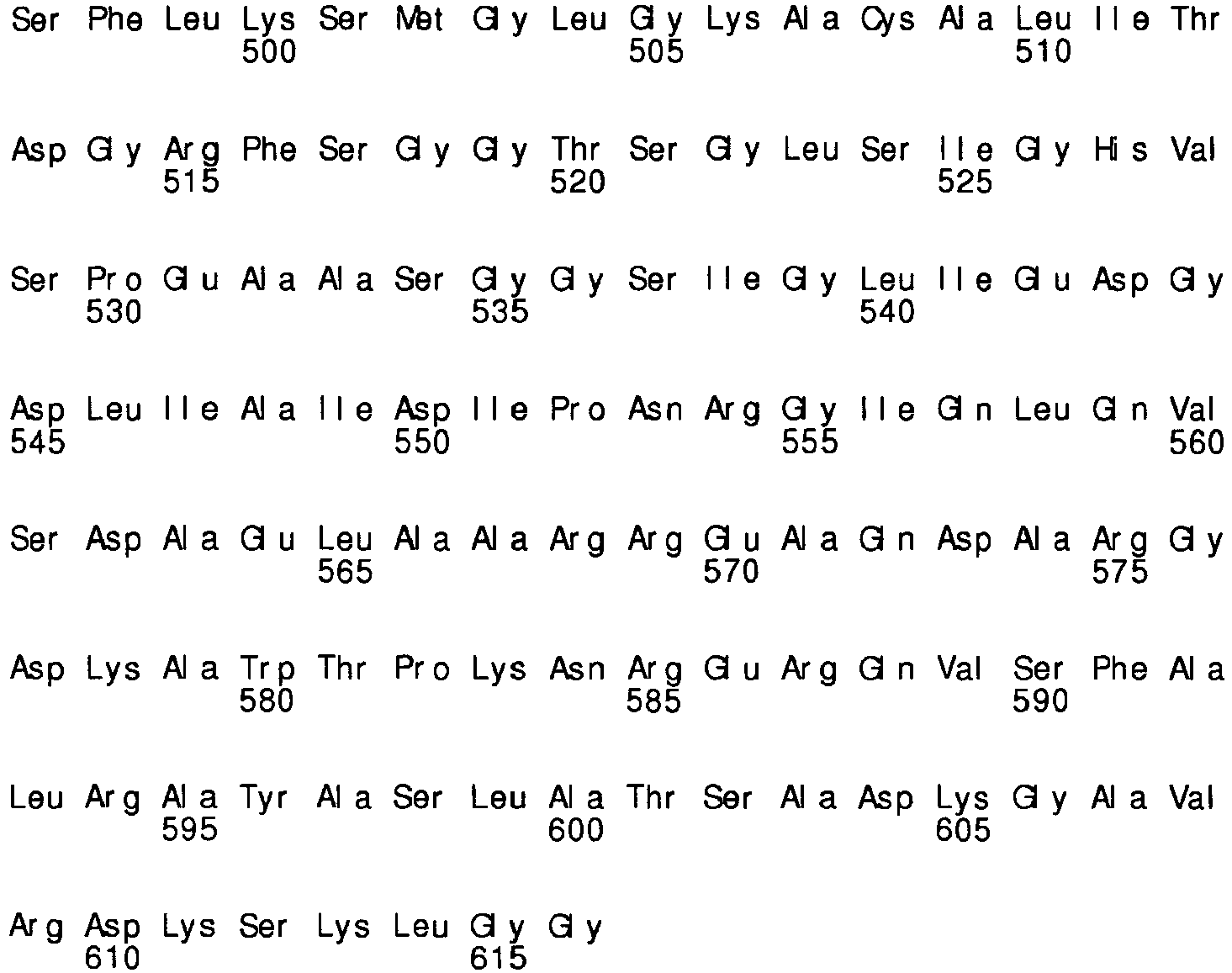
- <210> 7
<211> 1662
<212> DNA
<213> Lactococcus I actis - <400> 7

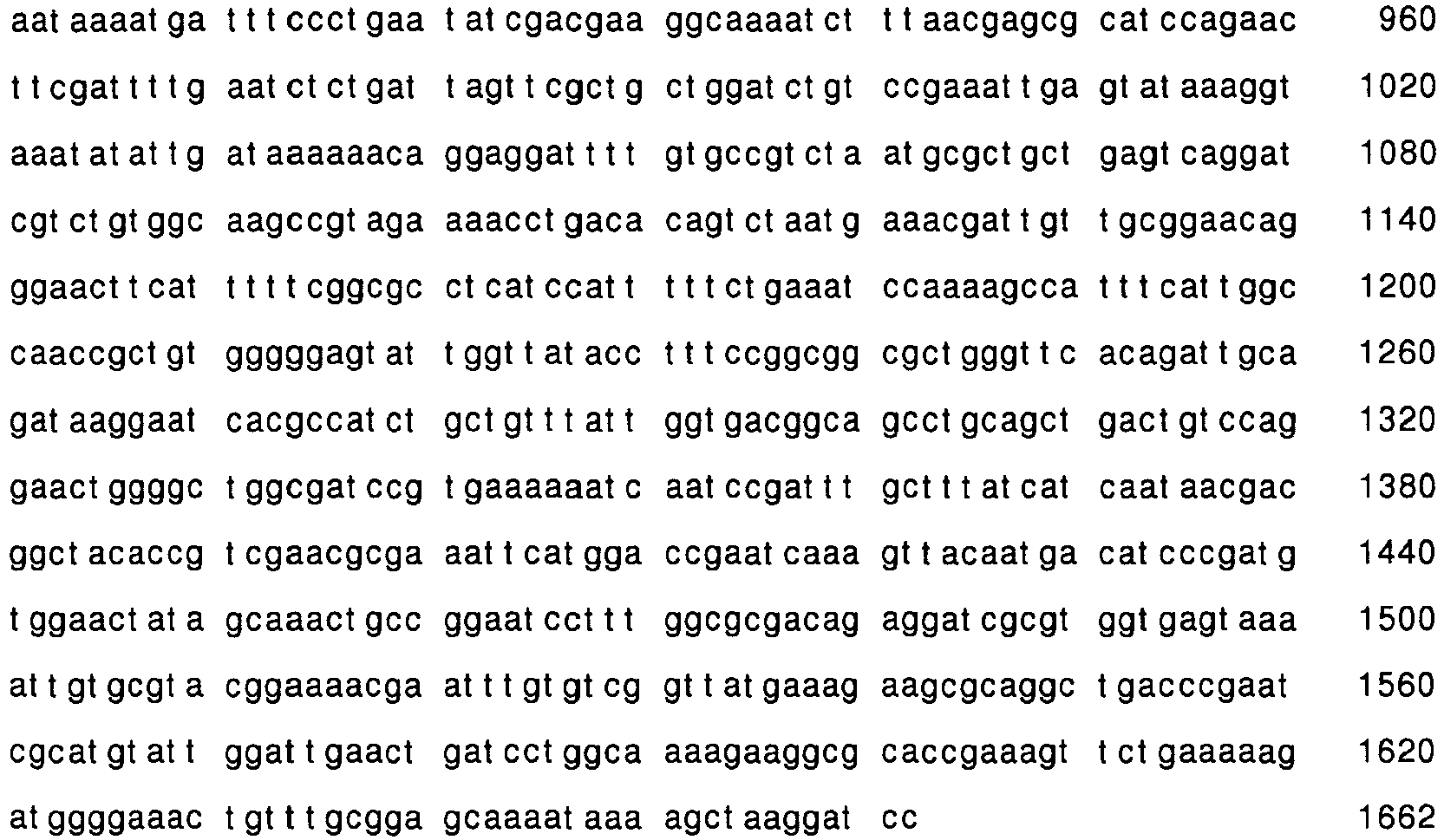
- <210> 8
<211> 548
<212> PRT
<213> Lactococcus I actis - <400> 8


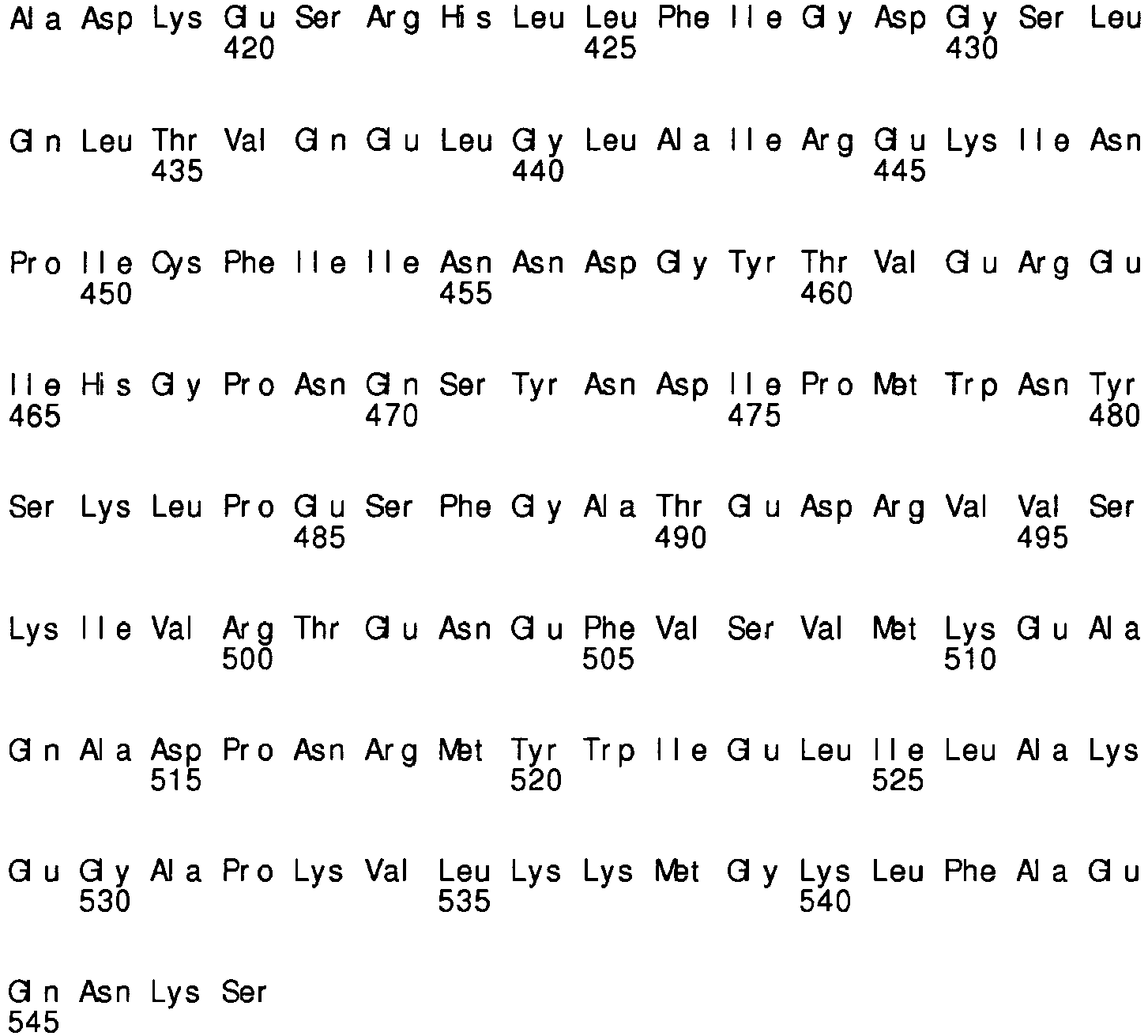
- <210> 9
<211> 1164
<212> DNA
<213> E. coli - <400> 9


- <210> 10
<211> 387
<212> PRT
<213> E. coli - <400> 10


- <210> 11
<211> 29
<212> DNA
<213> Artificial Sequence - <220>
<223> Primer - <400> 11
caccat ggac aaacagt at cggtacgcc 29 - <210> 12
<211> 25
<212> DNA
<213> Artificial Sequence - <220>
<223> Primer - <400> 12
cgaagggcga tagctttacc aat cc 25 - <210> 13
<211> 29
<212> DNA
<213> Artificial Sequence - <220>
<223> Primer - <400> 13
caccatggct aactacttca atacactga 29 - <210> 14
<211> 28
<212> DNA
<213> Artificial Sequence - <220>
<223> Primer - <400> 14
ccaggagaag gccttgagtg ttttctcc 28 - <210> 15
<211> 29
<212> DNA
<213> Artificial Sequence - <220>
<223> Primer - <400> 15
caccatgcct aagtaccgtt ccgccacca 29 - <210> 16
<211> 26
<212> DNA
<213> Artificial Sequence - <220>
<223> Primer - <400> 16
cgcagcact g ctcttaaat attcggc 26 - <210> 17
<211> 29
<212> DNA
<213> Artificial Sequence - <220>
<223> Primer - <400> 17
caccatgaac aactttaatc tgcacaccc 29 - <210> 18
<211> 29
<212> DNA
<213> Artificial Sequence - <220>
<223> Primer - <400> 18
caccat gaac aactttaatc tgcacaccc 29 - <210> 19
<211> 45
<212> DNA
<213> Artificial Sequence - <220>
<223> Primer - <400> 19
gcat gcct t a agaaaggagg ggggtcacat ggacaaacag tatcc 45 - <210> 20
<211> 39
<212> DNA
<213> Artificial Sequence - <220>
<223> Pr imer - <400> 20
atgcatttaa ttaattacag aatctgactc agatgcagc 39 - <210> 21
<211> 45
<212> DNA
<213> Artificial Sequence - <220>
<223> Primer - <400> 21
gtcgacgcta gcaaaggagg gaatcaccat ggctaactac t t caa 45 - <210> 22
<211> 31
<212> DNA
<213> Artificial Sequence - <220>
<223> Primer - <400> 22
tctagattaa cccgcaacag caatacgttt c 31 - <210> 23
<211> 39
<212> DNA
<213> Artificial Sequence - <220>
<223> Primer - <400> 23
tctagaaaag gaggaat aaa gt at gcct aa gtaccgttc c 39 - <210> 24
<211> 31
<212> DNA
<213> Artificial Sequence - <220>
<223> Primer - <400> 24
ggat cct t at t aacccccca gtttcgattt a 31 - <210> 25
<211> 39
<212> DNA
<213> Artificial Sequence - <220>
<223> Primer - <400> 25
ggat ccaaag gaggct agac at at gt at ac tgtggggga 39 - <210> 26
<211> 31
<212> DNA
<213> Artificial Sequence - <220>
<223> Primer - <400> 26
gagct ct t ag cttttatttt gctccgcaaa c 31 - <210> 27
<211> 39
<212> DNA
<213> Artificial Sequence - <220>
<223> Primer - <400> 27
gagctcaaag gaggagcaag t aat gaacaa ctttaatct 39 - <210> 28
<211> 43
<212> DNA
<213> Artificial Sequence - <220>
<223> Primer - <400> 28
gaat t cact gtcctaggtt agcgggcggc ttcgtatata cgg 43 - <210> 29
<211> 25
<212> DNA
<213> Artificial Sequence - <220>
<223> Primer - <400> 29
caacatt agc gattttcttt tctct 25 - <210> 30
<211> 45
<212> DNA
<213> Artificial Sequence - <220>
<223> Primer - <400> 30
catgaagctt actagtgggc ttaagttttg aaaataatga aaact 45 - <210> 31
<211> 61
<212> DNA
<213> Artificial Sequence - <220>
<223> Primer N110.2 - <400> 31

- <210> 32
<211> 50
<212> DNA
<213> Artificial Sequence - <220>
<223> Primer N111.2 - <400> 32
ggatccgat gacttaagcc tcagcttaca gaatctgact cagatgcagc 50 - <210> 33
<211> 44
<212> DNA
<213> Artificial Sequence - <220>
<223> Primer N112.2 - <400> 33
gagctcctta agaaggaggt aatcaccatg gctaactact t caa 44 - <210> 34
<211> 51
<212> DNA
<213> Artificial Sequence - <220>
<223> Primer N113.2 - <400> 34
ggat ccgat c gagctagcgc ggccgct t aa cccgcaacag caatacgttc 51 - <210> 35
<211> 44
<212> DNA
<213> Artificial Sequence - <220>
<223> Primer N114.2 - <400> 35
gagctcgcta gcaaggaggt ataaagtatg cctaagtacc gt t c 44 - <210> 36
<211> 52
<212> DNA
<213> Artificial Sequence - <220>
<223> Primer N115.2 - <400> 36
ggatccgatc gattaattaa cctaaggtta ttaacccccc agtttcgatt ta 52 - <210> 37
<211> 46
<212> DNA
<213> Artificial Sequence - <220>
<223> Primer N116. 2 - <400> 37
gagct ct t aa t t aaaaggag gt t agacat tgtatactgt ggggga 46 - <210> 38
<211> 49
<212> DNA
<213> Artificial Sequence - <220>
<223> Primer 117.2 - <400> 38
ggatccagat ct cct aggac atgtttagct tttattttgc t ccgcaaac 49 - <210> 39
<211> 3883
<212> DNA
<213> Escherichia coli - <400> 39


- <210> 40
<211> 19
<212> DNA
<213> Artificial Sequence - <220>
<223> Primer N130SeqF1 - <400> 40
t gt t ccaacc t gat caccg 19 - <210> 41
<211> 18
<212> DNA
<213> Artificial Sequnce - <220>
<223> Primer N130SeqF2 - <400> 41
ggaaaacagc aaggcgct 18 - <210> 42
<211> 18
<212> DNA
<213> Artificial Sequence - <220>
<223> Primer N130SeqF3 - <400> 42
cagct gaacc agtttgcc 18 - <210> 43
<211> 19
<212> DNA
<213> Artificial Sequence - <220>
<223> Primer N130SeqF4 - <400> 43
aaaataccag cgcctgtcc 19 - <210> 44
<211> 18
<212> DNA
<213> Artificial Sequence - <220>
<223> Primer N130SeqR1 - <400> 44
tgaatggcca ccatgttg 18 - <210> 45
<211> 18
<212> DNA
<213> Artificial Sequence - <220>
<223> Primer N130SeqR2 - <400> 45
gaggatctcc gccgcctg 18 - <210> 46
<211> 18
<212> DNA
<213> Artificial Sequence - <220>
<223> Primer N130SeqR3 - <400> 46
aggccgagca ggaagatc 18 - <210> 47
<211> 19
<212> DNA
<213> Artificial Sequence - <220>
<223> Primer N130SeqR4 - <400> 47
tgatcaggtt ggaacagcc 19 - <210> 48
<211> 19
<212> DNA
<213> Artificial Sequence - <220>
<223> Primer N131SeqF1 - <400> 48
aagaact gat cccacaggc 19 - <210> 49
<211> 19
<212> DNA
<213> Artificial Sequence - <220>
<223> Primer N131SeqF2 - <400> 49
atcctgtgcg gt at gt t gc 19 - <210> 50
<211> 18
<212> DNA
<213> Artificial Sequence - <220>
<223> Primer N131Seqf3 - <400> 50
attgcgatgg t gaaagcg 18 - <210> 51
<211> 19
<212> DNA
<213> Artificial Sequence - <220>
<223> Primer N131 SeqR1 - <400> 51
atggtgttgg caatcagcg 19 - <210> 52
<211> 18
<212> DNA
<213> Artificial Sequence - <220>
<223> Primer N131SeqR2 - <400> 52
gt gct t cggt gatggttt 18 - <210> 53
<211> 19
<212> DNA
<213> Artificial Sequence - <220>
<223> Primer N131SeqR3 - <400> 53
ttgaaaccgt gcgagtagc 19 - <210> 54
<211> 19
<212> DNA
<213> Artificial Sequence - <220>
<223> Primer N132SeqF1 - <400> 54
t at t cact gc catctcgcg 19 - <210> 55
<211> 18
<212> DNA
<213> Artificial Sequence - <220>
<223> Primer N132SeqF2 - <400> 55
ccgtaagcag ctgttcct 18 - <210> 56
<211> 20
<212> DNA
<213> Artificial Sequence - <220>
<223> Primer N132SeqF3 - <400> 56
gctggaacaa tacgacgtta a 20 - <210> 57
<211> 20
<212> DNA
<213> Artificial Sequence - <220>
<223> Primer N132SeqF4 - <400> 57
tgctctaccc aaccagcttc 20 - <210> 58
<211> 20
<212> DNA
<213> Artificial Sequence - <220>
<223> Primer N132SeqR1 - <400> 58
atggaaagac cagaggtgcc 20 - <210> 59
<211> 18
<212> DNA
<213> Artificial Sequence - <220>
<223> Primer N132SeqR2 - <400> 59
tgcctgtgt gtacgaat 18 - <210> 60
<211> 19
<212> DNA
<213> Artificial Sequence - <220>
<223> Primer N132SeqR3 - <400> 60
tattacgcgg cagtgcact 19 - <210> 61
<211> 22
<212> DNA
<213> Artificial Sequence - <220>
<223> Primer N132SeqR4 - <400> 61
ggtgattttg tcgcagttag ag 22 - <210> 62
<211> 18
<212> DNA
<213> Artificial Sequence - <220>
<223> Primer N133SeqF1 - <400> 62
t cgaaat t gt t gggt cgc 18 - <210> 63
<211> 22
<212> DNA
<213> Artificial Sequence - <220>
<223> Primer N133SeqF2 - <400> 63
ggtcacgcag ttcatttcta ag 22 - <210> 64
<211> 18
<212> DNA
<213> Artificial Sequence - <220>
<223> Primer N133SeqF3 - <400> 64
tgtggcaagc cgtagaaa 18 - <210> 65
<211> 19
<212> DNA
<213> Artificial Sequence - <220>
<223> Primer N133SeqF4 - <400> 65
aggatcgcgt ggtgagtaa 19 - <210> 66
<211> 20
<212> DNA
<213> Artificial Sequence - <220>
<223> Primer N133SeqR1 - <400> 66
gtagccgtcg t t at t gat ga 20 - <210> 67
<211> 22
<212> DNA
<213> Artificial Sequence - <220>
<223> Primer N133SeqR2 - <400> 67
gcagcgaact aatcagagat tc 22 - <210> 68
<211> 19
<212> DNA
<213> Artificial Sequence - <220>
<223> Primer N133SeqR3 - <400> 68
tggtccgatg tattggagg 19 - <210> 69
<211> 19
<212> DNA
<213> Art i f i ci al Sequence - <220>
<223> Primer N133SeqR4 - <400> 69
tctgccatat agctcgcgt 19 - <210> 70
<211> 42
<212> DNA
<213> Artificial Sequence - <220>
<223> Promoter 1.6Gl Variant - <400> 70
gcccttgaca atgccacatc ctgagcaaat aattcaacca ct 42 - <210> 71
<211> 42
<212> DNA
<213> Artificial Sequence - <220>
<223> Promoter 1.5Gl - <400> 71
gcccttgact atgccacatc ctgagcaaat aattcaacca ct 42 - <210> 72
<211> 18
<212> DNA
<213> Artificial Sequence - <220>
<223> Primer Scr1 - <400> 72
cctttctttg tgaatcgg 18 - <210> 73
<211> 18
<212> DNA
<213> Artificial Sequence - <220>
<223> Primer Scr2 - <400> 73
agaaacaggg t gt gat cc 18 - <210> 74
<211> 20
<212> DNA
<213> Artificial Sequence - <220>
<223> Primer Scr3 - <400> 74
agtgatcatc acctgttgcc 20 - <210> 75
<211> 20
<212> DNA
<213> Artificial Sequence - <220>
<223> Primer Scr4 - <400> 75
agcacggcga gagtcgacgg 20 - <210> 76
<211> 672
<212> DNA
<213> Saccharomyces cer evi si ae - <400> 76

- <210> 77
<211> 270
<212> DNA
<213> Saccharomyces cerevisiae - <400> 77

- <210> 78
<211> 1716
<212> DNA
<213> Bacillus subtilis - <400> 78


- <210> 79
<211> 643
<212> DNA
<213> Saccharomyces cerevisiae - <400> 79

- <210> 80
<211> 1188
<212> DNA
<213> Saccharomyces cerevisiae - <400> 80

- <210> 81
<211> 760
<212> DNA
<213> Saccharomyces cerevisiae - <400> 81


- <210> 82
<211> 316
<212> DNA
<213> Saccharomyces cer evi si ae - <400> 82

- <210> 83
<211> 1758
<212> DNA
<213> Saccharomyces cerevisiae - <400> 83


- <210> 84
<211> 753
<212> DNA
<213> Saccharomyces cerevisiae - <400> 84

- <210> 85
<211> 20
<212> DNA
<213> Artificial Sequence - <220>
<223> Primer N98SeqF1 - <400> 85
cgtgttagtc acatcaggac 20 - <210> 86
<211> 24
<212> DNA
<213> Artificial Sequence - <220>
<223> Primer N98SeqF2 - <400> 86
ggccatagca aaaat ccaaa cagc 24 - <210> 87
<211> 24
<212> DNA
<213> Artificial Sequence - <220>
<223> Primer N98SeqF3 - <400> 87
ccacgat caatcatatcgaa cacg 24 - <210> 88
<211> 20
<212> DNA
<213> Art i f i ci al Sequence - <220>
<223> Primer N98SeqF4 - <400> 88
ggtttctgtc tctggtgacg 20 - <210> 89
<211> 22
<212> DNA
<213> Artificial Sequence - <220>
<223> Primer N99SeqR1 - <400> 89
gtctggtgat tctacgcgca ag 22 - <210> 90
<211> 22
<212> DNA
<213> Artificial Sequence - <220>
<223> Primer N99SeqR2 - <400> 90
catcgactgc at t acgcaac t c 22 - <210> 91
<211> 22
<212> DNA
<213> Artificial Sequence - <220>
<223> Primer N99SeqR3 - <400> 91
cgatcgtcag aacaacatct gc 22 - <210> 92
<211> 20
<212> DNA
<213> Artificial Sequence - <220>
<223> Primer N99SeqR4 - <400> 92
ccttcagtgt tcgctgtcag 20 - <210> 93
<211> 36
<212> DNA
<213> Artificial Sequence - <220>
<223> Primer N136 - <400> 93
ccgcggatag atctgaaatg g aat aacaat ctgaca 36 - <210> 94
<211> 65
<212> DNA
<213> Artificial Sequence - <220>
<223> Primer N137 - <400> 94

- <210> 95
<211> 28
<212> DNA
<213> Artificial Sequence - <220>
<223> Primer N138 - <400> 95
atgttgaagc aaatcaact cggtggta a 28 - <210> 96
<211> 22
<212> DNA
<213> Artificial Sequence - <220>
<223> Primer U139 - <400> 96
ttattggttt tctggtctca ac 22 - <210> 97
<211> 57
<212> DNA
<213> Artificial Sequence - <220>
<223> Primer N140 - <400> 97
aagt tgagac cagaaaacca at aatt aatt aat cat gt aa t agttatgt cacgct t 57 - <210> 98
<211> 30
<212> DNA
<213> Artificial Sequence - <220>
<223> Primer N141 - <400> 98
gcggccgccc gcaaattaaa gccttcgagc 30 - <210> 99
<211> 28
<212> DNA
<213> Artificial Sequence - <220>
<223> Primer N142 - <400> 99
ggatccgcat gcttgcattt agtcgtgc 28 - <210> 100
<211> 56
<212> DNA
<213> Artificial Sequence - <220>
<223> N143 - <400> 100
caggtaatcc cccacagt at acatcctcag ctattgtaat atgtgtgttt gtttgg 56 - <210> 101
<211> 22
<212> DNA
<213> Artificial Sequence - <220>
<223> Primer N144 - <400> 101
atgtatactg tgggggatta cc 22 - <210> 102
<211> 22
<212> DNA
<213> Artificial Sequence - <220>
<223> Primer N145 - <400> 102
ttagctttta ttttgctccg ca 22 - <210> 103
<211> 57
<212> DNA
<213> Artificial Sequence - <220>
<223> Primer N146 - <400> 103
tttgcggagc aaaat aaaag ctaattaatt aagagtaagc gaatttctta tgattta 57 - <210> 104
<211> 28
<212> DNA
<213> Artificial Sequence - <220>
<223> Primer N147 - <400> 104
act agt acca caggt gt t gt cct ct gag 28 - <210> 105
<211> 22
<212> DNA
<213> Artificial Sequence - <220>
<223> Primer N151 - <400> 105
ctagagagct ttcgttttcatg 22 - <210> 106
<211> 57
<212> DNA
<213> Artificial Sequence - <220>
<223> Primer N152 - <400> 106
ctcatgaaaa cgaaagct ct ctagttaatt aatcatgtaa ttagttatgt cacgctt 57 - <210> 107
<211> 25
<212> DNA
<213> Artificial Sequence - <220>
<223> Primer N155 - <400> 107
atggcaaaga agct caacaa gt act 25 - <210> 108
<211> 22
<212> DNA
<213> Artificial Sequence - <220>
<223> Primer N156 - <400> 108
tcaagcatct aaaacacaac cg 22 - <210> 109
<211> 57
<212> DNA
<213> Artificial Sequence - <220>
<223> Primer N157 - <400> 109
aacggtt gtgttttagat gc t tgattaat aagagt aagc gaattt ctt a t gatt t a 57 - <210> 110
<211> 28
<212> DNA
<213> Artificial Sequence - <220>
<223> Primer N158 - <400> 110
ggatcctttt ctggcaacca aacccat a 28 - <210> 111
<211> 56
<212> DNA
<213> Artificial Sequence - <220>
<223> Primer N159 - <400> 111
cgagtacttg ttgagcttct ttgccatcct cagcgagat gttgattgta tgcttg 56 - <210> 112
<211> 19
<212> DNA
<213> Artificial Sequence - <220>
<223> Primer N160SeqF1 - <400> 112
gaaaacgt gg catcctctc 19 - <210> 113
<211> 19
<212> DNA
<213> Artificial Sequence - <220>
<223> Primer N160SeqF2 - <400> 113
gctgactggc caagagaaa 19 - <210> 114
<211> 20
<212> DNA
<213> Artificial Sequence - <220>
<223> Primer N160SeqF3 - <400> 114
tgtacttctc ccacggtttc 20 - <210> 115
<211> 22
<212> DNA
<213> Artificial Sequence - <220>
<223> Primer N160SeqF4 - <400> 115
agct acccaa tctctatacc ca 22 - <210> 116
<211> 22
<212> DNA
<213> Artificial Sequence - <220>
<223> Primer N160SeqF5 - <400> 116
cctgaagtct aggtccctat t t 22 - <210> 117
<211> 19
<212> DNA
<213> Artificial Sequence - <220>
<223> N160SeqR1 - <400> 117
gcgtgaatgt aagcgtgac 19 - <210> 118
<211> 20
<212> DNA
<213> Artificial Sequence - <220>
<223> Primer N160SeqR2 - <400> 118
cgtcgtattg agccaagaac 20 - <210> 119
<211> 20
<212> DNA
<213> Artificial Sequence - <220>
<223> Primer N160SeqR3 - <400> 119
gcat cggaca acaagt t cat 20 - <210> 120
<211> 22
<212> DNA
<213> Artificial Sequence - <220>
<223> Primer N160SeqR4 - <400> 120
t cgt t ct t ga agt agt ccaa ca 22 - <210> 121
<211> 19
<212> DNA
<213> Artificial Sequence - <220>
<223> Primer N160SeqR5 - <400> 121
tgagcccgaa agagaggat 19 - <210> 122
<211> 19
<212> DNA
<213> Artificial Sequence - <220>
<223> Primer N161SeqF1 - <400> 122
acggtatacg gccttcct t 19 - <210> 123
<211> 20
<212> DNA
<213> Artificial Sequence - <220>
<223> Primer N161SeqF2 - <400> 123
gggtttgaaa gctatgcagt 20 - <210> 124
<211> 22
<212> DNA
<213> Artificial Sequence - <220>
<223> Primer N161SeqF3 - <400> 124
ggtggtatgt atactgccaa ca 22 - <210> 125
<211> 22
<212> DNA
<213> Artificial Sequence - <220>
<223> Pr i rrer N161SeqF4 - <400> 125
ggt ggt accc aatctgtgat t a 22 - <210> 126
<211> 20
<212> DNA
<213> Artificial Sequence - <220>
<223> Primer N161SeqF5 - <400> 126
cggtttgggt aaagatgttg 20 - <210> 127
<211> 22
<212> DNA
<213> Artificial Sequence - <220>
<223> Primer N161SeqF6 - <400> 127
aaacgaaaat tcttattctt ga 22 - <210> 128
<211> 22
<212> DNA
<213> Artificial Sequence - <220>
<223> Primer N161SeqR1 - <400> 128
tcgttttaaa acctaagagt ca 22 - <210> 129
<211> 19
<212> DNA
<213> Artificial Sequence - <220>
<223> Primer N161 SeqR2 - <400> 129
ccaaaccgta acccatcag 19 - <210> 130
<211> 19
<212> DNA
<213> Artificial Sequence - <220>
<223> Primer N161SeqR3 - <400> 130
cacagattgg gtaccacca 19 - <210> 131
<211> 20
<212> DNA
<213> Artificial Sequence - <220>
<223> Primer N161Seqr4 - <400> 131
accacaagaa ccaggacctg 20 - <210> 132
<211> 19
<212> DNA
<213> Artificial Sequence - <220>
<223> Primer N161SeqR5 - <400> 132
catagctttc aaacccgct 19 - <210> 133
<211> 22
<212> DNA
<213> Artificial Sequence - <220>
<223> Primer N161SeqR6 - <400> 133
cgtataccgt tgct cattag ag 22 - <210> 134
<211> 23
<212> DNA
<213> Artificial Sequence - <220>
<223> Primer N162 - <400> 134
at gt t gacaa aagcaacaaa aga 23 - <210> 135
<211> 38
<212> DNA
<213> Artificial Sequence - <220>
<223> Primer N189 - <400> 135
at ccgcggat agatctagtt cgagtttatc attatcaa 38 - <210> 136
<211> 53
<212> DNA
<213> Artificial Sequence - <220>
<223> Primer N190.1 - <400> 136
ttcttttgtt gcttttgtca acatcctcag cgtttatgtg tgtttattcg aaa 53 - <210> 137
<211> 38
<212> DNA
<213> Artificial Sequence - <220>
<223> Primer N176 - <400> 137
atccgcggat agatctatta gaagccgccg agcgggcg 38 - <210> 138
<211> 31
<212> DNA
<213> Artificial Sequence - <220>
<223> Pr i rrer N177 - <400> 138
at cct cagct tttctccttg acgttaaagt a 31 - <210> 139
<211> 477
<212> PRT
<213> Escherichia coli - <400> 139


- <210> 140
<211> 304
<212> PRT
<213> Escherichia coli - <400> 140


- <210> 141
<211> 415
<212> PRT
<213> Escherichia coli - <400> 141


- <210> 142
<211> 6341
<212> DNA
<213> Artificial Sequence - <220>
<223> Plasmid pFP988DssPspac - <400> 142


- <210> 143
<211> 6221
<212> DNA
<213> Artificial Sequence - <220>
<223> Plasmid pFP988DssPgr oE - <400> 143


- <210> 144
<211> 40
<212> DNA
<213> Artificial Sequence - <220>
<223> Primer T- budB (BamHI) - <400> 144
agatagatgg atccggaggt gggtcacatg gacaaacagt 40 - <210> 145
<211> 29
<212> DNA
<213> Artificial Sequence - <220>
<223> Primer B- ki vD (BamHI) - <400> 145
ctctagagga tccagactcc t aggacat g 29 - <210> 146
<211> 6039
<212> DNA
<213> Artificial Sequence - <220>
<223> Vect or fragment pFP988Dss - <400> 146
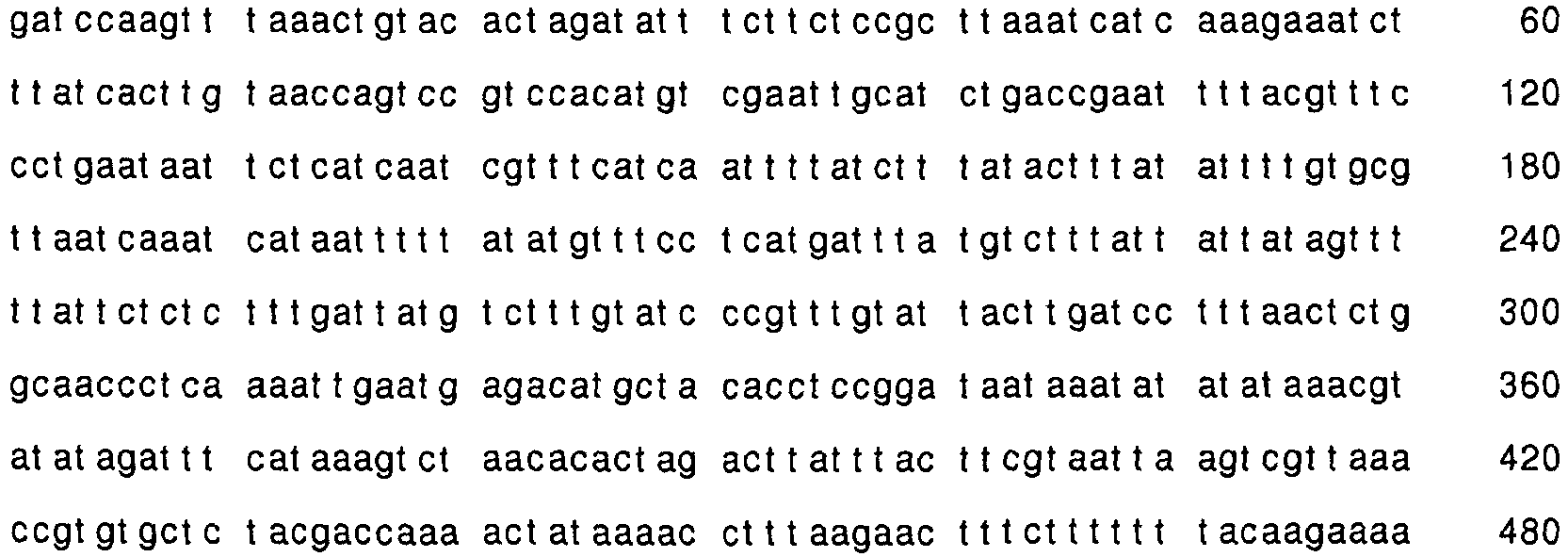


- <210> 147
<211> 44
<212> DNA
<213> Artificial Sequence - <220>
<223> Primer T-groE(XhoI) - <400> 147
agatagatct cgagagctat tgtaacataa tcggtacggg ggt g 44 - <210> 148
<211> 51
<212> DNA
<213> Artificial Sequence - <220>
<223> Primer B-groEL (SpeI BamH1) - <400> 148
at t at gt cag gat ccact ag tttcctcctt taattgggaa ttgttatccg c 51 - <210> 149
<211> 30
<212> DNA
<213> Artificial Sequence - <220>
<223> Primer T-groEL - <400> 149
agctattgta acataatcgg tacgggggtg 30 - <210> 150
<211> 45
<212> DNA
<213> Artificial Sequence - <220>
<223> Primer T- ilvCB.s. (BamHI) - <400> 150
acattgatgg at cccataac aagggagaga t t gaaat ggt aaaag 45 - <210> 151
<211> 47
<212> DNA
<213> Artificial Sequence - <220>
<223> Primer B-ilvCB. s. (SpeI BamHI) - <400> 151
tagacaacgg at ccact agt ttaattttgc gcaacggaga ccaccgc 47 - <210> 152
<211> 47
<212> DNA
<213> Artificial Sequence - <220>
<223> Primer T-BD64 (DraIII - <400> 152
ttaccgtgga ctcaccgagt gggtaactag cctcgccgga aagagcg 47 - <210> 153
<211> 48
<212> DNA
<213> Artificial Sequence - <220>
<223> Primer B-BD64 (DraIII) - <400> 153
t cacagt t aa gacacctggt gccgttaatg cgccatgaca gccat gat 48 - <210> 154
<211> 49
<212> DNA
<213> Artificial Sequence - <220>
<223> Primer T-Iaclq (DraIII ) - <400> 154
acagatagat caccaggtgc aagctaattc cggtggaaac gaggtcatc c 49 - <210> 155
<211> 48
<212> DNA
<213> Artificial Sequence - <220>
<223> Primer B-I aclq (DraIII) - <400> 155
acagt acgat acacggggt tcactgcccg ctttccagtc gggaaacc 48 - <210> 156
<211> 49
<212> DNA
<213> Artificial Sequence - <220>
<223> Primer T-groE (DraIII) - <400> 156
t cggat t acg caccccgt ga gct at t gt aa cataatcggt acgggggt g 49 - <210> 157
<211> 48
<212> DNA
<213> Artificial Sequence - <220>
<223> Primer B- B.s. ilvC (DraIII) - <400> 157
ctgctgatct cacaccgt gt gttaattttg cgcaacggag accaccgc 48 - <210> 158
<211> 1221
<212> DNA
<213> Clostridium acetobutylicum - <400> 158


- <210> 159
<211> 54
<212> DNA
<213> Artificial Sequence - <220>
<223> Primer T- bdhB (DraIII) - <400> 159
tcgatagcat acacacggt gttaacaaag gaggggt t aa aat ggt t gat t t cg 54 - <210> 160
<211> 91
<212> DNA
<213> Artificial Sequence - <220>
<223> Primer B- bdhB (r nBT1 DraIII) - <400> 160
atctacgcac t cggt gat aa aacgaaaggc ccagtctttc gactgagcct ttcgttttat 60 - cttacacaga ttttttgaat atttgtagga c 91
- <210> 161
<211> 29
<212> DNA
<213> Artifcial Sequence - <220>
<223> Primer LDH EcoRV F - <400> 161
gacgtcatga ccacccgccg atccctttt 29 - <210> 162
<211> 30
<212> DNA
<213> Artificial Sequence - <220>
<223> Primer LDH AatIIR - <400> 162
gatatccaac accagcgacc gacgtattac 30 - <210> 163
<211> 47
<212> DNA
<213> Artificial Sequence - <220>
<223> Pr i rrer Cm F - <400> 163
atttaaatct cgagtagagg at cccaacaa acgaaaat t gataaag 47 - <210> 164
<211> 29
<212> DNA
<213> Artificial Sequence - <220>
<223> Primer Cm R - <400> 164
acgcgttatt at aaaagcca gt catt agg 29 - <210> 165
<211> 58
<212> DNA
<213> Artificial Sequence - <220>
<223> Primer P11 F-Stul - <400> 165
cctagcgcta tagttgttga cagaatggac at act at gat at at t gt t gc tatagcga 58 - <210> 166
<211> 62
<212> DNA
<213> Artificial Sequence - <220>
<223> Primer P11R- SpeI - <400> 166

- <210> 167
<211> 38
<212> DNA
<213> Artificial Sequence - <220>
<223> Primer PidhL F- HindIII - <400> 167
aagct t gt cg acaaaccaac at t at gacgt gt ct gggc 38 - <210> 168
<211> 28
<212> DNA
<213> Artificial Sequence - <220>
<223> Primer PldhL R- BamHI - <400> 168
ggat cct cat cctctcgtag tgaaaatt 28 - <210> 169
<211> 36
<212> DNA
<213> Artificial Sequence - <220>
<223> Primer F-bdhB-AvrII - <400> 169
t t cct aggaa ggaggtggtt aaaatggttg atttcg 36 - <210> 170
<211> 29
<212> DNA
<213> Artificial Sequence - <220>
<223> Primer R- bdhB-BamHI - <400> 170
ttggatcctt acacagatt tttgaatat 29 - <210> 171
<211> 39
<212> DNA
<213> Artificial Sequence - <220>
<223> Primer F-ilvC(B.s.) Af III - <400> 171
aact t aagaa ggaggtgatt gaaatggtaa aagtatatt 39 - <210> 172
<211> 32
<212> DNA
<213> Artificial Sequence - <220>
<223> Primer R-ilvC(B.s.)-Notl - <400> 172
aagcggccgc ttaattttgc gcaacggaga cc 32 - <210> 173
<211> 30
<212> DNA
<213> Artificial Sequence - <220>
<223> Primer F- Pni sA( Hi ndIII) - <400> 173
ttaagcttga catacttgaa tgacctagtc c 30 - <210> 174
<211> 39
<212> DNA
<213> Artificial Sequence - <220>
<223> Primer R- Pni sA(Spel BamHI) - <400> 174
ttggatccaa actagtataa tttattttgt agttccttc 39 - <210> 175
<211> 38
<212> DNA
<213> Artificial Sequence - <220>
<223> Primer N191 - <400> 175
atccgcggat agat ct ccca t t accgacat t t gggcgc 38 - <210> 176
<211> 31
<212> DNA
<213> Artificial Sequence - <220>
<223> Primer N192 - <400> 176
at cct cagcg af gat t gat t gat t gat t gt a 31 - <210> 177
<211> 6509
<212> DNA
<213> Artificial Sequence - <220>
<223> Vect or pFP988 - <400> 177


- <210> 178
<211> 571
<212> PRT
<213> Bacillus subtilis - <400> 178


- <210> 179
<211> 1665
<212> DNA
<213> Lactococcus lactis - <400> 179

- <210> 180
<211> > 554
<212> PRT
<213> Lact ococcus lactis - <400> 180


- <210> 181
<211> 395
<212> PRT
<213> Saccharomyces cerevisiae - <400> 181


- <210> 182
<211> 993
<212> DNA
<213> Methanococcus maripaludis - <400> 182


- <210> 183
<211> 330
<212> PRT
<213> Methanococcus maripaludis - <400> 183


- <210> 184
<211> 1476
<212> DIVA
<213> Bacillus subtilis - <400> 184


- <210> 185
<211> 342
<212> PRT
<213> Bacillus subtilis - <400> 185


- <210> 186
<211> 585
<212> PRT
<213> Saccharomyces cer evi si ae - <400> 186


- <210> 187
<211> 1653
<212> DNA
<213> Methanococcus maripal udi s - <400> 187

- <210> 188
<211> 550
<212> PRT
<213> Methanococcus maripaludis - <400> 188


- <210> 189
<211> 1677
<212> DNA
<213> Bacillus subtilis - <400> 189

- <210> 190
<211> 558
<212> PRT
<213> Bacillus subtilis - <400> 190


- <210> 191
<211> 1647
<212> DNA
<213> Lact ococcus lactis - <400> 191

- <210> 192
<211> 1644
<212> DNA
<213> Lactococcus lactis - <400> 192

- <210> 193
<211> 547
<212> PRT
<213> Lactococcus lactis - <400> 193


- <210> 194
<211> 1653
<212> DNA
<213> Sal monel I a t yphi rrur i um - <400> 194

- <210> 195
<211> 550
<212> PRT
<213> Sal monella typhi muri um - <400> 195


- <210> 196
<211> 1665
<212> DNA
<213> Clostr i di um acet obut yl icum - <400> 196
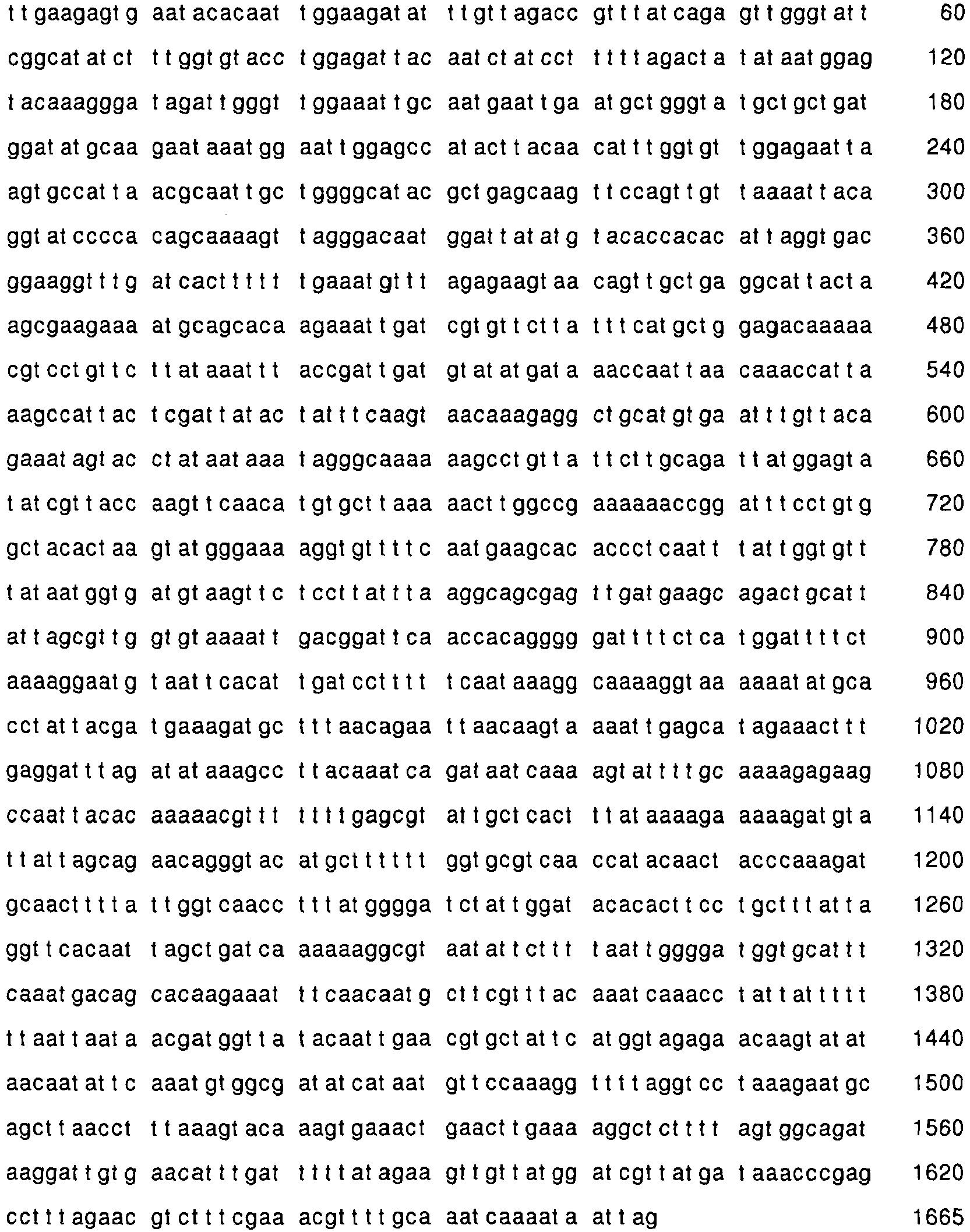
- <210> 197
<211> 554
<212> PRT
<213> Cl ost r i di um acet obut yl i cum - <400> 197


- <210> 198
<211> 939
<212> DNA
<213> Saccharomyces cerevisiae - <400> 198

- <210> 199
<211> 312
<212> PRT
<213> Saccharomyces cerevisiae - <400> 199
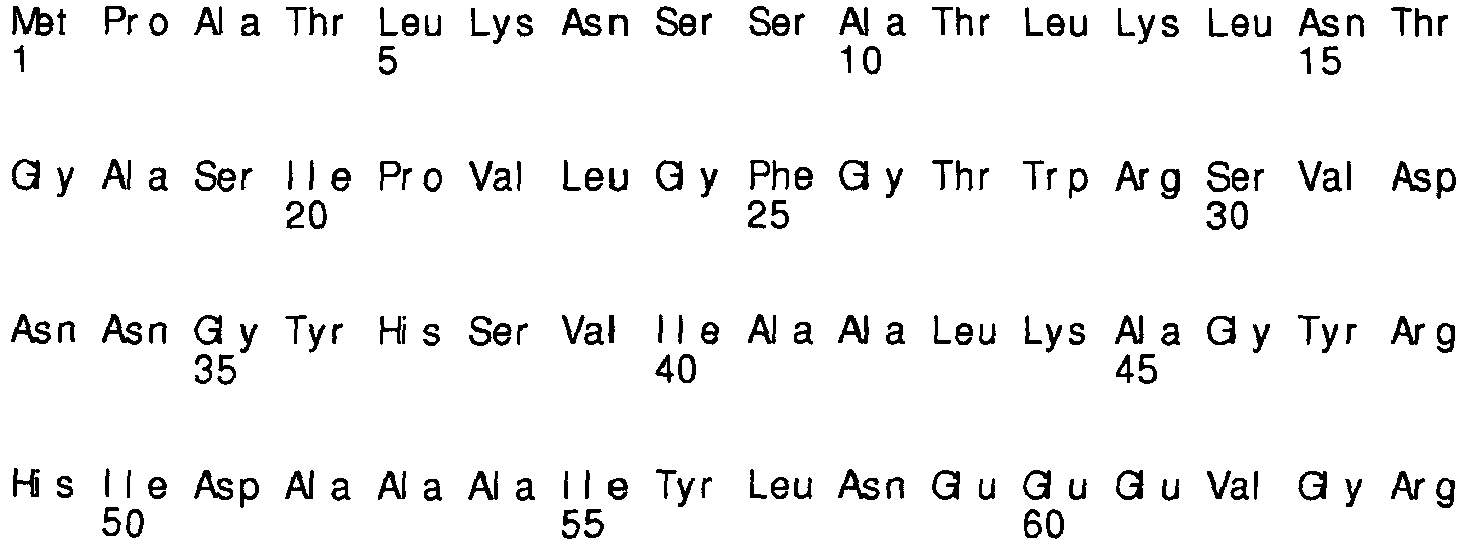

- <210> 200
<211> 1083
<212> DNA
<213> Saccharomyces cer evi si ae - <400> 200

- <210> 201
<211> 360
<212> PRT
<213> Saccharomyces cerevi si ae - <400> 201


- <210> 202
<211> 1170
<212> DNA
<213> Cl ost r i di um acet obut yl i cum - <400> 202

- <210> 203
<211> 389
<212> PRT
<213> Cl ost r i di um acet obut yl i cum - <400> 203


- <210> 204
<211> 390
<212> PRT
<213> Cl ost r i di um acet obut yl i cum - <400> 204


- <210> 205
<211> 993
<212> DNA
<213> Bacillus subtilis - <400> 205


- <210> 206
<211> 330
<212> PRT
<213> Bacillus subtilis - <400> 206


- <210> 207
<211> 984
<212> DNA
<213> Bacillus subtilis - <400> 207


- <210> 208
<211> 327
<212> PRT
<213> Bacillus subtilis - <400> 208


- <210> 209
<211> 1275
<212> DNA
<213> Bacillus subtilis - <400> 209


- <210> 210
<211> 424
<212> PRT
<213> Bacillus subtilis - <400> 210


- <210> 211
<211> 1374
<212> DNA
<213> Bacillus subtilis - <400> 211

- <210> 212
<211> 457
<212> PRT
<213> Bacillus subtilis - <400> 212


- <210> 213
<211> 1233
<212> DNA
<213> Pseudomonas putida - <400> 213


- <210> 214
<211> 410
<212> PRT
<213> Pseudomonas putida - <400> 214


- <210> 215
<211> 1059
<212> DNA
<213> Pseudomonas putida - <400> 215

- <210> 216
<211> 352
<212> PRT
<213> Pseudomonas putida - <400> 216


- <210> 217
<211> 1272
<212> DNA
<213> Pseudomonas put i da - <400> 217

- <210> 218
<211> 423
<212> PRT
<213> Pseudomonas put i da - <400> 218


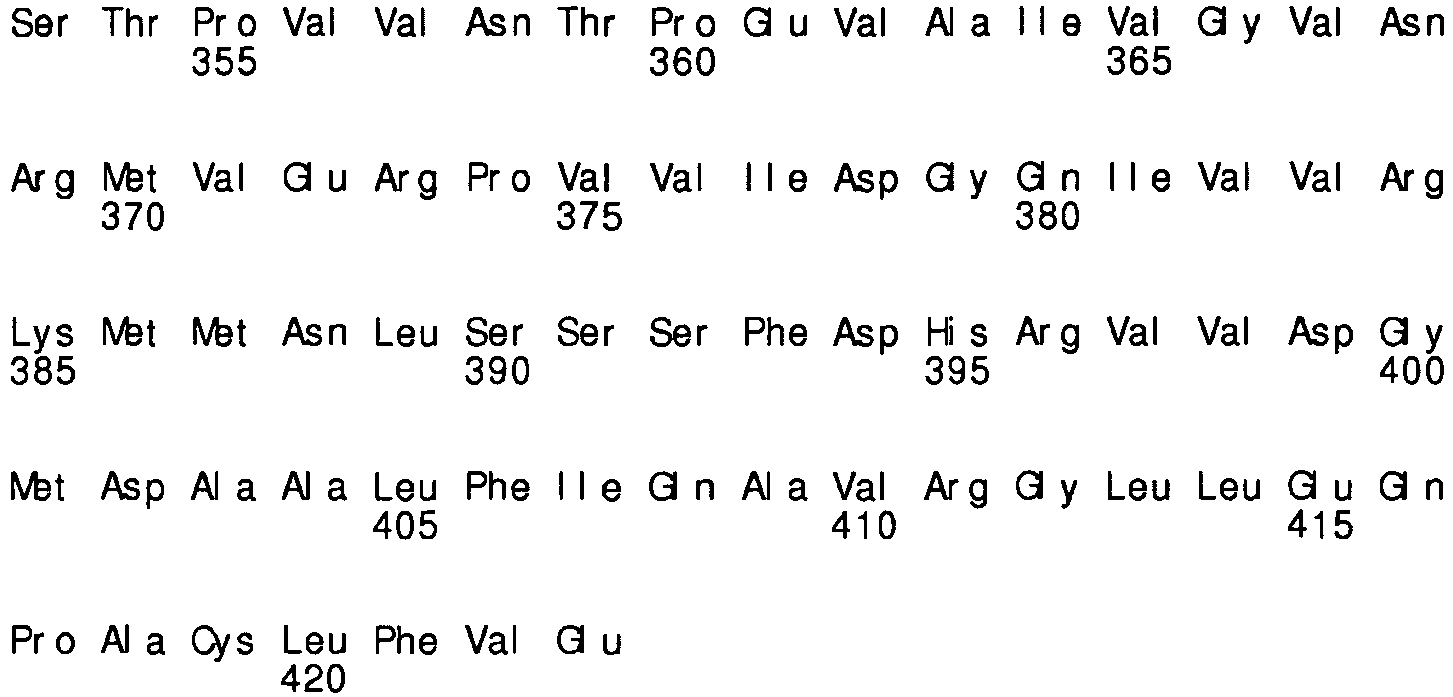
- <210> 219
<211> 1380
<212> DNA
<213> Pseudomonas putida - <400> 219


- <210> 220
<211> 459
<212> PRT
<213> Pseudomonas put i da - <400> 220


- <210> 221
<211> 1407
<212> DNA
<213> Clost r i di um bei j er i ncki i - <400> 221

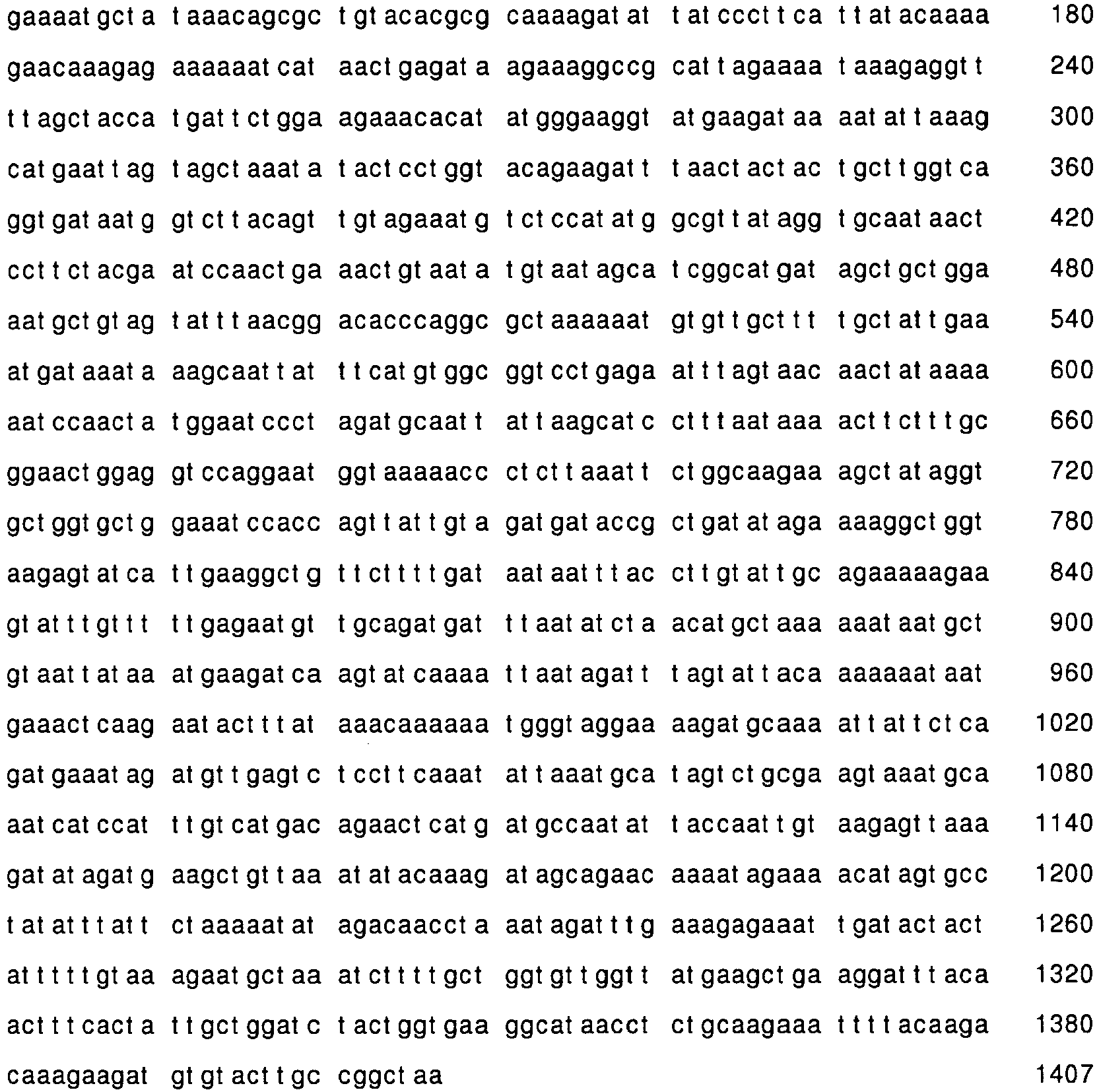
- <210> 222
<211> 468
<212> PRT
<213> Clost r i dium bei j er i ncki i - <400> 222


- <210> 223
<211> 2589
<212> DNA
<213> Cl ost r i di um acet obut yl i cum - <400> 223


- <210> 224
<211> 862
<212> PRT
<213> Clost r i di um acet obut yl i cum - <400> 224


- <210> 225
<211> 2577
<212> DNA
<213> Clost r i di um acet obut yl i cum - <400> 225


- <210> 226
<211 > 800
<212> PRT
<213> Cl ost r i di um acet obut yl i cum - <400> 226
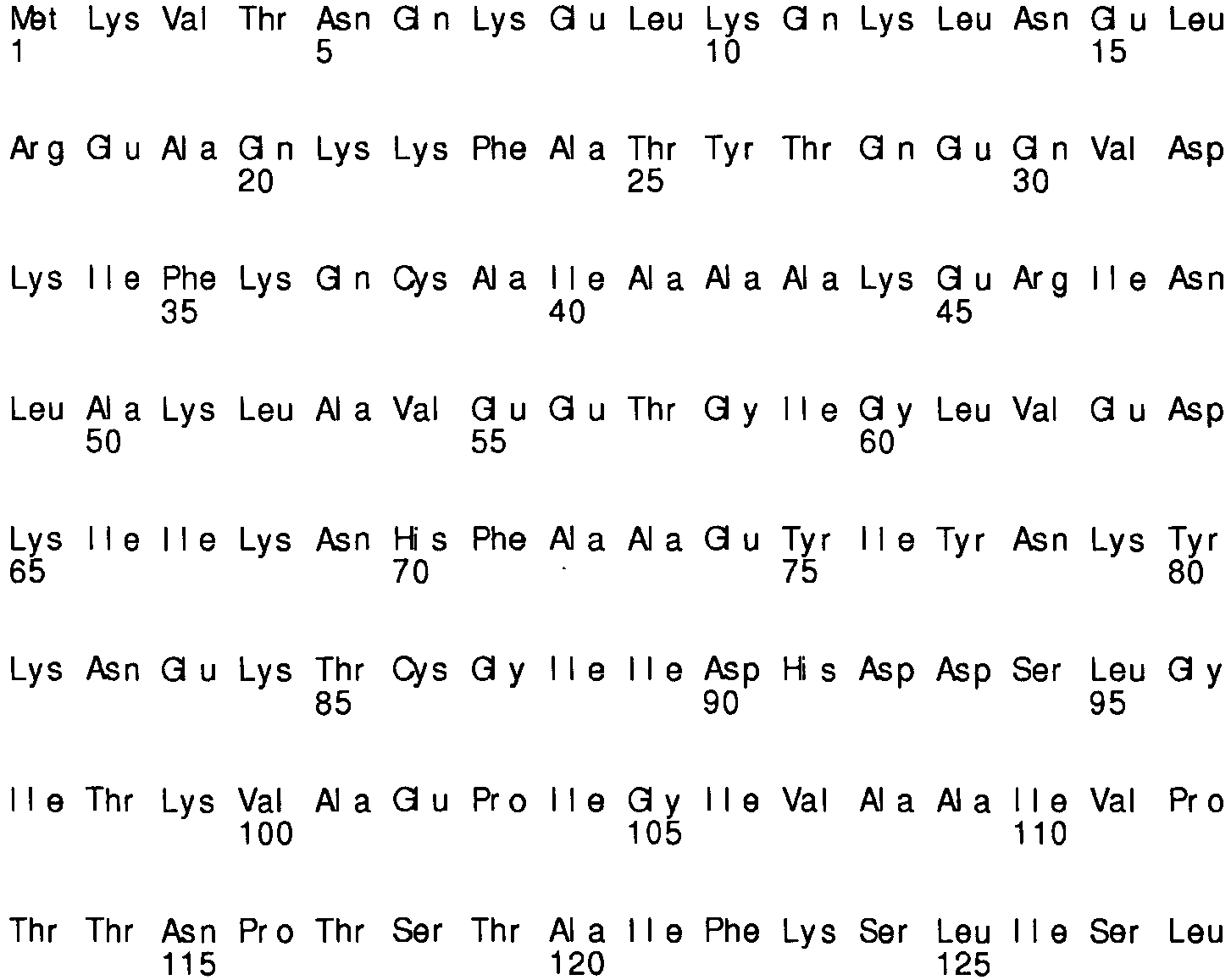


- <210> 227
<211> 924
<212> DNA
<213> Pseudomonas put i da - <400> 227

- <210> 228
<211> 307
<212> PRT
<213> Pseudomonas put i da - <400> 228


- <210> 229
<211> 924
<212> DNA
<213> Ther mus thermophilus - <400> 229

- <210> 230
<211> 307
<212> PRT
<213> Thermus thermophilus - <400> 230



- <210> 231
<211> 1254
<212> DNA
<213> Escher i chi a col i - <400> 231

- <210> 232
<211> 417
<212> PRT
<213> Escherichia coli - <400> 232


- <210> 233
<211> 1278
<212> DNA
<213> Bacillus li cheni formis - <400> 233


- <210> 234
<211> 425
<212> PRT
<213> Bacillus licheni formis - <400> 234


- <210> 235
<211> 930
<212> DNA
<213> Escherichiacoli - <400> 235


- <210> 236
<211> 309
<212> PRT
<213> Escherichia coli - <400> 236


- <210> 237
<211> 1131
<212> DNA
<213> Saccharomyces cerevisiae - <400> 237


- <210> 238
<211> 376
<212> PRT
<213> Saccharomyces cerevisiae - <400> 238
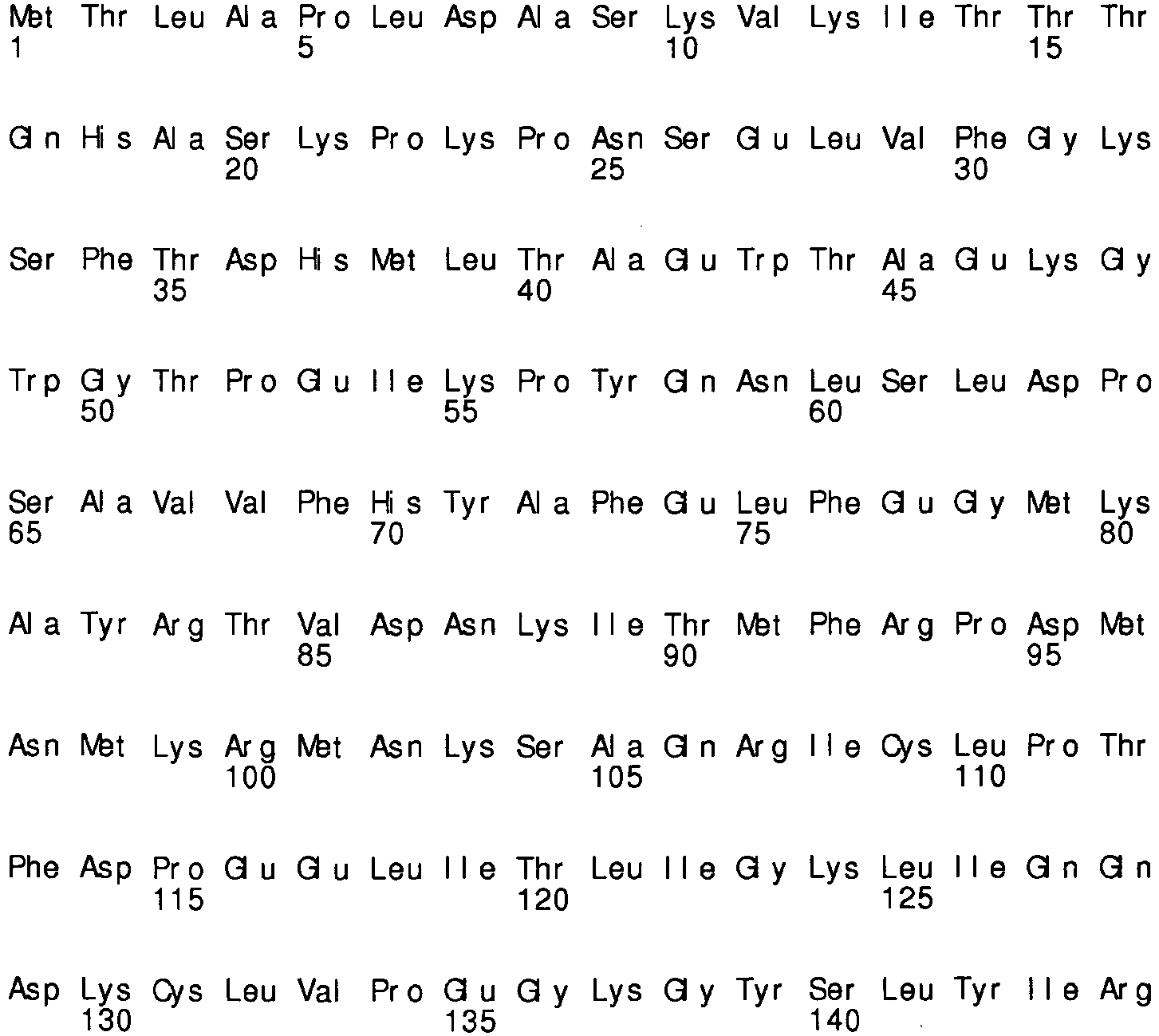

- <210> 239
<211> 993
<212> DNA
<213> Methanobacterium thermoautotrophicum - <400> 239


- <210> 240
<211> 330
<212> PRT
<213> Methanobacterium thermoautotrophicum - <400> 240


- <210> 241
<211> 1095
<212> DNA
<213> Streptomyces coelicolor - <400> 241


- <210> 242
<211> 364
<212> PRT
<213> Streptomyces coelicolor - <400> 242


- <210> 243
<211> 1095
<212> DNA
<213> Bacillus subtilis - <400> 243


- <210> 244
<211> 364
<212> PRT
<213> Bacillus subtilis - <400> 244


- <210> 245
<211> 1785
<212> DNA
<213> Streptomyces viridifaciens - <400> 245

- <210> 246
<211> 594
<212> PRT
<213> Streptomyces viridifaciens - <400> 246


- <210> 247
<211> 1323
<212> DNA
<213> Alcaligenes denitrificans - <400> 247

- <210> 248
<211> 440
<212> PRT
<213> omega-amino acid: pyruvate transaminase - <400> 248


- <210> 249
<211> 1332
<212> DNA
<213> Ralstoniaeutropha - <400> 249


- <210> 250
<211> 443
<212> PRT
<213> Ralstoniaeutropha - <400> 250


- <210> 251
<211> 1341
<212> DNA
<213> Shewanella oneidensis - <400> 251
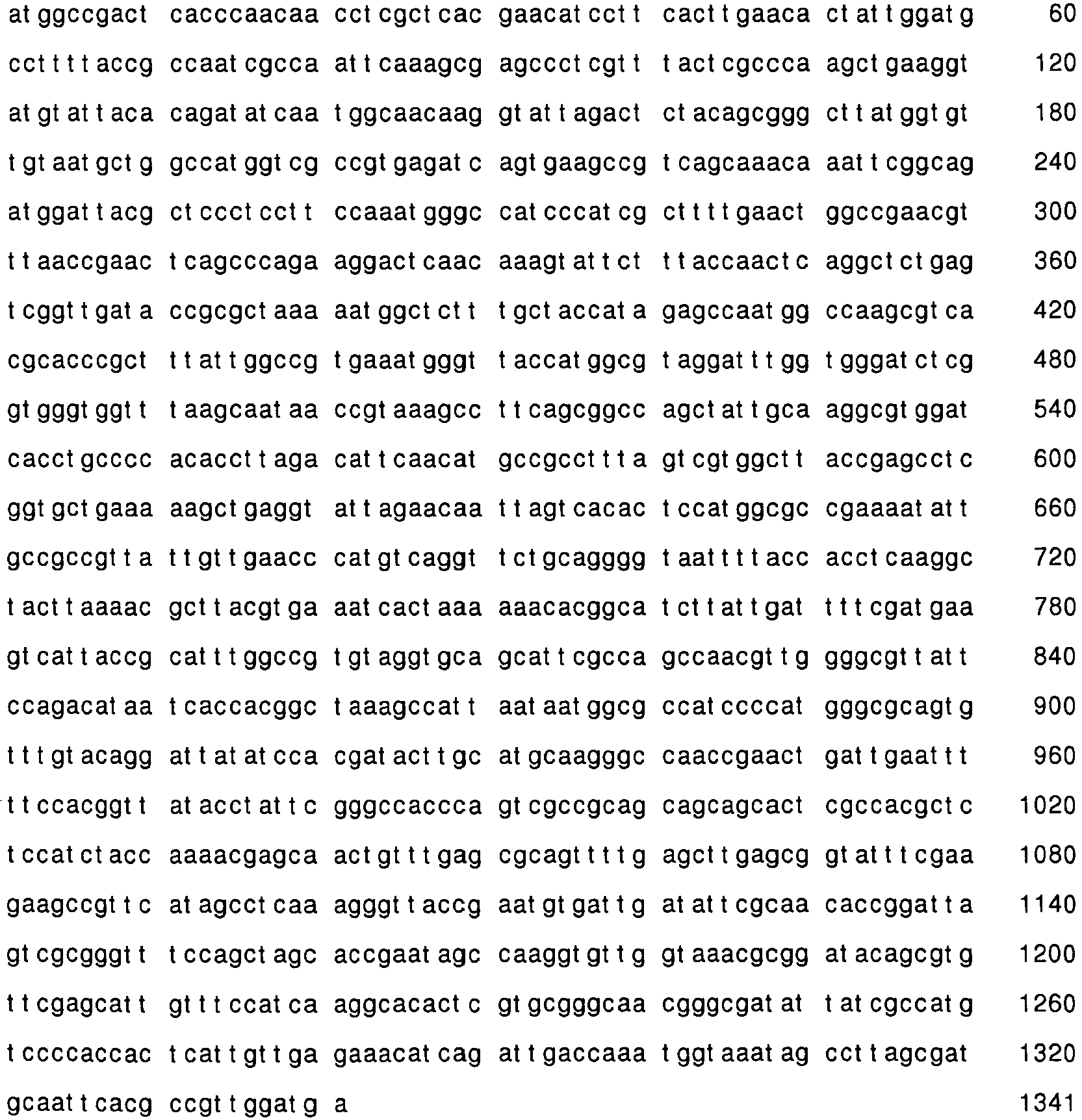
- <210> 252
<211> 446
<212> PRT
<213> bet a alanine-pyruvate transaminase - <400> 252


- <210> 253
<211> 1347
<212> DNA
<213> Pseudomonas putida - <400> 253


- <210> 254
<211> 448
<212> PRT
<213> Pseudomonas putida - <400> 254

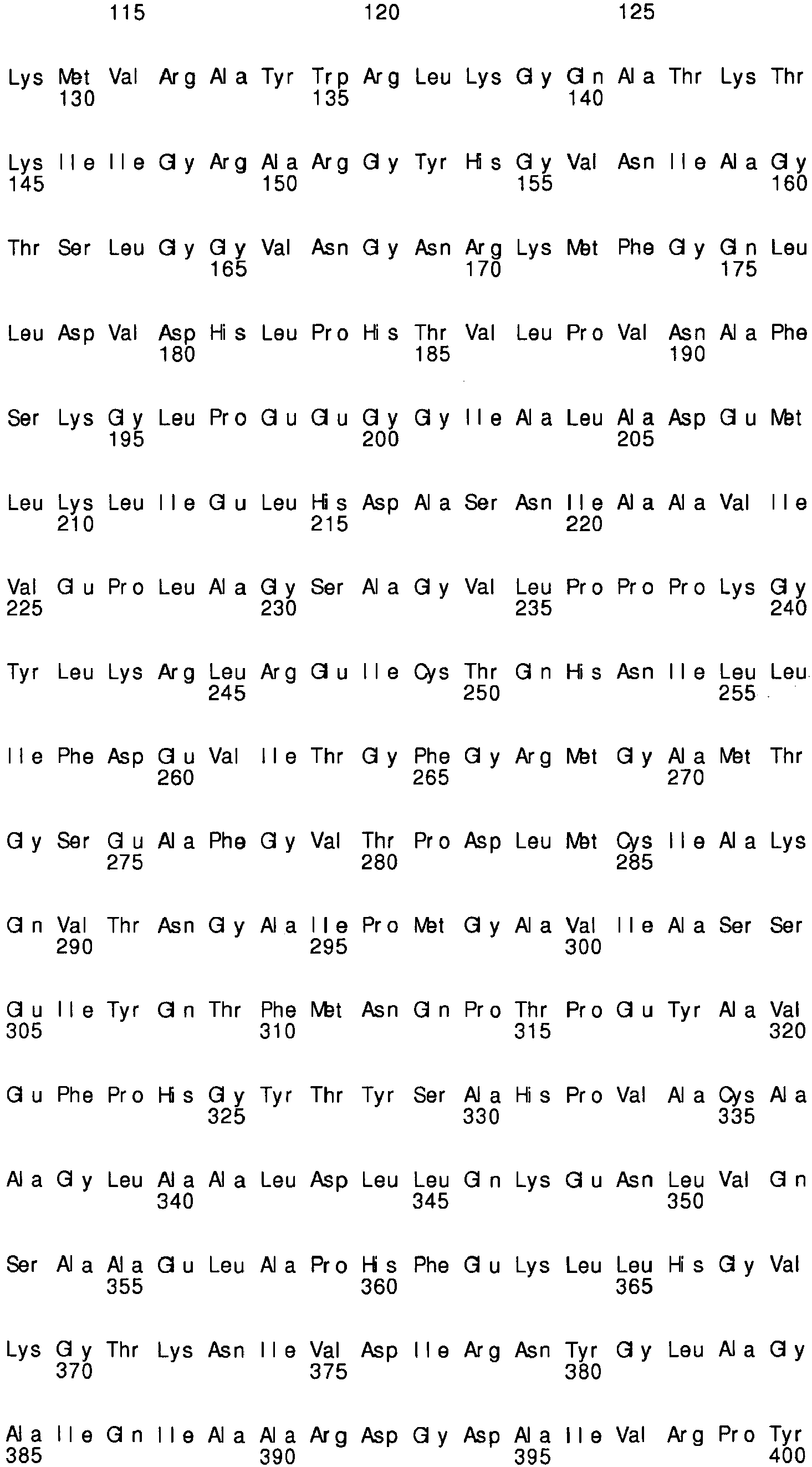

- <210> 255
<211> 1701
<212> DNA
<213> Streptomyces cinnamonensis - <400> 255


- <210> 256
<211> 566
<212> PRT
<213> Streptomyces cinnamonensis - <400> 256


- <210> 257
<211> 411
<212> DNA
<213> Streptomyces cinnamonensis - <400> 257

- <210> 258
<211> 136
<212> PRT
<213> Streptomyces cinnamonensis - <400> 258


- <210> 259
<211> 1701
<212> DNA
<213> Streptomyces coelicolor - <400> 259


- <210> 260
<211> 566
<212> PRT
<213> Streptomyces coelicolor - <400> 260


- <210> 261
<211> 417
<212> DNA
<213> Streptomyces coelicolor - <400> 261

- <210> 262
<211> 138
<212> PRT
<213> Streptomyces coelicolor - <400> 262


- <210> 263
<211> 1701
<212> DNA
<213> Streptomyces avermitilis - <400> 263


- <210> 264
<211> 566
<212> PRT
<213> Streptomyces avermitilis - <400> 264


- <210> 265
<211> 417
<212> DNA
<213> Streptomyces avermitilis - <400> 265

- <210> 266
<211> 138
<212> PRT
<213> Streptomyces avermitilis - <400> 266


- <210> 267
<211> 2910
<212> DNA
<213> Staphylococcus aureus - <400> 267
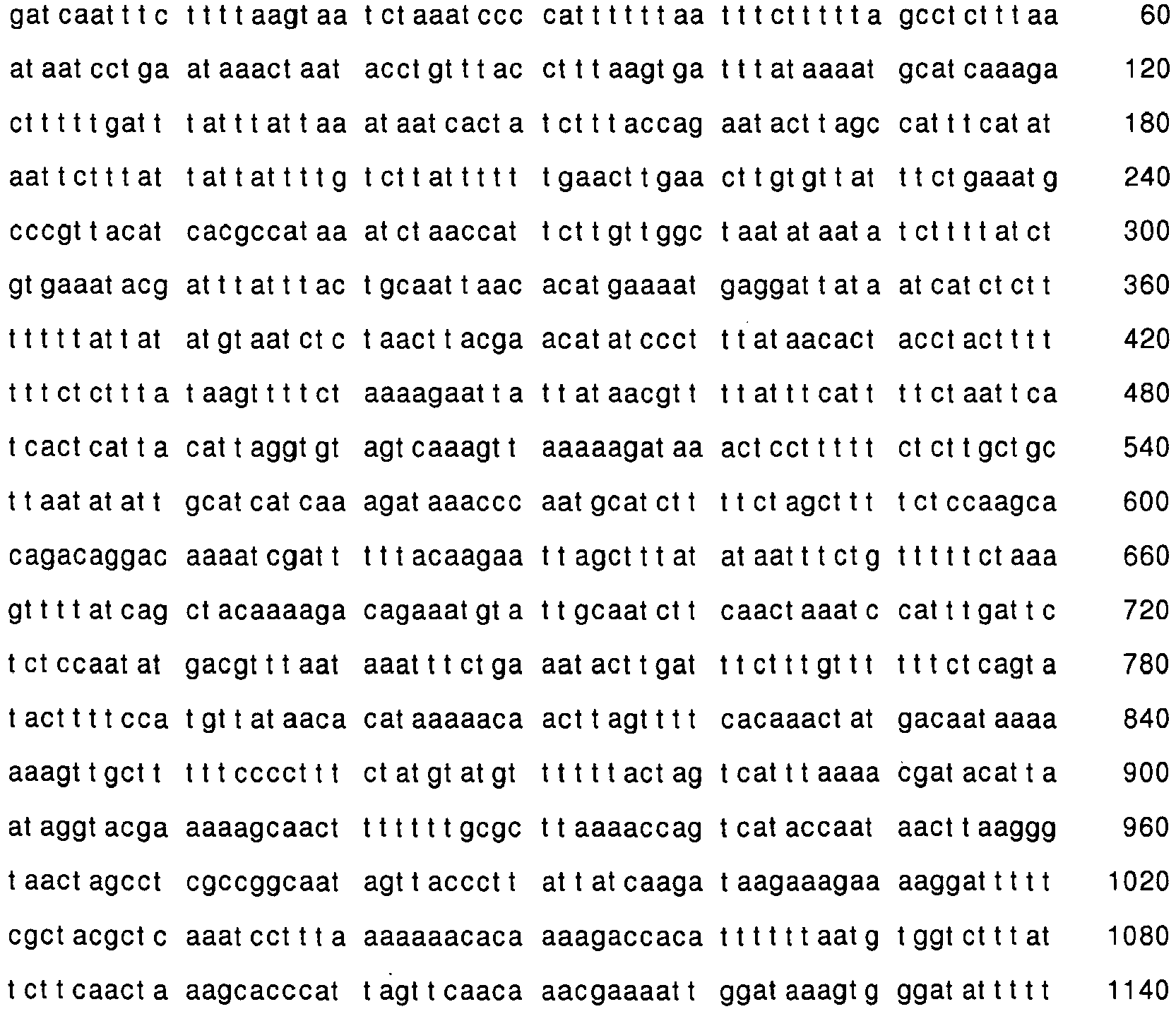

Claims (14)
- A method for the production of isobutanol comprising:a) providing a recombinant microbial production host which produces isobutanol, wherein said recombinant microbial host comprises DNA molecules encoding polypeptides that catalyse each of the following substrate to product conversions:i) pyruvate to acetolactate;ii) acetolactate to 2,3-dihydroxyisovalerate;iii) 2,3-dihydroxyisovalerate to α-ketoisovalerate;iv) α-ketoisovalerate to isobutyraldehyde; andv) isobutyraldehyde to isobutanol;wherein at least one of said DNA molecules is heterologous to said recombinant microbial host;b) seeding the production host of (a) into a fermentation medium comprising a fermentable carbon substrate to create a fermentation culture;c) growing the production host in the fermentation culture at a first temperature for a first period of time, wherein the first temperature is from about 25°C to about 40 °C;d) lowering the temperature of the fermentation culture to a second temperature; ande) incubating the production host at the second temperature of step (d) for a second period of time;whereby isobutanol is produced.
- The method according to Claim 1 wherein the fermentable carbon substrate is derived from a grain or sugar source selected from the group consisting of wheat, corn, barley, oats, rye, sugar cane, sugar beets, cassava, sweet sorghum, and mixtures thereof.
- The method according to Claim 1 wherein the fermentable carbon substrate is derived from cellulosic or lignocellulosic biomass selected from the group consisting of corn cobs, crop residues, corn husks, corn stover, grasses, wheat straw, barley straw, hay, rice straw, switchgrass, waste paper, sugar cane bagasse, sorghum, soy, components obtained from milling of grains, trees, branches, roots, leaves, wood chips, sawdust, shrubs and bushes, vegetables, fruits, flowers, animal manure, and mixtures thereof.
- The method according to Claim 1 wherein the fermentable carbon substrate is selected from the group consisting of monosaccharides, oligosaccharides, and polysaccharides.
- The method according to any one of Claims 1-4 wherein the fermentation culture is maintained under conditions selected from the group consisting of anaerobic conditions and microaerobic conditions.
- The method according to any one of Claims 1-5 wherein while growing the production host in (c) at a first temperature over a first period of time, a metabolic parameter of the fermentation culture is monitored.
- The method according to Claim 6 wherein the metabolic parameter that is monitored is selected from the group consisting of optical density, pH, respiratory quotient, fermentable carbon substrate utilization, CO2 production, and isobutanol production.
- The method according to any one of Claims 1-7 wherein lowering the temperature of the fermentation culture of step (d) occurs at a predetermined time.
- The method according to any one of Claims 1-7 wherein the lowering of the temperature of the fermentation culture of step (d) coincides with a change in a metabolic parameter.
- The method according to Claim 9 wherein the change in metabolic parameter is a decrease in the rate of isobutanol production.
- The method according to any one of Claims 1-10 wherein the second temperature is from about 3 °C to about 25 °C lower than the first temperature.
- The method according to any one of Claims 1-11 wherein steps (d) and (e) are repeated one or more times.
- The method according to any one of Claims 1-12 wherein the recombinant microbial production host is selected from the group consisting of Clostridium, Zymomonas, Escherichia, Salmonela, Rhodococcus, Pseudomonas, Bacillus, Lactobacillus, Enterococcus, Alcaligenes, Klebsiela, Paenibacillus, Arthrobacter, Corynebacterium, Brevibacterium, Saccharomyces, and Pichia.
- The method according to any one of Claims 1-13 wherein the polypeptide that catalyzes a substrate to product conversion of pyruvate to acetolactate is acetolactate synthase and the acetolactate synthase has an amino acid sequence having at least 95% identity to an amino acid sequence selected from the group consisting of SEQ ID NO:2, SEQ ID NO:178, and SEQ ID NO:180, based on the Clustal W method of alignment using the default parameters of GAP PENALTY=10, GAP LENGTH PENALTY=0.1, and Gonnet 250 series of protein weight matrix; or
wherein the polypeptide that catalyzes a substrate to product conversion of acetolactate to 2,3-dihydroxyisovalerate is acetohydroxy acid isomeroreductase
and the acetohydroxy acid isomeroreductase has an amino acid sequence having at least 95% identity to an amino acid sequence selected from the group consisting of SEQ ID NO:4, SEQ ID NO:181, SEQ ID NO:183, and SEQ ID NO:185, based on the Clustal W method of alignment using the default parameters of GAP PENALTY=10, GAP LENGTH PENALTY=0.1, and Gonnet 250 series of protein weight matrix; or
wherein the polypeptide that catalyzes a substrate to product conversion of 2, 3-dihydroxyisovalerate to α-ketoisovalerate is acetohydroxy acid dehydratase and the acetohydroxy acid dehydratase has an amino acid sequence having at least 95% identity to an amino acid sequence selected from the group consisting of SEQ ID NO:6, SEQ ID NO:186, SEQ ID NO:188, and SEQ ID NO:190, based on the Clustal W method of alignment using the default parameters of GAP PENALTY=10, GAP LENGTH PENALTY=0.1, and Gonnet 250 series of protein weight matrix; or
wherein the polypeptide that catalyzes a substrate to product conversion of α-ketoisovalerate to isobutyraldehyde is branched-chain α-keto acid decarboxylase and the branched-chain α-keto acid decarboxylase has an amino acid sequence having at least 95% identity to an amino acid sequence selected from the group consisting of SEQ ID NO:8, SEQ ID NO:193, SEQ ID NO:195, and SEQ ID NO:197, based on the Clustal W method of alignment using the default parameters of GAP PENALTY=10, GAP LENGTH PENALTY=0.1, and Gonnet 250 series of protein weight matrix; or
wherein the polypeptide that catalyzes a substrate to product conversion of isobutyraldehyde to isobutanol is branched-chain alcohol dehydrogenase and the branched-chain alcohol dehydrogenase has an amino acid sequence having at least 95% identity to an amino acid sequence selected from the group consisting of SEQ ID NO:10, SEQ ID NO:199, SEQ ID NO:201, SEQ ID NO:203, and SEQ ID NO:204, based on the Clustal W method of alignment using the default parameters of GAP PENALTY=10, GAP LENGTH PENALTY=0.1, and Gonnet 250 series of protein weight matrix.
Priority Applications (1)
| Application Number | Priority Date | Filing Date | Title |
|---|---|---|---|
| EP12173233A EP2540817A1 (en) | 2007-05-02 | 2008-04-29 | Methods and recombinant microbial hosts for the production of isobutanol |
Applications Claiming Priority (2)
| Application Number | Priority Date | Filing Date | Title |
|---|---|---|---|
| US91546707P | 2007-05-02 | 2007-05-02 | |
| PCT/US2008/061861 WO2008137406A1 (en) | 2007-05-02 | 2008-04-29 | Method for the production of isobutanol |
Related Child Applications (1)
| Application Number | Title | Priority Date | Filing Date |
|---|---|---|---|
| EP12173233.3 Division-Into | 2012-06-22 |
Publications (2)
| Publication Number | Publication Date |
|---|---|
| EP2140017A1 EP2140017A1 (en) | 2010-01-06 |
| EP2140017B1 true EP2140017B1 (en) | 2012-12-19 |
Family
ID=39650995
Family Applications (2)
| Application Number | Title | Priority Date | Filing Date |
|---|---|---|---|
| EP12173233A Withdrawn EP2540817A1 (en) | 2007-05-02 | 2008-04-29 | Methods and recombinant microbial hosts for the production of isobutanol |
| EP08780577A Active EP2140017B1 (en) | 2007-05-02 | 2008-04-29 | Process for producing isobutanol |
Family Applications Before (1)
| Application Number | Title | Priority Date | Filing Date |
|---|---|---|---|
| EP12173233A Withdrawn EP2540817A1 (en) | 2007-05-02 | 2008-04-29 | Methods and recombinant microbial hosts for the production of isobutanol |
Country Status (6)
| Country | Link |
|---|---|
| US (1) | US20080274526A1 (en) |
| EP (2) | EP2540817A1 (en) |
| BR (1) | BRPI0809771A2 (en) |
| CA (1) | CA2684860A1 (en) |
| ES (1) | ES2399943T3 (en) |
| WO (1) | WO2008137406A1 (en) |
Families Citing this family (57)
| Publication number | Priority date | Publication date | Assignee | Title |
|---|---|---|---|---|
| US9303225B2 (en) | 2005-10-26 | 2016-04-05 | Butamax Advanced Biofuels Llc | Method for the production of isobutanol by recombinant yeast |
| TWI568847B (en) | 2007-03-16 | 2017-02-01 | 奇諾麥提卡公司 | Compositions and methods for the biosynthesis of 1,4-butanediol and its precursors |
| US7947483B2 (en) | 2007-08-10 | 2011-05-24 | Genomatica, Inc. | Methods and organisms for the growth-coupled production of 1,4-butanediol |
| CN101959568A (en) | 2007-12-27 | 2011-01-26 | 格沃股份有限公司 | Reclaim higher alcohol from dilute aqueous solution |
| PL2265709T3 (en) | 2008-03-27 | 2018-05-30 | Genomatica, Inc. | Microorganisms for the production of adipic acid and other compounds |
| US8188250B2 (en) | 2008-04-28 | 2012-05-29 | Butamax(Tm) Advanced Biofuels Llc | Butanol dehydrogenase enzyme from the bacterium Achromobacter xylosoxidans |
| WO2009135074A2 (en) | 2008-05-01 | 2009-11-05 | Genomatica, Inc. | Microorganisms for the production of methacrylic acid |
| US8828695B2 (en) * | 2008-06-04 | 2014-09-09 | Butamax Advanced Biofuels Llc | Method for producing butanol using two-phase extractive fermentation |
| CA2735883C (en) | 2008-09-10 | 2020-05-05 | Genomatica, Inc. | Microorganisms for the production of 1,4-butanediol |
| AU2009296224B2 (en) * | 2008-09-29 | 2015-02-12 | Butamax(Tm) Advanced Biofuels Llc | Increased heterologous Fe-S enzyme actiivty in yeast |
| US20160222370A1 (en) * | 2008-09-29 | 2016-08-04 | Butamax Advanced Biofuels Llc | Recombinant Yeast Host Cell With Fe-S Cluster Proteins And Methods Of Using Thereof |
| WO2010051527A2 (en) * | 2008-10-31 | 2010-05-06 | Gevo, Inc. | Engineered microorganisms capable of producing target compounds under anaerobic conditions |
| CA2746952A1 (en) | 2008-12-16 | 2010-06-24 | Genomatica, Inc. | Microorganisms and methods for conversion of syngas and other carbon sources to useful products |
| WO2010071851A2 (en) * | 2008-12-20 | 2010-06-24 | The Regents Of University Of California | Conversion of co2 to higher alcohols using photosysnthetic microorganisms |
| WO2010075504A2 (en) * | 2008-12-23 | 2010-07-01 | Gevo, Inc. | Engineered microorganisms for the production of one or more target compounds |
| JP5698655B2 (en) * | 2009-03-30 | 2015-04-08 | 公益財団法人地球環境産業技術研究機構 | Coryneform bacterial transformant and method for producing isobutanol using the same |
| WO2010129936A1 (en) | 2009-05-07 | 2010-11-11 | Genomatica, Inc. | Microorganisms and methods for the biosynthesis of adipate, hexamethylenediamine and 6-aminocaproic acid |
| PL2438036T3 (en) | 2009-06-04 | 2017-09-29 | Genomatica, Inc. | Process of separating components of a fermentation broth |
| BRPI1010581A2 (en) | 2009-06-04 | 2016-11-08 | Genomatica Inc | microorganisms for the production of 1,4-butanediol and related methods |
| US8232089B2 (en) * | 2009-08-12 | 2012-07-31 | Gevo, Inc. | Cytosolic isobutanol pathway localization for the production of isobutanol |
| AU2010306785B2 (en) | 2009-10-13 | 2016-01-14 | Genomatica, Inc. | Microorganisms for the production of 1,4-butanediol, 4-hydroxybutanal, 4-hydroxybutyryl-CoA, putrescine and related compounds, and methods related thereto |
| WO2011057288A2 (en) * | 2009-11-09 | 2011-05-12 | The Regents Of The University Of California | Isobutanol production with corynebacterium glutamicum |
| GB2487889B (en) | 2009-11-24 | 2012-12-19 | Gevo Inc | Methods of increasing dihydroxy acid dehydratase activity to improve production of fuels, chemicals, and amino acids |
| US8530210B2 (en) | 2009-11-25 | 2013-09-10 | Genomatica, Inc. | Microorganisms and methods for the coproduction 1,4-butanediol and gamma-butyrolactone |
| US20110137088A1 (en) * | 2009-12-03 | 2011-06-09 | Bp Corporation North America Inc. | Methods and Apparatuses for Producing Renewable Materials From Inhibiting Compounds |
| EP2519628A2 (en) | 2009-12-29 | 2012-11-07 | Butamax (TM) Advanced Biofuels LLC | Alcohol dehydrogenases (adh) useful for fermentive production of lower alkyl alcohols |
| EP2534240B1 (en) * | 2010-02-12 | 2019-06-05 | GEVO, Inc. | Yeast microorganisms with reduced by-product accumulation for improved production of fuels, chemicals, and amino acids |
| US8048661B2 (en) | 2010-02-23 | 2011-11-01 | Genomatica, Inc. | Microbial organisms comprising exogenous nucleic acids encoding reductive TCA pathway enzymes |
| US8637286B2 (en) | 2010-02-23 | 2014-01-28 | Genomatica, Inc. | Methods for increasing product yields |
| JP2013528399A (en) | 2010-06-18 | 2013-07-11 | ブタマックス(ティーエム) アドバンスド バイオフューエルズ エルエルシー | Extraction solvent derived from oil for alcohol removal in extractive fermentation |
| DK3235907T5 (en) | 2010-07-12 | 2024-10-14 | Inbiose Nv | METABOLICLY MODIFIED ORGANISMS FOR THE PRODUCTION OF BIOPRODUCTS WITH ADDED VALUE |
| WO2012082720A2 (en) | 2010-12-13 | 2012-06-21 | Myriant Corporation | Method of producing succinic acid and other chemicals using sucrose-containing feedstock |
| CN103328631B (en) | 2011-01-20 | 2017-04-26 | 丰田自动车株式会社 | Recombinant yeast and method for producing substance using same |
| US20150259710A1 (en) * | 2011-07-28 | 2015-09-17 | Gevo, Inc. | Decarboxylase proteins with high keto-isovalerate decarboxylase activity |
| CN102533625A (en) * | 2011-10-17 | 2012-07-04 | 广西科学院 | Recombinant strain for producing isobutanol by using tapioca starch as raw materials and construction method and application thereof |
| JP2015501643A (en) | 2011-12-09 | 2015-01-19 | ビュータマックス・アドバンスド・バイオフューエルズ・エルエルシー | Method for removing product alcohol from fermentation broth |
| AU2013235391A1 (en) | 2012-03-23 | 2014-09-04 | Butamax Advanced Biofuels Llc | Acetate supplemention of medium for butanologens |
| KR20150007329A (en) | 2012-05-04 | 2015-01-20 | 부타맥스 어드밴스드 바이오퓨얼스 엘엘씨 | Processes and systems for alcohol production and recovery |
| CN111705028A (en) | 2012-06-04 | 2020-09-25 | 基因组股份公司 | Microorganisms and methods for making 4-hydroxybutyrate, 1, 4-butanediol, and related compounds |
| US9605281B2 (en) | 2012-09-12 | 2017-03-28 | Butamax Advanced Biofuels Llc | Processes and systems for the fermentative production of alcohols |
| EP2877440A1 (en) | 2012-07-26 | 2015-06-03 | Butamax Advanced Biofuels LLC | Butanol purification |
| WO2014028642A1 (en) | 2012-08-17 | 2014-02-20 | Easel Biotechnologies, Llc | Two stage production of higher alcohols |
| WO2014037912A2 (en) * | 2012-09-07 | 2014-03-13 | Cellworks Research India Pvt. Ltd | Methods for production of isobutanol through nutrient stress and genetically modified microorganisms thereof |
| US9109196B2 (en) | 2012-09-12 | 2015-08-18 | Butamax Advanced Biofuels Llc | Processes and systems for the production of fermentation products |
| AU2013317963A1 (en) | 2012-09-21 | 2015-03-12 | Butamax(Tm) Advanced Biofuels Llc | A method for producing butanol using two-phase extractive fermentation and recyclable extractant compositions |
| DE102012024435A1 (en) | 2012-12-14 | 2014-07-10 | Forschungszentrum Jülich GmbH | A method of identifying a cell having an intracellular concentration of a particular metabolite which is higher than its wild type, wherein the alteration of the cell is achieved by recombining, and a method of producing a genetically modified cell of its wild type with optimized production of a particular metabolite, a method of Production of this metabolite, as well as suitable nucleic acids |
| WO2014159309A1 (en) | 2013-03-12 | 2014-10-02 | Butamax Advanced Biofuels Llc | Processes and systems for the production of alcohols |
| US9517985B2 (en) | 2013-03-15 | 2016-12-13 | Butamax Advanced Biofuels Llc | Method for producing butanol using extractive fermentation |
| WO2014151645A1 (en) * | 2013-03-15 | 2014-09-25 | Butamax Advanced Biofuels Llc | Process for maximizing biomass growth and butanol yield by feedback control |
| WO2014144728A1 (en) | 2013-03-15 | 2014-09-18 | Butamax Advanced Biofuels Llc | Method for production of butanol using extractive fermentation |
| US9771602B2 (en) | 2013-03-15 | 2017-09-26 | Butamax Advanced Biofuels Llc | Competitive growth and/or production advantage for butanologen microorganism |
| US9663759B2 (en) | 2013-07-03 | 2017-05-30 | Butamax Advanced Biofuels Llc | Partial adaptation for butanol production |
| WO2015031859A1 (en) | 2013-08-29 | 2015-03-05 | The Regents Of The University Of California | Bacteria engineered for ester production |
| JP2017513697A (en) | 2014-04-11 | 2017-06-01 | ビュータマックス・アドバンスド・バイオフューエルズ・エルエルシー | Pollution reduction |
| CN107404882A (en) | 2015-02-27 | 2017-11-28 | 白狗实验室有限公司 | For producing acetone, isopropanol, butyric acid, other biological product and its mixotrophism fermentation process of mixture |
| US11326193B1 (en) * | 2016-03-03 | 2022-05-10 | National Technology & Engineering Solutions Of Sandia, Llc | Enrichment of amino acids from biomass residuum |
| WO2020009884A1 (en) * | 2018-07-06 | 2020-01-09 | Codexis, Inc. | Engineered branched chain ketoacid decarboxylases |
Family Cites Families (17)
| Publication number | Priority date | Publication date | Assignee | Title |
|---|---|---|---|---|
| US2198104A (en) * | 1938-12-15 | 1940-04-23 | Commercial Solvents Corp | Butyl alcohol fermentation process |
| US4424275A (en) * | 1979-09-17 | 1984-01-03 | Sidney Levy | Continuous process for producing N-butanol employing anaerobic fermentation |
| US4568643A (en) * | 1981-08-03 | 1986-02-04 | Sidney Levy | Continuous process for producing n-butanol employing anaerobic fermentation |
| US4520104A (en) * | 1982-11-18 | 1985-05-28 | Cpc International Inc. | Production of butanol by a continuous fermentation process |
| US4683202A (en) | 1985-03-28 | 1987-07-28 | Cetus Corporation | Process for amplifying nucleic acid sequences |
| US5192673A (en) * | 1990-04-30 | 1993-03-09 | Michigan Biotechnology Institute | Mutant strain of C. acetobutylicum and process for making butanol |
| US5210032A (en) * | 1992-01-21 | 1993-05-11 | Trustees Of The Boston University | Degeneration-resistant solventogenic clostridia |
| WO1993024631A1 (en) | 1992-05-29 | 1993-12-09 | E.I. Du Pont De Nemours And Company | PRODUCTION OF STREPTAVIDIN FROM $i(BACILLUS SUBTILIS) |
| WO1998051813A1 (en) * | 1997-05-14 | 1998-11-19 | The Board Of Trustees Of The University Of Illinois | A METHOD OF PRODUCING BUTANOL USING A MUTANT STRAIN OF $i(CLOSTRIDIUM BEIJERINCKII) |
| EP1204755B1 (en) * | 1999-08-18 | 2006-08-09 | E.I. Du Pont De Nemours And Company | Process for the biological production of 1,3-propanediol |
| EP1149918A1 (en) * | 2000-04-27 | 2001-10-31 | Creavis Gesellschaft für Technologie und Innovation mbH | Process for the oxidation of hydrocarbons by use of microorganisms |
| US6586229B1 (en) | 2000-06-01 | 2003-07-01 | North Carolina State University | Method for the production of ρ-Hydroxybenzoate in species of pseudomonas and agrobacterium |
| US8192959B2 (en) | 2002-04-22 | 2012-06-05 | Genencor International Inc | Promoter and plasmid system for genetic engineering |
| US7371558B2 (en) | 2002-10-04 | 2008-05-13 | E.I. Du Pont De Nemours And Company | Process for the biological production of 1,3-propanediol with high yield |
| MXPA05009553A (en) * | 2003-03-10 | 2006-03-17 | Broin And Associates Inc | Method for producing ethanol using raw starch. |
| JP4991700B2 (en) | 2005-04-12 | 2012-08-01 | イー・アイ・デュポン・ドウ・ヌムール・アンド・カンパニー | Systems and methods for biomass processing |
| EP3301182B1 (en) * | 2005-10-26 | 2020-03-18 | Butamax (TM) Advanced Biofuels LLC | Fermentative production of four carbon alcohols |
-
2008
- 2008-04-28 US US12/110,526 patent/US20080274526A1/en not_active Abandoned
- 2008-04-29 ES ES08780577T patent/ES2399943T3/en active Active
- 2008-04-29 CA CA002684860A patent/CA2684860A1/en not_active Abandoned
- 2008-04-29 EP EP12173233A patent/EP2540817A1/en not_active Withdrawn
- 2008-04-29 BR BRPI0809771-2A patent/BRPI0809771A2/en not_active Application Discontinuation
- 2008-04-29 WO PCT/US2008/061861 patent/WO2008137406A1/en not_active Ceased
- 2008-04-29 EP EP08780577A patent/EP2140017B1/en active Active
Also Published As
| Publication number | Publication date |
|---|---|
| ES2399943T3 (en) | 2013-04-04 |
| US20080274526A1 (en) | 2008-11-06 |
| WO2008137406A1 (en) | 2008-11-13 |
| EP2140017A1 (en) | 2010-01-06 |
| CA2684860A1 (en) | 2008-11-13 |
| BRPI0809771A2 (en) | 2014-09-23 |
| EP2540817A1 (en) | 2013-01-02 |
Similar Documents
| Publication | Publication Date | Title |
|---|---|---|
| EP1948814B1 (en) | Fermentive production of four carbon alcohols | |
| EP2540817A1 (en) | Methods and recombinant microbial hosts for the production of isobutanol | |
| US8273558B2 (en) | Fermentive production of four carbon alcohols | |
| US9303225B2 (en) | Method for the production of isobutanol by recombinant yeast | |
| EP2142656B1 (en) | Method for the production of 1-butanol |
Legal Events
| Date | Code | Title | Description |
|---|---|---|---|
| PUAI | Public reference made under article 153(3) epc to a published international application that has entered the european phase |
Free format text: ORIGINAL CODE: 0009012 |
|
| 17P | Request for examination filed |
Effective date: 20091022 |
|
| AK | Designated contracting states |
Kind code of ref document: A1 Designated state(s): AT BE BG CH CY CZ DE DK EE ES FI FR GB GR HR HU IE IS IT LI LT LU LV MC MT NL NO PL PT RO SE SI SK TR |
|
| 17Q | First examination report despatched |
Effective date: 20100614 |
|
| DAX | Request for extension of the european patent (deleted) | ||
| RAP1 | Party data changed (applicant data changed or rights of an application transferred) |
Owner name: BUTAMAX (TM) ADVANCED BIOFUELS LLC |
|
| GRAP | Despatch of communication of intention to grant a patent |
Free format text: ORIGINAL CODE: EPIDOSNIGR1 |
|
| GRAS | Grant fee paid |
Free format text: ORIGINAL CODE: EPIDOSNIGR3 |
|
| GRAA | (expected) grant |
Free format text: ORIGINAL CODE: 0009210 |
|
| AK | Designated contracting states |
Kind code of ref document: B1 Designated state(s): AT BE BG CH CY CZ DE DK EE ES FI FR GB GR HR HU IE IS IT LI LT LU LV MC MT NL NO PL PT RO SE SI SK TR |
|
| REG | Reference to a national code |
Ref country code: GB Ref legal event code: FG4D |
|
| REG | Reference to a national code |
Ref country code: CH Ref legal event code: EP |
|
| REG | Reference to a national code |
Ref country code: AT Ref legal event code: REF Ref document number: 589462 Country of ref document: AT Kind code of ref document: T Effective date: 20130115 |
|
| REG | Reference to a national code |
Ref country code: DE Ref legal event code: R096 Ref document number: 602008020993 Country of ref document: DE Effective date: 20130221 |
|
| REG | Reference to a national code |
Ref country code: ES Ref legal event code: FG2A Ref document number: 2399943 Country of ref document: ES Kind code of ref document: T3 Effective date: 20130404 |
|
| PG25 | Lapsed in a contracting state [announced via postgrant information from national office to epo] |
Ref country code: HR Free format text: LAPSE BECAUSE OF FAILURE TO SUBMIT A TRANSLATION OF THE DESCRIPTION OR TO PAY THE FEE WITHIN THE PRESCRIBED TIME-LIMIT Effective date: 20121219 Ref country code: FI Free format text: LAPSE BECAUSE OF FAILURE TO SUBMIT A TRANSLATION OF THE DESCRIPTION OR TO PAY THE FEE WITHIN THE PRESCRIBED TIME-LIMIT Effective date: 20121219 Ref country code: SE Free format text: LAPSE BECAUSE OF FAILURE TO SUBMIT A TRANSLATION OF THE DESCRIPTION OR TO PAY THE FEE WITHIN THE PRESCRIBED TIME-LIMIT Effective date: 20121219 Ref country code: NO Free format text: LAPSE BECAUSE OF FAILURE TO SUBMIT A TRANSLATION OF THE DESCRIPTION OR TO PAY THE FEE WITHIN THE PRESCRIBED TIME-LIMIT Effective date: 20130319 Ref country code: LT Free format text: LAPSE BECAUSE OF FAILURE TO SUBMIT A TRANSLATION OF THE DESCRIPTION OR TO PAY THE FEE WITHIN THE PRESCRIBED TIME-LIMIT Effective date: 20121219 |
|
| REG | Reference to a national code |
Ref country code: NL Ref legal event code: VDEP Effective date: 20121219 Ref country code: AT Ref legal event code: MK05 Ref document number: 589462 Country of ref document: AT Kind code of ref document: T Effective date: 20121219 |
|
| REG | Reference to a national code |
Ref country code: LT Ref legal event code: MG4D |
|
| PG25 | Lapsed in a contracting state [announced via postgrant information from national office to epo] |
Ref country code: GR Free format text: LAPSE BECAUSE OF FAILURE TO SUBMIT A TRANSLATION OF THE DESCRIPTION OR TO PAY THE FEE WITHIN THE PRESCRIBED TIME-LIMIT Effective date: 20130320 Ref country code: LV Free format text: LAPSE BECAUSE OF FAILURE TO SUBMIT A TRANSLATION OF THE DESCRIPTION OR TO PAY THE FEE WITHIN THE PRESCRIBED TIME-LIMIT Effective date: 20121219 Ref country code: SI Free format text: LAPSE BECAUSE OF FAILURE TO SUBMIT A TRANSLATION OF THE DESCRIPTION OR TO PAY THE FEE WITHIN THE PRESCRIBED TIME-LIMIT Effective date: 20121219 |
|
| PG25 | Lapsed in a contracting state [announced via postgrant information from national office to epo] |
Ref country code: SK Free format text: LAPSE BECAUSE OF FAILURE TO SUBMIT A TRANSLATION OF THE DESCRIPTION OR TO PAY THE FEE WITHIN THE PRESCRIBED TIME-LIMIT Effective date: 20121219 Ref country code: BE Free format text: LAPSE BECAUSE OF FAILURE TO SUBMIT A TRANSLATION OF THE DESCRIPTION OR TO PAY THE FEE WITHIN THE PRESCRIBED TIME-LIMIT Effective date: 20121219 Ref country code: IS Free format text: LAPSE BECAUSE OF FAILURE TO SUBMIT A TRANSLATION OF THE DESCRIPTION OR TO PAY THE FEE WITHIN THE PRESCRIBED TIME-LIMIT Effective date: 20130419 Ref country code: CZ Free format text: LAPSE BECAUSE OF FAILURE TO SUBMIT A TRANSLATION OF THE DESCRIPTION OR TO PAY THE FEE WITHIN THE PRESCRIBED TIME-LIMIT Effective date: 20121219 Ref country code: BG Free format text: LAPSE BECAUSE OF FAILURE TO SUBMIT A TRANSLATION OF THE DESCRIPTION OR TO PAY THE FEE WITHIN THE PRESCRIBED TIME-LIMIT Effective date: 20130319 Ref country code: EE Free format text: LAPSE BECAUSE OF FAILURE TO SUBMIT A TRANSLATION OF THE DESCRIPTION OR TO PAY THE FEE WITHIN THE PRESCRIBED TIME-LIMIT Effective date: 20121219 Ref country code: AT Free format text: LAPSE BECAUSE OF FAILURE TO SUBMIT A TRANSLATION OF THE DESCRIPTION OR TO PAY THE FEE WITHIN THE PRESCRIBED TIME-LIMIT Effective date: 20121219 |
|
| PG25 | Lapsed in a contracting state [announced via postgrant information from national office to epo] |
Ref country code: PT Free format text: LAPSE BECAUSE OF FAILURE TO SUBMIT A TRANSLATION OF THE DESCRIPTION OR TO PAY THE FEE WITHIN THE PRESCRIBED TIME-LIMIT Effective date: 20130419 Ref country code: NL Free format text: LAPSE BECAUSE OF FAILURE TO SUBMIT A TRANSLATION OF THE DESCRIPTION OR TO PAY THE FEE WITHIN THE PRESCRIBED TIME-LIMIT Effective date: 20121219 Ref country code: RO Free format text: LAPSE BECAUSE OF FAILURE TO SUBMIT A TRANSLATION OF THE DESCRIPTION OR TO PAY THE FEE WITHIN THE PRESCRIBED TIME-LIMIT Effective date: 20121219 Ref country code: PL Free format text: LAPSE BECAUSE OF FAILURE TO SUBMIT A TRANSLATION OF THE DESCRIPTION OR TO PAY THE FEE WITHIN THE PRESCRIBED TIME-LIMIT Effective date: 20121219 |
|
| PLBE | No opposition filed within time limit |
Free format text: ORIGINAL CODE: 0009261 |
|
| STAA | Information on the status of an ep patent application or granted ep patent |
Free format text: STATUS: NO OPPOSITION FILED WITHIN TIME LIMIT |
|
| PG25 | Lapsed in a contracting state [announced via postgrant information from national office to epo] |
Ref country code: DK Free format text: LAPSE BECAUSE OF FAILURE TO SUBMIT A TRANSLATION OF THE DESCRIPTION OR TO PAY THE FEE WITHIN THE PRESCRIBED TIME-LIMIT Effective date: 20121219 |
|
| 26N | No opposition filed |
Effective date: 20130920 |
|
| PG25 | Lapsed in a contracting state [announced via postgrant information from national office to epo] |
Ref country code: CY Free format text: LAPSE BECAUSE OF FAILURE TO SUBMIT A TRANSLATION OF THE DESCRIPTION OR TO PAY THE FEE WITHIN THE PRESCRIBED TIME-LIMIT Effective date: 20121219 Ref country code: MC Free format text: LAPSE BECAUSE OF FAILURE TO SUBMIT A TRANSLATION OF THE DESCRIPTION OR TO PAY THE FEE WITHIN THE PRESCRIBED TIME-LIMIT Effective date: 20121219 |
|
| REG | Reference to a national code |
Ref country code: CH Ref legal event code: PL |
|
| REG | Reference to a national code |
Ref country code: DE Ref legal event code: R097 Ref document number: 602008020993 Country of ref document: DE Effective date: 20130920 |
|
| REG | Reference to a national code |
Ref country code: IE Ref legal event code: MM4A |
|
| PG25 | Lapsed in a contracting state [announced via postgrant information from national office to epo] |
Ref country code: LI Free format text: LAPSE BECAUSE OF NON-PAYMENT OF DUE FEES Effective date: 20130430 Ref country code: CH Free format text: LAPSE BECAUSE OF NON-PAYMENT OF DUE FEES Effective date: 20130430 |
|
| PG25 | Lapsed in a contracting state [announced via postgrant information from national office to epo] |
Ref country code: IE Free format text: LAPSE BECAUSE OF NON-PAYMENT OF DUE FEES Effective date: 20130429 |
|
| PG25 | Lapsed in a contracting state [announced via postgrant information from national office to epo] |
Ref country code: MT Free format text: LAPSE BECAUSE OF FAILURE TO SUBMIT A TRANSLATION OF THE DESCRIPTION OR TO PAY THE FEE WITHIN THE PRESCRIBED TIME-LIMIT Effective date: 20121219 |
|
| PG25 | Lapsed in a contracting state [announced via postgrant information from national office to epo] |
Ref country code: TR Free format text: LAPSE BECAUSE OF FAILURE TO SUBMIT A TRANSLATION OF THE DESCRIPTION OR TO PAY THE FEE WITHIN THE PRESCRIBED TIME-LIMIT Effective date: 20121219 |
|
| PG25 | Lapsed in a contracting state [announced via postgrant information from national office to epo] |
Ref country code: HU Free format text: LAPSE BECAUSE OF FAILURE TO SUBMIT A TRANSLATION OF THE DESCRIPTION OR TO PAY THE FEE WITHIN THE PRESCRIBED TIME-LIMIT; INVALID AB INITIO Effective date: 20080429 Ref country code: LU Free format text: LAPSE BECAUSE OF NON-PAYMENT OF DUE FEES Effective date: 20130429 |
|
| REG | Reference to a national code |
Ref country code: FR Ref legal event code: PLFP Year of fee payment: 9 |
|
| REG | Reference to a national code |
Ref country code: FR Ref legal event code: PLFP Year of fee payment: 10 |
|
| REG | Reference to a national code |
Ref country code: FR Ref legal event code: PLFP Year of fee payment: 11 |
|
| PGFP | Annual fee paid to national office [announced via postgrant information from national office to epo] |
Ref country code: FR Payment date: 20200312 Year of fee payment: 13 |
|
| PGFP | Annual fee paid to national office [announced via postgrant information from national office to epo] |
Ref country code: DE Payment date: 20200415 Year of fee payment: 13 |
|
| PGFP | Annual fee paid to national office [announced via postgrant information from national office to epo] |
Ref country code: IT Payment date: 20200312 Year of fee payment: 13 Ref country code: GB Payment date: 20200422 Year of fee payment: 13 |
|
| REG | Reference to a national code |
Ref country code: DE Ref legal event code: R119 Ref document number: 602008020993 Country of ref document: DE |
|
| GBPC | Gb: european patent ceased through non-payment of renewal fee |
Effective date: 20210429 |
|
| PG25 | Lapsed in a contracting state [announced via postgrant information from national office to epo] |
Ref country code: GB Free format text: LAPSE BECAUSE OF NON-PAYMENT OF DUE FEES Effective date: 20210429 Ref country code: FR Free format text: LAPSE BECAUSE OF NON-PAYMENT OF DUE FEES Effective date: 20210430 Ref country code: DE Free format text: LAPSE BECAUSE OF NON-PAYMENT OF DUE FEES Effective date: 20211103 |
|
| PG25 | Lapsed in a contracting state [announced via postgrant information from national office to epo] |
Ref country code: IT Free format text: LAPSE BECAUSE OF NON-PAYMENT OF DUE FEES Effective date: 20200429 |
|
| PGFP | Annual fee paid to national office [announced via postgrant information from national office to epo] |
Ref country code: ES Payment date: 20250502 Year of fee payment: 18 |
|
| PG25 | Lapsed in a contracting state [announced via postgrant information from national office to epo] |
Ref country code: IT Free format text: LAPSE BECAUSE OF NON-PAYMENT OF DUE FEES Effective date: 20210429 |