EP2139173B1 - Dezentralisierte Steuerung des Netz-Zugangs in einem Multihop-Relay-Mobilfunksystem - Google Patents
Dezentralisierte Steuerung des Netz-Zugangs in einem Multihop-Relay-Mobilfunksystem Download PDFInfo
- Publication number
- EP2139173B1 EP2139173B1 EP09173115A EP09173115A EP2139173B1 EP 2139173 B1 EP2139173 B1 EP 2139173B1 EP 09173115 A EP09173115 A EP 09173115A EP 09173115 A EP09173115 A EP 09173115A EP 2139173 B1 EP2139173 B1 EP 2139173B1
- Authority
- EP
- European Patent Office
- Prior art keywords
- ranging
- source apparatus
- source
- network entry
- intermediate apparatus
- Prior art date
- Legal status (The legal status is an assumption and is not a legal conclusion. Google has not performed a legal analysis and makes no representation as to the accuracy of the status listed.)
- Ceased
Links
Images


Classifications
-
- H—ELECTRICITY
- H04—ELECTRIC COMMUNICATION TECHNIQUE
- H04W—WIRELESS COMMUNICATION NETWORKS
- H04W16/00—Network planning, e.g. coverage or traffic planning tools; Network deployment, e.g. resource partitioning or cells structures
- H04W16/24—Cell structures
- H04W16/26—Cell enhancers or enhancement, e.g. for tunnels, building shadow
-
- H—ELECTRICITY
- H04—ELECTRIC COMMUNICATION TECHNIQUE
- H04B—TRANSMISSION
- H04B7/00—Radio transmission systems, i.e. using radiation field
- H04B7/24—Radio transmission systems, i.e. using radiation field for communication between two or more posts
- H04B7/26—Radio transmission systems, i.e. using radiation field for communication between two or more posts at least one of which is mobile
- H04B7/2603—Arrangements for wireless physical layer control
- H04B7/2606—Arrangements for base station coverage control, e.g. by using relays in tunnels
-
- H—ELECTRICITY
- H04—ELECTRIC COMMUNICATION TECHNIQUE
- H04B—TRANSMISSION
- H04B7/00—Radio transmission systems, i.e. using radiation field
- H04B7/14—Relay systems
- H04B7/15—Active relay systems
-
- H—ELECTRICITY
- H04—ELECTRIC COMMUNICATION TECHNIQUE
- H04B—TRANSMISSION
- H04B7/00—Radio transmission systems, i.e. using radiation field
- H04B7/14—Relay systems
- H04B7/15—Active relay systems
- H04B7/155—Ground-based stations
-
- H—ELECTRICITY
- H04—ELECTRIC COMMUNICATION TECHNIQUE
- H04W—WIRELESS COMMUNICATION NETWORKS
- H04W72/00—Local resource management
- H04W72/20—Control channels or signalling for resource management
-
- H—ELECTRICITY
- H04—ELECTRIC COMMUNICATION TECHNIQUE
- H04W—WIRELESS COMMUNICATION NETWORKS
- H04W84/00—Network topologies
- H04W84/02—Hierarchically pre-organised networks, e.g. paging networks, cellular networks, WLAN [Wireless Local Area Network] or WLL [Wireless Local Loop]
- H04W84/04—Large scale networks; Deep hierarchical networks
- H04W84/042—Public Land Mobile systems, e.g. cellular systems
- H04W84/047—Public Land Mobile systems, e.g. cellular systems using dedicated repeater stations
Definitions
- FIG. 1 illustrates a single-cell two-hop wireless communication system comprising a base station BS (known in the context of 3G communication systems as "node-B" NB), a relay node RN (also known as a relay station RS), and an item of user equipment UE (also known as a mobile station MS or subscriber station SS; below, the abbreviation MS or MS/SS is used to denote either of these types of UE).
- BS base station
- RN also known as a relay station RS
- UE user equipment
- MS or MS/SS subscriber station
- the base station comprises the source station (S) and the user equipment comprises the destination station (D).
- the user equipment comprises the source station and the base station comprises the destination station.
- the latter form of communication includes signals transmitted by the user equipment to identify itself to the base station (and hence to the network) as part of a network entry procedure. This is of particular relevance to the present invention as will be explained below.
- the relay node is an example of intermediate apparatus and comprises: a receiver, operable to receive data from the source apparatus; and a transmitter, operable to transmit this data, or a derivative thereof, to the destination apparatus.
- Simple analogue repeaters or digital repeaters have been used as relays to improve or provide coverage in dead spots. They can either operate in a different transmission frequency band from the source station to prevent interference between the source transmission and the repeater transmission, or they can operate at a time when there is no transmission from the source station.
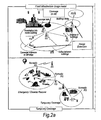
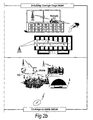
- Figure 2 illustrates a number of applications for relay stations.
- the coverage provided by a relay station may be "in-fill” to allow access to the communication network for mobile stations which may otherwise be in the shadow of other objects or otherwise unable to receive a signal of sufficient strength from the base station despite being within the normal range of the base station.
- Range extension is also shown, in which a relay station allows access when a mobile station is outside the normal data transmission range of a base station.
- in-fill shown at the top right of Figure 2 is positioning of a nomadic relay station to allow penetration of coverage within a building that could be above, at, or below ground level.
- Relays may also be used in conjunction with advanced transmission techniques to enhance gain of the communications system as explained below.
- pathloss propagation loss
- dB pathloss L
- d (metres) is the transmitter-receiver separation
- the sum of the absolute path losses experienced over the indirect link SI + ID may be less than the pathloss experienced over the direct link SD.
- Multi-hop systems are suitable for use with multi-carrier transmission.
- a multi-carrier transmission system such as FDM (frequency division multiplex), OFDM (orthogonal frequency division multiplex) or DMT (discrete multi-tone)
- FDM frequency division multiplex
- OFDM orthogonal frequency division multiplex
- DMT discrete multi-tone
- a single data stream is modulated onto N parallel sub-carriers, each sub-carrier signal having its own frequency range. This allows the total bandwidth (i.e. the amount of data to be sent in a given time interval) to be divided over a plurality of sub-carriers thereby increasing the duration of each data symbol. Since each sub-carrier has a lower information rate, multi-carrier systems benefit from enhanced immunity to channel induced distortion compared with single carrier systems.
- the channel distortion correction entity within a multicarrier receiver can be of significantly lower complexity than its counterpart within a single carrier receiver when the system bandwidth is in excess of the coherence bandwidth of the channel.
- Orthogonal frequency division multiplexing is a modulation technique that is based on FDM.
- An OFDM system uses a plurality of sub-carrier frequencies which are orthogonal in a mathematical sense so that the sub-carriers' spectra may overlap without interference due to the fact they are mutually independent.
- the orthogonality of OFDM systems removes the need for guard band frequencies and thereby increases the spectral efficiency of the system.
- OFDM has been proposed and adopted for many wireless systems. It is currently used in Asymmetric Digital Subscriber Line (ADSL) connections, in some wireless LAN applications (such as WiFi devices based on the IEEE802.11a/g standard), and (of particular relevance to the present invention) in wireless MAN applications such as WiMAX (based on the IEEE 802.16 standard).
- ADSL Asymmetric Digital Subscriber Line
- OFDM is often used in conjunction with channel coding, an error correction technique, to create coded orthogonal FDM or COFDM.
- COFDM is now widely used in digital telecommunications systems to improve the performance of an OFDM based system in a multipath environment where variations in the channel distortion can be seen across both subcarriers in the frequency domain and symbols in the time domain.
- the system has found use in video and audio broadcasting, such as DVB and DAB, as well as certain types of computer networking technology.
- an OFDM symbol is the composite signal of all N sub-carrier signals.
- ⁇ f the sub-carrier separation in Hz
- Ts 1/ ⁇ f is symbol time interval in seconds
- c n are the modulated source signals.
- DFT Discrete Fourier Transform
- FFT Fast Fourier Transform
- OFDMA Orthogonal Frequency Division Multiple Access
- FDD frequency division duplexing
- TDD time division duplexing
- Both approaches (TDD & FDD) have their relative merits and are both well used techniques for single hop wired and wireless communication systems.
- IEEE802.16 standard incorporates both an FDD and TDD mode.
- US2005/048914A1 discloses a method according to the preamble of claim 1, in which an intermediate apparatus (relay resource) is controlled by a destination apparatus (base site) for supporting a desired level of service for a source apparatus (remote unit) that is already in the reception communication range of the destination apparatus.
- the method includes the source apparatus first sending an access request directly to the destination apparatus.
- the present invention provides a transmission method according to claim 1, a wireless communication system according to claim 8, an intermediate apparatus according to claim 13 and a computer program product according to claim 14.
- Advantageous embodiments are set out in the sub claims.
- the present invention employs a novel protocol adopted as a network entry procedure followed by the BS and RS, to enable entry of a legacy MS or SS into a relaying enabled communication network.
- the protocol involves decentralised control where the RS can manage the entire process.
- the protocol is based on an adaptation of the current network entry procedure followed in the IEEE802.16 standard and is specifically designed for the case when a RS transmits synchronisation and broadcast control information (i.e. preamble and MAP).
- the network entry procedure includes a ranging process in order to connect to the system, and the novel protocol involves managing the ranging process between the intermediate apparatus and the source apparatus until a threshold is met.
- legacy single hop systems e.g. 802.16-2004 and 802.16e-2005
- standard network entry procedures already exist to support entry of an MS or SS into a communication network.
- a modified network entry procedure is required from the network point of view to facilitate fast and efficient support of MS/SS network entry.
- This invention provides a protocol that is intended to be adopted as the modified network entry procedure from the network point of view, i.e. adopted in the RS and BS.
- it is designed with application to the IEEE802.16 standard in mind and requires no changes to the procedure from the MS or SS point of view.
- It is also designed for the case of non-transparent relaying where the RS is able to transmit a preamble and broadcast control information and hence has the capability to manage the process locally (i.e. distributed control) and hence minimise the latency that would otherwise be associated with relaying.
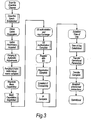
- Figure 3 illustrates the network entry procedure described in the IEEE802.16 standard which supports network entry of an MS or SS into a single-hop communication system.
- any RS with which the MS is communicating during the network entry procedure is already known to the network (incidentally, in this specification, the terms "network” and “system” are used interchangeably).
- the RS may have already completed entry into the network following a separate procedure, such as the one described in the applicant's UK application no. 0616475.0 .
- the MS or SS still follows the same network entry procedure from its point of view, as illustrated in Figure 3 .
- the procedure followed by the RS is defined here and the one followed by the BS is modified from that followed for the case of a single hop network.
- a two-hop configuration as in Fig. 1 will be considered although the present invention is not limited to this.
- the MS/SS scans for preamble transmissions which may be originating from either BSs or RSs. Once all potential preambles are detected, the MS will select which channel it wishes to use from the available set of channels, in line with the standard procedure. It will then synchronise its receiver with the transmitter.
- the MS/SS obtains uplink parameters which includes location of the uplink control information transmission region that will be used by the MS/SS in the next stage. This information will be generated by the BS or RS that the MS/SS is attempting to connect to.
- the MS/SS will transmit a ranging code or ranging message, as defined in the IEEE802.16 standard, as a form of identification information to identify itself to the network.
- ranging message is more correct when OFDM is being used, and “ranging code” more appropriate to OFDMA, but in the following description "ranging code” is used for both). It is possible that a number of receivers in the multi-hop network receive this transmission. This code will be directed towards the preferred receiver based on the downlink channel selected.
- the receiver of the ranging code will then generally attempt to detect the ranging code independently as the RS appears like a BS to the MS. However, as it is likely that the RS will need to ensure that the BS and the BS to RS air interface can support this new connection, some mechanism will be needed within the system to facilitate this. Three alternative such mechanisms are:
- (100) indicates the first message sent to the RS (or BS) by the MS or SS that is attempting to enter the network through the RS. If the RS detects (100) then in the same frame (or at a later instant) it sends a message (200) to the BS to request any information that is required to support this process and also inform the BS of the arrival of (100). The RS will then respond to the MS/SS with an appropriate message (300) which could be for example a continue message and include information to the MS/SS such as adjustments to make to its next transmission. The BS will also respond to (200) to acknowledge and provide any of the requested information in (200), as shown with (400).
- an appropriate message 300
- the BS will also respond to (200) to acknowledge and provide any of the requested information in (200), as shown with (400).
- the MS/SS may transmit another message (500). If this is still not sufficient from the RS perspective it may respond with another continue and adjustment message such as (300). However, once it eventually receives a sufficient message (500) the RS will conclude the ranging process. At this point it will notify the BS with a message (600) and may also request information required for the following stages of network entry in another message (700). The RS will then inform the MS/SS of successful completion of the ranging process through another message (800).
- multiple RS may be interposed in the communication path between the MS/SS and BS.
- the above procedure is modified to include one RS receiving, and/or relaying, a ranging code or detection information from/to another RS, so that more than two process will occur in parallel, independently managed by the respective RS.
- the network could consist of some legacy BS (i.e., base stations operating in compliance with existing protocols) and some relaying enabled BS (i.e., base stations operating in accordance with the present invention). It is also assumed that a relaying enabled BS may be operating in a legacy mode until it receives a request from an RS for it to enter the network. The reason the BS may operate in such a mode would be to preserve transmission resources by not having to broadcast relay specific information when there are no relays benefiting from the transmission.
- the RS Once the RS has knowledge of the MS entering the network, it is possible for it to completely manage the remaining steps in the network entry process. It can then source information or inform the BS of the status of the procedure as and when required in such a way that the process between the RS and MS is optimised in terms of not introducing any extra latency.
- the RS can locally manage the authorisation process, informing the BS of the status, and sourcing any centrally held information as required from any centrally located servers that manage the authorisation within the network.
- the present invention can provide the following effects:
- an embodiment of the present invention can provide a transmission method for use in a wireless communication system, the system comprising a subscriber station, base station and intermediate apparatus in the form of one or more relay stations, the subscriber station and the base station being arranged to transmit and receive information via the intermediate apparatus, at least the subscriber station being required to perform a network entry process in order to connect to the system.
- the method comprises the intermediate apparatus determining whether the subscriber station has initiated a network entry process with the intermediate apparatus, for example by receiving a ranging code from the subscriber station. Upon such a determination, the intermediate apparatus notifies the base station of the fact whilst continuing to conduct the network entry process with the subscriber station.
- the base station responds to this notification with a return message to the intermediate apparatus. This return message is part of a guidance process conducted from the base station to the intermediate apparatus so that the intermediate apparatus can manage completion of the network entry process.
- the method has particular relevance to multi-hop wireless systems based on standards such as IEEE802.16.
- Embodiments of the present invention may be implemented in hardware, or as software modules running on one or more processors, or on a combination thereof. That is, those skilled in the art will appreciate that a microprocessor or digital signal processor (DSP) may be used in practice to implement some or all of the functionality of a transmitter embodying the present invention.
- DSP digital signal processor
- the invention may also be embodied as one or more device or apparatus programs (e.g. computer programs and computer program products) for carrying out part or all of any of the methods described herein.
- Such programs embodying the present invention may be stored on computer-readable media, or could, for example, be in the form of one or more signals.
- Such signals may be data signals downloadable from an Internet website, or provided on a carrier signal, or in any other form.
- a program embodying the invention could also be used to add the functionality of the RS as described above to a MS/SS having suitable hardware.
Landscapes
- Engineering & Computer Science (AREA)
- Computer Networks & Wireless Communication (AREA)
- Signal Processing (AREA)
- Mobile Radio Communication Systems (AREA)
- Small-Scale Networks (AREA)
- Radio Relay Systems (AREA)
Claims (14)
- Übertragungsverfahren zur Verwendung in einem drahtlosen Kommunikationssystem, welches System eine Quellenvorrichtung (MS), eine Zielvorrichtung (BS) und eine Zwischenvorrichtung (RS) umfasst, wobei die Quellenvorrichtung und die Zielvorrichtung angeordnet sind, um Informationen über die Zwischenvorrichtung zu senden und zu empfangen, dadurch gekennzeichnet, dass:wenigstens die Quellenvorrichtung (MS) angeordnet ist, um eine Netzeintrittsprozedur auszuführen, die einen Ranging-Prozess enthält, um sich mit dem System zu verbinden, und in der Zwischenvorrichtung (RS) der Ranging-Prozess zwischen der Zwischenvorrichtung und der Quellenvorrichtung verwaltet wird, indem ein Ranging-Code empfangen wird, der durch die Quellenvorrichtung gesendet wird, und jegliche Rückführungsinformationen lokal erzeugt werden, bis eine Detektionsschwelle getroffen ist.
- Übertragungsverfahren nach Anspruch 1, bei dem Rückführungsinformationen bezüglich des Ranging-Prozesses von der Zwischenvorrichtung (RS) an die Quellenvorrichtung (MS) gesendet werden.
- Übertragungsverfahren nach Anspruch 1 oder 2, bei dem eine Ranging-Abschlussantwort von der Zielvorrichtung (BS) durch die Zwischenvorrichtung (RS) an die Quellenvorrichtung (MS) übermittelt wird.
- Übertragungsverfahren nach Anspruch 1, 2 oder 3, bei dem der Ranging-Prozess mehrere Ranging-Versuche von der Quellenvorrichtung (MS) zu der Zwischenvorrichtung (RS) enthält.
- Übertragungsverfahren nach Anspruch 4, bei dem im Anschluss an einen erfolgreichen Ranging-Versuch die Zwischenvorrichtung (RS) den Rest der Netzeintrittsprozedur mit der Quellenvorrichtung (MS) verwaltet.
- Übertragungsverfahren nach einem vorhergehenden Anspruch, bei dem die Quellenvorrichtung (MS) eine Teilnehmerstation ist.
- Übertragungsverfahren nach einem vorhergehenden Anspruch, bei dem die Zielvorrichtung (BS) eine Basisstation ist.
- Drahtloses Kommunikationssystem, das eine QuellenVorrichtung (MS), eine Zielvorrichtung (BS) und eine Zwischenvorrichtung (RS) umfasst, wobei die Quellenvorrichtung und die Zielvorrichtung angeordnet sind, um Informationen über die Zwischenvorrichtung zu senden und zu empfangen, dadurch gekennzeichnet, dass:wenigstens die Quellenvorrichtung (MS) angeordnet ist, um eine Netzeintrittsprozedur auszuführen, die einen Ranging-Prozess enthält, um sich mit dem System zu verbinden, unddie Zwischenvorrichtung (RS) ein Verwaltungsmittel enthält, zum Durchführen des Ranging-Prozesses mit der Quellenvorrichtung (MS) durch Empfangen eines Ranging-Codes, der durch die Quellenvorrichtung gesendet wird, und lokales Erzeugen jeglicher Rückführungsinformationen, bis eine Detektionsschwelle getroffen ist.
- System nach Anspruch 8, bei dem die Zwischenvorrichtung (RS) angeordnet ist, um Ruckführungsinformationen bezüglich des Ranging-Prozesses an die Quellenvorrichtung (MS) zu senden.
- System nach Anspruch 8 oder 9, bei dem die Zwischenvorrichtung (RS) angeordnet ist, um an die Quellenvorrichtung (MS) eine Abschlussantwort zu übermitteln, die von der Zielvorrichtung (BS) empfangen wird.
- System nach Anspruch 8, 9 oder 10, bei dem der Ranging-Prozess mehrere Ranging-Versuche von der Quellenvorrichtung (MS) zu der Zwischenvorrichtung (RS) enthält.
- System nach Anspruch 11, bei dem das Verwaltungsmittel der Zwischenvorrichtung (RS) auf einen erfolgreichen Ranging-Versuch antwortet, um den Rest der Netzeintrittsprozedur mit der Quellenvorrichtung (MS) zu verwalten.
- Zwischenvorrichtung (RS) zur Verwendung in einem drahtlosen Kommunikationssystem, welches System eine Quellenvorrichtung (MS) und eine Zielvorrichtung (BS) hat, die angeordnet sind, um Informationen über die Zwischenvorrichtung zu senden und zu empfangen, dadurch gekennzeichnet, dass die Zwischenvorrichtung (RS) enthält:ein Verwaltungsmittel zum Durchführen eines Ranging-Prozesses mit der Quellenvorrichtung durch Empfangen eines Ranging-Codes, der durch die Quellenvorrichtung (MS) gesendet wird, und lokales Erzeugen jeglicher Rückführungsinformationen, bis eine Detektionsschwelle getroffen ist, welches System wenigstens von der Quellenvorrichtung (MS) verlangt, eine Netzeintrittsprozedur auszuführen, die den Ranging-Prozess enthält, um sich mit dem System zu verbinden.
- Computerprogrammprodukt, das ein Computerprogramm enthält, das dann, wenn es durch eine Zwischenvorrichtung (RS) in einem drahtlosen Kommunikationssystem ausgeführt wird, das eine Teilnehmerstation (MS) und eine Basisstation (BS) hat, die jeweils angeordnet sind, um Informationen über die Zwischenvorrichtung (RS) zu senden und zu empfangen, und wenigstens von der Teilnehmerstation (MS) verlangt, eine Netzeintrittsprozedur auszuführen, die einen Ranging-Prozess enthält, um sich mit dem System zu verbinden, die Zwischenvorrichtung (RS) mit der Funktion zum Verwalten des Ranging-Prozesses zwischen der Zwischenvorrichtung (RS) und der Teilnehmerstation (MS) versieht, indem sie einen Ranging-Code empfängt, der durch die Teilnehmerstation (MS) gesendet wird, und lokal jegliche Rückführungsinformationen erzeugt, bis eine Detektionsschwelle getroffen ist.
Applications Claiming Priority (2)
| Application Number | Priority Date | Filing Date | Title |
|---|---|---|---|
| GB0617752A GB2441574A (en) | 2006-09-08 | 2006-09-08 | Network entry to a multi-hop wireless communication system |
| EP07113483A EP1898561B1 (de) | 2006-09-08 | 2007-07-31 | Dezentralisierte Steuerung des Netz-Zugangs in einem Multihop-Relay-Mobilfunksystem |
Related Parent Applications (2)
| Application Number | Title | Priority Date | Filing Date |
|---|---|---|---|
| EP07113483.7 Division | 2007-07-31 | ||
| EP07113483A Division EP1898561B1 (de) | 2006-09-08 | 2007-07-31 | Dezentralisierte Steuerung des Netz-Zugangs in einem Multihop-Relay-Mobilfunksystem |
Publications (3)
| Publication Number | Publication Date |
|---|---|
| EP2139173A2 EP2139173A2 (de) | 2009-12-30 |
| EP2139173A3 EP2139173A3 (de) | 2010-07-14 |
| EP2139173B1 true EP2139173B1 (de) | 2011-09-21 |
Family
ID=37232647
Family Applications (3)
| Application Number | Title | Priority Date | Filing Date |
|---|---|---|---|
| EP08155435A Ceased EP1968259B1 (de) | 2006-09-08 | 2007-07-31 | Dezentralisierte Steuerung des Netz-Zugangs in einem Multihop-Relay-Mobilfunksystem |
| EP09173115A Ceased EP2139173B1 (de) | 2006-09-08 | 2007-07-31 | Dezentralisierte Steuerung des Netz-Zugangs in einem Multihop-Relay-Mobilfunksystem |
| EP07113483A Ceased EP1898561B1 (de) | 2006-09-08 | 2007-07-31 | Dezentralisierte Steuerung des Netz-Zugangs in einem Multihop-Relay-Mobilfunksystem |
Family Applications Before (1)
| Application Number | Title | Priority Date | Filing Date |
|---|---|---|---|
| EP08155435A Ceased EP1968259B1 (de) | 2006-09-08 | 2007-07-31 | Dezentralisierte Steuerung des Netz-Zugangs in einem Multihop-Relay-Mobilfunksystem |
Family Applications After (1)
| Application Number | Title | Priority Date | Filing Date |
|---|---|---|---|
| EP07113483A Ceased EP1898561B1 (de) | 2006-09-08 | 2007-07-31 | Dezentralisierte Steuerung des Netz-Zugangs in einem Multihop-Relay-Mobilfunksystem |
Country Status (7)
| Country | Link |
|---|---|
| US (2) | US9559769B2 (de) |
| EP (3) | EP1968259B1 (de) |
| JP (2) | JP5040535B2 (de) |
| KR (1) | KR100927308B1 (de) |
| CN (2) | CN101730116B (de) |
| GB (1) | GB2441574A (de) |
| TW (2) | TWI424701B (de) |
Families Citing this family (11)
| Publication number | Priority date | Publication date | Assignee | Title |
|---|---|---|---|---|
| DE602008002707D1 (de) * | 2008-03-27 | 2010-11-04 | Fujitsu Ltd | Drahtlose Kommunikationssysteme |
| US20100111029A1 (en) * | 2008-05-05 | 2010-05-06 | Mediatek Inc. | Fast feedback contention-based data transmission in wireless communications systems |
| US8369241B2 (en) | 2008-05-05 | 2013-02-05 | Mediatek Inc. | Fast feedback contention-based ranging procedure in wireless communications systems |
| KR20110044892A (ko) | 2008-08-27 | 2011-05-02 | 교세라 가부시키가이샤 | 무선중계국, 무선중계방법, 무선통신시스템, 위치관리장치, 무선단말 및 무선통신방법 |
| KR101258140B1 (ko) | 2008-08-28 | 2013-04-25 | 교세라 가부시키가이샤 | 리피터, 통신 시스템, 기지국, 무선 단말 및 관리 서버 |
| JP4980321B2 (ja) | 2008-09-16 | 2012-07-18 | 京セラ株式会社 | 無線中継装置および無線中継方法 |
| US8279991B2 (en) * | 2008-10-03 | 2012-10-02 | Motorola Solutions, Inc. | Method of efficiently synchronizing to a desired timeslot in a time division multiple access communication system |
| JP5342294B2 (ja) | 2009-03-26 | 2013-11-13 | 京セラ株式会社 | 無線中継局及び無線中継方法 |
| US20120230249A1 (en) * | 2009-11-10 | 2012-09-13 | Shusaku Fukumoto | Wireless communication system, base station device, mobile station device, and wireless communication method |
| GB2475906A (en) * | 2009-12-04 | 2011-06-08 | Sharp Kk | A relay apparatus used in connection with the lte-a standard |
| CN111343123B (zh) * | 2020-02-28 | 2023-03-14 | 广西华南通信股份有限公司 | 一种多跳协同网络通信的正交频分复用动态编码的方法 |
Family Cites Families (71)
| Publication number | Priority date | Publication date | Assignee | Title |
|---|---|---|---|---|
| GB616475A (en) | 1946-09-05 | 1949-01-21 | Alfred Hamer | Improvements in and relating to closure devices for barrels and other containers |
| DE3403715A1 (de) | 1984-02-03 | 1985-08-08 | Licentia Patent-Verwaltungs-Gmbh, 6000 Frankfurt | Digitales zellenfunksystem mit zeitmultiplex |
| US5719868A (en) | 1995-10-05 | 1998-02-17 | Rockwell International | Dynamic distributed, multi-channel time division multiple access slot assignment method for a network of nodes |
| US6236647B1 (en) | 1998-02-24 | 2001-05-22 | Tantivy Communications, Inc. | Dynamic frame size adjustment and selective reject on a multi-link channel to improve effective throughput and bit error rate |
| US6370384B1 (en) | 1998-07-30 | 2002-04-09 | Airnet Communications Corporation | Frequency re-use planning for wireless communications system using wireless translating repeaters |
| US7006530B2 (en) | 2000-12-22 | 2006-02-28 | Wi-Lan, Inc. | Method and system for adaptively obtaining bandwidth allocation requests |
| US7158784B1 (en) | 2000-03-31 | 2007-01-02 | Aperto Networks, Inc. | Robust topology wireless communication using broadband access points |
| US6701129B1 (en) | 2000-09-27 | 2004-03-02 | Nortel Networks Limited | Receiver based adaptive modulation scheme |
| DE60117202D1 (de) | 2001-09-03 | 2006-04-20 | St Microelectronics Nv | Verfahren und Gerät zur Geschwindigkeitsschätzung eines mobilen Endgeräts in einem drahtlosen Kommunikationssystem |
| GB0200237D0 (en) | 2002-01-07 | 2002-02-20 | Imec Inter Uni Micro Electr | Wireless cellular network architecture |
| US7096274B1 (en) | 2002-02-12 | 2006-08-22 | 3Com Corporation | Optimum frame size predictor for wireless Local Area Network |
| ES2253677T3 (es) * | 2002-06-21 | 2006-06-01 | Siemens Aktiengesellschaft | Procedimiento para transmitir datos asi como estacion de comunicaciones. |
| JP2004040568A (ja) | 2002-07-04 | 2004-02-05 | Denso Corp | 無線通信端末 |
| US7580394B2 (en) | 2002-11-27 | 2009-08-25 | Nokia Corporation | System and method for collision-free transmission scheduling in a network |
| US20040109428A1 (en) | 2002-12-09 | 2004-06-10 | Srikanth Krishnamurthy | Method and apparatus for resource allocation for multiple traffic classes in wireless ad-hoc networks |
| US7583619B2 (en) | 2002-12-16 | 2009-09-01 | Nortel Networks Limited | Wireless access communications network |
| KR100483007B1 (ko) * | 2002-12-24 | 2005-04-18 | 한국전자통신연구원 | 차세대 이동통신 시스템에서의 핸드오버 방법 |
| JP3838363B2 (ja) * | 2003-03-17 | 2006-10-25 | Kddi株式会社 | 移動ネットワークおよびその通信方法 |
| CN1826780B (zh) | 2003-05-28 | 2010-04-28 | 艾利森电话股份有限公司 | 用于使用协同中继的无线通信网络的方法和结构 |
| KR100769741B1 (ko) * | 2003-05-29 | 2007-10-23 | 교세라 가부시키가이샤 | 무선 통신 시스템, 무선 통신 장치, 무선 통신 단말, 및 이동 무선 통신 장치 |
| US7903538B2 (en) | 2003-08-06 | 2011-03-08 | Intel Corporation | Technique to select transmission parameters |
| US7400856B2 (en) * | 2003-09-03 | 2008-07-15 | Motorola, Inc. | Method and apparatus for relay facilitated communications |
| US7974227B1 (en) * | 2003-12-02 | 2011-07-05 | Thomas Stanley Seay | Relayed signal communications |
| US7990905B2 (en) | 2003-12-30 | 2011-08-02 | Nokia Corporation | Communication system using relay base stations with asymmetric data links |
| JP2006033207A (ja) | 2004-07-14 | 2006-02-02 | Nec Corp | 位置情報提供システム、無線基地局装置及びそれらに用いる位置情報提供方法並びにそのプログラム |
| US8019352B2 (en) | 2004-07-23 | 2011-09-13 | Wireless Valley Communications, Inc. | System, method, and apparatus for determining and using the position of wireless devices or infrastructure for wireless network enhancements |
| CN1333615C (zh) * | 2004-07-23 | 2007-08-22 | 北京邮电大学 | 一种用于两跳蜂窝系统的中继选择和功率分配方法 |
| US7864659B2 (en) | 2004-08-02 | 2011-01-04 | Interdigital Technology Corporation | Quality control scheme for multiple-input multiple-output (MIMO) orthogonal frequency division multiplexing (OFDM) systems |
| JP2006047912A (ja) | 2004-08-09 | 2006-02-16 | Olympus Corp | 超解像顕微鏡 |
| DE602004006624T2 (de) | 2004-09-13 | 2008-01-31 | Alcatel Lucent | Abschätzung der Übertragungsqualität in einem Funknetz |
| KR100810290B1 (ko) | 2004-12-14 | 2008-03-07 | 삼성전자주식회사 | 무선 통신 시스템에서 데이터 버스트 할당 방법 및 시스템 |
| KR100584409B1 (ko) | 2004-12-29 | 2006-05-26 | 삼성전자주식회사 | 직교주파수분할다중접속 기반의 셀룰러 시스템을 위한중계 통신 방법 |
| US8644130B2 (en) | 2005-03-18 | 2014-02-04 | Samsung Electronics Co., Ltd. | System and method for subcarrier allocation in a wireless multihop relay network |
| JP4137083B2 (ja) * | 2005-04-19 | 2008-08-20 | Kddi株式会社 | 無線データ通信方法およびシステム |
| US7486928B2 (en) * | 2005-04-14 | 2009-02-03 | Kddi Corporation | Methods and apparatus for wireless communications |
| US7813695B2 (en) * | 2005-05-06 | 2010-10-12 | Telefonaktiebolaget L M Ericsson (Publ) | Mobile assisted relay selection in a telecommunications system |
| JP2006319676A (ja) | 2005-05-12 | 2006-11-24 | Oki Electric Ind Co Ltd | フレーム送信方法、トポロジー取得方法、及び無線通信システム |
| KR20070004370A (ko) | 2005-07-04 | 2007-01-09 | 삼성전자주식회사 | 무선통신시스템을 위한 협동중계전송방법 |
| US8554232B2 (en) * | 2005-08-17 | 2013-10-08 | Apple Inc. | Method and system for a wireless multi-hop relay network |
| US8660035B2 (en) * | 2005-11-10 | 2014-02-25 | Apple, Inc. | Wireless relay network media access control layer control plane system and method |
| US8774182B2 (en) * | 2005-11-12 | 2014-07-08 | Apple Inc. | Media access control data plane system and method for wireless communication networks |
| US8155016B2 (en) * | 2005-11-12 | 2012-04-10 | Rockstar Bidco, LP | System and method for unbalanced relay-based wireless communications |
| EP1804430B1 (de) | 2006-01-03 | 2013-05-15 | Samsung Electronics Co., Ltd. | Anforderung und Zuweisung einer Upstream-Bandbreite in einem Multihop-Relay-Kommunikationssystem mit drahtlosem Breitbandzugang |
| US7599341B2 (en) | 2006-02-28 | 2009-10-06 | Motorola, Inc. | System and method for managing communication routing within a wireless multi-hop network |
| WO2007141617A1 (en) * | 2006-06-02 | 2007-12-13 | Nortel Networks Limited | Ranging regions for wireless communication relay stations |
| US8514822B2 (en) * | 2006-06-14 | 2013-08-20 | Zte (Usa) Inc. | Efficient acknowledgement messaging in wireless communications |
| US20080002741A1 (en) * | 2006-06-30 | 2008-01-03 | Nokia Corporation | Apparatus, method and computer program product providing optimized location update for mobile station in a relay-based network |
| EP2036219A1 (de) * | 2006-06-30 | 2009-03-18 | Nokia Corporation | Relais |
| US8126470B2 (en) * | 2006-07-03 | 2012-02-28 | Nokia Corporation | Topology and route discovery and management for relay networks |
| US8468338B2 (en) * | 2006-07-06 | 2013-06-18 | Apple, Inc. | Wireless access point security for multi-hop networks |
| EP2050227B1 (de) * | 2006-07-28 | 2019-06-26 | BlackBerry Limited | System und verfahren zur synchronisation und überwachung eines drahtlosen mehrstromnetzes |
| US7773941B2 (en) * | 2006-07-31 | 2010-08-10 | Motorola, Inc. | Method and system for positioning a relay in a wide area communication network |
| US8055189B2 (en) * | 2006-08-03 | 2011-11-08 | Institute For Information Industry | Wireless communication system, method, and tangible machine-readable medium thereof for transmitting data based on a frame structure of a multi-hop relay standard |
| US20080031180A1 (en) * | 2006-08-03 | 2008-02-07 | Institute For Information Industry | Frame structure, wireless communication apparatus, and method for assigning the same |
| US8165073B2 (en) * | 2006-08-04 | 2012-04-24 | Nokia Corporation | Relay-station assignment/re-assignment and frequency re-use |
| US8107408B2 (en) * | 2006-08-09 | 2012-01-31 | Nokia Siemens Networks Gmbh & Co. Kg | Route maintenance and update based on connection identifier in multi-hop relay systems |
| US8644287B2 (en) * | 2006-08-09 | 2014-02-04 | Institute For Information Industry | Wireless communication system, apparatus, and method for transmitting information to describe network topology |
| CN101127686B (zh) * | 2006-08-18 | 2012-04-04 | 华为技术有限公司 | 一种网络数据处理方法及设备 |
| GB2440984A (en) * | 2006-08-18 | 2008-02-20 | Fujitsu Ltd | Wireless multi-hop communication system |
| GB0616472D0 (en) * | 2006-08-18 | 2006-09-27 | Fujitsu Ltd | Communication systems |
| GB2440981A (en) * | 2006-08-18 | 2008-02-20 | Fujitsu Ltd | Wireless multi-hop communication system |
| GB2440980A (en) * | 2006-08-18 | 2008-02-20 | Fujitsu Ltd | Wireless multi-hop communication system |
| GB2440982A (en) * | 2006-08-18 | 2008-02-20 | Fujitsu Ltd | Wireless multi-hop communication system |
| GB2440986A (en) * | 2006-08-18 | 2008-02-20 | Fujitsu Ltd | Wireless multi-hop communication system |
| GB2440985A (en) * | 2006-08-18 | 2008-02-20 | Fujitsu Ltd | Wireless multi-hop communication system |
| US20080049678A1 (en) * | 2006-08-24 | 2008-02-28 | Siemens Corporate Research, Inc. | Relay-Assisted Channel Condition Measurements For Connection Setup and Maintenance |
| JP2008085082A (ja) * | 2006-09-27 | 2008-04-10 | Sony Corp | パワーmosfet及び同パワーmosfetを有する半導体装置及び同パワーmosfetの製造方法 |
| GB2442782A (en) * | 2006-10-13 | 2008-04-16 | Fujitsu Ltd | Wireless communication systems |
| GB2442783A (en) * | 2006-10-13 | 2008-04-16 | Fujitsu Ltd | Wireless communication systems |
| GB2443465A (en) * | 2006-11-06 | 2008-05-07 | Fujitsu Ltd | Communication systems |
| US7934547B2 (en) * | 2007-08-17 | 2011-05-03 | Schlumberger Technology Corporation | Apparatus and methods to control fluid flow in a downhole tool |
-
2006
- 2006-09-08 GB GB0617752A patent/GB2441574A/en not_active Withdrawn
-
2007
- 2007-07-31 EP EP08155435A patent/EP1968259B1/de not_active Ceased
- 2007-07-31 TW TW098141520A patent/TWI424701B/zh not_active IP Right Cessation
- 2007-07-31 TW TW096127990A patent/TWI357736B/zh not_active IP Right Cessation
- 2007-07-31 EP EP09173115A patent/EP2139173B1/de not_active Ceased
- 2007-07-31 EP EP07113483A patent/EP1898561B1/de not_active Ceased
- 2007-09-03 JP JP2007228359A patent/JP5040535B2/ja not_active Expired - Fee Related
- 2007-09-05 KR KR1020070090107A patent/KR100927308B1/ko not_active Expired - Fee Related
- 2007-09-06 CN CN200910224591.XA patent/CN101730116B/zh not_active Expired - Fee Related
- 2007-09-06 CN CN200710149198XA patent/CN101141808B/zh not_active Expired - Fee Related
- 2007-09-07 US US11/851,430 patent/US9559769B2/en not_active Expired - Fee Related
-
2009
- 2009-10-27 US US12/606,753 patent/US20100105397A1/en not_active Abandoned
-
2010
- 2010-05-25 JP JP2010119396A patent/JP5041033B2/ja not_active Expired - Fee Related
Also Published As
| Publication number | Publication date |
|---|---|
| EP1898561B1 (de) | 2011-09-14 |
| US20080062908A1 (en) | 2008-03-13 |
| TWI357736B (en) | 2012-02-01 |
| EP1968259A1 (de) | 2008-09-10 |
| GB2441574A (en) | 2008-03-12 |
| US20100105397A1 (en) | 2010-04-29 |
| JP5040535B2 (ja) | 2012-10-03 |
| CN101730116A (zh) | 2010-06-09 |
| KR100927308B1 (ko) | 2009-11-18 |
| EP1968259B1 (de) | 2011-09-14 |
| JP5041033B2 (ja) | 2012-10-03 |
| GB0617752D0 (en) | 2006-10-18 |
| KR20080023149A (ko) | 2008-03-12 |
| EP2139173A3 (de) | 2010-07-14 |
| JP2008067386A (ja) | 2008-03-21 |
| TW200816695A (en) | 2008-04-01 |
| TW201015901A (en) | 2010-04-16 |
| TWI424701B (zh) | 2014-01-21 |
| CN101141808B (zh) | 2012-03-07 |
| CN101141808A (zh) | 2008-03-12 |
| EP1898561A1 (de) | 2008-03-12 |
| US9559769B2 (en) | 2017-01-31 |
| CN101730116B (zh) | 2014-05-07 |
| EP2139173A2 (de) | 2009-12-30 |
| JP2010200375A (ja) | 2010-09-09 |
Similar Documents
| Publication | Publication Date | Title |
|---|---|---|
| EP1898561B1 (de) | Dezentralisierte Steuerung des Netz-Zugangs in einem Multihop-Relay-Mobilfunksystem | |
| EP2178325B1 (de) | Drahtlose Mehrfachsprung-Kommunikation | |
| US7957257B2 (en) | Communication systems | |
| EP1890444A2 (de) | Kommunikationssysteme | |
| CN101141809B (zh) | 通信系统 | |
| US20090245162A1 (en) | Communication Systems |
Legal Events
| Date | Code | Title | Description |
|---|---|---|---|
| PUAI | Public reference made under article 153(3) epc to a published international application that has entered the european phase |
Free format text: ORIGINAL CODE: 0009012 |
|
| AC | Divisional application: reference to earlier application |
Ref document number: 1898561 Country of ref document: EP Kind code of ref document: P |
|
| AK | Designated contracting states |
Kind code of ref document: A2 Designated state(s): DE FR GB IT |
|
| PUAL | Search report despatched |
Free format text: ORIGINAL CODE: 0009013 |
|
| AK | Designated contracting states |
Kind code of ref document: A3 Designated state(s): DE FR GB IT |
|
| RIC1 | Information provided on ipc code assigned before grant |
Ipc: H04W 72/04 20090101AFI20100604BHEP |
|
| REG | Reference to a national code |
Ref country code: DE Ref legal event code: R079 Ref document number: 602007017444 Country of ref document: DE Free format text: PREVIOUS MAIN CLASS: H04W0072040000 Ipc: H04B0007260000 |
|
| 17P | Request for examination filed |
Effective date: 20110112 |
|
| GRAP | Despatch of communication of intention to grant a patent |
Free format text: ORIGINAL CODE: EPIDOSNIGR1 |
|
| RIC1 | Information provided on ipc code assigned before grant |
Ipc: H04B 7/26 20060101AFI20110301BHEP Ipc: H04B 7/155 20060101ALI20110301BHEP Ipc: H04W 72/04 20090101ALI20110301BHEP |
|
| GRAS | Grant fee paid |
Free format text: ORIGINAL CODE: EPIDOSNIGR3 |
|
| GRAA | (expected) grant |
Free format text: ORIGINAL CODE: 0009210 |
|
| AC | Divisional application: reference to earlier application |
Ref document number: 1898561 Country of ref document: EP Kind code of ref document: P |
|
| AK | Designated contracting states |
Kind code of ref document: B1 Designated state(s): DE FR GB IT |
|
| REG | Reference to a national code |
Ref country code: GB Ref legal event code: FG4D |
|
| REG | Reference to a national code |
Ref country code: DE Ref legal event code: R096 Ref document number: 602007017444 Country of ref document: DE Effective date: 20111201 |
|
| PLBE | No opposition filed within time limit |
Free format text: ORIGINAL CODE: 0009261 |
|
| STAA | Information on the status of an ep patent application or granted ep patent |
Free format text: STATUS: NO OPPOSITION FILED WITHIN TIME LIMIT |
|
| 26N | No opposition filed |
Effective date: 20120622 |
|
| REG | Reference to a national code |
Ref country code: DE Ref legal event code: R097 Ref document number: 602007017444 Country of ref document: DE Effective date: 20120622 |
|
| REG | Reference to a national code |
Ref country code: FR Ref legal event code: PLFP Year of fee payment: 10 |
|
| PGFP | Annual fee paid to national office [announced via postgrant information from national office to epo] |
Ref country code: IT Payment date: 20160720 Year of fee payment: 10 |
|
| REG | Reference to a national code |
Ref country code: FR Ref legal event code: PLFP Year of fee payment: 11 |
|
| REG | Reference to a national code |
Ref country code: FR Ref legal event code: PLFP Year of fee payment: 12 |
|
| PG25 | Lapsed in a contracting state [announced via postgrant information from national office to epo] |
Ref country code: IT Free format text: LAPSE BECAUSE OF NON-PAYMENT OF DUE FEES Effective date: 20170731 |
|
| PGFP | Annual fee paid to national office [announced via postgrant information from national office to epo] |
Ref country code: FR Payment date: 20200611 Year of fee payment: 14 |
|
| PGFP | Annual fee paid to national office [announced via postgrant information from national office to epo] |
Ref country code: GB Payment date: 20200722 Year of fee payment: 14 Ref country code: DE Payment date: 20200722 Year of fee payment: 14 |
|
| REG | Reference to a national code |
Ref country code: DE Ref legal event code: R119 Ref document number: 602007017444 Country of ref document: DE |
|
| GBPC | Gb: european patent ceased through non-payment of renewal fee |
Effective date: 20210731 |
|
| PG25 | Lapsed in a contracting state [announced via postgrant information from national office to epo] |
Ref country code: GB Free format text: LAPSE BECAUSE OF NON-PAYMENT OF DUE FEES Effective date: 20210731 Ref country code: DE Free format text: LAPSE BECAUSE OF NON-PAYMENT OF DUE FEES Effective date: 20220201 |
|
| PG25 | Lapsed in a contracting state [announced via postgrant information from national office to epo] |
Ref country code: FR Free format text: LAPSE BECAUSE OF NON-PAYMENT OF DUE FEES Effective date: 20210731 |