EP2137939B1 - Netzwerksicherheitsverfahren - Google Patents
Netzwerksicherheitsverfahren Download PDFInfo
- Publication number
- EP2137939B1 EP2137939B1 EP20080719059 EP08719059A EP2137939B1 EP 2137939 B1 EP2137939 B1 EP 2137939B1 EP 20080719059 EP20080719059 EP 20080719059 EP 08719059 A EP08719059 A EP 08719059A EP 2137939 B1 EP2137939 B1 EP 2137939B1
- Authority
- EP
- European Patent Office
- Prior art keywords
- user
- recipient
- message
- information
- Prior art date
- Legal status (The legal status is an assumption and is not a legal conclusion. Google has not performed a legal analysis and makes no representation as to the accuracy of the status listed.)
- Active
Links
Images


Classifications
-
- H—ELECTRICITY
- H04—ELECTRIC COMMUNICATION TECHNIQUE
- H04L—TRANSMISSION OF DIGITAL INFORMATION, e.g. TELEGRAPHIC COMMUNICATION
- H04L63/00—Network architectures or network communication protocols for network security
- H04L63/12—Applying verification of the received information
- H04L63/126—Applying verification of the received information the source of the received data
-
- H—ELECTRICITY
- H04—ELECTRIC COMMUNICATION TECHNIQUE
- H04L—TRANSMISSION OF DIGITAL INFORMATION, e.g. TELEGRAPHIC COMMUNICATION
- H04L63/00—Network architectures or network communication protocols for network security
- H04L63/14—Network architectures or network communication protocols for network security for detecting or protecting against malicious traffic
- H04L63/1441—Countermeasures against malicious traffic
-
- H—ELECTRICITY
- H04—ELECTRIC COMMUNICATION TECHNIQUE
- H04L—TRANSMISSION OF DIGITAL INFORMATION, e.g. TELEGRAPHIC COMMUNICATION
- H04L63/00—Network architectures or network communication protocols for network security
- H04L63/14—Network architectures or network communication protocols for network security for detecting or protecting against malicious traffic
- H04L63/1441—Countermeasures against malicious traffic
- H04L63/1483—Countermeasures against malicious traffic service impersonation, e.g. phishing, pharming or web spoofing
-
- H—ELECTRICITY
- H04—ELECTRIC COMMUNICATION TECHNIQUE
- H04L—TRANSMISSION OF DIGITAL INFORMATION, e.g. TELEGRAPHIC COMMUNICATION
- H04L63/00—Network architectures or network communication protocols for network security
- H04L63/16—Implementing security features at a particular protocol layer
- H04L63/168—Implementing security features at a particular protocol layer above the transport layer
Definitions
- This invention relates to a security system for use over networks.
- a business may wish to legitimately remind a customer that an account statement is ready for review, that an invoice is due for payment, a statutory declaration is due to be made or simply advise them of a new product or service that the user, their customer, may be interested in.
- Many of these notices require the user to visit a website and login or at least identify themselves to be able to view details, download information or make changes to their account.
- a typical message will therefore provide (i) notice of the action the user will need to take and (ii) a hyperlink direct to the appropriate webpage. This allows the user to easily act on the notice.
- 'Phishing' is a technique where a fraudulent website is created and then fraudulent Emails are sent which encourage the recipient to follow links in the message to the fraudulent site. Once there the user is asked to reveal private information, for example by supposedly re-verifying Paypal ® or bank account details.
- Phishing Emails are distributed to huge lists of addresses, often to many people who don't have any connection with the business mentioned in the Email. This isn't an issue so long as the fraudster can reach a sufficient number of recipients who do hold such a bank account and are then fooled into revealing their details such as bank account or login information.
- Email filters can help reduce phishing attacks, but they are subject to the same techniques used by other sorts of spam such as the use of images instead of text to ensure that spam filters do not detect them.
- filters that work by identifying links in messages to a domain other than the one from which the Email is sent are likely to cause problems with legitimate Email where a business uses outsourced Email sending services.
- Server certificates provide the basis for secure, encrypted communication between the user and the website. These certificates also provide a 'certification path' that shows both who issued the certificate and to whom it was issued, thereby assuring the user that they are truly accessing a website operated by the organisation they believe they are dealing with. However many users do not have the level of technical knowledge necessary to take advantage of this. Therefore this solution while technically available is not practicable for widespread general use.
- a final group of solutions attempts to reduce the harm in losing a password.
- the user may be provided with one-off or time-sensitive passwords.
- the user has a list of passwords that are either valid only once or only for a particular time on a parficular day, as is the case with the RSA SecurID ® system which relies upon the user having an electronic password generator that changes the password every sixty seconds.
- these solutions are still vulnerable to an emerging form of 'man-in-the-middle' phishing attack.
- the phisher can still access the user's account if the user can be fooled into providing the time sensitive or once-only use password to the phisher who then uses it immediately with the live site, often without the user being aware of the theft of their password. Also, when a list or time sensitive password is used the user can no longer simply remember the password, so the physical record or password generation device the user has to keep is also open to abuse or theft and associated replacement costs.
- Another variation is to use a long password and ask only for a few characters from it. How effective this is depends upon how long the password is and an effective scam might give a user an apparent login failure first time around and so get them to provide two sets of 'random' letters, selected to ensure the phisher could obtain the maximum number of letters from the password. From this the password might even be guessed.
- the Entrust ® IdentityGuard system provides the user with an alphanumeric grid from which only a few numbers or letters will be requested each time. This sort of system enhances security, but requires the distribution of cards without which the user cannot access their account, and which are open to abuse if they fall into the wrong hands. This form of system is also open to 'man-in-the-middle' attack if the user can be fooled into providing details to a fraudulent site.
- WO2005/078993,25th August 2005 discloses a method and system for warranting electronic mail using a hybrid public key encryption scheme.
- the sender contacts an authentication server which first identifies the sender as being allowed to send through the server,and secondly signs his email using a private key in order to send to the recipient.
- This invention provides a method for allowing the recipient of a message to confirm the identity of the sender and/or the authenticity of a website linked from the message.
- the sender provides a web address that comprises an identifying code uniquely associated with the recipient of the message.
- the sender also provides a document at that web address that comprises confirmatory information previously agreed by the recipient.
- the invention is able to provide an easy to understand means for the user to determine whether they have received a genuine message and are accessing the legitimate service.
- the document at the web address confirms to the user that they have accessed the legitimate site before they move on to any resource, be that something requiring a login or provision of private information, or simply informational content.
- the recipient need not use browser plug-ins or other software to be secure; this solution works with every type of browser on every type of client machine as the solution is simply a web document from the legitimate site.
- the invention is based on the premise that if a message is legitimate then the recipient and the sender should already know one another. This should be true even for many businesses sending marketing-only messages. For example, under anti-spam regulations businesses should not be sending unsolicited Email to users unless the user has positively opted-in to receive that Email, i.e. the user has registered their Email address with the business and their ownership of this Email address has been verified via an Email confirmation process.
- the identifying code may be uniquely associated with the message.
- the sender is also able to determine the resource desired by the recipient and provide a convenient 'Proceed' hyperlink or similar within the document if they wish. Once the recipient has been able to confirm that they are dealing with the legitimate site, the recipient can follow this link directly to a desired resource.
- the message sent by the sender may be an Email.
- the invention is not restricted to Email or even that the message be electronic.
- the web address could be contained in an ordinary letter, a text message, an instant message, or any other suitable communication between the sender and the recipient.
- the identifying code may be encrypted. This will provide additional security by making it more difficult for an illegitimate party, such as a phisher, to guess or anticipate identifying codes.
- the confirmatory information may include an identifying message chosen by the recipient. While this message could be a single word as is usual for passwords, it need not necessarily be this. The message could take many forms, including a phrase, or several sentences. The identifying message could also consist of an extract chosen at random from a larger text, such as a novel that the recipient knows well. While it would be usual to use words as they take up little memory space, it is not necessary to do this.
- the identifying message could include an image such as a photograph, pattern or copy of the recipient's signature.
- the identifying message could also include a sound such as a voice recording or music.
- the identifying message could be any information suitable for communication over the network that the recipient will recognise.
- the confirmatory information may include some of the recipient's biographical information.
- the confirmatory information must be something known by both the sender and the recipient, and easily recognised by the recipient. Therefore the confirmatory information will often comprise personal information about the recipient.
- Different kinds of biographical information may be used, including a line from the recipient's address or the recipient's date of birth. Other examples could be the recipient's mother's maiden name or the postcode of the recipient. Many of these examples are personal but not private; that is they are not easy to guess and they may be unique to the recipient, especially in combination, but they are not secret and do not need to be guarded as closely as, for example, a bank account number or password.
- the document can only be accessed at the web address a pre-determined number of times. It may be that the document can only be accessed at the web address during a pre-determined period of time.
- the sender will reduce the opportunities an illegitimate party such as a phisher will have to access the confirmatory information.
- confirmatory information does not identify the recipient. If the confirmatory information is chosen with this in mind, this would help to prevent the system being abused by a person other than the recipient or the sender who gains access to the confirmatory information in the document.
- Figure 1 shows a diagram that illustrates the use of the invention.
- a bank wishes to inform its users of a new service it is offering the bank creates an Email 1 which it transmits to the user 2.
- Contained within the Email are the details of the offer and a complimentary link that the user can visit if they want to take up the offer.
- the link contains a code that is unique to that Email to that recipient.
- the link opens an intermediate webpage 4.
- the unique code is sent to a contact database 5.
- the contact database returns a list of user details which are presented to the user by the intermediate webpage 4. Only if the user sees accurate information do they pass on to the login page 3 via the complimentary 'Proceed' button.
- the contact database 5 also creates a log of use of the unique code and so creates an audit of users who have followed the links provided in Emails sent to them which the bank can use to assess the effectiveness of its marketing and the popularity of its online products as well as in tailoring future offers to appeal to particular users.
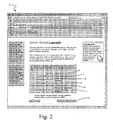
- Figure 2 ins an illustration of the intermediate webpage 4.
- the page incorporates a number of personal details which were supplied by the contact database 5. These details include: the user's name 6; their email address 7; the subject 8 and date 9 of the Email 1; the first line of their address 10; and a verification phrase 11 that was established previously.
- a phisher is unlikely to know a recipient's full name. Sometimes the recipient's name may be derived from the email address, but this would probably require intervention by a human eye due to the many forms an email address may take and the huge variety of possible names and spellings.
- the phisher would be able to present the email address to which a fraudulent email was sent on the linked website. They would also be able to present a reason for the link and the date on which the fraudulent message was sent.
- this is restricted by practical concerns as phishing attacks typically involve placing a single simple fake webpage on a compromised server. As such the ability to perform more complex 'per user' personalised responses so as to mimic the invention are restricted.
- the unique code used in the link in Email 1 is an encrypted value. This encryption helps to prevent a phisher experimenting with the code to reveal details of site users. Otherwise the phisher might be able to access the intermediate webpage 4 by trying different unique codes in an attempt to harvest legitimate user information for use later.
- URL Uniform Resource Locator
- This embodiment of the invention has benefits beyond protecting users from phishing.
- Many businesses may want to determine whether a customer has received an Email, particularly if the Email forms some kind of official notice (of payment due, statement availability etc.). Tracking the reading of these Emails is often done by sending the Email in an HTML format incorporating 'tagged images'. These 'tagged images' carries a unique code. When the message is opened and the mail client retrieves the images from the businesses web server, this unique code is noted advising that the message has been opened.
- Email may still serve it's purpose. If the user receives a message advising them that their statement is ready they do not need to download the images in order to follow the link provided within the Email. They may even type the website address directly into their browser (or use a bookmark) specifically because they are concerned about potentially fraudulent Email links.
- This embodiment of the invention helps overcome these issues as it accurately records each access.
- the system is able to tell both whether a user 'clicked-in' to the intermediate, webpage 4 following a link from an Email, and whether they 'clicked-out', i.e. proceeded on to the login page 3 (or some other resource).
- This form of tracking will work irrespective of whether the user opts to download images in an HTML message. All they are required to do is follow any link provided.
- This embodiment of the invention will also help to reveal Domain Name Server (DNS) attacks and Host File attacks. These attacks work because the user's computer needs to resolve a name, such as 'www.bbc.co.uk', into an Internet Protocol (IP) address.
- IP Internet Protocol
- the computer does this first by checking the local Host File on the client machine. If it doesn't find the name there then the user's computer queries its DNS, a computer on the network with a registry of IP addresses.
- the DNS provides an IP address and it is the IP address, not the name, that the browser on the user's computer accesses.
- This embodiment of the invention may also help to encourage the use of Email links, and therefore allow collection of statistics on message and link effectiveness, by always providing the user assurance that they are accessing the legitimate site. Therefore security precautions such as typing a website address manually or using a bookmark, become less important as a means to prevent inadvertent following of a fraudulent link.
- Figure 3 is a flow chart that contrasts the user experience between following a legitimate Email according to a second embodiment of the invention on the left and a phishing Email on the right.
- the term QuickLaunch is used for systems designed according to the invention.
- the user's name and Email address are omitted from the QuickLaunch page displayed to the user at box 23. Omitting these details ensures that, even if the phisher gains access to the QuickLaunch page, they cannot match the details presented with a potential Email target.
- the business uses QuickLaunch consistently for all Email links sent. It is not sufficient to consider that because a link is simply taking a user to an information page, that it is therefore safe to send the user there 'directly'. This is because a fraud could involve luring a user to a fraudulent site to view public access information before lulling them into a sense of false security and then asking them to login or provide other personal details.
- the phisher might, for example, send an Email that promised particularly good product offer such as an exceptional interest rate offer or a free prize draw. Having lured the user to a fake website and possibly shown them a number of pages of information, the phisher could then ask the user to provide their private information so as to apply for the product or prize draw.
- this invention provides a method for allowing the recipient of a message to confirm the identity of the sender and/or authenticity of any linked website.
- the sender provides a web address that comprises an identifying code uniquely assigned to that message.
- the sender also provides a document at that web address that comprises confirmatory information already known to the recipient.
- the invention may also be considered as a method of secure data communication.
Landscapes
- Engineering & Computer Science (AREA)
- Computer Security & Cryptography (AREA)
- Computer Hardware Design (AREA)
- Computing Systems (AREA)
- General Engineering & Computer Science (AREA)
- Computer Networks & Wireless Communication (AREA)
- Signal Processing (AREA)
- Information Transfer Between Computers (AREA)
- Data Exchanges In Wide-Area Networks (AREA)
Claims (9)
- Verfahren, mit dem es dem Empfänger einer Nachricht ermöglicht wird, die Identität des Absenders zu bestätigen, das Verfahren umfassend:das Bereitstellen in der Nachricht einer Web-Adresse, welche einen Identifizierungscode enthält, die eindeutig dem Empfänger der Nachricht zugeordnet ist: unddas Bereitstellen unter dieser Web-Adresse eines Dokuments, welches bestätigende Informationen umfasst, denen zuvor durch den Empfänger zugestimmt wurde.
- Verfahren gemäß Anspruch 1, wobei der Identifizierungscode eindeutig der Nachricht zugeordnet ist.
- Verfahren gemäß Anspruch 1 oder Anspruch 2, wobei es sich bei der Nachricht um eine E-Mail handelt.
- Verfahren gemäß einem der vorherigen Ansprüche, wobei der Identifizierungscode verschlüsselt ist.
- Verfahren gemäß einem der vorherigen Ansprüche, wobei die bestätigenden Informationen eine Identifizierungsnachricht umfassen, die durch den Empfänger ausgewählt wurde.
- Verfahren gemäß einem der vorherigen Ansprüche, wobei die bestätigenden Informationen einige biographische Informationen des Empfängers umfassen.
- Verfahren gemäß einem der vorherigen Ansprüche, wobei der Zugriff auf das Dokument unter der Web-Adresse nur eine vorbestimmte Anzahl von Malen möglich ist.
- Verfahren gemäß einem der vorherigen Ansprüche, wobei der Zugriff auf das Dokument unter der Web-Adresse nur während eines vorbestimmten Zeitraums möglich ist.
- Verfahren gemäß einem der vorherigen Ansprüche, wobei die bestätigenden Informationen nicht die Identifizierung des Empfängers ermöglichen.
Applications Claiming Priority (2)
| Application Number | Priority Date | Filing Date | Title |
|---|---|---|---|
| GB0705634A GB2447705B (en) | 2007-03-23 | 2007-03-23 | Network security system |
| PCT/GB2008/050214 WO2008117090A1 (en) | 2007-03-23 | 2008-03-25 | Network security method |
Publications (2)
| Publication Number | Publication Date |
|---|---|
| EP2137939A1 EP2137939A1 (de) | 2009-12-30 |
| EP2137939B1 true EP2137939B1 (de) | 2015-05-06 |
Family
ID=38024735
Family Applications (1)
| Application Number | Title | Priority Date | Filing Date |
|---|---|---|---|
| EP20080719059 Active EP2137939B1 (de) | 2007-03-23 | 2008-03-25 | Netzwerksicherheitsverfahren |
Country Status (5)
| Country | Link |
|---|---|
| US (1) | US8443192B2 (de) |
| EP (1) | EP2137939B1 (de) |
| AU (1) | AU2008231598B2 (de) |
| GB (1) | GB2447705B (de) |
| WO (1) | WO2008117090A1 (de) |
Families Citing this family (4)
| Publication number | Priority date | Publication date | Assignee | Title |
|---|---|---|---|---|
| EP2385679B1 (de) * | 2010-05-07 | 2014-08-20 | BlackBerry Limited | Lokal gespeicherte Phishing-Gegenmaßnahme |
| US8752172B1 (en) | 2011-06-27 | 2014-06-10 | Emc Corporation | Processing email messages based on authenticity analysis |
| US9356948B2 (en) | 2013-02-08 | 2016-05-31 | PhishMe, Inc. | Collaborative phishing attack detection |
| US9906539B2 (en) | 2015-04-10 | 2018-02-27 | PhishMe, Inc. | Suspicious message processing and incident response |
Family Cites Families (6)
| Publication number | Priority date | Publication date | Assignee | Title |
|---|---|---|---|---|
| US7461257B2 (en) * | 2003-09-22 | 2008-12-02 | Proofpoint, Inc. | System for detecting spoofed hyperlinks |
| CA2457478A1 (en) * | 2004-02-12 | 2005-08-12 | Opersys Inc. | System and method for warranting electronic mail using a hybrid public key encryption scheme |
| US20050228782A1 (en) * | 2004-04-07 | 2005-10-13 | Alexandre Bronstein | Authenticating a web site with user-provided indicators |
| US8171103B2 (en) * | 2004-08-27 | 2012-05-01 | Electronics For Imaging, Inc. | Methods and apparatus for providing access to content |
| US20060095955A1 (en) * | 2004-11-01 | 2006-05-04 | Vong Jeffrey C V | Jurisdiction-wide anti-phishing network service |
| US20070162366A1 (en) * | 2005-12-30 | 2007-07-12 | Ebay Inc. | Anti-phishing communication system |
-
2007
- 2007-03-23 GB GB0705634A patent/GB2447705B/en not_active Expired - Fee Related
-
2008
- 2008-03-25 AU AU2008231598A patent/AU2008231598B2/en not_active Ceased
- 2008-03-25 EP EP20080719059 patent/EP2137939B1/de active Active
- 2008-03-25 WO PCT/GB2008/050214 patent/WO2008117090A1/en not_active Ceased
-
2009
- 2009-09-23 US US12/565,591 patent/US8443192B2/en active Active
Also Published As
| Publication number | Publication date |
|---|---|
| AU2008231598B2 (en) | 2013-10-03 |
| GB2447705B (en) | 2009-08-12 |
| EP2137939A1 (de) | 2009-12-30 |
| WO2008117090A1 (en) | 2008-10-02 |
| AU2008231598A1 (en) | 2008-10-02 |
| US20100088513A1 (en) | 2010-04-08 |
| US8443192B2 (en) | 2013-05-14 |
| GB2447705A (en) | 2008-09-24 |
| GB0705634D0 (en) | 2007-05-02 |
Similar Documents
| Publication | Publication Date | Title |
|---|---|---|
| Ramzan | Phishing attacks and countermeasures | |
| US7877784B2 (en) | Verifying authenticity of webpages | |
| US7975290B2 (en) | Verifying authenticity of instant messaging messages | |
| US20080201401A1 (en) | Secure server authentication and browsing | |
| US20100313253A1 (en) | Method, system and process for authenticating the sender, source or origin of a desired, authorized or legitimate email or electrinic mail communication | |
| US20110083182A1 (en) | Phishing solution method | |
| US20080307226A1 (en) | Verifying authenticity of e-mail messages | |
| Dinev | Why spoofing is serious internet fraud | |
| US8443192B2 (en) | Network security method | |
| US20100180121A1 (en) | Method and apparatus for enhancing security in network-based data communication | |
| Singh et al. | Phishing: A computer security threat | |
| US20090210713A1 (en) | Method and a system for securing and authenticating a message | |
| US10880331B2 (en) | Defeating solution to phishing attacks through counter challenge authentication | |
| Harley et al. | Phish phodder: is user education helping or hindering? | |
| Shaik | Counter challenge authentication method: a defeating solution to phishing attacks | |
| KR20090001505A (ko) | 도메인 패턴 검출을 통한 피싱 방지 방법 및 방지프로그램이 기록된 컴퓨터 판독 가능 기록 매체 | |
| Saroj et al. | A survey paper on identity theft in the Internet | |
| Ceesay | Mitigating phishing attacks: a detection, response and evaluation framework | |
| Graydon | Phishing and Pharming: The New Evolution of Identity Theft | |
| Mihai | Overview on phishing attacks | |
| Murphy et al. | Phishing, Pharming, and Vishing: Fraud in the Internet Age | |
| Barnes | A defense-in-depth approach to phishing | |
| Mandt et al. | Phishing Attacks and Web Spoofing | |
| Gandhi et al. | A Theoretical Study on Different ways to Identify the Phishing URL and Its Prevention Approaches | |
| Modi et al. | A Lightweight Framework for Detection and Resolution for Phishing, Pharming and Email Spoofing |
Legal Events
| Date | Code | Title | Description |
|---|---|---|---|
| PUAI | Public reference made under article 153(3) epc to a published international application that has entered the european phase |
Free format text: ORIGINAL CODE: 0009012 |
|
| 17P | Request for examination filed |
Effective date: 20091021 |
|
| AK | Designated contracting states |
Kind code of ref document: A1 Designated state(s): AT BE BG CH CY CZ DE DK EE ES FI FR GB GR HR HU IE IS IT LI LT LU LV MC MT NL NO PL PT RO SE SI SK TR |
|
| DAX | Request for extension of the european patent (deleted) | ||
| GRAP | Despatch of communication of intention to grant a patent |
Free format text: ORIGINAL CODE: EPIDOSNIGR1 |
|
| GRAS | Grant fee paid |
Free format text: ORIGINAL CODE: EPIDOSNIGR3 |
|
| INTG | Intention to grant announced |
Effective date: 20150306 |
|
| RIC1 | Information provided on ipc code assigned before grant |
Ipc: H04L 29/06 20060101AFI20150226BHEP Ipc: H04L 12/22 20060101ALI20150226BHEP Ipc: H04L 12/58 20060101ALI20150226BHEP |
|
| GRAA | (expected) grant |
Free format text: ORIGINAL CODE: 0009210 |
|
| AK | Designated contracting states |
Kind code of ref document: B1 Designated state(s): AT BE BG CH CY CZ DE DK EE ES FI FR GB GR HR HU IE IS IT LI LT LU LV MC MT NL NO PL PT RO SE SI SK TR |
|
| REG | Reference to a national code |
Ref country code: GB Ref legal event code: FG4D |
|
| REG | Reference to a national code |
Ref country code: CH Ref legal event code: EP |
|
| REG | Reference to a national code |
Ref country code: IE Ref legal event code: FG4D |
|
| REG | Reference to a national code |
Ref country code: AT Ref legal event code: REF Ref document number: 726362 Country of ref document: AT Kind code of ref document: T Effective date: 20150615 |
|
| REG | Reference to a national code |
Ref country code: DE Ref legal event code: R096 Ref document number: 602008038045 Country of ref document: DE Effective date: 20150618 |
|
| REG | Reference to a national code |
Ref country code: NL Ref legal event code: T3 |
|
| REG | Reference to a national code |
Ref country code: NL Ref legal event code: T3 |
|
| REG | Reference to a national code |
Ref country code: AT Ref legal event code: MK05 Ref document number: 726362 Country of ref document: AT Kind code of ref document: T Effective date: 20150506 |
|
| REG | Reference to a national code |
Ref country code: LT Ref legal event code: MG4D |
|
| PG25 | Lapsed in a contracting state [announced via postgrant information from national office to epo] |
Ref country code: LT Free format text: LAPSE BECAUSE OF FAILURE TO SUBMIT A TRANSLATION OF THE DESCRIPTION OR TO PAY THE FEE WITHIN THE PRESCRIBED TIME-LIMIT Effective date: 20150506 Ref country code: PT Free format text: LAPSE BECAUSE OF FAILURE TO SUBMIT A TRANSLATION OF THE DESCRIPTION OR TO PAY THE FEE WITHIN THE PRESCRIBED TIME-LIMIT Effective date: 20150907 Ref country code: ES Free format text: LAPSE BECAUSE OF FAILURE TO SUBMIT A TRANSLATION OF THE DESCRIPTION OR TO PAY THE FEE WITHIN THE PRESCRIBED TIME-LIMIT Effective date: 20150506 Ref country code: FI Free format text: LAPSE BECAUSE OF FAILURE TO SUBMIT A TRANSLATION OF THE DESCRIPTION OR TO PAY THE FEE WITHIN THE PRESCRIBED TIME-LIMIT Effective date: 20150506 Ref country code: NO Free format text: LAPSE BECAUSE OF FAILURE TO SUBMIT A TRANSLATION OF THE DESCRIPTION OR TO PAY THE FEE WITHIN THE PRESCRIBED TIME-LIMIT Effective date: 20150806 Ref country code: HR Free format text: LAPSE BECAUSE OF FAILURE TO SUBMIT A TRANSLATION OF THE DESCRIPTION OR TO PAY THE FEE WITHIN THE PRESCRIBED TIME-LIMIT Effective date: 20150506 |
|
| PG25 | Lapsed in a contracting state [announced via postgrant information from national office to epo] |
Ref country code: BG Free format text: LAPSE BECAUSE OF FAILURE TO SUBMIT A TRANSLATION OF THE DESCRIPTION OR TO PAY THE FEE WITHIN THE PRESCRIBED TIME-LIMIT Effective date: 20150806 Ref country code: LV Free format text: LAPSE BECAUSE OF FAILURE TO SUBMIT A TRANSLATION OF THE DESCRIPTION OR TO PAY THE FEE WITHIN THE PRESCRIBED TIME-LIMIT Effective date: 20150506 Ref country code: GR Free format text: LAPSE BECAUSE OF FAILURE TO SUBMIT A TRANSLATION OF THE DESCRIPTION OR TO PAY THE FEE WITHIN THE PRESCRIBED TIME-LIMIT Effective date: 20150807 Ref country code: AT Free format text: LAPSE BECAUSE OF FAILURE TO SUBMIT A TRANSLATION OF THE DESCRIPTION OR TO PAY THE FEE WITHIN THE PRESCRIBED TIME-LIMIT Effective date: 20150506 Ref country code: IS Free format text: LAPSE BECAUSE OF FAILURE TO SUBMIT A TRANSLATION OF THE DESCRIPTION OR TO PAY THE FEE WITHIN THE PRESCRIBED TIME-LIMIT Effective date: 20150906 |
|
| PG25 | Lapsed in a contracting state [announced via postgrant information from national office to epo] |
Ref country code: DK Free format text: LAPSE BECAUSE OF FAILURE TO SUBMIT A TRANSLATION OF THE DESCRIPTION OR TO PAY THE FEE WITHIN THE PRESCRIBED TIME-LIMIT Effective date: 20150506 Ref country code: EE Free format text: LAPSE BECAUSE OF FAILURE TO SUBMIT A TRANSLATION OF THE DESCRIPTION OR TO PAY THE FEE WITHIN THE PRESCRIBED TIME-LIMIT Effective date: 20150506 |
|
| REG | Reference to a national code |
Ref country code: DE Ref legal event code: R097 Ref document number: 602008038045 Country of ref document: DE |
|
| PG25 | Lapsed in a contracting state [announced via postgrant information from national office to epo] |
Ref country code: RO Free format text: LAPSE BECAUSE OF NON-PAYMENT OF DUE FEES Effective date: 20150506 Ref country code: CZ Free format text: LAPSE BECAUSE OF FAILURE TO SUBMIT A TRANSLATION OF THE DESCRIPTION OR TO PAY THE FEE WITHIN THE PRESCRIBED TIME-LIMIT Effective date: 20150506 Ref country code: SK Free format text: LAPSE BECAUSE OF FAILURE TO SUBMIT A TRANSLATION OF THE DESCRIPTION OR TO PAY THE FEE WITHIN THE PRESCRIBED TIME-LIMIT Effective date: 20150506 Ref country code: PL Free format text: LAPSE BECAUSE OF FAILURE TO SUBMIT A TRANSLATION OF THE DESCRIPTION OR TO PAY THE FEE WITHIN THE PRESCRIBED TIME-LIMIT Effective date: 20150506 |
|
| PLBE | No opposition filed within time limit |
Free format text: ORIGINAL CODE: 0009261 |
|
| STAA | Information on the status of an ep patent application or granted ep patent |
Free format text: STATUS: NO OPPOSITION FILED WITHIN TIME LIMIT |
|
| REG | Reference to a national code |
Ref country code: FR Ref legal event code: PLFP Year of fee payment: 9 |
|
| 26N | No opposition filed |
Effective date: 20160209 |
|
| PG25 | Lapsed in a contracting state [announced via postgrant information from national office to epo] |
Ref country code: IT Free format text: LAPSE BECAUSE OF FAILURE TO SUBMIT A TRANSLATION OF THE DESCRIPTION OR TO PAY THE FEE WITHIN THE PRESCRIBED TIME-LIMIT Effective date: 20150506 |
|
| PG25 | Lapsed in a contracting state [announced via postgrant information from national office to epo] |
Ref country code: SI Free format text: LAPSE BECAUSE OF FAILURE TO SUBMIT A TRANSLATION OF THE DESCRIPTION OR TO PAY THE FEE WITHIN THE PRESCRIBED TIME-LIMIT Effective date: 20150506 |
|
| PG25 | Lapsed in a contracting state [announced via postgrant information from national office to epo] |
Ref country code: BE Free format text: LAPSE BECAUSE OF FAILURE TO SUBMIT A TRANSLATION OF THE DESCRIPTION OR TO PAY THE FEE WITHIN THE PRESCRIBED TIME-LIMIT Effective date: 20150506 |
|
| PG25 | Lapsed in a contracting state [announced via postgrant information from national office to epo] |
Ref country code: LU Free format text: LAPSE BECAUSE OF FAILURE TO SUBMIT A TRANSLATION OF THE DESCRIPTION OR TO PAY THE FEE WITHIN THE PRESCRIBED TIME-LIMIT Effective date: 20160325 Ref country code: MC Free format text: LAPSE BECAUSE OF FAILURE TO SUBMIT A TRANSLATION OF THE DESCRIPTION OR TO PAY THE FEE WITHIN THE PRESCRIBED TIME-LIMIT Effective date: 20150506 |
|
| REG | Reference to a national code |
Ref country code: FR Ref legal event code: PLFP Year of fee payment: 10 |
|
| PG25 | Lapsed in a contracting state [announced via postgrant information from national office to epo] |
Ref country code: SE Free format text: LAPSE BECAUSE OF FAILURE TO SUBMIT A TRANSLATION OF THE DESCRIPTION OR TO PAY THE FEE WITHIN THE PRESCRIBED TIME-LIMIT Effective date: 20150506 |
|
| PG25 | Lapsed in a contracting state [announced via postgrant information from national office to epo] |
Ref country code: MT Free format text: LAPSE BECAUSE OF FAILURE TO SUBMIT A TRANSLATION OF THE DESCRIPTION OR TO PAY THE FEE WITHIN THE PRESCRIBED TIME-LIMIT Effective date: 20150506 |
|
| REG | Reference to a national code |
Ref country code: FR Ref legal event code: PLFP Year of fee payment: 11 |
|
| PG25 | Lapsed in a contracting state [announced via postgrant information from national office to epo] |
Ref country code: CY Free format text: LAPSE BECAUSE OF FAILURE TO SUBMIT A TRANSLATION OF THE DESCRIPTION OR TO PAY THE FEE WITHIN THE PRESCRIBED TIME-LIMIT Effective date: 20150506 Ref country code: HU Free format text: LAPSE BECAUSE OF FAILURE TO SUBMIT A TRANSLATION OF THE DESCRIPTION OR TO PAY THE FEE WITHIN THE PRESCRIBED TIME-LIMIT; INVALID AB INITIO Effective date: 20080325 |
|
| PG25 | Lapsed in a contracting state [announced via postgrant information from national office to epo] |
Ref country code: MT Free format text: LAPSE BECAUSE OF FAILURE TO SUBMIT A TRANSLATION OF THE DESCRIPTION OR TO PAY THE FEE WITHIN THE PRESCRIBED TIME-LIMIT Effective date: 20160331 Ref country code: TR Free format text: LAPSE BECAUSE OF FAILURE TO SUBMIT A TRANSLATION OF THE DESCRIPTION OR TO PAY THE FEE WITHIN THE PRESCRIBED TIME-LIMIT Effective date: 20150506 |
|
| PGFP | Annual fee paid to national office [announced via postgrant information from national office to epo] |
Ref country code: FR Payment date: 20210304 Year of fee payment: 14 Ref country code: NL Payment date: 20210329 Year of fee payment: 14 Ref country code: IE Payment date: 20210319 Year of fee payment: 14 |
|
| PGFP | Annual fee paid to national office [announced via postgrant information from national office to epo] |
Ref country code: DE Payment date: 20210323 Year of fee payment: 14 |
|
| PGFP | Annual fee paid to national office [announced via postgrant information from national office to epo] |
Ref country code: CH Payment date: 20210629 Year of fee payment: 14 |
|
| REG | Reference to a national code |
Ref country code: DE Ref legal event code: R079 Ref document number: 602008038045 Country of ref document: DE Free format text: PREVIOUS MAIN CLASS: H04L0029060000 Ipc: H04L0065000000 |
|
| REG | Reference to a national code |
Ref country code: DE Ref legal event code: R119 Ref document number: 602008038045 Country of ref document: DE |
|
| REG | Reference to a national code |
Ref country code: CH Ref legal event code: PL |
|
| REG | Reference to a national code |
Ref country code: NL Ref legal event code: MM Effective date: 20220401 |
|
| PG25 | Lapsed in a contracting state [announced via postgrant information from national office to epo] |
Ref country code: NL Free format text: LAPSE BECAUSE OF NON-PAYMENT OF DUE FEES Effective date: 20220401 Ref country code: LI Free format text: LAPSE BECAUSE OF NON-PAYMENT OF DUE FEES Effective date: 20220331 Ref country code: IE Free format text: LAPSE BECAUSE OF NON-PAYMENT OF DUE FEES Effective date: 20220325 Ref country code: FR Free format text: LAPSE BECAUSE OF NON-PAYMENT OF DUE FEES Effective date: 20220331 Ref country code: DE Free format text: LAPSE BECAUSE OF NON-PAYMENT OF DUE FEES Effective date: 20221001 Ref country code: CH Free format text: LAPSE BECAUSE OF NON-PAYMENT OF DUE FEES Effective date: 20220331 |
|
| PGFP | Annual fee paid to national office [announced via postgrant information from national office to epo] |
Ref country code: GB Payment date: 20250227 Year of fee payment: 18 |