EP2135860A1 - Improved process for the production of bimatoprost - Google Patents
Improved process for the production of bimatoprost Download PDFInfo
- Publication number
- EP2135860A1 EP2135860A1 EP08158675A EP08158675A EP2135860A1 EP 2135860 A1 EP2135860 A1 EP 2135860A1 EP 08158675 A EP08158675 A EP 08158675A EP 08158675 A EP08158675 A EP 08158675A EP 2135860 A1 EP2135860 A1 EP 2135860A1
- Authority
- EP
- European Patent Office
- Prior art keywords
- bimatoprost
- compound
- crude
- reaction
- formula
- Prior art date
- Legal status (The legal status is an assumption and is not a legal conclusion. Google has not performed a legal analysis and makes no representation as to the accuracy of the status listed.)
- Ceased
Links
- 229960002470 bimatoprost Drugs 0.000 title claims abstract description 188
- AQOKCDNYWBIDND-FTOWTWDKSA-N bimatoprost Chemical compound CCNC(=O)CCC\C=C/C[C@H]1[C@@H](O)C[C@@H](O)[C@@H]1\C=C\[C@@H](O)CCC1=CC=CC=C1 AQOKCDNYWBIDND-FTOWTWDKSA-N 0.000 title claims abstract description 130
- 238000000034 method Methods 0.000 title claims abstract description 72
- 230000008569 process Effects 0.000 title claims abstract description 63
- 238000004519 manufacturing process Methods 0.000 title description 5
- LFQSCWFLJHTTHZ-UHFFFAOYSA-N Ethanol Chemical compound CCO LFQSCWFLJHTTHZ-UHFFFAOYSA-N 0.000 claims abstract description 26
- 238000002425 crystallisation Methods 0.000 claims abstract description 20
- 239000002904 solvent Substances 0.000 claims abstract description 19
- 238000004587 chromatography analysis Methods 0.000 claims abstract description 14
- 238000000746 purification Methods 0.000 claims abstract description 14
- 239000003480 eluent Substances 0.000 claims abstract description 12
- 230000005526 G1 to G0 transition Effects 0.000 claims abstract description 10
- 150000001875 compounds Chemical class 0.000 claims description 82
- 238000006243 chemical reaction Methods 0.000 claims description 48
- QUSNBJAOOMFDIB-UHFFFAOYSA-N Ethylamine Chemical compound CCN QUSNBJAOOMFDIB-UHFFFAOYSA-N 0.000 claims description 22
- 150000004820 halides Chemical group 0.000 claims description 22
- -1 acetonnitrile Chemical class 0.000 claims description 21
- 239000000203 mixture Substances 0.000 claims description 19
- IMNFDUFMRHMDMM-UHFFFAOYSA-N N-Heptane Chemical group CCCCCCC IMNFDUFMRHMDMM-UHFFFAOYSA-N 0.000 claims description 18
- 239000002585 base Substances 0.000 claims description 16
- VLKZOEOYAKHREP-UHFFFAOYSA-N n-Hexane Chemical compound CCCCCC VLKZOEOYAKHREP-UHFFFAOYSA-N 0.000 claims description 15
- GQHTUMJGOHRCHB-UHFFFAOYSA-N 2,3,4,6,7,8,9,10-octahydropyrimido[1,2-a]azepine Chemical compound C1CCCCN2CCCN=C21 GQHTUMJGOHRCHB-UHFFFAOYSA-N 0.000 claims description 14
- 238000002360 preparation method Methods 0.000 claims description 14
- VYPSYNLAJGMNEJ-UHFFFAOYSA-N Silicium dioxide Chemical compound O=[Si]=O VYPSYNLAJGMNEJ-UHFFFAOYSA-N 0.000 claims description 12
- 150000008064 anhydrides Chemical class 0.000 claims description 12
- 229910052784 alkaline earth metal Inorganic materials 0.000 claims description 10
- OKKJLVBELUTLKV-UHFFFAOYSA-N Methanol Chemical compound OC OKKJLVBELUTLKV-UHFFFAOYSA-N 0.000 claims description 9
- 239000003513 alkali Substances 0.000 claims description 9
- 239000003153 chemical reaction reagent Substances 0.000 claims description 9
- 125000003118 aryl group Chemical group 0.000 claims description 8
- 125000002704 decyl group Chemical group [H]C([H])([H])C([H])([H])C([H])([H])C([H])([H])C([H])([H])C([H])([H])C([H])([H])C([H])([H])C([H])([H])C([H])([H])* 0.000 claims description 8
- 150000001408 amides Chemical class 0.000 claims description 7
- 230000004913 activation Effects 0.000 claims description 6
- 150000002148 esters Chemical class 0.000 claims description 6
- 239000000377 silicon dioxide Substances 0.000 claims description 6
- KYVBNYUBXIEUFW-UHFFFAOYSA-N 1,1,3,3-tetramethylguanidine Chemical compound CN(C)C(=N)N(C)C KYVBNYUBXIEUFW-UHFFFAOYSA-N 0.000 claims description 5
- JVSFQJZRHXAUGT-UHFFFAOYSA-N 2,2-dimethylpropanoyl chloride Chemical compound CC(C)(C)C(Cl)=O JVSFQJZRHXAUGT-UHFFFAOYSA-N 0.000 claims description 5
- DGAQECJNVWCQMB-PUAWFVPOSA-M Ilexoside XXIX Chemical compound C[C@@H]1CC[C@@]2(CC[C@@]3(C(=CC[C@H]4[C@]3(CC[C@@H]5[C@@]4(CC[C@@H](C5(C)C)OS(=O)(=O)[O-])C)C)[C@@H]2[C@]1(C)O)C)C(=O)O[C@H]6[C@@H]([C@H]([C@@H]([C@H](O6)CO)O)O)O.[Na+] DGAQECJNVWCQMB-PUAWFVPOSA-M 0.000 claims description 5
- WHXSMMKQMYFTQS-UHFFFAOYSA-N Lithium Chemical compound [Li] WHXSMMKQMYFTQS-UHFFFAOYSA-N 0.000 claims description 5
- ZLMJMSJWJFRBEC-UHFFFAOYSA-N Potassium Chemical compound [K] ZLMJMSJWJFRBEC-UHFFFAOYSA-N 0.000 claims description 5
- 150000004649 carbonic acid derivatives Chemical class 0.000 claims description 5
- 230000008025 crystallization Effects 0.000 claims description 5
- 229910052744 lithium Inorganic materials 0.000 claims description 5
- 229910052700 potassium Inorganic materials 0.000 claims description 5
- 239000011591 potassium Substances 0.000 claims description 5
- 229910052708 sodium Inorganic materials 0.000 claims description 5
- 239000011734 sodium Substances 0.000 claims description 5
- 229910001854 alkali hydroxide Inorganic materials 0.000 claims description 4
- 229910001860 alkaline earth metal hydroxide Inorganic materials 0.000 claims description 4
- 229910052751 metal Inorganic materials 0.000 claims description 4
- 239000002184 metal Substances 0.000 claims description 4
- 229910052987 metal hydride Inorganic materials 0.000 claims description 4
- 150000004681 metal hydrides Chemical class 0.000 claims description 4
- 125000001979 organolithium group Chemical group 0.000 claims description 4
- XDTMQSROBMDMFD-UHFFFAOYSA-N Cyclohexane Chemical compound C1CCCCC1 XDTMQSROBMDMFD-UHFFFAOYSA-N 0.000 claims description 3
- 150000001298 alcohols Chemical class 0.000 claims description 3
- 150000002170 ethers Chemical class 0.000 claims description 3
- YFHHIZGZVLHBQZ-KDACTHKWSA-N 17-phenyl-trinor-prostaglandin F2alpha Chemical compound C([C@H](O)\C=C\[C@@H]1[C@H]([C@@H](O)C[C@H]1O)C\C=C/CCCC(O)=O)CC1=CC=CC=C1 YFHHIZGZVLHBQZ-KDACTHKWSA-N 0.000 description 27
- WEVYAHXRMPXWCK-UHFFFAOYSA-N Acetonitrile Chemical compound CC#N WEVYAHXRMPXWCK-UHFFFAOYSA-N 0.000 description 21
- BZLVMXJERCGZMT-UHFFFAOYSA-N Methyl tert-butyl ether Chemical compound COC(C)(C)C BZLVMXJERCGZMT-UHFFFAOYSA-N 0.000 description 20
- 239000000243 solution Substances 0.000 description 19
- 239000012535 impurity Substances 0.000 description 18
- 239000010410 layer Substances 0.000 description 18
- 239000000725 suspension Substances 0.000 description 18
- 150000002373 hemiacetals Chemical class 0.000 description 17
- YMWUJEATGCHHMB-UHFFFAOYSA-N Dichloromethane Chemical compound ClCCl YMWUJEATGCHHMB-UHFFFAOYSA-N 0.000 description 15
- WYURNTSHIVDZCO-UHFFFAOYSA-N Tetrahydrofuran Chemical compound C1CCOC1 WYURNTSHIVDZCO-UHFFFAOYSA-N 0.000 description 15
- YXFVVABEGXRONW-UHFFFAOYSA-N Toluene Chemical compound CC1=CC=CC=C1 YXFVVABEGXRONW-UHFFFAOYSA-N 0.000 description 15
- 230000015572 biosynthetic process Effects 0.000 description 12
- 239000012267 brine Substances 0.000 description 11
- HPALAKNZSZLMCH-UHFFFAOYSA-M sodium;chloride;hydrate Chemical compound O.[Na+].[Cl-] HPALAKNZSZLMCH-UHFFFAOYSA-M 0.000 description 11
- 238000003756 stirring Methods 0.000 description 11
- XLYOFNOQVPJJNP-UHFFFAOYSA-N water Substances O XLYOFNOQVPJJNP-UHFFFAOYSA-N 0.000 description 10
- ZMANZCXQSJIPKH-UHFFFAOYSA-N Triethylamine Chemical compound CCN(CC)CC ZMANZCXQSJIPKH-UHFFFAOYSA-N 0.000 description 9
- 239000000047 product Substances 0.000 description 8
- MEKOFIRRDATTAG-UHFFFAOYSA-N 2,2,5,8-tetramethyl-3,4-dihydrochromen-6-ol Chemical compound C1CC(C)(C)OC2=C1C(C)=C(O)C=C2C MEKOFIRRDATTAG-UHFFFAOYSA-N 0.000 description 7
- 239000006227 byproduct Substances 0.000 description 7
- 150000002576 ketones Chemical class 0.000 description 7
- 239000012044 organic layer Substances 0.000 description 7
- LPNYRYFBWFDTMA-UHFFFAOYSA-N potassium tert-butoxide Chemical compound [K+].CC(C)(C)[O-] LPNYRYFBWFDTMA-UHFFFAOYSA-N 0.000 description 7
- 239000011541 reaction mixture Substances 0.000 description 7
- 230000009467 reduction Effects 0.000 description 7
- 238000006722 reduction reaction Methods 0.000 description 7
- 238000003786 synthesis reaction Methods 0.000 description 7
- VEXZGXHMUGYJMC-UHFFFAOYSA-N Hydrochloric acid Chemical compound Cl VEXZGXHMUGYJMC-UHFFFAOYSA-N 0.000 description 6
- 239000002253 acid Substances 0.000 description 6
- 239000000543 intermediate Substances 0.000 description 6
- 229960001160 latanoprost Drugs 0.000 description 5
- GGXICVAJURFBLW-CEYXHVGTSA-N latanoprost Chemical compound CC(C)OC(=O)CCC\C=C/C[C@H]1[C@@H](O)C[C@@H](O)[C@@H]1CC[C@@H](O)CCC1=CC=CC=C1 GGXICVAJURFBLW-CEYXHVGTSA-N 0.000 description 5
- LNOPIUAQISRISI-UHFFFAOYSA-N n'-hydroxy-2-propan-2-ylsulfonylethanimidamide Chemical compound CC(C)S(=O)(=O)CC(N)=NO LNOPIUAQISRISI-UHFFFAOYSA-N 0.000 description 5
- 150000003180 prostaglandins Chemical class 0.000 description 5
- 238000000926 separation method Methods 0.000 description 5
- 239000007858 starting material Substances 0.000 description 5
- IJGRMHOSHXDMSA-UHFFFAOYSA-N Atomic nitrogen Chemical compound N#N IJGRMHOSHXDMSA-UHFFFAOYSA-N 0.000 description 4
- MZRVEZGGRBJDDB-UHFFFAOYSA-N N-Butyllithium Chemical compound [Li]CCCC MZRVEZGGRBJDDB-UHFFFAOYSA-N 0.000 description 4
- 239000008186 active pharmaceutical agent Substances 0.000 description 4
- 150000001299 aldehydes Chemical class 0.000 description 4
- XXROGKLTLUQVRX-UHFFFAOYSA-N allyl alcohol Chemical compound OCC=C XXROGKLTLUQVRX-UHFFFAOYSA-N 0.000 description 4
- 150000002009 diols Chemical class 0.000 description 4
- 229940073584 methylene chloride Drugs 0.000 description 4
- 125000006239 protecting group Chemical group 0.000 description 4
- 229920006395 saturated elastomer Polymers 0.000 description 4
- PXGPLTODNUVGFL-BRIYLRKRSA-N (E,Z)-(1R,2R,3R,5S)-7-(3,5-Dihydroxy-2-((3S)-(3-hydroxy-1-octenyl))cyclopentyl)-5-heptenoic acid Chemical compound CCCCC[C@H](O)C=C[C@H]1[C@H](O)C[C@H](O)[C@@H]1CC=CCCCC(O)=O PXGPLTODNUVGFL-BRIYLRKRSA-N 0.000 description 3
- YFHHIZGZVLHBQZ-KBENJUBSSA-N (z)-7-[(1r,2r,3r,5s)-3,5-dihydroxy-2-[(3r)-3-hydroxy-5-phenylpent-1-enyl]cyclopentyl]hept-5-enoic acid Chemical compound C([C@@H](O)C=C[C@@H]1[C@H]([C@@H](O)C[C@H]1O)C\C=C/CCCC(O)=O)CC1=CC=CC=C1 YFHHIZGZVLHBQZ-KBENJUBSSA-N 0.000 description 3
- RTZKZFJDLAIYFH-UHFFFAOYSA-N Diethyl ether Chemical compound CCOCC RTZKZFJDLAIYFH-UHFFFAOYSA-N 0.000 description 3
- IAZDPXIOMUYVGZ-UHFFFAOYSA-N Dimethylsulphoxide Chemical compound CS(C)=O IAZDPXIOMUYVGZ-UHFFFAOYSA-N 0.000 description 3
- 206010018307 Glaucoma and ocular hypertension Diseases 0.000 description 3
- UIIMBOGNXHQVGW-DEQYMQKBSA-M Sodium bicarbonate-14C Chemical compound [Na+].O[14C]([O-])=O UIIMBOGNXHQVGW-DEQYMQKBSA-M 0.000 description 3
- 238000007239 Wittig reaction Methods 0.000 description 3
- 238000003556 assay Methods 0.000 description 3
- 230000008901 benefit Effects 0.000 description 3
- 238000011097 chromatography purification Methods 0.000 description 3
- KRKNYBCHXYNGOX-UHFFFAOYSA-N citric acid Chemical compound OC(=O)CC(O)(C(O)=O)CC(O)=O KRKNYBCHXYNGOX-UHFFFAOYSA-N 0.000 description 3
- 238000001914 filtration Methods 0.000 description 3
- FNKQFBWKNIGIOS-UHFFFAOYSA-N furan-2,5-diol Chemical compound OC1=CC=C(O)O1 FNKQFBWKNIGIOS-UHFFFAOYSA-N 0.000 description 3
- 239000003960 organic solvent Substances 0.000 description 3
- 229940094443 oxytocics prostaglandins Drugs 0.000 description 3
- 230000035484 reaction time Effects 0.000 description 3
- 125000001412 tetrahydropyranyl group Chemical group 0.000 description 3
- 229960002368 travoprost Drugs 0.000 description 3
- MKPLKVHSHYCHOC-AHTXBMBWSA-N travoprost Chemical compound CC(C)OC(=O)CCC\C=C/C[C@H]1[C@@H](O)C[C@@H](O)[C@@H]1\C=C\[C@@H](O)COC1=CC=CC(C(F)(F)F)=C1 MKPLKVHSHYCHOC-AHTXBMBWSA-N 0.000 description 3
- 125000004169 (C1-C6) alkyl group Chemical group 0.000 description 2
- 125000000041 C6-C10 aryl group Chemical group 0.000 description 2
- XQFRJNBWHJMXHO-RRKCRQDMSA-N IDUR Chemical compound C1[C@H](O)[C@@H](CO)O[C@H]1N1C(=O)NC(=O)C(I)=C1 XQFRJNBWHJMXHO-RRKCRQDMSA-N 0.000 description 2
- JGFZNNIVVJXRND-UHFFFAOYSA-N N,N-Diisopropylethylamine (DIPEA) Chemical compound CCN(C(C)C)C(C)C JGFZNNIVVJXRND-UHFFFAOYSA-N 0.000 description 2
- KDLHZDBZIXYQEI-UHFFFAOYSA-N Palladium Chemical compound [Pd] KDLHZDBZIXYQEI-UHFFFAOYSA-N 0.000 description 2
- KEAYESYHFKHZAL-UHFFFAOYSA-N Sodium Chemical compound [Na] KEAYESYHFKHZAL-UHFFFAOYSA-N 0.000 description 2
- CDBYLPFSWZWCQE-UHFFFAOYSA-L Sodium Carbonate Chemical compound [Na+].[Na+].[O-]C([O-])=O CDBYLPFSWZWCQE-UHFFFAOYSA-L 0.000 description 2
- UIIMBOGNXHQVGW-UHFFFAOYSA-M Sodium bicarbonate Chemical compound [Na+].OC([O-])=O UIIMBOGNXHQVGW-UHFFFAOYSA-M 0.000 description 2
- ILOYPIODPORGAZ-UHFFFAOYSA-N [Li]CCCCCCC Chemical compound [Li]CCCCCCC ILOYPIODPORGAZ-UHFFFAOYSA-N 0.000 description 2
- 229910052783 alkali metal Inorganic materials 0.000 description 2
- 239000013078 crystal Substances 0.000 description 2
- 125000001511 cyclopentyl group Chemical group [H]C1([H])C([H])([H])C([H])([H])C([H])(*)C1([H])[H] 0.000 description 2
- 238000010511 deprotection reaction Methods 0.000 description 2
- 230000002255 enzymatic effect Effects 0.000 description 2
- 230000032050 esterification Effects 0.000 description 2
- 238000005886 esterification reaction Methods 0.000 description 2
- 229940052303 ethers for general anesthesia Drugs 0.000 description 2
- RIFGWPKJUGCATF-UHFFFAOYSA-N ethyl chloroformate Chemical compound CCOC(Cl)=O RIFGWPKJUGCATF-UHFFFAOYSA-N 0.000 description 2
- 238000000605 extraction Methods 0.000 description 2
- 239000000706 filtrate Substances 0.000 description 2
- 229910052736 halogen Inorganic materials 0.000 description 2
- 125000005843 halogen group Chemical group 0.000 description 2
- KPSZWAJWFMFMFF-UHFFFAOYSA-N hept-5-enoic acid Chemical compound CC=CCCCC(O)=O KPSZWAJWFMFMFF-UHFFFAOYSA-N 0.000 description 2
- 238000004128 high performance liquid chromatography Methods 0.000 description 2
- 229960004716 idoxuridine Drugs 0.000 description 2
- INQOMBQAUSQDDS-UHFFFAOYSA-N iodomethane Chemical compound IC INQOMBQAUSQDDS-UHFFFAOYSA-N 0.000 description 2
- 238000002955 isolation Methods 0.000 description 2
- 150000002596 lactones Chemical class 0.000 description 2
- CETVQRFGPOGIQJ-UHFFFAOYSA-N lithium;hexane Chemical compound [Li+].CCCCC[CH2-] CETVQRFGPOGIQJ-UHFFFAOYSA-N 0.000 description 2
- 229940112534 lumigan Drugs 0.000 description 2
- UQBYFURYGYNQLQ-LPMUJKRGSA-N methyl (Z)-7-[(1R,2R,3R,5S)-3,5-dihydroxy-2-[(3R)-3-hydroxy-5-phenylpent-1-enyl]cyclopentyl]hept-5-enoate Chemical compound COC(=O)CCC\C=C/C[C@H]1[C@@H](O)C[C@@H](O)[C@@H]1C=C[C@H](O)CCC1=CC=CC=C1 UQBYFURYGYNQLQ-LPMUJKRGSA-N 0.000 description 2
- 150000004702 methyl esters Chemical class 0.000 description 2
- 229910052757 nitrogen Inorganic materials 0.000 description 2
- 239000002997 ophthalmic solution Substances 0.000 description 2
- BWHMMNNQKKPAPP-UHFFFAOYSA-L potassium carbonate Chemical compound [K+].[K+].[O-]C([O-])=O BWHMMNNQKKPAPP-UHFFFAOYSA-L 0.000 description 2
- RPDAUEIUDPHABB-UHFFFAOYSA-N potassium ethoxide Chemical compound [K+].CC[O-] RPDAUEIUDPHABB-UHFFFAOYSA-N 0.000 description 2
- 150000003169 prostaglandin F2α derivatives Chemical class 0.000 description 2
- ODZPKZBBUMBTMG-UHFFFAOYSA-N sodium amide Chemical compound [NH2-].[Na+] ODZPKZBBUMBTMG-UHFFFAOYSA-N 0.000 description 2
- QDRKDTQENPPHOJ-UHFFFAOYSA-N sodium ethoxide Chemical compound [Na+].CC[O-] QDRKDTQENPPHOJ-UHFFFAOYSA-N 0.000 description 2
- 239000012312 sodium hydride Substances 0.000 description 2
- 229910000104 sodium hydride Inorganic materials 0.000 description 2
- 239000000126 substance Substances 0.000 description 2
- CMSYDJVRTHCWFP-UHFFFAOYSA-N triphenylphosphane;hydrobromide Chemical compound Br.C1=CC=CC=C1P(C=1C=CC=CC=1)C1=CC=CC=C1 CMSYDJVRTHCWFP-UHFFFAOYSA-N 0.000 description 2
- 238000010626 work up procedure Methods 0.000 description 2
- HUHXLHLWASNVDB-UHFFFAOYSA-N 2-(oxan-2-yloxy)oxane Chemical compound O1CCCCC1OC1OCCCC1 HUHXLHLWASNVDB-UHFFFAOYSA-N 0.000 description 1
- MLOSJPZSZWUDSK-UHFFFAOYSA-N 4-carboxybutyl(triphenyl)phosphanium;bromide Chemical compound [Br-].C=1C=CC=CC=1[P+](C=1C=CC=CC=1)(CCCCC(=O)O)C1=CC=CC=C1 MLOSJPZSZWUDSK-UHFFFAOYSA-N 0.000 description 1
- CPVNCBJFUQQXSU-UHFFFAOYSA-N 5-triphenylphosphaniumylpentanoate Chemical compound C1(=CC=CC=C1)[P+](CCCCC(=O)[O-])(C1=CC=CC=C1)C1=CC=CC=C1 CPVNCBJFUQQXSU-UHFFFAOYSA-N 0.000 description 1
- AQOKCDNYWBIDND-RVKVRTCISA-N CCNC(CCC/C=C\CC([C@H](C[C@H]1O)O)[C@H]1/C=C/[C@H](CCc1ccccc1)O)=O Chemical compound CCNC(CCC/C=C\CC([C@H](C[C@H]1O)O)[C@H]1/C=C/[C@H](CCc1ccccc1)O)=O AQOKCDNYWBIDND-RVKVRTCISA-N 0.000 description 1
- ULBCJDXDVAJYNI-UHFFFAOYSA-N COC(CCCCN)=O Chemical compound COC(CCCCN)=O ULBCJDXDVAJYNI-UHFFFAOYSA-N 0.000 description 1
- 206010052140 Eye pruritus Diseases 0.000 description 1
- 0 O[C@@](CCc1ccccc1)C=C[C@]([C@@]1[C@](C2)O*C1)[C@]2O Chemical compound O[C@@](CCc1ccccc1)C=C[C@]([C@@]1[C@](C2)O*C1)[C@]2O 0.000 description 1
- 206010030043 Ocular hypertension Diseases 0.000 description 1
- 206010030348 Open-Angle Glaucoma Diseases 0.000 description 1
- 208000008469 Peptic Ulcer Diseases 0.000 description 1
- AGIMDSXEQYKHQU-UHFFFAOYSA-N [5-(ethylamino)-5-oxopentyl]-triphenylphosphanium;bromide Chemical compound [Br-].C=1C=CC=CC=1[P+](C=1C=CC=CC=1)(CCCCC(=O)NCC)C1=CC=CC=C1 AGIMDSXEQYKHQU-UHFFFAOYSA-N 0.000 description 1
- 206010000210 abortion Diseases 0.000 description 1
- 231100000176 abortion Toxicity 0.000 description 1
- 230000003213 activating effect Effects 0.000 description 1
- 230000010933 acylation Effects 0.000 description 1
- 238000005917 acylation reaction Methods 0.000 description 1
- 238000010640 amide synthesis reaction Methods 0.000 description 1
- 238000004458 analytical method Methods 0.000 description 1
- 239000011260 aqueous acid Substances 0.000 description 1
- 210000001367 artery Anatomy 0.000 description 1
- 230000008827 biological function Effects 0.000 description 1
- 230000036772 blood pressure Effects 0.000 description 1
- 210000000621 bronchi Anatomy 0.000 description 1
- 239000003054 catalyst Substances 0.000 description 1
- 239000003638 chemical reducing agent Substances 0.000 description 1
- 239000003795 chemical substances by application Substances 0.000 description 1
- 230000035606 childbirth Effects 0.000 description 1
- 150000001805 chlorine compounds Chemical class 0.000 description 1
- AOGYCOYQMAVAFD-UHFFFAOYSA-N chlorocarbonic acid Chemical class OC(Cl)=O AOGYCOYQMAVAFD-UHFFFAOYSA-N 0.000 description 1
- 238000004440 column chromatography Methods 0.000 description 1
- 239000012141 concentrate Substances 0.000 description 1
- 230000008878 coupling Effects 0.000 description 1
- 238000010168 coupling process Methods 0.000 description 1
- 238000005859 coupling reaction Methods 0.000 description 1
- 239000012043 crude product Substances 0.000 description 1
- 125000004093 cyano group Chemical group *C#N 0.000 description 1
- 230000003247 decreasing effect Effects 0.000 description 1
- 238000001514 detection method Methods 0.000 description 1
- 229960004132 diethyl ether Drugs 0.000 description 1
- 230000010339 dilation Effects 0.000 description 1
- 238000004821 distillation Methods 0.000 description 1
- 230000000694 effects Effects 0.000 description 1
- 230000004406 elevated intraocular pressure Effects 0.000 description 1
- 238000010931 ester hydrolysis Methods 0.000 description 1
- 238000001704 evaporation Methods 0.000 description 1
- 230000008020 evaporation Effects 0.000 description 1
- 210000000720 eyelash Anatomy 0.000 description 1
- 230000006870 function Effects 0.000 description 1
- MNWFXJYAOYHMED-UHFFFAOYSA-N heptanoic acid group Chemical group C(CCCCCC)(=O)O MNWFXJYAOYHMED-UHFFFAOYSA-N 0.000 description 1
- 238000005984 hydrogenation reaction Methods 0.000 description 1
- 150000004679 hydroxides Chemical class 0.000 description 1
- 125000002887 hydroxy group Chemical group [H]O* 0.000 description 1
- 230000006872 improvement Effects 0.000 description 1
- 238000011065 in-situ storage Methods 0.000 description 1
- JMMWKPVZQRWMSS-UHFFFAOYSA-N isopropanol acetate Natural products CC(C)OC(C)=O JMMWKPVZQRWMSS-UHFFFAOYSA-N 0.000 description 1
- 229940011051 isopropyl acetate Drugs 0.000 description 1
- FMKOJHQHASLBPH-UHFFFAOYSA-N isopropyl iodide Chemical compound CC(C)I FMKOJHQHASLBPH-UHFFFAOYSA-N 0.000 description 1
- GWYFCOCPABKNJV-UHFFFAOYSA-M isovalerate Chemical compound CC(C)CC([O-])=O GWYFCOCPABKNJV-UHFFFAOYSA-M 0.000 description 1
- 230000014759 maintenance of location Effects 0.000 description 1
- 150000007522 mineralic acids Chemical class 0.000 description 1
- 230000004048 modification Effects 0.000 description 1
- 238000012986 modification Methods 0.000 description 1
- 201000005111 ocular hyperemia Diseases 0.000 description 1
- 229940054534 ophthalmic solution Drugs 0.000 description 1
- 210000000056 organ Anatomy 0.000 description 1
- 150000007524 organic acids Chemical class 0.000 description 1
- 125000001181 organosilyl group Chemical group [SiH3]* 0.000 description 1
- 230000003647 oxidation Effects 0.000 description 1
- 238000007254 oxidation reaction Methods 0.000 description 1
- 230000033116 oxidation-reduction process Effects 0.000 description 1
- 229910052763 palladium Inorganic materials 0.000 description 1
- RGSFGYAAUTVSQA-UHFFFAOYSA-N pentamethylene Natural products C1CCCC1 RGSFGYAAUTVSQA-UHFFFAOYSA-N 0.000 description 1
- 239000000825 pharmaceutical preparation Substances 0.000 description 1
- 229940127557 pharmaceutical product Drugs 0.000 description 1
- 125000001997 phenyl group Chemical group [H]C1=C([H])C([H])=C(*)C([H])=C1[H] 0.000 description 1
- 150000004714 phosphonium salts Chemical class 0.000 description 1
- IUGYQRQAERSCNH-UHFFFAOYSA-N pivalic acid Chemical compound CC(C)(C)C(O)=O IUGYQRQAERSCNH-UHFFFAOYSA-N 0.000 description 1
- 229910000027 potassium carbonate Inorganic materials 0.000 description 1
- 239000002243 precursor Substances 0.000 description 1
- 238000002953 preparative HPLC Methods 0.000 description 1
- 208000002815 pulmonary hypertension Diseases 0.000 description 1
- 238000011084 recovery Methods 0.000 description 1
- 238000001953 recrystallisation Methods 0.000 description 1
- 239000000741 silica gel Substances 0.000 description 1
- 229910002027 silica gel Inorganic materials 0.000 description 1
- 238000010898 silica gel chromatography Methods 0.000 description 1
- 210000002460 smooth muscle Anatomy 0.000 description 1
- 229910000030 sodium bicarbonate Inorganic materials 0.000 description 1
- 235000017557 sodium bicarbonate Nutrition 0.000 description 1
- 229910000029 sodium carbonate Inorganic materials 0.000 description 1
- 238000011916 stereoselective reduction Methods 0.000 description 1
- 230000000638 stimulation Effects 0.000 description 1
- 125000001424 substituent group Chemical group 0.000 description 1
- 150000003512 tertiary amines Chemical class 0.000 description 1
- 230000001225 therapeutic effect Effects 0.000 description 1
- 210000001519 tissue Anatomy 0.000 description 1
- TVHAZVBUYQMHBC-SNHXEXRGSA-N unoprostone Chemical compound CCCCCCCC(=O)CC[C@H]1[C@H](O)C[C@H](O)[C@@H]1C\C=C/CCCC(O)=O TVHAZVBUYQMHBC-SNHXEXRGSA-N 0.000 description 1
- 229960004317 unoprostone Drugs 0.000 description 1
- 238000005406 washing Methods 0.000 description 1
Images
Classifications
-
- C—CHEMISTRY; METALLURGY
- C07—ORGANIC CHEMISTRY
- C07C—ACYCLIC OR CARBOCYCLIC COMPOUNDS
- C07C231/00—Preparation of carboxylic acid amides
- C07C231/22—Separation; Purification; Stabilisation; Use of additives
- C07C231/24—Separation; Purification
-
- C—CHEMISTRY; METALLURGY
- C07—ORGANIC CHEMISTRY
- C07C—ACYCLIC OR CARBOCYCLIC COMPOUNDS
- C07C231/00—Preparation of carboxylic acid amides
- C07C231/12—Preparation of carboxylic acid amides by reactions not involving the formation of carboxamide groups
-
- C—CHEMISTRY; METALLURGY
- C07—ORGANIC CHEMISTRY
- C07C—ACYCLIC OR CARBOCYCLIC COMPOUNDS
- C07C235/00—Carboxylic acid amides, the carbon skeleton of the acid part being further substituted by oxygen atoms
- C07C235/02—Carboxylic acid amides, the carbon skeleton of the acid part being further substituted by oxygen atoms having carbon atoms of carboxamide groups bound to acyclic carbon atoms and singly-bound oxygen atoms bound to the same carbon skeleton
- C07C235/32—Carboxylic acid amides, the carbon skeleton of the acid part being further substituted by oxygen atoms having carbon atoms of carboxamide groups bound to acyclic carbon atoms and singly-bound oxygen atoms bound to the same carbon skeleton the carbon skeleton containing six-membered aromatic rings
- C07C235/34—Carboxylic acid amides, the carbon skeleton of the acid part being further substituted by oxygen atoms having carbon atoms of carboxamide groups bound to acyclic carbon atoms and singly-bound oxygen atoms bound to the same carbon skeleton the carbon skeleton containing six-membered aromatic rings having the nitrogen atoms of the carboxamide groups bound to hydrogen atoms or to acyclic carbon atoms
-
- C—CHEMISTRY; METALLURGY
- C07—ORGANIC CHEMISTRY
- C07C—ACYCLIC OR CARBOCYCLIC COMPOUNDS
- C07C2601/00—Systems containing only non-condensed rings
- C07C2601/06—Systems containing only non-condensed rings with a five-membered ring
- C07C2601/08—Systems containing only non-condensed rings with a five-membered ring the ring being saturated
Definitions
- the present invention relates to an improved process for the production of prostaglandins and prostaglandin analogs.
- this invention relates to the production of a prostaglandin derivative of the PGF 2 ⁇ -series, namely bimatoprost, which is an active pharmaceutical ingredient used for the reduction of elevated intra-ocular pressure in patients with glaucoma and ocular hypertension.
- the invention describes a process which gives bimatoprost in high purity.
- Prostaglandins are a family of biologically active compounds that are found in virtually all tissues and organs. These naturally occuring prostaglandis have extremely complex biological functions (e.g. stimulation of smooth muscles, dilation of smaller arteries and bronchi, lowering blood pressure, etc.). Synthetic prostaglandins are for example clinically used to induce childbirth or abortion, to prevent and treat peptic ulcers, to treat pulmonary hypertension, in treatment of glaucoma and ocular hypertension.
- Prostaglandin F 2 ⁇ (PGF 2 ⁇ - (Z)-7-((1 R ,2 R ,3 R ,5 S )-3,5-dihydroxy-2-(( S , E -3-hydroxyoct-1-enyl)cyclopentyl)hept-5-enoic acid)) has the structure shown below:
- the EPGF 2 ⁇ -derivatives are thus characterized by two hydroxyl groups in cis configuration relative to the cyclopentane ring, and two side chains in a trans configuration relative to each other.
- Analogs of PGF 2a may have a different number of double bonds in the side chains and the substituents along the side chains as well as the length of the side chains may vary.
- the Z -configured double bond in the ⁇ -chain is a common feature in pharmaceutically active PGF 2 ⁇ analogs, whereas the double bond in the ⁇ -chain may be missing (e.g. latanoprost and unoprostone).
- Particularly useful are derivatives with a ⁇ -chain bearing a phenyl substituent and wherein the ⁇ -chain is an ester or an amide.
- Examples for such PGF 2 ⁇ -derivatives having therapeutic use are latanoprost (general formula (II)), travoprost (general formula (III)), and bimatoprost (general formula (I)).
- Bimatoprost in contrast to latanoprost and travoprost, has an amide function, which influences the polarity of the molecule in a way that purification strategies utilized for latanoprost and travoprost can not be applied.
- PGF 2 ⁇ -anaiogs for use in treatment of glaucoma and ocular hypertension are described for example in EP 0 364 417 A1 (Pharmacia AB).
- EP 0 364 417 A1 a number of PGF 2 ⁇ -anaiogs with variations in the ⁇ -chain are described.
- the synthesis disclosed follows the original route of Corey et al . ( Corey, E. J.; Weinshenker, N. M.; Schaaf, T. K.; Huber, W. J. Am. Chem. Soc. 1969, 91, 5675-5677 ; Corey, E. J.; Noyori, R.; Schaaf, T. K. J. Am. Chem. Soc. 1970, 92, 2586-2587 ) with some modifications and is shown in scheme 1 for the preparation of 17-phenyl-18,19,20-trinor-PGF 2 ⁇ -isopropy ester.
- the starting material disclosed in EP 0 364 417 A1 is commercially available p -phenyl-benzoyl (PPB) protected Corey lactone ( 1 ), which is converted into the corresponding aldehyde ( 2 ) by oxidation using DCC / DMSO.
- Compound ( 2 ) is not isolated but reacted in solution with an appropriate phosphonium salt to give intermediate ( 3 ).
- Reduction of the ketone in compound ( 3 ) forms the corresponding alcohol ( 4 ) as a mixture of diastereomers.
- diol ( 5 ) the lactone is selectively reduced to the lactol ( 6 ) which was purified using column chromatography.
- a subsequent Wittig reaction forms acid ( 7 ) which is converted into the desired product ( 8 ) by esterification using isopropyl iodide.
- Patent applications WO 2002/096898 (Resolution Chemicals) and US 2007/0167641 (Chirogate) describe the use of silyl protecting groups in the preparation of PGF 2 ⁇ -analogs.
- Patent applications WO 01/55101 (Finetech) and WO 2002/096868 (Finetech) make of use of THP (tetrahydropyranyl) or THP and PPB ( p -phenyl-benzoyl) protecting groups and describe the recovery of the unwanted C-15 epimer by an oxidation - reduction sequence.
- THP tetrahydropyranyl
- PPB p -phenyl-benzoyl
- a further aspect of the invention is to provide a method to obtain high purity bimatoprost.
- the term "crude bimatoprost” denotes a composition comprising bimatoprost and the impurities 15 R -bimatoprost ( 29 ) and 5,6- trans- bimatoprost ( 30 ), respectively in an amount of more than 0.7% in total of any combination of 15 R -bimatoprost ( 29 ) and 5,6- trans -bimatoprost ( 30 ), based on the weight of bimatoprost.
- the amount refers to the sum of 15 R -bimatoprost ( 29 ) and 5,6- trans- bimatoprost ( 30 ).
- 15 R -bimatoprost ( 29 ) and 5,6- trans -bimatoprost ( 30 ) are found as impurities in bimatoprost which is prepared according to any of the prior art processes and which is available on the market.
- the term "pure bimatoprost” denotes a composition comprising bimatoprost and the impurities 15 R -bimatoprost ( 29 ) and 5,6- trans- bimatoprost ( 30 ), respectively in an amount of less than 0.7% in total, for example from 0.01% to 0.7% in total, of any combination of 15 R -bimatoprost ( 29 ) and 5,6- trans- bimatoprost ( 30 ), preferably less than 0.5% in total, for example from 0.01 % to 0.5% in total, most preferably less than 0.2% in total, for example from 0.01% to 0.2% in total, based on the weight of bimatoprost.
- the product mixture of a chemical reaction is rarely a single compound with sufficient purity to comply with pharmaceutical standards. Side products and by-products of the reaction and adjunct reagents used in the reaction will, in most cases, also be present in the product mixture.
- an API such as bimatoprost
- it must be analyzed for purity, typically, by HPLC or TLC analysis, to determine if it is suitable for continued processing and, ultimately, for use in a pharmaceutical product.
- the API need not be absolutely pure, as absolute purity is a theoretical ideal that is typically unattainable. Rather, purity standards are set with the intention of ensuring that an API is as free of impurities as possible, and, thus, is as safe as possible for clinical use. It is not unusual that national guidelines recommend that the amounts of some impurities be limited to less than 0.1 %.
- the two impurities 15 R -bimatoprost ( 29 ) and 5,6- trans- bimatoprost ( 30 ) can be removed by the process according to the present invention to a level below 0.7% in total, for example from 0.01% to 0.7% in total, of any combination of 15 R -bimatoprost ( 29 ) and 5,6- trans -bimatoprost ( 30 ), preferably below 0.5% in total, for example from 0.01 % to 0.5% in total, most preferably below 0.2% in total, for example from 0.01% to 0.2% in total, by a combination of chromatography, in particular on an achiral stationary phase using an alcohol and an apolar solvent as eluent, and one crystallisation step.
- crude bimatoprost can be obtained according to any process known to the person skilled in the art.
- the present invention relates to a process for the preparation of crude bimatoprost comprising at least step (i)
- the present invention relates to a process for the preparation of crude bimatoprost comprising at least step (x) and (y) (x) reaction of a compound of formula ( 6 ) with a compound of general formula (V) wherein A- represents a group selected from X represents a halide, and R represents a C6 to C10 aryl or C1 or C10 alkyl residue, to give a compound of formula ( 7 ) and (y) conversion of the compound of formula ( 7 ) obtained in step (x) to give crude bimatoprost by activation of the carboxylic group of compound ( 7 ) as a mixed anhydride, and reaction of the activated intermediate with ethylamine.
- A- represents a group selected from X represents a halide
- R represents a C6 to C10 aryl or C1 or C10 alkyl residue
- pure bimatoprost can be obtained in an improved process.
- the present invention relates to a process for the purification of crude bimatoprost comprising at least the steps of
- the term "crude bimatoprost” denotes a composition comprising bimatoprost and the impurities 15 R -bimatoprost ( 29 ) and 5,6- trans- bimatoprost ( 30 ), respectively in an amount of more than 0.7% in total of any combination of 15 R -bimatoprost ( 29 ) and 5,6- trans -bimatoprost ( 30 ), based on the weight of bimatoprost.
- the amount refers to the sum of 15 R -bimatoprost ( 29 ) and 5,6- trans- bimatoprost ( 30 ).
- R -bimatoprost ( 29 ) and 5,6- trans -bimatoprost ( 30 ) are found as impurities in bimatoprost which is prepared according to any of the prior art processes and which is available on the market (e.g. Lumigan® which is an ophthalmic solution suitable to reduce increased eye pressure in patients suffering from open-angle glaucoma and ocular hypertension).
- the level of side products can be decreased by e.g. recrystallisation of crude bimatoprost. However, even if the product is recrystallised several times the levels of compound ( 29 ) and ( 30 )in total are always still above 0.7%.
- the term "pure bimatoprost” denotes a composition comprising bimatoprost and the impurities 15 R -bimatoprost ( 29 ) and 5,6- trans- bimatoprost ( 30 ), respectively in an amount of less than 0.7% in total, for example from 0.01% to 0.7% in total, of any combination of 15 R -bimatoprost ( 29 ) and 5,6- trans- bimatoprost ( 30 ), preferably less than 0.5% in total, for example from 0.01 % to 0.5% in total, most preferably less than 0.2% in total, for example from 0.01% to 0.2% in total, based on the weight of bimatoprost.
- the two impurities 15 R -bimatoprost ( 29 ) and 5,6- trans- bimatoprost ( 30 ) can be removed by the process according to the present invention to a level below 0.7% in total, for example from 0.01% to 0.7 in total, of any combination of 15 R -bimatoprost ( 29 ) and 5,6- trans -bimatoprost ( 30 ), preferably below 0.5% in total, for example from 0.01 % to 0.5% in total, most preferably below 0.2% in total, for example from 0.01% to 0.2% in total, by a combination of chromatography, in particular on an achiral stationary phase using an alcohol and an apolar solvent as eluent, and one crystallisation step.
- bimatoprost having a purity of greater than 99.3%, in particular greater than 99.5%, more particular of more than 99.8%.
- bimatoprost that is substantially free of 15 R -bimatoprost ( 29 ) and 5,6 -trans- bimatoprost ( 30 ).
- the phrase "substantially free of 15 R -bimatoprost ( 29 ) and 5,6- trans -bimatoprost ( 30 )" means that a composition comprising bimatoprost is of such high purity and high quality that most common side effects of ophthalmic solutions such as eye redness, itchy eyes, darkening of eye color, eyelash changes etc. are minimized.
- the present invention also relates to bimatoprost having a purity of greater than 99.3%, in particular greater than 99.5%, more particular of more than 99.8%.
- step (a) a chromatography is performed. This can be done using an achiral stationary phase and an eluent comprising an alcohol and an apolar solvent.
- step (b) crystallisation of the product obtained in (a) is performed to obtain pure bimatoprost.
- the process of the present invention can also comprise further steps before step (a) or after step (b), for example an extraction step or a further crystallisation step.
- crude bimatoprost is purified.
- the present invention relates to a process for the purification of crude bimatoprost as disclosed above, wherein the chromatography is carried out using an achiral stationary phase and an eluent comprising an alcohol and an apolar solvent.
- a chromatographic system is used in step (a) which is based on the use of silica as stationary phase and on an alcohol in combination with an apolar solvent as eluent.
- the present invention also relates to a process for the purification of crude bimatoprost as disclosed above, wherein the stationary phase comprises silica.
- the eluent used comprises an alcohol, such as methanol or ethanol, and an apolar co-eluent, such as heptane, hexane, or cyclohexane.
- the present invention also relates to a process for the purification of crude bimatoprost as disclosed above, wherein the alcohol is selected from methanol and ethanol and the apolar solvent is selected from heptane, hexane and cylcohexane.
- the alcohol and the apolar solvent are used in a ratio of 85:15 to 97:3.
- heptane and ethanol are used as eluent. More preferably, heptane and ethanol in a ratio of 94:6 to 96:4 are used as eluent.
- step (b) The chromatographic purification is followed by a crystallisation of bimatoprost according to step (b).
- step (b) all suitable methods for crystallisation can be used for the process of the present invention.
- the crystallisation can in particular be performed from ethers such as MTBE or diethylether, acetonitrile, alcohols, esters, such as isopropyl acetate, or mixtures of any of these solvents.
- ethers such as MTBE or diethylether
- acetonitrile such as MTBE or diethylether
- alcohols such as isopropyl acetate
- esters such as isopropyl acetate
- the crystallisation is performed in acetonitrile or MTBE or mixtures of these two solvents.
- the present invention also relates to a process for the purification of crude bimatoprost as disclosed above, wherein the crystallisation is performed from a solvent selected from ethers, acetonitrile, alcohols, esters, or mixtures of any of these solvents.
- the combination of chromatographic purification and crystallisation gives bimatoprost of high purity with a level of by-products ( 29 ) and ( 30 ) below 0.7% in total, for example from 0.01 % to 0.7% in total, preferably below 0.5% in total, for example from 0.01 % to 0.5% in total, most preferably below 0.2% in total, for example from 0.01% to 0.2% in total.
- the present invention also relates to bimatoprost substantially free of 15 R -bimatoprost and 5, 6- trans -bimatoprost.
- the present invention also relates to bimatoprost containing less than 0.7% in total, for example from 0.01% to 0.7% in total, of any combination of 15 R -bimatoprost and 5, 6- trans -bimatoprost.
- the present invention also relates to bimatoprost containing less than 0.5% in total, for example from 0.01% to 0.5% in total, of any combination of 15 R -bimatoprost and 5, 6- trans -bimatoprost.
- the present invention also relates to bimatoprost containing less than 0.2% in total, for example from 0.01 % to 0.2% in total, of any combination of 15 R -bimatoprost and 5, 6- trans -bimatoprost.
- crude bimatoprost which is purified according to the process of the present invention can be obtained according to any process known to the person skilled in the art.
- crude bimatoprost can be isolated by an aqueous work-up consisting of extractions with aqueous acids and bases in combination with a solvent which can dissolve bimatoprost.
- a solvent which can dissolve bimatoprost.
- CH 2 Cl 2 , methyl tert -butylether, or toluene are used for this purpose.
- crude bimatoprost is obtained after removal of the solvent.
- Crude bimatoprost as obtained by a process according to the state of the art generally contains about 2% of 5,6- trans -bimatoprost ( 30 ) and variable amounts of 15R-bimatoprost ( 29 ).
- the level of the latter by-product depends on the level of the corresponding 15R isomer in the starting material. If the compound is prepared according to EP 0 364 417 A1 using the reduction described in US 5698733 the level of the corresponding 15R isomer in the starting material is usually 4 to 6%.
- Crude bimatoprost, prepared from such a starting material using one of the processes described above usually contains about 3 to 5% of compound ( 29 ).
- bimatoprost which contains the impurities 15 R -bimatoprost ( 29 ) and 5,6- trans- bimatoprost (30), respectively, in an amount of still at least 0.7%, based on the weight of bimatoprost.
- crude bimatoprost is preferably prepared by a simple and efficient process which allows for a simple and efficient overall process.
- crude bimatoprost is prepared by a process using only few protection groups to simplify the process.
- the present invention also relates to a process for the preparation of crude bimatoprost comprising at least step (i) (i) reaction of a compound of formula ( 6 ) with a compound of general formula (IV) wherein A- represents a group selected from X represents a halide, and R represents a C6 to C10 aryl or C1 or C10 alkyl residue, to give crude bimatoprost.
- hemiacetal ( 6 ) serves as starting material for the reaction according to step (i).
- This compound of formula ( 6 ) can be prepared as described in EP 0 364 417 A1 and using the reduction as described in US 5698733 .
- step (i) the compound of formula ( 6 ) is reacted with a compound of general formula (IV). Any suitable reaction conditions known to the person skilled in the art can be applied for the reaction according to step (i).
- the compound of general formula (IV) used in step (i) is a compound selected from compounds of formula ( 23 ), ( 27 ) or ( 28 ) wherein X represents a halide, and R represents a C6 to C10 aryl or C1 or C10 alkyl residue.
- the compound of general formula (IV) used in step (i) is a compound of formula ( 23 ).
- the compound of formula ( 6 ) is reacted with a compound of formula ( 23 ), ( 27 ), or ( 28 ) in the presence of a suitable base, such as alkali or alkaline earth metal alkoxides, hydroxides, carbonates, or oxides, sodium, potassium, or lithium hexamethylsilazide, tetramethylguanidine, or 1,8-diazabicyclo[5.4.0]undec-7-en (DBU) to directly give crude bimatoprost.
- a suitable base such as alkali or alkaline earth metal alkoxides, hydroxides, carbonates, or oxides, sodium, potassium, or lithium hexamethylsilazide, tetramethylguanidine, or 1,8-diazabicyclo[5.4.0]undec-7-en (DBU)
- step (i) can be carried out without the use of protecting groups, which is an improvement in comparison to the prior art ( WO 2003/074481 ).
- the compound of the formula ( 6 ) is subjected to a Wittig reaction with an ylide, the ylide being formed by reaction of a compound of the formulas ( 23 ), ( 27 ), or ( 28 ) with a base, wherein X represents a halogen and R represents C 1-6 alkyl or C 6-10 aryl.
- Preferred bases for the formation of the yilde include alkali or alkaline earth metal alkoxides, such as sodium ethoxide, potassium ethoxide, or potassium tert -butoxide, alkali or alkaline earth metal hydroxides, carbonates, or oxides, sodium, potassium, or lithium hexamethylsilazide, tetramethylguanidine, or 1,8-diazabicyclo[5.4.0]undec-7-en (DBU), organolithium reagents including butyllithium, hexyllithium, and heptyllithium, metal amides such as sodium amide, metal hydrides such as sodium hydride. More preferred bases are alkali metal alkoxides, and most preferably potassium tert -butoxide is used.
- step (i) it is preferred to run the reaction according to step (i) in an inert aprotic organic solvent including toluene, hexane, heptane, THF, MTBE, or mixtures thereof. Most preferably, THF is used.
- the compound of formula (IV), in particular the compound ( 23 ), is used for the process and 3.0 to 15.0 equivalents of the compound of formula (IV), in particular halide ( 23 ) relative to the amount of compound ( 6 ), more preferably, 5.0 to 10.0 equivalents are used.
- step (i) It is preferred to run the reaction according to step (i) at -20°C - 20°C.
- the present invention also relates to a process for the preparation of crude bimatoprost comprising at least step (x) and (y) (x) reaction of a compound of formula ( 6 ) with a compound of general formula (V) wherein A- represents a group selected from X represents a halide, and R represents a C6 to C10 aryl or C1 or C10 alkyl residue, to give a compound of formula ( 7 ) and (y) conversion of the compound of formula ( 7 ) obtained in step (x) to give crude bimatoprost by activation of the carboxylic group of compound ( 7 ) as a mixed anhydride, and reaction of the activated intermediate with ethylamine.
- A- represents a group selected from X represents a halide
- R represents a C6 to C10 aryl or C1 or C10 alkyl residue
- step (x) the compound of formula ( 6 ) is reacted with a compound of general formula (V). Any suitable reaction conditions known to the person skilled in the art can be applied for the reaction according to step (x).
- the compound of general formula (V) used in step (x) is a compound selected from compounds of formula ( 24 ), ( 25 ) or ( 26 ) wherein X represents a halide, and R represents a C6 to C10 aryl or C1 or C10 alkyl residue.
- the compound of general formula (V) used in step (x) is a compound of formula ( 24 ).
- Said process according to step (x) comprises subjecting compounds of the formula ( 6 )to a Wittig reaction with an ylide, the ylide being formed by reaction of a compound of the formulas ( 24 ), ( 25 ), or ( 26 ) with a base, wherein X represents a halogen and R represents C 1-6 alkyl or C 6-10 aryl.
- Preferred bases for the formation of the yilde include alkali or alkaline earth metal alkoxides, such as sodium ethoxide, potassium ethoxide, or potassium tert -butoxide, alkali or alkaline earth metal hydroxides, carbonates, or oxides, sodium, potassium, or lithium hexamethylsilazide, tetramethylguanidine, or 1,8-diazabicyclo[5.4.0]undec-7-en (DBU), organolithium reagents including butyllithium, hexyllithium, and heptyllithium, metal amides such as sodium amide, metal hydrides such as sodium hydride.
- alkali or alkaline earth metal alkoxides such as sodium ethoxide, potassium ethoxide, or potassium tert -butoxide
- alkali or alkaline earth metal hydroxides carbonates, or oxides, sodium, potassium, or lithium hexamethylsil
- More preferred bases are alkali metal alkoxides, and most preferably potassium tert -butoxide is used. It is preferred to run the reaction in an inert aprotic organic solvent including toluene, hexane, heptane, THF, MTBE, or mixtures thereof. Most preferably, THF is used.
- the compound of formula (V), in particular the compound ( 24 ) is used for the process and 3.0 to 15.0 equivalents of the compound of formula (V), in particular of halide ( 24 ) relative to the amount of compound ( 6 ), more preferably, 5.0 to 10.0 equivalents are used. It is further preferred to use 3.0 to 30.0 equivalents of base relative to the amount of compounds of the formula ( 6 ), more preferably, 5.0 to 15.0 equivalents are used.
- step (x) It is preferred to run the reaction according to step (x) at -20°C to 20°C.
- the compound of the formula ( 7 ) can be isolated and purified by methods know to a person skilled in the art but it is preferred not to isolate the compound of formula ( 7 ) but use it in solution as obtained after work-up for the next step. Preferably compound ( 7 ) is used as a solution.
- An advantage of using compounds ( 25 ) and ( 26 ) as ylide precursors is that the reagent derived by-products can be readily removed by aqueous washings.
- the present invention also relates to a process for the preparation of crude bimatoprost as disclosed above, wherein the reaction according to step (i) or according to step (x) is performed in the presence of a base selected from alkali or alkaline earth metal alkoxides, alkali or alkaline earth metal hydroxides, carbonates, or oxides, sodium, potassium, or lithium hexamethylsilazide, tetramethylguanidine, or 1,8-diazabicyclo[5.4.0]undec-7-en (DBU), organolithium reagents, metal amides, or metal hydrides.
- a base selected from alkali or alkaline earth metal alkoxides, alkali or alkaline earth metal hydroxides, carbonates, or oxides, sodium, potassium, or lithium hexamethylsilazide, tetramethylguanidine, or 1,8-diazabicyclo[5.4.0]undec-7-en (DBU), organolithium
- step (y) the compound of formula ( 7 ) obtained in step (x) is reacted to give crude bimatoprost by activation of the carboxylic group of compound ( 7 ) as a mixed anhydride, and reaction of the activated intermediate with ethylamine.
- Said process comprises forming a mixed anhydride with an organic or inorganic acid and the carboxylic function of compound ( 7 ) and subjecting the mixed anhydrides to a reaction with ethylamine to obtain crude bimatoprost.
- Suitable reagents for the formation of mixed anhydrides include carboxylic acid chlorides such as pivalic acid chloride, chloroformates such as C 1-6 alkyl chloroformate, or dialkylphosphinyl chlorides.
- pivalic acid chloride or C 1-6 alkyl chloroformate are used.
- the present invention also relates to a process for the preparation of crude bimatoprost as disclosed above, wherein in step (y), activation of the carboxylic group is achieved by reaction with pivalic acid chloride or chloroalkylformate in the presence of a base.
- the formation of the mixed anhydrides is generally performed in the presence of a base.
- bases are tertiary amines, such as triethylamine or diisopropylethylamine.
- the reaction is generally performed in an organic solvent with 0.9 to 2.0 equivalents of activating agent, more preferably with 1.0 to 1.2 equivalents. It is preferred to further process the mixed anhydride in situ without isolation.
- the conversion of the mixed anhydride to crude bimatoprost is preferably performed by adding 1.0 to 10.0 equivalents of ethylamine.
- the present invention also relates to a process for preparing pure bimatoprost comprising the steps (i), (a), and (b) or a process comprising the steps (x), (y), (a), and (b).
- the process for preparing pure bimatoprost according to the present invention can also comprise further steps. With respect to the individual steps and preferred embodiments, reference is made to the above disclosure.
- reaction times are significantly shortened as compared to prior art processes which are based on the conversion of acid ( 7 ) into the corresponding methyl ester which is further converted to crude bimatoprost in a slow reaction with reaction times of more than 48h.
- the present invention allows the conversion of acid ( 7 ) into bimatoprost crude in less than 10h.
- the combined filtrates were washed two times with 180mL of toluene.
- 180mL of MTBE were added to the aqueous layer and the pH was adjusted to 2.0-1.5 by addition of approx. 20g of 20% aqueous sulfamic acid.
- the aqueous layer was extracted once more with 180mL of MTBE.
- the MTBE layers were combined and washed with 180mL of brine.
- the organic layer was concentrated at 45°C and 200mbar to a volume of 100mL.
- 50g of DMF were added and MTBE was removed under reduced pressure (100mbar) at 45°C to a final mass of 65g.
- the resulting solution of compound ( 7 ) in DMF was used in the next step without further purification.
- reaction mixture was diluted with 390mL of MTBE and 125mL of water and the pH was adjusted by addition of 20% aqueous sulfamic acid to 2.0-1.5. After stirring for 5min the layers were separated. The aqueous layer was discarded. Die MTBE layer was washed three times with 50mL of water and then with 125mL of 8.6% aqueous sodium carbonate. Finally the organic layer was washed two times with 125mL of water at a pH of 6.5 which is adjusted by addition of 15% aqueous citric acid.
- Bimatoprost crude as obtained by examples 2, 3, and 4 contained 4-5% of 15R-bimatoprost ( 29 ) and 2-3% of 5,6- trans -bimatoprost ( 30 ) relative to bimatoprost. The remaining impurities were Wittig reagent derived compounds. The assay of bimatoprost in the individual bimatoprost crude samples was in the range of 30% to 90%.
- bimatoprost crude (as obtained in example 3b) were dissolved in 50mL of heptane / EtOH 1 /1.
- the crude product was purified on a preparative HPLC system using silica as stationary phase and heptane / EtOH 5 / 95 as eluent.
- 7g of bimatoprost pure were obtained after evaporation of the solvent.
- the assay of bimatoprost after chromatography was 99.5% with impurity levels of ⁇ 0.15%.
- HPLC procedure is preferably carried out on a silica gel column.
- suitable columns include WatersRT" Spherisorb, PhenomenexRTM Luna Cyano and Phenomenex”Luna Silica or YMC-Pack-Silica.
- Bimatoprost as obtained in example 5a with an assay of 99.5% and impurity levels of ⁇ 0.15% was further purified by crystallisation from acetonitrile or MTBE to give bimatoprost with 99.9% purity and impurity levels of ⁇ 0.10%.
- bimatoprost The purity of bimatoprost was determined using a Chiracel OD-RH 4.6x150mm (5 ⁇ m) column.
- This procedure allows detection levels of any combination of 15 R -bimatoprost and 5, 6- trans -bimatoprost down to 0.01% in total based on the weight of bimatoprost.
- it is possible to achieve bimatoprost that is substantially free of the hitherto difficult to remove impurities.
Landscapes
- Chemical & Material Sciences (AREA)
- Organic Chemistry (AREA)
- Chemical Kinetics & Catalysis (AREA)
- Pharmaceuticals Containing Other Organic And Inorganic Compounds (AREA)
- Organic Low-Molecular-Weight Compounds And Preparation Thereof (AREA)
- Preparation Of Compounds By Using Micro-Organisms (AREA)
Abstract
The present invention relates to a process for the purification of crude bimatoprost to obtain pure bimatoprost comprising a chromatography, preferably a chromatography using an achiral stationary phase and an eluent comprising an alcohol and an apolar solvent; and crystallisation of the product obtained the chromatography to obtain pure bimatoprost.
Description
- The present invention relates to an improved process for the production of prostaglandins and prostaglandin analogs. In particular, this invention relates to the production of a prostaglandin derivative of the PGF2α-series, namely bimatoprost, which is an active pharmaceutical ingredient used for the reduction of elevated intra-ocular pressure in patients with glaucoma and ocular hypertension. The invention describes a process which gives bimatoprost in high purity.
- Prostaglandins are a family of biologically active compounds that are found in virtually all tissues and organs. These naturally occuring prostaglandis have extremely complex biological functions (e.g. stimulation of smooth muscles, dilation of smaller arteries and bronchi, lowering blood pressure, etc.). Synthetic prostaglandins are for example clinically used to induce childbirth or abortion, to prevent and treat peptic ulcers, to treat pulmonary hypertension, in treatment of glaucoma and ocular hypertension.
- Prostaglandin F2α (PGF2α - (Z)-7-((1R,2R,3R,5S)-3,5-dihydroxy-2-((S,E-3-hydroxyoct-1-enyl)cyclopentyl)hept-5-enoic acid)) has the structure shown below:

- The EPGF2α-derivatives are thus characterized by two hydroxyl groups in cis configuration relative to the cyclopentane ring, and two side chains in a trans configuration relative to each other. Analogs of PGF2a may have a different number of double bonds in the side chains and the substituents along the side chains as well as the length of the side chains may vary. The Z-configured double bond in the α-chain is a common feature in pharmaceutically active PGF2α analogs, whereas the double bond in the ω-chain may be missing (e.g. latanoprost and unoprostone). Particularly useful are derivatives with a ω-chain bearing a phenyl substituent and wherein the α-chain is an ester or an amide.
- Examples for such PGF2α-derivatives having therapeutic use are latanoprost (general formula (II)), travoprost (general formula (III)), and bimatoprost (general formula (I)). Bimatoprost, in contrast to latanoprost and travoprost, has an amide function, which influences the polarity of the molecule in a way that purification strategies utilized for latanoprost and travoprost can not be applied.

- PGF2α-anaiogs for use in treatment of glaucoma and ocular hypertension are described for example in
EP 0 364 417 A1EP 0 364 417 A1scheme 1 for the preparation of 17-phenyl-18,19,20-trinor-PGF2α-isopropy ester. - The starting material disclosed in
EP 0 364 417 A1
- In
WO 94/06433 
- An improved synthesis for such 13,14-dihydro PGF2α-anatogs is described in
US 5359095 (Pharmacia AB; scheme 3). As the original reduction of theketone 3 only gave 37% yield of the desired 15S-alcohol (9), L-selectride was used as reducing agent, improving the diastereoselectivity of the reduction and increasing the yield of (9) to 60%. Additionally, it had been found that the allylic alcohol in compound (9) is deoxygenated on hydrogenation of the double bond over palladium catalyst. Therefore, protection of the allylic alcohol (as tetrahydropyranylether) seemed to be necessary. - However, this sequence for the preparation of latanoprost involves two additional steps (protection / deprotection) and insufficiently solves the problem regarding the diastereoselectivity of the reduction from (3) to (9). The synthesis of bimatoprost is not disclosed in this patent application.

- In
US 5698733 (Alcon) a further process for the stereoselective reduction of benzoyl-protected enone (16) is described using (-)-B-chlorodiisopinocamphenylborane [(-)-DIP-CI]. The desired 15S-alcohol (17), which is the chemical equivalent of compound (9), is obtained with a diastereomeric excess (de) of 92% (scheme 4).
- International patent application
WO 2006/094294 (Teva) describes another methodology to deplete the unwanted 15R-isomer using enzymatic acylation or enzymatic ester hydrolysis. - Patent applications
WO 2002/096898 (Resolution Chemicals) andUS 2007/0167641 (Chirogate) describe the use of silyl protecting groups in the preparation of PGF2α-analogs. - Patent applications
WO 01/55101 WO 2002/096868 (Finetech) make of use of THP (tetrahydropyranyl) or THP and PPB (p-phenyl-benzoyl) protecting groups and describe the recovery of the unwanted C-15 epimer by an oxidation - reduction sequence. - In
WO 2003/074481 (Allergan) the coupling of protected lactol (18) with heptanoic derivative (23) is described (scheme 5, Z represents a protecting group and the dotted line in the formula represents the presence or absence of a double bond). The advantage of the invention is that the complete α-side chain is introduced in one step. However, as no experimental details are given the process can not be compared with the prior art. It is mentioned that impurities in crude bimatoprost are limited to less than 8% thereby suggesting a high level of impurities generated during the process. The process requires the use of protecting groups making the reaction sequence lengthy.
- The processes described in the state of the art have the drawback that the α-chain is introduced using the Wittig reagent derived from 5-triphenylphosphoniopentanoic acid to give the corresponding acid which has to be converted into an ester or an amid in a further step to obtain the desired compound. In the case of bimatoprost, the introduction of the amide functionality out of the corresponding acid needs two steps and requires long reaction times or that elaborate protecting group strategies are used. The isolation of many intermediates is necessary and the process is laborious and less efficient. Furthermore, bimatoprost is obtained in insufficient purity.
- It is an object of the invention to provide a novel and improved process for the preparation of bimatoprost in good yields, in large amounts and with high purity.
- It is also an object of the invention to provide a process for the preparation of bimatoprost that involves a minimum amount of isolated intermediates and therefore simplifies the process.
- A further aspect of the invention is to provide a method to obtain high purity bimatoprost.
- The above objects are achieved by a process for the purification of crude bimatoprost comprising at least the steps of
- (a) chromatography and
- (b) crystallization of the product obtained in step (a).
- In the context of the present invention, the term "crude bimatoprost" denotes a composition comprising bimatoprost and the impurities 15R-bimatoprost (29) and 5,6-trans-bimatoprost (30), respectively in an amount of more than 0.7% in total of any combination of 15R-bimatoprost (29) and 5,6-trans-bimatoprost (30), based on the weight of bimatoprost. The amount refers to the sum of 15R-bimatoprost (29) and 5,6-trans-bimatoprost (30). 15R-bimatoprost (29) and 5,6-trans-bimatoprost (30) are found as impurities in bimatoprost which is prepared according to any of the prior art processes and which is available on the market.

- In the context of the present invention, the term "pure bimatoprost" denotes a composition comprising bimatoprost and the impurities 15R-bimatoprost (29) and 5,6-trans-bimatoprost (30), respectively in an amount of less than 0.7% in total, for example from 0.01% to 0.7% in total, of any combination of 15R-bimatoprost (29) and 5,6-trans-bimatoprost (30), preferably less than 0.5% in total, for example from 0.01 % to 0.5% in total, most preferably less than 0.2% in total, for example from 0.01% to 0.2% in total, based on the weight of bimatoprost.
- As a general observation, the product mixture of a chemical reaction is rarely a single compound with sufficient purity to comply with pharmaceutical standards. Side products and by-products of the reaction and adjunct reagents used in the reaction will, in most cases, also be present in the product mixture. At certain stages during processing of an API, such as bimatoprost, it must be analyzed for purity, typically, by HPLC or TLC analysis, to determine if it is suitable for continued processing and, ultimately, for use in a pharmaceutical product. The API need not be absolutely pure, as absolute purity is a theoretical ideal that is typically unattainable. Rather, purity standards are set with the intention of ensuring that an API is as free of impurities as possible, and, thus, is as safe as possible for clinical use. It is not unusual that national guidelines recommend that the amounts of some impurities be limited to less than 0.1 %.
- It was now found that the two impurities 15R-bimatoprost (29) and 5,6-trans-bimatoprost (30) can be removed by the process according to the present invention to a level below 0.7% in total, for example from 0.01% to 0.7% in total, of any combination of 15R-bimatoprost (29) and 5,6-trans-bimatoprost (30), preferably below 0.5% in total, for example from 0.01 % to 0.5% in total, most preferably below 0.2% in total, for example from 0.01% to 0.2% in total, by a combination of chromatography, in particular on an achiral stationary phase using an alcohol and an apolar solvent as eluent, and one crystallisation step.
- According to the present invention, crude bimatoprost can be obtained according to any process known to the person skilled in the art.
- According to a further embodiment, the present invention relates to a process for the preparation of crude bimatoprost comprising at least step (i)
- (i) reaction of a compound of formula (6)
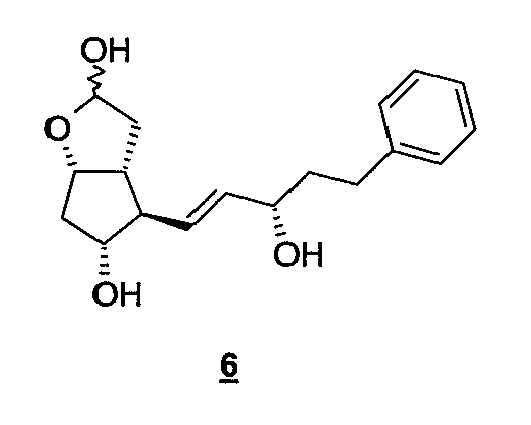


R represents a C6 to C10 aryl or C1 or C10 alkyl residue,
to give crude bimatoprost. - According to a further embodiment, the present invention relates to a process for the preparation of crude bimatoprost comprising at least step (x) and (y)
(x) reaction of a compound of formula (6)


R represents a C6 to C10 aryl or C1 or C10 alkyl residue,
to give a compound of formula (7)
(y) conversion of the compound of formula (7) obtained in step (x) to give crude bimatoprost by activation of the carboxylic group of compound (7) as a mixed anhydride, and reaction of the activated intermediate with ethylamine. - According to the process of the present invention, pure bimatoprost can be obtained in an improved process.
-
-
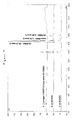
Figure 1 : shows a Chromatogram with- 1) bimatoprost crude obtained using the described process;
- 2) bimatoprost crude obtained using the described process;
- 3) commercial sample of bimatoprost (Lumigan®).
-
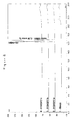
Figure 2 : shows a Chromatogram with 1) Blank and 2) - 4) bimatoprost pure as obtained by using the described process. - The present invention relates to a process for the purification of crude bimatoprost comprising at least the steps of
- (a) chromatography and
- (b) crystallization of the product obtained in step (a).
- In the context of the present invention, the term "crude bimatoprost" denotes a composition comprising bimatoprost and the impurities 15R-bimatoprost (29) and 5,6-trans-bimatoprost (30), respectively in an amount of more than 0.7% in total of any combination of 15R-bimatoprost (29) and 5,6-trans-bimatoprost (30), based on the weight of bimatoprost. The amount refers to the sum of 15R-bimatoprost (29) and 5,6-trans-bimatoprost (30). 15R-bimatoprost (29) and 5,6-trans-bimatoprost (30) are found as impurities in bimatoprost which is prepared according to any of the prior art processes and which is available on the market (e.g. Lumigan® which is an ophthalmic solution suitable to reduce increased eye pressure in patients suffering from open-angle glaucoma and ocular hypertension).

- The level of side products can be decreased by e.g. recrystallisation of crude bimatoprost. However, even if the product is recrystallised several times the levels of compound (29) and (30)in total are always still above 0.7%.
- In the context of the present invention, the term "pure bimatoprost" denotes a composition comprising bimatoprost and the impurities 15R-bimatoprost (29) and 5,6-trans-bimatoprost (30), respectively in an amount of less than 0.7% in total, for example from 0.01% to 0.7% in total, of any combination of 15R-bimatoprost (29) and 5,6-trans-bimatoprost (30), preferably less than 0.5% in total, for example from 0.01 % to 0.5% in total, most preferably less than 0.2% in total, for example from 0.01% to 0.2% in total, based on the weight of bimatoprost.
- It was now found that the two impurities 15R-bimatoprost (29) and 5,6-trans-bimatoprost (30) can be removed by the process according to the present invention to a level below 0.7% in total, for example from 0.01% to 0.7 in total, of any combination of 15R-bimatoprost (29) and 5,6-trans-bimatoprost (30), preferably below 0.5% in total, for example from 0.01 % to 0.5% in total, most preferably below 0.2% in total, for example from 0.01% to 0.2% in total, by a combination of chromatography, in particular on an achiral stationary phase using an alcohol and an apolar solvent as eluent, and one crystallisation step.
- By using the above separation procedures, it has been found possible to produce bimatoprost having a purity of greater than 99.3%, in particular greater than 99.5%, more particular of more than 99.8%.
- Moreover, by using the above separation procedures, it has been found possible to produce bimatoprost that is substantially free of 15R-bimatoprost (29) and 5,6-trans-bimatoprost (30). As used herein, the phrase "substantially free of 15R-bimatoprost (29) and 5,6-trans-bimatoprost (30)" means that a composition comprising bimatoprost is of such high purity and high quality that most common side effects of ophthalmic solutions such as eye redness, itchy eyes, darkening of eye color, eyelash changes etc. are minimized.
- Therefore, according to a further embodiment, the present invention also relates to bimatoprost having a purity of greater than 99.3%, in particular greater than 99.5%, more particular of more than 99.8%.
- The process according to the present invention comprises at least two steps. According to step (a), a chromatography is performed. This can be done using an achiral stationary phase and an eluent comprising an alcohol and an apolar solvent. The product obtained in step (a) is further treated in step (b). According to step (b), crystallisation of the product obtained in (a) is performed to obtain pure bimatoprost.
- The process of the present invention can also comprise further steps before step (a) or after step (b), for example an extraction step or a further crystallisation step.
- According to the present invention, crude bimatoprost is purified.
- According to a preferred embodiment, the present invention relates to a process for the purification of crude bimatoprost as disclosed above, wherein the chromatography is carried out using an achiral stationary phase and an eluent comprising an alcohol and an apolar solvent.
- Preferably, a chromatographic system is used in step (a) which is based on the use of silica as stationary phase and on an alcohol in combination with an apolar solvent as eluent.
- Therefore, according to a further embodiment, the present invention also relates to a process for the purification of crude bimatoprost as disclosed above, wherein the stationary phase comprises silica.
- The eluent used comprises an alcohol, such as methanol or ethanol, and an apolar co-eluent, such as heptane, hexane, or cyclohexane.
- Therefore, according to a further embodiment, the present invention also relates to a process for the purification of crude bimatoprost as disclosed above, wherein the alcohol is selected from methanol and ethanol and the apolar solvent is selected from heptane, hexane and cylcohexane.
- Preferably, the alcohol and the apolar solvent are used in a ratio of 85:15 to 97:3.
- In a preferred embodiment, heptane and ethanol are used as eluent. More preferably, heptane and ethanol in a ratio of 94:6 to 96:4 are used as eluent.
- Conditions for the chromatography according to step (a) are known to the person skilled in the art.
- The chromatographic purification is followed by a crystallisation of bimatoprost according to step (b). In principle, all suitable methods for crystallisation can be used for the process of the present invention.
- The crystallisation can in particular be performed from ethers such as MTBE or diethylether, acetonitrile, alcohols, esters, such as isopropyl acetate, or mixtures of any of these solvents. In a preferred embodiment the crystallisation is performed in acetonitrile or MTBE or mixtures of these two solvents.
- Therefore, according to a further embodiment, the present invention also relates to a process for the purification of crude bimatoprost as disclosed above, wherein the crystallisation is performed from a solvent selected from ethers, acetonitrile, alcohols, esters, or mixtures of any of these solvents.
- The combination of chromatographic purification and crystallisation gives bimatoprost of high purity with a level of by-products (29) and (30) below 0.7% in total, for example from 0.01 % to 0.7% in total, preferably below 0.5% in total, for example from 0.01 % to 0.5% in total, most preferably below 0.2% in total, for example from 0.01% to 0.2% in total.
- According to a further embodiment, the present invention also relates to bimatoprost substantially free of 15R-bimatoprost and 5, 6-trans-bimatoprost.
- According to one embodiment, the present invention also relates to bimatoprost containing less than 0.7% in total, for example from 0.01% to 0.7% in total, of any combination of 15R-bimatoprost and 5, 6-trans-bimatoprost.
- According to one embodiment, the present invention also relates to bimatoprost containing less than 0.5% in total, for example from 0.01% to 0.5% in total, of any combination of 15R-bimatoprost and 5, 6-trans-bimatoprost.
- According to one embodiment, the present invention also relates to bimatoprost containing less than 0.2% in total, for example from 0.01 % to 0.2% in total, of any combination of 15R-bimatoprost and 5, 6-trans-bimatoprost.
- According to the present invention, crude bimatoprost which is purified according to the process of the present invention can be obtained according to any process known to the person skilled in the art.
- After the reaction and prior to the purification, crude bimatoprost can be isolated by an aqueous work-up consisting of extractions with aqueous acids and bases in combination with a solvent which can dissolve bimatoprost. In a preferred embodiment CH2Cl2, methyl tert-butylether, or toluene are used for this purpose. Preferably, crude bimatoprost is obtained after removal of the solvent.
- Crude bimatoprost as obtained by a process according to the state of the art, generally contains about 2% of 5,6-trans-bimatoprost (30) and variable amounts of 15R-bimatoprost (29). The level of the latter by-product depends on the level of the corresponding 15R isomer in the starting material. If the compound is prepared according to
EP 0 364 417 A1US 5698733 the level of the corresponding 15R isomer in the starting material is usually 4 to 6%. Crude bimatoprost, prepared from such a starting material using one of the processes described above, usually contains about 3 to 5% of compound (29). - The quality of crude bimatoprost can be improved by several crystallization steps to give bimatoprost which contains the impurities 15R-bimatoprost (29) and 5,6-trans-bimatoprost (30), respectively, in an amount of still at least 0.7%, based on the weight of bimatoprost.
- According to the present invention, crude bimatoprost is preferably prepared by a simple and efficient process which allows for a simple and efficient overall process. Preferably, crude bimatoprost is prepared by a process using only few protection groups to simplify the process.
- It has been found that the compound of formula (6) can be directly converted to crude bimatoprost without using protection groups by a reaction with a compound of general formula (IV).
- Therefore, according to a further embodiment, the present invention also relates to a process for the preparation of crude bimatoprost comprising at least step (i)
(i) reaction of a compound of formula (6)


R represents a C6 to C10 aryl or C1 or C10 alkyl residue,
to give crude bimatoprost. - According to the present invention, hemiacetal (6) serves as starting material for the reaction according to step (i). This compound of formula (6) can be prepared as described in
EP 0 364 417 A1US 5698733 . - According to step (i), the compound of formula (6) is reacted with a compound of general formula (IV). Any suitable reaction conditions known to the person skilled in the art can be applied for the reaction according to step (i).
- The compound of general formula (IV) used in step (i) is a compound selected from compounds of formula (23), (27) or (28)

- According to a preferred embodiment, the compound of general formula (IV) used in step (i) is a compound of formula (23).
- According to a preferred embodiment, the compound of formula (6) is reacted with a compound of formula (23), (27), or (28) in the presence of a suitable base, such as alkali or alkaline earth metal alkoxides, hydroxides, carbonates, or oxides, sodium, potassium, or lithium hexamethylsilazide, tetramethylguanidine, or 1,8-diazabicyclo[5.4.0]undec-7-en (DBU) to directly give crude bimatoprost.
- It is important to note that step (i) can be carried out without the use of protecting groups, which is an improvement in comparison to the prior art (
WO 2003/074481 ). - Preferably, according to step (i), the compound of the formula (6) is subjected to a Wittig reaction with an ylide, the ylide being formed by reaction of a compound of the formulas (23), (27), or (28) with a base, wherein X represents a halogen and R represents C1-6 alkyl or C6-10 aryl. Preferred bases for the formation of the yilde include alkali or alkaline earth metal alkoxides, such as sodium ethoxide, potassium ethoxide, or potassium tert-butoxide, alkali or alkaline earth metal hydroxides, carbonates, or oxides, sodium, potassium, or lithium hexamethylsilazide, tetramethylguanidine, or 1,8-diazabicyclo[5.4.0]undec-7-en (DBU), organolithium reagents including butyllithium, hexyllithium, and heptyllithium, metal amides such as sodium amide, metal hydrides such as sodium hydride. More preferred bases are alkali metal alkoxides, and most preferably potassium tert-butoxide is used.
- It is preferred to run the reaction according to step (i) in an inert aprotic organic solvent including toluene, hexane, heptane, THF, MTBE, or mixtures thereof. Most preferably, THF is used.
- In one preferred embodiment the compound of formula (IV), in particular the compound (23), is used for the process and 3.0 to 15.0 equivalents of the compound of formula (IV), in particular halide (23) relative to the amount of compound (6), more preferably, 5.0 to 10.0 equivalents are used.
- It is further preferred to use 3.0 to 30.0 equivalents of base relative to the amount of compounds of the formula (6), more preferably, 5.0 to 15.0 equivalents are used.
- It is preferred to run the reaction according to step (i) at -20°C - 20°C.
- According to the present invention, it is also possible to prepare crude bimatoprost by reaction of a compound of formula (6) with a compound of general formula (V)
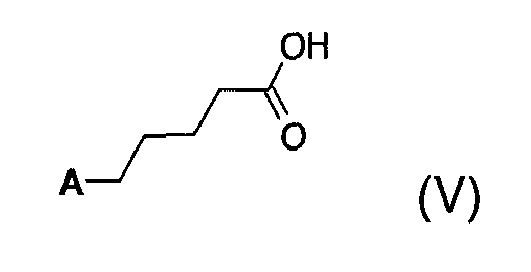
- Therefore, according to a further embodiment, the present invention also relates to a process for the preparation of crude bimatoprost comprising at least step (x) and (y)
(x) reaction of a compound of formula (6)


R represents a C6 to C10 aryl or C1 or C10 alkyl residue,
to give a compound of formula (7)
(y) conversion of the compound of formula (7) obtained in step (x) to give crude bimatoprost by activation of the carboxylic group of compound (7) as a mixed anhydride, and reaction of the activated intermediate with ethylamine. - According to step (x), the compound of formula (6) is reacted with a compound of general formula (V). Any suitable reaction conditions known to the person skilled in the art can be applied for the reaction according to step (x).
- The compound of general formula (V) used in step (x) is a compound selected from compounds of formula (24), (25) or (26)

- According to a preferred embodiment, the compound of general formula (V) used in step (x) is a compound of formula (24).
- Said process according to step (x) comprises subjecting compounds of the formula (6)to a Wittig reaction with an ylide, the ylide being formed by reaction of a compound of the formulas (24), (25), or (26) with a base, wherein X represents a halogen and R represents C1-6 alkyl or C6-10 aryl. Preferred bases for the formation of the yilde include alkali or alkaline earth metal alkoxides, such as sodium ethoxide, potassium ethoxide, or potassium tert-butoxide, alkali or alkaline earth metal hydroxides, carbonates, or oxides, sodium, potassium, or lithium hexamethylsilazide, tetramethylguanidine, or 1,8-diazabicyclo[5.4.0]undec-7-en (DBU), organolithium reagents including butyllithium, hexyllithium, and heptyllithium, metal amides such as sodium amide, metal hydrides such as sodium hydride. More preferred bases are alkali metal alkoxides, and most preferably potassium tert-butoxide is used. It is preferred to run the reaction in an inert aprotic organic solvent including toluene, hexane, heptane, THF, MTBE, or mixtures thereof. Most preferably, THF is used.
- In one preferred embodiment the compound of formula (V), in particular the compound (24) is used for the process and 3.0 to 15.0 equivalents of the compound of formula (V), in particular of halide (24) relative to the amount of compound (6), more preferably, 5.0 to 10.0 equivalents are used. It is further preferred to use 3.0 to 30.0 equivalents of base relative to the amount of compounds of the formula (6), more preferably, 5.0 to 15.0 equivalents are used.
- It is preferred to run the reaction according to step (x) at -20°C to 20°C.
- The compound of the formula (7) can be isolated and purified by methods know to a person skilled in the art but it is preferred not to isolate the compound of formula (7) but use it in solution as obtained after work-up for the next step. Preferably compound (7) is used as a solution.
- An advantage of using compounds (25) and (26) as ylide precursors is that the reagent derived by-products can be readily removed by aqueous washings.
- Therefore, according to a further embodiment, the present invention also relates to a process for the preparation of crude bimatoprost as disclosed above, wherein the reaction according to step (i) or according to step (x) is performed in the presence of a base selected from alkali or alkaline earth metal alkoxides, alkali or alkaline earth metal hydroxides, carbonates, or oxides, sodium, potassium, or lithium hexamethylsilazide, tetramethylguanidine, or 1,8-diazabicyclo[5.4.0]undec-7-en (DBU), organolithium reagents, metal amides, or metal hydrides.
- According to step (y), the compound of formula (7) obtained in step (x) is reacted to give crude bimatoprost by activation of the carboxylic group of compound (7) as a mixed anhydride, and reaction of the activated intermediate with ethylamine.
- Said process comprises forming a mixed anhydride with an organic or inorganic acid and the carboxylic function of compound (7) and subjecting the mixed anhydrides to a reaction with ethylamine to obtain crude bimatoprost. Suitable reagents for the formation of mixed anhydrides include carboxylic acid chlorides such as pivalic acid chloride, chloroformates such as C1-6 alkyl chloroformate, or dialkylphosphinyl chlorides. Preferably, pivalic acid chloride or C1-6 alkyl chloroformate are used.
- Therefore, according to a further embodiment, the present invention also relates to a process for the preparation of crude bimatoprost as disclosed above, wherein in step (y), activation of the carboxylic group is achieved by reaction with pivalic acid chloride or chloroalkylformate in the presence of a base.
- The formation of the mixed anhydrides is generally performed in the presence of a base. Preferred bases are tertiary amines, such as triethylamine or diisopropylethylamine.
- The reaction is generally performed in an organic solvent with 0.9 to 2.0 equivalents of activating agent, more preferably with 1.0 to 1.2 equivalents. It is preferred to further process the mixed anhydride in situ without isolation. The conversion of the mixed anhydride to crude bimatoprost is preferably performed by adding 1.0 to 10.0 equivalents of ethylamine.
- According to a further embodiment, the present invention also relates to a process for preparing pure bimatoprost comprising the steps (i), (a), and (b) or a process comprising the steps (x), (y), (a), and (b). The process for preparing pure bimatoprost according to the present invention can also comprise further steps. With respect to the individual steps and preferred embodiments, reference is made to the above disclosure.
- The major advantage of the described process is that the reaction times are significantly shortened as compared to prior art processes which are based on the conversion of acid (7) into the corresponding methyl ester which is further converted to crude bimatoprost in a slow reaction with reaction times of more than 48h.
- The present invention allows the conversion of acid (7) into bimatoprost crude in less than 10h.
- The combination of chromatographic purification and crystallisation gives bimatoprost of high purity with a level of by-products (29) and (30) below 0.2%, in particular below 0.1%.
- In
figures 1 and2 chromatograms of a commercial sample of bimatoprost and bimatoprost crude and bimatoprost pure prepared according to the present invention are depicted. - Unless otherwise noted, all %-values in the present application are given as % by weight.
- The following examples describe the present invention in detail, but they are not to be construed to be in any way limiting for the present invention.
- All examples were carried out under an atmosphere of nitrogen if necessary.
-

- A suspension of 33.1g of (4-carboxybutyl)triphenylphosphonium bromide (MW = 443.32; 7.5 equivalents) in 95mL of THF was cooled to 0°C. At this temperature 139.4g of a 2M solution of potassium-tert butoxide (MW = 112.21; 9.5 equivalents) in THF were added drop wise over 30min and stirring was continued at 0°C for 30min. The resulting orange red suspension was cooled to a mass temperature of -17°C. To the red ylide containing suspension a solution of 8g of (3αR,4R,5R,6αS)-4-((R)-3-hydroxy-5-phenyl-pentyl)-hexahydro-cyclopenta[b]furan-2,5-diol (compound (6), MW = 304.39; 1 equivalents) dissolved in 24mL of THF was added over 30min and the reaction mixture was stirred at -17°C until complete conversion was detected. Then, 180mL of brine were added to the slight orange cold suspension. The resulting decolorized suspension was stirred for 30min at = -10°C. Then, the suspension was filtered over a G3 suction funnel and washed with 20mL of brine. The combined filtrates were washed two times with 180mL of toluene. 180mL of MTBE were added to the aqueous layer and the pH was adjusted to 2.0-1.5 by addition of approx. 20g of 20% aqueous sulfamic acid. After stirring for 5min the layers were separated. The aqueous layer was extracted once more with 180mL of MTBE. The MTBE layers were combined and washed with 180mL of brine. The organic layer was concentrated at 45°C and 200mbar to a volume of 100mL. To the concentrate 50g of DMF were added and MTBE was removed under reduced pressure (100mbar) at 45°C to a final mass of 65g. The resulting solution of compound (7) in DMF was used in the next step without further purification.
-

- To the solution of (Z)-7-[(1R,2R,3R,5S)-3,5-dihydroxy-2-((R)-3-hydroxy-5-phenyl-pent-1-enyl)-cyclopentyl]-hept-5-enoic acid (7) in DMF (preparation see above) 5.8g (MW = 388.51; 1 equivalents) of powdered potassium carbonate (MW = 138.21; 1.6 equivalents) were added. After stirring the suspension for 15min at ambient temperature, 6.6g of methyliodide (MW = 141.94; 1.5 equivalents) were added. Then the mixture was heated to 50°C and stirred for 18h at 50°C. After complete conversion the reaction mixture was diluted with 390mL of MTBE and 125mL of water and the pH was adjusted by addition of 20% aqueous sulfamic acid to 2.0-1.5. After stirring for 5min the layers were separated. The aqueous layer was discarded. Die MTBE layer was washed three times with 50mL of water and then with 125mL of 8.6% aqueous sodium carbonate. Finally the organic layer was washed two times with 125mL of water at a pH of 6.5 which is adjusted by addition of 15% aqueous citric acid. The combined MTBE layers were concentrated at 45°C and 100mbar to yield in 8.08g of crude (Z)-7-[(1R,2R,3R,5S)-3,5-dihydroxy-2-((R)-3-hydroxy-5-phenyl-pent-1-enyl)-cyclopentyl]-hept-5-enoic acid methylester. The resulting oil was used in the next step without further purification.

- 56g of ethylamine (MW = 45.08; 47.9 equivalents) in 24mL of water were added to 8.08g of crude (Z)-7 [(1R,2R,3R,5S)-3,5-dihydroxy-2-((R)-3-hydroxy-5-phenyl-pent-1-enyl)-cyclo-pentyl]-hept-5-enoic acid methylester (MW = 402.54; 1 equivalents) and the resulting solution was stirred for 48h at 23°C. The excess of ethylamine was removed by distillation in vacuo (25°, 100mbar) after complete conversion. To the residue were added 400mL of methylenechloride and 100mL of water and the pH was adjusted to 1.5 by addition of 1 M aqueous hydrochloric acid. After separation of the layers the organic layers were washed with 100mL of saturated aqueous sodium bicarbonate, 100mL of water, and 100mL of brine. The solution was filtered and concentrated in vacuo yielding 8.33g of oily bimatoprost crude. To the residue were added 25mL of acetonitrile. After adding seeds the mixture was stirred for 30 minutes at ambient temperature, cooled to 0°C and stirred for two hours at this temperature.
- The crystal suspension was cooled to -20°C. After stirring for 14 hours at -20°C the crystals were isolated by filtration, washed with cold acetonitrile and then dried in vacuo yielding 5.47g crystalline bimatoprost (mp 70-74°C).
-

- A suspension of 33.1g of (4-carboxybutyi)triphenylphosphonium bromide (MW = 443.32; 7.5 equivalents) in 95mL of THF was cooled to 0°C. At this temperature 139.4g of a 2M solution of potassium-tert butoxide (MW = 112.21; 9.5 equivalents) in THF were added drop wise over 30min and stirring was continued at 0°C for 30min. The resulting orange red suspension was cooled to a mass temperature of -17°C. To the red ylide containing suspension a solution of 8g of (3αR,4R,5R,6αS)-4-((R)-3-hydroxy-5-phenyl-pentyl)-hexahydro-cyclopenta[b]furan-2,5-diol (compound (6), MW = 304.39; 1 equivalents) dissolved in 24mL of THF was added over 30min and the reaction mixture was stirred at -17°C until complete conversion was detected. Then, 180mL of brine were added to the slight orange cold suspension. The resulting decolorized suspension was stirred for 30min at = -10°C. Then, the suspension was filtered over a G3 suction funnel and washed with 20mL of brine. The combined filtrates were washed two times with 180mL of toluene. 180mL of MTBE were added to the aqueous layer and the pH was adjusted to 2.0-1.5 by addition of approx. 20g of 20% aqueous sulfamic acid. After stirring for 5min the layers were separated. The aqueous layer was extracted once more with 180mL of MTBE. The MTBE layers were combined and washed with 180mL of brine. The organic layer was concentrated at 45°C and 100mbar to give 12.34g of bimatoprost acid (7) (MW = 402.54), which was used in the next step without further purification.
-

- Under an atmosphere of nitrogen 250mL methylenechloride were added to 12.34g of (Z)-7-[(1R,2R,3R,5S)-3,5-dihydroxy-2-((R)-3-hydroxy-5-phenyl-pent-1-enyl)-cyclopentyl]-hept-5-enoic acid (compound (7), MW = 402.54; 26.1mmol; 1 equivalents) and the solution was cooled to -10°C. At this temperature 5.1g of triethylamine (MW = 101.19; 50.4mmol; 1.9 equivalents) and 5.8g of pivalic acid chloride (MW = 120.58; 48.1mmol; 1.8 equivalents) were added. The reaction mixture was stirred for two hours. Then a solution of 2.3g ethylamine (MW = 45.08; 2.0 equivalents) in 10mL of methylene chloride was added. After stirring the reaction mixture for two hours at -10°C, the mixture was warmed to room temperature. The reaction was quenched by adding 250mL of water and adjusting the pH to 2.0 with 1 M aqueous hydrochloric acid. After separation of the layers, the organic layers was washed with 250mL of saturated aqueous sodium bicarbonate, water and brine. After filtration the solution was concentrated under reduced pressure to give 18.4g of bimatoprost crude (yield: 95%; as determined by NMR). Bimatoprost crude was purified as described below.
-

- 250mL of methylene chloride were added to 12.3g of (Z)-7-[(1R,2R,3R,5S)-3,5-dihydroxy-2-((R)-3-hydroxy-5-phenyl-pent-1-enyl)-cyclopentyl]-hept-5-enoic acid (compound (7), MW = 402.54; 26.1mmol; 1 equivalents). The solution is cooled to -10°C. At this temperature 5.1g of triethylamine (MW = 101.19; 50.4mmol; 1.9 equivalents) and 5.1g of ethyl chloroformate (MW = 108.52; 48.1mmol; 1.8 equivalents) were added and the mixture was stirred for two hours. A solution of 2.3g of ethylamine (MW = 45.08; 2.0 equivalents) in 10mL methylenchloride was added. After stirring the reaction mixture for two hours at -10°C, the mixture was warmed to room temperature. The reaction was quenched by addition of 250mL of water and the pH is adjusted to 2.0 with 1 M aqueous hydrochloric acid. After separation of the layers, the organic layer was washed with 250mL of saturated aqueous sodium bicarbonate, water and brine. After filtration the solution was concentrated under reduced pressure to give 13.1g of bimatoprost crude (yield: 89%; as determined by NMR). Bimatoprost crude was purified as described below.
-
- a) A suspension of 15.0g of (4-ethylcarbamoyl- butyl)triphenylphosphonium bromide (MW = 470.39; 3.2 equivalents) in 50mL of THF was cooled to 0°C. At this temperature 11.9g of a 2M solution of potassium-tert butoxide (MW = 112.21; 3.3 equivalents) in THF were added drop wise over 30min and stirring was continued at 0°C for 30min. The resulting orange red suspension was cooled to a mass temperature of -17°C. To the red suspension of the ylide a solution of 3.57g of (3αR,4R,5R,6αS)-4-((R)-3-hydroxy-5-phenyl-pent-1-enyl)-hexahydro-cyclopenta[b]furan-2,5-diol (compound (6), MW = 306.41; 1 equivalents) in 24mL of THF was added over 30min and the reaction mixture was stirred at -17°C for about 20h. To the slightly orange suspension 180mL of brine and 80mL of MTBE were added and the pH was adjusted to 2.0 by addition of 20% aqueous sulfamic acid. After stirring for 5min the layers were separated. The aqueous layer was extracted once with 80mL of MTBE. The MTBE layers were combined and washed with 80mL of brine and the pH was adjusted to 7.5 by addition of saturated aqueous sodium bicarbonate. The filtered organic layer was concentrated at 45°C and 100mbar to give 15.0g of crude bimatoprost (yield -80% as estimated by NMR), which was purified as described below.
- Bimatoprost crude, as obtained by examples 2, 3, and 4 contained 4-5% of 15R-bimatoprost (29) and 2-3% of 5,6-trans-bimatoprost (30) relative to bimatoprost. The remaining impurities were Wittig reagent derived compounds. The assay of bimatoprost in the individual bimatoprost crude samples was in the range of 30% to 90%.
- 10g of bimatoprost crude (as obtained in example 3b) were dissolved in 50mL of heptane /
EtOH 1 /1. The crude product was purified on a preparative HPLC system using silica as stationary phase and heptane / EtOH 5 / 95 as eluent. 7g of bimatoprost pure were obtained after evaporation of the solvent. The assay of bimatoprost after chromatography was 99.5% with impurity levels of <0.15%. - The above HPLC procedure is preferably carried out on a silica gel column. Examples of suitable columns include WatersRT" Spherisorb, PhenomenexRTM Luna Cyano and Phenomenex"Luna Silica or YMC-Pack-Silica.
- Bimatoprost as obtained in example 5a with an assay of 99.5% and impurity levels of <0.15% was further purified by crystallisation from acetonitrile or MTBE to give bimatoprost with 99.9% purity and impurity levels of <0.10%.
- The purity of bimatoprost was determined using a Chiracel OD-RH 4.6x150mm (5µm) column.
- Eluant A: 2.62g sulfamic acid in 1000g H2O; eluant B: 40:60 H2O/ acetonitrile, flow rate 1.1mL / min; 35°C; 210nm.
Gradient: %B 15% 0min 55% 18min 100% 25min Retention times: 16.4min bimatoprost 17.0min compound (30) 17.9min compound (29) - This procedure allows detection levels of any combination of 15R-bimatoprost and 5, 6-trans-bimatoprost down to 0.01% in total based on the weight of bimatoprost. Thus, using this procedure, it is possible to achieve bimatoprost that is substantially free of the hitherto difficult to remove impurities.
Claims (14)
- Process for the purification of crude bimatoprost comprising at least the steps of(a) chromatography and(b) crystallization of the product obtained in step (a).
- Process according to claim 1, wherein the chromatography is carried out using an achiral stationary phase and an eluent comprising an alcohol and an apolar solvent.
- Process according to claim 2, wherein the alcohol is selected from methanol and ethanol and the apolar solvent is selected from heptane, hexane and cylcohexane.
- Process according to claim 2 or 3, wherein the stationary phase comprises silica.
- Process according to any of claims 1 to 4, wherein the crystallization is performed from a solvent selected from ethers, acetonnitrile, alcohols, esters, or mixtures of any of these solvents.
- Bimatoprost substantially free of 15R-bimatoprost and 5, 6-trans-bimatoprost.
- Bimatoprost containing less than 0.7% in total of any combination of 15R-bimatoprost and 5, 6-trans-bimatoprost.
- Bimatoprost according to claim 7 containing less than 0.5% in total of any combination of 15R-bimatoprost and 5, 6-trans-bimatoprost.
- Bimatoprost according to claim 7 containing less than 0.2% in total of any combination of 15R-bimatoprost and 5, 6-trans-bimatoprost.
- Bimatoprost having a purity of greater than 99.3%, in particular greater than 99.5%, more particular of more than 99.8%.
- Process for the preparation of crude bimatoprost comprising at least step (i)(i) reaction of a compound of formula (6)


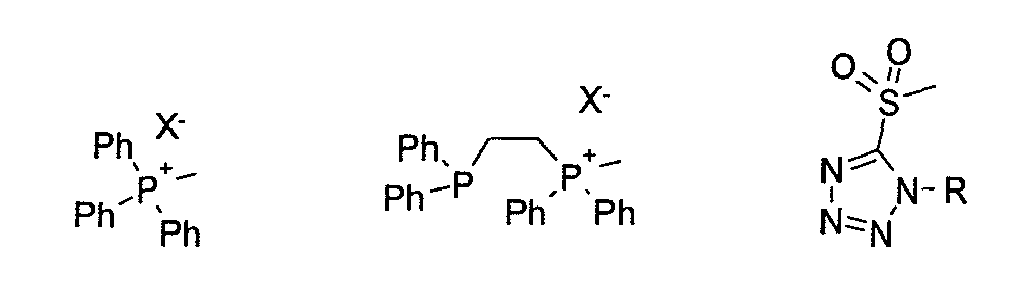
R represents a C6 to C10 aryl or C1 or C10 alkyl residue,
to give crude bimatoprost. - Process for the preparation of crude bimatoprost comprising at least step (x) and (y)
(x) reaction of a compound of formula (6)


R represents a C6 to C10 aryl or C1 or C10 alkyl residue,
to give a compound of formula (7)
(y) conversion of the compound of formula (7) obtained in step (x) to give crude bimatoprost by activation of the carboxylic group of compound (7) as a mixed anhydride, and reaction of the activated intermediate with ethylamine. - Process according to claim 11 or 12, wherein the reaction according to step (i) or according to step (x) is performed in the presence of a base selected from alkali or alkaline earth metal alkoxides, alkali or alkaline earth metal hydroxides, carbonates, or oxides, sodium, potassium, or lithium hexamethylsilazide, tetramethylguanidine, or 1,8-diazabicyclo[5.4.0]undec-7-en (DBU), organolithium reagents, metal amides, or metal hydrides.
- Process according to claim 12 or 13, wherein in step (y), activation of the carboxylic group is achieved by reaction with pivalic acid chloride or chloroalkylformate in the presence of a base.
Priority Applications (5)
| Application Number | Priority Date | Filing Date | Title |
|---|---|---|---|
| EP08158675A EP2135860A1 (en) | 2008-06-20 | 2008-06-20 | Improved process for the production of bimatoprost |
| US12/999,112 US8772544B2 (en) | 2008-06-20 | 2009-06-10 | Process for the production of bimatoprost |
| PCT/EP2009/057186 WO2009153206A2 (en) | 2008-06-20 | 2009-06-10 | Improved Process for the Production of Bimatoprost |
| EP09765786A EP2321260A2 (en) | 2008-06-20 | 2009-06-10 | Improved process for the production of bimatoprost |
| TW098120533A TW201006792A (en) | 2008-06-20 | 2009-06-19 | Improved process for the production of bimatoprost |
Applications Claiming Priority (1)
| Application Number | Priority Date | Filing Date | Title |
|---|---|---|---|
| EP08158675A EP2135860A1 (en) | 2008-06-20 | 2008-06-20 | Improved process for the production of bimatoprost |
Publications (1)
| Publication Number | Publication Date |
|---|---|
| EP2135860A1 true EP2135860A1 (en) | 2009-12-23 |
Family
ID=40090069
Family Applications (2)
| Application Number | Title | Priority Date | Filing Date |
|---|---|---|---|
| EP08158675A Ceased EP2135860A1 (en) | 2008-06-20 | 2008-06-20 | Improved process for the production of bimatoprost |
| EP09765786A Withdrawn EP2321260A2 (en) | 2008-06-20 | 2009-06-10 | Improved process for the production of bimatoprost |
Family Applications After (1)
| Application Number | Title | Priority Date | Filing Date |
|---|---|---|---|
| EP09765786A Withdrawn EP2321260A2 (en) | 2008-06-20 | 2009-06-10 | Improved process for the production of bimatoprost |
Country Status (4)
| Country | Link |
|---|---|
| US (1) | US8772544B2 (en) |
| EP (2) | EP2135860A1 (en) |
| TW (1) | TW201006792A (en) |
| WO (1) | WO2009153206A2 (en) |
Cited By (3)
| Publication number | Priority date | Publication date | Assignee | Title |
|---|---|---|---|---|
| CN108084073A (en) * | 2017-12-05 | 2018-05-29 | 重庆药友制药有限责任公司 | A kind of method for purifying Bimatoprost |
| CN111018766A (en) * | 2018-10-10 | 2020-04-17 | 广州楷模生物科技有限公司 | Method for synthesizing bimatoprost |
| CN116829537A (en) * | 2021-02-03 | 2023-09-29 | 尼科斯股份有限公司 | Method for preparing prostaglandin analogues that supply nitric oxide |
Families Citing this family (9)
| Publication number | Priority date | Publication date | Assignee | Title |
|---|---|---|---|---|
| EP2437684B1 (en) | 2009-06-03 | 2022-06-15 | ForSight Vision5, Inc. | Anterior segment drug delivery |
| WO2012011128A1 (en) * | 2010-07-23 | 2012-01-26 | Aptuit Laurus Private Limited | Preparation of prostaglandin derivatives |
| CN102690219A (en) * | 2011-03-24 | 2012-09-26 | 天津信汇制药股份有限公司 | Method for purifying bimatoprost |
| JP6212485B2 (en) | 2011-06-02 | 2017-10-11 | キノイン・ゼー・エル・テー | New production method of prostaglandin amide |
| JP5989780B2 (en) | 2011-09-14 | 2016-09-07 | フォーサイト・ビジョン5・インコーポレイテッドForsight Vision5,Inc. | Eye insertion device and method |
| WO2013133730A1 (en) * | 2012-03-09 | 2013-09-12 | Instytut Farmaceutyczny | PROCESS FOR PREPARATION OF PROSTAGLANDIN F2α ANALOGUES |
| RU2652063C2 (en) | 2012-10-26 | 2018-04-24 | Форсайт Вижн5, Инк. | Ophthalmic system for sustained release of drug to eye |
| HU230744B1 (en) * | 2012-11-30 | 2018-01-29 | CHINOIN Gyógyszer és Vegyészeti Termékek Gyára Zrt. | New process for the production of travoprost |
| US20160296532A1 (en) * | 2015-04-13 | 2016-10-13 | Forsight Vision5, Inc. | Ocular Insert Composition of a Semi-Crystalline or Crystalline Pharmaceutically Active Agent |
Citations (12)
| Publication number | Priority date | Publication date | Assignee | Title |
|---|---|---|---|---|
| WO1990002553A1 (en) * | 1988-09-06 | 1990-03-22 | Pharmacia Ab | Prostaglandin derivatives for the treatment of glaucoma or ocular hypertension |
| WO1994006433A1 (en) | 1992-09-21 | 1994-03-31 | Allergan, Inc. | Non-acidic cyclopentane heptanoic acid, 2-cycloalkyl or arylalkyl derivatives as therapeutic agents |
| US5359095A (en) | 1990-08-08 | 1994-10-25 | Pharmacia Ab | Method for synthesis of prostaglandin derivatives |
| US5698733A (en) | 1994-09-30 | 1997-12-16 | Alcon Laboratories, Inc. | Use of 9-deoxy prostaglandin derivatives to treat glaucoma |
| WO2001055101A2 (en) | 2000-01-27 | 2001-08-02 | Finetech Laboratories Ltd. | A new process for the preparation of latanoprost |
| WO2002096868A2 (en) | 2001-05-31 | 2002-12-05 | Finetech Laboratories Ltd. | Preparation of 17-phenyl- 18, 19, 20- trinor-pgf2a and its derivatives |
| WO2002096898A2 (en) | 2001-05-24 | 2002-12-05 | Resolution Chemicals Limited | Process for the preparation of prostaglandins and analogues thereof |
| WO2003074481A2 (en) | 2002-03-01 | 2003-09-12 | Allergan, Inc. | Preparation of prostamides |
| WO2005058812A2 (en) * | 2003-12-19 | 2005-06-30 | Johnson Matthey Public Limited Company | Prostaglandin synthesis |
| US20050209337A1 (en) * | 2000-01-27 | 2005-09-22 | Finetech Laboratories Ltd | Process for the preparation of prostaglandin derivatives |
| WO2006094294A2 (en) | 2005-03-04 | 2006-09-08 | Teva Pharmaceutical Industries Ltd. | Enzymatic transformation of a prostaglandin (bimatoprost) intermediate |
| US20070167641A1 (en) | 2006-01-18 | 2007-07-19 | Chirogate International Inc. | Processes and intermediates for the preparations of prostaglandins |
-
2008
- 2008-06-20 EP EP08158675A patent/EP2135860A1/en not_active Ceased
-
2009
- 2009-06-10 US US12/999,112 patent/US8772544B2/en not_active Expired - Fee Related
- 2009-06-10 EP EP09765786A patent/EP2321260A2/en not_active Withdrawn
- 2009-06-10 WO PCT/EP2009/057186 patent/WO2009153206A2/en not_active Ceased
- 2009-06-19 TW TW098120533A patent/TW201006792A/en unknown
Patent Citations (13)
| Publication number | Priority date | Publication date | Assignee | Title |
|---|---|---|---|---|
| EP0364417A1 (en) | 1988-09-06 | 1990-04-18 | Pharmacia AB | Prostaglandin derivatives for the treatment of glaucoma or ocular hypertension |
| WO1990002553A1 (en) * | 1988-09-06 | 1990-03-22 | Pharmacia Ab | Prostaglandin derivatives for the treatment of glaucoma or ocular hypertension |
| US5359095A (en) | 1990-08-08 | 1994-10-25 | Pharmacia Ab | Method for synthesis of prostaglandin derivatives |
| WO1994006433A1 (en) | 1992-09-21 | 1994-03-31 | Allergan, Inc. | Non-acidic cyclopentane heptanoic acid, 2-cycloalkyl or arylalkyl derivatives as therapeutic agents |
| US5698733A (en) | 1994-09-30 | 1997-12-16 | Alcon Laboratories, Inc. | Use of 9-deoxy prostaglandin derivatives to treat glaucoma |
| US20050209337A1 (en) * | 2000-01-27 | 2005-09-22 | Finetech Laboratories Ltd | Process for the preparation of prostaglandin derivatives |
| WO2001055101A2 (en) | 2000-01-27 | 2001-08-02 | Finetech Laboratories Ltd. | A new process for the preparation of latanoprost |
| WO2002096898A2 (en) | 2001-05-24 | 2002-12-05 | Resolution Chemicals Limited | Process for the preparation of prostaglandins and analogues thereof |
| WO2002096868A2 (en) | 2001-05-31 | 2002-12-05 | Finetech Laboratories Ltd. | Preparation of 17-phenyl- 18, 19, 20- trinor-pgf2a and its derivatives |
| WO2003074481A2 (en) | 2002-03-01 | 2003-09-12 | Allergan, Inc. | Preparation of prostamides |
| WO2005058812A2 (en) * | 2003-12-19 | 2005-06-30 | Johnson Matthey Public Limited Company | Prostaglandin synthesis |
| WO2006094294A2 (en) | 2005-03-04 | 2006-09-08 | Teva Pharmaceutical Industries Ltd. | Enzymatic transformation of a prostaglandin (bimatoprost) intermediate |
| US20070167641A1 (en) | 2006-01-18 | 2007-07-19 | Chirogate International Inc. | Processes and intermediates for the preparations of prostaglandins |
Non-Patent Citations (4)
| Title |
|---|
| COREY, E. J. ET AL., J. AM. CHEM. SOC., vol. 91, 1969, pages 5675 - 5677 |
| COREY, E. J.; NOYORI, R.; SCHAAF, T. K., J. AM. CHEM. SOC., vol. 92, 1970, pages 2586 - 2587 |
| DATABASE CA [online] CHEMICAL ABSTRACTS SERVICE, COLUMBUS, OHIO, US; WU, YUANLIU ET AL: "Synthesis of dl-17-phenyl-18,19,20-trinorprostaglandin F2a methyl ester and its 15-epimer", XP002524237, retrieved from STN Database accession no. 1984:22445 * |
| YAOXUE XUEBAO , 18(5), 351-5 CODEN: YHHPAL; ISSN: 0513-4870, 1983 * |
Cited By (5)
| Publication number | Priority date | Publication date | Assignee | Title |
|---|---|---|---|---|
| CN108084073A (en) * | 2017-12-05 | 2018-05-29 | 重庆药友制药有限责任公司 | A kind of method for purifying Bimatoprost |
| CN108084073B (en) * | 2017-12-05 | 2019-10-29 | 重庆药友制药有限责任公司 | A method of purifying Bimatoprost |
| CN111018766A (en) * | 2018-10-10 | 2020-04-17 | 广州楷模生物科技有限公司 | Method for synthesizing bimatoprost |
| CN111018766B (en) * | 2018-10-10 | 2022-04-19 | 广州楷石医药有限公司 | Method for synthesizing bimatoprost |
| CN116829537A (en) * | 2021-02-03 | 2023-09-29 | 尼科斯股份有限公司 | Method for preparing prostaglandin analogues that supply nitric oxide |
Also Published As
| Publication number | Publication date |
|---|---|
| EP2321260A2 (en) | 2011-05-18 |
| US8772544B2 (en) | 2014-07-08 |
| WO2009153206A2 (en) | 2009-12-23 |
| WO2009153206A3 (en) | 2010-04-01 |
| TW201006792A (en) | 2010-02-16 |
| US20110178340A1 (en) | 2011-07-21 |
Similar Documents
| Publication | Publication Date | Title |
|---|---|---|
| US8772544B2 (en) | Process for the production of bimatoprost | |
| JP2791544B2 (en) | Cloprostenol and fluprostenol analogues | |
| EP0850926B1 (en) | Difluoroprostaglandin derivatives and their use | |
| DE69633136T2 (en) | SUBSTITUTED TETRAHYDROFURAN ANALOGS OF PROSTAGLANDINES AS EYE PRESENTING MEDICAMENTS | |
| KR101561171B1 (en) | Process for the preparation of f-series prostaglandins | |
| JP2004529973A (en) | New method for producing 17-phenyl-18,19,20-trinor-PGF2α and its derivatives | |
| NO337217B1 (en) | Prostaglandin nitroxy derivatives, process for their preparation, use thereof, and pharmaceutical composition comprising such derivatives | |
| US8481758B2 (en) | Process for the production of prostaglandins and prostaglandin analogs | |
| WO2012011128A1 (en) | Preparation of prostaglandin derivatives | |
| WO2010109476A2 (en) | Improved process for the preparation of prostaglandins and analogues thereof | |
| US5866602A (en) | Keto-substituted tetrahydrofuran analogs of prostaglandins as ocular hypotensives | |
| CN103180306A (en) | Processes for preparation of lubiprostone | |
| CN106986766B (en) | Preparation method of tafluprost | |
| KR101522218B1 (en) | Processes and intermediates for the preparations of prostaglandins | |
| CN103570549B (en) | A kind of method of synthesizing tafluprost | |
| CN116120268A (en) | A kind of tafluprost intermediate impurity and preparation method thereof | |
| DE3430626A1 (en) | 16-FLUOR-16,17-DIDEHYDROPROSTANOIDS, METHOD FOR THE PRODUCTION THEREOF AND PHARMACEUTICAL PREPARATIONS | |
| EP0471856B1 (en) | 15-deoxyprostaglandin derivative | |
| CN113968807B (en) | Method for preparing latanoprostene bunoder and intermediates thereof and compositions containing the same | |
| CN103288698A (en) | Novel method for synthetizing prostaglandin analogue | |
| CN112457277B (en) | Preparation method of tafluprost | |
| US6680339B2 (en) | 15-fluoro prostaglandins as ocular hypotensives | |
| EP1346979A1 (en) | Processes for preparation of n-protected- -amino alcohols and n-protected- -amino epoxides | |
| EP3235810A1 (en) | Process for the preparation of bimatoprost | |
| JPWO2001055102A1 (en) | Novel difluoroprostaglandin derivatives |
Legal Events
| Date | Code | Title | Description |
|---|---|---|---|
| PUAI | Public reference made under article 153(3) epc to a published international application that has entered the european phase |
Free format text: ORIGINAL CODE: 0009012 |
|
| AK | Designated contracting states |
Kind code of ref document: A1 Designated state(s): AT BE BG CH CY CZ DE DK EE ES FI FR GB GR HR HU IE IS IT LI LT LU LV MC MT NL NO PL PT RO SE SI SK TR |
|
| AX | Request for extension of the european patent |
Extension state: AL BA MK RS |
|
| STAA | Information on the status of an ep patent application or granted ep patent |
Free format text: STATUS: THE APPLICATION HAS BEEN REFUSED |
|
| 18R | Application refused |
Effective date: 20100212 |