EP2135145B1 - Auf einem fehlerfunktions-optimierungsverfahren basierendes analyseverfahren - Google Patents
Auf einem fehlerfunktions-optimierungsverfahren basierendes analyseverfahren Download PDFInfo
- Publication number
- EP2135145B1 EP2135145B1 EP08718616.9A EP08718616A EP2135145B1 EP 2135145 B1 EP2135145 B1 EP 2135145B1 EP 08718616 A EP08718616 A EP 08718616A EP 2135145 B1 EP2135145 B1 EP 2135145B1
- Authority
- EP
- European Patent Office
- Prior art keywords
- error
- variables
- value
- vnorm
- values
- Prior art date
- Legal status (The legal status is an assumption and is not a legal conclusion. Google has not performed a legal analysis and makes no representation as to the accuracy of the status listed.)
- Active
Links
Images

Classifications
-
- G—PHYSICS
- G05—CONTROLLING; REGULATING
- G05B—CONTROL OR REGULATING SYSTEMS IN GENERAL; FUNCTIONAL ELEMENTS OF SUCH SYSTEMS; MONITORING OR TESTING ARRANGEMENTS FOR SUCH SYSTEMS OR ELEMENTS
- G05B17/00—Systems involving the use of models or simulators of said systems
- G05B17/02—Systems involving the use of models or simulators of said systems electric
-
- G—PHYSICS
- G05—CONTROLLING; REGULATING
- G05B—CONTROL OR REGULATING SYSTEMS IN GENERAL; FUNCTIONAL ELEMENTS OF SUCH SYSTEMS; MONITORING OR TESTING ARRANGEMENTS FOR SUCH SYSTEMS OR ELEMENTS
- G05B23/00—Testing or monitoring of control systems or parts thereof
- G05B23/02—Electric testing or monitoring
- G05B23/0205—Electric testing or monitoring by means of a monitoring system capable of detecting and responding to faults
- G05B23/0259—Electric testing or monitoring by means of a monitoring system capable of detecting and responding to faults characterized by the response to fault detection
- G05B23/0286—Modifications to the monitored process, e.g. stopping operation or adapting control
- G05B23/0294—Optimizing process, e.g. process efficiency, product quality
Definitions
- the present invention relates to methods of analysing test and/or service data from engines.
- a gas turbine's performance can be expressed in terms of a series of system variables (sometimes known as performance parameters) for the various components of the gas turbine.
- system variables sometimes known as performance parameters
- those chosen to characterise the performance of a gas turbine would be the efficiency and flow function of compressors and turbines and the discharge coefficient of nozzles.
- system variables are not directly measurable. They are, however, related to measurable engine parameters, such as spool speeds, averaged pressures and temperatures, thrust and air flows, and any loss in performance of a component will be reflected by changes in these measurable parameters.
- the relationship between measured engine parameters and system variables can be represented, for example, in a performance simulation model describing the aerothermodynamics of the gas turbine's components.
- a performance simulation model describing the aerothermodynamics of the gas turbine's components.
- this enables the system variables and, more importantly, changes in them from respective reference values, to be calculated.
- This can be achieved using thermodynamic or synthesis models or by use of exchange rate models.
- Exchange rate models provide a linear relationship between system variables and measurable engine parameters which is valid for small variations around the chosen operating point.
- TAT turbine entry temperature
- ANSYN Analysis/Synthesis
- This tool uses a thermodynamic or synthesis model of the engine and thereby derives the scaling of characteristics etc. to match the measured data.
- This tool uses an iterative solution matching process whereby the user selects a number of system variables (e.g. efficiencies, flow capacities) that will be changed so as to match the measured data. An exact solution can therefore be obtained which can then be used to tune the model.
- MPA module performance analysis
- COMPASS module performance analysis
- VQ48 software produced by Rolls-Royce and is discussed in GB 2,211,965 .
- This uses a Kalman filter with a least-squares optimisation scheme.
- the analysis is carried out using exchange rates rather than a synthesis model.
- exchange rates can greatly simplify the analysis of engine data since the complicated thermodynamic relationships of a synthesis model are replaced by linear relationships between all of the parameters.
- exchange rate models are generally only applicable in situations where the values of the parameters change by small percentages (e.g. 3-4%), this is usually sufficient for this type of analysis.
- This process permits measurement errors and component differences to be assessed.
- the least squares approach is not statistically valid in the case where a fault exists (and under such circumstances this process will often fail completely). This is due to the statistical assumption that there is a normal distribution centred about the expected value. An error (such as that caused by a broken pipe or wire) will form a different statistic to that assumed to be due to random scatter (i.e. measurement accuracy).
- WO 2006/123090 discloses a "search" method for analysing measured parameters in which an error function is optimised, and then combinations of a predetermined number of a subset of the system variables are adjusted to determine the combination which makes the greatest contribution to the optimised error function.
- WO 2006/123090 also discloses the use of an error function which is a sum of absolute variations, and a least-absolutes optimisation of that function.
- This approach allows the number of system variables in the solution which contribute to the error to be restricted to the number of measurements taken. Thus a solution can be obtained that minimises the error by concentrating on a limited subset of possible measurement or component differences.
- the approach can provide an effective form of "concentrator" which permits the analysis of the combined effects of, for example, component deterioration, component faults and measurement faults.
- an aspect of the present invention is based on the realisation that it is possible to group system variables together in such a way that the grouped variables correspond to known mechanisms changing the performance of the system.
- a first aspect of the invention provides a method of analysing the performance of a system of an engine, expressed in terms of a plurality of system variables which are associated with expected parameter values for the system, the method including: obtaining values of a measured parameter for the system in test and/or in service; analysing the measured parameter values in relation to corresponding expected parameter values by optimising an error function which relates said measured parameter values to the system variables; wherein the step of optimising the error function includes adjusting the system variables to vary the expected parameter values and thereby vary the amount of error represented by the error function; characterised in that the system variables are grouped such that: a first portion of the system variables are adjusted independently of each other, and a further portion of the system variables are adjusted dependently of each other, such that in the further portion the system variables remain in a predetermined constant ratio relative to each other, the predetermined constant ratio being characteristic of a known mechanism changing the performance of the system.
- the known mechanism typically degrades the performance of the system.
- the system is a gas turbine
- build up of dirt in a compressor internal leaks (e.g. resulting in efficiency losses due to spoiling), general degradation and faults in the high pressure compressor, can all degrade performance.
- turbine vane damage can produce turbine capacity and/or efficiency changes
- compressor damage can produce capacity and/or efficiency changes, and also increases in vibration.
- the mechanism may be one that improves the performance of the system.
- the system is a gas turbine
- washing the compressors can lead to performance gains, general maintenance action, and correction of faults can improve performance.
- Typical fault corrections include correcting the rigging of variable vane systems, and replacing leaking bleed valves or other seals. Additional further portions of the system variables may be adjusted dependently of each other, each additional further portion corresponding to a respective known mechanism changing the performance of the system.
- the system may be a gas turbine or part thereof.
- System variables for such a system may include one or more of compressor efficiency, compressor flow capacity, compressor nozzle capacity, turbine efficiency, turbine flow capacity, turbine nozzle capacity, combustor pressure loss, combustor efficiency, air leak, rotational speed factor, cooling effectiveness, and instrumentation error.
- a grouping of system variables for dependent adjustment in relation to compressor dirt build up could be efficiency and flow capacity of the respective compressor stage.
- a grouping of system variables for dependent adjustment in relation to faults in the high pressure compressor could be efficiency and flow capacity of the high pressure compressor.
- a grouping of system variables for dependent adjustment in relation to internal leaks of cooling air around, for example a turbine stage could be (i) air leak and efficiency of the stage, (ii) air leak and flow capacity of the stage, or (iii) air leak, efficiency and flow capacity of the stage.
- a grouping of system variables for dependent adjustment in relation to performance degradation caused by damaged tip clearance in a cascade of blades could be efficiency of that cascade, efficiency of the following cascade and flow capacity of the following cascade.
- system could be, for example, an internal combustion engine, such as a diesel engine, in which case different system variables would be appropriate.
- VNorm(i) which is inversely related to the amount of variation in the expected parameter values
- acceptable solutions can be obtained in some or most cases.
- the values for such a VNorm(i) advantageously do not need to be input into the analysis as they can be calculated automatically. Thus they require no expert knowledge on the part of the operator.
- Mcal(j) may be calculated directly, for example, from a non-linear model, such as a synthesis model.
- VNorm(i) values may be scaled such that the average VNorm(i) value equals 1.
- an operator can scale the values to a level of choice.
- Mcal(j) is calculated directly from a model
- the model can be locally linearised to provide the exchange rates.
- the step of optimising in either of the above aspects can be performed, for example, by using a Kalman filter to represent the error function and then applying an optimisation scheme, such as a Simplex routine, to find the optimal value for the function.
- the step of optimising can be performed using the "search" method of WO 2006/123090 .
- a result of the analysis method may be displayed, stored or conveyed for subsequent use.
- the method may further include the step of measuring theengine, or an output from the engine, to obtain the measured parameter values.
- a further aspect of invention provides a method of operating a system including:
- a typical computer system of the present invention includes a central processing unit (CPU), input means, output means and data storage means (such as RAM).
- CPU central processing unit
- input means input means
- output means output means
- data storage means such as RAM
- a monitor may be provided for display purposes.
- Computer program product includes any computer readable medium or media which can be read and accessed directly by a computer.
- Typical media include, but are not limited to: magnetic storage media such as floppy discs, hard disc storage medium and magnetic tape; optical storage media such as optical discs or CD-ROM; electrical storage media such as RAM and ROM; and hybrids of these categories such as magnetic/optical storage media.
- a computer system may include a processor adapted to optimise an error function and to select subsets of variables depending on their contribution to the optimised error function.
- the computer system may further comprise a memory device for storing measurement data which is used in forming the error function.
- Solution(s) to the optimisation(s) may be stored on another or the same memory device, and/or may be sent to an output device or displayed on a monitor.
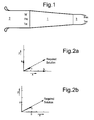
- Figure 1 shows the model schematically. As well as compressor 1, the model has an intake 2 and a nozzle 3.
- the model further assumes that the compressor is run to the measured speed.
- the compressor has a reference operating condition of a nominal pressure ratio of 12:1, a nominal intake airflow of 100 lb/s (45 kg/s), and a nominal efficiency of 0.88. These parameters are used to derive a simple model for the compressor with a fixed effective final nozzle area (in this case a fixed flow function). The flow at the nozzle can then be modelled for the reference operating condition.
- the system variables for the model are:
- the model can be run with a measured inlet temperature (Tin), measured inlet pressure (Pin), and measured compressor speed (N).
- Tin measured inlet temperature
- Pin measured inlet pressure
- N measured compressor speed
- Aex iteratively calculated for given pressure ratios, compressor efficiencies, flows, inlet temperatures, and inlet pressures.
- W expected intake airflow
- Pex delivery pressure
- Tex delivery temperature
- Table 1 shows the exchange rates obtained for the perturbations. Table 1 ⁇ W ⁇ Pex ⁇ Tex 1% Wc 0.0089 0.0105 0.0032 1% Eta 0.0003 -0.0032 -0.0070 1% Aex 0.0011 -0.0103 -0.0031 1% Pin error -0.0099 -0.0099 0.0000 1% Tin error 0.0050 0.0000 -0.0099 1% N error -0.0175 -0.0206 -0.0063 1% W error 0.01 0 0 1% Pex error 0 0.01 0 1% Tex error 0 0 0.01
- the first six system variables in Table 1 are those driving the model.
- the last three system variables are measurement errors which only influence their respective parameters.
- the measurement of mass flow (W) is independent of the entry pressure and temperature. While this may not be entirely physically reasonable, it is acceptable for the present purpose, which is to illustrate the operation of analysis tools, rather than to develop an actual compressor model.
- ⁇ W (measured W - reference W)/reference W
- ⁇ Pex (measured Pex - reference Pex)/reference Pex
- ⁇ Tex (measured Tex - reference Tex)/reference Tex).
- the first signature corresponds to a deteriorated compressor, where both capacity and efficiency are reduced below the model values. Values of -1.8% efficiency and - 1.8% capacity were used. As shown in Table 2, a suitable measurement signature was obtained by adding the appropriate exchange rates from Table 1 above and then including some noise. Table 2 ⁇ W ⁇ Pex ⁇ Tex -1.8% Wc -0.01595 -0.01882 -0.00569 -1.8% Eta -0.00063 0.005711 0.012642 Total -0.01658 -0.01311 0.006949 Noise -0.0012 0.0008 0.0011 Signature -0.01778 -0.01231 0.008049
- the second signature is for a single change, i.e. a measurement error, or a change in one of the three input parameters (Pin, Tin and N).
- An example would be a -2.0% error in Pex, which, after adding noise, gives the signature shown in Table 3.
- Table 3 ⁇ W ⁇ Pex ⁇ Tex -2% Pex error 0 -0.02 0 Noise -0.0008 0 -0.0011 Signature -0.0008 -0.02 -0.0011
- the third signature is the sum of the first and second signatures, except that only one level of noise is applied.
- the signature represents a poor quality compressor and a measurement error on Pex: Table 4 ⁇ W ⁇ Pex ⁇ Tex -1.8% Wc and -1.8% Eta -0.01658 -0.01311 0.006949 -2% Pex error 0 -0.02 0 Total -0.01658 -0.03311 0.006949 Noise -0.0012 0.0008 0.0011 Signature -0.01778 -0.03231 0.008049
- This analysis technique assumes that all measurements are correct. Using the measurements, it calculates system variables from a model of the system. Typically ANSYN would use a full non-linear model of the system (a synthesis model), but for present purposes a linearised version was used (i.e. the exchange rates). The calculated system variables were Eta, Wc and Aex.
- Var (i) variations were 1% Wc, 1% Eta, 1% Aex, 1% Pin error, 1% Tin error, 1% N error, 1% W error, 1% Pex error, 1% Tex error;
- Mcal(j) expected values were ⁇ W, ⁇ Pex, and ⁇ Tex as derived from the exchange rates of Table 1;
- the M(j) measured values were ⁇ W, ⁇ Pex, ⁇ Tex from the measurement signature of Table 2, 3 or 4.
- the error function is just the second term of error function used in the COMPASS approach.
- More complex analyses can also be carried out by adjusting the values of each possible combination of two system variables, or each combination of three system variables etc., while leaving the system variables outside the combination unaltered. Within a combination, each system variable is adjusted independently of the other variables in the combination.
- the function is a sum of absolute variations, with the optimisation being a least-absolutes optimisation.
- Performing a least-absolutes optimisation rather than a least-squares optimisation tends to reduce "smearing" by concentrating the solution on fewer system variables.
- a linear model e.g. based on exchange rates
- the number of variables in the solution will typically be the same as the number of measured parameters whose values are to be modelled.
- each VNorm(i) in the error function is made inversely proportional to the amount of variation in the expected parameter values produced by adjusting the respective system variable.
- the significance of this modification can be illustrated by considering each Var(i)/VNorm(i) term as a vector in m-space, where the dimensions of m-space correspond to the measured parameters.
- the modification forces the cost to the error function of matching the measured and expected parameters to be equalised for the different system variables.
- the three vectors corresponding to a, b and c become equal in length.
- the required solution is then obtained by approximately one part of a and two parts of b at a cost to the error function of about three, or by approximately two parts of c at a cost to the error function of about two, which favours the "right" solution.
- VNorm(i) The actual values for each VNorm(i) were determined by: (1) calculating the square root of the sum of the squares of the exchange rates for the respective system variable, (2) taking the inverse of that number, and (3) scaling all the inverses so that their average equals to one.
- a further advantage of this modification is that it does not require the person performing the analysis to have any knowledge of appropriate settings for the VNorm(i) values. Indeed, the values can be calculated automatically by the analysis software.
- a modification is to include "composite" system variables. That is, the error function is also optimised for at least one subgroup of the system variables under the restriction that adjustments to the variables of the subgroup are always in a predetermined constant ratio relative to each other. Thus the system variables of a subgroup are dependent and effectively form a "composite" variable.
- the predetermined constant ratio can be characteristic of a known mechanism changing the performance of the system, such as deterioration caused by dirt accumulation.
- the composite variable should, then, be a favoured solution when the measurement signature is characteristic of such deterioration.
- the second signature is for a measurement error, and the analysis produces the following result: Table 6 Signature value Calculated value ⁇ Wc 0 0.14 ⁇ Eta 0 -0.82 ⁇ Aex 0 2.05
- the third signature is for the deteriorated compressor plus the measurement fault. This gives the following result: Table 7 Signature value Calculated value ⁇ Wc -1.8 -2.13 ⁇ Eta -1.8 -2.95 ⁇ Aex 0 1.87
- VNorm(i) the values for VNorm(i) were set to 1% for all the system variables, and the values for MNorm(j) were set 0.1% for all the measured parameters.
- the analysis was repeated with the value of VNorm(i) for the Pin error, Tin error, W error, Pex error and Tex error set to 0.5% instead of 1%. This tended to increase the cost associated with these system variables and therefore focussed the solution on the Wc, Eta and Aex system variables.
- the analysis was then repeated again with with the value of VNorm(i) for the Pin error, Tin error, W error, Pex error and Tex error set to 0.25%, focussing the solution even further on Wc, Eta and Aex.
- Table 8 Calculated Value for different VNorm(i) Signature Value 1 0.5 0.25 ⁇ Wc -1.8 -0.48 -1.02 -1.54 ⁇ Eta -1.8 -0.18 -0.64 -1.30 ⁇ Aex 0 -0.01 -0.08 -0.15 ⁇ Pin error 0 0.62 -0.36 0.15 ⁇ Tin error 0 -0.53 -0.39 -0.18 ⁇ W error 0 -0.47 -0.28 -0.10 ⁇ Pex error 0 -0.16 -0.09 -0.04 ⁇ Tex error 0 0.30 0.26 -1.54
- the first analysis was very poor in that it distributed the solution across all the available variable and also significantly reduced values of the variables relative to the required values. This is the "smearing" that is typical of this style of analysis.
- the second analysis was an improvement, with ⁇ Wc and ⁇ Eta having the highest calculated values.
- the third analysis provided further improvement.
- Table 9 Calculated Value for different VNorm(i) Signature Value 1 0.5 0.25 ⁇ Wc 0 -0.26 -0.25 -0.18 ⁇ Eta 0 0.07 -0.11 -0.46 ⁇ Aex 0 0.72 1.29 1.73 ⁇ Pin error 0 0.25 0.08 0.03 ⁇ Tin error 0 -0.01 -0.08 -0.05 ⁇ W error 0 0.47 0.26 0.10 ⁇ Pex error -2.0 -0.72 -0.35 -0.12 ⁇ Tex error 0 0.24 0.21 0.10
- Table 10 shows the results for the third signature, i.e. the combination of the above two signatures, for the three normalisation settings: Table 10 Calculated Value for different VNorm(i) Signature Value 1 0.5 0.25 ⁇ Wc -1.8 -0.75 -1.30 -1.77 ⁇ Eta -1.8 -0.13 -0.83 -1.89 ⁇ Aex 0 0.71 1.18 1.55 ⁇ Pin error 0 0.88 0.46 0.18 ⁇ Tin error 0 -0.59 -0.50 -0.25 ⁇ W error 0 -0.02 -0.03 -0.01 ⁇ Pex error -2.0 -0.87 -0.44 -0.17 ⁇ Tex error 0 0.58 0.49 0.24
- the first signature (deteriorated compressor) was processed and the results are shown in Table 11, for each combination of two system variables. Within each combination, the two system variables were allowed to vary independently of each other. The ten combinations producing the lowest values for the error function are shown in Table 11: Table 11 Error Function Value Correlation value Variable Value Variable Value 0.796155243 0.998980522 1% Eta 4.067116 1% Tin error -3.728233 0.879954109 0.998874962 1% Pin error 4.09894 1% Wc 2.644556 0.88421342 0.998869419 1% Pin error 1.306429 1% Tin error -0.844839 0.886209618 0.998866856 1% Tin error -1.240094 11% Wc -1.237204 0.91088827 0.99883467 1% Pin error 1.689231 1% Eta -1.191438 0.932894263 0.998806715 1% Eta -2.026787 1% Wc -1.853847 14.93
- Each row of this table is a solution, with the best (i.e. lowest error function) at the top of the table. In each row the two variables and their values are identified. Also shown in the first column is the final error function value (that is the function being optimised), and a correlation value (calculated using the Excel CORREL function) between the ⁇ W, ⁇ Pex and ⁇ Tex achieved at solution and that of the original signature.
- the third signature is a combination of the first two signatures. This was processed for each combination of three system variables. The results are shown in the Table 13: Table 13 Error Function Value Correl. value Variable Value Variable Value Variable Value 0 1 1% Pex-error 3.230849 1% W error -1.7775 1% Tex error 0.804926 1.20371E-29 1 1% Pex-error 3.230833 1% W-error 1.372023 1% Tin error -0.81298 1.20371E-29 1 1% Aex 3.126395 1% W-error 2.133975 1% Tex error 1.789544 1.20371E-29 1 1% Aex 3.12636 1% Tin error -1.80744 1% W- error 1.232503 1.50463E-29 1 1% Pex-error 1.858835 1% Pin error 1.385744 1% Tin-error 0.812972 2.40741E-29 1 1% Wc -3.09017 1% Tex error 1.782261 1% W error 0.96070
- the first signature (deteriorated compressor) was processed using the COMPASS approach but adapted to include least-absolutes optimisation and modified normalisation to VNorm(i). The results are shown in Table 14: Table 14 Signature Value Calculated Value ⁇ Wc -1.8 -1.91 ⁇ Eta -1.8 -1.94 ⁇ Aex 0 -0.15 ⁇ Pin error 0 0 ⁇ Tin error 0 0 ⁇ W error 0 0 ⁇ Pex error 0 0 ⁇ Tex error 0 0 0
- Table 15 Signature Value Calculated Value ⁇ Wc 0 0.14 ⁇ Eta 0 -0.82 ⁇ Aex 0 2.05 ⁇ Pin error 0 0 ⁇ Tin error 0 0 ⁇ W error 0 0 ⁇ Pex error -2.0 0 ⁇ Tex error 0 0
- Table 16 Signature Value Calculated Value ⁇ Wc -1.8 -2.13 ⁇ Eta -1.8 -2.95 ⁇ Aex 0 1.87 ⁇ Pin error 0 0 ⁇ Tin error 0 0 ⁇ W error 0 0 ⁇ Pex error -2.0 0 ⁇ Tex error 0 0
- the number of system variables selected is typically equal to the number of independent measurements.
- the method provides a means of "concentrating" relative to the original COMPASS method and avoiding smearing.
- the results cam be sensitive to the value of VNorm(i).
- VNorm(i) For the example, with the signatures examined here, it was impossible to find universal values for VNorm(i) that enabled both component analysis and the identification of instrumentation errors.
- a solution is to reduce the number of system variables in the solution process by creating composite variables which represent multiple variables in the original formulation.
- One such composite variable would be "compressor deterioration" defined as equal parts of ⁇ Wc and ⁇ Eta. This effectively sweeps up two of the existing system variables into one new variable.
- the first signature is -1.8% Wc and -1.8% Eta with introduced noise.
- Table 17 Error Function Value Correlation value Variable Value 2.702729592 0.997867823 compressor deterioration -1.862009 79.72876738 0.979627132 1% Pin error 1.519235 188.6017906 0.916458249 1% Wc -1.317959 216.2894234 0.663747191 1% W error -1.7775 301.6364797 0.991156757 1% Tin error 1.369777 380.7412627 0.315876186 1% Pex error -1.230849 467.449462 0.979623377 1% Tex error 0.804926 475.8454419 -0.057530105 1% Aex 0.691282 522.8380112 0.956659436 1% Eta -0.397463
- Example 1 This was performed as Example 1 (COMPASS + least-absolutes normalisation), but with the inclusion of the composite variable "compressor deterioration" defined as equal parts of ⁇ Wc and ⁇ Eta.
- Example 1 exactly three variables (the composite variable, ⁇ Tin error and ⁇ W error) were chosen, and again a good match to the required solution was obtained, taking the noise added to the signal into account.
- Table 21 Signature Value Calculated Value ⁇ Wc 0 0 ⁇ Eta 0 0 ⁇ Aex 0 0.35 ⁇ Pin error 0 0 ⁇ Tin error 0 0 ⁇ W error 0 0.04 ⁇ Pex error -2.0 -1.64 ⁇ Tex error 0 0
- the third signature combines the first two.
- the 1:1 ratio provided a good result, while the 1:2 ratio, while producing a degraded result, still provided a reasonable assessment of the signature.
Landscapes
- Engineering & Computer Science (AREA)
- Physics & Mathematics (AREA)
- General Physics & Mathematics (AREA)
- Automation & Control Theory (AREA)
- Quality & Reliability (AREA)
- Feedback Control In General (AREA)
- Combined Controls Of Internal Combustion Engines (AREA)
Claims (11)
- Verfahren zum Analysieren der Leistung eines Systems eines Triebwerks, ausgedrückt in Begriffen einer Mehrzahl von Systemvariablen, denen erwartete Parameterwerte für das System zugeordnet sind, wobei das Verfahren umfasst:Erhalten von Werten eines gemessenen Parameters für das System im Test und/oder in der Wartung,Analysieren der gemessenen Parameterwerte in Relation zu entsprechenden, erwarteten Parameterwerten durch Optimieren einer Fehlerfunktion, welche die gemessenen Parameterwerte mit den Systemvariablen in Beziehung setzt,wobei der Schritt des Optimierens der Fehlerfunktion das Einstellen der Systemvariablen zum Variieren der erwarteten Parameterwerte und dadurch zum Variieren der durch die Fehlerfunktion dargestellten Fehlergröße umfasst,dadurch gekennzeichnet, dass die Systemvariablen so gruppiert sind, dass:ein erster Teil der Systemvariablen unabhängig voneinander eingestellt wird,und ein weiterer Teil der Systemvariablen abhängig voneinander derart eingestellt wird, dass in dem weiteren Teil die Systemvariablen in einem vorgegebenen konstanten Verhältnis relativ zueinander bleiben, wobei das vorgegebene konstante Verhältnis charakteristisch für einen bekannten Mechanismus ist, der die Leistung des Systems verändert.
- Verfahren nach Anspruch 1, wobei das System ein Gasturbinentriebwerk oder ein Teil desselben ist.
- Verfahren nach Anspruch 1 oder 2, wobei die Fehlerfunktion eine Summe von absoluten Variationen ist und der Schritt des Optimierens eine Kleinst-Absoluten-Optimierung umfasst, wobei die Fehlerfunktion den Begriff umfasst

der Wert jedes VNorm(i) in inverser Beziehung zu der Größe der Variation in den erwarteten Parameterwerten steht, die durch ein Einstellen der jeweiligen Systemvariablen erzeugt werden. - Verfahren nach Anspruch 3, wobei die Fehlerfunktion die Form hat:

wobei m die Anzahl gemessener Parameter ist, M(j) der gemessene Wert des j-ten Parameters ist, Mcal(j) ein erwarteter Wert für den j-ten Parameter ist, und MNorm(j) ein Normalisierungswert des j-ten Parameters ist. - Verfahren nach Anspruch 4, wobei Mcal(j) aus einer Mehrzahl von Austauschraten und den Variationen der Systemvariablen gemäß des Ausdrucks berechnet wird:

wobei Xrate(i,j) die Austauschrate in dem j-ten Parameter mit Bezug auf die Variation der i-ten Systemvariablen ist. - Verfahren nach Anspruch 5 mit dem Schritt des Bestimmens von Werten von jedem VNorm(i) unter Verwendung des Ausdrucks umfasst:

oder unter Verwendung des Ausdrucks umfasst:
- Verfahren nach einem der vorhergehenden Ansprüche, weiter mit dem Schritt des Messens eines Ausgangs aus dem System, um die gemessenen Parameterwerte zu erhalten.
- Verfahren des Betreibens eines Systems mit:Durchführen der Analysemethode gemäß einem der vorhergehenden Ansprüche, undReparieren des Systems oder Leistungswartung an dem System in Abhängigkeit von einem Ergebnis der Analysemethode.
- Computerlesbarer Code zum Durchführen des Verfahrens nach einem der Ansprüche 1 bis 6, wobei der Code auf einem Computersystem verarbeitet wird.
- Computerprogramm-Produkt mit einem computerlesbaren Code nach Anspruch 9.
- Computersystem, das dafür konfiguriert ist, das Verfahren nach einem der Ansprüche 1 bis 6 durchzuführen.
Applications Claiming Priority (2)
| Application Number | Priority Date | Filing Date | Title |
|---|---|---|---|
| GBGB0706554.3A GB0706554D0 (en) | 2007-04-03 | 2007-04-03 | Analysis method |
| PCT/GB2008/000755 WO2008119928A1 (en) | 2007-04-03 | 2008-03-05 | Analysis method based on an error function optimization technique |
Publications (2)
| Publication Number | Publication Date |
|---|---|
| EP2135145A1 EP2135145A1 (de) | 2009-12-23 |
| EP2135145B1 true EP2135145B1 (de) | 2013-06-12 |
Family
ID=38050822
Family Applications (1)
| Application Number | Title | Priority Date | Filing Date |
|---|---|---|---|
| EP08718616.9A Active EP2135145B1 (de) | 2007-04-03 | 2008-03-05 | Auf einem fehlerfunktions-optimierungsverfahren basierendes analyseverfahren |
Country Status (5)
| Country | Link |
|---|---|
| US (1) | US20100042367A1 (de) |
| EP (1) | EP2135145B1 (de) |
| ES (1) | ES2425875T3 (de) |
| GB (1) | GB0706554D0 (de) |
| WO (1) | WO2008119928A1 (de) |
Families Citing this family (9)
| Publication number | Priority date | Publication date | Assignee | Title |
|---|---|---|---|---|
| US9267443B2 (en) | 2009-05-08 | 2016-02-23 | Gas Turbine Efficiency Sweden Ab | Automated tuning of gas turbine combustion systems |
| US9671797B2 (en) | 2009-05-08 | 2017-06-06 | Gas Turbine Efficiency Sweden Ab | Optimization of gas turbine combustion systems low load performance on simple cycle and heat recovery steam generator applications |
| US8437941B2 (en) | 2009-05-08 | 2013-05-07 | Gas Turbine Efficiency Sweden Ab | Automated tuning of gas turbine combustion systems |
| US9354618B2 (en) | 2009-05-08 | 2016-05-31 | Gas Turbine Efficiency Sweden Ab | Automated tuning of multiple fuel gas turbine combustion systems |
| DE102010038573B4 (de) * | 2010-07-28 | 2023-08-31 | Endress+Hauser SE+Co. KG | Messverfahren für eine von Hilfsmessgrößen abhängige Messgröße |
| US11131251B2 (en) * | 2017-12-22 | 2021-09-28 | Solar Turbines Incorporated | System and method for estimation of gas fuel lower heating value using energy balances and parametric error modeling |
| CN112818464B (zh) * | 2021-01-27 | 2022-04-12 | 中国空气动力研究与发展中心超高速空气动力研究所 | 动态环境参量对飞行器气动热影响敏感性分析方法 |
| CN112989520B (zh) * | 2021-04-12 | 2022-11-22 | 重庆大学 | 一种蜗轮母机关键误差项辨识方法 |
| CN120256254B (zh) * | 2025-06-06 | 2025-11-11 | 宁德时代润智软件科技有限公司 | 变量监控方法、系统、装置、计算机设备和存储介质 |
Family Cites Families (10)
| Publication number | Priority date | Publication date | Assignee | Title |
|---|---|---|---|---|
| US4349869A (en) * | 1979-10-01 | 1982-09-14 | Shell Oil Company | Dynamic matrix control method |
| US4809154A (en) * | 1986-07-10 | 1989-02-28 | Air Products And Chemicals, Inc. | Automated control system for a multicomponent refrigeration system |
| GB2211965B (en) * | 1987-10-31 | 1992-05-06 | Rolls Royce Plc | Data processing systems |
| JPH0689322A (ja) * | 1992-09-08 | 1994-03-29 | Toyota Motor Corp | 最適設計システム |
| US5727755A (en) * | 1994-01-21 | 1998-03-17 | Craig; Alfred C. | Aircraft engines with a controllable outer casing |
| US7668773B1 (en) * | 2001-12-21 | 2010-02-23 | Placemark Investments, Inc. | Portfolio management system |
| DE10211115A1 (de) * | 2002-03-14 | 2003-09-25 | Bosch Gmbh Robert | Verfahren und Vorrichtung zur Bestimmung der Kraftstoffmenge für einen Brenner im Abgassystem eines Verbrennungsmotors |
| US7627461B2 (en) * | 2004-05-25 | 2009-12-01 | Chevron U.S.A. Inc. | Method for field scale production optimization by enhancing the allocation of well flow rates |
| GB0416517D0 (en) * | 2004-07-23 | 2004-08-25 | Isis Innovation | Method of determining residual stress within an object |
| GB0509898D0 (en) * | 2005-05-14 | 2005-06-22 | Rolls Royce Plc | Analysis method |
-
2007
- 2007-04-03 GB GBGB0706554.3A patent/GB0706554D0/en not_active Ceased
-
2008
- 2008-03-05 EP EP08718616.9A patent/EP2135145B1/de active Active
- 2008-03-05 US US12/449,768 patent/US20100042367A1/en not_active Abandoned
- 2008-03-05 ES ES08718616T patent/ES2425875T3/es active Active
- 2008-03-05 WO PCT/GB2008/000755 patent/WO2008119928A1/en not_active Ceased
Also Published As
| Publication number | Publication date |
|---|---|
| US20100042367A1 (en) | 2010-02-18 |
| ES2425875T3 (es) | 2013-10-17 |
| WO2008119928A1 (en) | 2008-10-09 |
| EP2135145A1 (de) | 2009-12-23 |
| GB0706554D0 (en) | 2007-05-09 |
Similar Documents
| Publication | Publication Date | Title |
|---|---|---|
| EP2135145B1 (de) | Auf einem fehlerfunktions-optimierungsverfahren basierendes analyseverfahren | |
| US7788014B2 (en) | Process and methodology for root cause identification in gas turbine engine performance tracking | |
| US7797113B2 (en) | Gas turbine performance analysis method and gas turbine performance analysis system | |
| CA2398248C (en) | Diagnostic method and system for turbine engines | |
| CN106404403B (zh) | 用于涡轮机的分析的方法和系统 | |
| CA3019273C (en) | Fault diagnosis during testing of turbine unit | |
| EP1298512A2 (de) | Adaptives Luft-Thermodynamisches Maschinenmodel | |
| Liao et al. | Uncertainties in gas-path diagnosis of gas turbines: Representation and impact analysis | |
| CN112067304A (zh) | 发动机整机试验中压气机进口流量的测量方法 | |
| Stamatis | Evaluation of gas path analysis methods for gas turbine diagnosis | |
| US7890296B2 (en) | Method of analyzing the performance of gas turbine engines | |
| CN118734544A (zh) | 一种基于代理模型的燃气轮机组监测方法及系统 | |
| JP5845705B2 (ja) | ガスタービン性能推定装置 | |
| EP1482150A2 (de) | Verfahren und Vorrichtung zur Berechnung der Turbineneinlasstemperatur einer Turbomaschine | |
| Zaccaria et al. | A model-based solution for gas turbine diagnostics: Simulations and experimental verification | |
| CN115356027A (zh) | 一种基于低压轴功率平衡的高压涡轮效率评估方法及装置 | |
| CN114970662A (zh) | 一种基于故障特征迁移的发动机故障数据实时生成方法 | |
| Visser et al. | Experience with gsp as a gas path analysis tool | |
| Ogaji et al. | Study of the optimisation of measurement sets for gas path fault diagnosis in gas turbines | |
| KR20150019360A (ko) | 저압터빈의 경년열화평가방법 | |
| Hartloper et al. | Comparison of degradation of two different gas turbine engines in natural gas compressor stations | |
| CN116242620A (zh) | 用于航空发动机振动排故的数字孪生方法 | |
| CN118260942A (zh) | 基于健康函数及f-mopa的航空发动机离散多点气路分析方法 | |
| Zhu et al. | Aeroengine modules performance deterioration modeling and assessment | |
| Davison et al. | Automated fault diagnosis for small gas turbine engines |
Legal Events
| Date | Code | Title | Description |
|---|---|---|---|
| PUAI | Public reference made under article 153(3) epc to a published international application that has entered the european phase |
Free format text: ORIGINAL CODE: 0009012 |
|
| 17P | Request for examination filed |
Effective date: 20091103 |
|
| AK | Designated contracting states |
Kind code of ref document: A1 Designated state(s): AT BE BG CH CY CZ DE DK EE ES FI FR GB GR HR HU IE IS IT LI LT LU LV MC MT NL NO PL PT RO SE SI SK TR |
|
| 17Q | First examination report despatched |
Effective date: 20100226 |
|
| DAX | Request for extension of the european patent (deleted) | ||
| GRAP | Despatch of communication of intention to grant a patent |
Free format text: ORIGINAL CODE: EPIDOSNIGR1 |
|
| GRAS | Grant fee paid |
Free format text: ORIGINAL CODE: EPIDOSNIGR3 |
|
| GRAA | (expected) grant |
Free format text: ORIGINAL CODE: 0009210 |
|
| AK | Designated contracting states |
Kind code of ref document: B1 Designated state(s): AT BE BG CH CY CZ DE DK EE ES FI FR GB GR HR HU IE IS IT LI LT LU LV MC MT NL NO PL PT RO SE SI SK TR |
|
| REG | Reference to a national code |
Ref country code: GB Ref legal event code: FG4D |
|
| REG | Reference to a national code |
Ref country code: CH Ref legal event code: EP |
|
| REG | Reference to a national code |
Ref country code: AT Ref legal event code: REF Ref document number: 616908 Country of ref document: AT Kind code of ref document: T Effective date: 20130615 |
|
| REG | Reference to a national code |
Ref country code: IE Ref legal event code: FG4D |
|
| REG | Reference to a national code |
Ref country code: DE Ref legal event code: R096 Ref document number: 602008025272 Country of ref document: DE Effective date: 20130808 |
|
| REG | Reference to a national code |
Ref country code: ES Ref legal event code: FG2A Ref document number: 2425875 Country of ref document: ES Kind code of ref document: T3 Effective date: 20131017 |
|
| PG25 | Lapsed in a contracting state [announced via postgrant information from national office to epo] |
Ref country code: SI Free format text: LAPSE BECAUSE OF FAILURE TO SUBMIT A TRANSLATION OF THE DESCRIPTION OR TO PAY THE FEE WITHIN THE PRESCRIBED TIME-LIMIT Effective date: 20130612 Ref country code: LT Free format text: LAPSE BECAUSE OF FAILURE TO SUBMIT A TRANSLATION OF THE DESCRIPTION OR TO PAY THE FEE WITHIN THE PRESCRIBED TIME-LIMIT Effective date: 20130612 Ref country code: FI Free format text: LAPSE BECAUSE OF FAILURE TO SUBMIT A TRANSLATION OF THE DESCRIPTION OR TO PAY THE FEE WITHIN THE PRESCRIBED TIME-LIMIT Effective date: 20130612 Ref country code: SE Free format text: LAPSE BECAUSE OF FAILURE TO SUBMIT A TRANSLATION OF THE DESCRIPTION OR TO PAY THE FEE WITHIN THE PRESCRIBED TIME-LIMIT Effective date: 20130612 Ref country code: NO Free format text: LAPSE BECAUSE OF FAILURE TO SUBMIT A TRANSLATION OF THE DESCRIPTION OR TO PAY THE FEE WITHIN THE PRESCRIBED TIME-LIMIT Effective date: 20130912 Ref country code: GR Free format text: LAPSE BECAUSE OF FAILURE TO SUBMIT A TRANSLATION OF THE DESCRIPTION OR TO PAY THE FEE WITHIN THE PRESCRIBED TIME-LIMIT Effective date: 20130913 |
|
| REG | Reference to a national code |
Ref country code: AT Ref legal event code: MK05 Ref document number: 616908 Country of ref document: AT Kind code of ref document: T Effective date: 20130612 |
|
| REG | Reference to a national code |
Ref country code: NL Ref legal event code: VDEP Effective date: 20130612 |
|
| REG | Reference to a national code |
Ref country code: LT Ref legal event code: MG4D |
|
| PG25 | Lapsed in a contracting state [announced via postgrant information from national office to epo] |
Ref country code: HR Free format text: LAPSE BECAUSE OF FAILURE TO SUBMIT A TRANSLATION OF THE DESCRIPTION OR TO PAY THE FEE WITHIN THE PRESCRIBED TIME-LIMIT Effective date: 20130612 Ref country code: BG Free format text: LAPSE BECAUSE OF FAILURE TO SUBMIT A TRANSLATION OF THE DESCRIPTION OR TO PAY THE FEE WITHIN THE PRESCRIBED TIME-LIMIT Effective date: 20130912 |
|
| PG25 | Lapsed in a contracting state [announced via postgrant information from national office to epo] |
Ref country code: LV Free format text: LAPSE BECAUSE OF FAILURE TO SUBMIT A TRANSLATION OF THE DESCRIPTION OR TO PAY THE FEE WITHIN THE PRESCRIBED TIME-LIMIT Effective date: 20130612 |
|
| PG25 | Lapsed in a contracting state [announced via postgrant information from national office to epo] |
Ref country code: PT Free format text: LAPSE BECAUSE OF FAILURE TO SUBMIT A TRANSLATION OF THE DESCRIPTION OR TO PAY THE FEE WITHIN THE PRESCRIBED TIME-LIMIT Effective date: 20131014 Ref country code: BE Free format text: LAPSE BECAUSE OF FAILURE TO SUBMIT A TRANSLATION OF THE DESCRIPTION OR TO PAY THE FEE WITHIN THE PRESCRIBED TIME-LIMIT Effective date: 20130612 Ref country code: SK Free format text: LAPSE BECAUSE OF FAILURE TO SUBMIT A TRANSLATION OF THE DESCRIPTION OR TO PAY THE FEE WITHIN THE PRESCRIBED TIME-LIMIT Effective date: 20130612 Ref country code: CZ Free format text: LAPSE BECAUSE OF FAILURE TO SUBMIT A TRANSLATION OF THE DESCRIPTION OR TO PAY THE FEE WITHIN THE PRESCRIBED TIME-LIMIT Effective date: 20130612 Ref country code: AT Free format text: LAPSE BECAUSE OF FAILURE TO SUBMIT A TRANSLATION OF THE DESCRIPTION OR TO PAY THE FEE WITHIN THE PRESCRIBED TIME-LIMIT Effective date: 20130612 Ref country code: EE Free format text: LAPSE BECAUSE OF FAILURE TO SUBMIT A TRANSLATION OF THE DESCRIPTION OR TO PAY THE FEE WITHIN THE PRESCRIBED TIME-LIMIT Effective date: 20130612 Ref country code: IS Free format text: LAPSE BECAUSE OF FAILURE TO SUBMIT A TRANSLATION OF THE DESCRIPTION OR TO PAY THE FEE WITHIN THE PRESCRIBED TIME-LIMIT Effective date: 20131012 |
|
| PG25 | Lapsed in a contracting state [announced via postgrant information from national office to epo] |
Ref country code: RO Free format text: LAPSE BECAUSE OF FAILURE TO SUBMIT A TRANSLATION OF THE DESCRIPTION OR TO PAY THE FEE WITHIN THE PRESCRIBED TIME-LIMIT Effective date: 20130612 Ref country code: NL Free format text: LAPSE BECAUSE OF FAILURE TO SUBMIT A TRANSLATION OF THE DESCRIPTION OR TO PAY THE FEE WITHIN THE PRESCRIBED TIME-LIMIT Effective date: 20130612 Ref country code: PL Free format text: LAPSE BECAUSE OF FAILURE TO SUBMIT A TRANSLATION OF THE DESCRIPTION OR TO PAY THE FEE WITHIN THE PRESCRIBED TIME-LIMIT Effective date: 20130612 |
|
| PLBE | No opposition filed within time limit |
Free format text: ORIGINAL CODE: 0009261 |
|
| STAA | Information on the status of an ep patent application or granted ep patent |
Free format text: STATUS: NO OPPOSITION FILED WITHIN TIME LIMIT |
|
| PG25 | Lapsed in a contracting state [announced via postgrant information from national office to epo] |
Ref country code: DK Free format text: LAPSE BECAUSE OF FAILURE TO SUBMIT A TRANSLATION OF THE DESCRIPTION OR TO PAY THE FEE WITHIN THE PRESCRIBED TIME-LIMIT Effective date: 20130612 |
|
| 26N | No opposition filed |
Effective date: 20140313 |
|
| REG | Reference to a national code |
Ref country code: DE Ref legal event code: R097 Ref document number: 602008025272 Country of ref document: DE Effective date: 20140313 |
|
| PG25 | Lapsed in a contracting state [announced via postgrant information from national office to epo] |
Ref country code: LU Free format text: LAPSE BECAUSE OF FAILURE TO SUBMIT A TRANSLATION OF THE DESCRIPTION OR TO PAY THE FEE WITHIN THE PRESCRIBED TIME-LIMIT Effective date: 20140305 |
|
| REG | Reference to a national code |
Ref country code: CH Ref legal event code: PL |
|
| REG | Reference to a national code |
Ref country code: IE Ref legal event code: MM4A |
|
| PG25 | Lapsed in a contracting state [announced via postgrant information from national office to epo] |
Ref country code: CH Free format text: LAPSE BECAUSE OF NON-PAYMENT OF DUE FEES Effective date: 20140331 Ref country code: IE Free format text: LAPSE BECAUSE OF NON-PAYMENT OF DUE FEES Effective date: 20140305 Ref country code: LI Free format text: LAPSE BECAUSE OF NON-PAYMENT OF DUE FEES Effective date: 20140331 |
|
| PG25 | Lapsed in a contracting state [announced via postgrant information from national office to epo] |
Ref country code: MT Free format text: LAPSE BECAUSE OF FAILURE TO SUBMIT A TRANSLATION OF THE DESCRIPTION OR TO PAY THE FEE WITHIN THE PRESCRIBED TIME-LIMIT Effective date: 20130612 |
|
| REG | Reference to a national code |
Ref country code: FR Ref legal event code: PLFP Year of fee payment: 9 |
|
| PG25 | Lapsed in a contracting state [announced via postgrant information from national office to epo] |
Ref country code: MC Free format text: LAPSE BECAUSE OF FAILURE TO SUBMIT A TRANSLATION OF THE DESCRIPTION OR TO PAY THE FEE WITHIN THE PRESCRIBED TIME-LIMIT Effective date: 20130612 |
|
| PG25 | Lapsed in a contracting state [announced via postgrant information from national office to epo] |
Ref country code: CY Free format text: LAPSE BECAUSE OF FAILURE TO SUBMIT A TRANSLATION OF THE DESCRIPTION OR TO PAY THE FEE WITHIN THE PRESCRIBED TIME-LIMIT Effective date: 20130612 |
|
| PG25 | Lapsed in a contracting state [announced via postgrant information from national office to epo] |
Ref country code: TR Free format text: LAPSE BECAUSE OF FAILURE TO SUBMIT A TRANSLATION OF THE DESCRIPTION OR TO PAY THE FEE WITHIN THE PRESCRIBED TIME-LIMIT Effective date: 20130612 Ref country code: HU Free format text: LAPSE BECAUSE OF FAILURE TO SUBMIT A TRANSLATION OF THE DESCRIPTION OR TO PAY THE FEE WITHIN THE PRESCRIBED TIME-LIMIT; INVALID AB INITIO Effective date: 20080305 |
|
| REG | Reference to a national code |
Ref country code: FR Ref legal event code: PLFP Year of fee payment: 10 |
|
| REG | Reference to a national code |
Ref country code: FR Ref legal event code: CA Effective date: 20170517 |
|
| REG | Reference to a national code |
Ref country code: FR Ref legal event code: PLFP Year of fee payment: 11 |
|
| REG | Reference to a national code |
Ref country code: DE Ref legal event code: R082 Ref document number: 602008025272 Country of ref document: DE Representative=s name: FLEUCHAUS & GALLO PARTNERSCHAFT MBB - PATENT- , DE Ref country code: DE Ref legal event code: R082 Ref document number: 602008025272 Country of ref document: DE Representative=s name: FLEUCHAUS & GALLO PARTNERSCHAFT MBB PATENTANWA, DE |
|
| P01 | Opt-out of the competence of the unified patent court (upc) registered |
Effective date: 20230528 |
|
| PGFP | Annual fee paid to national office [announced via postgrant information from national office to epo] |
Ref country code: DE Payment date: 20250327 Year of fee payment: 18 |
|
| PGFP | Annual fee paid to national office [announced via postgrant information from national office to epo] |
Ref country code: FR Payment date: 20250324 Year of fee payment: 18 |
|
| PGFP | Annual fee paid to national office [announced via postgrant information from national office to epo] |
Ref country code: IT Payment date: 20250321 Year of fee payment: 18 Ref country code: GB Payment date: 20250325 Year of fee payment: 18 |
|
| PGFP | Annual fee paid to national office [announced via postgrant information from national office to epo] |
Ref country code: ES Payment date: 20250415 Year of fee payment: 18 |