EP2134469B1 - Reactor for reductive conversion reactions using palladized bacterial cellulose - Google Patents
Reactor for reductive conversion reactions using palladized bacterial cellulose Download PDFInfo
- Publication number
- EP2134469B1 EP2134469B1 EP20080738400 EP08738400A EP2134469B1 EP 2134469 B1 EP2134469 B1 EP 2134469B1 EP 20080738400 EP20080738400 EP 20080738400 EP 08738400 A EP08738400 A EP 08738400A EP 2134469 B1 EP2134469 B1 EP 2134469B1
- Authority
- EP
- European Patent Office
- Prior art keywords
- reactor
- discs
- bacterial cellulose
- reductive
- pollutants
- Prior art date
- Legal status (The legal status is an assumption and is not a legal conclusion. Google has not performed a legal analysis and makes no representation as to the accuracy of the status listed.)
- Not-in-force
Links
Images


Classifications
-
- B—PERFORMING OPERATIONS; TRANSPORTING
- B01—PHYSICAL OR CHEMICAL PROCESSES OR APPARATUS IN GENERAL
- B01J—CHEMICAL OR PHYSICAL PROCESSES, e.g. CATALYSIS OR COLLOID CHEMISTRY; THEIR RELEVANT APPARATUS
- B01J23/00—Catalysts comprising metals or metal oxides or hydroxides, not provided for in group B01J21/00
- B01J23/38—Catalysts comprising metals or metal oxides or hydroxides, not provided for in group B01J21/00 of noble metals
- B01J23/40—Catalysts comprising metals or metal oxides or hydroxides, not provided for in group B01J21/00 of noble metals of the platinum group metals
- B01J23/44—Palladium
-
- C—CHEMISTRY; METALLURGY
- C02—TREATMENT OF WATER, WASTE WATER, SEWAGE, OR SLUDGE
- C02F—TREATMENT OF WATER, WASTE WATER, SEWAGE, OR SLUDGE
- C02F1/00—Treatment of water, waste water, or sewage
- C02F1/70—Treatment of water, waste water, or sewage by reduction
- C02F1/705—Reduction by metals
-
- C—CHEMISTRY; METALLURGY
- C02—TREATMENT OF WATER, WASTE WATER, SEWAGE, OR SLUDGE
- C02F—TREATMENT OF WATER, WASTE WATER, SEWAGE, OR SLUDGE
- C02F3/00—Biological treatment of water, waste water, or sewage
- C02F3/02—Aerobic processes
- C02F3/10—Packings; Fillings; Grids
- C02F3/101—Arranged-type packing, e.g. stacks, arrays
-
- C—CHEMISTRY; METALLURGY
- C02—TREATMENT OF WATER, WASTE WATER, SEWAGE, OR SLUDGE
- C02F—TREATMENT OF WATER, WASTE WATER, SEWAGE, OR SLUDGE
- C02F3/00—Biological treatment of water, waste water, or sewage
- C02F3/02—Aerobic processes
- C02F3/10—Packings; Fillings; Grids
- C02F3/105—Characterized by the chemical composition
- C02F3/108—Immobilising gels, polymers or the like
-
- C—CHEMISTRY; METALLURGY
- C12—BIOCHEMISTRY; BEER; SPIRITS; WINE; VINEGAR; MICROBIOLOGY; ENZYMOLOGY; MUTATION OR GENETIC ENGINEERING
- C12N—MICROORGANISMS OR ENZYMES; COMPOSITIONS THEREOF; PROPAGATING, PRESERVING, OR MAINTAINING MICROORGANISMS; MUTATION OR GENETIC ENGINEERING; CULTURE MEDIA
- C12N11/00—Carrier-bound or immobilised enzymes; Carrier-bound or immobilised microbial cells; Preparation thereof
- C12N11/14—Enzymes or microbial cells immobilised on or in an inorganic carrier
-
- C—CHEMISTRY; METALLURGY
- C12—BIOCHEMISTRY; BEER; SPIRITS; WINE; VINEGAR; MICROBIOLOGY; ENZYMOLOGY; MUTATION OR GENETIC ENGINEERING
- C12P—FERMENTATION OR ENZYME-USING PROCESSES TO SYNTHESISE A DESIRED CHEMICAL COMPOUND OR COMPOSITION OR TO SEPARATE OPTICAL ISOMERS FROM A RACEMIC MIXTURE
- C12P19/00—Preparation of compounds containing saccharide radicals
- C12P19/04—Polysaccharides, i.e. compounds containing more than five saccharide radicals attached to each other by glycosidic bonds
-
- C—CHEMISTRY; METALLURGY
- C02—TREATMENT OF WATER, WASTE WATER, SEWAGE, OR SLUDGE
- C02F—TREATMENT OF WATER, WASTE WATER, SEWAGE, OR SLUDGE
- C02F2101/00—Nature of the contaminant
- C02F2101/30—Organic compounds
- C02F2101/308—Dyes; Colorants; Fluorescent agents
-
- C—CHEMISTRY; METALLURGY
- C02—TREATMENT OF WATER, WASTE WATER, SEWAGE, OR SLUDGE
- C02F—TREATMENT OF WATER, WASTE WATER, SEWAGE, OR SLUDGE
- C02F2101/00—Nature of the contaminant
- C02F2101/30—Organic compounds
- C02F2101/34—Organic compounds containing oxygen
-
- C—CHEMISTRY; METALLURGY
- C02—TREATMENT OF WATER, WASTE WATER, SEWAGE, OR SLUDGE
- C02F—TREATMENT OF WATER, WASTE WATER, SEWAGE, OR SLUDGE
- C02F2101/00—Nature of the contaminant
- C02F2101/30—Organic compounds
- C02F2101/34—Organic compounds containing oxygen
- C02F2101/345—Phenols
-
- C—CHEMISTRY; METALLURGY
- C02—TREATMENT OF WATER, WASTE WATER, SEWAGE, OR SLUDGE
- C02F—TREATMENT OF WATER, WASTE WATER, SEWAGE, OR SLUDGE
- C02F2101/00—Nature of the contaminant
- C02F2101/30—Organic compounds
- C02F2101/36—Organic compounds containing halogen
-
- C—CHEMISTRY; METALLURGY
- C02—TREATMENT OF WATER, WASTE WATER, SEWAGE, OR SLUDGE
- C02F—TREATMENT OF WATER, WASTE WATER, SEWAGE, OR SLUDGE
- C02F2103/00—Nature of the water, waste water, sewage or sludge to be treated
- C02F2103/30—Nature of the water, waste water, sewage or sludge to be treated from the textile industry
-
- C—CHEMISTRY; METALLURGY
- C02—TREATMENT OF WATER, WASTE WATER, SEWAGE, OR SLUDGE
- C02F—TREATMENT OF WATER, WASTE WATER, SEWAGE, OR SLUDGE
- C02F3/00—Biological treatment of water, waste water, or sewage
- C02F3/02—Aerobic processes
- C02F3/08—Aerobic processes using moving contact bodies
-
- Y—GENERAL TAGGING OF NEW TECHNOLOGICAL DEVELOPMENTS; GENERAL TAGGING OF CROSS-SECTIONAL TECHNOLOGIES SPANNING OVER SEVERAL SECTIONS OF THE IPC; TECHNICAL SUBJECTS COVERED BY FORMER USPC CROSS-REFERENCE ART COLLECTIONS [XRACs] AND DIGESTS
- Y02—TECHNOLOGIES OR APPLICATIONS FOR MITIGATION OR ADAPTATION AGAINST CLIMATE CHANGE
- Y02P—CLIMATE CHANGE MITIGATION TECHNOLOGIES IN THE PRODUCTION OR PROCESSING OF GOODS
- Y02P20/00—Technologies relating to chemical industry
- Y02P20/50—Improvements relating to the production of bulk chemicals
-
- Y—GENERAL TAGGING OF NEW TECHNOLOGICAL DEVELOPMENTS; GENERAL TAGGING OF CROSS-SECTIONAL TECHNOLOGIES SPANNING OVER SEVERAL SECTIONS OF THE IPC; TECHNICAL SUBJECTS COVERED BY FORMER USPC CROSS-REFERENCE ART COLLECTIONS [XRACs] AND DIGESTS
- Y02—TECHNOLOGIES OR APPLICATIONS FOR MITIGATION OR ADAPTATION AGAINST CLIMATE CHANGE
- Y02W—CLIMATE CHANGE MITIGATION TECHNOLOGIES RELATED TO WASTEWATER TREATMENT OR WASTE MANAGEMENT
- Y02W10/00—Technologies for wastewater treatment
- Y02W10/10—Biological treatment of water, waste water, or sewage
Definitions
- the present invention relates to use of palladized bacterial cellulose for reductive conversion reactions. More particularly it relates to the development, design and operation of the reactor comprising the palladized bacterial cellulose immobilized on a support for remediation of pollutants through these reactions.
- a reactor is an enclosed device that provides specific conditions for mediating and controlling chemical/biochemical reactions. These systems usually employ chemicals or microorganisms as catalysts to catalyze the reactions.
- the type of reactors include batch reactors, plug flow reactors, continuous flow reactors, sequential reactors, etc.
- Abiotic reactors typically employ chemicals, radiation, high temperatures and pressures etc. for mediating reactions. There is increased potential for production of unwanted by-products, odors and corrosive gases. Also, the equipments and chemicals used may be expensive.
- a wide variety of advanced oxidation processes have been reported for the removal of recalcitrant pollutants, namely, chlorophenols that include photocatalysis, photooxidation by hydrogen peroxide (H 2 O 2 /UV) and ozone (O 3 /UV), Fenton's type reactions, wet oxidation, direct oxidation by ozone, chlorine etc.
- advanced oxidation processes are non-selective and attack chlorinated and non-chlorinated compounds with equal potency.
- AOPs may not be economical.
- AOPs are especially expensive for small and medium scale industrial units.
- Bio reactors employ microorganisms such as bacteria, fungi and algae to mediate transformation or degradation reactions.
- An important feature of a bioreactor is the ability of microbial cells to divide and reproduce. Very often the contents in the waste water itself serve as food to the microbes.
- easily biodegradable carbon source such as glucose and nutrients (sources of nitrogen and phosphorus) may need to be added to support growth of microorganisms and generate adequate quantity of biomass.
- Bioreactors can be classified as aerobic, anoxic or anaerobic type depending upon the environmental conditions provided.
- the mode of growth of microorganisms within bioreactors may be attached or suspended.
- suspended growth systems such as activated sludge process (aerobic bioreactor)
- the contaminated water is treated in an aeration tank where a suspended flocs of microbial population aerobically degrades organic matter and produces CO 2 , H 2 O, and new cells.
- anaerobic reactors such as upflow anaerobic sludge blanket (UASB) reactor, the bacterial population form granules that settle rapidly in the reactor.
- UASB upflow anaerobic sludge blanket
- Bioreactors are widely used for their economical benefits and find extensive applications for treatment of domestic and industrial (such as pharmaceutical) waste waters.
- Degradation of chlorinated pollutants by bacteria requires strict anaerobic conditions and very long acclimation (adaptation) period.
- biological treatment of industrial discharges contaminated with chlorinated pollutants would require several days or weeks in anaerobic reactors.
- Concentration of the target pollutants and other conditions like pH, presence of salts and other co-pollutants and redox potential influences the efficiency of remediation.
- Methanogenic and sulfate reducing conditions redox potential lower than - 300 mv
- a practical difficulty faced under field conditions is to provide favorable redox potential for reductive degradation of chlorinated pollutants.
- Aerobic degradation of chlorophenols like PCP involves ring cleavage prior to dechlorination and such products may be toxic.
- the metabolite of aerobic biodegradation of pentachlorophenol namely, tetrachlorohydroquinone is more toxic than pentachlorophenol.
- bioreactors The limitation with bioreactors is the requirement of a growth medium at pH near neutral which contains biodegradable carbon source such as glucose or sucrose and nutrients (nitrogen and phosphate). Toxicity of the pollutants will either kill the bacterial cells or limits their growth (slow growth), and therefore require special design approaches. Low or very high ambient temperatures can significantly decrease biodegradation rates, resulting in increased maintenance time. Efficiency of bioreactors is reduced due to unwanted growth of problematic microorganisms that may preferentially colonize bioreactors. Disposal of resultant biosludge laden with adsorbed pollutants such as chlorinated compounds pose risk of ground water contamination due to leachate generation. Also incineration of the biosludge can lead to formation of toxic chlorinated dioxins. Air pollution controls may be required if there is volatilization of pollutants from bioreactors.
- biodegradable carbon source such as glucose or sucrose and nutrients (nitrogen and phosphate).
- US Patent No. 6986963 discloses employment of metallized bacterial cellulose in the construction of fuel cells and other electronic devices.
- the fuel cell includes an electrolytic membrane comprising of membrane support structure comprising of bacterial cellulose, an anode disposed on one side of the electrolytic membrane and a cathode disposed on an opposite side of the electrolytic membrane.
- the catalyst is disposed in or on the electrode support structure.
- the application of US patent no. 6986963 is in electrical and electronic device manufacture where in the metallized bacterial cellulose is used as electrode. This application does not teach the use of bacterial cellulose immobilized and palladized in situ for hydrogenation reactions. It also does not teach the design and development of the palladized bacterial cellulose in reactors.
- CA Patent No. 1156381 discloses a procedure for purifying wastewater containing chlorinated phenolic compounds. The purification is carried out biologically in a floating bed reactor which has been inoculated with a bacterial population decomposing chlorinated phenolic compounds. Microorganisms have disadvantages associated with their use. Requirement for a growth substrate further increased the costs of the purification. It was also found that toxic conditions affected survival of bacteria and reduced their activity. The present invention does not employ active microorganisms and thus tackles the limitations with biotic reactors.
- HU Patent No. 9802650 discloses a bioreactor with cellulose fill.
- the microbial culture consisted of one or more strains of nitrogen removing bacteria that was established and sustained in the reactor by feed addition. It was found that following the removal of nitrate from water required further treatment with aeration, filtration.
- US 2007/0023356 A1 discloses a method and a system for wastewater treatment with a compact wastewater treatment plant comprising three or more bioreactors in series.
- JP 5317881 A discloses a method of treating dissolved target pollutants comprising the steps of: (a) feeding untreated water into a reactor vessel via feed means; (b) exposing palladized carriers to the liquid phase and the gaseous phase containing hydrogen; (c) bubbling continuously hydrogen in the reactor; and (d) removal of the treated feed and waste from the reactor.
- US 2006/0286434 A1 discloses an electrically conductive cellulose composite including a cellulose matrix and an electrically conductive carbonaceous material incorporated into the cellulose matrix.
- the present invention mediates reductive degradation of pentachlorophenol, tetrachlorophenols, trichlorophenols, dichlorophenols and monochlorophenols and their mixture, reductive degradation of aliphatic chlorinated compounds such as chloroethanes and chloroethylenes (trichloroethylene (TCE), perchloroethylene (PCE) which are common contaminants in ground water, reductive degradation of DDT, DDD, DDE to the hydrocarbon end product, diphenylethane.
- TCE chloroethylene
- PCE perchloroethylene
- the present invention may also be applied for reduction of nitroaromatic compounds to amines (anilines). This is important since amine products such as anilines are industrially important intermediates for pharmaceuticals, polymers, herbicides, and other fine chemicals.
- amine products such as anilines are industrially important intermediates for pharmaceuticals, polymers, herbicides, and other fine chemicals.
- industries typically use zero valent iron for reduction of nitro groups to amines that is accompanied by the generation of huge quantity iron sludge (insoluble oxides of iron such as FeO, Fe 2 O 3 ) that needs to be disposed.
- the rate of generation of iron sludge is - 1.7 ton/ton of H-acid (an important intermediate in the textile dye manufacturing industry) produced.
- the iron sludge contains significant concentration of amine mass.
- the process of reduction involves extensive operations such as separation of iron sludge from product, the washing of iron sludge and dewatering of iron sludge. In case of the reactor (RCCR) developed through
- the present invention is also useful in reductive decolorization of specific textile dyes (such as reactive black, drimarene dyes, remazole dyes), food colorants (such as sunset yellow and tartrazine).
- specific textile dyes such as reactive black, drimarene dyes, remazole dyes
- food colorants such as sunset yellow and tartrazine.
- a specific microorganism can degrade only specific type of dye via the action of enzymes, azoreductases.
- Chemical oxidation processes such as ozonation and peroxidation are expensive for field scale application. Coagulation and flocculation processes generate chemical sludge which instigates disposal problems.
- the basic object of the present invention is to provide palladized bacterial cellulose which is an eco-friendly and inexpensive support material immobilized on acrylic disc as support for reductive conversion reactions.
- Another object of the present invention is to provide a simple procedure for immobilization of bacterial cellulose on to rotating discs in the reactor, and reduction and immobilization of palladium on to bacterial cellulose.
- Another object of the present invention is to provide a reactor employing bacterial cellulose impregnated with palladium immobilized on acrylic disc that is alternately exposed through rotation to liquid phase containing dissolved target pollutants and gaseous phase containing hydrogen for facilitating reductive conversion of pollutants.
- Yet another object of the present invention is to provide a contact reactor where no precautions are required to exclude oxygen from the reaction phase.
- One further object of the present invention is to provide a contact reactor with ability to tolerate adverse reaction conditions such as low pH and resist corrosion by HCl, a by product of hydrodehalogenation of chlorinated pollutants.
- One more object of the present invention is to provide a contact reactor with extensive reusability without appreciable loss of catalytic activity of the immobilized palladium.
- the object is to provide a reactor which provides flexibility of batch as well as continuous flow mode operation.
- the other object of the present invention is to provide for an attractive cost effective option for remediation of aqueous phase (potable water or industrial wastewater) contaminated with chlorinated pollutants such as PCP, DDT, chloroethylenes and chloroethanes or their mixture.
- chlorinated pollutants such as PCP, DDT, chloroethylenes and chloroethanes or their mixture.
- a yet another object is to provide a reactor that can be employed for mediating reactions such as conversion of nitro aromatic compounds to amines and reductive decolourization of textile dyes.
- palladized bacterial cellulose immobilized on a support is provided for reductive conversion of pollutants in a reactor.
- a rotating catalytic contact reactor comprising acrylic discs rotated using magnetic drive on which bacterial cellulose is immobilized and palladized in-situ.
- a biogenic polymer namely bacterial cellulose was explored for its use as a support material for palladium.
- the major challenges of the invention were: design of a reactor in which bacterial cellulose could be easily immobilized on a support material and thereafter palladized in-situ ; the reactor configuration must provide high surface area of palladized bacterial cellulose for hydrogenation reaction; ease of immobilization of the catalyst, palladium on bacterial cellulose; alternate exposure of palladized bacterial cellulose to liquid phase containing the chlorinated pollutant like PCP and gaseous phase containing molecular hydrogen.
- the third feature is only possible through rotation of the immobilized palladium via liquid and gaseous phase and was essential in view of the reaction mechanism that is involved in reductive degradation such as dechlorination of target pollutants.
- the target pollutant from the liquid phase is physically adsorbed onto the surface of the immobilized catalyst, palladium.
- molecular hydrogen from the gaseous phase is dissociatively adsorbed onto palladium thereby generating highly reactive species of hydrogen (nascent hydrogen or palladium hydride) that mediate in-situ (on-site) reductive degradation of adsorbed target pollutants such as PCP, DDT, DDD or DDE.
- a rotating catalytic contact reactor was developed as shown in Figure 1 .
- This reactor consisted of 7 circular discs of 100 mm diameter providing total surface area of 1100 cm 2 . Effective volume of the reactor was ⁇ 650 mL. The discs were rotated using a magnetic drive to avoid direct connection of motor. This mechanism ensured a leak proof reaction chamber.
- Bacterial cellulose film was deposited on the surface of circular plates of RCCR by introducing 650 mL of matured coconut water medium which was boiled, cooled and filtered through ordinary filter papers.
- RCCR palladized BC
- Dechlorination experiments were conducted in batch and continuous flow mode by introducing water (unbuffered medium) containing 40 mg L -1 PCP in the reactor. Hydrogen was continuously bubbled in the reactor. The reactor was maintained at room temperature (26°C -28°C) and RPM of 7-8 for all the dechlorination experiments. Rate of PCP dechlorination, formation of the hydrocarbon end product, phenol and release of chloride ions were monitored by analyzing aliquots of the reaction medium at various time points.
- Figure 5 represents performance of the reactor operated in continuous flow mode.
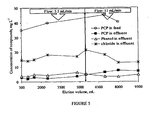
- the graph_ presents results related to dechlorination of PCP using the RCR in continuous flow mode. It may be seen that removal of PCP is close to 85-90% through out the study. pH of the effluent was -5.0. It is interesting to note that while ⁇ 90% PCP removal was achieved in 1 h reaction time in the batch mode, PCP removal in continuous flow mode is ⁇ 90% at HRT values of 1 h and 2 h. Thus efficiency of PCP dechlorination in continuous flow mode is slightly less than that of in batch mode under identical retention times. It may be noted that - 23 L of PCP solution could be treated in batch and continuous flow mode.
- Reaction conditions in continuous mode Liquid volume: 650 mL, initial PCP concentration: 40 mg L -1 , initial pH: 6.5, RPM: 8, HRT: 1 h and 2 h (flow: 11 mL/min and 5.5 mL/min).
Landscapes
- Chemical & Material Sciences (AREA)
- Life Sciences & Earth Sciences (AREA)
- Organic Chemistry (AREA)
- Engineering & Computer Science (AREA)
- Zoology (AREA)
- Wood Science & Technology (AREA)
- Microbiology (AREA)
- Hydrology & Water Resources (AREA)
- Bioinformatics & Cheminformatics (AREA)
- Water Supply & Treatment (AREA)
- Environmental & Geological Engineering (AREA)
- Chemical Kinetics & Catalysis (AREA)
- Genetics & Genomics (AREA)
- Health & Medical Sciences (AREA)
- Biochemistry (AREA)
- Biotechnology (AREA)
- General Chemical & Material Sciences (AREA)
- Biodiversity & Conservation Biology (AREA)
- General Engineering & Computer Science (AREA)
- General Health & Medical Sciences (AREA)
- Biomedical Technology (AREA)
- Inorganic Chemistry (AREA)
- Materials Engineering (AREA)
- Treatment Of Water By Oxidation Or Reduction (AREA)
- Immobilizing And Processing Of Enzymes And Microorganisms (AREA)
Description
- The present invention relates to use of palladized bacterial cellulose for reductive conversion reactions. More particularly it relates to the development, design and operation of the reactor comprising the palladized bacterial cellulose immobilized on a support for remediation of pollutants through these reactions.
- Industrial and domestic wastewaters require treatment before release into the surrounding environment. Multiple methods of waste water treatment systems involving abiotic and biotic processes are used for the same. Primary treatment involves physical removal of floating and suspended solids by filtration sedimentation, or floatation. Secondary treatment usually employs biological processes for the removal of dissolved impurities and other chemicals.
- Various types of reactors are employed for remediation of potable water and industrial waste water. A reactor is an enclosed device that provides specific conditions for mediating and controlling chemical/biochemical reactions. These systems usually employ chemicals or microorganisms as catalysts to catalyze the reactions. The type of reactors include batch reactors, plug flow reactors, continuous flow reactors, sequential reactors, etc.
- Abiotic reactors typically employ chemicals, radiation, high temperatures and pressures etc. for mediating reactions. There is increased potential for production of unwanted by-products, odors and corrosive gases. Also, the equipments and chemicals used may be expensive.
- A wide variety of advanced oxidation processes (AOPs) have been reported for the removal of recalcitrant pollutants, namely, chlorophenols that include photocatalysis, photooxidation by hydrogen peroxide (H2O2/UV) and ozone (O3/UV), Fenton's type reactions, wet oxidation, direct oxidation by ozone, chlorine etc. However advanced oxidation processes are non-selective and attack chlorinated and non-chlorinated compounds with equal potency. Thus for a waste stream containing substantial concentration of biodegradable in addition to not so easily biodegradable chlorinated compounds, AOPs may not be economical. AOPs are especially expensive for small and medium scale industrial units. Abiotic processes such as adsorption on activated carbon or other adsorbents, air stripping, reverse osmosis are also expensive and merely result in phase transfer and not destruction of chlorophenols. Reductive dechlorination by zero-valent metals such as Mg° or Fe° is very slow and often incomplete. On the other hand bimetallic systems such as Fe° /palladium or Mg° /palladium can achieve complete dechlorination of recalcitrant pollutants such as chlorophenols, DDT, DDD, DDE. However, advantages of such high reaction rate and efficiency, mild reaction conditions and requirement for minimal follow-up treatment will be defeated if reactor design does not permit reuse and recovery of precious catalysts such as palladium.
- Biological reactors employ microorganisms such as bacteria, fungi and algae to mediate transformation or degradation reactions. An important feature of a bioreactor is the ability of microbial cells to divide and reproduce. Very often the contents in the waste water itself serve as food to the microbes. However for industrial wastewaters (such as those discharged from chemical industries) easily biodegradable carbon source such as glucose and nutrients (sources of nitrogen and phosphorus) may need to be added to support growth of microorganisms and generate adequate quantity of biomass.
- Bioreactors can be classified as aerobic, anoxic or anaerobic type depending upon the environmental conditions provided. The mode of growth of microorganisms within bioreactors may be attached or suspended. In suspended growth systems, such as activated sludge process (aerobic bioreactor), the contaminated water is treated in an aeration tank where a suspended flocs of microbial population aerobically degrades organic matter and produces CO2, H2O, and new cells. In anaerobic reactors such as upflow anaerobic sludge blanket (UASB) reactor, the bacterial population form granules that settle rapidly in the reactor. In attached growth processes microorganisms are immobilized on the surface of support materials such as plastic, acrylic etc. Bioreactors are widely used for their economical benefits and find extensive applications for treatment of domestic and industrial (such as pharmaceutical) waste waters.
- Degradation of chlorinated pollutants by bacteria requires strict anaerobic conditions and very long acclimation (adaptation) period. Typically biological treatment of industrial discharges contaminated with chlorinated pollutants would require several days or weeks in anaerobic reactors. Concentration of the target pollutants and other conditions like pH, presence of salts and other co-pollutants and redox potential influences the efficiency of remediation. Methanogenic and sulfate reducing conditions (redox potential lower than - 300 mv) enhances reductive dechlorination but denitrifying conditions inhibits reductive dechlorination. A practical difficulty faced under field conditions is to provide favorable redox potential for reductive degradation of chlorinated pollutants. Aerobic degradation of chlorophenols like PCP involves ring cleavage prior to dechlorination and such products may be toxic. For example, the metabolite of aerobic biodegradation of pentachlorophenol, namely, tetrachlorohydroquinone is more toxic than pentachlorophenol.
- The limitation with bioreactors is the requirement of a growth medium at pH near neutral which contains biodegradable carbon source such as glucose or sucrose and nutrients (nitrogen and phosphate). Toxicity of the pollutants will either kill the bacterial cells or limits their growth (slow growth), and therefore require special design approaches. Low or very high ambient temperatures can significantly decrease biodegradation rates, resulting in increased maintenance time. Efficiency of bioreactors is reduced due to unwanted growth of problematic microorganisms that may preferentially colonize bioreactors. Disposal of resultant biosludge laden with adsorbed pollutants such as chlorinated compounds pose risk of ground water contamination due to leachate generation. Also incineration of the biosludge can lead to formation of toxic chlorinated dioxins. Air pollution controls may be required if there is volatilization of pollutants from bioreactors.
- Remediation of potable water and industrial waste waters mainly containing chlorinated pollutants such as DDT, DDD, DDE and pentachlorophenol (PCP) is possible through reductive degradation reactions that are mediated by systems employing palladium (such as magnesium/palladium) as the reducing catalyst. The major hurdle to the field scale application of reductive conversion reactions mediated by systems employing palladium as the reducing catalyst is that the expensive reducing catalyst, namely palladium is either lost with the treated effluent or remains in the reaction system with residual solids in irrecoverable and unusable form. Thus, immobilized palladium which can be recovered and reused is preferred.
- There are a number of commercially immobilized palladium catalysts available in the prior art. The choice of support material is extremely important and literature reveals various types of support materials like carbon, alumina, silica, zeolites, chitin, chitosan, amino acids and, metal oxides such as TiO2, MgO, ZrO2. Pd/C and Pd-alumina are some of the commercially available immobilized palladium catalysts. The main disadvantage of the present practice is expense, which precludes the field scale application. In addition there is no information on the application of these catalysts in reactors. Another disadvantage of the present practice is selectivity in action with respect to target pollutants. Also the catalytic activity and stability of immobilized palladium is strongly influenced by the type of support material used. It is also found that HCl is often released as the product of dehalogenation reaction and as a result of which the support materials are degraded and also undergo unwanted ion-exchange reaction with HCl leading to the loss of selectivity and activity of the catalyst. Thus, there is a need to explore alternative eco-friendly support materials for immobilizing palladium and design an indigenous reactor for reductive conversion reactions and for remediation of pollutant wastes.
-
US Patent No. 6986963 discloses employment of metallized bacterial cellulose in the construction of fuel cells and other electronic devices. The fuel cell includes an electrolytic membrane comprising of membrane support structure comprising of bacterial cellulose, an anode disposed on one side of the electrolytic membrane and a cathode disposed on an opposite side of the electrolytic membrane. The catalyst is disposed in or on the electrode support structure. However, the application ofUS patent no. 6986963 is in electrical and electronic device manufacture where in the metallized bacterial cellulose is used as electrode. This application does not teach the use of bacterial cellulose immobilized and palladized in situ for hydrogenation reactions. It also does not teach the design and development of the palladized bacterial cellulose in reactors. -
CA Patent No. 1156381 discloses a procedure for purifying wastewater containing chlorinated phenolic compounds. The purification is carried out biologically in a floating bed reactor which has been inoculated with a bacterial population decomposing chlorinated phenolic compounds. Microorganisms have disadvantages associated with their use. Requirement for a growth substrate further increased the costs of the purification. It was also found that toxic conditions affected survival of bacteria and reduced their activity. The present invention does not employ active microorganisms and thus tackles the limitations with biotic reactors. -
HU Patent No. 9802650 -
US 2007/0023356 A1 discloses a method and a system for wastewater treatment with a compact wastewater treatment plant comprising three or more bioreactors in series. -
JP 5317881 A - Further,
US 2006/0286434 A1 discloses an electrically conductive cellulose composite including a cellulose matrix and an electrically conductive carbonaceous material incorporated into the cellulose matrix. - In lieu of the advantages and disadvantages of processes available none of the treatment method posses all the desirable attributes such as high removal efficiency of chloroaromatic and chloroaliphatic pollutants, minimal follow-up treatment, economy, rapid rate of reaction and ease of operation. Clearly, there is a need for the design and development of an indigenous reactor that makes use of a highly efficient non-living catalyst such as palladium immobilized on an ecofriendly matrix for remediation of industrial discharges containing mixture of chlorinated pollutants. A robust, simple to operate and cost effective reactor that can mediate reductive conversion reactions in water containing toxic chlorinated pollutants such as PCP, DDT, DDD, DDE, chloroethylenes, chloroethanes or their mixture is the need of the hour.
- The present invention mediates reductive degradation of pentachlorophenol, tetrachlorophenols, trichlorophenols, dichlorophenols and monochlorophenols and their mixture, reductive degradation of aliphatic chlorinated compounds such as chloroethanes and chloroethylenes (trichloroethylene (TCE), perchloroethylene (PCE) which are common contaminants in ground water, reductive degradation of DDT, DDD, DDE to the hydrocarbon end product, diphenylethane.
- The present invention may also be applied for reduction of nitroaromatic compounds to amines (anilines). This is important since amine products such as anilines are industrially important intermediates for pharmaceuticals, polymers, herbicides, and other fine chemicals. Currently industries typically use zero valent iron for reduction of nitro groups to amines that is accompanied by the generation of huge quantity iron sludge (insoluble oxides of iron such as FeO, Fe2O3) that needs to be disposed. For example the rate of generation of iron sludge is - 1.7 ton/ton of H-acid (an important intermediate in the textile dye manufacturing industry) produced. Moreover the iron sludge contains significant concentration of amine mass. The process of reduction involves extensive operations such as separation of iron sludge from product, the washing of iron sludge and dewatering of iron sludge. In case of the reactor (RCCR) developed through this invention this operation is very simple or not required.
- In addition, the present invention is also useful in reductive decolorization of specific textile dyes (such as reactive black, drimarene dyes, remazole dyes), food colorants (such as sunset yellow and tartrazine). Currently there is no biological method that can decolorize mixture of dyes that are present in effluents discharged from textile dyeing mills. A specific microorganism can degrade only specific type of dye via the action of enzymes, azoreductases. Chemical oxidation processes such as ozonation and peroxidation are expensive for field scale application. Coagulation and flocculation processes generate chemical sludge which instigates disposal problems.
- The basic object of the present invention is to provide palladized bacterial cellulose which is an eco-friendly and inexpensive support material immobilized on acrylic disc as support for reductive conversion reactions.
- Another object of the present invention is to provide a simple procedure for immobilization of bacterial cellulose on to rotating discs in the reactor, and reduction and immobilization of palladium on to bacterial cellulose.
- Another object of the present invention is to provide a reactor employing bacterial cellulose impregnated with palladium immobilized on acrylic disc that is alternately exposed through rotation to liquid phase containing dissolved target pollutants and gaseous phase containing hydrogen for facilitating reductive conversion of pollutants.
- Yet another object of the present invention is to provide a contact reactor where no precautions are required to exclude oxygen from the reaction phase.
- One further object of the present invention is to provide a contact reactor with ability to tolerate adverse reaction conditions such as low pH and resist corrosion by HCl, a by product of hydrodehalogenation of chlorinated pollutants.
- One more object of the present invention is to provide a contact reactor with extensive reusability without appreciable loss of catalytic activity of the immobilized palladium.
- Further the object is to provide a reactor which provides flexibility of batch as well as continuous flow mode operation.
- The other object of the present invention is to provide for an attractive cost effective option for remediation of aqueous phase (potable water or industrial wastewater) contaminated with chlorinated pollutants such as PCP, DDT, chloroethylenes and chloroethanes or their mixture.
- A yet another object is to provide a reactor that can be employed for mediating reactions such as conversion of nitro aromatic compounds to amines and reductive decolourization of textile dyes.
- According to a broad aspect of the invention palladized bacterial cellulose immobilized on a support is provided for reductive conversion of pollutants in a reactor.
- According to another aspect of the invention is provided a process or method for effecting reductive conversion reactions in a reactor using the palladized bacterial cellulose.
- According to yet another aspect of the invention is provided a rotating catalytic contact reactor comprising acrylic discs rotated using magnetic drive on which bacterial cellulose is immobilized and palladized in-situ.
- A biogenic polymer namely bacterial cellulose was explored for its use as a support material for palladium. The major challenges of the invention were: design of a reactor in which bacterial cellulose could be easily immobilized on a support material and thereafter palladized in-situ; the reactor configuration must provide high surface area of palladized bacterial cellulose for hydrogenation reaction; ease of immobilization of the catalyst, palladium on bacterial cellulose; alternate exposure of palladized bacterial cellulose to liquid phase containing the chlorinated pollutant like PCP and gaseous phase containing molecular hydrogen. The third feature is only possible through rotation of the immobilized palladium via liquid and gaseous phase and was essential in view of the reaction mechanism that is involved in reductive degradation such as dechlorination of target pollutants. In the first step of the reaction, the target pollutant from the liquid phase is physically adsorbed onto the surface of the immobilized catalyst, palladium. In the next step, molecular hydrogen from the gaseous phase is dissociatively adsorbed onto palladium thereby generating highly reactive species of hydrogen (nascent hydrogen or palladium hydride) that mediate in-situ (on-site) reductive degradation of adsorbed target pollutants such as PCP, DDT, DDD or DDE. It may be noted that direct transfer of hydrogen from gaseous phase to immobilized palladium is important since the solubility of gas in aqueous phase is very low. A rotating catalytic contact reactor was developed as shown in
Figure 1 . This reactor consisted of 7 circular discs of 100 mm diameter providing total surface area of 1100 cm2. Effective volume of the reactor was ∼650 mL. The discs were rotated using a magnetic drive to avoid direct connection of motor. This mechanism ensured a leak proof reaction chamber. Bacterial cellulose film was deposited on the surface of circular plates of RCCR by introducing 650 mL of matured coconut water medium which was boiled, cooled and filtered through ordinary filter papers. - Sucrose, (65 g L-1) was dissolved in this coconut water to which 25 g L-1 acetic acid was added. The medium was inoculated with BC producing culture (isolated)). BC was allowed to deposit on the discs until film thickness of ∼2 mm was attained. Pre-treatment and palladization of BC was done. The growth solution was replaced with 1% NaOH and the discs were rotated for 24 h in NaOH solution, following which, the discs were washed thrice by water. Subsequently, 0.5 M sodium acetate (pH adjusted to 4.5 using acetic acid) solution was filled and discs were rotated in it for 2-3 h. Finally the discs were washed with water and incubated in 500 mL of 5 mM solution of K2PdCl6 prepared in 50 mM sodium acetate solution (pH 4.5) at 70-80°C. The entire set up was maintained until such time (5-6 h) that all the discs turned black in colour due to deposition of metallic palladium. Subsequently the palladized discs were washed in water to wash off the residual K2PdCl6 solution.
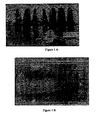
Figures 2 and3 show photographs of bacterial cellulose coated discs before and after palladization, respectively. - Culture capable of producing bacterial cellulose was isolated in laboratory as per the tradition followed in Philippines (except that orange residue was used instead of pineapple residue). Three cups of orange residue after extraction of juice, was mixed with 6 cups of water and 1 cup of sugar. The mixture was left undisturbed in a wide mouthed plastic utensil covered by a thin cloth for about a month. Soft, jelly like growth was observed on the sides of the utensil and on top of orange residue after 12-16 days. Once sufficient growth occurred, the jelly like growth was sliced into small pieces and used as the source of cellulose producing bacterial inoculum.
- A distinct feature of RCCR is that the palladized BC (PdBC) discs could be alternately exposed through rotation to liquid phase containing the dissolved target pollutants and gaseous phase containing hydrogen for facilitating reductive degradation. Direct transfer of hydrogen from gaseous phase to immobilized palladium is important since the solubility of gas in aqueous phase is very low.
- Dechlorination experiments were conducted in batch and continuous flow mode by introducing water (unbuffered medium) containing 40 mg L-1 PCP in the reactor. Hydrogen was continuously bubbled in the reactor. The reactor was maintained at room temperature (26°C -28°C) and RPM of 7-8 for all the dechlorination experiments. Rate of PCP dechlorination, formation of the hydrocarbon end product, phenol and release of chloride ions were monitored by analyzing aliquots of the reaction medium at various time points.
-
-
Figure 1 illustrates schematic diagram of rotating catalytic contact reactor (RCCR). The gaseous phase consisting of molecular hydrogen is passed through hydrogen inlet (1). The water containing chlorinated pollutants is introduced in to the reactor through feed inlet (2). The acrylic discs with palladized bacterial cellulose (3) are exposed alternatively to gaseous and aqueous phase by rotation using magnetic drive (4) and variable speed motor (5). There is provided a dry space in the reactor (7). Molecular hydrogen from the gaseous phase gets adsorbed on the palladized surface generating nascent hydrogen which mediates on-site reductive degradation of chlorinated pollutants in the feed. The treated water is let through a outlet (6) and the drains (8) and the vent hole (9) is for outlet of gases as shown in thefigure 1 . -
Figures 2A and 2B illustrate bacterial cellulose immobilized on serially arranged acrylic discs. -
Figures 3A and 3B illustrate immobilized bacterial cellulose after palladization. The black color indicates deposition of metallic palladium in bacterial cellulose immobilized on acrylic disc. -
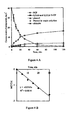
Figures 4A and 4B presents performance of the reactor operated in batch mode. Thefigure 4 A represents time course profile of PCP disappearance using RCCR in batch mode along with emergence profiles for free chloride and the hydrocarbon end product, namely phenol. More than 99% of 40 mg L-1 of PCP was removed following 2 h of reaction.Figure 4 B represents first order kinetic plot for the same. - The overall reaction is represented below:
C6OHCl5 (PCP) + PdxHy (palladium hydride) → C6H6O (phenol) + xPd° + 5HCl
Reaction conditions for batch mode: Liquid volume: 650 mL, initial PCP concentration: 40 mg L-1, initial pH: 5.5, RPM: 8, HRT: 2 h, PCP loading: 23.6 µg cm-2. -
Figure 5 represents performance of the reactor operated in continuous flow mode. The graph_presents results related to dechlorination of PCP using the RCR in continuous flow mode. It may be seen that removal of PCP is close to 85-90% through out the study. pH of the effluent was -5.0. It is interesting to note that while ≥ 90% PCP removal was achieved in 1 h reaction time in the batch mode, PCP removal in continuous flow mode is ≤ 90% at HRT values of 1 h and 2 h. Thus efficiency of PCP dechlorination in continuous flow mode is slightly less than that of in batch mode under identical retention times. It may be noted that - 23 L of PCP solution could be treated in batch and continuous flow mode. - Reaction conditions in continuous mode: Liquid volume: 650 mL, initial PCP concentration: 40 mg L-1, initial pH: 6.5, RPM: 8, HRT: 1 h and 2 h (flow: 11 mL/min and 5.5 mL/min).
Claims (9)
- A rotating catalytic contact reactor (7) for mediating reductive conversion reactions, comprising:- a plurality of discs (3) disposed inside a chamber of the reactor (7), and juxtaposed on a rotatable shaft of a drive means consisting of a variable speed motor (5) and a magnetic drive (4), the variable speed motor (5) being disposed outside the chamber of the reactor (7);- a first inlet (1) for passing a gaseous phase comprising molecular hydrogen inside the reactor (7);- a second inlet (2) for introducing water containing chlorinated pollutants;wherein the plurality of disc (3) comprising bacterial cellulose impregnated with palladium, and whereby the discs (3) are alternatively exposed to the gaseous phase and the aqueous phase through the rotation of the discs (3).
- The reactor (7) as claimed in claim 1, comprising an outlet (6) for allowing exit of the treated water.
- The reactor (7) as claimed in claim 1 or 2, comprising at least one drain (8) and a vent hole (9) for outlet of the gases.
- The reactor (7) as claimed in claim 1, wherein the plurality of discs (3) comprises acrylic discs.
- A method of treating dissolved target pollutants, method comprising the steps ofi. feeding untreated waste feed into at least one reactor vessel via the waste feed means;ii. palladized bacterial cellulose discs (3) alternately exposed through rotation to liquid phase containing the dissolved target pollutants and gaseous phase containing hydrogen for facilitating reductive conversioniii. hydrogen continuously bubbled in the reactor (7)iv. removal of treated feed and waste from the reactor vessel.
- Use of the process according to claim 5, for affecting reductive conversion reactions in a reactor (7) using the palladized bacterial cellulose immobilized on a support for reductive conversion reactions in a reactor (7).
- Use of the process according to claim 5, for affecting a continuous or intermittent treatment of pollutants in a reactor (7) using the palladized bacterial cellulose immobilized on a support for reductive conversion reactions in a reactor (7).
- Use of the process according to claim 5, for reductive decolourization of specific textile dyes using palladized bacterial cellulose discs (3).
- Use of the process according to claim 5, for reduction of nitro aromatic compounds to amines using palladized bacterial cellulose discs (3).
Applications Claiming Priority (2)
| Application Number | Priority Date | Filing Date | Title |
|---|---|---|---|
| IN691MU2007 | 2007-04-05 | ||
| PCT/IN2008/000213 WO2008122987A2 (en) | 2007-04-05 | 2008-04-02 | Reactor for reductive conversion reactions using palladized bacterial cellulose |
Publications (3)
| Publication Number | Publication Date |
|---|---|
| EP2134469A2 EP2134469A2 (en) | 2009-12-23 |
| EP2134469A4 EP2134469A4 (en) | 2012-04-11 |
| EP2134469B1 true EP2134469B1 (en) | 2013-07-10 |
Family
ID=39831490
Family Applications (1)
| Application Number | Title | Priority Date | Filing Date |
|---|---|---|---|
| EP20080738400 Not-in-force EP2134469B1 (en) | 2007-04-05 | 2008-04-02 | Reactor for reductive conversion reactions using palladized bacterial cellulose |
Country Status (3)
| Country | Link |
|---|---|
| US (1) | US8496837B2 (en) |
| EP (1) | EP2134469B1 (en) |
| WO (1) | WO2008122987A2 (en) |
Families Citing this family (10)
| Publication number | Priority date | Publication date | Assignee | Title |
|---|---|---|---|---|
| US8277657B2 (en) * | 2008-08-08 | 2012-10-02 | University Of Massachusetts | Systems and methods for microbial reductive dechlorination of environmental contaminants |
| US20120273431A1 (en) | 2009-09-18 | 2012-11-01 | The Texas A&M University System | Zero valent iron/iron oxide mineral/ferrous iron composite for treatment of a contaminate fluid |
| US10377648B2 (en) | 2009-09-18 | 2019-08-13 | The Texas A&M University System | Selenium removal using aluminum salt at conditioning and reaction stages to activate zero-valent iron (ZVI) in pironox process |
| US11084742B2 (en) | 2014-12-19 | 2021-08-10 | The Texas A&M University System | Activated hybrid zero-valent iron treatment system and methods for generation and use thereof |
| US10729994B2 (en) * | 2015-12-03 | 2020-08-04 | Veolia Water Solutions & Technologies Support | Rotary disc filter |
| CN108298682B (en) * | 2018-01-31 | 2021-01-19 | 大连理工大学 | A Novel Anaerobic Membrane Electrobiological Treatment Process for Low-strength Organic Wastewater |
| US11000791B2 (en) * | 2019-03-06 | 2021-05-11 | Veolia Water Solutions & Technologies Support | Rotary disc filter having backwash guides |
| CN112551644B (en) * | 2020-11-30 | 2022-02-22 | 东北林业大学 | Preparation method of palladium-cellulose membrane capable of synchronizing emulsion separation and dye degradation |
| CN113651395A (en) * | 2021-08-25 | 2021-11-16 | 鱼多康(广州)生物科技有限公司 | Preparation method of electrode for photoelectric combined catalytic water purifier in aquatic product field |
| CN119368114B (en) * | 2024-10-25 | 2025-11-14 | 江苏科技大学 | A Marangoni hydrogel reactor with high mass transfer efficiency, its preparation method and application |
Family Cites Families (12)
| Publication number | Priority date | Publication date | Assignee | Title |
|---|---|---|---|---|
| JPS55127124A (en) | 1979-03-22 | 1980-10-01 | Mitsubishi Rayon Co Ltd | Hydrogen permeable combined filter and hydrogen gas separator |
| FI793914A7 (en) | 1979-12-13 | 1981-06-14 | Enso Gutzeit Oy | FOERFARANDE FOER ATT RENA AVLOPPSVATTEN VID SVAEVLAGERREAKTOR |
| JPH05317881A (en) * | 1992-05-27 | 1993-12-03 | Kurita Water Ind Ltd | Denitrification method |
| US5955326A (en) * | 1995-08-01 | 1999-09-21 | Rensselaer Polytechnic Institute | Production of microbial cellulose using a rotating disk film bioreactor |
| HUP9802650A2 (en) | 1998-11-16 | 2002-01-28 | József Bitskey | Method and apparatus for removing of nitrate contain of water |
| US6336561B1 (en) * | 1999-06-11 | 2002-01-08 | John Michael Kossik | Disposable rotary drum filter |
| DE19952732A1 (en) * | 1999-10-27 | 2001-05-10 | Ufz Leipzighalle Gmbh | Reductive dehalogenation of organo-halogen compounds in water, by catalytic reaction with hydrogen using a noble metal catalyst together with a protecting and supporting polymer membrane |
| US6986963B2 (en) | 2001-12-14 | 2006-01-17 | Ut-Battelle Llc | Metallization of bacterial cellulose for electrical and electronic device manufacture |
| US6835311B2 (en) | 2002-01-31 | 2004-12-28 | Koslow Technologies Corporation | Microporous filter media, filtration systems containing same, and methods of making and using |
| US7083720B2 (en) * | 2004-05-19 | 2006-08-01 | Gary Miller | Variously configurable rotating biological contactor and prefabricated components therefor |
| CA2550018C (en) * | 2005-06-09 | 2015-08-04 | Manuel Alvarez Cuenca | Active biological contactor (abc): a modular wastewater treatment system |
| US7709133B2 (en) | 2005-06-15 | 2010-05-04 | Ut-Battelle, Llc | Electrically conductive cellulose composite |
-
2008
- 2008-04-02 US US12/594,748 patent/US8496837B2/en not_active Expired - Fee Related
- 2008-04-02 WO PCT/IN2008/000213 patent/WO2008122987A2/en not_active Ceased
- 2008-04-02 EP EP20080738400 patent/EP2134469B1/en not_active Not-in-force
Also Published As
| Publication number | Publication date |
|---|---|
| WO2008122987A2 (en) | 2008-10-16 |
| WO2008122987A9 (en) | 2013-05-23 |
| EP2134469A2 (en) | 2009-12-23 |
| EP2134469A4 (en) | 2012-04-11 |
| WO2008122987A3 (en) | 2009-02-26 |
| US8496837B2 (en) | 2013-07-30 |
| US20100126945A1 (en) | 2010-05-27 |
Similar Documents
| Publication | Publication Date | Title |
|---|---|---|
| US8496837B2 (en) | Reactor for reductive conversion reactions using palladized bacterial cellulose | |
| Chandran et al. | Biological treatment solutions using bioreactors for environmental contaminants from industrial waste water | |
| TWI594957B (en) | Method of removing recalcitrant organic pollutants | |
| Wang et al. | Hazardous waste treatment technologies | |
| Ahmad et al. | Appraising efficacy of existing and advanced technologies for the remediation of beta-blockers from wastewater: A review | |
| Enzminger et al. | Treatment of landfill leachates | |
| Liu et al. | Integrated biological and electrochemical oxidation treatment for high toxicity pesticide pollutant | |
| El-Naas et al. | Microbial degradation of chlorophenols | |
| Al-Rashed et al. | Nitrate removal from drinking water using different reactor/membrane types: A comprehensive review | |
| Al-Khalid et al. | Organic contaminants in industrial wastewater: prospects of waste management by integrated approaches | |
| Darweesh et al. | Biotechnology for green future of wastewater treatment | |
| Priyadarshini et al. | Hybrid treatment solutions for removal of micropollutant from wastewaters | |
| Prasad et al. | A comprehensive review on sustainable removal of micropollutants in wastewater by micro-biotechnological approaches with special reference to microbial associated nanoparticles | |
| Bhatia et al. | Revolutionizing dairy waste: emerging solutions in conjunction with microbial engineering | |
| Radha Thirumalaiarasu et al. | Development of various strategies for the removal of phenol pollutant | |
| Parida et al. | Green technology for the treatment of wastewater using microbes | |
| Nagda et al. | Current treatment technologies available for different types of wastewater | |
| Kumar et al. | A recent advancement on treatment technologies for handling of pharma waste water | |
| Shukla et al. | Analysis of Chemical-Biological and Physical-Biological Hybrid Systems for Wastewater Treatment Utilizing Aeration and Ozonation | |
| Hassan et al. | Promising routes and techniques for emerging contaminants degradation | |
| TIRINK | Treatment of wastewater containing azo dyes by combined processes | |
| Said et al. | Membranes for the Removal of Endocrine Disrupting Compounds from Aqueous Environments | |
| Juneja et al. | Integrated and hybrid bioelectrochemical systems (BES) for wastewater treatment | |
| Langbehn et al. | Treatment approaches for emerging contaminants in sludge and wastewater | |
| El-Liethy et al. | Decolorization and detoxification of real textile dyes wastewater using free and immobilized indigenous bacterial consortium in semi-pilot scale |
Legal Events
| Date | Code | Title | Description |
|---|---|---|---|
| PUAI | Public reference made under article 153(3) epc to a published international application that has entered the european phase |
Free format text: ORIGINAL CODE: 0009012 |
|
| 17P | Request for examination filed |
Effective date: 20091013 |
|
| AK | Designated contracting states |
Kind code of ref document: A2 Designated state(s): AT BE BG CH CY CZ DE DK EE ES FI FR GB GR HR HU IE IS IT LI LT LU LV MC MT NL NO PL PT RO SE SI SK TR |
|
| A4 | Supplementary search report drawn up and despatched |
Effective date: 20120312 |
|
| RIC1 | Information provided on ipc code assigned before grant |
Ipc: C12P 19/04 20060101ALI20120306BHEP Ipc: C12N 11/14 20060101ALI20120306BHEP Ipc: C02F 1/70 20060101ALI20120306BHEP Ipc: C02F 3/10 20060101ALI20120306BHEP Ipc: B01J 23/44 20060101AFI20120306BHEP Ipc: C02F 3/08 20060101ALI20120306BHEP |
|
| DAX | Request for extension of the european patent (deleted) | ||
| GRAP | Despatch of communication of intention to grant a patent |
Free format text: ORIGINAL CODE: EPIDOSNIGR1 |
|
| RIC1 | Information provided on ipc code assigned before grant |
Ipc: C02F 3/08 20060101ALI20121206BHEP Ipc: C12N 11/14 20060101ALI20121206BHEP Ipc: C12P 19/04 20060101ALI20121206BHEP Ipc: C02F 3/10 20060101ALI20121206BHEP Ipc: C02F 1/70 20060101ALI20121206BHEP Ipc: B01J 23/44 20060101AFI20121206BHEP |
|
| GRAS | Grant fee paid |
Free format text: ORIGINAL CODE: EPIDOSNIGR3 |
|
| GRAP | Despatch of communication of intention to grant a patent |
Free format text: ORIGINAL CODE: EPIDOSNIGR1 |
|
| GRAA | (expected) grant |
Free format text: ORIGINAL CODE: 0009210 |
|
| INTG | Intention to grant announced |
Effective date: 20130528 |
|
| AK | Designated contracting states |
Kind code of ref document: B1 Designated state(s): AT BE BG CH CY CZ DE DK EE ES FI FR GB GR HR HU IE IS IT LI LT LU LV MC MT NL NO PL PT RO SE SI SK TR |
|
| REG | Reference to a national code |
Ref country code: GB Ref legal event code: FG4D |
|
| REG | Reference to a national code |
Ref country code: AT Ref legal event code: REF Ref document number: 620614 Country of ref document: AT Kind code of ref document: T Effective date: 20130715 Ref country code: CH Ref legal event code: EP |
|
| REG | Reference to a national code |
Ref country code: IE Ref legal event code: FG4D |
|
| REG | Reference to a national code |
Ref country code: DE Ref legal event code: R096 Ref document number: 602008025906 Country of ref document: DE Effective date: 20130905 |
|
| PG25 | Lapsed in a contracting state [announced via postgrant information from national office to epo] |
Ref country code: SI Free format text: LAPSE BECAUSE OF FAILURE TO SUBMIT A TRANSLATION OF THE DESCRIPTION OR TO PAY THE FEE WITHIN THE PRESCRIBED TIME-LIMIT Effective date: 20130710 |
|
| REG | Reference to a national code |
Ref country code: AT Ref legal event code: MK05 Ref document number: 620614 Country of ref document: AT Kind code of ref document: T Effective date: 20130710 |
|
| REG | Reference to a national code |
Ref country code: NL Ref legal event code: VDEP Effective date: 20130710 |
|
| REG | Reference to a national code |
Ref country code: LT Ref legal event code: MG4D |
|
| PG25 | Lapsed in a contracting state [announced via postgrant information from national office to epo] |
Ref country code: CY Free format text: LAPSE BECAUSE OF FAILURE TO SUBMIT A TRANSLATION OF THE DESCRIPTION OR TO PAY THE FEE WITHIN THE PRESCRIBED TIME-LIMIT Effective date: 20130814 Ref country code: AT Free format text: LAPSE BECAUSE OF FAILURE TO SUBMIT A TRANSLATION OF THE DESCRIPTION OR TO PAY THE FEE WITHIN THE PRESCRIBED TIME-LIMIT Effective date: 20130710 Ref country code: NO Free format text: LAPSE BECAUSE OF FAILURE TO SUBMIT A TRANSLATION OF THE DESCRIPTION OR TO PAY THE FEE WITHIN THE PRESCRIBED TIME-LIMIT Effective date: 20131010 Ref country code: SE Free format text: LAPSE BECAUSE OF FAILURE TO SUBMIT A TRANSLATION OF THE DESCRIPTION OR TO PAY THE FEE WITHIN THE PRESCRIBED TIME-LIMIT Effective date: 20130710 Ref country code: PT Free format text: LAPSE BECAUSE OF FAILURE TO SUBMIT A TRANSLATION OF THE DESCRIPTION OR TO PAY THE FEE WITHIN THE PRESCRIBED TIME-LIMIT Effective date: 20131111 Ref country code: IS Free format text: LAPSE BECAUSE OF FAILURE TO SUBMIT A TRANSLATION OF THE DESCRIPTION OR TO PAY THE FEE WITHIN THE PRESCRIBED TIME-LIMIT Effective date: 20131110 Ref country code: LT Free format text: LAPSE BECAUSE OF FAILURE TO SUBMIT A TRANSLATION OF THE DESCRIPTION OR TO PAY THE FEE WITHIN THE PRESCRIBED TIME-LIMIT Effective date: 20130710 Ref country code: BE Free format text: LAPSE BECAUSE OF FAILURE TO SUBMIT A TRANSLATION OF THE DESCRIPTION OR TO PAY THE FEE WITHIN THE PRESCRIBED TIME-LIMIT Effective date: 20130710 Ref country code: HR Free format text: LAPSE BECAUSE OF FAILURE TO SUBMIT A TRANSLATION OF THE DESCRIPTION OR TO PAY THE FEE WITHIN THE PRESCRIBED TIME-LIMIT Effective date: 20130710 |
|
| PG25 | Lapsed in a contracting state [announced via postgrant information from national office to epo] |
Ref country code: LV Free format text: LAPSE BECAUSE OF FAILURE TO SUBMIT A TRANSLATION OF THE DESCRIPTION OR TO PAY THE FEE WITHIN THE PRESCRIBED TIME-LIMIT Effective date: 20130710 Ref country code: GR Free format text: LAPSE BECAUSE OF FAILURE TO SUBMIT A TRANSLATION OF THE DESCRIPTION OR TO PAY THE FEE WITHIN THE PRESCRIBED TIME-LIMIT Effective date: 20131011 Ref country code: ES Free format text: LAPSE BECAUSE OF FAILURE TO SUBMIT A TRANSLATION OF THE DESCRIPTION OR TO PAY THE FEE WITHIN THE PRESCRIBED TIME-LIMIT Effective date: 20131021 Ref country code: FI Free format text: LAPSE BECAUSE OF FAILURE TO SUBMIT A TRANSLATION OF THE DESCRIPTION OR TO PAY THE FEE WITHIN THE PRESCRIBED TIME-LIMIT Effective date: 20130710 Ref country code: PL Free format text: LAPSE BECAUSE OF FAILURE TO SUBMIT A TRANSLATION OF THE DESCRIPTION OR TO PAY THE FEE WITHIN THE PRESCRIBED TIME-LIMIT Effective date: 20130710 Ref country code: NL Free format text: LAPSE BECAUSE OF FAILURE TO SUBMIT A TRANSLATION OF THE DESCRIPTION OR TO PAY THE FEE WITHIN THE PRESCRIBED TIME-LIMIT Effective date: 20130710 |
|
| PG25 | Lapsed in a contracting state [announced via postgrant information from national office to epo] |
Ref country code: CY Free format text: LAPSE BECAUSE OF FAILURE TO SUBMIT A TRANSLATION OF THE DESCRIPTION OR TO PAY THE FEE WITHIN THE PRESCRIBED TIME-LIMIT Effective date: 20130710 |
|
| PG25 | Lapsed in a contracting state [announced via postgrant information from national office to epo] |
Ref country code: EE Free format text: LAPSE BECAUSE OF FAILURE TO SUBMIT A TRANSLATION OF THE DESCRIPTION OR TO PAY THE FEE WITHIN THE PRESCRIBED TIME-LIMIT Effective date: 20130710 Ref country code: RO Free format text: LAPSE BECAUSE OF FAILURE TO SUBMIT A TRANSLATION OF THE DESCRIPTION OR TO PAY THE FEE WITHIN THE PRESCRIBED TIME-LIMIT Effective date: 20130710 Ref country code: CZ Free format text: LAPSE BECAUSE OF FAILURE TO SUBMIT A TRANSLATION OF THE DESCRIPTION OR TO PAY THE FEE WITHIN THE PRESCRIBED TIME-LIMIT Effective date: 20130710 Ref country code: DK Free format text: LAPSE BECAUSE OF FAILURE TO SUBMIT A TRANSLATION OF THE DESCRIPTION OR TO PAY THE FEE WITHIN THE PRESCRIBED TIME-LIMIT Effective date: 20130710 Ref country code: SK Free format text: LAPSE BECAUSE OF FAILURE TO SUBMIT A TRANSLATION OF THE DESCRIPTION OR TO PAY THE FEE WITHIN THE PRESCRIBED TIME-LIMIT Effective date: 20130710 |
|
| PLBE | No opposition filed within time limit |
Free format text: ORIGINAL CODE: 0009261 |
|
| STAA | Information on the status of an ep patent application or granted ep patent |
Free format text: STATUS: NO OPPOSITION FILED WITHIN TIME LIMIT |
|
| PG25 | Lapsed in a contracting state [announced via postgrant information from national office to epo] |
Ref country code: IT Free format text: LAPSE BECAUSE OF FAILURE TO SUBMIT A TRANSLATION OF THE DESCRIPTION OR TO PAY THE FEE WITHIN THE PRESCRIBED TIME-LIMIT Effective date: 20130710 |
|
| 26N | No opposition filed |
Effective date: 20140411 |
|
| REG | Reference to a national code |
Ref country code: DE Ref legal event code: R097 Ref document number: 602008025906 Country of ref document: DE Effective date: 20140411 |
|
| PG25 | Lapsed in a contracting state [announced via postgrant information from national office to epo] |
Ref country code: LU Free format text: LAPSE BECAUSE OF FAILURE TO SUBMIT A TRANSLATION OF THE DESCRIPTION OR TO PAY THE FEE WITHIN THE PRESCRIBED TIME-LIMIT Effective date: 20140402 Ref country code: MC Free format text: LAPSE BECAUSE OF FAILURE TO SUBMIT A TRANSLATION OF THE DESCRIPTION OR TO PAY THE FEE WITHIN THE PRESCRIBED TIME-LIMIT Effective date: 20130710 |
|
| REG | Reference to a national code |
Ref country code: CH Ref legal event code: PL |
|
| REG | Reference to a national code |
Ref country code: IE Ref legal event code: MM4A |
|
| PG25 | Lapsed in a contracting state [announced via postgrant information from national office to epo] |
Ref country code: CH Free format text: LAPSE BECAUSE OF NON-PAYMENT OF DUE FEES Effective date: 20140430 Ref country code: LI Free format text: LAPSE BECAUSE OF NON-PAYMENT OF DUE FEES Effective date: 20140430 |
|
| PG25 | Lapsed in a contracting state [announced via postgrant information from national office to epo] |
Ref country code: IE Free format text: LAPSE BECAUSE OF NON-PAYMENT OF DUE FEES Effective date: 20140402 |
|
| PG25 | Lapsed in a contracting state [announced via postgrant information from national office to epo] |
Ref country code: MT Free format text: LAPSE BECAUSE OF FAILURE TO SUBMIT A TRANSLATION OF THE DESCRIPTION OR TO PAY THE FEE WITHIN THE PRESCRIBED TIME-LIMIT Effective date: 20130710 |
|
| REG | Reference to a national code |
Ref country code: FR Ref legal event code: PLFP Year of fee payment: 9 |
|
| PG25 | Lapsed in a contracting state [announced via postgrant information from national office to epo] |
Ref country code: BG Free format text: LAPSE BECAUSE OF FAILURE TO SUBMIT A TRANSLATION OF THE DESCRIPTION OR TO PAY THE FEE WITHIN THE PRESCRIBED TIME-LIMIT Effective date: 20130710 |
|
| PG25 | Lapsed in a contracting state [announced via postgrant information from national office to epo] |
Ref country code: HU Free format text: LAPSE BECAUSE OF FAILURE TO SUBMIT A TRANSLATION OF THE DESCRIPTION OR TO PAY THE FEE WITHIN THE PRESCRIBED TIME-LIMIT; INVALID AB INITIO Effective date: 20080402 Ref country code: TR Free format text: LAPSE BECAUSE OF FAILURE TO SUBMIT A TRANSLATION OF THE DESCRIPTION OR TO PAY THE FEE WITHIN THE PRESCRIBED TIME-LIMIT Effective date: 20130710 |
|
| PGFP | Annual fee paid to national office [announced via postgrant information from national office to epo] |
Ref country code: DE Payment date: 20160205 Year of fee payment: 9 Ref country code: GB Payment date: 20160422 Year of fee payment: 9 |
|
| PGFP | Annual fee paid to national office [announced via postgrant information from national office to epo] |
Ref country code: FR Payment date: 20160422 Year of fee payment: 9 |
|
| REG | Reference to a national code |
Ref country code: DE Ref legal event code: R119 Ref document number: 602008025906 Country of ref document: DE |
|
| GBPC | Gb: european patent ceased through non-payment of renewal fee |
Effective date: 20170402 |
|
| REG | Reference to a national code |
Ref country code: FR Ref legal event code: ST Effective date: 20171229 |
|
| PG25 | Lapsed in a contracting state [announced via postgrant information from national office to epo] |
Ref country code: DE Free format text: LAPSE BECAUSE OF NON-PAYMENT OF DUE FEES Effective date: 20171103 Ref country code: FR Free format text: LAPSE BECAUSE OF NON-PAYMENT OF DUE FEES Effective date: 20170502 |
|
| PG25 | Lapsed in a contracting state [announced via postgrant information from national office to epo] |
Ref country code: GB Free format text: LAPSE BECAUSE OF NON-PAYMENT OF DUE FEES Effective date: 20170402 |