EP2134119A1 - Method and a device for deciding if the operating mode of a telecommunication device has to be switched into a different operating mode - Google Patents
Method and a device for deciding if the operating mode of a telecommunication device has to be switched into a different operating mode Download PDFInfo
- Publication number
- EP2134119A1 EP2134119A1 EP08158037A EP08158037A EP2134119A1 EP 2134119 A1 EP2134119 A1 EP 2134119A1 EP 08158037 A EP08158037 A EP 08158037A EP 08158037 A EP08158037 A EP 08158037A EP 2134119 A1 EP2134119 A1 EP 2134119A1
- Authority
- EP
- European Patent Office
- Prior art keywords
- telecommunication device
- terminal
- telecommunication
- operating mode
- access node
- Prior art date
- Legal status (The legal status is an assumption and is not a legal conclusion. Google has not performed a legal analysis and makes no representation as to the accuracy of the status listed.)
- Withdrawn
Links
Images

Classifications
-
- H—ELECTRICITY
- H04—ELECTRIC COMMUNICATION TECHNIQUE
- H04W—WIRELESS COMMUNICATION NETWORKS
- H04W88/00—Devices specially adapted for wireless communication networks, e.g. terminals, base stations or access point devices
- H04W88/08—Access point devices
- H04W88/10—Access point devices adapted for operation in multiple networks, e.g. multi-mode access points
-
- H—ELECTRICITY
- H04—ELECTRIC COMMUNICATION TECHNIQUE
- H04W—WIRELESS COMMUNICATION NETWORKS
- H04W16/00—Network planning, e.g. coverage or traffic planning tools; Network deployment, e.g. resource partitioning or cells structures
- H04W16/24—Cell structures
- H04W16/32—Hierarchical cell structures
-
- H—ELECTRICITY
- H04—ELECTRIC COMMUNICATION TECHNIQUE
- H04W—WIRELESS COMMUNICATION NETWORKS
- H04W84/00—Network topologies
- H04W84/02—Hierarchically pre-organised networks, e.g. paging networks, cellular networks, WLAN [Wireless Local Area Network] or WLL [Wireless Local Loop]
- H04W84/04—Large scale networks; Deep hierarchical networks
- H04W84/042—Public Land Mobile systems, e.g. cellular systems
- H04W84/045—Public Land Mobile systems, e.g. cellular systems using private Base Stations, e.g. femto Base Stations, home Node B
Definitions
- the present invention relates generally to a method and a device for deciding if the operating mode of a telecommunication device has to be switched in a different operating mode.
- Local area networks like for example WIFI wireless networks are widely used today.
- That overlapping generates interferences in each of the wireless networks and reduces the performances of these wireless networks.
- Wireless cellular telecommunication networks evolve a lot. Some years ago, an access node of the wireless cellular telecommunication network was managing a cell having a radius of several dozen kilometres.
- wireless cellular telecommunication networks are composed of these cells, named macro cells, of micro cells having a radius of several hundreds meters and of femto-cells having a radius of several dozen meters.
- a moving terminal can potentially handover to an access node for a small time scale, leading to a drastic increase of the signalling load.
- the interference level produced by the transmission of signals by a lot of active access nodes in a limited area will also degrade the link-level performance and may reduce the coverage.
- the present invention aims at improving the operation of wireless telecommunication networks when the coverage areas of access nodes overlap each other or aims at avoiding that an important signalling occurs in the wireless telecommunication networks.
- the present invention concerns a method for deciding if a telecommunication device has to be switched in an operating mode which is different from the operating mode in which the telecommunication is operating, the telecommunication device transferring radio signals to a terminal of a wireless telecommunication network, characterised in that in an operating mode, the telecommunication device relays signals transferred between the terminal and an access node, the access node handling the terminal and in another operating mode, the telecommunication device handles the terminal, and the method comprises the steps of:
- the present invention also concerns a management entity which decides if a telecommunication device has to be switched in an operating mode which is different from the operating mode in which the telecommunication is operating, the telecommunication device transferring radio signals to a terminal of a wireless telecommunication network, characterised in that in an operating mode, the telecommunication device relays signals transferred between the terminal and an access node, the access node handling the terminal and in another operating mode, the telecommunication device handles the terminal, the management entity comprises:
- the telecommunication device may solve the problem of dead zones by relaying the signals transferred by an access node.
- the telecommunication device when the telecommunication device is in the relay operation mode for a terminal, it does not handle the terminal, avoiding then possible handover and extra signalling on the network side.
- the coverage area of the switched telecommunication device and the coverage area of the telecommunication device which handles the terminal forms then a single coverage area of the telecommunication device which handles the terminal as the switched telecommunication device is no more considered as an access node.
- the single coverage area size is increased and interferences are reduced.
- the operating mode in which the telecommunication is operating is the operating mode in which the telecommunication device relays signals transferred between the terminal and the access node.
- the operating mode in which the telecommunication is operating is the operating mode in which the telecommunication device handles the terminal.
- the number of telecommunication devices which are in an operation mode in which the telecommunication device handles the terminal can be controlled.
- the management entity the management entity:
- the telecommunication devices which are in the operation mode in which the telecommunication devices relay signals transferred between the terminal and the access node are selected according to environment information.
- the management entity decides that the telecommunication device has to switch in a different operating mode in which the telecommunication device stops to transfer signals to the terminal.
- the obtained information used for determining if the predetermined event occurs is the interference level measured by the telecommunication device and/or is a measurement on the signals transferred by the terminal and/or is the location of the telecommunication device and/or is the location of the terminal and/or is the available resource of the telecommunication in one or each operating mode and/or is measurement on the signals received by the terminal and/or is an information linking the terminal and the telecommunication device and/or is a time duration.
- the present invention can detect cases wherein telecommunication devices interfere each other or when the signals transferred by the access node are interfered.
- the management entity can then decide the operation mode of the telecommunication device according to that parameter.
- the management entity can evaluate the communication link conditions between the telecommunication device and the terminal, evaluate the distance between the telecommunication device and the terminal. The management entity can then decide the operation mode of the telecommunication device according to these parameters.
- the management entity can determine if a switch of the telecommunication device may improve the wireless telecommunication network characteristics.
- the management entity can determine if a switch of the telecommunication device may improve the communication link with the terminal.
- the management entity can efficiently manage the resources allocated in one or each operating mode and determine if a switch of the telecommunication device is possible.
- the management entity For example, if the holder of the telecommunication device defines an amount of resources which can be used for relaying and/or handling terminals, that amount is taken into account by the management entity.
- the management entity can evaluate the communication link conditions between the telecommunication device and the terminal. The management entity can then decide the operation mode of the telecommunication device according to that parameter.
- the management entity can control which terminal can be handled by the telecommunication device.
- the management entity may determine that the terminal is not moving and in that it is favourable to switch the telecommunication device in the operation mode in which the telecommunication device handles the terminal as far as the probability is low that another handover may be needed.
- the management entity is included in the access node or in the or each telecommunication device or is not included in the access node nor in the or each telecommunication device.
- wireless telecommunication network is a wireless cellular telecommunication network.
- the management entity prior to the decision that the handover of the terminal has to be conducted from the access node which handles the mobile terminal to the telecommunication device, the management entity obtains an information from the telecommunication device indicating if the telecommunication device can handle the terminal.
- the method comprises further step of deciding, according to previous switches of operating modes that the telecommunication device has to switch in the operating mode in which the telecommunication device relays signals transferred between the terminal and the access node.
- the telecommunication device when the telecommunication device is located in a dead zone, it still contributes to reduce that dead zone once a handover is executed.
- the decision, according to previous switches of operating modes is executed by the management entity or by the telecommunication device.
- the present invention concerns a method for switching a telecommunication device in an operating mode which is different from the operating mode in which the telecommunication is operating, the telecommunication device transferring radio signals to a terminal of a wireless telecommunication network, characterised in that in an operating mode, the telecommunication device relays signals transferred between the terminal and an access node, the access node handling the terminal and in another operating mode, the telecommunication device handles the terminal, and in that the method comprises the steps executed by the telecommunication device of:
- the present invention also concerns a telecommunication device which transfers radio signals to a terminal of a wireless telecommunication network, the telecommunication device being able to operate in two operation modes, characterised in that in an operating mode, the telecommunication device relays signals transferred between the terminal and an access node, the access node handling the terminal and in another operating mode, the telecommunication device handles the terminal, and in that the telecommunication device comprises:
- the telecommunication device may solve the problem of dead zones by relaying the signals transferred by an access node.
- the telecommunication device when the telecommunication device is in the relay operation mode for a terminal, it does not handle the terminal, avoiding then possible handover and extra signalling on the network side.
- the coverage area of the switched telecommunication device and the coverage area of the telecommunication device which handles the terminal forms then a single coverage area of the telecommunication device which handles the terminal as the switched telecommunication device can no more be considered as a telecommunication device which may handle the terminal.
- the single coverage area size is increased and interferences are reduced.
- the present invention concerns a computer program which can be directly loadable into a programmable device, comprising instructions or portions of code for implementing the steps of the method according to the invention, when said computer program is executed on a programmable device.
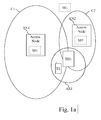
- Fig. 1a represents the architecture of a wireless cellular telecommunication network in which the present invention is implemented.
- two access nodes AN1 and AN2 transfer signals in their respective cells C1 and C2.
- the access nodes AN are also named base stations or nodes B or enhanced nodes B.
- An access node AN1 or AN2 handles a terminal TE when the access node AN1 or AN2 has the information necessary for enabling the terminal TE to establish a communication with a remote device through the access node AN1 or AN2.
- Each access node AN1 or AN2 transfers signals to a terminal TE through a downlink channel and receives signals transferred by the terminal TE through an uplink channel.
- the telecommunication device TD1 transfers signals in the area AR1.
- the telecommunication device TD1 acts in a first mode of operation like an access node, for example like a femto-base station and in a second mode of operation as a relay.
- Each access node AN and telecommunication device TD are connected through a telecommunication network not shown in the Fig. 1 in order to form the wireless cellular telecommunication network.
- the telecommunication network is a dedicated wired network or a public network like a public switched network or an IP based network or a wireless network or an Asynchronous Transfer Mode network or a combination of above cited networks.
- the first mode of operation of the telecommunication device TD consists of handling a terminal TE i.e. the telecommunication device TD1 handles a terminal TE when the telecommunication device TD1 has the information necessary for enabling the terminal TE to establish a communication with a remote device through the telecommunication device TD1.
- the second mode of operation consists of relaying signals transferred between the terminal TE and the access node AN which handles the terminal TE.
- the telecommunication device TD1 When the telecommunication device TD1 acts as a relay, it receives signals transferred by the access node AN1 or AN2 which handles the terminal TE in the downlink channel and transfers these signals to the terminal TE through the downlink channel. The telecommunication device TD1 receives signals transferred by the terminal TE through the uplink channel and transfers these signals in the uplink channel to the access node AN1 or AN2 which handles the terminal TE.
- the telecommunication device TD1 instead of receiving signals in the downlink channel and transferring signals in the uplink channel, the telecommunication device TD1 receives and transfers these signals through a non radio communication link between the access node AN1 or AN2 which handles the terminal TE and the telecommunication device TD1.
- the non radio communication link is established in a telecommunication network like a dedicated wired network or a public network like a public switched network or an IP based network or a wireless network or an Asynchronous Transfer Mode network or a combination of above cited networks.
- the telecommunication device TD1 may be, for at least one terminal TE, in the handling mode of operation and may be, for at least one other terminal TE, in the relay mode of operation.
- a management entity ME is shown.
- the management entity ME is included in at least one access node AN.
- the management entity ME is included in the telecommunication device TD1 or is not included in access nodes AN and in the telecommunication device TD1.
- the wireless cellular telecommunication network comprises a large number of access nodes AN and telecommunication devices TD.
- a telecommunication device TD acts in the handling mode for each terminal TE located in its cell and does not act as a relay for any terminal TE, the telecommunication device TD is seen as a classical access node by the wireless cellular telecommunication network elements.
- the access node AN2 is a telecommunication device TD which acts in the handling mode for each terminal TE located in its cell and does not act as a relay for any terminal TE.
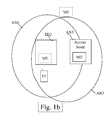
- Fig. 1b is a diagram representing the architecture of at least one wireless local area telecommunication network in which the present invention is implemented.
- an access node AN3 transfers signals in an area AR3.
- the access node AN3 is for example an access node of a Local Area Network.
- the access node AN3 handles a terminal TE when the access node AN3 has the information necessary for enabling the terminal TE to use the local area network and for example to establish a communication with a remote device through the access node AN3.
- the access node AN3 transfers signals to the terminal TE through a downlink channel and receives signals transferred by the terminal TE through an uplink channel.
- the telecommunication device TD2 transfers signals in the area ARd.
- the telecommunication device TD2 acts in a first mode of operation like an access node of a local area network and in a second mode of operation as a relay.
- the first mode of operation consists of handling a terminal TE.
- a telecommunication device TD2 handles a terminal TE when the telecommunication device TD2 has the information necessary for enabling the terminal TE to use the local area network in order to establish a communication with a remote device through the telecommunication device TD2.
- the telecommunication device TD2 When the telecommunication device TD2 handles a terminal TE, it transfers signals to the terminal TE through a downlink channel and receives signals transferred by the terminal TE through an uplink channel.
- the second mode of operation consists of relaying signals transferred by the terminal TE and the access node AN, for example the access node AN3, which handles the terminal TE.
- the telecommunication device TD2 When the telecommunication device TD2 acts as a relay, it receives signals transferred by the access node AN3 which handles the terminal TE through the downlink channel and transfers these signals to the terminal TE through the downlink channel. The telecommunication device TD2 receives signals transferred by the terminal TE through the uplink channel and transfers these signals through the uplink channel to the access node AN3 which handles the terminal TE.
- the access node AN3 can also be a telecommunication device TD.
- the telecommunication device TD2 instead of receiving signals through the downlink channel and transferring signals through the uplink channel, the telecommunication device TD2 receives and transfers these signals through a non radio communication link between the access node AN3 which is handling the terminal TE and the telecommunication device TD2.
- the non radio communication link is established in a telecommunication network like a dedicated wired network or a public network like a public switched network or an IP based network or a wireless network or an Asynchronous Transfer Mode network or a combination of above cited networks.
- the telecommunication device TD2 may be for at least one terminal TE in the handling terminal mode of operation and may be for at least one other terminal TE in the relay mode of operation.
- the areas AR3 and ARd overlap each other.
- a management entity ME is shown.
- the management entity ME is included in at least one access node AN.
- the management entity ME is included in at least one telecommunication device TD or is not included in access nodes AN nor in the telecommunication device TD.
- FIG. 1b only one access node AN3 and one telecommunication device TD2 are shown for the sake of clarity but in practice, a more important number of wireless local area networks, access nodes AN and telecommunication devices TD exist.
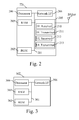
- Fig. 2 is a diagram representing the architecture of a telecommunication device in which the present invention is implemented.
- the telecommunication device TE has, for example, an architecture based on components connected together by a bus 201 and a processor 200 controlled by the program as disclosed in the Fig. 5 .
- the bus 201 links the processor 200 to a read only memory ROM 202, a random access memory RAM 203, a wireless interface 205 and a network interface 206.
- the memory 203 contains registers intended to receive variables and the instructions of the program as disclosed in the Fig. 5 .
- the memory 203 also contains information enabling the terminals handled by the telecommunication device TD to establish or receive a communication with a remote device. These information are for example the terminal identifier, the terminal capabilities, communication link Quality of service parameters, encryption parameters, or the security parameter.
- the memory 203 also contains information enabling the terminal TD to operate in relay mode. These information are for example the list of terminal identifiers for which signals have to be relayed, the resource parameters of the relays, the type of relaying.
- the processor 200 controls the operation of the network interface 206 and of the wireless interface 205.
- the read only memory 202 contains instructions of the program as disclosed in the Fig. 5 , which are transferred, when the telecommunication device TD is powered on to the random access memory 203.
- the telecommunication device TD may be connected to a telecommunication network through the network interface 206.
- the network interface 206 is a DSL (Digital Subscriber Line) modem, or an ISDN (Integrated Services Digital Network) interface, etc.
- the telecommunication device TD may transfer messages to the management entity ME and/or to the access nodes AN or receive message from the management entity ME and/or from the access nodes AN.
- the telecommunication device TD may receive through the interface 206, downlink signals from an access node AN and transfer uplink signals the telecommunication device TD has received through the uplink channel.
- the wireless interface 205 enables the telecommunication device TD to transfer and/or receive signals or messages in its area AR.
- the wireless interface 205 comprises a downlink reception module 210 which receives signals transferred by at least one access node AN, a downlink transmission module 211 which transfers signals to at least one terminal TE, an uplink reception module 212 which receives signals transferred by at least one terminal TE and an uplink transmission module 213 which transfers signals to at least one access node AN.
- Fig. 3 is a diagram representing the architecture of a management entity in which the present invention is implemented.
- the management entity ME has, for example, an architecture based on components connected together by a bus 301 and a processor 300 controlled by the program as disclosed in the Fig. 4 .
- the bus 301 links the processor 300 to a read only memory ROM 302, a random access memory RAM 303 and a network interface 306.
- the memory 303 contains registers intended to receive variables and the instructions of the program related to the algorithm as disclosed in the Fig. 4 .
- the processor 300 controls the operation of the network interface 306.
- the read only memory 302 contains instructions of the programs related to the algorithm as disclosed in the Fig. 4 , which are transferred, when the management entity ME is powered on to the random access memory 303.
- the management entity ME may be connected to a telecommunication network through the network interface 306.
- the network interface 306 is a DSL (Digital Subscriber Line) modem, or an ISDN (Integrated Services Digital Network) interface, etc.
- the management entity ME may transfer messages to telecommunication devices TD and/or to the access nodes AN or receive messages from telecommunication devices TD and/or from access nodes AN.
- the processor 300, the memory 302, the random access memory RAM 303 and the network interface 306 may be the ones of the telecommunication device TD or the access node AN.
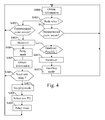
- Fig. 4 is an example of an algorithm executed by the management entity according to the present invention.
- the present algorithm is executed by the processor 300 of the management entity ME for each terminal TE located in an area AR managed by a telecommunication device TD the management entity ME is in charge of.
- the processor 300 obtains information enabling the determination if a predetermined event occurs.
- the information is the interference level between the telecommunication device TD and at least one access node AN and/or is a measurement on the signals transferred by the terminal TE in the uplink channel and/or is the location of the telecommunication device TD and/or is the location of the terminal TE and/or is the available resource of the telecommunication device TD in one or each operating mode and/or is a measurement on the signals received by the terminal TE and/or is an information linking the terminal TE and the telecommunication device TD and/or is a time duration.
- the interference level is, for example, the level of interference generated by a neighbouring access node AN on signals transferred or received by the telecommunication device TD.
- the level of interference may be measured by the telecommunication device TD or may be measured by the terminal TE and transferred to the telecommunication device TD.
- the level of interferences may be important and may reduce the throughputs in both areas.
- the measurement on the signals transferred by the terminal TE in the uplink channel may be executed by the access node AN which handles the terminal TE or by the telecommunication device TD when it is in any operation mode.
- the location of the telecommunication device TD is transferred by the telecommunication device TD.
- the location of the telecommunication device may be provided by a Global Navigation Satellite System (GNSS) or a post address, or by measurements on signals transmitted by neighbouring access nodes AN.
- GNSS Global Navigation Satellite System
- the location of the terminal TE is transferred by the terminal TE and may be provided by a GNSS, or by measurements on signals transmitted by neighbouring access nodes AN.
- the available resource of the telecommunication device TD in one or each operating mode is transferred by the telecommunication device TD.
- Information linking the terminal TE and the telecommunication device TD may be an information indicating that the terminal TE is authorized to be handled by the telecommunication device TD. That information may be memorized by the management entity ME or transferred by the terminal TE or the telecommunication device TD.
- the time duration is, for example, the time duration in which the telecommunication device TD is in the relay operation mode for the terminal TE.
- the time duration is transferred by the telecommunication device TD or managed by the management entity ME.
- the processor 300 checks if the telecommunication device TD operates in the relay operation mode or in the terminal handling operation mode for the terminal TE.
- step S410 If the telecommunication device TD operates in a relay operation mode, the processor 300 moves to step S410. If the telecommunication device TD operates in the terminal handling mode, the processor 300 moves to step S402.
- the processor 300 checks if a predetermined event occurs.
- the predetermined event occurs when the interference level between the telecommunication device TD and at least one access node AN is upper than a predetermined threshold and/or when the measurement on the signals transferred by the terminal TE in the uplink channel are lower than a predetermined value and/or when the terminal TE becomes far from the telecommunication device TD and/or the available resource of the telecommunication device TD in the handling operating mode is lower than a predetermined threshold and/or when measurements on the signals received by the terminal TE are lower than a threshold.
- the processor 300 may be notified by the telecommunication device TD that the predetermined event occurs.
- the telecommunication device TD checks if the interference level between the telecommunication device TD and at least one access node AN is upper than a predetermined threshold and/or checks if the measurements on the signals transferred by the terminal TE in the uplink channel are lower than a predetermined value and/or checks if the terminal TE becomes far from the telecommunication device TD and/or checks if the available resource of the telecommunication device TD in the handling operating mode is lower than a predetermined threshold and/or checks if measurements on the signals received by the terminal TE are lower than a threshold.
- step S4 If the predetermined event occurs, the processor 300 moves to step S403. Otherwise, the processor 300 returns to step S400.
- the processor 300 decides that a handover of the terminal TE has to be conducted from the telecommunication device TD and the access node AN and commands the transfer of a message to the telecommunication device TD and the access node AN requesting them to proceed to the handover.
- the processor 300 decides that the telecommunication device TD has to switch in the relay mode of operation and commands the transfer of a message to the telecommunication device TD requesting it to switch in the relay operation mode.
- the processor 300 memorizes an information representative of the operation mode in which the telecommunication device TD is.
- the processor 300 obtains information as the one already disclosed at step S400.
- the processor 300 checks if another telecommunication device TD needs to be switched in the relay mode of operation for the terminal TE.
- Another telecommunication device TD needs to be switched in a relay mode for the terminal TE when the interference level is upper than a predetermined threshold and/or when the measurements on the signals transferred by the terminal TE in the uplink channel are lower than a predetermined value and/or when the terminal TE becomes far from the telecommunication device TD and/or when the available resource of the telecommunication device TD in the relay operating mode is lower than a predetermined threshold and/or when measurements on the signals received by the terminal TE are lower than a threshold or when the telecommunication device may be switched off soon.
- step S407 If another telecommunication device TD needs to be switched in a relay mode for the terminal TE, the processor 300 moves to step S407. Otherwise, the processor 300 returns to step S400.
- the processor 300 decides that the telecommunication device TD has to switch in an operating mode wherein the telecommunication device stops to transfer signals related to the terminal TE and commands the transfer of a message to the telecommunication device TD requesting it to switch in that operating mode.
- the processor 300 moves directly from step S406 to S408.
- the processor 300 instead of executing the step S407, decides, according to previous memorized switches of operating modes, that the telecommunication device TD has to switch in the operating mode in which the telecommunication device relays signals transferred between the terminal and the access node or to switch in an operating mode wherein the telecommunication device stops to transfer signals related to the terminal TE. A message informing the telecommunication device TD about the decision is transferred.
- the processor 300 selects another telecommunication device TD which has to switch in the relay mode of operation for the terminal TE.
- the other telecommunication device TD is selected for example considering the location of the terminal TE and/or randomly in a group of telecommunication devices TD which are expected to be close from the terminal TE and/or from measurements reported by the terminal TE on signals transmitted from neighbouring telecommunication devices and/or from information obtained from telecommunication devices TD at step S400.
- the processor 300 requests the new selected telecommunication device TD to switch to the relay operating mode and memorizes an information representative of the operation mode of the telecommunication device TD.
- the processor 300 checks if a predetermined event occurs.
- the predetermined event occurs when the measurements on the signals transferred by the terminal TE in the uplink channel and measured by the telecommunication device TD are upper than a predetermined value and/or when the terminal TE becomes closer to the telecommunication device TD and/or when the available resource of the telecommunication device TD in the handling operating mode is upper than a predetermined threshold and/or when the available resource of the telecommunication device TD in the relay operating mode is lower than a predetermined threshold and/or when measurements on the signals received by the terminal TE are upper than a threshold and/or when the time duration in which the telecommunication device acts as a relay is upper than a threshold.
- step S411 If the predetermined event occurs, the processor 300 moves to step S411. Otherwise, the processor 300 returns to step S400.
- the processor 300 checks if a handover is possible. For example, the processor 300 requests the telecommunication device TD if it accepts to handle the terminal TE. Such step is executed when no information linking the terminal TE and the telecommunication device have been obtained at step S400.
- the processor 300 decides that a handover of the terminal TE has to be conducted from the access node AN to the telecommunication device TD and commands the transfer of a message to the telecommunication device TD and the access node AN requesting them to proceed to the handover.
- the processor 300 commands the transfer of a message to the access node AN solely requesting it to proceed to the handover, the telecommunication device TD being ready to execute handover procedures.
- the processor 300 decides that the telecommunication device TD has to switch in the handling operating mode and commands the transfer of a message to the telecommunication device TD requesting it to switch in the handling mode and memorizes an information representative of the operation mode of the telecommunication device TD.
- Fig. 5 is an example of an algorithm executed by the telecommunication device according to the present invention.
- the present algorithm is executed by the processor 200 of the telecommunication device TD.
- the processor 200 commands the wireless interface 205 to proceed to at least one measurement.
- the at least one measurement is the level of interference generated by a neighbouring access node AN on signals transferred and/or received by the telecommunication device TD and/or is the available resource of the telecommunication device TD in one or each operating mode and/or is a measurement on the signals transferred by neighbouring terminals TE, and/or or is the location of the telecommunication device TD.
- the processor 200 commands the transfer of information to the management entity ME.
- Information is derived from the at least one measurement or is derived from the at least one measurement and the location of the terminal TE and/or from the information linking the terminal TE and the telecommunication device TD and/or from the time duration.
- the processor 200 determines if the predetermined event occurs and notifies that the event occurs to the management entity ME .
- the processor 200 checks if the interference level between the telecommunication device TD and at least one access node AN is upper than a predetermined threshold and/or checks if the measurements on the signals transferred by the terminal TE in the uplink channel are lower than a predetermined value and/or checks if the terminal TE becomes far from the telecommunication device TD and/or checks if the available resource of the telecommunication device TD in the handling operating mode is lower than a predetermined threshold and/or checks if measurements on the signals received by the terminal TE are lower than a threshold.
- the processor 200 receives a message from the management entity ME through the network interface 206 or the wireless interface 205.
- step S503 the processor 200 checks if the received message is representative of a command requesting it has to proceed to a handover of the terminal TE with an access node AN. If the received message is representative of a command requesting to proceed to a handover, the processor 200 moves to step S504. Otherwise, the processor 200 returns to step S500.
- the processor 200 receives a message from the management entity ME through the network interface 206 or the wireless interface 205.
- the message indicates the mode of operation of the telecommunication device TD.
- the processor 200 commands the wireless interface 205 to switch in a mode of operation which is different from the operating mode in which the telecommunication device TD is operating.
- the telecommunication device may decide itself, for example, according to previous memorized switches of operating modes, if the telecommunication device TD has to switch in the operating mode in which the telecommunication device relays signals transferred between the terminal and the access node or if the telecommunication device TD has to switch in an operating mode wherein the telecommunication device stops to transfer signals related to the terminal TE.
Landscapes
- Engineering & Computer Science (AREA)
- Computer Networks & Wireless Communication (AREA)
- Signal Processing (AREA)
- Mobile Radio Communication Systems (AREA)
- Telephone Function (AREA)
Abstract
The present invention concerns a method for deciding if a telecommunication device has to be switched in an operating mode which is different from the operating mode in which the telecommunication is operating. In an operating mode, the telecommunication device relays signals transferred between a terminal and an access node which handles the terminal. In another operating mode, the telecommunication device handles the terminal. The method comprises the steps of:
- determining, from obtained information, if a predetermined event occurs and if the predetermined event occurs:
- deciding that a handover of the terminal has to be conducted between the access node and the telecommunication device,
- deciding that the telecommunication device has to switch in an operating mode which is different from the operating mode in which the telecommunication is operating.
- determining, from obtained information, if a predetermined event occurs and if the predetermined event occurs:
- deciding that a handover of the terminal has to be conducted between the access node and the telecommunication device,
- deciding that the telecommunication device has to switch in an operating mode which is different from the operating mode in which the telecommunication is operating.
Description
- The present invention relates generally to a method and a device for deciding if the operating mode of a telecommunication device has to be switched in a different operating mode.
- Today, we can observe a sharp increase in the deployment of wireless networks.
- Local area networks like for example WIFI wireless networks are widely used today.
- In urban regions, the coverage areas of the access nodes of these local area networks overlap each other.
- That overlapping generates interferences in each of the wireless networks and reduces the performances of these wireless networks.
- Wireless cellular telecommunication networks evolve a lot. Some years ago, an access node of the wireless cellular telecommunication network was managing a cell having a radius of several dozen kilometres.
- Today, wireless cellular telecommunication networks are composed of these cells, named macro cells, of micro cells having a radius of several hundreds meters and of femto-cells having a radius of several dozen meters.
- These different types of cells overlap each other.
- In a urban environment a huge number of femto-cells are comprised inside a macro-cell. Such situation has the advantage of unloading the macro-cell and reducing the dead zones of the macro-cell but may generate interferences between overlapping femto-cells as between the femto-cells and the macro-cell.
- In classical wireless cellular telecommunication networks, when a terminal is moving through different cells, a handover is executed between the access nodes which manage the cells the terminal goes through.
- As the coverage area of the femto-cells is small, a huge number of handovers may need to be executed for a mobile terminal, which may induce a large overhead impact from the infrastructure point of view.
- If the access nodes managing femto-cells are allowed to handle terminals, a moving terminal can potentially handover to an access node for a small time scale, leading to a drastic increase of the signalling load.
- Furthermore, the interference level produced by the transmission of signals by a lot of active access nodes in a limited area will also degrade the link-level performance and may reduce the coverage.
- The present invention aims at improving the operation of wireless telecommunication networks when the coverage areas of access nodes overlap each other or aims at avoiding that an important signalling occurs in the wireless telecommunication networks.
- To that end, the present invention concerns a method for deciding if a telecommunication device has to be switched in an operating mode which is different from the operating mode in which the telecommunication is operating, the telecommunication device transferring radio signals to a terminal of a wireless telecommunication network, characterised in that in an operating mode, the telecommunication device relays signals transferred between the terminal and an access node, the access node handling the terminal and in another operating mode, the telecommunication device handles the terminal, and the method comprises the steps of:
- determining, from obtained information, if a predetermined event occurs and if the predetermined event occurs:
- deciding that a handover of the terminal has to be conducted between the access node and the telecommunication device,
- deciding that the telecommunication device has to switch in an operating mode which is different from the operating mode in which the telecommunication is operating.
- The present invention also concerns a management entity which decides if a telecommunication device has to be switched in an operating mode which is different from the operating mode in which the telecommunication is operating, the telecommunication device transferring radio signals to a terminal of a wireless telecommunication network, characterised in that in an operating mode, the telecommunication device relays signals transferred between the terminal and an access node, the access node handling the terminal and in another operating mode, the telecommunication device handles the terminal, the management entity comprises:
- means for determining from obtained information if a predetermined event occurs,
- means for deciding that a handover of the terminal has to be conducted between the access node and the telecommunication device,
- means for deciding that the telecommunication device has to switch in an operating mode which is different from the operating mode in which the telecommunication is operating.
- Thus, by enabling a telecommunication device to switch between a relay operation mode and an terminal handling operation mode, it is possible to reduce the interferences between neighbouring coverage areas.
- When the telecommunication device is in the relay operation mode, the telecommunication device may solve the problem of dead zones by relaying the signals transferred by an access node.
- Furthermore, when the telecommunication device is in the relay operation mode for a terminal, it does not handle the terminal, avoiding then possible handover and extra signalling on the network side.
- By switching a telecommunication device to the relay operation mode among plural telecommunication devices operating in an handling mode, interferences are reduced. As the switched telecommunication device executes an handover prior to the switch, the terminal previously handled by the switched mode telecommunication device is still handled by a telecommunication device, which guarantees service continuity.
- The coverage area of the switched telecommunication device and the coverage area of the telecommunication device which handles the terminal forms then a single coverage area of the telecommunication device which handles the terminal as the switched telecommunication device is no more considered as an access node.
- The single coverage area size is increased and interferences are reduced.
- According to a particular feature, the operating mode in which the telecommunication is operating is the operating mode in which the telecommunication device relays signals transferred between the terminal and the access node.
- Thus, by switching from relay operation mode to an operation mode in which the telecommunication device handles the terminal, the load of the access node is reduced.
- According to a particular feature, the operating mode in which the telecommunication is operating is the operating mode in which the telecommunication device handles the terminal.
- Thus, the number of telecommunication devices which are in an operation mode in which the telecommunication device handles the terminal can be controlled.
- According to a particular feature, the management entity :
- obtains other information,
- decides if another telecommunication device has to switch in the operation mode in which the telecommunication device relays signals transferred between the terminal and the access node according to the other information.
- Thus, the telecommunication devices which are in the operation mode in which the telecommunication devices relay signals transferred between the terminal and the access node are selected according to environment information.
- According to a particular feature, the management entity decides that the telecommunication device has to switch in a different operating mode in which the telecommunication device stops to transfer signals to the terminal.
- Thus, the amount of transferred radio signals is reduced and interferences are limited.
- According to a particular feature, the obtained information used for determining if the predetermined event occurs is the interference level measured by the telecommunication device and/or is a measurement on the signals transferred by the terminal and/or is the location of the telecommunication device and/or is the location of the terminal and/or is the available resource of the telecommunication in one or each operating mode and/or is measurement on the signals received by the terminal and/or is an information linking the terminal and the telecommunication device and/or is a time duration.
- When information is the interference level, the present invention can detect cases wherein telecommunication devices interfere each other or when the signals transferred by the access node are interfered. The management entity can then decide the operation mode of the telecommunication device according to that parameter.
- When information is measurement on the signals transferred by the terminal and received by the telecommunication device, the management entity can evaluate the communication link conditions between the telecommunication device and the terminal, evaluate the distance between the telecommunication device and the terminal. The management entity can then decide the operation mode of the telecommunication device according to these parameters.
- When information is the location of the telecommunication device, the management entity can determine if a switch of the telecommunication device may improve the wireless telecommunication network characteristics.
- When information is the location of the terminal, the management entity can determine if a switch of the telecommunication device may improve the communication link with the terminal.
- When information is the available resource of the telecommunication device in one or each operating mode, the management entity can efficiently manage the resources allocated in one or each operating mode and determine if a switch of the telecommunication device is possible.
- For example, if the holder of the telecommunication device defines an amount of resources which can be used for relaying and/or handling terminals, that amount is taken into account by the management entity.
- When information is measurement on the signals received by the terminal, the management entity can evaluate the communication link conditions between the telecommunication device and the terminal. The management entity can then decide the operation mode of the telecommunication device according to that parameter.
- When information is an information linking the terminal and the telecommunication device, for example a right for the terminal to be handled by the telecommunication device, the management entity can control which terminal can be handled by the telecommunication device.
- When information is a time duration, for example the time duration while the telecommunication device relays signals, the management entity may determine that the terminal is not moving and in that it is favourable to switch the telecommunication device in the operation mode in which the telecommunication device handles the terminal as far as the probability is low that another handover may be needed.
- According to a particular feature, the management entity is included in the access node or in the or each telecommunication device or is not included in the access node nor in the or each telecommunication device.
- According to a particular feature, wireless telecommunication network is a wireless cellular telecommunication network.
- According to a particular feature, prior to the decision that the handover of the terminal has to be conducted from the access node which handles the mobile terminal to the telecommunication device, the management entity obtains an information from the telecommunication device indicating if the telecommunication device can handle the terminal.
- Thus, the handover is executed when good conditions exist.
- According to a particular feature, the method comprises further step of deciding, according to previous switches of operating modes that the telecommunication device has to switch in the operating mode in which the telecommunication device relays signals transferred between the terminal and the access node.
- Thus, when the telecommunication device is located in a dead zone, it still contributes to reduce that dead zone once a handover is executed.
- According to a particular feature, the decision, according to previous switches of operating modes is executed by the management entity or by the telecommunication device.
- According to still another aspect, the present invention concerns a method for switching a telecommunication device in an operating mode which is different from the operating mode in which the telecommunication is operating, the telecommunication device transferring radio signals to a terminal of a wireless telecommunication network, characterised in that in an operating mode, the telecommunication device relays signals transferred between the terminal and an access node, the access node handling the terminal and in another operating mode, the telecommunication device handles the terminal, and in that the method comprises the steps executed by the telecommunication device of:
- transferring information representative of measurements to a management entity,
- receiving a message representative of a request for executing a handover of the terminal between the access node and the telecommunication device,
- executing the handover,
- switching in an operating mode which is different from the operating mode in which the telecommunication is operating.
- The present invention also concerns a telecommunication device which transfers radio signals to a terminal of a wireless telecommunication network, the telecommunication device being able to operate in two operation modes, characterised in that in an operating mode, the telecommunication device relays signals transferred between the terminal and an access node, the access node handling the terminal and in another operating mode, the telecommunication device handles the terminal, and in that the telecommunication device comprises:
- means for transferring information representative of measurements to a management entity,
- means for receiving a message representative of a request for executing a handover of the terminal between the access node and the telecommunication device,
- means for executing the handover,
- means for switching in an operating mode which is different from the operating mode in which the telecommunication is operating.
- Thus, by enabling a telecommunication device to switch between a relay function and an access node function, it is possible to reduce the interferences between neighbouring coverage areas.
- When the telecommunication device is in the relay operation mode, the telecommunication device may solve the problem of dead zones by relaying the signals transferred by an access node.
- Furthermore, when the telecommunication device is in the relay operation mode for a terminal, it does not handle the terminal, avoiding then possible handover and extra signalling on the network side.
- By switching a telecommunication device among plural telecommunication devices operating in a handling mode, interferences are reduced. As the switched telecommunication device execute a handover prior to the switch, the terminal previously handled by the switched telecommunication is still handled by a telecommunication device.
- The coverage area of the switched telecommunication device and the coverage area of the telecommunication device which handles the terminal forms then a single coverage area of the telecommunication device which handles the terminal as the switched telecommunication device can no more be considered as a telecommunication device which may handle the terminal.
- The single coverage area size is increased and interferences are reduced.
- According to still another aspect, the present invention concerns a computer program which can be directly loadable into a programmable device, comprising instructions or portions of code for implementing the steps of the method according to the invention, when said computer program is executed on a programmable device.
- Since the features and advantages relating to the computer program are the same as those set out above related to the method and device according to the invention, they will not be repeated here.
- The characteristics of the invention will emerge more clearly from a reading of the following description of an example embodiment, the said description being produced with reference to the accompanying drawings, among which :
-
Fig. 1a represents the architecture of a wireless cellular telecommunication network in which the present invention is implemented; -
Fig. 1b is a diagram representing the architecture of at least one wireless local area telecommunication network in which the present invention is implemented; -
Fig. 2 is a diagram representing the architecture of a telecommunication device in which the present invention is implemented ; -
Fig. 3 is a diagram representing the architecture of a management entity in which the present invention is implemented ; -
Fig. 4 is an example of an algorithm executed by the management entity according to the present invention ; -
Fig. 5 is a an example of an algorithm executed by the telecommunication device according to the present invention. -
Fig. 1a represents the architecture of a wireless cellular telecommunication network in which the present invention is implemented. - In the wireless cellular telecommunication network, two access nodes AN1 and AN2 transfer signals in their respective cells C1 and C2.
- The access nodes AN are also named base stations or nodes B or enhanced nodes B.
- An access node AN1 or AN2 handles a terminal TE when the access node AN1 or AN2 has the information necessary for enabling the terminal TE to establish a communication with a remote device through the access node AN1 or AN2.
- Each access node AN1 or AN2 transfers signals to a terminal TE through a downlink channel and receives signals transferred by the terminal TE through an uplink channel.
- In the
Fig. 1a , one telecommunication device TD1 device is shown, the telecommunication device TD1 transfers signals in the area AR1. The telecommunication device TD1 acts in a first mode of operation like an access node, for example like a femto-base station and in a second mode of operation as a relay. - Each access node AN and telecommunication device TD are connected through a telecommunication network not shown in the
Fig. 1 in order to form the wireless cellular telecommunication network. The telecommunication network is a dedicated wired network or a public network like a public switched network or an IP based network or a wireless network or an Asynchronous Transfer Mode network or a combination of above cited networks. - The first mode of operation of the telecommunication device TD consists of handling a terminal TE i.e. the telecommunication device TD1 handles a terminal TE when the telecommunication device TD1 has the information necessary for enabling the terminal TE to establish a communication with a remote device through the telecommunication device TD1.
- The second mode of operation consists of relaying signals transferred between the terminal TE and the access node AN which handles the terminal TE.
- When the telecommunication device TD1 acts as a relay, it receives signals transferred by the access node AN1 or AN2 which handles the terminal TE in the downlink channel and transfers these signals to the terminal TE through the downlink channel. The telecommunication device TD1 receives signals transferred by the terminal TE through the uplink channel and transfers these signals in the uplink channel to the access node AN1 or AN2 which handles the terminal TE.
- It has to be noted here that in a variant, instead of receiving signals in the downlink channel and transferring signals in the uplink channel, the telecommunication device TD1 receives and transfers these signals through a non radio communication link between the access node AN1 or AN2 which handles the terminal TE and the telecommunication device TD1.
- For example, the non radio communication link is established in a telecommunication network like a dedicated wired network or a public network like a public switched network or an IP based network or a wireless network or an Asynchronous Transfer Mode network or a combination of above cited networks.
- It has to be noted here that the telecommunication device TD1 may be, for at least one terminal TE, in the handling mode of operation and may be, for at least one other terminal TE, in the relay mode of operation.
- In the
Fig. 1a , a management entity ME is shown. The management entity ME is included in at least one access node AN. - In variants, the management entity ME is included in the telecommunication device TD1 or is not included in access nodes AN and in the telecommunication device TD1.
- In the
Fig. 1a , only two access nodes AN1 and AN2 and one telecommunication device TD1 are shown for the sake of clarity but in practice the wireless cellular telecommunication network comprises a large number of access nodes AN and telecommunication devices TD. - It has to be noted here that, when a telecommunication device TD acts in the handling mode for each terminal TE located in its cell and does not act as a relay for any terminal TE, the telecommunication device TD is seen as a classical access node by the wireless cellular telecommunication network elements.
- For example, the access node AN2 is a telecommunication device TD which acts in the handling mode for each terminal TE located in its cell and does not act as a relay for any terminal TE.
-
Fig. 1b is a diagram representing the architecture of at least one wireless local area telecommunication network in which the present invention is implemented. - In the at least one wireless local area telecommunication network, an access node AN3 transfers signals in an area AR3.
- The access node AN3 is for example an access node of a Local Area Network. The access node AN3 handles a terminal TE when the access node AN3 has the information necessary for enabling the terminal TE to use the local area network and for example to establish a communication with a remote device through the access node AN3.
- The access node AN3 transfers signals to the terminal TE through a downlink channel and receives signals transferred by the terminal TE through an uplink channel.
- In the
Fig. 1b , one telecommunication device TD2 device is shown, the telecommunication device TD2 transfers signals in the area ARd. The telecommunication device TD2 acts in a first mode of operation like an access node of a local area network and in a second mode of operation as a relay. - The first mode of operation consists of handling a terminal TE. A telecommunication device TD2 handles a terminal TE when the telecommunication device TD2 has the information necessary for enabling the terminal TE to use the local area network in order to establish a communication with a remote device through the telecommunication device TD2.
- When the telecommunication device TD2 handles a terminal TE, it transfers signals to the terminal TE through a downlink channel and receives signals transferred by the terminal TE through an uplink channel.
- The second mode of operation consists of relaying signals transferred by the terminal TE and the access node AN, for example the access node AN3, which handles the terminal TE.
- When the telecommunication device TD2 acts as a relay, it receives signals transferred by the access node AN3 which handles the terminal TE through the downlink channel and transfers these signals to the terminal TE through the downlink channel. The telecommunication device TD2 receives signals transferred by the terminal TE through the uplink channel and transfers these signals through the uplink channel to the access node AN3 which handles the terminal TE.
- It has to be noted here that in a variant, the access node AN3 can also be a telecommunication device TD.
- It has to be noted also here that in a variant, instead of receiving signals through the downlink channel and transferring signals through the uplink channel, the telecommunication device TD2 receives and transfers these signals through a non radio communication link between the access node AN3 which is handling the terminal TE and the telecommunication device TD2.
- For example, the non radio communication link is established in a telecommunication network like a dedicated wired network or a public network like a public switched network or an IP based network or a wireless network or an Asynchronous Transfer Mode network or a combination of above cited networks.
- It has to be noted here that the telecommunication device TD2 may be for at least one terminal TE in the handling terminal mode of operation and may be for at least one other terminal TE in the relay mode of operation.
- In the example of the
Fig. 1b , the areas AR3 and ARd overlap each other. - In the
Fig. 1b , a management entity ME is shown. The management entity ME is included in at least one access node AN. - In variants, the management entity ME is included in at least one telecommunication device TD or is not included in access nodes AN nor in the telecommunication device TD.
- In the
Fig. 1b , only one access node AN3 and one telecommunication device TD2 are shown for the sake of clarity but in practice, a more important number of wireless local area networks, access nodes AN and telecommunication devices TD exist. -
Fig. 2 is a diagram representing the architecture of a telecommunication device in which the present invention is implemented. - The telecommunication device TE has, for example, an architecture based on components connected together by a
bus 201 and aprocessor 200 controlled by the program as disclosed in theFig. 5 . - The
bus 201 links theprocessor 200 to a read onlymemory ROM 202, a randomaccess memory RAM 203, awireless interface 205 and anetwork interface 206. - The
memory 203 contains registers intended to receive variables and the instructions of the program as disclosed in theFig. 5 . - The
memory 203 also contains information enabling the terminals handled by the telecommunication device TD to establish or receive a communication with a remote device. These information are for example the terminal identifier, the terminal capabilities, communication link Quality of service parameters, encryption parameters, or the security parameter. - The
memory 203 also contains information enabling the terminal TD to operate in relay mode. These information are for example the list of terminal identifiers for which signals have to be relayed, the resource parameters of the relays, the type of relaying. - The
processor 200 controls the operation of thenetwork interface 206 and of thewireless interface 205. - The read only
memory 202 contains instructions of the program as disclosed in theFig. 5 , which are transferred, when the telecommunication device TD is powered on to therandom access memory 203. - The telecommunication device TD may be connected to a telecommunication network through the
network interface 206. For example, thenetwork interface 206 is a DSL (Digital Subscriber Line) modem, or an ISDN (Integrated Services Digital Network) interface, etc. Through such interface, the telecommunication device TD may transfer messages to the management entity ME and/or to the access nodes AN or receive message from the management entity ME and/or from the access nodes AN. In addition, the telecommunication device TD may receive through theinterface 206, downlink signals from an access node AN and transfer uplink signals the telecommunication device TD has received through the uplink channel. - The
wireless interface 205 enables the telecommunication device TD to transfer and/or receive signals or messages in its area AR. - The
wireless interface 205 comprises adownlink reception module 210 which receives signals transferred by at least one access node AN, adownlink transmission module 211 which transfers signals to at least one terminal TE, anuplink reception module 212 which receives signals transferred by at least one terminal TE and anuplink transmission module 213 which transfers signals to at least one access node AN. -
Fig. 3 is a diagram representing the architecture of a management entity in which the present invention is implemented. - The management entity ME has, for example, an architecture based on components connected together by a
bus 301 and aprocessor 300 controlled by the program as disclosed in theFig. 4 . - The
bus 301 links theprocessor 300 to a read onlymemory ROM 302, a randomaccess memory RAM 303 and anetwork interface 306. - The
memory 303 contains registers intended to receive variables and the instructions of the program related to the algorithm as disclosed in theFig. 4 . - The
processor 300 controls the operation of thenetwork interface 306. - The read only
memory 302 contains instructions of the programs related to the algorithm as disclosed in theFig. 4 , which are transferred, when the management entity ME is powered on to therandom access memory 303. - The management entity ME may be connected to a telecommunication network through the
network interface 306. For example, thenetwork interface 306 is a DSL (Digital Subscriber Line) modem, or an ISDN (Integrated Services Digital Network) interface, etc. Through such interface, the management entity ME may transfer messages to telecommunication devices TD and/or to the access nodes AN or receive messages from telecommunication devices TD and/or from access nodes AN. - It has to be noted here, when the management entity ME is included in a telecommunication device TD or is included in an access node AN, the
processor 300, thememory 302, the randomaccess memory RAM 303 and thenetwork interface 306 may be the ones of the telecommunication device TD or the access node AN. -
Fig. 4 is an example of an algorithm executed by the management entity according to the present invention. - More precisely, the present algorithm is executed by the
processor 300 of the management entity ME for each terminal TE located in an area AR managed by a telecommunication device TD the management entity ME is in charge of. - At step S400, the
processor 300 obtains information enabling the determination if a predetermined event occurs. - The information is the interference level between the telecommunication device TD and at least one access node AN and/or is a measurement on the signals transferred by the terminal TE in the uplink channel and/or is the location of the telecommunication device TD and/or is the location of the terminal TE and/or is the available resource of the telecommunication device TD in one or each operating mode and/or is a measurement on the signals received by the terminal TE and/or is an information linking the terminal TE and the telecommunication device TD and/or is a time duration.
- The interference level is, for example, the level of interference generated by a neighbouring access node AN on signals transferred or received by the telecommunication device TD.
- The level of interference may be measured by the telecommunication device TD or may be measured by the terminal TE and transferred to the telecommunication device TD.
- According to the example of the
Fig. 1b , when two areas AR overlap each other, the level of interferences may be important and may reduce the throughputs in both areas. - The measurement on the signals transferred by the terminal TE in the uplink channel may be executed by the access node AN which handles the terminal TE or by the telecommunication device TD when it is in any operation mode.
- The location of the telecommunication device TD is transferred by the telecommunication device TD. The location of the telecommunication device may be provided by a Global Navigation Satellite System (GNSS) or a post address, or by measurements on signals transmitted by neighbouring access nodes AN.
- The location of the terminal TE is transferred by the terminal TE and may be provided by a GNSS, or by measurements on signals transmitted by neighbouring access nodes AN.
- The available resource of the telecommunication device TD in one or each operating mode is transferred by the telecommunication device TD.
- Information linking the terminal TE and the telecommunication device TD may be an information indicating that the terminal TE is authorized to be handled by the telecommunication device TD. That information may be memorized by the management entity ME or transferred by the terminal TE or the telecommunication device TD.
- The time duration is, for example, the time duration in which the telecommunication device TD is in the relay operation mode for the terminal TE. The time duration is transferred by the telecommunication device TD or managed by the management entity ME.
- At next step S401, the
processor 300 checks if the telecommunication device TD operates in the relay operation mode or in the terminal handling operation mode for the terminal TE. - If the telecommunication device TD operates in a relay operation mode, the
processor 300 moves to step S410. If the telecommunication device TD operates in the terminal handling mode, theprocessor 300 moves to step S402. - At step S402, the
processor 300 checks if a predetermined event occurs. - The predetermined event occurs when the interference level between the telecommunication device TD and at least one access node AN is upper than a predetermined threshold and/or when the measurement on the signals transferred by the terminal TE in the uplink channel are lower than a predetermined value and/or when the terminal TE becomes far from the telecommunication device TD and/or the available resource of the telecommunication device TD in the handling operating mode is lower than a predetermined threshold and/or when measurements on the signals received by the terminal TE are lower than a threshold.
- It has to be noted here that in a variant, the
processor 300 may be notified by the telecommunication device TD that the predetermined event occurs. In that variant, the telecommunication device TD checks if the interference level between the telecommunication device TD and at least one access node AN is upper than a predetermined threshold and/or checks if the measurements on the signals transferred by the terminal TE in the uplink channel are lower than a predetermined value and/or checks if the terminal TE becomes far from the telecommunication device TD and/or checks if the available resource of the telecommunication device TD in the handling operating mode is lower than a predetermined threshold and/or checks if measurements on the signals received by the terminal TE are lower than a threshold. - If the predetermined event occurs, the
processor 300 moves to step S403. Otherwise, theprocessor 300 returns to step S400. - At step S403, the
processor 300 decides that a handover of the terminal TE has to be conducted from the telecommunication device TD and the access node AN and commands the transfer of a message to the telecommunication device TD and the access node AN requesting them to proceed to the handover. - At next step S404, the
processor 300 decides that the telecommunication device TD has to switch in the relay mode of operation and commands the transfer of a message to the telecommunication device TD requesting it to switch in the relay operation mode. Theprocessor 300 memorizes an information representative of the operation mode in which the telecommunication device TD is. - At next step S405, the
processor 300 obtains information as the one already disclosed at step S400. - At next step S406, the
processor 300 checks if another telecommunication device TD needs to be switched in the relay mode of operation for the terminal TE. - Another telecommunication device TD needs to be switched in a relay mode for the terminal TE when the interference level is upper than a predetermined threshold and/or when the measurements on the signals transferred by the terminal TE in the uplink channel are lower than a predetermined value and/or when the terminal TE becomes far from the telecommunication device TD and/or when the available resource of the telecommunication device TD in the relay operating mode is lower than a predetermined threshold and/or when measurements on the signals received by the terminal TE are lower than a threshold or when the telecommunication device may be switched off soon.
- If another telecommunication device TD needs to be switched in a relay mode for the terminal TE, the
processor 300 moves to step S407. Otherwise, theprocessor 300 returns to step S400. - At step S407, the
processor 300 decides that the telecommunication device TD has to switch in an operating mode wherein the telecommunication device stops to transfer signals related to the terminal TE and commands the transfer of a message to the telecommunication device TD requesting it to switch in that operating mode. - In a variant, the
processor 300 moves directly from step S406 to S408. - In another variant, the
processor 300, instead of executing the step S407, decides, according to previous memorized switches of operating modes, that the telecommunication device TD has to switch in the operating mode in which the telecommunication device relays signals transferred between the terminal and the access node or to switch in an operating mode wherein the telecommunication device stops to transfer signals related to the terminal TE. A message informing the telecommunication device TD about the decision is transferred. - At next step S408, the
processor 300 selects another telecommunication device TD which has to switch in the relay mode of operation for the terminal TE. - The other telecommunication device TD is selected for example considering the location of the terminal TE and/or randomly in a group of telecommunication devices TD which are expected to be close from the terminal TE and/or from measurements reported by the terminal TE on signals transmitted from neighbouring telecommunication devices and/or from information obtained from telecommunication devices TD at step S400.
- At step S409, the
processor 300 requests the new selected telecommunication device TD to switch to the relay operating mode and memorizes an information representative of the operation mode of the telecommunication device TD. - After that, the
processor 300 returns to step S400. - At step S410, the
processor 300 checks if a predetermined event occurs. - The predetermined event occurs when the measurements on the signals transferred by the terminal TE in the uplink channel and measured by the telecommunication device TD are upper than a predetermined value and/or when the terminal TE becomes closer to the telecommunication device TD and/or when the available resource of the telecommunication device TD in the handling operating mode is upper than a predetermined threshold and/or when the available resource of the telecommunication device TD in the relay operating mode is lower than a predetermined threshold and/or when measurements on the signals received by the terminal TE are upper than a threshold and/or when the time duration in which the telecommunication device acts as a relay is upper than a threshold.
- If the predetermined event occurs, the
processor 300 moves to step S411. Otherwise, theprocessor 300 returns to step S400. - At step S411, the
processor 300 checks if a handover is possible. For example, theprocessor 300 requests the telecommunication device TD if it accepts to handle the terminal TE. Such step is executed when no information linking the terminal TE and the telecommunication device have been obtained at step S400. - If the handover is possible, the
processor 300 moves to step S412. - Otherwise, the
processor 300 returns to step S400. - At step S412, the
processor 300 decides that a handover of the terminal TE has to be conducted from the access node AN to the telecommunication device TD and commands the transfer of a message to the telecommunication device TD and the access node AN requesting them to proceed to the handover. Alternatively, theprocessor 300 commands the transfer of a message to the access node AN solely requesting it to proceed to the handover, the telecommunication device TD being ready to execute handover procedures. - At next step S413, the
processor 300 decides that the telecommunication device TD has to switch in the handling operating mode and commands the transfer of a message to the telecommunication device TD requesting it to switch in the handling mode and memorizes an information representative of the operation mode of the telecommunication device TD. - After that, the
processor 300 returns to step S400. -
Fig. 5 is an example of an algorithm executed by the telecommunication device according to the present invention. - More precisely, the present algorithm is executed by the
processor 200 of the telecommunication device TD. - At step S500, the
processor 200 commands thewireless interface 205 to proceed to at least one measurement. - The at least one measurement is the level of interference generated by a neighbouring access node AN on signals transferred and/or received by the telecommunication device TD and/or is the available resource of the telecommunication device TD in one or each operating mode and/or is a measurement on the signals transferred by neighbouring terminals TE, and/or or is the location of the telecommunication device TD.
- At next step S501, the
processor 200 commands the transfer of information to the management entity ME. - Information is derived from the at least one measurement or is derived from the at least one measurement and the location of the terminal TE and/or from the information linking the terminal TE and the telecommunication device TD and/or from the time duration.
- It has to be noted here that in a variant, the
processor 200 determines if the predetermined event occurs and notifies that the event occurs to the management entity ME . In that variant theprocessor 200 checks if the interference level between the telecommunication device TD and at least one access node AN is upper than a predetermined threshold and/or checks if the measurements on the signals transferred by the terminal TE in the uplink channel are lower than a predetermined value and/or checks if the terminal TE becomes far from the telecommunication device TD and/or checks if the available resource of the telecommunication device TD in the handling operating mode is lower than a predetermined threshold and/or checks if measurements on the signals received by the terminal TE are lower than a threshold. - At next step S502, the
processor 200 receives a message from the management entity ME through thenetwork interface 206 or thewireless interface 205. - At next step S503, the
processor 200 checks if the received message is representative of a command requesting it has to proceed to a handover of the terminal TE with an access node AN. If the received message is representative of a command requesting to proceed to a handover, theprocessor 200 moves to step S504. Otherwise, theprocessor 200 returns to step S500. - At next step S504, the
processor 200 receives a message from the management entity ME through thenetwork interface 206 or thewireless interface 205. - The message indicates the mode of operation of the telecommunication device TD.
- At next step S505, the
processor 200 commands thewireless interface 205 to switch in a mode of operation which is different from the operating mode in which the telecommunication device TD is operating. - When the telecommunication switch from the operating mode in which the telecommunication device handles the terminal moves to the relay mode, the telecommunication device may decide itself, for example, according to previous memorized switches of operating modes, if the telecommunication device TD has to switch in the operating mode in which the telecommunication device relays signals transferred between the terminal and the access node or if the telecommunication device TD has to switch in an operating mode wherein the telecommunication device stops to transfer signals related to the terminal TE.
- After that, the
processor 300 returns to step S500. - Naturally, many modifications can be made to the embodiments of the invention described above without departing from the scope of the present invention.
Claims (15)
- Method for deciding if a telecommunication device has to be switched in an operating mode which is different from the operating mode in which the telecommunication is operating, the telecommunication device transferring radio signals to a terminal of a wireless telecommunication network, characterised in that in an operating mode, the telecommunication device relays signals transferred between the terminal and an access node, the access node handling the terminal and in another operating mode, the telecommunication device handles the terminal, and in that the method comprises the steps of:- determining, from obtained information, if a predetermined event occurs and if the predetermined event occurs:- deciding that a handover of the terminal has to be conducted between the access node and the telecommunication device,- deciding that the telecommunication device has to switch in an operating mode which is different from the operating mode in which the telecommunication is operating.
- Method according to claim 1, characterised in that the operating mode in which the telecommunication is operating is the operating mode in which the telecommunication device relays signals transferred between the terminal and the access node.
- Method according to claim 1, characterised in that the operating mode in which the telecommunication is operating is the operating mode in which the telecommunication device handles the terminal.
- Method according to claim 3, characterised in that the method comprises further steps of :- obtaining other information,- deciding if another telecommunication device has to switch in the operation mode in which the telecommunication device relays signals transferred between the terminal and the access node according to the other information.
- Method according to claim 4, characterised in that the method comprises further step of deciding that the telecommunication device has to switch in a different operating mode in which the telecommunication device stops to transfer signals to the terminal.
- Method according to claim 4, characterised in that the method comprises further step of deciding, according to previous switches of operating modes that the telecommunication device has to switch in the operating mode in which the telecommunication device relays signals transferred between the terminal and the access node.
- Method according to claim 6, characterised in that the decision, according to previous switches of operating modes is executed by the management entity or by the telecommunication device.
- Method according to any of the claims 1 to 3, characterised in that the obtained information used for determining if the predetermined event occurs is the interference level measured by the telecommunication device and/or is a measurement on the signals transferred by the terminal and/or is the location of the telecommunication device and/or is the location of the terminal and/or is the available resource of the telecommunication in one or each operating mode and/or is measurement on the signals received by the terminal and/or is an information linking the terminal and the telecommunication device and/or is a time duration.
- Method according to any of the claims 1 to 8, characterised in that the method is executed by a management entity, the management entity being included in the access node or in the or each telecommunication device or is not included in the access node nor in the or each telecommunication device.
- Method according to any of the claims 1 to 9, characterised in that the wireless telecommunication network is a wireless cellular telecommunication network.
- Method according to any of the claims 3 to 10, characterised in that the method comprises further step, executed prior to the decision that the handover of the terminal has to be conducted from the access node which handles the mobile terminal to the telecommunication device, of obtaining an information from the telecommunication device indicating if the telecommunication device can handle the terminal.
- Management entity which decides if a telecommunication device has to be switched in an operating mode which is different from the operating mode in which the telecommunication is operating, the telecommunication device transferring radio signals to a terminal of a wireless telecommunication network, characterised in that in an operating mode, the telecommunication device relays signals transferred between the terminal and an access node, the access node handling the terminal and in another operating mode, the telecommunication device handles the terminal, and in that the management entity comprises:- means for determining from obtained information if a predetermined event occurs,- means for deciding that a handover of the terminal has to be conducted between the access node and the telecommunication device,- means for deciding that the telecommunication device has to switch in an operating mode which is different from the operating mode in which the telecommunication is operating.
- Method for switching a telecommunication device in an operating mode which is different from the operating mode in which the telecommunication is operating, the telecommunication device transferring radio signals to a terminal of a wireless telecommunication network, characterised in that in an operating mode, the telecommunication device relays signals transferred between the terminal and an access node, the access node handling the terminal and in another operating mode, the telecommunication device handles the terminal, and in that the method comprises the steps executed by the telecommunication device of:- transferring information representative of measurements to a management entity,- receiving a message representative of a request for executing a handover of the terminal between the access node and the telecommunication device,- executing the handover,- switching in an operating mode which is different from the operating mode in which the telecommunication is operating.
- Telecommunication device which transfers radio signals to a terminal of a wireless telecommunication network, the telecommunication device being able to operate in two operation modes, characterised in that in an operating mode, the telecommunication device relays signals transferred between the terminal and an access node, the access node handling the terminal and in another operating mode, the telecommunication device handles the terminal, and in that the telecommunication device comprises:- means for transferring information representative of measurements to a management entity,- means for receiving a message representative of a request for executing a handover of the terminal between the access node and the telecommunication device,- means for executing the handover,- means for switching in an operating mode which is different from the operating mode in which the telecommunication is operating.
- Computer program which can be directly loadable into a programmable device, comprising instructions or portions of code for implementing the steps of the method according to claims 1 to 11, when said computer program is executed on a programmable device.
Priority Applications (6)
| Application Number | Priority Date | Filing Date | Title |
|---|---|---|---|
| EP08158037A EP2134119A1 (en) | 2008-06-11 | 2008-06-11 | Method and a device for deciding if the operating mode of a telecommunication device has to be switched into a different operating mode |
| EP09761721A EP2289263A1 (en) | 2008-06-11 | 2009-06-09 | Method and a device for deciding if the operating mode of a telecommunication device has to be switched in a different operating mode |
| JP2011512964A JP5514814B2 (en) | 2008-06-11 | 2009-06-09 | Method and device for determining whether the operating mode of a communication device must be switched to a different operating mode |
| US12/997,399 US9060383B2 (en) | 2008-06-11 | 2009-06-09 | Method and a device for deciding if the operating mode of a telecommunication device has to be switched in a different operating mode |
| PCT/EP2009/057121 WO2009150158A1 (en) | 2008-06-11 | 2009-06-09 | Method and a device for deciding if the operating mode of a telecommunication device has to be switched in a different operating mode |
| CN200980121857.6A CN102084685B (en) | 2008-06-11 | 2009-06-09 | Method and device for determining whether an operating mode of telecommunication equipment must be switched to a different operating mode |
Applications Claiming Priority (1)
| Application Number | Priority Date | Filing Date | Title |
|---|---|---|---|
| EP08158037A EP2134119A1 (en) | 2008-06-11 | 2008-06-11 | Method and a device for deciding if the operating mode of a telecommunication device has to be switched into a different operating mode |
Publications (1)
| Publication Number | Publication Date |
|---|---|
| EP2134119A1 true EP2134119A1 (en) | 2009-12-16 |
Family
ID=40092080
Family Applications (2)
| Application Number | Title | Priority Date | Filing Date |
|---|---|---|---|
| EP08158037A Withdrawn EP2134119A1 (en) | 2008-06-11 | 2008-06-11 | Method and a device for deciding if the operating mode of a telecommunication device has to be switched into a different operating mode |
| EP09761721A Withdrawn EP2289263A1 (en) | 2008-06-11 | 2009-06-09 | Method and a device for deciding if the operating mode of a telecommunication device has to be switched in a different operating mode |
Family Applications After (1)
| Application Number | Title | Priority Date | Filing Date |
|---|---|---|---|
| EP09761721A Withdrawn EP2289263A1 (en) | 2008-06-11 | 2009-06-09 | Method and a device for deciding if the operating mode of a telecommunication device has to be switched in a different operating mode |
Country Status (5)
| Country | Link |
|---|---|
| US (1) | US9060383B2 (en) |
| EP (2) | EP2134119A1 (en) |
| JP (1) | JP5514814B2 (en) |
| CN (1) | CN102084685B (en) |
| WO (1) | WO2009150158A1 (en) |
Families Citing this family (3)
| Publication number | Priority date | Publication date | Assignee | Title |
|---|---|---|---|---|
| JP2013051540A (en) | 2011-08-31 | 2013-03-14 | Sharp Corp | Wireless relay communication system, wireless communication system, mobile station device database, base station device, wireless station device, integrated circuit, computer program, and recording medium |
| US20170026896A1 (en) * | 2014-04-07 | 2017-01-26 | Sharp Kabushiki Kaisha | Terminal device, relay terminal device, and communication control method |
| EP3716681B1 (en) * | 2019-03-28 | 2021-05-05 | Mitsubishi Electric R&D Centre Europe B.V. | Admission control delegation for moving iab |
Family Cites Families (8)
| Publication number | Priority date | Publication date | Assignee | Title |
|---|---|---|---|---|
| CN100479596C (en) * | 2005-04-29 | 2009-04-15 | 中国科学院上海微系统与信息技术研究所 | Sorted switching method for wireless mobile communication system |
| JP4292419B2 (en) * | 2005-07-25 | 2009-07-08 | ソニー株式会社 | Monitor terminal |
| US7720038B2 (en) * | 2006-03-22 | 2010-05-18 | Broadcom Corporation | Cell network selectively applying proxy mode to minimize power |
| JP4860381B2 (en) * | 2006-07-10 | 2012-01-25 | 日本電気通信システム株式会社 | Wireless communication system, system control apparatus, wireless base station, wireless communication terminal, communication control method, and communication control program |
| CN101146327B (en) * | 2006-09-12 | 2011-02-16 | 华为技术有限公司 | Switching method in radio relay system and radio relay system realizing this switching |
| CN101150840B (en) * | 2006-09-20 | 2010-08-11 | 上海贝尔阿尔卡特股份有限公司 | Method and device for switching mobile relay station and its subordinate mobile terminals |
| US8116748B2 (en) * | 2006-12-14 | 2012-02-14 | At&T Intellectual Property I, Lp | Management of locations of group members via mobile communications devices |
| US20110244892A1 (en) * | 2010-04-05 | 2011-10-06 | Powerwave Technologies, Inc. | Pico base station location and analysis using mobile devices |
-
2008
- 2008-06-11 EP EP08158037A patent/EP2134119A1/en not_active Withdrawn
-
2009
- 2009-06-09 CN CN200980121857.6A patent/CN102084685B/en not_active Expired - Fee Related
- 2009-06-09 WO PCT/EP2009/057121 patent/WO2009150158A1/en not_active Ceased
- 2009-06-09 EP EP09761721A patent/EP2289263A1/en not_active Withdrawn
- 2009-06-09 JP JP2011512964A patent/JP5514814B2/en not_active Expired - Fee Related
- 2009-06-09 US US12/997,399 patent/US9060383B2/en not_active Expired - Fee Related
Non-Patent Citations (1)
| Title |
|---|
| RUSSELL D: "NEW MICROCELL TECHNOLOGY SETS CELLULAR CARRIERS FREE", TELEPHONY, CHICAGO, IL, US, vol. 224, no. 9, 1 March 1993 (1993-03-01), pages 40,42,46, XP000568185, ISSN: 0040-2656 * |
Also Published As
| Publication number | Publication date |
|---|---|
| CN102084685A (en) | 2011-06-01 |
| JP2011524137A (en) | 2011-08-25 |
| CN102084685B (en) | 2014-07-02 |
| JP5514814B2 (en) | 2014-06-04 |
| EP2289263A1 (en) | 2011-03-02 |
| US20110151921A1 (en) | 2011-06-23 |
| WO2009150158A1 (en) | 2009-12-17 |
| US9060383B2 (en) | 2015-06-16 |
Similar Documents
| Publication | Publication Date | Title |
|---|---|---|
| EP1038412B1 (en) | Method for allocation of radio resources in a mobile communications system | |
| JP6398972B2 (en) | COMMUNICATION CONTROL DEVICE, COMMUNICATION CONTROL METHOD, WIRELESS COMMUNICATION SYSTEM, BASE STATION, AND TERMINAL DEVICE | |
| KR101450406B1 (en) | Ue visited cells history information usage for identifying home base station | |
| EP2289258B1 (en) | Method, relay and computer program for identifying at least one terminal for which signals transferred between the at least one terminal and a base station have to be relayed by a relay | |
| JP5522267B2 (en) | Radio base station, relay base station, mobile terminal, mobile communication system, and operation control method | |
| EP3679744B1 (en) | Method in a cellular telecommunications network, computer program, computer-readable data carrier and network node. | |
| EP2387279A1 (en) | Cell (re)selection in a heterogeneous mobile communication system | |
| US20100093355A1 (en) | Method for enabling the determination of a cell in which a mobile terminal is located among a group of cells of a wireless cellular telecommunication network | |
| JP5660141B2 (en) | Wireless communication system, relay station, base station, and wireless communication method | |
| US20150208301A1 (en) | Mobility control method and device in mobile communication network | |
| EP2530975A1 (en) | Wireless relay station and control method | |
| CN102067682A (en) | Base station control module, wireless base station, base station control device, and base station control method | |
| EP2530973A1 (en) | Wireless relay station and control method | |
| KR20110004330A (en) | Method and apparatus for transmitting neighbor base station information performed by macro base station in wireless communication system | |
| CN103026756A (en) | Wireless communication system, wireless relay station, wireless terminal and communication control method | |
| CN101772099A (en) | Cell switching method and system, and access devices | |
| EP2134119A1 (en) | Method and a device for deciding if the operating mode of a telecommunication device has to be switched into a different operating mode | |
| JP5415976B2 (en) | Wireless communication system, wireless base station, network control device, and communication control method | |
| WO2011005019A2 (en) | Method and apparatus for transmission of neighbor base station information performed by macro base station in wireless communication system | |
| US20160037403A1 (en) | Base station device and handover control method | |
| EP2733986A1 (en) | Method for offloading a base station of a wireless cellular telecommunication network | |
| KR20170073514A (en) | Method and apparatus for cancelling inter-beam interference | |
| KR20140077646A (en) | Method for selection of base station in multi-cell cooperative communication | |
| JP2011155499A (en) | Radio communication system, radio base station, network controller, and communication control method |
Legal Events
| Date | Code | Title | Description |
|---|---|---|---|
| PUAI | Public reference made under article 153(3) epc to a published international application that has entered the european phase |
Free format text: ORIGINAL CODE: 0009012 |
|
| AK | Designated contracting states |
Kind code of ref document: A1 Designated state(s): AT BE BG CH CY CZ DE DK EE ES FI FR GB GR HR HU IE IS IT LI LT LU LV MC MT NL NO PL PT RO SE SI SK TR |
|
| AX | Request for extension of the european patent |
Extension state: AL BA MK RS |
|
| AKY | No designation fees paid | ||
| REG | Reference to a national code |
Ref country code: DE Ref legal event code: 8566 |
|
| STAA | Information on the status of an ep patent application or granted ep patent |
Free format text: STATUS: THE APPLICATION IS DEEMED TO BE WITHDRAWN |
|
| 18D | Application deemed to be withdrawn |
Effective date: 20100617 |