EP2132228B1 - Cd37 immunotherapeutic and combination with bifunctional chemotherapeutic thereof - Google Patents
Cd37 immunotherapeutic and combination with bifunctional chemotherapeutic thereof Download PDFInfo
- Publication number
- EP2132228B1 EP2132228B1 EP09707110A EP09707110A EP2132228B1 EP 2132228 B1 EP2132228 B1 EP 2132228B1 EP 09707110 A EP09707110 A EP 09707110A EP 09707110 A EP09707110 A EP 09707110A EP 2132228 B1 EP2132228 B1 EP 2132228B1
- Authority
- EP
- European Patent Office
- Prior art keywords
- cell
- cas
- lymphoma
- artificial sequence
- disease
- Prior art date
- Legal status (The legal status is an assumption and is not a legal conclusion. Google has not performed a legal analysis and makes no representation as to the accuracy of the status listed.)
- Active
Links
Images






Classifications
-
- A—HUMAN NECESSITIES
- A61—MEDICAL OR VETERINARY SCIENCE; HYGIENE
- A61K—PREPARATIONS FOR MEDICAL, DENTAL OR TOILETRY PURPOSES
- A61K39/00—Medicinal preparations containing antigens or antibodies
- A61K39/395—Antibodies; Immunoglobulins; Immune serum, e.g. antilymphocytic serum
- A61K39/39533—Antibodies; Immunoglobulins; Immune serum, e.g. antilymphocytic serum against materials from animals
- A61K39/39541—Antibodies; Immunoglobulins; Immune serum, e.g. antilymphocytic serum against materials from animals against normal tissues, cells
-
- C—CHEMISTRY; METALLURGY
- C07—ORGANIC CHEMISTRY
- C07K—PEPTIDES
- C07K16/00—Immunoglobulins [IG], e.g. monoclonal or polyclonal antibodies
- C07K16/18—Immunoglobulins [IG], e.g. monoclonal or polyclonal antibodies against material from animals or humans
- C07K16/28—Immunoglobulins [IG], e.g. monoclonal or polyclonal antibodies against material from animals or humans against receptors, cell surface antigens or cell surface determinants
-
- A—HUMAN NECESSITIES
- A61—MEDICAL OR VETERINARY SCIENCE; HYGIENE
- A61K—PREPARATIONS FOR MEDICAL, DENTAL OR TOILETRY PURPOSES
- A61K31/00—Medicinal preparations containing organic active ingredients
- A61K31/33—Heterocyclic compounds
- A61K31/395—Heterocyclic compounds having nitrogen as a ring hetero atom, e.g. guanethidine or rifamycins
- A61K31/41—Heterocyclic compounds having nitrogen as a ring hetero atom, e.g. guanethidine or rifamycins having five-membered rings with two or more ring hetero atoms, at least one of which being nitrogen, e.g. tetrazole
- A61K31/4164—1,3-Diazoles
- A61K31/4184—1,3-Diazoles condensed with carbocyclic rings, e.g. benzimidazoles
-
- A—HUMAN NECESSITIES
- A61—MEDICAL OR VETERINARY SCIENCE; HYGIENE
- A61K—PREPARATIONS FOR MEDICAL, DENTAL OR TOILETRY PURPOSES
- A61K38/00—Medicinal preparations containing peptides
- A61K38/16—Peptides having more than 20 amino acids; Gastrins; Somatostatins; Melanotropins; Derivatives thereof
-
- A—HUMAN NECESSITIES
- A61—MEDICAL OR VETERINARY SCIENCE; HYGIENE
- A61K—PREPARATIONS FOR MEDICAL, DENTAL OR TOILETRY PURPOSES
- A61K39/00—Medicinal preparations containing antigens or antibodies
- A61K39/395—Antibodies; Immunoglobulins; Immune serum, e.g. antilymphocytic serum
-
- A—HUMAN NECESSITIES
- A61—MEDICAL OR VETERINARY SCIENCE; HYGIENE
- A61K—PREPARATIONS FOR MEDICAL, DENTAL OR TOILETRY PURPOSES
- A61K39/00—Medicinal preparations containing antigens or antibodies
- A61K39/395—Antibodies; Immunoglobulins; Immune serum, e.g. antilymphocytic serum
- A61K39/39533—Antibodies; Immunoglobulins; Immune serum, e.g. antilymphocytic serum against materials from animals
- A61K39/39558—Antibodies; Immunoglobulins; Immune serum, e.g. antilymphocytic serum against materials from animals against tumor tissues, cells, antigens
-
- A—HUMAN NECESSITIES
- A61—MEDICAL OR VETERINARY SCIENCE; HYGIENE
- A61P—SPECIFIC THERAPEUTIC ACTIVITY OF CHEMICAL COMPOUNDS OR MEDICINAL PREPARATIONS
- A61P19/00—Drugs for skeletal disorders
- A61P19/02—Drugs for skeletal disorders for joint disorders, e.g. arthritis, arthrosis
-
- A—HUMAN NECESSITIES
- A61—MEDICAL OR VETERINARY SCIENCE; HYGIENE
- A61P—SPECIFIC THERAPEUTIC ACTIVITY OF CHEMICAL COMPOUNDS OR MEDICINAL PREPARATIONS
- A61P21/00—Drugs for disorders of the muscular or neuromuscular system
-
- A—HUMAN NECESSITIES
- A61—MEDICAL OR VETERINARY SCIENCE; HYGIENE
- A61P—SPECIFIC THERAPEUTIC ACTIVITY OF CHEMICAL COMPOUNDS OR MEDICINAL PREPARATIONS
- A61P21/00—Drugs for disorders of the muscular or neuromuscular system
- A61P21/04—Drugs for disorders of the muscular or neuromuscular system for myasthenia gravis
-
- A—HUMAN NECESSITIES
- A61—MEDICAL OR VETERINARY SCIENCE; HYGIENE
- A61P—SPECIFIC THERAPEUTIC ACTIVITY OF CHEMICAL COMPOUNDS OR MEDICINAL PREPARATIONS
- A61P25/00—Drugs for disorders of the nervous system
-
- A—HUMAN NECESSITIES
- A61—MEDICAL OR VETERINARY SCIENCE; HYGIENE
- A61P—SPECIFIC THERAPEUTIC ACTIVITY OF CHEMICAL COMPOUNDS OR MEDICINAL PREPARATIONS
- A61P29/00—Non-central analgesic, antipyretic or antiinflammatory agents, e.g. antirheumatic agents; Non-steroidal antiinflammatory drugs [NSAID]
-
- A—HUMAN NECESSITIES
- A61—MEDICAL OR VETERINARY SCIENCE; HYGIENE
- A61P—SPECIFIC THERAPEUTIC ACTIVITY OF CHEMICAL COMPOUNDS OR MEDICINAL PREPARATIONS
- A61P3/00—Drugs for disorders of the metabolism
- A61P3/08—Drugs for disorders of the metabolism for glucose homeostasis
- A61P3/10—Drugs for disorders of the metabolism for glucose homeostasis for hyperglycaemia, e.g. antidiabetics
-
- A—HUMAN NECESSITIES
- A61—MEDICAL OR VETERINARY SCIENCE; HYGIENE
- A61P—SPECIFIC THERAPEUTIC ACTIVITY OF CHEMICAL COMPOUNDS OR MEDICINAL PREPARATIONS
- A61P35/00—Antineoplastic agents
-
- A—HUMAN NECESSITIES
- A61—MEDICAL OR VETERINARY SCIENCE; HYGIENE
- A61P—SPECIFIC THERAPEUTIC ACTIVITY OF CHEMICAL COMPOUNDS OR MEDICINAL PREPARATIONS
- A61P35/00—Antineoplastic agents
- A61P35/02—Antineoplastic agents specific for leukemia
-
- A—HUMAN NECESSITIES
- A61—MEDICAL OR VETERINARY SCIENCE; HYGIENE
- A61P—SPECIFIC THERAPEUTIC ACTIVITY OF CHEMICAL COMPOUNDS OR MEDICINAL PREPARATIONS
- A61P37/00—Drugs for immunological or allergic disorders
-
- A—HUMAN NECESSITIES
- A61—MEDICAL OR VETERINARY SCIENCE; HYGIENE
- A61P—SPECIFIC THERAPEUTIC ACTIVITY OF CHEMICAL COMPOUNDS OR MEDICINAL PREPARATIONS
- A61P37/00—Drugs for immunological or allergic disorders
- A61P37/02—Immunomodulators
-
- A—HUMAN NECESSITIES
- A61—MEDICAL OR VETERINARY SCIENCE; HYGIENE
- A61P—SPECIFIC THERAPEUTIC ACTIVITY OF CHEMICAL COMPOUNDS OR MEDICINAL PREPARATIONS
- A61P43/00—Drugs for specific purposes, not provided for in groups A61P1/00-A61P41/00
-
- A—HUMAN NECESSITIES
- A61—MEDICAL OR VETERINARY SCIENCE; HYGIENE
- A61P—SPECIFIC THERAPEUTIC ACTIVITY OF CHEMICAL COMPOUNDS OR MEDICINAL PREPARATIONS
- A61P5/00—Drugs for disorders of the endocrine system
- A61P5/14—Drugs for disorders of the endocrine system of the thyroid hormones, e.g. T3, T4
-
- A—HUMAN NECESSITIES
- A61—MEDICAL OR VETERINARY SCIENCE; HYGIENE
- A61P—SPECIFIC THERAPEUTIC ACTIVITY OF CHEMICAL COMPOUNDS OR MEDICINAL PREPARATIONS
- A61P7/00—Drugs for disorders of the blood or the extracellular fluid
-
- C—CHEMISTRY; METALLURGY
- C07—ORGANIC CHEMISTRY
- C07K—PEPTIDES
- C07K16/00—Immunoglobulins [IG], e.g. monoclonal or polyclonal antibodies
- C07K16/18—Immunoglobulins [IG], e.g. monoclonal or polyclonal antibodies against material from animals or humans
- C07K16/28—Immunoglobulins [IG], e.g. monoclonal or polyclonal antibodies against material from animals or humans against receptors, cell surface antigens or cell surface determinants
- C07K16/2896—Immunoglobulins [IG], e.g. monoclonal or polyclonal antibodies against material from animals or humans against receptors, cell surface antigens or cell surface determinants against molecules with a "CD"-designation, not provided for elsewhere
-
- C—CHEMISTRY; METALLURGY
- C07—ORGANIC CHEMISTRY
- C07K—PEPTIDES
- C07K16/00—Immunoglobulins [IG], e.g. monoclonal or polyclonal antibodies
- C07K16/18—Immunoglobulins [IG], e.g. monoclonal or polyclonal antibodies against material from animals or humans
- C07K16/28—Immunoglobulins [IG], e.g. monoclonal or polyclonal antibodies against material from animals or humans against receptors, cell surface antigens or cell surface determinants
- C07K16/30—Immunoglobulins [IG], e.g. monoclonal or polyclonal antibodies against material from animals or humans against receptors, cell surface antigens or cell surface determinants from tumour cells
- C07K16/3061—Blood cells
-
- C—CHEMISTRY; METALLURGY
- C07—ORGANIC CHEMISTRY
- C07K—PEPTIDES
- C07K16/00—Immunoglobulins [IG], e.g. monoclonal or polyclonal antibodies
- C07K16/46—Hybrid immunoglobulins
- C07K16/461—Igs containing Ig-regions, -domains or -residues form different species
-
- A—HUMAN NECESSITIES
- A61—MEDICAL OR VETERINARY SCIENCE; HYGIENE
- A61K—PREPARATIONS FOR MEDICAL, DENTAL OR TOILETRY PURPOSES
- A61K39/00—Medicinal preparations containing antigens or antibodies
- A61K2039/505—Medicinal preparations containing antigens or antibodies comprising antibodies
-
- C—CHEMISTRY; METALLURGY
- C07—ORGANIC CHEMISTRY
- C07K—PEPTIDES
- C07K2317/00—Immunoglobulins specific features
- C07K2317/20—Immunoglobulins specific features characterized by taxonomic origin
- C07K2317/24—Immunoglobulins specific features characterized by taxonomic origin containing regions, domains or residues from different species, e.g. chimeric, humanized or veneered
-
- C—CHEMISTRY; METALLURGY
- C07—ORGANIC CHEMISTRY
- C07K—PEPTIDES
- C07K2317/00—Immunoglobulins specific features
- C07K2317/50—Immunoglobulins specific features characterized by immunoglobulin fragments
Definitions
- the present disclosure generally provides compositions and their use in methods for treating B-cell disorders and, more specifically, a humanized anti-CD37 small modular immunopharmaceutical (SMIP) molecule, as well as synergistic combination therapies of CD37-specific binding molecules with bifunctional chemotherapeutics for use in treating or preventing B-cell related autoimmune, inflammatory, or hyperproliferative diseases
- SMIP small modular immunopharmaceutical
- the human immune system generally protects the body from invading foreign substances and pathogens.
- One component of the immune system is B lymphocytes, also referred to as B-cells, which produce antibodies that protect the body by binding to, and in some cases mediating destruction of, a foreign substance or pathogen.
- B lymphocytes also referred to as B-cells
- the immune system functions can go awry and disease results. For example, there are numerous cancers, autoimmune diseases, and inflammatory diseases that involve uncontrolled proliferation of B-cells.
- B-cells can be identified by molecules on their cell surface, such as CD37, CD37 is a heavily glycosylated 40-52 kDa protein that belongs to the tetraspanin transmembrane family of cell surface antigens, which is highly expressed on normal antibody-producing B-cells but not on pre-B-cells or plasma cells.
- CD37 chronic lymphocytic leukemia (CLL), non-Hodgkins lymphoma (NHL), and hairy cell leukemia ( Moore et al., J. Pathol 152:13 (1987 ); Merson and Brochier, Immunol. Lett 19:269 (1988 ); and Faure et al., Am. J. Dermatopathol 12:122 (1990 )).
- CLL chronic lymphocytic leukemia
- NHS non-Hodgkins lymphoma
- Faure et al. Am. J. Dermatopathol 12:122 (1990 )
- CD37 specific immunotherapies have been developed.
- An IgG1 murine monoclonal antibody specific for CD37, MB-1 was labeled with 131 I and tested in a clinical trial in the treatment of NHL (see Press et al., J. Clin. Oncol. 7:1027 (1989 ); Bernstein et al., Cancer Res (Suppl ) 50:1017 (1990 ); Press et al., Front. Radiat. Ther. Oncol. 24:204 (1990 ); Press et al., Adv. Exp. Med. Biol. 303:91 (1991 ) and Brown et al., Nucl. Med Biol. 24:657 (1997 )).
- the MB-1 antibody lacks Fc effector functions, such as antibody-dependent cellular cytotoxicity (ADCC), and the naked MB-1 antibody did not inhibit tumor growth in an in vivo xenograft model ( Buchsbaum et al., Cancer Res. 52:6476 (1992 )).
- ADCC antibody-dependent cellular cytotoxicity
- an immunoconjugate having adriamycin linked to G28-1, another murine monoclonal anti-CD37 was administered to mice and shown to be internalized with adriamycin being released intracellularly (see, Braslawsky et al., Cancer immune ⁇ .. Immunother 33:367 (1991 )).
- SMSIPTM small modular immunopharmaceutical
- the present invention provides a CD37-specific binding molecule that comprises the amino acid sequence as set forth in SEQ ID NO:253.
- the CD37-specific binding molecule consists essentially of the amino acid sequence as set forth in SEQ ID NO:253
- the CD37-specific binding molecule consists of the amino acid sequence as set forth in SEQ ID NO:253.
- the present invention also provides an isolated nucleic acid molecule that comprises a nucleotide sequence encoding a humanized CD37-specific binding molecule of the present invention.
- the invention provides a vector that comprises an isolated nucleic acid molecule that encodes a humanized CD37-specific binding molecule of the present invention.
- the invention provides a host cell that comprises the above-described vector.
- the invention also provides a composition that comprises a humanized CD37-specific binding molecule of the present invention and a pharmaceutically acceptable carrier.
- the present invention provides the use of the compounds of the invention in a method for reducing B-cells or treating a disease associated with aberrant B-cell activity, comprising administering to a subject in need thereof an effective amount of a humanized CD37-specific binding molecule provided herein.
- the disease associated with aberrant B-cell activity is a B-cell lymphoma, a B-cell leukemia, a B-cell myeloma, a disease characterized by autoantibody production, or a disease characterized by inappropriate T-cell stimulation associated with a B-cell pathway
- the disease characterized by autoantibody production is idiopathic inflammatory myopathy, rheumatoid arthritis, myasthenia gravis, Grave's disease, type I diabetes mellitus, multiple sclerosis, an autoimmune disease, dermatomyositis, polymyositis, or Waldenstrom's macroglobinemia
- the disease associated with aberrant B-cell activity is chronic lymphocytic leukemia (CLL).
- CLL chronic lymphocytic leukemia
- the present invention provides the CD37-specific binding molecule CAS-024 (SEQ ID NO:253), which is a humanized version of CAS-006 (a small modular immunopharmaceutical (SMIP) protein having the immunoglobulin variable regions from mouse anti-human CD37 monoclonal antibody G28-1).
- CAS-024 SEQ ID NO:253
- CAS-006 a small modular immunopharmaceutical (SMIP) protein having the immunoglobulin variable regions from mouse anti-human CD37 monoclonal antibody G28-1).
- the CAS-024 SMIP protein is unexpectedly (1) expressed at up to about 25-fold higher levels than other humanized versions of CAS-006 (such as CAS-002, CAS-003; see Examples 2 and 5), (2) capable of binding CD37 as well as CAS-006 while other humanized versions do not (see Examples 4 and 5), and (3) produced as a homogenous population of molecules as compared the heterogenous nature of other humanized versions (see Example 3).
- the instant disclosure provides the CD37-specific binding molecule CAS-024 (SEQ ID NO:253) for use in methods for reducing B-cells or treating disease associated with aberrant B-cell activity comprising administering to a subject in need thereof an effective amount of CAS-024 provided herein.
- any concentration range, percentage range, ratio range, or integer range is to be understood to include the value of any integer within the recited range and, when appropriate, fractions thereof (such as one tenth and one hundredth of an integer), unless otherwise indicated.
- any number range recited herein relating to any physical feature, such as polymer subunits, size or thickness are to be understood to include any integer within the recited range, unless otherwise indicated.
- “about” or “consisting essentially of' mean ⁇ 20% of the indicated range, value, or structure, unless otherwise indicated. It should be understood that the terms “a” and “an” as used herein refer to “one or more" of the enumerated components.
- CD37-specific binding molecules refer to a protein, polypeptide, oligopeptide or peptide that specifically binds to CD37 with a Ka of at least about 10 6 M -1 ( e.g. , at least about 10 7 M -1 , 10 8 M -1 , 10 9 M -1 , 10 10 M -1 , 10 11 M -1 , 10 12 M -1 , or 10 13 M -1 ).
- CD37-specific binding domain refers to a portion or a domain of a CD37-specific binding molecule responsible for the specific CD37 binding of the molecule.
- a CD37-specific binding domain itself binds to CD37 with a Ka of at least about 10 6 M -1 ( e.g. , at least about 10 7 M -1 , 10 8 M -1 , 10 9 M -1 , 10 10 M -1 ,10 11 M -1 , 10 12 M -1 , or 10 13 M -1 ).
- a CD37-specific binding domain itself may be sufficient as a CD37-specific binding molecule.
- Exemplary CD37-specific binding domains include CD37-specific scFv and Fab fragments, which can be derived from anti-CD37 antibodies, such as monoclonal antibody G28-1.
- Derivative refers to a chemically or biologically modified version of a compound that is structurally similar to a parent compound and (actually or theoretically) derivable from that parent compound. Generally, a “derivative” differs from an “analogue” in that a parent compound may be the starting material to generate a "derivative,” whereas the parent compound may not necessarily be used as the starting material to generate an “analogue.” A derivative may have different chemical or physical properties from the parent compound. For example, a derivative may be more hydrophilic or it may be a mutated sequence having altered reactivity (e.g. , a CDR having an amino acid change that alters its affinity for a target) as compared to the parent compound or sequence.
- a derivative may be more hydrophilic or it may be a mutated sequence having altered reactivity (e.g. , a CDR having an amino acid change that alters its affinity for a target) as compared to the parent compound or sequence.
- B-cell associated disorder or disease refers to aberrant B-cell activity or activity that deviates from the normal, proper, or expected course.
- a B-cell associated disorder or disease may include inappropriate proliferation of cells that have damaged or defective DNA or other cellular components
- Aberrant B-cell activity may include cell proliferation characterized by inappropriately high levels of cell division, inappropriately low levels of apoptosis, or both.
- diseases may have, for example, single or multiple local abnormal proliferation of cells, groups of cells or tissue(s), whether cancerous or non-cancerous, benign or malignant
- a B-cell associated disorder or disease may also include aberrant antibody production, such as production of autoantibodies, or overproduction of antibodies more desirable when produced at normal levels..
- aberrant B-cell activity may occur in certain subpopulations of B-cells and not in other subpopulations, or may include inappropriate stimulation of T-cells, such as by inappropriate antigen presentation to T-cells or by other B-cells pathway.
- Treatment refers to either a therapeutic treatment or prophylactic/preventative treatment.
- a therapeutic treatment may improve at least one symptom of disease in an individual receiving treatment or may delay worsening of a progressive disease in an individual, or prevent onset of additional associated diseases.
- a “therapeutically effective amount (or dose)” or “effective amount (or dose)” of a specific binding molecule or compound refers to that amount of the compound sufficient to result in amelioration of one or more symptoms of the disease being treated.
- a therapeutically effective dose refers to that ingredient alone.
- a therapeutically effective dose refers to combined amounts of the active ingredients that result in the therapeutic effect, whether administered serially or simultaneously.
- the invention specifically contemplates that one or more specific binding molecules may be administered according to methods of the invention, each in an effective dose
- An individual having, or suspected of having, a disease associated with aberrant B-cell activity is an individual in whom a disease or a symptom of a disorder may be caused by aberrant B-cell activity or B-cell proliferation, may be exacerbated by aberrant B-cell activity, or may be relieved by regulation of B-cell activity.
- diseases are a B-cell malignancy or B-cell cancer (for example, B-cell lymphoma, a B-cell leukemia or a B-cell myeloma), a disease characterized by autoantibody production or a disease characterized by inappropriate T-cell stimulation caused by inappropriate B-cell antigen presentation to T-cells or caused by other pathways involving B-cells.
- the present invention provides humanized CD37-specific binding molecules as set forth in the claims. These molecules may be in any form that contains a humanized CD37-specific binding domain, including a humanized anti-CD37 antibody, an Fab fragment of a humanized anti-CD37 antibody, a humanized CD37-specific single chain Fv (scFv), a humanized CD37-specific SMIP protein, a humanized CD37-specific SCORPION protein, and other bi- or multi-specific binding proteins that comprise at least one humanized CD37-specific binding domain.
- scFv single chain Fv
- SMIP protein single chain Fv
- SCORPION protein bi- or multi-specific binding proteins that comprise at least one humanized CD37-specific binding domain.
- SCORPION proteins may be found, for example, in PCT Application Publication No. WO 2007/146968 .
- Other exemplary multi-functional fusion proteins may be found, for example, in U.S Patent Application Publication No. 2006/0051844 and U.S. Patent No. 7,166,707 .
- Certain bi- or multi-specific binding proteins may comprise a CD37-specific scfv and one or more other binding domains that are not derived from an immunoglobulin.
- the CAS-024 SMIP protein is unexpectedly (1) expressed at up to about 25-fold higher levels than other humanized versions of CAS-006 (such as CAS-002, CAS-003; see Examples 2 and 5), (2) capable of binding CD337 as well as GAS-006 while other humanized versions do not (see Examples 4 and 5), and (3) produced as a homogenous population of molecules as compared the heterogenous nature of other humanized versions (see Example 3).
- the instant invention provides a CD37-specific binding protein that comprises or consists of CAS-024 (SEQ ID NO:253).
- this humanized CD37-specific binding molecule has substantially the same CD37 binding affinity as its parent chimeric molecule (CAS-006, SMIP protein having the immunoglobulin variable regions from mouse anti-human CD37 monoclonal antibody G28-1) in contrast to other humanized molecules, is expressed at high levels compared to other humanized molecules, and/or shows a high degree of homogeneity when purified, for example, via size exclusion chromatography (SEC) in contrast to other humanized molecules.
- SEC size exclusion chromatography
- this CAS-024 CD37-specific binding molecule has been shown to be effective in inhibiting tumor growth and causing long term tumor regression.
- the disclosure also includes an isolated nucleic acid molecule comprising a nucleotide sequence encoding humanized CD37-specific binding molecules of the present invention.
- the disclosure includes vectors that comprise these nucleic acid molecules and host cells that comprise the vectors.
- the disclosure also includes processes of producing the polypeptides described herein, comprising culturing the host cells under suitable conditions to express the polypeptides, and optionally isolating the polypeptides from the culture.
- the present invention provides the use of the compositions of the invention in a method for reducing B cells or treating a disease associated with aberrant B cell activity comprising administering to a subject in need thereof ( i.e. , an individual having or suspected of having a disease associated with aberrant B-cell activity) an effective amount of a humanized CD37-specific binding molecule provided herein ( e.g. , CAS-024).
- a subject in need thereof i.e. , an individual having or suspected of having a disease associated with aberrant B-cell activity
- an effective amount of a humanized CD37-specific binding molecule provided herein (e.g. , CAS-024).
- B-cell malignancies or B-cell cancers include B-cell lymphomas [such as various forms of Hodgkin's disease, non-Hodgkins lymphoma (NHL) or central nervous system lymphomas], leukemias [such as acute lymphoblastic leukemia (ALL), chronic lymphocytic leukemia (CLL), Hairy cell leukemia and chronic myoblastic leukemia] and myelomas (such as multiple myeloma).
- B-cell lymphomas such as various forms of Hodgkin's disease, non-Hodgkins lymphoma (NHL) or central nervous system lymphomas
- leukemias such as acute lymphoblastic leukemia (ALL), chronic lymphocytic leukemia (CLL), Hairy cell leukemia and chronic myoblastic leukemia
- myelomas such as multiple myeloma
- Additional B cell cancers include small lymphocytic lymphoma, B-cell prolymphocytic leukemia, lymphoplasmacytic lymphoma, splenic marginal zone lymphoma, plasma cell myeloma, solitary plasmacytoma of bone, extraosseous plasmacytoma, extra-nodal marginal zone B-cell lymphoma of mucosa-associated (MALT) lymphoid tissue, nodal marginal zone B-cell lymphoma, follicular lymphoma, mantle cell lymphoma, diffuse large B-cell lymphoma, mediastinal (thymic) large B-cell lymphoma, intravascular large B-cell lymphoma, primary effusion lymphoma, Burkitt lymphoma/leukemia, B-cell proliferation of uncertain malignant potential, lymphomatoid granulomatosis, and post-transplant lymphoproliferative disorder.
- MALT mucosa-associated lymphoid tissue
- MALT mu
- Burkitt's lymphoma (or "Burkitt's B cell malignancy", or “Burkitt ⁇ s tumor”, or “Malignant lymphoma, Burkitt's type”) is a cancer of the lymphatic system (in particular, B lymphocytes). It can be divided into three main clinical variants: the endemic, the sporadic and the immunodeficiency-associated variants
- Non-Burkitt's B cell malignancies include, but are not limited to, B-cell chronic lymphocytic leukemia (CLL)/small lymphocytic lymphoma, B-cell prolymphocytic leukemia, an acute lymphoblastic leukemia (ALL), lymphoplasmacytic lymphoma (including, but not limited to, Waldenstrom's macroglobulinemia), marginal zone lymphomas (including, but not limited to, splenic marginal zone B-cell lymphoma, nodal marginal zone (lymphoma, and extranodal marginal zone B-cell lymphoma of mucosa-associated lymphoid tissue (MALT) type), hairy cell leukemia, plasma cell myeloma/plasmacytoma, follicular lymphoma, mantle cell lymphoma (MCL), diffuse large cell B-cell lymphoma, transforming large B cell lymphoma, mediastinal large B-cell lymphoma, intravascular large B
- Autoimmune diseases include, but are not limited to: arthritis, rheumatoid arthritis, juvenile rheumatoid arthritis, osteoarthritis, polychondritis, psoriatic arthritis, psoriasis, dermatitis, polymyositis/dermatomyositis, inclusion body myositis, inflammatory myositis, toxic epidermal necrolysis, systemic scleroderma and sclerosis, CREST syndrome, responses associated with inflammatory bowel disease, Crohn's disease, ulcerative colitis, respiratory distress syndrome, adult respiratory distress syndrome (ARDS), meningitis, encephalitis, uveitis, colitis, glomerulonephritis, allergic conditions, eczema, asthma, conditions involving infiltration of T cells and chronic inflammatory responses, atherosclerosis, autoimmune myocarditis, leukocyte adhesion deficiency, systemic
- a humanized CD37-specific binding molecule is administered in a pharmaceutical composition
- a pharmaceutical composition comprising one or more pharmaceutically acceptable carriers.
- pharmaceutically acceptable carriers include any and all clinically useful solvents, dispersion media, coatings, antibacterial and antifungal agents, isotonic and absorption delaying agents and the like.
- compounds may form solvates with water or common organic solvents. Such solvates are contemplated as well
- compositions of the present disclosure containing a humanized CD37-specific binding molecule used in a method of the disclosure may contain pharmaceutically acceptable carriers or additives depending on the route of administration.
- carriers or additives include water, a pharmaceutical acceptable organic solvent, collagen, polyvinyl alcohol, polyvinylpyrrolidone, a carboxyvinyl polymer, carboxymethylcellulose sodium, polyacrylic sodium, sodium alginate, water-soluble dextran, carboxymethyl starch sodium, pectin, methyl cellulose, ethyl cellulose, xanthan gum, gum Arabic, casein, gelatin, agar, diglycerin, glycerin, propylene glycol, polyethylene glycol, Vaseline, paraffin, stearyl alcohol, stearic acid, human serum albumin (HSA), mannitol, sorbitol, lactose, a pharmaceutically acceptable surfactant and the like.
- Additives used are chosen from, but not limited to, the above or combinations thereof, as
- Formulation of the pharmaceutical composition will vary according to the route of administration selected (e.g. , solution, emulsion).
- An appropriate composition comprising the antibody to be administered can be prepared in a physiologically acceptable vehicle or carrier.
- suitable carriers include, for example, aqueous or alcoholic/aqueous solutions, emulsions or suspensions, including saline and buffered media.
- Parenteral vehicles can include sodium chloride solution, Ringer's dextrose, dextrose and sodium chloride, lactated Ringer's or fixed oils.
- Intravenous vehicles can include various additives, preservatives, or fluid, nutrient or electrolyte replenishers
- aqueous carriers e..g.., water, buffered water, 0.4% saline, 0.3% glycine, or aqueous suspensions may contain the active compound in admixture with excipients suitable for the manufacture of aqueous suspensions.
- excipients are suspending agents, for example sodium carboxymethylcellulose, methylcellulose, hydroxypropylmethylcellulose, sodium alginate, polyvinylpyrrolidone, gum tragacanth and gum acacia; dispersing or wetting agents may be a naturally-occurring phosphatide, for example lecithin, or condensation products of an alkylene oxide with fatty acids, for example polyoxyethylene stearate, or condensation products of ethylene oxide with long chain aliphatic alcohols, for example heptadecaethyl-eneoxycetanol, or condensation products of ethylene oxide with partial esters derived from fatty acids and a hexitol such as polyoxyethylene sorbitol monooleate, or condensation products of ethylene oxide with partial esters derived from fatty acids and hexitol anhydrides, for example polyethylene sorbitan monooleate.
- the aqueous suspensions may also contain one or more preservatives, for example ethy
- a CD37-specific binding molecule, or a composition comprising the binding molecule of the invention can be lyophilized for storage and reconstituted in a suitable carrier prior to use. This technique has been shown to be effective with conventional immunoglobulins. Any suitable lyophilization and reconstitution techniques can be employed. It will be appreciated by those skilled in the art that lyophilization and reconstitution can lead to varying degrees of activity loss and that use levels may have to be adjusted to compensate.
- Dispersible powders and granules suitable for preparation of an aqueous suspension by the addition of water provide the active compound in admixture with a dispersing or wetting agent, suspending agent and one or more preservatives.
- a dispersing or wetting agent e.g., kaolin, kaolin, kaolin, kaolin, kaolin, kaolin, kaolin, kaolin, kaolin, kaolin, kaolin, kaolin, kaolin, kaolin, kaolin, kaolin, sorbitol, sorbitol, sorbitol, sorbitol, sorbitol, sorbitol, sorbitol, sorbitol, sorbitol, sorbitol, sorbitol, sorbitol, sorbitol, mannitol, mannitol, mannitol, mannitol, mannitol, mannitol,
- the concentration of CD37-specific binding molecule in these formulations can vary widely, for example from less than about 0.5%, usually at or at least about 1% to as much as 15 or 20% by weight and will be selected primarily based on fluid volumes, viscosities, etc ., in accordance with the particular mode of administration selected.
- a typical pharmaceutical composition for parenteral injection could be made up to contain 1 mL sterile buffered water, and 50 mg of antibody.
- a typical composition for intravenous infusion could be made up to contain 250 mL of sterile Ringer's solution, and 150 mg of antibody.
- CD37-specific binding molecules including humanized CD37-specific binding molecules
- An effective dosage of CD37-specific binding molecules is within the range of 0.01 mg to 1000 mg per kg of body weight per administration.
- the pharmaceutical compositions may be in the form of a sterile injectable aqueous, oleaginous suspension, dispersions or sterile powders for the extemporaneous preparation of sterile injectable solutions or dispersions.
- the suspension may be formulated according to the known art using those suitable dispersing or wetting agents and suspending agents which have been mentioned above.
- the sterile injectable preparation may also be a sterile injectable solution or suspension in a non-toxic parenterally-acceptable diluent or solvent, for example as a solution in 1,3-butane diol.
- the carrier can be a solvent or dispersion medium containing, for example, water, ethanol, polyol (for example, glycerol, propylene glycol, and liquid polyethylene glycol, and the like), suitable mixtures thereof, vegetable oils, Ringer's solution and isotonic sodium chloride solution.
- sterile, fixed oils are conventionally employed as a solvent or suspending medium.
- any bland fixed oil may be employed including synthetic mono- or diglycerides.
- fatty acids such as oleic acid find use in the preparation of injectables.
- the form In all cases the form must be sterile and must be fluid to the extent that easy syringability exists.
- the proper fluidity can be maintained, for example, by the use of a coating, such as lecithin, by the maintenance of the required particle size in the case of dispersion and by the use of surfactants. It must be stable under the conditions of manufacture and storage and must be preserved against the contaminating action of microorganisms, such as bacteria and fungi.
- the prevention of the action of microorganisms can be brought about by various antibacterial or antifungal agents, for example, parabens, chlorobutanol, phenol, sorbic acid, thimerosal, or the like.
- isotonic agents for example, sugars or sodium chloride.
- Prolonged absorption of the injectable compositions can be brought about by the use in the compositions of agents delaying absorption, for example, aluminum monostearate and gelatin.
- compositions useful for administration may be formulated with uptake or absorption enhancers to increase their efficacy.
- enhancers includes for example, salicylate, glycocholate/linoleate, glycholate, aprotinin, bacitracin, SDS, caprate and the like, See, e.g., Fix (J. Pharm. Sci., 85:1282-1285, 1996 ) and Oliyai and Stella (Ann. Rev. Pharmacol. Toxicol., 32:521-544, 1993 ).
- compositions contemplated for use in the disclosure have an appropriate degree of solubility in aqueous media which permits absorption and bioavailability in the body, while also having a degree of solubility in lipids which permits the compounds to traverse the cell membrane to a putative site of action.
- antibody compositions contemplated are maximally effective when they can be delivered to the site of target antigen activity.
- the binding molecule, or combination compositions may be administered orally, topically, transdermally, parenterally, by inhalation spray, vaginally, rectally, or by intracranial injection, or any combination thereof.
- parenteral includes subcutaneous injections, intravenous, intramuscular, intracisternal injection, or infusion techniques. Administration by intravenous, intradermal, intramusclar, intramammary, intraperitoneal, intrathecal, retrobulbar, intrapulmonary injection and or surgical implantation at a particular site is contemplated as well Generally, compositions are essentially free of pyrogens, as well as other impurities that could be harmful to the recipient Injection, especially intravenous, is preferred.
- administration is performed at the site of a cancer or affected tissue needing treatment by direct injection into the site or via a sustained delivery or sustained release mechanism, which can deliver the formulation internally.
- a sustained delivery or sustained release mechanism which can deliver the formulation internally.
- biodegradable microspheres or capsules or other biodegradable polymer configurations capable of sustained delivery of a composition e.g., a soluble polypeptide, antibody, or small molecule
- a composition e.g., a soluble polypeptide, antibody, or small molecule
- Therapeutic compositions may also be delivered to the patient at multiple sites.
- the multiple administrations may be rendered simultaneously or may be administered over a period of time In certain cases it is beneficial to provide a continuous flow of the therapeutic composition Additional therapy may be administered on a period basis, for example, hourly, daily, weekly or monthly.
- a further therapeutic agent may be a B-cell-associated molecule.
- B-cell-associated molecules contemplated by the disclosure include binding molecules which bind to B-cell surface molecules that are not CD37.
- B-cell-associated molecules include CD19 (B-lymphocyte antigen CD19, also referred to as B-lymphocyte surface antigen B4, or Leu-12), CD20, CD21, CD22 (B-cell receptor CD22, also referred to as Leu-14, B-lymphocyte cell adhesion molecule, or BL-CAM), CD23, CD40 (B-cell surface antigen CD40, also referred to as Tumor Necrosis Factor receptor superfamily member 5, CD40L receptor, or Bp50), CD80 (T lymphocyte activation antigen CD80, also referred to as Activation B7-1 antigen, B7, B7-1, or BB1), CD86 (T lymphocyte activation antigen CD86, also referred to as Activation B7-2 antigen, B70, FUN-1, or BU63), CD
- chemotherapeutic agents contemplated as further therapeutic agents include alkylating agents, such as nitrogen mustards (eg., mechlorethamine, cyclophosphamide, ifosfamide, melphalan, and chlorambucil); nitrosoureas (e.g., carmustine (BCNU), lomustine (CCNU), and semustine (methyl-CCNU)); ethyleneimines and methyl-melamines (eg., triethylenemelamine (TEM), triethylene thiophosphoramide (thiotepa), and hexamethylmelamine (HMM, altretamine)); alkyl sulfonates (e.g., buslfan); and triazines (e.g., dacabazine (DTIC)); antimetabolites, such as folic acid analogues (e.g., methotrexate, trimetrexate, and pemetrexed (multi-targeted antifolate)); pyrimidine
- Immunosuppressive agents include, for example, non-steroidal anti-inflammatory drugs (NSAIDs), analgesics, glucocorticoids, disease-modifying antirheumatic drugs (DMARDs) for the treatment of arthritis, or biologic response modifiers.
- NSAIDs non-steroidal anti-inflammatory drugs
- DMARDs disease-modifying antirheumatic drugs
- Compositions in the DMARD description are also useful in the treatment of many other autoimmune diseases aside from RA.
- Exemplary NSAIDs are chosen from the group consisting of ibuprofen, naproxen, naproxen sodium, Cox-2 inhibitors such as Vioxx and Celebrex, and sialylates.
- Exemplary analgesics are chosen from the group consisting of acetaminophen, oxycodone, tramadol of proporxyphene hydrochloride.
- Exemplary glucocorticoids are chosen from the group consisting of cortisone, dexamethasone, hydrocortisone, methylprednisolone, prednisolone, or prednisone.
- Exemplary biological response modifiers include molecules directed against cell surface markers (e.g., CD4, CD5, etc ), cytokine inhibitors, such as the TNF antagonists (e.g., etanercept (Enbrel), adalimumab (Humira) and infliximab (Remicade)), chemokine inhibitors and adhesion molecule inhibitors.
- the biological response modifiers include monoclonal antibodies as well as recombinant forms of molecules.
- Exemplary DMARDs include azathioprine, cyclophosphamide, cyclosporine, methotrexate, penicillamine, leflunomide, sulfasalazine, hydroxychloroquine, Gold (oral (auranofin) and intramuscular) and minocycline.
- binding molecule composition and the further therapeutic agent may be given simultaneously in the same formulation.
- the agents are administered in a separate formulation but concurrently, with concurrently referring to agents given, for example, within minutes, hours or days of each other.
- the further therapeutic agent is administered prior to administration of the binding molecule.
- Prior administration refers to administration of the further therapeutic agent within the range of minutes, hours, or one week prior to treatment with the binding molecule, bifunctional chemotherapeutic, or combination composition.
- the further therapeutic agent is administered subsequent to administration of the binding molecule composition. Subsequent administration is meant to describe administration more than minutes, hours, or weeks after binding molecule, bifunctional chemotherapeutic, or combination composition treatment or administration
- the administration may also include use of a radiotherapeutic agent or radiation therapy.
- the radiation therapy administered in combination with an antibody composition is administered as determined by the treating physician, and at doses typically given to patients being treated for cancer.
- compositions may be administered in a single dose or In multiple doses.
- Standard dose response studies first in animal models and then in clinical testing, reveal optimal dosages for particular disease states and patient populations.
- the administration of the binding molecule, or combination composition decreases the B-cell population by at least 20% after a single dose of treatment.
- the B-cell population is decreased by at least about 20, about 30, about 40, about 50, about 60, about 70, about 80, about 90, or about 100%.
- B-cell reduction is defined as a decrease in absolute B-cell count below the lower limit of the normal range
- B-cell recovery is defined as a return of absolute B-cell count to, for example, 70%, 80%, 90% of a subject's baseline value or normal range.
- the administration of binding molecule, or combination composition of this disclosure results in desired clinical effects in the disease or disorder being treated.
- patients suffering from a disease associated with aberrant B cell activity who receive treatment according to the disclosure may demonstrate an overall beneficial response to the treatment, based on clinical criteria well known and commonly used in the art and as described below
- the administration may improve the patient's condition by a clinically significant amount [e.g., achieves the American College of Rheumatology Preliminary Detection of Improvement (ACR20)], and/or an improvement of 20% in tender and swollen joint and 20% improvement in 3/5 remaining ACR measures ( Felson et al., Arthritis Rheum. 1995, 38:727-35 ).
- Biological measures for improvement in an RA patient after administration of CD37-specific and CD20-specific binding molecules included measurement of changes in cytokine levels, measured via protein or RNA levels.
- Cytokines of interest include, but are not limited to, TNF- ⁇ , IL-1, interferons, Blys, and APRIL. Cytokine changes may be due to reduced B cell numbers or decreased activated. T-cells.
- markers relevant to bone turnover are measured before and after administration of CD20-specific binding molecules, Relevant markers include, but are not limited to, alkaline phosphatase, osteocalcin, collagen breakdown fragments, hydroxyproline, tartrate-resistant acid phosphatase, and RANK ligand (RANKL)
- Other readouts relevant to the improvement of RA include measurement of C reactive protein (CRP) levels, erythrocyte sedimentation rate (ESR), rheumatoid factor, CCP (cyclic citrullinated peptide) antibodies and assessment of systemic B cell levels and lymphocyte count via flow cytometry. Specific factors can also be measured from the synovium of RA patients, including assessment of B-cell levels in synovium from syn
- SLE patients treated according to the disclosure may achieve an improvement in Systemic Lupus Activity Measure (SLAM) or SLE Disease Activity Index (SLEDAI) score of at least 1 point ( Gladman et al, J Rheumatol 1994, 21:1468-71 ) ( Tan et al., Arthritis Rheum. 1982, 25:1271-7 ), A SLAM score of >5, or SLEDAI score >2, is considered clinically active disease.
- SLAM Systemic Lupus Activity Measure
- SLEDAI SLE Disease Activity Index
- a response to treatment may be defined as improvement or stabilization over the in 2 disease activity measures (the SLE Disease Activity Index [SLEDAI] and the Systemic Lupus Activity Measure) and 2 quality of life measures (patient's global assessment and the Krupp Fatigue Severity Scale) ( Petri et al., Arthritis Rheum. 2004, 50:2858-68 )
- SLEDAI SLE Disease Activity Index
- SLEDAI Systemic Lupus Activity Measure
- 2 quality of life measures patient's global assessment and the Krupp Fatigue Severity Scale
- improvement may be gauged using the British Isles Lupus Assessment Group Criteria (BILAG).
- multiple sclerosis patients treated according to the disclosure may achieve an improvement in clinical score on the Kurtzke Expanded Disability status scale (EDSS) ( Kurtzke, F., Neurology 1983, 33:1444-52 ) of at least 0.5, or a delay in worsening of clinical disease of at least 1,0 on the Kurtzke scale ( Rudick et al., Neurology 1997, 49:358-63 ).
- EDSS Kurtzke Expanded Disability status scale
- IIM Idiopathic Inflammatory Myopathy Criteria
- administration to IIM patients may result in a reduction in IIM associated factors selected from the group consisting of creatine kinase (CK), lactate dehydrogenase, aldolase, C-reactive protein, aspartate aminotransferase (AST), alanine aminotransferase (ALT), and antinuclear autoantibody (ANA), myositis-specific antibodies (MSA), and antibody to extractable nuclear antigens
- CK creatine kinase
- lactate dehydrogenase aldolase
- C-reactive protein aspartate aminotransferase
- AST aspartate aminotransferase
- ALT alanine aminotransferase
- ANA antinuclear autoantibody
- MSA myositis-specific antibodies
- antibody to extractable nuclear antigens Alternatively, patients meet 3 out of 6 of the criteria set out in Rider et al., Arthritis
- patients suffering from a B cell cancer that receive treatment according to the disclose may demonstrate an overall beneficial response to the treatment, based on clinical criteria well-known and commonly used in the art, and as described below, such as a decrease in tumor size, decrease in tumor number and/or an improvement in disease symptoms
- Indolent lymphomas include follicular cell lymphomas, separated into cytology "grades,” diffuse small lymphocytic lymphoma/chronic lymphocytic leukemia (CLL), Iymphoplasmacytoid/Waidenstrom's Macroglobulinemia, Marginal zone lymphoma and Hairy cell, leukemia.
- Aggressive lymphomas include diffuse mixed and large cell lymphoma, Burkitt's lymphoma/diffuse small non-cleaved cell lymphoma, Lymphoblastic lymphoma, Mantle cell lymphoma and AIDS-related lymphoma
- IPI International Prognostic Index
- Factors to consider in the IPI include age ( ⁇ 60 years of age versus >60 years of age), serum lactate dehydrogenase (levels normal versus elevated), performance status (0 or 1 versus 2-4) (see definition below), disease stage (I or II versus III or IV), and extranodal site involvement (0 or 1 versus 2-4). Patients with 2 or more risk factors have less than a 50% chance of relapse-free and overall survival at 5 years.
- the grade of lymphoma is clinically assessed using the criterion that low-grade lymphoma usually presents as a nodal disease and is often indolent or slow-growing. Intermediate and high-grade disease usually presents as a much more aggressive disease with large extranodal bulky tumors.
- the Ann Arbor classification system is also used to measure progression of tumors, especially non-Hodgkin's lymphomas.
- stages I, II, III, and IV of adult NHL can be classified into A and B categories depending on whether the patient has well-defined generalized symptoms (B) or not (A).
- B designation is given to patients with the following symptoms: unexplained loss of more than 10% body weight in the 6 months prior to diagnosis, unexplained fever with temperatures above 38° C. and drenching night sweats. Definitions of the stages are as follows: Stage I-involvement of a single lymph node region or localized involvement of a single extralymphatic organ or site.
- the International Non-Hodgkin's Lymphoma Prognostic Factors Project A predictive model for aggressive non-Hodgkin's lymphoma, New England J. Med. (1993) 329:987-994 .
- a therapeutic effect of the methods according to the disclosure is determined by the level of response, for example, a partial response is defined as tumor reduction to less than one-half of its original size.
- a complete response is defined as total elimination of disease confirmed by clinical or radiological evaluation.
- the individual receiving treatment according to the invention demonstrates at least a partial response to treatment.
- a therapeutic response in patients having a B cell cancer is manifest as a slowing of disease progression compared to patients not receiving therapy.
- Measurement of slowed disease progression or any of the above factors may be carried out using techniques well-known in the art, including bone scan, CT scan, gallium-scan, lymphangiogram, MRI, PET scans, ultrasound, and the like.
- CD37-specific binding proteins can be made with exemplary components provided in Tables 2-4.
- antibodies or SMIP molecules can be made, and these molecules can be chimeric, humanized, or human.
- preferred light chain variable region CDRs are found in SEQ ID NOS:236-240 and 247-254 and preferred heaving chain variable domain CDRs include SEQ ID NOS:241-245 and 247-254.
- preferred light and heavy chain variable regions are provided in SEQ ID NOS:236-240 and SEQ ID NOS:241-245, respectively Preferred light and heavy chain variable regions may also be found in SEQ ID NOS:247-254.
- Preferred variable domain linkers include SEQ ID NOS:225-229, while preferred hinges include SEQ ID NOS:230-235.
- a particularly preferred embodiment is CAS-024 [G28-1 VH (M99F, Y102S)-VL (T25A) scFv (SSC-P) H WCH2 WCH3], which is a recombinant, 483 amino acid single-chain fusion protein that binds to human CD37.
- the binding domain comprises a humanized scFv based on the G28-1 antibody variable region CDRs, including mutations in the heavy chain CDR3 and in the light chain CDR1.
- variable domains are linked by a (G 4 S) 5 (25 amino acid) sequence (SEQ ID NO:229), which is connected via a three amino acid junction (GDQ) to the amino terminus of a modified upper and core IgG1 hinge region (wherein the first two of three cysteines found in these hinge regions are each substituted with a serine).
- the carboxy-terminus of the hinge is fused to an effector domain comprising CH2 and CH3 domains of IgG 1 .
- the amino acid sequence of CAS-024 is set out in SEQ ID NO:253.
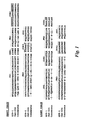
- Figure 1 shows heavy and light chain variable region amino acid sequence alignments of mouse G28.1 and CAS-024 sequences, along with a consensus identity sequence. Table 1.
- Exemplary CD-37 Specific SMIP Constructs Construct Description ⁇ Linker Hinge* AA SEQ ID NO. CAS-001 Vk3:VHS-51 16aa (G 4 S) 2 (G 4 T)G SSC-P 6 CAS-002 Vk3:VH5 JH4 CDRL1 (T25A); CDRH3 (M99F) 16aa (G 4 S) 2 (G 4 T)G SSC-P 48 CAS-003 Vk3:VH5 JH5a CDRL1 (T25A); CDRH3 (M99F; Y102S) 16aa (G 4 S) 2 (G 4 T)G SSC-P 52 CAS-007 Vk3:VH5-51 (Linker, TG ⁇ SS) 16aa (G 4 S) 3 S SSC-P 8 CAS-008 Vk3:VH5 ⁇ 51 VH V11S 16aa (G 4 S) 2 (G 4 T)G SSC-P 10 CAS-009 V
- Additional hinge regions that may be used in CD-37 specific binding molecules, such as SMIP molecules or antibodies, are provided in the following table. Table 2.
- Exemplary Hinge Regions for CD37-Specific Binding Proteins Amino Acid Sequence SEQ ID NO: ccc(p)-hIgG1 EPKSCDKTHTCPPCP 90 scc(p)-hIgG1 EPKSSDKTHTCPPCP 92 scc(s)-hIgG1 EPKSSDKTHTCPPCS 94 csc(p)-hIgG1 EPKSCDKTHTSPPCP 102 csc(s)-hIgG1 EPKSCDKTHTSPPCS 104 ccs(p)-hIgG1 EPKSCDKTHTCPPSP 255 ccs(s)-hIgG1 EPKSCDKTHTCPPSS 256 ssc(p)-hIgG1 EPKSSDKIHISPPCP 106 ssc(s
- V-region Human VK Framework Regions SEQ ID NO FR1 VK3 EIVMTQSPATLSVSPGERATLSC 170 VK3 ENLTQSPATLSLSPGERATLSC 171 VK1 DIQMTQSPSSLSASVGDRVTITC 172 VK1 NIQMTQSPSAMSASVGDRVTITC 175 VK1 AIQLTQSPSSLSASVGDRVTITC 177 VK1 DIQLTQSPSFLSASVGDRVTITC 178 VK1 AIRMTQSPFSLSASVGDRVTITC 179 VK1 AIQMTQSPSSLSASVGDRVITIC 180 VK1 DIQMTQSPSTLSASVGDRVTITC 181 FR2 VK3 WYQQKPGQAPRLLIY 182 VK1 WYQQKPGKAPKLLIY 184 VK1 WYQQKPGKVPKLLIY 185 VK1 WYQQKPGKAPKRLIY
- CDR-37 specific SMIP molecules including leader sequences used for expression and export, but which are removed from the mature fusion protein when exported from a cell; linker sequences used to join light and heavy chain variable domains to form scFv binding domains; hinges used to join scFv binding domains to effector domains; and effector domains
- CD-37 specific SMIP molecules including the preferred CAS-024 fusion protein
- Table 4 SMIP Component Parts and Select CD37-Specific SMIP Polypeptides Construct No. SEQ ID NO.
- CAS-024 and other CD37-specific binding SMIP molecules were cloned into a Chinese Hamster Ovary (CHO) mammalian cell expression system
- Transfected CHO cells that produced the SMIP molecules were cultured in shake flasks and harvested cell culture supernatants were titered using Octec Q Protein A sensor.
- Table 5 shows that the CAS-024 construct (VHVL format with 25 amino acid variable domain linker) had an unexpectedly superior expression level, up to about 10-fold better, than the other humanized anti-CD37 SMIP molecules (mostly VLVH format with 15 amino acid variable domain linker) Indeed, all fully humanized VLVH constructs expressed poorly (data not shown), as did mouse-human hybrid molecules in either orientation (see Example 5).
- Table 5 SMIP Expression SMIP Protein Clones Screened Protein Titer Range ( ⁇ g/ml) CAS-001 492 65 - 80 CAS-002 425 200 - 280 CAS-003 611 300 - 360 CAS-024 203 500 - 650
- nucleic acid encoding CAS-024 and several other CD37-specific binding SMIP molecules were cloned into a Chinese Hamster Ovary (CHO) mammalian cell expression system Transfected CHO cells that produced the SMIP molecules were cultured in shake flasks.
- CD37-specific binding SMIP molecules were purified from CHO culture supernatants by Protein A affinity chromatography.
- a 50 mL protein A FF sepharose column (GE Healthcare) was equilibrated at 5.0 mls/min (150 cm/hr) for 15 column volumes (CV) with dPBS.
- the culture supernatant was loaded onto the rProtein A Sepharose FF column at a flow rate of 1.7mls/min using the AKTA Explorer 100 Air (GE healthcare), capturing the recombinant SMIP molecules.
- the column was washed with dPBS for 5 Column Volumes (CV), then 10 M NaCl, 20mM Sodium Phosphate, pH 6.0, and then with 25 mM NaCl, 25mM NaOAc, pH 5.0.
- the recombinant CD37-specifc binding molecules were eluted from the column with 100mM glycine, pH 35. Fractions (10mL) of the eluted product were recovered and then brought to pH 5.0 with 20% of the eluted volume of 0.5 M 2-(N-morpholino)ethanesulfonic acid (MES), pH6.0. This eluted product was concentrated to approximately 25 mg/mL protein and filter sterilized.
- MES 2-(N-morpholino)ethanesulfonic acid
- each fraction was arialyzed for product quality using an analytic HPLC, and the eluted fractions were pooled to greater than about 95% protein of interest (non-aggregated).
- the resultant pool was filter sterilized at 0.22 ⁇ m, concentrated, and then formulated with 20 mM sodium phosphate, 240 mM sucrose, pH 6.0.
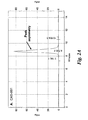
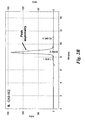
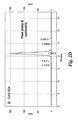
- the SEC traces showing the peaks containing the protein of interest (POI) for CAS-001 (SEQ ID NO:6), CAS-002 (SEQ ID NO:48), CAS-003 (SEQ ID NO:52), and CAS-024 (SEQ ID NO:253) are shown in Figures 2A-2D , respectively.
- the CAS-024 peak is narrower and more symmetric than the CAS-001, CAS-002, and CAS-003 samples (broader and asymmetric).
- the CAS-006 (chimeric) molecule produces a sharp peak similar to CAS-024.
- the CAS-001, CAS-002, and CAS-003 samples all had a slight tailing shoulder, which if integrated, accounts for about 35% of the POI area.
- This 'shoulder' would be difficult to separate from the POI and probably represents either misfolded conformers or a heterogenous population of molecules ( e.g ., have different levels of glycosylation). This indicates that CAS-024 was not only expressed better, but this construct also produces a more homogenous population of molecules.
- a competition assay was used to compare the binding affinity of different anti-CD37 specific small modular immunopharmaceutical (SMIP) molecules to CD-37 found on Ramos cells (a B-lymphoblastoid cell line derived from a Burkitt lymphoma).
- An SEC purified chimeric anti-CD37 SMIP molecule (CAS-006, SEQ ID NO:247) was labeled with the FMAT Blue® fluorescence dye (Applied Biosystems) and used as the standard to compete with purified unlabeled chimeric anti-CD37 SMIP molecule (positive control) and purified unlabeled humanized anti-CD37 SMIP test molecules.
- the reagent FMAT Blue® labeled chimeric anti-CD37 SMIP molecule was diluted to 2 ⁇ g/ml in FACS blocking buffer and the purified protein samples (CAS-001 (SEQ ID NO:6), CAS-002 (SEQ ID NO:48), CAS-003 (SEQ ID NO:52), and CAS-024 (SEQ ID NO:253)) were serially diluted 1:2 to concentrations ranging from 50 ⁇ g/ml to 0.02 ⁇ g/ml.
- Ramos cells were harvested at 1,000 rpm for 5 minutes and resuspend in FACS blocking buffer at 4 x 10 6 cells/10 ml buffer. To each well of a black 96-well plate the following was added: 50 ⁇ l sample, 50 ⁇ l FMAT Blue® labeled chimeric anti-CD37 SMIP molecule, and 50 ⁇ l Ramos cells (4x10 4 /well). The plates were incubated at room temperature for 30 min and read on an 8200 Cellular Detection System (Applied Biosystems) gated for middle cell size and low signal.
- FMAT Blue® labeled chimeric anti-CD37 SMIP molecule 50 ⁇ l Ramos cells (4x10 4 /well).
- CAS-024 and other CD37-specific binding SMIP molecules were produced by recombinant DNA technology and transfected into HEK293 cells for 7 days. Cell culture supernatants were harvested on day 7 and titered using Octec Q Protein A sensor.
- Table 6 shows that CAS-024 (VHVL. format with 25 amino acid variable domain linker) expressed from about 5-fold to about 27-fold better than the other humanized or mouse-human hybrid anti-CD37 SMIP molecules.
- the mouse-human hybrid molecules did not express well regardless of the VHVL or VLVH orientation. Table 6.
- SMIP Expression SMIP Protein Protein Titer ( ⁇ g/ml) CAS-002 (hVLhVH) 0.47 CAS-003 (hVLhVH) 2.39 CAS-014 (mVHhVL) 2.16 CAS-017 (hVLmVH) 0 70 CAS-006 (mVLmVH) 9.3 CAS-024 (hVHhVL) 12 7
- a competition assay as described in Example 4 was used to compare the binding affinity of different mouse-human hybrid anti-CD37 SMIP molecules compared to CAS-024 binding to Ramos cells.
- An SEC purified chimeric anti-CD37 SMIP molecule (CAS-006, SEQ ID NO:247) was labeled with the FMAT Blue® fluorescence dye (Applied Biosystems) and used as the standard to compete with purified unlabeled chimeric anti-CD37 SMIP molecule (CAS-006, positive control) and purified unlabeled humanized anti-CD37 SMIP test molecules - CAS-002 (SEQ ID NO:48), CAS-003 (SEQ ID NO:52), CAS-014 (SEQ ID NO:251), CAS-017 (SEQ ID NO:252), and CAS-024 (SEQ ID NO:253).
- VL.VH or VHVL did not seem to solve the expression problem, even when a longer variable domain linker is used (see CAS-014)
- VL.VH or VHVL did not seem to solve the expression problem, even when a longer variable domain linker is used (see CAS-014)
- Unconjugated MB371 (#555457) and FITC-conjugated MB371 (#555456) were obtained from BD Pharmingen (San Jose, CA), FITC-conjugated BL14 (#0457) from Immunotech/Beckman Coulter (Fullerton, CA), FITC-conjugated NMN46 (#RDI-CBL.
- CAS-006 was conjugated to FITC using a Molecular Probes Fluororeporter FITC Labeling Kit (F6434) according to manufacturer's instructions as follows: CAS-006 protein peak of interest (POI) at 13.5 mg/mL was adjusted to 5 mg/mL. with PBS. One mg (200 ul) was added to kit tubes with a stirbar, and 1M NaHCO 3 (adjusted to pH 8.5 with 6N NaOH), was added to a final concentration of 0.1M.
- POI protein peak of interest
- Reactions were shielded from light and stirred continuously for 75 minutes at room temperature. Reactions were added to spin columns prepared as described in the kit and spun at 1100 g for 5 minutes to buffer exchange into PBS with azide and remove unconjugated FITC.
- the OD at 280 nM and 494 nM was determined with 2 ul drops on the Nanodrop; the extinction coefficient for CAS-016 was experimentally determined for this instrument by reading dilutions of the starting unconjugated SMIP molecule, the concentration of each of the conjugates was 4.25 mg/ml and the following FITC:protein rations were determined: 2.7 FITC/CAS-016 at a ratio of 15; 3.7 FITC/CAS-016 at a ratio of 20; 4.4 FITC/CAS-016 at a ratio of 30; and 5.1 FITC/CAS-016 at a ratio of 40.
- BSA was added to 3 mg/mL to help stabilize the protein. Binding of each fraction was assessed at dilutions ranging from 100-24,300x on Ramos and 3200-25,600 on human PBMC. All bound, but the MR30 ratio was chosen for further use since it gave a high MFI that was well maintained over the titration range used, indicating that binding avidity was least affected in this reaction
- FITC labeled antibody conjugates were titrated from 10 ng/mL to 10 ⁇ g/mL in an initial binding study to determine the optimal amount to use in the blocking studies. The level chosen was just below saturating amounts, and was kept constant in the subsequent assays, while levels of blocking antibody were increased over a 10-fold range. Data were plotted as percent of maximal binding versus concentration of blocking antibody, so that higher levels indicate less efficient blocking, while lower levels indicate more efficient blocking activity. All of the antibodies tested showed blocking activity of the maximal binding observed without unlabeled reagents ( Figure 5 ).
- BJAB-cells a lymphoblastoid B-cell line were then stained with a panel of various clones of anti-CD37 mAbs, including MB371, BL14, NMN46, IPO24, HH1, WR17, and chimeric CAS-006 SMIP
- the cells were then washed 2.5 times with PBS and fixed with 1% paraformaldehyde (USB, Cleveland, Ohio)
- the treated cells were analyzed by flow cytometry using a FACsCalibur instrument and CellQuest software (BD Biosciences, San Jose, CA).
- cells were suspended in PBS (Gibco/Invitrogen, Grand Island NY) containing 2% FBS (Gibco/Invitrogen), (staining media) at a concentration of approximately 4 x 10 6 cells/mL. Cells were then plated and test samples, diluted in staining media, were then added 1:1 to the final designated concentrations. Reactions were incubated for 45 minutes on ice Samples were centrifuged and washed 2 times with PBS. FITC goat anti-human IgG (CalTag, Burlingame CA) was added at a final dilution of 1:50, and incubated 45 minutes on ice.
- PBS Gibco/Invitrogen, Grand Island NY
- FBS Gibco/Invitrogen
- DOHH2 is a CD20 + CD37 + human B-lymphoblastoid cell line derived from a patient with follicular lymphoma ( Kluin-Nelemans et al., Leukemia 5:221, 1991 ).
- DOHH2 was derived from a patient with a non-Burkitt's NHL.
- mice Five million DOHH2 cells were injected subcutaneously into the flank of female CB-17SCID mice (Harlan, Somerville, NJ) at 6.5 weeks of age and at a mean weight of 18.0 ⁇ 0.1 g (ranging from 14.6 to 22.6 g).
- palpable tumors were apparent in a majority of mice
- the baseline mean tumor volume was 228 mm 3
- the median baseline tumor size was 224 mm 3
- the range was 179 to 284 mm 3
- Tumor-bearing groups of SCID mice were treated on days 0, 4, and 8 via IP injection of 0..2 mL of PBS containing 200 ⁇ g of huIgG (negative control) or 200, 100, 30, 10, or 3 ⁇ g of CAS-024.
- the two lowest dose solutions of CAS-024 were prepared on the day of injection to avoid the need to add a carrier protein to the most dilute solutions.
- Drug solutions were color coded as described below (see Table 8 below). Table 8.
- mice, Route of Injection, and Treatment Days Dose per injection ( ⁇ g) mg/kg per Injection a Cumulative Dose ( ⁇ g) Cumulative Dose ( ⁇ mg/kg) a huIgG 200 11.1 600 33 CAS-024 200 14 per group 200 11.1 600 33 CAS-024 100 IP injection 100 5.6 300 16.7 CAS-024 30 30 17 90 5.0 CAS-024 Days 0,4, 8 10 10 0.6 30 1.7 CAS-024 3 3 0.2 9 0.5 a Note that huIgG and CAS-024 were delivered in ⁇ g per mouse, not in mg/kg. The approximate mg/kg is noted for convenience, and is based on the mean weight (18.0 ⁇ 01 g) of mice on day 0. The weight range in this experiment was 14.6 to 22.6 g.
- mice were prepared in similar volumes and the contents of the tubes were noted on removable labels.
- An investigator who was not treating or assessing the mice placed a color code on each tube and noted the code and identity of the tube contents in a laboratory notebook. Mice were monitored daily by visual inspection. Weights were determined weekly, and tumor diameters were determined at least 3 times per week (M, W, F) by an observer blinded (see above) to the treatment groups Tumor volumes were calculated as described above. Mice were euthanized if their tumor volume reached more than 1500 mm 3 (or 1200 mm 3 on Fridays).
- mice were not an endpoint in the tumor protocols and, unless noted otherwise, "survival" of a mouse was determined by the time it was euthanized due to its tumor volume reaching the predetermined limits. (The protocol called for mice to be euthanized if (1) their tumor volume exceeded the parameters noted above, (2) ulceration of a tumor occurred, (3) the tumor inhibited the mobility of the mouse, and (4) weight loss exceeded 20% of body weight.)
- mice in the CAS-024 100 ⁇ g treatment group were euthanized on day 35 due to weight loss >20%.
- This mouse had a tumor volume of 266 mm 3 at that time, and was treated as censored data for the survival analysis (not euthanized as of day 35 due to tumor growth).
- this mouse was classified as one that was euthanized during the study due to growth of its tumor (its tumor was growing back at the time of its death).
- No other mice were found dead and none were euthanized due to weight loss, tumor ulceration, or impaired mobility. No overt signs of toxicity or weight loss were observed in any of the treatment groups (data not shown).
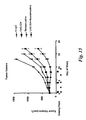
- CAS-024 had a dose-dependent inhibitory effect on the growth of DOHH2 tumors.
- the mean tumor volume of each CAS-024 treated group was significantly lower than that of the human IgG treated group as early as day 5, and remained lower through day 12.
- the huIgG treated mice were euthanized starting on day 12; therefore, comparisons of tumor volumes of the CAS-024 treated groups to the huIgG group were not performed for later time points. In terms of a dose response, there was no significant difference in the mean tumor volumes of the two highest dose groups at any point in the study.
- mice of the 30 ⁇ g and 10 ⁇ g dose groups differed from each other and from the low dose group over this same period.
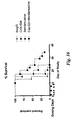
- mice treated with huIgG grew rapidly, and all of the mice in this group were euthanized by day 19
- the survival of mice treated with any of the CAS-024 dose regimens was prolonged relative to the huIgG treated group (p ⁇ 0.0001 in all cases).
- there was no significant difference in the survival curves of mice treated with the highest (200 and 100 ⁇ g) dose regimens (p 0 7091).
- NA CAS-024 200 600 ⁇ g Undefined ef 0/14 11/14 (79%) 8 ⁇ 0.0001 CAS-024 100 300 ⁇ g Undefined 1/14 b 11/14 (79%) ⁇ 0 0001 CAS-024 30 90 ⁇ g 35 0/14 5/14 (36%) 0 0407 CAS-024 10 30 ⁇ g 28 0/14 0/14 (0%) NA CAS-024 3 9 ⁇ g 19 0/14 0/14 (0%) NA a Mice were treated with the indicated protein via IP injection on days 0, 4, and 8. The numbers indicate the amount of protein ( ⁇ g) injected per day. b "Survival" of a mouse was determined by the day it was euthanized due to tumor growth.
- mice in the CAS-024 100 ⁇ g dose group were euthanized on day 35 due to >20% weight loss.
- the mouse had a tumor volume of 266 mm 3 at that time, and was treated as censored data (tumor volume did not reach predetermined limit by day 35) for the Kaplan Meier analysis. No other mice were euthanized for reasons other than its tumor volume reaching the predetermined limit. "Tumor-free" mice had no palpable SC tumors. The absence of tumor cells was not confirmed by histology. The study ended on day 61.
- Each group was compared with the HuIgG treated control group.
- the median survival time is undefined when >50% of the mice are alive at the end of the observation period.
- f Values in bold face indicate that the survival curves of the indicated group are significantly different from those of HuIgG control (p ⁇ 0.0001 in each case, log rank test).
- g Values in bold face are significantly different from the huIgG treated control group b
- One mouse was euthanized on day 35 due to >20% weight loss. The mouse had a tumor volume of 266 mm 3 at that time and was treated as censored data for the Kaplan Meier analysis. Table 10.
- mice in the hulgG treated group and in the two lowest (10 and 3 ⁇ g) CAS-024 dose groups were euthanized due to growth of their tumors.
- the major ity of tumors in the groups of mice treated with 200 or 100 ⁇ g of CAS-024 regressed to the point that no palpable tumor was present.
- 11/14 (79%) of the mice in each of the two highest dose groups and 5/14 (36%) of the mice in the 30 ⁇ g dose group remained tumor-free (p ⁇ 0,0001 and 0.0407, respectively, vs. hulgG group).
- CAS-024 exhibited dose-dependent inhibitory effects on the growth of established subcutaneous human tumor (DOHH2) xenografts in SCID mice
- DOHH2 subcutaneous human tumor
- the two highest dose regimens (100 or 200 ⁇ g per IP injection; cumulative dose of 300 or 600 ⁇ g, which corresponds to about 16,7 or 33 mg/kg, respectively) had similar inhibitory effects and were the most efficacious of the regimens tested in terms of inhibiting tumor growth, prolonging survival, and inducing complete tumor regression.
- DOHH2 is a CD20 + CD37 + human B-lymphoblastoid cell line derived from a patient with follicular lymphoma.
- mice (15 per treatment group) were treated on days 0, 4, and 8 via IP injection of 0.2 mL of PBS containing 200 ⁇ g human IgG, CAS-024, or Rituxan® (for a total of 600 ⁇ g after the three treatments)
- solutions were prepared in similar volumes and the contents of the tubes were noted on removable labels.
- An investigator who was not treating or assessing the mice placed a color code on each tube and noted the code and identity of the tube contents in a laboratory notebook
- mice were euthanized if their tumor volume reached more than 1500 mm3 (or 1200 mm3 on Fridays) Death is not an endpoint in our tumor protocols, and unless noted otherwise, "survival" of a mouse was determined by the time it was euthanized due to its tumor volume reaching the predetermined limits, (Our protocol calls for mice to be euthanized if their tumor volume exceeds the parameters noted above, ulceration, of a tumor occurs, the tumor inhibits the mobility of the mouse, or if weight loss exceeds 20% )
- mice were euthanized when their tumor volume reached the limits described above.
- One mouse in the CAS-024 treatment group was euthanized on day 45 due to weight loss >20%. This mouse had no apparent SC tumor at that time, and was treated as censored data for the survival analysis (not euthanized as of day 45 due to tumor growth) and was not included in the comparison of tumor-free incidence at the end of the study. No other mice were found dead and none were euthanized due to weight loss, tumor ulceration, or impaired mobility. No overt signs of toxicity or weight loss were observed in any of the treatment groups (data not shown).
- the CAS-024 and Rituxan treated mice exhibited a rapid response to treatment.
- Mean tumor volumes of the CAS-024- and Rituxan®-treated groups were significantly lower than that of the human IgG treated group as early as day 4 (after a single injection of drug) and remained lower through day 11. There were no significant differences in mean tumor volumes or mean relative tumor volumes between the CAS-024 and Rituxan® treated groups through day 11.
- the hulgG treated mice were euthanized starting on day 11; therefore, comparisons of tumor volumes were not performed for later time points..
- mice treated with hulgG grew rapidly and all mice in this group were euthanized by day 15. In contrast, by day 15, the majority of tumors in the CAS-024 and Rituxan treated groups had regressed to the point that no palpable tumor was present.
- mice Each group was compared with the HuIgG treated control group c "Tumor-free" mice had no palpable SC tumors; confirmation of tumor cells absence was not confirmed by histology. d The median survival time is undefined when >50% of the mice are alive at the end of the observation period. e Bold-faced values are significantly different from those of HuIgG control. f One mouse was euthanized on day 45 due to >20% weight loss The mouse had no apparent SC tumor at that time and was excluded from the group for the comparison of tumor-free mice at day 81.
- CAS-024 and Rituxan were efficacious as single agents in a human tumor (DOHH2) xenograft model in SCID mice. While both agents caused an initial tumor regression in the majority of mice, long-term tumor regression was observed only in the group of mice treated with CAS-024 as tumors relapsed after-optimal anti-CD20 treatment Consequently, CAS-024, a humanized anti-CD37 SMIP, shows significant efficacy in pre-clinical tumor xenograft models including models that show that Rituxan® treatment fails over time,
- chemotherapeutic agents were effective on a mantle cell lymphoma (MCL) cell line, Rec-1, that actively grows and divides in cell culture in vitro and whether the combination of CAS-024 and a chemotherapeutic agent (drug) would desensitize or enhance the response of mantle cell lymphoma cells to various chemotherapeutic agents.
- MCL mantle cell lymphoma
- chemotherapeutic agents tested were doxorubicin, vincristine, and fludarabine, which are used to treat non-Hodgkin's lymphoma and other lymphoid malignancies.
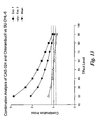
- Rec-1 cells a CD37+ human B cell line established from a patient with mantle cell lymphoma, were tested for growth inhibition in response to crosslinked CAS-024 in the presence or absence of doxorubicin, vincristine, or fludarabine (see Figure 7 ).
- CAS-024 was preincubated with anti-human IgG F(ab)' 2 to crosslink the protein
- Cells were cultured with medium alone or with medium containing various concentrations of the crosslinked CAS-024 protein, in the presence or absence of various concentrations of doxorubicin, vincristine, or fludarabine.
- Cultures were incubated for 96 hours and growth inhibition was assessed using an ATP viable cell detection system (i.e., viable cells quantified by ATP release).
- the combination of CAS-024 with vincristine or fludarabine was synetgistic (Cl ⁇ 1.0) and the combination of CAS-024 and doxorubicin was additive (Cl not significantly different from 1.0) None of CAS-024 and chemotherapeutic agent combinations were antagonistic (Cl >1.0) across all effect levels. Therefore, the combination of CAS-024 with each of the three chemotherapeutic agents tested did not desensitize target cells to drug-induced growth inhibition, but instead resulted in synergistic or additive inhibitory effects on target cell growth.
- a preferred embodiment would be the combination of CAS-024 (SEQ ID NO:253) with vincristine or fludarabine.
- CD37 SMIP molecules mediate significantly greater direct and natural killer (NK)-cell mediated killing of chronic lymphocytic leukemia (CLL) cells as compared to other therapeutic antibodies used in CLL.
- NK natural killer
- CLL chronic lymphocytic leukemia
- CTC AE Common Toxicity Criteria Adverse Events
- CD37 SMIP molecule is a well tolerated treatment with minimal infusional toxicity and no observed dose limiting toxicity. There also seems to be any complement involvement since patients with severe drops in lymphocyte counts are not showing signs of tumor lysis syndrome Encouraging reduction in tumor lymphocyte blood counts, reduction in lymph node/spleen size, clearing of leukemia cutis, and/or partial clearing of marrow disease, and/or improvement in normal hematopoeitic function in patients with high risk genomic CLL have already been observed at low, non-saturating doses of CD37 SMIP molecule.
- Rec-1 and SU-DHL-6 cells were plated at 1x10 4 cells/well in 100 ⁇ L medium in 96 well black-sided, black-bottomed plates. Cells were treated with various concentrations of CAS024 that had been preincubated with anti-human IgG F(ab)' 2 and plates were incubated for 96 hr at 37°C, 5% CO 2 in the presence of serial dilutions of bendamustine.. The final volume in each well was 150 ⁇ L. After incubation, plates were cooled to room temperature and labeled with 100 ⁇ L/well of ATPlite detection reagent (Perkin Elmer, Boston, MA). The assay measures cellular ATP as a marker for viable cells..
- DOHH2 is a CD20 + CD3T + human B-lymphoblastoid cell line derived from a patient with follicular lymphoma.
- Five million DOHH2 cells were injected subcutaneously into the flank of female CB-17 SCID mice.
- palpable tumors were apparent in majority of mice.
- the baseline mean tumor volume was 231 mm 3
- the median baseline tumor size was 229 mm 3
- the range was 201 to 261 mm 3 ,
- mice were treated with an injection of 0.2 my of PBS containing 10 ⁇ g hulgG (days 0, 4, 8 IV), 10 ⁇ g CAS024 (days 0, 4, 8 IV), 10 mg/kg Bendamustine (0, 2, 4, 7, 9 IP), or 10 ⁇ g CAS024 (days 0, 4, 8 IV) AND 10 mg/kg Bendamustine (0, 2, 4, 7, 9 IP).
- mice were euthanized if their tumor volume reached more than 1500 mm 3 (or 1200 mm 3 on Fridays) Death was not an endpoint in this study, and unless noted otherwise, "survival" of a mouse was determined by the time it was euthanized due to its tumor volume reaching the predetermined limits. Mice were euthanized if their tumor volume exceeded the parameters noted above, ulceration of a tumor occurs, the tumor inhibits the mobility of the mouse, or if weight loss exceeds 20%.
- mice treated with hulgG grew rapidly, and all of the mice in this group were euthanized by day 17, As shown in Figure 16 and summarized in Tables 12 and 13, the survival of mice dosed with any of the treatment groups was prolonged compared to the hulgG treated group (p ⁇ 0.0001 for all groups). There was also a significant difference between the survival curves of all three treatment groups and each other with the CAS024/bendamustine combination being superior to either single agent
- Table 12 Median Survival Time and Incidence of Tumor-Free Mice at the end of the Observation Period Treatment Group a Treatment Days Median Survival Time (Days) a Tumor-Free Incidence at End of Study hulgG Days 0, 4, 8 15 0/15 (0%) CAS024 10 ⁇ g Days 0, 4, 8 17 b 0/15 (0%) Bendamustine 10 mg/kg Ways 0,2. 4, 7, 9 17 0/15 (0%) CAS024 + Bendamustine Days 0,4,8 0,2,4,7,9 24 2/14 (14%) d a "Survival" of a mouse was determined by the day it was euthanized due to tumor growth..
Landscapes
- Health & Medical Sciences (AREA)
- Chemical & Material Sciences (AREA)
- Life Sciences & Earth Sciences (AREA)
- Medicinal Chemistry (AREA)
- General Health & Medical Sciences (AREA)
- Organic Chemistry (AREA)
- Animal Behavior & Ethology (AREA)
- Pharmacology & Pharmacy (AREA)
- Public Health (AREA)
- Veterinary Medicine (AREA)
- Immunology (AREA)
- Engineering & Computer Science (AREA)
- Bioinformatics & Cheminformatics (AREA)
- General Chemical & Material Sciences (AREA)
- Nuclear Medicine, Radiotherapy & Molecular Imaging (AREA)
- Chemical Kinetics & Catalysis (AREA)
- Epidemiology (AREA)
- Proteomics, Peptides & Aminoacids (AREA)
- Molecular Biology (AREA)
- Biochemistry (AREA)
- Genetics & Genomics (AREA)
- Biophysics (AREA)
- Diabetes (AREA)
- Hematology (AREA)
- Microbiology (AREA)
- Mycology (AREA)
- Biomedical Technology (AREA)
- Orthopedic Medicine & Surgery (AREA)
- Physical Education & Sports Medicine (AREA)
- Neurology (AREA)
- Gastroenterology & Hepatology (AREA)
- Cell Biology (AREA)
- Oncology (AREA)
- Rheumatology (AREA)
- Endocrinology (AREA)
- Neurosurgery (AREA)
- Emergency Medicine (AREA)
- Obesity (AREA)
- Pain & Pain Management (AREA)
- Peptides Or Proteins (AREA)
Abstract
Description
- The present disclosure generally provides compositions and their use in methods for treating B-cell disorders and, more specifically, a humanized anti-CD37 small modular immunopharmaceutical (SMIP) molecule, as well as synergistic combination therapies of CD37-specific binding molecules with bifunctional chemotherapeutics for use in treating or preventing B-cell related autoimmune, inflammatory, or hyperproliferative diseases
- The human immune system generally protects the body from invading foreign substances and pathogens. One component of the immune system is B lymphocytes, also referred to as B-cells, which produce antibodies that protect the body by binding to, and in some cases mediating destruction of, a foreign substance or pathogen. In some instances, however, the immune system functions can go awry and disease results. For example, there are numerous cancers, autoimmune diseases, and inflammatory diseases that involve uncontrolled proliferation of B-cells.
- B-cells can be identified by molecules on their cell surface, such as CD37, CD37 is a heavily glycosylated 40-52 kDa protein that belongs to the tetraspanin transmembrane family of cell surface antigens, which is highly expressed on normal antibody-producing B-cells but not on pre-B-cells or plasma cells. In addition to normal B-cells, almost all malignancies of B-cell origin are positive for CD37 expression, including chronic lymphocytic leukemia (CLL), non-Hodgkins lymphoma (NHL), and hairy cell leukemia (Moore et al., J. Pathol 152:13 (1987); Merson and Brochier, Immunol. Lett 19:269 (1988); and Faure et al., Am. J. Dermatopathol 12:122 (1990)).
- A few CD37 specific immunotherapies have been developed. An IgG1 murine monoclonal antibody specific for CD37, MB-1, was labeled with 131I and tested in a clinical trial in the treatment of NHL (see Press et al., J. Clin. Oncol. 7:1027 (1989); Bernstein et al., Cancer Res (Suppl ) 50:1017 (1990); Press et al., Front. Radiat. Ther. Oncol. 24:204 (1990); Press et al., Adv. Exp. Med. Biol. 303:91 (1991) and Brown et al., Nucl. Med Biol. 24:657 (1997)). The MB-1 antibody lacks Fc effector functions, such as antibody-dependent cellular cytotoxicity (ADCC), and the naked MB-1 antibody did not inhibit tumor growth in an in vivo xenograft model (Buchsbaum et al., Cancer Res. 52:6476 (1992)). In addition, an immunoconjugate having adriamycin linked to G28-1, another murine monoclonal anti-CD37, was administered to mice and shown to be internalized with adriamycin being released intracellularly (see, Braslawsky et al., Cancer immune\.. Immunother 33:367 (1991)). An engineered fusion protein, termed a small modular immunopharmaceutical (SMIP™) product, directed to CD37 is currently being tested in humans (see, e.g.,
US Patent Application Publications 2003/0133939 and2007/0059306 ). - Although there has been extensive research carried out on antibody-based therapies, there remains a need in the art for alternative or improved compositions and methods for treating B-cell associated disorders or diseases.
- The present invention provides a CD37-specific binding molecule that comprises the amino acid sequence as set forth in SEQ ID NO:253.
- In certain embodiments, the CD37-specific binding molecule consists essentially of the amino acid sequence as set forth in SEQ ID NO:253
- In certain embodiments, the CD37-specific binding molecule consists of the amino acid sequence as set forth in SEQ ID NO:253.
- In a related aspect, the present invention also provides an isolated nucleic acid molecule that comprises a nucleotide sequence encoding a humanized CD37-specific binding molecule of the present invention.
- In another related aspect, the invention provides a vector that comprises an isolated nucleic acid molecule that encodes a humanized CD37-specific binding molecule of the present invention.
- In another related aspect, the invention provides a host cell that comprises the above-described vector.
- The invention also provides a composition that comprises a humanized CD37-specific binding molecule of the present invention and a pharmaceutically acceptable carrier.
- In another aspect, the present invention provides the use of the compounds of the invention in a method for reducing B-cells or treating a disease associated with aberrant B-cell activity, comprising administering to a subject in need thereof an effective amount of a humanized CD37-specific binding molecule provided herein.
- In certain embodiments, the disease associated with aberrant B-cell activity is a B-cell lymphoma, a B-cell leukemia, a B-cell myeloma, a disease characterized by autoantibody production, or a disease characterized by inappropriate T-cell stimulation associated with a B-cell pathway
- In certain embodiments, the disease characterized by autoantibody production is idiopathic inflammatory myopathy, rheumatoid arthritis, myasthenia gravis, Grave's disease, type I diabetes mellitus, multiple sclerosis, an autoimmune disease, dermatomyositis, polymyositis, or Waldenstrom's macroglobinemia
- In certain embodiments, the disease associated with aberrant B-cell activity is chronic lymphocytic leukemia (CLL).
-
-
Figure 1 shows heavy and light chain variable region amino acid sequence alignments of mouse G28.1 and CAS-024 sequences, along with a consensus identity sequence. -
Figures 2A-2D show the size exclusion chromatography (SEC) chromatograms of CAS-001, CAS-002, CAS-003, and CAS-024. The peaks of interest (POI) have 98-99% of the SMIP molecules being purified. CAS-024 has a very sharp and symmetrical peak (indicating homogeneity), whereas CAS-001, CAS-002, and CAS-003 peaks have a slight shoulder (where upon integration, the shoulder accouts for about 35% of the POI), which indicates a heterogenous population of molecules. -
Figure 3 is graph showing how various anti-CD37 specific SMIP proteins compete with the parent CAS-006 molecule (chimeric anti-CD37 SMIP protein, mVLmVH) for binding to CD37 on Ramos cells, which provides an indication on the affinity of binding as compared to the parent molecule CAS-024 (hVHhVL) has substantially the same affinity for CD37 as does CAS-006, whereas the other molecules (CAS-001, CAS-002, and CAS-003, all hVLhVH) have a 2- to 4-fold decrease in affinity. -
Figures 4A and4B are graphs of additional binding competition assays against CAS-006 (labeled as SMIP-016 in these graphs). Here, mouse-human hybrid SMIP molecules (CAS-014 mVHhVL and CAS-017 hVLmVH) have an affinity that is higher than CAS-006, whereas CAS-024 shows the same binding affinity as CAS-006 and CAS-003 (hVLhVH) has a lower binding affinity.. -
Figures 5A ·5E show competitive binding between various different anti-CD37 antibodies and CAS-006 (a chimeric anti-CD37 SMIP molecule). -
Figures 6A and6B show that CAS-024 was statistically superior to Rituxan® in the in vivo treatment of an animal model of follicular lymphoma as shown by (A) survival rate and (B) tumor-free percentage. -
Figure 7 shows that CAS-024 acts synergystically with chemotherapeutic agents fludarabine and vincristine to kill mantle cell lymphoma (MCL) cells, Rec-1 cells. -
Figure 8 is a bar graph showing the level of depletion of peripheral blood lymphocytes in human patients treated with an anti-CD37 SMIP molecule of this disclosure. -
Figure 9 shows the lymphocyte depletion and course of treatment for patient BJB. BJB (part of Cohort 7) was treated with 3.0 mg/kg ondays day 4, and continues to respond to treatment -
Figure 10 shows the lymphocyte depletion and course of treatment for patient GRP. GRP (part of Cohort 4) was treated with 1.0 mg/kg once a week for four weeks as the first cycle, and then two months later was treated in the same way in a second cycle. Patient GRP showed a dramatic drop in lymphocytes (within 2 weeks), showed a 36% decrease in lymph node size by CT scan, a decrease in spleen size, improved hemoglobin level, and continues to respond to treatment. -
Figure 11 shows a combination index (CI) plot for inhibitory effects of CAS-024 and bendamustine against Rec-1 cell growth. -
Figure 12 shows inhibitory effects of chlorambucil alone and in combination with CAS-024 on SU-DHL-6 cell growth. -
Figure 13 shows a combination index plot for inhibitory effects of CAS-024 and chlorambucil on SU-DHL-6 cell growth -
Figure 14A shows tumor volume comparisons in tumor-bearing mice resulted from injections of DOHH2 cells and subsequently treated with hulgG (Human IgG, R&D Systems), CAS-024, bendamustine, and the combination of CAS-024 and bendamustine.Figure 14B shows tumor volume of individual mice onday 13 relative today 0. -
Figure 15 shows mean tumor volumes over time in tumor-bearing mice resulted from injections of DOHH2 cells and subsequently treated with hulgG, CAS-024, bendamustine, and the combination of CAS-024 and bendamustine. Values are the mean ± the standard error of the mean for each measurement day.. Curves for each group end after one or more of the mice in the group were euthanized. -
Figure 16 shows survival percentages over time of tumor-bearing mice resulted from injections of DOHH2 cells and subsequently treated with hulgG, CAS-024, bendamustine, and the combination of CAS-024 and bendamustine. -
Figure 17 shows incidence of tumor free mice over time after treatments with hulgG, CAS-024, bendamustine, and the combination of CAS-024 and bendamustine. - In one aspect, the present invention provides the CD37-specific binding molecule CAS-024 (SEQ ID NO:253), which is a humanized version of CAS-006 (a small modular immunopharmaceutical (SMIP) protein having the immunoglobulin variable regions from mouse anti-human CD37 monoclonal antibody G28-1). The CAS-024 SMIP protein is unexpectedly (1) expressed at up to about 25-fold higher levels than other humanized versions of CAS-006 (such as CAS-002, CAS-003; see Examples 2 and 5), (2) capable of binding CD37 as well as CAS-006 while other humanized versions do not (see Examples 4 and 5), and (3) produced as a homogenous population of molecules as compared the heterogenous nature of other humanized versions (see Example 3). Additionally, the instant disclosure provides the CD37-specific binding molecule CAS-024 (SEQ ID NO:253) for use in methods for reducing B-cells or treating disease associated with aberrant B-cell activity comprising administering to a subject in need thereof an effective amount of CAS-024 provided herein.
- Prior to setting forth this disclosure in more detail, it may be helpful to an understanding thereof to provide definitions of certain terms to be used herein. Additional definitions are set forth throughout this disclosure
- In the present description, any concentration range, percentage range, ratio range, or integer range is to be understood to include the value of any integer within the recited range and, when appropriate, fractions thereof (such as one tenth and one hundredth of an integer), unless otherwise indicated. Also, any number range recited herein relating to any physical feature, such as polymer subunits, size or thickness, are to be understood to include any integer within the recited range, unless otherwise indicated. As used herein, "about" or "consisting essentially of' mean ± 20% of the indicated range, value, or structure, unless otherwise indicated. It should be understood that the terms "a" and "an" as used herein refer to "one or more" of the enumerated components. The use of the alternative (e g., "or") should be understood to mean either one, both, or any combination thereof of the alternatives. As used herein, the terms "include" and "comprises" are used synonymously In addition, it should be understood that the individual compounds, or groups of compounds, derived from the various combinations of the structures and substituents described herein, are disclosed by the present application to the same extent as if each compound or group of compounds was set forth individually. Thus, selection of particular structures or particular substituents is within the scope of the present disclosure.
- The term "CD37-specific binding molecules" refer to a protein, polypeptide, oligopeptide or peptide that specifically binds to CD37 with a Ka of at least about 106 M-1 (e.g., at least about 107 M-1, 108 M-1, 109 M-1, 1010 M-1, 1011 M-1, 1012 M-1, or 1013 M-1).
- The term "CD37-specific binding domain" refers to a portion or a domain of a CD37-specific binding molecule responsible for the specific CD37 binding of the molecule. A CD37-specific binding domain itself (i.e., without any other portion of the CD37-specific binding molecule) binds to CD37 with a Ka of at least about 106 M-1 (e.g., at least about 107 M-1, 108 M-1, 109 M-1, 1010 M-1,1011 M-1, 1012 M-1, or 1013 M-1). A CD37-specific binding domain itself may be sufficient as a CD37-specific binding molecule. Exemplary CD37-specific binding domains include CD37-specific scFv and Fab fragments, which can be derived from anti-CD37 antibodies, such as monoclonal antibody G28-1.
- "Derivative" as used herein refers to a chemically or biologically modified version of a compound that is structurally similar to a parent compound and (actually or theoretically) derivable from that parent compound. Generally, a "derivative" differs from an "analogue" in that a parent compound may be the starting material to generate a "derivative," whereas the parent compound may not necessarily be used as the starting material to generate an "analogue." A derivative may have different chemical or physical properties from the parent compound. For example, a derivative may be more hydrophilic or it may be a mutated sequence having altered reactivity (e.g., a CDR having an amino acid change that alters its affinity for a target) as compared to the parent compound or sequence.
- "B-cell associated disorder or disease" refers to aberrant B-cell activity or activity that deviates from the normal, proper, or expected course. For example, a B-cell associated disorder or disease may include inappropriate proliferation of cells that have damaged or defective DNA or other cellular components Aberrant B-cell activity may include cell proliferation characterized by inappropriately high levels of cell division, inappropriately low levels of apoptosis, or both. Such diseases may have, for example, single or multiple local abnormal proliferation of cells, groups of cells or tissue(s), whether cancerous or non-cancerous, benign or malignant A B-cell associated disorder or disease may also include aberrant antibody production, such as production of autoantibodies, or overproduction of antibodies more desirable when produced at normal levels.. It is also contemplated herein that aberrant B-cell activity may occur in certain subpopulations of B-cells and not in other subpopulations, or may include inappropriate stimulation of T-cells, such as by inappropriate antigen presentation to T-cells or by other B-cells pathway..
- "Treatment" or "treating" refers to either a therapeutic treatment or prophylactic/preventative treatment. A therapeutic treatment may improve at least one symptom of disease in an individual receiving treatment or may delay worsening of a progressive disease in an individual, or prevent onset of additional associated diseases.
- A "therapeutically effective amount (or dose)" or "effective amount (or dose)" of a specific binding molecule or compound refers to that amount of the compound sufficient to result in amelioration of one or more symptoms of the disease being treated. When applied to an individual active ingredient, administered alone, a therapeutically effective dose refers to that ingredient alone. When applied to a combination, a therapeutically effective dose refers to combined amounts of the active ingredients that result in the therapeutic effect, whether administered serially or simultaneously. The invention specifically contemplates that one or more specific binding molecules may be administered according to methods of the invention, each in an effective dose
- "An individual having, or suspected of having, a disease associated with aberrant B-cell activity" is an individual in whom a disease or a symptom of a disorder may be caused by aberrant B-cell activity or B-cell proliferation, may be exacerbated by aberrant B-cell activity, or may be relieved by regulation of B-cell activity. Examples of such diseases are a B-cell malignancy or B-cell cancer (for example, B-cell lymphoma, a B-cell leukemia or a B-cell myeloma), a disease characterized by autoantibody production or a disease characterized by inappropriate T-cell stimulation caused by inappropriate B-cell antigen presentation to T-cells or caused by other pathways involving B-cells.
- Additional definitions are provided in the following detailed description of the present disclosure.
- In one aspect, the present invention provides humanized CD37-specific binding molecules as set forth in the claims. These molecules may be in any form that contains a humanized CD37-specific binding domain, including a humanized anti-CD37 antibody, an Fab fragment of a humanized anti-CD37 antibody, a humanized CD37-specific single chain Fv (scFv), a humanized CD37-specific SMIP protein, a humanized CD37-specific SCORPION protein, and other bi- or multi-specific binding proteins that comprise at least one humanized CD37-specific binding domain.. Detailed description of SMIP proteins and methods for making the same may be found, for example, in
U.S. Patent Publication Nos. 2003/0133939 ,2003/0118592 , and2005/0136049 andWO 2005017148 . Methods for making SCORPION proteins may be found, for example, in PCT Application Publication No.WO 2007/146968 U.S Patent Application Publication No. 2006/0051844 andU.S. Patent No. 7,166,707 . Certain bi- or multi-specific binding proteins may comprise a CD37-specific scfv and one or more other binding domains that are not derived from an immunoglobulin. - The CAS-024 SMIP protein is unexpectedly (1) expressed at up to about 25-fold higher levels than other humanized versions of CAS-006 (such as CAS-002, CAS-003; see Examples 2 and 5), (2) capable of binding CD337 as well as GAS-006 while other humanized versions do not (see Examples 4 and 5), and (3) produced as a homogenous population of molecules as compared the heterogenous nature of other humanized versions (see Example 3). In a preferred embodiment, the instant invention provides a CD37-specific binding protein that comprises or consists of CAS-024 (SEQ ID NO:253). In particular, this humanized CD37-specific binding molecule has substantially the same CD37 binding affinity as its parent chimeric molecule (CAS-006, SMIP protein having the immunoglobulin variable regions from mouse anti-human CD37 monoclonal antibody G28-1) in contrast to other humanized molecules, is expressed at high levels compared to other humanized molecules, and/or shows a high degree of homogeneity when purified, for example, via size exclusion chromatography (SEC) in contrast to other humanized molecules. In addition, this CAS-024 CD37-specific binding molecule has been shown to be effective in inhibiting tumor growth and causing long term tumor regression.
- The disclosure also includes an isolated nucleic acid molecule comprising a nucleotide sequence encoding humanized CD37-specific binding molecules of the present invention. In one embodiment, the disclosure includes vectors that comprise these nucleic acid molecules and host cells that comprise the vectors.
- The disclosure also includes processes of producing the polypeptides described herein, comprising culturing the host cells under suitable conditions to express the polypeptides, and optionally isolating the polypeptides from the culture.
- In one aspect, the present invention provides the use of the compositions of the invention in a method for reducing B cells or treating a disease associated with aberrant B cell activity comprising administering to a subject in need thereof (i.e., an individual having or suspected of having a disease associated with aberrant B-cell activity) an effective amount of a humanized CD37-specific binding molecule provided herein (e.g., CAS-024).
- B-cell malignancies or B-cell cancers include B-cell lymphomas [such as various forms of Hodgkin's disease, non-Hodgkins lymphoma (NHL) or central nervous system lymphomas], leukemias [such as acute lymphoblastic leukemia (ALL), chronic lymphocytic leukemia (CLL), Hairy cell leukemia and chronic myoblastic leukemia] and myelomas (such as multiple myeloma). Additional B cell cancers include small lymphocytic lymphoma, B-cell prolymphocytic leukemia, lymphoplasmacytic lymphoma, splenic marginal zone lymphoma, plasma cell myeloma, solitary plasmacytoma of bone, extraosseous plasmacytoma, extra-nodal marginal zone B-cell lymphoma of mucosa-associated (MALT) lymphoid tissue, nodal marginal zone B-cell lymphoma, follicular lymphoma, mantle cell lymphoma, diffuse large B-cell lymphoma, mediastinal (thymic) large B-cell lymphoma, intravascular large B-cell lymphoma, primary effusion lymphoma, Burkitt lymphoma/leukemia, B-cell proliferation of uncertain malignant potential, lymphomatoid granulomatosis, and post-transplant lymphoproliferative disorder.
- Burkitt's lymphoma (or "Burkitt's B cell malignancy", or "Burkitt`s tumor", or "Malignant lymphoma, Burkitt's type") is a cancer of the lymphatic system (in particular, B lymphocytes). It can be divided into three main clinical variants: the endemic, the sporadic and the immunodeficiency-associated variants
- Non-Burkitt's B cell malignancies include, but are not limited to, B-cell chronic lymphocytic leukemia (CLL)/small lymphocytic lymphoma, B-cell prolymphocytic leukemia, an acute lymphoblastic leukemia (ALL), lymphoplasmacytic lymphoma (including, but not limited to, Waldenstrom's macroglobulinemia), marginal zone lymphomas (including, but not limited to, splenic marginal zone B-cell lymphoma, nodal marginal zone (lymphoma, and extranodal marginal zone B-cell lymphoma of mucosa-associated lymphoid tissue (MALT) type), hairy cell leukemia, plasma cell myeloma/plasmacytoma, follicular lymphoma, mantle cell lymphoma (MCL), diffuse large cell B-cell lymphoma, transforming large B cell lymphoma, mediastinal large B-cell lymphoma, intravascular large B-cell lymphoma, primary effusion lymphoma, and non-Burkitt's non-Hodgkins lymphoma (NHL).
- Disorders characterized by autoantibody production are often considered autoimmune diseases. Autoimmune diseases include, but are not limited to: arthritis, rheumatoid arthritis, juvenile rheumatoid arthritis, osteoarthritis, polychondritis, psoriatic arthritis, psoriasis, dermatitis, polymyositis/dermatomyositis, inclusion body myositis, inflammatory myositis, toxic epidermal necrolysis, systemic scleroderma and sclerosis, CREST syndrome, responses associated with inflammatory bowel disease, Crohn's disease, ulcerative colitis, respiratory distress syndrome, adult respiratory distress syndrome (ARDS), meningitis, encephalitis, uveitis, colitis, glomerulonephritis, allergic conditions, eczema, asthma, conditions involving infiltration of T cells and chronic inflammatory responses, atherosclerosis, autoimmune myocarditis, leukocyte adhesion deficiency, systemic lupus erythematosus (SLE), subacute cutaneous lupus erythematosus, discoid lupus, lupus myelitis, lupus cerebritis, juvenile onset diabetes, multiple sclerosis, allergic encephalomyelitis, neuromyelitis optica, rheumatic fever, Sydenham's chorea, immune responses associated with acute and delayed hypersensitivity mediated by cytokines and T-lymphocytes, tuberculosis, sarcoidosis, granulomatosis including Wegener's granulomatosis and Churg-Strauss disease, agranulocytosis, vasculitis (including hypersensitivity vasculitis/angiitis, ANCA and rheumatoid vasculitis), aplastic anemia, Diamond Blackfan anemia, immune hemolytic anemia including autoimmune hemolytic anemia (AIHA), pernicious anemia, pure red cell aplasia (PRCA), Factor VIII deficiency, hemophilia A, autoimmune neutropenia, pancytopenia, leukopenia, diseases involving leukocyte diapedesis, central nervous system (CNS) inflammatory disorders, multiple organ injury syndrome, myasthenia gravis, antigen-antibody complex mediated diseases, anti-glomerular.basement membrane disease, anti-phospholipid antibody syndrome, allergic neuritis, Behcet disease, Castleman's syndrome, Goodpasture's syndrome, Lambert-Eaton Myasthenic Syndrome, Reynaud's syndrome, Sjorgen's syndrome, Stevens-Johnson syndrome, solid organ transplant rejection, graft versus host disease (GVHD), pemphigoid bullous, pemphigus, autoimmune polyendocrinopathies, seronegative spondyloarthropathies, Reiter's disease, stiff-man syndrome, giant cell arteritis, immune complex nephritis, IgA nephropathy, IgM polyneuropathies or IgM mediated neuropathy, idiopathic thrombocytopenic purpura (ITP), thrombotic thrombocytopenic purpura (TTP), Henoch-Schonlein purpura, autoimmune thrombocytopenia, autoimmune disease of the testis and ovary including autoimmune orchitis and oophoritis, primary hypothyroidism; autoimmune endocrine diseases including autoimmune thyroiditis, chronic thyroiditis (Hashimoto's Thyroiditis), subacute thyroiditis, idiopathic hypothyroidism, Addison's disease, Grave's disease, autoimmune polyglandular syndromes (or polyglandular endocrinopathy syndromes), Type I diabetes also referred to as insulin-dependent diabetes mellitus (IDDM) and Sheehan's syndrome; autoimmune hepatitis, lymphoid interstitial pneumonitis (HIV), bronchiolitis obliterans (non-transplant) vs NSIP, Guillain-Barre' Syndrome, large vessel vasculitis (including polymyalgia rheumatica and giant cell (Takayasu's) arteritis), medium vessel vasculitis (including Kawasaki's disease and polyarteritis nodosa), polyarteritis nodosa (PAN) ankylosing spondylitis, Berger's disease (IgA nephropathy), rapidly progressive glomerulonephritis, primary biliary cirrhosis, Celiac sprue (gluten enteropathy), cryoglobulinemia, cryoglobulinemia associated with hepatitis, amyotrophic lateral sclerosis (ALS), coronary artery disease, familial Mediterranean fever, microscopic polyangiitis, Cogan's syndrome, Whiskott-Aldrich syndrome and thromboangiitis obliterans, autoimmune thyroid disease (such as Graves' disease and Hashimoto's thyroiditis), Sjogren's syndrome, and idiopathic inflammatory myopathy (IIM), including dermatomyositis (DM) and polymyositis (PM).. The above autoimmune diseases may also be treated with humanized CD37-specific binding molecules or with the combination of CD37-specific binding molecules and a bifunctional chemotherapeutic.
- In one aspect of the disclosure, a humanized CD37-specific binding molecule is administered in a pharmaceutical composition To administer a humanized CD37-specific binding molecule to human or test animals, it is preferable to formulate the binding molecule in a composition comprising one or more pharmaceutically acceptable carriers. The phrase "pharmaceutically or pharmacologically acceptable" refer to molecular entities and compositions that do not produce allergic, or other adverse reactions when administered using routes well-known in the art, as described below. "Pharmaceutically acceptable carriers" include any and all clinically useful solvents, dispersion media, coatings, antibacterial and antifungal agents, isotonic and absorption delaying agents and the like.. In addition, compounds may form solvates with water or common organic solvents. Such solvates are contemplated as well
- Pharmaceutical compositions of the present disclosure containing a humanized CD37-specific binding molecule used in a method of the disclosure may contain pharmaceutically acceptable carriers or additives depending on the route of administration. Examples of such carriers or additives include water, a pharmaceutical acceptable organic solvent, collagen, polyvinyl alcohol, polyvinylpyrrolidone, a carboxyvinyl polymer, carboxymethylcellulose sodium, polyacrylic sodium, sodium alginate, water-soluble dextran, carboxymethyl starch sodium, pectin, methyl cellulose, ethyl cellulose, xanthan gum, gum Arabic, casein, gelatin, agar, diglycerin, glycerin, propylene glycol, polyethylene glycol, Vaseline, paraffin, stearyl alcohol, stearic acid, human serum albumin (HSA), mannitol, sorbitol, lactose, a pharmaceutically acceptable surfactant and the like. Additives used are chosen from, but not limited to, the above or combinations thereof, as appropriate, depending on the dosage form of the present disclosure.
- Formulation of the pharmaceutical composition will vary according to the route of administration selected (e.g., solution, emulsion). An appropriate composition comprising the antibody to be administered can be prepared in a physiologically acceptable vehicle or carrier.. For solutions or emulsions, suitable carriers include, for example, aqueous or alcoholic/aqueous solutions, emulsions or suspensions, including saline and buffered media. Parenteral vehicles can include sodium chloride solution, Ringer's dextrose, dextrose and sodium chloride, lactated Ringer's or fixed oils. Intravenous vehicles can include various additives, preservatives, or fluid, nutrient or electrolyte replenishers
- A variety of aqueous carriers, e..g.., water, buffered water, 0.4% saline, 0.3% glycine, or aqueous suspensions may contain the active compound in admixture with excipients suitable for the manufacture of aqueous suspensions. Such excipients are suspending agents, for example sodium carboxymethylcellulose, methylcellulose, hydroxypropylmethylcellulose, sodium alginate, polyvinylpyrrolidone, gum tragacanth and gum acacia; dispersing or wetting agents may be a naturally-occurring phosphatide, for example lecithin, or condensation products of an alkylene oxide with fatty acids, for example polyoxyethylene stearate, or condensation products of ethylene oxide with long chain aliphatic alcohols, for example heptadecaethyl-eneoxycetanol, or condensation products of ethylene oxide with partial esters derived from fatty acids and a hexitol such as polyoxyethylene sorbitol monooleate, or condensation products of ethylene oxide with partial esters derived from fatty acids and hexitol anhydrides, for example polyethylene sorbitan monooleate. The aqueous suspensions may also contain one or more preservatives, for example ethyl, or n-propyl, p-hydroxybenzoate.
- A CD37-specific binding molecule, or a composition comprising the binding molecule of the invention can be lyophilized for storage and reconstituted in a suitable carrier prior to use. This technique has been shown to be effective with conventional immunoglobulins. Any suitable lyophilization and reconstitution techniques can be employed. It will be appreciated by those skilled in the art that lyophilization and reconstitution can lead to varying degrees of activity loss and that use levels may have to be adjusted to compensate.
- Dispersible powders and granules suitable for preparation of an aqueous suspension by the addition of water provide the active compound in admixture with a dispersing or wetting agent, suspending agent and one or more preservatives. Suitable dispersing or wetting agents and suspending agents are exemplified by those already mentioned above.
- The concentration of CD37-specific binding molecule in these formulations can vary widely, for example from less than about 0.5%, usually at or at least about 1% to as much as 15 or 20% by weight and will be selected primarily based on fluid volumes, viscosities, etc., in accordance with the particular mode of administration selected. Thus, a typical pharmaceutical composition for parenteral injection could be made up to contain 1 mL sterile buffered water, and 50 mg of antibody. A typical composition for intravenous infusion could be made up to contain 250 mL of sterile Ringer's solution, and 150 mg of antibody. Actual methods for preparing parenterally administrable compositions will be known or apparent to those skilled in the art and are described in more detail in, for example, Remington's Pharmaceutical Science, 15th ed., Mack Publishing Company, Easton, Pa. (1980). An effective dosage of CD37-specific binding molecules (including humanized CD37-specific binding molecules) is within the range of 0.01 mg to 1000 mg per kg of body weight per administration.
- The pharmaceutical compositions may be in the form of a sterile injectable aqueous, oleaginous suspension, dispersions or sterile powders for the extemporaneous preparation of sterile injectable solutions or dispersions. The suspension may be formulated according to the known art using those suitable dispersing or wetting agents and suspending agents which have been mentioned above. The sterile injectable preparation may also be a sterile injectable solution or suspension in a non-toxic parenterally-acceptable diluent or solvent, for example as a solution in 1,3-butane diol. The carrier can be a solvent or dispersion medium containing, for example, water, ethanol, polyol (for example, glycerol, propylene glycol, and liquid polyethylene glycol, and the like), suitable mixtures thereof, vegetable oils, Ringer's solution and isotonic sodium chloride solution. In addition, sterile, fixed oils are conventionally employed as a solvent or suspending medium. For this purpose any bland fixed oil may be employed including synthetic mono- or diglycerides. In addition, fatty acids such as oleic acid find use in the preparation of injectables.
- In all cases the form must be sterile and must be fluid to the extent that easy syringability exists. The proper fluidity can be maintained, for example, by the use of a coating, such as lecithin, by the maintenance of the required particle size in the case of dispersion and by the use of surfactants. It must be stable under the conditions of manufacture and storage and must be preserved against the contaminating action of microorganisms, such as bacteria and fungi. The prevention of the action of microorganisms can be brought about by various antibacterial or antifungal agents, for example, parabens, chlorobutanol, phenol, sorbic acid, thimerosal, or the like. In many cases, it will be desirable to include isotonic agents, for example, sugars or sodium chloride. Prolonged absorption of the injectable compositions can be brought about by the use in the compositions of agents delaying absorption, for example, aluminum monostearate and gelatin.
- Compositions useful for administration may be formulated with uptake or absorption enhancers to increase their efficacy. Such enhancers includes for example, salicylate, glycocholate/linoleate, glycholate, aprotinin, bacitracin, SDS, caprate and the like, See, e.g., Fix (J. Pharm. Sci., 85:1282-1285, 1996) and Oliyai and Stella (Ann. Rev. Pharmacol. Toxicol., 32:521-544, 1993).
- In addition, the properties of hydrophilicity and hydrophobicity of the compositions contemplated for use in the disclosure are well balanced, thereby enhancing their utility for both in vitro and especially in vivo uses, while other compositions lacking such balance are of substantially less utility. Specifically, compositions contemplated for use in the disclosure have an appropriate degree of solubility in aqueous media which permits absorption and bioavailability in the body, while also having a degree of solubility in lipids which permits the compounds to traverse the cell membrane to a putative site of action. Thus, antibody compositions contemplated are maximally effective when they can be delivered to the site of target antigen activity.
- The binding molecule, or combination compositions may be administered orally, topically, transdermally, parenterally, by inhalation spray, vaginally, rectally, or by intracranial injection, or any combination thereof. The term parenteral, as used herein, includes subcutaneous injections, intravenous, intramuscular, intracisternal injection, or infusion techniques. Administration by intravenous, intradermal, intramusclar, intramammary, intraperitoneal, intrathecal, retrobulbar, intrapulmonary injection and or surgical implantation at a particular site is contemplated as well Generally, compositions are essentially free of pyrogens, as well as other impurities that could be harmful to the recipient Injection, especially intravenous, is preferred.
- In one embodiment, administration is performed at the site of a cancer or affected tissue needing treatment by direct injection into the site or via a sustained delivery or sustained release mechanism, which can deliver the formulation internally. For example, biodegradable microspheres or capsules or other biodegradable polymer configurations capable of sustained delivery of a composition (e.g., a soluble polypeptide, antibody, or small molecule) can be included in the formulations of the disclosure implanted near the cancer
- Therapeutic compositions may also be delivered to the patient at multiple sites. The multiple administrations may be rendered simultaneously or may be administered over a period of time In certain cases it is beneficial to provide a continuous flow of the therapeutic composition Additional therapy may be administered on a period basis, for example, hourly, daily, weekly or monthly.
- Also contemplated by the present disclosure is the administration of binding molecule, or combination compositions in conjunction with a further therapeutic agent. Further therapeutic contemplated by the disclosure are listed in paragraphs below,
- A further therapeutic agent may be a B-cell-associated molecule. Other B-cell-associated molecules contemplated by the disclosure include binding molecules which bind to B-cell surface molecules that are not CD37. B-cell-associated molecules, include CD19 (B-lymphocyte antigen CD19, also referred to as B-lymphocyte surface antigen B4, or Leu-12), CD20, CD21, CD22 (B-cell receptor CD22, also referred to as Leu-14, B-lymphocyte cell adhesion molecule, or BL-CAM), CD23, CD40 (B-cell surface antigen CD40, also referred to as Tumor Necrosis Factor receptor superfamily member 5, CD40L receptor, or Bp50), CD80 (T lymphocyte activation antigen CD80, also referred to as Activation B7-1 antigen, B7, B7-1, or BB1), CD86 (T lymphocyte activation antigen CD86, also referred to as Activation B7-2 antigen, B70, FUN-1, or BU63), CD37 (also referred to as Tumor Necrosis Factor receptor superfamily member 9), CD152 (also referred to as cytotoxic T-lymphocyte protein 4 or CTLA-4), L6 (Tumor-associated antigen L6, also referred to as Transmembrane 4 superfamily member 1, Membrane component surface marker 1, or M3S1), CD30 (lymphocyte activation antigen CD30, also referred to as Tumor Necrosis Factor receptor superfamily member 8, CD30L receptor, or Ki-1), CD50 (also referred to as Intercellular adhesion molecule-3 (ICAM3), or ICAM-R), CD54 (also referred to as Intercellular adhesion molecule-1 (ICAM1), or Major group rhinovirus receptor), B7·H1 (ligand for an immunoinhibitory receptor expressed by activated T cells, B-cells, and myeloid cells, also referred to as PD-L1; see Dong, et al., "B7-H1, a third member of the B7 family, co-stimulates T-cell proliferation and interleukin-10 secretion," Nat Med, 5:1365-1369 (1999), CD134 (also referred to as Tumor Necrosis Factor
receptor superfamily member 4, OX40, OX40L receptor, ACT35 antigen, or TAX-transcriptionally activatedglycoprotein 1 receptor), 41BB (4-1BB ligand receptor, T-cell antigen 4-1 BB, or T-cell antigen ILA), CD153 (also referred to as Tumor Necrosis Factorligand superfamily member 8, CD30 ligand, or CD30-L), CD154 (also referred to as Tumor Necrosis Factorligand superfamily member 5, TNF-related activation protein, TRAP, or T cell antigen Gp39), Toll receptors, or the like. - Examples of chemotherapeutic agents contemplated as further therapeutic agents include alkylating agents, such as nitrogen mustards (eg., mechlorethamine, cyclophosphamide, ifosfamide, melphalan, and chlorambucil); nitrosoureas (e.g., carmustine (BCNU), lomustine (CCNU), and semustine (methyl-CCNU)); ethyleneimines and methyl-melamines (eg., triethylenemelamine (TEM), triethylene thiophosphoramide (thiotepa), and hexamethylmelamine (HMM, altretamine)); alkyl sulfonates (e.g., buslfan); and triazines (e.g., dacabazine (DTIC)); antimetabolites, such as folic acid analogues (e.g., methotrexate, trimetrexate, and pemetrexed (multi-targeted antifolate)); pyrimidine analogues (such as 5-fluorouracil (5-FU), fluorodeoxyuridine, gemcitabine, cytosine arabinoside (AraC, cytarabine), 5-azacytidine, and 2,2'-difluorodeoxycytidine); and purine analogues (e.g, 6-mercaptopurine, 6-thioguanine, azathioprine, 2'-deoxycoformycin (pentostatin), erythrohydroxynonyladenine (EHNA), fludarabine phosphate, 2-chlorodeoxyadenosine (cladribine, 2-CdA)); Type I topoisomerase inhibitors such as camptothecin (CPT), topotecan, and irinotecan; natural products, such as epipodophylotoxins (e.g., etoposide and teniposide); and vinca alkaloids (e.g., vinblastine, vincristine, and vinorelbine); anti-tumor antibiotics such as actinomycin D, doxorubicin, and bleomycin; radiosensitizers such as 5-bromodeozyuridine, 5-iododeoxyuridine, and bromodeoxycytidine; platinum coordination complexes such as cisplatin, carboplatin, and oxaliplatin; substituted ureas, such as hydroxyurea; and methylhydrazine derivatives such as N-methylhydrazine (MIH) and procarbazine.
- Further therapeutic agents contemplated by this disclosure for treatment of autoimmune diseases are referred to as immunosuppressive agents, which act to suppress or mask the immune system of the individual being treated. Immunosuppressive agents include, for example, non-steroidal anti-inflammatory drugs (NSAIDs), analgesics, glucocorticoids, disease-modifying antirheumatic drugs (DMARDs) for the treatment of arthritis, or biologic response modifiers.. Compositions in the DMARD description are also useful in the treatment of many other autoimmune diseases aside from RA.
- Exemplary NSAIDs are chosen from the group consisting of ibuprofen, naproxen, naproxen sodium, Cox-2 inhibitors such as Vioxx and Celebrex, and sialylates. Exemplary analgesics are chosen from the group consisting of acetaminophen, oxycodone, tramadol of proporxyphene hydrochloride. Exemplary glucocorticoids are chosen from the group consisting of cortisone, dexamethasone, hydrocortisone, methylprednisolone, prednisolone, or prednisone. Exemplary biological response modifiers include molecules directed against cell surface markers (e.g., CD4, CD5, etc ), cytokine inhibitors, such as the TNF antagonists (e.g., etanercept (Enbrel), adalimumab (Humira) and infliximab (Remicade)), chemokine inhibitors and adhesion molecule inhibitors. The biological response modifiers include monoclonal antibodies as well as recombinant forms of molecules. Exemplary DMARDs include azathioprine, cyclophosphamide, cyclosporine, methotrexate, penicillamine, leflunomide, sulfasalazine, hydroxychloroquine, Gold (oral (auranofin) and intramuscular) and minocycline.
- It is contemplated the binding molecule composition and the further therapeutic agent may be given simultaneously in the same formulation. Alternatively, the agents are administered in a separate formulation but concurrently, with concurrently referring to agents given, for example, within minutes, hours or days of each other.
- In another aspect, the further therapeutic agent is administered prior to administration of the binding molecule. Prior administration refers to administration of the further therapeutic agent within the range of minutes, hours, or one week prior to treatment with the binding molecule, bifunctional chemotherapeutic, or combination composition. It is further contemplated that the further therapeutic agent is administered subsequent to administration of the binding molecule composition. Subsequent administration is meant to describe administration more than minutes, hours, or weeks after binding molecule, bifunctional chemotherapeutic, or combination composition treatment or administration
- It is further contemplated that when the binding molecule is administered in combination with a further therapeutic agent, wherein the further therapeutic agent is a cytokine or growth factor, or a chemotherapeutic agent, the administration may also include use of a radiotherapeutic agent or radiation therapy. The radiation therapy administered in combination with an antibody composition is administered as determined by the treating physician, and at doses typically given to patients being treated for cancer.
- These compositions may be administered in a single dose or In multiple doses. Standard dose response studies, first in animal models and then in clinical testing, reveal optimal dosages for particular disease states and patient populations.
- The administration of the binding molecule, or combination composition decreases the B-cell population by at least 20% after a single dose of treatment. In one embodiment, the B-cell population is decreased by at least about 20, about 30, about 40, about 50, about 60, about 70, about 80, about 90, or about 100%. B-cell reduction is defined as a decrease in absolute B-cell count below the lower limit of the normal range B-cell recovery is defined as a return of absolute B-cell count to, for example, 70%, 80%, 90% of a subject's baseline value or normal range. Further, the administration of binding molecule, or combination composition of this disclosure results in desired clinical effects in the disease or disorder being treated.
- In some embodiments, patients suffering from a disease associated with aberrant B cell activity who receive treatment according to the disclosure may demonstrate an overall beneficial response to the treatment, based on clinical criteria well known and commonly used in the art and as described below
- For example, in patients affected by rheumatoid arthritis, the administration may improve the patient's condition by a clinically significant amount [e.g., achieves the American College of Rheumatology Preliminary Detection of Improvement (ACR20)], and/or an improvement of 20% in tender and swollen joint and 20% improvement in 3/5 remaining ACR measures (Felson et al., Arthritis Rheum. 1995, 38:727-35). Biological measures for improvement in an RA patient after administration of CD37-specific and CD20-specific binding molecules included measurement of changes in cytokine levels, measured via protein or RNA levels. Cytokines of interest include, but are not limited to, TNF-α, IL-1, interferons, Blys, and APRIL. Cytokine changes may be due to reduced B cell numbers or decreased activated. T-cells. In RA patients, markers relevant to bone turnover (bone resorption or erosion) are measured before and after administration of CD20-specific binding molecules, Relevant markers include, but are not limited to, alkaline phosphatase, osteocalcin, collagen breakdown fragments, hydroxyproline, tartrate-resistant acid phosphatase, and RANK ligand (RANKL) Other readouts relevant to the improvement of RA include measurement of C reactive protein (CRP) levels, erythrocyte sedimentation rate (ESR), rheumatoid factor, CCP (cyclic citrullinated peptide) antibodies and assessment of systemic B cell levels and lymphocyte count via flow cytometry. Specific factors can also be measured from the synovium of RA patients, including assessment of B-cell levels in synovium from synovium biopsy, levels of RANKL and other bone factors and cytokines set out above.
- In a related aspect, the effects of administration on other diseases may be measured according to standards known in the art.. For example, it is contemplated that Crohn's disease patients treated according to the invention achieve an improvement in Crohn's Disease Activity Index (CDAI) in the range of about 50 to about 70 units, wherein remission is at 150 units (Simonis et al, Scand. J Gasfroent 1998, 33:283-8). A score of 150 or 200 is considered normal, while a score of 450 is considered a severe disease-score. It is further desired that administration of the CD37-specific and CD20-specific binding molecules results in a reduction in perinuclear anti-neutrophil antibody (pANCA) and anti-Saccharomyces cervisiae antibody (ASCA) in individuals affected by inflammatory bowel disease..
- It is further contemplated that adult and juvenile myositis patients treated according to the disclosure may achieve an improvement in core set of evaluations, such as 3 out of 6 of the core set measured improved by approximately 20%, with not more than 2 of the core measurements worse by approximately 25% (see Rider et al., Arthritis Rheum. 2004, 50:2281-90).
- It is further contemplated that SLE patients treated according to the disclosure may achieve an improvement in Systemic Lupus Activity Measure (SLAM) or SLE Disease Activity Index (SLEDAI) score of at least 1 point (Gladman et al, J Rheumatol 1994, 21:1468-71) (Tan et al., Arthritis Rheum. 1982, 25:1271-7), A SLAM score of >5, or SLEDAI score >2, is considered clinically active disease. A response to treatment may be defined as improvement or stabilization over the in 2 disease activity measures (the SLE Disease Activity Index [SLEDAI] and the Systemic Lupus Activity Measure) and 2 quality of life measures (patient's global assessment and the Krupp Fatigue Severity Scale) (Petri et al., Arthritis Rheum. 2004, 50:2858-68) It is further contemplated that administration of the binding molecule to SLE patients results in a reduction in anti-double-stranded DNA antibodies. Alternatively, improvement may be gauged using the British Isles Lupus Assessment Group Criteria (BILAG).
- It is further contemplated that multiple sclerosis patients treated according to the disclosure may achieve an improvement in clinical score on the Kurtzke Expanded Disability status scale (EDSS) (Kurtzke, F., Neurology 1983, 33:1444-52) of at least 0.5, or a delay in worsening of clinical disease of at least 1,0 on the Kurtzke scale (Rudick et al., Neurology 1997, 49:358-63)..
- It is further contemplated that patients suffering from IIM treated according to the disclosure may achieve a reduction in at least one of five criteria set out in the Idiopathic Inflammatory Myopathy Criteria (IIMC) assessment (Miller, F., supra). It is further contemplated that administration to IIM patients may result in a reduction in IIM associated factors selected from the group consisting of creatine kinase (CK), lactate dehydrogenase, aldolase, C-reactive protein, aspartate aminotransferase (AST), alanine aminotransferase (ALT), and antinuclear autoantibody (ANA), myositis-specific antibodies (MSA), and antibody to extractable nuclear antigens Alternatively, patients meet 3 out of 6 of the criteria set out in Rider et al., Arthritis Rheum., 50(7):2281-2290 (2004), with worsening in no more than 2 criteria
- In some embodiments, patients suffering from a B cell cancer that receive treatment according to the disclose may demonstrate an overall beneficial response to the treatment, based on clinical criteria well-known and commonly used in the art, and as described below, such as a decrease in tumor size, decrease in tumor number and/or an improvement in disease symptoms
- Exemplary clinical criteria are provided by the U.S. National Cancer Institute (NCI), which has divided some of the classes of cancers into the clinical categories of "indolent" and "aggressive" lymphomas. Indolent lymphomas include follicular cell lymphomas, separated into cytology "grades," diffuse small lymphocytic lymphoma/chronic lymphocytic leukemia (CLL), Iymphoplasmacytoid/Waidenstrom's Macroglobulinemia, Marginal zone lymphoma and Hairy cell, leukemia. Aggressive lymphomas include diffuse mixed and large cell lymphoma, Burkitt's lymphoma/diffuse small non-cleaved cell lymphoma, Lymphoblastic lymphoma, Mantle cell lymphoma and AIDS-related lymphoma In some cases, the International Prognostic Index (IPI) is used in cases of aggressive and follicular lymphoma, Factors to consider in the IPI include age (<60 years of age versus >60 years of age), serum lactate dehydrogenase (levels normal versus elevated), performance status (0 or 1 versus 2-4) (see definition below), disease stage (I or II versus III or IV), and extranodal site involvement (0 or 1 versus 2-4). Patients with 2 or more risk factors have less than a 50% chance of relapse-free and overall survival at 5 years.
- Performance status in the aggressive IPI is defined as follows: Grade Description: 0 Fully active, able to carry on all pre-disease performance without restriction; 1 Restricted in physically strenuous activity but ambulatory and able to carry out work of a light or sedentary nature, e.g., light house work, office work; 2 Ambulatory and capable of all selfcare but unable to carry out any work activities, up to and about more than 50% of waking hours; 3 Capable of only limited selfcare, confined to bed or chair more than 50% of waking hours; 4 Completely disabled, unable to carry on any selfcare, totally confined to bed or chair; and, 5 Dead. (See, The International Non-Hodgkin's Lymphoma Prognostic Factors Protect. A predictive model for aggressive non-Hodgkin's lymphoma N. Engl. J. Med. 329:987-94, 1993.)
- Typically, the grade of lymphoma is clinically assessed using the criterion that low-grade lymphoma usually presents as a nodal disease and is often indolent or slow-growing. Intermediate and high-grade disease usually presents as a much more aggressive disease with large extranodal bulky tumors.
- The Ann Arbor classification system is also used to measure progression of tumors, especially non-Hodgkin's lymphomas. In this system, stages I, II, III, and IV of adult NHL can be classified into A and B categories depending on whether the patient has well-defined generalized symptoms (B) or not (A). The B designation is given to patients with the following symptoms: unexplained loss of more than 10% body weight in the 6 months prior to diagnosis, unexplained fever with temperatures above 38° C. and drenching night sweats. Definitions of the stages are as follows: Stage I-involvement of a single lymph node region or localized involvement of a single extralymphatic organ or site. Stage II-involvement of two or more lymph node regions on the same side of the diaphragm or localized involvement of a single associated extralymphatic organ or site and its regional lymph nodes with or without other lymph node regions on the same side of the diaphragm Stage III-involvement of lymph node regions on both sides of the diaphragm, possibly accompanying localized involvement of an extralymphatic organ or site, involvement of the spleen, or both. Stage IV-disseminated (multifocal) involvement of one or more extralymphatic sites with or without associated lymph node involvement or isolated extralymphatic organ involvement with distant (non-regional) nodal involvement.. For further details, see The International Non-Hodgkin's Lymphoma Prognostic Factors Project: A predictive model for aggressive non-Hodgkin's lymphoma, New England J. Med. (1993) 329:987-994.
- In one aspect, a therapeutic effect of the methods according to the disclosure is determined by the level of response, for example, a partial response is defined as tumor reduction to less than one-half of its original size.. A complete response is defined as total elimination of disease confirmed by clinical or radiological evaluation. In one embodiment, the individual receiving treatment according to the invention demonstrates at least a partial response to treatment.
- According to the Cheson criteria for assessing NHL developed in collaboration with the National Cancer institute (Cheson et al., J Clin Oncol. 1999, 17:1244; Grillo-Lopez et al., Ann Oncol. 2000, 11:399-408), a complete response is obtained when there is a complete disappearance of all detectable clinical and radiographic evidence of disease and disease-related symptoms, all lymph nodes have returned to normal size, the spleen has regressed in size, and the bone marrow is cleared of lymphoma.
- An unconfirmed complete response is obtained when a patient shows complete disappearance of the disease and the spleen regresses in size, but lymph nodes have regressed by more than 75% and the bone marrow is indeterminate. An unconfirmed complete response meets and exceeds the criteria for partial response. An overall response is defined as a reduction of at least 50 percent in overall tumor burden.
- Similar criteria have been developed for various other forms of cancers or hyperproliferative diseases and are readily available to a person of skill in the art. See, e.g., Cheson et al., Clin Adv Hematol Oncol. 2006, 4:4-5, which describes criteria for assessing CLL; Cheson et al., J Clin Oncol. 2003, 21:4642-9, which describes criteria for AML; Cheson et al., , which describes criteria for myelodysplastic syndromes.
- In another aspect, a therapeutic response in patients having a B cell cancer is manifest as a slowing of disease progression compared to patients not receiving therapy. Measurement of slowed disease progression or any of the above factors may be carried out using techniques well-known in the art, including bone scan, CT scan, gallium-scan, lymphangiogram, MRI, PET scans, ultrasound, and the like.
- As an additional aspect, the disclosure includes kits which comprise one or more compounds or compositions useful in the methods of this disclosure packaged in a manner which facilitates their use to practice methods of the disclosure. In a simplest embodiment, such a kit includes a compound or composition described herein as useful for practice of a method of the disclosure packaged in a container such as a sealed bottle or vessel, with a label affixed to the container or included in the package that describes use of the compound or composition to practice the method of the disclosure. Preferably, the compound or composition is packaged in a unit dosage form. The kit may further include a device suitable for administering the composition according to a preferred route of administration or for practicing a screening assay. The kit may include a label that describes use of the binding molecule composition(s) in a method of the disclosure.
- Various CD37-specific binding proteins can be made with exemplary components provided in Tables 2-4.. For example, antibodies or SMIP molecules can be made, and these molecules can be chimeric, humanized, or human. More specifically, preferred light chain variable region CDRs are found in SEQ ID NOS:236-240 and 247-254 and preferred heaving chain variable domain CDRs include SEQ ID NOS:241-245 and 247-254. Also, preferred light and heavy chain variable regions are provided in SEQ ID NOS:236-240 and SEQ ID NOS:241-245, respectively Preferred light and heavy chain variable regions may also be found in SEQ ID NOS:247-254. Preferred variable domain linkers include SEQ ID NOS:225-229, while preferred hinges include SEQ ID NOS:230-235.
- A particularly preferred embodiment is CAS-024 [G28-1 VH (M99F, Y102S)-VL (T25A) scFv (SSC-P) H WCH2 WCH3], which is a recombinant, 483 amino acid single-chain fusion protein that binds to human CD37. The binding domain comprises a humanized scFv based on the G28-1 antibody variable region CDRs, including mutations in the heavy chain CDR3 and in the light chain CDR1. The variable domains are linked by a (G4S)5 (25 amino acid) sequence (SEQ ID NO:229), which is connected via a three amino acid junction (GDQ) to the amino terminus of a modified upper and core IgG1 hinge region (wherein the first two of three cysteines found in these hinge regions are each substituted with a serine). The carboxy-terminus of the hinge is fused to an effector domain comprising CH2 and CH3 domains of IgG1. The amino acid sequence of CAS-024 is set out in SEQ ID NO:253.
Figure 1 shows heavy and light chain variable region amino acid sequence alignments of mouse G28.1 and CAS-024 sequences, along with a consensus identity sequence.Table 1. Exemplary CD-37 Specific SMIP Constructs Construct Description† Linker Hinge* AA SEQ ID NO. CAS-001 Vk3:VHS-51 16aa
(G4S)2(G4T)GSSC- P 6 CAS-002 Vk3:VH5 JH4 CDRL1 (T25A); CDRH3 (M99F) 16aa
(G4S)2(G4T)GSSC- P 48 CAS-003 Vk3:VH5 JH5a CDRL1 (T25A); CDRH3 (M99F; Y102S) 16aa
(G4S)2(G4T)GSSC-P 52 CAS-007 Vk3:VH5-51 (Linker, TG→SS) 16aa
(G4S)3SSSC- P 8 CAS-008 Vk3:VH5·51 VH V11S 16aa
(G4S)2(G4T)GSSC- P 10 CAS-009 Vk3:VH5-51 CDRL1 (E27Q) 16aa (G4S)2(G4T)G SSC- P 12 CAS-010 Vk3:VR5-51 CDRL1 (N28S) 16aa
(G4S)2(G4T)GSSC- P 14 CAS-011 Vk3:VH5-51 CDRL1 (72.5A) 16aa
(G4S)2(G4T)GSSC- P 16 CAS-012 mVk:VH5·5a 16aa (G4S)2(G4A)S SSC-P 18 CAS-013 Vk3:VH5 YH3 FWI 16aa
(G4S)2(G4A)SSSC-P 22 CAS-014 mVH:Vk3 22aa
(G4S)4ASSSC-P 24 CAS-015 Vk3:mVH (2H7 Leader) 16aa
(G4S)2(G4A)SSSC- P 26 CAS-016 mVH:Vk3 22aa
(G4S)4ASSCC- P 28 CAS-017 Vk3:mVH 16aa
(G4S)2(G4A)SSSC- P 30 CAS-018 Vk3:mVH 16aa
(G4S)2(G4A)SSCC-P 32 CAS-019 Vk.3:VH5 VH3 FW1 16aa
(G4S)2(G4A)SSCC- P 34 CAS-020 Vk3:VH5 VH3-13 FW1 16aa
(G4S)2(G4A)SSSC- P 38 CAS-021 Vk3:VH5 YH3-13 FW1 16aa
(G4S)2(G4A)SSCC- P 40 CAS-022 Vk3:VH5 VH3-13 V11SFWl 16aa
(G4S)2(G4A)SSSC-P 42 CAS-023 Vk3:VH5 VH1-13 V11S FW1 16aa
(G4S)2(G4A)SSCC-P 44 CAS-024 VHVL 25aa
(G4S)5SSC-P 253 CAS-060 Vk3:VH5 VH3 FW1 16aa
(G4S)2(G4A)SSSC- P 36 CAS-061 Vk3:VH5 CDRL1 (T25A, E27Q) 16aa
(G4S)2(G4T)GSSC-P 46 CAS-062 Vk3:CDR-H3 JH6 CDRL1 (T25A), CDRH3 (Y102V) 16aa
(G4S)2(G4T)GSSC-P 254 CAS-063 Vk3:VH5 JH5b CDRL1 (T25A); CDRH3 (M99F, Y102P) 16aa
(G4S)2(G4T)GSSC-P 266 CAS-064 Vk3:VH5 JH1 CDRL1 (T25A) CDRH3 (D101E; Y102H) 16aa
(G4S)2(G4T)GSSC-P 267 CAS-065 Vk3:CDR-H3 TH3a CDRL1 (T25A) CDRH3 (M99F; Y102V) 16aa
(G4S)2(G4T)GSSC-P 268 CAS-066 Vk3:CDR-H3 JH3b CDRL1 (T25A) CDRH3 (M99F, Y102I) 16aa
(G4S)2(G4T)GSSC-P 269 CAS-067 Vk3:CDR-H3 JH2 CDRL1(T25A) CDRH3 (M99F, Y102L) 16aa
(G4S)2(G4T)GSSC- P 80 CAS-068 Vk3:VH5 JH2 CDRL1 (T25A) CDRH2 (T59N, N61A, R62Q; K65Q) 16aa
(G4S)2(G4A)sSSC-P 82 CAS-069 Vk3:VH5 JH2 CDRLI (T25A) CDRH2 (T59G, N61A; R62Q; K65Q) 16aa
(G4S)2(G4A)SSSC-P 262 CAS-070 Vk3:VH5 JH5a CDRL1 (T25A), CDRH3 (M99F, Y102S) 20aa
(G4S)3(G3A)SCPPCP 84 *Entries represent abbreviations regarding IgG1 hinges having mutations in only the first or the first and second cysteines found within the upper and core region. The only exception is SEQ ID NO:84, which depicts the full-length hinge amino-acid (CPPCP, SEQ ID N4:230)sequence used (essentially, only the core IgG 1 seqeunce with a proline at the end)
† CDR mutation numbering is based on the Kabat numbering scheme. - Additional hinge regions that may be used in CD-37 specific binding molecules, such as SMIP molecules or antibodies, are provided in the following table.
Table 2. Exemplary Hinge Regions for CD37-Specific Binding Proteins Hinge description Amino Acid Sequence SEQ ID NO: ccc(p)- hIgG1 EPKSCDKTHTCPPCP 90 scc(p)-hIgG1 EPKSSDKTHTCPPCP 92 scc(s)-hIgG1 EPKSSDKTHTCPPCS 94 csc(p)-hIgG1 EPKSCDKTHTSPPCP 102 csc(s)-hIgG1 EPKSCDKTHTSPPCS 104 ccs(p)-hIgG1 EPKSCDKTHTCPPSP 255 ccs(s)-hIgG1 EPKSCDKTHTCPPSS 256 ssc(p)-hIgG1 EPKSSDKIHISPPCP 106 ssc(s)-hIgG1 EPKSSDKIHISPPCS 108 scs(p)-hIgG1 EPKSSDKTHTCPPSP 257 scs(s)-hIgG1 EPKSSDKTHTCPPSS 96 css(p)-hIgG1 EPKSCDKTHTSPPSP 110 css(s)-hIgG1 EPKSCDKTHTSPPSS 112 sss(p)-hIgG1 EPKSSDKTHTSPPSP 98 sss(s)- hIgG1 EPKSSDKTHTSPPSS 100 hIgA1 VPSTFPTPSPSTPPTPSPS 115 hIgA2 VPPPPP 116 hIgG3 
118 hIgG3(ccc) EPKSCDIPPPCPRCP 258 hIgG3 (scc) EPKSSDTPPPCPRCP 120 hIgG3 (csc) EPKSCDTPPPSPRCP 126 hIgG3 (ccs) EPKSCDTPPPCPRSP 259 hIgG3 (ssc) EPKSCDTPPPSPRCP 260 hIgG3 (scs) EPKSCDTPPPCPRSP 261 hIgG3 (css) EPKSCDTPPPSPRSP 122 hIgG3 (sss) EPKSSDTPPPSPRSP 124 hIgD 
127 - Additional framework regions that may be used in CD-37 specific binding molecules, such as SMIP molecules or antibodies, are provided in the following tables.
TABLE 3A. Human Heavy Chain Framework Regions for CD37-Specific Binding Proteins V-region Human VH Framework Regions SEQ ID NO. FR1 VH1 QVQLVQSGAEVKKPGASVKVSCKASGYTFT 140 VH1 QVQLVQSGAEVKKPGSSVKVSCKASGGTFS 141 VH1 EVQLVQSGAEVKKPGATVKISCKVSGYTFT 143 VH5 EVQLVQSGAEVKKPGESLKISCKGSGYSFI 144 VH5 EVQLVQSGAEVKKPGESLRISCKGSGYSF T 145 VH7 QVQLVQSGSELKKPGASVKVSCKASGYTFT 146 FR2 VH1 WVRQAPGQGLEWMG 147 VH1 WVQQAPGKGLEWMG 150 VH5 WVRQMPGKGLEWMG 151 FR3 VH1 RVTMTIDTSTSTAYMELRSLRSDDIAVYYCAR 154 VH1 RVTITADESTSTAYMELSSLRSEDTAVYYCAR 155 VH1 RVTITADKSISTAYMELSSLRSEDTAVYYCAR 156 VH1 RVTITADTSTDTAYMELSSLRSEDIAVYYCAT 157 VH5 QVTISADKSISTAYLQWSSLKASDTAMYYCAR 158 VH5 HVTISADKSISTAYLQWSSLKASDTAMYYCAR 159 VH7 RFVFSLDTSVSTAYLQISSLKAEDTAVYYCAR 160 FR4 JH1, JH4, JH5a, JH5b WGQGTLVTVSS 161 JH2 WGRGTLVTVSS 162 JH3a, JH3b WGQGTMVTVSS 163 JH6 WGQGTTVTVSS 168 WGKGTTVTVSS 169 TABLE 3B. Human Light Chain Framework Regions for CD37 Specific Binding Proteins V-region Human VK Framework Regions SEQ ID NO FR1 VK3 EIVMTQSPATLSVSPGERATLSC 170 VK3 ENLTQSPATLSLSPGERATLSC 171 VK1 DIQMTQSPSSLSASVGDRVTITC 172 VK1 NIQMTQSPSAMSASVGDRVTITC 175 VK1 AIQLTQSPSSLSASVGDRVTITC 177 VK1 DIQLTQSPSFLSASVGDRVTITC 178 VK1 AIRMTQSPFSLSASVGDRVTITC 179 VK1 AIQMTQSPSSLSASVGDRVITIC 180 VK1 DIQMTQSPSTLSASVGDRVTITC 181 FR2 VK3 WYQQKPGQAPRLLIY 182 VK1 WYQQKPGKAPKLLIY 184 VK1 WYQQKPGKVPKLLIY 185 VK1 WYQQKPGKAPKRLIY 186 VK1 WFQQKPGKVPKHLIY 187 VK1 WFQQKPGKAPKSLIY 188 VK1 WYQQKPAKAPKIFIY 191 FR3 VK3 GIPARFSGSGSGTEFTLTISSLQSEDFAVYYC 194 VK3 GIPARFSGSGSGTDFTLTISSLEPEDFAVYYC 195 VK1 GVPSRFSGSGSGTDPTLTISSLQPEDFATYYC 196 VK1 GVPSRFSGSGSGTDFTLTISSLQPEDVAIYYC 197 VK1 GVPSRFSGSGSGTEFTLTISSLQPEDFATYYC 198 VK1 GVPSRFSGSGSGIDYTLTISSLQPEDFATYYC 203 VK1 GVPSRFSGSGSGTEFTLTISSLQPDDFATYYC 205 FR4 JK1 FGQGTKVEIK 206 FGQCTKLEIK 207 FGPGTKVDIK 208 FGGGTKVEIK 209 FGQGTRLEIK 210 - Preferred exemplary component parts of CDR-37 specific SMIP molecules (including leader sequences used for expression and export, but which are removed from the mature fusion protein when exported from a cell; linker sequences used to join light and heavy chain variable domains to form scFv binding domains; hinges used to join scFv binding domains to effector domains; and effector domains), as well as certain CD-37 specific SMIP molecules, including the preferred CAS-024 fusion protein, are provided in Table 4.
Table 4. SMIP Component Parts and Select CD37-Specific SMIP Polypeptides Construct No. SEQ ID NO. Amino Acid Sequence Leader Sequence 223 MDFQVQIFSFLLISASVIIARGV Leader Sequence 224 MEAPAQLLFLLLLWLPDTTG Variable Domain Linker 225 GGGGSGGGGSGGGGSS Variable Domain Linker 226 GGGGSGGGGSGGGGAS Variable Domain Linker 227 GGGGSGGSGSGGGGAS Variable Domain Linker 228 GGGGSGGGGSGGGGTG Variable Domain Linker 229 GGGGSGGGGSGGGGSGGGGSGGGGS Hinge 230 CPPCP Hinge (junction amino acid italicized) 231 SEPKSSDKTHTSPPCP Hinge (junction amino acids italicized) 232 DLEPKSSDKTHTSPPCP Hinge (junction amino acids italicized) 233 DQEPKSSDKTHTSPPCP Hinge (junction amino acids italicized) 234 GDQEPKSSDKTHTSPPCP Hinge (junction amino acids italicized) 235 GSSEPKSSDKTHTSPPCP Mouse CD37 VL (CDRs highlighted) 236 
Humanized CD37 VL (CDRs highlighted)a 237 
Humanized CD37 VL (CDRs highlighted)b 238 
Humanized CD3 7 VL (CDRs highlighted)c239 
Humanized CD37 VL (CDRs 240 
highlighted)d 
Mouse CD37 VH (CDRs highlighted) 241 
Humanized CD37 VH (CDRs highlighted)a 242 
Humanized CD37 VH (CDRs highlighted)a 243 
Humanized CD37 VH (CDRs highlighted)b 244 
Humanized CD37 VH (CDRs highlighted)c 245 
IgG1 CH2CH3 246 
CAS-006 (chimeric anti-CD37 SMIP) 247 
CAS-001 248 
CAS-002 249 
CAS-003 250 
CAS-014 (mouse-human hybrid) 251 
CAS-017 human-mouse hybrid) 252 
CAS-024 253 
- CAS-024 and other CD37-specific binding SMIP molecules were cloned into a Chinese Hamster Ovary (CHO) mammalian cell expression system Transfected CHO cells that produced the SMIP molecules were cultured in shake flasks and harvested cell culture supernatants were titered using Octec Q Protein A sensor.
- Table 5 shows that the CAS-024 construct (VHVL format with 25 amino acid variable domain linker) had an unexpectedly superior expression level, up to about 10-fold better, than the other humanized anti-CD37 SMIP molecules (mostly VLVH format with 15 amino acid variable domain linker) Indeed, all fully humanized VLVH constructs expressed poorly (data not shown), as did mouse-human hybrid molecules in either orientation (see Example 5).
Table 5. SMIP Expression SMIP Protein Clones Screened Protein Titer Range (µg/ml) CAS-001 492 65 - 80 CAS-002 425 200 - 280 CAS-003 611 300 - 360 CAS-024 203 500 - 650 - To produce more protein, nucleic acid encoding CAS-024 and several other CD37-specific binding SMIP molecules were cloned into a Chinese Hamster Ovary (CHO) mammalian cell expression system Transfected CHO cells that produced the SMIP molecules were cultured in shake flasks.
- All of the CD37-specific binding SMIP molecules were purified from CHO culture supernatants by Protein A affinity chromatography.. A 50 mL protein A FF sepharose column (GE Healthcare) was equilibrated at 5.0 mls/min (150 cm/hr) for 15 column volumes (CV) with dPBS. The culture supernatant was loaded onto the rProtein A Sepharose FF column at a flow rate of 1.7mls/min using the
AKTA Explorer 100 Air (GE healthcare), capturing the recombinant SMIP molecules. The column was washed with dPBS for 5 Column Volumes (CV), then 10 M NaCl, 20mM Sodium Phosphate, pH 6.0, and then with 25 mM NaCl, 25mM NaOAc, pH 5.0. The recombinant CD37-specifc binding molecules were eluted from the column with 100mM glycine, pH 35. Fractions (10mL) of the eluted product were recovered and then brought to pH 5.0 with 20% of the eluted volume of 0.5 M 2-(N-morpholino)ethanesulfonic acid (MES), pH6.0. This eluted product was concentrated to approximately 25 mg/mL protein and filter sterilized. - This concentrated and sterilized protein was further purified by GPC size exclusion chromatography (SEC) to achieve separate SMIP (dimer) molecule from higher molecular weight aggregates An
XK 50/100 column (GE healthcare) containing 1 L ofSuperdex 200 FF sepharose was equilibrated at 12.6 ml/min (38cm/hr) for 1 5 column volumes (CV) with dPBS. A maximum volume of 54 mls (3% CV) of sample was applied to the column. The column continued to run at 12.6 ml/min and the eluted protein was fractionated in 40 mL fractions. Each fraction was arialyzed for product quality using an analytic HPLC, and the eluted fractions were pooled to greater than about 95% protein of interest (non-aggregated). The resultant pool was filter sterilized at 0.22 µm, concentrated, and then formulated with 20 mM sodium phosphate, 240 mM sucrose, pH 6.0. - The SEC traces showing the peaks containing the protein of interest (POI) for CAS-001 (SEQ ID NO:6), CAS-002 (SEQ ID NO:48), CAS-003 (SEQ ID NO:52), and CAS-024 (SEQ ID NO:253) are shown in
Figures 2A-2D , respectively. The CAS-024 peak is narrower and more symmetric than the CAS-001, CAS-002, and CAS-003 samples (broader and asymmetric). The CAS-006 (chimeric) molecule produces a sharp peak similar to CAS-024. The CAS-001, CAS-002, and CAS-003 samples all had a slight tailing shoulder, which if integrated, accounts for about 35% of the POI area. This 'shoulder' would be difficult to separate from the POI and probably represents either misfolded conformers or a heterogenous population of molecules (e.g., have different levels of glycosylation). This indicates that CAS-024 was not only expressed better, but this construct also produces a more homogenous population of molecules. - A competition assay was used to compare the binding affinity of different anti-CD37 specific small modular immunopharmaceutical (SMIP) molecules to CD-37 found on Ramos cells (a B-lymphoblastoid cell line derived from a Burkitt lymphoma). An SEC purified chimeric anti-CD37 SMIP molecule (CAS-006, SEQ ID NO:247) was labeled with the FMAT Blue® fluorescence dye (Applied Biosystems) and used as the standard to compete with purified unlabeled chimeric anti-CD37 SMIP molecule (positive control) and purified unlabeled humanized anti-CD37 SMIP test molecules. Higher affinity showed up as a weaker fluorescence signal and an FL1 fluorescence value was used to generate the competition curve. Briefly, the reagent FMAT Blue® labeled chimeric anti-CD37 SMIP molecule was diluted to 2µg/ml in FACS blocking buffer and the purified protein samples (CAS-001 (SEQ ID NO:6), CAS-002 (SEQ ID NO:48), CAS-003 (SEQ ID NO:52), and CAS-024 (SEQ ID NO:253)) were serially diluted 1:2 to concentrations ranging from 50 µg/ml to 0.02 µg/ml. Ramos cells were harvested at 1,000 rpm for 5 minutes and resuspend in FACS blocking buffer at 4 x 10⁶ cells/10 ml buffer. To each well of a black 96-well plate the following was added: 50 µl sample, 50 µl FMAT Blue® labeled chimeric anti-CD37 SMIP molecule, and 50 µl Ramos cells (4x10⁴ /well). The plates were incubated at room temperature for 30 min and read on an 8200 Cellular Detection System (Applied Biosystems) gated for middle cell size and low signal.
- This FMAT competition assay showed that CAS-024 (humanized anti-CD37 SMIP molecule having a VHVL scFv with a 25 amino acid variable domain linker) has the same affinity for CD37 as the parent chimeric anti-CD37 SMIP molecule and, in contrast, has an unexpectedly up to a 4-fold greater affinity for CD37 than the humanized anti-CD37 SMIP molecules having the reverse VLVH structure and a shorter 16 amino acid variable domain linker (see
Figure 3 ). The best binding, although still significantly less than CAS-006 or CAS-024, was found in a VLVH construct that does not have any CDR mutations (CAS-001). However, CAS-001 was consistently the worst expressing construct and produced a non-homogenous population of purified molecules - even for this construct, CAS-024 bound from 15 to 2-fold better than CAS-001 - This result was also surprising because M99 and Y102 in the heavy chain CDR3 of CAS-024 are mutated - the Y102 position is generally conserved and it would be expected that a change at this position alone would diminish or even abolish binding (e.g., CAS-062, mutated at postion Y102, has detectable but severely decreased binding compared to CAS-001 or CAS-024, while CAS-063 to CAS-067 each have barely detectable to no binding activity in this assay when a mutation at postion M99 or D101 is added, data not shown). Thus, the structure of CAS-024 provided a molecule that surprisingly bound as well as the chimeric molecule, CAS-006.
- CAS-024 and other CD37-specific binding SMIP molecules were produced by recombinant DNA technology and transfected into HEK293 cells for 7 days. Cell culture supernatants were harvested on
day 7 and titered using Octec Q Protein A sensor. - Similar to the results found in Example 2, here Table 6 shows that CAS-024 (VHVL. format with 25 amino acid variable domain linker) expressed from about 5-fold to about 27-fold better than the other humanized or mouse-human hybrid anti-CD37 SMIP molecules. The mouse-human hybrid molecules did not express well regardless of the VHVL or VLVH orientation.
Table 6. SMIP Expression SMIP Protein Protein Titer (µg/ml) CAS-002 (hVLhVH) 0.47 CAS-003 (hVLhVH) 2.39 CAS-014 (mVHhVL) 2.16 CAS-017 (hVLmVH) 0 70 CAS-006 (mVLmVH) 9.3 CAS-024 (hVHhVL) 12 7 - A competition assay as described in Example 4 was used to compare the binding affinity of different mouse-human hybrid anti-CD37 SMIP molecules compared to CAS-024 binding to Ramos cells. An SEC purified chimeric anti-CD37 SMIP molecule (CAS-006, SEQ ID NO:247) was labeled with the FMAT Blue® fluorescence dye (Applied Biosystems) and used as the standard to compete with purified unlabeled chimeric anti-CD37 SMIP molecule (CAS-006, positive control) and purified unlabeled humanized anti-CD37 SMIP test molecules - CAS-002 (SEQ ID NO:48), CAS-003 (SEQ ID NO:52), CAS-014 (SEQ ID NO:251), CAS-017 (SEQ ID NO:252), and CAS-024 (SEQ ID NO:253).
- This FMAT competition assay again showed that CAS-024 (VHVL humanized molecule with a 25 amino acid linker) has the same affinity for CD37 as the parent chimeric anti-CD37 SMIP molecule (CAS-006), whereas CAS-002 and CAS-003 (VLVH humanized molecules with a 16 amino acid linker) did not bind as well (showing a 2 to 3-fold reduction) (see
Figure 4A ). The mouse-human hybrid molecules, regardless of variable domain orientation (mouseVH-humanizedVL. with a 22 amino acid linker or humanizedVL-mouseVH with a 16 amino acid linker), bound as well as or even better than (1.5- to 2-fold) CAS-006 and CAS-024 (seeFigure 4B ). These data show that a mouse-human hybrid molecule without mutations binds as well as or better than CAS-006, regardless of orientation, and that a fully humanized VLVH construct with no CDR mutations binds better than other humanized molecules but still has diminished binding compared to CAS-006 or CAS-024 Together, these data suggest that no mutations in CDRs for this molecule would be better binders. Also, the particular order (VL.VH or VHVL) did not seem to solve the expression problem, even when a longer variable domain linker is used (see CAS-014) Thus, it was unpredictable to select a molecule with the CAS-024 structure and properties similar to the parent molecule CAS-006. - Experiments were performed to identify the CD37 epitope bound by CAS-006 and other previously described CD37-specific antibodies. Unconjugated MB371 (#555457) and FITC-conjugated MB371 (#555456) were obtained from BD Pharmingen (San Jose, CA), FITC-conjugated BL14 (#0457) from Immunotech/Beckman Coulter (Fullerton, CA), FITC-conjugated NMN46 (#RDI-CBL. 136FT) and unconjugated NMN46 (#RDI-CBL 136) from RDI (Flanders, NJ), FITC-conjugated IPO24 (#186-040) and unconjugated IPO-24 (#186-020) from Ancell Corporation (Bayport, MN), FITC-conjugated HHI (#3081) and unconjugated HH1 (#3080) from DiaTec Com (Oslo, Norway) and FITC-conjugated WR17 (YSRTMCA483F) and unconjugated WR17 (YSRTMCA483S) from Accurate Chemical & Scientific (Westbury, NY). CAS-006 SMIP protein was produced as described in Example 2.
- CAS-006 was conjugated to FITC using a Molecular Probes Fluororeporter FITC Labeling Kit (F6434) according to manufacturer's instructions as follows: CAS-006 protein peak of interest (POI) at 13.5 mg/mL was adjusted to 5 mg/mL. with PBS. One mg (200 ul) was added to kit tubes with a stirbar, and 1M NaHCO3 (adjusted to pH 8.5 with 6N NaOH), was added to a final concentration of 0.1M. 50 ul DMSO was added to 370 ug of FITC and was added to the tubes at molar ratios of 15, 20, 30 and 40 FITC: protein using the following formula to determine the ul of FITC to add: [µl of FITC solution to add = 5 mg/mL protein x 0.2 mL x 389 x 100 x desired molar ratio/Molecular weight of CAS-006 (110,000)].
- Reactions were shielded from light and stirred continuously for 75 minutes at room temperature. Reactions were added to spin columns prepared as described in the kit and spun at 1100 g for 5 minutes to buffer exchange into PBS with azide and remove unconjugated FITC. The OD at 280 nM and 494 nM was determined with 2 ul drops on the Nanodrop; the extinction coefficient for CAS-016 was experimentally determined for this instrument by reading dilutions of the starting unconjugated SMIP molecule, the concentration of each of the conjugates was 4.25 mg/ml and the following FITC:protein rations were determined: 2.7 FITC/CAS-016 at a ratio of 15; 3.7 FITC/CAS-016 at a ratio of 20; 4.4 FITC/CAS-016 at a ratio of 30; and 5.1 FITC/CAS-016 at a ratio of 40.
- BSA was added to 3 mg/mL to help stabilize the protein.. Binding of each fraction was assessed at dilutions ranging from 100-24,300x on Ramos and 3200-25,600 on human PBMC. All bound, but the MR30 ratio was chosen for further use since it gave a high MFI that was well maintained over the titration range used, indicating that binding avidity was least affected in this reaction
- FITC labeled antibody conjugates were titrated from 10 ng/mL to 10 µg/mL in an initial binding study to determine the optimal amount to use in the blocking studies. The level chosen was just below saturating amounts, and was kept constant in the subsequent assays, while levels of blocking antibody were increased over a 10-fold range. Data were plotted as percent of maximal binding versus concentration of blocking antibody, so that higher levels indicate less efficient blocking, while lower levels indicate more efficient blocking activity. All of the antibodies tested showed blocking activity of the maximal binding observed without unlabeled reagents (
Figure 5 ). - BJAB-cells, a lymphoblastoid B-cell line were then stained with a panel of various clones of anti-CD37 mAbs, including MB371, BL14, NMN46, IPO24, HH1, WR17, and chimeric CAS-006 SMIP
- For competitive binding assays, 2.5 x 10⁵ BJAB cells were incubated in 96-well V-bottom plates in staining media (PBS with 2% mouse sera) with the FITC-conjugated anti-CD37 mAbs at 1.25 µg/mL in the presence of unconjugated anti-CD37 MAb at the indicated concentrations (2 5, 1.25, 0.6, or 0.3 µg/ml) or staining media for 45 minutes on ice in the dark. Blocking antibodies and FITC labeled antibody conjugates were added to reactions prior to addition of cells.. The cells were then washed 2.5 times with PBS and fixed with 1% paraformaldehyde (USB, Cleveland, Ohio) The treated cells were analyzed by flow cytometry using a FACsCalibur instrument and CellQuest software (BD Biosciences, San Jose, CA).
- For FACs cross blocking assays, 2.5 x 10⁵ BJAB cells were incubated in 96-well V-bottom plates in staining media (PBS with 2% mouse sera) in the presence of unconjugated anti-CD37 MAb at 5 µg/mL staining media for 45 minutes at room temperature in the dark. FITC-conjugated anti-CD37 mAbs were added to a final concentration of 2 µg/ml, resulting in a dilution of the unlabelled reagents to 33 µg/ml. The reactions were further incubated for 45 minutes at room temperature in the dark, then washed 2.5 times with PBS, and finally fixed in 1% paraformaldehyde in PBS (USB, Cleveland, Ohio). Cells were analyzed by flow cytometry on a FACsCalibur instrument using Cell Quest software (BD Biosciences, San Jose, CA).
- For cell binding assays, cells were suspended in PBS (Gibco/Invitrogen, Grand Island NY) containing 2% FBS (Gibco/Invitrogen), (staining media) at a concentration of approximately 4 x 10⁶ cells/mL. Cells were then plated and test samples, diluted in staining media, were then added 1:1 to the final designated concentrations. Reactions were incubated for 45 minutes on ice Samples were centrifuged and washed 2 times with PBS. FITC goat anti-human IgG (CalTag, Burlingame CA) was added at a final dilution of 1:50, and incubated 45 minutes on ice. Samples were centrifuged, washed in PBS, then fixed in 200
µl 1% paraformaldehyde in PBS (USB, Cleveland, Ohio). Cells where analyzed by flow cytometry on a FACsCalibur instrument using Cell Quest software (BD Biosciences, San Jose, CA). - Each antibody showed dose dependent inhibition of binding, indicating that all the molecules tested bind to an identical or closely related epitope. A different potency for inhibition of binding was observed for each antibody. CAS-006 SMIP had the highest level of blocking activity of all molecules tested, while HH1 gave an intermediate level of blocking activity, and WR17, IPO24 blocked better than MB371, but showed less effective blocking than the other two unlabeled molecules (
Figure 5 ) - In addition to analysis of blocking activity, a similar series of experiments was performed in which various CD37 targeted antibodies were tested for their ability to compete with one another for binding to the CD37 receptor. The results from these experiments, like results obtained in the blocking studies for all the molecules tested, indicated that the various CD37 targeted antibodies and CAS-006 have the same or closely overlapping epitopes
- The objective of this experiment was to examine the dose response to treatment with CAS-024 in a model of established subcutaneous human tumor (DOHH2) xenograft model in SCID mice DOHH2 is a CD20+CD37+ human B-lymphoblastoid cell line derived from a patient with follicular lymphoma (Kluin-Nelemans et al., Leukemia 5:221, 1991). Thus, DOHH2 was derived from a patient with a non-Burkitt's NHL.
- Five million DOHH2 cells were injected subcutaneously into the flank of female CB-17SCID mice (Harlan, Somerville, NJ) at 6.5 weeks of age and at a mean weight of 18.0 ± 0.1 g (ranging from 14.6 to 22.6 g). On
day 8 post-tumor inoculation, palpable tumors were apparent in a majority of mice The tumor-bearing mice were sorted into four groups with equivalent mean tumor volumes (n=14 per group; 2 cages of 5 mice and 1 cage of 4 mice for each group).. The day of the sort was defined asday 0. Tumor diameters were determined with a pair of calipers and tumor volumes were calculated using the formula: V=½ [length x (width)2]. The baseline mean tumor volume was 228 mm3, the median baseline tumor size was 224 mm3, and the range was 179 to 284 mm3Table 7. Reagents for In Vivo Use Reagent % POI Concentration and Endotoxin Preparation for Injection PBS NA 1X
Endotoxin <0.03 EU/mgNA Human IgG (huIgG) Not tested 10 mg/mL
Endotoxin = 10 EU/mgDiluted to 1.0 mg/mL PBS CAS-024 100 9.6 mg/mL
Endotoxin = 0 01 EU/mgDiluted to 1 0 mg/mL PBS for 200 µg dose; then diluted 1:2 to prepare 100 µg dose, then serially diluted 1:3 to prepare the other dose solutions. - Tumor-bearing groups of SCID mice were treated on
days Table 8. Experimental Design Group ID No. Mice, Route of Injection, and Treatment Days Dose per injection (µg) mg/kg per Injectiona Cumulative Dose (µg) Cumulative Dose (~mg/kg)a huIgG 200 11.1 600 33 CAS-024 200 14 per group 200 11.1 600 33 CAS-024 100 IP injection 100 5.6 300 16.7 CAS-024 30 30 17 90 5.0 CAS-024 Days 10 10 0.6 30 1.7 CAS-024 3 3 0.2 9 0.5 aNote that huIgG and CAS-024 were delivered in µg per mouse, not in mg/kg. The approximate mg/kg is noted for convenience, and is based on the mean weight (18.0 ± 01 g) of mice on day 0. The weight range in this experiment was 14.6 to 22.6 g. - Dose solutions were prepared in similar volumes and the contents of the tubes were noted on removable labels. An investigator who was not treating or assessing the mice placed a color code on each tube and noted the code and identity of the tube contents in a laboratory notebook. Mice were monitored daily by visual inspection. Weights were determined weekly, and tumor diameters were determined at least 3 times per week (M, W, F) by an observer blinded (see above) to the treatment groups Tumor volumes were calculated as described above. Mice were euthanized if their tumor volume reached more than 1500 mm3 (or 1200 mm3 on Fridays). Death was not an endpoint in the tumor protocols and, unless noted otherwise, "survival" of a mouse was determined by the time it was euthanized due to its tumor volume reaching the predetermined limits. (The protocol called for mice to be euthanized if (1) their tumor volume exceeded the parameters noted above, (2) ulceration of a tumor occurred, (3) the tumor inhibited the mobility of the mouse, and (4) weight loss exceeded 20% of body weight.)
- One mouse in the CAS-024 100 µg treatment group was euthanized on day 35 due to weight loss >20%. This mouse had a tumor volume of 266 mm3 at that time, and was treated as censored data for the survival analysis (not euthanized as of day 35 due to tumor growth). For the calculation of tumor-free incidence at the end of the study, this mouse was classified as one that was euthanized during the study due to growth of its tumor (its tumor was growing back at the time of its death).. No other mice were found dead and none were euthanized due to weight loss, tumor ulceration, or impaired mobility. No overt signs of toxicity or weight loss were observed in any of the treatment groups (data not shown).
- All statistical analyses were performed using GraphPad Prism software. Significant differences in mean tumor volumes and mean relative tumor volumes were determined using a one-way ANOVA for nonparametric data (Kruskal-Wallis test) with Dunn's multiple comparison post test. To examine differences between each of the CAS-024 treated groups and the huIgG group, all groups were compared. For comparisons between the CAS-024 groups only, the huIgG group was excluded. In addition, the high and middle dose (200, 100, and 30 µg) groups were analyzed as a one data set, and the middle and low dose (30, 10, and 3 µg) groups were analyzed as another data set. Significant differences in survival of mice over time were determined using Kaplan-Meier survival analysis with a log-rank test for comparing survival curves Significant differences in the incidence of tumor-free mice were determined using Fisher's exact test. p values <0.05 were considered significant.
- CAS-024 had a dose-dependent inhibitory effect on the growth of DOHH2 tumors.. With the exception of the low (3 µg) dose regimen group, the mean tumor volume of each CAS-024 treated group was significantly lower than that of the human IgG treated group as early as
day 5, and remained lower throughday 12. The huIgG treated mice were euthanized starting onday 12; therefore, comparisons of tumor volumes of the CAS-024 treated groups to the huIgG group were not performed for later time points. In terms of a dose response, there was no significant difference in the mean tumor volumes of the two highest dose groups at any point in the study. In contrast, the mean tumor volumes of these two groups differed significantly from those of each of the three lower dose groups fromdays 12 through 16 (day 16 was the last evaluable timepoint for the low dose group) Similarly, the mean tumor volumes in mice of the 30 µg and 10 µg dose groups differed from each other and from the low dose group over this same period. - The tumors in the mice treated with huIgG grew rapidly, and all of the mice in this group were euthanized by
day 19 As summarized in Tables 9 and 10 below, the survival of mice treated with any of the CAS-024 dose regimens was prolonged relative to the huIgG treated group (p<0.0001 in all cases). In terms of a dose response, there was no significant difference in the survival curves of mice treated with the highest (200 and 100 µg) dose regimens (p=0 7091). With the exception of this group comparison, there was a significant difference between the survival curve of each dose group and the survival curve of each of the groups treated with a lower dose regimen (p values ranged from 0..0132 to <0.0001).Table 9. Median Survival Time and Incidence of Tumor-Free Mice Treatment Groupa Cumulative Dose Median Survival Time (Days)b Death (Not Due to Large Tumor Volume) Tumor- Free Incidence at End of Studyc p Value for Fischer's Exact I est (comparison of tumor-free incidence)d HuIgG
200600 µg 14 0/14 0/14 (0%). NA CAS-024
200600 µg Undefinedef 0/14 11/14
(79%)8<0.0001 CAS-024
100300 µg Undefined 1/14b 11/14
(79%)<0 0001 CAS-024
3090 µg 35 0/14 5/14 (36%) 0 0407 CAS-024
1030 µg 28 0/14 0/14 (0%) NA CAS-024
39 µg 19 0/14 0/14 (0%) NA aMice were treated with the indicated protein via IP injection on days
b "Survival" of a mouse was determined by the day it was euthanized due to tumor growth. One mouse in the CAS-024 100 µg dose group was euthanized on day 35 due to
>20% weight loss. The mouse had a tumor volume of 266 mm3 at that time, and was treated as censored data (tumor volume did not reach predetermined limit by day 35) for the Kaplan Meier analysis. No other mice were euthanized for reasons other than its tumor volume reaching the predetermined limit.
"Tumor-free" mice had no palpable SC tumors. The absence of tumor cells was not confirmed by histology. The study ended on day 61.
dEach group was compared with the HuIgG treated control group.
eThe median survival time is undefined when >50% of the mice are alive at the end of the observation period.
fValues in bold face indicate that the survival curves of the indicated group are significantly different from those of HuIgG control (p<0.0001 in each case, log rank test).
gValues in bold face are significantly different from the huIgG treated control group
bOne mouse was euthanized on day 35 due to >20% weight loss. The mouse had a tumor volume of 266 mm3 at that time and was treated as censored data for the Kaplan Meier analysis.Table 10. p-Values for Comparison of Survival Curves and Tumor-Free Incidence Between CAS-024 Treated Groups Group Comparisona p Values for Indicated Comparisons Log rank test (comparison of survival curves) Fisher's exact test (comparison of tumor-free incidence) 200 vs 1000.7091 1.0000 200 vs 300.0132h 0.0542 200 vs 10<0.0001 <0.0001 200 vs 3<0.0001 <0.0001 100 vs 300.0035 0.0542 100 vs 10<0.0001 <0.0001 100 vs 3<0.0001 <0.0001 30 vs 100.0002 0.0407 30 vs 3<0.0001 0.0407 10 vs 3<0.0001 NA aSee legend to Table 7 for information on the groups.
bp values <0.05 are in bold face for emphasis. - All of the mice in the hulgG treated group and in the two lowest (10 and 3 µg) CAS-024 dose groups were euthanized due to growth of their tumors. In contrast, the major ity of tumors in the groups of mice treated with 200 or 100 µg of CAS-024 regressed to the point that no palpable tumor was present. By the end of the study, 11/14 (79%) of the mice in each of the two highest dose groups and 5/14 (36%) of the mice in the 30 µg dose group remained tumor-free (p<0,0001 and 0.0407, respectively, vs. hulgG group).,
- Thus, CAS-024 exhibited dose-dependent inhibitory effects on the growth of established subcutaneous human tumor (DOHH2) xenografts in SCID mice The two highest dose regimens (100 or 200 µg per IP injection; cumulative dose of 300 or 600 µg, which corresponds to about 16,7 or 33 mg/kg, respectively) had similar inhibitory effects and were the most efficacious of the regimens tested in terms of inhibiting tumor growth, prolonging survival, and inducing complete tumor regression.
- The objective of this study was to examine the efficacy of CAS-024 and Rituxan as single agents in a model of established human tumor (DOHH2) xenografts in SCID mice As set out above, DOHH2 is a CD20+CD37+ human B-lymphoblastoid cell line derived from a patient with follicular lymphoma.
- Five million DOHH2 cells were injected subcutaneously into the flank of female GB-17SCID mice (Harlan, Somerville, NJ) at 6.5 weeks of age. On
day 8 post-tumor inoculation, palpable tumors were apparent in a majority of the mice. The tumor-bearing mice were sorted into four groups (n=15 per group; 3 cages of 5 mice for each group) with equivalent mean tumor volumes The day of the sort was defined asday 0 of the study. Tumor diameters were determined with a pair of calipers and tumor volumes were calculated using the formula: V=½ [length x (width)2]3. The baseline mean tumor volume was 228 mm3; the median baseline tumor size was 227 mm; and the range was 181 to 272 mm3. Mice (15 per treatment group) were treated ondays - Mice were monitored daily by visual inspection. Weights were determined weekly, and tumor diameters were determined at least 3 times per week (M, W, F) by an observer blinded (see above) to the treatment groups Tumor volumes were calculated as described above. Tumor volumes on the last day that all mice were alive in each group were also expressed in terms of tumor volumes relative to
day 0, using the formula:
- Mice were euthanized if their tumor volume reached more than 1500 mm3 (or 1200 mm3 on Fridays) Death is not an endpoint in our tumor protocols, and unless noted otherwise, "survival" of a mouse was determined by the time it was euthanized due to its tumor volume reaching the predetermined limits, (Our protocol calls for mice to be euthanized if their tumor volume exceeds the parameters noted above, ulceration, of a tumor occurs, the tumor inhibits the mobility of the mouse, or if weight loss exceeds 20% )
- All statistical analyses were performed using GraphPad Prism software. Significant differences in mean tumor volumes and mean relative tumor volumes were determined using a one-way ANOVA for nonparametric data (Kruskal-Wallis test) with Dunn's multiple comparison post test, Significant differences in survival of mice over time were determined using Kaplan-Meier survival analysis with a log-rank test for comparing survival curves. Significant differences in the incidence of tumor-free mice were determined using Fisher's exact test (p values <0.05 were considered significant).
- Mice were euthanized when their tumor volume reached the limits described above. One mouse in the CAS-024 treatment group was euthanized on
day 45 due to weight loss >20%. This mouse had no apparent SC tumor at that time, and was treated as censored data for the survival analysis (not euthanized as ofday 45 due to tumor growth) and was not included in the comparison of tumor-free incidence at the end of the study. No other mice were found dead and none were euthanized due to weight loss, tumor ulceration, or impaired mobility. No overt signs of toxicity or weight loss were observed in any of the treatment groups (data not shown). - The CAS-024 and Rituxan treated mice exhibited a rapid response to treatment. Mean tumor volumes of the CAS-024- and Rituxan®-treated groups were significantly lower than that of the human IgG treated group as early as day 4 (after a single injection of drug) and remained lower through day 11. There were no significant differences in mean tumor volumes or mean relative tumor volumes between the CAS-024 and Rituxan® treated groups through day 11. The hulgG treated mice were euthanized starting on day 11; therefore, comparisons of tumor volumes were not performed for later time points..
- The tumors in the mice treated with hulgG grew rapidly and all mice in this group were euthanized by
day 15. In contrast, byday 15, the majority of tumors in the CAS-024 and Rituxan treated groups had regressed to the point that no palpable tumor was present. Notably, the response to treatment was durable only in the CAS-024 treated group, By the end of the study, all of the Rituxan-treated mice were euthanized due to growth of their tumors, whereas M0114 (71%) of the mice in the CAS-024 treated group remained tumor-free See Table 9 Thus, at the end of the study, the survival curves and the incidence of tumor free mice in the CAS-024 treated group differed significantly from the hulgG control group and the Rituxan® treated group.Figure 6 shows that CAS-024 was statistically superior to Rituxan in the in vivo treatment of this animal model of follicular lymphoma.Table 11. Median Survival Time and Incidence of Tumor-Free Mice Treatment Group Treatment Days and Cumulative Dose Median Survival Time (Days)a p Value from Log Rank Testb Death (other than for Tumor Size Sacrifice) Tumor Free Mice at Day 81c Fischer's Exact Test (Comparison of tumor free incidence)b HuIgG Days 0, 4, 8 600 µg 13 -- 0/15 0/15 (0%) NA CAS-024 IP Days 0, 4, 8 600 µg Undefinedd,e <0 0001 1/15f 10/14
(71%)r<0.0001 Rituxan ® IP Days 0, 4, 8 600 µg 43 <0.0001 0/15 0/15 (0%) NA a"Survival" was determined by the day a mouse was euthanized due to tumor growth Other than one mouse in the CAS-024 dose group (see (f)), no mice were euthanized for reasons other than tumor volume reaching the predetermined limit.
bEach group was compared with the HuIgG treated control group
c"Tumor-free" mice had no palpable SC tumors; confirmation of tumor cells absence was not confirmed by histology.
dThe median survival time is undefined when >50% of the mice are alive at the end of the observation period.
eBold-faced values are significantly different from those of HuIgG control.
fOne mouse was euthanized onday 45 due to >20% weight loss The mouse had no apparent SC tumor at that time and was excluded from the group for the comparison of tumor-free mice at day 81. - In conclusion, CAS-024 and Rituxan were efficacious as single agents in a human tumor (DOHH2) xenograft model in SCID mice. While both agents caused an initial tumor regression in the majority of mice, long-term tumor regression was observed only in the group of mice treated with CAS-024 as tumors relapsed after-optimal anti-CD20 treatment Consequently, CAS-024, a humanized anti-CD37 SMIP, shows significant efficacy in pre-clinical tumor xenograft models including models that show that Rituxan® treatment fails over time, These results therefore suggest that CAS-024 treatment of B cell lymphoma and leukemia patients is beneficial and is a viable alternative treatment in patients who fail Rituxan® treatment.
- It was previously demonstrated that CAS-006 acts synergistically in combination with the chemotherapeutic agent fludarabine to kill chronic lymphocytic leukemia (CL.L.) cells in vitro (see, e.g.,
US Patent Application Publication No. 2007/0059306 ). As CLL cells do not actively divide in cell culture in vitro, the data indicate that cell proliferation is not required for the pro-apoptotic effect of CAS-006 or CAS-024 for its synergy with chemotherapeutic agents. The purpose of this study, therefore, was to determine whether CAS-024 and various chemotherapeutic agents were effective on a mantle cell lymphoma (MCL) cell line, Rec-1, that actively grows and divides in cell culture in vitro and whether the combination of CAS-024 and a chemotherapeutic agent (drug) would desensitize or enhance the response of mantle cell lymphoma cells to various chemotherapeutic agents. The chemotherapeutic agents tested were doxorubicin, vincristine, and fludarabine, which are used to treat non-Hodgkin's lymphoma and other lymphoid malignancies. - Rec-1 cells, a CD37+ human B cell line established from a patient with mantle cell lymphoma, were tested for growth inhibition in response to crosslinked CAS-024 in the presence or absence of doxorubicin, vincristine, or fludarabine (see
Figure 7 ). CAS-024 was preincubated with anti-human IgG F(ab)'2 to crosslink the protein, Cells were cultured with medium alone or with medium containing various concentrations of the crosslinked CAS-024 protein, in the presence or absence of various concentrations of doxorubicin, vincristine, or fludarabine.. Cultures were incubated for 96 hours and growth inhibition was assessed using an ATP viable cell detection system (i.e., viable cells quantified by ATP release).. - The Median Effect/ Combination Index (Cl) method of Chou and Talalay (Adv Enzyme Regul. 22:27,1984) was used for data analysis A numerical value, assigned to each drug combination at predefined dose levels, enabled quantitative drug/drug interaction comparisons between different drug combinations Results were expressed as combination indices (Cl) vs. effect level, in which effect level represented percent inhibition of cell growth. The mean Cl ± SEM for each effect level was averaged over three experiments. A Cl < 10 was considered synergy, Cl = 1.0 additivity, and Cl > 1.0 antagonism. Values presented are the mean ± SEM for each effect level, averaging three independent assays..
- The combination of CAS-024 with vincristine or fludarabine was synetgistic (Cl < 1.0) and the combination of CAS-024 and doxorubicin was additive (Cl not significantly different from 1.0) None of CAS-024 and chemotherapeutic agent combinations were antagonistic (Cl >1.0) across all effect levels. Therefore, the combination of CAS-024 with each of the three chemotherapeutic agents tested did not desensitize target cells to drug-induced growth inhibition, but instead resulted in synergistic or additive inhibitory effects on target cell growth. A preferred embodiment would be the combination of CAS-024 (SEQ ID NO:253) with vincristine or fludarabine. These data indicate that the efficacy of established chemotherapeutics increase when used in combination with CAS-024.
- As provided herein, pre-clinical studies have demonstrated that CD37 SMIP molecules mediate significantly greater direct and natural killer (NK)-cell mediated killing of chronic lymphocytic leukemia (CLL) cells as compared to other therapeutic antibodies used in CLL. Hence, a
Phase 1/2, open label, dose escalation study has been initiated in patients with relapsed chronic lymphocytic leukemia (CLL). - Patients with relapsed/refractory CLL or small lymphocytic lymphoma (SLL) who had adequate organ function, platelets > 30,000/mm3 were eligible. Six doses and two different schedules (cohorts 1-10) have/or will be studied. The planned doses range from 0 03 mg/kg to 10 mg/kg IV once a week for 4 doses (cohort 1-6 and 9). The second schedule (
cohort days - Results: To date, 22 patients have been enrolled (cohort 1-7 and 9) and completed treatment (all have received prior fludarabine and rituximab treatment). Six patients have entered a second cycle and two patients have entered a third cycle. The patients being treated have gone through a number of prior regimens (e.g.,
Cohort 4 patients had from 6 to 10 (median 6) andCohort 5 had 5 to 13 (median 9.5) prior regimens). Eight of the ten have high risk genomic features [del(17p13.1), n=5 and del(11q22,3), n=3], No dose limiting toxicities or serious adverse events have occurred. Mild (grade 1-2) infusion toxicity has been observed in three patients Beginning with the 0.3 mg/kg dose, all eight patients demonstrated evidence of biological activity including patients with del(17p13.1). Two patients had partial clearing of leukemia cutis, and the median reduction in peripheral lymphocyte count has been 64% (seeFigure 5 ); One patient had a 99% reduction in peripheral lymphocyte count with no serious adverse events and a continuing response after 3 months of treatment (seeFigure 6 ). One patient had an increase in hemoglobin of 40% and a reduction in lymph node size of 36% as determined by CT scan and continues to respond after 3 months of treatment (seeFigure 7 ). Two patients had a significant increase in platelet count. - Conclusion: To date, this CD37 SMIP molecule is a well tolerated treatment with minimal infusional toxicity and no observed dose limiting toxicity. There also seems to be any complement involvement since patients with severe drops in lymphocyte counts are not showing signs of tumor lysis syndrome Encouraging reduction in tumor lymphocyte blood counts, reduction in lymph node/spleen size, clearing of leukemia cutis, and/or partial clearing of marrow disease, and/or improvement in normal hematopoeitic function in patients with high risk genomic CLL have already been observed at low, non-saturating doses of CD37 SMIP molecule.
- This study was to determine the effects of CAS024, bendamustine, and the combination of CAS024 and bendamustine on Rec-1 (a mantle cell lymphoma cell line) and SU-DHL-6 (a diffuse large cell lymphoma line) cells.
- The following human cell lines expressing CD37 were used: Rec-1 and SU-DHL-6 (both from DSMZ, Braunschweig, Germany). Bendamustine (TREANDA®) was purchased from the University of Washington Pharmacy (Seattle, WA) and was dissolved in PBS and stored at -20°C until use"
- Rec-1 and SU-DHL-6 cells were plated at 1x10⁴ cells/well in 100 µL medium in 96 well black-sided, black-bottomed plates. Cells were treated with various concentrations of CAS024 that had been preincubated with anti-human IgG F(ab)'2 and plates were incubated for 96 hr at 37°C, 5% CO2 in the presence of serial dilutions of bendamustine.. The final volume in each well was 150 µL. After incubation, plates were cooled to room temperature and labeled with 100 µL/well of ATPlite detection reagent (Perkin Elmer, Boston, MA). The assay measures cellular ATP as a marker for viable cells.. Samples were analyzed by detection of luminescence using a Topcount NXT (Perkin Elmer, Waltham, MA) plate reader. Data were reduced using a 4-parameter curve fit in Prism (version 4.0, Graphpad Software, San Diego, CA) and the IC50 defined as the concentration resulting in 50% inhibition compared to untreated cultures
- For synergy determination the Median Effect/ Combination Index (CI) method was used for data analysis (Chou and Talalay) A numerical value, assigned to each drug combination at predefined dose levels, enables quantitative drug/drug interaction comparisons between different drug combinations" The Cl values assign interactions into three categories: synergism, additivity, and antagonism (Cl<1.0, =1, or >1.0 respectively). After labeling and data reduction, Combination Index (Cl) values were determined using the Calcusyn software package (Biosoft, Cambridge, UK). The results of two separate experiments show that the combination of CAS024 with bendamustine resulted in synergistic inhibitory effects on target cell growth (see,
Figure 11 ) Similar results were obtained showing that the combination of CAS024 with bendamustine also synergistically inhibited SU DHL-6 cell growth - Combination effects of GAS-024 with another alkylating agent, chlorambucil, were also determined using the method described above and the concentrations shown in
Figure 12 . Unlike bendamustine, chlorambucil in combination with CAS-024 did not result in synergistic inhibitory effects on SU-DHL-6 cell growth (see,Figure 13 ) - This study was to compare the efficacy of CAS024 combined with bendamustine against each agent individually administered against subcutaneous DOHH2 human tumor xenografts in SCID mice.
- Establishment at tumor xenografts and sorting into treatment groups. As described above, DOHH2 is a CD20+CD3T+ human B-lymphoblastoid cell line derived from a patient with follicular lymphoma.. Five million DOHH2 cells were injected subcutaneously into the flank of female CB-17 SCID mice. On
day 8 post-tumor inoculation, palpable tumors were apparent in majority of mice. The tumor-bearing mice were sorted into five groups with equivalent mean tumor volumes (n=15 per group; 3 cages of 5 mice for each group). The day of the sort was defined asday 0. Tumor diameters were determines with a pair of calipers and tumor volumes were calculated using the formula: V=½ [length x (width)2] The baseline mean tumor volume was 231 mm3, the median baseline tumor size was 229 mm3, and the range was 201 to 261 mm3, - In vivo treatment Groups of mice were treated with an injection of 0.2 my of PBS containing 10 µg hulgG (
days days days - Monitoring and endpoints. Mice were monitored daily by visual inspection. Weights were determined weekly, and tumor diameters were determined at least 3 times per week (M, W, F) by an observer blinded (see above) to the treatment groups Tumor volumes were calculated as described above.
- Mice were euthanized if their tumor volume reached more than 1500 mm3 (or 1200 mm3 on Fridays) Death was not an endpoint in this study, and unless noted otherwise, "survival" of a mouse was determined by the time it was euthanized due to its tumor volume reaching the predetermined limits. Mice were euthanized if their tumor volume exceeded the parameters noted above, ulceration of a tumor occurs, the tumor inhibits the mobility of the mouse, or if weight loss exceeds 20%.
- Statistical analyses. All statistical analyses were performed using GraphPad Prism software. Significant differences in mean tumor volumes and mean relative tumor volumes were determined using a one-way ANOVA for nonparametric data (Kruskal-Wallis test) with Dunn's multiple comparison post test Significant differences in survival of mice over time were determined using Kaplan-Meier survival analysis with a log-rank test for comparing survival curves. Significant differences in the incidence of tumor-free mice were determined using Fisher's exact test. p values <0 05 were considered significant.
- In the Bendamustine treated groups scruffy coats and diarrhea were seen starting around
day 6. Onday 10, one mouse in the CAS024 + Bendamustine treatment group was euthanized due to ≥ 20 % weight loss This mouse was treated as censored data for the analysis of survival curves.. No clinical signs of toxicity were seen in the CAS024 alone treatment group - All treatments, demonstrated an inhibitory effect on the growth of DOHH2 compared to hulgG.. On day 13 (which was the last day all mice were alive) the mean tumor volume and mean relative tumor volume of all the treatment groups were statistically different than the hulgG control group of mice (
Figures 14A and4B ). A significant difference in mean tumor volumes and mean relative tumor volumes was also seen between Bendamustine and the CAS024 + Bendamustine combination treatment group There were no significant differences in mean tumor volumes or mean relative tumor volumes between any two other treatment groups Mean tumor volumes over time of the four groups are shown inFigure 15 . - The tumors in the mice treated with hulgG grew rapidly, and all of the mice in this group were euthanized by
day 17, As shown inFigure 16 and summarized in Tables 12 and 13, the survival of mice dosed with any of the treatment groups was prolonged compared to the hulgG treated group (p≤ 0.0001 for all groups). There was also a significant difference between the survival curves of all three treatment groups and each other with the CAS024/bendamustine combination being superior to either single agent - None of the hulgG-treated mice were alive (thus none were tumor-free) at the end of the study (day 34) (
Figure 17 and Table 12). The incidence of tumor-free mice in the other groups was 0/15 (0%) in the CAS024 and Bendamustine treatment groups and 2/14 (14%) in the CAS024 + Bendamustine combination treatment group.. There was no significant difference in the incidence of tumor-free mice between any of the treatment groups.Table 12 Median Survival Time and Incidence of Tumor-Free Mice at the end of the Observation Period Treatment Groupa Treatment Days Median Survival Time (Days)a Tumor-Free Incidence at End of Study hulgG Days 0, 4, 8 15 0/15 (0%) CAS024 10µg Days 0, 4, 8 17b 0/15 (0%) Bendamustine 10 mg/kg Ways 0,2. 4, 7, 9 17 0/15 (0%) CAS024 + Bendamustine Days 0,4,8 0,2,4,7,9 24 2/14 (14%)d a "Survival" of a mouse was determined by the day it was euthanized due to tumor growth.. One mouse in the CAS024 + Bendamustine combo group was euthanized on day 10 due to ≥ 20% weight loss. This mouse was treated as censored data when calculating survival curves. No other mice were euthanized for reasons other than its tumor volume reaching the predetermined limit.
b Values in bold face indicate that the survival curves of the indicated group are significantly different from those of hulgG control (p<0.0001 for all treatment groups; log rank test),
c "Tumor-free" mice have no palpable SC tumors The absence of tumor cells was not confirmed by histology. Study ended onday 34.
d In the CAS024 + Bendamustine combo group one mouse was euthanized onday 10 due to ≥ 20% weight loss. No other mice were euthanized for toxicity reasons.Table 13. P Values for Comparison of Survival Curves Between Treated Groups p Values for Comparison of survival curves
(log- rank test)hulgG TRU-016 Bendamustine TRU-016 + Bendamustine hulgG NA <0.0001 <0.0001 <00001 TRU-016 <0.0001 a NA 0.0050 0.01 Bendamustine <0.0001 0.0050 NA <0.0001 TRU-016 + Bendamustine <0.0001 0.01 <0.0001 NA - This study shows that CAS024 combined with Bendamustine exhibited inhibitory effects on the growth of DOHH2 tumors in SCID mice greater than that seen with either agent alone.
- These and other changes can be made to the embodiments in light of the above-detailed description. In general, in the following claims, the terms used should not be construed to limit the claims to the specific embodiments disclosed in the specification and the claims, but should be construed to include all possible embodiments along with the full scope of equivalents to which such claims are entitled. Accordingly, the claims are not limited by the disclosure.
-
- <110> Trubion Pharmaceuticals, Inc.
Tan, Phillip
Simon, Sandy A.
Cerveny, Charles G.
Nilsson, Christy Anne
Brady, William
Ledbetter, Jeffrey A.
Hayden-Ledbetter, Martha S.
Thompson, Peter A.
Morales, Cecile - <120> CD37 IMMUNOTHERAPEUTIC AND COMBINATION WITH BIFUNCTIONAL CHEMOTHERAPEUTIC THEREOF
- <130> 910180.420PC
- <140> PCT
<141> 2009-04-10 - <150>
US 61/190,067
<151> 2008-04-11 - <160> 269
- <170> Patentln version 3.3
- <210> 1
<211> 1510
<212> DNA
<213> Artificial sequence - <220>
<223> CD37 specific binding protein - <400> 1


- <210> 2
<211> 496
<212> PRT
<213> Artificial sequence - <220>
<223> CD37 specific binding protein - <400> 2


- <210> 3
<400> 3
000 - <210> 4
<400> 4
000 - <210> 5
<211> 1482
<212> DNA
<213> Artificial sequence - <220>
<223> CD37 specific binding protein - <400> 5
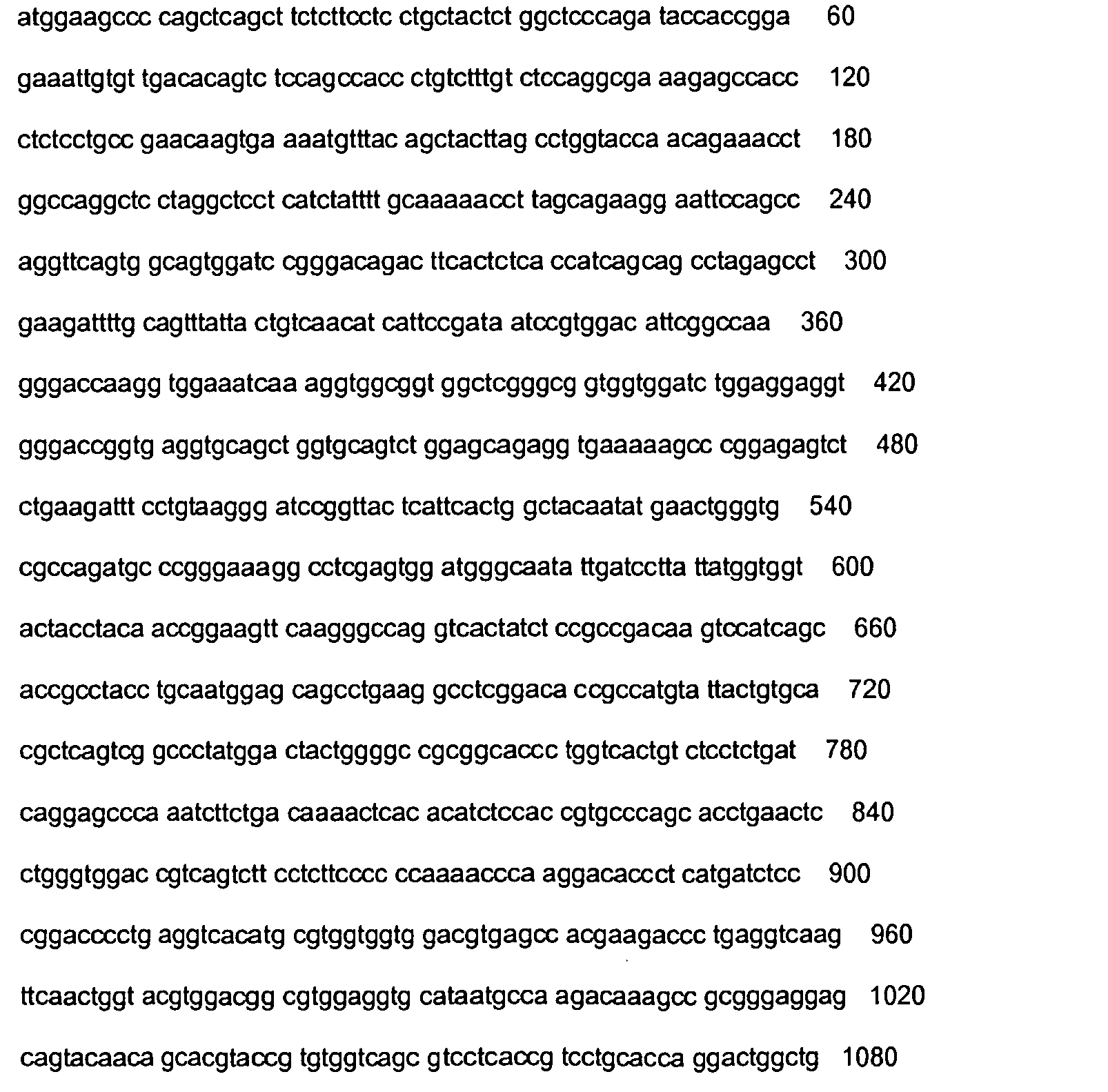

- <210> 6
<211> 493
<212> PRT
<213> Artificial sequence - <220>
<223> CD37 specific binding protein - <400> 6


- <210> 7
<211> 1482
<212> DNA
<213> Artificial sequence - <220>
<223> CD37 specific binding protein - <400> 7


- <210> 8
<211> 493
<212> PRT
<213> Artificial sequence - <220>
<223> CD37 specific binding protein - <400> 8


- <210> 9
<211> 1482
<212> DNA
<213> Artificial sequence - <220>
<223> CD37 specific binding protein - <400> 9


- <210> 10
<211> 493
<212> PRT
<213> Artificial sequence - <220>
<223> CD37 specific binding protein - <400> 10


- <210> 11
<211> 1482
<212> DNA
<213> Artificial sequence - <220>
<223> CD37 specific binding protein - <400> 11


- <210> 12
<211> 493
<212> PRT
<213> Artificial sequence - <220>
<223> CD37 specific binding protein - <400> 12


- <210> 13
<211> 1482
<212> DNA
<213> Artificial sequence - <220>
<223> CD37 specific binding protein - <400> 13
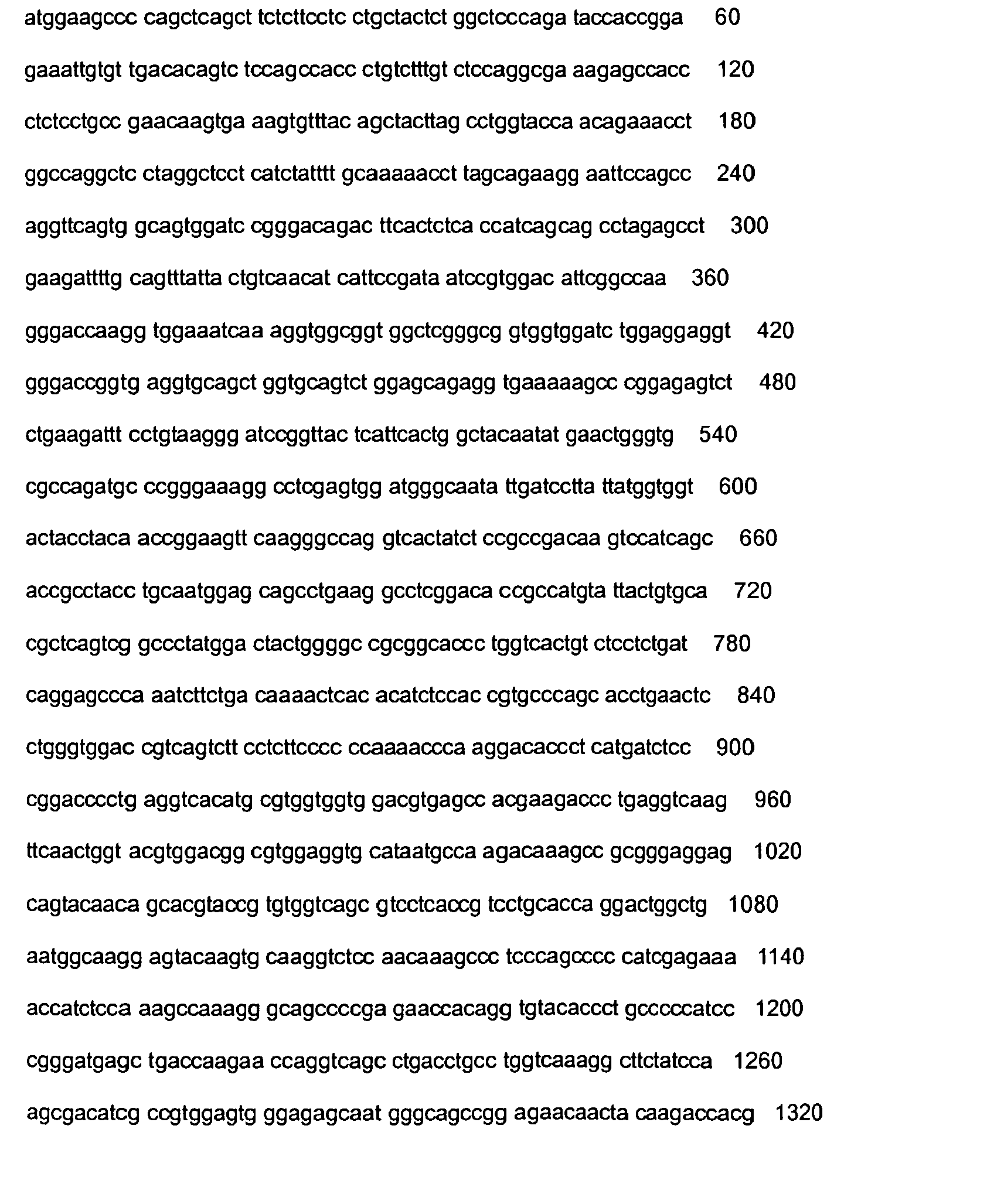

- <210> 14
<211> 493
<212> PRT
<213> Artificial sequence - <220>
<223> CD37 specific binding protein - <400> 14

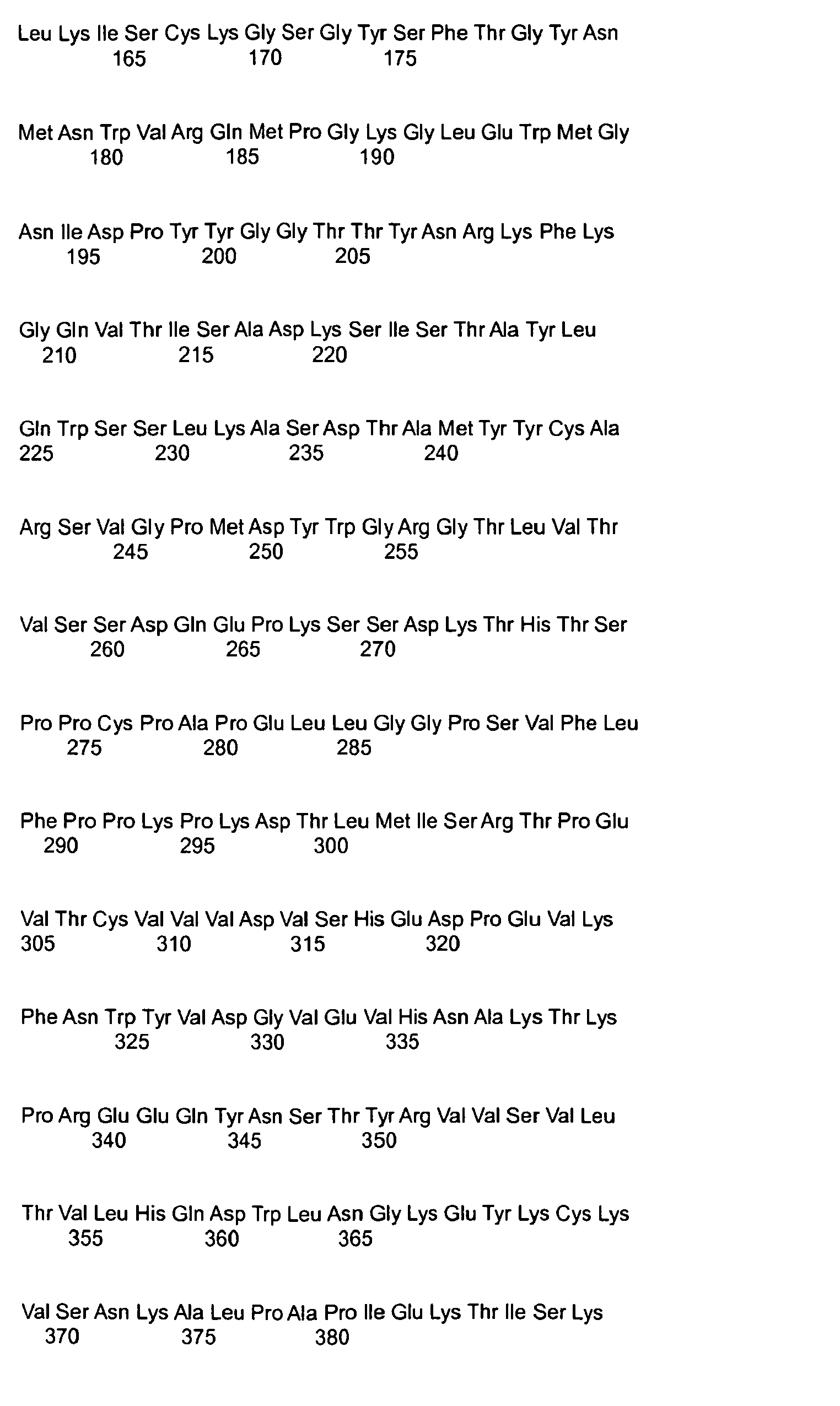

- <210> 15
<211> 1482
<212> DNA
<213> Artificial sequence - <220>
<223> CD37 specific binding protein - <400> 15
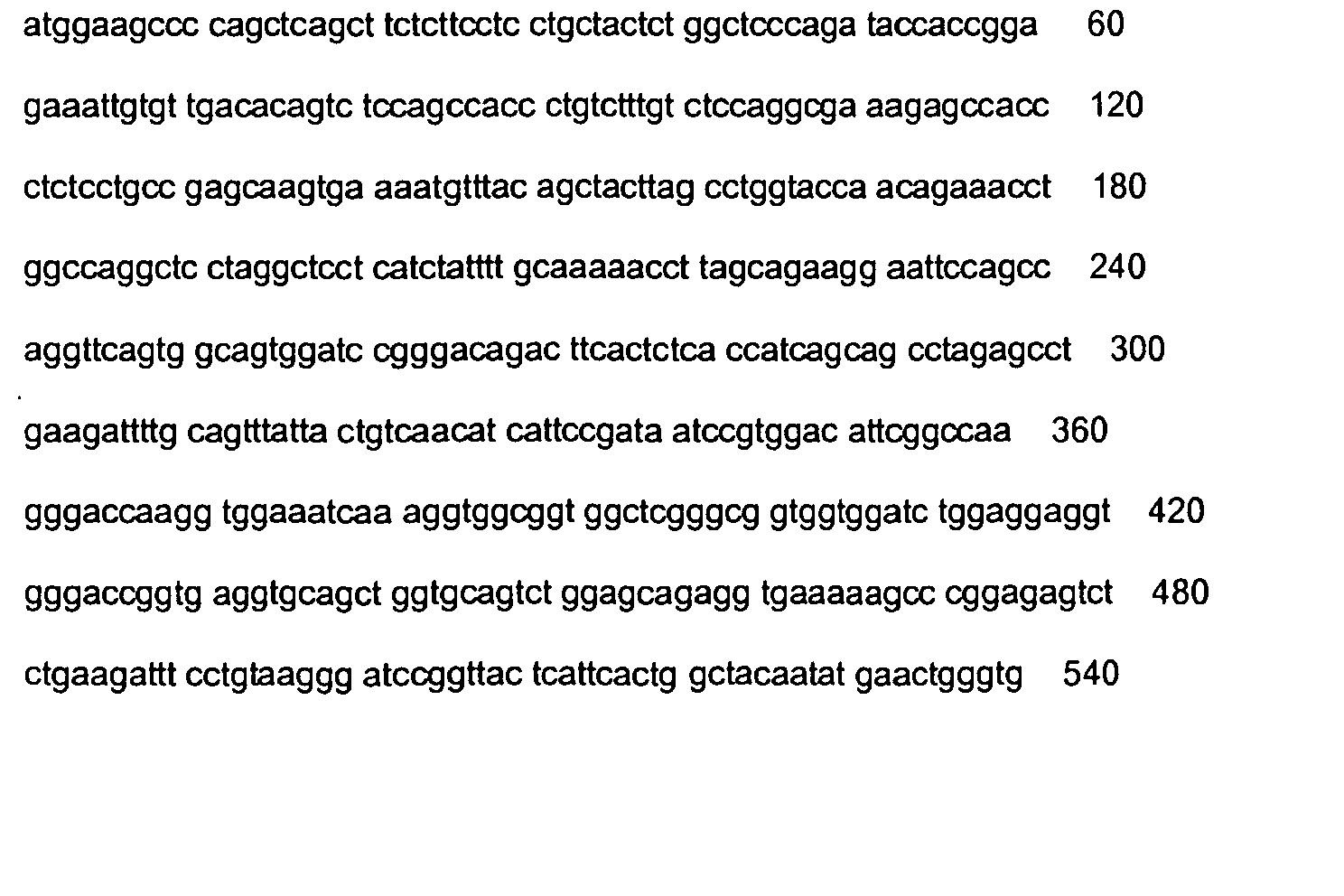

- <210> 16
<211> 493
<212> PRT
<213> Artificial sequence - <220>
<223> CD37 specific binding protein - <400> 16


- <210> 17
<211> 1479
<212> DNA
<213> Artificial sequence - <220>
<223> CD37 specific binding protein - <400> 17


- <210> 18
<211> 492
<212> PRT
<213> Artificial sequence - <220>
<223> CD37 specific binding protein - <400> 18


- <210> 19
<211> 1479
<212> DNA
<213> Artificial sequence - <220>
<223> CD37 specific binding protein - <400> 19


- <210> 20
<211> 492
<212> PRT
<213> Artificial sequence - <220>
<223> CD37 specific binding protein - <400> 20


- <210> 21
<211> 1479
<212> DNA
<213> Artificial sequence - <220>
<223> CD37 specific binding protein - <400> 21

- <210> 22
<211> 492
<212> PRT
<213> Artificial sequence - <220>
<223> CD37 specific binding protein - <400> 22


- <210> 23
<211> 1503
<212> DNA
<213> Artificial sequence - <220>
<223> CD37 specific binding protein - <400> 23


- <210> 24
<211> 500
<212> PRT
<213> Artificial sequence - <220>
<223> CD37 specific binding protein - <400> 24


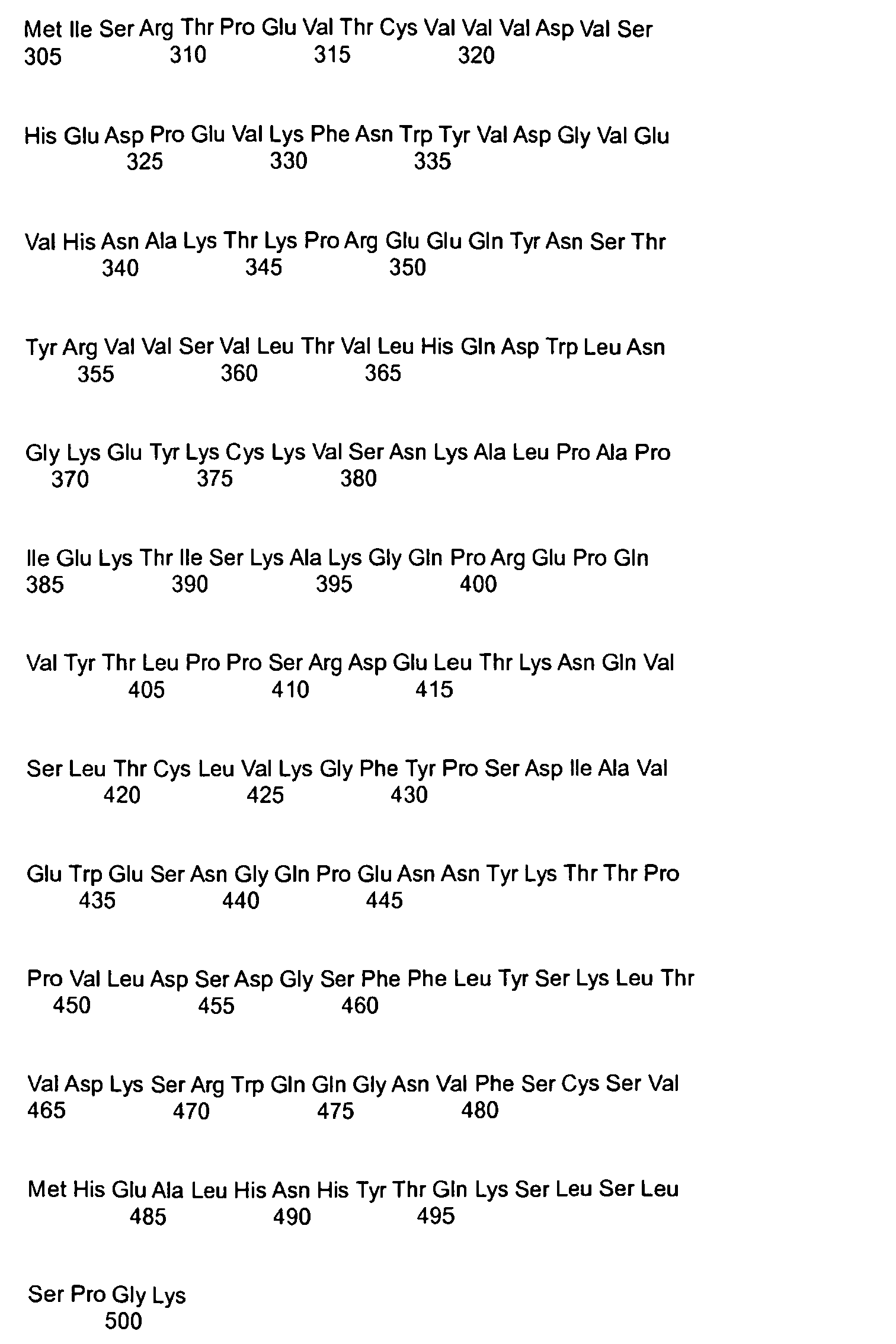
- <210> 25
<211> 1488
<212> DNA
<213> Artificial sequence - <220>
<223> CD37 specific binding protein - <400> 25

- <210> 26
<211> 495
<212> PRT
<213> Artificial sequence - <220>
<223> CD37 specific binding protein - <400> 26
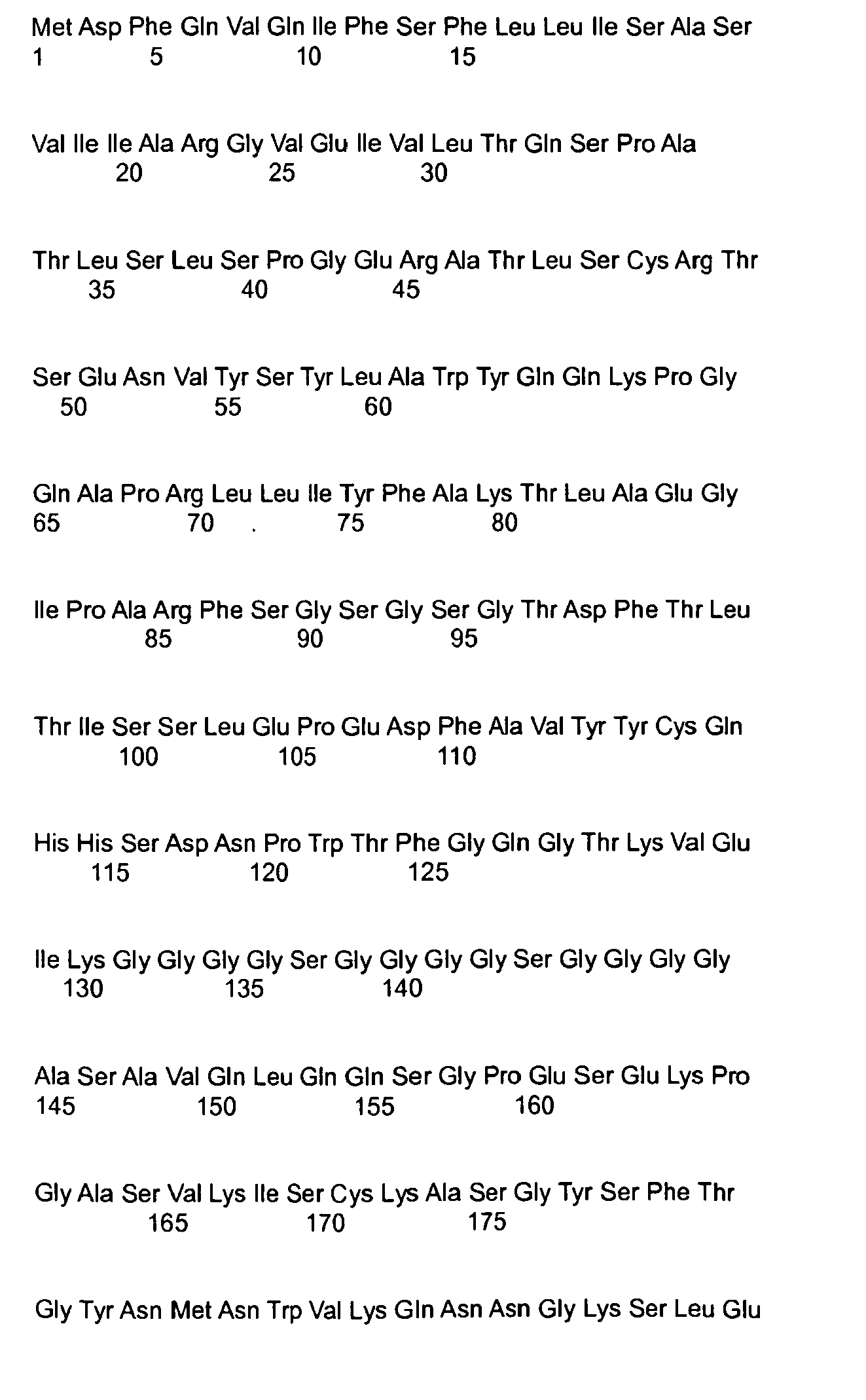


- <210> 27
<211> 1503
<212> DNA
<213> Artificial sequence - <220>
<223> CD37 specific binding protein - <400> 27

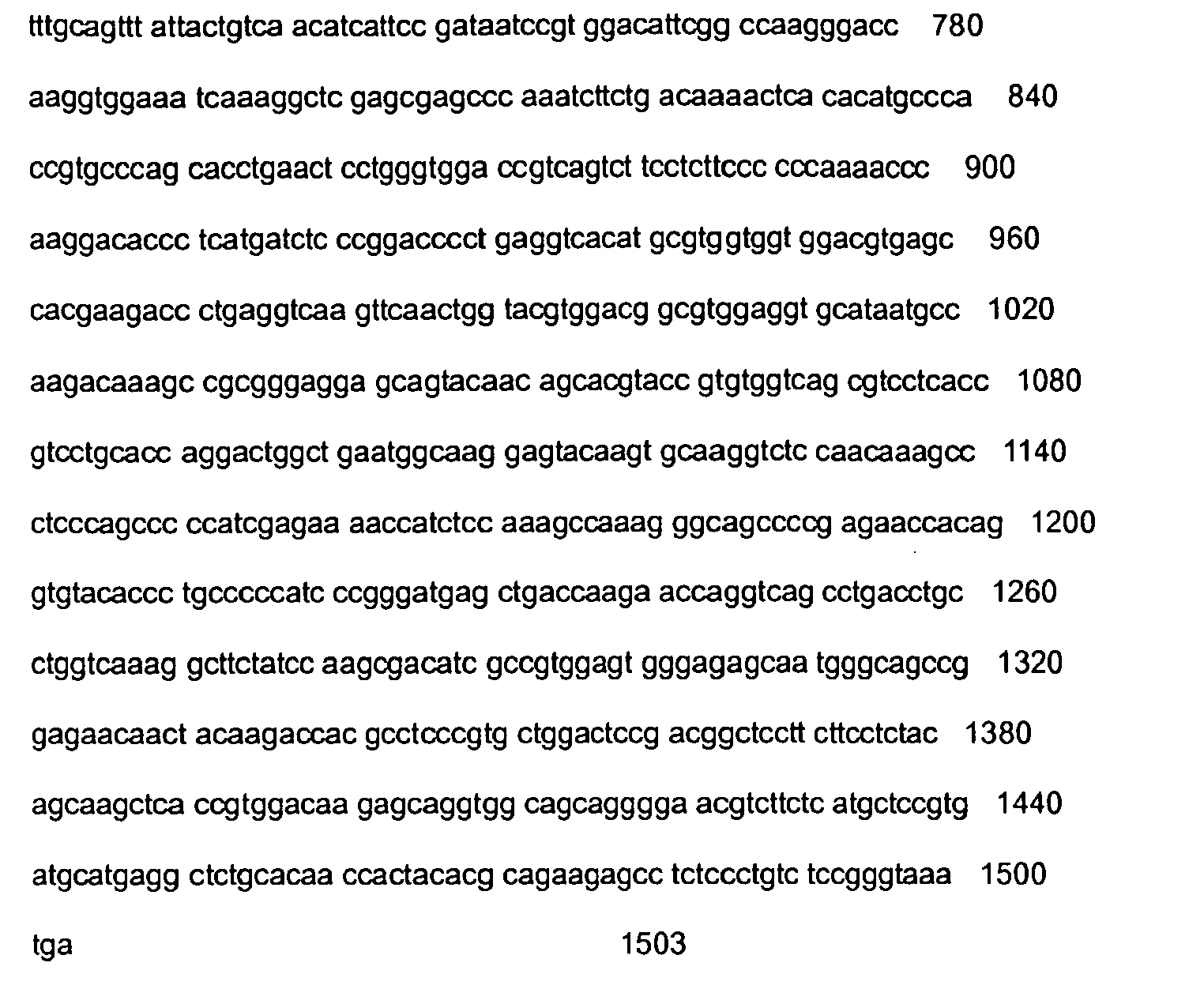
- <210> 28
<211> 500
<212> PRT
<213> Artificial sequence - <220>
<223> CD37 specific binding protein - <400> 28


- <210> 29
<211> 1479
<212> DNA
<213> Artificial sequence - <220>
<223> CD37 specific binding protein - <400> 29


- <210> 30
<211> 492
<212> PRT
<213> Artificial sequence - <220>
<223> CD37 specific binding protein - <400> 30
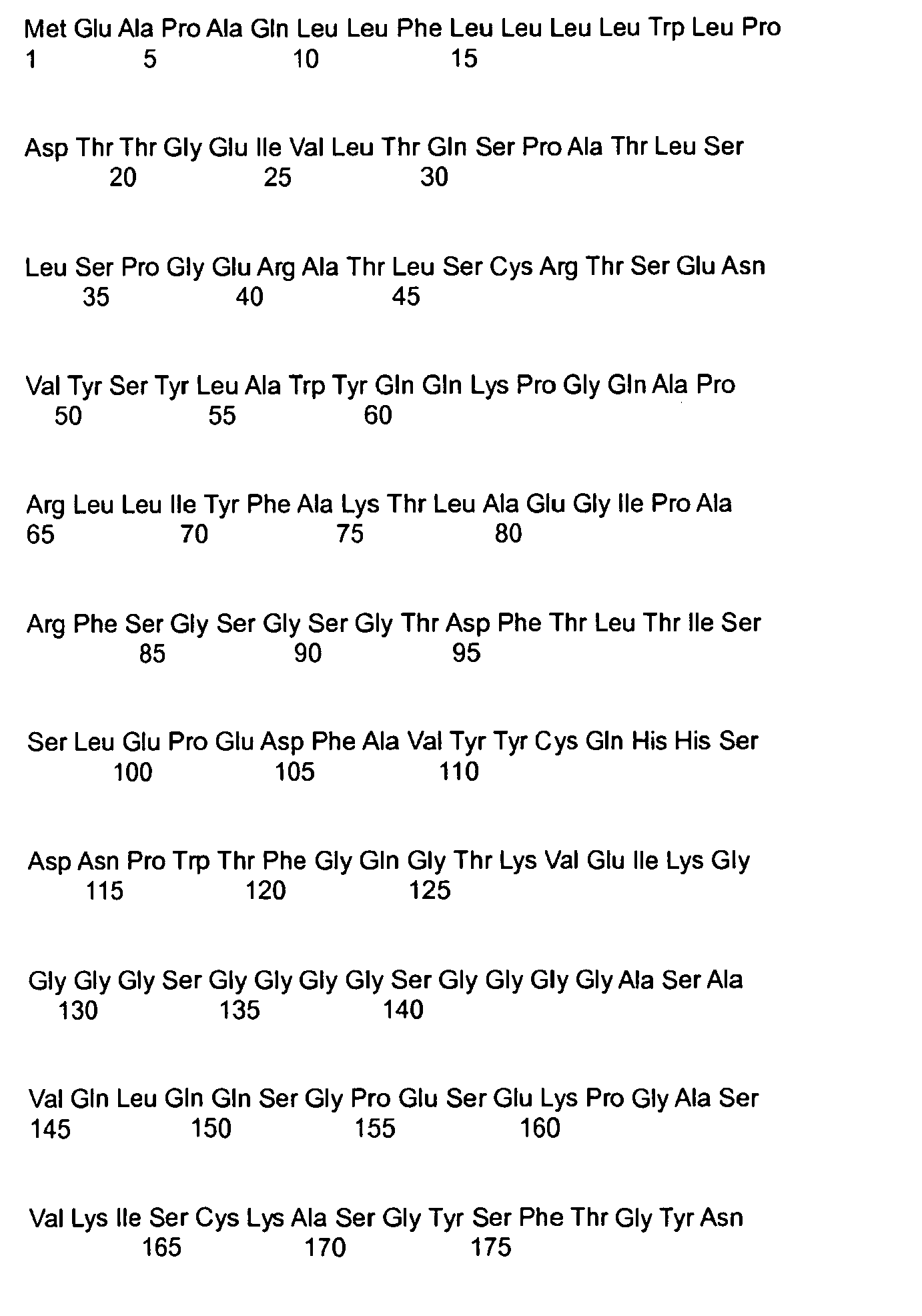


- <210> 31
<211> 1479
<212> DNA
<213> Artificial sequence - <220>
<223> CD37 specific binding protein - <400> 31


- <210> 32
<211> 492
<212> PRT
<213> Artificial sequence - <220>
<223> CD37 specific binding protein - <400> 32


- <210> 33
<211> 1479
<212> DNA
<213> Artificial sequence - <220>
<223> CD37 specific binding protein - <400> 33

- <210> 34
<211> 492
<212> PRT
<213> Artificial sequence - <220>
<223> CD37 specific binding protein - <400> 34


- <210> 35
<211> 1479
<212> DNA
<213> Artificial sequence - <220>
<223> CD37 specific binding protein - <400> 35


- <210> 36
<211> 492
<212> PRT
<213> Artificial sequence - <220>
<223> CD37 specific binding protein - <400> 36


- <210> 37
<211> 1476
<212> DNA
<213> Artificial sequence - <220>
<223> CD37 specific binding protein - <400> 37

- <210> 38
<211> 492
<212> PRT
<213> Artificial sequence - <220>
<223> CD37 specific binding protein - <400> 38


- <210> 39
<211> 1476
<212> DNA
<213> Artificial sequence - <220>
<223> CD37 specific binding protein - <400> 39


- <210> 40
<211> 492
<212> PRT
<213> Artificial sequence - <220>
<223> CD37 specific binding protein - <400> 40


- <210> 41
<211> 1476
<212> DNA
<213> Artificial sequence - <220>
<223> CD37 specific binding protein - <400> 41


- <210> 42
<211> 492
<212> PRT
<213> Artificial sequence - <220>
<223> CD37 specific binding protein - <400> 42


- <210> 43
<211> 1476
<212> DNA
<213> Artificial sequence - <220>
<223> CD37 specific binding protein - <400> 43

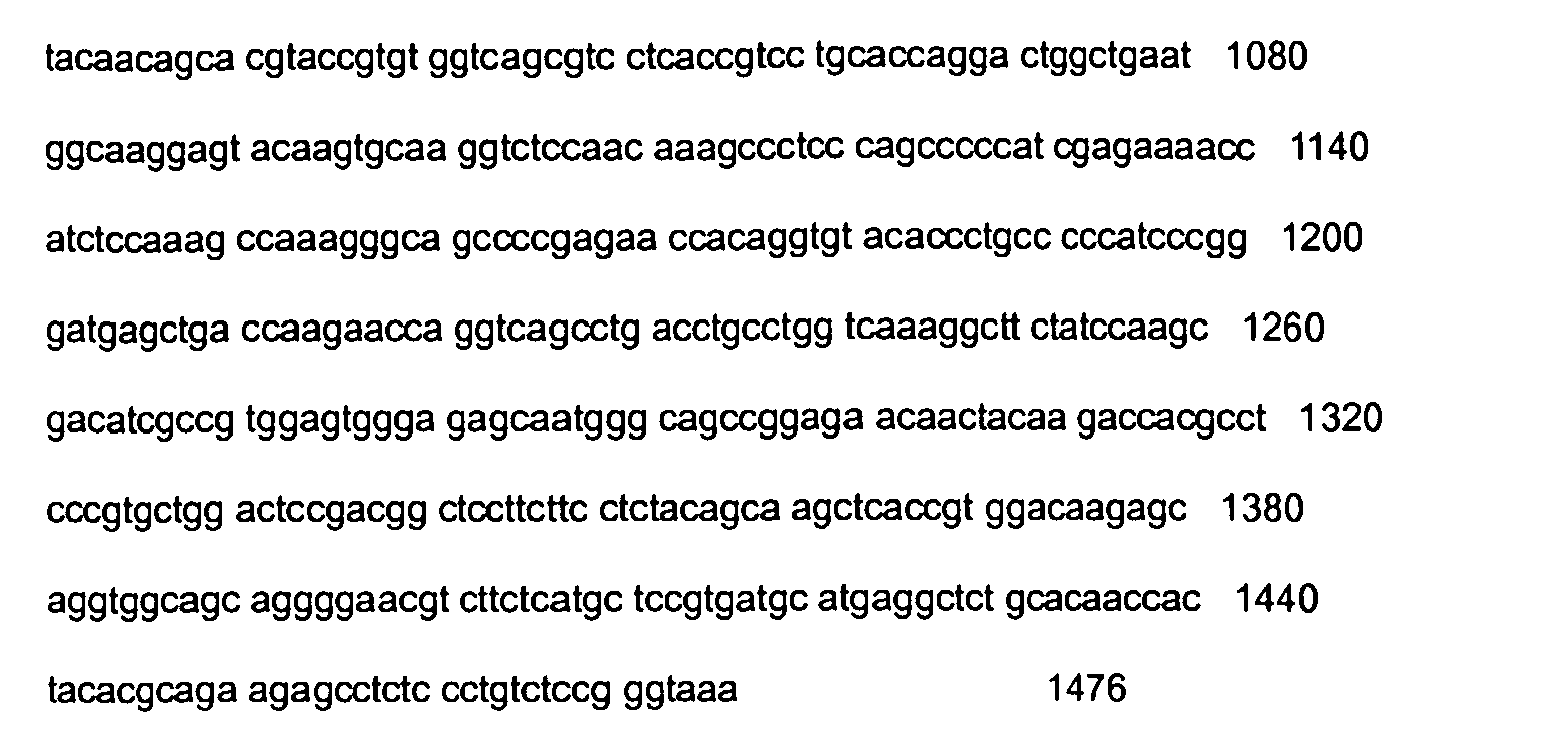
- <210> 44
<211> 492
<212> PRT
<213> Artificial sequence - <220>
<223> CD37 specific binding protein - <400> 44


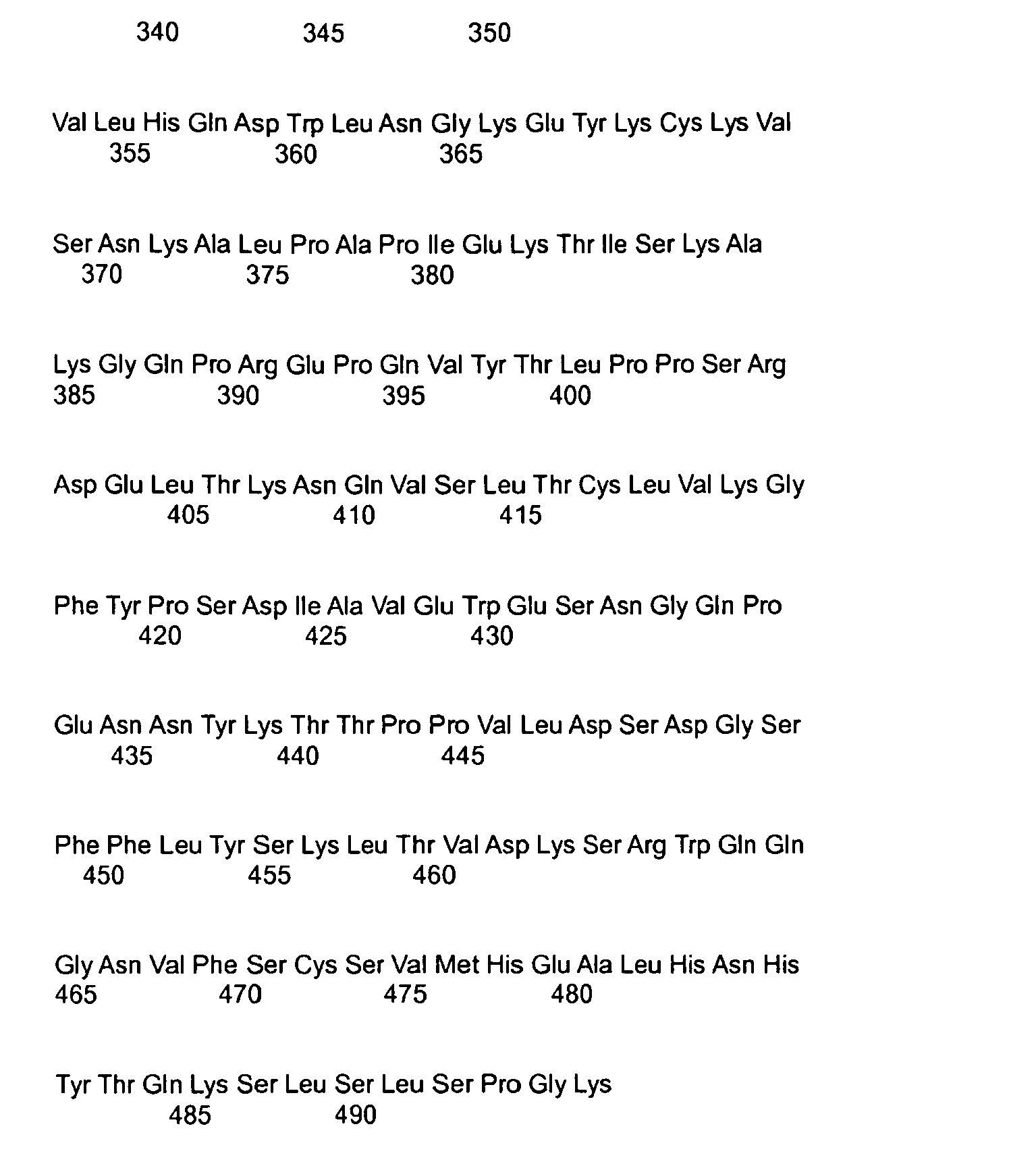
- <210> 45
<211> 1482
<212> DNA
<213> Artificial sequence - <220>
<223> CD37 specific binding protein - <400> 45


- <210> 46
<211> 493
<212> PRT
<213> Artificial sequence - <220>
<223> CD37 specific binding protein - <400> 46


- <210> 47
<211> 1500
<212> DNA
<213> Artificial sequence - <220>
<223> CD37 specific binding protein - <400> 47


- <210> 48
<211> 493
<212> PRT
<213> Artificial sequence - <220>
<223> CD37 specific binding protein - <400> 48


- <210> 49
<400> 49
000 - <210> 50
<400> 50
000 - <210> 51
<211> 1381
<212> DNA
<213> Artificial sequence - <220>
<223> CD37 specific binding protein - <400> 51


- <210> 52
<211> 493
<212> PRT
<213> Artificial sequence - <220>
<223> CD37 specific binding protein - <400> 52


- <210> 53
<400> 53
000 - <210> 54
<400> 54
000 - <210> 55
<400> 55
000 - <210> 56
<400> 56
000 - <210> 57
<400> 57
000 - <210> 58
<400> 58
000 - <210> 59
<400> 59
000 - <210> 60
<400> 60
000 - <210> 61
<211> 11
<212> PRT
<213> Artificial sequence - <220>
<223> CDR - <400> 61

- <210> 62
<211> 11
<212> PRT
<213> Artificial sequence - <220>
<223> CDR - <400> 62

- <210> 63
<211> 5
<212> PRT
<213> Artificial sequence - <220>
<223> CDR - <400> 63

- <210> 64
<211> 7
<212> PRT
<213> Artificial sequence - <220>
<223> CDR - <400> 64

- <210> 65
<211> 17
<212> PRT
<213> Artificial sequence - <220>
<223> CDR - <400> 65
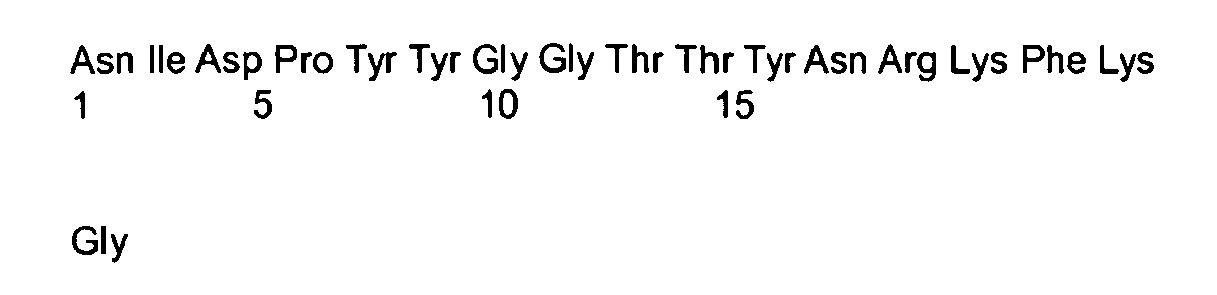
- <210> 66
<211> 9
<212> PRT
<213> Artificial sequence - <220>
<223> CDR - <400> 66

- <210> 67
<211> 7
<212> PRT
<213> Artificial sequence - <220>
<223> CDR - <400> 67

- <210> 68
<211> 7
<212> PRT
<213> Artificial sequence - <220>
<223> CDR - <400> 68

- <210> 69
<211> 7
<212> PRT
<213> Artificial sequence - <220>
<223> CDR - <400> 69

- <210> 70
<400> 70
000 - <210> 71
<400> 71
000 - <210> 72
<400> 72
000 - <210> 73
<400> 73
000 - <210> 74
<400> 74
000 - <210> 75
<400> 75
000 - <210> 76
<400> 76
000 - <210> 77
<400> 77
000 - <210> 78
<400> 78
000 - <210> 79
<211> 1500
<212> DNA
<213> Artificial sequence - <220>
<223> CD37 specific binding protein - <400> 79

- <210> 80
<211> 493
<212> PRT
<213> Artificial sequence - <220>
<223> CD37 specific binding protein - <400> 80


- <210> 81
<211> 1494
<212> DNA
<213> Artificial sequence - <220>
<223> CD37 specific binding protein - <400> 81


- <210> 82
<211> 493
<212> PRT
<213> Artificial sequence - <220>
<223> CD37 specific binding protein - <400> 82


- <210> 83
<211> 1476
<212> DNA
<213> Artificial sequence - <220>
<223> CD37 specific binding protein - <400> 83


- <210> 84
<211> 485
<212> PRT
<213> Artificial sequence - <220>
- <223> CD37 specific binding protein
- <400> 84


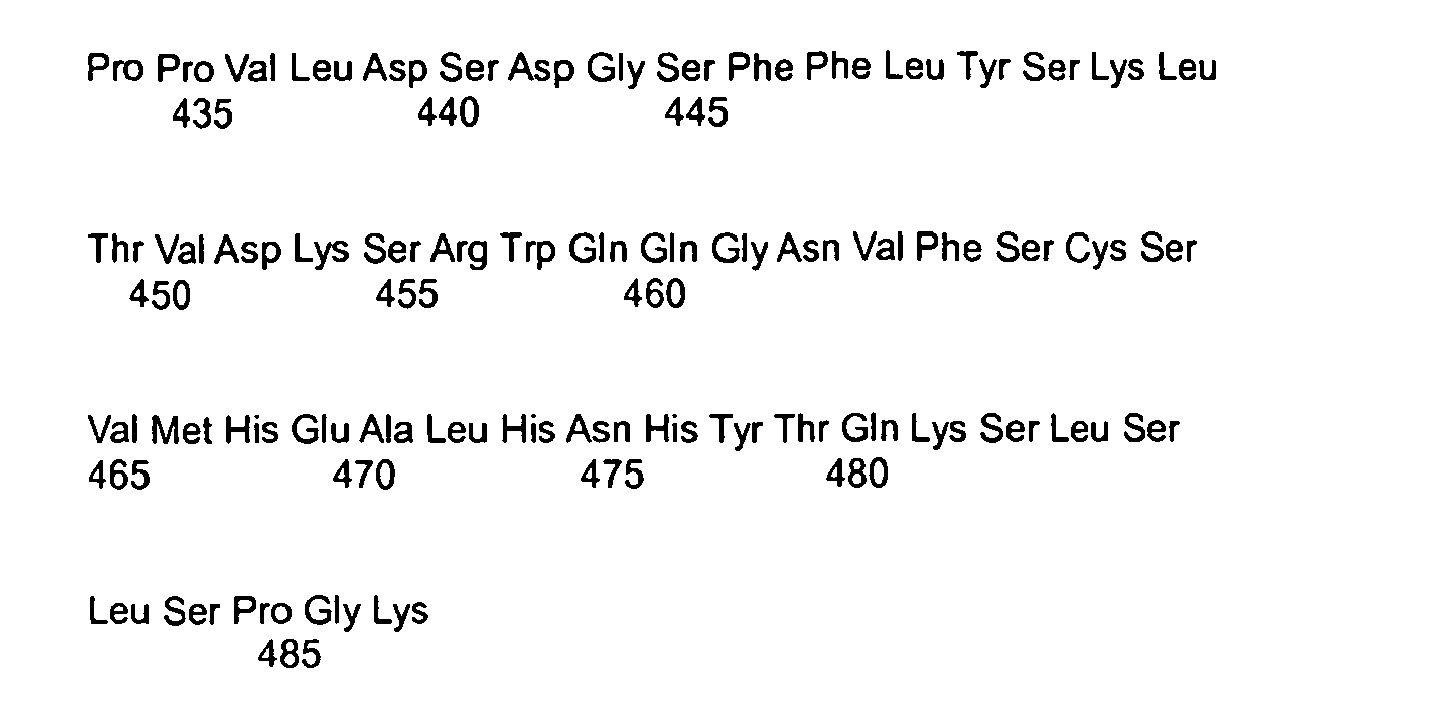
- <210> 85
<211> 1494
<212> DNA
<213> Artificial sequence - <220>
<223> CD37 specific binding protein - <400> 85


- <210> 86
<211> 493
<212> PRT
<213> Artificial sequence - <220>
<223> CD37 specific binding protein - <400> 86


- <210> 87
<211> 1494
<212> DNA
<213> Artificial sequence - <220>
<223> CD37 specific binding protein - <400> 87


- <210> 88
<211> 493
<212> PRT
<213> Artificial sequence - <220>
<223> CD37 specific binding protein - <400> 88


- <210> 89
<211> 45
<212> DNA
<213> Artificial sequence - <220>
<223> Hinge region - <400> 89
gagcccaaat cttgtgacaa aactcacaca tgtccaccgt gccca 45 - <210> 90
<211> 15
<212> PRT
<213> Artificial sequence - <220>
<223> Hinge region - <400> 90

- <210> 91
<211> 45
<212> DNA
<213> Artificial sequence - <220>
<223> Hinge region - <400> 91
gagcccaaat cttctgacaa aactcacaca tgtccaccgt gccca 45 - <210> 92
<211> 15
<212> PRT
<213> Artificial sequence - <220>
<223> Hinge region - <400> 92

- <210> 93
<211> 45
<212> DNA
<213> Artificial sequence - <220>
<223> Hinge region - <400> 93
gagcccaaat cttctgacaa aactcacaca tgtccaccgt gctca 45 - <210> 94
<211> 15
<212> PRT
<213> Artificial sequence - <220>
<223> Hinge region - <400> 94

- <210> 95
<211> 45
<212> DNA
<213> Artificial sequence - <220>
<223> Hinge region - <400> 95
gagcccaaat cttgtgacaa aactcacaca tgtccaccga gctca 45 - <210> 96
<211> 15
<212> PRT
<213> Artificial sequence - <220>
<223> Hinge region - <400> 96

- <210> 97
<211> 45
<212> DNA
<213> Artificial sequence - <220>
<223> Hinge region - <400> 97 45
gagcccaaat cttctgacaa aactcacaca tctccaccga gccca 45 - <210> 98
<211> 15
<212> PRT
<213> Artificial sequence - <220>
<223> Hinge region - <400> 98

- <210> 99
<211> 45
<212> DNA
<213> Artificial sequence - <220>
<223> Hinge region - <400> 99
gagcccaaat cttctgacaa aactcacaca tctccaccga gctca 45 - <210> 100
<211> 15
<212> PRT
<213> Artificial sequence - <220>
<223> Hinge region - <400> 100

- <210> 101
<211> 45
<212> DNA
<213> Artificial sequence - <220>
<223> Hinge region - <400> 101
gagcccaaat cttgtgacaa aactcacaca tctccaccgt gccca 45 - <210> 102
<211> 15
<212> PRT
<213> Artificial sequence - <220>
<223> Hinge region - <400> 102

- <210> 103
<211> 45
<212> DNA
<213> Artificial sequence - <220>
<223> Hinge region - <400> 103
gagcccaaat cttgtgacaa aactcacaca tctccaccgt gctca 45 - <210> 104
<211> 15
<212> PRT
<213> Artificial sequence - <220>
<223> Hinge region - <400> 104

- <210> 105
<211> 45
<212> DNA
<213> Artificial sequence - <220>
<223> Hinge region - <400> 105
gagcccaaat cttctgacaa aactcacaca tctccaccgt gccca 45 - <210> 106
<211> 15
<212> PRT
<213> Artificial sequence - <220>
<223> Hinge region - <400> 106

- <210> 107
<211> 45
<212> DNA
<213> Artificial sequence - <220>
<223> Hinge region - <400> 107
gagcccaaat cttctgacaa aactcacaca tctccaccgt gctca 45 - <210> 108
<211> 15
<212> PRT
<213> Artificial sequence - <220>
<223> Hinge region - <400> 108

- <210> 109
<211> 45
<212> DNA
<213> Artificial sequence - <220>
<223> Hinge region - <400> 109
gagcccaaat cttgtgacaa aactcacaca tctccaccga gccca 45 - <210> 110
<211> 15
<212> PRT
<213> Artificial sequence - <220>
<223> Hinge region - <400> 110

- <210> 111
<211> 45
<212> DNA
<213> Artificial sequence - <220>
<223> Hinge region - <400> 111
gagcccaaat cttgtgacaa aactcacaca tctccaccga gctca 45 - <210> 112
<211> 15
<212> PRT
<213> Artificial sequence - <220>
<223> Hinge region - <400> 112

- <210> 113
<400> 113
000 - <210> 114
<400> 114
000 - <210> 115
<211> 19
<212> PRT
<213> Artificial sequence - <220>
<223> Hinge region - <400> 115

- <210> 116
<211> 6
<212> PRT
<213> Artificial sequence - <220>
<223> Hinge region - <400> 116

- <210> 117
<211> 186
<212> DNA
<213> Artificial sequence - <220>
<223> Hinge region - <400> 117

- <210> 118
<211> 62
<212> PRT
<213> Artificial sequence - <220>
<223> Hinge region - <400> 118

- <210> 119
<211> 45
<212> DNA
<213> Artificial sequence - <220>
<223> Hinge region - <400> 119
gagcccaaat cttctgacac acctccccca tgcccacggt gcccc 45 - <210> 120
<211> 15
<212> PRT
<213> Artificial sequence - <220>
<223> Hinge region - <400> 120

- <210> 121
<211> 45
<212> DNA
<213> Artificial sequence - <220>
<223> Hinge region - <400> 121
gagcccaaat cttgtgacac acctccccca tccccacggt cccca 45 - <210> 122
<211> 15
<212> PRT
<213> Artificial sequence - <220>
<223> Hinge region - <400> 122

- <210> 123
<211> 45
<212> DNA
<213> Artificial sequence - <220>
<223> Hinge region - <400> 123
gagcccaaat cttctgacac acctccccca tccccacggt cccca 45 - <210> 124
<211> 15
<212> PRT
<213> Artificial sequence - <220>
<223> Hinge region - <400> 124

- <210> 125
<211> 45
<212> DNA
<213> Artificial sequence - <220>
<223> Hinge region - <400> 125
gagcccaaat cttgtgacac acctccccca tccccacggt gccca 45 - <210> 126
<211> 15
<212> PRT
<213> Artificial sequence - <220>
<223> Hinge region - <400> 126

- <210> 127
<211> 58
<212> PRT
<213> Artificial sequence - <220>
<223> Hinge region - <400> 127

- <210> 128
<211> 11
<212> PRT
<213> Artificial sequence - <220>
<223> CDR - <400> 128

- <210> 129
<211> 11
<212> PRT
<213> Artificial sequence - <220>
<223> CDR - <400> 129

- <210> 130
<211> 11
<212> PRT
<213> Artificial sequence - <220>
<223> CDR - <400> 130

- <210> 131
<211> 11
<212> PRT
<213> Artificial sequence - <220>
<223> CDR - <400> 131

- <210> 132
<211> 11
<212> PRT
<213> Artificial sequence - <220>
<223> CDR - <400> 132

- <210> 133
<211> 5
<212> PRT
<213> Artificial sequence - <220>
<223> CDR - <400> 133

- <210> 134
<211> 5
<212> PRT
<213> Artificial sequence - <220>
<223> CDR - <400> 134

- <210> 135
<211> 7
<212> PRT
<213> Artificial sequence - <220>
<223> CDR - <400> 135

- <210> 136
<211> 7
<212> PRT
<213> Artificial sequence - <220>
<223> CDR - <400> 136

- <210> 137
<211> 7
<212> PRT
<213> Artificial sequence - <220>
<223> CDR - <400> 137

- <210> 138
<211> 17
<212> PRT
<213> Artificial sequence - <220>
<223> CDR - <400> 138

- <210> 139
<211> 17
<212> PRT
<213> Artificial sequence - <220>
<223> CDR - <400> 139

- <210> 140
<211> 30
<212> PRT
<213> Artificial sequence - <220>
<223> Framework region - <400> 140


- <210> 141
<211> 30
<212> PRT
<213> Artificial sequence - <220>
<223> Framework region - <400> 141

- <210> 142
<211> 30
<212> PRT
<213> Artificial sequence - <220>
<223> Framework region - <400> 142

- <210> 143
<211> 30
<212> PRT
<213> Artificial sequence - <220>
<223> Framework region - <400> 143

- <210> 144
<211> 30
<212> PRT
<213> Artificial sequence - <220>
<223> Framework region - <400> 144

- <210> 145
<211> 30
<212> PRT
<213> Artificial sequence - <220>
<223> Framework region - <400> 145

- <210> 146
<211> 30
<212> PRT
<213> Artificial sequence - <220>
<223> Framework region - <400> 146

- <210> 147
<211> 14
<212> PRT
<213> Artificial sequence - <220>
<223> Framework region - <400> 147

- <210> 148
<400> 148
000 - <210> 149
<400> 149
000 - <210> 150
<211> 14
<212> PRT
<213> Artificial sequence - <220>
<223> Framework region - <400> 150

- <210> 151
<211> 14
<212> PRT
<213> Artificial sequence - <220>
<223> Framework region - <400> 151

- <210> 152
<400> 152
000 - <210> 153
<400> 153
000 - <210> 154
<211> 32
<212> PRT
<213> Artificial sequence - <220>
<223> Framework region - <400> 154

- <210> 155
<211> 32
<212> PRT
<213> Artificial sequence - <220>
<223> Framework region - <400> 155

- <210> 156
<211> 32
<212> PRT
<213> Artificial sequence - <220>
<223> Framework region - <400> 156

- <210> 157
<211> 32
<212> PRT
<213> Artificial sequence - <220>
<223> Framework region - <400> 157

- <210> 158
<211> 32
<212> PRT
<213> Artificial sequence - <220>
<223> Framework region - <400> 158

- <210> 159
<211> 32
<212> PRT
<213> Artificial sequence - <220>
<223> Framework region - <400> 159

- <210> 160
<211> 32
<212> PRT
<213> Artificial sequence - <220>
<223> Framework region - <400> 160

- <210> 161
<211> 11
<212> PRT
<213> Artificial sequence - <220>
<223> Framework region - <400> 161

- <210> 162
<211> 11
<212> PRT
<213> Artificial sequence - <220>
<223> Framework region - <400> 162

- <210> 163
<211> 11
<212> PRT
<213> Artificial sequence - <220>
<223> Framework region - <400> 163

- <210> 164
<400> 164
000 - <210> 165
<400> 165
000 - <210> 166
<400> 166
000 - <210> 167
<400> 167
000 - <210> 168
<211> 11
<212> PRT
<213> Artificial sequence - <220>
<223> Framework region - <400> 168

- <210> 169
<211> 11
<212> PRT
<213> Artificial sequence - <220>
<223> Framework region - <400> 169

- <210> 170
<211> 23
<212> PRT
<213> Artificial sequence - <220>
<223> Framework region - <400> 170

- <210> 171
<211> 23
<212> PRT
<213> Artificial sequence - <220>
<223> Framework region - <400> 171

- <210> 172
<211> 23
<212> PRT
<213> Artificial sequence - <220>
<223> Framework region - <400> 172

- <210> 173
<400> 173
000 - <210> 174
<400> 174
000 - <210> 175
<211> 23
<212> PRT
<213> Artificial sequence - <220>
<223> Framework region - <400> 175
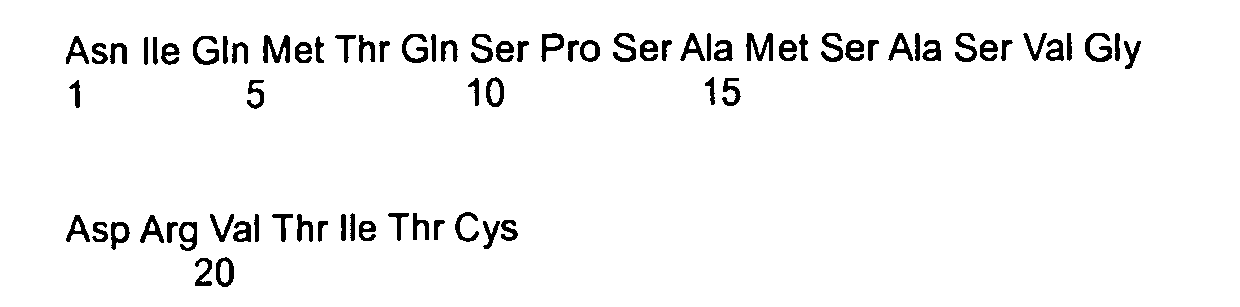
- <210> 176
<400> 176
000 - <210> 177
<211> 23
<212> PRT
<213> Artificial sequence - <220>
<223> Framework region - <400> 177

- <210> 178
<211> 23
<212> PRT
<213> Artificial sequence - <220>
<223> Framework region - <400> 178


- <210> 179
<211> 23
<212> PRT
<213> Artificial sequence - <220>
<223> Framework region - <400> 179
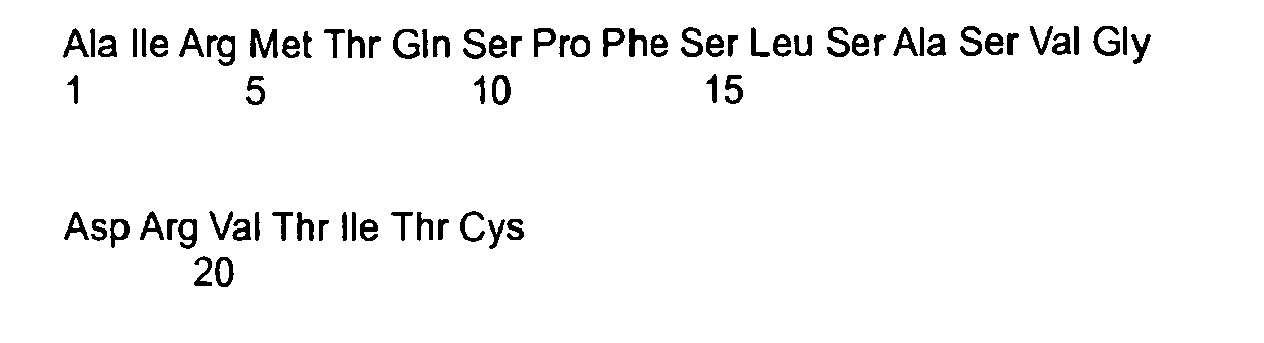
- <210> 180
<211> 23
<212> PRT
<213> Artificial sequence - <220>
<223> Framework region - <400> 180

- <210> 181
<211> 23
<212> PRT
<213> Artificial sequence - <220>
<223> Framework region - <400> 181

- <210> 182
<211> 15
<212> PRT
<213> Artificial sequence - <220>
<223> Framework region - <400> 182

- <210> 183
<400> 183
000 - <210> 184
<211> 15
<212> PRT
<213> Artificial sequence - <220>
<223> Framework region - <400> 184

- <210> 185
<211> 15
<212> PRT
<213> Artificial sequence - <220>
<223> Framework region - <400> 185

- <210> 186
<211> 15
<212> PRT
<213> Artificial sequence - <220>
<223> Framework region - <400> 186

- <210> 187
<211> 15
<212> PRT
<213> Artificial sequence - <220>
<223> Framework region - <400> 187

- <210> 188
<211> 15
<212> PRT
<213> Artificial sequence - <220>
<223> Framework region - <400> 188

- <210> 189
<400> 189
000 - <210> 190
<400> 190
000 - <210> 191
<211> 15
<212> PRT
<213> Artificial sequence - <220>
<223> Framework region - <400> 191

- <210> 192
<400> 192
000 - <210> 193
<400> 193
000 - <210> 194
<211> 32
<212> PRT
<213> Artificial sequence - <220>
<223> Framework region - <400> 194

- <210> 195
<211> 32
<212> PRT
<213> Artificial sequence - <220>
<223> Framework region - <400> 195

- <210> 196
<211> 32
<212> PRT
<213> Artificial sequence - <220>
<223> Framework region - <400> 196


- <210> 197
<211> 32
<212> PRT
<213> Artificial sequence - <220>
<223> Framework region - <400> 197

- <210> 198
<211> 32
<212> PRT
<213> Artificial sequence - <220>
<223> Framework region - <400> 198

- <210> 199
<400> 199
000 - <210> 200
<400> 200
000 - <210> 201
<400> 201
000 - <210> 202
<400> 202
000 - <210> 203
<211> 32
<212> PRT
<213> Artificial sequence - <220>
<223> Framework region - <400> 203

- <210> 204
<400> 204
000 - <210> 205
<211> 32
<212> PRT
<213> Artificial sequence - <220>
<223> Framework region - <400> 205

- <210> 206
<211> 10
<212> PRT
<213> Artificial sequence - <220>
<223> Framework region - <400> 206


- <210> 207
<211> 10
<212> PRT
<213> Artificial sequence - <220>
<223> Framework region - <400> 207

- <210> 208
<211> 10
<212> PRT
<213> Artificial sequence - <220>
<223> Framework region - <400> 208

- <210> 209
<211> 10
<212> PRT
<213> Artificial sequence - <220>
<223> Framework region - <400> 209

- <210> 210
<211> 10
<212> PRT
<213> Artificial sequence - <220>
<223> Framework region - <400> 210


- <210> 211
<211> 7
<212> PRT
<213> Artificial sequence - <220>
<223> CDR - <400> 211

- <210> 212
<211> 7
<212> PRT
<213> Artificial sequence - <220>
<223> CDR - <400> 212

- <210> 213
<211> 7
<212> PRT
<213> Artificial sequence - <220>
<223> CDR - <400> 213

- <210> 214
<211> 7
<212> PRT
<213> Artificial sequence - <220>
<223> CDR - <400> 214


- <210> 215
<211> 7
<212> PRT
<213> Artificial sequence - <220>
<223> CDR - <400> 215

- <210> 216
<211> 7
<212> PRT
<213> Artificial sequence - <220>
<223> CDR - <400> 216

- <210> 217
<211> 7
<212> PRT
<213> Artificial sequence - <220>
<223> CDR - <400> 217

- <210> 218
<211> 7
<212> PRT
<213> Artificial sequence - <220>
<223> CDR - <400> 218


- <210> 219
<211> 7
<212> PRT
<213> Artificial sequence - <220>
<223> CDR - <400> 219

- <210> 220
<211> 9
<212> PRT
<213> Artificial sequence - <220>
<223> CDR - <400> 220

- <210> 221
<211> 1530
<212> DNA
<213> Artificial sequence - <220>
<223> CD37 specific binding protein - <400> 221


- <210> 222
<211> 503
<212> PRT
<213> Artificial sequence - <220>
<223> CD37 specific binding protein - <400> 222


- <210> 223
<211> 23
<212> PRT
<213> Artificial Sequence - <220>
<223> Linker sequence - <400> 223

- <210> 224
<211> 20
<212> PRT
<213> Artificial Sequence - <220>
<223> Linker sequence - <400> 224

- <210> 225
<211> 16
<212> PRT
<213> Artificial Sequence - <220>
<223> Linker sequence - <400> 225

- <210> 226
<211> 16
<212> PRT
<213> Artificial Sequence - <220>
<223> Linker sequence - <400> 226

- <210> 227
<211> 16
<212> PRT
<213> Artificial Sequence - <220>
<223> Linker sequence - <400> 227

- <210> 228
<211> 16
<212> PRT
<213> Artificial Sequence - <220>
<223> Linker sequence - <400> 228

- <210> 229
<211> 25
<212> PRT
<213> Artificial Sequence - <220>
<223> Linker sequence - <400> 229

- <210> 230
<211> 5
<212> PRT
<213> Artificial Sequence - <220>
<223> Hinge sequence - <400> 230

- <210> 231
<211> 16
<212> PRT
<213> Artificial Sequence - <220>
<223> Hinge sequence - <400> 231

- <210> 232
<211> 17
<212> PRT
<213> Artificial Sequence - <220>
<223> Hinge sequence - <400> 232

- <210> 233
<211> 17
<212> PRT
<213> Artificial Sequence - <220>
<223> Hinge sequence - <400> 233

- <210> 234
<211> 18
<212> PRT
<213> Artificial Sequence - <220>
<223> Hinge sequence - <400> 234

- <210> 235
<211> 18
<212> PRT
<213> Artificial Sequence - <220>
<223> Hinge sequence - <400> 235

- <210> 236
<211> 107
<212> PRT
<213> Artificial Sequence - <220>
<223> variable light chain region - <400> 236

- <210> 237
<211> 107
<212> PRT
<213> Artificial Sequence - <220>
<223> variable light chain region - <400> 237


- <210> 238
<211> 107
<212> PRT
<213> Artificial Sequence - <220>
<223> variable light chain region - <400> 238

- <210> 239
<211 107
<212> PRT
<213> Artificial Sequence - <220>
<223> variable light chain region - <400> 239


- <210> 240
<211> 107
<212> PRT
<213> Artificial Sequence - <220>
<223> variable light chain region - <400> 240

- <210> 241
<211> 116
<212> PRT
<213> Artificial Sequence - <220>
<223> variable heavy chain region - <400> 241


- <210> 242
<211> 116
<212> PRT
<213> Artificial Sequence - <220>
<223> variable heavy chain region - <400> 242

- <210> 243
<211> 116
<212> PRT
<213> Artificial Sequence - <220>
<223> variable heavy chain region - <400> 243


- <210> 244
<211> 116
<212> PRT
<213> Artificial Sequence - <220>
<223> variable heavy chain region - <400> 244

- <210> 245
<211> 116
<212> PRT
<213> Artificial Sequence - <220>
<223> variable heavy chain region - <400> 245

- <210> 246
<211>217
<212> PRT
<213> Artificial Sequence - <220>
<223> human IgG1 CH2 and CH3 regions - <400> 246

- <210> 247
<211> 473
<212> PRT
<213> Artificial Sequence - <220>
<223> CD37 specific binding protein - <400> 247


- <210> 248
<211> 473
<212> PRT
<213> Artificial Sequence - <220>
<223> CD37 specific binding protein - <400> 248


- <210> 249
<211> 473
<212> PRT
<213> Artificial Sequence - <220>
<223> CD37 specific binding protein - <400> 249


- <210> 250
<211> 473
<212> PRT
<213> Artificial Sequence - <220>
<223> CD37 specific binding protein - <400> 250


- <210> 251
<211> 480
<212> PRT
<213> Artificial Sequence - <220>
<223> CD37 specific binding protein - <400> 251


- <210> 252
<211> 472
<212> PRT
<213> Artificial Sequence - <220>
<223> CD37 specific binding protein - <400> 252


- <210> 253
<211> 483
<212> PRT
<213> Artificial Sequence - <220>
<223> CD37 specific binding protein - <400> 253


- <210> 254
<211> 473
<212> PRT
<213> Artificial Sequence - <220>
<223> CD37 specific binding protein - <400> 254


- <210> 255
<211> 15
<212> PRT
<213> Artificial Sequence - <220>
<223> Hinge region - <400> 255

- <210> 256
<211> 15
<212> PRT
<213> Artificial Sequence - <220>
<223> Hinge region - <400> 256

- <210> 257
<211> 15
<212> PRT
<213> Artificial Sequence - <220>
<223> Hinge region - <400> 257

- <210> 258
<211> 15
<212> PRT
<213> Artificial Sequence - <220>
<223> Hinge region - <400> 258

- <210> 259
<211> 15
<212> PRT
<213> Artificial Sequence - <220>
<223> Hinge region - <400> 259


- <210> 260
<211> 15
<212> PRT
<213> Artificial Sequence - <220>
<223> Hinge region - <400> 260

- <210> 261
<211> 15
<212> PRT
<213> Artificial Sequence - <220>
<223> Hinge region - <400> 261

- <210> 262
<211> 493
<212> PRT
<213> Artificial Sequence - <220>
<223> CD37 specific binding protein - <400> 262
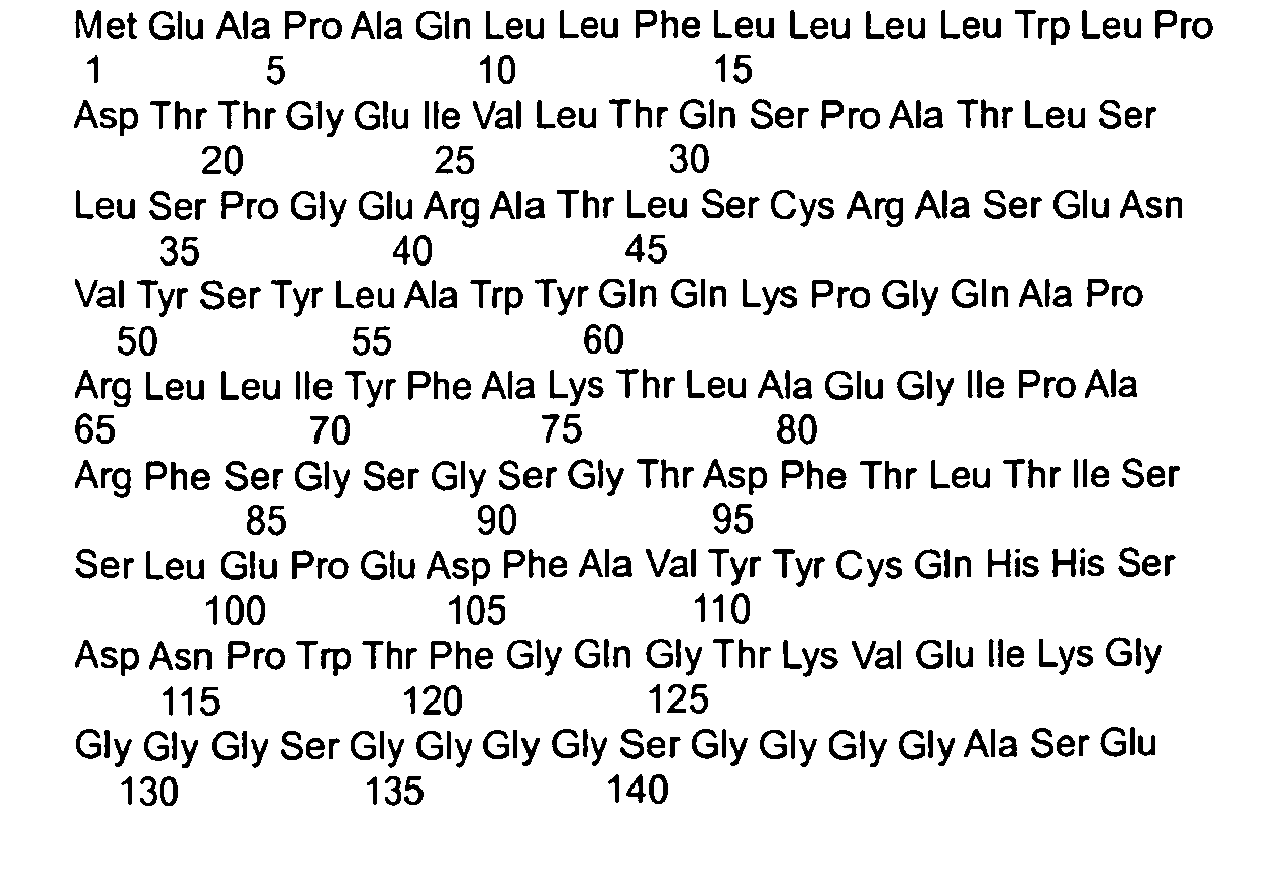

- <210> 263
<211> 10
<212> PRT
<213> Homo sapiens - <400> 263

- <210> 264
<211> 4
<212> PRT
<213> Homo sapiens - <400> 264

- <210> 265
<211> 4
<212> PRT
<213> Homo sapiens - <400> 265

- <210> 266
<211> 473
<212> PRT
<213> Artificial Sequence - <220>
<223> CD37 specific binding protein - <400> 266


- <210> 267
<211> 473
<212> PRT
<213> Artificial Sequence - <220>
<223> CD37 specific binding protein - <400> 267

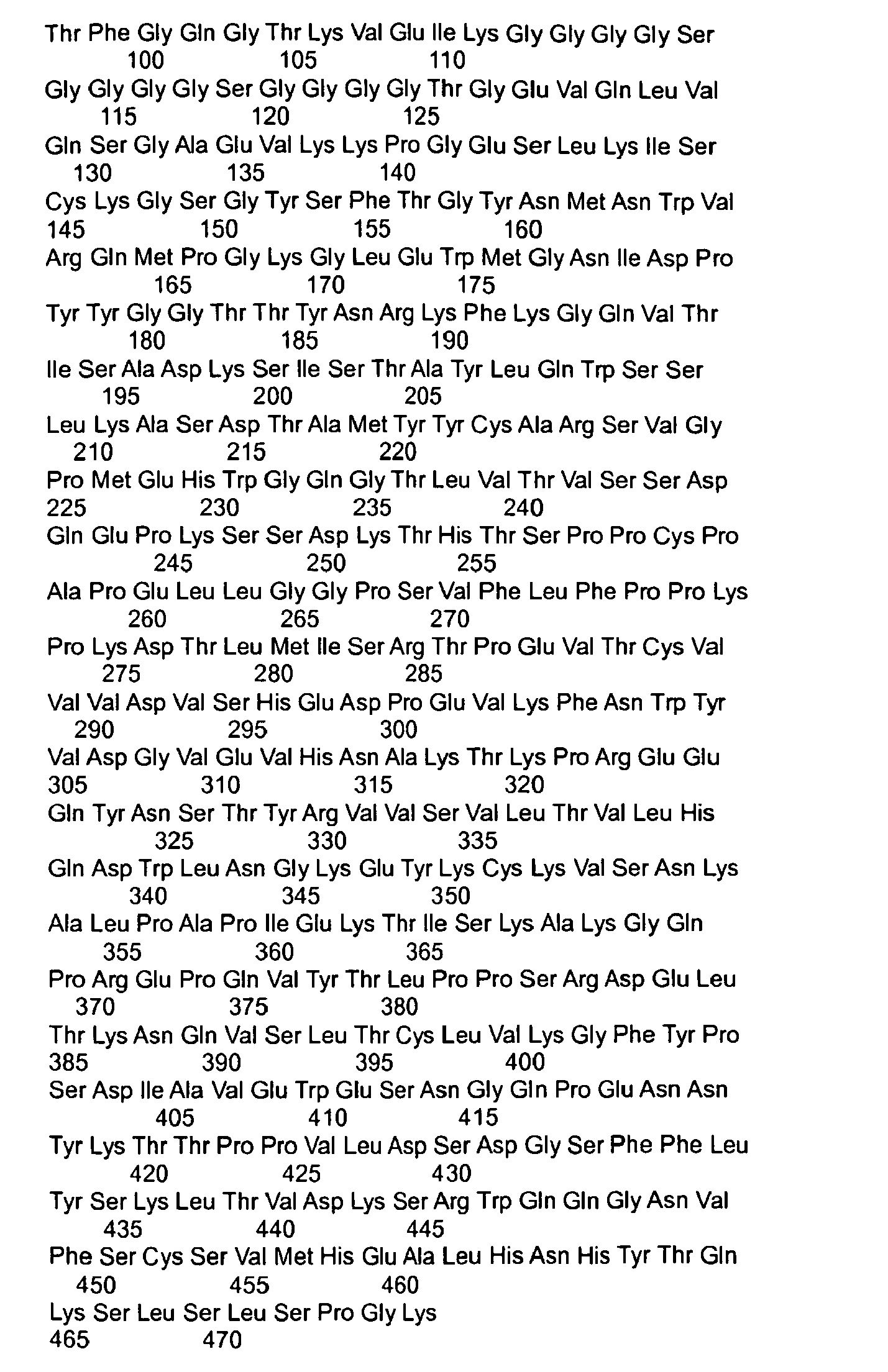
- <210> 268
<211> 473
<212> PRT
<213> Artificial Sequence - <220>
<223> CD37 specific binding protein - <400> 268


- <210> 269
<211> 473
<212> PRT
<213> Artificial Sequence - <220>
<223> CD37 specific binding protein - <400> 269


Claims (15)
- A CD37-specific binding molecule, comprising an amino acid sequence as set forth in SEQ ID NO:253.
- The CD37-specific binding molecule of claim 1, consisting of the amino acid sequence set forth in SEQ ID NO:253.
- An isolated nucleic acid molecule, comprising a nucleotide sequence encoding the humanized CD37-sepcific binding molecule according to any one of the preceding claims.
- A vector comprising the nucleic acid molecule according to claim 3.
- A host cell comprising a vector according to claim 4.
- A composition comprising a humanized CD37-specific binding molecule according to any one of claims 1 to 2 and a pharmaceutically acceptable carrier.
- The binding molecule of claim 1 or 2 or the composition of claim 6 for use in therapy.
- A humanized CD37-specific binding molecule according to any one of claims 1 or 2 for use in a method for reducing B-cells or treating a disease associated with aberrant B-cell activity.
- The binding molecule of claim 8, wherein the disease associated with aberrant B-cell activity is a B-cell lymphoma, a B-cell leukemia, a B-cell myeloma, a disease characterized by autoantibody production, or a disease characterized by inappropriate T-cell stimulation associated with a B-cell pathway.
- The binding molecule of claim 9, wherein the disease characterized by autoantibody production is idiopathic inflammatory myopathy, rheumatoid arthritis, juvenile rheumatoid arthritis, myasthenia gravis, Grave's disease, type I diabetes mellitus, anti-glomerular basement membrane disease, rapidly progressive glomerulonephritis, Berger's disease (IgA nephropathy), systemic lupus erythematosus (SLE), Crohn's disease, ulcerative colitis, idiopathic thrombocytopenic purpura (ITP), anti-phospholipid antibody syndrome, neuromyelitis optica, multiple sclerosis, an autoimmune disease, dermatomyositis, polymyositis, or Waldenstrom's macroglobinemia.
- The binding molecule of claim 9, wherein the disease associated with aberrant B-cell activity is chronic lymphocytic leukemia (CLL), non-Hodgkins lymphoma (NHL), hairy cell leukemia, small lymphocytic lymphoma, lymphoplasmacytic lymphoma, splenic marginal zone lymphoma, extra-nodal marginal zone B-cell lymphoma of mucosa-associated (MALT) lymphoid tissue, nodal marginal zone B-cell lymphoma, follicular lymphoma, mantle cell lymphoma, diffuse large B-cell lymphoma, mediastinal (thymic) large B-cell lymphoma, intravascular large B-cell lymphoma, primary effusion lymphoma, or Burkitt lymphoma/leukemia.
- The use of the humanized CD37-specific binding molecule according to any one of claims 1 or 2 for the manufacture of a medicament for use in a method for reducing B-cells or treating a disease associated with aberrant B-cell activity.
- The use of claim 12, wherein the disease associated with aberrant B-cell activity is a B-cell lymphoma, a B-cell leukemia, a B-cell myeloma, a disease characterized by autoantibody production, or a disease characterized by inappropriate T-cell stimulation associated with a B-cell pathway.
- The use of claim 13, wherein the disease characterized by autoantibody production is idiopathic inflammatory myopathy, rheumatoid arthritis, juvenile rheumatoid arthritis, myasthenia gravis, Grave's disease, type I diabetes mellitus, anti-glomerular basement membrane disease, rapidly progressive glomerulonephritis, Berger's disease (IgA nephropathy), systemic lupus erythematosus (SLE), Crohn's disease, ulcerative colitis, idiopathic thrombocytopenic purpura (ITP), anti-phospholipid antibody syndrome, neuromyelitis optica, multiple sclerosis, an autoimmune disease, dermatomyositis, polymyositis, or Waldenstrom's macroglobinemia.
- The use of claim 13, wherein the disease associated with aberrant B-cell activity is chronic lymphocytic leukemia (CLL) , non-Hodgkins lymphoma (NHL), Hairy cell leukemia, small lymphocytic lymphoma, lymphoplasmacytic lymphoma, splenic marginal zone lymphoma, extra-nodal marginal zone B-cell lymphoma of mucosa-associated (MALT) lymphoid tissue, nodal marginal zone B-cell lymphoma, follicular lymphoma, mantle cell lymphoma, diffuse large B-cell lymphoma, mediastinal (thymic) large B-cell lymphoma, intravascular large B-cell lymphoma, primary effusion lymphoma, or Burkitt lymphoma/leukemia.
Priority Applications (4)
| Application Number | Priority Date | Filing Date | Title |
|---|---|---|---|
| SI200930064T SI2132228T1 (en) | 2008-04-11 | 2009-04-11 | Cd37 immunotherapeutic and combination with bifunctional chemotherapeutic thereof |
| EP11150324A EP2365003A1 (en) | 2008-04-11 | 2009-04-11 | CD37 immunotherapeutic and combination with bifunctional chemotherapeutic thereof |
| PL09707110T PL2132228T3 (en) | 2008-04-11 | 2009-04-11 | Cd37 immunotherapeutic and combination with bifunctional chemotherapeutic thereof |
| CY20111100815T CY1111796T1 (en) | 2008-04-11 | 2011-08-26 | CD37 IMMUNE THERAPY AND ITS COMBINATION WITH BUREAU CHEMICAL THERAPY |
Applications Claiming Priority (2)
| Application Number | Priority Date | Filing Date | Title |
|---|---|---|---|
| US19006708P | 2008-04-11 | 2008-04-11 | |
| PCT/US2009/040288 WO2009126944A1 (en) | 2008-04-11 | 2009-04-11 | Cd37 immunotherapeutic and combination with bifunctional chemotherapeutic thereof |
Related Child Applications (1)
| Application Number | Title | Priority Date | Filing Date |
|---|---|---|---|
| EP11150324.9 Division-Into | 2011-01-06 |
Publications (2)
| Publication Number | Publication Date |
|---|---|
| EP2132228A1 EP2132228A1 (en) | 2009-12-16 |
| EP2132228B1 true EP2132228B1 (en) | 2011-06-22 |
Family
ID=40984842
Family Applications (2)
| Application Number | Title | Priority Date | Filing Date |
|---|---|---|---|
| EP11150324A Withdrawn EP2365003A1 (en) | 2008-04-11 | 2009-04-11 | CD37 immunotherapeutic and combination with bifunctional chemotherapeutic thereof |
| EP09707110A Active EP2132228B1 (en) | 2008-04-11 | 2009-04-11 | Cd37 immunotherapeutic and combination with bifunctional chemotherapeutic thereof |
Family Applications Before (1)
| Application Number | Title | Priority Date | Filing Date |
|---|---|---|---|
| EP11150324A Withdrawn EP2365003A1 (en) | 2008-04-11 | 2009-04-11 | CD37 immunotherapeutic and combination with bifunctional chemotherapeutic thereof |
Country Status (24)
| Country | Link |
|---|---|
| US (4) | US8333966B2 (en) |
| EP (2) | EP2365003A1 (en) |
| JP (2) | JP6013733B2 (en) |
| KR (1) | KR20110013391A (en) |
| CN (2) | CN105198997B (en) |
| AT (1) | ATE513856T1 (en) |
| AU (3) | AU2009234277B2 (en) |
| BR (1) | BRPI0911377A8 (en) |
| CA (1) | CA2719924C (en) |
| CY (1) | CY1111796T1 (en) |
| DK (1) | DK2132228T3 (en) |
| ES (1) | ES2368700T3 (en) |
| HR (1) | HRP20110619T1 (en) |
| IL (1) | IL208566B (en) |
| MX (2) | MX2010011057A (en) |
| NZ (3) | NZ621443A (en) |
| PL (1) | PL2132228T3 (en) |
| PT (1) | PT2132228E (en) |
| RS (1) | RS51975B (en) |
| RU (2) | RU2531754C2 (en) |
| SG (1) | SG189772A1 (en) |
| SI (1) | SI2132228T1 (en) |
| WO (1) | WO2009126944A1 (en) |
| ZA (1) | ZA201007570B (en) |
Cited By (2)
| Publication number | Priority date | Publication date | Assignee | Title |
|---|---|---|---|---|
| WO2013160396A1 (en) | 2012-04-26 | 2013-10-31 | Boehringer Ingelheim International Gmbh | Combination of cd37 antibodies with bendamustine |
| WO2013171289A1 (en) | 2012-05-16 | 2013-11-21 | Boehringer Ingelheim International Gmbh | Combination of cd37 antibodies with further agents |
Families Citing this family (118)
| Publication number | Priority date | Publication date | Assignee | Title |
|---|---|---|---|---|
| US7754208B2 (en) | 2001-01-17 | 2010-07-13 | Trubion Pharmaceuticals, Inc. | Binding domain-immunoglobulin fusion proteins |
| US20030133939A1 (en) | 2001-01-17 | 2003-07-17 | Genecraft, Inc. | Binding domain-immunoglobulin fusion proteins |
| US7829084B2 (en) * | 2001-01-17 | 2010-11-09 | Trubion Pharmaceuticals, Inc. | Binding constructs and methods for use thereof |
| EP2295080A3 (en) | 2005-07-25 | 2011-06-22 | Emergent Product Development Seattle, LLC | B-cell reduction using CD37-specific and CD20-specific binding molecules |
| CN105837690A (en) | 2006-06-12 | 2016-08-10 | 新兴产品开发西雅图有限公司 | Single-chain multivalent binding proteins with effector function |
| PE20140196A1 (en) | 2007-08-09 | 2014-03-19 | Boehringer Ingelheim Int | ANTI-CD37 ANTIBODIES |
| US20090162359A1 (en) | 2007-12-21 | 2009-06-25 | Christian Klein | Bivalent, bispecific antibodies |
| US9266967B2 (en) | 2007-12-21 | 2016-02-23 | Hoffmann-La Roche, Inc. | Bivalent, bispecific antibodies |
| PT2132228E (en) | 2008-04-11 | 2011-10-11 | Emergent Product Dev Seattle | Cd37 immunotherapeutic and combination with bifunctional chemotherapeutic thereof |
| WO2010057047A1 (en) * | 2008-11-13 | 2010-05-20 | Trubion Pharmaceutics, Inc. | Cd37 immunotherapeutic combination therapies and uses thereof |
| BRPI1014089A2 (en) | 2009-04-02 | 2016-04-19 | Roche Glycart Ag | multispecific antibodies comprising full length antibodies and single chain fab fragments |
| PT2417156E (en) | 2009-04-07 | 2015-04-29 | Roche Glycart Ag | Trivalent, bispecific antibodies |
| US9676845B2 (en) | 2009-06-16 | 2017-06-13 | Hoffmann-La Roche, Inc. | Bispecific antigen binding proteins |
| WO2011028952A1 (en) | 2009-09-02 | 2011-03-10 | Xencor, Inc. | Compositions and methods for simultaneous bivalent and monovalent co-engagement of antigens |
| MX2012003396A (en) | 2009-09-16 | 2012-04-10 | Genentech Inc | Coiled coil and/or tether containing protein complexes and uses thereof. |
| DK3202898T3 (en) | 2009-11-02 | 2019-01-14 | Univ Washington | THERAPEUTIC NUCLEASE COMPOSITIONS AND PROCEDURES |
| MX338932B (en) | 2010-03-12 | 2016-05-06 | Immunogen Inc | Cd37-binding molecules and immunoconjugates thereof. |
| TW201138821A (en) | 2010-03-26 | 2011-11-16 | Roche Glycart Ag | Bispecific antibodies |
| US20120189618A1 (en) * | 2010-07-16 | 2012-07-26 | Boehringer Ingelheim International Gmbh | Superior efficacy of cd37 antibodies in cll blood samples |
| CA2806252C (en) | 2010-07-29 | 2019-05-14 | Xencor, Inc. | Antibodies with modified isoelectric points |
| RU2013110875A (en) | 2010-08-24 | 2014-09-27 | Ф.Хоффманн-Ля Рош Аг | SPECIFIC ANTIBODIES CONTAINING DISSULPHIDE-STABILIZED Fv Fragment |
| JP5766296B2 (en) | 2010-12-23 | 2015-08-19 | エフ.ホフマン−ラ ロシュ アーゲーF. Hoffmann−La Roche Aktiengesellschaft | Polypeptide-polynucleotide complexes and their use in targeted delivery of effector components |
| AR085403A1 (en) | 2011-02-28 | 2013-09-25 | Hoffmann La Roche | MONOVALENT PROTEINS THAT JOIN ANTIGENS |
| EP2681239B8 (en) | 2011-02-28 | 2015-09-09 | F. Hoffmann-La Roche AG | Antigen binding proteins |
| CN105999293B (en) | 2011-04-01 | 2019-07-23 | 德彪发姆国际有限公司 | CD37 binding molecule and its immunoconjugates |
| ES2608835T3 (en) * | 2011-04-13 | 2017-04-17 | Bristol-Myers Squibb Company | Fc fusion proteins comprising new linkers or arrangements |
| PH12013502441B1 (en) | 2011-04-29 | 2019-02-08 | Univ Washington | Therapeutic nuclease compositions and methods |
| US10851178B2 (en) | 2011-10-10 | 2020-12-01 | Xencor, Inc. | Heterodimeric human IgG1 polypeptides with isoelectric point modifications |
| US12466897B2 (en) | 2011-10-10 | 2025-11-11 | Xencor, Inc. | Heterodimeric human IgG1 polypeptides with isoelectric point modifications |
| CN104105711B (en) | 2012-02-10 | 2018-11-30 | 弗·哈夫曼-拉罗切有限公司 | Single-chain antibody and other heteromultimerics |
| AU2013216943B2 (en) | 2012-02-10 | 2018-04-19 | Research Corporation Technologies, Inc. | Fusion proteins comprising immunoglobulin constant domain-derived scaffolds |
| RU2014140119A (en) * | 2012-03-30 | 2016-05-27 | Иммьюноджен, Инк. | WAYS TO IMPROVE EFFECTIVENESS OF THERAPY BASED ON CD37 |
| US8992915B2 (en) | 2012-05-16 | 2015-03-31 | Boehringer Ingelheim International Gmbh | Combination of CD37 antibodies with ICE |
| EP2867253B1 (en) | 2012-06-27 | 2016-09-14 | F. Hoffmann-La Roche AG | Method for selection and production of tailor-made highly selective and multi-specific targeting entities containing at least two different binding entities and uses thereof |
| MX2014014804A (en) | 2012-06-27 | 2015-02-12 | Hoffmann La Roche | Method for making antibody fc-region conjugates comprising at least one binding entity that specifically binds to a target and uses thereof. |
| ES2738310T3 (en) | 2012-10-12 | 2020-01-21 | Medimmune Ltd | Pyrrolobenzodiazepines and conjugates thereof |
| EP4282419A1 (en) | 2012-12-20 | 2023-11-29 | Purdue Research Foundation | Chimeric antigen receptor-expressing t cells as anti-cancer therapeutics |
| US10487155B2 (en) | 2013-01-14 | 2019-11-26 | Xencor, Inc. | Heterodimeric proteins |
| CA2898100C (en) | 2013-01-14 | 2023-10-10 | Xencor, Inc. | Novel heterodimeric proteins |
| US9701759B2 (en) | 2013-01-14 | 2017-07-11 | Xencor, Inc. | Heterodimeric proteins |
| US10968276B2 (en) | 2013-03-12 | 2021-04-06 | Xencor, Inc. | Optimized anti-CD3 variable regions |
| US11053316B2 (en) | 2013-01-14 | 2021-07-06 | Xencor, Inc. | Optimized antibody variable regions |
| US10131710B2 (en) | 2013-01-14 | 2018-11-20 | Xencor, Inc. | Optimized antibody variable regions |
| US9605084B2 (en) | 2013-03-15 | 2017-03-28 | Xencor, Inc. | Heterodimeric proteins |
| CA2897987A1 (en) | 2013-01-15 | 2014-07-24 | Xencor, Inc. | Rapid clearance of antigen complexes using novel antibodies |
| CA2905181C (en) | 2013-03-13 | 2020-06-02 | Medimmune Limited | Pyrrolobenzodiazepines and conjugates thereof for providing targeted therapy |
| WO2014159915A1 (en) * | 2013-03-14 | 2014-10-02 | The Board Of Regents Of The University Of Texas System | Her3 specific monoclonal antibodies for diagnostic and therapeutic use |
| US10106624B2 (en) | 2013-03-15 | 2018-10-23 | Xencor, Inc. | Heterodimeric proteins |
| US10858417B2 (en) | 2013-03-15 | 2020-12-08 | Xencor, Inc. | Heterodimeric proteins |
| US10519242B2 (en) | 2013-03-15 | 2019-12-31 | Xencor, Inc. | Targeting regulatory T cells with heterodimeric proteins |
| EP2970486B1 (en) | 2013-03-15 | 2018-05-16 | Xencor, Inc. | Modulation of t cells with bispecific antibodies and fc fusions |
| EP3008089A1 (en) * | 2013-06-14 | 2016-04-20 | Boehringer Ingelheim International GmbH | Combination of cd37 antibodies with chlorambucil |
| JP2016153374A (en) * | 2013-06-25 | 2016-08-25 | シンバイオ製薬株式会社 | Pharmaceutical composition for treating or preventing inflammatory disease |
| RU2016115866A (en) | 2013-10-11 | 2017-11-16 | Ф. Хоффманн-Ля Рош Аг | MULTI-SPECIFIC ANTIBODIES WITH EXCHANGED DOMAINS AND SAME VARIABLE DOMAINS OF EASY CHAIN |
| SI3063275T1 (en) | 2013-10-31 | 2020-02-28 | Resolve Therapeutics, Llc | Therapeutic nuclease-albumin fusions and methods |
| WO2015116729A2 (en) * | 2014-01-28 | 2015-08-06 | Emergent Product Development Seattle, Llc | Anti-cd37 antibody and anti-cd20 antibody combination therapy for treatment of b-cell malignancies and disorders |
| JP6775422B2 (en) | 2014-03-28 | 2020-10-28 | ゼンコー・インコーポレイテッドXencor、 Inc. | Bispecific antibody that binds to CD38 and CD3 |
| US10188746B2 (en) | 2014-09-10 | 2019-01-29 | Medimmune Limited | Pyrrolobenzodiazepines and conjugates thereof |
| JP2017536830A (en) | 2014-11-26 | 2017-12-14 | ゼンコー・インコーポレイテッドXencor、 Inc. | Heterodimeric antibodies that bind to CD3 and CD38 |
| US10259887B2 (en) | 2014-11-26 | 2019-04-16 | Xencor, Inc. | Heterodimeric antibodies that bind CD3 and tumor antigens |
| SG11201704283PA (en) | 2014-11-26 | 2017-06-29 | Xencor Inc | Heterodimeric antibodies that bind cd3 and tumor antigens |
| CN107001482B (en) | 2014-12-03 | 2021-06-15 | 豪夫迈·罗氏有限公司 | multispecific antibody |
| WO2016105450A2 (en) | 2014-12-22 | 2016-06-30 | Xencor, Inc. | Trispecific antibodies |
| US10227411B2 (en) | 2015-03-05 | 2019-03-12 | Xencor, Inc. | Modulation of T cells with bispecific antibodies and FC fusions |
| UA125496C2 (en) | 2015-06-08 | 2022-04-13 | Дебіофарм Інтернаціонал, С.А. | Method of treating a patient with b-cell cancer with an immunoconjugate that binds to cd37 together with an antibody that binds to cd20 |
| AU2016316758B2 (en) | 2015-08-28 | 2023-02-02 | Debiopharm International, S.A. | Antibodies and assays for detection of CD37 |
| KR102784293B1 (en) | 2015-09-21 | 2025-03-20 | 압테보 리서치 앤드 디벨롭먼트 엘엘씨 | CD3 binding polypeptide |
| JP7058219B2 (en) | 2015-12-07 | 2022-04-21 | ゼンコア インコーポレイテッド | Heterodimer antibody that binds to CD3 and PSMA |
| US12144850B2 (en) | 2016-04-08 | 2024-11-19 | Purdue Research Foundation | Methods and compositions for car T cell therapy |
| MA45255A (en) | 2016-06-14 | 2019-04-17 | Xencor Inc | BISPECIFIC CONTROL POINT INHIBITORS ANTIBODIES |
| BR112018076525A2 (en) | 2016-06-20 | 2019-04-02 | F-Star Beta Limited | lag-3 binding members |
| KR20190020341A (en) | 2016-06-28 | 2019-02-28 | 젠코어 인코포레이티드 | Heterozygous antibodies that bind to somatostatin receptor 2 |
| AU2017290389B2 (en) | 2016-07-01 | 2024-09-26 | Resolve Therapeutics, Llc | Optimized binuclease fusions and methods |
| US10793632B2 (en) | 2016-08-30 | 2020-10-06 | Xencor, Inc. | Bispecific immunomodulatory antibodies that bind costimulatory and checkpoint receptors |
| WO2018069289A1 (en) | 2016-10-11 | 2018-04-19 | Medimmune Limited | Antibody-drug conjugates with immune-mediated therapy agents |
| BR112019007281A2 (en) | 2016-10-14 | 2019-07-09 | Xencor Inc | heterodimeric protein, nucleic acid and expression vector compositions, expression vector, host cell, and methods for producing heterodimeric protein and for treating cancer in a patient |
| WO2018083633A1 (en) | 2016-11-02 | 2018-05-11 | Debiopharm International, S.A. | Methods for improving anti-cd37 immunoconjugate therapy |
| WO2018132506A1 (en) | 2017-01-10 | 2018-07-19 | The General Hospital Corporation | Chimeric antigen receptors based on alternative signal 1 domains |
| AU2018219226B2 (en) | 2017-02-07 | 2024-12-19 | Seattle Children's Hospital (dba Seattle Children's Research Institute) | Phospholipid ether (PLE) CAR T cell tumor targeting (CTCT) agents |
| ES3010559T3 (en) | 2017-02-28 | 2025-04-03 | Endocyte Inc | Compositions and methods for car t cell therapy |
| EP3595721B1 (en) * | 2017-03-16 | 2025-07-09 | The General Hospital Corporation | Chimeric antigen receptors targeting cd37 |
| SG11201908772TA (en) | 2017-03-31 | 2019-10-30 | Genmab Holding B V | Bispecific anti-cd37 antibodies, monoclonal anti-cd37 antibodies and methods of use thereof |
| AU2018291497A1 (en) | 2017-06-30 | 2020-01-16 | Xencor, Inc. | Targeted heterodimeric Fc fusion proteins containing IL-15/IL-15Ra and antigen binding domains |
| US10947295B2 (en) | 2017-08-22 | 2021-03-16 | Sanabio, Llc | Heterodimers of soluble interferon receptors and uses thereof |
| US10981992B2 (en) | 2017-11-08 | 2021-04-20 | Xencor, Inc. | Bispecific immunomodulatory antibodies that bind costimulatory and checkpoint receptors |
| AU2018366199A1 (en) | 2017-11-08 | 2020-05-28 | Xencor, Inc. | Bispecific and monospecific antibodies using novel anti-PD-1 sequences |
| AU2018390418B2 (en) | 2017-12-19 | 2023-12-21 | Xencor, Inc. | Engineered IL-2 Fc fusion proteins |
| US11311576B2 (en) | 2018-01-22 | 2022-04-26 | Seattle Children's Hospital | Methods of use for CAR T cells |
| WO2019156795A1 (en) | 2018-02-06 | 2019-08-15 | Seattle Children's Hospital (dba Seattle Children's Research Institute) | Fluorescein-specific cars exhibiting optimal t cell function against fl-ple labelled tumors |
| CA3091674A1 (en) | 2018-02-23 | 2019-08-29 | Endocyte, Inc. | Sequencing method for car t cell therapy |
| AU2019247415A1 (en) | 2018-04-04 | 2020-10-22 | Xencor, Inc. | Heterodimeric antibodies that bind fibroblast activation protein |
| JP2021520829A (en) | 2018-04-18 | 2021-08-26 | ゼンコア インコーポレイテッド | TIM-3 targeted heterodimer fusion protein containing IL-15 / IL-15RA Fc fusion protein and TIM-3 antigen binding domain |
| CA3097593A1 (en) | 2018-04-18 | 2019-10-24 | Xencor, Inc. | Pd-1 targeted heterodimeric fusion proteins containing il-15/il-15ra fc-fusion proteins and pd-1 antigen binding domains and uses thereof |
| SG11202010469QA (en) | 2018-05-23 | 2020-11-27 | Adc Therapeutics Sa | Molecular adjuvant |
| CA3101790A1 (en) | 2018-05-30 | 2019-12-05 | Debiopharm International, S.A. | Anti-cd37 immunoconjugate dosing regimens |
| US12275797B2 (en) | 2018-06-22 | 2025-04-15 | Genmab Holding B.V. | Anti-CD37 antibodies and anti-CD20 antibodies, compositions and methods of use thereof |
| GB201811404D0 (en) | 2018-07-12 | 2018-08-29 | F Star Beta Ltd | Anti-CD137 Antibodies |
| GB201811408D0 (en) | 2018-07-12 | 2018-08-29 | F Star Beta Ltd | CD137 Binding Molecules |
| PL3820569T3 (en) | 2018-07-12 | 2025-07-14 | Invox Pharma Limited | Antibody molecules that bind pd-l1 and cd137 |
| GB201811415D0 (en) | 2018-07-12 | 2018-08-29 | F Star Beta Ltd | Anti-Mesothelin Anti bodies |
| GB201811410D0 (en) | 2018-07-12 | 2018-08-29 | F Star Beta Ltd | OX40 Binding molecules |
| GB201811403D0 (en) | 2018-07-12 | 2018-08-29 | F Star Beta Ltd | Antibody molecules |
| GB201811450D0 (en) | 2018-07-12 | 2018-08-29 | F Star Delta Ltd | Mesothelin and CD137 binding molecules |
| AU2019301206B2 (en) | 2018-07-12 | 2025-10-30 | Invox Pharma Limited | Antibody molecules that bind CD137 and OX40 |
| CN120795059A (en) | 2018-08-27 | 2025-10-17 | 瑞泽恩制药公司 | Use of raman spectroscopy in downstream purification |
| SG11202103192RA (en) | 2018-10-03 | 2021-04-29 | Xencor Inc | Il-12 heterodimeric fc-fusion proteins |
| US20240252635A1 (en) | 2018-10-04 | 2024-08-01 | Genmab Holding B.V. | Pharmaceutical compositions comprising bispecific anti-cd37 antibodies |
| WO2020180726A1 (en) | 2019-03-01 | 2020-09-10 | Xencor, Inc. | Heterodimeric antibodies that bind enpp3 and cd3 |
| CN113416258B (en) | 2019-10-24 | 2023-08-29 | 北京免疫方舟医药科技有限公司 | Multispecific antibody and preparation method and application thereof |
| KR20220163940A (en) | 2020-02-04 | 2022-12-12 | 시애틀 칠드런즈 호스피탈 디/비/에이 시애틀 칠드런즈 리서치 인스티튜트 | Anti-dinitrophenol Chimeric Antigen Receptor |
| WO2021231976A1 (en) | 2020-05-14 | 2021-11-18 | Xencor, Inc. | Heterodimeric antibodies that bind prostate specific membrane antigen (psma) and cd3 |
| US20230372528A1 (en) | 2020-10-16 | 2023-11-23 | University Of Georgia Research Foundation, Inc. | Glycoconjugates |
| GB202102396D0 (en) | 2021-02-19 | 2021-04-07 | Adc Therapeutics Sa | Molecular adjuvant |
| KR20230156079A (en) | 2021-03-09 | 2023-11-13 | 젠코어 인코포레이티드 | Heterodimeric antibody binding to CD3 and CLDN6 |
| US11859012B2 (en) | 2021-03-10 | 2024-01-02 | Xencor, Inc. | Heterodimeric antibodies that bind CD3 and GPC3 |
| AU2022268903A1 (en) * | 2021-05-05 | 2023-11-16 | R.P. Scherer Technologies, Llc | Anti-cd37 antibody-maytansine conjugates and methods of use thereof |
| WO2023049732A1 (en) | 2021-09-21 | 2023-03-30 | Qilu Puget Sound Biotherapeutics Corporation | HETERODIMERIC Fc FOR MAKING FUSION PROTEINS AND BISPECIFIC ANTIBODIES |
| CN117980327A (en) | 2021-11-03 | 2024-05-03 | 杭州多禧生物科技有限公司 | Specific conjugation of antibodies |
Citations (1)
| Publication number | Priority date | Publication date | Assignee | Title |
|---|---|---|---|---|
| US20080279850A1 (en) * | 2005-07-25 | 2008-11-13 | Trubion Pharmaceuticals, Inc. | B-Cell Reduction Using CD37-Specific and CD20-Specific Binding Molecules |
Family Cites Families (403)
| Publication number | Priority date | Publication date | Assignee | Title |
|---|---|---|---|---|
| ZA737247B (en) | 1972-09-29 | 1975-04-30 | Ayerst Mckenna & Harrison | Rapamycin and process of preparation |
| US3927193A (en) | 1973-05-18 | 1975-12-16 | Hoffmann La Roche | Localization of tumors by radiolabelled antibodies |
| US4179337A (en) | 1973-07-20 | 1979-12-18 | Davis Frank F | Non-immunogenic polypeptides |
| JPS6023084B2 (en) | 1979-07-11 | 1985-06-05 | 味の素株式会社 | blood substitute |
| US4460561A (en) | 1980-03-03 | 1984-07-17 | Goldenberg M David | Tumor localization and therapy with labeled antibodies specific to intracellular tumor-associated markers |
| US4460559A (en) | 1980-03-03 | 1984-07-17 | Goldenberg Milton David | Tumor localization and therapy with labeled antibodies specific to intracellular tumor-associated markers |
| US4361544A (en) | 1980-03-03 | 1982-11-30 | Goldenberg Milton David | Tumor localization and therapy with labeled antibodies specific to intracellular tumor-associated markers |
| US4444744A (en) * | 1980-03-03 | 1984-04-24 | Goldenberg Milton David | Tumor localization and therapy with labeled antibodies to cell surface antigens |
| US4331647A (en) * | 1980-03-03 | 1982-05-25 | Goldenberg Milton David | Tumor localization and therapy with labeled antibody fragments specific to tumor-associated markers |
| US4348376A (en) | 1980-03-03 | 1982-09-07 | Goldenberg Milton David | Tumor localization and therapy with labeled anti-CEA antibody |
| US4316885A (en) * | 1980-08-25 | 1982-02-23 | Ayerst, Mckenna And Harrison, Inc. | Acyl derivatives of rapamycin |
| US4468457A (en) | 1981-06-01 | 1984-08-28 | David M. Goldenberg | Method for producing a CSAp tryptic peptide and anti-CSAp antibodies |
| US4640835A (en) * | 1981-10-30 | 1987-02-03 | Nippon Chemiphar Company, Ltd. | Plasminogen activator derivatives |
| US4769330A (en) | 1981-12-24 | 1988-09-06 | Health Research, Incorporated | Modified vaccinia virus and methods for making and using the same |
| US4818709A (en) * | 1983-01-21 | 1989-04-04 | Primus Frederick J | CEA-family antigens, Anti-CEA antibodies and CEA immunoassay |
| US4460459A (en) | 1983-02-16 | 1984-07-17 | Anschutz Mining Corporation | Sequential flotation of sulfide ores |
| US4816567A (en) * | 1983-04-08 | 1989-03-28 | Genentech, Inc. | Recombinant immunoglobin preparations |
| US4624846A (en) | 1983-07-29 | 1986-11-25 | Immunomedics, Inc. | Method for enhancing target specificity of antibody localization and clearance of non-target diagnostic and therapeutic principles |
| US4496689A (en) * | 1983-12-27 | 1985-01-29 | Miles Laboratories, Inc. | Covalently attached complex of alpha-1-proteinase inhibitor with a water soluble polymer |
| US4782840A (en) | 1984-03-02 | 1988-11-08 | Neoprobe Corporation | Method for locating, differentiating, and removing neoplasms |
| US4935495A (en) * | 1984-12-21 | 1990-06-19 | Oncogen | Monoclonal antibodies to the L6 glycolipid antigenic determinant found on human non-small cell lung carcinomas |
| US4906562A (en) * | 1984-12-21 | 1990-03-06 | Oncogen | Monocolonal antibodies and antigen for human non-small cell lung carcinomas |
| GB8508845D0 (en) * | 1985-04-04 | 1985-05-09 | Hoffmann La Roche | Vaccinia dna |
| DE3675588D1 (en) | 1985-06-19 | 1990-12-20 | Ajinomoto Kk | HAEMOGLOBIN TIED TO A POLY (ALKENYLENE OXIDE). |
| US5955315A (en) * | 1985-11-19 | 1999-09-21 | Schering Corporation | Nucleic acids encoding human interleukin-4 |
| US4650803A (en) * | 1985-12-06 | 1987-03-17 | University Of Kansas | Prodrugs of rapamycin |
| US5225539A (en) * | 1986-03-27 | 1993-07-06 | Medical Research Council | Recombinant altered antibodies and methods of making altered antibodies |
| US4791192A (en) | 1986-06-26 | 1988-12-13 | Takeda Chemical Industries, Ltd. | Chemically modified protein with polyethyleneglycol |
| US5869620A (en) * | 1986-09-02 | 1999-02-09 | Enzon, Inc. | Multivalent antigen-binding proteins |
| US4704692A (en) * | 1986-09-02 | 1987-11-03 | Ladner Robert C | Computer based system and method for determining and displaying possible chemical structures for converting double- or multiple-chain polypeptides to single-chain polypeptides |
| US4946778A (en) * | 1987-09-21 | 1990-08-07 | Genex Corporation | Single polypeptide chain binding molecules |
| US5260203A (en) * | 1986-09-02 | 1993-11-09 | Enzon, Inc. | Single polypeptide chain binding molecules |
| US5075109A (en) | 1986-10-24 | 1991-12-24 | Southern Research Institute | Method of potentiating an immune response |
| US6893625B1 (en) * | 1986-10-27 | 2005-05-17 | Royalty Pharma Finance Trust | Chimeric antibody with specificity to human B cell surface antigen |
| US4932412A (en) | 1986-12-18 | 1990-06-12 | Immunomedics, Inc. | Intraoperative and endoscopic tumor detection and therapy |
| IL85035A0 (en) | 1987-01-08 | 1988-06-30 | Int Genetic Eng | Polynucleotide molecule,a chimeric antibody with specificity for human b cell surface antigen,a process for the preparation and methods utilizing the same |
| US5892019A (en) * | 1987-07-15 | 1999-04-06 | The United States Of America, As Represented By The Department Of Health And Human Services | Production of a single-gene-encoded immunoglobulin |
| US4897268A (en) * | 1987-08-03 | 1990-01-30 | Southern Research Institute | Drug delivery system and method of making the same |
| WO1989001973A2 (en) | 1987-09-02 | 1989-03-09 | Applied Biotechnology, Inc. | Recombinant pox virus for immunization against tumor-associated antigens |
| GB8720833D0 (en) | 1987-09-04 | 1987-10-14 | Celltech Ltd | Recombinant dna product |
| US5677425A (en) * | 1987-09-04 | 1997-10-14 | Celltech Therapeutics Limited | Recombinant antibody |
| JP3095168B2 (en) | 1988-02-05 | 2000-10-03 | エル. モリソン,シェリー | Antibodies with domain-denaturing constants |
| US5506126A (en) | 1988-02-25 | 1996-04-09 | The General Hospital Corporation | Rapid immunoselection cloning method |
| WO1989008114A1 (en) | 1988-02-25 | 1989-09-08 | The General Hospital Corporation | Rapid immunoselection cloning method |
| US4861579A (en) | 1988-03-17 | 1989-08-29 | American Cyanamid Company | Suppression of B-lymphocytes in mammals by administration of anti-B-lymphocyte antibodies |
| US5601819A (en) * | 1988-08-11 | 1997-02-11 | The General Hospital Corporation | Bispecific antibodies for selective immune regulation and for selective immune cell binding |
| US6352694B1 (en) * | 1994-06-03 | 2002-03-05 | Genetics Institute, Inc. | Methods for inducing a population of T cells to proliferate using agents which recognize TCR/CD3 and ligands which stimulate an accessory molecule on the surface of the T cells |
| US5217713A (en) | 1988-12-27 | 1993-06-08 | Takeda Chemical Industries, Ltd. | Cytotoxic bispecific monoclonal antibody, its production and use |
| CA2006408A1 (en) | 1988-12-27 | 1990-06-27 | Susumu Iwasa | Bispecific monoclonal antibody, its production and use |
| US5530101A (en) * | 1988-12-28 | 1996-06-25 | Protein Design Labs, Inc. | Humanized immunoglobulins |
| WO1990007936A1 (en) | 1989-01-23 | 1990-07-26 | Chiron Corporation | Recombinant therapies for infection and hyperproliferative disorders |
| US5098833A (en) * | 1989-02-23 | 1992-03-24 | Genentech, Inc. | DNA sequence encoding a functional domain of a lymphocyte homing receptor |
| US5225538A (en) * | 1989-02-23 | 1993-07-06 | Genentech, Inc. | Lymphocyte homing receptor/immunoglobulin fusion proteins |
| DE3920358A1 (en) * | 1989-06-22 | 1991-01-17 | Behringwerke Ag | BISPECIFIC AND OLIGO-SPECIFIC, MONO- AND OLIGOVALENT ANTI-BODY CONSTRUCTS, THEIR PRODUCTION AND USE |
| US5897861A (en) * | 1989-06-29 | 1999-04-27 | Medarex, Inc. | Bispecific reagents for AIDS therapy |
| EP0479909B1 (en) | 1989-06-29 | 1996-10-30 | Medarex, Inc. | Bispecific reagents for aids therapy |
| US6020145A (en) * | 1989-06-30 | 2000-02-01 | Bristol-Myers Squibb Company | Methods for determining the presence of carcinoma using the antigen binding region of monoclonal antibody BR96 |
| US5980896A (en) | 1989-06-30 | 1999-11-09 | Bristol-Myers Squibb Company | Antibodies reactive with human carcinomas |
| EP0487587A1 (en) | 1989-08-18 | 1992-06-03 | Chiron Corporation | Recombinant retroviruses delivering vector constructs to target cells |
| US5605690A (en) * | 1989-09-05 | 1997-02-25 | Immunex Corporation | Methods of lowering active TNF-α levels in mammals using tumor necrosis factor receptor |
| DE69030579T2 (en) | 1989-09-20 | 1997-11-13 | Abbott Lab | METHOD FOR PRODUCING FUSION PROTEINS |
| US6018031A (en) | 1989-10-20 | 2000-01-25 | Trustees Of Dartmouth College | Binding agents specific for IgA receptor |
| GB8928874D0 (en) | 1989-12-21 | 1990-02-28 | Celltech Ltd | Humanised antibodies |
| US6150584A (en) * | 1990-01-12 | 2000-11-21 | Abgenix, Inc. | Human antibodies derived from immunized xenomice |
| US5314995A (en) * | 1990-01-22 | 1994-05-24 | Oncogen | Therapeutic interleukin-2-antibody based fusion proteins |
| SG70982A1 (en) | 1990-01-23 | 2000-03-21 | Tanox Biosystems Inc | Extracellular segments of human and immunoglobulin anchoring peptides and antibodies specific therefor |
| US5283173A (en) | 1990-01-24 | 1994-02-01 | The Research Foundation Of State University Of New York | System to detect protein-protein interactions |
| JPH07507440A (en) | 1990-03-02 | 1995-08-24 | レプリゲン・コーポレーション | Antibody constructs with increased binding affinity |
| US6641809B1 (en) * | 1990-03-26 | 2003-11-04 | Bristol-Myers Squibb Company | Method of regulating cellular processes mediated by B7 and CD28 |
| US20030219446A1 (en) * | 1990-03-26 | 2003-11-27 | Bristol-Myers Squibb Company | Ligand for CD28 receptor on B cells and methods |
| GB9009106D0 (en) | 1990-04-23 | 1990-06-20 | 3I Res Expl Ltd | Processes and intermediates for synthetic antibody derivatives |
| CA2086325C (en) | 1990-07-02 | 2010-10-05 | Peter S. Linsley | Ligand for cd28 receptor on b cells and methods |
| US5023264A (en) | 1990-07-16 | 1991-06-11 | American Home Products Corporation | Rapamycin oximes |
| US5023263A (en) | 1990-08-09 | 1991-06-11 | American Home Products Corporation | 42-oxorapamycin |
| US5130307A (en) | 1990-09-28 | 1992-07-14 | American Home Products Corporation | Aminoesters of rapamycin |
| US5221670A (en) | 1990-09-19 | 1993-06-22 | American Home Products Corporation | Rapamycin esters |
| US5233036A (en) | 1990-10-16 | 1993-08-03 | American Home Products Corporation | Rapamycin alkoxyesters |
| AU8727291A (en) | 1990-10-29 | 1992-06-11 | Cetus Oncology Corporation | Bispecific antibodies, method of production, and uses thereof |
| US5709859A (en) * | 1991-01-24 | 1998-01-20 | Bristol-Myers Squibb Company | Mixed specificity fusion proteins |
| EP0585257A4 (en) | 1991-03-28 | 1995-02-22 | Univ Minnesota | FOR NATURAL KILLER CELLS SPECIFIC DNA AND AMINO ACID SEQUENCE. |
| US5120842A (en) | 1991-04-01 | 1992-06-09 | American Home Products Corporation | Silyl ethers of rapamycin |
| US5100883A (en) * | 1991-04-08 | 1992-03-31 | American Home Products Corporation | Fluorinated esters of rapamycin |
| US5118678A (en) | 1991-04-17 | 1992-06-02 | American Home Products Corporation | Carbamates of rapamycin |
| US5118677A (en) | 1991-05-20 | 1992-06-02 | American Home Products Corporation | Amide esters of rapamycin |
| JPH06508133A (en) | 1991-05-31 | 1994-09-14 | ジェネンテク,インコーポレイテッド | Treatment of HIV-associated immune thrombocytopenic purpura |
| DE4118120A1 (en) | 1991-06-03 | 1992-12-10 | Behringwerke Ag | TETRAVALENT BISPECIFIC RECEPTORS, THEIR PRODUCTION AND USE |
| US5844095A (en) | 1991-06-27 | 1998-12-01 | Bristol-Myers Squibb Company | CTLA4 Ig fusion proteins |
| EP0606217B2 (en) | 1991-06-27 | 2008-12-03 | Bristol-Myers Squibb Company | Ctl4a receptor, fusion proteins containing it and uses thereof |
| US6090914A (en) | 1991-06-27 | 2000-07-18 | Bristol-Myers Squibb Company | CTLA4/CD28Ig hybrid fusion proteins and uses thereof |
| US5770197A (en) * | 1991-06-27 | 1998-06-23 | Bristol-Myers Squibb Company | Methods for regulating the immune response using B7 binding molecules and IL4-binding molecules |
| US5637481A (en) * | 1993-02-01 | 1997-06-10 | Bristol-Myers Squibb Company | Expression vectors encoding bispecific fusion proteins and methods of producing biologically active bispecific fusion proteins in a mammalian cell |
| ATE132742T1 (en) | 1991-08-16 | 1996-01-15 | Vical Inc | COMPOSITION AND METHOD FOR TREATING CYSTIC FIBROSIS |
| US5162333A (en) | 1991-09-11 | 1992-11-10 | American Home Products Corporation | Aminodiesters of rapamycin |
| US5962406A (en) * | 1991-10-25 | 1999-10-05 | Immunex Corporation | Recombinant soluble CD40 ligand polypeptide and pharmaceutical composition containing the same |
| US5151413A (en) | 1991-11-06 | 1992-09-29 | American Home Products Corporation | Rapamycin acetals as immunosuppressant and antifungal agents |
| DE69233528T2 (en) * | 1991-11-25 | 2006-03-16 | Enzon, Inc. | Process for the preparation of multivalent antigen-binding proteins |
| US6027725A (en) * | 1991-11-25 | 2000-02-22 | Enzon, Inc. | Multivalent antigen-binding proteins |
| PT1696031E (en) * | 1991-12-02 | 2010-06-25 | Medical Res Council | Production of anti-self antibodies from antibody segment repertoires and displayed on phage |
| US6472510B1 (en) * | 1992-02-14 | 2002-10-29 | Bristol-Myers Squibb Company | CD40 receptor ligands |
| IL104684A0 (en) | 1992-02-14 | 1993-06-10 | Bristol Myers Squibb Co | The cd40cr receptor and ligands therefor |
| US5177203A (en) * | 1992-03-05 | 1993-01-05 | American Home Products Corporation | Rapamycin 42-sulfonates and 42-(N-carboalkoxy) sulfamates useful as immunosuppressive agents |
| US6129914A (en) | 1992-03-27 | 2000-10-10 | Protein Design Labs, Inc. | Bispecific antibody effective to treat B-cell lymphoma and cell line |
| JPH07507689A (en) | 1992-06-08 | 1995-08-31 | ザ リージェンツ オブ ザ ユニバーシティ オブ カリフォルニア | Specific tissue targeting methods and compositions |
| WO1993025698A1 (en) | 1992-06-10 | 1993-12-23 | The United States Government As Represented By The | Vector particles resistant to inactivation by human serum |
| GB2269175A (en) | 1992-07-31 | 1994-02-02 | Imperial College | Retroviral vectors |
| US5256790A (en) | 1992-08-13 | 1993-10-26 | American Home Products Corporation | 27-hydroxyrapamycin and derivatives thereof |
| DK0586002T3 (en) | 1992-08-18 | 2000-06-19 | Centro Inmunologia Molecular | Monoclonal antibodies that recognize the epidermal growth factor receptor, its cells and methods, and preparations thereof |
| PT1621554E (en) | 1992-08-21 | 2009-07-13 | Univ Bruxelles | IMMUNOGLOBTAINES OF LIGHT CHAINS |
| ZA936260B (en) | 1992-09-09 | 1994-03-18 | Smithkline Beecham Corp | Novel antibodies for conferring passive immunity against infection by a pathogen in man |
| US6066718A (en) | 1992-09-25 | 2000-05-23 | Novartis Corporation | Reshaped monoclonal antibodies against an immunoglobulin isotype |
| GB9221220D0 (en) | 1992-10-09 | 1992-11-25 | Sandoz Ag | Organic componds |
| ZA937553B (en) | 1992-10-12 | 1994-05-03 | Agen Ltd | Clot directed anticoagulant process for making same and methods of use |
| US5480988A (en) * | 1992-10-13 | 1996-01-02 | American Home Products Corporation | Carbamates of rapamycin |
| US5434260A (en) | 1992-10-13 | 1995-07-18 | American Home Products Corporation | Carbamates of rapamycin |
| US5480989A (en) * | 1992-10-13 | 1996-01-02 | American Home Products Corporation | Carbamates of rapamycin |
| US5302584A (en) * | 1992-10-13 | 1994-04-12 | American Home Products Corporation | Carbamates of rapamycin |
| US5489680A (en) * | 1992-10-13 | 1996-02-06 | American Home Products Corporation | Carbamates of rapamycin |
| US5411967A (en) * | 1992-10-13 | 1995-05-02 | American Home Products Corporation | Carbamates of rapamycin |
| US5262423A (en) | 1992-10-29 | 1993-11-16 | American Home Products Corporation | Rapamycin arylcarbonyl and alkoxycarbonyl carbamates as immunosuppressive and antifungal agents |
| US5258389A (en) | 1992-11-09 | 1993-11-02 | Merck & Co., Inc. | O-aryl, O-alkyl, O-alkenyl and O-alkynylrapamycin derivatives |
| DE69303494T2 (en) | 1992-11-13 | 1997-01-16 | Idec Pharma Corp | THERAPEUTIC USE OF CHIMERIC AND LABELED ANTIBODIES AGAINST HUMAN B LYMPHOCYTIC LIMITED DIFFERENTIATION ANTIQUES FOR THE TREATMENT OF B CELL LYMPHOMA |
| US5736137A (en) | 1992-11-13 | 1998-04-07 | Idec Pharmaceuticals Corporation | Therapeutic application of chimeric and radiolabeled antibodies to human B lymphocyte restricted differentiation antigen for treatment of B cell lymphoma |
| US5260300A (en) | 1992-11-19 | 1993-11-09 | American Home Products Corporation | Rapamycin carbonate esters as immuno-suppressant agents |
| JP3720353B2 (en) | 1992-12-04 | 2005-11-24 | メディカル リサーチ カウンシル | Multivalent and multispecific binding proteins, their production and use |
| GB9225453D0 (en) | 1992-12-04 | 1993-01-27 | Medical Res Council | Binding proteins |
| US5773253A (en) * | 1993-01-22 | 1998-06-30 | Bristol-Myers Squibb Company | MYPPPY variants of CTL A4 and uses thereof |
| US6482919B2 (en) * | 1993-02-01 | 2002-11-19 | Bristol-Myers Squibb Company | Expression vectors encoding bispecific fusion proteins and methods of producing biologically active bispecific fusion proteins in a mammalian cell |
| US5597707A (en) * | 1993-04-15 | 1997-01-28 | Bristol-Myers Squibb Company | Tumor associated antigen recognized by the murine monoclonal antibody L6, its oligonucleotide sequence and methods for their use |
| US5504091A (en) * | 1993-04-23 | 1996-04-02 | American Home Products Corporation | Biotin esters of rapamycin |
| US6838254B1 (en) | 1993-04-29 | 2005-01-04 | Conopco, Inc. | Production of antibodies or (functionalized) fragments thereof derived from heavy chain immunoglobulins of camelidae |
| US5795572A (en) * | 1993-05-25 | 1998-08-18 | Bristol-Myers Squibb Company | Monoclonal antibodies and FV specific for CD2 antigen |
| US5747654A (en) * | 1993-06-14 | 1998-05-05 | The United States Of America As Represented By The Department Of Health And Human Services | Recombinant disulfide-stabilized polypeptide fragments having binding specificity |
| US6476198B1 (en) | 1993-07-13 | 2002-11-05 | The Scripps Research Institute | Multispecific and multivalent antigen-binding polypeptide molecules |
| US5417972A (en) | 1993-08-02 | 1995-05-23 | The Board Of Trustees Of The Leland Stanford Junior University | Method of killing B-cells in a complement independent and an ADCC independent manner using antibodies which specifically bind CDIM |
| WO1995006666A1 (en) * | 1993-09-02 | 1995-03-09 | Trustees Of Dartmouth College | Anti-gp39 antibodies and uses therefor |
| US5869049A (en) * | 1993-09-02 | 1999-02-09 | Trustees Of Dartmouth College | Methods of inducing T cell unresponsiveness to bone marrow with gp39 antagonists |
| US5595721A (en) | 1993-09-16 | 1997-01-21 | Coulter Pharmaceutical, Inc. | Radioimmunotherapy of lymphoma using anti-CD20 |
| GB9412166D0 (en) | 1993-09-22 | 1994-08-10 | Medical Res Council | Retargetting antibodies |
| EP0720624B1 (en) | 1993-09-22 | 1998-11-25 | Medical Research Council | Retargeting antibodies |
| WO1995009917A1 (en) | 1993-10-07 | 1995-04-13 | The Regents Of The University Of California | Genetically engineered bispecific tetravalent antibodies |
| US5373014A (en) | 1993-10-08 | 1994-12-13 | American Home Products Corporation | Rapamycin oximes |
| US5391730A (en) * | 1993-10-08 | 1995-02-21 | American Home Products Corporation | Phosphorylcarbamates of rapamycin and oxime derivatives thereof |
| US5385908A (en) * | 1993-11-22 | 1995-01-31 | American Home Products Corporation | Hindered esters of rapamycin |
| US5385909A (en) * | 1993-11-22 | 1995-01-31 | American Home Products Corporation | Heterocyclic esters of rapamycin |
| US5385910A (en) * | 1993-11-22 | 1995-01-31 | American Home Products Corporation | Gem-distributed esters of rapamycin |
| PT734389E (en) | 1993-12-17 | 2000-09-29 | Novartis Ag | US RAPAMICINE DERIVATIVES AS IMMUNOSUPRESSORS |
| US5389639A (en) * | 1993-12-29 | 1995-02-14 | American Home Products Company | Amino alkanoic esters of rapamycin |
| US6380369B1 (en) * | 1994-01-27 | 2002-04-30 | Human Genome Sciences, Inc. | Human DNA mismatch repair proteins |
| WO1995021258A1 (en) * | 1994-02-01 | 1995-08-10 | United States Of America, Represented By The Secretary, Department Of Health And Human Services | Fusion proteins that include antibody and nonantibody portions |
| CA2183268C (en) | 1994-03-07 | 2001-05-15 | Edward D. Ball | Bispecific molecules having clinical utilities |
| ES2191702T3 (en) * | 1994-03-17 | 2003-09-16 | Merck Patent Gmbh | FV MONOCATENARY ANTI-EGFR AND ANTI-EGFR ANTIBODIES. |
| US5362718A (en) | 1994-04-18 | 1994-11-08 | American Home Products Corporation | Rapamycin hydroxyesters |
| KR100373813B1 (en) | 1994-05-02 | 2003-10-08 | 베른트 그로너 | Bifunctional protein, its manufacture and use |
| US5945273A (en) * | 1997-06-03 | 1999-08-31 | Human Genome Sciences, Inc. | Human oxalyl-coa decarboxylase |
| US5463048A (en) | 1994-06-14 | 1995-10-31 | American Home Products Corporation | Rapamycin amidino carbamates |
| US6394272B1 (en) * | 1994-07-08 | 2002-05-28 | The Mead Corporation | Carton and divider panel |
| US5888773A (en) | 1994-08-17 | 1999-03-30 | The United States Of America As Represented By The Department Of Health And Human Services | Method of producing single-chain Fv molecules |
| PT807183E (en) * | 1994-08-26 | 2001-05-31 | Aventis Pharma Gmbh | GENETIC THERAPY OF DISEASES INDUCED BY THE IMMUNE SYSTEM WITH THE ASSISTANCE OF A REGULATORY SUBSTANCE OF THE CELL SPECIFIC CELL CYCLE |
| US6380169B1 (en) * | 1994-08-31 | 2002-04-30 | Isis Pharmaceuticals, Inc. | Metal complex containing oligonucleoside cleavage compounds and therapies |
| US5736524A (en) * | 1994-11-14 | 1998-04-07 | Merck & Co.,. Inc. | Polynucleotide tuberculosis vaccine |
| US5491231A (en) * | 1994-11-28 | 1996-02-13 | American Home Products Corporation | Hindered N-oxide esters of rapamycin |
| US5563145A (en) | 1994-12-07 | 1996-10-08 | American Home Products Corporation | Rapamycin 42-oximes and hydroxylamines |
| US6383814B1 (en) * | 1994-12-09 | 2002-05-07 | Genzyme Corporation | Cationic amphiphiles for intracellular delivery of therapeutic molecules |
| US5876950A (en) * | 1995-01-26 | 1999-03-02 | Bristol-Myers Squibb Company | Monoclonal antibodies specific for different epitopes of human GP39 and methods for their use in diagnosis and therapy |
| EP0739981A1 (en) | 1995-04-25 | 1996-10-30 | Vrije Universiteit Brussel | Variable fragments of immunoglobulins - use for therapeutic or veterinary purposes |
| US6410690B1 (en) | 1995-06-07 | 2002-06-25 | Medarex, Inc. | Therapeutic compounds comprised of anti-Fc receptor antibodies |
| CZ292233B6 (en) | 1995-06-09 | 2003-08-13 | Novartis Ag | Rapamycin derivatives and their use as medicaments |
| GB9518220D0 (en) | 1995-09-06 | 1995-11-08 | Medical Res Council | Checkpoint gene |
| US5866330A (en) * | 1995-09-12 | 1999-02-02 | The Johns Hopkins University School Of Medicine | Method for serial analysis of gene expression |
| ATE247488T1 (en) * | 1995-10-13 | 2003-09-15 | Us Gov Health & Human Serv | IMMUNOTOXIN CONTAINING A DISULFIDE STABILIZED ANTIBODY FRAGMENT |
| US6440418B1 (en) | 1995-11-07 | 2002-08-27 | Idec Pharmaceuticals Corporation | Methods of treating autoimmune diseases with gp39-specific antibodies |
| US6379966B2 (en) * | 1999-02-26 | 2002-04-30 | Mirus Corporation | Intravascular delivery of non-viral nucleic acid |
| US5780462A (en) | 1995-12-27 | 1998-07-14 | American Home Products Corporation | Water soluble rapamycin esters |
| US6750334B1 (en) * | 1996-02-02 | 2004-06-15 | Repligen Corporation | CTLA4-immunoglobulin fusion proteins having modified effector functions and uses therefor |
| AU710998B2 (en) * | 1996-03-20 | 1999-10-07 | Bristol-Myers Squibb Company | Methods for inhibiting an immune response by blocking the GP39/CD40 and CTLA4 /CD28/B7 pathways and compositions for use therewith |
| EP1186300A1 (en) | 1996-03-20 | 2002-03-13 | Bristol-Myers Squibb Company | Pharmaceutical compositions useful for inhibiting an immune response by blocking the GP39/CD40 and CTLA4/CD28/B7 pathways |
| DE19613691A1 (en) * | 1996-04-05 | 1997-10-09 | Boehringer Ingelheim Int | Medicines for the treatment of tumor diseases |
| US5922845A (en) | 1996-07-11 | 1999-07-13 | Medarex, Inc. | Therapeutic multispecific compounds comprised of anti-Fcα receptor antibodies |
| WO1998002540A1 (en) * | 1996-07-12 | 1998-01-22 | Genentech, Inc. | Chimeric heteromultimer adhesins |
| US6258823B1 (en) | 1996-07-12 | 2001-07-10 | Ariad Pharmaceuticals, Inc. | Materials and method for treating or preventing pathogenic fungal infection |
| EP0938506B1 (en) | 1996-07-16 | 2003-11-05 | Plückthun, Andreas, Prof. Dr. | Immunoglobulin superfamily domains and fragments with increased solubility |
| US5846948A (en) * | 1996-08-30 | 1998-12-08 | Arch Development Corporation | Herpes simplex virus ORF P is a repressor of viral protein synthesis |
| GB9618477D0 (en) * | 1996-09-04 | 1996-10-16 | Univ Leeds | Gene therapy |
| US5972361A (en) | 1996-10-25 | 1999-10-26 | The Procter & Gamble Company | Cleansing products |
| US5858753A (en) * | 1996-11-25 | 1999-01-12 | Icos Corporation | Lipid kinase |
| DE19651443A1 (en) * | 1996-12-11 | 1998-06-18 | Hoechst Ag | Self-reinforcing, pharmacologically controllable expression systems |
| EP0860445A1 (en) * | 1997-02-18 | 1998-08-26 | Hoechst Aktiengesellschaft | New nucleotide sequences for the cell cycle regulated expression of structural genes |
| US6133426A (en) | 1997-02-21 | 2000-10-17 | Genentech, Inc. | Humanized anti-IL-8 monoclonal antibodies |
| ATE241993T1 (en) * | 1997-03-11 | 2003-06-15 | Aeterna Lab Inc | PREPARATIONS FOR TUMOR TREATMENT CONTAINING SHARK CARTIL EXTRACTS AND ANTINEOPLASTIC AGENTS |
| CA2284211A1 (en) * | 1997-03-20 | 1998-09-24 | University Of Washington | Solvent for biopolymer synthesis, solvent microdroplets and methods of use |
| US6306393B1 (en) | 1997-03-24 | 2001-10-23 | Immunomedics, Inc. | Immunotherapy of B-cell malignancies using anti-CD22 antibodies |
| US6384203B1 (en) * | 1999-05-12 | 2002-05-07 | Immunex Corporation | Family of immunoregulators designated leukocyte immunoglobulin-like receptors (LIR) |
| US6217900B1 (en) | 1997-04-30 | 2001-04-17 | American Home Products Corporation | Vesicular complexes and methods of making and using the same |
| US20020062010A1 (en) * | 1997-05-02 | 2002-05-23 | Genentech, Inc. | Method for making multispecific antibodies having heteromultimeric and common components |
| EP0999853B1 (en) | 1997-06-13 | 2003-01-02 | Genentech, Inc. | Stabilized antibody formulation |
| US6171586B1 (en) | 1997-06-13 | 2001-01-09 | Genentech, Inc. | Antibody formulation |
| CA2293829C (en) | 1997-06-24 | 2011-06-14 | Genentech, Inc. | Methods and compositions for galactosylated glycoproteins |
| US5994511A (en) * | 1997-07-02 | 1999-11-30 | Genentech, Inc. | Anti-IgE antibodies and methods of improving polypeptides |
| WO1999002567A2 (en) | 1997-07-08 | 1999-01-21 | Board Of Regents, The University Of Texas System | Compositions and methods for producing homoconjugates of antibodies which induce growth arrest or apoptosis of tumor cells |
| US6165476A (en) | 1997-07-10 | 2000-12-26 | Beth Israel Deaconess Medical Center | Fusion proteins with an immunoglobulin hinge region linker |
| US6342220B1 (en) | 1997-08-25 | 2002-01-29 | Genentech, Inc. | Agonist antibodies |
| TW557297B (en) | 1997-09-26 | 2003-10-11 | Abbott Lab | Rapamycin analogs having immunomodulatory activity, and pharmaceutical compositions containing same |
| US6383746B1 (en) * | 1997-10-23 | 2002-05-07 | The United States Of America As Represented By The Department Of Health And Human Services | Functional promoter for CCR5 |
| DE69840412D1 (en) | 1997-10-31 | 2009-02-12 | Genentech Inc | METHODS AND COMPOSITIONS CONTAINING GLYCOPROTEIN GLYCOR FORMS |
| US6383811B2 (en) * | 1997-12-30 | 2002-05-07 | Mirus Corporation | Polyampholytes for delivering polyions to a cell |
| PT1049787E (en) | 1998-01-23 | 2005-04-29 | Vlaams Interuniv Inst Biotech | DERIVATIVES OF MULTIPROPOSTY ANTIBODIES |
| CN1316910A (en) * | 1998-02-19 | 2001-10-10 | 埃克斯西特治疗公司 | Compositions and methods for modulating lymphocyte activation |
| CN1204147C (en) | 1998-02-25 | 2005-06-01 | 利思进药品公司 | Methods of increasing the circulating half-life of antibody-based fusion proteins |
| US6383481B1 (en) * | 1998-03-30 | 2002-05-07 | Japan Immunoresearch Laboratories Co., Ltd. | Method for transplantation of hemopoietic stem cells |
| IL138608A0 (en) | 1998-04-02 | 2001-10-31 | Genentech Inc | Antibody variants and fragments thereof |
| US6242195B1 (en) | 1998-04-02 | 2001-06-05 | Genentech, Inc. | Methods for determining binding of an analyte to a receptor |
| US6194551B1 (en) | 1998-04-02 | 2001-02-27 | Genentech, Inc. | Polypeptide variants |
| US6528624B1 (en) | 1998-04-02 | 2003-03-04 | Genentech, Inc. | Polypeptide variants |
| WO1999054484A1 (en) * | 1998-04-20 | 1999-10-28 | The Regents Of The University Of California | Modified immunoglobulin molecules and methods for use thereof |
| EP1073721B1 (en) * | 1998-04-22 | 2005-08-31 | Genvec, Inc. | Efficient purification of adenovirus |
| GB9809280D0 (en) | 1998-04-30 | 1998-07-01 | Rpms Technology Ltd | Immunosupression |
| DE19819846B4 (en) | 1998-05-05 | 2016-11-24 | Deutsches Krebsforschungszentrum Stiftung des öffentlichen Rechts | Multivalent antibody constructs |
| WO1999061630A2 (en) * | 1998-05-26 | 1999-12-02 | Regeneron Pharmaceuticals, Inc. | Chimeric molecules comprising an extracellular ligand binding domain of a receptor and an ige fc or constant region, and their use in an assay system |
| US7052872B1 (en) | 1999-06-22 | 2006-05-30 | Immunomedics, Inc. | Bi-specific antibodies for pre-targeting diagnosis and therapy |
| AU750414B2 (en) | 1998-07-13 | 2002-07-18 | Board Of Regents, The University Of Texas System | Cancer treatment methods using therapeutic conjugates that bind to aminophospholipids |
| US6818213B1 (en) | 1998-07-13 | 2004-11-16 | Board Of Regents, The University Of Texas System | Cancer treatment compositions comprising therapeutic conjugates that bind to aminophospholipids |
| WO2000006605A2 (en) | 1998-07-28 | 2000-02-10 | Micromet Ag | Heterominibodies |
| PL195870B1 (en) | 1998-08-11 | 2007-11-30 | Biogen Idec Inc | Combination therapies for b-cell lymphomas comprising administration of anti-cd20 antibody |
| US6383794B1 (en) * | 1998-08-24 | 2002-05-07 | Uab Research Foundation | Methods of producing high titer recombinant adeno-associated virus |
| US6472179B2 (en) | 1998-09-25 | 2002-10-29 | Regeneron Pharmaceuticals, Inc. | Receptor based antagonists and methods of making and using |
| US6224866B1 (en) | 1998-10-07 | 2001-05-01 | Biocrystal Ltd. | Immunotherapy of B cell involvement in progression of solid, nonlymphoid tumors |
| AU2472400A (en) | 1998-10-20 | 2000-05-08 | City Of Hope | CD20-specific redirected T cells and their use in cellular immunotherapy of CD20+ malignancies |
| US6660843B1 (en) | 1998-10-23 | 2003-12-09 | Amgen Inc. | Modified peptides as therapeutic agents |
| US6197294B1 (en) * | 1998-10-26 | 2001-03-06 | Neurotech S.A. | Cell surface molecule-induced macrophage activation |
| WO2000027885A1 (en) | 1998-11-05 | 2000-05-18 | Kyowa Hakko Kogyo Co., Ltd. | Novel chimeric polypeptide |
| HK1041811A1 (en) | 1998-11-09 | 2002-07-26 | Idec药物公司 | Chimeric anti-cd20 antibody treatment of patients receiving bmt or pbsc transplants |
| DK1616572T3 (en) | 1998-11-09 | 2010-12-06 | Biogen Idec Inc | Chimeric anti-CD20 antibody, rituxane, for use in the treatment of chronic lymphocytic leukemia |
| US6380371B1 (en) * | 1998-12-10 | 2002-04-30 | The Regents Of The University Of California | Endoglycan: a novel protein having selectin ligand and chemokine presentation activity |
| US6897044B1 (en) | 1999-01-28 | 2005-05-24 | Biogen Idec, Inc. | Production of tetravalent antibodies |
| JP2002536968A (en) | 1999-01-29 | 2002-11-05 | イムクローン システムズ インコーポレイティド | Antibodies specific for KDR and uses thereof |
| EP1035172A3 (en) | 1999-03-12 | 2002-11-27 | Fuji Photo Film Co., Ltd. | Azomethine compound and oily magenta ink |
| US6383753B1 (en) * | 1999-03-31 | 2002-05-07 | Regents Of The University Of Michigan | Yeast mammalian regulators of cell proliferation |
| US6385512B1 (en) * | 1999-04-16 | 2002-05-07 | Galaxy Development Llc | System and method of a ballistic capture transfer to L4, L5 |
| AU4476600A (en) * | 1999-04-22 | 2000-11-10 | Vanderbilt University | Polymeric encapsulation system promoting angiogenesis |
| GB9909925D0 (en) * | 1999-04-29 | 1999-06-30 | Pharmacia & Upjohn Spa | Combined preparations comprising anthracycline derivatives |
| ATE311199T1 (en) | 1999-05-07 | 2005-12-15 | Genentech Inc | TREATMENT OF AUTOIMMUNE DISEASES WITH ANTAGONISTS THAT BIND SURFACE MARKERS OF B CELLS |
| KR20020018197A (en) | 1999-05-19 | 2002-03-07 | 추후보정 | EXPRESSION AND EXPORT OF INTERFERON-ALPHA PROTEINS AS Fc FUSION PROTEINS |
| EP1194167B1 (en) | 1999-06-09 | 2009-08-19 | Immunomedics, Inc. | Immunotherapy of autoimmune disorders using antibodies which target b-cells |
| ITMI991299A1 (en) | 1999-06-11 | 2000-12-11 | Consiglio Nazionale Ricerche | USE OF ANTIBODIES AGAINST SURFACE ANTIGENS FOR THE TREATMENT OF DISEASE TRANSPLANT AGAINST GUESTS |
| US6380382B1 (en) * | 1999-06-30 | 2002-04-30 | Millennium Pharmaceuticals, Inc. | Gene encoding a protein having diagnostic, preventive, therapeutic, and other uses |
| DE19930748C2 (en) | 1999-07-02 | 2001-05-17 | Infineon Technologies Ag | Method for producing EEPROM and DRAM trench memory cell areas on a chip |
| AU778863B2 (en) | 1999-07-12 | 2004-12-23 | Genentech Inc. | Blocking immune response to a foreign antigen using an antagonist which binds to CD20 |
| NZ517331A (en) | 1999-07-29 | 2004-02-27 | Medarex Inc | Human monoclonal antibodies to prostate specific membrane antigen and a transgenic mouse to produce the antibody |
| DE60037896D1 (en) | 1999-07-29 | 2008-03-13 | Medarex Inc | HUMAN ANTIBODIES AGAINST HER2 / NEU |
| EP1212366B1 (en) | 1999-07-30 | 2007-09-12 | Medarex, Inc. | Therapeutic compounds comprised of anti-fc receptor binding agents |
| US6451284B1 (en) | 1999-08-11 | 2002-09-17 | Idec Pharmaceuticals Corporation | Clinical parameters for determining hematologic toxicity prior to radioimmunotheraphy |
| CA2378646A1 (en) | 1999-08-11 | 2001-02-15 | Idec Pharmaceuticals Corporation | Treatment of patients having non-hodgkins lymphoma with bone marrow involvement with anti-cd20 antibodies |
| US8557244B1 (en) | 1999-08-11 | 2013-10-15 | Biogen Idec Inc. | Treatment of aggressive non-Hodgkins lymphoma with anti-CD20 antibody |
| AU6929100A (en) | 1999-08-23 | 2001-03-19 | Biocrystal Limited | Methods and compositions for immunotherapy of b cell involvement in promotion ofa disease condition comprising multiple sclerosis |
| AU783158B2 (en) | 1999-08-24 | 2005-09-29 | Ariad Pharmaceuticals, Inc. | 28-epirapalogs |
| US20020028178A1 (en) | 2000-07-12 | 2002-03-07 | Nabil Hanna | Treatment of B cell malignancies using combination of B cell depleting antibody and immune modulating antibody related applications |
| CA2390412A1 (en) | 1999-11-08 | 2001-05-17 | Idec Pharmaceuticals Corporation | Treatment of b cell malignancies using anti-cd40l antibodies in combination with anti-cd20 antibodies and/or chemotherapeutics and radiotherapy |
| US20020006404A1 (en) | 1999-11-08 | 2002-01-17 | Idec Pharmaceuticals Corporation | Treatment of cell malignancies using combination of B cell depleting antibody and immune modulating antibody related applications |
| US6380362B1 (en) * | 1999-12-23 | 2002-04-30 | Genesis Research & Development Corporation Ltd. | Polynucleotides, polypeptides expressed by the polynucleotides and methods for their use |
| EP1257197A4 (en) * | 2000-02-25 | 2008-07-16 | Health Research Inc | Method for transdermal sampling of analytes |
| JP2003528155A (en) | 2000-03-24 | 2003-09-24 | カイロン コーポレイション | Method for treating non-Hodgkin's lymphoma using a combination of an antibody against CD20 and interleukin-2 |
| CN1981868A (en) * | 2000-03-31 | 2007-06-20 | 拜奥根Idec公司 | Combined use of anti-cytokine antibodies or antagonists and anti-CD20 for treatment of B cell lymphoma |
| AU2001247616B2 (en) | 2000-04-11 | 2007-06-14 | Genentech, Inc. | Multivalent antibodies and uses therefor |
| EP1939203B1 (en) | 2000-04-25 | 2014-11-19 | ICOS Corporation | Inhibitors of human phosphatidyl-inositol 3-kinase delta isoform |
| EP1286692A4 (en) | 2000-04-25 | 2004-11-17 | Idec Pharma Corp | Intrathecal administration of rituximab for treatment of central nervous system lymphomas |
| US6667300B2 (en) * | 2000-04-25 | 2003-12-23 | Icos Corporation | Inhibitors of human phosphatidylinositol 3-kinase delta |
| DK2223922T3 (en) * | 2000-04-25 | 2016-06-06 | Icos Corp | Inhibitors of HUMANPHOSPHATIDYL-inositol 3-KINASEDELTA |
| KR100643818B1 (en) | 2000-05-08 | 2006-11-10 | 셀덱스 쎄라퓨틱스, 인크. | Human monoclonal antibodies against dendritic cells |
| US7560534B2 (en) * | 2000-05-08 | 2009-07-14 | Celldex Research Corporation | Molecular conjugates comprising human monoclonal antibodies to dendritic cells |
| AU2001264946A1 (en) | 2000-05-24 | 2001-12-03 | Imclone Systems Incorporated | Bispecific immunoglobulin-like antigen binding proteins and method of production |
| AU6836301A (en) | 2000-06-20 | 2002-01-02 | Idec Pharma Corp | Treatment of b-cell associated diseases such as malignancies and autoimmune diseases using a cold anti-cd20 antibody/radiolabeled anti-cd22 antibody combination |
| WO2001097843A2 (en) | 2000-06-22 | 2001-12-27 | University Of Iowa Research Foundation | Methods for enhancing antibody-induced cell lysis and treating cancer |
| MXPA02012867A (en) | 2000-06-29 | 2003-09-05 | Abbott Lab | Dual specificity antibodies and methods of making and using. |
| KR20030031957A (en) * | 2000-07-12 | 2003-04-23 | 아이덱 파마슈티칼즈 코포레이션 | Treatment of b cell malignancies using combination of b cell depleting antibody and immune modulating antibody related applications |
| AU2001272733A1 (en) | 2000-07-19 | 2002-02-05 | Orbotech Ltd. | Apparatus and method for electrical testing of electrical circuits |
| US20020025317A1 (en) * | 2000-07-20 | 2002-02-28 | Schering Ag | Bispecific monoclonal antibodies to IL-12 and IL-18 |
| DE50112379D1 (en) * | 2000-08-11 | 2007-05-31 | Univ Ruprecht Karls Heidelberg | FV CONSTRUCTS WITH INFLUENCABLE AFFINITY TO A BONDING SUBSTANCE |
| US6946292B2 (en) | 2000-10-06 | 2005-09-20 | Kyowa Hakko Kogyo Co., Ltd. | Cells producing antibody compositions with increased antibody dependent cytotoxic activity |
| US20020128448A1 (en) * | 2000-10-20 | 2002-09-12 | Idec Pharmaceuticals Corporation | Variant IgG3 Rituxan and therapeutic use thereof |
| US20030133939A1 (en) | 2001-01-17 | 2003-07-17 | Genecraft, Inc. | Binding domain-immunoglobulin fusion proteins |
| US7829084B2 (en) | 2001-01-17 | 2010-11-09 | Trubion Pharmaceuticals, Inc. | Binding constructs and methods for use thereof |
| CN101684158A (en) | 2001-01-17 | 2010-03-31 | 特鲁比昂药品公司 | Binding domain-immunoglobulin fusion proteins |
| US7754208B2 (en) | 2001-01-17 | 2010-07-13 | Trubion Pharmaceuticals, Inc. | Binding domain-immunoglobulin fusion proteins |
| KR20030091978A (en) | 2001-01-29 | 2003-12-03 | 아이덱 파마슈티칼즈 코포레이션 | Modified antibodies and methods of use |
| WO2002096948A2 (en) | 2001-01-29 | 2002-12-05 | Idec Pharmaceuticals Corporation | Engineered tetravalent antibodies and methods of use |
| RU2306952C2 (en) * | 2001-01-31 | 2007-09-27 | Байоджен Айдек Инк. | Method for treating the cases of malignant tumors containing b-cells with a combination of applications related to antibodies reducing b-cells number and with immunomodulating antibodies |
| NZ527977A (en) | 2001-02-12 | 2005-10-28 | Medarex Inc | Human monoclonal antibodies to FC alpha receptor (CD89) |
| HUP0303428A2 (en) | 2001-03-07 | 2004-01-28 | Merck Patent Gmbh. | Expression technology for proteins containing a hybrid isotype antibody moiety |
| US20050118164A1 (en) | 2001-03-09 | 2005-06-02 | William Herman | Targeted ligands |
| AU2002307037B2 (en) | 2001-04-02 | 2008-08-07 | Biogen Idec Inc. | Recombinant antibodies coexpressed with GnTIII |
| ES2364816T3 (en) | 2001-04-02 | 2011-09-14 | Genentech, Inc. | COMBINATION THERAPY. |
| US20040058445A1 (en) * | 2001-04-26 | 2004-03-25 | Ledbetter Jeffrey Alan | Activation of tumor-reactive lymphocytes via antibodies or genes recognizing CD3 or 4-1BB |
| US20030008923A1 (en) * | 2001-06-01 | 2003-01-09 | Wyeth | Antineoplastic combinations |
| WO2002100348A2 (en) | 2001-06-13 | 2002-12-19 | Genmab A/S | Human monoclonal antibodies to epidermal growth factor receptor (egfr) |
| WO2002102312A2 (en) | 2001-06-14 | 2002-12-27 | Intermune, Inc. | Combination therapy of gamma-interferon and b cell specific antibodies |
| MXPA05000511A (en) | 2001-07-12 | 2005-09-30 | Jefferson Foote | Super humanized antibodies. |
| US20030026780A1 (en) * | 2001-07-18 | 2003-02-06 | Hood Leroy E. | Innate immunity mediated methods of treating pathological conditions |
| WO2003020906A2 (en) | 2001-08-31 | 2003-03-13 | Abmaxis, Inc. | Multivalent protein conjugate with multiple ligand-binding domains of receptors |
| ES2276735T3 (en) | 2001-09-14 | 2007-07-01 | Affimed Therapeutics Ag | SINGLE CHAIN MULTIMERIC FV ANTIBODIES IN TANDEM. |
| JP2005510470A (en) | 2001-09-28 | 2005-04-21 | エリューシス セラピューティクス,インコーポレーテッド | Methods and compositions for the prevention, diagnosis and treatment of cancer using bispecific molecules |
| ATE423571T1 (en) | 2001-10-12 | 2009-03-15 | Schering Corp | USE OF BISPECIFIC ANTIBODIES AGAINST AN ACTIVATIVE RECEPTOR FCEPSILONRI AND AGAINST AN INHIBITING RECEPTOR OX2RA (CD200RA) TO REGULATE IMMUNE RESPONSES |
| DE10156482A1 (en) | 2001-11-12 | 2003-05-28 | Gundram Jung | Bispecific antibody molecule |
| ES2283368T3 (en) | 2001-11-14 | 2007-11-01 | Affimed Therapeutics Ag | ANTI-CD19 AND ANTI-CD16 BIESPECIFIC ANTIBODIES AND USES OF THE SAME. |
| JP2005514030A (en) | 2001-12-26 | 2005-05-19 | イミューノメディクス、インコーポレイテッド | Method for producing multispecific multivalent drugs from VH and VL domains |
| RU2004127458A (en) * | 2002-02-14 | 2005-10-27 | Иммуномедикс, Инк. (Us) | ANTI-CD20 ANTIBODIES, THEIR HYBRID PROTEINS AND WAYS OF THEIR USE |
| AU2003209446B2 (en) * | 2002-03-01 | 2008-09-25 | Immunomedics, Inc. | Bispecific antibody point mutations for enhancing rate of clearance |
| US20030219436A1 (en) * | 2002-03-15 | 2003-11-27 | Ledbetter Jeffrey A. | Compositions and methods to regulate an immune response using CD83 gene expressed in tumors and using soluble CD83-Ig fusion protein |
| US7332580B2 (en) * | 2002-04-05 | 2008-02-19 | The Regents Of The University Of California | Bispecific single chain Fv antibody molecules and methods of use thereof |
| US7332585B2 (en) | 2002-04-05 | 2008-02-19 | The Regents Of The California University | Bispecific single chain Fv antibody molecules and methods of use thereof |
| CA2379586A1 (en) | 2002-04-10 | 2003-10-10 | William Herman | Fluid targeted ligands |
| JP4518941B2 (en) | 2002-04-26 | 2010-08-04 | 中外製薬株式会社 | Agonist antibody screening method |
| AU2003247483A1 (en) | 2002-05-30 | 2003-12-31 | The Children's Hospital Of Philadelphia | Methods for treatment of acute lymphocytic leukemia |
| US8034904B2 (en) | 2002-06-14 | 2011-10-11 | Immunogen Inc. | Anti-IGF-I receptor antibody |
| EP1600459A3 (en) | 2002-06-28 | 2005-12-07 | Domantis Limited | Ligand |
| WO2004016750A2 (en) | 2002-08-14 | 2004-02-26 | Macrogenics, Inc. | FcϜRIIB-SPECIFIC ANTIBODIES AND METHODS OF USE THEREOF |
| EP1572131B1 (en) | 2002-10-08 | 2016-07-06 | Immunomedics, Inc. | Antibody therapy |
| ES2533963T3 (en) | 2002-10-10 | 2015-04-16 | Merck Patent Gmbh | Pharmaceutical compositions targeting Erb-B1 receptors |
| SI1551876T1 (en) | 2002-10-16 | 2011-07-29 | Purdue Pharma Lp | Antibodies that bind cell-associated ca 125/0722p and methods of use thereof |
| KR20110017020A (en) | 2002-10-17 | 2011-02-18 | 젠맵 에이/에스 | Human monoclonal antibodies against CD20 |
| EP1944320A1 (en) | 2002-12-16 | 2008-07-16 | Genentech, Inc. | Immunoglobulin variants and uses thereof |
| WO2004058191A2 (en) | 2002-12-20 | 2004-07-15 | Biogen Idec Ma Inc. | Multivalent lymphotoxin beta receptor agonists and therapeutic uses thereof |
| ES2388280T3 (en) | 2002-12-20 | 2012-10-11 | Abbott Biotherapeutics Corp. | Antibodies that react to GPR64 and use them |
| US7332303B2 (en) * | 2002-12-23 | 2008-02-19 | Bristol-Myers Squibb Company | Product quality enhancement in mammalian cell culture processes for protein production |
| CA2414148A1 (en) | 2002-12-30 | 2004-06-30 | William Herman | Targeted ligands |
| JP3803790B2 (en) | 2003-02-17 | 2006-08-02 | 株式会社東北テクノアーチ | Novel diabody-type bispecific antibody |
| CA2517054C (en) | 2003-02-25 | 2016-05-10 | Medinnova As | Use of nucleic acids encoding antibody-like molecules for use in medical treatment |
| AR044388A1 (en) | 2003-05-20 | 2005-09-07 | Applied Molecular Evolution | CD20 UNION MOLECULES |
| WO2005021710A2 (en) | 2003-06-02 | 2005-03-10 | University Of Miami | Chimeric molecules and methods of use |
| CN1279056C (en) * | 2003-06-06 | 2006-10-11 | 马菁 | Specific antibody of tumor-associated antigen SM5-1 and use thereof |
| US7700097B2 (en) | 2003-06-27 | 2010-04-20 | Biogen Idec Ma Inc. | Purification and preferential synthesis of binding molecules |
| EP1638510B1 (en) | 2003-07-01 | 2015-09-02 | Immunomedics, Inc. | Multivalent carriers of bi-specific antibodies |
| US6864837B2 (en) * | 2003-07-18 | 2005-03-08 | Ems Technologies, Inc. | Vertical electrical downtilt antenna |
| US7754209B2 (en) | 2003-07-26 | 2010-07-13 | Trubion Pharmaceuticals | Binding constructs and methods for use thereof |
| ZA200601699B (en) | 2003-10-16 | 2007-05-30 | Micromet Ag | Multispecific deimmunized CD3-binders |
| WO2005047337A1 (en) * | 2003-11-13 | 2005-05-26 | Hanmi Pharmaceutical Co., Ltd. | A pharmaceutical composition comprising an immunoglobulin fc region as a carrier |
| AU2004309347B2 (en) | 2003-12-19 | 2010-03-04 | Genentech, Inc. | Monovalent antibody fragments useful as therapeutics |
| WO2005077981A2 (en) | 2003-12-22 | 2005-08-25 | Xencor, Inc. | Fc POLYPEPTIDES WITH NOVEL Fc LIGAND BINDING SITES |
| US7235641B2 (en) | 2003-12-22 | 2007-06-26 | Micromet Ag | Bispecific antibodies |
| MXPA06007174A (en) | 2003-12-22 | 2006-08-23 | Novartis Ag | BIOMARKERS TO DETERMINE THE SENSITIVITY OF PROLIFERATIVE DISEASES TO MTOR INHIBITORS. |
| WO2005070966A2 (en) | 2004-01-16 | 2005-08-04 | Regeneron Pharmaceuticals, Inc. | Fusion polypeptides capable of activating receptors |
| BRPI0507649A (en) | 2004-02-16 | 2007-07-10 | Micromet Ag | bispecifically binding molecule, nucleic acid sequence, vector, process for the production of bispecifically binding molecule, composition, use of bispecifically binding molecule in the preparation of the pharmaceutical composition, and kit |
| AR047988A1 (en) | 2004-03-11 | 2006-03-15 | Wyeth Corp | ANTI -OPLASTIC COMBINATIONS OF CCI-779 AND RITUXIMAB |
| JP4939397B2 (en) | 2004-03-30 | 2012-05-23 | イッサム リサーチ ディベロップメント カンパニー オブ ザ ヘブリュ ユニバーシティ オブ エルサレム | Bispecific antibodies for targeting cells involved in allergic reactions, and compositions and uses thereof |
| WO2005103081A2 (en) | 2004-04-20 | 2005-11-03 | Genmab A/S | Human monoclonal antibodies against cd20 |
| WO2006002438A2 (en) | 2004-06-03 | 2006-01-05 | Medarex, Inc. | Human monoclonal antibodies to fc gamma receptor i (cd64) |
| EP1753455A2 (en) | 2004-06-04 | 2007-02-21 | Genentech, Inc. | Method for treating multiple sclerosis |
| CA2568336A1 (en) | 2004-06-04 | 2005-12-22 | Genentech, Inc. | Method for treating lupus |
| US20060008415A1 (en) * | 2004-06-25 | 2006-01-12 | Protein Design Labs, Inc. | Stable liquid and lyophilized formulation of proteins |
| WO2006020258A2 (en) | 2004-07-17 | 2006-02-23 | Imclone Systems Incorporated | Novel tetravalent bispecific antibody |
| EP1978032A3 (en) | 2004-07-22 | 2009-02-18 | Erasmus University Medical Center Rotterdam | Binding molecules |
| CA2578613A1 (en) * | 2004-08-11 | 2007-01-25 | Trubion Pharmaceuticals, Inc. | Binding domain fusion proteins |
| CA2577082A1 (en) | 2004-09-02 | 2006-03-16 | Genentech, Inc. | Heteromultimeric molecules |
| US7393662B2 (en) | 2004-09-03 | 2008-07-01 | Centocor, Inc. | Human EPO mimetic hinge core mimetibodies, compositions, methods and uses |
| RU2411956C2 (en) | 2004-10-05 | 2011-02-20 | Дженентек, Инк. | Method of treating vasculitis |
| ATE525400T1 (en) | 2004-12-01 | 2011-10-15 | Trion Pharma Gmbh | USE OF TRIFUNCTIONAL ANTIBODIES FOR RISK REDUCTION OF GVHD IN ALLOGENETIC ANTI-TUMOR CELL THERAPY |
| JP2008523083A (en) | 2004-12-08 | 2008-07-03 | イムノメディクス, インコーポレイテッド | Methods and compositions for immunotherapy and detection of inflammatory and immune dysregulated diseases, infectious diseases, pathological angiogenesis and cancer |
| FR2879204B1 (en) | 2004-12-15 | 2007-02-16 | Lab Francais Du Fractionnement | CYTOTOXIC ANTIBODY AGAINST HEMATOPOIETIC B-TYPE HEMATOPOIETIC PROLIFERATIONS |
| WO2006074399A2 (en) | 2005-01-05 | 2006-07-13 | Biogen Idec Ma Inc. | Multispecific binding molecules comprising connecting peptides |
| US8436190B2 (en) * | 2005-01-14 | 2013-05-07 | Cephalon, Inc. | Bendamustine pharmaceutical compositions |
| KR100616666B1 (en) | 2005-01-27 | 2006-08-28 | 삼성전기주식회사 | Method of forming guanidine group on carbon nanotube, Method of attaching carbon nanotube on which guanidine group is formed to a substrate, and carbon nanotube and substrate manufactured accordingly |
| DOP2006000029A (en) | 2005-02-07 | 2006-08-15 | Genentech Inc | ANTIBODY VARIANTS AND USES THEREOF. (VARIATIONS OF AN ANTIBODY AND USES OF THE SAME) |
| CN101198698B (en) | 2005-03-31 | 2014-03-19 | 中外制药株式会社 | Process for production of polypeptide by regulation of assembly |
| AR053579A1 (en) | 2005-04-15 | 2007-05-09 | Genentech Inc | TREATMENT OF INTESTINAL INFLAMMATORY DISEASE (IBD) |
| WO2006117782A2 (en) | 2005-05-04 | 2006-11-09 | Quark Pharmaceuticals, Inc. | Recombinant antibodies against cd55 and cd59 and uses thereof |
| US20060263367A1 (en) | 2005-05-23 | 2006-11-23 | Fey Georg H | Bispecific antibody devoid of Fc region and method of treatment using same |
| KR20080031001A (en) | 2005-06-02 | 2008-04-07 | 아스트라제네카 아베 | Antibodies to CD20 and Their Uses |
| EP2295080A3 (en) * | 2005-07-25 | 2011-06-22 | Emergent Product Development Seattle, LLC | B-cell reduction using CD37-specific and CD20-specific binding molecules |
| BRPI0614183A2 (en) * | 2005-07-25 | 2011-03-15 | Trubion Pharmaceuticals Inc | single-dose use of cd20-specific binding molecules |
| US7612181B2 (en) * | 2005-08-19 | 2009-11-03 | Abbott Laboratories | Dual variable domain immunoglobulin and uses thereof |
| WO2008053275A2 (en) * | 2005-12-20 | 2008-05-08 | Morphosys Ag | Novel collection of hcdr3 regions and uses therefor |
| EA200870265A1 (en) | 2006-02-15 | 2009-02-27 | Имклоун Системз Инкорпорейтед | FUNCTIONALLY ACTIVE ANTIBODIES |
| CN105837690A (en) | 2006-06-12 | 2016-08-10 | 新兴产品开发西雅图有限公司 | Single-chain multivalent binding proteins with effector function |
| CA2663536A1 (en) | 2006-10-24 | 2008-05-02 | Trubion Pharmaceuticals, Inc. | Materials and methods for improved immunoglycoproteins |
| US7846434B2 (en) | 2006-10-24 | 2010-12-07 | Trubion Pharmaceuticals, Inc. | Materials and methods for improved immunoglycoproteins |
| AR065910A1 (en) * | 2007-04-02 | 2009-07-08 | Genentech Inc | FORECAST BIOLOGICAL MARKERS OF THE RESPONSE OF THE Rheumatoid ARTHRITIS TO THE ANTAGONISTS OF THE LYMPHOCYTES B |
| WO2008153636A1 (en) | 2007-05-04 | 2008-12-18 | Cellsignaling Technology, Inc. | Phospho-specific antibodies to p13k regulatory subunit and uses thereof |
| PE20090215A1 (en) | 2007-05-09 | 2009-03-30 | Novartis Ag | COMPOUNDS DERIVED FROM IMIDAZOPYRIDAZINE AS KINASE INHIBITORS |
| EP2158318A2 (en) | 2007-05-14 | 2010-03-03 | Biogen Idec MA, Inc. | Single-chain fc (scfc) regions, binding polypeptides comprising same, and methods related thereto |
| WO2008152387A1 (en) | 2007-06-12 | 2008-12-18 | F.Hoffmann-La Roche Ag | Quinazoline derivatives as pi3 kinase inhibitors |
| WO2008152394A1 (en) | 2007-06-12 | 2008-12-18 | F.Hoffmann-La Roche Ag | Pharmaceutical compounds |
| CN101679456B (en) | 2007-06-12 | 2012-09-05 | 霍夫曼-拉罗奇有限公司 | Thiazolopyrimidines and their use as inhibitors of phosphatidylinositol 3-kinase |
| CN101990439A (en) * | 2007-07-06 | 2011-03-23 | 特鲁比昂药品公司 | Binding peptides having a c-terminally disposed specific binding domain |
| PE20140196A1 (en) | 2007-08-09 | 2014-03-19 | Boehringer Ingelheim Int | ANTI-CD37 ANTIBODIES |
| AU2008298948B2 (en) | 2007-09-12 | 2014-09-04 | F. Hoffmann-La Roche Ag | Combinations of phosphoinositide 3-kinase inhibitor compounds and chemotherapeutic agents, and methods of use |
| EP2217590A4 (en) | 2007-09-17 | 2011-12-14 | Glaxosmithkline Llc | Pyridopyrimidine derivatives as pi3 kinase inhibitors |
| ES2399774T3 (en) | 2007-09-24 | 2013-04-03 | Genentech, Inc. | Thiazolopyrimidine compounds PI3K inhibitors and methods of use |
| EP2193133B1 (en) | 2007-09-27 | 2015-08-19 | Fundación Centro Nacional de Investigaciones Oncológicas Carlos III | Imidazolothiadiazoles for use as protein kinase inhibitors |
| GB2467670B (en) | 2007-10-04 | 2012-08-01 | Intellikine Inc | Chemical entities and therapeutic uses thereof |
| WO2009045174A1 (en) | 2007-10-05 | 2009-04-09 | S*Bio Pte Ltd | 2-morpholinylpurines as inhibitors of pi3k |
| DK2209786T3 (en) | 2007-10-05 | 2013-06-03 | Verastem Inc | PYRIMIDINE-SUBSTITUTED PURINDER DERIVATIVES |
| CA2702838A1 (en) | 2007-10-16 | 2009-04-23 | Wyeth Llc | Thienopyrimidine and pyrazolopyrimidine compounds and their use as mtor kinase and pi3 kinase inhibitors |
| JP2011500823A (en) | 2007-10-22 | 2011-01-06 | グラクソスミスクライン・リミテッド・ライアビリティ・カンパニー | Pyridosulfonamide derivatives as PI3 kinase inhibitors |
| EP2215090B1 (en) | 2007-10-26 | 2015-03-04 | F. Hoffmann-La Roche AG | Purine derivatives useful as pi3 kinase inhibitors |
| GB0721095D0 (en) | 2007-10-26 | 2007-12-05 | Piramed Ltd | Pharmaceutical compounds |
| US7951832B2 (en) | 2007-10-31 | 2011-05-31 | Burnham Institute For Medical Research | Pyrazole derivatives as kinase inhibitors |
| WO2009058361A1 (en) | 2007-10-31 | 2009-05-07 | Dynavax Technologies Corp. | Inhibition of type i ifn production |
| GEP20125635B (en) | 2007-11-13 | 2012-09-10 | Icos Corp | Inhibitors of human phosphatidyl-inositol 3-kinase delta |
| WO2009066084A1 (en) | 2007-11-21 | 2009-05-28 | F. Hoffmann-La Roche Ag | 2 -morpholinopyrimidines and their use as pi3 kinase inhibitors |
| EP2222674B8 (en) | 2007-11-27 | 2016-01-06 | Cellzome Limited | Amino triazoles as pi3k inhibitors |
| WO2009070524A1 (en) | 2007-11-27 | 2009-06-04 | Wyeth | Pyrrolo[3,2-d]pyrimidine compounds and their use as pi3 kinase and mtor kinase inhibitors |
| US8962803B2 (en) | 2008-02-29 | 2015-02-24 | AbbVie Deutschland GmbH & Co. KG | Antibodies against the RGM A protein and uses thereof |
| PT2132228E (en) | 2008-04-11 | 2011-10-11 | Emergent Product Dev Seattle | Cd37 immunotherapeutic and combination with bifunctional chemotherapeutic thereof |
| WO2010057047A1 (en) | 2008-11-13 | 2010-05-20 | Trubion Pharmaceutics, Inc. | Cd37 immunotherapeutic combination therapies and uses thereof |
-
2009
- 2009-04-11 PT PT09707110T patent/PT2132228E/en unknown
- 2009-04-11 MX MX2010011057A patent/MX2010011057A/en active IP Right Grant
- 2009-04-11 CN CN201510609700.5A patent/CN105198997B/en not_active Expired - Fee Related
- 2009-04-11 KR KR1020107025224A patent/KR20110013391A/en not_active Ceased
- 2009-04-11 NZ NZ621443A patent/NZ621443A/en not_active IP Right Cessation
- 2009-04-11 SG SG2013026976A patent/SG189772A1/en unknown
- 2009-04-11 NZ NZ588671A patent/NZ588671A/en not_active IP Right Cessation
- 2009-04-11 CA CA2719924A patent/CA2719924C/en not_active Expired - Fee Related
- 2009-04-11 JP JP2011504229A patent/JP6013733B2/en active Active
- 2009-04-11 ES ES09707110T patent/ES2368700T3/en active Active
- 2009-04-11 WO PCT/US2009/040288 patent/WO2009126944A1/en not_active Ceased
- 2009-04-11 EP EP11150324A patent/EP2365003A1/en not_active Withdrawn
- 2009-04-11 RU RU2010145917/10A patent/RU2531754C2/en not_active IP Right Cessation
- 2009-04-11 MX MX2012001458A patent/MX340204B/en unknown
- 2009-04-11 NZ NZ603059A patent/NZ603059A/en not_active IP Right Cessation
- 2009-04-11 BR BRPI0911377A patent/BRPI0911377A8/en not_active Application Discontinuation
- 2009-04-11 HR HR20110619T patent/HRP20110619T1/en unknown
- 2009-04-11 CN CN2009801221051A patent/CN102099377A/en active Pending
- 2009-04-11 PL PL09707110T patent/PL2132228T3/en unknown
- 2009-04-11 DK DK09707110.4T patent/DK2132228T3/en active
- 2009-04-11 AU AU2009234277A patent/AU2009234277B2/en not_active Ceased
- 2009-04-11 SI SI200930064T patent/SI2132228T1/en unknown
- 2009-04-11 RS RS20110408A patent/RS51975B/en unknown
- 2009-04-11 US US12/678,857 patent/US8333966B2/en active Active
- 2009-04-11 AT AT09707110T patent/ATE513856T1/en active
- 2009-04-11 EP EP09707110A patent/EP2132228B1/en active Active
- 2009-04-13 US US12/422,780 patent/US9101609B2/en active Active
-
2010
- 2010-10-07 IL IL208566A patent/IL208566B/en active IP Right Grant
- 2010-10-22 ZA ZA2010/07570A patent/ZA201007570B/en unknown
-
2011
- 2011-08-26 CY CY20111100815T patent/CY1111796T1/en unknown
-
2012
- 2012-11-15 US US13/678,128 patent/US20130195850A1/en not_active Abandoned
-
2013
- 2013-03-15 US US13/844,269 patent/US20140086903A1/en not_active Abandoned
- 2013-04-18 AU AU2013205296A patent/AU2013205296A1/en not_active Abandoned
-
2014
- 2014-08-13 RU RU2014133363A patent/RU2014133363A/en not_active Application Discontinuation
-
2015
- 2015-02-02 JP JP2015018155A patent/JP2015083613A/en active Pending
-
2016
- 2016-04-28 AU AU2016202696A patent/AU2016202696A1/en not_active Abandoned
Patent Citations (1)
| Publication number | Priority date | Publication date | Assignee | Title |
|---|---|---|---|---|
| US20080279850A1 (en) * | 2005-07-25 | 2008-11-13 | Trubion Pharmaceuticals, Inc. | B-Cell Reduction Using CD37-Specific and CD20-Specific Binding Molecules |
Cited By (2)
| Publication number | Priority date | Publication date | Assignee | Title |
|---|---|---|---|---|
| WO2013160396A1 (en) | 2012-04-26 | 2013-10-31 | Boehringer Ingelheim International Gmbh | Combination of cd37 antibodies with bendamustine |
| WO2013171289A1 (en) | 2012-05-16 | 2013-11-21 | Boehringer Ingelheim International Gmbh | Combination of cd37 antibodies with further agents |
Also Published As
Similar Documents
| Publication | Publication Date | Title |
|---|---|---|
| US9101609B2 (en) | CD37 immunotherapeutic and combination with bifunctional chemotherapeutic thereof | |
| EP2298815B1 (en) | B-cell reduction using CD37-specific and CD20-specific binding molecules | |
| EP2415483A1 (en) | Single dose use of cd20-specific binding molecules | |
| US20080279850A1 (en) | B-Cell Reduction Using CD37-Specific and CD20-Specific Binding Molecules | |
| WO2014143807A2 (en) | Anti-cd37 antibody and bcr pathway antagonist combination therapy for treatment of b-cell malignancies and disorders | |
| CN101842389A (en) | Anti-cd20 therapeutic compositions and methods | |
| WO2015116729A2 (en) | Anti-cd37 antibody and anti-cd20 antibody combination therapy for treatment of b-cell malignancies and disorders | |
| HK1137767B (en) | Cd37 immunotherapeutic and combination with bifunctional chemotherapeutic thereof | |
| HK1160870A (en) | Cd37 immunotherapeutic and combination with bifunctional chemotherapeutic thereof | |
| HK1155761B (en) | B-cell reduction using cd37-specific and cd20-specific binding molecules | |
| HK1156499A (en) | B-cell reduction using cd37-specific and cd20-specific binding molecules | |
| HK1115820B (en) | B-cell reduction using cd37-specific and cd20-specific binding molecules | |
| HK1183313A (en) | B-cell reduction using cd37-specific and cd20-specific binding molecules | |
| HK1148758A (en) | Anti-cd20 therapeutic compositions and methods |
Legal Events
| Date | Code | Title | Description |
|---|---|---|---|
| PUAI | Public reference made under article 153(3) epc to a published international application that has entered the european phase |
Free format text: ORIGINAL CODE: 0009012 |
|
| 17P | Request for examination filed |
Effective date: 20090810 |
|
| AK | Designated contracting states |
Kind code of ref document: A1 Designated state(s): AT BE BG CH CY CZ DE DK EE ES FI FR GB GR HR HU IE IS IT LI LT LU LV MC MK MT NL NO PL PT RO SE SI SK TR |
|
| AX | Request for extension of the european patent |
Extension state: AL BA RS |
|
| 17Q | First examination report despatched |
Effective date: 20100302 |
|
| RIN1 | Information on inventor provided before grant (corrected) |
Inventor name: MORALES, CECILE Inventor name: HAYDEN-LEDBETTER, MARTHA, SUSAN Inventor name: CERVENY, CHARLES, G. Inventor name: TAN, PHILIP Inventor name: THOMPSON, PETER, ARMSTRONG Inventor name: NILSSON, CHRISTY, ANNE Inventor name: SIMON, SANDY, ALEXANDER Inventor name: BRADY, WILLIAM Inventor name: LEDBETTER, JEFFREY, A. |
|
| REG | Reference to a national code |
Ref country code: HK Ref legal event code: DE Ref document number: 1137767 Country of ref document: HK |
|
| GRAP | Despatch of communication of intention to grant a patent |
Free format text: ORIGINAL CODE: EPIDOSNIGR1 |
|
| GRAS | Grant fee paid |
Free format text: ORIGINAL CODE: EPIDOSNIGR3 |
|
| RAP1 | Party data changed (applicant data changed or rights of an application transferred) |
Owner name: EMERGENT PRODUCT DEVELOPMENT SEATTLE, LLC |
|
| RIN1 | Information on inventor provided before grant (corrected) |
Inventor name: LEDBETTER, JEFFREY, A. Inventor name: SIMON, SANDY, ALEXANDER Inventor name: TAN, PHILIP Inventor name: MORALES, CECILE Inventor name: HAYDEN-LEDBETTER, MARTHA, SUSAN Inventor name: BRADY, WILLIAM |
|
| GRAA | (expected) grant |
Free format text: ORIGINAL CODE: 0009210 |
|
| AK | Designated contracting states |
Kind code of ref document: B1 Designated state(s): AT BE BG CH CY CZ DE DK EE ES FI FR GB GR HR HU IE IS IT LI LT LU LV MC MK MT NL NO PL PT RO SE SI SK TR |
|
| AX | Request for extension of the european patent |
Extension state: AL BA RS |
|
| REG | Reference to a national code |
Ref country code: GB Ref legal event code: FG4D |
|
| REG | Reference to a national code |
Ref country code: CH Ref legal event code: EP |
|
| REG | Reference to a national code |
Ref country code: IE Ref legal event code: FG4D |
|
| REG | Reference to a national code |
Ref country code: DE Ref legal event code: R096 Ref document number: 602009001618 Country of ref document: DE Effective date: 20110804 |
|
| REG | Reference to a national code |
Ref country code: SE Ref legal event code: TRGR |
|
| REG | Reference to a national code |
Ref country code: HR Ref legal event code: TUEP Ref document number: P20110619 Country of ref document: HR |
|
| REG | Reference to a national code |
Ref country code: RO Ref legal event code: EPE |
|
| RAP2 | Party data changed (patent owner data changed or rights of a patent transferred) |
Owner name: EMERGENT PRODUCT DEVELOPMENT SEATTLE, LLC |
|
| REG | Reference to a national code |
Ref country code: CH Ref legal event code: NV Representative=s name: ING. MARCO ZARDI C/O M. ZARDI & CO. S.A. |
|
| REG | Reference to a national code |
Ref country code: NL Ref legal event code: T3 |
|
| REG | Reference to a national code |
Ref country code: NO Ref legal event code: T2 Effective date: 20110622 |
|
| REG | Reference to a national code |
Ref country code: HR Ref legal event code: T1PR Ref document number: P20110619 Country of ref document: HR |
|
| REG | Reference to a national code |
Ref country code: DK Ref legal event code: T3 |
|
| REG | Reference to a national code |
Ref country code: PT Ref legal event code: SC4A Free format text: AVAILABILITY OF NATIONAL TRANSLATION Effective date: 20110922 |
|
| REG | Reference to a national code |
Ref country code: GR Ref legal event code: EP Ref document number: 20110402014 Country of ref document: GR Effective date: 20110916 |
|
| REG | Reference to a national code |
Ref country code: ES Ref legal event code: FG2A Ref document number: 2368700 Country of ref document: ES Kind code of ref document: T3 Effective date: 20111121 |
|
| REG | Reference to a national code |
Ref country code: SK Ref legal event code: T3 Ref document number: E 10205 Country of ref document: SK |
|
| REG | Reference to a national code |
Ref country code: EE Ref legal event code: FG4A Ref document number: E005932 Country of ref document: EE Effective date: 20110914 |
|
| REG | Reference to a national code |
Ref country code: PL Ref legal event code: T3 |
|
| PLBE | No opposition filed within time limit |
Free format text: ORIGINAL CODE: 0009261 |
|
| STAA | Information on the status of an ep patent application or granted ep patent |
Free format text: STATUS: NO OPPOSITION FILED WITHIN TIME LIMIT |
|
| REG | Reference to a national code |
Ref country code: HU Ref legal event code: AG4A Ref document number: E012589 Country of ref document: HU |
|
| 26N | No opposition filed |
Effective date: 20120323 |
|
| REG | Reference to a national code |
Ref country code: DE Ref legal event code: R097 Ref document number: 602009001618 Country of ref document: DE Effective date: 20120323 |
|
| REG | Reference to a national code |
Ref country code: HK Ref legal event code: GR Ref document number: 1137767 Country of ref document: HK |
|
| REG | Reference to a national code |
Ref country code: FR Ref legal event code: PLFP Year of fee payment: 7 |
|
| REG | Reference to a national code |
Ref country code: FR Ref legal event code: PLFP Year of fee payment: 8 |
|
| REG | Reference to a national code |
Ref country code: FR Ref legal event code: PLFP Year of fee payment: 9 |
|
| REG | Reference to a national code |
Ref country code: FR Ref legal event code: PLFP Year of fee payment: 10 |
|
| REG | Reference to a national code |
Ref country code: HR Ref legal event code: ODRP Ref document number: P20110619 Country of ref document: HR Payment date: 20190313 Year of fee payment: 11 |
|
| PGFP | Annual fee paid to national office [announced via postgrant information from national office to epo] |
Ref country code: CZ Payment date: 20190315 Year of fee payment: 11 |
|
| PGFP | Annual fee paid to national office [announced via postgrant information from national office to epo] |
Ref country code: EE Payment date: 20190326 Year of fee payment: 11 |
|
| REG | Reference to a national code |
Ref country code: FR Ref legal event code: PLFP Year of fee payment: 12 |
|
| REG | Reference to a national code |
Ref country code: HR Ref legal event code: ODRP Ref document number: P20110619 Country of ref document: HR Payment date: 20200311 Year of fee payment: 12 |
|
| PGFP | Annual fee paid to national office [announced via postgrant information from national office to epo] |
Ref country code: PL Payment date: 20200312 Year of fee payment: 12 Ref country code: BG Payment date: 20200317 Year of fee payment: 12 Ref country code: GR Payment date: 20200310 Year of fee payment: 12 Ref country code: RO Payment date: 20200316 Year of fee payment: 12 |
|
| PGFP | Annual fee paid to national office [announced via postgrant information from national office to epo] |
Ref country code: BE Payment date: 20200316 Year of fee payment: 12 Ref country code: IS Payment date: 20200310 Year of fee payment: 12 Ref country code: SK Payment date: 20200313 Year of fee payment: 12 Ref country code: HR Payment date: 20200311 Year of fee payment: 12 Ref country code: LU Payment date: 20200324 Year of fee payment: 12 |
|
| PGFP | Annual fee paid to national office [announced via postgrant information from national office to epo] |
Ref country code: MK Payment date: 20200311 Year of fee payment: 12 Ref country code: FR Payment date: 20200312 Year of fee payment: 12 |
|
| PGFP | Annual fee paid to national office [announced via postgrant information from national office to epo] |
Ref country code: TR Payment date: 20200409 Year of fee payment: 12 Ref country code: DK Payment date: 20200414 Year of fee payment: 12 Ref country code: CH Payment date: 20200420 Year of fee payment: 12 Ref country code: ES Payment date: 20200504 Year of fee payment: 12 Ref country code: NL Payment date: 20200417 Year of fee payment: 12 Ref country code: FI Payment date: 20200409 Year of fee payment: 12 Ref country code: CY Payment date: 20200326 Year of fee payment: 12 Ref country code: PT Payment date: 20200410 Year of fee payment: 12 Ref country code: NO Payment date: 20200414 Year of fee payment: 12 Ref country code: DE Payment date: 20200331 Year of fee payment: 12 |
|
| PGFP | Annual fee paid to national office [announced via postgrant information from national office to epo] |
Ref country code: SI Payment date: 20200313 Year of fee payment: 12 Ref country code: IT Payment date: 20200312 Year of fee payment: 12 Ref country code: SE Payment date: 20200415 Year of fee payment: 12 Ref country code: HU Payment date: 20200322 Year of fee payment: 12 Ref country code: GB Payment date: 20200401 Year of fee payment: 12 |
|
| PGFP | Annual fee paid to national office [announced via postgrant information from national office to epo] |
Ref country code: AT Payment date: 20200325 Year of fee payment: 12 |
|
| PG25 | Lapsed in a contracting state [announced via postgrant information from national office to epo] |
Ref country code: CZ Free format text: LAPSE BECAUSE OF NON-PAYMENT OF DUE FEES Effective date: 20200411 |
|
| REG | Reference to a national code |
Ref country code: EE Ref legal event code: MM4A Ref document number: E005932 Country of ref document: EE Effective date: 20200430 |
|
| PG25 | Lapsed in a contracting state [announced via postgrant information from national office to epo] |
Ref country code: MC Free format text: LAPSE BECAUSE OF NON-PAYMENT OF DUE FEES Effective date: 20200430 |
|
| REG | Reference to a national code |
Ref country code: LT Ref legal event code: MM4D Effective date: 20200411 |
|
| PG25 | Lapsed in a contracting state [announced via postgrant information from national office to epo] |
Ref country code: EE Free format text: LAPSE BECAUSE OF NON-PAYMENT OF DUE FEES Effective date: 20200430 Ref country code: LT Free format text: LAPSE BECAUSE OF NON-PAYMENT OF DUE FEES Effective date: 20200411 |
|
| PG25 | Lapsed in a contracting state [announced via postgrant information from national office to epo] |
Ref country code: LV Free format text: LAPSE BECAUSE OF NON-PAYMENT OF DUE FEES Effective date: 20200411 |
|
| PG25 | Lapsed in a contracting state [announced via postgrant information from national office to epo] |
Ref country code: IE Free format text: LAPSE BECAUSE OF NON-PAYMENT OF DUE FEES Effective date: 20200411 |
|
| REG | Reference to a national code |
Ref country code: HR Ref legal event code: PBON Ref document number: P20110619 Country of ref document: HR Effective date: 20210411 |
|
| REG | Reference to a national code |
Ref country code: DE Ref legal event code: R119 Ref document number: 602009001618 Country of ref document: DE |
|
| REG | Reference to a national code |
Ref country code: FI Ref legal event code: MAE |
|
| REG | Reference to a national code |
Ref country code: DK Ref legal event code: EBP Effective date: 20210430 |
|
| REG | Reference to a national code |
Ref country code: NO Ref legal event code: MMEP |
|
| REG | Reference to a national code |
Ref country code: SE Ref legal event code: EUG |
|
| REG | Reference to a national code |
Ref country code: NL Ref legal event code: MM Effective date: 20210501 |
|
| REG | Reference to a national code |
Ref country code: AT Ref legal event code: MM01 Ref document number: 513856 Country of ref document: AT Kind code of ref document: T Effective date: 20210411 |
|
| REG | Reference to a national code |
Ref country code: SK Ref legal event code: MM4A Ref document number: E 10205 Country of ref document: SK Effective date: 20210411 |
|
| GBPC | Gb: european patent ceased through non-payment of renewal fee |
Effective date: 20210411 |
|
| PG25 | Lapsed in a contracting state [announced via postgrant information from national office to epo] |
Ref country code: LU Free format text: LAPSE BECAUSE OF NON-PAYMENT OF DUE FEES Effective date: 20210411 |
|
| REG | Reference to a national code |
Ref country code: BE Ref legal event code: MM Effective date: 20210430 |
|
| PG25 | Lapsed in a contracting state [announced via postgrant information from national office to epo] |
Ref country code: NO Free format text: LAPSE BECAUSE OF NON-PAYMENT OF DUE FEES Effective date: 20210430 Ref country code: RO Free format text: LAPSE BECAUSE OF NON-PAYMENT OF DUE FEES Effective date: 20210411 Ref country code: PT Free format text: LAPSE BECAUSE OF NON-PAYMENT OF DUE FEES Effective date: 20211011 Ref country code: FI Free format text: LAPSE BECAUSE OF NON-PAYMENT OF DUE FEES Effective date: 20210411 Ref country code: CH Free format text: LAPSE BECAUSE OF NON-PAYMENT OF DUE FEES Effective date: 20210430 Ref country code: AT Free format text: LAPSE BECAUSE OF NON-PAYMENT OF DUE FEES Effective date: 20210411 Ref country code: BG Free format text: LAPSE BECAUSE OF NON-PAYMENT OF DUE FEES Effective date: 20211031 Ref country code: LI Free format text: LAPSE BECAUSE OF NON-PAYMENT OF DUE FEES Effective date: 20210430 Ref country code: SE Free format text: LAPSE BECAUSE OF NON-PAYMENT OF DUE FEES Effective date: 20210412 Ref country code: SK Free format text: LAPSE BECAUSE OF NON-PAYMENT OF DUE FEES Effective date: 20210411 Ref country code: HR Free format text: LAPSE BECAUSE OF NON-PAYMENT OF DUE FEES Effective date: 20210411 Ref country code: GB Free format text: LAPSE BECAUSE OF NON-PAYMENT OF DUE FEES Effective date: 20210411 Ref country code: HU Free format text: LAPSE BECAUSE OF NON-PAYMENT OF DUE FEES Effective date: 20210412 Ref country code: FR Free format text: LAPSE BECAUSE OF NON-PAYMENT OF DUE FEES Effective date: 20210430 Ref country code: DE Free format text: LAPSE BECAUSE OF NON-PAYMENT OF DUE FEES Effective date: 20211103 Ref country code: CY Free format text: LAPSE BECAUSE OF NON-PAYMENT OF DUE FEES Effective date: 20210411 |
|
| PG25 | Lapsed in a contracting state [announced via postgrant information from national office to epo] |
Ref country code: SI Free format text: LAPSE BECAUSE OF NON-PAYMENT OF DUE FEES Effective date: 20210412 Ref country code: GR Free format text: LAPSE BECAUSE OF NON-PAYMENT OF DUE FEES Effective date: 20211108 |
|
| REG | Reference to a national code |
Ref country code: SI Ref legal event code: KO00 Effective date: 20220125 |
|
| PG25 | Lapsed in a contracting state [announced via postgrant information from national office to epo] |
Ref country code: NL Free format text: LAPSE BECAUSE OF NON-PAYMENT OF DUE FEES Effective date: 20210501 |
|
| PG25 | Lapsed in a contracting state [announced via postgrant information from national office to epo] |
Ref country code: DK Free format text: LAPSE BECAUSE OF NON-PAYMENT OF DUE FEES Effective date: 20210430 |
|
| PG25 | Lapsed in a contracting state [announced via postgrant information from national office to epo] |
Ref country code: MT Free format text: LAPSE BECAUSE OF NON-PAYMENT OF DUE FEES Effective date: 20200411 |
|
| REG | Reference to a national code |
Ref country code: ES Ref legal event code: FD2A Effective date: 20220701 |
|
| PG25 | Lapsed in a contracting state [announced via postgrant information from national office to epo] |
Ref country code: ES Free format text: LAPSE BECAUSE OF NON-PAYMENT OF DUE FEES Effective date: 20210412 Ref country code: BE Free format text: LAPSE BECAUSE OF NON-PAYMENT OF DUE FEES Effective date: 20210430 |
|
| PG25 | Lapsed in a contracting state [announced via postgrant information from national office to epo] |
Ref country code: PL Free format text: LAPSE BECAUSE OF NON-PAYMENT OF DUE FEES Effective date: 20210411 |
|
| PG25 | Lapsed in a contracting state [announced via postgrant information from national office to epo] |
Ref country code: IT Free format text: LAPSE BECAUSE OF NON-PAYMENT OF DUE FEES Effective date: 20200411 |
|
| PG25 | Lapsed in a contracting state [announced via postgrant information from national office to epo] |
Ref country code: TR Free format text: LAPSE BECAUSE OF NON-PAYMENT OF DUE FEES Effective date: 20210411 |
|
| PG25 | Lapsed in a contracting state [announced via postgrant information from national office to epo] |
Ref country code: IT Free format text: LAPSE BECAUSE OF NON-PAYMENT OF DUE FEES Effective date: 20210411 |
|
| PG25 | Lapsed in a contracting state [announced via postgrant information from national office to epo] |
Ref country code: IS Free format text: LAPSE BECAUSE OF NON-PAYMENT OF DUE FEES Effective date: 20211103 |