EP2128759A1 - Starting-up control method for operating system and information processing device - Google Patents
Starting-up control method for operating system and information processing device Download PDFInfo
- Publication number
- EP2128759A1 EP2128759A1 EP08704018A EP08704018A EP2128759A1 EP 2128759 A1 EP2128759 A1 EP 2128759A1 EP 08704018 A EP08704018 A EP 08704018A EP 08704018 A EP08704018 A EP 08704018A EP 2128759 A1 EP2128759 A1 EP 2128759A1
- Authority
- EP
- European Patent Office
- Prior art keywords
- processor
- started
- operating system
- processors
- core
- Prior art date
- Legal status (The legal status is an assumption and is not a legal conclusion. Google has not performed a legal analysis and makes no representation as to the accuracy of the status listed.)
- Granted
Links
Images

Classifications
-
- G—PHYSICS
- G06—COMPUTING OR CALCULATING; COUNTING
- G06F—ELECTRIC DIGITAL DATA PROCESSING
- G06F9/00—Arrangements for program control, e.g. control units
- G06F9/06—Arrangements for program control, e.g. control units using stored programs, i.e. using an internal store of processing equipment to receive or retain programs
- G06F9/44—Arrangements for executing specific programs
- G06F9/4401—Bootstrapping
Definitions
- the present invention relates to techniques for starting up a plurality of operating systems.
- Patent Document 1 discloses that a primary processor that manages a system as a whole reads an operating system (OS) in a primary system disc at the time of startup. In response to an operation request from the primary processor, master processors for managing individual groups are started up in parallel. Each of the master processors for the individual groups that has been started up reads an OS in a group system disc and starts up a secondary processor in the group. In this way, the individual group master processors and secondary processors are started up in parallel.
- OS operating system
- a virtual machine system As another technology for operating a plurality of OS's in parallel, a virtual machine system is known.
- real hardware physical resources
- a plurality of hardware environments virtual machines
- an individual OS can be run.
- Techniques are being developed for increasing the start-up speed of OS in multi-processor systems in which a multi-core processor having a plurality of processor cores or a plurality of processors are implemented.
- Patent Document 1 the aforementioned conventional technique according to Patent Document 1 is limited in increasing the start-up speed of the individual OS's of the multi-processor system because in this technique, the processors are started up sequentially from the primary processor, the master processors for the individual groups, the individual secondary processors, and so on.
- an operating system startup control method for starting an operating system processed by each of a plurality of processors includes continuing an operation of an initial program loader for a specific one of the plurality of processors among the initial program loaders that are started up upon turning on of power supply to the plurality of processors, while deactivating an operation of an initial program loader for another processor other than the specific processor; starting up a managing program configured to manage a hardware resource shared by the plurality of processors, using the initial program loader for the specific processor; and starting up an operating system corresponding to the specific processor and another operating system corresponding to the other processor using the managing program that is started up.
- the method when the plurality of processors correspond to the same operating system, the method further includes the steps of starting up the operating system corresponding to the specific processor using the initial program loader for the specific processor without starting up the managing program; and starting up the operating system corresponding to the other processor using the operating system corresponding to the specific processor.
- the plurality of processors comprise processor cores in a multi-core processor.
- an information processing apparatus includes a plurality of processors for each of which an initial program loader is started up upon turning on of power supply.
- the plurality of processors include a specific processor for which an operation of the initial program loader that is started up is continued; and another processor for which an operation of the initial program loader that is started up is deactivated.
- a managing program configured to manage a hardware resource shared by the plurality of processors is started up by the initial program loader for the specific processor.
- An operating system corresponding to the specific processor and another operating system corresponding to the other processor are started up by the managing program that is started up.
- the operating system corresponding to the specific processor is started up by the initial program loader for the specific processor without starting up the managing program, and the operating system corresponding to the other processor is started up by the operating system corresponding to the specific processor.
- the plurality of processors comprise processor cores in a multi-core processor.
- each of a plurality of OS's in a multi-processor system can be started up at higher speed.
- FIG. 1 shows a hardware structure of a computer 100 embodying an information processing apparatus according to the present invention.
- the computer 100 may include a computer having a vehicle control function (control system ECU) or a computer having a multimedia function (information system ECU).
- control system ECU include an engine ECU for controlling an engine, a steering ECU for steering control, and a brake ECU for brake control.
- the information system ECU include a vehicle navigation computer, a DVD (digital versatile disc) or video computer, an Internet access computer, and a communications computer for communicating with other vehicles or an external communications facility, such as roadside infrastructure or a management center.
- the computer 100 includes a read-only memory (ROM) 30 for storing an OS and various programs that run on the OS, such as an application program for realizing the aforementioned vehicle control function or engine control function.
- the computer 100 also includes a multi-core processor 10 for processing such programs, a random access memory (RAM) 20 providing a working area for the programs, and an I/O 40 that is an interface for the reception and transmission of signals with an external device, such as an input circuit or an output circuit that are not shown.
- ROM read-only memory
- RAM random access memory
- the multi-core processor 10 has multiple processor cores, each of which is a microprocessor integrating two or more processor cores on a single package.
- the processor cores in the multi-core processor 10 operate independently from each other.
- the multi-core processor 10 contains the four processor cores 0, 1, 2, and 3.
- each of the cores 0, 1, 2, and 3 reads the program from the ROM 30 to the RAM 20 and executes it.
- the OS's processed by the cores 0, 1, 2, and 3 may include a realtime OS (hereafter referred to as a "RT-OS"), or a multimedia OS ("MM-OS").
- RT-OS realtime OS
- MM-OS multimedia OS
- the OS's processed by the individual cores may not be the same.
- the RT-OS has enhanced functions for batch processing and TSS (Time Sharing System) in order to give priority to realtime processing.
- TSS Time Sharing System
- the RT-OS is used because it is capable of processing certain processes in real time that need the realtime processing in order to ensure high levels of control response and safety.
- Examples of the RT-OS include OSEC and ITRON.
- the MM-OS is superior to the RT-OS in handling compression/expansion processing such as an MPEG codec, user interface processes such as GUI (Graphical User Interface), and multimedia processes such as an Internet connection process including security management.
- compression/expansion processing such as an MPEG codec
- user interface processes such as GUI (Graphical User Interface)
- multimedia processes such as an Internet connection process including security management.
- an MM-OS capable of realizing required multimedia processing is used. Examples of the MM-OS are Linux (registered trademark) and QNX (registered trademark).
- an initial program loader (IPL) of the core 0 reads an OS bridge 50 (program) stored in the ROM 30 into the RAM 20 and starts it up.
- the IPL is a program for executing a preparatory process for booting the OS at the booting stage, including initialization of memory.
- FIG. 2 shows a conceptual diagram of the OS bridge 50.
- the OS bridge 50 controls the hardware resources that the individual cores share, such as the RAM 20 and the I/O 40, and performs exclusive access control for the hardware resources ("shared hardware managing function"). For example, the OS bridge 50 performs a process to allocate the shared hardware resources to each of the OS-0 operated by the core 0, OS-1 operated by the core 1, ⁇ , and the OS-N operated by the core N, in accordance with certain task switching timing or at predetermined periods.
- the OS bridge 50 also has a function of starting up each OS. Even after the individual OS's are started up by the OS bridge 50, each started-up OS can call the OS bridge 50 and utilize its shared hardware managing function.
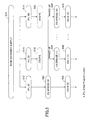
- FIG. 3 illustrates the partitioning of a multi-processor system into N partitions with individual processors.
- the IPL of each of the cores supplied with power starts up (steps 12, 14, and 16).
- the IPL's of the cores other than the core i.e., the IPL (1) of the core 1 to the IPL (N) of the core N are deactivated (steps 18 and 20).
- the IPL(0) of the core 0 starts up the OS bridge(0) after setting an operating environment, including initialization of a minimum memory system (step 22).
- the OS bridge (0) started up by the IPL(0), after initializing a system necessary for communication between the cores, starts up the other cores (1) to (N) that have been deactivated (steps 24,26).
- the started cores (1) to (N) start up the individual OS bridges (1) to (N) after setting an operating environment, including initialization of a minimum memory system.
- the OS bridges operate in parallel for the individual cores.
- Each of the OS bridges operated by the individual cores then acquires a core number from a nonvolatile memory such as the ROM 30.
- the OS bridge selects an OS to be started up based on a predetermined correspondence between the core number and the OS to be installed on the core, and gives control to an entry point of the selected OS.
- the individual cores then start a startup process for the corresponding OS's in parallel. In the process of starting up the individual OS, when accessing the hardware resources shared among the OS's, contention for hardware resources is avoided by performing an exclusive access control by the shared hardware management function of the OS bridge.
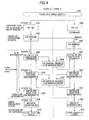
- FIG. 4 shows a process flow in a case where two OS's are started up in parallel in a multi-core processor of a dual-core configuration.
- a storage unit for storing the IPL of the core 0 is connected to the core 0, and a storage unit for storing the IPL of the core 1 is connected to the core 1.
- These storage units may include the ROM 20.
- the IPL (0) for the core 0 is started up in the powered core 0, in a booting stage for preparing for the startup of an OS (step 42).
- the IPL (1) for the core 1 is started up (step 44). After making a minimum initial setting, the IPL (1) once puts the core 1 into a dormant standby status.
- the IPL(0) reads the OS bridge from the ROM 30 into the RAM 20, thereby starting up the OS bridge (0) (step 46).
- the OS bridge (0) operated by the core 0 wakes up the dormant core 1.
- the awakened IPL(1) of the core 1 reads the OS bridge from the ROM 30 into the RAM 20, thereby starting up the OS bridge (1) (step 48).
- the OS bridges are operating in parallel in the core 0 and the core 1.
- the OS bridge (0) selects the OS-0 corresponding to the core 0 and shifts to the entry point of the OS-0, thereby starting up the OS-0.
- the startup process for the OS-0(0) is started by the core 0.
- the OS bridge (1) similarly selects the corresponding OS-1 and shifts to the entry point of the OS-1, thus starting up the OS-1. In this way, the startup process for the OS-1(1) is started by the core 1.
- the kernel and the user interface portion are initialized, as in a conventional OS startup process.
- initialization is performed sequentially from hardware-dependent portions to non-hardware-dependent portions. Specifically, CPU architecture-dependent portions are initialized (steps 50, 52), system dependent portions are initialized (steps 56, 58), and then non-hardware-dependent portions are initialized (steps 62, 64).
- each of the OS-0(0) being started up by the core 0 and the OS-1(1) being started up by the core 1 calls the OS bridge and utilizes its shared hardware function in order to avoid hardware resource contention (steps 54, 60).
- scheduling begins (steps 66, 68), whereby the process shifts to a steady execution status (steps 70, 72) and the OS starts up services.
- the startup of the OS is completed.
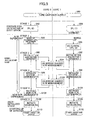
- FIG. 5 shows a process flow in a case where two identical OS's are started up in parallel in a multi-core processor of a dual-core configuration.
- the OS's can be directly stared up from the IPL by skipping the OS bridge.
- the OS itself not the OS bridge, can activate the other dormant cores, and modify the operation of each core based on a determination of the CPU-ID, such as which hardware should be used.
- the shared hardware managing function of the OS bridge can be called even during the running of the OS.
- the IPL(0) of the core 0 that is powered is started up (step 82).
- the IPL(1) of the core 1 is started up (step 84). After making a minimum initial setting, the IPL(1) once puts the core 1 in a dormant standby status.
- the IPL(0) then acquires its core number and makes an ID determination, whereby the OS-0 corresponding to the core 0 is selected.
- the IPL(0) then shifts to the entry point of the OS-0 and starts up the OS-0.
- the startup process for the OS-0(0) is started by the core 0.
- the OS-0(0) operated by the core 0 acquires the core number of the dormant core 1 and performs ID determination, thereby selecting the OS-0 corresponding to the core 1 and shifting to the entry point of the OS-0, whereby the OS-0 is started up (step 88).
- the startup process for the OS-0(1) is started by the core 1.
- the process after the starting of the startup process for each of the OS's is the same as described with reference to FIG.
- the individual cores when a plurality of processor cores are started up in parallel, the individual cores can be started up at higher speed (i.e., the booting timing of each core can be forwarded) by taking the shared hardware managing function out of the OS as an OS bridge.
- the core 0 operates the host OS and the other cores operate guest OS's
- the guest OS's of the other cores can be started up even before the starting up of the host OS is completed.
- contention for hardware resources among the individual OS's can be avoided by the OS bridge having the shared hardware managing function.
- the startup speed can be made even faster because the OS of the core 0 starts up the other OS's while skipping the startup process by the OS bridge.
- the foregoing embodiments are directed to the plurality of processor cores in a multi-core processor, an embodiment of the present invention may be directed to a plurality of single-core processors.
- the number of the cores in the foregoing embodiments is merely exemplary and may be varied in other embodiments.
Landscapes
- Engineering & Computer Science (AREA)
- Software Systems (AREA)
- Theoretical Computer Science (AREA)
- Computer Security & Cryptography (AREA)
- Physics & Mathematics (AREA)
- General Engineering & Computer Science (AREA)
- General Physics & Mathematics (AREA)
- Stored Programmes (AREA)
- Multi Processors (AREA)
- Power Sources (AREA)
- Exchange Systems With Centralized Control (AREA)
- Hardware Redundancy (AREA)
Abstract
Description
- The present invention relates to techniques for starting up a plurality of operating systems.
- Conventionally, techniques for operating a plurality of processors in parallel are known (see, e.g., Patent Document 1).
Patent Document 1 discloses that a primary processor that manages a system as a whole reads an operating system (OS) in a primary system disc at the time of startup. In response to an operation request from the primary processor, master processors for managing individual groups are started up in parallel. Each of the master processors for the individual groups that has been started up reads an OS in a group system disc and starts up a secondary processor in the group. In this way, the individual group master processors and secondary processors are started up in parallel. - As another technology for operating a plurality of OS's in parallel, a virtual machine system is known. In this virtual machine system, real hardware (physical resources), such as processors and memory, are virtualized and a plurality of hardware environments (virtual machines) are generated. In each of such virtual machines, an individual OS can be run.
- Patent Document 1: Japanese Laid-Open Patent Application No.
10-116262 - Techniques are being developed for increasing the start-up speed of OS in multi-processor systems in which a multi-core processor having a plurality of processor cores or a plurality of processors are implemented.
- In this respect, the aforementioned conventional technique according to
Patent Document 1 is limited in increasing the start-up speed of the individual OS's of the multi-processor system because in this technique, the processors are started up sequentially from the primary processor, the master processors for the individual groups, the individual secondary processors, and so on. - On the other hand, in the aforementioned conventional virtual machine system, because a host OS has the function of centrally managing shared hardware of the system, the host OS needs to be started up before a guest OS. As a result, the system is unable to increase the start-up speed of the individual OS's in a multi-processor system. Thus, the advantage of the multi-processor system for higher processing speed cannot be fully exploited.
- Thus, it is an object of the present invention to provide an operating system startup control method and an information processing apparatus by which individual OS's in a multi-processor system can be started up at increased speed.
- In a first aspect of the present invention, an operating system startup control method for starting an operating system processed by each of a plurality of processors includes continuing an operation of an initial program loader for a specific one of the plurality of processors among the initial program loaders that are started up upon turning on of power supply to the plurality of processors, while deactivating an operation of an initial program loader for another processor other than the specific processor; starting up a managing program configured to manage a hardware resource shared by the plurality of processors, using the initial program loader for the specific processor; and starting up an operating system corresponding to the specific processor and another operating system corresponding to the other processor using the managing program that is started up.
- In a second aspect, in the above operating system startup control method according to the first aspect, when the plurality of processors correspond to the same operating system, the method further includes the steps of starting up the operating system corresponding to the specific processor using the initial program loader for the specific processor without starting up the managing program; and starting up the operating system corresponding to the other processor using the operating system corresponding to the specific processor.
- In a third aspect, in the above operating system startup control method according to the first or the second aspect, the plurality of processors comprise processor cores in a multi-core processor.
- In a fourth aspect, an information processing apparatus includes a plurality of processors for each of which an initial program loader is started up upon turning on of power supply. The plurality of processors include a specific processor for which an operation of the initial program loader that is started up is continued; and another processor for which an operation of the initial program loader that is started up is deactivated. A managing program configured to manage a hardware resource shared by the plurality of processors is started up by the initial program loader for the specific processor. An operating system corresponding to the specific processor and another operating system corresponding to the other processor are started up by the managing program that is started up.
- In a fifth aspect, in the information processing apparatus according to the fourth aspect, when the operating systems to which the plurality of processors correspond are the same, the operating system corresponding to the specific processor is started up by the initial program loader for the specific processor without starting up the managing program, and the operating system corresponding to the other processor is started up by the operating system corresponding to the specific processor.
- In a sixth aspect, in the information processing apparatus according to the fourth or fifth aspect, the plurality of processors comprise processor cores in a multi-core processor.
- In accordance with the present invention, each of a plurality of OS's in a multi-processor system can be started up at higher speed.
-
-
FIG. 1 shows a hardware structure of acomputer 100 embodying an information processing apparatus according to the present invention; -
FIG. 2 shows a conceptual diagram of anOS bridge 50; -
FIG. 3 shows an outline of an operating system startup control method according to an embodiment of the present invention; -
FIG. 4 shows a process flow in a multi-core processor of a dual-core configuration where two OS's are started up in parallel; and -
FIG. 5 shows a process flow in a multi-core processor of a dual-core configuration where two identical OS's are started up in parallel. -
- 10
- Multi-core processor
- 20
- RAM
- 30
- ROM
- 40
- Input/output unit (I/O)
- 50
- OS bridge
- In the following, preferred embodiments of the present invention are described with reference to the drawings.
FIG. 1 shows a hardware structure of acomputer 100 embodying an information processing apparatus according to the present invention. Thecomputer 100 may include a computer having a vehicle control function (control system ECU) or a computer having a multimedia function (information system ECU). Examples of the control system ECU include an engine ECU for controlling an engine, a steering ECU for steering control, and a brake ECU for brake control. Examples of the information system ECU include a vehicle navigation computer, a DVD (digital versatile disc) or video computer, an Internet access computer, and a communications computer for communicating with other vehicles or an external communications facility, such as roadside infrastructure or a management center. - As shown in
FIG. 1 , thecomputer 100 includes a read-only memory (ROM) 30 for storing an OS and various programs that run on the OS, such as an application program for realizing the aforementioned vehicle control function or engine control function. Thecomputer 100 also includes amulti-core processor 10 for processing such programs, a random access memory (RAM) 20 providing a working area for the programs, and an I/O 40 that is an interface for the reception and transmission of signals with an external device, such as an input circuit or an output circuit that are not shown. - As shown in
FIG. 1 , themulti-core processor 10 has multiple processor cores, each of which is a microprocessor integrating two or more processor cores on a single package. The processor cores in themulti-core processor 10 operate independently from each other. Themulti-core processor 10 contains the fourprocessor cores cores cores ROM 30 to theRAM 20 and executes it. - The OS's processed by the
cores - The RT-OS has enhanced functions for batch processing and TSS (Time Sharing System) in order to give priority to realtime processing. In the case of a control program used in a control system ECU for vehicle control, the RT-OS is used because it is capable of processing certain processes in real time that need the realtime processing in order to ensure high levels of control response and safety. Examples of the RT-OS include OSEC and ITRON.
- The MM-OS is superior to the RT-OS in handling compression/expansion processing such as an MPEG codec, user interface processes such as GUI (Graphical User Interface), and multimedia processes such as an Internet connection process including security management. In an information system ECU, an MM-OS capable of realizing required multimedia processing is used. Examples of the MM-OS are Linux (registered trademark) and QNX (registered trademark).
- When power is supplied to the
multi-core processor 10 from a power supply circuit (not shown), theinternal cores cores core 0 reads an OS bridge 50 (program) stored in theROM 30 into theRAM 20 and starts it up. The IPL is a program for executing a preparatory process for booting the OS at the booting stage, including initialization of memory. -
FIG. 2 shows a conceptual diagram of theOS bridge 50. TheOS bridge 50 controls the hardware resources that the individual cores share, such as theRAM 20 and the I/O 40, and performs exclusive access control for the hardware resources ("shared hardware managing function"). For example, theOS bridge 50 performs a process to allocate the shared hardware resources to each of the OS-0 operated by thecore 0, OS-1 operated by thecore 1,···, and the OS-N operated by the core N, in accordance with certain task switching timing or at predetermined periods. TheOS bridge 50 also has a function of starting up each OS. Even after the individual OS's are started up by theOS bridge 50, each started-up OS can call theOS bridge 50 and utilize its shared hardware managing function. - With reference to
FIG. 3 , an operating system startup control method according to an embodiment of the present invention is described.FIG. 3 illustrates the partitioning of a multi-processor system into N partitions with individual processors. When power is supplied to the multi-processor system (step 10), the IPL of each of the cores supplied with power starts up (steps core 0, i.e., the IPL (1) of thecore 1 to the IPL (N) of the core N are deactivated (steps 18 and 20). The IPL(0) of the core 0 starts up the OS bridge(0) after setting an operating environment, including initialization of a minimum memory system (step 22). The OS bridge (0) started up by the IPL(0), after initializing a system necessary for communication between the cores, starts up the other cores (1) to (N) that have been deactivated (steps 24,26). The started cores (1) to (N) start up the individual OS bridges (1) to (N) after setting an operating environment, including initialization of a minimum memory system. Thus, the OS bridges operate in parallel for the individual cores. - Each of the OS bridges operated by the individual cores then acquires a core number from a nonvolatile memory such as the
ROM 30. The OS bridge then selects an OS to be started up based on a predetermined correspondence between the core number and the OS to be installed on the core, and gives control to an entry point of the selected OS. The individual cores then start a startup process for the corresponding OS's in parallel. In the process of starting up the individual OS, when accessing the hardware resources shared among the OS's, contention for hardware resources is avoided by performing an exclusive access control by the shared hardware management function of the OS bridge. -
FIG. 4 shows a process flow in a case where two OS's are started up in parallel in a multi-core processor of a dual-core configuration. A storage unit for storing the IPL of thecore 0 is connected to thecore 0, and a storage unit for storing the IPL of thecore 1 is connected to thecore 1. These storage units may include theROM 20. After system power is supplied (step 40), the IPL (0) for thecore 0 is started up in thepowered core 0, in a booting stage for preparing for the startup of an OS (step 42). In thepowered core 1, the IPL (1) for thecore 1 is started up (step 44). After making a minimum initial setting, the IPL (1) once puts thecore 1 into a dormant standby status. On the other hand, the IPL(0) reads the OS bridge from theROM 30 into theRAM 20, thereby starting up the OS bridge (0) (step 46). The OS bridge (0) operated by thecore 0 wakes up thedormant core 1. The awakened IPL(1) of thecore 1 reads the OS bridge from theROM 30 into theRAM 20, thereby starting up the OS bridge (1) (step 48). At this stage, the OS bridges are operating in parallel in thecore 0 and thecore 1. - The OS bridge (0) then selects the OS-0 corresponding to the
core 0 and shifts to the entry point of the OS-0, thereby starting up the OS-0. Thus, the startup process for the OS-0(0) is started by thecore 0. In parallel, the OS bridge (1) similarly selects the corresponding OS-1 and shifts to the entry point of the OS-1, thus starting up the OS-1. In this way, the startup process for the OS-1(1) is started by thecore 1. - Once the startup process for each OS is started, the kernel and the user interface portion are initialized, as in a conventional OS startup process. In the kernel initializing stage, initialization is performed sequentially from hardware-dependent portions to non-hardware-dependent portions. Specifically, CPU architecture-dependent portions are initialized (
steps 50, 52), system dependent portions are initialized (steps 56, 58), and then non-hardware-dependent portions are initialized (steps 62, 64). In the initialization stage for the CPU architecture-dependent portions or system dependent portions, each of the OS-0(0) being started up by thecore 0 and the OS-1(1) being started up by thecore 1 calls the OS bridge and utilizes its shared hardware function in order to avoid hardware resource contention (steps 54, 60). - Then in the initialization stage for the user interface portions, scheduling begins (steps 66, 68), whereby the process shifts to a steady execution status (steps 70, 72) and the OS starts up services. Thus, the startup of the OS is completed.
-
FIG. 5 shows a process flow in a case where two identical OS's are started up in parallel in a multi-core processor of a dual-core configuration. In a system having a multi-core processor, when the same OS's are started up in the plurality of cores in parallel, the OS's can be directly stared up from the IPL by skipping the OS bridge. In this case, the OS itself, not the OS bridge, can activate the other dormant cores, and modify the operation of each core based on a determination of the CPU-ID, such as which hardware should be used. As in the case ofFIG. 4 , when the individual OS's perform initialization processing simultaneously in parallel, in order to perform the exclusive access control to the shared hardware, the shared hardware managing function of the OS bridge can be called even during the running of the OS. - As in the case of
FIG. 4 , after system power is supplied (step 80), in the booting stage in preparation for the starting up of the OS, the IPL(0) of thecore 0 that is powered is started up (step 82). In thecore 1 that is powered, the IPL(1) of thecore 1 is started up (step 84). After making a minimum initial setting, the IPL(1) once puts thecore 1 in a dormant standby status. - The IPL(0) then acquires its core number and makes an ID determination, whereby the OS-0 corresponding to the
core 0 is selected. The IPL(0) then shifts to the entry point of the OS-0 and starts up the OS-0. Thus, the startup process for the OS-0(0) is started by thecore 0. The OS-0(0) operated by thecore 0 acquires the core number of thedormant core 1 and performs ID determination, thereby selecting the OS-0 corresponding to thecore 1 and shifting to the entry point of the OS-0, whereby the OS-0 is started up (step 88). Thus, the startup process for the OS-0(1) is started by thecore 1. The process after the starting of the startup process for each of the OS's is the same as described with reference toFIG. 4 and therefore the description is omitted. Thus in the case ofFIG. 5 where the processors have the same OS, the OS of a dormant core is started up in an OS that is started up, whereas in the case ofFIG. 4 where the processors have different OS's, the OS of a dormant core is started up before the OS is started up. - Thus in accordance with the foregoing embodiment, when a plurality of processor cores are started up in parallel, the individual cores can be started up at higher speed (i.e., the booting timing of each core can be forwarded) by taking the shared hardware managing function out of the OS as an OS bridge. For example, when the
core 0 operates the host OS and the other cores operate guest OS's, by separating the shared hardware managing function from the host OS where it is normally contained, the guest OS's of the other cores can be started up even before the starting up of the host OS is completed. Thus, contention for hardware resources among the individual OS's can be avoided by the OS bridge having the shared hardware managing function. - When the plurality of cores use the same OS, the startup speed can be made even faster because the OS of the core 0 starts up the other OS's while skipping the startup process by the OS bridge.
- Although this invention has been described in detail with reference to certain embodiments, variations and modifications exist within the scope and spirit of the invention as described and defined in the following claims.
- For example, although the foregoing embodiments are directed to the plurality of processor cores in a multi-core processor, an embodiment of the present invention may be directed to a plurality of single-core processors. Furthermore, the number of the cores in the foregoing embodiments is merely exemplary and may be varied in other embodiments.
- The present application is based on the Japanese Priority Application No.
2007-018153 filed January 29, 2007
Claims (6)
- An operating system startup control method for starting an operating system processed by each of a plurality of processors, the method comprising the steps of:continuing an operation of an initial program loader for a specific one of the plurality of processors among the initial program loaders that are started up upon turning on of power supply to the plurality of processors, while deactivating an operation of an initial program loader for another processor other than the specific processor;starting up a managing program configured to manage a hardware resource shared by the plurality of processors, using the initial program loader for the specific processor; andstarting up an operating system corresponding to the specific processor and another operating system corresponding to the other processor using the managing program that is started up.
- The operating system startup control method according to claim 1, wherein, when the plurality of processors correspond to the same operating system,
the method further comprising the steps of:starting up the operating system corresponding to the specific processor using the initial program loader for the specific processor without starting up the managing program; andstarting up the operating system corresponding to the other processor using the operating system corresponding to the specific processor. - The operating system startup control method according to claim 1 or 2, wherein the plurality of processors comprise processor cores in a multi-core processor.
- An information processing apparatus having a plurality of processors for each of which an initial program loader is started up upon turning on of power supply,
the plurality of processors including:a specific processor for which an operation of the initial program loader that is started up is continued; andanother processor for which an operation of the initial program loader that is started up is deactivated,wherein a managing program configured to manage a hardware resource shared by the plurality of processors is started up by the initial program loader for the specific processor, andwherein an operating system corresponding to the specific processor and another operating system corresponding to the other processor are started up by the managing program that is started up. - The information processing apparatus according to claim 4,
wherein, when the operating systems to which the plurality of processors correspond are the same, the operating system corresponding to the specific processor is started up by the initial program loader for the specific processor without starting up the managing program, and
the operating system corresponding to the other processor is started up by the operating system corresponding to the specific processor. - The information processing apparatus according to claim 4, wherein the plurality of processors comprise processor cores in a multi-core processor.
Applications Claiming Priority (2)
| Application Number | Priority Date | Filing Date | Title |
|---|---|---|---|
| JP2007018153A JP2008186175A (en) | 2007-01-29 | 2007-01-29 | Operating system activation control method and information processing apparatus |
| PCT/JP2008/051209 WO2008093638A1 (en) | 2007-01-29 | 2008-01-28 | Starting-up control method for operating system and information processing device |
Publications (3)
| Publication Number | Publication Date |
|---|---|
| EP2128759A1 true EP2128759A1 (en) | 2009-12-02 |
| EP2128759A4 EP2128759A4 (en) | 2010-02-03 |
| EP2128759B1 EP2128759B1 (en) | 2011-12-07 |
Family
ID=39673949
Family Applications (1)
| Application Number | Title | Priority Date | Filing Date |
|---|---|---|---|
| EP08704018A Not-in-force EP2128759B1 (en) | 2007-01-29 | 2008-01-28 | Operating system startup control method and information processing apparatus |
Country Status (6)
| Country | Link |
|---|---|
| US (1) | US8051281B2 (en) |
| EP (1) | EP2128759B1 (en) |
| JP (1) | JP2008186175A (en) |
| CN (1) | CN101595455B (en) |
| AT (1) | ATE536586T1 (en) |
| WO (1) | WO2008093638A1 (en) |
Families Citing this family (13)
| Publication number | Priority date | Publication date | Assignee | Title |
|---|---|---|---|---|
| JP5332716B2 (en) * | 2009-02-24 | 2013-11-06 | 日本電気株式会社 | Startup control method, information processing apparatus, and program |
| EP2551768A4 (en) * | 2010-03-24 | 2013-10-09 | Fujitsu Ltd | UR MULTIC SYSTEM AND STARTING METHOD |
| TWI425422B (en) * | 2010-07-16 | 2014-02-01 | 晨星半導體股份有限公司 | Multi-CPU domain mobile electronic device and its operation method |
| JP5751069B2 (en) * | 2011-07-28 | 2015-07-22 | 株式会社ニコン | Electronic equipment |
| US9081703B2 (en) * | 2011-09-15 | 2015-07-14 | Nokia Technologies Oy | Method and apparatuses for facilitating sharing device connections between a host and client based on the power mode of the host |
| US8719546B2 (en) | 2012-01-04 | 2014-05-06 | Intel Corporation | Substitute virtualized-memory page tables |
| US9141559B2 (en) * | 2012-01-04 | 2015-09-22 | Intel Corporation | Increasing virtual-memory efficiencies |
| US9904559B2 (en) * | 2012-10-25 | 2018-02-27 | Canon Kabushiki Kaisha | Information processing apparatus and activation method therefor for processing data of a hibernation image |
| DE112013007676T5 (en) * | 2013-12-09 | 2016-09-08 | Mitsubishi Electric Corporation | information device |
| JP6838222B2 (en) * | 2016-04-28 | 2021-03-03 | 日立Astemo株式会社 | Vehicle control device and vehicle system |
| JP6508382B1 (en) * | 2018-03-26 | 2019-05-08 | 日本電気株式会社 | INFORMATION PROCESSING APPARATUS, INFORMATION PROCESSING METHOD, AND PROGRAM |
| JP2020149317A (en) * | 2019-03-13 | 2020-09-17 | 株式会社デンソー | Vehicle equipment |
| WO2025182036A1 (en) * | 2024-02-29 | 2025-09-04 | Ntt株式会社 | Task scheduler device and program |
Family Cites Families (15)
| Publication number | Priority date | Publication date | Assignee | Title |
|---|---|---|---|---|
| JP3167461B2 (en) | 1992-11-16 | 2001-05-21 | 富士通株式会社 | IPL method of multiprocessor system |
| JPH06295289A (en) | 1993-04-09 | 1994-10-21 | Hitachi Ltd | Booting method for plural computers |
| JP2556268B2 (en) | 1993-07-20 | 1996-11-20 | 日本電気株式会社 | Program download method |
| JPH086914A (en) | 1994-06-17 | 1996-01-12 | Toshiba Corp | Main memory initialization method in multiprocessor system |
| US5642506A (en) * | 1994-12-14 | 1997-06-24 | International Business Machines Corporation | Method and apparatus for initializing a multiprocessor system |
| US5724527A (en) * | 1995-12-28 | 1998-03-03 | Intel Corporation | Fault-tolerant boot strap mechanism for a multiprocessor system |
| JPH10116262A (en) | 1996-06-21 | 1998-05-06 | Fujitsu Ltd | Parallel computer, processor element network, and recording medium storing program for parallel computer |
| US7007161B2 (en) * | 2002-01-08 | 2006-02-28 | Agile Tv Corporation | Fast booting of plex array |
| JP2004287618A (en) | 2003-03-19 | 2004-10-14 | Ntt Data Corp | Operating system activation control method, program for causing a computer to execute the method, and operating system activation control device |
| US7174447B2 (en) | 2003-11-14 | 2007-02-06 | Intel Corporation | Providing a pre-boot driver for use during operating system runtime of a computer system |
| US20060047939A1 (en) * | 2004-09-01 | 2006-03-02 | International Business Machines Corporation | Method and apparatus for initializing multiple processors residing in an integrated circuit |
| JP2006099704A (en) * | 2004-09-30 | 2006-04-13 | Toshiba Corp | Information processor and startup control method |
| JP4501788B2 (en) | 2005-06-13 | 2010-07-14 | セイコーエプソン株式会社 | Multi-CPU device and inter-CPU communication method |
| US7437546B2 (en) * | 2005-08-03 | 2008-10-14 | Intel Corporation | Multiple, cooperating operating systems (OS) platform system and method |
| US7882341B2 (en) * | 2007-12-31 | 2011-02-01 | Intel Corporation | System and method to enable parallelization of early platform initialization |
-
2007
- 2007-01-29 JP JP2007018153A patent/JP2008186175A/en active Pending
-
2008
- 2008-01-28 US US12/446,649 patent/US8051281B2/en not_active Expired - Fee Related
- 2008-01-28 CN CN2008800034227A patent/CN101595455B/en not_active Expired - Fee Related
- 2008-01-28 AT AT08704018T patent/ATE536586T1/en active
- 2008-01-28 EP EP08704018A patent/EP2128759B1/en not_active Not-in-force
- 2008-01-28 WO PCT/JP2008/051209 patent/WO2008093638A1/en not_active Ceased
Also Published As
| Publication number | Publication date |
|---|---|
| ATE536586T1 (en) | 2011-12-15 |
| EP2128759B1 (en) | 2011-12-07 |
| EP2128759A4 (en) | 2010-02-03 |
| CN101595455A (en) | 2009-12-02 |
| US20100049960A1 (en) | 2010-02-25 |
| WO2008093638A1 (en) | 2008-08-07 |
| CN101595455B (en) | 2013-06-12 |
| JP2008186175A (en) | 2008-08-14 |
| US8051281B2 (en) | 2011-11-01 |
Similar Documents
| Publication | Publication Date | Title |
|---|---|---|
| EP2128759B1 (en) | Operating system startup control method and information processing apparatus | |
| KR102356316B1 (en) | Vehicle system, vehicle and method for operating such a vehicle system | |
| KR101952795B1 (en) | Resource processing method, operating system, and device | |
| EP2847669B1 (en) | Hybrid operating system | |
| US8146089B2 (en) | Sharing resources of a partitioned system | |
| EP3671450A1 (en) | Virtual electronic control units in autosar | |
| JP2016541072A5 (en) | ||
| JPH11149385A (en) | Multi-OS configuration method | |
| CN113778612A (en) | Implementation Method of Embedded Virtualization System Based on Microkernel Mechanism | |
| CN119415161B (en) | A startup deployment and collaborative processing method for multi-core heterogeneous systems | |
| CN108064377A (en) | A management method and device for multi-system shared memory | |
| CN113094111A (en) | Device and method for starting device | |
| CN111381894A (en) | Method for realizing rapid starting and simultaneous working of slave system during starting of complex time-sharing operating system | |
| CN115269139A (en) | Dual-operating-system mixed real-time task scheduling method and system based on trusted area | |
| CN116610370A (en) | Starting method, starting device, starting equipment and storage medium | |
| EP4187374B1 (en) | Kernel restarting method | |
| CN104714821B (en) | Operation system example creation method and device | |
| CN109522111A (en) | Call method, device, electronic equipment and the storage medium of the isomery ecosystem | |
| US9619277B2 (en) | Computer with plurality of processors sharing process queue, and process dispatch processing method | |
| CN113934509B (en) | System and operation method supporting hybrid virtual machine manager | |
| Qiu et al. | TZRT-RPC: A Hybrid Multi-OS Real-Time Communication Scheme Based on TrustZone | |
| Qiu et al. | TZRT-RPC: A Hybrid Multi-OS Real-Time | |
| CN121524124A (en) | A method and system for parallel deployment of multiple Linux kernels based on RISC-V SoC | |
| CN120066582A (en) | Parallel execution method, device, equipment and medium for interrupt tasks based on multiple cores | |
| JP2024139966A (en) | Processing device and processing method |
Legal Events
| Date | Code | Title | Description |
|---|---|---|---|
| PUAI | Public reference made under article 153(3) epc to a published international application that has entered the european phase |
Free format text: ORIGINAL CODE: 0009012 |
|
| 17P | Request for examination filed |
Effective date: 20090423 |
|
| AK | Designated contracting states |
Kind code of ref document: A1 Designated state(s): AT BE BG CH CY CZ DE DK EE ES FI FR GB GR HR HU IE IS IT LI LT LU LV MC MT NL NO PL PT RO SE SI SK TR |
|
| A4 | Supplementary search report drawn up and despatched |
Effective date: 20100108 |
|
| DAX | Request for extension of the european patent (deleted) | ||
| GRAP | Despatch of communication of intention to grant a patent |
Free format text: ORIGINAL CODE: EPIDOSNIGR1 |
|
| GRAS | Grant fee paid |
Free format text: ORIGINAL CODE: EPIDOSNIGR3 |
|
| GRAA | (expected) grant |
Free format text: ORIGINAL CODE: 0009210 |
|
| RTI1 | Title (correction) |
Free format text: OPERATING SYSTEM STARTUP CONTROL METHOD AND INFORMATION PROCESSING APPARATUS |
|
| AK | Designated contracting states |
Kind code of ref document: B1 Designated state(s): AT BE BG CH CY CZ DE DK EE ES FI FR GB GR HR HU IE IS IT LI LT LU LV MC MT NL NO PL PT RO SE SI SK TR |
|
| REG | Reference to a national code |
Ref country code: GB Ref legal event code: FG4D |
|
| REG | Reference to a national code |
Ref country code: CH Ref legal event code: EP |
|
| REG | Reference to a national code |
Ref country code: IE Ref legal event code: FG4D |
|
| REG | Reference to a national code |
Ref country code: DE Ref legal event code: R096 Ref document number: 602008011832 Country of ref document: DE Effective date: 20120202 |
|
| REG | Reference to a national code |
Ref country code: NL Ref legal event code: VDEP Effective date: 20111207 |
|
| PG25 | Lapsed in a contracting state [announced via postgrant information from national office to epo] |
Ref country code: NO Free format text: LAPSE BECAUSE OF FAILURE TO SUBMIT A TRANSLATION OF THE DESCRIPTION OR TO PAY THE FEE WITHIN THE PRESCRIBED TIME-LIMIT Effective date: 20120307 Ref country code: LT Free format text: LAPSE BECAUSE OF FAILURE TO SUBMIT A TRANSLATION OF THE DESCRIPTION OR TO PAY THE FEE WITHIN THE PRESCRIBED TIME-LIMIT Effective date: 20111207 |
|
| LTIE | Lt: invalidation of european patent or patent extension |
Effective date: 20111207 |
|
| PG25 | Lapsed in a contracting state [announced via postgrant information from national office to epo] |
Ref country code: LV Free format text: LAPSE BECAUSE OF FAILURE TO SUBMIT A TRANSLATION OF THE DESCRIPTION OR TO PAY THE FEE WITHIN THE PRESCRIBED TIME-LIMIT Effective date: 20111207 Ref country code: SI Free format text: LAPSE BECAUSE OF FAILURE TO SUBMIT A TRANSLATION OF THE DESCRIPTION OR TO PAY THE FEE WITHIN THE PRESCRIBED TIME-LIMIT Effective date: 20111207 Ref country code: HR Free format text: LAPSE BECAUSE OF FAILURE TO SUBMIT A TRANSLATION OF THE DESCRIPTION OR TO PAY THE FEE WITHIN THE PRESCRIBED TIME-LIMIT Effective date: 20111207 Ref country code: GR Free format text: LAPSE BECAUSE OF FAILURE TO SUBMIT A TRANSLATION OF THE DESCRIPTION OR TO PAY THE FEE WITHIN THE PRESCRIBED TIME-LIMIT Effective date: 20120308 Ref country code: NL Free format text: LAPSE BECAUSE OF FAILURE TO SUBMIT A TRANSLATION OF THE DESCRIPTION OR TO PAY THE FEE WITHIN THE PRESCRIBED TIME-LIMIT Effective date: 20111207 Ref country code: SE Free format text: LAPSE BECAUSE OF FAILURE TO SUBMIT A TRANSLATION OF THE DESCRIPTION OR TO PAY THE FEE WITHIN THE PRESCRIBED TIME-LIMIT Effective date: 20111207 |
|
| PG25 | Lapsed in a contracting state [announced via postgrant information from national office to epo] |
Ref country code: BE Free format text: LAPSE BECAUSE OF FAILURE TO SUBMIT A TRANSLATION OF THE DESCRIPTION OR TO PAY THE FEE WITHIN THE PRESCRIBED TIME-LIMIT Effective date: 20111207 Ref country code: CY Free format text: LAPSE BECAUSE OF FAILURE TO SUBMIT A TRANSLATION OF THE DESCRIPTION OR TO PAY THE FEE WITHIN THE PRESCRIBED TIME-LIMIT Effective date: 20111207 |
|
| PG25 | Lapsed in a contracting state [announced via postgrant information from national office to epo] |
Ref country code: SK Free format text: LAPSE BECAUSE OF FAILURE TO SUBMIT A TRANSLATION OF THE DESCRIPTION OR TO PAY THE FEE WITHIN THE PRESCRIBED TIME-LIMIT Effective date: 20111207 Ref country code: IS Free format text: LAPSE BECAUSE OF FAILURE TO SUBMIT A TRANSLATION OF THE DESCRIPTION OR TO PAY THE FEE WITHIN THE PRESCRIBED TIME-LIMIT Effective date: 20120407 Ref country code: BG Free format text: LAPSE BECAUSE OF FAILURE TO SUBMIT A TRANSLATION OF THE DESCRIPTION OR TO PAY THE FEE WITHIN THE PRESCRIBED TIME-LIMIT Effective date: 20120307 Ref country code: CZ Free format text: LAPSE BECAUSE OF FAILURE TO SUBMIT A TRANSLATION OF THE DESCRIPTION OR TO PAY THE FEE WITHIN THE PRESCRIBED TIME-LIMIT Effective date: 20111207 Ref country code: EE Free format text: LAPSE BECAUSE OF FAILURE TO SUBMIT A TRANSLATION OF THE DESCRIPTION OR TO PAY THE FEE WITHIN THE PRESCRIBED TIME-LIMIT Effective date: 20111207 |
|
| PG25 | Lapsed in a contracting state [announced via postgrant information from national office to epo] |
Ref country code: PL Free format text: LAPSE BECAUSE OF FAILURE TO SUBMIT A TRANSLATION OF THE DESCRIPTION OR TO PAY THE FEE WITHIN THE PRESCRIBED TIME-LIMIT Effective date: 20111207 Ref country code: PT Free format text: LAPSE BECAUSE OF FAILURE TO SUBMIT A TRANSLATION OF THE DESCRIPTION OR TO PAY THE FEE WITHIN THE PRESCRIBED TIME-LIMIT Effective date: 20120409 Ref country code: MC Free format text: LAPSE BECAUSE OF NON-PAYMENT OF DUE FEES Effective date: 20120131 Ref country code: RO Free format text: LAPSE BECAUSE OF FAILURE TO SUBMIT A TRANSLATION OF THE DESCRIPTION OR TO PAY THE FEE WITHIN THE PRESCRIBED TIME-LIMIT Effective date: 20111207 |
|
| REG | Reference to a national code |
Ref country code: CH Ref legal event code: PL |
|
| REG | Reference to a national code |
Ref country code: AT Ref legal event code: MK05 Ref document number: 536586 Country of ref document: AT Kind code of ref document: T Effective date: 20111207 |
|
| PLBE | No opposition filed within time limit |
Free format text: ORIGINAL CODE: 0009261 |
|
| STAA | Information on the status of an ep patent application or granted ep patent |
Free format text: STATUS: NO OPPOSITION FILED WITHIN TIME LIMIT |
|
| REG | Reference to a national code |
Ref country code: IE Ref legal event code: MM4A |
|
| PG25 | Lapsed in a contracting state [announced via postgrant information from national office to epo] |
Ref country code: LI Free format text: LAPSE BECAUSE OF NON-PAYMENT OF DUE FEES Effective date: 20120131 Ref country code: DK Free format text: LAPSE BECAUSE OF FAILURE TO SUBMIT A TRANSLATION OF THE DESCRIPTION OR TO PAY THE FEE WITHIN THE PRESCRIBED TIME-LIMIT Effective date: 20111207 Ref country code: CH Free format text: LAPSE BECAUSE OF NON-PAYMENT OF DUE FEES Effective date: 20120131 |
|
| REG | Reference to a national code |
Ref country code: GB Ref legal event code: 746 Effective date: 20121012 |
|
| 26N | No opposition filed |
Effective date: 20120910 |
|
| PG25 | Lapsed in a contracting state [announced via postgrant information from national office to epo] |
Ref country code: IT Free format text: LAPSE BECAUSE OF FAILURE TO SUBMIT A TRANSLATION OF THE DESCRIPTION OR TO PAY THE FEE WITHIN THE PRESCRIBED TIME-LIMIT Effective date: 20111207 |
|
| REG | Reference to a national code |
Ref country code: DE Ref legal event code: R084 Ref document number: 602008011832 Country of ref document: DE Effective date: 20121015 |
|
| REG | Reference to a national code |
Ref country code: DE Ref legal event code: R097 Ref document number: 602008011832 Country of ref document: DE Effective date: 20120910 |
|
| PG25 | Lapsed in a contracting state [announced via postgrant information from national office to epo] |
Ref country code: IE Free format text: LAPSE BECAUSE OF NON-PAYMENT OF DUE FEES Effective date: 20120128 Ref country code: AT Free format text: LAPSE BECAUSE OF FAILURE TO SUBMIT A TRANSLATION OF THE DESCRIPTION OR TO PAY THE FEE WITHIN THE PRESCRIBED TIME-LIMIT Effective date: 20111207 |
|
| PG25 | Lapsed in a contracting state [announced via postgrant information from national office to epo] |
Ref country code: ES Free format text: LAPSE BECAUSE OF FAILURE TO SUBMIT A TRANSLATION OF THE DESCRIPTION OR TO PAY THE FEE WITHIN THE PRESCRIBED TIME-LIMIT Effective date: 20120318 |
|
| PGFP | Annual fee paid to national office [announced via postgrant information from national office to epo] |
Ref country code: GB Payment date: 20130123 Year of fee payment: 6 Ref country code: FR Payment date: 20130204 Year of fee payment: 6 Ref country code: DE Payment date: 20130123 Year of fee payment: 6 |
|
| PG25 | Lapsed in a contracting state [announced via postgrant information from national office to epo] |
Ref country code: FI Free format text: LAPSE BECAUSE OF FAILURE TO SUBMIT A TRANSLATION OF THE DESCRIPTION OR TO PAY THE FEE WITHIN THE PRESCRIBED TIME-LIMIT Effective date: 20111207 |
|
| PG25 | Lapsed in a contracting state [announced via postgrant information from national office to epo] |
Ref country code: MT Free format text: LAPSE BECAUSE OF FAILURE TO SUBMIT A TRANSLATION OF THE DESCRIPTION OR TO PAY THE FEE WITHIN THE PRESCRIBED TIME-LIMIT Effective date: 20111207 |
|
| PG25 | Lapsed in a contracting state [announced via postgrant information from national office to epo] |
Ref country code: TR Free format text: LAPSE BECAUSE OF FAILURE TO SUBMIT A TRANSLATION OF THE DESCRIPTION OR TO PAY THE FEE WITHIN THE PRESCRIBED TIME-LIMIT Effective date: 20111207 |
|
| PG25 | Lapsed in a contracting state [announced via postgrant information from national office to epo] |
Ref country code: LU Free format text: LAPSE BECAUSE OF NON-PAYMENT OF DUE FEES Effective date: 20120128 |
|
| PG25 | Lapsed in a contracting state [announced via postgrant information from national office to epo] |
Ref country code: HU Free format text: LAPSE BECAUSE OF FAILURE TO SUBMIT A TRANSLATION OF THE DESCRIPTION OR TO PAY THE FEE WITHIN THE PRESCRIBED TIME-LIMIT Effective date: 20080128 |
|
| REG | Reference to a national code |
Ref country code: DE Ref legal event code: R119 Ref document number: 602008011832 Country of ref document: DE |
|
| GBPC | Gb: european patent ceased through non-payment of renewal fee |
Effective date: 20140128 |
|
| REG | Reference to a national code |
Ref country code: DE Ref legal event code: R119 Ref document number: 602008011832 Country of ref document: DE Effective date: 20140801 |
|
| PG25 | Lapsed in a contracting state [announced via postgrant information from national office to epo] |
Ref country code: DE Free format text: LAPSE BECAUSE OF NON-PAYMENT OF DUE FEES Effective date: 20140801 |
|
| REG | Reference to a national code |
Ref country code: FR Ref legal event code: ST Effective date: 20140930 |
|
| PG25 | Lapsed in a contracting state [announced via postgrant information from national office to epo] |
Ref country code: FR Free format text: LAPSE BECAUSE OF NON-PAYMENT OF DUE FEES Effective date: 20140131 Ref country code: GB Free format text: LAPSE BECAUSE OF NON-PAYMENT OF DUE FEES Effective date: 20140128 |