EP2128154A1 - Benzimidazole compound and pharmaceutical use thereof - Google Patents
Benzimidazole compound and pharmaceutical use thereof Download PDFInfo
- Publication number
- EP2128154A1 EP2128154A1 EP08712095A EP08712095A EP2128154A1 EP 2128154 A1 EP2128154 A1 EP 2128154A1 EP 08712095 A EP08712095 A EP 08712095A EP 08712095 A EP08712095 A EP 08712095A EP 2128154 A1 EP2128154 A1 EP 2128154A1
- Authority
- EP
- European Patent Office
- Prior art keywords
- dihydro
- benzimidazol
- piperidin
- lower alkyl
- oxo
- Prior art date
- Legal status (The legal status is an assumption and is not a legal conclusion. Google has not performed a legal analysis and makes no representation as to the accuracy of the status listed.)
- Granted
Links
- 0 CC=CC=CC(N1C(CC2)CCN2C2=CC=CC=CCC=CC=C/C=*2)=C(C)N(*)C1=* Chemical compound CC=CC=CC(N1C(CC2)CCN2C2=CC=CC=CCC=CC=C/C=*2)=C(C)N(*)C1=* 0.000 description 5
- MQAYULJWABLGFO-UHFFFAOYSA-N CNC(CN(C1O)c2ccccc2N1C(CC1)CCN1C(CC1)c2cccc3c2C1CCO3)=O Chemical compound CNC(CN(C1O)c2ccccc2N1C(CC1)CCN1C(CC1)c2cccc3c2C1CCO3)=O MQAYULJWABLGFO-UHFFFAOYSA-N 0.000 description 1
- QYYYWFZOEOZCMR-UHFFFAOYSA-N CNC(CN(c(cccc1)c1N1C(CC2)CCN2C(CCC2CCC3)c4c2c3ccc4)C1=O)=O Chemical compound CNC(CN(c(cccc1)c1N1C(CC2)CCN2C(CCC2CCC3)c4c2c3ccc4)C1=O)=O QYYYWFZOEOZCMR-UHFFFAOYSA-N 0.000 description 1
- VDLQENSKGLMSEP-UHFFFAOYSA-N CNC(CN(c1ccccc1N1C(CC2)CCN2C(Cc2c34)c3cccc4ccc2OC)C1=O)=O Chemical compound CNC(CN(c1ccccc1N1C(CC2)CCN2C(Cc2c34)c3cccc4ccc2OC)C1=O)=O VDLQENSKGLMSEP-UHFFFAOYSA-N 0.000 description 1
- WNXMGYMURYEGGF-UHFFFAOYSA-N CNC(CN(c1ccccc1N1C(CC2)CCN2C(Cc2ccc3)c(cc4)c2c3c4F)C1=O)=O Chemical compound CNC(CN(c1ccccc1N1C(CC2)CCN2C(Cc2ccc3)c(cc4)c2c3c4F)C1=O)=O WNXMGYMURYEGGF-UHFFFAOYSA-N 0.000 description 1
- SDPBWJMVYPYLNI-UHFFFAOYSA-N Cc1c(C(CC2)N(CC3)CCC3N(c3ccccc3N3)C3=O)c2ccc1 Chemical compound Cc1c(C(CC2)N(CC3)CCC3N(c3ccccc3N3)C3=O)c2ccc1 SDPBWJMVYPYLNI-UHFFFAOYSA-N 0.000 description 1
- QEAFTBNSNPWNLU-XMMPIXPASA-N Cc1cc(N(C(CC2)CCN2[C@H](C2)c3cccc4c3c2ccc4)C(N2CC3CC3)=O)c2nc1 Chemical compound Cc1cc(N(C(CC2)CCN2[C@H](C2)c3cccc4c3c2ccc4)C(N2CC3CC3)=O)c2nc1 QEAFTBNSNPWNLU-XMMPIXPASA-N 0.000 description 1
- VJEHNFVULMHIOJ-UHFFFAOYSA-N Cc1ccc(CCC2N(CC3)CCC3N(c(cccc3)c3N3CC(NCl)=O)C3=O)c2c1 Chemical compound Cc1ccc(CCC2N(CC3)CCC3N(c(cccc3)c3N3CC(NCl)=O)C3=O)c2c1 VJEHNFVULMHIOJ-UHFFFAOYSA-N 0.000 description 1
- TXEZPELJMMCUDT-UHFFFAOYSA-N O=C(CS1)N(CCCN(c(cccc2)c2N2C(CC3)CCN3C3c4cccc(CC5)c4C5CC3)C2=O)C1=O Chemical compound O=C(CS1)N(CCCN(c(cccc2)c2N2C(CC3)CCN3C3c4cccc(CC5)c4C5CC3)C2=O)C1=O TXEZPELJMMCUDT-UHFFFAOYSA-N 0.000 description 1
- RDRINSNRKYJMPC-UHFFFAOYSA-N O=C1N(C(CC2)CCN2C(C2)c3cccc4c3C2CCC4)c2ccccc2N1 Chemical compound O=C1N(C(CC2)CCN2C(C2)c3cccc4c3C2CCC4)c2ccccc2N1 RDRINSNRKYJMPC-UHFFFAOYSA-N 0.000 description 1
- DVGUGRRYTRZVIM-UHFFFAOYSA-N O=C1N(C(CC2)CCN2C(Cc2c34)c3cccc4ccc2Cl)c2ccccc2N1 Chemical compound O=C1N(C(CC2)CCN2C(Cc2c34)c3cccc4ccc2Cl)c2ccccc2N1 DVGUGRRYTRZVIM-UHFFFAOYSA-N 0.000 description 1
- BVLRYNRCBXWYQM-FQEVSTJZSA-N O=C1N(C(CC2)CCN2[C@@H](CCC2)c3c2cccc3)c2ccccc2N1 Chemical compound O=C1N(C(CC2)CCN2[C@@H](CCC2)c3c2cccc3)c2ccccc2N1 BVLRYNRCBXWYQM-FQEVSTJZSA-N 0.000 description 1
Images


Classifications
-
- C—CHEMISTRY; METALLURGY
- C07—ORGANIC CHEMISTRY
- C07D—HETEROCYCLIC COMPOUNDS
- C07D401/00—Heterocyclic compounds containing two or more hetero rings, having nitrogen atoms as the only ring hetero atoms, at least one ring being a six-membered ring with only one nitrogen atom
- C07D401/02—Heterocyclic compounds containing two or more hetero rings, having nitrogen atoms as the only ring hetero atoms, at least one ring being a six-membered ring with only one nitrogen atom containing two hetero rings
- C07D401/04—Heterocyclic compounds containing two or more hetero rings, having nitrogen atoms as the only ring hetero atoms, at least one ring being a six-membered ring with only one nitrogen atom containing two hetero rings directly linked by a ring-member-to-ring-member bond
-
- A—HUMAN NECESSITIES
- A61—MEDICAL OR VETERINARY SCIENCE; HYGIENE
- A61K—PREPARATIONS FOR MEDICAL, DENTAL OR TOILETRY PURPOSES
- A61K31/00—Medicinal preparations containing organic active ingredients
- A61K31/33—Heterocyclic compounds
- A61K31/395—Heterocyclic compounds having nitrogen as a ring hetero atom, e.g. guanethidine or rifamycins
- A61K31/435—Heterocyclic compounds having nitrogen as a ring hetero atom, e.g. guanethidine or rifamycins having six-membered rings with one nitrogen as the only ring hetero atom
- A61K31/44—Non condensed pyridines; Hydrogenated derivatives thereof
- A61K31/445—Non condensed piperidines, e.g. piperocaine
- A61K31/4523—Non condensed piperidines, e.g. piperocaine containing further heterocyclic ring systems
- A61K31/454—Non condensed piperidines, e.g. piperocaine containing further heterocyclic ring systems containing a five-membered ring with nitrogen as a ring hetero atom, e.g. pimozide, domperidone
-
- A—HUMAN NECESSITIES
- A61—MEDICAL OR VETERINARY SCIENCE; HYGIENE
- A61P—SPECIFIC THERAPEUTIC ACTIVITY OF CHEMICAL COMPOUNDS OR MEDICINAL PREPARATIONS
- A61P1/00—Drugs for disorders of the alimentary tract or the digestive system
- A61P1/14—Prodigestives, e.g. acids, enzymes, appetite stimulants, antidyspeptics, tonics, antiflatulents
-
- A—HUMAN NECESSITIES
- A61—MEDICAL OR VETERINARY SCIENCE; HYGIENE
- A61P—SPECIFIC THERAPEUTIC ACTIVITY OF CHEMICAL COMPOUNDS OR MEDICINAL PREPARATIONS
- A61P25/00—Drugs for disorders of the nervous system
-
- A—HUMAN NECESSITIES
- A61—MEDICAL OR VETERINARY SCIENCE; HYGIENE
- A61P—SPECIFIC THERAPEUTIC ACTIVITY OF CHEMICAL COMPOUNDS OR MEDICINAL PREPARATIONS
- A61P25/00—Drugs for disorders of the nervous system
- A61P25/04—Centrally acting analgesics, e.g. opioids
-
- A—HUMAN NECESSITIES
- A61—MEDICAL OR VETERINARY SCIENCE; HYGIENE
- A61P—SPECIFIC THERAPEUTIC ACTIVITY OF CHEMICAL COMPOUNDS OR MEDICINAL PREPARATIONS
- A61P25/00—Drugs for disorders of the nervous system
- A61P25/18—Antipsychotics, i.e. neuroleptics; Drugs for mania or schizophrenia
-
- A—HUMAN NECESSITIES
- A61—MEDICAL OR VETERINARY SCIENCE; HYGIENE
- A61P—SPECIFIC THERAPEUTIC ACTIVITY OF CHEMICAL COMPOUNDS OR MEDICINAL PREPARATIONS
- A61P25/00—Drugs for disorders of the nervous system
- A61P25/20—Hypnotics; Sedatives
-
- A—HUMAN NECESSITIES
- A61—MEDICAL OR VETERINARY SCIENCE; HYGIENE
- A61P—SPECIFIC THERAPEUTIC ACTIVITY OF CHEMICAL COMPOUNDS OR MEDICINAL PREPARATIONS
- A61P25/00—Drugs for disorders of the nervous system
- A61P25/22—Anxiolytics
-
- A—HUMAN NECESSITIES
- A61—MEDICAL OR VETERINARY SCIENCE; HYGIENE
- A61P—SPECIFIC THERAPEUTIC ACTIVITY OF CHEMICAL COMPOUNDS OR MEDICINAL PREPARATIONS
- A61P25/00—Drugs for disorders of the nervous system
- A61P25/28—Drugs for disorders of the nervous system for treating neurodegenerative disorders of the central nervous system, e.g. nootropic agents, cognition enhancers, drugs for treating Alzheimer's disease or other forms of dementia
-
- A—HUMAN NECESSITIES
- A61—MEDICAL OR VETERINARY SCIENCE; HYGIENE
- A61P—SPECIFIC THERAPEUTIC ACTIVITY OF CHEMICAL COMPOUNDS OR MEDICINAL PREPARATIONS
- A61P25/00—Drugs for disorders of the nervous system
- A61P25/30—Drugs for disorders of the nervous system for treating abuse or dependence
-
- A—HUMAN NECESSITIES
- A61—MEDICAL OR VETERINARY SCIENCE; HYGIENE
- A61P—SPECIFIC THERAPEUTIC ACTIVITY OF CHEMICAL COMPOUNDS OR MEDICINAL PREPARATIONS
- A61P25/00—Drugs for disorders of the nervous system
- A61P25/30—Drugs for disorders of the nervous system for treating abuse or dependence
- A61P25/32—Alcohol-abuse
-
- A—HUMAN NECESSITIES
- A61—MEDICAL OR VETERINARY SCIENCE; HYGIENE
- A61P—SPECIFIC THERAPEUTIC ACTIVITY OF CHEMICAL COMPOUNDS OR MEDICINAL PREPARATIONS
- A61P25/00—Drugs for disorders of the nervous system
- A61P25/30—Drugs for disorders of the nervous system for treating abuse or dependence
- A61P25/36—Opioid-abuse
-
- A—HUMAN NECESSITIES
- A61—MEDICAL OR VETERINARY SCIENCE; HYGIENE
- A61P—SPECIFIC THERAPEUTIC ACTIVITY OF CHEMICAL COMPOUNDS OR MEDICINAL PREPARATIONS
- A61P3/00—Drugs for disorders of the metabolism
-
- A—HUMAN NECESSITIES
- A61—MEDICAL OR VETERINARY SCIENCE; HYGIENE
- A61P—SPECIFIC THERAPEUTIC ACTIVITY OF CHEMICAL COMPOUNDS OR MEDICINAL PREPARATIONS
- A61P3/00—Drugs for disorders of the metabolism
- A61P3/04—Anorexiants; Antiobesity agents
-
- A—HUMAN NECESSITIES
- A61—MEDICAL OR VETERINARY SCIENCE; HYGIENE
- A61P—SPECIFIC THERAPEUTIC ACTIVITY OF CHEMICAL COMPOUNDS OR MEDICINAL PREPARATIONS
- A61P43/00—Drugs for specific purposes, not provided for in groups A61P1/00-A61P41/00
-
- A—HUMAN NECESSITIES
- A61—MEDICAL OR VETERINARY SCIENCE; HYGIENE
- A61P—SPECIFIC THERAPEUTIC ACTIVITY OF CHEMICAL COMPOUNDS OR MEDICINAL PREPARATIONS
- A61P9/00—Drugs for disorders of the cardiovascular system
- A61P9/12—Antihypertensives
-
- C—CHEMISTRY; METALLURGY
- C07—ORGANIC CHEMISTRY
- C07D—HETEROCYCLIC COMPOUNDS
- C07D405/00—Heterocyclic compounds containing both one or more hetero rings having oxygen atoms as the only ring hetero atoms, and one or more rings having nitrogen as the only ring hetero atom
- C07D405/14—Heterocyclic compounds containing both one or more hetero rings having oxygen atoms as the only ring hetero atoms, and one or more rings having nitrogen as the only ring hetero atom containing three or more hetero rings
-
- C—CHEMISTRY; METALLURGY
- C07—ORGANIC CHEMISTRY
- C07D—HETEROCYCLIC COMPOUNDS
- C07D417/00—Heterocyclic compounds containing two or more hetero rings, at least one ring having nitrogen and sulfur atoms as the only ring hetero atoms, not provided for by group C07D415/00
- C07D417/14—Heterocyclic compounds containing two or more hetero rings, at least one ring having nitrogen and sulfur atoms as the only ring hetero atoms, not provided for by group C07D415/00 containing three or more hetero rings
-
- C—CHEMISTRY; METALLURGY
- C07—ORGANIC CHEMISTRY
- C07D—HETEROCYCLIC COMPOUNDS
- C07D471/00—Heterocyclic compounds containing nitrogen atoms as the only ring hetero atoms in the condensed system, at least one ring being a six-membered ring with one nitrogen atom, not provided for by groups C07D451/00 - C07D463/00
- C07D471/02—Heterocyclic compounds containing nitrogen atoms as the only ring hetero atoms in the condensed system, at least one ring being a six-membered ring with one nitrogen atom, not provided for by groups C07D451/00 - C07D463/00 in which the condensed system contains two hetero rings
- C07D471/04—Ortho-condensed systems
Definitions
- the present invention relates to an invention of a compound which is an ORL-1 receptor agonist useful in the pharmaceutical field or a salt thereof, or a medicament containing the same.
- ORL-1 opioid receptor-like 1 receptor
- non-patent document 1 non-patent document 2
- naloxone which is a nonselective opioid receptor antagonist
- ORL-1 receptor is also expressed in peripheral organs such as bowel, spleen and the like, it is widely distributed mainly in the central nervous system, and highly densely expressed particularly in the cerebral cortex, hippocampus, hypothalamus, amygdala and spinal cord (see non-patent document 3, non-patent document 4).
- Nociceptin is reported to be a peptide consisting of 17 amino acids, which plays an important role in the central nervous functions such as learning, memory, anxiety and stress (see non-patent document 7).
- nociceptin receptor-knockout mouse quickly acquires learning in a water maze learning test as compared to normal mouse (wild-type) and that the knockout mouse shows enhanced long term potentiation (LTP) in hippocampus as compared to normal mouse (see non-patent document 9).
- LTP long term potentiation
- nociceptin-knockout mouse shows hypersensitivity to stress and impaired adaptability to stress as compared to normal mouse (see non-patent document 11).
- nociceptin is considered to have a physiological action that functions defensively to anxiety and stress, and an ORL-1 receptor agonist is considered to potentially show an antianxiety action based on an action mechanism completely different from that of benzodiazepine compounds.
- a compound having an ORL-1 receptor agonist activity is suggested to be useful for the treatment of mental disorder, neuropathy and physiological disorder, particularly, improvement of anxiety and stress disorder, melancholia, traumatic injury, loss of memory due to Alzheimer's disease or other dementia, symptom of epilepsy and convulsion, acute and/or chronic pain symptoms, relief of drug withdrawal symptoms including abstinence symptoms caused by cessation of abused drugs, alcohol abuse, control of water balance, Na + excretion, arterial blood pressure disorder, eating disorder such as obesity and anorexia, and circadian rhythm sleep disorder (see patent documents 1 to 9).
- ORL-1 receptor agonist Ro64-6198 have been reported to have bioavailability (BA) of 4% ( Proc. Natl. Acad. Sci. U.S.A. 97: 4938-4943, 2000 ).
- the present inventors have intensively studied compounds having affinity for ORL-1 receptors, particularly compounds having an agonistic action on ORL-1 receptors, and found that compounds represented by the following formula (I) or salts thereof have a strong ORL-1 receptor agonistic action, have a superior metabolic stability and are expected to show high biological availability, which resulted in the completion of the present invention.
- An object of the present invention is to provide an ORL-1 receptor agonist, which is strong and has high selectivity and superior metabolic stability as compared to known compounds.
- R 1 is hydrogen, lower alkyl, lower alkenyl, -C(O)-lower alkyl, -C(O)O-lower alkyl, -C(O)-phenyl wherein the phenyl is optionally substituted by lower alkyl, halogen, lower alkoxy, phenoxy or benzyloxy, lower alkyl-carboxyl, lower alkyl-C(O)-phenyl wherein the phenyl is optionally substituted by lower alkyl, halogen, lower alkoxy, phenoxy or benzyloxy, lower alkyl-C(O)O-lower alkyl, lower alkenyl-C(O)O-lower alkyl, lower alkyl-O-lower alkyl, lower alkyl-C(O)-NR 3 R 4 , -S(O) 2 -lower alkyl, -S(O)
- Ra or Rb is a group other than hydrogen
- X is O or S
- Y is CH 2 , C(CH 3 ) 2 , O, S, SO or SO 2
- Z is CH or N, provided that when
- R 1 is a group other than hydrogen, lower alkyl, -C(O)- lower alkyl and -C(O)O-lower alkyl, or a racemic mixture thereof, or a corresponding enantiomer thereof or a pharmaceutically acceptable salt thereof.
- R 2 is hydrogen and X is O, or a racemic mixture thereof, or a corresponding enantiomer thereof or a pharmaceutically acceptable salt thereof.
- [4] The compound of [1] which is selected from 2- ⁇ 3-[1-(1,2,3,4-tetrahydronaphthalen-1-yl)piperidin-4-yl]-2,3-dihydro-2-oxo-benzimidazol-1-yl ⁇ -N-methylacetamide, 2- ⁇ 3-[1-(5-methyl-1,2,3,4-tetrahydronaphthalen-1-yl)piperidin-4-yl]-2,3-dihydro-2-oxo-benzimidazol-1-yl ⁇ -N-methylacetamide, 2- ⁇ 3-[1-(5-chloro-1,2,3,4-tetrahydronaphthalen-1-yl)piperidin-4-yl]-2,3-dihydro-2-oxo-benzimidazol-1-yl ⁇ -N-methylacetamide, 2- ⁇ 3-(1-indan-1-ylpiperidin-4-yl)-2,3-dihydro-2-ox
- a drug for the prophylaxis and/or treatment of a disease relating to an ORL-1 receptor comprising the compound (I) of [1], or a racemic mixture thereof, or a corresponding enantiomer thereof or a pharmaceutically acceptable salt thereof.
- a drug for the prophylaxis and/or treatment of a central nervous system disease relating to an ORL-1 receptor comprising the compound (I) of [1], or a racemic mixture thereof, or a corresponding enantiomer thereof or a pharmaceutically acceptable salt thereof.
- a drug for the prophylaxis and/or treatment of a central nervous system disease comprising the compound (I) of [1], or a racemic mixture thereof, or a corresponding enantiomer thereof or a pharmaceutically acceptable salt thereof.
- a drug for the prophylaxis and/or treatment of a sleep disorder comprising the compound (I) of [1], or a racemic mixture thereof, or a corresponding enantiomer thereof or a pharmaceutically acceptable salt thereof.
- a drug for the prophylaxis and/or treatment of alcoholism comprising the compound (I) of [1], or a racemic mixture thereof, or a corresponding enantiomer thereof or a pharmaceutically acceptable salt thereof.
- a drug for the prophylaxis and/or treatment of drug addiction comprising the compound (I) of [1], or a racemic mixture thereof, or a corresponding enantiomer thereof or a pharmaceutically acceptable salt thereof.
- a drug for the prophylaxis and/or treatment of anxiety and stress disorder comprising the compound (I) of [1], or a racemic mixture thereof, or a corresponding enantiomer thereof or a pharmaceutically acceptable salt thereof.
- the pharmaceutically acceptable salt encompasses acid addition salts with inorganic acid and organic acid, and salts with inorganic bases. Moreover, the present invention also encompasses a racemic mixture of compound (I), and a corresponding enantiomer thereof.
- Compound (I) of the present invention has a superior ORL-1 receptor agonistic action, and is useful for the prophylaxis and/or treatment of diseases relating to ORL-1 receptor, for example, central nervous system diseases (e.g., anxiety and stress disorder, melancholia, traumatic injury, Alzheimer's disease, dementia, sleep disorder, drug addiction, alcoholism), acute and/or chronic pain symptom, arterial blood pressure disorder and eating disorders such as obesity and anorexia.
- central nervous system diseases e.g., anxiety and stress disorder, melancholia, traumatic injury, Alzheimer's disease, dementia, sleep disorder, drug addiction, alcoholism
- acute and/or chronic pain symptom e.g., arterial blood pressure disorder and eating disorders such as obesity and anorexia.
- the compound of the present invention is superior in the metabolic stability and expected to have high bioavailability as compared to known compounds in the prior art, it is useful as a drug substance of medicaments.
- “Lower alkyl” means a straight or branched C 1-6 alkyl, such as methyl, ethyl, propyl, isopropyl, butyl, isobutyl, secondary butyl, tertiary butyl, pentyl, hexyl and the like, preferably a straight or branched C 1-4 alkyl, more preferably methyl, ethyl, propyl and isopropyl.
- “Lower alkenyl” means straight or branched C 2-6 alkenyl, such as vinyl, 1-propenyl, 2-propenyl, isopropenyl, 1-butenyl, 2-butenyl, 3-butenyl and the like, preferably a straight or branched C 2-4 alkenyl.
- Halogen means chlorine, iodine, fluorine or bromine, preferably chlorine, fluorine or bromine, particularly preferably fluorine.
- “Lower alkoxy” means a straight or branched C 1-6 alkoxy, such as methoxy, ethoxy, propoxy, isopropoxy, butoxy, isobutoxy, secondary butoxy, tertiary butoxy, pentyloxy, hexyloxy and the like, preferably a straight or branched C 1-4 alkoxy, particularly preferably methoxy.
- Alkanoylamino means amino having C 2-6 alkanoyl, such as acetylamino, propionylamino, butyrylamino, pentanoylamino and the like, preferably acetylamino.
- Cycloalkyl means C 3-7 cycloalkyl, such as cyclopropyl, cyclobutyl, cyclopentyl, cyclohexyl, cycloheptyl and the like, preferably cyclopropyl.
- “Saturated nitrogen-containing heterocycle formed by R 3 and R 4 in combination together with the adjacent nitrogen atom” means a 5- or 6-membered ring optionally further having 1 to 3 hetero atoms selected from nitrogen atom, oxygen atom and sulfur atom such as piperidine, pyrrolidine, morpholine, thiomorpholine, piperazine, methylpiperazine, thiazolidine, 2,4-dioxothiazolidine and the like, preferably piperazine, morpholine, pyrrolidine and 2,4-dioxothiazolidine, particularly preferably pyrrolidine and 2,4-dioxothiazolidine.
- “Pharmaceutically acceptable salt” encompasses acid addition salts with inorganic acids and organic acids such as hydrochloric acid, oxalic acid, maleic acid, fumaric acid and the like, and salts with inorganic bases such as sodium, potassium, calcium, magnesium and the like.
- the number of the substituents is preferably 1 to 3.
- Preferable compound is a compound of the formula (I) wherein R 1 is hydrogen, -C(O)-lower alkyl, lower alkyl-carboxyl, lower alkyl-O-lower alkyl, lower alkyl-C(O)-NR 3 R 4 or lower alkyl-NR 3 R 4 ; R 3 and R 4 are the same or different and each is hydrogen, lower alkyl which is optionally substituted by C 3-7 cycloalkyl, or cycloalkyl, or R 3 and R 4 in combination optionally form, together with the adjacent nitrogen atom, a saturated nitrogen-containing heterocycle which is optionally substituted by lower alkyl, halogen, lower alkoxy, phenoxy or benzyloxy; R 2 is hydrogen or halogen; Ra and Rb are the same or different and each is hydrogen, lower alkyl, halogen, lower alkoxy, hydroxyl, trifluoromethyl, alkanoylamino or cyano, provided that when
- Ra or Rb is a group other than hydrogen
- Y is CH 2 , C(CH 3 ) 2 , O, S or SO 2 ; and other symbols are as defined in the above-mentioned formula (I), provided that when
- Particularly preferable compound is a compound of the formula (I), wherein
- R 1 is hydrogen, -C(O)-lower alkyl, lower alkyl-carboxyl, lower alkyl-O-lower alkyl, lower alkyl-C(O)-NR 3 R 4 or lower alkyl-NR 3 R 4 ;
- R 3 and R 4 are the same or different and each is hydrogen, lower alkyl or cycloalkyl, or R 3 and R 4 in combination optionally form, together with the adjacent nitrogen atom, saturated nitrogen-containing heterocycle which is optionally substituted by lower alkyl, halogen, lower alkoxy, phenoxy or benzyloxy;
- R 2 is hydrogen or halogen;
- Ra and Rb are the same or different and each is hydrogen, lower alkyl, halogen, lower alkoxy, hydroxyl, trifluoromethyl, alkanoylamino or cyano;
- Y is CH 2 , C(CH 3 ) 2 , O, S or SO 2 ; and other symbols are as defined in the above-menti
- the following compounds can be mentioned: a compound selected from 2- ⁇ 3-[1-(1,2,3,4-tetrahydronaphthalen-1-yl)piperidin-4-yl]-2,3-dihydro-2-oxo-benzimidazol-1-yl ⁇ -N-methylacetamide, 2- ⁇ 3-[1-(5-methyl-1,2,3,4-tetrahydronaphthalen-1-yl)piperidin-4-yl]-2,3-dihydro-2-oxo-benzimidazol-1-yl ⁇ -N-methylacetamide, 2- ⁇ 3-[1-(5-chloro-1,2,3,4-tetrahydronaphthalen-1-yl)piperidin-4-yl]-2,3-dihydro-2-oxo-benzimidazol-1-yl ⁇ -N-methylacetamide, 2- ⁇ 3-(1-indan-1-ylpiperidin-4-yl)-2,3-dihydro-2-oxo
- R 1 is hydrogen, -C(O)-lower alkyl, lower alkyl-C(O)-NR 3 R 4 or lower alkyl-NR 3 R 4 ;
- R 3 and R 4 are the same or different and each is hydrogen, lower alkyl which is optionally substituted by C 3-7 cycloalkyl, or cycloalkyl, or R 3 and R 4 in combination optionally form, together with the adjacent nitrogen atom, saturated nitrogen-containing heterocycle which is optionally substituted by lower alkyl, halogen, lower alkoxy, phenoxy or benzyloxy;
- R 2 is hydrogen or halogen;
- Ra and Rb are the same or different and each is hydrogen, lower alkyl, halogen, lower alkoxy or hydroxyl;
- X is O;
- Y is CH 2 or O;
- R 1 is hydrogen, -C(O)-lower alkyl or lower alkyl-C(O)-NR 4 R 5 (one of R 4 and R 5 is hydrogen) or lower alkyl-C(O)-NR 4 R 5 (R 4 and R 5 in combination form, together with the adjacent nitrogen atom, saturated nitrogen-containing heterocycle which is optionally substituted by lower alkyl, halogen, lower alkoxy, phenoxy or benzyloxy);
- R 2 is hydrogen or halogen;
- Ra and Rb are the same or different and each is hydrogen, lower alkyl, halogen, lower alkoxy, hydroxyl or cyano, provided one of Ra and Rb is a group other than hydrogen;
- X is O; and other symbols are as defined in the above-mentioned formula (I) .
- a compound of the formula (II) is reductively aminated by a compound of the formula (III) to give a compound of the formula (I).
- the compounds of the formula (II) and the formula (III) are known compounds, and the compound of the formula (II) can be produced by the method described in J. Chem. Soc., Perkin Trans 1, 1160, 1973 , and the compound of the formula (III) can be produced by the method described in J. Med. Chem., 2001, 44, 3378 or Org. Lett., 2006, 8, 3311 .
- Reductive amination of a keto compound like the formula (II) using amine like the formula (III) is described in J. Org. Chem., 55, 2552-54, 1990 .
- the reaction by this method includes a reaction of ketone and amine in a solvent such as tetrahydrofuran (THF), methanol or ethanol or a mixture of appropriate alcohol and THF in the presence of Ti(IV)-isopropoxide and sodium cyanoborohydride.
- THF tetrahydrofuran
- methanol or ethanol or a mixture of appropriate alcohol and THF in the presence of Ti(IV)-isopropoxide and sodium cyanoborohydride.
- the reaction temperature is about -78 to 100°C, and the reaction time is several dozen min to 2 days.
- L is a leaving group such as halogen, arylsulfonyloxy, alkylsulfonyloxy, arylphosphinyloxy, alkylphosphinyloxy and the like, and other symbols are as defined in the formula (I).
- a compound of the formula (I) is obtained by a substitution reaction of the compound of the formula (III) and compound (X), which is induced from alcohol represented by the formula (IV), which is obtained by reducing ketone represented by the formula (II).
- the substitution reaction of the compound of the formula (X) and the compound of the formula (III) is performed in N,N-dimethylformamide, dimethyl sulfoxide, pyridine, dioxane, tetrahydrofuran, acetonitrile, chloroform, methylene chloride, dichloroethane, methanol, ethanol, diethyl ether etc., or a mixed solvent thereof, in the presence of an inorganic base such as potassium carbonate, potassium hydrogen carbonate, sodium carbonate, sodium hydrogen carbonate, potassium hydroxide, sodium hydroxide, sodium hydride and the like or an organic base such as triethylamine, diisopropylethylamine, pyridine, dimethylaminopyridine and the like. In addition, a catalytic amount to a small excess of sodium iodide, potassium iodide and the like may also be present.
- the reaction temperature is about room temperature to 200°C, and the reaction time is several min to 2 days.
- each symbol is as defined in the formula (I).
- the compound of the formula (VII) can be produced by the method described in WO03/082333 and using starting material (IV) as shown in the above scheme.
- the compound of the formula (VII) is treated with phenylenediamine or pyridinediamine represented by the formula (VIII) to give the compound of the formula (IX), which is cyclized to give the compound of the formula (I-1) wherein R 1 is hydrogen.
- Reductive amination of the keto compound of the formula (VII) with phenylenediamine or pyridinediamine of the formula (VIII) is performed in N,N-dimethylformamide, dimethyl sulfoxide, pyridine, dioxane, tetrahydrofuran, acetonitrile, chloroform, methylene chloride, dichloroethane, methanol, ethanol, diethyl ether etc. or a mixed solvent thereof in the presence of metal complex hydride (e.g., sodium triacetoxyborohydride, sodium cyanoborohydride, sodium borohydride, lithium borohydride, lithium aluminum hydride etc.).
- metal complex hydride e.g., sodium triacetoxyborohydride, sodium cyanoborohydride, sodium borohydride, lithium borohydride, lithium aluminum hydride etc.
- the reaction temperature is about -78 to 100°C, and the reaction time is several dozen min to 2 days.
- Phenylenediamine or pyridinediamine of the formula (VIII), and the keto compound of the formula (VII) are known compounds.
- phenylenediamine of the formula (VIII) can be produced by the method described in J. Org. Chem., 2001, 66, 919 or Org. Synth., 1943, 501
- pyridinediamine can be produced by the method described in Org. Synth., 1964, 34 .
- the keto compound of the formula (VII) can be produced by the method described in Bioorganic & Medicinal Chemistry Letters, 1999, 9, 2343 .
- the compound of the formula (IX) produced by this reaction can be carbonylated or thiocarbonylated by a known method (see Bioorganic & Medicinal Chemistry Letters, 1996, 6, 1641 , Chem. Pharm. Bull., 1989, 37, 962 , Bioorganic & Medicinal Chemistry Letters, 1999, 9, 1537 and the like) to give the compound of the formula (I-1).
- each symbol is as defined in the formula (I).
- the compound of the formula (I-1) wherein R 1 is hydrogen is subjected to alkylation, alkenylation, phenylation, benzylation or acylation to give the compound of the formula (I) .
- the compound of the formula (I-1) wherein R 1 is hydrogen can be subjected to alkylation, alkenylation, phenylation, benzylation or acylation by a conventional method, for example, in the presence of the corresponding alkyl halide, alkenyl halide, benzyl halide or acyl halide such as methyl iodide, allyl bromide, benzyl bromide, ethyl bromide, acetyl chloride, ethyl bromoacetate and the like.
- This reaction is performed in the presence of metal hydride such as sodium hydride at a temperature of about -78 to 100°C for a reaction time of several dozen min to 2 days.
- Compound (VII) can also be obtained by a reduction reaction via compound (XI) that can be produced by reacting the compound of the formula (II) with hydroxylamine, as shown in the following scheme.
- ring A is as defined in the formula (I).
- the compound of the formula (XI), which is a starting material compound, can be produced by a known method. For example, those described in " The Chemistry of Open-Chain Organic Nitrogen Compounds", Vol 2, p1(1966 ) and “ Organic Functional Group Preparations", Vol 3, p322(1972 ) can be applied.
- Reduction of oxime like the formula (XI) to amine can be performed by catalytic hydrogenation, Raney alloy-sodium hydroxide, diborane and sodium bis(2-methoxyethoxy)aluminum hydride and the like according to a known method.
- a known method for example, those described in " Shin Jikken Kagaku Koza (Courses in Experimental Chemistry) vol. 14", p1339 (1978 ) can be used.
- R 11 is lower alkyl-carboxyl
- R 12 is lower alkyl-C(O)NR 3 R 4
- R 3 , R 4 and other symbols are as defined in the formula (I).
- a carboxylic acid compound represented by the formula (I-2) or a reactive derivative thereof and amine are reacted to give the compound of the formula (I-3).
- a reactive derivative of the carboxylic acid compound includes acid halide such as acid chloride, acid anhydride, mixed acid anhydride formed from ethyl chloroformate and the like, ester such as methyl ester, ethyl ester and the like, and reactive derivatives produced from carbodiimide such as WSC ⁇ HCl (water soluble carbodiimide hydrochloride), DCC (dicyclohexylcarbodiimide) and the like.
- acid halide such as acid chloride, acid anhydride, mixed acid anhydride formed from ethyl chloroformate and the like
- ester such as methyl ester, ethyl ester and the like
- reactive derivatives produced from carbodiimide such as WSC ⁇ HCl (water soluble carbodiimide hydrochloride), DCC (dicyclohexylcarbodiimide) and the like.
- the reaction is performed in an organic solvent such as N,N-dimethylformamide, dimethyl sulfoxide, dioxane, tetrahydrofuran, acetonitrile, chloroform, methylene chloride, dichloroethane, toluene and the like.
- the reaction temperature is about -78 to 100°C, and the reaction time is several dozen min to 2 days.
- an organic base such as pyridine, triethylamine, diisopropylethylamine and the like is used as an acid scavenger.
- an optically pure compound can be produced by converting the racemic mixture to an enantiomer component thereof. It is also possible to separate the sterically selective isomer from its racemic mixture at a suitable intermediate stage.
- an enantiomer of the compound of the formula (I) can be produced using an optically active starting material (IV)' by the method described in WO03/082333 as shown in the following scheme.
- each symbol is as defined in the above-mentioned formula (I).
- the obtained compound of the formula (I) is converted to a pharmaceutically acceptable salt.
- Formation of salt is known per se, and is performed at room temperature by a well-known method. Not only salts with inorganic acid but also salts with organic acid are considered and, when the compound has a carboxyl group, salts with inorganic base and organic base are also considered. Acid addition salts such as hydrochloride, oxalate, fumarate, maleate and the like, sodium salt, potassium salt, calcium salt, magnesium salt and the like are examples of such salts.
- the compound of the present invention can be administered orally and parenterally.
- the dosage form includes tablet, capsule, granule, powder, injection, ointment, suppository and the like. These can be formulated by combining the compound of the present invention with various pharmaceutically acceptable additives such as excipient, bulking agent, lubricant, binder, disintegrant, coating agent, film-forming agent, base, solvent and the like, using conventional techniques.
- the dose can be appropriately selected according to symptom, age, dosage form and the like, it is generally 0.1 to 5000 mg, preferably 1 to 1000 mg per day in the case of an oral preparation, which can be administered in one to several portions.
- ⁇ -Tetralone (1.0 g) was dissolved in ethanol (20 ml), sodium borohydride (0.26 g) was added, and the mixture was stirred at room temperature for 30 min. 1N Hydrochloric acid (10 ml) was added to cease the reaction. Ethanol was evaporated, and the aqueous solution was extracted with chloroform. The extract was dried over anhydrous magnesium sulfate, and concentrated. The obtained residue was dissolved in chloroform (10 ml), thionyl chloride (1.0 ml) was added, and the mixture was stirred with heating under reflux for 30 min. Chloroform and thionyl chloride were evaporated under reduced pressure, and the residue was dissolved in dimethylformamide (10 ml).
- the crude product was dissolved in a mixed solvent (77 ml) of THF/water (10:1), triphenylphosphine (9.61 g) was added, and the mixture was heated under reflux for 1 hr. After cooling to room temperature, the solvent was evaporated, 1N hydrochloric acid (100 ml) was added to the residue, and unnecessary substances were removed by extraction with ethyl acetate. The aqueous phase was alkalified with potassium carbonate, and extracted with chloroform. The extract was washed with water and saturated brine, dried over magnesium sulfate, and concentrated to give 1,2,2a,3,4,5-hexahydroacenaphthylen-1-ylamine.
- N-[1-(1,2,2a,3,4,5-Hexahydroacenaphthylen-1-yl)piperidin-4-yl]-benzene-1,2-diamine (1.15 g) was dissolved in THF (70 ml), 1,1'-carbonyldiimidazole (0.591 g) was added, and the mixture was stirred at room temperature for 3 hr. The reaction mixture was poured into water, and the mixture was extracted with ethyl acetate. The extract was washed with water and saturated aqueous ammonium chloride solution, dried over magnesium sulfate, and concentrated.
- N-[1-(1,2,2a,3,4,5-Hexahydroacenaphthylen-1-yl)piperidin-4-yl]-1,3-dihydro-2H-benzimidazol 2-one (0.30 g) was dissolved in DMF (15 ml). Sodium hydride (35 mg, 60%) was added, and the suspension was stirred at room temperature for 30 min. Ethyl bromoacetate (0.1 ml) was added, and the mixture was stirred for 1 hr. The reaction mixture was poured into water, and the mixture was extracted with ethyl acetate.
- Example 76 In the same manner as Example 76 and using (1RS,3aSR)-1-[1- ⁇ (2,3,3a,4,5,6-hexahydro-1H-phenalen-1-yl)piperidin-4-yl ⁇ -1,3-dihydro-2H-benzimidazol-2-one (see WO2005/028466 , Example 1), the title compound was obtained as a white solid.
- Example 76 In the same manner as Example 76 and using (1RS,3aRS)-1-[1-(2,3,3a,4,5,6-hexahydro-1H-phenalen-1-yl)piperidin-4-yl]-1,3-dihydro-2H-benzimidazol-2-one (see WO2005/028466 , Example 1), the title compound was obtained as a white solid.
- the obtained (1RS,3aRS) form was resolved into (+) form and (-) form by optical resolution using HPLC.
- Example 76 In the same manner as Example 76 and using 1-[1-(1,2,2a,3,4,5-hexahydroacenaphthylen-5-yl)piperidin-4-yl]-1,3-dihydro-2H-benzimidazol-2-one, the title compound was obtained as a white solid.
- Example 76 In the same manner as Example 76 and using 1-[1-(6-fluoro-1,2,2a,3,4,5-hexahydroacenaphthylen-1-yl)piperidin-4-yl]-1,3-dihydro-2H-benzimidazol-2-one, the title compound was obtained as an oil.
- 5-Fluoroacenaphthen-1-one (1.9 g) was dissolved in methanol (40 ml), sodium borohydride (470 mg) was added, and the mixture was stirred at room temperature for 40 min. To the reaction mixture was gradually added aqueous ammonium chloride solution, and the mixture was extracted with ethyl acetate. The extract was washed with saturated sodium chloride, dried over anhydrous magnesium sulfate, and concentrated under reduced pressure to give 5-fluoro-1-acenaphthenol (1.8 g). The obtained alcohol form (1.56 g) was dissolved in chloroform (12 ml).
- the title compound is obtained according to the method of Example 128 and using 1-[1-(5-methoxyacenaphthen-1-yl)piperidin-4-yl]-1,3-dihydro-2H-benzimidazol-2-one.
- the title compound is obtained according to the method of Example 125 and using 3-bromo-1-acenaphthenol.
- the title compound is obtained according to the method of Example 104 and using 1-[1-(3-methoxyacenaphthen-1-yl)piperidin-4-yl]-1,3-dihydro-2H-benzimidazol-2-one.
- the title compound is obtained according to the method of Example 128 and using 1-[1-(3-methoxyacenaphthen-1-yl)piperidin-4-yl]-1,3-dihydro-2H-benzimidazol-2-one.
- the title compound is obtained according to the method of Example 104 and using 1-[1-(3-hydroxyacenaphthen-1-yl)piperidin-4-yl]-1,3-dihydro-2H-benzimidazol-2-one.
- the obtained methoxy form was dissolved in methanol (25 ml), sodium borohydride (220 mg) was added, and the mixture was stirred at room temperature for 1 hr. To the reaction mixture was gradually added aqueous ammonium chloride solution, and the mixture was extracted with ethyl acetate. The extract was washed with saturated sodium chloride, dried over anhydrous magnesium sulfate, and concentrated under reduced pressure to give 8-methoxy-1-acenaphthenol (5.6 g). The title compound (2.28 g) was obtained according to the method of Example 125 and using the obtained alcohol form.
- the title compound is obtained according to the method of Example 128 and using 1-[1-(8-methoxyacenaphthen-1-yl)piperidin-4-yl]-1,3-dihydro-2H-benzimidazol-2-one.
- the title compound is obtained according to the method of Example 104 and using 1-[1-(8-hydroxyacenaphthen-1-yl)piperidin-4-yl]-1,3-dihydro-2H-benzimidazol-2-one.
- the reaction mixture was concentrated under reduced pressure, the obtained residue was poured into water, and the mixture was washed with ethyl acetate.
- the aqueous layer was acidified with 1N hydrochloric acid, and extracted with chloroform, and the extract was washed with water and saturated brine, dried over magnesium sulfate, and concentrated under reduced pressure to give (5-fluoronaphthalen-1-yl)acetic acid (4.34 g).
- the title compound was obtained according to the method of Example 103 and using (5-fluoronaphthalen-1-yl)acetic acid.
- the title compound is obtained according to the method of Example 103 and using 6-chloro-1-acenaphthenone.
- the title compound was obtained as a white powder by preparing an acetone solution of an amorphous form obtained in the same manner as Example 142 and using (R)-1-[1-(1,2,3,4-tetrahydronaphthalen-1-yl)piperidin-4-yl]-1,3-dihydro-2H-imidazo[4,5-b]pyridin-2-one and treating the acetone solution with 1.1 equivalents of fumaric acid.
- the title compound (270 mg) was obtained as a yellow solid by treating a crude product obtained in the same manner as Example 145 and using 1-(bromomethyl)cyclopropane (310 mg) with 4N hydrochloric acid-ethyl acetate solution.
- a [ 3 H]-nociceptin binding test was performed.
- a test substance solution 50 ⁇ L having various concentrations
- a receptor product solution 900 ⁇ L
- a labeled ligand [ 3 H]-nociceptin 50 ⁇ L
- the reaction mixture was filtered by suction in a cell harvester using a glass filter Whatman GF/B. The filter was washed 3 times with ice-cooled 50 mmol/L HEPES buffer, and placed in a measurement vial.
- a liquid scintillation cocktail ACS-II (Amersham) (2 mL) was added, and the radiation dose was measured by a liquid scintillation counter (LSC-5100, Aloka).
- the non-specific binding level was determined using an unlabeled ligand test compound A.
- the binding inhibitory rate (%) and inhibitory constant (Ki value) were calculated according to the following calculation formula.
- N non-specific binding level
- T total binding level
- IC 50 50% inhibitory concentration
- L labeled ligand concentration
- Kd dissociation constant of labeled ligand
- a [ 3 H]-DAMGO binding test was performed.
- a test substance solution 50 ⁇ L having various concentrations
- a receptor product solution 900 ⁇ L
- a labeled ligand [ 3 H]-DAMGO 50 ⁇ L
- the reaction mixture was filtered by suction in a cell harvester using a glass filter Whatman GF/B. The filter was washed 3 times with ice-cooled 50 mmol/L Tris/HCl buffer, and placed in a measurement vial.
- a liquid scintillation cocktail ACS-II (Amersham) (2 mL) was added, and the radiation dose was measured by a liquid scintillation counter (LSC-5100, Aloka).
- the non-specific binding level was determined using an unlabeled ligand test compound A.
- the binding inhibitory rate (%) and inhibitory constant (Ki value) were calculated according to the following calculation formula.
- N non-specific binding level
- T total binding level
- IC 50 50% inhibitory concentration
- L labeled ligand concentration
- Kd dissociation constant of labeled ligand
- the compounds of Examples 2, 4, 8, 16, 79, 80, 103, 104, 108 and 110 showed high affinity for ORL-1 receptor as evidenced by Ki value of 10 nM or lower. Moreover, it was found that the compounds of Examples 79 and 80 have weak affinity for ⁇ receptor, and selectively act on ORL-1 receptor.
- a GTP ⁇ 35 S-binding test was performed.
- a reaction buffer or a test substance solution 50 ⁇ L having various concentrations, a reaction buffer (for total binding) or a GTP ⁇ S solution (for non-specific binding, final concentration: 10 ⁇ mol/L) (50 ⁇ L), a membrane solution (850 ⁇ L) and a GTP Y 35 S (Amersham Pharmacia Biotech) solution (final concentration: 100 pmol/L)(50 ⁇ L) were successively added to a polypropylene tube, and reacted at 30°C for 60 min.
- the reaction mixture was filtered by suction in a cell harvester using a glass filter Whatman GF/B.
- the filter was washed 3 times with ice-cooled 50 mmol Tris/HCl buffer (pH 7.4), and placed in a measurement vial.
- a liquid scintillation cocktail ACS-II (Amersham) (2 mL) was added, and the radiation dose was measured by a liquid scintillation counter (LSC-5100, Aloka).
- the agonistic activity namely, GTP Y 35 S bound (%) is shown by the following calculation formula.
- the compounds of Examples 2, 4, 8, 79, 80, 104 and 110 increased the proportion of GTP ⁇ 35 S bound in a concentration-dependent manner.
- the compounds of Examples 2, 4, 8, 79, 80, 104 and 110 act as agonists for ORL-1 receptor.
- Formulation Example 1 tablet compound of the present invention 10 mg crystalline cellulose 180 mg cornstarch 300 mg lactose 600 mg magnesium stearate 15 mg
- the above-mentioned components are mixed according to a conventional method, and tableted by a conventional apparatus.
- Formulation Example 2 tablet compound of the present invention 10.0 mg lactose 50.0 mg cornstarch 20.0 mg crystalline cellulose 29.7mg polyvinylpyrrolidone K30 5.0 mg talc 5.0 mg magnesium stearate 0.3 mg 120.0 mg
- the compound of the present invention, lactose, cornstarch and crystalline cellulose were mixed and kneaded using polyvinylpyrrolidone K30 paste, and the mixture was passed through a 20 mesh sieve to give granules. After drying at 50°C for 2 hr, the granules were passed through a 24 mesh sieve, mixed with talc and magnesium stearate, and tablet weighing 120 mg per tablet was produced using a pestle with diameter 7 mm.
- Compound (I) of the present invention has superior metabolic stability and strong ORL-1 receptor agonistic action, and can be used for the prophylaxis and/or treatment of diseases relating to ORL-1 receptors, such as central nervous system diseases (e.g., anxiety and stress disorder, melancholia, traumatic injury, Alzheimer's disease, dementia, sleep disorder, drug addiction, alcoholism), acute and/or chronic pain symptom, arterial blood pressure disorder and eating disorders such as obesity and anorexia.
- central nervous system diseases e.g., anxiety and stress disorder, melancholia, traumatic injury, Alzheimer's disease, dementia, sleep disorder, drug addiction, alcoholism
- acute and/or chronic pain symptom e.g., acute and/or chronic pain symptom
- arterial blood pressure disorder and eating disorders such as obesity and anorexia.
Landscapes
- Health & Medical Sciences (AREA)
- Chemical & Material Sciences (AREA)
- Organic Chemistry (AREA)
- Engineering & Computer Science (AREA)
- Bioinformatics & Cheminformatics (AREA)
- Veterinary Medicine (AREA)
- Public Health (AREA)
- General Health & Medical Sciences (AREA)
- Animal Behavior & Ethology (AREA)
- Life Sciences & Earth Sciences (AREA)
- Medicinal Chemistry (AREA)
- Pharmacology & Pharmacy (AREA)
- Chemical Kinetics & Catalysis (AREA)
- General Chemical & Material Sciences (AREA)
- Nuclear Medicine, Radiotherapy & Molecular Imaging (AREA)
- Biomedical Technology (AREA)
- Neurosurgery (AREA)
- Neurology (AREA)
- Addiction (AREA)
- Psychiatry (AREA)
- Obesity (AREA)
- Hematology (AREA)
- Diabetes (AREA)
- Child & Adolescent Psychology (AREA)
- Heart & Thoracic Surgery (AREA)
- Cardiology (AREA)
- Anesthesiology (AREA)
- Pain & Pain Management (AREA)
- Hospice & Palliative Care (AREA)
- Nutrition Science (AREA)
- Epidemiology (AREA)
- Pharmaceuticals Containing Other Organic And Inorganic Compounds (AREA)
- Plural Heterocyclic Compounds (AREA)
- Nitrogen Condensed Heterocyclic Rings (AREA)
Abstract
Description
- The present invention relates to an invention of a compound which is an ORL-1 receptor agonist useful in the pharmaceutical field or a salt thereof, or a medicament containing the same.
- The ORL-1 (opioid receptor-like 1) receptor (see non-patent document 1, non-patent document 2) is a receptor found in 1994 as the fourth opioid receptor following δ, κ and µ receptors, and has about 60% homology of amino acid sequence with other opioid receptors. However, it is clearly different from other opioid receptors in that it is not bound with naloxone, which is a nonselective opioid receptor antagonist (see non-patent document 2). While ORL-1 receptor is also expressed in peripheral organs such as bowel, spleen and the like, it is widely distributed mainly in the central nervous system, and highly densely expressed particularly in the cerebral cortex, hippocampus, hypothalamus, amygdala and spinal cord (see non-patent document 3, non-patent document 4).
- In 1995, endogenous ligands for ORL-1 receptors were sequentially identified by research groups in France and Switzerland, and named as nociceptin (see non-patent document 5) and orphanin FQ (see non-patent document 6). Nociceptin is reported to be a peptide consisting of 17 amino acids, which plays an important role in the central nervous functions such as learning, memory, anxiety and stress (see non-patent document 7).
- To be specific, it has been reported that injection of a trace amount of nociceptin into hippocampus of rat induces a learning disorder in a water maze learning test (see non-patent document 8), and that nociceptin receptor-knockout mouse quickly acquires learning in a water maze learning test as compared to normal mouse (wild-type) and that the knockout mouse shows enhanced long term potentiation (LTP) in hippocampus as compared to normal mouse (see non-patent document 9). Hence, nociceptin is considered to suppressively act on the memory-learning function. In addition, it has been reported that administration of nociceptin to rat brain ventricle provides an antianxiety activity almost equivalent to that of diazepam in behavioral pharmacological tests such as conflict test, light/dark box test, elevated plus maze test and the like (see non-patent document 10). Furthermore, it has been reported that nociceptin-knockout mouse shows hypersensitivity to stress and impaired adaptability to stress as compared to normal mouse (see non-patent document 11). In other words, nociceptin is considered to have a physiological action that functions defensively to anxiety and stress, and an ORL-1 receptor agonist is considered to potentially show an antianxiety action based on an action mechanism completely different from that of benzodiazepine compounds.
- From the foregoing, a compound having an ORL-1 receptor agonist activity is suggested to be useful for the treatment of mental disorder, neuropathy and physiological disorder, particularly, improvement of anxiety and stress disorder, melancholia, traumatic injury, loss of memory due to Alzheimer's disease or other dementia, symptom of epilepsy and convulsion, acute and/or chronic pain symptoms, relief of drug withdrawal symptoms including abstinence symptoms caused by cessation of abused drugs, alcohol abuse, control of water balance, Na+ excretion, arterial blood pressure disorder, eating disorder such as obesity and anorexia, and circadian rhythm sleep disorder (see patent documents 1 to 9).
- non-patent document 1: FEBS Lett. 347:284-288, 1994
- non-patent document 2: FEBS Lett. 341:33-38, 1994
- non-patent document 3: Eur. J. Pharmacol. 340:1-15, 1997
- non-patent document 4: Pharmacol. Rev. 53:381-415, 2001
- non-patent document 5: Nature 377:532-535, 1995
- non-patent document 6: Science 270:792-794, 1995
- non-patent document 7: Br. J. Pharmacol. 129, 1261-1283, 2000
- non-patent document 8: Eur. J. Neurosci. 9, 194-197, 1997
- non-patent document 9: Nature 394, 577-581, 1998
- non-patent document 10: Proc. Natl. Acad. Sci. USA 94, 14854-14858, 1997
- non-patent document 11: Proc. Natl. Acad. Sci. USA 96, 10444-10449, 1999
- patent document 1:
JP-A-2000-26466 - patent document 2:
JP-A-11-228575 - patent document 3:
JP-A-10-212290 - patent document 4:
WO99/36421 - patent document 5:
WO98/54168 - patent document 6:
WO01/39775 - patent document 7:
WO00/06545 - patent document 8:
WO03/082333 - patent document 9:
WO05/028466 - The known ORL-1 receptor agonist Ro64-6198 have been reported to have bioavailability (BA) of 4% (Proc. Natl. Acad. Sci. U.S.A. 97: 4938-4943, 2000).
- The present inventors have intensively studied compounds having affinity for ORL-1 receptors, particularly compounds having an agonistic action on ORL-1 receptors, and found that compounds represented by the following formula (I) or salts thereof have a strong ORL-1 receptor agonistic action, have a superior metabolic stability and are expected to show high biological availability, which resulted in the completion of the present invention.
- An object of the present invention is to provide an ORL-1 receptor agonist, which is strong and has high selectivity and superior metabolic stability as compared to known compounds.
- Accordingly, the present invention provides the following.
[1] A compound represented by the formula (I) -

- wherein
-

- is one of
-

- m and n are the same or different and each is an integer of 1 to 3;
R1 is hydrogen,
lower alkyl,
lower alkenyl,
-C(O)-lower alkyl,
-C(O)O-lower alkyl,
-C(O)-phenyl wherein the phenyl is optionally substituted by lower alkyl, halogen, lower alkoxy, phenoxy or benzyloxy, lower alkyl-carboxyl,
lower alkyl-C(O)-phenyl wherein the phenyl is optionally substituted by lower alkyl, halogen, lower alkoxy, phenoxy or benzyloxy,
lower alkyl-C(O)O-lower alkyl,
lower alkenyl-C(O)O-lower alkyl,
lower alkyl-O-lower alkyl,
lower alkyl-C(O)-NR3R4,
-S(O)2-lower alkyl,
-S(O)2-phenyl wherein the phenyl is optionally substituted by lower alkyl, halogen, lower alkoxy, phenoxy or benzyloxy, lower alkyl-S-lower alkyl,
lower alkyl-S(O)-lower alkyl,
lower alkyl-S(O)2-lower alkyl,
lower alkyl-S(O)-NR3R4,
lower alkyl-NR3R4,
lower alkyl-NR5-C(O)-lower alkyl,
phenyl wherein the phenyl is optionally substituted by lower alkyl, halogen, lower alkoxy, phenoxy or benzyloxy, or
benzyl wherein the phenyl is optionally substituted by lower alkyl, halogen, lower alkoxy, phenoxy or benzyloxy;
R3 and R4 are the same or different and each is hydrogen, lower alkyl which is optionally substituted by C3-7 cycloalkyl, cycloalkyl or lower alkenyl, or R3 and R4 in combination optionally form, together with the adjacent nitrogen atom, saturated nitrogen-containing heterocycle which is optionally substituted by lower alkyl, halogen, lower alkoxy, phenoxy or benzyloxy;
R5 is hydrogen, lower alkyl or lower alkenyl;
R2 is hydrogen, lower alkyl, halogen, lower alkoxy, trifluoromethyl, nitro, amino or cyano;
Ra and Rb are the same or different and each is hydrogen, lower alkyl, halogen, lower alkoxy, trifluoromethyl, trifluoromethoxy, hydroxyl, nitro, amino, alkanoylamino or cyano,
provided that when -

- is (c), either Ra or Rb is a group other than hydrogen;
X is O or S;
Y is CH2, C(CH3)2, O, S, SO or SO2; and
Z is CH or N, provided that when -

- is (b), m is 2, n is 2, Y is CH2 and X is O,
then R1 is a group other than hydrogen, lower alkyl, -C(O)-
lower alkyl and -C(O)O-lower alkyl,
or a racemic mixture thereof, or a corresponding enantiomer thereof or a pharmaceutically acceptable salt thereof.
[2] The compound of [1] wherein R2 is hydrogen and X is O, or a racemic mixture thereof, or a corresponding enantiomer thereof or a pharmaceutically acceptable salt thereof.
[3] The compound of [1] wherein R1 is lower alkyl-C(O)-NR3R4 (one of R3 and R4 is hydrogen) or lower alkyl-C(O)-NR3R4 (R3 and R4 in combination form, together with the adjacent nitrogen atom, saturated nitrogen-containing heterocycle which is optionally substituted by lower alkyl, halogen, lower alkoxy, phenoxy or benzyloxy),
or a racemic mixture thereof, or a corresponding enantiomer thereof or a pharmaceutically acceptable salt thereof.
[4] The compound of [1] which is selected from
2-{3-[1-(1,2,3,4-tetrahydronaphthalen-1-yl)piperidin-4-yl]-2,3-dihydro-2-oxo-benzimidazol-1-yl}-N-methylacetamide,
2-{3-[1-(5-methyl-1,2,3,4-tetrahydronaphthalen-1-yl)piperidin-4-yl]-2,3-dihydro-2-oxo-benzimidazol-1-yl}-N-methylacetamide,
2-{3-[1-(5-chloro-1,2,3,4-tetrahydronaphthalen-1-yl)piperidin-4-yl]-2,3-dihydro-2-oxo-benzimidazol-1-yl}-N-methylacetamide,
2-{3-(1-indan-1-ylpiperidin-4-yl)-2,3-dihydro-2-oxo-benzimidazol-1-yl}-N-methylacetamide,
1-(4-fluoro-1-indan-1-ylpiperidin-4-yl)-1,3-dihydro-2H-benzimidazol-2-one,
2-{3-(4-methyl-1-indan-1-ylpiperidin-4-yl)-2,3-dihydro-2-oxo-benzimidazol-1-yl}-N-methylacetamide,
2-{3-(3,3-dimethyl-1-indan-1-ylpiperidin-4-yl)-2,3-dihydro-2-oxo-benzimidazol-1-yl}-N-methylacetamide,
2-{3-[1-(1,2,2a,3,4,5-hexahydroacenaphthylen-1-yl)piperidin-4-yl]-2,3-dihydro-2-oxo-benzimidazol-1-yl}-N-methylacetamide,
2-{3-[1-(2,3,3a,4,5,6-hexahydro-1H-phenalen-1-yl)piperidin-4-yl]-2,3-dihydro-2-oxo-benzimidazol-1-yl}-N-methylacetamide,
2-{3-[1-(2,3,3a,4,5,6-hexahydrobenzo[de]chromen-6-yl)piperidin-4-yl]-2,3-dihydro-2-oxo-benzimidazol-1-yl}-N-methylacetamide,
2-{3-[1-(1,2,2a,3,4,5-hexahydroacenaphthylen-5-yl)piperidin-4-yl]-2,3-dihydro-2-oxo-benzimidazol-1-yl}-N-methylacetamide,
1-[1-(6-fluoro-1,2,2a,3,4,5-hexahydroacenaphthylen-1-yl)piperidin-4-yl]-1,3-dihydro-2H-benzimidazol-2-one, 2-{3-[1-(6-fluoro-1,2,2a,3,4,5-hexahydroacenaphthylen-1-yl)piperidin-4-yl]-2,3-dihydro-2-oxo-benzimidazol-1-yl}-N-methylacetamide,
2-{3-[1-(5-fluoroacenaphthen-1-yl)piperidin-4-yl]-2,3-dihydro-2-oxo-benzimidazol-1-yl}-N-methylacetamide,
2-{3-[1-(3-chloroacenaphthen-1-yl)piperidin-4-yl]-2,3-dihydro-2-oxo-benzimidazol-1-yl}-N-methylacetamide,
2-{3-[1-(5-chloroacenaphthen-1-yl)piperidin-4-yl]-2,3-dihydro-2-oxo-benzimidazol-1-yl}-N-methylacetamide,
2-{3-[1-(8-chloroacenaphthen-1-yl)piperidin-4-yl]-2,3-dihydro-2-oxo-benzimidazol-1-yl}-N-methylacetamide,
2-{3-[1-(5-methoxyacenaphthen-1-yl)piperidin-4-yl]-2,3-dihydro-2-oxo-benzimidazol-1-yl}-N-methylacetamide,
2-{3-[1-(5-hydroxyacenaphthen-1-yl)piperidin-4-yl]-2,3-dihydro-2-oxo-benzimidazol-1-yl}-N-methylacetamide, and
2-{3-[1-(6-fluoroacenaphthen-1-yl)piperidin-4-yl]-2,3-dihydro-2-oxo-benzimidazol-1-yl}-N-methylacetamide,
or a racemic mixture thereof, or a corresponding enantiomer thereof or a pharmaceutically acceptable salt thereof.
[5] A drug for the prophylaxis and/or treatment of a disease relating to an ORL-1 receptor, comprising the compound (I) of [1], or a racemic mixture thereof, or a corresponding enantiomer thereof or a pharmaceutically acceptable salt thereof.
[6] A drug for the prophylaxis and/or treatment of a central nervous system disease relating to an ORL-1 receptor, comprising the compound (I) of [1], or a racemic mixture thereof, or a corresponding enantiomer thereof or a pharmaceutically acceptable salt thereof.
[7] A drug for the prophylaxis and/or treatment of a central nervous system disease, comprising the compound (I) of [1], or a racemic mixture thereof, or a corresponding enantiomer thereof or a pharmaceutically acceptable salt thereof.
[8] A drug for the prophylaxis and/or treatment of a sleep disorder, comprising the compound (I) of [1], or a racemic mixture thereof, or a corresponding enantiomer thereof or a pharmaceutically acceptable salt thereof.
[9] A drug for the prophylaxis and/or treatment of alcoholism, comprising the compound (I) of [1], or a racemic mixture thereof, or a corresponding enantiomer thereof or a pharmaceutically acceptable salt thereof.
[10] A drug for the prophylaxis and/or treatment of drug addiction, comprising the compound (I) of [1], or a racemic mixture thereof, or a corresponding enantiomer thereof or a pharmaceutically acceptable salt thereof.
[11] A drug for the prophylaxis and/or treatment of anxiety and stress disorder, comprising the compound (I) of [1], or a racemic mixture thereof, or a corresponding enantiomer thereof or a pharmaceutically acceptable salt thereof. - In the present specification, the pharmaceutically acceptable salt encompasses acid addition salts with inorganic acid and organic acid, and salts with inorganic bases. Moreover, the present invention also encompasses a racemic mixture of compound (I), and a corresponding enantiomer thereof.
- Compound (I) of the present invention has a superior ORL-1 receptor agonistic action, and is useful for the prophylaxis and/or treatment of diseases relating to ORL-1 receptor, for example, central nervous system diseases (e.g., anxiety and stress disorder, melancholia, traumatic injury, Alzheimer's disease, dementia, sleep disorder, drug addiction, alcoholism), acute and/or chronic pain symptom, arterial blood pressure disorder and eating disorders such as obesity and anorexia. Particularly, since the compound of the present invention is superior in the metabolic stability and expected to have high bioavailability as compared to known compounds in the prior art, it is useful as a drug substance of medicaments.
-
-
Fig. 1 shows the ORL-1 receptor agonistic activity of the compounds of Examples 2, 4 and 8. -
Fig. 2 shows the ORL-1 receptor agonistic activity of the compounds of Examples 79 and 80. -
Fig. 3 shows the ORL-1 receptor agonistic activity of the compounds of Examples 104 and 110. - The definition of each symbol of the formula (I) is as follows. In the present specification, the definitions apply no matter whether the term is used alone or in combination.
- "Lower alkyl" means a straight or branched C1-6 alkyl, such as methyl, ethyl, propyl, isopropyl, butyl, isobutyl, secondary butyl, tertiary butyl, pentyl, hexyl and the like, preferably a straight or branched C1-4 alkyl, more preferably methyl, ethyl, propyl and isopropyl.
- "Lower alkenyl" means straight or branched C2-6 alkenyl, such as vinyl, 1-propenyl, 2-propenyl, isopropenyl, 1-butenyl, 2-butenyl, 3-butenyl and the like, preferably a straight or branched C2-4 alkenyl.
- "Halogen" means chlorine, iodine, fluorine or bromine, preferably chlorine, fluorine or bromine, particularly preferably fluorine.
- "Lower alkoxy" means a straight or branched C1-6 alkoxy, such as methoxy, ethoxy, propoxy, isopropoxy, butoxy, isobutoxy, secondary butoxy, tertiary butoxy, pentyloxy, hexyloxy and the like, preferably a straight or branched C1-4 alkoxy, particularly preferably methoxy.
- "Alkanoylamino" means amino having C2-6 alkanoyl, such as acetylamino, propionylamino, butyrylamino, pentanoylamino and the like, preferably acetylamino.
- "Cycloalkyl" means C3-7 cycloalkyl, such as cyclopropyl, cyclobutyl, cyclopentyl, cyclohexyl, cycloheptyl and the like, preferably cyclopropyl.
- "Saturated nitrogen-containing heterocycle formed by R3 and R4 in combination together with the adjacent nitrogen atom" means a 5- or 6-membered ring optionally further having 1 to 3 hetero atoms selected from nitrogen atom, oxygen atom and sulfur atom such as piperidine, pyrrolidine, morpholine, thiomorpholine, piperazine, methylpiperazine, thiazolidine, 2,4-dioxothiazolidine and the like, preferably piperazine, morpholine, pyrrolidine and 2,4-dioxothiazolidine, particularly preferably pyrrolidine and 2,4-dioxothiazolidine.
- "-C(O)-" means carbonyl.
- "-NR5-C(O)- wherein R5 is as defined in the above-mentioned formula (I)" means an amide.
- "-S(O)-" means sulfinyl.
- "-S(O)2-" means sulfonyl.
- "Pharmaceutically acceptable salt" encompasses acid addition salts with inorganic acids and organic acids such as hydrochloric acid, oxalic acid, maleic acid, fumaric acid and the like, and salts with inorganic bases such as sodium, potassium, calcium, magnesium and the like.
- When the phenyl or the saturated nitrogen-containing heterocycle formed together with the adjacent nitrogen atom in the formula (I) is substituted by lower alkyl, halogen, lower alkoxy, phenoxy or benzyloxy, the number of the substituents is preferably 1 to 3.
- Preferable compound is a compound of the formula (I) wherein R1 is hydrogen, -C(O)-lower alkyl, lower alkyl-carboxyl, lower alkyl-O-lower alkyl, lower alkyl-C(O)-NR3R4 or lower alkyl-NR3R4;
R3 and R4 are the same or different and each is hydrogen, lower alkyl which is optionally substituted by C3-7 cycloalkyl, or cycloalkyl, or R3 and R4 in combination optionally form, together with the adjacent nitrogen atom, a saturated nitrogen-containing heterocycle which is optionally substituted by lower alkyl, halogen, lower alkoxy, phenoxy or benzyloxy;
R2 is hydrogen or halogen;
Ra and Rb are the same or different and each is hydrogen, lower alkyl, halogen, lower alkoxy, hydroxyl, trifluoromethyl, alkanoylamino or cyano, provided that when -

- is (c), either Ra or Rb is a group other than hydrogen;
Y is CH2, C(CH3)2, O, S or SO2; and
other symbols are as defined in the above-mentioned formula (I),
provided that when -

- is (b), m is 2, n is 2, Y is CH2 and X is O, R1 is a group other than hydrogen and -C(O)-lower alkyl.
- Particularly preferable compound is a compound of the formula (I),
wherein -

- is the following formula (a):
-

- R1 is hydrogen, -C(O)-lower alkyl, lower alkyl-carboxyl, lower alkyl-O-lower alkyl, lower alkyl-C(O)-NR3R4 or lower alkyl-NR3R4;
R3 and R4 are the same or different and each is hydrogen, lower alkyl or cycloalkyl, or R3 and R4 in combination optionally form, together with the adjacent nitrogen atom, saturated nitrogen-containing heterocycle which is optionally substituted by lower alkyl, halogen, lower alkoxy, phenoxy or benzyloxy;
R2 is hydrogen or halogen;
Ra and Rb are the same or different and each is hydrogen, lower alkyl, halogen, lower alkoxy, hydroxyl, trifluoromethyl, alkanoylamino or cyano;
Y is CH2, C(CH3)2, O, S or SO2; and
other symbols are as defined in the above-mentioned formula (I) .
For example, the following compounds can be mentioned: a compound selected from
2-{3-[1-(1,2,3,4-tetrahydronaphthalen-1-yl)piperidin-4-yl]-2,3-dihydro-2-oxo-benzimidazol-1-yl}-N-methylacetamide,
2-{3-[1-(5-methyl-1,2,3,4-tetrahydronaphthalen-1-yl)piperidin-4-yl]-2,3-dihydro-2-oxo-benzimidazol-1-yl}-N-methylacetamide,
2-{3-[1-(5-chloro-1,2,3,4-tetrahydronaphthalen-1-yl)piperidin-4-yl]-2,3-dihydro-2-oxo-benzimidazol-1-yl}-N-methylacetamide,
2-{3-(1-indan-1-ylpiperidin-4-yl)-2,3-dihydro-2-oxo-benzimidazol-1-yl}-N-methylacetamide,
1-(4-fluoro-1-indan-1-ylpiperidin-4-yl)-1,3-dihydro-2H-benzimidazol-2-one,
2-{3-(4-methyl-1-indan-1-ylpiperidin-4-yl)-2,3-dihydro-2-oxo-benzimidazol-1-yl}-N-methylacetamide, and
2-{3-(3,3-dimethyl-1-indan-1-ylpiperidin-4-yl)-2,3-dihydro-2-oxo-benzimidazol-1-yl}-N-methylacetamide,
or a racemic mixture thereof, or a corresponding enantiomer thereof or a pharmaceutically acceptable salt thereof. - Other particularly preferable compound is a compound of the formula (I),
wherein -

- is the following formula (b):
-

- R1 is hydrogen, -C(O)-lower alkyl, lower alkyl-C(O)-NR3R4 or lower alkyl-NR3R4;
R3 and R4 are the same or different and each is hydrogen, lower alkyl which is optionally substituted by C3-7 cycloalkyl, or cycloalkyl, or R3 and R4 in combination optionally form, together with the adjacent nitrogen atom, saturated nitrogen-containing heterocycle which is optionally substituted by lower alkyl, halogen, lower alkoxy, phenoxy or benzyloxy;
R2 is hydrogen or halogen;
Ra and Rb are the same or different and each is hydrogen, lower alkyl, halogen, lower alkoxy or hydroxyl;
X is O;
Y is CH2 or O;
Z is CH; and
other symbols are as defined in the above-mentioned formula (I),
provided that when m is 2, n is 2 and Y is CH2, then R1 is a group other than hydrogen and -C(O)-lower alkyl.
For example, the following compounds can be mentioned:
a compound selected from
1-[1-(1,2,2a,3,4,5-hexahydroacenaphthylen-1-yl)piperidin-4-yl]-1,3-dihydro-2H-benzimidazol-2-one,
2-{3-[1-(1,2,2a,3,4,5-hexahydroacenaphthylen-1-yl)piperidin-4-yl]-2,3-dihydro-2-oxo-benzimidazol-1-yl}-N-methylacetamide,
2-{3-[1-(2,3,3a,4,5,6-hexahydro-1H-phenalen-1-yl)piperidin-4-yl]-2,3-dihydro-2-oxo-benzimidazol-1-yl}-N-methylacetamide,
1-[1-(2,3,3a,4,5,6-hexahydrobenzo[de]chromen-6-yl)piperidin-4-yl]-1,3-dihydro-2H-benzimidazol-2-one,
2-{3-[1-(2,3,3a,4,5,6-hexahydro-benzo[de]chromen-6-yl)piperidin-4-yl]-2,3-dihydro-2-oxo-benzimidazol-1-yl}-N-methylacetamide,
1-[1-(1,2,2a,3,4,5-hexahydroacenaphthylen-5-yl)piperidin-4-yl]-1,3-dihydro-2H-benzimidazol-2-one,
2-{3-[1-(1,2,2a,3,4,5-hexahydroacenaphthylen-5-yl)piperidin-4-yl]-2,3-dihydro-2-oxo-benzimidazol-1-yl}-N-methylacetamide,
1-[2-(cyclopropylmethylamino)ethyl]-3-[1-(1,2,2a,3,4,5-hexahydroacenaphthylen-1-yl)piperidin-4-yl]-1,3-dihydro-2H-benzimidazol-2-one,
1-[1-(1,2,2a,3,4,5-hexahydroacenaphthylen-1-yl)piperidin-4-yl]-3-(2-isopropylaminoethyl)-1,3-dihydro-2H-benzimidazol-2-one,
3-{3-{3-[1-(1,2,2a,3,4,5-hexahydroacenaphthylen-5-yl)piperidin-4-yl]-2,3-dihydro-2-oxo-benzimidazol-1-yl}propyl}thiazolidine-2,4-dione,
1-[1-(6-fluoro-1,2,2a,3,4,5-hexahydroacenaphthylen-1-yl)piperidin-4-yl]-1,3-dihydro-2H-benzimidazol-2-one, and
2-{3-[1-(6-fluoro-1,2,2a,3,4,5-hexahydroacenaphthylen-1-yl)piperidin-4-yl]-2,3-dihydro-2-oxo-benzimidazol-1-yl}-N-methylacetamide,
or a racemic mixture thereof, or a corresponding enantiomer thereof or a pharmaceutically acceptable salt thereof. - Other particularly preferable compound is a compound of the formula (I),
wherein -

- is the following formula (c):
-

- R1 is hydrogen, -C(O)-lower alkyl or lower alkyl-C(O)-NR4R5 (one of R4 and R5 is hydrogen) or lower alkyl-C(O)-NR4R5 (R4 and R5 in combination form, together with the adjacent nitrogen atom, saturated nitrogen-containing heterocycle which is optionally substituted by lower alkyl, halogen, lower alkoxy, phenoxy or benzyloxy);
R2 is hydrogen or halogen;
Ra and Rb are the same or different and each is hydrogen, lower alkyl, halogen, lower alkoxy, hydroxyl or cyano, provided one of Ra and Rb is a group other than hydrogen;
X is O; and
other symbols are as defined in the above-mentioned formula (I) .
For example, the following compounds can be mentioned: a compound selected from
2-{3-[1-(5-fluoroacenaphthen-1-yl)piperidin-4-yl]-2,3-dihydro-2-oxo-benzimidazol-1-yl}-N-methylacetamide,
2-{3-[1-(3-chloroacenaphthen-1-yl)piperidin-4-yl]-2,3-dihydro-2-oxo-benzimidazol-1-yl}-N-methylacetamide,
2-{3-[1-(5-chloroacenaphthen-1-yl)piperidin-4-yl]-2,3-dihydro-2-oxo-benzimidazol-1-yl}-N-methylacetamide,
2-{3-[1-(8-chloroacenaphthen-1-yl)piperidin-4-yl]-2,3-dihydro-2-oxo-benzimidazol-1-yl}-N-methylacetamide,
2-{3-[1-(5-methoxyacenaphthen-1-yl)piperidin-4-yl]-2,3-dihydro-2-oxo-benzimidazol-1-yl}-N-methylacetamide,
2-{3-[1-(5-hydroxyacenaphthen-1-yl)piperidin-4-yl]-2,3-dihydro-2-oxo-benzimidazol-1-yl}-N-methylacetamide, and
(R)-2-{3-[1-(6-fluoroacenaphthen-1-yl)piperidin-4-yl]-2,3-dihydro-2-oxo-benzimidazol-1-yl}-N-methylacetamide,
or a racemic mixture thereof, or a corresponding enantiomer thereof or a pharmaceutically acceptable salt thereof. - Compound of the formula (I) (unless otherwise specified, compounds of the formula (I), wherein
-

- is one of
-

- are included) can be prepared, for example, by the following methods.
-

- wherein each symbol is as defined in the aforementioned formula (I), provided that
-

- is not
-

- A compound of the formula (II) is reductively aminated by a compound of the formula (III) to give a compound of the formula (I). The compounds of the formula (II) and the formula (III) are known compounds, and the compound of the formula (II) can be produced by the method described in J. Chem. Soc., Perkin Trans 1, 1160, 1973, and the compound of the formula (III) can be produced by the method described in J. Med. Chem., 2001, 44, 3378 or Org. Lett., 2006, 8, 3311.
- Reductive amination of a keto compound like the formula (II) using amine like the formula (III) is described in J. Org. Chem., 55, 2552-54, 1990. The reaction by this method includes a reaction of ketone and amine in a solvent such as tetrahydrofuran (THF), methanol or ethanol or a mixture of appropriate alcohol and THF in the presence of Ti(IV)-isopropoxide and sodium cyanoborohydride. The reaction temperature is about -78 to 100°C, and the reaction time is several dozen min to 2 days.
- Method 2
-

- wherein L is a leaving group such as halogen, arylsulfonyloxy, alkylsulfonyloxy, arylphosphinyloxy, alkylphosphinyloxy and the like, and other symbols are as defined in the formula (I).
A compound of the formula (I) is obtained by a substitution reaction of the compound of the formula (III) and compound (X), which is induced from alcohol represented by the formula (IV), which is obtained by reducing ketone represented by the formula (II). The substitution reaction of the compound of the formula (X) and the compound of the formula (III) is performed in N,N-dimethylformamide, dimethyl sulfoxide, pyridine, dioxane, tetrahydrofuran, acetonitrile, chloroform, methylene chloride, dichloroethane, methanol, ethanol, diethyl ether etc., or a mixed solvent thereof, in the presence of an inorganic base such as potassium carbonate, potassium hydrogen carbonate, sodium carbonate, sodium hydrogen carbonate, potassium hydroxide, sodium hydroxide, sodium hydride and the like or an organic base such as triethylamine, diisopropylethylamine, pyridine, dimethylaminopyridine and the like. In addition, a catalytic amount to a small excess of sodium iodide, potassium iodide and the like may also be present. The reaction temperature is about room temperature to 200°C, and the reaction time is several min to 2 days. -

- wherein each symbol is as defined in the formula (I).
The compound of the formula (VII) can be produced by the method described inWO03/082333 - The compound of the formula (VII) is treated with phenylenediamine or pyridinediamine represented by the formula (VIII) to give the compound of the formula (IX), which is cyclized to give the compound of the formula (I-1) wherein R1 is hydrogen.
- Reductive amination of the keto compound of the formula (VII) with phenylenediamine or pyridinediamine of the formula (VIII) is performed in N,N-dimethylformamide, dimethyl sulfoxide, pyridine, dioxane, tetrahydrofuran, acetonitrile, chloroform, methylene chloride, dichloroethane, methanol, ethanol, diethyl ether etc. or a mixed solvent thereof in the presence of metal complex hydride (e.g., sodium triacetoxyborohydride, sodium cyanoborohydride, sodium borohydride, lithium borohydride, lithium aluminum hydride etc.). The reaction temperature is about -78 to 100°C, and the reaction time is several dozen min to 2 days. Phenylenediamine or pyridinediamine of the formula (VIII), and the keto compound of the formula (VII) are known compounds. For example, phenylenediamine of the formula (VIII) can be produced by the method described in J. Org. Chem., 2001, 66, 919 or Org. Synth., 1943, 501, and pyridinediamine can be produced by the method described in Org. Synth., 1964, 34. The keto compound of the formula (VII) can be produced by the method described in Bioorganic & Medicinal Chemistry Letters, 1999, 9, 2343.
- The compound of the formula (IX) produced by this reaction can be carbonylated or thiocarbonylated by a known method (see Bioorganic & Medicinal Chemistry Letters, 1996, 6, 1641, Chem. Pharm. Bull., 1989, 37, 962, Bioorganic & Medicinal Chemistry Letters, 1999, 9, 1537 and the like) to give the compound of the formula (I-1).
-

- wherein each symbol is as defined in the formula (I).
The compound of the formula (I-1) wherein R1 is hydrogen is subjected to alkylation, alkenylation, phenylation, benzylation or acylation to give the compound of the formula (I) . - The compound of the formula (I-1) wherein R1 is hydrogen can be subjected to alkylation, alkenylation, phenylation, benzylation or acylation by a conventional method, for example, in the presence of the corresponding alkyl halide, alkenyl halide, benzyl halide or acyl halide such as methyl iodide, allyl bromide, benzyl bromide, ethyl bromide, acetyl chloride, ethyl bromoacetate and the like. This reaction is performed in the presence of metal hydride such as sodium hydride at a temperature of about -78 to 100°C for a reaction time of several dozen min to 2 days.
- Compound (VII) can also be obtained by a reduction reaction via compound (XI) that can be produced by reacting the compound of the formula (II) with hydroxylamine, as shown in the following scheme.
-

- wherein ring A is as defined in the formula (I).
The compound of the formula (XI), which is a starting material compound, can be produced by a known method. For example, those described in "The Chemistry of Open-Chain Organic Nitrogen Compounds", Vol 2, p1(1966) and "Organic Functional Group Preparations", Vol 3, p322(1972) can be applied. - Reduction of oxime like the formula (XI) to amine can be performed by catalytic hydrogenation, Raney alloy-sodium hydroxide, diborane and sodium bis(2-methoxyethoxy)aluminum hydride and the like according to a known method. For example, those described in "Shin Jikken Kagaku Koza (Courses in Experimental Chemistry) vol. 14", p1339 (1978) can be used.
-

- wherein R11 is lower alkyl-carboxyl, R12 is lower alkyl-C(O)NR3R4, and R3, R4 and other symbols are as defined in the formula (I).
A carboxylic acid compound represented by the formula (I-2) or a reactive derivative thereof and amine are reacted to give the compound of the formula (I-3). A reactive derivative of the carboxylic acid compound includes acid halide such as acid chloride, acid anhydride, mixed acid anhydride formed from ethyl chloroformate and the like, ester such as methyl ester, ethyl ester and the like, and reactive derivatives produced from carbodiimide such as WSC·HCl (water soluble carbodiimide hydrochloride), DCC (dicyclohexylcarbodiimide) and the like.
The reaction is performed in an organic solvent such as N,N-dimethylformamide, dimethyl sulfoxide, dioxane, tetrahydrofuran, acetonitrile, chloroform, methylene chloride, dichloroethane, toluene and the like. The reaction temperature is about -78 to 100°C, and the reaction time is several dozen min to 2 days. Where necessary, an organic base such as pyridine, triethylamine, diisopropylethylamine and the like is used as an acid scavenger. - When the compound of the formula (I) synthesized as shown above is obtained as a racemate, an optically pure compound can be produced by converting the racemic mixture to an enantiomer component thereof. It is also possible to separate the sterically selective isomer from its racemic mixture at a suitable intermediate stage.
- In addition, an enantiomer of the compound of the formula (I) can be produced using an optically active starting material (IV)' by the method described in
WO03/082333 -

- wherein each symbol is as defined in the above-mentioned formula (I).
Where necessary, the obtained compound of the formula (I) is converted to a pharmaceutically acceptable salt. Formation of salt is known per se, and is performed at room temperature by a well-known method. Not only salts with inorganic acid but also salts with organic acid are considered and, when the compound has a carboxyl group, salts with inorganic base and organic base are also considered. Acid addition salts such as hydrochloride, oxalate, fumarate, maleate and the like, sodium salt, potassium salt, calcium salt, magnesium salt and the like are examples of such salts. - The compound of the present invention can be administered orally and parenterally. The dosage form includes tablet, capsule, granule, powder, injection, ointment, suppository and the like. These can be formulated by combining the compound of the present invention with various pharmaceutically acceptable additives such as excipient, bulking agent, lubricant, binder, disintegrant, coating agent, film-forming agent, base, solvent and the like, using conventional techniques.
- While the dose can be appropriately selected according to symptom, age, dosage form and the like, it is generally 0.1 to 5000 mg, preferably 1 to 1000 mg per day in the case of an oral preparation, which can be administered in one to several portions.
- While the results of Examples, Preparation Examples and Pharmacological tests are shown in the following, these Examples are provided for better understanding of the present invention and do not limit the scope of the present invention.
- α-Tetralone (1.0 g) was dissolved in ethanol (20 ml), sodium borohydride (0.26 g) was added, and the mixture was stirred at room temperature for 30 min. 1N Hydrochloric acid (10 ml) was added to cease the reaction. Ethanol was evaporated, and the aqueous solution was extracted with chloroform. The extract was dried over anhydrous magnesium sulfate, and concentrated. The obtained residue was dissolved in chloroform (10 ml), thionyl chloride (1.0 ml) was added, and the mixture was stirred with heating under reflux for 30 min. Chloroform and thionyl chloride were evaporated under reduced pressure, and the residue was dissolved in dimethylformamide (10 ml). Potassium carbonate (2.5 g), 4-(2-keto-1-benzimidazolinyl)piperidine (0.50 g) and sodium iodide (0.69 g) were added, and the mixture was stirred at 150°C for 2 hr. After cooling to room temperature, water was added, and the mixture was extracted with ethyl acetate. The extract was washed with saturated brine, and dried over anhydrous magnesium sulfate, and the solvent was evaporated. The residue was purified by silica gel column chromatography (hexane/ethyl acetate) to give the title compound (481 mg) as a yellow solid. 1H-NMR(CDCl3) δTMS:1.63-1.74(m, 3H), 1.92-2.05(m, 3H), 2.27-2.32(m, 2H), 2.60(m, 1H), 2.73(m, 4H), 3.01(m, 1H), 3.92(m, 1H), 4.36(m, 1H), 7.06-7.26(m, 6H), 7.33(d, J=7.8Hz, 1H), 7.80(d, J=7.5Hz, 1H), 9.21(brs, 1H)
FAB-MS(M+H)+:348 - 1-[1-(1,2,3,4-Tetrahydronaphthalen-1-yl)piperidin-4-yl]-1,3-dihydro-2H-benzimidazol-2-one (476 mg) was dissolved in tetrahydrofuran (5 ml), 60% sodium hydride (66 mg) was added, and the suspension was stirred at 50°C for 30 min. After cooling to room temperature, ethyl bromoacetate (0.167 ml) was added, and the mixture was stirred for 1 hr. 40% Methylamine-methanol solution (5 ml) was added, the mixture was stirred at room temperature for 1 hr, and the reaction mixture was concentrated under reduced pressure. The obtained residue was purified by silica gel column chromatography (chloroform/methanol) to give the title compound (567 mg) as a pale-yellow powder.
1H-NMR(CDCl3)δTMS:1.67-1.74(m, 3H), 1.93-2.04(m, 3H), 2.27-2.32(m, 2H), 2.60(m, 1H), 2.71-2.86(m, 7H), 3.02(m, 1H), 3.92(m, 1H), 4.35(m, 1H), 4.51(s, 2H), 6.18(brs, 1H), 7.06-7.26(m, 6H), 7.35(d, J=7.5Hz, 1H), 7.78(d, J=7.6Hz, 1H)
FAB-MS(M+H)+:419 - (1) (S)-(+)-1,2,3,4-Tetrahydro-1-naphthol (1.0 g) and diphenylphosphoryl azide (2.23 g) were dissolved in toluene (10 ml), diazabicycloundecene (1.23 g) was added, and the mixture was stirred at room temperature for 6 hr. The reaction mixture was poured into water, the mixture was extracted with toluene, and the combined organic layer was washed with 1N hydrochloric acid and water, dried over anhydrous magnesium sulfate, and concentrated. The residue was purified by silica gel column chromatography (hexane/ethyl acetate) to give (R)-1-azido-1,2,3,4-tetrahydronaphthalene (1.20 g) as a colorless oil.
1H-NMR(CDCl3) δTMS:1.81-1.84(m, 1H), 1. 93-2.04 (m, 3H), 2.77-2.85(m, 2H), 4.57(m, 1H), 7.14-7.29(m, 4H) - (2) (R)-1-Azido-1,2,3,4-tetrahydronaphthalene (1.20 g) was dissolved in a mixed solvent (11 ml) of tetrahydrofuran/water (10:1), triphenylphosphine (2.35 g) was added, and the mixture was stirred with heating under reflux for 2 hr. After cooling to room temperature, the solvent was evaporated, 1N hydrochloric acid was added to the residue, and unnecessary substances were removed by extraction with ethyl acetate. The aqueous phase was alkalified with potassium carbonate, and the mixture was extracted with ethyl acetate. The extract was washed with water and saturated brine, dried over anhydrous magnesium sulfate, and concentrated. The residue was purified by amine-coated silica gel to give (R)-1,2,3,4-tetrahydronaphthalen-1-ylamine (759 mg) as a colorless oil.
1H-NMR(CDCl3)δTMS:1.67-1.81 (m, 2H), 1.92-2.05(m, 2H), 2.34-2.82(m, 2H), 3.98(t, J=5.7Hz, 1H), 7.07-7.19(m, 3H), 7.41(d, J=8.7Hz, 1H) - (3) (R)-1,2,3,4-Tetrahydronaphthalen-1-ylamine (759 mg) was dissolved in ethanol (7.3 ml), and potassium carbonate (70 mg) was added. 1-Ethyl-1-methyl-4-oxopiperidinium iodide (1.59 g) dissolved in water (4.4 ml) was added, and the mixture was stirred with heating under reflux for 1 hr. The reaction mixture was poured into water, and the mixture was extracted with ethyl acetate. The extract was washed with saturated brine, dried over anhydrous magnesium sulfate, and concentrated. The obtained residue was purified by silica gel column chromatography (hexane/ethyl acetate) to give (R)-1-(1,2,3,4-tetrahydronaphthalen-1-yl)piperidin-4-one (910 mg) as a pale-yellow oily substance.
1H-NMR(CDCl3)δTMS:1.59-1.69(m, 2H), 1.96-2.01(m, 2H), 2.43-2.49(m, 4H), 2.75-2.82(m, 4H), 2.86-2.92(m, 2H), 4.00-4.05(m, 1H), 7.07-7.22(m, 3H), 7.77(d, J=6.9Hz, 1H) - (4) (R)-1-(1,2,3,4-tetrahydronaphthalen-1-yl)piperidin-4-one (910 mg) was dissolved in tetrahydrofuran (21 ml), and 1,2-phenylenediamine (859 mg) was added. The solution was ice-cooled, sodium triacetoxyborohydride (2.31 g) and acetic acid (0.92 ml) were added, and the mixture was stirred at room temperature for 3 hr. The reaction mixture was poured into water, and the mixture was alkalified with potassium carbonate, and extracted with ethyl acetate. The extract was washed with saturated brine, dried over anhydrous sodium sulfate, and concentrated. The obtained residue was purified by silica gel column chromatography (hexane/ethyl acetate) to give (R)-N-[1-(1,2,3,4-tetrahydronaphthalen-1-yl)piperidin-4-yl]-benzene-1,2-diamine (970 mg) as a pale-yellow solid.
1H-NMR(CDCl3)δTMS:1.40(m, 1H), 1.55-1.75(m, 3H), 1.96-2.01(m, 3H), 2.10(m, 1H), 2.24 (m, 1H), 2.61-2.83(m, 5H), 3.20-3.35(m, 3H), 3.83-3.88(m, 1H), 6.64-6.80(m, 4H), 7.07-7.16(m, 3H), 7.71(d, J=6.9Hz, 1H) - (5) (R)-N-[1-(1,2,3,4-Tetrahydronaphthalen-1-yl)piperidin-4-yl]-benzene-1,2-diamine (570 mg) was dissolved in tetrahydrofuran (3 ml), 1,1'-carbonyldiimidazole (344 mg) was added, and the mixture was stirred at room temperature for 3 hr. The reaction mixture was poured into water, and the mixture was extracted with ethyl acetate. The extract was washed with saturated brine, dried over anhydrous magnesium sulfate, and concentrated. The obtained residue was purified by silica gel column chromatography (hexane/ethyl acetate) to give the title compound (543 mg) as a white solid. 1H-NMR(CDCl3)δTMS:1.63-1.74(m, 3H), 1.92-2.05(m, 3H), 2.27-2.32(m, 2H), 2.60(m, 1H), 2.73(m, 4H), 3.01(m, 1H), 3.92(m, 1H), 4.36(m, 1H), 7.06-7.26(m, 6H), 7.33(d, J=7.8Hz, 1H), 7.80(d, J=7.5Hz, 1H), 9.21(brs, 1H) FAB-MS(M+H)+:348
- The following compounds can be synthesized according to the above-mentioned Examples.
- In the same manner as in Example 2 and using (R)-1-[1-(1,2,3,4-tetrahydronaphthalen-1-yl)piperidin-4-yl]-1,3-dihydro-2H-benzimidazol-2-one, the title compound was obtained as a white solid.
1H-NMR(CDCl3)δTMS:1.65-1.75(m, 3H), 1.93-2.04(m, 3H), 2.28-2.33(m, 2H), 2.60(m, 1H), 2.70-2.86(m, 7H), 3.02(m, 1H), 3.92(m, 1H), 4.35(m, 1H), 4.51(s, 2H), 6.15(brs, 1H), 7.06-7.26(m, 6H), 7.35(d, J=7.5Hz, 1H), 7.78(d, J=7.6Hz, 1H)
FAB-MS(M+H)+:419
[α]D 24=+17.2° - In the same manner as in Example 3 and using (R)-(-)-1,2,3,4-tetrahydro-1-naphthol, the title compound was obtained as a white solid.
1H-NMR(CDCl3)δTMS:1.64-1.73(m, 3H), 1.92-2.05(m, 3H), 2.29-2.32(m, 2H), 2.61(m, 1H), 2.73(m, 4H), 3.01(m, 1H), 3.92(m, 1H), 4.36(m, 1H), 7.06-7.26(m, 6H), 7.33(d, J=7.2Hz, 1H), 7.80(d, J=7.5Hz, 1H), 9.45(brs, 1H)
FAB-MS(M+H)+:348 - In the same manner as in Example 2 and using (S)-1-[1-(1,2,3,4-tetrahydronaphthalen-1-yl)piperidin-4-yl]-1,3-dihydro-2H-benzimidazol-2-one, the title compound was obtained as a white solid.
1H-NMR(CDCl3)δTMS:1.66-1.72(m, 3H), 1.89-2.03(m, 3H), 2.28-2.33(m, 2H), 2.60(m, 1H), 2.71-2.86(m, 7H), 3.02(m, 1H), 3.92(m, 1H), 4.35(m, 1H), 4.51(s, 2H), 6.16(brs, 1H), 7.06-7.22(m, 6H), 7.35(d, J=7.5Hz, 1H), 7.79(d, J=7.6Hz, 1H)
FAB-MS(M+H)+:419
[α]D 25=+16.8° - In the same manner as in Example 1 and using 5-methyl-1-tetralone, the title compound was obtained as a white solid.
1H-NMR(CDCl3)δTMS:1.63-1.73(m, 3H), 1.92-2.09(m, 3H), 2.23(s, 3H), 2.27-2.32(m, 2H), 2.57-2.72(m, 4H), 2.87(m, 1H), 3.01(m, 1H), 3.92(m, 1H), 4.36(m, 1H), 7.03-7.17(m, 5H), 7.33(d, J=8.9Hz, 1H), 7.72(d, J=7.7Hz, 1H), 9.36(brs, 1H)
FAB-MS(M+H)+:362 - In the same manner as in Example 2 and using 1-[1-(5-methyl-1,2,3,4-tetrahydronaphthalen-1-yl)piperidin-4-yl]-1,3-dihydro-2H-benzimidazol-2-one, the title compound was obtained as a white solid.
1H-NMR(CDCl3)δTMS:1.63-1.74(m, 3H), 1.89-2.09(m, 3H), 2.23(s, 3H), 2.28(m, 2H), 2.56-2.72(m, 4H), 2.79(d, J=4.5Hz, 3H), 2.85(m, 1H), 3.02(m, 1H), 3.90(m, 1H), 4.35(m, 1H), 4.51(s, 2H), 6.16(brs, 1H), 7.03-7.17(m, 5H), 7.36(d, J=7.5Hz, 1H), 7.70(d, J=7.86Hz, 1H)
FAB-MS(M+H)+:433 -
- (1) A solution of 5-methyl-1,2,3,4-tetrahydronaphthalen-1-one (3.2 g), (R)-t-butylsulfinamide (2.4 g) and titanium tetraisopropoxide (9.0 g) in tetrahydrofuran (50 ml) was stirred at 75°C for 96 hr. The reaction mixture was cooled to -50°C, and sodium borohydride (3.0 g) was added by small portions. The mixture was stirred for 7 hr while allowing to warm to room temperature. The reaction mixture was poured into ice water, the mixture was extracted with ethyl acetate, and the extract was washed with water and saturated brine, dried over anhydrous sodium sulfate, and concentrated. The obtained residue was purified by silica gel column chromatography (hexane/ethyl acetate) to give (RS)-2-methyl-N-((S)-5-methyl-1,2,3,4-tetrahydronaphthalen-1-yl)propane-2-sulfinamide (2.3 g) as a pale-brown solid.
1H-NMR(CDCl3)δTMS:1.21(s, 9H), 1.79-1.85(m, 2H), 1.90-2.02(m, 2H), 2.23(s, 3H), 2.50-2.60(m, 1H), 2.70-2.80(m, 1H), 3.20(s, 1H), 4.58(m, 1H), 7.08-7.15(m, 2H), 7.29-7.31(m, 1H) - (2) (RS)-2-Methyl-N-((S)-5-methyl-1,2,3,4-tetrahydronaphthalen-1-yl)propane-2-sulfinamide (277 mg) was dissolved in 5-10% hydrogen chloride-methanol (25 ml) under ice-cooling, and the mixture was stirred for 2 hr under ice-cooling. To the reaction mixture was added 1N aqueous sodium hydroxide solution, and the mixture was extracted with ethyl acetate. The extract was washed with saturated brine, dried over anhydrous sodium sulfate, and concentrated. The obtained residue was purified by aminosilica gel column chromatography (hexane/ethyl acetate) to give (R)-1-amino-5-methyl-1,2,3,4-tetrahydronaphthalene (130 mg) as a brown oily substance. 1H-NMR(CDCl3)δTMS:1.67-1.73(m, 1H), 1.78-1.85(m, 1H), 1.92-2.01(m, 2H), 2.52-2.71(m, 2H), 3.97-4.00(m, 1H), 7.03(d, J=7.3Hz, 1H), 7.13(t, J=7.3Hz, 1H), 7.26(m, 1H)
- (3) (R)-1-Amino-5-methyl-1,2,3,4-tetrahydronaphthalene (1.71 g) was dissolved in ethanol (20 ml), and potassium carbonate (1.47 g) was added. 1-Ethyl-1-methyl-4-oxopiperidinium iodide (3.14 g) dissolved in water (5 ml) was added, and the mixture was stirred with heating under reflux for 5 hr. The reaction mixture was poured into water, and the mixture was extracted with ethyl acetate. The extract was washed with saturated brine, dried over anhydrous sodium sulfate, and concentrated. The obtained residue was purified by silica gel column chromatography (hexane/ethyl acetate) to give (R)-1-(5-methyl-1,2,3,4-tetrahydronaphthalen-1-yl)piperidin-4-one (1.84 g) as a pale-yellow oily substance.
1H-NMR(CDCl3)δTMS:1.50-1.70(m, 2H), 1.96-1.99(m, 1H), 2.04-2.09(m, 1H), 2.22(s, 1H), 2.43-2.58(m, 5H), 2.64-2.73(m, 1H), 2.73-2.2.79(m, 2H), 2.86-2.92(m, 2H), 4.01-4.13(m, 1H), 7.04(d, J=7.3Hz, 1H), 7.11(t, J=7.6Hz, 1H), 7.68(d, J=7.6Hz, 1H) - (4) (R)-1-(5-Methyl-1,2,3,4-tetrahydronaphthalen-1-yl)piperidin-4-one (1.84 g) was dissolved in dichloroethane (55 ml), and 1,2-phenylenediamine (1.23 g) was added. To the solution were added sodium triacetoxyborohydride (3.61 g) and acetic acid (0.97 ml). The mixture was stirred at room temperature for 24 hr, alkalified with saturated sodium hydrogen carbonate, and extracted with chloroform. The extract was washed with saturated brine, dried over anhydrous sodium sulfate, and concentrated. The obtained residue was purified by silica gel column chromatography (hexane/ethyl acetate) to give (R)-N-[1-(5-methyl-1,2,3,4-tetrahydronaphthalen-1-yl)piperidin-4-yl]-benzene-1,2-diamine (1.83 g) as a pale-brown solid.
1H-NMR(CDCl3)δTMS=1.40(m, 1H), 1.55-1.75(m, 3H), 1.96-2.01(m, 2H), 2.04-2.15(m, 2H), 2.22(s, 3H), 2.24 (m, 1H), 2.50-2.75(m, 4H), 2.80-2.90(m, 1H), 3.20-3.35(m, 3H), 3.83-3.88(m, 1H), 6.65-6.80(m, 4H), 7.01(d, J=7.2Hz, 1H), 7.08(t, J=7.6Hz, 1H), 7.62(d, J=7.6Hz, 1H) - (5) (R)-N-[1-(5-Methyl-1,2,3,4-tetrahydronaphthalen-1-yl)piperidin-4-yl]-benzene-1,2-diamine (1.83 g) was dissolved in tetrahydrofuran (100 ml), 1,1'-carbonyldiimidazole (973 mg) was added, and the mixture was stirred at room temperature for 10 hr. The reaction mixture was poured into water, and the mixture was extracted with ethyl acetate. The extract was washed with saturated brine, dried over anhydrous sodium sulfate, and concentrated. The obtained residue was purified by silica gel column chromatography (hexane/ethyl acetate) and crystallized with hexane/ethyl acetate to give the title compound (1.2 g) as a white solid.
1H-NMR(CDCl3)δTMS:1-63-1.74(m, 3H), 1.89-2.15 (m, 3H), 2.22(s, 3H), 2.27-2.36(m, 2H), 2.50-2.71(m, 4H), 2.88(m, 1H), 3.02(m, 1H), 3.90(m, 1H), 4.36(m, 1H), 7.02-7.16(m, 5H), 7.34(d, J=7.6Hz, 1H), 7.71(d, J=7.6Hz, 1H), 9.57(brs, 1H)
FAB-MS(M+H)+:362
[α]D 29.7=+38.4(c=0.5,chloroform) - (R)-1-[1-(5-Methyl-1,2,3,4-tetrahydronaphthalen-1-yl)piperidin-4-yl]-1,3-dihydro-2H-benzimidazol 2-one (995 mg) was dissolved in DMF (10 ml). Sodium hydride (132 mg, 60%) was added, and the suspension was stirred at room temperature for 40 min. Ethyl bromoacetate (458 µl) was added, and the mixture was stirred for 4 hr. The reaction mixture was poured into ice water, and the mixture was extracted with ethyl acetate. The extract was washed with water and saturated aqueous ammonium chloride solution, dried over sodium sulfate, and concentrated. To the residue was added 40% methylamine-methanol solution (30 ml), the mixture was stirred at room temperature for 2.5 hr, and the reaction mixture was concentrated under reduced pressure. The obtained residue was purified by silica gel column chromatography (chloroform/methanol), and crystallized with ethyl acetate to give the title compound (1.0 g) as pale-yellow crystals.
1H-NMR(CDCl3)δTMS:1.63-1.74(m, 3H), 1.89-2.09(m, 3H), 2.23(s, 3H), 2.28(m, 2H), 2.56-2.72(m, 4H), 2.79(d, J=4.5Hz, 3H), 2.85(m, 1H), 3.02(m, 1H), 3.90(m, 1H), 4.35(m, 1H), 4.51(s, 2H), 6.16(brs, 1H), 7.03-7.17(m, 5H), 7.36(d, J=7.5Hz, 1H), 7.70(d, J=7.86Hz, 1H)
FAB-MS(M+H)+:433
[α]D 29.1=+26.8(c=0.5,chloroform) - In the same manner as in Example 1 and using 5-chloro-1-tetralone, the title compound was obtained as a white solid. 1H-NMR(CDCl3)δTMS=1.62-1.76(m, 3H), 1.92-2.10 (m, 3H), 2.28-2.32(m, 2H), 2.58-2.67(m, 3H), 2.87-3.04(m, 3H), 3.88(m, 1H), 4.35(m, 1H), 7.06-7.25(m, 5H), 7.31(d, J=7.5Hz, 1H), 7.78(d, J=7.5Hz, 1H), 9.40(brs, 1H)
FAB-MS(M+H)+:382 - In the same manner as in Example 2 and using 1-[1-(5-chloro-1,2,3,4-tetrahydronaphthalen-1-yl)piperidin-4-yl]-1,3-dihydro-2H-benzimidazol-2-one, the title compound was obtained as a white solid.
1H-NMR(CDCl3)δTMS:1.62-1.76(m, 3H), 1.89-2.09(m, 3H), 2.29(m, 2H), 2.58-2.68(m, 3H), 2.79(d, J=4.8Hz, 3H), 2.89(m, 2H), 3.01(m, 1H), 3.90(m, 1H), 4.32(m, 1H), 4.51(s, 2H), 6.17(brs, 1H), 7.06-7.19(m, 5H), 7.32(d, J=7.5Hz, 1H), 7.76(d, J=7.68Hz, 1H)
FAB-MS(M+H)+:453 - In the same manner as in Example 1 and using 5,7-dimethyl-1-tetralone, the title compound was obtained as a white solid.
1H-NMR(CDCl3)δTMS:1.62-1.72(m, 3H), 1.93-2.13(m, 3H), 2.19(s, 3H), 2.27-2.34(m, 5H), 2.54-2.99(m, 6H), 3.86(m, 1H), 4.35(m, 1H), 6.87(s, 1H), 7.04-7.14(m, 3H), 7.34(d, J=6.9Hz, 1H), 7.51(s, 1H), 9.62(brs, 1H)
FAB-MS(M+H)+:376 - In the same manner as in Example 2 and using 1-[1-(5,7-dimethyl-1,2,3,4-tetrahydronaphthalen-1-yl)piperidin-4-yl]-1,3-dihydro-2H-benzimidazol-2-one, the title compound was obtained as a white solid.
1H-NMR(CDCl3)δTMS:1.65-1.71(m, 3H), 1.92-2.07(m, 3H), 2.19(s, 3H), 2.25-2.33(m, 5H), 2.61-2.84(m, 8H), 3.00(m, 1H), 3.86(m, 1H), 4.33(m, 1H), 4.51(s, 2H), 6.21(brs, 1H), 6.88(s, 1H), 7.06-7.17(m, 3H), 7.35(d, J=7.5Hz, 1H), 7.49(s, 1H)
FAB-MS(M+H)+:447 - In the same manner as in Example 1 and using 1-indanone, the title compound was obtained as a brown solid.
1H-NMR(CDCl3)δTMS:1.78-1.86(m, 2H), 2.09-2.16(m, 2H), 2.39(m, 2H), 2.56(m, 2H), 2.79-3.09(m, 4H), 4.35(m, 1H), 4.44(m, 1H), 7.04-7.12(m, 3H), 7.21-7.26(m, 3H), 7.35(m, 1H), 7.43(m, 1H), 9.64(brs, 1H)
FAB-MS(M+H)+:334 - In the same manner as in Example 2 and using 1-(1-indan-1-ylpiperidin-4-yl)-1,3-dihydro-2H-benzimidazol-2-one, the title compound was obtained as a brown solid.
1H-NMR(CDCl3)δTMS:1.76-1.86(m, 2H), 2.08-2.16(m, 2H), 2.39(m, 2H), 2.55(m, 2H), 2.80(d, J=4.9Hz, 3H), 2.82-3.10(m, 4H), 4.35(m, 1H), 4.44(m, 1H), 4.50(s, 2H), 6.17(brs, 1H), 7.05-7.14(m, 3H), 7.23-7.26(m, 3H), 7.36-7.43(m, 2H)
FAB-MS(M+H)+:406 - In the same manner as in Example 1 and using 4-fluoro-1-indanone, 1-(4-fluoro-1-indan-1-ylpiperidin-4-yl)-1,3-dihydro-2H-benzimidazol-2-one was synthesized, which was then converted to hydrochloride with 4N hydrochloric acid-ethyl acetate solution to give the title compound as a brown solid.
1H-NMR(DMSO-d6)δTMS:1.83(m, 2H), 2.50(m, 2H), 2. 60 (m, 1H), 2.80(m, 1H), 2.99-3.29(m, 5H), 3.51(m, 1H), 4.60(m, 1H), 5.10(m, 1H), 6.98(m, 3H), 7.26(t, J=9Hz, 1H), 7.43(m, 1H), 7.71(m, 1H), 7.86(m, J=7.5Hz, 1H), 10.9(brs, 1H), 11.6(brs, 1H)
FAB-MS(M+H)+:352 - In the same manner as in Example 2 and using 1-(4-fluoro-1-indan-1-ylpiperidin-4-yl)-1,3-dihydro-2H-benzimidazol-2-one, 2-{3-(4-fluoro-1-indan-1-ylpiperidin-4-yl)-2,3-dihydro-2-oxo-benzimidazol-1-yl}-N-methylacetamide was synthesized, which was then converted to hydrochloride with 4N hydrochloric acid-ethyl acetate solution to give the title compound as a pale-yellow solid.
1H-NMR(DMSO-d6)δTMS:1.87(m, 2H), 2.44(m, 3H), 2.60(m, 3H), 2.83(m, 1H), 3.01-3.41(m, 5H), 3.53(m, 1H), 4.43(s, 2H), 4.67(m, 1H), 5.10(m, 1H), 7.05(m, 3H), 7.27(t, J=9Hz, 1H), 7.42(m, 1H), 7.76(m, 1H), 7.82(m, J=7.5Hz, 1H), 8.11(brs, 1H), 11.4(brs, 1H)
FAB-MS(M+H)+:423 - In the same manner as in Example 1 and using 4-methyl-1-indanone, the title compound was obtained as a brown solid. 1H-NMR(CDCl3)δTMS:1.74-1.85(m, 2H), 2.11-2.16(m, 2H), 2.27(s, 3H), 2.39(m, 2H), 2.54(m, 2H), 2.74-2.85(m, 3H), 3.05(m, 1H), 4.34(m, 1H), 4.45(m, 1H), 7.04-7.18(m, 5H), 7.26-7.34(m, 2H), 9.54(brs, 1H)
FAB-MS(M+H)+:348 - In the same manner as in Example 2 and using 1-(4-methyl-1-indan-1-ylpiperidin-4-yl)-1,3-dihydro-2H-benzimidazol-2-one, 2-{3-(4-methyl-1-indan-1-ylpiperidin-4-yl)-2,3-dihydro-2-oxo-benzimidazol-1-yl}-N-methylacetamide was synthesized, which was then converted to hydrochloride with 4N hydrochloric acid-ethyl acetate solution to give the title compound as a brown solid.
1H-NMR(DMSO-d6)δTMS=1.86(m, 2H), 2.26(s, 3H), 2.39(m, 1H), 2.60(m, 4H), 2.87(m, 2H), 3.00-3.26(m, 5H), 3.49(m, 1H), 4.43(s, 2H), 4.66(m, 1H), 5.04(m, 1H), 7.04(m, 3H), 7.24(m, 2H), 7.79(m, 2H), 8.12 (m, 1H), 11.3(brs, 1H)
FAB-MS(M+H)+:419 - In the same manner as in Example 1 and using 6-methyl-1-indanone, the title compound was obtained as a brown solid. 1H-NMR(CDCl3)δTMS:1.78-1.86(m, 2H), 2.08-2.15(m, 2H), 2.38(s, 3H), 2.41(m, 2H), 2.54(m, 2H), 2.79-2.89(m, 3H), 3.05(m, 1H), 4.33-4.42(m, 2H), 7.03-7.12(m, 5H), 7.23(m, 1H), 7.34(m, 1H), 9.37(brs, 1H)
FAB-MS(M+H)+:348 - In the same manner as in Example 2 and using 1-(6-methyl-1-indan-1-ylpiperidin-4-yl)-1,3-dihydro-2H-benzimidazol-2-one, 2-{3-(6-methyl-1-indan-1-ylpiperidin-4-yl)-2,3-dihydro-2-oxo-benzimidazol-1-yl}-N-methylacetamide was synthesized, which was then converted to hydrochloride with 4N hydrochloric acid-ethyl acetate solution to give the title compound as a brown solid.
1H-NMR(DMSO-d6)δTMS:1.86(m, 2H), 2.35(s, 3H), 2.39(m, 1H), 2.51(m, 4H), 2.85(m, 2H), 3.03-3.26(m, 5H), 3.49(m, 1H), 4.43(s, 2H), 4.66(m, 1H), 4.97(m, 1H), 7.04(m, 3H), 7.24(m, 2H), 7.79(m, 2H), 8.13 (m, 1H), 11.3(brs, 1H)
FAB-MS(M+H)+:419 - In the same manner as in Example 1 and using 7-methyl-1-indanone, the title compound was obtained as a brown solid. 1H-NMR(CDCl3)δTMS:1.67(m, 1H), 1.90(m, 2H), 2.23(m, 3H), 2.42(m, 2H), 2.52(s, 3H), 2.69(m, 1H), 2.90(m, 2H), 3.04(m, 1H), 4.35(m, 1H), 4.46(m, 1H), 7.00-7.22(m, 7H), 9.33(brs, 1H)
FAB-MS(M+H)+:348 - In the same manner as in Example 2 and using 1-(7-methyl-1-indan-1-ylpiperidin-4-yl)-1,3-dihydro-2H-benzimidazol-2-one, 2-{3-(7-methyl-1-indan-1-ylpiperidin-4-yl)-2,3-dihydro-2-oxo-benzimidazol-1-yl}-N-methylacetamide was synthesized, which was then converted to hydrochloride with 4N hydrochloric acid-ethyl acetate solution to give the title compound as a brown solid.
1H-NMR(DMSO-d6)δTMS=1.84(m, 2H), 2.30(m, 1H), 2.50(s, 3H), 2.59(d, J=4.5Hz, 3H), 2.68-3.01(m, 4H), 3.23-3.64(m, 5H), 4.42(s, 2H), 4.66(m, 1H), 4.90(m, 1H), 7.02(m, 3H), 7.15(d, J=7.4Hz, 1H), 7.24(d, J=7.4Hz, 1H), 7.33 (t, J=7.5Hz, 1H), 7.80(m, 1H), 8.13 (m, 1H), 10.3(brs, 1H)
FAB-MS(M+H)+:419 - In the same manner as in Example 1 and using 3,3-dimethyl-1-indanone, the title compound was obtained as a white solid.
1H-NMR(CDCl3)δTMS:1.20(s, 3H), 1.39(s, 3H), 1.80(m, 1H), 1.94(m, 3H), 2.29(m, 2H), 2.65(m, 2H), 2.75(m, 1H), 3.10(m, 1H), 4.38(m, 1H), 4.54(m, 1H), 7.05-7.11(m, 3H), 7.18(m, 1H), 7.23(m, 2H), 7.34(m, 2H), 9.47(brs, 1H)
FAB-MS(M+H)+:362 - In the same manner as in Example 2 and using 1-(3,3-dimethyl-1-indan-1-ylpiperidin-4-yl)-1,3-dihydro-2H-benzimidazol-2-one, the title compound was obtained as a white solid.
1H-NMR(CDCl3)δTMS:1.20(s, 3H), 1.38(s, 3H), 1.76-1.96(m, 4H), 2.27-2.40(m, 2H), 2.62(m, 2H), 2.75(m, 1H), 2.79(d, J=4.7Hz, 3H), 3.11(m, 1H), 4.37(m, 1H), 4.51(s, 2H), 4.54(m, 1H), 6.73(brs, 1H), 7.06-7.19(m, 4H), 7.25(m, 2H), 7.38(m, 2H)
FAB-MS(M+H)+:433 - In the same manner as in Example 1 and using 1-benzosuberone, the title compound was obtained as a white solid.
1H-NMR(CDCl3)δTMS:1.40(m, 1H), 1.72(m, 3H), 1.91-2.15 (m, 6H), 2.34(m, 1H), 2.49-2.58(m, 3H), 3.27(m, 1H), 3.32(m, 1H), 3.59(m, 1H), 4.36(m, 1H), 7.05-7.14(m, 7H), 7.24 (m, 1H), 9.46(brs, 1H)
FAB-MS(M+H)+:362 - In the same manner as in Example 2 and using 1-[1-(6,7,8,9-tetrahydro-5H-benzocyclohepten-5-yl)piperidin-4-yl]-1,3-dihydro-2H-benzimidazol-2-one, the title compound was obtained as a pale-yellow solid.
1H-NMR(CDCl3)δTMS:1.44(m, 1H), 1.68(m, 3H), 1.87-2.17 (m, 6H), 2.34(m, 1H), 2.51-2.63(m, 3H), 2.79(d, J=4.9Hz, 3H), 3.23(m, 1H), 3.32(m, 1H), 3.58(m, 1H), 4.33(m, 1H), 4.50(s, 2H), 6.17(brs, 1H), 7.04-7.14(m, 7H), 7.26 (m, 1H)
FAB-MS(M+H)+:433 - The following compounds of Examples 29 - 45 can be synthesized in the same manner as in Example 1.
- In the same manner as in Example 1 and using 5-methoxy-1-tetralone, the title compound was obtained as a white solid. 1H-NMR(CDCl3)δTMS:1.59-1.74 (m, 3H), 1.88-2.06(m, 3H), 2.26-2.35(m, 2H), 2.40-2.71(m, 3H), 2.77-2.89(m, 2H), 3.02(m, 1H), 3.82(s, 3H), 3.89(m, 1H), 4.35(m, 1H), 6.72 (d, J=8.0Hz, 1H), 7.06-7.13(m, 3H), 7.20(t, J=8.0Hz, 1H), 7.33(d, J=7.4Hz, 1H), 7.47(d, J=7.8Hz, 1H), 8.88(brs, 1H)
FAB-MS(M+H)+:378 - In the same manner as in Example 1 and using 7-fluoro-1-tetralone, the title compound was obtained as a white solid. 1H-NMR(CDCl3)δTMS:1.65-1.77(m, 3H), 1.92(m, 1H), 2.01-2.05(m, 2H), 2.31-2.37(m, 2H), 2.56-2.72(m, 4H), 2.89(m, 1H), 3.01(m, 1H), 3.87(m, 1H), 4.38(m, 1H), 6.84 (dt, J=2.7, 8.3Hz, 1H), 7.00-7.15(m, 4H), 7.34(d, J=7.7 Hz, 1H), 7.55(dd, J=2.7, 10.7Hz, 1H), 9.28(brs, 1H)
FAB-MS(M+H)+:366 - In the same manner as in Example 1 and using 7-methoxy-1-tetralone, the title compound was obtained as a white solid. 1H-NMR(CDCl3)δTMS:1.63-1.76(m, 3H), 1.89-2.05(m, 3H), 2.29-2.36(m, 2H), 2.57-2.73(m, 4H), 2.88(m, 1H), 3.03(m, 1H), 3.85(s, 3H), 3.88(m, 1H), 4.36(m, 1H), 6.73 (dd, J=2.8, 8.3Hz, 1H), 6.99(d, J=8.3Hz), 7.06-7.11(m, 3H), 7.32(d, J=7.6Hz, 1H), 7.42(d, J=2.7Hz, 1H), 9.02(brs, 1H)
FAB-MS(M+H)+:378 - In the same manner as in Example 1 and using 4-chromanol, the title compound was obtained as a white solid.
1H-NMR(CDCl3)δTMS:1.75-1.79(m, 1H), 1.89-1.92(m, 1H), 1.97-2.15(m, 2H), 2.25-2.37(m, 2H), 2.57(m, 1H), 2.76-2.85(m, 2H), 3.03(m, 1H), 3.99(m, 1H), 4.11-4.16(m, 1H), 4.18-4.41(m, 2H), 6.80 (dd, J=0.9, 8.1Hz, 1H), 6.94(dt, J=1.0, 7.4Hz), 7.06-7.15(m, 4H), 7.30(d, J=7.1Hz, 1H), 7.60(d, J=7.6Hz, 1H), 8.87(brs, 1H)
FAB-MS(M+H)+:350 - The compounds of the following Examples 46 - 74 can be synthesized using the compounds obtained above and in the same manner as in Example 2.
- In the same manner as in Example 2 and using 1-[1-(5-methoxy-1,2,3,4-tetrahydronaphthalen-1-yl)piperidin-4-yl]-1,3-dihydro-2H-benzimidazol-2-one, the title compound was obtained as a white solid.
1H-NMR(CDCl3)δTMS:1-63-1.73(m, 3H), 1.88-2.05(m, 3H), 2.23-2.35(m, 2H), 2.46-2.71(m, 3H), 2.78-2.88(m, 5H), 3.02(m, 1H), 3.89(d, J=4.0Hz, 1H), 3.89(m, 1H), 4.34(m, 1H), 4.50(d, J=3.7Hz, 2H), 6.14(brs, 1H), 6.72(m, 1H), 7.04-7.21(m, 4H), 7.36(m, 1H), 7.46(m, 1H)
FAB-MS(M+H)+:449 - In the same manner as in Example 2 and using (RS)-1-[1-(7-fluoro-1,2,3,4-tetrahydronaphthalen-1-yl)piperidin-4-yl]-1,3-dihydro-2H-benzimidazol 2-one, the title compound was obtained as a white solid.
1H-NMR(CDCl3)δTMS:1.64-1.78(m, 3H), 1.89-2.03(m, 3H), 2.29-2.36(m, 2H), 2.57-2.72(m, 4H),2.80(d, J=4.9Hz, 3H), 2.85-2.91(m, 1H), 3.02(m, 1H), 3.87(m, 1H), 4.36(m, 1H), 4.51(s, 2H), 6.13(brs, 1H), 6.85(m, 1H), 7.00-7.08(m, 2H), 7.12-7.21(m, 2H), 7.36(d, J=7.4Hz), 7.54(dd, J=2.6, 10.6Hz, 1H)
FAB-MS(M+H)+:437 - In the same manner as in Example 2 and using 1-[1-(7-methoxy-1,2,3,4-tetrahydronaphthalen-1-yl)piperidin-4-yl]-1,3-dihydro-2H-benzimidazol-2-one, the title compound was obtained as a white solid.
1H-NMR(CDCl3)δTMS:1.64-1.76 (m, 3H), 1.92-2.01 (m, 3H), 2.28-2.36(m, 2H), 2.73(d, J=7.9Hz, 3H), 2.78-2.89(m, 1H), 3.02(m, 1H), 3.84(s, 3H), 3.88(m, 1H), 4.35(m, 1H), 4.50(s, 2H), 6.14(brs, 1H), 6.73(m, 1H), 6.99-7.16(m, 4H), 7.34(m, 1H), 7.40(m, 1H)
FAB-MS(M+H)+:449 - In the same manner as in Example 2 and using 1-[(1-chroman-4-yl)piperidin-4-yl)-1,3-dihydro-2H-benzimidazol-2-one, the title compound was obtained as a white solid.
1H-NMR(CDCl3)δTMS:1.75-1.78(m, 1H), 1.89-1.92(m, 1H), 1.97-2.14(m, 2H), 2.24-2.37(m, 2H), 2.55-2.62(m, 1H), 2.75-2.86(m, 5H), 3.02-3.05(m, 1H), 3.99(m, 1H), 4.13-4.19(m, 1H), 4.33-4.42(m, 2H), 4.51(s, 2H), 6.12(brs, 1H), 6.80(d, J=8.2Hz, 1H), 6.94(dt, J=0.9, 7.4Hz, 1H), 7.05-7.18(m, 4H), 7.34(m, 1H), 7.59(d, J=7.7Hz, 1H)
FAB-MS(M+H)+:421 - To a solution of ethyl (1,2,3,4-tetrahydronaphthalen-1-yl)acetate (31.0 g) in ethanol (100 ml) was added sodium hydroxide (4N, 100 ml), and the mixture was stirred at room temperature for 1 hr. The reaction mixture was concentrated to a half volume under reduced pressure, and the residue was washed with ethyl acetate. The aqueous layer was acidified with dilute hydrochloric acid, and extracted with chloroform. The obtained organic layer was washed with water and saturated brine, dried over magnesium sulfate, and filtered. The solvent was evaporated under reduced pressure to give (1,2,3,4-tetrahydronaphthalen-1-yl)acetic acid.
- To (1,2,3,4-tetrahydronaphthalen-1-yl)acetic acid was added polyphosphoric acid (75%, 150 g), and the mixture was stirred at 100°C for 1.5 hr. The reaction mixture was poured into ice water, and the mixture was extracted with ethyl acetate. The obtained organic layer was washed with water and saturated brine, dried over magnesium sulfate, and filtered, and the solvent was evaporated under reduced pressure. The obtained residue was purified by silica gel column chromatography (hexane/ethyl acetate) to give 2a,3,4,5-tetrahydro-2H-acenaphthylen-1-one (12.1 g, 37%) as a white solid.
- 2a,3,4,5-Tetrahydro-2H-acenaphthylen-1-one (4.85 g) was dissolved in methanol (70 ml). Sodium borohydride (1.07 g) was added to the solution under ice-cooling, and the mixture was stirred at room temperature for 1 hr. The reaction mixture was poured into water, and the mixture was extracted with ethyl acetate. The extract was washed with water and saturated brine, dried over magnesium sulfate, and concentrated to give 2a,3,4,5-tetrahydro-2H-acenaphthylen-1-ol.
- To a cooled (0°C) solution of 2a,3,4,5-tetrahydro-2H-acenaphthylen-1-ol and diphenylphosphoryl azide (9.31 g) in toluene (90 ml) was added DBU (diazabicycloundecene) (5.04 mL), and the mixture was stirred at room temperature for 3 hr. The reaction mixture was poured into water, and the mixture was extracted with toluene. The combined organic layer was washed with water, dried over magnesium sulfate, and concentrated. The crude product was dissolved in a mixed solvent (77 ml) of THF/water (10:1), triphenylphosphine (9.61 g) was added, and the mixture was heated under reflux for 1 hr. After cooling to room temperature, the solvent was evaporated, 1N hydrochloric acid (100 ml) was added to the residue, and unnecessary substances were removed by extraction with ethyl acetate. The aqueous phase was alkalified with potassium carbonate, and extracted with chloroform. The extract was washed with water and saturated brine, dried over magnesium sulfate, and concentrated to give 1,2,2a,3,4,5-hexahydroacenaphthylen-1-ylamine.
- To a mixture of 1,2,2a,3,4,5-hexahydroacenaphthylen-1-ylamine, potassium carbonate (3.89 g) and ethanol (60 ml) was added 1-ethyl-1-methyl-4-oxopiperidinium iodide (8.36 g) dissolved in water (15 ml), and the mixture was heated under reflux for 2 hr. The reaction mixture was poured into water, and the mixture was extracted with ethyl acetate. The extract was washed with water and saturated brine, dried over magnesium sulfate, and concentrated. The obtained residue was purified by silica gel column chromatography (hexane/ethyl acetate) to give 1-(1,2,2a,3,4,5-hexahydroacenaphthylen-1-yl)piperidin-4-one (1.01 g, 14%) as an oil.
- To a cooled (0°C) solution of 1-(1,2,2a,3,4,5-hexahydroacenaphthylen-1-yl)piperidin-4-one (1.00 g, 3.92 mmol) and 1,2-phenylenediamine (642 mg) in dichloroethane (30 ml) were added sodium triacetoxyborohydride (1.99 g) and acetic acid (0.509 ml), and the mixture was stirred at room temperature for 19 hr. The reaction mixture was poured into water, and the mixture was neutralized with potassium carbonate, and extracted with chloroform. The extract was washed with water and saturated brine, dried over sodium sulfate, and concentrated. The obtained residue was purified by silica gel column chromatography (chloroform/methanol) to give N-[1-(1,2,2a,3,4,5-hexahydroacenaphthylen-1-yl)piperidin-4-yl]-benzene-1,2-diamine (1.16 g) as an oil.
- N-[1-(1,2,2a,3,4,5-Hexahydroacenaphthylen-1-yl)piperidin-4-yl]-benzene-1,2-diamine (1.15 g) was dissolved in THF (70 ml), 1,1'-carbonyldiimidazole (0.591 g) was added, and the mixture was stirred at room temperature for 3 hr. The reaction mixture was poured into water, and the mixture was extracted with ethyl acetate. The extract was washed with water and saturated aqueous ammonium chloride solution, dried over magnesium sulfate, and concentrated. The obtained residue was purified by silica gel column chromatography (chloroform/methanol) to give the title compound (0.76 g) as a white solid.
1H-NMR (CDCl3) δTMS:9.10(s, 1H), 7.30-7.00(m, 7H), 4.40-4.30(m, 1H), 4.06(d, J=7.8Hz, 1H), 3.20-3.00(m, 3H), 2.97-2.62(m, 2H), 2.60-2.34(m, 5H), 2.20-2.00(m, 2H), 1.90-1.60(m, 6H), 1.18-1. 00 (m, 2H).
FAB-MS(M+H)+:374 - N-[1-(1,2,2a,3,4,5-Hexahydroacenaphthylen-1-yl)piperidin-4-yl]-1,3-dihydro-2H-benzimidazol 2-one (0.30 g) was dissolved in DMF (15 ml). Sodium hydride (35 mg, 60%) was added, and the suspension was stirred at room temperature for 30 min. Ethyl bromoacetate (0.1 ml) was added, and the mixture was stirred for 1 hr. The reaction mixture was poured into water, and the mixture was extracted with ethyl acetate. The extract was washed with water and saturated aqueous ammonium chloride solution, dried over magnesium sulfate, and concentrated to give ethyl {3-[1-(1,2,2a,3,4,5-hexahydroacenaphthylen-1-yl)piperidin-4-yl]-2,3-dihydro-2-oxo-benzimidazol-1-yl} acetate. 40% Methylamine-methanol solution (20 ml) was added, the mixture was stirred at room temperature for 1 hr, and the reaction mixture was concentrated under reduced pressure. The obtained residue was purified by silica gel column chromatography (chloroform/methanol) to give the title compound (333 mg) as a white powder.
1H-NMR(DMSO-d6)δTMS:8.10-8.00(m, 1H), 7.30-6.90(m, 7H), 4.39(s, 2H), 4.25-4.05(m, 1H), 3.93(d, J=7.5Hz, 1H), 3.10-2.75(m, 4H), 2.60-2.52(m, 3H), 2.40-1.50(m, 6H), 1.10-0.90(m, 2H).
FAB-MS(M+H)+:445 - To a mixture of 2a,3,4,5-tetrahydro-2H-acenaphthylen-1-one (12.2 g, 70.9 mmol), hydroxylamine hydrochloride (7.85 g) and water (90 ml) were slowly added sodium acetate (14.5 g), methanol (120 ml), THF (30 ml) and water (60 ml) with stirring while heating at 75°C, and the mixture was stirred for 2 hr and 40 min. After cooling to room temperature, methanol was evaporated under reduced pressure, and the obtained precipitate was collected by filtration, and washed with water to give 2a,3,4,5-tetrahydro-2H-acenaphthylen-1-one oxime (13.5 g).
- To 2a,3,4,5-tetrahydro-2H-acenaphthylen-1-one oxime (7.00 g) was added a solution (about 65%, 50 ml) of sodium bis(2-methoxyethoxy)aluminum dihydride in toluene, and the mixture was stirred with heating at 80°C for 2 hr. After cooling to room temperature, the reaction mixture was poured into ice water, and the mixture was extracted with chloroform. After concentration under reduced pressure, the residue was extracted with 1N hydrochloric acid. The aqueous layer was alkalified with potassium carbonate, and extracted with chloroform. The extract was washed with saturated brine, dried over sodium sulfate, and concentrated under reduced pressure to give the title compound (5.34 g, 83%).
- In the same manner as Example 75(2) and (3) and using 1,2,2a,3,4,5-hexahydroacenaphthylen-1-ylamine (stereoisomer of Example 75(1)), the title compound was obtained as a white solid.
1H-NMR(CDCl3)δTMS:9.17(bs, 1H), 7.40-6.95 (m, 6H), 4.57-4.37 (m, 2H), 3.21-3.06(m, 1H), 2.91-1.50(m, 16H), 1.30-1.15(m, 1H).
FAB-MS(M+H)+:374 - In the same manner as Example 76 and using 1-[1-(1,2,2a,3,4,5-hexahydroacenaphthylen-1-yl)piperidin-4-yl]-1,3-dihydro-2H-benzimidazol-2-one (stereoisomer of Example 75), the title compound was obtained as a white solid.
1H-NMR(DMSO-d6)δTMS=8.10-8.05(m, 1H), 7.38-6.92(m, 7H), 4.40(s, 2H), 4.26-4.08(m, 1H), 3.18-2.99(m, 1H), 2.82-2.58(m, 8H), 2.44-1.95(m, 6H), 1.80-1.05(m, 5H).
FAB-MS(M+H)+:445 - In the same manner as Example 76 and using (1RS,3aSR)-1-[1-{(2,3,3a,4,5,6-hexahydro-1H-phenalen-1-yl)piperidin-4-yl}-1,3-dihydro-2H-benzimidazol-2-one (see
WO2005/028466 , Example 1), the title compound was obtained as a white solid. - The obtained (1RS,3aSR)-2-{3-[1-(2,3,3a,4,5,6-hexahydro-1H-phenalen-1-yl)piperidin-4-yl]-2,3-dihydro-2-oxo-benzimidazol-1-yl}-N-methylacetamide was resolved into (+) form and (-) form by optical resolution using HPLC.
- optical resolution analysis conditions
column: CHIRALPAK(R)AD-H
size: 0.46 cm I.D. x 25 cm
mobile phase: hexane/ethanol/diethylamine = 70/30/0.1(v/v)
flow rate: 1.0 ml/min
temperature: 40°C
wavelength: 283 nm
Isomer 1) 1H-NMR(CDCl3)δTMS:7.60-7.53(m, 1H), 7.39-7.32(m, 1H), 7.21-6.95(m, 5H), 6.13(bs, 1H), 4.51(s, 2H), 4.41-4.29(m, 1H), 3.87-3.80(m, 1H), 3.08-2.97(m, 1H), 2.90-2.73(m, 7H), 2.68-2.20(m, 4H), 2.11-1.20(m, 15H), 0.92-0.82(m, 2H).
FAB-MS(M+H)+:459
[α]D=-36.6°(c0.24, MeOH)
Isomer 2) 1H-NMR (CDCl3) δTMS:7.60-7.53 (m, 1H), 7.39-7.32 (m, 1H), 7.21-6.95(m, 5H), 6.12(bs, 1H), 4.51(s, 2H), 4.41-4.29(m, 1H), 3.87-3.80(m, 1H), 3.08-2.97(m, 1H), 2.90-2.73(m, 7H), 2.68-2.20(m, 4H), 2.11-1.20(m, 15H), 0.92-0.82(m, 2H).
FAB-MS(M+H)+:459
[α]D=+37.2°(c0.24, MeOH) - In the same manner as Example 76 and using (1RS,3aRS)-1-[1-(2,3,3a,4,5,6-hexahydro-1H-phenalen-1-yl)piperidin-4-yl]-1,3-dihydro-2H-benzimidazol-2-one (see
WO2005/028466 , Example 1), the title compound was obtained as a white solid. - The obtained (1RS,3aRS) form was resolved into (+) form and (-) form by optical resolution using HPLC.
- optical resolution analysis conditions
column: CHIRALPAK(R) IA
size: 0.46 cm I.D. x 25 cm
mobile phase: hexane/ethanol/diethylamine = 60/40/0.1(v/v)
flow rate: 1.0 ml/min
temperature: 40°C
wavelength: 283 nm
Isomer 1) 1H-NMR(CDCl3)δTMS:7.67-7.48(m, 1H), 7.40-7.30 (m, 1H), 7.20-6.95(m, 5H), 6.12(bs, 1H), 4.51(s, 2H), 4.40-4.29(m, 1H), 4.05-3.95(m, 1H), 3.08-2.97(m, 1H), 2.87-2.70(m, 7H), 2.67-2.51(m, 2H), 2.42-2.25(m, 2H), 2.10-1.70(m, 8H), 1.55-1.20(m, 5H).
FAB-MS(M+H)+:459
[α]D=+54.6°(c0.14, CDCl3)
Isomer 2) 1H-NMR(CDCl3)δTMS:7.67-7.48(m, 1H), 7.40-7.30(m, 1H), 7.20-6.95(m, 5H), 6.13(bs, 1H), 4.51(s, 2H), 4.40-4.29(m, 1H), 4.05-3.95(m, 1H), 3.08-2.97(m, 1H), 2.87-2.70(m, 7H), 2.67-2.51(m, 2H), 2.42-2.25(m, 2H), 2.10-1.70(m, 8H), 1.55-1.20(m, 5H).
FAB-MS(M+H)+:459
[α]D=-58.3°(c0.13, MeOH) - To a suspension of lithium aluminum hydride (3.45 g) in THF (400 ml) was added dropwise a solution of ethyl chroman-4-ylacetate (10.0 g) in THF (50 ml) under ice-cooling, and the mixture was stirred at room temperature for 1 hr. To the reaction mixture were added water (3.45 ml), 15% aqueous sodium hydroxide solution (3.45 ml) and water (10 ml), and the mixture was filtered, washed with ethyl acetate, and concentrated under reduced pressure to give chroman-4-ylmethanol (7.58 g).
- To chroman-4-ylmethanol (15.0 g), methylene chloride (80 ml) and triethylamine (12.9 ml) was added dropwise methanesulfonyl chloride (6.85 ml) under ice-cooling, and the mixture was stirred for 2 hr. The reaction mixture was poured into water, and the mixture was extracted with methylene chloride. The extract was washed with water and saturated brine, dried over magnesium sulfate, and concentrated to give chroman-4-ylmethyl methanesulfonate.
- To a solution of chroman-4-ylmethyl methanesulfonate in ethanol (650 ml) was added potassium cyanide (9.23 g), and the mixture was stirred with heating under reflux for 15 hr. After cooling to room temperature, the mixture was concentrated under reduced pressure, water was added to the obtained residue, and the mixture was extracted with ethyl acetate. The extract was washed with water and saturated brine, dried over magnesium sulfate, and concentrated to give 3-chroman-4-ylpropionitrile.
- A mixture of 3-chroman-4-ylpropionitrile, ethanol (150 ml) and 50% sodium hydroxide (100 ml) was stirred with heating under reflux for 26 hr. After cooling to room temperature, the mixture was washed with ether, and the aqueous layer was acidified with 4N hydrochloric acid, and extracted with chloroform. The extract was washed with water and saturated brine, dried over magnesium sulfate, and concentrated to give 3-chroman-4-ylpropionic acid (9.96 g).
- To 3-chroman-4-ylpropionic acid (9.95 g) was added polyphosphoric acid (75%, 150 g), and the mixture was stirred at 100°C for 1.5 hr. The reaction mixture was poured into ice water, and the mixture was extracted with ethyl acetate. The obtained organic layer was washed with water and saturated brine, dried over magnesium sulfate, and filtered, and the solvent was evaporated under reduced pressure. The obtained residue was purified by silica gel column chromatography (hexane/ethyl acetate) to give 3,3a,4,5-tetrahydro-2H-benzo[de]chromen-6-one (4.03 g, 44%) as a yellow solid.
- In the same manner as Example 75(1) and using 3,3a,4,5-tetrahydro-2H-benzo[de]chromen-6-one, the title compound was obtained as a white solid.
- In the same manner as Example 75(2) and (3) and using 2,3,3a,4,5,6-hexahydro-2H-benzo[de]ehromen-6-ylamine, the title compound was obtained as a white solid.
1H-NMR(CDCl3)δTMS:9.47(s, 1H), 7.35-7.25(m, 2H), 7.13-7.03 (m, 4H), 6.67(d, J=8.1Hz, 1H), 4.43-4.32(m, 2H), 4.13(t, J=10.8Hz, 1H), 3.88(d, J=6.9Hz, 1H), 3.05-2.50(m, 5H), 2.40-2.15(m, 3H), 2.05-1.60(m, 7H), 1.18-1.05(m, 1H).
FAB-MS(M+H)+:390 - In the same manner as Example 76 and using 1-[1-(2,3,3a,4,5,6-hexahydro-benzo[de]chromen-6-yl)piperidin-4-yl]-1,3-dihydro-2H-benzimidazol-2-one, the title compound was obtained as a white solid.
1H-NMR(CDCl3)δTMS:7.36-7.23(m, 2H), 7.20-7.00(m, 4H), 6.67(d, J=7.8Hz, 1H), 6.16(bs, 1H), 4.50(s, 2H), 4.45-4.23(m, 2H), 4.22-4.09(m, 1H), 3.90-3.83(m, 1H), 3.06-2.50(m, 8H), 2.40-1. 60 (m, 9H), 1.25-1.05(m, 1H).
FAB-MS(M+H)+:461 - In the same manner as Example 75(1) and using ethyl indan-1-ylacetate, 2,2a,3,4-tetrahydro-1H-acenaphthylen-5-one was obtained as a white solid.
In the same manner as Example 75(1) and using the obtained 2,2a,3,4-tetrahydro-1H-acenaphthylen-5-one, the title compound was obtained as a white solid. - In the same manner as Example 75(2) and (3) and using 1,2,2a,3,4,5-hexahydroacenaphthylen-5-ylamine, the title compound was obtained as a white solid. Isomer 1) 1H-NMR(CDCl3)δTMS:9.48(bs, 1H), 7.53-7.45 (m, 1H), 7.38-7.00(m, 6H), 4.40-4.23(m, 1H), 3.93(d, J=7.8Hz, 1H), 3.03-2.07(m, 12H), 1.97-1.83(m, 1H), 1.73-1.45(m, 4H), 1.07-0.98(m, 1H).
FAB-MS(M+H)+:373
Isomer 2) 1H-NMR(CDCl3)δTMS:9.29(bs, 1H), 7.50-7.00(m, 7H), 4.50-4.30(m, 1H), 4.17-4.00(m, 1H), 3.10-2.00(m, 12H), 1.94-1.20(m, 7H).
FAB-MS(M+H)+:373 - In the same manner as Example 76 and using 1-[1-(1,2,2a,3,4,5-hexahydroacenaphthylen-5-yl)piperidin-4-yl]-1,3-dihydro-2H-benzimidazol-2-one, the title compound was obtained as a white solid.
Isomer 1) 1H-NMR(CDCl3)δTMS:7.50-7.37(m, 2H), 7.21-7.03 (m, 5H), 6.12(bs, 1H), 4.51(s, 2H), 4.41-4.30(m, 1H), 4.10-4.00(m, 1H), 3.10-2.77(m, 9H), 2.67-2.03(m, 6H), 1.93-1.25(m, 6H).
FAB-MS(M+H)+:445
Isomer 2) 1H-NMR(CDCl3)δTMS:7.57-7.50(m, 1H), 7.46-7.02(m, 6H), 6.15(bs, 1H), 4.50(s, 2H), 4.40-4.25(m, 1H), 4.00-3.90(m, 1H), 3.17-2.10(m, 15H), 1.95-1.47(m, 5H), 1.17-0.98(m, 1H).
FAB-MS(M+H)+:445 - 1-[1-(1,2,2a,3,4,5-Hexahydroacenaphthylen-1-yl)piperidin-4-yl]-1,3-dihydro-2H-benzimidazol 2-one (1.00 g) was dissolved in DMF (30 ml), 60% sodium hydride (140 mg) was added, and the suspension was stirred for 1 hr. Then, N-(2-bromoethyl)phthalimide (818 mg) was added, and the mixture was stirred at 100°C for 1 hr. The reaction mixture was cooled to room temperature, and poured into saturated aqueous ammonium chloride solution, and the mixture was extracted with ethyl acetate. The extract was washed with water and saturated brine, dried over magnesium sulfate, and concentrated. The obtained residue was purified by silica gel column chromatography (hexane/ethyl acetate) to give 2-{2-{3-[1-(1,2,2a,3,4,5-hexahydroacenaphthylen-1-yl)piperidin-4-yl]-1,3-dihydro-2-oxobenzimidazol-1-yl}ethyl}isoindole-1,3-dione.
- 2-{2-{3-[1-(1,2,2a,3,4,5-Hexahydroacenaphthylen-1-yl)piperidin-4-yl]-1,3-dihydro-2-oxobenzimidazol-1-yl}ethyl}isoindole-1,3-dione, ethanol (35 ml) and hydrazine (0.42 ml) were stirred with heating under reflux for 2 hr. After cooling to room temperature, the solvent was evaporated, and the residue was purified by silica gel column chromatography (chloroform/methanol) to give 1-(2-aminoethyl)-3-[1-(1,2,2a,3,4,5-hexahydroacenaphthylen-1-yl)piperidin-4-yl]-1,3-dihydro-2-oxobenzimidazol-2-one (420 mg, 38%) as an oil.
- 1-(2-Aminoethyl)-3-[1-(1,2,2a,3,4,5-hexahydroacenaphthylen-1-yl)piperidin-4-yl]-1,3-dihydro-2-oxobenzimidazol-2-one (210 mg) was dissolved in dichloroethane (10 ml), and cyclopropanecarboxyaldehyde (41 µL), sodium triacetoxyborohydride (0.248 g) and acetic acid (0.032 ml) were added. The mixture was stirred at room temperature for 13 hr, the reaction mixture was poured into saturated aqueous sodium hydrogen carbonate solution, and the mixture was extracted with chloroform. The extract was washed with saturated brine, dried over anhydrous sodium sulfate, and concentrated. The obtained residue was purified by silica gel column chromatography (chloroform/methanol) to give the title compound (80 mg, 34%) as an oil.
1H-NMR(CDCl3)δTMS:7.42-7.38(m, 1H), 7.22-6.95 (m, 6H), 4.56-4.37(m, 2H), 4.09-3.95(m, 2H), 3.20-3.10(m, 1H), 3.01(t, J=6.9Hz, 2H), 2.90-1.50(m, 19H), 1.37-1.13(m, 2H), 1.00-0.83(m, 1H), 0.50-0.37(m, 2H), 0.17-0.08(m, 2H).
FAB-MS(M+H)+:471 - In the same manner as Example 85 and using acetone instead of cyclopropanecarboxyaldehyde, the title compound was obtained as an oil.
1H-NMR(CDCl3)δTMS:7.41-7.37(m, 1H), 7.22-6.91 (m, 5H), 4.50-4.37(m, 2H), 3.99(t, J=6.9Hz, 2H), 3.20-1.50(m, 21H), 1.05(d, J=6.0Hz, 6H).
FAB-MS(M+H)+:459 - To 1-[1-(1,2,2a,3,4,5-hexahydroacenaphthylen-5-yl)piperidin-4-yl]-1,3-dihydro-2H-benzimidazol-2-one (500 mg), dimethylacetamide (3 ml) and potassium carbonate (370 mg) was added 3-brompropanol (0.242 ml), and the mixture was stirred with heating at 85°C for 2 hr. The reaction mixture was cooled to room temperature, water was added, and the precipitate was collected by filtration to give 1-[1-(1,2,2a,3,4,5-hexahydroacenaphthylen-5-yl)piperidin-4-yl]-3-(3-hydroxypropyl)-1,3-dihydro-2H-benzimidazol-2-one.
- 1-[1-(1,2,2a,3,4,5-Hexahydroacenaphthylen-5-yl)piperidin-4-yl]-3-(3-hydroxypropyl)-1,3-dihydro-2H-benzimidazol-2-one and 2,4-thiazolidinedione (314 mg) were dissolved in THF (25 ml), 40% solution (1.22 ml) of triphenylphosphine (702 mg) and diethyl azodicarboxylate (DEAD) in toluene was added, and the mixture was stirred at 50°C for 2 hr. The reaction mixture was concentrated under reduced pressure, and the obtained residue was purified by silica gel column chromatography (hexane/ethyl acetate) to give the title compound (160 mg).
1H-NMR(CDCl3)δTMS:12.3(bs, 1H), 9.20(bs, 1H), 7.63-7.42(m, 2H), 7.38-7.20(m, 2H), 7.20-7.03(m, 2H), 7.00-6.92(m, 1H), 4.85(d, J=6.3Hz, 1H), 4.78-4.58(m, 1H), 4.00-3.85(m, 3H), 3.81(s, 2H), 3.66(t, J=6.9Hz, 2H), 3.30-2.70(m, 8H), 2.68-1.80(m, 8H), 1.70-1.25(m, 2H)(trifluoroacetate).
FAB-MS(M+H)+:531 - To a solution of 2-fluorophenethylalcohol (25.0 g) in triethylamine (37.5 ml) and methylene chloride (250 ml) was added dropwise methanesulfonyl chloride (16.7 ml) under ice-cooling, and the mixture was stirred for 30 min. The reaction mixture was cooled to room temperature, washed with water and saturated brine, dried over anhydrous magnesium sulfate, and concentrated to give 2-(2-fluorophenyl)ethyl methanesulfonate.
- To a suspension of 60% sodium hydride (8.24 g) in DMF (200 ml) was added dropwise dimethyl malonate (24.9 g) under ice-cooling, and the suspension was stirred at 50°C for 30 min. After cooling to room temperature, a solution of 2-(2-fluorophenyl)ethyl methanesulfonate in DMF (30 ml) was added dropwise, and the mixture was stirred at 150°C for 1 hr. After cooling to room temperature, the reaction mixture was poured into ice water, and the mixture was extracted with ethyl acetate. The extract was washed with water and saturated brine, dried over magnesium sulfate, and concentrated under reduced pressure to give dimethyl 2-[2-(2-fluorophenyl)ethyl]malonate.
- Dimethyl 2-[2-(2-fluorophenyl)ethyl]malonate, sodium hydroxide (22.7 g), ethanol (150 ml) and water (100 ml) were heated under reflux for 1.5 hr. The reaction mixture was concentrated under reduced pressure, and the residue was acidified with hydrochloric acid, and extracted with chloroform. The extract was washed with water and saturated brine, dried over magnesium sulfate, and concentrated under reduced pressure to give 4-(2-fluorophenyl)butanoic acid.
- To 4-(2-fluorophenyl)butanoic acid was added polyphosphoric acid (75%, 100 g), and the mixture was stirred at 150°C for 1.5 hr. The reaction mixture was poured into ice water, and the mixture was extracted with ethyl acetate. The obtained organic layer was washed with water and saturated brine, dried over magnesium sulfate, and filtered, and the solvent was evaporated under reduced pressure. The obtained residue was purified by silica gel column chromatography (hexane/ethyl acetate) to give 5-fluoro-3,4-dihydro-2H-naphthalen-1-one (10.2 g, 33%) as an oil.
- To a suspension of 60% sodium hydride (4.12 g) in toluene (200 ml) was added dropwise ethyl diethylphosphonoacetate (20.4 ml) under ice-cooling, and the mixture was stirred at room temperature for 45 min. Then, a solution of 5-fluoro-3,4-dihydro-2H-naphthalen-1-one (15.3 g) in toluene (50 ml) was added dropwise, and the mixture was stirred at 80°C for 2 hr. After cooling to room temperature, the reaction mixture was poured into ice water, and the mixture was extracted with toluene. The extract was washed with water and saturated brine, dried over magnesium sulfate, and concentrated under reduced pressure. The obtained residue was purified by silica gel column chromatography (hexane/ethyl acetate) to give ethyl (5-fluoro-3,4-dihydro-2H-naphthalen-1-ylidene)acetate.
- Ethyl (5-fluoro-3,4-dihydro-2H-naphthalen-1-ylidene)acetate, 10% palladium carbon catalyst (3 g) and ethanol (150 ml) were stirred under a hydrogen atmosphere for 4 hr. The reaction mixture was filtered through celite, and concentrated to give ethyl (5-fluoro-1,2,3,4-tetrahydronaphthalen-1-yl)acetate.
- To a solution of ethyl 5-fluoro-1,2,3,4-tetrahydronaphthalen-1-yl)acetate in ethanol (30 ml) was added sodium hydroxide (4N, 30 ml), and the mixture was stirred at room temperature for 2 hr. The reaction mixture was concentrated to 1/2 under reduced pressure, and the residue was washed with ethyl acetate. The aqueous layer was acidified with dilute hydrochloric acid, and extracted with chloroform. The obtained organic layer was washed with water and saturated brine, dried over magnesium sulfate, and filtered, and the solvent was evaporated under reduced pressure to give (5-fluoro-1,2,3,4-tetrahydronaphthalen-1-yl)acetic acid.
- To the obtained (5-fluoro-1,2,3,4-tetrahydronaphthalen-l-yl)acetic acid was added polyphosphoric acid (75%, 100 g), and the mixture was stirred at 120°C for 1 hr. The reaction mixture was poured into ice water, and the mixture was extracted with ethyl acetate. The obtained organic layer was washed with water and saturated brine, dried over magnesium sulfate, and filtered, and the solvent was evaporated under reduced pressure. The obtained residue was purified by silica gel column chromatography (hexane/ethyl acetate) to give 6-fluoro-2a,3,4,5-tetrahydro-2H-acenaphthylen-1-one (6.70 g, 34%) as an orange solid.
- In the same manner as Example 75(1) and using 6-fluoro-2a,3,4,5-tetrahydro-2H-acenaphthylen-1-one, the title compound was obtained as an oil.
- In the same manner as Example 75(2) and (3) and using 6-fluoro-1,2,2a,3,4,5-hexahydroacenaphthylen-1-ylamine, the title compound was obtained as an oil.
1H-NMR(CDCl3)δTMS:9.14(bs, 1H), 7.35-6.80(m, 6H), 4.42-4.27(m, 1H), 4.00(d, J=7.5Hz, 1H), 3.18-2.97(m, 3H), 2.96-2.80(m, 1H), 2.70-2.30(m, 6H), 2.20-2.03(m, 2H), 1.87-1.63(m, 4H), 1.20-1.00(m, 1H).
FAB-MS(M+H)+:392 - In the same manner as Example 76 and using 1-[1-(6-fluoro-1,2,2a,3,4,5-hexahydroacenaphthylen-1-yl)piperidin-4-yl]-1,3-dihydro-2H-benzimidazol-2-one, the title compound was obtained as an oil.
1H-NMR(DMSO-d6)δTMS:8.13-8.05(m, 1H), 7.30-7.22 (m, 1H), 7.20-7.13(m, 1H), 7.07-6.83(m, 4H), 4.40(s, 2H), 4.25-4.10(m, 1H), 3.92(d, J=7.6Hz, 2H), 3.50-3.30(m, 2H), 3.20-2.72(m, 4H), 2.59(d, J=4.8Hz, 3H), 2.40-2.00(m, 6H), 1.80-1.52(m, 4H), 1.10-0.93(m, 1H).
FAB-MS(M+H)+:463 - In the same manner as in the above-mentioned Examples 75 - 89, the compounds of the following Examples 90 - 102 can be obtained.
-
- (1) To 4-fluoro-1-naphthylacetic acid (18 g) were added thionyl chloride (70 ml) and N,N-dimethylformamide (several drops), and the mixture was heated under reflux for 1 hr. The reaction mixture was concentrated under reduced pressure, and dichloromethane (1200 ml) was dissolved in the obtained residue. Aluminum chloride (23.5 g) was added under ice-cooling, and the mixture was stirred at room temperature for 2 hr. The reaction mixture was poured into ice water, and the mixture was extracted with chloroform. The extract was washed with water and saturated brine, dried over sodium sulfate, and concentrated. The residue was purified by silica gel column chromatography to give 5-fluoroacenaphthen-1-one (9.4 g).
1H-NMR(CDCl3)δTMS:3.79(s, 2H), 7.24(dd, 1H), 7.35-7.40 (m, 1H), 7.77(t, 1H), 7.78(d, 1H), 8.24(d, 1H) - (2) To a cooled (-30°C) solution of (R)-2-methyl-CBS-oxazaborolidine (3.0 ml, 1M toluene solution) was added borane. THF complex (14 ml, 1M THF solution), and the mixture was stirred for 45 min. A solution of 5-fluoroacenaphthen-1-one (2.5 g) in dichloromethane (30 ml) was added dropwise, and the mixture was cooled to and stirred at -30°C for 1 hr. Then, methanol (8 ml) and 1N hydrochloric acid were added under ice-cooling, and the mixture was extracted with chloroform. The extract was washed with water and saturated aqueous sodium chloride solution, dried over sodium sulfate, and concentrated to give (S)-5-fluoro-1-acenaphthenol (2.55 g).
1H-NMR(CDCl3)δTMS:2.07(brs, 1H), 3.20(d, 1H), 3.76(dd, 1H), 5.70-5.80(m, 1H), 7.20-7.35(m, 2H), 7.55-7.65(m, 2H), 7.90(dd, 1H) - (3) To a solution of (S)-5-fluoro-1-acenaphthenol (2.3 g, 12.2 mmol) and diphenylphosphoryl azide (4.4 g, 16 mmol) in toluene (25 ml) was added DBU (2.44 g), and the mixture was stirred at room temperature for 3 hr. The reaction mixture was poured into water, and the mixture was extracted with toluene. The combined organic layer was washed with 1N hydrochloric acid, dried over magnesium sulfate, and concentrated. A crude azide form product obtained by purification by silica gel column chromatography was dissolved in a mixed solvent (25 ml) of THF/water (10/1). Triphenylphosphine (2.7 g) was added, and the mixture was stirred at room temperature for 18 hr. The solvent was evaporated, 1N hydrochloric acid (200 ml) was added to the residue, and unnecessary substances were removed by extraction with ethyl acetate. The aqueous phase was alkalified with potassium carbonate, and extracted with chloroform. The extract was dried over sodium sulfate, and concentrated to give a amino form crude product. The crude amino form product (1.35 g) was dissolved in ethanol (15 ml). 1-Ethyl-1-methyl-4-oxopiperidinium iodide (2.35 g) dissolved in potassium carbonate (180 mg) and water (5 ml) was added, and the mixture was heated under reflux for 1 hr. The reaction mixture was poured into water, and the mixture was extracted with ethyl acetate. The extract was washed with water and saturated brine, dried over magnesium sulfate, and concentrated. The obtained residue was purified by silica gel column chromatography (chloroform/methanol) to give (R)-1-(5-fluoroacenaphthen-1-yl)-piperidin-4-one (630 mg). 1H-NMR(CDCl3)δTMS:2.40-2.55(m, 4H), 2.65-2.75(m, 2H), 2.85-2.95(m, 2H), 3.25-3.45(m, 2H), 5.05-5.15(m, 1H), 7.05-7.20(m, 2H), 7.50-7.60(m, 2H), 7.85(d, 1H)
- (4) To a cooled (0°C) solution of (R)-1-(5-fluoroacenaphthen-1-yl)-piperidin-4-one (630 mg) and 1,2-phenylenediamine (510 mg) in THF (100 ml) were added sodium triacetoxyborohydride (1.35 g) and acetic acid (0.6 ml), and the mixture was stirred at room temperature for 12 hr. The reaction mixture was poured into water, and the mixture was neutralized with potassium carbonate, and extracted with chloroform. The extract was washed with water and saturated brine, dried over sodium sulfate, and concentrated. The obtained residue was purified by silica gel column chromatography (chloroform/methanol) to give (R)-N-[1-(5-fluoro-acenaphthen-1-yl)piperidin-4-yl]-benzene-1,2-diamine (1.08 g). The obtained diamine form (1.08 g) was dissolved in THF (10 ml), carbonyldiimidazole (600 mg) was added, and the mixture was stirred at room temperature for 2 hr. The reaction mixture was poured into water, and the mixture was extracted with chloroform. The extract was washed with water and saturated aqueous sodium chloride solution, dried over sodium sulfate, and concentrated. The obtained residue was purified by silica gel column chromatography (chloroform/methanol) and recrystallized from a mixed solvent of ethyl acetate/diisopropylether to give the title compound (1.1 g) as a white solid.
1H-NMR(CDCl3)δTMS:1.70-1. 90 (m, 2H), 2.35-2.60 (m, 4H), 2.75-2.85(m, 1H), 2.95-3.10(m, 1H), 3.38(d, 2H), 4.27-4.40(m, 1H), 5.00-5.08(m, 1H), 7.00-7.40(m, 5H), 7.25-7.35(m, 1H), 7.55-7.60(m, 2H), 7.80-7.90(m, 1H), 9.85(brs, 1H)
FAB-MS(M+H)+:388 - (R)-1-[1-(5-Fluoroacenaphthen-1-yl)piperidin-4-yl]-1,3-dihydro-2H-benzimidazol-2-one (1.1 g) was dissolve in THF (20 ml). Sodium hydride (150 mg, 60%) was added, and the suspension was stirred at 40°C for 20 min. After cooling to room temperature, ethyl bromoacetate (550 mg) was added, and the mixture was stirred at 45°C for 30 min. Then, methylamine (40% methanol solution, 27 ml) was added at room temperature, and the mixture was stirred for 40 min. After confirmation of disappearance of the ester form, the reaction mixture was poured into water, and the mixture was extracted with chloroform. The extract was washed with water and saturated aqueous sodium chloride solution, dried over sodium sulfate, and concentrated to give a crude product (1.36 g) of (R)-2-{3-[1-(5-fluoroacenaphthen-1-yl)piperidin-4-yl]-2,3-dihydro-2-oxo-benzimidazol-1-yl}-N-methylacetamide. The obtained crude product was treated with 1.1 equivalents of maleic acid to give the title compound (950 mg).
1H-NMR(DMSO-d6)δTMS:1.80-2.00(m, 2H), 2.59(s, 3H), 2.50-2.70 (m, 1H), 2.80-3.80(m, 7H), 4.42(s, 2H), 4.45-4.60(m, 1H), 5.50-5.60(m, 1H), 6.07(s, 2H), 7.00-7.15(m, 3H), 7.30-7.48(m, 3H), 7.75-7.80(m, 1H), 7.88(brs, 1H), 7.99(d, 1H), 8.05-8.15(m, 1H)
FAB-MS(M+H)+:459
[α]D 20 =+26.4° - 5-Fluoroacenaphthen-1-one (1.9 g) was dissolved in methanol (40 ml), sodium borohydride (470 mg) was added, and the mixture was stirred at room temperature for 40 min. To the reaction mixture was gradually added aqueous ammonium chloride solution, and the mixture was extracted with ethyl acetate. The extract was washed with saturated sodium chloride, dried over anhydrous magnesium sulfate, and concentrated under reduced pressure to give 5-fluoro-1-acenaphthenol (1.8 g). The obtained alcohol form (1.56 g) was dissolved in chloroform (12 ml). Thionyl chloride (2 ml) was added under ice-cooling, and the mixture was heated under reflux for 1 hr. The solvent was evaporated, and the obtained residue was dissolved in N,N-dimethylformamide (20 ml). 4-(2-Keto-1-benzimidazolinyl)piperidine (1.4 g), potassium carbonate (3.4 g) and sodium iodide (1.3 g) were added, and the mixture was stirred at 145°C for 40 min. After allowing to cool, the reaction mixture was extracted with ethyl acetate, and the extract was washed with saturated sodium chloride, dried over anhydrous magnesium sulfate, and concentrated under reduced pressure. The residue was purified by silica gel chromatography, and recrystallized from ethyl acetate to give the title compound (690 mg).
1H-NMR(CDCl3)δTMS:1.70-1.90(m, 2H), 2.35-2.60(m, 4H), 2.75-2.85(m, 1H), 2.95-3.10(m, 1H), 3.38(d, 2H), 4.27-4.40(m, 1H), 5.00-5.08(m, 1H), 7.00-7.40(m, 5H), 7.25-7.35(m, 1H), 7.55-7.60(m, 2H), 7.80-7.90(m, 1H), 9.85(brs, 1H)
FAB-MS(M+H)+:388 - A crude product obtained in the same manner as Example 104 and using 1-[1-(5-fluoroacenaphthen-1-yl)piperidin-4-yl]-1,3-dihydro-2H-benzimidazol-2-one (700 mg) was treated with 1.5 equivalents of maleic acid to give the title compound (420 mg).
1H-NMR(DMSO-d6)δTMS:1.80-2.00(m, 2H), 2.59(s, 3H), 2.55-2.80(m, 2H), 3.00-3.60(m, 5H), 3.70-3.90(m, 2H), 4.42(s, 2H), 4.50-4.65(m, 1H), 5.60-5.68(m, 1H), 6.12(s, 3H), 7.00-7.15(m, 3H), 7.30-7.35(d, 1H), 7.37-7.48(m, 1H), 7.78-7.85(m, 1H), 7.83(d, 1H), 7.90(d, 1H), 8.08-8.15(m, 1H)
FAB-MS(M+H)+:459 -
- (1) To a mixture (11 g) of 2-chloro-1-naphthylacetic acid and 7-chloro-1-naphthylacetic acid were added thionyl chloride (50 ml) and N,N-dimethylformamide (several drops), and the mixture was heated under reflux for 1 hr. The reaction mixture was concentrated under reduced pressure, and the obtained residue was dissolved in dichloromethane (500 ml). Aluminum chloride (13 g) was added under ice-cooling, and the mixture was stirred at room temperature for 3 hr. The reaction mixture was poured into ice water, and the mixture was extracted with chloroform. The extract was washed with water and saturated brine, dried over sodium sulfate, and concentrated. The residue was isolated and purified by silica gel column chromatography to give 3-chloroacenaphthen-1-one (600 mg) and 8-chloroacenaphthen-1-one (3.0 g). 3-chloroacenaphthen-1-one
1H-NMR(CDCl3)δTMS:3.82(s, 2H), 7.26(d, 1H), 7.54(t, 1H), 7.70(d, 1H), 7.98(d, 1H), 8.07(d, 1H) 8-chloroacenaphthen-1-one
1H-NMR(CDCl3)δTMS:3.84(s, 2H), 7.25(d, 1H), 7.49(d, 1H), 7.55-7.65(m, 2H), 7.80(d, 1H), 8.08(d, 1H) - (2) 3-Chloroacenaphthen-1-one (1.0 g) was dissolved in methanol (25 ml), sodium borohydride (220 mg) was added, and the mixture was stirred at room temperature for 1 hr. To the reaction mixture was gradually added aqueous ammonium chloride solution, and the mixture was extracted with ethyl acetate.
The extract was washed with saturated brine, dried over anhydrous magnesium sulfate, and concentrated under reduced pressure to give 3-chloro-1-acenaphthenol (1.0 g). The alcohol form (1.0 g) was dissolved in chloroform (15 ml). Thionyl chloride (2 ml) was added under ice-cooling, and the mixture was heated under reflux for 1 hr. The solvent was evaporated, and the obtained residue was dissolved in N,N-dimethylformamide (12 ml). 4-(2-Keto-1-benzimidazolinyl)piperidine (900 mg), potassium carbonate (2.2 g) and sodium iodide (800 mg) were added, and the mixture was stirred at 145°C for 1 hr. After allowing to cool, the reaction mixture was extracted with ethyl acetate, and the extract was washed with saturated brine, dried over anhydrous magnesium sulfate, and concentrated under reduced pressure. The residue was purified by silica gel chromatography, and recrystallized from ethyl acetate to give the title compound (1.0 g).
1H-NMR(CDCl3)δTMS=1.70-1.90(m, 2H), 2.35-2.65(m, 4H), 2.70-2.80(m, 1H), 3.00-3.10(m, 1H), 3.35-3.45(m, 2H), 4.30-4.40(m, 1H), 4.90-5.00(m, 1H), 7.00-7.15(m, 3H), 7.25-7.35(m, 1H), 7.49(d, 1H), 7.50-7.60(m, 3H), 7.70(d, 1H), 9.60(brs, 1H)
FAB-MS(M+H)+:404 - A crude product obtained in the same manner as Example 104 and using 1-[1-(3-chloroacenaphthen-1-yl)piperidin-4-yl]-1,3-dihydro-2H-benzimidazol-2-one (1.3 g) was treated with 1.0 equivalent of fumaric acid to give the title compound (277 mg).
1H-NMR(DMSO-d6)δTMS:1.60-1.80(m, 2H), 2.25-2.60(m, 5H), 2.60(s, 3H), 2.90-3.05(m, 1H), 3.15-3.55(m, 3H), 4.25-4.40(m, 1H), 4.41(s, 2H), 5.00-5.10(m, 1H), 6.62(s, 1H), 7.00-7.15(m, 2H), 7.30(d, 1H), 7.48(d, 1H), 7.55-7.65(m, 2H), 7.74(d, 1H), 7.75-7.85(m, 1H), 8.05-8.15(m, 1H)
FAB-MS(M+H)+:475 -
- (1) Acenaphthen-1-one (11 g) was dissolved in N,N-dimethylformamide (80 ml), N-chlorosuccinimide (9.0 g) was added, and the mixture was stirred at room temperature for 2 days. The reaction mixture was extracted with ethyl acetate, and the extract was washed with saturated sodium chloride, dried over anhydrous magnesium sulfate, and concentrated under reduced pressure. The residue was purified by silica gel chromatography, and recrystallized from ethanol to give crude crystals (3.5 g) of 5-chloroacenaphthen-1-one.
- (2) 5-Chloroacenaphthen-1-one (1.9 g) was dissolved in methanol (35 ml), sodium borohydride (430 mg) was added, and the mixture was stirred at room temperature for 1 hr. To the reaction mixture was gradually added aqueous ammonium chloride solution, and the mixture was extracted with ethyl acetate. The extract was washed with saturated brine, dried over anhydrous magnesium sulfate, and concentrated under reduced pressure to give 5-chloro-1-acenaphthenol (1.9 g). 1H-NMR(CDCl3)δTMS:1.80-2.30(brs, 1H), 3.20(d, 1H), 3.77(dd, 1H), 5.70-5.75(m, 1H), 7.21(d, 1H), 7.52(d, 1H), 7.55-7.60(m, 1H), 7.66(dd, 1H), 7.99(d, 1H)
- (3) The alcohol form (1.9 g) was dissolved in chloroform (20 ml). Thionyl chloride (3 ml) was added under ice-cooling, and the mixture was heated under reflux for 1 hr. The solvent was evaporated, and N,N-dimethylformamide (20 ml) was dissolved in the obtained residue. 4-(2-Keto-1-benzimidazolinyl)piperidine (1.7 g), potassium carbonate (4.14 g) and sodium iodide (1.5 g) were added, and the mixture was stirred at 140°C for 1 hr. After allowing to cool, the reaction mixture was extracted with ethyl acetate, and the extract was washed with saturated sodium chloride, dried over anhydrous magnesium sulfate, and concentrated under reduced pressure. The residue was purified by silica gel chromatography to give the title compound (1.1 g).
1H-NMR(DMSO6)δTMS:1.50-1.70(m, 2H), 2.25-2.60(m, 5H), 2.90-3.00(m, 1H), 3.30-3.40(m, 2H), 4.05-4.20(m, 1H), 4.95-5.00(m, 1H), 6.90-7.00(m, 3H), 7.23(d, 1H), 7.33(d, 1H), 7.62(m, 2H), 7.73(dd, 1H), 7.86(d, 1H), 10.82(brs, 1H)
FAB-MS(M+H)+:404 - A crude product obtained in the same manner as Example 104 and using 1-[1-(5-chloroacenaphthen-1-yl)piperidin-4-yl]-1,3-dihydro-2H-benzimidazol-2-one (1.3 g) was washed by suspending in acetone to give the title compound (237 mg).
1H-NMR(DMSO-d6)δTMS:1.60-1.75(m, 2H), 2.25-2.65(m, 5H), 2.59(s, 3H), 2.90-3.00(m, 1H), 3.30-3.40(m, 2H), 4.10-4.20(m, 1H), 4.41(s, 2H), 4.95-5.05(m, 1H), 7.00-7.10(m, 3H), 7.25-7.35(m, 2H), 7.55-7.65(m, 2H), 7.70-7.80(dd, 1H), 7.80-7.90(d, 1H), 8.05-8.15(brs, 1H)
FAB-MS(M+H)+:475 -
- (1) 8-Chloroacenaphthen-1-one (2.0 g, 9.87 mmol) was dissolved in methanol (40 ml), sodium borohydride (400 mg) was added, and the mixture was stirred at room temperature for 1 hr. To the reaction mixture was gradually added aqueous ammonium chloride solution, and the mixture was extracted with ethyl acetate. The extract was washed with saturated brine, dried over anhydrous magnesium sulfate, and concentrated under reduced pressure to give 8-chloro-1-acenaphthenol (2.0 g). 1H-NMR(CDCl3)δTMS:1.50-1.60(brs, 1H), 3.30(d, 1H), 3.79(dd, 1H), 5.70-5.80(m, 1H), 7.34(d, 1H), 7.42(d, 1H), 7.48(dd, 1H),7.63(d, 1H), 7.69(d, 1H)
- (2) The alcohol form (2.0 g) was dissolved in chloroform (18 ml). Thionyl chloride (2 ml) was added under ice-cooling, and the mixture was heated under reflux for 1 hr. The solvent was evaporated, and the obtained residue was dissolved in N,N-dimethylformamide (20 ml). 4-(2-Keto-1-benzimidazolinyl)piperidine (1.7 g), potassium carbonate (4.14 g) and sodium iodide (1.5 g) were added, and the mixture was stirred at 140°C for 1 hr. After allowing to cool, the reaction mixture was extracted with ethyl acetate, and the extract was washed with saturated sodium chloride, dried over anhydrous magnesium sulfate, and concentrated under reduced pressure. The residue was purified by silica gel chromatography to give crude crystals (2.1 g) of (RS)-1-[1-(8-chloroacenaphthen-1-yl)piperidin-4-yl]-1,3-dihydro-2H-benzimidazol-2-one. The crude crystals were treated with 4N hydrochloric acid-ethyl acetate solution and recrystallized from acetone to give the title compound (305 mg).
1H-NMR(DMSO6)δTMS:1.65-1.75(m, 1H), 1.90-2.00 (m, 1H), 2.60-2.75(m, 1H), 2.80-3.15(m, 3H), 3.60-3.75(m, 1H), 3.80-3.90(m, 2H), 4.05-4.20(m, 1H), 3.50-3.65(m, 1H), 5.55-5.70(m, 1H), 6.90-7.00(m, 3H), 7.50-7.60(m, 1H), 7.60-7.75(m, 3H), 7.84(d, 1H), 8.05(d, 1H), 10.92(brs, 1H), 11.67(brs, 1H)
FAB-MS(M+H)+:404 - A crude product obtained in the same manner as Example 104 and using 1-[1-(8-chloroacenaphthen-1-yl)piperidin-4-yl]-1,3-dihydro-2H-benzimidazol-2-one (1.2 g) was treated with 1.1 equivalents of oxalic acid to give the title compound (473 mg).
1H-NMR(DMSO-d6)δTMS=1.55-1.65(m, 1H), 1.70-1.80(m, 1H), 2.60(s, 3H), 2.25-2.70(m, 5H), 3.05-3.15(m, 1H), 3.35-3.45(m, 1H), 3.55-3.65(m, 1H), 4.20-4.30(m, 1H), 4.40(s, 2H), 5.15-5.25(m, 1H), 7.00-7.10(m, 3H), 7.26(d, 1H), 7.43(d, 1H), 7.50-7.60(m, 2H), 7.73(d, 1H), 7.85(d, 1H), 8.10(brs, 1H)
FAB-MS(M+H)+:475 -
- (1) Acenaphthen-1-one (25 g) was dissolved in N,N-dimethylformamide (200 ml), N-bromosuccinimide (27 g) was added, and the mixture was stirred at room temperature for 2 days. The precipitated crystals were collected by filtration, and recrystallized from ethanol to give 5-bromoacenaphthen-1-one (16 g).
1H-NMR(CDCl3)δTMS:3.79(s, 2H), 7.33(d, 1H),7.80-7.90(m, 2H), 8.01(d, 1H), 8.28(d, 1H) - (2) 5-Bromoacenaphthen-1-one (5.3 g) was dissolved in methanol (80 ml), sodium borohydride (1.0 g) was added, and the mixture was stirred at room temperature for 1 hr. To the reaction mixture was gradually added aqueous ammonium chloride solution, and the mixture was extracted with ethyl acetate. The extract was washed with saturated brine, dried over anhydrous magnesium sulfate, and concentrated under reduced pressure to give 5-bromo-1-acenaphthenol (4.4 g).
1H-NMR(CDCl3)δTMS:1.60-1.80(brs, 1H), 3.19(d, 1H), 3.76(dd, 1H), 5.74(d, 1H), 7.17(d, 1H), 7.60(d, 1H), 7.67(dd, 1H), 7.72(d, 1H), 7.94(d, 1H) - (3) The alcohol form (4.4 g) was dissolved in chloroform (40 ml). Thionyl chloride (5 ml) was added under ice-cooling, and the mixture was heated under reflux for 1 hr. The solvent was evaporated, and the obtained residue was dissolved in N,N-dimethylformamide (40 ml). 4-(2-Keto-1-benzimidazolinyl)piperidine (3.2 g), potassium carbonate (7.0 g) and sodium iodide (2.65 g) were added, and the mixture was stirred at 140°C for 1 hr. After allowing to cool, the reaction mixture was extracted with ethyl acetate, and the extract was washed with saturated brine, dried over anhydrous magnesium sulfate, and concentrated under reduced pressure. The residue was purified by silica gel chromatography to give crude crystals (8.0 g). The crude crystals (300 mg) were washed by suspending in acetone to give the title compound (121 mg).
1H-NMR(CDCl3)δTMS:1.70-1.90 (m, 2H), 2. 35-2. 60 (m, 4H), 2.70-2.80(m, 1H), 3.00-3.10(m, 1H), 3.35-3.40(m, 2H), 4.25-4.40(m, 1H), 4.95-5.05(m, 1H), 7.00-7.10(m, 3H), 7.17(d, 1H), 7.25-7.35(m, 1H), 7.59(d, 1H), 7.60-7.70(m, 2H), 7.89(d, 1H), 8.78(brs,1H)
FAB-MS(M+H)+:450 - A crude product obtained in the same manner as Example 104 and using 1-[1-(5-bromoacenaphthen-1-yl)piperidin-4-yl]-1,3-dihydro-2H-benzimidazol-2-one (1.2 g) was washed by suspending in acetone to give the title compound (597 mg).
1H-NMR(DMSO-d6)δTMS:1.50-1.75(m, 2H), 2.20-2.60(m, 5H), 2.59(s, 3H), 2.90-3.00(m, 1H), 3.30-3.45(m, 1H), 4.00-4.40(m, 2H), 4.42(s, 2H), 4.95-5.05(m, 1H), 6.85-7.10(m, 3H), 7.25-7.35(m, 2H), 7.63(d, 1H), 7.70-7.85(m, 3H), 8.19(m, 1H)
FAB-MS(M+H)+:521 -
- (1) To a mixture (43 g) of 2-bromo-1-naphthylacetic acid and 7-bromo-1-naphthylacetic acid were added thionyl chloride (100 ml) and N,N-dimethylformamide (several drops), and the mixture was heated under reflux for 1 hr. The reaction mixture was concentrated under reduced pressure, and the obtained residue was dissolved in dichloromethane (1000 ml). Aluminum chloride (43 g) was added under ice-cooling, and the mixture was stirred at room temperature for 2 hr. The reaction mixture was poured into ice water, and the mixture was extracted with chloroform. The extract was washed with water and saturated brine, dried over sodium sulfate, and concentrated. The residue was isolated and purified by silica gel column chromatography to give 3-bromoacenaphthen-1-one (1.5 g) and 8-bromoacenaphthen-1-one (6.8 g). 3-bromoacenaphthen-1-one
1H-NMR(CDCl3)δTMS:3.77(s, 2H), 7.66(d, 1H),7.70-7.75(m, 2H), 7.97(d, 1H), 8.06(d, 1H) 8-bromoacenaphthen-1-one
1H-NMR(CDCl3)δTMS:3.85(s, 2H), 7.49(d, 1H), 7.61(dd, 1H), 7.74-7.80(m, 2H), 7.89(d, 1H) - (2) 3-Bromoacenaphthen-1-one (1.5 g, 6.07 mmol) was dissolved in methanol (30 ml), sodium borohydride (280 mg) was added, and the mixture was stirred at room temperature for 1 hr. To the reaction mixture was gradually added aqueous ammonium chloride solution, and the mixture was extracted with ethyl acetate. The extract was washed with saturated brine, dried over anhydrous magnesium sulfate, and concentrated under reduced pressure to give 3-bromo-1-acenaphthenol (1.6 g). The alcohol form (1.6 g) was dissolved in chloroform (18 ml). Thionyl chloride (2 ml) was added under ice-cooling, and the mixture was heated under reflux for 1 hr. The solvent was evaporated, and the obtained residue was dissolved in N,N-dimethylformamide (13 ml). 4-(2-Keto-1-benzimidazolinyl)piperidine (1.5 g, 5.26 mmol), potassium carbonate (2.7 g) and sodium iodide (970 mg) were added, and the mixture was stirred at 140°C for 1 hr. After allowing to cool, the reaction mixture was extracted with ethyl acetate, and the extract was washed with saturated brine, dried over anhydrous magnesium sulfate, and concentrated under reduced pressure. The residue was purified by silica gel chromatography, and recrystallized from acetone to give the title compound (1.8 g).
1H-NMR(CDCl3)δTMS:1.70-1.90(m, 2H), 2.40-2.60(m, 4H), 2.70-2.80(m, 1H), 3.00-3.10(m, 1H), 3.35-3.45(m, 2H), 4.30-4.40(m, 1H), 4.90-5.00(m, 1H), 7.00-7.15(m, 3H), 7.25-7.35(m, 1H), 7.50-7.60(m, 4H), 7.60-7.70(m, 1H), 9.85(brs, 1H)
FAB-MS(M+H)+:450 - A crude product obtained in the same manner as Example 104 and using 1-[1-(3-bromoacenaphthen-1-yl)piperidin-4-yl]-1,3-dihydro-2H-benzimidazol-2-one (700 mg) was recrystallized from acetone to give the title compound (125 mg).
1H-NMR(CDCl3)δTMS:1.60-1.75(m, 2H), 2.25-2.65(m, 7H), 2.59(s, 3H), 2.90-3.00(m, 1H), 3.30-3.40(m, 1H), 4.15-4.25(m, 1H), 4.41(s, 2H), 5.01(brs, 1H), 6.95-7.10(m, 3H), 7.31(d, 1H),7.55-7.70(m, 3H), 7.79(d, 1H), 8.05-8.15(m, 1H)
FAB-MS(M+H)+:521 -
- (1) 8-Bromoacenaphthen-1-one (2.4 g) was dissolved in methanol (45 ml), sodium borohydride (450 mg) was added, and the mixture was stirred at room temperature for 1 hr. To the reaction mixture was gradually added aqueous ammonium chloride solution, and the mixture was extracted with ethyl acetate. The extract was washed with saturated brine, dried over anhydrous magnesium sulfate, and concentrated under reduced pressure to give a crude product (2.2 g) of 8-bromo-1-acenaphthenol.
- (2) The crude product of the alcohol form (2.2 g) was dissolved in chloroform (18 ml). Thionyl chloride (2.5 ml) was added under ice-cooling, and the mixture was heated under reflux for 1 hr. The solvent was evaporated, and the obtained residue was dissolved in N,N-dimethylformamide (18 ml). 4-(2-Keto-1-benzimidazolinyl)piperidine (2.0 g), potassium carbonate (3.7 g) and sodium iodide (1.35 g) were added, and the mixture was stirred at 140°C for 1 hr. After allowing to cool, the reaction mixture was extracted with ethyl acetate, and the extract was washed with saturated brine, dried over anhydrous magnesium sulfate, and concentrated under reduced pressure. The residue was purified by silica gel chromatography, and recrystallized from ethyl acetate to give the title compound (1.1 g).
1H-NMR(CDCl3)δTMS:1.60-1.70(m, 1H), 1.80-1.90(m, 1H), 2.25-2.50(m, 3H), 2.50-2.70(m, 2H), 3.15-3.30(m, 2H), 3.45-3.55(m, 1H), 4.30-4.40(m, 1H), 4.90-5.00(m, 1H), 7.00-7.15(m, 3H), 7.25-7.40(m, 2H), 7.48(dd, 1H), 7.50-7.65(m, 3H), 9.48(brs, 1H)
FAB-MS (M+H)+:450 - A crude product obtained in the same manner as Example 104 and using 1-[1-(8-bromoacenaphthen-1-yl)piperidin-4-yl]-1,3-dihydro-2H-benzimidazol-2-one (500 mg) was recrystallized from ethyl acetate to give the title compound (285 mg). 1H-NMR(CDCl3)δTMS:1.60-1.70(m, 1H), 1.80-1.90(m, 1H), 2.20-2.30(m, 1H), 2.30-2.40(m, 2H), 2.50-2.75(m, 2H), 2.78(d, 3H), 3.15-3.30(m, 2H), 3.45-3.55(m, 1H), 4.30-4.40(m, 1H), 4.49(s,
2H), 4.95-5.00(m, 1H), 6.15(brs, 1H), 7.00-7.10(m, 1H), 7.10-7.20(m, 2H), 7.30-7.40(m, 2H), 7.48(dd, 1H), 7.75-7.65(m, 3H)
FAB-MS(M+H)+:521 - 1-[1-(3-Bromoacenaphthen-1-yl)piperidin-4-yl]-1,3-dihydro-2H-benzimidazol-2-one (1.25 g) was dissolved in N,N-dimethylformamide (16 ml), zinc cyanide (380 mg) and tetrakistriphenylphosphinepalladium (1.6 g) were added, and the mixture was stirred at 110°C for 1 hr. After allowing to cool, water and ethyl acetate were poured into the reaction mixture, and the mixture was subjected to celite filtration. The filtrate was extracted with ethyl acetate, and the extract was washed with saturated brine, and dried over magnesium sulfate. The solvent was evaporated under reduced pressure, and the residue was purified by silica gel column chromatography, and recrystallized from acetone to give the title compound (1.0 g).
1H-NMR(CDCl3)δTMS:1.60-1.80(m, 2H), 2.40-2.65(m, 4H), 2.70-2.80(m, 1H), 3.00-3.10(m, 1H), 3.55-3.65(m, 2H), 4.25-4.40(m, 1H), 5.00-5.10(m, 1H), 7.00-7.15(m, 3H), 7.20-7.30(m, 1H), 7.35-7.50(m, 1H), 7.57(d, 1H), 7.60-7.80(m, 3H), 9.55(brs, 1H)
FAB-MS(M+H)+:395 - A crude product obtained in the same manner as Example 104 and using 1-[1-(3-cyanoacenaphthen-1-yl)piperidin-4-yl]-1,3-dihydro-2H-benzimidazol-2-one (800 mg) was recrystallized from a mixed solvent of acetone/ethyl acetate to give the title compound (450 mg).
1H-NMR(CDCl3)δTMS:1.70-1.90(m, 3H), 2.40-2.65(m, 3H), 2.70-2.80(m, 1H), 2.78(d, 3H), 3.00-3.20(m, 1H), 3.55-3.60(m, 2H), 4.25-4.40(m, 1H), 4.49(s, 2H), 5.03-5.06(m, 1H), 6.18(brs, 1H), 7.00-7.20(m, 3H), 7.33(d, 1H), 7.57(d, 1H), 7.65-7.80(m, 4H)
FAB-MS(M+H)+:466 - A crude product obtained in the same manner as Example 119 and using 1-[1-(5-bromoacenaphthen-1-yl)piperidin-4-yl]-1,3-dihydro-2H-benzimidazol-2-one (2.5 g) was recrystallized from acetone to give the title compound (850 mg).
1H-NMR(DMSO6)δTMS:1.55-1.70(m, 2H), 2.25-2.60(m, 5H), 2.90-3.00(m, 1H), 3.45-3.50(m, 2H), 4.10-4.20(m, 1H), 5.00-5.10(m, 1H), 6.90-7.00(m, 3H),7.22(d, 1H), 7.51(d, 1H),7.72(d, 1H), 7.80-7.90(m, 2H), 8.11(d, 1H), 10.83(brs, 1H)
FAB-MS(M+H)+:395 - A crude product obtained in the same manner as Example 104 and using 1-[1-(5-cyanoacenaphthen-1-yl)piperidin-4-yl]-1,3-dihydro-2H-benzimidazol-2-one (550 mg) was treated with 1.1 equivalents of oxalic acid to give the title compound (481 mg).
1H-NMR(DMSO6)δTMS:1.70-1.85(m, 2H), 2.45-2.70(m, 2H), 2.60(s, 3H), 2.70-2.95(m, 3H), 3.20-3.30(m, 1H), 3.60-3.80(m, 2H), 4.35-4.50(m, 1H), 4.41(s, 2H), 5.30-5.40(m, 1H), 7.00-7.10(m, 3H), 7.30-7.40(m, 1H), 7.58(d, 1H), 7.85-8.00(m, 3H), 8.05-8.15(m, 1H), 8.17(d, 1H)
FAB-MS(M+H)+:466 - A crude product obtained in the same manner as Example 119 and using 1-[1-(8-bromoacenaphthen-1-yl)piperidin-4-yl]-1,3-dihydro-2H-benzimidazol-2-one (1.0 g) was recrystallized from a mixed solvent of acetone/ethyl acetate to give the title compound (1.4 g).
1H-NMR(CDCl3)δTMS:1.65-1.75(m, 1H), 1.85-1.95(m, 1H), 2.30-2.60(m, 3H), 2.65-2.80(m, 2H), 3.25-3.40(m, 2H), 3.50-3.60(m, 1H), 4.40-4.55(m, 1H), 5.10-5.20(m, 1H), 7.00-7.15(m, 3H), 7.40-7.50(m, 2H), 7.60-7.70(m, 3H), 7.75(d, 1H), 9.63(brs, 1H)
FAB-MS (M+H)+:395 - A crude product obtained in the same manner as Example 104 and using 1-[1-(8-cyanoacenaphthen-1-yl)piperidin-4-yl]-1,3-dihydro-2H-benzimidazol-2-one (1.3 g) was purified twice
by silica gel chromatography to give the title compound (122 mg).
1H-NMR(CDCl3)δTMS:1.70-1.95(m, 2H), 2.30-2.60(m, 3H), 2.60-2.80(m, 2H), 2.78(d, 2H), 3.25-3.35(m, 2H), 3.50-3.60(m, 1H), 4.40-4.45(m, 1H), 4.50(s, 2H), 5.10-5.20(m, 1H), 6.20(brs, 1H), 7.04(d, 2H), 7.11(dd, 1H), 7.17(dd, 1H), 7.40-7.50(m, 1H), 7.51(d, 1H), 7.60-7.70(m, 3H), 7.68(d, 1H)
FAB-MS(M+H)+:466 -
- (1) 5-Bromo-1-acenaphthenol (6.4 g) and tertbutyldimethylsilyl chloride (4.6 g) were dissolved in N,N-dimethylformamide (20 ml), imidazole (4.1 g) was added while stirring the mixture at room temperature, and the mixture was stirred at 40°C for 30 min. After completion of the reaction, the mixture was extracted with ethyl acetate, and the extract was washed with saturated brine, and dried over magnesium sulfate. The solvent was evaporated under reduced pressure, and the residue was purified by silica gel column chromatography to give 5-bromo-1-(tert-butoxydimethylsilyloxy)acenaphthene (8.3 g).
1H-NMR(CDCl3)δTMS:0.10(s, 6H), 0.86(s, 9H), 3.05(dd, 1H), 3.56(dd, 1H), 5.60-5.70(m, 1H), 6.99(d, 1H), 7.35(d, 1H),7.45-7.60(m, 2H), 7.77(d, 1H) - (2) 5-Bromo-1-(tert-butoxydimethylsilyloxy)acenaphthene (3.0 g) was dissolved in tetrahydrofuran (40 ml), and n-butyllithium-hexane solution (1.6 mol/l, 5.5 ml) was added dropwise under a nitrogen stream while cooling the mixture to -78°C. After stirring at -78°C for 1 hr, a solution of N,N-dimethylformamide (640 mg) in tetrahydrofuran was added dropwise, and the mixture was further stirred for 15 min.
After completion of the reaction, 1N hydrochloric acid was added, and the mixture was extracted with ethyl acetate. The extract was washed with saturated brine, and dried over magnesium sulfate. The solvent was evaporated under reduced pressure to give a crude product of (RS)-5-formyl-1-(tert-butoxydimethylsilyloxy)acenaphthene. The crude product of the formyl form was dissolved in dichloromethane (60 ml), m-chloroperbenzoic acid (65%, 3.8 g) was added under ice-cooling, and the mixture was stirred at room temperature for 15 hr. After completion of the reaction, the mixture was extracted with chloroform, and the extract was washed with saturated aqueous sodium hydrogen carbonate solution, and dried over sodium sulfate. The solvent was evaporated under reduced pressure, and the residue was purified by silica gel column chromatography to give 5-hydroxy-1-(tert-butoxydimethylsilyloxy)acenaphthene (2.1 g).
1H-NMR(CDCl3)δTMS:0-10(s, 6H), 0.86(s, 9H), 3.09(dd, 1H), 3.60(dd, 1H), 5.65-5.70(m, 1H), 7.10-7.15(m, 2H), 7.36(d, 1H), 7.47(dd, 1H), 7.56(d, 1H), 8.36(s, 1H) - (3) To a solution of 5-hydroxy-1-(tert-butoxydimethylsilyloxy)acenaphthene (8.5 g) in N,N-dimethylformamide (70 ml) was added potassium carbonate (6.0 g), methyl iodide (5.0 g) was added dropwise thereto while stirring the mixture at room temperature, and the mixture was stirred for 9 hr. After completion of the reaction, the mixture was extracted with ethyl acetate, and the extract was washed with saturated brine, and dried over magnesium sulfate. The solvent was evaporated under reduced pressure, and the residue was purified by silica gel column chromatography to give (RS)-5-methoxy-1-(tert-butoxydimethylsilyloxy)acenaphthene (7.7 g).
1H-NMR(CDCl3)δTMS:0.10(s, 6H), 0.86(s, 9H), 3.04(dd, 1H), 3.55(dd, 1H), 3.86(s, 3H), 5.65-5.70(m, 1H), 6.66(d, 1H), 7.02(d, 1H), 7.32(d, 1H), 7.40(dd, 1H), 7.82(d, 1H) - (4) 5-Methoxy-1-(tert-butoxydimethylsilyloxy)acenaphthene (7.7 g) was dissolved in tetrahydrofuran (100 ml), a solution (120 ml) of tetrabutylammonium fluoride (1.0 mol) in tetrahydrofuran was added dropwise under ice-cooling, and the mixture was stirred at room temperature for 1 hr. After completion of the reaction, saturated aqueous ammonium chloride solution was added, and the mixture was extracted with ethyl acetate. The extract was washed with saturated brine, and dried over magnesium sulfate. The solvent was evaporated under reduced pressure, and the residue was purified by silica gel column chromatography to give 5-methoxy-1-acenaphthenol (4.0 g). A crude product obtained in the same manner as Example 103(3) ff. and using the obtained alcohol form (4.0 g) was recrystallized from acetone to give the title compound (1.6 g).
1H-NMR(CDCl3)δTMS:1.70-1.90(m, 2H), 2.35-2.65(m, 4H), 2.75-2.85(m, 1H), 2.95-3.05(m, 1H), 3.30-3.40(m, 2H), 3.98(s, 3H), 4.25-4.40(m, 1H), 4.90-5.00(m, 1H), 6.78(d, 1H), 7.00-7.15(m, 3H), 7.15-7.20(d, 1H), 7.25-7.35(m, 1H), 7.50-7.60(m, 2H), 7.94(d, 1H), 9.97(brs, 1H)
FAB-MS(M+H)+:400 - A crude product obtained in the same manner as Example 104 and using 1-[1-(5-methoxyacenaphthen-1-yl)piperidin-4-yl]-1,3-dihydro-2H-benzimidazol-2-one (400 mg) was recrystallized from ethyl acetate to give the title compound.
1H-NMR(CDCl3)δTMS=1.70-1.85(m, 3H), 2.35-2. 60 (m, 4H), 2.78(d, 3H), 3.00-3.05(m, 1H), 3.30-3.40(m, 2H), 3.99(s, 3H),4.25-4.40(m, 1H), 4.49(s, 2H), 4.95-5.00(m, 1H), 6.14(brs, 1H), 6.79(d, 1H), 7.00-7.20(m, 4H), 7.30-7.40(m, 1H), 7.45-7.60(m, 2H), 7.90-8.00(m, 1H)
FAB-MS(M+H)+:471 - The title compound is obtained according to the method of Example 128 and using 1-[1-(5-methoxyacenaphthen-1-yl)piperidin-4-yl]-1,3-dihydro-2H-benzimidazol-2-one.
- 2-{3-[1-(5-Methoxyacenaphthen-1-yl)piperidin-4-yl]-2,3-dihydro-2-oxo-benzimidazol-1-yl}-N-methylacetamide (780 mg) was dissolved in dichloromethane (50 ml), a solution (8.0 ml) of boron tribromide (1.0 mol) in dichloromethane was added dropwise under a nitrogen stream while cooling to -50°C, and the mixture was gradually warmed over 1 hr. After completion of the reaction, the reaction mixture was poured into an aqueous potassium carbonate solution by small portions, during which unnecessary substances were dissolved in acetone), the mixture was extracted with chloroform, and the extract was dried over sodium sulfate. The solvent was evaporated under reduced pressure, and the residue was purified by NH-coating silica gel column chromatography to give a crude product of the title compound.
1H-NMR(DMSO-d6)δTMS:1.55-1.80(m, 2H), 2. 45-2. 60 (m, 5H), 2.60(s, 3H), 2.90-3.00(m, 1H), 3.15-3.35(m, 3H), 4.10-4.25(m, 1H), 4.41(s, 2H), 4.90-5.00(m, 1H), 6.82(d, 1H), 7.00-7.15(m, 3H),7.30(d, 1H), 7.40-7.50(m, 2H), 7.75-7.85(m, 1H), 8.08-8.15(m, 1H), 9.78(brs, 1H)
FAB-MS(M+H)+:457 - The title compound is obtained according to the method of Example 125 and using 3-bromo-1-acenaphthenol.
- The title compound is obtained according to the method of Example 104 and using 1-[1-(3-methoxyacenaphthen-1-yl)piperidin-4-yl]-1,3-dihydro-2H-benzimidazol-2-one.
- The title compound is obtained according to the method of Example 128 and using 1-[1-(3-methoxyacenaphthen-1-yl)piperidin-4-yl]-1,3-dihydro-2H-benzimidazol-2-one.
- The title compound is obtained according to the method of Example 104 and using 1-[1-(3-hydroxyacenaphthen-1-yl)piperidin-4-yl]-1,3-dihydro-2H-benzimidazol-2-one.
- A known compound, 8-hydroxyacenaphthen-1-one (7.0 g) (J. Chem. Soc., 1954, p. 4299), was dissolved in N,N-dimethylformamide (70 ml), potassium carbonate (7.9 g) and methyl iodide (6.8 g) were added, and the mixture was stirred at room temperature for 5 hr. After completion of the reaction, the mixture was extracted with ethyl acetate, and the extract was washed with saturated brine, and dried over magnesium sulfate. The solvent was evaporated under reduced pressure, and the residue was purified by silica gel column chromatography to give 8-methoxyacenaphthen-1-one (5.7 g). The obtained methoxy form was dissolved in methanol (25 ml), sodium borohydride (220 mg) was added, and the mixture was stirred at room temperature for 1 hr. To the reaction mixture was gradually added aqueous ammonium chloride solution, and the mixture was extracted with ethyl acetate. The extract was washed with saturated sodium chloride, dried over anhydrous magnesium sulfate, and concentrated under reduced pressure to give 8-methoxy-1-acenaphthenol (5.6 g). The title compound (2.28 g) was obtained according to the method of Example 125 and using the obtained alcohol form.
1H-NMR(CDCl3)δTMS:1.65-1.95(m, 2H), 2.10-2.20 (m, 1H), 2.30-2.50(m, 2H), 2.65-2.90(m, 3H), 3.30-3.40(m, 1H), 3.45-3.60(m, 1H), 4.07(s, 3H), 4.20-4.40(m, 1H), 5.00-5.10(m, 1H), 7.00-7.15(m, 3H), 7.20-7.35(m, 4H), 7.56(d, 1H), 7.71(d, 1H), 9.80-10.10(brs, 1H)
FAB-MS(M+H)+:400 - The title compound (1.4 g) was obtained according to the method of Example 104 and using 1-[1-(8-methoxyacenaphthen-1-yl)piperidin-4-yl]-1,3-dihydro-2H-benzimidazol-2-one (1.58 g). 1H-NMR(CDCl3)δTMS:1.65-1.85(m, 2H), 2.10-2.20 (m, 1H), 2.35-2.50(m, 2H), 2.78(d, 3H), 2.65-2.95(m, 3H), 3.30-3.40(m, 1H), 3.45-3.55(m, 1H), 4.07(s, 3H), 4.20-4.35(m, 1H), 4.48(s, 2H),5.00-5.05(m, 1H), 6.14(brs, 1H), 7.00-7.15(m, 3H), 7.20-7.40(m, 4H), 7.57(d, 1H), 7.72(d, 1H)
FAB-MS(M+H)+:471 - The title compound is obtained according to the method of Example 128 and using 1-[1-(8-methoxyacenaphthen-1-yl)piperidin-4-yl]-1,3-dihydro-2H-benzimidazol-2-one.
- The title compound is obtained according to the method of Example 104 and using 1-[1-(8-hydroxyacenaphthen-1-yl)piperidin-4-yl]-1,3-dihydro-2H-benzimidazol-2-one.
- To a suspension of 60% sodium hydride (5.00 g) in toluene (250 ml) was added dropwise ethyl diethylphosphonoacetate (23.9 ml) under ice-cooling, and the mixture was stirred at room temperature for 1 hr. Then, a solution of 5-fluoro-3,4-dihydro-2H-naphthalen-1-one (18.0 g) in toluene (50 ml) was added dropwise, and the mixture was stirred at 80°C for 3 hr. After cooling to room temperature, the reaction mixture was poured into ice water, and the mixture was extracted with toluene. The extract was washed with water and saturated brine, dried over magnesium sulfate, and concentrated under reduced pressure. The obtained residue was purified by silica gel column chromatography (hexane/ethyl acetate) to give ethyl (5-fluoro-3,4-dihydronaphthalen-1-yl)acetate (17.4 g).
To a solution of ethyl (5-fluoro-3,4-dihydronaphthalen-1-yl)acetate (16.4 g) in benzene (500 mL) was DDQ (2,3-dichloro-5,6-dicyanobenzoquinone)(21.5 g), and the mixture was stirred with heating for 3 hr. After cooling, the precipitated solid was dissolved in 1N sodium hydroxide, and the mixture was extracted with toluene. The extract was washed with water and saturated brine, dried over magnesium sulfate, and concentrated under reduced pressure. The obtained residue was purified by silica gel column chromatography (hexane/ethyl acetate) to give ethyl (5-fluoronaphthalen-1-yl)acetate (5.66 g).
To a solution of ethyl (5-fluoronaphthalen-1-yl)acetate (5.96 g) in ethanol (50 mL) was added 1N sodium hydroxide (50 mL), and the mixture was stirred at room temperature for 2 hr. The reaction mixture was concentrated under reduced pressure, the obtained residue was poured into water, and the mixture was washed with ethyl acetate. The aqueous layer was acidified with 1N hydrochloric acid, and extracted with chloroform, and the extract was washed with water and saturated brine, dried over magnesium sulfate, and concentrated under reduced pressure to give (5-fluoronaphthalen-1-yl)acetic acid (4.34 g). The title compound was obtained according to the method of Example 103 and using (5-fluoronaphthalen-1-yl)acetic acid.
1H-NMR(DMSO-d6)δTMS:1.56-1.68(m, 2H), 2.27-2.59(m, 5H), 2.95(d, 1H), 3.39-3.45(m, 2H), 4.11-4.13(m, 1H), 4.91-4.94(m, 1H), 6.92-7.00(m, 4H), 7.22-7.48(m, 4H), 7.59(t, 1H), 7.72(d, 1H)
FAB-MS(M+H)+:388 - The title compound was obtained according to the method of Example 104 and using (R)-1-[1-(6-fluoroacenaphthen-1-yl)piperidin-4-yl]-1,3-dihydro-2H-benzimidazol-2-one.
1H-NMR(DMSO-d6)δTMS:1.62-1.72(m, 2H), 2.29-2.62(m, 9H), 2.95(d, 2H), 3.30-3.40(m, 1H), 3.40-3.55(m, 2H), 4.10-4.30(m, 1H), 4.41(s, 2H), 4.92-4.95(m, 1H), 7.01-7.06(m, 4H), 7.29-7.48(m, 4H), 7.61-7.56(m, 1H), 7.72(d, 1H), 8.07-8.08(m, 1H),
FAB-MS(M+H)+:458
[α]D 20=+32.2° - The title compound is obtained according to the method of Example 103 and using 6-chloro-1-acenaphthenone.
- The title compound is obtained according to the method of Example 104 and using (R)-1-[1-(6-chloroacenaphthen-1-yl)piperidin-4-yl]-1,3-dihydro-2H-benzimidazol-2-one.
-
- (1) (R)-1-(1-Acenaphthen-1-yl)piperidin-4-one (2.5 g) was dissolved in ethanol (20 ml), and 2,3-diaminopyridine (1.1 g) was added. The solution was ice-cooled, and tetraisopropyl orthotitanate (3.5 g) was added. The mixture was stirred at room temperature for 3 hr, the reaction mixture was ice-cooled, and sodium borohydride (0.6 g) was added. The mixture was stirred at room temperature for 3 hr, the reaction mixture was poured into ice water, and the insoluble material was removed by filtration. The filtrate was extracted with chloroform, and the extract was washed with saturated brine, dried over anhydrous sodium sulfate, and concentrated. The obtained residue was purified by silica gel column chromatography (chloroform/methanol) to give (R)-N3-[1-(1-acenaphthen-1-yl)piperidin-4-yl]-pyridine-2,3-diamine (1.4 g) as a red-yellow powder.
1H-NMR(CDCl3)δTMS:1.45-1.56(m, 2H), 1.94-2.01(m, 2H), 2.26(m, 1H), 2.49(m, 1H), 2.66(m, 1H), 2.85(m, 1H), 3.07-3.20(m, 2H), 3.39(m, 2H), 4.26(brs, 1H), 4.91(t, J=5Hz, 1H), 6.63(dd, J=5Hz, 7.6Hz, 1H), 6.74(d, J=7.6Hz, 1H), 7.27(d, J=6.9Hz, 1H), 7.43-7.52(m, 3H), 7.56(d, J=5Hz, 1H), 7.61(d, J=8.2Hz, 1H), 7.68(d, J=7.7Hz, 1H) - (2) (R)-N3-[1-(1-Acenaphthen-1-yl)piperidin-4-yl]-pyridine-2,3-diamine (1.4 g) was dissolved in tetrahydrofuran (10 ml), 1,1'-carbonyldiimidazole (0.8 g) was added, and the mixture was stirred at room temperature for 5 hr. The reaction mixture was poured into water, and the mixture was extracted with ethyl acetate. The extract was washed with saturated aqueous ammonium chloride solution, dried over anhydrous magnesium sulfate, and concentrated. The obtained residue was purified by silica gel column chromatography (chloroform/methanol) to give the title compound (1.3 g) as a yellow solid. 1H-NMR(CDCl3)δTMS:1.78-1.85(m, 2H), 2.26-2.46(m, 3H), 2.54-2.60(m, 1H), 2.81(m, 1H), 3.02(m, 1H), 3.43(m, 2H), 4.38(m, 1H), 4.99(t, J=5.5Hz, 1H), 6.99(dd, J=5.3Hz, 7.8Hz, 1H), 7.30(d, J=6.8Hz, 1H), 7.45-7.55(m, 4H), 7.63(d, J=8.2Hz, 1H), 7.71(m, 1H), 8.04(d, J=5.3Hz, 1H), 10.34(brs, 1H)
FAB-MS(M+H)+:371
[α]D 24=+48.44°(c1.0, chloroform) - (R)-1-[1-(Acenaphthen-1-yl)piperidin-4-yl]-1,3-dihydro-2H-imidazo[4,5-b]pyridin-2-one (1 g) was dissolved in DMF (30 ml). Sodium hydride (120 mg, 60%) was added, and the suspension was stirred at room temperature for 20 min. Ethyl bromoacetate (500 mg) was added, and the mixture was stirred for 2 hr. The reaction mixture was poured into ice water, and the mixture was extracted with ethyl acetate. The extract was washed with water and saturated aqueous ammonium chloride solution, dried over magnesium sulfate, and concentration to give ethyl (R)-2-{1-[1-(acenaphthen-1-yl)piperidin-4-yl]-1,2-dihydro-2-oxo-imidazo[4,5-b]pyridin-3-yl}acetate. 40% Methylamine-methanol solution (20 ml) was added, the mixture was stirred at room temperature for 2 hr, and the reaction mixture was concentrated under reduced pressure. The obtained residue was purified by silica gel column chromatography (chloroform/methanol) to give the title compound (0.86 g) as a white powder.
1H-NMR(CDCl3)δTMS=1.78-1.86(m, 2H), 2.24-2.44(m, 3H), 2.54(m, 1H), 2.78(m, 1H), 2.80(d, J=4.7Hz, 3H), 3.02(m, 1H), 3.42(d, J=5.4Hz, 2H), 4.38(m, 1H), 4.62(s, 2H), 4.98(t, J=5.4Hz, 1H), 6.24(brs, 1H), 7.02(dd, J=5.2Hz, 7.8Hz, 1H), 7.30(d, J=6.9Hz, 1H), 7.45-7.55(m, 4H), 7.63(d, J=8.2Hz, 1H), 7.71(m, 1H), 8.03 dd, J=1.2Hz, 5.2Hz, 1H)
FAB-MS(M+H)+:442
[α]D 24=+42.16°(c1.0, chloroform) - The title compound was obtained as a white solid according to the method of Example 141 and using (R)-1-(1,2,3,4-tetrahydronaphthalen-1-yl)piperidin-4-one and 2,3-diaminopyridine.
1H-NMR(CDCl3)δTMS:1.60-1.80(m, 3H), 1.85-2.10(m, 3H), 2.15-2.25(m, 2H), 2.45(m, 1H), 2.70-2.90(m, 4H), 3.05(m, 1H), 3.92(m, 1H), 4.37(m, 1H), 7.00-7.12(m, 2H), 7.14(dd, J=7.7, 7.8Hz, 1H), 7.19(dd, J=7.7, 7.8Hz, 1H), 7.51(d, J=7.8Hz, 1H), 7.77(d, J=7.7Hz, 1H), 8.06(d, J=5.4Hz, 1H), 10.00(brs, 1H)
FAB-MS(M+H)+:349
[α]D 24=+46.0°(c0.5, chloroform) - The title compound was obtained as a white powder by preparing an acetone solution of an amorphous form obtained in the same manner as Example 142 and using (R)-1-[1-(1,2,3,4-tetrahydronaphthalen-1-yl)piperidin-4-yl]-1,3-dihydro-2H-imidazo[4,5-b]pyridin-2-one and treating the acetone solution with 1.1 equivalents of fumaric acid.
1H-NMR(DMSO-d6)δTMS:1.60-1.75 (m, 3H), 1.82(m, 1H), 1.85-2.00 (m, 2H), 2.10-2.30(m, 2H), 2.35-2.55(m, 2H), 2.57(s, 3H), 2.60-2.90(m, 3H), 3.02(m, 1H), 3.90(m, 1H), 4.33(m, 1H), 4.41(s, 2H), 6.62(s, 2H), 7.02-7.25(m, 4H), 7.65-7.75(m, 2H), 7.94(d, J=5.2Hz, 1H), 8.08(m, 1H)
FAB-MS(M+H)+:420
[α]D 24=+13.65°(c0.25, methanol) - (R)-1-[1-(Acenaphthen-1-yl)piperidin-4-yl]-1,3-dihydro-2H-imidazo[4,5-b]pyridin-2-one (0.78 g) was dissolved in DMF (20 ml), 60% sodium hydride (90 mg) was added, and the suspension was stirred for 20 min. Then, methyl iodide (340 mg) was added, and the mixture was stirred at room temperature for 3 hr. The reaction mixture was poured into saturated aqueous ammonium chloride solution, and the mixture was extracted with ethyl acetate. The extract was washed with water and saturated brine, dried over magnesium sulfate, and concentrated. The obtained residue was purified by silica gel column chromatography (chloroform/methanol) to give the title compound (0.58 g) as a yellow powder.
1H-NMR(CDCl3)δTMS:1.76-1.84(m, 2H), 2.24-2.45(m, 3H), 2.53-2.59(m, 1H), 2.78(m, 1H), 3.01(m, 1H), 3.43(m, 2H), 3.49(s, 3H), 4.39(m, 1H), 4.98(t, J=5.5Hz, 1H), 6.98(dd, J=5.3Hz, 7.8Hz, 1H), 7.30(d, J=6.8Hz, 1H), 7.45-7.55(m, 4H), 7.63(d, J=8.2Hz, 1H), 7.72(m, 1H), 8.04(d, J=5.3Hz, 1H)
FAB-MS(M+H)+:385
[α]D 24=+45.29°(c0.6, chloroform) - A crude product obtained in the same manner as Example 145 and using ethyl bromide (250 mg) was treated with 4N hydrochloric acid-ethyl acetate solution to give the title compound (150 mg) as a yellow solid.
1H-NMR(DMSO-d6)δTMS:1.25(t, J=7.2Hz, 3H), 1.83(m, 1H), 1.96(m, 1H), 2.82(m, 1H), 2.94(m, 1H), 3.10(m, 1H), 3.30(m, 2H), 3.56(m, 1H), 3.68-3.75(m, 1H), 3.90(q, J=7.2Hz, 2H), 4.79(m, 1H), 5.65(m, 1H), 7.08(m, 1H), 7.47(m, 1H), 7.59(m, 1H), 7.68(m, 1H), 7.78(m, 1H), 7.93(m, 1H), 8.01(m, 1H), 8.25-8.30(m, 2H), 12.41(brs, 1H)
FAB-MS(M+H)+:399
[α]D 24=+46.76°(c0.6, methanol) - The title compound (670 mg) was obtained as a yellow powder according to the method of Example 145 and using 2-bromoethylmethylether (320 mg).
1H-NMR(CDCl3)δTMS:1.77-1.85(m, 2H), 2.26-2.44(m, 3H), 2.53-2.59(m, 1H), 2.78(m, 1H), 3.01(m, 1H), 3.35(s, 3H), 3.42(m, 2H), 3.76(t, J=5.7Hz, 2H), 4.18(t, J=5.7Hz, 2H), 4.39(m, 1H), 4.98(t, J=5.5Hz, 1H), 6.97(dd, J=5.3Hz, 7.8Hz, 1H), 7.30(d, J=6.8Hz, 1H), 7.45-7.55(m, 4H), 7.63(d, J=8.2Hz, 1H), 7.71(m, 1H), 8.04(d, J=5.3Hz, 1H)
FAB-MS(M+H)+:429
[α]D 24=+40.22°(c1.0, chloroform) - The title compound (270 mg) was obtained as a yellow solid by treating a crude product obtained in the same manner as Example 145 and using 1-(bromomethyl)cyclopropane (310 mg) with 4N hydrochloric acid-ethyl acetate solution.
1H-NMR(DMSO-d6)δTMS:0.38-0.47(m, 4H),1.24(m, 1H), 1.83(m, 1H), 1.97(m, 1H), 2.85(m, 1H), 2.95(m, 1H), 3.13(m, 1H), 3.32(m, 2H), 3.57(m, 1H), 3.69-3.75(m, 3H), 3.96(m, 1H), 4.78(m, 1H), 5.66(m, 1H), 7.08(m, 1H), 7.47(m, 1H), 7.59(m, 1H), 7.68(m, 1H), 7.78(m, 1H), 7.93(m, 1H), 8.01(m, 1H), 8.25-8.30(m, 2H), 12.42(brs, 1H)
FAB-MS(M+H)+:425
[α]D 24=+38.58°(c0.7, methanol) - The structural formulas of the Example compounds of the present invention are shown in the following Tables.
-
[Table 1] Example No. Structural formula 1 
2 
3 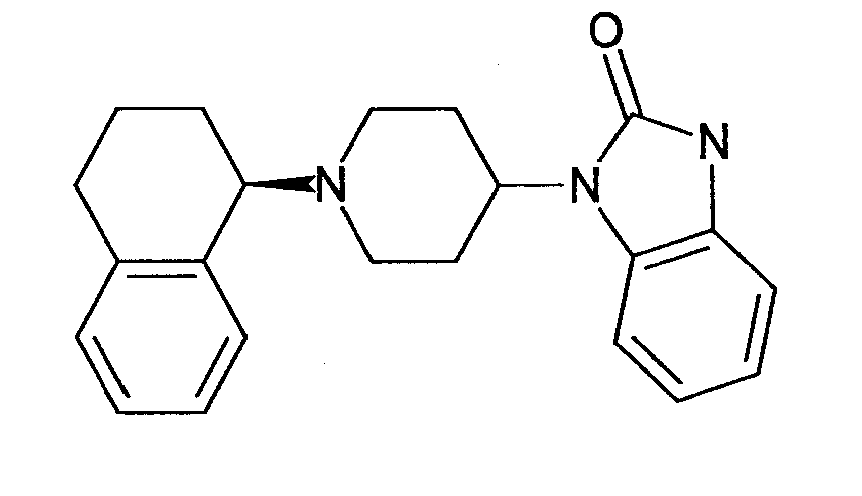
4 
-
[Table 2] Example No. Structural formula 5 
6 
7 
8 
-
[Table 3] Example No. Structural formula 9 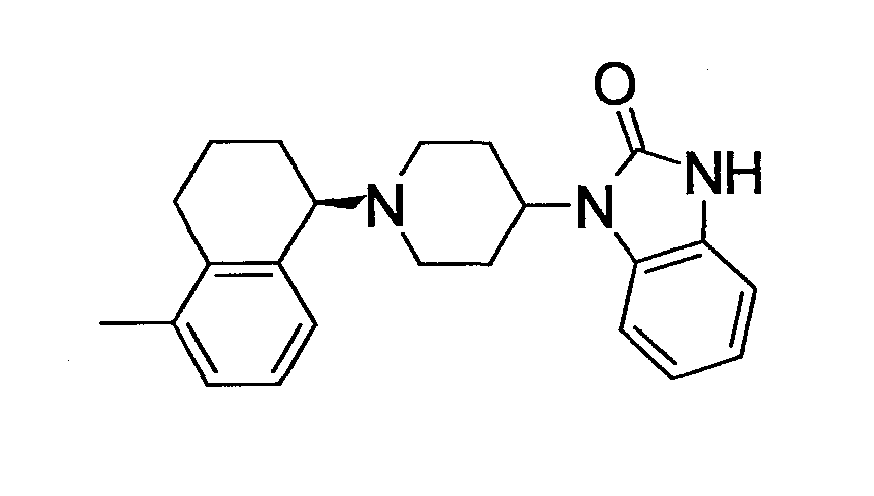
10 
11 
12 
-
[Table 4] Example No. Structural formula 13 
14 
15 
16 
-
[Table 5] Example No. Structural formula 17 
18 
19 
20 
-
[Table 6] Example No. Structural formula 21 
22 
23 
24 
-
[Table 7] Example No. Structural formula 25 
26 
27 
28 
-
[Table 8] Example No. Structural formula 29 
30 
31 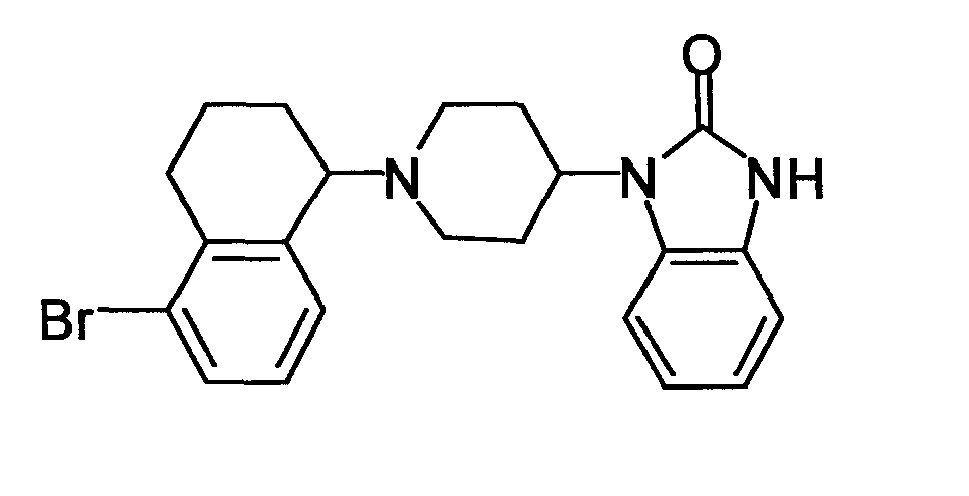
32 
-
[Table 9] Example No. Structural formula 33 
34 
35 
36 
-
[Table 10] Example No. Structural formula 37 
38 
39 
40 
-
[Table 11] Example No. Structural formula 41 
42 
43 
44 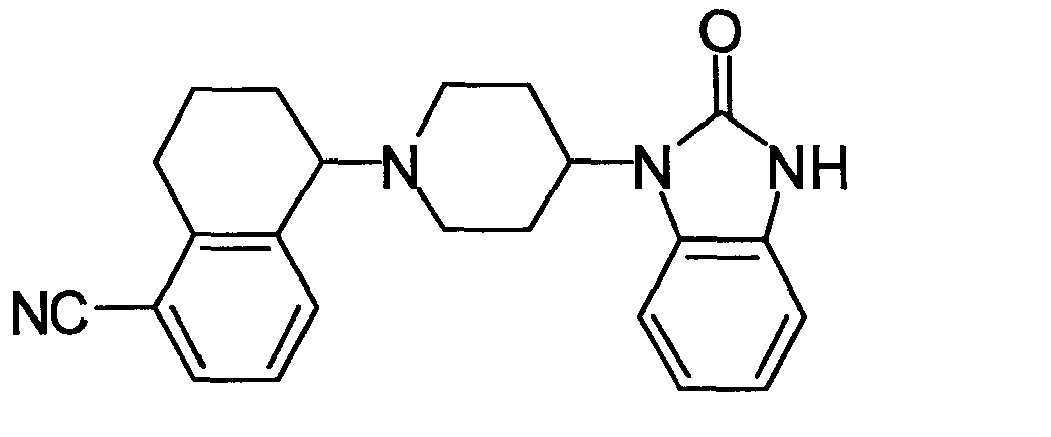
45 
-
[Table 12] Example No. Structural formula 46 
47 
48 
49 
-
[Table 13] Example No. Structural formula 50 
51 
52 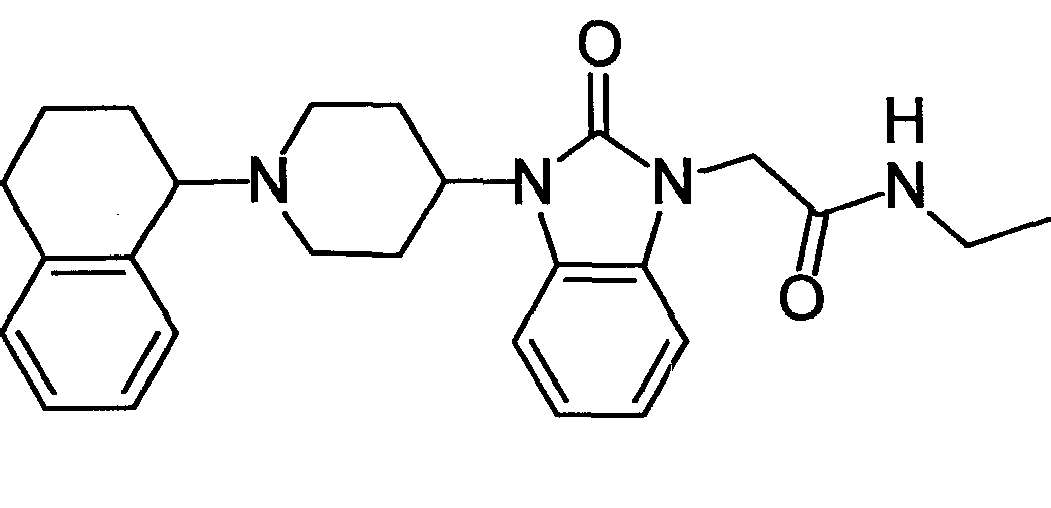
53 
-
[Table 14] Example No. Structural formula 54 
55 
56 
57 
58 
-
[Table 15] Example No. Structural formula 59 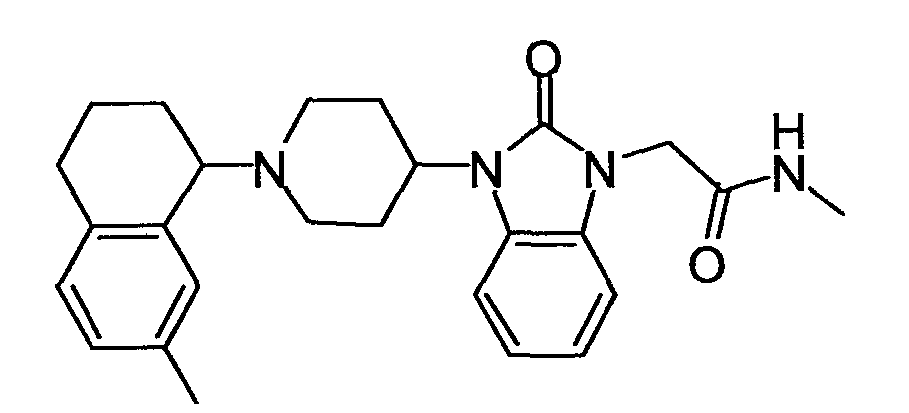
60 
61 
62 
-
[Table 16] Example No. Structural formula 63 
64 
65 
66 
-
[Table 17] Example No. Structural formula 67 
68 
69 
70 
-
[Table 18] Example No. Structural formula 71 
72 
73 
74 
-
[Table 19] Example No. Structural formula 75 
76 
77 
78 
-
[Table 20] Example No. Structural formula 79 
80 
81 
82 
-
[Table 21] Example No. Structural formula 83 
84 
85 
86 
-
[Table 22] Example No. Structural formula 87 
88 
89 
90 
91 
-
[Table 23] Example No. Structural formula 92 
93 
94 
95 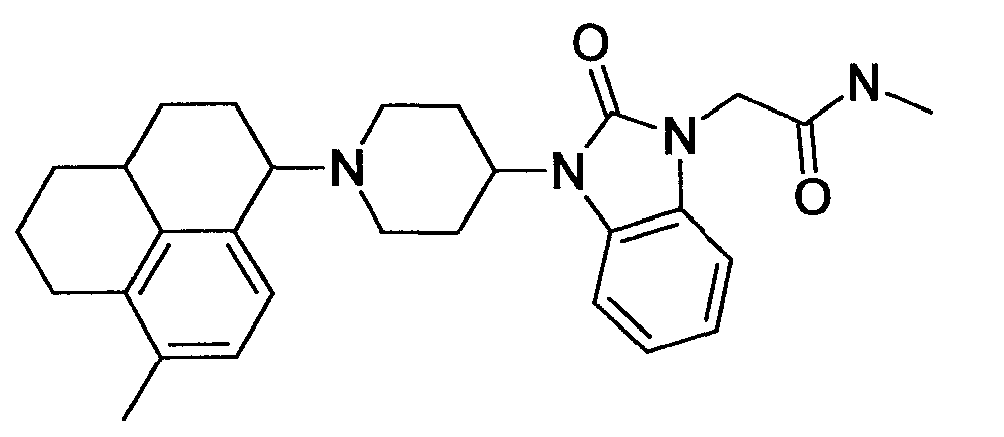
96 
-
[Table 24] Example No. Structural formula 97 
98 
99 
100 
-
[Table 25] Example No. Structural formula 101 
102 
103 
104 
105 
-
[Table 26] Example No. Structural formula 106 
107 
108 
109 
110 
-
[Table 27] Example No. Structural formula 111 
112 
113 
114 
115 
-
[Table 28] Example No. Structural formula 116 
117 
118 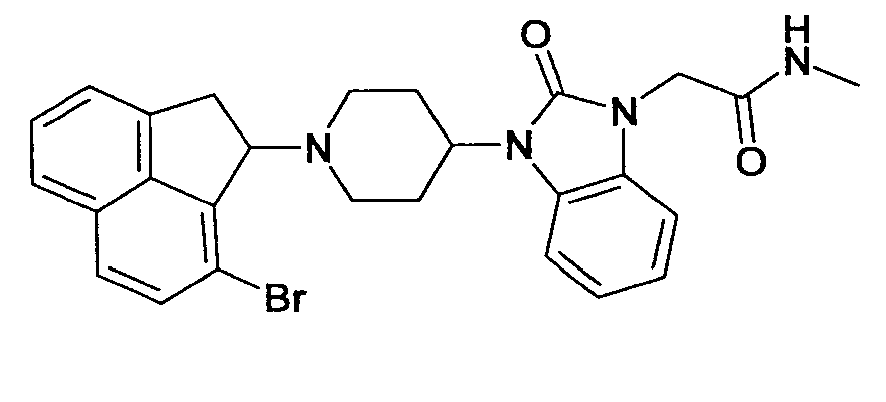
119 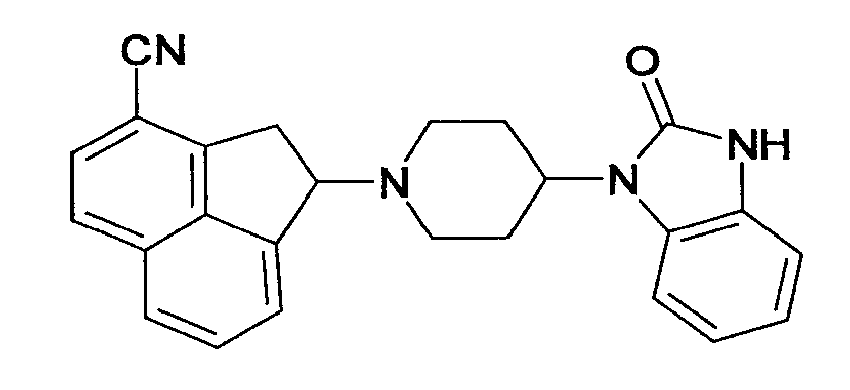
120 
-
[Table 29] Example No. Structural formula 121 
122 
123 
124 
125 
-
[Table 30] Example No. Structural formula 126 
127 
128 
129 
130 
-
[Table 31] Example No. Structural formula 131 
132 
133 
134 
135 
-
[Table 32] Example No. Structural formula 136 
137 
138 
139 
140 
-
[Table 33] Example No. Structural formula 141 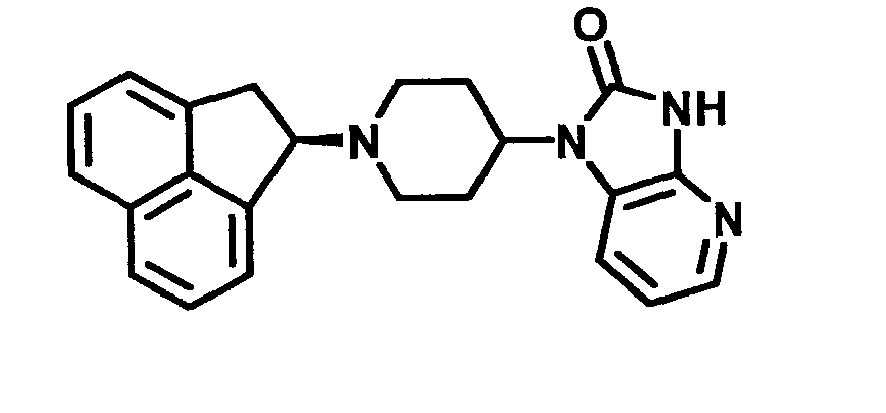
142 
143 
144 
-
[Table 34] Example No. Structural formula 145 
146 
147 
148 
- The pharmacological action of the compound of the present invention is explained in the following by way of Experimental Examples.
- The comparison control compounds used were as shown below.
- Compound A (
W02005/028466 , cis or trans stereoisomer of compound 1) - Compound B (
WO2005/028466 , the other stereoisomer of compound A) -

- Using a receptor membrane product prepared from HEK293 cell forcively expressing human ORL-1 receptor, a [3H]-nociceptin binding test was performed. To be specific, a test substance solution (50 µL) having various concentrations, a receptor product solution (900 µL) and a labeled ligand [3H]-nociceptin (50 µL) were successively added to a polypropylene tube and reacted at 25°C for 60 min. The reaction mixture was filtered by suction in a cell harvester using a glass filter Whatman GF/B. The filter was washed 3 times with ice-cooled 50 mmol/L HEPES buffer, and placed in a measurement vial. A liquid scintillation cocktail ACS-II (Amersham) (2 mL) was added, and the radiation dose was measured by a liquid scintillation counter (LSC-5100, Aloka). The non-specific binding level was determined using an unlabeled ligand test compound A. The binding inhibitory rate (%) and inhibitory constant (Ki value) were calculated according to the following calculation formula.

N: non-specific binding level, T: total binding level, B: binding level in the presence of a test substance inhibitory constant (Ki value) =IC50/(1+L/Kd) IC50: 50% inhibitory concentration, L: labeled ligand concentration, Kd: dissociation constant of labeled ligand - Using a receptor membrane product prepared from CHO cell forcively expressing human µ receptor, a [3H]-DAMGO binding test was performed. To be specific, a test substance solution (50 µL) having various concentrations, a receptor product solution (900 µL) and a labeled ligand [3H]-DAMGO (50 µL) were successively added to a polypropylene tube and reacted at 25°C for 60 min. The reaction mixture was filtered by suction in a cell harvester using a glass filter Whatman GF/B. The filter was washed 3 times with ice-cooled 50 mmol/L Tris/HCl buffer, and placed in a measurement vial. A liquid scintillation cocktail ACS-II (Amersham) (2 mL) was added, and the radiation dose was measured by a liquid scintillation counter (LSC-5100, Aloka). The non-specific binding level was determined using an unlabeled ligand test compound A. The binding inhibitory rate (%) and inhibitory constant (Ki value) were calculated according to the following calculation formula.

N: non-specific binding level, T: total binding level, B: binding level in the presence of a test substance inhibitory constant (Ki value)=IC50/(1+L/Kd)
IC50: 50% inhibitory concentration, L: labeled ligand concentration, Kd: dissociation constant of labeled ligand - The results are shown in the following Table. The affinity (Ki value) in the above-mentioned experiments is shown with "+++" for not more than 10 nM, "++" for 10 nM - 30 nM, "+" for 30 nM - 100 nM, "-" for not less than 100 nM for inhibition, and ND shows no data is available.
-
[Table 35] Test compound Affinity Ki (nM) ORL-1 µ compound A +++ ++ compound B +++ ++ Example 2 +++ ND Example 4 +++ ND Example 8 +++ ND Example 16 +++ ND Example 79 +++ + Example 80 +++ - Example 103 +++ ND Example 104 +++ ND Example 108 +++ ND Example 110 +++ ND - As shown in the above-mentioned Table, the compounds of Examples 2, 4, 8, 16, 79, 80, 103, 104, 108 and 110 showed high affinity for ORL-1 receptor as evidenced by Ki value of 10 nM or lower.
Moreover, it was found that the compounds of Examples 79 and 80 have weak affinity for µ receptor, and selectively act on ORL-1 receptor. - Using a receptor membrane product prepared from HEK293 cell forcively expressing human ORL-1 receptor, a GTPγ35S-binding test was performed. To be specific, a reaction buffer or a test substance solution (50 µL) having various concentrations, a reaction buffer (for total binding) or a GTPγS solution (for non-specific binding, final concentration: 10 µmol/L) (50 µL), a membrane solution (850 µL) and a GTPY 35S (Amersham Pharmacia Biotech) solution (final concentration: 100 pmol/L)(50 µL) were successively added to a polypropylene tube, and reacted at 30°C for 60 min. The reaction mixture was filtered by suction in a cell harvester using a glass filter Whatman GF/B. The filter was washed 3 times with ice-cooled 50 mmol Tris/HCl buffer (pH 7.4), and placed in a measurement vial. A liquid scintillation cocktail ACS-II (Amersham) (2 mL) was added, and the radiation dose was measured by a liquid scintillation counter (LSC-5100, Aloka). Expressing the non-specific binding level with the addition of GTPYS as N, the binding level with the addition of a reaction buffer instead of a test substance as A and the binding level in the presence of a test substance as B, the agonistic activity, namely, GTPY 35S bound (%) is shown by the following calculation formula.
-

- As shown in
Figs. 1 - 3 , the compounds of Examples 2, 4, 8, 79, 80, 104 and 110 increased the proportion of GTPγ35S bound in a concentration-dependent manner. Thus, it has been clarified that the compounds of Examples 2, 4, 8, 79, 80, 104 and 110 act as agonists for ORL-1 receptor. - It has been reported that administration of nociceptin, which is an endogenous agonist of ORL-1 receptor, into the brain ventricle of rat temporarily increases food consumption (NeuroReport 8: 369-371, 1996). Therefore, it is possible to measure in vivo ORL-1 receptor agonistic activity with an increase in the food consumption in rat as an index. When rat is housed in a 12 hr light-dark cycle, the rat ingests most food in the dark period. Therefore, the experiment was performed in the light period when rat generally rarely ingests food. To be specific, a test substance was orally administered at 3 - 4 hr after the start of the light period, and the food weight was measured at 1, 2, 4 and 6 hr after administration. The difference between the food weight immediately before administration and that after administration was taken as a food consumption amount, which was converted to the amount per 1 kg of the body weight of the rat.
- The compounds of Examples 2, 4, 8, 79 and 80 significantly increase food consumption in rats. Thus, it has been clarified that these compounds act as ORL-1 receptor agonists in vivo.
-
Formulation Example 1: tablet compound of the present invention 10 mg crystalline cellulose 180 mg cornstarch 300 mg lactose 600 mg magnesium stearate 15 mg -
Formulation Example 2: tablet compound of the present invention 10.0 mg lactose 50.0 mg cornstarch 20.0 mg crystalline cellulose 29.7mg polyvinylpyrrolidone K30 5.0 mg talc 5.0 mg magnesium stearate 0.3 mg 120.0 mg - Compound (I) of the present invention has superior metabolic stability and strong ORL-1 receptor agonistic action, and can be used for the prophylaxis and/or treatment of diseases relating to ORL-1 receptors, such as central nervous system diseases (e.g., anxiety and stress disorder, melancholia, traumatic injury, Alzheimer's disease, dementia, sleep disorder, drug addiction, alcoholism), acute and/or chronic pain symptom, arterial blood pressure disorder and eating disorders such as obesity and anorexia.
- This application is based on patent application Nos.
2007-051842 2007-059260 2007-078845 2007-093846
Claims (11)
- A compound represented by the formula (I)


R1 is hydrogen,
lower alkyl,
lower alkenyl,
-C(O)-lower alkyl,
-C(O)O-lower alkyl,
-C(O)-phenyl wherein the phenyl is optionally substituted by lower alkyl, halogen, lower alkoxy, phenoxy or benzyloxy, lower alkyl-carboxyl,
lower alkyl-C(O)-phenyl wherein the phenyl is optionally substituted by lower alkyl, halogen, lower alkoxy, phenoxy
or benzyloxy,
lower alkyl-C(O)O-lower alkyl,
lower alkenyl-C(O)O-lower alkyl,
lower alkyl-O-lower alkyl,
lower alkyl-C (O) -NR3R4,
-S(O)2-lower alkyl,
-S(O)2-phenyl wherein the phenyl is optionally substituted by lower alkyl, halogen, lower alkoxy, phenoxy or benzyloxy, lower alkyl-S-lower alkyl,
lower alkyl-S(O)-lower alkyl,
lower alkyl-S(O)2-lower alkyl,
lower alkyl-S (O) -NR3R4,
lower alkyl-NR3R4,
lower alkyl-NR5-C(O)-lower alkyl,
phenyl wherein the phenyl is optionally substituted by lower alkyl, halogen, lower alkoxy, phenoxy or benzyloxy, or benzyl wherein the phenyl is optionally substituted by
lower alkyl, halogen, lower alkoxy, phenoxy or benzyloxy;
R3 and R4 are the same or different and each is hydrogen, lower alkyl which is optionally substituted by C3-7 cycloalkyl, cycloalkyl or lower alkenyl, or R3 and R4 in combination optionally form, together with the adjacent nitrogen atom, saturated nitrogen-containing heterocycle which is optionally substituted by lower alkyl, halogen, lower alkoxy, phenoxy or benzyloxy;
R5 is hydrogen, lower alkyl or lower alkenyl;
R2 is hydrogen, lower alkyl, halogen, lower alkoxy, trifluoromethyl, nitro, amino or cyano;
Ra and Rb are the same or different and each is hydrogen, lower alkyl, halogen, lower alkoxy, trifluoromethyl, trifluoromethoxy, hydroxyl, nitro, amino, alkanoylamino or cyano, provided that when
X is O or S;
Y is CH2, C (CH3) 2, O, S, SO or SO2; and
Z is CH or N, provided that when
then R1 is a group other than hydrogen, lower alkyl, -C(O)-lower alkyl and -C(O)O-lower alkyl,
or a racemic mixture thereof, or a corresponding enantiomer thereof or a pharmaceutically acceptable salt thereof. - The compound of claim 1 wherein R2 is hydrogen and X is O, or a racemic mixture thereof, or a corresponding enantiomer thereof or a pharmaceutically acceptable salt thereof.
- The compound of claim 1 wherein R1 is lower alkyl-C(O)-NR3R4 (one of R3 and R4 is hydrogen) or lower alkyl-C(O)-NR3R4 (R3 and R4 in combination form, together with the adjacent nitrogen atom, saturated nitrogen-containing heterocycle which is optionally substituted by lower alkyl, halogen, lower alkoxy, phenoxy or benzyloxy),
or a racemic mixture thereof, or a corresponding enantiomer thereof or a pharmaceutically acceptable salt thereof. - The compound of claim 1 which is selected from
2-{3-[1-(1,2,3,4-tetrahydronaphthalen-1-yl)piperidin-4-yl]-2,3-dihydro-2-oxo-benzimidazol-1-yl}-N-methylacetamide,
2-{3-[1-(5-methyl-1,2,3,4-tetrahydronaphthalen-1-yl)piperidin-4-yl]-2,3-dihydro-2-oxo-benzimidazol-1-yl}-N-methylacetamide,
2-{3-[1-(5-chloro-1,2,3,4-tetrahydronaphthalen-1-yl)piperidin-4-yl]-2,3-dihydro-2-oxo-benzimidazol-1-yl}-N-methylacetamide,
2-{3-(1-indan-1-ylpiperidin-4-yl)-2,3-dihydro-2-oxo-benzimidazol-1-yl}-N-methylacetamide,
1-(4-fluoro-1-indan-1-ylpiperidin-4-yl)-1,3-dihydro-2H-benzimidazol-2-one,
2-{3-(4-methyl-1-indan-1-ylpiperidin-4-yl)-2,3-dihydro-2-oxo-benzimidazol-1-yl}-N-methylacetamide,
2-{3-(3,3-dimethyl-1-indan-1-ylpiperidin-4-yl)-2,3-dihydro-2-oxo-benzimidazol-1-yl}-N-methylacetamide,
2-{3-[1-(1,2,2a,3,4,5-hexahydroacenaphthylen-1-yl)piperidin-4-yl]-2,3-dihydro-2-oxo-benzimidazol-1-yl}-N-methylacetamide,
2-{3-[1-(2,3,3a,4,5,6-hexahydro-1H-phenalen-1-yl)piperidin-4-yl]-2,3-dihydro-2-oxo-benzimidazol-1-yl}-N-methylacetamide,
2-{3-[1-(2,3,3a,4,5,6-hexahydrobenzo[de]chromen-6-yl)piperidin-4-yl]-2,3-dihydro-2-oxo-benzimidazol-1-yl}-N-methylacetamide,
2-{3-[1-(1,2,2a,3,4,5-hexahydroacenaphthylen-5-yl)piperidin-4-yl]-2,3-dihydro-2-oxo-benzimidazol-1-yl}-N-methylacetamide,
1-[1-(6-fluoro-1,2,2a,3,4,5-hexahydroacenaphthylen-1-yl)piperidin-4-yl]-1,3-dihydro-2H-benzimidazol-2-one,
2-{3-[1-(6-fluoro-1,2,2a,3,4,5-hexahydroacenaphthylen-1-yl)piperidin-4-yl]-2,3-dihydro-2-oxo-benzimidazol-1-yl}-N-methylacetamide,
2-{3-[1-(5-fluoroacenaphthen-1-yl)piperidin-4-yl]-2,3-dihydro-2-oxo-benzimidazol-1-yl)-N-methylacetamide,
2-{3-[1-(3-chloroacenaphthen-1-yl)piperidin-4-yl]-2,3-dihydro-2-oxo-benzimidazol-1-yl}-N-methylacetamide,
2-{3-[1-(5-chloroacenaphthen-1-yl)piperidin-4-yl]-2,3-dihydro-2-oxo-benzimidazol-1-yl}-N-methylacetamide,
2-{3-[1-(8-chloroacenaphthen-1-yl)piperidin-4-yl]-2,3-dihydro-2-oxo-benzimidazol-1-yl}-N-methylacetamide,
2-{3-[1-(5-methoxyacenaphthen-1-yl)piperidin-4-yl]-2,3-dihydro-2-oxo-benzimidazol-1-yl}-N-methylacetamide,
2-{3-[1-(5-hydroxyacenaphthen-1-yl)piperidin-4-yl]-2,3-dihydro-2-oxo-benzimidazol-1-yl}-N-methylacetamide, and
2-{3-[1-(6-fluoroacenaphthen-1-yl)piperidin-4-yl]-2,3-dihydro-2-oxo-benzimidazol-1-yl}-N-methylacetamide,
or a racemic mixture thereof, or a corresponding enantiomer thereof or a pharmaceutically acceptable salt thereof. - A drug for the prophylaxis and/or treatment of a disease relating to an ORL-1 receptor, comprising the compound (I) of claim 1, or a racemic mixture thereof, or a corresponding enantiomer thereof or a pharmaceutically acceptable salt thereof.
- A drug for the prophylaxis and/or treatment of a central nervous system disease relating to an ORL-1 receptor, comprising the compound (I) of claim 1, or a racemic mixture thereof, or a corresponding enantiomer thereof or a pharmaceutically acceptable salt thereof.
- A drug for the prophylaxis and/or treatment of a central nervous system disease, comprising the compound (I) of claim 1, or a racemic mixture thereof, or a corresponding enantiomer thereof or a pharmaceutically acceptable salt thereof.
- A drug for the prophylaxis and/or treatment of a sleep disorder, comprising the compound (I) of claim 1, or a racemic mixture thereof, or a corresponding enantiomer thereof or a pharmaceutically acceptable salt thereof.
- A drug for the prophylaxis and/or treatment of alcoholism, comprising the compound (I) of claim 1, or a racemic mixture thereof, or a corresponding enantiomer thereof or a pharmaceutically acceptable salt thereof.
- A drug for the prophylaxis and/or treatment of drug addiction, comprising the compound (I) of claim 1, or a racemic mixture thereof, or a corresponding enantiomer thereof or a pharmaceutically acceptable salt thereof.
- A drug for the prophylaxis and/or treatment of anxiety and stress disorder, comprising the compound (I) of claim 1, or a racemic mixture thereof, or a corresponding enantiomer thereof or a pharmaceutically acceptable salt thereof.
Applications Claiming Priority (5)
| Application Number | Priority Date | Filing Date | Title |
|---|---|---|---|
| JP2007051842 | 2007-03-01 | ||
| JP2007059260 | 2007-03-08 | ||
| JP2007078845 | 2007-03-26 | ||
| JP2007093846 | 2007-03-30 | ||
| PCT/JP2008/053524 WO2008105497A1 (en) | 2007-03-01 | 2008-02-28 | Benzimidazole compound and pharmaceutical use thereof |
Publications (3)
| Publication Number | Publication Date |
|---|---|
| EP2128154A1 true EP2128154A1 (en) | 2009-12-02 |
| EP2128154A4 EP2128154A4 (en) | 2011-01-26 |
| EP2128154B1 EP2128154B1 (en) | 2015-04-08 |
Family
ID=39721321
Family Applications (1)
| Application Number | Title | Priority Date | Filing Date |
|---|---|---|---|
| EP08712095.2A Not-in-force EP2128154B1 (en) | 2007-03-01 | 2008-02-28 | Benzimidazole compound and pharmaceutical use thereof |
Country Status (11)
| Country | Link |
|---|---|
| US (1) | US8877779B2 (en) |
| EP (1) | EP2128154B1 (en) |
| JP (2) | JP5313865B2 (en) |
| KR (1) | KR101165504B1 (en) |
| CN (1) | CN101622241B (en) |
| AU (1) | AU2008219980B2 (en) |
| BR (1) | BRPI0808025A2 (en) |
| CA (1) | CA2679530C (en) |
| ES (1) | ES2541133T3 (en) |
| MX (1) | MX2009009355A (en) |
| WO (1) | WO2008105497A1 (en) |
Cited By (3)
| Publication number | Priority date | Publication date | Assignee | Title |
|---|---|---|---|---|
| EP2394997A4 (en) * | 2009-02-03 | 2012-07-18 | Mitsubishi Tanabe Pharma Corp | PROCESS FOR THE PREPARATION OF 1- (4-PIPERIDINYL) BENZIMIDAZOLONE DERIVATIVES |
| US8846929B2 (en) | 2007-08-31 | 2014-09-30 | Purdue Pharma L.P. | Substituted-quinoxaline-type piperidine compounds and the uses thereof |
| EP3545955A4 (en) * | 2016-11-28 | 2020-07-29 | Mitsubishi Tanabe Pharma Corporation | MEDICINES FOR TREATING SOCIAL ADDICTION OR PREVENTION OF A RELAY |
Families Citing this family (13)
| Publication number | Priority date | Publication date | Assignee | Title |
|---|---|---|---|---|
| HRP20120841T4 (en) * | 2008-07-21 | 2015-07-03 | Purdue Pharma L.P. | BRIDGED PIPERIDINE COMPOUNDS OF SUBSTITUTED QUINOXALINE-TYPE AND THEIR USE |
| TW201016675A (en) * | 2008-09-16 | 2010-05-01 | Mitsubishi Tanabe Pharma Corp | Crystalline benzoimidazole compound and salt thereof |
| US9656994B2 (en) | 2013-03-22 | 2017-05-23 | The Scripps Research Institute | Substituted benzimidazoles as nociceptin receptor modulators |
| JP6146164B2 (en) * | 2013-06-28 | 2017-06-14 | 三菱瓦斯化学株式会社 | A novel aldehyde having a tetralin skeleton and a method for producing the same. |
| TW201615643A (en) | 2014-06-02 | 2016-05-01 | 伊史帝夫博士實驗室股份有限公司 | Alkyl and aryl derivatives of 1-oxa-4,9-diazaspiro undecane compounds having multimodal activity against pain |
| TWI685497B (en) | 2014-06-02 | 2020-02-21 | 西班牙商伊史帝夫製藥公司 | Alkyl derivatives of 1-oxa-4,9-diazaspiro undecane compounds having multimodal activity against pain |
| TW201607923A (en) | 2014-07-15 | 2016-03-01 | 歌林達有限公司 | Substituted azaspiro (4.5) decane derivatives |
| DK3365346T3 (en) | 2015-10-23 | 2020-03-09 | Esteve Pharmaceuticals Sa | OXA-DIAZASPIRO COMPOUNDS WITH ACTIVITY AGAINST Pain |
| UA123775C2 (en) | 2015-11-16 | 2021-06-02 | Естев Фармас'Ютікалз, С.А. | OXADIASASPIROSOPULA FOR THE TREATMENT OF DRUG ABUSE AND DEPENDENCE ON THEM |
| TWI835755B (en) | 2017-10-17 | 2024-03-21 | 西班牙商塔拉森空調公司 | Salts of (r)-9-(2,5-difluorophenethyl)-4-ethyl-2-methyl-1-oxa-4,9-diazaspiro[5.5]undecan-3-one |
| WO2022085023A1 (en) | 2020-10-19 | 2022-04-28 | Council Of Scientific & Industrial Research | Bioactive benzocycloheptene analogues from himachalenes and its applications |
| CN115611856B (en) * | 2021-07-14 | 2024-07-05 | 宜昌人福药业有限责任公司 | A piperidine derivative and its pharmaceutical composition, preparation method and use |
| CN121843930A (en) * | 2024-01-05 | 2026-04-10 | 宜昌人福药业有限责任公司 | A cyclohexyl-substituted piperidine derivative, a pharmaceutical composition comprising the derivative, and its uses. |
Family Cites Families (20)
| Publication number | Priority date | Publication date | Assignee | Title |
|---|---|---|---|---|
| CA2226058C (en) * | 1997-01-30 | 2008-01-29 | F. Hoffmann-La Roche Ag | 8-substituted-1,3,8-triaza-spiro[4.5]decan-4-one derivatives |
| US6258825B1 (en) * | 1997-05-30 | 2001-07-10 | Banyu Pharmaceutical Co., Ltd. | 2-oxoimidazole derivatives |
| PT921125E (en) | 1997-12-05 | 2002-06-28 | Hoffmann La Roche | DERIVATIVES OF 1,38-TRIAZA-ESPIRO 4,5 DECAN-4-ONA |
| ES2175925T3 (en) * | 1998-01-19 | 2002-11-16 | Pfizer | COMPOUNDS 4- (2-CETO-1-BENZILIMIDAZOLINIL) PIPERIDINE AS ORL1 RECEIVER AGONISTS. |
| PT963985E (en) | 1998-06-12 | 2003-06-30 | Hoffmann La Roche | DERIVATIVES OF DI- OR TRIOZA-ESPIRO (4,5) DEAN |
| ATE222908T1 (en) * | 1998-06-12 | 2002-09-15 | Hoffmann La Roche | SPIRO(PIPERIDINE-4,1'-PYRROLO(3,4-C)PYRROLES) |
| ID29137A (en) | 1998-07-27 | 2001-08-02 | Schering Corp | HIGH AFINITY LIGANS FOR ORL-1 NOSISEPTIN RECEPTORS |
| US6262066B1 (en) * | 1998-07-27 | 2001-07-17 | Schering Corporation | High affinity ligands for nociceptin receptor ORL-1 |
| AU8657398A (en) | 1998-07-30 | 2000-02-21 | Picower Institute For Medical Research, The | Immunotherapeutic anti-cancer pharmaceutical compositions |
| EP1242085B1 (en) * | 1999-12-06 | 2005-08-24 | Euro-Celtique, S.A. | Benzimidazole compounds having nociceptin receptor affinity |
| BR0209129A (en) * | 2001-04-18 | 2005-12-20 | Euro Celtique Sa | Compounds, pharmaceutical compositions, methods for treating pain, methods for modulating a pharmacological response and uses of compounds. |
| PT1491212E (en) | 2002-03-29 | 2012-11-16 | Mitsubishi Tanabe Pharma Corp | Remedy for sleep disturbance |
| US20030226657A1 (en) * | 2002-04-01 | 2003-12-11 | Wallace Thomas E. | Food delivery system and method for storing and heating food to a serving temperature |
| CN1856485A (en) * | 2003-09-25 | 2006-11-01 | 索尔瓦药物有限公司 | Benzimidazolone and quinazolinone derivatives as agonists on human ORL1 receptors |
| SA04250305B1 (en) * | 2003-09-25 | 2008-06-02 | سولفاي فارماسوتيكالز بي . في | The benzimidazolone derivatives cenzimidazolone and quinazolinone as agonists on the human ORL1 receptor. |
| DE102004030290A1 (en) | 2004-06-23 | 2006-01-19 | Siemens Ag | Establishing a connection for the exchange of data of an IP-based service |
| JP4122015B2 (en) | 2005-08-19 | 2008-07-23 | 株式会社日本水処理技研 | Plant cleaning method, asbestos removal method and dismantling treatment method |
| JP2007059260A (en) | 2005-08-25 | 2007-03-08 | Toshiba Lighting & Technology Corp | Illumination device and illumination fixture |
| JP4551848B2 (en) | 2005-09-12 | 2010-09-29 | シャープ株式会社 | Developing device and image forming apparatus having the same |
| JP2007093846A (en) | 2005-09-28 | 2007-04-12 | Sanyo Epson Imaging Devices Corp | Electro-optic device and electronic equipment |
-
2008
- 2008-02-28 MX MX2009009355A patent/MX2009009355A/en not_active Application Discontinuation
- 2008-02-28 AU AU2008219980A patent/AU2008219980B2/en not_active Ceased
- 2008-02-28 JP JP2009501298A patent/JP5313865B2/en not_active Expired - Fee Related
- 2008-02-28 KR KR1020097020508A patent/KR101165504B1/en not_active Expired - Fee Related
- 2008-02-28 ES ES08712095.2T patent/ES2541133T3/en active Active
- 2008-02-28 BR BRPI0808025-9A2A patent/BRPI0808025A2/en not_active IP Right Cessation
- 2008-02-28 US US12/449,874 patent/US8877779B2/en active Active
- 2008-02-28 CN CN2008800068312A patent/CN101622241B/en not_active Expired - Fee Related
- 2008-02-28 WO PCT/JP2008/053524 patent/WO2008105497A1/en not_active Ceased
- 2008-02-28 EP EP08712095.2A patent/EP2128154B1/en not_active Not-in-force
- 2008-02-28 CA CA2679530A patent/CA2679530C/en not_active Expired - Fee Related
-
2013
- 2013-03-11 JP JP2013048087A patent/JP2013107910A/en not_active Abandoned
Cited By (5)
| Publication number | Priority date | Publication date | Assignee | Title |
|---|---|---|---|---|
| US8846929B2 (en) | 2007-08-31 | 2014-09-30 | Purdue Pharma L.P. | Substituted-quinoxaline-type piperidine compounds and the uses thereof |
| US9278967B2 (en) | 2007-08-31 | 2016-03-08 | Purdue Pharma L.P. | Substituted-quinoxaline-type piperidine compounds and the uses thereof |
| US9527840B2 (en) | 2007-08-31 | 2016-12-27 | Purdue Pharma L.P. | Substituted-quinoxaline-type piperidine compounds and the uses thereof |
| EP2394997A4 (en) * | 2009-02-03 | 2012-07-18 | Mitsubishi Tanabe Pharma Corp | PROCESS FOR THE PREPARATION OF 1- (4-PIPERIDINYL) BENZIMIDAZOLONE DERIVATIVES |
| EP3545955A4 (en) * | 2016-11-28 | 2020-07-29 | Mitsubishi Tanabe Pharma Corporation | MEDICINES FOR TREATING SOCIAL ADDICTION OR PREVENTION OF A RELAY |
Also Published As
| Publication number | Publication date |
|---|---|
| JP2013107910A (en) | 2013-06-06 |
| JP5313865B2 (en) | 2013-10-09 |
| CN101622241B (en) | 2013-05-22 |
| US20100120841A1 (en) | 2010-05-13 |
| US8877779B2 (en) | 2014-11-04 |
| EP2128154A4 (en) | 2011-01-26 |
| MX2009009355A (en) | 2009-09-11 |
| AU2008219980B2 (en) | 2012-01-12 |
| CN101622241A (en) | 2010-01-06 |
| EP2128154B1 (en) | 2015-04-08 |
| AU2008219980A1 (en) | 2008-09-04 |
| JPWO2008105497A1 (en) | 2010-06-03 |
| KR20090115976A (en) | 2009-11-10 |
| ES2541133T3 (en) | 2015-07-16 |
| BRPI0808025A2 (en) | 2014-06-24 |
| CA2679530C (en) | 2012-09-25 |
| CA2679530A1 (en) | 2008-09-04 |
| KR101165504B1 (en) | 2012-07-13 |
| WO2008105497A1 (en) | 2008-09-04 |
Similar Documents
| Publication | Publication Date | Title |
|---|---|---|
| JP5313865B2 (en) | Benzimidazole compounds and their pharmaceutical uses | |
| TWI306859B (en) | Muscarinic agonists | |
| JP4357965B2 (en) | Heteroaryl-substituted pyrrole modulators of metabotropic glutamate receptor-5 | |
| TWI314931B (en) | Cgrp receptor antagonists | |
| JP4299139B2 (en) | Heteroaryl-substituted triazole modulators of metabotropic glutamate receptor-5 | |
| US20040259917A1 (en) | Heteroaryl substituted imidazole modulators of metabotropic glutamate receptor-5 | |
| CN103052636B (en) | D 2antagonist and synthetic method thereof and using method | |
| JP2019504836A (en) | Substituted thiohydantoin derivatives as androgen receptor antagonists | |
| JP2009527568A (en) | Modulator of muscarinic receptor | |
| TW200400180A (en) | Benzimidazole deriveatives | |
| JP2010514672A (en) | Fused heterocyclic compounds having CRF antagonist activity | |
| JP5563716B2 (en) | Novel octahydrothienoquinoline derivatives, pharmaceutical compositions containing them and their use | |
| JPH10502335A (en) | Use of an alpha-1c specific compound for the treatment of benign prostatic hyperplasia | |
| JP2023522078A (en) | 1,5-dihydro-2,4-benzodiazepin-3-one derivatives and uses thereof | |
| ZA200700321B (en) | Kynurenic acid amide derivatives as NR2B receptor antagonists | |
| WO2014001279A1 (en) | A phenyl triazole derivative and its use for modulating the gabaa receptor complex | |
| JP2023507184A (en) | OGA inhibitor compounds | |
| WO2007097276A1 (en) | Pyrrole derivative or salt thereof | |
| US6780862B2 (en) | Aryl and aminoaryl substituted serotonin receptor agonist and antagonist ligands | |
| JP2002544223A (en) | How to treat psychotic disorders | |
| JP6177061B2 (en) | Novel dopamine D2 receptor agonist | |
| RU2451017C2 (en) | Benzimidazole compound and pharmaceutical use thereof | |
| JP2014073982A (en) | Pharmaceutical containing novel benzimidazole derivative | |
| WO2022022542A1 (en) | Bicyclic derivative regulator, and preparation method therefor and use thereof | |
| HK40047619B (en) | Modifier of four-membered ring derivative, preparation method and application thereof |
Legal Events
| Date | Code | Title | Description |
|---|---|---|---|
| PUAI | Public reference made under article 153(3) epc to a published international application that has entered the european phase |
Free format text: ORIGINAL CODE: 0009012 |
|
| 17P | Request for examination filed |
Effective date: 20090916 |
|
| AK | Designated contracting states |
Kind code of ref document: A1 Designated state(s): AT BE BG CH CY CZ DE DK EE ES FI FR GB GR HR HU IE IS IT LI LT LU LV MC MT NL NO PL PT RO SE SI SK TR |
|
| DAX | Request for extension of the european patent (deleted) | ||
| A4 | Supplementary search report drawn up and despatched |
Effective date: 20101227 |
|
| 17Q | First examination report despatched |
Effective date: 20120329 |
|
| GRAP | Despatch of communication of intention to grant a patent |
Free format text: ORIGINAL CODE: EPIDOSNIGR1 |
|
| INTG | Intention to grant announced |
Effective date: 20141023 |
|
| GRAS | Grant fee paid |
Free format text: ORIGINAL CODE: EPIDOSNIGR3 |
|
| GRAA | (expected) grant |
Free format text: ORIGINAL CODE: 0009210 |
|
| AK | Designated contracting states |
Kind code of ref document: B1 Designated state(s): AT BE BG CH CY CZ DE DK EE ES FI FR GB GR HR HU IE IS IT LI LT LU LV MC MT NL NO PL PT RO SE SI SK TR |
|
| REG | Reference to a national code |
Ref country code: GB Ref legal event code: FG4D |
|
| REG | Reference to a national code |
Ref country code: CH Ref legal event code: EP |
|
| REG | Reference to a national code |
Ref country code: IE Ref legal event code: FG4D |
|
| REG | Reference to a national code |
Ref country code: AT Ref legal event code: REF Ref document number: 720464 Country of ref document: AT Kind code of ref document: T Effective date: 20150515 |
|
| REG | Reference to a national code |
Ref country code: DE Ref legal event code: R096 Ref document number: 602008037536 Country of ref document: DE Effective date: 20150521 |
|
| REG | Reference to a national code |
Ref country code: ES Ref legal event code: FG2A Ref document number: 2541133 Country of ref document: ES Kind code of ref document: T3 Effective date: 20150716 |
|
| REG | Reference to a national code |
Ref country code: AT Ref legal event code: MK05 Ref document number: 720464 Country of ref document: AT Kind code of ref document: T Effective date: 20150408 |
|
| REG | Reference to a national code |
Ref country code: NL Ref legal event code: VDEP Effective date: 20150408 |
|
| REG | Reference to a national code |
Ref country code: LT Ref legal event code: MG4D |
|
| PG25 | Lapsed in a contracting state [announced via postgrant information from national office to epo] |
Ref country code: NL Free format text: LAPSE BECAUSE OF FAILURE TO SUBMIT A TRANSLATION OF THE DESCRIPTION OR TO PAY THE FEE WITHIN THE PRESCRIBED TIME-LIMIT Effective date: 20150408 |
|
| PG25 | Lapsed in a contracting state [announced via postgrant information from national office to epo] |
Ref country code: FI Free format text: LAPSE BECAUSE OF FAILURE TO SUBMIT A TRANSLATION OF THE DESCRIPTION OR TO PAY THE FEE WITHIN THE PRESCRIBED TIME-LIMIT Effective date: 20150408 Ref country code: LT Free format text: LAPSE BECAUSE OF FAILURE TO SUBMIT A TRANSLATION OF THE DESCRIPTION OR TO PAY THE FEE WITHIN THE PRESCRIBED TIME-LIMIT Effective date: 20150408 Ref country code: NO Free format text: LAPSE BECAUSE OF FAILURE TO SUBMIT A TRANSLATION OF THE DESCRIPTION OR TO PAY THE FEE WITHIN THE PRESCRIBED TIME-LIMIT Effective date: 20150708 Ref country code: HR Free format text: LAPSE BECAUSE OF FAILURE TO SUBMIT A TRANSLATION OF THE DESCRIPTION OR TO PAY THE FEE WITHIN THE PRESCRIBED TIME-LIMIT Effective date: 20150408 Ref country code: PT Free format text: LAPSE BECAUSE OF FAILURE TO SUBMIT A TRANSLATION OF THE DESCRIPTION OR TO PAY THE FEE WITHIN THE PRESCRIBED TIME-LIMIT Effective date: 20150810 |
|
| PG25 | Lapsed in a contracting state [announced via postgrant information from national office to epo] |
Ref country code: LV Free format text: LAPSE BECAUSE OF FAILURE TO SUBMIT A TRANSLATION OF THE DESCRIPTION OR TO PAY THE FEE WITHIN THE PRESCRIBED TIME-LIMIT Effective date: 20150408 Ref country code: IS Free format text: LAPSE BECAUSE OF FAILURE TO SUBMIT A TRANSLATION OF THE DESCRIPTION OR TO PAY THE FEE WITHIN THE PRESCRIBED TIME-LIMIT Effective date: 20150808 Ref country code: AT Free format text: LAPSE BECAUSE OF FAILURE TO SUBMIT A TRANSLATION OF THE DESCRIPTION OR TO PAY THE FEE WITHIN THE PRESCRIBED TIME-LIMIT Effective date: 20150408 Ref country code: GR Free format text: LAPSE BECAUSE OF FAILURE TO SUBMIT A TRANSLATION OF THE DESCRIPTION OR TO PAY THE FEE WITHIN THE PRESCRIBED TIME-LIMIT Effective date: 20150709 |
|
| REG | Reference to a national code |
Ref country code: DE Ref legal event code: R097 Ref document number: 602008037536 Country of ref document: DE |
|
| REG | Reference to a national code |
Ref country code: FR Ref legal event code: PLFP Year of fee payment: 9 |
|
| PG25 | Lapsed in a contracting state [announced via postgrant information from national office to epo] |
Ref country code: DK Free format text: LAPSE BECAUSE OF FAILURE TO SUBMIT A TRANSLATION OF THE DESCRIPTION OR TO PAY THE FEE WITHIN THE PRESCRIBED TIME-LIMIT Effective date: 20150408 Ref country code: EE Free format text: LAPSE BECAUSE OF FAILURE TO SUBMIT A TRANSLATION OF THE DESCRIPTION OR TO PAY THE FEE WITHIN THE PRESCRIBED TIME-LIMIT Effective date: 20150408 |
|
| PLBE | No opposition filed within time limit |
Free format text: ORIGINAL CODE: 0009261 |
|
| STAA | Information on the status of an ep patent application or granted ep patent |
Free format text: STATUS: NO OPPOSITION FILED WITHIN TIME LIMIT |
|
| PG25 | Lapsed in a contracting state [announced via postgrant information from national office to epo] |
Ref country code: SK Free format text: LAPSE BECAUSE OF FAILURE TO SUBMIT A TRANSLATION OF THE DESCRIPTION OR TO PAY THE FEE WITHIN THE PRESCRIBED TIME-LIMIT Effective date: 20150408 Ref country code: CZ Free format text: LAPSE BECAUSE OF FAILURE TO SUBMIT A TRANSLATION OF THE DESCRIPTION OR TO PAY THE FEE WITHIN THE PRESCRIBED TIME-LIMIT Effective date: 20150408 Ref country code: PL Free format text: LAPSE BECAUSE OF FAILURE TO SUBMIT A TRANSLATION OF THE DESCRIPTION OR TO PAY THE FEE WITHIN THE PRESCRIBED TIME-LIMIT Effective date: 20150408 Ref country code: RO Free format text: LAPSE BECAUSE OF NON-PAYMENT OF DUE FEES Effective date: 20150408 |
|
| 26N | No opposition filed |
Effective date: 20160111 |
|
| PG25 | Lapsed in a contracting state [announced via postgrant information from national office to epo] |
Ref country code: SI Free format text: LAPSE BECAUSE OF FAILURE TO SUBMIT A TRANSLATION OF THE DESCRIPTION OR TO PAY THE FEE WITHIN THE PRESCRIBED TIME-LIMIT Effective date: 20150408 Ref country code: BE Free format text: LAPSE BECAUSE OF NON-PAYMENT OF DUE FEES Effective date: 20160229 |
|
| PG25 | Lapsed in a contracting state [announced via postgrant information from national office to epo] |
Ref country code: BE Free format text: LAPSE BECAUSE OF FAILURE TO SUBMIT A TRANSLATION OF THE DESCRIPTION OR TO PAY THE FEE WITHIN THE PRESCRIBED TIME-LIMIT Effective date: 20150408 |
|
| PG25 | Lapsed in a contracting state [announced via postgrant information from national office to epo] |
Ref country code: MC Free format text: LAPSE BECAUSE OF FAILURE TO SUBMIT A TRANSLATION OF THE DESCRIPTION OR TO PAY THE FEE WITHIN THE PRESCRIBED TIME-LIMIT Effective date: 20150408 Ref country code: LU Free format text: LAPSE BECAUSE OF FAILURE TO SUBMIT A TRANSLATION OF THE DESCRIPTION OR TO PAY THE FEE WITHIN THE PRESCRIBED TIME-LIMIT Effective date: 20160228 |
|
| REG | Reference to a national code |
Ref country code: CH Ref legal event code: PL |
|
| PG25 | Lapsed in a contracting state [announced via postgrant information from national office to epo] |
Ref country code: CH Free format text: LAPSE BECAUSE OF NON-PAYMENT OF DUE FEES Effective date: 20160229 Ref country code: LI Free format text: LAPSE BECAUSE OF NON-PAYMENT OF DUE FEES Effective date: 20160229 |
|
| REG | Reference to a national code |
Ref country code: IE Ref legal event code: MM4A |
|
| REG | Reference to a national code |
Ref country code: FR Ref legal event code: PLFP Year of fee payment: 10 |
|
| PG25 | Lapsed in a contracting state [announced via postgrant information from national office to epo] |
Ref country code: IE Free format text: LAPSE BECAUSE OF NON-PAYMENT OF DUE FEES Effective date: 20160228 |
|
| PG25 | Lapsed in a contracting state [announced via postgrant information from national office to epo] |
Ref country code: SE Free format text: LAPSE BECAUSE OF FAILURE TO SUBMIT A TRANSLATION OF THE DESCRIPTION OR TO PAY THE FEE WITHIN THE PRESCRIBED TIME-LIMIT Effective date: 20150408 |
|
| PG25 | Lapsed in a contracting state [announced via postgrant information from national office to epo] |
Ref country code: MT Free format text: LAPSE BECAUSE OF FAILURE TO SUBMIT A TRANSLATION OF THE DESCRIPTION OR TO PAY THE FEE WITHIN THE PRESCRIBED TIME-LIMIT Effective date: 20150408 |
|
| REG | Reference to a national code |
Ref country code: FR Ref legal event code: PLFP Year of fee payment: 11 |
|
| PG25 | Lapsed in a contracting state [announced via postgrant information from national office to epo] |
Ref country code: CY Free format text: LAPSE BECAUSE OF FAILURE TO SUBMIT A TRANSLATION OF THE DESCRIPTION OR TO PAY THE FEE WITHIN THE PRESCRIBED TIME-LIMIT Effective date: 20150408 Ref country code: HU Free format text: LAPSE BECAUSE OF FAILURE TO SUBMIT A TRANSLATION OF THE DESCRIPTION OR TO PAY THE FEE WITHIN THE PRESCRIBED TIME-LIMIT; INVALID AB INITIO Effective date: 20080228 |
|
| PG25 | Lapsed in a contracting state [announced via postgrant information from national office to epo] |
Ref country code: TR Free format text: LAPSE BECAUSE OF FAILURE TO SUBMIT A TRANSLATION OF THE DESCRIPTION OR TO PAY THE FEE WITHIN THE PRESCRIBED TIME-LIMIT Effective date: 20150408 Ref country code: MT Free format text: LAPSE BECAUSE OF FAILURE TO SUBMIT A TRANSLATION OF THE DESCRIPTION OR TO PAY THE FEE WITHIN THE PRESCRIBED TIME-LIMIT Effective date: 20160229 |
|
| PG25 | Lapsed in a contracting state [announced via postgrant information from national office to epo] |
Ref country code: BG Free format text: LAPSE BECAUSE OF FAILURE TO SUBMIT A TRANSLATION OF THE DESCRIPTION OR TO PAY THE FEE WITHIN THE PRESCRIBED TIME-LIMIT Effective date: 20150408 |
|
| PGFP | Annual fee paid to national office [announced via postgrant information from national office to epo] |
Ref country code: GB Payment date: 20220106 Year of fee payment: 15 Ref country code: DE Payment date: 20220105 Year of fee payment: 15 |
|
| PGFP | Annual fee paid to national office [announced via postgrant information from national office to epo] |
Ref country code: IT Payment date: 20220111 Year of fee payment: 15 Ref country code: FR Payment date: 20220118 Year of fee payment: 15 Ref country code: ES Payment date: 20220301 Year of fee payment: 15 |
|
| REG | Reference to a national code |
Ref country code: DE Ref legal event code: R119 Ref document number: 602008037536 Country of ref document: DE |
|
| GBPC | Gb: european patent ceased through non-payment of renewal fee |
Effective date: 20230228 |
|
| PG25 | Lapsed in a contracting state [announced via postgrant information from national office to epo] |
Ref country code: GB Free format text: LAPSE BECAUSE OF NON-PAYMENT OF DUE FEES Effective date: 20230228 |
|
| PG25 | Lapsed in a contracting state [announced via postgrant information from national office to epo] |
Ref country code: IT Free format text: LAPSE BECAUSE OF NON-PAYMENT OF DUE FEES Effective date: 20230228 Ref country code: GB Free format text: LAPSE BECAUSE OF NON-PAYMENT OF DUE FEES Effective date: 20230228 Ref country code: FR Free format text: LAPSE BECAUSE OF NON-PAYMENT OF DUE FEES Effective date: 20230228 Ref country code: DE Free format text: LAPSE BECAUSE OF NON-PAYMENT OF DUE FEES Effective date: 20230901 |
|
| REG | Reference to a national code |
Ref country code: ES Ref legal event code: FD2A Effective date: 20240405 |
|
| PG25 | Lapsed in a contracting state [announced via postgrant information from national office to epo] |
Ref country code: ES Free format text: LAPSE BECAUSE OF NON-PAYMENT OF DUE FEES Effective date: 20230228 |
|
| PG25 | Lapsed in a contracting state [announced via postgrant information from national office to epo] |
Ref country code: ES Free format text: LAPSE BECAUSE OF NON-PAYMENT OF DUE FEES Effective date: 20230228 |