EP2124174A1 - Service exception resolution framework - Google Patents
Service exception resolution framework Download PDFInfo
- Publication number
- EP2124174A1 EP2124174A1 EP08425352A EP08425352A EP2124174A1 EP 2124174 A1 EP2124174 A1 EP 2124174A1 EP 08425352 A EP08425352 A EP 08425352A EP 08425352 A EP08425352 A EP 08425352A EP 2124174 A1 EP2124174 A1 EP 2124174A1
- Authority
- EP
- European Patent Office
- Prior art keywords
- cem
- exception
- message
- srem
- service request
- Prior art date
- Legal status (The legal status is an assumption and is not a legal conclusion. Google has not performed a legal analysis and makes no representation as to the accuracy of the status listed.)
- Ceased
Links
Images






Classifications
-
- G—PHYSICS
- G06—COMPUTING OR CALCULATING; COUNTING
- G06Q—INFORMATION AND COMMUNICATION TECHNOLOGY [ICT] SPECIALLY ADAPTED FOR ADMINISTRATIVE, COMMERCIAL, FINANCIAL, MANAGERIAL OR SUPERVISORY PURPOSES; SYSTEMS OR METHODS SPECIALLY ADAPTED FOR ADMINISTRATIVE, COMMERCIAL, FINANCIAL, MANAGERIAL OR SUPERVISORY PURPOSES, NOT OTHERWISE PROVIDED FOR
- G06Q10/00—Administration; Management
-
- G—PHYSICS
- G06—COMPUTING OR CALCULATING; COUNTING
- G06F—ELECTRIC DIGITAL DATA PROCESSING
- G06F9/00—Arrangements for program control, e.g. control units
- G06F9/06—Arrangements for program control, e.g. control units using stored programs, i.e. using an internal store of processing equipment to receive or retain programs
- G06F9/46—Multiprogramming arrangements
- G06F9/48—Program initiating; Program switching, e.g. by interrupt
- G06F9/4806—Task transfer initiation or dispatching
- G06F9/4812—Task transfer initiation or dispatching by interrupt, e.g. masked
-
- G—PHYSICS
- G06—COMPUTING OR CALCULATING; COUNTING
- G06F—ELECTRIC DIGITAL DATA PROCESSING
- G06F2209/00—Indexing scheme relating to G06F9/00
- G06F2209/48—Indexing scheme relating to G06F9/48
- G06F2209/481—Exception handling
Definitions
- This disclosure concerns classifying and managing service request exceptions, and reprocessing unfulfilled service requests from disparate applications and domains.
- this disclosure concerns handling service request exceptions in a system architecture using a service exception resolution framework.
- system integrators combine many disparate applications and domains in order to implement system architectures that include many consumer and service provider applications. Consumer applications request services from service provider applications. Many of the consumer and service applications employ custom exception handling logic used to resolve service request exceptions. System integrators embed within each application exception handling logic designed to understand how to manage service request exceptions raised as a result of an unfulfilled service request.
- System architectures are often highly dynamic and tightly integrated, and include applications that are constantly being modified, added, and removed. Operators responsible for handling exceptions must analyze exceptions in the context of such a highly dynamic environment. The difficulties with reprocessing service requests in such a highly dynamic environment are further compounded by the number of disparate applications and domains with the system architecture. Operators are burdened with a laborious, tedious and error prone way to handle exceptions and reprocess service requests.
- the service exception resolution framework for a system architecture provides a centralized point of control for exceptions handling.
- the framework implements an enterprise service bus (ESB) to which disparate applications send exception messages.
- the framework uses a common exception message (CEM) schema that is flexible and adaptable and used to wrap exception messages into a common exception message that the ESB communicates to an exception handling console (EHC) as a preferred graphical user interface.
- CEM common exception message
- EHC exception handling console
- the EHC provides operators a way to efficiently and easily modify and resubmit individual and/or multiple exceptions based on common exception message filter parameters. Accordingly, the framework particularly relieves the respective user from mental tasks he has to perform by assisting him to handle and process exceptions and thus improved overall operability and man-machine interaction.
- the framework reduces the number of operators used to manage exceptions, as well as the burden to train the operators on how to locate and administer log files from disparate application that include the exception messages, and resolve exceptions.
- a method for implementing a service exception resolution framework for a system architecture includes detecting an exception to processing a service request message, generating a service request exception message (SREM) responsive to detecting the exception, analyzing the SREM with an exception message classifier to distinguish the SREM between a first and a second exception message class, and when the SREM is of the first exception message class, communicating the SREM to a common exception message (CEM) handler and executing the CEM handler to wrap the SREM with a universal CEM wrapper, thereby (particularly automatically or semi-automatically) transforming the SREM into a new CEM.
- SREM service request exception message
- CEM common exception message
- the method for implementing the service exception resolution framework includes communicating the new CEM to a centralized exception database that stores multiple CEMs, including the new CEM, originating from multiple disparate applications across the system architecture.
- the first exception message class may represent an asynchronous exception that the system may resolve in non-real time.
- the second exception message class may represent exceptions that are analyzed and/or processed by the application and/or domain that originated the service request message that resulted in the service request exception. In other designs, additional, fewer, or different message classes may categorize the exceptions that the system handles.
- the new CEM is communicated to a message queue, and the new CEM is asynchronously communicated from the message queue to the centralized exception database.
- the new CEM is stored in the exception database and asynchronously retrieved from the exception database by the EHC.
- the EHC accepts operator input to modify the new CEM and resubmits the modified CEM for processing to at least one of the multiple disparate applications.
- a CEM may also be automatically modified by applying a preconfigured CEM change specifier.
- the EHC also accepts CEM filter parameters that are used to retrieve matching CEMs that match the CEM filter parameters from the exception database. Modified CEMs are stored in a resubmission queue and resubmitted from the resubmission queue.
- the CEM handler unwraps at least one of the modified CEMs to obtain a resubmittable SREM.
- the resubmittable SREM is communicated to a service provider responsive to the service request message originating from the at least one multiple disparate application.
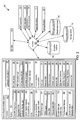
- Figure 1 shows a service exception resolution framework system architecture.
- Figure 2 shows a service exception handling system
- FIG. 3 shows a common exception message (CEM) wrapper.
- CEM common exception message
- Figure 4 shows an example of a CEM schema.
- Figure 5 illustrates a CEM wrapper XML template.
- Figure 6 shows a destination routing schema
- Figure 7 illustrates an example functionality list page.
- Figure 8 shows an exception message list page.
- Figure 9 shows one implementation of a 'search area - normal filter area' display.
- Figure 10 shows a 'search area - advanced filter area' display.
- Figure 11 shows an example exception message details page.
- Figure 12 shows a list of exception handler action alerts.
- Figure 13 shows a list of pages for an administration console.
- Figure 14 shows a flow diagram for one implementation of an exception resolution framework.
- Figure 15 shows an overview of an exception flow through the system.
- a service exception resolution framework provides a centralized exception handling console (EHC) or user interface used to reprocess unfulfilled service requests that result in service request exceptions.
- the EHC uses a universal common exception message (CEM) wrapper that facilitates operator analysis of multiple service request exceptions simultaneously from disparate applications and domains, thereby particularly relieving him from mental tasks relating to the analysis and/or classification of the exception messages.
- CEM universal common exception message
- Figure 1 shows a service exception resolution framework system architecture 100.
- the architecture 100 includes a service exception handling system 102, an enterprise application integration and service bus (EAI/ESB) 104, a service delivery platform (SDP) domain 106, a business system services (BSS) domain 108, application users 110 and service providers 112. Domains may include multiple systems that work together to provide particular services, including customer resource management (CRM), Enterprise response management (ERP) eCommerce, and billing systems.
- the EAI/ESB 104 facilitates communication between the various components within the architecture 100.
- the EAI/ESB 104 uses Service Oriented Architecture Protocol (SOAP) to exchange XML-based messages between applications and service providers within the CEM architecture 100.
- SOAP Service Oriented Architecture Protocol
- the EAI/ESB 104 permits applications to orchestrate carrying out logical cross-functional business processes.
- the EAI/ESB 104 provides messaging services to disparate applications so that the applications can communicate together using service requests (e.g., service request messages).
- the SDP domain 106 and BSS domain 108 include applications (e.g., the SDP applications 114 and the BSS applications 116) and exception handlers (e.g., the SDP exception handler 118 and the BSS exception handler 120).
- the exception handlers 118 and 120 include respective exception analyzers 122 and 124, message generators 126 and 128 and reprocessing logic 130 and 132.
- the message generators 126 and 128 generate respective service request exception messages (SREM) 138 and 140.
- SREM service request exception messages
- the service request exception 136 is raised because the service provider 112 is unavailable and/or some other resource is unavailable to the service provider 112 in order to complete the service requested.
- the service provider 112 may correspond to a web service (e.g., having the same name) that provides the services identified by the service provider 112.
- the exception analyzer 122 classifies the service request exception 134, and when the service request exception 134 is classified as an EHC class exception the service request exception message (SREM) 138 is classified an EHC class message (e.g., 142 and 144).
- the reprocessing logic e.g., 130 and 132) receives resubmitted service request messages for reprocessing (discussed further below).
- the reprocessing logic (e.g., 130 and 132) provides the message generator (e.g., 126 and 128) the information used to generate the content of the SREM (e.g., 138 and 140), the SREM classification, and the number of permitted reprocessing attempts for the service request message 134.
- the message generator e.g., 126 and 128 the information used to generate the content of the SREM (e.g., 138 and 140), the SREM classification, and the number of permitted reprocessing attempts for the service request message 134.
- the service exception handling system 102 includes a CEM handler 146 and exception handling console (EHC) 148.
- the EAI/ESB 104 forwards the EHC class messages 142 and 144 to the CEM handler 146.
- the CEM handler 146 wraps the EHC class messages (e.g., 142 and 144) in a CEM wrapper (discussed below) to transform the EHC class messages (e.g., 142 and 144) into CEMs 150.
- the architecture 100 may further include a message queue 152, an exception database 154 and a resubmission queue 156, as well as multiple disparate applications (e.g., other applications 158 and other domains 160).
- the other applications 158 and other domains 160 include reprocessing logic responsive to reprocessing service requests.
- the CEM handler 146 communicates the CEMs 150 to the message queue 152.
- the EHC 148 includes an EHC web service that asynchronously retrieves a CEM 150 from the message queue 152 and communicates the CEM 150 to the exception database 154.
- the EHC web service communicates the CEM 150 to a JAVA API for XML remote procedure calls (JAX-RPC) web service using Web Services addressing (WS - Addressing).
- the JAX-RPC web service decomposes the CEM 150 in order to identify low level filtering and indexing information that the EHC 148 may use to retrieve and analyze CEMs 150.
- the JAX-RPC web service may also identify Uniform Resource Locators (URLs) from the decomposed CEMs 150 information and store that information with the CEMs 150 that the EHC web service may use to communicate resubmitted service requests to reprocessing logic responsive to reprocessing the service requests.
- URLs Uniform Resource Locators
- the JAX-RPC web service stores the filtering and indexing information in the exception database 154 with the CEM 150, using the standard JAVA API for communicating with a Structured Query Language (SQL) database, that is, a Java Database Connectivity (JDBC) call to the exception database 154.
- SQL Structured Query Language
- JDBC Java Database Connectivity
- the EHC 148 retrieves a CEM 150 from the exception database 154, modifies the CEM 150 and communicates the modified CEM 150 to the resubmission queue 156. In another implementation, the EHC 148 communicates the modified CEM 150 to the EHC web service and the EHC web service communicates the modified CEM 150 to the resubmission queue 156.
- the CEM handler 146 may include destination routing logic (discuss below) that asynchronously retrieves modified CEMs 150 from the resubmission queue 156. The CEM handler 146 unwraps the retrieved modified CEM 150 to obtain a resubmittable SREM 162 and communicates the resubmittable SREM 162 to the service provider 112 responsive to the resubmittable SREM 162.
- FIG. 2 shows one implementation of a service exception handling system 102.
- the service exception handling system 102 includes a processor 202, memory 204 and communications interface 206 used to communicate with various components of the architecture 100.
- the service exception handling system 102 communicates through networks (e.g., the Internet) 208 to various components of the architecture 100 using the EAI/ESB 104.
- networks e.g., the Internet
- the service exception handling system 102 includes components that coordinate the processing of service request exceptions with the exception handlers 118 and 120, exception analyzers 122 and 124, message generators 126 and 128, and reprocessing logic 130 and 132.
- memory 204 may include service request exception detection logic 210, exception message classifier logic 212, SREM generation logic 214, CEM handler logic 216, EHC logic 218 and destination routing logic 220 that work together with the exception handlers 118 and 120, exception analyzers 122 and 124, message generators 126 and 128 and reprocessing logic 130 and 132 to reprocess service request exceptions.
- the service request exception detection logic 210 monitors the exception handlers (e.g., 118 and 120) and service providers 112 for the occurrence of service request exceptions 136. In another implementation, the exception handlers (e.g., 118 and 120) and service providers 112 communicate the occurrence of service request exceptions 136 to the service request exception detection logic 210.
- the exception message classifier logic 212 classifies the service request exception 136 (e.g., first exception message class 222 and second exception message class 224). For example, the first exception message class 222 may represent an asynchronous exception 226.
- the exception message classifier logic 212 classifies SREM 138 and SREM 140 based on whether the service request exception 136 is an asynchronous exception 226 resulting from a previously resubmitted service request message. For example, a service request exception 136 that represents an asynchronous exception 226 that results from several failed attempts to process a resubmitted service request message may have a lower classification and/or desirability for reprocessing than a service request exception 136 that represents an asynchronous exception 226 that results from only one failed attempt to reprocess.
- the SREM generation logic 214 may work together with the message generator (e.g., 126 and 128) to generate the SREM 228 and include the exception message classification information in the SREM 228.
- the message generator (e.g., 126 and 128) and the SREM generation logic 214 each generate a portion of the SREM 228.
- the message generator (e.g., 126 and 128) generates a SREM (e.g., 138 and 140) that the SREM generation logic 214 uses to generate an enhanced SREM 228 with supplemental information otherwise unavailable to the message generators (e.g., 126 and 128).
- the CEM handler logic 216 receives the SREM 228 and wraps the SREM 228 in a CEM wrapper 230 to obtain a new CEM 232.
- the CEM wrapper 230 includes information that the EHC 148 may use to retrieve CEMs from the exception database 154 and analyze the CEMs. Referring briefly to Figure 3 , the CEM wrapper 230 includes a CEM header 302 and a CEM body 304.
- the CEM header 302 includes a service name 306, service identifier 308, a date/time identifier 310 that identifies when the service request exception 136 occurred, a system name 312, exception area 314, exception description 316, exception codes 318, exception stack 320, retries specifier 322, discard-on-fail specifier 324 and failed message 326.
- the service name 306 identifies the service provider 112 responsive to the service request message 134. In one implementation, the service name 306 identifies other applications 158 and other domains 160 that include service providers responsive to the service request message 134. In one implementation, the CEM header information includes a mobile station integrated services digital network number (MSISDN) 328 that is used to uniquely identify a subscriber (e.g., application user 110).
- MSISDN mobile station integrated services digital network number
- Table 1 provides a brief description of the information that may be included in the CEM header 302.
- Service ID A unique identifier that provides additional granularity used to route service requests to service providers.
- Date/Time Date and time of the service request exception.
- System Name Name of the system where the service request exception was raised.
- Exception Area Identifies the reprocessing logic that may be used to submit the resubmittable service request message for processing.
- Exception Description A brief description of the exception, which is displayed to the EHC operator.
- Exception Codes The exception code returned by the application initiating the service request, the service provider responsive to the service request, and/or generated by the SREM generation logic and displayed at the EHC.
- Exception Stack Complete list of details returned by the service request exception.
- Retries Specifies the number of times the service request message has been submitted for reprocessing and/or the number of time the service request message may be submitted for reprocessing.
- Discard-On-Fail The discard-on-fail specifier specifies whether a service request message can be resubmitted after the service request fails to complete successfully.
- Failed Message A copy of the service request message that failed to be processed.
- MSISDN The Mobile Station Integrated Services Digital Network Number is the standard international telephone number used to identify a subscriber (e.g., application user 110).
- the service identifier 308 provides a unique identifier that identifies where in the workflow of the service provider 112 the service request exception 136 was raised. In other words, the service identifier 308 provides process workflow granularity for the service provider 112 so that a resubmitted service request message can be reprocessed from a place in the workflow that minimizes the reprocessing of unnecessary portions of the workflow activities.
- the service provider 112 may define workflow phase identifiers 1 through 10, corresponding to 10 workflow phases that determine how a resubmitted service request message is submitted and/or the content of the resubmitted service request message.
- the resubmitted service request message may be reprocessed from workflow phase 7 instead of being completely reprocessed.
- the service identifier 308 facilitates reducing and/or eliminating the reprocessing of particular activities and/or tasks defined for the workflow of a service provider 112 when a resubmitted service request message is submitted by the EHC logic 218 for reprocessing.
- the system name 312 identifies the system (e.g., other applications 158 and domains 160) in the architecture 100 where the service request exception 136 was raised. Identifying the system name 312 further assist analysis and submission of the resubmittable service request message.
- the service provider 112 may enlist multiple systems (e.g., other applications 158 and domains 160) within the architecture 100 to fulfill a service request, and the system name 312 provides further granularity used to identify the source of the service request exception 136.
- the service identifier 308 and the system name 312 assists the EHC logic 218 to analyze the source of the service request exception 136 and facilitates the efficient processing of resubmittable service request messages 162.
- the exception area 314 identifies the reprocessing logic (e.g., 130 and 132) where the resubmittable service request message may be submitted for reprocessing.
- the operator of the EHC 148 may modify the exception area 314 to specify that particular reprocessing logic process a resubmittable service request message.
- a SREM 228 may specify that the reprocessing logic of a particular application be used to process a resubmittable service request message and the CEM handler logic 216 stores the new CEM 232 with the reprocessing logic information in the exception area 314.
- the operator of the EHC 148 may retrieve the new CEM 232, and analyze the current status of the architecture 100 and available resources to determine whether the reprocessing logic of another application is more appropriate for processing the resubmittable service request message.
- the application with the originally specified reprocessing logic may be temporarily unavailable, or permanently decommissioned and/or replaced by another application at the time the resubmittable service request message is ready to be processed.
- the exception area 314 facilitates the destination routing logic 220 to specify how a resubmittable service request message is processed.
- the exception description 316 provides a brief description of the service request exception 136.
- the content of the exception description 316 may be extracted from the SREM (e.g., 138, 140 and 228), provided by the application initiating the service request (e.g., 114 and 116) and/or the service provider 112 responsive to the service request.
- the content of the exception description 316 is a composite of the descriptions provided by the SREM (e.g., 138, 140 and 228), the application originating the service request (e.g., 114 and 116) and/or the service provider 112 responsive to the service request.
- the SREM (e.g., 138 and 140) may include a description "ABC: 550 - Invalid Customer Account", while the exception analyzer (122 and 124) and the message generator (126 and 128) further provide the description "Customer Account information is unavailable", while the service provider 112 provides the description "Customer Account has Expired”.
- the SREM generation logic 214 may combine the descriptions from the multiple sources to obtain "ABC: 550 - Invalid Customer Account; Customer Account information is unavailable; and Customer Account has expired.”
- the operator of the EHC 148 may modify the exception description 316 to further refine the description.
- the exception codes 318 identify the exception code returned by the application (e.g., 114 and 116) originating the service request, the service provider 112 responsive to the service request, and/or the exception code generated by the SREM generation logic 214 and displayed by the EHC 148.
- the exception codes 318 identify one exception code defined to correspond to the exception code returned by the application (e.g., 114 and 116) originating the service request, the service provider 112 responsive to the service request, and/or the exception code generated by the SREM generation logic 214.
- the operator of the EHC 148 may use the exception codes 318 to analyze the service request exception 136 and determine the best approach to processing the resubmittable service request.
- the exception stack 320 provides a complete list of details returned by the service request exception 136 that an operator of the EHC 148 may use to analyze the circumstances and condition of the systems and multiple disparate applications (e.g., applications 114, 116 and other applications 158, domains 106, 108 and other domains 160, and service provides 112) within the architecture 100 that resulted in the service request exception 136.
- the exception stack 320 provides the information necessary to retrace the entire processing of the architecture 100 responsive to the service request message 134 that resulted in the service request exception 136.
- the operator of the EHC 148 may use the exception stack 320 along with other CEM header 302 information to focus the analysis and identify the most appropriate and efficient approach to processing a resubmittable service request message.
- the retries specifier 322 specifies the number of times a service request message 134 and/or resubmittable service request message 162 have been submitted for processing.
- the reprocessing logic e.g., 130 and 132 may specify the number of times a service request message 134 and/or resubmittable service request message 162 may be submitted for processing.
- the value of the retries specifier 322 is extracted from the SREM (e.g., 138, 140 and 228), provided by the application originating the service request (e.g., 114 and 116) and/or the service provider 112 responsive to the service request.
- the value of the retries specifier 322 is determined by the SREM generation logic 214 analyzing the SREM (e.g., 138, 140 and 228), information from the application (e.g., 114 and 116) originating the service request and/or the service provider 112 responsive to the service request.
- the SREM generation logic 214 analyzing the SREM (e.g., 138, 140 and 228), information from the application (e.g., 114 and 116) originating the service request and/or the service provider 112 responsive to the service request.
- the SREM (e.g., 138 and 140) may specify a value of 50 retries for the retries specifier 322, while the exception analyzer 122 and 124 and the message generator 126 and 128) may specify a value of 10 retries for any service request originating from the corresponding application (e.g., 114 and 116), while the service provider 112 specifies that only 3 retries are permitted for service requests for which that service provider 112 is responsive.
- a security policy and/or policy system may impose a value for the retries specifier 322 that the SREM generation logic 214 receives and includes in the SREM 228.
- the retries specifier 322 includes a frequency and a time period component that specify the number of retries that are permitted during a specified period of time. For example, the retries specifier 322 may specify that 10 retries are permitted during a 24-hour period.
- the exception message classifier logic 212 classifies the SREM (e.g., 138, 140 and 228) using the value retries specifier 322, along with other information such as whether the service request exception represents an asynchronous exception 226.
- the discard-on-fail specifier 324 specifies whether a resubmittable service request message 162 may be resubmitted after the service request fails to complete successfully.
- the discard-on-fail specifier 324 may use the values 0 and 1, or 'Yes' and 'No', respectively, to specify whether a service request may be resubmitted for processing.
- the retries specifier 332 may specify that a service request may be resubmitted for processing
- the discard-on-fail specifier 324 overrides the retries specifier 332.
- the operator of the EHC 148 may modify the value of the discard-on-fail specifier 324, in order to accommodate operations of the architecture 100.
- the discard-on-fail specifier 324 may be set to specify that service requests are not to be resubmitted while the system resource is recovering. Once recovery of the particular system resource completes, the operator may set the discard-on-fail specifier 324 so that service requests are allowed to be resubmitted.
- the failed message 326 is a copy of the service request message 134 that failed to be processed.
- the failed message 326 is used to generate the resubmittable service request message 162.
- the operator of the EHC 148 modifies the failed message 326 and generates the resubmittable service request message 162 with the modifications necessary to process the resubmittable service request message 162.
- the service exception handling system 102 may include an EHC web service 234 and JAX-RPC web service 236.
- the EHC web service 234 asynchronously retrieves a new CEM 232 from the message queue 152 and communicates the CEM 150 to the exception database 154.
- the EHC web service 234 communicates the new CEM 232 to the JAX-RPC web service 236, and the JAX-RPC web service 236 decomposes the new CEM 232 in order to identify low level filtering and indexing information that the EHC logic 218 uses to retrieve and analyze CEMs.
- the JAX-RPC web service 236 decomposes and indexes the CEM header 302 information and the content of the CEM body 304 (e.g., SREM 228), and stores the decomposed and indexing information in the exception database 154 with the content of the new CEM 232.
- the JAX-RPC web service 236 uses Java Database Connectivity (JDBC) calls, the standard JAVA API for communicating with a Structured Query Language (SQL) database, to store the new CEM 232, decomposed and indexing information in the exception database 154.
- the JAX-RPC web service 236 optimizes the filtering and indexing of the new CEM 232 information so that the EHC logic 218 can easily and efficiently manage the CEMs stored in the exception database 154.
- the EHC 148 includes an EHC user interface 238 that is operable to receive operator inputs 240 including inputs that specify CEM filter parameters 242 and CEM change specifiers 244.
- the EHC logic 218 uses the operator inputs 240, CEM filter parameters 242 and CEM change specifiers 244 to retrieve a retrieved CEM 246 and/or matching CEMs (MCEMs) 248.
- a retrieved CEM 246 and matching CEMs (MCEMs) 248 illustrate the capability of the EHC logic 218 to work on one or multiple CEMs simultaneously, depending on the number of CEMs matching the CEM filter parameters 242.
- the operator inputs 240 may be used to transform a retrieved CEM 246 into a modified CEM 250, and MCEMs 248 into modified MCEMs 252.
- the operator inputs 240 may include modifications to any combination of the decomposed and/or indexing information used to store CEMs in the exception database 154, the CEM header 302 and the CEM body 304 information.
- the CEM filter parameters 242 may include any combination of the decomposed and/or indexing information used to store CEMs in the exception database 154, the CEM header 302 and the CEM body 304 information.
- the CEM change specifiers 244 automatically modify a retrieved CEM 246 and/or MCEMs 248 to obtain a modified CEM 250 and/or modified MCEMs 252.
- the CEM change specifiers 244 may be preconfigured so that the EHC logic 218 applies the CEM change specifiers 244 automatically to modify CEMs to obtain modified CEMs 250 and/or modified MCEMs 252.
- the preconfigured CEM change specifiers 244 may specify that the discard-on-fail specifier 324 be set to 'Yes' for CEMs matching particular CEM filter parameters 242 so that the operator of the EHC 148 is not required to modify the CEMs individually.
- the preconfigured CEM change specifiers 244 specify that the exception area 314 of CEMs that match the CEM filter parameters 242 be set to specify that particular reprocessing logic (e.g., 130, 132, and/or the reprocessing logic of 158 and 160) be used to process resubmittable service request messages 162.
- the EHC logic 218 communicates the modified CEM 250 and modified MCEMs 252 to the EHC web service 234, and the EHC web service 234 communicates the modified CEM 250 and modified MCEMs 252 to the resubmission queue 156 for reprocessing.
- the destination routing logic 220 asynchronously retrieves modified CEMs 250 and modified MCEMs 252 from the resubmission queue 156.
- the destination routing logic 220 analyzes the exception area 314 of a modified CEM 250 to determine where to process a resubmittable service request message 162.
- the EAI/ESB 104 communicates destination routing messages to the destination routing logic 220 that identify alternative reprocessing logic suitable for reprocessing resubmittable service request messages 162.
- the multiple disparate applications each communicate a destination routing message that identifies a service queue used by alternative reprocessing logic that the destination routing logic 220 may consider when determining where to route a resubmittable service request message 162.
- the destination routing logic 220 analyzes the exception area 314 and destination routing messages communicated to the destination routing logic 220 from multiple disparate applications (e.g., other applications 158 and other domains 160).
- the destination routing logic 220 communicates to the CEM handler logic 216 the modified CEM 250 and the location of a service queue corresponding to the reprocessing logic identified for processing the resubmittable service request message 162.
- the service queue and reprocessing logic may be identified by the exception area 314 of the modified CEM 250.
- the destination routing logic 220 may analyze the alternative reprocessing logic options identified by the destination routing messages, along with system administration policies and practical efficiencies, when determining where to route a resubmittable service request message 162 for processing.
- the CEM handler logic 216 unwraps the modified CEM 250 to obtain the resubmittable service request message 162.
- the CEM handler logic 216 communicates the resubmittable service request message 162 to the reprocessing logic specified by the destination routing logic 220.
- the reprocessing logic analyzes the resubmittable service request message 162 and enhances the resubmittable service request message 162 to obtain a resubmitted SRM 254.
- the reprocessing logic may parse the resubmittable service request message 162 into multiple resubmitted SRMs 254 that are used by the reprocessing logic to optimize processing.
- the reprocessing logic is capable of accomplishing the desired results of the original service request message 134
- the reprocessing logic may be different in multiple respects from the processing logic originally used to process the original service request message 134 (e.g., more complex, improved efficiency and correcting a previous bug) and the reprocessing logic modifies the resubmittable service request message 162 accordingly to obtain the resubmitted SRM 254.
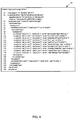
- FIG 4 shows an example of a common exception message (CEM) schema 400 implemented as an XML schema definition that defines the elements of the CEM wrapper 230.
- the EAI/ESB 104 forwards EHC class messages 142 and 144 to the CEM handler 146 and the CEM handler 146 wraps the EHC class messages 142 and 144 using the CEM wrapper 230 to obtain a CEM 150.
- Figure 4 at lines 9 through 18, illustrates the CEM header 302 components as elements of the CEM schema 400.
- Line 22 of Figure 4 shows the CEM body 304 defined as an element of the CEM schema 400.
- FIG. 5 illustrates a common exception message (CEM) wrapper XML template 500, used in one implementation by the CEM handler logic 216 to obtain a CEM 150 that conforms to the CEM schema 400 shown in Figure 4 .
- Lines 3 through 12 of Figure 5 illustrate some of the CEM header 302 components, while line 14 represents the CEM body 304.
- Figure 6 shows a destination routing schema 600 implemented as an XML schema definition.
- the destination routing schema 600 defines the elements analyzed by the destination routing logic 220 to determine the service queue corresponding to particular reprocessing logic to which a resubmittable service request message 162 may be routed for processing.
- line 6 of Figure 6 identifies the location of the service queue defined by the service queue path element, while line 9 identifies the name element of the service queue used by the reprocessing logic, and lines 11 and 12 identify additional attributes that define the service queue.
- the destination routing logic 220 routes the resubmittable service request message 162 to the service queue corresponding to the reprocessing logic identified by the destination routing logic 220 and the reprocessing logic retrieves the resubmittable service request message 162 from the service queue.
- the destination routing logic 220 analyzes the exception area 314 of a modified CEM 250 and the service queues identified by destination routing messages to dynamically determine the service queue, and accordingly, the reprocessing logic to which to route the resubmittable service request message 162.
- the CEM handler logic 216 unwraps the modified CEM 250 to obtain the resubmittable service request message 162. For example, the CEM handler logic 216 analyzes the failed message 326 to obtain the resubmittable service request message 162. The CEM handler logic 216 may use the exception area 314 and the reprocessing logic information provided by the destination routing logic 220 to determine the composition of the resubmittable service request message 162. The CEM handler logic 216 communicates the resubmittable service request message 162 to the service queue corresponding to the reprocessing logic determined by the destination routing logic 220.
- the EHC logic 218 uses operator inputs 240, CEM filter parameters 242 and CEM change specifiers 244 to analyze and modify CEMs, and process resubmittable service request messages 162.
- the EHC logic 218 uses an EHC user interface 238 that includes a functionality list page, exception message list page, search area - normal filter area, search area - advance filter area, exception message details page, and various pages for an administration console.
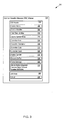
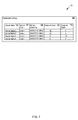
- Figure 7 illustrates an example functionality list page 702 that displays a list of EHC class services available to process EHC class messages (e.g., 142, 144, 222 and 224).
- the functionality list page 702 displays information from the exception database 154 including the service name 704 of the service providers 112 responsive to service requests, the service area 706 that identifies the application (e.g., 114, 116 and 158) and/or domain (e.g., 106, 108 and 160) that provide the services identified by the service name 704.
- the functionality list page may also include a refresh date/time 708 identifier that identifies when the information displayed for the service name 704 was last updated, an execution count 710 that identifies the number of service request messages 134 currently being processed by the service provider 112 identified by the service name 704, and the exception count 712 that identifies the number of service request exceptions 136 raised and currently pending reprocessing.
- the information displayed by the functionality list page 702 is non-editable.
- the functionality list page 702 accepts operator inputs 240 that modify the service name 704 and/or service area 706.
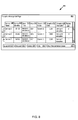
- Figure 8 illustrates an exception message list page 802 that displays the CEM wrapper 230 information for the CEMs 150 stored in the exception database 154.
- the operator of the EHC 148 may select specific CEMs 150 with the individual check buttons (e.g., 804, 806 and 808) and all the CEMs 150 using the 'select all' button 810, and resubmit, delete and edit the CEMs 150 using the resubmit button 812, delete button 814 and edit button 816, respectively.
- the EHC 148 may modify CEMs 150 rather than delete the CEMs 150 from the exception database 154 in order to preserve the CEMs 150 for administration and maintenance purposes.
- the EHC 148 may mark the CEM 150 as processed (e.g., 'Complete') so that the CEM 150 is not subsequently reprocessed.
- the EHC logic 216 may set the value of the system name 312 to 'Complete' when the operator of the EHC 148 selects the delete button 814 for a CEM 150.
- the reprocessing logic 130 and 132 may recognize the 'Complete' value for the system name 312 to indicate that the corresponding service request not to be resubmitted.
- the exception message list page 802 may include a drain resubmission queue 818 button that the operator of the EHC 148 can select to delete and/or mark as 'Complete' modified CEM 250 and modified MCEMs 252 stored in the resubmission queue 156.
- the operator selects the drain resubmission queue 818 button to delete and/or mark as 'Complete' CEMs 150 in the message queue 152 and the exception database 154, and modified CEM 250 and modified MCEMs 252 in the resubmission queue 156.
- Figure 9 shows one implementation of a 'search area - normal filter area' display 902.
- the 'search area - normal filter area' display 1002 accepts operator inputs 240 that specify particular CEM filter parameters 242 used to retrieve and display a retrieved CEM 250 and/or MCEMs 252 on the exception message list page 802.
- the operator of the EHC 148 may use the 'search area - normal filter area' display 902 to execute a search of the exception database 154 using the search button 904 to retrieve and display the CEMs 150 on the exception message list page 802 that match the service identifier 308 and/or exception code 314 specified by the operator.
- the 'search area - normal filter area' display 902 includes an 'advanced search' button 908 that the operator may use to navigate to a 'search area - advanced filter area' display to perform an advanced search of the exception database 154.
- Figure 10 shows one implementation of a 'search area - advanced filter area' display 1002.
- the operator of the EHC 148 may use the 'search area - advance filter area' display 1002 to execute a more refined search of the exception database 154 to retrieve and display the CEMs 150 on the exception message list page 802.
- the 'search area - advanced filter area' display 1002 accepts operator inputs 240 that specify particular CEM filter parameters 242 used to retrieve and display a retrieved CEM 250 and/or MCEMs 252 on the exception message list page 802.
- the 'search area - advanced filter area' display 1002 may include other CEM filter parameters 242, such as a 'from date/time' 1004 and to 'date/time' 1006 that further refine the search of the exception database 154 for particular CEMs 150.
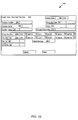
- Figure 11 shows an example exception message details page 1102.
- the exception message details page 1102 displays the elements of the CEM wrapper 230 that the operator may edit, confirm a modification, cancel a modification, delete and/or mark as 'Complete' the CEM 150, and resubmit the CEM 150 using the edit button 1106, confirm button 1108, cancel button 1110, delete button 1112 and resubmit button 1114, respectively.
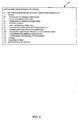
- Figure 12 shows a list of exception handler action alerts 1202 that the EHC logic 216 may display to the operator of the EHC 148.
- the alert message text 1210 prompts the operator to confirm acknowledgement that "all exception messages will be deleted from the queue" following the operator selection of the drain resubmission queue 818 button and/or when the operator selects the 'select all' button 810 on the exception message list page 802 followed by the selection of the delete button 814.
- the EHC logic 216 may prompt the operator with alert message text (e.g., 1212, 1214 and 1216) to inform the operator that another operator has initiated and/or completed an operation on a CEM that the operator has subsequently attempted to edit, delete (e.g., mark as 'Complete'), and/or resubmit.
- alert message text e.g., 1212, 1214 and 1216
- Figure 13 shows a list of pages for an administration console 1302.
- the service exception handling system 102 provides an administration console 1302 that includes pages that an administrator can use to identify operators (e.g., a user list page 1304, user details page 1306), assign roles to the operators (e.g., role list page 1308) and authorize actions that the operators and/or roles may perform during the use of the EHC 148 (e.g., action list page 1310).
- operators e.g., a user list page 1304, user details page 1306
- roles e.g., role list page 1308
- authorize actions that the operators and/or roles may perform during the use of the EHC 148 e.g., action list page 1310.
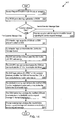
- Figure 14 shows a flow diagram for one implementation of the exception resolution framework 1400.
- the service request exception logic 210 detects an exception to processing a service request message 134 (1402).
- the SREM generation logic 214 generates a service request exception message (SREM) 228 (1404).
- the exception message classifier logic 212 analyzes the SREM 228 to classify the SREM 228 (e.g., as a first or a second exception message classes - 222 and 224) (1406).
- the SREM 228 when the SREM 228 is of the second exception message class 222, the SREM 228 is analyzed and/or processed by the application (e.g., 114, 116 and 158) and/or domain (e.g., 106, 108 and 160) that originated the service request message 134 that resulted in the service request exception 136 (1408).
- the application e.g., 114, 116 and 158
- domain e.g., 106, 108 and 160
- the SREM 228 is communicated to the CEM handler 146 when the SREM 228 is of the first exception message class 222, and the CEM handler logic 216 wraps the SREM 228 with a CEM wrapper 230, thereby transforming the SREM 228 into a new CEM 232 (1410).
- the CEM handler logic 216 communicates the new CEM 232 to the message queue 152 (1412).
- the EHC web service 234 asynchronously retrieves the new CEM 232 from the message queue 152 and communicates the new CEM 232 to the JAX-RPC web service 236 (1414).
- the JAX-RPC web service 236 decomposes the new CEM 232 in order to identify low level filtering and indexing information that the EHC logic 218 may use to retrieve and analyze CEMs, and stores the decomposed and indexing information in the exception database 154 with the content of the new CEM 232 (1416).
- the operator of the EHC 148 retrieves a CEM 246, and modifies the CEM to obtain a modified CEM 250.
- the EHC logic 218 communicates the modified CEM 250 to the EHC web service 234, and the EHC web service 234 communicates the modified CEM 250 to the resubmission queue 156 for reprocessing (1418).
- the destination routing logic 220 asynchronously retrieves the modified CEM 250 from the resubmission queue 156, analyzes the exception area 314 of a modified CEM 250 and destination routing messages communicated to the destination routing logic 220 from multiple disparate applications (e.g., other applications 158 and other domains 160) to determine where to process the resubmittable service request message 162.
- the destination routing logic 220 communicates to the CEM handler logic 216 the modified CEM 250 and the location of a service queue corresponding to the reprocessing logic (1420).
- the CEM handler logic 216 unwraps the modified CEM 250 to obtain the resubmittable service request message 162 and communicates the resubmittable service request message 162 to the reprocessing logic specified by the destination routing logic 220 (1422).
- the reprocessing logic analyzes the resubmittable service request message 162 and processes a resubmitted service request message 254 (1424).
- FIG 15 shows an overview of an exception flow through the system 100.
- the SDP exception handler 118 may use the SDP exception analyzer 122 and the SDP message generator 126 to classify, generate and communicate a SDP SREM 138 as a SDP EHC class message 142 to the CEM handler 146.
- the CEM handler 146 wraps the SDP EHC class message 142 in a CEM wrapper 230 to transform the SDP EHC class message 142 into a CEM wrapped SDP EHC class message 1502 that the CEM handler 146 communicates to the message queue 152.
- the EHC web service 234 asynchronously retrieves the CEM wrapped SDP EHC class message 1502 from the message queue 152, and communicates the CEM wrapped SDP EHC class message 1502 to the JAX-RPC web service 236.
- the JAX-RPC web service 236 decomposes the CEM wrapped SDP EHC class message 1502 in order to identify low level filtering and indexing information that the EHC 148 may use to retrieve and analyze the CEM wrapped SDP EHC class message 1502.
- the JAX-RPC web service stores the filtering and indexing information in the exception database 154 with the CEM wrapped SDP EHC class message 1502.
- the EHC 148 retrieves the CEM wrapped SDP EHC class message 1502 from the exception database 154, modifies the CEM wrapped SDP EHC class message 1502 using the EHC logic 218.
- the EHC logic 218 communicates the modified CEM wrapped SDP EHC class message 1502 to the EHC web service 234 and the EHC web service 234 communicates the CEM wrapped SDP EHC class message 1502 to the resubmission queue 156.
- the destination routing logic 220 asynchronously retrieves the CEM wrapped SDP EHC class message 1502 from the resubmission queue 156 and determines the reprocessing logic (e.g., 130 and 132) to which a resubmittable SRM may be routed.
- the destination routing logic 220 communicates to the CEM handler logic 216 the modified CEM wrapped SDP EHC class message 1502 and the location of a service queue corresponding to the reprocessing logic identified for processing a SDP resubmittable service request message (SRM) 1506.
- the CEM handler logic 216 unwraps the modified CEM wrapped SDP EHC class message 1502 to obtain the SDP resubmittable SRM 1506, and communicates the modified CEM wrapped SDP EHC class message 1502 to the SDP reprocessing logic 130 determined by the destination routing logic 220.
- the systems may be implemented in many different ways. For example, although some features are shown as computer program products embodied as a signal or data stream and/or stored in computer-readable memories (e.g., as logic implemented as computer-executable instructions or as data structures in memory), all or part of the systems, logic, and data structures may be stored on, distributed across, or read from other machine-readable media.
- the media may include hard disks, floppy disks, CD-ROMs, a signal, such as a signal received from a network or partitioned into sections and received in multiple packets communicated across a network.
- the systems may be implemented in software, hardware, or a combination of software and hardware.
- the XML files, schemas, CEM wrappers, service request messages, service request exception messages and other messages used by the system may employ formats that are different from the formats described above.
- the CEM header information may be communicated separately from the SREM so that the use of a CEM wrapper is optional.
- the system may also use different message formats instead of XML, such as encoded packets with bit fields that are assigned specific meanings.
- a processor or any other logic may be implemented with a microprocessor, a microcontroller, a DSP, an application specific integrated circuit (ASIC), program instructions, discrete analog or digital logic, or a combination of other types of circuits or logic.
- memories may be DRAM, SRAM, Flash or any other type of memory.
- the systems may be distributed among multiple components, such as among multiple processors and memories, optionally including multiple distributed processing systems.
- Logic such as programs or circuitry, may be combined or split among multiple programs, distributed across several memories and processors, and may be implemented in or as a function library, such as a dynamic link library (DLL) or other shared library.
- DLL dynamic link library
Landscapes
- Engineering & Computer Science (AREA)
- Theoretical Computer Science (AREA)
- Physics & Mathematics (AREA)
- Software Systems (AREA)
- Business, Economics & Management (AREA)
- General Physics & Mathematics (AREA)
- Human Resources & Organizations (AREA)
- Quality & Reliability (AREA)
- Strategic Management (AREA)
- Tourism & Hospitality (AREA)
- Operations Research (AREA)
- General Business, Economics & Management (AREA)
- Marketing (AREA)
- Entrepreneurship & Innovation (AREA)
- Economics (AREA)
- General Engineering & Computer Science (AREA)
- Computer And Data Communications (AREA)
Abstract
Description
- This disclosure concerns classifying and managing service request exceptions, and reprocessing unfulfilled service requests from disparate applications and domains. In particular, this disclosure concerns handling service request exceptions in a system architecture using a service exception resolution framework.
- The information systems industry continues to face demands for more services, and rapid deployment of new services, while the complexity of the underlying technologies providing the services continues to increase. Today, system integrators combine many disparate applications and domains in order to implement system architectures that include many consumer and service provider applications. Consumer applications request services from service provider applications. Many of the consumer and service applications employ custom exception handling logic used to resolve service request exceptions. System integrators embed within each application exception handling logic designed to understand how to manage service request exceptions raised as a result of an unfulfilled service request.
- System architectures with multiple disparate applications that include custom exception handling logic create a significant burden for operators responsible for resolving the exceptions raised by the disparate applications. Often multiple operators with varying experience and expertise are employed to maintain system architectures with disparate applications. Each disparate application often outputs exceptions to application specific log files that are uniquely formatted, complicated to analyze and typically outputted to application specific locations. Operators must locate and understand how to analyze the log files from each disparate application and often manually resubmit service requests. Operators must also know how to determine what information is needed to resubmit a service request in order to prevent a previously raised exception from occurring again.
- System architectures are often highly dynamic and tightly integrated, and include applications that are constantly being modified, added, and removed. Operators responsible for handling exceptions must analyze exceptions in the context of such a highly dynamic environment. The difficulties with reprocessing service requests in such a highly dynamic environment are further compounded by the number of disparate applications and domains with the system architecture. Operators are burdened with a laborious, tedious and error prone way to handle exceptions and reprocess service requests.
- The service exception resolution framework ("framework") for a system architecture provides a centralized point of control for exceptions handling. The framework implements an enterprise service bus (ESB) to which disparate applications send exception messages. The framework uses a common exception message (CEM) schema that is flexible and adaptable and used to wrap exception messages into a common exception message that the ESB communicates to an exception handling console (EHC) as a preferred graphical user interface. The EHC provides operators a way to efficiently and easily modify and resubmit individual and/or multiple exceptions based on common exception message filter parameters. Accordingly, the framework particularly relieves the respective user from mental tasks he has to perform by assisting him to handle and process exceptions and thus improved overall operability and man-machine interaction. The framework reduces the number of operators used to manage exceptions, as well as the burden to train the operators on how to locate and administer log files from disparate application that include the exception messages, and resolve exceptions.
- In one implementation, a method for implementing a service exception resolution framework for a system architecture includes detecting an exception to processing a service request message, generating a service request exception message (SREM) responsive to detecting the exception, analyzing the SREM with an exception message classifier to distinguish the SREM between a first and a second exception message class, and when the SREM is of the first exception message class, communicating the SREM to a common exception message (CEM) handler and executing the CEM handler to wrap the SREM with a universal CEM wrapper, thereby (particularly automatically or semi-automatically) transforming the SREM into a new CEM. The method for implementing the service exception resolution framework includes communicating the new CEM to a centralized exception database that stores multiple CEMs, including the new CEM, originating from multiple disparate applications across the system architecture. The first exception message class may represent an asynchronous exception that the system may resolve in non-real time. The second exception message class may represent exceptions that are analyzed and/or processed by the application and/or domain that originated the service request message that resulted in the service request exception. In other designs, additional, fewer, or different message classes may categorize the exceptions that the system handles.
- In one implementation, the new CEM is communicated to a message queue, and the new CEM is asynchronously communicated from the message queue to the centralized exception database. The new CEM is stored in the exception database and asynchronously retrieved from the exception database by the EHC. The EHC accepts operator input to modify the new CEM and resubmits the modified CEM for processing to at least one of the multiple disparate applications. A CEM may also be automatically modified by applying a preconfigured CEM change specifier. The EHC also accepts CEM filter parameters that are used to retrieve matching CEMs that match the CEM filter parameters from the exception database. Modified CEMs are stored in a resubmission queue and resubmitted from the resubmission queue. The CEM handler unwraps at least one of the modified CEMs to obtain a resubmittable SREM. The resubmittable SREM is communicated to a service provider responsive to the service request message originating from the at least one multiple disparate application.
- Other systems, methods, features and advantages will be, or will become, apparent to one with skill in the art upon examination of the following figures and detailed description. All such additional systems, methods, features and advantages are included within this description, are within the scope of the claimed subject matter, and are protected by the following claims.
- The system may be better understood with reference to the following drawings and description. The elements in the figures are not necessarily to scale, emphasis instead being placed upon illustrating the principles of the system. In the figures, like-referenced numerals designate corresponding parts throughout the different views.
-
Figure 1 shows a service exception resolution framework system architecture. -
Figure 2 shows a service exception handling system. -
Figure 3 shows a common exception message (CEM) wrapper. -
Figure 4 shows an example of a CEM schema. -
Figure 5 illustrates a CEM wrapper XML template. -
Figure 6 shows a destination routing schema. -
Figure 7 illustrates an example functionality list page. -
Figure 8 shows an exception message list page. -
Figure 9 shows one implementation of a 'search area - normal filter area' display. -
Figure 10 shows a 'search area - advanced filter area' display. -
Figure 11 shows an example exception message details page. -
Figure 12 shows a list of exception handler action alerts. -
Figure 13 shows a list of pages for an administration console. -
Figure 14 shows a flow diagram for one implementation of an exception resolution framework. -
Figure 15 shows an overview of an exception flow through the system. - A service exception resolution framework provides a centralized exception handling console (EHC) or user interface used to reprocess unfulfilled service requests that result in service request exceptions. The EHC uses a universal common exception message (CEM) wrapper that facilitates operator analysis of multiple service request exceptions simultaneously from disparate applications and domains, thereby particularly relieving him from mental tasks relating to the analysis and/or classification of the exception messages.
-
Figure 1 shows a service exception resolutionframework system architecture 100. In one implementation, thearchitecture 100 includes a serviceexception handling system 102, an enterprise application integration and service bus (EAI/ESB) 104, a service delivery platform (SDP)domain 106, a business system services (BSS)domain 108,application users 110 andservice providers 112. Domains may include multiple systems that work together to provide particular services, including customer resource management (CRM), Enterprise response management (ERP) eCommerce, and billing systems. The EAI/ESB 104 facilitates communication between the various components within thearchitecture 100. In one implementation, the EAI/ESB 104 uses Service Oriented Architecture Protocol (SOAP) to exchange XML-based messages between applications and service providers within theCEM architecture 100. The EAI/ESB 104 permits applications to orchestrate carrying out logical cross-functional business processes. The EAI/ESB 104 provides messaging services to disparate applications so that the applications can communicate together using service requests (e.g., service request messages). - The
SDP domain 106 andBSS domain 108 include applications (e.g., theSDP applications 114 and the BSS applications 116) and exception handlers (e.g., theSDP exception handler 118 and the BSS exception handler 120). In one implementation, theexception handlers respective exception analyzers message generators reprocessing logic message generators application 114 sends aservice request message 134 to aservice provider 112 and aservice request exception 136 is raised as a result, theexception analyzer 122 classifies theservice request exception 136. In one implementation, theservice request exception 136 is raised because theservice provider 112 is unavailable and/or some other resource is unavailable to theservice provider 112 in order to complete the service requested. Theservice provider 112 may correspond to a web service (e.g., having the same name) that provides the services identified by theservice provider 112. Theexception analyzer 122 classifies theservice request exception 134, and when theservice request exception 134 is classified as an EHC class exception the service request exception message (SREM) 138 is classified an EHC class message (e.g., 142 and 144). The reprocessing logic (e.g., 130 and 132) receives resubmitted service request messages for reprocessing (discussed further below). In one implementation, the reprocessing logic (e.g., 130 and 132) provides the message generator (e.g., 126 and 128) the information used to generate the content of the SREM (e.g., 138 and 140), the SREM classification, and the number of permitted reprocessing attempts for theservice request message 134. - The service
exception handling system 102 includes aCEM handler 146 and exception handling console (EHC) 148. The EAI/ESB 104 forwards theEHC class messages CEM handler 146. TheCEM handler 146 wraps the EHC class messages (e.g., 142 and 144) in a CEM wrapper (discussed below) to transform the EHC class messages (e.g., 142 and 144) intoCEMs 150. - The
architecture 100 may further include amessage queue 152, anexception database 154 and aresubmission queue 156, as well as multiple disparate applications (e.g.,other applications 158 and other domains 160). In one implementation, theother applications 158 andother domains 160 include reprocessing logic responsive to reprocessing service requests. TheCEM handler 146 communicates theCEMs 150 to themessage queue 152. In one implementation, theEHC 148 includes an EHC web service that asynchronously retrieves aCEM 150 from themessage queue 152 and communicates theCEM 150 to theexception database 154. In another implementation, the EHC web service communicates theCEM 150 to a JAVA API for XML remote procedure calls (JAX-RPC) web service using Web Services addressing (WS - Addressing). The JAX-RPC web service decomposes theCEM 150 in order to identify low level filtering and indexing information that theEHC 148 may use to retrieve and analyzeCEMs 150. The JAX-RPC web service may also identify Uniform Resource Locators (URLs) from the decomposedCEMs 150 information and store that information with theCEMs 150 that the EHC web service may use to communicate resubmitted service requests to reprocessing logic responsive to reprocessing the service requests. The JAX-RPC web service stores the filtering and indexing information in theexception database 154 with theCEM 150, using the standard JAVA API for communicating with a Structured Query Language (SQL) database, that is, a Java Database Connectivity (JDBC) call to theexception database 154. - In one implementation, the
EHC 148 retrieves aCEM 150 from theexception database 154, modifies theCEM 150 and communicates the modifiedCEM 150 to theresubmission queue 156. In another implementation, theEHC 148 communicates the modifiedCEM 150 to the EHC web service and the EHC web service communicates the modifiedCEM 150 to theresubmission queue 156. TheCEM handler 146 may include destination routing logic (discuss below) that asynchronously retrieves modifiedCEMs 150 from theresubmission queue 156. TheCEM handler 146 unwraps the retrieved modifiedCEM 150 to obtain aresubmittable SREM 162 and communicates theresubmittable SREM 162 to theservice provider 112 responsive to theresubmittable SREM 162. -
Figure 2 shows one implementation of a serviceexception handling system 102. The serviceexception handling system 102 includes aprocessor 202,memory 204 and communications interface 206 used to communicate with various components of thearchitecture 100. In one implementation, the serviceexception handling system 102 communicates through networks (e.g., the Internet) 208 to various components of thearchitecture 100 using the EAI/ESB 104. - In one implementation, the service
exception handling system 102 includes components that coordinate the processing of service request exceptions with theexception handlers exception analyzers message generators reprocessing logic memory 204 may include service requestexception detection logic 210, exceptionmessage classifier logic 212,SREM generation logic 214,CEM handler logic 216,EHC logic 218 anddestination routing logic 220 that work together with theexception handlers exception analyzers message generators reprocessing logic - In one implementation, the service request
exception detection logic 210 monitors the exception handlers (e.g., 118 and 120) andservice providers 112 for the occurrence ofservice request exceptions 136. In another implementation, the exception handlers (e.g., 118 and 120) andservice providers 112 communicate the occurrence ofservice request exceptions 136 to the service requestexception detection logic 210. The exceptionmessage classifier logic 212 classifies the service request exception 136 (e.g., firstexception message class 222 and second exception message class 224). For example, the firstexception message class 222 may represent anasynchronous exception 226. In another implementation, the exceptionmessage classifier logic 212 classifiesSREM 138 andSREM 140 based on whether theservice request exception 136 is anasynchronous exception 226 resulting from a previously resubmitted service request message. For example, aservice request exception 136 that represents anasynchronous exception 226 that results from several failed attempts to process a resubmitted service request message may have a lower classification and/or desirability for reprocessing than aservice request exception 136 that represents anasynchronous exception 226 that results from only one failed attempt to reprocess. - The
SREM generation logic 214 may work together with the message generator (e.g., 126 and 128) to generate theSREM 228 and include the exception message classification information in theSREM 228. In one implementation, the message generator (e.g., 126 and 128) and theSREM generation logic 214 each generate a portion of theSREM 228. In another implementation, the message generator (e.g., 126 and 128) generates a SREM (e.g., 138 and 140) that theSREM generation logic 214 uses to generate anenhanced SREM 228 with supplemental information otherwise unavailable to the message generators (e.g., 126 and 128). - The
CEM handler logic 216 receives theSREM 228 and wraps theSREM 228 in aCEM wrapper 230 to obtain anew CEM 232. TheCEM wrapper 230 includes information that theEHC 148 may use to retrieve CEMs from theexception database 154 and analyze the CEMs. Referring briefly toFigure 3 , theCEM wrapper 230 includes aCEM header 302 and aCEM body 304. In one implementation, theCEM header 302 includes aservice name 306,service identifier 308, a date/time identifier 310 that identifies when theservice request exception 136 occurred, asystem name 312,exception area 314,exception description 316,exception codes 318,exception stack 320, retriesspecifier 322, discard-on-fail specifier 324 and failedmessage 326. - The
service name 306 identifies theservice provider 112 responsive to theservice request message 134. In one implementation, theservice name 306 identifiesother applications 158 andother domains 160 that include service providers responsive to theservice request message 134. In one implementation, the CEM header information includes a mobile station integrated services digital network number (MSISDN) 328 that is used to uniquely identify a subscriber (e.g., application user 110). - Table 1 provides a brief description of the information that may be included in the
CEM header 302.Table 1 - CEM Header Information Service Label: ServiceName for service provider responsive to the service request message. Service ID: A unique identifier that provides additional granularity used to route service requests to service providers. Date/Time: Date and time of the service request exception. System Name: Name of the system where the service request exception was raised. Exception Area: Identifies the reprocessing logic that may be used to submit the resubmittable service request message for processing. Exception Description: A brief description of the exception, which is displayed to the EHC operator. Exception Codes: The exception code returned by the application initiating the service request, the service provider responsive to the service request, and/or generated by the SREM generation logic and displayed at the EHC. Exception Stack: Complete list of details returned by the service request exception. Retries: Specifies the number of times the service request message has been submitted for reprocessing and/or the number of time the service request message may be submitted for reprocessing. Discard-On-Fail: The discard-on-fail specifier specifies whether a service request message can be resubmitted after the service request fails to complete successfully. Failed Message: A copy of the service request message that failed to be processed. MSISDN: The Mobile Station Integrated Services Digital Network Number is the standard international telephone number used to identify a subscriber (e.g., application user 110). - The
service identifier 308 provides a unique identifier that identifies where in the workflow of theservice provider 112 theservice request exception 136 was raised. In other words, theservice identifier 308 provides process workflow granularity for theservice provider 112 so that a resubmitted service request message can be reprocessed from a place in the workflow that minimizes the reprocessing of unnecessary portions of the workflow activities. For example, theservice provider 112 may defineworkflow phase identifiers 1 through 10, corresponding to 10 workflow phases that determine how a resubmitted service request message is submitted and/or the content of the resubmitted service request message. Where theservice identifier 308 corresponds toworkflow phase 7, the resubmitted service request message may be reprocessed fromworkflow phase 7 instead of being completely reprocessed. In other words, in one implementation, theservice identifier 308 facilitates reducing and/or eliminating the reprocessing of particular activities and/or tasks defined for the workflow of aservice provider 112 when a resubmitted service request message is submitted by theEHC logic 218 for reprocessing. - The
system name 312 identifies the system (e.g.,other applications 158 and domains 160) in thearchitecture 100 where theservice request exception 136 was raised. Identifying thesystem name 312 further assist analysis and submission of the resubmittable service request message. For example, theservice provider 112 may enlist multiple systems (e.g.,other applications 158 and domains 160) within thearchitecture 100 to fulfill a service request, and thesystem name 312 provides further granularity used to identify the source of theservice request exception 136. Theservice identifier 308 and thesystem name 312 assists theEHC logic 218 to analyze the source of theservice request exception 136 and facilitates the efficient processing of resubmittableservice request messages 162. - The
exception area 314 identifies the reprocessing logic (e.g., 130 and 132) where the resubmittable service request message may be submitted for reprocessing. In one implementation, the operator of theEHC 148 may modify theexception area 314 to specify that particular reprocessing logic process a resubmittable service request message. For example, aSREM 228 may specify that the reprocessing logic of a particular application be used to process a resubmittable service request message and theCEM handler logic 216 stores thenew CEM 232 with the reprocessing logic information in theexception area 314. The operator of theEHC 148 may retrieve thenew CEM 232, and analyze the current status of thearchitecture 100 and available resources to determine whether the reprocessing logic of another application is more appropriate for processing the resubmittable service request message. The application with the originally specified reprocessing logic may be temporarily unavailable, or permanently decommissioned and/or replaced by another application at the time the resubmittable service request message is ready to be processed. Theexception area 314 facilitates thedestination routing logic 220 to specify how a resubmittable service request message is processed. - The
exception description 316 provides a brief description of theservice request exception 136. The content of theexception description 316 may be extracted from the SREM (e.g., 138, 140 and 228), provided by the application initiating the service request (e.g., 114 and 116) and/or theservice provider 112 responsive to the service request. In one implementation, the content of theexception description 316 is a composite of the descriptions provided by the SREM (e.g., 138, 140 and 228), the application originating the service request (e.g., 114 and 116) and/or theservice provider 112 responsive to the service request. For example, the SREM (e.g., 138 and 140) may include a description "ABC: 550 - Invalid Customer Account", while the exception analyzer (122 and 124) and the message generator (126 and 128) further provide the description "Customer Account information is unavailable", while theservice provider 112 provides the description "Customer Account has Expired". TheSREM generation logic 214 may combine the descriptions from the multiple sources to obtain "ABC: 550 - Invalid Customer Account; Customer Account information is unavailable; and Customer Account has expired." The operator of theEHC 148 may modify theexception description 316 to further refine the description. - The
exception codes 318 identify the exception code returned by the application (e.g., 114 and 116) originating the service request, theservice provider 112 responsive to the service request, and/or the exception code generated by theSREM generation logic 214 and displayed by theEHC 148. In one implementation, theexception codes 318 identify one exception code defined to correspond to the exception code returned by the application (e.g., 114 and 116) originating the service request, theservice provider 112 responsive to the service request, and/or the exception code generated by theSREM generation logic 214. The operator of theEHC 148 may use theexception codes 318 to analyze theservice request exception 136 and determine the best approach to processing the resubmittable service request. - The
exception stack 320 provides a complete list of details returned by theservice request exception 136 that an operator of theEHC 148 may use to analyze the circumstances and condition of the systems and multiple disparate applications (e.g.,applications other applications 158,domains other domains 160, and service provides 112) within thearchitecture 100 that resulted in theservice request exception 136. In one implementation, theexception stack 320 provides the information necessary to retrace the entire processing of thearchitecture 100 responsive to theservice request message 134 that resulted in theservice request exception 136. The operator of theEHC 148 may use theexception stack 320 along withother CEM header 302 information to focus the analysis and identify the most appropriate and efficient approach to processing a resubmittable service request message. - In one implementation, the retries specifier 322 specifies the number of times a
service request message 134 and/or resubmittableservice request message 162 have been submitted for processing. The reprocessing logic (e.g., 130 and 132) may specify the number of times aservice request message 134 and/or resubmittableservice request message 162 may be submitted for processing. In one implementation, the value of the retries specifier 322 is extracted from the SREM (e.g., 138, 140 and 228), provided by the application originating the service request (e.g., 114 and 116) and/or theservice provider 112 responsive to the service request. In one implementation, the value of the retries specifier 322 is determined by theSREM generation logic 214 analyzing the SREM (e.g., 138, 140 and 228), information from the application (e.g., 114 and 116) originating the service request and/or theservice provider 112 responsive to the service request. For example, the SREM (e.g., 138 and 140) may specify a value of 50 retries for theretries specifier 322, while theexception analyzer message generator 126 and 128) may specify a value of 10 retries for any service request originating from the corresponding application (e.g., 114 and 116), while theservice provider 112 specifies that only 3 retries are permitted for service requests for which thatservice provider 112 is responsive. In another implementation, a security policy and/or policy system may impose a value for the retries specifier 322 that theSREM generation logic 214 receives and includes in theSREM 228. In one implementation, the retries specifier 322 includes a frequency and a time period component that specify the number of retries that are permitted during a specified period of time. For example, the retries specifier 322 may specify that 10 retries are permitted during a 24-hour period. In one implementation, the exceptionmessage classifier logic 212 classifies the SREM (e.g., 138, 140 and 228) using the value retriesspecifier 322, along with other information such as whether the service request exception represents anasynchronous exception 226. - The discard-on-
fail specifier 324 specifies whether a resubmittableservice request message 162 may be resubmitted after the service request fails to complete successfully. The discard-on-fail specifier 324 may use thevalues fail specifier 324 overrides the retries specifier 332. The operator of theEHC 148 may modify the value of the discard-on-fail specifier 324, in order to accommodate operations of thearchitecture 100. For example, during the recovery of a particular system resource within thearchitecture 100, the discard-on-fail specifier 324 may be set to specify that service requests are not to be resubmitted while the system resource is recovering. Once recovery of the particular system resource completes, the operator may set the discard-on-fail specifier 324 so that service requests are allowed to be resubmitted. - The failed
message 326 is a copy of theservice request message 134 that failed to be processed. The failedmessage 326 is used to generate the resubmittableservice request message 162. In one implementation, the operator of theEHC 148 modifies the failedmessage 326 and generates the resubmittableservice request message 162 with the modifications necessary to process the resubmittableservice request message 162. Once theCEM handler logic 216 wraps theSREM 228 in aCEM wrapper 230 to obtain thenew CEM 232, theCEM handler logic 216 communicates thenew CEM 232 to themessage queue 152. - Referring back to
Figure 2 , the serviceexception handling system 102 may include anEHC web service 234 and JAX-RPC web service 236. In one implementation, theEHC web service 234 asynchronously retrieves anew CEM 232 from themessage queue 152 and communicates theCEM 150 to theexception database 154. In another implementation, theEHC web service 234 communicates thenew CEM 232 to the JAX-RPC web service 236, and the JAX-RPC web service 236 decomposes thenew CEM 232 in order to identify low level filtering and indexing information that theEHC logic 218 uses to retrieve and analyze CEMs. For example, the JAX-RPC web service 236 decomposes and indexes theCEM header 302 information and the content of the CEM body 304 (e.g., SREM 228), and stores the decomposed and indexing information in theexception database 154 with the content of thenew CEM 232. In one implementation, the JAX-RPC web service 236 uses Java Database Connectivity (JDBC) calls, the standard JAVA API for communicating with a Structured Query Language (SQL) database, to store thenew CEM 232, decomposed and indexing information in theexception database 154. In another implementation, the JAX-RPC web service 236 optimizes the filtering and indexing of thenew CEM 232 information so that theEHC logic 218 can easily and efficiently manage the CEMs stored in theexception database 154. - The
EHC 148 includes anEHC user interface 238 that is operable to receiveoperator inputs 240 including inputs that specifyCEM filter parameters 242 andCEM change specifiers 244. TheEHC logic 218 uses theoperator inputs 240,CEM filter parameters 242 andCEM change specifiers 244 to retrieve a retrievedCEM 246 and/or matching CEMs (MCEMs) 248. A retrievedCEM 246 and matching CEMs (MCEMs) 248 illustrate the capability of theEHC logic 218 to work on one or multiple CEMs simultaneously, depending on the number of CEMs matching theCEM filter parameters 242. Theoperator inputs 240 may be used to transform a retrievedCEM 246 into a modifiedCEM 250, andMCEMs 248 into modifiedMCEMs 252. Theoperator inputs 240 may include modifications to any combination of the decomposed and/or indexing information used to store CEMs in theexception database 154, theCEM header 302 and theCEM body 304 information. TheCEM filter parameters 242 may include any combination of the decomposed and/or indexing information used to store CEMs in theexception database 154, theCEM header 302 and theCEM body 304 information. TheCEM change specifiers 244 automatically modify a retrievedCEM 246 and/orMCEMs 248 to obtain a modifiedCEM 250 and/or modifiedMCEMs 252. TheCEM change specifiers 244 may be preconfigured so that theEHC logic 218 applies theCEM change specifiers 244 automatically to modify CEMs to obtain modifiedCEMs 250 and/or modifiedMCEMs 252. For example, the preconfiguredCEM change specifiers 244 may specify that the discard-on-fail specifier 324 be set to 'Yes' for CEMs matching particularCEM filter parameters 242 so that the operator of theEHC 148 is not required to modify the CEMs individually. In another example, the preconfiguredCEM change specifiers 244 specify that theexception area 314 of CEMs that match theCEM filter parameters 242 be set to specify that particular reprocessing logic (e.g., 130, 132, and/or the reprocessing logic of 158 and 160) be used to process resubmittableservice request messages 162. In one implementation, theEHC logic 218 communicates the modifiedCEM 250 and modifiedMCEMs 252 to theEHC web service 234, and theEHC web service 234 communicates the modifiedCEM 250 and modifiedMCEMs 252 to theresubmission queue 156 for reprocessing. - In one implementation, the
destination routing logic 220 asynchronously retrieves modifiedCEMs 250 and modifiedMCEMs 252 from theresubmission queue 156. Thedestination routing logic 220 analyzes theexception area 314 of a modifiedCEM 250 to determine where to process a resubmittableservice request message 162. In one implementation, the EAI/ESB 104 communicates destination routing messages to thedestination routing logic 220 that identify alternative reprocessing logic suitable for reprocessing resubmittableservice request messages 162. For example, the multiple disparate applications (e.g.,other applications 158 and other domains 160) each communicate a destination routing message that identifies a service queue used by alternative reprocessing logic that thedestination routing logic 220 may consider when determining where to route a resubmittableservice request message 162. Thedestination routing logic 220 analyzes theexception area 314 and destination routing messages communicated to thedestination routing logic 220 from multiple disparate applications (e.g.,other applications 158 and other domains 160). Thedestination routing logic 220 communicates to theCEM handler logic 216 the modifiedCEM 250 and the location of a service queue corresponding to the reprocessing logic identified for processing the resubmittableservice request message 162. In one implementation, the service queue and reprocessing logic may be identified by theexception area 314 of the modifiedCEM 250. Thedestination routing logic 220 may analyze the alternative reprocessing logic options identified by the destination routing messages, along with system administration policies and practical efficiencies, when determining where to route a resubmittableservice request message 162 for processing. - The
CEM handler logic 216 unwraps the modifiedCEM 250 to obtain the resubmittableservice request message 162. TheCEM handler logic 216 communicates the resubmittableservice request message 162 to the reprocessing logic specified by thedestination routing logic 220. In one implementation, the reprocessing logic analyzes the resubmittableservice request message 162 and enhances the resubmittableservice request message 162 to obtain a resubmittedSRM 254. For example, the reprocessing logic may parse the resubmittableservice request message 162 into multiple resubmittedSRMs 254 that are used by the reprocessing logic to optimize processing. In one implementation, although the reprocessing logic is capable of accomplishing the desired results of the originalservice request message 134, the reprocessing logic may be different in multiple respects from the processing logic originally used to process the original service request message 134 (e.g., more complex, improved efficiency and correcting a previous bug) and the reprocessing logic modifies the resubmittableservice request message 162 accordingly to obtain the resubmittedSRM 254. -
Figure 4 shows an example of a common exception message (CEM)schema 400 implemented as an XML schema definition that defines the elements of theCEM wrapper 230. The EAI/ESB 104 forwardsEHC class messages CEM handler 146 and theCEM handler 146 wraps theEHC class messages CEM wrapper 230 to obtain aCEM 150.Figure 4 , atlines 9 through 18, illustrates theCEM header 302 components as elements of theCEM schema 400. Line 22 ofFigure 4 shows theCEM body 304 defined as an element of theCEM schema 400. -
Figure 5 illustrates a common exception message (CEM)wrapper XML template 500, used in one implementation by theCEM handler logic 216 to obtain aCEM 150 that conforms to theCEM schema 400 shown inFigure 4 .Lines 3 through 12 ofFigure 5 illustrate some of theCEM header 302 components, while line 14 represents theCEM body 304. -
Figure 6 shows adestination routing schema 600 implemented as an XML schema definition. Thedestination routing schema 600 defines the elements analyzed by thedestination routing logic 220 to determine the service queue corresponding to particular reprocessing logic to which a resubmittableservice request message 162 may be routed for processing. For example,line 6 ofFigure 6 identifies the location of the service queue defined by the service queue path element, whileline 9 identifies the name element of the service queue used by the reprocessing logic, andlines 11 and 12 identify additional attributes that define the service queue. Thedestination routing logic 220 routes the resubmittableservice request message 162 to the service queue corresponding to the reprocessing logic identified by thedestination routing logic 220 and the reprocessing logic retrieves the resubmittableservice request message 162 from the service queue. In one implementation, thedestination routing logic 220 analyzes theexception area 314 of a modifiedCEM 250 and the service queues identified by destination routing messages to dynamically determine the service queue, and accordingly, the reprocessing logic to which to route the resubmittableservice request message 162. - The
CEM handler logic 216 unwraps the modifiedCEM 250 to obtain the resubmittableservice request message 162. For example, theCEM handler logic 216 analyzes the failedmessage 326 to obtain the resubmittableservice request message 162. TheCEM handler logic 216 may use theexception area 314 and the reprocessing logic information provided by thedestination routing logic 220 to determine the composition of the resubmittableservice request message 162. TheCEM handler logic 216 communicates the resubmittableservice request message 162 to the service queue corresponding to the reprocessing logic determined by thedestination routing logic 220. - The
EHC logic 218 usesoperator inputs 240,CEM filter parameters 242 andCEM change specifiers 244 to analyze and modify CEMs, and process resubmittableservice request messages 162. In one implementation, theEHC logic 218 uses anEHC user interface 238 that includes a functionality list page, exception message list page, search area - normal filter area, search area - advance filter area, exception message details page, and various pages for an administration console. -
Figure 7 illustrates an examplefunctionality list page 702 that displays a list of EHC class services available to process EHC class messages (e.g., 142, 144, 222 and 224). In one implementation, thefunctionality list page 702 displays information from theexception database 154 including theservice name 704 of theservice providers 112 responsive to service requests, theservice area 706 that identifies the application (e.g., 114, 116 and 158) and/or domain (e.g., 106, 108 and 160) that provide the services identified by theservice name 704. The functionality list page may also include a refresh date/time 708 identifier that identifies when the information displayed for theservice name 704 was last updated, anexecution count 710 that identifies the number ofservice request messages 134 currently being processed by theservice provider 112 identified by theservice name 704, and theexception count 712 that identifies the number ofservice request exceptions 136 raised and currently pending reprocessing. In one implementation, the information displayed by thefunctionality list page 702 is non-editable. In another implementation, thefunctionality list page 702 acceptsoperator inputs 240 that modify theservice name 704 and/orservice area 706. -
Figure 8 illustrates an exceptionmessage list page 802 that displays theCEM wrapper 230 information for theCEMs 150 stored in theexception database 154. In one implementation, the operator of theEHC 148 may selectspecific CEMs 150 with the individual check buttons (e.g., 804, 806 and 808) and all theCEMs 150 using the 'select all'button 810, and resubmit, delete and edit theCEMs 150 using the resubmitbutton 812, deletebutton 814 andedit button 816, respectively. TheEHC 148 may modifyCEMs 150 rather than delete theCEMs 150 from theexception database 154 in order to preserve theCEMs 150 for administration and maintenance purposes. When thedelete button 814 is selected for aCEM 150 theEHC 148 may mark theCEM 150 as processed (e.g., 'Complete') so that theCEM 150 is not subsequently reprocessed. For example, theEHC logic 216 may set the value of thesystem name 312 to 'Complete' when the operator of theEHC 148 selects thedelete button 814 for aCEM 150. Thereprocessing logic system name 312 to indicate that the corresponding service request not to be resubmitted. The exceptionmessage list page 802 may include adrain resubmission queue 818 button that the operator of theEHC 148 can select to delete and/or mark as 'Complete' modifiedCEM 250 and modifiedMCEMs 252 stored in theresubmission queue 156. In another implementation, the operator selects thedrain resubmission queue 818 button to delete and/or mark as 'Complete'CEMs 150 in themessage queue 152 and theexception database 154, and modifiedCEM 250 and modifiedMCEMs 252 in theresubmission queue 156. -
Figure 9 shows one implementation of a 'search area - normal filter area'display 902. In one implementation, the 'search area - normal filter area'display 1002 acceptsoperator inputs 240 that specify particularCEM filter parameters 242 used to retrieve and display a retrievedCEM 250 and/orMCEMs 252 on the exceptionmessage list page 802. The operator of theEHC 148 may use the 'search area - normal filter area'display 902 to execute a search of theexception database 154 using thesearch button 904 to retrieve and display theCEMs 150 on the exceptionmessage list page 802 that match theservice identifier 308 and/orexception code 314 specified by the operator. In one implementation, the 'search area - normal filter area'display 902 includes an 'advanced search'button 908 that the operator may use to navigate to a 'search area - advanced filter area' display to perform an advanced search of theexception database 154. -
Figure 10 shows one implementation of a 'search area - advanced filter area'display 1002. The operator of theEHC 148 may use the 'search area - advance filter area'display 1002 to execute a more refined search of theexception database 154 to retrieve and display theCEMs 150 on the exceptionmessage list page 802. In one implementation, the 'search area - advanced filter area'display 1002 acceptsoperator inputs 240 that specify particularCEM filter parameters 242 used to retrieve and display a retrievedCEM 250 and/orMCEMs 252 on the exceptionmessage list page 802. The 'search area - advanced filter area'display 1002 may include otherCEM filter parameters 242, such as a 'from date/time' 1004 and to 'date/time' 1006 that further refine the search of theexception database 154 forparticular CEMs 150. -
Figure 11 shows an example exception message detailspage 1102. In one implementation, the exception message detailspage 1102 displays the elements of theCEM wrapper 230 that the operator may edit, confirm a modification, cancel a modification, delete and/or mark as 'Complete' theCEM 150, and resubmit theCEM 150 using theedit button 1106,confirm button 1108, cancelbutton 1110, deletebutton 1112 and resubmitbutton 1114, respectively. -
Figure 12 shows a list of exceptionhandler action alerts 1202 that theEHC logic 216 may display to the operator of theEHC 148. In one implementation, thealert message text 1210 prompts the operator to confirm acknowledgement that "all exception messages will be deleted from the queue" following the operator selection of thedrain resubmission queue 818 button and/or when the operator selects the 'select all'button 810 on the exceptionmessage list page 802 followed by the selection of thedelete button 814. TheEHC logic 216 may prompt the operator with alert message text (e.g., 1212, 1214 and 1216) to inform the operator that another operator has initiated and/or completed an operation on a CEM that the operator has subsequently attempted to edit, delete (e.g., mark as 'Complete'), and/or resubmit. -
Figure 13 shows a list of pages for anadministration console 1302. In one implementation, the serviceexception handling system 102 provides anadministration console 1302 that includes pages that an administrator can use to identify operators (e.g., auser list page 1304, user details page 1306), assign roles to the operators (e.g., role list page 1308) and authorize actions that the operators and/or roles may perform during the use of the EHC 148 (e.g., action list page 1310). -
Figure 14 shows a flow diagram for one implementation of theexception resolution framework 1400. The servicerequest exception logic 210 detects an exception to processing a service request message 134 (1402). TheSREM generation logic 214 generates a service request exception message (SREM) 228 (1404). The exceptionmessage classifier logic 212 analyzes theSREM 228 to classify the SREM 228 (e.g., as a first or a second exception message classes - 222 and 224) (1406). In one implementation, when theSREM 228 is of the secondexception message class 222, theSREM 228 is analyzed and/or processed by the application (e.g., 114, 116 and 158) and/or domain (e.g., 106, 108 and 160) that originated theservice request message 134 that resulted in the service request exception 136 (1408). - The
SREM 228 is communicated to theCEM handler 146 when theSREM 228 is of the firstexception message class 222, and theCEM handler logic 216 wraps theSREM 228 with aCEM wrapper 230, thereby transforming theSREM 228 into a new CEM 232 (1410). TheCEM handler logic 216 communicates thenew CEM 232 to the message queue 152 (1412). In one implementation, theEHC web service 234 asynchronously retrieves thenew CEM 232 from themessage queue 152 and communicates thenew CEM 232 to the JAX-RPC web service 236 (1414). The JAX-RPC web service 236 decomposes thenew CEM 232 in order to identify low level filtering and indexing information that theEHC logic 218 may use to retrieve and analyze CEMs, and stores the decomposed and indexing information in theexception database 154 with the content of the new CEM 232 (1416). - Using the
EHC logic 218, the operator of theEHC 148 retrieves aCEM 246, and modifies the CEM to obtain a modifiedCEM 250. TheEHC logic 218 communicates the modifiedCEM 250 to theEHC web service 234, and theEHC web service 234 communicates the modifiedCEM 250 to theresubmission queue 156 for reprocessing (1418). Thedestination routing logic 220 asynchronously retrieves the modifiedCEM 250 from theresubmission queue 156, analyzes theexception area 314 of a modifiedCEM 250 and destination routing messages communicated to thedestination routing logic 220 from multiple disparate applications (e.g.,other applications 158 and other domains 160) to determine where to process the resubmittableservice request message 162. Thedestination routing logic 220 communicates to theCEM handler logic 216 the modifiedCEM 250 and the location of a service queue corresponding to the reprocessing logic (1420). TheCEM handler logic 216 unwraps the modifiedCEM 250 to obtain the resubmittableservice request message 162 and communicates the resubmittableservice request message 162 to the reprocessing logic specified by the destination routing logic 220 (1422). The reprocessing logic analyzes the resubmittableservice request message 162 and processes a resubmitted service request message 254 (1424). -
Figure 15 shows an overview of an exception flow through thesystem 100. TheSDP exception handler 118 may use theSDP exception analyzer 122 and theSDP message generator 126 to classify, generate and communicate aSDP SREM 138 as a SDPEHC class message 142 to theCEM handler 146. TheCEM handler 146 wraps the SDPEHC class message 142 in aCEM wrapper 230 to transform the SDPEHC class message 142 into a CEM wrapped SDPEHC class message 1502 that theCEM handler 146 communicates to themessage queue 152. - The
EHC web service 234 asynchronously retrieves the CEM wrapped SDPEHC class message 1502 from themessage queue 152, and communicates the CEM wrapped SDPEHC class message 1502 to the JAX-RPC web service 236. The JAX-RPC web service 236 decomposes the CEM wrapped SDPEHC class message 1502 in order to identify low level filtering and indexing information that theEHC 148 may use to retrieve and analyze the CEM wrapped SDPEHC class message 1502. The JAX-RPC web service stores the filtering and indexing information in theexception database 154 with the CEM wrapped SDPEHC class message 1502. - The
EHC 148 retrieves the CEM wrapped SDPEHC class message 1502 from theexception database 154, modifies the CEM wrapped SDPEHC class message 1502 using theEHC logic 218. TheEHC logic 218 communicates the modified CEM wrapped SDPEHC class message 1502 to theEHC web service 234 and theEHC web service 234 communicates the CEM wrapped SDPEHC class message 1502 to theresubmission queue 156. Thedestination routing logic 220 asynchronously retrieves the CEM wrapped SDPEHC class message 1502 from theresubmission queue 156 and determines the reprocessing logic (e.g., 130 and 132) to which a resubmittable SRM may be routed. Thedestination routing logic 220 communicates to theCEM handler logic 216 the modified CEM wrapped SDPEHC class message 1502 and the location of a service queue corresponding to the reprocessing logic identified for processing a SDP resubmittable service request message (SRM) 1506. TheCEM handler logic 216 unwraps the modified CEM wrapped SDPEHC class message 1502 to obtain the SDP resubmittableSRM 1506, and communicates the modified CEM wrapped SDPEHC class message 1502 to theSDP reprocessing logic 130 determined by thedestination routing logic 220. - The systems may be implemented in many different ways. For example, although some features are shown as computer program products embodied as a signal or data stream and/or stored in computer-readable memories (e.g., as logic implemented as computer-executable instructions or as data structures in memory), all or part of the systems, logic, and data structures may be stored on, distributed across, or read from other machine-readable media. The media may include hard disks, floppy disks, CD-ROMs, a signal, such as a signal received from a network or partitioned into sections and received in multiple packets communicated across a network. The systems may be implemented in software, hardware, or a combination of software and hardware. The XML files, schemas, CEM wrappers, service request messages, service request exception messages and other messages used by the system may employ formats that are different from the formats described above. In one implementation, the CEM header information may be communicated separately from the SREM so that the use of a CEM wrapper is optional. The system may also use different message formats instead of XML, such as encoded packets with bit fields that are assigned specific meanings.
- Furthermore, the systems may be implemented with additional, different, or fewer components. As one example, a processor or any other logic may be implemented with a microprocessor, a microcontroller, a DSP, an application specific integrated circuit (ASIC), program instructions, discrete analog or digital logic, or a combination of other types of circuits or logic. As another example, memories may be DRAM, SRAM, Flash or any other type of memory. The systems may be distributed among multiple components, such as among multiple processors and memories, optionally including multiple distributed processing systems. Logic, such as programs or circuitry, may be combined or split among multiple programs, distributed across several memories and processors, and may be implemented in or as a function library, such as a dynamic link library (DLL) or other shared library.
- While various embodiments of the service exception have been described, it will be apparent to those of ordinary skill in the art that many more embodiments and implementations are possible within the scope of the invention. Accordingly, the invention is not to be restricted except in light of the attached claims and their equivalents.
Claims (23)
- A method for implementing a service exception resolution framework for a system architecture comprising:detecting an exception to processing a service request message;generating a service request exception message (SREM) responsive to detecting the exception;analyzing the SREM with an exception message classifier to distinguish the SREM between a first and a second exception message class, and when the SREM is of the first exception message class:communicating the SREM to a common exception message (CEM) handler;executing the CEM handler to wrap the SREM with a universal CEM wrapper, thereby transforming the SREM into a new CEM; andcommunicating the new CEM to a centralized exception database that stores multiple CEMs, including the new CEM, originating from multiple disparate applications across the system architecture.
- The method of claim 1, wherein communicating further comprises:sending the new CEM to a message queue;sending asynchronously the new CEM from the message queue to the centralized exception database;storing the new CEM in the exception database; andretrieving asynchronously the new CEM from the exception database.
- The method of any one of the preceding claims, further comprising:initiating execution of an exception handling console; andretrieving the new CEM from the exception database using the exception handling console.
- The method of claim 3, further comprising:applying a preconfigured CEM change specifier to automatically modify the CEM to obtain the modified CEM.
- The method of any one of the preceding claims, further comprising:accepting operator input to modify the new CEM; andmodifying the new CEM according to the operator input to obtain a modified CEM.
- The method of claim 3, 4 or 5, further comprising resubmitting the modified CEM for processing to at least one of the multiple disparate applications.
- The method of any one of the preceding claims, further comprising:initiating execution of an exception handling console;accepting CEM filter parameters at the exception handling console;retrieving matching CEMs that match the CEM filter parameters from the exception database;modifying the CEMs; andresubmitting the modified CEMs for processing.
- The method of claim 7, further comprising:storing the modified CEMs in a resubmission queue; andresubmitting the modified CEM from the resubmission queue.
- The method of any one of the preceding claims, further comprising:unwrapping at least one of the modified CEMs to obtain a resubmittable SREM.
- The method of claim 9, further comprising:communicating the resubmittable SREM to a service provider responsive to the service request message originating from the at least one of the multiple disparate applications.
- The method of any one of the preceding claims, wherein the first exception message class represents an asynchronous exception.
- A system for implementing a service exception resolution framework for a system architecture comprising:a processor;a memory coupled to the processor, the memory comprising:service request exception detection logic operable to detect an exception to processing a service request message;service request exception message (SREM) generation logic operable to generate a SREM responsive to detecting the exception;exception message classifier logic operable to:analyze the SREM to distinguish the SREM between a first and a second exception message class, and when the SREM is of the first exception message class: communicate the SREM to a common exception message (CEM) handler;CEM handler logic operable to:execute the CEM handler to wrap the SREM with a universal CEM wrapper, to thereby transform the SREM into a new CEM; andcommunicate the new CEM to a centralized exception database that stores multiple CEMs, including the new CEM, that originate from multiple disparate applications across the system architecture.
- The system of claim 12, further comprising logic operable to:send the new CEM to a message queue;send asynchronously the new CEM from the message queue to the centralized exception database;store the new CEM in the exception database; andretrieve asynchronously the new CEM from the exception database.
- The system of claim 12 or 13, the memory further comprising exception handling console logic operable to:initiate execution of an exception handling console; andretrieve the new CEM from the exception database.
- The system of any one of the preceding claims 12 to 14, the exception handling console logic further operable to:accept operator input to modify the new CEM; andmodify the new CEM according to the operator input to obtain a modified CEM.
- The system of claim 14 or 15, the exception handling console logic further operable to apply a preconfigured CEM change specifier to automatically modify the CEM to obtain the modified CEM.
- The system of claim 14, 15 or 16, the exception handling console logic further operable to resubmit the modified CEM for processing to at least one of the multiple disparate applications.
- The system of any one of the preceding claims 12 to 17, further comprising an exception handling console comprising exception handling console logic operable to:accept CEM filter parameters at the exception handling console;retrieve matching CEMs that match the CEM filter parameters from the exception database;modify the CEMs; andresubmit the modified CEMs for processing.
- The system of claim 18, exception handling console logic further operable to:store the modified CEMs in a resubmission queue; andresubmit the modified CEM from the resubmission queue.
- The system of claim 18 or 19, further comprising logic operable to unwrap at least one of the modified CEMs to obtain a resubmittable SREM.
- The system of claim 18, 19 or 20, further comprising logic operable to communicate the resubmittable SREM to a service provider responsive to the service request message originating from the at least one of the multiple disparate applications.
- The system of any one of the preceding claims 12 to 21 wherein the first exception message class represents an asynchronous exception.
- A computer program product comprising computer readable instructions which, when loaded and executed on a suitable system perform the steps of a method according to any one of the preceding claims 12 to 22.
Priority Applications (4)
| Application Number | Priority Date | Filing Date | Title |
|---|---|---|---|
| EP08425352A EP2124174A1 (en) | 2008-05-19 | 2008-05-19 | Service exception resolution framework |
| US12/172,118 US8661452B2 (en) | 2008-05-19 | 2008-07-11 | Service exception resolution framework |
| CA2665879A CA2665879C (en) | 2008-05-19 | 2009-05-12 | Service exception resolution framework |
| AU2009201952A AU2009201952B2 (en) | 2008-05-19 | 2009-05-18 | Service exception resolution framework |
Applications Claiming Priority (1)
| Application Number | Priority Date | Filing Date | Title |
|---|---|---|---|
| EP08425352A EP2124174A1 (en) | 2008-05-19 | 2008-05-19 | Service exception resolution framework |
Publications (1)
| Publication Number | Publication Date |
|---|---|
| EP2124174A1 true EP2124174A1 (en) | 2009-11-25 |
Family
ID=39772891
Family Applications (1)
| Application Number | Title | Priority Date | Filing Date |
|---|---|---|---|
| EP08425352A Ceased EP2124174A1 (en) | 2008-05-19 | 2008-05-19 | Service exception resolution framework |
Country Status (4)
| Country | Link |
|---|---|
| US (1) | US8661452B2 (en) |
| EP (1) | EP2124174A1 (en) |
| AU (1) | AU2009201952B2 (en) |
| CA (1) | CA2665879C (en) |
Families Citing this family (15)
| Publication number | Priority date | Publication date | Assignee | Title |
|---|---|---|---|---|
| US7694287B2 (en) * | 2005-06-29 | 2010-04-06 | Visa U.S.A. | Schema-based dynamic parse/build engine for parsing multi-format messages |
| US20120159133A1 (en) * | 2010-12-17 | 2012-06-21 | Microsoft Corporation | Business exception management pattern for business processes |
| GB2504772A (en) | 2012-08-10 | 2014-02-12 | Ibm | Coprocessor providing service address space for diagnostics collection |
| US10397074B2 (en) * | 2012-08-24 | 2019-08-27 | Red Hat, Inc. | Providing message flow analysis for an enterprise service bus |
| US9239743B2 (en) * | 2012-10-11 | 2016-01-19 | Ittiam Systems (P) Ltd. | Method and architecture for exception and event management in an embedded software system |
| US10444998B1 (en) | 2013-10-24 | 2019-10-15 | Western Digital Technologies, Inc. | Data storage device providing data maintenance services |
| US9330143B2 (en) * | 2013-10-24 | 2016-05-03 | Western Digital Technologies, Inc. | Data storage device supporting accelerated database operations |
| US9406040B2 (en) * | 2014-08-13 | 2016-08-02 | Sap Se | Classification and modelling of exception types for integration middleware systems |
| US10387303B2 (en) | 2016-08-16 | 2019-08-20 | Western Digital Technologies, Inc. | Non-volatile storage system with compute engine to accelerate big data applications |
| US10459644B2 (en) | 2016-10-28 | 2019-10-29 | Western Digital Techologies, Inc. | Non-volatile storage system with integrated compute engine and optimized use of local fast memory |
| US10565123B2 (en) | 2017-04-10 | 2020-02-18 | Western Digital Technologies, Inc. | Hybrid logical to physical address translation for non-volatile storage devices with integrated compute module |
| US10452465B2 (en) | 2017-09-08 | 2019-10-22 | Oracle International Corporation | Techniques for managing and analyzing log data |
| CN110929202B (en) * | 2018-09-20 | 2023-01-17 | 北京国双科技有限公司 | Page request failure processing method and device and computer equipment |
| US11372650B2 (en) * | 2019-02-28 | 2022-06-28 | Roots Automation, Inc. | System, apparatus, and method for exception handling between an automated software system and a human operator |
| CN113360348B (en) * | 2021-06-30 | 2022-09-09 | 北京字节跳动网络技术有限公司 | Abnormal request processing method and device, electronic equipment and storage medium |
Citations (3)
| Publication number | Priority date | Publication date | Assignee | Title |
|---|---|---|---|---|
| EP0735471A2 (en) | 1995-03-31 | 1996-10-02 | Sun Microsystems, Inc. | Method and apparatus for interpreting exceptions in a distributed object system |
| US6462654B1 (en) * | 1999-01-09 | 2002-10-08 | Heat-Timer Corporation | Electronic message delivery system utilizable in the monitoring of remote equipment and method of same |
| US20030208591A1 (en) * | 2002-05-01 | 2003-11-06 | Taylor William Scott | System and method for proactive management of a communication network through monitoring a user network interface |
Family Cites Families (1)
| Publication number | Priority date | Publication date | Assignee | Title |
|---|---|---|---|---|
| US7631315B2 (en) * | 2005-03-28 | 2009-12-08 | Microsoft Corporation | Using subqueues to enhance local message processing |
-
2008
- 2008-05-19 EP EP08425352A patent/EP2124174A1/en not_active Ceased
- 2008-07-11 US US12/172,118 patent/US8661452B2/en not_active Expired - Fee Related
-
2009
- 2009-05-12 CA CA2665879A patent/CA2665879C/en active Active
- 2009-05-18 AU AU2009201952A patent/AU2009201952B2/en not_active Ceased
Patent Citations (3)
| Publication number | Priority date | Publication date | Assignee | Title |
|---|---|---|---|---|
| EP0735471A2 (en) | 1995-03-31 | 1996-10-02 | Sun Microsystems, Inc. | Method and apparatus for interpreting exceptions in a distributed object system |
| US6462654B1 (en) * | 1999-01-09 | 2002-10-08 | Heat-Timer Corporation | Electronic message delivery system utilizable in the monitoring of remote equipment and method of same |
| US20030208591A1 (en) * | 2002-05-01 | 2003-11-06 | Taylor William Scott | System and method for proactive management of a communication network through monitoring a user network interface |
Also Published As
| Publication number | Publication date |
|---|---|
| US20090288101A1 (en) | 2009-11-19 |
| AU2009201952A1 (en) | 2009-12-03 |
| US8661452B2 (en) | 2014-02-25 |
| AU2009201952B2 (en) | 2012-03-15 |
| CA2665879A1 (en) | 2009-11-19 |
| CA2665879C (en) | 2015-11-17 |
Similar Documents
| Publication | Publication Date | Title |
|---|---|---|
| US8661452B2 (en) | Service exception resolution framework | |
| US8522257B2 (en) | System and method for context information retrieval | |
| US7052190B2 (en) | Printing processing device and method thereof | |
| US20050246288A1 (en) | Session information preserving system and method therefor | |
| US20170230423A1 (en) | Policy enforcement in a secure data file delivery system | |
| US20060056628A1 (en) | Methods, apparatus and computer programs for processing alerts and auditing in a publish/subscribe system | |
| EP1607860A2 (en) | System and method for auditing a network | |
| EP2293516A2 (en) | Method, apparatus and system for processing composite service and replacing service and invoking service | |
| US11700255B2 (en) | Feedback framework | |
| US20200293310A1 (en) | Software development tool integration and monitoring | |
| US7042588B2 (en) | Information processing apparatus, information processing methods and print systems | |
| US20220329559A1 (en) | Personalized dashboard chart for email subscriptions | |
| US7289989B2 (en) | Pattern based web services | |
| CN119201863A (en) | A method and system for enterprise file data management interaction based on large language model | |
| US8073827B2 (en) | Processing device and processing method | |
| CN115391141A (en) | Database flow analysis method, device, equipment and readable storage medium | |
| HK1138414A (en) | Service exception resolution framework | |
| US20060265455A1 (en) | Automatic recovery from failures of messages within a data interchange | |
| US20200366566A1 (en) | Traffic-controlled processing of application requests | |
| MXPA04001294A (en) | Use of data mapping to drive document contents and distribution settings. | |
| US20040102999A1 (en) | Validating an electronic transaction | |
| US20250150504A1 (en) | Unified Cross-Application Navigation and Routing | |
| US20220200943A1 (en) | Information processing apparatus and non-transitory computer readable medium storing program | |
| CN119089217A (en) | Data processing method, device, electronic device and storage medium | |
| JP2002328816A (en) | Information collection method, server and program |
Legal Events
| Date | Code | Title | Description |
|---|---|---|---|
| PUAI | Public reference made under article 153(3) epc to a published international application that has entered the european phase |
Free format text: ORIGINAL CODE: 0009012 |
|
| AK | Designated contracting states |
Kind code of ref document: A1 Designated state(s): AT BE BG CH CY CZ DE DK EE ES FI FR GB GR HR HU IE IS IT LI LT LU LV MC MT NL NO PL PT RO SE SI SK TR |
|
| AX | Request for extension of the european patent |
Extension state: AL BA MK RS |
|
| 17P | Request for examination filed |
Effective date: 20100525 |
|
| AKX | Designation fees paid |
Designated state(s): AT BE BG CH CY CZ DE DK EE ES FI FR GB GR HR HU IE IS IT LI LT LU LV MC MT NL NO PL PT RO SE SI SK TR |
|
| REG | Reference to a national code |
Ref country code: HK Ref legal event code: DE Ref document number: 1138414 Country of ref document: HK |
|
| RAP1 | Party data changed (applicant data changed or rights of an application transferred) |
Owner name: ACCENTURE GLOBAL SERVICES LIMITED |
|
| 17Q | First examination report despatched |
Effective date: 20130628 |
|
| STAA | Information on the status of an ep patent application or granted ep patent |
Free format text: STATUS: THE APPLICATION HAS BEEN REFUSED |
|
| 18R | Application refused |
Effective date: 20140614 |
|
| REG | Reference to a national code |
Ref country code: HK Ref legal event code: WD Ref document number: 1138414 Country of ref document: HK |