EP2123620A1 - {F-19}-labeled L-Glutamic acid and L-Glutamine derivative (III), use thereof and method for obtaining them - Google Patents
{F-19}-labeled L-Glutamic acid and L-Glutamine derivative (III), use thereof and method for obtaining them Download PDFInfo
- Publication number
- EP2123620A1 EP2123620A1 EP08075509A EP08075509A EP2123620A1 EP 2123620 A1 EP2123620 A1 EP 2123620A1 EP 08075509 A EP08075509 A EP 08075509A EP 08075509 A EP08075509 A EP 08075509A EP 2123620 A1 EP2123620 A1 EP 2123620A1
- Authority
- EP
- European Patent Office
- Prior art keywords
- branched
- unbranched
- alkyl
- compound
- general formula
- Prior art date
- Legal status (The legal status is an assumption and is not a legal conclusion. Google has not performed a legal analysis and makes no representation as to the accuracy of the status listed.)
- Withdrawn
Links
- HQLDJRGZPJSRAK-UHFFFAOYSA-N NC(CC(C(O)=O)OCCCCCCF)C(O)=O Chemical compound NC(CC(C(O)=O)OCCCCCCF)C(O)=O HQLDJRGZPJSRAK-UHFFFAOYSA-N 0.000 description 2
- JHZWAKRSUSMQTI-UHFFFAOYSA-N NC(CC(C(N)=O)OCCCF)C(O)=O Chemical compound NC(CC(C(N)=O)OCCCF)C(O)=O JHZWAKRSUSMQTI-UHFFFAOYSA-N 0.000 description 1
- RVEXYIBGDSOLKL-UHFFFAOYSA-N NC(CC(C(O)=O)OCCF)C(O)=O Chemical compound NC(CC(C(O)=O)OCCF)C(O)=O RVEXYIBGDSOLKL-UHFFFAOYSA-N 0.000 description 1
- BFUZQANWORSNJW-UHFFFAOYSA-N NC(CC(CCCF)C(N)=O)C(O)=O Chemical compound NC(CC(CCCF)C(N)=O)C(O)=O BFUZQANWORSNJW-UHFFFAOYSA-N 0.000 description 1
Classifications
-
- C—CHEMISTRY; METALLURGY
- C07—ORGANIC CHEMISTRY
- C07C—ACYCLIC OR CARBOCYCLIC COMPOUNDS
- C07C227/00—Preparation of compounds containing amino and carboxyl groups bound to the same carbon skeleton
- C07C227/14—Preparation of compounds containing amino and carboxyl groups bound to the same carbon skeleton from compounds containing already amino and carboxyl groups or derivatives thereof
- C07C227/16—Preparation of compounds containing amino and carboxyl groups bound to the same carbon skeleton from compounds containing already amino and carboxyl groups or derivatives thereof by reactions not involving the amino or carboxyl groups
-
- A—HUMAN NECESSITIES
- A61—MEDICAL OR VETERINARY SCIENCE; HYGIENE
- A61K—PREPARATIONS FOR MEDICAL, DENTAL OR TOILETRY PURPOSES
- A61K49/00—Preparations for testing in vivo
- A61K49/06—Nuclear magnetic resonance [NMR] contrast preparations; Magnetic resonance imaging [MRI] contrast preparations
- A61K49/08—Nuclear magnetic resonance [NMR] contrast preparations; Magnetic resonance imaging [MRI] contrast preparations characterised by the carrier
- A61K49/10—Organic compounds
-
- A—HUMAN NECESSITIES
- A61—MEDICAL OR VETERINARY SCIENCE; HYGIENE
- A61P—SPECIFIC THERAPEUTIC ACTIVITY OF CHEMICAL COMPOUNDS OR MEDICINAL PREPARATIONS
- A61P35/00—Antineoplastic agents
-
- A—HUMAN NECESSITIES
- A61—MEDICAL OR VETERINARY SCIENCE; HYGIENE
- A61P—SPECIFIC THERAPEUTIC ACTIVITY OF CHEMICAL COMPOUNDS OR MEDICINAL PREPARATIONS
- A61P35/00—Antineoplastic agents
- A61P35/02—Antineoplastic agents specific for leukemia
-
- C—CHEMISTRY; METALLURGY
- C07—ORGANIC CHEMISTRY
- C07B—GENERAL METHODS OF ORGANIC CHEMISTRY; APPARATUS THEREFOR
- C07B59/00—Introduction of isotopes of elements into organic compounds ; Labelled organic compounds per se
- C07B59/001—Acyclic or carbocyclic compounds
-
- C—CHEMISTRY; METALLURGY
- C07—ORGANIC CHEMISTRY
- C07C—ACYCLIC OR CARBOCYCLIC COMPOUNDS
- C07C229/00—Compounds containing amino and carboxyl groups bound to the same carbon skeleton
- C07C229/02—Compounds containing amino and carboxyl groups bound to the same carbon skeleton having amino and carboxyl groups bound to acyclic carbon atoms of the same carbon skeleton
- C07C229/04—Compounds containing amino and carboxyl groups bound to the same carbon skeleton having amino and carboxyl groups bound to acyclic carbon atoms of the same carbon skeleton the carbon skeleton being acyclic and saturated
- C07C229/24—Compounds containing amino and carboxyl groups bound to the same carbon skeleton having amino and carboxyl groups bound to acyclic carbon atoms of the same carbon skeleton the carbon skeleton being acyclic and saturated having more than one carboxyl group bound to the carbon skeleton, e.g. aspartic acid
-
- C—CHEMISTRY; METALLURGY
- C07—ORGANIC CHEMISTRY
- C07C—ACYCLIC OR CARBOCYCLIC COMPOUNDS
- C07C229/00—Compounds containing amino and carboxyl groups bound to the same carbon skeleton
- C07C229/02—Compounds containing amino and carboxyl groups bound to the same carbon skeleton having amino and carboxyl groups bound to acyclic carbon atoms of the same carbon skeleton
- C07C229/34—Compounds containing amino and carboxyl groups bound to the same carbon skeleton having amino and carboxyl groups bound to acyclic carbon atoms of the same carbon skeleton the carbon skeleton containing six-membered aromatic rings
- C07C229/36—Compounds containing amino and carboxyl groups bound to the same carbon skeleton having amino and carboxyl groups bound to acyclic carbon atoms of the same carbon skeleton the carbon skeleton containing six-membered aromatic rings with at least one amino group and one carboxyl group bound to the same carbon atom of the carbon skeleton
-
- C—CHEMISTRY; METALLURGY
- C07—ORGANIC CHEMISTRY
- C07C—ACYCLIC OR CARBOCYCLIC COMPOUNDS
- C07C237/00—Carboxylic acid amides, the carbon skeleton of the acid part being further substituted by amino groups
- C07C237/02—Carboxylic acid amides, the carbon skeleton of the acid part being further substituted by amino groups having the carbon atoms of the carboxamide groups bound to acyclic carbon atoms of the carbon skeleton
- C07C237/04—Carboxylic acid amides, the carbon skeleton of the acid part being further substituted by amino groups having the carbon atoms of the carboxamide groups bound to acyclic carbon atoms of the carbon skeleton the carbon skeleton being acyclic and saturated
- C07C237/06—Carboxylic acid amides, the carbon skeleton of the acid part being further substituted by amino groups having the carbon atoms of the carboxamide groups bound to acyclic carbon atoms of the carbon skeleton the carbon skeleton being acyclic and saturated having the nitrogen atoms of the carboxamide groups bound to hydrogen atoms or to acyclic carbon atoms
-
- C—CHEMISTRY; METALLURGY
- C07—ORGANIC CHEMISTRY
- C07B—GENERAL METHODS OF ORGANIC CHEMISTRY; APPARATUS THEREFOR
- C07B2200/00—Indexing scheme relating to specific properties of organic compounds
- C07B2200/05—Isotopically modified compounds, e.g. labelled
-
- C—CHEMISTRY; METALLURGY
- C07—ORGANIC CHEMISTRY
- C07C—ACYCLIC OR CARBOCYCLIC COMPOUNDS
- C07C2601/00—Systems containing only non-condensed rings
- C07C2601/04—Systems containing only non-condensed rings with a four-membered ring
Definitions
- the present invention relates to fluorinated glutamic acid (glutamate) and glutamine derivatives wherein the fluorine atom is 19F.
- the glutamic acid (glutamate) and glutamine derivatives are compound(s) of general Formula I, these are diastereoisomers and/or enantiomere derivatives.
- the compounds of the present invention are useful for therapy of diseases related to glutamine catabolism and the present invention further relates also to improved imaging agents useful for Fluorine-19 Magnetic Resonance Imaging ( 19 F MRI) and as reference compounds for the identification of [F-18] glutamic acid derivatives.
- 19 F MRI Fluorine-19 Magnetic Resonance Imaging
- Glutamate is a key molecule in cellular metabolism. In humans, dietary proteins are broken down by digestion into amino acids, which serves as metabolic fuel for other functional roles in the body. A key process in amino acid degradation is transamination, in which the amino group of an amino acid is transferred to an ⁇ -ketoacid, typically catalysed by a transaminase.
- Glutamine has a variety of biochemical functions including:
- Medina et al. (Molecular and Cellular Biochemistry 113:1-15,1992 ) refer to the glutamine analog, L-glutamic acid gamma-mono-hydroxamate that has demonstrated high toxicity against tumor cells in culture and "in vivo" against leukemia and B16 melanoma.
- Medina et al. suggest that glutaminase can be used for therapeutic use or that selective inhibition of glutamine transport by tumor cells maybe used for reduce tumor proliferation.
- the present invention relates to fluorinated glutamic acid (glutamate) and glutamine derivatives wherein a 19F is incorporated.
- the compounds of the present invention are useful for MRI imaging and for treating proliferative diseases.
- Composition comprising compounds of the present invention are also disclosed.
- the invention relates also to kit comprising new fluorinated glutamic acid (glutamate) and glutamine derivatives.
- the present invention is directed to Compound(s) of general Formula I wherein A is
- A is Hydroxyl, branched or unbranched C 1 -C 5 alkoxy or NH 2 . In a more preferred embodiment, A is ethoxy.
- G is Hydroxyl or branched or unbranched C 1 -C 5 alkoxy. In a more preferred embodiment, G is methoxy.
- R 1 or R 2 is
- R 1 or R 2 is
- R 1 is 19 F and R 2 is hydrogen.
- Z is selected from Mg 2+ , Ca 2+ , Na + und K + . In a more preferred embodiment Z is Na + .
- the compounds of the present invention are D- or L- diastereoisomere (position C 2 ) and R- or S-enantiomere (position C 4 ).
- the compounds of Formula I are L- diastereoisomere and/or S-enantiomere.
- a preferred subgroup of compounds is selected from the following: and l) 2-Amino-4-[F-19]fluoroglutamin.
- the present invention is directed to one compound or more compounds of general Formula I and a pharmaceutical acceptable carrier.
- the present invention is directed to a method for obtaining compound of formula I by reacting a non-fluorinated compound of formula I with a fluorine atom 19 F or moiety comprising fluorine atom 19 F .
- the present invention is directed to a compound of formula I for use as a medicament.
- the present invention relates to the use of compound of formula I for the manufacturing of a medicament for use as an inhibitor of proliferative diseases.
- proliferative diseases are characterized by metastasis or tumor.
- proliferative disease is a disease developing malignant tumor selected from malignant lymphoma, pharyngeal cancer, lung cancer, liver cancer, bladder tumor, rectal cancer, prostatic cancer, uterine cancer, ovarian cancer, breast cancer, brain tumor, and malignant melanoma.
- the compound of formula I is to be administered orally, parenterally, rectally, or locally.
- the medicament is for treating, preventing or alleviating proliferative diseases growth.
- the present invention relates a method for treating proliferative diseases comprising administering to an individual in need thereof a therapeutically effective amount of compound of formula I as defined above.
- the present invention is directed to compound of formula I for use as imaging agent.
- the present invention relates to the use of compound of formula I for the manufacturing of a imaging agent for imaging proliferative diseases.
- proliferative diseases are characterized by metastasis or tumor.
- proliferative disease is a disease developing malignant tumor selected from malignant lymphoma, pharyngeal cancer, lung cancer, liver cancer, bladder tumor, rectal cancer, prostatic cancer, uterine cancer, ovarian cancer, breast cancer, brain tumor, and malignant melanoma.
- the compound of formula I is to be administered orally, parenterally, rectally, or locally.
- the imaging agent is a Magnetic Resonance Imaging (MRI) agent.
- MRI Magnetic Resonance Imaging
- the present invention relates to a method for imaging proliferative diseases more preferably metastasis and tumor comprising administering to an individual in need thereof a therapeutically effective amount of compound of formula I.
- the present invention is directed to a kit comprising compound of formula I as defined above.
- the kit contains further a F-18-PET imaging agent precursor.
- the present invention is directed to the use of the compounds of formula I as defined above for the identification of F-18-PET-Tracer.
- the compounds of formula I are useful as a competition agent during PET imaging (reference compound) and for identifying new F-18-PET-Tracer .
- terapéuticaally effective amount refers to that amount of a compound of the invention which, when administered to an individual in need thereof, is sufficient to effect treatment, as defined below, for metastasis.
- the amount which constitutes a “therapeutically effective amount” will vary depending on the compound, the disease and its severity, and the age of the human to be treated, but can be determined routinely by one of ordinary skill in the art having regard to his own knowledge and to this disclosure.
- Treating or “treatment” as used herein refers to the treatment proliferative diseases and include:
- alkyl refers to straight or branched alkyl groups, e. g., methyl, ethyl, propyl, isopropyl, n -butyl, t -butyl, n -pentyl, neopentyl, heptyl, or decyl.
- Alkyl groups can be perfluorated or substituted by one to five substituents selected from the group consisting of halogen, hydroxy, C 1 -C 4 alkoxy, or C 6 -C 12 aryl (which can be substituted by one to three halogen atoms).
- alkenyl refers to a straight or branched chain monovalent or divalent radical, containing at least one double bond and having from two to ten carbon atoms, e . g ., ethenyl, prop-2-en-1-yl, but-1-enyl, pent-1-enyl, penta-1,4-dienyl, and the like.
- alkynyl refers to a substituted or unsubstituted straight or branched chain monovalent or divalent radical, containing at least one triple bond and having from two to ten carbon atoms, e . g ., ethynyl, prop-1-ynyl, but-1-ynyl, pent-1-ynyl, pent-3-ynyl, and the like.
- Alkenyl and alkenyl groups can be substituted by one or more substituents selected from the group consisting of halogen, hydroxy, alkoxy, -CO 2 H, -CO 2 Alkyl, -NH 2 , -NO 2 , -N 3 , -CN, C 1 -C 20 acyl, or C 1 -C 20 acyloxy.
- aryl refers to an aromatic carbocyclic or heterocyclic moiety containing five to 14 ring atoms, e.g., phenyl, naphthyl, furyl, thienyl, pyridyl, pyrazolyl, pyrimidinyl, oxazolyl, pyridazinyl, pyrazinyl, chinolyl, or thiazolyl.
- Aryl groups can be substituted by one or more substituents selected from the group consisting of halogen, hydroxy, alkoxy, -CO 2 H, -CO 2 Alkyl, -NH 2 , Alkyl-NH 2 , C 1 -C 20 alkyl-thiolanyl, -NO 2 , -N 3 , -CN, C 1 -C 20 alkyl, C 1 -C 20 acyl, or C 1 -C 20 acyloxy.
- the heteroatoms can be oxidized, if this does not cause a loss of aromatic character, e. g., a pyridine moiety can be oxidized to give a pyridine N-oxide.
- the rings can be substituted by one or more substituents selected from the group consisting of halogen, hydroxy, alkoxy, -CO 2 H, -CO 2 Alkyl, -NH 2 , -NO 2 , -N 3 , -CN, C 1 -C 20 alkyl, C 1 -C 20 acyl, or C 1 -C 20 acyloxy.
- an effective amount of an imaging agent formulation comprising the F magnetic resonance imaging agent and a pharmaceutically acceptable carrier is administered to the patient, and the patient, or a portion of the patient, is imaged.
- the term "effective amount”, as used herein, denotes a non-toxic amount sufficient to enhance or alter the MRI image obtained, more particularly, an amount which permits better visualization of the organs and/or tissues being imaged.
- the patient is a mammal; most preferably the patient is a human.
- the 19 F magnetic resonance imaging agents of the present invention may be variously administered by any suitable route, including, for example, orally, for imaging of the upper gastrointestinal tract; rectally, for imaging of the lower gastrointestinal tract including the colon; nasally, for imaging of the nasal and communicating passages; vaginal, for imaging of the fallopian tubes and communicating passages; parenteral (including subcutaneous, intramuscular, intravenous, intradermal and pulmonary), for imaging of internal organs, tissues, tumors, and the like. It will be appreciated that the preferred route will vary with the organs or tissues to be imaged. Preferred routes of administration include parenteral and oral, more preferably intravenous.
- the imaging agent While it is possible for the imaging agent to be administered alone, it is preferable to present it as a pharmaceutical formulation comprising at least one imaging agent compound, together with one or more pharmaceutically acceptable carriers, such as diluents or excipients which may include, for example, fillers, extenders, wetting agents, disintegrants, surface-active agents, or lubricants, depending on the nature and mode of administration and the dosage forms.
- diluents or excipients which may include, for example, fillers, extenders, wetting agents, disintegrants, surface-active agents, or lubricants, depending on the nature and mode of administration and the dosage forms.
- Each carrier must be "acceptable” in the sense of being compatible with the other ingredients of the formulation and not injurious to the patient.
- the pharmaceutical formulation may optionally include other diagnostic or therapeutic agents. Techniques and formulations may be found, for example, in Remington's Pharmaceutical Sciences. Mack Publishing Co., Easton, PA. (latest edition).
- Formulations of the present invention suitable for oral administration may be presented as an aqueous solution.
- formulations can be administered as capsules, cachets or tablets, each containing a predetermined amount of the imaging agent; powder; granules; or paste.
- Formulations suitable for parenteral administration include aqueous isotonic sterile injection solutions which may contain anti-oxidants, buffers, bacteriostats and solutes which render the formulation isotonic with the blood of the intended recipient; and aqueous sterile suspensions which may include suspending agents and thickening agents, and liposomes or other microparticulate systems which are designed to target the compound to one or more tissues or organs.
- the formulations may be presented in unit-dose or multi-dose sealed containers, for example, ampules and vials, and may be stored in a freeze-dried (lyophilized) condition requiring only the addition of the sterile liquid carrier, for example water, for injections immediately prior to use.
- sterile liquid carrier for example water
- Extemporaneous injection solutions and suspensions may be prepared from sterile powders, granules or tablets.
- the formulations of this invention may include other agents conventional in the art having regard to the type of formulation in question, for example, those suitable for oral administration may include such further agents as sweeteners, thickeners and flavoring agents.
- the F magnetic resonance imaging agents of the present invention may also be presented for use in the form of veterinary formulations, which may be prepared, for example, by methods that are conventional in the art.
- dosages of the 19 F magnetic resonance imaging agent will depend on the spin density, flow (diffusion and perfusion), susceptibility, and relaxivity (TI and T2) of the imaging agent formulation.
- Dosages of' F containing imaging agents may be conveniently calculated in milligrams of 19 F per kilogram of patient (abbreviated as mg 9 F/kg).
- typical dosages may be from about 50 to about 1000 mg 19 F kg, more preferably from about 100 to about 500 mg 19 F/kg.
- Suitable rates of administration are known in the art. Typical rates of administration are about 0.5 to 5 mL of formulation per second, more preferably about 1-3 mUs. Imaging may begin before or after commencing administration, continue during administration, and may continue after administration. It will be appreciated that dosages, dosage volumes, formulation concentrations, rates of administration, and imaging protocols will be individualized to the particular patient and the examination sought, and may be determined by an experienced practitioner. Guidelines for selecting such parameters are known in the art (see, inter alia, Katzberg, 1992, supra).
- contrast agents The usefulness and efficiency of chemical compounds as contrast agents depends on their ability to exhibit a predictable and desirable biodistribution and metabolism in vivo. Their behavior in vivo depends on parameters such as molecular weight, charge, osmolality, hydrophobicity, partition coefficient, susceptibility to metabolic breakdown, and tissue or organ targeting efficiency. In order to improve their solubility and/or biodistribution, many contrast agents are used in conjunction with delivery systems such as emulsions, liposomes, and microparticles.
Landscapes
- Chemical & Material Sciences (AREA)
- Organic Chemistry (AREA)
- Health & Medical Sciences (AREA)
- Animal Behavior & Ethology (AREA)
- Veterinary Medicine (AREA)
- Public Health (AREA)
- Medicinal Chemistry (AREA)
- Nuclear Medicine, Radiotherapy & Molecular Imaging (AREA)
- General Health & Medical Sciences (AREA)
- Life Sciences & Earth Sciences (AREA)
- Chemical Kinetics & Catalysis (AREA)
- Radiology & Medical Imaging (AREA)
- Epidemiology (AREA)
- Pharmacology & Pharmacy (AREA)
- General Chemical & Material Sciences (AREA)
- Oncology (AREA)
- Hematology (AREA)
- Organic Low-Molecular-Weight Compounds And Preparation Thereof (AREA)
- Medicines Containing Antibodies Or Antigens For Use As Internal Diagnostic Agents (AREA)
- Acyclic And Carbocyclic Compounds In Medicinal Compositions (AREA)
- Pyridine Compounds (AREA)
- Pharmaceuticals Containing Other Organic And Inorganic Compounds (AREA)
- Magnetic Resonance Imaging Apparatus (AREA)
Abstract
Description
- The present invention relates to fluorinated glutamic acid (glutamate) and glutamine derivatives wherein the fluorine atom is 19F. The glutamic acid (glutamate) and glutamine derivatives are compound(s) of general Formula I, these are diastereoisomers and/or enantiomere derivatives.
- The compounds of the present invention are useful for therapy of diseases related to glutamine catabolism and the present invention further relates also to improved imaging agents useful for Fluorine-19 Magnetic Resonance Imaging (19F MRI) and as reference compounds for the identification of [F-18] glutamic acid derivatives.
- Glutamate is a key molecule in cellular metabolism. In humans, dietary proteins are broken down by digestion into amino acids, which serves as metabolic fuel for other functional roles in the body. A key process in amino acid degradation is transamination, in which the amino group of an amino acid is transferred to an α-ketoacid, typically catalysed by a transaminase. Glutamine has a variety of biochemical functions including:
- A substrate for DNA synthesis,
- Major role in protein synthesis,
- Primary source of fuel for enterocytes (cells lining the inside of the small intestine),
- Precursor for rapidly dividing immune cells, thus aiding in immune function,
- Regulation of acid-base balance in the kidney by producing ammonium. See : http://en.wikipedia.org/wiki/Glutamine - cite note-1#cite note-1
- Alternative source of fuel for the brain and helps to block cortisol-induced protein catabolism a form of fixed nitogen by heterocysts, exchanged for photosynthate from undifferentiated cyanobacterial cells.
- Medina et al. (Molecular and Cellular Biochemistry 113:1-15,1992) refer to the glutamine analog, L-glutamic acid gamma-mono-hydroxamate that has demonstrated high toxicity against tumor cells in culture and "in vivo" against leukemia and B16 melanoma. Medina et al. suggest that glutaminase can be used for therapeutic use or that selective inhibition of glutamine transport by tumor cells maybe used for reduce tumor proliferation.
- There is a clear need for alternative glutamine analogues that are involved in the treatment of proliferative diseases such as tumor and cancer.
- It has been surprisingly found that the compounds of the invention are useful for MRI imaging as well as for therapeutic applications.
- The present invention relates to fluorinated glutamic acid (glutamate) and glutamine derivatives wherein a 19F is incorporated. The compounds of the present invention are useful for MRI imaging and for treating proliferative diseases. Composition comprising compounds of the present invention are also disclosed.
- The invention relates also to kit comprising new fluorinated glutamic acid (glutamate) and glutamine derivatives.
- In a first aspect, the present invention is directed to Compound(s) of general Formula I

A is - a) Hydroxyl,
- b) branched or unbranched C1-C5 alkoxy,
- c) branched or unbranched Hydroxy C1-C5 Alkoxy,
- d) branched or unbranched O-C1-C5 Alkyl-(O-C1-C4 alkyl)n-O-C1-C4 alkyl,
- e) N(C1-C5 Alkyl)2,
- f) NH2,
- g) N(H)-L,
- h) O-L or
- i) O-Z,
- a) Hydroxyl,
- b) O-Z
- b) branched or unbranched O-C1-C5 Alkyl,
- c) branched or unbranched O-C2-C5 Alkenyl,
- d) branched or unbranched O-C1-C5 Alkyl-(O-C1-C4 alkyl)n-C1-C4 alkyl or
- e) branched or unbranched O-C2-C5 Alkinyl,
- a) Hydrogen,
- b) branched or unbranched 19F-C1-C10 Alkoxy,
- c) branched or unbranched 19F-C1-C10 Alkyl,
- d) branched or unbranched 19F-C2-C10 Alkenyl,
- e) branched or unbranched 19F-C2-C10 Alkinyl,
- f) substituted or unsubstituted 19F-C6-C10 mono- or bicyclic Aryl,
- g) substituted or unsubstituted 19F-C5-C10 mono- or bicyclic Heteroaryl,
- h) substituted or unsubstituted 19F-C3-C6 Cyclo-Alkyl,
- i) Hydroxyl,
- j) branched or unbranched C1-C5 Alkyl or
- k) branched or unbranched C1-C5 Alkoxy
with the proviso that one of the substituent R1 or R2 comprises 19F atom and the other substituent comprises no 19 F atom, - a) branched or unbranched C1-C5 Alkyl,
- b) branched or unbranched C2-C5 Alkenyl,
- c) branched or unbranched C1-C5 Alkyl-(O-C1-C4 alkyl)n-O-C1-C4 alkyl oder
- d) branched or unbranched C2-C5 Alkinyl,
Z is a metal ion equivalent ,
n = 0, 1, 2 or 3 and
pharmaceutical salt, diastereomere and enantiomere thereof. - In a preferred embodiment of compounds of Formula I, A is Hydroxyl, branched or unbranched C1-C5 alkoxy or NH2.
In a more preferred embodiment, A is ethoxy. - In a preferred embodiment of compounds of Formula I, G is Hydroxyl or branched or unbranched C1-C5 alkoxy.
In a more preferred embodiment, G is methoxy. - In a preferred embodiment of compounds of Formula I, R1 or R2 is
- a) branched or unbranched 19F-C1-C10 Alkoxy,
- a) branched or unbranched 19F-C1-C10 Alkyl,
- b) branched or unbranched 19F-C2-C10 Alkenyl,
- c) branched or unbranched 19F-C2-C10 Alkinyl.
- In a preferred embodiment of compounds of Formula I, R1 or R2 is
- a) branched or unbranched 19F-C1-C5 Alkoxy, more preferably 19F-C3 Alkoxy
- b) branched or unbranched 19F-C1-C5 Alkyl, more preferably 19F-C3 Alkyl,
- c) branched or unbranched 19F-C2-C5 Alkenyl, more preferably 19F-C3 Alkenyl,
- d) branched or unbranched 19F-C2-C5 Alkinyl. more preferably 19F-C3 Alkinyl.
- In a more preferred embodiment of compounds of Formula I, R1 or R2 Is
- a) branched or unbranched 19F-C6-C10 Alkoxy, more preferably 19F-C6 Alkoxy,
- b) branched or unbranched 19F-C6-C10 Alkyl, more preferably 19F-C6 Alkyl,
- c) branched or unbranched 19F-C6-C10 Alkenyl, more preferably 19F-C6 Alkenyl,
- d) branched or unbranched 19F-C6-C10 Alkinyl, more preferably 19F-C6 Alkinyl.
- In a further preferred embodiment of compounds of Formula I, R1 or R2 Is
- a) substituted or unsubstituted 19F-C6-C12 mono- or bicyclic Aryl,
- b) substituted or unsubstituted 19F-C5-C12 mono- or bicyclic Heteroaryl,
- c) substituted or unsubstituted 19F-C3-C6 Cyclo-Alkyl.
- In a further preferred embodiment of compounds R1 is 19F and R2 is hydrogen.
- In a preferred embodiment, Z is selected from Mg2+, Ca2+, Na+ und K+ .
In a more preferred embodiment Z is Na+ . - In a preferred embodiment, n = 0, 1 or 2.
In a more preferred embodiment, n = 0, 1. - The compounds of the present invention are D- or L- diastereoisomere (position C2) and R- or S-enantiomere (position C4).
In a preferred embodiment the compounds of Formula I are L- diastereoisomere and/or S-enantiomere. - Of this group, a preferred subgroup of compounds is selected from the following:


l) 2-Amino-4-[F-19]fluoroglutamin. - In a second aspect, the present invention is directed to one compound or more compounds of general Formula I and a pharmaceutical acceptable carrier.
- In a third aspect, the present invention is directed to a method for obtaining compound of formula I by reacting a non-fluorinated compound of formula I with a fluorine atom 19F or moiety comprising fluorine atom 19F .
- In a fourth aspect, the present invention is directed to a compound of formula I for use as a medicament.
- In a preferred embodiment, the present invention relates to the use of compound of formula I for the manufacturing of a medicament for use as an inhibitor of proliferative diseases. Preferably, proliferative diseases are characterized by metastasis or tumor.
- More preferably proliferative disease is a disease developing malignant tumor selected from malignant lymphoma, pharyngeal cancer, lung cancer, liver cancer, bladder tumor, rectal cancer, prostatic cancer, uterine cancer, ovarian cancer, breast cancer, brain tumor, and malignant melanoma.
- Further the compound of formula I is to be administered orally, parenterally, rectally, or locally.
- In a more preferred embodiment the medicament is for treating, preventing or alleviating proliferative diseases growth.
- In a preferred embodiment, the present invention relates a method for treating proliferative diseases comprising administering to an individual in need thereof a therapeutically effective amount of compound of formula I as defined above.
- In a fifth aspect, the present invention is directed to compound of formula I for use as imaging agent.
- In a preferred embodiment, the present invention relates to the use of compound of formula I for the manufacturing of a imaging agent for imaging proliferative diseases.
- Preferably, proliferative diseases are characterized by metastasis or tumor.
- More preferably proliferative disease is a disease developing malignant tumor selected from malignant lymphoma, pharyngeal cancer, lung cancer, liver cancer, bladder tumor, rectal cancer, prostatic cancer, uterine cancer, ovarian cancer, breast cancer, brain tumor, and malignant melanoma.
- Further the compound of formula I is to be administered orally, parenterally, rectally, or locally.
- In a more preferred embodiment the imaging agent is a Magnetic Resonance Imaging (MRI) agent.
- In a preferred embodiment, the present invention relates to a method for imaging proliferative diseases more preferably metastasis and tumor comprising administering to an individual in need thereof a therapeutically effective amount of compound of formula I.
- In a sixth aspect, the present invention is directed to a kit comprising compound of formula I as defined above. The kit contains further a F-18-PET imaging agent precursor.
- In a seven aspect, the present invention is directed to the use of the compounds of formula I as defined above for the identification of F-18-PET-Tracer. The compounds of formula I are useful as a competition agent during PET imaging (reference compound) and for identifying new F-18-PET-Tracer .
- Unless defined otherwise, all technical and scientific terms used herein have the same meaning as commonly understood by one of the ordinary skill in the art to which this invention belongs. Although any methods and materials similar or equivalent to those described herein can be used in the practice or testing of the present invention, the preferred methods and materials are described below. The following schematic examples relates to the preparation of a compounds according to Formula I. The examples presented below are not to be understood as to limit the invention to the methods exemplified herein.
- The term "therapeutically effective amount" as used herein refers to that amount of a compound of the invention which, when administered to an individual in need thereof, is sufficient to effect treatment, as defined below, for metastasis. The amount which constitutes a "therapeutically effective amount" will vary depending on the compound, the disease and its severity, and the age of the human to be treated, but can be determined routinely by one of ordinary skill in the art having regard to his own knowledge and to this disclosure.
- "Treating" or "treatment" as used herein refers to the treatment proliferative diseases and include:
- (i) preventing the disease from recurring in an individual, in particular, when such individual is in need of further medicamentous treatment after a previous surgical or medicamentous therapy;
- (ii) inhibiting the disease, i.e., arresting its development; or
- (iii) relieving the disease, i.e., causing regression of the disease.
- The term "alkyl" as used herein refers to straight or branched alkyl groups, e. g., methyl, ethyl, propyl, isopropyl, n-butyl, t-butyl, n-pentyl, neopentyl, heptyl, or decyl. Alkyl groups can be perfluorated or substituted by one to five substituents selected from the group consisting of halogen, hydroxy, C1-C4 alkoxy, or C6-C12 aryl (which can be substituted by one to three halogen atoms).
The term "alkenyl" as used herein refers to a straight or branched chain monovalent or divalent radical, containing at least one double bond and having from two to ten carbon atoms, e.g., ethenyl, prop-2-en-1-yl, but-1-enyl, pent-1-enyl, penta-1,4-dienyl, and the like. - The term "alkynyl" as used herein refers to a substituted or unsubstituted straight or branched chain monovalent or divalent radical, containing at least one triple bond and having from two to ten carbon atoms, e.g., ethynyl, prop-1-ynyl, but-1-ynyl, pent-1-ynyl, pent-3-ynyl, and the like.
- Alkenyl and alkenyl groups can be substituted by one or more substituents selected from the group consisting of halogen, hydroxy, alkoxy, -CO2H, -CO2Alkyl, -NH2, -NO2, -N3, -CN, C1-C20 acyl, or C1-C20 acyloxy.
- The term "aryl" as used herein refers to an aromatic carbocyclic or heterocyclic moiety containing five to 14 ring atoms, e.g., phenyl, naphthyl, furyl, thienyl, pyridyl, pyrazolyl, pyrimidinyl, oxazolyl, pyridazinyl, pyrazinyl, chinolyl, or thiazolyl. Aryl groups can be substituted by one or more substituents selected from the group consisting of halogen, hydroxy, alkoxy, -CO2H, -CO2Alkyl, -NH2, Alkyl-NH2, C1-C20 alkyl-thiolanyl, -NO2, -N3, -CN, C1-C20 alkyl, C1-C20 acyl, or C1-C20 acyloxy. The heteroatoms can be oxidized, if this does not cause a loss of aromatic character, e. g., a pyridine moiety can be oxidized to give a pyridine N-oxide.
The rings can be substituted by one or more substituents selected from the group consisting of halogen, hydroxy, alkoxy, -CO2H, -CO2Alkyl, -NH2, -NO2, -N3, -CN, C1-C20 alkyl, C1-C20 acyl, or C1-C20 acyloxy. - Typically, an effective amount of an imaging agent formulation comprising the F magnetic resonance imaging agent and a pharmaceutically acceptable carrier is administered to the patient, and the patient, or a portion of the patient, is imaged. The term "effective amount", as used herein, denotes a non-toxic amount sufficient to enhance or alter the MRI image obtained, more particularly, an amount which permits better visualization of the organs and/or tissues being imaged.
Preferably the patient is a mammal; most preferably the patient is a human.
The 19F magnetic resonance imaging agents of the present invention may be variously administered by any suitable route, including, for example, orally, for imaging of the upper gastrointestinal tract; rectally, for imaging of the lower gastrointestinal tract including the colon; nasally, for imaging of the nasal and communicating passages; vaginal, for imaging of the fallopian tubes and communicating passages; parenteral (including subcutaneous, intramuscular, intravenous, intradermal and pulmonary), for imaging of internal organs, tissues, tumors, and the like. It will be appreciated that the preferred route will vary with the organs or tissues to be imaged. Preferred routes of administration include parenteral and oral, more preferably intravenous.
While it is possible for the imaging agent to be administered alone, it is preferable to present it as a pharmaceutical formulation comprising at least one imaging agent compound, together with one or more pharmaceutically acceptable carriers, such as diluents or excipients which may include, for example, fillers, extenders, wetting agents, disintegrants, surface-active agents, or lubricants, depending on the nature and mode of administration and the dosage forms. Each carrier must be "acceptable" in the sense of being compatible with the other ingredients of the formulation and not injurious to the patient. The pharmaceutical formulation may optionally include other diagnostic or therapeutic agents. Techniques and formulations may be found, for example, in Remington's Pharmaceutical Sciences. Mack Publishing Co., Easton, PA. (latest edition). - Formulations of the present invention suitable for oral administration may be presented as an aqueous solution. Alternatively, formulations can be administered as capsules, cachets or tablets, each containing a predetermined amount of the imaging agent; powder; granules; or paste.
Formulations suitable for parenteral administration include aqueous isotonic sterile injection solutions which may contain anti-oxidants, buffers, bacteriostats and solutes which render the formulation isotonic with the blood of the intended recipient; and aqueous sterile suspensions which may include suspending agents and thickening agents, and liposomes or other microparticulate systems which are designed to target the compound to one or more tissues or organs. The formulations may be presented in unit-dose or multi-dose sealed containers, for example, ampules and vials, and may be stored in a freeze-dried (lyophilized) condition requiring only the addition of the sterile liquid carrier, for example water, for injections immediately prior to use. Extemporaneous injection solutions and suspensions may be prepared from sterile powders, granules or tablets.
It should be understood that in addition to the ingredients particularly mentioned above, the formulations of this invention may include other agents conventional in the art having regard to the type of formulation in question, for example, those suitable for oral administration may include such further agents as sweeteners, thickeners and flavoring agents.
The F magnetic resonance imaging agents of the present invention may also be presented for use in the form of veterinary formulations, which may be prepared, for example, by methods that are conventional in the art.
For effective F MRI, dosages of the 19F magnetic resonance imaging agent will depend on the spin density, flow (diffusion and perfusion), susceptibility, and relaxivity (TI and T2) of the imaging agent formulation. Dosages of' F containing imaging agents may be conveniently calculated in milligrams of 19F per kilogram of patient (abbreviated as mg 9F/kg). For example, for parenteral administration, typical dosages may be from about 50 to about 1000 mg 19F kg, more preferably from about 100 to about 500 mg 19F/kg.
For methods of continuous administrations (e.g., intravenous), suitable rates of administration are known in the art. Typical rates of administration are about 0.5 to 5 mL of formulation per second, more preferably about 1-3 mUs. Imaging may begin before or after commencing administration, continue during administration, and may continue after administration. It will be appreciated that dosages, dosage volumes, formulation concentrations, rates of administration, and imaging protocols will be individualized to the particular patient and the examination sought, and may be determined by an experienced practitioner. Guidelines for selecting such parameters are known in the art (see, inter alia, Katzberg, 1992, supra). - The usefulness and efficiency of chemical compounds as contrast agents depends on their ability to exhibit a predictable and desirable biodistribution and metabolism in vivo. Their behavior in vivo depends on parameters such as molecular weight, charge, osmolality, hydrophobicity, partition coefficient, susceptibility to metabolic breakdown, and tissue or organ targeting efficiency. In order to improve their solubility and/or biodistribution, many contrast agents are used in conjunction with delivery systems such as emulsions, liposomes, and microparticles.
-

Yield: 3.3 g (26 %) -
calc.: C 57.13 H 7.99 N 4.44 found: C 56.97 H 8.12 N 4.30 -

- 3.15 g (10 mmol) of product 1a was dissolved in 50 mL THF and was cooled in an ice bath. 13.3 mL of 1 M Diboran/THF-complex in THF was added dropwise over a time period of. 20 min under a nitrogen flow and ice cooling. The mixture was stirred for 1 hr on ice, and over night at room temperature. Subsequently, 15 mL of 1 N sodium hydroxide followed by 13.3 mL of 30% aqueous hydrogen peroxide solution were added dropwise. The reaction mixture was diluted with water after 30 min, the THF was distilled off and the aqueous remainder was extracted with ethyl acetate. The organic phase was separated, washed neutral with water, dried over sodium sulphate, filtered and reduced in volume by evaporation on an evaporator. The crude product was purified by column chromatography using a gradient of hexane/ ethylacetate on silica gel. The product fractions were combined and the solvents were evaporated to dryness.
Yield: 0.6 g (18 %) -
calc.: C 54.04 H 8.16 N 4.20 found: C 53.88 H 8.25 N 4.39 -

- 0.33 g (1 mmol) of hydroxy compound 1b was dissolved in 15 mL of dichloro methane and cooled in an ice bath. The reaction mixture was stirred for 1 hr on the ice bath after addition of 0.32 g (2 mmol) Diethylaminosulphurtrifluoride (DAST). Then the mixture was washed with water and the organic phase was dried over sodium sulphate, filtered and reduced in volume by evaporation on an evaporator. The raw material was chromatographed in hexane/ ethyl acetate on silica gel. The product fractions were combined and the solvents were removed to dryness by evaporation.
Yield: 25 mg (8 %) -
calc.: C 53.72 H 7.81 F 5.66 N 4.18 found: C 53.55 H 7.94 F 5.21 N 4.37 -

- 23.5 mg (0,07 mmol) of fluorinated compound 1d was dissolved in 2 mL THF, supplemented with 1 mL of 1 N sodium hydroxide and stirred for 4 hr at room temperature. Subsequently, the mixture was reduced in volume to dryness. The remainder was re-dissolved in. 20 mL of 3 N HCl/ diethylether, stirred over night, reduced in volume by evaporation and re-distilled with diethylether repeatedly. The crude material was chromatographed with a water/ methanol-gradient on C18-silica gel. The product fractions were combined and reduced in volume to dryness.
Yield: 4 mg (27 %) -
calc.: C 46.37 H 6.81 F 9.17 N 6.76 found: C 46.11 H 7.02 F 8.87 N 6.93
Claims (16)

A is
with the proviso that one of the substituent R1 or R2 comprises 19F atom and the other substituent comprises no 19 F atom,
and Z is a metal ion equivalent ,
and
pharmaceutical salt, diastereomere and enantiomere thereof.


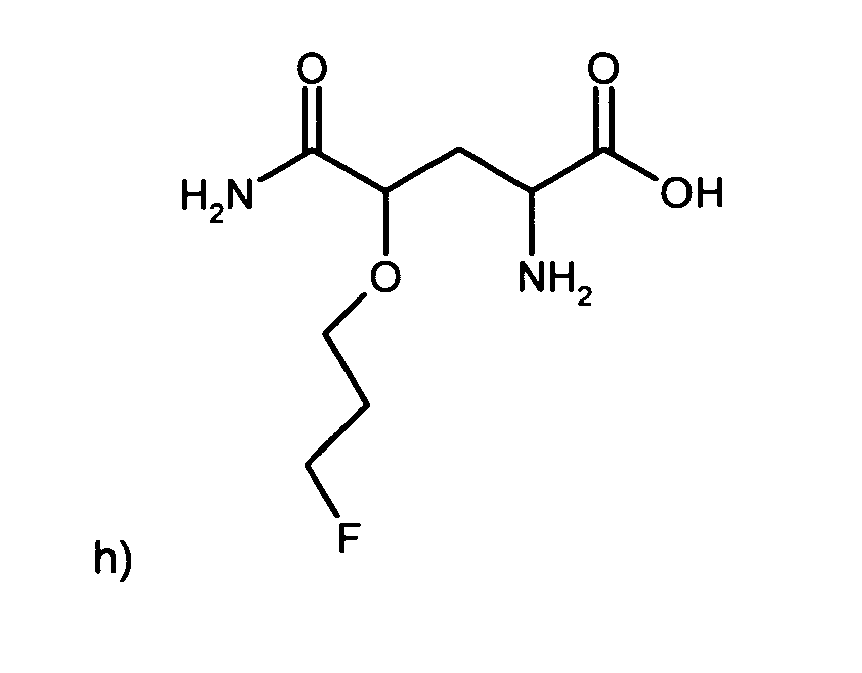


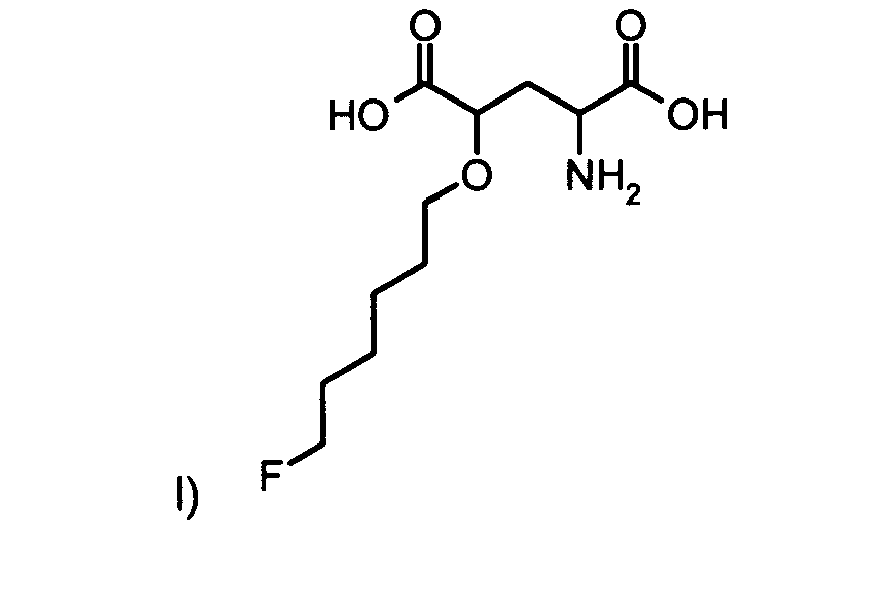
l) 2-Amino-4-[F-19]fluoroglutamin
Priority Applications (13)
| Application Number | Priority Date | Filing Date | Title |
|---|---|---|---|
| EP08075509A EP2123620A1 (en) | 2008-05-20 | 2008-05-20 | {F-19}-labeled L-Glutamic acid and L-Glutamine derivative (III), use thereof and method for obtaining them |
| US12/992,956 US20110064673A1 (en) | 2008-05-20 | 2009-05-14 | New L-Glutamic acid and L-Glutamine derivative (III), use thereof and method for obtaining them |
| JP2011509883A JP2011520931A (en) | 2008-05-20 | 2009-05-14 | {F-19} -labeled L-glutamic acid and L-glutamine derivative (III), their use and method for obtaining them |
| CN2009801185407A CN102083773A (en) | 2008-05-20 | 2009-05-14 | {F-19} labeled L-glutamic acid and L-glutamine derivatives (Ⅲ), their use and preparation method |
| EP09749580A EP2282981A1 (en) | 2008-05-20 | 2009-05-14 | {f-19} -labeled l-glutamic acid and l-glutamine derivative (iii), use thereof and method for obtaining them |
| PCT/EP2009/003419 WO2009141090A1 (en) | 2008-05-20 | 2009-05-14 | {f-19} -labeled l-glutamic acid and l-glutamine derivative (iii), use thereof and method for obtaining them |
| KR1020107025996A KR20110013411A (en) | 2008-05-20 | 2009-05-14 | (F-19) -labeled L-glutamic acid and L-glutamine derivative (III), uses thereof and methods of obtaining the same |
| CA2723594A CA2723594A1 (en) | 2008-05-20 | 2009-05-14 | {f-19}-labeled l-glutamic acid and l-glutamine derivative (iii), use thereof and method for obtaining them |
| ARP090101804A AR073844A1 (en) | 2008-05-20 | 2009-05-20 | L-GLUTAMIC ACID AND DERIVATIVE L-GLUTAMINE (III) USE OF THE SAME AND METHOD TO OBTAIN THEM, PHARMACEUTICAL COMPOSITIONS AND DISEASE DIAGNOSTIC METHODS |
| UY0001031834A UY31834A (en) | 2008-05-20 | 2009-05-20 | NEW L-GLUTAMIC ACID AND DERIVATIVE L-GLUTAMINE (III), USE OF THE SAME AND METHOD TO OBTAIN THEM |
| PE2009000708A PE20091926A1 (en) | 2008-05-20 | 2009-05-20 | L-GLUTAMIC ACID AND L-GLUTAMINE (III) DERIVATIVE AND METHOD TO OBTAIN THEM |
| TW098116728A TW201010733A (en) | 2008-05-20 | 2009-05-20 | New L-glutamic acid and L-glutamine derivative (III), use thereof and method for obtaining them |
| US14/257,431 US20140227191A1 (en) | 2008-05-20 | 2014-04-21 | L-glutamic acid and l-glutamine derivative (iii), use thereof and method for obtaining them |
Applications Claiming Priority (1)
| Application Number | Priority Date | Filing Date | Title |
|---|---|---|---|
| EP08075509A EP2123620A1 (en) | 2008-05-20 | 2008-05-20 | {F-19}-labeled L-Glutamic acid and L-Glutamine derivative (III), use thereof and method for obtaining them |
Publications (1)
| Publication Number | Publication Date |
|---|---|
| EP2123620A1 true EP2123620A1 (en) | 2009-11-25 |
Family
ID=39967400
Family Applications (2)
| Application Number | Title | Priority Date | Filing Date |
|---|---|---|---|
| EP08075509A Withdrawn EP2123620A1 (en) | 2008-05-20 | 2008-05-20 | {F-19}-labeled L-Glutamic acid and L-Glutamine derivative (III), use thereof and method for obtaining them |
| EP09749580A Withdrawn EP2282981A1 (en) | 2008-05-20 | 2009-05-14 | {f-19} -labeled l-glutamic acid and l-glutamine derivative (iii), use thereof and method for obtaining them |
Family Applications After (1)
| Application Number | Title | Priority Date | Filing Date |
|---|---|---|---|
| EP09749580A Withdrawn EP2282981A1 (en) | 2008-05-20 | 2009-05-14 | {f-19} -labeled l-glutamic acid and l-glutamine derivative (iii), use thereof and method for obtaining them |
Country Status (11)
| Country | Link |
|---|---|
| US (2) | US20110064673A1 (en) |
| EP (2) | EP2123620A1 (en) |
| JP (1) | JP2011520931A (en) |
| KR (1) | KR20110013411A (en) |
| CN (1) | CN102083773A (en) |
| AR (1) | AR073844A1 (en) |
| CA (1) | CA2723594A1 (en) |
| PE (1) | PE20091926A1 (en) |
| TW (1) | TW201010733A (en) |
| UY (1) | UY31834A (en) |
| WO (1) | WO2009141090A1 (en) |
Cited By (2)
| Publication number | Priority date | Publication date | Assignee | Title |
|---|---|---|---|---|
| EP2322171A3 (en) * | 2009-11-17 | 2011-06-01 | Bayer Schering Pharma Aktiengesellschaft | Fluorine labeled L-glutamic acid derivatives |
| US20120288444A1 (en) * | 2009-08-14 | 2012-11-15 | The Trustees Of The University Of Pennsylvania | Single diastereomers of 4-fluoroglutamine and methods of their preparation and use |
Families Citing this family (10)
| Publication number | Priority date | Publication date | Assignee | Title |
|---|---|---|---|---|
| EP2123621A1 (en) | 2008-05-20 | 2009-11-25 | Bayer Schering Pharma Aktiengesellschaft | New [F-18]-marked L-glutamic acids and L-glutamic acid derivatives (1), application thereof and method for their manufacture |
| BRPI0718055A2 (en) * | 2006-11-01 | 2013-11-05 | Bayer Schering Pharma Ag | L-GLUTAMIC ACID MARKED WITH (F-18), L-GLUTAMINE MARKED WITH (F-18), ITS DERIVATIVES AND ITS USE, AS PROCESSES FOR PREPARATION |
| JP2013510891A (en) * | 2009-11-17 | 2013-03-28 | バイエル・ファルマ・アクチェンゲゼルシャフト | Method for producing F-18-labeled glutamic acid derivative |
| EP2520557A1 (en) | 2011-05-03 | 2012-11-07 | Bayer Pharma Aktiengesellschaft | Novel precursors of glutamate derivatives |
| EP2520556A1 (en) | 2011-05-03 | 2012-11-07 | Bayer Pharma Aktiengesellschaft | Radiolabeled amino acids for diagnostic imaging |
| CN103333079B (en) * | 2013-07-03 | 2016-08-17 | 广东回旋医药科技股份有限公司 | Imino group acids PET developer and preparation method and application |
| CN109467514B (en) * | 2018-11-15 | 2020-11-24 | 西北师范大学 | A kind of synthetic method of α-amino-γ-carbonyl pimelic acid ester compound |
| CN109369445B (en) * | 2018-11-20 | 2021-10-15 | 首都医科大学 | Radioactive glutamine derivatives for diagnosis and therapy and methods for their preparation |
| MX2021007272A (en) * | 2018-12-18 | 2021-09-23 | Xianfeng Peng | Application of glutamine derivative in preparation of animal feed additive. |
| US12435032B2 (en) | 2019-07-12 | 2025-10-07 | University Of Mississippi | L-γ-methyleneglutamine compounds and methods of use |
Citations (1)
| Publication number | Priority date | Publication date | Assignee | Title |
|---|---|---|---|---|
| WO2008052788A1 (en) * | 2006-11-01 | 2008-05-08 | Bayer Schering Pharma Aktiengesellschaft | [f-18]-labeled l-glutamic acid, [f-18]-labeled l-glutamine, derivatives thereof and use thereof and processes for their preparation |
Family Cites Families (7)
| Publication number | Priority date | Publication date | Assignee | Title |
|---|---|---|---|---|
| GB9324872D0 (en) * | 1993-12-03 | 1994-01-19 | Univ Pasteur | Pharmaceutical compounds |
| US5721265A (en) * | 1994-08-05 | 1998-02-24 | Sri International | Fluorinated 2-nitroimidazole analogs for detecting hypoxic tumor cells |
| WO2002014261A2 (en) * | 2000-08-10 | 2002-02-21 | Eli Lilly And Company | 4-substituted d-glutamic acid derivatives for use as antibiotic |
| EP1314041A2 (en) * | 2000-09-01 | 2003-05-28 | Annovis, Inc. | Screen for glutamate reuptake inhibitors, stimulators, and modulators |
| AU2003304200B2 (en) * | 2002-08-02 | 2009-10-01 | Vrije Universiteit Brussel | Radioactively labelled amino acid analogues, their preparation and use |
| US7483732B2 (en) * | 2004-04-15 | 2009-01-27 | Boston Scientific Scimed, Inc. | Magnetic resonance imaging of a medical device and proximate body tissue |
| AU2006262502A1 (en) * | 2005-06-23 | 2007-01-04 | Emory Univerisity | Imaging agents |
-
2008
- 2008-05-20 EP EP08075509A patent/EP2123620A1/en not_active Withdrawn
-
2009
- 2009-05-14 JP JP2011509883A patent/JP2011520931A/en active Pending
- 2009-05-14 US US12/992,956 patent/US20110064673A1/en not_active Abandoned
- 2009-05-14 WO PCT/EP2009/003419 patent/WO2009141090A1/en not_active Ceased
- 2009-05-14 CA CA2723594A patent/CA2723594A1/en not_active Abandoned
- 2009-05-14 KR KR1020107025996A patent/KR20110013411A/en not_active Withdrawn
- 2009-05-14 EP EP09749580A patent/EP2282981A1/en not_active Withdrawn
- 2009-05-14 CN CN2009801185407A patent/CN102083773A/en active Pending
- 2009-05-20 UY UY0001031834A patent/UY31834A/en not_active Application Discontinuation
- 2009-05-20 AR ARP090101804A patent/AR073844A1/en unknown
- 2009-05-20 PE PE2009000708A patent/PE20091926A1/en not_active Application Discontinuation
- 2009-05-20 TW TW098116728A patent/TW201010733A/en unknown
-
2014
- 2014-04-21 US US14/257,431 patent/US20140227191A1/en not_active Abandoned
Patent Citations (1)
| Publication number | Priority date | Publication date | Assignee | Title |
|---|---|---|---|---|
| WO2008052788A1 (en) * | 2006-11-01 | 2008-05-08 | Bayer Schering Pharma Aktiengesellschaft | [f-18]-labeled l-glutamic acid, [f-18]-labeled l-glutamine, derivatives thereof and use thereof and processes for their preparation |
Non-Patent Citations (2)
| Title |
|---|
| "Remington's Pharmaceutical Sciences", MACK PUBLISHING CO. |
| MEDINA ET AL., MOLECULAR AND CELLULAR BIOCHEMISTRY, vol. 113, 1992, pages 1 - 15 |
Cited By (3)
| Publication number | Priority date | Publication date | Assignee | Title |
|---|---|---|---|---|
| US20120288444A1 (en) * | 2009-08-14 | 2012-11-15 | The Trustees Of The University Of Pennsylvania | Single diastereomers of 4-fluoroglutamine and methods of their preparation and use |
| US8747809B2 (en) | 2009-08-14 | 2014-06-10 | The Trustees Of The University Of Pennsylvania | Single diastereomers of 4-fluoroglutamine and methods of their preparation and use |
| EP2322171A3 (en) * | 2009-11-17 | 2011-06-01 | Bayer Schering Pharma Aktiengesellschaft | Fluorine labeled L-glutamic acid derivatives |
Also Published As
| Publication number | Publication date |
|---|---|
| AR073844A1 (en) | 2010-12-09 |
| WO2009141090A9 (en) | 2010-03-25 |
| WO2009141090A8 (en) | 2010-10-28 |
| UY31834A (en) | 2010-01-05 |
| US20110064673A1 (en) | 2011-03-17 |
| WO2009141090A1 (en) | 2009-11-26 |
| PE20091926A1 (en) | 2010-01-24 |
| JP2011520931A (en) | 2011-07-21 |
| KR20110013411A (en) | 2011-02-09 |
| US20140227191A1 (en) | 2014-08-14 |
| CA2723594A1 (en) | 2009-11-26 |
| EP2282981A1 (en) | 2011-02-16 |
| TW201010733A (en) | 2010-03-16 |
| CN102083773A (en) | 2011-06-01 |
Similar Documents
| Publication | Publication Date | Title |
|---|---|---|
| EP2123620A1 (en) | {F-19}-labeled L-Glutamic acid and L-Glutamine derivative (III), use thereof and method for obtaining them | |
| CN110167915B (en) | Amino-thiol compound, preparation method thereof and application thereof in radiation protection | |
| ES2606855T3 (en) | Phosphaplatins and their use for the treatment of cancers | |
| US20190167819A1 (en) | Contrast agents | |
| JP7752339B2 (en) | Derivatives of 3-borono-phenylalanine | |
| CN100427139C (en) | Water-soluble sulfonylhydrazide prodrugs useful as novel alkylating agents | |
| EP2643301B1 (en) | Technetium-99m complex as a tool for the in vivo diagnosis of cancerous tumours | |
| EP3229848B1 (en) | Targeted contrast agents comprising a hydrazide functional group | |
| US5653960A (en) | Tetra-aza macrocycles, processes for their preparation and their use in magnetic resonance imaging | |
| CN109879933A (en) | A Class of Phosphoryl-Containing Compounds and Their Applications | |
| CN109942630A (en) | Natural activity molecule coupling labeled compound and application thereof based on Osalmid and pterostilbene | |
| EP2319850A1 (en) | Optically active -amino acid into which bsh is introduced and method for synthesizing the same | |
| TW200936169A (en) | N-alkoxyamide conjugates as imaging agents | |
| JPH07508996A (en) | Phenolized thioetheramines and their acyl derivatives for radioimaging and radiotherapy for use in the diagnosis and treatment of pigmentation diseases | |
| JP2021528461A (en) | Radioactive compounds for the treatment of melanoma and their uses | |
| Ramzi et al. | Synthesis and evaluation of radiolabeled porphyrin derivatives for cancer diagnoses and their nonradioactive counterparts for photodynamic therapy | |
| EA000166B1 (en) | Biologically active ureido derivatives useful in the treatment of multiple sclerosis | |
| CN115340526B (en) | Phthalimide compounds and pharmaceutical compositions, preparation methods and uses thereof | |
| CN111285900B (en) | Coupling molecule DCZ0847 compound based on pterostilbene and apocynin, preparation method and application thereof | |
| HK1157734A (en) | {f-19} -labeled l-glutamic acid and l-glutamine derivative (iii), use thereof and method for obtaining them | |
| WO2022186273A1 (en) | Radioactive compound | |
| JP5384030B2 (en) | Gadolinium compound and contrast medium for MRI | |
| KR100823146B1 (en) | Novel Phytosphingosine Derivatives and Radiotherapy Enhancers Using the Same | |
| RU2008141903A (en) | COMPOUNDS OF PURINE AND WAYS OF THEIR APPLICATION | |
| JP2002506050A (en) | Manganese chelate with high relaxivity in serum |
Legal Events
| Date | Code | Title | Description |
|---|---|---|---|
| PUAI | Public reference made under article 153(3) epc to a published international application that has entered the european phase |
Free format text: ORIGINAL CODE: 0009012 |
|
| 17P | Request for examination filed |
Effective date: 20080520 |
|
| AK | Designated contracting states |
Kind code of ref document: A1 Designated state(s): AT BE BG CH CY CZ DE DK EE ES FI FR GB GR HR HU IE IS IT LI LT LU LV MC MT NL NO PL PT RO SE SI SK TR |
|
| AX | Request for extension of the european patent |
Extension state: AL BA MK RS |
|
| AKX | Designation fees paid |
Designated state(s): AT BE BG CH CY CZ DE DK EE ES FI FR GB GR HR HU IE IS IT LI LT LU LV MC MT NL NO PL PT RO SE SI SK TR |
|
| STAA | Information on the status of an ep patent application or granted ep patent |
Free format text: STATUS: THE APPLICATION IS DEEMED TO BE WITHDRAWN |
|
| 18D | Application deemed to be withdrawn |
Effective date: 20100526 |