EP2120237A2 - Audio Processor - Google Patents
Audio Processor Download PDFInfo
- Publication number
- EP2120237A2 EP2120237A2 EP09159133A EP09159133A EP2120237A2 EP 2120237 A2 EP2120237 A2 EP 2120237A2 EP 09159133 A EP09159133 A EP 09159133A EP 09159133 A EP09159133 A EP 09159133A EP 2120237 A2 EP2120237 A2 EP 2120237A2
- Authority
- EP
- European Patent Office
- Prior art keywords
- digital audio
- audio data
- data
- inputted
- digital
- Prior art date
- Legal status (The legal status is an assumption and is not a legal conclusion. Google has not performed a legal analysis and makes no representation as to the accuracy of the status listed.)
- Withdrawn
Links
- 238000005070 sampling Methods 0.000 claims abstract description 57
- 238000006243 chemical reaction Methods 0.000 description 3
- 238000000034 method Methods 0.000 description 3
- 238000010586 diagram Methods 0.000 description 1
- 239000000284 extract Substances 0.000 description 1
- 238000012986 modification Methods 0.000 description 1
- 230000004048 modification Effects 0.000 description 1
Images

Classifications
-
- G—PHYSICS
- G11—INFORMATION STORAGE
- G11B—INFORMATION STORAGE BASED ON RELATIVE MOVEMENT BETWEEN RECORD CARRIER AND TRANSDUCER
- G11B20/00—Signal processing not specific to the method of recording or reproducing; Circuits therefor
- G11B20/10—Digital recording or reproducing
- G11B20/10527—Audio or video recording; Data buffering arrangements
-
- G—PHYSICS
- G11—INFORMATION STORAGE
- G11B—INFORMATION STORAGE BASED ON RELATIVE MOVEMENT BETWEEN RECORD CARRIER AND TRANSDUCER
- G11B20/00—Signal processing not specific to the method of recording or reproducing; Circuits therefor
- G11B20/10—Digital recording or reproducing
- G11B20/10527—Audio or video recording; Data buffering arrangements
- G11B2020/10537—Audio or video recording
- G11B2020/10546—Audio or video recording specifically adapted for audio data
- G11B2020/10555—Audio or video recording specifically adapted for audio data wherein the frequency, the amplitude, or other characteristics of the audio signal is taken into account
- G11B2020/10564—Audio or video recording specifically adapted for audio data wherein the frequency, the amplitude, or other characteristics of the audio signal is taken into account frequency
-
- G—PHYSICS
- G11—INFORMATION STORAGE
- G11B—INFORMATION STORAGE BASED ON RELATIVE MOVEMENT BETWEEN RECORD CARRIER AND TRANSDUCER
- G11B20/00—Signal processing not specific to the method of recording or reproducing; Circuits therefor
- G11B20/10—Digital recording or reproducing
- G11B20/12—Formatting, e.g. arrangement of data block or words on the record carriers
- G11B2020/1264—Formatting, e.g. arrangement of data block or words on the record carriers wherein the formatting concerns a specific kind of data
- G11B2020/1265—Control data, system data or management information, i.e. data used to access or process user data
- G11B2020/1277—Control data, system data or management information, i.e. data used to access or process user data for managing gaps between two recordings, e.g. control data in linking areas, run-in or run-out fields, guard or buffer zones
Definitions
- the present invention relates to an audio processor which converts an inputted digital audio data into an analog audio data.
- an audio processor which converts an inputted digital audio data into an analog audio data converts the digital audio data into the analog audio data at a sampling frequency of the digital audio data (a sampling frequency when converting the digital audio data from the analog audio data into the digital audio data). That is to say, when the digital audio data is inputted, such an audio processor firstly adjusts the sampling frequency to convert the digital audio data into the analog audio data to be same as the sampling frequency of the inputted digital audio data, and subsequently converts the inputted digital audio data into the analog audio data at the adjusted sampling frequency. The converted analog audio data is outputted to a speaker, and the speaker reproduces an audio based on the inputted digital audio data.
- the above audio processor carries out a mute processing so as not to output the analog audio data which is converted from the digital audio data until the adjustment of the sampling frequency is completed.
- a sound interrupt (the audio is not reproduced) often occurs at the beginning of the audio to be reproduced (the audio based on the subsequently inputted digital audio data) due to the mute processing.
- the inputted digital audio data is converted into the analog audio data after waiting the time for adjusting the sampling frequency, so that the processing of the digital audio data becomes complex.
- the above problem cannot be resolved.
- An object of the present invention is to provide an audio processor which can avoid a sound interrupt at the beginning of an audio to be reproduced by a simple processing.
- an audio processor for converting a digital audio data in an inputted digital audio file into an analog audio data, comprising: data processing means for processing a digital audio data in an inputted digital audio file, and audio converting means for converting the digital audio data processed by the data processing means into the analog audio data in accordance with a sampling frequency of the digital audio data.
- the data processing means adds a silent data of time which is the same or longer as time for completing a setting of the sampling frequency in the data processing means in a beginning of the digital audio data in the subsequently inputted digital audio file.
- a silent data is firstly converted into the analog audio data, and subsequently, a normal digital audio data (a digital audio data which is originally included in the digital audio file) in the digital audio file is converted into the analog audio data in reproducing the subsequently inputted digital audio file. Consequently, when the subsequently inputted digital audio file is reproduced, the audio processor can convert the normal digital audio data in the digital audio file into the analog audio data after completing the setting of the sampling frequency, and the sound interrupt can be avoided at the beginning of the audio to be reproduced. Moreover, the audio processor can avoid the sound interrupt at the beginning of the audio by a simple processing to add the silent data in the beginning of the digital audio data in the digital audio file.
- the data processing means adds the silent data in the beginning of the digital audio data in the digital audio file, which is inputted first among the digital audio files which start to be inputted. Consequently, also when the digital audio file, which is inputted first among the digital audio files which start to be inputted, is reproduced, the audio processor can avoid the sound interrupt at the beginning of the audio to be reproduced.
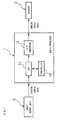
- FIG. 1 shows a configuration of an audio processor according to the present preferred embodiment.
- An audio processor 1 is connected between a SPDIF output unit 2 and a speaker 3 and reproduces an audio through the speaker 3 based on a digital audio data outputted from the SPDIF output unit 2.
- the digital audio data outputted from the SPDIF output unit 2 is inputted to the audio processor 1, and the audio processor 1 converts the inputted digital audio data into an analog audio data and outputs the converted analog audio data to the speaker 3.
- the SPDIF output unit 2 which is a DVD player, CD player, digital media server, and so on, outputs the digital audio data in SPDIF format (Sony Philips Digital Interface Format). Moreover, the SPDIF output unit 2 outputs the digital audio data in form of a digital audio file. In other words, the SPDIF output unit 2 makes up the digital audio file from the digital audio data, a sampling frequency data which indicates a sampling frequency when converting the analog audio data into the digital audio data, and so on and outputs the digital audio data in the form of the digital audio file.
- the audio processor 1 includes a DSP (digital signal processor) 11 to process a digital data, a D/A converter (digital analog converter) 12 to convert the digital data into an analog data, a controller 13 to control an operation of the audio processor 1, and so on.
- DSP digital signal processor
- D/A converter digital analog converter
- the DSP 11 analyzes the digital audio file inputted from the SPDIF output unit 2 and subsequently separates and extracts a sampling frequency data and a digital audio data from the digital audio file. Moreover, the DSP 11 outputs the sampling frequency data which is separated and extracted from the digital audio file to the controller 13. After carrying out a predetermined data processing of the digital audio data separated and extracted from the digital audio file, the DSP 11 outputs the processed digital audio data to the D/A converter 12.
- the D/A converter 12 converts the processed digital audio data which is outputted from the DSP 11 into the analog audio data.
- the analog audio data converted by the D/A converter 12 is outputted to the speaker 3, and the speaker 3 reproduces an audio based on the digital audio data in the digital audio file which is inputted from the SPDIF output unit 2.
- the controller 13 controls various operations of the audio processor 1.
- the above predetermined data processing performed by the DSP 11 includes a decode processing, an error correction processing, and so on.
- the DSP 11 adds a silent data in the beginning of the digital audio data as the predetermined data processing of the digital audio data. That is to say, the DSP 11 adds the silent data of predetermined amount of time (1 second, for example) in the beginning of the digital audio data in the digital audio file, which is inputted first among the digital audio files which start to be inputted from the SPDIF output unit 2.
- the DSP 11 adds the silent data of the predetermined amount of time (1 second, for example) in the beginning of digital audio data in the digital audio file which is subsequently inputted.
- the DSP 11 makes up a data processing means.
- the DSP 11 outputs the processed digital audio data to the D/A converter 12 at a sampling frequency of the digital audio data. Consequently, the processed digital audio data is converted into the analog audio data at the sampling frequency of the digital audio data by the D/A converter 12. That is to say, the DSP 11 and the D/A converter 12 convert the processed digital audio data into the analog audio data in accordance with the sampling frequency of the digital audio data.
- the DSP 11 and the D/A converter 12 make up an audio converting means.
- FIG 2 is a flow chart showing an operation of the audio processor 1. Firstly, when the digital audio file is inputted from the SPDIF output unit 2 (when receiving the digital audio file from the SPDIF output unit 2) (YES in #1), the controller 13 detects the sampling frequency of the digital audio data in the digital audio file (#2).
- the DSP 11 when the digital audio file is inputted from the SPDIF output unit 2, the DSP 11 output the sampling frequency data included in the digital audio file to the controller 13, and the controller 13 detects the sampling frequency of the digital audio data in the digital audio file which is inputted from the SPDIF output unit 2 based on the sampling frequency data.
- the controller 13 sends a command to the DSP 11 to set the sampling frequency (#3), to add the silent data of the predetermined amount of time (1 second, for example) in the beginning of the digital audio data in the digital audio file (#4), and to carry out the D/A conversion process (#5).
- the DSP 11 Upon receiving the above commands, the DSP 11 sets the sampling frequency for converting the digital audio data into the analog audio data to be the same as the sampling frequency of the digital audio data in the inputted digital audio file, carries out the data processing to add the silent data of the predetermined amount of time (which is the same as the time for completing the setting of the sampling frequency or longer, 1 second, for example) in the beginning of the digital audio data in the inputted digital audio file, and outputs the processed digital audio data (the digital audio data in which the silent data is added in the beginning) to the D/A converter 12.
- the silent data of the predetermined amount of time which is the same as the time for completing the setting of the sampling frequency or longer, 1 second, for example
- the DSP 11 outputs the processed digital audio data to the D/A converter 12 at the predetermined frequency until the setting of the sampling frequency is completed, and after the setting of the sampling frequency is completed, the DSP 11 outputs the processed digital audio data to the D/A converter 12 at the set sampling frequency.
- the silent data which is added in the beginning of the digital audio data in the digital audio file is converted into the analog audio data by the D/A converter 12, and subsequently, the normal digital audio data (the digital audio data which is originally included in the digital audio file) in the digital audio file following the silent data is converted into the analog audio data by the D/A converter 12. Consequently, until the setting of the sampling frequency is completed, the silent data is converted into the analog audio data, and the audio reproduced by the speaker 3 becomes silent, and after the setting of the sampling frequency is completed, the normal digital audio data in the digital audio file is converted into the analog audio data, and the audio based on the digital audio file is reproduced by the speaker 3.
- the controller 13 detects the sampling frequency of the digital audio data in the digital audio file (#7) and determines whether or not the sampling frequency of the digital audio data in the digital audio file which is earlier inputted is the same as that of the sampling frequency of the digital audio data in the digital audio file which is subsequently inputted (#8).
- the controller 13 repeats the above steps of #5 to #8. That is to say, when the sampling frequency of the digital audio data in the digital audio file which is earlier inputted is the same as that of the digital audio data in the digital audio file which is subsequently inputted, the digital audio data is converted into the analog audio data without setting the sampling frequency and adding the silent data in the subsequently inputted digital audio file.
- the controller 13 repeats the above steps of #3 to #8. That is to say, when the sampling frequency of the digital audio data in the digital audio file which is earlier inputted is different from that of the digital audio data in the digital audio file which is subsequently inputted, the setting of the sampling frequency and the addition of the silent data are carried out on the subsequently inputted digital audio file, and subsequently, the digital audio data is converted into the analog audio data.
- the audio processor 1 when starting to input the digital audio data, the silent data is firstly converted into the analog audio data when the digital audio file, which is inputted first among the digital audio files which start to be inputted, is reproduced, and subsequently, the normal digital audio data in the digital audio file is converted into the analog audio data. Consequently, when the digital audio file, which is inputted first among the digital audio files which start to be inputted, is reproduced, the audio processor I can convert the normal digital audio data in the digital audio file into the analog audio data after completing the setting of the sampling frequency and thereby can avoid the sound interrupt at the beginning of the audio to be reproduced.
- the audio processor 1 can convert the digital audio data in the digital audio file into the analog audio data after completing the setting of the sampling frequency and thereby can avoid the sound interrupt at the beginning of the audio to be reproduced.
- the audio processor 1 can continuously reproduce the one music without the silent interval during the reproduction.
- the present invention is not limited to the configuration of the above preferred embodiment, however, various modification are applicable within the scope of the invention.
- the present invention can be applied to not only an audio processor connected to a SPDIF output unit which outputs digital audio data in SPDIF format but also an audio processor connected to a unit which outputs digital audio data in non-SPDIF format.
- the audio processor according to the present invention can process digital audio data not only in SPDIF format but also in non-SPDIF format.
- the audio processor is connected to the speaker, however, the audio processor can incorporate the speaker.
Landscapes
- Engineering & Computer Science (AREA)
- Multimedia (AREA)
- Signal Processing (AREA)
- Signal Processing For Digital Recording And Reproducing (AREA)
- Signal Processing Not Specific To The Method Of Recording And Reproducing (AREA)
Abstract
An audio processor is provided which includes a digital signal processor for processing a digital audio data in an inputted digital audio file and a digital analog converter for converting the digital audio data processed by the digital signal processor into an analog audio data in accordance with a sampling frequency of the digital audio data. If a sampling frequency of a digital audio data in a digital audio file which is earlier inputted is different from that of a digital audio data in a digital audio file which is subsequently inputted when a plurality of digital audio files are successively inputted, the digital signal processor adds a silent data of time which is the same or longer as time for completing a setting of the sampling frequency in a beginning of the digital audio data in the subsequently inputted digital audio file.
Description
- The present invention relates to an audio processor which converts an inputted digital audio data into an analog audio data.
- Conventionally, an audio processor which converts an inputted digital audio data into an analog audio data converts the digital audio data into the analog audio data at a sampling frequency of the digital audio data (a sampling frequency when converting the digital audio data from the analog audio data into the digital audio data). That is to say, when the digital audio data is inputted, such an audio processor firstly adjusts the sampling frequency to convert the digital audio data into the analog audio data to be same as the sampling frequency of the inputted digital audio data, and subsequently converts the inputted digital audio data into the analog audio data at the adjusted sampling frequency. The converted analog audio data is outputted to a speaker, and the speaker reproduces an audio based on the inputted digital audio data.
- When a sampling frequency of a digital audio data which is earlier inputted is different from that of a digital audio data which is subsequently inputted, the above audio processor carries out a mute processing so as not to output the analog audio data which is converted from the digital audio data until the adjustment of the sampling frequency is completed. As a result, a sound interrupt (the audio is not reproduced) often occurs at the beginning of the audio to be reproduced (the audio based on the subsequently inputted digital audio data) due to the mute processing.
- There is a known audio processor which avoids the sound interrupt at the beginning of the audio (refer to Japanese Laid-Open Patent Publication No.
2007- 80347 - Meanwhile, there is a known broadcasting receiver for receiving a radio broadcasting which outputs an audio of an analog broadcasting, which has the same contents as a digital broadcasting, while a setting of a signal processing unit is changed when the sampling frequency of the digital broadcasting is changed (refer to Japanese Laid-Open Patent Publication No.
2005- 277791 2002- 344561 2001- 143394 - However, in the above audio processor described in the publication No.
2007- 80347 2005- 277791 ,2002- 344561 , and2001- 143394 , the above problem cannot be resolved. - An object of the present invention is to provide an audio processor which can avoid a sound interrupt at the beginning of an audio to be reproduced by a simple processing.
- According to the present invention, this object is achieved by an audio processor for converting a digital audio data in an inputted digital audio file into an analog audio data, comprising: data processing means for processing a digital audio data in an inputted digital audio file, and audio converting means for converting the digital audio data processed by the data processing means into the analog audio data in accordance with a sampling frequency of the digital audio data.
- If a sampling frequency of a digital audio data in a digital audio file which is earlier inputted is different from that of a digital audio data in a digital audio file which is subsequently inputted when a plurality of the digital audio files are successively inputted, the data processing means adds a silent data of time which is the same or longer as time for completing a setting of the sampling frequency in the data processing means in a beginning of the digital audio data in the subsequently inputted digital audio file.
- According to the above configuration, when the sampling frequency of the digital audio data in the digital audio file which is earlier inputted is different from that of the digital audio data in the digital audio file which is subsequently inputted, a silent data is firstly converted into the analog audio data, and subsequently, a normal digital audio data (a digital audio data which is originally included in the digital audio file) in the digital audio file is converted into the analog audio data in reproducing the subsequently inputted digital audio file. Consequently, when the subsequently inputted digital audio file is reproduced, the audio processor can convert the normal digital audio data in the digital audio file into the analog audio data after completing the setting of the sampling frequency, and the sound interrupt can be avoided at the beginning of the audio to be reproduced. Moreover, the audio processor can avoid the sound interrupt at the beginning of the audio by a simple processing to add the silent data in the beginning of the digital audio data in the digital audio file.
- It is preferable that the data processing means adds the silent data in the beginning of the digital audio data in the digital audio file, which is inputted first among the digital audio files which start to be inputted. Consequently, also when the digital audio file, which is inputted first among the digital audio files which start to be inputted, is reproduced, the audio processor can avoid the sound interrupt at the beginning of the audio to be reproduced.
- The present invention will be described below with reference to the annexed drawings. It is to be noted that all the drawings are shown for the purpose of illustrating the technical concept of the present invention or embodiments thereof, wherein:
-
FIG. 1 is an electrical block diagram showing a schematic configuration of an audio processor according to a preferred embodiment of the present invention; and -
FIG. 2 is a flow chart showing an operation of the audio processor inFIG. 1 . - An audio processor according to a preferred embodiment of the present invention is described below with reference to
FIGS. 1 and2 .FIG. 1 shows a configuration of an audio processor according to the present preferred embodiment. Anaudio processor 1 is connected between aSPDIF output unit 2 and aspeaker 3 and reproduces an audio through thespeaker 3 based on a digital audio data outputted from theSPDIF output unit 2. In other words, the digital audio data outputted from theSPDIF output unit 2 is inputted to theaudio processor 1, and theaudio processor 1 converts the inputted digital audio data into an analog audio data and outputs the converted analog audio data to thespeaker 3. - The
SPDIF output unit 2, which is a DVD player, CD player, digital media server, and so on, outputs the digital audio data in SPDIF format (Sony Philips Digital Interface Format). Moreover, theSPDIF output unit 2 outputs the digital audio data in form of a digital audio file. In other words, theSPDIF output unit 2 makes up the digital audio file from the digital audio data, a sampling frequency data which indicates a sampling frequency when converting the analog audio data into the digital audio data, and so on and outputs the digital audio data in the form of the digital audio file. - The
audio processor 1 includes a DSP (digital signal processor) 11 to process a digital data, a D/A converter (digital analog converter) 12 to convert the digital data into an analog data, acontroller 13 to control an operation of theaudio processor 1, and so on. - The DSP 11 analyzes the digital audio file inputted from the
SPDIF output unit 2 and subsequently separates and extracts a sampling frequency data and a digital audio data from the digital audio file. Moreover, theDSP 11 outputs the sampling frequency data which is separated and extracted from the digital audio file to thecontroller 13. After carrying out a predetermined data processing of the digital audio data separated and extracted from the digital audio file, theDSP 11 outputs the processed digital audio data to the D/A converter 12. - The D/
A converter 12 converts the processed digital audio data which is outputted from theDSP 11 into the analog audio data. The analog audio data converted by the D/A converter 12 is outputted to thespeaker 3, and thespeaker 3 reproduces an audio based on the digital audio data in the digital audio file which is inputted from theSPDIF output unit 2. Thecontroller 13 controls various operations of theaudio processor 1. - The above predetermined data processing performed by the
DSP 11 includes a decode processing, an error correction processing, and so on. The DSP 11 adds a silent data in the beginning of the digital audio data as the predetermined data processing of the digital audio data. That is to say, the DSP 11 adds the silent data of predetermined amount of time (1 second, for example) in the beginning of the digital audio data in the digital audio file, which is inputted first among the digital audio files which start to be inputted from theSPDIF output unit 2. Moreover, if the sampling frequency of the digital audio data in the digital audio file which is earlier inputted is different from that of the digital audio data in the digital audio file which is subsequently inputted when the plurality of the digital audio files are successively inputted from theSPDIF output unit 2, the DSP 11 adds the silent data of the predetermined amount of time (1 second, for example) in the beginning of digital audio data in the digital audio file which is subsequently inputted. The DSP 11 makes up a data processing means. - The
DSP 11 outputs the processed digital audio data to the D/A converter 12 at a sampling frequency of the digital audio data. Consequently, the processed digital audio data is converted into the analog audio data at the sampling frequency of the digital audio data by the D/A converter 12. That is to say, the DSP 11 and the D/A converter 12 convert the processed digital audio data into the analog audio data in accordance with the sampling frequency of the digital audio data. The DSP 11 and the D/A converter 12 make up an audio converting means. -
FIG 2 is a flow chart showing an operation of theaudio processor 1. Firstly, when the digital audio file is inputted from the SPDIF output unit 2 (when receiving the digital audio file from the SPDIF output unit 2) (YES in #1), thecontroller 13 detects the sampling frequency of the digital audio data in the digital audio file (#2). - In other words, when the digital audio file is inputted from the
SPDIF output unit 2, theDSP 11 output the sampling frequency data included in the digital audio file to thecontroller 13, and thecontroller 13 detects the sampling frequency of the digital audio data in the digital audio file which is inputted from theSPDIF output unit 2 based on the sampling frequency data. - Subsequently, the
controller 13 sends a command to theDSP 11 to set the sampling frequency (#3), to add the silent data of the predetermined amount of time (1 second, for example) in the beginning of the digital audio data in the digital audio file (#4), and to carry out the D/A conversion process (#5). - Upon receiving the above commands, the
DSP 11 sets the sampling frequency for converting the digital audio data into the analog audio data to be the same as the sampling frequency of the digital audio data in the inputted digital audio file, carries out the data processing to add the silent data of the predetermined amount of time (which is the same as the time for completing the setting of the sampling frequency or longer, 1 second, for example) in the beginning of the digital audio data in the inputted digital audio file, and outputs the processed digital audio data (the digital audio data in which the silent data is added in the beginning) to the D/A converter 12. - The
DSP 11 outputs the processed digital audio data to the D/A converter 12 at the predetermined frequency until the setting of the sampling frequency is completed, and after the setting of the sampling frequency is completed, theDSP 11 outputs the processed digital audio data to the D/A converter 12 at the set sampling frequency. - Accordingly, the silent data which is added in the beginning of the digital audio data in the digital audio file is converted into the analog audio data by the D/
A converter 12, and subsequently, the normal digital audio data (the digital audio data which is originally included in the digital audio file) in the digital audio file following the silent data is converted into the analog audio data by the D/A converter 12. Consequently, until the setting of the sampling frequency is completed, the silent data is converted into the analog audio data, and the audio reproduced by thespeaker 3 becomes silent, and after the setting of the sampling frequency is completed, the normal digital audio data in the digital audio file is converted into the analog audio data, and the audio based on the digital audio file is reproduced by thespeaker 3. - Subsequently, when another digital audio file is inputted from the SPDIF output unit 2 (YES in #6), the
controller 13 detects the sampling frequency of the digital audio data in the digital audio file (#7) and determines whether or not the sampling frequency of the digital audio data in the digital audio file which is earlier inputted is the same as that of the sampling frequency of the digital audio data in the digital audio file which is subsequently inputted (#8). - At this time, when the sampling frequencies are the same (YES in #8), the
controller 13 repeats the above steps of #5 to #8. That is to say, when the sampling frequency of the digital audio data in the digital audio file which is earlier inputted is the same as that of the digital audio data in the digital audio file which is subsequently inputted, the digital audio data is converted into the analog audio data without setting the sampling frequency and adding the silent data in the subsequently inputted digital audio file. - In contrast, when the sampling frequencies are different (NO in #8), the
controller 13 repeats the above steps of #3 to #8. That is to say, when the sampling frequency of the digital audio data in the digital audio file which is earlier inputted is different from that of the digital audio data in the digital audio file which is subsequently inputted, the setting of the sampling frequency and the addition of the silent data are carried out on the subsequently inputted digital audio file, and subsequently, the digital audio data is converted into the analog audio data. - According to the
audio processor 1 having the above configuration, when starting to input the digital audio data, the silent data is firstly converted into the analog audio data when the digital audio file, which is inputted first among the digital audio files which start to be inputted, is reproduced, and subsequently, the normal digital audio data in the digital audio file is converted into the analog audio data. Consequently, when the digital audio file, which is inputted first among the digital audio files which start to be inputted, is reproduced, the audio processor I can convert the normal digital audio data in the digital audio file into the analog audio data after completing the setting of the sampling frequency and thereby can avoid the sound interrupt at the beginning of the audio to be reproduced. - Moreover, when the sampling frequency of the digital audio data in the digital audio file which is earlier inputted is different from that of the digital audio data in the digital audio file which is subsequently inputted, the silent data is firstly converted into the analog audio data, and subsequently, the digital audio data in the digital audio file is converted into the analog audio data in reproducing the subsequently inputted digital audio file. Consequently, when the digital audio file which is subsequently inputted is reproduced, the
audio processor 1 can convert the digital audio data in the digital audio file into the analog audio data after completing the setting of the sampling frequency and thereby can avoid the sound interrupt at the beginning of the audio to be reproduced. - Furthermore, when the sampling frequency of the digital audio data in the digital audio file which is earlier inputted is the same as that of the digital audio data in the digital audio file which is subsequently inputted, the silent data is not added in reproducing the subsequently inputted digital audio file, so that the conversion of the normal digital audio data in the earlier inputted digital audio file into the analog audio data is followed by the conversion of the normal digital audio data in the subsequently inputted digital audio file into the analog audio data. Consequently, for example, even when one music is made up of two or more digital music files, the
audio processor 1 can continuously reproduce the one music without the silent interval during the reproduction. - The present invention is not limited to the configuration of the above preferred embodiment, however, various modification are applicable within the scope of the invention. For example, the present invention can be applied to not only an audio processor connected to a SPDIF output unit which outputs digital audio data in SPDIF format but also an audio processor connected to a unit which outputs digital audio data in non-SPDIF format. In other words, the audio processor according to the present invention can process digital audio data not only in SPDIF format but also in non-SPDIF format. Moreover, in the above preferred embodiment, the audio processor is connected to the speaker, however, the audio processor can incorporate the speaker.
Claims (2)
- An audio processor for converting a digital audio data in an inputted digital audio file into an analog audio data, comprising:data processing means for processing a digital audio data in an inputted digital audio file; andaudio converting means for converting the digital audio data processed by the data processing means into the analog audio data in accordance with a sampling frequency of the digital audio data, whereinif a sampling frequency of a digital audio data in a digital audio file which is earlier inputted is different from that of a digital audio data in a digital audio file which is subsequently inputted when a plurality of digital audio files are successively inputted, the data processing means adds a silent data of time which is the same or longer as time for completing a setting of the sampling frequency in the data processing means in a beginning of the digital audio data in the subsequently inputted digital audio file.
- The audio processor according to claim 1, wherein
the data processing means adds the silent data in the beginning of the digital audio data in the digital audio file which is inputted first among the digital audio files which start to be inputted.
Applications Claiming Priority (1)
| Application Number | Priority Date | Filing Date | Title |
|---|---|---|---|
| JP2008126427A JP2009277278A (en) | 2008-05-13 | 2008-05-13 | Speech processing unit |
Publications (1)
| Publication Number | Publication Date |
|---|---|
| EP2120237A2 true EP2120237A2 (en) | 2009-11-18 |
Family
ID=40846996
Family Applications (1)
| Application Number | Title | Priority Date | Filing Date |
|---|---|---|---|
| EP09159133A Withdrawn EP2120237A2 (en) | 2008-05-13 | 2009-04-30 | Audio Processor |
Country Status (4)
| Country | Link |
|---|---|
| US (1) | US7928879B2 (en) |
| EP (1) | EP2120237A2 (en) |
| JP (1) | JP2009277278A (en) |
| CN (1) | CN101582279A (en) |
Families Citing this family (2)
| Publication number | Priority date | Publication date | Assignee | Title |
|---|---|---|---|---|
| US20130166052A1 (en) * | 2011-12-27 | 2013-06-27 | Vamshi Kadiyala | Techniques for improving playback of an audio stream |
| JP6597472B2 (en) | 2016-05-11 | 2019-10-30 | 株式会社バッファロー | Storage device, reproduction processing device, operation control method and program in storage device |
Citations (4)
| Publication number | Priority date | Publication date | Assignee | Title |
|---|---|---|---|---|
| JP2001143394A (en) | 1999-11-15 | 2001-05-25 | Sony Corp | Reproduction device and reproduction method |
| JP2002344561A (en) | 2001-05-17 | 2002-11-29 | Pioneer Electronic Corp | Receiver and flow control method therefor, transmitter and flow control method therefor |
| JP2005277791A (en) | 2004-03-25 | 2005-10-06 | Alpine Electronics Inc | Broadcast receiver and reception switching method |
| JP2007080347A (en) | 2005-09-13 | 2007-03-29 | Funai Electric Co Ltd | Optical disk reproducing device |
Family Cites Families (3)
| Publication number | Priority date | Publication date | Assignee | Title |
|---|---|---|---|---|
| GB2303471B (en) * | 1995-07-19 | 2000-03-22 | Olympus Optical Co | Voice activated recording apparatus |
| EP1087557A3 (en) * | 1999-09-22 | 2005-01-19 | Matsushita Electric Industrial Co., Ltd. | Apparatus for transmitting digital audio data and receiving apparatus for receiving the digital audio data |
| JP2009277277A (en) * | 2008-05-13 | 2009-11-26 | Funai Electric Co Ltd | Speech processing unit |
-
2008
- 2008-05-13 JP JP2008126427A patent/JP2009277278A/en not_active Withdrawn
-
2009
- 2009-04-30 EP EP09159133A patent/EP2120237A2/en not_active Withdrawn
- 2009-05-12 US US12/464,361 patent/US7928879B2/en not_active Expired - Fee Related
- 2009-05-13 CN CNA2009101393632A patent/CN101582279A/en active Pending
Patent Citations (4)
| Publication number | Priority date | Publication date | Assignee | Title |
|---|---|---|---|---|
| JP2001143394A (en) | 1999-11-15 | 2001-05-25 | Sony Corp | Reproduction device and reproduction method |
| JP2002344561A (en) | 2001-05-17 | 2002-11-29 | Pioneer Electronic Corp | Receiver and flow control method therefor, transmitter and flow control method therefor |
| JP2005277791A (en) | 2004-03-25 | 2005-10-06 | Alpine Electronics Inc | Broadcast receiver and reception switching method |
| JP2007080347A (en) | 2005-09-13 | 2007-03-29 | Funai Electric Co Ltd | Optical disk reproducing device |
Also Published As
| Publication number | Publication date |
|---|---|
| US7928879B2 (en) | 2011-04-19 |
| CN101582279A (en) | 2009-11-18 |
| US20090284402A1 (en) | 2009-11-19 |
| JP2009277278A (en) | 2009-11-26 |
Similar Documents
| Publication | Publication Date | Title |
|---|---|---|
| EP2299590A1 (en) | Acoustic processing device | |
| US20150365061A1 (en) | System and method for modifying an audio signal | |
| US8285406B2 (en) | Audio processor | |
| US10728592B2 (en) | Audio decoding and reading system | |
| US7928879B2 (en) | Audio processor | |
| JP2001282297A (en) | Audio information reproducing method and apparatus | |
| WO2007007523A1 (en) | Vehicle-mounted sound control system | |
| JP4271550B2 (en) | Audio system, audio apparatus, and audio signal output processing method | |
| CN104221088A (en) | Sound signal output device and sound output system | |
| US20070086554A1 (en) | Data synchronizer and data synchronizing method | |
| JP2007318604A (en) | Digital audio signal processor | |
| EP2149881A1 (en) | Signal processing device | |
| US20020065569A1 (en) | Reproducing apparatus | |
| JP2005166188A (en) | Digital audio signal processor and digital audio signal processing method | |
| JP2001078290A (en) | Automatic setting device for sound field reproduction environment and speaker device | |
| KR101073185B1 (en) | Digital amplifier and method using media oriented system transport | |
| JP2006085843A (en) | Recording apparatus and method | |
| JP2007184861A (en) | Audio reproducing device | |
| KR100264328B1 (en) | Fade out / in controls and methods of digital audio | |
| JP5114922B2 (en) | Vehicle acoustic device and external sound source device | |
| JP2008065962A (en) | Data recording device | |
| JP2011199758A (en) | Audio output circuit and signal output method | |
| JP2007158378A (en) | Signal switching device and control method thereof | |
| JP2007199337A (en) | DIGITAL RECORDING DEVICE, DIGITAL RECORDING METHOD, PROGRAM THEREOF, AND STORAGE MEDIUM | |
| JP2009276399A (en) | Sound quality adjusting method and device |
Legal Events
| Date | Code | Title | Description |
|---|---|---|---|
| PUAI | Public reference made under article 153(3) epc to a published international application that has entered the european phase |
Free format text: ORIGINAL CODE: 0009012 |
|
| AK | Designated contracting states |
Kind code of ref document: A2 Designated state(s): AT BE BG CH CY CZ DE DK EE ES FI FR GB GR HR HU IE IS IT LI LT LU LV MC MK MT NL NO PL PT RO SE SI SK TR |
|
| STAA | Information on the status of an ep patent application or granted ep patent |
Free format text: STATUS: THE APPLICATION HAS BEEN WITHDRAWN |
|
| 18W | Application withdrawn |
Effective date: 20160307 |