EP2119704A1 - Acylguanidine derivative - Google Patents
Acylguanidine derivative Download PDFInfo
- Publication number
- EP2119704A1 EP2119704A1 EP08710858A EP08710858A EP2119704A1 EP 2119704 A1 EP2119704 A1 EP 2119704A1 EP 08710858 A EP08710858 A EP 08710858A EP 08710858 A EP08710858 A EP 08710858A EP 2119704 A1 EP2119704 A1 EP 2119704A1
- Authority
- EP
- European Patent Office
- Prior art keywords
- fab
- lower alkyl
- carbazole
- group
- esi
- Prior art date
- Legal status (The legal status is an assumption and is not a legal conclusion. Google has not performed a legal analysis and makes no representation as to the accuracy of the status listed.)
- Withdrawn
Links
- 0 CCC(CCC(C)(CC(C)(*)CC(C)(C)C1)C(O*)=O)=C1C(CC1(*)NC1(*)C(C)(C)CC1)=C1C(C)* Chemical compound CCC(CCC(C)(CC(C)(*)CC(C)(C)C1)C(O*)=O)=C1C(CC1(*)NC1(*)C(C)(C)CC1)=C1C(C)* 0.000 description 14
- KIHLZFFTDPQXKP-UHFFFAOYSA-N C(CNC1)c(c2ccccc22)c1[n]2-c1ccccc1 Chemical compound C(CNC1)c(c2ccccc22)c1[n]2-c1ccccc1 KIHLZFFTDPQXKP-UHFFFAOYSA-N 0.000 description 1
- KYWXRBNOYGGPIZ-UHFFFAOYSA-N CC(N1CCOCC1)=O Chemical compound CC(N1CCOCC1)=O KYWXRBNOYGGPIZ-UHFFFAOYSA-N 0.000 description 1
- UQSPXPUIMXPWMK-UHFFFAOYSA-N CC(OCc1cccc([n](Cc2ccc[s]2)c2c3)c1c2ccc3C(OC)=O)=O Chemical compound CC(OCc1cccc([n](Cc2ccc[s]2)c2c3)c1c2ccc3C(OC)=O)=O UQSPXPUIMXPWMK-UHFFFAOYSA-N 0.000 description 1
- OMNDUDBYLBVLNU-UHFFFAOYSA-N CCOC(C(C1C)=CC(N(C2C=CC=CC22)C3CCOCC3)=C2C1OC)=O Chemical compound CCOC(C(C1C)=CC(N(C2C=CC=CC22)C3CCOCC3)=C2C1OC)=O OMNDUDBYLBVLNU-UHFFFAOYSA-N 0.000 description 1
- VJVLPDLHWBOCNA-UHFFFAOYSA-N CN(C)C(NC(c1ccc(c(CC=CC=C2)c2[n]2C3CCOCC3)c2c1)=O)=N Chemical compound CN(C)C(NC(c1ccc(c(CC=CC=C2)c2[n]2C3CCOCC3)c2c1)=O)=N VJVLPDLHWBOCNA-UHFFFAOYSA-N 0.000 description 1
- RKBFAOIWEFCFGU-UHFFFAOYSA-N COC(c(cc1)cc2c1c1ccccc1[n]2Cc(cc1)ccc1OC)=O Chemical compound COC(c(cc1)cc2c1c1ccccc1[n]2Cc(cc1)ccc1OC)=O RKBFAOIWEFCFGU-UHFFFAOYSA-N 0.000 description 1
- DZGCNFOXVVLTOB-UHFFFAOYSA-N COC(c1ccc(c(cccc2)c2[n]2CC3COCC3)c2c1)=O Chemical compound COC(c1ccc(c(cccc2)c2[n]2CC3COCC3)c2c1)=O DZGCNFOXVVLTOB-UHFFFAOYSA-N 0.000 description 1
- OEUURISTUREMFH-UHFFFAOYSA-N COC(c1ccc(c2ccccc2[n]2-c3ccccc3)c2c1)=O Chemical compound COC(c1ccc(c2ccccc2[n]2-c3ccccc3)c2c1)=O OEUURISTUREMFH-UHFFFAOYSA-N 0.000 description 1
- LRFCUVRQXIKUND-UHFFFAOYSA-N COCC(COC)[n]1c(cc(cc2)C(OC)=O)c2c2ccccc12 Chemical compound COCC(COC)[n]1c(cc(cc2)C(OC)=O)c2c2ccccc12 LRFCUVRQXIKUND-UHFFFAOYSA-N 0.000 description 1
- WXQLKQNISHEQDF-VSZYMBAUSA-N C[C@H](CC=C1)c2c1[n](C1CCOCC1)c(C1C)c2C=CC1C(CC/C(/C)=C(\C)/N)=O Chemical compound C[C@H](CC=C1)c2c1[n](C1CCOCC1)c(C1C)c2C=CC1C(CC/C(/C)=C(\C)/N)=O WXQLKQNISHEQDF-VSZYMBAUSA-N 0.000 description 1
- OCPDKMDOUIBMMX-YWEYNIOJSA-N Cc1c(/C=C\C#C)[n](Cc2cccc(C#N)c2)c2c1ccc(C(N=C(N)N)=O)c2 Chemical compound Cc1c(/C=C\C#C)[n](Cc2cccc(C#N)c2)c2c1ccc(C(N=C(N)N)=O)c2 OCPDKMDOUIBMMX-YWEYNIOJSA-N 0.000 description 1
- KZSTUGBCVPAKFR-UHFFFAOYSA-N NC(N)=NC(c1ccc(c2ccccc2[n]2CC3[O]=CCNC3)c2c1)=O Chemical compound NC(N)=NC(c1ccc(c2ccccc2[n]2CC3[O]=CCNC3)c2c1)=O KZSTUGBCVPAKFR-UHFFFAOYSA-N 0.000 description 1
- QQKLUGQHBZUUIX-UHFFFAOYSA-N NC(N)=NC(c1ccc2c(c(F)c(cc3)F)c3[n](C3CCOCC3)c2c1)=O Chemical compound NC(N)=NC(c1ccc2c(c(F)c(cc3)F)c3[n](C3CCOCC3)c2c1)=O QQKLUGQHBZUUIX-UHFFFAOYSA-N 0.000 description 1
- NYCINYAHHSHKLH-UHFFFAOYSA-N OC(C(CC1)Cc2c1c(cccc1)c1[n]2-c1ccccc1)=O Chemical compound OC(C(CC1)Cc2c1c(cccc1)c1[n]2-c1ccccc1)=O NYCINYAHHSHKLH-UHFFFAOYSA-N 0.000 description 1
- IBHPGONOVPBAHU-OKILXGFUSA-N O[C@H](CC1)CC[C@H]1[n]1c(C=C(CC2)C(O)=O)c2c2ccccc12 Chemical compound O[C@H](CC1)CC[C@H]1[n]1c(C=C(CC2)C(O)=O)c2c2ccccc12 IBHPGONOVPBAHU-OKILXGFUSA-N 0.000 description 1
Classifications
-
- C—CHEMISTRY; METALLURGY
- C07—ORGANIC CHEMISTRY
- C07D—HETEROCYCLIC COMPOUNDS
- C07D401/00—Heterocyclic compounds containing two or more hetero rings, having nitrogen atoms as the only ring hetero atoms, at least one ring being a six-membered ring with only one nitrogen atom
- C07D401/02—Heterocyclic compounds containing two or more hetero rings, having nitrogen atoms as the only ring hetero atoms, at least one ring being a six-membered ring with only one nitrogen atom containing two hetero rings
- C07D401/04—Heterocyclic compounds containing two or more hetero rings, having nitrogen atoms as the only ring hetero atoms, at least one ring being a six-membered ring with only one nitrogen atom containing two hetero rings directly linked by a ring-member-to-ring-member bond
-
- A—HUMAN NECESSITIES
- A61—MEDICAL OR VETERINARY SCIENCE; HYGIENE
- A61K—PREPARATIONS FOR MEDICAL, DENTAL OR TOILETRY PURPOSES
- A61K31/00—Medicinal preparations containing organic active ingredients
- A61K31/33—Heterocyclic compounds
- A61K31/395—Heterocyclic compounds having nitrogen as a ring hetero atom, e.g. guanethidine or rifamycins
- A61K31/40—Heterocyclic compounds having nitrogen as a ring hetero atom, e.g. guanethidine or rifamycins having five-membered rings with one nitrogen as the only ring hetero atom, e.g. sulpiride, succinimide, tolmetin, buflomedil
- A61K31/403—Heterocyclic compounds having nitrogen as a ring hetero atom, e.g. guanethidine or rifamycins having five-membered rings with one nitrogen as the only ring hetero atom, e.g. sulpiride, succinimide, tolmetin, buflomedil condensed with carbocyclic rings, e.g. carbazole
-
- A—HUMAN NECESSITIES
- A61—MEDICAL OR VETERINARY SCIENCE; HYGIENE
- A61P—SPECIFIC THERAPEUTIC ACTIVITY OF CHEMICAL COMPOUNDS OR MEDICINAL PREPARATIONS
- A61P25/00—Drugs for disorders of the nervous system
-
- A—HUMAN NECESSITIES
- A61—MEDICAL OR VETERINARY SCIENCE; HYGIENE
- A61P—SPECIFIC THERAPEUTIC ACTIVITY OF CHEMICAL COMPOUNDS OR MEDICINAL PREPARATIONS
- A61P25/00—Drugs for disorders of the nervous system
- A61P25/14—Drugs for disorders of the nervous system for treating abnormal movements, e.g. chorea, dyskinesia
-
- A—HUMAN NECESSITIES
- A61—MEDICAL OR VETERINARY SCIENCE; HYGIENE
- A61P—SPECIFIC THERAPEUTIC ACTIVITY OF CHEMICAL COMPOUNDS OR MEDICINAL PREPARATIONS
- A61P25/00—Drugs for disorders of the nervous system
- A61P25/18—Antipsychotics, i.e. neuroleptics; Drugs for mania or schizophrenia
-
- A—HUMAN NECESSITIES
- A61—MEDICAL OR VETERINARY SCIENCE; HYGIENE
- A61P—SPECIFIC THERAPEUTIC ACTIVITY OF CHEMICAL COMPOUNDS OR MEDICINAL PREPARATIONS
- A61P25/00—Drugs for disorders of the nervous system
- A61P25/20—Hypnotics; Sedatives
-
- A—HUMAN NECESSITIES
- A61—MEDICAL OR VETERINARY SCIENCE; HYGIENE
- A61P—SPECIFIC THERAPEUTIC ACTIVITY OF CHEMICAL COMPOUNDS OR MEDICINAL PREPARATIONS
- A61P25/00—Drugs for disorders of the nervous system
- A61P25/22—Anxiolytics
-
- A—HUMAN NECESSITIES
- A61—MEDICAL OR VETERINARY SCIENCE; HYGIENE
- A61P—SPECIFIC THERAPEUTIC ACTIVITY OF CHEMICAL COMPOUNDS OR MEDICINAL PREPARATIONS
- A61P25/00—Drugs for disorders of the nervous system
- A61P25/24—Antidepressants
-
- A—HUMAN NECESSITIES
- A61—MEDICAL OR VETERINARY SCIENCE; HYGIENE
- A61P—SPECIFIC THERAPEUTIC ACTIVITY OF CHEMICAL COMPOUNDS OR MEDICINAL PREPARATIONS
- A61P25/00—Drugs for disorders of the nervous system
- A61P25/28—Drugs for disorders of the nervous system for treating neurodegenerative disorders of the central nervous system, e.g. nootropic agents, cognition enhancers, drugs for treating Alzheimer's disease or other forms of dementia
-
- A—HUMAN NECESSITIES
- A61—MEDICAL OR VETERINARY SCIENCE; HYGIENE
- A61P—SPECIFIC THERAPEUTIC ACTIVITY OF CHEMICAL COMPOUNDS OR MEDICINAL PREPARATIONS
- A61P43/00—Drugs for specific purposes, not provided for in groups A61P1/00-A61P41/00
-
- C—CHEMISTRY; METALLURGY
- C07—ORGANIC CHEMISTRY
- C07D—HETEROCYCLIC COMPOUNDS
- C07D209/00—Heterocyclic compounds containing five-membered rings, condensed with other rings, with one nitrogen atom as the only ring hetero atom
- C07D209/56—Ring systems containing three or more rings
- C07D209/80—[b, c]- or [b, d]-condensed
- C07D209/82—Carbazoles; Hydrogenated carbazoles
- C07D209/88—Carbazoles; Hydrogenated carbazoles with hetero atoms or with carbon atoms having three bonds to hetero atoms with at the most one bond to halogen, e.g. ester or nitrile radicals, directly attached to carbon atoms of the ring system
-
- C—CHEMISTRY; METALLURGY
- C07—ORGANIC CHEMISTRY
- C07D—HETEROCYCLIC COMPOUNDS
- C07D401/00—Heterocyclic compounds containing two or more hetero rings, having nitrogen atoms as the only ring hetero atoms, at least one ring being a six-membered ring with only one nitrogen atom
- C07D401/02—Heterocyclic compounds containing two or more hetero rings, having nitrogen atoms as the only ring hetero atoms, at least one ring being a six-membered ring with only one nitrogen atom containing two hetero rings
- C07D401/06—Heterocyclic compounds containing two or more hetero rings, having nitrogen atoms as the only ring hetero atoms, at least one ring being a six-membered ring with only one nitrogen atom containing two hetero rings linked by a carbon chain containing only aliphatic carbon atoms
-
- C—CHEMISTRY; METALLURGY
- C07—ORGANIC CHEMISTRY
- C07D—HETEROCYCLIC COMPOUNDS
- C07D401/00—Heterocyclic compounds containing two or more hetero rings, having nitrogen atoms as the only ring hetero atoms, at least one ring being a six-membered ring with only one nitrogen atom
- C07D401/14—Heterocyclic compounds containing two or more hetero rings, having nitrogen atoms as the only ring hetero atoms, at least one ring being a six-membered ring with only one nitrogen atom containing three or more hetero rings
-
- C—CHEMISTRY; METALLURGY
- C07—ORGANIC CHEMISTRY
- C07D—HETEROCYCLIC COMPOUNDS
- C07D403/00—Heterocyclic compounds containing two or more hetero rings, having nitrogen atoms as the only ring hetero atoms, not provided for by group C07D401/00
- C07D403/02—Heterocyclic compounds containing two or more hetero rings, having nitrogen atoms as the only ring hetero atoms, not provided for by group C07D401/00 containing two hetero rings
- C07D403/04—Heterocyclic compounds containing two or more hetero rings, having nitrogen atoms as the only ring hetero atoms, not provided for by group C07D401/00 containing two hetero rings directly linked by a ring-member-to-ring-member bond
-
- C—CHEMISTRY; METALLURGY
- C07—ORGANIC CHEMISTRY
- C07D—HETEROCYCLIC COMPOUNDS
- C07D403/00—Heterocyclic compounds containing two or more hetero rings, having nitrogen atoms as the only ring hetero atoms, not provided for by group C07D401/00
- C07D403/02—Heterocyclic compounds containing two or more hetero rings, having nitrogen atoms as the only ring hetero atoms, not provided for by group C07D401/00 containing two hetero rings
- C07D403/06—Heterocyclic compounds containing two or more hetero rings, having nitrogen atoms as the only ring hetero atoms, not provided for by group C07D401/00 containing two hetero rings linked by a carbon chain containing only aliphatic carbon atoms
-
- C—CHEMISTRY; METALLURGY
- C07—ORGANIC CHEMISTRY
- C07D—HETEROCYCLIC COMPOUNDS
- C07D405/00—Heterocyclic compounds containing both one or more hetero rings having oxygen atoms as the only ring hetero atoms, and one or more rings having nitrogen as the only ring hetero atom
- C07D405/02—Heterocyclic compounds containing both one or more hetero rings having oxygen atoms as the only ring hetero atoms, and one or more rings having nitrogen as the only ring hetero atom containing two hetero rings
- C07D405/04—Heterocyclic compounds containing both one or more hetero rings having oxygen atoms as the only ring hetero atoms, and one or more rings having nitrogen as the only ring hetero atom containing two hetero rings directly linked by a ring-member-to-ring-member bond
-
- C—CHEMISTRY; METALLURGY
- C07—ORGANIC CHEMISTRY
- C07D—HETEROCYCLIC COMPOUNDS
- C07D405/00—Heterocyclic compounds containing both one or more hetero rings having oxygen atoms as the only ring hetero atoms, and one or more rings having nitrogen as the only ring hetero atom
- C07D405/14—Heterocyclic compounds containing both one or more hetero rings having oxygen atoms as the only ring hetero atoms, and one or more rings having nitrogen as the only ring hetero atom containing three or more hetero rings
-
- C—CHEMISTRY; METALLURGY
- C07—ORGANIC CHEMISTRY
- C07D—HETEROCYCLIC COMPOUNDS
- C07D409/00—Heterocyclic compounds containing two or more hetero rings, at least one ring having sulfur atoms as the only ring hetero atoms
- C07D409/02—Heterocyclic compounds containing two or more hetero rings, at least one ring having sulfur atoms as the only ring hetero atoms containing two hetero rings
- C07D409/04—Heterocyclic compounds containing two or more hetero rings, at least one ring having sulfur atoms as the only ring hetero atoms containing two hetero rings directly linked by a ring-member-to-ring-member bond
-
- C—CHEMISTRY; METALLURGY
- C07—ORGANIC CHEMISTRY
- C07D—HETEROCYCLIC COMPOUNDS
- C07D409/00—Heterocyclic compounds containing two or more hetero rings, at least one ring having sulfur atoms as the only ring hetero atoms
- C07D409/02—Heterocyclic compounds containing two or more hetero rings, at least one ring having sulfur atoms as the only ring hetero atoms containing two hetero rings
- C07D409/06—Heterocyclic compounds containing two or more hetero rings, at least one ring having sulfur atoms as the only ring hetero atoms containing two hetero rings linked by a carbon chain containing only aliphatic carbon atoms
-
- C—CHEMISTRY; METALLURGY
- C07—ORGANIC CHEMISTRY
- C07D—HETEROCYCLIC COMPOUNDS
- C07D409/00—Heterocyclic compounds containing two or more hetero rings, at least one ring having sulfur atoms as the only ring hetero atoms
- C07D409/14—Heterocyclic compounds containing two or more hetero rings, at least one ring having sulfur atoms as the only ring hetero atoms containing three or more hetero rings
-
- C—CHEMISTRY; METALLURGY
- C07—ORGANIC CHEMISTRY
- C07D—HETEROCYCLIC COMPOUNDS
- C07D413/00—Heterocyclic compounds containing two or more hetero rings, at least one ring having nitrogen and oxygen atoms as the only ring hetero atoms
- C07D413/02—Heterocyclic compounds containing two or more hetero rings, at least one ring having nitrogen and oxygen atoms as the only ring hetero atoms containing two hetero rings
- C07D413/06—Heterocyclic compounds containing two or more hetero rings, at least one ring having nitrogen and oxygen atoms as the only ring hetero atoms containing two hetero rings linked by a carbon chain containing only aliphatic carbon atoms
-
- C—CHEMISTRY; METALLURGY
- C07—ORGANIC CHEMISTRY
- C07D—HETEROCYCLIC COMPOUNDS
- C07D471/00—Heterocyclic compounds containing nitrogen atoms as the only ring hetero atoms in the condensed system, at least one ring being a six-membered ring with one nitrogen atom, not provided for by groups C07D451/00 - C07D463/00
- C07D471/02—Heterocyclic compounds containing nitrogen atoms as the only ring hetero atoms in the condensed system, at least one ring being a six-membered ring with one nitrogen atom, not provided for by groups C07D451/00 - C07D463/00 in which the condensed system contains two hetero rings
- C07D471/04—Ortho-condensed systems
-
- C—CHEMISTRY; METALLURGY
- C07—ORGANIC CHEMISTRY
- C07D—HETEROCYCLIC COMPOUNDS
- C07D491/00—Heterocyclic compounds containing in the condensed ring system both one or more rings having oxygen atoms as the only ring hetero atoms and one or more rings having nitrogen atoms as the only ring hetero atoms, not provided for by groups C07D451/00 - C07D459/00, C07D463/00, C07D477/00 or C07D489/00
- C07D491/02—Heterocyclic compounds containing in the condensed ring system both one or more rings having oxygen atoms as the only ring hetero atoms and one or more rings having nitrogen atoms as the only ring hetero atoms, not provided for by groups C07D451/00 - C07D459/00, C07D463/00, C07D477/00 or C07D489/00 in which the condensed system contains two hetero rings
- C07D491/04—Ortho-condensed systems
- C07D491/044—Ortho-condensed systems with only one oxygen atom as ring hetero atom in the oxygen-containing ring
- C07D491/048—Ortho-condensed systems with only one oxygen atom as ring hetero atom in the oxygen-containing ring the oxygen-containing ring being five-membered
-
- C—CHEMISTRY; METALLURGY
- C07—ORGANIC CHEMISTRY
- C07D—HETEROCYCLIC COMPOUNDS
- C07D495/00—Heterocyclic compounds containing in the condensed system at least one hetero ring having sulfur atoms as the only ring hetero atoms
- C07D495/02—Heterocyclic compounds containing in the condensed system at least one hetero ring having sulfur atoms as the only ring hetero atoms in which the condensed system contains two hetero rings
- C07D495/04—Ortho-condensed systems
Definitions
- the present invention relates to a pharmaceutical, in particular, a substituted guanidine derivative which has a 5-HT 5A receptor modulating action and is useful as a pharmaceutical composition for treating or preventing dementia, schizophrenia and the like.
- Dementia is a syndrome based on memory impairment and judgment impairment, caused by a decrease in brain functions by acquired brain disorders, and vascular dementia and Alzheimer-type dementia are its representative primary diseases. Conventionally, agents for treating these have been investigated, however, these were not sufficient in clinical satisfaction. For example, it has been reported that a cholinesterase inhibitor such as Aricept and the like, that is widely used as an agent for treating Alzheimer-type dementia, does not have a sufficient effect ( Curr. Neurol. Neurosci. Rep., 5 (6), 455-457, 2005 ; Eur. J. Pharmacol., 346, 1-13, 1998 ). Also, its side effects due to the stimulation of the peripheral cholinergic nervous system have been also pointed out ( Curr.
- NMDA antagonist such as memantine and the like
- memantine and the like has been approved in some countries, but its side effects have been highlighted particularly for the patients with mental symptoms such as cognitive impairment, hallucinations, ataxia, mental disorders and the like ( J. Clin. Psychiatry 66 (5), 658-659, 2005 ; Learning & memory, 8, 20-25, 2001 ).
- schizophrenia is a mental disorder which shows diverse symptoms such as delusion, hallucinations, hyperactivity, depression and the like. Its symptoms are broadly classified into positive symptoms, negative symptoms, and cognitive impairment.
- D2 receptor blocker such as haloperidol and the like that is a first-generation typical antipsychotic drug, and olanzapine and the like that is a second-generation atypical antipsychotic drug have been used.
- 5-HT 5A receptor that is one of the serotonin receptor subtypes plays an important role in dementia and schizophrenia.
- a new exploration is increased in 5-HT 5A receptor-knockout mice and the overactivity by LSD is inhibited in 5-HT 5A receptor-knockout mice ( Neuron, 22, 581-591, 1999 ).
- the 5-HT 5A receptor is highly expressed in the brains of humans and rodents, and in brain, the expression is high in hippocampal CA1 and CA3 pyramidal cells which are involved in memory and in frontal lobe (cerebral cortex) which is deeply involved in schizophrenia (molecular Brain Reserch, 56, 1-8, 1998).
- guanidine derivative represented by the following general formula binds to the 5-HT 5A receptor, and is used for the treatment of a variety of central diseases such as neurodegenerative diseases, neuropsychiatric diseases and the like (Patent Document 1).
- Patent Document 2 a biaryl compound
- Patent Document 3 a (3,4-dihydraquinazolin-2-yl)-indan-1-ylamine derivative
- Patent Document 4 a Patent Publication, that describes "A method for using 5-HT5 ligands to treat neurodegenerative diseases or neuropsychiatric diseases" in claims, has been published (Patent Document 4).
- Patent Document 4 describes test results confirming the neroprotective action of the compound, using the compound described in German Patent No. 19724979.5 (a 3,4,5,6,7,8-hexahydropyrido[3',4':4,5]thieno[2,3-d]pyrimidine derivative).
- Patent Document 5 describes that a compound represented by the following general formula is effective for treating a variety of neurodegenerative diseases, and mentions the terms Alzheimer's disease and dementia.
- the general formula of this international publication encompasses a compound having tricyclic heteroaryl, but specific disclosure of such a compound is not found in the specification.
- R represents cycloalkyl, aryl, mono- to tricyclic heteroaryl or the like
- R 1 and R 2 independently represent H, alkyl, alkenyl or the like
- X represents a bond, an alkene, an alkenylene or the like
- R 3 represents cycloalkyl, aryl, alkylaryl or the like.
- Patent Document 6 describes that a compound represented by the following general formula has an NO synthase inhibitory activity and/or a reactive oxygen species scavenging action, and mentions the terms Alzheimer's disease and dementia along with most other indications.
- the general formula of this international publication includes those in which B is NR 13 R 14 , but specific disclosure of such a compound having guanidine is not found in the specification.
- ⁇ represents a bond or a phenylene group
- B represents -CH 2 -NO 2 , an alkyl group, an aryl group, NR 13 R 14 or the like, in which R 13 and R 14 independently represent a hydrogen atom, an alkyl group, a cyano group or the like
- X represents a bond, -O-, -S-, CO- or the like
- Y represents a bond, -(CH 2 ) m - or the like
- W is not present or represents a bond, an S atom, or NR 15
- R 1 to R 5 represent hydrogen, halogen or the like.
- Patent Documents 7 and 8 It has been reported that a fluorene derivative represented by the following general formula has an antagonistic activity on the 5-HT 2B and 5-HT 7 receptors, and is effective for preventing migraines.
- Patent Document 9 some compounds of the present application are described in the international publication of the international application by the Applicant, published after the priority date of the present application (Patent Document 9). However, these publications have no disclosure about uses for dementia, schizophrenia, cognitive impairment and the like.
- An object of the present invention is to provide a novel and excellent pharmaceutical composition for treating or preventing dementia, schizophrenia and the like, based on a 5-HT 5A receptor modulating action.
- the present inventors have extensively studied on compounds having a 5-HT 5A , receptor modulating action, and as a result, they have found a compound characterized by a structure that a tricyclic hetero ring having a pyrrole ring at the center and guanidine are bonded via a carbonyl group has a potent 5-HT 5A receptor modulating action and an excellent pharmacological action based thereon, and found that it can be an excellent agent for treating or preventing dementia, schizophrenia and the like, thereby completing the present invention.
- a compound represented by the following general formula (I), which is an active ingredient of the pharmaceutical of the present invention is totally different in the structure from the conventionally reported compounds having high affinity for the 5-HT 5A receptor (aforementioned Patent Documents 1 to 4, and Non-Patent Document 1).
- Some of the compounds represented by the general formula (I) are included conceptually in claims at an international stage of Patent Document 5.
- Patent Document 5 has no specific disclosure of a compound having a tricyclic skeleton which is a characteristic of the compound of the present invention.
- the compounds described in Examples are limited to ones in which this moiety is monocyclic.
- Some of the compounds represented by the general formula (I) are included conceptually in claims at an international stage of Patent Document 6.
- the compound in this Patent Document is different in the pharmacological action from the compound of the present invention, since it has an NO synthase inhibitory action and/or a reactive oxygen species scavenging action.
- the compound represented by the general formula (I) is different in its structure from the fluorene derivatives of Patent Documents 7 and 8 since it has a tricyclic hetero ring having a pyrrole ring at the center.
- the compounds of the Patent Documents are different in the indications from the compound of the present invention since they take prevention of migraine as indications.
- the present invention relates to a 5-HT 5A receptor modulator comprising a compound represented by the following general formula (I) or a salt thereof as an active ingredient.
- the present invention relates to a pharmaceutical composition for preventing or treating dementia, schizophrenia, bipolar disorder, or attention deficit hyperactivity disorder, and preferably a pharmaceutical composition for preventing or treating dementia or schizophrenia, which comprises the compound represented by the aforementioned general formula (I) or a salt thereof as an active ingredient. Also, in a further embodiment, it relates to a pharmaceutical composition for preventing or treating dementia, schizophrenia, bipolar disorder, or attention deficit hyperactivity disorder, and more preferably, a pharmaceutical composition for preventing or treating dementia or schizophrenia, which is a 5-HT 5A receptor modulator comprising the compound represented by the aforementioned general formula (I) or a salt thereof as an active ingredient.
- it relates to use of the compound represented by the aforementioned formula (I) or a salt thereof for the manufacture of a pharmaceutical composition for preventing or treating dementia, schizophrenia, bipolar disorder, or attention deficit hyperactivity disorder, preferably, dementia or schizophrenia, and to a method for preventing or treating dementia, schizophrenia, bipolar disorder, or attention deficit hyperactivity disorder, preferably, dementia or schizophrenia, which comprises administering to a mammal an effective amount of the compound or a salt thereof.
- the present invention relates to a novel compound represented by the following general formula (I') or a salt thereof, and a novel compound represented by the following general formula (I"), which have a 5-HT 5A receptor modulating action, and are useful as an agent for treating or preventing 5-HT 5A receptor-related diseases such as dementia, schizophrenia and the like.
- the compounds of the formula (I') and the formula (I") are included in the aforementioned general formula (I). (the symbols in the formula represent the following meanings:
- the compound represented by (I") has a certain substituent at R 4b , R 5b , and R 8b on a carbazole ring, and as a result, is excellent in any one of metabolic stability, safety, and oral absorbability.
- the present invention relates to a pharmaceutical composition which comprises the compound represented by the aforementioned formula (I') or (I") or a salt thereof as an active ingredient, that is, a pharmaceutical composition which comprises the compound represented by the formula (I') or (I") or a salt thereof and a pharmaceutically acceptable carrier.
- a pharmaceutical composition which is a 5-HT 5A receptor modulator, more preferably a pharmaceutical composition for preventing or treating dementia, schizophrenia, bipolar disorder, or attention deficit hyperactivity disorder, and even more preferably a pharmaceutical composition for preventing or treating dementia or schizophrenia.
- composition for preventing or treating dementia which comprises a compound represented by the aforementioned formula (I') or (I") or a salt thereof as an active ingredient.
- it relates to use of the compound represented by the aforementioned formula (I') or (I") or a salt thereof for the manufacture of a pharmaceutical composition for preventing or treating dementia, schizophrenia, bipolar disorder, or attention deficit hyperactivity disorder, and preferably, dementia or schizophrenia, and to a method for preventing or treating dementia, schizophrenia, bipolar disorder, or attention deficit hyperactivity disorder, preferably, dementia, or schizophrenia, which comprises administering to a mammal an effective amount of the compound or a salt thereof.
- the compound that is an active ingredient of the pharmaceutical of the present invention has advantages that it has a 5-HT 5A receptor modulating action, and an excellent pharmacological action based thereon.
- the pharmaceutical composition of the present invention is useful for treating or preventing 5-HT 5A receptor-related diseases, and particularly, for treating or preventing dementia, schizophrenia, bipolar disorder, or attention deficit hyperactivity disorder.
- the compound that is an active ingredient of the pharmaceutical of the present invention particularly has the effects of improving memory-related functional disorders such as dementia and a cognitive impairment in schizophrenia.
- the "5-HT 5A receptor modulator” is a generic term referring to a compound which antagonizes to endogenous ligands thereby inhibiting activation of the 5-HT 5A receptor (a 5-HT 5A receptor antagonist), and a compound which exhibits an action of activating the 5-HT 5A receptor (a 5-HT 5A receptor agonist).
- a 5-HT 5A receptor antagonist is preferred.
- the "lower alkyl” is preferably linear or branched alkyl having 1 to 6 carbon atoms (which is hereinafter simply referred to as C 1-6 ), and specifically, it includes methyl, ethyl, n-propyl, isopropyl, n-butyl, isobutyl, sec-butyl, tert-butyl, n-pentyl, n-hexyl group and the like. More preferably, it is C 1-4 alkyl, and even more preferably, it includes methyl, ethyl, n-propyl, and isopropyl.
- the "lower alkylene” is preferably linear or branched, C 1-6 alkylene, and specifically, it includes methylene, ethylene, trimethylene, tetramethylene, pentamethylene, hexamethylene, propylene, methylmethylene, ethylethylene, 1,2-dimethylethylene, 1,1,2,2-tetramethylethylene group and the like. More preferably, it is C 1-4 alkylene, and even more preferably, it includes methylene, ethylene, trimethylene, and propylene group.
- halogen means F, Cl, Br, or I.
- halogena-lower alkyl refers to C 1-6 alkyl substituted with one or more halogen. It is preferably C 1-6 alkyl substituted with 1 to 5 halogens, and more preferably, it includes monofluoroethyl and trifluoromethyl group.
- cycloalkyl refers to a C 3-10 saturated hydrocarbon ring group and may have a bridge. Specifically, it includes cyclopropyl, cyclobutyl, cyclopentyl, cyclohexyl, cycloheptyl, cyclooctyl, adamantyl group and the like.
- cycloalkyl It is preferably C 3-8 cycloalkyl, and more preferably C 3-6 cycloalkyl, and even more preferably it includes cyclopropyl, cyclobutyl, cyclopentyl, and cyclohexyl group.
- cycloalkenyl refers to C 5-10 cycloalkenyl, and preferably, it includes cyclopentenyl, cyclopentadienyl, cyclohexenyl, and cycloheptenyl group, and more preferably cyclohexenyl group.
- aryl refers to a C 6-14 monocyclic to tricyclic aromatic hydrocarbon ring group, and preferably, it includes phenyl, and naphthyl group, and more preferably phenyl group.
- heterocyclic group refers to a 3- to 15-membered, preferably 5- to 10-membered, monocyclic to tricyclic heterocyclic group containing I to 4 hetero atoms selected from oxygen, sulfur, and nitrogen, and it includes a saturated ring, an aromatic ring, and a partially hydrogenated ring group thereof.
- the ring atom, sulfur or nitrogen, may be oxidized to form an oxide or a dioxide.
- pyridyl pyrrolyl, pyrazinyl, pyrimidinyl, pyridazinyl, imidazolyl, triazolyl, triazinyl, thienyl, furyl, thiazolyl, pyrazolyl, isothiazolyl, oxazolyl, isoxazolyl, thiadiazolyl, oxadiazolyl, azetidinyl, pyrrolidinyl, piperidyl, piperazinyl, azepanyl, diazepanyl, azocanyl, morpholinyl, thiomorpholinyl, tetrahydropyridinyl, oxiranyl, oxetanyl, tetrahydrofuryl, tetrahydropyranyl, 1,4-dioxoranyl, dioxanyl, tetrahydrothiopyranyl, quinolyl
- the "monocyclic heteroaryl” refers to a 5- to 6-membered monocyclic, aromatic ring group among the aforementioned heterocyclic group, and preferably, it includes pyridyl, pyrrolyl, pyrazinyl, pyrimidinyl, pyridazinyl, imidazolyl, triazolyl, thienyl, furyl, thiazolyl, pyrazolyl, isothiazolyl, oxazolyl, isoxazolyl, and tetrazolyl, and more preferably, pyridyl, pyrimidinyl, thienyl, furyl, and isoxazolyl.
- the "monocyclic nitrogen-containing heterocyclic group” means a 5- to 8-membered monocyclic ring group which comprises one nitrogen atom, and may further comprise one of hetero atoms consisting of nitrogen, oxygen, and sulfur, among the aforementioned heterocyclic groups, and is a generic term referring to a "monocyclic nitrogen-containing saturated heterocyclic group” that is a saturated or partially unsaturated ring group, and a “monocyclic nitrogen-containing heteroaryl” that is an unsaturated ring group.
- the monocyclic nitrogen-containing saturated heterocyclic group preferably includes azetidinyl, pyrrolidinyl, piperidyl, piperazinyl, azepanyl, diazepanyl, azocanyl, morpholinyl, thiomorpholinyl, and tetrahydropyridinyl group. It more preferably includes pyrrolidinyl, piperidyl, piperazinyl, and diazepanyl group.
- the monocyclic nitrogen-containing heteroaryl preferably includes pyridyl, pyrimidinyl, and isoxazolyl.
- the "monocyclic oxygen-containing saturated heterocycle” means a 3- to 7-membered, saturated monocyclic group which comprises one oxygen atom, and may further comprise one of hetero atoms consisting of nitrogen, oxygen, and sulfur, among the aforementioned heterocyclic group. It preferably includes oxiranyl, oxetanyl, tetrahydrofuryl, tetrahydropyranyl, and 1,4-dioxanyl group, and particularly preferably tetrahydropyranyl group.
- the monocyclic heterocyclic group of R 2 , R 3 , R 2a , and R 3a is preferably monocyclic heteroaryl and a monocyclic oxygen-containing saturated heterocycle, and more preferably, it includes furyl, thienyl, pyridyl, tetrahydrofuryl, tetrahydropyranyl, and 1,4-dioxanyl group.
- the heterocyclic group of X is preferably a monocyclic heterocyclic group, and specifically, it includes thienyl, pyridyl, furyl, isoxazolyl, morpholinyl, pyrrolidinyl, piperidyl, oxiranyl, oxetanyl, tetrahydrofuryl, and tetrahydropyranyl group, and more preferably, thienyl, piperidyl, and tetrahydropyranyl group.
- the groups represented by R 5 , R 6 , and R 7 preferably include H, lower alkyl, halogen, -CN, -NO 2 , -OR a , -NR a R b , -S(O) p -lower alkyl, -C(O)R a , lower alkylene-OR a , and lower alkylene-NR a R b , and more preferably, H, lower alkyl, halogen, and lower alkylene-OR a .
- the groups represented by R 8 and R 9 preferably include H, lower alkyl, halogen, lower alkylene-OR a , and lower alkylene-NR a R b .
- Y and Z the same as or different from each other, each representing a bond, lower alkylene, or lower alkylene-O-.
- Preferred embodiments in the compound of the general formula (I) that is an active ingredient of the pharmaceutical of the present invention are the following compounds of the (1A) to (1F), and the compounds represented by the aforementioned general formulae (I') and (I").
- Preferred embodiments in the compound represented by the general formula (I') of the present invention are the following compounds.
- Preferred embodiments in the compound of the present invention represented by the general formula (I") are a compound in which R 4b is cyclohexyl or cyclohexenyl substituted with halogen, or thienylmethyl.
- Specific compound included in the general formula (I') is preferably a compound selected from the following group.
- a further embodiment in the compound of the general formula (I) that is an active ingredient of the pharmaceutical of the present invention is a compound represented by the general formula represented by the formula (I"), in which the symbols have the following meanings.
- the compound represented by the general formula (I) that is an active ingredient of the pharmaceutical of the present invention may in some cases exist in the form of other tautomers or geometrical isomers depending on the kinds of substituent.
- the compound can be described in only one form of an isomer, but the present invention includes the isomers, the isolated forms of the isomers, or a mixture of these isomers.
- the acylguanidine moiety of the compound (I) two isomers that are different in the position of the double bond may exist as shown in the following scheme.
- an E-isomer and a Z-isomer may exist depending on the geometric configurations of the double bonds.
- the present invention includes all of these isomers. (the structure in the formula partially denotes the acylguanidine moiety of the compound (I). The bond denoted by a wavy line represents that either configuration of E and Z can be taken).
- the present invention includes a pharmaceutically acceptable prodrug of the compound (I).
- the pharmaceutically acceptable prodrug refers to a compound having a group which can be converted into an amino group, OH, CO 2 H and the like, by solvolysis or under a physiological condition. Examples of the group to form a prodrug include the groups as described in Prog.
- the compound (I) may form a salt with an acid or a base, depending on the kinds of the substituents, and this salt is included in the present invention, as long as it is a pharmaceutically acceptable salt.
- examples thereof include acid addition salts with inorganic acids such as hydrochloric acid, hydrobromic acid, hydroiodic acid, sulfuric acid, nitric acid, phosphoric acid and the like, and with organic acids such as formic acid, acetic acid, propionic acid, oxalic acid, malonic acid, succinic acid, fumaric acid, maleic acid, lactic acid, malic acid, tartaric acid, citric acid, methanesulfonic acid, ethanesulfonic acid, p-toluenesulfonic acid, aspartic acid, glutamic acid and the like, and salts with inorganic bases such as sodium, potassium, magnesium, calcium, aluminum and the like, and organic bases such as methylamine, ethylamine, ethanolamine
- the compound (I) and a salt thereof also include various hydrates or solvates, and polymorphic crystal substances.
- the compound (I) and a salt thereof include the compounds labeled with various radioactive isotopes or non-radioactive isotopes.
- the compound (I) may be prepared by applying various known synthetic methods, using the characteristics based on their basic skeletons or the kinds of substituent.
- it is in some cases effective from the viewpoint of the preparation techniques to substitute the functional group with an appropriate protecting group (a group which is easily capable of being converted into the functional group) during the steps from starting materials to intermediates.
- an appropriate protecting group a group which is easily capable of being converted into the functional group
- Examples of such a functional group include an amino group, a hydroxyl group, a carboxyl group and the like, and examples of a protecting group thereof include those as described in " Protective Groups in Organic Synthesis (3rd edition, 1999)", edited by Greene and Wuts , which may be appropriately selected and used depending on the reaction conditions.
- a desired compound can be obtained by introducing the protecting group to carry out the reaction, and then, if desired, removing the protecting group.
- the prodrug of the compound (I) can be prepared by introducing a specific group during the steps from starting materials to intermediates, in the same manner as for the protecting groups mentioned above, or by carrying out the reaction with the compound (I) obtained.
- the reaction can be carried out by employing a method known to a person skilled in the art, such as common esterification, amidation, dehydration and the like.
- the representative production processes of the compound of the present invention are described. Each of the production processes may also be carried out with reference to References appended in the present description. Further, the production processes of the present invention are not limited to the examples as shown below.
- the compound (I) of the present invention can be prepared by subjecting a carboxylic acid or a reactive derivative thereof (1) and guanidine (2) or a salt thereof to amidation.
- the reaction can be carried out using equivalent amounts of the carboxylic acid or a reactive derivative thereof (1) and guanidine (2), or in an excess amount of guanidine.
- a solvent which is inert to the reaction for example, aromatic hydrocarbons such as benzene, toluene, xylene and the like, halogenated hydrocarbons, such as dichloromethane, 1,2-dichloroethane, chloroform and the like, ethers such as diethyl ether, tetrahydrofuran (THF), dioxane, dimethoxyethane (DME) and the like, N,N-dimethylformamide (DMF), dimethyl sulfoxide (DMSO), ethyl acetate (EtOAc), acetonitrile, water and the like, or a mixed liquid thereof.
- aromatic hydrocarbons such as benzene, toluene, xylene and the like
- halogenated hydrocarbons such as dichloromethane, 1,2-dichloroethane, chloroform and the like
- ethers such as diethyl ether, tetrahydrofur
- a free carboxylic acid wherein Lv 1 is OH is used as the starting compound (1), it is preferable to carry out the reaction in the presence of a condensing agent.
- the condensing agent in this case include N,N'-dicyclohexylcarbodiimide (DCC), 1-[3-(dimethylamino)propyl]-3-ethylcarbodiimide (WSC), 1,1'-carbonyldiimidazole (CDI), 2-(1H-benzotriazol-1-yl)-1,1,3,3-tetramethyluronium hexafluorophosphate (HBTU), diphenyl phosphoryl azide (DPPA), phosphorous oxychloride and the like.
- DCC N,N'-dicyclohexylcarbodiimide
- WSC 1-[3-(dimethylamino)propyl]-3-ethylcarbodiimide
- CDI 1,1'-carbonyl
- an additive agent for example, N-hydroxysuccinimide (HONSu), 1-hydroxybenzotriazole (HOBt) or the like. Relative to the carboxylic acid, an equivalent amount or excess amount of the condensing agent is usually used.
- an additive agent for example, N-hydroxysuccinimide (HONSu), 1-hydroxybenzotriazole (HOBt) or the like.
- Examples of the reactive derivative of carboxylic acid wherein Lv 1 is a leaving group in the starting compound (1) include an acid halide (acid chloride, acid bromide or the like), an acid anhydride (a mixed acid anhydride with phenyl chloroformate, p-toluenesulfonic acid, isovaleric acid or the like or symmetric acid anhydride), an active ester (an ester which can be prepared using phenol that may be substituted with an electron withdrawing group such as a nitro group, a fluorine atom or the like, HOBt, HONSu and the like), a lower alkyl ester and the like, and any of them can be prepared from carboxylic acid using a reaction that is apparent to those skilled in the art.
- an acid halide acid chloride, acid bromide or the like
- an acid anhydride a mixed acid anhydride with phenyl chloroformate, p-toluenesulfonic acid, isovaleric acid or
- a base organic bases such as triethylamine, diisopropylethylamine (DIPEA), N-methylmorpholine, pyridine, 4-(N,N-dimethylamino)pyridine and the like, inorganic bases such as sodium bicarbonate and the like, etc.
- DIPEA diisopropylethylamine
- N-methylmorpholine N-methylmorpholine
- pyridine 4-(N,N-dimethylamino)pyridine and the like
- inorganic bases such as sodium bicarbonate and the like, etc.
- Pyridine can also serve as a solvent.
- a lower alkyl ester is used as the reactive derivative, it is preferable to carry out the reaction at room temperature or under heating under reflux.
- the compound (I) of the present invention can be prepared by reacting an amidine compound (3) having a leaving group with an amine compound (4).
- the compound (3) and the compound (4) are used in equivalent amounts, or either thereof in an excessive amount is used, and the mixture thereof is stirred under cooling to heating under reflux, preferably at a temperature from 0°C to 80°C, usually for 0.1 hour to 5 days, in a solvent which is inert to the reaction or without a solvent.
- Examples of the solvent as used herein are not particularly limited to but include aromatic hydrocarbons, ethers, halogenated hydrocarbons, DMF, DMSO, ethyl acetate, acetonitrile, and a mixture thereof. It is sometimes advantageous for the smooth progress of the reaction to carry out the reaction in the presence of an organic base such as triethylamine, N,N-diisopropylethylamine, N-methylmorpholine and the like, or an inorganic bases such as potassium carbonate, sodium carbonate, potassium hydroxide and the like.
- an organic base such as triethylamine, N,N-diisopropylethylamine, N-methylmorpholine and the like
- an inorganic bases such as potassium carbonate, sodium carbonate, potassium hydroxide and the like.
- the compounds of the present invention having various functional groups such as an amino group, a carboxyl group, an amido group, a hydroxyl group, an alkylamino group and the like can be easily synthesized by those methods which are apparent to a skilled person in the art or a modified method thereof using the compound of the present invention having a corresponding nitro group, ester group, carboxyl group, amino group or the like as the starting materials. For example, these can be prepared by the following reactions.
- a compound having an amino group can be prepared by reducing a compound having a nitro group.
- the reaction can be carried out using a hydrogenation reaction which uses palladium-carbon, Raney nickel or the like as a catalyst.
- a compound having a hydroxyl group can be prepared by reducing a compound having a carbonyl group.
- the reaction can be carried out using lithium aluminum hydride, sodium borohydride or the like as a reducing agent.
- a compound having a carboxyl group or a hydroxyl group can be prepared by hydrolyzing a compound having an ester group. For example, this can be carried out in accordance with the deprotection reaction described in the aforementioned "Protective Groups in Organic Synthesis".
- a compound having an amide group can be prepared by the amidation of a compound having a carboxyl group or an amino group. This can be carried out in accordance with the aforementioned First Production Process.
- a compound having an alkylamino group can be prepared by alkylating a compound having an amino group.
- the reaction can be carried out by a general method using various alkylating agents (for example, an alkyl halide, an alkyl sulfonic ester and the like).
- a compound having an alkylamino group can be prepared by carrying out reductive alkylation of a compound having an amino group with a carbonyl compound.
- the method described in " Jikken Kagaku Koza (Cources in Experimental Chemistry) (vol. 20) Yuki Gosei (Organic Synthesis) 2", edited by The Chemical Society of Japan, 4th edition, Maruzen, 1992, p. 300 ; or the like can be applied to the reaction.
- a compound having a fluoro group can be prepared by treating a compound having a carbonyl group or a hydroxyl group with a fluorination reagent.
- fluorination reagent include diethylaminosulfur trifluoride (DAST).
- the starting compounds (1) to (4) in the Production Processes as described above can be produced, for example, by the following method, a conventionally known method, or a modified method thereof.
- R 10 represents a protective group of a carboxyl group, such as lower alkyl, benzyl and the like
- the compound in which R 4 is H can be prepared directly by the above reaction pathway, or by converting -OR 10 of thus prepared compound (1a) to a leaving group.
- the coupling reaction can be carried out by the methods described in " Synthetic Communications", (England), 1981, vol. 11, p.
- the cyclization reaction can be carried out at room temperature or under heating in a solvent such as benzene, toluene and the like, or without a solvent, using triethyl phosphite, triphenylphosphine or the like.
- R 11 represents a group other than H in R 4 .
- the compound in which R 4 is not H, namely R 11 can be prepared from the compound (1a) by the reaction such as alkylation, acylation, sulfonylation and the like by the compound (8), or by converting -OR 10 of thus prepared compound (1b) to a leaving group.
- the reaction can be carried out using a base such as sodium hydride, potassium hydride, potassium tert-butoxide and the like.
- a typical coupling method can be used, and it may be carried out, for example, in accordance with the methods as described in "the Journal of the American Chemical Society", (US), 2001, Vol. 123, p. 7727 .
- the reaction can be carried out using a conventional method for the Mitsunobu reaction, and it may be carried out, for example, using the methods as described in " Tetrahedron Letters", (Netherlands), 2002, Vol. 43, p. 2187 .
- the reaction can be carried out using an acid halide in which the leaving group of Lv 3 is halogen or the like as the compound (8), in the presence of a base such as potassium hydride, potassium tert-butoxide and the like.
- Each of the products of the above-described Production Processes can be induced into corresponding carboxyl compounds by the deprotection of the -CO 2 R 10 group.
- the deprotection reaction described in the abovementioned "Protective Groups in Organic Synthesis” can be used.
- R 12 represents lower alkyl
- the compound (3a) in which Lv 2 is -S-lower alkyl can be prepared by the above reaction pathway.
- the amidation can be carried out by condensation with ammonia or an equivalent thereof as in the First Production Process.
- a reaction for preparing an acylthiourea (12) from an amide (10) and a thioisocyanate (11) can be carried out by treatment with a base such as sodium hydride and the like at room temperature in a solvent that is inert to the reaction, such as DMF and the like.
- the S-alkylation can be carried out using a conventional method, and it may be carried out, for example, in accordance with the methods as described in " Journal of Medicinal Chemistry", (US), 2005, Vol. 48, p. 1540 .
- the compound (I) thus prepared is isolated and purified as a free compound, a pharmaceutically acceptable salt, a hydrate, a solvate thereof, or a polymorphic crystal substance thereof.
- the pharmaceutically acceptable salt of the compound (I) can be prepared by a salt formation treatment within conventional technology by a skilled person in the art.
- the isolation and purification can be carried out by employing common chemical operations such as extraction, fractional crystallization, various types of fractional chromatography and the like.
- Various isomers can be separated by selecting a suitable starting compound, or by making use of the difference in the physicochemical properties between isomers.
- optical isomers can be lead into each stereochemically pure isomer by means of general optical resolution methods (for example, fractional crystallization after forming diastereomeric salts with optically active bases or acids, chromatography using a chiral column and the like, etc.).
- an isomer can also be prepared from an appropriate optically active starting material.
- the methods for preparing the compound included in the formula (I) that is an active ingredient of the present invention are described with reference to Examples. Further, the methods for preparing the compound used as a starting material are described with reference to Production Examples. Furthermore, the methods for preparing the compound (I) are not limited to the specific production processes of the Examples below, and thus, the compounds can be prepared by a combination of these preparation methods, a known production method, or a modified method thereof. The following abbreviations are used for the analytical data of mass spectroscopy in the description of Production Examples and Tables as below.
- ESI+ ESI-MS[M+H] + ; ESI-: ESI-MS[M-H] - ; FAB+: FAB-MS[M+H] + or FAB-MS[M] + ; FAB-: FAB-MS[M-H] - ; APCI+: APCI-MS[M+H] + ; APCI-: APCI-MS[M-H] - ; EI+: EI[M] + .
- Methyl 2-nitrobiphenyl-4-carboxylate was obtained by allowing methyl 3-nitro-4- ⁇ [(trifluoromethyl)sulfonyl]oxy ⁇ benzoate with phenyl boric acid, potassium phosphate, and tetrakistriphenylphosphine palladium to undergo the reaction in DMF under heating.
- FAB+ 258.
- Methyl 9H-carbazole-2-carboxylate was obtained by allowing methyl 2-nitrobiphenyl-4-carboxylate and triethyl phosphite to undergo the reaction under heating.
- FAB+ 226.
- Methyl 9-isopropyl-9H-carbazole-2-carboxylate was obtained by allowing methyl 9H-carbazole-2-carboxylate, 2-propanol, and (tributylphosphoranylidene)acetonitrile to undergo the reaction in toluene under heating.
- ESI+ 268.
- 9-Isopropyl-9H-carbazole-2-carboxylic acid was obtained by allowing methyl 9-isopropyl-9H-carbazole-2-carboxylate and, a 1 M aqueous sodium hydroxide solution to undergo the reaction in ethanol under heating.
- Methyl 5-bromomethyl-9-isopropyl-9H-carbazole-2-carboxylate was obtained by allowing methyl 9-isopropyl-5-methyl-9H-carbazole-2-carboxylate, N-bromosuccinimide, and 2,2'-azobisisobutyronitrile to undergo the reaction in carbon tetrachloride under heating.
- FAB+ 360, 362.
- Methyl 5-dimethylaminomethyl-9-isopropyl-9H-carbazole-2-carboxylate was obtained by allowing methyl 5-bromomethyl-9-isopropyl-9H-carbazole-2-carboxylate, dimethylamine (2 M, a methanol solution), and potassium carbonate to undergo the reaction in THF at room temperature.
- FAB+ 325.
- Methyl 5-acetoxymethyl-9-isopropyl-9H-carbazole-2-carboxylate was obtained by allowing methyl 5-bromomethyl-9-isopropyl-9H-carbazole-2-carboxylate and potassium acetate to undergo the reaction in DMF at room temperature. EI+: 339.
- Methyl 5-hydroxymethyl-9-isopropyl-9H-carbazole-2-carboxylate was obtained by allowing methyl 5-acetoxymethyl-9-isopropyl-9H-carbazole-2-carboxylate and potassium carbonate to undergo the reaction in methanol-THF at room temperature.
- FAB+ 297.
- Methyl 9-isopropyl-5-methoxymethyl-9H-carbazole-2-carboxylate was obtained by allowing methyl 5-hydroxymethyl-9-isopropyl-9H-carbazole-2-carboxylate, methyl iodide, and silver oxide to undergo the reaction in acetonitrile under heating.
- Benzyl 9-isobutyryl-9H-carbazole-2-carboxylate was obtained by allowing benzyl 9H-carbazole-2-carboxylate and 2-methylpropionyl chloride to undergo the reaction in DMF in the presence of sodium hydride at room temperature.
- ESI+ 372.
- 9-Isobutyryl-9H-carbazole-2-carboxylic acid was obtained by allowing benzyl 9-isobutyryl-9H-carbazole-2-carboxylate and palladium-carbon to undergo the reaction in ethanol-DMF at room temperature under a hydrogen gas atmosphere.
- ESI+ 282.
- Methyl 9-isopropyl-6-nitro-9H-carbazole-2-carboxylate was obtained by allowing methyl 9-isopropyl-9H-carbazole-2-carboxylate and concentrated nitric acid to undergo the reaction in acetic acid at room temperature.
- Methyl 5-formyl-9-isopropyl-9H-carbazole-2-carboxylate was obtained by allowing methyl 5-hydroxymethyl-9-isopropyl-9H-carbazole-2-carboxylate and manganese dioxide to undergo the reaction in chloroform at room temperature.
- FAB+ 296.
- Production Example 14 9-Methyl-9H-carbazole-2-carboxylic acid was obtained by allowing methyl 9H-carbazole-2-carboxylate, methyl iodide, and potassium hydroxide to undergo the reaction in DMF at room temperature. FAB+: 226.
- Ethyl 9-ethyl-9H-carbazole-2-carboxylate was obtained by allowing methyl 9H-carbazole-2-carboxylate, ethyl iodide, and potassium hydroxide to undergo the reaction in DMF under heating.
- ESI+ 268.
- 3-Fluoro-4-hydroxy-5-nitrobenzoic acid was obtained by allowing 3-fluoro-4-hydroxybenzoic acid and fuming nitric acid to undergo the reaction in concentrated sulfuric acid at -5°C to room temperature.
- Ethyl 3-fluoro-4-hydroxy-5-nitrobenzoate was obtained by allowing 3-fluoro-4-hydroxy-5-nitrobenzoic acid and concentrated sulfuric acid to undergo the reaction in ethanol under heating.
- Ethyl 3-fluoro-5-nitro-4- ⁇ [(trifluoromethyl)sulfonyl]oxy ⁇ benzoate was obtained by allowing ethyl 3-fluoro-4-hydroxy-5-nitrobenzoate, pyridine, and trifluoromethanesulfuric anhydride to undergo the reaction in dichloromethane at 0°C to room temperature.
- 9-(Tetrahydro-2H-pyran-4-yl)-9H-carbazole-2-carboxamide was obtained by allowing 9-(tetrahydro-2H-pyran-4-yl)-9H-carbazole-2-carboxylic acid, thionyl chloride, and DMF to undergo the reaction, and then to undergo the reaction with an aqueous ammonia solution at room temperature.
- N-[(Methylamino)carbonothioyl]-9-(tetrahydro-2H-pyran-4-yl)-9H-carbazole-2-carboxamide was obtained by performing the reaction with methylthioisocyanate in a mixed solution of 9-(tetrahydro-2H-pyran-4-yl)-9H-carbazole-2-carboxamide and NaH in DMF at room temperature.
- N-Methyl-N'- ⁇ [9-(tetrahydro-2H-pyran-4-yl)-9H-carbazole-2-yl]carbonyl ⁇ imidethiocarbamate was obtained by allowing N-[(methylamino)carbonothioyl]-9-(tetrahydro-2H-pyran-4-yl)-9H-carbazole-2-carboxamide and methyl iodide to undergo the reaction in THF under heating.
- Methyl 9-phenyl-9H-carbazole-2-carboxylate was obtained by allowing methyl 9H-carbazole-2-carboxylate, potassium phosphate, copper iodide, (1R,2R)-1,2-cyclohexanediamine, and iodobenzene to undergo the reaction in dioxane under heating.
- Methyl 9-(1-methylpiperidin-4-yl)-9H-carbazole-2-carboxylate was obtained by allowing methyl 9-piperidin-4-yl-9H-carbazole-2-carboxylate hydrochloride, formaldehyde, triacetoxy sodium borohydride, and acetic acid to undergo the reaction in dichloromethane at room temperature.
- Methyl 9-(1-acetylpiperidin-4-yl)-9H-carbazole-2-carboxylate was obtained by allowing methyl 9-piperidin-4-yl-9H-carbazole-2-carboxylate hydrochloride, acetyl chloride, and DIPEA to undergo the reaction in dichloromethane at room temperature.
- Methyl 9-[1-(methanesulfonyl)piperidin-4-yl]-9H-carbazole-2-carboxylate was obtained by allowing methyl 9-piperidin-4-yl-9H-carbazole-2-carboxylate hydrochloride, methanesulfonyl chloride, and DIPEA to undergo the reaction in dichloromethane at room temperature.
- Methyl 9-[1-(methoxycarbonyl)piperidin-4-yl]-9H-carbazole-2-carboxylate was obtained by performing the reaction with ethyl chloroformate in a mixed solution of methyl 9-piperidin-4-yl-9H-carbazole-2-carboxylate hydrochloride and DIPEA in dichloromethane at room temperature.
- Methyl 9-(4-oxocyclohexyl)-9H-carbazole-2-carboxylate was obtained by allowing a mixed solution of methyl 9-(1,4-dioxaspiro[4,5]dec-8-yl)-9H-carbazole-2-carboxylate, 1 M hydrochloric acid, THF, and ethanol to undergo the reaction at room temperature.
- Methyl 9-(trans-4-hydroxycyclohexyl)-9H-carbazole-2-carboxylate and methyl 9-(cis-4-hydroxycyclohexyl)-9H-carbazole-2-carboxylate were obtained by allowing methyl 9-(4-oxocyclohexyl)-9H-carbazole-2-carboxylate and sodium borohydride to undergo the reaction in methanol and THF at 0°C.
- Methyl 9-(4,4-difluorocyclohexyl)-9H-carbazole-2-carboxylate was obtained by allowing methyl 9-(4-oxocyclohexyl)-9H-carbazole-2-carboxylate and diethylaminosulfur trifluoride to undergo the reaction in dichloromethane at room temperature.
- Methyl 9-(cis-4-methoxycyclohexyl)-9H-carbazole-2-carboxylate was obtained by allowing methyl 9-(cis-4-hydroxycyclohexyl)-9H-carbazole-2-carboxylate, methyl iodide, and NaH to undergo the reaction in THF at 0°C.
- Methyl 9-(1-benzylpiperidin-4-yl)-9H-carbazole-2-carboxylate was obtained by allowing methyl 9-piperidin-4-yl-9H-carbazole-2-carboxylate hydrochloride, benzyl bromide, and potassium carbonate to undergo the reaction in DMF under heating.
- Methyl 9-(1-phenylpiperidin-4-yl)-9H-carbazole-2-carboxylate was obtained by allowing methyl 9-piperidin-4-yl-9H-carbazole-2-carboxylate hydrochloride, tris(dibenzylideneacetone)dipalladium (0), and (R)-(+)-2,2'-bis(diphenylphosphino)-1,1'-binaphthyl, bromobenzene to undergo the reaction in toluene under heating.
- Methyl 5-hydroxy-9-isopropyl-9H-carbazole-2-carboxylate was obtained by allowing methyl 5-(benzyloxy)-9-isopropyl-9H-carbazole-2-carboxylate and 10% palladium-carbon to undergo the reaction in methanol at room temperature in a hydrogen atmosphere.
- Methyl 9-(1,1-dioxidetetrahydro-2H-thiopyran-4-yl)-9H-carbazole-2-carboxylate was obtained by allowing methyl 9-(tetrahydro-2H-thiopyran-4-yl)-9H-carbazole-2-carboxylate and MCPBA to undergo the reaction in dichloromethane at room temperature.
- Methyl 2'-(dimethoxymethyl)-2-nitrobiphenyl-4-carboxylate was obtained by allowing methyl 2'-formyl-2-nitrobiphenyl-4-carboxylate and idodine to undergo the reaction in methanol under heating.
- Methyl 5-(acetoxymethyl)-9H-carbazole-2-carboxylate was obtained by allowing methyl 5-(hydroxymethyl)-9H-carbazole-2-carboxylate and acetic acid by performing the condensation using WSC hydrochloride and a catalytic amount of N,N-dimethylpyridine-4-amine in methylene chloride.
- the compounds of Production Examples shown in the following Tables 1 to 24 were prepared in the same manner as the methods of Production Examples 1 to 42 above, using each corresponding starting materials.
- mass spectroscopic values of the compounds of Production Examples 21 to 42 are shown in Table 25
- the mass spectroscopic values of the compounds of Production Examples 43 to 154 are shown in Tables 1 to 6
- the mass spectroscopic values of the compounds of Production Examples 155 to 405 are shown in Tables 25 to 27.
- a description of 2HCl means that the compound is a dihydrochloride salt.
- Oxal oxalic acid, Me: methyl, Et: ethyl, nPr: normal propyl, cPr: cyclopropyl, iPr: isopropyl, nBu: normal butyl, tBu: tert-butyl, cBu: cyclobutyl, nPen: normal pentyl, cPen: cyclopentyl, cHex: cyclohexyl, Ph: phenyl, Bn: benzyl, Ac: acetyl, Ms: methanesulfonyl, Boc: tert-butoxycarbonyl, null: unsubstituted.
- the numeral in front of the substituted group means the position to be substituted, and for example, 5-F means 5-fluoro.
- RSyn and Syn preparation method (the numeral shows that the compound was prepared using a corresponding starting material in the same manner as in the compound having its number as the Production Example number or Example number. A case in which two or more numerals are shown indicates that the compound was prepared by sequentially carrying out the same manner as in the Production Example or Example having the number.).
- “Syn” regarding the preparation method in Tables below identical Example number is given to the each compound with various salt form which is prepared by a different salt forming process, but a same kind of the reaction.
- Test Example 1 Acquisition of an HEK293 cell forcibly expressing a human 5-HT 5A receptor An ORF of a human 5-HT 5A receptor (Genbank AF498985) was cloned from a human hippocampal cDNA library, and then inserted into a pCR2.1 vector (Invitrogen), and Escherichia coli having the plasmid was mass cultured. Next, the human 5-HT 5A receptor full-length cDNA sequence was analyzed, recombined into a pCDNA3.1 vector (Invitrogen) as an expression vector, and mass cultured.
- pCDNA3.1 vector Invitrogen
- a human embryonic kidney-induced cell HEK293 cell (ATCC) was seeded, and the resulting expression plasmid (1 ⁇ g) above was added thereto together with LIPOFECTAMINE 2000 (Invitrogen; 2 ⁇ l), a gene was introduced into the HEK293 cell, and then Geneticin (G418 sulfate 500 ⁇ g/ml; Kanto Chemical Co., Inc.) was used as a drug-resistant marker to screen the expressing cell.
- Geneticin G418 sulfate 500 ⁇ g/ml; Kanto Chemical Co., Inc.
- An HEK293 cell forcibly expressing a human 5-HT 5A receptor was cultured in an F500 plate, and scraped for collection using a scraper. After centrifugation, the precipitates were collected and an incubation buffer (50 mM Tris (HCl) PH 7.4, 10 mM MgSO 4 , 0.5 mM EDTA) was added thereto. After homogenization, it was further centrifuged, an incubation buffer was added to the precipitate, and the mixture was well suspended. These operations were repeatedly conducted, the protein concentration was then measured, and the preparation of a membrane was completed.
- an incubation buffer 50 mM Tris (HCl) PH 7.4, 10 mM MgSO 4 , 0.5 mM EDTA
- the compound to be tested (0.3 to 300 nM) and a 100 ⁇ M 5-CT solution in DMSO were added to a 96-well plate at 2 ⁇ l/well.
- the number of the wells to be measured under the same condition in one experiment was set at 2, and an average value thereof was used. It was suspended in an incubation buffer, and a HEK293 cell membrane forcibly expressing a human 5-HT 5A receptor that had been prepared at 200 ⁇ g/ml was added thereto at 100 ⁇ l/well.
- the mixture was incubated at room temperature for 15 minutes, and a [ 3 H]5-CT solution (2 nM [ 3 H]5-CT, an incubation buffer) was then added thereto at 100 ⁇ l/well.
- Example numbers and the Ki values (the numbers in parenthesis: nM) of the compounds exhibiting strong activity are exemplified.
- the Example numbers of the compound exhibiting Ki values of 50 nM or less are exemplified below.
- the animal was left in a laboratory for 1 hour or longer to be acclimated to the environment, and the animal was taken from the feeding cage, orally administered with a compound to be tested, and then returned to the feeding cage. After 30 minutes, it was put into a cage for measurement, and the kinetic momentum of just the compound to be tested was measured.
- MAP drug for increasing kinetic momentum
- MK-801 drug for increasing kinetic momentum
- a device for measuring the kinetic momentum by means of an infrared ray sensor (CompACT AMS, Muromachi Kikai Co., Ltd.).
- the test was carried out under non-fasting.
- the 60 minutes of measurements was classified into three groups: a first half 30 minutes, a second half 3 0 minutes, and a total 60 minutes.
- a normal mouse a mouse administered with physiological saline
- a mouse administered with the drug for increasing kinetic momentum a Student's T test was used for evaluation in each interval.
- a solvent (vehicle) group and a Dunnett's T test were carried out and evaluated.
- P ⁇ 0.05 significant
- the compound (I) inhibits the overactivity induced by MAP or MK-801.
- the compounds of Examples 6, 25, 86, 106, and 135, and the compound of Example 65 significantly inhibited the MAP-induced overactivity at doses of 0.01 mg/kg and doses of 0.003 mg/kg, respectively.
- olanzapine as a known compound significantly inhibited the MAP-induced overactivity at doses of 0.3 mg/kg.
- clozapine as a known compound significantly inhibited the MK-801-induced overactivity at doses of 0.3 mg/kg. From above, it was confirmed that the compound (I) has the effect of improving the positive symptoms and the negative symptoms of schizophrenia. Furthermore, since the compound (I) inhibited the MAP-induced overactivity, it is also supposed that the compound (I) is effective for bipolar disorders and attention deficit hyperactivity disorders.
- the compound to be tested was orally administered 50 minutes before the initiation of the test, and 30 minutes later, 0.5 mg/kg of scopolamine or 0.15 mg/kg of MK-801 (in the normal group, physiological saline) was intraperitoneally administered. Furthermore, for the normal group (the group administered with physiological saline) and the control group (the group administered with 0.5 mg/kg scopolamine or 0.15 mg/kg MK-801), a solvent (vehicle) was orally administered when the compound to be tested was administered. For the normal group, physiological saline was intraperitoneally administered when scopolamine was administered.
- the alternation rate (%) is expressed as an average value in each group (mean ⁇ SE).
- the alternation rate (%) in the case where a significant difference between the normal group and the control group (Student's T test) was found, it was considered that there was an establishment of learning disorder by the administration of scopolamine or MK-801.
- the presence or absence of the learning disorder action of the compound to be tested was determined.
- the compound (I) inhibits the scopolamine-induced spontaneous alternation behavior disorder.
- the compounds of Examples 86 and 106, the compounds of Examples 6,25, 65, and 135, and the compounds of Examples 26 and 59 significantly inhibited the scopolamine-induced spontaneous alternation behavior disorder at doses of 0.0001 mg/kg, doses of 0.003 mg/kg, and doses of 0.03 mg/kg, respectively.
- donepezil as a known compound significantly inhibited the scopolamine-induced spontaneous alternation behavior disorder at doses of 0.25 mg/kg.
- the compound of Example 25 significantly improved the MK-801-induced spontaneous alternation behavior disorder at doses of 0.003 mg/kg. From above, it was confirmed that the compound (I) has an effect on cognitive impairment.
- a startle amplitude occurs in humans to which an sound stimulus has been given, but in healthy human, this startle amplitude is inhibited by the giving of a weak sound stimulus that precedes the sound stimulus.
- the inhibitory function similarly declined. It is known that when a rat is administered with PCP (phencyclidine), there is a symptom similar to the negative symptom of schizophrenia in humans. Using this model, the improvement effect of the compound (I) for the information processing disorder included in cognitive impairment of schizophrenia was evaluated.
- Startle amplitude measuring device for small animals an SR-LAB ABS system (manufactured by San Diego Instruments)
- An animal holder to which a Plexiglas-made cylinder for animal storage having a diameter of 8.2 cm was attached, was positioned in the upper part of a Plexiglas-made frame in a measurement box.
- a sound-insulating treatment and ventilation (FAN) were carried out. Sound was administered by a speaker attached to the 24 cm upper part of the cylinder.
- the movement of the animals in the cylinder was detected by a transducer attached in the lower part of the frame and recorded by a microcomputer via an interface.
- the experiment was initiated after the animals were put into the chamber for measurement and had spent 10 minutes adapting to the measurement environment. Basically, at 35 minutes after the compound to be tested was orally administered, 1 mg/kg of PCP was subcutaneously administered (1 ml/kg). Five minutes later, the rats were put into a chamber for measurement, allowed to adapt for 10 minutes, and the measurement was then initiated. A white noise of 65 dB (for all frequencies, a disordered noise having a constant energy per unit band) used as a background noise was always played through the break periods and the sessions. The three types of trials as shown below were carried out in a random order 10 times for each type with 30 times in total. Each trial was carried out at a pseudo-random interval of 20 to 60 seconds with an average of 40 seconds. A pulse was defined as a white noise of 120 dB, 20 msec, and a prepulse was defined as a white noise of 70, 80 dB, 20 msec.
- the measured value was expressed as an average value (mean ⁇ SE).
- SA startle amplitudes
- the improvement effect of the compound (I) for dementia was evaluated by a known water maze learning disorder model used as a pathophysiology model. Specifically, it was evaluated in accordance with the method as described in " J Pharmacol Exp Ther, 1996; 279: 1157-73, Yamazaki M. et al.”. As a result of this test, it was proven that the compound (I) improves water maze learning disorders in old rats. For example, the compound of Example 25 significantly improved water maze learning disorders in old rats at doses of 0.01 and 0.03 mg/kg. From above, it was confirmed that the compound (I) has an effect on dementia. In these tests, the compound of the present invention was not associated with side effects such as a sedation action and the like, that have been reported for the conventional compounds and exhibited improving actions.
- the pharmaceutical composition of the present invention is effective for treating or preventing a 5-HT 5A receptor-related disease, particularly for treating or preventing dementia, schizophrenia, bipolar disorder, or attention deficit hyperactivity disorder, neurosis (anxiety disorder, panic disorder, obsessive-compulsive disorder or the like), autism, mood disorder (depressive disorder), neurodegenerative disease, brain infarction, and inter alia, for treating or preventing a memory-related functional disorder such as dementia and a cognitive impairment in schizophrenia.
- the pharmaceutical composition of the present invention is excellent in terms of safety when compared with the conventional compound, and is expected to be a novel and effective agent for treating the above-described diseases.
- a preparation containing one or two or more kinds of the compound (I) or a salt thereof as an active ingredient can be prepared in accordance with methods that are usually used in the art using a pharmaceutically acceptable carrier, excipient and the like.
- the administration can be carried out in any form of oral administration via tablets, pills, capsules, granules, powders, liquid preparations or the like, or parenteral administration via injections such as intraarticular, intravenous, or intramuscular injections, suppositories, ophthalmic solutions, ophthalmic ointments, percutaneous liquid preparations, ointments, percutaneous patches, transmucosal liquid preparations, transmucosal patches, inhalations and the like.
- the solid composition for oral administration tablets, powders, granules or the like are used.
- one or two or more kinds of active ingredients are mixed with at least one inert excipient such as lactose, mannitol, glucose, hydroxypropylcellulose, microcrystalline cellulose, starch, polyvinyl pyrrolidone, and/or magnesium aluminometasilicate.
- the composition may contain inert additives such as a lubricant such as magnesium stearate, a disintegrator such as carboxymethylstarch sodium, a stabilizing agent and a dissolution aid.
- the tablets or the pills may be coated with sugar, or a film of a gastric or enteric material.
- the liquid composition for oral administration includes pharmaceutically acceptable emulsions, soluble liquid preparations, suspensions, syrups, elixirs or the like, and contains a generally used inert diluent such as purified water or ethanol.
- this liquid composition may contain an auxiliary agent such as a solubilizing agent, a moistening agent, and a suspending agent, a sweetener, a flavor, an aroma, and an antiseptic.
- Injections for parenteral administration include sterile aqueous or non-aqueous soluble liquid preparations, suspensions and emulsions.
- the aqueous solvent includes, for example, distilled water for injection and physiological saline.
- the non-aqueous solvent include propylene glycol, polyethylene glycol, plant oils such as olive oil, alcohols such as ethanol, Polysorbate 80 (Japanese Pharmacopeia) and the like.
- Such a composition may further contain a tonicity agent, an antiseptic, a moistening agent, an emulsifying agent, a dispersing agent, a stabilizing agent, or a dissolution aid. These are sterilized, for example, by filtration through a bacteria retaining filter, blending of a bactericide, or irradiation. In addition, these can also be used by producing a sterile solid composition, and dissolving or suspending it in sterile water or a sterile solvent for injection prior to its use.
- the drug for external use includes ointments, plasters, creams, jellies, cataplasms, sprays, lotions, opthalmic sulutions, opthalmic ointments and the like.
- the drug contains generally used ointment bases, lotion bases, aqueous or non-aqueous liquid preparations, suspensions, emulsions and the like.
- the ointment bases or the lotion bases include polyethylene glycol, propylene glycol, white vaseline, bleached bee wax, polyoxyethylene hydrogenated castor oil, glyceryl monostearate, stearyl alcohol, cetyl alcohol, lauromacrogol, sorbitan sesquioleate and the like.
- transmucosal agents such as an inhalations and a transnasal agent
- those in the form of a solid, liquid, or semi-solid state are used, and may be prepared in accordance with a conventionally known method.
- a known excipient and also a pH adjusting agent, an antiseptic, a surfactant, a lubricant, a stabilizing agent, a viscosity increasing agent or the like may be appropriately added thereto.
- an appropriate device for inhalation or blowing can be used.
- a compound may be administered alone or as a powder of formulated mixture, or as a solution or suspension in combination with a pharmaceutically acceptable carrier, using a conventionally known device or sprayer, such as a measured administration inhalation device.
- a conventionally known device or sprayer such as a measured administration inhalation device.
- the dry powder inhaler or the like may be for single or multiple administration use, and a dry powder or a powder-containing capsule may be used.
- this may be in a form such as a pressurized aerosol spray which uses an appropriate propellant, for example, a suitable gas such as chlorofluoroalkane, hydrofluoroalkane, carbon dioxide and the like, or other forms.
- the daily dose is generally from about 0.0001 to 100 mg/kg, preferably from 0.0001 to 10 mg/kg, and even more preferably from 0.0001 to 1 mg/kg, in regard to body weight, administered in one portion or divided in 2 to 4 portions.
- the daily dose is suitably administered from about 0.00001 to 1 mg/kg in regard to body weight, once a day or divided up and taken two or more times a day.
- a drug for external use or a transmucosal agent is administered at doses from about 0.0001 to 10 mg/kg per body weight, once a day or divided up and taken two or more times a day.
- the dose is appropriately decided in response to individual cases by taking into consideration the symptoms, the age, and the gender of the subject and the like.
- the content of the active ingredient in the preparation is from 0.0001 to 50%, and more preferably from 0.001 to 50%.
- the compound that is an active ingredient of the pharmaceutical of the present invention can be used in combination with drugs used for treating or preventing the diseases for which the compound is considered to be effective.
- the combined preparation may be administered simultaneously, or separately one after the other or at desired time intervals.
- the preparations to be co-administered may be a blend or may be prepared individually.
- the compound that is an active ingredient of the pharmaceutical of the present invention has advantages in that it has a potent 5-HT 5A receptor modulating action, and has an excellent pharmacological action based thereon.
- the pharmaceutical composition of the present invention is useful for treating or preventing a 5-HT 5A receptor-related disease, and particularly, for treating or preventing dementia, schizophrenia, bipolar disorder, or attention deficit hyperactivity disorder.
- the compound that is an active ingredient of the pharmaceutical of the present invention is useful for improvement of memory-related functional disorders such as dementia and a cognitive impairment in schizophrenia.
Landscapes
- Chemical & Material Sciences (AREA)
- Organic Chemistry (AREA)
- Health & Medical Sciences (AREA)
- Bioinformatics & Cheminformatics (AREA)
- Engineering & Computer Science (AREA)
- General Health & Medical Sciences (AREA)
- Veterinary Medicine (AREA)
- Public Health (AREA)
- Medicinal Chemistry (AREA)
- Pharmacology & Pharmacy (AREA)
- Life Sciences & Earth Sciences (AREA)
- Animal Behavior & Ethology (AREA)
- Nuclear Medicine, Radiotherapy & Molecular Imaging (AREA)
- General Chemical & Material Sciences (AREA)
- Chemical Kinetics & Catalysis (AREA)
- Biomedical Technology (AREA)
- Neurology (AREA)
- Neurosurgery (AREA)
- Psychiatry (AREA)
- Anesthesiology (AREA)
- Pain & Pain Management (AREA)
- Hospice & Palliative Care (AREA)
- Psychology (AREA)
- Epidemiology (AREA)
- Pharmaceuticals Containing Other Organic And Inorganic Compounds (AREA)
- Nitrogen Condensed Heterocyclic Rings (AREA)
- Heterocyclic Carbon Compounds Containing A Hetero Ring Having Oxygen Or Sulfur (AREA)
- Indole Compounds (AREA)
- Plural Heterocyclic Compounds (AREA)
Abstract
An object of the present invention is to provide a novel and excellent agent for treating or preventing dementia, schizophrenia and the like, based on the 5-HT5A receptor modulating action. It was confirmed that a compound characterized by a structure that a tricyclic hetero ring having a pyrrole ring at the center and guanidine are bonded via a carbonyl group has a potent 5-HT5A receptor modulating action and an excellent pharmacological action based thereon, and thus, it was found that the compound can be an excellent agent for treating or preventing dementia, schizophrenia, bipolar disorder, or attention deficit hyperactivity disorder, particularly for memory-related functional disorders such as cognitive impairments including dementia and schizophrenia, thereby completing the present invention.
Description
- The present invention relates to a pharmaceutical, in particular, a substituted guanidine derivative which has a 5-HT5A receptor modulating action and is useful as a pharmaceutical composition for treating or preventing dementia, schizophrenia and the like.
- Dementia is a syndrome based on memory impairment and judgment impairment, caused by a decrease in brain functions by acquired brain disorders, and vascular dementia and Alzheimer-type dementia are its representative primary diseases. Conventionally, agents for treating these have been investigated, however, these were not sufficient in clinical satisfaction. For example, it has been reported that a cholinesterase inhibitor such as Aricept and the like, that is widely used as an agent for treating Alzheimer-type dementia, does not have a sufficient effect (Curr. Neurol. Neurosci. Rep., 5 (6), 455-457, 2005; Eur. J. Pharmacol., 346, 1-13, 1998). Also, its side effects due to the stimulation of the peripheral cholinergic nervous system have been also pointed out (Curr. Psychiatry Rep., 2 (6), 473-478; J. Psychopharmacol., 14 (4), 406-408, 2000). In addition, an NMDA antagonist, such as memantine and the like, has been approved in some countries, but its side effects have been highlighted particularly for the patients with mental symptoms such as cognitive impairment, hallucinations, ataxia, mental disorders and the like (J. Clin. Psychiatry 66 (5), 658-659, 2005; Learning & memory, 8, 20-25, 2001).
On the other hand, schizophrenia is a mental disorder which shows diverse symptoms such as delusion, hallucinations, hyperactivity, depression and the like. Its symptoms are broadly classified into positive symptoms, negative symptoms, and cognitive impairment. Conventionally, for the treatment of schizophrenia, a D2 receptor blocker such as haloperidol and the like that is a first-generation typical antipsychotic drug, and olanzapine and the like that is a second-generation atypical antipsychotic drug have been used. However, side effects such as, extrapyramidal symptoms for haloperidol and the like, and obesity, hyperglycemia and diabetic ketoacidosis for olanzapine have been reported (Togoshicchosho-chiryoyaku to Kanja eno Setsumei (An agent for treating schizophrenia, and description thereof to a patient, 54, 287-304, 2003; Am J Psychiatry, 160, 1209-1222, 2003; Neuropsychopharmacology, 28 (8), 1400-1411, 2003; Diabetes Care, 27, 596, 2004; Rinsho-seishin-yakuri (Clinical Psychopharmacology), 8 (12), 2151-2164, 2005). In addition, conventional pharmaceutical agents can improve the positive symptoms, but are insufficient in the efficacy for the negative symptoms and the cognitive impairment (J. Abnorm. Psychol., 1997; Rinsho-seishin-yakuri (Clinical Psychopharmacology), 8 (12), 2151-2164, 2005).
From the background above, an agent for treating dementia and an agent for treating schizophrenia which are safe and highly effective are desired. - Recently, there has been suggested that a 5-HT5A receptor that is one of the serotonin receptor subtypes plays an important role in dementia and schizophrenia. For example, it has been reported that a new exploration is increased in 5-HT5A receptor-knockout mice and the overactivity by LSD is inhibited in 5-HT5A receptor-knockout mice (Neuron, 22, 581-591, 1999). From the results of the gene expression analyses, it has been reported that the 5-HT5A receptor is highly expressed in the brains of humans and rodents, and in brain, the expression is high in hippocampal CA1 and CA3 pyramidal cells which are involved in memory and in frontal lobe (cerebral cortex) which is deeply involved in schizophrenia (molecular Brain Reserch, 56, 1-8, 1998). Further, it has been reported that the gene polymorphism of the 5-HT5A receptor is related with schizophrenia (Neuroreport 11, 2017-2020, 2000; Mol. Psychiatr. 6, 217-219, 2001; J. Psychiatr. Res. 38, 371-376, 2004).
- Hitherto, several compounds having high affinity for the 5-HT5A receptor have been reported. For example, it has been described that a guanidine derivative represented by the following general formula binds to the 5-HT5A receptor, and is used for the treatment of a variety of central diseases such as neurodegenerative diseases, neuropsychiatric diseases and the like (Patent Document 1).

This applicant reported in a scientific meeting that the compound included in this patent application had exhibited effectiveness in a model for schizophrenia (Non-Patent Document 1). - In addition, as compounds having high affinity for the 5-HT5A receptor, a biaryl compound (Patent Document 2) and a (3,4-dihydraquinazolin-2-yl)-indan-1-ylamine derivative (Patent Document 3) have been reported. These documents describe a number of uses for central nervous diseases. Further, a Patent Publication, that describes "A method for using 5-HT5 ligands to treat neurodegenerative diseases or neuropsychiatric diseases" in claims, has been published (Patent Document 4). This publication describes test results confirming the neroprotective action of the compound, using the compound described in
German Patent No. 19724979.5 (a 3,4,5,6,7,8-hexahydropyrido[3',4':4,5]thieno[2,3-d]pyrimidine derivative). - Patent Document 5 describes that a compound represented by the following general formula is effective for treating a variety of neurodegenerative diseases, and mentions the terms Alzheimer's disease and dementia. The general formula of this international publication encompasses a compound having tricyclic heteroaryl, but specific disclosure of such a compound is not found in the specification.

- Patent Document 6 describes that a compound represented by the following general formula has an NO synthase inhibitory activity and/or a reactive oxygen species scavenging action, and mentions the terms Alzheimer's disease and dementia along with most other indications. The general formula of this international publication includes those in which B is NR13R14, but specific disclosure of such a compound having guanidine is not found in the specification.

- It has been reported that a fluorene derivative represented by the following general formula has an antagonistic activity on the 5-HT2B and 5-HT7 receptors, and is effective for preventing migraines (Patent Documents 7 and 8).

-
- [Patent Document 1] Pamphlet of International Publication No.
05/082871 - [Patent Document 2] Pamphlet of International Publication No.
04/096771 - [Patent Document 3] Specification of
U.S. Patent Application Publication No. 2006/0229323 - [Patent Document 4] Pamphlet of International Publication No.
00/41696 - [Patent Document 5] Pamphlet of International Publication No.
99/20599 - [Patent Document 6] Pamphlet of International Publication No.
00/17191 - [Patent Document 7] Pamphlet of International Publication No.
05/080322 - [Patent Document 8] Pamphlet of International Publication No.
05/079845 - [Patent Document 9] Pamphlet of International Publication No.
07/018168 - [Non-Patent Document 1] Jongen-Relo A. L. et al., 36th Annual Meeting, Society of Neuroscience, October 14 to 18, 2006, Atlanta, Canada, Lecture Summary No. 529.26
- An object of the present invention is to provide a novel and excellent pharmaceutical composition for treating or preventing dementia, schizophrenia and the like, based on a 5-HT5A receptor modulating action.
- The present inventors have extensively studied on compounds having a 5-HT5A, receptor modulating action, and as a result, they have found a compound characterized by a structure that a tricyclic hetero ring having a pyrrole ring at the center and guanidine are bonded via a carbonyl group has a potent 5-HT5A receptor modulating action and an excellent pharmacological action based thereon, and found that it can be an excellent agent for treating or preventing dementia, schizophrenia and the like, thereby completing the present invention.
A compound represented by the following general formula (I), which is an active ingredient of the pharmaceutical of the present invention is totally different in the structure from the conventionally reported compounds having high affinity for the 5-HT5A receptor (aforementioned Patent Documents 1 to 4, and Non-Patent Document 1). Some of the compounds represented by the general formula (I) are included conceptually in claims at an international stage of Patent Document 5. However, Patent Document 5 has no specific disclosure of a compound having a tricyclic skeleton which is a characteristic of the compound of the present invention. Moreover, the compounds described in Examples are limited to ones in which this moiety is monocyclic. Some of the compounds represented by the general formula (I) are included conceptually in claims at an international stage of Patent Document 6. However, there is no specific disclosure about a compound having guanidine in Patent Document 6. Further, the compound in this Patent Document is different in the pharmacological action from the compound of the present invention, since it has an NO synthase inhibitory action and/or a reactive oxygen species scavenging action. The compound represented by the general formula (I) is different in its structure from the fluorene derivatives of Patent Documents 7 and 8 since it has a tricyclic hetero ring having a pyrrole ring at the center. In addition, the compounds of the Patent Documents are different in the indications from the compound of the present invention since they take prevention of migraine as indications.
Specifically, the present invention relates to a 5-HT5A receptor modulator comprising a compound represented by the following general formula (I) or a salt thereof as an active ingredient. -

- R1: H, lower alkyl, halogeno-lower alkyl, C2-6 alkylene-ORa, or C2-6 alkylene-NRaRb,
- R2 and R3: the same as or different from each other, each representing H, -ORa, -NRaRb, phenyl, cycloalkyl, or a monocyclic heterocyclic group, or R2 together with R1 and with a nitrogen atom may form a monocyclic nitrogen-containing heterocyclic group, wherein phenyl, cycloalkyl, the monocyclic heterocyclic group, and the monocyclic nitrogen-containing heterocyclic group may be substituted with lower alkyl or -ORa,
- Ra and Rb: the same as or different from each other, each representing H or lower alkyl,
- R4: lower alkyl which may be substituted with one or two groups selected from the group represented by Group G, H, -C(O)Ra, -S(O)p-lower alkyl, -C(O)NRaRb, or -L-X,
- Group G: -NRaRb, -ORa, or -O-lower alkylene-ORa,
- L: a bond, -C(O)-, -S(O)p-, lower alkylene, or lower alkylene-O- lower alkylene, wherein lower alkylene may be substituted with -ORa,
- X: a heterocyclic group, aryl, cycloalkyl, or cycloalkenyl, wherein the ring group represented by X may be substituted with one or two groups selected from lower alkyl, halogen, -ORa, -C(O)Ra, -CO2Ra, -S(O)p-lower alkyl, -CN, lower alkylene-CN, benzhydryl, phenyl, monocyclic heteroaryl, and oxo,
- p: 0, 1, or 2,

- a benzene, thiophene, furan, cyclohexene, or tetrahydropyridine ring,
- R5, R6, and R7: the same as or different from each other, each representing H, lower alkyl, lower alkenyl, halogen, -O-halogeno-lower alkyl, -CN, -NO2, -ORa, -OC(O)Ra, -NRaRb, -NRa-C(O)Rb, -NRa-S(O)2-lower alkyl, -SH, -S(O)p-lower alkyl, -S(O)2-NRaRb, -C(O)Ra, -CO2Ra, -C(O)NRaRb, lower alkylene-ORa, or lower alkylene-NRaRb,

- a benzene, cyclohexene or tetrahydropyridine ring,
- R8 and R9: the same as or different from each other, each representing H, lower alkyl, lower alkenyl, halogen, -O-halogeno-lower alkyl, -CN, -NO2, -ORa, -OC(O)Ra, -NRaRb, -NRa-C(O)Rb, -NRa-S(O)2-lower alkyl, -SH, -S(O)p-lower alkyl, -S(O)2-NRaRb, -C(O)Ra, -CO2R2, -C(O)NRaRb, lower alkylene-ORa, or lower alkylene-NRaRb, and
- Y and Z: the same as or different from each other, each representing a bond, lower alkylene, or lower alkylene-O-.
- Further, the present invention relates to a pharmaceutical composition for preventing or treating dementia, schizophrenia, bipolar disorder, or attention deficit hyperactivity disorder, and preferably a pharmaceutical composition for preventing or treating dementia or schizophrenia, which comprises the compound represented by the aforementioned general formula (I) or a salt thereof as an active ingredient.
Also, in a further embodiment, it relates to a pharmaceutical composition for preventing or treating dementia, schizophrenia, bipolar disorder, or attention deficit hyperactivity disorder, and more preferably, a pharmaceutical composition for preventing or treating dementia or schizophrenia, which is a 5-HT5A receptor modulator comprising the compound represented by the aforementioned general formula (I) or a salt thereof as an active ingredient.
In addition, in an even further embodiment, it relates to use of the compound represented by the aforementioned formula (I) or a salt thereof for the manufacture of a pharmaceutical composition for preventing or treating dementia, schizophrenia, bipolar disorder, or attention deficit hyperactivity disorder, preferably, dementia or schizophrenia, and to a method for preventing or treating dementia, schizophrenia, bipolar disorder, or attention deficit hyperactivity disorder, preferably, dementia or schizophrenia, which comprises administering to a mammal an effective amount of the compound or a salt thereof. - Furthermore, the present invention relates to a novel compound represented by the following general formula (I') or a salt thereof, and a novel compound represented by the following general formula (I"), which have a 5-HT5A receptor modulating action, and are useful as an agent for treating or preventing 5-HT5A receptor-related diseases such as dementia, schizophrenia and the like. The compounds of the formula (I') and the formula (I") are included in the aforementioned general formula (I).

- R1: H, lower alkyl, halogeno-lower alkyl, C2-6 alkylene-ORa or C2-6 alkylene-NRaRb,
- R2a: H, -ORa, -NRaRb, phenyl, cycloalkyl, or a monocyclic heterocyclic group, or R2a together with R1 and with a nitrogen atom may form a monocyclic nitrogen-containing heterocyclic group,
- R3a: -ORa, -NRaRb, phenyl, cycloalkyl, or a monocyclic heterocyclic group,
- wherein phenyl, cycloalkyl, the monocyclic heterocyclic group, and the monocyclic nitrogen-containing heterocyclic group in aforementioned R2a and R3a may be substituted with lower alkyl or -ORa,
- Ra and Rb: the same as or different from each other, each representing H or lower alkyl,
- R4: lower alkyl which may be substituted with one or two groups selected from the groups represented by Group G, H, -C(O)Ra, -S(O)p-lower alkyl, -C(O)NRaRb, or -L-X,
- Group G: -NRaRb, -ORa, or -O-lower alkylene-ORa,
- L: a bond, -C(O)-, -S(O)p-, lower alkylene, or lower alkylene-O-lower alkylene, wherein lower alkylene may be substituted with -ORa,
- X: a heterocyclic group, aryl, cycloalkyl, or cycloalkenyl, wherein the ring group represented by X may be substituted with one or two groups selected from lower alkyl, halogen, -ORa, -C(O)Ra, -CO2Ra, -S(O)p-lower alkyl, -CN, lower alkylene-CN, benzhydryl, phenyl, monocyclic heteroaryl, and oxo,
- p: 0, 1, or 2,
- a benzene, thiophene, furan, cyclohexene or tetrahydropyridine ring,
- R5, R6, and R7: the same as or different from each other, each representing H, lower alkyl, lower alkenyl, halogen, -O-balogeno-lower alkyl, -CN, -NO2, -ORa, -OC(O)Ra, -NRaRb, -NRa-C(O)Rb, -NRa-S(O)2-lower alkyl, -SH, -S(O)p-lower alkyl, -S(O)2-NRaRb, -C(O)Ra, -CO2Ra, -C(O)NRaRb, lower alkylene-ORa or lower alkylene-NRaRb,

- a benzene, cyclohexene or tetrahydropyridine ring,
- R8 and R9: the same as or different from each other, each representing H, lower alkyl, lower alkenyl, halogen, -O-halogeno-lower alkyl, -CN, -NO2, -ORa, -OC(O)Ra, -NRaRb, -NRa-C(O)Rb, -NRa-S(O)2-lower alkyl, -SH, -S(O)p-lower alkyl, -S(O)2-NRaRb, -C(O)Ra, -CO2Ra, -C(O)NRaRb, lower alkylene-ORa, or lower alkylene-NRaRb, and
- Y and Z: the same as or different from each other, each representing a bond, lower alkylene, or lower alkylene-O-.)
-


- R4b: isopropyl, tetrahydropyranyl, piperidyl, cyclohexyl, cyclohexenyl, phenyl, thienyl, pyridyl, thienylmethyl, or isoxazolylmethyl, wherein the piperidyl group may be substituted with cyanomethyl or phenyl, and the other groups may be substituted with one or two groups selected from F, -O-methyl, and methyl,
- R5b: H, lower alkyl, -OH, -S-lower alkyl, halogen, lower alkylene-OH, or lower alkylene-O-lower alkyl, and
- R8b: H, lower alkyl, halogen, or lower alkylene-OH,
- provided that when R4b is isopropyl, R5b is -OH, and when R4b is unsubstituted tetrahydropyranyl, unsubstituted piperidyl, or unsubstituted cyclohexyl, either of R5b and R8b represents a group other than H).
- The compound represented by (I") has a certain substituent at R4b, R5b, and R8b on a carbazole ring, and as a result, is excellent in any one of metabolic stability, safety, and oral absorbability.
- Further, the present invention relates to a pharmaceutical composition which comprises the compound represented by the aforementioned formula (I') or (I") or a salt thereof as an active ingredient, that is, a pharmaceutical composition which comprises the compound represented by the formula (I') or (I") or a salt thereof and a pharmaceutically acceptable carrier. Preferably, it relates to the aforementioned pharmaceutical composition which is a 5-HT5A receptor modulator, more preferably a pharmaceutical composition for preventing or treating dementia, schizophrenia, bipolar disorder, or attention deficit hyperactivity disorder, and even more preferably a pharmaceutical composition for preventing or treating dementia or schizophrenia.
- Also, in an even further embodiment, it relates to a pharmaceutical composition for preventing or treating dementia, schizophrenia, bipolar disorder, or attention deficit hyperactivity disorder, and preferably, pharmaceutical composition for preventing or treating dementia or schizophrenia, which comprises a compound represented by the aforementioned formula (I') or (I") or a salt thereof as an active ingredient.
- In addition, in an even further embodiment, it relates to use of the compound represented by the aforementioned formula (I') or (I") or a salt thereof for the manufacture of a pharmaceutical composition for preventing or treating dementia, schizophrenia, bipolar disorder, or attention deficit hyperactivity disorder, and preferably, dementia or schizophrenia, and to a method for preventing or treating dementia, schizophrenia, bipolar disorder, or attention deficit hyperactivity disorder, preferably, dementia, or schizophrenia, which comprises administering to a mammal an effective amount of the compound or a salt thereof.
- The compound that is an active ingredient of the pharmaceutical of the present invention has advantages that it has a 5-HT5A receptor modulating action, and an excellent pharmacological action based thereon. The pharmaceutical composition of the present invention is useful for treating or preventing 5-HT5A receptor-related diseases, and particularly, for treating or preventing dementia, schizophrenia, bipolar disorder, or attention deficit hyperactivity disorder. The compound that is an active ingredient of the pharmaceutical of the present invention particularly has the effects of improving memory-related functional disorders such as dementia and a cognitive impairment in schizophrenia.
- Hereinbelow, the present invention will be described in detail.
In the present specification, the "5-HT5A receptor modulator" is a generic term referring to a compound which antagonizes to endogenous ligands thereby inhibiting activation of the 5-HT5A receptor (a 5-HT5A receptor antagonist), and a compound which exhibits an action of activating the 5-HT5A receptor (a 5-HT5A receptor agonist). For the "5-HT5A receptor modulating action", a 5-HT5A receptor antagonist is preferred.
The "lower alkyl" is preferably linear or branched alkyl having 1 to 6 carbon atoms (which is hereinafter simply referred to as C1-6), and specifically, it includes methyl, ethyl, n-propyl, isopropyl, n-butyl, isobutyl, sec-butyl, tert-butyl, n-pentyl, n-hexyl group and the like. More preferably, it is C1-4 alkyl, and even more preferably, it includes methyl, ethyl, n-propyl, and isopropyl.
The "lower alkylene" is preferably linear or branched, C1-6 alkylene, and specifically, it includes methylene, ethylene, trimethylene, tetramethylene, pentamethylene, hexamethylene, propylene, methylmethylene, ethylethylene, 1,2-dimethylethylene, 1,1,2,2-tetramethylethylene group and the like. More preferably, it is C1-4 alkylene, and even more preferably, it includes methylene, ethylene, trimethylene, and propylene group. - The "halogen" means F, Cl, Br, or I.
The "halogena-lower alkyl" refers to C1-6 alkyl substituted with one or more halogen. It is preferably C1-6 alkyl substituted with 1 to 5 halogens, and more preferably, it includes monofluoroethyl and trifluoromethyl group.
The "cycloalkyl" refers to a C3-10 saturated hydrocarbon ring group and may have a bridge. Specifically, it includes cyclopropyl, cyclobutyl, cyclopentyl, cyclohexyl, cycloheptyl, cyclooctyl, adamantyl group and the like. It is preferably C3-8 cycloalkyl, and more preferably C3-6 cycloalkyl, and even more preferably it includes cyclopropyl, cyclobutyl, cyclopentyl, and cyclohexyl group.
The "cycloalkenyl" refers to C5-10 cycloalkenyl, and preferably, it includes cyclopentenyl, cyclopentadienyl, cyclohexenyl, and cycloheptenyl group, and more preferably cyclohexenyl group.
The "aryl" refers to a C6-14 monocyclic to tricyclic aromatic hydrocarbon ring group, and preferably, it includes phenyl, and naphthyl group, and more preferably phenyl group. - The "heterocyclic" group refers to a 3- to 15-membered, preferably 5- to 10-membered, monocyclic to tricyclic heterocyclic group containing I to 4 hetero atoms selected from oxygen, sulfur, and nitrogen, and it includes a saturated ring, an aromatic ring, and a partially hydrogenated ring group thereof. The ring atom, sulfur or nitrogen, may be oxidized to form an oxide or a dioxide. Specifically, it includes pyridyl, pyrrolyl, pyrazinyl, pyrimidinyl, pyridazinyl, imidazolyl, triazolyl, triazinyl, thienyl, furyl, thiazolyl, pyrazolyl, isothiazolyl, oxazolyl, isoxazolyl, thiadiazolyl, oxadiazolyl, azetidinyl, pyrrolidinyl, piperidyl, piperazinyl, azepanyl, diazepanyl, azocanyl, morpholinyl, thiomorpholinyl, tetrahydropyridinyl, oxiranyl, oxetanyl, tetrahydrofuryl, tetrahydropyranyl, 1,4-dioxoranyl, dioxanyl, tetrahydrothiopyranyl, quinolyl, isoquinolyl, tetrahydroquinolyl, tetrahydroisoquinolyl, quinazolinyl, quinoxalinyl, phthalazinyl, benzoimidazolyl, benzofuryl, benzothienyl, benzothiadiazolyl, benzothiazolyl, benzoisothiazolyl, benzoxazolyl, benzoisoxazolyl, methylenedioxyphenyl, ethylenedioxyphenyl, indolyl, isoindolyl, indolinyl, indazolyl, tetrahydrobenzoimidazolyl, dihydrobenzofuryl, chromanyl, chromonyl, 1,4-dithiaspiro[4.5]decanyl group and the like. More preferably, it is a 5- to 10-membered, monocyclic to bicyclic heterocyclic group, and even more preferably, it is a 5- to 6-membered, monocyclic heterocyclic group.
The "monocyclic heteroaryl" refers to a 5- to 6-membered monocyclic, aromatic ring group among the aforementioned heterocyclic group, and preferably, it includes pyridyl, pyrrolyl, pyrazinyl, pyrimidinyl, pyridazinyl, imidazolyl, triazolyl, thienyl, furyl, thiazolyl, pyrazolyl, isothiazolyl, oxazolyl, isoxazolyl, and tetrazolyl, and more preferably, pyridyl, pyrimidinyl, thienyl, furyl, and isoxazolyl. - The "monocyclic nitrogen-containing heterocyclic group" means a 5- to 8-membered monocyclic ring group which comprises one nitrogen atom, and may further comprise one of hetero atoms consisting of nitrogen, oxygen, and sulfur, among the aforementioned heterocyclic groups, and is a generic term referring to a "monocyclic nitrogen-containing saturated heterocyclic group" that is a saturated or partially unsaturated ring group, and a "monocyclic nitrogen-containing heteroaryl" that is an unsaturated ring group. The monocyclic nitrogen-containing saturated heterocyclic group preferably includes azetidinyl, pyrrolidinyl, piperidyl, piperazinyl, azepanyl, diazepanyl, azocanyl, morpholinyl, thiomorpholinyl, and tetrahydropyridinyl group. It more preferably includes pyrrolidinyl, piperidyl, piperazinyl, and diazepanyl group. The monocyclic nitrogen-containing heteroaryl preferably includes pyridyl, pyrimidinyl, and isoxazolyl.
The "monocyclic oxygen-containing saturated heterocycle" means a 3- to 7-membered, saturated monocyclic group which comprises one oxygen atom, and may further comprise one of hetero atoms consisting of nitrogen, oxygen, and sulfur, among the aforementioned heterocyclic group. It preferably includes oxiranyl, oxetanyl, tetrahydrofuryl, tetrahydropyranyl, and 1,4-dioxanyl group, and particularly preferably tetrahydropyranyl group. - The monocyclic heterocyclic group of R2, R3, R2a, and R3a is preferably monocyclic heteroaryl and a monocyclic oxygen-containing saturated heterocycle, and more preferably, it includes furyl, thienyl, pyridyl, tetrahydrofuryl, tetrahydropyranyl, and 1,4-dioxanyl group.
The heterocyclic group of X is preferably a monocyclic heterocyclic group, and specifically, it includes thienyl, pyridyl, furyl, isoxazolyl, morpholinyl, pyrrolidinyl, piperidyl, oxiranyl, oxetanyl, tetrahydrofuryl, and tetrahydropyranyl group, and more preferably, thienyl, piperidyl, and tetrahydropyranyl group.
The groups represented by R5, R6, and R7 preferably include H, lower alkyl, halogen, -CN, -NO2, -ORa, -NRaRb, -S(O)p-lower alkyl, -C(O)Ra, lower alkylene-ORa, and lower alkylene-NRaRb, and more preferably, H, lower alkyl, halogen, and lower alkylene-ORa.
The groups represented by R8 and R9 preferably include H, lower alkyl, halogen, lower alkylene-ORa, and lower alkylene-NRaRb.
Y and Z: the same as or different from each other, each representing a bond, lower alkylene, or lower alkylene-O-.) - Preferred embodiments in the compound of the general formula (I) that is an active ingredient of the pharmaceutical of the present invention are the following compounds of the (1A) to (1F), and the compounds represented by the aforementioned general formulae (I') and (I").
- (1A) A compound, wherein A is a benzene ring.
- (1B) The compound of (1A) above, wherein B is a benzene ring.
- (1C) The compound of (1B) above, wherein R4 is -L-X.
- (1D) The compound of (1C) above, wherein L is a bond or C1-4 alkylene, and X is a monocyclic heterocyclic group, phenyl, or cycloalkyl.
- (1E) The compound of (1D) above, wherein X is a monocyclic heterocyclic group.
- (1F) The compound of (1B) above, wherein both A and B are benzene rings, and R4 is lower alkyl or -C(O)Ra.
- Preferred embodiments in the compound represented by the general formula (I') of the present invention are the following compounds.
- (2A) A compound, wherein A is a benzene ring.
- (2B) The compound of (2A) above, wherein B is a benzene ring.
- (2C) The compound of (2B) above, wherein R4 is -L-X.
- (2D) The compound of (2C) above, wherein L is a bond or C1-4 alkylene, and X is a monocyclic heterocyclic group, phenyl, cycloalkyl, or cycloalkenyl, wherein the monocyclic heterocyclic group, phenyl, cycloalkyl, or cycloalkenyl may be substituted with halogen, low alkyl, or -ORa.
- (2E) The compound of (2D) above, wherein X is a monocyclic heterocyclic group.
- (2F) The compound of (2B) above, wherein both A and B are benzene rings, and R4 is lower alkyl.
- (2G) The compound of (2E) or (2F) above, wherein Y is a bond, both of R1 and R2 are H, Z is a bond, lower alkylene, or lower alkylene-O-, and R3 is -ORa, phenyl, or cycloalkyl, and wherein phenyl and cycloalkyl may be substituted with lower alkyl or -ORa.
- Preferred embodiments in the compound of the present invention represented by the general formula (I") are a compound in which R4b is cyclohexyl or cyclohexenyl substituted with halogen, or thienylmethyl. Specific compound included in the general formula (I') is preferably a compound selected from the following group.
N-(diaminomethylene)-5-fluoro-9-(tetrahydro-2H-pyran-4-yl)-9H-carbazole-2-carboxamide, N-(diaminomethylene)-4-methyl-9-(tetrahydro-2H-pyran-4-yl)-9H-carbazole-2-carboxamide, N-(diaminomethylene)-9-(4,4-difluorocyclohexyl)-9H-carbazole-2-carboxamide, N-(diaminomethylene)-9-(2-thienylmethyl)-9H-carbazole-2-carboxamide, N-(diaminomethylene)-5-fluoro-4-methyl-9-(tetrahydro-2H-pyran-4-yl)-9H-carbazole-2-carboxamide, N-(diaminomethylene)-4,5-difluoro-9-(tetrahydro-2H-pyran-4-yl)-9H-carbazole-2-carboxamide, and N-(diaminomethylene)-9-(4-fluorocyclohex-3-en-1-yl)-5-methyl-9H-carbazole-2-carboxamide. - A further embodiment in the compound of the general formula (I) that is an active ingredient of the pharmaceutical of the present invention is a compound represented by the general formula represented by the formula (I"), in which the symbols have the following meanings.
- R4b: isopropyl, tetrahydropyranyl, piperidyl, cyclohexyl, cyclohexenyl, phenyl, thienyl, pyridyl, thienylmethyl, or isoxazolylmethyl, wherein the piperidyl group may be substituted with cyanomethyl or phenyl, and the other groups may be substituted with one or two groups selected from the group consisting of F, -O-methyl, and methyl,
- R5b: H, lower alkyl, -OH, -S-lower alkyl, halogen, lower alkylene-OH, or lower alkylene-O-lower alkyl, and
- R8b: lower alkyl, halogen, or lower alkylene-OH.
- Further, the compound represented by the general formula (I) that is an active ingredient of the pharmaceutical of the present invention (which is hereinafter simply referred to the compound (I)) may in some cases exist in the form of other tautomers or geometrical isomers depending on the kinds of substituent. In the present specification, the compound can be described in only one form of an isomer, but the present invention includes the isomers, the isolated forms of the isomers, or a mixture of these isomers. For example, in the acylguanidine moiety of the compound (I), two isomers that are different in the position of the double bond may exist as shown in the following scheme. Furthermore, in each of the isomers, an E-isomer and a Z-isomer may exist depending on the geometric configurations of the double bonds. The present invention includes all of these isomers.

Furthermore, the present invention includes a pharmaceutically acceptable prodrug of the compound (I). The pharmaceutically acceptable prodrug refers to a compound having a group which can be converted into an amino group, OH, CO2H and the like, by solvolysis or under a physiological condition. Examples of the group to form a prodrug include the groups as described in Prog. Med., 5, 2157-2161 (1985), or " Iyakuhin no Kaihatsu (Pharmaceutical Research and Development, Drug Design)" (Hirokawa Publishing Company, 1990), vol. 7, Bunshi Sekkei (Molecular Design), pp. 163-198. - Moreover, the compound (I) may form a salt with an acid or a base, depending on the kinds of the substituents, and this salt is included in the present invention, as long as it is a pharmaceutically acceptable salt. Specifically, examples thereof include acid addition salts with inorganic acids such as hydrochloric acid, hydrobromic acid, hydroiodic acid, sulfuric acid, nitric acid, phosphoric acid and the like, and with organic acids such as formic acid, acetic acid, propionic acid, oxalic acid, malonic acid, succinic acid, fumaric acid, maleic acid, lactic acid, malic acid, tartaric acid, citric acid, methanesulfonic acid, ethanesulfonic acid, p-toluenesulfonic acid, aspartic acid, glutamic acid and the like, and salts with inorganic bases such as sodium, potassium, magnesium, calcium, aluminum and the like, and organic bases such as methylamine, ethylamine, ethanolamine, lysine, ornithine and the like, ammonium salts, and others.
Furthermore, the compound (I) and a salt thereof also include various hydrates or solvates, and polymorphic crystal substances. Also, the compound (I) and a salt thereof include the compounds labeled with various radioactive isotopes or non-radioactive isotopes. - The compound (I) may be prepared by applying various known synthetic methods, using the characteristics based on their basic skeletons or the kinds of substituent. Here, depending on the kinds of functional groups, it is in some cases effective from the viewpoint of the preparation techniques to substitute the functional group with an appropriate protecting group (a group which is easily capable of being converted into the functional group) during the steps from starting materials to intermediates. Examples of such a functional group include an amino group, a hydroxyl group, a carboxyl group and the like, and examples of a protecting group thereof include those as described in "Protective Groups in Organic Synthesis (3rd edition, 1999)", edited by Greene and Wuts, which may be appropriately selected and used depending on the reaction conditions. In these methods, a desired compound can be obtained by introducing the protecting group to carry out the reaction, and then, if desired, removing the protecting group.
In addition, the prodrug of the compound (I) can be prepared by introducing a specific group during the steps from starting materials to intermediates, in the same manner as for the protecting groups mentioned above, or by carrying out the reaction with the compound (I) obtained. The reaction can be carried out by employing a method known to a person skilled in the art, such as common esterification, amidation, dehydration and the like.
Hereinbelow, the representative production processes of the compound of the present invention are described. Each of the production processes may also be carried out with reference to References appended in the present description. Further, the production processes of the present invention are not limited to the examples as shown below. -

The compound (I) of the present invention can be prepared by subjecting a carboxylic acid or a reactive derivative thereof (1) and guanidine (2) or a salt thereof to amidation.
The reaction can be carried out using equivalent amounts of the carboxylic acid or a reactive derivative thereof (1) and guanidine (2), or in an excess amount of guanidine. It can be carried out under cooling or under heating, preferably at a temperature from -20°C to 60°C, in a solvent which is inert to the reaction, for example, aromatic hydrocarbons such as benzene, toluene, xylene and the like, halogenated hydrocarbons, such as dichloromethane, 1,2-dichloroethane, chloroform and the like, ethers such as diethyl ether, tetrahydrofuran (THF), dioxane, dimethoxyethane (DME) and the like, N,N-dimethylformamide (DMF), dimethyl sulfoxide (DMSO), ethyl acetate (EtOAc), acetonitrile, water and the like, or a mixed liquid thereof.
If a free carboxylic acid wherein Lv1 is OH is used as the starting compound (1), it is preferable to carry out the reaction in the presence of a condensing agent. Examples of the condensing agent in this case include N,N'-dicyclohexylcarbodiimide (DCC), 1-[3-(dimethylamino)propyl]-3-ethylcarbodiimide (WSC), 1,1'-carbonyldiimidazole (CDI), 2-(1H-benzotriazol-1-yl)-1,1,3,3-tetramethyluronium hexafluorophosphate (HBTU), diphenyl phosphoryl azide (DPPA), phosphorous oxychloride and the like. In some cases, it is preferable to further use an additive agent (for example, N-hydroxysuccinimide (HONSu), 1-hydroxybenzotriazole (HOBt) or the like). Relative to the carboxylic acid, an equivalent amount or excess amount of the condensing agent is usually used.
Examples of the reactive derivative of carboxylic acid wherein Lv1 is a leaving group in the starting compound (1) include an acid halide (acid chloride, acid bromide or the like), an acid anhydride (a mixed acid anhydride with phenyl chloroformate, p-toluenesulfonic acid, isovaleric acid or the like or symmetric acid anhydride), an active ester (an ester which can be prepared using phenol that may be substituted with an electron withdrawing group such as a nitro group, a fluorine atom or the like, HOBt, HONSu and the like), a lower alkyl ester and the like, and any of them can be prepared from carboxylic acid using a reaction that is apparent to those skilled in the art. Depending on the kinds of reactive derivatives, it is sometimes advantageous for the smooth progress of the reaction to carry out the reaction in the presence of a base (organic bases such as triethylamine, diisopropylethylamine (DIPEA), N-methylmorpholine, pyridine, 4-(N,N-dimethylamino)pyridine and the like, inorganic bases such as sodium bicarbonate and the like, etc.). Pyridine can also serve as a solvent. Further, when a lower alkyl ester is used as the reactive derivative, it is preferable to carry out the reaction at room temperature or under heating under reflux. -

The compound (I) of the present invention can be prepared by reacting an amidine compound (3) having a leaving group with an amine compound (4).
In this reaction, the compound (3) and the compound (4) are used in equivalent amounts, or either thereof in an excessive amount is used, and the mixture thereof is stirred under cooling to heating under reflux, preferably at a temperature from 0°C to 80°C, usually for 0.1 hour to 5 days, in a solvent which is inert to the reaction or without a solvent. Examples of the solvent as used herein are not particularly limited to but include aromatic hydrocarbons, ethers, halogenated hydrocarbons, DMF, DMSO, ethyl acetate, acetonitrile, and a mixture thereof. It is sometimes advantageous for the smooth progress of the reaction to carry out the reaction in the presence of an organic base such as triethylamine, N,N-diisopropylethylamine, N-methylmorpholine and the like, or an inorganic bases such as potassium carbonate, sodium carbonate, potassium hydroxide and the like. - The compounds of the present invention having various functional groups such as an amino group, a carboxyl group, an amido group, a hydroxyl group, an alkylamino group and the like can be easily synthesized by those methods which are apparent to a skilled person in the art or a modified method thereof using the compound of the present invention having a corresponding nitro group, ester group, carboxyl group, amino group or the like as the starting materials. For example, these can be prepared by the following reactions.
- A compound having an amino group can be prepared by reducing a compound having a nitro group. For example, the reaction can be carried out using a hydrogenation reaction which uses palladium-carbon, Raney nickel or the like as a catalyst.
- A compound having a hydroxyl group can be prepared by reducing a compound having a carbonyl group. For example, the reaction can be carried out using lithium aluminum hydride, sodium borohydride or the like as a reducing agent.
- A compound having a carboxyl group or a hydroxyl group can be prepared by hydrolyzing a compound having an ester group. For example, this can be carried out in accordance with the deprotection reaction described in the aforementioned "Protective Groups in Organic Synthesis".
- A compound having an amide group can be prepared by the amidation of a compound having a carboxyl group or an amino group. This can be carried out in accordance with the aforementioned First Production Process.
- A compound having an alkylamino group can be prepared by alkylating a compound having an amino group. As the alkylation reaction, the reaction can be carried out by a general method using various alkylating agents (for example, an alkyl halide, an alkyl sulfonic ester and the like). In addition, a compound having an alkylamino group can be prepared by carrying out reductive alkylation of a compound having an amino group with a carbonyl compound. The method described in "Jikken Kagaku Koza (Cources in Experimental Chemistry) (vol. 20) Yuki Gosei (Organic Synthesis) 2", edited by The Chemical Society of Japan, 4th edition, Maruzen, 1992, p. 300; or the like can be applied to the reaction.
- A compound having a fluoro group can be prepared by treating a compound having a carbonyl group or a hydroxyl group with a fluorination reagent. Examples of the fluorination reagent include diethylaminosulfur trifluoride (DAST).
- The starting compounds (1) to (4) in the Production Processes as described above can be produced, for example, by the following method, a conventionally known method, or a modified method thereof.
-
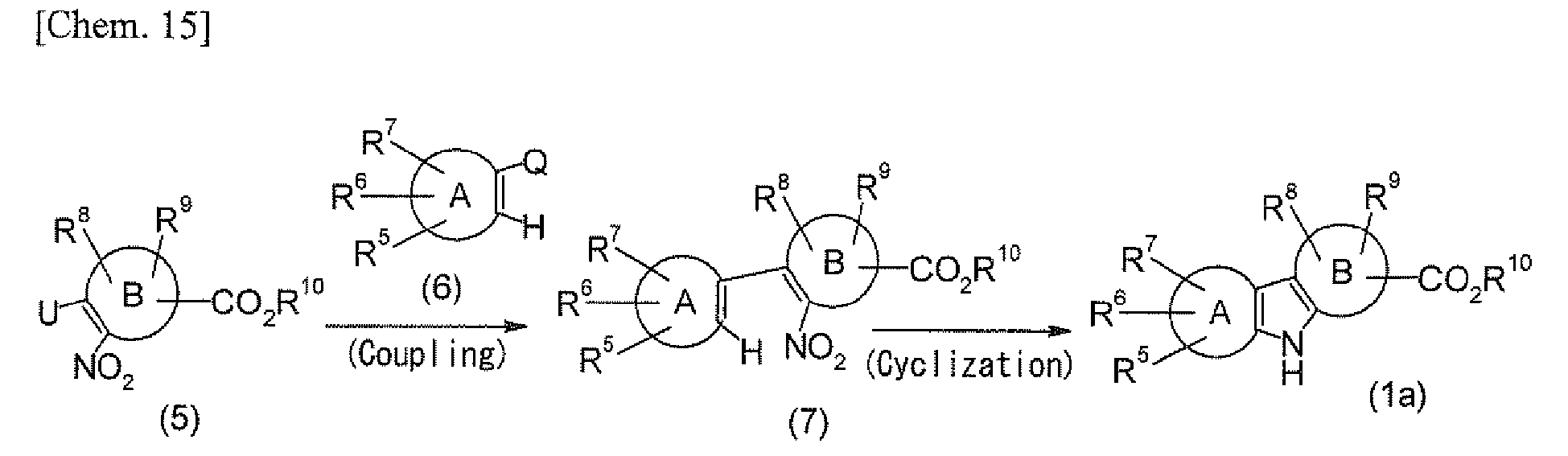
Among the starting compounds (1), the compound in which R4 is H can be prepared directly by the above reaction pathway, or by converting -OR10 of thus prepared compound (1a) to a leaving group.
Here, the coupling reaction can be carried out by the methods described in "Synthetic Communications", (England), 1981, vol. 11, p. 513-519, "Synlett", (Germany), 2000, vol. 6, p. 829-831, or "Chemistry Letters", 1989, p. 1405-1408. The cyclization reaction can be carried out at room temperature or under heating in a solvent such as benzene, toluene and the like, or without a solvent, using triethyl phosphite, triphenylphosphine or the like. -

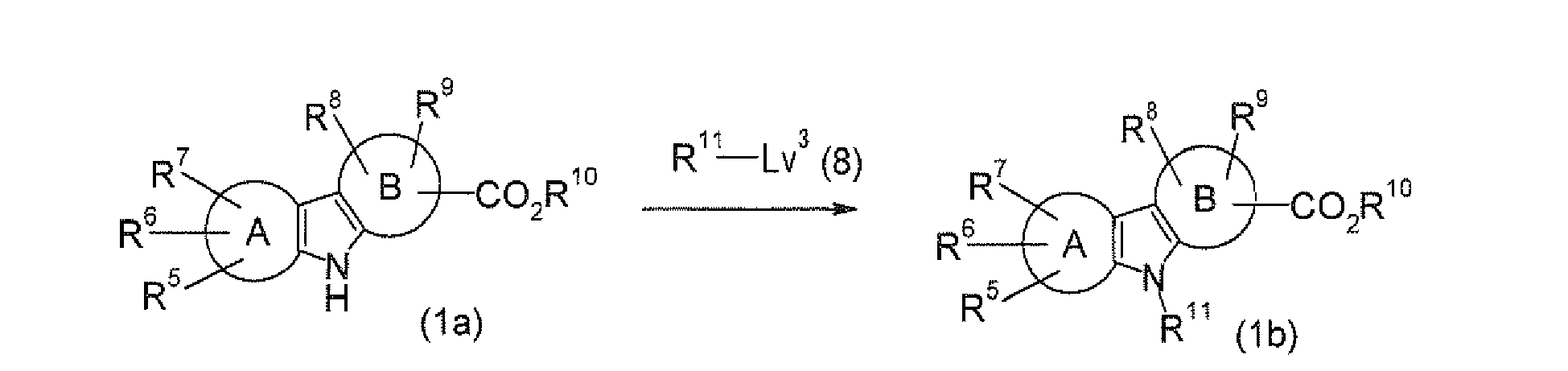
Among the starting compounds (1), the compound in which R4 is not H, namely R11, can be prepared from the compound (1a) by the reaction such as alkylation, acylation, sulfonylation and the like by the compound (8), or by converting -OR10 of thus prepared compound (1b) to a leaving group.
For the alkylation, in case where the compound (8) in which Lv3 is a leaving group is used, the reaction can be carried out using a base such as sodium hydride, potassium hydride, potassium tert-butoxide and the like. In particular, in case where the compound (8) in which R11 is aryl or heteroaryl, and Lv3 is a leaving group is used, a typical coupling method can be used, and it may be carried out, for example, in accordance with the methods as described in "the Journal of the American Chemical Society", (US), 2001, Vol. 123, p. 7727. Further, in case where the compound (8) in which Lv3 is -OH is used, the reaction can be carried out using a conventional method for the Mitsunobu reaction, and it may be carried out, for example, using the methods as described in "Tetrahedron Letters", (Netherlands), 2002, Vol. 43, p. 2187.
Regarding the acylation or the sulfonylation, the reaction can be carried out using an acid halide in which the leaving group of Lv3 is halogen or the like as the compound (8), in the presence of a base such as potassium hydride, potassium tert-butoxide and the like. - Each of the products of the above-described Production Processes can be induced into corresponding carboxyl compounds by the deprotection of the -CO2R10 group. For example, the deprotection reaction described in the abovementioned "Protective Groups in Organic Synthesis" can be used.
-

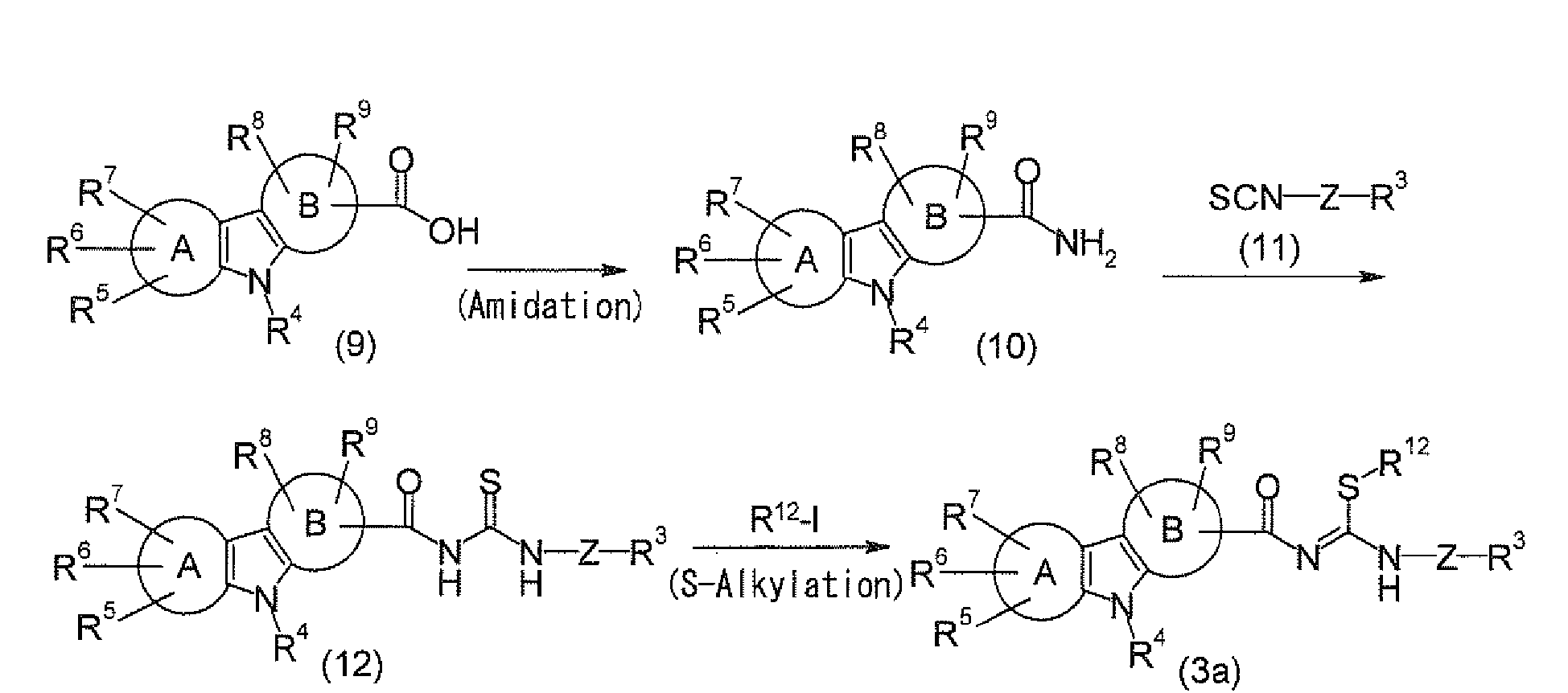
Among the starting compounds (3), the compound (3a) in which Lv2 is -S-lower alkyl can be prepared by the above reaction pathway.
Here, the amidation can be carried out by condensation with ammonia or an equivalent thereof as in the First Production Process. A reaction for preparing an acylthiourea (12) from an amide (10) and a thioisocyanate (11) can be carried out by treatment with a base such as sodium hydride and the like at room temperature in a solvent that is inert to the reaction, such as DMF and the like.
The S-alkylation can be carried out using a conventional method, and it may be carried out, for example, in accordance with the methods as described in "Journal of Medicinal Chemistry", (US), 2005, Vol. 48, p. 1540. - The compound (I) thus prepared is isolated and purified as a free compound, a pharmaceutically acceptable salt, a hydrate, a solvate thereof, or a polymorphic crystal substance thereof. The pharmaceutically acceptable salt of the compound (I) can be prepared by a salt formation treatment within conventional technology by a skilled person in the art.
The isolation and purification can be carried out by employing common chemical operations such as extraction, fractional crystallization, various types of fractional chromatography and the like.
Various isomers can be separated by selecting a suitable starting compound, or by making use of the difference in the physicochemical properties between isomers. For example, optical isomers can be lead into each stereochemically pure isomer by means of general optical resolution methods (for example, fractional crystallization after forming diastereomeric salts with optically active bases or acids, chromatography using a chiral column and the like, etc.). In addition, an isomer can also be prepared from an appropriate optically active starting material. - Hereinbelow, the methods for preparing the compound included in the formula (I) that is an active ingredient of the present invention are described with reference to Examples. Further, the methods for preparing the compound used as a starting material are described with reference to Production Examples. Furthermore, the methods for preparing the compound (I) are not limited to the specific production processes of the Examples below, and thus, the compounds can be prepared by a combination of these preparation methods, a known production method, or a modified method thereof.
The following abbreviations are used for the analytical data of mass spectroscopy in the description of Production Examples and Tables as below.
ESI+: ESI-MS[M+H]+; ESI-: ESI-MS[M-H]-; FAB+: FAB-MS[M+H]+ or FAB-MS[M]+; FAB-: FAB-MS[M-H]-; APCI+: APCI-MS[M+H]+; APCI-: APCI-MS[M-H]-; EI+: EI[M]+. - Methyl 2-nitrobiphenyl-4-carboxylate was obtained by allowing methyl 3-nitro-4-{[(trifluoromethyl)sulfonyl]oxy}benzoate with phenyl boric acid, potassium phosphate, and tetrakistriphenylphosphine palladium to undergo the reaction in DMF under heating. FAB+: 258.
- Methyl 9H-carbazole-2-carboxylate was obtained by allowing methyl 2-nitrobiphenyl-4-carboxylate and triethyl phosphite to undergo the reaction under heating. FAB+: 226.
- Methyl 9-isopropyl-9H-carbazole-2-carboxylate was obtained by allowing methyl 9H-carbazole-2-carboxylate, 2-propanol, and (tributylphosphoranylidene)acetonitrile to undergo the reaction in toluene under heating. ESI+: 268.
- 9-Isopropyl-9H-carbazole-2-carboxylic acid was obtained by allowing methyl 9-isopropyl-9H-carbazole-2-carboxylate and, a 1 M aqueous sodium hydroxide solution to undergo the reaction in ethanol under heating. ESI-: 252.
- Methyl 5-bromomethyl-9-isopropyl-9H-carbazole-2-carboxylate was obtained by allowing methyl 9-isopropyl-5-methyl-9H-carbazole-2-carboxylate, N-bromosuccinimide, and 2,2'-azobisisobutyronitrile to undergo the reaction in carbon tetrachloride under heating. FAB+: 360, 362.
- Methyl 5-dimethylaminomethyl-9-isopropyl-9H-carbazole-2-carboxylate was obtained by allowing methyl 5-bromomethyl-9-isopropyl-9H-carbazole-2-carboxylate, dimethylamine (2 M, a methanol solution), and potassium carbonate to undergo the reaction in THF at room temperature. FAB+: 325.
- Methyl 5-acetoxymethyl-9-isopropyl-9H-carbazole-2-carboxylate was obtained by allowing methyl 5-bromomethyl-9-isopropyl-9H-carbazole-2-carboxylate and potassium acetate to undergo the reaction in DMF at room temperature. EI+: 339.
- Methyl 5-hydroxymethyl-9-isopropyl-9H-carbazole-2-carboxylate was obtained by allowing methyl 5-acetoxymethyl-9-isopropyl-9H-carbazole-2-carboxylate and potassium carbonate to undergo the reaction in methanol-THF at room temperature. FAB+; 297.
- Methyl 9-isopropyl-5-methoxymethyl-9H-carbazole-2-carboxylate was obtained by allowing methyl 5-hydroxymethyl-9-isopropyl-9H-carbazole-2-carboxylate, methyl iodide, and silver oxide to undergo the reaction in acetonitrile under heating. FAB+: 311.
- Benzyl 9-isobutyryl-9H-carbazole-2-carboxylate was obtained by allowing benzyl 9H-carbazole-2-carboxylate and 2-methylpropionyl chloride to undergo the reaction in DMF in the presence of sodium hydride at room temperature. ESI+: 372.
- 9-Isobutyryl-9H-carbazole-2-carboxylic acid was obtained by allowing benzyl 9-isobutyryl-9H-carbazole-2-carboxylate and palladium-carbon to undergo the reaction in ethanol-DMF at room temperature under a hydrogen gas atmosphere. ESI+: 282.
- Methyl 9-isopropyl-6-nitro-9H-carbazole-2-carboxylate was obtained by allowing methyl 9-isopropyl-9H-carbazole-2-carboxylate and concentrated nitric acid to undergo the reaction in acetic acid at room temperature. FAB+: 313.
- Methyl 5-formyl-9-isopropyl-9H-carbazole-2-carboxylate was obtained by allowing methyl 5-hydroxymethyl-9-isopropyl-9H-carbazole-2-carboxylate and manganese dioxide to undergo the reaction in chloroform at room temperature. FAB+: 296. Production Example 14
9-Methyl-9H-carbazole-2-carboxylic acid was obtained by allowing methyl 9H-carbazole-2-carboxylate, methyl iodide, and potassium hydroxide to undergo the reaction in DMF at room temperature. FAB+: 226. - Ethyl 9-ethyl-9H-carbazole-2-carboxylate was obtained by allowing methyl 9H-carbazole-2-carboxylate, ethyl iodide, and potassium hydroxide to undergo the reaction in DMF under heating. ESI+: 268.
- A mixture of 2,3,4,9-tetrahydro-1H-carbazole-7-carbaxylic acid and 2,3,4,9-tetrahydro-1H-carbazole-5-carboxylic acid was obtained by allowing cyclohexanone and 3-hydrazinobenzoic acid to undergo the reaction in acetic acid under heating. This mixture was separated and purified by silica gel column chromatography to obtain 2,3,4,9-tetrahydro-1H-carbazole-5-carboxylic acid [Production Example 16a: FAB+: 216], 2,3,4,9-tetrahydro-1H-carbazole-7-carboxylic acid [Production Example 16b: FAB+: 216].
- Methyl 2,3,4,9-tetrahydro-1H-carbazole-7-carboxylate [Production Example 17a: ESI+: 230] and methyl 2,3,4,9-tetrahydro-1H-carbazole-5-carboxylate [Production Example 17b: ESI+: 230] were prepared by adding thionyl chloride to a methanol solution of a mixture of 2,3,4,9-tetrahydro-1H-carbazole-7-carboxylic acid and 2,3,4,9-tetrahydro-1H-carbazole-5-carboxylic acid at -10°C, followed by reaction under heating, and then separation and purification by column chromatography.
- 3-{2-[1-(Ethoxycarbonyl)piperidin-4-ylidene]hydrazino} benzoic acid was obtained by allowing ethyl 4-oxopiperidine-1-carboxylate and 3-hydrazinobenzoic acid to undergo the reaction in acetic acid under heating. ESI+: 306.
- A mixture of diethyl 1,3,4,5-tetrahydro-2H-pyrido[4,3-b]indole-2,7-dicarboxylate and diethyl 1,3,4,5-tetrahydro-2H-pyrido[4,3-b]indole-2,9-dicarboxylate was obtained by allowing 3-{2-[1-(ethoxycarbanyl)piperidin-4-ylidene]hydrazino}benzoic acid and concentrated hydrochloric acid to undergo the reaction in ethanol under heating. ESI+: 317.
- A mixture of 2-(ethoxycarbonyl)-2,3,4,5-tetrahydro-1H-pyrido[4,3-b]indole-7-carboxylic acid and 2-(ethoxycarbonyl)-2,3,4,5-tetrahydro-1H-pyrido[4,3-b]indole-9-carboxylic acid was obtained by allowing a mixture of diethyl 1,3,4,5-tetrahydro-2H-pyrido[4,3-b]indole-2,7-dicarboxylate and diethyl 1,3,4,5-tetrahydro-2H-pyrido[4,3-b]indole-2,9-dicarboxylate, and potassium hydroxide to undergo the reaction in methanol-water under heating. ESI-: 287.
- 3-Fluoro-4-hydroxy-5-nitrobenzoic acid was obtained by allowing 3-fluoro-4-hydroxybenzoic acid and fuming nitric acid to undergo the reaction in concentrated sulfuric acid at -5°C to room temperature.
- Ethyl 3-fluoro-4-hydroxy-5-nitrobenzoate was obtained by allowing 3-fluoro-4-hydroxy-5-nitrobenzoic acid and concentrated sulfuric acid to undergo the reaction in ethanol under heating.
- Ethyl 3-fluoro-5-nitro-4-{[(trifluoromethyl)sulfonyl]oxy}benzoate was obtained by allowing ethyl 3-fluoro-4-hydroxy-5-nitrobenzoate, pyridine, and trifluoromethanesulfuric anhydride to undergo the reaction in dichloromethane at 0°C to room temperature.
- 9-(Tetrahydro-2H-pyran-4-yl)-9H-carbazole-2-carboxamide was obtained by allowing 9-(tetrahydro-2H-pyran-4-yl)-9H-carbazole-2-carboxylic acid, thionyl chloride, and DMF to undergo the reaction, and then to undergo the reaction with an aqueous ammonia solution at room temperature.
- N-[(Methylamino)carbonothioyl]-9-(tetrahydro-2H-pyran-4-yl)-9H-carbazole-2-carboxamide was obtained by performing the reaction with methylthioisocyanate in a mixed solution of 9-(tetrahydro-2H-pyran-4-yl)-9H-carbazole-2-carboxamide and NaH in DMF at room temperature.
- N-Methyl-N'-{[9-(tetrahydro-2H-pyran-4-yl)-9H-carbazole-2-yl]carbonyl}imidethiocarbamate was obtained by allowing N-[(methylamino)carbonothioyl]-9-(tetrahydro-2H-pyran-4-yl)-9H-carbazole-2-carboxamide and methyl iodide to undergo the reaction in THF under heating.
- Methyl 9-phenyl-9H-carbazole-2-carboxylate was obtained by allowing methyl 9H-carbazole-2-carboxylate, potassium phosphate, copper iodide, (1R,2R)-1,2-cyclohexanediamine, and iodobenzene to undergo the reaction in dioxane under heating.
- Methyl 9-(1-methylpiperidin-4-yl)-9H-carbazole-2-carboxylate was obtained by allowing methyl 9-piperidin-4-yl-9H-carbazole-2-carboxylate hydrochloride, formaldehyde, triacetoxy sodium borohydride, and acetic acid to undergo the reaction in dichloromethane at room temperature.
- Methyl 9-(1-acetylpiperidin-4-yl)-9H-carbazole-2-carboxylate was obtained by allowing methyl 9-piperidin-4-yl-9H-carbazole-2-carboxylate hydrochloride, acetyl chloride, and DIPEA to undergo the reaction in dichloromethane at room temperature.
- Methyl 9-[1-(methanesulfonyl)piperidin-4-yl]-9H-carbazole-2-carboxylate was obtained by allowing methyl 9-piperidin-4-yl-9H-carbazole-2-carboxylate hydrochloride, methanesulfonyl chloride, and DIPEA to undergo the reaction in dichloromethane at room temperature.
- Methyl 9-[1-(methoxycarbonyl)piperidin-4-yl]-9H-carbazole-2-carboxylate was obtained by performing the reaction with ethyl chloroformate in a mixed solution of methyl 9-piperidin-4-yl-9H-carbazole-2-carboxylate hydrochloride and DIPEA in dichloromethane at room temperature.
- Methyl 9-(4-oxocyclohexyl)-9H-carbazole-2-carboxylate was obtained by allowing a mixed solution of methyl 9-(1,4-dioxaspiro[4,5]dec-8-yl)-9H-carbazole-2-carboxylate, 1 M hydrochloric acid, THF, and ethanol to undergo the reaction at room temperature.
- Methyl 9-(trans-4-hydroxycyclohexyl)-9H-carbazole-2-carboxylate and methyl 9-(cis-4-hydroxycyclohexyl)-9H-carbazole-2-carboxylate were obtained by allowing methyl 9-(4-oxocyclohexyl)-9H-carbazole-2-carboxylate and sodium borohydride to undergo the reaction in methanol and THF at 0°C.
- Methyl 9-(4,4-difluorocyclohexyl)-9H-carbazole-2-carboxylate was obtained by allowing methyl 9-(4-oxocyclohexyl)-9H-carbazole-2-carboxylate and diethylaminosulfur trifluoride to undergo the reaction in dichloromethane at room temperature.
- Methyl 9-(cis-4-methoxycyclohexyl)-9H-carbazole-2-carboxylate was obtained by allowing methyl 9-(cis-4-hydroxycyclohexyl)-9H-carbazole-2-carboxylate, methyl iodide, and NaH to undergo the reaction in THF at 0°C.
- 9-[2-Hydroxy-1-(hydroxymethyl)ethyl]-9H-carbazole-2-carboxylic acid was obtained by allowing methyl 9-[2-methoxy-1-(methoxymethyl)ethyl]-9H-carbazole-2-carboxylate and boron tribromide to undergo the reaction in dichloromethane at -78°C to room temperature.
- Methyl 9-(1-benzylpiperidin-4-yl)-9H-carbazole-2-carboxylate was obtained by allowing methyl 9-piperidin-4-yl-9H-carbazole-2-carboxylate hydrochloride, benzyl bromide, and potassium carbonate to undergo the reaction in DMF under heating.
- Methyl 9-(1-phenylpiperidin-4-yl)-9H-carbazole-2-carboxylate was obtained by allowing methyl 9-piperidin-4-yl-9H-carbazole-2-carboxylate hydrochloride, tris(dibenzylideneacetone)dipalladium (0), and (R)-(+)-2,2'-bis(diphenylphosphino)-1,1'-binaphthyl, bromobenzene to undergo the reaction in toluene under heating.
- Methyl 5-hydroxy-9-isopropyl-9H-carbazole-2-carboxylate was obtained by allowing methyl 5-(benzyloxy)-9-isopropyl-9H-carbazole-2-carboxylate and 10% palladium-carbon to undergo the reaction in methanol at room temperature in a hydrogen atmosphere.
- Methyl 9-(1,1-dioxidetetrahydro-2H-thiopyran-4-yl)-9H-carbazole-2-carboxylate was obtained by allowing methyl 9-(tetrahydro-2H-thiopyran-4-yl)-9H-carbazole-2-carboxylate and MCPBA to undergo the reaction in dichloromethane at room temperature.
- Methyl 2'-(dimethoxymethyl)-2-nitrobiphenyl-4-carboxylate was obtained by allowing methyl 2'-formyl-2-nitrobiphenyl-4-carboxylate and idodine to undergo the reaction in methanol under heating.
- Methyl 5-(acetoxymethyl)-9H-carbazole-2-carboxylate was obtained by allowing methyl 5-(hydroxymethyl)-9H-carbazole-2-carboxylate and acetic acid by performing the condensation using WSC hydrochloride and a catalytic amount of N,N-dimethylpyridine-4-amine in methylene chloride.
The compounds of Production Examples shown in the following Tables 1 to 24 were prepared in the same manner as the methods of Production Examples 1 to 42 above, using each corresponding starting materials. Further, the mass spectroscopic values of the compounds of Production Examples 21 to 42 are shown in Table 25, the mass spectroscopic values of the compounds of Production Examples 43 to 154 are shown in Tables 1 to 6, and the mass spectroscopic values of the compounds of Production Examples 155 to 405 are shown in Tables 25 to 27. - To a solution of 140 mg of 9-isopropyl-9H-carbazole-2-carboxylic acid in 4 ml of DMF was added 134 mg of CDI, followed by stirring at 50°C for 1 hour. After leaving it to be cooled to room temperature, 238 mg of guanidine carbonate was added thereto, followed by stirring at room temperature overnight. The solvent was removed by evaporation, water was added thereto, and the precipitated solid was purified by silica gel column chromatography (Chromatorex (registered trademark), methanol/chloroform) to obtain 157 mg of N-(diaminomethylene)-9-isopropyl-9H-carbazole-2-carboxamide as a pale yellow solid.
- To a solution of 573 mg of guanidine hydrochloride in 6.5 ml of DMF was added 192 mg of sodium hydride (60%), followed by stirring at room temperature for 1 hour. To this solution was added a solution of 270 mg of methyl 9H-carbazole-2-carboxylate in 6.5 ml of DMF, followed by stirring at 70°C for 2.5 hours. After leaving it to be cooled to room temperature and removing the solvent by evaporation, water was added thereto and the precipitated solid was purified by Chromatorex (methanol/chloroform) to obtain 236 mg of N-(diaminomethylene)-9H-carbazole-2-carboxamide as a pale yellow solid.
- To a solution of 300 mg of N-(diaminomethylene)-9-[1-(diphenylmethyl)azetidin-3-yl]-9H-carbazole-2-carboxamide in 9 ml of ethanol were added 1.26 ml of 1 M hydrochloric acid and 30 mg of 20% palladium hydroxide, followed by stirring at room temperature under a hydrogen gas atmosphere for 4 days, A 1 M aqueous sodium hydroxide solution was added thereto, followed by filtration through Celite. The solvent was then removed by evaporation, and the residue was purified by Chromatorex (methanol/chloroform) to obtain 89 mg of 9-azetidin-3-yl-N-(diaminomethylene)-9H-carbazole-2-carboxamide,
- To a solution of 393 mg of N-(diaminomethylene)-9-[2-(benzyloxy)ethyl]-9H-carbazole-2-carboxamide in 9 ml of ethanol - 3 ml of THF were added 1.0 ml of 1 M hydrochloric acid and 40 mg of 10% palladium-carbon, followed by stirring at room temperature under a hydrogen gas atmosphere for 3 days. A 1 M aqueous sodium hydroxide solution was added thereto, followed by filtration through Celite. The organic solvent was then removed by evaporation, and the aqueous layer was extracted with chloroform, washed with brine, and dried over anhydrous magnesium sulfate. The solvent was removed by evaporation to obtain 140 mg of N-(diaminomethylene)-9-(2-hydroxyethyl)-9H-carbazole-2-carboxamide.
- To a solution of 106 mg of N-(diaminomethylene)-9-isopropyl-6-nitro-9H-carbazole-2-carboxamide in 5 ml of ethanol - 3 ml of THF was added 20 mg of 10% palladium-carbon, followed by stirring at room temperature under a hydrogen gas atmosphere for 4 hours. After filtration through Celite, the solvent was then removed by evaporation to obtain 128 mg of 6-amino-N-(diaminomethylene)-9-isopropyl-9H-carbazole-2-carboxamide.
- To a solution of 201 mg of tert-butyl 4-(2-{[(diaminomethylene)amino]carbonyl}-9H-carbazole-9-yl)piperidine-1-earboxylate that had been synthesized in the same manner as in Example 1 in 4.4 ml of ethanol was added 0.6 ml of 4 M hydrogen chloride/ethyl acetate, followed by stirring at room temperature overnight. The solid precipitated was collected by filtration, and washed with ethanol to obtain 125 mg of N-(diaminomethylene)-9-piperidin-4-yl-9H-carbazole-2-carboxamide dihydrochloride as a pale yellow solid.
- A solution of guanidine hydrochloride (882 mg) and sodium methoxide (499 mg) in methanol (4 mL) was stirred at room temperature for 1 hour, and the reaction liquid was concentrated under reduced pressure. To the resulting residue was added a mixed solution of 2,3,4,5-tetrahydro-1H-pyrido[4,3-b]indole (265 mg) that had been separately prepared and CDI (274 mg) in NMP (N-methylpyrrolidin-2-one) (8 mL), followed by stirring at 100°C for 30 minutes under heating. The reaction liquid was returned to room temperature, diluted with water, and extracted with EtOAc. The organic layer was concentrated under reduced pressure, and the resulting residue was purified by silica gel column chromatography ("Chromatorex (registered trademark), NH2", chloroform/methanol = 100/0-90/10), and then made into its oxalate to obtain N-(diaminomethylene)-1,3,4,5-tetrahydro-2H-pyrido[4,3,-b]indole-2-carboxamide oxalate (187 mg).
- A mixed solution of 9-(tetrahydro-2H-pyran-4-yl)-9H-carbazole-2-carboxylic acid (300 mg), WSC hydrochloride (292 mg), and HOBt (96 mg) in DMF (10 mL) was stirred at room temperature for 5 minutes, and then 3,5-dimethyl-1H-pyrazol-1-carboxyimidamide nitrate (245 mg) and DIPEA (0.27 mL) were added thereto, followed by stirring at room temperature for an additional 19 hours. The reaction liquid was diluted with a saturated aqueous NH4Cl solution, and then extracted with EtOAc. The organic layer was concentrated under reduced pressure, and the resulting residue was purified by silica gel column chromatography (silica gel 60N, spherical, neutral, n-hexane/EtOAc = 5/2) to obtain N-[(1Z)-amino(3,5-dimethyl-1H-pyrazol-1-yl)methylene]-9-(tetrahydro-2H-pyran-4-yl)-9H-carbazole-2-carboxamide (450 mg).
- A mixed solution of N-[(3,5-dimethyl-1H-pyrazol-1-yl)(imino)methyl]-9-(tetrahydro-2H-pyran-4-yl)-9H-carbazole-2-carboxamide (250 mg) and piperazine (518 mg) in DMF (5 mL) was stirred at 80°C for 6 hours under heating. The reaction liquid was returned to room temperature, diluted with water, and then extracted with EtOAc. The organic layer was concentrated under reduced pressure, and the resulting residue was purified by silica gel column chromatography ("Chromatorex (registered trademark), NH2", EtOAc), and then formed into its salt to obtain N-[(1Z)-amino(piperazin-1-yl)methylene]-9-(tetrahydro-2H-pyran-4-yl)-9H-carbazole-2-carboxamide dihydrochloride (90 mg).
- A mixed solution of methyl N-methyl-N'-{[9-(tetrahydro-2H-pyran-4-yl)-9H-carbazole-2-yl]carbonyl}imidethiocarbamate (172 mg), methylamine (335 mg), and DIPEA (0.78 mL) in DMF (30 mL) was stirred at 85°C for 16 hours under heating. The reaction liquid was returned to room temperature, diluted with a saturated aqueous NH4Cl solution, and then extracted with EtOAc. The organic layer was concentrated under reduced pressure, and the resulting residue was purified by silica gel column chromatography (silica gel 60N, spherical, neutral, EtOAc), and then formed into its salt to obtain N-[bis(methylamino)methylene]-9-(tetrahydro-2H-pyran-4-yl)-9H-carbazole-2-carboxamide hydrochloride (95 mg).
- A solution of ethyl 4-fluoro-9-(tetrahydro-2H-pyran-4-yl)-9H-carbazole-2-carboxylate (260 mg) and a 1 M aqueous sodium hydroxide solution (3 mL) in methanol (10 mL) and THF (10 mL) was stirred at 60°C for 3 hours under heating. The reaction liquid was concentrated under reduced pressure, and the resulting residue was then diluted with water. This was neutralized with 1 M hydrochloric acid (3 mL), and the precipitate was then collected by filtration, and dried under reduced pressure. The precipitate and CDI (165 mg) in DMF (30 mL) were stirred at room temperature for 15 minutes, and guanidine carbonate (735 mg) was then added thereto, followed by stirring at room temperature for an additional 20 hours. The reaction liquid was diluted with water, and then extracted with EtOAc, and the organic layer was concentrated under reduced pressure. The resulting residue was purified by silica gel column chromatography (silica gel 60N, spherical, neutral, chloroform/methanol/29% aqueous ammonia solution), and then formed into its salt to form N-(diaminomethylene)-4-fluoro-9-(tetrahydro-2H-pyran-4-yl)-9H-carbazole-2-carboxamide hydrochloride (137 mg).
- The compounds of Examples shown in the following Tables 28 to 43 were prepared in the same manner as the methods of Examples 1 to 11 above, using each corresponding starting materials (provided that in Example 65, a starting material having the hydroxyl group protected with an acetyl group was used). The physical properties of the compounds of Examples 1 to 6 and 12 to 71 are shown in Tables 28 to 33, and the physical properties of the compounds of Examples of 7 to 11 and 72 to 227 are shown in Tables 44 to 51.
- The following abbreviations are used in Tables below.
REx: Production Example number, Ex: Example number, No: compound number, Str: structural formula, Dat: physicochemical data (NMR: δ (ppm) of the characteristic peak in DMSO-d6 by 1HNMR), ND: Not determined, Sal: salt (a blank or no description means that it is a free form and the numeral in front of the acid component means a molar ratio. For example, a description of 2HCl means that the compound is a dihydrochloride salt.), Oxal: oxalic acid, Me: methyl, Et: ethyl, nPr: normal propyl, cPr: cyclopropyl, iPr: isopropyl, nBu: normal butyl, tBu: tert-butyl, cBu: cyclobutyl, nPen: normal pentyl, cPen: cyclopentyl, cHex: cyclohexyl, Ph: phenyl, Bn: benzyl, Ac: acetyl, Ms: methanesulfonyl, Boc: tert-butoxycarbonyl, null: unsubstituted. The numeral in front of the substituted group means the position to be substituted, and for example, 5-F means 5-fluoro. RSyn and Syn: preparation method (the numeral shows that the compound was prepared using a corresponding starting material in the same manner as in the compound having its number as the Production Example number or Example number. A case in which two or more numerals are shown indicates that the compound was prepared by sequentially carrying out the same manner as in the Production Example or Example having the number.).
In the column "Syn" regarding the preparation method in Tables below, identical Example number is given to the each compound with various salt form which is prepared by a different salt forming process, but a same kind of the reaction. -
[Table 1] 
REx RSyn R5 Dat REx RSyn R5 Dat 43 1 2'-F FAB+ : 275 51 1 4'-OMe FAB+ : 288 44 1 3'-F FAB+ : 276 52 1 2'-Cl FAB+ : 292 45 1 4'-F FAB+ : 276 53 1 3'-Cl FAB+ : 291 46 1 2'-Me FAB+ : 272 54 1 4'-Cl FAB+ : 292 47 1 3'-Me FAB+ : 272 55 1 2'-CN FAB+ : 283 48 1 4'-Me FAB+ : 272 56 1 3'-CN FAB+ : 283 49 1 2'-OMe FAB+ : 288 57 1 4'-CN FAB+ : 283 50 1 3'-OMe FAB+ : 288 -
[Table 2] 
REx RSyn R5 Dat REx RSyn R5 Dat 58 2 5-F FAB+ : 244 68 2 7-OMe FAB+ : 256 59 2 6-F FAB+ : 244 69 2 8-OMe FAB+ : 256 60 2 7-F FAB+ : 244 70 2 5-Cl FAB+ : 259 61 2 8-F FAB+ : 244 71 2 6-Cl FAB+ : 260 62 2 5-Me FAB+ : 240 72 2 7-Cl FAB+ : 260 63 2 6-Me FAB+ : 240 73 2 8-Cl FAB+ : 260 64 2 7-Me FAB+ : 240 74 2 5-CN FAB- : 249 65 2 8-Me FAB+ : 240 75 2 6-CN ESI- : 249 66 2 5-OMe FAB+ : 256 76 2 7-CN ESI- : 249 67 2 6-OMe FAB+ : 255 77 2 8-CN ESI- : 249 -
[Table 3] 
REx RSyn R4 Dat REx RSyn R4 Dat 78 3 nPr ESI+ : 268 89 3 cHex ESI+ : 308 79 3 nBu ESI+ : 282 90 3 -CH(C2H5)2 ESI+ : 296 80 3 nPen ESI+ : 296 91 3 
FAB+ : 408 81 3 -(CH2)2OMe ESI+ : 284 92 3 
EI+ : 309 82 3 -(CH2)2OBn ESI+ : 360 93 3 -CH2-cPr ESI+ : 280 83 3 -(CH2)2NMe2 ESI+ : 297 94 3 
APCI+ : 310 84 3 -(CH2)3OMe FAB+ : 297 95 3 
ESI+ : 306 85 3 -(CH2)2Ph FAB+ : 330 96 3 
ESI+ : 447 86 3 Bn ESI+ : 316 97 3 
ESI+ : 306 87 3 cBu MSI+ : 280 98 3 
FAB+ : 323 88 3 cPen ESI+ : 294 99 10 
FAB+ : 339 -
[Table 4] 
REx RSyn R4 R10 Dat REx RSyn R4 R10 Dat 100 3 Et Et ESI+ : 268 103 10 -S(O)2-Me Bn EI+ : 379 101 3 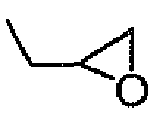
Bn EI+ : 357 104 10 -S(O)2-iPr Bn ESI+ : 408 102 10 Ac Bn ESI+ : 344 105 10 -C(O)NMe2 Bn FAB+ : 373 -
[Table 5] 
REx RSyn R4 Dat REx RSyn R4 Dat 106 4 nPr ESI- : 252 118 4 cPen ESI- : 278 107 4 nBu ESI- : 266 119 4 cHex ESI- : 292 108 4 nPen ESI- : 280 120 4 -CH(C2H5)2 ESI- : 280 109 4 -(CH2)2OBn ESI- : 344 121 4 -CH2-cPr ESI- : 264 110 4 -(CH2)3OMe ESI- : 282 122 11 Ac ESI+ : 254 111 4 Bn ESI- : 300 123 11 -S(O)2-Me FAB+ : 289 112 4 -(CH2)2Ph ESI- : 314 124 11 -S(O)2-iPr ESI- : 316 113 4 cBu FAB+ 266 125 11 -C(O)NMe2 FAB+ : 283 114 4 
ESI- : 294 126 4 
ESI- : 308 115 4 
ESI- : 393 127 4 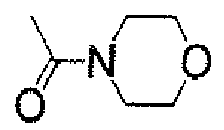
FAB+ : 325 116 4 
ESI- : 290 128 11 
ESI- : 266 117 4 
ESI- : 290 -
[Table 6] 
REx RSyn R5 R10 Dat REx RSyn R5 R10 Dat 129 3 5-F Me FAB+ : 286 142 3 5-Cl Me ESI+ : 302 130 3 6-F Me FAB+ : 286 143 3 7-Cl Me ESI+ : 302 131 3 7-F Me FAB+ : 286 144 3 8-Cl Me FAB+ : 302 132 3 8-F Me FAB+ : 286 145 3 5-CN Me FAB+ : 293 133 3 5-Me Me FAB+ : 282 146 3 6-CN Me FAB+ : 293 134 3 6-Me Me FAB+ : 282 147 3 7-CN Me FAB+ : 293 135 3 7-Me Me FAB+ : 282 148 3 8-CN Me FAB+ : 293 136 3 8-Me Me FAB+ : 282 149 4 5-CN H FAB+ : 279 137 3 5-OMe Me FAB+ : 298 150 4 6-CN H FAB- : 277 138 3 6-OMe Me FAB+ : 297 151 4 7-CN H FAB+ : 279 139 3 7-OMe Me FAB+ : 298 152 4 8-CN H FAB+ : 279 140 3 8-OMe Me FAB+ : 298 153 4 6-NO2 H FAB- : 297 141 3 6-Cl Me FAB+ : 302 154 4 5-C(O)H H FAB+ : 282 -
[Table 7] REx Str REx Str 21 
29 
22 
23 
30 
24 
31 
25 
32 
26 
33 
27 
34 
28 
35 
-
[Table 8] REx Str REx Str 36 
156 
37 
157 
38 
158 
39 
159 
40 
160 
41 
161 
42 
162 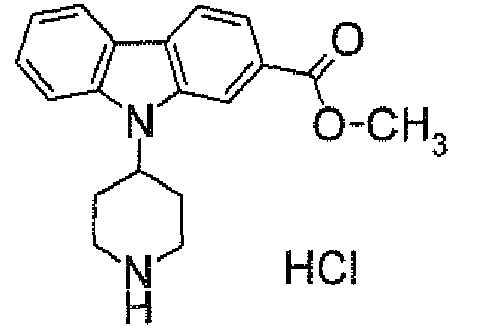
155 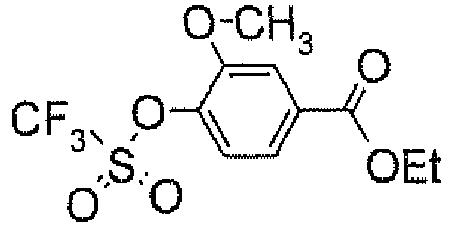
163 
-
[Table 9] REx Str REx Str 164 
172 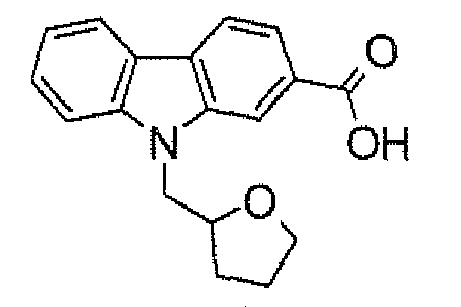
165 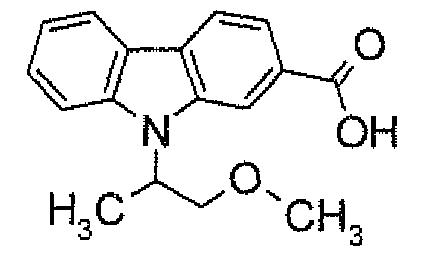
173 
166 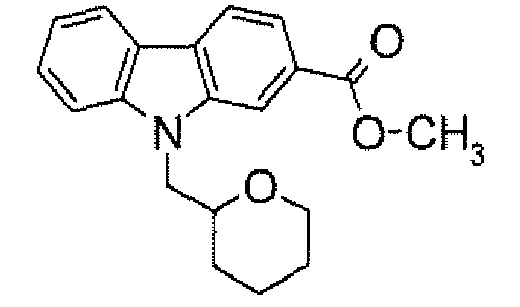
174 
167 
175 
168 
176 
169 
177 
170 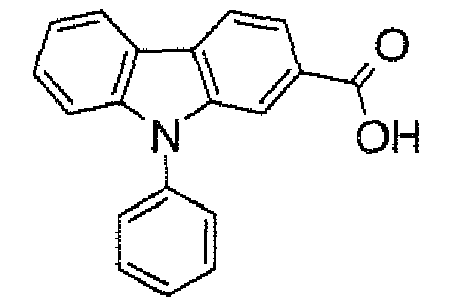
178 
171 
179 
-
[Table 10] REx Str REx Str 180 
188 
181 
189 
182 
190 
183 
191 
184 
192 
185 
193 
186 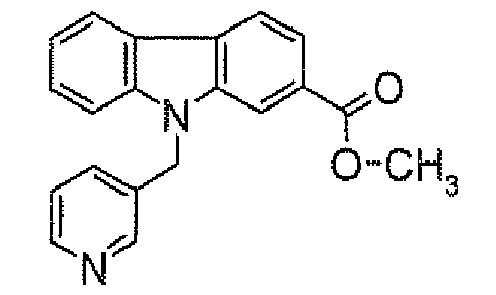
194 
187 
195 
-
[Table 11] REx Str REx Str 196 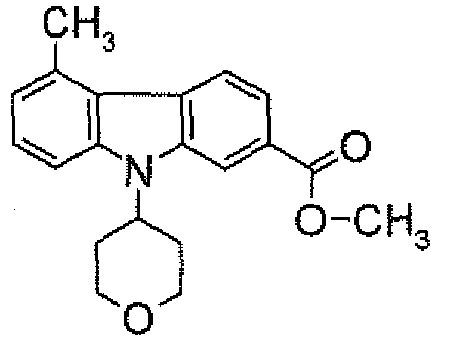
204 
197 
205 
198 
206 
199 
207 
200 
208 
201 
209 
202 
210 
203 
-
[Table 12] REx Str REx Str 211 
218 
212 
219 
213 
220 
214 
221 
215 
222 
216 
223 
217 
224 
-
[Table 13] REx Str REx Str 225 
232 
226 
233 
227 
234 
228 
235 
229 
236 
237 
230 
238 
231 
239 
-
[Table 14] REx Str REx Str 240 
249 
241 
250 
242 
243 
251 
244 
252 
245 
246 
253 
247 
254 
248 
-
[Table 15] REx Str REx Str 255 
264 
256 
265 
257 
266 
258 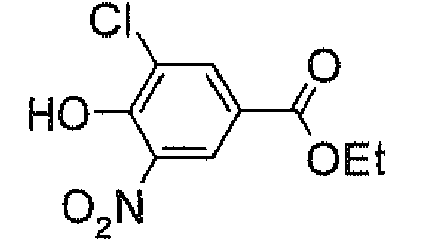
267 
259 
268 
260 
269 
261 
270 
262 
263 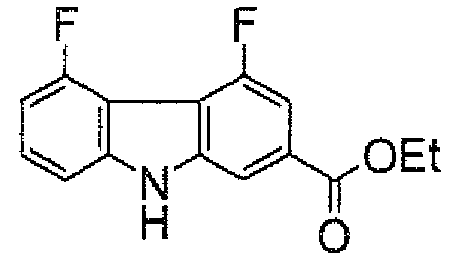
-
[Table 16] REx Str REx Str 271 
278 
272 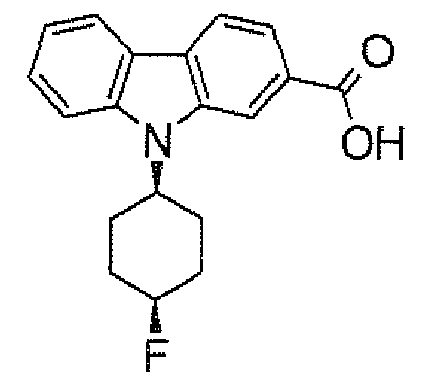
279 
273 
280 
274 
281 
275 
282 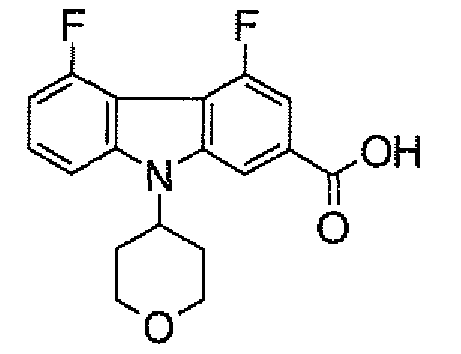
276 
283 
277 
284 
-
[Table 17] REx Str REx Str 285 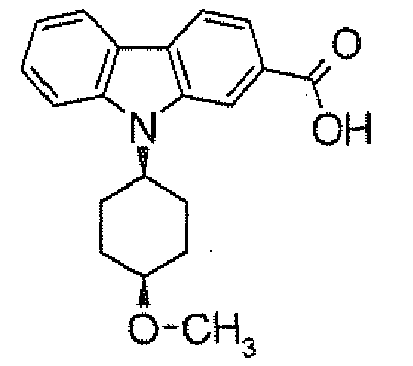
292 
286 
293 
287 
294 
288 
295 
289 
296 
290 
297 
291 
-
[Table 18] REx Str REx Str 298 
306 
299 
307 
300 
308 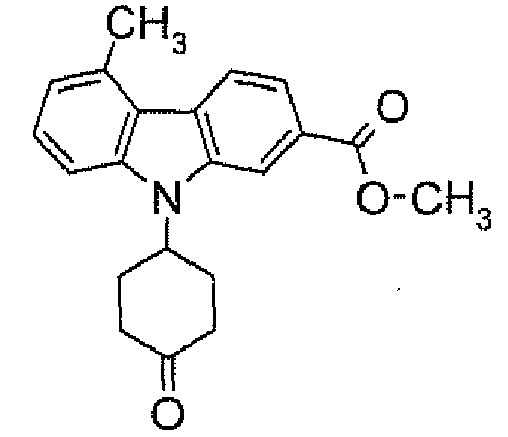
301 
309 
302 
310 
303 
311 
304 
312 
305 
313 
-
[Table 19] REx Str REx Str 314 
321 
315 
322 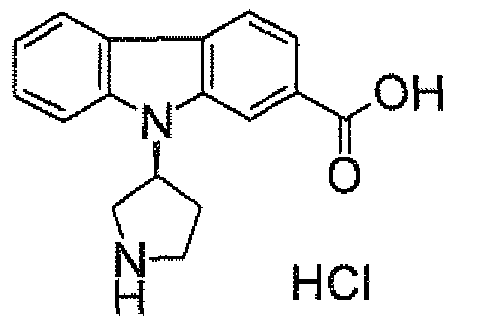
316 
323 
317 
324 
318 
325 
319 
326 
320 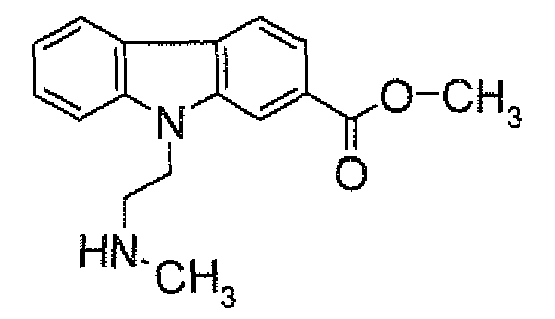
327 
328 
-
[Table 20] REx Str REx Str 329 
337 
330 
338 
331 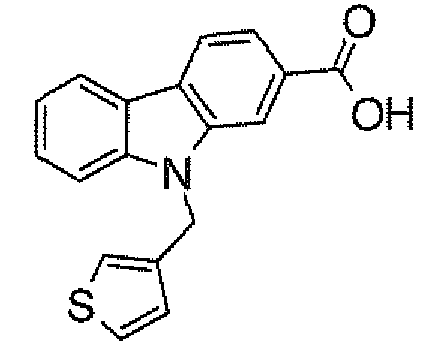
339 
332 
340 
333 
341 
334 
342 
335 
343 
336 
344 
-
[Table 21] REx Str REx Str 345 
352 
346 
353 
347 
354 
348 
355 
349 
356 
350 
357 
351 
358 
-
[Table 22] REx Str REx Str 359 
366 
360 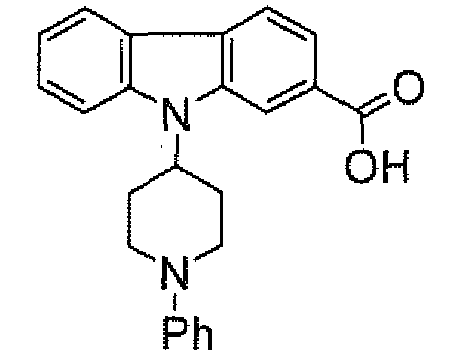
367 
361 
368 
362 
369 
363 
370 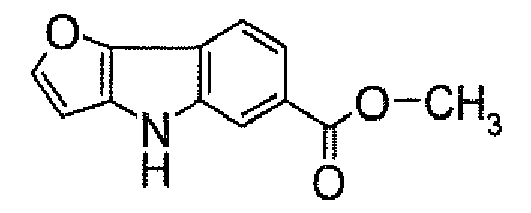
364 
371 
365 
372 
373 
374 
-
[Table 23] REx Str REx Str 375 
382 
376 
383 
377 
384 
378 
385 
379 
386 
380 
387 
381 
388 
389 
-
[Table 24] REx Str REx Str 390 
398 
391 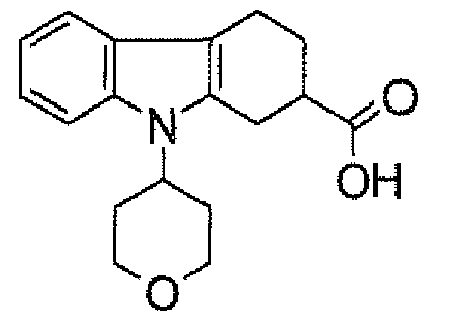
399 
392 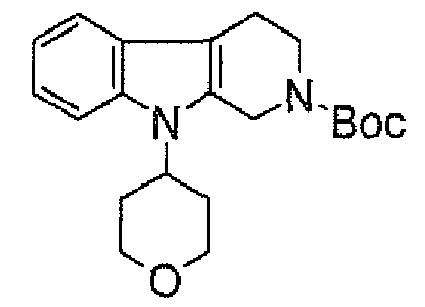
400 
393 
401 
394 
402 
395 
403 
396 
404 
397 
405 
-
[Table 25] REx RSyn Dat REx RSyn Dat REx RSyn Dat 21 21 ESI-: 200 169 3 FAB+: 424 205 3 ESI+: 360 22 21,22 ESI-: 228 170 4 FAB-: 286 206 5, 7 ESI+: 418 22 22 ESI-: 228 171 4 FAB-: 308 207 5, 6 ESI+: 381 23 23 ND 172 4 FAB+: 296 208 23, 1 FAB-: 289 25 25 ESI+: 368 173 4 FAB-: 294 209 2 ESI-: 256 26 26 ESI+: 382 174 4 FAB+:342 210 3 ESI+: 342 27 27 FAB+: 301 175 3 FAB+:356 211 3 Fay-: 355 28 28 FAB+: 323 176 4 FAB-:332 212 3 EI+:359 29 29 FAB+: 351 177 4 FAB+:298 213 4 FAB-:344 30 30 FAB+: 386 178 3 FAB+:312 214 4 FAB-:312 31 31 ESI+: 389 179 4 FAB+: 309 215 4 FAB-:340 32 32 EI+: 321 180 4 ESI+:337 216 4 FAB+:312 33 33 ESI+: 324 181 4 FAB-: 371 217 4 FAB+:311 34 34 EI+: 343 182 3 FAB+:326 218 3 EI+:345 35 35 EI+: 337 183 3 ND 219 3 EI+:357 36 36 ESI-: 284 184 3 FAB+:328 220 4 FAB+:383 37 37 FAB+:399 185 27 FAB+: 308 221 3 EI+:340 38 38 FAB+:385 186 3 ESI+: 317 222 4 ESI-:342 39 21 FAB+:284 187 3 FAB+: 317 223 3 EI+:325 40 40 FAB+:357 188 4 FAB-: 292 224 4 FAB-:310 41 41 FAB-:331 189 27 FAB+: 303 225 3 ESI+: 322 42 42 EI+:297 190 27 FAB+: 303 226 3 FAB+: 345 155 23 ND 191 27 FAB+: 308 227 3 EI+: 375 156 4 FAB+: 394 192 1 FAB+: 326 228 4 FAB-: 330 157 22 ND 193 4 ESI+: 289 229 4 FAB-: 360 158 27 FAB+:320 194 4 ESI+: 289 230 3 FAB+: 365 159 2 ESI: 252 195 4 FAB+: 293 231 3 ESI+: 310 160 3 FAB+: 250 196 3 ESI+: 324 232 4 ESI+: 296 161 3 FAB+: 295 197 4 ESI-: 409 233 3 FAB+:339 162 3, 32 ESI+: 309 198 4 ESI+: 375 234 33 ESI+: 324 163 4 FAB-: 280 199 3 ESI+: 330 235 4 ESI-: 306 164 3 FAB+: 298 200 3 FAB+: 335 236 4 ESI-: 328 165 4 FAB+: 284 201 3 ESI+: 317 237 21 ND 166 3 FAB+: 324 202 3 ESI+: 322 238 23 ND 167 3 FAB+: 310 203 5,7 FAB+: 381 239 1 ESI+: 304 168 3 FAB+: 310 204 3 ESI+: 328 240 2 ESI-: 270 -
[Table 26] REx RSyn Dat REx RSyn Dat REx RSyn Dat 241 4 ESI+:325 277 3 FAB+: 320 313 2 APCI-: 292 242 1 FAB+: 294 278 4 ESI-: 330 314 3 FAB+: 377 243 2 ESI-: 260 279 4 ESI-: 330 315 3 FAB+: 354 244 1 EI+: 293 280 4 FAB-: 305 316 4 ESI-: 362 245 2 ESI-: 260 281 3 FAB+:359 317 4 ESI-: 324 246 23, 1 ESI+: 294 282 4 FAB-:330 318 3 ESI+: 395 247 2 ESI-: 260 283 3 EI+:309 319 3 ESI+: 323 248 3 ESI+: 346 284 3 EI+: 281 320 3,32 ESI+: 283 249 4 ESI+: 332 285 4 FAB-: 322 321 3 FAB+: 436 250 4 FAB+: 362 286 4 FAB+: 268 322 4,32 FAB-: 279 251 3 FAB+: 375 287 3 FAB+:355 323 4 ESI-: 267 252 3 FAB+: 375 288 4 FAB-:326 324 4 FAB+: 309 253 4 FAB-: 360 289 4 FAB-:326 325 4,32 FAB-: 307 254 35 EI+: 337 290 3 FAB+: 328 326 1 EI+: 263 255 4 FAB+: 324 291 34 EI+: 325 327 2 EI+: 23 256 4 FAB+: 310 292 4 FAB-: 312 328 3 EI+: 315 257 21 ESI-: 216 293 4 ESI+: 310 329 3 EI+: 321 258 22 ESI-: 244 294 4 FAB+: 311 330 4 FAB-: 300 259 23 FAB+: 378 295 3 FAB+: 380 331 4 FAB-: 306 260 1 ESI+: 306 296 3 FAB+: 357 332 3 FAB+: 368 261 2 ESI-: 272 297 4 ESI-: 328 333 32 FAB+: 295 262 1 ESI+: 308 298 4 FAB+:326 334 32 ESI+: 295 263 2 ESI-: 274 299 3 FAB+:339 335 4 FAB+: 354 264 1 ESI+: 304 300 4 FAB-:268 336 4 ESI-: 379 265 2 ESI-: 270 301 1 EI+:287 337 28 FAB+: 309 266 3 ESI+: 350 302 2 FAB+:332 338 28 FAB+: 309 267 3 ESI+: 344 303 22 FAB+: 299 339 4 ESI+: 295 268 34 EI+: 326 304 4 FAB-:340 340 4 ESI+: 295 269 3 CI+: 322 305 3 FAB+:355 341 3, 4 FAB-: 320 270 4 FAB-: 306 306 2 FAB-:270 342 3, 4 FAB-: 320 271 4 FAB+: 292 307 1 EI+:303 343 3 FAB+: 409 272 4 FAB+: 312 308 32 FAB+: 335 344 3 ESI+: 296 273 1 ESI+: 302 309 34 ESI+: 304 345 5, 7 ESI+: 376 274 2 ESI+: 270 310 4 FAB+: 290 346 7 ESI+: 402 275 3 FAB+: 345 311 34 ESI+:358 347 4 ESI+:309 276 3 FAB+: 345 312 4 FAB+: 324 348 4 FAB+:297 -
[Table 27] REx RSyn Dat REx RSyn Dat REx RSyn Dat 349 4 FAB-:294 368 4 ESI-: 244 387 3 FAB+:314 350 2 FAB-:254 369 1 ND 388 3 FAB+:393 351 4 FAB-:393 370 2 FAB-: 214 389 33 FAB+:255 352 3 FAB+409 371 3 EI+: 299 390 2,32 FAB+:254 353 4 FAB-:342 372 4 FAB-: 284 391 4 FAB+:300 354 3 FAB+:374 373 3 ESI+:398 392 3 FAB+:357 355 4 FAB+:311 374 4 FAB-:325 393 27 FAB+:383 356 3 ESI+:325 375 4 FAB-:330 394 32 EI+:256 357 4 FAB+:385 376 4 FAB-:330 395 4 ESI-: 280 358 4 EI+:355 377 3 CI+: 346 396 3 EI+:345 359 3 FAB+:311 378 3 ESI+:387 397 1 FAB+:363 360 4 FAB+:371 379 4 ESI+:373 398 34 EI+: 306 361 28 FAB+:323 380 32 EI+:248 399 34 ESI+: 338 362 32 FAB+:309 381 27 FAB+:348 400 24 ESI+: 295 363 4 FAB-:332 382 1 FAB+:286 401 3 FAB+: 394 364 37 FAB+:347 383 39 EI+:248 402 3 EI+: 339 365 21 ND 384 4 FAB+:292 403 4 FAB-: 324 366 1 FAB+: 264 385 4 FAB+:292 404 4 ESI+: 300 367 2 ND 386 27 EI+:305 405 3 FAB+: 314 -
[Table 28] 
Ex Syn R4 Sal Dat 1 1 iPr HCl NMR : 1.69 (6H, d, J = 6.9 Hz), 5.31 (1H, sept, J = 6.9 Hz), 8.65 (1H, s). ; FAB+ : 295 2 2 H HCl NMR : 7.24 (1H, dt, J = 7.3, 1.0 Hz), 7.51 (1H, dt, J = 7.3, 1.0 Hz), 8.33 (1H, s). ; FAB+ : 253 3 3 
2HCl NMR : 4.52 (2H, dd, J = 8.3, 8.3 Hz), 4.99 (2H, dd, J = 8.3, 8.3 Hz), 8.76 (1H, s). ; FAB+ : 308 4 4 -(CH2)2OH HCl NMR : 3.84 (2H, t, J = 5.4 Hz), 4.58 (2H, t, J = 5.4 Hz), 8.67 (1H, s). ; FAB+ : 297 12 1 Me HCl NMR : 4.01 (3H, s), 7.29 (1H, dt, J = 7.3, 1.0 Hz), 8.71(1H, d, J = 1.5 Hz). ; FAB+ : 267 13 2 Et HCl NMR : 1.37 (3H, t, J = 7.3 Hz), 4.59 (2H, q, J = 7.3 Hz), 8.72 (1H, d, J = 1.5 Hz). ; FAB+ : 281 14 1 nPr HCl NMR : 0.92 (3H, t, J = 7.3 Hz), 1.86 (2H, tq, J = 7.3, 7.3 Hz), 8.78 (1H, s). ; FAB+ : 295 15 1 nBu HCl NMR : 0.89 (3H, t, J = 7.3 Hz), 1.35 (2H, tq, J = 7.4, 7.3 Hz), 8.74 (1H, d, J = 1.5 Hz). ; FAB+: 309 16 1 nPen HCl NMR : 0.81 (3H, t, J = 6.8 Hz), 1.82 (2H, tt, J = 7.4, 6.8 Hz), 8.70 (1H, d, J =1.5 Hz). ; FAB+ : 323 17 1 -CH(Et)2 HCl NMR : 0.66 (6H, t, J = 6.4 Hz), 4.60-5.00 (1H, m), 8.89 (1H, s). ; ESI+ : 323 18 2 -(CH2)2OMe HCl NMR : 3.18 (3H, s), 4.69 (2H, t, J = 5.2 Hz), 8.58 (1H, s). ; ESI+: 311 19 1 -(CH2)2OBn HCl NMR : 3.90 (2H, t, J = 4.9 Hz), 4.45 (2H, s), 8.84(1H, s). ; FAB+ : 387 20 1 -(CH2)3OMe HCl NMR : 2.07 (2H, tt, J = 6.9, 6.3 Hz), 3.20 (3H, s), 8.65 (1H, d, J = 0.9 Hz). ; FAB+ : 325 21 2 -(CH2)2N(Me)2 2HCl NMR : 2.97 (6H, s), 4.96 (2H, brt, J = 7.8 Hz), 8.83 (1H, s). ; FAB+ : 324 22 1 cBu HCl NMR : 1.92-2.00 (1H, m), 5.49 (1H, quint, J = 8.8 Hz), 8.57 (1H, d, J = 1.6 Hz). ; ESI+ : 307 23 1 cPen HCl NMR : 1.75-1.88 (2H, m), 5.47 (1H, quint, J = 9.0 Hz), 8.58 (1H, s). ; FAB+ : 321 24 1 cHex HCl NMR : 1.64-1.77 (4H, m), 1.84-1.93 (4H, m), 8.80 (1H, s). ; FAB+ : 335 -
[Table 29] Ex Syn R4 Sal Dat 25 1 
HCl NMR : 1.82 (2H, brd, J = 11.5 Hz), 4.09 (2H, brdd, J = 11.5, 2.0 Hz), 8.65-8.88 (3H, m). ; FAB+ : 337 6 6 
2HCl NMR : 2.01 (2H, brd, J = 11.2 Hz), 5.33-5.43 (1H, m), 8.99 (1H, s). ; FAB+ : 336 26 1 Ac HCl NMR : 3.00 (3H, s), 8.40 (1H, d, J = 8.3 Hz), 8.93 (1H, d, J = 0.9 Hz). ; FAB+ : 295 27 1 -C(O)-iPr HCl NMR : 1.35 (6H, d, J = 6.3 Hz), 3.88 (1H, sept, J = 6.3 Hz), 8.94 (1H, s). ; FAB+ : 323 28 1 -S(O)2-iPr HCl NMR : 1.20 (6H, d, J = 6.8 Hz), 4.10 (1H, sept, J = 6.8 Hz), 8.69 (1H, d, J = 1.4 Hz). ; FAB+ : 359 29 1 -C(O)-NMe2 HCl NMR : 3.09 (6H, s), 7.38-7.43 (1H, m), 8.37 (1H, s). ; FAB+ : 324 30 1 
HCl NMR : 3.78 (1H, dd, J = 5.9, 11.2 Hz), 3.85 (1H, dd, J = 11.2, 3.9 Hz), 8.74 (1R, s). ; EEI+ :308 31 2 
NMR : 1.34 (3H, s), 4.54 (2H, s), 8.27 (1H, s). ; FAB+ : 337 32 1 -CH2-cPr HCl NMR : 0.43-0.47 (2H, m), 4.48 (2H, d, J = 7.3 Hz), 8.79 (1H, d, J = 1.5 Hz). ; FAB+ : 307 33 1 
HCl NMR : 5.80 (2H, s), 6.37 (1H, dd, J = 3.4, 2.0 Hz), 8.91 (1H, s). ; FAB+ : 333 34 1 
HCl NMR : 5.62 (2H, s), 6.37 (1H, d, J = 1.5 Hz), 8.90 (1H, d, J = 1.4 Hz). ; FAB+ : 333 35 1 -CH2CH2Ph HCl NMR : 3.13 (2H, t, J = 7.3 Hz), 4.74 (2H, t, J = 7.3 Hz), 8.67 (1H, d, J = 1.0 Hz). ; FAB+ : 357 36 1 
HCl NMR : 3.18 (2H, dd, J = 11.7, 11.7 Hz), 3.79 (2H, dd, J = 11.7, 2.4 Hz), 8.84 (1H, d, J = 0.9 Hz). ; FAB+: 351 37 1 Bn HCl NMR : 5.83 (2H, s), 8.40 (1H, d, J = 8.3 Hz), 8.77 (1H, s). ; FAB+ : 343 38 1 -S(O)2-Me HCl NMR : 3.29 (3H, s), 7.48 (1H, t, J = 7.8 Hz), 8.79 (1H, s). ; FAB+ : 331 39 2 
NMR : 4.76 (1H, s), 5.45-5.48 (1H, m), 8.73 (1H, s). ; ESI+ : 474 40 1 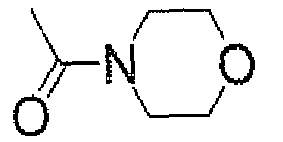
HCl NMR : 3.53-3.63 (4H, m), 7.42 (1H, t, J = 7.8 Hz), 8.45 (1H, d, J = 1.0 Hz). ; FAB+ : 366 -
[Table 30] 
Ex Syn R5 Sal Dat 41 2 5-F HCl NMR : 7.04 (1H, dd, J = 10.3, 7.8 Hz), 7.51 (1H, dt, J = 7.8, 5.6 Hz), 8.35 (1H, s). ; FAB+ : 271 42 2 7-F HCl NMR : 7.09 (1H, ddd, J = 9.5, 8.8, 2.5 Hz), 7.35 (1H, dd, J = 9.8, 2.5 Hz), 8.32 (1H, s). ; FAB+ : 271 -
[Table 31] 
Ex Syn R5 Sal Dat 5 5 6-NH2 2HCl NMR : 1.69 (6H, d, J = 6.8 Hz), 7.55 (1H, d, J = 8.8 Hz), 8.74 (1H, s). ; FAB+: 310 43 2 5-F HCl NMR : 1.70 (6H, d, J = 6.8 Hz), 7.08 (1H, dd, J = 10.3, 7.9 Hz), 8.74 (1H, s). ; FAB+ : 313 44 2 6-F HCl NMR : 1.68 (6H, d, J = 7.4 Hz), 7.40 (1H, dt, J = 9.3, 2.8 Hz), 8.64 (1H, s). ; FAB+ : 313 45 2 7-F HCl NMR : 1.68 (6H, d, J= 6.9 Hz), 7.12 (1H, dt, J = 9.1, 2.0 Hz), 8.64 (1H, s). ; FAB+: 313 46 2 8-F HCl NMR : 1.68 (6H, d, J = 6.9 Hz), 7.12 (1H, dt, J = 9.1, 2.0 Hz), 8.64 (1H, s). ; FAB+: 313 47 2 5-Me HCl NMR : 1.69 (6H, d, J = 7.3 Hz), 2.85 (3H, s), 8.64 (1H,s). ; FAB+ : 309 48 2 6-Me HCl NMR : 1.67 (6H, d, J = 7.3 Hz), 2.49(3H, s), 8.62 (1H, s). ; FAB+ : 309 49 2 7-Me HCl NMR : 1.69 (6H, d, J = 6.8 Hz), 2.54 (3H, s), 8.55 (1H, s). ; FAB+ : 309 50 2 8-Me HCl NMR : 1.75 (6H, d, J = 6.8 Hz), 2.82 (3H, s), 8.47 (1H, s). ; FAB+ : 309 51 2 5-OMe HCl NMR : 1.68 (6H, d, J = 6.8 Hz), 4.06 (3H, s), 8.61 (1H, s). ; FAB+ : 325 52 2 6-OMe HCl NMR : 1.66 (6H, d, J = 6.9 Hz), 3.87 (3H, s), 8.53 (1H, s). ; ESI+ : 325 53 2 7-OMe HCl NMR : 1.69 (6H, d, J = 6.8 Hz), 3.92 (3H, s), 8.56 (1H, s). ; FAB+: 325 54 2 8-OMe HCl NMR : 1.68 (6H, d, J= 6.8 Hz), 4.01 (3H, s), 8.59 (1H, s). ; ESI+ : 325 55 1 5-CN HCl NMR : 1.72 (6H, d, J = 6.8 Hz), 7.72 (1H, t, J = 7.3 Hz), 8.79 (1H, s). ; FAB+ : 320 56 1 6-CN HCl NMR : 1.71 (6H, d, J = 6.8 Hz), 7.89 (1H, dd, J = 8.8, 1.5 Hz), 8.90 (1H, d, J =1.5 Hz). ; FAB+ : 320 57 1 7-CN HCl NMR : 1.72 (6H, d, J = 7.4 Hz), 7.65 (1H, dd, J = 8.3, 1.0 Hz), 8.71 (1H, s). ; FAB+: 320 58 1 8-CN HCl NMR : 1.83 (6H, d, J = 7.3 Hz), 7.43 (1H, t, J = 7.8 Hz), 8.64 (1H, s). ; FAB+ : 320 -
[Table 32] Ex Syn R5 Sal Dat 59 2 5-Cl HCl NMR : 1.70 (6H, d, J = 6.9 Hz), 7.34 (1H, t, J = 7.8 Hz), 8.72 (1H, s). ; FAB+:329 60 2 6-Cl HCl NMR : 1.68 (6H, d, J = 6.9 Hz), 7.54 (1H, dd, J = 8.7, 1.9 Hz), 8.65 (1H, s). ; FAB+:329 61 2 7-Cl HCl NMR : 1.69 (6H, d, J = 6.8 Hz), 7.30 (1H, dd, J = 8.3, 2.0 Hz), 8.65 (1H, s). ; FAB+ : 329 62 2 8-Cl HCl NMR : 1.76 (6H, d, J = 7.3 Hz), 7.27 (1H, t, J = 7.8 Hz), 8.54 (1H, s). ; FAB+:329 63 1 6-NO2 HCl NMR : 1.73 (6H, d, J = 6.8 Hz), 8.02 (1H, d, J = 9.2 Hz), 8.77 (1H, s). ; FAB+: 340 64 2 5-CH2NMe2 2HCl NMR : 1.71 (6H, d, J = 6.8 Hz), 2.89 (6H, s), 8.81 (1H,s). ; FAB+: 352 65 2 5-CH2OH HCl NMR : 1.69 (6H, d, J= 7.3 Hz), 5.10 (2H, s), 8.66 (1H, s). ; FAB+: 325 66 2 5-CH2OMe HCl NMR : 1.70 (6H, d, J = 6.8 Hz), 3.42 (3H, s), 8.65 (1H, s). ; FAB+ : 339 67 1 5-C(O)H HCl NMR : 1.73 (6H, d, J = 6.8 Hz), 8.71 (1H, s), 10.44 (1H, s). ; FAB+ : 323 -
[Table 33] Ex Syn Str Sal Dat 68 1 
HCl NMR : 1.76-1.89 (4H, m), 2.63-2.68 (2H, m), 8.15 (1H, d, J = 1.5 Hz). ; FAB+ : 257 69 1 
HCl NMR : 1.71-1.79 (2H, m), 1.79-1.86 (2H, m), 7.11 (1H, t, J = 7.9 Hz). ; FAB+ : 257 70 1 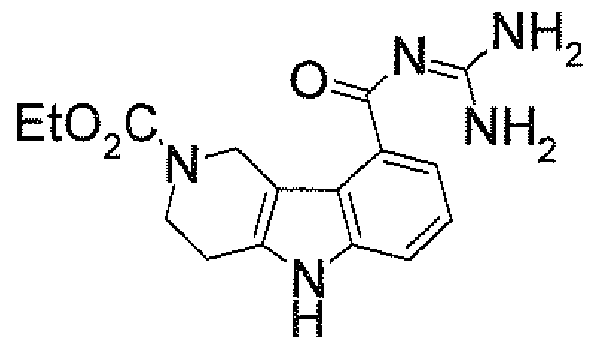
HCl NMR : 1.20 (3H, t, J = 6.9 Hz), 2.86 (2H, brt, J = 5.3 Hz), 7.18 (1H, t, J = 7.8 Hz). ; FAB+:330 71 1 
HCl NMR : 1.22 (3H, t, J = 6.9 Hz), 2.87 (2H, brt, J = 5.6Hz), 8.18 (1H, s). ; FAB+ : 330 -
[Table 34] Ex Sal Str Ex Sal Str 7 HCl 
75 HCl 
8 
76 HCl 
9 2HCl 
77 HCl 
78 HCl 
10 HCl 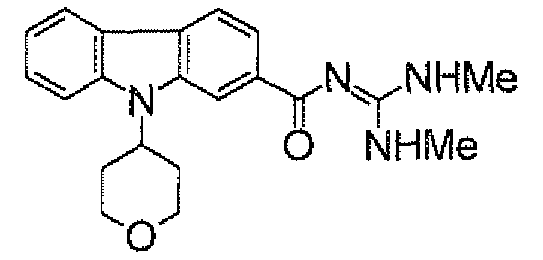
79 HCl 
11 HCl 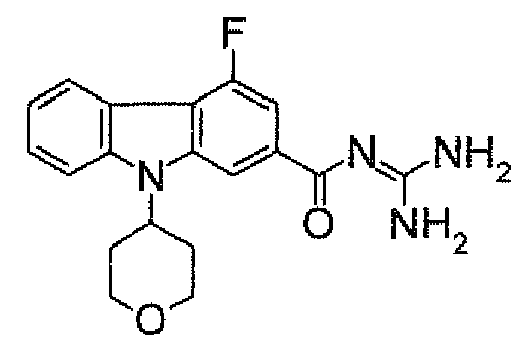
80 HCl 
72 HCl 
81 HCl 
73 HCl 
82 HCl 
74 HCl 
83 2HCl 
-
[Table 35] Ex Sal Str Ex Sal Str 84 2HCl 
92 HCl 
85 HCl 
93 HCl 
86 HCl 
94 HCl 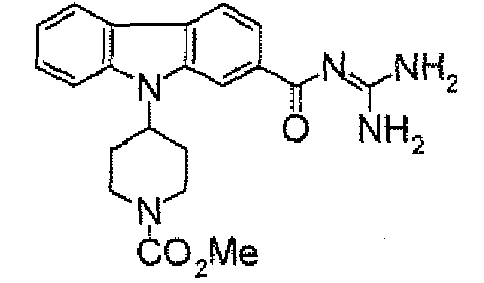
87 HCl 
95 HCl 
96 HCl 
88 2HCl 
97 2HCl 
89 2HCl 
98 HCl 
90 HCl 
99 HCl 
91 2HCl 
100 HCl 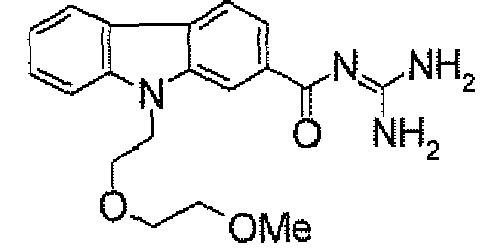
-
[Table 36] Ex Sal Str Ex Sal Str 101 Oxal 
109 HCl 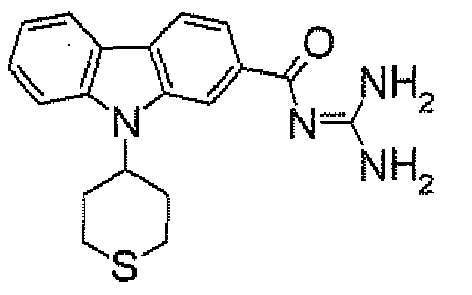
102 2HCl 
110 HCl 
103 HCl 
111 2HCl 
104 HCl 
112 HCl 
105 HCl 
113 HCl 
106 HCl 
114 HCl 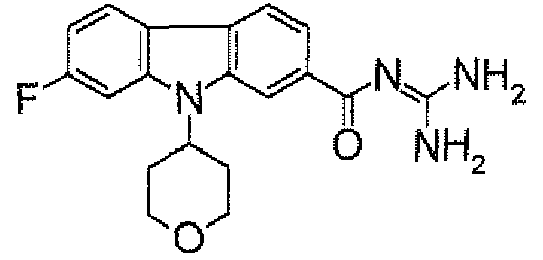
107 HCl 
115 HCl 
108 2HCl 
116 HCl 
-
[Table 37] Ex Sal Str Ex Sal Str 117 HCl 
125 HCl 
118 HCl 
126 HCl 
119 HCl 
127 2HCl 
120 HCl 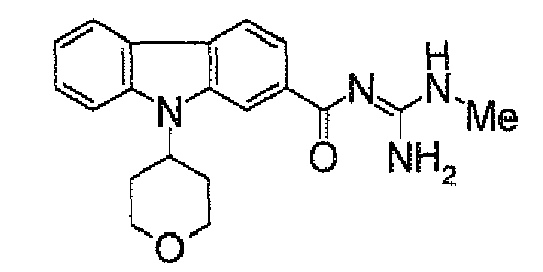
128 HCl 
121 HCl 
129 HCl 
122 HCl 
130 2HCl 
123 HCl 
131 HCl 
124 HCl 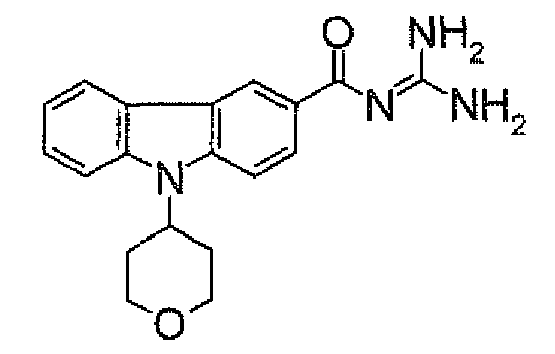
-
[Table 38] Ex Sal Str Ex Sal Str 132 HCl 
139 HCl 
133 HCl 
140 HCl 
134 HCl 
141 HCl 
135 HCl 
142 HCl 
143 HCl 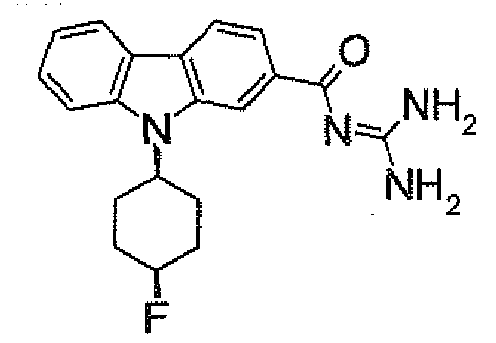
136 HCl 
144 HCl 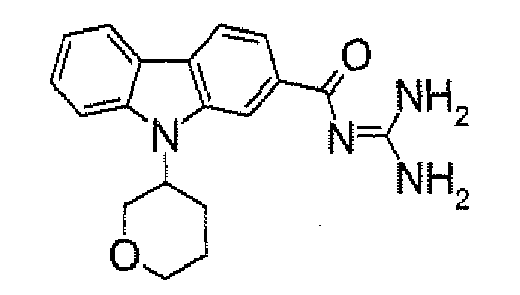
137 HCl 
145 HCl 
138 HCl 
146 HCl 
-
[Table 39] Ex Sal Str Ex Sal Str 147 HCl 
154 HCl 
148 HCl 
155 HCl 
149 HCl 
156 HCl 
150 HCl 
157 HCl 
158 HCl 
151 HCl 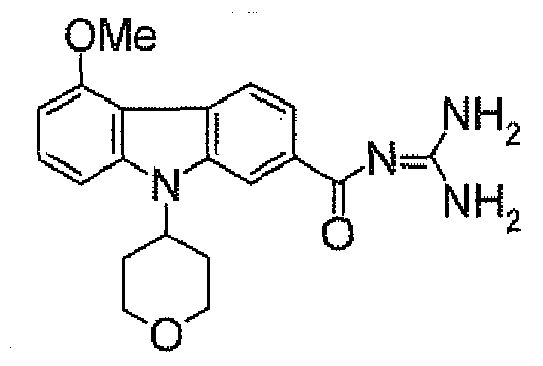
159 HCl 
152 HCl 
160 HCl 
153 HCl 
161 HCl 
162 HCl 
-
[Table 40] Ex Sal Str Ex Sal Str 163 HCl 
173 2HCl 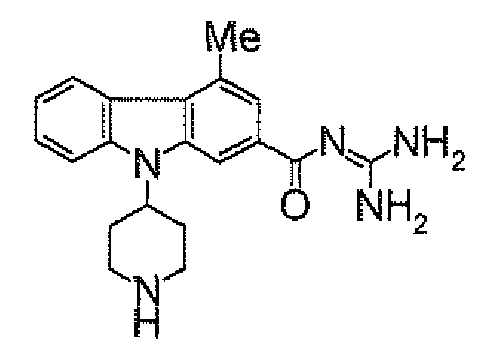
164 HCl 
174 2HCl 
165 HCl 
175 2HCl 
166 HCl 
176 HCl 
167 2HCl 
177 HCl 
168 2HCl 
178 HCl 
169 Oxal 
170 2HCl 
179 HCl 
171 2HCl 
180 HCl 
172 2HCl 
181 HCl 
-
[Table 41] Ex Sal Str Ex Sal Str 182 HCI 
191 2HCl 
183 2HCl 
192 2HCl 
184 2HCl 
193 2HCl 
185 2HCl 
194 HCl 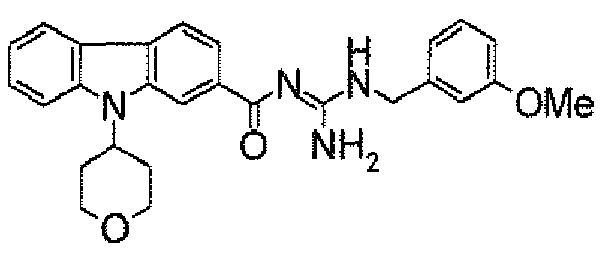
186 HCl 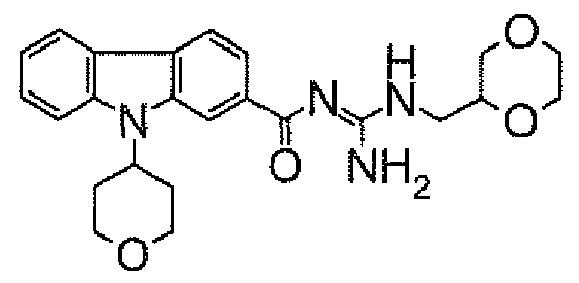
195 HCl 
187 HCl 
196 HCl 
188 HCl 
197 HCl 
189 2HCl 
198 2HCl 
190 2HCl 
199 2HCl 
-
[Table 42] Ex Sal Str Ex Sal Str 200 2HCl 
208 2HCl 
201 2HCl 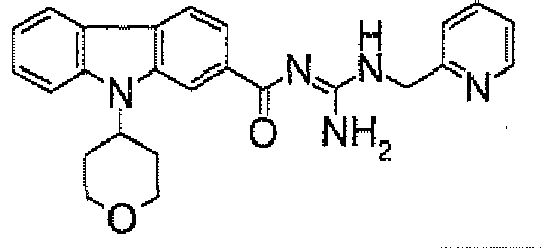
209 HCl 
202 2HCl 
210 HCl 
203 2HCl 
211 HCl 
204 HCl 
212 HCl 
205 HCl 
213 HCl 
206 HCl 
214 HCl 
207 HCl 
215 HCl 
216 Oxal 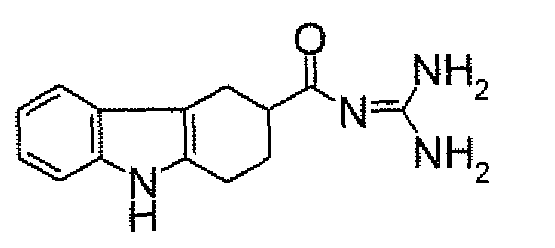
-
[Table 43] Ex Sal Str Ex Sal Str 217 Oxal 
225 
218 HCl 
226 
219 
227 
220 Oxal 
221 HCl 
222 Oxal 
223 Oxal 
224 
-
[Table 44] Ex Syn Dat (MASS) Ex Syn Dat (MASS) Ex Syn Dat (MASS) 7 7 FAB+:258 103 1 FAB+:385 139 1 FAB+: 373 8 8 ESI+: 416 104 1 FAB+:383 140 1 FAB+: 373 9 9 ESI+:406 105 1 FAB+:425 141 1 ESI+: 348 10 10 FAB+: 365 106 11 FAB+: 351 142 1 FAB+: 333 11 11 FAB+: 355 107 11 FAB+: 367 143 1 ESI+: 353 72 1 FAB+: 323 108 1,6 ESI+: 352 144 1 FAB+: 337 73 1 FAB+: 323 109 1 FAB+:353 145 1 FAB+: 369 74 1 ESI+:373 110 1 Fay+:385 146 1 FAB+: 373 75 1 FAB:383 111 11 ESI+:394 147 1 FAB+383 76 1 FAB+:387 112 1 FAB+:373 148 1 FAB+: 365 77 1 FAB+:339 113 1 FAB+:368 149 9 ESI+: 379 78 1 FAB+: 351 114 11 ESI+: 355 150 1 ESI+: 371 79 1 FAB+: 337 115 11 ESI+:371 151 1 FAB+: 367 80 1 FAB+: 337 116 1 ESI+: 367 152 1 FAB+: 311 81 1 FAB+: 325 117 2 FAB+: 325 153 1 FAB+: 405 82 1 FAB+: 329 118 1 ESI+:373 154 1 FAB+: 367 83 11 ESI+:344 119 2 ESI+: 365 155 9 ESI+: 383 84 11 ESI+:344 120 9 FAB+: 351 156 1 ESI+: 355 85 2 East+:367 121 9 ESI+:365 157 1 ESI+: 351 86 11 ESI+:355 122 1 ESI+: 373 158 1 FAB+: 353 87 11 EST+:351 123 1 Fay+: 403 159 9 FAB+: 427 88 1 ESI+:350 124 1 ESI+: 337 160 1 FAB+: 331 89 1 ESI+:378 125 1 E81+: 253 161 1 FAB+: 365 90 1 E8I+: 414 126 9 FAB+: 381 162 9 FAB+: 409 91 1 FAB+: 330 127 9 ESI+: 408 163 9 FAB+: 457 92 1 FAB+: 335 128 1 ESI+: 349 164 9 FAB+: 377 93 1 FAB+: 335 129 1 FAB+: 371 165 1 ESI+: 349 94 1 EST+: 394 130 9 ESI+: 380 166 1 ESI+: 343 95 2 FAB+: 357 131 1 ESI+: 403 167 1 FAB+:338 96 11 FAB+: 363 132 1 ESI+: 403 168 6 FAB+:336 97 2 ESI+:344 133 9 ESI+: 395 169 1 ESI+: 309 98 2 Fay+: 349 134 1 FAB+: 373 170 1 FAB+: 322 99 1 Fay+:353 135 1 ESI+: 349 171 1 ESI+: 310 100 1 FAB+:355 136 1 Flab+: 365 172 1 ESI+: 350 101 1 FAB+:353 137 1 ESI+: 351 173 1 ESI+: 350 102 1 ESI+:330 138 1 FAB+:369 174 1,6 ESI+: 296 -
[Table 45] Ex Syn Dat (MASS) Ex Syn Dat (MASTS) 175 1,6 FAB+: 322 211 9 FAB+: 465 176 1 FAB+: 363 212 9 ESI+: 487 177 1 FAB+: 363 213 9 ESI+: 393 178 9 ESI+:391 214 7 FAB+:258 179 9 FAB+: 417 215 1 Fay+:257 180 9 ESI+: 433 216 1 FAB+:257 181 9 FAB+:413 217 7 FAB+:334 182 9 FAB+:421 218 7 FAB+:334 183 1 FAB+:350 219 1 FAB+:333 184 1 ESI+: 336 220 1 FAB+:333 185 1 ESI+:336 221 2 ESI+:379 186 9 FAB+: 437 222 1 ESI:341 187 9 FAB+: 421 223 7 ESI+342 188 9 FAB+:421 224 1 FAB+:436 189 1 FAB+:352 225 8 FAB+: 515 190 1 FAB+:426 226 8 FAB+: 428 191 1 FAB+:375 227 1 ESI+:341 192 1 FAB+:366 193 9 FAB+: 457 194 9 FAB+: 457 195 9 FAB+: 457 196 9 FAB+: 441 197 1 ESI+:327 198 1 FAB+:412 199 9 ESI+:428 200 9 ESI+:428 201 9 ESI+:428 202 9,6 FAB+: 378 203 9,6 ESI+: 426 204 9 FAB+: 433 205 9 FAB+: 419 206 9 FAB+: 435 207 9 FAB+: 533 208 1 ESI+:414 209 1 FAB+: 287 210 9 FAB+: 407 -
[Table 46] Ex Dat (NMR-DMSOd6) 11 1.78-1.89 (2H, m), 2.56-2.71 (2H, m), 3.73 (2H, t, J = 11.3 Hz), 4.04-4.14 (2H, m), 5.23-5.35 (1H, m), 7.35 (1H, t, J = 7.5 Hz), 7.57-7.72 (2H, m), 7.93 (1H, d, J = 8.4 Hz), 8.20 (1H, d, J = 7.8 Hz), 8.54 (2H, brs), 8.74 (1H, s), 8.85 (2H, brs), 12.29 (1H, s) 74 4.43 (2H, t, J = 5.1 Hz), 4.94 (2H, t, J = 5.1 Hz), 6.77 (2H, d, J = 7.8 Hz), 6.84-6.88 (1H, m), 7.15-7.22 (2H, m), 7.26-7.32 (1H, m), 7.56-7.62 (2H, m), 7.79 (1H, d, J = 8.4 Hz), 7.95 (1H, dd, J = 8.4, 1.5 Hz), 8.26 (1H, d, J = 7.9 Hz), 8.34 (1H, d, J = 8.2 Hz), 8.54 (2H, brs), 8.74 (1H, d, J = 1.4 Hz), 8.90 (1H, brs), 12.24 (1H, brs) 75 0.93 (6H, t, J = .70 Hz), 3.36-3.47 (4H, m), 3.97-4.01 (2H, m), 4.17-4.22 (2H, m), 5.20-5.30 (1H, m), 7.25-7.29 (1H, m), 7.50-7.55 (1H, m), 7.81 (1H, d, J = 8.2 Hz), 7.97 (1H, dd, J = 8.2,1.2 Hz), 8.27 (1H, d, J = 7.63 Hz), 8.36 (1H, d, J = 8.3 Hz), 8.53 (2H, brs), 8.63 (1H, s), 8.91 (2H, brs), 12.21 (1H, brs) 76 2.99 (3H, s), 4.59 (1H, dd, J = 13.9,3.3 Hz), 4.77-4.86 (2H, m), 7.20-7.3 (5H, m), 7.48-7.56 (2H, m), 7.65 (1H, d, J = 8.4 Hz), 7.92 (1H, dd, J = 8.3,1.4 Hz), 8.24 (1H, d, J = 7.8 Hz), 8.32 (1H, d, J = 8.2 Hz), 8.55 (2H, brs), 8.57 (1H, s), 8.95 (2H, brs), 12.35 (1H, brs) 77 1.08 (3H, d, J = 6.4 Hz), 1.83-2.05 (2H, m), 3.20 (3H, s), 3.21-3.30 (1H, m), 4.46-4.65 (2H, m), 7.26-7.31 (1H, m), 7.55-7.70 (2H, m), 7.94 (1H, dd, J= 8.1,1.5 Hz), 8.28 (1H, d, J = 8.3 Hz), 8.36 (1H, d, J = 8.3 Hz), 8.49 (2H, brs), 8.56 (1H, d, J = 1.4 Hz), 8.84 (2H, brs), 12.14 (1H, brs) 82 7.3 (1H, t, J = 7.5 Hz), 7.44 (1H, d, J = 8.3 Hz), 7.54-7.62 (2H, m), 7.70-7.73 (4H, m), 8.02 (1H, s), 8.08 (1H, d, J = 8.3 Hz), 8.40 (1H, d, J = 7.8 Hz), 8.48-8.68 (5H. m), 11.94 (1H, brs) 84 6.03 (2H, s), 7.34 (1H, t, J = 7.5 Hz), 7.53-7.62 (1H, m), 7.75-7.85 (2H, m), 8.02 (1H, dd, J = 8.2, 1.1 Hz), 8.11 (1H, d, J = 8.1 Hz), 8.34 (1H, d, J = 7.8 Hz), 8.41 (1H, d, J = 8.2 Hz), 8.57-8.81 (3H, m), 8.84-9.06 (4H, m), 12.40 (1H, s) 86 1.77-1.90 (2H, m), 2.54-2.70 (2H, m), 3.66-3.80 (2H, m), 4.03-4.13 (2H, m), 5.23-5.34 (1H, m), 7.10 (1H, dd, J = 10.2, 8.1 Hz), 7.52-7.60 (1H, m), 7.72 (1H, d, J = 8.4 Hz), 7.96 (1H, dd, J = 8.2,1.3 Hz), 8.26 (1H, d, J = 8.1 Hz), 8.52 (2H, brs), 8.87 (3H, brs), 12.23 (1H, s) 93 7.31-7.34 (1H, m), 7.41 (1H, m), 7.49-7.62 (3H, m), 7.77-7.79 (1H, m), 8.10 (1H, s), 8.18-5.20 (1 H, m), 8.38 (1H, d, J = 7.8 Hz), 8.47 (1H, d, J = 8.2 Hz), 8.61 (2H, brs), 8.80 (2H, brs), 12.15 (1H, brs) 99 0.62 (6H, d, J = 6.8 Hz), 1.49-1.63 (1H, m), 3.08 (2H, d, J = 6.4 Hz), 3.80 (2H, t, J = 5.1 Hz), 4.70 (2H, t, J = 5.1 Hz), 7.24-7.30 (1H, m), 7.53-7.59 (1H, m), 7.72 (1H, d, J = 8.4 Hz), 7.91 (1H, dd, J = 8.4,1.5 Hz), 8.26 (1H, d, J = 7.9 Hz), 8.35 (1H, d, J = 8.2 Hz), 8.47 (2H, brs), 8.61 (1H, d, J = 1.1 Hz), 8.80 (2H, brs), 12.06 (1H, brs) 100 3.07 (3H, s), 3.24-3.30 (2H, m), 3.42-3.50 (2H, m), 3.85 (2H, t, J = 5.4 Hz), 4.69 (2H, t, J = 5.4 Hz), 7.24-7.31 (1H, m), 7.58-7.59 (1H, m), 7.72 (1H, d, J = 8.2 Hz), 7.91 (1H, dd, J = 8.1,1.5 Hz), 8.26 (1H, d, J = 7.8 Hz), 8.35 (1H, d, J = 8.1 Hz), 8.50 (2H, brs), 8.58 (1H, d, J = 1.2 Hz), 8.80 (2H, brs), 12.06 (1H, brs) 101 0.90 (9H, s), 3.70 (2H, t, J = 5.4 Hz), 4.53 (2H, t, J = 5.4 Hz), 7.20-7.26 (1H, m), 7.47-7.53 (1H, m), 7.67 (1H, d, J = 8.3 Hz), 7.91 (1H, dd, J = 8.3,1.1 Hz), 8.20 (2H, t, J = 8.3 Hz), 8.33 (1H, d, J = 1.0 Hz) -
[Table 47] Ex Dat (NMR-DMSOd6) 103 3.85 (1H, dd, J = 16.0,7.0 Hz), 3.47 (1H, dd, J = 16.0,9.1 Hz), 4.79 (2H, d, J = 5.7 Hz), 5.29-5.39 (1H, m), 6.62 (1H, d, J = 7.9 Hz), 6.79-6.85 (1H, m), 7.03-7.09 (1H, m), 7.22 (1H, d, J = 7.2 Hz), 7.29 (1H, t, J = 7.6 Hz), 7.54-7.56 (1H, m), 7.69 (1H, d, J = 8.4 Hz), 7.94 (1H, dd, J = 8.2,1.4 Hz), 8.27 (1H, d, J = 7.6 Hz), 8.37 (1H, d, J = 8.4 Hz), 8.48 (2H, brs), 8.69 (1H, d, J = 1.0 Hz), 8.82 (2H, brs), 12.11 (1H, brs) 104 6.01 (2H, s), 7.04 (1H, s), 7.15-7.24 (2H, m), 7.29-7.35 (1H, m), 7.40-7.44 (1H, m), 7.54-7.64 (2H, m), 7.91 (1H, d, J = 8.4 Hz), 7.99 (1H, dd, J = 8.4,1.5 Hz), 8.30 (1H, d, J = 7.7 Hz), 8.38 (1H, d, J = 8.4 Hz), 8.51 (2H, brs), 8.86 (2H, brs), 8.90 (1H, s), 12.20 (1H, brs) 105 1.86-2.02 (2H, m), 2.17-2.46 (4H, m), 2.53-2.71 (2H, m), 3.41 (4H, s), 5.01-5.20 (1H, m), 7.28 (1H, t, J = 7.5 Hz), 7.55-7.71 (1H, m), 7.76 (1H, d, J = 8.4 Hz), 7.92 (1H, d, J = 8.4 Hz), 8.30 (1H, d, J = 7.6 Hz), 8.36 (1H, d, J = 8.3 Hz), 8.49 (2H, brs), 8.69-9.00 (3H, brs), 12.08 (1H, brs) 106 1.73-1.86 (2H, m), 2.56-2.72 (2H, m), 2.90 (3H, s), 3.75 (2H, t, J = 11 Hz), 4.08 (2H, dd, J = 11.2, 4.1 Hz), 5.23-5.36 (1H, m), 7.30 (1H, t, J = 7.5 Hz), 7.50-7.60 (1H, m), 7.75 (1H, s), 7.88 (1H, d, J = 8.5 Hz), 8.28 (1H, d, J = 7.8 Hz), 8.53 (2H, brs), 8.74 (1H, s), 8.94 (2H, brs), 12.24 (1H, s) 109 2.11-2.24 (2H, m), 2.57-2.73 (2H, m), 2.75-2.90 (2H, m), 3.05-3.22 (2H, m), 4.92-5.11 (1H, m), 7.28 (1H, t, J = 7.3 Hz), 7.50-7.60 (1H, m), 7.83 (1H, d, J = 8.4 Hz), 7.90 (1H, d, J = 8.1 Hz), 8.29 (1H, d, J = 7.8 Hz), 8.37 (1H, d, J = 8.3 Hz), 8.45 (2H, brs), 8.56-9.01 (3H, brs), 12.04 (1H, brs) 110 2.16-2.33 (2H, m), 2.92-3.12 (2H, m), 3.25-3.42 (2H, m), 3.59-3.74 (2H, m), 5.39-5.50 (2H, m), 7.31 (1H, t, J = 7.3 Hz), 7.57-7.65 (1H, m), 7.69-7.77 (1H, m), 8.32 (1H, d, J = 8.4 Hz), 8.38 (1H, d, J = 8.4 Hz), 8.53 (3H, brs), 8.85 (2H, brs), 12.08 (1H, brs) 112 3.68 (3H, s), 5.78 (2H, s), 6.72 (1H, d, J = 7.6 Hz), 6.79 (1H, dd, J = 8.2,2.0 Hz), 6.86-6.90 (1H, m), 7.16 (1H, t, J = 7.9 Hz), 7.27-7.33 (1H, m), 7.52-7.60 (1H, m), 7.72 (1H, d, J = 8.3 Hz), 7.97 (1H, dd, J = 8.3,1.5 Hz), 8.30 (1H, d, J = 7.9 Hz), 8.39 (1H, d, J = 8.3 Hz), 8.48 (2H, brs), 8.72 (1H, d, J = 1.0 Hz), 8.82 (2H, brs), 12.15 (1H, brs) 113 5.89 (2H, s), 7.29-7.36 (1H, m), 7.41-7.52 (2H, m), 7.53-7.61 (1H, m), 7.67-7.80 (3H, m), 7.97 (1H, dd, J = 8.3,1.5 Hz), 8.32 (1H, d, J = 7.9 Hz), 8.38-8.55 (2H, brs), 8.42 (1H, d, J = 8.0 Hz), 8.68 (1H, s), 8.72 (2H, brs), 12.00 (1H, brs) 118 3.66 (3H, s), 5.74 (2H, s), 6.79-6.86 (2H, m), 7.18-7.34 (3H, m), 7.50-7.60 (1H, m), 7.74 (1H, d, J = 8.5 Hz), 7.96 (1H, dd, J = 8.2,1.5 Hz), 8.29 (1H, d, J = 7.8 Hz), 8.38 (1H, d, J = 8.2 Hz), 8.51 (2H, brs), 8.77 (1H, d, J = 1.2 Hz), 8.87 (2H, brs) 120 1.76-1.88 (2H, m), 2.56-2.71 (2H, m), 2.98 (3H, d, J = 5.0 Hz), 3.68-3.80 (2H, m), 4.09 (2H, dd, J = 11.2, 3.9 Hz), 5.19-5.31 (1H, m), 7.24-7.32 (1H, m), 7.51-7.60 (1H, m), 7.85 (1H, d, J = 8.5 Hz), 7.92 (1H, d, J = 8.2 Hz), 8.30 (1H, d, J = 7.7 Hz), 8.37 (1H, d, J = 8.2 Hz), 8.81 (2H, brs), 9.22 (1H, brs), 9.56-9.66 (1H, m), 12.17 (1H, s) 125 7.23-7.32 (1H, m), 7.44-7.52 (1H, m), 7.58 (1H, d, J = 8.1 Hz), 7.63 (1H, d, J = 8.6 Hz), 8.18 (1H, dd, J = 8.6, 1.9 Hz), 8.21 (1H, d, J = 7.8 Hz), 8.49 (2H, brs), 8.87 (2H, brs), 9.24 (1H, d, J = 1.6 Hz), 11.90 (1H, s) 129 1.96-1.99 (2H, m), 2.26-2.62 (6H, m), 5.21-5.32 (1H, m), 7.29 (1H, t, J = 7.5 Hz), 7.57 (1H, t, J = 7.8 Hz), 7.72 (1H, d, J = 7.5 Hz), 7.93 (1H, d, J = 8.4 Hz), 8.31 (1H, d, J = 7.8 Hz), 8.38 (1H, d, J = 7.2 Hz), 8.50 (2H, brs), 8.74-8.93 (3H, m), 12.10 (1H, brs) -
[Table 48] Ex Dat (NMR-DMSOd6) 133 1.75-1.88 (2H, m), 2.56-2.71 (2H, m), 3.35 (3H, s), 3.53-3.64 (4H, m), 3.67-3.79 (2H, m), 4.03-4.14 (2H, m), 5.21-5.34 (1H, m), 7.25-7.32 (1H, m), 7.52-7.58 (1H, m), 7.85 (1H, d, J = 8.5 Hz), 7.95 (1H, d, J = 9.4 Hz), 8.30 (1H, d, J = 7.6 Hz), 8.37 (1H, d, J = 8.2 Hz), 8.85 (1H, brs), 8.99 (1H, brs), 9.37 (1H, brs), 9.73 (1H, brs), 12.27 (1H, brs) 135 6.01 (2H, s), 6.91-6.96 (1H, m), 7.27-7.37 (3H, m), 7.56-7.63 (1H, m), 7.85 (1H, d, J = 8.3 Hz), 7.99 (1H, dd, J = 8.3, 1.3 Hz), 8.29 (1H, d, J = 7.7 Hz), 8.37 (1H, d, J = 8.2 Hz), 8.54 (2H, brs), 8.84-8.98 (3H, m), 12.25 (1H, brs) 138 1.73-1.85 (2H, m), 2.57-2.73 (2H, m), 2.89 (3H, d, J = 7.3 Hz), 3.71-3.82 (2H, m), 4.02-4.13 (2H, m), 5.26-5.43 (1H, m), 7.02-7.12 (1H, m), 7.51-7.60 (1H, m), 7.73 (1H, d, J = 8.3 Hz), 7.77 (1H, s), 8.53 (2H, brs), 8.77 (1H, s), 8.92 (2H, brs), 12.27 (1H, brs) 141 2.28 (3H, s), 5.83 (2H, s), 6.07 (1H, s), 7.27-7.35 (1H, m), 7.54-7.62 (1H, m), 7.74 (1H, d, J = 8.3 Hz), 8.01 (1H, d, J = 8.2 Hz), 8.27-8.32 (1H, m), 8.38 (1H, d, J = 8.2 Hz), 8.56 (2H, brs), 8.77 (1H, s), 8.87 (2H, brs) 144 1.79-2.06 (3H, m), 2.64-2.80 (1H, m), 3.71-3.82 (1H, m), 3.85-4.00 (2H, m), 4.29-4.40 (1H, m), 4.92-5.07 (1H, m), 7.28 (1H, d, J = 8.0 Hz), 7.50-7.61 (1H, m), 7.93 (2H, d, J = 8.3 Hz), 8.30 (1H, d, J = 7.6 Hz), 8.37 (1H, d, J = 8.2 Hz), 8.52 (2H, brs), 8.70 (1H, s), 8.91 (2H, brs), 12.29 (1H, brs) 145 1.75-1.85 (2H, m), 2.59-2.73 (2H, m), 2.84 (3H, d, J = 7.5 Hz), 3.70-3.82 (2H, m), 4.02-4.13 (2H, m), 5.27-5.42 (1H, m), 7.13 (1H, d, J = 7.3 Hz), 7.46-7.5 (1H, m), 7.64 (1H, d, J = 12.6 Hz), 7.76 (1H, d, J= 8.5 Hz), 8.53 (2H, brs), 8.76 (1H, s), 8.85 (2H, brs), 12.29 (1H, brs) 146 1.78-1.92 (2H, m), 2.56-2.72 (2H, m), 3.69-3.81 (2H, m), 3.97-4.18 (2H, m), 5.26-5.43 (1H, m), 7.13 (1H, dd, J = 10.5,8.2 Hz), 7.58-7.66 (1H, m), 7.69 (1H, d, J = 10.3 Hz), 7.77 (1H, d, J = 8.5 Hz), 8.56 (2H, brs), 8.81 (1H, s), 8.86 (2H, brs), 12.38 (1H, brs) 147 1.74-1.87 (2H, m), 2.56-2.74 (2H, m), 2.70 (3H, s), 3.68-3.79 (2H, m), 4.02-4.13 (2H, m), 5.20-5.37 (1H, m), 7.16 (1H, d, J = 7.7 Hz), 7.52-7.58 (1H, m), 7.69 (1H, d, J = 8.4 Hz), 7.95 (1H, dd, J = 8.4,1.3 Hz), 8.48 (2H, brs), 8.56 (1H, d, J = 8.3 Hz), 8.79 (1H, s), 8.80 (2H, brs), 12.13 (1H, brs) 148 1.63-1.66 (2H, m), 1.76-1.82 (2H, m), 2.09-2.12 (2H, m), 2.56-2.65 (2H, m), 3.38 (3H, s), 3.58 (1H, m), 4.98-5.13 (1H, m), 7.25-7.29 (1H, m), 7.54-7.58 (1H, m), 7.71 (1H, d, J = 8.5 Hz), 7.94 (1H, d, J = 8.3 Hz), 8.30 (1H, d, J = 7.7 Hz), 8.36 (1H, d, J = 8.2 Hz), 8.52 (2H, brs), 8.82 (1H, brs), 8.92 (2H, brs), 9.10 (1H, brs) 149 1.27 (3H, s), 1.29 (3H, s), 1.75-1.86 (2H, m), 2.56-2.74 (2H, m), 3.65-3.82 (2H, m), 3.90-4.03 (1H, m), 4.04-4.18 (2H, m), 5.18-5.34 (1H, m), 7.22-7.32 (1H, m), 7.51-7.59 (1H, m), 7.85 (1H, d, J = 8.4 Hz), 7.93 (1H, d, J = 8.2 Hz), 8.26-8.33 (1H, m), 8.36 (1H, d, J = 8.2 Hz), 8.85 (1H, s), 9.02 (1H, s), 9.32 (1H, s), 9.59-9.76 (1H, m), 12.12 (1H, m) 150 1.75-1.90 (2H, m), 2.58-2.73 (2H, m), 3.67-3.83 (2H, m), 4.05-4.15 (2H, m), 5.28-5.42 (1H, m), 7.33-7.41 (1H, m), 7.60-7.68 (1H, m), 7.90-7.98 (2H, m), 8.48-8.68 (3H, m), 8.77-9.00 (3H, m), 12.38 (1H, brs) 151 1.75-1.87 (2H, m), 2.53-2.71 (2H, m), 3.66-3.80 (2H, m), 4.01-4.14 (2H, m), 4.06 (3H, s), 5.16-5.32 (1H, m), 6.83 (1H, d, J = 7.8 Hz), 7.39-7.54 (2H, m), 7.91-7.95 (1H, m), 8.33 (1H, d, J = 8.3 Hz), 8.52 (2H, brs), 8.81 (1H, s), 8.92 (2H, brs), 12.22 (1H, brs) -
[Table 49] Ex Dart (NMR-DMSOd6) 152 1.66 (6H, d, J = 6.9 Hz), 5.15-5.29 (1H, m), 6.67 (1H, d, J = 7.8 Hz), 7.19 (1H, d, J = 8.2 Hz), 7.33 (1H, t, J = 8.1 Hz), 7.89 (1H, dd, J = 7.1,1.2 Hz), 8.34 (1H, d, J = 8.2 Hz), 8.48 (2H, brs), 8.55 (1H, s), 8.85 (2H, brs), 10.46 (1H, s), 12.07 (1H, brs) 158 1.81-1.96 (4H, m), 2.15-2.27 (2H, m), 2.56-2.70 (2H, m), 4.90-5.14 (2H, m), 7.25-7.29 (1H, m), 7.51-7.55 (1H, m), 7.85-7.90 (2H, m), 8.27-8.85 (7H, m), 12.01 (1H, brs) 159 180-1.83 (2H, m), 2.59-2.67 (2H, m), 3.70-3.75 (2H, m), 4.06-4.10 (2H, m), 4.57 (2H, d, J = 6.2 Hz), 5.23-5.29 (1H, m), 7.28 (1H, t, J = 7.5 Hz), 7.34-7.38 (1H, m), 7.41-7.47 (4H, m), 7.55 (1H, t, J = 7.3 Hz), 7.85 (1H, d, J = 8.5 Hz), 7.95 (1H, d, J = 9.0 Hz), 8.30 (1H, d, J = 7.7 Hz), 8.37 (1H, d, J = 8.2 Hz), 8.87 (1H, brs), 9.15 (1H, brs), 9.45 (1H, brs), 10.10-10.13 (1H, m), 12.3 (1H, brs) 160 4.72-5.42 (4H, m), 5.63-5.82 (1H, m), 7.29-7.36 (1H, m), 7.55-7.61 (1H, m), 7.73-7.85 (1H, m), 7.95-8.02 (1H, m), 8.28-8.33 (1H, m), 8.37-8.43 (1H, m), 8.52 (2H, brs), 8.70 (1H, s), 8.86 (2H, brs), 12.19-12.22 (1H, m) 161 1.92-2.01 (2H, m), 2,28-2.43 (2H, m), 2.77-2.98 (4H, m), 3.10 (1H, m), 5.23 (1H, m), 5.33-5.42 (1H, m), 7.08 (1H, d, J = 7.3 Hz), 7.42-7.46 (1H, m), 7.67 (1H, d, J = 8.4 Hz), 7.93-7.95 (1H, m), 8.34 (1H, d, J = 8.4 Hz), 8.52 (2H, brs), 8.72 (1H, brs), 8.89 (2H, brs), 12.25 (1H, brs) 162 1.80-1.90 (4H, m), 2.59-2.67 (2H, m), 3.29 (3H, s), 3.41-3.50 (4H, m), 3,71-3.76 (2H, m), 4.07-4.10 (2H, m), 5.20-5.35 (1H, m), 7.26-7.30 (1H, m), 7.53-7.57 (1H, m), 7.85 (1H, d, J = 8.4 Hz), 7.94 (1H, d, J = 9.3 Hz), 8.30 (1H, d, J = 7.6 Hz), 8.37 (1H, d, J = 8.3 Hz), 8.86 (1H, brs), 8.94 (1H, brs), 9.30 (1H, brs), 9.75-9.83 (1H, m), 12.21 (1H, brs) 163 1.80-1.83 (2H, m), 2.59-2.67 (2H, m), 3.70-3.76 (2H, m), 3.81-3.85 (2H, m), 4.00-4.10 (2H, m), 4.21-4.24 (2H, m), 5.20-5.33 (1H, m), 6.96-7.03 (3H, m), 7.26-7.35 (3H, m), 7.53-7.57 (1H, m), 7.84 (1H, d, J = 8.6 Hz), 7.95 (1H, d, J = 8.4 Hz), 8.30 (1H, d, J = 7.6 Hz), 8.36 (1H, d, J = 8.3 Hz), 8.90 (1H, brs), 9.16 (1H, brs), 9.50 (1H, brs), 9.92-10.02 (1H, m), 12.42 (1H, brs) 164 0.74-0.78 (2H, m), 0.91-0.96 (2H, m), 1.80-1.82 (2H, m), 2.58-2.67 (2H, m), 2.73-2.75 (1H, m), 3.70-3.76 (2H, m), 4.06-4.10 (2H, m), 5.22-5.2 (1H, m), 7.28 (1H, t, J = 7.5 Hz), 7.55 (1H, t, J = 7.3 Hz), 7.85 (1H, d, J = 8.5 Hz), 7.93 (1H, d, J = 8.3 Hz), 8.30 (1H, d, J = 7.7 Hz), 8.36 (1H, d, J = 8.3 Hz), 8.83 (1H, brs), 9.09 (1H, brs), 9.41 (1H, brs), 9.86 (1H, brs), 12.18 (1H, brs) 166 1.90-2.04 (2H, m), 2.11-2.27 (2H, m), 3.64-3.76 (2H, m), 4.00-4.13 (2H, m), 5.18-5.31 (1H, m), 7.25 (1H, d, J = 5.4 Hz), 7.57 (1H, d, J = 5.4 Hz), 7.88 (1H, d, J = 8.3 Hz), 8.00 (1H, d, J = 8.4 Hz), 8.49 (2H, brs), 8.94 (2H, brs), 9.00 (1H, s), 12.22 (1H, brs) 167 2.19-2.34 (2H, m), 2.74 (6H, s), 3.22-3.39 (2H, m), 4.53-4.70 (2H, m), 7.31 (1H, t, J = 7.8 Hz), 7.63-7.57 (1H, m), 7.90 (1H, d, J = 8.4 Hz), 7.94 (1H, dd, J = 8.3,1.5 Hz), 8.29 (1H, d, J = 7.8 Hz), 8.36 (1H, d, J = 8.3 Hz), 8.67 (2H, brs), 8.94 (1H, s), 9.04 (2H, brs), 10.35 (1H, brs), 12.43 (1H, brs) 168 1.79-1.98 (2H, m), 1.99-2.14 (1H, m), 2.16-2.28 (1H, m), 3.02-3.18 (1H, m), 3.28-3.47 (1H, m), 4.04-4.20 (1H, m), 4.79-4.99 (2H, m), 7.33 (1H, t, J = 7.6 Hz), 7.56-7.64 (1H, m), 7.94-8.02 (2H, m), 8.31 (1H, d, J = 7.8 Hz), 8.39 (1H, d, J = 8.2 Hz), 8.69 (2H, brs), 8.90 (1H, brs), 8.93 (2H, brs), 9.20 (1H, brs), 9.35 (1H, brs), 12.32 (1H, brs) -
[Table 50] Ex Dat (NMR-DMSOd6) 175 2.33-2.45 (1H, m), 2.73-2.80 (1H, m), 3.30-3.37 (1H, m), 3.65-3.97 (3H, m), 5.88-5.95 (1H, m), 7.34 (1H, t, J = 7.5 Hz), 7.60 (1H, t, J = 7.3 Hz), 7.90 (1H, d, J = 8.5 Hz), 7.97 (1H, d, J = 8.3 Hz), 8.33 (1H, d, J =7.7 Hz), 8.41 (1H, d, J = 8.3 Hz), 8.60 (2H, brs), 8.71 (1H, s), 8.88 (2H, brs), 9.57 (2H, brs), 12.16 (1H, brs) 177 2.38 (3H, s), 5.91 (2H, s), 6.84 (1H, d, J = 5.1 Hz), 7.18 (1H, d, J = 5.1 Hz), 7.25-7.33 (1H, m), 7.52-7.60 (1H, m), 7.68 (1H, d, J = 8.4 Hz), 8.02 (1H, dd, J = 8.2, 1,2 Hz), 8.28-8.34 (1H, m), 8.38 (1H, d, J = 8.3 Hz), 8.54 (2H, brs), 8.67 (1H, s), 8.86 (2H, brs), 12.21 (1H, brs) 178 0.32-0.39 (2H, m), 0.54-0.61 (2H, m), 1.09-1.22 (1H, m), 1.75-1.88 (2H, m), 2.56-2.70 (2H, m), 3.22-3.32 (2H, m), 3.66-3.80 (2H, m), 4.02-4.14 (2H, m), 5.21-5.34 (1H, m), 7.28 (1H, t, J = 7.5 Hz), 7.51-7.59 (1H, m), 7.85 (1H, d, J = 8.4 Hz), 7.92-7.99 (1H, m), 8.30 (1H, d, J = 7.7 Hz), 8.37 (1H, d, J = 8.2 Hz), 8.89 (1H, brs), 8.97 (1H, s), 9.33 (1H, brs), 9.80 (1H, brs), 12.23 (1H, brs) 179 1.74-1.88 (2H, m), 2.56-2.70 (2H, m), 3.64-3.80 (2H, m), 4.01-4.14 (2H, m), 4.65-4.76 (2H, m), 5.18-5.32 (1H, m), 6.46-6.52 (1H, m), 6.54-6.59 (1H, m), 7.28 (1H, t, J = 7.5 Hz), 7.50-7.59 (1H, m), 7.70-7.75 (1H, m), 7.85 (1H, d, J = 8.5 Hz), 7.93 (1H, d, J = 8.3 Hz), 8.30 (1H, d, J = 7.8 Hz), 8.36 (1H, d, J = 8.2 Hz), 8.85 (1H, s), 9.24 (1H, brs), 9.53 (1H, brs), 10.00-10.09 (1H, m), 12.30 (1H, brs) 180 1.74-1.88 (2H, m), 2.56-2.71 (2H, m), 3.64-3.80 (2H, m), 4.01-4.15 (2H, m), 4.80-4.93 (2H, m), 5.18-5.33 (1H, m), 7.02-7.10 (1H, m), 7.22-7.32 (2H, m), 7.51-7.60 (2H, m), 7.85 (1H, d, J = 8.5 Hz), 7.93 (1H, d, J = 8.4 Hz), 8.30 (1H, d, J = 7.8 Hz), 8.36 (1H, d, J = 8.2 Hz), 8.86 (1H, brs), 9.23 (1H, brs), 9.52 (1H, brs), 10.06-10.20 (1H, m), 12.30 (1H, brs) 181 1.76-1.92 (2H,m), 2.56-2.76 (2H, m), 3.66-3.82 (2H, m), 4.03-4.19 (2H, m), 5.13-5.37 (1H, m), 7.30 (1H, t, J = 7.5 Hz), 7.41-7.50 (3H, m), 7.52-7.61 (3H, m), 7.86 (1H, d, J = 8.3 Hz), 7.97 (1H, dd, J = 8.2,1.2 Hz), 8.31 (1H, d, J = 7.8 Hz), 8.39 (1H, d, J = 8.2 Hz), 8.81 (1H, brs), 8.96 (1H, brs), 9.43 (1H, brs), 11.41 (1H, brs), 12.31 (1H, brs) 182 1.51-1.67 (2H, m), 1.76-1.87 (2H, m), 1.89-2.00 (2H, m), 2.55-2.72 (2H, m), 3.38-3.50 (2H, m), 3.68-3.79 (2H, m), 3.85-3.99 (3H, m), 4.01-4.14 (2H, m), 5.20-5.33 (1H, m), 7.28 (1H, t, J = 7.5 Hz), 7.52-7.58 (1H, m), 7.85 (1H, d, J = 8.4 Hz), 7.93 (1H, d, J = 8.3 Hz), 8.30 (1H, d, J = 7.7 Hz), 8.36 (1H, d, J = 8.2 Hz), 8.84 (1H, brs), 9.17 (1 H, brs), 9.37 (1H, brs), 9.78 (1H, d, J = 7.1 Hz), 12.12 (1H, brs) 183 1.71-2.19 (4H, m), 3.02-3.17 (1H, m), 2.80 (3H, d, J = 3.3 Hz), 3.63-3.79 (1H, m), 4.25-4.43 (1H, m), 4.88-5.15 (2H, m), 7.34 (1H, t, J = 7.9 Hz), 7.59-7.67 (1H, m), 7.95 (2H, d, J = 8.1 Hz), 8.31 (1H, d, J = 7.6 Hz), 8.40 (1H, d, J = 8.1 Hz), 8.61 (2H, brs), 8.78 (1H, s), 8.95 (2H, brs), 11.11 (1H, brs), 12.42 (1H, brs) 186 1.76-1.88 (2H, m), 2.57-2.71 (2H, m), 3.30-3.46 (2H, m), 3.47-3.57 (2H, m), 3.60-3.88 (7H, m), 4.04-4.14 (2H, m), 5.22-5.33 (1H, m), 7.28 (1H, t, J = 7.5 Hz), 7.52-7.58 (1H, m), 7.85 (1H, d, J = 8.4 Hz), 7.96 (1H, d, J = 8.3 Hz), 8.30 (1H, d, J = 7.7 Hz), 8.37 (1H, d, J = 8.3 Hz), 8.87 (1H, s), 9.03 (1H, brs), 9.43 (1H, brs), 9.72-9.82 (1H, m), 12.33 (1H, s) 189 1.27 (6H, t, J = 7.2 Hz), 3.20-3.46 (4H, m), 3.50-3.66 (2H, m), 4.94-5.07 (2H, m), 7.34 (1H, t, J = 7.4 Hz), 7.59-7.67 (1H, m), 7.90-7.97 (2H, m), 8.31 (1H, d, J = 7.8 Hz), 8.39 (1H, d, J = 8.2 Hz), 8.58 (2H, brs), 8.84 (1H, s), 8.90 (2H, brs), 10.58 (1H, brs),12.37 (1H, brs) -
[Table 51] Ex Dat (NMR-DMSOd6) 190 1.96-2.13 (2H, m), 3.10-3.43 (4H, m), 3.55-3.72 (2H, m), 4.45 (2H, m), 5.25-5.41 (1H, m), 7.29 (1H, t, J = 7.4 Hz), 7.46-7.59 (4H, m), 7.69-7.77 (2H, m), 7.92-7.97 (1H, m), 8.06-8.18 (1H, m), 8.29 (1H, d, J = 7.8 Hz), 8.36 (1H, d, J = 8.2 Hz), 8.69 (2H, brs), 8.90 (3H, brs), 11.12(1H, brs), 12.02 (1H, brs) 191 1.95-2.20 (2H, m), 2.98-3.22 (2H, m), 3.23-3.46 (2H, m), 3.54-3.75 (2H, m), 4.59 (2H, s), 5.28-5.43 (1H, m), 7.30 (1H, t, J = 7.5 Hz), 7.52-7.58 (1H, m), 7.95 (1H, dd, J = 8.2,1.3 Hz), 8.08 (1H, d, J = 8.3 Hz), 8.31 (1H, d, J = 7.5 Hz), 8.37 (1H, d, J = 8.1 Hz), 8.66 (2H, brs), 8.88 (3H, brs), 12.20 (1H, brs) 192 3.29-3.44 (2H, m), 3.54-3.75 (4H, m), 3.77-3.91 (2H, m), 3.96-4.12 (2H, m), 4.95-5.08 (2H, m), 7.34 (1H, t, J = 7.5 Hz), 7.62 (1H, t, J = 7.6 Hz), 7.90-7.98 (2H, m), 8.30 (1H, d, J = 7.8 Hz), 8.38 (1H, d, J = 8.2 Hz), 8.64 (2H, brs), 8.80 (1H, s), 8.94 (2H, brs), 11.68 (1H, brs), 12.40 (1H,s) 193 1.80-1.82 (2H, m), 2.59-2.67 (2H, m), 3.70-3.77 (5H, m), 4.06-4.09 (2H, m), 4.59 (2H, d, J = 5.9 Hz), 5.22-5.34 (1H, m), 6.96-6.70 (2H, m), 7.27-7.30 (1H, m), 7.39-7.42 (2H, m), 7.53-7.57 (1H, m), 7.85 (1H, d, J = 8.5 Hz), 7.95 (1H, d, J = 9.2 Hz), 8.30 (1H, d, J = 7.7 Hz), 8.36 (1H, d, J = 8.2 Hz), 8.92 (1H, brs), 9.16 (1H, brs), 949 (1H, brs), 10.1 (1H,brs), 12.4(1H,brs) 194 1.80-1.83 (2H, m), 2.59-2.67 (2H, m), 3.70-3.75 (2H, m), 3.79 (3H, s), 4.06-4.10 (2H, m), 4.64 (2H, d, J = 4.0 Hz), 5.19-5.32 (1H, m), 6.92-6.94 (1H, m), 7.01-7.05 (2H, m), 7.26-7.37 (2H, m), 7.53-7.57 (1H, m), 7.85 (1H, d, J = 8.4 Hz), 7.95 (1H, d, J = 8.2 Hz), 8.30 (1H, d, J = 7.7 Hz), 8.37 (1H, d, J = 8.3 Hz), 8.86 (1H, brs), 9.13 (1H, brs), 9.44 (1H, brs), 10.10 (1H, brs), 12.29 (1H, brs) 195 1.80-1.82 (2H, m), 2.59-2.67 (2H, m), 3.70-3.75 (2H, m), 3.89 (3H, s), 4.02-4.09 (2H, m), 4.61 (2H, d, J = 5.9 Hz), 5.22-5.34 (1H, m), 6.70-7.11 (2H, m), 7.26-7.30 (1H, m), 7.35-7.43 (2H, m), 7.53-7.57 (1H, m), 7.85 (1H, d, J = 8.5 Hz), 7.96 (1H, d, J = 7.2 Hz), 8.30 (1H, d, J = 7.6 Hz), 8.36 (1H, d, J = 8.3 Hz), 8.92 (1H, brs), 9.14 (1H, brs), 9.49 (1H, brs), 10.00-10.03 (1H, m), 12.44 (1H, brs) 197 1.92-2.02 (2H, m), 2.07-2.20 (2H, m), 3.64-3.74 (2H, m), 4.00-4.08 (2H, m), 5.04-5.16 (1H, m), 7.16 (1H, d, J = 2.3 Hz), 7.82 (2H, s), 8.02 (1H, d, J = 2.0 Hz), 8.46 (2H, brs), 8.94 (2H, brs), 8.98 (1H, s), 12.19 (1H, s) 198 2.05-2.21 (2H, m), 3.15-3.55 (2H, m), 3.61-4.09 (4H, m), 5.47-5.69 (1H, m), 7.32 (1H, t, J = 7.5 Hz), 7.53-7.89 (6H, m), 7.98 (1H, dd, J = 8.1,1.0 Hz), 8.03-8.12 (1H, m), 8.32 (1H, d, J = 7.8 Hz), 8.39 (1H, d, J = 8.2 Hz), 8.65 (2H, brs), 8.92 (2H, brs), 9.00 (1H, s), 12.04 (1H, brs) 208 1.93-2.05 (2H, m), 3.22-3.43 (2H, m), 3.73-4.14 (2H, m), 4.88-5.04 (2H, m), 5.30-5.49 (1H, m), 6.73 (1H, t, J = 5.0 Hz), 7.26 (1H, t, J = 7.6 Hz), 7.47-7.76 (2H, m), 7.94 (1H, dd, J = 8.2,1.2 Hz), 8.29 (1H, d, J = 7.6 Hz), 8.36 (1H, d, J = 8.0 Hz), 8.46 (2H, d, J = 4.6 Hz), 8.54 (2H, brs), 8.95 (3H, brs), 12.29 (1H, brs) - The pharmacological activity of the compound (I) that is an active ingredient of the pharmaceutical of the present invention was confirmed in the following test. Test Example 1 Acquisition of an HEK293 cell forcibly expressing a human 5-HT5A receptor
An ORF of a human 5-HT5A receptor (Genbank AF498985) was cloned from a human hippocampal cDNA library, and then inserted into a pCR2.1 vector (Invitrogen), and Escherichia coli having the plasmid was mass cultured. Next, the human 5-HT5A receptor full-length cDNA sequence was analyzed, recombined into a pCDNA3.1 vector (Invitrogen) as an expression vector, and mass cultured. A human embryonic kidney-induced cell HEK293 cell (ATCC) was seeded, and the resulting expression plasmid (1 µg) above was added thereto together with LIPOFECTAMINE 2000 (Invitrogen; 2 µl), a gene was introduced into the HEK293 cell, and then Geneticin (G418 sulfate 500 µg/ml; Kanto Chemical Co., Inc.) was used as a drug-resistant marker to screen the expressing cell. Thus prepared gene-expressing recombinant cell was cultured in a D-MEM, 10% FCS, 1% Pc./Sm., 500 µg/ml G418 culture medium for 3 days. This experimental operation was conducted in accordance with a gene operation experiment manual of a known method (Sambrook, J. et al, Molecular Cloning-A Laboratory Manual", Cold Spring Harabor Laboratory, NY, 1989), etc., an instruction appended in a reagent or the like. - An HEK293 cell forcibly expressing a human 5-HT5A receptor was cultured in an F500 plate, and scraped for collection using a scraper. After centrifugation, the precipitates were collected and an incubation buffer (50 mM Tris (HCl) PH 7.4, 10 mM MgSO4, 0.5 mM EDTA) was added thereto. After homogenization, it was further centrifuged, an incubation buffer was added to the precipitate, and the mixture was well suspended. These operations were repeatedly conducted, the protein concentration was then measured, and the preparation of a membrane was completed.
- The compound to be tested (0.3 to 300 nM) and a 100 µM 5-CT solution in DMSO were added to a 96-well plate at 2 µl/well. The number of the wells to be measured under the same condition in one experiment was set at 2, and an average value thereof was used. It was suspended in an incubation buffer, and a HEK293 cell membrane forcibly expressing a human 5-HT5A receptor that had been prepared at 200 µg/ml was added thereto at 100 µl/well. The mixture was incubated at room temperature for 15 minutes, and a [3H]5-CT solution (2 nM [3H]5-CT, an incubation buffer) was then added thereto at 100 µl/well.
Separate from this, 100 µl of the solution was dispersed to a liquid scintillation vial, 2 ml of Aquasol II (registered trademark) was added thereto, followed by stirring, and the radioactivity was then measured with a liquid scintillation counter. The solution was incubated at 37°C for 60 minutes. The reaction liquid was sucked to a 96-well GF/C filter plate that had been preliminarily treated with 0.2% polyethyleneimine, and washed six times with an ice-cooled 50 mM Tris (pH 7.5) buffer. The GF/C filter plate was dried.
MicroscintTMPS (registered trademark) was added thereto at 40 µl/well. The radioactivity remaining on the GF/C filter plate was measured in a top counter.
For the inhibitory activity for the binding of the [3H]5-CT by the compound to be tested in each experiment, IC50 value was calculated by taking the radioactivity when only DMSO was added as 0% inhibition, and the radioactivity when 1 µM 5-CT was added as 100% inhibition. Apart from this, a Ki value was calculated from the Kd value of the [3H]5-CT that had been determined by Scatchard analysis.
As a result of this test, it was proved that the compound (I) that is an active ingredient of the pharmaceutical of the present invention has strong human 5-HT5A receptor binding inhibition.
Hereinbelow, the Example numbers and the Ki values (the numbers in parenthesis: nM) of the compounds exhibiting strong activity are exemplified.
Examples 1 (0.69), 2 (2.8), 25 (0.51), 27 (0.66), 28 (4.5), 37 (8.3), 86 (0.56), 102 (5.3), 106 (0.27), 120 (2.2), 159 (1.6)
In addition, the Example numbers of the compound exhibiting Ki values of 50 nM or less are exemplified below.
Examples 6, 11, 22, 24, 26, 59, 65, 114, 115, 116, 126, 129, 135, 138, 140, 141, 143, 144, 145, 146, 147, 148, 149, 150, 152, 160, 161, 162, 164, 175, 177, 178, 179, 180, 181, 182, 186, 187, 188, 191, 193, 194, 195, 196, 198, 204, 205, 206, 210, 212, 218, 220, 227
From above, it was confirmed that the compound (I) has a 5-HT5A receptor affinity. - The effect of improving the positive symptoms and the negative symptoms of schizophrenia by the compound (I) was evaluated by measuring the kinetic momentum that had been suppressed with administration of the compound in a model causing the symptoms by methane phetamine (which is hereinafter simply referred to as MAP) and M-801.
-
- Species: Male ICR mouse/number of animals (number of animals per group): 8 to 12 animals per group
- Week-old in use: 4-6 week-old
- Supplier or producer: Japan SLC, Inc.
- The animal was left in a laboratory for 1 hour or longer to be acclimated to the environment, and the animal was taken from the feeding cage, orally administered with a compound to be tested, and then returned to the feeding cage. After 30 minutes, it was put into a cage for measurement, and the kinetic momentum of just the compound to be tested was measured. Further, after 30 minutes, the animal was taken out, and intraperitoneally administered with a drug for increasing kinetic momentum (MAP; 1 mg/kg or MK-801; 0.3 mg/kg, all dissolved in physiological saline), and its kinetic momentum was measured for a certain time (60 minutes) using a device for measuring the kinetic momentum by means of an infrared ray sensor (CompACT AMS, Muromachi Kikai Co., Ltd.). Also, the test was carried out under non-fasting.
- The 60 minutes of measurements was classified into three groups: a first half 30 minutes, a second half 3 0 minutes, and a total 60 minutes. For a normal mouse (a mouse administered with physiological saline) and a mouse administered with the drug for increasing kinetic momentum, a Student's T test was used for evaluation in each interval. For the group administered with the compound to be tested, a solvent (vehicle) group and a Dunnett's T test were carried out and evaluated. For the evaluation, in case where there was a significant (P<0.05) difference for the total 60 minutes, it was considered to be effective.
- As a result of this test, it was proven that the compound (I) inhibits the overactivity induced by MAP or MK-801. For example, the compounds of Examples 6, 25, 86, 106, and 135, and the compound of Example 65 significantly inhibited the MAP-induced overactivity at doses of 0.01 mg/kg and doses of 0.003 mg/kg, respectively. On the other hand, olanzapine as a known compound significantly inhibited the MAP-induced overactivity at doses of 0.3 mg/kg.
Furthermore, the compounds of Examples 6, 25, 37, 65, 86, 135, 138, 146, and 178, and the compounds of Examples 106 and 194 significantly inhibited the MK-801-induced overactivity at doses of 0.01 mg/kg and doses of 0.03 mg/kg, respectively. The compounds of Examples 22, 24, 129, 150, and 161 significantly inhibited the MK-801-induced overactivity at doses of 0.1 mg/kg. On the other hand, clozapine as a known compound significantly inhibited the MK-801-induced overactivity at doses of 0.3 mg/kg.
From above, it was confirmed that the compound (I) has the effect of improving the positive symptoms and the negative symptoms of schizophrenia. Furthermore, since the compound (I) inhibited the MAP-induced overactivity, it is also supposed that the compound (I) is effective for bipolar disorders and attention deficit hyperactivity disorders. - An improvement effect of the compound (I) for cognitive impairment was evaluated by the above-described well-known test method as a model of a short-term learning disorder.
-
- Species: Male ddY mice/number of animals (number of animals per group): 6 to 10 animals per group
- Week-old in use: 5 week-old
- Supplier or producer: Japan SLC, Inc.
- A mouse was introduced into the laboratory 1 hour before starting the test. The mouse was placed at one end of an arm in a Y-maze having equal lengths of arms in three directions, and was able freely explored for 8 minutes with the number of the entries into the arms were counted. Furthermore, a spontaneous alternation behavior was defined as consecutive entries into each of the three arms, and an alternation rate was defined as the percentage of the number of time of this behavior relative to the total number of the entries, and calculated by the following equation.

The compound to be tested was orally administered 50 minutes before the initiation of the test, and 30 minutes later, 0.5 mg/kg of scopolamine or 0.15 mg/kg of MK-801 (in the normal group, physiological saline) was intraperitoneally administered. Furthermore, for the normal group (the group administered with physiological saline) and the control group (the group administered with 0.5 mg/kg scopolamine or 0.15 mg/kg MK-801), a solvent (vehicle) was orally administered when the compound to be tested was administered. For the normal group, physiological saline was intraperitoneally administered when scopolamine was administered. - The alternation rate (%) is expressed as an average value in each group (mean±SE). In regard to the alternation rate (%), in the case where a significant difference between the normal group and the control group (Student's T test) was found, it was considered that there was an establishment of learning disorder by the administration of scopolamine or MK-801. By carrying out the Dunnett evaluation for the group administered with the compound to be tested relative to the control group, the presence or absence of the learning disorder action of the compound to be tested was determined. In each evaluation, it was considered that there was a tendency at p<0.10, and there was a significant difference at p<0.05.
As a result of this test, it was proven that the compound (I) inhibits the scopolamine-induced spontaneous alternation behavior disorder. For example, the compounds of Examples 86 and 106, the compounds of Examples 6,25, 65, and 135, and the compounds of Examples 26 and 59 significantly inhibited the scopolamine-induced spontaneous alternation behavior disorder at doses of 0.0001 mg/kg, doses of 0.003 mg/kg, and doses of 0.03 mg/kg, respectively.
On the other hand, donepezil as a known compound significantly inhibited the scopolamine-induced spontaneous alternation behavior disorder at doses of 0.25 mg/kg.
The compound of Example 25 significantly improved the MK-801-induced spontaneous alternation behavior disorder at doses of 0.003 mg/kg.
From above, it was confirmed that the compound (I) has an effect on cognitive impairment. - A startle amplitude occurs in humans to which an sound stimulus has been given, but in healthy human, this startle amplitude is inhibited by the giving of a weak sound stimulus that precedes the sound stimulus. For a patient with schizophrenia, the inhibitory function similarly declined. It is known that when a rat is administered with PCP (phencyclidine), there is a symptom similar to the negative symptom of schizophrenia in humans. Using this model, the improvement effect of the compound (I) for the information processing disorder included in cognitive impairment of schizophrenia was evaluated.
-
- Species: Male Wistar rat/number of the animals (number of animals per group): 12 animals per group
- Week-old in use: 7 to 10 week-old
- Supplier or producer: Charles River Laboratories Japan Inc.
- An animal holder, to which a Plexiglas-made cylinder for animal storage having a diameter of 8.2 cm was attached, was positioned in the upper part of a Plexiglas-made frame in a measurement box. In the measurement box, a sound-insulating treatment and ventilation (FAN) were carried out. Sound was administered by a speaker attached to the 24 cm upper part of the cylinder. The movement of the animals in the cylinder was detected by a transducer attached in the lower part of the frame and recorded by a microcomputer via an interface.
- The experiment was initiated after the animals were put into the chamber for measurement and had spent 10 minutes adapting to the measurement environment. Basically, at 35 minutes after the compound to be tested was orally administered, 1 mg/kg of PCP was subcutaneously administered (1 ml/kg). Five minutes later, the rats were put into a chamber for measurement, allowed to adapt for 10 minutes, and the measurement was then initiated. A white noise of 65 dB (for all frequencies, a disordered noise having a constant energy per unit band) used as a background noise was always played through the break periods and the sessions. The three types of trials as shown below were carried out in a random order 10 times for each type with 30 times in total. Each trial was carried out at a pseudo-random interval of 20 to 60 seconds with an average of 40 seconds. A pulse was defined as a white noise of 120 dB, 20 msec, and a prepulse was defined as a white noise of 70, 80 dB, 20 msec.
- 1) Only a pulse (120 dB, 20 msec) is given (simply referred to as a P-alone trial).
- 2) A pulse is given at 100 msec after the initiation of prepulse of 70 dB, 20 msec (simply referred to as a PP70 & P trial).
- 3) A pulse is given at 100 msec after the initiation of prepulse of 80 dB, 20 msec (simply referred to as a PP80 & P trial).
- The measured value was expressed as an average value (mean±SE). First, the startle amplitudes (SA) were statistically analyzed. In case where SA in the PP80 & P trial was significantly inhibited, as compared with SA in the P alone trial of the normal group (the group administered with physiological saline) (evaluated by means of a Paired t-test), it was taken that the experiment had passed, and the subsequent analysis was carried out. For the measured data of % PPI, the normal group and the control group (the group administered with PCP) were compared by a Student t-test, and for the control group and the group administered with the compound to be tested were compared using a Dunnett evaluation. In each of the evaluations, it was considered that there was a significant difference if p<0.05. The effect of the compound to be tested was assessed with % PPI.
As a result of this test, it was proven that the compound (I) improves the disorder of PCP prepulse inhibition (PPI). For example, the compound of Example 25 and the compound of Examples 65 significantly improved the disorder of PCP prepulse inhibition (PPI) at doses of 0.03 and 0.1 mg/kg and 0.1 and 0.3 mg/kg, respectively. On the other hand, quetiapine as a known compound significantly improved the PCP-induced PPI at doses of 10 mg/kg.
From above, it was confirmed that the compound (I) also has an effect on information processing disorders included in the cognitive impairment of schizophrenia. - The improvement effect of the compound (I) for dementia was evaluated by a known water maze learning disorder model used as a pathophysiology model. Specifically, it was evaluated in accordance with the method as described in "J Pharmacol Exp Ther, 1996; 279: 1157-73, Yamazaki M. et al.".
As a result of this test, it was proven that the compound (I) improves water maze learning disorders in old rats. For example, the compound of Example 25 significantly improved water maze learning disorders in old rats at doses of 0.01 and 0.03 mg/kg.
From above, it was confirmed that the compound (I) has an effect on dementia.
In these tests, the compound of the present invention was not associated with side effects such as a sedation action and the like, that have been reported for the conventional compounds and exhibited improving actions. - From the above-described test results, it can be confirmed that the pharmaceutical composition of the present invention is effective for treating or preventing a 5-HT5A receptor-related disease, particularly for treating or preventing dementia, schizophrenia, bipolar disorder, or attention deficit hyperactivity disorder, neurosis (anxiety disorder, panic disorder, obsessive-compulsive disorder or the like), autism, mood disorder (depressive disorder), neurodegenerative disease, brain infarction, and inter alia, for treating or preventing a memory-related functional disorder such as dementia and a cognitive impairment in schizophrenia.
The pharmaceutical composition of the present invention is excellent in terms of safety when compared with the conventional compound, and is expected to be a novel and effective agent for treating the above-described diseases. - A preparation containing one or two or more kinds of the compound (I) or a salt thereof as an active ingredient can be prepared in accordance with methods that are usually used in the art using a pharmaceutically acceptable carrier, excipient and the like.
The administration can be carried out in any form of oral administration via tablets, pills, capsules, granules, powders, liquid preparations or the like, or parenteral administration via injections such as intraarticular, intravenous, or intramuscular injections, suppositories, ophthalmic solutions, ophthalmic ointments, percutaneous liquid preparations, ointments, percutaneous patches, transmucosal liquid preparations, transmucosal patches, inhalations and the like. - Regarding the solid composition for oral administration according to the present invention, tablets, powders, granules or the like are used. In such a solid composition, one or two or more kinds of active ingredients are mixed with at least one inert excipient such as lactose, mannitol, glucose, hydroxypropylcellulose, microcrystalline cellulose, starch, polyvinyl pyrrolidone, and/or magnesium aluminometasilicate. According to a conventional method, the composition may contain inert additives such as a lubricant such as magnesium stearate, a disintegrator such as carboxymethylstarch sodium, a stabilizing agent and a dissolution aid. As occasion demands, the tablets or the pills may be coated with sugar, or a film of a gastric or enteric material.
The liquid composition for oral administration includes pharmaceutically acceptable emulsions, soluble liquid preparations, suspensions, syrups, elixirs or the like, and contains a generally used inert diluent such as purified water or ethanol. In addition to the inert diluent, this liquid composition may contain an auxiliary agent such as a solubilizing agent, a moistening agent, and a suspending agent, a sweetener, a flavor, an aroma, and an antiseptic.
Injections for parenteral administration include sterile aqueous or non-aqueous soluble liquid preparations, suspensions and emulsions. The aqueous solvent includes, for example, distilled water for injection and physiological saline. Examples of the non-aqueous solvent include propylene glycol, polyethylene glycol, plant oils such as olive oil, alcohols such as ethanol, Polysorbate 80 (Japanese Pharmacopeia) and the like. Such a composition may further contain a tonicity agent, an antiseptic, a moistening agent, an emulsifying agent, a dispersing agent, a stabilizing agent, or a dissolution aid. These are sterilized, for example, by filtration through a bacteria retaining filter, blending of a bactericide, or irradiation. In addition, these can also be used by producing a sterile solid composition, and dissolving or suspending it in sterile water or a sterile solvent for injection prior to its use. - The drug for external use includes ointments, plasters, creams, jellies, cataplasms, sprays, lotions, opthalmic sulutions, opthalmic ointments and the like. The drug contains generally used ointment bases, lotion bases, aqueous or non-aqueous liquid preparations, suspensions, emulsions and the like. Examples of the ointment bases or the lotion bases include polyethylene glycol, propylene glycol, white vaseline, bleached bee wax, polyoxyethylene hydrogenated castor oil, glyceryl monostearate, stearyl alcohol, cetyl alcohol, lauromacrogol, sorbitan sesquioleate and the like.
Regarding the transmucosal agents such as an inhalations and a transnasal agent, those in the form of a solid, liquid, or semi-solid state are used, and may be prepared in accordance with a conventionally known method. For example, a known excipient, and also a pH adjusting agent, an antiseptic, a surfactant, a lubricant, a stabilizing agent, a viscosity increasing agent or the like may be appropriately added thereto. For their administration, an appropriate device for inhalation or blowing can be used. For example, a compound may be administered alone or as a powder of formulated mixture, or as a solution or suspension in combination with a pharmaceutically acceptable carrier, using a conventionally known device or sprayer, such as a measured administration inhalation device. The dry powder inhaler or the like may be for single or multiple administration use, and a dry powder or a powder-containing capsule may be used. Alternatively, this may be in a form such as a pressurized aerosol spray which uses an appropriate propellant, for example, a suitable gas such as chlorofluoroalkane, hydrofluoroalkane, carbon dioxide and the like, or other forms. - In oral administration, the daily dose is generally from about 0.0001 to 100 mg/kg, preferably from 0.0001 to 10 mg/kg, and even more preferably from 0.0001 to 1 mg/kg, in regard to body weight, administered in one portion or divided in 2 to 4 portions. In the case of intravenous administration, the daily dose is suitably administered from about 0.00001 to 1 mg/kg in regard to body weight, once a day or divided up and taken two or more times a day. In addition, a drug for external use or a transmucosal agent is administered at doses from about 0.0001 to 10 mg/kg per body weight, once a day or divided up and taken two or more times a day. The dose is appropriately decided in response to individual cases by taking into consideration the symptoms, the age, and the gender of the subject and the like. The content of the active ingredient in the preparation is from 0.0001 to 50%, and more preferably from 0.001 to 50%.
- The compound that is an active ingredient of the pharmaceutical of the present invention can be used in combination with drugs used for treating or preventing the diseases for which the compound is considered to be effective. The combined preparation may be administered simultaneously, or separately one after the other or at desired time intervals. The preparations to be co-administered may be a blend or may be prepared individually.
- The compound that is an active ingredient of the pharmaceutical of the present invention has advantages in that it has a potent 5-HT5A receptor modulating action, and has an excellent pharmacological action based thereon. The pharmaceutical composition of the present invention is useful for treating or preventing a 5-HT5A receptor-related disease, and particularly, for treating or preventing dementia, schizophrenia, bipolar disorder, or attention deficit hyperactivity disorder. The compound that is an active ingredient of the pharmaceutical of the present invention is useful for improvement of memory-related functional disorders such as dementia and a cognitive impairment in schizophrenia.
9-cyclohexyl-N-(diaminomethylene)-9H-carbazole-2-carboxamide, N-(diaminomethylene)-9-piperidin-4-yl-9H-carbazole-2-carboxamide, 9-cyclobutyl-N-(diaminomethylene)-9H-carbazole-2-carboxamide, N-(diaminomethylene)-9-(tetrahydro-2H-pyran-4-yl)-9H-carbazole-2-carboxamide, 9-acetyl-N-(diaminomethylene)-9H-carbazole-2-carboxamide, 9-benzyl-N-(diaminomethylene)-9H-carbazole-2-carboxamide, 5-chloro-N-(diaminomethylene)-9-isopropyl-9H-carbazole-2-carboxamide, and N-(diaminomethylene)-5-(hydroxymethyl)-9-isopropyl-9H-carbazole-2-carboxamide.
N-[amino(methylamino)methylene]-9-(tetrahydro-2H-pyran-4-yl)-9H-carbazole-2-carboxamide, N-{amino[(3-methoxypropyl)amino]methylene}-9-(tetrahydro-2H-pyran-4-yl)-9H-carbazole-2-carboxamide, N-{amino[(cyclopropylmethyl)amino]methylene}-9-(tetrahydro-2H-pyran-4-yl)-9H-carbazole-2-carboxamide, N-{amino[(4-methoxybenzyl)amino]methylene}-9-(tetrahydro-2H-pyran-4-yl)-9H-carbazole-2-carboxamide, N-{amino[(3-methoxybenzyl)amino]methylene}-9-(tetrahydro-2H-pyran-4-yl)-9H-carbazole-2-carboxamide, and N-{amino[(2,6-dimethoxybenzyl)amino]methylene}-9-(tetrahydro-2H-pyran-4-yl)-9H-carbazole-2-carboxamide.
The % prepulse inhibition (% PPI) was calculated in the following equation in the PP80 & P trial of 3) above.

The experiment was regulated by means of a computer, and data were taken.
Claims (15)
- A 5-HT5A receptor modulator comprising a compound represented by the following general formula (I) or a salt thereof as an active ingredient.
 R1: H, lower alkyl, halogeno-lower alkyl, C2-6 alkylene-ORa, or C2-6 alkylene-NR aRb,R2 and R3: the same as or different from each other, each representing H, -ORa, -NRaRb, phenyl, cycloalkyl, or a monocyclic heterocyclic group, or R2 together with R1 and with a nitrogen atom may form a monocyclic nitrogen-containing heterocyclic group, wherein phenyl, cycloalkyl, the monocyclic heterocyclic group, and the monocyclic nitrogen-containing heterocyclic group may be substituted with lower alkyl or -ORa,Ra and Rb: the same as or different from each other, each representing H or lower alkyl,R4: lower alkyl which may be substituted with one or two groups selected from the groups represented by Group G, H, -C(O)Ra, -S(O)p-lower alkyl, -C(O)NRaRb, or -L-X,Group G: -NRaRb, -ORa, or -O-lower alkylene-ORa,L: a bond, -C(O)-, -S(O)p-, lower alkylene, or lower alkylene-O-lower alkylene, wherein lower alkylene may be substituted with -ORa,X: a heterocyclic group, aryl, cycloalkyl, or cycloalkenyl, wherein the ring group represented by X may be substituted with one or two groups selected from lower alkyl, halogen, -ORa, -C(O)Ra, -CO2Ra, -S(O)p-lower alkyl, -CN, lower alkylene-CN, benzhydryl, phenyl, monocyclic heteroaryl, and oxo,p: 0, 1, or 2,
 a benzene, thiophene, furan, cyclohexene, or tetrahydropyridine ring,R5, R6, and R7: the same as or different from each other, each representing H, lower alkyl, lower alkenyl, halogen, -O-halogeno-lower alkyl, -CN, -NO2, -ORa, -OC(O)Ra, -NRaRb, -NRa-C(O)Rb, -NRa-S(O)2-lower alkyl, -SH, -S(O)p-lower alkyl, -S(O)2-NRaRb, -C(O)Ra, -CO2Ra, -C(O)NRaRb, lower alkylene-ORa, or lower alkylene-NRaRb,
 a benzene, cyclohexene or tetrahydropyridine ring,R8 and R9: the same as or different from each other, each representing H, lower alkyl, lower alkenyl, halogen, -O-halogeno-lower alkyl, -CN, -NO2, -ORa, -OC(O)Ra, -NRaRb, -NRa-C(O)Rb, -NRa-S(O)2-lower alkyl, -SH, -S(O)p-lower alkyl, -S(O)2-NRaRb, -C(O)Ra, -CO2Ra, -C(O)NRaRb, lower alkylene-ORa, or lower alkylene-NRaRb, andY and Z: the same as or different from each other, each representing a bond, lower alkylene, or lower alkylene-O-).
 - The 5-HT5A receptor modulator as described in claim 1, wherein A is a benzene ring and B is a benzene ring.
- The 5-HT5A receptor modulator as described in claim 2, wherein R4 is -L-X, in which L is a bond or C1-4 alkylene and X is a ring group selected from a monocyclic heterocyclic group, phenyl, and cycloalkyl.
- The 5-HT5A receptor modulator as described in claim 2, wherein R4 is lower alkyl or -C(O)Ra.
- The 5-HT5A receptor modulator as described in claim 1, wherein the compound represented by the general formula (I) is selected from the group consisting of 9-cyclobutyl-N-(diaminomethylene)-9H-carbazole-2-carbaxamide, N-(diaminomethylene)-9-piperidin-4-yl-9H-carbazole-2-carboxamide, 9-cyclohexyl-N-(diaminomethylene)-9H-carbazole-2-carboxamide, N-(diaminomethylene)-9-(tetrahydro-2H-pyran-4-yl)-9H-carbazole-2-carboxamide,9-acetyl-N-(diaminomethylene)-9H-carbazole-2-carboxamide, 9-benzyl-N-(diaminomethylene)-9H-carbazole-2-carboxamide, 5-chloro-N-(diaminomethylene)-9-isopropyl-9H-carbazole-2-carboxamide, and N-(diaminomethylene)-5-(hydroxymethyl)-9-isopropyl-9H-carbazole-2-carboxamide.
- A compound represented by the following general formula (I') or a salt thereof.
 R1: H, lower alkyl, halogeno-lower alkyl, C2-6 alkylene-ORa or C2-6 alkylene-NRaRb,R2a: H, -ORa, -NRaRb, phenyl, cycloalkyl, or a monocyclic heterocyclic group, or R2a together with R1 and with a nitrogen atom may form a monocyclic nitrogen-containing heterocyclic group,R3a: -ORa, -NRaRb, phenyl, cycloalkyl, or a monocyclic heterocyclic group,wherein phenyl, cycloalkyl, the monocyclic heterocyclic group, and the monocyclic nitrogen-containing heterocyclic group in aforementioned R2a and R3a may be substituted with lower alkyl or -ORa,Ra and Rb: the same as or different from each other, each representing H or lower alkyl,R4: lower alkyl which may be substituted with one or two groups selected from the groups represented by Group G, H, -C(O)Ra, -S(O)p-lower alkyl, -C(O)NRaRb, or -L-X,Group G: -NRaRb, -ORa, or -O-lower alkylene-ORa,L: a bond, -C(O)-, -S(O)p-, lower alkylene, or lower alkylene-O-lower alkylene, wherein lower alkylene may be substituted with -ORa,X: a heterocyclic group, aryl, cycloalkyl, or cycloalkenyl, wherein each of the ring group represented by X may be substituted with one or two groups selected from lower alkyl, halogen, -ORa, -C(O)Ra, -CO2Ra, -S(O)p-lower alkyl, -CN, lower alkylene-CN, benzhydryl, phenyl, monocyclic heteroaryl, and oxo,p: 0, 1, or 2,
 a benzene, thiophene, furan, cyclohexene or tetrahydropyridine ring,R5, R6, and R7: the same as or different from each other, each representing H, lower alkyl, lower alkenyl, halogen, -O-halogeno-lower alkyl, -CN, -NO2, -ORa, -OC(O)Ra, -NRaRb, -NRa-C(O)Rb, -NRa-S(O)2-lower alkyl, -SH, -S(O)p-lower alkyl, -S(O)2-NRaRb, -C(O)Ra, -CO2Ra, -C(O)NRaRb, lower alkylene-ORa or lower alkylene-NRaRb,
 a benzene, cyclohexene or tetrahydropyridine ring,R8 and R9: the same as or different from each other, each representing H, lower alkyl, lower alkenyl, halogen, -O-halogeno-lower alkyl, -CN, -NO2 -ORa, -OC(O)Ra, -NRaRb, -NRa-C(O)Rb, -NRa-S(O)2-lower alkyl, -SH, -S(O)p-lower alkyl, -S(O)2-NRaRb, -C(O)Ra, -CO2Ra, -C(O)NRaRb, lower alkylene-ORa, or lower alkylene-NRaRb, andY and Z: the same as or different from each other, each representing a bond, lower alkylene, or lower alkylene-O-.)
 - The compound or a salt thereof as described in claim 6, wherein A is a benzene ring and B is a benzene ring.
- The compound or a salt thereof as described in claim 7, wherein R4 is -L-X, in which L is a bond or C1-4 alkylene, and X is a ring group selected from a monocyclic heterocyclic group, phenyl, cycloalkyl, and cycloalkenyl, and may be substituted with halogen, lower alkyl, or -ORa.
- The compound or a salt thereof as described in claim 7, wherein R4 is lower alkyl.
- The compound or a salt thereof as described in claim 6, which is selected from the group consisting of N-[amino(methylamino)methylene]-9-(tetrahydro-2H-pyran-4-yl)-9H-carbazole-2-carboxamide, N-{amino[(3-methoxypropyl)amino]methylene}-9-(tetrahydro-2H-pyran-4-yl)-9H-carbazole-2-carboxamide, N-{amino[(cyclopropylmethyl)amino]methylene}-9-(tetrahydro-2H-pyran-4-yl)-9H-carbazole-2-carboxamide, N-{amino[(4-methoxybenzyl)amino]methylene}-9-(tetrahydro-2H-pyran-4-yl)-9H-carbazole-2-carboxamide, N-{amino[(3-methoxybenzyl)amino]methylene}-9-(tetrahydro-2H-pyran-4-yl)-9H-carbazole-2-carboxamide, and N-{amino[(2,6-dimethoxybenzyl)amino]methylene}-9-(tetrahydro-2H-pyran-4-yl)-9H-carbazole-2-carboxamide.
- A compound represented by the following general formula (I") or a salt thereof.
 R4b: isopropyl, tetrahydropyranyl, piperidyl, cyclohexyl, cyclohexenyl, phenyl, thienyl, pyridyl, thienylmethyl, or isoxazolylmethyl, wherein the piperidyl group may be substituted with cyanomethyl or phenyl, and the other groups may be substituted with one or two groups selected from the group consisting of F, -O-methyl, and methyl,R5b: H, lower alkyl, -OH, -S-lower alkyl, halogen, lower alkylene-OH, or lower alkylene-O-lower alkyl, andR8b: H, lower alkyl, halogen, or lower alkylene-OH,provided that when R4b is isopropyl, R5b is -OH, and when R4b is unsubstituted tetrahydropyranyl, unsubstituted piperidyl, or unsubstituted cyclohexyl, either of R5b and R8b represents a group other than H).
 - The compound or a salt thereof as described in claim 11, which is selected from the group consisting of N-(diaminomethylene)-5-fluoro-9-(tetrahydro-2H-pyran-4-yl)-9H-carbazole-2-carboxamide, N-(diaminomethylene)-4-methyl-9-(tetrahydro-2H-pyran-4-yl)-9H-carbazole-2-carboxamide, N-(diaminomethylene)-9-(4,4-difluorocyclohexyl)-9H-carbazole-2-carboxamide, N-(diaminomethylene)-9-(2-thienylmethyl)-9H-carbazole-2-carboxamide, N-(diaminomethylene)-5-fluoro-4-methyl-9-(tetrahydro-2H-pyran-4-yl)-9H-carbazole-2-carboxamide, N-(diaminomethylene)-4,5-difluoro-9-(tetrahydro-2H-pyran-4-yl)-9H-carbazole-2-carboxamide, and N-(diaminomethylene)-9-(4-fluorocyclohex-3-en-1-yl)-5-methyl-9H-carbazole-2-carboxamide.
- A pharmaceutical composition for preventing or treating dementia, schizophrenia, bipolar disorder, or attention deficit hyperactivity disorder, which comprises the compound represented by the formula (I) or a salt thereof of claim 1 as an active ingredient.
- Use of the compound represented by the formula (I) or a salt thereof of claim 1 for the manuafcture of a pharmaceutical composition for preventing or treating dementia, schizophrenia, bipolar disorder, or attention deficit hyperactivity disorder.
- A method for preventing or treating dementia, schizophrenia, bipolar disorder, or attention deficit hyperactivity disorder, which comprises administering to a mammal an effective amount of the compound represented by the formula (I) or a salt thereof of claim 1.
Applications Claiming Priority (2)
| Application Number | Priority Date | Filing Date | Title |
|---|---|---|---|
| JP2007028089 | 2007-02-07 | ||
| PCT/JP2008/051962 WO2008096791A1 (en) | 2007-02-07 | 2008-02-06 | Acylguanidine derivative |
Publications (2)
| Publication Number | Publication Date |
|---|---|
| EP2119704A1 true EP2119704A1 (en) | 2009-11-18 |
| EP2119704A4 EP2119704A4 (en) | 2011-06-15 |
Family
ID=39681697
Family Applications (1)
| Application Number | Title | Priority Date | Filing Date |
|---|---|---|---|
| EP08710858A Withdrawn EP2119704A4 (en) | 2007-02-07 | 2008-02-06 | ACYLGUANIDINE DERIVATIVE |
Country Status (8)
| Country | Link |
|---|---|
| US (1) | US20100324017A1 (en) |
| EP (1) | EP2119704A4 (en) |
| JP (1) | JP5287257B2 (en) |
| KR (1) | KR20090114439A (en) |
| CN (1) | CN101627013A (en) |
| CA (1) | CA2677995A1 (en) |
| MX (1) | MX2009008507A (en) |
| WO (1) | WO2008096791A1 (en) |
Cited By (4)
| Publication number | Priority date | Publication date | Assignee | Title |
|---|---|---|---|---|
| EP2480079A4 (en) * | 2009-09-23 | 2015-04-08 | Medivation Technologies Inc | Pyrido(3,4-b)indoles and methods of use |
| US9260429B2 (en) | 2008-03-24 | 2016-02-16 | Medivation Technologies, Inc. | Pyrido[3,4-B]indoles and methods of use |
| WO2018191418A1 (en) | 2017-04-11 | 2018-10-18 | Saje Pharma, Llc | Carbazole compounds and methods of use thereof |
| US12588406B2 (en) | 2021-09-29 | 2026-03-24 | Beijing Boe Technology Development Co., Ltd. | Quantum dot ligand, quantum dot-ligand system and quantum dot material |
Families Citing this family (7)
| Publication number | Priority date | Publication date | Assignee | Title |
|---|---|---|---|---|
| EP2177505A4 (en) | 2007-08-10 | 2011-08-31 | Astellas Pharma Inc | BICYCLIC ACYLGUANIDINE DERIVATIVE |
| TW201116281A (en) | 2009-08-06 | 2011-05-16 | Astellas Pharma Inc | N atom containing ring acylguanidine derivatives |
| US20120039804A1 (en) * | 2010-06-04 | 2012-02-16 | Philippe Diaz | Novel Tricyclic Modulators of Cannabinoid Receptors |
| JP5870937B2 (en) * | 2011-02-02 | 2016-03-01 | アステラス製薬株式会社 | Tetrahydroisoquinoline derivatives |
| CN104326937B (en) * | 2014-09-03 | 2016-08-24 | 天津市肿瘤研究所 | Antitumoral compounds and medical usage thereof |
| JP7747621B2 (en) * | 2020-03-25 | 2025-10-01 | Jnc株式会社 | Compound, liquid crystal composition and liquid crystal display element |
| CN112375029B (en) * | 2020-11-11 | 2022-03-18 | 湖北省生物农药工程研究中心 | A kind of carbazole alkaloid derivative and its preparation method and use |
Family Cites Families (12)
| Publication number | Priority date | Publication date | Assignee | Title |
|---|---|---|---|---|
| US41696A (en) | 1864-02-23 | Improvement in railroad-track raisers | ||
| US5082871A (en) | 1986-12-22 | 1992-01-21 | General Electric Company | UV-activation of addition cure silicon coatings |
| US6221884B1 (en) * | 1997-06-04 | 2001-04-24 | Eli Lilly And Company | Carboxamides useful as 5-HT1F agonists |
| ID23053A (en) * | 1997-06-04 | 2000-01-20 | Lilly Co Eli | CARBOXAMIDE USED AS A 5-HT <IF> AGONIST |
| DE19724979A1 (en) | 1997-06-13 | 1998-12-17 | Basf Ag | 3-Substituted pyrido [3,4,5] thieno [2,3-d] pyrimidine derivatives, their preparation and use |
| DK1032556T3 (en) * | 1997-10-21 | 2008-03-25 | Wyeth Corp | Pharmaceutically active compounds and methods of use |
| FR2784678B1 (en) | 1998-09-23 | 2002-11-29 | Sod Conseils Rech Applic | NOVEL N- (IMINOMETHYL) AMINE DERIVATIVES, THEIR PREPARATION, THEIR USE AS MEDICAMENTS AND THE PHARMACEUTICAL COMPOSITIONS CONTAINING THEM |
| GB0309781D0 (en) | 2003-04-29 | 2003-06-04 | Glaxo Group Ltd | Compounds |
| KR20070000389A (en) | 2004-02-20 | 2007-01-02 | 아스텔라스세이야쿠 가부시키가이샤 | Fluorene derivative |
| CA2557158A1 (en) | 2004-02-20 | 2005-09-01 | Astellas Pharma Inc. | Prophylactic antimigraine agents |
| JP4796622B2 (en) | 2005-04-11 | 2011-10-19 | エフ.ホフマン−ラ ロシュ アーゲー | (3,4-Dihydro-quinazolin-2-yl) -indan-1-yl-amine |
| EP1923387B1 (en) * | 2005-08-08 | 2011-10-19 | Astellas Pharma Inc. | Acylguanidine derivative or salt thereof |
-
2008
- 2008-02-06 WO PCT/JP2008/051962 patent/WO2008096791A1/en not_active Ceased
- 2008-02-06 MX MX2009008507A patent/MX2009008507A/en not_active Application Discontinuation
- 2008-02-06 JP JP2008557144A patent/JP5287257B2/en not_active Expired - Fee Related
- 2008-02-06 CA CA002677995A patent/CA2677995A1/en not_active Abandoned
- 2008-02-06 CN CN200880004202A patent/CN101627013A/en active Pending
- 2008-02-06 KR KR1020097018533A patent/KR20090114439A/en not_active Withdrawn
- 2008-02-06 US US12/526,250 patent/US20100324017A1/en not_active Abandoned
- 2008-02-06 EP EP08710858A patent/EP2119704A4/en not_active Withdrawn
Cited By (7)
| Publication number | Priority date | Publication date | Assignee | Title |
|---|---|---|---|---|
| US9260429B2 (en) | 2008-03-24 | 2016-02-16 | Medivation Technologies, Inc. | Pyrido[3,4-B]indoles and methods of use |
| US9469641B2 (en) | 2008-03-24 | 2016-10-18 | Medivation Technologies, Inc. | Pyrido[3,4-B]indoles and methods of use |
| EP2480079A4 (en) * | 2009-09-23 | 2015-04-08 | Medivation Technologies Inc | Pyrido(3,4-b)indoles and methods of use |
| WO2018191418A1 (en) | 2017-04-11 | 2018-10-18 | Saje Pharma, Llc | Carbazole compounds and methods of use thereof |
| EP3609867A4 (en) * | 2017-04-11 | 2020-11-25 | Saje Pharma, LLC | CARBAZOLE COMPOUNDS AND METHOD OF USE THEREOF |
| US11655244B2 (en) | 2017-04-11 | 2023-05-23 | Gsno Therapeutics, Inc. | Carbazole compounds and methods of use thereof |
| US12588406B2 (en) | 2021-09-29 | 2026-03-24 | Beijing Boe Technology Development Co., Ltd. | Quantum dot ligand, quantum dot-ligand system and quantum dot material |
Also Published As
| Publication number | Publication date |
|---|---|
| CN101627013A (en) | 2010-01-13 |
| MX2009008507A (en) | 2009-08-20 |
| KR20090114439A (en) | 2009-11-03 |
| JPWO2008096791A1 (en) | 2010-05-27 |
| WO2008096791A1 (en) | 2008-08-14 |
| CA2677995A1 (en) | 2008-08-14 |
| EP2119704A4 (en) | 2011-06-15 |
| JP5287257B2 (en) | 2013-09-11 |
| US20100324017A1 (en) | 2010-12-23 |
Similar Documents
| Publication | Publication Date | Title |
|---|---|---|
| US20100324017A1 (en) | Acylguanidine derivative | |
| US8153658B2 (en) | Piperidine derivative or salt thereof | |
| US20130029973A1 (en) | Tetrahydrobenzothiophene compound | |
| US11530213B2 (en) | Naphthyridinone derivatives and their use in the treatment of arrhythmia | |
| BRPI0712332A2 (en) | pharmaceutically acceptable compound and derivatives thereof, pharmaceutical composition, method of antagonizing a dp-2 receptor, and use of a compound | |
| TW200940526A (en) | Pyridyl non-aromatic nitrogenated heterocyclic-1-carboxylate ester derivative | |
| KR102569031B1 (en) | Pyrrolopyrimidine derivatives as nr2b nmda receptor antagonists | |
| JP5692072B2 (en) | Nitrogen-containing ring acylguanidine derivatives | |
| JP6751161B2 (en) | Fluorine-containing triazolopyridine compound, method for producing the same, pharmaceutical composition and use | |
| CN113292485B (en) | Benzyl piperazine urea TRPV1 antagonizing and MOR agonizing double-target medicine and its prepn and application | |
| WO2012108490A1 (en) | Isoquinoline amide derivative | |
| JP4717815B2 (en) | Isoquinolinone potassium channel inhibitor | |
| US20110306621A1 (en) | Acylguanidine derivatives | |
| BR112015009243B1 (en) | FLUORO-substituted CYCLIC AMINE COMPOUND, METHOD FOR PREPARING A FLUORO-substituted CYCLIC AMINE COMPOUND, PHARMACEUTICAL COMPOSITION, ACETYLCHOLINESTERASE INHIBITORS AND USE OF FLUORO-substituted CYCLIC AMINE COMPOUND | |
| CN102869665A (en) | Benzazepine Compounds | |
| EP1923387B1 (en) | Acylguanidine derivative or salt thereof | |
| JP5673676B2 (en) | Imidazo [1,2-a] pyridine derivatives | |
| JPH06192263A (en) | Amphoteric tricyclic compound | |
| US8962612B2 (en) | Tetrahydroisoquinoline derivative | |
| KR102253721B1 (en) | Benzothiophene compound | |
| JPH0741481A (en) | Amphoteric tricyclic compound | |
| JP2004083511A (en) | Acrylamide derivative | |
| CN121013852A (en) | BRM selective degradation agents and their applications | |
| HK40009292B (en) | Naphthyridinone derivatives and their use in the treatment of arrhythmia | |
| HK40009292A (en) | Naphthyridinone derivatives and their use in the treatment of arrhythmia |
Legal Events
| Date | Code | Title | Description |
|---|---|---|---|
| PUAI | Public reference made under article 153(3) epc to a published international application that has entered the european phase |
Free format text: ORIGINAL CODE: 0009012 |
|
| 17P | Request for examination filed |
Effective date: 20090806 |
|
| AK | Designated contracting states |
Kind code of ref document: A1 Designated state(s): AT BE BG CH CY CZ DE DK EE ES FI FR GB GR HR HU IE IS IT LI LT LU LV MC MT NL NO PL PT RO SE SI SK TR |
|
| DAX | Request for extension of the european patent (deleted) | ||
| A4 | Supplementary search report drawn up and despatched |
Effective date: 20110513 |
|
| 17Q | First examination report despatched |
Effective date: 20120203 |
|
| STAA | Information on the status of an ep patent application or granted ep patent |
Free format text: STATUS: THE APPLICATION IS DEEMED TO BE WITHDRAWN |
|
| 18D | Application deemed to be withdrawn |
Effective date: 20130103 |