EP2118747B1 - Interface module - Google Patents
Interface module Download PDFInfo
- Publication number
- EP2118747B1 EP2118747B1 EP08708868.8A EP08708868A EP2118747B1 EP 2118747 B1 EP2118747 B1 EP 2118747B1 EP 08708868 A EP08708868 A EP 08708868A EP 2118747 B1 EP2118747 B1 EP 2118747B1
- Authority
- EP
- European Patent Office
- Prior art keywords
- data
- query
- functional element
- received
- instance
- Prior art date
- Legal status (The legal status is an assumption and is not a legal conclusion. Google has not performed a legal analysis and makes no representation as to the accuracy of the status listed.)
- Active
Links
Images

Classifications
-
- G—PHYSICS
- G06—COMPUTING OR CALCULATING; COUNTING
- G06F—ELECTRIC DIGITAL DATA PROCESSING
- G06F9/00—Arrangements for program control, e.g. control units
- G06F9/06—Arrangements for program control, e.g. control units using stored programs, i.e. using an internal store of processing equipment to receive or retain programs
-
- G—PHYSICS
- G06—COMPUTING OR CALCULATING; COUNTING
- G06F—ELECTRIC DIGITAL DATA PROCESSING
- G06F9/00—Arrangements for program control, e.g. control units
- G06F9/06—Arrangements for program control, e.g. control units using stored programs, i.e. using an internal store of processing equipment to receive or retain programs
- G06F9/46—Multiprogramming arrangements
- G06F9/465—Distributed object oriented systems
-
- G—PHYSICS
- G06—COMPUTING OR CALCULATING; COUNTING
- G06F—ELECTRIC DIGITAL DATA PROCESSING
- G06F15/00—Digital computers in general; Data processing equipment in general
- G06F15/16—Combinations of two or more digital computers each having at least an arithmetic unit, a program unit and a register, e.g. for a simultaneous processing of several programs
- G06F15/163—Interprocessor communication
- G06F15/173—Interprocessor communication using an interconnection network, e.g. matrix, shuffle, pyramid, star, snowflake
-
- G—PHYSICS
- G06—COMPUTING OR CALCULATING; COUNTING
- G06F—ELECTRIC DIGITAL DATA PROCESSING
- G06F16/00—Information retrieval; Database structures therefor; File system structures therefor
- G06F16/30—Information retrieval; Database structures therefor; File system structures therefor of unstructured textual data
- G06F16/34—Browsing; Visualisation therefor
-
- G—PHYSICS
- G06—COMPUTING OR CALCULATING; COUNTING
- G06F—ELECTRIC DIGITAL DATA PROCESSING
- G06F16/00—Information retrieval; Database structures therefor; File system structures therefor
- G06F16/30—Information retrieval; Database structures therefor; File system structures therefor of unstructured textual data
- G06F16/34—Browsing; Visualisation therefor
- G06F16/345—Summarisation for human users
Definitions
- This invention relates to an interface module. More particularly, but not exclusively, it relates to an interface module between modules of software. Even more particularly, but not exclusively, it relates to an interface module between a module of communications software and a module of business logic software.
- a business software engine comprises a front end communications module and a plurality of instances of back end business logic modules.
- the front end module receives query data corresponding to the user query.
- the front end module determines which of the back end modules is most suitable to deal with the user query. Typically, this determination is made based upon criteria such as which back end modules are running the appropriate business logic and the load that a particular back end is subject to at the time of receipt of the user query.
- the back end module the processes the query data and formulates interrogation data for the interrogation of external servers where appropriate.
- This interrogation data passes to the front end module from where it is routed to appropriate external servers.
- processing of data by the back end module is suspended until a reply is received from the external servers to the interrogation data.
- Replies from the external servers are routed to the suspended back end module via the front end module.
- Data processing recommences at the suspended back end module and data from the replies is incorporated into a response.
- the response is output to the user via the front end module.
- an exemplary business engine 100 comprises a front end module 102, multiple instances of back end modules 104a-c, and a call coordinator interface 106.
- the call coordinator interface (CCI) 106 comprises a first element 106a associated with the front end module 102 and a number of second elements 106b associated with respective back end modules 104a-c.
- the CCI 106 is middleware.
- the first element 106a of the CCl 106 comprises a data structure 108 that contains rules for 110 for governing to which of the back end modules 104a-c incoming data is assigned.
- the first element 106a also comprises a context server 112.
- the front end module 102 comprises communication software that provides connectivity between the business software engine 100, external terminal 114 and servers 116a-c via a network 117.
- the network 117 comprises the Internet or a private network.
- the back end modules 104a-c comprise business logic software that controls the generation of a resply to a user generated query received from a remote terminal 114 .
- the front end module 102 receives data associated with a user query via a load balancing arrangement 115 in a manner that will be known to a man skilled in the art and passes the query to the first element 106a of the CCI 106.
- first element 106a Upon receipt of the query that first element 106a establishes a context for the query and stores a data entry associated with the query in the context server 112.
- this context server data entry will comprise a session ID associated with the query that can be used to identify incoming and outgoing communications associated with the query or a global response time out parameter.
- a global time out parameter defines a length of time above which the whole query is deemed not to be fulfilled. Thus, if a response to the query is not supplied to the user within the time defined in the global response time out parameter a time out response is sent to the user via the terminal 114.
- the first element 106a assigns the query to one of the back end modules 104a for processing according to the rules 110 stored in the data structure 108.
- Typical rules used to assign a query to a specific back end module include whether an instance of a back end module is suitable to handle the request, whether an instance of a back end module is free to handle the request, whether an instance of a back end module is operational, whether an SID has been established for a query.
- the first element 106a then passes the query data to the second element 106b of the CCI 106.
- the second element 106b determines whether the back end module 104a with which it is associated is to run in either a single-shot or multiple shot mode.
- the query data passes to the back end module 104a via the second element 106b.
- the back end module 104a determines which external servers 116a-c require interrogation in order to fulfil the user query.
- Data requesting the interrogation of the servers 116a-c passes to the second element 106b.
- the second element 106b may place a server specific response time out parameter into the interrogation data at this point.
- This interrogation data passes from the second element 106b to the first element 106a where additional context data, for example, whether server specific response time out data is present is stored in the context server 112 and in what mode the logic module 106 is operating.
- additional context data for example, whether server specific response time out data is present is stored in the context server 112 and in what mode the logic module 106 is operating.
- the interrogation data the passes to the front end module 102 that then interrogates the servers 116a-c according to the contents of the interrogation data.
- the servers 116a-c process the data and return response data to the business engine 100 via the front end module 102.
- the first element 106a Upon receipt of the response data at the front end module 102 the first element 106a are stores the response data in the context server 112 with an associated flag detailing the success of each interrogation of a server 116a-c.
- the flag may denote that the interrogation of a server has timed out, has been successful or has failed at one of the communication layers.
- the first element 106a identifies whether the instance of the back end module 104a that generated the interrogation data is operating in single or multiple shot mode. The first element 106a then identifies an instance of a back end module 104a-c that is suitable and free to process the response data. This may be the same back end module instance 104a that generated the interrogation data or it may be another instance of a back end module 104b,c. Typically, certain instances of back end modules are identical and are therefore interchangeable.
- the first element 106a passes the response data along with the context data held on the context server 112 to the back end module 104a via the second element 106b.
- the back end module 104a processes the response data and outputs reply data containing the answer to the user query to the remote terminal 114 via the first and second elements 106a,b, the front end module 102 and the network 118.
- the business engine 100 is a travel booking engine and a user requests details of a flight from Berlin to Nice the front end communications module receives the request from the user terminal 113.
- the request is passed to the CCI 106 first element 106a that assigns a session ID to the request and stores this in the context server 112.
- the first element 106a assigns the request to an instance of a back end module 104a-c.
- two of the back end module instances 104a,b may deal with flight bookings and the other back end module instance 104c may deal with hotel bookings.
- the first element 106a identifies that the hotel booking back end module instance 104c is inappropriate for sending the request to.
- One of the flight booking back end module instances 104b may be engaged in processing another request. Therefore, the first element 106a assigns the request to the available back end module instance 104a that deals with flight bookings.
- the request is passed to the second element 106b of the CCI 106 and then onto the available flight booking back end module instance 104a.
- This processes the request in a known manner and outputs interrogation data requesting the interrogation of three airline servers 116a-c.
- the interrogation data passes through the CCl 106 via the second element 106b to the first element 106a.
- flags are added to the interrogation data in order to denote whether the back end module instance 104a is operating in either single shot or multiple shot mode, and whether a server specific response time out parameter has been set.
- the first element 106 extracts the flags from the interrogation data and stores it with the context data for the session as identified by the session ID in the context server 112.
- the interrogation data passes to the communication front end module 102 from where the interrogation data is transmitted to the airline servers 116a-c via the network 117.
- the servers 116a-c are interrogated in a manner that is known to a person skilled in the art.
- Response data containing data relating to the availability and price of seats on the Berlin to Nice route is transmitted to the business engine 100 via the network 117.
- the response data passes through the front end module 102 to the first element 106a of the CCl 106 where it is assigned to a suitable, free back end module instance 104a as described hereinbefore.
- the request may be timed out if all of the response data is not received at the front end module 102 before the expiry of the time out period. If this occurs the front end module 102 generates notification data that passes to the back end module instance 104a. This then triggers a timeout reply sequence that results in a timeout message being routed by the front end module 102 to the user terminal 114 via the network 117.
- the response data is passed to the back end module instance 104a that the front end module determined appropriate and free to use, either sequentially if the back end module instance 104a is operating in multiple shot mode or as an aggregate data record if it is operating in single shot mode.
- the response data is processed by the back end module instance 104a according to the business logic running within said instance 104a.
- server specific time out is set any the failure of any one, or a specific, airline server 116a-c to respond within the time limit specified in the server specific response time out results in the output of reply data in which this time out failure is noted to the first element 106a.
- a server specific response time out parameter may be defined where a particular server is known to have a poor reliability record, is undergoing upgrade or any for any other reason.
- the back end module instance 104a If no response time out parameters are contravened the back end module instance 104a outputs reply data to the first element 106a.
- the first element 106a passes any reply data to the front end module 102, which routes the reply data to the user terminal 114 via the network 117.
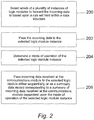
- a method of interfacing between a communications module and instances of logic modules comprises selecting which of a plurality of instances of logic modules to forward the incoming data to based upon a rule set held within a data structure (Step 200).
- the incoming data passes to the selected logic module instance (Step 202).
- a mode of operation of the selected logic module instance is determined (Step 204).
- Incoming data received at the communications module is passed to the selected logic module either sequentially, or as a summary data record corresponding to a summary of incoming data received at the communications module. This depends upon the mode of operation of the selected logic module instance (Step 206).
- the CCI may be a discrete system element with multiple instances of the second element running therein.
Landscapes
- Engineering & Computer Science (AREA)
- Theoretical Computer Science (AREA)
- Physics & Mathematics (AREA)
- General Engineering & Computer Science (AREA)
- General Physics & Mathematics (AREA)
- Software Systems (AREA)
- Data Mining & Analysis (AREA)
- Databases & Information Systems (AREA)
- Computer Hardware Design (AREA)
- Mathematical Physics (AREA)
- Computer And Data Communications (AREA)
- Information Transfer Systems (AREA)
- Information Retrieval, Db Structures And Fs Structures Therefor (AREA)
Description
- This invention relates to an interface module. More particularly, but not exclusively, it relates to an interface module between modules of software. Even more particularly, but not exclusively, it relates to an interface module between a module of communications software and a module of business logic software.
- Typically, a business software engine comprises a front end communications module and a plurality of instances of back end business logic modules. During the interrogation of the business engine in response to a user query the front end module receives query data corresponding to the user query. The front end module then determines which of the back end modules is most suitable to deal with the user query. Typically, this determination is made based upon criteria such as which back end modules are running the appropriate business logic and the load that a particular back end is subject to at the time of receipt of the user query.
- The back end module the processes the query data and formulates interrogation data for the interrogation of external servers where appropriate. This interrogation data passes to the front end module from where it is routed to appropriate external servers. Typically, processing of data by the back end module is suspended until a reply is received from the external servers to the interrogation data.
- Replies from the external servers are routed to the suspended back end module via the front end module. Data processing recommences at the suspended back end module and data from the replies is incorporated into a response. The response is output to the user via the front end module.
- Such an arrangement does not result in an efficient use of resources as each instance of a back end module can process only a single request. This is because the processing at each back end module is suspended until replies are received to the interrogation data from the external servers.
- Attempts to deal with replies asynchronously can result in the corruption of data within the back end module as data is written and read simultaneously from a back end module.
- The paper "Design and Implementation of a Service-Oriented Business Rules Broker" by Rosenberg F. et al. of the Proceedings of the 2005 Seventh IEEE International Conference on E-Commerce Technology Workshops pertains to business rule engines and the design and implementation of a service-oriented approach on how to integrate different heterogeneous business rule engines by using a Business Rules Broker architecture. Furthermore, a method to automatically expose the rule-based business knowledge as Web services by generating the Web service code at design-time is presented.
- The invention is defined by the independent claims 1 and 11.
- Embodiments of the present invention will now be described, by way of example only, with reference to the accompanying drawings, in which:
-
Figure 1 is a schematic diagram of a business engine comprising a business software engine comprising an embodiment of an interface according to an aspect of the present invention; and -
Figure 2 is a flow chart detailing an embodiment of a method of interfacing between a communications module and instances of logic modules according to a further aspect of the present invention. - Referring now to
Figure 1 , anexemplary business engine 100 comprises afront end module 102, multiple instances ofback end modules 104a-c, and acall coordinator interface 106. Typically, the call coordinator interface (CCI) 106 comprises afirst element 106a associated with thefront end module 102 and a number ofsecond elements 106b associated with respectiveback end modules 104a-c. Usually, the CCI 106 is middleware. - The
first element 106a of theCCl 106 comprises adata structure 108 that contains rules for 110 for governing to which of theback end modules 104a-c incoming data is assigned. Thefirst element 106a also comprises acontext server 112. - The
front end module 102 comprises communication software that provides connectivity between thebusiness software engine 100,external terminal 114 andservers 116a-c via anetwork 117. Typically, thenetwork 117 comprises the Internet or a private network. - Typically, the
back end modules 104a-c comprise business logic software that controls the generation of a resply to a user generated query received from aremote terminal 114 . - In use, the
front end module 102 receives data associated with a user query via aload balancing arrangement 115 in a manner that will be known to a man skilled in the art and passes the query to thefirst element 106a of the CCI 106. - Upon receipt of the query that
first element 106a establishes a context for the query and stores a data entry associated with the query in thecontext server 112. For example, this context server data entry will comprise a session ID associated with the query that can be used to identify incoming and outgoing communications associated with the query or a global response time out parameter. A global time out parameter defines a length of time above which the whole query is deemed not to be fulfilled. Thus, if a response to the query is not supplied to the user within the time defined in the global response time out parameter a time out response is sent to the user via theterminal 114. - The
first element 106a assigns the query to one of theback end modules 104a for processing according to therules 110 stored in thedata structure 108. Typical rules used to assign a query to a specific back end module include whether an instance of a back end module is suitable to handle the request, whether an instance of a back end module is free to handle the request, whether an instance of a back end module is operational, whether an SID has been established for a query. - The
first element 106a then passes the query data to thesecond element 106b of the CCI 106. Thesecond element 106b determines whether theback end module 104a with which it is associated is to run in either a single-shot or multiple shot mode. The query data passes to theback end module 104a via thesecond element 106b. - The
back end module 104a determines whichexternal servers 116a-c require interrogation in order to fulfil the user query. Data requesting the interrogation of theservers 116a-c passes to thesecond element 106b. Thesecond element 106b may place a server specific response time out parameter into the interrogation data at this point. This interrogation data passes from thesecond element 106b to thefirst element 106a where additional context data, for example, whether server specific response time out data is present is stored in thecontext server 112 and in what mode thelogic module 106 is operating. Once the interrogation data has passed to thefront end module 102 the instance of theback end module 104a that generated the interrogation data is free to continue processing data. Data held within thefirst element 106a is updated to reflect this. - The interrogation data the passes to the
front end module 102 that then interrogates theservers 116a-c according to the contents of the interrogation data. - The
servers 116a-c process the data and return response data to thebusiness engine 100 via thefront end module 102. - Upon receipt of the response data at the
front end module 102 thefirst element 106a are stores the response data in thecontext server 112 with an associated flag detailing the success of each interrogation of aserver 116a-c. For example, the flag may denote that the interrogation of a server has timed out, has been successful or has failed at one of the communication layers. - The
first element 106a identifies whether the instance of theback end module 104a that generated the interrogation data is operating in single or multiple shot mode. Thefirst element 106a then identifies an instance of aback end module 104a-c that is suitable and free to process the response data. This may be the same backend module instance 104a that generated the interrogation data or it may be another instance of aback end module 104b,c. Typically, certain instances of back end modules are identical and are therefore interchangeable. - The
first element 106a passes the response data along with the context data held on thecontext server 112 to theback end module 104a via thesecond element 106b. - If the
back end module 104a is operating in single shot mode an aggregate data record containing data corresponding to all of the response data will pass to theback end module 104a. - However, if the
back end module 104a is operating in multiple shot mode response data corresponding to the result of the interrogation of eachserver 116a-c will be returned to theback end module 104a. - The
back end module 104a processes the response data and outputs reply data containing the answer to the user query to theremote terminal 114 via the first andsecond elements 106a,b, thefront end module 102 and the network 118. - For example, if the
business engine 100 is a travel booking engine and a user requests details of a flight from Berlin to Nice the front end communications module receives the request from the user terminal 113. - The request is passed to the CCI 106
first element 106a that assigns a session ID to the request and stores this in thecontext server 112. Thefirst element 106a assigns the request to an instance of aback end module 104a-c. - For example, two of the back
end module instances 104a,b may deal with flight bookings and the other backend module instance 104c may deal with hotel bookings. In this case, thefirst element 106a identifies that the hotel booking backend module instance 104c is inappropriate for sending the request to. One of the flight booking backend module instances 104b may be engaged in processing another request. Therefore, thefirst element 106a assigns the request to the available backend module instance 104a that deals with flight bookings. - The request is passed to the
second element 106b of theCCI 106 and then onto the available flight booking backend module instance 104a. This processes the request in a known manner and outputs interrogation data requesting the interrogation of threeairline servers 116a-c. The interrogation data passes through theCCl 106 via thesecond element 106b to thefirst element 106a. At thesecond element 106b flags are added to the interrogation data in order to denote whether the backend module instance 104a is operating in either single shot or multiple shot mode, and whether a server specific response time out parameter has been set. - The
first element 106 extracts the flags from the interrogation data and stores it with the context data for the session as identified by the session ID in thecontext server 112. - The interrogation data passes to the communication
front end module 102 from where the interrogation data is transmitted to theairline servers 116a-c via thenetwork 117. Theservers 116a-c are interrogated in a manner that is known to a person skilled in the art. Response data containing data relating to the availability and price of seats on the Berlin to Nice route is transmitted to thebusiness engine 100 via thenetwork 117. - The response data passes through the
front end module 102 to thefirst element 106a of theCCl 106 where it is assigned to a suitable, free backend module instance 104a as described hereinbefore. - Should a global response time out parameter be defined at the
first element 106a of theCCI 106 the request may be timed out if all of the response data is not received at thefront end module 102 before the expiry of the time out period. If this occurs thefront end module 102 generates notification data that passes to the backend module instance 104a. This then triggers a timeout reply sequence that results in a timeout message being routed by thefront end module 102 to theuser terminal 114 via thenetwork 117. - The response data is passed to the back
end module instance 104a that the front end module determined appropriate and free to use, either sequentially if the backend module instance 104a is operating in multiple shot mode or as an aggregate data record if it is operating in single shot mode. The response data is processed by the backend module instance 104a according to the business logic running within saidinstance 104a. - If the back
end module instance 104a is operating in multiple shot mode and server specific time out is set any the failure of any one, or a specific,airline server 116a-c to respond within the time limit specified in the server specific response time out results in the output of reply data in which this time out failure is noted to thefirst element 106a. Typically, a server specific response time out parameter may be defined where a particular server is known to have a poor reliability record, is undergoing upgrade or any for any other reason. - If no response time out parameters are contravened the back
end module instance 104a outputs reply data to thefirst element 106a. - The
first element 106a passes any reply data to thefront end module 102, which routes the reply data to theuser terminal 114 via thenetwork 117. - Referring now to
Figure 2 , a method of interfacing between a communications module and instances of logic modules comprises selecting which of a plurality of instances of logic modules to forward the incoming data to based upon a rule set held within a data structure (Step 200). The incoming data passes to the selected logic module instance (Step 202). A mode of operation of the selected logic module instance is determined (Step 204). Incoming data received at the communications module is passed to the selected logic module either sequentially, or as a summary data record corresponding to a summary of incoming data received at the communications module. This depends upon the mode of operation of the selected logic module instance (Step 206). - It will be appreciated that although described with reference to travel data the present invention is suitable for use in any engine in which multiple instances of business logic, or any other logic, interact with a communication module that regulates the flow of data to and from the logic instances.
- It will be further appreciated that although described with the first and second elements of the CCl as separate and associated with the front end module and instances of back end modules respectively the CCI may be a discrete system element with multiple instances of the second element running therein.
- While various embodiments of the invention have been described, it will be apparent to those skilled in the art once given this disclosure that various modifications, changes, improvements and variations may be made without departing from the scope of the invention.
Claims (11)
- A computer program comprising an interface module (106) for interfacing between a communications module (102) and a plurality of instances of logic modules (104a-c), the interface module being connectable with a plurality of external servers (116a-c), the interface module (106) comprising first (106a) and second (106b) functional elements, the first functional element (106a) being arranged to receive incoming data from a communications module (102) and to select which of a plurality of instances of logic modules (104a-c) to forward the incoming data to, the first functional element (106a) comprising a context server (112), wherein, responsive to a user query including query data being received, the first functional element (106a) is arranged to:- establish a context for the received user query and store a data entry associated with the user query in the context server (112);- select one of the plurality of instances of logic modules (104a-c) for the received query data according to the data entry, based upon a rule set held within a data structure (108);- pass via the second functional element (106b) the received query data to the selected logic module instance (104a-c);and wherein
the selected logic module instance (104a-c) is arranged to determine which of the plurality of external servers (116a-c) is required to be queried to fulfill the user query and to communicate this information to the first functional element (106a);
the first functional element (106a) issuing a query to the determined external server (116a-c), receiving response data from the queried external server (116a-c) and storing the received response data within the first functional element (106a). - The computer program of claim 1, wherein the plurality of logic modules (104a-c) operate in a single-shot or in a multi-shot mode, the second functional element (106b) being arranged to determine a mode of operation of the selected logic module instance (104a-c) and to mediate the passage of data between the selected logic module instance and the first functional element (106a); and the passing of the received query data to the selected logic module via the second functional element (106b) is either sequential , i.e. data corresponding to a result of the query of each server (116a-c) is returned back to the logic module, in response to the logic module operating in multi-shot mode or corresponding to a summary data record corresponding to a summary of incoming data received in response to the logic module operating in single-shot mode dependent upon the mode of operation of the selected logic module instance.
- The computer program of claim 1 or 2, wherein the data structure is stored at the first functional element.
- The computer program of any one of claims 1 to 3, wherein the first functional element is arranged to receive incoming query data from a remote terminal and is further arranged to assign which of the plurality of logic modules to pass the query data to dependent upon rules.
- The computer program of any one of claims 1 to 4, wherein the first functional element is arranged to store response data received from external servers (116a-c).
- The computer program of any one of claims 1 to 5, wherein the first functional element is arranged to generate a summary data record from response data received from external servers (116a-c) and to pass said summary data record to the logic module instance.
- The computer program of any one of claims 1 to 6, wherein the first functional element is arranged to pass response data received from external servers (116a-c) to the logic module instance sequentially.
- The computer program of any one of claims 1 to 7, comprising a context data structure,
- The computer program of any one of claims 1 to 8, wherein the context data structure comprises data entries corresponding any of the following: assignment of logic modules to query data, global time out parameter associated with an instance of query data, session identifier (SID) associated with each instance of query data, a specific response time out associated with an instance of interrogation of an external server.
- The computer program of any one of claims 1 to 9, wherein the first functional element is arranged to return a timeout datum to the second functional element in the time elapsed between interrogating an external server and receiving response data from the external server exceeds a pre-determined timeout threshold.
- A method of interfacing between a communication module (102) and a plurality of instances of logic modules (104a-c), the method comprising the steps of:- in response to receiving a user query including query data at the communication module (102), establishing a context for the received user query and storing a data entry associated with the user query in a context server (112);- selecting one of a plurality of instances of logic modules (104a-c), according to the established context, based upon a rule set held within a data structure (108);- passing the received query data to the selected logic module instance (104a-c);- the selected logic modules (104a-c) determining which of a plurality of external servers (116a-c) is required to be queried to fulfill the user query;
issuing a query to the determined external server (116a-c); and- receiving response data from the queried external server (116a-c) and storing the received data.
Applications Claiming Priority (2)
| Application Number | Priority Date | Filing Date | Title |
|---|---|---|---|
| US11/705,652 US7802258B2 (en) | 2007-02-13 | 2007-02-13 | Interface between computer software modules |
| PCT/EP2008/051616 WO2008098901A2 (en) | 2007-02-13 | 2008-02-11 | Interface module |
Publications (2)
| Publication Number | Publication Date |
|---|---|
| EP2118747A2 EP2118747A2 (en) | 2009-11-18 |
| EP2118747B1 true EP2118747B1 (en) | 2019-08-14 |
Family
ID=39616545
Family Applications (1)
| Application Number | Title | Priority Date | Filing Date |
|---|---|---|---|
| EP08708868.8A Active EP2118747B1 (en) | 2007-02-13 | 2008-02-11 | Interface module |
Country Status (10)
| Country | Link |
|---|---|
| US (1) | US7802258B2 (en) |
| EP (1) | EP2118747B1 (en) |
| JP (1) | JP2010518527A (en) |
| KR (1) | KR101475792B1 (en) |
| CN (1) | CN101663645B (en) |
| AU (1) | AU2008214725B2 (en) |
| BR (1) | BRPI0807672A2 (en) |
| CA (1) | CA2677367C (en) |
| ES (1) | ES2751143T3 (en) |
| WO (1) | WO2008098901A2 (en) |
Families Citing this family (3)
| Publication number | Priority date | Publication date | Assignee | Title |
|---|---|---|---|---|
| US8176114B2 (en) * | 2008-02-28 | 2012-05-08 | Oracle International Corporation | Distributed cross-application server deployment |
| US10998032B2 (en) * | 2019-02-06 | 2021-05-04 | Mellanox Technologies, Ltd. | EDRAM refresh apparatus and method |
| CN117311207B (en) * | 2022-06-24 | 2024-11-15 | 比亚迪股份有限公司 | Embedded software model architecture, battery management system controller and vehicle |
Family Cites Families (14)
| Publication number | Priority date | Publication date | Assignee | Title |
|---|---|---|---|---|
| US6209018B1 (en) * | 1997-11-13 | 2001-03-27 | Sun Microsystems, Inc. | Service framework for a distributed object network system |
| US7437305B1 (en) * | 1999-05-11 | 2008-10-14 | Christopher Angel Kantarjiev | Scheduling delivery of products via the internet |
| AR029290A1 (en) * | 2000-06-28 | 2003-06-18 | American Express Travel Relate | SYSTEM AND METHOD FOR INTEGRATING PUBLIC AND PRIVATE DATA |
| US6823391B1 (en) * | 2000-10-04 | 2004-11-23 | Microsoft Corporation | Routing client requests to back-end servers |
| US7080119B2 (en) * | 2001-07-17 | 2006-07-18 | Bea Systems, Inc. | System and method for transaction processing with delegated commit feature |
| JP2003091471A (en) * | 2001-09-18 | 2003-03-28 | M & C Kenkyusho:Kk | Information processing server, information processing program, computer readable recording medium storing information processing program, and information processing system |
| US20060100914A1 (en) | 2001-12-05 | 2006-05-11 | Jafri Vajid H | System for, and method of, providing travel-related services |
| US7062480B2 (en) | 2002-04-01 | 2006-06-13 | Worldspan, Lp | System and method for caching and utilizing flight availability data |
| CN100547583C (en) * | 2003-08-14 | 2009-10-07 | 甲骨文国际公司 | Automatic and dynamic provisioning methods for databases |
| US7512949B2 (en) * | 2003-09-03 | 2009-03-31 | International Business Machines Corporation | Status hub used by autonomic application servers |
| JP2006163482A (en) * | 2004-12-02 | 2006-06-22 | Hitachi Ltd | Information processing apparatus control method, information processing apparatus, and program |
| JP2006185229A (en) * | 2004-12-28 | 2006-07-13 | Hitachi Ltd | Online synchronous processing method and apparatus |
| JP4647352B2 (en) * | 2005-03-10 | 2011-03-09 | 株式会社野村総合研究所 | Normality confirmation system, apparatus, method and program for message processing system |
| US8555287B2 (en) * | 2006-08-31 | 2013-10-08 | Bmc Software, Inc. | Automated capacity provisioning method using historical performance data |
-
2007
- 2007-02-13 US US11/705,652 patent/US7802258B2/en active Active
-
2008
- 2008-02-11 CN CN200880004807.5A patent/CN101663645B/en active Active
- 2008-02-11 KR KR1020097019031A patent/KR101475792B1/en not_active Expired - Fee Related
- 2008-02-11 AU AU2008214725A patent/AU2008214725B2/en not_active Ceased
- 2008-02-11 CA CA2677367A patent/CA2677367C/en not_active Expired - Fee Related
- 2008-02-11 ES ES08708868T patent/ES2751143T3/en active Active
- 2008-02-11 WO PCT/EP2008/051616 patent/WO2008098901A2/en not_active Ceased
- 2008-02-11 JP JP2009549399A patent/JP2010518527A/en active Pending
- 2008-02-11 BR BRPI0807672-3A2A patent/BRPI0807672A2/en not_active IP Right Cessation
- 2008-02-11 EP EP08708868.8A patent/EP2118747B1/en active Active
Non-Patent Citations (1)
| Title |
|---|
| None * |
Also Published As
| Publication number | Publication date |
|---|---|
| CN101663645A (en) | 2010-03-03 |
| WO2008098901A2 (en) | 2008-08-21 |
| KR101475792B1 (en) | 2014-12-23 |
| US7802258B2 (en) | 2010-09-21 |
| WO2008098901A3 (en) | 2008-10-16 |
| EP2118747A2 (en) | 2009-11-18 |
| AU2008214725A1 (en) | 2008-08-21 |
| JP2010518527A (en) | 2010-05-27 |
| CA2677367A1 (en) | 2008-08-21 |
| US20080196048A1 (en) | 2008-08-14 |
| CA2677367C (en) | 2014-04-08 |
| AU2008214725B2 (en) | 2012-03-29 |
| BRPI0807672A2 (en) | 2014-06-10 |
| CN101663645B (en) | 2014-05-28 |
| KR20090122232A (en) | 2009-11-26 |
| ES2751143T3 (en) | 2020-03-30 |
Similar Documents
| Publication | Publication Date | Title |
|---|---|---|
| CN108984784B (en) | Application implementation method, device, equipment and storage medium based on block chain network | |
| EP3669282B1 (en) | Method and apparatus for managing a service request in a blockchain network | |
| US8849754B2 (en) | Managing topical overlap during publication and subscription | |
| US8024740B2 (en) | Acquisition system for distributed computing resources | |
| US20020188650A1 (en) | Fault-tolerant system and methods with trusted message acknowledgement | |
| US20110314124A1 (en) | Capturing an application state | |
| US20150073868A1 (en) | Use of stored search results by a travel search system | |
| JP2002505482A (en) | Apparatus and method for data conversion and load balancing in a computer network | |
| CN112991064B (en) | Service processing method, device, computer equipment and storage medium | |
| US11095580B2 (en) | Instant message (IM) routing to a virtual user consisting of a group of possible sub-users associated with a common IM identity | |
| US10929485B1 (en) | Bot search and dispatch engine | |
| CN113672371A (en) | Task engine execution method and device, equipment and medium thereof | |
| KR101950050B1 (en) | Scale-out system to acquire event data | |
| CN114265969A (en) | Ticket information processing method and device combining RPA and AI, electronic equipment and storage medium | |
| US7802258B2 (en) | Interface between computer software modules | |
| US20050060399A1 (en) | Method and system for managing programs for web service system | |
| CN120512476A (en) | Message broadcasting method and device, equipment and medium thereof | |
| CN111835809B (en) | Work order message distribution method, work order message distribution device, server and storage medium | |
| CN111125431B (en) | Micro-service architecture for recommendation system | |
| JP2010518527A5 (en) | ||
| JP2009110337A (en) | Information processing apparatus, information processing system, and information processing method | |
| CN117041355A (en) | Task distribution method, computer-readable storage medium, and task distribution system | |
| JP2002183104A (en) | Item assignment method for workflow system, workflow system, program for implementing the method, and computer-readable recording medium storing the program | |
| JP4895263B2 (en) | Electronic document management server, electronic document management system, and control program thereof | |
| US20250190290A1 (en) | Generative artificial intelligence using a server side prompt program |
Legal Events
| Date | Code | Title | Description |
|---|---|---|---|
| PUAI | Public reference made under article 153(3) epc to a published international application that has entered the european phase |
Free format text: ORIGINAL CODE: 0009012 |
|
| 17P | Request for examination filed |
Effective date: 20090730 |
|
| AK | Designated contracting states |
Kind code of ref document: A2 Designated state(s): AT BE BG CH CY CZ DE DK EE ES FI FR GB GR HR HU IE IS IT LI LT LU LV MC MT NL NO PL PT RO SE SI SK TR |
|
| 17Q | First examination report despatched |
Effective date: 20091117 |
|
| RIN1 | Information on inventor provided before grant (corrected) |
Inventor name: DANIEL, JEROME Inventor name: THIERRY, PAUL |
|
| DAX | Request for extension of the european patent (deleted) | ||
| STAA | Information on the status of an ep patent application or granted ep patent |
Free format text: STATUS: EXAMINATION IS IN PROGRESS |
|
| REG | Reference to a national code |
Ref country code: DE Ref legal event code: R079 Ref document number: 602008060903 Country of ref document: DE Free format text: PREVIOUS MAIN CLASS: G06F0009460000 Ipc: G06F0016340000 |
|
| RIC1 | Information provided on ipc code assigned before grant |
Ipc: G06F 9/46 20060101ALI20190219BHEP Ipc: G06F 16/34 20190101AFI20190219BHEP |
|
| GRAP | Despatch of communication of intention to grant a patent |
Free format text: ORIGINAL CODE: EPIDOSNIGR1 |
|
| STAA | Information on the status of an ep patent application or granted ep patent |
Free format text: STATUS: GRANT OF PATENT IS INTENDED |
|
| INTG | Intention to grant announced |
Effective date: 20190404 |
|
| GRAJ | Information related to disapproval of communication of intention to grant by the applicant or resumption of examination proceedings by the epo deleted |
Free format text: ORIGINAL CODE: EPIDOSDIGR1 |
|
| STAA | Information on the status of an ep patent application or granted ep patent |
Free format text: STATUS: EXAMINATION IS IN PROGRESS |
|
| GRAR | Information related to intention to grant a patent recorded |
Free format text: ORIGINAL CODE: EPIDOSNIGR71 |
|
| GRAS | Grant fee paid |
Free format text: ORIGINAL CODE: EPIDOSNIGR3 |
|
| STAA | Information on the status of an ep patent application or granted ep patent |
Free format text: STATUS: GRANT OF PATENT IS INTENDED |
|
| GRAA | (expected) grant |
Free format text: ORIGINAL CODE: 0009210 |
|
| STAA | Information on the status of an ep patent application or granted ep patent |
Free format text: STATUS: THE PATENT HAS BEEN GRANTED |
|
| INTC | Intention to grant announced (deleted) | ||
| AK | Designated contracting states |
Kind code of ref document: B1 Designated state(s): AT BE BG CH CY CZ DE DK EE ES FI FR GB GR HR HU IE IS IT LI LT LU LV MC MT NL NO PL PT RO SE SI SK TR |
|
| INTG | Intention to grant announced |
Effective date: 20190708 |
|
| REG | Reference to a national code |
Ref country code: GB Ref legal event code: FG4D |
|
| REG | Reference to a national code |
Ref country code: CH Ref legal event code: EP Ref country code: AT Ref legal event code: REF Ref document number: 1167856 Country of ref document: AT Kind code of ref document: T Effective date: 20190815 |
|
| REG | Reference to a national code |
Ref country code: IE Ref legal event code: FG4D |
|
| REG | Reference to a national code |
Ref country code: DE Ref legal event code: R096 Ref document number: 602008060903 Country of ref document: DE |
|
| REG | Reference to a national code |
Ref country code: NL Ref legal event code: MP Effective date: 20190814 |
|
| REG | Reference to a national code |
Ref country code: LT Ref legal event code: MG4D |
|
| PG25 | Lapsed in a contracting state [announced via postgrant information from national office to epo] |
Ref country code: NO Free format text: LAPSE BECAUSE OF FAILURE TO SUBMIT A TRANSLATION OF THE DESCRIPTION OR TO PAY THE FEE WITHIN THE PRESCRIBED TIME-LIMIT Effective date: 20191114 Ref country code: LT Free format text: LAPSE BECAUSE OF FAILURE TO SUBMIT A TRANSLATION OF THE DESCRIPTION OR TO PAY THE FEE WITHIN THE PRESCRIBED TIME-LIMIT Effective date: 20190814 Ref country code: SE Free format text: LAPSE BECAUSE OF FAILURE TO SUBMIT A TRANSLATION OF THE DESCRIPTION OR TO PAY THE FEE WITHIN THE PRESCRIBED TIME-LIMIT Effective date: 20190814 Ref country code: BG Free format text: LAPSE BECAUSE OF FAILURE TO SUBMIT A TRANSLATION OF THE DESCRIPTION OR TO PAY THE FEE WITHIN THE PRESCRIBED TIME-LIMIT Effective date: 20191114 Ref country code: NL Free format text: LAPSE BECAUSE OF FAILURE TO SUBMIT A TRANSLATION OF THE DESCRIPTION OR TO PAY THE FEE WITHIN THE PRESCRIBED TIME-LIMIT Effective date: 20190814 Ref country code: FI Free format text: LAPSE BECAUSE OF FAILURE TO SUBMIT A TRANSLATION OF THE DESCRIPTION OR TO PAY THE FEE WITHIN THE PRESCRIBED TIME-LIMIT Effective date: 20190814 Ref country code: PT Free format text: LAPSE BECAUSE OF FAILURE TO SUBMIT A TRANSLATION OF THE DESCRIPTION OR TO PAY THE FEE WITHIN THE PRESCRIBED TIME-LIMIT Effective date: 20191216 Ref country code: HR Free format text: LAPSE BECAUSE OF FAILURE TO SUBMIT A TRANSLATION OF THE DESCRIPTION OR TO PAY THE FEE WITHIN THE PRESCRIBED TIME-LIMIT Effective date: 20190814 |
|
| REG | Reference to a national code |
Ref country code: AT Ref legal event code: MK05 Ref document number: 1167856 Country of ref document: AT Kind code of ref document: T Effective date: 20190814 |
|
| PG25 | Lapsed in a contracting state [announced via postgrant information from national office to epo] |
Ref country code: GR Free format text: LAPSE BECAUSE OF FAILURE TO SUBMIT A TRANSLATION OF THE DESCRIPTION OR TO PAY THE FEE WITHIN THE PRESCRIBED TIME-LIMIT Effective date: 20191115 Ref country code: IS Free format text: LAPSE BECAUSE OF FAILURE TO SUBMIT A TRANSLATION OF THE DESCRIPTION OR TO PAY THE FEE WITHIN THE PRESCRIBED TIME-LIMIT Effective date: 20191214 Ref country code: LV Free format text: LAPSE BECAUSE OF FAILURE TO SUBMIT A TRANSLATION OF THE DESCRIPTION OR TO PAY THE FEE WITHIN THE PRESCRIBED TIME-LIMIT Effective date: 20190814 |
|
| REG | Reference to a national code |
Ref country code: ES Ref legal event code: FG2A Ref document number: 2751143 Country of ref document: ES Kind code of ref document: T3 Effective date: 20200330 |
|
| PG25 | Lapsed in a contracting state [announced via postgrant information from national office to epo] |
Ref country code: TR Free format text: LAPSE BECAUSE OF FAILURE TO SUBMIT A TRANSLATION OF THE DESCRIPTION OR TO PAY THE FEE WITHIN THE PRESCRIBED TIME-LIMIT Effective date: 20190814 |
|
| PG25 | Lapsed in a contracting state [announced via postgrant information from national office to epo] |
Ref country code: RO Free format text: LAPSE BECAUSE OF FAILURE TO SUBMIT A TRANSLATION OF THE DESCRIPTION OR TO PAY THE FEE WITHIN THE PRESCRIBED TIME-LIMIT Effective date: 20190814 Ref country code: IT Free format text: LAPSE BECAUSE OF FAILURE TO SUBMIT A TRANSLATION OF THE DESCRIPTION OR TO PAY THE FEE WITHIN THE PRESCRIBED TIME-LIMIT Effective date: 20190814 Ref country code: AT Free format text: LAPSE BECAUSE OF FAILURE TO SUBMIT A TRANSLATION OF THE DESCRIPTION OR TO PAY THE FEE WITHIN THE PRESCRIBED TIME-LIMIT Effective date: 20190814 Ref country code: DK Free format text: LAPSE BECAUSE OF FAILURE TO SUBMIT A TRANSLATION OF THE DESCRIPTION OR TO PAY THE FEE WITHIN THE PRESCRIBED TIME-LIMIT Effective date: 20190814 Ref country code: PL Free format text: LAPSE BECAUSE OF FAILURE TO SUBMIT A TRANSLATION OF THE DESCRIPTION OR TO PAY THE FEE WITHIN THE PRESCRIBED TIME-LIMIT Effective date: 20190814 Ref country code: EE Free format text: LAPSE BECAUSE OF FAILURE TO SUBMIT A TRANSLATION OF THE DESCRIPTION OR TO PAY THE FEE WITHIN THE PRESCRIBED TIME-LIMIT Effective date: 20190814 |
|
| PG25 | Lapsed in a contracting state [announced via postgrant information from national office to epo] |
Ref country code: CZ Free format text: LAPSE BECAUSE OF FAILURE TO SUBMIT A TRANSLATION OF THE DESCRIPTION OR TO PAY THE FEE WITHIN THE PRESCRIBED TIME-LIMIT Effective date: 20190814 Ref country code: SK Free format text: LAPSE BECAUSE OF FAILURE TO SUBMIT A TRANSLATION OF THE DESCRIPTION OR TO PAY THE FEE WITHIN THE PRESCRIBED TIME-LIMIT Effective date: 20190814 Ref country code: IS Free format text: LAPSE BECAUSE OF FAILURE TO SUBMIT A TRANSLATION OF THE DESCRIPTION OR TO PAY THE FEE WITHIN THE PRESCRIBED TIME-LIMIT Effective date: 20200224 |
|
| REG | Reference to a national code |
Ref country code: DE Ref legal event code: R097 Ref document number: 602008060903 Country of ref document: DE |
|
| PLBE | No opposition filed within time limit |
Free format text: ORIGINAL CODE: 0009261 |
|
| STAA | Information on the status of an ep patent application or granted ep patent |
Free format text: STATUS: NO OPPOSITION FILED WITHIN TIME LIMIT |
|
| PG2D | Information on lapse in contracting state deleted |
Ref country code: IS |
|
| 26N | No opposition filed |
Effective date: 20200603 |
|
| PG25 | Lapsed in a contracting state [announced via postgrant information from national office to epo] |
Ref country code: SI Free format text: LAPSE BECAUSE OF FAILURE TO SUBMIT A TRANSLATION OF THE DESCRIPTION OR TO PAY THE FEE WITHIN THE PRESCRIBED TIME-LIMIT Effective date: 20190814 |
|
| REG | Reference to a national code |
Ref country code: CH Ref legal event code: PL |
|
| REG | Reference to a national code |
Ref country code: BE Ref legal event code: MM Effective date: 20200229 |
|
| PG25 | Lapsed in a contracting state [announced via postgrant information from national office to epo] |
Ref country code: MC Free format text: LAPSE BECAUSE OF FAILURE TO SUBMIT A TRANSLATION OF THE DESCRIPTION OR TO PAY THE FEE WITHIN THE PRESCRIBED TIME-LIMIT Effective date: 20190814 Ref country code: LU Free format text: LAPSE BECAUSE OF NON-PAYMENT OF DUE FEES Effective date: 20200211 |
|
| PG25 | Lapsed in a contracting state [announced via postgrant information from national office to epo] |
Ref country code: CH Free format text: LAPSE BECAUSE OF NON-PAYMENT OF DUE FEES Effective date: 20200229 Ref country code: LI Free format text: LAPSE BECAUSE OF NON-PAYMENT OF DUE FEES Effective date: 20200229 |
|
| PG25 | Lapsed in a contracting state [announced via postgrant information from national office to epo] |
Ref country code: IE Free format text: LAPSE BECAUSE OF NON-PAYMENT OF DUE FEES Effective date: 20200211 |
|
| PG25 | Lapsed in a contracting state [announced via postgrant information from national office to epo] |
Ref country code: BE Free format text: LAPSE BECAUSE OF NON-PAYMENT OF DUE FEES Effective date: 20200229 |
|
| PG25 | Lapsed in a contracting state [announced via postgrant information from national office to epo] |
Ref country code: MT Free format text: LAPSE BECAUSE OF FAILURE TO SUBMIT A TRANSLATION OF THE DESCRIPTION OR TO PAY THE FEE WITHIN THE PRESCRIBED TIME-LIMIT Effective date: 20190814 Ref country code: CY Free format text: LAPSE BECAUSE OF FAILURE TO SUBMIT A TRANSLATION OF THE DESCRIPTION OR TO PAY THE FEE WITHIN THE PRESCRIBED TIME-LIMIT Effective date: 20190814 |
|
| P01 | Opt-out of the competence of the unified patent court (upc) registered |
Effective date: 20230524 |
|
| PGFP | Annual fee paid to national office [announced via postgrant information from national office to epo] |
Ref country code: ES Payment date: 20250328 Year of fee payment: 18 |
|
| PGFP | Annual fee paid to national office [announced via postgrant information from national office to epo] |
Ref country code: GB Payment date: 20260219 Year of fee payment: 19 |
|
| PGFP | Annual fee paid to national office [announced via postgrant information from national office to epo] |
Ref country code: DE Payment date: 20260218 Year of fee payment: 19 |
|
| PGFP | Annual fee paid to national office [announced via postgrant information from national office to epo] |
Ref country code: FR Payment date: 20260218 Year of fee payment: 19 |