EP2117600B1 - Magnetic nanoparticles for the application in hyperthermia, preparation thereof and use in constructs having a pharmacological application - Google Patents
Magnetic nanoparticles for the application in hyperthermia, preparation thereof and use in constructs having a pharmacological application Download PDFInfo
- Publication number
- EP2117600B1 EP2117600B1 EP07857768A EP07857768A EP2117600B1 EP 2117600 B1 EP2117600 B1 EP 2117600B1 EP 07857768 A EP07857768 A EP 07857768A EP 07857768 A EP07857768 A EP 07857768A EP 2117600 B1 EP2117600 B1 EP 2117600B1
- Authority
- EP
- European Patent Office
- Prior art keywords
- water
- moles
- cobalt ferrite
- constructs according
- solution
- Prior art date
- Legal status (The legal status is an assumption and is not a legal conclusion. Google has not performed a legal analysis and makes no representation as to the accuracy of the status listed.)
- Active
Links
- 0 CC(C)(*)N(CCN(CCC(NC(C(O)=O)NC(CC*(*)*)=O)=O)CC(O)=O)CC(O)=O Chemical compound CC(C)(*)N(CCN(CCC(NC(C(O)=O)NC(CC*(*)*)=O)=O)CC(O)=O)CC(O)=O 0.000 description 5
Images

Classifications
-
- C—CHEMISTRY; METALLURGY
- C01—INORGANIC CHEMISTRY
- C01G—COMPOUNDS CONTAINING METALS NOT COVERED BY SUBCLASSES C01D OR C01F
- C01G51/00—Compounds of cobalt
-
- A—HUMAN NECESSITIES
- A61—MEDICAL OR VETERINARY SCIENCE; HYGIENE
- A61K—PREPARATIONS FOR MEDICAL, DENTAL OR TOILETRY PURPOSES
- A61K47/00—Medicinal preparations characterised by the non-active ingredients used, e.g. carriers or inert additives; Targeting or modifying agents chemically bound to the active ingredient
- A61K47/50—Medicinal preparations characterised by the non-active ingredients used, e.g. carriers or inert additives; Targeting or modifying agents chemically bound to the active ingredient the non-active ingredient being chemically bound to the active ingredient, e.g. polymer-drug conjugates
-
- A—HUMAN NECESSITIES
- A61—MEDICAL OR VETERINARY SCIENCE; HYGIENE
- A61K—PREPARATIONS FOR MEDICAL, DENTAL OR TOILETRY PURPOSES
- A61K41/00—Medicinal preparations obtained by treating materials with wave energy or particle radiation ; Therapies using these preparations
- A61K41/0052—Thermotherapy; Hyperthermia; Magnetic induction; Induction heating therapy
-
- A—HUMAN NECESSITIES
- A61—MEDICAL OR VETERINARY SCIENCE; HYGIENE
- A61K—PREPARATIONS FOR MEDICAL, DENTAL OR TOILETRY PURPOSES
- A61K47/00—Medicinal preparations characterised by the non-active ingredients used, e.g. carriers or inert additives; Targeting or modifying agents chemically bound to the active ingredient
- A61K47/50—Medicinal preparations characterised by the non-active ingredients used, e.g. carriers or inert additives; Targeting or modifying agents chemically bound to the active ingredient the non-active ingredient being chemically bound to the active ingredient, e.g. polymer-drug conjugates
- A61K47/51—Medicinal preparations characterised by the non-active ingredients used, e.g. carriers or inert additives; Targeting or modifying agents chemically bound to the active ingredient the non-active ingredient being chemically bound to the active ingredient, e.g. polymer-drug conjugates the non-active ingredient being a modifying agent
- A61K47/56—Medicinal preparations characterised by the non-active ingredients used, e.g. carriers or inert additives; Targeting or modifying agents chemically bound to the active ingredient the non-active ingredient being chemically bound to the active ingredient, e.g. polymer-drug conjugates the non-active ingredient being a modifying agent the modifying agent being an organic macromolecular compound, e.g. an oligomeric, polymeric or dendrimeric molecule
- A61K47/59—Medicinal preparations characterised by the non-active ingredients used, e.g. carriers or inert additives; Targeting or modifying agents chemically bound to the active ingredient the non-active ingredient being chemically bound to the active ingredient, e.g. polymer-drug conjugates the non-active ingredient being a modifying agent the modifying agent being an organic macromolecular compound, e.g. an oligomeric, polymeric or dendrimeric molecule obtained otherwise than by reactions only involving carbon-to-carbon unsaturated bonds, e.g. polyureas or polyurethanes
-
- A—HUMAN NECESSITIES
- A61—MEDICAL OR VETERINARY SCIENCE; HYGIENE
- A61K—PREPARATIONS FOR MEDICAL, DENTAL OR TOILETRY PURPOSES
- A61K47/00—Medicinal preparations characterised by the non-active ingredients used, e.g. carriers or inert additives; Targeting or modifying agents chemically bound to the active ingredient
- A61K47/50—Medicinal preparations characterised by the non-active ingredients used, e.g. carriers or inert additives; Targeting or modifying agents chemically bound to the active ingredient the non-active ingredient being chemically bound to the active ingredient, e.g. polymer-drug conjugates
- A61K47/69—Medicinal preparations characterised by the non-active ingredients used, e.g. carriers or inert additives; Targeting or modifying agents chemically bound to the active ingredient the non-active ingredient being chemically bound to the active ingredient, e.g. polymer-drug conjugates the conjugate being characterised by physical or galenical forms, e.g. emulsion, particle, inclusion complex, stent or kit
- A61K47/6921—Medicinal preparations characterised by the non-active ingredients used, e.g. carriers or inert additives; Targeting or modifying agents chemically bound to the active ingredient the non-active ingredient being chemically bound to the active ingredient, e.g. polymer-drug conjugates the conjugate being characterised by physical or galenical forms, e.g. emulsion, particle, inclusion complex, stent or kit the form being a particulate, a powder, an adsorbate, a bead or a sphere
- A61K47/6923—Medicinal preparations characterised by the non-active ingredients used, e.g. carriers or inert additives; Targeting or modifying agents chemically bound to the active ingredient the non-active ingredient being chemically bound to the active ingredient, e.g. polymer-drug conjugates the conjugate being characterised by physical or galenical forms, e.g. emulsion, particle, inclusion complex, stent or kit the form being a particulate, a powder, an adsorbate, a bead or a sphere the form being an inorganic particle, e.g. ceramic particles, silica particles, ferrite or synsorb
-
- A—HUMAN NECESSITIES
- A61—MEDICAL OR VETERINARY SCIENCE; HYGIENE
- A61K—PREPARATIONS FOR MEDICAL, DENTAL OR TOILETRY PURPOSES
- A61K47/00—Medicinal preparations characterised by the non-active ingredients used, e.g. carriers or inert additives; Targeting or modifying agents chemically bound to the active ingredient
- A61K47/50—Medicinal preparations characterised by the non-active ingredients used, e.g. carriers or inert additives; Targeting or modifying agents chemically bound to the active ingredient the non-active ingredient being chemically bound to the active ingredient, e.g. polymer-drug conjugates
- A61K47/69—Medicinal preparations characterised by the non-active ingredients used, e.g. carriers or inert additives; Targeting or modifying agents chemically bound to the active ingredient the non-active ingredient being chemically bound to the active ingredient, e.g. polymer-drug conjugates the conjugate being characterised by physical or galenical forms, e.g. emulsion, particle, inclusion complex, stent or kit
- A61K47/6921—Medicinal preparations characterised by the non-active ingredients used, e.g. carriers or inert additives; Targeting or modifying agents chemically bound to the active ingredient the non-active ingredient being chemically bound to the active ingredient, e.g. polymer-drug conjugates the conjugate being characterised by physical or galenical forms, e.g. emulsion, particle, inclusion complex, stent or kit the form being a particulate, a powder, an adsorbate, a bead or a sphere
- A61K47/6927—Medicinal preparations characterised by the non-active ingredients used, e.g. carriers or inert additives; Targeting or modifying agents chemically bound to the active ingredient the non-active ingredient being chemically bound to the active ingredient, e.g. polymer-drug conjugates the conjugate being characterised by physical or galenical forms, e.g. emulsion, particle, inclusion complex, stent or kit the form being a particulate, a powder, an adsorbate, a bead or a sphere the form being a solid microparticle having no hollow or gas-filled cores
- A61K47/6929—Medicinal preparations characterised by the non-active ingredients used, e.g. carriers or inert additives; Targeting or modifying agents chemically bound to the active ingredient the non-active ingredient being chemically bound to the active ingredient, e.g. polymer-drug conjugates the conjugate being characterised by physical or galenical forms, e.g. emulsion, particle, inclusion complex, stent or kit the form being a particulate, a powder, an adsorbate, a bead or a sphere the form being a solid microparticle having no hollow or gas-filled cores the form being a nanoparticle, e.g. an immuno-nanoparticle
-
- A—HUMAN NECESSITIES
- A61—MEDICAL OR VETERINARY SCIENCE; HYGIENE
- A61K—PREPARATIONS FOR MEDICAL, DENTAL OR TOILETRY PURPOSES
- A61K47/00—Medicinal preparations characterised by the non-active ingredients used, e.g. carriers or inert additives; Targeting or modifying agents chemically bound to the active ingredient
- A61K47/50—Medicinal preparations characterised by the non-active ingredients used, e.g. carriers or inert additives; Targeting or modifying agents chemically bound to the active ingredient the non-active ingredient being chemically bound to the active ingredient, e.g. polymer-drug conjugates
- A61K47/69—Medicinal preparations characterised by the non-active ingredients used, e.g. carriers or inert additives; Targeting or modifying agents chemically bound to the active ingredient the non-active ingredient being chemically bound to the active ingredient, e.g. polymer-drug conjugates the conjugate being characterised by physical or galenical forms, e.g. emulsion, particle, inclusion complex, stent or kit
- A61K47/6949—Medicinal preparations characterised by the non-active ingredients used, e.g. carriers or inert additives; Targeting or modifying agents chemically bound to the active ingredient the non-active ingredient being chemically bound to the active ingredient, e.g. polymer-drug conjugates the conjugate being characterised by physical or galenical forms, e.g. emulsion, particle, inclusion complex, stent or kit inclusion complexes, e.g. clathrates, cavitates or fullerenes
- A61K47/6951—Medicinal preparations characterised by the non-active ingredients used, e.g. carriers or inert additives; Targeting or modifying agents chemically bound to the active ingredient the non-active ingredient being chemically bound to the active ingredient, e.g. polymer-drug conjugates the conjugate being characterised by physical or galenical forms, e.g. emulsion, particle, inclusion complex, stent or kit inclusion complexes, e.g. clathrates, cavitates or fullerenes using cyclodextrin
-
- A—HUMAN NECESSITIES
- A61—MEDICAL OR VETERINARY SCIENCE; HYGIENE
- A61K—PREPARATIONS FOR MEDICAL, DENTAL OR TOILETRY PURPOSES
- A61K49/00—Preparations for testing in vivo
-
- A—HUMAN NECESSITIES
- A61—MEDICAL OR VETERINARY SCIENCE; HYGIENE
- A61K—PREPARATIONS FOR MEDICAL, DENTAL OR TOILETRY PURPOSES
- A61K51/00—Preparations containing radioactive substances for use in therapy or testing in vivo
- A61K51/02—Preparations containing radioactive substances for use in therapy or testing in vivo characterised by the carrier, i.e. characterised by the agent or material covalently linked or complexing the radioactive nucleus
- A61K51/04—Organic compounds
- A61K51/06—Macromolecular compounds, carriers being organic macromolecular compounds, i.e. organic oligomeric, polymeric, dendrimeric molecules
-
- A—HUMAN NECESSITIES
- A61—MEDICAL OR VETERINARY SCIENCE; HYGIENE
- A61K—PREPARATIONS FOR MEDICAL, DENTAL OR TOILETRY PURPOSES
- A61K9/00—Medicinal preparations characterised by special physical form
- A61K9/14—Particulate form, e.g. powders, Processes for size reducing of pure drugs or the resulting products, Pure drug nanoparticles
- A61K9/16—Agglomerates; Granulates; Microbeadlets ; Microspheres; Pellets; Solid products obtained by spray drying, spray freeze drying, spray congealing,(multiple) emulsion solvent evaporation or extraction
-
- A—HUMAN NECESSITIES
- A61—MEDICAL OR VETERINARY SCIENCE; HYGIENE
- A61K—PREPARATIONS FOR MEDICAL, DENTAL OR TOILETRY PURPOSES
- A61K9/00—Medicinal preparations characterised by special physical form
- A61K9/48—Preparations in capsules, e.g. of gelatin, of chocolate
- A61K9/50—Microcapsules having a gas, liquid or semi-solid filling; Solid microparticles or pellets surrounded by a distinct coating layer, e.g. coated microspheres, coated drug crystals
- A61K9/5094—Microcapsules containing magnetic carrier material, e.g. ferrite for drug targeting
-
- A—HUMAN NECESSITIES
- A61—MEDICAL OR VETERINARY SCIENCE; HYGIENE
- A61K—PREPARATIONS FOR MEDICAL, DENTAL OR TOILETRY PURPOSES
- A61K9/00—Medicinal preparations characterised by special physical form
- A61K9/48—Preparations in capsules, e.g. of gelatin, of chocolate
- A61K9/50—Microcapsules having a gas, liquid or semi-solid filling; Solid microparticles or pellets surrounded by a distinct coating layer, e.g. coated microspheres, coated drug crystals
- A61K9/51—Nanocapsules; Nanoparticles
- A61K9/5107—Excipients; Inactive ingredients
- A61K9/513—Organic macromolecular compounds; Dendrimers
- A61K9/5146—Organic macromolecular compounds; Dendrimers obtained otherwise than by reactions only involving carbon-to-carbon unsaturated bonds, e.g. polyethylene glycol, polyamines, polyanhydrides
- A61K9/5153—Polyesters, e.g. poly(lactide-co-glycolide)
-
- A—HUMAN NECESSITIES
- A61—MEDICAL OR VETERINARY SCIENCE; HYGIENE
- A61K—PREPARATIONS FOR MEDICAL, DENTAL OR TOILETRY PURPOSES
- A61K9/00—Medicinal preparations characterised by special physical form
- A61K9/48—Preparations in capsules, e.g. of gelatin, of chocolate
- A61K9/50—Microcapsules having a gas, liquid or semi-solid filling; Solid microparticles or pellets surrounded by a distinct coating layer, e.g. coated microspheres, coated drug crystals
- A61K9/51—Nanocapsules; Nanoparticles
- A61K9/5107—Excipients; Inactive ingredients
- A61K9/513—Organic macromolecular compounds; Dendrimers
- A61K9/5169—Proteins, e.g. albumin, gelatin
-
- B—PERFORMING OPERATIONS; TRANSPORTING
- B82—NANOTECHNOLOGY
- B82Y—SPECIFIC USES OR APPLICATIONS OF NANOSTRUCTURES; MEASUREMENT OR ANALYSIS OF NANOSTRUCTURES; MANUFACTURE OR TREATMENT OF NANOSTRUCTURES
- B82Y25/00—Nanomagnetism, e.g. magnetoimpedance, anisotropic magnetoresistance, giant magnetoresistance or tunneling magnetoresistance
-
- B—PERFORMING OPERATIONS; TRANSPORTING
- B82—NANOTECHNOLOGY
- B82Y—SPECIFIC USES OR APPLICATIONS OF NANOSTRUCTURES; MEASUREMENT OR ANALYSIS OF NANOSTRUCTURES; MANUFACTURE OR TREATMENT OF NANOSTRUCTURES
- B82Y30/00—Nanotechnology for materials or surface science, e.g. nanocomposites
-
- B—PERFORMING OPERATIONS; TRANSPORTING
- B82—NANOTECHNOLOGY
- B82Y—SPECIFIC USES OR APPLICATIONS OF NANOSTRUCTURES; MEASUREMENT OR ANALYSIS OF NANOSTRUCTURES; MANUFACTURE OR TREATMENT OF NANOSTRUCTURES
- B82Y5/00—Nanobiotechnology or nanomedicine, e.g. protein engineering or drug delivery
-
- C—CHEMISTRY; METALLURGY
- C01—INORGANIC CHEMISTRY
- C01G—COMPOUNDS CONTAINING METALS NOT COVERED BY SUBCLASSES C01D OR C01F
- C01G49/00—Compounds of iron
- C01G49/0018—Mixed oxides or hydroxides
-
- C—CHEMISTRY; METALLURGY
- C01—INORGANIC CHEMISTRY
- C01G—COMPOUNDS CONTAINING METALS NOT COVERED BY SUBCLASSES C01D OR C01F
- C01G49/00—Compounds of iron
- C01G49/0018—Mixed oxides or hydroxides
- C01G49/0063—Mixed oxides or hydroxides containing zinc
-
- C—CHEMISTRY; METALLURGY
- C01—INORGANIC CHEMISTRY
- C01G—COMPOUNDS CONTAINING METALS NOT COVERED BY SUBCLASSES C01D OR C01F
- C01G49/00—Compounds of iron
- C01G49/0018—Mixed oxides or hydroxides
- C01G49/0072—Mixed oxides or hydroxides containing manganese
-
- C—CHEMISTRY; METALLURGY
- C01—INORGANIC CHEMISTRY
- C01G—COMPOUNDS CONTAINING METALS NOT COVERED BY SUBCLASSES C01D OR C01F
- C01G53/00—Compounds of nickel
-
- C—CHEMISTRY; METALLURGY
- C09—DYES; PAINTS; POLISHES; NATURAL RESINS; ADHESIVES; COMPOSITIONS NOT OTHERWISE PROVIDED FOR; APPLICATIONS OF MATERIALS NOT OTHERWISE PROVIDED FOR
- C09C—TREATMENT OF INORGANIC MATERIALS, OTHER THAN FIBROUS FILLERS, TO ENHANCE THEIR PIGMENTING OR FILLING PROPERTIES ; PREPARATION OF CARBON BLACK ; PREPARATION OF INORGANIC MATERIALS WHICH ARE NO SINGLE CHEMICAL COMPOUNDS AND WHICH ARE MAINLY USED AS PIGMENTS OR FILLERS
- C09C1/00—Treatment of specific inorganic materials other than fibrous fillers; Preparation of carbon black
- C09C1/22—Compounds of iron
- C09C1/24—Oxides of iron
-
- H—ELECTRICITY
- H01—ELECTRIC ELEMENTS
- H01F—MAGNETS; INDUCTANCES; TRANSFORMERS; SELECTION OF MATERIALS FOR THEIR MAGNETIC PROPERTIES
- H01F1/00—Magnets or magnetic bodies characterised by the magnetic materials therefor; Selection of materials for their magnetic properties
- H01F1/0036—Magnets or magnetic bodies characterised by the magnetic materials therefor; Selection of materials for their magnetic properties showing low dimensional magnetism, i.e. spin rearrangements due to a restriction of dimensions, e.g. showing giant magnetoresistivity
- H01F1/0045—Zero dimensional, e.g. nanoparticles, soft nanoparticles for medical/biological use
- H01F1/0054—Coated nanoparticles, e.g. nanoparticles coated with organic surfactant
-
- A—HUMAN NECESSITIES
- A61—MEDICAL OR VETERINARY SCIENCE; HYGIENE
- A61K—PREPARATIONS FOR MEDICAL, DENTAL OR TOILETRY PURPOSES
- A61K9/00—Medicinal preparations characterised by special physical form
- A61K9/14—Particulate form, e.g. powders, Processes for size reducing of pure drugs or the resulting products, Pure drug nanoparticles
- A61K9/16—Agglomerates; Granulates; Microbeadlets ; Microspheres; Pellets; Solid products obtained by spray drying, spray freeze drying, spray congealing,(multiple) emulsion solvent evaporation or extraction
- A61K9/1605—Excipients; Inactive ingredients
- A61K9/1629—Organic macromolecular compounds
- A61K9/1641—Organic macromolecular compounds obtained otherwise than by reactions only involving carbon-to-carbon unsaturated bonds, e.g. polyethylene glycol, poloxamers
- A61K9/1647—Polyesters, e.g. poly(lactide-co-glycolide)
-
- C—CHEMISTRY; METALLURGY
- C01—INORGANIC CHEMISTRY
- C01P—INDEXING SCHEME RELATING TO STRUCTURAL AND PHYSICAL ASPECTS OF SOLID INORGANIC COMPOUNDS
- C01P2002/00—Crystal-structural characteristics
- C01P2002/30—Three-dimensional structures
- C01P2002/32—Three-dimensional structures spinel-type (AB2O4)
-
- C—CHEMISTRY; METALLURGY
- C01—INORGANIC CHEMISTRY
- C01P—INDEXING SCHEME RELATING TO STRUCTURAL AND PHYSICAL ASPECTS OF SOLID INORGANIC COMPOUNDS
- C01P2004/00—Particle morphology
- C01P2004/60—Particles characterised by their size
- C01P2004/64—Nanometer sized, i.e. from 1-100 nanometer
-
- C—CHEMISTRY; METALLURGY
- C01—INORGANIC CHEMISTRY
- C01P—INDEXING SCHEME RELATING TO STRUCTURAL AND PHYSICAL ASPECTS OF SOLID INORGANIC COMPOUNDS
- C01P2006/00—Physical properties of inorganic compounds
- C01P2006/42—Magnetic properties
-
- H—ELECTRICITY
- H01—ELECTRIC ELEMENTS
- H01F—MAGNETS; INDUCTANCES; TRANSFORMERS; SELECTION OF MATERIALS FOR THEIR MAGNETIC PROPERTIES
- H01F1/00—Magnets or magnetic bodies characterised by the magnetic materials therefor; Selection of materials for their magnetic properties
- H01F1/01—Magnets or magnetic bodies characterised by the magnetic materials therefor; Selection of materials for their magnetic properties of inorganic materials
- H01F1/03—Magnets or magnetic bodies characterised by the magnetic materials therefor; Selection of materials for their magnetic properties of inorganic materials characterised by their coercivity
- H01F1/12—Magnets or magnetic bodies characterised by the magnetic materials therefor; Selection of materials for their magnetic properties of inorganic materials characterised by their coercivity of soft-magnetic materials
- H01F1/34—Magnets or magnetic bodies characterised by the magnetic materials therefor; Selection of materials for their magnetic properties of inorganic materials characterised by their coercivity of soft-magnetic materials non-metallic substances, e.g. ferrites
- H01F1/342—Oxides
- H01F1/344—Ferrites, e.g. having a cubic spinel structure (X2+O)(Y23+O3), e.g. magnetite Fe3O4
Definitions
- the present invention relates to the field of nanometric particles, specifically metal oxides having magnetic properties, and to the use thereof in the pharmacological field.
- Nanoparticles are objects having a diameter below 300 nm. In recent years, there has been a great interest in the scientific and technological community for the peculiar chemical-physical properties of these materials.
- magnetic nanoparticles have their potential field of application in the diagnostic sector as a contrast medium in imaging techniques (magnetic resonance), in the magnetic localisation techniques and, mainly, in the specifically therapeutic field of hyperthermia mediated by magnetic fields.
- the actual usefulness of the magnetic nanoparticles is, in the ultimate analysis, related to their ability to increase the temperature of the medium in which they are confined when interacting with an external electromagnetic fields.
- these nanoparticulate oxides have a low hyperthermic efficiency and it is therefore required to introduce high amounts thereof in order to obtain a therapeutic result.
- Fig. 1 is a diagram wherein the hyperthermic efficiency of a functionalised particle and the corresponding final construct are compared, said efficiency being expressed as a ⁇ T in °C.
- the present invention relates to magnetic metal oxide nanometric particles and to constructs consisting of: said magnetic nanometric particle, functionalised with bifunctional compounds, a polymer possibly containing a pharmacologically active molecule and, when said polymer is insoluble in water, an external protecting layer of surface agents, and to the use thereof in hyperthermic treatments.
- the present invention allows to overcome the aforementioned problems thanks to constructs comprising: a magnetic nanometric particle functionalised with bifunctional compounds having general formula: R 1 -(CH 2 ) n -R 2 in which:
- the above said pharmacological active molecule when present can be connected to the polymer or dispersed in it.
- difunctional compounds according to the invention are intended: thiols, carboxylic acids, hydroxamic acids, phosphoric acids, esters and salts thereof having an aliphatic chain that carries a second functional group at the terminal position (designated ( ⁇ ).
- Preferred C 1-6 alkyl is ethyl.
- difunctional groups is the ethyl-12-(hydroxyamino)-12-oxododecanoate.
- the polymers constituting the construct can be water-soluble polymers or water insoluble polymers stabilised by surface agents.
- the water-soluble polymers according to the invention are, for example, polyelectrolytes, polypeptides and water-soluble proteins; water-soluble polymers chosen from block copolymers, modified polyethylene glycols, modified polysaccharides, phospholipids, polyamineamides, globular proteins are preferred.
- the water insoluble polymers are, for example, chosen among: polyesters, polyamides, polyanhydrides, polyorthoesters, peptides, polyamineamides; or insoluble organic molecules like for example cholesterole; polyesters and cholesterole are preferred.
- Surface agents according to the invention may be: polyelectrolytes, polypeptides and water-soluble proteins; block copolymers, modified polyethylene glycols, modified polysaccharides, phospholipids, polyamineamides, globular proteins; preferred are human serum proteins and pluronics block copolymers.
- the polymers are known or can be easily obtained according to methods known in the art as by polyaddition of primary monoamines or depoty diamines with bis.acrylamides, at room temperature for a time comprised between some hours and some days as for example reported in Macromolecular Rapid Communication, 2002, 23, No. 5/6 p. 332-355 .
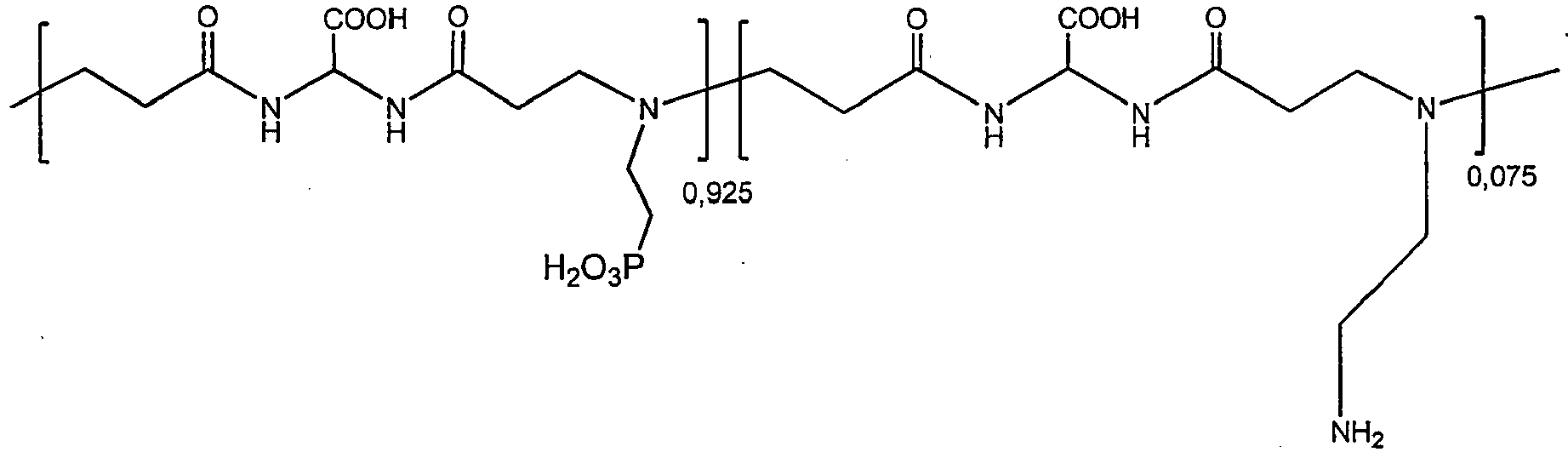
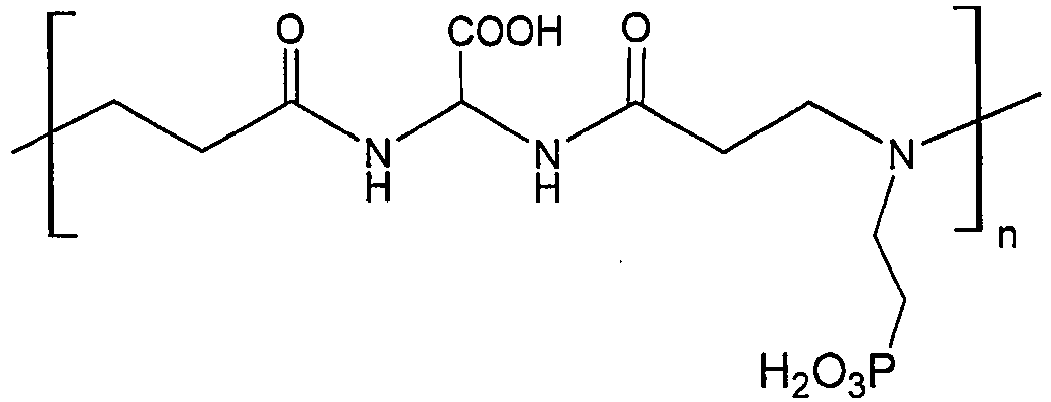
- Example of polymers, both water soluble and surface agents, according to the invention are: wherein n is comprised between 3 - 300, preferably between 10-100.
- Pharmacologically active molecules according to the invention are the biologically active molecules normally used in the various therapies, for example antitumour agents (such as anthracycline), antimicrobial agents, anti-inflammatory agents, immunomodulators, molecules acting on the central nervous system etc. or those capable of marking the cells so as to allow their identification with the normal means of diagnostic detection (for example fluorescent stains).
- antitumour agents such as anthracycline
- antimicrobial agents such as anthracycline
- anti-inflammatory agents such as anthracycline
- immunomodulators molecules acting on the central nervous system etc.
- those capable of marking the cells so as to allow their identification with the normal means of diagnostic detection for example fluorescent stains.
- the magnetic nanoparticles according to the present invention are especially suitable for the preparation of biocompatible nanoparticulate constructs which are extremely flexible and active even at low concentrations of magnetic nanoparticles.
- cobalt ferrite it has been unexpectedly found that, the size being equivalent, it has a hyperthermic efficiency of approximately one order of magnitude more than that of iron oxides; furthermore, in contrast to that occurring with iron oxides described in the literature, the hyperthermic properties of the physically immobilised nanoparticles of cobalt ferrite do not vary with respect to the material dispersed in a fluid matrix. This makes them more efficient in those cases in which the extracellular matrix or the cytosolic matrix represents an obstacle for their rotation.
- the cobalt ferrite nanoparticles When irradiated with electromagnetic waves having a frequency in the range between 10 and 1000 kHz, preferably between 50 and 500 kHz, the cobalt ferrite nanoparticles have a far better hyperthermic behaviour with respect to the iron oxides having equivalent nanoparticle size (also doped with impurities of Co, Ni or other metal elements).
- the magnetite and maghemite particles we prepared also displayed better hyperthermic efficiencies than the equivalents described in literature.
- the magnetic nanoparticles according to the invention may be prepared according to known processes as e.g. the polyol process widely described in the literature which, briefly, consists in the use of a high boiling alcohol allowing to operate at high temperatures and lead the forming particles to give rise to complexes thus preventing the growth thereof.
- the desired metal precursors preferably acetates, carbonates, sulphates, oxalates, chlorides
- a known volume of alcohol e.g. diethylene glycol, DEG.
- DEG diethylene glycol
- the solution is then heated while mixing to the complete solubilisation of the precursors, water is possibly added in an appropriate amount to facilitate the hydrolysis of the precursors, it is heated for a few hours at a temperature higher than 150 °C and it is then left to cool, thus obtaining a stable suspension of monodispersed nanoparticles with a restricted size distribution.
- the hyperthermic effect of the cobalt ferrite is far more dependent on the size of the nanoparticles than that occurring for magnetite or maghemite new synthesis methods, allowing to control the size of the nanoparticles in a reproducible manner and, accordingly, the hyperthermic effect thereof, have been designed and are also part of the present invention.
- the size control has also brought great advantages in the synthesis of magnetite and maghemite allowing to obtain products alternative to cobalt ferrite and more efficient than their equivalents from the hyperthermic point of view.
- the procedure for a first preparation is performed as for the polyol process; subsequently, a new reaction is carried out in the same conditions as the first, with all of the starting materials in amounts identical to those already used and with the addition of the product obtained from the first reaction.
- the magnetic nanoparticles thus obtained (which are twofold and have greater size with respect to those introduced at the beginning of the synthesis) may be used again as a "primer" for the following reaction.
- the cycle may be repeated an indefinite number of times until the particles displaying the desired size are obtained.
- a first synthesis according to the polyol process is performed, but at the end of the stationary heating period at 180°C the product is not cooled, but rather poured in a flask having twice the size, in which all of the starting materials have been loaded in amounts identical to the product which has already been reacted.
- the temperature is taken to 180°C again, it is maintained for 3 hours and the cycle is then repeated for a variable number of times until the product having the desired size is obtained.
- the synthesis is performed according to the above described polyol process, but the period during which the product is maintained at a temperature of 180 °C is prolonged for a variable number of hours. Therefore, a product is obtained, the dimensions of which are dependent on time of temperature persistence.
- the magnetic nanoparticles may further be prepared by a process similar to the above described polyol process, though performing the heating exclusively in a microwave oven which allows to considerably reduce the reaction times and to have a better control on the size and morphology.
- maghemite may be produced from the magnetite obtained, according to one of the previous processes, by the oxidation thereof at a controlled temperature in an acetic oxidising environment thus accelerating the oxidative process which would naturally occur although by much longer times.
- size control of the magnetic nanoparticles is performed in an indirect manner carrying out a size control of' the magnetite precursor according to one of the previously described methods.
- the nanoparticulate cobalt ferrite, magnetite and maghemite obtained according to the described method have been controlled for the size of the particles by means of DLS (Malvern Zetasizer nano-S).
- the nanoparticles thus obtained have a size in the range between 4 and 200 nm, preferably between 10 and 70 nm.
- the functionalisation of the nanoparticles was obtained according to known methods or as described in patent PCT/EP2007/050036 , i.e. by reacting difunctional derivatives dissolved in ethanol with the nanoparticles as defined above so as to coat the surface thereof.
- the process for the preparation occurs by reacting a nanoparticle dispersion in an organic solvent (e.g. ethylene glycol) with the chosen bonding agent while mixing at reduced temperature for a few hours.
- organic solvent e.g. ethylene glycol
- the product is then possibly separated by extraction with particular solvents or precipitated, e.g. with acetone, spun in a centrifuge, separated and possibly redispersed in a suitable solvent.
- the aforementioned polymeric constructs have different characteristics depending on the type of polymer employed for the preparation thereof.
- the polymers may be insoluble or soluble in water; and their use in the synthesis of the constructs according to the invention are reported hereinafter.
- Surface agents according to the invention may be: polyelectrolytes, polypeptides and water-soluble proteins; surface agents chosen from block copolymers, modified polyethylene glycols, modified polysaccharides, phospholipids, polyamineamides, globular proteins are preferred.
- the process for the preparation of these constructs according to the invention is a continuous and single step process for the incorporation of magnetic nanoparticles in a water-insoluble polymer matrix and for the coating of this structure with suitable surface agents.
- the procedure implies the use of water (in which the surface agent is previously dissolved) and an organic solvent miscible therewith (to a greater extent than 10%), in which the magnetic nanoparticles, functionalised as above described, and the polymer matrix are previously solubilised.
- the two liquids are then mixed in appropriate conditions so as to obtain a self-assembly of the components previously solubilised in the phases to form a controlled size construct.
- the incorporation of the drug in the construct occurs in the assembly step by solubilisation in water or organic solvent. In this way, the number of pharmacologically active species which may be introduced in the construct increases.
- This method allows to obtain the final product with yields in the range between 90 and 99%, unexpectedly the hyperthermic efficiency of the construct thus assembled is similar to that of the starting inorganic particles.
- the average diameter of the construct is in the range between 50 and 300 nm and the ratio between the concentration of the possibly present drug and the concentration of the magnetic particles may easily be varied during assembly.
- the close association of magnetic particles and drug allows to obtain the controlled release of the drug by thermal effect induced by the interaction of the magnetic nanoparticles with an external electromagnetic field.
- magnetic hyperthermia may be obtained on one side and a synergic effect with the pharmacologically active species may be obtained on the other side.
- the presence of magnetic particles in a percentage variable with respect to the drug allows to enhance the hyperthermic effect i.e. the strictly pharmacological effect in the most indicated manner for the specific pathology to be treated.
- the constructs obtained are stable in a physiological solution environment and thus prove to be suitable for a therapeutic use.
- the process according to the invention implies an organic solvent miscible in water to an extent greater than 10% as a "carrier” solvent for the magnetic particles and the drug.
- the procedure implies the use of water (in which the water-soluble polymer is previously dissolved) and a liquid miscible with water (to an extent greater than 10%) in which the functionalised magnetic nanoparticles are previously solubilised.
- the two liquids are then mixed in appropriate conditions so as to obtain a self-assembly of the components previously solubilised in the steps to form a controlled size construct.
- the incorporation of the drug in the construct occurs in the assembly step by solubilisation in water or in an organic solvent. In this manner, the number of pharmacologically active species which may be introduced in the construct increases and the ratio between the concentration of the drug and the concentration of the magnetic particles may be easily varied.
- constructs having an average diameter between 30 and 100 nm and a very restricted size distribution may be obtained, whereas by the methods described in the literature (with a more complex and hardly scalable method) particles having a size of about 200 nm with a broader polydispersion index (about 0.25) are obtained.
- This method allows to obtain the final product with yields in the range between 80 and 98%, unexpectedly the hyperthermic efficiency of the construct thus assembled is similar to that of the starting inorganic particles.
- the resulting constructs are stable in a physiological solution environment and thus prove suitable for a therapeutic use.
- the crystal structure of the samples has been identified by means of X-ray diffraction (XRD) recording the reflections in the range of 10-70° with a scanning range of 0.05°(20) for 5 s on a Philips X'pert Pro diffractometer (Cu Ka radiation).
- XRD X-ray diffraction
- Cu Ka radiation Philips X'pert Pro diffractometer
- the samples thus characterised have been subjected to hyperthermia tests, for which the samples have been dispersed in various mediums and an oscillating magnetic field radiating unit Novastar 5W to 5 Kw provided by Ameritherm has been used.
- the tests have been carried out in adiabatic conditions with an electromagnetic field of 170 kHz and having a magnetic field intensity of 21kA/m 2 , using an alumina crucible having a capacity of 0.30 ml completely filled with a dispersion of the sample in a suitable solvent.
- the concentration of the sample (expressed as concentration in metal oxide) in the dispersing medium is in the range between 0.1% and 3%.
- the initial and final temperature of the dispersion has been measured by a FLIR E65 thermocamera.
- a 4-necked flask is equipped with a blade stirrer, a bubble condenser provided with a valve for a possible distillation, a probe and a stopper (addition neck).
- the reagents are placed with the DEG in the reaction flask.
- the system is taken to the temperature of 110° C for the solubilisation step (time: 1 h). Subsequently, the temperature is raised to 180°C and the system is left at reflux for 3 hours.
- the process performed while mixing leads to the formation of a black suspension.
- a 4-necked flask is equipped with a blade stirrer, a bubble condenser provided with a reflux and distillation two-way system, a probe and a stopper (addition neck).
- the reagents are placed with the DEG in the reaction flask.
- the system is taken to the temperature of 120° C for the stabilisation step and maintained for one hour at such a temperature.
- the mixture is heated to 180°C maintaining the distillation step. Having reached the internal temperature of 180°C, the system is left at reflux for 3 hours.
- the process performed while mixing leads to the formation of a brown suspension.
- a 4-necked flask is equipped with a blade stirrer, a bubble condenser provided with a reflux and distillation two-way system, a probe and a stopper (addition neck).
- the reagents are placed with the DEG in the reaction flask.
- the system is taken .to the temperature of 110° C for the stabilisation step and maintained for 1 hour at such a temperature.
- the mixture is heated to 180°C maintaining the distillation step. Having reached the internal temperature of 180°C, the system is left at reflux for 3 hours.
- the process performed while mixing leads to the formation of a brown suspension.
- a 4-necked flask is equipped with a blade stirrer, a bubble condenser provided with a valve for the possible distillation, a probe and a stopper (addition neck).
- the reagents are placed with the DEG in the reaction flask.
- the system is taken to the temperature of 110° C for the solubilisation step (time: 1 h). Subsequently, the temperature is raised to 180°C and the system is left at reflux for 3 hours.
- the process performed while mixing leads to the formation of a black suspension. 570 g of the product are obtained.
- Step 2 (Product formula: NFeCo36)
- a 4-necked flask is equipped with a blade stirrer, a bubble condenser provided with a valve for the possible distillation, a probe and a stopper (addition neck).
- the reagents are placed with the DEG in the reaction flask.
- the system is taken to the temperature of 110° C for the solubilisation step (time: 1 h). Subsequently, the temperature is raised to 180°C and the system is left at reflux for 3 hours.
- the process performed while mixing leads to the formation of a black suspension. 1105 g of the product are obtained.
- a 4-necked flask is equipped with a blade stirrer, a bubble condenser provided with a reflux and distillation two-way system, a probe and a stopper (addition neck).
- the reagents are placed with the DEG in the reaction flask.
- the system is taken to the temperature of 120° C for the stabilisation step and maintained for 1 hour at such a temperature.
- the mixture is heated to 180°C maintaining the distillation step. Having reached the internal temperature of 180°C, the system is left at reflux for 3 hours.
- the process performed while mixing leads to the formation of a brown suspension.
- a 4-necked flask is equipped with a blade stirrer, a bubble condenser provided with a reflux and distillation two-way system, a probe and a stopper (addition neck).
- the reagents are placed with the DEG in the reaction flask.
- the system is taken to the temperature of 120° C for the stabilisation step and maintained for 1 hour at such a temperature.
- the mixture is heated to 180°C maintaining the distillation step. Having reached the internal temperature of 180°C, the system is left at reflux for 3 hours.
- the process performed while mixing leads to the formation of a brown suspension.
- a 1 litre 4-necked flask is equipped with a blade stirrer, a bubble condenser provided with a valve for the possible distillation, a probe and a stopper (addition neck).
- the cobalt acetate and the iron acetate are placed with the DEG in the reaction flask and NFeCo31 which is still warm from the previous reaction is added.
- the temperature is taken to 180°C and the system is left at reflux for 3 hours. 575 g of the product are obtained.
- a 2 litre 4-necked flask is equipped with a blade stirrer, a bubble condenser provided with a valve for a possible distillation, a probe and a stopper (addition neck).
- the cobalt acetate and the iron acetate are placed with the DEG in the reaction flask and NfeCoCont_31B1 which is still warm from the previous reaction is added.
- the temperature is taken to 180°C and the system is left at reflux for 3 hours. 1105 g of the product have been obtained.
- a 5 litre 4-necked flask is equipped with a blade stirrer, a bubble condenser provided with a valve for a possible distillation, a probe and a stopper (addition neck).
- the cobalt acetate and the iron acetate are placed with the DEG in the reaction flask and NFeCoCont_31B2 which is still warm from the previous reaction is added.
- the temperature is taken to 180°C and the system is left at reflux for 3 hours. 2210 g of the product have been obtained.
- a 4-necked flask is equipped with a blade stirrer, a bubble condenser provided with a valve for a possible distillation, a probe and a stopper (addition neck).
- the reagents are placed with the DEG in the reaction flask.
- the system is taken to the temperature of 110° C for the solubilisation step (time: 1 h). Subsequently, the temperature is raised to 180°C and the system is left at reflux for 5 h.
- the process performed while mixing leads to the formation of a black suspension.
- a 4-necked flask is equipped with a blade stirrer, a bubble condenser provided with a valve for a possible distillation, a probe and a stopper (addition neck).
- the reagents are placed with the DEG in the reaction flask.
- the system is taken to the temperature of 110° C for the solubilisation step (time: 1 h). Subsequently, the temperature is raised to 180°C and the system is left at reflux for 9 h.
- the process performed while mixing leads to the formation of a black suspension.
- a 4-necked flask is equipped with a blade stirrer, a bubble condenser provided with a valve for a possible distillation, a probe and a stopper (addition neck).
- the reagents are placed with the DEG in the reaction flask.
- the system is taken to the temperature of 110° C for the solubilisation step (time: 1 h). Subsequently, the temperature is raised to 180°C and the system is left at reflux for 24 hours.
- the process performed while mixing leads to the formation of a black suspension.
- All the reagents are placed in a 500 ml 1-neck flask. It is equipped with a bubble condenser. The flask is placed in a microwave chamber maintaining the bubble condenser outside the same. Power is applied for 7 minutes while maintaining at reflux.
- All the reagents are placed in a 500 ml 1-neck flask. It is equipped with a bubble condenser. The flask is placed in a microwave chamber maintaining the bubble condenser outside the same. Power is applied for 30 minutes while maintaining at reflux.
- the magnetite solution in DEG and the acetic acid are placed in a flask provided with mixing, with a bubbling capillary and a bubble condenser. The whole is heated to 80° and is maintained at temperature for 2.5 hours.
- Ethanol and palmitic acid are placed in a magnetically stirred Erlenmeyer flask. It is carefully heated while mixing on a heating plate to 45 - 50°C. It is then maintained mixing to complete solubilisation of the palmitic acid.
- the nanoparticulate cobalt ferrite solution is added. The temperature settles to about 40°C. It is left mixing for 1 hour.
- the content is poured from the Erlenmeyer flask in a separating funnel and hexane is extracted.
- the apolar phase is then washed twice with 40 ml of a diluted aqueous solution of sodium hydrogen carbonate (0.6 g in 100 ml of water) and then with 40 ml of water.
- the organic phase obtained is concentrated under vacuum to the desired volume.
- PCT/EP2007/050036 CoFe170L NAMA06 Oleic acid see PCT Appln.
- PCT/EP2007/050036 CoFe25 NAMA06 C12-Hydroxyam.-OH see PCT Appln.
- PCT/EP2007/050036 CoFe31 NAMA06 NHOHCOC12-NH2 see PCT Appln.
- PCT/EP2007/050036 CoFe38 NFeCoCONT-03B1 NHOHCOC12-COOR see PCT Appln.
- PCT/EP2007/050036 CoFe38H NFeCoCONT-03B3 NHOHCOC12-COOR see PCT Appln.
- PCT/EP2007/050036 14 CoFe8H NFeCocont-04B9 C16-Hydroxyam. see PCT Appln.
- PCT/EP2007/050036 CoFe42ANF NFeCo42 C16-phosphate see PCT Appln, PCT/EP2007/050036
- a solution of PLGA in acetone (0.05 grams in 25 ml of acetone), a solution of BSA in ultrapure water (1 gram of BSA in 1000 ml of water) are previously prepared. 0,4 ml of a 5% CoFe38H suspension in acetone (wN) are added to the PLGA solution.
- the corresponding immersion tubes withdraw the solution directly from the reservoirs containing the two solutions.
- the pumping ratio of the two peristaltic pumps is set to 1/40 so that the two solutions are consumed at the same time.
- the product of the final mixing is collected in a graduated cylinder.
- the pumping rate is set so that the mixing of the solutions occurs in 10 minutes.
- the resulting final solution is treated under vacuum so as to completely remove acetone.
- the resulting final solution is concentrated under high-vacuum at T ⁇ 45°C or by means of ultrafiltration until the desired concentration is obtained.
- a solution of PLGA in acetone 0.5 grams in 100 ml of acetone
- a solution of BSA in ultrapure water (1 gram of BSA in 800 ml of water) are previously prepared.
- 10 mg of Paclitaxel and 4 ml of a 5% CoFe38H suspension in acetone (w/V) are added to the PLGA solution in acetone.
- the corresponding immersion tubes withdraw the solution directly from the reservoirs containing the two solutions.
- the pumping ratio of the two peristaltic pumps is set to 1/8 so that the two solutions are consumed at the same time.
- the product of the final mixing is collected in a graduated cylinder.
- the pumping rate is set so that the mixing of the solutions occurs in 10 minutes.
- the resulting final solution is treated under vacuum to completely remove acetone.
- the resulting final solution is concentrated under high-vacuum at T ⁇ 45°C or by means of ultrafiltration until the desired concentration is obtained.
- a solution of PLGA in acetone 0.5 grams in 100 ml of acetone
- a solution of BSA in ultrapure water (1 gram of BSA in 800 ml of water) are previously prepared.
- 25 mg of 9-nitro-camptothecin and 4 ml of a 5% CoFe38H suspension in acetone (wN) are added to the PLGA solution in acetone.
- the corresponding immersion tubes withdraw the solution directly from the reservoirs containing the two solutions.
- the pumping ratio of the two peristaltic pumps is set to 1/8 so that the two solutions are consumed at the same time.
- the product of the final mixing is collected in a graduated cylinder, in which there are already 400 ml of water containing 3.6% of NaCl.
- the pumping rate is set so that the mixing of the solutions occurs in 10 minutes.
- the resulting final solution is treated under vacuum to completely remove acetone.
- the resulting final solution is concentrated under high-vacuum at T ⁇ 45°C or by means of ultrafiltration until the desired concentration is obtained.
- the corresponding immersion tubes withdraw the solution directly from the reservoirs containing the two solutions.
- the pumping ratio of the two peristaltic pumps is set to 1/2 so that the two solutions are consumed at the same time.
- the pumping rate is set so that the mixing of the solutions occurs in 10 minutes.
- the resulting final solution is treated under vacuum to completely remove acetone.
- the DLS confirms the stability of the nanoparticles in aqueous solution and in physiological solution.
- the raw image analysis shows very distinct dark cores of about 17-45 nm in the case of STEM, the separations are clear-cut and on the average equal to about 5-15 nm (surfactant layer).
- the corresponding immersion tubes withdraw the solution directly from the reservoirs containing the two solutions.
- the pumping ratio of the two peristaltic pumps is set to 1/8 so that the two solutions are consumed at the same time.
- the product of the final mixing is collected in a graduated cylinder, in which there are already 400 ml of water containing 3.6% of NaCl.
- the pumping rate is set so that the mixing of the solutions occurs in 10 minutes.
- the resulting final solution is concentrated under high-vacuum at T ⁇ 45°C or by means of ultrafiltration until the desired concentration is obtained.
- the corresponding immersion tubes withdraw the solution directly from the reservoirs containing the two solutions.
- the pumping ratio of the two peristaltic pumps is set to 1/2 so that the two solutions are consumed at the same time.
- the pumping rate is set so that the mixing of the solutions occurs in 6 minutes.
- the resulting final solution is treated under vacuum so as to completely remove acetone.
- the DLS confirms the stability of the nanoparticles in aqueous solution and in physiological solution.
- the corresponding immersion tubes withdraw the solution directly from the reservoirs containing the two solutions.
- the pumping ratio of the two peristaltic pumps is set to 1/5 so that the two solutions are consumed at the same time.
- the pumping rate is set so that the mixing of the solutions occurs in 12 minutes.
- the resulting final solution is dialysed with ultrapure water so as to remove most of the organic solvent and obtain a solution containing at most 0.1% diethylene glycol.
- the DLS confirms the stability of the nanoparticles in aqueous solution and in physiological solution.
- the corresponding immersion tubes withdraw the solution directly from the reservoirs containing the two solutions.
- the pumping ratio of the two peristaltic pumps is set to 1/5 so that the two solutions are consumed at the same time.
- the pumping rate is set so that the mixing of the solutions occurs in 8 minutes.
- the resulting final solution is dialysed with ultrapure water so as to remove most of the organic solvent and to obtain a solution containing at most 0.1% diethylene glycol.
- the DLS confirms the stability of the nanoparticles in aqueous solution and in physiological solution.
- a solution of PLGA in acetone (0.05 grams in 20 ml of acetone), a solution of Pluronic F-68 in ultrapure water (0,8gram of PLURONIC F-68 in 800 ml of water) are previously prepared. 0,4 ml of a 5% CoFe38H suspension in acetone (w/V) are added to the PLGA solution.
- the corresponding immersion tubes withdraw the solution directly from the reservoirs containing the two solutions.
- the pumping ratio of the two peristaltic pumps is set to 1/40 so that the two solutions are consumed at the same time.
- the product of the final mixing is collected in a graduated cylinde.
- the pumping rate is set so that the mixing of the solutions occurs in 10 minutes.
- the resulting final solution is treated under vacuum so as to completely remove acetone.
- the resulting final solution is concentrated under high-vacuum at T ⁇ 45°C or by means of ultrafiltration until the desired concentration is obtained.
- a solution of colesterol in ethanol (0.05 grams in 20 ml of acetone), a solution of Pluronic F-68 in ultrapure water (0,8gram of PLURONIC F-68 in 800 ml of water) are previously prepared.
- 0,4 ml of a 5% CoFe38H suspension in acetone (w/V) are added to the colesterol solution.
- the corresponding immersion tubes withdraw the solution directly from the reservoirs containing the two solutions.
- the pumping ratio of the two peristaltic pumps is set to 1/40 so that the two solutions are consumed at the same time.
- the product of the final mixing is collected in a graduated cylinde.
- the pumping rate is set so that the mixing of the solutions occurs in 10 minutes.
- the resulting final solution is treated under vacuum so as to completely remove acetone.
- the resulting final solution is concentrated under high-vacuum at T ⁇ 45°C or by means of ultrafiltration until the desired concentration is obtained.
Landscapes
- Chemical & Material Sciences (AREA)
- Health & Medical Sciences (AREA)
- Engineering & Computer Science (AREA)
- Life Sciences & Earth Sciences (AREA)
- Bioinformatics & Cheminformatics (AREA)
- General Health & Medical Sciences (AREA)
- Organic Chemistry (AREA)
- Nanotechnology (AREA)
- Pharmacology & Pharmacy (AREA)
- Medicinal Chemistry (AREA)
- Veterinary Medicine (AREA)
- Public Health (AREA)
- Animal Behavior & Ethology (AREA)
- Epidemiology (AREA)
- Inorganic Chemistry (AREA)
- Physics & Mathematics (AREA)
- Crystallography & Structural Chemistry (AREA)
- Biomedical Technology (AREA)
- Optics & Photonics (AREA)
- Molecular Biology (AREA)
- Biotechnology (AREA)
- Immunology (AREA)
- Materials Engineering (AREA)
- General Physics & Mathematics (AREA)
- Biophysics (AREA)
- Condensed Matter Physics & Semiconductors (AREA)
- General Engineering & Computer Science (AREA)
- Medical Informatics (AREA)
- Composite Materials (AREA)
- Ceramic Engineering (AREA)
- Power Engineering (AREA)
- Proteomics, Peptides & Aminoacids (AREA)
- Compounds Of Iron (AREA)
- Medicines Containing Antibodies Or Antigens For Use As Internal Diagnostic Agents (AREA)
- Hard Magnetic Materials (AREA)
- Pharmaceuticals Containing Other Organic And Inorganic Compounds (AREA)
- Compositions Of Macromolecular Compounds (AREA)
- Medicinal Preparation (AREA)
Description
- The present invention relates to the field of nanometric particles, specifically metal oxides having magnetic properties, and to the use thereof in the pharmacological field.
- Nanoparticles are objects having a diameter below 300 nm. In recent years, there has been a great interest in the scientific and technological community for the peculiar chemical-physical properties of these materials.
- Specifically, magnetic nanoparticles have their potential field of application in the diagnostic sector as a contrast medium in imaging techniques (magnetic resonance), in the magnetic localisation techniques and, mainly, in the specifically therapeutic field of hyperthermia mediated by magnetic fields.
- The main feature of these materials essentially consists in four elements:
- the composition of the central core of the particles (which must comprise materials having magnetic characteristics);
- the size of the magnetic central core (which results being of the order of tens of nanometers or less)
- the stability in a physiological environment
- the biocompatibility.
- The actual usefulness of the magnetic nanoparticles is, in the ultimate analysis, related to their ability to increase the temperature of the medium in which they are confined when interacting with an external electromagnetic fields.
- Many patents discuss magnetic nanoparticles coated with biocompatible materials so as to obtain composite particles having a diameter in the range between 5 and 500 nm, which may form stable suspensions in an aqueous system. See
U.S. Pat. No. 5427767, Kresse ;U.S. Pat. No. 2541039, Lesniak ;U.S. Pat No. 6541039, Lesniak . - A particular attention has been directed to methods to obtain metal oxides forming the core of the particles, and all of these are focused on obtaining iron oxides. See
U.S.: Pat. No. 4677027, Porath ;U.S.: Pat. No. 5160725, Pilgrim ;U.S.: Pat. No. 4329241, Massart ;U.S.: Pat. No. 4101435, Hasegswa . - In all of the cited patents, even though in some cases they are generally referred to as "metal oxides" or "iron oxides doped with other metal elements", the examples set forth only specifically refer to the iron oxides in their various forms and no cases of hyperthermic effect related to other kinds of metal oxides are cited.
- In general, these nanoparticulate oxides have a low hyperthermic efficiency and it is therefore required to introduce high amounts thereof in order to obtain a therapeutic result.
- Furthermore, there is a broad series of patents relating to the methods to obtain various kinds of coatings, stabilisers and protections for the magnetic particles by means of different methods. See
U.S. Pat. No. 4280918, Homola ;U.S. Pat. No. 6576221, Kresse ;U.S. Pat. No. 4452773, Molday ;U.S. Pat. No. 4827945, Groman ;U.S. Pat. 5545395, Tournier ;EP 0272091, Eley . - A series of different techniques for the production of polymer nanoparticles internally incorporating pharmacologically active products is described; these techniques may be grouped in four classes:
- a) trapping techniques of the drug in polymers insoluble in water and soluble in solvents miscible with water.
- b) Coacervation techniques of the (water-soluble) drug with proteins or polymers soluble in water, followed by the formation of nanoparticles by dilution with solvents in which the proteins or the polymers are insoluble, the stabilisation of the nanoparticulate structure with appropriate bonding agents and the removal of the "precipitating" agent.
- c) Incorporating techniques of the (water-soluble or water-insoluble) drug by emulsification in the presence of surface agents, which leads to the formation of micrometric particles, followed by the removal of the solvent to reduce the size of the particles to nanometric levels.
- d) Incorporating techniques of the (water-soluble or water-insoluble) drug by emulsification in the presence of proteins, which leads to the formation of micrometric particles, followed by the removal of the solvent to reduce the size of the particles to nanometric levels.
- It may be noted that the description of such a high number of methods, each having its specific variants, is already an indication of the difficulties encountered to obtain the desired product having a size suitable for use (generally in the range between 100 and 300 nm), a restricted size distribution and the ability to remain stable in a physiological environment.
- Taking into account the considered techniques, the following problems may be noted:
- the trapping techniques for the "active substance" in polymers insoluble in water and soluble in appropriate organic solvents leads to a "simple" formation of nanoparticles, the size of which are mainly determined by the concentration of the polymer and drug and by the solvent/water dilution ratio. The main problem consists in that the nanometric particles obtained in this manner are stable in water but already unstable in a physiological solution and the use thereof in the biomedical field is therefore hardly acceptable.
- The coacervation techniques of the (water-soluble) drug with proteins soluble in water, followed by the formation of nanoparticles by dilution with solvents, the stabilisation of the nanoparticulate structure with appropriate bonding agents and the removal of the "precipitating" solvent are definitely not employable for products insoluble in water. On the other hand, the advantage of using nanoparticulate systems is reduced for products which are already soluble in an aqueous environment, because these active substances may also be directly administered with similar effects to those obtained with the nanoparticulate system.
- The emulsification techniques in the presence of surface agents always display the problem of the emulsifying system hardly being able to combine the ability to form small enough micelles having the compatibility with the human organism at the concentrations employed.
- The incorporating techniques of the (water-soluble or water-insoluble) drug by emulsification in the presence of proteins display great technical difficulties as far as the productive-type applications are concerned. The emulsification in these cases is very difficult and forces to use complex techniques, having low industrial productivity, which are very expensive (for instance, high pressure emulsification techniques).
- In light of what has been set forth above, it is evident the need to have nanoparticulate magnetic oxides having a high hyperthermic efficiency and incorporation methods for magnetic systems and pharmacological principles, leading to the preparation of constructs that are effective from a hyperthermic and pharmacological point of view while also being stable and biologically compatible.
-
Fig. 1 is a diagram wherein the hyperthermic efficiency of a functionalised particle and the corresponding final construct are compared, said efficiency being expressed as a ΔT in °C. - The present invention relates to magnetic metal oxide nanometric particles and to constructs consisting of: said magnetic nanometric particle, functionalised with bifunctional compounds, a polymer possibly containing a pharmacologically active molecule and, when said polymer is insoluble in water, an external protecting layer of surface agents, and to the use thereof in hyperthermic treatments.
- The present invention allows to overcome the aforementioned problems thanks to constructs comprising: a magnetic nanometric particle functionalised with bifunctional compounds having general formula:
R1-(CH2)n-R2
in which: - n is an integer in the range between 2 and 20;
- R1 is chosen from: CONHOH, CONHOR, PO(OH)2, PO(OH)(OR), COOH, COOR, SH, SR;
- R2 is the external group and is chosen from: OH, NH2, COOH, COOR;
- R is an alkyl group or an alkaline metal chosen among C1-6lkyl and K, Na, or Li, respectively, a polymer possibly containing a pharmacologically active molecule chosen among: antitumour agents, antimicrobial agents, anti-inflammatory agents, immunomodulators, molecules acting on the central nervous system or those capable of marking the cells so as to allow their identification with the normal means of diagnostic detection and, an external protecting layer of surface agents.
- The above said pharmacological active molecule, when present can be connected to the polymer or dispersed in it.
- The nanometric particles according to the invention are spinels and oxides of the MIIMIII 2 04 type, in which MII = Fe, Co, Ni, Zn, Mn; MIII = Fe, Cr) in a nanometric form.
- Among the aforementioned spinels, it has been unexpectedly found that cobalt ferrite has a high hyperthermic efficiency.
- Among other spinels and iron oxides, it has also unexpectedly been discovered that controlled size magnetite and maghemite, which are prepared according to the methods described in the present invention, have a better hyperthermic efficiency than similar products described in the literature.
- By difunctional compounds according to the invention are intended: thiols, carboxylic acids, hydroxamic acids, phosphoric acids, esters and salts thereof having an aliphatic chain that carries a second functional group at the terminal position (designated (ω).
- Preferred C1-6alkyl, is ethyl.
- Particularly preferred among the above said difunctional groups is the ethyl-12-(hydroxyamino)-12-oxododecanoate.
- The polymers constituting the construct can be water-soluble polymers or water insoluble polymers stabilised by surface agents.
- The water-soluble polymers according to the invention are, for example, polyelectrolytes, polypeptides and water-soluble proteins; water-soluble polymers chosen from block copolymers, modified polyethylene glycols, modified polysaccharides, phospholipids, polyamineamides, globular proteins are preferred. The water insoluble polymers are, for example, chosen among: polyesters, polyamides, polyanhydrides, polyorthoesters, peptides, polyamineamides; or insoluble organic molecules like for example cholesterole; polyesters and cholesterole are preferred.
- Surface agents according to the invention may be: polyelectrolytes, polypeptides and water-soluble proteins; block copolymers, modified polyethylene glycols, modified polysaccharides, phospholipids, polyamineamides, globular proteins; preferred are human serum proteins and pluronics block copolymers.
- The polymers are known or can be easily obtained according to methods known in the art as by polyaddition of primary monoamines or secundary diamines with bis.acrylamides, at room temperature for a time comprised between some hours and some days as for example reported in Macromolecular Rapid Communication, 2002, 23, No. 5/6 p. 332-355.
- Example of polymers, both water soluble and surface agents, according to the invention are:






- Pharmacologically active molecules according to the invention are the biologically active molecules normally used in the various therapies, for example antitumour agents (such as anthracycline), antimicrobial agents, anti-inflammatory agents, immunomodulators, molecules acting on the central nervous system etc. or those capable of marking the cells so as to allow their identification with the normal means of diagnostic detection (for example fluorescent stains).
- The methods for the preparation of the constructs described in the present invention are extremely flexible.
- Furthermore, thanks to the possibility of controlling their size and therefore their hyperthermic properties, the magnetic nanoparticles according to the present invention are especially suitable for the preparation of biocompatible nanoparticulate constructs which are extremely flexible and active even at low concentrations of magnetic nanoparticles.
- This is certainly an advantage in all potential biomedical applications. In the case in which the constructs are based on hydrophilic polymers used as surfactant agents, it is known that it is required to use amounts of surfactant greater than 300% with respect to the pharmacologically active product; by the use of the nanoparticles according to the present invention the amount of surfactant, which notoriously has a poor biocompatibility, may considerably be decreased. Specifically regarding cobalt ferrite, it has been unexpectedly found that, the size being equivalent, it has a hyperthermic efficiency of approximately one order of magnitude more than that of iron oxides; furthermore, in contrast to that occurring with iron oxides described in the literature, the hyperthermic properties of the physically immobilised nanoparticles of cobalt ferrite do not vary with respect to the material dispersed in a fluid matrix. This makes them more efficient in those cases in which the extracellular matrix or the cytosolic matrix represents an obstacle for their rotation.
- When irradiated with electromagnetic waves having a frequency in the range between 10 and 1000 kHz, preferably between 50 and 500 kHz, the cobalt ferrite nanoparticles have a far better hyperthermic behaviour with respect to the iron oxides having equivalent nanoparticle size (also doped with impurities of Co, Ni or other metal elements). At the aforementioned frequencies, the magnetite and maghemite particles we prepared also displayed better hyperthermic efficiencies than the equivalents described in literature.
- The magnetic nanoparticles according to the invention may be prepared according to known processes as e.g. the polyol process widely described in the literature which, briefly, consists in the use of a high boiling alcohol allowing to operate at high temperatures and lead the forming particles to give rise to complexes thus preventing the growth thereof.
- Normally, the desired metal precursors (preferably acetates, carbonates, sulphates, oxalates, chlorides) are added to a known volume of alcohol (e.g. diethylene glycol, DEG). The solution is then heated while mixing to the complete solubilisation of the precursors, water is possibly added in an appropriate amount to facilitate the hydrolysis of the precursors, it is heated for a few hours at a temperature higher than 150 °C and it is then left to cool, thus obtaining a stable suspension of monodispersed nanoparticles with a restricted size distribution.
- Moreover since the hyperthermic effect of the cobalt ferrite is far more dependent on the size of the nanoparticles than that occurring for magnetite or maghemite new synthesis methods, allowing to control the size of the nanoparticles in a reproducible manner and, accordingly, the hyperthermic effect thereof, have been designed and are also part of the present invention. The size control has also brought great advantages in the synthesis of magnetite and maghemite allowing to obtain products alternative to cobalt ferrite and more efficient than their equivalents from the hyperthermic point of view.
- New synthesis methods, which are capable of allowing the size control (and therefore hyperthermia) of the magnetic nanoparticles which are always obtained in a suspension are reported hereinafter.
- In this case the procedure is carried out as described above for the polyol process, but the synthesis is performed with the addition (in an amount equimolar to the reagents) of a "primer" consisting of previously synthesised nanoparticles. In this way, at the end of the reaction magnetic nanoparticles having greater size than those introduced at the beginning of the synthesis are obtained.
- In practice, the procedure for a first preparation is performed as for the polyol process; subsequently, a new reaction is carried out in the same conditions as the first, with all of the starting materials in amounts identical to those already used and with the addition of the product obtained from the first reaction. The magnetic nanoparticles thus obtained (which are twofold and have greater size with respect to those introduced at the beginning of the synthesis) may be used again as a "primer" for the following reaction. The cycle may be repeated an indefinite number of times until the particles displaying the desired size are obtained.
- In practice, a first synthesis according to the polyol process is performed, but at the end of the stationary heating period at 180°C the product is not cooled, but rather poured in a flask having twice the size, in which all of the starting materials have been loaded in amounts identical to the product which has already been reacted. The temperature is taken to 180°C again, it is maintained for 3 hours and the cycle is then repeated for a variable number of times until the product having the desired size is obtained.
- In this case, the synthesis is performed according to the above described polyol process, but the period during which the product is maintained at a temperature of 180 °C is prolonged for a variable number of hours. Therefore, a product is obtained, the dimensions of which are dependent on time of temperature persistence.
- Moreover, the magnetic nanoparticles may further be prepared by a process similar to the above described polyol process, though performing the heating exclusively in a microwave oven which allows to considerably reduce the reaction times and to have a better control on the size and morphology.
- As a further advantage of the above described processes it must be considered that by means of these preparative techniques, the stechiometry of the nanoparticles may be modified: e.g. maghemite may be produced from the magnetite obtained, according to one of the previous processes, by the oxidation thereof at a controlled temperature in an acetic oxidising environment thus accelerating the oxidative process which would naturally occur although by much longer times. In this case, the size control of the magnetic nanoparticles is performed in an indirect manner carrying out a size control of' the magnetite precursor according to one of the previously described methods.
- The nanoparticulate cobalt ferrite, magnetite and maghemite obtained according to the described method have been controlled for the size of the particles by means of DLS (Malvern Zetasizer nano-S).
- The nanoparticles thus obtained have a size in the range between 4 and 200 nm, preferably between 10 and 70 nm.
- The functionalisation of the nanoparticles was obtained according to known methods or as described in patent
PCT/EP2007/050036 - The process for the preparation occurs by reacting a nanoparticle dispersion in an organic solvent (e.g. ethylene glycol) with the chosen bonding agent while mixing at reduced temperature for a few hours. The product is then possibly separated by extraction with particular solvents or precipitated, e.g. with acetone, spun in a centrifuge, separated and possibly redispersed in a suitable solvent.
- The aforementioned polymeric constructs have different characteristics depending on the type of polymer employed for the preparation thereof.
- Specifically, the polymers may be insoluble or soluble in water; and their use in the synthesis of the constructs according to the invention are reported hereinafter.
- They consist in magnetic nanoparticles, functionalised as above said, in combination with a pharmacologically active agent, incorporated in a water-insoluble polymer, as previously defined, in turn stabilised by surface agents as above defined.
- Surface agents according to the invention may be: polyelectrolytes, polypeptides and water-soluble proteins; surface agents chosen from block copolymers, modified polyethylene glycols, modified polysaccharides, phospholipids, polyamineamides, globular proteins are preferred. The process for the preparation of these constructs according to the invention is a continuous and single step process for the incorporation of magnetic nanoparticles in a water-insoluble polymer matrix and for the coating of this structure with suitable surface agents. The procedure implies the use of water (in which the surface agent is previously dissolved) and an organic solvent miscible therewith (to a greater extent than 10%), in which the magnetic nanoparticles, functionalised as above described, and the polymer matrix are previously solubilised. The two liquids are then mixed in appropriate conditions so as to obtain a self-assembly of the components previously solubilised in the phases to form a controlled size construct.
- The incorporation of the drug in the construct occurs in the assembly step by solubilisation in water or organic solvent. In this way, the number of pharmacologically active species which may be introduced in the construct increases.
- This method allows to obtain the final product with yields in the range between 90 and 99%, unexpectedly the hyperthermic efficiency of the construct thus assembled is similar to that of the starting inorganic particles.
- The average diameter of the construct is in the range between 50 and 300 nm and the ratio between the concentration of the possibly present drug and the concentration of the magnetic particles may easily be varied during assembly. The close association of magnetic particles and drug allows to obtain the controlled release of the drug by thermal effect induced by the interaction of the magnetic nanoparticles with an external electromagnetic field.
- In this manner, magnetic hyperthermia may be obtained on one side and a synergic effect with the pharmacologically active species may be obtained on the other side.
- The presence of magnetic particles in a percentage variable with respect to the drug allows to enhance the hyperthermic effect i.e. the strictly pharmacological effect in the most indicated manner for the specific pathology to be treated.
- The constructs obtained are stable in a physiological solution environment and thus prove to be suitable for a therapeutic use.
- They consist in magnetic nanoparticles, functionalised as above said, possibly in combination with a pharmacologically active agent, incorporated in a water-soluble polymer or in surface agents as above defined.
- The process according to the invention implies an organic solvent miscible in water to an extent greater than 10% as a "carrier" solvent for the magnetic particles and the drug.
- The procedure implies the use of water (in which the water-soluble polymer is previously dissolved) and a liquid miscible with water (to an extent greater than 10%) in which the functionalised magnetic nanoparticles are previously solubilised. The two liquids are then mixed in appropriate conditions so as to obtain a self-assembly of the components previously solubilised in the steps to form a controlled size construct.
- The incorporation of the drug in the construct occurs in the assembly step by solubilisation in water or in an organic solvent. In this manner, the number of pharmacologically active species which may be introduced in the construct increases and the ratio between the concentration of the drug and the concentration of the magnetic particles may be easily varied.
- In this manner, constructs having an average diameter between 30 and 100 nm and a very restricted size distribution (polydispersion index PDI = 0.10 - 0.15) may be obtained, whereas by the methods described in the literature (with a more complex and hardly scalable method) particles having a size of about 200 nm with a broader polydispersion index (about 0.25) are obtained. This method allows to obtain the final product with yields in the range between 80 and 98%, unexpectedly the hyperthermic efficiency of the construct thus assembled is similar to that of the starting inorganic particles.
- The resulting constructs are stable in a physiological solution environment and thus prove suitable for a therapeutic use.
- The possibility to obtain such small constructs, evenly distributed and stable in a physiological environment represents a great advantage for possible therapeutic application because the particles may diffuse better in the body areas to be treated, are more difficult for the immune system to detect and thus eliminate and are more easily incorporated within target cells (I. Brigger, C. Dubernet, P. Couvreur, Adv. Del Rev., 2002, 54, 631. Nanoparticles in cancer therapy and diagnosis).
- The overall data for the synthesised nanoparticles, the functionalised nanoparticles, and the constructs as defined above are set forth in Table 1, which is subdivided as follows:
- Tables 1(a) and 1(b): magnetic particles;
- Table 1(c): functionalised magnetic particles;
- Table 1(d): constructs with polymer coating.
- In Table 2, the size of the resulting particles are set forth with the processes according to the invention, while the corresponding hyperthermic effect is set forth in Table 3.
- The overall data of the functionalised nanoparticles are set forth in Table 4 in which the starting products, the type of functionalisation and the hyperthermic effect (expressed as a ΔT) of the precursor and the final product in the same measurement conditions are indicated.
- From Diagram 1, it is apparent that the hyperthermic effect of the construct is always similar to that of the precursor.
- The crystal structure of the samples has been identified by means of X-ray diffraction (XRD) recording the reflections in the range of 10-70° with a scanning range of 0.05°(20) for 5 s on a Philips X'pert Pro diffractometer (Cu Ka radiation). The size of the crystallites has been determined by diffraction peaks by using the Scherrer method.
- The samples thus characterised (non functionalised particles, functionalised particles, final constructs) have been subjected to hyperthermia tests, for which the samples have been dispersed in various mediums and an oscillating magnetic field radiating unit Novastar 5W to 5 Kw provided by Ameritherm has been used. The tests have been carried out in adiabatic conditions with an electromagnetic field of 170 kHz and having a magnetic field intensity of 21kA/m2, using an alumina crucible having a capacity of 0.30 ml completely filled with a dispersion of the sample in a suitable solvent. The concentration of the sample (expressed as concentration in metal oxide) in the dispersing medium is in the range between 0.1% and 3%.
- The initial and final temperature of the dispersion has been measured by a FLIR E65 thermocamera.
- For better illustrating the invention the following Examples are reported.
- Preparation of nanometric cobalt ferrite according to the known process (polyol process).
-
- Fe : Co ratio =2:1
- 9.53 g Co(Ac)2.4H2O(23.7% Co w/w)
- Co(II) = 2.259 g = 0.038 moles
- 21.42 g Fe(CH3COO)3 (Sheperd pasta; c. 20% Fe w/w)
- Fe(III) = 4.284 g = 0.077 moles
- 269.04 g DEG
- A 4-necked flask is equipped with a blade stirrer, a bubble condenser provided with a valve for a possible distillation, a probe and a stopper (addition neck). The reagents are placed with the DEG in the reaction flask. The system is taken to the temperature of 110° C for the solubilisation step (time: 1 h). Subsequently, the temperature is raised to 180°C and the system is left at reflux for 3 hours. The process performed while mixing leads to the formation of a black suspension.
- Preparation of nanometric magnetite according to the known process (polyol process).
-
- Fe III : Fe II ratio = 2 : 1
- 30,32 g Fe(Ac)2 solution (7% Fe w/w)
- Fe(II) = 2.122 g = 0.038 moles
- 21.42 g Fe(CH3COO)3 (Sheperd pasta; c. 20% Fe w/w)
- Fe(III) = 4.284 g = 0.077 moles
- 269.04 g DEG
- A 4-necked flask is equipped with a blade stirrer, a bubble condenser provided with a reflux and distillation two-way system, a probe and a stopper (addition neck). The reagents are placed with the DEG in the reaction flask. The system is taken to the temperature of 120° C for the stabilisation step and maintained for one hour at such a temperature. Subsequently, the mixture is heated to 180°C maintaining the distillation step. Having reached the internal temperature of 180°C, the system is left at reflux for 3 hours. The process performed while mixing leads to the formation of a brown suspension.
- Preparation of a nanometric mixed FeIII, FeII, Ni spinel according to the known process (polyol process).
-
Reagents specifications: Fe(CH3COO)3 MW = 232.98 g/moles Fe(CH3COO)2 MW = 173.93 g/moles Ni(CH3COO)2 MW = 176.78 g/moles Fe MW = 55.85 g/moles Ni MW = 58.69 g/moles DEG MW = 106.12 g/moles -
- FeIII: FeII: Ni ratio = 8 : 3 : 1
- 22,34 g Fe(Ac)3 (Sheperd pasta; c. 20% Fe w/w)
- Fe(III) = 4.468 g = 80 mmoles
- 23,94 g Fe(Ac)2 solution (7% w/w in Co)
- Fe(II) = 1.675 g = 30 mmoles
- 1,77 g Ni(Ac)2
- Ni = 0.588 g = 10 mmoles
- 269.04 g DEG
- A 4-necked flask is equipped with a blade stirrer, a bubble condenser provided with a reflux and distillation two-way system, a probe and a stopper (addition neck). The reagents are placed with the DEG in the reaction flask. The system is taken .to the temperature of 110° C for the stabilisation step and maintained for 1 hour at such a temperature. Subsequently, the mixture is heated to 180°C maintaining the distillation step. Having reached the internal temperature of 180°C, the system is left at reflux for 3 hours. The process performed while mixing leads to the formation of a brown suspension.
-
Reagents specifications: Fe(CH3COO)3 MW = 232.98 g/moles Co(CH3COO)2•4H20 MW = 248.93 g/moles CoFe2O4 (NFeCo 31) MW = 234,62 g/moles Co MW = 58.93 g/moles Fe MW = 55.85 g/moles DEG MW = 106.12 g/moles -
- Fe : Co ratio = 2 : 1
- 9.53 g Co(Ac)2●4H20 (23.7% Co w/w)
- Co(II) = 2.259 g = 0.038 moles
- 21.42 g Fe(CH3COO)3 (Sheperd pasta; c. 20% Fe w/w)
- Fe(III) = 4.284 g = 0.077 moles
- 269.04 g DEG
- 287 g NFeCo 31
- A 4-necked flask is equipped with a blade stirrer, a bubble condenser provided with a valve for the possible distillation, a probe and a stopper (addition neck). The reagents are placed with the DEG in the reaction flask. The system is taken to the temperature of 110° C for the solubilisation step (time: 1 h). Subsequently, the temperature is raised to 180°C and the system is left at reflux for 3 hours. The process performed while mixing leads to the formation of a black suspension. 570 g of the product are obtained.
-
- Fe : Co ratio = 2 : 1
- 19,06 g Co(Ac)2●4H20 (23.7% Co w/w)
- Co(II) = 4.518 g = 0.076 moles
- 42,84 g Fe(CH3COO)3 (Sheperd pasta; c. 20% Fe w/w)
- Fe(III) = 8.568 g = 0.154 moles
- 538 g DEG
- 570 g NFeCo_35
- A 4-necked flask is equipped with a blade stirrer, a bubble condenser provided with a valve for the possible distillation, a probe and a stopper (addition neck). The reagents are placed with the DEG in the reaction flask. The system is taken to the temperature of 110° C for the solubilisation step (time: 1 h). Subsequently, the temperature is raised to 180°C and the system is left at reflux for 3 hours. The process performed while mixing leads to the formation of a black suspension. 1105 g of the product are obtained.
- Preparation of nanometric magnetite product formula Fe76 with the continuous process according to the present invention.
-
Reagents specifications: Fe(CH3COO)3 MW = 232.98 g/moles Fe(CH3COO)2 MW = 248.93 g/moles Fe3O4 (Fe74) MW = 231.53 g/moles Fe MW = 55.85 g/moles DEG MW = 106.12 g/moles -
- FeIII : FeII ratio = 2 : 1
- 30,32 g Fe(Ac)2 solution (7% Fe w/w)
- Fe(II) = 2.122 g = 0.038 moles
- 21.42 g Fe(CH3COO)3 (Sheperd pasta; c. 20% Fe w/w)
- Fe(III) = 4.284 g = 0.077 moles
- 269.04 g DEG
- 279 g Fe74
- A 4-necked flask is equipped with a blade stirrer, a bubble condenser provided with a reflux and distillation two-way system, a probe and a stopper (addition neck). The reagents are placed with the DEG in the reaction flask. The system is taken to the temperature of 120° C for the stabilisation step and maintained for 1 hour at such a temperature. Subsequently, the mixture is heated to 180°C maintaining the distillation step. Having reached the internal temperature of 180°C, the system is left at reflux for 3 hours. The process performed while mixing leads to the formation of a brown suspension.
- Total obtained: 552 g.
-
- Fe III : Fe II ratio = 2 : 1
- 60,64 g Fe(Ac)2 solution (7% Fe w/w)
- Fe(II) = 4.244 g = 0.076 moles
- 42,84 g Fe(CH3COO)3 (Sheperd pasta; c. 20% Fe w/w)
- Fe(III) = 8.568 g = 0.154 moles
- 538.08 g DEG
- 552 g Fe75
- A 4-necked flask is equipped with a blade stirrer, a bubble condenser provided with a reflux and distillation two-way system, a probe and a stopper (addition neck). The reagents are placed with the DEG in the reaction flask. The system is taken to the temperature of 120° C for the stabilisation step and maintained for 1 hour at such a temperature. Subsequently, the mixture is heated to 180°C maintaining the distillation step. Having reached the internal temperature of 180°C, the system is left at reflux for 3 hours. The process performed while mixing leads to the formation of a brown suspension.
- Total obtained: 1113 g.
- Process for the preparation of cobalt ferrite with the method of the semicontinuous substitutions according to the present invention. Product formula: NFeCoCONT-03B3
-
Reagents specifications: Fe(CH3COO)3 MW = 232.98 g/moles Co(CH3COO)2 ·4H2O MW = 248.93 g/moles CoFe2O4 (NFeCo 31) MW = 234.62 g/moles Co MW = 58.93 g/moles Fe MW = 55.85 g/moles DEG MW = 106.12 g/moles -
- Fe: Co ratio = 2 : 1
- 9.53 g Co(Ac)2·4H2O (23.7% Co w/w)
- Co(II) = 2.259 g = 0.038 moles
- 21.42 g Fe(CH3COO)3 (Sheperd pasta; c. 20% Fe w/w)
- Fe(III) = 4.284 g = 0.077 moles
- 269.04 g DEG
- 285 g NFeCo_31
- A 1 litre 4-necked flask is equipped with a blade stirrer, a bubble condenser provided with a valve for the possible distillation, a probe and a stopper (addition neck). The cobalt acetate and the iron acetate are placed with the DEG in the reaction flask and NFeCo31 which is still warm from the previous reaction is added. The temperature is taken to 180°C and the system is left at reflux for 3 hours. 575 g of the product are obtained.
-
- Fe : Co ratio = 2 : 1
- 19.06 g Co(AC)2·4H2O (23.7% Co w/w)
- Co(II) = 4.518 g = 0.076 moles
- 42.84 g Fe(CH3COO)3 (Sheperd pasta; c. 20% Fe w/w)
- Fe(III) = 8.568 g = 0.154 moles
- 538 g DEG
- 575 g NFeCoCONT-03B1
- A 2 litre 4-necked flask is equipped with a blade stirrer, a bubble condenser provided with a valve for a possible distillation, a probe and a stopper (addition neck). The cobalt acetate and the iron acetate are placed with the DEG in the reaction flask and NfeCoCont_31B1 which is still warm from the previous reaction is added. The temperature is taken to 180°C and the system is left at reflux for 3 hours. 1105 g of the product have been obtained.
-
- Fe : Co ratio = 2 : 1
- 38,12 g Co(Ac)2·4H2O (23.7% Co w/w)
- Co(II) = 9.036 g = 0.152 moles
- 85.68 g Fe(CH3COO)3 (Sheperd pasta; c. 20% Fe w/w)
- Fe(III) = 17,136 g = 0.308 moles
- 1076 g DEG
- 1105 g NFeCoCONT-03B2
- A 5 litre 4-necked flask is equipped with a blade stirrer, a bubble condenser provided with a valve for a possible distillation, a probe and a stopper (addition neck). The cobalt acetate and the iron acetate are placed with the DEG in the reaction flask and NFeCoCont_31B2 which is still warm from the previous reaction is added. The temperature is taken to 180°C and the system is left at reflux for 3 hours. 2210 g of the product have been obtained.
- Preparation of nanometric cobalt ferrite with the growth process according to the present invention.
-
Reagents specifications: Fe(CH3COO)3 MW = 232.98 g/moles Co(CH3COO)2·4H20 MW = 248.93 g/moles Co MW = 58.93 g/moles Fe MW = 55.85 g/moles DEG MW = 106.12 g/moles -
- Fe : Co ratio = 2 : 1
- 9.53 g Co(Ac)2·4H2O (23.7% Co w/w)
- Co(II) = 2.259 g = 0.038 moles
- 21.42 g Fe(CH3COO)3 (Sheperd pasta; c. 20% Fe w/w)
- Fe(III) = 4.284 g = 0.077 moles
- 269.04 g DEG
- A 4-necked flask is equipped with a blade stirrer, a bubble condenser provided with a valve for a possible distillation, a probe and a stopper (addition neck). The reagents are placed with the DEG in the reaction flask. The system is taken to the temperature of 110° C for the solubilisation step (time: 1 h). Subsequently, the temperature is raised to 180°C and the system is left at reflux for 5 h. The process performed while mixing leads to the formation of a black suspension.
- Total obtained: g 282.
- Preparation of nanometric cobalt ferrite with the growth process according to the present invention.
-
Reagents specifications: Fe(CH3COO)3 MW = 232.98 g/moles Co(CH3COO)2·4H2O MW = 248.93 g/moles Co MW = 58.93 g/moles Fe MW = 55.85 g/moles DEG MW = 106.12 g/moles -
- Fe : Co ratio = 2 : 1
- 9.53 g Co(Ac)2·4H2O (23.7% Co w/w)
- Co(II) = 2.259 g = 0.038 moles
- 21.42 g Fe(CH3COO)3 (Sheperd pasta; c. 20% Fe w/w)
- Fe(III) = 4.284 g = 0.077 moles
- 269.04 g DEG
- A 4-necked flask is equipped with a blade stirrer, a bubble condenser provided with a valve for a possible distillation, a probe and a stopper (addition neck). The reagents are placed with the DEG in the reaction flask. The system is taken to the temperature of 110° C for the solubilisation step (time: 1 h). Subsequently, the temperature is raised to 180°C and the system is left at reflux for 9 h. The process performed while mixing leads to the formation of a black suspension.
- Total obtained: 280 g.
- Preparation of nanometric cobalt ferrite with the growth process according to the present invention.
-
Reagents specifications: Fe(CH3COO)3 MW = 232.98 g/moles Co(CH3COO)2·4H2O MW = 248.93 g/moles Co MW = 58.93 g/moles Fe MW = 55.85 g/moles DEG MW = 106.12 g/moles -
- Fe : Co ratio = 2 : 1
- 9.53 g Co(Ac)2·4H2O (23.7% Co w/w)
- Co(II) = 2.259 g = 0.038 moles
- 21.42 g Fe(CH3COO)3 (Sheperd pasta; c. 20% Fe w/w)
- Fe(III) = 4.284 g = 0.077 moles
- 269.04 g DEG
- A 4-necked flask is equipped with a blade stirrer, a bubble condenser provided with a valve for a possible distillation, a probe and a stopper (addition neck). The reagents are placed with the DEG in the reaction flask. The system is taken to the temperature of 110° C for the solubilisation step (time: 1 h). Subsequently, the temperature is raised to 180°C and the system is left at reflux for 24 hours. The process performed while mixing leads to the formation of a black suspension.
- Total obtained: 280 g.
- Process for the preparation of cobalt ferrite with microwave heating according to the present invention.
-
Reagents specifications: Fe(CH3COO)3 MW = 232.98 g/moles Co(CH3COO)2·4H2O MW = 248.93 g/moles Co MW = 58.93 g/moles Fe MW = 55.85 g/moles DEG MW = 106.12 g/moles -
- Fe : Co ratio = 2 : 1
- 11,10 g Co(Ac)2·4H2O (23.7% Co w/w)
- Co(II) = 2,632 g = 0.0447 moles
- 19.23 g Fe(CH3COO)3 (Sheperd powder; c. 26% Fe w/w)
- Fe(III) = 4.998 g = 0.0895 moles
- 319,67 g DEG
- All the reagents are placed in a 500 ml 1-neck flask. It is equipped with a bubble condenser. The flask is placed in a microwave chamber maintaining the bubble condenser outside the same. Power is applied for 7 minutes while maintaining at reflux.
- Process for the preparation of cobalt ferrite with microwave heating according to the present invention.
-
Reagents specifications: Fe(CH3COO)3 MW = 232.98 g/moles Co(CH3COO)2·4H2O MW = 248.93 g/moles Co MW = 58.93 g/moles Fe MW = 55.85 g/moles DEG -
- Fe : Co ratio = 2 : 1
- 11,10 g Co(Ac)2·4H2O (23.7% Co w/w)
- Co(II) = 2.632 g = 0.0447 moles
- 19.23 g Fe(CH3COO)3 (Sheperd powder; c. 26% Fe w/w)
- Fe(III) = 4.998 g = 0.0895 moles
- 319,67 g DEG
- All the reagents are placed in a 500 ml 1-neck flask. It is equipped with a bubble condenser. The flask is placed in a microwave chamber maintaining the bubble condenser outside the same. Power is applied for 30 minutes while maintaining at reflux.
- Process of preparation of maghemite by acetic oxidation according to the present invention
-
Reagents specifications: CH3COOH MW = 60.05 g/moles Fe3O4 (Fe74) MW = 231.53 g/moles NaHCO3 MW = 84.00 g/moles -
40 g Fe3O4 (Fe74) solution in DEG 0,5 % w/w in Fe3O4 Fe3O4 200 mg 0.864 mmoles 1.00 g CH3COOH 6.7 mmoles 1.2 g NaHCO3 14.3 mmoles - The magnetite solution in DEG and the acetic acid are placed in a flask provided with mixing, with a bubbling capillary and a bubble condenser. The whole is heated to 80° and is maintained at temperature for 2.5 hours.
- At the end of the reaction, it is cooled to room temperature and sodium hydrogen carbonate is added. It is maintained mixing for 1 hour and the remaining solid product is then filtered. The clear dark brown solution is characterised by Mossbauer spectrometry to check the complete formation of maghemite. The solution is then evaporated in a vacuum rotary evaporator to the desired concentration.
TABLE 1(a) synthesis of non-functionalised magnetic nanoparticles Formula Reagents (moles) SYNTHESIS Fe III acet. Fe II acet. Co II acet. Ni II acet. Zn II acet. Mn II acet. Cr III acet. Type of synthesis Cycles Time * Described example Fe Do Co 01 0.04 0.019 0.001 BR - - Fa Do Cr 01 0.039 0.02 0.001 BR - - Fe Do Mn 01 0.04 0.019 0.001 BR - - Fe Do Ni 01 0.04 0.019 0.001 BR - - Fe Do Ni 03 0.04 0.015 0.005 BR - - 3 Fe Do Zn 01 0.04 0.019 0.001 BR - - Fe74 0.04 0.02 BR - - 2 NFeCo31 0.04 0.02 BR - - 1 NFeNI03 0.04 0.02 BR - - NFeCoCONT-04B9 0.04 0.02 CO 9 - NFeCoCONT-03B1 0.04 0.02 CO 1 - 6 NFeCoCONT-03B2 0.04 0.02 CO 2 - 6 NFeCoCONT-03B3 0.04 0.02 0.02 0.02 CO 3 - 6 NFeCoMW01 0.04 0.02 MO - 7 10 NFeCoMW02 0.04 0.02 MO - 10 NFeCoMW03 0.04 0.02 MO - 30 11 NFeCoMW04 0.04 0.02 MO - 6 NFeCoMW05 0.04 0.02 MO - 8 NFeCoMW06 0.04 0.02 MO 38 Fe Do Co 02 0.04 0.018 0.002 RI 1 - Fe Do Co 03 0.04 0.015 0.005 RI 2 - Fe Do Cr 02 0.038 0,02 0.002 RI 1 - Fe Do Cr 03 0.035 0.02 0.005 RI 2 - Fe Do Mn 02 0.04 0.018 0.002 RI 1 - Fe Do Mn 03 0.04 0.015 0.005 RI 2 - Fe Do Ni 02 0.04 0.018 0.002 RI 1 - Fe Do Zn 02 0.04 0.018 0.002 RI 1 - Fe Do Zn 03 0.04 0.015 0.005 RI 2 - Fe70 0.04 0.02 RI 5 - Fe75 0.04 0.02 RI 1 - 5 Fe76 0.04 0.02 RI 2 - 5 Fe77 0.04 0.02 RI 3 - Fe78 0.04 0.02 RI 4 - NFeCo35 0.04 0.02 RI 1 - 4 NFeCo38 0.04 0.02 RI 2 - 4 NFeCo38 0.04 0.02 RI 3 - NFeCo42 0.04 0.02 RI 4 - NFeCo44 0.04 0.02 RI 5 - NAMA06 0.04 0.02 ST - 4 NAMA06 602 0.04 0.02 ST - 5 7 NAMA06 601 0.04 0.02 ST - 9 8 NFeCo66 0.04 0.02 ST - 24 9 PTTIT 7001: BR continuous process: RI
semicontinuous substitution method CO growth method: ST
Microwave method: MO * time in minutes (MO) or hours (ST)TABLE 1(b) Indirect synthesis of magnetic nanoparticles Formula Solvent Oxidant Reaction t precursor Described example Fa59.1.1.1 CH3COOH 02 2.5 h Fe74 12 Fe59.1.1.2 CH3COOH 02 2.5 h Fe75 Fe59.1.1.4 CH3COOH 02 2.5 h Fe76 Fe59.1.1.5 CH3COOH 02 2.5 h Fe77 Fe59.1.1.3 CH3COOH 02 2.5h Fe78 - Functionalisation of a cobalt ferrite nanoparticle with palmitic acid according to the present invention.
-
Reagents specifications: Palmitic acid MW = 256.42 g/moles Et-OH MW = 4607 g/moles n - hexane MW = 86.17 g/moles CoFe2O4 (:NFeCoCONT-03B3) MW = 234.62 g/moles -
- 20 g NAMA06 solution in DEG (3% Co w/w Fe2O4
- 2.56 mmoles
- 0,45 g palmitic acid
- 1.76 mmoles
- 40 g Et-OH
- 40 g n - hexane
- Ethanol and palmitic acid are placed in a magnetically stirred Erlenmeyer flask. It is carefully heated while mixing on a heating plate to 45 - 50°C. It is then maintained mixing to complete solubilisation of the palmitic acid. The nanoparticulate cobalt ferrite solution is added. The temperature settles to about 40°C. It is left mixing for 1 hour.
- The content is poured from the Erlenmeyer flask in a separating funnel and hexane is extracted. The apolar phase is then washed twice with 40 ml of a diluted aqueous solution of sodium hydrogen carbonate (0.6 g in 100 ml of water) and then with 40 ml of water. The organic phase obtained is concentrated under vacuum to the desired volume.
- Functionalisation of a cobalt ferrite nanoparticle with ethyl 12-(hydroxyamine)-12-oxododecanoate according to the present invention.
-
Reagents specifications: ethyl 12-(hydroxyamine)-12-oxododecanoate MW = 273.37g/moles CoFe2O4 (:NFeCoCONT-03B3) MW = 234.62 g/moles Buthanol MW = 74.12 Water - 60 g: NFeCoCONT-03B3 solution in DEG (3% CoFe2O4 w/w) 7.67 mmoles 0.90 g ethyl 12-(hydroxyamine)-12-oxododecanoate 3.29 mmoles 120 g buthanol
- 120 g of buthanol and 0.60 g of ethyl 12-(hydroxyamine)-12-oxododecanoate are placed in a 500 ml flask (complete solubility in a few minutes). 60 g of a dispersion of cobalt ferrite nanoparticles in glycol are added to this solution and left mixing for 2 hours.
- The sample has been washed with 200 g of water (formation of a double phase buthanol/water-glycol) and separated from the aqueous phase with a separating funnel. The solid product has been obtained by removing the buthanol under vacuum and then redispersing it in acetone.
TABLE 1(c) Functionalisation of the magnetic nanoparticles Formula precursor Funcfionalisation SYNTHESIS Described example Fe70.AK.1 FE70 C16-phosphate see PCT Appln. PCT/EP2007/050036 CoFe14 NFeCoCONT-03B3 Palmitic acid see PCT Appln. PCT/EP2007/050036 13 CoFe17 NAMA06 C16-phosphate see PCT Appln. PCT/EP2007/050036 CoFe170L NAMA06 Oleic acid see PCT Appln. PCT/EP2007/050036 CoFe25 NAMA06 C12-Hydroxyam.-OH see PCT Appln. PCT/EP2007/050036 CoFe31 NAMA06 NHOHCOC12-NH2 see PCT Appln. PCT/EP2007/050036 CoFe38 NFeCoCONT-03B1 NHOHCOC12-COOR see PCT Appln. PCT/EP2007/050036 CoFe38H NFeCoCONT-03B3 NHOHCOC12-COOR see PCT Appln. PCT/EP2007/050036 14 CoFe8H NFeCocont-04B9 C16-Hydroxyam. see PCT Appln. PCT/EP2007/050036 CoFe42ANF NFeCo42 C16-phosphate see PCT Appln, PCT/EP2007/050036 - Preparation of a construct comprised of: nanometric cobalt ferrite, PLGA and albumin according to the present invention.
Product formula: NBR1 Reagents: Amount Molecular weight Water UP 1000 ml 18 d = 1.00 g/cm3 Acetone 25 ml 58,08 d = 0.79 g/cm3 PLGA 75/25 0.05 g CoFe38H 0.02 g BSA Fraction V 1 g - A solution of PLGA in acetone (0.05 grams in 25 ml of acetone), a solution of BSA in ultrapure water (1 gram of BSA in 1000 ml of water) are previously prepared. 0,4 ml of a 5% CoFe38H suspension in acetone (wN) are added to the PLGA solution.
- A double peristaltic pump is provided to continuously add the acetonic solution (containing PLGA and CoFe38H) in a water flow containing BSA (volume ratio acetone/water = 1/40). The corresponding immersion tubes withdraw the solution directly from the reservoirs containing the two solutions.
- The pumping ratio of the two peristaltic pumps is set to 1/40 so that the two solutions are consumed at the same time. The product of the final mixing is collected in a graduated cylinder. The pumping rate is set so that the mixing of the solutions occurs in 10 minutes.
- The resulting final solution is treated under vacuum so as to completely remove acetone. The resulting final solution is concentrated under high-vacuum at T < 45°C or by means of ultrafiltration until the desired concentration is obtained.
-
Sample Solvent PDI Average diameter Attenuation NBR1 Water solution 0.16 190 7-380 - Preparation of a construct comrpising: nanometric cobalt ferrite, Paclitaxel , PLGA and albumin according to the present invention.
-
Reagents: Amount Molecular weight UP water 956 ml 18 d = 1.00 g/cm3 Acetone 104 ml 58.08 d = 0.79 g/cm3 PLGA 75/25 0.5 g CoFe38H 0.2 g BSA Fraction V 1 g Paclitaxel 10 mg 853.91 - A solution of PLGA in acetone (0.5 grams in 100 ml of acetone) and a solution of BSA in ultrapure water (1 gram of BSA in 800 ml of water) are previously prepared. 10 mg of Paclitaxel and 4 ml of a 5% CoFe38H suspension in acetone (w/V) are added to the PLGA solution in acetone.
- A double peristaltic pump is provided to continuously add the acetonic solution (containing PLGA, CoFe38H and Paclitaxel) in a water flow containing BSA (volume ratio acetone/water = 1/8). The corresponding immersion tubes withdraw the solution directly from the reservoirs containing the two solutions. The pumping ratio of the two peristaltic pumps is set to 1/8 so that the two solutions are consumed at the same time. The product of the final mixing is collected in a graduated cylinder. The pumping rate is set so that the mixing of the solutions occurs in 10 minutes.
- The resulting final solution is treated under vacuum to completely remove acetone.
- The resulting final solution is concentrated under high-vacuum at T < 45°C or by means of ultrafiltration until the desired concentration is obtained.
- Preparation of a construct comrpising: nanometric cobalt ferrite, 9-nitro-camptothecin, PLGA and albumin according to the present invention.
-
Reagents: Amount Molecular weight UP water 1356 ml 18 d = 1.00 g/cm3 Acetone 104 ml 58.08 d = 0.79 g/cm3 PLGA 75/25 0.5 g CoFe38H 0.2 g BSA Fraction V 1 g NaCl 14.4 g 58.44 9-nitro-camptothecin 25 mg Glutaraldehyde 1.56 mg 100.1 - A solution of PLGA in acetone (0.5 grams in 100 ml of acetone) and a solution of BSA in ultrapure water (1 gram of BSA in 800 ml of water) are previously prepared. 25 mg of 9-nitro-camptothecin and 4 ml of a 5% CoFe38H suspension in acetone (wN) are added to the PLGA solution in acetone.
- A double peristaltic pump is provided to continuously add the acetonic solution (containing PLGA, CoFe38H and 9-nitro-camptothecin) in a water flow containing BSA (volume ratio acetone/water = 1/8). The corresponding immersion tubes withdraw the solution directly from the reservoirs containing the two solutions. The pumping ratio of the two peristaltic pumps is set to 1/8 so that the two solutions are consumed at the same time. The product of the final mixing is collected in a graduated cylinder, in which there are already 400 ml of water containing 3.6% of NaCl. The pumping rate is set so that the mixing of the solutions occurs in 10 minutes.
- The resulting final solution is treated under vacuum to completely remove acetone.
- Subsequently, 156 ml of an aqueous solution of glutaraldehyde (conc. 10 mg/l of Glutaraldehyde) are added and it is left to rest for 10 h.
- The resulting final solution is concentrated under high-vacuum at T < 45°C or by means of ultrafiltration until the desired concentration is obtained.
- Preparation of a construct comrpising nanometric cobalt ferrite and a block polymer according to the present invention.
-
Reagents: Amount Molecular weight UP water 400 ml 18 d = 1.00 g/cm3 Acetone 200 g 58,08 d = 0.79 g/cm3 CoFe38H 1 g Pluronics F-68 5.6 g Synthesis: - A solution of CoFe38H in acetone (1 gram in 200 ml of acetone) is previously prepared.
- A double peristaltic pump is provided to continuously add the acetonic solution (containing CoFe38H) in a water flow containing Pluronics F-68 (volume ratio acetone/water = 1/2). The corresponding immersion tubes withdraw the solution directly from the reservoirs containing the two solutions. The pumping ratio of the two peristaltic pumps is set to 1/2 so that the two solutions are consumed at the same time. The pumping rate is set so that the mixing of the solutions occurs in 10 minutes.
- The resulting final solution is treated under vacuum to completely remove acetone.
-
Sample Solvent PDI Average diameter Attenuation NBR2 Physiological solution 0.15 66 7-240 - The DLS confirms the stability of the nanoparticles in aqueous solution and in physiological solution.
- The raw image analysis shows very distinct dark cores of about 17-45 nm in the case of STEM, the separations are clear-cut and on the average equal to about 5-15 nm (surfactant layer).
- Preparation of a construct comrpising: nanometric cobalt ferrite, cis-diammineplatinum (II) dichloride, PLGA and albumin according to the present invention.
-
Reagents: Amount Molecular weight UP water 1356 ml 18 d = 1.00 g/cm3 Acetone 104 ml 58,08 d = 0.79 g/cm3 PLGA 75/25 0.5 g CoFe38H 0.2 g BSA Fraction V 1 g NaCl 14.4 g 58,44 cis-diammineplatinum (II) dichloride 100 mg 300.1 -
- a PLGA solution in acetone (0.5 grams in 100 ml of acetone);
- a BSA solution in ultrapure water (1 gram of BSA in 800 ml of water);
- a NaCl solution in ultrapure water (14.4 g of NaCl in 400 ml of water)
- 4 ml of a 5% CoFe38H suspension in acetone (w/V) are added to the PLGA solution in acetone, while 100 mg of cis-diammineplatinum (II) dichloride are dissolved in the albumin aqueous solution.
- A double peristaltic pump is provided to continuously add the acetonic solution (containing PLGA and CoFe38H) in a water flow containing BSA and the drug (volume ratio acetone/water = 1/8). The corresponding immersion tubes withdraw the solution directly from the reservoirs containing the two solutions.
- The pumping ratio of the two peristaltic pumps is set to 1/8 so that the two solutions are consumed at the same time. The product of the final mixing is collected in a graduated cylinder, in which there are already 400 ml of water containing 3.6% of NaCl. The pumping rate is set so that the mixing of the solutions occurs in 10 minutes.
- The resulting final solution is concentrated under high-vacuum at T < 45°C or by means of ultrafiltration until the desired concentration is obtained.
- Preparation of a construct comrpising nanometric cobalt ferrite, Paclitaxel and a block polymer.
-
Reagents: Amount Molecular weight Water 80 ml 18 d = 1.00 g/cm3 Acetone 40 g 58.08 d = 0.79 g/cm3 CoFe38H 0.2 g Pluronics F-68 1.12 g Paclitaxel 10 mg 853.9 - A solution of CoFe38H in acetone (0.2 grams in 40 ml of acetone) is previously prepared and 10 mg of Paclitaxel are solubilised in the mixture.
- A double peristaltic pump is provided to continuously add the acetonic solution (containing CoFe38H and the drug) in a water flow containing Pluronics F-68 (volume ratio acetone/water = 1/2). The corresponding immersion tubes withdraw the solution directly from the reservoirs containing the two solutions. The pumping ratio of the two peristaltic pumps is set to 1/2 so that the two solutions are consumed at the same time. The pumping rate is set so that the mixing of the solutions occurs in 6 minutes.
- The resulting final solution is treated under vacuum so as to completely remove acetone.
-
Sample Solvent PDI Average diameter Attenuation NBR2F1 Physiological solution 0.12 52 7-310 - The DLS confirms the stability of the nanoparticles in aqueous solution and in physiological solution.
- Preparation of the construct comrpising nanometric magnetite and a water-soluble polyamineamide polymer (BAC-EDDA) of formla (A)
according to the present invention. -
Reagents: Amount Molecular weight Water 200 ml 18 d = 1.00 g/cm3 Diethylene glycol 40 g 106,1 d = 1.12 g/cm3 Fe77 0.2 g BAC-EDDA polymer 1.12 g -
- a solution of magnetite in diethylene glycol (0.2 grams in 40 ml of solvent);
- a solution of BAC-EDDA polymer in water (1.12 grams in 200 ml of solvent)
- A double peristaltic pump is provided to continuously add the organic solution (containing magnetite) in a water flow containing the BAC-EDDA polymer (volume ratio diethylene glycol/water = 1/5). The corresponding immersion tubes withdraw the solution directly from the reservoirs containing the two solutions. The pumping ratio of the two peristaltic pumps is set to 1/5 so that the two solutions are consumed at the same time. The pumping rate is set so that the mixing of the solutions occurs in 12 minutes.
- The resulting final solution is dialysed with ultrapure water so as to remove most of the organic solvent and obtain a solution containing at most 0.1% diethylene glycol.
-
Sample Solvent PDI Average diameter Attenuation NBR4 Physiological solution 0.19 41 7-340 - The DLS confirms the stability of the nanoparticles in aqueous solution and in physiological solution.
- Preparation of a construct comrpising nanometric magnetite, a water-soluble polymer (BAC-EDDA) and Cis-diammineplatinum (II) dichloride according to the present invention.
-
Reagents: Amount Molecular weight Water 200 ml 18 d = 1.00 g/cm^3 Diethylene glycol 40 g 106.1 d = 1.12 g/cm^3 Fe77 0.2 g BAC-EDDA polymer 1.12 g Cis-diammineplatinum (II) dichloride 100 mg 300.1 - ● Water-soluble stealth polymer based on ethylene diamine diacetic acid
-
- a solution of magnetite in diethylene glycol (0.2 grams in 40 ml of solvent);
- a solution of BAC-EDDA polymer in water (1.12 grams in 200 ml of solvent) in which 100 mg of Cis-Diammineplatinum (II) dichloride
- A double peristaltic pump is provided to continuously add the organic solution (containing magnetite) in a water flow containing the BAC-EDDA polymer and the Cis-Diammineplatinum (II) dichloride (volume ratio diethylene glycol/water = 1/5). The corresponding immersion tubes withdraw the solution directly from the reservoirs containing the two solutions. The pumping ratio of the two peristaltic pumps is set to 1/5 so that the two solutions are consumed at the same time. The pumping rate is set so that the mixing of the solutions occurs in 8 minutes.
- The resulting final solution is dialysed with ultrapure water so as to remove most of the organic solvent and to obtain a solution containing at most 0.1% diethylene glycol.
-
Sample Solvent PDI Average diameter Attenuation NBR3F1 Physiological solution 0.14 52 7-320 - The DLS confirms the stability of the nanoparticles in aqueous solution and in physiological solution.
- Preparation of a construct comprising of nanometric cobalt ferrite, PLGA and a block polymer according to the present invention.
-
Reagents: Amount Molecular weight UP water 800 ml 18 d = 1.00 g/cm3 Acetone 20 g 58,08 d = 0.79 g/cm3 CoFe38H 0,02 g PLGA 0,05 g Pluronics F-68 0,8 g - A solution of PLGA in acetone (0.05 grams in 20 ml of acetone), a solution of Pluronic F-68 in ultrapure water (0,8gram of PLURONIC F-68 in 800 ml of water) are previously prepared. 0,4 ml of a 5% CoFe38H suspension in acetone (w/V) are added to the PLGA solution.
- A double peristaltic pump is provided to continuously add the acetonic solution (containing PLGA and CoFe38H) in a water flow containing PLURONIC F-68 (volume ratio acetone/water = 1/40). The corresponding immersion tubes withdraw the solution directly from the reservoirs containing the two solutions.
- The pumping ratio of the two peristaltic pumps is set to 1/40 so that the two solutions are consumed at the same time. The product of the final mixing is collected in a graduated cylinde. The pumping rate is set so that the mixing of the solutions occurs in 10 minutes.
- The resulting final solution is treated under vacuum so as to completely remove acetone. The resulting final solution is concentrated under high-vacuum at T < 45°C or by means of ultrafiltration until the desired concentration is obtained.
- Preparation of a construct comprising of nanometric cobalt ferrite, PLGA and a block polymer according to the present invention.
-
Reagents: Amount Molecular weight UP water 800 ml 18 d = 1.00 g/cm3 Ethanol 20 g CoFe38H 0,02 g Colesterol 0,05 g Pluronics F-68 0,8 g - A solution of colesterol in ethanol (0.05 grams in 20 ml of acetone), a solution of Pluronic F-68 in ultrapure water (0,8gram of PLURONIC F-68 in 800 ml of water) are previously prepared. 0,4 ml of a 5% CoFe38H suspension in acetone (w/V) are added to the colesterol solution.
- A double peristaltic pump is provided to continuously add the acetonic solution (containing colesterol and CoFe38H) in a water flow containing PLURONIC F-68 (volume ratio acetone/water = 1/40). The corresponding immersion tubes withdraw the solution directly from the reservoirs containing the two solutions.
- The pumping ratio of the two peristaltic pumps is set to 1/40 so that the two solutions are consumed at the same time. The product of the final mixing is collected in a graduated cylinde. The pumping rate is set so that the mixing of the solutions occurs in 10 minutes.
- The resulting final solution is treated under vacuum so as to completely remove acetone. The resulting final solution is concentrated under high-vacuum at T < 45°C or by means of ultrafiltration until the desired concentration is obtained. Moreover, for completeness, example of preparation of some polymers useful for the invention as above said are reported hereinafter.
TABLE 1(d) CONSTRUCTS Formula precursor Coating of the metal oxide Polymer Surface agent Drug Described example NBR1 CoFe38H NHOHCOC12-COOR PLGA BSA none 15 NBR2 CoFe38H NHOHCOC12-COOR Pluronic none none 18 * NBR3 Fe77 none BAC-EDDA polymer none none 21 * NBRF1 CoFe38H NHOHCOC12-COOR PLGA BSA Paclitaxel 16 NBRF2 CoFe38N NHOHCOC12-COOR PLGA BSA 9-nitro Camptothecin 17 NBRF3 CoFe38H NHOHCOC12-COOR PLGA BSA Cis-Diammine platinum (II) dichloride 19 NBRF4 CoFe38H NHOHCOC12-COOR Pluronic none Paclitaxel 20 * NBRF5 Fe77 none BAC-EDDA polymer none Cis-Diammine platinum (II) dichloride 22 * * comparative examples Table 2 (Particle size) Formula Oxide Synthesis Particle size (nm) PDI Fe59.1.1.1 Maghemite OX 5.73 0.25 Fe59.1.1.2 Maghemite OX 7.53 0.13 Fe59.1.1.3 Maghemite OX 19.2 0.18 Fe59.1.1.4 Maghemite OX 9.72 0.21 Fe59.1.1.5 Maghemite OX 14.1 0.19 Fe Do Co 01 Magnetite (d Co) BR 38.6 0.21 Fe Do Cr 01 Magnetite (d Cr) BR 40 0.19 Fe Do Mn 01 Magnetite (d Mn) BR 39.8 0.14 Fe Do Ni 01 Magnetite (d Ni) BR 36.9 0.22 Fe Do Ni 03 Magnetite (d Ni) BR 40 0.18 Fe Do Zn 01 Magnetite (d Zn) BR 43.2 0.18. Fe74 Magnetite BR 40.3 0.22 NFeCo31 Cobalt Ferrite BR 7.46 0.18 NFeNi03 Nickel Ferrite BR 9.7 0.25 NFeCoCONT-03B1 Cobalt Ferrite CO 9.2 0.18 NFeCoCONT-03B2 Cobalt Ferrite CO 11.5 0.16 NFeCoCONT-03B3 Cobalt Ferrite CO 14.63 0.13 NfeCocont-04B9 Cobalt Ferrite CO 36 0.14 NFeCoMW01 Cobalt Ferrite MO 90 0.21 NFeCoMW02 Cobalt Ferrite MO 100 0.18 NFeCoMW03 Cobalt Ferrite MO 28 0.43 NFeCoMW04 Cobalt Ferrite MO 87 0.22 NFeCoMW05 Cobalt Ferrite MO 101 0.27 NFeCoMW06 Cobalt Ferrite MO 80 0.19 Fe Do Co 02 Magnetite (d Co) RI 41.2 0.18 Fe Do Co 03 Magnetite (d Co) RI 40.6 0.23 Fe Do Cr 02 Magnetite (d Cr) RI 40.9 0.26 Fe Do Cr 03 Magnetite (d Cr) RI 41.2 0.19 Fe Do Mn 02 Magnetite (d Mn) RI 42.6 0.16 Fe Do Mn 03 Magnetite (d Mn) RI 41.1 0.16 Fe Do Ni 02 Magnetite (d Ni) RI 39.6 0.19 Fe Do Zn 02 Magnetite (d Zn) RI 42.6 0.23 Fe Do Zn 03 Magnetite (d Zn) RI 43.2 0.2 Fe70 Magnetite RI 68.8 0.13 Fe75 Magnetite RI 32.7 0.2 Fe76 Magnetite RI 37.8 0.19 Fe77 Magnetite RI 43.8 0.16 Fe78 Magnetite RI 57.8 0.23 NFeCo35 Cobalt Ferrite RI 9.09 0.13 NFeCo36 Cobalt Ferrite RI 11.2 0.2 NFeCo38 Cobalt Ferrite RI 13.36 0.09 NFeCo42 Cobalt Ferrite RI 16 0.11 NFeCo44 Cobalt Ferrite RI 22 0.06 NAMA06 Cobalt Ferrite ST 16 0.19 NAMA06 602 Cobalt Ferrite ST 18.94 0.13 NAMA06 601 Cobalt Ferrite ST 33 0.16 NFeCo66 Cobalt Ferrite ST 137.87 0.18 Table 3 (hyperthermic effect of the non-functionalised nanoparticles) Formula Oxide Synthesis Particle size (nm) Hyperthermic effect (°C) Fe59.1.1.1 Maghemite OX 5.73 0.3 Fe59.1.1.2 Maghemite OX 7.53 3.6 Fe59.1.1.3 Maghemite OX 19.2 5.8 Fe59.1.1.4 Maghemite OX 9.72 3.7 Fe59.1.1.5 Maghemite OX 14.1 4.6 Fe Do Co 01 Magnetite (d Co) BR 38.6 1.8 Fe Do Cr 01 Magnetite (d Cr) BR 40 2 Fe Do Mn 01 Magnetite (d Mn) BR 39.8 1.3 Fe Do Ni 01 Magnetite (d Ni) BR 36.9 1.6 Fe Do Ni 03 Magnetite (d Ni) BR 40 0.9 Fe Do Zn 01 Magnetite (d Zn) BR 43.2 1.4 Fe74 Magnetite BR 40.3 7 NFeCo31 Cobalt Ferrite BR 7.46 2.2 NFeNi03 Nickel Ferrite BR 9.7 0.2 NFeCoCONT-03B1 Cobalt Ferrite CO 9.2 5.3 NFeCoCONT-03B2 Cobalt Ferrite CO 11.5 13.1 NFeCoCONT-03B3 Cobalt Ferrite CO 14.63 30.2 NfeCocont-04B9 Cobalt Ferrite CO 36 41.4 NFeCoMW01 Cobalt Ferrite MO 90 7.7 NFeCoMW02 Cobalt Ferrite MO 100 8.1 NFeCoMW03 Cobalt Ferrite MO 28 1.2 NFeCoMW04 Cobalt Ferrite MO 87 3.9 NFeCoMW05 Cobalt Ferrite MO 101 7.9 NFeCoMW06 Cobalt Ferrite MO 80 3.7 Fe Do Co 02 Maqnetite (d Co) RI 41.2 1.6 Fe Do Co 03 Magnetite (d Co) RI 40.6 1.9 Fe Do Cr 02 Magnetite (d Cr) RI 40.9 1.8 Fe Do Cr 03 Magnetite (d Cr) RI 41.2 2.3 Fe Do Mn 02 Magnetite (d Mn) RI 42.6 0.9 Fe Do Mn 03 Magnetite (d Mn) RI 41.1 1.1 Fe Do Ni 02 Magnetite (d Ni) RI 39.6 2.1 Fe Do Zn 02 Magnetite (d Zn) RI 42.6 2,1 Fe Do Zn 03 Magnetite (d Zn) RI 43.2 2 Fe70 Maqnetite RI 68.8 3.1 Fe75 Magnetite RI 32.7 4.5 Fe76 Magnetite RI 37.8 12.2 Fe77 Magnetite RI 43.8 10.1 Fe78 Maqnetite RI 57.8 14.5 NFeCo35 Cobalt Ferrite RI 9.09 4.3 NFeCo36 Cobalt Ferrite RI 11.2 11.2 NFeCo38 Cobalt Ferrite RI 13.36 21.8 NFeCo42 Cobalt Ferrite RI 16 49.6 NFeCo44. Cobalt Ferrite RI 22 64.1 NAMA06 Cobalt Ferrite ST 16 9.3 NAMA06 602 Cobalt Ferrite ST 18.94 13.3 NAMA06 601 Cobalt Ferrite ST 33 20 NFeCo66 Cobalt Ferrite ST 137.87 1 Table 4 (hyperthermic effect of the functionalised particles and constructs) Product formula precursor Oxide Functionalis. of the particles Polymer Surface agent Drug Dispersion means Conc. in metal oxide (%) Hyperthermia of the precursor (normalised at 1%) hyperthermia of the product (normalised at 1%) CoFe14 NFeCoCONT-03B3 Cobalt ferrite Palmitic acid none none none hexane 0.5 10.07 12.80 CoFe17 NAMA06 Cobalt ferrite C16-phosphate none none none hexane 1.5 3.10 4.93 CoFe17 NAMA06 Cobalt ferrite C16-phosohate none none none paraffin 1.5. 3.10 3.47 CoFe17OL NAMA06 Cobalt ferrite Oleic acid none none none hexane 0.5 3.10 4.60 CoFe25 NAMA06 Cobalt ferrite C12-Hydroxyam.-OH none none none paraffin 1.5 3.10 3.13 CoFe31 NAMA06 Cobalt ferrite NHOHCOC12-NH2 none none none water 0.5 3.10 1.00 CoFe31 NAMA06 Cobalt ferrite NHOHCOC12-NH2 none none none DEG 1.5 3.10 2.80 CoFe38 NFeCoCONT-03B1 Cobalt ferrite NHOHCOC12-COOR none none none buthanol 1.5 1.77 1.33 CoFe38H NFeCoCONT-03B3 Cobalt ferrite NHOHCOC12-COOR none none none acetone 3 10.07 11.07 CoFe38H NFeCoCONT-03B3 Cobalt ferrite NHOHCOC12-COOR none none none DEG 3 10.07 10.47 CoFe42ANF NFeCo42 Cobalt ferrite C16-phosphate none none none hexane 1 16.53 35.20 CoFe42ANF NFeCo42 Cobalt ferrite C16-phosphate none none none paraffin 1 16.53 21.80 CoFe8H NFeCocont-04B9 Cobalt ferrite C16-hydroxyam none none none CHCl3 0.5 13.80 25.20 Fe70.AK.1 FE70 Magnetite C16-phosphate none none none hexane 1.5 1.03 2.07 Fe70.AK.1 FE70 Magnetite C16-phosphate none none none paraffin 1.5 1.03 0.20 NBR1 CoFe38H Cobalt ferrite NHOHCOC12-COOR PLGA BSA none Water 0.20 10.47 10.00 NBR2 CoFe38H Cobalt ferrite NHOHCOC12-COOR Pluronic none none Water 0.35 10.47 10.00 * NOR3 Fe77 Magnetite none BAC-EDDA polymer none none Water 0.51 5.05 4.51 * NBRF1 CoFe38H Cobalt ferrite NHOHCOC12-COOR PLGA BSA Paclitaxel Water 0.20 10.47 9.50 NBRF2 CoFe38H Cobalt ferrite NHOHCOC12-COOR PLGA BSA 9-nitro Camptothecln Water 0.26 10.47 9.23 NBRF3 CoFe38H Cobalt ferrite NHOHCOC12-COOR PLGA BSA Cis-Diammine platinum (II) dichloride Water 0.52 10.47 10.00 NBRF4 CoFe38H Cobalt ferrite NHOHCOC12-COOR Pluronic none Paclitaxel Water 0.31 10.47 10.00 * NBRF5 Fe77 Magnetite none BAC-EDDA polymer none Cis-Diammine platinum (II) dichloride Water 0.36 5.05 3.89 * * comparative examples - All the measurements have been carried out with irradiation at 170 KHz and with a magnetic field of 21 KA /m2 for 30 seconds
Claims (16)
- Constructs comprising: a magnetic nanometric particle functionalised with bifunctional compounds having general formula:
R1-(CH2)n-R2
in which:n is an integer in the range between 2 and 20;R1 is chosen from: CONHOH, CONHOR, PO(OH)2, PO(OH)(OR), COOH, COOR, SH, SR;R2 is the external group and is chosen from: OH, NH2, COOH, COOR;R is an alkyl group or an alkaline metal chosen among C1-6alkyl and K, Na, or Li, respectively, a polymer possibly containing a pharmacologically active molecule and an external protecting layer of surface agents wherein said pharmacologically active molecule is chosen among: antitumour agents, antimicrobial agents, anti-inflammatory agents, immunomodulators, molecules acting on the central nervous system or those capable of marking the cells so as to allow their identification with the normal means of diagnostic detection. - Constructs according to Claim 1 wherein said pharmacological active molecule, when present, is connected to the polymer or dispersed in it.
- Constructs according to Claim 1 wherein said magnetic nanometric particles are spinels and oxides of the MIIMIII 2 O4 type, in which MII= Fe, Co, Ni, Zn, Mn; MIII = Fe, Cr) in a nanometric form.
- Constructs according to Claim 3 wherein said magnetic nanometric particles is chosen among: cobalt ferrite, magnetite and maghemite.
- Constructs according to Claim 1 wherein said difunctional compounds are chosen among: thiols, carboxylic acids, hydroxamic acids, phosphoric acids, esters and salts thereof having an aliphatic chain that carries a second functional group at the terminal position (designated ω).
- Constructs according to claim 5 wherein difunctional group is the ethyl-12-(hydroxyamino)-12-oxododecanoate.
- Constructs according to Claim 6 wherein said polymer is chosen among: polyesters, polyamides, polyanhydrides, polyorthoesters, peptides, polyamineamides; or insoluble organic molecules.
- Constructs according to Claim 1 wherein said surface agents are chosen among: polyelectrolytes, polypeptides and water-soluble proteins; block copolymers, modified polyethylene glycols, modified polysaccharides, phospholipids, polyamineamides, globular proteins.
- A process for the preparation of nanoparticles of formula MIIMIII 2 O4 wherein MII = Fe, Co, Ni, Zn, Mn; MIII = Fe, Cr) , wherein the desired metal salt is added to alcohol and the solution is heated while mixing to a complete solubilisation of the salts, possibly adding water to facilitate the hydrolysis of salts, heating to a temperature above 150 °C and then letting it cool, collecting the resulting suspension and the so obtained particles are functionalised.
- A process for the preparation of the constructs according to claims 1 - 8, wherein the functionalised nanoparticles and the pharmacologically active molecule are incorporated in an water-insoluble polymeric matrix and this structure is coated with suitable surface agents continuously and in one step.
- A process for the preparation of the constructs according to claim 10, wherein an organic solvent miscible in water in an amount of at least 10% is used as a "carrier" solvent for the magnetic particles and possibly the drug.
- A process according to claim 11, wherein said solvents are chosen from the group including: acetone, diethylene glycol, acetonitrile, dimethylsulfoxide, dimethylformamide, methylethylketone, dimethylcarbonate, methanol, ethanol, propanol.
- Constructs according to claims 1 - 8 having an average diameter in the range between 50 and 300 nm.
- Constructs according to claim 13 having an average diameter in the range between 30 and 100 nm.
- Constructs according to claims 13 - 14 , wherein the nanometric particle is cobalt ferrite.
- A use of constructs according to claims 1 - 8 for the preparation of pharmaceutical compositions useful for hyperthermic treatment .
Priority Applications (1)
| Application Number | Priority Date | Filing Date | Title |
|---|---|---|---|
| PL07857768T PL2117600T3 (en) | 2006-12-18 | 2007-12-18 | Magnetic nanoparticles for the application in hyperthermia, preparation thereof and use in constructs having a pharmacological application |
Applications Claiming Priority (3)
| Application Number | Priority Date | Filing Date | Title |
|---|---|---|---|
| IT000329A ITFI20060329A1 (en) | 2006-12-18 | 2006-12-18 | USE OF TER-AMINOPOLYMERS FOR THE PREPARATION OF BUILDINGS CONTAINING MAGNETIC NANOPARTICLES AND TER-AMINOPOLYMERS FOR THIS USE. |
| IT000328A ITFI20060328A1 (en) | 2006-12-18 | 2006-12-18 | MAGNETIC NANOPARTICLES FOR HYPERTERMY APPLICATION, THEIR PREPARATION AND USE IN BUILDINGS HAVING PHARMACOLOGICAL APPLICATION. |
| PCT/EP2007/064143 WO2008074804A2 (en) | 2006-12-18 | 2007-12-18 | Magnetic nanoparticles for the application in hyperthermia, preparation thereof and use in constructs having a pharmacological application |
Publications (2)
| Publication Number | Publication Date |
|---|---|
| EP2117600A2 EP2117600A2 (en) | 2009-11-18 |
| EP2117600B1 true EP2117600B1 (en) | 2012-12-05 |
Family
ID=39469942
Family Applications (1)
| Application Number | Title | Priority Date | Filing Date |
|---|---|---|---|
| EP07857768A Active EP2117600B1 (en) | 2006-12-18 | 2007-12-18 | Magnetic nanoparticles for the application in hyperthermia, preparation thereof and use in constructs having a pharmacological application |
Country Status (12)
| Country | Link |
|---|---|
| US (1) | US8501159B2 (en) |
| EP (1) | EP2117600B1 (en) |
| JP (1) | JP5607368B2 (en) |
| KR (1) | KR101489830B1 (en) |
| AU (1) | AU2007336297B2 (en) |
| BR (1) | BRPI0721148B8 (en) |
| CA (1) | CA2672810C (en) |
| ES (1) | ES2400696T3 (en) |
| MX (1) | MX2009005696A (en) |
| PL (1) | PL2117600T3 (en) |
| RU (1) | RU2481125C2 (en) |
| WO (1) | WO2008074804A2 (en) |
Families Citing this family (18)
| Publication number | Priority date | Publication date | Assignee | Title |
|---|---|---|---|---|
| DE102008064036B4 (en) | 2008-12-22 | 2012-06-06 | Heraeus Medical Gmbh | Polymethyl methacrylate bone cement composition for controlled hyperthermia treatment and use thereof |
| IT1393040B1 (en) * | 2009-03-02 | 2012-04-11 | Colorobbia Italiana Spa | PROCESS FOR THE PREPARATION OF STABLE SUSPENSIONS OF METALLIC NANOPARTICLES AND STABLE COLLOIDAL SUSPENSIONS SO OBTAINED SO |
| IT1397612B1 (en) * | 2009-12-15 | 2013-01-18 | Colorobbia Italia Spa | MAGNETITE IN NANOPARTICELLAR FORM |
| CN101728040B (en) * | 2010-01-20 | 2012-03-14 | 江南大学 | Preparing method of pomegranate-shaped magnetic nanometer particle congery and applications thereof in DNA separation and purification |
| CN101901659A (en) * | 2010-07-30 | 2010-12-01 | 北京化工大学 | A preparation method of magnetic nanoparticles with surface-modified functional groups |
| JP5909745B2 (en) | 2010-11-12 | 2016-04-27 | クール ファーマシューティカルズ ディベロップメント カンパニー | Drugs for inflammatory diseases as well as drugs for viral or bacterial infections |
| CN102424427B (en) * | 2011-09-06 | 2013-08-07 | 合肥学院 | A Simple and Simple Preparation Method of Magnetic Fe3O4 Nanomaterials |
| US9005151B2 (en) | 2011-09-07 | 2015-04-14 | Choon Kee Lee | Thermal apparatus |
| RU2497546C1 (en) * | 2012-04-23 | 2013-11-10 | Общество с ограниченной ответственностью "Ланда Фармасьютикалз" | Magnetic resonant and x-ray contrast agent, and method for preparing it |
| CA2876495C (en) | 2012-06-21 | 2023-10-17 | Northwestern University | Peptide conjugated particles |
| HK1220368A1 (en) | 2013-03-13 | 2017-05-05 | Cour Pharmaceuticals Development Company | Immune-modifying particles for the treatment of inflammation |
| CN103241778A (en) * | 2013-05-29 | 2013-08-14 | 四川大学 | Preparation of Nano-Fe3O4 by Radio Frequency Irradiation |
| CN105555301B (en) | 2013-08-13 | 2021-04-16 | 西北大学 | Peptide-conjugated particles |
| CA2935858C (en) * | 2014-01-07 | 2022-06-21 | Colorobbia Italia S.P.A. | Magnetic nanoparticles functionalized with cathecol, production and use thereof |
| CN114667578B (en) * | 2019-12-02 | 2025-09-16 | 株式会社Lg化学 | Magnet, curable composition containing the same, and method for producing magnet |
| US20250006410A1 (en) * | 2021-09-01 | 2025-01-02 | The University Of Sydney | Magnetic Nanoparticles |
| WO2024025962A1 (en) * | 2022-07-27 | 2024-02-01 | William Marsh Rice University | Techniques for magnetic nanocluster-based combination therapy |
| CN120943304B (en) * | 2025-10-20 | 2026-02-10 | 西安电子科技大学 | Micro cobalt doped magnetic nanoparticle and preparation method and application thereof |
Family Cites Families (26)
| Publication number | Priority date | Publication date | Assignee | Title |
|---|---|---|---|---|
| BE506691A (en) | 1948-03-06 | |||
| JPS5913521B2 (en) | 1975-06-19 | 1984-03-30 | メイトウサンギヨウ カブシキガイシヤ | Method for producing magnetic iron oxide/dextran complex |
| FR2461521A1 (en) | 1979-07-20 | 1981-02-06 | Anvar | MAGNETIC FLUIDS, IN PARTICULAR FERROFLUIDS, AND PROCESS FOR OBTAINING THEM |
| US4280918A (en) | 1980-03-10 | 1981-07-28 | International Business Machines Corporation | Magnetic particle dispersions |
| US4452773A (en) | 1982-04-05 | 1984-06-05 | Canadian Patents And Development Limited | Magnetic iron-dextran microspheres |
| SE454885B (en) | 1984-10-19 | 1988-06-06 | Exploaterings Ab Tbf | POLYMER COATED PARTICLES WITH IMMOBILIZED METAL ZONES IN ITS SURFACE PROCEDURES FOR PRODUCING THEREOF |
| US4827945A (en) | 1986-07-03 | 1989-05-09 | Advanced Magnetics, Incorporated | Biologically degradable superparamagnetic materials for use in clinical applications |
| DK175531B1 (en) | 1986-12-15 | 2004-11-22 | Nexstar Pharmaceuticals Inc | Delivery vehicle with amphiphil-associated active ingredient |
| DE3709851A1 (en) | 1987-03-24 | 1988-10-06 | Silica Gel Gmbh Adsorptions Te | NMR DIAGNOSTIC LIQUID COMPOSITIONS |
| DE4117782C2 (en) | 1991-05-28 | 1997-07-17 | Diagnostikforschung Inst | Nanocrystalline magnetic iron oxide particles, processes for their production and diagnostic and / or therapeutic agents |
| US5464696A (en) | 1992-08-13 | 1995-11-07 | Bracco International B.V. | Particles for NMR imaging |
| JP3436760B2 (en) * | 1994-07-27 | 2003-08-18 | ハーバート ピルグリム | Superparamagnetic particles |
| DE4428851C2 (en) | 1994-08-04 | 2000-05-04 | Diagnostikforschung Inst | Nanoparticles containing iron, their production and application in diagnostics and therapy |
| DE19520398B4 (en) | 1995-06-08 | 2009-04-16 | Roche Diagnostics Gmbh | Magnetic pigment |
| EP0877630B1 (en) * | 1996-01-10 | 2005-03-23 | Amersham Health AS | Contrast media |
| DE19612001A1 (en) * | 1996-03-18 | 1997-09-25 | Silica Gel Gmbh Adsorptions Te | Superparamagnetic particles with increased R¶1¶ relaxivity, process for their production and their use |
| JP3646461B2 (en) * | 1997-03-24 | 2005-05-11 | Jsr株式会社 | Magnetic polymer particles and method for producing the same |
| DE19726282A1 (en) | 1997-06-20 | 1998-12-24 | Inst Neue Mat Gemein Gmbh | Nanoscale particles with an iron oxide-containing core surrounded by at least two shells |
| DE10046508A1 (en) * | 1999-09-14 | 2001-04-05 | Tridelta Bio Medical Gmbh | Magnetic nanoparticles carrying specific binding agent reactive with intracellular molecule, useful for separating cells, particularly cancerous, and biomolecules |
| DE10016559A1 (en) * | 2000-04-03 | 2001-10-18 | Eucro Europe Contract Res Gmbh | System for the transport of active substances in a biological system |
| US6997863B2 (en) * | 2001-07-25 | 2006-02-14 | Triton Biosystems, Inc. | Thermotherapy via targeted delivery of nanoscale magnetic particles |
| ITFI20030038A1 (en) | 2003-02-13 | 2004-08-14 | Colorobbia Italiana Spa | COMPOSITIONS INCLUDING LIPOSOMES CONTAINING NANOPARTICLES |
| ATE460451T1 (en) * | 2003-07-22 | 2010-03-15 | Nektar Therapeutics | METHOD FOR PRODUCING FUNCTIONALIZED POLYMERS FROM POLYMERAL CARBONS |
| WO2005025508A2 (en) * | 2003-09-12 | 2005-03-24 | Bankruptcy Estate Of Ferx, Inc. | Magnetically targetable particles comprising magnetic components and biocompatible polymers for site-specific delivery of biologically active agents |
| WO2006094915A2 (en) * | 2005-03-08 | 2006-09-14 | Ciba Specialty Chemicals Holding Inc. | Metal oxide nanoparticles coated with specific n-acylaminomethylene phosphonates |
| ITFI20060006A1 (en) | 2006-01-04 | 2007-07-05 | Colorobbia Italiana Spa | FUNCTIONALIZED NANOPARTICLES, THEIR PRODUCTION AND USE |
-
2007
- 2007-12-18 RU RU2009127835/15A patent/RU2481125C2/en active
- 2007-12-18 ES ES07857768T patent/ES2400696T3/en active Active
- 2007-12-18 BR BRPI0721148A patent/BRPI0721148B8/en active IP Right Grant
- 2007-12-18 AU AU2007336297A patent/AU2007336297B2/en active Active
- 2007-12-18 CA CA2672810A patent/CA2672810C/en active Active
- 2007-12-18 EP EP07857768A patent/EP2117600B1/en active Active
- 2007-12-18 US US12/519,682 patent/US8501159B2/en active Active
- 2007-12-18 KR KR1020097015052A patent/KR101489830B1/en active Active
- 2007-12-18 WO PCT/EP2007/064143 patent/WO2008074804A2/en not_active Ceased
- 2007-12-18 PL PL07857768T patent/PL2117600T3/en unknown
- 2007-12-18 MX MX2009005696A patent/MX2009005696A/en active IP Right Grant
- 2007-12-18 JP JP2009542034A patent/JP5607368B2/en active Active
Also Published As
| Publication number | Publication date |
|---|---|
| US20100015060A1 (en) | 2010-01-21 |
| ES2400696T3 (en) | 2013-04-11 |
| JP2010514181A (en) | 2010-04-30 |
| JP5607368B2 (en) | 2014-10-15 |
| WO2008074804A3 (en) | 2008-08-07 |
| KR101489830B1 (en) | 2015-02-04 |
| MX2009005696A (en) | 2009-06-08 |
| BRPI0721148A2 (en) | 2015-02-03 |
| AU2007336297B2 (en) | 2013-09-05 |
| RU2481125C2 (en) | 2013-05-10 |
| KR20090104039A (en) | 2009-10-05 |
| US8501159B2 (en) | 2013-08-06 |
| CA2672810A1 (en) | 2008-06-26 |
| RU2009127835A (en) | 2011-01-27 |
| WO2008074804A2 (en) | 2008-06-26 |
| PL2117600T3 (en) | 2013-05-31 |
| BRPI0721148B1 (en) | 2020-05-19 |
| CA2672810C (en) | 2015-06-02 |
| BRPI0721148B8 (en) | 2021-05-25 |
| AU2007336297A1 (en) | 2008-06-26 |
| EP2117600A2 (en) | 2009-11-18 |
Similar Documents
| Publication | Publication Date | Title |
|---|---|---|
| AU2007336297B2 (en) | Magnetic nanoparticles for the application in hyperthermia, preparation thereof and use in constructs having a pharmacological application | |
| JP2010514181A5 (en) | ||
| Hachani et al. | Polyol synthesis, functionalisation, and biocompatibility studies of superparamagnetic iron oxide nanoparticles as potential MRI contrast agents | |
| Hu et al. | Construction of iron oxide nanoparticle-based hybrid platforms for tumor imaging and therapy | |
| Rahimi et al. | Multi-branched ionic liquid-chitosan as a smart and biocompatible nano-vehicle for combination chemotherapy with stealth and targeted properties | |
| Majidi et al. | Current methods for synthesis of magnetic nanoparticles | |
| Yang et al. | One-step hydrothermal synthesis of highly water-soluble secondary structural Fe3O4 nanoparticles | |
| US9376328B2 (en) | Methods of making ferrite nanocrystals | |
| Ghorbani et al. | A novel polymeric micelle-decorated Fe 3 O 4/Au core–shell nanoparticle for pH and reduction-responsive intracellular co-delivery of doxorubicin and 6-mercaptopurine | |
| Rahimi et al. | Highly branched amine-functionalized p-sulfonatocalix [4] arene decorated with human plasma proteins as a smart, targeted, and stealthy nano-vehicle for the combination chemotherapy of MCF7 cells | |
| JP2010540605A (en) | Novel method for preparing nanoparticles covered with a gem-bisphosphonate stabilization layer coupled to a hydrophilic biodistributed ligand | |
| Mahmoudi et al. | Synthesis, surface architecture and biological response of superparamagnetic iron oxide nanoparticles for application in drug delivery: a review | |
| Yue et al. | Ultrasmall europium, gadolinium, and dysprosium oxide nanoparticles: Polyol synthesis, properties, and biomedical imaging applications | |
| Kumar et al. | Synergetic effects of thymoquinone-loaded porous PVPylated Fe 3 O 4 nanostructures for efficient pH-dependent drug release and anticancer potential against triple-negative cancer cells | |
| Avasthi et al. | Deciphering the parameters to produce highly reproducible and scalable iron oxide nanoparticles | |
| Neha et al. | Synthesis of surface grafted mesoporous magnetic nanoparticles for cancer therapy | |
| Lai et al. | Polyethylene glycol-based biocompatible and highly stable superparamagnetic iron oxide nanoclusters for magnetic resonance imaging | |
| KR20160036866A (en) | MRI Contrast Agent for Contrasting Cancer Cell | |
| Ghasemi et al. | Synthesis and characterization of polyglycerol coated superparamagnetic iron oxide nanoparticles and cytotoxicity evaluation on normal human cell lines | |
| WO2013108270A1 (en) | Curcumin coated magnetite nanoparticles for biomedical applications | |
| Pérez et al. | Synthesis and characterization of near-infrared fluorescent and magnetic iron zero-valent nanoparticles | |
| CN101573142A (en) | Magnetic nanoparticles for hyperthermia, method for their preparation and use in constructs for pharmacological applications | |
| Sribalan | Multifunctional polyethylene glycol-polymethyl methacrylate comprised magnetic nanoparticles as pH-responsive smart cargo for specific curcumin delivery. | |
| Panda et al. | IONPs as strategic nanotools for cancer therapy: Concise updates on facile synthetic methods and stabilization | |
| Wang et al. | Magnetic nanoparticles: synthesis, physicochemical properties, and role in biomedicine |
Legal Events
| Date | Code | Title | Description |
|---|---|---|---|
| PUAI | Public reference made under article 153(3) epc to a published international application that has entered the european phase |
Free format text: ORIGINAL CODE: 0009012 |
|
| 17P | Request for examination filed |
Effective date: 20090717 |
|
| AK | Designated contracting states |
Kind code of ref document: A2 Designated state(s): AT BE BG CH CY CZ DE DK EE ES FI FR GB GR HU IE IS IT LI LT LU LV MC MT NL PL PT RO SE SI SK TR |
|
| DAX | Request for extension of the european patent (deleted) | ||
| 17Q | First examination report despatched |
Effective date: 20110706 |
|
| GRAP | Despatch of communication of intention to grant a patent |
Free format text: ORIGINAL CODE: EPIDOSNIGR1 |
|
| GRAS | Grant fee paid |
Free format text: ORIGINAL CODE: EPIDOSNIGR3 |
|
| GRAA | (expected) grant |
Free format text: ORIGINAL CODE: 0009210 |
|
| AK | Designated contracting states |
Kind code of ref document: B1 Designated state(s): AT BE BG CH CY CZ DE DK EE ES FI FR GB GR HU IE IS IT LI LT LU LV MC MT NL PL PT RO SE SI SK TR |
|
| REG | Reference to a national code |
Ref country code: GB Ref legal event code: FG4D |
|
| REG | Reference to a national code |
Ref country code: CH Ref legal event code: EP |
|
| REG | Reference to a national code |
Ref country code: AT Ref legal event code: REF Ref document number: 586904 Country of ref document: AT Kind code of ref document: T Effective date: 20121215 |
|
| REG | Reference to a national code |
Ref country code: IE Ref legal event code: FG4D |
|
| REG | Reference to a national code |
Ref country code: DE Ref legal event code: R096 Ref document number: 602007027230 Country of ref document: DE Effective date: 20130131 |
|
| REG | Reference to a national code |
Ref country code: CH Ref legal event code: NV Representative=s name: N&G PATENT SERVICES SA, CH |
|
| REG | Reference to a national code |
Ref country code: SE Ref legal event code: TRGR |
|
| REG | Reference to a national code |
Ref country code: NL Ref legal event code: T3 |
|
| REG | Reference to a national code |
Ref country code: ES Ref legal event code: FG2A Ref document number: 2400696 Country of ref document: ES Kind code of ref document: T3 Effective date: 20130411 |
|
| REG | Reference to a national code |
Ref country code: AT Ref legal event code: MK05 Ref document number: 586904 Country of ref document: AT Kind code of ref document: T Effective date: 20121205 |
|
| PG25 | Lapsed in a contracting state [announced via postgrant information from national office to epo] |
Ref country code: LT Free format text: LAPSE BECAUSE OF FAILURE TO SUBMIT A TRANSLATION OF THE DESCRIPTION OR TO PAY THE FEE WITHIN THE PRESCRIBED TIME-LIMIT Effective date: 20121205 Ref country code: FI Free format text: LAPSE BECAUSE OF FAILURE TO SUBMIT A TRANSLATION OF THE DESCRIPTION OR TO PAY THE FEE WITHIN THE PRESCRIBED TIME-LIMIT Effective date: 20121205 |
|
| REG | Reference to a national code |
Ref country code: LT Ref legal event code: MG4D |
|
| PG25 | Lapsed in a contracting state [announced via postgrant information from national office to epo] |
Ref country code: LV Free format text: LAPSE BECAUSE OF FAILURE TO SUBMIT A TRANSLATION OF THE DESCRIPTION OR TO PAY THE FEE WITHIN THE PRESCRIBED TIME-LIMIT Effective date: 20121205 Ref country code: GR Free format text: LAPSE BECAUSE OF FAILURE TO SUBMIT A TRANSLATION OF THE DESCRIPTION OR TO PAY THE FEE WITHIN THE PRESCRIBED TIME-LIMIT Effective date: 20130306 Ref country code: SI Free format text: LAPSE BECAUSE OF FAILURE TO SUBMIT A TRANSLATION OF THE DESCRIPTION OR TO PAY THE FEE WITHIN THE PRESCRIBED TIME-LIMIT Effective date: 20121205 Ref country code: CY Free format text: LAPSE BECAUSE OF FAILURE TO SUBMIT A TRANSLATION OF THE DESCRIPTION OR TO PAY THE FEE WITHIN THE PRESCRIBED TIME-LIMIT Effective date: 20121205 |
|
| REG | Reference to a national code |
Ref country code: PL Ref legal event code: T3 |
|
| PG25 | Lapsed in a contracting state [announced via postgrant information from national office to epo] |
Ref country code: AT Free format text: LAPSE BECAUSE OF FAILURE TO SUBMIT A TRANSLATION OF THE DESCRIPTION OR TO PAY THE FEE WITHIN THE PRESCRIBED TIME-LIMIT Effective date: 20121205 |
|
| PG25 | Lapsed in a contracting state [announced via postgrant information from national office to epo] |
Ref country code: EE Free format text: LAPSE BECAUSE OF FAILURE TO SUBMIT A TRANSLATION OF THE DESCRIPTION OR TO PAY THE FEE WITHIN THE PRESCRIBED TIME-LIMIT Effective date: 20121205 Ref country code: BG Free format text: LAPSE BECAUSE OF FAILURE TO SUBMIT A TRANSLATION OF THE DESCRIPTION OR TO PAY THE FEE WITHIN THE PRESCRIBED TIME-LIMIT Effective date: 20130305 Ref country code: MC Free format text: LAPSE BECAUSE OF NON-PAYMENT OF DUE FEES Effective date: 20121231 Ref country code: BE Free format text: LAPSE BECAUSE OF FAILURE TO SUBMIT A TRANSLATION OF THE DESCRIPTION OR TO PAY THE FEE WITHIN THE PRESCRIBED TIME-LIMIT Effective date: 20121205 Ref country code: IS Free format text: LAPSE BECAUSE OF FAILURE TO SUBMIT A TRANSLATION OF THE DESCRIPTION OR TO PAY THE FEE WITHIN THE PRESCRIBED TIME-LIMIT Effective date: 20130405 Ref country code: SK Free format text: LAPSE BECAUSE OF FAILURE TO SUBMIT A TRANSLATION OF THE DESCRIPTION OR TO PAY THE FEE WITHIN THE PRESCRIBED TIME-LIMIT Effective date: 20121205 Ref country code: CZ Free format text: LAPSE BECAUSE OF FAILURE TO SUBMIT A TRANSLATION OF THE DESCRIPTION OR TO PAY THE FEE WITHIN THE PRESCRIBED TIME-LIMIT Effective date: 20121205 |
|
| PG25 | Lapsed in a contracting state [announced via postgrant information from national office to epo] |
Ref country code: RO Free format text: LAPSE BECAUSE OF FAILURE TO SUBMIT A TRANSLATION OF THE DESCRIPTION OR TO PAY THE FEE WITHIN THE PRESCRIBED TIME-LIMIT Effective date: 20121205 Ref country code: PT Free format text: LAPSE BECAUSE OF FAILURE TO SUBMIT A TRANSLATION OF THE DESCRIPTION OR TO PAY THE FEE WITHIN THE PRESCRIBED TIME-LIMIT Effective date: 20130405 |
|
| REG | Reference to a national code |
Ref country code: IE Ref legal event code: MM4A |
|
| PLBE | No opposition filed within time limit |
Free format text: ORIGINAL CODE: 0009261 |
|
| STAA | Information on the status of an ep patent application or granted ep patent |
Free format text: STATUS: NO OPPOSITION FILED WITHIN TIME LIMIT |
|
| PG25 | Lapsed in a contracting state [announced via postgrant information from national office to epo] |
Ref country code: IE Free format text: LAPSE BECAUSE OF NON-PAYMENT OF DUE FEES Effective date: 20121218 Ref country code: DK Free format text: LAPSE BECAUSE OF FAILURE TO SUBMIT A TRANSLATION OF THE DESCRIPTION OR TO PAY THE FEE WITHIN THE PRESCRIBED TIME-LIMIT Effective date: 20121205 |
|
| 26N | No opposition filed |
Effective date: 20130906 |
|
| PG25 | Lapsed in a contracting state [announced via postgrant information from national office to epo] |
Ref country code: MT Free format text: LAPSE BECAUSE OF FAILURE TO SUBMIT A TRANSLATION OF THE DESCRIPTION OR TO PAY THE FEE WITHIN THE PRESCRIBED TIME-LIMIT Effective date: 20121205 |
|
| REG | Reference to a national code |
Ref country code: DE Ref legal event code: R097 Ref document number: 602007027230 Country of ref document: DE Effective date: 20130906 |
|
| PG25 | Lapsed in a contracting state [announced via postgrant information from national office to epo] |
Ref country code: LU Free format text: LAPSE BECAUSE OF NON-PAYMENT OF DUE FEES Effective date: 20121218 |
|
| PG25 | Lapsed in a contracting state [announced via postgrant information from national office to epo] |
Ref country code: HU Free format text: LAPSE BECAUSE OF FAILURE TO SUBMIT A TRANSLATION OF THE DESCRIPTION OR TO PAY THE FEE WITHIN THE PRESCRIBED TIME-LIMIT Effective date: 20071218 |
|
| REG | Reference to a national code |
Ref country code: FR Ref legal event code: PLFP Year of fee payment: 9 |
|
| REG | Reference to a national code |
Ref country code: DE Ref legal event code: R079 Ref document number: 602007027230 Country of ref document: DE Free format text: PREVIOUS MAIN CLASS: A61K0047480000 Ipc: A61K0047500000 |
|
| REG | Reference to a national code |
Ref country code: FR Ref legal event code: PLFP Year of fee payment: 10 |
|
| REG | Reference to a national code |
Ref country code: FR Ref legal event code: PLFP Year of fee payment: 11 |
|
| P01 | Opt-out of the competence of the unified patent court (upc) registered |
Effective date: 20230525 |
|
| PGFP | Annual fee paid to national office [announced via postgrant information from national office to epo] |
Ref country code: PL Payment date: 20250612 Year of fee payment: 18 Ref country code: DE Payment date: 20250620 Year of fee payment: 18 |
|
| PGFP | Annual fee paid to national office [announced via postgrant information from national office to epo] |
Ref country code: GB Payment date: 20250612 Year of fee payment: 18 Ref country code: ES Payment date: 20250625 Year of fee payment: 18 |
|
| PGFP | Annual fee paid to national office [announced via postgrant information from national office to epo] |
Ref country code: NL Payment date: 20250612 Year of fee payment: 18 |
|
| PGFP | Annual fee paid to national office [announced via postgrant information from national office to epo] |
Ref country code: FR Payment date: 20250612 Year of fee payment: 18 |
|
| PGFP | Annual fee paid to national office [announced via postgrant information from national office to epo] |
Ref country code: CH Payment date: 20250613 Year of fee payment: 18 |
|
| PGFP | Annual fee paid to national office [announced via postgrant information from national office to epo] |
Ref country code: TR Payment date: 20250616 Year of fee payment: 18 |
|
| PGFP | Annual fee paid to national office [announced via postgrant information from national office to epo] |
Ref country code: SE Payment date: 20250613 Year of fee payment: 18 |
|
| PGFP | Annual fee paid to national office [announced via postgrant information from national office to epo] |
Ref country code: IT Payment date: 20250627 Year of fee payment: 18 |