EP2115993B1 - Verfahren zum erzeugen eines digitalen fingerabdrucks - Google Patents
Verfahren zum erzeugen eines digitalen fingerabdrucks Download PDFInfo
- Publication number
- EP2115993B1 EP2115993B1 EP08705638.8A EP08705638A EP2115993B1 EP 2115993 B1 EP2115993 B1 EP 2115993B1 EP 08705638 A EP08705638 A EP 08705638A EP 2115993 B1 EP2115993 B1 EP 2115993B1
- Authority
- EP
- European Patent Office
- Prior art keywords
- client device
- registration
- hash code
- client
- supply
- Prior art date
- Legal status (The legal status is an assumption and is not a legal conclusion. Google has not performed a legal analysis and makes no representation as to the accuracy of the status listed.)
- Active
Links
Images

Classifications
-
- H—ELECTRICITY
- H04—ELECTRIC COMMUNICATION TECHNIQUE
- H04L—TRANSMISSION OF DIGITAL INFORMATION, e.g. TELEGRAPHIC COMMUNICATION
- H04L63/00—Network architectures or network communication protocols for network security
- H04L63/12—Applying verification of the received information
- H04L63/126—Applying verification of the received information the source of the received data
-
- H—ELECTRICITY
- H04—ELECTRIC COMMUNICATION TECHNIQUE
- H04L—TRANSMISSION OF DIGITAL INFORMATION, e.g. TELEGRAPHIC COMMUNICATION
- H04L63/00—Network architectures or network communication protocols for network security
- H04L63/08—Network architectures or network communication protocols for network security for authentication of entities
- H04L63/0823—Network architectures or network communication protocols for network security for authentication of entities using certificates
-
- H—ELECTRICITY
- H04—ELECTRIC COMMUNICATION TECHNIQUE
- H04L—TRANSMISSION OF DIGITAL INFORMATION, e.g. TELEGRAPHIC COMMUNICATION
- H04L63/00—Network architectures or network communication protocols for network security
- H04L63/08—Network architectures or network communication protocols for network security for authentication of entities
- H04L63/0876—Network architectures or network communication protocols for network security for authentication of entities based on the identity of the terminal or configuration, e.g. MAC address, hardware or software configuration or device fingerprint
Definitions
- the present disclosure relates to methods and systems for authorizing and verifying the identity of a first device that is attempting to access, over a network, a second device, and more particularly to a method and system for generating a digital fingerprint of a client device that is attempting to access a system, in order to verify the identity of the client device before permitting an information exchange with the system.
- the distribution of information from a system, for example a system server, to a client device that is communication with the system server via network, requires an assurance that the client device is authorized to receive the content that it is requesting from the system server. This is especially so with automated or "hands-free" (i.e., without a user present) distribution of information from a system to a client device.
- the client device must be uniquely identified and known to the system before the system transmits information to the client device. Put differently, the identity of the client device must be verified by the system server before the system server begins releasing information to the client device.
- WO 2005/039099 discloses user terminal (108) of a wireless access network (100) can use a digital certificate to authenticate itself to access points (104) of the wireless access network (100).
- the user terminal (108) includes a memory to store an identity certificate signed by a certificate that the user terminal (108) can use for authentication, where the identity certificate being based, at least in part, on hardware included in the user terminal (108).
- the identity certificate is tied to the serial number of the user terminal.
- US2002/095507 discloses a method for communicating passwords includes receiving at a server a challenge from a authentication server via a first secure communications channel, the challenge comprising a random password that is inactive, communicating the challenge from the server to a client computer via a second secure communications channel, receiving at the server a challenge response from the client computer via the second secure communications channel, the challenge response comprising a digital certificate and a digital signature, the digital certificate including a public key in an encrypted form, the digital signature being determined in response to the random password and the private key, and communicating the challenge response from the server to the authentication server via the first secure communications channel,; wherein the random password is activated when the authentication server verifies the challenge response.
- the present disclosure is directed to a method and system for assuring the identity of a first device that is attempting to access and obtain information from a second device on a network.
- the first device comprises a client device and the second device comprises a system or server having information that the client device is attempting to obtain.
- the method involves reading a network address of a component of the client device, in addition to reading a predetermined piece of information from the client device that pertains to a hardware component incorporated in the client device.
- a cryptographic program is used to receive the network address and the predetermined piece of information as inputs and to compute a registration Identification (ID) code for the client device.
- ID registration Identification
- the client device supplies the computed registration ID code, and at least one additional piece of user identifying information, to the system when making a call to the system over the network.
- the system uses the registration ID code and the piece of user identifying information to generate a digital certificate and a public/private key pair that is uniquely associated with the client device.
- the public/private key pair comprises a client-side or "private" key, and a system-side or "public” key.
- the client-side key i.e., the private key
- the client-side key is stored on a mass storage device associated with the client device for use in authenticating the identity of the client device in future communication sessions.
- the system-side key is stored on a mass storage device associated with the system, for use in validating the client-side key that will be presented by the client device in future communications sessions.
- the client device calls the system at some later time to establish a new communications session (after the initial registration procedure has been performed)
- the client device re-computes its registration ID code and digitally signs it using its stored client-side key. It then presents the digitally signed registration ID code to the system.
- the system compares the digital signed registration ID code using its digital system-side key. If the signature is valid, then the authenticity of the identity of the client device is verified, and the system permits further communication with the client device.
- the method involves using a registration program operating on the control device to read a network address of a network card of the client device, and also to read a volume serial ID number of a mass storage device on the client device.
- a cryptographic hash program uses the network address and the volume serial ID number as inputs and computes therefrom a unique registration Identification (ID) hash code for the client device.
- the client device presents the registration ID hash code together with the additional piece of user identifying information to the system during the initial registration procedure to obtain its client-side digital key.
- the system stores the registration ID hash code for future use.
- the additional piece of user identifying information may include one or more of a user name, a user password, and a user selected registration name for the client device.
- the system Upon recognizing the client device during the initial registration process, the system then generates the digital certificate and related public/private key pair.
- a particular advantage of the present method is that the registration ID hash code is re-computed every time the client device makes a new call to the system. Since it is not stored on the client device, this significantly reduces the possibility of a third party or unauthorized device obtaining it and using it to try and gain access to the system.
- the client device When making a subsequent call to the system (i.e., a new call after the initial registration process has been performed), the client device re-computes the registration ID hash code and digitally signs it using its client-side key. The digitally signed registration ID hash code is then presented to the system and the system compares the digital signature with its system-side key to authenticate the identity of the client device.
- the various implementations of the method of the present disclosure provide exceptionally strong security for authenticating the identity of the client device without requiring significant cooperation, expense, or significant technical steps to be taken by operators of the client device.
- the system 10 includes a system server 12 that is remotely coupled via a wide area network 14, for example the Internet, with at least one client device 16a-16f.
- the illustration of a plurality of client devices 16a-16f is merely meant to illustrate that in a typical scenario more than one client device 16 will often be operating on the network 14 and capable of bi-directional communication with the system server 12.
- Each client device 16a-16f typically comprises a computer terminal having a display terminal 18, a keyboard 20 for data entry, and a computing module 22.
- the computing module 22 typically includes a networking card 24 and a mass storage device, for example a hard disc drive 26.
- the client devices 16a-16f may each be identical or they may be of slightly different configurations, but in any event each represents a computing device that is able to make a call to the system server 12 and bi-directionally communicate over the wide area network 14 with the system server 12.
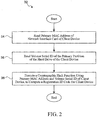
- a flowchart 32 illustrates an exemplary process for computing a registration Identification (ID) code in accordance with the present disclosure.
- the registration ID code is used during an initial registration process when the client device 16 is first registered with system server 12, and is re-computed each time the client device 16 makes a new call to the system server 12.
- the computation of a registration ID code enables a unique code to be created that takes into account specific hardware features of the particular client device 16 that uniquely identifies it to the system server 12.
- a particular advantage is that the registration ID code is uniquely tied to the particular client device 16 making the call to the system server 12.
- the primary MAC address of the network interface 24 in the computing module 22 of the client device 16 is read.
- the volume serial ID number of the primary partition of the hard drive 26 of the computing module 22 of the client device 16 is read.
- a cryptographic hash function is executed using the primary MAC address and the volume serial ID number of the client device 16 to compute a registration ID code for the client device 16. It will be appreciated that the operation set forth in Figure 2 is performed each time a new call is made by the client device 16 to establish a new information exchange session with the system server 12.
- the cryptographic hash function performed in operation 38 is preferably a one-way cryptographic function that generates a unique sequence of bits or "hash code".
- One specific type of cryptographic hash function that is suitable for use is known as the "Whirlpool" cryptographic hash function developed by V. Rijmen and P. Barreto.
- any suitable cryptographic function may be employed, provided that its inputs will be virtually impossible to deduce from examining its output code.
- the Whirlpool cryptographic hash function operates on messages less than 2256 bits in length, and produces a message digest of 512 bits.
- the cryptographic hash function can be mathematically proven to generate a given hash code, given the same inputs, each time it is executed. Furthermore, given the hash code output alone, the inputs to the hash function are virtually impossible to deduce.
- a cryptographic hash function is further highly resistant to attempts to guess the inputs by repeated, minor modifications to the inputs and then repeatedly examining the resulting hash code.
- the registration ID code is automatically computed from the underlying hardware environment of each client device 16 each time the client device 16 is used.
- the registration ID code is never stored on the hard drive 26 of the client device 16, and is therefore not susceptible to being obtained by an unauthorized device that may gain access to the network 14.
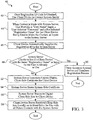
- a flowchart 40 is presented that illustrates an exemplary, initial registration process for registering a given client device 16 with the system server 12.
- this process involves using the registration ID code to identity the client device 16 to the system server 12, and using the system server 12 to generating a unique digital certificate and private/public key pair associated with the client device 16.
- the client device 16 is used to contact the system server 12.
- the user operating the client device 16 preferably provides a "User Name” input, a user selected "Password”, and a pre-selected "Registration Name”, as inputs to identify the client device 16 to the system server 12. It is preferred that all three such inputs are provided, although it will be appreciated that a high level of security would still be obtained even if only one or two of the above-mentioned user selected identifying items were supplied.
- the system server 12 will have previously stored this information, and thus is able to use this identifying information to identify the client device 16 during the initial registration process.
- the client device 16 automatically supplies the Registration ID code that has been immediately, previously computed to the system server 16.
- the system server 16 checks to see if a different client device with the same "Registration Name" as that input by the user is already in use. If the answer to this inquiry is "YES”, then access to the system server 12 is denied and the process of registering the client device 16 with the system server 12 is terminated, as indicated at operation 50.
- the system server 12 then generates a unique digital certificate having a first component comprising a client-side (i.e., "private") key, and a second component comprising a system-side (i.e., "public”) key.
- the digital certificate is unique to the specific client device 16 being registered for use with the system server 12.
- the system server 12 stores the system-side key on its associated mass storage device.
- the system server 12 transmits the client-side key to the client device 16.
- the client device 16 stores the received client-side key locally on its hard drive 26. This client-side key will then be used by the client device 16 to digitally sign its registration ID hash code each time the client device 16 call the system server 12 to establish a new information exchange session.
- One style of suitable digital certificate that the system server 12 may generate is an X.509 style digital certificate.
- any other style of digital certificate may be generated by the system server 12, provided it enables a suitable "key" to be generated that the client device 16 can use to digitally sign its registration ID hash code.
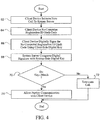
- the client device 16 when it completes the initial registration process of Figure 3 , it may make future calls to the system server 12 and use the client-side key that was obtained during the initial registration process as a further measure of security. For example, at operation 62, the client device 16 initiates a new call to the system server 12. The client device re-computes the registration ID hash code, as indicated at operation 64. The client device 16 then digitally signs the re-computed registration ID hash code, as indicated at operation 66, and presents it to the system server 12 to authenticate its identity. The system server 12, at operation 68, compares the digitally signed registration ID hash code being supplied by the client device 16 using its system-side key.
- the system server 12 makes a determination if the digital signature is valid, as indicated at operation 70. If a match does not exist, the call is terminated, as indicated at operation 72. If a match exists, then the system server 12 allows further communication with the client device 16, as indicated at operation 74.
- the method of the present disclosure provides a significant benefit in that cumbersome and/or costly security procedures are not required by users of the client device 16. Since the registration ID hash code is obtained from a combination of factors derived from the hardware characteristics of the particular client device 16, the network address of the client device 16, and credential information supplied by an individual operating the client device, it is computationally infeasible for an unauthorized device to generate a registration ID hash code that fraudulently identifies it as an authorized client device. Furthermore, an additional layer of security is provided because the credential information supplied by the user cannot be obtained or derived by reading any stored files on the client device. Still another layer of security is provided because the registration ID code is not stored on the client device 16, but rather generated each time the client device 16 calls the system server 12.
- client-side key that is used by the client device 16 to digitally sign the re-computed registration ID hash code before supplying it to the system server 12.
Landscapes
- Engineering & Computer Science (AREA)
- Computer Security & Cryptography (AREA)
- Computer Hardware Design (AREA)
- Computing Systems (AREA)
- General Engineering & Computer Science (AREA)
- Computer Networks & Wireless Communication (AREA)
- Signal Processing (AREA)
- Power Engineering (AREA)
- Computer And Data Communications (AREA)
- Management, Administration, Business Operations System, And Electronic Commerce (AREA)
Claims (11)
- Verfahren zum Sicherstellen, dass eine Client-Vorrichtung autorisiert ist, Informationen von einem System zu empfangen, wobei das System und die Client-Vorrichtung über ein Netzwerk in bidirektionaler Kommunikation stehen, wobei das Verfahren Folgendes aufweist:Lesen einer Netzwerkadresse der Client-Vorrichtung in dem Netzwerk;Lesen einer vorgegebenen Information von der Client-Vorrichtung bezüglich einer in der Client-Vorrichtung integrierten Hardware-Komponente;Verwenden eines kryptografischen Programms, um die Netzwerkadresse und die vorgegebene Information als Eingaben zu empfangen und um daraus einen Registrierungs-Identifikations (ID) -Hashcode für die Client-Vorrichtung zu erzeugen;und wobei der Registrierungs-ID-Hashcode nicht auf der Client-Vorrichtung gespeichert wird, nachdem der Registrierungs-ID-Hashcode an das System gesendet wird;Verwenden der Client-Vorrichtung, um den Registrierungs-ID-Hashcode für das System zu liefern, wenn ein Anruf des Systems über das Netzwerk durchgeführt wird;Verwenden des Systems, um der Client-Vorrichtung einen clientseitigen Schlüssel, der von dem Client zum digitalen Signieren des Registrierungs-ID-Hashcodes benutzt wird, bereitzustellen; undVeranlassen, dass das System ein digitales Zertifikat mit einer Komponente erzeugt, die durch dieses System verwendet wird, um eine digitale Signatur des Registrierungs-ID-Hashcodes zu überprüfen, die dem System durch die Client-Vorrichtung in weiteren Kommunikationen bereitgestellt wird,bei jedem nachfolgenden Anruf des Systems durch die Client-Vorrichtung das Veranlassen, dass die Client-Vorrichtung die Netzwerkadresse und die vorgegebene Information als Eingaben für den Registrierungs-ID-Hashcode erneut erhält und den Registrierungs-ID-Hashcode neu erzeugt und den Registrierungs-ID-Hashcode erneut an das System sendet, wobei der Registrierungs-ID-Hashcode mit dem clientseitigen Schlüssel signiert wird undferner aufweisend: Verwenden der Client-Vorrichtung, um dem System den vorgegebenen Benutzernamen zusammen mit dem Registrierungs-ID-Hashcode zu liefern.
- Verfahren nach Anspruch 1, wobei
Erzeugen eines digitalen Zertifikats das Erzeugen eines digitalen Zertifikats mit einem clientseitigen Schlüssel aufweist und
ferner die Client-Vorrichtung ein digitales Signieren des Registrierungs-ID-Hashcodes mit dem clientseitigen Schlüssel aufweist, bevor der Registrierungs-ID-Hashcode dem System während eines weiteren Anrufs des Systems gezeigt wird, und
das System den systemseitigen Schlüssel verwendet, um ihn mit dem digital signierten Registrierungs-ID-Hashcode zu vergleichen, wenn ein zukünftiger Anruf von der Client-Vorrichtung empfangen wird, um eine Identität der Client-Vorrichtung zu authentifizieren. - Verfahren nach Anspruch 1, wobei das Verwenden eines kryptographischen Programms das Verwenden eines auf der Client-Vorrichtung gespeicherten kryptographischen Hash-Programms aufweist.
- Verfahren nach Anspruch 1, wobei Lesen einer vorgegebenen Information das Lesen eines Identifizierungscodes der Datenträger-Seriennummer einer primären Partition einer Massenspeichervorrichtung aufweist, welche sich in der Client-Vorrichtung befindet.
- Verfahren nach Anspruch 1, wobei das Lesen der Netzwerkadresse das Lesen einer MAC-Adresse einer Netzwerkkarte aufweist, welche sich in der Client-Vorrichtung befindet.
- Verfahren nach Anspruch 1, wobei das Verwenden der Client-Vorrichtung zum Liefern der benutzeridentifizierenden Information das Verwenden der Client-Vorrichtung zum Liefern eines Benutzernamens aufweist.
- Verfahren nach Anspruch 1, wobei das Verwenden der Client-Vorrichtung zum Liefern von benutzeridentifizierender Information das Verwenden der Client-Vorrichtung zum Liefern eines Benutzerpassworts aufweist.
- Verfahren nach Anspruch 1, wobei das Verwenden der Client-Vorrichtung zum Liefern von benutzeridentifizierender Information das Verwenden der Client-Vorrichtung zum Liefern eines vorher ausgewählten Registrierungsnamens für die Client-Vorrichtung aufweist.
- Verfahren nach Anspruch 8, das ferner das Verwenden des Systems nach Empfang eines Registrierungsnamens von der Client-Vorrichtung zum Überprüfen, ob eine andere Vorrichtung unter Verwendung desselben Registrierungsnamens wie die Client-Vorrichtung bereits in Kommunikation mit dem System ist, aufweist.
- Verfahren nach Anspruch 8, das ferner das Veranlassen des Systems zum Verbieten weiterer Kommunikation mit dem System aufweist, falls erfasst wird, dass der Registrierungsname von einer anderen Vorrichtung als von der Client-Vorrichtung verwendet wird.
- Verfahren nach Anspruch 1, das weiterhin das Speichern des Registrierungsnamens und des Registrierungs-ID-Hashcodes in einem Speicher des Systems aufweist.
Priority Applications (1)
| Application Number | Priority Date | Filing Date | Title |
|---|---|---|---|
| EP10180322.9A EP2259540B1 (de) | 2007-01-30 | 2008-01-02 | Verfahren und Vorrichtung zum Erzeugen eines digitalen Fingerabdrücks |
Applications Claiming Priority (2)
| Application Number | Priority Date | Filing Date | Title |
|---|---|---|---|
| US11/668,771 US8689300B2 (en) | 2007-01-30 | 2007-01-30 | Method and system for generating digital fingerprint |
| PCT/US2008/050046 WO2008094716A1 (en) | 2007-01-30 | 2008-01-02 | Method and system for generating digital fingerprint |
Related Child Applications (2)
| Application Number | Title | Priority Date | Filing Date |
|---|---|---|---|
| EP10180322.9A Division EP2259540B1 (de) | 2007-01-30 | 2008-01-02 | Verfahren und Vorrichtung zum Erzeugen eines digitalen Fingerabdrücks |
| EP10180322.9A Division-Into EP2259540B1 (de) | 2007-01-30 | 2008-01-02 | Verfahren und Vorrichtung zum Erzeugen eines digitalen Fingerabdrücks |
Publications (2)
| Publication Number | Publication Date |
|---|---|
| EP2115993A1 EP2115993A1 (de) | 2009-11-11 |
| EP2115993B1 true EP2115993B1 (de) | 2017-11-15 |
Family
ID=39386118
Family Applications (2)
| Application Number | Title | Priority Date | Filing Date |
|---|---|---|---|
| EP08705638.8A Active EP2115993B1 (de) | 2007-01-30 | 2008-01-02 | Verfahren zum erzeugen eines digitalen fingerabdrucks |
| EP10180322.9A Active EP2259540B1 (de) | 2007-01-30 | 2008-01-02 | Verfahren und Vorrichtung zum Erzeugen eines digitalen Fingerabdrücks |
Family Applications After (1)
| Application Number | Title | Priority Date | Filing Date |
|---|---|---|---|
| EP10180322.9A Active EP2259540B1 (de) | 2007-01-30 | 2008-01-02 | Verfahren und Vorrichtung zum Erzeugen eines digitalen Fingerabdrücks |
Country Status (4)
| Country | Link |
|---|---|
| US (1) | US8689300B2 (de) |
| EP (2) | EP2115993B1 (de) |
| SG (2) | SG178726A1 (de) |
| WO (1) | WO2008094716A1 (de) |
Families Citing this family (23)
| Publication number | Priority date | Publication date | Assignee | Title |
|---|---|---|---|---|
| US8321677B2 (en) * | 2006-09-21 | 2012-11-27 | Google Inc. | Pre-binding and tight binding of an on-line identity to a digital signature |
| US8069155B2 (en) * | 2009-01-07 | 2011-11-29 | Oracle International Corporation | Securing DBMS event notifications |
| CN102196438A (zh) | 2010-03-16 | 2011-09-21 | 高通股份有限公司 | 通信终端标识号管理的方法和装置 |
| US9083534B2 (en) | 2011-01-07 | 2015-07-14 | Mastercard International Incorporated | Method and system for propagating a client identity |
| US9032204B2 (en) * | 2011-01-07 | 2015-05-12 | Mastercard International Incorporated | Methods and systems for providing a signed digital certificate in real time |
| AU2011100168B4 (en) * | 2011-02-09 | 2011-06-30 | Device Authority Ltd | Device-bound certificate authentication |
| EP2737657A1 (de) * | 2011-07-25 | 2014-06-04 | Emue Holdings Pty Ltd | Verfahren und systeme zur authentifizierung von rufverbindungen |
| DE102012218111A1 (de) * | 2012-10-04 | 2014-04-24 | Siemens Aktiengesellschaft | Vorrichtung und Verfahren zum Übertragen von Daten |
| CN104184713B (zh) | 2013-05-27 | 2018-03-27 | 阿里巴巴集团控股有限公司 | 终端识别方法、机器识别码注册方法及相应系统、设备 |
| FR3007929A1 (fr) * | 2013-06-27 | 2015-01-02 | France Telecom | Procede d'authentification d'un utilisateur d'un terminal mobile |
| GB2519798B (en) * | 2013-10-30 | 2017-06-07 | Barclays Bank Plc | Transaction authentication |
| GB2519826B (en) * | 2013-10-30 | 2016-07-20 | Barclays Bank Plc | Transaction authentication |
| EP3050011B1 (de) | 2014-05-02 | 2017-09-20 | Barclays Bank Plc. | Transaktionsbeglaubigung |
| EP3149648A4 (de) * | 2014-05-28 | 2018-01-03 | Esi Laboratory, LLC | Dokumentenmetadatenspeicher |
| DE102014212516A1 (de) * | 2014-06-27 | 2015-12-31 | Siemens Aktiengesellschaft | Überprüfung der Authentizität einer Balise |
| US10218510B2 (en) | 2015-06-01 | 2019-02-26 | Branch Banking And Trust Company | Network-based device authentication system |
| US20160366123A1 (en) * | 2015-06-10 | 2016-12-15 | Mcafee, Inc. | Device naming in an internet of things |
| JP6575275B2 (ja) * | 2015-09-30 | 2019-09-18 | ブラザー工業株式会社 | サーバ装置、及び、サーバ装置を備える通信システム |
| US10397215B2 (en) * | 2016-09-27 | 2019-08-27 | Visa International Service Assocation | Secure element installation and provisioning |
| US10581861B2 (en) * | 2017-09-12 | 2020-03-03 | International Business Machines Corporation | Endpoint access manager |
| CN107733648B (zh) * | 2017-10-30 | 2020-08-07 | 武汉大学 | 一种基于身份的rsa数字签名生成方法及系统 |
| CN109362078A (zh) * | 2018-11-05 | 2019-02-19 | 温州职业技术学院 | 一种基于5g超密集网络的接入认证方法及其系统 |
| CN114760270B (zh) * | 2021-05-12 | 2023-09-22 | 北京三江信达信息科技有限责任公司 | 一种生成用户设备指纹的方法及装置 |
Family Cites Families (17)
| Publication number | Priority date | Publication date | Assignee | Title |
|---|---|---|---|---|
| WO1995008232A1 (en) * | 1993-09-14 | 1995-03-23 | Chantilley Corporation Limited | Apparatus for key distribution in an encryption system |
| US6792113B1 (en) * | 1999-12-20 | 2004-09-14 | Microsoft Corporation | Adaptable security mechanism for preventing unauthorized access of digital data |
| US20010045451A1 (en) * | 2000-02-28 | 2001-11-29 | Tan Warren Yung-Hang | Method and system for token-based authentication |
| US6769060B1 (en) * | 2000-10-25 | 2004-07-27 | Ericsson Inc. | Method of bilateral identity authentication |
| JP2002208941A (ja) * | 2001-01-12 | 2002-07-26 | Nec Corp | Atm通信網におけるpvc切替制御方法 |
| US6983381B2 (en) * | 2001-01-17 | 2006-01-03 | Arcot Systems, Inc. | Methods for pre-authentication of users using one-time passwords |
| JP2003085321A (ja) * | 2001-09-11 | 2003-03-20 | Sony Corp | コンテンツ利用権限管理システム、コンテンツ利用権限管理方法、および情報処理装置、並びにコンピュータ・プログラム |
| US7730321B2 (en) * | 2003-05-09 | 2010-06-01 | Emc Corporation | System and method for authentication of users and communications received from computer systems |
| US7801826B2 (en) * | 2002-08-08 | 2010-09-21 | Fujitsu Limited | Framework and system for purchasing of goods and services |
| DE10297762D2 (de) * | 2002-08-16 | 2005-04-07 | Siemens Ag | Verfahren zum Identifizieren eines Kommunikationsendgeräts |
| ATE366010T1 (de) * | 2002-09-17 | 2007-07-15 | Errikos Pitsos | Verfahren und vorrichtung zur bereitstellung einer liste von öffentlichen schlüsseln in einem public-key-system |
| GB2412882A (en) * | 2002-12-23 | 2005-10-12 | Gametech International Inc | Enhanced gaming system |
| US20050086468A1 (en) | 2003-10-17 | 2005-04-21 | Branislav Meandzija | Digital certificate related to user terminal hardware in a wireless network |
| US20070150299A1 (en) * | 2005-12-22 | 2007-06-28 | Flory Clive F | Method, system, and apparatus for the management of the electronic files |
| US20070201502A1 (en) * | 2006-02-28 | 2007-08-30 | Maven Networks, Inc. | Systems and methods for controlling the delivery behavior of downloaded content |
| US8001387B2 (en) * | 2006-04-19 | 2011-08-16 | Dphi, Inc. | Removable storage medium with biometric access |
| US7890612B2 (en) * | 2006-05-08 | 2011-02-15 | Electro Guard Corp. | Method and apparatus for regulating data flow between a communications device and a network |
-
2007
- 2007-01-30 US US11/668,771 patent/US8689300B2/en active Active
-
2008
- 2008-01-02 WO PCT/US2008/050046 patent/WO2008094716A1/en not_active Ceased
- 2008-01-02 EP EP08705638.8A patent/EP2115993B1/de active Active
- 2008-01-02 SG SG2012005930A patent/SG178726A1/en unknown
- 2008-01-02 SG SG10201505657TA patent/SG10201505657TA/en unknown
- 2008-01-02 EP EP10180322.9A patent/EP2259540B1/de active Active
Non-Patent Citations (1)
| Title |
|---|
| None * |
Also Published As
| Publication number | Publication date |
|---|---|
| EP2115993A1 (de) | 2009-11-11 |
| WO2008094716A1 (en) | 2008-08-07 |
| SG10201505657TA (en) | 2015-09-29 |
| EP2259540A3 (de) | 2013-10-09 |
| US20080184029A1 (en) | 2008-07-31 |
| EP2259540B1 (de) | 2017-08-30 |
| US8689300B2 (en) | 2014-04-01 |
| SG178726A1 (en) | 2012-03-29 |
| EP2259540A2 (de) | 2010-12-08 |
Similar Documents
| Publication | Publication Date | Title |
|---|---|---|
| EP2259540B1 (de) | Verfahren und Vorrichtung zum Erzeugen eines digitalen Fingerabdrücks | |
| US8590024B2 (en) | Method for generating digital fingerprint using pseudo random number code | |
| US7020778B1 (en) | Method for issuing an electronic identity | |
| JP4425859B2 (ja) | アドレスに基づく認証システム、その装置およびプログラム | |
| US12177210B2 (en) | Full-duplex password-less authentication | |
| US8209744B2 (en) | Mobile device assisted secure computer network communication | |
| US9331991B2 (en) | Authenticating a client using linked authentication credentials | |
| EP1622301A2 (de) | Verfahren und Vorrichtung zur Bereitstellung einer Liste von öffentlichen Schlüsseln in einem Public-Key-System | |
| JPWO2007094165A1 (ja) | 本人確認システムおよびプログラム、並びに、本人確認方法 | |
| JPWO2005011192A6 (ja) | アドレスに基づく認証システム、その装置およびプログラム | |
| JP2008538146A (ja) | バイオメトリック・テンプレートのプライバシー保護のためのアーキテクチャ | |
| US10579809B2 (en) | National identification number based authentication and content delivery | |
| US20240129139A1 (en) | User authentication using two independent security elements | |
| US20030221109A1 (en) | Method of and apparatus for digital signatures | |
| CN116866093B (zh) | 身份认证方法、身份认证设备以及可读存储介质 | |
| EP1886204B1 (de) | Transaktionsverfahren und verifikationsverfahren | |
| US20090319778A1 (en) | User authentication system and method without password | |
| CN114547579B (zh) | 一种基于浏览器指纹的身份认证加密方法 | |
| WO2023022584A1 (en) | System and method for decentralising digital identification | |
| KR100750214B1 (ko) | 공인 인증서를 이용한 로그인 방법 | |
| JP2004206258A (ja) | 多重認証システム、コンピュータプログラムおよび多重認証方法 | |
| CN116232729A (zh) | 一种安全登录和身份认证的去中心化的系统 | |
| HK1145576B (en) | Method and system for generating digital fingerprint | |
| HK1145576A (en) | Method and system for generating digital fingerprint | |
| Salaiwarakul et al. | Analysis of a biometric authentication protocol for signature creation application |
Legal Events
| Date | Code | Title | Description |
|---|---|---|---|
| PUAI | Public reference made under article 153(3) epc to a published international application that has entered the european phase |
Free format text: ORIGINAL CODE: 0009012 |
|
| 17P | Request for examination filed |
Effective date: 20090824 |
|
| AK | Designated contracting states |
Kind code of ref document: A1 Designated state(s): AT BE BG CH CY CZ DE DK EE ES FI FR GB GR HR HU IE IS IT LI LT LU LV MC MT NL NO PL PT RO SE SI SK TR |
|
| DAX | Request for extension of the european patent (deleted) | ||
| RBV | Designated contracting states (corrected) |
Designated state(s): AT BE BG CH CY CZ DE DK EE ES FI FR GR HR HU IE IS IT LI LT LU LV MC MT NL NO PL PT RO SE SI SK TR |
|
| 17Q | First examination report despatched |
Effective date: 20130905 |
|
| GRAP | Despatch of communication of intention to grant a patent |
Free format text: ORIGINAL CODE: EPIDOSNIGR1 |
|
| INTG | Intention to grant announced |
Effective date: 20170717 |
|
| GRAS | Grant fee paid |
Free format text: ORIGINAL CODE: EPIDOSNIGR3 |
|
| GRAA | (expected) grant |
Free format text: ORIGINAL CODE: 0009210 |
|
| AK | Designated contracting states |
Kind code of ref document: B1 Designated state(s): AT BE BG CH CY CZ DE DK EE ES FI FR GR HR HU IE IS IT LI LT LU LV MC MT NL NO PL PT RO SE SI SK TR |
|
| REG | Reference to a national code |
Ref country code: CH Ref legal event code: EP Ref country code: AT Ref legal event code: REF Ref document number: 947310 Country of ref document: AT Kind code of ref document: T Effective date: 20171115 |
|
| REG | Reference to a national code |
Ref country code: IE Ref legal event code: FG4D |
|
| REG | Reference to a national code |
Ref country code: DE Ref legal event code: R096 Ref document number: 602008052957 Country of ref document: DE |
|
| REG | Reference to a national code |
Ref country code: FR Ref legal event code: PLFP Year of fee payment: 11 |
|
| REG | Reference to a national code |
Ref country code: NL Ref legal event code: MP Effective date: 20171115 |
|
| REG | Reference to a national code |
Ref country code: LT Ref legal event code: MG4D |
|
| REG | Reference to a national code |
Ref country code: AT Ref legal event code: MK05 Ref document number: 947310 Country of ref document: AT Kind code of ref document: T Effective date: 20171115 |
|
| PG25 | Lapsed in a contracting state [announced via postgrant information from national office to epo] |
Ref country code: FI Free format text: LAPSE BECAUSE OF FAILURE TO SUBMIT A TRANSLATION OF THE DESCRIPTION OR TO PAY THE FEE WITHIN THE PRESCRIBED TIME-LIMIT Effective date: 20171115 Ref country code: ES Free format text: LAPSE BECAUSE OF FAILURE TO SUBMIT A TRANSLATION OF THE DESCRIPTION OR TO PAY THE FEE WITHIN THE PRESCRIBED TIME-LIMIT Effective date: 20171115 Ref country code: SE Free format text: LAPSE BECAUSE OF FAILURE TO SUBMIT A TRANSLATION OF THE DESCRIPTION OR TO PAY THE FEE WITHIN THE PRESCRIBED TIME-LIMIT Effective date: 20171115 Ref country code: NO Free format text: LAPSE BECAUSE OF FAILURE TO SUBMIT A TRANSLATION OF THE DESCRIPTION OR TO PAY THE FEE WITHIN THE PRESCRIBED TIME-LIMIT Effective date: 20180215 Ref country code: NL Free format text: LAPSE BECAUSE OF FAILURE TO SUBMIT A TRANSLATION OF THE DESCRIPTION OR TO PAY THE FEE WITHIN THE PRESCRIBED TIME-LIMIT Effective date: 20171115 Ref country code: LT Free format text: LAPSE BECAUSE OF FAILURE TO SUBMIT A TRANSLATION OF THE DESCRIPTION OR TO PAY THE FEE WITHIN THE PRESCRIBED TIME-LIMIT Effective date: 20171115 |
|
| PG25 | Lapsed in a contracting state [announced via postgrant information from national office to epo] |
Ref country code: LV Free format text: LAPSE BECAUSE OF FAILURE TO SUBMIT A TRANSLATION OF THE DESCRIPTION OR TO PAY THE FEE WITHIN THE PRESCRIBED TIME-LIMIT Effective date: 20171115 Ref country code: GR Free format text: LAPSE BECAUSE OF FAILURE TO SUBMIT A TRANSLATION OF THE DESCRIPTION OR TO PAY THE FEE WITHIN THE PRESCRIBED TIME-LIMIT Effective date: 20180216 Ref country code: AT Free format text: LAPSE BECAUSE OF FAILURE TO SUBMIT A TRANSLATION OF THE DESCRIPTION OR TO PAY THE FEE WITHIN THE PRESCRIBED TIME-LIMIT Effective date: 20171115 Ref country code: HR Free format text: LAPSE BECAUSE OF FAILURE TO SUBMIT A TRANSLATION OF THE DESCRIPTION OR TO PAY THE FEE WITHIN THE PRESCRIBED TIME-LIMIT Effective date: 20171115 Ref country code: BG Free format text: LAPSE BECAUSE OF FAILURE TO SUBMIT A TRANSLATION OF THE DESCRIPTION OR TO PAY THE FEE WITHIN THE PRESCRIBED TIME-LIMIT Effective date: 20180215 |
|
| PG25 | Lapsed in a contracting state [announced via postgrant information from national office to epo] |
Ref country code: CZ Free format text: LAPSE BECAUSE OF FAILURE TO SUBMIT A TRANSLATION OF THE DESCRIPTION OR TO PAY THE FEE WITHIN THE PRESCRIBED TIME-LIMIT Effective date: 20171115 Ref country code: SK Free format text: LAPSE BECAUSE OF FAILURE TO SUBMIT A TRANSLATION OF THE DESCRIPTION OR TO PAY THE FEE WITHIN THE PRESCRIBED TIME-LIMIT Effective date: 20171115 Ref country code: CY Free format text: LAPSE BECAUSE OF FAILURE TO SUBMIT A TRANSLATION OF THE DESCRIPTION OR TO PAY THE FEE WITHIN THE PRESCRIBED TIME-LIMIT Effective date: 20171115 Ref country code: EE Free format text: LAPSE BECAUSE OF FAILURE TO SUBMIT A TRANSLATION OF THE DESCRIPTION OR TO PAY THE FEE WITHIN THE PRESCRIBED TIME-LIMIT Effective date: 20171115 Ref country code: DK Free format text: LAPSE BECAUSE OF FAILURE TO SUBMIT A TRANSLATION OF THE DESCRIPTION OR TO PAY THE FEE WITHIN THE PRESCRIBED TIME-LIMIT Effective date: 20171115 |
|
| REG | Reference to a national code |
Ref country code: DE Ref legal event code: R097 Ref document number: 602008052957 Country of ref document: DE |
|
| PG25 | Lapsed in a contracting state [announced via postgrant information from national office to epo] |
Ref country code: RO Free format text: LAPSE BECAUSE OF FAILURE TO SUBMIT A TRANSLATION OF THE DESCRIPTION OR TO PAY THE FEE WITHIN THE PRESCRIBED TIME-LIMIT Effective date: 20171115 Ref country code: PL Free format text: LAPSE BECAUSE OF FAILURE TO SUBMIT A TRANSLATION OF THE DESCRIPTION OR TO PAY THE FEE WITHIN THE PRESCRIBED TIME-LIMIT Effective date: 20171115 Ref country code: IT Free format text: LAPSE BECAUSE OF FAILURE TO SUBMIT A TRANSLATION OF THE DESCRIPTION OR TO PAY THE FEE WITHIN THE PRESCRIBED TIME-LIMIT Effective date: 20171115 |
|
| REG | Reference to a national code |
Ref country code: CH Ref legal event code: PL |
|
| PLBE | No opposition filed within time limit |
Free format text: ORIGINAL CODE: 0009261 |
|
| STAA | Information on the status of an ep patent application or granted ep patent |
Free format text: STATUS: NO OPPOSITION FILED WITHIN TIME LIMIT |
|
| 26N | No opposition filed |
Effective date: 20180817 |
|
| PG25 | Lapsed in a contracting state [announced via postgrant information from national office to epo] |
Ref country code: LU Free format text: LAPSE BECAUSE OF NON-PAYMENT OF DUE FEES Effective date: 20180102 |
|
| REG | Reference to a national code |
Ref country code: IE Ref legal event code: MM4A |
|
| REG | Reference to a national code |
Ref country code: BE Ref legal event code: MM Effective date: 20180131 |
|
| PG25 | Lapsed in a contracting state [announced via postgrant information from national office to epo] |
Ref country code: SI Free format text: LAPSE BECAUSE OF FAILURE TO SUBMIT A TRANSLATION OF THE DESCRIPTION OR TO PAY THE FEE WITHIN THE PRESCRIBED TIME-LIMIT Effective date: 20171115 Ref country code: LI Free format text: LAPSE BECAUSE OF NON-PAYMENT OF DUE FEES Effective date: 20180131 Ref country code: CH Free format text: LAPSE BECAUSE OF NON-PAYMENT OF DUE FEES Effective date: 20180131 Ref country code: BE Free format text: LAPSE BECAUSE OF NON-PAYMENT OF DUE FEES Effective date: 20180131 |
|
| PG25 | Lapsed in a contracting state [announced via postgrant information from national office to epo] |
Ref country code: IE Free format text: LAPSE BECAUSE OF NON-PAYMENT OF DUE FEES Effective date: 20180102 |
|
| PG25 | Lapsed in a contracting state [announced via postgrant information from national office to epo] |
Ref country code: MC Free format text: LAPSE BECAUSE OF FAILURE TO SUBMIT A TRANSLATION OF THE DESCRIPTION OR TO PAY THE FEE WITHIN THE PRESCRIBED TIME-LIMIT Effective date: 20171115 |
|
| PG25 | Lapsed in a contracting state [announced via postgrant information from national office to epo] |
Ref country code: MT Free format text: LAPSE BECAUSE OF NON-PAYMENT OF DUE FEES Effective date: 20180102 |
|
| PG25 | Lapsed in a contracting state [announced via postgrant information from national office to epo] |
Ref country code: TR Free format text: LAPSE BECAUSE OF FAILURE TO SUBMIT A TRANSLATION OF THE DESCRIPTION OR TO PAY THE FEE WITHIN THE PRESCRIBED TIME-LIMIT Effective date: 20171115 |
|
| PG25 | Lapsed in a contracting state [announced via postgrant information from national office to epo] |
Ref country code: PT Free format text: LAPSE BECAUSE OF FAILURE TO SUBMIT A TRANSLATION OF THE DESCRIPTION OR TO PAY THE FEE WITHIN THE PRESCRIBED TIME-LIMIT Effective date: 20171115 Ref country code: HU Free format text: LAPSE BECAUSE OF FAILURE TO SUBMIT A TRANSLATION OF THE DESCRIPTION OR TO PAY THE FEE WITHIN THE PRESCRIBED TIME-LIMIT; INVALID AB INITIO Effective date: 20080102 |
|
| PG25 | Lapsed in a contracting state [announced via postgrant information from national office to epo] |
Ref country code: IS Free format text: LAPSE BECAUSE OF FAILURE TO SUBMIT A TRANSLATION OF THE DESCRIPTION OR TO PAY THE FEE WITHIN THE PRESCRIBED TIME-LIMIT Effective date: 20180315 |
|
| REG | Reference to a national code |
Ref country code: DE Ref legal event code: R079 Ref document number: 602008052957 Country of ref document: DE Free format text: PREVIOUS MAIN CLASS: H04L0029060000 Ipc: H04L0065000000 |
|
| P01 | Opt-out of the competence of the unified patent court (upc) registered |
Effective date: 20230516 |
|
| PGFP | Annual fee paid to national office [announced via postgrant information from national office to epo] |
Ref country code: DE Payment date: 20260128 Year of fee payment: 19 |
|
| PGFP | Annual fee paid to national office [announced via postgrant information from national office to epo] |
Ref country code: FR Payment date: 20260126 Year of fee payment: 19 |