EP2113504A1 - Preparation of N-6 demethylated, 9,10-dihydrolysergic acid alkyl esters - Google Patents
Preparation of N-6 demethylated, 9,10-dihydrolysergic acid alkyl esters Download PDFInfo
- Publication number
- EP2113504A1 EP2113504A1 EP08155371A EP08155371A EP2113504A1 EP 2113504 A1 EP2113504 A1 EP 2113504A1 EP 08155371 A EP08155371 A EP 08155371A EP 08155371 A EP08155371 A EP 08155371A EP 2113504 A1 EP2113504 A1 EP 2113504A1
- Authority
- EP
- European Patent Office
- Prior art keywords
- formula
- dhlsalkyl
- chloroformate
- compound
- demethylation
- Prior art date
- Legal status (The legal status is an assumption and is not a legal conclusion. Google has not performed a legal analysis and makes no representation as to the accuracy of the status listed.)
- Ceased
Links
- 238000002360 preparation method Methods 0.000 title claims description 5
- 238000000034 method Methods 0.000 claims abstract description 43
- 238000010520 demethylation reaction Methods 0.000 claims abstract description 38
- 230000017858 demethylation Effects 0.000 claims abstract description 32
- XLYOFNOQVPJJNP-UHFFFAOYSA-N water Substances O XLYOFNOQVPJJNP-UHFFFAOYSA-N 0.000 claims abstract description 31
- FZFAMSAMCHXGEF-UHFFFAOYSA-N chloro formate Chemical compound ClOC=O FZFAMSAMCHXGEF-UHFFFAOYSA-N 0.000 claims abstract description 28
- 239000012429 reaction media Substances 0.000 claims abstract description 26
- 239000003054 catalyst Substances 0.000 claims abstract description 21
- 150000001875 compounds Chemical class 0.000 claims abstract description 20
- LMBFAGIMSUYTBN-MPZNNTNKSA-N teixobactin Chemical compound C([C@H](C(=O)N[C@@H]([C@@H](C)CC)C(=O)N[C@@H](CO)C(=O)N[C@H](CCC(N)=O)C(=O)N[C@H]([C@@H](C)CC)C(=O)N[C@@H]([C@@H](C)CC)C(=O)N[C@@H](CO)C(=O)N[C@H]1C(N[C@@H](C)C(=O)N[C@@H](C[C@@H]2NC(=N)NC2)C(=O)N[C@H](C(=O)O[C@H]1C)[C@@H](C)CC)=O)NC)C1=CC=CC=C1 LMBFAGIMSUYTBN-MPZNNTNKSA-N 0.000 claims abstract description 14
- 229940079593 drug Drugs 0.000 claims description 26
- 239000003814 drug Substances 0.000 claims description 26
- 229960003133 ergot alkaloid Drugs 0.000 claims description 23
- IJGRMHOSHXDMSA-UHFFFAOYSA-N Atomic nitrogen Chemical compound N#N IJGRMHOSHXDMSA-UHFFFAOYSA-N 0.000 claims description 20
- 239000000203 mixture Substances 0.000 claims description 13
- PSHKMPUSSFXUIA-UHFFFAOYSA-N n,n-dimethylpyridin-2-amine Chemical compound CN(C)C1=CC=CC=N1 PSHKMPUSSFXUIA-UHFFFAOYSA-N 0.000 claims description 13
- 229910052757 nitrogen Inorganic materials 0.000 claims description 12
- 239000013067 intermediate product Substances 0.000 claims description 11
- 150000001412 amines Chemical class 0.000 claims description 8
- 229910052731 fluorine Inorganic materials 0.000 claims description 7
- 239000012535 impurity Substances 0.000 claims description 7
- 229910052794 bromium Inorganic materials 0.000 claims description 6
- 229910052801 chlorine Inorganic materials 0.000 claims description 6
- 125000005843 halogen group Chemical group 0.000 claims description 6
- 125000004435 hydrogen atom Chemical group [H]* 0.000 claims description 6
- 229910052740 iodine Inorganic materials 0.000 claims description 6
- 125000003118 aryl group Chemical group 0.000 claims description 4
- YEHCICAEULNIGD-MZMPZRCHSA-N pergolide Chemical compound C1=CC([C@H]2C[C@@H](CSC)CN([C@@H]2C2)CCC)=C3C2=CNC3=C1 YEHCICAEULNIGD-MZMPZRCHSA-N 0.000 claims description 4
- 229960004851 pergolide Drugs 0.000 claims description 4
- 125000005913 (C3-C6) cycloalkyl group Chemical group 0.000 claims description 3
- KXDHJXZQYSOELW-UHFFFAOYSA-N Carbamic acid Chemical group NC(O)=O KXDHJXZQYSOELW-UHFFFAOYSA-N 0.000 claims description 3
- 125000003342 alkenyl group Chemical group 0.000 claims description 3
- 125000000392 cycloalkenyl group Chemical group 0.000 claims description 3
- 125000004169 (C1-C6) alkyl group Chemical group 0.000 claims description 2
- VHYFNPMBLIVWCW-UHFFFAOYSA-N 4-Dimethylaminopyridine Chemical group CN(C)C1=CC=NC=C1 VHYFNPMBLIVWCW-UHFFFAOYSA-N 0.000 claims description 2
- 125000000623 heterocyclic group Chemical group 0.000 claims description 2
- 238000004519 manufacturing process Methods 0.000 claims description 2
- 125000001183 hydrocarbyl group Chemical group 0.000 claims 4
- 239000012067 demethylated product Substances 0.000 claims 1
- 238000006243 chemical reaction Methods 0.000 description 37
- LJCZNYWLQZZIOS-UHFFFAOYSA-N 2,2,2-trichlorethoxycarbonyl chloride Chemical compound ClC(=O)OCC(Cl)(Cl)Cl LJCZNYWLQZZIOS-UHFFFAOYSA-N 0.000 description 21
- YMWUJEATGCHHMB-UHFFFAOYSA-N Dichloromethane Chemical compound ClCCl YMWUJEATGCHHMB-UHFFFAOYSA-N 0.000 description 21
- 238000004128 high performance liquid chromatography Methods 0.000 description 16
- 238000003786 synthesis reaction Methods 0.000 description 15
- 230000015572 biosynthetic process Effects 0.000 description 13
- 239000000047 product Substances 0.000 description 13
- 238000010992 reflux Methods 0.000 description 11
- OKKJLVBELUTLKV-UHFFFAOYSA-N Methanol Chemical compound OC OKKJLVBELUTLKV-UHFFFAOYSA-N 0.000 description 9
- PNEYBMLMFCGWSK-UHFFFAOYSA-N Alumina Chemical compound [O-2].[O-2].[O-2].[Al+3].[Al+3] PNEYBMLMFCGWSK-UHFFFAOYSA-N 0.000 description 8
- 239000011541 reaction mixture Substances 0.000 description 8
- 238000006362 organocatalysis Methods 0.000 description 7
- BVKZGUZCCUSVTD-UHFFFAOYSA-M Bicarbonate Chemical compound OC([O-])=O BVKZGUZCCUSVTD-UHFFFAOYSA-M 0.000 description 6
- UIIMBOGNXHQVGW-UHFFFAOYSA-M Sodium bicarbonate Chemical compound [Na+].OC([O-])=O UIIMBOGNXHQVGW-UHFFFAOYSA-M 0.000 description 6
- 125000000217 alkyl group Chemical group 0.000 description 5
- 239000000376 reactant Substances 0.000 description 5
- ORBSYPFBZQJNJE-MPKXVKKWSA-N (6ar,9r,10ar)-7-methyl-6,6a,8,9,10,10a-hexahydro-4h-indolo[4,3-fg]quinoline-9-carboxylic acid Chemical compound C1=CC([C@H]2C[C@H](CN([C@@H]2C2)C)C(O)=O)=C3C2=CNC3=C1 ORBSYPFBZQJNJE-MPKXVKKWSA-N 0.000 description 4
- IMNFDUFMRHMDMM-UHFFFAOYSA-N N-Heptane Chemical compound CCCCCCC IMNFDUFMRHMDMM-UHFFFAOYSA-N 0.000 description 4
- 238000009825 accumulation Methods 0.000 description 4
- 238000013459 approach Methods 0.000 description 4
- 238000011021 bench scale process Methods 0.000 description 4
- 150000002430 hydrocarbons Chemical group 0.000 description 4
- 238000010926 purge Methods 0.000 description 4
- 239000007787 solid Substances 0.000 description 4
- ZMANZCXQSJIPKH-UHFFFAOYSA-N Triethylamine Chemical compound CCN(CC)CC ZMANZCXQSJIPKH-UHFFFAOYSA-N 0.000 description 3
- 239000002585 base Substances 0.000 description 3
- AOGYCOYQMAVAFD-UHFFFAOYSA-N chlorocarbonic acid Chemical class OC(Cl)=O AOGYCOYQMAVAFD-UHFFFAOYSA-N 0.000 description 3
- RAXXELZNTBOGNW-UHFFFAOYSA-N imidazole Natural products C1=CNC=N1 RAXXELZNTBOGNW-UHFFFAOYSA-N 0.000 description 3
- 230000001976 improved effect Effects 0.000 description 3
- 239000011261 inert gas Substances 0.000 description 3
- 125000002496 methyl group Chemical group [H]C([H])([H])* 0.000 description 3
- 229910000028 potassium bicarbonate Inorganic materials 0.000 description 3
- 239000011736 potassium bicarbonate Substances 0.000 description 3
- TYJJADVDDVDEDZ-UHFFFAOYSA-M potassium hydrogencarbonate Chemical compound [K+].OC([O-])=O TYJJADVDDVDEDZ-UHFFFAOYSA-M 0.000 description 3
- 229910000030 sodium bicarbonate Inorganic materials 0.000 description 3
- 235000017557 sodium bicarbonate Nutrition 0.000 description 3
- IAZDPXIOMUYVGZ-WFGJKAKNSA-N Dimethyl sulfoxide Chemical compound [2H]C([2H])([2H])S(=O)C([2H])([2H])[2H] IAZDPXIOMUYVGZ-WFGJKAKNSA-N 0.000 description 2
- SIKJAQJRHWYJAI-UHFFFAOYSA-N Indole Chemical compound C1=CC=C2NC=CC2=C1 SIKJAQJRHWYJAI-UHFFFAOYSA-N 0.000 description 2
- JUJWROOIHBZHMG-UHFFFAOYSA-N Pyridine Chemical compound C1=CC=NC=C1 JUJWROOIHBZHMG-UHFFFAOYSA-N 0.000 description 2
- 230000006978 adaptation Effects 0.000 description 2
- 238000005119 centrifugation Methods 0.000 description 2
- 239000003153 chemical reaction reagent Substances 0.000 description 2
- 238000001035 drying Methods 0.000 description 2
- 230000000694 effects Effects 0.000 description 2
- 125000004051 hexyl group Chemical group [H]C([H])([H])C([H])([H])C([H])([H])C([H])([H])C([H])([H])C([H])([H])* 0.000 description 2
- 150000007529 inorganic bases Chemical class 0.000 description 2
- VLKZOEOYAKHREP-UHFFFAOYSA-N n-Hexane Chemical compound CCCCCC VLKZOEOYAKHREP-UHFFFAOYSA-N 0.000 description 2
- 235000015497 potassium bicarbonate Nutrition 0.000 description 2
- 230000035484 reaction time Effects 0.000 description 2
- 239000002904 solvent Substances 0.000 description 2
- SGUVLZREKBPKCE-UHFFFAOYSA-N 1,5-diazabicyclo[4.3.0]-non-5-ene Chemical compound C1CCN=C2CCCN21 SGUVLZREKBPKCE-UHFFFAOYSA-N 0.000 description 1
- 125000000453 2,2,2-trichloroethyl group Chemical group [H]C([H])(*)C(Cl)(Cl)Cl 0.000 description 1
- HVCNXQOWACZAFN-UHFFFAOYSA-N 4-ethylmorpholine Chemical compound CCN1CCOCC1 HVCNXQOWACZAFN-UHFFFAOYSA-N 0.000 description 1
- AWFDCTXCTHGORH-HGHGUNKESA-N 6-[4-[(6ar,9r,10ar)-5-bromo-7-methyl-6,6a,8,9,10,10a-hexahydro-4h-indolo[4,3-fg]quinoline-9-carbonyl]piperazin-1-yl]-1-methylpyridin-2-one Chemical group O=C([C@H]1CN([C@H]2[C@@H](C=3C=CC=C4NC(Br)=C(C=34)C2)C1)C)N(CC1)CCN1C1=CC=CC(=O)N1C AWFDCTXCTHGORH-HGHGUNKESA-N 0.000 description 1
- KXDHJXZQYSOELW-UHFFFAOYSA-M Carbamate Chemical compound NC([O-])=O KXDHJXZQYSOELW-UHFFFAOYSA-M 0.000 description 1
- BDAGIHXWWSANSR-UHFFFAOYSA-N Formic acid Chemical group OC=O BDAGIHXWWSANSR-UHFFFAOYSA-N 0.000 description 1
- UFHFLCQGNIYNRP-UHFFFAOYSA-N Hydrogen Chemical compound [H][H] UFHFLCQGNIYNRP-UHFFFAOYSA-N 0.000 description 1
- JGFZNNIVVJXRND-UHFFFAOYSA-N N,N-Diisopropylethylamine (DIPEA) Chemical compound CCN(C(C)C)C(C)C JGFZNNIVVJXRND-UHFFFAOYSA-N 0.000 description 1
- 239000002253 acid Substances 0.000 description 1
- 238000005917 acylation reaction Methods 0.000 description 1
- 229910052783 alkali metal Inorganic materials 0.000 description 1
- -1 alkali metal bicarbonates Chemical class 0.000 description 1
- 150000004982 aromatic amines Chemical class 0.000 description 1
- 238000003556 assay Methods 0.000 description 1
- 125000000484 butyl group Chemical group [H]C([*])([H])C([H])([H])C([H])([H])C([H])([H])[H] 0.000 description 1
- 239000006227 byproduct Substances 0.000 description 1
- CZLPHEVDIMJXTM-UHFFFAOYSA-N carbonochloridic acid;2,2,2-trichloroethyl carbonochloridate Chemical compound OC(Cl)=O.ClC(=O)OCC(Cl)(Cl)Cl CZLPHEVDIMJXTM-UHFFFAOYSA-N 0.000 description 1
- 238000001816 cooling Methods 0.000 description 1
- 230000002939 deleterious effect Effects 0.000 description 1
- 150000002148 esters Chemical class 0.000 description 1
- 125000001495 ethyl group Chemical group [H]C([H])([H])C([H])([H])* 0.000 description 1
- 238000010438 heat treatment Methods 0.000 description 1
- 125000005842 heteroatom Chemical group 0.000 description 1
- 229910052739 hydrogen Inorganic materials 0.000 description 1
- 239000001257 hydrogen Substances 0.000 description 1
- PZOUSPYUWWUPPK-UHFFFAOYSA-N indole Natural products CC1=CC=CC2=C1C=CN2 PZOUSPYUWWUPPK-UHFFFAOYSA-N 0.000 description 1
- RKJUIXBNRJVNHR-UHFFFAOYSA-N indolenine Natural products C1=CC=C2CC=NC2=C1 RKJUIXBNRJVNHR-UHFFFAOYSA-N 0.000 description 1
- 125000001449 isopropyl group Chemical group [H]C([H])([H])C([H])(*)C([H])([H])[H] 0.000 description 1
- 238000004949 mass spectrometry Methods 0.000 description 1
- 230000007721 medicinal effect Effects 0.000 description 1
- 150000004702 methyl esters Chemical class 0.000 description 1
- 230000004048 modification Effects 0.000 description 1
- 238000012986 modification Methods 0.000 description 1
- OCWCEBCNVIZYJE-UHFFFAOYSA-N n,n-diethylethanamine;4-ethylmorpholine Chemical compound CCN(CC)CC.CCN1CCOCC1 OCWCEBCNVIZYJE-UHFFFAOYSA-N 0.000 description 1
- 125000004433 nitrogen atom Chemical group N* 0.000 description 1
- 238000005457 optimization Methods 0.000 description 1
- 150000005677 organic carbonates Chemical class 0.000 description 1
- 150000002894 organic compounds Chemical class 0.000 description 1
- 229910052760 oxygen Inorganic materials 0.000 description 1
- 125000001147 pentyl group Chemical group C(CCCC)* 0.000 description 1
- 125000001436 propyl group Chemical group [H]C([*])([H])C([H])([H])C([H])([H])[H] 0.000 description 1
- UMJSCPRVCHMLSP-UHFFFAOYSA-N pyridine Natural products COC1=CC=CN=C1 UMJSCPRVCHMLSP-UHFFFAOYSA-N 0.000 description 1
- 150000003222 pyridines Chemical class 0.000 description 1
- 238000007430 reference method Methods 0.000 description 1
- 238000010963 scalable process Methods 0.000 description 1
- 239000007858 starting material Substances 0.000 description 1
- 238000003756 stirring Methods 0.000 description 1
- 125000001424 substituent group Chemical group 0.000 description 1
- 229910052717 sulfur Inorganic materials 0.000 description 1
- 125000000391 vinyl group Chemical group [H]C([*])=C([H])[H] 0.000 description 1
- 229920002554 vinyl polymer Polymers 0.000 description 1
Images


Classifications
-
- C—CHEMISTRY; METALLURGY
- C07—ORGANIC CHEMISTRY
- C07D—HETEROCYCLIC COMPOUNDS
- C07D457/00—Heterocyclic compounds containing indolo [4, 3-f, g] quinoline ring systems, e.g. derivatives of ergoline, of the formula:, e.g. lysergic acid
- C07D457/04—Heterocyclic compounds containing indolo [4, 3-f, g] quinoline ring systems, e.g. derivatives of ergoline, of the formula:, e.g. lysergic acid with carbon atoms having three bonds to hetero atoms with at the most one bond to halogen, e.g. ester or nitrile radicals, directly attached in position 8
-
- A—HUMAN NECESSITIES
- A61—MEDICAL OR VETERINARY SCIENCE; HYGIENE
- A61P—SPECIFIC THERAPEUTIC ACTIVITY OF CHEMICAL COMPOUNDS OR MEDICINAL PREPARATIONS
- A61P25/00—Drugs for disorders of the nervous system
-
- C—CHEMISTRY; METALLURGY
- C07—ORGANIC CHEMISTRY
- C07D—HETEROCYCLIC COMPOUNDS
- C07D457/00—Heterocyclic compounds containing indolo [4, 3-f, g] quinoline ring systems, e.g. derivatives of ergoline, of the formula:, e.g. lysergic acid
- C07D457/02—Heterocyclic compounds containing indolo [4, 3-f, g] quinoline ring systems, e.g. derivatives of ergoline, of the formula:, e.g. lysergic acid with hydrocarbon or substituted hydrocarbon radicals, attached in position 8
-
- C—CHEMISTRY; METALLURGY
- C07—ORGANIC CHEMISTRY
- C07D—HETEROCYCLIC COMPOUNDS
- C07D457/00—Heterocyclic compounds containing indolo [4, 3-f, g] quinoline ring systems, e.g. derivatives of ergoline, of the formula:, e.g. lysergic acid
- C07D457/04—Heterocyclic compounds containing indolo [4, 3-f, g] quinoline ring systems, e.g. derivatives of ergoline, of the formula:, e.g. lysergic acid with carbon atoms having three bonds to hetero atoms with at the most one bond to halogen, e.g. ester or nitrile radicals, directly attached in position 8
- C07D457/06—Lysergic acid amides
Definitions
- the present invention relates to a process for producing N-6 demethylated 9,10-dihydrolysergic acid alkyl esters comprising a step of N-6 demethylation of 9,10-dihydrolysergic acid alkyl esters with chloroformates, which may form a step in the synthesis of ergot alkaloid drugs.
- the present invention further relates to pure ergot alkaloid drugs and intermediate products therefor.
- DHLSAlkyl 9,10-dihydrolysergic acid alkyl esters
- DHLSMe 9,10-dihydrolysergic acid alkyl esters
- the object of the present invention is to provide an improved process for producing N-6 demethylated 9,10-dihydrolysergic acid alkyl esters, and to provide improved ergot alkaloid drugs and intermediate products therefor.
- the present invention provides a process for producing N -6 demethylated 9,10-dihydrolysergic acid alkyl ester, comprising a step of N -6 demethylation of a 9,10-dihydrolysergic acid alkyl ester with chloroformate, characterized that the N -6 demethylation step is performed in the presence of an organic catalyst.
- the present invention provides a process for converting a compound of formula I (DHLSAlkyl) into a compound of formula II (DHLSAlkyl-F), wherein R' is a substituted or unsubstituted hydrocarbon group, the process comprising the steps of:
- the present invention provides a process for producing N-6 demethylated 9,10-dihydrolysergic acid alkyl ester, comprising a step of N -6 demethylation of a 9,10-dihydrolysergic acid alkyl ester with chloroformate, wherein the ratio of chloroformate used in total compared to 9,10-dihydrolysergic acid alkyl ester used in total for the step of N -6 demethylation is less than 5 equivalents to 1 equivalent, respectively.
- the process defined in the aspects above can be beneficially used in a process for the preparation of ergot alkaloid drugs.
- the present invention provides intermediate compounds of formula II (DHLSAlkyl-F), intermediate compounds of formula III (H-DHLSAlkyl), and ergot alkaloid drugs, respectively free of any one of impurities of formula wherein R' is a substituted or unsubstituted hydrocarbon group.
- the aforementioned compounds and drugs are obtained by providing corresponding reaction media respectively containing said compounds and drugs, e.g. the demethylation reaction medium from the N -6 demethylation of 9,10-dihydrolysergic acid alkyl ester of the invention, but being free, preferably entirely free of the afore-defined impurities.
- the desired compounds and drugs can then be isolated in pure form.
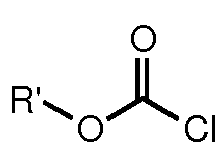
- the present invention encompasses the use of chloroformate defined by the formula with R' having the aforementioned meaning for the N -6 demethylation of 9,10-dihydrolysergic acid alkyl esters in the manufacture of an intermediate product defined by formula II (DHLSAlkyl-F), an intermediate product defined by formula III (H-DHLSAlkyl), or ergot alkaloid drugs such as cabegoline and pergolide free of the aforementioned impurities.
- DHLSAlkyl-F intermediate product defined by formula II
- H-DHLSAlkyl H-DHLSAlkyl
- ergot alkaloid drugs such as cabegoline and pergolide free of the aforementioned impurities.
- N-6 demethylation used herein means replacement of methyl group by another group, more particularly it means replacement by a formate group being defined by with R' having the aforementioned meaning, or a replacement by hydrogen.
- the N-6 demethylation step is performed in the presence of an organic catalyst.
- potassium bicarbonate or other bicarbonates or possibly also other inorganic bases, and the problems associated therewith, can be surely avoided.
- the findings of the present invention provided another alternative solution approach of the problems associated with the synthesis system by Crider et al. Namely, if particular care is observed to ensure an absence and preferably an entire absence of initial water, the probability of HCl release and water accumulation reactions as shown in Fig. 1 is significantly reduced and minimized, even if an organic catalyst is not used. Therefore, providing a reaction medium free of water and/or HCl already from the beginning before the demethylation reaction is started to proceed by adding a relevant co-educt, does have a remarkable and - especially when viewed from a laboratory scale - unpredictable effect of significantly increasing the yield of the product. This effect becomes substantial particularly on an industrial scale, when inorganic bases such as bicarbonates are used as released acid scavengers.
- organic catalyst typically a organic compound having a proton acceptor function is selected.
- Preferred organic catalyst according to the present invention is selected from the group consisting of sterically hindered organic amines, secondary and tertiary organic amines, aromatic amines and heterocyclic organic amines.
- organic amines include, but are not limited to triethylamine, pyridine and pyridine derivatives, substituted or unsubstituted forms of dialkylaminopyridine and particularly dimethylaminopyridine, N-ethylmorpholine, imidazole, N-ethyldiisopropylamine, N-ethylmorpholine triethylamine, 1,5-diazabicyclo[4.3.0]non-5-ene, and the like.
- the organic catalyst used according to the present invention is particularly selected form the group of compounds consisting of dimethylaminopyridine (DMAP) and DMAP analogues of the following general formulae: wherein R6 to R11 independently from each other denote H or C1 to C6 alkyl group, and n is 1, 2, 3, 4, 5 or 6.
- DMAP dimethylaminopyridine
- R6 to R11 independently from each other denote H or C1 to C6 alkyl group
- n is 1, 2, 3, 4, 5 or 6.
- DMAP 4-(dimethylamino)pyridine
- DMAP and other analogs thereof as catalyst in organic synthesis are described, for example, in D.J. Berry et al. ARKIVOC 2001 (i), pp. 201-226 , and R. Murugan and E.F.V Scriven, Aldrichimica Acta 2003, 36, pp. 21 - 27 .
- an organic catalyst is not used for the N-6 demethylation step or if it is only optional, it is important that a reaction medium free of water and/or HCl, more preferably entirely free of water is provided in advance of starting, or at the latest simultaneously with performing the actual demethylation step and specifically when converting a compound of formula I (DHLSAlkyl) into a compound of formula II (DHLSAlkyl-F).
- a reaction medium free of water and/or HCl more preferably entirely free of water is provided in advance of starting, or at the latest simultaneously with performing the actual demethylation step and specifically when converting a compound of formula I (DHLSAlkyl) into a compound of formula II (DHLSAlkyl-F).
- DHLSAlkyl compound of formula II
- the medium can be subjected to purging with nitrogen or any other inert gas, and/or subjected to evacuation. This measure can be preferably carried out in advance of adding DHLSAlkyl into the reaction system,
- a reaction medium free of water and/or HCl is not only provided in the starting materials or simultaneous with adding co-reactants, but also is maintained throughout the N-6 demethlyation reaction.
- a water and/or HCl removal step such as degasing by nitrogen flow or purge or by vacuum evacuation, may be repeatedly performed.
- At least one water and/or HCl removal step is preferably performed after chloroformate has been added to a water-free solvent, by which measure a majority or all of possibly generated HCl is removed from the reaction system. Any remaining traces of HCl may be further captured by the base catalyst.
- the process of converting a compound of formula I into a compound of formula II comprises the steps of:
- a preferred chloroformate reactant is defined by wherein R' is a substituted or unsubstituted hydrocarbon group, to give the corresponding demethylated DHLSAlkyl-F.
- R' residues are "alkyl", more preferably halogenated alkyl or vinyl.
- R' is defined by formula IV or V wherein R 1 and R 2 , are the same or different and can be hydrogen atoms or are selected from halogens atoms (F, Cl, Br, I), and wherein R 3 , R 4 , and R 5 , are the same or different and can be hydrogen atoms or are selected from halogens atoms (F, Cl, Br, I), optionally substituted C 1 - C 8 alkyl, optionally substituted C 3 -C 6 cycloalkyl, optionally substituted C 1 - C 8 alkenyl, and optionally substituted C 5 -C 6 cycloalkenyl or aryl.
- both aspects of the invention are combined to provide an optimized reaction system which is most suitable for an up scaled N-6 demethylation of 9,10-dihydrolysergic acid alkyl esters. That is, a reaction medium free of water and/or HCl is provided, and the reaction medium is supplemented with an organic catalyst as described above at a desired point of time.
- a reaction medium containing chloroformate is preferably subjected to heat treatment, preferably under reflux, for some periods of time, for example at least 1, preferably at least 2 and more preferably at least 3 hours.
- the reaction medium can be purged with inert gas flow such as nitrogen purging and/or can be subjected to evacuation.
- organic catalyst as described above may be added at this point and may be mixed with the reaction medium for a period of time, optionally followed by another water and/or HCl removal step such as inert gas purging and/or evacuation.
- another water and/or HCl removal step such as inert gas purging and/or evacuation.
- the deduct DHLSAlkyl is added to start with the actual demethylation reaction.
- the carbamate group of the compound of formula II (DHLSAlkyl-F) can be subjected to further reactions in accordance with the options and choice of the person skilled in the art, such as the intended further synthesis route to obtain a desired ergot alkaloid drug.
- the carbamate group of the compound of formula II (DHLSAlkyl-F) may be cleaved by methods known in the art, to give the compound of formula III (H-DHLSAlkyl).
- the compound of formula III (H-DHLSAlkyl) can likewise be subjected to further reaction and synthesis steps to obtain various ergot alkaloid drugs, by methods known or apparent to the person skilled in the art.
- a particularly advantageous embodiment of the present invention resides in that the molar ratio of co-reactant chloroformate used in total compared to 9,10-dihydrolysergic acid alkyl ester used in total for the step of N-6 demethylation can be significantly reduced in comparison with the prior art.
- the process of present invention enables a reduction of the aforementioned ratio to less than 5 equivalents chloroformate to 1 equivalent of 9,10-dihydrolysergic acid alkyl ester in the N-6 demethylation step.
- the present invention provides a robust, reliable, economic and scalable process for N-6 demethylation of 9,10- dihydrolysergic acid alkyl esters with chloroformate, with particular significance of increased yield of the product on an industrial scale.
- the process according to the present invention is particularly suitable to be performed at a large scale by using an amount of 9,10- dihydrolysergic acid alkyl ester above 1 kg, more preferably above 2 kg and even above 4 kg.
- the demethylation step for obtaining an intermediate compound of formula II (DHLSAlkyl-F) to be terminated in less than 24 hours.
- a further advantage and particularly preferred embodiment of the present invention is that the intermediate compounds of DHLSAlkyl-F or H-DHLSAlkyl, and accordingly any final ergot alkaloid drug obtained therefrom, are feasible which are free, beneficially entirely free of impurities of the following formulae, which otherwise would appear by following conventional synthesis routes: wherein R' is the hydrocarbon group derived from the chloroformate reactant. Specifically, R' is as defined above.
- TECF 2,2,2-trichloroethyl chloroformate
- GC cyclopentadiene
- ergot alkaloid drugs such as preferably cabegoline or pergolide
- Fig. 3 A possible synthesis scheme for obtaining ergot alkaloid drugs, such as preferably cabegoline or pergolide, are illustratively shown in Fig. 3 , wherein the synthesis routes proceed by using compounds of formulae I, II, and III.
- alkyl is methyl (Me), and thus the synthesis of ergot alkaloid drugs proceeds via DHLSMe-F and H-DHLSMe.
- R' is 2,2,2-trichloroethyl
- a 250 L reactor containing a 186 kg of dry dichlorometane was charged with 15.4 kg 2,2,2-trichloroethyl chloroformate (TCECF) at 20 ⁇ 5 °C.
- TECF 2,2,2-trichloroethyl chloroformate
- the mixture was heated to reflux and refluxed for at least 3 hours. After the mixture was cooled to 20 ⁇ 5 °C.
- the ractor was purged with nitrogen for at least 15 min. and charged with 88 g of DMAP at 20 ⁇ 5 °C.
- the obtained mixture was then stirred at 20 ⁇ 5 °C for at least 1 hour.
- the ractor was purged with nitrogen for at least 15 min. and charged with 4.4 kg of DHLSMe at 20 ⁇ 5 °C.
- DHLSMe [HPLC A%] DHLSMe-F [HPLC A%] 0 100 0 1 90,87 8,71 2 63,55 36,10 4 53,1 46,32 6 34,28 65,07 8 30,2 69,14 10 27,12 71,77 12 20,38 78,44 14 15,98 83,34 18 12,39 86,01 20 12,08 86,62 22 11,67 86,90
- Table 1 presents comparison of yields, reaction time and reagent stoichiometry (molar ratio between TCECF and DHLSMe).
- Table 1 Type and scale of reaction Reaction time [h] Yield [%] Molar ratio TCECF/DHLSMe Reference Ex. Literature data, lab scale (0.425 g) 48 90 6.6 : 1 Reference Ex.
- Example 4 provides highest conversion of DHLSMe to DHLSMe-F in shortest time.
Landscapes
- Chemical & Material Sciences (AREA)
- Organic Chemistry (AREA)
- Health & Medical Sciences (AREA)
- Nuclear Medicine, Radiotherapy & Molecular Imaging (AREA)
- Pharmacology & Pharmacy (AREA)
- Neurosurgery (AREA)
- Biomedical Technology (AREA)
- Chemical Kinetics & Catalysis (AREA)
- General Chemical & Material Sciences (AREA)
- Medicinal Chemistry (AREA)
- Bioinformatics & Cheminformatics (AREA)
- Engineering & Computer Science (AREA)
- Neurology (AREA)
- Life Sciences & Earth Sciences (AREA)
- Animal Behavior & Ethology (AREA)
- General Health & Medical Sciences (AREA)
- Public Health (AREA)
- Veterinary Medicine (AREA)
- Nitrogen Condensed Heterocyclic Rings (AREA)
- Pharmaceuticals Containing Other Organic And Inorganic Compounds (AREA)
- Organic Low-Molecular-Weight Compounds And Preparation Thereof (AREA)
Abstract
A process for producing N-6 demethylated 9,10-dihydrolysergic acid alkyl ester is described, which comprises a step of N-6 demethylation of 9,10-dihydrolysergic acid alkyl esters with chloroformate and wherein the N-6 demethylation step is performed in the presence of an organic catalyst. Further, a process for converting a compound of formula I (DHLSAIkyI) into a compound of formula II (DHLSAIkyI-F) comprises the steps of: providing (and maintaining) a reaction medium free of water and/or HCI, and reacting DHLSAIkyI with chloroformate in said reaction medium free of water and/or HCI, to obtain the compound of formula II (DHLSAIkyI-F).
Description
- The present invention relates to a process for producing N-6 demethylated 9,10-dihydrolysergic acid alkyl esters comprising a step of N-6 demethylation of 9,10-dihydrolysergic acid alkyl esters with chloroformates, which may form a step in the synthesis of ergot alkaloid drugs. The present invention further relates to pure ergot alkaloid drugs and intermediate products therefor.
- The N-6 demethylation of 9,10-dihydrolysergic acid alkyl esters (in the following sometimes abbreviated as DHLSAlkyl, for example its methylester (DHLSMe), may constitute a useful step in the chemical synthesis of various ergot alkaloid drugs which have a range of medical activities. A convenient synthesis for the N-6 demethylation was disclosed a few decades ago by A. M. Crider et al. in Journal of Pharmaceutical Sciences, Vol. 70 (12), pp. 1319-1321 (1981 ).
- The object of the present invention is to provide an improved process for producing N-6 demethylated 9,10-dihydrolysergic acid alkyl esters, and to provide improved ergot alkaloid drugs and intermediate products therefor.
- According to one aspect, the present invention provides a process for producing N-6 demethylated 9,10-dihydrolysergic acid alkyl ester, comprising a step of N-6 demethylation of a 9,10-dihydrolysergic acid alkyl ester with chloroformate, characterized that the N-6 demethylation step is performed in the presence of an organic catalyst.
- According to another aspect, the present invention provides a process for converting a compound of formula I (DHLSAlkyl) into a compound of formula II (DHLSAlkyl-F),

- ■ providing and preferably maintaining a reaction medium free of water and/or HCl, and
- ■ reacting DHLSAlkyl with chloroformate being defined by the formula

- In still another aspect, the present invention provides a process for producing N-6 demethylated 9,10-dihydrolysergic acid alkyl ester, comprising a step of N-6 demethylation of a 9,10-dihydrolysergic acid alkyl ester with chloroformate, wherein the ratio of chloroformate used in total compared to 9,10-dihydrolysergic acid alkyl ester used in total for the step of N-6 demethylation is less than 5 equivalents to 1 equivalent, respectively.
- The process defined in the aspects above can be beneficially used in a process for the preparation of ergot alkaloid drugs.
- Moreover, the present invention provides intermediate compounds of formula II (DHLSAlkyl-F), intermediate compounds of formula III (H-DHLSAlkyl), and ergot alkaloid drugs, respectively free of any one of impurities of formula

- The aforementioned compounds and drugs are obtained by providing corresponding reaction media respectively containing said compounds and drugs, e.g. the demethylation reaction medium from the N-6 demethylation of 9,10-dihydrolysergic acid alkyl ester of the invention, but being free, preferably entirely free of the afore-defined impurities. The desired compounds and drugs can then be isolated in pure form.
- In still another aspect, the present invention encompasses the use of chloroformate defined by the formula
- The term "alkyl" used herein, if not specified otherwise, corresponds to the typical meaning of, for example, straight chain or branched chain, unsubstituted or substituted organic alkyl groups, possibly containing C=C double bonds and/or hetero atoms such as O, S, N with optional further substituents, suitably e.g. C1 to C6 alkyl, preferably methyl, ethyl, propyl, isopropyl, butyl, pentyl, hexyl, or the like.
- The term "N-6 demethylation" used herein means replacement of methyl group by another group, more particularly it means replacement by a formate group being defined by

- Thus, the above-mentioned object is basically solved by the subject-matter of
present claims -
-
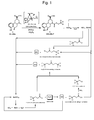
Fig. 1 shows process chemistry based on prior art, from which adaptations and optimizations according to an embodiment of the present invention become apparent; -
Fig. 2 shows organocatalytic process chemistry replacing the inorganic bicarbonate system ofFig. 1 , forming the basis for another embodiment of the present invention; -
Fig. 3 illustratively shows a possible synthesis scheme for obtaining ergot alkaloid drugs, such as for example cabegoline or pergolide. -
Fig. 4 shows a comparison of kinetics of DHLSMe conversion to DHLSMe-F for adapted and optimized standard, and for organocatalytic processes according to various embodiments of the present invention. - In the present invention, it was found that the synthesis system described by Crider et al. is not industrially applicable due to its unscalability from the laboratory scale to industrial scale. It was recognized that inorganic bicarbonates, as required in the synthesis route disclosed by Crider et al., exert a deleterious effect by entering a self-sustaining (driving, preserving) cycle of chemical reactions that produce and accumulate water, HCl and other side products such as organic carbonates in the system, which eventually blocks the demethylation reaction. Chemical reactions being presumably relevant in the reaction system of the demethylation step are shown in
Fig. 1 , as illustrated for the example where the chloroformate is embodied by trichloroethyl chloroformate (TCECF). Without proper adaptations and control of the reaction system, it occurs that per one cycle at least 3 molecules of water are released from an initial molecule of water (originating from the solvent or moisture) via release of 3 molecules HCl per cycle and its reaction with HCO3 -. Therefore, presence of water would be amplified and accumulated from initial water in the system during the reaction and would eventually block the demethylation reaction progress through released and co-accumulated HCl, the latter protonating the 6-N nitrogen atom of the basic ergoline structure and thus blocks it to react with the chloroformate (here TCECF). The water and HCl accumulation problems identified by the present inventors have found to become pronounced especially when the reaction system shall be scaled up. - It was now surprisingly found, however, that when applying organic catalyst in the N-6 demethylation step, as shown in
Fig. 2 by illustratively referring again to the use of trichloroethyl chloroformate (TCECF) reagent, a water release and thus water accumulation is prevented during its function. Consequently, HCl release and accumulation can be prevented or minimized as well. This leads to a significant increase of the yield of the product, especially on industrial scale, compared to the original procedure disclosed by Crider et al. Thus, according to one solution approach of the present invention, the N-6 demethylation step is performed in the presence of an organic catalyst. In this approach, potassium bicarbonate or other bicarbonates or possibly also other inorganic bases, and the problems associated therewith, can be surely avoided. - Moreover, the findings of the present invention provided another alternative solution approach of the problems associated with the synthesis system by Crider et al. Namely, if particular care is observed to ensure an absence and preferably an entire absence of initial water, the probability of HCl release and water accumulation reactions as shown in
Fig. 1 is significantly reduced and minimized, even if an organic catalyst is not used. Therefore, providing a reaction medium free of water and/or HCl already from the beginning before the demethylation reaction is started to proceed by adding a relevant co-educt, does have a remarkable and - especially when viewed from a laboratory scale - unpredictable effect of significantly increasing the yield of the product. This effect becomes substantial particularly on an industrial scale, when inorganic bases such as bicarbonates are used as released acid scavengers. - The solution approaches of the present invention described above can be advantageously combined.
- When an organic catalyst is used for the N-6 demethylation step in the process according to the present invention, typically a organic compound having a proton acceptor function is selected. Preferred organic catalyst according to the present invention is selected from the group consisting of sterically hindered organic amines, secondary and tertiary organic amines, aromatic amines and heterocyclic organic amines. Suitable examples of such organic amines include, but are not limited to triethylamine, pyridine and pyridine derivatives, substituted or unsubstituted forms of dialkylaminopyridine and particularly dimethylaminopyridine, N-ethylmorpholine, imidazole, N-ethyldiisopropylamine, N-ethylmorpholine triethylamine, 1,5-diazabicyclo[4.3.0]non-5-ene, and the like. The organic catalyst used according to the present invention is particularly selected form the group of compounds consisting of dimethylaminopyridine (DMAP) and DMAP analogues of the following general formulae:


- Most preferably 4-(dimethylamino)pyridine (DMAP)

- The use of DMAP and other analogs thereof as catalyst in organic synthesis such acylation reactions are described, for example, in D.J. Berry et al. ARKIVOC 2001 (i), pp. 201-226, and R. Murugan and E.F.V Scriven, Aldrichimica Acta 2003, 36, pp. 21 - 27.
- When, in the alternative embodiment of the present invention, an organic catalyst is not used for the N-6 demethylation step or if it is only optional, it is important that a reaction medium free of water and/or HCl, more preferably entirely free of water is provided in advance of starting, or at the latest simultaneously with performing the actual demethylation step and specifically when converting a compound of formula I (DHLSAlkyl) into a compound of formula II (DHLSAlkyl-F). The importance of this condition is more pronounced, as the reaction system is scaled up from laboratory scale to bench scale and especially to industrial scale. This particularly applies when using a large scale at an amount of 9,10-dihydrolysergic acid alkyl ester (compound of formula I; DHLSAlkyl) above 1 kg, because scaling up increases the risk that any minute amounts of initial water is present in the system, which eventually accumulates further water molecules and releases further molecules of HCl per reaction cycle when bases like alkali metal bicarbonates, other than organic catalysts, are used. Thus, it has been found that if water present in the reaction system would be removed completely, release of HCl can be effectively prevented and thus problems of scaling up of the reaction system can be avoided even without using organic catalysts for the N-6 demethylation step. As particularly effective means to provide a reaction medium free of water and/or HCl, the medium can be subjected to purging with nitrogen or any other inert gas, and/or subjected to evacuation. This measure can be preferably carried out in advance of adding DHLSAlkyl into the reaction system,
- Preferably, it is observed that a reaction medium free of water and/or HCl is not only provided in the starting materials or simultaneous with adding co-reactants, but also is maintained throughout the N-6 demethlyation reaction. For this purpose, it is preferred that a water and/or HCl removal step, such as degasing by nitrogen flow or purge or by vacuum evacuation, may be repeatedly performed. At least one water and/or HCl removal step is preferably performed after chloroformate has been added to a water-free solvent, by which measure a majority or all of possibly generated HCl is removed from the reaction system. Any remaining traces of HCl may be further captured by the base catalyst. Another suitable point of time for repeating a water and/or HCl removal step is when DHLSAlkyl is added and/or subsequent of its addition. Thus, according to preferred embodiment, the process of converting a compound of formula I into a compound of formula II comprises the steps of:
- providing a reaction medium free of water and/or HCl,
- before DHLSAlkyl is added, chloroformate is added to the reaction medium, and the reaction medium is refluxed,
- after chloroformate addition and medium reflux, the reaction medium is optionally but preferably purged with nitrogen, or is subjected to evacuation,
- DHLSAlkyl is then added to the obtained mixture, and
- the obtained mixture is subjected to reaction for time sufficient to give DHLSAlkyl-F (N-6 demethylated) product.
- A preferred chloroformate reactant is defined by

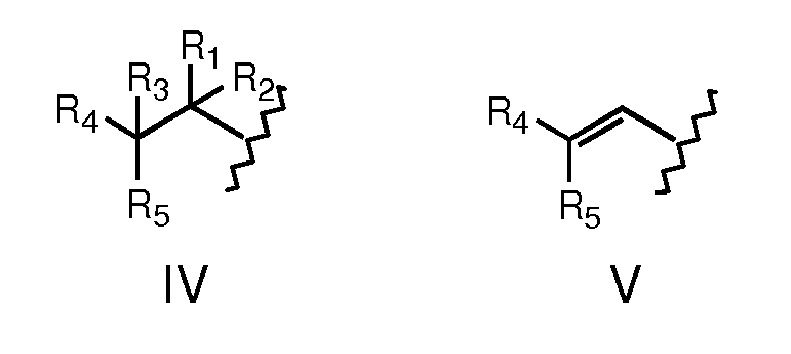
and wherein R3, R4, and R5, are the same or different and can be hydrogen atoms or are selected from halogens atoms (F, Cl, Br, I), optionally substituted C1 - C8 alkyl, optionally substituted C3-C6 cycloalkyl, optionally substituted C1 - C8 alkenyl, and optionally substituted C5-C6 cycloalkenyl or aryl. - According to a particularly preferred embodiment of the present invention, both aspects of the invention are combined to provide an optimized reaction system which is most suitable for an up scaled N-6 demethylation of 9,10-dihydrolysergic acid alkyl esters. That is, a reaction medium free of water and/or HCl is provided, and the reaction medium is supplemented with an organic catalyst as described above at a desired point of time. A reaction medium containing chloroformate is preferably subjected to heat treatment, preferably under reflux, for some periods of time, for example at least 1, preferably at least 2 and more preferably at least 3 hours. Optionally, after cooling, the reaction medium can be purged with inert gas flow such as nitrogen purging and/or can be subjected to evacuation. Subsequently, organic catalyst as described above may be added at this point and may be mixed with the reaction medium for a period of time, optionally followed by another water and/or HCl removal step such as inert gas purging and/or evacuation. In accordance with the preferred embodiment, not before then the deduct DHLSAlkyl is added to start with the actual demethylation reaction.
- Subsequent to the N-6 demethylation reaction, the carbamate group of the compound of formula II (DHLSAlkyl-F) can be subjected to further reactions in accordance with the options and choice of the person skilled in the art, such as the intended further synthesis route to obtain a desired ergot alkaloid drug. The carbamate group of the compound of formula II (DHLSAlkyl-F) may be cleaved by methods known in the art, to give the compound of formula III (H-DHLSAlkyl). The compound of formula III (H-DHLSAlkyl) can likewise be subjected to further reaction and synthesis steps to obtain various ergot alkaloid drugs, by methods known or apparent to the person skilled in the art.
- A particularly advantageous embodiment of the present invention resides in that the molar ratio of co-reactant chloroformate used in total compared to 9,10-dihydrolysergic acid alkyl ester used in total for the step of N-6 demethylation can be significantly reduced in comparison with the prior art. Surprisingly, the process of present invention enables a reduction of the aforementioned ratio to less than 5 equivalents chloroformate to 1 equivalent of 9,10-dihydrolysergic acid alkyl ester in the N-6 demethylation step.
- Hence, the present invention provides a robust, reliable, economic and scalable process for N-6 demethylation of 9,10- dihydrolysergic acid alkyl esters with chloroformate, with particular significance of increased yield of the product on an industrial scale. Thus, the process according to the present invention is particularly suitable to be performed at a large scale by using an amount of 9,10- dihydrolysergic acid alkyl ester above 1 kg, more preferably above 2 kg and even above 4 kg. Following the concept of the present invention enables the demethylation step for obtaining an intermediate compound of formula II (DHLSAlkyl-F) to be terminated in less than 24 hours.
- Therefore, further particularly advantageous aspect of the present invention is the use of the process according to the present invention as described above in a process for the preparation of ergot alkaloid drugs. The advantages of the present invention are variable for the whole preparation scheme of total ergot alkaloid drug synthesis.
- A further advantage and particularly preferred embodiment of the present invention is that the intermediate compounds of DHLSAlkyl-F or H-DHLSAlkyl, and accordingly any final ergot alkaloid drug obtained therefrom, are feasible which are free, beneficially entirely free of impurities of the following formulae, which otherwise would appear by following conventional synthesis routes:

- Based on the preferred embodiment of the present invention to use 2,2,2-trichloroethyl chloroformate (TCECF) as chloroformate for the N-6 demethylation of 9,10-dihydrolysergic acid alkyl esters, the intermediate product defined by either formula II or III (DHLSAlkyl-F or H-DHLSAlkyl), and the ergot alkaloid drugs are free and preferably entirely free of the following corresponding chlorinated impurities:

- As used herein, "entirely free" means non-detectable by methods like GC, HPLC or mass spectrometry. As a suitable reference method for detectability, GC can be used.
- A possible synthesis scheme for obtaining ergot alkaloid drugs, such as preferably cabegoline or pergolide, are illustratively shown in
Fig. 3 , wherein the synthesis routes proceed by using compounds of formulae I, II, and III. According to the preferred embodiment, alkyl is methyl (Me), and thus the synthesis of ergot alkaloid drugs proceeds via DHLSMe-F and H-DHLSMe. - The present invention will be described in more detail in the following by reference to illustrative examples, which however are given for exemplary purposes only and shall not be interpreted in any limiting manner. Rather, the skilled person may use modifications or find equivalents within ordinary skill. For example, the use of the
preferred chloroformate - A mixture of 9,10-dihydrolysergic acid methyl ester (0.425g, 0.0015 mole), potassium bicarbonate (0.729 g, 0.0073 mole), and 2,2,2,trichloroethyl chloroformate (0.619 g, 0.0029 mole) in 60 mL of absolute methylene chloride was refluxsed for 24 hr. 2,2,2-Trichloroethyl chloroformate (1.48 g, 0.0070 mole) was added and refluxing was continued for an additional 24 hr. The reaction mixture was cooled, filtered, and evaporated under reduced pressure to yield a white solid. Recrystalization from absolute methanol gave 0.602 g (90 %) of crystaline product, mp 208-210°; IR(KBr): 3485 (N-H, indole) and 1740 (C=O, ester an carbamate) cm -1; NMR (dimethyl sulfoxide-d6): δ 3.70 (s, 3H, COOCH3), 4.90 (s, 2H; OCH2CCl3), 6.67-7.20 (m, 4H, aromatic), and 7.27 (s, 1H, NH). Anal.-Calc. For C19H19Cl3N2O4: C, 51.19; H, 4.30; Cl, 23.86; N, 6.29. Found: C, 51.14; H, 4.20; Cl, 24.21; N, 6.13.
- Two batches were performed on 2.13 g scale:
- 2.13 g DHLSMe
- 3.645 g KHCO3
- 300 mL DCM
- 2.01 mL TKEKF reflux 24 h
- 4.80 mL TKEKF reflux 24 h
-
t (h) DHLSMe [HPLC A%] DHLSMeF [HPLC A%] 4 93.69 5.55 24 81.70 15.54 29 73.71 25.32 48 62.95 35.85 -
t (h) DHLSMe [HPLC A%] DHLSMeF [HPLC A%] 4 93.08 5.53 24 83.77 15.53 29 73.53 25.54 48 49.38 50.62 - The reaction mixture was cooled, filtered, and evaporated under reduced pressure to yield a white solid.
-
- First batch: 1.02 g (30 %) HPLC: 99.67 area%
- Second batch: 1.16 g (35 %) HPLC: 99.40 area%
- of crystalline product.
- 5.0 g (17.58 mmole) of 9,10-dihydrolysergic acid methyl ester was dissolved in 200 mL of absolute methylene chloride, after 7.2 g (85.8 mmol) of sodium bicarbonate were added and mixture was heated to reflux. Then 16.5 mL (25.39 g, 120 mmol) of 2,2,2,trichloroethyl chloroformate were slowly added in 24 hours. After complete addition the reaction mixture was refluxed further for 24 hours. After 48 hours the reaction mixture was cooled, filtered over aluminium oxide (10 g), washed with 150 mL of methylene chloride and evaporated under reduced pressure and 50 mL of absolute methanol were added and stirred for 2 hours. Crystalline product was filtered and dried to yield a 5.92 g (76 %) of product as a white solid.
-
t [h] DHLSMe [HPLC A%] DHLSMe-F [HPLC A%] 2 95.35 3.95 4 90.45 8.68 6 84.00 16.00 8 71.59 27.81 13 49.95 49.41 22 23.98 72.58 31 17.27 81.09 48 15.69 83.25 - 600 g (2.11 mole) of 9,10-dihydrolysergic acid methyl ester was dissolved in 24 L of absolute methylene chloride, after 864 g (10.3 mmol) of sodium bicarbonate were added. Then 2.515 L (3.87 kg, 18.3 mol) of 2,2,2,trichloroethyl chloroformate were added in four portions (t0h = 640 mL, t11.5h = 625 mL, t28h = 625 mL, t70h = 625 mL). Reaction mixture was refluxed for 90 hours, then the reaction mixture was cooled, filtered over aluminium oxide (6.2 kg), washed with 20 L of methylene chloride and evaporated under reduced pressure to 4 L. After 4.5 L of n-hexane were added and stirred for 2 hours at 0 °C. Crystalline product was filtered and dried to yield a 553 g (59 %) of white solid.
-
t [h] DHLSMe [HPLC A%] DHLSMe-F [HPLC A%] 4 75.15 22.47 12 54.02 42.98 28 26.53 71.05 70 21.45 75.04 72.5 19.45 71.35 90 17.90 76.80 - A dry nitrogen inertized 250 L reactor was charged with 4.6 kg DHLSMe, 6.6 kg sodium bicarbonate and 210 kg of dry dichloromethane. Then 2,2,2-trichloroethyl chloroformate (TCECF) (7.0 kg) was charged into the reactor. The mixture was heated to reflux and stirred at reflux for 92 hours. Additional quantity (18.5 kg) of 2,2,2-trichloroethyl chloroformate (TCECF) was charged into the reactor during the stirring at reflux. After the reaction mixture was cooled to 10 ± 5 °C and filtered through a pad of alumina. Fractions containing a product were collected, concentrated and cooled 10 ± 5 °C. Then heptane is added to the concentrated solution and the precipitated product was collected by centrifugation. After drying 4.1 kg (56 %) of DHLSMe-F is obtained.
-
t [h] DHLSMe [HPLC A%] DHLSMe-F [HPLC A%] 0 100 0 4 78,16 21,27 20,5 50,98 48,74 27 45,35 54,34 44 36,73 63,01 68,5 34,73 64,98 74 34,53 65,18 76,5 34,2 65,43 92 26,84 72,7 - The following reaction scheme shows the principle applied in Example 4 of N-6 demethylation of 9,10-dihydrolysergic acid alkyl esters with chloroformates in the presence of DMAP.

- In the present example, 2,2,2-trichloroethyl chloroformate was used (i.e. R' is 2,2,2-trichloroethyl).
- A 250 L reactor containing a 186 kg of dry dichlorometane was charged with 15.4
kg -
t [h] DHLSMe [HPLC A%] DHLSMe-F [HPLC A%] 0 100 0 1 90,87 8,71 2 63,55 36,10 4 53,1 46,32 6 34,28 65,07 8 30,2 69,14 10 27,12 71,77 12 20,38 78,44 14 15,98 83,34 18 12,39 86,01 20 12,08 86,62 22 11,67 86,90 - Molar ratios of co-reactants, kinetics any yields of the chemical reaction systems used in the Reference Example and in the Examples 1 to 4 were followed and monitored.
- Advantages of organocatalytic process over standard process are presented in Table 1 which presents comparison of yields, reaction time and reagent stoichiometry (molar ratio between TCECF and DHLSMe).
Table 1 Type and scale of reaction Reaction time [h] Yield [%] Molar ratio TCECF/DHLSMe Reference Ex. Literature data, lab scale (0.425 g) 48 90 6.6 : 1 Reference Ex. Repeated literature data, lab scale (2.13 g) 48 30-35 6.6 : 1 Example 1 Optimized, lab scale (5.0 g) 48 76 6.8 : 1 Example 2 Optimized, bench-scale (600 g) 90 59 8.7 : 1 Example 3 Optimized, industrial scale (4.6 kg) 92 57 7.4 : 1 Example 4 Organocatalysis, industrial scale (4.4 kg) 22 76 4.7 : 1 - Further, comparison of kinetics for conversion of DHLSMe to DHLSMe-F is presented in
Figure 4 (scale is based on the quantity of starting 9,10-dihydrolysergic acid methyl ester = DHLSMe entering the reaction) for adapted and optimized versions of standard reaction using inorganic bicarbonate base on lab-scale (5 g), bench-scale (600 g), industrial-scale = PIL-standard (4.6 kg) and by applying organocatalysis with DMAP on industrial scale = PIL-org. cat. (4.4 kg). - From
Figure 4 significantly improved effects of the process according to the present invention, especially when using organocatalysis over standard process are clearly visible. Example 4 provides highest conversion of DHLSMe to DHLSMe-F in shortest time.
Claims (15)
- A process for producing N-6 demethylated 9,10-dihydrolysergic acid alkyl ester, comprising a step of N-6 demethylation of a 9,10-dihydrolysergic acid alkyl ester with a chloroformate, wherein the N-6 demethylation step is performed in the presence of an organic catalyst.
- The process according to claim 1, characterized in that the chloroformate is defined by the formula


and wherein R3, R4, and R5, are the same or different and can be hydrogen atoms or are selected from halogens atoms (F, Cl, Br, I), optionally substituted C1 - C8 alkyl, optionally substituted C3-C6 cycloalkyl, optionally substituted C1 - C8 alkenyl, and optionally substituted C5-C6 cycloalkenyl or aryl. - The process according to any one of the preceding claims, characterized in that the organic catalyst is an organic amine, preferably selected from the group consisting of sterically hindered organic amines, secondary and tertiary organic amines, and heterocyclic organic amines.
- The process according to any one of the preceding claims, characterized in that the organic catalyst is selected from the group of compounds consisting of dimethylaminopyridine (DMAP) and DMAP analogues of the following general formulae:


wherein preferably the organic catalyst is 4-(dimethylamino)pyridine (DMAP).
- A process for converting a compound of formula I (DHLSAlkyl) into a compound of formula II (DHLSAlkyl-F),

the process comprising the steps of:■ providing a reaction medium free of water and/or HCl, and■ reacting DHLSAlkyl with chloroformate being defined by the formula
- The process according to claim 5, wherein at least one additional water and/or HCl removal step is performed.
- The process according to claim 5 or 6, whereina) before DHLSAlkyl is added, said chloroformate is added to the reaction medium, and the reaction medium is refluxed,b) the reaction medium is optionally purged with nitrogen or subjected to evacuation,c) DHLSAlkyl is added to the above mixture resulting from a) and optionally b)d) reacting the obtained mixture for a time sufficient to give N-6 demethylated product.
- The process according to any one of claims 5 to 7, wherein after said chloroformate is added to the reaction medium and preferably the reaction medium is optionally purged with nitrogen or subjected to evacuation, an organic catalyst, which is preferably defined as in claim 3 or 4, is added to the mixture, and optionally the mixture is subsequently purged with nitrogen or subjected to evacuation, before DHLSAlkyl is added.
- The process according to any one of claims 5 to 8, further comprising the step of cleaving of the carbamate group of the compound of formula II (DHLSAlkyl-F) to give the compound of formula III (H-DHLSAlkyl):

- A process for producing N-6 demethylated 9,10-dihydrolysergic acid alkyl ester, comprising a step of N-6 demethylation of a 9,10-dihydrolysergic acid alkyl ester with a chloroformate, characterized that the ratio of chloroformate used in total compared to 9,10-dihydrolysergic acid alkyl ester used in total for the step of N-6 demethylation is less than 5 equivalents to 1 equivalent, respectively.
- The process according to any one of the preceding claims, which is performed at a large scale by using an amount of 9,10-dihydrolysergic acid alkyl ester (compound of formula I; DHLSAlkyl) above 1 kg, preferably wherein the demethylation step to obtain the compound of formula II (DHLSAlkyl-F) is terminated in less than 24 hours.
- A process for the preparation of ergot alkaloid drugs, comprising a process as defined in any one of claims 1 to 11.
- Intermediate compound of formula II (DHLSAlkyl-F), intermediate compound of formula III (H-DHLSAlkyl), or ergot alkaloid drug,


and wherein R3, R4, and R5, are the same or different and can be hydrogen atoms or are selected from halogens atoms (F, Cl, Br, I), optionally substituted C1 - C8 alkyl, optionally substituted C3-C6 cycloalkyl, optionally substituted C1 - C8 alkenyl, and optionally substituted C5-C6 cycloalkenyl or aryl. - A use of a chloroformate defined by the formula


- The process according to claim 12, the ergot alkaloid drug according to claim 13 or the use according to claim 14, wherein the ergot alkaloid drug is cabegoline or pergolide.
Priority Applications (5)
| Application Number | Priority Date | Filing Date | Title |
|---|---|---|---|
| EP08155371A EP2113504A1 (en) | 2008-04-29 | 2008-04-29 | Preparation of N-6 demethylated, 9,10-dihydrolysergic acid alkyl esters |
| EP09738141.2A EP2294067B1 (en) | 2008-04-29 | 2009-04-28 | Preparation of n-6 demethylated, 9-10-dihydrolysergic acid alkyl esters |
| ES09738141.2T ES2537158T3 (en) | 2008-04-29 | 2009-04-28 | Preparation of desmethylated N-6 9-10-dihydrolysergic acid alkyl esters |
| HUE09738141A HUE025026T2 (en) | 2008-04-29 | 2009-04-28 | Preparation of n-6 demethylated, 9-10-dihydrolysergic acid alkyl esters |
| PCT/EP2009/055117 WO2009133097A1 (en) | 2008-04-29 | 2009-04-28 | Preparation of n-6 demethylated, 9-10-dihydrolysergic acid alkyl esters |
Applications Claiming Priority (1)
| Application Number | Priority Date | Filing Date | Title |
|---|---|---|---|
| EP08155371A EP2113504A1 (en) | 2008-04-29 | 2008-04-29 | Preparation of N-6 demethylated, 9,10-dihydrolysergic acid alkyl esters |
Publications (1)
| Publication Number | Publication Date |
|---|---|
| EP2113504A1 true EP2113504A1 (en) | 2009-11-04 |
Family
ID=39734176
Family Applications (2)
| Application Number | Title | Priority Date | Filing Date |
|---|---|---|---|
| EP08155371A Ceased EP2113504A1 (en) | 2008-04-29 | 2008-04-29 | Preparation of N-6 demethylated, 9,10-dihydrolysergic acid alkyl esters |
| EP09738141.2A Not-in-force EP2294067B1 (en) | 2008-04-29 | 2009-04-28 | Preparation of n-6 demethylated, 9-10-dihydrolysergic acid alkyl esters |
Family Applications After (1)
| Application Number | Title | Priority Date | Filing Date |
|---|---|---|---|
| EP09738141.2A Not-in-force EP2294067B1 (en) | 2008-04-29 | 2009-04-28 | Preparation of n-6 demethylated, 9-10-dihydrolysergic acid alkyl esters |
Country Status (4)
| Country | Link |
|---|---|
| EP (2) | EP2113504A1 (en) |
| ES (1) | ES2537158T3 (en) |
| HU (1) | HUE025026T2 (en) |
| WO (1) | WO2009133097A1 (en) |
Family Cites Families (1)
| Publication number | Priority date | Publication date | Assignee | Title |
|---|---|---|---|---|
| US4166182A (en) * | 1978-02-08 | 1979-08-28 | Eli Lilly And Company | 6-n-propyl-8-methoxymethyl or methylmercaptomethylergolines and related compounds |
-
2008
- 2008-04-29 EP EP08155371A patent/EP2113504A1/en not_active Ceased
-
2009
- 2009-04-28 ES ES09738141.2T patent/ES2537158T3/en active Active
- 2009-04-28 EP EP09738141.2A patent/EP2294067B1/en not_active Not-in-force
- 2009-04-28 WO PCT/EP2009/055117 patent/WO2009133097A1/en not_active Ceased
- 2009-04-28 HU HUE09738141A patent/HUE025026T2/en unknown
Non-Patent Citations (5)
| Title |
|---|
| A. M. CRIDER ET AL., JOURNAL OF PHARMACEUTICAL SCIENCES, vol. 70, no. 12, 1981, pages 1319 - 1321 |
| A.M. CRIDER ET AL.: "Convenient synthesis of 6-nor-9,10-dihydrolysergic acid methyl ester", JOURNAL OF PHARMACEUTICAL SCIENCES, vol. 70, no. 12, 1981, pages 1319 - 1321, XP002495605 * |
| D.J. BERRY ET AL., ARKIVOC, 2001, pages 201 - 226 |
| MURUGAN RAMIAH ET AL: "Applications of dialkylaminopyridine (DMAP) catalysts in organic synthesis", ALDRICHIMICA ACTA, ALDRICH CHEMICAL CO., MILWAUKEE, US, vol. 36, no. 1, 1 January 2003 (2003-01-01), pages 21 - 27, XP009091740, ISSN: 0002-5100 * |
| R. MURUGAN; E.F.V SCRIVEN, ALDRICHIMICA ACTA, vol. 36, 2003, pages 21 - 27 |
Also Published As
| Publication number | Publication date |
|---|---|
| HUE025026T2 (en) | 2016-04-28 |
| WO2009133097A1 (en) | 2009-11-05 |
| EP2294067A1 (en) | 2011-03-16 |
| ES2537158T3 (en) | 2015-06-02 |
| EP2294067B1 (en) | 2015-02-18 |
Similar Documents
| Publication | Publication Date | Title |
|---|---|---|
| US20110130378A1 (en) | Ezetimibe process and composition | |
| EP3481201B1 (en) | Processes for the preparation of 4-alkoxy-3-(acyl or alkyl)oxypicolinamides | |
| US6700011B1 (en) | Process for the preparation of naproxene nitroxyalkylesters | |
| JP2009531418A (en) | Coupling method for the preparation of quinolone intermediates | |
| WO2018193090A2 (en) | Process for preparation of eliglustat hemitartrate and intermediates thereof | |
| JP4876165B2 (en) | Hydride reduction method to prepare quinolone intermediates | |
| EP1136470B1 (en) | Process for the preparation of a piperazine derivative | |
| EP2294067B1 (en) | Preparation of n-6 demethylated, 9-10-dihydrolysergic acid alkyl esters | |
| US7288678B2 (en) | Process for preparing terbinafine by using platinum as catalyst | |
| JP2004536142A (en) | Method for producing 1,2,4-triaminobenzolcarbamic acid ester | |
| JP3046258B2 (en) | Method for producing 1-chlorocarbonyl-4-piperidinopiperidine or hydrochloride thereof | |
| US7662964B2 (en) | Process for producing [1,4′] bipiperidinyl-1′-carbonyl chloride or hydrochloride thereof | |
| CN116041273B (en) | A method for preparing benzo[e][1,3]oxazine-2,4-dione | |
| JP2002517488A (en) | Method for producing large ring metalloprotease inhibitors | |
| JPH10291989A (en) | Production of hexaazaisowurtzitane having acyl group | |
| WO2020031040A1 (en) | Process and intermediates for the preparation of boc-linagliptin | |
| JP4564135B2 (en) | High-purity phenothiazine compound, method for producing the same, method for producing the intermediate, and hydrate and novel crystal of the raw material for the intermediate | |
| JP5485142B2 (en) | Process for the preparation of enantiomerically enriched N-carboxylic anhydrides | |
| EP4638416A1 (en) | New process for the manufacture of mdm2-p53 antagonists | |
| US20060241293A1 (en) | Process for production n,n',n"- trisubstituted isocyanuric acids | |
| EP1777221A1 (en) | Process for the preparation of 5-cyanophthalide starting from 5-carboxyphthalide | |
| CN113816955A (en) | RET kinase inhibitor intermediate and preparation method thereof | |
| KR20110099995A (en) | Valacyclovir and acid addition salt thereof | |
| JPH08217749A (en) | New production of nicardipine hydrochloride and new synthetic intermediate | |
| JPH10130292A (en) | Production of sialic acid derivative whose 2-site is chlorinated |
Legal Events
| Date | Code | Title | Description |
|---|---|---|---|
| PUAI | Public reference made under article 153(3) epc to a published international application that has entered the european phase |
Free format text: ORIGINAL CODE: 0009012 |
|
| AK | Designated contracting states |
Kind code of ref document: A1 Designated state(s): AT BE BG CH CY CZ DE DK EE ES FI FR GB GR HR HU IE IS IT LI LT LU LV MC MT NL NO PL PT RO SE SI SK TR |
|
| AX | Request for extension of the european patent |
Extension state: AL BA MK RS |
|
| STAA | Information on the status of an ep patent application or granted ep patent |
Free format text: STATUS: THE APPLICATION HAS BEEN REFUSED |
|
| 18R | Application refused |
Effective date: 20091119 |