EP2113428A2 - Airbaganordnung für ein Kraftfahrzeug - Google Patents
Airbaganordnung für ein Kraftfahrzeug Download PDFInfo
- Publication number
- EP2113428A2 EP2113428A2 EP09005579A EP09005579A EP2113428A2 EP 2113428 A2 EP2113428 A2 EP 2113428A2 EP 09005579 A EP09005579 A EP 09005579A EP 09005579 A EP09005579 A EP 09005579A EP 2113428 A2 EP2113428 A2 EP 2113428A2
- Authority
- EP
- European Patent Office
- Prior art keywords
- airbag
- firing channel
- arrangement according
- channel wall
- cover
- Prior art date
- Legal status (The legal status is an assumption and is not a legal conclusion. Google has not performed a legal analysis and makes no representation as to the accuracy of the status listed.)
- Granted
Links
- 238000010304 firing Methods 0.000 claims abstract description 117
- 239000000463 material Substances 0.000 claims description 14
- 239000006260 foam Substances 0.000 claims description 10
- 238000003801 milling Methods 0.000 claims description 3
- 230000001960 triggered effect Effects 0.000 claims description 2
- 230000003716 rejuvenation Effects 0.000 claims 1
- 238000005187 foaming Methods 0.000 description 10
- 238000000034 method Methods 0.000 description 7
- 230000004913 activation Effects 0.000 description 5
- 238000004519 manufacturing process Methods 0.000 description 5
- 238000001746 injection moulding Methods 0.000 description 4
- 238000009434 installation Methods 0.000 description 3
- 230000003313 weakening effect Effects 0.000 description 3
- 238000005516 engineering process Methods 0.000 description 2
- 230000002093 peripheral effect Effects 0.000 description 2
- 238000005452 bending Methods 0.000 description 1
- 230000015572 biosynthetic process Effects 0.000 description 1
- 238000010276 construction Methods 0.000 description 1
- 238000005520 cutting process Methods 0.000 description 1
- 230000009977 dual effect Effects 0.000 description 1
- 230000002349 favourable effect Effects 0.000 description 1
- 239000000945 filler Substances 0.000 description 1
- 239000006261 foam material Substances 0.000 description 1
- 238000002955 isolation Methods 0.000 description 1
- 238000003475 lamination Methods 0.000 description 1
- 239000007788 liquid Substances 0.000 description 1
- 238000003754 machining Methods 0.000 description 1
- 230000035515 penetration Effects 0.000 description 1
- 230000007704 transition Effects 0.000 description 1
- 238000003466 welding Methods 0.000 description 1
Images




Classifications
-
- B—PERFORMING OPERATIONS; TRANSPORTING
- B60—VEHICLES IN GENERAL
- B60R—VEHICLES, VEHICLE FITTINGS, OR VEHICLE PARTS, NOT OTHERWISE PROVIDED FOR
- B60R21/00—Arrangements or fittings on vehicles for protecting or preventing injuries to occupants or pedestrians in case of accidents or other traffic risks
- B60R21/02—Occupant safety arrangements or fittings, e.g. crash pads
- B60R21/16—Inflatable occupant restraints or confinements designed to inflate upon impact or impending impact, e.g. air bags
- B60R21/20—Arrangements for storing inflatable members in their non-use or deflated condition; Arrangement or mounting of air bag modules or components
- B60R21/205—Arrangements for storing inflatable members in their non-use or deflated condition; Arrangement or mounting of air bag modules or components in dashboards
-
- B—PERFORMING OPERATIONS; TRANSPORTING
- B23—MACHINE TOOLS; METAL-WORKING NOT OTHERWISE PROVIDED FOR
- B23K—SOLDERING OR UNSOLDERING; WELDING; CLADDING OR PLATING BY SOLDERING OR WELDING; CUTTING BY APPLYING HEAT LOCALLY, e.g. FLAME CUTTING; WORKING BY LASER BEAM
- B23K26/00—Working by laser beam, e.g. welding, cutting or boring
- B23K26/36—Removing material
- B23K26/362—Laser etching
- B23K26/364—Laser etching for making a groove or trench, e.g. for scribing a break initiation groove
-
- B—PERFORMING OPERATIONS; TRANSPORTING
- B60—VEHICLES IN GENERAL
- B60R—VEHICLES, VEHICLE FITTINGS, OR VEHICLE PARTS, NOT OTHERWISE PROVIDED FOR
- B60R21/00—Arrangements or fittings on vehicles for protecting or preventing injuries to occupants or pedestrians in case of accidents or other traffic risks
- B60R21/02—Occupant safety arrangements or fittings, e.g. crash pads
- B60R21/16—Inflatable occupant restraints or confinements designed to inflate upon impact or impending impact, e.g. air bags
- B60R21/20—Arrangements for storing inflatable members in their non-use or deflated condition; Arrangement or mounting of air bag modules or components
- B60R21/215—Arrangements for storing inflatable members in their non-use or deflated condition; Arrangement or mounting of air bag modules or components characterised by the covers for the inflatable member
- B60R21/2165—Arrangements for storing inflatable members in their non-use or deflated condition; Arrangement or mounting of air bag modules or components characterised by the covers for the inflatable member characterised by a tear line for defining a deployment opening
-
- B—PERFORMING OPERATIONS; TRANSPORTING
- B60—VEHICLES IN GENERAL
- B60R—VEHICLES, VEHICLE FITTINGS, OR VEHICLE PARTS, NOT OTHERWISE PROVIDED FOR
- B60R21/00—Arrangements or fittings on vehicles for protecting or preventing injuries to occupants or pedestrians in case of accidents or other traffic risks
- B60R21/02—Occupant safety arrangements or fittings, e.g. crash pads
- B60R21/16—Inflatable occupant restraints or confinements designed to inflate upon impact or impending impact, e.g. air bags
- B60R2021/161—Inflatable occupant restraints or confinements designed to inflate upon impact or impending impact, e.g. air bags characterised by additional means for controlling deployment trajectory
-
- B—PERFORMING OPERATIONS; TRANSPORTING
- B60—VEHICLES IN GENERAL
- B60R—VEHICLES, VEHICLE FITTINGS, OR VEHICLE PARTS, NOT OTHERWISE PROVIDED FOR
- B60R21/00—Arrangements or fittings on vehicles for protecting or preventing injuries to occupants or pedestrians in case of accidents or other traffic risks
- B60R21/02—Occupant safety arrangements or fittings, e.g. crash pads
- B60R21/16—Inflatable occupant restraints or confinements designed to inflate upon impact or impending impact, e.g. air bags
- B60R21/20—Arrangements for storing inflatable members in their non-use or deflated condition; Arrangement or mounting of air bag modules or components
- B60R21/215—Arrangements for storing inflatable members in their non-use or deflated condition; Arrangement or mounting of air bag modules or components characterised by the covers for the inflatable member
- B60R2021/21537—Arrangements for storing inflatable members in their non-use or deflated condition; Arrangement or mounting of air bag modules or components characterised by the covers for the inflatable member characterised by hinges
Definitions
- the invention relates to an airbag arrangement for a motor vehicle according to the preamble of claim 1.
- Such an airbag arrangement is provided in the passenger area of an instrument panel of the motor vehicle or other interior vehicle linings of comparable construction.
- an airbag module may be provided within the firing channel.
- the airbag module can be suspended, for example, via lateral hooks in the firing channel wall.
- a sufficiently large mounting gap is provided between the airbag module and the firing channel wall.
- the size of the airbag cover is determined by the cross section of the firing channel in which the airbag module is mounted.
- the firing channel wall is brought approximately at right angles to the airbag cover.
- a wall guide is manufacturing technology a disadvantage when incorporating a predetermined tear line between the airbag cover and the firing channel.
- the predetermined tear line is usually produced by material weakening.
- the introduced for this purpose in the firing channel tool such as a laser head for a laser attenuation, can be recognized with his tool head only in greater oblique position on the inside of the firing channel. Due to the inclination of the tool therefore a disadvantageous material thickness of the instrument panel must be overcome in order to penetrate up to a predetermined residual material thickness. The energy input is therefore disadvantageously increased.
- a laser processing system for airbag apparatus parts which has a device for detecting a residual material thickness from the processing side.
- the object of the invention is to provide an airbag assembly for a motor vehicle, which can be produced in a simple production with an airbag cover of reduced size.
- the firing channel tapers with its firing channel cross section in the direction of the airbag cover.
- the firing channel is therefore not brought in a straight line in the firing direction of the airbag module to the underside of the instrument panel. Rather, the firing channel tapers at least partially in the weft direction of the airbag module, whereby the size of the airbag cover is reduced.
- the cross section of the weft channel remains sufficiently large at its end remote from the airbag cover to achieve a simple airbag module assembly.
- the firing channel may preferably have at least one tapered section whose end remote from the airbag cover merges into a firing channel section with a larger firing channel cross section, and whose end facing the airbag cover merges into a firing channel section with a smaller firing channel cross section.
- the airbag module can be mounted on the firing channel part with a larger cross-section, in particular mounted in a mounting hole.
- the above-mentioned taper portion of the weft channel is preferably provided between the mounting portion for the airbag module and the airbag cover.
- the firing channel wall is formed in the weft direction of the airbag module with reduced rigidity.
- Such a wall geometry is advantageous in terms of a reduction of forces that are introduced in the airbag activation of the airbag module via the mounting portion in the firing channel. Namely, in the airbag shot, the firing channel wall can be elastically deformed accordion-like at its taper portion, whereby the introduction of force into the instrument panel is reduced after the airbag activation.
- the firing channel part with a smaller firing channel cross section can be embodied directly as a peripheral edge which, without longitudinal extension in the airbag firing direction, merely delimits an airbag passage opening. In this way, despite a reduced airbag cover, a sufficiently large mounting gap between the airbag module and the laterally limiting firing channel wall is ensured.
- the firing channel wall can be connected as a separate component to a base carrier of an instrument panel.
- the firing channel wall can have a carrying section, for example a carrying leg, with which the firing channel wall is supported on the instrument panel base carrier.
- Another aspect of the invention relates to the formation of a Sollr Schollr Schoilnie, which is known to partially pull the airbag cover.
- the predetermined tear line can be incorporated by way of example by material weakening by means of a milling cutter or a laser device.
- a tool head is inserted into the firing channel.
- the tool head can be brought into approach with the inside of the Schusskanales.
- the firing channel can have on the inside an undercut, which is stepped counter to the firing direction of the airbag module to the outside.
- a mounting space for the tool such as the laser head or the milling head, provided. This can be moved into the mounting space inside and supported on the gradation of the mounting space.
- a nearly tangential laser attenuation between the firing channel and the airbag cover can be achieved with a slight inclination of the tool. Due to the low inclination of the Laser head can in turn be brought to its focus position within the material to be weakened near the residual wall thickness, whereby the processing quality increases.
- the above-mentioned undercut for the tooling in dual function at the same time form the taper portion of the firing channel.
- the airbag cover may be connected to the firing channel wall in the same material and / or in one piece, for example as a plastic injection-molded part.
- the airbag cover can pass into the firing channel wall via an integral loop of film hinge which protrudes into the firing channel in the manner of a loop.
- the Filmscharnlerabêt may extend substantially over the entire length of an edge side of the airbag cover and limit an upwardly open, channel-shaped space. The other edge sides of the airbag cover, however, can be moved from the already mentioned predetermined tear.
- the airbag cover can easily open around a hinge axis of the film hinge section.
- the above-mentioned, limited by the film hinge section, channel-shaped space is not filled by the top side provided on the instrument panel foam layer, but rather separated from this.
- the foam layer is applied to the top of the base support along with a slush skin after the assembly of the firing channel on the instrument panel base support in a known per se foaming process.
- an additional covering element can be provided, with which this clearance is covered.
- the covering element can preferably be integrated in the same way as a unit of material and / or integrally on the airbag cover, in particular being molded there by injection molding.
- a filling element can be inserted into the free space of the film hinge section substantially without its own dimensional stability, for example a soft-viewing element, before the foaming process.
- the filling element prevents on the one hand during the foaming an intrusion of foam material in the free space.
- the filling element is designed sufficiently soft that when activated airbag the airbag cover can open easily.
- lamination is also possible as an alternative.
- Another, subsequently described aspect of the invention relates to the mounting gap between the firing channel wall and the airbag module inserted therein.
- the mounting gap has to be dimensioned large enough to ensure easy assembly and disassembly of the airbag module.
- the mounting gap is too large, there is a risk that, after the airbag has deployed, the airbag will partially unfold into the mounting gap.
- the inventive airbag arrangement can have an actuating element which, when the airbag module is triggered, presses the firing channel wall in the direction of the airbag module.
- the actuating element in double function is at the same time the airbag module-side mounting element, with which the airbag module can be suspended in the firing channel wall.
- the at least one mounting element can protrude through a corresponding mounting opening of the firing channel wall and be supported with an angled end on an outside oblique surface of the firing channel wall.
- the mounting element can interact with the inclined surface of the firing channel wall in an airbag triggering as follows: Immediately after the triggering of the airbag module is known to be a kickback movement of the airbag module against the weft direction. During the non-return movement of the airbag module, its mounting element presses against the oblique surface of the firing channel wall, which extends obliquely outwards against the firing channel direction. The firing channel wall is therefore deflected in accordance with elastic design to the inside. As a result of this deformation of the firing channel wall inwards, the mounting gap surrounding the airbag module is reduced so that the unfolding airbag can not dip into the assembly gap.
- Fig. 1 is shown in a roughly schematic side sectional view of a passenger-side instrument panel 1 for a motor vehicle. Below the instrument panel 1, an airbag assembly 3 is provided.
- the instrument panel has an instrument panel base support 5 with a foamed foam layer 7, on the upper side of which a slush skin 9 is provided.
- the airbag assembly 3 has a per se known airbag module 11, which is inserted via lateral mounting arms 13 in opposite mounting holes 15 of a firing channel wall 17 of the airbag assembly 3.
- the firing channel wall 17 surrounds the airbag module 11 in the manner of a frame and can be of rectangular cross-section by way of example.
- the firing channel wall 17 is embodied here by way of example as a separate insert component from the instrument panel base carrier 5.
- the firing channel wall 17 further defines a firing channel 19, with which an airbag unfolding from the airbag module 11 is guided in the direction of an airbag cover 21.
- the airbag cover 21 closes the firing channel 19 at the top and extends substantially flush with a laterally protruding from the firing channel wall 17 holding frame 23.
- the firing channel wall 17 is supported with its support frame 23 on a support shoulder 25 of the instrument panel base support 5, which is opposite to the base support 5 is stepped and limits a mounting opening of the base support 5.
- the holding frame 23 terminates approximately flush with the top of the base support 5.
- the firing channel wall 17 projects with a first wall portion 27 at right angles from the holding frame 23 against a firing direction I of the airbag module 11 downwards and merges into a tapered section 29.
- a second wall part 31 connects, which runs approximately parallel to the first wall part 27. The firing channel cross-section thus tapers in the direction of the airbag cover 21, whereby it is reduced in its surface area.
- the mounting holes 15 for suspending the airbag module 11 are according to the Fig. 1 provided on the second wall portion 31 with a larger shot channel cross-section.
- a mounting gap s 1 formed between the airbag module 11 and the second wall part 31 of the firing channel wall 17 is therefore made correspondingly large in order to ensure simple assembly and disassembly of the airbag module 11.
- the airbag module 11 is dimensioned such that its upper side protrudes into the first wall part 27 of the firing channel wall 17, in which the mounting gap s 2 is reduced. In the case of activation of the airbag assembly s 2 therefore reduces the risk that the unfolding airbag partially displaced in the larger mounting gap s 1 due to the reduced mounting gap.
- the airbag cover 21 integrated in the firing channel wall 17 is connected to the firing channel wall 17 on one side via a film hinge section 33.
- the film hinge section protrudes in accordance with Fig. 1 like a loop into the firing channel 19.
- the film hinge section 33 extends along an airbag cover edge side, while the remaining airbag cover edge sides are delimited by a predetermined tear line 35.
- the film hinge portion 33 defines an upwardly open, channel-shaped free space 37, which in the Fig. 1 to 3 at the top by a cover 39th is covered.
- the cover 39 is integrally formed on the airbag cover 21 and is supported according to the Fig. 1 to 3 with its free end on the opposite upper-side bending edge of the film hinge portion 33 from.
- the cover 39 ensures that during a foaming process in which the foam layer 7 is applied to the base support 5, no foaming material can get into the space 37.
- In the channel-shaped free space 37 of the film hinge portion 33 also support walls may be arranged, on which the cover 39 can be supported.
- the frame-shaped shot channel wall 17 is manufactured separately from the base carrier 5 in a plastic injection molding process.
- the material of the firing channel wall is optimized according to the necessary concerns with respect to the elasticity.
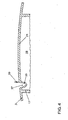
- the firing channel wall 17 with integrated airbag cover 21 is shown in its production position during plastic injection molding. Accordingly, the lamellar cover 39 is placed vertically upwards to allow a simple demolding movement of the injection molding tools not shown here and to avoid undercuts.
- the firing channel wall 17 is inserted, starting from the, the vehicle interior facing side of the instrument panel base support 5 in the mounting hole and supported with the support frame 23 on the support shoulder 25 of the base support 5.
- the foam layer 7 and the slush skin 9 are applied under pressure to the upper side of the base support 5.
- the support frame 23 may be connected to the support shoulder 25, for example, by ultrasonic welding.
- the desired tear line 35 is introduced into the instrument panel 1 by means of laser processing.
- a laser head 41 of a laser processing device is inserted into the firing channel 19 with still dismantled airbag module 11 and brought into contact with the firing channel inside for a stable tool guide.
- the laser head 41 protrudes partially into an annular mounting space 43 through the tapering section 29 is provided and on the inside forms an opposite to the weft direction I extended undercut.
- the laser head 41 is brought with its front side at a transition edge between the first wall portion 27 and the taper portion 29 in approach.
- a laser cut can be generated at a much steeper angle. Due to the steeper machining angle, the material thickness of the instrument panel to be overcome is reduced, as a result of which the energy input can also be reduced.
- the tool approach edge 45 between the first wall portion 27 and the taper portion 29 is positioned at a predetermined altitude, in which a process-technically favorable focus position of the laser beam results near a residual wall thickness.
- the airbag module 11 suspended in the firing channel wall 17 initially displaces against the firing direction I after the airbag has been activated, so that the firing channel wall 17 is pulled apart like an accordion with its two wall parts 27, 31, thereby dampening the non-return movement.
- the firing channel wall 17 is compressed like an accordion.
- the deploying airbag of the airbag module 11 ruptures the airbag cover 11 about a hinge axis formed by the film hinge section 33. Since, according to the first embodiment, the free space 37 bounded by the film hinge section 33 is foam-free, a smooth opening movement of the airbag cover 11 is ensured here.
- FIG. 5 an airbag assembly according to the second embodiment is shown, whose components and operation are identical to those of the first embodiment.
- Airbag cover 21 no additional cover 39 integrated, covering the free space 37 of the film hinge portion 33.
- a filling element 47 is inserted into the free space 37 before the foaming process.
- the filling element 47 is in comparison to the foam layer 7 substantially without dimensional stability. Therefore, the filling member 47 does not affect the opening movement of the airbag base 21 the hinge axis.
- FIG. 6 an airbag assembly according to the third embodiment is shown.
- the tapering portion 29 is used with its upper, the airbag cover 21 end facing up to the support frame 23, namely omitting the first wall portion 27.
- the tapering section 29 therefore limited with its upper peripheral edge 48 directly an airbag passage opening ,
- the airbag cover surface is designed much smaller than the firing channel cross section of the second wall portion 31 of the firing channel wall 17. With the reduced airbag cover 21 can be reliably prevented a disc occupant contact.
- FIG. 7 an airbag assembly according to the fourth embodiment is shown.
- the mounting holes 15 for suspending the airbag module 11 are not provided in the second wall portion 31 with increased channel cross-section, but in the first wall portion 27 with reduced cross-section in the fourth embodiment.
- the projecting through the mounting holes 15 lateral Moritagearme 13 of the airbag module 11 are not directly supported on the opening edge of the mounting holes 15. Rather, the lateral mounting arms 13 are supported with angled support legs 49 on the outside of the tapered section 29.
- the tapering section 29 therefore forms in a double function on the outside an inclined deflection 51.
- the deflection surface 51 acts in an airbag deployment with the support legs 49 of the mounting arms 13 of the airbag module 11 together so that the firing channel wall 17 is pressed inwardly against the airbag module 11 by the above-mentioned non-return movement of the airbag module 11. This reduces the mounting gap s. In this way, it is reliably prevented that the deploying airbag is partially immersed in the mounting gap s, whereby the functionality of the airbag is ensured.
Landscapes
- Engineering & Computer Science (AREA)
- Mechanical Engineering (AREA)
- Physics & Mathematics (AREA)
- Optics & Photonics (AREA)
- Plasma & Fusion (AREA)
- Air Bags (AREA)
Abstract
Description
- Die Erfindung betrifft eine Airbaganordnung für ein Kraftfahrzeug nach dem Oberbegriff des Patentanspruches 1.
- Eine derartige Airbaganordnung ist im Beifahrerbereich einer Instrumententafel des Kraftfahrzeuges vorgesehen oder anderen Fahrzeug-Innenverkleidungen mit vergleichbarem Aufbau.
- Aus der
EP 0 968 889 B1 ist eine gattungsgemäße Airbaganordnung bekannt, bei der an die Unterseite eines Instrumententafel-Grundträgers als separates Teil eine Schusskanalwalnd montiert ist, die einen Schusskanal begrenzt. Der Schusskanal ist von einem Airbagdeckel abgedeckt. - Innerhalb des Schusskanals kann ein Airbagmodul vorgesehen sein. Das Airbagmodul kann beispielsweise über seitliche Haken in der Schusskanalwand eingehängt sein. Für eine einfache Montage des Airbagmoduls ist ein ausreichend großer Montagespalt zwischen dem Airbagmodul und der Schusskanalwand vorgesehen.
- Um nach einer Airbag-Aktivierung einen Scheiben- oder Insassenkontakt mit dem sich öffnenden Airbagdeckel zu vermeiden, ist dieser möglichst klein zu dimensionieren. Die Größe des Airbagdeckels wird bestimmt durch den Querschnitt des Schusskanals, in dem das Airbagmodul eingehängt ist.
- Wie aus der
EP 0 968 889 B1 weiter hervorgeht, ist die Schusskanalwand in etwa rechtwinklig an den Airbagdeckel herangeführt. Eine solche Wandführung ist beim Einarbeiten einer Sollreißlinie zwischen dem Airbagdeckel und dem Schusskanal fertigungstechnisch von Nachteil. Die Sollreißlinie wird üblicherweise durch Materialschwächung hergestellt. Das hierzu in den Schusskanal eingeführte Werkzeug, etwa ein Laserkopf für eine Laserschwächung, kann mit seinem Werkzeugkopf nur in größerer Schrägstellung an der Innenseite des Schusskanals angesetzt werden. Durch die Schrägstellung des Werkzeuges muss daher eine nachteilig große Materialstärke der Instrumententafel überwunden werden, um bis zu einer vorgegebenen Restmaterialstärke vorzudringen. Der Energieeintrag ist daher nachteilig erhöht. - Aus der
DE 199 45 022 A1 ist ein Laserbearbeitungssystem für Airbagvorrichtungsteile bekannt, das eine Einrichtung zum Erfassen einer Restmaterialstärke von der Bearbeitungsseite her aufweist. - Die Aufgabe der Erfindung besteht darin, eine Airbaganordnung für ein Kraftfahrzeug bereitzustellen, die in einfacher Fertigung mit einem Airbagdeckel reduzierter Größe herstellbar ist.
- Die Aufgabe ist durch die Merkmale des Patentanspruches 1 gelöst. Bevorzugte Weiterbildungen der Erfindung sind in den Unteransprüchen offenbart.
- Gemäß dem kennzeichnenden Teil des Patentanspruches 1 verjüngt sich der Schusskanal mit seinem Schusskanalquerschnitt in Richtung auf den Airbagdeckel. Der Schusskanal wird demzufolge nicht geradlinig in Schussrichtung des Airbagmoduls an die Unterseite der Instrumententafel herangeführt. Vielmehr verjüngt sich der Schusskanal zumindest teilweise in der Schussrichtung des Airbagmoduls, wodurch die Größe des Airbagdeckels reduziert ist. Demgegenüber verbleibt der Querschnitt des Schusskanales an seinem vom Airbagdeckel entfernten Ende ausreichend groß, um eine einfache Airbagmodul-Montage zu erreichen.
- Der Schusskanal kann bevorzugt zumindest einen Verjüngungsabschnitt aufweisen, dessen vom Airbagdeckel abgewandtes Ende in einen Schusskanalteil mit größerem Schusskanalquerschnitt übergeht, und dessen dem Airbagdeckel zugewandtes Ende in einen Schusskanalteil mit kleinerem Schusskanalquerschnitt übergeht. Für eine einfache Montage kann das Airbagmodul am Schusskanalteil mit größerem Querschnitt montiert werden, insbesondere in eine Montageöffnung eingehängt werden.
- Der oben genannte Verjüngungsabschnitt des Schusskanales ist bevorzugt zwischen dem Montageabschnitt für das Airbagmodul und dem Airbagdeckel vorgesehen. Auf diese Weise ist die Schusskanalwand in Schussrichtung des Airbagmoduls mit reduzierter Steifigkeit gebildet. Eine solche Wandgeometrie ist im Hinblick auf einen Abbau von Kräften vorteilig, die bei der Airbag-Aktivierung vom Airbagmodul über den Montageabschnitt in den Schusskanal eingeleitet werden. Beim Airbag-Schuss kann nämlich die Schusskanalwand an ihrem Verjüngungsabschnitt ziehharmonikaartig elastisch deformiert werden, wodurch die Krafteinleitung in die Instrumententafel nach erfolgter Airbag-Aktivierung reduziert ist.
- In einer Ausführungsform der Erfindung kann der Schusskanalteil mit kleinerem Schusskanalquerschnitt unmittelbar als eine Randkante ausgebildet sein, die ohne Längserstreckung in der Airbag-Schussrichtung lediglich eine Airbag-Durchtrittsöffnung begrenzt. Auf diese Weise ist trotz reduziertem Airbagdeckel ein ausreichend großer Montagespalt zwischen dem Airbagmodul und der seitlich begrenzenden Schusskanalwand gewährleistet.
- Fertigungstechnisch einfach kann die Schusskanalwand als ein separates Bauteil mit einem Grundträger einer Instrumententafel verbunden werden. Die Schusskanalwand kann hierzu einen Tragabschnitt, etwa einen Tragschenkel, aufweisen, mit dem die Schusskanalwand sich auf dem Instrumententafel-Grundträger abstützt.
- Ein weiterer Aspekt der Erfindung betrifft die Ausbildung einer Sollreißilnie, die bekanntermaßen den Airbagdeckel teilweise umzieht. Die Sollreißlinie kann beispielhaft durch Materialschwächung mittels eines Fräsers oder einer Laservorrichtung eingearbeitet werden. Hierzu ist ein Werkzeugkopf in den Schusskanal einzuführen. Für eine stabile Werkzeugfühtung kann der Werkzeugkopf in Ansatz mit der Innenseite des Schusskanales gebracht werden.
- Aufgrund der geometrischen Gegebenheiten ist der Werkzeugkopf während des Schneidvorganges in einer Schragstellung, wodurch sich auch die Sollreißstelle trichterförmig nach außen ausweitet. Eine solche trichterförmige Aufreißebene ermöglicht einen größeren Freigang für den Airbag. Zudem kann sich der Airbagdeckel bei Beaufschlagung von Missbrauchskräften von außen in der Trichterkontur abstützen. Insbesondere bei einer Laserschwächung kann eine zu große Schrägstellung des Laserkopfes zu einem nachteilig erhöhten Energieeintrag führen, bei der eine Fokuslage des Laserkopfes nachteilig außerhalb einer Restwandstärke liegt.
- Vor diesem Hintergrund kann der Schusskanal innenseitig eine Hinterschneidung aufweisen, die entgegen der Schussrichtung des Airbagmoduls nach außen hin abgestuft ist. Auf diese Weise ist ein Montagefreiraum für das Werkzeug, etwa den Laserkopf oder den Fräskopf, bereitgestellt. Dieser kann in den Montagefreiraum hinein verlagert werden und sich auf der Abstufung des Montagefreiraums abstützen. Mit dem zusätzlichen Montagefreiraum innerhalb des Schusskanals kann eine nahezu tangentiale Laserschwächung zwischen Schusskanal und Airbagdeckel mit einer geringen Schrägstellung des Werkzeuges erreicht werden. Durch die geringe Schrägstellung des Laserkopfes kann wiederum seine Fokuslage innerhalb des zu schwächenden Materials nahe der Restwandstärke gebracht werden, wodurch die Bearbeitungsqualität steigt.
- Bevorzugt kann die oben genannte Hinterschneidung für den Werkzeugansatz in Doppelfunktion gleichzeitig den Verjüngungsabschnitt des Schusskanals bilden.
- Für eine bauteilreduzierte Ausführung kann der Airbagdeckel materialseinheitlich und/oder einstückig, etwa als ein Kunststoffspritzgussteil, mit der Schusskanalwand verbunden sein. In diesem Fall kann der Airbagdeckel über einen integrierten schlaufenartig in den Schusskanal ragenden Filmscharnierabschnitt in die Schusskanalwand übergehen. Der Filmscharnlerabschnitt kann sich im Wesentlichen über die gesamte Länge einer Randseite des Airbagdeckels erstrecken und einen nach oben offenen, rinnenförmige Freiraum begrenzen. Die weiteren Randseiten des Airbagdeckels können dagegen von der bereits erwähnten Sollreißstelle umzogen sein.
- Um nach einer Airbag-Aktivierung ein kontrolliertes Aufbrechen des Airbagdeckels zu gewährleisten, ist es von Bedeutung, dass der Airbagdeckel leichtgängig um eine Scharnierachse des Filmscharnierabschnittes aufklappen kann. Bevorzugt ist daher der oben erwähnte, vom Filmscharnierabschnitt begrenzte, rinnenförmige Freiraum nicht durch die oberseitig auf der Instrumententafel vorgesehene Schaumschicht gefüllt, sondern vielmehr von dieser abgetrennt. Die Schaumschicht wird nach erfolgter Montage des Schusskanals am Instrumententafel-Grundträger in einem, an sich bekannten Schäumungsvorgang auf die Oberseite des Grundträgers zusammen mit einer Slush-Haut aufgebracht.
- Um während dieses Aufschäumvorganges den vom Filmscharnierabschnitt begrenzten Freiraum von der Schaumschicht abzutrennen, kann ein zusätzliches Abdeckelement vorgesehen sein, mit dem dieser Freiraum abgedeckt ist. Das Abdeckelement kann bevorzugt materialeinheitlich und/oder einstückig am Airbagdeckel integriert sein, insbesondere im Spritzgussverfahren dort angeformt werden.
- Alternativ zu dem Abdeckelement kann ein Füllelement im Wesentlichen ohne eigene Formstabilität, etwa ein Weichschauelement, vor dem Schäumungsvorgang in den Freiraum des Filmscharnierabschnittes eingelegt werden. Das Füllelement verhindert einerseits während des Schäumvorganges ein Eindringen von Schaummaterial in den Freiraum. Andererseits ist das Füllelement ausreichend weich gestaltet, dass bei Airbag-Aktivierung der Airbagdeckel leichtgängig aufklappen kann. Neben dem Schäumungsverfahren ist alternativ auch eine Kaschierung möglich.
- Ein weiterer, nachfolgend beschriebener Aspekt der Erfindung betrifft den Montagespalt zwischen der Schusskanalwand und dem darin eingesetzten Airbagmodul. Der Montagespalt ist einerseits ausreichend groß zu dimensionieren, um eine einfache Montage bzw. Demontage des Airbagmoduls zu gewährleisten. Andererseits besteht bei einem zu großen Montagespalt die Gefahr, dass nach erfolgter Airbag-Auslösung sich der Airbag teilweise in den Montagespalt hinein entfaltet.
- Vor diesem Hintergrund kann die erfindungsgemäße Airbaganordnung alternativ zu den obigen Merkmalen bzw. zusätzlich dazu ein Betätigungselement aufweisen, das bei einer Auslösung des Airbagmoduls die Schusskanalwand in Richtung auf das Airbagmodul drückt.
- Bevorzugt ist es, wenn das Betätigungselement in Doppelfunktion gleichzeitig das airbagmodulseitige Montageelement ist, mit dem das Airbagmodul in die Schusskanalwand eingehängt werden kann. Bei montiertem Airbagmodul kann das zumindest eine Montageelement durch eine korrespondierende Montageöffnung der Schusskanalwand ragen und mit einem abgewinkelten Ende auf einer außenseitigen Schrägfläche der Schusskanalwand abgestützt sein.
- Das Montageelement kann bei einer Airbag-Auslösung wie folgt mit der Schrägfläche der Schusskanalwand zusammenwirken: Unmittelbar nach der Auslösung des Airbagmoduls erfolgt bekanntermaßen eine Rückschlag-Bewegung des Airbagmoduls entgegen der Schussrichtung. Bei der Rückschlag-Bewegung des Airbagmoduls drückt dessen Montageelement gegen die Schrägfläche der Schusskanalwand, die sich entgegen der Schusskanalrichtung schräg nach außen erstreckt. Die Schusskanalwand wird daher bei entsprechend elastischer Gestaltung nach innen abgelenkt. Durch diese Verformung der Schusskanalwand nach innen wird der das Airbagmodul umgebende Montagespalt reduziert, so dass der sich entfaltende Airbag nicht in den Montagespalt eintauchen kann.
- Die oben genannte Schrägfläche kann bevorzugt durch den oben erwähnten Verjüngungsabschnitt der Schusskanalwand bereitgestellt werden, der den Schusskanalquerschnitt in Richtung auf den Airbagdeckel verjüngt. Nachfolgend sind vier Ausführungsbeispiel der Erfindung anhand der beigefügten Figuren gezeigt. Es zeigen:
- Fig. 1
- in einer schematischen Teilschnittdarstellung eine in der Instrumententafel eingebaute Airbaganordnung gemäß dem ersten Ausführungsbeispiel;
- Fig. 2
- in einer der
Fig. 1 entsprechenden Ansicht ein in den Schusskanal geführtes Werkzeug zur Bildung einer Sollreißstelle für den Airbagdeckel; - Fig. 3
- in einer Ansicht entsprechend der
Fig. 1 den Airbagdeckel in vergrößerter Darstellung; - Fig. 4
- die Schusskanalwand mit integriertem Airbagdeckel in Alleinstellung;
- Fig. 5
- in einer Detailschnittansicht eine Airbaganordnung gemäß dem zweiten Ausführungsbeispiel; ,
- Fig. 6
- in einer Ansicht entsprechend der
Fig. 1 eine Airbaganordnung gemäß dem dritten Ausführungsbeispiel; und - Fig. 7
- in einer Seitenschnittdarstellung entsprechend der
Fig. 1 eine Airbaganordnung gemäß dem vierten Ausführungsbeispiel. - In der
Fig. 1 ist in einer grob schematischen Seitenschnittdarstellung eine beifahrerseitige Instrumententafel 1 für ein Kraftfahrzeug gezeigt. Unterhalb der Instrumententafel 1 ist eine Airbaganordnung 3 vorgesehen. Die Instrumententafel weist einen Instrumententafel-Grundträger 5 mit einer aufgeschäumten Schaumschicht 7 auf, an deren Oberseite eine Slush-Haut 9 vorgesehen ist. - Die Airbaganordnung 3 weist ein an sich bekanntes Airbagmodul 11 auf, das über seitliche Montagearme 13 in gegenüber liegende Montageöffnungen 15 einer Schusskanalwand 17 der Airbaganordnung 3 eingesetzt ist. Die Schusskanalwand 17 umzieht rahmenartig das Airbagmodul 11 und kann beispielhaft von rechteckförmigem Querschnitt sein. Die Schusskanalwand 17 ist hier beispielhaft als ein vom Instrumententafel-Grundträger 5 separates Einsatz-Bauteil ausgeführt. Die Schusskanalwand 17 begrenzt weiter einen Schusskanal 19, mit dem ein sich vom Airbagmodul 11 entfaltender Airbag in Richtung auf einen Airbagdeckel 21 geführt wird.
- Der Airbagdeckel 21 schließt den Schusskanal 19 nach oben hin und erstreckt sich im Wesentlichen flächenbündig mit einem seitlich von der Schusskanalwand 17 abragenden Halterahmen 23. Die Schusskanalwand 17 ist mit ihrem Halterahmen 23 auf einer Tragschulter 25 des Instrumententafel-Grundträgers 5 abgestützt, die gegenüber dem Grundträger 5 abgestuft ist und eine Montageöffnung des Grundträgers 5 begrenzt. Der Halterahmen 23 schließt dabei in etwa bündig mit der Oberseite des Grundträgers 5 ab.
- Wie aus der
Fig. 1 weiter hervorgeht, ragt die Schusskanalwand 17 mit einem ersten Wandteil 27 rechtwinklig vom Halterahmen 23 entgegen einer Schussrichtung I des Airbagmoduls 11 nach unten ab und geht in einen Verjüngungsabschnitt 29 über. An dessen, vom Airbagdeckel 21 abgewandten Ende schließt sich ein zweites Wandteil 31 an, das in etwa parallel zum ersten Wandteil 27 verläuft. Der Schusskanalquerschnitt verjüngt sich somit in Richtung auf den Airbagdeckel 21, wodurch dieser in seinem Flächenausmaß reduziert ist. - Die Montageöffnungen 15 zum Einhängen des Airbagmoduls 11 sind gemäß der
Fig. 1 am zweiten Wandteil 31 mit größerem Schusskanalquerschnitt vorgesehen. Ein zwischen dem Airbagmodul 11 und dem zweiten Wandteil 31 der Schusskanalwand 17 gebildeter Montagespalt s1 ist daher entsprechend groß gestaltet, um eine einfache Montage bzw. Demontage des Airbagmoduls 11 zu gewährleisten. Das Airbagmodul 11 ist demgegenüber so dimensioniert, dass dessen Oberseite in den ersten Wandteil 27 der Schusskanalwand 17 einragt, in dem der Montagespalt s2 reduziert ist. Im Falle einer Aktivierung der Airbaganordnung ist aufgrund des reduzierten Montagespaltes s2 daher die Gefahr verringert, dass sich der entfaltende Airbag teilweise in den größeren Montagespalt s1 verlagert. - Wie aus der
Fig. 1 weiter hervorgeht, ist der in der Schusskanalwand 17 integrierte Airbagdeckel 21 an einer Seite über einen Filmscharnierabschnitt 33 mit der Schusskanalwand 17 verbunden. Der Filmscharnierabschnitt ragt gemäß derFig. 1 schlaufenartig in den Schusskanal 19 hinein. Im Falle einer rechtwinkligen Gestaltung des Airbagdeckels 21 erstreckt sich der Filmscharnierabschnitt 33 entlang einer Airbagdeckel-Randseite, während die verbleibenden Airbagdeckel-Randseiten von einer Sollreißlinie 35 begrenzt sind. - Der Filmscharnierabschnitt 33 begrenzt einen nach oben offenen, rinnenförmigen Freiraum 37, der in den
Fig. 1 bis 3 nach oben hin durch eine Abdeckelement 39 abgedeckt ist. Das Abdeckelement 39 ist einseitig an dem Airbagdeckel 21 angeformt und stützt sich gemäß denFig. 1 bis 3 mit seinem freien Ende an der gegenüber liegenden oberseitigen Biegekante des Filmscharnierabschnittes 33 ab. Das Abdeckelement 39 gewährleistet, dass während eines Schäumungsvorganges, bei dem die Schaumschicht 7 auf den Grundträger 5 aufgebracht wird, kein Schäumungsmaterial in den Freiraum 37 gelangen kann. Im rinnenförmigen Freiraum 37 des Filmscharnierabschnittes 33 können außerdem Stützwände angeordnet sein, auf denen sich das Abdeckelement 39 abstützen kann. - Nachfolgend wird die Fertigung der Airbaganordnung 3 sowie deren Einbau in der Instrumententafel 1 beschrieben. So wird zunächst die rahmenförmige Schusskanalwand 17 separat vom Grundträger 5 in einem Kunststoffspritzgussverfahren hergestellt. Das Material der Schusskanalwand ist dabei entsprechend der notwendigen Belange mit Bezug auf die Elastizität optimiert.
- In der
Fig. 4 ist die Schusskanalwand 17 mit integriertem Airbagdeckel 21 in seiner Herstellungslage beim Kunststoffspritzgießen gezeigt. Demzufolge ist das lamellenartige Abdeckelement 39 vertikal nach oben abgestellt, um eine einfache Entformungsbewegung der hier nicht gezeigten Spritzgusswerkzeuge zu ermöglichen und um Hinterschneidungen zu vermeiden. - Anschließend wird die Schusskanalwand 17 ausgehend von der, dem Fahrzeuginnenraum zugewandten Seite des Instrumententafel-Grundträgers 5 in dessen Montageöffnung eingesetzt und mit dem Halterahmen 23 auf der Tragschulter 25 des Grundträgers 5 abgestützt.
- In einem nachfolgenden Schäumungsvorgang wird unter Druck die Schaumschicht 7 sowie die Slush-Haut 9 auf die Oberseite des Grundträgers 5 aufgetragen. Um ein Durchdringen des flüssigen Schäumungsmaterials durch die Montageöffnung des Grundträgers 5 zu verhindern, kann der Halterahmen 23 beispielsweise durch Ultraschweißen mit der Tragschulter 25 verbunden werden.
- In einem weiteren Arbeitsschritt wird mittels Laserbearbeitung die Sollreißlinie 35 in die Instrumententafel 1 eingebracht. Hierzu wird bei noch demontiertem Airbagmodul 11 ein Laserkopf 41 einer Laserbearbeitungsvorrichtung in den Schusskanal 19 eingeführt und für eine stabile Werkzeugführung in Ansatz mit der Schusskanal-Innenseite gebracht. Der Laserkopf 41 ragt dabei teilweise in einen ringförmigen Montageraum 43, der durch den Verjüngungsabschnitt 29 bereitgestellt ist und innenseitig eine entgegen der Schussrichtung I ausgeweitete Hinterschneidung bildet.
- Gemäß der
Fig. 2 ist der Laserkopf 41 mit seiner Stirnseite an einer Übergangskante zwischen dem ersten Wandteil 27 und dem Verjüngungsabschnitt 29 in Ansatz gebracht. Dadurch kann in einem wesentlich steileren Winkel ein Laserschnitt erzeugt werden. Durch den steileren Bearbeitungswinkel ist die zu überwindende Materialstärke der Instrumententafel reduziert, wodurch auch der Energieeintrag reduzierbar ist. Die Werkzeug-Ansatzkante 45 zwischen dem ersten Wandteil 27 und dem Verjüngungsabschnitt 29 ist in einer vorgegebenen Höhenlage positioniert, bei der sich eine prozesstechnisch günstige Fokuslage des Laserstrahls nahe einer Restwandstärke ergibt. - Durch die parallel versetzte Lage der beiden Wandteil 27, 31 ist die Steifigkeit der Schusskanalwand 17 in der Schussrichtung I sowie in Gegenrichtung reduziert. D.h. dass die beim Airbag-Schuss auftretenden Kräfte zumindest teilweise von der Schusskanalwand 17 aufgenommen werden.
- Bekanntermaßen verlagert sich das in der Schusskanalwand 17 eingehängte Airbagmodul 11 nach erfolgter Airbag-Aktivierung in einer Rückschlagbewegung zunächst entgegen der Schussrichtung I, so dass die Schusskanalwand 17 mit ihren beiden Wandteilen 27, 31 ziehharmonikaartig auseinander gezogen wird und dadurch die Rückschlagbewegung gedämpft wird.
- Bei einer folgenden Gegenbewegung des Airbagmoduls 11 in der Schussrichtung I wird demgegenüber die Schusskanalwand 17 ziehharmonikaartig zusammengedrückt.
- Der sich entfaltende Airbag des Airbagmoduls 11 reißt den Airbagdeckel 11 um eine durch den Filmscharnierabschnitt 33 gebildete Scharnierachse auf. Da gemäß dem ersten Ausführungsbeispiel der vom Filmscharnierabschnitt 33 begrenzte Freiraum 37 schaumfrei ist, ist hier eine leichtgängige Öffnungsbewegung des Airbagdeckels 11 sichergestellt.
- In der
Fig. 5 ist eine Airbaganordnung gemäß dem zweiten Ausführungsbeispiel gezeigt, dessen Bauteile sowie Funktionsweise mit denen des ersten Ausführungsbeispieles identisch sind. Insoweit wird Bezug auf die vorangegangene Beschreibung des ersten Ausführungsbeispiels genommen. Im Unterschied zum ersten Ausführungsbeispiel ist im Airbagdeckel 21 kein zusätzliches Abdeckelement 39 integriert, das den Freiraum 37 des Filmscharnierabschnittes 33 abdeckt. Vielmehr ist alternativ vor dem Schäumungsvorgang ein Füllelement 47 in den Freiraum 37 eingesetzt. Das Füllelement 47 ist im Vergleich zur Schaumschicht 7 im Wesentlichen ohne Formstabilität. Das Füllelement 47 beeinträchtigt daher nicht die Öffnungsbewegung des Airbagdockels 21 die Scharnierachse. - In der
Fig. 6 ist eine Airbaganordnung gemäß dem dritten Ausführungsbeispiel gezeigt. Im Unterschied zu den vorangegangenen Ausführungsbeispielen ist der Verjüngungsabschnitt 29 mit seinem oberen, dem Airbagdeckel 21 zugewandten Ende bis an den Halterahmen 23 herangezogen, und zwar unter Wegfall des ersten Wandteiles 27. Der Verjüngungsabschnitt 29 begrenzt daher mit seiner oberen Randkante 48 unmittelbar eine Airbag-Durchgangsöffnung. Die Airbagdeckel-Fläche ist dabei deutlich kleiner gestaltet als der Schusskanalquerschnitt des zweiten Wandteiles 31 der Schusskanalwand 17. Mit dem verkleinerten Airbagdeckel 21 kann zuverlässig ein Scheiben-Insassenkontakt verhindert werden. - In der
Fig. 7 ist eine Airbaganordnung gemäß dem vierten Ausführungsbeispiel gezeigt. Im Unterschied zu den vorangegangenen Ausführungsbeispielen sind im vierten Ausführungsbeispiel die Montageöffnungen 15 zum Einhängen des Airbagmoduls 11 nicht im zweiten Wandteil 31 mit vergrößertem Kanalquerschnitt, sondern im ersten Wandteil 27 mit reduziertem Querschnitt vorgesehen. - Die durch die Montageöffnungen 15 ragenden seitlichen Moritagearme 13 des Airbagmoduls 11 sind dabei nicht unmittelbar auf den Öffnungsrand der Montageöffnungen 15 abgestützt. Vielmehr sind die seitlichen Montagearme 13 mit abgewinkelten Stützschenkeln 49 außenseitig auf dem Verjüngungsabschnitt 29 abgestützt. Der Verjüngungsabschnitt 29 bildet daher in Doppelfunktion außenseitig eine schräg gestellte Umlenkfläche 51.
- Die Umlenkfläche 51 wirkt bei einer Airbag-Auslösung mit den Stützschenkeln 49 der Montagearme 13 des Airbagmoduls 11 so zusammen, dass durch die oben erwähnte Rückschlagbewegung des Airbagmoduls 11 die Schusskanalwand 17 nach innen gegen das Airbagmodul 11 gedrückt wird. Dadurch reduziert sich der Montagespalt s. Auf diese Weise ist sicher verhindert, dass der sich entfaltende Airbag teilweise in den Montagespalt s eintaucht, wodurch die Funktionsfähigkeit des Airbags gewährleistet ist.
-
- 1
- Instrumententafel
- 3
- Airbaganordnung
- 5
- Instrumententafel-Grundträger
- 7
- Schaumschicht
- 9
- Slush-Haut
- 11
- Airbagdeckel
- 13
- seitliche Montagearme
- 15
- Montageöffnungen
- 17
- Schusskanalwand
- 19
- Schusskanal
- 21
- Airbagdeckel
- 23
- Halterahmen
- 25
- Tragschulter
- 27
- erstes Wandteil
- 29
- Verjüngungsäbschnitt
- 31
- zweites Wandteil
- 33
- Filmscharnierabschnitt
- 35
- Sollreißlinie
- 37
- Freiraum
- 39
- Abdeckelement
- 41
- Laserkopf
- 43
- Montageraum
- 45
- Werkzeug-Ansatzkante
- 47
- Füllelement
- 48
- Randkante
- 49
- Stützschenkel
- 51
- Umlenkfläche
- I
- Schussrichtung
- s1, s2.
- Montagespalt
Claims (20)
- Airbaganordnung für ein Kraftfahrzeug mit einer Schusskanalwand (17), die einen Schusskanal (19) begrenzt, der von einem Airbagdeckel (21) abdeckbar ist, dadurch gekennzeichnet, dass der Schusskanal (17) sich mit seinem Schusskanalquerschnitt in Richtung auf den Airbagdeckel (21) zumindest teilweise verjüngt.
- Airbaganordnung nach Anspruch 1, dadurch gekennzeichnet, dass die Schusskanalwand (17) zumindest einen Verjüngungsabschnitt (29) aufweist, dessen vom Airbagdeckel (21) abgewandtes Ende in einen Schusskanalteil (31) mit größerem Schusskanalquerschnitt übergeht.
- Airbaganordnung nach Anspruch 2, dadurch gekennzeichnet, dass der Verjüngungsabschnitt (29) an seinem dem Airbagdeckel (21) zugewandten Ende in einen Schusskanalteil (27) mit kleinerem Schusskanalquerschnitt übergeht.
- Airbaganordnung nach Anspruch 3, dadurch gekennzeichnet, dass die beiden Schusskanalteile (27, 29) parallel zueinander verlaufen.
- Airbaganordnung nach einem der Ansprüche 2 bis 4, dadurch gekennzeichnet, dass der Schusskanalteil (29) mit größerem Querschnitt einen Montageabschnitt (15) aufweist, an dem ein Airbagmodul (11) montierbar ist.
- Airbaganordnung nach einem der Ansprüche 3 bis 5, dadurch gekennzeichnet, dass der Schusskanalteil (27) mit kleinerem Schusskanalquerschnitt unmittelbar eine, eine Airbag-Durchtrittsöffnung begrenzende Randkante (48) ohne Längserstreckung in einer Airbag-Schussrichtung (I) ist.
- Airbaganordnung nach einem der vorhergehenden Ansprüche, dadurch gekennzeichnet, dass die Schusskanalwand (17) als separates Bauteil mit einem Grundträger (5) einer Instrumententafel (1) verbindbar ist.
- Airbaganordnung nach Anspruch 7, dadurch gekennzeichnet, dass die Schusskanalwand (17) einen Tragabschnitt (23) aufweist, mit dem die Schusskanalwand (17) auf dem Instrumententafel-Grundträger (5) abgestützt ist.
- Airbaganordnung nach Anspruch 8, dadurch gekennzeichnet, dass der Tragabschnitt (23) als ein Tragschenkel außenseitig an der Schusskanalwand (17) ausgebildet ist.
- Airbaganordnung nach einem der vorhergehenden Ansprüche, dadurch gekennzeichnet, dass der Schusskanal (19) innenseitig eine Hinterschneidung aufweist, die einen Montagefreiraum (43) für ein Werkzeug, insbesondere einen Laserkopf oder einen Fräskopf, zur Bildung einer Sollreißstelle (35) für den Airbagdeckel (21) bereitstellt.
- Airbaganordnung insbesondere nach einem der vorhergehenden Ansprüche, dadurch gekennzeichnet, dass ein Airbagdeckel (21) materialeinheitlich und/oder einstückig mit der Schusskanalwand (17) verbunden ist.
- Airbaganordnung nach Anspruch 11, dadurch gekennzeichnet, dass der Airbagdeckel (21) über einen insbesondere schlaufenartig in den Schusskanal ragenden Filmscharnierabschnift (33) mit der Schusskanalwand (17) verbunden ist, der einen nach oben offenen rinnenförmigen Freiraum (37) begrenzt.
- Airbaganordnung nach Anspruch 12, dadurch gekennzeichnet, dass der Freiraum (37) von einem Abdeckelement (39) abgedeckt ist, das den Freiraum (37) gegenüber einer den Airbagdeckel (39) überdeckenden Schaumschicht (7) abtrennt.
- Airbaganordnung nach Anspruch 13, dadurch gekennzeichnet, dass das Abdeckelement (39) materialeinheitlich und/oder einstückig am Airbagdeckel (21) integriert ist.
- Airbaganordnung nach Anspruch 12, dadurch gekennzeichnet, dass in den von Filmscharnierabschnitt (33) begrenzten Freiraum (37) ein Füllelement (47) im Wesentlichen ohne eigene Formstabilität, etwa ein Weichschaumelement, eingelegt ist.
- Airbaganordnung insbesondere nach einem der vorhergehenden Ansprüche, dadurch gekennzeichnet, dass der Airbaganordnung zumindest ein Betätigungselement (49) zugeordnet ist, das bei einer Auslösung des Airbagmoduls (11) die Schusskanalwand (17) zum Airbagmodul (11) drückt.
- Airbaganordnung nach Anspruch 16, dadurch gekennzeichnet, dass das Betätigungselement (49) ein airbagmodulseitiges Montageelement (13) zum Einhängen des Airbagmoduls (11) in die Schusskanalwand (17) ist.
- Airbaganordnung nach Anspruch 16 oder 17, dadurch gekennzeichnet, dass das Betätigungselement (49) bei der Auslösung des Airbagmoduls (11) die Schusskanalwand (17) von außen gegen das Airbagmodul (11) drückt.
- Airbaganordnung nach einem der Ansprüche 17 oder 18, dadurch gekennzeichnet, dass das Betätigungselement (49) zur Bewegungsübertragung auf die Schusskanalwand (17) durch eine Montageöffnung (15) der Schusskanalwand (17) ragt und auf einer außenseitigen Umlenkfläche (51) der Schusskanalwand (17) abgestützt ist.
- Airbaganordnung nach Anspruch 19, dadurch gekennzeichnet, dass die Umlenkfläche (51) der Schusskanalwand (17) durch den Verjüngungsabschnitt (29) bereitgestellt ist.
Applications Claiming Priority (1)
| Application Number | Priority Date | Filing Date | Title |
|---|---|---|---|
| DE102008021157A DE102008021157A1 (de) | 2008-04-28 | 2008-04-28 | Airbaganordnung für ein Kraftfahrzeug |
Publications (3)
| Publication Number | Publication Date |
|---|---|
| EP2113428A2 true EP2113428A2 (de) | 2009-11-04 |
| EP2113428A3 EP2113428A3 (de) | 2010-01-06 |
| EP2113428B1 EP2113428B1 (de) | 2012-08-01 |
Family
ID=41090411
Family Applications (1)
| Application Number | Title | Priority Date | Filing Date |
|---|---|---|---|
| EP09005579A Not-in-force EP2113428B1 (de) | 2008-04-28 | 2009-04-21 | Airbaganordnung für ein Kraftfahrzeug |
Country Status (2)
| Country | Link |
|---|---|
| EP (1) | EP2113428B1 (de) |
| DE (1) | DE102008021157A1 (de) |
Cited By (4)
| Publication number | Priority date | Publication date | Assignee | Title |
|---|---|---|---|---|
| FR3014791A1 (fr) * | 2013-12-12 | 2015-06-19 | Faurecia Interieur Ind | Systeme de securite pour vehicule |
| FR3015394A1 (fr) * | 2013-12-19 | 2015-06-26 | Faurecia Interieur Ind | Procede pour fabriquer un systeme de securite pour vehicule |
| WO2016119810A1 (de) * | 2015-01-30 | 2016-08-04 | K.L. Kaschier- Und Laminier Gmbh | Verbundwerkstoff für eine airbagabdeckung |
| CN109050460A (zh) * | 2018-09-27 | 2018-12-21 | 无锡市宏宇汽车配件制造有限公司 | 一种新型驾驶区安全包围 |
Families Citing this family (2)
| Publication number | Priority date | Publication date | Assignee | Title |
|---|---|---|---|---|
| DE102013222117A1 (de) | 2013-05-31 | 2014-12-04 | Volkswagen Aktiengesellschaft | Fahrzeuginnenverkleidung, insbesondere für einen beifahrerseitigen Armaturentafelbereich eines Kraftfahrzeugs, und Verfahren zur Herstellung einer Fahrzeuginnenverkleidung |
| US8870219B1 (en) | 2013-08-02 | 2014-10-28 | Faurecia Interior Systems, Inc. | Foam-in-place interior panels having integrated airbag doors including substrates with airbag chute-door assemblies for motor vehicles |
Citations (2)
| Publication number | Priority date | Publication date | Assignee | Title |
|---|---|---|---|---|
| DE19945022A1 (de) | 1998-09-19 | 2000-06-21 | Inova Gmbh Tech Entwicklungen | Laserbearbeitungssystem und Laserbearbeitungsverfahren für insbesondere Airbagvorrichtungsteile sowie Airbagvorrichtung |
| EP0968889B1 (de) | 1998-07-01 | 2003-03-12 | Delphi Technologies, Inc. | Armaturentafel |
Family Cites Families (6)
| Publication number | Priority date | Publication date | Assignee | Title |
|---|---|---|---|---|
| US5322324A (en) * | 1993-08-03 | 1994-06-21 | Morton International, Inc. | Cover for an inflatable air bag housing |
| JP3321560B2 (ja) * | 1998-11-16 | 2002-09-03 | 株式会社イノアックコーポレーション | エアバッグドア部の構造 |
| DE10142598A1 (de) * | 2001-08-31 | 2003-04-10 | Opel Adam Ag | Beifahrer-Airbag-Modul für eine Armaturentafel eines Kraftfahrzeugs |
| US7434828B2 (en) * | 2005-03-22 | 2008-10-14 | Inoac Corporation | Molded member with foamed body |
| JP2007118688A (ja) * | 2005-10-26 | 2007-05-17 | Takata Corp | 内装パネルアッセンブリ及びエアバッグ装置 |
| US20080018081A1 (en) * | 2006-07-24 | 2008-01-24 | Hyundai Mobis Co., Ltd. | Air bag module for vehicles |
-
2008
- 2008-04-28 DE DE102008021157A patent/DE102008021157A1/de not_active Ceased
-
2009
- 2009-04-21 EP EP09005579A patent/EP2113428B1/de not_active Not-in-force
Patent Citations (2)
| Publication number | Priority date | Publication date | Assignee | Title |
|---|---|---|---|---|
| EP0968889B1 (de) | 1998-07-01 | 2003-03-12 | Delphi Technologies, Inc. | Armaturentafel |
| DE19945022A1 (de) | 1998-09-19 | 2000-06-21 | Inova Gmbh Tech Entwicklungen | Laserbearbeitungssystem und Laserbearbeitungsverfahren für insbesondere Airbagvorrichtungsteile sowie Airbagvorrichtung |
Cited By (7)
| Publication number | Priority date | Publication date | Assignee | Title |
|---|---|---|---|---|
| FR3014791A1 (fr) * | 2013-12-12 | 2015-06-19 | Faurecia Interieur Ind | Systeme de securite pour vehicule |
| FR3015394A1 (fr) * | 2013-12-19 | 2015-06-26 | Faurecia Interieur Ind | Procede pour fabriquer un systeme de securite pour vehicule |
| WO2016119810A1 (de) * | 2015-01-30 | 2016-08-04 | K.L. Kaschier- Und Laminier Gmbh | Verbundwerkstoff für eine airbagabdeckung |
| CN106794817A (zh) * | 2015-01-30 | 2017-05-31 | K.L.复合和层压有限公司 | 用于安全气囊盖罩的复合材料 |
| US10384632B2 (en) | 2015-01-30 | 2019-08-20 | K.L. Kaschier-Und Laminier Gmbh | Composite material for an airbag cover |
| CN106794817B (zh) * | 2015-01-30 | 2021-01-05 | K.L.复合和层压有限公司 | 用于安全气囊盖罩的复合材料 |
| CN109050460A (zh) * | 2018-09-27 | 2018-12-21 | 无锡市宏宇汽车配件制造有限公司 | 一种新型驾驶区安全包围 |
Also Published As
| Publication number | Publication date |
|---|---|
| EP2113428A3 (de) | 2010-01-06 |
| EP2113428B1 (de) | 2012-08-01 |
| DE102008021157A1 (de) | 2009-10-29 |
Similar Documents
| Publication | Publication Date | Title |
|---|---|---|
| EP1663733B1 (de) | Innenverkleidungsteil zur abdeckung eines airbags | |
| EP2113428B1 (de) | Airbaganordnung für ein Kraftfahrzeug | |
| EP2113429A1 (de) | Innenverkleidung mit integrierter Airbagabdeckung | |
| DE4418582C2 (de) | Instrumententafel in einem Kraftwagen | |
| EP2006166A1 (de) | Airbagabdeckung | |
| DE112014005668T5 (de) | Fahrzeuggliedanbringungsstruktur und Heckspoileranbringungsstruktur | |
| EP2006165A1 (de) | Innenraumverkleidung mit integrierter Airbagabdeckung für ein Kraftfahrzeug sowie ein Verfahren zu ihrer Herstellung | |
| DE20023347U1 (de) | In ein Innenverkleidungsteil für Kraftfahrzeuge integriertes Airbag-System | |
| EP1436176B1 (de) | Innenverkleidungsteil für kraftfahrzeuge | |
| EP3514020B1 (de) | Luftsackführungsvorrichtung zum führen eines airbags eines kraftfahrzeugs, airbagbaueinheit mit einer solchen luftsackführung sowie innenverkleidungsbauteil und verfahren zum herstellen eines entsprechenden innenverkleidungsbauteils, umfassend eine derartige luftsackführung | |
| EP0537454A1 (de) | Sicherheitsvorrichtung | |
| EP1310698A2 (de) | Deformationselement, insbesondere für Kraftfahrzeuge | |
| DE602004000891T2 (de) | Luftsackabdeckung | |
| WO2016045775A1 (de) | Insassenrückhaltesystem für ein fahrzeug | |
| EP2059417B1 (de) | Gassackabdeckung | |
| DE102009058688B4 (de) | Airbaganordnung in einem Fahrzeug | |
| DE102013019940B4 (de) | Gassackabdeckung | |
| EP2563620B1 (de) | Fahrzeuginnenverkleidungsteil sowie verfahren zur herstellung eines fahrzeuginnenverkleidungsteils | |
| EP3947051B1 (de) | Energieabsorptionsvorrichtung | |
| EP2015912B1 (de) | Verfahren zur herstellung eines formteiles mit einer öffnungsnut | |
| WO2003104043A1 (de) | Innenaussatattungsteil für ein kraftfahrzeug, insbesondere armaturentafel | |
| EP2558335B1 (de) | Airbaganordnung sowie verfahren zur herstellung derselben | |
| EP1608537B1 (de) | Stossabsorbierendes verkleidungsteil für den innenraum von kraftfahrzeugen | |
| DE102006060688B4 (de) | Innenverkleidungsteil | |
| DE102006056440A1 (de) | Crash-Energieabsorber-Element, Anbindungselement mit einem solchen Crash-Engergieabsorber-Element, sowie Luftfahrzeug |
Legal Events
| Date | Code | Title | Description |
|---|---|---|---|
| PUAI | Public reference made under article 153(3) epc to a published international application that has entered the european phase |
Free format text: ORIGINAL CODE: 0009012 |
|
| AK | Designated contracting states |
Kind code of ref document: A2 Designated state(s): AT BE BG CH CY CZ DE DK EE ES FI FR GB GR HR HU IE IS IT LI LT LU LV MC MK MT NL NO PL PT RO SE SI SK TR |
|
| PUAL | Search report despatched |
Free format text: ORIGINAL CODE: 0009013 |
|
| AK | Designated contracting states |
Kind code of ref document: A3 Designated state(s): AT BE BG CH CY CZ DE DK EE ES FI FR GB GR HR HU IE IS IT LI LT LU LV MC MK MT NL NO PL PT RO SE SI SK TR |
|
| 17P | Request for examination filed |
Effective date: 20100706 |
|
| 17Q | First examination report despatched |
Effective date: 20100816 |
|
| GRAP | Despatch of communication of intention to grant a patent |
Free format text: ORIGINAL CODE: EPIDOSNIGR1 |
|
| GRAS | Grant fee paid |
Free format text: ORIGINAL CODE: EPIDOSNIGR3 |
|
| GRAA | (expected) grant |
Free format text: ORIGINAL CODE: 0009210 |
|
| RAP1 | Party data changed (applicant data changed or rights of an application transferred) |
Owner name: VOLKSWAGEN AKTIENGESELLSCHAFT |
|
| AK | Designated contracting states |
Kind code of ref document: B1 Designated state(s): AT BE BG CH CY CZ DE DK EE ES FI FR GB GR HR HU IE IS IT LI LT LU LV MC MK MT NL NO PL PT RO SE SI SK TR |
|
| REG | Reference to a national code |
Ref country code: GB Ref legal event code: FG4D Free format text: NOT ENGLISH |
|
| REG | Reference to a national code |
Ref country code: AT Ref legal event code: REF Ref document number: 568487 Country of ref document: AT Kind code of ref document: T Effective date: 20120815 Ref country code: CH Ref legal event code: EP |
|
| REG | Reference to a national code |
Ref country code: IE Ref legal event code: FG4D Free format text: LANGUAGE OF EP DOCUMENT: GERMAN |
|
| REG | Reference to a national code |
Ref country code: DE Ref legal event code: R096 Ref document number: 502009004208 Country of ref document: DE Effective date: 20120927 |
|
| REG | Reference to a national code |
Ref country code: NL Ref legal event code: VDEP Effective date: 20120801 |
|
| REG | Reference to a national code |
Ref country code: LT Ref legal event code: MG4D Effective date: 20120808 |
|
| PG25 | Lapsed in a contracting state [announced via postgrant information from national office to epo] |
Ref country code: FI Free format text: LAPSE BECAUSE OF FAILURE TO SUBMIT A TRANSLATION OF THE DESCRIPTION OR TO PAY THE FEE WITHIN THE PRESCRIBED TIME-LIMIT Effective date: 20120801 Ref country code: LT Free format text: LAPSE BECAUSE OF FAILURE TO SUBMIT A TRANSLATION OF THE DESCRIPTION OR TO PAY THE FEE WITHIN THE PRESCRIBED TIME-LIMIT Effective date: 20120801 Ref country code: IS Free format text: LAPSE BECAUSE OF FAILURE TO SUBMIT A TRANSLATION OF THE DESCRIPTION OR TO PAY THE FEE WITHIN THE PRESCRIBED TIME-LIMIT Effective date: 20121201 Ref country code: HR Free format text: LAPSE BECAUSE OF FAILURE TO SUBMIT A TRANSLATION OF THE DESCRIPTION OR TO PAY THE FEE WITHIN THE PRESCRIBED TIME-LIMIT Effective date: 20120801 Ref country code: CY Free format text: LAPSE BECAUSE OF FAILURE TO SUBMIT A TRANSLATION OF THE DESCRIPTION OR TO PAY THE FEE WITHIN THE PRESCRIBED TIME-LIMIT Effective date: 20120801 Ref country code: NO Free format text: LAPSE BECAUSE OF FAILURE TO SUBMIT A TRANSLATION OF THE DESCRIPTION OR TO PAY THE FEE WITHIN THE PRESCRIBED TIME-LIMIT Effective date: 20121101 |
|
| PG25 | Lapsed in a contracting state [announced via postgrant information from national office to epo] |
Ref country code: LV Free format text: LAPSE BECAUSE OF FAILURE TO SUBMIT A TRANSLATION OF THE DESCRIPTION OR TO PAY THE FEE WITHIN THE PRESCRIBED TIME-LIMIT Effective date: 20120801 Ref country code: PT Free format text: LAPSE BECAUSE OF FAILURE TO SUBMIT A TRANSLATION OF THE DESCRIPTION OR TO PAY THE FEE WITHIN THE PRESCRIBED TIME-LIMIT Effective date: 20121203 Ref country code: PL Free format text: LAPSE BECAUSE OF FAILURE TO SUBMIT A TRANSLATION OF THE DESCRIPTION OR TO PAY THE FEE WITHIN THE PRESCRIBED TIME-LIMIT Effective date: 20120801 Ref country code: GR Free format text: LAPSE BECAUSE OF FAILURE TO SUBMIT A TRANSLATION OF THE DESCRIPTION OR TO PAY THE FEE WITHIN THE PRESCRIBED TIME-LIMIT Effective date: 20121102 Ref country code: SI Free format text: LAPSE BECAUSE OF FAILURE TO SUBMIT A TRANSLATION OF THE DESCRIPTION OR TO PAY THE FEE WITHIN THE PRESCRIBED TIME-LIMIT Effective date: 20120801 Ref country code: SE Free format text: LAPSE BECAUSE OF FAILURE TO SUBMIT A TRANSLATION OF THE DESCRIPTION OR TO PAY THE FEE WITHIN THE PRESCRIBED TIME-LIMIT Effective date: 20120801 |
|
| PG25 | Lapsed in a contracting state [announced via postgrant information from national office to epo] |
Ref country code: NL Free format text: LAPSE BECAUSE OF FAILURE TO SUBMIT A TRANSLATION OF THE DESCRIPTION OR TO PAY THE FEE WITHIN THE PRESCRIBED TIME-LIMIT Effective date: 20120801 |
|
| PG25 | Lapsed in a contracting state [announced via postgrant information from national office to epo] |
Ref country code: ES Free format text: LAPSE BECAUSE OF FAILURE TO SUBMIT A TRANSLATION OF THE DESCRIPTION OR TO PAY THE FEE WITHIN THE PRESCRIBED TIME-LIMIT Effective date: 20121112 Ref country code: DK Free format text: LAPSE BECAUSE OF FAILURE TO SUBMIT A TRANSLATION OF THE DESCRIPTION OR TO PAY THE FEE WITHIN THE PRESCRIBED TIME-LIMIT Effective date: 20120801 Ref country code: EE Free format text: LAPSE BECAUSE OF FAILURE TO SUBMIT A TRANSLATION OF THE DESCRIPTION OR TO PAY THE FEE WITHIN THE PRESCRIBED TIME-LIMIT Effective date: 20120801 Ref country code: RO Free format text: LAPSE BECAUSE OF FAILURE TO SUBMIT A TRANSLATION OF THE DESCRIPTION OR TO PAY THE FEE WITHIN THE PRESCRIBED TIME-LIMIT Effective date: 20120801 Ref country code: CZ Free format text: LAPSE BECAUSE OF FAILURE TO SUBMIT A TRANSLATION OF THE DESCRIPTION OR TO PAY THE FEE WITHIN THE PRESCRIBED TIME-LIMIT Effective date: 20120801 |
|
| PG25 | Lapsed in a contracting state [announced via postgrant information from national office to epo] |
Ref country code: SK Free format text: LAPSE BECAUSE OF FAILURE TO SUBMIT A TRANSLATION OF THE DESCRIPTION OR TO PAY THE FEE WITHIN THE PRESCRIBED TIME-LIMIT Effective date: 20120801 Ref country code: IT Free format text: LAPSE BECAUSE OF FAILURE TO SUBMIT A TRANSLATION OF THE DESCRIPTION OR TO PAY THE FEE WITHIN THE PRESCRIBED TIME-LIMIT Effective date: 20120801 |
|
| PLBE | No opposition filed within time limit |
Free format text: ORIGINAL CODE: 0009261 |
|
| STAA | Information on the status of an ep patent application or granted ep patent |
Free format text: STATUS: NO OPPOSITION FILED WITHIN TIME LIMIT |
|
| 26N | No opposition filed |
Effective date: 20130503 |
|
| PG25 | Lapsed in a contracting state [announced via postgrant information from national office to epo] |
Ref country code: BG Free format text: LAPSE BECAUSE OF FAILURE TO SUBMIT A TRANSLATION OF THE DESCRIPTION OR TO PAY THE FEE WITHIN THE PRESCRIBED TIME-LIMIT Effective date: 20121101 |
|
| REG | Reference to a national code |
Ref country code: DE Ref legal event code: R097 Ref document number: 502009004208 Country of ref document: DE Effective date: 20130503 |
|
| BERE | Be: lapsed |
Owner name: VOLKSWAGEN A.G. Effective date: 20130430 |
|
| PG25 | Lapsed in a contracting state [announced via postgrant information from national office to epo] |
Ref country code: MC Free format text: LAPSE BECAUSE OF FAILURE TO SUBMIT A TRANSLATION OF THE DESCRIPTION OR TO PAY THE FEE WITHIN THE PRESCRIBED TIME-LIMIT Effective date: 20120801 |
|
| REG | Reference to a national code |
Ref country code: CH Ref legal event code: PL |
|
| REG | Reference to a national code |
Ref country code: IE Ref legal event code: MM4A |
|
| PG25 | Lapsed in a contracting state [announced via postgrant information from national office to epo] |
Ref country code: BE Free format text: LAPSE BECAUSE OF NON-PAYMENT OF DUE FEES Effective date: 20130430 Ref country code: LI Free format text: LAPSE BECAUSE OF NON-PAYMENT OF DUE FEES Effective date: 20130430 Ref country code: CH Free format text: LAPSE BECAUSE OF NON-PAYMENT OF DUE FEES Effective date: 20130430 |
|
| PG25 | Lapsed in a contracting state [announced via postgrant information from national office to epo] |
Ref country code: IE Free format text: LAPSE BECAUSE OF NON-PAYMENT OF DUE FEES Effective date: 20130421 |
|
| PG25 | Lapsed in a contracting state [announced via postgrant information from national office to epo] |
Ref country code: MT Free format text: LAPSE BECAUSE OF FAILURE TO SUBMIT A TRANSLATION OF THE DESCRIPTION OR TO PAY THE FEE WITHIN THE PRESCRIBED TIME-LIMIT Effective date: 20120801 |
|
| REG | Reference to a national code |
Ref country code: AT Ref legal event code: MM01 Ref document number: 568487 Country of ref document: AT Kind code of ref document: T Effective date: 20140421 |
|
| PG25 | Lapsed in a contracting state [announced via postgrant information from national office to epo] |
Ref country code: TR Free format text: LAPSE BECAUSE OF FAILURE TO SUBMIT A TRANSLATION OF THE DESCRIPTION OR TO PAY THE FEE WITHIN THE PRESCRIBED TIME-LIMIT Effective date: 20120801 |
|
| PG25 | Lapsed in a contracting state [announced via postgrant information from national office to epo] |
Ref country code: MK Free format text: LAPSE BECAUSE OF FAILURE TO SUBMIT A TRANSLATION OF THE DESCRIPTION OR TO PAY THE FEE WITHIN THE PRESCRIBED TIME-LIMIT Effective date: 20120801 Ref country code: HU Free format text: LAPSE BECAUSE OF FAILURE TO SUBMIT A TRANSLATION OF THE DESCRIPTION OR TO PAY THE FEE WITHIN THE PRESCRIBED TIME-LIMIT; INVALID AB INITIO Effective date: 20090421 Ref country code: LU Free format text: LAPSE BECAUSE OF NON-PAYMENT OF DUE FEES Effective date: 20130421 |
|
| PG25 | Lapsed in a contracting state [announced via postgrant information from national office to epo] |
Ref country code: AT Free format text: LAPSE BECAUSE OF NON-PAYMENT OF DUE FEES Effective date: 20140421 |
|
| REG | Reference to a national code |
Ref country code: FR Ref legal event code: PLFP Year of fee payment: 8 |
|
| REG | Reference to a national code |
Ref country code: FR Ref legal event code: PLFP Year of fee payment: 9 |
|
| REG | Reference to a national code |
Ref country code: FR Ref legal event code: PLFP Year of fee payment: 10 |
|
| P01 | Opt-out of the competence of the unified patent court (upc) registered |
Effective date: 20230523 |
|
| PGFP | Annual fee paid to national office [announced via postgrant information from national office to epo] |
Ref country code: FR Payment date: 20230421 Year of fee payment: 15 Ref country code: DE Payment date: 20230430 Year of fee payment: 15 |
|
| PGFP | Annual fee paid to national office [announced via postgrant information from national office to epo] |
Ref country code: GB Payment date: 20230418 Year of fee payment: 15 |
|
| REG | Reference to a national code |
Ref country code: DE Ref legal event code: R119 Ref document number: 502009004208 Country of ref document: DE |
|
| GBPC | Gb: european patent ceased through non-payment of renewal fee |
Effective date: 20240421 |
|
| PG25 | Lapsed in a contracting state [announced via postgrant information from national office to epo] |
Ref country code: DE Free format text: LAPSE BECAUSE OF NON-PAYMENT OF DUE FEES Effective date: 20241105 |
|
| PG25 | Lapsed in a contracting state [announced via postgrant information from national office to epo] |
Ref country code: GB Free format text: LAPSE BECAUSE OF NON-PAYMENT OF DUE FEES Effective date: 20240421 |
|
| PG25 | Lapsed in a contracting state [announced via postgrant information from national office to epo] |
Ref country code: FR Free format text: LAPSE BECAUSE OF NON-PAYMENT OF DUE FEES Effective date: 20240430 |
|
| PG25 | Lapsed in a contracting state [announced via postgrant information from national office to epo] |
Ref country code: GB Free format text: LAPSE BECAUSE OF NON-PAYMENT OF DUE FEES Effective date: 20240421 Ref country code: FR Free format text: LAPSE BECAUSE OF NON-PAYMENT OF DUE FEES Effective date: 20240430 Ref country code: DE Free format text: LAPSE BECAUSE OF NON-PAYMENT OF DUE FEES Effective date: 20241105 |