EP2111028B1 - Bestätigungsanforderung für die Änderung einer Kommunikationsverarbeitungsregel - Google Patents
Bestätigungsanforderung für die Änderung einer Kommunikationsverarbeitungsregel Download PDFInfo
- Publication number
- EP2111028B1 EP2111028B1 EP08159008.5A EP08159008A EP2111028B1 EP 2111028 B1 EP2111028 B1 EP 2111028B1 EP 08159008 A EP08159008 A EP 08159008A EP 2111028 B1 EP2111028 B1 EP 2111028B1
- Authority
- EP
- European Patent Office
- Prior art keywords
- confirmation
- user
- requesting
- communication
- delegate
- Prior art date
- Legal status (The legal status is an assumption and is not a legal conclusion. Google has not performed a legal analysis and makes no representation as to the accuracy of the status listed.)
- Active
Links
Images


Classifications
-
- H—ELECTRICITY
- H04—ELECTRIC COMMUNICATION TECHNIQUE
- H04M—TELEPHONIC COMMUNICATION
- H04M3/00—Automatic or semi-automatic exchanges
- H04M3/42—Systems providing special services or facilities to subscribers
- H04M3/436—Arrangements for screening incoming calls, i.e. evaluating the characteristics of a call before deciding whether to answer it
-
- H—ELECTRICITY
- H04—ELECTRIC COMMUNICATION TECHNIQUE
- H04M—TELEPHONIC COMMUNICATION
- H04M3/00—Automatic or semi-automatic exchanges
- H04M3/42—Systems providing special services or facilities to subscribers
- H04M3/42365—Presence services providing information on the willingness to communicate or the ability to communicate in terms of media capability or network connectivity
- H04M3/42374—Presence services providing information on the willingness to communicate or the ability to communicate in terms of media capability or network connectivity where the information is provided to a monitoring entity such as a potential calling party or a call processing server
-
- H—ELECTRICITY
- H04—ELECTRIC COMMUNICATION TECHNIQUE
- H04M—TELEPHONIC COMMUNICATION
- H04M3/00—Automatic or semi-automatic exchanges
- H04M3/42—Systems providing special services or facilities to subscribers
- H04M3/42136—Administration or customisation of services
Definitions
- the specification relates generally to communication systems, and specifically to a method, system and apparatus for requesting confirmation of a communication handling rule change.
- policies are the means to optimally minimize communications to avoid disruptions to their current work load.
- the policies and rules are the means to enhance reachability for their activities or businesses.
- US Patent Publication Number 2007/0165554 discloses a call handling presence server that includes a machine learning component that derives call handling rules based on basic contact information, user call handling patterns, and presence information, and further seeks approval from the user for implementation of the rules.
- a user of the call handling presence server generally risks inundation of screen pop-ups which suggest new rules (so-called screen-pop syndrome), provides no means for implementing new rules should the user be unavailable to accept the new rules.
- the call handling presence server is limited as to how new rules are developed.
- US Patent Publication Number 2005/0215243 discloses a method of forwarding calls directed to a cellular phone to a target phone number based on time-based and location-based trigger events.
- a call forward profile associated with the cellular phone is defined and stored in memory in the cellular phone, wherein the profile includes call forward criteria and the target phone number.
- Call forward criteria includes time-based and location-based trigger events.
- the cellular phone periodically determines the current time and its location and, if the cellular phone determines that the time-based and location-based trigger events for a particular profile are both satisfied, the cellular phone notifies the cellular provider associated with the phone to forward later-received calls to the target number using the cellular provider's own activation and deactivation codes. Notification by the cellular phone to the cellular provider may be set to automatic or only after a prompt to the cellular phone user.
- US Patent Publication Number 2004/0174976 discloses a service node capable of coordinating call processing for incoming calls intended for any one of multiple telephony devices of a given entity, such as a business or individual user.
- Switching devices such as traditional telephony switches or internetworked gateways controlling call routing, are configured to interact with the service node to determine how to handle incoming calls to the telephony devices that they serve.
- the entity can dynamically instruct the service node how to route incoming calls, and preferably, upon putting those instructions into effect, the service node will send an alert to the entity.
- the instructions are used by the service node to create call processing rules for the switching devices to apply to an incoming call intended for any of the entity's telephony devices.
- Figure 1 depicts a system 100 for requesting confirmation of a communication handling rule change, according to a non-limiting embodiment.
- the system 100 is enabled according to a client server model, and hence comprises a server 110 and at least one client device 120, the at least one client device 120 associated with a user 121.
- the at least one client device 120 may be further associated with a communications device 122.
- the system further comprises a delegate device 125, associated with a user 126, which is also a client of the server 110, similar to the client device 120, and which may be designated as a delegate of the client device 120, as described below.
- the delegate device 125 may be further associated with a communications device 127.
- the server 110 communicates with the client devices (i.e. the at least one client device 120 and the delegate device 125) via a communications network 130.
- the communications devices 122 and 127 are in communication with a switch 129 enabled for conveying data to at least one of the communications devices 122 and 127, described in further detail below.
- the system 100 further comprises a mobile communication device 123 associated with the user 121, including but not limited to a cell-phone, a PDA, a laptop computer enabled for mobile communications, and the like.
- the switch 129 is further enabled for conveying data to the mobile communication device 123.
- the system 100 further comprises mobile switch (not depicted) dedicated to conveying data to mobile communications device such as the mobile communications device 123.
- the mobile communications device 123 comprises a Global Positioning System (GPS) device, such that the position of the mobile communications device 123 may be determined.
- GPS Global Positioning System
- the communications network 130 may comprise the switch 129, while in other embodiments, the switch 129 may be a standalone device, for example a switch that is dedicated to a given business or organization with which the user 121 is associated.
- the switch 129 may comprise a telephony switch such as a MITEL 3300 IP Communication Platform (ICP) from Mitel Networks Corporation, 350 Legget Drive, Kanata, Ontario, Canada K2K 2W7, however other telephony switches are within the scope of present embodiments.
- the switch 129 is enabled to convey data, and specifically voice data, to at least one of the communication device 122, and the communication device 127 (and in some embodiments the mobile communication device 123, if present).
- the switch 129 is enabled to provide connection and call state data to the server 110 for monitoring purposes.
- the communication devices 122 and 127 may be in communication with different switches, similar to switch 129.
- the communication device 122 may be located in a first geographic area serviced by the switch 129
- the second communication device 127 may be located in a second geographic area serviced by a different switch similar to switch 129.
- the server 110 generally comprises a computing device for processing data and communicating via the communications network 130.
- the server 110 comprises an interface 132 enabled to convey communications between the server 110 and the communications network 130, a memory 134 for storing at least one application 135 for requesting confirmation of a communication handling rule change and a processing unit 136 for processing the at least one application 135.
- the server 110 further comprises a rules database 138 for storing a set of communication handling rules R1 associated with the user 121, described below.
- the rules database 138 is a standalone component of the system 100, the server 110 in communication with the rules database 138 via the communications network 130.
- the server 110 may comprise a Mitel Application Suite server from Mitel Networks Corporation, however other servers are within the scope of present embodiments.
- the server 110 is in further communication with various information feeds 140-154, described below, via the communications network 130, for receiving information associated with the user 121 and/or the user 126.
- Each of the information feeds 140-154 comprise a computing device and/or an application and/or a database for storing and/or processing information associated with the user 121, including but not limited to availability of the user 121, relationships between the user 121 and other members of an organization (such as a business), business rules and processes associated with the organization, and the like.
- the server 110 is enabled to receive data from the information feeds 140-154 and/or the client device 120 and/or the delegate device 125, and formulate changes to the set of communication handling rules, R1, including both new communication handling rules and changes to existing communication handling rules as the communication handling rules evolve over time, and further requests confirmation of changes to the set of communication handling rules, as will be described below.
- each information feed 140-154 is enabled to provide information to the server 110, either proactively (e.g. whenever information associated with the user 121 changes or is detected) or upon request from the server 110.
- a directory 140 comprises a directory of users associated with the user 121 and/or the user 126.
- the directory 140 may comprise a directory of users associated with a business and/or organization to which user 121 and/or user 126 belongs, or is associated with.
- the directory 140 may generally comprise a database of contact information of users associated with the user 121 and/or the user 126, including but not limited to telephone numbers, fax numbers, e-mail addresses, business addresses, home addresses, and/or network (e.g. IP) addresses of devices associated with the user 121 and/or the user 126 etc.
- the directory 140 is enabled to provide changes or updates in directory information to the server 110.
- a messaging system 142 comprises any desired combination of suitable messaging servers including but not limited to email servers, voice mail servers, Unified Communication Servers, Office Communications Servers, fax servers, etc., as known to one of skill in the art.
- each messaging server in the messaging system 142 is enabled to process data associated with messages to and from the user 121 and/or the user 126.
- Each messaging server in the messaging system 142 may be further enabled for communication with the client device 120, the delegate device 125, the communications device 122, the mobile communications device 123, and/or the communications device 127, such that messages may be conveyed to and received from the user 121 and/or the user 126.
- the messaging system 142 is enabled to provide data associated with messages to and from the user 121, and/or the user 126, to the server 110.
- the messaging system 142 may provide the server 110 with a history of messages to and from the user 121, and/or the user 126, including but limited to which users are contacted most frequently, which users' messages are most often deleted, etc.
- a presence engine 144 is enabled to monitor presence of the user 121 and/or the user 126, as known to a one of skill in the art.
- the presence engine 144 generally comprises a computing device in communication with the client device 120 and/or the delegate device 125, and/or other presence related apparatus, to determine presence of the user 121 and/or the user 126.
- the presence engine 144 may comprise a web presence engine enabled to monitor the presence of the user 121 and/or the user 126 within a web browser, instant messaging application etc.
- the presence engine 144 is enabled to provide presence data associated the user 121, and/or the user 126, to the server 110.
- the presence engine 144 is in communication with the mobile communications device 123, such that the presence engine 123 may determine the position of the user 121 by querying the GPS device within the mobile communications device 123.
- a collaboration system 146 comprises a computing device enabled for assisting the user 121, and/or the user 126, with tasks, conferencing, and contact management, as known to one of skill in the art.
- the collaboration system 146 is generally in communication with client device 120, the delegate device 125, the communications device 122, the mobile communications device 123, and/or the communications device 127.
- the collaboration system 146 may generally comprise an application for management of tasks, conferencing, and contacts, such as a calendaring application, and may further comprise a project collaboration application for assisting the user 121, and/or the user 126, with project management and project collaboration.
- the collaboration system 146 is enabled to provide collaboration data associated the user 121, and/or the user 126, to the server 110.
- the collaboration system 146 may provide the server 110 with a list of contacts with which the user 121, and/or the user 126, is regularly in contact, as well as a list of contacts associated with a project of which the user 121, and/or the user 126, is a participant.
- An organizational database 148 generally comprises a database for storing the structure of an organization, for example an organizational chart.
- the organizational database 148 may be distinct from the directory 140, or combined with the directory 140.
- the structure of an organization comprises the organizational relationship between users within the business or organization to which user 121 and/or user 126 belongs, or is associated with.
- the organizational database 148 is enabled to provide the server 110 with the relationship between the user 121 and other users within the business or organization. For example, in some embodiments, as described below, a suitable delegate for the user 121 may not be stored at the server 110.
- the server 110 may query the organizational database 148 as to a suitable delegate for confirming communication handling rule changes associate with the user 121, and the organizational database 148 may return an identifier of a suitable delegate, such as an administrative assistant, a subordinate to the user 121, or a designated delegate stored with the organizational database 148 (e.g. an employee reporting to the user 121, a project collaborator and the like).
- a suitable delegate such as an administrative assistant, a subordinate to the user 121, or a designated delegate stored with the organizational database 148 (e.g. an employee reporting to the user 121, a project collaborator and the like).
- the user 126 may be designated as the delegate, and an identifier of the user 126 and/or the delegate device 125, may be provided to the server 110.
- the delegate device 125 may itself be designated as the suitable delegate.
- a business rules and processes database 150 generally comprises a database for storing the business rules and processes of business or organization associated with the user 121 and/or the user 126.
- the business rules and processes database 150 is enabled to provide the server 110 with business rules and processes associated with the user 121 and/or the user 126, including but not limited to business policies (e.g. spending policies, approval matrices), constraints (e.g. regulatory requirements), lists of preferred customers, etc., as well as policies surrounding sharing of information (e.g. which users in an organization have access to certain classes of information; such policies may be influenced by regulatory agencies) and accessibility.
- a non-limiting example of a business rule comprises an updated list of preferred contracting vendors.
- a rules template server 152 generally comprises a database for storing rules templates, for example templates on how rules are to be formatted such that the rules may be processed by the processing unit 136, the switch 129, the messaging system 142, etc.
- the rules templates may also be stored at the database 138, and the rules template server 152 is further enabled to provide the server 110 with changes to rules templates, for example if changes to switching applications and/or routing applications are implemented within the system 100 which require changes to one or more rules templates.
- Non-limiting examples of other information feeds 154 comprise an SAP database, warehousing and inventory databases, an identify server, etc.
- the communications network 130 comprises any suitable communications network for conveying data between the server 110 and the client device 120 and/or the delegate device 125, the information feeds 140 to 154 and server 110, and the switch 129. Further, the communications network 130 may be wired, wireless or combination as desired. For example, the communications network 130 may comprise a LAN, a WAN, the PSTN, a packet based network, a cell-phone network or a combination.
- the system 100 further comprises an IVR (Integrated Voice Response) system 160 enabled to record voicemail for later playback to the user 121, as known to a person of skill in the art.
- the IVR system 160 may or may not be distinct from the messaging system 142 described above.
- the user 121 may communicate with the IVR system via the communication device 122 (and/or the mobile communication device 123) to listen to voicemail, and record and choose appropriate voicemail greetings.
- the server 110 may be in further communication with the IVR system 160 via the communication network 130.
- Figure 2 depicts the software architecture of the system 100, with like elements depicted with like numbers. While the communication network 130 is not depicted in Figure 2 , a person of skill in the art would understand that communications between elements occur via communication network 130, or any other suitable communication network, as desired.
- a client application 220 resides at the client device 120 for monitoring activity of the user 121 at the client device 120 (e.g. when the client application 220 is processed by the client device 120), including but not limited to documentations, keyboard activity, chat info, presence status, etc.
- the client application 220 is further enabled to provide data associated with monitored activity to the server 110 for analysis, as described below.
- the client application 220 is further enabled to interact with the user 121 when confirmation of a newly formulated or revised communication handling rule is required from the user 121.
- the client application 220 is further enabled to allow the user 121 to configure preferences or overwrites (exceptions).
- the client application 225 resides at the delegate device 125 and is similar to the client application 220, however the client application 225 monitors activity of the user 126 at the delegate device 125.
- the switch application 229 generally resides at the switch 129 and enables the switch 229 to provide connection and call state data to the server 110 for monitoring purposes. In some of these embodiments, the switch application 229 enables the switch 229 to access the database 138 to retrieve communication handling rules from the set of communication handling rules R1 which pertain to the switch 129, and apply these communication handling rules as part of call routing for the user 121.
- Some embodiments that comprise the IVR system 160 further comprise an IVR system application 260 which generally resides at the IVR system 160.
- the IVR system application 260 enables the IVR system 160 to access the database 138 to retrieve communication handling rules from the set of communication handling rules R1 which pertain to the IVR system 160, and apply these communication handling rules as part of call routing for the user 121.
- the at least one application 135 stored at the server 110 comprises various analyzer modules 201-204, an information discovery module 205, and a rules formulation and formation module 206.
- the analyzer modules 201-204 enable the server 110 to analyze data from the information feeds 140-154 to proactively monitor and adaptively analyze current and future events (e.g. scheduled events) associated with the user 121 and/or the user 126.
- the analyzer modules 201-204 enable the server 110 to couple data received from the information feeds 140-154 with historical information, for example a historical repository H1, stored at the information discovery module 205 (and/or the database 138), to formulate or revise communication handling rules associated with the user 121 and/or the user 126, using given algorithms.
- newly formulated or revised communication handling rules may not come into effect until confirmed by the user 121 and/or the user 126.
- the application 135 analyses data associated with the call conversation or the messaging as part of an information discovery process (performed via the information discovery module 205, for example) using historical, current and future information together with a given set of algorithms to possibly formulate new or revise existing communication handling rules, and stores the new or revised communication handling rule within the set of communication handling rules R1 stored at the database 138.
- the user 121 may allow the system 100 to bypass the confirmation step in the event that a newly formulated or revised communication handling rule is similar to a previous communication handling rule.
- the user 121 can overwrite a communication handling rules (i.e. set an exception); however, the system 100 may monitor these exceptions to ensure that the user 121 does not forget to reset exceptions, for example when the conditions for the exception have expired.
- the various analyzer modules 201-204 are now described and include a call log analyzer 201, a messaging analyzer 202, a collaboration analyzer 203, and a presence analyzer 204.
- Each of the analyzer modules 201-204 are enabled to receive information from the information feeds 140-154, and/or the client applications 220 and 225, the switch application 229 and/or the IVR system application 260, analyze the data and provide analysis data to the information discovery module 205.
- the call log analyzer 201 is enabled for analysis of telephony activities of the user 121 and/or the user 126 (such as events and requests) including but not limited to :
- the call log analyzer 201 provides the analyzed data to the information discovery module 205.
- the messaging analyzer 202 is enabled to analyze activities of the user 121 associated with voice mail, faxes, emails, chat sessions etc.
- the messaging analyzer 202 received information from the messaging servers of the messaging system 142 (e.g. on a per transaction basis) and filters the appropriate information prior to providing the filtered information to the historical repository H1.
- the collaboration analyzer 203 is enabled to analyze activities of the user 121 associated with tasks, conferencing, and contacts. Once a transaction or interaction is completed, the analyzed data is passed to the information discovery module 205.
- the presence analyzer 204 is enabled to analyze presence data associated with the user 121, including but not limited to current and future calendar activities, keyboard activity, user proximity detection and information from the presence engine 144. Once a transaction or interaction is completed, the analyzed data is sent over to the information discovery module 205.
- the information discovery module is enabled to receive data from the various analyzer modules 201-204 and determines whether to add the data to the historical repository H1 for future reference (for example, when the data is insufficient to establish a trend or pattern) or to establish a pattern or behaviour (repeated caller, cadence of calls, etc.) then provide the pattern or behaviour to the rule formulation & confirmation module 206.
- Data stored at the historical repository H1 may be in any suitable format.
- patterns may be determined to be established patterns once a given subset of data stored at the historical repository reaches a threshold value. For example, if the user 121 responds to a given caller in the same manner a threshold number of times (e.g. three times), the pattern may be determined to be an established pattern, and the subset of data may be passed to the rule formulation and confirmation module 206 so that a communication handling rule may be formulated (e.g. always respond to the given caller in accordance with the established pattern).
- a threshold number of times e.g. three times
- the rule formulation and confirmation module 206 uses predefined algorithms to determine a best fit for a particular pattern or behaviour to arrive at a new or revised communication handling rule. In some embodiments, the rule formulation and confirmation module 206 is further enabled to confirm the new or revised communication handling rule with the user 121 and/or the user 126. In some of these embodiments, the rule formulation and confirmation module 206 is further enabled to extract information from the historical repository H1 to establish the user's behaviour in determining the best time to interrupt the user 121 and/or the user 126 for confirmation of communication handling rules.
- present embodiments also provide for the use of at least one white list and at least one black list.
- a white list generally comprises a list of identifiers of users and/or communication devices to which the communication handling rules are specifically applied, and/or a list of identifiers of users and/or communication devices approved by the user 121.
- a black list generally comprises a list of identifiers of users and/or communication devices to which the communication handling rules are specifically excluded, and/or a list of identifiers of users and/or communication devices disapproved by the user 121.
- White lists and black lists are known to persons of skill in the art as common routing control tools.
- calls can be screened based on the calling line ID against the pre-established lists.
- Emails or voicemails can be screened via sender ID.
- end users need to watch for and update the lists because the lists (list member addition or removal, members change from one list to another, etc.) may change over time.
- rule formulation and confirmation module 206 may apply as part of learning and detecting the patterns and trends to formulate new or revise existing communication handling rules:
- the server 110 is in communication with a social networking server, and hence may be enabled to determine communication handling rule changes which are weighted according to a personal relationships and/or peer networks. Determination of weighting may thus be incorporated into the pre-defined algorithms, with communication handling rules associated with close friends and/or relatives being weighted higher than communication handling rules associated with distant friends and/or relatives. Further, a black list and/or a white list may be updated according to information received from the social networking server.
- the various analyzer modules 201-204, the information discovery module 205 and the rules formulation and confirmation module 206 work in conjunction to analyze schedule data, presence data, call data, business data, collaboration data and/or any other data available from the information feeds 140-154, the client applications 220 and/or 225, the switch application 229 and/or the IVR system application 260 to discern patterns in the behaviour of the user 121 which may suggest a new communication handling rule and/or a change to a communication handling rule.
- the database 138 then provides storage of confirmed communication handling rules in the set of communication handling rules R1.
- the set of communication handling rules R1 can be accessed by suitably enabled internal or external applications.
- the database 138 may also store configurations and policies tuned to the needs and/or preferences of the user 121.
- Figure 3 depicts a method 300 for determining communication handling rule changes.
- the method 300 is performed using the system 100.
- the following discussion of the method 300 will lead to a further understanding of the system 100 and its various components.
- the system 100 and/or the method 300 can be varied, and need not work exactly as discussed herein in conjunction with each other, and that such variations are within the scope of present embodiments.
- data is received at the information discovery module 205 from the various analyzer modules 201-204.
- the information discovery module 320 determines if the data fits into an existing communication handling rule. For example, data may be received from the various analyzer modules 201-204 which indicates that a call from a given caller to the user 121 has been routed to the IVR system 160 when presence data indicates that the user 121 is available. The information discovery module 205 may then access the set of communication handling rules R1 at the database 138 to determine if there is an existing communication handling rule which causes calls from the given caller to the user 121 to be routed to the IVR system 160 when presence data indicates that the user 121 is available.
- the historical repository H1 is updated at step 330 to reflect that the call was routed to the IVR system 160 and that the presence of the user 121 was "available", and the information discovery module 205 continues to receive data from the various analyzer modules 201-204 at step 310.
- the update to the historical repository H1 may be skipped and the information discovery module 205 continues to receive data from the various analyzer modules 201-204 at step 310.
- the information discovery module 205 processes the data along with data from the historical repository H1 to determine if a new pattern has been established.
- a pattern may be determined to be an established pattern if the number of times that an event has occurred has reached a threshold number.
- the data received from the various analyzer modules 201-204, along with data from the historical repository H1 may indicate that this is the third time that a call from the given caller to the user 121 has been routed to the IVR system 160 when presence data indicates that the user 121 is available.
- the information discovery module 205 determines at step 340 that a new pattern has not been established, and the data is stored at the historical repository H1 at step 330, and the information discovery module 205 continues to receive data at step 310. However, if the threshold value for establishing a pattern is three, then the information discovery module 205 determines at step 340 that a new pattern has been established and the subset of data (i.e.
- the data received from the various analyzer modules 201-204, along with data from the historical repository H1, that indicates that this is the third time that a call from the given caller to the user 121 has been routed to the IVR system 160 when presence data indicates that the user 121 is available) is passed to the rules formulation and confirmation module 206 at step 350 such that a new communication handling rule may be formulated.
- the rules formulation and confirmation module 206 may determine that a communication handling rule for handling communications represented by the subset of data already exists, and that the subset of data contradicts the existing communication handling rule. Hence, the rules formulation and confirmation module 206 determines that the subset of data is indicative of a change to the existing communication handling rule.
- a new communication handling rule and/or a change to an existing communication handling rule is formulated.
- the data from the various analyzer modules 201-204 may be indicative of a change to a template for the communication handling rule (e.g. from the rules template server 152), while in other embodiments, a template for the communication handling rule may be retrieved from the database 138.
- the new rule (and/or change to an existing communication handling rule) may be formulated based on a template.
- the rules formulation and confirmation module 206 determines if the new communication handling rule (and/or change) is to be confirmed with the user 121, for example by consulting the set of communication handling rules R1 at the database 138. If a similar communication handling rule exists that does not require confirmation, then in some embodiments, the rules formulation and discovery module 206 may determine that the new communication handling rule (and/or change) need not be confirmed with the user 121. In some embodiments, the user 121 may set preferences at the database 138 via the client application 229 to indicate which types of communication handling rules require confirmation and which do not.
- the set of communication handling rules R1 at the database 280 is updated at step 380 (i.e. the new communication handling rule (and/or change) is stored at the database 280), and the information discovery module 205 continues to receive data from the various analyzer modules 201-204 at step 310.
- the new communication handling rule (and/or change) is to be confirmed, confirmation is requested at step 365 from the user 121 and/or the user 126, using for example, a method 400 described below with reference to Figure 4 .
- the rules formulation and discovery module 206 determines that the new communication handling rule (and/or change) is confirmed then the set of communication handling rules R1 at the database 280 is updated at step 380 (i.e. the new communication handling rule (and/or change) is stored at the database 280).
- the information discovery module 205 then continues to receive data from the various analyzer modules 201-204 at step 310
- the method 300 hence enables communication handling rules to age by proposing changes to existing communication handling rules within the set of communication handling rules R1.
- the server 110 has access to the organizational structure of a business or organization (i.e. via the organizational database 148) as well as the projects the user 121 is associated with, the set of communication rules R1 is enabled to evolve with the changes in the business or organization as well the role of the user 121 within the business or organization.
- the new communication handling rule (and/or change) may be transmitted to the element of system 100 responsible for applying the communication handling rule. For example, if the new communication handling rule (and/or change) pertains to how calls are handled at the switch 129, then the new communication handling rule (and/or change) may be transmitted to the switch 129 for implementation by the switch application 229.
- a communication is received by an element of the system 100, the element may communicate with the server 110 to determine if there is a rule stored at the database 138 (i.e. in the set of communication handling rules R1), which govern how the communication is to be handled.
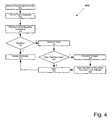
- Figure 4 depicts a method 400 of requesting confirmation of a communication handling rule change.
- the method 400 is performed using the system 100.
- the following discussion of the method 400 will lead to a further understanding of the system 100 and its various components.
- the system 100 and/or the method 400 can be varied, and need not work exactly as discussed herein in conjunction with each other, and that such variations are within the scope of present embodiments.
- a proposed change to a set of communication handling rules is determined, which in some embodiments may be similar to steps 310-350 of method 300, and hence step 405 may occur via the various analyzer modules 201-204, the information discovery module 205 and/or the rules formulation and confirmation module 206.
- other methods of determining a proposed change to a set of communication handling rules are within the scope of present embodiments.
- call handling presence server taught in US Patent Application Number 2007/0165554 may also be used to determine a proposed change to a set of communication handling rules.
- Other methods of determining a proposed change to a set of communication handling rules will occur one of skill in the art.
- step 410 it is determined that confirmation has been requested for a proposed change to a set of communication handling rules (e.g. the set of communication handling rules R1) for example the addition of a new communication handling rule to the set and/or a change to a communication handling rule within the set.
- the confirmation requested is similar to the confirmation requested at step 365 of method 300 described above.
- step 410 (and the following steps 420-455) may be implemented by the rules formulation and confirmation module 206.
- a time within a schedule is determined for requesting confirmation of the proposed change.
- the user 121 may have stored a preference within the set of communication handling rules R1 indicative of a preferred time for responding to confirmation request.
- a schedule associated with the user 121 and/or behaviour patterns associated with the user 121 are processed to determine a time within a schedule for requesting confirmation of the proposed change.
- the rules formulation and confirmation module 206 may request schedule data from the collaboration system 146 to determine when the user 121 may be available to respond to a confirmation request.
- the rules formulation and confirmation module 206 may process behaviour patterns of the user 121 stored at the historical repository H1 and/or behaviour patterns associated with existing communication handling rules stored in the set of communication handling rules R1.
- the set of communication handling rules R1 may comprise "meta-rules" for confirmation of policy rules. For example, based on the behaviour of how and when the user 121 directly approves proposed changes (as opposed to deferring approval to a later time or passing approval to a delegate), appropriate circumstances could be determined for requesting confirmation of the proposed change. For instance if the user 121 has a history of approving proposed changes prior to the first meeting of the day, requests for confirmation of a proposed change may be presented prior to the first meeting of each day.
- Such a history may be determined by processing the historical repository H1 and/or behaviour patterns associated with existing communication handling rules stored in the set of communication handling rules R1, to determine if the percentage of times that the user 121 approves rules prior to the first meeting of the day is greater than a threshold percentage (and/or a strong majority).
- schedule and/or behaviour pattern data processed successively (in any desired order) or concurrently to determine an optimal time to request confirmation from the user 121.
- a time within a schedule is determined for requesting confirmation of the proposed change comprises a time within the schedule that may be convenient for the user 121 to respond to confirmation requests.
- times within the schedule that may be convenient for the user 121 to respond to confirmation requests include but are not limited to:
- the user 121 may be presently available to respond to confirmation requests and confirmation is hence requested at step 430.
- the rules formulation and confirmation module 206 may cause a confirmation request to be transmitted to the client device 120.
- the client application 220 may responsively cause a pop-up to appear at the client device (e.g. on a display device associated with the client device 120), which relays the new communication handling rule and/or change and requests confirmation thereof, for example via accept/reject buttons within the pop-up.
- the pop-up may comprise a button which enables the user 121 to indicate that they wish to respond, but at a later time.
- the user 121 may also indicate desired delay and/or a desired time at which the user 121 wishes to be contacted for a response.
- a record of these events may be stored in the historical repository H1 (and used to determine a time for requesting confirmation for future proposed changes) and step 420 may be reapplied to determine the time at which confirmation is to be requested by processing the indication from the user 121.
- the rules formulation and confirmation module 206 may cause a confirmation request to be transmitted to the client application 220, communication device 122 and/or the mobile communication device 123 in any suitable format including an e-mail, a voicemail and/or a combination. If a voicemail, the user 121 may respond to the confirmation request via a voice interaction, for example via the IVR system 160.
- the confirmation request may further comprise an indication of productivity gains that may result by accepting the confirmation request.
- the system 100 may be further enabled to estimate the time saved if the confirmation request were accepted and hence the productivity gain. This indication may be offered to the user 121 as a further incentive for responding to the confirmation request.
- a delay is determined which is indicative of the length of time that the system 100 must wait before requesting confirmation from the user 121. In some embodiments, the delay may be determined concurrent with steps 415 and 420.
- the threshold delay may be set by an administrator of the system 100, while in other embodiments, the threshold delay may be set by the user 121 (and/or the user 126). If the delay is less then the threshold delay, then the system 100 delays at step 445 before requesting confirmation of the proposed change, at the time determined at step 420.
- a delegate is determined for requesting confirmation of the proposed change.
- the user 121 may have designated a delegate via an interaction with the client application 220, a delegate identifier being subsequently stored at the database 138.
- the information feeds 140-154 may be queried to determine a delegate.
- a delegate may be determined by querying the organization database 148 to determine a suitable colleague and/or a subordinate to the user 121, such as an administrative assistant.
- the collaboration system 146 may be queried to determine a suitable contact associated with a project on which the user 121 is presently collaborating.
- the system 100 may be enabled to determine a suitable communication handling rule for determining a suitable delegate.
- a first delegate may be available during some time periods but not other time periods, while a second suitable delegate may be available during those time periods when the first delegate is not available.
- the suitable delegate may also be associated with the proposed change. For example, if the proposed change is associated with communications related to a particular project, a suitable delegate may be a delegate associated with the particular project. Similarly another proposed change may be associated with general communications, and a suitable delegate may be an administrative assistant.
- the user 126 is determined to be a suitable delegate.
- the delegate device 125 is determined to be a suitable delegate.
- step 455 a time within a delegate schedule is determined for requesting confirmation of the proposed change, similar to the step 420. If the delegate is not presently available, the system 100 again delays at step 445 before requesting confirmation at step 430 from the delegate at step 430 (e.g. by contacting the delegate via the delegate device 125 (e.g. via the client application 225) and/or the communication device 127, as described above with respect to the user 121).
- the method 400 may also determine if a delay until the delegate is available exceeds a threshold delay (for example if the user 126 is on vacation at the same time as the user 121), and may further determine another delegate. This process may continue indefinitely until a suitable delegate who is able to respond to confirmation requests in a timely fashion is determined.
- a threshold delay for example if the user 126 is on vacation at the same time as the user 121
- the system 100 conveniently determines a delegate who can respond to the confirmation requests, and the proposed change (or changes) to a set of communication handling rules is implemented in a timely fashion.
- the functionality of the application 135, the client application 220, the client application 225, the switch application 229 and the IVR system application 260 may be implemented using pre-programmed hardware or firmware elements (e.g., application specific integrated circuits (ASICs), electrically erasable programmable read-only memories (EEPROMs), etc.), or other related components.
- the functionality of the application 135, the client application 220, the client application 225, the switch application 229 and the IVR system application 260 may be achieved using a computing apparatus that has access to a code memory (not shown) which stores computer-readable program code for operation of the computing apparatus.
- the computer-readable program code could be stored on a medium which is fixed, tangible and readable directly by these components, (e.g., removable diskette, CD-ROM, ROM, fixed disk, USB drive), or the computer-readable program code could be stored remotely but transmittable to these components via a modem or other interface device connected to a network (including, without limitation, the Internet) over a transmission medium.
- the transmission medium may be either a non-wireless medium (e.g., optical or analog communications lines) or a wireless medium (e.g., microwave, infrared, free-space optical or other transmission schemes) or a combination thereof.
Landscapes
- Engineering & Computer Science (AREA)
- Signal Processing (AREA)
- Telephonic Communication Services (AREA)
Claims (16)
- Verfahren zum Betreiben eines Systems (100), um eine Bestätigung einer Änderung einer Kommunikationsverarbeitungsregel anzufordern, wobei das Verfahren umfaßt, dass
das System eine vorgeschlagene Änderung zu einem Satz von Kommunikationsverarbeitungsregeln (R1) bestimmt, welche in einer Datenbank (138) gespeichert sind;
das System eine Zeit innerhalb eines Zeitplans zum Anfordern einer Bestätigung der vorgeschlagenen Änderung bestimmt durch:Verwenden von Zeitplandaten, welche von einem anderen System (164) empfangen wurden, um zu bestimmen, wann ein Nutzer (121) verfügbar wäre, um auf eine Bestätigungsanforderung zu antworten, und/oderin dem Satz von Kommunikationsverarbeitungsregeln (R1) gespeichert sind; und
Verarbeiten von Verhaltensmusterdaten des Nutzers, welche in einem historischen Repository (H1) gespeichert und/oder bestehenden Kommunikationsregeln zugeordnet sind, welche
das System die Bestätigung der vorgeschlagenen Änderung zu der Zeit anfordert. - Verfahren nach Anspruch 1, umfassend, dass das System die Zeit innerhalb eines Zeitplans zum Anfordern einer Bestätigung der vorgeschlagenen Änderung durch aufeinanderfolgendes oder gleichzeitiges Verarbeiten der Zeitplandaten und/oder der Verhaltensmusterdaten bestimmt, um eine Zeit zum Anfordern einer Bestätigung von dem Nutzer zu bestimmen.
- Verfahren nach Anspruch 1 oder Anspruch 2, ferner umfassend, dass das System einen Ort zum Anfordern der Bestätigung bestimmt und das System die Bestätigung der vorgeschlagenen Änderung zu der Zeit und an dem Ort anfordert.
- Verfahren nach einem der vorhergehenden Ansprüche, ferner umfassend, dass das System ein Kommunikationsgerät zum Anfordern der Bestätigung bestimmt und das System die Bestätigung der vorgeschlagenen Änderung zu der Zeit und an dem Kommunikationsgerät anfordert.
- Verfahren nach einem der vorhergehenden Ansprüche, ferner umfassend, dass
das System bestimmt, dass es keine geeignete Zeit innerhalb eines Zeitplans zum Anfordern einer Bestätigung der vorgeschlagenen Änderung gibt; und in Antwort darauf:
das System einen Stellvertreter zum Anfordern der Bestätigung der vorgeschlagenen Änderung bestimmt;
das System eine Zeit innerhalb eines Stellvertreterzeitplans zum Anfordern einer Bestätigung der vorgeschlagenen Änderung bestimmt; und
das System die Bestätigung der vorgeschlagenen Änderung von dem Stellvertreter zu der Zeit innerhalb des Stellvertreterzeitplans anfordert. - Verfahren nach Anspruch 5, wobei das Bestimmen, dass es keine geeignete Zeit innerhalb eines Zeitplans zum Anfordern einer Bestätigung der vorgeschlagenen Änderung gibt, umfasst, dass
das System eine Verzögerung zum Anfordern der Bestätigung basierend auf einer gegenwärtigen Zeit und der Zeit innerhalb eines Zeitplans bestimmt; und
das System bestimmt, dass die Verzögerung größer als eine Schwellwertverzögerung ist. - Verfahren nach Anspruch 5 oder Anspruch 6, wobei das Bestimmen einer Zeit innerhalb eines Stellvertreterzeitplans zum Anfordern der Systembestätigung der vorgeschlagenen Änderung Verarbeiten des Stellvertreterzeitplans und/oder einer Aufzeichnung von wenigstens einer vorher bestimmten Zeit zum Anfordern einer Bestätigung von einer vorher vorgeschlagenen Änderung zu dem Satz von Kommunikationsverarbeitungsregeln von dem Stellvertreter umfasst.
- Verfahren nach einem der vorhergehenden Ansprüche, ferner umfassend, dass
das System eine Bestätigung der Änderung der Kommunikationsverarbeitungsregel von dem Clientgerät empfängt; und
das System eine geänderte oder abgefasste Kommunikationsverarbeitungsregel implementiert. - Verfahren nach einem der vorhergehenden Ansprüche, wobei Kommunikationsverarbeitungsregeln eine oder mehrere Regeln umfassen zum:Routen von Anrufen, Akzeptieren eines Anrufs, Anschalten/Abschalten von mobiler Doppelung, Markieren eines Anrufs als dringlich, Anwenden von Anrufuntersuchung, Ändern des Vorhandenseins des Nutzers, Erzeugen eines wiederzugebenden Grußes an einen Anrufer, Anrufweiterleiten, Benachrichtigen von E-Mail und Umleiten von Anrufen.
- System zum Anfordern einer Bestätigung einer Änderung einer Kommunikationsverarbeitungsregel, umfassend:Mittel zum Bestimmen einer vorgeschlagenen Änderung zu einem Satz von Kommunikationsverarbeitungsregeln (R1), welche in einer Datenbank (138) gespeichert sind;Mittel zum Bestimmen einer Zeit innerhalb eines Zeitplans zum Anfordern von Bestätigung der vorgeschlagenen Änderung durch:in dem Satz von Kommunikationsverarbeitungsregeln (R1) gespeichert sind; undVerwenden von Zeitplandaten, welche von einem anderen System (164) empfangen wurden, um zu bestimmen, wann ein Nutzer (121) verfügbar wäre, um auf eine Bestätigungsanforderung zu antworten, und/oder
Verarbeiten von Verhaltensmusterdaten des Nutzers, welche in einem historischen Repository (H1) gespeichert und/oder bestehenden Kommunikationsregeln zugeordnet sind, welche
Mittel zum Anfordern der Bestätigung der vorgeschlagenen Änderung zu der Zeit. - System nach Anspruch 10, umfassend
wenigstens ein Clientgerät (120) in Kommunikation mit dem Verarbeitungsgerät zum Empfangen einer Bestätigungsanforderung, welche im Zusammenhang mit dem Anfordern der Bestätigung der vorgeschlagenen Änderung erzeugt wurde, zu der Zeit und Beantworten der Bestätigungsanforderung. - System nach Anspruch 11, umfassend:Mittel zum Bestimmen, dass es keine geeignete Zeit innerhalb eines Zeitplans zum Anfordern von Bestätigung der vorgeschlagenen Änderung gibt; und in Antwort darauf:Mittel zum Bestimmen eines Stellvertreters zum Anfordern der Bestätigung der vorgeschlagenen Änderung;Mittel zum Bestimmen einer Zeit innerhalb eines Stellvertreterzeitplans zum Anfordern von Bestätigung der vorgeschlagenen Änderung; undMittel zum Anfordern der Bestätigung der vorgeschlagenen Änderung von dem Stellvertreter zu der Zeit innerhalb des Stellvertreterzeitplans; undwobei das System ferner umfasstwenigstens ein Stellvertretergerät, welches dem Stellvertreter zugeordnet ist, in Kommunikation mit dem Verarbeitungsgerät, umfassend Mittel zum Empfangen einer Stellvertreterbestätigungsanforderung, welche im Zusammenhang mit dem Anfordern der Bestätigung der vorgeschlagenen Änderung von dem Stellvertreter erzeugt wurde, zu der Zeit innerhalb des Stellvertreterzeitplans und Mittel zum Beantworten der Stellvertreterbestätigungsanforderung.
- System nach Anspruch 11 oder Anspruch 12, ferner umfassend
wenigstens ein Analysemodul zum Analysieren von Information von der wenigstens einen Informationseingabe, wobei das wenigstens eine Analysemodul wenigstens eines umfasst von:einem Anrufprotokollnachrichtanalysator (201), der zur Analyse von Telefonieaktivitäten eines Nutzers geeignet ist, welcher dem Clientgerät und/oder einem Stellvertretergerät zugeordnet ist;einen Nachrichtenvermittlungsanalysator (202), der dazu geeignet ist, Nachrichtenvermittlungsaktivitäten des Nutzers zu analysieren, wobei die Nachrichtenvermittlungsaktivitäten Sprachmitteilung, Fax, E-Mails und/oder Chatsitzungen zugeordnet sind;einen Kollaborationsanalysator (203), der dazu geeignet ist, Kollaborationsaktivitäten des Nutzers zu analysieren, wobei Kollaborationsaktivitäten Aufgaben, Konferenz und/oder Kontakten zugeordnet sind;einen Vorhandenseinsanalysator (204), der dazu geeignet ist, Daten hinsichtlich Vorhandensein zu analysieren, welche dem Nutzer zugeordnet sind, wobei die Daten hinsichtlich Vorhandensein gegenwärtigen Kalenderaktivitäten, zukünftigen Kalenderaktivitäten, Tastaturaktivität, Umgebungserfassung des Nutzers und/oder Information einer Vorhandenseinsmaschine zugeordnet sind; undein Informationsentdeckungsmodul (205), das dazu geeignet ist, Daten von dem wenigstens einen Analysemodul zu empfangen und ein Muster basierend auf den Daten zu bestimmen; undein Regelabfassungs- und -bestätigungsmodul (206), das dazu geeignet ist, Muster von dem Informationsentdeckungsmodul zu empfangen; vordefinierte Algorithmen zu verwenden, um einen Mittelwert für ein bestimmtes Muster dazu zu bestimmen, dass zur vorgeschlagenen Änderung zu einem Satz von Kommunikationsverarbeitungsregeln gelangt wird; und die vorgeschlagene Änderung in der Datenbank zu speichern. - System nach Anspruch 13, wobei das Verarbeitungsgerät Zugriff auf ein historisches Repository von Daten hat, welche vorher von dem wenigstens einen Analysemodul empfangen wurden, und wobei das Informationsentdeckungsmodul ferner dazu geeignet ist, die Daten zu dem historischen Repository hinzuzufügen, falls die Daten unzureichend sind, um ein Muster zu bilden, und wobei das Informationsentdeckungsmodul optional ferner dazu geeignet ist, das Muster basierend auf den Daten, die in dem historischen Repository gespeichert sind, zu bestimmen.
- System nach einem der Ansprüche 13 bis 15, wobei Bestimmen einer Zeit innerhalb eines Zeitplans zum Anfordern von Bestätigung der vorgeschlagenen Änderung auf dem Muster basiert.
- System nach einem der Ansprüche 13 bis 15, ferner umfassend: wenigstens ein Kommunikationsgerät, welches dazu geeignet ist, sich an Kommunikationssitzungen zu beteiligen; und einen Switch, welcher dazu geeignet ist, Kommunikationssitzungen mit wenigstens einem Kommunikationsgerät zu steuern, wobei der Switch ferner dazu geeignet ist, die Kommunikationsverarbeitungsregeln von dem Verarbeitungsgerät zu empfangen, und ferner dazu geeignet ist, die Kommunikationsverarbeitungsregeln auf die Kommunikationssitzungen anzuwenden.
Applications Claiming Priority (1)
| Application Number | Priority Date | Filing Date | Title |
|---|---|---|---|
| US12/082,904 US8605879B2 (en) | 2008-04-15 | 2008-04-15 | Method, system and apparatus for requesting confirmation of a communication handling rule change |
Publications (2)
| Publication Number | Publication Date |
|---|---|
| EP2111028A1 EP2111028A1 (de) | 2009-10-21 |
| EP2111028B1 true EP2111028B1 (de) | 2013-05-08 |
Family
ID=40433773
Family Applications (1)
| Application Number | Title | Priority Date | Filing Date |
|---|---|---|---|
| EP08159008.5A Active EP2111028B1 (de) | 2008-04-15 | 2008-06-25 | Bestätigungsanforderung für die Änderung einer Kommunikationsverarbeitungsregel |
Country Status (4)
| Country | Link |
|---|---|
| US (1) | US8605879B2 (de) |
| EP (1) | EP2111028B1 (de) |
| CN (1) | CN101562617A (de) |
| CA (1) | CA2638052C (de) |
Families Citing this family (34)
| Publication number | Priority date | Publication date | Assignee | Title |
|---|---|---|---|---|
| CA2506665A1 (en) * | 2005-05-06 | 2006-11-06 | Iotum Inc. | Method of and system for telecommunication management |
| US8775543B2 (en) * | 2008-05-13 | 2014-07-08 | Nokia Corporation | Methods, apparatuses, and computer program products for analyzing communication relationships |
| US20100315483A1 (en) * | 2009-03-20 | 2010-12-16 | King Keith C | Automatic Conferencing Based on Participant Presence |
| US9438738B2 (en) * | 2009-10-29 | 2016-09-06 | Cisco Technology, Inc. | Automatic updating of voicemail greetings based on networking status |
| US11137659B2 (en) | 2009-12-22 | 2021-10-05 | View, Inc. | Automated commissioning of controllers in a window network |
| US10303035B2 (en) | 2009-12-22 | 2019-05-28 | View, Inc. | Self-contained EC IGU |
| US11592723B2 (en) | 2009-12-22 | 2023-02-28 | View, Inc. | Automated commissioning of controllers in a window network |
| US8842153B2 (en) | 2010-04-27 | 2014-09-23 | Lifesize Communications, Inc. | Automatically customizing a conferencing system based on proximity of a participant |
| US8884736B1 (en) * | 2010-11-08 | 2014-11-11 | Cox Communications, Inc. | Multiple system and presence-based call processing |
| US11054792B2 (en) | 2012-04-13 | 2021-07-06 | View, Inc. | Monitoring sites containing switchable optical devices and controllers |
| US12105394B2 (en) | 2011-03-16 | 2024-10-01 | View, Inc. | Commissioning window networks |
| US12498609B2 (en) | 2011-03-16 | 2025-12-16 | View Operating Corporation | Commissioning window networks |
| US10989976B2 (en) | 2011-03-16 | 2021-04-27 | View, Inc. | Commissioning window networks |
| US8717400B2 (en) * | 2011-07-29 | 2014-05-06 | Lifesize Communications, Inc. | Automatically moving a conferencing based on proximity of a participant |
| EP3223532B1 (de) | 2012-04-13 | 2019-10-09 | View, Inc. | Anwendungen zur steuerung optisch schaltbarer vorrichtungen |
| US12400651B2 (en) | 2012-04-13 | 2025-08-26 | View Operating Corporation | Controlling optically-switchable devices |
| US10964320B2 (en) | 2012-04-13 | 2021-03-30 | View, Inc. | Controlling optically-switchable devices |
| US11255120B2 (en) | 2012-05-25 | 2022-02-22 | View, Inc. | Tester and electrical connectors for insulated glass units |
| WO2014022311A2 (en) * | 2012-07-30 | 2014-02-06 | Google Inc. | Access control in communication environments |
| CN103972735A (zh) * | 2013-01-30 | 2014-08-06 | 鸿富锦精密电子(天津)有限公司 | 信号切换电路及包括该电路的pcie连接器组合 |
| US10080112B2 (en) * | 2013-05-13 | 2018-09-18 | Hiya, Inc. | Unwanted caller and message sender identification for restricted communication devices |
| US9177410B2 (en) | 2013-08-09 | 2015-11-03 | Ayla Mandel | System and method for creating avatars or animated sequences using human body features extracted from a still image |
| US9313631B2 (en) | 2013-12-19 | 2016-04-12 | Vonage Business Inc. | Method and system for intelligent call termination |
| KR102336168B1 (ko) | 2014-03-05 | 2021-12-07 | 뷰, 인크. | 스위칭가능한 광 디바이스들 및 제어기들을 포함하는 사이트들 모니터링 |
| US20160072736A1 (en) * | 2014-09-04 | 2016-03-10 | International Business Machines Corporation | Proactive out of office notification |
| GB2537587B (en) | 2015-02-27 | 2019-01-02 | Novastone Media Ltd | Asymmetric permissions in a communications system |
| US10693920B2 (en) * | 2015-04-29 | 2020-06-23 | Secure Connection Ltd. | Systems and methods for screening communication sessions |
| US10193982B2 (en) | 2015-04-29 | 2019-01-29 | Secure Connection Ltd. | Systems and methods for reconnecting calls |
| CA3017138A1 (en) | 2016-03-09 | 2017-09-14 | View, Inc. | Method of commissioning electrochromic windows |
| US9852377B1 (en) * | 2016-11-10 | 2017-12-26 | Dropbox, Inc. | Providing intelligent storage location suggestions |
| US10922494B2 (en) * | 2018-12-11 | 2021-02-16 | Mitel Networks Corporation | Electronic communication system with drafting assistant and method of using same |
| TW202206925A (zh) | 2020-03-26 | 2022-02-16 | 美商視野公司 | 多用戶端網路中之存取及傳訊 |
| TW202230116A (zh) | 2020-12-11 | 2022-08-01 | 美商視野公司 | 多組件網路中之組件更新 |
| CN112860962B (zh) * | 2021-02-10 | 2024-04-09 | 北京百度网讯科技有限公司 | 处理提问信息的方法、装置、电子设备和介质 |
Citations (2)
| Publication number | Priority date | Publication date | Assignee | Title |
|---|---|---|---|---|
| US20020196919A1 (en) * | 2001-06-25 | 2002-12-26 | Bellsouth Intellectual Property Corporation | Method and system for analyzing and preparing an optimum telephone services call plan |
| EP1662817A1 (de) * | 2004-11-30 | 2006-05-31 | France Telecom S.A. | System und Verfahren zur Bereitstellung von Information auf beliebige Art und Weise der Kommunication |
Family Cites Families (8)
| Publication number | Priority date | Publication date | Assignee | Title |
|---|---|---|---|---|
| JP2002257955A (ja) * | 2000-12-25 | 2002-09-11 | Seiko Epson Corp | 通信機能付腕時計装置、情報表示方法、制御プログラム及び記録媒体 |
| US6554442B2 (en) * | 2001-06-26 | 2003-04-29 | Shin Jiuh Corp. | Keyboard illumination structure |
| US7035390B2 (en) | 2003-03-07 | 2006-04-25 | Nortel Networks Limited | User controlled call routing for multiple telephony devices |
| US20050215243A1 (en) | 2004-03-26 | 2005-09-29 | Black Cypress, Inc. | Automatic mobile call forwarding with time-based and location-based trigger events |
| US20070165554A1 (en) * | 2004-12-23 | 2007-07-19 | Agovo Communications Inc. | System, Method and Portable Communication Device |
| CN101047430B (zh) * | 2006-06-16 | 2010-09-08 | 华为技术有限公司 | 一种选择基站的方法及系统 |
| WO2008053467A2 (en) * | 2006-10-29 | 2008-05-08 | Neatcall Ltd. | Methods and systems for setting, scheduling, optimizing, and initiating personal communication, adn prioritizing communication channels and devices |
| US8200520B2 (en) * | 2007-10-03 | 2012-06-12 | International Business Machines Corporation | Methods, systems, and apparatuses for automated confirmations of meetings |
-
2008
- 2008-04-15 US US12/082,904 patent/US8605879B2/en active Active
- 2008-06-25 EP EP08159008.5A patent/EP2111028B1/de active Active
- 2008-07-17 CA CA2638052A patent/CA2638052C/en active Active
-
2009
- 2009-04-15 CN CNA2009101336682A patent/CN101562617A/zh active Pending
Patent Citations (2)
| Publication number | Priority date | Publication date | Assignee | Title |
|---|---|---|---|---|
| US20020196919A1 (en) * | 2001-06-25 | 2002-12-26 | Bellsouth Intellectual Property Corporation | Method and system for analyzing and preparing an optimum telephone services call plan |
| EP1662817A1 (de) * | 2004-11-30 | 2006-05-31 | France Telecom S.A. | System und Verfahren zur Bereitstellung von Information auf beliebige Art und Weise der Kommunication |
Also Published As
| Publication number | Publication date |
|---|---|
| US8605879B2 (en) | 2013-12-10 |
| CA2638052C (en) | 2014-02-11 |
| CN101562617A (zh) | 2009-10-21 |
| CA2638052A1 (en) | 2009-10-15 |
| EP2111028A1 (de) | 2009-10-21 |
| US20090257576A1 (en) | 2009-10-15 |
Similar Documents
| Publication | Publication Date | Title |
|---|---|---|
| US8605879B2 (en) | Method, system and apparatus for requesting confirmation of a communication handling rule change | |
| KR101763973B1 (ko) | 동적 연락처 목록 관리 기법 | |
| US6430289B1 (en) | System and method for computerized status monitor and use in a telephone network | |
| EP2577950B1 (de) | Verwaltung von rufweiterleitungsprofilen | |
| EP2067338B1 (de) | Anrufuntersuchungdurchführender und personalisierte verfügbarkeitsinformationen bereitstellender meetme-assistent | |
| CA2700798C (en) | Extended cascaded ringing | |
| US7751383B2 (en) | Method and system for facilitating mediated communication | |
| US8781094B2 (en) | Contextual call routing by calling party specified information through called party specified form | |
| US20070121829A1 (en) | Virtual personal assistant for handling calls in a communication system | |
| US20060210034A1 (en) | Enabling a user to store a messaging session entry for delivery when an intended recipient is next available | |
| US20080219423A1 (en) | System and method for centralized presence management of local and remote users | |
| US9774638B2 (en) | Universal state-aware communications | |
| US20050141479A1 (en) | Presence-based routing in a communications network environment | |
| US8953768B2 (en) | Call-handling rules | |
| US20080075251A1 (en) | Method of and System for Managing Outgoing Telephone Calls | |
| US8189755B2 (en) | Call urgency screening | |
| US20050141687A1 (en) | Call treatment in a communications system based on instant messaging | |
| WO2011001291A2 (en) | Method and apparatus for managing interpersonal communications | |
| US20110208813A1 (en) | Personal status communications manager | |
| CN102611807A (zh) | 一种未接来电处理方法 | |
| WO2006038963A1 (en) | System and method for predicting availability | |
| US8699685B2 (en) | Method for managing communication events in a communication system | |
| CA2556715C (en) | Method of and system for managing outgoing telephone calls | |
| JP2007053638A (ja) | 電話転送システム |
Legal Events
| Date | Code | Title | Description |
|---|---|---|---|
| PUAI | Public reference made under article 153(3) epc to a published international application that has entered the european phase |
Free format text: ORIGINAL CODE: 0009012 |
|
| AK | Designated contracting states |
Kind code of ref document: A1 Designated state(s): AT BE BG CH CY CZ DE DK EE ES FI FR GB GR HR HU IE IS IT LI LT LU LV MC MT NL NO PL PT RO SE SI SK TR |
|
| AX | Request for extension of the european patent |
Extension state: AL BA MK RS |
|
| 17P | Request for examination filed |
Effective date: 20100129 |
|
| 17Q | First examination report despatched |
Effective date: 20100511 |
|
| AKX | Designation fees paid |
Designated state(s): DE FR GB |
|
| GRAP | Despatch of communication of intention to grant a patent |
Free format text: ORIGINAL CODE: EPIDOSNIGR1 |
|
| GRAS | Grant fee paid |
Free format text: ORIGINAL CODE: EPIDOSNIGR3 |
|
| GRAA | (expected) grant |
Free format text: ORIGINAL CODE: 0009210 |
|
| AK | Designated contracting states |
Kind code of ref document: B1 Designated state(s): DE FR GB |
|
| REG | Reference to a national code |
Ref country code: GB Ref legal event code: FG4D |
|
| REG | Reference to a national code |
Ref country code: DE Ref legal event code: R096 Ref document number: 602008024390 Country of ref document: DE Effective date: 20130704 |
|
| PLBE | No opposition filed within time limit |
Free format text: ORIGINAL CODE: 0009261 |
|
| STAA | Information on the status of an ep patent application or granted ep patent |
Free format text: STATUS: NO OPPOSITION FILED WITHIN TIME LIMIT |
|
| 26N | No opposition filed |
Effective date: 20140211 |
|
| REG | Reference to a national code |
Ref country code: DE Ref legal event code: R097 Ref document number: 602008024390 Country of ref document: DE Effective date: 20140211 |
|
| REG | Reference to a national code |
Ref country code: FR Ref legal event code: PLFP Year of fee payment: 9 |
|
| REG | Reference to a national code |
Ref country code: FR Ref legal event code: PLFP Year of fee payment: 10 |
|
| REG | Reference to a national code |
Ref country code: FR Ref legal event code: PLFP Year of fee payment: 11 |
|
| PGFP | Annual fee paid to national office [announced via postgrant information from national office to epo] |
Ref country code: DE Payment date: 20250402 Year of fee payment: 18 |
|
| PGFP | Annual fee paid to national office [announced via postgrant information from national office to epo] |
Ref country code: GB Payment date: 20250401 Year of fee payment: 18 |
|
| PGFP | Annual fee paid to national office [announced via postgrant information from national office to epo] |
Ref country code: FR Payment date: 20250508 Year of fee payment: 18 |