EP2108655A1 - Immune-modulating peptide - Google Patents
Immune-modulating peptide Download PDFInfo
- Publication number
- EP2108655A1 EP2108655A1 EP09156973A EP09156973A EP2108655A1 EP 2108655 A1 EP2108655 A1 EP 2108655A1 EP 09156973 A EP09156973 A EP 09156973A EP 09156973 A EP09156973 A EP 09156973A EP 2108655 A1 EP2108655 A1 EP 2108655A1
- Authority
- EP
- European Patent Office
- Prior art keywords
- lung
- seq
- syndrome
- peptide
- inflammation
- Prior art date
- Legal status (The legal status is an assumption and is not a legal conclusion. Google has not performed a legal analysis and makes no representation as to the accuracy of the status listed.)
- Granted
Links
- 108090000765 processed proteins & peptides Proteins 0.000 title claims abstract description 202
- 230000002519 immonomodulatory effect Effects 0.000 title description 3
- 210000004027 cell Anatomy 0.000 claims abstract description 129
- 102000004196 processed proteins & peptides Human genes 0.000 claims abstract description 120
- 102000011652 Formyl peptide receptors Human genes 0.000 claims abstract description 106
- 108010076288 Formyl peptide receptors Proteins 0.000 claims abstract description 106
- 102100021126 N-formyl peptide receptor 2 Human genes 0.000 claims abstract description 90
- 101710091942 N-formyl peptide receptor 2 Proteins 0.000 claims abstract description 90
- 230000004913 activation Effects 0.000 claims abstract description 33
- 239000011575 calcium Substances 0.000 claims abstract description 31
- OYPRJOBELJOOCE-UHFFFAOYSA-N Calcium Chemical compound [Ca] OYPRJOBELJOOCE-UHFFFAOYSA-N 0.000 claims abstract description 30
- 229910052791 calcium Inorganic materials 0.000 claims abstract description 30
- 210000000440 neutrophil Anatomy 0.000 claims abstract description 21
- OUUQCZGPVNCOIJ-UHFFFAOYSA-M Superoxide Chemical compound [O-][O] OUUQCZGPVNCOIJ-UHFFFAOYSA-M 0.000 claims abstract description 19
- 230000003399 chemotactic effect Effects 0.000 claims abstract description 14
- 230000005012 migration Effects 0.000 claims abstract description 13
- 238000013508 migration Methods 0.000 claims abstract description 13
- 210000001616 monocyte Anatomy 0.000 claims abstract description 12
- 102000001253 Protein Kinase Human genes 0.000 claims abstract description 6
- 108060006633 protein kinase Proteins 0.000 claims abstract description 6
- 230000001105 regulatory effect Effects 0.000 claims abstract description 6
- 108010056859 Trp-Lys-Tyr-Met-Val-Met Proteins 0.000 claims description 94
- FMBGOORJEKQQLG-JUZZZACGSA-N (2s)-6-amino-2-[[(2s)-2-amino-3-(1h-indol-3-yl)propanoyl]amino]-n-[(2s)-1-[[(2s)-1-[[(2s)-1-[[(2r)-1-amino-4-methylsulfanyl-1-oxobutan-2-yl]amino]-3-methyl-1-oxobutan-2-yl]amino]-4-methylsulfanyl-1-oxobutan-2-yl]amino]-3-(4-hydroxyphenyl)-1-oxopropan-2-yl Chemical compound C([C@@H](C(=O)N[C@@H](CCSC)C(=O)N[C@H](C(=O)N[C@H](CCSC)C(N)=O)C(C)C)NC(=O)[C@H](CCCCN)NC(=O)[C@@H](N)CC=1C2=CC=CC=C2NC=1)C1=CC=C(O)C=C1 FMBGOORJEKQQLG-JUZZZACGSA-N 0.000 claims description 84
- 125000003275 alpha amino acid group Chemical group 0.000 claims description 59
- 208000037265 diseases, disorders, signs and symptoms Diseases 0.000 claims description 24
- 206010061218 Inflammation Diseases 0.000 claims description 23
- 208000015181 infectious disease Diseases 0.000 claims description 23
- 230000004054 inflammatory process Effects 0.000 claims description 23
- 206010016654 Fibrosis Diseases 0.000 claims description 22
- 230000001684 chronic effect Effects 0.000 claims description 22
- 230000004761 fibrosis Effects 0.000 claims description 22
- 210000004072 lung Anatomy 0.000 claims description 22
- 230000001939 inductive effect Effects 0.000 claims description 14
- 201000010099 disease Diseases 0.000 claims description 13
- 239000003814 drug Substances 0.000 claims description 13
- 210000000265 leukocyte Anatomy 0.000 claims description 13
- 208000031261 Acute myeloid leukaemia Diseases 0.000 claims description 11
- 206010001052 Acute respiratory distress syndrome Diseases 0.000 claims description 11
- 201000004384 Alopecia Diseases 0.000 claims description 11
- 206010003210 Arteriosclerosis Diseases 0.000 claims description 11
- 201000001320 Atherosclerosis Diseases 0.000 claims description 11
- 208000032791 BCR-ABL1 positive chronic myelogenous leukemia Diseases 0.000 claims description 11
- 208000006545 Chronic Obstructive Pulmonary Disease Diseases 0.000 claims description 11
- 208000010833 Chronic myeloid leukaemia Diseases 0.000 claims description 11
- 206010009900 Colitis ulcerative Diseases 0.000 claims description 11
- 201000003874 Common Variable Immunodeficiency Diseases 0.000 claims description 11
- 206010018364 Glomerulonephritis Diseases 0.000 claims description 11
- 201000005569 Gout Diseases 0.000 claims description 11
- 206010020843 Hyperthermia Diseases 0.000 claims description 11
- 208000009388 Job Syndrome Diseases 0.000 claims description 11
- 208000016604 Lyme disease Diseases 0.000 claims description 11
- 206010027476 Metastases Diseases 0.000 claims description 11
- 208000033761 Myelogenous Chronic BCR-ABL Positive Leukemia Diseases 0.000 claims description 11
- 208000033776 Myeloid Acute Leukemia Diseases 0.000 claims description 11
- 206010028980 Neoplasm Diseases 0.000 claims description 11
- 208000001132 Osteoporosis Diseases 0.000 claims description 11
- 206010035664 Pneumonia Diseases 0.000 claims description 11
- 201000004681 Psoriasis Diseases 0.000 claims description 11
- 208000013616 Respiratory Distress Syndrome Diseases 0.000 claims description 11
- 206010040047 Sepsis Diseases 0.000 claims description 11
- 206010053879 Sepsis syndrome Diseases 0.000 claims description 11
- 206010051379 Systemic Inflammatory Response Syndrome Diseases 0.000 claims description 11
- 201000009594 Systemic Scleroderma Diseases 0.000 claims description 11
- 206010042953 Systemic sclerosis Diseases 0.000 claims description 11
- 206010052779 Transplant rejections Diseases 0.000 claims description 11
- 206010067584 Type 1 diabetes mellitus Diseases 0.000 claims description 11
- 201000006704 Ulcerative Colitis Diseases 0.000 claims description 11
- 231100000360 alopecia Toxicity 0.000 claims description 11
- 208000011775 arteriosclerosis disease Diseases 0.000 claims description 11
- 208000006673 asthma Diseases 0.000 claims description 11
- 210000003719 b-lymphocyte Anatomy 0.000 claims description 11
- 201000011510 cancer Diseases 0.000 claims description 11
- 230000005907 cancer growth Effects 0.000 claims description 11
- 208000035475 disorder Diseases 0.000 claims description 11
- 208000009190 disseminated intravascular coagulation Diseases 0.000 claims description 11
- 201000002491 encephalomyelitis Diseases 0.000 claims description 11
- 208000010227 enterocolitis Diseases 0.000 claims description 11
- 208000024908 graft versus host disease Diseases 0.000 claims description 11
- 230000033687 granuloma formation Effects 0.000 claims description 11
- 206010051040 hyper-IgE syndrome Diseases 0.000 claims description 11
- 230000036031 hyperthermia Effects 0.000 claims description 11
- 238000009169 immunotherapy Methods 0.000 claims description 11
- 230000002458 infectious effect Effects 0.000 claims description 11
- 208000032839 leukemia Diseases 0.000 claims description 11
- 210000004185 liver Anatomy 0.000 claims description 11
- 230000009401 metastasis Effects 0.000 claims description 11
- 230000001613 neoplastic effect Effects 0.000 claims description 11
- 210000000056 organ Anatomy 0.000 claims description 11
- 208000028169 periodontal disease Diseases 0.000 claims description 11
- 230000010410 reperfusion Effects 0.000 claims description 11
- 206010039073 rheumatoid arthritis Diseases 0.000 claims description 11
- 201000000306 sarcoidosis Diseases 0.000 claims description 11
- 208000011580 syndromic disease Diseases 0.000 claims description 11
- 238000002054 transplantation Methods 0.000 claims description 11
- 208000035408 type 1 diabetes mellitus 1 Diseases 0.000 claims description 11
- 230000001965 increasing effect Effects 0.000 claims description 9
- 230000004936 stimulating effect Effects 0.000 claims description 6
- 210000003819 peripheral blood mononuclear cell Anatomy 0.000 claims description 5
- 239000008194 pharmaceutical composition Substances 0.000 claims description 4
- 230000004048 modification Effects 0.000 claims description 3
- 238000012986 modification Methods 0.000 claims description 3
- 241000701022 Cytomegalovirus Species 0.000 claims 10
- 102000040430 polynucleotide Human genes 0.000 claims 2
- 108091033319 polynucleotide Proteins 0.000 claims 2
- 239000002157 polynucleotide Substances 0.000 claims 2
- 230000026731 phosphorylation Effects 0.000 abstract description 20
- 238000006366 phosphorylation reaction Methods 0.000 abstract description 20
- 230000003834 intracellular effect Effects 0.000 abstract description 8
- 210000005259 peripheral blood Anatomy 0.000 abstract description 3
- 239000011886 peripheral blood Substances 0.000 abstract description 3
- 238000000338 in vitro Methods 0.000 abstract description 2
- 230000000694 effects Effects 0.000 description 53
- 238000000034 method Methods 0.000 description 38
- 239000000126 substance Substances 0.000 description 24
- 239000003446 ligand Substances 0.000 description 18
- 108091008611 Protein Kinase B Proteins 0.000 description 17
- 230000035605 chemotaxis Effects 0.000 description 17
- 230000001404 mediated effect Effects 0.000 description 16
- 230000001086 cytosolic effect Effects 0.000 description 14
- 238000000586 desensitisation Methods 0.000 description 14
- 230000006698 induction Effects 0.000 description 14
- 102000005962 receptors Human genes 0.000 description 13
- 108020003175 receptors Proteins 0.000 description 13
- 102000007665 Extracellular Signal-Regulated MAP Kinases Human genes 0.000 description 12
- 108010007457 Extracellular Signal-Regulated MAP Kinases Proteins 0.000 description 12
- 230000000638 stimulation Effects 0.000 description 12
- 238000002474 experimental method Methods 0.000 description 11
- 230000028327 secretion Effects 0.000 description 11
- 125000000296 D-methionine group Chemical group [H]N([H])[C@@]([H])(C(=O)[*])C([H])([H])C([H])([H])SC([H])([H])[H] 0.000 description 10
- 108091006027 G proteins Proteins 0.000 description 10
- 102000030782 GTP binding Human genes 0.000 description 10
- 108091000058 GTP-Binding Proteins 0.000 description 10
- FFEARJCKVFRZRR-SCSAIBSYSA-N D-methionine Chemical compound CSCC[C@@H](N)C(O)=O FFEARJCKVFRZRR-SCSAIBSYSA-N 0.000 description 9
- 239000008187 granular material Substances 0.000 description 9
- 239000000203 mixture Substances 0.000 description 9
- FAPWRFPIFSIZLT-UHFFFAOYSA-M Sodium chloride Chemical compound [Na+].[Cl-] FAPWRFPIFSIZLT-UHFFFAOYSA-M 0.000 description 8
- 230000001413 cellular effect Effects 0.000 description 8
- 230000008859 change Effects 0.000 description 8
- 102000004232 Mitogen-Activated Protein Kinase Kinases Human genes 0.000 description 7
- 108090000744 Mitogen-Activated Protein Kinase Kinases Proteins 0.000 description 7
- 108091007960 PI3Ks Proteins 0.000 description 7
- 102000003993 Phosphatidylinositol 3-kinases Human genes 0.000 description 7
- 108090000430 Phosphatidylinositol 3-kinases Proteins 0.000 description 7
- 238000004458 analytical method Methods 0.000 description 7
- 238000003556 assay Methods 0.000 description 7
- 230000001419 dependent effect Effects 0.000 description 7
- YJIYWYAMZFVECX-UHFFFAOYSA-N 2-[N-[2-(acetyloxymethoxy)-2-oxoethyl]-2-[2-[2-[bis[2-(acetyloxymethoxy)-2-oxoethyl]amino]phenoxy]ethoxy]anilino]acetic acid acetyloxymethyl ester Chemical compound CC(=O)OCOC(=O)CN(CC(=O)OCOC(C)=O)C1=CC=CC=C1OCCOC1=CC=CC=C1N(CC(=O)OCOC(C)=O)CC(=O)OCOC(C)=O YJIYWYAMZFVECX-UHFFFAOYSA-N 0.000 description 6
- PEDCQBHIVMGVHV-UHFFFAOYSA-N Glycerine Chemical compound OCC(O)CO PEDCQBHIVMGVHV-UHFFFAOYSA-N 0.000 description 6
- 102000038030 PI3Ks Human genes 0.000 description 6
- 230000008878 coupling Effects 0.000 description 6
- 238000010168 coupling process Methods 0.000 description 6
- 238000005859 coupling reaction Methods 0.000 description 6
- YFHXZQPUBCBNIP-UHFFFAOYSA-N fura-2 Chemical compound CC1=CC=C(N(CC(O)=O)CC(O)=O)C(OCCOC=2C(=CC=3OC(=CC=3C=2)C=2OC(=CN=2)C(O)=O)N(CC(O)=O)CC(O)=O)=C1 YFHXZQPUBCBNIP-UHFFFAOYSA-N 0.000 description 6
- JKMHFZQWWAIEOD-UHFFFAOYSA-N 2-[4-(2-hydroxyethyl)piperazin-1-yl]ethanesulfonic acid Chemical compound OCC[NH+]1CCN(CCS([O-])(=O)=O)CC1 JKMHFZQWWAIEOD-UHFFFAOYSA-N 0.000 description 5
- 102100030497 Cytochrome c Human genes 0.000 description 5
- 108010075031 Cytochromes c Proteins 0.000 description 5
- 102000007478 beta-N-Acetylhexosaminidases Human genes 0.000 description 5
- 108010085377 beta-N-Acetylhexosaminidases Proteins 0.000 description 5
- 230000005754 cellular signaling Effects 0.000 description 5
- 230000028993 immune response Effects 0.000 description 5
- 102000004169 proteins and genes Human genes 0.000 description 5
- 108090000623 proteins and genes Proteins 0.000 description 5
- 230000011664 signaling Effects 0.000 description 5
- 239000011780 sodium chloride Substances 0.000 description 5
- 102000003688 G-Protein-Coupled Receptors Human genes 0.000 description 4
- 108090000045 G-Protein-Coupled Receptors Proteins 0.000 description 4
- WQZGKKKJIJFFOK-GASJEMHNSA-N Glucose Natural products OC[C@H]1OC(O)[C@H](O)[C@@H](O)[C@@H]1O WQZGKKKJIJFFOK-GASJEMHNSA-N 0.000 description 4
- 239000007995 HEPES buffer Substances 0.000 description 4
- TWRXJAOTZQYOKJ-UHFFFAOYSA-L Magnesium chloride Chemical compound [Mg+2].[Cl-].[Cl-] TWRXJAOTZQYOKJ-UHFFFAOYSA-L 0.000 description 4
- 102000003923 Protein Kinase C Human genes 0.000 description 4
- 108090000315 Protein Kinase C Proteins 0.000 description 4
- 239000012980 RPMI-1640 medium Substances 0.000 description 4
- 239000006146 Roswell Park Memorial Institute medium Substances 0.000 description 4
- 239000000872 buffer Substances 0.000 description 4
- 238000001962 electrophoresis Methods 0.000 description 4
- 229910052739 hydrogen Inorganic materials 0.000 description 4
- 239000001257 hydrogen Substances 0.000 description 4
- 238000003119 immunoblot Methods 0.000 description 4
- 239000012528 membrane Substances 0.000 description 4
- 239000002773 nucleotide Substances 0.000 description 4
- 125000003729 nucleotide group Chemical group 0.000 description 4
- 238000011160 research Methods 0.000 description 4
- 102000007074 Phospholipase C beta Human genes 0.000 description 3
- 108010047834 Phospholipase C beta Proteins 0.000 description 3
- 239000000556 agonist Substances 0.000 description 3
- 125000000539 amino acid group Chemical group 0.000 description 3
- 150000001413 amino acids Chemical class 0.000 description 3
- 230000028023 exocytosis Effects 0.000 description 3
- 238000009472 formulation Methods 0.000 description 3
- 238000011534 incubation Methods 0.000 description 3
- 239000002609 medium Substances 0.000 description 3
- 230000003389 potentiating effect Effects 0.000 description 3
- 230000009467 reduction Effects 0.000 description 3
- 230000027425 release of sequestered calcium ion into cytosol Effects 0.000 description 3
- 239000000243 solution Substances 0.000 description 3
- 239000003656 tris buffered saline Substances 0.000 description 3
- 238000001262 western blot Methods 0.000 description 3
- QMGUOJYZJKLOLH-UHFFFAOYSA-N 3-[1-[3-(dimethylamino)propyl]indol-3-yl]-4-(1h-indol-3-yl)pyrrole-2,5-dione Chemical compound C12=CC=CC=C2N(CCCN(C)C)C=C1C1=C(C=2C3=CC=CC=C3NC=2)C(=O)NC1=O QMGUOJYZJKLOLH-UHFFFAOYSA-N 0.000 description 2
- 241000283707 Capra Species 0.000 description 2
- LFQSCWFLJHTTHZ-UHFFFAOYSA-N Ethanol Chemical compound CCO LFQSCWFLJHTTHZ-UHFFFAOYSA-N 0.000 description 2
- 102000034354 Gi proteins Human genes 0.000 description 2
- 108091006101 Gi proteins Proteins 0.000 description 2
- WZUVPPKBWHMQCE-UHFFFAOYSA-N Haematoxylin Chemical compound C12=CC(O)=C(O)C=C2CC2(O)C1C1=CC=C(O)C(O)=C1OC2 WZUVPPKBWHMQCE-UHFFFAOYSA-N 0.000 description 2
- 108010008211 N-Formylmethionine Leucyl-Phenylalanine Proteins 0.000 description 2
- PRQROPMIIGLWRP-UHFFFAOYSA-N N-formyl-methionyl-leucyl-phenylalanin Chemical compound CSCCC(NC=O)C(=O)NC(CC(C)C)C(=O)NC(C(O)=O)CC1=CC=CC=C1 PRQROPMIIGLWRP-UHFFFAOYSA-N 0.000 description 2
- 239000000020 Nitrocellulose Substances 0.000 description 2
- CDBYLPFSWZWCQE-UHFFFAOYSA-L Sodium Carbonate Chemical compound [Na+].[Na+].[O-]C([O-])=O CDBYLPFSWZWCQE-UHFFFAOYSA-L 0.000 description 2
- UIIMBOGNXHQVGW-UHFFFAOYSA-M Sodium bicarbonate Chemical compound [Na+].OC([O-])=O UIIMBOGNXHQVGW-UHFFFAOYSA-M 0.000 description 2
- 239000013504 Triton X-100 Substances 0.000 description 2
- 229920004890 Triton X-100 Polymers 0.000 description 2
- 239000004480 active ingredient Substances 0.000 description 2
- 230000004075 alteration Effects 0.000 description 2
- 239000005557 antagonist Substances 0.000 description 2
- 230000001580 bacterial effect Effects 0.000 description 2
- 239000012148 binding buffer Substances 0.000 description 2
- 230000033228 biological regulation Effects 0.000 description 2
- 230000000903 blocking effect Effects 0.000 description 2
- 150000001875 compounds Chemical class 0.000 description 2
- 230000009089 cytolysis Effects 0.000 description 2
- 239000008121 dextrose Substances 0.000 description 2
- 238000006073 displacement reaction Methods 0.000 description 2
- 229940079593 drug Drugs 0.000 description 2
- 239000012091 fetal bovine serum Substances 0.000 description 2
- 125000002485 formyl group Chemical group [H]C(*)=O 0.000 description 2
- 239000008103 glucose Substances 0.000 description 2
- 210000003630 histaminocyte Anatomy 0.000 description 2
- 239000003112 inhibitor Substances 0.000 description 2
- 239000006166 lysate Substances 0.000 description 2
- 239000012139 lysis buffer Substances 0.000 description 2
- 229910001629 magnesium chloride Inorganic materials 0.000 description 2
- 239000000463 material Substances 0.000 description 2
- 238000012544 monitoring process Methods 0.000 description 2
- 229920001220 nitrocellulos Polymers 0.000 description 2
- 244000052769 pathogen Species 0.000 description 2
- 230000037361 pathway Effects 0.000 description 2
- 210000001539 phagocyte Anatomy 0.000 description 2
- YBYRMVIVWMBXKQ-UHFFFAOYSA-N phenylmethanesulfonyl fluoride Chemical compound FS(=O)(=O)CC1=CC=CC=C1 YBYRMVIVWMBXKQ-UHFFFAOYSA-N 0.000 description 2
- 239000011347 resin Substances 0.000 description 2
- 229920005989 resin Polymers 0.000 description 2
- 239000000523 sample Substances 0.000 description 2
- 238000000926 separation method Methods 0.000 description 2
- 230000019491 signal transduction Effects 0.000 description 2
- 238000002415 sodium dodecyl sulfate polyacrylamide gel electrophoresis Methods 0.000 description 2
- 239000007901 soft capsule Substances 0.000 description 2
- 239000000725 suspension Substances 0.000 description 2
- XLYOFNOQVPJJNP-UHFFFAOYSA-N water Substances O XLYOFNOQVPJJNP-UHFFFAOYSA-N 0.000 description 2
- 125000003088 (fluoren-9-ylmethoxy)carbonyl group Chemical group 0.000 description 1
- FWMNVWWHGCHHJJ-SKKKGAJSSA-N 4-amino-1-[(2r)-6-amino-2-[[(2r)-2-[[(2r)-2-[[(2r)-2-amino-3-phenylpropanoyl]amino]-3-phenylpropanoyl]amino]-4-methylpentanoyl]amino]hexanoyl]piperidine-4-carboxylic acid Chemical compound C([C@H](C(=O)N[C@H](CC(C)C)C(=O)N[C@H](CCCCN)C(=O)N1CCC(N)(CC1)C(O)=O)NC(=O)[C@H](N)CC=1C=CC=CC=1)C1=CC=CC=C1 FWMNVWWHGCHHJJ-SKKKGAJSSA-N 0.000 description 1
- 102000004145 Annexin A1 Human genes 0.000 description 1
- 108090000663 Annexin A1 Proteins 0.000 description 1
- 108010039627 Aprotinin Proteins 0.000 description 1
- 239000004475 Arginine Substances 0.000 description 1
- 108091003079 Bovine Serum Albumin Proteins 0.000 description 1
- 238000007809 Boyden Chamber assay Methods 0.000 description 1
- 238000009010 Bradford assay Methods 0.000 description 1
- UXVMQQNJUSDDNG-UHFFFAOYSA-L Calcium chloride Chemical compound [Cl-].[Cl-].[Ca+2] UXVMQQNJUSDDNG-UHFFFAOYSA-L 0.000 description 1
- 102000012422 Collagen Type I Human genes 0.000 description 1
- 108010022452 Collagen Type I Proteins 0.000 description 1
- 206010011831 Cytomegalovirus infection Diseases 0.000 description 1
- 229920002307 Dextran Polymers 0.000 description 1
- 239000006144 Dulbecco’s modified Eagle's medium Substances 0.000 description 1
- 238000002965 ELISA Methods 0.000 description 1
- -1 Fmoc amino acids Chemical class 0.000 description 1
- 108010001336 Horseradish Peroxidase Proteins 0.000 description 1
- 108010044467 Isoenzymes Proteins 0.000 description 1
- 241000710162 Kennedya yellow mosaic virus Species 0.000 description 1
- GDBQQVLCIARPGH-UHFFFAOYSA-N Leupeptin Natural products CC(C)CC(NC(C)=O)C(=O)NC(CC(C)C)C(=O)NC(C=O)CCCN=C(N)N GDBQQVLCIARPGH-UHFFFAOYSA-N 0.000 description 1
- 102000001291 MAP Kinase Kinase Kinase Human genes 0.000 description 1
- 108060006687 MAP kinase kinase kinase Proteins 0.000 description 1
- 241000204031 Mycoplasma Species 0.000 description 1
- 229910020700 Na3VO4 Inorganic materials 0.000 description 1
- 239000012828 PI3K inhibitor Substances 0.000 description 1
- 108010081690 Pertussis Toxin Proteins 0.000 description 1
- 229920001213 Polysorbate 20 Polymers 0.000 description 1
- 240000004808 Saccharomyces cerevisiae Species 0.000 description 1
- 229920002472 Starch Polymers 0.000 description 1
- 239000007983 Tris buffer Substances 0.000 description 1
- 102000014384 Type C Phospholipases Human genes 0.000 description 1
- 108010079194 Type C Phospholipases Proteins 0.000 description 1
- 208000036142 Viral infection Diseases 0.000 description 1
- 238000002835 absorbance Methods 0.000 description 1
- 239000002246 antineoplastic agent Substances 0.000 description 1
- 238000013459 approach Methods 0.000 description 1
- 229960004405 aprotinin Drugs 0.000 description 1
- ODKSFYDXXFIFQN-UHFFFAOYSA-N arginine Natural products OC(=O)C(N)CCCNC(N)=N ODKSFYDXXFIFQN-UHFFFAOYSA-N 0.000 description 1
- 230000008901 benefit Effects 0.000 description 1
- WQZGKKKJIJFFOK-VFUOTHLCSA-N beta-D-glucose Chemical compound OC[C@H]1O[C@@H](O)[C@H](O)[C@@H](O)[C@@H]1O WQZGKKKJIJFFOK-VFUOTHLCSA-N 0.000 description 1
- 230000015572 biosynthetic process Effects 0.000 description 1
- 230000037396 body weight Effects 0.000 description 1
- 239000012888 bovine serum Substances 0.000 description 1
- 239000007853 buffer solution Substances 0.000 description 1
- 239000007975 buffered saline Substances 0.000 description 1
- 210000004899 c-terminal region Anatomy 0.000 description 1
- 239000001110 calcium chloride Substances 0.000 description 1
- 229910001628 calcium chloride Inorganic materials 0.000 description 1
- 239000002775 capsule Substances 0.000 description 1
- 125000003178 carboxy group Chemical group [H]OC(*)=O 0.000 description 1
- 239000000969 carrier Substances 0.000 description 1
- 239000013592 cell lysate Substances 0.000 description 1
- 230000012292 cell migration Effects 0.000 description 1
- 230000036755 cellular response Effects 0.000 description 1
- 238000005119 centrifugation Methods 0.000 description 1
- 239000002738 chelating agent Substances 0.000 description 1
- 230000009920 chelation Effects 0.000 description 1
- 238000006243 chemical reaction Methods 0.000 description 1
- 239000003153 chemical reaction reagent Substances 0.000 description 1
- 238000011260 co-administration Methods 0.000 description 1
- 239000012141 concentrate Substances 0.000 description 1
- 239000012468 concentrated sample Substances 0.000 description 1
- 230000002596 correlated effect Effects 0.000 description 1
- 229940127089 cytotoxic agent Drugs 0.000 description 1
- 230000007123 defense Effects 0.000 description 1
- 238000001514 detection method Methods 0.000 description 1
- 238000007865 diluting Methods 0.000 description 1
- 239000003085 diluting agent Substances 0.000 description 1
- 238000010494 dissociation reaction Methods 0.000 description 1
- 230000005593 dissociations Effects 0.000 description 1
- 230000007783 downstream signaling Effects 0.000 description 1
- 229940000406 drug candidate Drugs 0.000 description 1
- 238000009509 drug development Methods 0.000 description 1
- 230000009977 dual effect Effects 0.000 description 1
- 239000012636 effector Substances 0.000 description 1
- 238000001378 electrochemiluminescence detection Methods 0.000 description 1
- 239000000839 emulsion Substances 0.000 description 1
- 238000005516 engineering process Methods 0.000 description 1
- 210000003743 erythrocyte Anatomy 0.000 description 1
- DEFVIWRASFVYLL-UHFFFAOYSA-N ethylene glycol bis(2-aminoethyl)tetraacetic acid Chemical compound OC(=O)CN(CC(O)=O)CCOCCOCCN(CC(O)=O)CC(O)=O DEFVIWRASFVYLL-UHFFFAOYSA-N 0.000 description 1
- 230000005284 excitation Effects 0.000 description 1
- 102100021145 fMet-Leu-Phe receptor Human genes 0.000 description 1
- 101710108492 fMet-Leu-Phe receptor Proteins 0.000 description 1
- 235000013861 fat-free Nutrition 0.000 description 1
- 235000013305 food Nutrition 0.000 description 1
- 230000002538 fungal effect Effects 0.000 description 1
- 230000005251 gamma ray Effects 0.000 description 1
- 102000034345 heterotrimeric G proteins Human genes 0.000 description 1
- 108091006093 heterotrimeric G proteins Proteins 0.000 description 1
- 230000007062 hydrolysis Effects 0.000 description 1
- 238000006460 hydrolysis reaction Methods 0.000 description 1
- 210000000987 immune system Anatomy 0.000 description 1
- 239000002955 immunomodulating agent Substances 0.000 description 1
- 229940121354 immunomodulator Drugs 0.000 description 1
- 230000002584 immunomodulator Effects 0.000 description 1
- ZPNFWUPYTFPOJU-LPYSRVMUSA-N iniprol Chemical compound C([C@H]1C(=O)NCC(=O)NCC(=O)N[C@H]2CSSC[C@H]3C(=O)N[C@@H](CCCCN)C(=O)N[C@@H](C)C(=O)N[C@@H](CCCNC(N)=N)C(=O)N[C@H](C(N[C@H](C(=O)N[C@@H](CCCNC(N)=N)C(=O)N[C@@H](CC=4C=CC(O)=CC=4)C(=O)N[C@@H](CC=4C=CC=CC=4)C(=O)N[C@@H](CC=4C=CC(O)=CC=4)C(=O)N[C@@H](CC(N)=O)C(=O)N[C@@H](C)C(=O)N[C@@H](CCCCN)C(=O)N[C@@H](C)C(=O)NCC(=O)N[C@@H](CC(C)C)C(=O)N[C@@H](CSSC[C@H](NC(=O)[C@H](CC(O)=O)NC(=O)[C@H](CCC(O)=O)NC(=O)[C@H](C)NC(=O)[C@H](CO)NC(=O)[C@H](CCCCN)NC(=O)[C@H](CC=4C=CC=CC=4)NC(=O)[C@H](CC(N)=O)NC(=O)[C@H](CC(N)=O)NC(=O)[C@H](CCCNC(N)=N)NC(=O)[C@H](CCCCN)NC(=O)[C@H](C)NC(=O)[C@H](CCCNC(N)=N)NC2=O)C(=O)N[C@@H](CCSC)C(=O)N[C@@H](CCCNC(N)=N)C(=O)N[C@@H]([C@@H](C)O)C(=O)N[C@@H](CSSC[C@H](NC(=O)[C@H](CC=2C=CC=CC=2)NC(=O)[C@H](CC(O)=O)NC(=O)[C@H]2N(CCC2)C(=O)[C@@H](N)CCCNC(N)=N)C(=O)N[C@@H](CC(C)C)C(=O)N[C@@H](CCC(O)=O)C(=O)N2[C@@H](CCC2)C(=O)N2[C@@H](CCC2)C(=O)N[C@@H](CC=2C=CC(O)=CC=2)C(=O)N[C@@H]([C@@H](C)O)C(=O)NCC(=O)N2[C@@H](CCC2)C(=O)N3)C(=O)NCC(=O)NCC(=O)N[C@@H](C)C(O)=O)C(=O)N[C@@H](CCC(N)=O)C(=O)N[C@H](C(=O)N[C@@H](CC=2C=CC=CC=2)C(=O)N[C@H](C(=O)N1)C(C)C)[C@@H](C)O)[C@@H](C)CC)=O)[C@@H](C)CC)C1=CC=C(O)C=C1 ZPNFWUPYTFPOJU-LPYSRVMUSA-N 0.000 description 1
- 229940102223 injectable solution Drugs 0.000 description 1
- 230000015788 innate immune response Effects 0.000 description 1
- 239000002198 insoluble material Substances 0.000 description 1
- 230000003993 interaction Effects 0.000 description 1
- 238000001361 intraarterial administration Methods 0.000 description 1
- 230000004068 intracellular signaling Effects 0.000 description 1
- 238000007918 intramuscular administration Methods 0.000 description 1
- 238000007912 intraperitoneal administration Methods 0.000 description 1
- 238000001990 intravenous administration Methods 0.000 description 1
- 238000002955 isolation Methods 0.000 description 1
- GDBQQVLCIARPGH-ULQDDVLXSA-N leupeptin Chemical compound CC(C)C[C@H](NC(C)=O)C(=O)N[C@@H](CC(C)C)C(=O)N[C@H](C=O)CCCN=C(N)N GDBQQVLCIARPGH-ULQDDVLXSA-N 0.000 description 1
- 108010052968 leupeptin Proteins 0.000 description 1
- 230000031700 light absorption Effects 0.000 description 1
- IXAQOQZEOGMIQS-SSQFXEBMSA-M lipoxin A4(1-) Chemical compound CCCCC[C@H](O)\C=C\C=C/C=C/C=C/[C@@H](O)[C@@H](O)CCCC([O-])=O IXAQOQZEOGMIQS-SSQFXEBMSA-M 0.000 description 1
- 210000004698 lymphocyte Anatomy 0.000 description 1
- 230000001617 migratory effect Effects 0.000 description 1
- 235000013336 milk Nutrition 0.000 description 1
- 239000008267 milk Substances 0.000 description 1
- 210000004080 milk Anatomy 0.000 description 1
- 238000002156 mixing Methods 0.000 description 1
- 239000003068 molecular probe Substances 0.000 description 1
- 230000035772 mutation Effects 0.000 description 1
- 239000006186 oral dosage form Substances 0.000 description 1
- 230000001717 pathogenic effect Effects 0.000 description 1
- 239000008024 pharmaceutical diluent Substances 0.000 description 1
- 239000000546 pharmaceutical excipient Substances 0.000 description 1
- 229940043441 phosphoinositide 3-kinase inhibitor Drugs 0.000 description 1
- 239000006187 pill Substances 0.000 description 1
- 229920002401 polyacrylamide Polymers 0.000 description 1
- 229920000515 polycarbonate Polymers 0.000 description 1
- 239000004417 polycarbonate Substances 0.000 description 1
- 239000000256 polyoxyethylene sorbitan monolaurate Substances 0.000 description 1
- 235000010486 polyoxyethylene sorbitan monolaurate Nutrition 0.000 description 1
- 229920001184 polypeptide Polymers 0.000 description 1
- 239000011148 porous material Substances 0.000 description 1
- 238000002360 preparation method Methods 0.000 description 1
- 230000008569 process Effects 0.000 description 1
- 230000004044 response Effects 0.000 description 1
- 238000007790 scraping Methods 0.000 description 1
- 238000012216 screening Methods 0.000 description 1
- 238000004062 sedimentation Methods 0.000 description 1
- 229910000030 sodium bicarbonate Inorganic materials 0.000 description 1
- 229910000029 sodium carbonate Inorganic materials 0.000 description 1
- 239000001509 sodium citrate Substances 0.000 description 1
- NLJMYIDDQXHKNR-UHFFFAOYSA-K sodium citrate Chemical compound O.O.[Na+].[Na+].[Na+].[O-]C(=O)CC(O)(CC([O-])=O)C([O-])=O NLJMYIDDQXHKNR-UHFFFAOYSA-K 0.000 description 1
- AJPJDKMHJJGVTQ-UHFFFAOYSA-M sodium dihydrogen phosphate Chemical compound [Na+].OP(O)([O-])=O AJPJDKMHJJGVTQ-UHFFFAOYSA-M 0.000 description 1
- 229910000162 sodium phosphate Inorganic materials 0.000 description 1
- 238000010532 solid phase synthesis reaction Methods 0.000 description 1
- 238000010561 standard procedure Methods 0.000 description 1
- 235000019698 starch Nutrition 0.000 description 1
- 238000003756 stirring Methods 0.000 description 1
- 238000007920 subcutaneous administration Methods 0.000 description 1
- 238000006467 substitution reaction Methods 0.000 description 1
- 239000006228 supernatant Substances 0.000 description 1
- 239000012134 supernatant fraction Substances 0.000 description 1
- 208000024891 symptom Diseases 0.000 description 1
- 238000003786 synthesis reaction Methods 0.000 description 1
- 239000003826 tablet Substances 0.000 description 1
- 125000000999 tert-butyl group Chemical group [H]C([H])([H])C(*)(C([H])([H])[H])C([H])([H])[H] 0.000 description 1
- 230000036962 time dependent Effects 0.000 description 1
- 230000000699 topical effect Effects 0.000 description 1
- 230000009495 transient activation Effects 0.000 description 1
- 230000005945 translocation Effects 0.000 description 1
- LENZDBCJOHFCAS-UHFFFAOYSA-N tris Chemical compound OCC(N)(CO)CO LENZDBCJOHFCAS-UHFFFAOYSA-N 0.000 description 1
- IHIXIJGXTJIKRB-UHFFFAOYSA-N trisodium vanadate Chemical compound [Na+].[Na+].[Na+].[O-][V]([O-])([O-])=O IHIXIJGXTJIKRB-UHFFFAOYSA-N 0.000 description 1
- 230000009385 viral infection Effects 0.000 description 1
Images




Classifications
-
- C—CHEMISTRY; METALLURGY
- C07—ORGANIC CHEMISTRY
- C07K—PEPTIDES
- C07K7/00—Peptides having 5 to 20 amino acids in a fully defined sequence; Derivatives thereof
- C07K7/04—Linear peptides containing only normal peptide links
- C07K7/06—Linear peptides containing only normal peptide links having 5 to 11 amino acids
-
- A—HUMAN NECESSITIES
- A61—MEDICAL OR VETERINARY SCIENCE; HYGIENE
- A61P—SPECIFIC THERAPEUTIC ACTIVITY OF CHEMICAL COMPOUNDS OR MEDICINAL PREPARATIONS
- A61P1/00—Drugs for disorders of the alimentary tract or the digestive system
-
- A—HUMAN NECESSITIES
- A61—MEDICAL OR VETERINARY SCIENCE; HYGIENE
- A61P—SPECIFIC THERAPEUTIC ACTIVITY OF CHEMICAL COMPOUNDS OR MEDICINAL PREPARATIONS
- A61P1/00—Drugs for disorders of the alimentary tract or the digestive system
- A61P1/02—Stomatological preparations, e.g. drugs for caries, aphtae, periodontitis
-
- A—HUMAN NECESSITIES
- A61—MEDICAL OR VETERINARY SCIENCE; HYGIENE
- A61P—SPECIFIC THERAPEUTIC ACTIVITY OF CHEMICAL COMPOUNDS OR MEDICINAL PREPARATIONS
- A61P1/00—Drugs for disorders of the alimentary tract or the digestive system
- A61P1/04—Drugs for disorders of the alimentary tract or the digestive system for ulcers, gastritis or reflux esophagitis, e.g. antacids, inhibitors of acid secretion, mucosal protectants
-
- A—HUMAN NECESSITIES
- A61—MEDICAL OR VETERINARY SCIENCE; HYGIENE
- A61P—SPECIFIC THERAPEUTIC ACTIVITY OF CHEMICAL COMPOUNDS OR MEDICINAL PREPARATIONS
- A61P1/00—Drugs for disorders of the alimentary tract or the digestive system
- A61P1/16—Drugs for disorders of the alimentary tract or the digestive system for liver or gallbladder disorders, e.g. hepatoprotective agents, cholagogues, litholytics
-
- A—HUMAN NECESSITIES
- A61—MEDICAL OR VETERINARY SCIENCE; HYGIENE
- A61P—SPECIFIC THERAPEUTIC ACTIVITY OF CHEMICAL COMPOUNDS OR MEDICINAL PREPARATIONS
- A61P11/00—Drugs for disorders of the respiratory system
-
- A—HUMAN NECESSITIES
- A61—MEDICAL OR VETERINARY SCIENCE; HYGIENE
- A61P—SPECIFIC THERAPEUTIC ACTIVITY OF CHEMICAL COMPOUNDS OR MEDICINAL PREPARATIONS
- A61P11/00—Drugs for disorders of the respiratory system
- A61P11/06—Antiasthmatics
-
- A—HUMAN NECESSITIES
- A61—MEDICAL OR VETERINARY SCIENCE; HYGIENE
- A61P—SPECIFIC THERAPEUTIC ACTIVITY OF CHEMICAL COMPOUNDS OR MEDICINAL PREPARATIONS
- A61P13/00—Drugs for disorders of the urinary system
- A61P13/12—Drugs for disorders of the urinary system of the kidneys
-
- A—HUMAN NECESSITIES
- A61—MEDICAL OR VETERINARY SCIENCE; HYGIENE
- A61P—SPECIFIC THERAPEUTIC ACTIVITY OF CHEMICAL COMPOUNDS OR MEDICINAL PREPARATIONS
- A61P17/00—Drugs for dermatological disorders
- A61P17/06—Antipsoriatics
-
- A—HUMAN NECESSITIES
- A61—MEDICAL OR VETERINARY SCIENCE; HYGIENE
- A61P—SPECIFIC THERAPEUTIC ACTIVITY OF CHEMICAL COMPOUNDS OR MEDICINAL PREPARATIONS
- A61P17/00—Drugs for dermatological disorders
- A61P17/14—Drugs for dermatological disorders for baldness or alopecia
-
- A—HUMAN NECESSITIES
- A61—MEDICAL OR VETERINARY SCIENCE; HYGIENE
- A61P—SPECIFIC THERAPEUTIC ACTIVITY OF CHEMICAL COMPOUNDS OR MEDICINAL PREPARATIONS
- A61P19/00—Drugs for skeletal disorders
- A61P19/02—Drugs for skeletal disorders for joint disorders, e.g. arthritis, arthrosis
-
- A—HUMAN NECESSITIES
- A61—MEDICAL OR VETERINARY SCIENCE; HYGIENE
- A61P—SPECIFIC THERAPEUTIC ACTIVITY OF CHEMICAL COMPOUNDS OR MEDICINAL PREPARATIONS
- A61P19/00—Drugs for skeletal disorders
- A61P19/06—Antigout agents, e.g. antihyperuricemic or uricosuric agents
-
- A—HUMAN NECESSITIES
- A61—MEDICAL OR VETERINARY SCIENCE; HYGIENE
- A61P—SPECIFIC THERAPEUTIC ACTIVITY OF CHEMICAL COMPOUNDS OR MEDICINAL PREPARATIONS
- A61P19/00—Drugs for skeletal disorders
- A61P19/08—Drugs for skeletal disorders for bone diseases, e.g. rachitism, Paget's disease
- A61P19/10—Drugs for skeletal disorders for bone diseases, e.g. rachitism, Paget's disease for osteoporosis
-
- A—HUMAN NECESSITIES
- A61—MEDICAL OR VETERINARY SCIENCE; HYGIENE
- A61P—SPECIFIC THERAPEUTIC ACTIVITY OF CHEMICAL COMPOUNDS OR MEDICINAL PREPARATIONS
- A61P25/00—Drugs for disorders of the nervous system
-
- A—HUMAN NECESSITIES
- A61—MEDICAL OR VETERINARY SCIENCE; HYGIENE
- A61P—SPECIFIC THERAPEUTIC ACTIVITY OF CHEMICAL COMPOUNDS OR MEDICINAL PREPARATIONS
- A61P29/00—Non-central analgesic, antipyretic or antiinflammatory agents, e.g. antirheumatic agents; Non-steroidal antiinflammatory drugs [NSAID]
-
- A—HUMAN NECESSITIES
- A61—MEDICAL OR VETERINARY SCIENCE; HYGIENE
- A61P—SPECIFIC THERAPEUTIC ACTIVITY OF CHEMICAL COMPOUNDS OR MEDICINAL PREPARATIONS
- A61P3/00—Drugs for disorders of the metabolism
- A61P3/08—Drugs for disorders of the metabolism for glucose homeostasis
- A61P3/10—Drugs for disorders of the metabolism for glucose homeostasis for hyperglycaemia, e.g. antidiabetics
-
- A—HUMAN NECESSITIES
- A61—MEDICAL OR VETERINARY SCIENCE; HYGIENE
- A61P—SPECIFIC THERAPEUTIC ACTIVITY OF CHEMICAL COMPOUNDS OR MEDICINAL PREPARATIONS
- A61P31/00—Antiinfectives, i.e. antibiotics, antiseptics, chemotherapeutics
- A61P31/04—Antibacterial agents
-
- A—HUMAN NECESSITIES
- A61—MEDICAL OR VETERINARY SCIENCE; HYGIENE
- A61P—SPECIFIC THERAPEUTIC ACTIVITY OF CHEMICAL COMPOUNDS OR MEDICINAL PREPARATIONS
- A61P31/00—Antiinfectives, i.e. antibiotics, antiseptics, chemotherapeutics
- A61P31/10—Antimycotics
-
- A—HUMAN NECESSITIES
- A61—MEDICAL OR VETERINARY SCIENCE; HYGIENE
- A61P—SPECIFIC THERAPEUTIC ACTIVITY OF CHEMICAL COMPOUNDS OR MEDICINAL PREPARATIONS
- A61P31/00—Antiinfectives, i.e. antibiotics, antiseptics, chemotherapeutics
- A61P31/12—Antivirals
-
- A—HUMAN NECESSITIES
- A61—MEDICAL OR VETERINARY SCIENCE; HYGIENE
- A61P—SPECIFIC THERAPEUTIC ACTIVITY OF CHEMICAL COMPOUNDS OR MEDICINAL PREPARATIONS
- A61P31/00—Antiinfectives, i.e. antibiotics, antiseptics, chemotherapeutics
- A61P31/12—Antivirals
- A61P31/14—Antivirals for RNA viruses
- A61P31/18—Antivirals for RNA viruses for HIV
-
- A—HUMAN NECESSITIES
- A61—MEDICAL OR VETERINARY SCIENCE; HYGIENE
- A61P—SPECIFIC THERAPEUTIC ACTIVITY OF CHEMICAL COMPOUNDS OR MEDICINAL PREPARATIONS
- A61P35/00—Antineoplastic agents
-
- A—HUMAN NECESSITIES
- A61—MEDICAL OR VETERINARY SCIENCE; HYGIENE
- A61P—SPECIFIC THERAPEUTIC ACTIVITY OF CHEMICAL COMPOUNDS OR MEDICINAL PREPARATIONS
- A61P35/00—Antineoplastic agents
- A61P35/02—Antineoplastic agents specific for leukemia
-
- A—HUMAN NECESSITIES
- A61—MEDICAL OR VETERINARY SCIENCE; HYGIENE
- A61P—SPECIFIC THERAPEUTIC ACTIVITY OF CHEMICAL COMPOUNDS OR MEDICINAL PREPARATIONS
- A61P35/00—Antineoplastic agents
- A61P35/04—Antineoplastic agents specific for metastasis
-
- A—HUMAN NECESSITIES
- A61—MEDICAL OR VETERINARY SCIENCE; HYGIENE
- A61P—SPECIFIC THERAPEUTIC ACTIVITY OF CHEMICAL COMPOUNDS OR MEDICINAL PREPARATIONS
- A61P37/00—Drugs for immunological or allergic disorders
-
- A—HUMAN NECESSITIES
- A61—MEDICAL OR VETERINARY SCIENCE; HYGIENE
- A61P—SPECIFIC THERAPEUTIC ACTIVITY OF CHEMICAL COMPOUNDS OR MEDICINAL PREPARATIONS
- A61P37/00—Drugs for immunological or allergic disorders
- A61P37/02—Immunomodulators
-
- A—HUMAN NECESSITIES
- A61—MEDICAL OR VETERINARY SCIENCE; HYGIENE
- A61P—SPECIFIC THERAPEUTIC ACTIVITY OF CHEMICAL COMPOUNDS OR MEDICINAL PREPARATIONS
- A61P37/00—Drugs for immunological or allergic disorders
- A61P37/02—Immunomodulators
- A61P37/04—Immunostimulants
-
- A—HUMAN NECESSITIES
- A61—MEDICAL OR VETERINARY SCIENCE; HYGIENE
- A61P—SPECIFIC THERAPEUTIC ACTIVITY OF CHEMICAL COMPOUNDS OR MEDICINAL PREPARATIONS
- A61P37/00—Drugs for immunological or allergic disorders
- A61P37/02—Immunomodulators
- A61P37/06—Immunosuppressants, e.g. drugs for graft rejection
-
- A—HUMAN NECESSITIES
- A61—MEDICAL OR VETERINARY SCIENCE; HYGIENE
- A61P—SPECIFIC THERAPEUTIC ACTIVITY OF CHEMICAL COMPOUNDS OR MEDICINAL PREPARATIONS
- A61P7/00—Drugs for disorders of the blood or the extracellular fluid
- A61P7/02—Antithrombotic agents; Anticoagulants; Platelet aggregation inhibitors
-
- A—HUMAN NECESSITIES
- A61—MEDICAL OR VETERINARY SCIENCE; HYGIENE
- A61P—SPECIFIC THERAPEUTIC ACTIVITY OF CHEMICAL COMPOUNDS OR MEDICINAL PREPARATIONS
- A61P9/00—Drugs for disorders of the cardiovascular system
- A61P9/10—Drugs for disorders of the cardiovascular system for treating ischaemic or atherosclerotic diseases, e.g. antianginal drugs, coronary vasodilators, drugs for myocardial infarction, retinopathy, cerebrovascula insufficiency, renal arteriosclerosis
-
- C—CHEMISTRY; METALLURGY
- C07—ORGANIC CHEMISTRY
- C07K—PEPTIDES
- C07K5/00—Peptides containing up to four amino acids in a fully defined sequence; Derivatives thereof
- C07K5/04—Peptides containing up to four amino acids in a fully defined sequence; Derivatives thereof containing only normal peptide links
- C07K5/08—Tripeptides
- C07K5/0802—Tripeptides with the first amino acid being neutral
- C07K5/0804—Tripeptides with the first amino acid being neutral and aliphatic
- C07K5/081—Tripeptides with the first amino acid being neutral and aliphatic the side chain containing O or S as heteroatoms, e.g. Cys, Ser
-
- C—CHEMISTRY; METALLURGY
- C07—ORGANIC CHEMISTRY
- C07K—PEPTIDES
- C07K5/00—Peptides containing up to four amino acids in a fully defined sequence; Derivatives thereof
- C07K5/04—Peptides containing up to four amino acids in a fully defined sequence; Derivatives thereof containing only normal peptide links
- C07K5/10—Tetrapeptides
- C07K5/1002—Tetrapeptides with the first amino acid being neutral
- C07K5/1016—Tetrapeptides with the first amino acid being neutral and aromatic or cycloaliphatic
-
- C—CHEMISTRY; METALLURGY
- C07—ORGANIC CHEMISTRY
- C07K—PEPTIDES
- C07K5/00—Peptides containing up to four amino acids in a fully defined sequence; Derivatives thereof
- C07K5/04—Peptides containing up to four amino acids in a fully defined sequence; Derivatives thereof containing only normal peptide links
- C07K5/10—Tetrapeptides
- C07K5/1019—Tetrapeptides with the first amino acid being basic
-
- A—HUMAN NECESSITIES
- A61—MEDICAL OR VETERINARY SCIENCE; HYGIENE
- A61K—PREPARATIONS FOR MEDICAL, DENTAL OR TOILETRY PURPOSES
- A61K38/00—Medicinal preparations containing peptides
-
- C—CHEMISTRY; METALLURGY
- C12—BIOCHEMISTRY; BEER; SPIRITS; WINE; VINEGAR; MICROBIOLOGY; ENZYMOLOGY; MUTATION OR GENETIC ENGINEERING
- C12N—MICROORGANISMS OR ENZYMES; COMPOSITIONS THEREOF; PROPAGATING, PRESERVING, OR MAINTAINING MICROORGANISMS; MUTATION OR GENETIC ENGINEERING; CULTURE MEDIA
- C12N2799/00—Uses of viruses
- C12N2799/02—Uses of viruses as vector
- C12N2799/021—Uses of viruses as vector for the expression of a heterologous nucleic acid
Definitions
- the present invention relates to an immune-modulating peptide.
- the formyl peptide receptor family (formyl peptide receptor (FPR) and formyl peptide receptor-like 1 (FPRL1)) that is expressed in phagocytic cells such as neutrophils and monocytes plays an important role in host defense against pathogen infection (1, 2).
- the receptors have been known to couple with pertussis toxin-sensitive Gi proteins (1, 2).
- Activation of FPR induces dissociation of G ⁇ subunits from G ⁇ i subunits, and the ⁇ --subunits mediate the activation of phospholipase C ⁇ or phosphoinositide 3-kinase (1, 2).
- Activation of these effect molecules induces complicated downstream signaling leading to diverse cellular responses such as chemotactic migration, degranulation, and superoxide generation.
- agonists for FPR have been identified from endogenous sources or artificial synthesis (1, 2). They include bacterial peptides (N-formyl-methionyl-leucyl-phenylalanine (fMLF)), HIV-envelope domains (T20 and T21), and host-derived agonists (Annexin I and A ⁇ 42 ) (5-7).
- fMLF N-formyl-methionyl-leucyl-phenylalanine
- T20 and T21 HIV-envelope domains
- host-derived agonists Annexin I and A ⁇ 42
- WKYMVm binds to formyl peptide receptor (FPR) and formyl peptide receptor-like 1 (FPRL1) (12). Since WKYMVm is a short peptide with a high affinity for a broad spectrum of receptors, it can be a useful material for the study of FPR- or FPRL1-mediated signaling.
- FPR formyl peptide receptor
- FPRL1 formyl peptide receptor-like 1
- It is a second object to provide a pharmaceutical composition comprising a peptide having an amino acid sequence selected from the group consisting of SEQ ID NO: 1 to SEQ ID NO: 24; or a substance derived from the peptide of which the amino acid sequence is selected from the group consisting of SEQ ID NO: 1 to SEQ ID NO: 24.
- It is a third object to provide a method of treating a condition accompanied or caused by modification of the number or activation states of leukocytes comprising administering to a host in need of such treatment a therapeutically effective amount of a peptide having an amino acid sequence selected from the group consisting of SEQ ID NO: 1 to SEQ ID NO: 24 or a substance derived from the peptide of which the amino acid sequence is selected from the group consisting of SEQ ID NO: 1 to SEQ ID NO: 24.
- Formyl peptide receptor (FPR) and formyl peptide receptor-like 1 (FPRL1) perform an important role in immune responses.
- the present invention provides peptides derived from WKYMVm. Many peptides can stimulate FPR or FPRL1 resulting in calcium increase, but the peptides of the present invention such as WKGMVm, WKRMVm, and 6 th D-Met substituted peptides effect a calcium increase just in FPRL1-expressing cells but not in FPR-expressing cells.
- a competition assay using 125 I-WKYMVm shows that not only do many peptides effect a calcium increase in FPR-expressing cells, but WKGMVm, WKRMVm, and 6 th D-Met substituted peptides can also compete the binding of 125 I-WKYMVm to FPR. Unlike a phospholipase C-mediated calcium increase, WKGMVm, WKRMVm, and 6 th D-Met substituted peptides can stimulate extracellular regulated protein kinase (ERK) and Akt activation in FPR-expressing cells.
- ERK extracellular regulated protein kinase
- the peptide stimulates degranulation and cellular chemotaxis via Ca 2+ and ERK pathways, respectively, in FPR cells.
- the peptides such as WKGMVm, WKRMVm, and 6 th D-Met substituted peptides, however, stimulated FPR cells by just inducing chemotactic migration but not degranulation.
- FPR can be modulated differentially by distinct peptide ligands in a ligand-specific manner, for the first time.
- the peptides of the present invention comprise amino acid sequences selected from the group consisting of SEQ ID NO: 1 to SEQ ID NO: 24 or a substance derived from the peptides of SEQ ID NO: 1 to SEQ ID NO: 24.
- the SEQ ID NO: 1 to SEQ ID NO: 24 are as follows:
- the peptides of SEQ ID NO: 1 to SEQ ID NO: 24 exist in isolated and substantially pure form.
- the peptides include amino acid residue optionally substituted with an -NH 2 group on a carboxyl group.
- the peptide of the present invention has at least one of the following properties:
- the present invention provides a pharmaceutical composition
- a pharmaceutical composition comprising a peptide of which the amino acid sequence is selected from the group consisting of SEQ ID NO: 1 to SEQ ID NO: 24; or a substance derived from the peptide of which the amino acid sequence is selected from the group consisting of SEQ ID NO: 1 to SEQ ID NO: 24.
- composition comprising the peptide or the substance as an active ingredient can include more than one kind of pharmaceutical diluent, selected from the group consisting of saline, buffered saline, dextrose, water, glycerol, and ethanol, but the diluent is not limited thereto.
- the composition may be applied differently according to the purpose of dosing and the disease. It should be understood that the amount of the active ingredient actually administered ought to be determined in light of various relevant factors, including the condition to be treated, the severity of the patient's symptoms, co-administration with other drugs (e. g., chemotherapeutic agents), age, sex, body weight of the individual patient, food, dosing time, the chosen route of administration, and the ratio of the composition.
- the composition may be administrated in a single or in 1-3 divided doses per day, even though the dose and route of administration are adjusted to the type and severity of disease.
- composition comprising the peptide or the substance of the present invention can be administered via oral or parenteral routes.
- Parenteral dosing means the administration of a drug through a route other than oral, which includes rectal, intravenous, intraperitoneal and intramuscular, intra-arterial, transdermal, nasal, inhalation, ocular, and subcutaneous introduction.
- compositions containing the peptide or the substance may be prepared in any form, such as oral dosage form, injectable solution, or topical preparation.
- the formulation can be preferably prepared for oral and injectable administration (true solution, suspension, or emulsion) and most preferably in oral form such as tablet, capsule, soft capsule, aqueous medicine, pill, granule, and the like.
- the peptides are filled in a soft capsule without any excipient, or formed as an appropriate formulation after mixing or diluting with a carrier.
- suitable carriers are starches, water, saline, Ringer's solution, dextrose, etc.
- a method of treating conditions accompanied or caused by modification of the number or activation states of leukocytes comprises administering to a host in need of such treatment a therapeutically effective amount of a peptide having an amino acid sequence selected from the group consisting of SEQ ID NO: 1 to SEQ ID NO: 24 or a substance derived from the peptide of which the amino acid sequence is selected from the group consisting of SEQ ID NO: 1 to SEQ ID NO: 24.
- the condition may be bacterial, mycoplasma, yeast, fungal, a viral infection, or inflammation.
- a method of increasing the number or raising the activation state of leukocytes comprises administering to a host in need of a greater number or higher activation state of leukocytes a therapeutically effective amount of a peptide having an amino acid sequence selected from the group consisting of SEQ ID NO: 1 to SEQ ID NO: 24 or a substance derived from the peptide of which the amino acid sequence is selected from the group consisting of SEQ ID NO: 1 to SEQ ID NO: 24.
- a method of inducing extracellular calcium increase in leukocytes in a patient in need of such treatment comprises administering to said patient an amount of a peptide having an amino acid sequence selected from the group consisting of SEQ ID NO: 1 to SEQ ID NO: 24 in an amount effective to therapeutically or prophylactically achieve such induction or desensitization.
- a method of inducing superoxide generation by human monocytes or neutrophils in a patient in need of such treatment comprises administering to said patient an amount of a peptide having an amino acid sequence selected from the group consisting of SEQ ID NO: 1 to SEQ ID NO: 24 or a substance derived from the peptide of which the amino acid sequence is selected from the group consisting of SEQ ID NO: 1 to SEQ ID NO: 24 in an amount effective to therapeutically or prophylactically achieve such induction or desensitization.
- a method of inducing chemotactic migration by human peripheral blood mononuclear cells in a patient in need of such treatment comprises administering to said patient an amount of a peptide having an amino acid sequence selected from the group consisting of SEQ ID NO: 1 to SEQ ID NO: 24 or a substance derived from the peptide of which the amino acid sequence is selected from the group consisting of SEQ ID NO: 1 to SEQ ID NO: 24 in an amount effective to therapeutically or prophylactically achieve such induction or desensitization.
- a method of inducing degranulation in formyl peptide receptor or formyl peptide receptor-like 1 expressing cells in a patient in need of such treatment comprises administering to said patient an amount of a peptide having an amino acid sequences selected from the group consisting of SEQ ID NO: 1 to SEQ ID NO: 24 or a substance derived from the peptide of which the amino acid sequence is selected from the group consisting of SEQ ID NO: 1 to SEQ ID NO: 24 in an amount effective to therapeutically or prophylactically achieve such induction or desensitization.
- a method of competing peptides with WKYMVm for binding formyl peptide receptor or a formyl peptide receptor-like 1 in the formyl peptide receptor expressing cells or the formyl peptide receptor-like 1 expressing cells, respectively, in a patient in need of such treatment is provided.
- the method comprises administering to said patient an amount of a peptide having an amino acid sequence selected from the group consisting of SEQ ID NO: 1 to SEQ ID NO: 24 or a substance derived from the peptide of which the amino acid sequence is selected from the group consisting of SEQ ID NO: 1 to SEQ ID NO: 24 in an amount effective to therapeutically or prophylactically achieve such induction or desensitization.
- a method of stimulating extracellular signal regulated protein kinase in formyl peptide receptor or formyl peptide receptor-like 1 expressing cells in a patient in need of such treatment comprises administering to said patient an amount of a peptide having an amino acid sequence selected from the group consisting of SEQ ID NO: 1 to SEQ ID NO: 24 or a substance derived from the peptide of which the amino acid sequence is selected from the group consisting of SEQ ID NO: 1 to SEQ ID NO: 24 in an amount effective to therapeutically or prophylactically achieve such induction or desensitization.
- a method of stimulating Akt in formyl peptide receptor or formyl peptide receptor-like 1 expressing cells in a patient in need of such treatment comprises administering to said patient an amount of a peptide having an amino acid sequence selected from the group consisting of SEQ ID NO: 1 to SEQ ID NO: 24 or a substance derived from the peptide of which the amino acid sequence is selected from the group consisting of SEQ ID NO: 1 to SEQ ID NO: 24 in an amount effective to therapeutically or prophylactically achieve such induction or desensitization.
- the treated host or patient may be one afflicted with a disorder caused by infection, particularly cytomegalovirus infection, rheumatoid arthritis, Lyme's arthritis, gout, sepsis syndrome, hyperthermia, ulcerative colitis, enterocolitis, osteoporosis, periodontal disease, glomerulonephritis, chronic non-infectious inflammation of the lung, sarcoidosis, smoker's lung, granuloma formation, fibrosis of the liver, fibrosis of the lung, transplant rejection, graft vs.
- a disorder caused by infection particularly cytomegalovirus infection, rheumatoid arthritis, Lyme's arthritis, gout, sepsis syndrome, hyperthermia, ulcerative colitis, enterocolitis, osteoporosis, periodontal disease, glomerulonephritis, chronic non-infectious inflammation of the lung, sarcoidosis, smoker's lung, granuloma
- chronic myeloid leukemia chronic myeloid leukemia
- acute myeloid leukemia neoplastic diseases
- asthma bronchiale type I insulin dependent diabetes mellitus
- arteriosclerosis atherosclerosis
- psoriasis chronic B lymphocyte leukaemia
- common variable immunodeficiency disseminated intravascular coagulation
- systemic sclerosis encephalomyelitis
- lung inflammation hyper IgE syndrome
- cancer metastasis cancer growth, adoptive immune therapy, acquired respiratory distress syndrome, sepsis, reperfusion syndrome, postsurgical inflammation, organ transplantation, or alopecia.
- the present invention provides an isolated nucleotide encoding a peptide having an amino acid sequence comprising SEQ ID NO: 1 to SEQ ID NO: 24.
- the present invention provides a vector comprising an isolated nucleotide encoding a peptide having an amino acid sequence comprising SEQ ID NO: 1 to SEQ ID NO: 24.
- the present invention provides a polypeptide comprising an amino acid sequence selected from SEQ ID NO: 1 to SEQ ID NO: 24.
- Fmoc amino acids were obtained from Millipore (Bedford, MA). Rapidamide resin was purchased from Dupont (Boston, MA). Peripheral blood mononuclear cell (PBMC) separation medium (Histopaque-1077), cytochrome c, and fMLF were purchased from Sigma (St. Louis, MO). Fura-2 pentaacetoxymethylester (fura-2/AM) was purchased from Molecular Probes (Eugene, OR). RPMI 1640 was obtained from Life Technologies (Grand Island, NY). Dialyzed fetal bovine serum and supplemented bovine serum were purchased from Hyclone Laboratories Inc. (Logen, UT). PTX, GF109203X, and PD98059 were purchased from Calbiochem (San Diego, CA). LY294002 was purchased from BIOMOL research laboratories, Inc. (Polymouth Meeting, PA).
- peptides were synthesized by the solid-phase method described above (8, 9). Briefly, peptides were synthesized on a rapidamide support resin and assembled following the standard Fmoc/t-butyl strategy on an acid-labile linker. The composition of the peptides was confirmed by amino acid analysis as described previously (8).
- RBL-2H3, FPR-expressing RBL-2H3, and FPRL1-expressing RBL-2H3 cells were cultured with DMEM supplemented with 20% FBS and 200 g/ml of G418 as described above (13).
- Peripheral blood leukocyte concentrates were donated by the Ulsan Red Cross Blood Center (Ulsan, Korea). Human neutrophils were isolated according to the standard procedures of dextran sedimentation, hypotonic lysis of erythrocytes, and a lymphocyte separation medium gradient as described above (9). The isolated human neutrophils were then used promptly.
- the activity of the peptides, WKYMVm, peptides of SEQ ID NOs: 1 to 24, and wkymvm on superoxide generation in human neutrophils was measured.
- Superoxide anion generation was quantified by measuring reduction of cytochrome c using a microtiter 96-well plate ELISA reader (Bio-Tekinstruments, EL312e, Winooski, VT) as described (14).
- the human neutrophils (1 x 10 6 cells/100 ⁇ l of RPMI 1640 medium per well of a 96-well plate) were preincubated with 50 ⁇ M cytochrome c at 37°C for 1 min and then incubated with the indicated concentrations of peptides.
- the superoxide generation was measured as a change in light absorption at 550 nm over 5 minutes at 1 min intervals. From at least four independent experiments, peptides with active amino acids at each position were chosen. These results are shown in Table I.
- WKYMVm Stimulation of neutrophils with various concentrations of the peptide, WKYMVm caused superoxide generation in a concentration-dependent manner, showing the maximal activity with 100 nM of the peptide (data not shown). While some of the peptides such as WRYMVm, WEYMVm, WKFMVm, and KYMVm stimulated superoxide generation in the cells, many of the peptides were weaker regarding activity on superoxide generating activity with 100 nM of peptides.
- the activity of the peptides, WKYMVm, peptides of SEQ ID NOs: 1 to 24, and wkymvm on [Ca 2+ ] ⁇ increase was measured in FPR-expressing RBL-2H3 cells.
- FPR-expressing RBL-2H3 cells were stimulated with 10 ⁇ M of each peptide, and [Ca 2+ ] i was determined.
- the level of [Ca 2+ ] i was determined fluorometrically by Grynkiewicz's method using fura-2/AM (15). Briefly, prepared cells were incubated with 3 ⁇ M fura-2/AM at 37°C for 50 min in a fresh serum-free RPMI 1640 medium under continuous stirring.
- the peptide WKYMVm induced a [Ca 2+ ] ⁇ increase in a concentration-dependent manner, showing maximal activity around 300 nM (data not shown).
- EC 50 of the WKYMVm for [Ca 2+ ] ⁇ -increasing activity in FPR cells was 47 nM (Table III).
- WHYMVm, WKWMVm, and WKFMVm showed more improved affinity for the FPR against the peptide WKYMVm, the other peptides were not as active as WKYMVm (Table III).
- WKYMVm showed maximal activity with a 10 nM concentration (data not shown).
- EC 50 of the WKYMVm for [Ca 2+ ] i -increasing activity in FPRL1 cells was 0.6 nM (Table IV).
- all the peptides were active on [Ca 2+ ] i -increasing activity in FPRL1 cells (Table IV).
- the radioiodinated WKYMVm ( 125 I-labeld) was purchased from NEN Lifesciences (Boston, MA). Briefly, FPR- or FPRL1-expressing RBL-2H3 cells were seeded into 1X10 5 cells per well of a 24-well plate and cultured overnight.
- a single concentration of 121 I-labeld WKYMVm was added to cells with a binding buffer (PBS containing 0.1% BSA) in the absence or presence of 50 ⁇ M unlabelled peptides and incubated for 3 hr at 4°C with continuous shaking. Then the samples were washed 5 times with ice-cold binding buffer, and 200 ⁇ l of lysis buffer (20 mM Tris, pH 7.5, 1% Triton X-100) was added to each well. After 20 min of lysis at room temperature, the lysates were collected. Bound 125 I-labeld WKYMVm was measured for radioactivity for a ⁇ -ray counter.
- Fig. 2 Ligand binding analysis results are shown in Fig. 2 . As shown in Fig. 2 , not only unlabeled WKYMVm but also WKGMVm, WKRMVm, and D-Met 6 substituted peptides of WKYMVm inhibited binding of [ 125 I] WKYMVm in a concentration-dependent manner. These results indicate that although WKGMVm, WKRMVm, or D-Met 6 -substituted peptides of WKYMVm could bind to FPR, all the peptides could not induce cytosolic calcium increase in FPR-expressing RBL cells.
- RBL-2H3 cells were aliquoted into 2 X 10 6 cells and stimulated with the indicated concentrations of WKYMVm and the peptides of the present invention for the indicated lengths of time.
- FPR- or FPRL1-expressing RBL-2H3 cells were stimulated with 1 ⁇ M WKYMVm for various periods of time ( Fig. 3A ).
- Two cells were preincubated with a vehicle or 100 ng/ml of PTX (24hr), 50 ⁇ M of LY294002 (15 min), 5 ⁇ M of GFX (15 min), 10 ⁇ M BAPTA/AM (60min), or 50 ⁇ M PD98059 (60 min) prior to 1 ⁇ M of WKYMVm treatment ( Fig. 3B ).
- FPR- or FPRL1-expressing RBL2H3 cells were stimulated with 10 ⁇ M of the peptides of the present invention for 2 min or 5 min, respectively ( Fig. 3C ).
- the cells were washed with serum-free RPMI and lysed in a lysis buffer (20 mM Hepes, pH 7.2, 10% glycerol, 150 mM NaCl, 1% Triton X-100, 50 mM NaF, 1 mM Na 3 VO 4 , 10 ⁇ g/ml leupeptin, 10 ⁇ g/ml aprotinin, and 1 mM phenylmethylsulfonyl fluoride).
- the detergent-insoluble materials were pelleted by centrifugation (12,000 X g, 15 min, at 4°C), and the soluble supernatant fraction was removed and stored at -80°C or used immediately. Protein concentrations in the lysates were determined using the Bradford protein assay reagent.
- Antigen-antibody complexes were visualized after incubating the membrane with a 1:5000 diluted goat anti-rabbit IgG or goat anti-mouse IgG antibody coupled to horseradish peroxidase and using the enhanced chemiluminescence detection system.
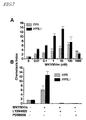
- FPR- or FPRL1-expressing RBL-2H3 cells were stimulated with 1 ⁇ M WKYMVm for various periods of time ( FIG. 4A ). Two cells were preincubated with a vehicle or 100 ng/ml of PTX (24hr), 50 ⁇ M of LY294002 (15 min), 5 ⁇ M of GFX (15 min), 10 ⁇ M BAPTA/AM (60min), or 50 ⁇ M PD98059 (60 min) prior to treatment with 1 ⁇ M of WKYMVm ( Fig. 4B ). FPR- and FPRL1-expressing RBL2H3 cells were stimulated with 10 ⁇ M of WKYMVm and the present peptides for 2 min or 5 min, respectively ( Fig.
- WKYMVm stimulation induced Akt phosphorylation in a time-dependent manner in FPR- and FPRL1-expressing RBL-2H3 cells ( FIG. 4A ).
- WKYMVm-induced Akt phosphorylation was sensitive to PTX, LY294002 but not to GFX and BAPTA/AM, indicating PTX-sensitive G-proteins(s) and PI3K-dependency ( Fig. 4B ).
- Stimulation of FPR-expressing RBL-2H3 cells not only with WKYMVm but also with the present peptides (WKGMVm, WKRMVm, WKYMVE, and WKYMVR) caused Akt phosphorylation ( Fig. 4C ).
- WKYMVm and the present peptides also stimulated Akt phosphorylation in FPRL1-expressing RBL-2H3 cells ( Fig. 4C ). These results correlate with ERKs phosphorylation by the peptides in two types of cells ( Fig. 3C ). Since WKYMVm-induced ERKs and Akt activation were mediated by PI3K activation, it appears as if WKGMVm, WKRMVm, WKYMVE, and WKYMVR successfully induce PI3K-mediated signaling in the downstream of FPR.
- Granule secretion is one of the most important function of mast cells (20).
- the effect of WKYMVm on granule secretion was checked by measuring ⁇ -hexosaminidase secretion as described above (18). Briefly, RBL-2H3 cells (2 x 10 5 / well) expressing FPR or FPRL1 were cultured overnight in a 24-well tissue culture plate.
- the cells were washed twice with Tyrode's buffer (137 mM NaCl, 12 mM NaHCO 3 , 5.6 mM glucose, 2.7 mM KCI, 1 mM CaCl 2 , 0.5 mM MgCl 2 , 0.4 mM NaH 2 PO 4 , 0.1g/100 ml BSA, and 25 mM HEPES, pH 7.4) and stimulated with each peptide.
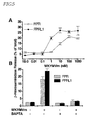
- Various concentrations of WKYMVm were treated in FPR- or FPRL1-expressing RBL-2H3 cells ( Fig. 5A ). 1 ⁇ M of WKYMVm was used to stimulate two cell lines in the absence or presence of 10 ⁇ M BAPTA/AM ( Fig. 5B ).
- Chemotaxis assays were performed using multiwell chambers (modified Boyden chamber assay) (Neuroprobe Inc., Gaithersburg, MD) (18). Briefly, polycarbonate filters (8 ⁇ m pore size) were precoated with 50 ⁇ g/ml of rat type I collagen (Collaborative Biomedicals) in a HEPES-buffered RPMI 1640 medium. A dry coated filter was placed on a 96-well chamber containing different concentrations of peptides.
- RBL-2H3 cells expressing FPR or FPRL1 were suspended in RPMI at a concentration of 1 x 10 6 cells / ml of serum-free RPMI, and 25 ⁇ l of the suspension were placed onto the upper well of the 96-well chemotaxis chamber. After incubation for 4 hours at 37°C, non-migrated cells were removed by scraping them out, and cells that migrated across the filter were dehydrated, fixed, and stained with hematoxylin (Sigma, St. Louis, MO). The stained cells in five randomly chosen high power fields (HPF) (400 X) in that well were then counted.
- Fig. 7A shows the results of the chemotaxis assay.
- the vehicle, 50 ⁇ M LY294002 (15 min), and 50 ⁇ M PD98059 (60 min) pretreated cells were subjected to the chemotaxis assay with 1 ⁇ M WKYMVm, and the results are shown in Fig. 7B .
- the numbers of migrated cells were determined by counting them in a high power field (400x).
- the Data are presented as means ⁇ SE of three independent experiments each performed in duplicate.
- WKYMVm can induce chemotactic migration of phagocytic cells such as monocytes and neutrophils (11).
- Le et al. demonstrated WKYMVm-induced cellular chemotaxis via binding to FPR and FPRL1 (12).
- WKYMVm showed chemotactic migratory activity showing bell-shape concentration-dependency in FPR- or FPRL1-expressing RBL-2H3 cells ( Fig. 7A ).
- the WKYMVm-induced cellular chemotaxis was sensitive to LY294002 and PD98059 ( Fig. 7B ).
- the results suggest that WKYMVm-induced cellular chemotaxis is PI3K- and MEK-dependent.
- WKYMVm stimulates chemotactic migration of FPR- or FPRL1-expressing RBL-2H3 cells via PI3K and MEK activity.
- the effect of the peptides of the present invention on cellular chemotaxis in FPR- or FPRL1-expressing RBL-2H3 cells was measured.
- Various concentrations of each peptide were used for the chemotaxis assay with FPR- or FPRL1-expressing RBL-2H3 cells.
- the numbers of migrated cells were determined by counting them in a high power field (400x).
- the Data are presented as means ⁇ SE of two independent experiments each performed in duplicates.
- FPR can be modulated by distinct ligands leading to differential cellular signaling and functional consequences, for the first time.
- a potent ligand for FPR were generated as listed in Table I.
- WKGMVm-, WKRMVm-, and D-Met 6 -substituted peptides bind to FPR, just inducing PI-3 kinase-mediated Akt and MEK-mediated ERK activation resulting in chemotactic migration of the cells.
- These peptides could not effect a cytosolic calcium increase. Since the peptide WKYMVm stimulates not only ERKs activation but also cytosolic calcium increase leading to chemotaxis and degranulation, it can be suggested that FPR can be differentially modulated by distinct ligands.
- FPR and FPRL1 Two different receptors of the formyl peptide receptor family, FPR and FPRL1, have been reported to serve important roles in innate immune responses (1, 2). Until now, several different ligand origins including the formyl peptide lipoxin A4 have been reported to bind FPR or FPRL1 (1). Le et al. reported that WKYMVm could bind to FPR and FPRL1 (12).
- GPCRs including FPR induce intracellular signaling via binding to hetero-trimeric G-proteins(s), and many research groups have tried to reveal the critical amino acid residues of receptors involved in G-protein coupling (23, 24).
- FPR Miettinen et al. constructed 35 mutant FPRs and checked the effect of mutation on G-protein coupling and cellular signaling of FPR. According to the paper, S63, D71, R123, and C124/C126 are important for G-protein coupling to FPR (24).
- the R123A mutant that was unable to mediate calcium mobilization could induce ERKs phosphorylation by fMLF (24).
- WKYMVm can induce a conformational change of FPR including alteration of the hydrogen bonding of the DRY motif
- WKGMVm just causes a distinct conformation change of the receptor without affecting DRY hydrogen bonding.
- FPRL1 it also contains the DRY motif (DRC in FPRL1), but its role in G-protein coupling has not been checked.
- DRC in FPRL1 DRY motif
- WKYMVm or WKGMVm do not affect hydrogen bonding of the DRY motif in FPR or FPRL1.
- Other binding pockets would be involved for the peptide binding, and as a further work it will be important to identify the residues involving in the differential binding pattern for WKYMVm or WKGMVm to FPR.
Landscapes
- Health & Medical Sciences (AREA)
- Chemical & Material Sciences (AREA)
- Organic Chemistry (AREA)
- Life Sciences & Earth Sciences (AREA)
- General Health & Medical Sciences (AREA)
- Medicinal Chemistry (AREA)
- Veterinary Medicine (AREA)
- Public Health (AREA)
- Chemical Kinetics & Catalysis (AREA)
- General Chemical & Material Sciences (AREA)
- Nuclear Medicine, Radiotherapy & Molecular Imaging (AREA)
- Pharmacology & Pharmacy (AREA)
- Animal Behavior & Ethology (AREA)
- Bioinformatics & Cheminformatics (AREA)
- Engineering & Computer Science (AREA)
- Molecular Biology (AREA)
- Immunology (AREA)
- Genetics & Genomics (AREA)
- Proteomics, Peptides & Aminoacids (AREA)
- Biophysics (AREA)
- Biochemistry (AREA)
- Oncology (AREA)
- Physical Education & Sports Medicine (AREA)
- Rheumatology (AREA)
- Diabetes (AREA)
- Communicable Diseases (AREA)
- Hematology (AREA)
- Virology (AREA)
- Pulmonology (AREA)
- Orthopedic Medicine & Surgery (AREA)
- Urology & Nephrology (AREA)
- Dermatology (AREA)
- Pain & Pain Management (AREA)
- Endocrinology (AREA)
- Tropical Medicine & Parasitology (AREA)
- Neurology (AREA)
- Neurosurgery (AREA)
- Transplantation (AREA)
- Emergency Medicine (AREA)
- Obesity (AREA)
Abstract
Description
- The present invention relates to an immune-modulating peptide. The formyl peptide receptor family (formyl peptide receptor (FPR) and formyl peptide receptor-like 1 (FPRL1)) that is expressed in phagocytic cells such as neutrophils and monocytes plays an important role in host defense against pathogen infection (1, 2). The receptors have been known to couple with pertussis toxin-sensitive Gi proteins (1, 2). Activation of FPR induces dissociation of Gβγ subunits from Gαi subunits, and the βγ--subunits mediate the activation of phospholipase Cβ or phosphoinositide 3-kinase (1, 2). Activation of these effect molecules induces complicated downstream signaling leading to diverse cellular responses such as chemotactic migration, degranulation, and superoxide generation.
- Most full agonists induce a lot of complicated cellular signaling that evokes eventual complex immune responses. Among the immune responses, many of them are essentially required for the proper functioning of host cells to clear out invading pathogens, but some responses are unwanted side effects in immune responses. In the area of drug development, it has been a hot issue to reduce or remove the side effects of drug candidates. To obtain this objective, many research groups have tried to develop selective immune response modulators or selective antagonists for specific receptors via several approaches (3, 4).
- A variety of agonists for FPR have been identified from endogenous sources or artificial synthesis (1, 2). They include bacterial peptides (N-formyl-methionyl-leucyl-phenylalanine (fMLF)), HIV-envelope domains (T20 and T21), and host-derived agonists (Annexin I and Aβ42) (5-7). Previously, the inventors of the present invention reported a synthetic peptide ligand, Trp-Lys-Tyr-Met-Val-D-Met-NH2 (hereinafter, referred to as "WKYMVm") that stimulates leukocytic cells such as monocytes and neutrophils (8-11). Le et al. demonstrated that WKYMVm binds to formyl peptide receptor (FPR) and formyl peptide receptor-like 1 (FPRL1) (12). Since WKYMVm is a short peptide with a high affinity for a broad spectrum of receptors, it can be a useful material for the study of FPR- or FPRL1-mediated signaling. However, research to develop selective immuno-modulators or selective antagonists for specific receptors, as well as screening of molecular diversity, consists of small compounds and thus far has been very limited, and therefore there are continuing demands for identifying novel compounds.
- It is a first object of the present invention to provide a novel immune-modulating peptide having an amino acid sequence selected from the group consisting of SEQ ID NO: 1 to SEQ ID NO: 24; or a substance derived from the peptide of which the amino acid sequence is selected from the group consisting of SEQ ID NO: 1 to SEQ ID NO: 24.
- It is a second object to provide a pharmaceutical composition comprising a peptide having an amino acid sequence selected from the group consisting of SEQ ID NO: 1 to SEQ ID NO: 24; or a substance derived from the peptide of which the amino acid sequence is selected from the group consisting of SEQ ID NO: 1 to SEQ ID NO: 24.
- It is a third object to provide a method of treating a condition accompanied or caused by modification of the number or activation states of leukocytes comprising administering to a host in need of such treatment a therapeutically effective amount of a peptide having an amino acid sequence selected from the group consisting of SEQ ID NO: 1 to SEQ ID NO: 24 or a substance derived from the peptide of which the amino acid sequence is selected from the group consisting of SEQ ID NO: 1 to SEQ ID NO: 24.
- It is a fourth object to provide a method of increasing the number or raising the activation state of leukocytes in a host, comprising administering to a host in need of a greater number or higher activation state of leukocytes a therapeutically effective amount of a peptide having an amino acid sequence selected from the group consisting of SEQ ID NO: 1 to SEQ ID NO: 24 or a substance derived from the peptide of which the amino acid sequence is selected from the group consisting of SEQ ID NO: 1 to SEQ ID NO: 24.
- It is a fifth object to provide a method of inducing an extracellular calcium increase in leukocytes in a patient in need of such treatment, the method comprising administering to said patient an amount of a peptide having an amino acid sequence selected from the group consisting of SEQ ID NO: 1 to SEQ ID NO: 24 or a substance derived from the peptide of which the amino acid sequence is selected from the group consisting of SEQ ID NO: 1 to SEQ ID NO: 24 in an amount effective to therapeutically or prophylactically achieve such induction or desensitization.
- It is a sixth object to provide a method of inducing superoxide generation by human monocytes or neutrophils in a patient in need of such treatment, the method comprising administering to said patient an amount of a peptide having an amino acid sequence selected from the group consisting of SEQ ID NO: 1 to SEQ ID NO: 24 or a substance derived from the peptide of which the amino acid sequence is selected from the group consisting of SEQ ID NO: 1 to SEQ ID NO: 24 in an amount effective to therapeutically or prophylactically achieve such induction or desensitization.
- It is a seventh object to provide a method of inducing chemotactic migration by human peripheral blood mononuclear cells in a patient in need of such treatment, the method comprising administering to said patient an amount of peptides having an amino acid sequence selected from the group consisting of SEQ ID NO: 1 to SEQ ID NO: 24 or a substance derived from the peptide of which the amino acid sequence is selected from the group consisting of SEQ ID NO: 1 to SEQ ID NO: 24 in an amount effective to therapeutically or prophylactically achieve such induction or desensitization.
- It is an eighth object to provide a method of inducing degranulation in formyl peptide receptor expressing cells or formyl peptide receptor-like 1 expressing cells in a patient in need of such treatment, the method comprising administering to said patient an amount of peptides having an amino acid sequence selected from the group consisting of SEQ ID NO: 1 to SEQ ID NO: 24 or a substance derived from the peptide of which the amino acid sequence is selected from the group consisting of SEQ ID NO: 1 to SEQ ID NO: 24 in an amount effective to therapeutically or prophylactically achieve such induction or desensitization.
- It is a ninth object to provide a method of competing peptides with WKYMVm for binding formyl peptide receptor or a formyl peptide receptor-like 1 in the formyl peptide receptor expressing cells or formyl peptide receptor-like 1 expressing cells, respectively, in a patient in need of such treatment, the method comprising administering to said patient an amount of a peptide having an amino acid sequence selected from the group consisting of SEQ ID NO: 1 to SEQ ID NO: 24 or a substance derived from the peptide of which the amino acid sequence is selected from the group consisting of SEQ ID NO: 1 to SEQ ID NO: 24 in an amount effective to therapeutically or prophylactically achieve such induction or desensitization.
- It is a tenth object to provide a method of stimulating extracellular signal regulated protein kinase in formyl peptide receptor expressing cells or formyl peptide receptor-like 1 expressing cells or formyl peptiin a patient in need of such treatment, the method comprising administering to said patient an amount of peptides having an amino acid sequence selected from the group consisting of SEQ ID NO: 1 to SEQ ID NO: 24 or a substance derived from the peptide of which the amino acid sequence is selected from the group consisting of SEQ ID NO: 1 to SEQ ID NO: 24 in an amount effective to therapeutically or prophylactically achieve such induction or desensitization.
- It is an eleventh object to provide a method of stimulating Akt in formyl peptide receptor expressing cells or formyl peptide receptor-like 1 expressing cells in a patient in need of such treatment, the method comprising administering to said patient an amount of peptides having an amino acid sequence selected from the group consisting of SEQ ID NO: 1 to SEQ ID NO: 24 or a substance derived from the peptide of which the amino acid sequence is selected from the group consisting of SEQ ID NO: 1 to SEQ ID NO: 24 in an amount effective to therapeutically or prophylactically achieve such induction or desensitization.
- It is a twelfth object to provide an isolated nucleotide encoding peptides of amino acid sequences selected from the group consisting of SEQ ID NO: 1 to SEQ ID NO: 24.
- It is a thirteenth object to provide a vector comprising an isolated nucleotide encoding peptides of amino acid sequences selected from the group consisting of SEQ ID NO: 1 to SEQ ID NO: 24.
- Other features and advantages of the present invention will be apparent from the following description taken in conjunction with the accompanying drawings, in which like reference characters designate the same or similar parts throughout the figures thereof.
- The accompanying drawings, which are incorporated in and constitute a part of the specification, illustrate embodiments of the invention, and together with the description, serve to explain the principles of the invention.
-
FIG. 1 shows the effect of WKYMVm, the peptides of the present invention (WKGMVm, WKRMVm, WKYMVE, WKYMVR), or fMLF on [Ca2+]¡ in FPR-expressing RBL-2H3 cells (A) or FPRL1-expressing RBL-2H3 cells (B); -
FIG. 2 shows Displacement of 125I-labeled WKYMVm binding to FPR or FPRL1 by WKYMVm, the peptides of the present invention (WKGMVm, WKRMVm, WKYMVE, WKYMVR), and fMLF; -
FIG. 3 shows the effect of WKYMVm, the peptides of the present invention (WKGMVm, WKRMVm, WKYMVE, WKYMVR), fMLF, and wkymvm on ERK phosphorylation in FPR- or FPRL1-expressing RBL-2H3 cells; -
FIG. 4 shows the effect of WKYMVm, the peptides of the present invention (WKGMVm, WKRMVm, WKYMVE, WKYMVR), fMLF, and wkymvm on Akt phosphorylation in FPR or FPRL1-expressing RBL-2H3 cells; -
FIG. 5 shows WKYMVm which stimulates exocytosis in FPR- or FPRL1-expressing RBL-2H3 cells via intracellular calcium increase; -
FIG. 6 shows the effect of WKYMVm, the peptides of the present invention (WKGMVm, WKRMVm, WKYMVE, WKYMVR), fMLF, and wkymvm on exocytosis effects of N-formyl-methionyl-leucyl-phenylalanine (fMLF) on the peptide-induced [Ca2+]¡ increase; -
FIG. 7 shows WKYMVm which stimulates chemotactic migration of FPR- or FPRL1-expressing RBL-2H3 cells via PI3K and MEK activity; and -
FIG. 8 shows the effect of WKYMVm, the peptides of the present invention (WKGMVm, WKRMVm, WKYMVE, WKYMVR), fMLF, and wkymvm on chemotaxis. - Formyl peptide receptor (FPR) and formyl peptide receptor-like 1 (FPRL1) perform an important role in immune responses. The present invention provides peptides derived from WKYMVm. Many peptides can stimulate FPR or FPRL1 resulting in calcium increase, but the peptides of the present invention such as WKGMVm, WKRMVm, and 6th D-Met substituted peptides effect a calcium increase just in FPRL1-expressing cells but not in FPR-expressing cells. A competition assay using 125I-WKYMVm shows that not only do many peptides effect a calcium increase in FPR-expressing cells, but WKGMVm, WKRMVm, and 6th D-Met substituted peptides can also compete the binding of 125I-WKYMVm to FPR. Unlike a phospholipase C-mediated calcium increase, WKGMVm, WKRMVm, and 6th D-Met substituted peptides can stimulate extracellular regulated protein kinase (ERK) and Akt activation in FPR-expressing cells. Regarding the functional consequences of WKYMVm, the peptide stimulates degranulation and cellular chemotaxis via Ca2+ and ERK pathways, respectively, in FPR cells. The peptides such as WKGMVm, WKRMVm, and 6th D-Met substituted peptides, however, stimulated FPR cells by just inducing chemotactic migration but not degranulation. Taken together, it is demonstrated that as an important chemoattractant receptor, FPR can be modulated differentially by distinct peptide ligands in a ligand-specific manner, for the first time.
- According to a first preferable embodiment, the peptides of the present invention comprise amino acid sequences selected from the group consisting of SEQ ID NO: 1 to SEQ ID NO: 24 or a substance derived from the peptides of SEQ ID NO: 1 to SEQ ID NO: 24. The SEQ ID NO: 1 to SEQ ID NO: 24 are as follows:
- Trp-Lys-Gly-Met-Val-D-Met-NH2 (WKGMVm; SEQ ID NO: 1), Trp-Lys-Tyr-Met-Gly-D-Met-NH2 (WKYMGm; SEQ ID NO: 2) Trp-Lys-Tyr-Met-Val-Gly-NH2 (WKYMVG; SEQ ID NO: 3), Trp-Arg-Tyr-Met-Val-D-Met-NH2 (WRYMVm; SEQ ID NO: 4), Trp-Glu-Tyr-Met-Val-D-Met-NH2 (WEYMVm; SEQ ID NO: 5), Trp-His-Tyr-Met-Val-D-Met-NH2 (WHYMVm; SEQ ID NO: 6), Trp-Asp-Tyr-Met-Val-D-Met-NH2 (WDYMVm; SEQ ID NO: 7), Trp-Lys-His-Met-Val-D-Met-NH2 (WKHMVm; SEQ ID NO: 8), Trp-Lys-Glu-Met-Val-D-Met-NH2 (WKEMVm; SEQ ID NO: 9), Trp-Lys-Trp-Met-Val-D-Met-NH2 (WKWMVm; SEQ ID NO: 10), Trp-Lys-Arg-Met-Val-D-Met-NH2 (WKRMVm; SEQ ID NO: 11), Trp-Lys-Asp-Met-Val-D-Met-NH2 (WKDMVm; SEQ ID NO: 12), Trp-Lys-Phe-Met-Val-D-Met-NH2 (WKFMVm; SEQ ID NO: 13), Trp-Lys-Tyr-Met-Tyr-D-Met-NH2 (WKYMYm; SEQ ID NO: 14), Trp-Lys-Tyr-Met-(Phe/Trp)-D-Met-NH2 (WKYM(F/W)m; SEQ ID NO: 15), Trp-Lys-Tyr-Met-Val-Glu-NH2 (WKYMVE; SEQ ID NO: 16), Trp-Lys-Tyr-Met-Val-Val-NH2 (WKYMVV; SEQ ID NO: 17), Trp-Lys-Tyr-Met-Val-Arg-NH2 (WKYMVR; SEQ ID NO: 18), Trp-Lys-Tyr-Met-Val-Trp-NH2 (WKYMVW; SEQ ID NO: 19), Trp-Lys-Tyr-Met-Val-NH2 (WKYMV; SEQ ID NO: 20), Lys-Tyr-Met-Val-D-Met-NH2 (KYMVm; SEQ ID NO: 21), Lys-Tyr-Met-Val-NH2 (KYMV; SEQ ID NO: 22), Tyr-Met-Val-D-Met-NH2 (YMVm; SEQ ID NO: 23), and Met-Val-D-Met-NH2 (MVm; SEQ ID NO: 24).
- The peptides of SEQ ID NO: 1 to SEQ ID NO: 24 exist in isolated and substantially pure form.
- The peptides include amino acid residue optionally substituted with an -NH2 group on a carboxyl group.
- The peptide of the present invention has at least one of the following properties:
- (a) it induces superoxide generation by human monocytes or neutrophils;
- (b) it induces an intracellular calcium increase by human peripheral blood monocytes or neutrophils;
- (c) it binds to formyl peptide receptor or formyl peptide receptor-like 1;
- (d) it induces chemotactic migration of human monocytes or neutrophils in vitro;
- (e) it induces degranulation in formyl peptide receptor expressing cells or formyl peptide receptor-like 1 expressing cells;
- (f) it stimulates extracellular signal-regulated protein kinase phosphorylation via activation of formyl peptide receptor or formyl peptide receptor-like 1; and
- (g) it stimulates Akt phosphorylation via activation of formyl peptide receptor or formyl peptide receptor-like 1.
- According to a second preferable embodiment, the present invention provides a pharmaceutical composition comprising a peptide of which the amino acid sequence is selected from the group consisting of SEQ ID NO: 1 to SEQ ID NO: 24; or a substance derived from the peptide of which the amino acid sequence is selected from the group consisting of SEQ ID NO: 1 to SEQ ID NO: 24.
- The composition comprising the peptide or the substance as an active ingredient can include more than one kind of pharmaceutical diluent, selected from the group consisting of saline, buffered saline, dextrose, water, glycerol, and ethanol, but the diluent is not limited thereto.
- The composition may be applied differently according to the purpose of dosing and the disease. It should be understood that the amount of the active ingredient actually administered ought to be determined in light of various relevant factors, including the condition to be treated, the severity of the patient's symptoms, co-administration with other drugs (e. g., chemotherapeutic agents), age, sex, body weight of the individual patient, food, dosing time, the chosen route of administration, and the ratio of the composition. The composition may be administrated in a single or in 1-3 divided doses per day, even though the dose and route of administration are adjusted to the type and severity of disease.
- The composition comprising the peptide or the substance of the present invention can be administered via oral or parenteral routes. Parenteral dosing means the administration of a drug through a route other than oral, which includes rectal, intravenous, intraperitoneal and intramuscular, intra-arterial, transdermal, nasal, inhalation, ocular, and subcutaneous introduction.
- Pharmaceutical formulations containing the peptide or the substance may be prepared in any form, such as oral dosage form, injectable solution, or topical preparation. The formulation can be preferably prepared for oral and injectable administration (true solution, suspension, or emulsion) and most preferably in oral form such as tablet, capsule, soft capsule, aqueous medicine, pill, granule, and the like.
- In preparing the formulation, the peptides are filled in a soft capsule without any excipient, or formed as an appropriate formulation after mixing or diluting with a carrier. Examples of suitable carriers are starches, water, saline, Ringer's solution, dextrose, etc.
- According to a third preferable embodiment of the present invention, a method of treating conditions accompanied or caused by modification of the number or activation states of leukocytes is provided. The method comprises administering to a host in need of such treatment a therapeutically effective amount of a peptide having an amino acid sequence selected from the group consisting of SEQ ID NO: 1 to SEQ ID NO: 24 or a substance derived from the peptide of which the amino acid sequence is selected from the group consisting of SEQ ID NO: 1 to SEQ ID NO: 24. The condition may be bacterial, mycoplasma, yeast, fungal, a viral infection, or inflammation.
- According to a fourth preferable embodiment of the present invention, a method of increasing the number or raising the activation state of leukocytes is provided. The method comprises administering to a host in need of a greater number or higher activation state of leukocytes a therapeutically effective amount of a peptide having an amino acid sequence selected from the group consisting of SEQ ID NO: 1 to SEQ ID NO: 24 or a substance derived from the peptide of which the amino acid sequence is selected from the group consisting of SEQ ID NO: 1 to SEQ ID NO: 24.
- According to a fifth preferable embodiment of the present invention, a method of inducing extracellular calcium increase in leukocytes in a patient in need of such treatment is provided. The method comprises administering to said patient an amount of a peptide having an amino acid sequence selected from the group consisting of SEQ ID NO: 1 to SEQ ID NO: 24 in an amount effective to therapeutically or prophylactically achieve such induction or desensitization.
- According to a sixth preferable embodiment of the present invention, a method of inducing superoxide generation by human monocytes or neutrophils in a patient in need of such treatment is provided. The method comprises administering to said patient an amount of a peptide having an amino acid sequence selected from the group consisting of SEQ ID NO: 1 to SEQ ID NO: 24 or a substance derived from the peptide of which the amino acid sequence is selected from the group consisting of SEQ ID NO: 1 to SEQ ID NO: 24 in an amount effective to therapeutically or prophylactically achieve such induction or desensitization.
- According to a seventh preferable embodiment of the present invention, a method of inducing chemotactic migration by human peripheral blood mononuclear cells in a patient in need of such treatment is provided. The method comprises administering to said patient an amount of a peptide having an amino acid sequence selected from the group consisting of SEQ ID NO: 1 to SEQ ID NO: 24 or a substance derived from the peptide of which the amino acid sequence is selected from the group consisting of SEQ ID NO: 1 to SEQ ID NO: 24 in an amount effective to therapeutically or prophylactically achieve such induction or desensitization.
- According to an eighth preferable embodiment of the present invention, a method of inducing degranulation in formyl peptide receptor or formyl peptide receptor-like 1 expressing cells in a patient in need of such treatment is provided. The method comprises administering to said patient an amount of a peptide having an amino acid sequences selected from the group consisting of SEQ ID NO: 1 to SEQ ID NO: 24 or a substance derived from the peptide of which the amino acid sequence is selected from the group consisting of SEQ ID NO: 1 to SEQ ID NO: 24 in an amount effective to therapeutically or prophylactically achieve such induction or desensitization.
- According to a ninth preferable embodiment of the present invention, a method of competing peptides with WKYMVm for binding formyl peptide receptor or a formyl peptide receptor-like 1 in the formyl peptide receptor expressing cells or the formyl peptide receptor-like 1 expressing cells, respectively, in a patient in need of such treatment is provided. The method comprises administering to said patient an amount of a peptide having an amino acid sequence selected from the group consisting of SEQ ID NO: 1 to SEQ ID NO: 24 or a substance derived from the peptide of which the amino acid sequence is selected from the group consisting of SEQ ID NO: 1 to SEQ ID NO: 24 in an amount effective to therapeutically or prophylactically achieve such induction or desensitization.
- According to a tenth preferable embodiment of the present invention, a method of stimulating extracellular signal regulated protein kinase in formyl peptide receptor or formyl peptide receptor-like 1 expressing cells in a patient in need of such treatment is provided. The method comprises administering to said patient an amount of a peptide having an amino acid sequence selected from the group consisting of SEQ ID NO: 1 to SEQ ID NO: 24 or a substance derived from the peptide of which the amino acid sequence is selected from the group consisting of SEQ ID NO: 1 to SEQ ID NO: 24 in an amount effective to therapeutically or prophylactically achieve such induction or desensitization.
- According to an eleventh preferable embodiment of the present invention, a method of stimulating Akt in formyl peptide receptor or formyl peptide receptor-like 1 expressing cells in a patient in need of such treatment is provided. The method comprises administering to said patient an amount of a peptide having an amino acid sequence selected from the group consisting of SEQ ID NO: 1 to SEQ ID NO: 24 or a substance derived from the peptide of which the amino acid sequence is selected from the group consisting of SEQ ID NO: 1 to SEQ ID NO: 24 in an amount effective to therapeutically or prophylactically achieve such induction or desensitization.
- In the above third to eleventh preferable embodiments, the treated host or patient may be one afflicted with a disorder caused by infection, particularly cytomegalovirus infection, rheumatoid arthritis, Lyme's arthritis, gout, sepsis syndrome, hyperthermia, ulcerative colitis, enterocolitis, osteoporosis, periodontal disease, glomerulonephritis, chronic non-infectious inflammation of the lung, sarcoidosis, smoker's lung, granuloma formation, fibrosis of the liver, fibrosis of the lung, transplant rejection, graft vs. host disease, chronic myeloid leukemia, acute myeloid leukemia, neoplastic diseases, asthma bronchiale, type I insulin dependent diabetes mellitus, arteriosclerosis, atherosclerosis, psoriasis, chronic B lymphocyte leukaemia, common variable immunodeficiency, disseminated intravascular coagulation, systemic sclerosis, encephalomyelitis, lung inflammation, hyper IgE syndrome, cancer metastasis, cancer growth, adoptive immune therapy, acquired respiratory distress syndrome, sepsis, reperfusion syndrome, postsurgical inflammation, organ transplantation, or alopecia.
- The present invention provides an isolated nucleotide encoding a peptide having an amino acid sequence comprising SEQ ID NO: 1 to SEQ ID NO: 24.
- The present invention provides a vector comprising an isolated nucleotide encoding a peptide having an amino acid sequence comprising SEQ ID NO: 1 to SEQ ID NO: 24.
- The present invention provides a polypeptide comprising an amino acid sequence selected from SEQ ID NO: 1 to SEQ ID NO: 24.
- The present invention is further explained in more detail with reference to the following examples. These examples, however, should not in any sense be interpreted as limiting the scope of the present invention.
- Fmoc amino acids were obtained from Millipore (Bedford, MA). Rapidamide resin was purchased from Dupont (Boston, MA). Peripheral blood mononuclear cell (PBMC) separation medium (Histopaque-1077), cytochrome c, and fMLF were purchased from Sigma (St. Louis, MO). Fura-2 pentaacetoxymethylester (fura-2/AM) was purchased from Molecular Probes (Eugene, OR). RPMI 1640 was obtained from Life Technologies (Grand Island, NY). Dialyzed fetal bovine serum and supplemented bovine serum were purchased from Hyclone Laboratories Inc. (Logen, UT). PTX, GF109203X, and PD98059 were purchased from Calbiochem (San Diego, CA). LY294002 was purchased from BIOMOL research laboratories, Inc. (Polymouth Meeting, PA).
- The peptides were synthesized by the solid-phase method described above (8, 9). Briefly, peptides were synthesized on a rapidamide support resin and assembled following the standard Fmoc/t-butyl strategy on an acid-labile linker. The composition of the peptides was confirmed by amino acid analysis as described previously (8).
- RBL-2H3, FPR-expressing RBL-2H3, and FPRL1-expressing RBL-2H3 cells were cultured with DMEM supplemented with 20% FBS and 200 g/ml of G418 as described above (13).
- Peripheral blood leukocyte concentrates were donated by the Ulsan Red Cross Blood Center (Ulsan, Korea). Human neutrophils were isolated according to the standard procedures of dextran sedimentation, hypotonic lysis of erythrocytes, and a lymphocyte separation medium gradient as described above (9). The isolated human neutrophils were then used promptly.
- The activity of the peptides, WKYMVm, peptides of SEQ ID NOs: 1 to 24, and wkymvm on superoxide generation in human neutrophils was measured. Superoxide anion generation was quantified by measuring reduction of cytochrome c using a microtiter 96-well plate ELISA reader (Bio-Tekinstruments, EL312e, Winooski, VT) as described (14). The human neutrophils (1 x 10⁶ cells/100 µl of RPMI 1640 medium per well of a 96-well plate) were preincubated with 50 µM cytochrome c at 37°C for 1 min and then incubated with the indicated concentrations of peptides. The superoxide generation was measured as a change in light absorption at 550 nm over 5 minutes at 1 min intervals. From at least four independent experiments, peptides with active amino acids at each position were chosen. These results are shown in Table I.
- Stimulation of neutrophils with various concentrations of the peptide, WKYMVm caused superoxide generation in a concentration-dependent manner, showing the maximal activity with 100 nM of the peptide (data not shown). While some of the peptides such as WRYMVm, WEYMVm, WKFMVm, and KYMVm stimulated superoxide generation in the cells, many of the peptides were weaker regarding activity on superoxide generating activity with 100 nM of peptides.
Table I: Effect of peptides on superoxide generation in human neutrophilsa Sequenceb O2- (nmol/106 cells) Sequence O2- (nmol/106 cells) WKYMVm-NH2 37.3 ± 6.94 WKFMVm-NH2 37.3 ±3.56 WKGMVm-NH2 14.2 ± 3.42 WKYMYm-NH2 25.8 ± 3.89 WKYMGm-NH2 1.1 ± 0.05 WKYM(F/W)m-NH2 6.1 ± 0.77 WKYMVG-NH2 4.4 ± 0.54 WKYMVE-NH2 5.0 ± 0.43 WRYMVm-NH2 47.1 ± 11.23 WKYMVV-NH2 5.0 ± 0.21 WEYMVm-NH2 52.9 ± 12.78 WKYMVR-NH2 16.3 ± 1.57 WHYMVm-NH2 20.7 ± 7.85 WKYMVW-NH2 11.5 ± 1.62 WDYMVm-NH2 25.8 ± 6.56 WKYMV-NH2 9.2 ± 0.55 WKHMVm-NH2 29.5 ± 7.71 KYMVm-NH2 36.0 ± 3.56 WKEMVm-NH2 4.1 ± 0.21 KYMV-NH2 7.5 ± 0.61 WKWMVm-NH2 11.5 ± 0.97 YMVm-NH2 30.2 ± 2.74 WKRMVm-NH2 15.9 ± 2.48 MVm- NH 20 WKDMVm-NH2 16.3 ± 1.67 wkymvm- NH 20 a Superoxide generation was measured by monitoring cytochrome c reduction.
b The concentration of the treated peptide was 100 nM. - The effect of the peptides on superoxide generation with a 10 µM concentration was also measured. The results are shown in Table II. All of the peptides except wkymvm stimulated superoxide generation as potent as WKYMVm with a 10 µM concentration. Among the peptides, WKWMVm, WKFMVm, and WKYMVW showed more potent activity than WKYMVm.
Table II: Effect of peptides on superoxide generation in human neutrophilsa Sequenceb O2- (nmol/106 cells) Sequence O2- (nmol/106 cells) WKYMVm-NH2 39.0 ± 3.58 WKFMVm-NH2 60.2 ± 5.57 WKGMVm-NH2 37.6 ± 4.57 WKYMYm-NH2 42.9 ± 3.34 WKYMGm-NH2 27.3 ± 2.61 WKYM(F/W)m-NH2 45.6 ± 7.76 WKYMVG-NH2 27.3 ± 1.40 WKYMVE-NH2 33.6 ± 6.43 WRYMVm-NH2 38.2 ± 6.54 WKYMVV-NH2 36.3 ± 2.29 WEYMVm-NH2 35.3 ± 2.88 WKYMVR-NH2 44.8 ± 3.65 WHYMVm-NH2 20.7 ± 7.85 WKYMVW-NH2 56.8 ± 4.60 WDYMVm-NH2 37.3 ± 5.66 WKYMV-NH2 25.6 ± 2.20 WKHMVm-NH2 39.3 ± 4.10 KYMVm-NH2 49.2 ± 5.82 WKEMVm-NH2 39.2 ± 4.71 KYMV-NH2 35.4 ± 2.13 WKWMVm-NH2 65.0 ± 12.10 YMVm-NH2 41.8 ± 3.46 WKRMVm-NH2 41.7 ± 8.32 MVm-NH2 42.4 ± 2.47 WKDMVm-NH2 37.3 ± 2.78 wkymvm- NH 20 a Superoxide generation was measured by monitoring cytochrome c reduction.
b The concentration of the treated peptide was 10 µM. - The activity of the peptides, WKYMVm, peptides of SEQ ID NOs: 1 to 24, and wkymvm on [Ca2+]¡ increase was measured in FPR-expressing RBL-2H3 cells. FPR-expressing RBL-2H3 cells were stimulated with 10 µM of each peptide, and [Ca2+]i was determined. The level of [Ca2+]i was determined fluorometrically by Grynkiewicz's method using fura-2/AM (15). Briefly, prepared cells were incubated with 3 µM fura-2/AM at 37°C for 50 min in a fresh serum-free RPMI 1640 medium under continuous stirring. 2 x 10⁶ cells were aliquoted for each assay in Ca2+-free Locke's solution (154 mM NaCl, 5.6 mM KCI, 1.2 mM MgCl2, 5 mM HEPES, pH 7.3, 10 mM glucose, and 0.2 mM EGTA). Fluorescence changes at the dual excitation wavelengths of 340 nm and 380 nm and the emission wavelength of 500 nm were measured, and the calibrated fluorescence ratio was translated into [Ca2+]¡. The peak level of the increased [Ca2+]i was monitored. The results are shown in Table III and
Fig 1A . Data are representative of three independent experiments.Table III. Effect of peptides on intracellular calcium increase in FPR-expressing RBL-2H3 Cellsa Sequence EC50 (nM) Sequence EC50 (nM) WKYMVm-NH2 47.4 ± 10.94 WKFMVm-NH2 17.7 ± 4.79 WKGMVm-NH2 inactive WKYMYm-NH2 665.4 ± 81.53 WKYMGm-NH2 inactive WKYM(F/W)m-NH2 57.3 ± 10.30 WKYMVG-NH2 inactive WKYMVE-NH2 inactive WRYMVm-NH2 54.9 ± 8.33 WKYMVV-NH2 inactive WEYMVm-NH2 317.4 ± 29.33 WKYMVR-NH2 inactive WHYMVm-NH2 31.7 ± 3.36 WKYMVW-NH2 inactive WDYMVm-NH2 98.9 ± 17.51 WKYMV-NH2 inactive WKHMVm-NH2 279.8 ± 35.86 KYMVm-NH2 384.8 ± 33.13 WKEMVm-NH2 1332.8 ± 88.75 KYMV-NH2 inactive WKWMVm-NH2 18.8 ± 5.31 YMVm-NH2 569.1 ± 63.38 WKRMVm-NH2 inactive MVm-NH2 inactive WKDMVm-NH2 1329.5 ± 207.20 wkymvm-NH2 inactive a Intracellular calcium increase was monitored from fura-2 loaded cells. - In FPR-expressing RBL-2H3 cells, the peptide WKYMVm induced a [Ca2+]¡ increase in a concentration-dependent manner, showing maximal activity around 300 nM (data not shown). EC50 of the WKYMVm for [Ca2+]¡-increasing activity in FPR cells was 47 nM (Table III). Among the peptides of the present invention, while WHYMVm, WKWMVm, and WKFMVm showed more improved affinity for the FPR against the peptide WKYMVm, the other peptides were not as active as WKYMVm (Table III). In particular, WKGMVm, WKYMGm, and 6th D-Met substituted peptides did not effect a [Ca2+]¡ increase until 20 µM treatment in FPR-expressing RBL-2H3 cells (Table III and
Fig. 1A ). N-terminal- or C-terminal-truncated peptides are also inactive for the [Ca2+]¡ increasing activity in FPR cells (Table III). These results suggest that Tyr3 and D-Met6 are critical for the activation of FPR in [Ca2+]i increase. - The effect of the peptides, WKYMVm, peptides of SEQ ID NOs: 1 to 24, and wkymvm on [Ca2+]i increase was checked in FPRL1-expressing RBL-2H3 cells. FPRL1-expressing RBL-2H3 cells were stimulated with 10 µM of each peptide, and [Ca2+]i was determined. The level of [Ca2+]¡ was determined by the same procedures as above. The peak level of the increased [Ca2+]i was monitored. The results are shown in Table IV and
Fig. 1B . Data are representative of three independent experiments. - In FPRL1-expressing RBL-2H3 cells, WKYMVm showed maximal activity with a 10 nM concentration (data not shown). EC50 of the WKYMVm for [Ca2+]i-increasing activity in FPRL1 cells was 0.6 nM (Table IV). Unlike in FPR cells, all the peptides were active on [Ca2+]i-increasing activity in FPRL1 cells (Table IV). Some of the peptides, such as WRYMVm, WKWMVm, WKFMVm, WKYMYm, and WKYM(F/W)m, showed a higher affinity to FPRL1 (Table IV). WKGMVm, WKYMGm, and 6th D-Met-substituted peptides that could not effect a [Ca2+]i increase in FPR cells also showed [Ca2+]¡-increasing activity in FPRL1 cells, with a little lower affinity to FPRL1 (Table IV and
Fig. 1 B) . N-terminal or C-terminal truncated pepeides also stimulated a [Ca2+]i increase in FPRL1 cells (Table IV). These results indicate that Tyr3 and D-Met6 are less critical for the activation of FPRL1 against FPR resulting in a [Ca2+]¡ increase.Table IV. Effect of the peptides on intracellular calcium increase in FPRL1-expressing RBL-2H3 cellsa Sequence EC50 (nM) Sequence EC50 (nM) WKYMVm-NH2 0.60 ± 0.090 WKFMVm-NH2 0.23 ± 0.042 WKGMVm-NH2 21.32 ± 2.104 WKYMYm-NH2 0.29 ± 0.061 WKYMGm-NH2 18.11 ± 1.308 WKYM(F/W)m-NH2 0.12 ± 0.015 WKYMVG-NH2 5945.8 ± 176.100 WKYMVE-NH2 502.87 ± 64.965 WRYMVm-NH2 0.12 ± 0.010 WKYMVV-NH2 1259.15 ± 95.750 WEYMVm-NH2 5.23 ± 0.196 WKYMVR-NH2 177.52 ± 26.035 WHYMVm-NH2 0.72 ± 0.075 WKYMVW-NH2 194.48 ± 19.210 WDYMVm-NH2 14.28 ± 1.225 WKYMV-NH2 917.85 ± 45.610 WKHMVm-NH2 1.94 ± 0.268 KYMVm-NH2 3.01 ± 0.232 WKEMVm-NH2 28.30 ± 1.354 KYMV-NH2 > 30000 WKWMVm-NH2 0.16 ± 0.027 YMVm-NH2 17.15 ± 0.889 WKRMVm-NH2 2.06 ± 0.256 MVm-NH2 > 30000 WKDMVm-NH2 8.73 ± 1.210 wkymvm-NH2 inactive a Intracellular calcium increase was monitored from fura-2 loaded cells. - From the finding that some of the peptides (WKGMVm, WKRMVm, D-Met6 substituted peptides) could not induce a cytosolic calcium increase, it was checked whether the peptides can bind to FPR or not. Displacement of 125I-labeled WKYMVm binding to FPR or FPRL1 by the peptides was monitored. FPR-expressing RBL-2H3 cells were incubated with [125I] WKYMVm in the absence or presence of increasing amounts of unlabeled WKYMVm or the peptides of SEQ ID NOs: 1 to 24.
- A ligand binding analysis was performed as modified from the previous report (16). The radioiodinated WKYMVm (125I-labeld) was purchased from NEN Lifesciences (Boston, MA). Briefly, FPR- or FPRL1-expressing RBL-2H3 cells were seeded into 1X10⁵ cells per well of a 24-well plate and cultured overnight. After blocking the cells with a blocking buffer (33 mM HEPES, pH 7.5, 0.1% BSA in RPMI) for 2 hr, a single concentration of 121I-labeld WKYMVm was added to cells with a binding buffer (PBS containing 0.1% BSA) in the absence or presence of 50 µM unlabelled peptides and incubated for 3 hr at 4°C with continuous shaking. Then the samples were washed 5 times with ice-cold binding buffer, and 200 µl of lysis buffer (20 mM Tris, pH 7.5, 1% Triton X-100) was added to each well. After 20 min of lysis at room temperature, the lysates were collected. Bound 125I-labeld WKYMVm was measured for radioactivity for a γ-ray counter.
- Ligand binding analysis results are shown in
Fig. 2 . As shown inFig. 2 , not only unlabeled WKYMVm but also WKGMVm, WKRMVm, and D-Met6 substituted peptides of WKYMVm inhibited binding of [125I] WKYMVm in a concentration-dependent manner. These results indicate that although WKGMVm, WKRMVm, or D-Met6-substituted peptides of WKYMVm could bind to FPR, all the peptides could not induce cytosolic calcium increase in FPR-expressing RBL cells. - Cultured RBL-2H3 cells were aliquoted into 2
X 106 cells and stimulated with the indicated concentrations of WKYMVm and the peptides of the present invention for the indicated lengths of time. FPR- or FPRL1-expressing RBL-2H3 cells were stimulated with 1 µM WKYMVm for various periods of time (Fig. 3A ). Two cells were preincubated with a vehicle or 100 ng/ml of PTX (24hr), 50 µM of LY294002 (15 min), 5 µM of GFX (15 min), 10 µM BAPTA/AM (60min), or 50 µM PD98059 (60 min) prior to 1 µM of WKYMVm treatment (Fig. 3B ). FPR- or FPRL1-expressing RBL2H3 cells were stimulated with 10 µM of the peptides of the present invention for 2 min or 5 min, respectively (Fig. 3C ). - After stimulation, the cells were washed with serum-free RPMI and lysed in a lysis buffer (20 mM Hepes, pH 7.2, 10% glycerol, 150 mM NaCl, 1% Triton X-100, 50 mM NaF, 1 mM Na3VO4, 10 µg/ml leupeptin, 10 µg/ml aprotinin, and 1 mM phenylmethylsulfonyl fluoride). The detergent-insoluble materials were pelleted by centrifugation (12,000 X g, 15 min, at 4°C), and the soluble supernatant fraction was removed and stored at -80°C or used immediately. Protein concentrations in the lysates were determined using the Bradford protein assay reagent.
- Each sample (30 g of protein) was subjected to 10% SDS-PAGE and phosphorylated ERK was determined by an immunoblot analysis with an anti-phospho-ERK antibody. Protein samples were prepared for electrophoresis by addition of a concentrated sample buffer. The portions in the samples were then separated by an 10% SDS-polyacrylamide gel using the buffer system described by Laemmli (17).
- Following the electrophoresis, a western blot analysis with an anti-ERK2 antibody was performed to confirm that the same amounts of samples were used for the experiments. The proteins were blotted onto nitrocellulose membranes. The nitrocellulose membranes were then blocked by incubation with TBS (Tris-buffered saline, 0.05% Tween-20) containing 5% non-fat dry milk. Subsequently, the membranes were incubated with anti-phospho-ERK antibody, anti-phospho-Akt antibody or anti-Akt antibody washed with TBS. For a PKC translocation assay, an antibody for PKC isozyme-specific was incubated. Antigen-antibody complexes were visualized after incubating the membrane with a 1:5000 diluted goat anti-rabbit IgG or goat anti-mouse IgG antibody coupled to horseradish peroxidase and using the enhanced chemiluminescence detection system.
- The effect of the peptides on cellular signaling via FPR or RPRL1 in FPR- or FPRL1-expressing RBL-2H3 cells was evaluated, and the results are shown
Fig. 3 . Results ofFig. 3 are representative of 3 independent experiments. - Since, although some peptides could bind to FPR, they could not stimulate a PLC-mediated calcium increase, their effect on other signaling (ERKs and Akt) that are independent on PLC in the downstream of some GPCRs was checked. Stimulation of FPR- or FPRL1-expressing RBL-2H3 cells with 1 µM WKYMVm induced transient activation of ERKs showing the maximal activity in 2 min or 5 min after peptide treatment, respectively (
Fig. 3A ). When FPR- or FPRL1-expressing RBL-2H3 cells were pretreated with several inhibitors prior to WKYMVm stimulation, WKYMVm-induced ERKs activation was sensitive to PTX, and PD98059 indicatingthat this event is PTX-sensitive G-protein(s) and MEK-dependent (Fig. 3B ). Pretreatment of a PI3K inhibitor (LY294002), PKC inhibitors (GF109203X or Ro-31-8220), or a calcium chelator (BAPTA/AM) could not effect WKYMVm-induced ERK activation (Fig. 3B ). This suggests that this event is independent on PI3K, Ca2+, and PKC activation. So it appears as if WKYMVm induces a [Ca2+]¡ increase and ERK activation via independent signaling pathways. The effect of the peptides of the present invention on ERK activation was checked by Western blot analysis with anti-phospho-ERKs antibody. Unlike cytosolic calcium increasing activity, the peptides (WKGMVm, WKRMVm, WKYMVR, and WKYMVE) stimulated ERKs phosphorylation in FPR-expressing RBL-2H3 cells (Fig. 3C ). Keeping in mind that the peptides could not affect on PLC-mediated [Ca2+]i increasing activity, this is a very interesting result. When FPRL1 -expressing RBL-2H3 cells were stimulated with WKYMVm and the peptides of the present invention, most of the peptides also caused ERKs phosphorylation in FPRL1 cells (Fig. 3C ). This result correlates with the previous result that all of the peptides can stimulate a cytosolic calcium increase in FPRL1-expressing cells (Fig. 1B ). - It is well known that activation of chemoattractant receptors induces Akt activation via PI3K (19). Stimulation of cells with the peptides, electrophoresis and immunoblot analysis were performed according to the same method as in Example 5.
- FPR- or FPRL1-expressing RBL-2H3 cells were stimulated with 1 µM WKYMVm for various periods of time (
Fig. 4A ). Two cells were preincubated with a vehicle or 100 ng/ml of PTX (24hr), 50 µM of LY294002 (15 min), 5 µM of GFX (15 min), 10 µM BAPTA/AM (60min), or 50 µM PD98059 (60 min) prior to treatment with 1 µM of WKYMVm (Fig. 4B ). FPR- and FPRL1-expressing RBL2H3 cells were stimulated with 10 µM of WKYMVm and the present peptides for 2 min or 5 min, respectively (Fig. 4C ). Each sample (30 µg of protein) was subjected to 10 % SDS-PAGE and phosphorylated Akt was determined by immunoblot analysis with an anti-phospho-Akt antibody. A western blot analysis with an anti-Akt antibody was performed to confirm that the same amounts of samples were used for the experiments. The results are shownFig. 4 . Results ofFig. 4 are the representative of 3 independent experiments. - It was observed that WKYMVm stimulation induced Akt phosphorylation in a time-dependent manner in FPR- and FPRL1-expressing RBL-2H3 cells (
Fig. 4A ). WKYMVm-induced Akt phosphorylation was sensitive to PTX, LY294002 but not to GFX and BAPTA/AM, indicating PTX-sensitive G-proteins(s) and PI3K-dependency (Fig. 4B ). Stimulation of FPR-expressing RBL-2H3 cells not only with WKYMVm but also with the present peptides (WKGMVm, WKRMVm, WKYMVE, and WKYMVR) caused Akt phosphorylation (Fig. 4C ). WKYMVm and the present peptides also stimulated Akt phosphorylation in FPRL1-expressing RBL-2H3 cells (Fig. 4C ). These results correlate with ERKs phosphorylation by the peptides in two types of cells (Fig. 3C ). Since WKYMVm-induced ERKs and Akt activation were mediated by PI3K activation, it appears as if WKGMVm, WKRMVm, WKYMVE, and WKYMVR successfully induce PI3K-mediated signaling in the downstream of FPR. - Granule secretion is one of the most important function of mast cells (20). The effect of WKYMVm on granule secretion was checked by measuring β-hexosaminidase secretion as described above (18). Briefly, RBL-2H3 cells (2 x 10⁵ / well) expressing FPR or FPRL1 were cultured overnight in a 24-well tissue culture plate. The cells were washed twice with Tyrode's buffer (137 mM NaCl, 12 mM NaHCO3, 5.6 mM glucose, 2.7 mM KCI, 1 mM CaCl2, 0.5 mM MgCl2, 0.4 mM NaH2PO4, 0.1g/100 ml BSA, and 25 mM HEPES, pH 7.4) and stimulated with each peptide. Various concentrations of WKYMVm were treated in FPR- or FPRL1-expressing RBL-2H3 cells (
Fig. 5A ). 1 µM of WKYMVm was used to stimulate two cell lines in the absence or presence of 10 µM BAPTA/AM (Fig. 5B ). The reaction was terminated 20 min after stimulation by placing the plate on ice. Secretion of β-hexosaminidase into the medium was determined by incubating 50 µl of supernatant or cell lysate with 25 µl of 5 mM p-nitrophenyl-N-acetyl-β-D-glucosamide in 0.1 M sodium citrate buffer (pH 3.8) at 37°C for 2 hr. At the end of the incubation, 50 µl of 0.4 M Na2CO3 were added. Absorbance was monitored at 405 nm. The results are shown inFig. 5 . Data are means ± S.E. of a single representative of three experiments performed in triplicate. Values (means ± S.E.) were expressed as a percent of total β-hexosaminidase present in the cells. - Stimulation of FPR- or FPRL1-expressing RBL-2H3 cells with various concentrations of WKYMVm caused β-hexosaminidase release in a concentration-dependent manner (
Fig. 5A ). The maximal activity was shown with 100 nM or 10 nM peptide stimulation in FPR- or FPRL1-expressing RBL-2H3 cells, respectively (Fig. 5A ). It has been reported that cytosolic calcium increase is critical for the secretion of granules in mast cells such as RBL-2H3 (18, 20). It is also confirmed that chelation of intracellular calcium by BAPTA/AM treatment prior to the peptide stimulation almost completely inhibited WKYMVm-induced granule secretion (Fig. 5B ). - From the new finding that cytosolic calcium release was induced by WKYMVm and many of the substituted peptides of WKYMVm but not by some of them (WKGMVm, WKRMVm, D-Met6 substituted peptides), the effect of the peptides on granule secretion in RBL cells was checked. 10 µM of each peptide was treated in FPR- (
Fig. 6A ) or FPRL1-expressing RBL-2H3 cells (Fig. 6B ). The peptide-induced secretion of β-hexosaminidase was determined as above. Data are means ± S.E. of a single representative of three experiments performed in triplicate. - When FPR cells were stimulated with peptides (WKYMVm, WKGMVm, WKRMVm, WKYMVE, WKYMVR), granule secretion was observed with some substituted peptides, except WKGMVm-, WKRMVm-, and D-Met6-substituted peptides (
Fig. 6A ). The WKGMVm-, WKRMVm-, and D-Met6-substituted peptides could not effect granule secretion in FPR-expressing RBL-2H3 cells (Fig. 6A ). These results absolutely correlate with the previous results that WKGMVm- WKRMVm- and D-Met6-substituted peptides could not induce cytosolic calcium release (Fig. 1A ). Unlike in FPR-expressing RBL-2H3 cells, all the peptides (WKYMVm, WKGMVm, WKRMVm, WKYMVE, WKYMVR), but not fMLF or wkymvm, stimulated granule secretion in FPRL1-expressing RBL-2H3 cells (Fig. 6B ). It is also perfectly correlated with the previous results that the peptides stimulated cytosolic calcium increase in FPRL1-expressing RBL-2H3 cells (Fig. 1B ). - Chemotaxis assays were performed using multiwell chambers (modified Boyden chamber assay) (Neuroprobe Inc., Gaithersburg, MD) (18). Briefly, polycarbonate filters (8 µm pore size) were precoated with 50 µg/ml of rat type I collagen (Collaborative Biomedicals) in a HEPES-buffered RPMI 1640 medium. A dry coated filter was placed on a 96-well chamber containing different concentrations of peptides. RBL-2H3 cells expressing FPR or FPRL1 were suspended in RPMI at a concentration of 1 x 10⁶ cells / ml of serum-free RPMI, and 25 µl of the suspension were placed onto the upper well of the 96-well chemotaxis chamber. After incubation for 4 hours at 37°C, non-migrated cells were removed by scraping them out, and cells that migrated across the filter were dehydrated, fixed, and stained with hematoxylin (Sigma, St. Louis, MO). The stained cells in five randomly chosen high power fields (HPF) (400 X) in that well were then counted.
Fig. 7A shows the results of the chemotaxis assay. The vehicle, 50 µM LY294002 (15 min), and 50 µM PD98059 (60 min) pretreated cells were subjected to the chemotaxis assay with 1 µM WKYMVm, and the results are shown inFig. 7B . The numbers of migrated cells were determined by counting them in a high power field (400x). The Data are presented as means ± SE of three independent experiments each performed in duplicate. - It has been reported that WKYMVm can induce chemotactic migration of phagocytic cells such as monocytes and neutrophils (11). Le et al. demonstrated WKYMVm-induced cellular chemotaxis via binding to FPR and FPRL1 (12). As expected, WKYMVm showed chemotactic migratory activity showing bell-shape concentration-dependency in FPR- or FPRL1-expressing RBL-2H3 cells (
Fig. 7A ). The WKYMVm-induced cellular chemotaxis was sensitive to LY294002 and PD98059 (Fig. 7B ). The results suggest that WKYMVm-induced cellular chemotaxis is PI3K- and MEK-dependent. WKYMVm stimulates chemotactic migration of FPR- or FPRL1-expressing RBL-2H3 cells via PI3K and MEK activity. - The effect of the peptides of the present invention on cellular chemotaxis in FPR- or FPRL1-expressing RBL-2H3 cells was measured. Various concentrations of each peptide were used for the chemotaxis assay with FPR- or FPRL1-expressing RBL-2H3 cells. The numbers of migrated cells were determined by counting them in a high power field (400x). The Data are presented as means ± SE of two independent experiments each performed in duplicates.
- In FPR-expressing RBL-2H3 cells, not only WKYMVm, but also the substituted peptides (WKGMVm, WKRMVm, WKYMVE, and WKYMVR) induced cellular chemotaxis (
Fig. 8A ). The concentrations needed for chemotaxis by the substituted peptides are higher than by WKYMVm (Fig. 8B ). On the signaling pathways involved in substituted peptides-induced chemotaxis, the involvement of PI-3 kinase and MEK-mediated signaling was tested. When FPR-expressing RBL cells were pretreated with LY294002 or PD98059, the WKYMVm and the substituted peptides-induced RBL cell migration was almost completely inhibited (Fig. 7B and data not shown). In FPRL1-expressing RBL-2H3 cells, WKYMVm and the peptides (WKGMVm, WKRMVm, WKYMVE, and WKYMVR) also induced cellular chemotaxis showing concentration-dependency (Fig. 8B ). - In the present invention, it is demonstrated that FPR can be modulated by distinct ligands leading to differential cellular signaling and functional consequences, for the first time. To demonstrate the ligand-specific modulation of FPR, the diverse peptides, a potent ligand for FPR were generated as listed in Table I. Among the peptides, WKGMVm-, WKRMVm-, and D-Met6-substituted peptides bind to FPR, just inducing PI-3 kinase-mediated Akt and MEK-mediated ERK activation resulting in chemotactic migration of the cells. These peptides could not effect a cytosolic calcium increase. Since the peptide WKYMVm stimulates not only ERKs activation but also cytosolic calcium increase leading to chemotaxis and degranulation, it can be suggested that FPR can be differentially modulated by distinct ligands.
- Recently, several reports have demonstrated that some GPCRs could be modulated by distinct ligands (21, 22). In the process of ligand-specific modulation of GPCR, a different ligand has been suggested to induce distinct conformational change of the receptor and induce selective coupling of the receptor with certain effector molecules or G-proteins. In Table III and
Fig. 1A , it is demonstrated that that WKGMVm, WKRMVm, and D-Met6 substituted peptides could not stimulate a PLC-mediated cytosolic calcium increase in FPR-expressing RBL-2H3 cells. However, these peptides stimulated ERKs and Akt phosphorylation in FPR-expressing RBL-2H3 cells (Fig. 3C ). In the WKYMVm and the present peptide-mediated cell signaling, a cytosolic calcium increase is induced by the hydrolysis of PI through PLC-β activation, but ERK and Akt phosphorylation is mediated by the activation of MEK and PI3 kinase, respectively. Keeping in mind these results, it appears as if binding of a peptide ligand to FPR induces a conformational change of FPR, and the conformation change offers the coupling of the receptor with G-protein-mediated PLC-β or G-protein-mediated PI-3 kinase. Since some of the present peptides that could not induce a cytosolic calcium increase (WKGMVm, WKRMVm, and D-Met6 substituted peptides) could stimulate ERKs phosphorylation via the PI-3 kinase-dependent pathway, it appears as if the peptides bind to FPR and induce a conformational change needed for the activation of PI-3 kinase and MEK-mediated signaling, resulting in chemotactic migration of RBL-2H3 cells. - Two different receptors of the formyl peptide receptor family, FPR and FPRL1, have been reported to serve important roles in innate immune responses (1, 2). Until now, several different ligand origins including the formyl peptide lipoxin A4 have been reported to bind FPR or FPRL1 (1). Le et al. reported that WKYMVm could bind to FPR and FPRL1 (12).
- In the present invention, the inventor demonstrated that substitution of Tyr3 or D-Met6 with other amino acids abolished PLC-mediated cytosolic calcium-increasing activity of FPR but not of FPRL1 (
Fig. 1 ). This result indicates that Tyr3 and D-Met6 are critical for the activation of PLC by FPR but not by FPRL1. From this result it can be deduced that the ligand-binding site of FPR and FPRL1 will be different. - GPCRs including FPR induce intracellular signaling via binding to hetero-trimeric G-proteins(s), and many research groups have tried to reveal the critical amino acid residues of receptors involved in G-protein coupling (23, 24). In FPR, Miettinen et al. constructed 35 mutant FPRs and checked the effect of mutation on G-protein coupling and cellular signaling of FPR. According to the paper, S63, D71, R123, and C124/C126 are important for G-protein coupling to FPR (24). Among the mutants, the R123A mutant that was unable to mediate calcium mobilization could induce ERKs phosphorylation by fMLF (24). It has been also postulated that Asp122 and Arg123, which form the conserved (D/E)RY motif (DRC in FPR), participate in a hydrogen bonding network that stabilizes the inactive form of the receptor (24). In the postulation, a ligand binding to a receptor causes alteration of the hydrogen-bonding network, and certain amino acid residues, for example arginine in the DRY motif, become exposed to enable interaction with G-protein (24). It was found that some peptides such as WKGMVm could induce ERKs phosphorylation but not calcium mobilization. It will be important to determine whether ligation of WKYMVm or WKGMVm to FPR induces a differential conformational change of the receptor; i.e. although WKYMVm can induce a conformational change of FPR including alteration of the hydrogen bonding of the DRY motif, WKGMVm just causes a distinct conformation change of the receptor without affecting DRY hydrogen bonding. In the case of FPRL1, it also contains the DRY motif (DRC in FPRL1), but its role in G-protein coupling has not been checked. In the results, not only WKYMVm but also WKGMVm induced calcium mobilization in FPRL1-expressing RBL cells (
Fig. 1B ). These results suggest that WKYMVm or WKGMVm do not affect hydrogen bonding of the DRY motif in FPR or FPRL1. Other binding pockets would be involved for the peptide binding, and as a further work it will be important to identify the residues involving in the differential binding pattern for WKYMVm or WKGMVm to FPR. - Until now, it has not been reported that certain natural ligands could modulate FPR differentially. In immune systems, differential regulation of degranulation or chemotactic migration will be required for more defined regulation. In view of this, it is important to identify ligands that modulate FPR differentially, as in the present invention.
-
- 1. Le, Y., Li, B., Gong, W., Shen, W., Hu, J., Dunlop, N. M., Oppenheim, J. J., and Wang, J. M. (2000) Immunol Rev. 177, 185-194.
- 2. Le, Y., Oppenheim, J. J., and Wang, J. M. (2001) Cytokine Growth Factor Rev. 12, 91-105.
- 3. White, J. R., Lee, J. M., Young, P. R., Hertzberg, R. P., Jurewicz, A. J., Chaikin, M. A., Widdowson, K., Foley, J. J., Martin, L. D., Griswold, D. E., and Sarau, H. M. (1998) J. Biol. Chem. 273, 10095-10098.
- 4. Zagorski, J., and Wahl, S. M. (1997) J. Immunol. 159, 1059-1062.
- 5. Prossnitz, E. R., and Ye, R. D. (1997) Pharmacol. Ther. 74, 73-102.
- 6. Su, S. B., Gong, W. H., Gao, J. L., Shen, W. P., Grimm, M. C., Deng, X., Murphy, P. M., Oppenheim, J. J., and Wang, J. M. (1999) Blood 93, 3885-3892.
- 7. Walther, A., Riehemann, K., and Gerke, V. (2000) Mol. Cell. 5, 831-840.
- 8. Baek, S. H., Seo, J. K., Chae, C. B., Suh, P. G., and Ryu, S. H. (1996) J. Biol. Chem. 271, 8170-8175.
- 9. Seo, J. K., Choi, S. Y., Kim, Y., Baek, S. H., Kim, K. T., Chae, C. B., Lambeth, J. D., Suh, P. G., and Ryu, S. H. (1997) J. Immunol. 158, 1895-1901.
- 10.Bae, Y. S., Ju, S. A., Kim, J. Y., Seo, J. K., Baek, S. H., Kwak, J. Y., Kim, B. S., Suh, P. G., and Ryu, S. H. (1999) J. Leukoc. Biol. 65, 241-248.
- 11. Bae, Y. S., Kim, Y., Kim, Y., Kim, J. H., Suh, P. G., and Ryu, S. H. (1999) J. Leukoc. Biol. 66, 915-922.
- 12. Le, Y., Gong, W., Li, B., Dunlop, N. M., Shen, W., Su, S. B., Ye, R. D., and Wang, J. M. (1999) J. Immunol. 163, 6777-6784.
- 13. He, R., Tan, L., Browning, D. D., Wang, J. M., and Ye, R. D. (2000) J. Immunol. 165, 4598-4605.
- 14. Bae, Y. S., Bae, H., Kim, Y., Lee, T. G., Suh, P. G., and Ryu, S. H. (2001) Blood 97, 2854-2862.
- 15. Grynkiewicz, G., Poenie, M., and Tsien, R. Y. (1986) J. Biol. Chem. 260, 3440-3450.
- 16. Hu, J. Y., Le, Y., Gong, W., Dunlop, N. M., Gao, J. L., Murphy, P. M., and Wang, J. M. (2001) J. Leukoc. Biol. 70, 155-1561.
- 17. King, J., and Laemmli, U. K. (1971) J. Mol. Biol. 62, 465-477.
- 18. Haribabu, B., Zhelev, D. V., Pridgen, B. G., Richardson, R. M., Ali, H., and Snyderman, R. (1999) J. Biol. Chem. 274, 37087-37092.
- 19. Franke, T. F., Yang, S. I., Chan, T. O., Datta, K., Kazlauskas, A., Morrison, D. K., Kaplan, D. R., and Tsichlis, P. N. (1995) Cell. 81, 727-736.
- 20.Jin, X., Shepherd, R. K., Duling, B. R., and Linden, J. (1997) J. Clin. Invest. 100, 2849-2857.
- 21. Thomas, W. G., Qian, H., Chang, C. S., and Karnik, S. (2000) J. Biol. Chem. 275, 2893-2900.
- 22. Palanche, T., Ilien, B., Zoffmann, S., Reck, M. P., Bucher, B., Edelstein, S. J., and Galzi, J. L. (2001) J. Biol. Chem. 276, 34853-34861.
- 23. Prossnitz, E. R., Quehenberger, O., Cochrane, C. G., and Ye, R. D. (1993) Biochem. J. 294, 581-587.
- 24. Miettinen, H. M., Gripentrog, J. M., Mason, M. M., and Jesaitis, A. J. (1999) J Biol. Chem. 274, 27934-27942.
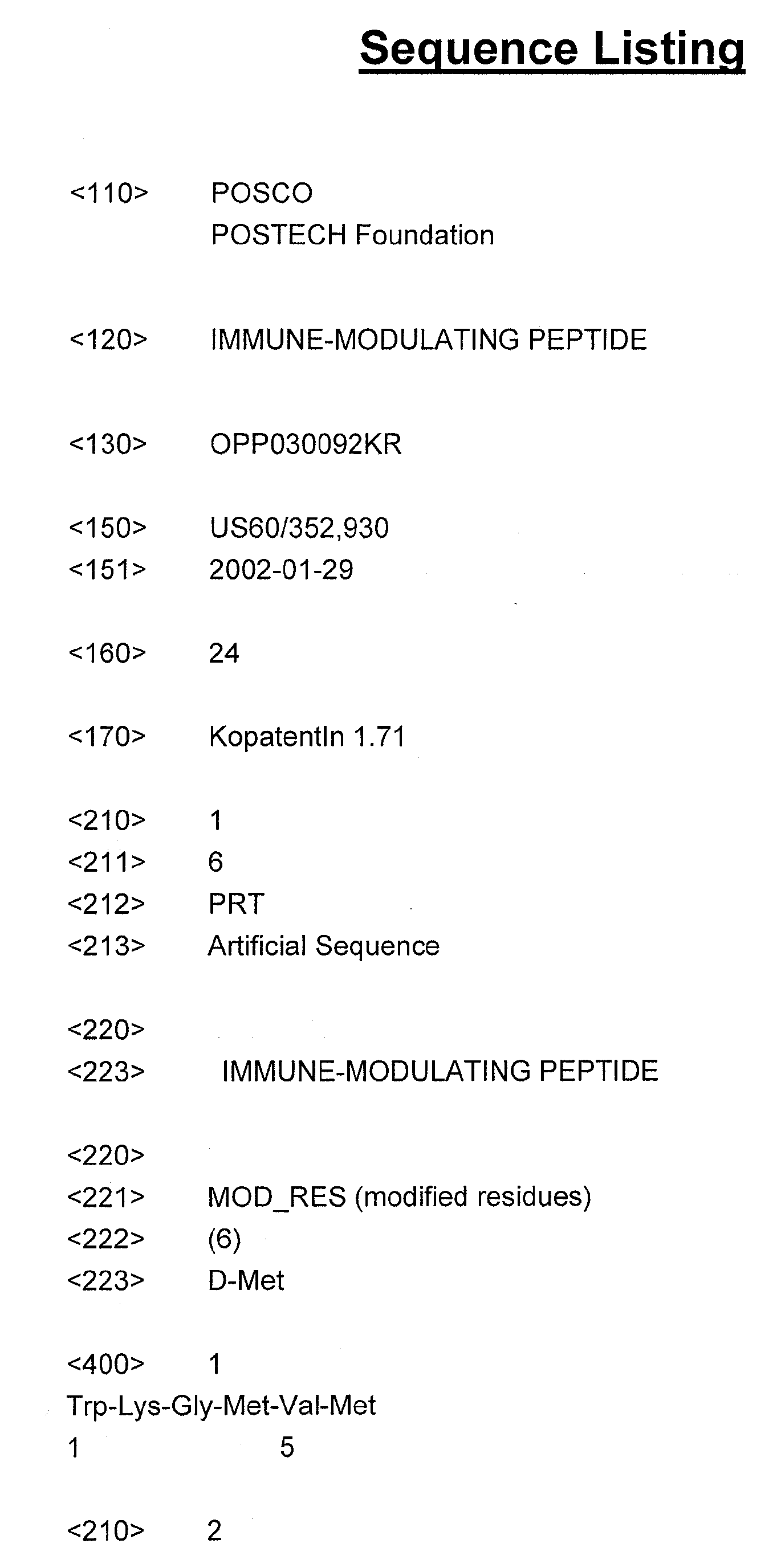


Claims (15)
- A peptide selected from the group consisting of SEQ ID NO: 11, 14, 15, 21, and 23.
- The peptide according to claim 1 wherein the peptide activates leukocytes and is in an isolated and substantially pure form.
- A pharmaceutical composition comprising a peptide of which its amino acid sequence is selected from the group consisting of SEQ ID NO: 11, 14, 15, 21, and 23.
- Use of a peptide having an amino acid sequence selected from the group consisting of SEQ ID NO: 11, 14, 15, 21, and 23 for preparing a medicament for treating a condition accompanied or caused by modification of the number or activation states of leukocytes, wherein said condition is a disorder caused by infection, rheumatoid arthritis, Lyme's arthritis, gout, sepsis syndrome, hyperthermia, ulcerative colitis, enterocolitis, osteoporosis, cytomegalovirus, periodontal disease, glomerulonephritis, chronic non-infectious inflammation of the lung, sarcoidosis, smoker's lung, granuloma formation, fibrosis of the liver, fibrosis of the lung, transplant rejection, graft vs. host disease, chronic myeloid leukemia, acute myeloid leukemia, neoplastic diseases, asthma bronchiale, type I insulin dependent diabetes mellitus, arteriosclerosis, atherosclerosis, psoriasis, chronic B lymphocyte leukaemia, common variable immunodeficiency, disseminated intravascular coagulation, systemic sclerosis, encephalomyelitis, lung inflammation, hyper IgE syndrome, cancer metastasis, cancer growth, adoptive immune therapy, acquired respiratory distress syndrome, sepsis, reperfusion syndrome, postsurgical inflammation, organ transplantation, or alopecia.
- Use of a peptide having an amino acid sequence selected from the group consisting of SEQ ID NO: 11, 14, 15, 21, and 23 for preparing a medicament for increasing the number or raising the activation state of leukocytes in a host, said host being afflicted with a disorder caused by infection, rheumatoid arthritis, Lyme's arthritis, gout, sepsis syndrome, hyperthermia, ulcerative colitis, enterocolitis, osteoporosis, cytomegalovirus, periodontal disease, glomerulonephritis, chronic non-infectious inflammation of the lung, sarcoidosis, smoker's lung, granuloma formation, fibrosis of the liver, fibrosis of the lung, transplant rejection, graft vs. host disease, chronic myeloid leukemia, acute myeloid leukemia, neoplastic diseases, asthma bronchiale, type I insulin dependent diabetes mellitus, arteriosclerosis, atherosclerosis, psoriasis, chronic B lymphocyte leukaemia, common variable immunodeficiency, disseminated intravascular coagulation, systemic sclerosis, encephalomyelitis, lung inflammation, hyper IgE syndrome, cancer metastasis, cancer growth, adoptive immune therapy, acquired respiratory distress syndrome, sepsis, reperfusion syndrome, postsurgical inflammation, organ transplantation, or alopecia.
- Use of a peptide having an amino acid sequence selected from the group consisting of SEQ ID NO: 11, 14, 15, 21, and 23 for preparing a medicament for inducing extracellular calcium increase in leukocytes in a patient, said patient being afflicted with a disorder caused by infection, rheumatoid arthritis, Lyme's arthritis, gout, sepsis syndrome, hyperthermia, ulcerative colitis, enterocolitis, osteoporosis, cytomegalovirus, periodontal disease, glomerulonephritis, chronic non-infectious inflammation of the lung, sarcoidosis, smoker's lung, granuloma formation, fibrosis of the liver, fibrosis of the lung, transplant rejection, graft vs. host disease, chronic myeloid leukemia, acute myeloid leukemia, neoplastic diseases, asthma bronchiale, type I insulin dependent diabetes mellitus, arteriosclerosis, atherosclerosis, psoriasis, chronic B lymphocyte leukaemia, common variable immunodeficiency, disseminated intravascular coagulation, systemic sclerosis, encephalomyelitis, lung inflammation, hyper IgE syndrome, cancer metastasis, cancer growth, adoptive immune therapy, acquired respiratory distress syndrome, sepsis, reperfusion syndrome, postsurgical inflammation, organ transplantation, or alopecia.
- Use of a peptide having an amino acid sequence selected from the group consisting of SEQ ID NO: SEQ ID NO: 11, 14, 15, 21, and 23 for preparing a medicament for inducing superoxide generation by human monocytes or neutrophils in a patient, said patient being afflicted with a disorder caused by infection, rheumatoid arthritis, Lyme's arthritis, gout, sepsis syndrome, hyperthermia, ulcerative colitis, enterocolitis, osteoporosis, cytomegalovirus, periodontal disease, glomerulonephritis, chronic non-infectious inflammation of the lung, sarcoidosis, smoker's lung, granuloma formation, fibrosis of the liver, fibrosis of the lung, transplant rejection, graft vs. host disease, chronic myeloid leukemia, acute myeloid leukemia, neoplastic diseases, asthma bronchiale, type I insulin dependent diabetes mellitus, arteriosclerosis, atherosclerosis, psoriasis, chronic B lymphocyte leukaemia, common variable immunodeficiency, disseminated intravascular coagulation, systemic sclerosis, encephalomyelitis, lung inflammation, hyper IgE syndrome, cancer metastasis, cancer growth, adoptive immune therapy, acquired respiratory distress syndrome, sepsis, reperfusion syndrome, postsurgical inflammation, organ transplantation, or alopecia.
- Use of a peptide having an amino acid sequence selected from the group consisting of SEQ ID NO: 11, 14, 15, 21, and 23 for preparing a medicament for inducing chemotactic migration by human peripheral blood mononuclear cells in a patient, said patient being afflicted with a disorder caused by infection, rheumatoid arthritis, Lyme's arthritis, gout, sepsis syndrome, hyperthermia, ulcerative colitis, enterocolitis, osteoporosis, cytomegalovirus, periodontal disease, glomerulonephritis, chronic non-infectious inflammation of the lung, sarcoidosis, smoker's lung, granuloma formation, fibrosis of the liver, fibrosis of the lung, transplant rejection, graft vs. host disease, chronic myeloid leukemia, acute myeloid leukemia, neoplastic diseases, asthma bronchiale, type I insulin dependent diabetes mellitus, arteriosclerosis, atherosclerosis, psoriasis, chronic B lymphocyte leukaemia, common variable immunodeficiency, disseminated intravascular coagulation, systemic sclerosis, encephalomyelitis, lung inflammation, hyper IgE syndrome, cancer metastasis, cancer growth, adoptive immune therapy, acquired respiratory distress syndrome, sepsis, reperfusion syndrome, postsurgical inflammation, organ transplantation, or alopecia.
- Use of a peptide having an amino acid sequence selected from the group consisting of SEQ ID NO: 11, 14, 15, 21, and 23 for preparing a medicament for inducing degranulation in formyl peptide receptor or formyl peptide receptor-like 1 expressing cells in a patient, said patient being afflicted with a disorder caused by infection, rheumatoid arthritis, Lyme's arthritis, gout, sepsis syndrome, hyperthermia, ulcerative colitis, enterocolitis, osteoporosis, cytomegalovirus, periodontal disease, glomerulonephritis, chronic non-infectious inflammation of the lung, sarcoidosis, smoker's lung, granuloma formation, fibrosis of the liver, fibrosis of the lung, transplant rejection, graft vs. host disease, chronic myeloid leukemia, acute myeloid leukemia, neoplastic diseases, asthma bronchiale, type I insulin dependent diabetes mellitus, arteriosclerosis, atherosclerosis, psoriasis, chronic B lymphocyte leukaemia, common variable immunodeficiency, disseminated intravascular coagulation, systemic sclerosis, encephalomyelitis, lung inflammation, hyper IgE syndrome, cancer metastasis, cancer growth, adoptive immune therapy, acquired respiratory distress syndrome, sepsis, reperfusion syndrome, postsurgical inflammation, organ transplantation, or alopecia.
- Use of a peptide having an amino acid sequence selected from the group consisting of SEQ ID NO: 11, 14, 15, 21, and 23 for preparing a medicament for competing peptides with WKYMVm for binding formyl peptide receptor in the formyl peptide receptor expressing cells in a patient, said patient being afflicted with a disorder caused by infection, rheumatoid arthritis, Lyme's arthritis, gout, sepsis syndrome, hyperthermia, ulcerative colitis, enterocolitis, osteoporosis, cytomegalovirus, periodontal disease, glomerulonephritis, chronic non-infectious inflammation of the lung, sarcoidosis, smoker's lung, granuloma formation, fibrosis of the liver, fibrosis of the lung, transplant rejection, graft vs. host disease, chronic myeloid leukemia, acute myeloid leukemia, neoplastic diseases, asthma bronchiale, type I insulin dependent diabetes mellitus, arteriosclerosis, atherosclerosis, psoriasis, chronic B lymphocyte leukaemia, common variable immunodeficiency, disseminated intravascular coagulation, systemic sclerosis, encephalomyelitis, lung inflammation, hyper IgE syndrome, cancer metastasis, cancer growth, adoptive immune therapy, acquired respiratory distress syndrome, sepsis, reperfusion syndrome, postsurgical inflammation, organ transplantation, or alopecia.
- Use of a peptide having an amino acid sequence selected from the group consisting of SEQ ID NO: 11, 14, 15, 21, and 23 for preparing a medicament for competing peptides with WKYMVm for binding a formyl peptide receptor-like 1 in the formyl peptide receptor-like 1 expressing cells in a patient, said patient being afflicted with a disorder caused by infection, rheumatoid arthritis, Lyme's arthritis, gout, sepsis syndrome, hyperthermia, ulcerative colitis, enterocolitis, osteoporosis, cytomegalovirus, periodontal disease, glomerulonephritis, chronic non-infectious inflammation of the lung, sarcoidosis, smoker's lung, granuloma formation, fibrosis of the liver, fibrosis of the lung, transplant rejection, graft vs. host disease, chronic myeloid leukemia, acute myeloid leukemia, neoplastic diseases, asthma bronchiale, type I insulin dependent diabetes mellitus, arteriosclerosis, atherosclerosis, psoriasis, chronic B lymphocyte leukaemia, common variable immunodeficiency, disseminated intravascular coagulation, systemic sclerosis, encephalomyelitis, lung inflammation, hyper IgE syndrome, cancer metastasis, cancer growth, adoptive immune therapy, acquired respiratory distress syndrome, sepsis, reperfusion syndrome, postsurgical inflammation, organ transplantation, or alopecia.
- Use of a peptide having an amino acid sequence selected from the group consisting of SEQ ID NO: 11, 14, 15, 21, and 23 for preparing a medicament for stimulating extracellular signal regulated protein kinase in formyl peptide receptor or formyl peptide receptor-like 1 expressing cells in a patient, said patient being afflicted with a disorder caused by infection, rheumatoid arthritis, Lyme's arthritis, gout, sepsis syndrome, hyperthermia, ulcerative colitis, enterocolitis, osteoporosis, cytomegalovirus, periodontal disease, glomerulonephritis, chronic non-infectious inflammation of the lung, sarcoidosis, smoker's lung, granuloma formation, fibrosis of the liver, fibrosis of the lung, transplant rejection, graft vs. host disease, chronic myeloid leukemia, acute myeloid leukemia, neoplastic diseases, asthma bronchiale, type I insulin dependent diabetes mellitus, arteriosclerosis, atherosclerosis, psoriasis, chronic B lymphocyte leukaemia, common variable immunodeficiency, disseminated intravascular coagulation, systemic sclerosis, encephalomyelitis, lung inflammation, hyper IgE syndrome, cancer metastasis, cancer growth, adoptive immune therapy, acquired respiratory distress syndrome, sepsis, reperfusion syndrome, postsurgical inflammation, organ transplantation, or alopecia.
- Use of a peptide having an amino acid sequence selected from the group consisting of SEQ ID NO: 11, 14, 15, 21, and 23 for preparing a medicament for stimulating Akt in formyl peptide receptor or formyl peptide receptor-like 1 expressing cells in a patient, said patient being afflicted with said patient being afflicted with a disorder caused by infection, rheumatoid arthritis, Lyme's arthritis, gout, sepsis syndrome, hyperthermia, ulcerative colitis, enterocolitis, osteoporosis, cytomegalovirus, periodontal disease, glomerulonephritis, chronic non-infectious inflammation of the lung, sarcoidosis, smoker's lung, granuloma formation, fibrosis of the liver, fibrosis of the lung, transplant rejection, graft vs. host disease, chronic myeloid leukemia, acute myeloid leukemia, neoplastic diseases, asthma bronchiale, type I insulin dependent diabetes mellitus, arteriosclerosis, atherosclerosis, psoriasis, chronic B lymphocyte leukaemia, common variable immunodeficiency, disseminated intravascular coagulation, systemic sclerosis, encephalomyelitis, lung inflammation, hyper IgE syndrome, cancer metastasis, cancer growth, adoptive immune therapy, acquired respiratory distress syndrome, sepsis, reperfusion syndrome, postsurgical inflammation, organ transplantation, or alopecia.
- An isolated polynucleotide comprising a base sequence encoding a peptide of an amino acid sequence selected from the group consisting of SEQ ID NO: 11, 14, 15, 21, and 23.
- A vector comprising the polynucleotide according to claim 14.
Applications Claiming Priority (2)
| Application Number | Priority Date | Filing Date | Title |
|---|---|---|---|
| US35293002P | 2002-01-29 | 2002-01-29 | |
| EP03703450A EP1414849B1 (en) | 2002-01-29 | 2003-01-28 | Immune-modulating peptide |
Related Parent Applications (1)
| Application Number | Title | Priority Date | Filing Date |
|---|---|---|---|
| EP03703450A Division EP1414849B1 (en) | 2002-01-29 | 2003-01-28 | Immune-modulating peptide |
Publications (2)
| Publication Number | Publication Date |
|---|---|
| EP2108655A1 true EP2108655A1 (en) | 2009-10-14 |
| EP2108655B1 EP2108655B1 (en) | 2013-11-20 |
Family
ID=27663154
Family Applications (2)
| Application Number | Title | Priority Date | Filing Date |
|---|---|---|---|
| EP03703450A Expired - Lifetime EP1414849B1 (en) | 2002-01-29 | 2003-01-28 | Immune-modulating peptide |
| EP09156973.1A Expired - Lifetime EP2108655B1 (en) | 2002-01-29 | 2003-01-28 | Immune-modulating peptide |
Family Applications Before (1)
| Application Number | Title | Priority Date | Filing Date |
|---|---|---|---|
| EP03703450A Expired - Lifetime EP1414849B1 (en) | 2002-01-29 | 2003-01-28 | Immune-modulating peptide |
Country Status (8)
| Country | Link |
|---|---|
| US (1) | US7030090B2 (en) |
| EP (2) | EP1414849B1 (en) |
| JP (2) | JP4474163B2 (en) |
| KR (4) | KR100803092B1 (en) |
| CN (2) | CN101709078B (en) |
| CA (1) | CA2446872C (en) |
| DE (1) | DE60327407D1 (en) |
| WO (1) | WO2003064447A2 (en) |
Families Citing this family (23)
| Publication number | Priority date | Publication date | Assignee | Title |
|---|---|---|---|---|
| US7517857B2 (en) | 2002-01-29 | 2009-04-14 | Posco | Immune-modulating peptide |
| WO2004067020A1 (en) * | 2003-01-30 | 2004-08-12 | Pohang University Of Science And Technology | Dna vaccine composition with enhanced immunogenicity |
| CA2554370A1 (en) * | 2004-01-26 | 2005-08-25 | Brett Premack | Compositions and methods of use of w-peptides |
| AU2005276117C1 (en) | 2004-08-23 | 2013-04-18 | Yeda Research And Development Co. Ltd. At The Weizmann Institute Of Science | Peptide inhibitors for mediating stress responses |
| ITMI20061607A1 (en) | 2006-08-09 | 2008-02-10 | Maria Vincenza Carriero | PEPTIDES WITH PHARMACOLOGICAL ACTIVITY |
| US8877203B2 (en) | 2007-11-02 | 2014-11-04 | Postech Academy-Industry Foundation | Composition and method for preventing and treating immune-related disorder |
| KR20100123240A (en) | 2009-05-15 | 2010-11-24 | 포항공과대학교 산학협력단 | Respiratory administering pharmaceutical agent for treating or preventing respiratory inflammatory diseases and method for treating or preventing the same diseases |
| EP3263127B1 (en) | 2011-05-23 | 2019-08-21 | Yeda Research and Development Co. Ltd | Use of akt phosphorylation as a biomarker for prognosing neurodegenerative diseases and treating same |
| KR101708945B1 (en) * | 2011-11-15 | 2017-02-22 | 성균관대학교산학협력단 | Novel peptides that stimulate human neutrophils |
| CN104507961B (en) * | 2012-05-11 | 2018-08-14 | 珍白斯凯尔有限公司 | Anti-inflammatory peptides and compositions comprising them |
| WO2014204229A2 (en) * | 2013-06-21 | 2014-12-24 | 성균관대학교산학협력단 | Pharmaceutical composition for preventing or treating rheumatoid arthritis, comprising peptide as active ingredient |
| KR101668590B1 (en) * | 2014-06-19 | 2016-10-25 | 전남대학교병원 | Bioactive Peptide-coated Stent Promotes Endothelial Cell Proliferation and Prevents Stent Thrombosis |
| KR101959237B1 (en) | 2018-02-26 | 2019-03-20 | 주식회사 굳티셀 | Use of a novel transmembrane protein of Lrig-1 in a regulatory T cell |
| KR102227522B1 (en) * | 2018-07-16 | 2021-03-12 | 부산대학교 산학협력단 | PHARMACEUTICAL COMPOSITION FOR USE IN PREVENTING OR TREATING INFLAMMATORY SKIN DISORDERS COMPRISING GHKWKYMVm |
| CN109679981A (en) * | 2019-02-21 | 2019-04-26 | 武汉大学 | A kind of formyl peptides directed evolution bacteriophage and the preparation method and application thereof |
| KR102094747B1 (en) | 2019-03-08 | 2020-03-30 | 주식회사 굳티셀 | Use of a novel transmembrane protein of Lrig-1 in a regulatory T cell |
| KR102067402B1 (en) | 2019-03-08 | 2020-01-17 | 주식회사 굳티셀 | Use of a novel transmembrane protein of Lrig-1 in a regulatory T cell |
| KR102382610B1 (en) * | 2019-12-24 | 2022-04-05 | 차의과학대학교 산학협력단 | Pharmaceutical composition for the prevention or treatment of liver disease comprising enhanced mesenchymal stem cell |
| KR102317415B1 (en) | 2020-03-23 | 2021-10-28 | 주식회사 굳티셀 | Use of a novel transmembrane protein of Lrig-1 in a regulatory T cell |
| KR20200035924A (en) | 2020-03-23 | 2020-04-06 | 주식회사 굳티셀 | Use of a novel transmembrane protein of Lrig-1 in a regulatory T cell |
| KR102429281B1 (en) * | 2020-05-25 | 2022-08-05 | (주)노바셀테크놀로지 | A novel pharmaceutical composition for the treatment of dry eye syndrome |
| KR102995465B1 (en) * | 2023-09-15 | 2026-07-27 | (주)케어젠 | Peptide Having Activity of Promoting Hair Growth and Inhibiting Hair Loss and Uses Thereof |
| KR20260001599A (en) * | 2024-06-27 | 2026-01-06 | 성균관대학교산학협력단 | Composition for preventing or treating fungal infections comprising WKYMVm peptide, analogs or derivatives thereof |
Citations (1)
| Publication number | Priority date | Publication date | Assignee | Title |
|---|---|---|---|---|
| WO2001057074A1 (en) * | 2000-02-04 | 2001-08-09 | The Government Of The United States Of America, As Represented By The Secretary, Department Of Health And Human Services | Ligands for fpr class receptors that induce a host immune response to a pathogen or inhibit hiv infection |
Family Cites Families (1)
| Publication number | Priority date | Publication date | Assignee | Title |
|---|---|---|---|---|
| US5728680A (en) * | 1987-12-30 | 1998-03-17 | Cytoven J.V. | Methods for normalizing numbers of lymphocytes |
-
2003
- 2003-01-28 WO PCT/KR2003/000191 patent/WO2003064447A2/en not_active Ceased
- 2003-01-28 KR KR1020067021660A patent/KR100803092B1/en not_active Expired - Lifetime
- 2003-01-28 CN CN2009102077473A patent/CN101709078B/en not_active Expired - Lifetime
- 2003-01-28 KR KR1020067021661A patent/KR100839098B1/en not_active Expired - Fee Related
- 2003-01-28 EP EP03703450A patent/EP1414849B1/en not_active Expired - Lifetime
- 2003-01-28 DE DE60327407T patent/DE60327407D1/en not_active Expired - Lifetime
- 2003-01-28 CA CA2446872A patent/CA2446872C/en not_active Expired - Fee Related
- 2003-01-28 EP EP09156973.1A patent/EP2108655B1/en not_active Expired - Lifetime
- 2003-01-28 JP JP2003564067A patent/JP4474163B2/en not_active Expired - Lifetime
- 2003-01-28 KR KR1020037016322A patent/KR100752756B1/en not_active Expired - Lifetime
- 2003-01-28 CN CNB038004143A patent/CN100569796C/en not_active Expired - Lifetime
- 2003-01-29 US US10/353,419 patent/US7030090B2/en not_active Expired - Lifetime
-
2007
- 2007-10-22 KR KR1020070106121A patent/KR100824685B1/en not_active Expired - Lifetime
-
2009
- 2009-07-10 JP JP2009164090A patent/JP5232091B2/en not_active Expired - Lifetime
Patent Citations (1)
| Publication number | Priority date | Publication date | Assignee | Title |
|---|---|---|---|---|
| WO2001057074A1 (en) * | 2000-02-04 | 2001-08-09 | The Government Of The United States Of America, As Represented By The Secretary, Department Of Health And Human Services | Ligands for fpr class receptors that induce a host immune response to a pathogen or inhibit hiv infection |
Non-Patent Citations (26)
| Title |
|---|
| BAE, Y. S. ET AL., BLOOD, vol. 97, 2001, pages 2854 - 2862 |
| BAE, Y. S. ET AL., J. LEUKOC. BIOL., vol. 65, 1999, pages 241 - 248 |
| BAE, Y. S. ET AL., J. LEUKOC. BIOL., vol. 66, 1999, pages 915 - 922 |
| BAEK, S. H. ET AL., J. BIOL. CHEM., vol. 271, 1996, pages 8170 - 8175 |
| FRANKE, T. F. ET AL., CELL, vol. 81, 1995, pages 727 - 736 |
| GRYNKIEWICZ, G.; POENIE, M.; TSIEN, R. Y., J. BIOL. CHEM., vol. 260, 1986, pages 3440 - 3450 |
| HARIBABU, B. ET AL., J. BIOL. CHEM., vol. 274, 1999, pages 37087 - 37092 |
| HE, R. ET AL., J. IMMUNOL., vol. 16, no. 5, 2000, pages 4598 - 4605 |
| HU, J. Y. ET AL., J. LEUKOC. BIOL., vol. 70, 2001, pages 155 - 1561 |
| JIN, X. ET AL., J. CLIN. INVEST., vol. 100, 1997, pages 2849 - 2857 |
| KING, J.; LAEMMLI, U. K., J. MOL. BIOL., vol. 62, 1971, pages 465 - 477 |
| LE, Y. ET AL., IMMUNOL REV., vol. 177, 2000, pages 185 - 194 |
| LE, Y. ET AL., J. LMMUNOL., vol. 163, 1999, pages 6777 - 6784 |
| LE, Y.; OPPENHEIM, J. J.; WANG, J. M., CYTOKINE GROWTH FACTOR REV., vol. 12, 2001, pages 91 - 105 |
| LI B-Q ET AL: "The synthetic peptide WKYMVm attenuates the function of the chemokine receptor CCR5 and CXCR4 through activation of formyl peptide receptor-like 1", BLOOD, AMERICAN SOCIETY OF HEMATOLOGY, US, vol. 97, no. 10, 25 May 2001 (2001-05-25), pages 2941 - 2947, XP002972742, ISSN: 0006-4971 * |
| MIETTINEN, H. M. ET AL., J BIOL. CHEM., vol. 274, 1999, pages 27934 - 27942 |
| PALANCHE, T. ET AL., J. BIOL. CHEM., vol. 276, 2001, pages 34853 - 34861 |
| PROSSNITZ, E. R. ET AL., BIOCHEM. J., vol. 294, 1993, pages 581 - 587 |
| PROSSNITZ, E. R.; YE, R. D., PHARMACOL. THER., vol. 74, 1997, pages 73 - 102 |
| SEO J-K ET AL: "A peptide with unique receptor specificity:STIMULATION OF PHOSPHOINOSTTIDE HYDROLYSIS AND INDUCTION OF SUPEROXIDE GENERATION IN HUMAN NEUTROPHILS", JOURNAL OF IMMUNOLOGY, AMERICAN ASSOCIATION OF IMMUNOLOGISTS, US, vol. 158, no. 4, 1 January 1997 (1997-01-01), pages 1895 - 1901, XP002976843, ISSN: 0022-1767 * |
| SEO, J. K. ET AL., J. IMMUNOL., vol. 158, 1997, pages 1895 - 1901 |
| SU, S. B. ET AL., BLOOD, vol. 93, 1999, pages 3885 - 3892 |
| THOMAS, W. G. ET AL., J. BIOL. CHEM., vol. 275, 2000, pages 2893 - 2900 |
| WALTHER, A.; RIEHEMANN, K.; GERKE, V., MOL. CELL, vol. 5, 2000, pages 831 - 840 |
| WHITE, J. R. ET AL., J. BIOL. CHEM., vol. 273, 1998, pages 10095 - 10098 |
| ZAGORSKI, J.; WAHL, S. M., J. IMMUNOL., vol. 159, 1997, pages 1059 - 1062 |
Also Published As
| Publication number | Publication date |
|---|---|
| JP2010000077A (en) | 2010-01-07 |
| KR100839098B1 (en) | 2008-06-19 |
| WO2003064447A2 (en) | 2003-08-07 |
| JP4474163B2 (en) | 2010-06-02 |
| CA2446872C (en) | 2012-03-20 |
| US7030090B2 (en) | 2006-04-18 |
| CN100569796C (en) | 2009-12-16 |
| JP5232091B2 (en) | 2013-07-10 |
| KR100824685B1 (en) | 2008-04-24 |
| KR20040012929A (en) | 2004-02-11 |
| KR20060114046A (en) | 2006-11-03 |
| CN101709078A (en) | 2010-05-19 |
| CN101709078B (en) | 2013-04-17 |
| JP2005521388A (en) | 2005-07-21 |
| KR20070108836A (en) | 2007-11-13 |
| EP2108655B1 (en) | 2013-11-20 |
| US20030224987A1 (en) | 2003-12-04 |
| CA2446872A1 (en) | 2003-08-07 |
| DE60327407D1 (en) | 2009-06-10 |
| KR100803092B1 (en) | 2008-02-18 |
| WO2003064447A3 (en) | 2003-11-13 |
| EP1414849B1 (en) | 2009-04-29 |
| CN1533399A (en) | 2004-09-29 |
| EP1414849A2 (en) | 2004-05-06 |
| KR100752756B1 (en) | 2007-08-29 |
| KR20060114045A (en) | 2006-11-03 |
Similar Documents
| Publication | Publication Date | Title |
|---|---|---|
| KR100824685B1 (en) | Immunomodulatory peptides | |
| US8017572B2 (en) | Immune-modulating peptide | |
| Bae et al. | Differential activation of formyl peptide receptor signaling by peptide ligands | |
| JP2003522186A (en) | Ligands to FPR class receptors that induce a host immune response against pathogens or suppress HIV infection | |
| KR100831633B1 (en) | Peptides that antagonize fpr class receptor mediated signaling | |
| US7456153B2 (en) | Compounds and methods for modulating functions of classical cadherins | |
| WO1995003067A1 (en) | Pharmaceutical with immunomodulating activity | |
| US7390870B2 (en) | Immune-enhancing peptides | |
| JP2003089700A (en) | peptide | |
| Lee et al. | F2L, a peptide derived from heme-binding protein, inhibits formyl peptide receptor-mediated signaling | |
| Horvat et al. | Synthesis and bioactivity studies of 1‐adamantanamine derivatives of peptides |
Legal Events
| Date | Code | Title | Description |
|---|---|---|---|
| PUAI | Public reference made under article 153(3) epc to a published international application that has entered the european phase |
Free format text: ORIGINAL CODE: 0009012 |
|
| 17P | Request for examination filed |
Effective date: 20090331 |
|
| AC | Divisional application: reference to earlier application |
Ref document number: 1414849 Country of ref document: EP Kind code of ref document: P |
|
| AK | Designated contracting states |
Kind code of ref document: A1 Designated state(s): DE FR GB |
|
| RIN1 | Information on inventor provided before grant (corrected) |
Inventor name: SONG, JI-YOUNG Inventor name: BAE, YOE-SIK Inventor name: SUH, PANN-GHILL Inventor name: RYU, SUNG-HO |
|
| 17Q | First examination report despatched |
Effective date: 20100510 |
|
| AKX | Designation fees paid |
Designated state(s): DE FR GB |
|
| GRAP | Despatch of communication of intention to grant a patent |
Free format text: ORIGINAL CODE: EPIDOSNIGR1 |
|
| INTG | Intention to grant announced |
Effective date: 20130611 |
|
| GRAS | Grant fee paid |
Free format text: ORIGINAL CODE: EPIDOSNIGR3 |
|
| GRAA | (expected) grant |
Free format text: ORIGINAL CODE: 0009210 |
|
| AC | Divisional application: reference to earlier application |
Ref document number: 1414849 Country of ref document: EP Kind code of ref document: P |
|
| AK | Designated contracting states |
Kind code of ref document: B1 Designated state(s): DE FR GB |
|
| REG | Reference to a national code |
Ref country code: GB Ref legal event code: FG4D |
|
| REG | Reference to a national code |
Ref country code: DE Ref legal event code: R096 Ref document number: 60345343 Country of ref document: DE Effective date: 20140116 |
|
| REG | Reference to a national code |
Ref country code: DE Ref legal event code: R097 Ref document number: 60345343 Country of ref document: DE |
|
| PLBE | No opposition filed within time limit |
Free format text: ORIGINAL CODE: 0009261 |
|
| STAA | Information on the status of an ep patent application or granted ep patent |
Free format text: STATUS: NO OPPOSITION FILED WITHIN TIME LIMIT |
|
| 26N | No opposition filed |
Effective date: 20140821 |
|
| REG | Reference to a national code |
Ref country code: DE Ref legal event code: R097 Ref document number: 60345343 Country of ref document: DE Effective date: 20140821 |
|
| REG | Reference to a national code |
Ref country code: FR Ref legal event code: PLFP Year of fee payment: 14 |
|
| REG | Reference to a national code |
Ref country code: FR Ref legal event code: PLFP Year of fee payment: 15 |
|
| REG | Reference to a national code |
Ref country code: FR Ref legal event code: PLFP Year of fee payment: 16 |
|
| PGFP | Annual fee paid to national office [announced via postgrant information from national office to epo] |
Ref country code: GB Payment date: 20211220 Year of fee payment: 20 Ref country code: FR Payment date: 20211223 Year of fee payment: 20 |
|
| PGFP | Annual fee paid to national office [announced via postgrant information from national office to epo] |
Ref country code: DE Payment date: 20211220 Year of fee payment: 20 |
|
| REG | Reference to a national code |
Ref country code: DE Ref legal event code: R081 Ref document number: 60345343 Country of ref document: DE Owner name: POSCO CO., LTD, POHANG- SI, KR Free format text: FORMER OWNERS: POSCO, POHANG, KYUNGSANGBOOK, KR; POSTECH FOUNDATION, POHANG, KR Ref country code: DE Ref legal event code: R081 Ref document number: 60345343 Country of ref document: DE Owner name: POSTECH FOUNDATION, KR Free format text: FORMER OWNERS: POSCO, POHANG, KYUNGSANGBOOK, KR; POSTECH FOUNDATION, POHANG, KR Ref country code: DE Ref legal event code: R081 Ref document number: 60345343 Country of ref document: DE Owner name: POSCO HOLDINGS INC., KR Free format text: FORMER OWNERS: POSCO, POHANG, KYUNGSANGBOOK, KR; POSTECH FOUNDATION, POHANG, KR |
|
| REG | Reference to a national code |
Ref country code: DE Ref legal event code: R071 Ref document number: 60345343 Country of ref document: DE |
|
| REG | Reference to a national code |
Ref country code: GB Ref legal event code: PE20 Expiry date: 20230127 |
|
| REG | Reference to a national code |
Ref country code: DE Ref legal event code: R081 Ref document number: 60345343 Country of ref document: DE Owner name: POSTECH FOUNDATION, KR Free format text: FORMER OWNERS: POSCO HOLDINGS INC., SEOUL, KR; POSTECH FOUNDATION, POHANG, KR Ref country code: DE Ref legal event code: R081 Ref document number: 60345343 Country of ref document: DE Owner name: POSCO CO., LTD, POHANG- SI, KR Free format text: FORMER OWNERS: POSCO HOLDINGS INC., SEOUL, KR; POSTECH FOUNDATION, POHANG, KR |
|
| REG | Reference to a national code |
Ref country code: GB Ref legal event code: 732E Free format text: REGISTERED BETWEEN 20230413 AND 20230419 |
|
| PG25 | Lapsed in a contracting state [announced via postgrant information from national office to epo] |
Ref country code: GB Free format text: LAPSE BECAUSE OF EXPIRATION OF PROTECTION Effective date: 20230127 |