EP2104011A2 - Bestimmung des Gesamtbestandes von gebündelten und durchgehenden Beständen in einem Biokraftstoff-Herstellungsverfahren - Google Patents
Bestimmung des Gesamtbestandes von gebündelten und durchgehenden Beständen in einem Biokraftstoff-Herstellungsverfahren Download PDFInfo
- Publication number
- EP2104011A2 EP2104011A2 EP09155722A EP09155722A EP2104011A2 EP 2104011 A2 EP2104011 A2 EP 2104011A2 EP 09155722 A EP09155722 A EP 09155722A EP 09155722 A EP09155722 A EP 09155722A EP 2104011 A2 EP2104011 A2 EP 2104011A2
- Authority
- EP
- European Patent Office
- Prior art keywords
- biomass
- batch
- inventory
- measured
- values
- Prior art date
- Legal status (The legal status is an assumption and is not a legal conclusion. Google has not performed a legal analysis and makes no representation as to the accuracy of the status listed.)
- Granted
Links
Images

Classifications
-
- G—PHYSICS
- G05—CONTROLLING; REGULATING
- G05B—CONTROL OR REGULATING SYSTEMS IN GENERAL; FUNCTIONAL ELEMENTS OF SUCH SYSTEMS; MONITORING OR TESTING ARRANGEMENTS FOR SUCH SYSTEMS OR ELEMENTS
- G05B15/00—Systems controlled by a computer
- G05B15/02—Systems controlled by a computer electric
-
- G—PHYSICS
- G05—CONTROLLING; REGULATING
- G05B—CONTROL OR REGULATING SYSTEMS IN GENERAL; FUNCTIONAL ELEMENTS OF SUCH SYSTEMS; MONITORING OR TESTING ARRANGEMENTS FOR SUCH SYSTEMS OR ELEMENTS
- G05B19/00—Program-control systems
- G05B19/02—Program-control systems electric
- G05B19/418—Total factory control, i.e. centrally controlling a plurality of machines, e.g. direct or distributed numerical control [DNC], flexible manufacturing systems [FMS], integrated manufacturing systems [IMS] or computer integrated manufacturing [CIM]
- G05B19/41865—Total factory control, i.e. centrally controlling a plurality of machines, e.g. direct or distributed numerical control [DNC], flexible manufacturing systems [FMS], integrated manufacturing systems [IMS] or computer integrated manufacturing [CIM] characterised by job scheduling, process planning, material flow
-
- G—PHYSICS
- G06—COMPUTING OR CALCULATING; COUNTING
- G06Q—INFORMATION AND COMMUNICATION TECHNOLOGY [ICT] SPECIALLY ADAPTED FOR ADMINISTRATIVE, COMMERCIAL, FINANCIAL, MANAGERIAL OR SUPERVISORY PURPOSES; SYSTEMS OR METHODS SPECIALLY ADAPTED FOR ADMINISTRATIVE, COMMERCIAL, FINANCIAL, MANAGERIAL OR SUPERVISORY PURPOSES, NOT OTHERWISE PROVIDED FOR
- G06Q10/00—Administration; Management
- G06Q10/08—Logistics, e.g. warehousing, loading or distribution; Inventory or stock management
- G06Q10/087—Inventory or stock management, e.g. order filling, procurement or balancing against orders
-
- G—PHYSICS
- G05—CONTROLLING; REGULATING
- G05B—CONTROL OR REGULATING SYSTEMS IN GENERAL; FUNCTIONAL ELEMENTS OF SUCH SYSTEMS; MONITORING OR TESTING ARRANGEMENTS FOR SUCH SYSTEMS OR ELEMENTS
- G05B2219/00—Program-control systems
- G05B2219/30—Nc systems
- G05B2219/32—Operator till task planning
- G05B2219/32077—Batch control system
-
- Y—GENERAL TAGGING OF NEW TECHNOLOGICAL DEVELOPMENTS; GENERAL TAGGING OF CROSS-SECTIONAL TECHNOLOGIES SPANNING OVER SEVERAL SECTIONS OF THE IPC; TECHNICAL SUBJECTS COVERED BY FORMER USPC CROSS-REFERENCE ART COLLECTIONS [XRACs] AND DIGESTS
- Y02—TECHNOLOGIES OR APPLICATIONS FOR MITIGATION OR ADAPTATION AGAINST CLIMATE CHANGE
- Y02P—CLIMATE CHANGE MITIGATION TECHNOLOGIES IN THE PRODUCTION OR PROCESSING OF GOODS
- Y02P80/00—Climate change mitigation technologies for sector-wide applications
- Y02P80/20—Climate change mitigation technologies for sector-wide applications using renewable energy
-
- Y—GENERAL TAGGING OF NEW TECHNOLOGICAL DEVELOPMENTS; GENERAL TAGGING OF CROSS-SECTIONAL TECHNOLOGIES SPANNING OVER SEVERAL SECTIONS OF THE IPC; TECHNICAL SUBJECTS COVERED BY FORMER USPC CROSS-REFERENCE ART COLLECTIONS [XRACs] AND DIGESTS
- Y02—TECHNOLOGIES OR APPLICATIONS FOR MITIGATION OR ADAPTATION AGAINST CLIMATE CHANGE
- Y02P—CLIMATE CHANGE MITIGATION TECHNOLOGIES IN THE PRODUCTION OR PROCESSING OF GOODS
- Y02P90/00—Enabling technologies with a potential contribution to greenhouse gas [GHG] emissions mitigation
- Y02P90/02—Total factory control, e.g. smart factories, flexible manufacturing systems [FMS] or integrated manufacturing systems [IMS]
-
- Y—GENERAL TAGGING OF NEW TECHNOLOGICAL DEVELOPMENTS; GENERAL TAGGING OF CROSS-SECTIONAL TECHNOLOGIES SPANNING OVER SEVERAL SECTIONS OF THE IPC; TECHNICAL SUBJECTS COVERED BY FORMER USPC CROSS-REFERENCE ART COLLECTIONS [XRACs] AND DIGESTS
- Y02—TECHNOLOGIES OR APPLICATIONS FOR MITIGATION OR ADAPTATION AGAINST CLIMATE CHANGE
- Y02P—CLIMATE CHANGE MITIGATION TECHNOLOGIES IN THE PRODUCTION OR PROCESSING OF GOODS
- Y02P90/00—Enabling technologies with a potential contribution to greenhouse gas [GHG] emissions mitigation
- Y02P90/80—Management or planning
Definitions
- the present invention generally relates to the field of biofuel production. More particularly, the present invention relates to systems and methods for determining total fermentation biomass inventory of batch and continuous inventories in a biofuel production process.
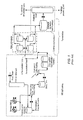
- FIG. 1 An exemplary high-level design of a biofuel production plant or process is shown in Figure 1 , which illustrates how biomass is processed through several stages to produce biofuel and one or more co-products.
- biomass is provided to a milling and cooking process, where biomass is broken down to increase the surface area to volume ratio. This increase in surface area allows for sufficient interaction of the fresh water (FW) and biomass surface area to achieve a solution of fermentable sugars in water.
- the mixture a biomass/water slurry, may then be cooked to promote an increase in the amount of biomass-water contact in solution and to increase the separation of carbohydrate biomass from the non-carbohydrate biomass.
- the milling/cooking process is generally a continuous process, where biomass is continually processed through the various milling and cooking sub-processes.
- the output of the milling and cooking units (i.e., the fermentation feed or slurry) is then sent to a fermentation process, where one or more fermentation units (vats) operate to ferment the biomass/water slurry produced by the milling and cooking process.
- the fermentation process may or may not require addition of additional fresh water to the process to control the consistency of material to the batch fermentation units (also referred to herein as fermenters).
- biomass is converted by yeast and enzymes into a biofuel, and by-products such as carbon-dioxide, water and non-fermentable bio-mass (solids). As fermentation proceeds, more sugar in the fermentation mash or slurry is converted into biofuel.
- the output from the fermentation process is sent to a distillation process, e.g., one or more distillation units, to separate biofuel from water, carbon dioxide, and non-fermentable solids. If the biofuel has to be dehydrated to moisture levels less than 5% by volume, the bio-fuel can be processed through a processing unit called a molecular sieve. The finalized biofuel is then processed to ensure it is denatured and not used for human-consumption.
- a distillation process e.g., one or more distillation units
- the distillation units separate the biofuel from water. Stillage (non-fermentable solids and yeast residue), the heaviest output of the distillation units, is sent to stillage processing for further development of co-products from the biofuel production process.
- Stillage processing units separate additional water from the cake solids and may recycle this water back to the milling and cooking units.
- the actual fermentation process is a batch process, where one or more fermentation vats, referred to as fermenters, are operated (e.g., in parallel) to ferment successive batches of biomass/water slurry to generate biofuel.
- the batch fermentation (including, for example, fermentation cycle time and solids concentration) is typically adjusted to operate the entire plant, possibly subject to one or more active process constraints.
- Other processes of the biofuel production process i.e., sub-processes, are continuous processes, i.e., are processes in which a substantially continuous stream of material is processed or operated on, with substantially continuous input and output of the process.
- Examples of continuous (sub-)processes in the biofuel production process include, but are not limited to, cooking and milling, distillation and dehydration, and stillage processes.
- the beerwell provides fermented biomass to the distillation/dehydration and stillage processes, which are continuous, and so while input to the beerwell from the fermenters is a batch process, the output from the beerwell is generally a continuous one.
- the beerwell may act as a kind of material flow buffer, allowing the batch fermentation process to integrate smoothly with the continuous distillation/dehydration and stillage processes.
- Total fermentation biomass inventory which is the total amount of biomass in the fermentation vats and beerwell (or more specifically, in the filling, draining and fermenting fermentation vessels and key auxiliary equipment), is generally carefully managed to insure that a) when a fermenter is emptied into the beerwell, there is enough capacity to accept the material transfer without over overflow, and b) as material from the beerwell is output (e.g., to the distillation/dehydration and stillage processes), the beerwell is never fully emptied.
- fermentation inventory which is a totalized inventory across the falling, draining and fermenting fermentation vessels and key auxiliary equipment, must generally be monitored for managing biomass fermentation. If this total inventory level is controlled or held within an acceptably stable band, the front plant section, i.e., the cooking/milling, and fermentation processes, can be managed to match the back plant section, i.e., the beerwell and distillation and stillage processes, across all batch sequentially operated fermentation vessels. If totalized batch volume is controlled properly, then filling may be balanced with draining across multiple parallel batch fermentation vessels to avoid beerwell overage or underage.
- level sensors used to determine fermentation tank and beerwell levels are based only on pressure, where, for example, the sensor is located at the bottom of the vessel, and calibrated for the vessel's particular geometry to indicate a level value based on the pressure, which, since pressure is generally proportional to depth, provides a measure of biomass volume or amount in the vessel.
- these pressure-based sensors generate data that are premised on a controlled vapor space pressure of the batch fermenters and the at least one beer well.
- phenomena e.g., disruptions or disturbances, that occur in the process that may cause these sensors to indicate inaccurate values.
- each of these vessels (fermentation tanks and beerwell) generally has space at the top of the vessel that holds gas, e.g., carbon dioxide from the fermentation process.
- This gas can contribute to the pressure measured by the level sensor and thus lead to erroneous level values.
- biomass flow sensors may also operate under assumptions that do not hold in the biofuel process, and particularly the fermentation process.
- biomass flow sensors in many prior art biofuel production processes are premised on a constant biomass temperature and density, even though actual biomass temperature and density may fluctuate in an uncontrolled manner during the process.
- constituents of the biomass may change, resulting in a change in density.
- the temperature may also change during the fermentation process.
- uncontrolled influences in the fermentation process may introduce errors in biomass flow measurements made by flow sensors premised on constant biomass temperature and density.
- Re-instrumenting these biofuel plants with compensating sensors e.g., pressure-compensating, temperature-compensating, and/or density-compensating, sensors may not be a feasible option, e.g., due to the high cost of retro-fitting, unacceptable down-time for the production facility, and so forth.
- Measured biomass inventory values may be received, including a plurality of fermentation batch inventories of a corresponding plurality of batch fermenters and at least one continuous beer well inventory from a corresponding at least one beer well that receives fermented biomass from the plurality of fermenters.
- the measured biomass inventory values may be premised on a controlled vapor space pressure of the batch fermenters and the at least one beer well, where the vapor space pressure fluctuates in an uncontrolled manner.
- At least one measured vapor space pressure for the batch fermenters and the at least one beer well may be received, and pressure compensated measured biomass inventory values determined based on the measured biomass inventory values and the at least one measured vapor space pressure.
- Measured values of biomass input flow to the batch fermenters and biomass output flow from the at least one beer well over a specified time period may be received.
- the measured values of biomass input flow and biomass output flow may be premised on a constant biomass temperature and density, where biomass temperature and density fluctuate in an uncontrolled manner.
- a net measured biomass flow over the specified time period may be determined based on the measured values of biomass input flow and biomass output flow.
- the total inventory of batch and continuous inventories may then be determined based on the net measured biomass flow and the pressure compensated measured biomass inventory values, where the total inventory of batch and continuous inventories is or includes a normalized weighted sum of the net measured biomass flow and the pressure compensated measured biomass inventory values.
- the determined total inventory of batch and continuous inventories may be stored, where the total inventory is useable to control biomass inventory in the biofuel production process.
- various embodiments of the systems and methods described herein may be used to determine total inventory of batch and continuous inventories in a biofuel production process.
- Figure 1 illustrates batch and continuous processes in an exemplary biofuel processing plant, according to the prior art
- Figure 2 is a high-level flowchart of a method for determining total fermentation biomass inventory in a biofuel production process, according to one embodiment
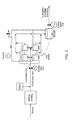
- Figure 3 illustrates instrumentation of fermentation processes in a biofuel production process, according to one embodiment
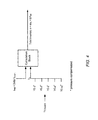
- Figure 4 illustrates a calculation block for determining total fermentation biomass inventory, according to one embodiment
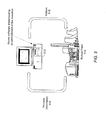
- Figure 5 illustrates model predictive control of a biofuel production process, according to one embodiment.
- Biofuel production process a fermentation process surrounded by auxiliary processing units to produce biofuel, other fermentable alcohols for fuel, and high-capacity food grade or chemical grade alcohols.
- Biofuel production - a measure of biofuel production within or at the end of a batch process. May include measurements such as concentration (e.g., wt%, volume% or wt/vol%), volume (e.g., current gallons biofuel within a fermenter) or mass (e.g., current kg biofuel within a fermenter).
- concentration e.g., wt%, volume% or wt/vol%
- volume e.g., current gallons biofuel within a fermenter
- mass e.g., current kg biofuel within a fermenter
- Batch processing - a staged discontinuous processing step that includes a start and an end, in contrast to continuous processing that continues without stop, e.g., during a normal operating day or week.
- Continuous processing is generally represented by fairly steady targets or operations, where at least some parameters change throughout batch processing.
- biofuel production e.g., fermentation
- yeast cellular concentrations start at fairly low levels, and generally grow throughout a batch, although they generally have a lag (relatively constant concentrations), exponential growth, stable growth and degradation phase within a batch.
- Slurry - a fermentation feed mash comprising a two-phase (liquid and solid) slurry that will be fermented.
- Solids or % solids - fraction or percent of solids in the fermentation feed Solids or % solids - fraction or percent of solids in the fermentation feed.
- Milling and cooking Process - continuous processing for pre-fermentation of the fermentation feed which generally includes grain or cane milling, cooking, mixing with water and processing chemicals, cooking for sterilization and increasing water concentration within solids, and other pre-fermentation processing.
- Biomass concentration - content attribute of the fermentation feed specified by one or more of: slurry solids, liquefaction solids, slurry density, liquefaction density, slurry% or fraction carbohydrates, and slurry% or fraction fermentable sugar.
- Water inventory information - includes water flows, recycle liquid flows, evaporator condensate recycle flow, thin stillage or centrifuge liquor recycle flows, fresh water addition flows, processed water addition flows, slurry flows, mash flows, and various levels or weights for various tanks used to hold inventories of these flows or for intermediate receptacles (e.g. methanator feed tank, slurry feed tank, liquefaction tank, distillate tank, grain silo inventories or other biomass inventories (not water) etc.).
- intermediate receptacles e.g. methanator feed tank, slurry feed tank, liquefaction tank, distillate tank, grain silo inventories or other biomass inventories (not water) etc.
- the starch is liquefied to reduce its carbohydrate chain length and viscosity by adding enzymes or other biologic agents.
- Thermal Oxidizer/Heat Recovery Steam Generator HRSG
- HRSG Thermal Oxidizer/Heat Recovery Steam Generator
- VOCs volatile organic compounds
- the heat recovery steam generator is used to recover the heat required to destroy the VOCs, and is typically the energy center of the biofuels production process.
- DDG Dried Distillers Grains
- DDG Dried Distillers Grains
- WDG wet distillers grains
- DDGS/WDGS dried distillers grains with solubles and wet distillers grains with solubles
- Solubles includes residue solids that are soluble in water and therefore present in stillage concentrate. Solubles may be partially concentrated (generally with evaporation), and added to DDG or WDG to increase yields and manage by-product inventories.
- Enzyme - highly selective biological-based catalyst added to manage specific reactions within a fermentation process.
- the most common enzymes used today include alpha amylase to rapidly break starches into dextrins, gluco-amylase to break dextrins into glucose, and proteases to break grain proteins into digestible proteins to support cell growth.
- alpha amylase to rapidly break starches into dextrins
- gluco-amylase to break dextrins into glucose
- proteases to break grain proteins into digestible proteins to support cell growth.
- modeling and controlling starch-based fermentations enzymes specific for cellulosic conversion into biofuels or other enzymes affecting yeast (see below), growth or nutrient availability may be managed.
- Yeast - a biofuel producing organism a biofuel producing organism. Yeasts are currently the most commonly used organism in ethanol production although other biofuel producing organisms including genetically engineered E. coli can be substituted throughout as the technology describedmay not be specific to yeast, and may apply to many organisms used in fermentation processes to produce biofuel.
- % solids in syrup are usually in the range of 20-45% solids, but percentages outside this range may occur.
- Azeotrope - a special mixture of two compounds, that when in equilibrium, the vapor phase and liquid phase have exactly the same compositions. This makes it difficult to separate the two components to achieve a better purity.
- Special separation processes are required to break the azeotrop. They comprise azeotropic distillation (add a 3 rd compound to break the azeotrop), extractive distillation (use a solvent to separate the 2 compounds), or molecular sieve technology (preferentially trap molecules of one component in a molecular sieve bed as the other component passes over the molecular sieve bed).
- VCS Volatile Organic Compounds
- Capacity - capacity is the established maximum production rate of the process, sub-process, or unit under best operating conditions (no abnormal constraints). Capacity is generally a constant within the present capital investment. For new units it is the vendor's specified capacity. For established units, capacity is established by demonstrated historical production rates.
- Model - an input/output representation, which represents the relationships between changes in various model inputs and how the model inputs affect each of the model outputs.
- Dynamic Predictive Model an input/output representation of a system or process that not only reflects how much an output changes when an input is changed, but with what velocity and over what time-dependent curve an output will change based on one or more input variable changes.
- a dynamic multivariate predictive model is a dynamic predictive model that represents or encodes relationships among multiple parameters, and is operable to receive multiple inputs, and generate multiple outputs.
- Model Predictive Control (or MPC) - use of multivariate dynamic process models to relate controller objectives (targeted controller outputs and constraints) with regulatory controllers (existing single-input/single-output controllers such as ratio flow, temperature, level, speed, or pressure controllers) over a predicted time interval (e.g., 1 minute, 30 minutes, 2 hours, 100 hours, etc.).
- Objective Function sets the goals for the overall operation of the process or unit.
- the objective function provides one or several consistent numerical metric(s) to which the process or unit strives to achieve and over which the performance of the process or unit may be measured, e.g., minimize the cost of operation, or maximize profit or production of the operation.
- Control Variables - those variables that the controller/optimizer tries to bring to some objective, e.g., to a target value, maximum, etc.
- Integrated Variables - integrated control variables are variables that are not stable, but integrate generally with a stable first derivative as a function of time.
- the most common integrated variable is a tank level where as long as inputs and outputs are imbalanced the level will increase or decrease. Thus, when balanced a change in an input or output flow will cause a tank to either overfill or drain as integrated over time.
- a controller must use these integration calculations to determine when and how rapidly input or output flows must be adjusted.
- Manipulated Variables those variables over which the management of the process or unit has authority and control, e.g., via regulation of the process with online controllers, and which are changed or manipulated by the controller/optimizer to achieve the targets or goals of the control variables.
- These variables are the actual control variables whose values are limited by the constraints. This is in distinction from controllable constraints in the sense that manipulated variables may operate within some range of controllable or fixed constraints.
- Manage is an alternate term for process control.
- Disturbance Variable - a variable representing an external influence on a process that, in addition to objective variables and regulatory controllers, is outside the controller scope, and so it acts on the objective variables, but independently of the described controller.
- Disturbance variables are used in feed-forward disturbance rejection.
- Disturbance variables are also measured or unmeasured variables over which the management of the process or unit does not have direct authority or control. For example, temperature, humidity, upstream flow, or quality, may all be referred to as measured disturbance variables.
- Targets the target signal or value for a manipulated variable or targeted controlled variable.
- Constraints - Constraints represent limitations on particular operating variables or conditions that affect the achievable production rate of a production unit. Constraints are of two types: controllable and external, defined below. Constraints may include, but are not limited to: safety constraints, equipment constraints, equipment availability constraints, personnel constraints, business execution constraints, control constraints, supply chain constraints, environmental permit and legal constraints. Safety constraints ensure the safety of equipment and personnel. Equipment constraints, such as the maximum open position of a control valve, maximum tank capacity, etc., may limit the physical throughput of the unit. Equipment availability constraints may include, but are not limited to: readiness due to maintenance planning and scheduling, or due to unexpected equipment outages, authorized production level set by the supply chain and production scheduling systems.
- Personnel constraints refer to limitations on the availability of staffing and support functions, business rules and constraints imposed by contract and policy.
- Business execution constraints are limits imposed by the time required to execute associated business and contractual tasks and obligations.
- Control constraints are limits on the maximal position and rate of change of manipulated variables.
- Supply chain constraints are limits on the availability of raw materials, energy, and production supplies.
- Environmental permit and legal constraints are limits on air emissions, waste water, and waste disposal systems, and/or environmental constraints imposed upon the performance of the unit, such as river levels and current weather imposed limitations.
- Controllable Constraints - constraints imposed on the performance of a process or unit over which the management of the process or unit does have authority and discretionary control.
- the separation in a distillation tower may be affected by distillation tray fouling.
- the tray fouling is a function of how the feed-stock is processed, and how often the unit is taken offline for clean-up. It is management's discretion as to when the unit is serviced.
- Controllable constraints change a unit's throughput capacity.
- External Constraints are limitations imposed on the performance of the process, sub-process, or unit over which the management of the process, sub-process, or unit does not have authority or discretionary control. These external constraints come in two types: external constraints that are controllable by other entities or processes in the plant or in the supply chain, and those constraints that are imposed by physical, safety, environmental, or legal constraints and are not controllable by anyone in the plant or supply chain.
- System - a system may be defined by the inputs and the characteristics of the system or process.
- the system may be defined for: the entire biofuel production process, a sub-process of the biofuel production process such as the milling and cooking process, or a variable in a sub-process such as the cooking temperature.
- Open Loop Systems are systems that respond to an input, but the system is not modified because of the behavior of the output. For example, in a biofuel system, a reciprocating pump will operate and move at a fixed volume of syrup independent of the upstream and downstream pressure if the reciprocating pump does not have a pressure control system.
- Closed Loop Systems - system inputs may be adjusted to compensate for changes in the output. These changes may be a deviation from an objective for the system, impacts of constraints on the system or system variables, or measurements of output variables.
- the closed loop system may be used to sense the change and feedback the signal to the process input.
- closed loop systems may predominate, since these systems may be regulated subject to constraints such as production (product) quality, energy costs, process unit capacity, etc.
- Control System the regulatory level mechanism by which the manipulated variables are driven to the set points.
- Response the measurement of the current position of the manipulated variable.
- the response is the feedback of the movement of the manipulated variable to the set point in response to the actions of the control system in its effort to achieve the set point.
- Target Profile a desired profile or trajectory of variable values, i.e., a desired behavior of a control variable or a manipulated variable.
- Control Horizon the period of the time extending from the present into the future during which one plans to move or change manipulated variables. Beyond this horizon the MV is assumed to stay constant at its last or most recent value in the control horizon.
- Prediction Horizon the period of time extending from the present into the future during which the process or system response is monitored and compared to a desired behavior.
- biofuel or biofuels produced by embodiments of the methods described herein may be any of biofuel generated from biomass, and that the types of biomass contemplated may be of any type desired, including, but not limited to, grains, such as corn, wheat, rye, rice, etc., vegetables, e.g., potatoes, beats, etc., canes, such as sugarcane, and sorghum, and even grasses, e.g., switchgrass, and so forth, among others.
- the techniques discloses herein may also be applicable to other bulk material processing, e.g., production of polymers, bulk foodstuffs, petroleum processing and production, and so forth.
- information regarding biomass inventory may be received or derived via multiple approaches, and used together to generate inventory information that is more accurate than that provided by any of the approaches alone.
- Figure 2 is a flowchart of a computer-implemented method for determining total fermentation biomass inventory in a biofuel production process, according to one embodiment.
- some of the method elements shown may be performed concurrently, in a different order than shown, or may be omitted. Additional method elements may also be performed as desired. As shown, this method may operate as follows.
- measured biomass inventory values may be received, including a plurality of fermentation batch inventories of a corresponding plurality of batch fermenters and at least one continuous beer well inventory from a corresponding at least one beer well that receives fermented biomass from the plurality of fermenters.
- the measured biomass inventory values may be premised on a controlled vapor space pressure of the batch fermenters and the at least one beer well, where the vapor space pressure fluctuates in an uncontrolled manner.
- the measured biomass inventory values may be provided by level sensors that are not pressure-compensated, and thus are subject to uncontrolled pressure fluctuations that introduce errors or noise into the measured values.
- the level sensors may provide raw level data that is converted to volume or mass amounts (based on the known geometry of the vessels), or may be configured provide volume or mass measurement directly.
- FIG. 3 is a high-level diagram of an exemplary biofuel production plant, according to one embodiment.
- the biofuel production plant of Figure 3 may include or be included in a system configured to implement embodiments of the present invention, as will be discussed in more detail below.
- biomass e.g., grain, cane, grass, etc.
- the fermenters operate in a staged manner, and provide respective batches of fermented biomass to the at least one beerwell, which then provides the fermentation biomass to distillation/dehydration and stillage processes in a substantially continuous manner.
- the fermentation process may be instrumented to provide information regarding biomass inventory for the fermentation process, including the beerwell.
- a plurality of level sensors may be employed to provide fermentation biomass level information.
- level sensors may be located in each fermenter (e.g., vat), as well as in the beerwell.
- the level indicators may not be pressure-compensated, and so may be subject to errors due to uncontrolled pressure fluctuations, as discussed above.
- the plurality of level sensors may include a first plurality of level sensors coupled to a respective first plurality of batch fermenters and configured to measure respective fermentation batch inventories of the batch fermenters, and at least one level sensor coupled to a respective at least one beer well, and configured to measure beer well inventory.
- the plurality of level sensors may operate under an assumption of controlled vapor space pressure of the batch fermenters and the at least one beer well, wherein the vapor space pressure fluctuates in an uncontrolled manner
- At least one measured vapor space pressure (value) for the batch fermenters and the at least one beer well may be received.
- the at least one measured vapor space pressure may be provided by a corresponding at least one pressure sensor coupled to the batch fermenters and the at least one beer well and configured to measure vapor space pressure for the batch fermenters and the at least one beer well.
- At least one pressure sensor may be employed to detect or measure pressure in the fermentation vats and beerwell.
- the fermentation vats and beerwell are coupled by a gas transport, e.g., a pipe, such that vapor space pressure among these vessels will tend to equilibrate rapidly, and so a single pressure sensor, labeled "P" is shown for measuring the common pressure of the vessels.
- a gas transport e.g., a pipe
- P a single pressure sensor
- multiple pressure sensors may be deployed and used as desired.
- one or more pressure sensors may be used to provide vapor space pressure measurements for the batch fermenters and beerwell.
- pressure compensated measured biomass inventory values may be determined based on the measured biomass inventory values and the at least one measured vapor space pressure.
- the measured values of biomass inventory provided by the (non-pressure-compensated) level sensors may be adjusted based on the measured vapor space pressure measurements. This adjustment may improve the accuracy of the level measurements.
- these measured (and compensated) level values may be summed to indicate a (generally noisy) value of the total inventory for the fermentation process, e.g., fermenters and beerwell(s) (and various auxiliary equipment, e.g., transfer pipes, etc.).
- measured values of biomass input flow to the batch fermenters and biomass output flow from the at least one beer well over a specified time period may be received.
- the measured values of biomass input flow and biomass output flow may be premised on a constant biomass temperature and density, where biomass temperature and density fluctuate in an uncontrolled manner.
- the measured biomass input flow and output flow measurements may be provided by biomass flow sensors that are not temperature or density compensated, and thus may be subject to uncontrolled temperature or density fluctuations that introduce errors or noise into the measured values.
- the system e.g., the biofuel production plant or process, may include a biomass input flow sensor coupled to the batch fermenters, and configured to measure biomass input flow to the batch fermenters, and at least one output flow sensor coupled to the at least one beer well, and configured to measure biomass output flow from the at least one beer well, where the biomass input flow sensor and the at least one biomass output flow sensor operate under an assumption of a constant biomass temperature and density, where biomass temperature and density fluctuate in an uncontrolled manner.
- biomass flow sensors are shown that are configured to measure biomass input and output flows of the fermentation process. More specifically, a biomass input flow sensor, labeled “F i " is shown at or near a valve regulating fermentation feed flow to the fermentation vats, and a biomass output flow sensor, labeled “F i " is shown at or near a valve regulating output from the beerwell.
- F i biomass input flow sensor
- F i biomass output flow sensor
- multiple output flow sensors may be used as desired.
- a net measured biomass flow over the specified time period may be determined based on the measured values of biomass input flow and biomass output flow.
- the specified time period comprises a temporal window over which biomass flow rates may be integrated to generate a measure of total net biomass in the fermentation process over that time period.
- This inventory information may be generated multiple times in an iterative manner with respect to a moving time window, where a given net flow value is determined for a particular instance of the window, i.e., the specified time period mentioned above.
- another (generally noisy) value for total inventory for the fermentation process may be determined.
- this inventory information may be generated multiple times in an iterative manner with respect to a moving time window, where a given net flow value is determined for a particular instance of the window, i.e., the specified time period mentioned above, as will be discussed in more detail below.
- level or volumetric measurements may be used to determine a first value for the total fermentation biomass inventory, and, per 210, a mass balance approach may also be used to determine a second value for total fermentation biomass inventory.
- values for total fermentation biomass inventory may be determined using two different approaches or channels of information, specifically, from level indications, and from mass balance considerations, although both values are likely to include errors or noise due to the lack of compensating sensors.
- the total inventory of batch and continuous inventories may be determined based on the net measured biomass flow and the pressure compensated measured biomass inventory values. In one embodiment, the total inventory of batch and continuous inventories may be or include a normalized weighted sum of the net measured biomass flow and the pressure compensated measured biomass inventory values.
- the determined total inventory of batch and continuous inventories may be stored, where the total inventory is useable to control biomass inventory in the biofuel production process.
- the level-based fermentation inventory may be represented by:
- I F L batch inventory fermenters + continuous inventory beerwell
- I F L ⁇ 1 n V L i + V L BW ,
- V(L i ) and V(L BW ) refer to volumes (or more generally, amounts) of biomass for the batch fermenters and beerwell(s), respectively, based on level measurements.
- mass balance-based fermentation inventory may be represented by:
- ⁇ V accum refers to an accumulated volume or amount of biomass over the specified time period
- F in and F out refer to input and output biomass flows, respectively
- T is the specified time period (temporal window).
- each of these inventory values is generally noisy and/or erroneous, due to the lack of compensating sensors.
- a resulting value may be determined that is more accurate than either constituent value alone.
- One example of such a weighted sum is:
- I T ⁇ ⁇ I F L + b ⁇ I F MB ,
- a and b are weighting coefficients that sum to 1, e.g., .5 and .5, .2 and .8, etc., and where I T refers to an adjusted total fermentation inventory.
- the biofuel production plant or process may include or be coupled to computing means, e.g., one or more computers or controllers with memory that stores program instructions executable by the processor to implement embodiments of the method described herein.
- the program instructions may implement a calculation or function block configured to receive the measured pressure and level values, and the accumulated volume, and determine the weighted sum, i.e., the determined total inventory.
- a calculation or function block configured to receive the measured pressure and level values, and the accumulated volume, and determine the weighted sum, i.e., the determined total inventory.
- Such an exemplary calculation block is shown in Figure 4 , where level-based volumes (V(L i ) ) for the batch fermenters and beerwell(s) (in this case, compensated based on the measured pressure), and the accumulated mass flow volume determined from the flow sensors, are input to the calculation block, and the total inventory output.
- auxiliary operations may also be performed by the calculation block.
- the calculation block may receive uncompensated volume (or level) values and the pressure measurement, and may perform the compensation.
- the level-based measurements must be converted to a corresponding form.
- the level (and pressure) measurements may include values for the beginning and end of the specified time period, and the differences computed, e.g., V(L i ) t2 - V(L i ) t1 for each fermenter and beerwell, thus giving level-based inventory values for the specified time period, which may then be used in the determination of the total inventory.
- the mass-flow-based accumulated delta volume may be converted to absolute terms, e.g., by adding the accumulated volume for the specified time period to a prior total volume value, e.g., which may be tracked from the beginning of the process, and this absolute value used with the level-based (compensated) measurements in the determination of the total inventory.
- the data used to compute the total inventory assume any of a variety of forms, and the calculation block may convert or modify some or all of the input data as appropriate to determine the total inventory.
- the method may include determining these weighting coefficients for the normalized weighted sum of the net measured biomass flow and the pressure compensated measured biomass inventory values.
- the coefficients may be determined as follows: historical values for the measured biomass inventories, the measured vapor space pressure, and the measured biomass input flow and biomass output flow may be received, and subsets of the historical values where the vapor space pressure, the biomass temperature, and the biomass density are controlled determined. Regression analysis may then be performed on the determined subsets of the historical values to determine the weighting coefficients.
- the weighting coefficients may be determined by: determining a calculated total inventory of batch and continuous inventories, and operating the biofuel production process a plurality of times using a plurality of candidate weighting coefficient values to generate a corresponding plurality of test values of determined total inventory of batch and continuous inventories.
- the test values and the calculated total inventory may then be analyzed to determine a test value that most closely matches the calculated total inventory, wherein the determined weighting coefficients correspond to the test value.
- determining a calculated total inventory of batch and continuous inventories may include determining the calculated total inventory of batch and continuous inventories based on a known biomass transfer rate of a fermenter to the beer well, e.g., based on the specified behavior or design of the fermenter/beerwell transfer process/equipment.
- the total inventory of batch and continuous inventories in a biofuel production process may be determined by: measuring biomass inventory values, where the measuring is premised on a controlled vapor space pressure, where actual vapor space pressure fluctuates in an uncontrolled manner; measuring at least one measured vapor space pressure; determining pressure compensated measured biomass inventory values based on the measured biomass inventory values and the at least one measured vapor space pressure; measuring values of biomass input flow and biomass output flow over a specified time period, where measuring values of biomass input flow and biomass output flow is based on a constant biomass temperature and density, where actual biomass temperature and density fluctuate in an uncontrolled manner; and determining the total inventory of batch and continuous inventories based on the pressure compensated measured biomass inventory values and the measured values of biomass input flow and biomass output flow, where the determined total inventory of batch and continuous inventories is useable to control biomass inventory in the biofuel production process.
- the method may include providing the determined total inventory of batch and continuous inventories to a model predictive controller as input, and the model predictive controller controlling biofuel production rates based on the determined total inventory to maintain beer well inventory between specified minimum and maximum levels during batch transfer from any of the batch fermenters to the beer well.
- the determined total inventory may be used as input to an automatic model-based controller that may then automatically control the biofuel production process accordingly.
- the method may include indicating the determined total inventory of batch and continuous inventories to an operator of the biofuel production process, e.g., on a computer display of an operator workstation.
- the determined total inventory may then be useable by the operator to maintain beer well inventory between specified minimum and maximum levels during batch transfer from any of the batch fermenters to the beer well.
- the determined total inventory value may be used by a human operator to control the biofuel production process, e.g., to make decisions concerning operation of the plant.
- the total inventory may be used to control biofuel production, specifically, fermentation inventories, e.g., to maximize or optimize production by operating the plant at or close to maximum capacity.
- the method may include controlling biofuel production rates in the biofuel production process using the determined total inventory of batch and continuous inventories, and performing the above receiving measured biomass inventory values, receiving at least one measured vapor space pressure, determining pressure compensated measured biomass inventory values, receiving measured values of biomass input flow to the batch fermenters and biomass output flow from the at least one beer well, determining a net measured biomass flow, determining the total inventory of batch and continuous inventories, storing the determined total inventory of batch and continuous inventories, and controlling biofuel production rates in the biofuel process, multiple times in an iterative manner to control biofuel production.
- the system may include one or more computing means, e.g., computers, configured to store and execute program instructions implementing embodiments of the present invention.
- the program instructions may be executable to implement a model predictive controller executable to: receive the determined total inventory of batch and continuous inventories to a model predictive controller as input, and control biofuel production rates based on the determined total inventory to maintain beer well inventory between specified minimum and maximum levels during batch transfer from any of the batch fermenters to the beer well, as discussed above.
- Figure 5 illustrates a simplified view of an automated control system for a biofuel production plant 514.
- the system may include one or more computer systems 512 which interact with the biofuel plant 514 being controlled.
- the computer system 512 may represent any of various types of computer systems or networks of computer systems which execute software program(s) according to various embodiments of the present invention.
- the computer system stores (and executes) software for managing fermentation in the biofuel plant 514.
- the software program(s) may perform the above described determination of total fermentation biomass inventory, as well as for managing fermentation in the biofuel plant 514, e.g., possibly including various aspects of modeling, prediction, optimization and/or control of the fermentation process.
- control system may implement predictive model control of fermentation and/or other processes or sub-processes in the biofuel plant or process.
- the system may further provide an environment for making optimal decisions using an optimization solver, i.e., an optimizer, and carrying out those decisions, e.g., to control the plant.
- the system may provide an environment for a scheduling process of programmatically retrieving process information 516 relevant to the processes of the plant, and determining biomass inventory as described above, and generating actions 518, e.g., control actions, to control the fermentation process, e.g., including controlling batch and continuous fermentation inventories of the biofuel plant or process.
- actions 518 e.g., control actions
- the one or more computer systems 512 preferably include a memory medium on which computer programs according to the present invention are stored.
- a memory medium on which computer programs according to the present invention are stored.
- embodiments of the methods described herein may be implemented by software, where the software is stored on a memory medium in or coupled to the system.
- the term "memory medium" is intended to include various types of memory or storage, including an installation medium, e.g., a CD-ROM, or floppy disks, one or more computer system memories or random access memory such as DRAM, SRAM, EDO RAM, Rambus RAM, etc., or a non-volatile memory such as a magnetic medium, e.g., a hard drive, or optical storage.
- the memory medium may comprise other types of memory as well, or combinations thereof.
- the memory medium may be located in a first computer in which the programs are executed, or may be located in a second different computer which connects to the first computer over a network. In the latter instance, the second computer provides the program instructions to the first computer for execution.
- the memory medium may include a plurality of memory media, possibly distributed across multiple computer systems.
- the computer system(s) 512 may take various forms, including a personal computer system, mainframe computer system, workstation, embedded controller, network appliance, Internet appliance or other device.
- the term "computer system” can be broadly defined to encompass any device (or collection of devices) having a processor (or processors) which executes instructions from a memory medium.
- the memory medium (which may include a plurality of memory media) preferably stores one or more software programs for performing embodiments of the method described above, and may also implement various aspects of model predictive control and optimization.
- the software program(s) are preferably implemented using component-based techniques and/or object-oriented techniques.
- the software program may be implemented using ActiveX controls, C++ objects, Java objects, Microsoft Foundation Classes (MFC), or other technologies or methodologies, as desired.
- the software programs may also include one or more nonlinear models, e.g., artificial neural networks, support vector machines, etc., as desired.
- a CPU such as the host CPU, executing code and data from the memory medium comprises a means for creating and executing the software program according to the methods or flowcharts described below.
- the one or more computer systems may implement one or more controllers, as noted above.
- the terms “maximum”, “minimum”, and “optimum”, may refer respectively to “substantially maximum”, “substantially minimum”, and “substantially optimum”, where “substantially” indicates a value that is within some acceptable tolerance of the theoretical extremum, optimum, or target value.
- “substantially” may indicate a value within 10% of the theoretical value.
- “substantially” may indicate a value within 5% of the theoretical value.
- “substantially” may indicate a value within 2% of the theoretical value.
- “substantially” may indicate a value within 1% of the theoretical value.
- the methods described above may be implemented via a virtual online analyzer (VOA).
- VOA virtual online analyzer
- a typical VOA is a computer-implemented process whereby values or parameters of a process that are not readily available via direct measurement may be estimated or calculated for use in lieu of the measured data.
- the determination of the total fermentation biomass inventory as described above may be performed by a VOA.
- embodiments of the systems and methods described above may operate to determine total fermentation biomass inventory of a biofuel production process from noisy and/or erroneous measurements of batch and continuous inventory, specifically, from batch fermenters and at least one beerwell, which may then be used to operate the biofuel process in a substantially optimal fashion.
Landscapes
- Engineering & Computer Science (AREA)
- Business, Economics & Management (AREA)
- Physics & Mathematics (AREA)
- General Physics & Mathematics (AREA)
- Economics (AREA)
- General Engineering & Computer Science (AREA)
- Quality & Reliability (AREA)
- Automation & Control Theory (AREA)
- Entrepreneurship & Innovation (AREA)
- Operations Research (AREA)
- Development Economics (AREA)
- Accounting & Taxation (AREA)
- Manufacturing & Machinery (AREA)
- Human Resources & Organizations (AREA)
- Marketing (AREA)
- Finance (AREA)
- Strategic Management (AREA)
- Tourism & Hospitality (AREA)
- General Business, Economics & Management (AREA)
- Theoretical Computer Science (AREA)
- Preparation Of Compounds By Using Micro-Organisms (AREA)
- Processing Of Solid Wastes (AREA)
- Apparatus Associated With Microorganisms And Enzymes (AREA)
- Management, Administration, Business Operations System, And Electronic Commerce (AREA)
Applications Claiming Priority (1)
| Application Number | Priority Date | Filing Date | Title |
|---|---|---|---|
| US12/052,117 US9298174B2 (en) | 2008-03-20 | 2008-03-20 | Determining total inventory of batch and continuous inventories in a biofuel production process |
Publications (3)
| Publication Number | Publication Date |
|---|---|
| EP2104011A2 true EP2104011A2 (de) | 2009-09-23 |
| EP2104011A3 EP2104011A3 (de) | 2010-11-10 |
| EP2104011B1 EP2104011B1 (de) | 2012-05-23 |
Family
ID=40852087
Family Applications (1)
| Application Number | Title | Priority Date | Filing Date |
|---|---|---|---|
| EP09155722A Not-in-force EP2104011B1 (de) | 2008-03-20 | 2009-03-20 | Bestimmung des Gesamtbestandes von gebündelten und durchgehenden Beständen in einem Biokraftstoff-Herstellungsverfahren |
Country Status (3)
| Country | Link |
|---|---|
| US (1) | US9298174B2 (de) |
| EP (1) | EP2104011B1 (de) |
| CN (1) | CN101539776B (de) |
Cited By (2)
| Publication number | Priority date | Publication date | Assignee | Title |
|---|---|---|---|---|
| CN104298204A (zh) * | 2014-10-22 | 2015-01-21 | 江苏富淼科技股份有限公司 | 一种用于聚羟丙基二甲基氯化铵生产的自动控制系统 |
| CN108227532A (zh) * | 2018-02-12 | 2018-06-29 | 许静 | 一种啤酒发酵过程中废酵母排放监控装置、监控系统及监控方法 |
Families Citing this family (10)
| Publication number | Priority date | Publication date | Assignee | Title |
|---|---|---|---|---|
| US8103385B2 (en) * | 2008-09-30 | 2012-01-24 | Rockwell Automation Technologies, Inc. | Optimizing product drying through parallel lines of centrifuges and dryer process units |
| US9046882B2 (en) | 2010-06-30 | 2015-06-02 | Rockwell Automation Technologies, Inc. | Nonlinear model predictive control of a batch reaction system |
| EP2616760A4 (de) * | 2010-09-13 | 2016-05-11 | Mfg System Insights India Pvt Ltd | Vorrichtung zur analyse von eigenschaften verschiedener maschinentypen und der leistung technischer aktualisierungen durch anwendung operativer intelligenz und verfahren dafür |
| US8407111B2 (en) * | 2011-03-31 | 2013-03-26 | General Electric Company | Method, system and computer program product for correlating information and location |
| CN102436202B (zh) * | 2011-08-17 | 2013-08-07 | 上海华力微电子有限公司 | 化学品监控报警系统及利用该系统实施监控化学品使用量或库存量的方法 |
| US9147018B2 (en) * | 2013-01-10 | 2015-09-29 | General Electric Company | Method and system for use in controlling a pressure vessel |
| CN109065930A (zh) * | 2018-06-26 | 2018-12-21 | 河南师范大学 | 一种含重金属小麦籽粒液化及回收电能的方法 |
| CN111459197B (zh) * | 2020-04-28 | 2021-10-29 | 江南大学 | 微藻批量发酵过程的变增益迭代学习基质浓度控制方法 |
| CN112836846B (zh) * | 2020-12-02 | 2022-07-08 | 红云红河烟草(集团)有限责任公司 | 一种卷烟发货多库点多方向联运调度双层优化算法 |
| CN121680331B (zh) * | 2026-02-10 | 2026-05-05 | 四川展新胶粘材料有限公司 | 一种智能化控制的oca一体化加工控制系统 |
Family Cites Families (16)
| Publication number | Priority date | Publication date | Assignee | Title |
|---|---|---|---|---|
| US3379421A (en) * | 1966-12-14 | 1968-04-23 | Westinghouse Electric Corp | Control of material processing device |
| GB8719093D0 (en) | 1987-08-12 | 1987-09-16 | Haigh Chadwick Ltd | Fibre preparation |
| JPH11232338A (ja) * | 1998-02-17 | 1999-08-27 | Toshiba Corp | プロセスフロー作成装置、プロセスフロー作成方法、及び、プロセスフロー作成プログラムを記録したコンピュータ読み取り可能な記録媒体 |
| GB2364052B (en) * | 2000-06-27 | 2003-05-14 | Univ London | A method and apparatus for producing a biomaterial product |
| US6496781B1 (en) * | 2001-06-29 | 2002-12-17 | Appleton Papers Inc. | Mixture concentration control in manufacturing processes |
| US7008218B2 (en) * | 2002-08-19 | 2006-03-07 | Abb Inc. | Combustion emission estimation with flame sensing system |
| US20080028675A1 (en) * | 2005-05-10 | 2008-02-07 | Nbe,Llc | Biomass treatment of organic waste materials in fuel production processes to increase energy efficiency |
| US7877154B2 (en) * | 2005-09-30 | 2011-01-25 | Fisher-Rosemount Systems, Inc. | Method and system for controlling a batch process |
| US20070179634A1 (en) * | 2006-01-27 | 2007-08-02 | The Procter & Gamble Company | Method of controlling a process |
| US7831318B2 (en) * | 2006-10-31 | 2010-11-09 | Rockwell Automation Technologies, Inc. | Model predictive control of fermentation temperature in biofuel production |
| US8571690B2 (en) * | 2006-10-31 | 2013-10-29 | Rockwell Automation Technologies, Inc. | Nonlinear model predictive control of a biofuel fermentation process |
| US20080103747A1 (en) * | 2006-10-31 | 2008-05-01 | Macharia Maina A | Model predictive control of a stillage sub-process in a biofuel production process |
| US8571689B2 (en) * | 2006-10-31 | 2013-10-29 | Rockwell Automation Technologies, Inc. | Model predictive control of fermentation in biofuel production |
| US8521310B2 (en) * | 2006-10-31 | 2013-08-27 | Rockwell Automation Technologies, Inc. | Integrated model predictive control of distillation and dehydration sub-processes in a biofuel production process |
| US8634940B2 (en) * | 2006-10-31 | 2014-01-21 | Rockwell Automation Technologies, Inc. | Model predictive control of a fermentation feed in biofuel production |
| US7933849B2 (en) * | 2006-10-31 | 2011-04-26 | Rockwell Automation Technologies, Inc. | Integrated model predictive control of batch and continuous processes in a biofuel production process |
-
2008
- 2008-03-20 US US12/052,117 patent/US9298174B2/en active Active
-
2009
- 2009-03-20 CN CN2009101296492A patent/CN101539776B/zh not_active Expired - Fee Related
- 2009-03-20 EP EP09155722A patent/EP2104011B1/de not_active Not-in-force
Cited By (3)
| Publication number | Priority date | Publication date | Assignee | Title |
|---|---|---|---|---|
| CN104298204A (zh) * | 2014-10-22 | 2015-01-21 | 江苏富淼科技股份有限公司 | 一种用于聚羟丙基二甲基氯化铵生产的自动控制系统 |
| CN108227532A (zh) * | 2018-02-12 | 2018-06-29 | 许静 | 一种啤酒发酵过程中废酵母排放监控装置、监控系统及监控方法 |
| CN108227532B (zh) * | 2018-02-12 | 2024-03-29 | 许静 | 一种啤酒发酵过程中废酵母排放监控装置、监控系统及监控方法 |
Also Published As
| Publication number | Publication date |
|---|---|
| EP2104011B1 (de) | 2012-05-23 |
| EP2104011A3 (de) | 2010-11-10 |
| US9298174B2 (en) | 2016-03-29 |
| CN101539776A (zh) | 2009-09-23 |
| US20090240603A1 (en) | 2009-09-24 |
| CN101539776B (zh) | 2011-07-13 |
Similar Documents
| Publication | Publication Date | Title |
|---|---|---|
| EP2104011B1 (de) | Bestimmung des Gesamtbestandes von gebündelten und durchgehenden Beständen in einem Biokraftstoff-Herstellungsverfahren | |
| US7831318B2 (en) | Model predictive control of fermentation temperature in biofuel production | |
| US8571689B2 (en) | Model predictive control of fermentation in biofuel production | |
| EP2147355B1 (de) | Nichtlineare modellprädiktive regelung eines biokraftstofffermentationsprozesses | |
| US7933849B2 (en) | Integrated model predictive control of batch and continuous processes in a biofuel production process | |
| US8521310B2 (en) | Integrated model predictive control of distillation and dehydration sub-processes in a biofuel production process | |
| US9046882B2 (en) | Nonlinear model predictive control of a batch reaction system | |
| US20080104003A1 (en) | Model predictive control of a fermentation feed in biofuel production | |
| US20080103747A1 (en) | Model predictive control of a stillage sub-process in a biofuel production process | |
| EP2103914B1 (de) | Bestimmung des Gesamtmühlendurchsatzes in einem Biotreibstoffherstellungsverfahren | |
| US8103385B2 (en) | Optimizing product drying through parallel lines of centrifuges and dryer process units | |
| US8755939B2 (en) | Throughput/yield optimized model predictive control | |
| EP2084587B1 (de) | Integrierte modellprädiktive steuerung von destillations- und dehydrationssubprozessen in einem biokraftstoff-produktionsprozess | |
| EP2320283A1 (de) | Integrierte Optimierung und Steuerung für Fertigungsanlagen | |
| CN117270483A (zh) | 化工生产装置全流程动态优化控制方法、装置、电子设备 | |
| EP2383621A1 (de) | Hefewachstumsmaximierung mit Feedback zur optimalen Steuerung der Filled-Batch-Fermentierung in einer Biokraftstoffherstellungsanlage | |
| Yang et al. | Application and analysis of a multi-factor feature fusion-based LSTM-Attention-LightGBM model for moisture prediction in Daqu fermentation process | |
| Murthy et al. | Design and evaluation of an optimal controller for simultaneous saccharification and fermentation process | |
| CN121164400A (zh) | 一种新型丁二酸在线监测补料发酵的方法 | |
| Pöllänen et al. | A Neural Network Tool for Brewery Fermentations |
Legal Events
| Date | Code | Title | Description |
|---|---|---|---|
| PUAI | Public reference made under article 153(3) epc to a published international application that has entered the european phase |
Free format text: ORIGINAL CODE: 0009012 |
|
| AK | Designated contracting states |
Kind code of ref document: A2 Designated state(s): AT BE BG CH CY CZ DE DK EE ES FI FR GB GR HR HU IE IS IT LI LT LU LV MC MK MT NL NO PL PT RO SE SI SK TR |
|
| AX | Request for extension of the european patent |
Extension state: AL BA RS |
|
| PUAL | Search report despatched |
Free format text: ORIGINAL CODE: 0009013 |
|
| RIC1 | Information provided on ipc code assigned before grant |
Ipc: G05B 19/418 20060101ALI20100930BHEP Ipc: G05B 15/02 20060101AFI20090722BHEP |
|
| AK | Designated contracting states |
Kind code of ref document: A3 Designated state(s): AT BE BG CH CY CZ DE DK EE ES FI FR GB GR HR HU IE IS IT LI LT LU LV MC MK MT NL NO PL PT RO SE SI SK TR |
|
| AX | Request for extension of the european patent |
Extension state: AL BA RS |
|
| 17P | Request for examination filed |
Effective date: 20110509 |
|
| AKX | Designation fees paid |
Designated state(s): DE FR GB |
|
| GRAP | Despatch of communication of intention to grant a patent |
Free format text: ORIGINAL CODE: EPIDOSNIGR1 |
|
| RIC1 | Information provided on ipc code assigned before grant |
Ipc: G05B 19/418 20060101ALI20111116BHEP Ipc: G05B 15/02 20060101AFI20111116BHEP |
|
| GRAS | Grant fee paid |
Free format text: ORIGINAL CODE: EPIDOSNIGR3 |
|
| GRAA | (expected) grant |
Free format text: ORIGINAL CODE: 0009210 |
|
| AK | Designated contracting states |
Kind code of ref document: B1 Designated state(s): DE FR GB |
|
| REG | Reference to a national code |
Ref country code: GB Ref legal event code: FG4D |
|
| REG | Reference to a national code |
Ref country code: DE Ref legal event code: R096 Ref document number: 602009007152 Country of ref document: DE Effective date: 20120802 |
|
| PLBE | No opposition filed within time limit |
Free format text: ORIGINAL CODE: 0009261 |
|
| STAA | Information on the status of an ep patent application or granted ep patent |
Free format text: STATUS: NO OPPOSITION FILED WITHIN TIME LIMIT |
|
| 26N | No opposition filed |
Effective date: 20130226 |
|
| REG | Reference to a national code |
Ref country code: DE Ref legal event code: R097 Ref document number: 602009007152 Country of ref document: DE Effective date: 20130226 |
|
| PGFP | Annual fee paid to national office [announced via postgrant information from national office to epo] |
Ref country code: FR Payment date: 20140317 Year of fee payment: 6 |
|
| PGFP | Annual fee paid to national office [announced via postgrant information from national office to epo] |
Ref country code: GB Payment date: 20140327 Year of fee payment: 6 |
|
| PGFP | Annual fee paid to national office [announced via postgrant information from national office to epo] |
Ref country code: DE Payment date: 20140327 Year of fee payment: 6 |
|
| REG | Reference to a national code |
Ref country code: DE Ref legal event code: R119 Ref document number: 602009007152 Country of ref document: DE |
|
| GBPC | Gb: european patent ceased through non-payment of renewal fee |
Effective date: 20150320 |
|
| REG | Reference to a national code |
Ref country code: FR Ref legal event code: ST Effective date: 20151130 |
|
| PG25 | Lapsed in a contracting state [announced via postgrant information from national office to epo] |
Ref country code: GB Free format text: LAPSE BECAUSE OF NON-PAYMENT OF DUE FEES Effective date: 20150320 Ref country code: DE Free format text: LAPSE BECAUSE OF NON-PAYMENT OF DUE FEES Effective date: 20151001 |
|
| PG25 | Lapsed in a contracting state [announced via postgrant information from national office to epo] |
Ref country code: FR Free format text: LAPSE BECAUSE OF NON-PAYMENT OF DUE FEES Effective date: 20150331 |
|
| P01 | Opt-out of the competence of the unified patent court (upc) registered |
Effective date: 20230404 |