EP2100931A1 - Coating agent for preventing nonspecific adsorption - Google Patents
Coating agent for preventing nonspecific adsorption Download PDFInfo
- Publication number
- EP2100931A1 EP2100931A1 EP09154634A EP09154634A EP2100931A1 EP 2100931 A1 EP2100931 A1 EP 2100931A1 EP 09154634 A EP09154634 A EP 09154634A EP 09154634 A EP09154634 A EP 09154634A EP 2100931 A1 EP2100931 A1 EP 2100931A1
- Authority
- EP
- European Patent Office
- Prior art keywords
- group
- nonspecific adsorption
- water
- hydrogen atom
- represented
- Prior art date
- Legal status (The legal status is an assumption and is not a legal conclusion. Google has not performed a legal analysis and makes no representation as to the accuracy of the status listed.)
- Withdrawn
Links
- 238000001179 sorption measurement Methods 0.000 title claims abstract description 53
- 239000011248 coating agent Substances 0.000 title claims abstract description 41
- 229920001577 copolymer Polymers 0.000 claims abstract description 47
- 125000004435 hydrogen atom Chemical group [H]* 0.000 claims abstract description 23
- 150000001875 compounds Chemical class 0.000 claims abstract description 22
- 125000002496 methyl group Chemical group [H]C([H])([H])* 0.000 claims abstract description 18
- 125000004432 carbon atom Chemical group C* 0.000 claims abstract description 16
- 239000000126 substance Substances 0.000 claims abstract description 12
- LNEPOXFFQSENCJ-UHFFFAOYSA-N haloperidol Chemical group C1CC(O)(C=2C=CC(Cl)=CC=2)CCN1CCCC(=O)C1=CC=C(F)C=C1 LNEPOXFFQSENCJ-UHFFFAOYSA-N 0.000 claims abstract description 11
- 125000000468 ketone group Chemical group 0.000 claims abstract description 11
- 125000000717 hydrazino group Chemical group [H]N([*])N([H])[H] 0.000 claims abstract description 10
- 125000000962 organic group Chemical group 0.000 claims abstract description 10
- 125000000217 alkyl group Chemical group 0.000 claims abstract description 6
- 229910052760 oxygen Inorganic materials 0.000 claims abstract description 6
- 125000002947 alkylene group Chemical group 0.000 claims abstract description 4
- 229910052717 sulfur Inorganic materials 0.000 claims abstract description 4
- 125000000325 methylidene group Chemical group [H]C([H])=* 0.000 claims abstract 2
- 238000000576 coating method Methods 0.000 claims description 10
- 238000000034 method Methods 0.000 claims description 6
- 125000004423 acyloxy group Chemical group 0.000 claims description 2
- 125000003545 alkoxy group Chemical group 0.000 claims description 2
- 125000004453 alkoxycarbonyl group Chemical group 0.000 claims description 2
- 125000003178 carboxy group Chemical group [H]OC(*)=O 0.000 claims description 2
- 125000002887 hydroxy group Chemical group [H]O* 0.000 claims description 2
- 239000000178 monomer Substances 0.000 description 44
- 241000894007 species Species 0.000 description 13
- 230000003449 preventive effect Effects 0.000 description 12
- XLYOFNOQVPJJNP-UHFFFAOYSA-N water Substances O XLYOFNOQVPJJNP-UHFFFAOYSA-N 0.000 description 12
- 238000006116 polymerization reaction Methods 0.000 description 11
- 239000007864 aqueous solution Substances 0.000 description 7
- 230000035945 sensitivity Effects 0.000 description 7
- IBVAQQYNSHJXBV-UHFFFAOYSA-N adipic acid dihydrazide Chemical compound NNC(=O)CCCCC(=O)NN IBVAQQYNSHJXBV-UHFFFAOYSA-N 0.000 description 6
- 230000000052 comparative effect Effects 0.000 description 6
- 125000001495 ethyl group Chemical group [H]C([H])([H])C([H])([H])* 0.000 description 6
- 239000000203 mixture Substances 0.000 description 6
- -1 polyoxyethylene Polymers 0.000 description 6
- 239000002585 base Substances 0.000 description 5
- 230000000694 effects Effects 0.000 description 5
- 230000002401 inhibitory effect Effects 0.000 description 5
- 239000000463 material Substances 0.000 description 5
- 238000005259 measurement Methods 0.000 description 5
- 235000018102 proteins Nutrition 0.000 description 5
- 102000004169 proteins and genes Human genes 0.000 description 5
- 108090000623 proteins and genes Proteins 0.000 description 5
- HGINCPLSRVDWNT-UHFFFAOYSA-N Acrolein Chemical compound C=CC=O HGINCPLSRVDWNT-UHFFFAOYSA-N 0.000 description 4
- 108091003079 Bovine Serum Albumin Proteins 0.000 description 4
- 239000000654 additive Substances 0.000 description 4
- 230000000996 additive effect Effects 0.000 description 4
- 230000015572 biosynthetic process Effects 0.000 description 4
- 229940098773 bovine serum albumin Drugs 0.000 description 4
- 239000003795 chemical substances by application Substances 0.000 description 4
- 238000010438 heat treatment Methods 0.000 description 4
- 229920000642 polymer Polymers 0.000 description 4
- ZWEHNKRNPOVVGH-UHFFFAOYSA-N 2-Butanone Chemical compound CCC(C)=O ZWEHNKRNPOVVGH-UHFFFAOYSA-N 0.000 description 3
- HFCUBKYHMMPGBY-UHFFFAOYSA-N 2-methoxyethyl prop-2-enoate Chemical compound COCCOC(=O)C=C HFCUBKYHMMPGBY-UHFFFAOYSA-N 0.000 description 3
- CSCPPACGZOOCGX-UHFFFAOYSA-N Acetone Chemical compound CC(C)=O CSCPPACGZOOCGX-UHFFFAOYSA-N 0.000 description 3
- HRPVXLWXLXDGHG-UHFFFAOYSA-N Acrylamide Chemical compound NC(=O)C=C HRPVXLWXLXDGHG-UHFFFAOYSA-N 0.000 description 3
- 238000002835 absorbance Methods 0.000 description 3
- 238000004132 cross linking Methods 0.000 description 3
- 238000002474 experimental method Methods 0.000 description 3
- 238000005227 gel permeation chromatography Methods 0.000 description 3
- 238000003018 immunoassay Methods 0.000 description 3
- 238000004519 manufacturing process Methods 0.000 description 3
- 125000001570 methylene group Chemical group [H]C([H])([*:1])[*:2] 0.000 description 3
- OMNKZBIFPJNNIO-UHFFFAOYSA-N n-(2-methyl-4-oxopentan-2-yl)prop-2-enamide Chemical compound CC(=O)CC(C)(C)NC(=O)C=C OMNKZBIFPJNNIO-UHFFFAOYSA-N 0.000 description 3
- 239000007787 solid Substances 0.000 description 3
- 239000002904 solvent Substances 0.000 description 3
- QQZOPKMRPOGIEB-UHFFFAOYSA-N 2-Oxohexane Chemical compound CCCCC(C)=O QQZOPKMRPOGIEB-UHFFFAOYSA-N 0.000 description 2
- IJGRMHOSHXDMSA-UHFFFAOYSA-N Atomic nitrogen Chemical compound N#N IJGRMHOSHXDMSA-UHFFFAOYSA-N 0.000 description 2
- 0 C*(*CCNCC*)N(C)C Chemical compound C*(*CCNCC*)N(C)C 0.000 description 2
- LFQSCWFLJHTTHZ-UHFFFAOYSA-N Ethanol Chemical compound CCO LFQSCWFLJHTTHZ-UHFFFAOYSA-N 0.000 description 2
- MHAJPDPJQMAIIY-UHFFFAOYSA-N Hydrogen peroxide Chemical compound OO MHAJPDPJQMAIIY-UHFFFAOYSA-N 0.000 description 2
- RRHGJUQNOFWUDK-UHFFFAOYSA-N Isoprene Chemical compound CC(=C)C=C RRHGJUQNOFWUDK-UHFFFAOYSA-N 0.000 description 2
- 229920003171 Poly (ethylene oxide) Polymers 0.000 description 2
- 239000004793 Polystyrene Substances 0.000 description 2
- NBBJYMSMWIIQGU-UHFFFAOYSA-N Propionic aldehyde Chemical compound CCC=O NBBJYMSMWIIQGU-UHFFFAOYSA-N 0.000 description 2
- FAPWRFPIFSIZLT-UHFFFAOYSA-M Sodium chloride Chemical compound [Na+].[Cl-] FAPWRFPIFSIZLT-UHFFFAOYSA-M 0.000 description 2
- PPBRXRYQALVLMV-UHFFFAOYSA-N Styrene Chemical compound C=CC1=CC=CC=C1 PPBRXRYQALVLMV-UHFFFAOYSA-N 0.000 description 2
- QAOWNCQODCNURD-UHFFFAOYSA-N Sulfuric acid Chemical compound OS(O)(=O)=O QAOWNCQODCNURD-UHFFFAOYSA-N 0.000 description 2
- 125000002777 acetyl group Chemical group [H]C([H])([H])C(*)=O 0.000 description 2
- 125000003368 amide group Chemical group 0.000 description 2
- 239000012491 analyte Substances 0.000 description 2
- QVGXLLKOCUKJST-UHFFFAOYSA-N atomic oxygen Chemical compound [O] QVGXLLKOCUKJST-UHFFFAOYSA-N 0.000 description 2
- UTTHLMXOSUFZCQ-UHFFFAOYSA-N benzene-1,3-dicarbohydrazide Chemical compound NNC(=O)C1=CC=CC(C(=O)NN)=C1 UTTHLMXOSUFZCQ-UHFFFAOYSA-N 0.000 description 2
- ZTQSAGDEMFDKMZ-UHFFFAOYSA-N butyric aldehyde Natural products CCCC=O ZTQSAGDEMFDKMZ-UHFFFAOYSA-N 0.000 description 2
- 239000003054 catalyst Substances 0.000 description 2
- 239000012986 chain transfer agent Substances 0.000 description 2
- 238000006243 chemical reaction Methods 0.000 description 2
- ZWLIYXJBOIDXLL-UHFFFAOYSA-N decanedihydrazide Chemical compound NNC(=O)CCCCCCCCC(=O)NN ZWLIYXJBOIDXLL-UHFFFAOYSA-N 0.000 description 2
- 238000001514 detection method Methods 0.000 description 2
- SWXVUIWOUIDPGS-UHFFFAOYSA-N diacetone alcohol Chemical compound CC(=O)CC(C)(C)O SWXVUIWOUIDPGS-UHFFFAOYSA-N 0.000 description 2
- 229940039227 diagnostic agent Drugs 0.000 description 2
- 239000000032 diagnostic agent Substances 0.000 description 2
- 238000003618 dip coating Methods 0.000 description 2
- 238000001035 drying Methods 0.000 description 2
- 125000004185 ester group Chemical group 0.000 description 2
- 125000000816 ethylene group Chemical group [H]C([H])([*:1])C([H])([H])[*:2] 0.000 description 2
- 125000002485 formyl group Chemical group [H]C(*)=O 0.000 description 2
- PBZROIMXDZTJDF-UHFFFAOYSA-N hepta-1,6-dien-4-one Chemical compound C=CCC(=O)CC=C PBZROIMXDZTJDF-UHFFFAOYSA-N 0.000 description 2
- 239000003999 initiator Substances 0.000 description 2
- 150000002632 lipids Chemical class 0.000 description 2
- 229940088644 n,n-dimethylacrylamide Drugs 0.000 description 2
- YLGYACDQVQQZSW-UHFFFAOYSA-N n,n-dimethylprop-2-enamide Chemical compound CN(C)C(=O)C=C YLGYACDQVQQZSW-UHFFFAOYSA-N 0.000 description 2
- 102000039446 nucleic acids Human genes 0.000 description 2
- 108020004707 nucleic acids Proteins 0.000 description 2
- 150000007523 nucleic acids Chemical class 0.000 description 2
- 239000001301 oxygen Substances 0.000 description 2
- XNLICIUVMPYHGG-UHFFFAOYSA-N pentan-2-one Chemical compound CCCC(C)=O XNLICIUVMPYHGG-UHFFFAOYSA-N 0.000 description 2
- FDPIMTJIUBPUKL-UHFFFAOYSA-N pentan-3-one Chemical compound CCC(=O)CC FDPIMTJIUBPUKL-UHFFFAOYSA-N 0.000 description 2
- 229920002223 polystyrene Polymers 0.000 description 2
- 238000010526 radical polymerization reaction Methods 0.000 description 2
- 230000002829 reductive effect Effects 0.000 description 2
- 239000000243 solution Substances 0.000 description 2
- 238000003756 stirring Methods 0.000 description 2
- FUSUHKVFWTUUBE-UHFFFAOYSA-N vinyl methyl ketone Natural products CC(=O)C=C FUSUHKVFWTUUBE-UHFFFAOYSA-N 0.000 description 2
- 238000005406 washing Methods 0.000 description 2
- ZNGSVRYVWHOWLX-KHFUBBAMSA-N (1r,2s)-2-(methylamino)-1-phenylpropan-1-ol;hydrate Chemical compound O.CN[C@@H](C)[C@H](O)C1=CC=CC=C1.CN[C@@H](C)[C@H](O)C1=CC=CC=C1 ZNGSVRYVWHOWLX-KHFUBBAMSA-N 0.000 description 1
- SNVRDQORMVVQBI-OWOJBTEDSA-N (e)-but-2-enedihydrazide Chemical compound NNC(=O)\C=C\C(=O)NN SNVRDQORMVVQBI-OWOJBTEDSA-N 0.000 description 1
- SNVRDQORMVVQBI-UPHRSURJSA-N (z)-but-2-enedihydrazide Chemical compound NNC(=O)\C=C/C(=O)NN SNVRDQORMVVQBI-UPHRSURJSA-N 0.000 description 1
- XLPJNCYCZORXHG-UHFFFAOYSA-N 1-morpholin-4-ylprop-2-en-1-one Chemical compound C=CC(=O)N1CCOCC1 XLPJNCYCZORXHG-UHFFFAOYSA-N 0.000 description 1
- KUIZKZHDMPERHR-UHFFFAOYSA-N 1-phenylprop-2-en-1-one Chemical compound C=CC(=O)C1=CC=CC=C1 KUIZKZHDMPERHR-UHFFFAOYSA-N 0.000 description 1
- NJNWCIAPVGRBHO-UHFFFAOYSA-N 2-hydroxyethyl-dimethyl-[(oxo-$l^{5}-phosphanylidyne)methyl]azanium Chemical group OCC[N+](C)(C)C#P=O NJNWCIAPVGRBHO-UHFFFAOYSA-N 0.000 description 1
- TZMACLAARXHRRZ-UHFFFAOYSA-N 2-hydroxypropane-1,2,3-tricarbohydrazide Chemical compound NNC(=O)CC(O)(C(=O)NN)CC(=O)NN TZMACLAARXHRRZ-UHFFFAOYSA-N 0.000 description 1
- YXYJVFYWCLAXHO-UHFFFAOYSA-N 2-methoxyethyl 2-methylprop-2-enoate Chemical compound COCCOC(=O)C(C)=C YXYJVFYWCLAXHO-UHFFFAOYSA-N 0.000 description 1
- NEWFQHAOPHWBPR-UHFFFAOYSA-N 2-methylidenebutanedihydrazide Chemical compound NNC(=O)CC(=C)C(=O)NN NEWFQHAOPHWBPR-UHFFFAOYSA-N 0.000 description 1
- AGBXYHCHUYARJY-UHFFFAOYSA-N 2-phenylethenesulfonic acid Chemical compound OS(=O)(=O)C=CC1=CC=CC=C1 AGBXYHCHUYARJY-UHFFFAOYSA-N 0.000 description 1
- UAIUNKRWKOVEES-UHFFFAOYSA-N 3,3',5,5'-tetramethylbenzidine Chemical compound CC1=C(N)C(C)=CC(C=2C=C(C)C(N)=C(C)C=2)=C1 UAIUNKRWKOVEES-UHFFFAOYSA-N 0.000 description 1
- DKIDEFUBRARXTE-UHFFFAOYSA-N 3-mercaptopropanoic acid Chemical compound OC(=O)CCS DKIDEFUBRARXTE-UHFFFAOYSA-N 0.000 description 1
- WHNPOQXWAMXPTA-UHFFFAOYSA-N 3-methylbut-2-enamide Chemical compound CC(C)=CC(N)=O WHNPOQXWAMXPTA-UHFFFAOYSA-N 0.000 description 1
- KJPRLNWUNMBNBZ-UHFFFAOYSA-N 3-phenylprop-2-enal Chemical compound O=CC=CC1=CC=CC=C1 KJPRLNWUNMBNBZ-UHFFFAOYSA-N 0.000 description 1
- NIXOWILDQLNWCW-UHFFFAOYSA-M Acrylate Chemical compound [O-]C(=O)C=C NIXOWILDQLNWCW-UHFFFAOYSA-M 0.000 description 1
- 108010088751 Albumins Proteins 0.000 description 1
- 102000009027 Albumins Human genes 0.000 description 1
- 108010076119 Caseins Proteins 0.000 description 1
- KCXVZYZYPLLWCC-UHFFFAOYSA-N EDTA Chemical compound OC(=O)CN(CC(O)=O)CCN(CC(O)=O)CC(O)=O KCXVZYZYPLLWCC-UHFFFAOYSA-N 0.000 description 1
- JIGUQPWFLRLWPJ-UHFFFAOYSA-N Ethyl acrylate Chemical compound CCOC(=O)C=C JIGUQPWFLRLWPJ-UHFFFAOYSA-N 0.000 description 1
- 108010010803 Gelatin Proteins 0.000 description 1
- 108010001336 Horseradish Peroxidase Proteins 0.000 description 1
- OFOBLEOULBTSOW-UHFFFAOYSA-N Malonic acid Chemical compound OC(=O)CC(O)=O OFOBLEOULBTSOW-UHFFFAOYSA-N 0.000 description 1
- VVQNEPGJFQJSBK-UHFFFAOYSA-N Methyl methacrylate Chemical compound COC(=O)C(C)=C VVQNEPGJFQJSBK-UHFFFAOYSA-N 0.000 description 1
- 239000002202 Polyethylene glycol Substances 0.000 description 1
- XUIMIQQOPSSXEZ-UHFFFAOYSA-N Silicon Chemical compound [Si] XUIMIQQOPSSXEZ-UHFFFAOYSA-N 0.000 description 1
- DBMJMQXJHONAFJ-UHFFFAOYSA-M Sodium laurylsulphate Chemical compound [Na+].CCCCCCCCCCCCOS([O-])(=O)=O DBMJMQXJHONAFJ-UHFFFAOYSA-M 0.000 description 1
- IKHGUXGNUITLKF-XPULMUKRSA-N acetaldehyde Chemical compound [14CH]([14CH3])=O IKHGUXGNUITLKF-XPULMUKRSA-N 0.000 description 1
- 239000002253 acid Substances 0.000 description 1
- 150000003926 acrylamides Chemical class 0.000 description 1
- 230000032683 aging Effects 0.000 description 1
- 125000001931 aliphatic group Chemical group 0.000 description 1
- 239000003513 alkali Substances 0.000 description 1
- 238000010539 anionic addition polymerization reaction Methods 0.000 description 1
- 125000000129 anionic group Chemical group 0.000 description 1
- IKWQWOFXRCUIFT-UHFFFAOYSA-N benzene-1,2-dicarbohydrazide Chemical compound NNC(=O)C1=CC=CC=C1C(=O)NN IKWQWOFXRCUIFT-UHFFFAOYSA-N 0.000 description 1
- ALHNLFMSAXZKRC-UHFFFAOYSA-N benzene-1,4-dicarbohydrazide Chemical compound NNC(=O)C1=CC=C(C(=O)NN)C=C1 ALHNLFMSAXZKRC-UHFFFAOYSA-N 0.000 description 1
- LBSPZZSGTIBOFG-UHFFFAOYSA-N bis[2-(4,5-dihydro-1h-imidazol-2-yl)propan-2-yl]diazene;dihydrochloride Chemical compound Cl.Cl.N=1CCNC=1C(C)(C)N=NC(C)(C)C1=NCCN1 LBSPZZSGTIBOFG-UHFFFAOYSA-N 0.000 description 1
- 210000004369 blood Anatomy 0.000 description 1
- 239000008280 blood Substances 0.000 description 1
- 230000005587 bubbling Effects 0.000 description 1
- HCOMFAYPHBFMKU-UHFFFAOYSA-N butanedihydrazide Chemical compound NNC(=O)CCC(=O)NN HCOMFAYPHBFMKU-UHFFFAOYSA-N 0.000 description 1
- CQEYYJKEWSMYFG-UHFFFAOYSA-N butyl acrylate Chemical compound CCCCOC(=O)C=C CQEYYJKEWSMYFG-UHFFFAOYSA-N 0.000 description 1
- 150000001720 carbohydrates Chemical class 0.000 description 1
- HJMZMZRCABDKKV-UHFFFAOYSA-N carbonocyanidic acid Chemical compound OC(=O)C#N HJMZMZRCABDKKV-UHFFFAOYSA-N 0.000 description 1
- 150000001728 carbonyl compounds Chemical class 0.000 description 1
- 239000005018 casein Substances 0.000 description 1
- BECPQYXYKAMYBN-UHFFFAOYSA-N casein, tech. Chemical compound NCCCCC(C(O)=O)N=C(O)C(CC(O)=O)N=C(O)C(CCC(O)=N)N=C(O)C(CC(C)C)N=C(O)C(CCC(O)=O)N=C(O)C(CC(O)=O)N=C(O)C(CCC(O)=O)N=C(O)C(C(C)O)N=C(O)C(CCC(O)=N)N=C(O)C(CCC(O)=N)N=C(O)C(CCC(O)=N)N=C(O)C(CCC(O)=O)N=C(O)C(CCC(O)=O)N=C(O)C(COP(O)(O)=O)N=C(O)C(CCC(O)=N)N=C(O)C(N)CC1=CC=CC=C1 BECPQYXYKAMYBN-UHFFFAOYSA-N 0.000 description 1
- 235000021240 caseins Nutrition 0.000 description 1
- 238000010538 cationic polymerization reaction Methods 0.000 description 1
- 238000003759 clinical diagnosis Methods 0.000 description 1
- 229910000361 cobalt sulfate Inorganic materials 0.000 description 1
- 229940044175 cobalt sulfate Drugs 0.000 description 1
- KTVIXTQDYHMGHF-UHFFFAOYSA-L cobalt(2+) sulfate Chemical compound [Co+2].[O-]S([O-])(=O)=O KTVIXTQDYHMGHF-UHFFFAOYSA-L 0.000 description 1
- 238000010276 construction Methods 0.000 description 1
- 238000007334 copolymerization reaction Methods 0.000 description 1
- 239000003431 cross linking reagent Substances 0.000 description 1
- 238000007766 curtain coating Methods 0.000 description 1
- FOAFCAUCIZMBJM-UHFFFAOYSA-N cyclohexane-1,1,2-tricarbohydrazide Chemical compound NNC(=O)C1CCCCC1(C(=O)NN)C(=O)NN FOAFCAUCIZMBJM-UHFFFAOYSA-N 0.000 description 1
- 238000011161 development Methods 0.000 description 1
- 230000018109 developmental process Effects 0.000 description 1
- 238000003745 diagnosis Methods 0.000 description 1
- 238000000502 dialysis Methods 0.000 description 1
- 201000010099 disease Diseases 0.000 description 1
- 208000037265 diseases, disorders, signs and symptoms Diseases 0.000 description 1
- 238000009826 distribution Methods 0.000 description 1
- 239000012156 elution solvent Substances 0.000 description 1
- 230000002255 enzymatic effect Effects 0.000 description 1
- 150000002148 esters Chemical class 0.000 description 1
- SWRGUMCEJHQWEE-UHFFFAOYSA-N ethanedihydrazide Chemical compound NNC(=O)C(=O)NN SWRGUMCEJHQWEE-UHFFFAOYSA-N 0.000 description 1
- 238000000605 extraction Methods 0.000 description 1
- 239000000499 gel Substances 0.000 description 1
- 239000008273 gelatin Substances 0.000 description 1
- 229920000159 gelatin Polymers 0.000 description 1
- 235000019322 gelatine Nutrition 0.000 description 1
- 235000011852 gelatine desserts Nutrition 0.000 description 1
- 239000011521 glass Substances 0.000 description 1
- PCHJSUWPFVWCPO-UHFFFAOYSA-N gold Chemical compound [Au] PCHJSUWPFVWCPO-UHFFFAOYSA-N 0.000 description 1
- 239000010931 gold Substances 0.000 description 1
- 229910052737 gold Inorganic materials 0.000 description 1
- 229940042795 hydrazides for tuberculosis treatment Drugs 0.000 description 1
- 150000002429 hydrazines Chemical class 0.000 description 1
- 230000002209 hydrophobic effect Effects 0.000 description 1
- 239000012770 industrial material Substances 0.000 description 1
- 238000005342 ion exchange Methods 0.000 description 1
- 125000001449 isopropyl group Chemical group [H]C([H])([H])C([H])(*)C([H])([H])[H] 0.000 description 1
- 239000006249 magnetic particle Substances 0.000 description 1
- 229940099596 manganese sulfate Drugs 0.000 description 1
- 235000007079 manganese sulphate Nutrition 0.000 description 1
- 239000011702 manganese sulphate Substances 0.000 description 1
- SQQMAOCOWKFBNP-UHFFFAOYSA-L manganese(II) sulfate Chemical compound [Mn+2].[O-]S([O-])(=O)=O SQQMAOCOWKFBNP-UHFFFAOYSA-L 0.000 description 1
- 229910052751 metal Inorganic materials 0.000 description 1
- 239000002184 metal Substances 0.000 description 1
- 239000012046 mixed solvent Substances 0.000 description 1
- OVHHHVAVHBHXAK-UHFFFAOYSA-N n,n-diethylprop-2-enamide Chemical compound CCN(CC)C(=O)C=C OVHHHVAVHBHXAK-UHFFFAOYSA-N 0.000 description 1
- UUORTJUPDJJXST-UHFFFAOYSA-N n-(2-hydroxyethyl)prop-2-enamide Chemical compound OCCNC(=O)C=C UUORTJUPDJJXST-UHFFFAOYSA-N 0.000 description 1
- SWPMNMYLORDLJE-UHFFFAOYSA-N n-ethylprop-2-enamide Chemical compound CCNC(=O)C=C SWPMNMYLORDLJE-UHFFFAOYSA-N 0.000 description 1
- QNILTEGFHQSKFF-UHFFFAOYSA-N n-propan-2-ylprop-2-enamide Chemical compound CC(C)NC(=O)C=C QNILTEGFHQSKFF-UHFFFAOYSA-N 0.000 description 1
- 229910052757 nitrogen Inorganic materials 0.000 description 1
- 230000003287 optical effect Effects 0.000 description 1
- LGYJSPMYALQHBL-UHFFFAOYSA-N pentanedihydrazide Chemical compound NNC(=O)CCCC(=O)NN LGYJSPMYALQHBL-UHFFFAOYSA-N 0.000 description 1
- PNJWIWWMYCMZRO-UHFFFAOYSA-N pent‐4‐en‐2‐one Natural products CC(=O)CC=C PNJWIWWMYCMZRO-UHFFFAOYSA-N 0.000 description 1
- 230000000704 physical effect Effects 0.000 description 1
- 239000004033 plastic Substances 0.000 description 1
- 229920003023 plastic Polymers 0.000 description 1
- 229920001223 polyethylene glycol Polymers 0.000 description 1
- 125000001436 propyl group Chemical group [H]C([*])([H])C([H])([H])C([H])([H])[H] 0.000 description 1
- 125000004805 propylene group Chemical group [H]C([H])([H])C([H])([*:1])C([H])([H])[*:2] 0.000 description 1
- 230000001681 protective effect Effects 0.000 description 1
- 238000001226 reprecipitation Methods 0.000 description 1
- 150000003839 salts Chemical class 0.000 description 1
- 210000002966 serum Anatomy 0.000 description 1
- 229910052710 silicon Inorganic materials 0.000 description 1
- 239000010703 silicon Substances 0.000 description 1
- 239000011780 sodium chloride Substances 0.000 description 1
- 238000004528 spin coating Methods 0.000 description 1
- 238000005507 spraying Methods 0.000 description 1
- 239000000758 substrate Substances 0.000 description 1
- 239000004094 surface-active agent Substances 0.000 description 1
- 238000003786 synthesis reaction Methods 0.000 description 1
- 230000002194 synthesizing effect Effects 0.000 description 1
- 238000012360 testing method Methods 0.000 description 1
- 238000007740 vapor deposition Methods 0.000 description 1
- NWONKYPBYAMBJT-UHFFFAOYSA-L zinc sulfate Chemical compound [Zn+2].[O-]S([O-])(=O)=O NWONKYPBYAMBJT-UHFFFAOYSA-L 0.000 description 1
- 229910000368 zinc sulfate Inorganic materials 0.000 description 1
- 229960001763 zinc sulfate Drugs 0.000 description 1
Classifications
-
- C—CHEMISTRY; METALLURGY
- C09—DYES; PAINTS; POLISHES; NATURAL RESINS; ADHESIVES; COMPOSITIONS NOT OTHERWISE PROVIDED FOR; APPLICATIONS OF MATERIALS NOT OTHERWISE PROVIDED FOR
- C09D—COATING COMPOSITIONS, e.g. PAINTS, VARNISHES OR LACQUERS; FILLING PASTES; CHEMICAL PAINT OR INK REMOVERS; INKS; CORRECTING FLUIDS; WOODSTAINS; PASTES OR SOLIDS FOR COLOURING OR PRINTING; USE OF MATERIALS THEREFOR
- C09D133/00—Coating compositions based on homopolymers or copolymers of compounds having one or more unsaturated aliphatic radicals, each having only one carbon-to-carbon double bond, and at least one being terminated by only one carboxyl radical, or of salts, anhydrides, esters, amides, imides, or nitriles thereof; Coating compositions based on derivatives of such polymers
- C09D133/24—Homopolymers or copolymers of amides or imides
- C09D133/26—Homopolymers or copolymers of acrylamide or methacrylamide
-
- C—CHEMISTRY; METALLURGY
- C08—ORGANIC MACROMOLECULAR COMPOUNDS; THEIR PREPARATION OR CHEMICAL WORKING-UP; COMPOSITIONS BASED THEREON
- C08K—Use of inorganic or non-macromolecular organic substances as compounding ingredients
- C08K5/00—Use of organic ingredients
- C08K5/16—Nitrogen-containing compounds
- C08K5/22—Compounds containing nitrogen bound to another nitrogen atom
- C08K5/24—Derivatives of hydrazine
- C08K5/25—Carboxylic acid hydrazides
Definitions
- the present invention relates to a coating agent for preventing nonspecific adsorption, which inhibits nonspecific adsorption of a substance relating to a living body such as various species of proteins and the like to, for example, parts, tools, containers and the like which are used in clinical diagnoses, biochemical experiments and the like, and which also has high durability.
- the water-soluble copolymer (P) is water-soluble.
- the term “is water-soluble” means that when the copolymer is added to and mixed with water to a polymer solid content of 1% at 25°C, it dissolves to be transparent or translucent state judged with the naked eye.
- More preferable organic group as Z are a formyl group, an acetyl group and an organic group represented by the following formula (8), and most preferable organic group is an organic group represented by the following formula (8):
- R 6 is a hydrogen atom.
- Amount of the monomer (b) to be used is preferably from 1 to 80 parts by weight, more preferably from 2 to 75 parts by weight, further preferably from 5 to 70 parts by weight, based on 100 parts by weight of the total monomers for producing the water-soluble copolymer (P).
- weight of the monomer (b) is less than 1 part by weight based on 100 parts by weight of the total monomers for producing the water-soluble copolymer (P)
- it exceeds 80 parts by weight there is a case in which the film formation becomes poor or a case in which the nonspecific adsorption preventive effect becomes inferior.
- the other monomer (d) conventionally known monomers such as methyl methacrylate, ethyl acrylate, butyl acrylate, styrene, polyoxyethylene (meth)acryl ester, an N-substituted acrylamide of other than monomer (a) and the like may be used for the purpose of controlling film formability, water resistance, moisture keeping ability and the like.
- a monomer which can be obtained as an industrial material can be used in the copolymerization by purifying it or directly as such.
- the water-soluble copolymer (P) after polymerization is purified by reprecipitation, extraction, dialysis and the like.
- the coating agent for preventing nonspecific adsorption concerned in the present embodiment contains a solvent other than the water-soluble copolymer (P) and hydrazide compound (H). It is preferable that the solvent is water. Solid contents concentration of the coating agent for preventing nonspecific adsorption is preferably from 0.01% to 30%, more preferably from 0.1% to 10%.
- the water-soluble copolymer (P) adheres to the wall surface of a container, tool or the like through the hydrophobic bond of the repeating unit (B), and non-specific adsorption of protein and the like can be prevented by changing the wall surface to hydrophilic nature by the action of the repeating unit (A) (further by the repeating unit (C) when the water-soluble copolymer (P) contains the repeating unit (C)).
- the coating agent for preventing nonspecific adsorption concerned in the present embodiment can be used, for example, by coating it on the surface of parts, containers, tools and the like to be used in clinical diagnoses, biochemical experiments and the like (e.g., diagnostic chemiluminescence immunoassay).
- the coating can be carried out by a conventionally known method, and for example, spin coating, bar coating, blade coating, curtain coating, spray coating, dip coating and the like are possible. Dip coating is preferable from the viewpoint that coating on a tool having a complex shape can be carried out without damage.
- After the coating it is preferable to dry at room temperature or under heating. Preferable heating temperature and time vary depending on the base and the like, but are approximately from 40 to 120°C and from 3 minutes to 24 hours.
- the coated 96 well plate was washed three times with water, and was filled with a horseradish peroxidase-labeled mouse IgG antibody ("AP124P" manufactured by Millipore) aqueous solution. It was incubated at room temperature for 30 minutes and washed three times with PBS buffer, and then a color was developed with TMB (3,3',5,5'-tetramethylbenzidine)/hydrogen peroxide aqueous solution/sulfuric acid to measure the absorbance at 450 nm.
- A124P horseradish peroxidase-labeled mouse IgG antibody manufactured by Millipore
- a coat layer having high nonspecific adsorption preventive effect and durability can be formed by containing a water-soluble copolymer (P) comprising the above-mentioned repeating unit (A), the above-mentioned repeating unit (B) and a hydrazide compound (H).
- P water-soluble copolymer
- A the above-mentioned repeating unit
- B the above-mentioned repeating unit
- H a hydrazide compound
Landscapes
- Chemical & Material Sciences (AREA)
- Life Sciences & Earth Sciences (AREA)
- Engineering & Computer Science (AREA)
- Materials Engineering (AREA)
- Wood Science & Technology (AREA)
- Organic Chemistry (AREA)
- Addition Polymer Or Copolymer, Post-Treatments, Or Chemical Modifications (AREA)
- Materials For Medical Uses (AREA)
Abstract
A coating agent to prevent nonspecific adsorption of a substance, which comprises a water-soluble copolymer (P) comprising
a repeating unit (A) represented by the following formula (1): 
wherein R0 represents a hydrogen atom or a methyl group and X represents a group represented by the following formula (1a):

wherein R1 and R2 independently represent a hydrogen atom or unsubstituted or substituted an alkyl group having from 1 to 8 carbon atoms or formula (1b):
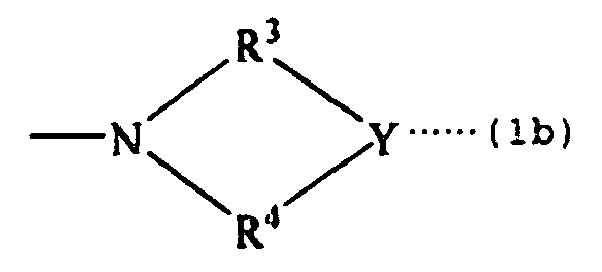
wherein R3 and R4 independently represent a single bond, substituted or unsubstituted methylene or substituted or unsubstituted divalent alkylene group having from 2 to 7 carbon atoms wherein total of the number of carbon atoms of R3 and R4 is from 4 to 10, and Y represents any one of a single bond, O and S;
a repeating unit (B) represented by the following formula (2): 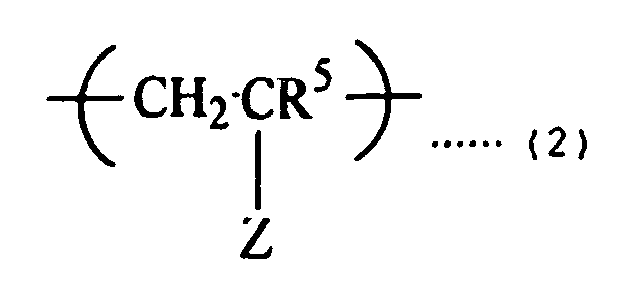
wherein R5 represents a hydrogen atom or a methyl group and Z represents an organic group containing at least one aldo group or keto group; and
a hydrazide compound (H) comprising at least two hydrazino groups per one molecule.
a repeating unit (A) represented by the following formula (1):
a repeating unit (B) represented by the following formula (2):
a hydrazide compound (H) comprising at least two hydrazino groups per one molecule.
Description
- The present invention relates to a coating agent for preventing nonspecific adsorption, which inhibits nonspecific adsorption of a substance relating to a living body such as various species of proteins and the like to, for example, parts, tools, containers and the like which are used in clinical diagnoses, biochemical experiments and the like, and which also has high durability.
- In recent years, high sensitivity tests are needed for the purpose of early stage detection of diseases and the like, and improvement of the sensitivity of diagnostic agents is a serious problem. Also in the case of a diagnostic agent which uses a polystyrene plate, magnetic particle or the like, for the purpose of improving sensitivity, the detection method is changing from the method which uses an enzymatic color development to a method which uses fluorescence or chemiluminescence from which more high sensitivity can be obtained. However, sufficient sensitivity has not been obtained in reality. A cause of this is that, in the case of a diagnosis in which a specific substance is detected in the coexistence of living body molecules such as serum and the like, the coexisting living body molecules, secondary antibody, emission substrate and the like adhere nonspecifically to tools, containers and the like. As a result, noises are increased to obstruct improvement of sensitivity. Accordingly, in the case of the diagnostic immunoassay, in order to reduce the lowering of sensitivity caused by the nonspecific adsorption of these substances to tools and containers, the noises are reduced generally by inhibiting the nonspecific adsorption through the use of organism-derived substances such as albumin, casein, gelatin and the like as additive agents. However, even when these additive agents are used, the nonspecific adsorption still remains. Furthermore, when a living body-derived additive agent is used, there is a problem of organism pollution typified by BSE. Additionally, the effect to prevent nonspecific adsorption by these additive agents is easily lowered by washing with acid or alkali, surfactant aqueous solution and the like, and shows inferior durability.
- As examples of the coating agent by chemically synthesized polymers prepared with the aim of preventing nonspecific adsorption, although polymers having polyoxyethylene have been proposed in
JP-A-5-103831 JP-A-2006-177914 JP-A-2006-299045 JP-A-2006-176720 JP-A-2006-258585 - The present invention provides a coating agent for preventing nonspecific adsorption, which inhibits nonspecific adsorption of a substance relating to a living body such as a protein or the like, to parts, tools, containers and the like which are used in clinical examinations, biochemical experiments and the like (e.g., diagnostic chemiluminescence immunoassay), and which also has high durability. In this connection, according to the present invention, the substance relating to a living body means lipid, protein, saccharides or nucleic acids.
- With the aim of solving the problems, the inventors of the present invention have found that a coating agent which has both of the high nonspecific adsorption preventive effect on a substance relating to a living body and the durability can be obtained by synthesizing a copolymer of a specific composition using a specific crosslinking agent to accomplish the present invention.
- The coating agent for preventing nonspecific adsorption of a substance relating to a living body according to an embodiment of the present invention comprises a water-soluble copolymer (P) comprising
a repeating unit (A) represented by the following formula (1):
X represents a group represented by the following formula (1a):
the following formula (1b):
a repeating unit (B) represented by the following formula (2):
a hydrazide compound (H) comprising at least two hydrazino groups per one molecule. - In the coating agent for preventing nonspecific adsorption described above, the water-soluble copolymer (P) can further comprise a repeating unit (c) represented by the following formula (3):

- The following will specifically describe a coating agent for preventing nonspecific adsorption according to one embodiment of the present invention.
- Weight average molecular weight of the water-soluble copolymer (P) contained in the nonspecific adsorption preventive coating agent concerned in the present embodiment is generally from 1,000 to 1,000,000, preferably from 2,000 to 100,000, more preferably from 3,000 to 50,000. Also, regarding molecular weight distribution of the water-soluble copolymer (P), typically, weight average molecular weight/number average molecular weight is from 1.5 to 3. When weight average molecular weight of the water-soluble copolymer (P) is less than 1,000, the nonspecific adsorption protective effect becomes insufficient in some cases. On the other hand, when weight average molecular weight of the water-soluble copolymer (P) is larger than 1,000,000 on the other hand, the coating becomes difficult to carry out in some cases due to increased viscosity of the solution.
- The water-soluble copolymer (P) is water-soluble. According to the present invention, the term "is water-soluble" means that when the copolymer is added to and mixed with water to a polymer solid content of 1% at 25°C, it dissolves to be transparent or translucent state judged with the naked eye.
- In the water-soluble copolymer (P), the repeating unit (A) represented by the above-mentioned formula (1) contributes to the expression of high nonspecific adsorption preventive effect and solubility of the water-soluble copolymer (P) in water.
- In the above-mentioned formula (1a), it is preferable that R1 is at least one species selected from a hydrogen atom, a methyl group and an ethyl group, and R2 is at least one species selected from a hydrogen atom, a methyl group, an ethyl group, a normal propyl group, an isopropyl group, a methoxyethyl group, and a hydroxyethyl group. From the viewpoint of the ability to produce excellent nonspecific adsorption preventive effect and suitable solubility in water, most preferable combination of R1 and R2 is that both of them are methyl groups.
- In the above-mentioned formula (1b), it is preferable that R3 and R4 are a methylene group, an ethylene group or a propylene group, and Y is a single bond or oxygen. From the viewpoint of the ability to produce excellent nonspecific adsorption preventive effect and suitable solubility in water, most preferable combination is that both of R3 and R4 are ethylene groups and Y is oxygen.
- In the water-soluble copolymer (P), the repeating unit (B) represented by the above-mentioned formula (2) contributes to the durability of the coat layer.
- In the above-mentioned formula (2), it is preferable that R5 is a hydrogen atom. It is preferable that Z is a formyl group, a formylphenyl group, an ester group containing an aldo group represented by the following formula (4):
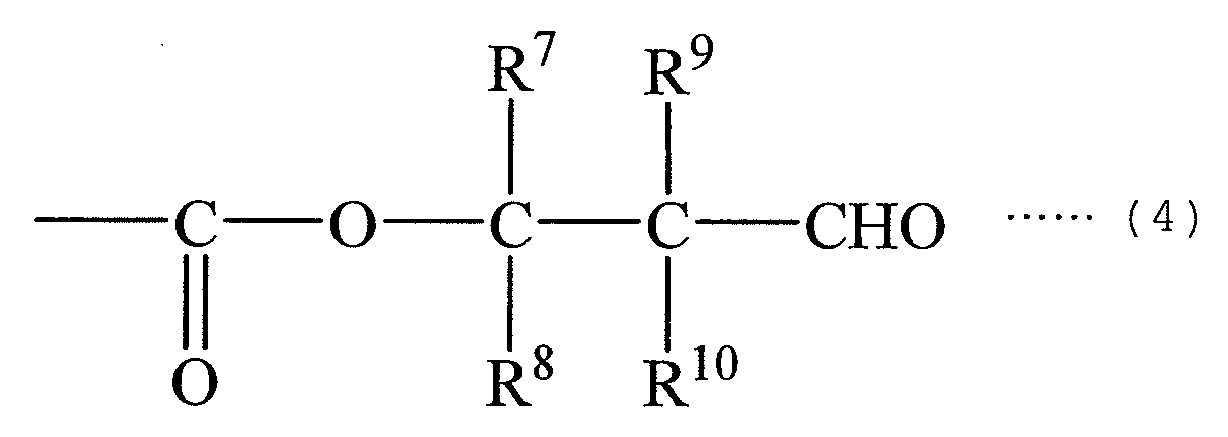
an organic group having an aldo group such as an amido group containing the aldo group represented by the following formula (5):
acetyl group, acetylphenyl group, an ester group containing a keto group represented by the following formula (6):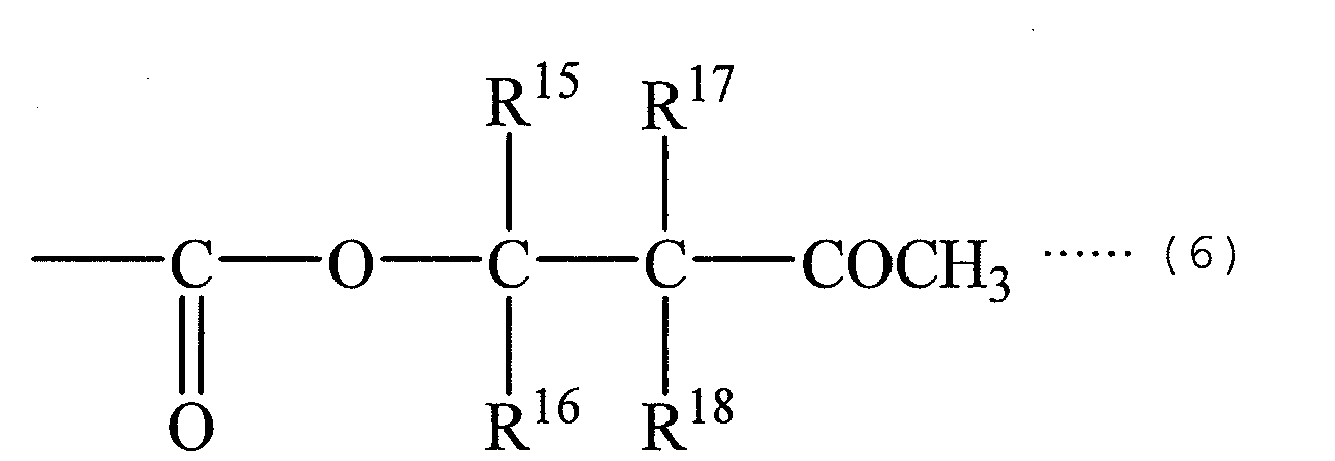

- More preferable organic group as Z are a formyl group, an acetyl group and an organic group represented by the following formula (8), and most preferable organic group is an organic group represented by the following formula (8):

- The water-soluble copolymer (P) may further contain a repeating unit (C) represented by the following formula (3):

- In the water-soluble copolymer (P), the repeating unit (C) represented by the above-mentioned formula (3) contributes to the expression of high nonspecific adsorption preventive effect and adsorption of the coat layer to the base material.
- In the above-formula (3), it is preferable that R6 is a hydrogen atom.
- The water-soluble copolymer (P) may contain a repeating unit (D) other than the repeating units (A) to (C) represented by the above-mentioned formulae (1) to (3), within such a range that it does not spoil the effect of the present invention.
- Next, the monomer composition to be used for producing the water-soluble copolymer (P) is described.
- The repeating unit (A) has a structure derived from at least one species of a monomer (a). It is preferable that the monomer (a) is at least one species of monomer selected from acrylamide and N-substituted monomers of acrylamide. More preferable monomer (a) is at least one species selected from acrylamide, N-hydroxyethylacrylamide, N-ethylacrylamide, N,N-dimethylacrylamide, N-isopropylacrylamide, N,N-diethylacrylamide and acryloylmorpholine, and further preferable monomer (a) is N,N-dimethylacrylamide. Amount of the monomer (a) to be used is preferably from 20 to 99 parts by weight, more preferably from 25 to 98 parts by weight, further preferably from 30 to 95 parts by weight, based on 100 parts by weight of the total monomers for producing the water-soluble copolymer (P). In this case, when weight of the monomer (a) is less than 20 parts by weight based on 100 parts by weight of the total monomers for producing the water-soluble copolymer (P), there is a case in which the film formation becomes poor or a case in which the nonspecific adsorption preventive effect becomes inferior. On the other hand, when it exceeds 99 parts by weight, there is a case in which the durability becomes poor.
- The repeating unit (B) has a structure derived from at least one species of a monomer (b). It is preferable that the monomer (b) is at least one species selected from acrolein, formylstyrene, vinyl methyl ketone, vinyl phenyl ketone, the (meth)acrylate represented by the above-mentioned formulae (4) to (7) and (meth)acrylamides, of which more preferable in view of copolymerizing ability is at least one species selected from acrolein, vinyl methyl ketone and diacetoneacrylamide and most preferable in view of the safety of the monomer is diacetoneacrylamide. Amount of the monomer (b) to be used is preferably from 1 to 80 parts by weight, more preferably from 2 to 75 parts by weight, further preferably from 5 to 70 parts by weight, based on 100 parts by weight of the total monomers for producing the water-soluble copolymer (P). In this case, when weight of the monomer (b) is less than 1 part by weight based on 100 parts by weight of the total monomers for producing the water-soluble copolymer (P), there is a case in which the durability becomes poor. On the other hand, when it exceeds 80 parts by weight, there is a case in which the film formation becomes poor or a case in which the nonspecific adsorption preventive effect becomes inferior.
- The repeating unit (C) has a structure derived from at least one species of a monomer (c). It is preferable that the monomer (c) is at least one species selected from 2-methoxyethyl acrylate and 2-methoxyethyl methacrylate, of which more preferable is 2-methoxyethyl acrylate. Amount of the monomer (c) to be used is preferably from 2 to 50 parts by weight, more preferably from 20 to 48 parts by weight, further preferably from 30 to 45 parts by weight, based on 100 parts by weight of the total monomers for producing the water-soluble copolymer (P). In this case, when weight part of the monomer (c) is within the above-mentioned range, high durability and good film formability can be expected.
- In addition to the repeating units (A) to (C), the water-soluble copolymer concerned in the present embodiment may contain a repeating unit (D). The monomer (d) is a component for forming the repeating unit (D). When a copolymer is produced by using an anionic monomer, particularly styrene sulfonate, isoprene 2-acrylamide-2-methylpropane sulfonate or the like, as the other monomer (d) and copolymerizing it with the monomers (a) to (c), high nonspecific adsorption effect is obtained in some cases when it is used as a coating agent of a blood bag and the like. As the other monomer (d), conventionally known monomers such as methyl methacrylate, ethyl acrylate, butyl acrylate, styrene, polyoxyethylene (meth)acryl ester, an N-substituted acrylamide of other than monomer (a) and the like may be used for the purpose of controlling film formability, water resistance, moisture keeping ability and the like.
- As the monomer to be used, a monomer which can be obtained as an industrial material can be used in the copolymerization by purifying it or directly as such.
- Polymerization of the monomers can be carried out for example by conventionally known polymerization methods such as radical polymerization, anionic polymerization, cationic polymerization and the like, and radical polymerization is preferable because of the easy production.
- Additionally, polymerization of the monomers is carried out by stirring and heating them together with conventionally known solvent, initiator, chain transfer agent and the like. The polymerization time is generally from 30 minutes to 24 hours, and the polymerization temperature is generally about from 0 to 120°C.
- It is preferable that the water-soluble copolymer (P) after polymerization is purified by reprecipitation, extraction, dialysis and the like.
- The hydrazide compound (H) has at least two hydrazino groups in one molecule. Examples of a hydrazide compound (H) include dicarboxylic acid dihydrazides having from 2 to 10, particularly from 4 to 6, carbon atoms in total such as oxalic acid dihydrazide, malonic acid dihydrazide, succinic acid dihydrazide, glutaric acid dihydrazide, adipic acid dihydrazide, sebacic acid dihydrazide, phthalic acid dihydrazide, isophthalic acid dihydrazide, terephthalic acid dihydrazide, maleic acid dihydrazide, fumaric acid dihydrazide, itaconic acid dihydrazide and the like; hydrazides of trifunctional or more such as citric acid trihydrazide, nitriloacetic acid trihydrazide, cyclohexanetricarboxylic acid trihydrazide, ethylenediaminetetraacetic acid tetrahydrazide and the like; water-soluble dihydrazines such as aliphatic dihydrazines having from 2 to 4 carbon atoms and the like such as ethylene-1,2-dihydrazine, propylene-1,2-dihydrazine, propylene-1,3-dihydrazine, butylene-1,2-dihydrazine, butylene-1,3-dihydrazine, butylene-1,4-dihydrazine, butylene-2,3-dihydrazine and the like, and a compound in which at least a part of hydrazino groups of such a multifunctional hydrazine derivative is blocked by allowing it to react with a carbonyl compound such as acetaldehyde, propionaldehyde, butylaldehyde, acetone, methyl ethyl ketone, diethyl ketone, methyl-n-propyl ketone, methyl-n-butyl ketone, diacetone alcohol or the like, such as adipic acid dihydrazide monoacetonehydrrazone, adipic acid dihydrazide diacetonehydrrazone and the like. Among the hydrazide compounds (H), at least one species selected from adipic acid dihydrazide, sebacic acid dihydrazide, isophthalic acid dihydrazide and adipic acid dihydrazide diacetonehydrrazone is preferable. The hydrazide compound (H) can be used alone or as a mixture of two or more species.
- It is preferable that the amount of the hydrazide compound (H) to be used is such an amount that mol equivalent ratio of the total amount of an aldo group and a keto group in the water-soluble copolymer (P) to the hydrazino group of the hydrazide compound (H) becomes a range of from 1:0.1 to 5, preferably from 1:0.5 to 1.5, further preferably from 1:0.7 to 1.2. In this case, when the hydrazino group is less than 0.1 equivalent based on 1 equivalent as the total of aldo group and keto group, durability of the coat layer is lowered in some cases. On the other hand, when it exceeds 5 equivalents on the other hand, the nonspecific adsorption inhibitory effect is lowered in some cases.
- Although the hydrazide compound (H) can be blended at an optional step for preparing the coating agent for preventing nonspecific adsorption concerned in this embodiment, in order to keep polymerization stability at the time of producing the water-soluble copolymer (P), it is preferable to blend total amount of the hydrazide compound (H) after production of the water-soluble copolymer (P).
- The hydrazide compound (H) has the activity to form a hydrophilic network structure and to form crosslinking of the coat layer, through the reaction of its hydrazino group with the keto group and/or aldo group of the water-soluble copolymer (P) at the drying step after application of the coating agent for preventing nonspecific adsorption concerned in this embodiment. Though this crosslinking reaction generally proceeds at ordinary temperature without using a catalyst, it can be accelerated by adding a water-soluble metal salt or the like catalyst such as zinc sulfate, manganese sulfate, cobalt sulfate or the like, or by carrying out drying with heating.
- It is preferable that the coating agent for preventing nonspecific adsorption concerned in the present embodiment contains a solvent other than the water-soluble copolymer (P) and hydrazide compound (H). It is preferable that the solvent is water. Solid contents concentration of the coating agent for preventing nonspecific adsorption is preferably from 0.01% to 30%, more preferably from 0.1% to 10%.
- The coating agent for preventing nonspecific adsorption concerned in the present embodiment has high nonspecific adsorption preventive effect and durability. The coating agent for preventing nonspecific adsorption can act illustratively as follows.
- Namely, according to the coating agent for preventing nonspecific adsorption concerned in the present embodiment, the water-soluble copolymer (P) adheres to the wall surface of a container, tool or the like through the hydrophobic bond of the repeating unit (B), and non-specific adsorption of protein and the like can be prevented by changing the wall surface to hydrophilic nature by the action of the repeating unit (A) (further by the repeating unit (C) when the water-soluble copolymer (P) contains the repeating unit (C)).
- Additionally, according to the coating agent for preventing nonspecific adsorption concerned in the present embodiment, a hydrazino group in the hydrazide compound (H) reacts with the keto group and/or aldo group in the repeating unit (B) of the water-soluble copolymer (P) to effect formation of a hydrophilic network structure and to form crosslinking of the coat layer, so that durability of the coat layer can be expressed.
- The coating agent for preventing nonspecific adsorption concerned in the present embodiment can be used, for example, by coating it on the surface of parts, containers, tools and the like to be used in clinical diagnoses, biochemical experiments and the like (e.g., diagnostic chemiluminescence immunoassay). The coating can be carried out by a conventionally known method, and for example, spin coating, bar coating, blade coating, curtain coating, spray coating, dip coating and the like are possible. Dip coating is preferable from the viewpoint that coating on a tool having a complex shape can be carried out without damage. After the coating, it is preferable to dry at room temperature or under heating. Preferable heating temperature and time vary depending on the base and the like, but are approximately from 40 to 120°C and from 3 minutes to 24 hours.
- The coating agent for preventing nonspecific adsorption concerned in the present embodiment can suitably prevent nonspecific adsorption of various proteins, lipids, nucleic acids and the like by coating on clinical diagnosis parts such as an optical cell, an analyte transferring tube, an analyte tube and the like; a silicon base material typified by MEMS, a biotip such as of a glass base material, plastic base material and the like typified by microfluidics; a biosensor such as of gold vapor deposition base material and the like and the like, and can form a coat layer which shows durability for repeated use.
- Although the following describes the present invention further in detail with reference to examples, the present invention is not limited thereto.
- In this connection, in the examples, weight average molecular weight (Mw) was measured by a gel permeation chromatography (GPC) which uses a monodispersion polyethylene glycol as the standard, using TSK gel α-M column manufactured by Tosoh Corp., under analytical conditions of 1 ml/min in flow rate, 0.1 mM sodium chloride aqueous solution/ethanol mixed solvent as the elution solvent and 40°C as the column temperature. The absorbance was measured by Model 680 Micro Plate Reader manufactured by Nippon Bio-Rad Laboratories.
- With 900 g of water, 40 g of dimethylacrylamide as the monomer (a), 20 g of diacetoneacrylamide as the monomer (b), 40 g of methoxyethyl acrylate as the monomer (c) and 0.1 g of mercaptopropionic acid as a chain transfer agent were mixed and put into a separable flask equipped with a stirrer. With bubbling nitrogen into it, temperature of the contents was risen to be 70°C. As an initiator, 4 g of 2,2'-azobis[2-(2-imidazolin-2-yl)propane] dihydrochloride was added thereto, the polymerization was continued for 2 hours. Additionally, the temperature was further increased to be 80°C to carry out 3 hours of aging and then lowered to be room temperature. The thus obtained copolymer solution was purified by a Dialyzer and further diluted with water to obtain 1,800 g of the 5% water-soluble copolymer (P-1) aqueous solution of this example. Weight average molecular weight of the water-soluble copolymer (P-1) by GPC was 27,000.
- The above-mentioned 5% water-soluble copolymer (P-1) aqueous solution was further diluted to 1% with water, and then 9 g of adipic acid dihydrazide was added thereto and dissolved therein as the hydrazide compound (H) to obtain a coating agent. A polystyrene 96 well plate (to be referred to as 96 well plate hereinafter) was dipped in this coating agent, pulled up and then washed with ion exchange water. The remaining water was blown off using an air gun. It was dried at 40°C for 3 hours and used as a coated 96 well plate.
- The coated 96 well plate was washed three times with water, and was filled with a horseradish peroxidase-labeled mouse IgG antibody ("AP124P" manufactured by Millipore) aqueous solution. It was incubated at room temperature for 30 minutes and washed three times with PBS buffer, and then a color was developed with TMB (3,3',5,5'-tetramethylbenzidine)/hydrogen peroxide aqueous solution/sulfuric acid to measure the absorbance at 450 nm.
- The above-mentioned nonspecific adsorption inhibitory effect was measured by washing the coated 96 well plate 5 times with 2% sodium dodecyl sulfate aqueous solution.
- The same operation as Example 1 was carried out except that the monomers and hydrazide compound (H) were changed to the compositions shown in Table 1.
- The same operation as Example 1 was carried out except that the hydrazide compound (H) of Example 1 was not used.
- The same operation as Example 1 was carried out except that the monomer compositions shown in Table 1 were used. However, when polymerization was carried out by the monomer composition of Comparative Example 3, polymer solids were precipitated during polymerization. Since the stirring becomes difficult to continue, the polymerization was stopped and the result was unevaluated.
- Using bovine serum albumin (BSA) instead of the coating agent in Example 1, the absorbance in the case of the use of BSA was measured by the same method described under the "4.1.3. Measurement of nonspecific adsorption inhibitory effect".
- Results of the measurement of nonspecific adsorption preventive effects in the above Examples and Comparative Examples are shown in Table 1.

- According to Table 1, when the coating agent for preventing nonspecific adsorption concerned in the present embodiment is used, it was confirmed that amount of nonspecific adsorption of mouse IgG antibody to the 96 well plate can be considerably reduced, and also that the formed coat layer is excellent in durability, in comparison with any one of a case in which the hydrazide compound (H) is not used; a case in which it contains a copolymer synthesized without using the monomer (c); and a case in which bovine serum albumin is used.
- According to the above-mentioned coating agent for preventing nonspecific adsorption, a coat layer having high nonspecific adsorption preventive effect and durability can be formed by containing a water-soluble copolymer (P) comprising the above-mentioned repeating unit (A), the above-mentioned repeating unit (B) and a hydrazide compound (H).
- This patent application is based on Japanese Patent Application No.
2008-61118 filed on March 11, 2008 - A coating agent for preventing nonspecific adsorption of a substance, which comprises a water-soluble copolymer (P) comprising
a repeating unit (A) represented by the following formula (1):

formula (1b):
a repeating unit (B) represented by the following formula (2):
a hydrazide compound (H) comprising at least two hydrazino groups per one molecule.
Claims (3)
- A coating agent for preventing nonspecific adsorption of a substance relating to a living body, which comprises a water-soluble copolymer (P) comprising
a repeating unit (A) represented by the following formula (1):
X represents a group represented by the following formula (1a):
formula (1b):
a repeating unit (B) represented by the following formula (2):
a hydrazide compound (H) comprising at least two hydrazino groups per one molecule. - The coating agent for preventing nonspecific adsorption according to claim 1, wherein the water-soluble copolymer (P) further comprises a repeating unit (C) represented by the following formula (3):

- A method for coating an article, which comprises a step of allowing the article to contact with a solution which comprises the coating agent for preventing nonspecific adsorption of a substance relating to a living body described in claim 1 or 2.
Applications Claiming Priority (1)
| Application Number | Priority Date | Filing Date | Title |
|---|---|---|---|
| JP2008061118A JP4941672B2 (en) | 2008-03-11 | 2008-03-11 | Nonspecific adsorption preventive coating agent for biological substances |
Publications (1)
| Publication Number | Publication Date |
|---|---|
| EP2100931A1 true EP2100931A1 (en) | 2009-09-16 |
Family
ID=40790540
Family Applications (1)
| Application Number | Title | Priority Date | Filing Date |
|---|---|---|---|
| EP09154634A Withdrawn EP2100931A1 (en) | 2008-03-11 | 2009-03-09 | Coating agent for preventing nonspecific adsorption |
Country Status (3)
| Country | Link |
|---|---|
| US (1) | US20090234090A1 (en) |
| EP (1) | EP2100931A1 (en) |
| JP (1) | JP4941672B2 (en) |
Cited By (1)
| Publication number | Priority date | Publication date | Assignee | Title |
|---|---|---|---|---|
| EP3187855A4 (en) * | 2014-08-29 | 2018-04-25 | Hitachi High-Technologies Corporation | Reaction cell for automatic analysis device, automatic analysis device equipped with said reaction cell, and analysis method using said automatic analysis device |
Families Citing this family (7)
| Publication number | Priority date | Publication date | Assignee | Title |
|---|---|---|---|---|
| EP1936372A1 (en) | 2006-12-14 | 2008-06-25 | JSR Corporation | Non-specific adsorption inhibitor, probe-bonded particles, and method for producing the same |
| JP5423965B2 (en) * | 2007-05-30 | 2014-02-19 | Jsr株式会社 | Non-specific adsorption inhibitor |
| EP2749302B1 (en) * | 2011-08-22 | 2018-07-18 | Terumo Kabushiki Kaisha | Antithrombogenic material and medical device |
| JP2015097550A (en) * | 2012-03-13 | 2015-05-28 | テルモ株式会社 | Blood compatible materials and medical devices |
| JP6278731B2 (en) * | 2014-02-24 | 2018-02-14 | テルモ株式会社 | Antithrombotic medical material and medical device using the medical material |
| US10188774B2 (en) * | 2015-03-10 | 2019-01-29 | Terumo Kabushiki Kaisha | Method for producing antithrombotic coating material |
| EP3572061A4 (en) | 2017-01-18 | 2020-10-14 | Daikin Industries, Ltd. | CONTAINERS FOR THE ADMINISTRATION, STORAGE, DISPOSAL OR TRANSPORTATION OF LOW-ADDICTIVE PROTEIN OR A PROTEIN-CONTAINING COMPOSITION, AND DEVICE FOR THE PRODUCTION OF PROTEIN OR A PROTEIN COMPOSITION |
Citations (7)
| Publication number | Priority date | Publication date | Assignee | Title |
|---|---|---|---|---|
| JPH05103831A (en) | 1991-03-06 | 1993-04-27 | W R Grace & Co | Device coated with protein nonabsorbing polyurea-urethane polymer |
| JP2002088311A (en) * | 2000-09-19 | 2002-03-27 | Hitachi Maxell Ltd | Method for producing coating for easily removing deposits |
| JP2006177914A (en) | 2004-12-20 | 2006-07-06 | Yukio Nagasaki | Surface having thick polymer layer, and preparation method therefor |
| JP2006176720A (en) | 2004-12-24 | 2006-07-06 | Sumitomo Bakelite Co Ltd | High polymer for medical material and polymer solution using the same |
| JP2006258585A (en) | 2005-03-16 | 2006-09-28 | Sumitomo Bakelite Co Ltd | Method of detecting protein and method of detecting peptide |
| JP2006299045A (en) | 2005-04-19 | 2006-11-02 | Sumitomo Bakelite Co Ltd | Polymer compound for medical material and substrate for biochip using same |
| JP2008061118A (en) | 2006-09-01 | 2008-03-13 | Toshiba Corp | Cryptographic processing circuit and IC card |
Family Cites Families (4)
| Publication number | Priority date | Publication date | Assignee | Title |
|---|---|---|---|---|
| US6730740B1 (en) * | 1998-09-25 | 2004-05-04 | Akzo Nobel N.V. | Aqueous cross-linkable polymer composition for use in coatings and process for producing the same |
| JP2002088331A (en) * | 2000-09-12 | 2002-03-27 | Nichiban Co Ltd | Composition for adhesive sheet for capturing flying pests |
| EP1799782B1 (en) * | 2004-10-08 | 2012-12-12 | The Sherwin-Williams Company | Self crosslinking waterborne coatings |
| ES2544236T3 (en) * | 2005-11-17 | 2015-08-28 | Siemens Healthcare Diagnostics Inc. | Reduction of non-specific binding in trials |
-
2008
- 2008-03-11 JP JP2008061118A patent/JP4941672B2/en active Active
-
2009
- 2009-03-09 EP EP09154634A patent/EP2100931A1/en not_active Withdrawn
- 2009-03-09 US US12/400,417 patent/US20090234090A1/en not_active Abandoned
Patent Citations (7)
| Publication number | Priority date | Publication date | Assignee | Title |
|---|---|---|---|---|
| JPH05103831A (en) | 1991-03-06 | 1993-04-27 | W R Grace & Co | Device coated with protein nonabsorbing polyurea-urethane polymer |
| JP2002088311A (en) * | 2000-09-19 | 2002-03-27 | Hitachi Maxell Ltd | Method for producing coating for easily removing deposits |
| JP2006177914A (en) | 2004-12-20 | 2006-07-06 | Yukio Nagasaki | Surface having thick polymer layer, and preparation method therefor |
| JP2006176720A (en) | 2004-12-24 | 2006-07-06 | Sumitomo Bakelite Co Ltd | High polymer for medical material and polymer solution using the same |
| JP2006258585A (en) | 2005-03-16 | 2006-09-28 | Sumitomo Bakelite Co Ltd | Method of detecting protein and method of detecting peptide |
| JP2006299045A (en) | 2005-04-19 | 2006-11-02 | Sumitomo Bakelite Co Ltd | Polymer compound for medical material and substrate for biochip using same |
| JP2008061118A (en) | 2006-09-01 | 2008-03-13 | Toshiba Corp | Cryptographic processing circuit and IC card |
Non-Patent Citations (1)
| Title |
|---|
| KONO KENJI ET AL: "Coatings for easy removal of contaminates and production methods therefor", CA, AN - 136:264650, 27 March 2002 (2002-03-27), XP002514295 * |
Cited By (1)
| Publication number | Priority date | Publication date | Assignee | Title |
|---|---|---|---|---|
| EP3187855A4 (en) * | 2014-08-29 | 2018-04-25 | Hitachi High-Technologies Corporation | Reaction cell for automatic analysis device, automatic analysis device equipped with said reaction cell, and analysis method using said automatic analysis device |
Also Published As
| Publication number | Publication date |
|---|---|
| JP2009216572A (en) | 2009-09-24 |
| US20090234090A1 (en) | 2009-09-17 |
| JP4941672B2 (en) | 2012-05-30 |
Similar Documents
| Publication | Publication Date | Title |
|---|---|---|
| US20090234090A1 (en) | Coating agent for preventing nonspecific adsorption | |
| JP5003902B2 (en) | Non-specific adsorption inhibitor for biological substances and method for coating articles | |
| EP2058660B1 (en) | Nonspecific adsorption inhibitor of substance relating to living body and method for coating article | |
| JP5344148B2 (en) | Non-specific adsorption inhibitor and article coating method | |
| JP6111569B2 (en) | Surface treatment agent for surface composed of inorganic material, device coated with the surface treatment agent, method for producing the same, and novel polymer | |
| US10597540B2 (en) | Surface treatment agent for surface configured from inorganic material, tool and device having modified surface, and method for manufacturing tool and device | |
| EP2151688B1 (en) | Non-specific adsorption inhibitor | |
| JPS62156172A (en) | Underwater antifouling coating agent | |
| US20150148486A1 (en) | Method of immobilizing biologically active substance | |
| EP2003145B1 (en) | Protein stabilizing agent | |
| US7517705B2 (en) | Phosphorus-containing polymers for optical signal transducers | |
| EP4314154B1 (en) | Water-soluble polymer to prevent non-specific adsorption | |
| JP4811355B2 (en) | Biodevice, manufacturing method thereof, and biosensor | |
| EP2600152B1 (en) | Sugar chain array | |
| JP2006028335A (en) | Anti-fog paint and anti-fog molding | |
| JP5044777B2 (en) | Cell immobilization substrate coating material | |
| JP6269773B2 (en) | Surface treatment agent for surface composed of inorganic material, device coated with the surface treatment agent, method for producing the same, and novel polymer | |
| JP2005343734A (en) | Anti-fogging glass | |
| JP3540086B2 (en) | Aqueous resin composition | |
| EP1930029A1 (en) | Particle for medical use and process for producing the same |
Legal Events
| Date | Code | Title | Description |
|---|---|---|---|
| PUAI | Public reference made under article 153(3) epc to a published international application that has entered the european phase |
Free format text: ORIGINAL CODE: 0009012 |
|
| AK | Designated contracting states |
Kind code of ref document: A1 Designated state(s): AT BE BG CH CY CZ DE DK EE ES FI FR GB GR HR HU IE IS IT LI LT LU LV MC MK MT NL NO PL PT RO SE SI SK TR |
|
| AX | Request for extension of the european patent |
Extension state: AL BA RS |
|
| AKX | Designation fees paid | ||
| STAA | Information on the status of an ep patent application or granted ep patent |
Free format text: STATUS: THE APPLICATION IS DEEMED TO BE WITHDRAWN |
|
| 18D | Application deemed to be withdrawn |
Effective date: 20100317 |
|
| REG | Reference to a national code |
Ref country code: DE Ref legal event code: 8566 |