EP2095521B1 - Efficient transitions between operating states in a communication network - Google Patents
Efficient transitions between operating states in a communication network Download PDFInfo
- Publication number
- EP2095521B1 EP2095521B1 EP07842868.7A EP07842868A EP2095521B1 EP 2095521 B1 EP2095521 B1 EP 2095521B1 EP 07842868 A EP07842868 A EP 07842868A EP 2095521 B1 EP2095521 B1 EP 2095521B1
- Authority
- EP
- European Patent Office
- Prior art keywords
- function
- pcf
- selector
- bearer
- mobile station
- Prior art date
- Legal status (The legal status is an assumption and is not a legal conclusion. Google has not performed a legal analysis and makes no representation as to the accuracy of the status listed.)
- Not-in-force
Links
Images


Classifications
-
- H—ELECTRICITY
- H04—ELECTRIC COMMUNICATION TECHNIQUE
- H04W—WIRELESS COMMUNICATION NETWORKS
- H04W76/00—Connection management
- H04W76/10—Connection setup
- H04W76/12—Setup of transport tunnels
-
- H—ELECTRICITY
- H04—ELECTRIC COMMUNICATION TECHNIQUE
- H04W—WIRELESS COMMUNICATION NETWORKS
- H04W36/00—Hand-off or reselection arrangements
- H04W36/08—Reselecting an access point
-
- H—ELECTRICITY
- H04—ELECTRIC COMMUNICATION TECHNIQUE
- H04W—WIRELESS COMMUNICATION NETWORKS
- H04W76/00—Connection management
- H04W76/20—Manipulation of established connections
- H04W76/27—Transitions between radio resource control [RRC] states
-
- H—ELECTRICITY
- H04—ELECTRIC COMMUNICATION TECHNIQUE
- H04W—WIRELESS COMMUNICATION NETWORKS
- H04W52/00—Power management, e.g. Transmission Power Control [TPC] or power classes
- H04W52/02—Power saving arrangements
- H04W52/0209—Power saving arrangements in terminal devices
- H04W52/0212—Power saving arrangements in terminal devices managed by the network, e.g. network or access point is leader and terminal is follower
- H04W52/0216—Power saving arrangements in terminal devices managed by the network, e.g. network or access point is leader and terminal is follower using a pre-established activity schedule, e.g. traffic indication frame
-
- H—ELECTRICITY
- H04—ELECTRIC COMMUNICATION TECHNIQUE
- H04W—WIRELESS COMMUNICATION NETWORKS
- H04W68/00—User notification, e.g. alerting and paging, for incoming communication, change of service or the like
-
- H—ELECTRICITY
- H04—ELECTRIC COMMUNICATION TECHNIQUE
- H04W—WIRELESS COMMUNICATION NETWORKS
- H04W80/00—Wireless network protocols or protocol adaptations to wireless operation
- H04W80/04—Network layer protocols, e.g. mobile IP [Internet Protocol]
-
- Y—GENERAL TAGGING OF NEW TECHNOLOGICAL DEVELOPMENTS; GENERAL TAGGING OF CROSS-SECTIONAL TECHNOLOGIES SPANNING OVER SEVERAL SECTIONS OF THE IPC; TECHNICAL SUBJECTS COVERED BY FORMER USPC CROSS-REFERENCE ART COLLECTIONS [XRACs] AND DIGESTS
- Y02—TECHNOLOGIES OR APPLICATIONS FOR MITIGATION OR ADAPTATION AGAINST CLIMATE CHANGE
- Y02D—CLIMATE CHANGE MITIGATION TECHNOLOGIES IN INFORMATION AND COMMUNICATION TECHNOLOGIES [ICT], I.E. INFORMATION AND COMMUNICATION TECHNOLOGIES AIMING AT THE REDUCTION OF THEIR OWN ENERGY USE
- Y02D30/00—Reducing energy consumption in communication networks
- Y02D30/70—Reducing energy consumption in communication networks in wireless communication networks
Definitions
- the present invention relates generally to the field of communication systems, and more particularly, to call setup in communications equipment.
- 3GPP2 packet data standard TIA/EIA/IS835 CDMA 2000 Wireless IP Network Standard, (IS-835) and the IEEE 802.16-2005 standard herein referred to as WiMAX) communication standard can specify an Active state and a Dormant (Idle) state for a wireless communication device, such as a mobile station (MS), during a packet data session.
- a wireless communication device such as a mobile station (MS)
- the MS is connected to infrastructure equipment via a dedicated RF connection.
- the infrastructure provides a dedicated connection between a Base Transceiver Station (BTS) and a Packet Control Function (PCF).
- BTS Base Transceiver Station
- PCF Packet Control Function
- the PCF is connected to a Packet Data Service Node, which is connected to a packet network.
- a packet call is moved into the Active state when there is a burst of packet data to transmit.
- the packet call may transition between the Active state and the Dormant (Idle) state many times, depending on the bursty nature of the data and on the duration of the time period.
- the dedicated Radio Frequency (RF) connection and the dedicated connection between the BTS and the PCF are released.
- the packet call transitions from the Active state to the Dormant state when there has been no data transmission for a predetermined time period. While the packet session is in the Dormant state, bearer data cannot be transmitted, and must be buffered.
- a network element is responsible for tracking the MS mobility, receiving packet data, and buffering it until the MS becomes active again. For example, the Packet Control Function is only useful when the mobile is Dormant. It keeps the context for the Dormant mobile and maintains a tunnel with the PDSN.
- the PDSN forwards the packet to the PCF which causes the PCF to transmit a BS Service request to the MSC.
- the mobile is then paged and when it responds a traffic channel (TCH) and Selector are assigned to the mobile which then transitions from Dormant to Active state.
- TCH traffic channel
- the call in order to transmit buffered data to the MS, the call must be assigned a dedicated RF connection, and a dedicated connection between the BTS and the PCF must be re-established.
- the delay incurred in order to re-establish a dedicated connection between the MS and the PCF i.e. tunneling and detunneling across the A10 and A8 interfaces
- the PCF acts as nothing more than a conduit for the data between the MS and the PDSN.
- the PCF resources are unnecessary when the mobile is Active.
- a similar process occurs for WiMAX communications.
- one channel can offer 720 BHCA (1 channel * 3600/5).
- Dormant to Active transitions i.e. call attempts
- the long timeout period decreases the effective utilization of the dedicated channel, and increases the number of dedicated channels required to support the packet data service.
- the mobile When the mobile is in the Semi-Dormant state, there are paths between the SDU to the PCF and the PCF to the PDSN. No traffic channel exists over the RF connection. Once the mobile transitions from the Dormant to the Active state, a traffic channel will exist from the MS to the SDU via the BTS. However, this results in the PCF always being present and utilized.
- the mobile is sent addresses of the serving element and the IP address of both the PCF and SDU are sent to the mobile, so that when the mobile goes Active both the SDU and PCF elements serving that mobile can be quickly identified.
- This solution although effective requires a third, Semi-Dormant state to be coordinated, and still requires the PCF in the communication path while the mobile is Active, which wastes RF resources.
- US 2003/099214 A1 discloses an apparatus and method for optimizing the transition of a Mobile Station (MS) between states of operation for packet data service.
- An RF connection is established between the MS and Base Site Equipment (BS) for the transmission of data packets.
- BS Base Site Equipment
- the RF connection is released and the BS provides the MS with the equipment identifier of the network element that will maintain the connection with a PDSN.
- the MS retains the identifier while in the Dormant state and a new Semi-Dormant state and sends the identifier to the BS when requesting reactivation.
- the network element maintaining the connection to the PDSN is the PCF.
- the network element In the Semi-Dormant state, the network element maintains the connection between to the PDSN is the SDU.
- the BS When the BS has data to transmit to a MS in the Semi-Dormant state, it channel assigns the MS into the Active state according to pilots reported in RF Measurement Report Messages previously received from the MS.
- the present invention provides a method and apparatus for efficient transitions between operating states in a communication network, and in particular for transitioning a wireless communication device between a Dormant or Idle state and an Active state by efficient connection of RF resources dependent upon whether there is bearer data to transmit.
- a wireless communication device such as a mobile station (MS) can be in a call with Base Site (BS) equipment.
- the call connection is supported by an RF bearer function, such as a BS and a Selector through to a Paging Control Function, such as a Packet Control Function (PCF), and on to an IP Routing Function, such as a Packet Data Service Node (PDSN).
- PCF Packet Control Function
- PDSN Packet Data Service Node
- the BS provides the MS with the equipment identifiers of the network elements that maintain the connection with the Packet Data Service Node (PDSN), and disconnects the RF Bearer.
- the MS retains the identifiers and sends the appropriate identifier to the BS when requesting reactivation (transition to Active state).
- the network element maintaining the connection to the PDSN is the PCF because the RF Bearer has been released and disconnected.
- the BS receives the reactivation request from the MS, it connects the PCF to the RF Bearer path that is established to the MS.
- the PCF is bypassed when reestablishing an Active state.
- the BS receives the reactivation request from the MS, it connects the RF Bearer Function directly to the IP Routing Function.
- this can be done without network hardware modifications. Details of the invention will now be described with reference to the figures.
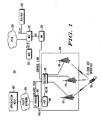
- FIGs. 1 and 2 show functional block diagrams of a communication network, in accordance with a Code Division Multiple Access (CDMA) embodiment of the present invention.
- An MS 118 is in soft handoff with three BTSs 112, 114, 116 for communicating with an Application Host 102.
- the Application Host 102 is connected to a Packet Network 104 for uploading and downloading information.
- the Packet Network 104 is connected to an IP Router 106.
- the IP Router 106 provides the interface between the Packet Network 104 and the BS equipment 109 for packet data services.
- the IP Router 106 is connected to a Paging Control Function (PCF) 108, which in turn is connected to a Selector 110.
- the PCF contains a Mobility Registrar and the ability to queue incoming packets from the network.
- the system 100 is an IS-835 communication network, wherein the IP Router 106 is a PDSN, the PCF 108 is a Packet Control Function and the RF Bearer Function 111 includes the Selector 110 and BTSs 112, 114, 116.
- the PDSN communicates to the PCF over an A10/A11 interface.
- the PCF provides buffering for data received from the PDSN.
- the PCF is connected to the Selector for the BTSs over an A8/A9 interface.
- the present invention is operable over a layer 3 bearer.
- the system 100 can be a WiMAX communication network, wherein the IP Router Function 106 is a Router or Foreign Agent (FA, as will be used in the examples herein), the PCF 108 is a Paging Controller 108 of a Cellular Access Point Controller (CAPC) 107 and the RF Bearer Function 110 is one or more Access Points (AP) for a user.
- the FA 106 communicates to the Paging Controller 108, which provides buffering for data received from the FA 106.
- the Paging Controller 108 communicates with the AP.
- the present invention is operable over a layer 2 switched network.
- the IP Routing function 106 may be an FA or it may be a simple off the shelf router for non-mobile stations.
- the Paging Controller 108 is included in the bearer path only when an MS is idle.
- the Paging Controller 108 is removed from the bearer path when the MS is active.
- the Paging Controller 108 contains a location register in the CAPC that tracks the paging area a mobile has gone idle within.
- the Paging Controller 108 has the ability to queue incoming packets from the network.
- the serving access point (AP) makes up the RF bearer function 111. APs are grouped into paging areas, and mobiles that are idle can move anywhere within a paging area without performing a location update with the location registrar in the CAPC.
- the Selector 110 of the RF Bearer Function maintains soft handoffs between the MS 118 and the BTSs 112, 114, 116.
- the Selector 110 also selects the best data transmission received from the MS 118 via the BTS 112, 114, 116 for transmission to the PCF 108 and distributes copies of data destined for the MS 118 to all BTSs 112, 114, 116 that the MS 118 is in soft handoff with.
- Control messages to/from the MS 118 originate/terminate at the Selector 110.
- the BTSs 112, 114, 116 transmit and receive bearer data and control information over a dedicated RF traffic channel to the MS 118.
- the Selector is also connected to a Mobility Manager (MM) 120 via a control link.
- the MM 120 provides control functions for calls connected on the BS equipment 109. For example, the MM 120 monitors the state of a call and determines when the call should be released, decides when soft handoff should occur, and decides which BTSs should be added or dropped in soft handoff, etc.
- the MM 120 is connected to a Mobile Switching Center (MSC) 122 over an A1 interface (as specified in IS-835).
- MSC 122 interfaces the MM 120 to the Public Switch Telephone Network (PSTN) 126.
- PSTN Public Switch Telephone Network
- the MSC 122 is also connected to a Home Location Register/Visitor Location Register (HLR/VLR) 124 over an IS-41 interface.
- HLR/VLR Home Location Register/Visitor Location Register
- the HLR 124 determines the location of the MS 118 and provides information to the MSC 122.
- the VLR 124 obtains a copy of the HLR information and provides it to a MSC, such as MSC 123, in the visitor network.
- MSC 122 and MSC 123 are connected via an IS-41 interface. It should be recognized that the Location Register and paging functions can be implemented in different network elements based on technology and network architecture.
- the PCF has the ability to store data for the mobile and works in cooperation with BSC and MSC to page the mobile.
- FIG. 1 The elements and interfaces shown in FIG. 1 are commonly known in the art, and thus are not described further herein. It should also be recognized that the invention is also applicable to the WiMAX network of FIG. 3 , or other packet data network, having a similar analogue to that described for IS-835 described herein, and thus need not be described further.
- the present invention provides a solution for tunneling and de-tunneling delays wherein the PCF resources are no longer wasted when the mobile is in Active state.
- the RF Bearer directly connect with the IP Router, delay in packet transfer is greatly reduced which is a significant advantage to realtime services that require low latency.
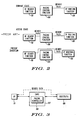
- the bearer path context is transferred from the PCF 108 to the RF Bearer Function 111.
- the RF Bearer Function 110 then uses Inter-PCF handoff procedures with the IP Router Function and creates a tunnel between itself and the IR Router.
- the communication standards for the particular implementing network are not impacted by this process, but the invention requires that to the IP Router Function 106 the RF Bearer Function 111 appears as a Paging Control Function 108 and has a security context for the control communications.
- the bearer path A10 context is transferred from the PCF to the Selector.
- the Selector uses A11 Inter-PCF handoff procedures with the PDSN and creates an A10 tunnel between itself and the PDSN.
- the A10/A11 standards are not impacted.
- the Selector will appear as a PCF and have a security context for A11 communications. This approach will decrease the call set up time than if the call is processed in the same sequence as in the prior art.
- the present invention is applicable to both cases of where; a) the network has packet data to be transferred to the MS, or b) the MS is initiating a packet data transfer.
- the present invention is applicable to the case where an MS switches; a) from Active to Idle Mode, and b) from Idle to Active Mode.
- FIG. 4 refers to the case where an IS-835 network has packet data to be transferred to the MS.
- the PCF 108 receives data for a Dormant MS 118, it alerts the Call Control (CC) functionality in the Base Station Controller (BSC) that is responsible for A1 interface.
- the BSC will then ask the MSC 122 to page the MS by sending a BS Service Request to the CC.
- MSC will send a Page message on the A1 interface which results in the MS being paged over the air.
- a Selector 110 is assigned for the MS.
- the PCF 108 will transfer the call context and the buffered data for the mobile to that Selector.
- the Selector can then set up A10 tunnel with the PDSN 106.
- the Selector While the establishment of the A10 tunnel can be accomplished in nearly the same time as the traditional establishment of A8, the context and data transfer to the Selector is an additional step. Therefore, for real time applications where call setup time is crucial, such as Push-to-Talk (PTT), the Selector will be assigned after the PCF receives data for the Dormant MS and ahead of the page response from the MS. When the MS enters Dormant mode, the Selector will notify the PCF and allow the PCF to move the tunnel back to itself. Once again inter-PCF handoff techniques are used to accomplish the tunnel transfer.
- PTT Push-to-Talk
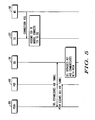
- FIG. 4 refers to the case where an MS wants to originate a packet data transfer in an IS-835 network.
- the present invention allows the Selector 110 to bypass the PCF 108 and transfer the A10 tunnel over to itself.
- the MS alerts the Call Control (CC) functionality in the BSC.
- a Selector 110 is assigned for the MS, and transfer the A10 tunnel to the PDSN 106 over to itself, wherein the PDSN 106 clears the old A10 tunnel.
- the Selector 110 bypasses the PCF and communicates directly with the PDSN 106.
- FIGs. 6 and 7 show an example of the present invention in a WiMAX communication system.
- the transport connection is enabled by the Access Point (AP) and the data is delivered from the IP routing function directly to the AP when the MS is Active.
- the transport connection is idle and the AP has released all RF resources and instead the paging controller function (PCF) in the Cellular Access Point Controller (CAPC) is responsible for intercepting and queuing incoming data for the mobile from the network.
- PCF paging controller function
- CAPC Cellular Access Point Controller
- the queued data is sent to the AP that now is associated with the activated MS.
- the queued data is delivered to the MS while the bearer path between the AP and IP routing function is redirected to point directly to the AP.
- RF Bearer Function is released.
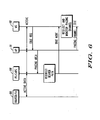
- FIG. 6 shows the case where a WiBB connection switches from Active to Idle Modes, wherein a MS requests idle mode and network releases RF bearer resources.
- the MS In the Active Mode, the MS is Active and bearer data is flowing between Router/FA and AP for the mobile station.
- the MS then sends a request to the AP to enter idle mode.
- the AP then informs the location registrar of the paging area in which the MS has requested idle mode support within the CAPC.
- the Paging Control Function within the CAPC redirects the bearer path to itself for this particular MS.
- this can be done by sending a Layer 2 packet from the CAPC to the IP routing function so that the interleaving Layer 2 switches learn the correct ports for which the MAC address of the MS is now reachable, so that subsequent downlink packets will follow the reverse path back to the Paging Control Function within the CAPC. Then the MS is told to enter idle mode. At this point, MS can silently reselect and monitor the paging channel on any AP in the paging area.
- FIG. 7 shows the case where a WiMAX connection switches from Idle to Active Modes, wherein bearer data for the MS arrives at the Router/FA and is delivered to the MS.
- the Router/FA delivers data packets to Paging Controller (as detailed previously above).
- the CAPC maps the packet to the paging area the MS was last associated with and queues the packet.
- the CAPC sends a page to all the APs that are part of the paging area.
- the MS monitoring a paging channel on one of the APs, responds to the page and attempts to transition to the active state.
- the AP informs the CAPC that it has located the MS and also updates the bearer path, so that subsequent data packets are sent by the Router/FA directly to the AP. Any packets sourced by the MS are sent to the AP.
- the CAPC delivers all the queued packets to the AP. Then the CAPC is no longer in the bearer path.
- the network between the Router/FA, CAPC and the AP is a Layer 2 Ethernet network.
- the bearer is redirected easily by sending an Ethernet control packet from either the AP or the CAPC to the Router/FA.
- the Ethernet frames include the Media Access Control (MAC) address of the MS's so each MS has its own data path through the Layer 2 network.
- the layer 2 switches update which the ports from which packets with a given MAC address arrive at so that packets in the reverse direction follow the same path back down through the network.
- MAC Media Access Control
- a system operator can tune the operation of Active and Dormant (or Idle) state transitions in order to strike an optimal balance between quality of the data service from a subscriber perspective, RF channel utilization, battery power, and access channel capacity.
- This tuning can be achieved by modifying the time that the MS is in the Dormant (Idle) state.
- the present invention has broad applications in new wireless architectures that are IP based, such as WiMAX, CDMA-1X and EvDO architectures.
- any wireless network not all powered-on mobiles can be using the available RF resources at all times.
- the concept of Idle, Dormant and Active states are universal to wireless networks.
- the mobiles are Dormant they have established a session context.
- BTS and BSC resources are assigned.
- the network entity that keeps this session context does not need to be in the path of the bearer data just because it keeps the context.
- the present invention takes advantage of the already established Inter-PCF handoff techniques in a new way to eliminate the PCF from the bearer path when the mobile becomes active
- the invention can be implemented in any suitable form including hardware, software, firmware or any combination of these.
- the invention may optionally be implemented partly as computer software running on one or more data processors and/or digital signal processors.
- the elements and components of an embodiment of the invention may be physically, functionally and logically implemented in any suitable way. Indeed the functionality may be implemented in a single unit, in a plurality of units or as part of other functional units. As such, the invention may be implemented in a single unit or may be physically and functionally distributed between different units and processors.
Landscapes
- Engineering & Computer Science (AREA)
- Computer Networks & Wireless Communication (AREA)
- Signal Processing (AREA)
- Mobile Radio Communication Systems (AREA)
Description
- The present invention relates generally to the field of communication systems, and more particularly, to call setup in communications equipment.
- 3GPP2 packet data standard TIA/EIA/IS835 CDMA 2000 Wireless IP Network Standard, (IS-835) and the IEEE 802.16-2005 standard herein referred to as WiMAX) communication standard, among other packet data communication systems, can specify an Active state and a Dormant (Idle) state for a wireless communication device, such as a mobile station (MS), during a packet data session. In the Active state, the MS is connected to infrastructure equipment via a dedicated RF connection. For example, in IS-835 the infrastructure provides a dedicated connection between a Base Transceiver Station (BTS) and a Packet Control Function (PCF). The PCF is connected to a Packet Data Service Node, which is connected to a packet network. A packet call is moved into the Active state when there is a burst of packet data to transmit. The packet call may transition between the Active state and the Dormant (Idle) state many times, depending on the bursty nature of the data and on the duration of the time period.
- In the Dormant state, when the MS is not transmitting or receiving data, the dedicated Radio Frequency (RF) connection and the dedicated connection between the BTS and the PCF are released. The packet call transitions from the Active state to the Dormant state when there has been no data transmission for a predetermined time period. While the packet session is in the Dormant state, bearer data cannot be transmitted, and must be buffered. A network element is responsible for tracking the MS mobility, receiving packet data, and buffering it until the MS becomes active again. For example, the Packet Control Function is only useful when the mobile is Dormant. It keeps the context for the Dormant mobile and maintains a tunnel with the PDSN. When the data starts to flow from the network side, the PDSN forwards the packet to the PCF which causes the PCF to transmit a BS Service request to the MSC. The mobile is then paged and when it responds a traffic channel (TCH) and Selector are assigned to the mobile which then transitions from Dormant to Active state. In short, in order to transmit buffered data to the MS, the call must be assigned a dedicated RF connection, and a dedicated connection between the BTS and the PCF must be re-established. The delay incurred in order to re-establish a dedicated connection between the MS and the PCF (i.e. tunneling and detunneling across the A10 and A8 interfaces) has a negative impact on the quality of the data service. Moreover, during the Active state the PCF acts as nothing more than a conduit for the data between the MS and the PDSN. Thus, the PCF resources are unnecessary when the mobile is Active. A similar process occurs for WiMAX communications.
- Current standards impose a high transaction cost on centralized processing elements for the time needed for Dormant (Idle) to Active transitions. The time needed has a potentially negative impact on a subscriber's perception of data service. These problems encourage configurations where the RF connection is maintained for a long period of time after transmission of a data burst, so that a subsequent data burst can immediately be transmitted. However, maintaining a connection for an unnecessarily long period of time is an inefficient use of RF resources. For example, if a channel is maintained for sixty seconds for transmission of a series of bursts of packet data, one channel can offer sixty Busy Hour Call Attempts (one channel * 3600/60). If, however, the channel is maintained for only five seconds for transmission of a burst, one channel can offer 720 BHCA (1 channel * 3600/5). In the latter case, Dormant to Active transitions (i.e. call attempts) will increase because the channel is maintained for a shorter period of time. In the former case, the long timeout period decreases the effective utilization of the dedicated channel, and increases the number of dedicated channels required to support the packet data service.
- One prior art solution, provided in
US Pat. No. 6,965,588 , introduces a Semi-Dormant state to address this problem. In this reference, for the Dormant state, the network element maintaining the connection to the PDSN is the PCF, and in the Semi-Dormant state, the network element maintaining the connection between to the PDSN is the Selection and Distribution Unit (SDU). In the Dormant state, the SDU is released, with the PCF maintaining the connection to the PDSN. When the MS is in the Semi-Dormant state, the network element maintaining the connection between the BS and the PDSN for the call is the SDU. When a mobile moves from the Active to the Semi-Dormant state, the traffic channel is released but the SDU stays assigned. A path exists between the SDU and the PDSN via the PCF. When the mobile is in the Semi-Dormant state, there are paths between the SDU to the PCF and the PCF to the PDSN. No traffic channel exists over the RF connection. Once the mobile transitions from the Dormant to the Active state, a traffic channel will exist from the MS to the SDU via the BTS. However, this results in the PCF always being present and utilized. The mobile is sent addresses of the serving element and the IP address of both the PCF and SDU are sent to the mobile, so that when the mobile goes Active both the SDU and PCF elements serving that mobile can be quickly identified. This solution, although effective requires a third, Semi-Dormant state to be coordinated, and still requires the PCF in the communication path while the mobile is Active, which wastes RF resources. -
US 2003/099214 A1 discloses an apparatus and method for optimizing the transition of a Mobile Station (MS) between states of operation for packet data service. An RF connection is established between the MS and Base Site Equipment (BS) for the transmission of data packets. After a period of inactivity of transmission, the RF connection is released and the BS provides the MS with the equipment identifier of the network element that will maintain the connection with a PDSN. The MS retains the identifier while in the Dormant state and a new Semi-Dormant state and sends the identifier to the BS when requesting reactivation. In the Dormant state, the network element maintaining the connection to the PDSN is the PCF. In the Semi-Dormant state, the network element maintains the connection between to the PDSN is the SDU. When the BS has data to transmit to a MS in the Semi-Dormant state, it channel assigns the MS into the Active state according to pilots reported in RF Measurement Report Messages previously received from the MS. - Therefore, there is a need for a method and apparatus for efficient transitions between operating states in a communication network, and in particular for transitioning a wireless communication device between the Dormant state and Active state by efficient connection of RF resources dependent upon whether there is bearer data to transmit.
- The invention is pointed out with particularity in the appended claims. However, other features of the invention will become more apparent and the invention will be best understood by referring to the following detailed description in conjunction with the accompanying drawings in which:
-
FIG. 1 is a functional block diagram of a system that can be used to implement the apparatus and method of the present invention; -
FIG. 2 is a block diagram of operational changes of a first embodiment introduced by the present invention; -
FIG. 3 is a block diagram of operational changes of a second embodiment introduced by the present invention; -
FIG. 4 is a flow chart of a first embodiment of the present invention where data transfer is initiated by the network; -
FIG. 5 is a flow chart of a first embodiment of the present invention where data transfer is initiated by the mobile station; and -
FIG. 6 is a flow chart of a second embodiment of the present invention illustrating an active-to-idle state transition; and -
FIG. 7 is a flow chart of a second embodiment of the present invention illustrating an idle-to-active state transition. - Skilled artisans will appreciate that common but well-understood elements that are useful or necessary in a commercially feasible embodiment are typically not depicted or described in order to facilitate a less obstructed view of these various embodiments of the present invention.
- The present invention provides a method and apparatus for efficient transitions between operating states in a communication network, and in particular for transitioning a wireless communication device between a Dormant or Idle state and an Active state by efficient connection of RF resources dependent upon whether there is bearer data to transmit.
- In the prior art, a wireless communication device such as a mobile station (MS) can be in a call with Base Site (BS) equipment. The call connection is supported by an RF bearer function, such as a BS and a Selector through to a Paging Control Function, such as a Packet Control Function (PCF), and on to an IP Routing Function, such as a Packet Data Service Node (PDSN). When the call (connection) is released between the MS and BS, the BS provides the MS with the equipment identifiers of the network elements that maintain the connection with the Packet Data Service Node (PDSN), and disconnects the RF Bearer. The MS retains the identifiers and sends the appropriate identifier to the BS when requesting reactivation (transition to Active state). In the Dormant or Idle state (or Inactive state as used herein), the network element maintaining the connection to the PDSN is the PCF because the RF Bearer has been released and disconnected. When the BS receives the reactivation request from the MS, it connects the PCF to the RF Bearer path that is established to the MS.
- In accordance with the present invention, the PCF is bypassed when reestablishing an Active state. Instead of re-connection through the PCF, when the BS receives the reactivation request from the MS, it connects the RF Bearer Function directly to the IP Routing Function. Advantageously, this can be done without network hardware modifications. Details of the invention will now be described with reference to the figures.
-
FIGs. 1 and2 show functional block diagrams of a communication network, in accordance with a Code Division Multiple Access (CDMA) embodiment of the present invention. AnMS 118 is in soft handoff with threeBTSs Application Host 102. TheApplication Host 102 is connected to aPacket Network 104 for uploading and downloading information. ThePacket Network 104 is connected to anIP Router 106. TheIP Router 106 provides the interface between thePacket Network 104 and theBS equipment 109 for packet data services. TheIP Router 106 is connected to a Paging Control Function (PCF) 108, which in turn is connected to aSelector 110. The PCF contains a Mobility Registrar and the ability to queue incoming packets from the network. - In this first embodiment (as shown), the
system 100 is an IS-835 communication network, wherein theIP Router 106 is a PDSN, thePCF 108 is a Packet Control Function and theRF Bearer Function 111 includes theSelector 110 andBTSs - In a second embodiment, as shown in
FIG. 3 , thesystem 100 can be a WiMAX communication network, wherein theIP Router Function 106 is a Router or Foreign Agent (FA, as will be used in the examples herein), thePCF 108 is aPaging Controller 108 of a Cellular Access Point Controller (CAPC) 107 and theRF Bearer Function 110 is one or more Access Points (AP) for a user. In this embodiment, theFA 106 communicates to thePaging Controller 108, which provides buffering for data received from theFA 106. ThePaging Controller 108 communicates with the AP. In this embodiment, the present invention is operable over a layer 2 switched network. - The
IP Routing function 106 may be an FA or it may be a simple off the shelf router for non-mobile stations. ThePaging Controller 108 is included in the bearer path only when an MS is idle. ThePaging Controller 108 is removed from the bearer path when the MS is active. ThePaging Controller 108 contains a location register in the CAPC that tracks the paging area a mobile has gone idle within. ThePaging Controller 108 has the ability to queue incoming packets from the network. The serving access point (AP) makes up theRF bearer function 111. APs are grouped into paging areas, and mobiles that are idle can move anywhere within a paging area without performing a location update with the location registrar in the CAPC. - Returning to the example of the first embodiment for an IS-835 network in
FIGs. 1 and2 , theSelector 110 of the RF Bearer Function maintains soft handoffs between theMS 118 and theBTSs Selector 110 also selects the best data transmission received from theMS 118 via theBTS PCF 108 and distributes copies of data destined for theMS 118 to allBTSs MS 118 is in soft handoff with. Control messages to/from theMS 118 originate/terminate at theSelector 110. TheBTSs MS 118. - The Selector is also connected to a Mobility Manager (MM) 120 via a control link. The
MM 120 provides control functions for calls connected on theBS equipment 109. For example, theMM 120 monitors the state of a call and determines when the call should be released, decides when soft handoff should occur, and decides which BTSs should be added or dropped in soft handoff, etc. TheMM 120 is connected to a Mobile Switching Center (MSC) 122 over an A1 interface (as specified in IS-835). TheMSC 122 interfaces theMM 120 to the Public Switch Telephone Network (PSTN) 126. TheMSC 122 is also connected to a Home Location Register/Visitor Location Register (HLR/VLR) 124 over an IS-41 interface. When theMS 118 is in its home network, theHLR 124 determines the location of theMS 118 and provides information to theMSC 122. When theMS 118 is in a visitor network, theVLR 124 obtains a copy of the HLR information and provides it to a MSC, such asMSC 123, in the visitor network.MSC 122 andMSC 123 are connected via an IS-41 interface. It should be recognized that the Location Register and paging functions can be implemented in different network elements based on technology and network architecture. In the CDMA network, the PCF has the ability to store data for the mobile and works in cooperation with BSC and MSC to page the mobile. - The elements and interfaces shown in
FIG. 1 are commonly known in the art, and thus are not described further herein. It should also be recognized that the invention is also applicable to the WiMAX network ofFIG. 3 , or other packet data network, having a similar analogue to that described for IS-835 described herein, and thus need not be described further. - The present invention provides a solution for tunneling and de-tunneling delays wherein the PCF resources are no longer wasted when the mobile is in Active state. By having the RF Bearer directly connect with the IP Router, delay in packet transfer is greatly reduced which is a significant advantage to realtime services that require low latency.
- Referring to
FIGs. 2 and 3 , when a mobile becomes Active the bearer path context is transferred from thePCF 108 to theRF Bearer Function 111. TheRF Bearer Function 110 then uses Inter-PCF handoff procedures with the IP Router Function and creates a tunnel between itself and the IR Router. The communication standards for the particular implementing network are not impacted by this process, but the invention requires that to theIP Router Function 106 theRF Bearer Function 111 appears as aPaging Control Function 108 and has a security context for the control communications. - For example, in the IS-835 embodiment, when a mobile becomes Active the bearer path A10 context is transferred from the PCF to the Selector. The Selector then uses A11 Inter-PCF handoff procedures with the PDSN and creates an A10 tunnel between itself and the PDSN. The A10/A11 standards are not impacted. To the PDSN the Selector will appear as a PCF and have a security context for A11 communications. This approach will decrease the call set up time than if the call is processed in the same sequence as in the prior art.
- In the CDMA case, the present invention is applicable to both cases of where; a) the network has packet data to be transferred to the MS, or b) the MS is initiating a packet data transfer. In the WiMAX case, the present invention is applicable to the case where an MS switches; a) from Active to Idle Mode, and b) from Idle to Active Mode.
-
FIG. 4 refers to the case where an IS-835 network has packet data to be transferred to the MS. In this instance, when thePCF 108 receives data for aDormant MS 118, it alerts the Call Control (CC) functionality in the Base Station Controller (BSC) that is responsible for A1 interface. The BSC will then ask theMSC 122 to page the MS by sending a BS Service Request to the CC. MSC will send a Page message on the A1 interface which results in the MS being paged over the air. When the MS responds, aSelector 110 is assigned for the MS. ThePCF 108 will transfer the call context and the buffered data for the mobile to that Selector. The Selector can then set up A10 tunnel with thePDSN 106. - While the establishment of the A10 tunnel can be accomplished in nearly the same time as the traditional establishment of A8, the context and data transfer to the Selector is an additional step. Therefore, for real time applications where call setup time is crucial, such as Push-to-Talk (PTT), the Selector will be assigned after the PCF receives data for the Dormant MS and ahead of the page response from the MS. When the MS enters Dormant mode, the Selector will notify the PCF and allow the PCF to move the tunnel back to itself. Once again inter-PCF handoff techniques are used to accomplish the tunnel transfer.
-
FIG. 4 refers to the case where an MS wants to originate a packet data transfer in an IS-835 network. In this instance, when the MS transitions from Dormant to Active state due to call origination, the present invention allows theSelector 110 to bypass thePCF 108 and transfer the A10 tunnel over to itself. In particular, the MS alerts the Call Control (CC) functionality in the BSC. ASelector 110 is assigned for the MS, and transfer the A10 tunnel to thePDSN 106 over to itself, wherein thePDSN 106 clears the old A10 tunnel. As a result, theSelector 110 bypasses the PCF and communicates directly with thePDSN 106. -
FIGs. 6 and7 show an example of the present invention in a WiMAX communication system. In IEEE 802.16-2005 (WiMAX), the transport connection is enabled by the Access Point (AP) and the data is delivered from the IP routing function directly to the AP when the MS is Active. When the MS is not active, the transport connection is idle and the AP has released all RF resources and instead the paging controller function (PCF) in the Cellular Access Point Controller (CAPC) is responsible for intercepting and queuing incoming data for the mobile from the network. Upon the reception of a packet for an idle MS, the PCF in the CAPC will page all of the APs in the paging area last known to contain the MS. When the MS is activated (i.e. responds to a page) the queued data is sent to the AP that now is associated with the activated MS. The queued data is delivered to the MS while the bearer path between the AP and IP routing function is redirected to point directly to the AP. Typically, in the idle state, RF Bearer Function is released. -
FIG. 6 shows the case where a WiBB connection switches from Active to Idle Modes, wherein a MS requests idle mode and network releases RF bearer resources. In the Active Mode, the MS is Active and bearer data is flowing between Router/FA and AP for the mobile station. The MS then sends a request to the AP to enter idle mode. The AP then informs the location registrar of the paging area in which the MS has requested idle mode support within the CAPC. The Paging Control Function within the CAPC then redirects the bearer path to itself for this particular MS. For example, this can be done by sending a Layer 2 packet from the CAPC to the IP routing function so that the interleaving Layer 2 switches learn the correct ports for which the MAC address of the MS is now reachable, so that subsequent downlink packets will follow the reverse path back to the Paging Control Function within the CAPC. Then the MS is told to enter idle mode. At this point, MS can silently reselect and monitor the paging channel on any AP in the paging area. -
FIG. 7 shows the case where a WiMAX connection switches from Idle to Active Modes, wherein bearer data for the MS arrives at the Router/FA and is delivered to the MS. In the Idle Mode, the Router/FA delivers data packets to Paging Controller (as detailed previously above). The CAPC maps the packet to the paging area the MS was last associated with and queues the packet. The CAPC sends a page to all the APs that are part of the paging area. The MS monitoring a paging channel on one of the APs, responds to the page and attempts to transition to the active state. The AP informs the CAPC that it has located the MS and also updates the bearer path, so that subsequent data packets are sent by the Router/FA directly to the AP. Any packets sourced by the MS are sent to the AP. The CAPC delivers all the queued packets to the AP. Then the CAPC is no longer in the bearer path. - The network between the Router/FA, CAPC and the AP is a Layer 2 Ethernet network. The bearer is redirected easily by sending an Ethernet control packet from either the AP or the CAPC to the Router/FA. The Ethernet frames include the Media Access Control (MAC) address of the MS's so each MS has its own data path through the Layer 2 network. The layer 2 switches update which the ports from which packets with a given MAC address arrive at so that packets in the reverse direction follow the same path back down through the network.
- It should be noted that in the present invention, a system operator can tune the operation of Active and Dormant (or Idle) state transitions in order to strike an optimal balance between quality of the data service from a subscriber perspective, RF channel utilization, battery power, and access channel capacity. This tuning can be achieved by modifying the time that the MS is in the Dormant (Idle) state.
- The present invention has broad applications in new wireless architectures that are IP based, such as WiMAX, CDMA-1X and EvDO architectures. In any wireless network, not all powered-on mobiles can be using the available RF resources at all times. The concept of Idle, Dormant and Active states are universal to wireless networks. When the mobiles are Dormant they have established a session context. When the mobile becomes Active, BTS and BSC resources are assigned. In the present invention, the network entity that keeps this session context does not need to be in the path of the bearer data just because it keeps the context. The present invention takes advantage of the already established Inter-PCF handoff techniques in a new way to eliminate the PCF from the bearer path when the mobile becomes active
- The sequences and methods shown and described herein can be carried out in a different order than those described. The particular sequences, functions, and operations depicted in the drawings are merely illustrative of one or more embodiments of the invention, and other implementations will be apparent to those of ordinary skill in the art. The drawings are intended to illustrate various implementations of the invention that can be understood and appropriately carried out by those of ordinary skill in the art. Any arrangement, which is calculated to achieve the same purpose, may be substituted for the specific embodiments shown.
- The invention can be implemented in any suitable form including hardware, software, firmware or any combination of these. The invention may optionally be implemented partly as computer software running on one or more data processors and/or digital signal processors. The elements and components of an embodiment of the invention may be physically, functionally and logically implemented in any suitable way. Indeed the functionality may be implemented in a single unit, in a plurality of units or as part of other functional units. As such, the invention may be implemented in a single unit or may be physically and functionally distributed between different units and processors.
- Although the present invention has been described in connection with some embodiments, it is not intended to be limited to the specific form set forth herein. Rather, the scope of the present invention is limited only by the accompanying claims. Additionally, although a feature may appear to be described in connection with particular embodiments, one skilled in the art would recognize that various features of the described embodiments may be combined in accordance with the invention. In the claims, the term comprising does not exclude the presence of other elements or steps.
- Furthermore, although individually listed, a plurality of means, elements or method steps may be implemented by e.g. a single unit or processor.
- Furthermore, the order of features in the claims do not imply any specific order in which the features must be worked and in particular the order of individual steps in a method claim does not imply that the steps must be performed in this order. Rather, the steps may be performed in any suitable order.
Claims (9)
- A method for efficient transitions between operating states in a communication network, the method comprising the steps of:having a mobile station in an Inactive state;requiring a data transfer;transitioning the mobile station from the Inactive to an Active state; and characterized by establishing a connection between an IP Routing Function (106) and an RF Bearer Function (110) so that an existing connection from the IP Routing Function (106) to a Paging Control Function (108) is modified so that the connection now ends at the RF Bearer Function (110) without going through the Paging Control Function (10$);wherein the RF Bearer Function (110) is either: i) Base Site equipment and a Selector, ii) a Selector and one or more Base Transceiver Stations, iii) a Selector and one or more base Stations, or iv) one or more Access Points; and the Paging Control Function (1Q$) is either: i) a Packet Control Function, or ii) a Paging Controller of a Cellular Access Point Controller (107).
- The method or claim 1, wherein the transferring step includes creating a tunnel using an Inter-PCF handoff procedure.
- The method of claim 1, wherein the IP Routing Function (106) is a Packet Data Service Node, PDSN.
- The method of claim 1, wherein the RF Bearer Function (110) is a Selector and at least one Base Station, the PCF (108) is a Packet Control Function, and the IP Routing Function (106) is a Packet Data Service Node (PDSN), and wherein the transferring step includes transferring the bearer path A10 context tunnel from the Packet Control Function to the Selector.
- The method of claim 1, wherein the RF Bearer Function(110) is a Selector, the PCF (108) is a Packet Control Function, and the IP Routing Function (106) is a Packet Data Service Node, PDSN, and wherein the requiring step includes the PCF (108) receiving data for transfer to the Inactive mobile station, whereinafter further comprising the steps of:alerting a Call Control, CC, functionality in a Base Station Controller, BSC, that is responsible for an A1 interface;sending a BS Service Request to the CC;sending a page message on the A1 interface to the mobile station;responding to the page message; andassigning a Selector for the mobile station,wherein the transferring step includes transferring the call context and the buffered data for the mobile station to that Selector, and setting up an A10 tunnel with the PDSN.
- The method of claim 6, further comprising the steps of:entering the Inactive state by the mobile station;notifying the PCF thereof; andallowing the PCF to move the A10 tunnel back to itself,
- The method of claim 1, wherein the RF Bearer Function (110) is a Selector and at least one Base Station, the PCF (108) is a Packet Control Function, and the IP Routing Function (106) is a Packet Data Service Node, PDSN, and wherein the requiring step includes the mobile station originating data for transfer from the mobile station, wherein the transferring step includes allowing the Selector to bypass the PCF (108) and transfer the A10 tunnel over to itself.
- The method of claim 1, wherein the RF Bearer Function (110) is an Access Point, AP, the PCF (108) is a Paging Control Function, and the IP Routing Function (106) is one of the group of a standard IP Router and a Foreign Agent, FA, and wherein the requiring step includes the PCF (108) queuing incoming data for transfer to an Inactive mobile station, and wherein the transferring step includes allowing the AP to bypass the PCF (108) and transfer a transport connection directly to the IP Router.
- A system for efficient transitions between operating states in a communication network, the system comprising:a mobile station, MS, in an Inactive state, the MS requiring a data transfer between the network and the MS, the MS transitioning from the Inactive state to an Active state;an RF Bearer Function (110);an IP Routing Function (106);a Paging Control Function (108); and characterized bymeans for establishing a connection between the IP Routing Function (106) and the RF Bearer Function (110) so that an existing connection from the IP Routing Function (106) to the Paging Control Function (108) is modified so that the connection now ends at the RF Bearer Function (110) without going through the Paging Control Function (108);wherein the RF Bearer Function (110) is either: i) Base Site equipment and a Selector, ii) a Selector and one or more Base Transceiver Stations, iii) a Selector and one or more base Stations, or iv) one or more Access Points; and the Paging Control Function (108) is either: i) a Packet Control Function, or ii) a Paging Controller of a Cellular Access Point Controller (107).
Applications Claiming Priority (2)
| Application Number | Priority Date | Filing Date | Title |
|---|---|---|---|
| US11/610,738 US7710987B2 (en) | 2006-12-14 | 2006-12-14 | Efficient transitions between operating states in a communication network |
| PCT/US2007/079005 WO2008073552A1 (en) | 2006-12-14 | 2007-09-20 | Efficient transitions between operating states in a communication network |
Publications (3)
| Publication Number | Publication Date |
|---|---|
| EP2095521A1 EP2095521A1 (en) | 2009-09-02 |
| EP2095521A4 EP2095521A4 (en) | 2013-05-29 |
| EP2095521B1 true EP2095521B1 (en) | 2014-05-14 |
Family
ID=39512068
Family Applications (1)
| Application Number | Title | Priority Date | Filing Date |
|---|---|---|---|
| EP07842868.7A Not-in-force EP2095521B1 (en) | 2006-12-14 | 2007-09-20 | Efficient transitions between operating states in a communication network |
Country Status (8)
| Country | Link |
|---|---|
| US (1) | US7710987B2 (en) |
| EP (1) | EP2095521B1 (en) |
| JP (1) | JP4992100B2 (en) |
| KR (1) | KR101068383B1 (en) |
| CN (1) | CN101563852B (en) |
| ES (1) | ES2470569T3 (en) |
| TW (1) | TWI419492B (en) |
| WO (1) | WO2008073552A1 (en) |
Families Citing this family (12)
| Publication number | Priority date | Publication date | Assignee | Title |
|---|---|---|---|---|
| WO2008090592A1 (en) * | 2007-01-22 | 2008-07-31 | Fujitsu Limited | Intermittent communication system, base station apparatus, and mobile station apparatus |
| FI20075297A0 (en) * | 2007-04-27 | 2007-04-27 | Nokia Siemens Networks Oy | Method, radio system and base station |
| JP5292952B2 (en) * | 2008-07-04 | 2013-09-18 | 富士通株式会社 | Base station and data transfer method |
| US20100027503A1 (en) * | 2008-07-31 | 2010-02-04 | Qualcomm Incorporated | Method and apparatus for reducing data loss during handover in a wireless communication system |
| CN101754313B (en) | 2008-11-28 | 2012-07-04 | 华为技术有限公司 | Pilot measurement control method and dual-mode terminal |
| US8385275B2 (en) * | 2009-01-31 | 2013-02-26 | Qualcomm Incorporated | Systems and methods for service flow retention in a wireless communication system |
| US9198157B2 (en) * | 2009-05-08 | 2015-11-24 | Qualcomm Incorporated | Paging for local IP access packets |
| WO2011093790A1 (en) * | 2010-02-01 | 2011-08-04 | Mashmobile Sweden Ab | A method, device, and computer program of scheduling transferring of application messages in a mobile device |
| US8626906B1 (en) * | 2010-08-10 | 2014-01-07 | Google Inc. | Scheduling data pushes to a mobile device based on usage and applications thereof |
| WO2012058797A1 (en) * | 2010-11-02 | 2012-05-10 | 华为技术有限公司 | Method, device and mobile terminal for data transmission |
| US11012939B2 (en) | 2014-01-08 | 2021-05-18 | Huawei Technologies Co., Ltd. | System and method for always on connections in wireless communications system |
| KR102172014B1 (en) | 2014-08-13 | 2020-10-30 | 삼성전자주식회사 | Controlling Method based on a communication status and Electronic device supporting the same |
Family Cites Families (20)
| Publication number | Priority date | Publication date | Assignee | Title |
|---|---|---|---|---|
| US6865389B2 (en) | 2001-09-05 | 2005-03-08 | Telefonaktiegolaget Lm Ericsson | System and method for a virtual soft handover in a high data rate network based on data transmission information |
| US7154903B2 (en) * | 2001-10-19 | 2006-12-26 | Telefonaktiebolaget Lm Ericsson (Publ) | System and method for management of data associated with a dormant mobile terminal |
| US6965588B2 (en) * | 2001-11-29 | 2005-11-15 | Motorola, Inc. | Method for expediting transitions between states of operation in communications equipment |
| US7043249B2 (en) * | 2002-01-08 | 2006-05-09 | Motorola, Inc. | Packet data serving node initiated updates for a mobile communications system |
| US20030211847A1 (en) * | 2002-05-09 | 2003-11-13 | Nortel Networks Limited | Managing transition of a mobile station to an idle state upon call release |
| US7254119B2 (en) * | 2002-05-28 | 2007-08-07 | Zte San Diego, Inc. | Interworking mechanism between CDMA2000 and WLAN |
| US7583632B2 (en) * | 2002-05-28 | 2009-09-01 | Nortel Networks Limited | Efficient handoffs between cellular and wireless local area networks |
| US7110377B2 (en) | 2002-10-10 | 2006-09-19 | Qualcomm Incorporated | Dormant handoff in a packet data network |
| US7701963B2 (en) * | 2002-10-15 | 2010-04-20 | Qualcomm Incorporated | Method and apparatus for the use of micro-tunnels in a communications system |
| US7466675B2 (en) * | 2003-02-14 | 2008-12-16 | Motorola, Inc. | Method and apparatus for supporting a reduced resource dormant state for packet data |
| US7324499B1 (en) * | 2003-06-30 | 2008-01-29 | Utstarcom, Inc. | Method and system for automatic call monitoring in a wireless network |
| KR100604531B1 (en) * | 2003-10-28 | 2006-07-24 | 주식회사 팬택앤큐리텔 | Wireless packet data service method of mobile communication system |
| US20050141511A1 (en) * | 2003-12-08 | 2005-06-30 | Thawatt Gopal | Method of reducing call setup time for IP services in a mobile communication network |
| KR100694791B1 (en) * | 2004-02-09 | 2007-03-14 | 리서치 인 모션 리미티드 | Method and apparatus for controlling wireless network operation associated with flow control process |
| KR100583872B1 (en) * | 2004-03-17 | 2006-05-26 | 주식회사 팬택앤큐리텔 | Uplink Packet Transmission Method of Base Station and Mobile Communication System Implementing the Method |
| US20050276273A1 (en) * | 2004-06-10 | 2005-12-15 | Valentin Oprescu-Surcobe | Method and apparatus to facilitate inter-operability between a 3G1X network and a wireless packet data network |
| US20050281227A1 (en) * | 2004-06-18 | 2005-12-22 | Lucent Technologies, Inc. | Method and apparatus fo reducing latency during handoffs in a communications system |
| US7729303B2 (en) * | 2004-06-30 | 2010-06-01 | Zteit Usa, Inc. | Global open trunking system for CDMA wireless communication |
| US7512110B2 (en) * | 2004-09-21 | 2009-03-31 | Motorola, Inc. | Method and apparatus to facilitate inter-AN HRPD hard handoff |
| US8599871B2 (en) * | 2005-08-31 | 2013-12-03 | Motorola Mobility Llc | Method and apparatus for cross paging a multi network communication system |
-
2006
- 2006-12-14 US US11/610,738 patent/US7710987B2/en not_active Expired - Fee Related
-
2007
- 2007-09-20 EP EP07842868.7A patent/EP2095521B1/en not_active Not-in-force
- 2007-09-20 CN CN2007800460709A patent/CN101563852B/en not_active Expired - Fee Related
- 2007-09-20 WO PCT/US2007/079005 patent/WO2008073552A1/en not_active Ceased
- 2007-09-20 JP JP2009541432A patent/JP4992100B2/en not_active Expired - Fee Related
- 2007-09-20 ES ES07842868.7T patent/ES2470569T3/en active Active
- 2007-09-20 KR KR1020097012281A patent/KR101068383B1/en active Active
- 2007-10-15 TW TW096138519A patent/TWI419492B/en not_active IP Right Cessation
Also Published As
| Publication number | Publication date |
|---|---|
| US7710987B2 (en) | 2010-05-04 |
| TWI419492B (en) | 2013-12-11 |
| KR101068383B1 (en) | 2011-09-28 |
| EP2095521A1 (en) | 2009-09-02 |
| JP4992100B2 (en) | 2012-08-08 |
| EP2095521A4 (en) | 2013-05-29 |
| KR20090085679A (en) | 2009-08-07 |
| ES2470569T3 (en) | 2014-06-24 |
| CN101563852A (en) | 2009-10-21 |
| JP2010514266A (en) | 2010-04-30 |
| US20080144574A1 (en) | 2008-06-19 |
| TW200828842A (en) | 2008-07-01 |
| WO2008073552A1 (en) | 2008-06-19 |
| CN101563852B (en) | 2013-02-27 |
Similar Documents
| Publication | Publication Date | Title |
|---|---|---|
| KR101068383B1 (en) | Efficient Transition Between Operating States of a Communication Network | |
| KR101154384B1 (en) | An apparatus, a method and a computer readable storage medium for wireless communications | |
| US7974630B1 (en) | Releasing a connection in a wireless communication network | |
| US8125937B2 (en) | Data over signaling (DoS) optimization over wireless access networks | |
| EP2014121B1 (en) | A method of operation in a dual carrier communication system | |
| EP2198666B1 (en) | Dynamic ggsn relocation in a gprs network | |
| JP5313681B2 (en) | Method for re-establishing connection in a mobile communication system | |
| KR20040027890A (en) | Method and apparatus for call setup latency reduction | |
| US6965588B2 (en) | Method for expediting transitions between states of operation in communications equipment | |
| WO2004002051A2 (en) | Registration of a wlan as a umts routing area for wlan-umts interworking | |
| EP1900246A1 (en) | Method and base station controller for handover of simultaneous voice and data sessions | |
| JP2002511671A (en) | Mobility management in packet radio networks | |
| KR100396646B1 (en) | Packet Data Service Control System and Method in Mobile Communication System | |
| WO2007079689A1 (en) | A method for paging in different access systems | |
| US20050207396A1 (en) | Enhancement of packet transfer mode when circuit switched resources are requested | |
| US8046006B2 (en) | Method for carrying out paging in a cellular mobile communication system | |
| US20250071730A1 (en) | Enabling Paging Occasions of Idle State for Inactive State | |
| WO2004042936A2 (en) | Method and apparatus for cell reselection within a communications system | |
| EP1628442A1 (en) | Method of managing radio resources in a radio access network | |
| US9049621B2 (en) | Method and system for hard handoff in HRPD | |
| CN1965592A (en) | Method and apparatus to facilitate inter-operability between a 3G1X network and a wireless packet data network |
Legal Events
| Date | Code | Title | Description |
|---|---|---|---|
| PUAI | Public reference made under article 153(3) epc to a published international application that has entered the european phase |
Free format text: ORIGINAL CODE: 0009012 |
|
| 17P | Request for examination filed |
Effective date: 20090714 |
|
| AK | Designated contracting states |
Kind code of ref document: A1 Designated state(s): AT BE BG CH CY CZ DE DK EE ES FI FR GB GR HU IE IS IT LI LT LU LV MC MT NL PL PT RO SE SI SK TR |
|
| DAX | Request for extension of the european patent (deleted) | ||
| RAP1 | Party data changed (applicant data changed or rights of an application transferred) |
Owner name: MOTOROLA MOBILITY, INC. |
|
| RAP1 | Party data changed (applicant data changed or rights of an application transferred) |
Owner name: MOTOROLA MOBILITY LLC |
|
| A4 | Supplementary search report drawn up and despatched |
Effective date: 20130502 |
|
| RIC1 | Information provided on ipc code assigned before grant |
Ipc: H04W 68/00 20090101ALI20130424BHEP Ipc: H04W 52/02 20090101ALI20130424BHEP Ipc: H04B 1/38 20060101AFI20130424BHEP Ipc: H04W 76/02 20090101ALI20130424BHEP Ipc: H04W 76/04 20090101ALI20130424BHEP Ipc: H04W 80/04 20090101ALI20130424BHEP |
|
| 17Q | First examination report despatched |
Effective date: 20140106 |
|
| GRAP | Despatch of communication of intention to grant a patent |
Free format text: ORIGINAL CODE: EPIDOSNIGR1 |
|
| GRAS | Grant fee paid |
Free format text: ORIGINAL CODE: EPIDOSNIGR3 |
|
| GRAA | (expected) grant |
Free format text: ORIGINAL CODE: 0009210 |
|
| INTG | Intention to grant announced |
Effective date: 20140319 |
|
| AK | Designated contracting states |
Kind code of ref document: B1 Designated state(s): AT BE BG CH CY CZ DE DK EE ES FI FR GB GR HU IE IS IT LI LT LU LV MC MT NL PL PT RO SE SI SK TR |
|
| REG | Reference to a national code |
Ref country code: GB Ref legal event code: FG4D |
|
| REG | Reference to a national code |
Ref country code: AT Ref legal event code: REF Ref document number: 668956 Country of ref document: AT Kind code of ref document: T Effective date: 20140615 |
|
| REG | Reference to a national code |
Ref country code: IE Ref legal event code: FG4D |
|
| REG | Reference to a national code |
Ref country code: ES Ref legal event code: FG2A Ref document number: 2470569 Country of ref document: ES Kind code of ref document: T3 Effective date: 20140624 |
|
| REG | Reference to a national code |
Ref country code: DE Ref legal event code: R096 Ref document number: 602007036758 Country of ref document: DE Effective date: 20140626 |
|
| REG | Reference to a national code |
Ref country code: NL Ref legal event code: T3 |
|
| REG | Reference to a national code |
Ref country code: AT Ref legal event code: MK05 Ref document number: 668956 Country of ref document: AT Kind code of ref document: T Effective date: 20140514 |
|
| REG | Reference to a national code |
Ref country code: LT Ref legal event code: MG4D |
|
| PG25 | Lapsed in a contracting state [announced via postgrant information from national office to epo] |
Ref country code: CY Free format text: LAPSE BECAUSE OF FAILURE TO SUBMIT A TRANSLATION OF THE DESCRIPTION OR TO PAY THE FEE WITHIN THE PRESCRIBED TIME-LIMIT Effective date: 20140514 Ref country code: IS Free format text: LAPSE BECAUSE OF FAILURE TO SUBMIT A TRANSLATION OF THE DESCRIPTION OR TO PAY THE FEE WITHIN THE PRESCRIBED TIME-LIMIT Effective date: 20140914 Ref country code: FI Free format text: LAPSE BECAUSE OF FAILURE TO SUBMIT A TRANSLATION OF THE DESCRIPTION OR TO PAY THE FEE WITHIN THE PRESCRIBED TIME-LIMIT Effective date: 20140514 Ref country code: LT Free format text: LAPSE BECAUSE OF FAILURE TO SUBMIT A TRANSLATION OF THE DESCRIPTION OR TO PAY THE FEE WITHIN THE PRESCRIBED TIME-LIMIT Effective date: 20140514 Ref country code: GR Free format text: LAPSE BECAUSE OF FAILURE TO SUBMIT A TRANSLATION OF THE DESCRIPTION OR TO PAY THE FEE WITHIN THE PRESCRIBED TIME-LIMIT Effective date: 20140815 |
|
| PG25 | Lapsed in a contracting state [announced via postgrant information from national office to epo] |
Ref country code: LV Free format text: LAPSE BECAUSE OF FAILURE TO SUBMIT A TRANSLATION OF THE DESCRIPTION OR TO PAY THE FEE WITHIN THE PRESCRIBED TIME-LIMIT Effective date: 20140514 Ref country code: SE Free format text: LAPSE BECAUSE OF FAILURE TO SUBMIT A TRANSLATION OF THE DESCRIPTION OR TO PAY THE FEE WITHIN THE PRESCRIBED TIME-LIMIT Effective date: 20140514 Ref country code: AT Free format text: LAPSE BECAUSE OF FAILURE TO SUBMIT A TRANSLATION OF THE DESCRIPTION OR TO PAY THE FEE WITHIN THE PRESCRIBED TIME-LIMIT Effective date: 20140514 Ref country code: PL Free format text: LAPSE BECAUSE OF FAILURE TO SUBMIT A TRANSLATION OF THE DESCRIPTION OR TO PAY THE FEE WITHIN THE PRESCRIBED TIME-LIMIT Effective date: 20140514 |
|
| PG25 | Lapsed in a contracting state [announced via postgrant information from national office to epo] |
Ref country code: PT Free format text: LAPSE BECAUSE OF FAILURE TO SUBMIT A TRANSLATION OF THE DESCRIPTION OR TO PAY THE FEE WITHIN THE PRESCRIBED TIME-LIMIT Effective date: 20140915 |
|
| PG25 | Lapsed in a contracting state [announced via postgrant information from national office to epo] |
Ref country code: EE Free format text: LAPSE BECAUSE OF FAILURE TO SUBMIT A TRANSLATION OF THE DESCRIPTION OR TO PAY THE FEE WITHIN THE PRESCRIBED TIME-LIMIT Effective date: 20140514 Ref country code: BE Free format text: LAPSE BECAUSE OF FAILURE TO SUBMIT A TRANSLATION OF THE DESCRIPTION OR TO PAY THE FEE WITHIN THE PRESCRIBED TIME-LIMIT Effective date: 20140514 Ref country code: SK Free format text: LAPSE BECAUSE OF FAILURE TO SUBMIT A TRANSLATION OF THE DESCRIPTION OR TO PAY THE FEE WITHIN THE PRESCRIBED TIME-LIMIT Effective date: 20140514 Ref country code: RO Free format text: LAPSE BECAUSE OF FAILURE TO SUBMIT A TRANSLATION OF THE DESCRIPTION OR TO PAY THE FEE WITHIN THE PRESCRIBED TIME-LIMIT Effective date: 20140514 Ref country code: CZ Free format text: LAPSE BECAUSE OF FAILURE TO SUBMIT A TRANSLATION OF THE DESCRIPTION OR TO PAY THE FEE WITHIN THE PRESCRIBED TIME-LIMIT Effective date: 20140514 Ref country code: DK Free format text: LAPSE BECAUSE OF FAILURE TO SUBMIT A TRANSLATION OF THE DESCRIPTION OR TO PAY THE FEE WITHIN THE PRESCRIBED TIME-LIMIT Effective date: 20140514 |
|
| REG | Reference to a national code |
Ref country code: DE Ref legal event code: R097 Ref document number: 602007036758 Country of ref document: DE |
|
| PLBE | No opposition filed within time limit |
Free format text: ORIGINAL CODE: 0009261 |
|
| STAA | Information on the status of an ep patent application or granted ep patent |
Free format text: STATUS: NO OPPOSITION FILED WITHIN TIME LIMIT |
|
| 26N | No opposition filed |
Effective date: 20150217 |
|
| PG25 | Lapsed in a contracting state [announced via postgrant information from national office to epo] |
Ref country code: LU Free format text: LAPSE BECAUSE OF FAILURE TO SUBMIT A TRANSLATION OF THE DESCRIPTION OR TO PAY THE FEE WITHIN THE PRESCRIBED TIME-LIMIT Effective date: 20140920 Ref country code: MC Free format text: LAPSE BECAUSE OF FAILURE TO SUBMIT A TRANSLATION OF THE DESCRIPTION OR TO PAY THE FEE WITHIN THE PRESCRIBED TIME-LIMIT Effective date: 20140514 |
|
| REG | Reference to a national code |
Ref country code: CH Ref legal event code: PL |
|
| REG | Reference to a national code |
Ref country code: DE Ref legal event code: R097 Ref document number: 602007036758 Country of ref document: DE Effective date: 20150217 |
|
| REG | Reference to a national code |
Ref country code: IE Ref legal event code: MM4A |
|
| PG25 | Lapsed in a contracting state [announced via postgrant information from national office to epo] |
Ref country code: SI Free format text: LAPSE BECAUSE OF FAILURE TO SUBMIT A TRANSLATION OF THE DESCRIPTION OR TO PAY THE FEE WITHIN THE PRESCRIBED TIME-LIMIT Effective date: 20140514 Ref country code: CH Free format text: LAPSE BECAUSE OF NON-PAYMENT OF DUE FEES Effective date: 20140930 Ref country code: LI Free format text: LAPSE BECAUSE OF NON-PAYMENT OF DUE FEES Effective date: 20140930 |
|
| PG25 | Lapsed in a contracting state [announced via postgrant information from national office to epo] |
Ref country code: IE Free format text: LAPSE BECAUSE OF NON-PAYMENT OF DUE FEES Effective date: 20140920 |
|
| REG | Reference to a national code |
Ref country code: DE Ref legal event code: R082 Ref document number: 602007036758 Country of ref document: DE Representative=s name: KASTEL PATENTANWAELTE, DE Ref country code: DE Ref legal event code: R082 Ref document number: 602007036758 Country of ref document: DE Representative=s name: BETTEN & RESCH PATENT- UND RECHTSANWAELTE PART, DE |
|
| PG25 | Lapsed in a contracting state [announced via postgrant information from national office to epo] |
Ref country code: BG Free format text: LAPSE BECAUSE OF FAILURE TO SUBMIT A TRANSLATION OF THE DESCRIPTION OR TO PAY THE FEE WITHIN THE PRESCRIBED TIME-LIMIT Effective date: 20140514 |
|
| PG25 | Lapsed in a contracting state [announced via postgrant information from national office to epo] |
Ref country code: MT Free format text: LAPSE BECAUSE OF FAILURE TO SUBMIT A TRANSLATION OF THE DESCRIPTION OR TO PAY THE FEE WITHIN THE PRESCRIBED TIME-LIMIT Effective date: 20140514 |
|
| PG25 | Lapsed in a contracting state [announced via postgrant information from national office to epo] |
Ref country code: HU Free format text: LAPSE BECAUSE OF FAILURE TO SUBMIT A TRANSLATION OF THE DESCRIPTION OR TO PAY THE FEE WITHIN THE PRESCRIBED TIME-LIMIT; INVALID AB INITIO Effective date: 20070920 Ref country code: TR Free format text: LAPSE BECAUSE OF FAILURE TO SUBMIT A TRANSLATION OF THE DESCRIPTION OR TO PAY THE FEE WITHIN THE PRESCRIBED TIME-LIMIT Effective date: 20140514 |
|
| REG | Reference to a national code |
Ref country code: FR Ref legal event code: PLFP Year of fee payment: 10 |
|
| REG | Reference to a national code |
Ref country code: NL Ref legal event code: PD Owner name: GOOGLE TECHNOLOGY HOLDINGS LLC; US Free format text: DETAILS ASSIGNMENT: CHANGE OF OWNER(S), ASSIGNMENT; FORMER OWNER NAME: MOTOROLA MOBILITY LLC Effective date: 20170626 |
|
| REG | Reference to a national code |
Ref country code: FR Ref legal event code: PLFP Year of fee payment: 11 |
|
| REG | Reference to a national code |
Ref country code: GB Ref legal event code: 732E Free format text: REGISTERED BETWEEN 20170831 AND 20170906 |
|
| REG | Reference to a national code |
Ref country code: ES Ref legal event code: PC2A Owner name: GOOGLE TECHNOLOGY HOLDING LLC Effective date: 20171121 |
|
| REG | Reference to a national code |
Ref country code: FR Ref legal event code: TP Owner name: GOOGLE TECHNOLOGY HOLDINGS LLC, US Effective date: 20171214 |
|
| REG | Reference to a national code |
Ref country code: DE Ref legal event code: R082 Ref document number: 602007036758 Country of ref document: DE Representative=s name: BETTEN & RESCH PATENT- UND RECHTSANWAELTE PART, DE Ref country code: DE Ref legal event code: R081 Ref document number: 602007036758 Country of ref document: DE Owner name: GOOGLE TECHNOLOGY HOLDINGS LLC, MOUNTAIN VIEW, US Free format text: FORMER OWNER: MOTOROLA MOBILITY LLC, LIBERTYVILLE, ILL., US |
|
| REG | Reference to a national code |
Ref country code: FR Ref legal event code: PLFP Year of fee payment: 12 |
|
| PGFP | Annual fee paid to national office [announced via postgrant information from national office to epo] |
Ref country code: NL Payment date: 20200926 Year of fee payment: 14 |
|
| PGFP | Annual fee paid to national office [announced via postgrant information from national office to epo] |
Ref country code: IT Payment date: 20200923 Year of fee payment: 14 Ref country code: ES Payment date: 20201001 Year of fee payment: 14 |
|
| PGFP | Annual fee paid to national office [announced via postgrant information from national office to epo] |
Ref country code: FR Payment date: 20210927 Year of fee payment: 15 |
|
| REG | Reference to a national code |
Ref country code: NL Ref legal event code: MM Effective date: 20211001 |
|
| PG25 | Lapsed in a contracting state [announced via postgrant information from national office to epo] |
Ref country code: NL Free format text: LAPSE BECAUSE OF NON-PAYMENT OF DUE FEES Effective date: 20211001 |
|
| PG25 | Lapsed in a contracting state [announced via postgrant information from national office to epo] |
Ref country code: IT Free format text: LAPSE BECAUSE OF NON-PAYMENT OF DUE FEES Effective date: 20210920 |
|
| PGFP | Annual fee paid to national office [announced via postgrant information from national office to epo] |
Ref country code: GB Payment date: 20220927 Year of fee payment: 16 Ref country code: DE Payment date: 20220928 Year of fee payment: 16 |
|
| REG | Reference to a national code |
Ref country code: ES Ref legal event code: FD2A Effective date: 20221102 |
|
| PG25 | Lapsed in a contracting state [announced via postgrant information from national office to epo] |
Ref country code: ES Free format text: LAPSE BECAUSE OF NON-PAYMENT OF DUE FEES Effective date: 20210921 |
|
| P01 | Opt-out of the competence of the unified patent court (upc) registered |
Effective date: 20230512 |
|
| PG25 | Lapsed in a contracting state [announced via postgrant information from national office to epo] |
Ref country code: FR Free format text: LAPSE BECAUSE OF NON-PAYMENT OF DUE FEES Effective date: 20220930 |
|
| REG | Reference to a national code |
Ref country code: DE Ref legal event code: R119 Ref document number: 602007036758 Country of ref document: DE |
|
| GBPC | Gb: european patent ceased through non-payment of renewal fee |
Effective date: 20230920 |
|
| PG25 | Lapsed in a contracting state [announced via postgrant information from national office to epo] |
Ref country code: GB Free format text: LAPSE BECAUSE OF NON-PAYMENT OF DUE FEES Effective date: 20230920 |
|
| PG25 | Lapsed in a contracting state [announced via postgrant information from national office to epo] |
Ref country code: GB Free format text: LAPSE BECAUSE OF NON-PAYMENT OF DUE FEES Effective date: 20230920 Ref country code: DE Free format text: LAPSE BECAUSE OF NON-PAYMENT OF DUE FEES Effective date: 20240403 |