EP2090522A1 - Biochemical container - Google Patents
Biochemical container Download PDFInfo
- Publication number
- EP2090522A1 EP2090522A1 EP07849785A EP07849785A EP2090522A1 EP 2090522 A1 EP2090522 A1 EP 2090522A1 EP 07849785 A EP07849785 A EP 07849785A EP 07849785 A EP07849785 A EP 07849785A EP 2090522 A1 EP2090522 A1 EP 2090522A1
- Authority
- EP
- European Patent Office
- Prior art keywords
- opening
- container
- cover member
- assisting
- biochemical
- Prior art date
- Legal status (The legal status is an assumption and is not a legal conclusion. Google has not performed a legal analysis and makes no representation as to the accuracy of the status listed.)
- Withdrawn
Links
Images






Classifications
-
- B—PERFORMING OPERATIONS; TRANSPORTING
- B65—CONVEYING; PACKING; STORING; HANDLING THIN OR FILAMENTARY MATERIAL
- B65D—CONTAINERS FOR STORAGE OR TRANSPORT OF ARTICLES OR MATERIALS, e.g. BAGS, BARRELS, BOTTLES, BOXES, CANS, CARTONS, CRATES, DRUMS, JARS, TANKS, HOPPERS, FORWARDING CONTAINERS; ACCESSORIES, CLOSURES, OR FITTINGS THEREFOR; PACKAGING ELEMENTS; PACKAGES
- B65D47/00—Closures with filling and discharging, or with discharging, devices
- B65D47/04—Closures with discharging devices other than pumps
- B65D47/06—Closures with discharging devices other than pumps with pouring spouts or tubes; with discharge nozzles or passages
- B65D47/08—Closures with discharging devices other than pumps with pouring spouts or tubes; with discharge nozzles or passages having articulated or hinged closures
-
- B—PERFORMING OPERATIONS; TRANSPORTING
- B01—PHYSICAL OR CHEMICAL PROCESSES OR APPARATUS IN GENERAL
- B01L—CHEMICAL OR PHYSICAL LABORATORY APPARATUS FOR GENERAL USE
- B01L3/00—Containers or dishes for laboratory use, e.g. laboratory glassware; Droppers
- B01L3/50—Containers for the purpose of retaining a material to be analysed, e.g. test tubes
- B01L3/508—Rigid containers without fluid transport within
- B01L3/5082—Test tubes per se
- B01L3/50825—Closing or opening means, corks, bungs
-
- B—PERFORMING OPERATIONS; TRANSPORTING
- B65—CONVEYING; PACKING; STORING; HANDLING THIN OR FILAMENTARY MATERIAL
- B65D—CONTAINERS FOR STORAGE OR TRANSPORT OF ARTICLES OR MATERIALS, e.g. BAGS, BARRELS, BOTTLES, BOXES, CANS, CARTONS, CRATES, DRUMS, JARS, TANKS, HOPPERS, FORWARDING CONTAINERS; ACCESSORIES, CLOSURES, OR FITTINGS THEREFOR; PACKAGING ELEMENTS; PACKAGES
- B65D43/00—Lids or covers for rigid or semi-rigid containers
- B65D43/14—Non-removable lids or covers
- B65D43/16—Non-removable lids or covers hinged for upward or downward movement
-
- B—PERFORMING OPERATIONS; TRANSPORTING
- B65—CONVEYING; PACKING; STORING; HANDLING THIN OR FILAMENTARY MATERIAL
- B65D—CONTAINERS FOR STORAGE OR TRANSPORT OF ARTICLES OR MATERIALS, e.g. BAGS, BARRELS, BOTTLES, BOXES, CANS, CARTONS, CRATES, DRUMS, JARS, TANKS, HOPPERS, FORWARDING CONTAINERS; ACCESSORIES, CLOSURES, OR FITTINGS THEREFOR; PACKAGING ELEMENTS; PACKAGES
- B65D43/00—Lids or covers for rigid or semi-rigid containers
- B65D43/14—Non-removable lids or covers
- B65D43/22—Devices for holding in closed position, e.g. clips
-
- B—PERFORMING OPERATIONS; TRANSPORTING
- B65—CONVEYING; PACKING; STORING; HANDLING THIN OR FILAMENTARY MATERIAL
- B65D—CONTAINERS FOR STORAGE OR TRANSPORT OF ARTICLES OR MATERIALS, e.g. BAGS, BARRELS, BOTTLES, BOXES, CANS, CARTONS, CRATES, DRUMS, JARS, TANKS, HOPPERS, FORWARDING CONTAINERS; ACCESSORIES, CLOSURES, OR FITTINGS THEREFOR; PACKAGING ELEMENTS; PACKAGES
- B65D47/00—Closures with filling and discharging, or with discharging, devices
- B65D47/04—Closures with discharging devices other than pumps
- B65D47/06—Closures with discharging devices other than pumps with pouring spouts or tubes; with discharge nozzles or passages
- B65D47/08—Closures with discharging devices other than pumps with pouring spouts or tubes; with discharge nozzles or passages having articulated or hinged closures
- B65D47/0804—Closures with discharging devices other than pumps with pouring spouts or tubes; with discharge nozzles or passages having articulated or hinged closures integrally formed with the base element provided with the spout or discharge passage
- B65D47/0833—Hinges without elastic bias
- B65D47/0838—Hinges without elastic bias located at an edge of the base element
- B65D47/0842—Hinges without elastic bias located at an edge of the base element consisting of a strap of flexible material
-
- B—PERFORMING OPERATIONS; TRANSPORTING
- B01—PHYSICAL OR CHEMICAL PROCESSES OR APPARATUS IN GENERAL
- B01L—CHEMICAL OR PHYSICAL LABORATORY APPARATUS FOR GENERAL USE
- B01L2200/00—Solutions for specific problems relating to chemical or physical laboratory apparatus
- B01L2200/14—Process control and prevention of errors
- B01L2200/141—Preventing contamination, tampering
-
- B—PERFORMING OPERATIONS; TRANSPORTING
- B01—PHYSICAL OR CHEMICAL PROCESSES OR APPARATUS IN GENERAL
- B01L—CHEMICAL OR PHYSICAL LABORATORY APPARATUS FOR GENERAL USE
- B01L2300/00—Additional constructional details
- B01L2300/04—Closures and closing means
- B01L2300/041—Connecting closures to device or container
- B01L2300/043—Hinged closures
Definitions
- Typical biochemical containers are designed to have a size, which allows being held in one hand.
- a biochemical container is formed to the structure that the container member and the cover member are connected with a screw structures.
- a changing-direction mechanism 215 may be achieved by forming a slope 211 displaced backward in the upside in a bottom end of rear surface of an assisting-opening member 212, and facing a convex section 214 of a front surface of a container member 213 to the slope 211.
- a pair of changing-direction mechanisms 150 may be formed from side to side.
- a pair of assisting-opening members 140 are pressed from both sides with the thumb and the first finger in the condition that the container main body 111 is held in one hand, so that the right and the left edges of the cover member 120 are simultaneously displaced in the upward direction by a pair of changing-direction mechanisms 150 to open thereof.
Landscapes
- Engineering & Computer Science (AREA)
- Mechanical Engineering (AREA)
- Health & Medical Sciences (AREA)
- Chemical & Material Sciences (AREA)
- Analytical Chemistry (AREA)
- General Health & Medical Sciences (AREA)
- Hematology (AREA)
- Clinical Laboratory Science (AREA)
- Chemical Kinetics & Catalysis (AREA)
- Closures For Containers (AREA)
- Automatic Analysis And Handling Materials Therefor (AREA)
Abstract
Description
- The present invention relates to a biochemical container utilized for storage of biochemical substances, and particularly relates to a biochemical container, which is configured to openably and closably shut an opening in one end of a container member with a cover member.
- Biochemical containers are utilized for storages of biochemical substances in the fields of biochemical experiments and the like. Such biochemical container composed of, for example, a vertically long cylindrical container member having an opening in upper end, and a disk-shaped cover member, which openably and closably shuts the opening of the container member.
- Typical biochemical containers are designed to have a size, which allows being held in one hand. For example, such a biochemical container is formed to the structure that the container member and the cover member are connected with a screw structures. However, it is difficult in such type of the biochemical containers to open and close the cover member while holding the container member in one hand operation.
- A biochemical container product that provides a solution for such problem is configured that the circumference section in the upper end of the container member is connected with the circumference section of the cover member in one end thereof by a hinge mechanism. When such type of chemical container is opened and closed, for example, the container member is held in one hand in an orientation that the center axis is vertically oriented, and a section of the cover member in the side opposite to the side of the hinge mechanism is vertically moved with the thumb.
- Currently, various proposals are made for container configurations, which are applicable to the biochemical containers as described above (for example, see patent literatures 1 to 4).
- [Patent Literature 1] Japanese Patent Laid-Open No.
2003-292,004 - [Patent Literature 2] Japanese Patent Laid-Open No.
2000-313,453 - [Patent Literature 3] Japanese Patent Laid-Open No.
H07-315,402 - [Patent Literature 4] Japanese Utility Model Laid-Open No.
H02-144,552 - In the biochemical containers as described above, it is necessary to ensure tightly shutting and sealing the opening of the container member with the cover member. Consequently, it is not easy to open up the cover member in the shut condition from the container member only in one hand operation. Moreover, when the circumference section of the cover member is displaced in upward direction with the thumb finger to be opened in the condition of holding the container member in the same one hand, the cover member is rapidly opened when the tightly sealed condition is released. In such occasion, biochemical substances may be splashed from the container member to pollute the fingers, and in turn, it is concerned that the polluted fingers may possibly pollute the biochemical containers and the biochemical substances.
- Further, even in the condition that the finger is not polluted, when the container member is held in one hand and the cover member is opened in the other hand, or when the circumference section of the cover member is displaced in upward direction with the thumb to be opened as described above, stains on the surfaces of the fingers drop in the container when the finger passes upward of the opened container, and such droplet may cause contaminations in the biochemical substance in the container.
- For example, in a container disclosed in the above-listed Patent Literature 1 (Japanese Patent Laid-Open No.
2003-292,004 - However, in the biochemical container, the container member is required to be tightly shut with the cover member with certainty. Consequently, it is difficult to open the cover member only with an elastic force of the hinge mechanism as described above. In order to open the tightly sealed cover member with an elastic force of the hinge mechanism, the hinge mechanism is required to have considerably stronger elastic force.
- In this case, the hinge mechanism must have a dedicated flat spring or the like, requiring complicated structure. Further, since the cover member rapidly opens when the tightly sealed condition is released, the probability will increase that the biochemical substance be splashed to pollute the fingers and the peripheries.
- The present invention is made on the basis of the problems as described above, and is directed to provide a biochemical container, which is configured to allow releasing the tightly sealed condition of the container member without a need for displacing the circumference section of the cover member directly with a finger.
- According to one aspect of the present invention, there is provided a biochemical container, comprising a container member having an opening in one end, and a cover member openably and closably shut the opening of the container member, the biochemical container comprising: a hinge mechanism, pivotably supporting the cover member in a position for shutting, and in a position for opening, the opening of the container member; an assisting-opening member, having one end connected to an outer surface of one of the container member and the cover member and the other end facing an outer surface of the other of the members, so that the assisting-opening member being elastically bend; and a changing-direction mechanism, being capable of changing a stress acting along a direction exerting over the assisting-opening member from the outside to a stress acting along an opening direction over the cover member.
- Therefore, in the above-described aspect of the biochemical container of the present invention, the opening in one end of the container member is openably and closably shut with the cover member. When the assisting-opening member is pressed from the outside in such shut condition, the stress is changed into a stress towards the opening direction by the changing-direction mechanism to exert over the cover member. Consequently, the tightly sealed condition of the container member can be released.
- According to next aspect of the present invention, there is provided a biochemical container, comprising a container member having an opening in one end, and a cover member openably and closably shut the opening of the container member, the biochemical container comprising: a hinge mechanism, pivotably supporting the cover member in a position for shutting, and in a position for opening, the opening of the container member; an assisting-opening member, having one end connected to an outer surface of one of the container member and the cover member and the other end facing an outer surface of the other of the members, so that the assisting-opening member being elastically bend; and a changing-direction mechanism, being capable of changing a displacement toward an inside of at least a part of the assisting-opening member to a displacement toward an opening direction of at least a part of the cover member.
- Therefore, in the above-described aspect of the biochemical container of the present invention, the opening in one end of the container member is openably and closably shut with the cover member. When the assisting-opening member is pressed from the outside in such shut condition to cause a displacement, such displacement is changed into another displacement towards the opening direction by the changing-direction mechanism to exert over the cover member. Consequently, the tightly sealed condition of the container member can be released.
- According to further aspect of the present invention, there is provided a cover unit, capable of being mounted to the container body of the biochemical container according to the present invention, comprising: the cover member; a frame-like member mounted over an outer surface of one end of the container body; a hinge mechanism, connected to the frame-like member, and pivotably supporting the cover member; an assisting-opening member, configured that one end is connected to an outer surface of one of the frame-like member and the cover member and the other end faces an outer surface of the other of the members, so that the assisting-opening member being elastically bend; and a changing-direction mechanism, being capable of changing a stress acting along a direction exerting over the assisting-opening member from the outside to a stress acting along an opening direction over the cover member.
- According to yet other aspect of the present invention, there is provided a cover unit, capable of being mounted to the container body of the biochemical container according to the present invention, comprising: the cover member; a frame-like member mounted over an outer surface of one end of the container body; a hinge mechanism, connected to the frame-like member, and pivotably supporting the cover member; an assisting-opening member, configured that one end is connected to an outer surface of one of the frame-like member and the cover member and the other end faces an outer surface of the other of the members, so that the assisting-opening member being elastically bend; and a changing-direction mechanism, being capable of changing a displacement toward an inside of at least a part of the assisting-opening member to a displacement toward an opening direction of at least a part of the cover member.
- In addition to above, various constituents of the present invention are not required to be individually independent constituents, and a plurality of constituents may form an integrated member, a single constituent may be composed of a plurality of members, a certain constituent may form a part of other constituent, a part of a certain constituent may overlap a part of other constituent, and so on.
- In the biochemical container of the present invention, when the assisting-opening member is pressed from the outside in the condition that the opening in one end of the container member is openably and closably shut with the cover member, the stress is changed into a stress towards the opening direction by the changing-direction mechanism to exert over the cover member. Consequently, the tightly sealed condition of the cover member that provides the shut condition of the container member can be released. Therefore, it is not necessary to cause a displacement of an edge of the cover member toward the upper direction directly with the fingers, for the purpose of opening the cover member that provides the shut condition of the container member. Consequently, a pollution of the fingers with a biochemical substance stored in the container member, a pollution of a biochemical substance stored in the container member with droplets from the finger surfaces in the operation for opening the cover member, and the like, can be prevented.
- The above and other objects, advantages and features of the present invention will be more apparent from the following description of certain preferred embodiments taken in conjunction with the accompanying drawings, in which:
-
Fig. 1 is a schematic vertical side sectional view, illustrating a structure of a biochemical container of an embodiment of the present invention; -
Fig. 2 is a perspective view, illustrating an outer appearance of the biochemical container; -
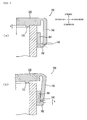
Fig. 3 is an enlarged schematic vertical side sectional view of a main part of the biochemical container; -
Fig. 4 is an enlarged schematic vertical side sectional view of a main part of a biochemical container in a modified embodiment; -
Fig. 5 is an enlarged schematic vertical side sectional view of a main part of a biochemical container in another modified embodiment; -
Fig. 6 is an enlarged schematic vertical side sectional view of a main part of a biochemical container in further modified embodiment; -
Fig. 7 is an enlarged schematic vertical side sectional view of a main part of a biochemical container in yet other modified embodiment; -
Fig. 8 is an enlarged schematic vertical side sectional view of a main part of a biochemical container in yet other modified embodiment; -
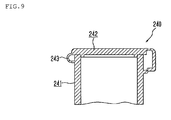
Fig. 9 is an enlarged schematic vertical side sectional view of a main part of a biochemical container in yet other modified embodiment; -
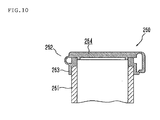
Fig. 10 is an enlarged schematic vertical side sectional view of a main part of a biochemical container in yet other modified embodiment; -
Fig. 11 is an enlarged schematic vertical side sectional view of a main part of a biochemical container in yet other modified embodiment; -
Fig. 12 is an enlarged schematic vertical side sectional view of a main part of a biochemical container in yet other modified embodiment; -
Fig. 13 is a perspective view, illustrating a main part of a biochemical container of yet other modified embodiments; and -
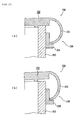
Fig. 14 is an enlarged schematic vertical side sectional view of a main part of a biochemical container in yet other modified embodiment. - An embodiment of the present invention will be described as follows in reference to
Fig. 1 to Fig. 3 . Further, in the present embodiment, as shown inFig. 1 , the directions of the frontward and the backward, the rightward and the leftward, and the upward and the downward will be defined for the description. However, this is to provide a convenient definition for easily describing the relations of the constituents, and it is not intended to limit the direction or the orientation in the manufacture or in the use of the product according to the present invention. - A
biochemical container 100 of the present embodiment comprises acontainer member 110 having an opening in one end, acover member 120 openably and closably shut the opening of thecontainer member 110, ahinge mechanism 130, pivotably supporting thecover member 120 in a position for shutting, and in a position for opening, the opening of thecontainer member 110, an assisting-openingmember 140, having one end connected to an outer surface of one of thecontainer member 110 and thecover member 120 and the other end facing an outer surface of the other of the members, so that the assisting-openingmember 140 is elastically bend, and a changing-direction mechanism 150, being capable of changing a stress acting along a direction exerting over the assisting-openingmember 140 from the outside to a stress acting along an opening direction over thecover member 120 and being capable of changing a displacement toward an inside of at least a part of the assisting-openingmember 140 to a displacement toward an opening direction of at least a part of thecover member 120. - More specifically, the
container member 110 comprises a cylindrical containermain body 111 having an opening in the upper end that serves an end. Anindependent cover unit 160 is mounted on the upper end of the containermain body 111. -
Such cover unit 160 comprises an annular frame-like member 161 mounted to an outer surface in an end of the containermain body 111, and the annular frame-like member 161 is fixed on a part of thecontainer member 110. Thehinge mechanism 130 is connected to such frame-like member 161. - Here, in addition to the above-mentioned
cover member 120, an assisting-openingmember 140 and a changing-direction mechanism 150 are also mounted to thecover unit 160. In addition to above, thecover unit 160 is mounted to the containermain body 111 with, for example, a screw structures (not shown). - The
cover member 120 is formed to be disk-shaped, and the lower surface thereof is provided with anannular section 121, which seals the upper end opening of the containermain body 111 from the inside. The assisting-openingmember 140 is formed in longitudinal direction by the plate which is long and narrow. - The upper end of the assisting-opening
member 140 is connected to a front section of the outer surface of thecover member 120, the bottom end thereof faces the front section of the outer surface of the frame-like member 161 in the shut condition of thecover member 120. The assisting-openingmember 140 is formed to have a thinner upper end section that is connected to thecover member 120. - Consequently, when the assisting-opening
member 140 is pressed from the front direction, the bottom end thereof is elastically displaced backward as shown inFig. 1 andFig. 3 . Thebottom end section 141 of the assisting-openingmember 140 is formed to be semicylindrical. - On the other hand, a semicylindrical
convex section 162 is formed in the front surface of the frame-like member 161. Then, thebottom end section 141 of the assisting-openingmember 140 is located at a height, which is higher than a height of aconvex section 162 of the frame-like member 161 by a distance of equal to or smaller than a radius of the semicylindrical geometry. - Consequently, the rear half section of the peripheral surface of the
bottom end section 141 of the assisting-openingmember 140 is in contact with the peripheral surface of theconvex section 162 of the frame-like member 161, functioning as a slope displacing in the rear direction that is equivalent to the inside, in the upper side that is equivalent to the opening direction of thecover member 120. - On the other hand, the upper half section of the peripheral surface of the
convex section 162 of the frame-like member 161 is in contact with the peripheral surface of thebottom end section 141 of the assisting-openingmember 140, functioning as a slope displacing in the rear direction that is equivalent to the inside, in the upper side that is equivalent to the opening direction of thecover member 120. - Then, the
bottom end section 141 and theconvex section 162 that function as described above achieve the changing-direction mechanism 150, which changes a stress along a direction acting over the assisting-openingmember 140 from the front side into a stress acting over thecover member 120 from the upper side. - In the
biochemical container 100 of the present embodiment, as shown inFig. 3 , an overall height "a" of theannular section 121 of thecover member 120, which provides a tight seal for the containermain body 111 of thecontainer member 110, and a distance "b" for relative displacement between thebottom end section 141 and theconvex section 162 caused when the assisting-openingmember 140 is pressed, satisfies the following relation: a < b. - Further, the
hinge mechanism 130 is elastically biasing thecover member 120 in the direction for opening thecover member 120, and elastically retains the openedcover member 120 in the position arriving by pivoting to be substantially perpendicular from the opening of thecontainer member 110 as shown inFig. 1(c) . - Here, the condition of the
cover member 120 retained to be substantially perpendicular may be, for example, a condition that thecover member 120 in the opened condition does not intercept an access of a pipette or the like (not shown) to the containermain body 111 and a condition that thecover member 120 in the opened condition does not collide with acover member 120 of adjacent otherbiochemical containers 100, even if a plurality ofbiochemical containers 100 are stood in a stand or the like in close-packed manner, and more specifically, may be within a range of from 70 degrees to 120 degrees. - Besides, the
hinge mechanism 130, which is capable of elastically biasing thecover member 120 for the opening direction as described above to elastically retain thereof at a certain angle is conventionally known, and for example, is disclosed in the above-mentioned Patent Literatures 1 and 2 (Japanese Patent Laid-Open No.2003-292,004 2000-313,453 - Further, in the
biochemical container 100 of the present embodiment, as shown inFig. 2 , a semicircularconvex section 122 is formed downwardly from side to side of the circumference section of thecover member 120. Thus, in the frame-like member 161, the semicircularconcave section 164 corresponding to theconvex section 122 as described above is formed from side to side of the outer surface. - In the above-described configuration, the
biochemical container 100 of the present embodiment is held in one hand, similarly as in the conventional biochemical container (not shown). However, as shown inFig. 1 (a) andFig. 2 (a) , when thecover member 120 shutting thecontainer member 110 is opened, the assisting-openingmember 140 is pressed with the thumb (not shown). - This causes the lower half section of the
bottom end section 141 of the elastically bent assisting-openingmember 140 being pressed against the upper half section of theconvex section 162 of thecontainer member 110, resulting in thebottom end section 141 of the assisting-openingmember 140 being displaced upward above theconvex section 162 of thecontainer member 110, as shown inFig. 1 (b) andFig. 3 (b) . - This allows the
cover member 120 displaced upward together with the assisting-openingmember 140.
Since the distance b of this displacement is larger than an overall height "a" of theannular section 121 of thecover member 120, the tightly sealed condition of thecontainer member 110 sealed by thecover member 120 is released. - Then, the
cover member 120 is opened upward by the elastic biasing of thehinge mechanism 130, and is elastically retained in the condition of being opened substantially perpendicularly from the opening of thecontainer member 110 as shown inFig. 1 (b) andFig. 2 (b) . - In the
biochemical container 100 of the present embodiment, the tightly sealed condition of thecover member 120 against thecontainer member 110 can be released by pressing the assisting-openingmember 140 with the finger as described above. - Therefore, it is not necessary to cause an upward displacement of an edge of the
cover member 120 directly with the fingers, for the purpose of opening thecover member 120 that provides the shut condition of thecontainer member 110. Consequently, a pollution of the fingers with a biochemical substance (not shown) stored in thecontainer member 110, a pollution of a biochemical substance stored in thecontainer member 110 with droplets (not shown) from the finger surfaces in the operation for opening thecover member 120, a generation of a pollution cause by a contact of the finger with the upper edge section of thecontainer member 110, when the finger cause an upward displacement of the circumference section of thecover member 120, and the like, can be prevented. - In particular, since the assisting-opening
member 140 formed downward from the circumference section of thecover member 120 is located on the outer surface of thecontainer member 110 in thebiochemical container 100 of the present embodiment, a contact of the finger with the upper edge section of thecontainer member 110 can be effectively prevented. - Further, since the
cover member 120 is elastically biased toward the opening direction by thehinge mechanism 130, thecover member 120 in the condition that the tightly sealed condition for thecontainer member 110 is released as described above can be automatically opened. - In addition to above, even if the
cover member 120 is not completely opened with an elastic force of thehinge mechanism 130, thecover member 120 can still be opened by displacing the assisting-openingmember 140 located on the outer surface of thecontainer member 110 upward with the finger. - For example, when the circumference section of the cover member is displaced upward by the finger in one hand that also holds the container member for the purpose of opening the cover member in the conventional biochemical container (not shown), the finger is easily brought into contact with the upper edge section of the container member, and such contact may possibly cause a pollution in the container member and the biochemical substance.
- To the contrary, in the
biochemical container 100 of the present embodiment, since thecover member 120 can be opened by displacing the assisting-openingmember 140 toward the upper direction with the finger as described above, a generation of a pollution due to a contact of the finger with the upper edge section of thecontainer member 110 can be more effectively prevented. - Moreover, the
hinge mechanism 130 elastically retains the openedcover member 120 in the position arriving by pivoting to be substantially perpendicular from the opening of thecontainer member 110. Thus, thecover member 120 in the opened condition does not intercept an access of a pipette or the like (not shown) to the containermain body 111 and thecover member 120 in the opened condition does not collide with acover member 120 of adjacent otherbiochemical containers 100, even if a plurality ofbiochemical containers 100 are stood in a stand or the like in close-packed manner. - Further, the changing-
direction mechanism 150 for changing a direction of a stress as described above is composed of thebottom end section 141 of the assisting-openingmember 140 and theconvex section 162 of thecontainer member 110. Thus, and adequately working changing-direction mechanism 150 can be achieved with a simple structure. - Moreover, an overall height "a" of the
annular section 121 of thecover member 120, which provides a tight seal for the containermain body 111 of thecontainer member 110, is smaller than a distance "b" as a bump generated between thebottom end section 141 of the assisting-openingmember 140 and theconvex section 162 of thecontainer member 110. Thus, the tight seal between thecontainer member 110 and thecover member 120 can be released with certainty by the changing-direction mechanism 150 composed of thebottom end section 141 and theconvex section 162. - Further, the container
main body 111 and thecover unit 160 are provided as separate parts. Thus, the most suitable materials can be individually selected for forming the containermain body 111, which requires resistance for biochemical substances and the like, and for forming thecover unit 160, which requires better sealability by theannular section 121 or better elasticity of thehinge mechanism 130. - Typical materials preferable for the container
main body 111 include, for example, polyethylene, polypropylene, poly 4-methyl 1-pentene, polystyrene, nylon, polyethylene terephthalate, polybutylene terephthalate and the like. Besides, typical materials preferable for thecover unit 160 include, for example, polyethylene, polypropylene, nylon, polystyrene, and the like. - Moreover, the
cover member 120 is detachably engaged with the opening of the containermain body 111. Thus, even if the containermain body 111 and thecover unit 160 are the separate parts as described above, the containermain body 111 can be certainly sealed by thecover member 120. - In addition to above, it is not intended to limit the present invention to the present embodiment, and various modifications are also permitted without departing from the scope and the spirit of the invention. For example, the above-described embodiment illustrates that the semicylindrical
bottom end section 141 of the assisting-openingmember 140 is in contact with the semicylindricalconvex section 162 of the frame-like member 161. - Nevertheless, as shown in
Fig. 4 , for abiochemical container 300, a semicylindricalconvex section 311 may alternatively be formed in a bottom end of rear surface of an assisting-openingmember 310, and the theconvex section 311 may be in contact with the semicylindricalconvex section 162 of the frame-like member 161. - In addition, it is exemplified in the above-described configuration that the lower half section of the semicylindrical
bottom end section 141 of the bottom end of rear surface of the assisting-openingmember 140 connected to thecover member 120 at the upper end is in contact with the upper half section of the semicylindricalconvex section 162 of the front surface of thecontainer member 110 to achieve the changing-direction mechanism 150. - Alternatively, as shown in
Fig. 5 , for abiochemical container 200, a changing-direction mechanism 204 may be achieved by forming aslope 201 displaced backward in the upside in a front surface of acontainer member 202, and facing a bottom end of an assisting-openingmember 203 to theslope 201. - Alternatively, as shown in
Fig. 6 , for abiochemical container 210, a changing-direction mechanism 215 may be achieved by forming aslope 211 displaced backward in the upside in a bottom end of rear surface of an assisting-openingmember 212, and facing aconvex section 214 of a front surface of acontainer member 213 to theslope 211. - Further alternatively, as shown in
Fig. 7 , for abiochemical container 220, a changing-direction mechanism 225 may be achieved by forming aslope 221 displaced forward in the upside in a front surface of acover member 222, and facing an upper end of an assisting-openingmember 224 that is connected to acontainer member 223 at the bottom end to theslope 221 of thecover member 222. - Alternatively, as shown in
Fig. 8 , for abiochemical container 230, a changing-direction mechanism 236 may be achieved by forming aslope 231 displaced forward in the upside in an upper end of an assisting-openingmember 233 that is connected to acontainer member 232 at a bottom end, and facing aconvex section 235 of a front surface of acover member 234 to theslope 231. - In addition to above, angles of the
slopes - The above-described embodiment also illustrates that the container
main body 111 and thecover unit 160 are formed as separate parts. Alternatively, as shown inFig. 9 , for abiochemical container 240, acontainer member 241, acover member 242 and ahinge mechanism 243 may be formed integrally. In addition to above, materials preferably usable in such embodiments include, for example, polyethylene, polypropylene, nylon, polystyrene and the like. - The above-described embodiment also illustrates that the
cover member 120 of thecover unit 160 tightly seals the containermain body 111. Alternatively, as shown inFig. 10 , for abiochemical container 250, acover member 254 may tightly seal a frame-like member 253 of acover unit 252 installed in a containermain body 251. - Further, the above-described embodiment illustrates that a distance "b" created by the changing-
direction mechanism 150 is larger than an overall height "a" of theannular section 121 of thecover member 120, which provides a tight seal for the containermain body 111 of thecontainer member 110 so that thecover member 120 is completely opened by the changing-direction mechanism 150. - Even in this configuration, the
cover member 120 may not completely shut the containermain body 111. If such situation, the above-described overall height "a" may be selected to be larger than the distance "b" of the displacement (not shown). - Although the
cover member 120 cannot be completely opened by the changing-direction mechanism in such configuration, the tightly sealed condition can be released. Consequently, for example, thecover member 120 in the condition that the tightly sealed condition is released may be just displaced with the finger to achieve simple and safe opening. - Even in such case, the
cover member 120 can also be opened by displacing the assisting-openingmember 140 located on the outer surface of thecontainer member 110 upward with a finger, and thus a generation of a pollution due to a contact of the finger with the upper edge section of thecontainer member 110 can be more effectively prevented. - Here, the condition of releasing the tightly sealed condition means that the condition of the entire peripheral surface of the
annular section 121 ofcover member 120 being in close contact with the internal circumference surface of the containermain body 111 is released. More specifically, it may be sufficient to indicate a change of the condition that the lower surface of thecover member 120 is in contact with the upper surface of the containermain body 111 to the condition that these are spaced apart at a predetermined distance. - Further, when the
cover member 120 in the condition that the tight seal is released by the changing-direction mechanism 150 is opened with a finger as described above, for example, as shown inFig. 2 , theconvex section 122 is formed from side to side of thecover member 120, theconvex section 122 may be held with the thumb and the middle fingers of a hand that is also employed for holding the container member 110 (not shown). - Even if the
cover member 120 is not completely opened by the changing-direction mechanism as described above in such case, thecover member 120 can be easily opened. Moreover, since the finger used for opening thecover member 120 is covered by theconvex section 122, a pollution of such finger with a biochemical substance can be effectively prevented. - Alternatively, as shown in
Fig. 11 , for abiochemical container 260, a robustcylindrical engaging section 263 may be formed in an upper section of anannular section 262 of acover member 261, and a multiple-layered seal-like sealing section 264 may be formed in the lower section thereof. - In such case, the presence of the
sealing section 264 ensures a sealability of thecover member 261. Besides, the overall height "a" of the engagingsection 263 is selected to be smaller than the distance "b" of the displacement by the changing-direction mechanism 150, so that an engaging presented by the engagingsection 263 can be easily released by the changing-direction mechanism 150. Consequently, thecover member 261 can be completely opened by the changing-direction mechanism 150, otherwise ensuring the tight sealing of thecover member 261. - Further, as shown in
Fig. 12 , for abiochemical container 270, aconcave section 273 having a triangle cross-sectional geometry may be formed in a peripheral surface of a bottom end of anannular section 272 of acover member 271, and aconvex section 274, which engages with suchconcave section 273, may be formed inner circumference surface of acontainer member 275. - In such case, the presence of the
annular section 272 having sufficient overall height ensures a sealability of thecover member 271. Besides, a displacement "c" required for releasing the engage of theconcave section 273 with theconvex section 274 is selected to be smaller than the distance "b" of the displacement by the changing-direction mechanism 150, so that an engaging of theconcave section 273 with theconvex section 274 can be easily released by the changing-direction mechanism 150. Consequently, thecover member 271 can be completely opened by the changing-direction mechanism 150, otherwise ensuring the tight sealing of thecover member 271. - Further, the above-described embodiment illustrates that the changing-
direction mechanism 150 is located in the side opposite to thehinge mechanism 130, so that an end of thecover member 120 is displaced by a single changing-direction mechanism 150 to open thereof. - Alternatively, as shown in
Fig. 13 , for abiochemical container 280, a pair of changing-direction mechanisms 150 may be formed from side to side. In such case, for example, a pair of assisting-openingmembers 140 are pressed from both sides with the thumb and the first finger in the condition that the containermain body 111 is held in one hand, so that the right and the left edges of thecover member 120 are simultaneously displaced in the upward direction by a pair of changing-direction mechanisms 150 to open thereof. - In this case, similarly as the
convex section 122 shown inFig. 2 , the assisting-openingmember 140 of thecover member 120 can be held with a finger of another hand. Therefore, a pollution of the finger that opens thecover member 120 with a biochemical substance can be prevented by utilizing the assisting-openingmember 140 as a cover. - Consequently, a pollution of the
biochemical container 280 or the biochemical substance by the polluted finger, or a pollution of the biochemical substance within thecontainer member 110 with droplets from the finger surface in the opening operation for thecover member 120, can be prevented. - Further, the above-described embodiment illustrates that the
bottom end section 141 of the assisting-openingmember 140 connected to thecover member 120 is in contact with the upper half section of theconvex section 162 of thecontainer member 110 to cause a displacement to achieve the changing-direction mechanism 150. - Alternatively, as shown in
Fig. 14 , for abiochemical container 290, an end of an assisting-openingmember 291 curved outward to form an arc-like shape may be connected to one of acover member 292 and a containermain body 293, and the other end may be engaged with aconvex section 294 of the other thereof to achieve a changing-direction mechanism 295. - In such case, since the assisting-opening
member 291 bent to form an arc-like shape is elongated by being pressed from the outside as shown inFig. 14 (b) ,thecover member 292 can be separated from the containermain body 293 by such elongation to open thereof. - In addition to above, it is needless to point out that the embodiment and a plurality of modified embodiments described above may be combined unless the concept of these is conflicted.
Claims (12)
- A biochemical container, comprising a container member having an opening in one end, and a cover member openably and closably shut the opening of said container member, said biochemical container comprising:a hinge mechanism, pivotably supporting said cover member in a position for shutting, and in a position for opening, said opening of said container member;an assisting-opening member, having one end connected to an outer surface of one of said container member and said cover member and the other end facing an outer surface of the other of the members, so that said assisting-opening member being elastically bent; anda changing-direction mechanism, being capable of changing a stress acting along a direction exerting over said assisting-opening member from the outside to a stress acting along an opening direction over said cover member.
- A biochemical container, comprising a container member having an opening in one end, and a cover member openably and closably shut the opening of said container member, said biochemical container comprising:a hinge mechanism, pivotably supporting said cover member in a position for shutting, and in a position for opening, said opening of said container member;an assisting-opening member, having one end connected to an outer surface of one of said container member and said cover member and the other end facing an outer surface of the other of the members, so that said assisting-opening member being elastically bend; anda changing-direction mechanism, being capable of changing a displacement toward an inside of at least a part of said assisting-opening member to a displacement toward an opening direction of at least a part of said cover member.
- The biochemical container as set forth in claim 1 or 2, wherein said assisting-opening member is formed to have a geometry, in which one end is connected to an outer surface of said cover member and the other end faces an outer surface of said container member in a shut condition, and
wherein said changing-direction mechanism has a slope formed in a position facing the other end of said assisting-opening member in an outer surface of said container member, said slope being inwardly displaced toward a direction for opening said cover member. - The biochemical container as set forth in claim 1 or 2, wherein said assisting-opening member is formed to have a geometry, in which one end is connected to an outer surface of said cover member and the other end faces an outer surface of said container member in a shut condition, and
wherein said changing-direction mechanism has a convex section formed in a position facing the other end of said assisting-opening member in an outer surface of said container member, and a slope formed in an inside of the other end of said assisting-opening member, said slope being inwardly displaced toward a direction for opening said cover member. - The biochemical container as set forth in claim 1 or 2, wherein said assisting-opening member is formed to have a geometry, in which one end is connected to an outer surface of said container member and the other end faces an outer surface of said cover member in a shut condition, and
wherein said changing-direction mechanism has a slope formed in a position facing the other end of said assisting-opening member in an outer surface of said cover member, said slope being inwardly displaced toward a direction for opening said cover member. - The biochemical container as set forth in claim 1 or 2, wherein said assisting-opening member is configured that one end is connected to an outer surface of said container member and the other end faces an outer surface of said cover member in a shut condition, and
wherein said changing-direction mechanism has a convex section formed in a position facing the other end of said assisting-opening member in an outer surface of said cover member, and a slope formed in an inside of the other end of said assisting-opening member, said slope being inwardly displaced toward a direction for opening said cover member. - The biochemical container as set forth in any one of claims 1 to 6, wherein said hinge mechanism is elastically biased toward a direction for opening said cover member.
- The biochemical container as set forth in claim 7, wherein said hinge mechanism elastically supports said opened cover member in a position being pivotably moved in substantially perpendicular direction from the opening of said container member.
- The biochemical container as set forth in any one of claims 1 to 8, wherein said container member comprises a container body having an opening in one end, and a frame-like member mounted over an outer surface of one end of said container body,
wherein said hinge mechanism is connected to said frame-like member, and
wherein said assisting-opening member is configured that one end is connected to an outer surface of one of said frame-like member and said cover member and the other end faces an outer surface of the other of the members. - The biochemical container as set forth in claim 9, wherein said cover member is detachably engaged with the opening of said container body.
- A cover unit, capable of being mounted to said container body of the biochemical container as set forth in claim 9 or 10, comprising:said cover member;a frame-like member mounted over an outer surface of one end of said container body;a hinge mechanism, connected to said frame-like member, and pivotably supporting said cover member;an assisting-opening member, configured that one end is connected to an outer surface of one of said frame-like member and said cover member and the other end faces an outer surface of the other of the members, so that said assisting-opening member being elastically bend; anda changing-direction mechanism, being capable of changing a stress acting along a direction exerting over said assisting-opening member from the outside to a stress acting along an opening direction over said cover member.
- A cover unit, capable of being mounted to said container body of the biochemical container as set forth in claim 9 or 10, comprising:said cover member;a frame-like member mounted over an outer surface of one end of said container body;a hinge mechanism, connected to said frame-like member, and pivotably supporting said cover member;an assisting-opening member, configured that one end is connected to an outer surface of one of said frame-like member and said cover member and the other end faces an outer surface of the other of the members, so that said assisting-opening member being elastically bend; anda changing-direction mechanism, being capable of changing a displacement toward an inside of at least a part of said assisting-opening member to a displacement toward an opening direction of at least a part of said cover member.
Applications Claiming Priority (2)
| Application Number | Priority Date | Filing Date | Title |
|---|---|---|---|
| JP2006331075A JP2008143543A (en) | 2006-12-07 | 2006-12-07 | Biochemical container |
| PCT/JP2007/001350 WO2008068901A1 (en) | 2006-12-07 | 2007-12-05 | Biochemical container |
Publications (2)
| Publication Number | Publication Date |
|---|---|
| EP2090522A1 true EP2090522A1 (en) | 2009-08-19 |
| EP2090522A4 EP2090522A4 (en) | 2011-11-02 |
Family
ID=39491817
Family Applications (1)
| Application Number | Title | Priority Date | Filing Date |
|---|---|---|---|
| EP07849785A Withdrawn EP2090522A4 (en) | 2006-12-07 | 2007-12-05 | Biochemical container |
Country Status (6)
| Country | Link |
|---|---|
| US (1) | US20100044390A1 (en) |
| EP (1) | EP2090522A4 (en) |
| JP (1) | JP2008143543A (en) |
| KR (1) | KR20090087904A (en) |
| CN (1) | CN101547840A (en) |
| WO (1) | WO2008068901A1 (en) |
Families Citing this family (10)
| Publication number | Priority date | Publication date | Assignee | Title |
|---|---|---|---|---|
| JP2010189009A (en) * | 2009-02-16 | 2010-09-02 | Iho Lin | Elastic lid structure |
| WO2011056814A1 (en) * | 2009-11-05 | 2011-05-12 | 3M Innovative Properties Company | Device for dispensing a flowable material |
| JP2012029691A (en) * | 2010-07-08 | 2012-02-16 | Sumitomo Bakelite Co Ltd | Lid component for container, container equipped with the lid component, and container set |
| MX2013003641A (en) * | 2010-09-30 | 2013-05-22 | Procter & Gamble | Locking means for a cap. |
| EP2708473B1 (en) * | 2010-09-30 | 2017-11-08 | The Procter and Gamble Company | Cap for a container |
| JP5656744B2 (en) * | 2011-05-31 | 2015-01-21 | 株式会社吉野工業所 | Container with lid |
| JP6103929B2 (en) * | 2012-12-27 | 2017-03-29 | 株式会社吉野工業所 | Hinge cap |
| JP6086722B2 (en) * | 2012-12-27 | 2017-03-01 | 株式会社吉野工業所 | Hinge cap |
| US10527289B2 (en) * | 2014-07-07 | 2020-01-07 | Industrial Revolution, Inc. | Portable grill |
| JP6634690B2 (en) * | 2015-03-26 | 2020-01-22 | 凸版印刷株式会社 | Container with lid |
Family Cites Families (15)
| Publication number | Priority date | Publication date | Assignee | Title |
|---|---|---|---|---|
| JPH0231737Y2 (en) * | 1986-06-11 | 1990-08-28 | ||
| JPH0451174Y2 (en) * | 1986-06-13 | 1992-12-02 | ||
| JPH0451175Y2 (en) * | 1986-06-13 | 1992-12-02 | ||
| GB8625169D0 (en) * | 1986-10-21 | 1986-11-26 | Duma Packaging As | Closure assembly |
| JPH02144552A (en) | 1988-11-25 | 1990-06-04 | Tdk Corp | Developer for electrophotography |
| US4940167A (en) * | 1989-01-27 | 1990-07-10 | Owens-Illinois Closure Inc. | Child resistant dispensing closure |
| JPH07315402A (en) | 1994-05-31 | 1995-12-05 | Dainippon Printing Co Ltd | Closure member with hinge cap |
| JP3276532B2 (en) * | 1995-05-16 | 2002-04-22 | 株式会社ニフコ | Container cap |
| JPH09141135A (en) * | 1995-11-17 | 1997-06-03 | Blue Jiyuuji:Kk | Sample tube for centrifugal separation |
| US5996859A (en) * | 1998-05-20 | 1999-12-07 | Creative Packaging Corp. | Hinged dispensing closure |
| EP1048582A1 (en) | 1999-04-29 | 2000-11-02 | Createchnic AG | Plastic tube provided with a hinged closure and method of making the same |
| JP4159235B2 (en) * | 2000-09-04 | 2008-10-01 | エム・エフ・ヴィ株式会社 | Hinge cap |
| JP2003292004A (en) | 2002-03-29 | 2003-10-15 | Yoshino Kogyosho Co Ltd | Injection cap |
| JP4049800B2 (en) * | 2004-03-16 | 2008-02-20 | プレスクライブ・ゲノミックス株式会社 | Container with lid |
| US7712618B2 (en) * | 2004-07-20 | 2010-05-11 | The Zebra Company | Container cap with locking/unlocking mechanism that propels lid to open position |
-
2006
- 2006-12-07 JP JP2006331075A patent/JP2008143543A/en active Pending
-
2007
- 2007-12-05 CN CNA2007800450514A patent/CN101547840A/en active Pending
- 2007-12-05 US US12/513,970 patent/US20100044390A1/en not_active Abandoned
- 2007-12-05 WO PCT/JP2007/001350 patent/WO2008068901A1/en not_active Ceased
- 2007-12-05 KR KR1020097011502A patent/KR20090087904A/en not_active Withdrawn
- 2007-12-05 EP EP07849785A patent/EP2090522A4/en not_active Withdrawn
Also Published As
| Publication number | Publication date |
|---|---|
| JP2008143543A (en) | 2008-06-26 |
| KR20090087904A (en) | 2009-08-18 |
| WO2008068901A1 (en) | 2008-06-12 |
| CN101547840A (en) | 2009-09-30 |
| EP2090522A4 (en) | 2011-11-02 |
| US20100044390A1 (en) | 2010-02-25 |
Similar Documents
| Publication | Publication Date | Title |
|---|---|---|
| US20100044390A1 (en) | Biochemical container | |
| JP6453925B2 (en) | Beverage containers and related methods | |
| US20230278759A1 (en) | Container lid with rotatable sipper and flexible handle | |
| JP3054060B2 (en) | Container sealing device | |
| US8579152B2 (en) | Push and flip container | |
| US8833586B2 (en) | Bottle closure with integrated flip top handle | |
| US9371924B2 (en) | One-piece flap device, injection-moulded from elastic material | |
| JP2012140184A (en) | Lidded container | |
| EA019743B1 (en) | Toggle-action dispensing closure with articulated rear flange | |
| US9315307B2 (en) | Container closure | |
| US8701913B2 (en) | Dual-reservoir container with an integral seal cap | |
| US8613893B2 (en) | Sealing member, cap for reagent container, and reagent container | |
| JP4869993B2 (en) | Container for fluid extrusion | |
| KR200244402Y1 (en) | Cap for bottle open or close by tilt | |
| US20020170930A1 (en) | Fluid dispensing closure and method of manufacturing same | |
| US20210061526A1 (en) | Closure for a container | |
| US8181802B2 (en) | Closure device with biasing means | |
| EP2298662A1 (en) | Integrally formed attachment cap with lid opened by single push | |
| JPH08337260A (en) | Portable container | |
| JP2013091512A (en) | Container with lid | |
| JP2004345682A (en) | Packaging container | |
| JP2002308237A (en) | Opening holder with lid for bag-formed container | |
| JP2008044631A (en) | Portable container | |
| JP2006234112A (en) | Spout | |
| JP3190328U (en) | Tablet container lid |
Legal Events
| Date | Code | Title | Description |
|---|---|---|---|
| PUAI | Public reference made under article 153(3) epc to a published international application that has entered the european phase |
Free format text: ORIGINAL CODE: 0009012 |
|
| 17P | Request for examination filed |
Effective date: 20090527 |
|
| AK | Designated contracting states |
Kind code of ref document: A1 Designated state(s): AT BE BG CH CY CZ DE DK EE ES FI FR GB GR HU IE IS IT LI LT LU LV MC MT NL PL PT RO SE SI SK TR |
|
| DAX | Request for extension of the european patent (deleted) | ||
| RIC1 | Information provided on ipc code assigned before grant |
Ipc: B65D 47/08 20060101AFI20110922BHEP Ipc: C12M 1/00 20060101ALI20110922BHEP |
|
| A4 | Supplementary search report drawn up and despatched |
Effective date: 20110930 |
|
| STAA | Information on the status of an ep patent application or granted ep patent |
Free format text: STATUS: THE APPLICATION HAS BEEN WITHDRAWN |
|
| 18W | Application withdrawn |
Effective date: 20111219 |