EP2088206A2 - Induction of the mitochondrial permeability transition - Google Patents
Induction of the mitochondrial permeability transition Download PDFInfo
- Publication number
- EP2088206A2 EP2088206A2 EP09004714A EP09004714A EP2088206A2 EP 2088206 A2 EP2088206 A2 EP 2088206A2 EP 09004714 A EP09004714 A EP 09004714A EP 09004714 A EP09004714 A EP 09004714A EP 2088206 A2 EP2088206 A2 EP 2088206A2
- Authority
- EP
- European Patent Office
- Prior art keywords
- gsao
- cells
- compound
- mmol
- group
- Prior art date
- Legal status (The legal status is an assumption and is not a legal conclusion. Google has not performed a legal analysis and makes no representation as to the accuracy of the status listed.)
- Granted
Links
- 0 C1C2C1CC*C2 Chemical compound C1C2C1CC*C2 0.000 description 5
Images







Classifications
-
- C—CHEMISTRY; METALLURGY
- C07—ORGANIC CHEMISTRY
- C07K—PEPTIDES
- C07K7/00—Peptides having 5 to 20 amino acids in a fully defined sequence; Derivatives thereof
- C07K7/04—Linear peptides containing only normal peptide links
- C07K7/06—Linear peptides containing only normal peptide links having 5 to 11 amino acids
-
- A—HUMAN NECESSITIES
- A61—MEDICAL OR VETERINARY SCIENCE; HYGIENE
- A61K—PREPARATIONS FOR MEDICAL, DENTAL OR TOILETRY PURPOSES
- A61K31/00—Medicinal preparations containing organic active ingredients
- A61K31/28—Compounds containing heavy metals
- A61K31/285—Arsenic compounds
-
- A—HUMAN NECESSITIES
- A61—MEDICAL OR VETERINARY SCIENCE; HYGIENE
- A61P—SPECIFIC THERAPEUTIC ACTIVITY OF CHEMICAL COMPOUNDS OR MEDICINAL PREPARATIONS
- A61P17/00—Drugs for dermatological disorders
- A61P17/06—Antipsoriatics
-
- A—HUMAN NECESSITIES
- A61—MEDICAL OR VETERINARY SCIENCE; HYGIENE
- A61P—SPECIFIC THERAPEUTIC ACTIVITY OF CHEMICAL COMPOUNDS OR MEDICINAL PREPARATIONS
- A61P19/00—Drugs for skeletal disorders
- A61P19/02—Drugs for skeletal disorders for joint disorders, e.g. arthritis, arthrosis
-
- A—HUMAN NECESSITIES
- A61—MEDICAL OR VETERINARY SCIENCE; HYGIENE
- A61P—SPECIFIC THERAPEUTIC ACTIVITY OF CHEMICAL COMPOUNDS OR MEDICINAL PREPARATIONS
- A61P25/00—Drugs for disorders of the nervous system
-
- A—HUMAN NECESSITIES
- A61—MEDICAL OR VETERINARY SCIENCE; HYGIENE
- A61P—SPECIFIC THERAPEUTIC ACTIVITY OF CHEMICAL COMPOUNDS OR MEDICINAL PREPARATIONS
- A61P25/00—Drugs for disorders of the nervous system
- A61P25/14—Drugs for disorders of the nervous system for treating abnormal movements, e.g. chorea, dyskinesia
- A61P25/16—Anti-Parkinson drugs
-
- A—HUMAN NECESSITIES
- A61—MEDICAL OR VETERINARY SCIENCE; HYGIENE
- A61P—SPECIFIC THERAPEUTIC ACTIVITY OF CHEMICAL COMPOUNDS OR MEDICINAL PREPARATIONS
- A61P25/00—Drugs for disorders of the nervous system
- A61P25/28—Drugs for disorders of the nervous system for treating neurodegenerative disorders of the central nervous system, e.g. nootropic agents, cognition enhancers, drugs for treating Alzheimer's disease or other forms of dementia
-
- A—HUMAN NECESSITIES
- A61—MEDICAL OR VETERINARY SCIENCE; HYGIENE
- A61P—SPECIFIC THERAPEUTIC ACTIVITY OF CHEMICAL COMPOUNDS OR MEDICINAL PREPARATIONS
- A61P29/00—Non-central analgesic, antipyretic or antiinflammatory agents, e.g. antirheumatic agents; Non-steroidal antiinflammatory drugs [NSAID]
-
- A—HUMAN NECESSITIES
- A61—MEDICAL OR VETERINARY SCIENCE; HYGIENE
- A61P—SPECIFIC THERAPEUTIC ACTIVITY OF CHEMICAL COMPOUNDS OR MEDICINAL PREPARATIONS
- A61P35/00—Antineoplastic agents
-
- A—HUMAN NECESSITIES
- A61—MEDICAL OR VETERINARY SCIENCE; HYGIENE
- A61P—SPECIFIC THERAPEUTIC ACTIVITY OF CHEMICAL COMPOUNDS OR MEDICINAL PREPARATIONS
- A61P37/00—Drugs for immunological or allergic disorders
- A61P37/02—Immunomodulators
-
- A—HUMAN NECESSITIES
- A61—MEDICAL OR VETERINARY SCIENCE; HYGIENE
- A61P—SPECIFIC THERAPEUTIC ACTIVITY OF CHEMICAL COMPOUNDS OR MEDICINAL PREPARATIONS
- A61P43/00—Drugs for specific purposes, not provided for in groups A61P1/00-A61P41/00
-
- A—HUMAN NECESSITIES
- A61—MEDICAL OR VETERINARY SCIENCE; HYGIENE
- A61P—SPECIFIC THERAPEUTIC ACTIVITY OF CHEMICAL COMPOUNDS OR MEDICINAL PREPARATIONS
- A61P9/00—Drugs for disorders of the cardiovascular system
-
- A—HUMAN NECESSITIES
- A61—MEDICAL OR VETERINARY SCIENCE; HYGIENE
- A61P—SPECIFIC THERAPEUTIC ACTIVITY OF CHEMICAL COMPOUNDS OR MEDICINAL PREPARATIONS
- A61P9/00—Drugs for disorders of the cardiovascular system
- A61P9/10—Drugs for disorders of the cardiovascular system for treating ischaemic or atherosclerotic diseases, e.g. antianginal drugs, coronary vasodilators, drugs for myocardial infarction, retinopathy, cerebrovascula insufficiency, renal arteriosclerosis
-
- C—CHEMISTRY; METALLURGY
- C07—ORGANIC CHEMISTRY
- C07F—ACYCLIC, CARBOCYCLIC OR HETEROCYCLIC COMPOUNDS CONTAINING ELEMENTS OTHER THAN CARBON, HYDROGEN, HALOGEN, OXYGEN, NITROGEN, SULFUR, SELENIUM OR TELLURIUM
- C07F5/00—Compounds containing elements of Groups 3 or 13 of the Periodic Table
- C07F5/06—Aluminium compounds
-
- C—CHEMISTRY; METALLURGY
- C07—ORGANIC CHEMISTRY
- C07F—ACYCLIC, CARBOCYCLIC OR HETEROCYCLIC COMPOUNDS CONTAINING ELEMENTS OTHER THAN CARBON, HYDROGEN, HALOGEN, OXYGEN, NITROGEN, SULFUR, SELENIUM OR TELLURIUM
- C07F9/00—Compounds containing elements of Groups 5 or 15 of the Periodic Table
- C07F9/66—Arsenic compounds
- C07F9/70—Organo-arsenic compounds
- C07F9/74—Aromatic compounds
- C07F9/78—Aromatic compounds containing amino groups
-
- C—CHEMISTRY; METALLURGY
- C07—ORGANIC CHEMISTRY
- C07F—ACYCLIC, CARBOCYCLIC OR HETEROCYCLIC COMPOUNDS CONTAINING ELEMENTS OTHER THAN CARBON, HYDROGEN, HALOGEN, OXYGEN, NITROGEN, SULFUR, SELENIUM OR TELLURIUM
- C07F9/00—Compounds containing elements of Groups 5 or 15 of the Periodic Table
- C07F9/66—Arsenic compounds
- C07F9/70—Organo-arsenic compounds
- C07F9/80—Heterocyclic compounds
-
- C—CHEMISTRY; METALLURGY
- C07—ORGANIC CHEMISTRY
- C07F—ACYCLIC, CARBOCYCLIC OR HETEROCYCLIC COMPOUNDS CONTAINING ELEMENTS OTHER THAN CARBON, HYDROGEN, HALOGEN, OXYGEN, NITROGEN, SULFUR, SELENIUM OR TELLURIUM
- C07F9/00—Compounds containing elements of Groups 5 or 15 of the Periodic Table
- C07F9/66—Arsenic compounds
- C07F9/70—Organo-arsenic compounds
- C07F9/80—Heterocyclic compounds
- C07F9/82—Arsenic compounds containing one or more pyridine rings
-
- C—CHEMISTRY; METALLURGY
- C07—ORGANIC CHEMISTRY
- C07K—PEPTIDES
- C07K5/00—Peptides containing up to four amino acids in a fully defined sequence; Derivatives thereof
- C07K5/04—Peptides containing up to four amino acids in a fully defined sequence; Derivatives thereof containing only normal peptide links
- C07K5/06—Dipeptides
-
- C—CHEMISTRY; METALLURGY
- C07—ORGANIC CHEMISTRY
- C07K—PEPTIDES
- C07K5/00—Peptides containing up to four amino acids in a fully defined sequence; Derivatives thereof
- C07K5/04—Peptides containing up to four amino acids in a fully defined sequence; Derivatives thereof containing only normal peptide links
- C07K5/08—Tripeptides
-
- G—PHYSICS
- G01—MEASURING; TESTING
- G01N—INVESTIGATING OR ANALYSING MATERIALS BY DETERMINING THEIR CHEMICAL OR PHYSICAL PROPERTIES
- G01N33/00—Investigating or analysing materials by specific methods not covered by groups G01N1/00 - G01N31/00
- G01N33/48—Biological material, e.g. blood, urine; Haemocytometers
- G01N33/50—Chemical analysis of biological material, e.g. blood, urine; Testing involving biospecific ligand binding methods; Immunological testing
- G01N33/5005—Chemical analysis of biological material, e.g. blood, urine; Testing involving biospecific ligand binding methods; Immunological testing involving human or animal cells
- G01N33/5008—Chemical analysis of biological material, e.g. blood, urine; Testing involving biospecific ligand binding methods; Immunological testing involving human or animal cells for testing or evaluating the effect of chemical or biological compounds, e.g. drugs, cosmetics
- G01N33/5011—Chemical analysis of biological material, e.g. blood, urine; Testing involving biospecific ligand binding methods; Immunological testing involving human or animal cells for testing or evaluating the effect of chemical or biological compounds, e.g. drugs, cosmetics for testing antineoplastic activity
-
- G—PHYSICS
- G01—MEASURING; TESTING
- G01N—INVESTIGATING OR ANALYSING MATERIALS BY DETERMINING THEIR CHEMICAL OR PHYSICAL PROPERTIES
- G01N33/00—Investigating or analysing materials by specific methods not covered by groups G01N1/00 - G01N31/00
- G01N33/48—Biological material, e.g. blood, urine; Haemocytometers
- G01N33/50—Chemical analysis of biological material, e.g. blood, urine; Testing involving biospecific ligand binding methods; Immunological testing
- G01N33/5005—Chemical analysis of biological material, e.g. blood, urine; Testing involving biospecific ligand binding methods; Immunological testing involving human or animal cells
- G01N33/5008—Chemical analysis of biological material, e.g. blood, urine; Testing involving biospecific ligand binding methods; Immunological testing involving human or animal cells for testing or evaluating the effect of chemical or biological compounds, e.g. drugs, cosmetics
- G01N33/5076—Chemical analysis of biological material, e.g. blood, urine; Testing involving biospecific ligand binding methods; Immunological testing involving human or animal cells for testing or evaluating the effect of chemical or biological compounds, e.g. drugs, cosmetics involving cell organelles, e.g. Golgi complex, endoplasmic reticulum
- G01N33/5079—Mitochondria
-
- G—PHYSICS
- G01—MEASURING; TESTING
- G01N—INVESTIGATING OR ANALYSING MATERIALS BY DETERMINING THEIR CHEMICAL OR PHYSICAL PROPERTIES
- G01N33/00—Investigating or analysing materials by specific methods not covered by groups G01N1/00 - G01N31/00
- G01N33/48—Biological material, e.g. blood, urine; Haemocytometers
- G01N33/50—Chemical analysis of biological material, e.g. blood, urine; Testing involving biospecific ligand binding methods; Immunological testing
- G01N33/53—Immunoassay; Biospecific binding assay; Materials therefor
- G01N33/575—Immunoassay; Biospecific binding assay; Materials therefor for cancer
-
- G—PHYSICS
- G01—MEASURING; TESTING
- G01N—INVESTIGATING OR ANALYSING MATERIALS BY DETERMINING THEIR CHEMICAL OR PHYSICAL PROPERTIES
- G01N33/00—Investigating or analysing materials by specific methods not covered by groups G01N1/00 - G01N31/00
- G01N33/48—Biological material, e.g. blood, urine; Haemocytometers
- G01N33/50—Chemical analysis of biological material, e.g. blood, urine; Testing involving biospecific ligand binding methods; Immunological testing
- G01N33/68—Chemical analysis of biological material, e.g. blood, urine; Testing involving biospecific ligand binding methods; Immunological testing involving proteins, peptides or amino acids
- G01N33/6872—Intracellular protein regulatory factors and their receptors, e.g. including ion channels
-
- G—PHYSICS
- G01—MEASURING; TESTING
- G01N—INVESTIGATING OR ANALYSING MATERIALS BY DETERMINING THEIR CHEMICAL OR PHYSICAL PROPERTIES
- G01N2333/00—Assays involving biological materials from specific organisms or of a specific nature
- G01N2333/435—Assays involving biological materials from specific organisms or of a specific nature from animals; from humans
- G01N2333/475—Assays involving growth factors
- G01N2333/515—Angiogenesic factors; Angiogenin
-
- G—PHYSICS
- G01—MEASURING; TESTING
- G01N—INVESTIGATING OR ANALYSING MATERIALS BY DETERMINING THEIR CHEMICAL OR PHYSICAL PROPERTIES
- G01N2500/00—Screening for compounds of potential therapeutic value
- G01N2500/10—Screening for compounds of potential therapeutic value involving cells
Definitions
- the present invention relates to modification of mitochondrial membrane permeability in cells and in particular, the identification and use of compounds which selectively induce the MPT in proliferating cells.
- Mitochondria provide ATP to support normal cell function and their perturbation leads to apoptotic and necrotic cell death (Crompton, 1999).
- An important factor in apoptosis and necrosis is the mitochondrial permeability transition (MPT), which occurs as a result of calcium overload.
- the cause of the MPT is the opening of a non-specific pore in the inner mitochondrial membrane, known as the mitochondrial permeability transition pore (MPTP) (Crompton et al., 1987).
- MPTP mitochondrial permeability transition pore
- Oxidative stress, adenine nucleotide depletion and elevated inorganic phosphate greatly increase the sensitivity of the pore to calcium concentration.
- Opening of the MPTP is accompanied by equilibration of all small solutes ( ⁇ 1.5 kD) across the inner mitochondrial membrane.
- the resultant high protein concentration in the matrix exerts a colloidal osmotic pressure that is responsible for extensive swelling of mitochondria, and ultimately, apoptosis or necrosis.
- Adenine nucleotide translocator is a 30 kD protein that spans the inner mitochondrial membrane and Is central to the MPTP (Crompton et al., 1988).
- the present invention relates to a process for identifying compounds which bind to ANT in mitochondria and selectively induce the MPT in proliferating cells relative to non-proliferating or growth quiescent cells.
- a process for identifying a compound which induces the mitochondrial permeability transition (MPT) in proliferating cells comprises Contacting a cell or cell extract with a compound, determining whether the compound binds to adenine nucleotide translocator (ANT), and determining whether the compound selectively induces the MPT in proliferating cells.
- MPT mitochondrial permeability transition
- a process for screening a plurality of compounds to identify a compound which induces MPT in proliferating cells comprises contacting a cell or a cell extract with the plurality of compounds, determining whether any of the compounds bind to ANT, and if so, separately determining for each of the plurality of compounds whether the compound selectively induces the MPT in proliferating cells.
- selective induction of the MPT in proliferating cells may be determined, for example, by comparing the effect of compounds identified as binding to ANT In accordance with the first or second aspect of the invention, on the MPT in proliferating cells with the effect on the MPT in non-proliferating or growth quiescent cells.
- the process may involve measuring changes in the cellular concentration of the superoxide (O 2 -) anion.
- the process may Involve measuring changes in Cytochrome C release.
- a process for identifying a compound which induces apoplosis in proliferating cells comprising contacting a cell or cell extract with a candidate compound, determining whether there is an increase in cellular superoxide anlon (O 2 -) concentration, and determining whether the compound selectively Induces apoptosis in proliferating cells.
- a process for identifying a compound which is an inhibitor of anglogenesis comprising contacting a cell or cell extract with a candidate compound, determining whether there is an increase in cellular superoxide anion (O 2 -) concentration, and determining whether the compound is an inhibitor of anglogenesis.
- a method of inducing MPT in a vertebrate comprising administering to the vertebrate a therapeutically effective amount of at least one compound detected in accordance with the process of any one of the first to third aspects of the invention, or a therapeutically effective amount of a pharmaceutical composition comprising at least one of the compounds together with a pharmaceutically acceptable carrier, adjuvant and/or diluent.
- a method of inducing apoptosis in proliferating mammalian cells comprising administering to the mammal an apoptosis-inducing amount of a compound identified in accordance with the any one of the first to third aspects of the invention, or a therapeutically effective amount of a pharmaceutical composition comprising at least one of the compounds together with a pharmaceutically acceptable carrier, adjuvant and/or diluent.
- a seventh aspect of the invention there is provided the use of a compound identified in accordance with any one of the first to third aspects of the invention for the manufacture of a medicament for inducing apoptosis.
- an eighth aspect of the invention there is provided a method of inhibiting angiogenesis in a mammal, comprising administering to the mammal an anglogenesis-inhibiting amount of a compound identified in accordance with the fourth aspect of the invention, or a therapeutically effective amount of a pharmaceutical composition comprising at least one of the compounds together with a pharmaceutically acceptable carrier, adjuvant and/or diluent.
- a ninth aspect of the invention there is provided the use of a compound identified in accordance with the fourth aspect of the invention for the manufacture of a medicament for inhibiting angiogenesis.
- the compound may be a dithiol reactive compound.
- the compound may have an arsenoxide (or arsenoxide equivalent) moiety.
- the arsenoxide (or arsenoxide equivalent) compound may have the formula (I): A - XBX ⁇ n ⁇ B ⁇ - Y p wherein A comprises at least one substantially cell-membrane impermeable pendant group; (XBX') n B' comprises a suitable linker group, where n Is an integer selected from 0, 1, 2, 3, 4, 5, 6, 7, 8, 9, 10, 11, 12, 13, 14, 15, 16, 17, 18, 19 and 20; Y comprises at least one arsenoxide or arsenoxide equivalent; and p is an integer selected from 1, 2, 3, 4, 5, 6, 7, 8, 9, and 10.
- the compound of formula (I) may have more than 6 carbon atoms.
- A may be selected from the group consisting of natural, unnatural and synthetic amino acids, hydrophilic amines, peptides and polypeptides, including dipeptides, tripeptides, tetrapeptides, pentapeptides, sugar residues such as monosaccharides, disaccharides, and oligosaccharides (including substituted variants), and thiol containing proteins, or a combination thereof.
- A may be selected from the group consisting of glutathione, glucosamine, cysteinylglycine, cysteic acid, aspartic acid, glutamic acid, lysine, and arginine, wherein the sulfur atom of each sulfur containing compound may be optionally oxidised to form a sulfoxide or sulfone.
- A may comprise a sugar residue, disaccharide or oilgosaccharide residue such as, for exmaple, glucose, fructose, mannose, xylose, lyxose, galactose, hexose, sucrose, sorbose, galactosyl-sucrose, sorbitol, mannitol, xylitol, etc.
- A may be a hydrophilic amine such as a primary, secondary, or tertiary alkyl, aryl- or aralkyl-amine, or a heterocyclic amine such as pyridine, pyrrole, imidazole etc.
- amino acids are known to those of skill in the art and are listed, for instance in standard reference texts, such as King and Stansfield, A Dictionary of Genetics, 4th Edition, Oxford University Press, 1990 , the contents of which are incorporated herein by reference.
- the amino acids may be ⁇ , ⁇ or ⁇ amino acids.
- the present invention also includes the L- and D-forms of amino acids.
- amino acids examples include glycine, alanine, valine, leucine, isoleucine, methionine, proline, phenylalanine, tryptophan, serine, threonine, cysteine, tyrosine, asparagine, glutamine, aspartic acid, glutamic acid, lysine, arginine and histidine.
- A may be selected from the group consisting of tri-acid ureas, peptides including dipeptides, tripeptides, tetrapeptides, and pentapeptides.
- glutathione Cys-Glu-Gly, Arg-Gly-Asp-Cys, Val-Thr-Cys-Gly, Gly-Gly-Cys, Lys-Glu-Gly, Arg-Gly-Asp-Lys, Val-Thr-Lys-Gly, Gly-Gly-Lys, Ser-Glu-Gly, Arg-Gly-Asp-Ser, Val-Thr-Ser-Gly, Gly-Gly-Ser, Asp-Glu-Gly, Arg-Gly-Asp-Asp, Val-Thr-Asp-Gly, Gly-Gly-Asp, Glu-Glu-Gly, Arg-Gly-Asp-Glu, Val-Thr-Glu-Gly,
- A is a tripeptide.
- A may be glutathione and in one form the compound may be represented by Formula (II): wherein (XBX') n B' comprises any suitable linker group, and Y comprises an arsenoxide or an arsenoxide equivalent.
- p is an integer selected from 1 to 5.
- p may be 1, 2, 3, 4, or 5.
- p is 1 or 2.
- p is 1.
- n is an integer from 0 to 15.
- n may be 0, 1, 2, 3, 4, 5, 6, 7, 8, 9, 10, 11, 12, 13, 14, or 15.
- n is an integer selected from 0 to 10.
- n is an Integer selected from 0 to 5, for example, n may be 0, 1, 2, 3, 4, or 5.
- X is selected from the group consisting of -NR, -S(O)-, -S(O)O-, -S(O) 2 -, -S(O) 2 O, -C(O)-, -C(S)-, -C(O)O-, C(S)O-, -C(S)S-, -P(O)(R 1 )-, and -P(O)(R 1 )O-, or is absent
- B is selected from the group consisting of C 1 -C 10 alkylene, C 2 -C 10 alkenylene, C 2 -C 10 alkynylene, C 3 -C 10 cycloalkylene, C 5 -C 10 cycloalkenylene, C 3 -C 10 heterocycloalkylene, C 5 -C 10 heterocycloalkenylene, C 6 -C 12 arylene, heteroarylene and C 2 -C 10 acyl;
- X' is selected from the group consisting of -NR-, -O-, -S-, -Se-, -S-S-, S(O)-, -OS(O)-, OS(O)O-, -OS(O) 2 , -OS(O) 2 O-, -S(O)O-, -S(O) 2 -, -S(O) 2 O-, -OP(O)(R 1 )-, -OP(O)(R 1 )O-, -OP(O)(R 1 )OP(O)(R 1 )O-, -C(O)-, -C(S)-, -C(O)O-, C(S)O-, -C(S)S-, -P(O)(R 1 )-, -P(O)(R 1 )O-, and or Is absent; wherein E Is 0, S, Se, NR or N(R) 2 + ;
- X is selected from the group consisting of NH, -C(O)-, -C(S)-, -C(O)O-, C(S)O-, and -C(S)S-, or is absent;
- B is selected from the group consisting of C 1 -C 5 alkylene, C 2 -C 5 alkenylene, C 2 -C 5 alkynylene, C 3 -C 10 cycloalkylene, C 5 -C 10 cycloalkenylene, C 6 -C 12 arylene and C 2 -C 5 acyl;
- X' is selected from the group consisting of -O-, -S-, -NR-, -S-S-, -S(O)-, -S(O) 2 -, -P(O)(R 1 )-, OP(O)(R 1 )-, OP(O)(R 1 )O-, -OP(O)(R 1 )OP(
- each R 3 Is independently selected from the group consisting of hydrogen, C 1 -C 5 alkyl, C 2 -C 5 alkenyl, C 2 -C 5 alkynyl, C 3 -C 10 cycloalkyl, C 5 -C 10 cycloalkenyl, C 8 -C 12 aryl, -S(O)R 3 , -S(O) 2 R 3 , -P(O)(R 4 ) 2 , N(R) 2 and -C(O)R 5 ; each R 3 Is independently selected from the group consisting of hydrogen, C 1 -C 5 alkyl, C 2 -C 5 alkenyl, C 2 -C 5 alkynyl, C 3 -C 10 cycloalkyl, C 5 -C 10 cycloalkenyl, C 6 -C 12 aryl, C 1 -C 5 alkoxy, C 3 -C 5 alkenyloxy, C 3 -C 5 alkynyl
- X is absent; B is selected from the group consisting of C 1 -C 5 alkylene, C 6 -C 12 arylene and C 2 -C 5 acyl; X' is selected from the group consisting of -O-, -S-, -NR-, -S-S-, -S(O)-, -S(O) 2 -, -P(O)(R 1 )-, -C(O)-, -C(S)-, -C(O)O-, C(S)O-, -Se-, and or absent; wherein E is 0, S or N(R) 2 + ; n is 0,1 or 2; and B' is C 1 -C 5 alkylene, C 6 -C 12 arylene or is absent, and wherein each R is independently selected from the group consisting of hydrogen, C 1 -C 5 alkyl, C 3 -C 10 cycloalkyl, C 6 -C 12 aryl, OR 2
- X is absent; B is selected from the group consisting of C 1 -C 5 alkylene, C 6 -C 12 arylene and C 2 -C 5 acyl; X' is selected from the group consisting of -O-, -S-, -NR-, -C(O)-, and -C(O)O-, or is absent; n is 1; and B' is C 1 -C 5 alkylene, C 6 -C 12 arylene or is absent; and R is selected from the group consisting of hydrogen, C 1 -C 5 alkyl, C 6 -C 12 aryl and C 2 -C 5 acyl; wherein for each instance that B and/or B' is arylene, the substituents directly attached to the respective arylene rings (including arsenoxide or arsenoxide equivalent), may be at any available position on the respective ring(s) and, for example, may be In a para-, meta- or ortho-relationship, and where
- R 7 to R 10 are independently selected from the group consisting of hydrogen, halogen, hydroxy, amino, nitro, cyano, carboxy, C 1 -C 5 alkoxy, methyl, ethyl, Isopropyl, tert-butyl, phenyl and -NHC(O)CH 2 Q wherein Q is halogen, -OS(O) 2 CH 3 , -OS(O) 2 C 6 H 5 and -OS(O) 2 - p tolyl.
- the compound of formula (III) may be represented as
- the substituents attached to the arylene ring may be at any available position on the arylene ring.
- an arsenoxide compound identified in accordance with the present Invention is selected from the following compounds:
- GSAO (4-( N -( S -glutathionylacetyl)amino)-phenylarsenoxide) has been previously described in International patent application WO 01/21628 , the entire contents of which are incorporated herein by cross-reference.
- an arsenoxide compound which may interact with ANT is a compound according to Formula (VI): wherein G is selected from the group consisting of hydrogen, halogen, hydroxy, amino, nitro, cyano, carboxy, C 1 -C 5 alkoxy, C 1 -C 5 alkyl and C 6 -C 12 aryl and -NHC(O)CH 2 Q, wherein Q is halogen, -OS(O) 2 CH 3 , -OS(O) 2 C 6 H 5 or -OS(O) 2 - p tolyl.
- G is selected from the group consisting of hydrogen, halogen, hydroxy, amino, nitro, cyano, carboxy, C 1 -C 5 alkoxy, C 1 -C 5 alkyl and C 6 -C 12 aryl and -NHC(O)CH 2 Q, wherein Q is halogen, -OS(O) 2 CH 3 , -OS(O) 2 C 6 H 5 or -OS(O) 2
- G is selected from the group consisting of hydrogen, halogen, hydroxy, amino, nitro, carboxy, C 1 -C 5 alkoxy, methyl, ethyl, isopropyl, tert-butyl, phenyl, and -NHC(O)CH 2 Q, wherein Q is the group consisting of halogen, -OS(O) 2 CH 3 , -OS(O) 2 C 6 H 5 and -OS(O) 2 - p tolyl.
- G is hydroxy, fluorine, amino, or nitro.
- group G is in an ortho-, meta-, or para- relationship to the arsenoxide group.
- G is In an ortho- or para- relationship to the arsenoxide group.
- the activity of the arsenic atom may be modified by the group G, when G and the arsenic atom are in an ortho or para relationship to one another.
- G is an electron donating group such as OH (ionised to O- at physiological pH)
- the arsenic atom may be deactivated towards dithiols and may become more selective, for example, only reacting with very reactive dithiols.
- G is an electron withdrawing group, such as NO 2
- electron density may be drawn away from the arsenic atom, making it more reactive to dithiols. Selective inhibition of some redox proteins and not others may be achieved by manipulation of G.
- arsenoxide equivalent includes dithiol reactive entities, such as As, Ge, Sn and Sb species. More typically an arsenoxide equivalent can be represented by -D(Z 1 )(Z 2 ).
- Arsenoxide equivalents are expected to exhibit identical or substantial identical activity to that of the corresponding arsenoxide.
- D will be, for example, As, RSn, Sb, or RGe
- Z 1 and Z 2 will be labile groups (i.e. groups easily displaced under physiological conditions).
- Z 1 and Z 2 may be identical or different, and may either be connected or Independent from each other (bound only to the arsenic atom).
- arsenoxide equivalents of the form D(Z 1 )(Z 2 ) when D is As and Z 1 and Z 2 are OH, the arsenoxide equivalent may be in equilibrium with polymeric species, as depicted below.
- the dehydration reaction is reversible, and therefore soluble polymeric anhydrides are expected to behave as arsenoxide equivalents, that is, they are expected to bind to closely spaced dithlols in substantially the same way as the monomeric -As(OH) 2 species.
- (XBX')B' is as defined above.
- MPT Mitochondrial Permeability Transition
- MPTP Mitochondrial Permeability Transition Pore
- ANT stands for adenine nucleotide transiocator.
- EGTA is ethylene glycol-bis(beta-amlnoethyl ether)-N,N,N'N'-tetraacetlc acid.
- PAO stands for phenyl arsenoxide
- substantially cell membrane impermeable group refers to any group which limits the rate at which a compound passes through a cell membrane and into the cell.
- a substantially cell membrane impermeable group may limit the rate of entry of a compound into a cell by virtue of one or more properties such as, for example, charge, size (molecular weight), polarity, lipophilicalty, hydrophilicity, etc.
- arsenical as used herein, includes any compound that contains arsenic.
- acyl as used herein, includes monovalent and divalent alkyl, alkenyl, alkynyl, cycloalkyl and cycloalkenyl moieties possessing a terminal carbonyl substituent wherein attachment may occur at the hydrocarbon moiety, the carbonyl moiety or both.
- alkyl as used herein, includes within its meaning monovalent, saturated, straight and branched chain hydrocarbon radicals.
- alkenyl as used herein, includes within its meaning, monovalent, straight and branched chain hydrocarbon radicals having at least one double bond.
- alkynyl as used herein, includes within its meaning, monovalent, straight and branched chain hydrocarbon radicals having at least one triple bond.
- alkylene as used herein, includes within its meaning divalent, saturated, straight chain hydrocarbon radicals.
- alkenylene as used herein, includes within Its meaning, divalent, straight chain hydrocarbon radicals having at least one double bond.
- alkynylene as used herein, includes within its meaning, divalent, straight chain hydrocarbon radicals having at least one triple bond.
- aryl as used herein, includes within its meaning monovalent, single, polynuclear, conjugated and fused aromatic hydrocarbon radicals.
- arylene as used herein, includes within its meaning divalent, single, polynuclear, conjugated and fused aromatic hydrocarbon radicals.
- closely spaced dithiol includes within its meaning thiols that are chemically vicinal, as well as thiols brought into spacial apposition by virtue of molecular conformation.
- cycloalkyl as used herein, includes within its meaning monovalent, saturated, monocyclic, bicyclic, polycyclic or fused polycyclic hydrocarbon radicals.
- cycloalkylene as used herein, includes within its meaning divalent, saturated, monocyclic, bicyclic, polycyclic or fused polycyclic hydrocarbon radicals.
- cycloalkenyl as used herein, includes within its meaning monovalent, saturated, monocyclic, bicyclic, polycyclic or fused polycyclic hydrocarbon radicals having at least one double bond.
- cycloalkenylene as used herein, includes within its meaning divalent, saturated, monocyclic, bicyclic, polycyclic or fused polycyclic hydrocarbon radicals having at least one double bond.
- halo as used herein, includes fluoro, chloro, bromo and iodo.
- heteroaryl as used herein, includes within its meaning monovalent, single, polynuclear, conjugated and fused aromatic radicals having 1 to 12 atoms wherein 1 to 6 atoms are heteroatoms selected from 0, N and S.
- heteroarylene as used herein, includes within its meaning divalent, single, polynuclear, conjugated and fused aromatic radicals having 1 to 12 atoms wherein 1 to 6 atoms are heteroatoms selected from 0, N and S.
- heterocycloalkyl as used herein, includes within its meaning monovalent, saturated, monocyclic, bicyclic, polycyclic or fused radicals wherein 1 to 5 atoms are heteroatoms selected from 0, N or S.
- heterocycloalkylene includes within its meaning divalent, saturated, monocyclic, blcyclic, polycyclic or fused polycyclic radicals wherein 1 to 5 atoms are heteroatoms selected from O, N or S.
- heterocycloalkenyl as used herein, Includes within its meaning monovalent, saturated, monocyclic, bicyclic, polycyclic or fused polycyclic radicals having at least 1 double bond and wherein 1 to 5 atoms are heteroatoms selected from 0, N or S.
- heterocycloalkenylene as used herein, includes within its meaning divalent, saturated, monocyclic, bicyclic, polycyclic or fused polycyclic radicals having at least one double bond and wherein 1 to 5 atoms are heteroatoms selected from O, N or S.
- phenylarsonic acid as used herein, is to be considered synonymous with “benzene arsonic acid”.
- the present invention relates to processes for identifying compounds which bind to ANT in mitochondria and selectively induce the MPT in proliferating cells, relative to non-proliferating cells.
- ANT is a 30 kD protein that spans the inner mitochondrial membrane and is central to the MPTP (Crompton et al., 1988). There are three unpaired cysteines on the matrix side of ANT - Cys 57 , Cys 150 and Cys 257 . (Halestrap et al., 1997). ANT activity is controlled by the binding of Ca 2+ , cyclophilin D and adenine nucleotides. Cyclophilin D (Crompton et al., 1988) and adenine nucleotides (Haworth & Hunter, 1979a,b; Haworth & Hunter, 2000) bind to the matrix side of ANT, while the site(s) for interaction of Ca 2+ has yet to be determined.
- the primary trigger for opening of the MPTP is a rise in matrix Ca 2+ concentration. Chelation of Ca 2+ with EGTA blocks pore opening. The specificity of the trigger site (presumably on ANT) for Ca 2+ appears to be absolute as other divalent metal ions such as Mg 2+ act as inhibitors (Haworth & Hunter, 1979a). Binding of cyclophilin D to ANT is necessary for pore opening at sub-millimofar Ca 2+ concentrations (Halestrap et al., 2002). Cyclosporin A (CsA) blocks pore opening by binding to cyclophilin D and displacing it from ANT (Crompton et al., 1988).
- CsA Cyclosporin A
- Matrix ADP is also an important modulator of pore opening that binds to ANT and decreases the sensitivity of the trigger site to Ca 2+ (Haworth & Hunter, 1979a,b). Bonkrekic acid (BKA) also interacts with ANT and decreases sensitivity to Ca 2+ (Hunter & Haworth, 1979).
- the process for Identifying a compound which induces the MPT in proliferating calls in accordance with the invention comprises contacting a cell or cell extract with a candidate compound, determining whether the compound binds to ANT, and then determining whether the compound selectively induces the MPT in proliferating cells. Assessing whether a compound selectively induces the MPT in proliferating cells may be determined by comparing the effect of a compound Identified as binding to ANT on the MPT in proliferating cells with the effect of the compound on the MPT In non-proliferating or growth quiescent cells.
- Monitoring induction of MPT can be done using standard techniques known to those In the art. For example, spectrophotometrically monitoring the change in light scattering at a given wavelength, for differing concentrations of compound.
- a suitable wavelength is typically 520nm.
- Detecting the uptake of a compound into the mitochondria of a cell can be carried out using standard techniques.
- fluorescent labelled compounds can be used or a fluorophore can be attached to a compound.
- suitable fluorophores include fluorescein and CyTM5.5.
- Sub-cellular localisation of compounds can be detected by standard techniques including confocal fluorescence microscopy.
- compounds can be attached to other detectable groups, eg biotin, and detected by staining with streptavidin, such as Streptavidin-Alexa Fluor 488.
- Mitochondrial transmembrane potential can be assessed using standard techniques, including, for example, dyes, such as JC-1, and stains, such as annexin V-FITC. By such techniques it Is possible to determine whether cells have undergone the MPT and assess whether apoptosis has been induced.
- Reactive oxygen species such as superoxide anion (O 2 -) and hydrogen peroxide (H 2 O 2 ) are generated as a by-product of ATP production and play an important role as signalling intermediates in cellular proliferation, but at elevated concentrations they arrest proliferation and Induce apoptosis by damaging lipids, proteins, DNA, and RNA (Zanetti et al., 2001).
- O 2 - is converted in the mitochondria to H 2 O 2 by Mn superoxide dismutase (SOD), but can also be released from mitochondria through anion channels, where it is dismuted to H 2 O 2 by cytosolic Cu/Zn SOD (Vanden Hoek et al., 1998).
- a process for identifying a compound which may be capable of inducing apoptosis in proliferating cells comprises contacting a cell or cell extract with a candidate compound, determining whether there is an increase in cellular superoxide anion (O 2 -) concentration, and then determining whether the compound selectively induces apoptosis in proliferating cells relative to non-proliferating or growth quiescent cells.
- Assessing whether a compound selectively induces apoptosis in proliferating cells can be readily determined by those skilled in the art by comparing the effect of the compound on cellular superoxide anion levels in proliferating cells with the effect in non-proliferating or growth quiescent cells. Measurement of cellular superoxide levels can be carried out using assays well known to those skilled in the art.
- Cytochrome C Release of Cytochrome C from the Inter-membrane space of mitochondria is also a known trigger of apoptosis in cells. Measuring changes in levels of Cytochrome C in proliferating cells (relative to non-proliferating cells), may be useful for identifying compounds which perturb mitochondrial function.
- Also disclosed herein is a process for identifying a compound which may be an inhibitor of angiogenesis, wherein the process comprises contacting a cell or cell extract with a candidate compound, determining whether there is an increase in cellular superoxide anion (O 2 - ) concentration, and thereby determining whether the compound may be an inhibitor of angiogenesis.
- Angiogenesis refers to the sprouting of new capillaries from existing vessels and Is driven by proliferating endothelial cells. Angiogenesis occurs during embryogenesis and in the adult (Carmeliet & Jain, 2001). In the normal adult mammal angiogenesis is confined to the female reproductive cycles, wound healing and several pathological situations. Angiogenesis is a key factor In diseases such as rheumatoid arthritis, psoriasis, diabetic retinopathy and cancer. Tumour expansion and metastasis is dependent on tumour angiogenesis (Hanahan & Folkman, 1996).
- Perturbation of the MPT by compounds which bind to ANT may induce apoptosis.
- Reactive oxygen species such as superoxide anion (O 2 - ) play an important role as signalling intermediates in cellular proliferation, however elevated concentrations can arrest proliferation and induce apoptosis.
- compounds which bind to ANT and selectively inhibit mitochondrial function, or compounds which increase cellular levels of superoxide anion in proliferating cells compared to non-proliferating cells may have the potential to be therapeutically useful for treating various diseases and conditions in vertebrates.
- Cytochrome C is thought to directly facilitate activation of caspases. Accordingly, compounds which perturb mitochondrial function (eg, by binding to ANT and inducing the MPT) can result in increased cellular levels of Cytochrome C in proliferating cells (relative to non-proliferating cells), and may have the potential to be therapeutically useful for treating various diseases and conditions in vertebrates.
- disorders and diseases may be grouped into broad categories such as the following: angiogenesis-dependent diseases, cellular proliferative diseases (e.g. psoriasis, IBD, malignancies, restenosis), inflammatory disorders, auto-immune diseases, blood vessel diseases, thrombosis, cancer, neurodegenerative disorders (e.g. Alzheimer's disease, Parkinson's disease), myelodysplastic syndromes, ischaemia/repurfusion injury and organ transplant injury.
- angiogenesis-dependent diseases e.g. psoriasis, IBD, malignancies, restenosis
- inflammatory disorders e.g. psoriasis, IBD, malignancies, restenosis
- auto-immune diseases e.g. psoriasis, IBD, malignancies, restenosis
- auto-immune diseases e.g. psoriasis, IBD, malignancies, restenosis
- auto-immune diseases e.g. ps
- the cancer is selected from the group consisting of carcinogenic tumours, tumours of epithelial origin, such as colo-rectal cancer, breast cancer, lung cancer, head and neck tumours, hepatic cancer, pancreatic cancer, ovarian cancer, gastric cancer, brain cancer, bladder cancer, prostate cancer and urinary/genital tract cancer; mesenchymal tumours, such as sarcoma; and haemopoietic tumours such as B cell lymphoma.
- carcinogenic tumours such as colo-rectal cancer, breast cancer, lung cancer, head and neck tumours, hepatic cancer, pancreatic cancer, ovarian cancer, gastric cancer, brain cancer, bladder cancer, prostate cancer and urinary/genital tract cancer
- mesenchymal tumours such as sarcoma
- haemopoietic tumours such as B cell lymphoma.
- the cancer is a haematological tumour. More typically, the cancer is a solid tumour.
- inflammatory disorders and/or auto-immune diseases examples of which include the following: rheumatoid arthritis, seronegative arthritides and other inflammatory arthritides, systemic lupus erythematosus, polyarteritis and related syndromes, systemic sclerosis, Sjögren's syndrome and other inflammatory eye disease, mixed connective tissue disease, polymyositis and dermatomyositis, polymyaigia rheumatica and giant cell arteritis, inflammatory joint disease, non-inflammatory arthropathies and soft tissue rheumatism, algodystrophy.
- rheumatoid arthritis examples of which include the following: rheumatoid arthritis, seronegative arthritides and other inflammatory arthritides, systemic lupus erythematosus, polyarteritis and related syndromes, systemic sclerosis, Sjögren's syndrome and other inflammatory eye disease, mixed connective tissue disease, poly
- Examples of blood vessel disease and thrombosis include the following: progression of atherosclerosis; cerebrovascular accidents such as transient ischaemic, completed stroke, and after carotid surgery; acute myocardial infarction (primary and secondary); angina; occlusion of coronary artery bypass graft; occlusion following percutaneous transluminal coronary angioplasty; occlusion following coronary stenting; vascular occlusion in peripheral arterial disease; venous thromboembolic disease following surgery, or during pregnancy, or during immobilisation.
- small vessel disease examples include the following: glomerulonephritis; thrombotic thrombocytopenic purpura; the haemolytic uraemic syndrome; placental insufficiency and preeclampsia.
- the present invention may also have applications in the treatment of vascular syndromes and myeloproliferative diseases.
- the present invention may also find use in identifying compounds which prevent thrombosis formation in the following situations: artificial/prosthetic vascular shunts and grafts; prosthetic heart valves; cardiopulmonary bypass procedures; haemoperfusion and haemodialysis.
- compounds identified in accordance with the invention may be used in combination with other known treatments, such as surgery and/or therapeutic agents, including chemotherapeutic or radiotherapeutics.
- chemotherapeutic agents such as: adriamycin, taxol, fluorouricil, melphalan, cisplatin, alpha interferon, COMP (cyclophosphamide, vincristine, methotrexate and prednisone), etoposide, mBACOD (methotrexate, bleomycin, doxorubicin, cyclophosphamide, vincristine and dexamethasone), PROMACE/MOPP (prednisone, methotrexate (w/leucovin rescue), doxorubicin, cyclophosphamide, taxol, etoposide/mechlorethamine, vincristine, pre
- chemotherapeutic agents such as: adriamycin, taxol, fluorour
- chemotherapeutic agents include alkylating agents such as nitrogen mustards including mechloethamine, melphan, chlorambucil, cyclophosphamide and ifosfamide; nitrosoureas including carmustine, lomustine, semustine and streptozocin; alkyl sulfonates including busulfan; triazines including dacarbazine; ethyenimines including thiotepa and hexamethylmelamine; folic acid analogues including methotrexate; pyrimidine analogues including 5-fluorouracil, cytosine arabinoside; purine analogues including 6-mercaptopurine and 6-thioguanine; antitumour antiblotics including actinomycin D; the anthracyclines including doxorubicin, bleomycin, mitomycin C and methramycin; hormones and hormone antagonists including tamoxifen and cortiosteroids
- the physiological system to be treated in accordance with the present invention may be isolated by or during surgery prior to administration of the system of the invention.
- Single or multiple administrations of the compounds or pharmaceutical compositions can be carried out with dose levels and pattern being selected by the treating physician. Regardless, the compounds or pharmaceutical compositions identified according to the present invention should be administered so as to provide a quantity of the compound sufficient to effectively treat the patient.
- an effective dosage is expected to be in the range of about 0.0001mg to about 1000mg per kg body weight per 24 hours; typically, about 0.001mg to about 750mg per kg body weight per 24 hours; about 0.01mg to about 500mg per kg body weight per 24 hours; about 0.1mg to about 500mg per kg body weight per 24 hours; about 0.1mg to about 250mg per kg body weight per 24 hours; about 1.0mg to about 250mg per kg body weight per 24 hours.
- an effective dose range is expected to be in the range about 1.0mg to about 200mg per kg body weight per 24 hours; about 1.0mg to about 100mg per kg body weight per 24 hours; about 1.0mg to about 50mg per kg body weight per 24 hours; about 1.0mg to about 25mg per kg body weight per 24 hours; about 5.0mg to about 50mg per kg body weight per 24 hours; about 5.0mg to about 20mg per kg body weight per 24 hours; about 5.0mg to about 15mg per kg body weight per 24 hours.
- an effective dosage may be up to about 500mg/m 2 .
- an effective dosage is expected to be in the range of about 25 to about 500mg/m 2 , preferably about 25 to about 350mg/m 2 , more preferably about 25 to about 300mg/m 2 , still more preferably about 25 to about 250mg/m 2 , even more preferably about 50 to about 250mg/m 2 , and still even more preferably about 75 to about 150mg/m 2 .
- an effective dosage may be in the range of about 0.0001 mg to about 100 mg compound per kg body weight per 24 hours.
- an effective dosage may be in the range of about 0.001 mg to about 100 mg compound per kg body weight per 24 hours.
- an effective dosage may be in the range of about 0.01 mg to about 50 mg compound per kg body weight per 24 hours.
- an effective dosage may be in the range of about 0.1 mg to about 20 mg compound per kg body weight per 24 hour.
- an effective dosage may be in the range of about 0.1 mg to about 10 mg compound per kg body weight per 24 hours.
- an effective dosage may be in the range of about 0.0001 mg to about 100 mg agent per kg body weight per 24 hours, preferably about 0.001 mg to about 100 mg agent per kg body weight per 24 hours, more preferably about 0.01 mg to about 50 mg agent per kg body weight per 24 hours, even more preferably about 0.1 mg to about 20 mg agent per kg body weight per 24 hours, even more preferably still about 0.1 mg to about 10 mg agent per kg body weight per 24 hours.
- Delayed release formulations are also included in the scope of the present invention.
- the compound(s) may be administered for the duration of the condition being treated.
- the compounds identified in accordance with the process(es) of the present invention may be administered alone. It is generally referable that the compound be administered as a pharmaceutical composition/formulation.
- pharmaceutical formulations may be prepared according to methods which are known to those of ordinary skill in the art and accordingly may include a pharmaceutically acceptable carrier, diluent and/or adjuvant.
- BRAA was prepared by a modification of the method described in Donoghue et al (2000) and WO 01/21628 .
- p -Arsanilic acid (20.6 g, 95 mmol) was added in portions to a solution of sodium carbonate (20 g, 189 mmol) in water (200 mL). When all solids had dissolved, the solution was found to be pH 10, and was chilled at 4°C for 2 hours.
- Bromoacetyl bromide (15 mL, 173 mmol) in dry dichloromethane (35 mL) was added in two portions, each addition followed by vigorous shaking for 2 to 3 min. The mixture was allowed to stand for a few minutes, and the lower organic layer was drained off.
- BRAA 4-( N -(Bromoacetyl)amino)benzenearsonic acid
- BRAA (3.38 g, 10 mmol), reduced glutathione (3.23 g, 10.5 mmol) and sodium bicarbonate (3.15 g, 37.5 mmol) were mixed together, and the solid mixture was dissolved In portions in 0.5 M bicarbonate buffer (100 mL). The clear solution was found to be pH 9, and was thoroughly mixed and left overnight at room temperature. On the following day, the solution was acidified to neutral pH with the dropwise addition of 32% hydrochloric acid, and the product precipitated from absolute ethanol (1 L) by dropwise addition of the acidified solution to the well-stirred alcohol. The mixture was stirred at room temperature for 1 hour, and then left for 3 hours until the precipitate had settled.
- the clear ethanolic solution was decanted until -300 mL were left, and then this was swirled and centrifuged at 2000g for 5 min.
- the product 4-( N -(( S -glutathionyl)acetyl)amino)-benzenearsonic acid (GSAA) was washed by re-suspension in fresh absolute ethanol and centrifuged again. The washing was repeated two more times, and the final suspension was dried to a white solid, GSAA, by rotary evaporation.
- the GSAA was characterised by 1 H-NMR (D 2 O, 300 MHz) and 13 C-NMR (D 2 O, 75 MHz) and has a molecular weight of 564.
- BRAA was prepared as described above. BRAA was then converted to 4-( N -(bromoacetyl)amino)-benzenearsorious acid (BRAO) using the method described in Donoghue et al (2000).
- BRAO 4-( N -(bromoacetyl)amino)-benzenearsorious acid
- the procedure for the conversion of BRAO to GSAO is a modification of that described in Donoghue et al. (2000), as follows.
- Reduced gluiathione (16 g, 52 mmol) was dissolved in deoxygenated water (1 L) under a nitrogen atmosphere (deoxygenated water was prepared by boiling followed by cooling to room temperature, all the time under an atmosphere of nitrogen).
- BRAO 25 g, 77 mmol
- Triethylamine (16 mL, 11.6 g, 115 mmol) was added, and the mixture was stirred for at least 18 hours, all the time under nitrogen. Some colourless solid was removed by rapid vacuum filtration, and the filtrate was concentrated to a viscous gel on a rotary evaporator.
- the gel was diluted with ethanol (250 mL), the rate of stirring was increased, and then acetone (250 mL) was added, with formation of a white solid. After stirring for 2 hours under nitrogen, the solid was collected by vacuum filtration, and dried at room temperature under vacuum to a constant weight Analysis of the material by 1 H-NMR allowed the amount of triethylamine to be determined. An equivalent amount of sodium hydroxide (ie. 1 mmol NaOH per mmol triethylamine) was added in the form of a 10 M aqueous solution to a solution of the material in the minimum amount of deoxygenated water.
- sodium hydroxide ie. 1 mmol NaOH per mmol triethylamine
- GSAO as the sodium salt
- the GSAO was characterised by the following methods: 1 H-NMR (D 2 O, 400 MHz), 13 C-NMR (D 2 O, 100 MHz), HPLC, and infrared spectroscopy (nujol mull).
- the elemental analysis was consistent with a composition of GSAO.2H 2 O, and the mass spectrum gave the parent molecular ion at 549.1 m.u. [GSAO+H] + .
- the purity of GSAO was > 94% by HPLC.
- GSCA was prepared In a similar manner to GSAA, using 4-aminobenzoic acid instead of p-arsanilic acid as follows.
- a chilled alkaline solution of 4-aminobenzoic acid (13 g, 95 mmol) was prepared as described above for p -arsanilic acid, and reacted in an identical manner with bromoacetyl bromide.
- the lower organic layer was drained off, and 4-( N -(bromoacetyl)amino)-benzoic acid (BRCA) precipitated directly from solution by itself.
- BRCA 4-( N -(bromoacetyl)amino)-benzoic acid
- GSAO-B was produced as described by Donoghue et al. (2000) and has a molecular weight of 1001.
- a solution of fluorescein-5-EX succinimidyl ester (Molecular Probes, Eugene, OR) (2.4 mg, 4.1 ⁇ mol) in DMSO (240 ⁇ L) was added to GSAO or GSAA (33.8 mM) in Mes buffer, pH 5.5 (5 mM, 473 ⁇ L), the mixture was diluted with bicarbonate buffer, pH 9 (0.5 M, 3.287 mL) and allowed to stand at room temperature for 80 min.
- the reaction was then diluted with glycine (100 mM) in PBS (4 mL), and allowed to stand at room temperature overnight.
- the final solution contained trivalent arsenical (2.00 mM) and glycine (50 mM).
- the molar ratio of fluorescein-5X to GSAO or GSAA was ⁇ 1.5:1.
- the molecular weights of GSAO- and GSAA-fluorescein (GSAO-F and GSAA-F) are 1024 and 1040, respectively.
- o-Arsanilic acid (4.70 g, 21.7 mmol) was dissolved in 1.85 M KOH (25 mL) then treated with Na 2 CO 3 (6 g) and diluted with H 2 O (25 mL). The solution was cooled in ice for 30 min then added to a 250 mL separating funnel. A solution of bromoacetyl bromide (4 mL, 46.0 mmol) in CH 2 Cl 2 (20 mL) was added cautiously to the separating funnel over approximately 30 mins with frequent shaking and release of CO 2 (g). After CO 2 evolution had ceased, the CH 2 Cl 2 was separated and the aqueous layer was acidifled with conc. H 2 SO 4 . A white precipitate resulted which was collected by filtration (6 g, 82% yield ).
- the tube was capped and stored at 4°C for 1.5 h.
- the solution was centrifuged and decanted leaving a white solid, which was redissolved in MeCN-Water.
- the crude sample was analysed by RP-HPLC and LCMS.
- the product was purified by semi-preparative RP-HPLC. The fractions were dried on speed-vac.
- the tube was capped and stored at 4°C for 1.5 h.
- the solution was centrifuged and decanted leaving a white solid, which was redissolved in MeCN-Water.
- the crude sample was analysed by RP-HPLC and LCMS.
- the product was purified by semi-preparative RP-HPLC. The fractions were dried on speed-vac.
- the tube was capped and stored at 4°C for 1.5 h.
- the solution was centrifuged and decanted leaving a white solid, which was redissolved in MeCN-Water.
- the crude sample was analysed by RP-HPLC and LCMS.
- the product was purified by semi-preparative RP-HPLC. The fractions were dried on speed-vac.
- the tube was capped and stored at 4° C for 1.5 h.
- the solution was centrifuged and decanted leaving a white solid, which was redissolved in MeCN-Water.
- the crude sample was analysed by RP-HPLC and LCMS.
- the product was purified by seml-preparative RP-HPLC. The fractions were dried on speed-vac.
- the tube was capped and stored at 4°C for 1.5 h.
- the solution was centrifuged and decanted leaving a white solid, which was redissolved in MeCN-Water.
- the crude sample was analysed by RP-HPLC and LCMS.
- the product was purified by semi-preparative RP-HPLC. The fractions were dried on speed-vac.
- Reduction of pressionoic acid dissolve the peptide in 10 mL 0.1 M sodium bicarbonate, DTT solution (99 mg, 0.65 mmol) degazed with N 2 . The pH of the solution was confirmed to be pH ⁇ 8 and blanket mixture with N 2 . After 2 h acidity solution with AcOH, freeze-dry mixture. Purify by semi-preparative RP-HPLC after dissolving in 0.1% aqueous TFA solution. Freeze-dry.
- the tube was capped and stored at 4°C for 1.5 h.
- the solution was centrifuged and decanted leaving a white solid, which was redissolved in MeCN-Water.
- the crude sample was analysed by RP-HPLC and LCMS.
- the product was purified by seml-preparative RP-HPLC. The fractions were dried on speed-vac.
- the tube was capped and stored at 4°C for 1.5 h.
- the solution was centrifuged and decanted leaving a white solid, which was redissolved in MeCN-Water.
- the crude sample was analysed by RP-HPLC and LCMS.
- the product was purified by semi-preparative RP-HPLC. The fractions were dried on speed-vac.
- the solution was centrifuged and decanted leaving a white solid, which was redissolved in MoCN-Water.
- the crude sample was analysed by RP-HPLC and LCMS.
- the product was purified by semi-preparative RP-HPLC. The fractions were dried on speed-vac.
- the solution was centrifuged and decanted leaving a white solid, which was redissolved in MeCN-Water.
- the crude sample was analysed by RP-HPLC and LCMS.
- the product was purified by seml-preparative RP-HPLC. The fractions were dried on speed-vac.
- the tube was capped and stored at 4°C for 1.5 h.
- the solution was centrifuged and decanted leaving a white solid, which was redissolved in MeCN-Water.
- the crude semple was analysed by RP-HPLC and LCMS.
- the product was purified by semi-preparative RP-HPLC. The fractions were dried on speed-vac.
- the tube was capped and stored at 4°C for 1.5 h.
- the solution was centrifuged and decanted leaving a white solid, which was redissolved in MeCN-Water.
- the crude sample was analysed by RP-NPLC and LCMS.
- the product was purified by semi-preparative RP-HPLC. The fractions were dried on speed-vac.
- the tube was capped and stored at 4°C for 1.5 h.
- the solution was centrifuged and decanted leaving a white solid, which was redissolved in MeCN-Water.
- the crude sample was analysed by RP-HPLC and LCMS.
- the product was purified by semi-preparative RP-HPLC. The fractions were dried on speed-vac.
- the tube was capped and stored at 4°C for 1.5 h.
- the solution was centrifuged and decanted leaving a white solid, which was redissolved In MeCN-Water.
- the crude sample was analysed by RP-HPLC and LCMS.
- the product was purified by seml-preparative RP-HPLC. The fractions were dried on speed-vac.
- the tube was capped and stored at 4°C for 1.5 h.
- the solution was centrifuged and decanted leaving a white solid, which was redissolved in MeCN-Water.
- the crude sample was analysed by RP-HPLC and LCMS.
- the product was purified by seml-preparative RP-HPLC. The fractions were dried on speed-vac.
- the concentrations of GSAO, GSAO-B and GSAO-F were measured by titrating with dimercaptopropanol and calculating the remaining free thiols with 5,5'-dithiobis(2-nitrobenzoic acid) (Sigma, St. Louis, MO) (Donoghue et al., 2000).
- the conjugates were sterile filtered and stored at 4°C in the dark until use. There was no significant loss in the active concentration of stock solutions of the arsenicals for at least a week when stored under these conditions.
- Mitochondria were isolated from the livers of ⁇ 250g male Wistar rats using differential centrifugation as described previously (Schnaitman & Greenawalt, 1968). The final mitochondrial pellet was resuspended In 3 mM HEPES-KOH, pH 7.0 buffer containing 213 mM mannitol, 71 mM sucrose and 10 mM sodium succinate at a concentration of 30 mg of protein per mL.
- MPT induction was assessed spectrophotometrically by suspending the liver mitochondria at 0.5 mg of protein per mL at 25°C in 3 mM HEPES-KOH, pH 7.0 buffer containing 75 mM mannitol, 250 mM sucrose, 10 mM sodium succinate, and 2 ⁇ rotenone. All buffer components were from Sigma, St. Louis, MO. The arsenical derivatives and GSCA were dissolved in phosphate-buifered saline (PBS) containing 100 mM glycins. ANT-binding compounds employed were CsA, BKA and ADP (Sigma, St. Louis, MO). Reagent concentrations are Indicated in the figure legends. Swelling was measured by monitoring the associated decrease in light scattering at 520 nm using a Molecular Devices Thermomax Plus (Palo Alto, CA) microplate reader.
- Rat liver mitochondria were suspended at 1 mg of protein per mL at 25°C in 3 mM HEPES-KOH, pH 7.0 buffer containing 213 mM mannitol, 71 mM sucrose and 10 mM sodium succinate and incubated with 100 ⁇ M GSAO-B in absence or presence of 400 ⁇ M 2,3-dimercaptopropanol (Fluka, Buchs, SG, Switzerland) at room temperature on a rotating wheel for 1 h.
- the labelled mitochondria were washed three times with PBS and sonicated in 0.3 mL of ice-cold 25 mM This, pH 7.4 buffer containing 140 mM NaCl, 27 mM KCI, 0.5% Triton X-100, 0.05% Tween-20,10 ⁇ M leupeptin, 10 ⁇ M aprotinin, 50 ⁇ g.mL -1 4.2-(aminoethyl)-benzene sulfonyl fluoride and 5 mM EDTA.
- Lysate was clarified by centrifugation at 18000g for 10 min at 4°C and incubated with 30 ⁇ L of streptavldin-dynabeads (Dynal, Oslo, Norway) for 60 min at 4°C on a rotating wheel to isolate the blotin-labelled proteins.
- the beads were washed 5 times with sonication buffer and the biotin-labelled proteins were released from the beads by boiling in 30 ⁇ l of SDS-Laemmli buffer for 2 minutes. Samples were resolved on 8-16% gradient iGels under reducing conditions and transferred to PVDF membrane.
- Proteins were detected by Western blot using a 1:500 dilution of goat anti-human ANT polyclonal antibody (Santa Cruz Biotechnology, Santa Cruz, CA) and 1:2000 dilution of rabbit anti-goat peroxidase-conjugated antibodies (Dako, Carpinteria, Califomla).
- Rat liver sub-mitochondrial particles were prepared by sonication and differential centrifugation according to Malima et al. (1998). The particles were suspended at 20 mg of protein per mL in 10 mM Tris, pH 7.2 buffer containing 250 mM sucrose and 0.2 mM EDTA and incubated without or with 200 nmol GSAO per mg of protein for 10 min at 25°C, followed by 20 nmol of eosin-5-maleimide per mg of protein for 1 min at 0°C in the dark. The labelling was terminated by addition of 10 ⁇ mol of dithlothreitol per mg of protein. The proteins were resolved on 4-20% gradient iGels and the eosin-labelled ANT was visualised by UV transillumination using a Fluor-STM Multilmager(Blo-Rad, Hercules, CA).
- GSAO GSAO
- Fig. 1A triggered swelling of isolated rat liver mitochondria (Fig. 1Bi ).
- the rate of swelling increased with increasing GSAO concentration and time of incubation.
- the trivalent arsenical moiety of GSAO was responsible for this activity as the corresponding pentavalent arsenical (4-( N -((S-glutathionyl)acetyl)amino)benzenearsonic acid, GSAA) or carboxylic acid (4-( N -(( S -glutathlonyl)acetyl)amino)benzoic acid, GSCA) compounds ( Fig. 1A ) were without effect ( Fig. 1Bii ).
- Positive controls for pore opening were Ca 2+ and Pi ions ( Fig. 1 Bi) and PAO ( Fig. 1Bii ).
- ANT activity is controlled by the binding of Ca 2+ , cyclophilin D and adenine nucleotides.
- Cyclophilin D (Crompton et al., 1988) and adenine nucleotides (Haworth & Hunter, 1979a,b) bind to the matrix side of ANT, while the site(s) for interaction of Ca 2+ has yet to be determined.
- the primary trigger for opening of the MPTP is a rise In matrix Ca 2+ concentration. Chelation of Ca 2+ with EGTA blocks pore opening.
- the specificity of the trigger site for Ca 2+ appears to be absolute as other divalent metal ions such as Mg 2+ act as inhibitors (Haworth & Hunter, 1979a).
- Cyclosporin A blocks pore opening by binding to cyclophilin D and displacing it from ANT (Crompton et al., 1988).
- Matrix ADP is also an important modulator of pore opening that binds to ANT and decreases the sensitivity of the trigger site to Ca 2+ (Haworth & Hunter, 1979a,b).
- Bonkrekic acid BKA also interacts with ANT and decreases sensitivity to Ca 2+ (Hunter & Haworth, 1979).
- ANT Direct interaction of ANT with a biotin-tagged GSAO (4-( N -( S -( N -(6-((6-((biotinoyl)amino)hexanoyl)amino)hexanoyl)-glutathionyl)acetyl)amino) phenylarsenoxide, GSAO-B) is shown in Fig. 1D .
- the labeling of ANT with GSAO-B was specific as it was competed for by a 4-fold molar excess of the small synthetic dithlol, dimercaptopropanol.
- Bovine aortic endothelial (BAE) cells ATCC, Rockville, MD were cultured in DMEM supplemented with 10% foetal calf serum (FCS), 2 mM L-glutamine, and 5 U.mL -1 penicillin/streptomycin (Gibco, Gaithersburg, MD).
- FCS foetal calf serum
- HMEC-1 human microvascular endothelial cell line
- MCDB131 medium Gibco
- FCS mM L-glutamine
- 5 U.mL -1 penicillin/streptomycin 10 ng.mL -1 epidermal growth factor
- 1 ⁇ g.mL -1 hydrocortisone Sigma.
- Cell culture plasticware was purchased from Coming Costar (Corning, NY). Trypsin/EDTA solution was from Gibco.
- BAE cells were seeded at a density of 10 4 cells per well into 8-well Labtek glass chamber slides (Nunc, Naperville, IL) and allowed to adhere overnight. The cells were washed once and the medium was replaced with Hanks Balanced Salt Solution (HBSS) (Gibco). The cells were then Incubated for 1 h with 50 ⁇ M GSAO-F, 50 ⁇ M GSAO-F and 250 ⁇ M dimercaptopropanol, or 50 ⁇ M GSAA-F. All cells were counterstained with 100 nM MitotrackerTM Red CMXRos (Molecular Probes, Eugene, OR).
- HBSS Hanks Balanced Salt Solution
- the cells were then washed three times with HBSS, fixed for 10 min with 80% acetone and 20% methanol, and washed three times with HBSS.
- Slides were mounted in VectaShield antifade agent (Vector Laboratories, Burlingame, CA) and sealed with nail polish. Images were captured using a Leica DM IRB inverted microscope and confocal system, with Leica confocal software.
- GSAO GSAO-F
- GSAO-F fluorescein
- GSAO-F The mitochondrial accumulation of GSAO-F was specific for the dithiol reactivity of GSAO as it was abolished in the presence of a five-fold molar excess of the small synthetic dithiol, dimercaptopropanol ( Figure 2ii ), and the corresponding pentavalent arsenical, GSAA-F, did not stain the cells ( Figure 2v ). Mitochondrial localisation was also seen in BAE cells incubated with GSAO-B, followed by staining with streptavidin-Alexa Fluor 488 (data not shown).
- ANT is abundant in the Inner mitochondrial membrane. Sequestration of GSAO on the matrix face of ANT would drive entropic import of GSAO into the matrix. This mechanism is supported by the finding that GSAA, which has effectively the same charge and size as GSAO, did not react with ANT or accumulate in mitochondria.
- GSAO inhibited ATP production, increased superoxide levels and triggered mitochondrial depolarisation and apoptosis in proliferating, but not growth-quiescent, endothelial cells
- BAE cells in six-well culture plates were arrested for 24 h in 0.5% serum or left in 10% serum, then treated for 24 h with 0, 60 or 150 ⁇ M GSAO.
- the cells were washed once then resuspended in 0.4 mL PBS containing 0.3% bovine serum albumin.
- a 50 ⁇ l sample of cells was mixed with 50 ⁇ L water and 100 ⁇ L ATP releasing agent (Sigma) and ATP concentration was measured using a luciferin/luciferase ATP assay mix (Sigma). Light units were converted to ATP concentrations using an ATP standard in place of the 50 ⁇ L water. Cell number was counted using a Beckman Coulter Counter and mol of ATP was expressed per million cells.
- BAE or HMEC-1 cells were seeded at a density of 10 4 cells per cell into 96 well plates and allowed to adhere overnight and then treated as indicated.
- the cells were seeded in medium containing 10% serum, allowed to adhere overnight, then washed with PBS and arrested for 24 h in medium containing 0.25% serum. Attached cells remaining after treatments were measured using methylene blue (Oliver et al., 1989).
- proliferating or growth-quiescent BAE cells were treated for 24 or 48 h with GSAO in six-well culture plates, then detached with trypsin/EDTA, washed once, and resuspended at 2 x 10 8 cells per mL in serum-free medium.
- Cells were then incubated for 15 min at room temperature with dihydroethidine (5 ⁇ M, Molecular Probes) or 30 min at room temperature with JC-1 (0.5 ⁇ g.mL -1 , Molecular Probes), annexin V-FITC (50 ⁇ l.mL -1 ) (Pharmingen, La Jolla, CA, USA), or acridine orange 10-nonyl bromide (5 ⁇ M, Molecular Probes). Cells were then washed once, resuspended in 0.5 mL serum-free medium, transferred to ice, and fluorescence was quantitated immediately by flow cytometry.
- dihydroethidine 5 ⁇ M, Molecular Probes
- JC-1 0.5 ⁇ g.mL -1 , Molecular Probes
- annexin V-FITC 50 ⁇ l.mL -1
- acridine orange 10-nonyl bromide 5 ⁇ M, Molecular Probes
- GSAO concentrated in mitochondria in viable cells and perturbed mitochondrial function and cell viability. Proliferating cells having a greater mitochondrial mass and respiration than growth-quiescent cells. To test whether GSAO might have selective effects on proliferating cells, proliferating or growth-quiescent BAE cells were incubated for 48 h with increasing concentrations of GSAO.
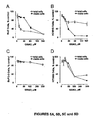
- the GSAO IC 50 for reduction in viability of proliferating BAE cells was ⁇ 75 ⁇ M (Fig. 3Ai). whereas the compound had little effect on growth-quiescent cells.
- the control compounds, GSAA and GSCA had no significant effect on the viability of proliferating BAE cells at concentrations up to 1.0 mM (data not shown).
- the effect of GSAO on proliferating cell viability was time-dependent.
- the GSAO IC 50 decreased from ⁇ 75 ⁇ M to -25 ⁇ M when the incubation time increased from 48 to 72 h (data not shown).
- PAO In contrast, was equally toxic to both proliferating and growth-quiescent BAE cells with an IC 50 of ⁇ 200 nM ( Fig.
- GSAO GSAO binding protein to ANT in proliferating endothelial cells affected ATP production.
- the ATP content of proliferating BAE cells was approximately twice that of growth-quiescent cells and incubation with 150 ⁇ M GSAO for 24 h reduced ATP levels in proliferating cells to that of growth-quiescent cells ( Fig. 4ai ). This result mirrors the selective effects of GSAO on proliferating cell viability ( Fig. 4al ).
- mitochondrial mass was measured using nonyl acridine orange. This dye binds to cardiolipin In the mitochondrial membrane (Petit et al., 1992).
- the mitochondrial mass of proliferating cells was approximately twice that of growth-quiescent cells, which was unchanged by GSAO treatment ( Fig. 4aii ).
- treated cells were stained with propidium iodide (PI) to detect late-apoptotic or dead cells.
- PI propidium iodide
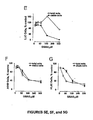
- the IC 50 for proliferation arrest of BAE ( Fig. 5a ) or primary human dermal microvascular endothelial (Fig. 5b ) cells was ⁇ 10 ⁇ M and ⁇ 15 ⁇ M, respectively.
- the IC 50 for loss of viability was ⁇ 75 ⁇ M and ⁇ 35 ⁇ M, respectively, indicating that GSAO arrested proliferation at lower concentrations than were necessary to induce apoptosis.
- the IC 50 for proliferation arrest of bovine vascular smooth muscle cells was ⁇ 30 ⁇ M. In contrast, all tumor cells tested were more resistant to GSAO ( Figs. 5c-g ).
- GSAO concentrations of GSAO that induce proliferation arrest and loss of viability are 3 to >32-fold and 2 to 9-fold higher, respectively, for tumor cells than for endothelial cells (Table 1).
- GSAO treatment caused Lewis lung carcinoma cells to disaggregate, which was the reason for the apparent increase in cell number for this tumor line ( Fig. 5e ).
- Table 1 Effect of GSAO on proliferation and viability of endothelial and tumor cells.
- Rat liver mitochondria were suspended at 1 mg of protein per mL at 25°C in 3 mM HEPES, pH 7.0 buffer containing 75 mM mannitol, 250 mM sucrose, 10 mM sodium succinate, and 2 ⁇ M rotenone and treated with the ANT-binding compounds for 0 to 60 min. Reagent concentrations are indicated in the figure legends. Mitochondria in 025 mL of reaction were pelleted by centrifugation at 8000g for 5 min and the supernatants were concentrated 10-fold by ultrafiltration through a Microcon YM-3 membrane (Millipore, Bedford, MA).
- the concentrated supernatants were resolved on 8-16% gradient iGels from Gradipore (Sydney, Australia) under non-reducing conditions and transferred to PVDF membrane. Proteins were detected by Western blot using anti-human cytochrome c polyclonal antibodies (Product 556433, BD Pharmingen) and anti-rabbit peroxidase-conjugated antibodies (Dako, Carpinteria, California). Chemiluminescence films were analyzed using a GS-700 imaging Densitometer and Multi-Analyst software (Bio-Rad, Hercules, California).
- GSAO inhibited angiogenesis in the chick chorioallantoic membrane (CAM)
- GSAO In view of the ability of GSAO to selectively kill proliferating, but not growth-quiescent, endothelial cells in vitro , GSAO was tested to determine whether it was an effective inhibitor of angiogenesis In vivo .
- CAM chick chorioallantoic membrane
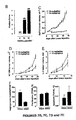
- SCID or C57BI6/J mice Female 7 to 9 week old SCID or C57BI6/J mice were used (Massachusetts General Hospital, Boston, MA). Mice were held in groups of 3 to 5 at a 12 hour day and night cycle and were given animal chow and water ad libidum . SCID or C57BI6/J mice were anaesthetised by inhalation of isoflurane, the dorsal skin shaved and cleaned with ethanol, and a suspension of 2.5 x 10 6 BxPC-3, HT1080 or LLC cells in 0.2 mL of PBS, or saline for LLC cells, was injected S.C. in the proximal midline. LLC cells were prepared according to O'Reilly et al. (1997), Tumour volume was calculated using the relationship, a.b 2 .0.52, where a is the longest and b the shortest diameter.
- Tumours were fixed In Buffered Formalde-Fresh (Fisher Scientific, Fair Lawn, NJ), embedded in paraffin and 5 ⁇ m thick sections were cut and placed on glass slides, Sections were stained with haematoxylin and eosin or for CD31, PCNA (Holmgren et al., 1995) or fragmented DNA (Gavrielli et al., 1992). Microvessels were counted in 3 tumours, including the smallest and largest, from the control and treatment groups and the density was graded in the most active areas of neovascularisation according to Weidner et al. (1991). The proliferative index was estimated by the percentage of cells scored under 400x magnification. A minimum of 1000 cells was counted in two separate sections. The apoptotic index was estimated by the percentage of cells scored under 400x magnification. A minimum of 1500 cells was counted in two separate sections.
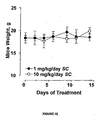
- mice weights of the GSAO and GSAA treatment groups over the course of the experiments were the same, and there was no apparent macroscopic differences and no morphological changes in the heart, lungs, liver, kidneys, and spleen of GSAO or GSAA-treated mice (data not shown).
- GSAO GSAO arrested proliferation of endothelial cells in vivo but had no effect on BxPC-3 proliferation at >30-fold higher concentrations (Table 1), and systemic administration of GSAO markedly reduced tumor vascularity in vivo but had no effect on the proliferative index of the BxPC-3 tumor cells (Fig. 7F).
- Table 2 Activity of GSAO and related analogues on proliferation of BAE cells
- the screening was performed using rat liver mitochondria frozen for 1 or 2 days at -80°C after isolation.
- the mitochondria swelling was measured by monitoring the decrease in light scattering at 520 nm using a microplate reader.
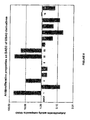
- Table 3 Effect of GSAO and related analogues on MPTP induction MPTP Swelling Rate Increase / GSAO* Compound Mean SD GSAO 1 0 1 16.3 7.2 3 2.4 0.5 4 5.6 1.5 6 4.5 0.8 7 2.2 0.6 8 2.1 0.4 22 6.9 1.1 23 5.4 0.7 10 2.0 0.2 11 1.3 0.4 13 1.6 0.7 14 1.1 0.4 15 1.3 - 21 2.8 0.7 All compounds were tested at least 2 times on different mitochondrial preparations for their MPTP Induction properties, except compound 15 which was tested only once.
- Mitochondria were Isolated from the livers of ⁇ 250 g male Wistar rats using differential centrifugation as described previously (Don et al., 2003). The final mitochondrial pellet was resuspended in 3 mM HEPES-KOH, pH 7.0 buffer containing 213 mM mannitol, 71 mM sucrose and 10 mM sodium succinate at a concentration of 30 mg of protein per mL Mitochondrial permeability transition Induction was assessed spectrophotometrically by suspending the liver mitochondria at 0.5 mg of protein per mL at 25°C in 3 mM HEPES-KOH, pH 7.0 buffer containing 75 mM mannitol, 250 mM sucrose, 10 mM sodium succinate, and 2 mM rotenone. Swelling was measured by monitoring the associated decrease in light scattering at 520 nm using a microplate reader.
- ANT pore formation is controlled by the binding of Ca 2+ , cyclophilin D and adenine nucleotides under physiological conditions.
- the primary trigger for opening of the mitochondrial permeability transition pore is a rise in matrix Ca 2+ concentration.
- Chelation of Ca 2+ with EGTA blocks pore opening, as does an excess of other divalent metal ions such as Mg 2+ . Both EGTA and Mg 2+ blocked GSAO-dependent swelling ( Fig. 18 ).
- Binding of cyclophilin D to ANT Is necessary for pore opening at sub-millimolar Ca 2+ concentrations.
- Cyclosporin A (CsA) blocks pore opening by binding to cyclophilin D and displacing it from ANT.
- ADP inhibits pore opening by binding to ANT and decreasing the sensitivity of the trigger site to Ca 2+ .
- CsA and ADP blocked the effect of o-GSAO on pore opening ( Fig. 19 ).
- BAE or human pancreatic carcinoma BxPC-3 cells were seeded at a density of 10 3 cells per well into 96 well plates in DMEM containing 10% foetal bovine serum and allowed to adhere for 24 h. Cells were washed and incubated with DMEM containing 10% foetal bovine serum and GSAO or o-GSAO and cultured for a further 48 h. Some BAE cells were arrested for 24 h in medium containing 0.25% serum and cultured for a further 48 h in medium containing 0.25% or 10% serum, In the presence of GSAO or o-GSAO. Viable attached cells were determined using MTT.
- o-GSAO is ⁇ 50-times more effective than GSAO at inhibiting proliferation of BAE cells.
- the IC 50 for proliferation arrest of BAE cells was 8.3 ⁇ 2.1 ⁇ M and 0.16 ⁇ 0.03 ⁇ M for GSAO and o-GSAO, respectively ( Fig. 20A ).
- o-GSAO like GSAO, was a selective inhibitor of BAE compared to BxPC-3 cell proliferation.
- the IC 50 for proliferation arrest of BxPC-3 cells was >300 ⁇ M and ⁇ 2 ⁇ M for GSAO and o-GSAO, respectively ( Fig. 20B ).
- o-GSAO was not selective for proliferating (angiogenic) endothelial cells ( Fig. 21 ).
- O-GSAO reduced the viability of proliferating and growth-quiescent endothelial cells equally well.
- the response to o-GSAO was very similar to PAO in this experiment (see Don et al., 2003).
- mice Female 7 to 9 week old Balb C nude were used (UNSW Biological Resource Centre). Mice were held in groups of 3 to 5 at a 12 h day and night cycle and were given animal chow and water ad libidum . A suspension of 2.5 x 10 6 BxPC-3 cells in 0.2 mL of PBS was injected subcutaneously in the proximal midline. Tumours were allowed to establish and grow to a size of -40 mm 3 after which they were randomised into four groups. Tumour volume was calculated using the relationship, a.b 2 .0.52, where a is the longest and b the shortest diameter.
- mice were treated with either GSAO or o-GSAO at a dose 1 or 10 mg/kg/day in 0.1 mL of PBS.
- the compounds were administered subcutaneously at a site distant from the tumour. Tumour volume and animal weight was measured every 2 or 3 days.
- Parts C and D are the mice weights for the respective groups, where the arrow indicates start of treatment.
- the data points are the mean ⁇ SE of the tumour volumes or mice weights.
- Treatment with 10 mg/kg o-GSAO (part B) was stopped at day 14 due to necrosis and inflammation at sites of injection In 7 out of 11 mice (3/11 with severe ulcers, 4/11 with medium ulcers). There was also some weight loss in this group (part D).
- o-GSAO is more efficacious than GSAO in vitro , but has side-effects that are not apparent with GSAO administration. Unlike GSAO, o-GSAO is not selective for proliferating versus growth-quiescent endothelial cells.
Landscapes
- Health & Medical Sciences (AREA)
- Life Sciences & Earth Sciences (AREA)
- Chemical & Material Sciences (AREA)
- Engineering & Computer Science (AREA)
- Organic Chemistry (AREA)
- Biomedical Technology (AREA)
- Immunology (AREA)
- General Health & Medical Sciences (AREA)
- Medicinal Chemistry (AREA)
- Molecular Biology (AREA)
- Urology & Nephrology (AREA)
- Hematology (AREA)
- Bioinformatics & Cheminformatics (AREA)
- Pharmacology & Pharmacy (AREA)
- Animal Behavior & Ethology (AREA)
- Public Health (AREA)
- Veterinary Medicine (AREA)
- Biochemistry (AREA)
- Nuclear Medicine, Radiotherapy & Molecular Imaging (AREA)
- General Chemical & Material Sciences (AREA)
- Chemical Kinetics & Catalysis (AREA)
- Cell Biology (AREA)
- Food Science & Technology (AREA)
- Biotechnology (AREA)
- Physics & Mathematics (AREA)
- General Physics & Mathematics (AREA)
- Microbiology (AREA)
- Pathology (AREA)
- Analytical Chemistry (AREA)
- Proteomics, Peptides & Aminoacids (AREA)
- Neurology (AREA)
- Neurosurgery (AREA)
- Toxicology (AREA)
- Tropical Medicine & Parasitology (AREA)
- Biophysics (AREA)
- Genetics & Genomics (AREA)
- Epidemiology (AREA)
- Heart & Thoracic Surgery (AREA)
- Cardiology (AREA)
- Rheumatology (AREA)
Abstract
Description
- The present invention relates to modification of mitochondrial membrane permeability in cells and in particular, the identification and use of compounds which selectively induce the MPT in proliferating cells.
- Mitochondria provide ATP to support normal cell function and their perturbation leads to apoptotic and necrotic cell death (Crompton, 1999). An important factor in apoptosis and necrosis is the mitochondrial permeability transition (MPT), which occurs as a result of calcium overload. The cause of the MPT is the opening of a non-specific pore in the inner mitochondrial membrane, known as the mitochondrial permeability transition pore (MPTP) (Crompton et al., 1987). Oxidative stress, adenine nucleotide depletion and elevated inorganic phosphate greatly increase the sensitivity of the pore to calcium concentration. Opening of the MPTP is accompanied by equilibration of all small solutes (< 1.5 kD) across the inner mitochondrial membrane. The resultant high protein concentration in the matrix exerts a colloidal osmotic pressure that is responsible for extensive swelling of mitochondria, and ultimately, apoptosis or necrosis.
- Adenine nucleotide translocator (ANT) is a 30 kD protein that spans the inner mitochondrial membrane and Is central to the MPTP (Crompton et al., 1988).
- There is a need to selectively induce the MPT, particularly in proliferating cells, as a means of inducing apoptosis.
- The present invention relates to a process for identifying compounds which bind to ANT in mitochondria and selectively induce the MPT in proliferating cells relative to non-proliferating or growth quiescent cells.
- According to a first aspect of the invention there is provided a process for identifying a compound which induces the mitochondrial permeability transition (MPT) in proliferating cells, wherein the process comprises Contacting a cell or cell extract with a compound, determining whether the compound binds to adenine nucleotide translocator (ANT), and determining whether the compound selectively induces the MPT in proliferating cells.
- According to a second aspect of the invention there is provided a process for screening a plurality of compounds to identify a compound which induces MPT in proliferating cells, wherein the process comprises contacting a cell or a cell extract with the plurality of compounds, determining whether any of the compounds bind to ANT, and if so, separately determining for each of the plurality of compounds whether the compound selectively induces the MPT in proliferating cells.
- With reference to the first and second aspects of the invention, selective induction of the MPT in proliferating cells may be determined, for example, by comparing the effect of compounds identified as binding to ANT In accordance with the first or second aspect of the invention, on the MPT in proliferating cells with the effect on the MPT in non-proliferating or growth quiescent cells.
- Also with reference to the first and second aspects of the invention, in one embodiment the process may involve measuring changes in the cellular concentration of the superoxide (O2-) anion. In another embodiment, the process may Involve measuring changes in Cytochrome C release.
- According to a third aspect of the invention there is provided a process for identifying a compound which induces apoplosis in proliferating cells, the process comprising contacting a cell or cell extract with a candidate compound, determining whether there is an increase in cellular superoxide anlon (O2-) concentration, and determining whether the compound selectively Induces apoptosis in proliferating cells.
- According to a fourth aspect of the invention there is provided a process for identifying a compound which is an inhibitor of anglogenesis, the process comprising contacting a cell or cell extract with a candidate compound, determining whether there is an increase in cellular superoxide anion (O2-) concentration, and determining whether the compound is an inhibitor of anglogenesis.
- According to a fifth aspect of the invention there is provided a method of inducing MPT in a vertebrate, wherein the method comprises administering to the vertebrate a therapeutically effective amount of at least one compound detected in accordance with the process of any one of the first to third aspects of the invention, or a therapeutically effective amount of a pharmaceutical composition comprising at least one of the compounds together with a pharmaceutically acceptable carrier, adjuvant and/or diluent.
- According to a sixth aspect of the invention there is provided a method of inducing apoptosis in proliferating mammalian cells, comprising administering to the mammal an apoptosis-inducing amount of a compound identified in accordance with the any one of the first to third aspects of the invention, or a therapeutically effective amount of a pharmaceutical composition comprising at least one of the compounds together with a pharmaceutically acceptable carrier, adjuvant and/or diluent.
- According to a seventh aspect of the invention there is provided the use of a compound identified in accordance with any one of the first to third aspects of the invention for the manufacture of a medicament for inducing apoptosis.
- According to an eighth aspect of the invention there is provided a method of inhibiting angiogenesis in a mammal, comprising administering to the mammal an anglogenesis-inhibiting amount of a compound identified in accordance with the fourth aspect of the invention, or a therapeutically effective amount of a pharmaceutical composition comprising at least one of the compounds together with a pharmaceutically acceptable carrier, adjuvant and/or diluent.
- According to a ninth aspect of the invention there is provided the use of a compound identified in accordance with the fourth aspect of the invention for the manufacture of a medicament for inhibiting angiogenesis.
- With reference to any one of the first to ninth aspects of the invention, in one embodiment the compound may be a dithiol reactive compound.
- In another embodiment, the compound may have an arsenoxide (or arsenoxide equivalent) moiety.
- In a further embodiment, the arsenoxide (or arsenoxide equivalent) compound may have the formula (I):

wherein
A comprises at least one substantially cell-membrane impermeable pendant group;
(XBX')nB' comprises a suitable linker group, where n Is an integer selected from 0, 1, 2, 3, 4, 5, 6, 7, 8, 9, 10, 11, 12, 13, 14, 15, 16, 17, 18, 19 and 20;
Y comprises at least one arsenoxide or arsenoxide equivalent; and
p is an integer selected from 1, 2, 3, 4, 5, 6, 7, 8, 9, and 10. - In one embodiment, the compound of formula (I) may have more than 6 carbon atoms.
- The following features relate to Formula (I):
- In one embodiment, A may be selected from the group consisting of natural, unnatural and synthetic amino acids, hydrophilic amines, peptides and polypeptides, including dipeptides, tripeptides, tetrapeptides, pentapeptides, sugar residues such as monosaccharides, disaccharides, and oligosaccharides (including substituted variants), and thiol containing proteins, or a combination thereof. For example, A may be selected from the group consisting of glutathione, glucosamine, cysteinylglycine, cysteic acid, aspartic acid, glutamic acid, lysine, and arginine, wherein the sulfur atom of each sulfur containing compound may be optionally oxidised to form a sulfoxide or sulfone. In other embodiments, A may comprise a sugar residue, disaccharide or oilgosaccharide residue such as, for exmaple, glucose, fructose, mannose, xylose, lyxose, galactose, hexose, sucrose, sorbose, galactosyl-sucrose, sorbitol, mannitol, xylitol, etc. In other embodiments, A may be a hydrophilic amine such as a primary, secondary, or tertiary alkyl, aryl- or aralkyl-amine, or a heterocyclic amine such as pyridine, pyrrole, imidazole etc.
- Amino acids are known to those of skill in the art and are listed, for instance in standard reference texts, such as King and Stansfield, A Dictionary of Genetics, 4th Edition, Oxford University Press, 1990, the contents of which are incorporated herein by reference. For example, the amino acids may be α, β or γ amino acids. The present invention also includes the L- and D-forms of amino acids. Examples of amino acids include glycine, alanine, valine, leucine, isoleucine, methionine, proline, phenylalanine, tryptophan, serine, threonine, cysteine, tyrosine, asparagine, glutamine, aspartic acid, glutamic acid, lysine, arginine and histidine.
- In one embodiment, A may be selected from the group consisting of tri-acid ureas, peptides including dipeptides, tripeptides, tetrapeptides, and pentapeptides. For example, glutathione, Cys-Glu-Gly, Arg-Gly-Asp-Cys, Val-Thr-Cys-Gly, Gly-Gly-Cys, Lys-Glu-Gly, Arg-Gly-Asp-Lys, Val-Thr-Lys-Gly, Gly-Gly-Lys, Ser-Glu-Gly, Arg-Gly-Asp-Ser, Val-Thr-Ser-Gly, Gly-Gly-Ser, Asp-Glu-Gly, Arg-Gly-Asp-Asp, Val-Thr-Asp-Gly, Gly-Gly-Asp, Glu-Glu-Gly, Arg-Gly-Asp-Glu, Val-Thr-Glu-Gly, Gly-Gly-Glu, etc, pressinoic acid, small add molecules such as 3-mercapto-1-propanesulfonic add, mercaptopropionic acid, mercapto succinic acid; small alcohols such as 1-thio-beta-D-glucose, 3-mercapto-1,2-propanediol; small amines, including for example, primary, secondary and tertiary alkyl-, aryl- and aralkyl substituted amines; and heteroaromatic compounds such as 5-mercapto-1-tetrazotacetic acid, 2-mercaptopyridine, and 2-aminopyridine.
- In one embodiment, A is a tripeptide. For example, A may be glutathione and in one form the compound may be represented by Formula (II):

- In one embodiment, p is an integer selected from 1 to 5. For example, p may be 1, 2, 3, 4, or 5. In one embodiment p is 1 or 2. In another embodiment, p is 1.
- In one embodiment, n is an integer from 0 to 15. For example, n may be 0, 1, 2, 3, 4, 5, 6, 7, 8, 9, 10, 11, 12, 13, 14, or 15. In one embodiment n is an integer selected from 0 to 10. In another embodiment n is an Integer selected from 0 to 5, for example, n may be 0, 1, 2, 3, 4, or 5.
- In one embodiment. X is selected from the group consisting of -NR, -S(O)-, -S(O)O-, -S(O)2-, -S(O)2O, -C(O)-, -C(S)-, -C(O)O-, C(S)O-, -C(S)S-, -P(O)(R1)-, and -P(O)(R1)O-, or is absent
- B is selected from the group consisting of C1-C10 alkylene, C2-C10 alkenylene, C2-C10 alkynylene, C3-C10 cycloalkylene, C5-C10 cycloalkenylene, C3-C10 heterocycloalkylene, C5-C10 heterocycloalkenylene, C6-C12 arylene, heteroarylene and C2-C10 acyl;
- X' is selected from the group consisting of -NR-, -O-, -S-, -Se-, -S-S-, S(O)-, -OS(O)-, OS(O)O-, -OS(O)2, -OS(O)2O-, -S(O)O-, -S(O)2-, -S(O)2O-, -OP(O)(R1)-, -OP(O)(R1)O-, -OP(O)(R1)OP(O)(R1)O-, -C(O)-, -C(S)-, -C(O)O-, C(S)O-, -C(S)S-, -P(O)(R1)-, -P(O)(R1)O-, and

n is 0, 1 or 2; and
B' is selected from the group consisting of C1-C10 alkylene, C2-C10 alkenylene, C2-C10 alkynylene, C3-C10 cycloalkylene, C5-C10 cycloalkenylene, C3-C10 heterocycloalkylene, C5-C10 heterocycloalkenylene, C8-C12 arylene, and heteroarylene or is absent; and wherein
each R is independently selected from the group consisting of hydrogen, C1-C10 alkyl, C2-C10 alkenyl, C2-C10 alkynyl, C3-C10 cycloalkyl, C5-C10 cycloalkenyl, C3-C10 heterocycloalkyl, C5-C10 heterocycloalkenyl, C8-C12 aryl, heteroaryl, OR2 and C4-C10 acyl;
R' is the same as R or two R' may be taken together with the nitrogen atoms to which they are attached to form a 5 or 6-membered saturated or unsaturated heterocyclic ring;
each R1 is independently selected from the group consisting of hydrogen, C1-C10 alkyl, C2-C10 alkenyl, C2-C10 alkynyl, C3-C10 cycloalkyl, C5-C10 cycloalkenyl, C3-C10 heterocycloalkyl, C5-C10 heterocycloalkenyl, C6-C12 aryl, heteroaryl, halo, OR2 and N(R)2;
each R2 is independently selected from the group consisting of hydrogen, C1-C10 alkyl, C2-C10 alkenyl, C2-C10 alkynyl, C3-C10 cycloalkyl, C5-C10 cycloalkenyl, C3-C10 heterocycloalkyl, C5-C10 heterocycloalkenyl, C6-C12 aryl, heteroaryl and -C(O)R5;
each R5 is independently selected from the group consisting of hydrogen, C1-C10 alkyl, C2-C10 alkenyl, C2-C10 alkynyl, C3-C10 cycloalkyl, C5-C10 cycloalkenyl, C3-C10 heterocycloalkyl, C5-C10 heterocycloalkenyl, C6-C12 aryl, heteroaryl, C1-C10 alkoxy, C3-C10 alkenyloxy, C3-C10 alkynyloxy, C3-C10 cycloalkyloxy, C5-C10 cycloalkenyloxy, C3-C10 heterocycloalkyloxy, C5-C10 heterocycloalkenyloxy, C6-C12 aryloxy, heteroaryloxy, C1-C10 alkylthio, C3-C10 alkenylthio, C3-C10 alkynylthio, C3-C10 cycloalkylthio, C6-C10 cycloalkenylthio, C3-C10 heterocycloalkylthio, C5-C10 heterocycloalkenylthio, C6-C12 arylthio, heteroarylthio, OH, SH and N(R)2;
wherein for each instance that B and/or B' is arylene, the substituents directly attached to the respective arylene, rings (including arsenoxide or arsenoxide equivalent) may be at any available position, and for example, may be in a para-, meta- or ortho- relationship; and
wherein each alkylene, alkenylene, alkynylene, cycloalkylene, cycloalkenylene, heterocycloalkylene, heterocycloalkenylene, arylene, heteroarylene and acyl may be independently substituted with hydrogen, C1-C10 alkyl, C2-C10 alkenyl, C2-C10 alkynyl, C3-C10 cycloalkyl, C5-C10 cycloalkenyl, C3-C10 heterocycloalkyl, C5-C10 heterocycloalkenyl, C6-C12 aryl, heteroaryl, cyano, cyanate, Isocyanate, OR2a, SR6, nitro, arsenoxide, -S(O)Ra, -OS(O)R3, -S(O)2R3, -OS(O)2R3, -P(O)R4R4, -OP(O)R4R4, -N(R")2, -NRC(O)(CH2)mQ, -C(O)R5;
R2a is selected from the group consisting of hydrogen, C1-C5 alkyl, C2-C5 alkenyl, C2-C5 alkynyl, C3-C10 cycloalkyl, C5-C10 cycloalkenyl, C8-C12 aryl, -S(O)R3, -S(O)2R3, -P(O)(R4)2, N(R)2 and -C(O)R5;
each R3 is independently selected from the group consisting of hydrogen, C1-C10 alkyl, C2-C10 alkenyl, C2-C10 alkynyl, C3-C10 cycloalkyl, C5-C10 cycloalkenyl, C3-C10 heterocycloalkyl, C5-C10 heterocycloalkenyl, C6-C12 aryl, heteroaryl, C1-C10 alkoxy, C3-C10 alkenyloxy, C3-C10 alkynyloxy, C3-C10 cycloalkyloxy, C5-C10 cycloalkenyloxy, C3-C10 heterocycloalkyloxy, C5-C10 heterocycloalkenyloxy, C8-C12 aryloxy, heteroaryloxy, C1-C10 alkylthio, C3-C10 alkenylthio, C3-C10 alkynylthio, C3-C10 cycloalkylthio, C5-C10 cycloalkenylthio, C3-C10 heterocycloalkylthio, C5-C10 heterocycloalkenylthio, C6-C12 arylthio, heteroarylthio and N(R)2;
each R4 is independently selected from the group consisting of hydrogen, C1-C10 alkyl, C2-C10 alkenyl, C2-C10 alkynyl, C3-C10 cycloalkyl, C5-C10 cycloalkenyl, C3-C10 heterocycloalkyl, C5-C10 heterocycloalkenyl, C5-C12 aryl, heteroaryl, C1-C10 alkoxy, C3-C10 alkenyloxy, C8-C10 alkynyloxy, C3-C10 cycloalkyloxy, C5-C10 cycloalkenyloxy, C3-C10 heterocycloalkyloxy, C5-C10 heterocycloalkenyloxy, C6-C12 aryloxy, heteroaryloxy, C1-C10 alkylthio, C3-C10 alkenylthio, C3-C10 alkynylthio, C3-C10 cycloalkylthio, C5-C10 cycloalkenylthio, C3-C10 heterocycloalkylthio, C5-C10 heterocycloalkenylthio, C6-C12 arylthio, heteroarylthio, halo and N(R)2;
R6 is selected from the group consisting of C1-C10 alkyl, C2-C10 alkenyl, C2-C10 alkynyl, C3-C10 cycloalkyl, C5-C10 cycloalkenyl, C3-C10 heterocycloalkyl, C5-C10 heterocycloalkenyl, C6-C12 aryl, heteroaryl, C1-C10 alkylthio, C3-C10 alkenylthio, C3-C10 alkynylthio, C3-C10 cycloalkylthio, C5-C10 cycloalkenylthio, C3-C10 heterocycloalkylthio, C5-C10 heterocycloalkenylthio, C6-C12 arylthio, heleroarylthio, -S(O)R3, -S(O)2R3 and -C(O)R5,
R" is the same as R or two R" taken together with the N atom to which they are attached may form a saturated, unsaturated or aromatic heterocyclic ring system;
Q is selected from halogen and -OS(O)2Q1; wherein Q1 is selected from C1-C4 alkyl, C1-C4 perfluoroalkyl, phenyl, p-methylphenyl; and
m is 1, 2, 3, 4, or 5. - In another embodiment, X is selected from the group consisting of NH, -C(O)-, -C(S)-, -C(O)O-, C(S)O-, and -C(S)S-, or is absent;
B is selected from the group consisting of C1-C5 alkylene, C2-C5 alkenylene, C2-C5 alkynylene, C3-C10 cycloalkylene, C5-C10 cycloalkenylene, C6-C12 arylene and C2-C5 acyl;
X' is selected from the group consisting of -O-, -S-, -NR-, -S-S-, -S(O)-, -S(O)2-, -P(O)(R1)-, OP(O)(R1)-, OP(O)(R1)O-, -OP(O)(R1)OP(O)(R1)O-, -C(O)-, -C(S)-, -C(O)O-, C(S)O-, -C(S)S-, -Se-,
n is 0, 1 or 2; and
B' is C1-C5 selected from the group consisting of alkylene, C2-C5 alkenylene, C2-C5 alkynylene, C3-C10 cycloalkylene, C5-C10 cycloalkenylene, and C6-C12 arylene, or is absent and wherein
each R is independently selected from the group consisting of hydrogen, C1-C5 alkyl, C2-C5 alkenyl, C2-C5 alkynyl, C3-C10 cycloalkyl, C5-C10 cycloalkenyl, C6-C12 aryl, OR2 and C2-C10 acyl;
R' is the same as R;
each R1 is independently selected from the group consisting of hydrogen, C1-C6 alkyl, C2-C5 alkenyl, C2-C5 alkynyl, C3-C10 cycloalkyl, C5-C10 cycloalkenyl, C6-C12 aryl, halo, OR2 and N(R)2;
each R2 is independently selected from the group consisting of hydrogen, C1-C5 alkyl, C2-C5 alkenyl, C2-C5 alkynyl, C3-C10 cycloalkyl, C5-C10 cycloalkenyl, C6-C12 aryl, and -C(O)R5;
each R5 is independently selected from the group consisting of hydrogen, C1-C5 alkyl, C2-C5 alkenyl, C2-C6 alkynyl, C3-C10 cycloalkyl, C6-C10 cycloalkenyl, C6-C12 aryl, C1-C5 alkoxy, C3-C5 alkenyloxy, C3-C5 alkynyloxy, C3-C10 cycloalkyloxy, C5-C10 cycloalkenyloxy, C6-C12 aryloxy, C1-C5 alkylthio, C3-C5 alkenylthio, C3-C5 alkynylthio, C3-C10 cycloalkylthio, C5-C10 cycloalkenylthio, C6-C12 arylthio, OH, SH, and N(R)2;
wherein for each instance that B and/or B' is arylene, the substituents directly attached to the respective arylene rings (including arsenoxide or arsenoxide equivalent), may be at any available position, and for example, may be in a para-, meta- or ortho- relationship, and
wherein each alkylene, alkenylene, alkynylene, cycloalkylene, cycloalkenylene, arylene, and acyl may be independently substituted with hydrogen, C1-C5 alkyl, C2-C5 alkenyl, C2-C5 alkynyl, C3-C10 cycloalkyl, C5-C10 cycloalkenyl, C6-C12 aryl, cyano, halo, cyanate, isocyanate, OR2a, SR6, nitro, arsenoxide, -S(O)R3, -OS(O)R3, -S(O)2R3, -OS(O)2R3, -P(O)R4R4, -OP(O)R4R4, -N(Rc)2, NRC(O)(CH2)mQ, -C(O)R5,
R2a is selected from the group consisting of hydrogen. C1-C6 alkyl, C2-C5 alkenyl, C2-C6 alkynyl, C3-C10 cycloalkyl, C5-C10 cycloalkenyl, C8-C12 aryl, -S(O)R3, -S(O)2R3, -P(O)(R4)2, N(R)2 and -C(O)R5;
each R3 Is independently selected from the group consisting of hydrogen, C1-C5 alkyl, C2-C5 alkenyl, C2-C5 alkynyl, C3-C10 cycloalkyl, C5-C10 cycloalkenyl, C6-C12 aryl, C1-C5 alkoxy, C3-C5 alkenyloxy, C3-C5 alkynyloxy, C3-C10 cycloalkyloxy, C5-C10 cycloalkenyloxy, C6-C12 aryloxy, C1-C5 alkylthio, C3-C5 alkenylthlo, C3-C5 alkynylthio, C3-C10 cycloalkylthio, C5-C10 cycloalkenylthio, C6-C12 arylthio and N(R)2;
each R4 is independently selected from the group consisting of hydrogen, C1-C5 alkyl, C2-C5 alkenyl, C2-C5 alkynyl, C3-C10 cycloalkyl, C5-C10 cycloalkenyl, C6-C12 aryl, C1-C5 alkoxy, C3-C5 alkenyloxy, C3-C5 alkynyloxy, C3-C10 cycloalkyloxy, C5-C10 cycloalkenyloxy, C6-C12 aryloxy, C1-C5 alkylthio, C3-C5 alkenylthio, C3-C5 alkynylthio, C3-C5 cycloalkylthio, C3-C5 cycloalkenylthio, C6-C12 arylthio, halo and N(R)2;
R6 is independently selected from the group consisting of C1-C5 alkyl, C2-C5 alkenyl, C2-C5 alkynyl, C3-C10 cycloalkyl, C5-C10 cycloalkenyl, C6-C12 aryl, C1-C5 alkylthio, C3-C5 alkenylthio, C3-C5 alkynylthio, C3-C10 cycloalkylthio, C5-C10 cycloalkenylthio, C6-C12 arylthio, -S(O)R3, -S(O)2R3 and -C(O)R5,
R" Is the same as R;
Q is selected from the group consisting of halogen and -OS(O)2Q1; wherein Q1 is selected from C1-C4 alkyl, C1-C4 perfluoroalkyl, phenyl, p-methylphenyl; and
m is 1, 2, 3, 4 or 5.
In another embodiment, X is absent;
B is selected from the group consisting of C1-C5 alkylene, C6-C12 arylene and C2-C5 acyl;
X' is selected from the group consisting of -O-, -S-, -NR-, -S-S-, -S(O)-, -S(O)2-, -P(O)(R1)-, -C(O)-, -C(S)-, -C(O)O-, C(S)O-, -Se-, and
n is 0,1 or 2; and
B' is C1-C5 alkylene, C6-C12 arylene or is absent, and wherein
each R is independently selected from the group consisting of hydrogen, C1-C5 alkyl, C3-C10 cycloalkyl, C6-C12 aryl, OR2 and C2-C5 acyl;
R' is the same as R;
each R1 is Independently selected from the group consisting of hydrogen, C1-C5 alkyl, C3-C10 cycloalkyl, C6-C12 aryl, halo, OR2 and N(R)2;
each R2 is independently selected from the group consisting of hydrogen, C1-C5 alkyl, C3-C10 cycloalkyl, C6-C12 aryl and -C(O)R5;
each R5 is independently selected from the group consisting of hydrogen, C1-C5 alkyl, C2-C5 alkenyl, C3-C10 cycloalkyl, C5-C10 cycloalkenyl, C6-C12 aryl, C1-C5 alkoxy, C3-C5 alkenyloxy, C3-C10 cycloalkyloxy, C5-C10 cycloalkenyloxy, C6-C12 aryloxy, C1-C5 alkylthio, C3-C5 alkenylthio, C3-C10 cycloalkylthio, C5-C10 cycloalkenylthio, C6-C12 arylthio, OH, SH and N(R)2;
wherein for each instance that B and/or B' is arylene, the substituents directly attached to the respective arylene rings (including arsenoxide or arsenoxide equivalent) may be at any available position on the respective ring(s) and, for example, may be in a para-, meta- or ortho-relationship, and
wherein each alkylene, alkenylene, alkynylene, cycloalkylene, cycloalkenylene, arylene, and acyl may be independently substituted with hydrogen, C1-C5 alkyl, C2-C5 alkenyl, C2-C5 alkynyl, C3-C10 cycloalkyl, C5-C10 cycloalkenyl, C8-C12 aryl, halo, cyano, cyanate, isocyanate, OR2a, SR5, nitro, arsenoxide, -S(O)R3, -OS(O)R3, -S(O)2R3, -OS(O)2R3, -P(O)R4R4, -OP(O)R4R4, -N(R")2, -NRC(O)(CH2)mQ, -C(O)R5,
R2a is selected from the group consisting of hydrogen, C1-C5 alkyl, C3-C10 cycloalkyl, C6-C12 aryl, -S(O)R3, -S(O)2R3, -P(O)(R4)2 and -C(O)R5;
each R3 is independently selected from the group consisting of hydrogen, C1-C5 alkyl, C3-C10 cycloalkyl, C6-C12 aryl, C1-C5 alkoxy, C3-C10 cycloalkyloxy, C6-C12 aryloxy, C1-C5 alkylthio, C3-C10 cycloalkylthio, C6-C12 arylthio and N(R)2;
each R4 is independently selected from the group consisting of hydrogen, C1-C5 alkyl, C3-C10 cycloalkyl, C6-C12 aryl, C1-C5 alkoxy, C3-C10 cycloalkyloxy, C6-C12 aryloxy, halo and N(R)2;
R8 is selected from the group consisting of C1-C5 alkyl, C3-C10 cycloalkyl, C6-C12 aryl, C1-C5 alkylthio, C3-C10 cycloalkylthio, C6-C12 arylthio, -S(O)R3, -S(O)2R3 and -C(O)R5,
R" is the same as R;
Q is selected from halogen and -OS(O)2Q1; wherein Q1 is selected from C1-C4 alkyl, C1-C4 perfluoroalkyl, phenyl, p-methylphenyl; and
m is 1, 2, 3, 4, or 5. - In a further embodiment, X is absent;
B is selected from the group consisting of C1-C5 alkylene, C6-C12 arylene and C2-C5 acyl;
X' is selected from the group consisting of -O-, -S-, -NR-, -C(O)-, and -C(O)O-, or is absent;
n is 1; and
B' is C1-C5 alkylene, C6-C12 arylene or is absent; and
R is selected from the group consisting of hydrogen, C1-C5 alkyl, C6-C12 aryl and C2-C5 acyl;
wherein for each instance that B and/or B' is arylene, the substituents directly attached to the respective arylene rings (including arsenoxide or arsenoxide equivalent), may be at any available position on the respective ring(s) and, for example, may be In a para-, meta- or ortho-relationship, and
wherein each alkylene, arylene, and acyl may be independently substituted with hydrogen, C1-C5 alkyl, C2-C5 alkenyl, C2-C5 alkynyl, C3-C10 cycloalkyl, C5-C10 cycloalkenyl, C6-C12 aryl, halo, cyano, cyanate, isocyanate, OR2a, SR6, nitro, arsenoxide, -S(O)R3, -S(O)2R3, -P(O)R4R4, -N(R")2, -NRC(O)(CH2)mQ, -C(O)R5,
R2a is selected from the group consisting of hydrogen, C1-C5 alkyl, C6-C12 aryl, -S(O)R3, -S(O)2R3, -P(O)(R4)2 and -C(O)R5;
each R3 is Independently selected from the group consisting of hydrogen, C1-C5 alkyl, C6-C12 aryl, C1-C5 alkoxy, C6-C12 aryloxy, C1-C5 alkylthio, and C6-C12 arylthio;
each R4 is Independently selected from the group consisting of hydrogen, C1-C6 alkyl, C6-C12 aryl, C1-C5 alkoxy, C6-C12 aryloxy, C1-C5 alkylthio, C6-C12 arylthio, halo and N(R)2;
each R5 is independently selected from the group consisting of hydrogen, C1-C5 alkyl, C6-C12 aryl, C1-C5 alkoxy, C6-C12 aryloxy, C1-C6 alkylthio, C6-C12 arylthio, OH, SH and N(R)2;
R6 is selected from the group consisting of C1-C5 alkyl, C6-C12 aryl, C1-C5 alkylthio, C6-C12 arylthio, -S(O)R3, -S(O)2R3 and -C(O)R5,
R" is the same as R above;
Q Is selected from halogen and -OS(O)2Q1; wherein Q1 is selected from C1-C4 alkyl, C1-C4 perfluoroalkyl, phenyl, p-methylphenyl; and
m is 1, 2, 3, 4, or 5. - In yet another embodiment, X Is absent;
B is C2-C5 acyl;
X' is NR;
n is 1;
B' is phenylene; and
R is H;
wherein the substituents directly attached to the phenylene ring may be at any available position, as illustrated, for example, by Formula (III):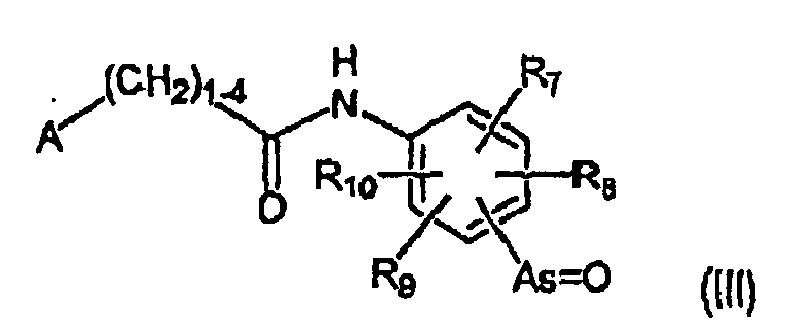
- More typically, R7 to R10 are independently selected from the group consisting of hydrogen, halogen, hydroxy, amino, nitro, cyano, carboxy, C1-C5 alkoxy, methyl, ethyl, Isopropyl, tert-butyl, phenyl and -NHC(O)CH2Q wherein Q is halogen, -OS(O)2CH3, -OS(O)2C6H5 and -OS(O)2-p tolyl.
- For example, when the pendant group A is glutathione, the compound of formula (III) may be represented as

- Further, when B' is arylene, the substituents attached to the arylene ring may be at any available position on the arylene ring. For example, the substituents may be in a meta- or para-relationship relative to the -As=O group.
- In another embodiment, an arsenoxide compound identified in accordance with the present Invention is selected from the following compounds:


- The compound "GSAO" (4-(N-(S-glutathionylacetyl)amino)-phenylarsenoxide) has been previously described in International patent application
WO 01/21628 - Other compounds which may interact with ANT include compounds according to Formula (V) illustrated below:

- Another form of an arsenoxide compound which may interact with ANT is a compound according to Formula (VI):

- Typically, G is selected from the group consisting of hydrogen, halogen, hydroxy, amino, nitro, carboxy, C1-C5 alkoxy, methyl, ethyl, isopropyl, tert-butyl, phenyl, and -NHC(O)CH2Q, wherein Q is the group consisting of halogen, -OS(O)2CH3, -OS(O)2C6H5 and -OS(O)2-p tolyl.
- In one embodiment, in a compound of Formula VI, G is hydroxy, fluorine, amino, or nitro.
- In another embodiment, group G is in an ortho-, meta-, or para- relationship to the arsenoxide group. For example, in another embodiment G is In an ortho- or para- relationship to the arsenoxide group.
- Typically the activity of the arsenic atom may be modified by the group G, when G and the arsenic atom are in an ortho or para relationship to one another. For example, when G is an electron donating group such as OH (ionised to O- at physiological pH), the arsenic atom may be deactivated towards dithiols and may become more selective, for example, only reacting with very reactive dithiols. Alternatively, when G is an electron withdrawing group, such as NO2, electron density may be drawn away from the arsenic atom, making it more reactive to dithiols. Selective inhibition of some redox proteins and not others may be achieved by manipulation of G.
- Typically, in the arsenoxide compounds capable of interacting with ANT, the arsenoxide group (-As=O) may be replaced by an arsenoxide equivalent.
- An arsenoxide equivalent is defined herein as any dithiol reactive species that shows essentially the same affinity towards dithiols as -As=O. Typically, arsenoxide equivalent includes dithiol reactive entities, such as As, Ge, Sn and Sb species. More typically an arsenoxide equivalent can be represented by -D(Z1)(Z2). Arsenoxide equivalents are expected to exhibit identical or substantial identical activity to that of the corresponding arsenoxide.
- Typically, for arsenoxide equivalents of the form -D(Z1)(Z2), D will be, for example, As, RSn, Sb, or RGe, and Z1 and Z2 will be labile groups (i.e. groups easily displaced under physiological conditions). Z1 and Z2, may be identical or different, and may either be connected or Independent from each other (bound only to the arsenic atom).
- Suitable arsenoxide equivalents include the following:

wherein Z1 and Z2 are selected from the group consisting of OH, C1-C10 alkoxy, C6-C10 aryloxy, C1-C10 alkylthio, C6-C10 arylthio, C1-C10 alkyiseleno, C6-C10 arylseleno, F, Cl, Br and I;
- For arsenoxide equivalents of the form D(Z1)(Z2), when D is As and Z1 and Z2 are OH, the arsenoxide equivalent may be in equilibrium with polymeric species, as depicted below.

- In respect of the equilibrium depicted above, arsenic is one of many elements whose hydroxy species exist in equilibrium with the corresponding polymeric anhydrides (Doak & Freedman, 1970). Therefore, arsenoxide compounds may actually exist as low or medium molecular weight polymers (eg n = 3 to 6). However, the dehydration reaction is reversible, and therefore soluble polymeric anhydrides are expected to behave as arsenoxide equivalents, that is, they are expected to bind to closely spaced dithlols in substantially the same way as the monomeric -As(OH)2 species.
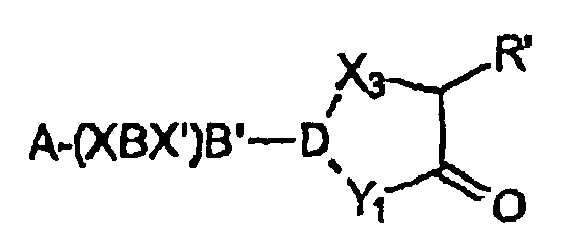


- Typically, (XBX')B' is as defined above.
- In the context of this specification, the abbreviation MPT stands for Mitochondrial Permeability Transition.
- In the context of this specification, the abbreviation MPTP stands for Mitochondrial Permeability Transition Pore.
- In the context of this specification, the abbreviation ANT stands for adenine nucleotide transiocator.
- In the context of this specification EGTA is ethylene glycol-bis(beta-amlnoethyl ether)-N,N,N'N'-tetraacetlc acid.
- In the context of this specification, PAO stands for phenyl arsenoxide.
- In the context of this specification, the term "comprising" means "including principally, but not necessarily soley". Furthermore, variations of the word "comprising", such as "comprise" and "comprises", have correspondingly varied meanings.
- In the context of this specification, the term "arsenoxide" refers to the group -As=O.
- In the context of this specification, the groups written -As=O and -As(OH)2 are to be considered synonymous.
- In the context of this specification, the term "arsenoxide equivalent" refers to any dithiol reactive species that shows essentially the same affinity towards dithiols as -As=O or As(OH)2, and the term includes, for example, groups comprising a transition element, and any trivalent arsenical that is either hydrolysed to -As=O or -As(OH)2 when dissolved in an aqueous medium (such as cell culture buffers and the fluids contained In the organism being treated).
- In the context of this specification the term "substantially cell membrane impermeable group" refers to any group which limits the rate at which a compound passes through a cell membrane and into the cell. A substantially cell membrane impermeable group may limit the rate of entry of a compound into a cell by virtue of one or more properties such as, for example, charge, size (molecular weight), polarity, lipophilicalty, hydrophilicity, etc.
- The term "arsenical" as used herein, includes any compound that contains arsenic.
- The term "acyl" as used herein, includes monovalent and divalent alkyl, alkenyl, alkynyl, cycloalkyl and cycloalkenyl moieties possessing a terminal carbonyl substituent wherein attachment may occur at the hydrocarbon moiety, the carbonyl moiety or both.
- The term "alkyl" as used herein, includes within its meaning monovalent, saturated, straight and branched chain hydrocarbon radicals.
- The term "alkenyl" as used herein, includes within its meaning, monovalent, straight and branched chain hydrocarbon radicals having at least one double bond.
- The term "alkynyl" as used herein, includes within its meaning, monovalent, straight and branched chain hydrocarbon radicals having at least one triple bond.
- The term "alkylene" as used herein, includes within its meaning divalent, saturated, straight chain hydrocarbon radicals.
- The term "alkenylene" as used herein, includes within Its meaning, divalent, straight chain hydrocarbon radicals having at least one double bond.
- The term "alkynylene" as used herein, includes within its meaning, divalent, straight chain hydrocarbon radicals having at least one triple bond.
- The term "aryl" as used herein, includes within its meaning monovalent, single, polynuclear, conjugated and fused aromatic hydrocarbon radicals.
- The term "arylene" as used herein, includes within its meaning divalent, single, polynuclear, conjugated and fused aromatic hydrocarbon radicals.
- The term "closely spaced dithiol" as used herein, includes within its meaning thiols that are chemically vicinal, as well as thiols brought into spacial apposition by virtue of molecular conformation.
- The term "cycloalkyl" as used herein, includes within its meaning monovalent, saturated, monocyclic, bicyclic, polycyclic or fused polycyclic hydrocarbon radicals.
- The term "cycloalkylene" as used herein, includes within its meaning divalent, saturated, monocyclic, bicyclic, polycyclic or fused polycyclic hydrocarbon radicals.
- The term "cycloalkenyl" as used herein, includes within its meaning monovalent, saturated, monocyclic, bicyclic, polycyclic or fused polycyclic hydrocarbon radicals having at least one double bond.
- The term "cycloalkenylene" as used herein, includes within its meaning divalent, saturated, monocyclic, bicyclic, polycyclic or fused polycyclic hydrocarbon radicals having at least one double bond.
- The term "halo" as used herein, includes fluoro, chloro, bromo and iodo.
- The term "heteroaryl" as used herein, includes within its meaning monovalent, single, polynuclear, conjugated and fused aromatic radicals having 1 to 12 atoms wherein 1 to 6 atoms are heteroatoms selected from 0, N and S.
- The term "heteroarylene" as used herein, includes within its meaning divalent, single, polynuclear, conjugated and fused aromatic radicals having 1 to 12 atoms wherein 1 to 6 atoms are heteroatoms selected from 0, N and S.
- The term "heterocycloalkyl" as used herein, includes within its meaning monovalent, saturated, monocyclic, bicyclic, polycyclic or fused radicals wherein 1 to 5 atoms are heteroatoms selected from 0, N or S.
- The term "heterocycloalkylene" as used herein, includes within its meaning divalent, saturated, monocyclic, blcyclic, polycyclic or fused polycyclic radicals wherein 1 to 5 atoms are heteroatoms selected from O, N or S.
- The term "heterocycloalkenyl" as used herein, Includes within its meaning monovalent, saturated, monocyclic, bicyclic, polycyclic or fused polycyclic radicals having at least 1 double bond and wherein 1 to 5 atoms are heteroatoms selected from 0, N or S.
- The term "heterocycloalkenylene" as used herein, includes within its meaning divalent, saturated, monocyclic, bicyclic, polycyclic or fused polycyclic radicals having at least one double bond and wherein 1 to 5 atoms are heteroatoms selected from O, N or S.
- The term "phenylarsonic acid' as used herein, is to be considered synonymous with "benzene arsonic acid".
-
-
Figure 1 . GSAO triggered MTP opening by reacting with and Perturbing ANT. A Structure of GSAO, GSAA, and GSCA. B GSAO triggered swelling of mitochondria. Swelling was measured by monitoring the associated decrease in light scattering at 520 nm over 60 min. The traces are representative of a minimum of three experiments on at least two different mitochondrial preparations. In part I, mitochondria were incubated with nil (●), 25 (○), 50 (▲), 100 (Δ) or 200 (■) µM GSAO. The positive control for pore opening was 150 µM Ca2+ and 6 mM Pi (□). In part ii, mitochondria were incubated with nll (•), 100 µM GSCA (Δ), 100 µM GSAA (▲) or 100 µM GSAO (■). The positive control for pore opening was 25 µM PAO (○). In part III, mitochondria were incubated with 100 µM GSAO in the absence (■) or presence of 3 mM Mg2+ (▼), 100 µM EGTA (Δ), 10 µM BKA (▲), 5 µM CsA (∇), or 8 mM ADP (○). No treatment (•) is shown for comparison. C Increasing Ca2+ concentration sensitises the MPTP to GSAO. Mitochondria were incubated with 50 (●), 75 (○), 100 (■) or 200 µM (□) GSAO in the absence or presence of increasing Ca2+ concentration and the time for half-maximal swelling was measured. D Labelling of ANT with GSAO-B. Isolated rat mitochondria were labelled with GSAO-B in the absence (lane 1) or presence (lane 2) of a 4-fold molar excess of 2,3-dimercaptopropanol (DMP) and the biotin-labelled proteins were collected on streptavidin-agarose beads, resolved on SDS-PAGE and Western blotted for ANT. E GSAO competed for alkylation of Cys160 in ANT by eosine-maleimide. Rat sub-mitochondrial particles were labelled with eosin-5-maleimide in the absence (lane 1) or presence (lane 2) of GSAO and the eosin-labelled ANT was resolved on SDS-PAG5 and detected by transillumination. -
Figure 2 . GSAO concentrated In mitochondria in viable cells. Confocal microscopy of BAE cells incubated with GSAO-F (i) and Mitotracker Red (ii), showing colocalisation of the compounds in the mitochondria of a single cell. GSAO-F did not stain cells when incubated with DMP (iii and iv). The pentavalent arsenical, GSAA-F, also did not stain cells (v and vi). -
Figure 3 . GSAO triggered mitochondrial depolarisation and apoptosis in proliferating, but not growth-guiescent, endothelial cells. A GSAO reduced the viability of proliferating, but not growth-quiescent, endothelial cells. In contrast, PAO was equally toxic to both types of cell. BAE cells were arrested for 24 h in medium containing 0.25% serum, then cultured for a further 48 h In medium containing 0.25% or 10% serum, with GSAO (i) or PAO (ii). Number of attached cells after 48 h treatment was measured. Results are mean ± SE of three experiments. B GSAO triggered mitochondrial depolarisation and induced apoptosis in BAE cells. Cells were cultured for 48 h in medium containing 10% serum and GSAO and then labelled with JC-1 or annexin V. The percent of cells positive for mitochondrial membrane depolarisation (JC-1 green/red fluorescence) and induction of apoptosis (annexin V binding) was measured. The same result was observed in two different experiments. -
Figure 4 . GSAO inhibited ATP production and Increased superoxide levels in proliferating, but not growth-quiescent, endothelial cells. A.BAE cells were cultured for 24 hr in medium containing 0.5% or 10% serum and thenfor a further 24 hr in the presence of GSAO. In part i, cellular ATP levels were measured using a luclferin/luciferase assay. Results are mean ± SEM of four experiments. In part ii, mitochondrial mass was measured from uptake of nonyl acridine orange (NAO). Results are mean ± range of two experiments. B. Superoxide level, measured with dihydrosthidine, in BAE cells that had been cultured for 24 hr In medium containing 0.5% or 10% serum and then for a further 24 hr In the presence of GSAO. Results are mean ± range of two experiments. C. Simultaneous measurement of O2- (y axis) in BAE cells cultured in medium containing 10% serum and GSAO for 24 hr. Percentage of cells in each quadrant Is shown in the outermost corner. -
Figure 5 . GSAO was selectively toxic towards endothelial cells compared to tumour cells. Effect of GSAO on cell proliferation and viability for two types of primary endothelial cell (A and B) and five tumour cell lines (C-G). Four human (BxPC-3 pancreatic, HT1080 fibrosarcoma, A549 lung, and HL60 erythroid leukaemia) and one murine (LLC lung) carcinoma cell lines were tested. Results are mean ± SEM of three treatments. -
Figure 6 . GSAO induced cytochrome c release from mitochondria. A Rat liver mitochondria were incubated for 0-60 min with 100 µM GSAO and the cytochrome c released into the medium was measured by Western blot. The Western blot and corresponding quantification is shown. B Rat liver mitochondria were incubated for 30 min with nil, 100 µM GSAO, 100 µM GSAO and 5 µM cyclosporin A (CsA), or 150 µM Ca2+ and 6 mM PI as a positive control. The cytochrome c released into the medium was measured by Western blot. -
Figure 7 . GSAO inhibited CAM angiogenesis and tumour angiogenesis and tumour growth in mice. A Photographs of CAM's after incubation with methylcellulose discs containing 10 µg of either GSAA (top) or GSAO (bottom) for 48 h. The dotted circle indicates the placement of the disc. B The number out of 5 zones positive for angiogenesis inhibition at 5,10 or 50 µg of GSAO per pellet. GSAA did not inhibit CAM angiogenesis up to 50 µg per pellet. C-E SCID mice bearing -0.1 g BxPC-3 (part C) or NT1080 (part D) tumours, or C57BI6/J mice bearing -0.1 g LLC tumours (part E), were randomised into two groups (n = 4) and treated S.C, with either GSAA or GSAO at 10 mg/kg/day in 0.2 mL of PBS containing 100 mM glycine. The data points are the mean ± SE of the tumour volumes. E Histological sections of the BxPC-3 tumours from the experiment shown in part C at day 31 of treatment with GSAA or GSAO were analysed for angiogenesis (CD31), proliferation (PCNA) and apoptosis (TUNEL). -
Figure 8 . Antiproliferative activities on BAE cells of compounds 1-11, 13-15 and 20-23 compared to GSAO. -
Figure 9 . Comparison of antiproliferative activity on BAE cells of compounds having an arsenoxide group in an ortho or para position of a phenylene ring. -
Figure 10 . Correlation of activity on BAE cells and molecular weight for GSAO and related analogues. -
Figure 11 . Correlation of activity on BAE cells and Log P weight for GSAO and related analogues. -
Figure 12 . Comparison of Induction of MPTP by GSAO analogues and GSAO. -
Figure 13 . Correlation of MPTP induction and molecular weight for GSAO and related analogues. -
Figure 14 . Correlation of MPTP induction and Log P for GSAO and related analogues. -
Figure 15 . Comparison of antiproliferative activity on BAE cells and MPTP induction. -
Figure 16 . Comparison of interaction of GSAO andcompound 1 with DTT. -
Figure 17 . Induction of the mitochondrial permeability transition by GSAO or o-GSAO. Swelling was measured by decrease in light scattering at 520 nm. Isolated mitochondria were incubated with different concentrations of GSAO (part A) or o-GSAO (part B). The half-time for swelling as a function of GSAO or o-GSAO concentration in two different experiments is shown in part C. The half-time for swelling as a function of GSAO or PAO concentration is shown in part D. The positive control in parts A and B was 150 µM Ca2+ and 6 mM Pi(■). -
Figure 18 . Calcium dependence of the effect of GSAO or o-GSAO on the mitochondrial permeability transition. Mitochondria were incubated with different concentrations of GSAO (part A) or o-GSAO (part B) at increasing Ca2+ concentrations and the time for half-maximal swelling was measured. -
Figure 19 . ANT ligands block induction of the mitochondrial permeability transition by o-GSAO. Mitochondria were incubated with 200 µM o-GSAO in the absence or presence of EGTA, Mg2+, CsA or ADP. The positive control was 150 µM Ca2+ and 6 mM Pi (■). -
Figure 20 . Number of attached BAE (part A) or BxPC-3 (part B) cells remaining after 48 h incubation in medium containing 10% serum with GSAO (•) or o-GSAO (○), Each data point is the mean ± SE of triplicate determinations. Results for BAE cells are from 6 (GSAO) or 2 (o-GSAO) different experiments. -
Figure 21 . Number of attached BAE cells remaining after 48 h incubation in medium containing 0.25% (○) or 10% (•) serum with GSAO (A) or o-GSAO (B). Each data point is the mean ± SE of triplicate determinations. -
Figure 22 . Toxicity of o-GSAO. Balb-C mice (6-8 week old, 3 per group) were treated subcutaneously with 1 or 10 mg/kg/day of o-GSAO in 0.1 mL of PBS. The data points are the mean ± SE of the mice weights. -
Figure 23 . Anti-tumour efficacy of o-GSAO compared to GSAO. Balb-C nude mice bearing -40 mm3 BxPC-3 tumours were randomised into four groups (n = 10 or 11 per group) and treated subcutaneously with either GSAO (part A) or o-GSAO (part B) at 1 or 10 mg/kg/day in 0.1 mL of PBS. Parts C and D are the mice weights for the respective groups, where the arrow Indicates start of treatment. The data points are the mean ± SE of the tumour volumes or mice weights. Treatment with 10 mg/kg o-GSAD (part B) was stopped atday 14 due to necrosis and inflammation at sites of injection in 7 out of 11 mice (3/11 with severe ulcers, 4/11 with medium ulcers). There was also some weight loss In this group (part D). - The present invention relates to processes for identifying compounds which bind to ANT in mitochondria and selectively induce the MPT in proliferating cells, relative to non-proliferating cells.
- ANT is a 30 kD protein that spans the inner mitochondrial membrane and is central to the MPTP (Crompton et al., 1988). There are three unpaired cysteines on the matrix side of ANT - Cys57, Cys150 and Cys257. (Halestrap et al., 1997). ANT activity is controlled by the binding of Ca2+, cyclophilin D and adenine nucleotides. Cyclophilin D (Crompton et al., 1988) and adenine nucleotides (Haworth & Hunter, 1979a,b; Haworth & Hunter, 2000) bind to the matrix side of ANT, while the site(s) for interaction of Ca2+ has yet to be determined. There are several known regulators of the MPTP that appear to act by modulating binding of these three compounds. The primary trigger for opening of the MPTP is a rise in matrix Ca2+ concentration. Chelation of Ca2+ with EGTA blocks pore opening. The specificity of the trigger site (presumably on ANT) for Ca2+ appears to be absolute as other divalent metal ions such as Mg2+ act as inhibitors (Haworth & Hunter, 1979a). Binding of cyclophilin D to ANT is necessary for pore opening at sub-millimofar Ca2+ concentrations (Halestrap et al., 2002). Cyclosporin A (CsA) blocks pore opening by binding to cyclophilin D and displacing it from ANT (Crompton et al., 1988). Matrix ADP is also an important modulator of pore opening that binds to ANT and decreases the sensitivity of the trigger site to Ca2+ (Haworth & Hunter, 1979a,b). Bonkrekic acid (BKA) also interacts with ANT and decreases sensitivity to Ca2+ (Hunter & Haworth, 1979).
- Generally, the process for Identifying a compound which induces the MPT in proliferating calls in accordance with the invention comprises contacting a cell or cell extract with a candidate compound, determining whether the compound binds to ANT, and then determining whether the compound selectively induces the MPT in proliferating cells. Assessing whether a compound selectively induces the MPT in proliferating cells may be determined by comparing the effect of a compound Identified as binding to ANT on the MPT in proliferating cells with the effect of the compound on the MPT In non-proliferating or growth quiescent cells.
- Monitoring induction of MPT can be done using standard techniques known to those In the art. For example, spectrophotometrically monitoring the change in light scattering at a given wavelength, for differing concentrations of compound. A suitable wavelength is typically 520nm.
- Detecting the uptake of a compound into the mitochondria of a cell can be carried out using standard techniques. For example, fluorescent labelled compounds can be used or a fluorophore can be attached to a compound. Examples of suitable fluorophores include fluorescein and Cy™5.5. Sub-cellular localisation of compounds can be detected by standard techniques including confocal fluorescence microscopy. Alternatively, compounds can be attached to other detectable groups, eg biotin, and detected by staining with streptavidin, such as Streptavidin-Alexa Fluor 488.
- Mitochondrial transmembrane potential can be assessed using standard techniques, including, for example, dyes, such as JC-1, and stains, such as annexin V-FITC. By such techniques it Is possible to determine whether cells have undergone the MPT and assess whether apoptosis has been induced.
- Reactive oxygen species, such as superoxide anion (O2-) and hydrogen peroxide (H2O2), are generated as a by-product of ATP production and play an important role as signalling intermediates in cellular proliferation, but at elevated concentrations they arrest proliferation and Induce apoptosis by damaging lipids, proteins, DNA, and RNA (Zanetti et al., 2001). O2- is converted in the mitochondria to H2O2 by Mn superoxide dismutase (SOD), but can also be released from mitochondria through anion channels, where it is dismuted to H2O2 by cytosolic Cu/Zn SOD (Vanden Hoek et al., 1998).
- There is also disclosed herein a process for identifying a compound which may be capable of inducing apoptosis in proliferating cells, wherein the process comprises contacting a cell or cell extract with a candidate compound, determining whether there is an increase in cellular superoxide anion (O2-) concentration, and then determining whether the compound selectively induces apoptosis in proliferating cells relative to non-proliferating or growth quiescent cells. Assessing whether a compound selectively induces apoptosis in proliferating cells can be readily determined by those skilled in the art by comparing the effect of the compound on cellular superoxide anion levels in proliferating cells with the effect in non-proliferating or growth quiescent cells. Measurement of cellular superoxide levels can be carried out using assays well known to those skilled in the art.
- Release of Cytochrome C from the Inter-membrane space of mitochondria is also a known trigger of apoptosis in cells. Measuring changes in levels of Cytochrome C in proliferating cells (relative to non-proliferating cells), may be useful for identifying compounds which perturb mitochondrial function.
- Also disclosed herein is a process for identifying a compound which may be an inhibitor of angiogenesis, wherein the process comprises contacting a cell or cell extract with a candidate compound, determining whether there is an increase in cellular superoxide anion (O2 -) concentration, and thereby determining whether the compound may be an inhibitor of angiogenesis.
- Angiogenesis refers to the sprouting of new capillaries from existing vessels and Is driven by proliferating endothelial cells. Angiogenesis occurs during embryogenesis and in the adult (Carmeliet & Jain, 2001). In the normal adult mammal angiogenesis is confined to the female reproductive cycles, wound healing and several pathological situations. Angiogenesis is a key factor In diseases such as rheumatoid arthritis, psoriasis, diabetic retinopathy and cancer. Tumour expansion and metastasis is dependent on tumour angiogenesis (Hanahan & Folkman, 1996).
- Perturbation of the MPT by compounds which bind to ANT may induce apoptosis. Reactive oxygen species such as superoxide anion (O2 -) play an important role as signalling intermediates in cellular proliferation, however elevated concentrations can arrest proliferation and induce apoptosis. Accordingly, compounds which bind to ANT and selectively inhibit mitochondrial function, or compounds which increase cellular levels of superoxide anion in proliferating cells compared to non-proliferating cells, may have the potential to be therapeutically useful for treating various diseases and conditions in vertebrates.
- Further, release of Cytochrome C from the inter-membrane space of mitochondria is a known trigger of apoptosis in cells. Cytochrome C is thought to directly facilitate activation of caspases. Accordingly, compounds which perturb mitochondrial function (eg, by binding to ANT and inducing the MPT) can result in increased cellular levels of Cytochrome C in proliferating cells (relative to non-proliferating cells), and may have the potential to be therapeutically useful for treating various diseases and conditions in vertebrates.
- Examples of disorders and diseases may be grouped into broad categories such as the following: angiogenesis-dependent diseases, cellular proliferative diseases (e.g. psoriasis, IBD, malignancies, restenosis), inflammatory disorders, auto-immune diseases, blood vessel diseases, thrombosis, cancer, neurodegenerative disorders (e.g. Alzheimer's disease, Parkinson's disease), myelodysplastic syndromes, ischaemia/repurfusion injury and organ transplant injury.
- Typically, the cancer is selected from the group consisting of carcinogenic tumours, tumours of epithelial origin, such as colo-rectal cancer, breast cancer, lung cancer, head and neck tumours, hepatic cancer, pancreatic cancer, ovarian cancer, gastric cancer, brain cancer, bladder cancer, prostate cancer and urinary/genital tract cancer; mesenchymal tumours, such as sarcoma; and haemopoietic tumours such as B cell lymphoma.
- Typically, the cancer is a haematological tumour. More typically, the cancer is a solid tumour.
- Other potential therapeutic applications of the present invention include treatment of inflammatory disorders and/or auto-immune diseases, examples of which include the following: rheumatoid arthritis, seronegative arthritides and other inflammatory arthritides, systemic lupus erythematosus, polyarteritis and related syndromes, systemic sclerosis, Sjögren's syndrome and other inflammatory eye disease, mixed connective tissue disease, polymyositis and dermatomyositis, polymyaigia rheumatica and giant cell arteritis, inflammatory joint disease, non-inflammatory arthropathies and soft tissue rheumatism, algodystrophy.
- Examples of blood vessel disease and thrombosis include the following: progression of atherosclerosis; cerebrovascular accidents such as transient ischaemic, completed stroke, and after carotid surgery; acute myocardial infarction (primary and secondary); angina; occlusion of coronary artery bypass graft; occlusion following percutaneous transluminal coronary angioplasty; occlusion following coronary stenting; vascular occlusion in peripheral arterial disease; venous thromboembolic disease following surgery, or during pregnancy, or during immobilisation.
- Examples of small vessel disease include the following: glomerulonephritis; thrombotic thrombocytopenic purpura; the haemolytic uraemic syndrome; placental insufficiency and preeclampsia.
- The present invention may also have applications in the treatment of vascular syndromes and myeloproliferative diseases.
- The present invention may also find use in identifying compounds which prevent thrombosis formation in the following situations: artificial/prosthetic vascular shunts and grafts; prosthetic heart valves; cardiopulmonary bypass procedures; haemoperfusion and haemodialysis.
- Typically, compounds identified in accordance with the invention may be used in combination with other known treatments, such as surgery and/or therapeutic agents, including chemotherapeutic or radiotherapeutics. For example, when used in the treatment of solid tumours, compounds identified in accordance with the present invention may be administered with chemotherapeutic agents such as: adriamycin, taxol, fluorouricil, melphalan, cisplatin, alpha interferon, COMP (cyclophosphamide, vincristine, methotrexate and prednisone), etoposide, mBACOD (methotrexate, bleomycin, doxorubicin, cyclophosphamide, vincristine and dexamethasone), PROMACE/MOPP (prednisone, methotrexate (w/leucovin rescue), doxorubicin, cyclophosphamide, taxol, etoposide/mechlorethamine, vincristine, prednisone and procarbazine), vincristine, vinblastine, angioinhibins, TNP-470, pentosan polysulfate,
platelet factor 4, angiostatin, LM-609, SU-101, CM-101, Techgalan, thalidomide, SP-PG and the like. Other chemotherapeutic agents include alkylating agents such as nitrogen mustards including mechloethamine, melphan, chlorambucil, cyclophosphamide and ifosfamide; nitrosoureas including carmustine, lomustine, semustine and streptozocin; alkyl sulfonates including busulfan; triazines including dacarbazine; ethyenimines including thiotepa and hexamethylmelamine; folic acid analogues including methotrexate; pyrimidine analogues including 5-fluorouracil, cytosine arabinoside; purine analogues including 6-mercaptopurine and 6-thioguanine; antitumour antiblotics including actinomycin D; the anthracyclines including doxorubicin, bleomycin, mitomycin C and methramycin; hormones and hormone antagonists including tamoxifen and cortiosteroids and miscellaneous agents including cisplatin and brequinar. - Typically, the physiological system to be treated in accordance with the present invention (e.g, the hepatic system, pancreatic system) may be isolated by or during surgery prior to administration of the system of the invention.
- Single or multiple administrations of the compounds or pharmaceutical compositions can be carried out with dose levels and pattern being selected by the treating physician. Regardless, the compounds or pharmaceutical compositions identified according to the present invention should be administered so as to provide a quantity of the compound sufficient to effectively treat the patient.
- One skilled in the art would be able, by routine experimentation, to determine an effective, non-toxic amount of the compounds or pharmaceutical compositions used in accordance with the invention which would be required to detect apoptotic cells and/or treat or prevent the disorders and diseases. Generally, an effective dosage is expected to be in the range of about 0.0001mg to about 1000mg per kg body weight per 24 hours; typically, about 0.001mg to about 750mg per kg body weight per 24 hours; about 0.01mg to about 500mg per kg body weight per 24 hours; about 0.1mg to about 500mg per kg body weight per 24 hours; about 0.1mg to about 250mg per kg body weight per 24 hours; about 1.0mg to about 250mg per kg body weight per 24 hours. More typically, an effective dose range is expected to be in the range about 1.0mg to about 200mg per kg body weight per 24 hours; about 1.0mg to about 100mg per kg body weight per 24 hours; about 1.0mg to about 50mg per kg body weight per 24 hours; about 1.0mg to about 25mg per kg body weight per 24 hours; about 5.0mg to about 50mg per kg body weight per 24 hours; about 5.0mg to about 20mg per kg body weight per 24 hours; about 5.0mg to about 15mg per kg body weight per 24 hours.
- Alternatively, an effective dosage may be up to about 500mg/m2. Generally, an effective dosage is expected to be in the range of about 25 to about 500mg/m2, preferably about 25 to about 350mg/m2, more preferably about 25 to about 300mg/m2, still more preferably about 25 to about 250mg/m2, even more preferably about 50 to about 250mg/m2, and still even more preferably about 75 to about 150mg/m2.
- In relation to the arsenoxide (or arsenoxide equivalent) compound disclosed herein, an effective dosage may be in the range of about 0.0001 mg to about 100 mg compound per kg body weight per 24 hours. For example, an effective dosage may be in the range of about 0.001 mg to about 100 mg compound per kg body weight per 24 hours. For example, an effective dosage may be in the range of about 0.01 mg to about 50 mg compound per kg body weight per 24 hours. For example, an effective dosage may be in the range of about 0.1 mg to about 20 mg compound per kg body weight per 24 hour. For example, an effective dosage may be in the range of about 0.1 mg to about 10 mg compound per kg body weight per 24 hours.
- In relation to an additional active agent used together with a compound identified in accordance with the present invention, an effective dosage may be in the range of about 0.0001 mg to about 100 mg agent per kg body weight per 24 hours, preferably about 0.001 mg to about 100 mg agent per kg body weight per 24 hours, more preferably about 0.01 mg to about 50 mg agent per kg body weight per 24 hours, even more preferably about 0.1 mg to about 20 mg agent per kg body weight per 24 hours, even more preferably still about 0.1 mg to about 10 mg agent per kg body weight per 24 hours.
- Delayed release formulations are also included in the scope of the present invention.
- Typically the compound(s) may be administered for the duration of the condition being treated.
- Further, it will be apparent to one of ordinary skill in the art that the optimal quantity and spacing of individual dosages of a compound used in accordance with the present invention will be determined by the nature and extent of the condition being treated, the form, route and site of administration, and the nature of the particular vertebrate being treated. Also, such optimum conditions can be determined by conventional techniques.
- It will also be apparent to one of ordinary skill in the art that the optimal course of treatment, such as, the number of doses of the compound given per day for a defined number of days, can be ascertained by those skilled in the art using conventional course of treatment determination tests.
- Whilst the compounds identified in accordance with the process(es) of the present invention may be administered alone. It is generally referable that the compound be administered as a pharmaceutical composition/formulation. In general pharmaceutical formulations may be prepared according to methods which are known to those of ordinary skill in the art and accordingly may include a pharmaceutically acceptable carrier, diluent and/or adjuvant.
- The invention will now be illustrated with reference to the following examples.
- BRAA was prepared by a modification of the method described in
Donoghue et al (2000) and WO 01/21628 pH 10, and was chilled at 4°C for 2 hours. Bromoacetyl bromide (15 mL, 173 mmol) in dry dichloromethane (35 mL) was added in two portions, each addition followed by vigorous shaking for 2 to 3 min. The mixture was allowed to stand for a few minutes, and the lower organic layer was drained off. 4-(N-(Bromoacetyl)amino)benzenearsonic acid (BRAA) was precipitated by acidification of the solution to about pH 2-3 with the dropwise addition of 98% sulfuric acid, collected by vacuum filtration, and dried, giving BRAA as a white solid. - BRAA (3.38 g, 10 mmol), reduced glutathione (3.23 g, 10.5 mmol) and sodium bicarbonate (3.15 g, 37.5 mmol) were mixed together, and the solid mixture was dissolved In portions in 0.5 M bicarbonate buffer (100 mL). The clear solution was found to be pH 9, and was thoroughly mixed and left overnight at room temperature. On the following day, the solution was acidified to neutral pH with the dropwise addition of 32% hydrochloric acid, and the product precipitated from absolute ethanol (1 L) by dropwise addition of the acidified solution to the well-stirred alcohol. The mixture was stirred at room temperature for 1 hour, and then left for 3 hours until the precipitate had settled. The clear ethanolic solution was decanted until -300 mL were left, and then this was swirled and centrifuged at 2000g for 5 min. The product 4-(N-((S-glutathionyl)acetyl)amino)-benzenearsonic acid (GSAA) was washed by re-suspension in fresh absolute ethanol and centrifuged again. The washing was repeated two more times, and the final suspension was dried to a white solid, GSAA, by rotary evaporation. The GSAA was characterised by 1H-NMR (D2O, 300 MHz) and 13C-NMR (D2O, 75 MHz) and has a molecular weight of 564.
- The complete synthesis of GSAO is described in international patent application
WO 01/21628 - GSCA was prepared In a similar manner to GSAA, using 4-aminobenzoic acid instead of p-arsanilic acid as follows. A chilled alkaline solution of 4-aminobenzoic acid (13 g, 95 mmol) was prepared as described above for p-arsanilic acid, and reacted in an identical manner with bromoacetyl bromide. The lower organic layer was drained off, and 4-(N-(bromoacetyl)amino)-benzoic acid (BRCA) precipitated directly from solution by itself. Following the rest of the procedure for GSAA exactly using BRCA (2.58 g, 10 mmol) in place of BRAA gave GSCA as a white solid after rotary evaporation. The GSCA was characterised by 1H-NMR (D2O, 300 MHz) and 13C-NMR (D2O, 75 MHz) and the disodium salt has a molecular weight of 528.
- GSAO-B was produced as described by Donoghue et al. (2000) and has a molecular weight of 1001. A solution of fluorescein-5-EX succinimidyl ester (Molecular Probes, Eugene, OR) (2.4 mg, 4.1 µmol) in DMSO (240 µL) was added to GSAO or GSAA (33.8 mM) in Mes buffer, pH 5.5 (5 mM, 473 µL), the mixture was diluted with bicarbonate buffer, pH 9 (0.5 M, 3.287 mL) and allowed to stand at room temperature for 80 min. The reaction was then diluted with glycine (100 mM) in PBS (4 mL), and allowed to stand at room temperature overnight. The final solution contained trivalent arsenical (2.00 mM) and glycine (50 mM). The molar ratio of fluorescein-5X to GSAO or GSAA was ∼1.5:1. The molecular weights of GSAO- and GSAA-fluorescein (GSAO-F and GSAA-F) are 1024 and 1040, respectively.
- o-Arsanilic acid (4.70 g, 21.7 mmol) was dissolved in 1.85 M KOH (25 mL) then treated with Na2CO3 (6 g) and diluted with H2O (25 mL). The solution was cooled in ice for 30 min then added to a 250 mL separating funnel. A solution of bromoacetyl bromide (4 mL, 46.0 mmol) in CH2Cl2 (20 mL) was added cautiously to the separating funnel over approximately 30 mins with frequent shaking and release of CO2 (g). After CO2 evolution had ceased, the CH2Cl2 was separated and the aqueous layer was acidifled with conc. H2SO4. A white precipitate resulted which was collected by filtration (6 g, 82% yield ).
- 2-(2-Bromoacetylamino)benzenearsonic acid (6g, 17.8 mmol) was dissolved in HBr/MeOH (1:1). Nal (80 mg) was added and the reaction was purged with N2 and cooled to 0°C . SO2 was bubbled through at ca. 4 bubbles/second and after 15 min a white precipitate started to form, SO2 was bubbled through for a further 2.5 h as the reaction was warmed to room temperature. The reaction was purged with Nz for 10 min, and the solid was collected by filtration washing with H2O (x3), ether (x2) to give 1.35g of 2-(2-bromoacetylamino)benzenearsonous acid. A further 0.25 g was obtained from the initial filtrate. Total yield (1.60g, 28%).
- p-Arsanilic acid (20 g, 92 mmol) was dissolved in 1.85 M KOH (100 mL) then treated with Na2CO3 (30 g) and H2O (100 mL). The solution was cooled in ice for 30 min then added to a 500 mL separating funnel. A solution of bromoacetyl bromide (16 mL, 184 mmol) In CH2Cl2 (60 mL) was added cautiously to the separating funnel with frequent shaking and release of CO2 (g). Addition took about 2 h. After CO2 (g) evolution had ceased, the CH2Cl2 was separated and the aqueous layer was acidified with 98% H2SO4. A white precipitate resulted which was collected by filtration and dried for 18 h in a desiccator. Obtained 24 g (72 mmol, 78% yield).
- 2-(2-Bromoacetyl-p-amino)benzenearsonic acid (15 g. 45 mmol) was dissolved in 150
mL 48% HBr(aq)/MeOH (1:1). Nal (200 mg, 13 mmol) was added and the reaction was purged with N2 and cooled on ice. SO2 (g) was bubbled through at ca. 2 bubbles/second and after 5 h a white precipitate started to form. SO2 (g) was bubbled through for a further 2 h as the reaction was warmed to 25 °C. The reaction was purged with N2 for 10 min, and the solid was collected by filtration washing with H2O (x3), ether (x2) to give 1.35 g of 2-(2-Bromoacetylamino)-benzenearsonous acid. Obtained 5.5 g (17 mmol, 38% yield). - 2-(2-Bromoacetylamino)benzenearsonous add (288 mg, 0.90 mmol) was suspended in degassed H2O (5 mL). NEts (250 µL, 1.7 mmol) was added followed by glutathione (160 mg, 0.521 mmol). The pH of the reaction mixture was confirmed to be pH≥8. The white suspension was stirred vigorously under N2 for 20 h. The reaction was filtered through a glass-fritted filter and the filtrate concentrated on a rotary evaporator. The residue was transferred to a plastic tube and 2 mL EtOH/acetone (1:1) was added resulting in a white precipitate. The tube was capped and stored at 4°C for 1.5 h. The supernatant was centrifuged and decanted leaving a white solid, which was decanted and further dried under vacuum. The dried powdery o-GSAO was dissolved in H2O (4 mL) and injected Into the semi-preparative HPLC, C18 Vydac Protein & Peptide column. Buffer A: 0.1% TFA in filtrated and degassed water; Buffer B: 0.1% TFA in filtrated and degassed acetonitrile- filtrated and degassed water (9:1). Fractions were collected and freeze-dried. The structure of o-GSAO was confirmed by LC-MS (M+ 548.4) and by 1H-NMR. Purity by HPLC was 96.9% to 98.8% for 4 batches.
- 2-(2-Bromoacetyl-p-amino)benzenearsonous acid (80 mg, 0.25 mmol) was suspended in degassed H2O (2 mL). NEt3 (70 µl, 0.5 mmol) was added followed by retro-HO-Cys-carbonyl-Glu-OH (50 mg, 0.17 mmol). The pH of the solution was confirmed to be pH≥8. The white suspension was stirred vigorously under N2 for 16 h. The reaction was filtered through a disposable 0.45 µM disk and the filtrate concentrated on a rotary evaporator. The residue was transferred to a plastic tube and 2 mL EtOH/acebne (1:1) was added resulting In a white precipitate. The tube was capped and stored at 4°C for 1.5 h. The solution was centrifuged and decanted leaving a white solid, which was redissolved in MeCN-Water. The crude sample was analysed by RP-HPLC and LCMS. The product was purified by semi-preparative RP-HPLC. The fractions were dried on speed-vac.
- 2-(2-Bromoacetyl-p-amino)benzenearsonous acid (80 mg, 0.25 mmol) was suspended in degassed H2O (2 mL). NEt3 (70 µL, 0.5 mmol) was added followed by retro-HO-Cys-carbonyl-Glu-0H (50 mg, 0.17 mmol). The pH of the solution was confirmed to be pH≥8. The white suspension was stirred vigorously under N2 for 16 h. The reaction was filtered through a disposable 0.45 µM disk and the filtrate concentrated on a rotary evaporator. The residue was transferred to a plastic tube and 2 mL EtOH/acetone (1:1) was added resulting in a white precipitate. The tube was capped and stored at 4°C for 1.5 h. The solution was centrifuged and decanted leaving a white solid, which was redissolved in MeCN-Water. The crude sample was analysed by RP-HPLC and LCMS. The product was purified by semi-preparative RP-HPLC. The fractions were dried on speed-vac.
- 2-(2-Bromoacetyl-p-amino)benzenearsonous acid (80 mg, 0.25 mmol) was suspended in degassed H2O (4 mL). NEts (70 µL, 0.5 mmol) was added followed by H-Arg-Gly-Asp-Cys-OH (50 mg, 0.11 mmol). The pH of the solution was confirmed to be pH≥8. The white suspension was stirred vigorously under N2 for 16 h. The reaction was filtered through a disposable 0.45 µM disk and the filtrate concentrated on a rotary evaporator. The residue was transferred to a plastic tube and 2 mL EtOH/acetone (1:1) was added resulting in a white precipitate. The tube was capped and stored at 4°C for 1.5 h. The solution was centrifuged and decanted leaving a white solid, which was redissolved in MeCN-Water. The crude sample was analysed by RP-HPLC and LCMS. The product was purified by semi-preparative RP-HPLC. The fractions were dried on speed-vac.
- 2-(2-Bromoacetyl-p-amino)benzenearsonous add (288 mg, 0.90 mmol) was suspended in degassed H2O (4 mL). NEt3 (220 µL, 1.6 mmol) was added followed by H-Gly-Gly-Cys-OH (141.2 mg, 0.6 mmol). The pH of the solution was confirmed to be pH≥8. The white suspension was stirred vigorously under N2 for 16 h. The reaction was filtered through a disposable 0.45 µM disk and the filtrate concentrated on a rotary evaporator. The residue was transferred to a plastic tube and 2 mL EtOH/acetone (1:1) was added resulting In a white precipitate. The tube was capped and stored at 4° C for 1.5 h. The solution was centrifuged and decanted leaving a white solid, which was redissolved in MeCN-Water. The crude sample was analysed by RP-HPLC and LCMS. The product was purified by seml-preparative RP-HPLC. The fractions were dried on speed-vac.
- 2-(2-Bromoacetyl-p-amino)benzenearsonous acid (80 mg, 0.25 mmol) was suspended in degassed H2O (4 mL). NEt3 (70 µL, 0.5 mmol) was added followed by H-Val-Thr-Cys-Gly-OH (50 mg, 0.13 mmol). The pH of the solution was confirmed to be pH≥8. The white suspension was stirred vigorously under N2 for 16 h. The reaction was filtered through a disposable 0.45 µM disk and the filtrate concentrated on a rotary evaporator. The residue was transferred to a plastic tube and 2 mL EtOH/acetone (1:1) was added resulting in a white precipitate. The tube was capped and stored at 4°C for 1.5 h. The solution was centrifuged and decanted leaving a white solid, which was redissolved in MeCN-Water. The crude sample was analysed by RP-HPLC and LCMS. The product was purified by semi-preparative RP-HPLC. The fractions were dried on speed-vac.
- Reduction of pressionoic acid: dissolve the peptide in 10 mL 0.1 M sodium bicarbonate, DTT solution (99 mg, 0.65 mmol) degazed with N2. The pH of the solution was confirmed to be pH≥8 and blanket mixture with N2. After 2 h acidity solution with AcOH, freeze-dry mixture. Purify by semi-preparative RP-HPLC after dissolving in 0.1% aqueous TFA solution. Freeze-dry.
- 2-(2-Bromoacetyl-p-amino)benzenearsonous add (26 mg, 0.081 mmol, 1.4 eq.) was suspended in degassed H2O (3 mL). Net3 (20 µL, 0.14 mmol) was added followed by pressionoic acid (22 mg, 0.028 mmol). The pH of the solution was confirmed to be pH≥8. The white suspension was stirred vigorously under N2 for 16 h. The reaction was filtered through a disposable 0.45 µM disk and the filtrate concentrated on a rotary evaporator. The residue was transferred to a plastic tube and 2 mL EtOH/acefone (1:1) was added resulting in a white precipitate. The tube was capped and stored at 4°C for 1.5 h. The solution was centrifuged and decanted leaving a white solid, which was redissolved in MeCN-Water. The crude sample was analysed by RP-HPLC and LCMS. The product was purified by seml-preparative RP-HPLC. The fractions were dried on speed-vac.
- 2-(2-Bromoacetyl-p-amino)benzenearsonous acid (268 mg, 0.90 mmol) was suspended in degassed H2O (4 mL). Net3 (220 µL, 1.6 mmol) was added followed by 3-mercaptopropanesulfonic acid (106.9 mg, 0.6 mmol). The pH of the solution was confirmed to be pH≥8. The white suspension was stirred vigorously under N2 for 16 h. The reaction was filtered through a disposable 0.45 µM disk and the filtrate concentrated on a rotary evaporator. The residue was transferred to a plastic tube and 2 mL EtOH/acetone (1:1) was added resulting in a white precipitate. The tube was capped and stored at 4°C for 1.5 h. The solution was centrifuged and decanted leaving a white solid, which was redissolved in MeCN-Water. The crude sample was analysed by RP-HPLC and LCMS. The product was purified by semi-preparative RP-HPLC. The fractions were dried on speed-vac.
- 2-(2-Bromoacetyl-p-amino)benzenearsonous acid (288 mg, 0.90 mmol) was suspended in degassed H2O (4 mL). Net3 (210 µL, 1.5 mmol) was added followed by mercaptopropionic acid (53 µL, 0.6 mmol). The pH of the solution was confirmed to be pH≥8. The white suspension was stirred vigorously under N2 for 16 h. The reaction was filtered through a disposable 0.45 µM disk and the filtrate concentrated on a rotary evaporator. The residue was transferred to a plastic tube and 2 mL EtOH/acetone (1:1) was added resulting in a white precipitate. The tube was capped and stored at 4°C for 1.5 h. The solution was centrifuged and decanted leaving a white solid, which was redissolved in MoCN-Water. The crude sample was analysed by RP-HPLC and LCMS. The product was purified by semi-preparative RP-HPLC. The fractions were dried on speed-vac.
- 2-(2-Bromoacetyl-p-amino)benzenearsonous acid (268 mg, 0.90 mmol) was suspended in degassed H2O (4 mL). Net3 (210 µL, 1.5 mmol) was added followed mercaptosuccinic acid (90 mg, 0.6 mmol). The pH of the solution was confirmed to be pH≥8. The white suspension was stirred vigorously under N2 for 16 h. The reaction was filtered through a disposable 0.45 µM disk and the filtrate concentrated on a rotary evaporator. The residue was transferred to a plastic tube and 2 mL EtCH/acetone (1:1) was added resulting in a white precipitate. The tube was capped and stored at 4°C for 1.5 h. The solution was centrifuged and decanted leaving a white solid, which was redissolved in MeCN-Water. The crude sample was analysed by RP-HPLC and LCMS. The product was purified by seml-preparative RP-HPLC. The fractions were dried on speed-vac.
- 2-(2-Bromoacetyl-p-amino)benzenearsonous acid (288 mg, 0.90 mmol) was suspended in degassed H2O (4 mL). Net3 (210 µL, 1.5 mmol) was added followed by 1-thio-β-D-glucose (130.9 mg, 0.6 mmol). The pH of the solution was confirmed to be pH≥8. The white suspension was stirred vigorously under N2 for 16 h. The reaction was filtered through a disposable 0.45 µM disk and the filtrate concentrated on a rotary evaporator. The residue was transferred to a plastic tube and 2 mL EtOH/acetone (1:1) was added resulting in a white precipitate. The tube was capped and stored at 4°C for 1.5 h. The solution was centrifuged and decanted leaving a white solid, which was redissolved in MeCN-Water. The crude semple was analysed by RP-HPLC and LCMS. The product was purified by semi-preparative RP-HPLC. The fractions were dried on speed-vac.
- 2-(2-Bromoacetyl-p-amino)benzenearsonolus acid (288 mg, 0.90 mmol) was suspended in degassed H2O (4 mL). Net3 (210 µL, 1.5 mmol) was added followed by 3-mercapto-1,2-propanediol (65 µL, 0.6 mmol). The pH of the solution was confirmed to be pH≥8. The white suspension was stirred vigorously under N2 for 16 h. The reaction was filtered through a disposable 0.45 µM disk and the filtrate concentrated on a rotary evaporator. The residue was transferred to a plastic tube and 2 mL EtOH/acetone (1:1) was added resulting in a white precipitate. The tube was capped and stored at 4°C for 1.5 h. The solution was centrifuged and decanted leaving a white solid, which was redissolved in MeCN-Water. The crude sample was analysed by RP-NPLC and LCMS. The product was purified by semi-preparative RP-HPLC. The fractions were dried on speed-vac.
- 2-(2-Bromoacetyl-p-amino)benzenearsonous acid (288 mg, 0.90 mmol) was suspended in degassed H2O (5 mL). Net3 (210 µL, 1.5 mmol) was added followed by 5-mercapto-tetrazolacetic acid (110 mg, 0.6 mmol). The pH of the solution was confirmed to be pH≥8. The white suspension was stirred vigorously under N2 for 16 h. The reaction was filtered through a disposable 0.45 µM disk and the filtrate concentrated on a rotary evaporator. The residue was transferred to a plastic tube and 2 mL EtOH/acetone (1:1) was added resulting In a white precipitate. The tube was capped and stored at 4°C for 1.5 h. The solution was centrifuged and decanted leaving a white solid, which was redissolved in MeCN-Water. The crude sample was analysed by RP-HPLC and LCMS. The product was purified by semi-preparative RP-HPLC. The fractions were dried on speed-vac.
- 2-(2-Bromoacctyl-o-amino)benzenearsonous acid (160 mg, 0.5 mmol) was suspended in degassed H2O (1 mL). Net3 (140 µL, 1.0 mmol) was added followed by H-Gly-Gly-Cys-OH (61 mg, 0.26 mmol). The pH of the solution was confirmed to be pH≥8. The white suspension was stirred vigorously under N2 for 20 h. The reaction was filtered through a disposable 0.45 µM disk and the filtrate concentrated on a rotary evaporator. The residue was transferred to a plastic tube and 2 mL EtOH/acetone (1;1) was added resulting in a white precipitate. The tube was capped and stored at 4°C for 1.5 h. The solution was centrifuged and decanted leaving a white solid, which was redissolved In MeCN-Water. The crude sample was analysed by RP-HPLC and LCMS. The product was purified by seml-preparative RP-HPLC. The fractions were dried on speed-vac.
- 2-(2-Bromoacetyl-o-amino)benzenearsonous acid (80 mg, 0.25 mmol) was suspended in degassed H2O (1 mL). Net3 (70 µL, 0.50 mmol) was added followed by H-Val-Thr-Cys-Gly-OH (50 mg, 0.13 mmol). The pH of the solution was confirmed to be pH≥8. The white suspension was stirred vigorously under N2 for 20 h. The reaction was filtered through a disposable 0.45 µM disk and the filtrate concentrated on a rotary evaporator. The residue was transferred to a plastic tube and 2 mL EtOH/acetone (1:1) was added resulting in a white precipitate. The tube was capped and stored at 4°C for 1.5 h. The solution was centrifuged and decanted leaving a white solid, which was redissolved in MeCN-Water. The crude sample was analysed by RP-HPLC and LCMS. The product was purified by seml-preparative RP-HPLC. The fractions were dried on speed-vac.
- The concentrations of GSAO, GSAO-B and GSAO-F were measured by titrating with dimercaptopropanol and calculating the remaining free thiols with 5,5'-dithiobis(2-nitrobenzoic acid) (Sigma, St. Louis, MO) (Donoghue et al., 2000). The conjugates were sterile filtered and stored at 4°C in the dark until use. There was no significant loss in the active concentration of stock solutions of the arsenicals for at least a week when stored under these conditions.
- Mitochondria were isolated from the livers of ∼250g male Wistar rats using differential centrifugation as described previously (Schnaitman & Greenawalt, 1968). The final mitochondrial pellet was resuspended In 3 mM HEPES-KOH, pH 7.0 buffer containing 213 mM mannitol, 71 mM sucrose and 10 mM sodium succinate at a concentration of 30 mg of protein per mL. MPT induction was assessed spectrophotometrically by suspending the liver mitochondria at 0.5 mg of protein per mL at 25°C in 3 mM HEPES-KOH, pH 7.0 buffer containing 75 mM mannitol, 250 mM sucrose, 10 mM sodium succinate, and 2 µrotenone. All buffer components were from Sigma, St. Louis, MO. The arsenical derivatives and GSCA were dissolved in phosphate-buifered saline (PBS) containing 100 mM glycins. ANT-binding compounds employed were CsA, BKA and ADP (Sigma, St. Louis, MO). Reagent concentrations are Indicated in the figure legends. Swelling was measured by monitoring the associated decrease in light scattering at 520 nm using a Molecular Devices Thermomax Plus (Palo Alto, CA) microplate reader.
- Rat liver mitochondria were suspended at 1 mg of protein per mL at 25°C in 3 mM HEPES-KOH, pH 7.0 buffer containing 213 mM mannitol, 71 mM sucrose and 10 mM sodium succinate and incubated with 100 µM GSAO-B in absence or presence of 400
µM 2,3-dimercaptopropanol (Fluka, Buchs, SG, Switzerland) at room temperature on a rotating wheel for 1 h. The labelled mitochondria were washed three times with PBS and sonicated in 0.3 mL of ice-cold 25 mM This, pH 7.4 buffer containing 140 mM NaCl, 27 mM KCI, 0.5% Triton X-100, 0.05% Tween-20,10 µM leupeptin, 10 µM aprotinin, 50 µg.mL-1 4.2-(aminoethyl)-benzene sulfonyl fluoride and 5 mM EDTA. Lysate was clarified by centrifugation at 18000g for 10 min at 4°C and incubated with 30 µL of streptavldin-dynabeads (Dynal, Oslo, Norway) for 60 min at 4°C on a rotating wheel to isolate the blotin-labelled proteins. The beads were washed 5 times with sonication buffer and the biotin-labelled proteins were released from the beads by boiling in 30 µl of SDS-Laemmli buffer for 2 minutes. Samples were resolved on 8-16% gradient iGels under reducing conditions and transferred to PVDF membrane. Proteins were detected by Western blot using a 1:500 dilution of goat anti-human ANT polyclonal antibody (Santa Cruz Biotechnology, Santa Cruz, CA) and 1:2000 dilution of rabbit anti-goat peroxidase-conjugated antibodies (Dako, Carpinteria, Califomla). - Rat liver sub-mitochondrial particles were prepared by sonication and differential centrifugation according to Malima et al. (1998). The particles were suspended at 20 mg of protein per mL in 10 mM Tris, pH 7.2 buffer containing 250 mM sucrose and 0.2 mM EDTA and incubated without or with 200 nmol GSAO per mg of protein for 10 min at 25°C, followed by 20 nmol of eosin-5-maleimide per mg of protein for 1 min at 0°C in the dark. The labelling was terminated by addition of 10 µmol of dithlothreitol per mg of protein. The proteins were resolved on 4-20% gradient iGels and the eosin-labelled ANT was visualised by UV transillumination using a Fluor-S™ Multilmager(Blo-Rad, Hercules, CA).
- GSAO (
Fig. 1A ) triggered swelling of isolated rat liver mitochondria (Fig. 1Bi ). The rate of swelling increased with increasing GSAO concentration and time of incubation. The trivalent arsenical moiety of GSAO was responsible for this activity as the corresponding pentavalent arsenical (4-(N-((S-glutathionyl)acetyl)amino)benzenearsonic acid, GSAA) or carboxylic acid (4-(N-((S-glutathlonyl)acetyl)amino)benzoic acid, GSCA) compounds (Fig. 1A ) were without effect (Fig. 1Bii ). Positive controls for pore opening were Ca2+ and Pi ions (Fig. 1 Bi) and PAO (Fig. 1Bii ). - ANT activity is controlled by the binding of Ca2+, cyclophilin D and adenine nucleotides. Cyclophilin D (Crompton et al., 1988) and adenine nucleotides (Haworth & Hunter, 1979a,b) bind to the matrix side of ANT, while the site(s) for interaction of Ca2+ has yet to be determined. The primary trigger for opening of the MPTP is a rise In matrix Ca2+ concentration. Chelation of Ca2+ with EGTA blocks pore opening. The specificity of the trigger site for Ca2+ appears to be absolute as other divalent metal ions such as Mg2+ act as inhibitors (Haworth & Hunter, 1979a). Binding of cyclophilin D to ANT is necessary for pore opening at sub-millimolar Ca2+ concentrations (Halestrap et al., 2002). Cyclosporin A (CsA) blocks pore opening by binding to cyclophilin D and displacing it from ANT (Crompton et al., 1988). Matrix ADP is also an important modulator of pore opening that binds to ANT and decreases the sensitivity of the trigger site to Ca2+ (Haworth & Hunter, 1979a,b). Bonkrekic acid (BKA) also interacts with ANT and decreases sensitivity to Ca2+ (Hunter & Haworth, 1979).
- Mg2+, EGTA, CsA, ADP, and BKA all blocked the effect of GSAO on pore opening (
Fig. 1Biii ). These observations are consistent with a specific effect of GSAO on pore opening and support ANT as Its target - The half-time for GSAO mediated swelling of the mitochondria was reduced by added Ca2+ (
Fig. 1C ). This result is consistent with GSAO cross-linking two of the three cysteine residues on ANT that protrude into the mitochondrial matrix. - Direct interaction of ANT with a biotin-tagged GSAO (4-(N-(S-(N-(6-((6-((biotinoyl)amino)hexanoyl)amino)hexanoyl)-glutathionyl)acetyl)amino) phenylarsenoxide, GSAO-B) is shown in
Fig. 1D . The labeling of ANT with GSAO-B was specific as it was competed for by a 4-fold molar excess of the small synthetic dithlol, dimercaptopropanol. Eosine-maleimide alkylates Cys160 in ANT (Majima et al., 1998) and brocks ADP binding (Halestrap et al., 1997). GSAO competed for eosine-maleimide alkylation of ANT Cys160 (Fig. 1E ), which Implied that GSAO cross-links Cys160 and Cys257. - Bovine aortic endothelial (BAE) cells (ATCC, Rockville, MD) were cultured in DMEM supplemented with 10% foetal calf serum (FCS), 2 mM L-glutamine, and 5 U.mL-1 penicillin/streptomycin (Gibco, Gaithersburg, MD). The human microvascular endothelial cell line, HMEC-1 (Ades et al., 1992), was cultured In MCDB131 medium (Gibco) supplemented with 10% FCS, 2 mM L-glutamine, 5 U.mL-1 penicillin/streptomycin, 10 ng.mL-1 epidermal growth factor (Sigma, St. Louis, MO) and 1 µg.mL-1 hydrocortisone (Sigma). Cell culture plasticware was purchased from Coming Costar (Corning, NY). Trypsin/EDTA solution was from Gibco.
- BAE cells were seeded at a density of 104 cells per well into 8-well Labtek glass chamber slides (Nunc, Naperville, IL) and allowed to adhere overnight. The cells were washed once and the medium was replaced with Hanks Balanced Salt Solution (HBSS) (Gibco). The cells were then Incubated for 1 h with 50 µM GSAO-F, 50 µM GSAO-F and 250 µM dimercaptopropanol, or 50 µM GSAA-F. All cells were counterstained with 100 nM Mitotracker™ Red CMXRos (Molecular Probes, Eugene, OR). The cells were then washed three times with HBSS, fixed for 10 min with 80% acetone and 20% methanol, and washed three times with HBSS. Slides were mounted in VectaShield antifade agent (Vector Laboratories, Burlingame, CA) and sealed with nail polish. Images were captured using a Leica DM IRB inverted microscope and confocal system, with Leica confocal software.
- A striking feature of GSAO was that it rapidly localised to mitochondria in viable bovine aortic (BAE) (
Fig. 2 ) and human dermal microvascular (HMEC-1) (data not shown) endothelial cells. GSAO was conjugated to fluorescein (GSAO-F) and its sub-cellular localisation was determined by confocal fluorescence microscopy. Mitochondrial staining was confirmed by colocalisation of GSAO-F with the red-fluorescent Mitotracker probe, which accumulates in the mitochondria of actively respiring cells (Fig. 2ii, iv and vi ). The mitochondrial accumulation of GSAO-F was specific for the dithiol reactivity of GSAO as it was abolished in the presence of a five-fold molar excess of the small synthetic dithiol, dimercaptopropanol (Figure 2ii ), and the corresponding pentavalent arsenical, GSAA-F, did not stain the cells (Figure 2v ). Mitochondrial localisation was also seen in BAE cells incubated with GSAO-B, followed by staining with streptavidin-Alexa Fluor 488 (data not shown). - ANT is abundant in the Inner mitochondrial membrane. Sequestration of GSAO on the matrix face of ANT would drive entropic import of GSAO into the matrix. This mechanism is supported by the finding that GSAA, which has effectively the same charge and size as GSAO, did not react with ANT or accumulate in mitochondria.
- BAE cells in six-well culture plates were arrested for 24 h in 0.5% serum or left in 10% serum, then treated for 24 h with 0, 60 or 150 µM GSAO. The cells were washed once then resuspended in 0.4 mL PBS containing 0.3% bovine serum albumin. A 50 µl sample of cells was mixed with 50 µL water and 100 µL ATP releasing agent (Sigma) and ATP concentration was measured using a luciferin/luciferase ATP assay mix (Sigma). Light units were converted to ATP concentrations using an ATP standard in place of the 50 µL water. Cell number was counted using a Beckman Coulter Counter and mol of ATP was expressed per million cells.
- BAE or HMEC-1 cells were seeded at a density of 104 cells per cell into 96 well plates and allowed to adhere overnight and then treated as indicated. For experiments involving arrest of cell proliferation in 0.25% serum, the cells were seeded in medium containing 10% serum, allowed to adhere overnight, then washed with PBS and arrested for 24 h in medium containing 0.25% serum. Attached cells remaining after treatments were measured using methylene blue (Oliver et al., 1989).
- For measurements of superoxide levels with dihydroethidine, mitochondrial membrane potential with JC-1, mitochondrial mass with nonyl acridine orange, and apoptosis with annexin V, proliferating or growth-quiescent BAE cells were treated for 24 or 48 h with GSAO in six-well culture plates, then detached with trypsin/EDTA, washed once, and resuspended at 2 x 10⁸ cells per mL in serum-free medium. Cells were then incubated for 15 min at room temperature with dihydroethidine (5 µM, Molecular Probes) or 30 min at room temperature with JC-1 (0.5 µg.mL-1, Molecular Probes), annexin V-FITC (50 µl.mL-1) (Pharmingen, La Jolla, CA, USA), or acridine orange 10-nonyl bromide (5 µM, Molecular Probes). Cells were then washed once, resuspended in 0.5 mL serum-free medium, transferred to ice, and fluorescence was quantitated immediately by flow cytometry.
- GSAO concentrated in mitochondria in viable cells and perturbed mitochondrial function and cell viability. Proliferating cells having a greater mitochondrial mass and respiration than growth-quiescent cells. To test whether GSAO might have selective effects on proliferating cells, proliferating or growth-quiescent BAE cells were incubated for 48 h with increasing concentrations of GSAO.
- The GSAO IC50 for reduction in viability of proliferating BAE cells was ∼75 µM (Fig. 3Ai). whereas the compound had little effect on growth-quiescent cells. The control compounds, GSAA and GSCA, had no significant effect on the viability of proliferating BAE cells at concentrations up to 1.0 mM (data not shown). The effect of GSAO on proliferating cell viability was time-dependent. The GSAO IC50 decreased from ∼75 µM to -25 µM when the incubation time increased from 48 to 72 h (data not shown). PAO, In contrast, was equally toxic to both proliferating and growth-quiescent BAE cells with an IC50 of ∼200 nM (
Fig. 3A (ii)). The same results were observed with HMEC-1 cells (data not shown). GSAO's effect on proliferating endothelial cell viability was closely associated with loss of mitochondrial transmembrane potential and apoptosis (Fig. 3B ). These parameters were measured using the JC-1 dye and FITC-conjugated annexin V. respectively. The ratio of distribution of JC-1 between the cytosol (green fluorescence) and mitochondria (red fluorescence) reflects mitochondrial transmembrane potential (Smlley et al., 1991) while annexin V binds to phosphatidylserine exposed on the surface of apoptotic cells. - The binding of GSAO to ANT in proliferating endothelial cells affected ATP production. The ATP content of proliferating BAE cells was approximately twice that of growth-quiescent cells and incubation with 150 µM GSAO for 24 h reduced ATP levels in proliferating cells to that of growth-quiescent cells (
Fig. 4ai ). This result mirrors the selective effects of GSAO on proliferating cell viability (Fig. 4al ). To confirm that the decreased cellular ATP was due to an effect of GSAO on mitochondrial ATP synthesis rather than mitochondrial biogenesis, mitochondrial mass was measured using nonyl acridine orange. This dye binds to cardiolipin In the mitochondrial membrane (Petit et al., 1992). The mitochondrial mass of proliferating cells was approximately twice that of growth-quiescent cells, which was unchanged by GSAO treatment (Fig. 4aii ). - At high concentrations, reactive oxygen species such as superoxide anion (O2-) can arrest cellular proliferation and induce apoptosis. To test the effect of GSAO on cellular levels of O2-. BAE cells were treated for 24 h with GSAO and the cellular levels of O2- and H2O2 were measured using the dyes dihydroethidium and CM-H2-DCFDA, respectively. Cellular levels of O2- increased linearly with GSAO concentration In proliferating, but not growth-quiescent, BAE cells (
Fig. 4b ). This effect of GSAO was not due to inhibition of SOD activity as there was only a small decline in H2O2 levels (Fig. 4c ). For instance, treatment with 120 µM GSAO for 24 h resulted in a 30% decrease in H2O2, but a 100% increase in the level of O2-. This finding was confirmed using two-channel flow cytometric analysis of cellular O2- and H2O2 levels. O2- levels were increased In the majority of cells without a corresponding decrease in H2O2 (data not shown). In contrast, GSAA had no effect on O2- or H2O2 levels. The linear increase In O2- levels with GSAO treatment is consistent with a disruptionof mitochondrial integrity. - To distinguish between the anti-proliferative and pro-apoptotic effects of GSAO, treated cells were stained with propidium iodide (PI) to detect late-apoptotic or dead cells. The total number of cells and the proportion of cells that were PI-positive following 48 h treatment with GSAO were measured by flow cytometry.
- The IC50 for proliferation arrest of BAE (
Fig. 5a ) or primary human dermal microvascular endothelial (Fig. 5b ) cells was ∼10 µM and ∼15 µM, respectively. The IC50 for loss of viability was ∼75 µM and ∼35 µM, respectively, indicating that GSAO arrested proliferation at lower concentrations than were necessary to induce apoptosis. The IC50 for proliferation arrest of bovine vascular smooth muscle cells was ∼30 µM. In contrast, all tumor cells tested were more resistant to GSAO (Figs. 5c-g ). The concentrations of GSAO that induce proliferation arrest and loss of viability are 3 to >32-fold and 2 to 9-fold higher, respectively, for tumor cells than for endothelial cells (Table 1). GSAO treatment caused Lewis lung carcinoma cells to disaggregate, which was the reason for the apparent increase in cell number for this tumor line (Fig. 5e ).Table 1. Effect of GSAO on proliferation and viability of endothelial and tumor cells. Cell Type Proliferation Arrest Loss of Viability IC50, µM IC50, µM BAE (bovine aortic endothelial) 10 75 HDMVE (human dermal endothelial) 15 35 BxPC-3 (human pancreatic carcinoma) >320 >320 HT1080 (human fibrosarcoma) 95 130 LLC (murine lung carcinoma) ND 1140 A549 (human lung carcinoma) 80 150 HL60 (human erythroid leukaemia) 50 140 1Not determined. LLC cells aggregate in culture and GSAO treatment caused the cells to disaggregate, which compromised the estimation of total cell number. - Rat liver mitochondria were suspended at 1 mg of protein per mL at 25°C in 3 mM HEPES, pH 7.0 buffer containing 75 mM mannitol, 250 mM sucrose, 10 mM sodium succinate, and 2 µM rotenone and treated with the ANT-binding compounds for 0 to 60 min. Reagent concentrations are indicated in the figure legends. Mitochondria in 025 mL of reaction were pelleted by centrifugation at 8000g for 5 min and the supernatants were concentrated 10-fold by ultrafiltration through a Microcon YM-3 membrane (Millipore, Bedford, MA). The concentrated supernatants were resolved on 8-16% gradient iGels from Gradipore (Sydney, Australia) under non-reducing conditions and transferred to PVDF membrane. Proteins were detected by Western blot using anti-human cytochrome c polyclonal antibodies (Product 556433, BD Pharmingen) and anti-rabbit peroxidase-conjugated antibodies (Dako, Carpinteria, California). Chemiluminescence films were analyzed using a GS-700 imaging Densitometer and Multi-Analyst software (Bio-Rad, Hercules, California).
- Incubation of isolated mitochondria with GSAO triggered time-dependent release of Cytochrome C into the medium (
Fig. 6A ). The ANT ligand, cyclosporin A, partially inhibited this release (Fig. 6B ). -
Fertilised 3 day-old white Leghorn eggs (Spafas, Norwich, CT) were cracked, the embryos with intact yolks placed in 20 x 100 mm petri dishes and incubated for 3 days at 37°C and 3% CO2 (Folkman, 1985). Methylcellulose (Fisher Scientific, Fair Lawn, NJ) discs containing 5, 10 or 50 µg of either GSAA or GSAO were then applied to the CAM of individual embryos and incubated for 48 h at 37°C and 3% CO2. The discs were made by desiccation of GSAA or GSAO in 10 µl of 0.45% methycellulose on teflon rods. The CAMs were observed using a stereomicroscope and scored for no obvious affect or inhibition of CAM angiogenesis as defined by avascular zones. On some occasions CAM blood vessels were injected with India ink and photographed. - In view of the ability of GSAO to selectively kill proliferating, but not growth-quiescent, endothelial cells in vitro, GSAO was tested to determine whether it was an effective inhibitor of angiogenesis In vivo.
- The chick chorioallantoic membrane (CAM) assay has been used for the detection and analysis of angiogenesis inhibition (Nguyen et al., 1994). GSAO inhibited CAM angiogenesis in a concentration-dependent manner (
Fig. 7A ). Angiogenesis inhibition was defined as avascular zones 48 h after implantation of methylcellulose pellets containing GSAO on the 6-day CAM (Fig. 7Al). GSAA up to 50 µg per pellet had no affects on CAM angiogenesis. -
Female 7 to 9 week old SCID or C57BI6/J mice were used (Massachusetts General Hospital, Boston, MA). Mice were held in groups of 3 to 5 at a 12 hour day and night cycle and were given animal chow and water ad libidum. SCID or C57BI6/J mice were anaesthetised by inhalation of isoflurane, the dorsal skin shaved and cleaned with ethanol, and a suspension of 2.5 x 10⁶ BxPC-3, HT1080 or LLC cells in 0.2 mL of PBS, or saline for LLC cells, was injected S.C. in the proximal midline. LLC cells were prepared according to O'Reilly et al. (1997), Tumour volume was calculated using the relationship, a.b2.0.52, where a is the longest and b the shortest diameter. - Tumours were fixed In Buffered Formalde-Fresh (Fisher Scientific, Fair Lawn, NJ), embedded in paraffin and 5 µm thick sections were cut and placed on glass slides, Sections were stained with haematoxylin and eosin or for CD31, PCNA (Holmgren et al., 1995) or fragmented DNA (Gavrielli et al., 1992). Microvessels were counted in 3 tumours, including the smallest and largest, from the control and treatment groups and the density was graded in the most active areas of neovascularisation according to Weidner et al. (1991). The proliferative index was estimated by the percentage of cells scored under 400x magnification. A minimum of 1000 cells was counted in two separate sections. The apoptotic index was estimated by the percentage of cells scored under 400x magnification. A minimum of 1500 cells was counted in two separate sections.
- The growth of both human and murine primary tumours in immunocompromised and immunocompetent mice, respectively, was markedly suppressed by systemic administration of GSAO. Treatment of SCID mice bearing BxPC-3 (
Fig. 7C ) or HT1080 (Fig. 7D ) tumours, or C57BI6/J mice bearing LLC tumours (Fig. 7E ), by subcutaneous administration of 10 mg/kg/day GSAO at a site remote from the tumour resulted in >90%, ∼70% and ∼50% inhibition of the rate of tumour growth, respectively. Administration of control GSAA caused <20% inhibition of the rate of tumour growth in all experiments when compared to administration of vehicle alone (data not shown). There was no apparent adverse affects of administration of either GSAO or GSAA to either SCID or C67BI6/J mice. The average mice weights of the GSAO and GSAA treatment groups over the course of the experiments were the same, and there was no apparent macroscopic differences and no morphological changes in the heart, lungs, liver, kidneys, and spleen of GSAO or GSAA-treated mice (data not shown). - Immunohistochemical analysis of the tumours from the experiment described in
Fig. 7C indicated a significant reduction in blood vessel density In the GSAO-treated tumours (p < 0.001) (Fig. 7F ). The proliferative indices of the GSAA- and GSAO-treated tumours were the same, while there was a significant increase in the apoptotic indices of GSAO- versus GSAA-treated tumours (p=0.05) (Fig. 6F). Inhibition of tumour anglogenesis has been associated with an increase in apoptosis of the tumour cells (O'Reilly et al., 1997). The high rate of apoptosis is thought to balance the high proliferative rate of the tumour cells resulting in no net gain In tumour size (Holmgren et al., 1995). - The effect of GSAO on tumor growth is consistent with inhibition of tumor angiogenesis. GSAO arrested proliferation of endothelial cells in vivo but had no effect on BxPC-3 proliferation at >30-fold higher concentrations (Table 1), and systemic administration of GSAO markedly reduced tumor vascularity in vivo but had no effect on the proliferative index of the BxPC-3 tumor cells (Fig. 7F).
- Compounds 1-11,12-15 and 20-23 were screened during 72 hours in 96 well plates with 1000 cells/well at
day 1 in DMEM 10% FBS. Atday 2 cells were treated by different concentrations of compounds. The cells growth was determined and compared to untreated cells atday 4 using MTT revelation (reading at 550 nm). The IC50 values were determined and the increase of activity in comparison to GSAO was calculated as follows:

- The results are summarised in Table 2 and
Figure 8 .Table 2: Activity of GSAO and related analogues on proliferation of BAE cells Compound IC50 (µM)* SD Fold Increase GSAO 8.28 2.09 - 1 0.16 0.02 53.2 3 122 7.2 0.07 4 0.84 0.31 9.9 6 18.2 3.2 0.45 7 19.0 5.46 0.44 8 8.8 1.68 0.95 22 0.18 0.04 46.9 23 0.42 0.18 19.8 9 12.9 - 0.64 10 39.0 11.3 0.21 11 170 3.80 0.05 13 43.3 10.2 0.19 14 106 31.2 0.08 15 7.6 6.41 1.1 21 51.3 8.27 0.16 All IC50 values are obtained from at least 2 distinct experiments except compound 9 which was measured once. - The results presented in Table 2 suggest compounds where the arsenoxide group is in an ortho position (relative to the position of the linker group on the phenylene ring) are significantly more active than the analoguous compounds where the arsenoxide group is in a para position. For example, compound 1 ("o-GSAO") is 53.2 times more active than GSAO. Similarly, the "ortho-arsenoxide"
compound 4 is approximately 140 times more active than the corresponding parsenoxide analogue (compound 3);compound 22 is approximately 106 times more active than the corresponding p-arsenoxide compound 7; andcompound 23 is approximately 20 times more active than the corresponding p-arsenoxide compound 8. These results were entirely unexpected as it was believed that positioning the arsenical moiety at the ortho position would sterically hinder interaction of the arsenic residue with dithiols. - A comparison of the antiproliferative effect on BAE cells of o-arsenoxide and p-arsenoxide compounds is presented in
Figure 9 . - A comparison of antiproliferative effect on BAE cells versus molecular weight of the compounds is presented in
Figure 10 . - A comparison of antiproliferative effect on BAE cells versus Log P values of the compounds is presented in
Figure 11 . - The screening was performed using rat liver mitochondria frozen for 1 or 2 days at -80°C after isolation. The mitochondria swelling was measured by monitoring the decrease in light scattering at 520 nm using a microplate reader.
- In all experiments the time needed for half maximal swelling was determined for each compound. Then, the swelling rates were calculated and compared with GSAO. The increase of swelling rate as compared to GSAO was calculated as follows :

- The results are summarised in Table 3 and presented in
Figure 12 .Table 3: Effect of GSAO and related analogues on MPTP induction MPTP Swelling Rate Increase / GSAO* Compound Mean SD GSAO 1 0 1 16.3 7.2 3 2.4 0.5 4 5.6 1.5 6 4.5 0.8 7 2.2 0.6 8 2.1 0.4 22 6.9 1.1 23 5.4 0.7 10 2.0 0.2 11 1.3 0.4 13 1.6 0.7 14 1.1 0.4 15 1.3 - 21 2.8 0.7 All compounds were tested at least 2 times on different mitochondrial preparations for their MPTP Induction properties, except compound 15 which was tested only once. - All compounds tested showed similar or better induction activity than GSAO. The most active compounds were 1, 4, 22 and 23 which showed an increased activity relative to GSAO ranging from 5.4 to 16.3 fold (Table 3;
Figure 12 ). For the MPTP induction, as for antiproliferative activity on BAE cells, ortho-arsenoxide compounds (1, 4, 22 and 23) had Increased activity relative to the corresponding para-arsenoxide compounds (GSAO, 3, 7 and 8, respectively). - A comparison of MPTP induction versus molecular weight of the compounds is presented in
Figure 13 . - A comparison of MPTP induction versus Log P of the compound tested is presented in
Figure 14 . - The antiproliferative activity of GSAO and related analogues was compared to the ability of those compounds to induce the MPT. The results are presented in
Figure 15 . Compounds which showed increased activity relative to GSAO in both tests were the ortho-arsenoxide compounds - In order to determine if the ortho- or para-position of the arsenoxide moiety on the phenylene ring significantly influenced the compounds ability to bind dithiols, GSAO (para-arsenoxide) and compound 1 (ortho-arsenoxide) were titrated with DTT.
- As shown in
Figure 16 , there was no significant difference in arsenical reactivity for GSAO andCompound 1. - Mitochondria were Isolated from the livers of ∼250 g male Wistar rats using differential centrifugation as described previously (Don et al., 2003). The final mitochondrial pellet was resuspended in 3 mM HEPES-KOH, pH 7.0 buffer containing 213 mM mannitol, 71 mM sucrose and 10 mM sodium succinate at a concentration of 30 mg of protein per mL Mitochondrial permeability transition Induction was assessed spectrophotometrically by suspending the liver mitochondria at 0.5 mg of protein per mL at 25°C in 3 mM HEPES-KOH, pH 7.0 buffer containing 75 mM mannitol, 250 mM sucrose, 10 mM sodium succinate, and 2 mM rotenone. Swelling was measured by monitoring the associated decrease in light scattering at 520 nm using a microplate reader.
- The half-time for maximal swelling of isolated mitochondria was 3-5 times faster for a given concentration of o-GSAO compared to GSAO (
Fig. 17 ). Indeed, o-GSAO was almost as efficient as the lipophilic PAO at inducing the mitochondrial permeability transition (Fig. 17D ). - ANT pore formation is controlled by the binding of Ca2+, cyclophilin D and adenine nucleotides under physiological conditions. The primary trigger for opening of the mitochondrial permeability transition pore is a rise in matrix Ca2+ concentration. Chelation of Ca2+ with EGTA blocks pore opening, as does an excess of other divalent metal ions such as Mg2+. Both EGTA and Mg2+ blocked GSAO-dependent swelling (
Fig. 18 ). Binding of cyclophilin D to ANT Is necessary for pore opening at sub-millimolar Ca2+ concentrations. Cyclosporin A (CsA) blocks pore opening by binding to cyclophilin D and displacing it from ANT. In addition, ADP inhibits pore opening by binding to ANT and decreasing the sensitivity of the trigger site to Ca2+. CsA and ADP blocked the effect of o-GSAO on pore opening (Fig. 19 ). - BAE or human pancreatic carcinoma BxPC-3 cells were seeded at a density of 103 cells per well into 96 well plates in DMEM containing 10% foetal bovine serum and allowed to adhere for 24 h. Cells were washed and incubated with DMEM containing 10% foetal bovine serum and GSAO or o-GSAO and cultured for a further 48 h. Some BAE cells were arrested for 24 h in medium containing 0.25% serum and cultured for a further 48 h in medium containing 0.25% or 10% serum, In the presence of GSAO or o-GSAO. Viable attached cells were determined using MTT.
- o-GSAO is ∼50-times more effective than GSAO at inhibiting proliferation of BAE cells. The IC50 for proliferation arrest of BAE cells was 8.3 ± 2.1 µM and 0.16 ± 0.03 µM for GSAO and o-GSAO, respectively (
Fig. 20A ). o-GSAO, like GSAO, was a selective inhibitor of BAE compared to BxPC-3 cell proliferation. The IC50 for proliferation arrest of BxPC-3 cells was >300 µM and ∼2 µM for GSAO and o-GSAO, respectively (Fig. 20B ). In contrast to GSAO, however, o-GSAO was not selective for proliferating (angiogenic) endothelial cells (Fig. 21 ). O-GSAO reduced the viability of proliferating and growth-quiescent endothelial cells equally well. The response to o-GSAO was very similar to PAO in this experiment (see Don et al., 2003). -
Female 7 to 9 week old Balb C nude were used (UNSW Biological Resource Centre). Mice were held in groups of 3 to 5 at a 12 h day and night cycle and were given animal chow and water ad libidum. A suspension of 2.5 x 10⁶ BxPC-3 cells in 0.2 mL of PBS was injected subcutaneously in the proximal midline. Tumours were allowed to establish and grow to a size of -40 mm3 after which they were randomised into four groups. Tumour volume was calculated using the relationship, a.b2.0.52, where a is the longest and b the shortest diameter. Animals were treated with either GSAO or o-GSAO at adose - There were short-term behavioural side-effects of administration of o-GSAO to Baib C mice, although there was no weight loss observed. The results are presented in Table 3 and
Figure 22 .Table 3. Side-elfects of o-GSAO administration. Day 1 mg/kg o- GSAO 10 mg/kg o- GSAO 1 nil ruffled fur; hyperactivity; mild tremors a2 ruffled fur; mild hyperactivityb ruffled fur; mild hyperactivity b3 ruffled fur; mild hyperactivityb ruffled fur; mild hyperactivity b4 ruffled fur; mild hyperactivityb ruffled fur; mild hyperactivity b5 ruffled fur; hyperactivity; clonic movements of the hind limbsb ruffled fur; hyperactivity; clonic movements of the hind limbs b6 ruffled fur; hyperactivity; clonic movements of the hind limbsb ruffled fur; hyperactivity; clonic movements of the hind limbs b7 ruffled fur; hyperactivity; clonic movements of the hind limbsb ruffled fur; hyperactivity; clonic movements of the hind limbs b8 ruffled fur; hyperactivityb ruffled fur; hyperactivityb 9 ruffled fur; mild hyperactivityb ruffled fur; mild hyperactivity b10 ruffled fur; mild hyperactivityb ruffled fur; mild hyperactivity b11 ruffled fur; mild hyperactivityb ruffled fur; mild hyperactivity b13 nil skin necrosis at the injection site 14 nil skin necrosis at the injection site a: behavioural signs appeared 20-25 min after injection and lasted for 5-10 min.
b: behevioural signs appeared 10-15 min after injection and lasted for 5-10 min. - Balb-C nude mice bearing ∼40 mm3 BxPC-3 tumours were randomised into four groups (n = 10 or 11 per group) and treated subcutaneously with either GSAO (part A) or o-GSAO (part B) at 1 or 10 mg/kg/day In 0.1 mL of PBS. Parts C and D are the mice weights for the respective groups, where the arrow indicates start of treatment. The data points are the mean ± SE of the tumour volumes or mice weights. Treatment with 10 mg/kg o-GSAO (part B) was stopped at
day 14 due to necrosis and inflammation at sites of injection In 7 out of 11 mice (3/11 with severe ulcers, 4/11 with medium ulcers). There was also some weight loss in this group (part D). - Short-term behavioural side-effects were observed following administration of o-GSAO to Balb C mice and also thickening of the skin and occasional necrosis with repeated injections in the same area. The behavioural side-effects were not observed in the Balb C nude mice in the tumour experiment (Example 13a), although the skin necrosis was more severe In these mice. Indeed, treatment with 10 mg/kg o-GSAO was stopped at
day 14 due to severe necrosis and Inflammation at injection sites in 7 of 11 animals. The only weight loss observed in either mice strain was in this group. These side-effects were not observed with GSAO administration (Fig. 23 ). - In summary, o-GSAO is more efficacious than GSAO in vitro, but has side-effects that are not apparent with GSAO administration. Unlike GSAO, o-GSAO is not selective for proliferating versus growth-quiescent endothelial cells.
-
- Ades, E. W., Candal, F. J., Swerlick, R. A., George, V. G., Summers, S., Bosse, D. C., and Lawley, T. J. HMEC-1: Establishment of an immortalized human microvascular endothelial cell line. J. Invest. Dermatol. 99, 683-690,1992.
- Carmeliet P. and Jain, R. K. Anglogenesis in cancer and other diseases. Nature 407, 249-257, 2000.
- Crompton, M. The mitochondrial permeability transition pore and its role In cell death. Biochem. J. 341, 233-249,1999.
- Crompton, M., Costi, A. and Hayat, L Evidence for the presence of a reversible Ca2+-dependent pore activated by oxidative stress In heart mitochondria. Biochem. J. 245, 915-918, 1987.
- Crompton, M., Ellinger, H. and Costi, A. Inhibition by cyclosporin A of a Ca2+-dependent pore in heart mitochondria activated by Inorganic phosphate and oxidative stress. Biochem. J. 255, 357-360, 1988.
- Donoghue, N., Yam, P. T. W., Jiang, X., and Hogg, P. J. Presence of closely spaced protein thiols on the surface of mammalian cells. Protein Sci. 9, 2436-2445, 2000.
- Folkman, J. Angiogenesis and its inhibitors. In important Advances in Oncology, DeVita, V.T., Hellman, S., and Rosenberg, S., eds. (J.B. Lippincott Company, PD) pp. 42-62, 1985.
- Halestrap, A.P., McStay, G.P., Clarke, S.J. The permeability transition pore complex: another view. Biochimie 84, 153-66, 2002.
- Halestrap, A.P., Woodfield, K.Y. and Connem, C.P. Oxidative stress, thiol reagents, and membrane potential modulate the mitochondrial permeability transition by affecting nucleotide binding to the adenine nucleotide transiocase. J. Biol. Chem. 272, 3346-3354, 1997.
- Hanahan, D. and Folkman, J. Pattems and emerging mechanisms of the angiogenic switch during tumourigenesis. Cell 86, 353-364, 1996.
- Haworth, R.A. and Hunter, D.R. Control of the mitochondrial permeability transition pore by high-affinity ADP binding at the ADP/ATP transiocase in permeabilized mitochondria, J. Bioenerg. Biomembr. 32, 91-96, 2000.
- Haworth, R.A. and Hunter, D.R. The Ca2+-induced membrane transition In mitochondria. II. Nature of the Ca2+ trigger site. Arch. Biochem. Biophys. 195, 460-467, 1979.
- Holmgren, L., O'Reilly, M.S., and Folkman, J. Dormancy of micrometastases: balanced proliferation and apoptosis in the presence of angiogenesis suppression. Nature Med. 1, 149-153, 1995.
- Hunter, D.R. and Haworth, RA The Ca2+-induced membrane transition in mitochondria. I. The protective mechanisms. Arch. Biochem. Biophys. 195,453-459,1979.
- Majima, E., Yamaguchi, N., Chuman, H., Shinohara, Y., Ishida, M., Goto, S. and Terada, H. Binding of the fluorescein derivative eosin Y to the mitochondrial ADP/ATP carrier: characterization of the adenine nucleotide binding site. Biochemistry 37, 424-432, 1998.
- Nguyen, M., Shing, Y., and Folkman, J. Quantitation of angiogenesis and antiangiogenesis in the chick embryo chorioallantoic membrane. Microvascular Res. 47, 31-40,1994.
- Oliver, M. H., Harrison, N. K., Bishop, J. E., Cole, P. J., and Laurent, G. J. A rapid and convenient assay for counting cells cultured in microwell plates: application for assessment of growth factors. J. Cell Sci. 92, 513-518, 1989.
- O'Reilly, M.S., Boehrn, T., Shing, Y., Fukai, N., Vasios, G., Lane, W.S., Flynn, E., Birkhead, J.R., Olsen, B.R., and Folkman J. Endostatin: an endogenous inhibitor of angiogenesis and tumour growth. Cell 88, 277-285, 1997.
- Petit, J.M., Maftah, A., Ratinaud, M.H., and Julien, R. 10N-nonyl acridine orange interacts with cardiolipin and allows the quantification of this phospholipid in isolated mitochondria. Eur. J. Biochem. 209, 267-273,1992.
- Schnaitman, C. and Greenawalt, J.W. Enzymatic properties of the inner and outer membranes of rat liver mitochondria. J. Cell Biol. 38,158-75,1968.
- Smiley, S.T., Reers, M., Mottola-Hartshorn, C., Lin, M., Chen, A., Smith, T.W., Steele, G.D., and Chen, L.B. Intracellular heterogeneity in mitochondrial membrane potentials revealed by a J-aggregate-forming lipophlic cation JC-1. Proc. Natl. Acad. Sci. USA 88, 3671-3675, 1991.
- Vanden Hoek. T.L., Becker, L.B., Shao, Z, Li, C., and Schumacker, P.T. Reactive oxygen species released from mitochondria during brief hypoxia induce preconditioning In cardiomyocytes. J. Biol. Chem. 29,18092-18098,1998.
- Zanetti, M., Zwacka, R.M., Engelhardt, J.F., Katusic, Z.S., and O'Brien, T. Superoxide anions and endothelial cell proliferation In normoglycemia and hyperglycemia. Arterioscer. Thromb. Vasc. Biol. 21, 195-200, 2001.
Claims (8)
- A compound selected from the group consisting of:


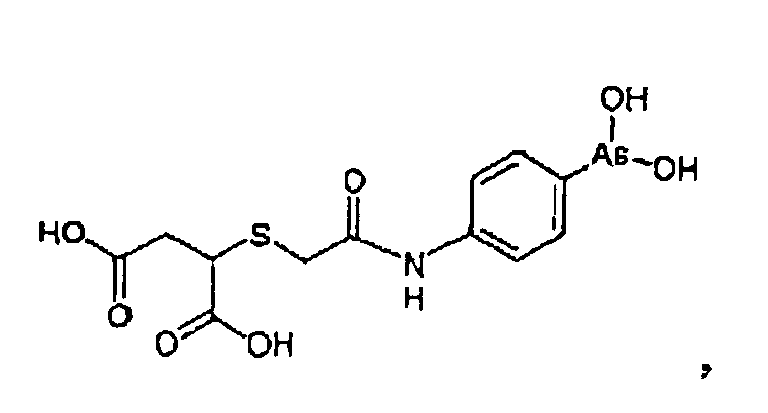


- A pharmaceutical composition comprising a compound according to claim 1 together with a pharmaceutically acceptable carrier, adjuvant and/or diluent.
- A compound according to claim 1 or a pharmaceutically acceptable salt thereof, or a pharmaceutical composition according to claim 2, for use in inducing mitochondrial permeability transition (MPT) in proliferating cells.
- A compound according to claim 1 or a pharmaceutically acceptable salt thereof, or a pharmaceutical composition according to claim 2, for use in inducing apoptosis in proliferating mammalian cells.
- A compound according to claim 1 or a pharmaceutically acceptable salt thereof, or a pharmaceutical composition according to claim 2, for use in inhibiting angiogenesis in a mammal.
- Use of a compound according to claim 1 or a pharmaceutically acceptable salt thereof in the manufacture of a medicament for inducing MPT in a vertebrate.
- Use of a compound according to claim 1 or a pharmaceutically acceptable salt thereof in the manufacture of a medicament for inducing apoptosis in proliferating mammalian cells.
- Use of a compound according to claim 1 or a pharmaceutically acceptable salt thereof in the manufacture of a medicament for inhibiting angiogenesis in a mammal.
Applications Claiming Priority (3)
| Application Number | Priority Date | Filing Date | Title |
|---|---|---|---|
| AU2002952526A AU2002952526A0 (en) | 2002-11-07 | 2002-11-07 | Induction of the mitochondrial permeability transition |
| AU2003906109A AU2003906109A0 (en) | 2003-11-05 | A Substantially Cell Membrane Impermeable Arsenoxide Compound and Use Thereof | |
| EP03810339A EP1563099B1 (en) | 2002-11-07 | 2003-11-07 | Induction of the mitochondrial permeability transition |
Related Parent Applications (2)
| Application Number | Title | Priority Date | Filing Date |
|---|---|---|---|
| EP03810339.6 Division | 2003-11-07 | ||
| EP03810339A Division EP1563099B1 (en) | 2002-11-07 | 2003-11-07 | Induction of the mitochondrial permeability transition |
Publications (3)
| Publication Number | Publication Date |
|---|---|
| EP2088206A2 true EP2088206A2 (en) | 2009-08-12 |
| EP2088206A3 EP2088206A3 (en) | 2009-09-16 |
| EP2088206B1 EP2088206B1 (en) | 2013-07-03 |
Family
ID=32313402
Family Applications (2)
| Application Number | Title | Priority Date | Filing Date |
|---|---|---|---|
| EP03810339A Expired - Lifetime EP1563099B1 (en) | 2002-11-07 | 2003-11-07 | Induction of the mitochondrial permeability transition |
| EP09004714.3A Expired - Lifetime EP2088206B1 (en) | 2002-11-07 | 2003-11-07 | Induction of the mitochondrial permeability transition |
Family Applications Before (1)
| Application Number | Title | Priority Date | Filing Date |
|---|---|---|---|
| EP03810339A Expired - Lifetime EP1563099B1 (en) | 2002-11-07 | 2003-11-07 | Induction of the mitochondrial permeability transition |
Country Status (9)
| Country | Link |
|---|---|
| US (2) | US20060166208A1 (en) |
| EP (2) | EP1563099B1 (en) |
| JP (1) | JP4426456B2 (en) |
| CN (1) | CN101863958B (en) |
| AT (1) | ATE437239T1 (en) |
| CA (1) | CA2504935C (en) |
| DE (1) | DE60328513D1 (en) |
| ES (1) | ES2330519T3 (en) |
| WO (1) | WO2004042079A1 (en) |
Cited By (1)
| Publication number | Priority date | Publication date | Assignee | Title |
|---|---|---|---|---|
| ITRM20120058A1 (en) * | 2012-02-20 | 2013-08-21 | Pisanelli Giovanni Codacci | SUGAR-BASED MOLECULES FAMILY FOR THERAPEUTIC USE AND ITS PRODUCTION PROCEDURE |
Families Citing this family (14)
| Publication number | Priority date | Publication date | Assignee | Title |
|---|---|---|---|---|
| AUPR874601A0 (en) * | 2001-11-08 | 2001-11-29 | Unisearch Limited | Selective targeting of apoptotic cells |
| EP1474128B1 (en) | 2002-01-07 | 2016-06-01 | Board Of Regents, The University Of Texas System | S-dimethylarsino-thiosuccinic acid, s-dimethylarsino-2-thiobenzoic acid, s-(dimethylarsino)glutathione as treatments for cancer |
| EP1563099B1 (en) | 2002-11-07 | 2009-07-22 | Newsouth Innovations Pty Limited | Induction of the mitochondrial permeability transition |
| US20110003321A1 (en) * | 2005-12-14 | 2011-01-06 | Kyushu University National University Corporation | Monitoring of Intercellular Mitochondorial Polarization |
| EP2069371B1 (en) * | 2006-11-01 | 2013-03-13 | NewSouth Innovations Pty Limited | Organo-arsenoxide compounds and use thereof |
| EP2097111B1 (en) * | 2006-11-08 | 2015-07-15 | Molecular Insight Pharmaceuticals, Inc. | Heterodimers of glutamic acid |
| WO2009043114A1 (en) * | 2007-10-04 | 2009-04-09 | Newsouth Innovations Pty Limited | Arsenoxide compound and method of use |
| EP2073004A1 (en) * | 2007-12-19 | 2009-06-24 | Helmholtz Zentrum München Deutsches Forschungszentrum für Gesundheit und Umwelt (GmbH) | Electrophoretic analysis of isolated mitochondria for the detection of cell or tissue damage |
| CN105874319B (en) * | 2013-12-03 | 2019-04-09 | 香港科技大学 | Specific detection and quantification of cardiolipin and isolated mitochondria using positively charged AIE fluorophores and methods for making the AIE fluorophores |
| JP6468781B2 (en) * | 2014-10-02 | 2019-02-13 | 株式会社ヘルスケアシステムズ | Method for evaluating mitochondrial membrane permeability, screening method for substances that suppress mitochondrial membrane permeability enhancement, screening method for substances that enhance mitochondrial membrane permeability, and inhibitor for enhancing mitochondrial membrane permeability |
| IL272705B2 (en) | 2017-10-17 | 2024-07-01 | Univ Wollongong | Anti-cancer agent |
| TWI841540B (en) * | 2018-10-29 | 2024-05-11 | 伍倫貢大學 | Anti-cancer agent and pharmaceutical composition and uses thereof |
| WO2020206503A1 (en) | 2019-04-12 | 2020-10-15 | Centenary Institute Of Cancer Medicine And Cell Biology | Conjugates and their use as imaging agents |
| EP3733197A1 (en) * | 2019-04-30 | 2020-11-04 | Stephen N. Pitcher | Anaerobic antioxidant composition |
Citations (1)
| Publication number | Priority date | Publication date | Assignee | Title |
|---|---|---|---|---|
| WO2001021628A1 (en) | 1999-09-20 | 2001-03-29 | Unisearch Limited | A substantially cell membrane impermeable compound and use thereof |
Family Cites Families (22)
| Publication number | Priority date | Publication date | Assignee | Title |
|---|---|---|---|---|
| US2370092A (en) * | 1942-05-04 | 1945-02-20 | Parke Davis & Co | Organic amine derivatives and method of obtaining same |
| US2409291A (en) * | 1942-05-19 | 1946-10-15 | Squibb & Sons Inc | Chemotherapeutic sulfanilamide derivatives |
| US2465308A (en) * | 1946-11-27 | 1949-03-22 | Hoffmann La Roche | Arsenoso compounds and method of preparation |
| US2664432A (en) * | 1947-01-28 | 1953-12-29 | Ernst A H Friedheim | Heterocyclic metal and sulfur organic compounds |
| US2553515A (en) * | 1948-12-11 | 1951-05-15 | Hoffmann La Roche | N-(p-arsenoso-benzyl)-urea |
| US2951766A (en) * | 1957-07-15 | 1960-09-06 | Le Roy A White | Antiseptic plastic |
| BE786573A (en) | 1971-07-20 | 1973-01-22 | Hoechst Ag | MEDICINAL PRODUCT BASED ON ORGANIC ARSENICAL COMPOUNDS AND BENZIMIDAZOLE DERIVATIVES |
| FR2640269B1 (en) * | 1988-12-13 | 1991-03-15 | Maes Ludo | ORGANOMETALLIC COMPOUNDS, METHODS OF PREPARATION THEREOF AND PHARMACEUTICAL COMPOSITIONS CONTAINING THEM |
| US5270196A (en) * | 1989-10-20 | 1993-12-14 | Bristol-Myers Squibb Company | Arylsulfatase from streptomyces |
| FR2684382B1 (en) * | 1991-12-02 | 1994-10-21 | Rhone Merieux | DRUGS AND PURE PREPARATIONS OF MELARSOMINE DICHLORHYDRATE, PROCESS FOR OBTAINING SAME AND INTERMEDIATE PRODUCTS OBTAINED. |
| WO1998051297A1 (en) | 1997-05-14 | 1998-11-19 | The University Of New Mexico | Inhibition of cell surface protein disulfide isomerase |
| US6875451B2 (en) | 1997-10-15 | 2005-04-05 | Polarx Biopharmaceuticals Inc. | Compositions and methods for the treatment of primary and metastatic neoplastic diseases using arsenic compounds |
| CN1233476A (en) | 1998-04-24 | 1999-11-03 | 陆道培 | Medicine for treating acute leukemia, and method for preparing same |
| FR2781674B1 (en) | 1998-07-31 | 2002-06-28 | Inst Nat Sante Rech Med | USE OF NEW CELL DEATH INDUCING AGENTS IN SYNERGY WITH INTERFERONS |
| CA2349444A1 (en) * | 1998-11-03 | 2000-05-11 | Mitokor | Production of adenine nucleotide translocator (ant), novel ant ligands and screening assays therefor |
| US6191123B1 (en) | 1999-03-19 | 2001-02-20 | Parker Hughes Institute | Organic-arsenic compounds |
| EP1210596A2 (en) * | 1999-06-22 | 2002-06-05 | Mitokor | Methods for assaying subcellular conditions using energy transfer |
| AUPR379801A0 (en) * | 2001-03-19 | 2001-04-12 | Unisearch Limited | Use of a substantially cell membrane impermeable compound for treating arthritis |
| AUPR598901A0 (en) | 2001-06-28 | 2001-07-19 | Unisearch Limited | Inhibition of angiogenesis by targeting protein tyrosine phosphatases |
| AUPR874601A0 (en) * | 2001-11-08 | 2001-11-29 | Unisearch Limited | Selective targeting of apoptotic cells |
| EP1563099B1 (en) | 2002-11-07 | 2009-07-22 | Newsouth Innovations Pty Limited | Induction of the mitochondrial permeability transition |
| EP2069371B1 (en) | 2006-11-01 | 2013-03-13 | NewSouth Innovations Pty Limited | Organo-arsenoxide compounds and use thereof |
-
2003
- 2003-11-07 EP EP03810339A patent/EP1563099B1/en not_active Expired - Lifetime
- 2003-11-07 EP EP09004714.3A patent/EP2088206B1/en not_active Expired - Lifetime
- 2003-11-07 CN CN2010101672934A patent/CN101863958B/en not_active Expired - Fee Related
- 2003-11-07 JP JP2004548941A patent/JP4426456B2/en not_active Expired - Fee Related
- 2003-11-07 US US10/534,922 patent/US20060166208A1/en not_active Abandoned
- 2003-11-07 WO PCT/AU2003/001483 patent/WO2004042079A1/en not_active Ceased
- 2003-11-07 DE DE60328513T patent/DE60328513D1/en not_active Expired - Lifetime
- 2003-11-07 ES ES03810339T patent/ES2330519T3/en not_active Expired - Lifetime
- 2003-11-07 AT AT03810339T patent/ATE437239T1/en not_active IP Right Cessation
- 2003-11-07 CA CA2504935A patent/CA2504935C/en not_active Expired - Fee Related
-
2013
- 2013-10-25 US US14/063,748 patent/US9353152B2/en not_active Expired - Fee Related
Patent Citations (1)
| Publication number | Priority date | Publication date | Assignee | Title |
|---|---|---|---|---|
| WO2001021628A1 (en) | 1999-09-20 | 2001-03-29 | Unisearch Limited | A substantially cell membrane impermeable compound and use thereof |
Non-Patent Citations (23)
| Title |
|---|
| ADES, E. W.; CANDAL, F. J.; SWERLICK, R. A.; GEORGE, V. G.; SUMMERS, S.; BOSSE, D. C.; LAWLEY, T. J.: "HMEC-1: Establishment of an immortalized human microvascular endothelial cell line", J. INVEST. DERMATOL., vol. 99, 1992, pages 683 - 690 |
| CARMELIET, P.; JAIN, R. K.: "Angiogenesis in cancer and other diseases", NATURE, vol. 407, 2000, pages 249 - 257 |
| CROMPTON, M.: "The mitochondrial permeability transition pore and its role in cell death", BIOCHEM. J., vol. 341, 1999, pages 233 - 249 |
| CROMPTON, M.; COSTI, A.; HAYAT, L.: "Evidence for the presence of a reversible Ca2+-dependent pore activated by oxidative stress in heart mitochondria", BIOCHEM. J., vol. 245, 1987, pages 915 - 918 |
| CROMPTON, M.; ELLINGER, H.; COSTI, A.: "Inhibition by cyclosporin A of a Ca2+-dependent pore in heart mitochondria activated by inorganic phosphate and oxidative stress", BIOCHEM. J., vol. 255, 1988, pages 357 - 360 |
| DONOGHUE, N.; YAM, P. T. W.; JIANG, X.; HOGG, P. J.: "Presence of closely spaced protein thiols on the surface of mammalian cells", PROTEIN SCI., vol. 9, 2000, pages 2436 - 2445 |
| FOLKMAN, J.: "Important Advances in Oncology", 1985, J.B. LIPPINCOTT COMPANY, article "Angiogenesis and its inhibitors", pages: 42 - 62 |
| HALESTRAP, A.P.; MCSTAY, G.P.; CLARKE, S.J.: "Biochimie", vol. 84, 2002, article "The permeability transition pore complex: another view", pages: 153 - 66 |
| HALESTRAP, A.P.; WOODFIELD, K.Y.; CONNERN, C.P.: "Oxidative stress, thiol reagents, and membrane potential modulate the mitochondrial permeability transition by affecting nucleotide binding to the adenine nucleotide translocase", J. BIOL. CHERN., vol. 272, 1997, pages 3346 - 3354 |
| HANAHAN, D.; FOLKMAN, J.: "Patterns and emerging mechanisms of the angiogenic switch during tumourigenesis", CELL, vol. 86, 1996, pages 353 - 364 |
| HAWORTH, R.A.; HUNTER, D.R.: "Control of the mitochondrial permeability transition pore by high- affinity ADP binding at the ADP/ATP translocase in permeabilized mitochondria", J. BIOENERG. BIOMEMBR., vol. 32, 2000, pages 91 - 96 |
| HAWORTH, R.A.; HUNTER, D.R.: "The Ca2+-induced membrane transition in mitochondria. ll. Nature of the Ca2+ trigger site", ARCH, BIOCHEM. BLOPHYS, vol. 195, 1979, pages 460 - 467 |
| HOLMGREN, L.; O'REILLY, M.S.; FOLKMAN, J.: "Dormancy of micrometastases: balanced proliferation and apoptosis in the presence of angiogenesis suppression", NATURE MED., vol. 1, 1995, pages 149 - 153 |
| HUNTER, D.R.; HAWORTH, R.A.: "The Ca2+-induced membrane transition in mitochondria. l. The protective mechanisms", ARCH. BIOCHEM. BIOPHYS., vol. 195, 1979, pages 453 - 459 |
| MAJIMA, E.; YAMAGUCHI, N.; CHUMAN, H.; SHINOHARA, Y.; ISHIDA, M.; GOTO, S.; TERADA, H.: "Binding of the fluorescein derivative eosin Y to the mitochondrial ADP/ATP carrier: characterization of the adenine nucleotide binding site", BIOCHEMISTRY, vol. 37, 1998, pages 424 - 432 |
| NGUYEN, M.; SHING, Y.; FOLKMAN, J.: "Quantitation of angiogenesis and antiangiogenesis in the chick embryo chorioallantoic membrane", MICROVASCULAR RES., vol. 47, 1994, pages 31 - 40 |
| OLIVER, M. H.; HARRISON, N. K.; BISHOP, J. E.; COLE, P. J.; LAURENT, G. J.: "A rapid and convenient assay for counting cells cultured in microwell plates: application for assessment of growth factors", J. CELL SCI., vol. 92, 1989, pages 513 - 518 |
| O'REILLY, M.S.; BOEHM, T.; SHING, Y.; FUKAI, N.; VASIOS, G.; LANE, W.S.; FLYNN, E.; BIRKHEAD, J.R.; OLSEN, B.R.; FOLKMAN J.: "Endostatin: an endogenous inhibitor of angiogenesis and tumour growth", CELL, vol. 88, 1997, pages 277 - 285 |
| PETIT, J.M.; MAFTAH, A.; RATINAUD, M.H.; JULIEN, R.: "10N-nonyl acridine orange interacts with cardiolipin and allows the quantification of this phospholipid in isolated mitochondria", EUR. J. BIOCHEM., vol. 209, 1992, pages 267 - 273 |
| SCHNAITMAN, C; GREENAWALT, J.W.: "Enzymatic properties of the inner and outer membranes of rat liver mitochondria", J. CELL BIOL., vol. 38, 1968, pages 158 - 75 |
| SMILEY, S.T.; REERS, M.; MOTTOLA-HARTSHORN, C.; LIN, M.; CHEN, A.; SMITH, T.W.; STEELE, G.D.; CHEN, L.B.: "Intracellular heterogeneity in mitochondrial membrane potentials revealed by a J-aggregate-forming lipophilic cation JC-1", PROC. NATL. ACAD. SCI. USA, vol. 88, 1991, pages 3671 - 3675 |
| VANDEN HOEK, T.L.; BECKER, L.B.; SHAO, Z.; LI, C.; SCHUMACKER, P.T.: "Reactive oxygen species released from mitochondria during brief hypoxia induce preconditioning in cardiomyocytes", J. BIOL. CHEM., vol. 29, 1998, pages 18092 - 18098 |
| ZANETTI, M.; ZWACKA, R.M.; ENGELHARDT, J.F.; KATUSIC, Z.S.; O'BRIEN, T.: "Superoxide anions and endothelial cell proliferation in normoglycemia and hyperglycemia", ARTERIOSCTER. THROMB. VASC. BIOL., vol. 21, 2001, pages 195 - 200 |
Cited By (2)
| Publication number | Priority date | Publication date | Assignee | Title |
|---|---|---|---|---|
| ITRM20120058A1 (en) * | 2012-02-20 | 2013-08-21 | Pisanelli Giovanni Codacci | SUGAR-BASED MOLECULES FAMILY FOR THERAPEUTIC USE AND ITS PRODUCTION PROCEDURE |
| WO2013124874A3 (en) * | 2012-02-20 | 2013-10-17 | Francesco Nicotra | Glucose derivatives bound to arsenic for use in the treatment of tumour |
Also Published As
| Publication number | Publication date |
|---|---|
| WO2004042079A1 (en) | 2004-05-21 |
| EP1563099A1 (en) | 2005-08-17 |
| CA2504935A1 (en) | 2004-05-21 |
| HK1132015A1 (en) | 2010-02-12 |
| HK1073868A1 (en) | 2005-10-21 |
| EP1563099A4 (en) | 2008-03-12 |
| ES2330519T3 (en) | 2009-12-11 |
| DE60328513D1 (en) | 2009-09-03 |
| EP1563099B1 (en) | 2009-07-22 |
| CN101863958A (en) | 2010-10-20 |
| JP2006518986A (en) | 2006-08-24 |
| US20060166208A1 (en) | 2006-07-27 |
| US9353152B2 (en) | 2016-05-31 |
| CA2504935C (en) | 2012-04-10 |
| JP4426456B2 (en) | 2010-03-03 |
| US20140121165A1 (en) | 2014-05-01 |
| EP2088206A3 (en) | 2009-09-16 |
| EP2088206B1 (en) | 2013-07-03 |
| CN101863958B (en) | 2012-07-18 |
| ATE437239T1 (en) | 2009-08-15 |
Similar Documents
| Publication | Publication Date | Title |
|---|---|---|
| US9353152B2 (en) | Induction of the mitochondrial permeability transition | |
| US7074766B1 (en) | Substantially cell membrane impermeable compound and use thereof | |
| US7186695B2 (en) | Treatment of arthritis with arsenoxide compounds | |
| WO2003003011A1 (en) | Modification of angiogenesis by targeting protein tyrosine phosphatases | |
| EP2943215A1 (en) | Peptides for the treatment of cancer | |
| AU2003275772B2 (en) | Induction of the mitochondrial permeability transition | |
| AU2008200304B2 (en) | Induction of the mitochondrial permeability transition | |
| HK1132015B (en) | Induction of the mitochondrial permeability transition | |
| HK1073868B (en) | Induction of the mitochondrial permeability transition | |
| AU2006328833A1 (en) | Novel compounds which interact with PEA-15 | |
| RU2630974C1 (en) | Conjugate of antitumour drugs with recombinant alpha-fetoprotein and its functional fragments and method of their producing | |
| AU2005201144B2 (en) | A substantially cell membrane impermeable compound and use thereof | |
| AU778781B2 (en) | A substantially cell membrane impermeable compound and use thereof | |
| Oliveira et al. | Improvement of the pharmacological properties of amidated kyotorphin by means of iodination |
Legal Events
| Date | Code | Title | Description |
|---|---|---|---|
| PUAI | Public reference made under article 153(3) epc to a published international application that has entered the european phase |
Free format text: ORIGINAL CODE: 0009012 |
|
| AC | Divisional application: reference to earlier application |
Ref document number: 1563099 Country of ref document: EP Kind code of ref document: P |
|
| AK | Designated contracting states |
Kind code of ref document: A2 Designated state(s): AT BE BG CH CY CZ DE DK EE ES FI FR GB GR HU IE IT LI LU MC NL PT RO SE SI SK TR |
|
| PUAL | Search report despatched |
Free format text: ORIGINAL CODE: 0009013 |
|
| RIC1 | Information provided on ipc code assigned before grant |
Ipc: G01N 33/50 20060101ALI20090721BHEP Ipc: G01N 33/574 20060101ALI20090721BHEP Ipc: C12Q 1/68 20060101AFI20090706BHEP Ipc: G01N 33/68 20060101ALI20090721BHEP Ipc: A61K 31/285 20060101ALI20090721BHEP Ipc: C07F 9/78 20060101ALI20090721BHEP |
|
| AK | Designated contracting states |
Kind code of ref document: A3 Designated state(s): AT BE BG CH CY CZ DE DK EE ES FI FR GB GR HU IE IT LI LU MC NL PT RO SE SI SK TR |
|
| REG | Reference to a national code |
Ref country code: HK Ref legal event code: DE Ref document number: 1132015 Country of ref document: HK |
|
| 17P | Request for examination filed |
Effective date: 20100316 |
|
| AKX | Designation fees paid |
Designated state(s): AT BE BG CH CY CZ DE DK EE ES FI FR GB GR HU IE IT LI LU MC NL PT RO SE SI SK TR |
|
| 17Q | First examination report despatched |
Effective date: 20110622 |
|
| GRAP | Despatch of communication of intention to grant a patent |
Free format text: ORIGINAL CODE: EPIDOSNIGR1 |
|
| GRAS | Grant fee paid |
Free format text: ORIGINAL CODE: EPIDOSNIGR3 |
|
| GRAA | (expected) grant |
Free format text: ORIGINAL CODE: 0009210 |
|
| AC | Divisional application: reference to earlier application |
Ref document number: 1563099 Country of ref document: EP Kind code of ref document: P |
|
| AK | Designated contracting states |
Kind code of ref document: B1 Designated state(s): AT BE BG CH CY CZ DE DK EE ES FI FR GB GR HU IE IT LI LU MC NL PT RO SE SI SK TR |
|
| REG | Reference to a national code |
Ref country code: GB Ref legal event code: FG4D |
|
| REG | Reference to a national code |
Ref country code: AT Ref legal event code: REF Ref document number: 619822 Country of ref document: AT Kind code of ref document: T Effective date: 20130715 Ref country code: CH Ref legal event code: EP |
|
| REG | Reference to a national code |
Ref country code: IE Ref legal event code: FG4D |
|
| REG | Reference to a national code |
Ref country code: DE Ref legal event code: R096 Ref document number: 60344442 Country of ref document: DE Effective date: 20130829 |
|
| PG25 | Lapsed in a contracting state [announced via postgrant information from national office to epo] |
Ref country code: SI Free format text: LAPSE BECAUSE OF FAILURE TO SUBMIT A TRANSLATION OF THE DESCRIPTION OR TO PAY THE FEE WITHIN THE PRESCRIBED TIME-LIMIT Effective date: 20130703 |
|
| REG | Reference to a national code |
Ref country code: AT Ref legal event code: MK05 Ref document number: 619822 Country of ref document: AT Kind code of ref document: T Effective date: 20130703 |
|
| REG | Reference to a national code |
Ref country code: NL Ref legal event code: VDEP Effective date: 20130703 |
|
| PG25 | Lapsed in a contracting state [announced via postgrant information from national office to epo] |
Ref country code: PT Free format text: LAPSE BECAUSE OF FAILURE TO SUBMIT A TRANSLATION OF THE DESCRIPTION OR TO PAY THE FEE WITHIN THE PRESCRIBED TIME-LIMIT Effective date: 20131104 Ref country code: BE Free format text: LAPSE BECAUSE OF FAILURE TO SUBMIT A TRANSLATION OF THE DESCRIPTION OR TO PAY THE FEE WITHIN THE PRESCRIBED TIME-LIMIT Effective date: 20130703 Ref country code: AT Free format text: LAPSE BECAUSE OF FAILURE TO SUBMIT A TRANSLATION OF THE DESCRIPTION OR TO PAY THE FEE WITHIN THE PRESCRIBED TIME-LIMIT Effective date: 20130703 Ref country code: CY Free format text: LAPSE BECAUSE OF FAILURE TO SUBMIT A TRANSLATION OF THE DESCRIPTION OR TO PAY THE FEE WITHIN THE PRESCRIBED TIME-LIMIT Effective date: 20130807 Ref country code: SE Free format text: LAPSE BECAUSE OF FAILURE TO SUBMIT A TRANSLATION OF THE DESCRIPTION OR TO PAY THE FEE WITHIN THE PRESCRIBED TIME-LIMIT Effective date: 20130703 |
|
| PG25 | Lapsed in a contracting state [announced via postgrant information from national office to epo] |
Ref country code: FI Free format text: LAPSE BECAUSE OF FAILURE TO SUBMIT A TRANSLATION OF THE DESCRIPTION OR TO PAY THE FEE WITHIN THE PRESCRIBED TIME-LIMIT Effective date: 20130703 Ref country code: ES Free format text: LAPSE BECAUSE OF FAILURE TO SUBMIT A TRANSLATION OF THE DESCRIPTION OR TO PAY THE FEE WITHIN THE PRESCRIBED TIME-LIMIT Effective date: 20131014 Ref country code: NL Free format text: LAPSE BECAUSE OF FAILURE TO SUBMIT A TRANSLATION OF THE DESCRIPTION OR TO PAY THE FEE WITHIN THE PRESCRIBED TIME-LIMIT Effective date: 20130703 Ref country code: GR Free format text: LAPSE BECAUSE OF FAILURE TO SUBMIT A TRANSLATION OF THE DESCRIPTION OR TO PAY THE FEE WITHIN THE PRESCRIBED TIME-LIMIT Effective date: 20131004 |
|
| REG | Reference to a national code |
Ref country code: HK Ref legal event code: GR Ref document number: 1132015 Country of ref document: HK |
|
| PG25 | Lapsed in a contracting state [announced via postgrant information from national office to epo] |
Ref country code: CY Free format text: LAPSE BECAUSE OF FAILURE TO SUBMIT A TRANSLATION OF THE DESCRIPTION OR TO PAY THE FEE WITHIN THE PRESCRIBED TIME-LIMIT Effective date: 20130703 |
|
| PG25 | Lapsed in a contracting state [announced via postgrant information from national office to epo] |
Ref country code: DK Free format text: LAPSE BECAUSE OF FAILURE TO SUBMIT A TRANSLATION OF THE DESCRIPTION OR TO PAY THE FEE WITHIN THE PRESCRIBED TIME-LIMIT Effective date: 20130703 Ref country code: EE Free format text: LAPSE BECAUSE OF FAILURE TO SUBMIT A TRANSLATION OF THE DESCRIPTION OR TO PAY THE FEE WITHIN THE PRESCRIBED TIME-LIMIT Effective date: 20130703 Ref country code: CZ Free format text: LAPSE BECAUSE OF FAILURE TO SUBMIT A TRANSLATION OF THE DESCRIPTION OR TO PAY THE FEE WITHIN THE PRESCRIBED TIME-LIMIT Effective date: 20130703 Ref country code: SK Free format text: LAPSE BECAUSE OF FAILURE TO SUBMIT A TRANSLATION OF THE DESCRIPTION OR TO PAY THE FEE WITHIN THE PRESCRIBED TIME-LIMIT Effective date: 20130703 Ref country code: RO Free format text: LAPSE BECAUSE OF FAILURE TO SUBMIT A TRANSLATION OF THE DESCRIPTION OR TO PAY THE FEE WITHIN THE PRESCRIBED TIME-LIMIT Effective date: 20130703 |
|
| PLBE | No opposition filed within time limit |
Free format text: ORIGINAL CODE: 0009261 |
|
| STAA | Information on the status of an ep patent application or granted ep patent |
Free format text: STATUS: NO OPPOSITION FILED WITHIN TIME LIMIT |
|
| PG25 | Lapsed in a contracting state [announced via postgrant information from national office to epo] |
Ref country code: IT Free format text: LAPSE BECAUSE OF FAILURE TO SUBMIT A TRANSLATION OF THE DESCRIPTION OR TO PAY THE FEE WITHIN THE PRESCRIBED TIME-LIMIT Effective date: 20130703 |
|
| 26N | No opposition filed |
Effective date: 20140404 |
|
| REG | Reference to a national code |
Ref country code: CH Ref legal event code: PL |
|
| REG | Reference to a national code |
Ref country code: DE Ref legal event code: R097 Ref document number: 60344442 Country of ref document: DE Effective date: 20140404 |
|
| PG25 | Lapsed in a contracting state [announced via postgrant information from national office to epo] |
Ref country code: CH Free format text: LAPSE BECAUSE OF NON-PAYMENT OF DUE FEES Effective date: 20131130 Ref country code: MC Free format text: LAPSE BECAUSE OF FAILURE TO SUBMIT A TRANSLATION OF THE DESCRIPTION OR TO PAY THE FEE WITHIN THE PRESCRIBED TIME-LIMIT Effective date: 20130703 Ref country code: LI Free format text: LAPSE BECAUSE OF NON-PAYMENT OF DUE FEES Effective date: 20131130 |
|
| REG | Reference to a national code |
Ref country code: IE Ref legal event code: MM4A |
|
| PG25 | Lapsed in a contracting state [announced via postgrant information from national office to epo] |
Ref country code: IE Free format text: LAPSE BECAUSE OF NON-PAYMENT OF DUE FEES Effective date: 20131107 |
|
| PG25 | Lapsed in a contracting state [announced via postgrant information from national office to epo] |
Ref country code: TR Free format text: LAPSE BECAUSE OF FAILURE TO SUBMIT A TRANSLATION OF THE DESCRIPTION OR TO PAY THE FEE WITHIN THE PRESCRIBED TIME-LIMIT Effective date: 20130703 |
|
| PG25 | Lapsed in a contracting state [announced via postgrant information from national office to epo] |
Ref country code: LU Free format text: LAPSE BECAUSE OF NON-PAYMENT OF DUE FEES Effective date: 20131107 Ref country code: BG Free format text: LAPSE BECAUSE OF FAILURE TO SUBMIT A TRANSLATION OF THE DESCRIPTION OR TO PAY THE FEE WITHIN THE PRESCRIBED TIME-LIMIT Effective date: 20130703 Ref country code: HU Free format text: LAPSE BECAUSE OF FAILURE TO SUBMIT A TRANSLATION OF THE DESCRIPTION OR TO PAY THE FEE WITHIN THE PRESCRIBED TIME-LIMIT; INVALID AB INITIO Effective date: 20031107 |
|
| REG | Reference to a national code |
Ref country code: FR Ref legal event code: PLFP Year of fee payment: 13 |
|
| REG | Reference to a national code |
Ref country code: FR Ref legal event code: PLFP Year of fee payment: 14 |
|
| REG | Reference to a national code |
Ref country code: FR Ref legal event code: PLFP Year of fee payment: 15 |
|
| PGFP | Annual fee paid to national office [announced via postgrant information from national office to epo] |
Ref country code: FR Payment date: 20171012 Year of fee payment: 15 Ref country code: DE Payment date: 20171031 Year of fee payment: 15 |
|
| PGFP | Annual fee paid to national office [announced via postgrant information from national office to epo] |
Ref country code: GB Payment date: 20171101 Year of fee payment: 15 |
|
| REG | Reference to a national code |
Ref country code: DE Ref legal event code: R119 Ref document number: 60344442 Country of ref document: DE |
|
| GBPC | Gb: european patent ceased through non-payment of renewal fee |
Effective date: 20181107 |
|
| PG25 | Lapsed in a contracting state [announced via postgrant information from national office to epo] |
Ref country code: FR Free format text: LAPSE BECAUSE OF NON-PAYMENT OF DUE FEES Effective date: 20181130 Ref country code: DE Free format text: LAPSE BECAUSE OF NON-PAYMENT OF DUE FEES Effective date: 20190601 |
|
| PG25 | Lapsed in a contracting state [announced via postgrant information from national office to epo] |
Ref country code: GB Free format text: LAPSE BECAUSE OF NON-PAYMENT OF DUE FEES Effective date: 20181107 |