EP2087630B1 - Apparatus, method and computer program product providing hybrid arq feedback for hsdpa mimo - Google Patents
Apparatus, method and computer program product providing hybrid arq feedback for hsdpa mimo Download PDFInfo
- Publication number
- EP2087630B1 EP2087630B1 EP07825242.6A EP07825242A EP2087630B1 EP 2087630 B1 EP2087630 B1 EP 2087630B1 EP 07825242 A EP07825242 A EP 07825242A EP 2087630 B1 EP2087630 B1 EP 2087630B1
- Authority
- EP
- European Patent Office
- Prior art keywords
- feedback information
- automatic repeat
- repeat request
- hybrid automatic
- request feedback
- Prior art date
- Legal status (The legal status is an assumption and is not a legal conclusion. Google has not performed a legal analysis and makes no representation as to the accuracy of the status listed.)
- Active
Links
Images


Classifications
-
- H—ELECTRICITY
- H04—ELECTRIC COMMUNICATION TECHNIQUE
- H04L—TRANSMISSION OF DIGITAL INFORMATION, e.g. TELEGRAPHIC COMMUNICATION
- H04L1/00—Arrangements for detecting or preventing errors in the information received
- H04L1/12—Arrangements for detecting or preventing errors in the information received by using return channel
- H04L1/16—Arrangements for detecting or preventing errors in the information received by using return channel in which the return channel carries supervisory signals, e.g. repetition request signals
- H04L1/18—Automatic repetition systems, e.g. Van Duuren systems
- H04L1/1829—Arrangements specially adapted for the receiver end
-
- H—ELECTRICITY
- H04—ELECTRIC COMMUNICATION TECHNIQUE
- H04L—TRANSMISSION OF DIGITAL INFORMATION, e.g. TELEGRAPHIC COMMUNICATION
- H04L1/00—Arrangements for detecting or preventing errors in the information received
- H04L1/02—Arrangements for detecting or preventing errors in the information received by diversity reception
- H04L1/06—Arrangements for detecting or preventing errors in the information received by diversity reception using space diversity
-
- H—ELECTRICITY
- H04—ELECTRIC COMMUNICATION TECHNIQUE
- H04L—TRANSMISSION OF DIGITAL INFORMATION, e.g. TELEGRAPHIC COMMUNICATION
- H04L1/00—Arrangements for detecting or preventing errors in the information received
- H04L1/08—Arrangements for detecting or preventing errors in the information received by repeating transmission, e.g. Verdan system
-
- H—ELECTRICITY
- H04—ELECTRIC COMMUNICATION TECHNIQUE
- H04L—TRANSMISSION OF DIGITAL INFORMATION, e.g. TELEGRAPHIC COMMUNICATION
- H04L1/00—Arrangements for detecting or preventing errors in the information received
- H04L1/12—Arrangements for detecting or preventing errors in the information received by using return channel
- H04L1/16—Arrangements for detecting or preventing errors in the information received by using return channel in which the return channel carries supervisory signals, e.g. repetition request signals
- H04L1/1607—Details of the supervisory signal
- H04L1/1614—Details of the supervisory signal using bitmaps
-
- H—ELECTRICITY
- H04—ELECTRIC COMMUNICATION TECHNIQUE
- H04L—TRANSMISSION OF DIGITAL INFORMATION, e.g. TELEGRAPHIC COMMUNICATION
- H04L1/00—Arrangements for detecting or preventing errors in the information received
- H04L1/12—Arrangements for detecting or preventing errors in the information received by using return channel
- H04L1/16—Arrangements for detecting or preventing errors in the information received by using return channel in which the return channel carries supervisory signals, e.g. repetition request signals
- H04L1/1607—Details of the supervisory signal
- H04L1/1671—Details of the supervisory signal the supervisory signal being transmitted together with control information
-
- H—ELECTRICITY
- H04—ELECTRIC COMMUNICATION TECHNIQUE
- H04L—TRANSMISSION OF DIGITAL INFORMATION, e.g. TELEGRAPHIC COMMUNICATION
- H04L1/00—Arrangements for detecting or preventing errors in the information received
- H04L1/12—Arrangements for detecting or preventing errors in the information received by using return channel
- H04L2001/125—Arrangements for preventing errors in the return channel
Definitions
- the exemplary and non-limiting embodiments of this invention relate generally to wireless communication systems, methods, devices and computer program products and, more specifically, relate to techniques that provide feedback related to hybrid automatic repeat request.
- MIMO only provides gains in good channel conditions, and thus a single stream transmission should be applied when the channel conditions are less than what will provide an adequate MIMO dual-stream transmission.
- the selected MIMO scheme was determined to be a dual code word system. This implies that each of the streams should have independent HARQ operation.
- the HSDPA delivers downlink HARQ feedback (ACK/NACKs) in the UL on a HS-DPCCH physical channel for use by a Node-B packet scheduler. Based on the provided feedback Node-B the scheduler makes decisions whether to perform re-transmissions for the failed transmission or whether to transmit a new packet for each stream separately.
- ACK/NACKs downlink HARQ feedback
- HARQ feedback As a 1-bit indication (ACK/NACK) that is (10,1) repetition coded.
- HS-DPCCH defines the HS-DPCCH channel structure for delivering the coded bits to the Node-B in the UL.
- the frame structure of the HS-DPCCH is defined in Figure 2A (shown herein also as Figure 2A ).
- the HS-DPCCH carries uplink feedback signaling related to downlink HS-DSCH transmission.
- the HS-DSCH-related feedback signaling consists of Hybrid-ARQ Acknowledgment (HARQ-ACK) and Channel-Quality Indication (CQI).
- HARQ-ACK Hybrid-ARQ Acknowledgment
- CQI Channel-Quality Indication
- Each sub-frame of length 2 ms (3*2560 chips) consists of 3 slots, each of length 2560 chips.
- the HARQ-ACK is carried in the first slot of the HS-DPCCH sub-frame.
- the CQI is carried in the second and third slot of a HS-DPCCH sub-frame.
- the HS-DPCCH can only exist together with an uplink DPCCH.
- the timing of the HS-DPCCH relative to the uplink DPCCH is shown in section 7.7 of 3GPP TS25.211.
- the spreading factor of the HS-DPCCH is 256. i.e., there are 10 bits per uplink HS-DPCCH slot.
- the slot format for the uplink HS-DPCCH is defined in Table 5A, shown herein as Figure 2B .
- the HS-DSCH transmission to a UE is indicated on the HS-SCCH.
- the HS-SCCH signaling for MIMO also indicates the number of applied streams. If the number of streams is detected incorrectly by the UE due to some reception error, the HARQ feedback in UL will reflect this reception error. In this case the UE would provide the HARQ feedback assuming wrong number of streams/code words.
- the Node-B might not have a means to detect such errors correctly unless the encoding of the HARQ feedback is designed to support that.
- the UE may detect only one HS-SCCH correctly. In such a case the UE would report a single ACK/NACK based on the detected stream.
- US2006093065 discloses a method for communicating a plurality of data streams between a transmitting device, having multiple transmit antennas, and a receiving device. The method comprises determining a set of power weightings, efficiently quantizing the power weightings, and providing the set of power weightings to the transmitting device. The transmitter may also implicitly signal the number of data streams which the receiver should feedback information for the amount of feedback requested. US2006093065 also discloses a means of determining the best codebook weights by combining the maximum power and maximum capacity criteria.
- US2003079169 discloses a method of providing an automatic repeat request (ARQ) that employs a selective repeat, enabling a transmitting medium access control (MAC) entity at a transmitting station to retransmit those MAC data whose previous transmissions have failed.
- the MAC data is organized into fixed-sized ARQ blocks, with said ARQ blocks being the building blocks of MAC service data units (MSDUs) or MSDU fragments.
- the transmitting MAC entity assigns a local number and a global number to each ARQ block to be transmitted and identifies ARQ blocks contained in a transmitted MAC protocol data unit (MPDU) by including into the MPDU the local and global numbers of the first ARQ block in that MPDU.
- a receiving MAC entity at a receiving station determines and acknowledges the reception status of the ARQ blocks received or anticipated.
- a wireless network 1 is adapted for communication with a UE 10 via a Node B (base station) 12.
- the network 1 may include a network control element NCE 14.
- the UE 10 includes a data processor (DP) 10A, a memory (MEM) 10B that stores a program (PROG) 10C, and a suitable radio frequency (RF) transceiver 10D for bidirectional wireless communications with the Node B 12, which also includes a DP 12A, a MEM 12B that stores a PROG 12C, and a suitable RF transceiver 12D.
- DP data processor
- MEM memory
- PROG program
- RF radio frequency
- the wireless link transmissions between the UE 10 and the Node-B 12 are assumed to conform to the 2x2 multi-antenna MIMO scheme, and thus there may actually be multiple transmit and receive antennas at each end of the link.
- the Node B 12 is coupled via a data path 13 to the NCE 14 that also includes a DP 14A and a MEM 14B storing an associated PROG 14C.
- the PROGs 10C and 12C are assumed to include program instructions that, when executed by the associated DP, enable the electronic device to operate in accordance with the exemplary embodiments of this invention, as will be discussed below in greater detail.
- HARQ unit 10E at the UE 10 and a packet scheduler (PS) unit 12D and HARQ information decoder 12F at the Node-B 12.
- PS packet scheduler
- HARQ information decoder 12F at the Node-B 12.
- the exemplary embodiments of this invention may be implemented by computer software executable by the DP 10A of the UE 10 and the DP 12A of the Node-B 12, or by hardware, or by a combination of software and hardware.
- the various embodiments of the UE 10 can include, but are not limited to, cellular telephones, personal digital assistants (PDAs) having wireless communication capabilities, portable computers having wireless communication capabilities, image capture devices such as digital cameras having wireless communication capabilities, gaming devices having wireless communication capabilities, music storage and playback appliances having wireless communication capabilities, Internet appliances permitting wireless Internet access and browsing, as well as portable units or terminals that incorporate combinations of such functions.
- PDAs personal digital assistants
- portable computers having wireless communication capabilities
- image capture devices such as digital cameras having wireless communication capabilities
- gaming devices having wireless communication capabilities
- music storage and playback appliances having wireless communication capabilities
- Internet appliances permitting wireless Internet access and browsing, as well as portable units or terminals that incorporate combinations of such functions.
- the MEMs 10B, 12B and 14B may be of any type suitable to the local technical environment and may be implemented using any suitable data storage technology, such as semiconductor-based memory devices, magnetic memory devices and systems, optical memory devices and systems, fixed memory and removable memory.
- the DPs 10A, 12A and 14A may be of any type suitable to the local technical environment, and may include one or more of general purpose computers, special purpose computers, microprocessors, digital signal processors (DSPs) and processors based on a multi-core processor architecture, as non-limiting examples.
- certain information that specifies the number of streams received (and actually detected) by the UE 10 is included in the HARQ feedback to the Node-B 12. This beneficially enables the Node-B 12 to unambiguously distinguish dual stream ACK/NACK signaling from only single stream ACK/NACK signaling in accordance with the encoding of the HARQ feedback information.
- the UL HARQ feedback is encoded by the HARQ unit 10E in such a way that the single stream and dual stream cases can be decoded unambiguously at the Node-B 12 by the decoder 12F, such as by the use of separate code words, single stream and dual stream cases.
- the information fields are: A, N, AA, AN, NA, NN, i.e., all possible combinations of single stream (the first two fields) and dual stream (the remaining four fields) ACK (A) and NACK (N).
- the codewords may be selected so that the probability of occurrence of undesired error events is reduced by, for example, optimizing the Hamming distances between the code words.
- the ACK and NACK indications for each stream are encoded by, for example, a (5,1) block code or repetition code, and DTX is used on an unused part of the message, i.e., if only single stream is received. That is, the other information field would be subject to DTX if UE 10 assumes that it has been only allocated a single stream.
- the code words may be: AX, NX, AA, AN, NA, NN where X indicates DTX in the bit field.
- the repetition code may be quite simple, such as by repeating either the 1 or 0.
- the use of block and repetition codes, and codecs therefor, per se is well known, and not further described herein.
- the exemplary embodiments of this invention provide methods, apparatus and computer program product(s) to indicate a number of detected streams in HARQ feedback to the Node-B 12.
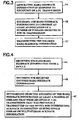
- a method and computer program product executed by a first device operates in response to a DL transmission from a second device to generate HARQ feedback information (Block 3A), to encode the HARQ feedback information to comprise (at least) an indication of a number of streams received in the DL transmission (Block 3B), and to transmit the encoded HARQ feedback information to the second device (Block 3C).
- encoding the HARQ feedback information comprises selecting a code word from a plurality of code words, e.g., from six code words: A, N, AA, AN, NA, NN, thereby providing all possible combinations of single stream and two stream ACK (A) and NACK (N) information.
- encoding the HARQ feedback information comprises using one of a (5,1) block code or a repetition code, and using DTX on an unused part of the message to provide the code word: AX, NX, AA, AN, NA, NN providing all possible combinations of single stream and two stream ACK (A) and NACK (N) information, where X indicates DTX in the bit field.
- the DL transmission is received from a HS-DSCH by a UE, and where the encoded HARQ feedback information is sent to a Node-B on a HS-DPCCH.
- a wireless link between the first and second devices comprises a 2x2 MIMO wireless link.
- a first device comprising a HARQ unit operable in response to a reception of DL transmission from a second device to generate HARQ feedback information that is encoded to comprise an indication of a number of streams received in the DL transmission.
- the HARQ unit has an output coupled to a transmitter for providing the encoded HARQ feedback information for transmission to the second device.
- the HARQ feedback information is encoded by selecting a code word from a plurality of code words: A, N, AA, AN, NA, NN, providing all possible combinations of single stream and two stream ACK (A) and NACK (N) information.
- the HARQ feedback information is encoded using one of a (5,1) block code or a repetition code, and by using DTX on an unused part of the message to provide the code word: AX, NX, AA, AN, NA, NN providing all possible combinations of single stream and two stream ACK (A) and NACK (N) information, where X indicates DTX in the bit field.
- the DL transmission is received from a HS-DSCH, and the encoded HARQ feedback information is sent to a Node-B on a HS-DPCCH.
- a wireless link between the first and second devices comprises a 2x2 MIMO wireless link.
- a method and computer program product executed by a first device operates to receive encoded HARQ feedback information from a second device (Block 4A), to decode the received encoded HARQ feedback information (Block 4B), and to determine from the encoding of the HARQ feedback information at least a number of streams that were received in a DL transmission that was previously transmitted to the second device (Block 4C).
- the received HARQ feedback information is encoded by selecting a code word from a plurality of code words: A, N, AA, AN, NA, NN, providing all possible combinations of single stream and two stream ACK (A) and NACK (N) information.
- the received HARQ feedback information is encoded using one of a (5,1) block code or a repetition code, and is sent using DTX on an unused part of the message to provide the code word: AX, NX, AA, AN, NA, NN providing all possible combinations of single stream and two stream ACK (A) and NACK (N) information, where X indicates DTX in the bit field.
- the DL transmission is received from a HS-DSCH by a UE
- the encoded HARQ feedback information is received by a Node-B on a HS-DPCCH.
- a wireless link between the first and second devices comprises a 2x2 MIMO wireless link.
- a Node-B that comprises a receiver to receive encoded HARQ feedback information from a UE, a decoder to decode the received encoded HARQ feedback information, and a determination unit to determine from the encoding of the HARQ feedback information at least a number of streams that were received in a DL transmission that was previously transmitted to the UE (Block 4C).
- the encoded code word in these various embodiments includes information on the number of code words (and the number of received streams) and HARQ ACK/NACK, and one code word is transmitted from the allowed set of code words.
- the various exemplary embodiments may be implemented in hardware or special purpose circuits, software, logic or any combination thereof.
- some aspects may be implemented in hardware, while other aspects may be implemented in firmware or software which may be executed by a controller, microprocessor or other computing device, although the invention is not limited thereto.
- firmware or software which may be executed by a controller, microprocessor or other computing device, although the invention is not limited thereto.
- While various aspects of the exemplary embodiments of this invention may be illustrated and described as block diagrams, flow charts, or using some other pictorial representation, it is well understood that these blocks, apparatus, systems, techniques or methods described herein may be implemented in, as non-limiting examples, hardware, software, firmware, special purpose circuits or logic, general purpose hardware or controller or other computing devices, or some combination thereof.
- connection means any connection or coupling, either direct or indirect, between two or more elements, and may encompass the presence of one or more intermediate elements between two elements that are “connected” or “coupled” together.
- the coupling or connection between the elements can be physical, logical, or a combination thereof.
- two elements may be considered to be “connected” or “coupled” together by the use of one or more wires, cables and/or printed electrical connections, as well as by the use of electromagnetic energy, such as electromagnetic energy having wavelengths in the radio frequency region, the microwave region and the optical (both visible and invisible) region, as several non-limiting and non-exhaustive examples.
Landscapes
- Engineering & Computer Science (AREA)
- Computer Networks & Wireless Communication (AREA)
- Signal Processing (AREA)
- Detection And Prevention Of Errors In Transmission (AREA)
- Mobile Radio Communication Systems (AREA)
- Radio Transmission System (AREA)
Description
- The exemplary and non-limiting embodiments of this invention relate generally to wireless communication systems, methods, devices and computer program products and, more specifically, relate to techniques that provide feedback related to hybrid automatic repeat request.
- The following abbreviations are herewith defined:
- 3GPP
- third generation partnership project
- ACK
- acknowledge
- ARQ
- automatic repeat request.
- CQI
- channel quality indication
- DL
- downlink (Node-B to UE)
- DTX
- discontinuous transmission
- FDD
- frequency division duplex
- HARQ
- hybrid ARQ
- HSDPA
- high speed downlink packet access
- HS-DPCCH
- high speed dedicated physical control channel
- HS-DSCH
- high speed downlink shared channel
- HS-PDSCH
- high speed physical downlink shared channel
- HS-SCCH
- shared control channel for HS-DSCH
- MCS
- modulation and coding scheme
- MIMO
- multiple input multiple output
- NACK
- not acknowledge, negative acknowledge
- Node-B
- base station
- UE
- user equipment
- UL
- uplink (UE to Node-B)
- UMTS
- universal mobile telephony system
- UTRA
- UMTS terrestrial radio access
- 3GPP RAN1 meeting #45 8.-12.5.2006 agreed to recommend specifying a 2x2 (dual transmit - dual receive antenna - dual code word) MIMO technique for HSDPA.
- As is known in the art, MIMO only provides gains in good channel conditions, and thus a single stream transmission should be applied when the channel conditions are less than what will provide an adequate MIMO dual-stream transmission.
- In addition to dual stream transmission the selected MIMO scheme was determined to be a dual code word system. This implies that each of the streams should have independent HARQ operation.
- The HSDPA delivers downlink HARQ feedback (ACK/NACKs) in the UL on a HS-DPCCH physical channel for use by a Node-B packet scheduler. Based on the provided feedback Node-B the scheduler makes decisions whether to perform re-transmissions for the failed transmission or whether to transmit a new packet for each stream separately.
- Referring to 3GPP TS25.212, V7.1.0 (2006-06), 3rd generation Partnership Project; Technical Specification Group Radio Access Network; Multiplexing and channel coding (FDD) (Release 7), section 4.7.1.1 describes the HARQ feedback as a 1-bit indication (ACK/NACK) that is (10,1) repetition coded.
- Referring to 3GPP TS25.211, V7.0.0 (2006-03), 3rd generation Partnership Project; Technical Specification Group Radio Access Network; Physical channels and mapping of transport channels onto physical channels (FDD) (Release 7), section 5.2.1.2 "HS-DPCCH" defines the HS-DPCCH channel structure for delivering the coded bits to the Node-B in the UL.
- As is described in section 5.2.1.2, the frame structure of the HS-DPCCH is defined in
Figure 2A (shown herein also asFigure 2A ). The HS-DPCCH carries uplink feedback signaling related to downlink HS-DSCH transmission. The HS-DSCH-related feedback signaling consists of Hybrid-ARQ Acknowledgment (HARQ-ACK) and Channel-Quality Indication (CQI). Each sub-frame of length 2 ms (3*2560 chips) consists of 3 slots, each oflength 2560 chips. The HARQ-ACK is carried in the first slot of the HS-DPCCH sub-frame. The CQI is carried in the second and third slot of a HS-DPCCH sub-frame. There is at most one HS-DPCCH on each radio link. The HS-DPCCH can only exist together with an uplink DPCCH. The timing of the HS-DPCCH relative to the uplink DPCCH is shown in section 7.7 of 3GPP TS25.211. - The spreading factor of the HS-DPCCH is 256. i.e., there are 10 bits per uplink HS-DPCCH slot. The slot format for the uplink HS-DPCCH is defined in Table 5A, shown herein as
Figure 2B . - There is at least one inherent potential problem in the functioning of HARQ signaling. More specifically, the HS-DSCH transmission to a UE is indicated on the HS-SCCH. The HS-SCCH signaling for MIMO also indicates the number of applied streams. If the number of streams is detected incorrectly by the UE due to some reception error, the HARQ feedback in UL will reflect this reception error. In this case the UE would provide the HARQ feedback assuming wrong number of streams/code words. The Node-B might not have a means to detect such errors correctly unless the encoding of the HARQ feedback is designed to support that.
- For example, if independent HS-SCCH signaling is provided for each HS-PDSCH (e.g., for each stream), the UE may detect only one HS-SCCH correctly. In such a case the UE would report a single ACK/NACK based on the detected stream.
- If the Node-B is unable to detect this situation where the UE erroneously assumes only a single stream being transmitted, then unnecessary higher layer re-transmissions may occur since a detection miss would be erroneously interpreted as an ACK.
- R1-062031, "HS-DPCCH in support of D-TxAA", August 28th-September 1st, Qualcomm Europe, makes a proposal that assumes two independent ACK/NACKs (for each stream), or only a single ACK/NACK. However, no indication on the number of streams received is provided.
- Reference can also be made to 3GPP TSG-RAN WG1, MIMO R7, Teleconference, September 27th, 2006, R1-MIMOR7-QCOM-09, ACK/NACK coding, Qualcomm Europe, which suggests the use of two separate (5,1) repetition block codes on the first ten bits of a HS-DPCCH TTI, and possibly interleaving the two blocks of (5,1) repetition codes.
-
US2006093065 discloses a method for communicating a plurality of data streams between a transmitting device, having multiple transmit antennas, and a receiving device. The method comprises determining a set of power weightings, efficiently quantizing the power weightings, and providing the set of power weightings to the transmitting device. The transmitter may also implicitly signal the number of data streams which the receiver should feedback information for the amount of feedback requested.US2006093065 also discloses a means of determining the best codebook weights by combining the maximum power and maximum capacity criteria. -
US2003079169 discloses a method of providing an automatic repeat request (ARQ) that employs a selective repeat, enabling a transmitting medium access control (MAC) entity at a transmitting station to retransmit those MAC data whose previous transmissions have failed. The MAC data is organized into fixed-sized ARQ blocks, with said ARQ blocks being the building blocks of MAC service data units (MSDUs) or MSDU fragments. The transmitting MAC entity assigns a local number and a global number to each ARQ block to be transmitted and identifies ARQ blocks contained in a transmitted MAC protocol data unit (MPDU) by including into the MPDU the local and global numbers of the first ARQ block in that MPDU. A receiving MAC entity at a receiving station determines and acknowledges the reception status of the ARQ blocks received or anticipated. - The foregoing and other problems are overcome, and other benefits are realized by the use of the exemplary embodiments of this invention.
- According to one embodiment of the present invention, there is provided a method as claimed in
claim 1. - According to another embodiment of the present invention, there is provided a memory medium as claimed in
claim 4. - According to another embodiment of the present invention, there is provided an apparatus as claimed in claim 7.
- According to another embodiment of the present invention, there is provided a method as claimed in
claim 10. - According to another embodiment of the present invention, there is provided an apparatus as claimed in
claim 13. - In the attached Drawing Figures:
-
Figure 1 shows a simplified block diagram of various electronic devices that are suitable for use in practicing the exemplary embodiments of this invention. -
Figure 2A reproducesFigure 2A of 3GPP TS25.211, V7.0.0 (2006-03), and shows the frame structure for the uplink HS-DPCCH. -
Figure 2B reproduces Table 5A of 3GPP TS25.211, V7.0.0 (2006-03), and shows the fields of the HS-DPCCH. -
Figure 3 is a logic flow diagram that is descriptive of the operation of a method, and a computer program product, of the UE shown inFigure 1 . -
Figure 4 is a logic flow diagram that is descriptive of the operation of a method, and a computer program product, of the Node-B shown inFigure 1 . - Reference is made first to
Figure 1 for illustrating a simplified block diagram of various electronic devices that are suitable for use in practicing the exemplary embodiments of this invention. InFigure 1 awireless network 1 is adapted for communication with aUE 10 via a Node B (base station) 12. Thenetwork 1 may include a networkcontrol element NCE 14. TheUE 10 includes a data processor (DP) 10A, a memory (MEM) 10B that stores a program (PROG) 10C, and a suitable radio frequency (RF) transceiver 10D for bidirectional wireless communications with theNode B 12, which also includes aDP 12A, aMEM 12B that stores aPROG 12C, and asuitable RF transceiver 12D. The wireless link transmissions between theUE 10 and the Node-B 12 are assumed to conform to the 2x2 multi-antenna MIMO scheme, and thus there may actually be multiple transmit and receive antennas at each end of the link. TheNode B 12 is coupled via adata path 13 to theNCE 14 that also includes aDP 14A and a MEM 14B storing an associatedPROG 14C. ThePROGs - Relatedly, also shown in
Figure 1 is aHARQ unit 10E at theUE 10 and a packet scheduler (PS)unit 12D andHARQ information decoder 12F at the Node-B 12. These units operate in accordance with the exemplary embodiments of this invention, as will be discussed below in greater detail. - In general, the exemplary embodiments of this invention may be implemented by computer software executable by the
DP 10A of theUE 10 and theDP 12A of the Node-B 12, or by hardware, or by a combination of software and hardware. - In general, the various embodiments of the
UE 10 can include, but are not limited to, cellular telephones, personal digital assistants (PDAs) having wireless communication capabilities, portable computers having wireless communication capabilities, image capture devices such as digital cameras having wireless communication capabilities, gaming devices having wireless communication capabilities, music storage and playback appliances having wireless communication capabilities, Internet appliances permitting wireless Internet access and browsing, as well as portable units or terminals that incorporate combinations of such functions. - The
MEMs DPs - In accordance with the exemplary embodiments of this invention certain information that specifies the number of streams received (and actually detected) by the
UE 10 is included in the HARQ feedback to the Node-B 12. This beneficially enables the Node-B 12 to unambiguously distinguish dual stream ACK/NACK signaling from only single stream ACK/NACK signaling in accordance with the encoding of the HARQ feedback information. - To achieve this it is preferred that the UL HARQ feedback is encoded by the
HARQ unit 10E in such a way that the single stream and dual stream cases can be decoded unambiguously at the Node-B 12 by thedecoder 12F, such as by the use of separate code words, single stream and dual stream cases. - As one non-limiting example of providing the HARQ feedback with code word information, effectively six code words are selected from a 10-bit long sequence to produce a code. The information fields are: A, N, AA, AN, NA, NN, i.e., all possible combinations of single stream (the first two fields) and dual stream (the remaining four fields) ACK (A) and NACK (N).
- To further refine the code structure, the codewords may be selected so that the probability of occurrence of undesired error events is reduced by, for example, optimizing the Hamming distances between the code words.
- As another non-limiting example of providing the HARQ feedback with code word information, the ACK and NACK indications for each stream are encoded by, for example, a (5,1) block code or repetition code, and DTX is used on an unused part of the message, i.e., if only single stream is received. That is, the other information field would be subject to DTX if
UE 10 assumes that it has been only allocated a single stream. In this case, and by example, the code words may be: AX, NX, AA, AN, NA, NN where X indicates DTX in the bit field. - With regard to the foregoing note that one suitable and non-limiting generation matrix may be simply: G=(11111). The repetition code may be quite simple, such as by repeating either the 1 or 0. The use of block and repetition codes, and codecs therefor, per se is well known, and not further described herein.
- As should be appreciated, by thus indicating the number of detected streams/code words in the HARQ feedback more reliable HARQ feedback signaling can be provided, thereby reducing or eliminating an occurrence of higher layer re-transmissions to the
UE 10. - Based on the foregoing it should be apparent that the exemplary embodiments of this invention provide methods, apparatus and computer program product(s) to indicate a number of detected streams in HARQ feedback to the Node-
B 12. - Referring now to
Figure 3 , a method and computer program product executed by a first device operates in response to a DL transmission from a second device to generate HARQ feedback information (Block 3A), to encode the HARQ feedback information to comprise (at least) an indication of a number of streams received in the DL transmission (Block 3B), and to transmit the encoded HARQ feedback information to the second device (Block 3C). - In the method and computer program product, there are a maximum of two streams, and where encoding the HARQ feedback information comprises selecting a code word from a plurality of code words, e.g., from six code words: A, N, AA, AN, NA, NN, thereby providing all possible combinations of single stream and two stream ACK (A) and NACK (N) information.
- In the method and computer program product, there are a maximum of two streams, and where encoding the HARQ feedback information comprises using one of a (5,1) block code or a repetition code, and using DTX on an unused part of the message to provide the code word: AX, NX, AA, AN, NA, NN providing all possible combinations of single stream and two stream ACK (A) and NACK (N) information, where X indicates DTX in the bit field.
- In the method and computer program product of the previous three paragraphs, where the DL transmission is received from a HS-DSCH by a UE, and where the encoded HARQ feedback information is sent to a Node-B on a HS-DPCCH.
- In the method and computer program product of the previous four paragraphs, where a wireless link between the first and second devices comprises a 2x2 MIMO wireless link.
- Also disclosed is a first device comprising a HARQ unit operable in response to a reception of DL transmission from a second device to generate HARQ feedback information that is encoded to comprise an indication of a number of streams received in the DL transmission. The HARQ unit has an output coupled to a transmitter for providing the encoded HARQ feedback information for transmission to the second device.
- In the first device of the previous paragraph there are a maximum of two streams, and the HARQ feedback information is encoded by selecting a code word from a plurality of code words: A, N, AA, AN, NA, NN, providing all possible combinations of single stream and two stream ACK (A) and NACK (N) information.
- In the first device there are a maximum of two streams, and the HARQ feedback information is encoded using one of a (5,1) block code or a repetition code, and by using DTX on an unused part of the message to provide the code word: AX, NX, AA, AN, NA, NN providing all possible combinations of single stream and two stream ACK (A) and NACK (N) information, where X indicates DTX in the bit field.
- In the first device of the previous three paragraphs, the DL transmission is received from a HS-DSCH, and the encoded HARQ feedback information is sent to a Node-B on a HS-DPCCH.
- In the first device of the previous four paragraphs, a wireless link between the first and second devices comprises a 2x2 MIMO wireless link.
- Referring now to
Figure 4 , a method and computer program product executed by a first device operates to receive encoded HARQ feedback information from a second device (Block 4A), to decode the received encoded HARQ feedback information (Block 4B), and to determine from the encoding of the HARQ feedback information at least a number of streams that were received in a DL transmission that was previously transmitted to the second device (Block 4C). - In the method and computer program product of the previous paragraph there are a maximum of two streams, and where the received HARQ feedback information is encoded by selecting a code word from a plurality of code words: A, N, AA, AN, NA, NN, providing all possible combinations of single stream and two stream ACK (A) and NACK (N) information.
- In the method and computer program product, there are a maximum of two streams, and where the received HARQ feedback information is encoded using one of a (5,1) block code or a repetition code, and is sent using DTX on an unused part of the message to provide the code word: AX, NX, AA, AN, NA, NN providing all possible combinations of single stream and two stream ACK (A) and NACK (N) information, where X indicates DTX in the bit field.
- In the method and computer program product of the previous three paragraphs, where the DL transmission is received from a HS-DSCH by a UE, and where the encoded HARQ feedback information is received by a Node-B on a HS-DPCCH.
- In the method and computer program product of the previous four paragraphs, where a wireless link between the first and second devices comprises a 2x2 MIMO wireless link.
- Also disclosed is a Node-B that comprises a receiver to receive encoded HARQ feedback information from a UE, a decoder to decode the received encoded HARQ feedback information, and a determination unit to determine from the encoding of the HARQ feedback information at least a number of streams that were received in a DL transmission that was previously transmitted to the UE (
Block 4C). - The various blocks shown in
Figure 3 and 4 may be viewed as method steps, and/or as operations that result from operation of computer program code, and/or as a plurality of coupled logic circuit elements constructed to carry out the associated function(s). - The encoded code word in these various embodiments includes information on the number of code words (and the number of received streams) and HARQ ACK/NACK, and one code word is transmitted from the allowed set of code words.
- In general, the various exemplary embodiments may be implemented in hardware or special purpose circuits, software, logic or any combination thereof. For example, some aspects may be implemented in hardware, while other aspects may be implemented in firmware or software which may be executed by a controller, microprocessor or other computing device, although the invention is not limited thereto. While various aspects of the exemplary embodiments of this invention may be illustrated and described as block diagrams, flow charts, or using some other pictorial representation, it is well understood that these blocks, apparatus, systems, techniques or methods described herein may be implemented in, as non-limiting examples, hardware, software, firmware, special purpose circuits or logic, general purpose hardware or controller or other computing devices, or some combination thereof.
- As such, it should be appreciated that at least some aspects of the exemplary embodiments of the inventions may be practiced in various components such as integrated circuit chips and modules. The design of integrated circuits is by and large a highly automated process. Complex and powerful software tools are available for converting a logic level design into a semiconductor circuit design ready to be fabricated on a semiconductor substrate. Such software tools can automatically route conductors and locate components on a semiconductor substrate using well established rules of design, as well as libraries of pre-stored design modules. Once the design for a semiconductor circuit has been completed, the resultant design, in a standardized electronic format (e.g., Opus, GDSII, or the like) may be transmitted to a semiconductor fabrication facility for fabrication as one or more integrated circuit devices.
- It should be noted that the terms "connected," "coupled," or any variant thereof, mean any connection or coupling, either direct or indirect, between two or more elements, and may encompass the presence of one or more intermediate elements between two elements that are "connected" or "coupled" together. The coupling or connection between the elements can be physical, logical, or a combination thereof. As employed herein two elements may be considered to be "connected" or "coupled" together by the use of one or more wires, cables and/or printed electrical connections, as well as by the use of electromagnetic energy, such as electromagnetic energy having wavelengths in the radio frequency region, the microwave region and the optical (both visible and invisible) region, as several non-limiting and non-exhaustive examples.
- Various modifications and adaptations to the foregoing exemplary embodiments of this invention may become apparent to those skilled in the relevant arts in view of the foregoing description, when read in conjunction with the accompanying drawings. However, any and all modifications will still fall within the scope of the non-limiting and exemplary embodiments of this invention.
- Furthermore, some of the features of the various non-limiting and exemplary embodiments of this invention may be used to advantage without the corresponding use of other features. As such, the foregoing description should be considered as merely illustrative of the principles, teachings and exemplary embodiments of this invention, and not in limitation thereof.
Claims (15)
- A method for transmission, comprising:generating hybrid automatic repeat request feedback information at a first device (10) in response to a downlink transmission on one or more multiple input multiple output streams from a second device (12);encoding the hybrid automatic repeat request feedback information so as to comprise an indication of a number of multiple input multiple output streams received in the downlink transmission; andtransmitting the encoded hybrid automatic repeat request feedback information to the second device (12).
- The method of claim 1, where there are two streams, and where encoding the hybrid automatic repeat request feedback information comprises selecting a code word from a plurality of code words : A, N, AA, AN, NA, NN, thereby including all possible combinations of single stream and two stream acknowledge (A) and negative acknowledge (N) information.
- The method of claim 1, where there are two streams, and where encoding the hybrid automatic repeat request feedback information comprises using one of a (5,1) block code or a repetition code, and using discontinuous transmission DTX on an unused part of a message to provide the code word: AX, NX, AA, AN, NA, NN, thereby providing all possible combinations of single stream and two stream acknowledge (A) and negative acknowledge (N) information, where X indicates DTX in a bit field.
- A memory medium (10B) that stores computer program (10C) instructions, the execution of which, when run on a data processor (10A), results in operations that comprise:generating hybrid automatic repeat request feedback information at a first device (10) in response to a downlink transmission on one or more multiple input multiple output streams from a second device (12);encoding the hybrid automatic repeat request feedback information so as to comprise an indication of a number of multiple input multiple output streams received in the downlink transmission; andtransmitting the encoded hybrid automatic repeat request feedback information to the second device (12).
- The memory medium (10B) of claim 4, where the downlink transmission is received from a high speed downlink shared channel, and where the operation of transmitting the encoded hybrid automatic repeat request feedback information to the second device uses a high speed dedicated physical control channel.
- The memory medium (10B) of claim 4, where a wireless link between the first (10) and second (12) devices comprises a 2x2 multiple input multiple output wireless link.
- An apparatus (10) for transmission, comprising:a receiver (10D) configurable to receive a downlink transmission on one or more multiple input multiple output streams from a device (12);a feedback generator configurable to generate hybrid automatic repeat request feedback information in response to the received downlink transmission;an encoder configurable to encode the generated hybrid automatic repeat request feedback information so as to comprise an indication of a number of multiple input multiple output streams received in the downlink transmission; anda transmitter (10D) configurable to transmit the encoded hybrid automatic repeat request feedback information to the device (12).
- The apparatus of claim 7, where there are two streams, and where said encoder selects a code word from a plurality of code words: A, N, AA, AN, NA, NN, thereby providing all possible combinations of single stream and two stream acknowledge (A) and negative acknowledge (N) information.
- The apparatus of claim 7, where one or more of said receiver (10D), said feedback generator, said encoder and said transmitter (10D) are embodied in at least one integrated circuit.
- A method for reception, comprising:transmitting one or more multiple input multiple output streams in a downlink transmission from a first device (12) to a second device (10);receiving encoded hybrid automatic repeat request feedback information from the second device (10);decoding the received hybrid automatic repeat request feedback information at the first device (12); anddetermining from the encoding of the hybrid automatic repeat request feedback information at least a number of multiple input multiple output streams that were actually received by the first device (12) from the downlink transmission.
- The method of claim 10, where a wireless link between the first device (12) and the second device (10) comprises a 2x2 multiple input multiple output wireless link.
- The method of claim 10, executed at least in part by operation of a data processor (12A) on computer program (12C) instructions that are stored in a memory medium (12B) that comprises part of a base station (12).
- An apparatus (12) for reception, comprising:a transmitter (12D) configurable to transmit one or more multiple input multiple output streams in a downlink transmission to a receiving device (10);a receiver (12D) configurable to receive encoded hybrid automatic repeat request feedback information from the receiving device (10);a decoder configurable to decode the received encoded hybrid automatic repeat request feedback information; anda data processor (12A) coupled to said decoder and configurable by execution of computer program (12C) instructions to determine, from the encoding of the hybrid automatic repeat request feedback information, at least a number of multiple input multiple output streams that were actually received by the receiving device (10) from the downlink transmission.
- The apparatus (12) of claim 13, where the downlink transmission is sent over a high speed downlink shared channel, where the encoded hybrid automatic repeat request feedback information is received from a high speed dedicated physical control channel, where a wireless link between the apparatus (12) and the receiving device (10) comprises a 2x2 multiple input multiple output wireless link, where there are two streams, where the hybrid automatic repeat request feedback information is received encoded by a code word selected from a plurality of code words: A, N, AA, AN, NA, NN, and where said data processor (12A) considers all possible combinations of single stream and two stream acknowledge (A) and negative acknowledge (N) information.
- The apparatus (12) of claim 13, where the downlink transmission is sent over a high speed downlink shared channel, where the encoded hybrid automatic repeat request feedback information is received from a high speed dedicated physical control channel, where a wireless link between the apparatus (12) and the receiving device (10) comprises a 2x2 multiple input multiple output wireless link, where there are two streams, where the hybrid automatic repeat request feedback information is received encoded using one of a (5,1) block code or a repetition code, where discontinuous transmission DTX is used on an unused part of a message, to provide the code word: AX, NX, AA, AN, NA, NN, and where said data processor (12A) considers all possible combinations of single stream and two stream acknowledge (A) and negative acknowledge (N) information, where X indicates DTX in a bit field.
Applications Claiming Priority (2)
| Application Number | Priority Date | Filing Date | Title |
|---|---|---|---|
| US84949706P | 2006-10-02 | 2006-10-02 | |
| PCT/IB2007/002903 WO2008041098A2 (en) | 2006-10-02 | 2007-10-02 | Apparatus, method and computer program product providing hybrid arq feedback for hsdpa mimo |
Publications (2)
| Publication Number | Publication Date |
|---|---|
| EP2087630A2 EP2087630A2 (en) | 2009-08-12 |
| EP2087630B1 true EP2087630B1 (en) | 2016-11-23 |
Family
ID=39145182
Family Applications (1)
| Application Number | Title | Priority Date | Filing Date |
|---|---|---|---|
| EP07825242.6A Active EP2087630B1 (en) | 2006-10-02 | 2007-10-02 | Apparatus, method and computer program product providing hybrid arq feedback for hsdpa mimo |
Country Status (5)
| Country | Link |
|---|---|
| US (1) | US7864738B2 (en) |
| EP (1) | EP2087630B1 (en) |
| DK (1) | DK2087630T3 (en) |
| PL (1) | PL2087630T3 (en) |
| WO (1) | WO2008041098A2 (en) |
Families Citing this family (28)
| Publication number | Priority date | Publication date | Assignee | Title |
|---|---|---|---|---|
| MX2009004655A (en) | 2006-10-31 | 2009-06-18 | Interdigital Tech Corp | Providing feedback information to target node b during a serving cell change. |
| EP1973361B1 (en) * | 2007-03-20 | 2010-08-25 | Alcatel Lucent | A method for scheduling of service data in downlink and base station therefor |
| US8705575B2 (en) * | 2008-07-03 | 2014-04-22 | Telefonaktiebolaget L M Ericsson (Publ) | Methods and arrangements in a wireless communication system using multi-codeword transmission and ACK/NACK compression |
| CN101668336B (en) * | 2008-09-04 | 2012-05-02 | 电信科学技术研究院 | Method and equipment for MIMO transmission of high-speed packet access evolution system |
| US7924754B2 (en) * | 2008-09-23 | 2011-04-12 | Telefonaktiebolaget L M Ericsson | Multiple carrier acknowledgment signaling |
| US8687619B2 (en) * | 2008-11-04 | 2014-04-01 | Telefonaktiebolaget Lm Ericsson (Publ) | System and method of downlinking data to an unsynchronized user equipment in a telecommunications network |
| WO2010099653A1 (en) | 2009-03-03 | 2010-09-10 | 深圳华为通信技术有限公司 | Signal encoding method and apparatus, and combination feedback signal encoding method |
| AU2014200315B2 (en) * | 2009-03-03 | 2015-08-06 | Huawei Technologies Co., Ltd. | Signal encoding method and device, method for encoding joint feedback signal |
| EP2408134B1 (en) * | 2009-03-17 | 2013-05-15 | Huawei Technologies Co., Ltd. | Feedback signal coding method and apparatus |
| US8345614B2 (en) * | 2009-03-17 | 2013-01-01 | Qualcomm Incorporated | Single channelization code HARQ feedback for DC-HSDPA +MIMO |
| US8767797B2 (en) | 2009-10-05 | 2014-07-01 | Qualcomm Incorporated | Apparatus and method for providing HARQ feedback in a multi-carrier wireless communication system |
| CN102098140A (en) * | 2009-12-10 | 2011-06-15 | 华为技术有限公司 | Data transmission method, equipment and system in uplink MIMO mode |
| CN102714527B (en) | 2010-01-22 | 2015-04-01 | Lg电子株式会社 | Method and device for providing downlink control information in MIMO wireless communication system |
| BR112012020260A2 (en) * | 2010-02-12 | 2016-05-03 | Interdigital Patent Holdings | send feedback to multiple receive link carriers |
| US8582638B2 (en) * | 2010-04-30 | 2013-11-12 | Blackberry Limited | System and method for channel state feedback in carrier aggregation |
| CN102271033B (en) * | 2010-06-04 | 2015-05-13 | 中兴通讯股份有限公司 | Method and device for implementing hybrid automatic repeat request memory dynamic scheduling |
| US8737299B2 (en) | 2010-06-18 | 2014-05-27 | Mediatek Inc. | Resource allocation of uplink HARQ feedback channel for carrier aggregation in OFDMA systems |
| AU2011308576C1 (en) | 2010-10-01 | 2016-03-03 | Interdigital Patent Holdings, Inc. | Systems and methods for uplink feedback for high-speed downlink packet access (HSDPA) |
| US20130195008A1 (en) * | 2011-08-12 | 2013-08-01 | Interdigital Patent Holdings, Inc. | Providing Feedback For Multiple Downlink Multiple-Input-Multiple-Output (MIMO) Streams |
| WO2013067405A1 (en) | 2011-11-04 | 2013-05-10 | Interdigital Patent Holdings, Inc. | Methods of multiple point hsdpa transmission in single or different frequencies |
| EP2777201A1 (en) * | 2011-11-09 | 2014-09-17 | Telefonaktiebolaget L M Ericsson (publ) | Robust harq-ack design for mf-hsdpa |
| EP2829000B1 (en) * | 2012-03-19 | 2017-05-31 | Telefonaktiebolaget LM Ericsson (publ) | Methods using harq-ack codebooks for multi-flow communications and related wireless terminals and radio network nodes |
| WO2014027939A1 (en) * | 2012-08-13 | 2014-02-20 | Telefonaktiebolaget L M Ericsson (Publ) | Methods of receiving retransmissions including discontinuous transmission indicators and related devices |
| US9780924B2 (en) | 2014-10-13 | 2017-10-03 | Telefonaktiebolaget Lm Ericsson (Publ) | HARQ feedback reporting based on mirrored information |
| JP6423079B2 (en) | 2014-10-13 | 2018-11-14 | テレフオンアクチーボラゲット エルエム エリクソン(パブル) | Flexible setting of HARQ process feedback |
| CN112910607A (en) * | 2016-01-11 | 2021-06-04 | 中兴通讯股份有限公司 | Method and device for sending uplink control information |
| CN111865509B (en) * | 2019-04-30 | 2022-04-29 | 华为技术有限公司 | A communication method and device |
| US11902967B2 (en) * | 2020-10-22 | 2024-02-13 | Acer Incorporated | Device of handling a HARQ retransmission |
Family Cites Families (7)
| Publication number | Priority date | Publication date | Assignee | Title |
|---|---|---|---|---|
| US7020822B2 (en) * | 2001-08-02 | 2006-03-28 | Texas Instruments Incorporated | Automatic repeat request for centralized channel access |
| US7616698B2 (en) | 2003-11-04 | 2009-11-10 | Atheros Communications, Inc. | Multiple-input multiple output system and method |
| US7310499B2 (en) * | 2004-02-17 | 2007-12-18 | Telefonktiebolaget Lm Ericsson (Publ) | Method, apparatus and system for handling unreliable feedback information in a wireless network |
| JP2006115358A (en) * | 2004-10-15 | 2006-04-27 | Ntt Docomo Inc | Packet transmission control apparatus and packet transmission control method |
| US7139328B2 (en) | 2004-11-04 | 2006-11-21 | Motorola, Inc. | Method and apparatus for closed loop data transmission |
| US8151154B2 (en) * | 2005-12-16 | 2012-04-03 | Telefonaktiebolaget L M Ericsson (Publ) | Method and a transmitter/receiver for reduced signaling in a retransmission system using hybrid automatic repeat |
| CN1983914B (en) * | 2005-12-16 | 2011-04-13 | 株式会社Ntt都科摩 | HARQ method and system |
-
2007
- 2007-10-02 WO PCT/IB2007/002903 patent/WO2008041098A2/en not_active Ceased
- 2007-10-02 EP EP07825242.6A patent/EP2087630B1/en active Active
- 2007-10-02 US US11/906,434 patent/US7864738B2/en active Active
- 2007-10-02 DK DK07825242.6T patent/DK2087630T3/en active
- 2007-10-02 PL PL07825242T patent/PL2087630T3/en unknown
Also Published As
| Publication number | Publication date |
|---|---|
| WO2008041098A3 (en) | 2008-07-10 |
| WO2008041098A2 (en) | 2008-04-10 |
| DK2087630T3 (en) | 2017-01-30 |
| US20080144561A1 (en) | 2008-06-19 |
| EP2087630A2 (en) | 2009-08-12 |
| PL2087630T3 (en) | 2017-04-28 |
| US7864738B2 (en) | 2011-01-04 |
Similar Documents
| Publication | Publication Date | Title |
|---|---|---|
| US7864738B2 (en) | Apparatus, method and computer program product providing hybrid ARQ feedback for HSDPA MIMO | |
| KR101087117B1 (en) | Acknowledgment Transmit Power in Uplink | |
| RU2511540C2 (en) | Perfected detection of dtx ack/nack | |
| US9893844B2 (en) | Method and system for supporting multiple hybrid automatic repeat request processes per transmission time interval | |
| CN102318254B (en) | Method for requesting retransmission, method for retransmission and devices thereof | |
| KR101617755B1 (en) | Multiple carrier acknowledgment signaling | |
| US7289452B2 (en) | Transport block size (TBS) signaling enhancement | |
| EP1852996A2 (en) | Error detection and retransmission methods and devices for communication systems | |
| US20070230516A1 (en) | Method and System for Providing Autonomous Retransmissions in a Wireless Communication System | |
| JP2007525043A (en) | Method and apparatus for effective automatic repeat request | |
| TW200847649A (en) | Methods and systems for codeword to layer mapping | |
| CN100581075C (en) | Transmission method of downlink control signal in MIMO system | |
| US20060280159A1 (en) | Method and apparatus for voice communication | |
| CA2688579A1 (en) | Method and apparatus for reusing packet data control assignment bits for resource allocation indications | |
| CN102714585B (en) | For the method and apparatus that uses at least four carrier waves to communicate | |
| WO2010124418A1 (en) | Method and system for controlling the data repeat | |
| US8305957B2 (en) | Apparatus, method and computer program product providing per-UE signaling technique for separately coded users | |
| CN102882664B (en) | For providing the method and system of autonomous retransmissions in a wireless communication system | |
| CA2623280C (en) | Transport block size (tbs) signaling enhancement |
Legal Events
| Date | Code | Title | Description |
|---|---|---|---|
| PUAI | Public reference made under article 153(3) epc to a published international application that has entered the european phase |
Free format text: ORIGINAL CODE: 0009012 |
|
| 17P | Request for examination filed |
Effective date: 20090430 |
|
| AK | Designated contracting states |
Kind code of ref document: A2 Designated state(s): AT BE BG CH CY CZ DE DK EE ES FI FR GB GR HU IE IS IT LI LT LU LV MC MT NL PL PT RO SE SI SK TR |
|
| 17Q | First examination report despatched |
Effective date: 20090820 |
|
| DAX | Request for extension of the european patent (deleted) | ||
| RAP1 | Party data changed (applicant data changed or rights of an application transferred) |
Owner name: NOKIA CORPORATION |
|
| RAP1 | Party data changed (applicant data changed or rights of an application transferred) |
Owner name: NOKIA TECHNOLOGIES OY |
|
| GRAP | Despatch of communication of intention to grant a patent |
Free format text: ORIGINAL CODE: EPIDOSNIGR1 |
|
| RIC1 | Information provided on ipc code assigned before grant |
Ipc: H04L 1/16 20060101ALI20151207BHEP Ipc: H04B 7/04 20060101ALI20151207BHEP Ipc: H04L 1/12 20060101ALI20151207BHEP Ipc: H04L 1/08 20060101AFI20151207BHEP Ipc: H04L 1/18 20060101ALI20151207BHEP |
|
| INTG | Intention to grant announced |
Effective date: 20151223 |
|
| GRAP | Despatch of communication of intention to grant a patent |
Free format text: ORIGINAL CODE: EPIDOSNIGR1 |
|
| INTG | Intention to grant announced |
Effective date: 20160601 |
|
| INTG | Intention to grant announced |
Effective date: 20160608 |
|
| GRAS | Grant fee paid |
Free format text: ORIGINAL CODE: EPIDOSNIGR3 |
|
| GRAA | (expected) grant |
Free format text: ORIGINAL CODE: 0009210 |
|
| AK | Designated contracting states |
Kind code of ref document: B1 Designated state(s): AT BE BG CH CY CZ DE DK EE ES FI FR GB GR HU IE IS IT LI LT LU LV MC MT NL PL PT RO SE SI SK TR |
|
| REG | Reference to a national code |
Ref country code: GB Ref legal event code: FG4D |
|
| REG | Reference to a national code |
Ref country code: CH Ref legal event code: EP |
|
| REG | Reference to a national code |
Ref country code: IE Ref legal event code: FG4D |
|
| REG | Reference to a national code |
Ref country code: AT Ref legal event code: REF Ref document number: 848739 Country of ref document: AT Kind code of ref document: T Effective date: 20161215 |
|
| REG | Reference to a national code |
Ref country code: DE Ref legal event code: R096 Ref document number: 602007048899 Country of ref document: DE |
|
| REG | Reference to a national code |
Ref country code: DE Ref legal event code: R096 Ref document number: 602007048899 Country of ref document: DE |
|
| REG | Reference to a national code |
Ref country code: NL Ref legal event code: FP |
|
| REG | Reference to a national code |
Ref country code: DK Ref legal event code: T3 Effective date: 20170127 |
|
| PG25 | Lapsed in a contracting state [announced via postgrant information from national office to epo] |
Ref country code: LV Free format text: LAPSE BECAUSE OF FAILURE TO SUBMIT A TRANSLATION OF THE DESCRIPTION OR TO PAY THE FEE WITHIN THE PRESCRIBED TIME-LIMIT Effective date: 20161123 |
|
| REG | Reference to a national code |
Ref country code: LT Ref legal event code: MG4D |
|
| REG | Reference to a national code |
Ref country code: AT Ref legal event code: MK05 Ref document number: 848739 Country of ref document: AT Kind code of ref document: T Effective date: 20161123 |
|
| PG25 | Lapsed in a contracting state [announced via postgrant information from national office to epo] |
Ref country code: SE Free format text: LAPSE BECAUSE OF FAILURE TO SUBMIT A TRANSLATION OF THE DESCRIPTION OR TO PAY THE FEE WITHIN THE PRESCRIBED TIME-LIMIT Effective date: 20161123 Ref country code: LT Free format text: LAPSE BECAUSE OF FAILURE TO SUBMIT A TRANSLATION OF THE DESCRIPTION OR TO PAY THE FEE WITHIN THE PRESCRIBED TIME-LIMIT Effective date: 20161123 Ref country code: GR Free format text: LAPSE BECAUSE OF FAILURE TO SUBMIT A TRANSLATION OF THE DESCRIPTION OR TO PAY THE FEE WITHIN THE PRESCRIBED TIME-LIMIT Effective date: 20170224 |
|
| PG25 | Lapsed in a contracting state [announced via postgrant information from national office to epo] |
Ref country code: ES Free format text: LAPSE BECAUSE OF FAILURE TO SUBMIT A TRANSLATION OF THE DESCRIPTION OR TO PAY THE FEE WITHIN THE PRESCRIBED TIME-LIMIT Effective date: 20161123 Ref country code: FI Free format text: LAPSE BECAUSE OF FAILURE TO SUBMIT A TRANSLATION OF THE DESCRIPTION OR TO PAY THE FEE WITHIN THE PRESCRIBED TIME-LIMIT Effective date: 20161123 Ref country code: PT Free format text: LAPSE BECAUSE OF FAILURE TO SUBMIT A TRANSLATION OF THE DESCRIPTION OR TO PAY THE FEE WITHIN THE PRESCRIBED TIME-LIMIT Effective date: 20170323 Ref country code: AT Free format text: LAPSE BECAUSE OF FAILURE TO SUBMIT A TRANSLATION OF THE DESCRIPTION OR TO PAY THE FEE WITHIN THE PRESCRIBED TIME-LIMIT Effective date: 20161123 |
|
| PG25 | Lapsed in a contracting state [announced via postgrant information from national office to epo] |
Ref country code: SK Free format text: LAPSE BECAUSE OF FAILURE TO SUBMIT A TRANSLATION OF THE DESCRIPTION OR TO PAY THE FEE WITHIN THE PRESCRIBED TIME-LIMIT Effective date: 20161123 Ref country code: CZ Free format text: LAPSE BECAUSE OF FAILURE TO SUBMIT A TRANSLATION OF THE DESCRIPTION OR TO PAY THE FEE WITHIN THE PRESCRIBED TIME-LIMIT Effective date: 20161123 Ref country code: EE Free format text: LAPSE BECAUSE OF FAILURE TO SUBMIT A TRANSLATION OF THE DESCRIPTION OR TO PAY THE FEE WITHIN THE PRESCRIBED TIME-LIMIT Effective date: 20161123 Ref country code: RO Free format text: LAPSE BECAUSE OF FAILURE TO SUBMIT A TRANSLATION OF THE DESCRIPTION OR TO PAY THE FEE WITHIN THE PRESCRIBED TIME-LIMIT Effective date: 20161123 |
|
| REG | Reference to a national code |
Ref country code: DE Ref legal event code: R097 Ref document number: 602007048899 Country of ref document: DE |
|
| PG25 | Lapsed in a contracting state [announced via postgrant information from national office to epo] |
Ref country code: BG Free format text: LAPSE BECAUSE OF FAILURE TO SUBMIT A TRANSLATION OF THE DESCRIPTION OR TO PAY THE FEE WITHIN THE PRESCRIBED TIME-LIMIT Effective date: 20170223 Ref country code: BE Free format text: LAPSE BECAUSE OF FAILURE TO SUBMIT A TRANSLATION OF THE DESCRIPTION OR TO PAY THE FEE WITHIN THE PRESCRIBED TIME-LIMIT Effective date: 20161123 Ref country code: IT Free format text: LAPSE BECAUSE OF FAILURE TO SUBMIT A TRANSLATION OF THE DESCRIPTION OR TO PAY THE FEE WITHIN THE PRESCRIBED TIME-LIMIT Effective date: 20161123 |
|
| PLBE | No opposition filed within time limit |
Free format text: ORIGINAL CODE: 0009261 |
|
| STAA | Information on the status of an ep patent application or granted ep patent |
Free format text: STATUS: NO OPPOSITION FILED WITHIN TIME LIMIT |
|
| 26N | No opposition filed |
Effective date: 20170824 |
|
| PG25 | Lapsed in a contracting state [announced via postgrant information from national office to epo] |
Ref country code: SI Free format text: LAPSE BECAUSE OF FAILURE TO SUBMIT A TRANSLATION OF THE DESCRIPTION OR TO PAY THE FEE WITHIN THE PRESCRIBED TIME-LIMIT Effective date: 20161123 |
|
| PG25 | Lapsed in a contracting state [announced via postgrant information from national office to epo] |
Ref country code: MC Free format text: LAPSE BECAUSE OF FAILURE TO SUBMIT A TRANSLATION OF THE DESCRIPTION OR TO PAY THE FEE WITHIN THE PRESCRIBED TIME-LIMIT Effective date: 20161123 |
|
| REG | Reference to a national code |
Ref country code: CH Ref legal event code: PL |
|
| REG | Reference to a national code |
Ref country code: IE Ref legal event code: MM4A |
|
| REG | Reference to a national code |
Ref country code: FR Ref legal event code: ST Effective date: 20180629 |
|
| PG25 | Lapsed in a contracting state [announced via postgrant information from national office to epo] |
Ref country code: CH Free format text: LAPSE BECAUSE OF NON-PAYMENT OF DUE FEES Effective date: 20171031 Ref country code: LI Free format text: LAPSE BECAUSE OF NON-PAYMENT OF DUE FEES Effective date: 20171031 Ref country code: LU Free format text: LAPSE BECAUSE OF NON-PAYMENT OF DUE FEES Effective date: 20171002 |
|
| PG25 | Lapsed in a contracting state [announced via postgrant information from national office to epo] |
Ref country code: FR Free format text: LAPSE BECAUSE OF NON-PAYMENT OF DUE FEES Effective date: 20171031 |
|
| PG25 | Lapsed in a contracting state [announced via postgrant information from national office to epo] |
Ref country code: MT Free format text: LAPSE BECAUSE OF NON-PAYMENT OF DUE FEES Effective date: 20171002 |
|
| PG25 | Lapsed in a contracting state [announced via postgrant information from national office to epo] |
Ref country code: IE Free format text: LAPSE BECAUSE OF NON-PAYMENT OF DUE FEES Effective date: 20171002 |
|
| PG25 | Lapsed in a contracting state [announced via postgrant information from national office to epo] |
Ref country code: HU Free format text: LAPSE BECAUSE OF FAILURE TO SUBMIT A TRANSLATION OF THE DESCRIPTION OR TO PAY THE FEE WITHIN THE PRESCRIBED TIME-LIMIT; INVALID AB INITIO Effective date: 20071002 |
|
| PG25 | Lapsed in a contracting state [announced via postgrant information from national office to epo] |
Ref country code: CY Free format text: LAPSE BECAUSE OF NON-PAYMENT OF DUE FEES Effective date: 20161123 |
|
| PG25 | Lapsed in a contracting state [announced via postgrant information from national office to epo] |
Ref country code: TR Free format text: LAPSE BECAUSE OF FAILURE TO SUBMIT A TRANSLATION OF THE DESCRIPTION OR TO PAY THE FEE WITHIN THE PRESCRIBED TIME-LIMIT Effective date: 20161123 |
|
| PG25 | Lapsed in a contracting state [announced via postgrant information from national office to epo] |
Ref country code: IS Free format text: LAPSE BECAUSE OF FAILURE TO SUBMIT A TRANSLATION OF THE DESCRIPTION OR TO PAY THE FEE WITHIN THE PRESCRIBED TIME-LIMIT Effective date: 20170323 |
|
| PGFP | Annual fee paid to national office [announced via postgrant information from national office to epo] |
Ref country code: NL Payment date: 20230915 Year of fee payment: 17 Ref country code: GB Payment date: 20230831 Year of fee payment: 17 |
|
| PGFP | Annual fee paid to national office [announced via postgrant information from national office to epo] |
Ref country code: PL Payment date: 20230830 Year of fee payment: 17 |
|
| PGFP | Annual fee paid to national office [announced via postgrant information from national office to epo] |
Ref country code: DK Payment date: 20231016 Year of fee payment: 17 |
|
| REG | Reference to a national code |
Ref country code: DK Ref legal event code: EBP Effective date: 20241031 |
|
| REG | Reference to a national code |
Ref country code: NL Ref legal event code: MM Effective date: 20241101 |
|
| GBPC | Gb: european patent ceased through non-payment of renewal fee |
Effective date: 20241002 |
|
| PGFP | Annual fee paid to national office [announced via postgrant information from national office to epo] |
Ref country code: PL Payment date: 20230830 Year of fee payment: 17 |
|
| PG25 | Lapsed in a contracting state [announced via postgrant information from national office to epo] |
Ref country code: GB Free format text: LAPSE BECAUSE OF NON-PAYMENT OF DUE FEES Effective date: 20241002 |
|
| PG25 | Lapsed in a contracting state [announced via postgrant information from national office to epo] |
Ref country code: NL Free format text: LAPSE BECAUSE OF NON-PAYMENT OF DUE FEES Effective date: 20241101 |
|
| PG25 | Lapsed in a contracting state [announced via postgrant information from national office to epo] |
Ref country code: DK Free format text: LAPSE BECAUSE OF NON-PAYMENT OF DUE FEES Effective date: 20241031 |
|
| PGFP | Annual fee paid to national office [announced via postgrant information from national office to epo] |
Ref country code: DE Payment date: 20250902 Year of fee payment: 19 |
|
| PG25 | Lapsed in a contracting state [announced via postgrant information from national office to epo] |
Ref country code: PL Free format text: LAPSE BECAUSE OF NON-PAYMENT OF DUE FEES Effective date: 20241002 |