EP2083640B1 - Seasoning and method for seasoning a food product utilizing small particle sea salt - Google Patents
Seasoning and method for seasoning a food product utilizing small particle sea salt Download PDFInfo
- Publication number
- EP2083640B1 EP2083640B1 EP07838801.4A EP07838801A EP2083640B1 EP 2083640 B1 EP2083640 B1 EP 2083640B1 EP 07838801 A EP07838801 A EP 07838801A EP 2083640 B1 EP2083640 B1 EP 2083640B1
- Authority
- EP
- European Patent Office
- Prior art keywords
- salt
- sea salt
- seasoning
- food product
- sea
- Prior art date
- Legal status (The legal status is an assumption and is not a legal conclusion. Google has not performed a legal analysis and makes no representation as to the accuracy of the status listed.)
- Revoked
Links
- 235000002639 sodium chloride Nutrition 0.000 title claims description 338
- FAPWRFPIFSIZLT-UHFFFAOYSA-M Sodium chloride Chemical compound [Na+].[Cl-] FAPWRFPIFSIZLT-UHFFFAOYSA-M 0.000 title claims description 226
- 239000011780 sodium chloride Substances 0.000 title claims description 204
- 239000002245 particle Substances 0.000 title claims description 164
- 235000011194 food seasoning agent Nutrition 0.000 title claims description 89
- 235000013305 food Nutrition 0.000 title claims description 48
- 238000000034 method Methods 0.000 title description 19
- 150000003839 salts Chemical class 0.000 claims description 133
- 239000000203 mixture Substances 0.000 claims description 50
- DGAQECJNVWCQMB-PUAWFVPOSA-M Ilexoside XXIX Chemical compound C[C@@H]1CC[C@@]2(CC[C@@]3(C(=CC[C@H]4[C@]3(CC[C@@H]5[C@@]4(CC[C@@H](C5(C)C)OS(=O)(=O)[O-])C)C)[C@@H]2[C@]1(C)O)C)C(=O)O[C@H]6[C@@H]([C@H]([C@@H]([C@H](O6)CO)O)O)O.[Na+] DGAQECJNVWCQMB-PUAWFVPOSA-M 0.000 claims description 49
- 239000011734 sodium Substances 0.000 claims description 49
- 229910052708 sodium Inorganic materials 0.000 claims description 49
- WCUXLLCKKVVCTQ-UHFFFAOYSA-M Potassium chloride Chemical compound [Cl-].[K+] WCUXLLCKKVVCTQ-UHFFFAOYSA-M 0.000 claims description 47
- 239000000796 flavoring agent Substances 0.000 claims description 46
- 235000002017 Zea mays subsp mays Nutrition 0.000 claims description 43
- 241000482268 Zea mays subsp. mays Species 0.000 claims description 43
- 239000013535 sea water Substances 0.000 claims description 16
- 230000002829 reductive effect Effects 0.000 claims description 13
- 239000004067 bulking agent Substances 0.000 claims description 10
- 235000011888 snacks Nutrition 0.000 claims description 9
- 235000005911 diet Nutrition 0.000 claims description 8
- 230000000378 dietary effect Effects 0.000 claims description 8
- 239000003795 chemical substances by application Substances 0.000 claims description 7
- 235000019596 Masking bitterness Nutrition 0.000 claims description 6
- 235000010675 chips/crisps Nutrition 0.000 claims description 6
- 238000001704 evaporation Methods 0.000 claims description 6
- 235000021023 sodium intake Nutrition 0.000 claims description 6
- 240000007594 Oryza sativa Species 0.000 claims description 5
- 235000007164 Oryza sativa Nutrition 0.000 claims description 5
- 235000009566 rice Nutrition 0.000 claims description 5
- 235000015277 pork Nutrition 0.000 claims description 4
- 244000105624 Arachis hypogaea Species 0.000 claims description 3
- 241000283690 Bos taurus Species 0.000 claims description 3
- WQZGKKKJIJFFOK-GASJEMHNSA-N Glucose Natural products OC[C@H]1OC(O)[C@H](O)[C@@H](O)[C@@H]1O WQZGKKKJIJFFOK-GASJEMHNSA-N 0.000 claims description 3
- 235000012495 crackers Nutrition 0.000 claims description 3
- 235000020232 peanut Nutrition 0.000 claims description 3
- 229920002774 Maltodextrin Polymers 0.000 claims description 2
- 239000005913 Maltodextrin Substances 0.000 claims description 2
- 229920002472 Starch Polymers 0.000 claims description 2
- 238000004040 coloring Methods 0.000 claims description 2
- 239000008121 dextrose Substances 0.000 claims description 2
- 229940035034 maltodextrin Drugs 0.000 claims description 2
- 235000012434 pretzels Nutrition 0.000 claims description 2
- 239000008107 starch Substances 0.000 claims description 2
- 235000019698 starch Nutrition 0.000 claims description 2
- 235000021264 seasoned food Nutrition 0.000 claims 5
- 239000006185 dispersion Substances 0.000 claims 2
- 235000017060 Arachis glabrata Nutrition 0.000 claims 1
- 235000010777 Arachis hypogaea Nutrition 0.000 claims 1
- 235000018262 Arachis monticola Nutrition 0.000 claims 1
- 235000013355 food flavoring agent Nutrition 0.000 claims 1
- 235000019634 flavors Nutrition 0.000 description 45
- 239000003925 fat Substances 0.000 description 41
- 235000019197 fats Nutrition 0.000 description 41
- 239000000047 product Substances 0.000 description 32
- 239000003921 oil Substances 0.000 description 28
- 235000019640 taste Nutrition 0.000 description 28
- 235000011164 potassium chloride Nutrition 0.000 description 22
- 239000001103 potassium chloride Substances 0.000 description 22
- 235000019600 saltiness Nutrition 0.000 description 22
- 238000006243 chemical reaction Methods 0.000 description 16
- 230000003247 decreasing effect Effects 0.000 description 13
- 230000014860 sensory perception of taste Effects 0.000 description 13
- 239000004615 ingredient Substances 0.000 description 12
- 239000000243 solution Substances 0.000 description 11
- 235000010469 Glycine max Nutrition 0.000 description 10
- 238000004458 analytical method Methods 0.000 description 10
- 235000014121 butter Nutrition 0.000 description 10
- 230000000694 effects Effects 0.000 description 10
- 239000000523 sample Substances 0.000 description 10
- 238000012360 testing method Methods 0.000 description 10
- XLYOFNOQVPJJNP-UHFFFAOYSA-N water Substances O XLYOFNOQVPJJNP-UHFFFAOYSA-N 0.000 description 10
- 238000009826 distribution Methods 0.000 description 9
- 230000001965 increasing effect Effects 0.000 description 9
- 235000014571 nuts Nutrition 0.000 description 9
- 239000000126 substance Substances 0.000 description 9
- 244000068988 Glycine max Species 0.000 description 8
- 235000013351 cheese Nutrition 0.000 description 8
- 235000021374 legumes Nutrition 0.000 description 8
- 235000021307 Triticum Nutrition 0.000 description 7
- 241000209140 Triticum Species 0.000 description 7
- 238000010411 cooking Methods 0.000 description 7
- 238000011156 evaluation Methods 0.000 description 7
- 235000013312 flour Nutrition 0.000 description 7
- 238000003921 particle size analysis Methods 0.000 description 7
- 230000008447 perception Effects 0.000 description 7
- 230000004044 response Effects 0.000 description 7
- 230000000699 topical effect Effects 0.000 description 7
- XEEYBQQBJWHFJM-UHFFFAOYSA-N Iron Chemical compound [Fe] XEEYBQQBJWHFJM-UHFFFAOYSA-N 0.000 description 6
- 230000003993 interaction Effects 0.000 description 6
- 235000004213 low-fat Nutrition 0.000 description 6
- 235000019608 salt taste sensations Nutrition 0.000 description 6
- 238000005029 sieve analysis Methods 0.000 description 6
- 235000013311 vegetables Nutrition 0.000 description 6
- FYYHWMGAXLPEAU-UHFFFAOYSA-N Magnesium Chemical compound [Mg] FYYHWMGAXLPEAU-UHFFFAOYSA-N 0.000 description 5
- 244000061456 Solanum tuberosum Species 0.000 description 5
- 235000002595 Solanum tuberosum Nutrition 0.000 description 5
- 235000005824 Zea mays ssp. parviglumis Nutrition 0.000 description 5
- OSGAYBCDTDRGGQ-UHFFFAOYSA-L calcium sulfate Chemical compound [Ca+2].[O-]S([O-])(=O)=O OSGAYBCDTDRGGQ-UHFFFAOYSA-L 0.000 description 5
- 235000005822 corn Nutrition 0.000 description 5
- 239000008157 edible vegetable oil Substances 0.000 description 5
- 239000011777 magnesium Substances 0.000 description 5
- 229910052749 magnesium Inorganic materials 0.000 description 5
- 108020003175 receptors Proteins 0.000 description 5
- 241000251468 Actinopterygii Species 0.000 description 4
- OYPRJOBELJOOCE-UHFFFAOYSA-N Calcium Chemical compound [Ca] OYPRJOBELJOOCE-UHFFFAOYSA-N 0.000 description 4
- 239000004278 EU approved seasoning Substances 0.000 description 4
- 206010020772 Hypertension Diseases 0.000 description 4
- TWRXJAOTZQYOKJ-UHFFFAOYSA-L Magnesium chloride Chemical compound [Mg+2].[Cl-].[Cl-] TWRXJAOTZQYOKJ-UHFFFAOYSA-L 0.000 description 4
- 240000002129 Malva sylvestris Species 0.000 description 4
- 235000006770 Malva sylvestris Nutrition 0.000 description 4
- ZLMJMSJWJFRBEC-UHFFFAOYSA-N Potassium Chemical compound [K] ZLMJMSJWJFRBEC-UHFFFAOYSA-N 0.000 description 4
- 239000011575 calcium Substances 0.000 description 4
- 229910052791 calcium Inorganic materials 0.000 description 4
- 235000001465 calcium Nutrition 0.000 description 4
- 235000013339 cereals Nutrition 0.000 description 4
- 239000013078 crystal Substances 0.000 description 4
- 238000000151 deposition Methods 0.000 description 4
- 231100000673 dose–response relationship Toxicity 0.000 description 4
- 235000019688 fish Nutrition 0.000 description 4
- 108091005708 gustatory receptors Proteins 0.000 description 4
- 239000011591 potassium Substances 0.000 description 4
- 229910052700 potassium Inorganic materials 0.000 description 4
- 244000144977 poultry Species 0.000 description 4
- 235000013594 poultry meat Nutrition 0.000 description 4
- 230000009467 reduction Effects 0.000 description 4
- 241000234282 Allium Species 0.000 description 3
- 235000002732 Allium cepa var. cepa Nutrition 0.000 description 3
- 235000007319 Avena orientalis Nutrition 0.000 description 3
- 244000075850 Avena orientalis Species 0.000 description 3
- RYGMFSIKBFXOCR-UHFFFAOYSA-N Copper Chemical compound [Cu] RYGMFSIKBFXOCR-UHFFFAOYSA-N 0.000 description 3
- 206010036790 Productive cough Diseases 0.000 description 3
- 206010039509 Scab Diseases 0.000 description 3
- 241000209056 Secale Species 0.000 description 3
- 235000007238 Secale cereale Nutrition 0.000 description 3
- 244000062793 Sorghum vulgare Species 0.000 description 3
- 235000015173 baked goods and baking mixes Nutrition 0.000 description 3
- 210000004027 cell Anatomy 0.000 description 3
- 239000000470 constituent Substances 0.000 description 3
- 235000014510 cooky Nutrition 0.000 description 3
- 229910052802 copper Inorganic materials 0.000 description 3
- 239000010949 copper Substances 0.000 description 3
- 230000007423 decrease Effects 0.000 description 3
- 230000008021 deposition Effects 0.000 description 3
- 229910052500 inorganic mineral Inorganic materials 0.000 description 3
- 229910052742 iron Inorganic materials 0.000 description 3
- 239000007788 liquid Substances 0.000 description 3
- 235000019713 millet Nutrition 0.000 description 3
- 235000010755 mineral Nutrition 0.000 description 3
- 239000011707 mineral Substances 0.000 description 3
- 229920000728 polyester Polymers 0.000 description 3
- 235000013606 potato chips Nutrition 0.000 description 3
- 235000012015 potatoes Nutrition 0.000 description 3
- 230000008569 process Effects 0.000 description 3
- 235000020989 red meat Nutrition 0.000 description 3
- 235000019643 salty taste Nutrition 0.000 description 3
- 239000007787 solid Substances 0.000 description 3
- 239000007921 spray Substances 0.000 description 3
- WKBOTKDWSSQWDR-UHFFFAOYSA-N Bromine atom Chemical compound [Br] WKBOTKDWSSQWDR-UHFFFAOYSA-N 0.000 description 2
- VTYYLEPIZMXCLO-UHFFFAOYSA-L Calcium carbonate Chemical compound [Ca+2].[O-]C([O-])=O VTYYLEPIZMXCLO-UHFFFAOYSA-L 0.000 description 2
- VEXZGXHMUGYJMC-UHFFFAOYSA-M Chloride anion Chemical compound [Cl-] VEXZGXHMUGYJMC-UHFFFAOYSA-M 0.000 description 2
- 208000006011 Stroke Diseases 0.000 description 2
- NINIDFKCEFEMDL-UHFFFAOYSA-N Sulfur Chemical compound [S] NINIDFKCEFEMDL-UHFFFAOYSA-N 0.000 description 2
- 239000000654 additive Substances 0.000 description 2
- 230000000996 additive effect Effects 0.000 description 2
- 239000000853 adhesive Substances 0.000 description 2
- 230000001070 adhesive effect Effects 0.000 description 2
- 235000015241 bacon Nutrition 0.000 description 2
- 235000015278 beef Nutrition 0.000 description 2
- 230000036772 blood pressure Effects 0.000 description 2
- 210000000988 bone and bone Anatomy 0.000 description 2
- 235000008429 bread Nutrition 0.000 description 2
- GDTBXPJZTBHREO-UHFFFAOYSA-N bromine Substances BrBr GDTBXPJZTBHREO-UHFFFAOYSA-N 0.000 description 2
- 229910052794 bromium Inorganic materials 0.000 description 2
- 235000012182 cereal bars Nutrition 0.000 description 2
- 239000011248 coating agent Substances 0.000 description 2
- 238000000576 coating method Methods 0.000 description 2
- 150000001875 compounds Chemical class 0.000 description 2
- 230000001419 dependent effect Effects 0.000 description 2
- 230000001627 detrimental effect Effects 0.000 description 2
- 238000010494 dissociation reaction Methods 0.000 description 2
- 230000005593 dissociations Effects 0.000 description 2
- 235000015177 dried meat Nutrition 0.000 description 2
- 238000001035 drying Methods 0.000 description 2
- 235000013399 edible fruits Nutrition 0.000 description 2
- 230000002708 enhancing effect Effects 0.000 description 2
- 238000001125 extrusion Methods 0.000 description 2
- 238000011049 filling Methods 0.000 description 2
- 238000009472 formulation Methods 0.000 description 2
- 235000012020 french fries Nutrition 0.000 description 2
- 230000036541 health Effects 0.000 description 2
- 230000001788 irregular Effects 0.000 description 2
- 239000002655 kraft paper Substances 0.000 description 2
- 229910001629 magnesium chloride Inorganic materials 0.000 description 2
- 239000000463 material Substances 0.000 description 2
- 238000005259 measurement Methods 0.000 description 2
- 230000004220 muscle function Effects 0.000 description 2
- 208000010125 myocardial infarction Diseases 0.000 description 2
- 235000021453 onion ring Nutrition 0.000 description 2
- 230000003287 optical effect Effects 0.000 description 2
- 230000036961 partial effect Effects 0.000 description 2
- 230000003389 potentiating effect Effects 0.000 description 2
- 238000002360 preparation method Methods 0.000 description 2
- 238000012545 processing Methods 0.000 description 2
- 230000001007 puffing effect Effects 0.000 description 2
- 210000003296 saliva Anatomy 0.000 description 2
- 230000035807 sensation Effects 0.000 description 2
- 235000019615 sensations Nutrition 0.000 description 2
- 239000011593 sulfur Substances 0.000 description 2
- 229910052717 sulfur Inorganic materials 0.000 description 2
- 239000011573 trace mineral Substances 0.000 description 2
- 235000013619 trace mineral Nutrition 0.000 description 2
- HDTRYLNUVZCQOY-UHFFFAOYSA-N α-D-glucopyranosyl-α-D-glucopyranoside Natural products OC1C(O)C(O)C(CO)OC1OC1C(O)C(O)C(O)C(CO)O1 HDTRYLNUVZCQOY-UHFFFAOYSA-N 0.000 description 1
- 235000001674 Agaricus brunnescens Nutrition 0.000 description 1
- 235000007558 Avena sp Nutrition 0.000 description 1
- 240000009226 Corylus americana Species 0.000 description 1
- 235000001543 Corylus americana Nutrition 0.000 description 1
- 235000007466 Corylus avellana Nutrition 0.000 description 1
- 241000219130 Cucurbita pepo subsp. pepo Species 0.000 description 1
- 235000003954 Cucurbita pepo var melopepo Nutrition 0.000 description 1
- 239000001692 EU approved anti-caking agent Substances 0.000 description 1
- 108090000790 Enzymes Proteins 0.000 description 1
- 102000004190 Enzymes Human genes 0.000 description 1
- KRHYYFGTRYWZRS-UHFFFAOYSA-M Fluoride anion Chemical compound [F-] KRHYYFGTRYWZRS-UHFFFAOYSA-M 0.000 description 1
- 208000004262 Food Hypersensitivity Diseases 0.000 description 1
- 241000287828 Gallus gallus Species 0.000 description 1
- 241000282412 Homo Species 0.000 description 1
- 208000000913 Kidney Calculi Diseases 0.000 description 1
- 229920000881 Modified starch Polymers 0.000 description 1
- 206010029148 Nephrolithiasis Diseases 0.000 description 1
- 241000353355 Oreosoma atlanticum Species 0.000 description 1
- 239000004793 Polystyrene Substances 0.000 description 1
- XUIMIQQOPSSXEZ-UHFFFAOYSA-N Silicon Chemical compound [Si] XUIMIQQOPSSXEZ-UHFFFAOYSA-N 0.000 description 1
- 208000007107 Stomach Ulcer Diseases 0.000 description 1
- 208000007536 Thrombosis Diseases 0.000 description 1
- HDTRYLNUVZCQOY-WSWWMNSNSA-N Trehalose Natural products O[C@@H]1[C@@H](O)[C@@H](O)[C@@H](CO)O[C@@H]1O[C@@H]1[C@H](O)[C@@H](O)[C@@H](O)[C@@H](CO)O1 HDTRYLNUVZCQOY-WSWWMNSNSA-N 0.000 description 1
- HCHKCACWOHOZIP-UHFFFAOYSA-N Zinc Chemical compound [Zn] HCHKCACWOHOZIP-UHFFFAOYSA-N 0.000 description 1
- 238000010521 absorption reaction Methods 0.000 description 1
- 230000002411 adverse Effects 0.000 description 1
- XAGFODPZIPBFFR-UHFFFAOYSA-N aluminium Chemical compound [Al] XAGFODPZIPBFFR-UHFFFAOYSA-N 0.000 description 1
- 229910052782 aluminium Inorganic materials 0.000 description 1
- 150000001413 amino acids Chemical class 0.000 description 1
- 150000003863 ammonium salts Chemical class 0.000 description 1
- 238000000540 analysis of variance Methods 0.000 description 1
- 229910052925 anhydrite Inorganic materials 0.000 description 1
- 125000000129 anionic group Chemical group 0.000 description 1
- 206010003119 arrhythmia Diseases 0.000 description 1
- 230000006793 arrhythmia Effects 0.000 description 1
- 235000012791 bagels Nutrition 0.000 description 1
- 230000009286 beneficial effect Effects 0.000 description 1
- 230000008901 benefit Effects 0.000 description 1
- 230000015572 biosynthetic process Effects 0.000 description 1
- 235000019636 bitter flavor Nutrition 0.000 description 1
- 235000019658 bitter taste Nutrition 0.000 description 1
- 210000001772 blood platelet Anatomy 0.000 description 1
- 210000000476 body water Anatomy 0.000 description 1
- 235000012813 breadcrumbs Nutrition 0.000 description 1
- 235000015496 breakfast cereal Nutrition 0.000 description 1
- 229910000019 calcium carbonate Inorganic materials 0.000 description 1
- 230000005800 cardiovascular problem Effects 0.000 description 1
- 230000008859 change Effects 0.000 description 1
- 238000012993 chemical processing Methods 0.000 description 1
- 235000015111 chews Nutrition 0.000 description 1
- 230000000295 complement effect Effects 0.000 description 1
- 239000002131 composite material Substances 0.000 description 1
- 230000001143 conditioned effect Effects 0.000 description 1
- 239000013068 control sample Substances 0.000 description 1
- 239000008162 cooking oil Substances 0.000 description 1
- 235000018823 dietary intake Nutrition 0.000 description 1
- 230000004069 differentiation Effects 0.000 description 1
- 238000004090 dissolution Methods 0.000 description 1
- 238000005516 engineering process Methods 0.000 description 1
- 235000020774 essential nutrients Nutrition 0.000 description 1
- 210000003722 extracellular fluid Anatomy 0.000 description 1
- 235000020932 food allergy Nutrition 0.000 description 1
- 235000019264 food flavour enhancer Nutrition 0.000 description 1
- 239000008103 glucose Substances 0.000 description 1
- 238000005469 granulation Methods 0.000 description 1
- 230000003179 granulation Effects 0.000 description 1
- 230000005484 gravity Effects 0.000 description 1
- 239000010440 gypsum Substances 0.000 description 1
- 229910052602 gypsum Inorganic materials 0.000 description 1
- 230000001631 hypertensive effect Effects 0.000 description 1
- 210000003734 kidney Anatomy 0.000 description 1
- 208000017169 kidney disease Diseases 0.000 description 1
- 230000000670 limiting effect Effects 0.000 description 1
- 235000001055 magnesium Nutrition 0.000 description 1
- 159000000003 magnesium salts Chemical class 0.000 description 1
- WPBNNNQJVZRUHP-UHFFFAOYSA-L manganese(2+);methyl n-[[2-(methoxycarbonylcarbamothioylamino)phenyl]carbamothioyl]carbamate;n-[2-(sulfidocarbothioylamino)ethyl]carbamodithioate Chemical compound [Mn+2].[S-]C(=S)NCCNC([S-])=S.COC(=O)NC(=S)NC1=CC=CC=C1NC(=S)NC(=O)OC WPBNNNQJVZRUHP-UHFFFAOYSA-L 0.000 description 1
- 238000004519 manufacturing process Methods 0.000 description 1
- 230000018984 mastication Effects 0.000 description 1
- 238000010077 mastication Methods 0.000 description 1
- 235000013372 meat Nutrition 0.000 description 1
- 235000013622 meat product Nutrition 0.000 description 1
- 230000007246 mechanism Effects 0.000 description 1
- 230000003278 mimic effect Effects 0.000 description 1
- 238000002156 mixing Methods 0.000 description 1
- 238000012986 modification Methods 0.000 description 1
- 230000004048 modification Effects 0.000 description 1
- 235000019426 modified starch Nutrition 0.000 description 1
- 210000003205 muscle Anatomy 0.000 description 1
- 210000005036 nerve Anatomy 0.000 description 1
- 235000015816 nutrient absorption Nutrition 0.000 description 1
- 235000015097 nutrients Nutrition 0.000 description 1
- 235000016709 nutrition Nutrition 0.000 description 1
- 230000035764 nutrition Effects 0.000 description 1
- 235000019198 oils Nutrition 0.000 description 1
- 230000003204 osmotic effect Effects 0.000 description 1
- 235000019629 palatability Nutrition 0.000 description 1
- 239000000123 paper Substances 0.000 description 1
- 235000021116 parmesan Nutrition 0.000 description 1
- 235000015927 pasta Nutrition 0.000 description 1
- 235000014594 pastries Nutrition 0.000 description 1
- 235000021400 peanut butter Nutrition 0.000 description 1
- 229920002223 polystyrene Polymers 0.000 description 1
- 230000008092 positive effect Effects 0.000 description 1
- 235000013573 potato product Nutrition 0.000 description 1
- 239000002244 precipitate Substances 0.000 description 1
- 239000003755 preservative agent Substances 0.000 description 1
- 230000002335 preservative effect Effects 0.000 description 1
- 230000003244 pro-oxidative effect Effects 0.000 description 1
- 108090000623 proteins and genes Proteins 0.000 description 1
- 102000004169 proteins and genes Human genes 0.000 description 1
- 238000005086 pumping Methods 0.000 description 1
- 235000019699 ravioli Nutrition 0.000 description 1
- 230000009257 reactivity Effects 0.000 description 1
- 210000003370 receptor cell Anatomy 0.000 description 1
- 230000003362 replicative effect Effects 0.000 description 1
- 238000011160 research Methods 0.000 description 1
- 230000000717 retained effect Effects 0.000 description 1
- 229910052701 rubidium Inorganic materials 0.000 description 1
- IGLNJRXAVVLDKE-UHFFFAOYSA-N rubidium atom Chemical compound [Rb] IGLNJRXAVVLDKE-UHFFFAOYSA-N 0.000 description 1
- -1 salts Chemical compound 0.000 description 1
- 235000021491 salty snack Nutrition 0.000 description 1
- 229920006395 saturated elastomer Polymers 0.000 description 1
- 239000012047 saturated solution Substances 0.000 description 1
- 230000001953 sensory effect Effects 0.000 description 1
- 230000030883 sensory perception of salty taste Effects 0.000 description 1
- 238000004904 shortening Methods 0.000 description 1
- 229910052710 silicon Inorganic materials 0.000 description 1
- 239000010703 silicon Substances 0.000 description 1
- 239000002002 slurry Substances 0.000 description 1
- 239000002904 solvent Substances 0.000 description 1
- 235000013599 spices Nutrition 0.000 description 1
- 239000000758 substrate Substances 0.000 description 1
- 150000003467 sulfuric acid derivatives Chemical class 0.000 description 1
- 210000001779 taste bud Anatomy 0.000 description 1
- 235000008371 tortilla/corn chips Nutrition 0.000 description 1
- 125000000647 trehalose group Chemical group 0.000 description 1
- 239000011701 zinc Substances 0.000 description 1
- 229910052725 zinc Inorganic materials 0.000 description 1
Images




Classifications
-
- A—HUMAN NECESSITIES
- A23—FOODS OR FOODSTUFFS; TREATMENT THEREOF, NOT COVERED BY OTHER CLASSES
- A23L—FOODS, FOODSTUFFS OR NON-ALCOHOLIC BEVERAGES, NOT OTHERWISE PROVIDED FOR; PREPARATION OR TREATMENT THEREOF
- A23L33/00—Modifying nutritive qualities of foods; Dietetic products; Preparation or treatment thereof
- A23L33/10—Modifying nutritive qualities of foods; Dietetic products; Preparation or treatment thereof using additives
- A23L33/16—Inorganic salts, minerals or trace elements
-
- A—HUMAN NECESSITIES
- A23—FOODS OR FOODSTUFFS; TREATMENT THEREOF, NOT COVERED BY OTHER CLASSES
- A23L—FOODS, FOODSTUFFS OR NON-ALCOHOLIC BEVERAGES, NOT OTHERWISE PROVIDED FOR; PREPARATION OR TREATMENT THEREOF
- A23L27/00—Spices; Flavouring agents or condiments; Artificial sweetening agents; Table salts; Dietetic salt substitutes; Preparation or treatment thereof
- A23L27/40—Table salts; Dietetic salt substitutes
-
- A—HUMAN NECESSITIES
- A23—FOODS OR FOODSTUFFS; TREATMENT THEREOF, NOT COVERED BY OTHER CLASSES
- A23L—FOODS, FOODSTUFFS OR NON-ALCOHOLIC BEVERAGES, NOT OTHERWISE PROVIDED FOR; PREPARATION OR TREATMENT THEREOF
- A23L27/00—Spices; Flavouring agents or condiments; Artificial sweetening agents; Table salts; Dietetic salt substitutes; Preparation or treatment thereof
- A23L27/70—Fixation, conservation, or encapsulation of flavouring agents
- A23L27/72—Encapsulation
-
- A—HUMAN NECESSITIES
- A23—FOODS OR FOODSTUFFS; TREATMENT THEREOF, NOT COVERED BY OTHER CLASSES
- A23L—FOODS, FOODSTUFFS OR NON-ALCOHOLIC BEVERAGES, NOT OTHERWISE PROVIDED FOR; PREPARATION OR TREATMENT THEREOF
- A23L27/00—Spices; Flavouring agents or condiments; Artificial sweetening agents; Table salts; Dietetic salt substitutes; Preparation or treatment thereof
- A23L27/86—Addition of bitterness inhibitors
-
- A—HUMAN NECESSITIES
- A23—FOODS OR FOODSTUFFS; TREATMENT THEREOF, NOT COVERED BY OTHER CLASSES
- A23L—FOODS, FOODSTUFFS OR NON-ALCOHOLIC BEVERAGES, NOT OTHERWISE PROVIDED FOR; PREPARATION OR TREATMENT THEREOF
- A23L7/00—Cereal-derived products; Malt products; Preparation or treatment thereof
- A23L7/10—Cereal-derived products
- A23L7/161—Puffed cereals, e.g. popcorn or puffed rice
- A23L7/191—After-treatment of puffed cereals, e.g. coating or salting
-
- A—HUMAN NECESSITIES
- A23—FOODS OR FOODSTUFFS; TREATMENT THEREOF, NOT COVERED BY OTHER CLASSES
- A23P—SHAPING OR WORKING OF FOODSTUFFS, NOT FULLY COVERED BY A SINGLE OTHER SUBCLASS
- A23P10/00—Shaping or working of foodstuffs characterised by the products
- A23P10/30—Encapsulation of particles, e.g. foodstuff additives
- A23P10/35—Encapsulation of particles, e.g. foodstuff additives with oils, lipids, monoglycerides or diglycerides
Definitions
- the present invention generally relates to the field of food seasoning technology, and more particularly to a food seasoning utilizing small sea salt.
- Salt has a rich history as a preservative, spice, flavor enhancer, and chemical feedstock.
- Salt is an essential nutrient which acts to maintain (1) concentration and volume of extracellular fluid, (2) osmotic pressure and body water balance, (3) acid-base equilibrium, (4) nerve and muscle function, and (5) glucose and other nutrient absorption.
- a number of products have attempted a solution to this problem; however, some of these products ineffectually attempt to simulate a salty flavor by producing composite substances that mimic the flavor of salt.
- An example includes combining an ammonium salt with a proteolyzed protein containing free amino acids. Consequently, there remains the need for a seasoning with similar salty taste and/or taste enhancement to that of sodium chloride, which may reduce the amount of dietary sodium.
- Sea salt having a mean particle size less than 20 microns, for flavoring a food product, enhancing or potentiating flavor, and/or reducing the amount of dietary sodium is described in accordance with exemplary embodiments of the present invention. Also described is a method for seasoning food products, whereby a second seasoning component may be selected for at least one of complementing a first seasoning component and reducing the amount of the first seasoning component required for producing a desirably flavored food product.
- a snack food may require less sea salt with a mean particle size less than 20 microns as a component in a seasoning or as a separate seasoning while retaining or increasing the desirable salty flavor associated with sea salt when combined with other salts and/or flavorings.
- a salty snack product such as microwave popcorn, ready-to-eat popcorn, crackers, and cookies, including a sea salt seasoning with a mean particle size less than about 20 microns.
- a seasoning including a first seasoning component and a second seasoning component selected for at least one of complementing the first seasoning component and reducing the amount of the first seasoning component required for producing a desirably flavored food product is described, wherein the second seasoning component may be potassium chloride, sodium chloride, larger sea salt, and/or other salts used for giving a saltier perception.
- the second seasoning may include other materials, such as bitterness maskers.
- the first seasoning component has a mean particle size less than 20 microns.
- the food product may include seasoned snack foods, such as peanuts, pretzels, popcorn, and potato chips; meat products, such as beef, pork, and poultry; cheese products in liquid, solid, and semi-solid states; and other foods as required.
- the food product is a charge of popcorn kernels disposed within a bag configured for microwave cooking.
- the seasoning is selected and may be dispensed on the food product before the food product is in a ready-to-eat state, such as before microwave cooking. Additionally, the seasoning may be dispensed after the food product is cooked, similar to the use of table salt or a salt spray in a cookware release composition. Sea salt having a mean particle size less than about 20 ⁇ m is not currently available for commercial sale.
- sea salt is applied to a food product for reducing sodium and/or enhancing and potentiating the food product flavor.
- Sea salt is often obtained from evaporating seawater, but may be created in other ways. Different salts derived from seawater may also be blended and processed to produce other sea salt products, such as reduced sodium sea salt. It has a mineral content that may give a different taste than common table salt.
- Sea salt may be defined in the following manner: 1) salt obtained by evaporating sea water; 2) mixture of salt obtained by evaporating sea water; 3) modified salt obtained by evaporating sea water, such as removing or altering a component; and 4) synthetic sea salt, such as a salt with added components, for replicating sea salt obtained by evaporating sea water.
- Sea salt is often extracted from sea water by pumping the water into shallow pans.
- the salt content of the water is increased as the sun and wind evaporate the water.
- the sea water is moved by gravity through a sequence of pans steadily increasing in salinity.
- Deposition of the sea salt begins when the water is saturated with salt.
- many of the undesirable components precipitate, including calcium carbonate and gypsum.
- the salt is often further washed for human consumption.
- Sea salt contains minerals and trace elements that are nutritionally beneficial, which may be missing from processed common table salt.
- Elements often present in sea salt include potassium and magnesium. Potassium may be effective for reducing blood pressure, reducing the incidence of kidney stones and heart arrhythmias, increasing muscle strength, and benefiting bones.
- Magnesium is a vital mineral and aids in the body's absorption of calcium, plays a key role in the strength and formation of bones and teeth, lower the chance of heart attack and stroke, and maintain proper muscle function.
- sea salt often contains a reduced amount of sodium, sodium being detrimental to health in some people.
- Sea salt may contain sodium chloride, potassium chloride, magnesium, calcium, sulfates, and/or other constituents.
- Sea water salinity ranges from 3.2% to 4.0%, with the average salinity being about 3.5%.
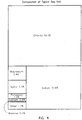
- the sea salt composition comprising the salinity in sea water is about 58.1% chloride, 31.6% sodium, 3.4% magnesium, 3.2% sulfur, 1.2% potassium, 0.6% calcium, 0.2% bromine, and about 1.7% other minor constituents, as is shown in FIG. 4 .
- Approximately 75 trace elements have been found in sea salt.
- Other important minor constituents of sea salt may include bromine, iron, aluminum, zinc, fluoride, silicon, copper, manganese, and rubidium.
- sea salt may also include any sea salt blend containing less than 45% by weight sodium, where the other composition may include potassium, magnesium, chloride, sulfur, and other elements found in sea water.
- a sea salt blend with 57% less sodium than ordinary salt, may be obtained from Ocean's Flavor Foods LLCA, Asheville, North Carolina, 28803, product code OF-57LSB.
- the total amount of sodium in the Ocean's Flavor sea salt blend is 16.58 % (w/w).
- the Ocean's Flavor Foods, LLC., sea salt blend composition is shown below, in Table 1, as well as in FIG. 5 , illustrating 57% less sodium.
- Reduced sodium sea salt at least for some Ocean's Flavor Foods sea salt products, differs markedly from normal sodium chloride.
- OF-57LSB less sodium natural blend
- magnesium chloride and calcium sulfate are present in small amounts.
- the chemical formula of this salt suggests the ingredient goes under physical processing, not chemical processing as claimed. Bench tests indicate if a NaCl/KCl blend was prepared at the same ratio to that found in OF-57LSB, it would taste far more bitter and not as salty as the sea salt.
- sea salt often depends on the source.
- Sources of sea salt may include Cape Cod, the Cayman Islands, France, Ireland, Italy, the Gulf of Mexico, and Hawaii, as well as many other locations.
- the flavor, mouthfeel, and color may vary from each source, which is advantageous to a consumer base with differing tastes.
- a seasoning of sea salt having a mean particle size less than 20 microns, is surrounded, or encapsulated, by a non-aqueous coating.
- a core of sea salt having a mean particle size less than 20 microns is encapsulated by a shell composed of edible fat or oil.
- a sea salt with low copper and iron components is desirable because copper and iron are prooxidants that may contribute to the rancidity of oils.
- the shell of edible fat or oil prevents the sea salt from dissociating and preserves the crystal structure of the sea salt encapsulate core. During mastication, the shell of the edible fat or oil is ruptured and the sea salt is available for use.
- sea salt may be used alone, or in combination with or in replacement of other salts or variety of other ingredients.
- seasoning may consist of a variety of different seasonings, alone or in combination, without departing from the scope and spirit of the present invention.
- sea salt may be blended with sodium chloride in ratios ranging from about 1 part sea salt to 1 part sodium chloride to about 7 parts sea salt to 1 part sodium chloride.
- Potassium chloride, as well as other salts, may be utilized in addition to or with sodium chloride and sea salt.
- large particle seasoning having a mean particle size greater than 20 microns
- encapsulated small particle sea salt seasoning having a mean particle size less than 20 microns
- the small particle seasoning and the large particle seasoning may include sodium chloride and/or potassium chloride from sea or land sources.
- the large particle seasoning may or may not be encapsulated.
- small encapsulated particles of sea salt having a mean particle size less than about 20 microns
- small encapsulated sea salt particles having a mean particle size of less than 20 microns, are mixed with large particles of sodium chloride without an encapsulating shell, having a mean particle size of 250 microns.
- Sea salt having a mean particle size less than 20 microns may be combined with other sizes of salt and seasonings.
- the encapsulating shell on the particles of sea salt prevents dissociation.
- sea salt having a mean particle size less than about 20 microns distinguishes the seasoning from a normal salt ingredient.
- the different sizes of the salt particles allow for a constant flavor impact because the small particles dissolve quicker than the larger particles allowing for a greater time period for salt dissolution.
- Particle size may refer to the size of a single particle, an agglomerated particle, and/or the core of a coated or partially coated particle.
- the particle size refers to the mean or average particle size when referring to a designated population of particles, such as in a random distribution of seasoning particles.
- the term "particle” may refer to a crystalline or lattice structure, regular three dimensional shapes (referring to coordination geometry), and/or irregular shapes having no predefined or specific particle orientation or geometry.
- Particle size may be evaluated through use of a particle analyzer.
- a particle analyzer For example, a Malvern Laser Particle Size Analyzer or an optical particle image analyzer may be used to obtain a particle size distribution. The mean particle size may then be determined from the particle size distribution. Particle size in this invention is measured by a laser particle size analyzer.
- particle size generally refers to the size of a single particle, an agglomerated particle, the core of a coated or partially coated particle, and the like.
- the term "particle” may refer to a crystalline or lattice structure, regular three-dimensional shapes (referring to coordination geometry), and irregular shapes having no predefined or specific particle orientation or geometry.
- the particle size may be evaluated through use of a particle analyzer. For example, a Malvern Laser Particle Size Analyzer or an optical particle image analyzer may be used to obtain a particle size. The mean particle size may then be determined from the particle size distribution.
- particle size refers to mean particle size on a distribution curve, and not a sieve analysis.
- mean particle size refers to particle size as valued on a distribution curve constructed or plotted utilizing, for example: 1) number of objects, 2) percent by number, 3) percent by mass, or 4) percent by volume (most preferred).
- mean distribution particle size may be determined dry or in a solvent. Additionally, those skilled in the art will appreciate that median particle size may be calculated and utilized herein. The mean is preferred herein. Pursuant to the description of the invention herein, particle size is particle size measured by utilizing a laser particle size analyzer.
- the article may be located at: http://www.malvern.co.uk/malvern/kbase.nsf/allbyno/KB000021/Sfile/Bas ic_principles_of_particle_size_analysis_MRK034-low_res.pdf.
- measuring mean particle size analysis by these two methods will provide two different values. For instance, Cargill's Microsized ® 95 Extra Fine Salt is claimed to have an average particle size of 10 microns. However, the sieve analysis methodology uses only one sieve for measurement. Ninety-five percent of the salt falls through a #325 mesh sieve. This indicates that 95% of the salt has a particle size of less than 44 microns.
- the food seasoning may further comprise a second seasoning component selected for complementing the taste impact of the first seasoning component and/or reducing the amount of the first seasoning component required for producing the desired taste impact.
- the second seasoning component includes potassium chloride, a bulking agent, and/or a bitterness masking agent.
- the second seasoning component may include salt, nutrients, coloring, flavoring, anti-caking agents, bulking agents, other functional ingredients, and other flavorings and seasonings as needed.
- the second seasoning component is potassium chloride, which may additionally include a bitterness masking agent commonly used in the art.
- the bitterness masking agent may be any additive commonly used in the art to at least one of mask, inhibit, and mitigate the bitter sensation associated with potassium chloride.
- An exemplary bitterness masking agent is trehalose, as disclosed in U.S. Patent Publication No. 2006/0088649 and U.S. Patent No. 6,159,529 . While only sodium chloride elicits a true salt taste, it is foreseeable that an amount of potassium chloride may be used to complement the flavor of sea salt, while reducing the dietary intake of sodium. Because the potassium chloride may impart a bitter flavor to the mixture, however, a bitterness masking agent may be utilized to mitigate this bitter sensation as needed.
- tastants elicit taste.
- this result may be supported by the lock and key view or the shallow contour view, which are similar to an enzyme/substrate relationship.
- the relationship between the amount of seasoning consumed and the taste impact may be approximated by a simplified dose-response curve, as depicted in FIG. 1 .
- a normalized response may be of the form response ⁇ 1 1 + e ⁇ A where A is the concentration of a tastant.
- a given response such as taste impact on a taste receptor, is dependent upon the concentration of a tastant.
- a small particle size tastant such as a sea salt blend, will dissolve into saliva quickly, resulting in a more concentrated solution after a short period of time.
- a larger particle size of the same sea salt blend will dissolve into saliva more slowly and may result in a lower concentration solution in the same period of time.
- the simplified dose-response curve the response will be higher for the smaller particle size solution after this short period of time.
- Response increases for increasing concentration on the simplified dose-response curve.
- taste impact increases for increasing concentration of tastant according to these models.
- Retaining a desired taste impact may also be approximated by the chemical tastant-receptor interaction model.
- tastes are differentiated by the symmetrical nature of the interactions, in which no chemical products are formed.
- the interactions of this model may be approximated by chemical reaction equations solely dependent upon the concentration of the tastant.
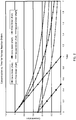
- FIG. 2 approximate concentration versus time curves for three reaction orders and two initial concentrations are depicted.
- FIG. 2 is a theoretical graph, where the units for concentration and time are dependant on a theoretical rate constant k, which differs for each reaction order. While no products are formed, the interaction between the chemical tastant and the receptor can be approximated as a product for the purposes of modeling.
- FIG. 2 displays three possible reaction rates: zero order (rate is constant), first order (rate ⁇ [A]), and second order (rate ⁇ [A] 2 ), where [A] is the concentration of a chemical tastant, such as sodium chloride.
- the tastants are given a short time to dissolve before interacting with taste receptors, where no additional tastants are allowed to dissolve.
- smaller particle size seasoning such as a sea salt blend
- the higher initial concentration remains at a higher level throughout the "reaction.”
- Taste cell receptors can distinguish between varying concentrated solutions and may recognize this difference as a difference in taste impact.
- the tastants are allowed to fully dissolve before interacting with the taste receptors.
- the initial concentration would remain the same if the same mass of tastants is used. There would be no difference in the concentrations of the two solutions over time. However, suppose less mass was used for the smaller particle size solution. In this case, the initial concentration would be less.
- the difference in concentrations between the smaller mean particle solution and the larger mean particle solution becomes smaller as time progresses. The taste impact difference becomes less apparent to an individual with time.
- the smaller particle size will allow a higher concentration solution after a short period of time, and, with regard to total concentration, the difference between a higher concentration and a lower concentration becomes less evident over time (for reaction orders greater than zero). Therefore, less sea salt blend of a smaller particle size (e.g. 10 microns) may be used as a seasoning component, while maintaining the desired taste impact and/or increasing salt taste perception.
- the second seasoning component may include a bulking agent.
- the bulking agent may be utilized to further reduce the amount of the first seasoning component required to impart the desired flavor.
- the bulking agent may comprise starch, maltodextrin, dextrose, other starch derivatives, or other suitable bulking agents which may not adversely affect the flavor and organoleptic properties of the first seasoning component.
- the bulking agent may further be necessary when applied to a surface with moisture for minimizing salt dissociation.
- a microwave popcorn product in an additional embodiment, includes a charge of popcorn kernels, a charge of sea salt for flavoring the charge of popcorn kernels, and a bag for containing the charge of popcorn kernels and the charge of sea salt, wherein the charge of sea salt has a mean particle size of less than 20 microns.
- the microwave popcorn product also may include an edible oil, fat, or adhesive configured to adhere the charge of sea salt to the charge of popcorn kernels. Additionally, the edible oil or fat may cover popped popcorn kernels such that the charge of sea salt adheres to the popcorn during microwave cooking: Alternatively, the charge of sea salt may be deposited onto the charge of popcorn kernels prior to microwave cooking. Deposition of the charge of sea salt may replace the need for an adhesive prior to microwave cooking, since deposition methods result in direct adherence of the charge of sea salt to the charge of popcorn kernels.
- a seasoning of sea salt having a mean particle size less than 20 microns, is surrounded, or encapsulated, by a non-aqueous coating.
- a particle of sea salt having a mean particle size less than 20 microns may be encapsulated by an edible oil or fat.
- the layer of edible oil or fat prevents the sea salt from dissociating and preserves the crystal structure of the sea salt encapsulate core. During consumption, the oil or fat layer is ruptured and the sea salt is available for use.
- a method for utilizing a sea salt seasoning on microwave popcorn includes the steps selecting a suitable sea salt seasoning, blending the sea salt seasoning with an edible oil or fat, and dispensing the sea salt seasoning into a microwave popcorn bag.
- a similar embodiment discloses a method for topically utilizing a sea salt seasoning on a food product.
- the current method includes selecting a suitable sea salt seasoning, placing and/or combining the sea salt seasoning in a dispensing container, and topically dispensing the sea salt seasoning on a suitable food product.
- the sea salt may be combined with a suitable cookware release composition, such as a liquid edible fat or oil.
- the sea salt may be dispensed from the dispensing container in different ways.
- Each panelist selects four popped kernels from the sample portion and is instructed to choose pieces that best represent the sample presented. For example, if panelist's sample is evenly mixed with highly coated yellow pieces and less coated white pieces, the panelist would choose 2 yellow & 2 white pieces for evaluation. All four pieces are put into the mouth. The panelist evaluates salt impact immediately after putting the pieces into the mouth, defined as within the first two chews, and at the highest point in chewdown, defined as the highest salt impact observed during chewdown.
- the panelist is next instructed to collect the sample into a bolus in the center of the mouth and to forcefully expectorate the sample after evaluation. Expectoration is used to ensure that the majority of sample is removed from mouth. Using an individual timer, each panelist starts the timer and further evaluates salt impact immediately after expectoration and thirty seconds after expectoration. Each panelist records the data using a paper ballot with the evaluation attributes preprinted on the ballot as well as places to record the date, panelist number, sample number, and attribute intensities by sample.
- the panelists are instructed not to lick their lips during evaluation, to rinse the mouth thoroughly with room temperature spring water after evaluations, and to wipe their lips between evaluations.
- the samples are staggered for evaluation at least five minutes apart.
- the strength of each attribute is rated on a 0 - 15 point intensity scale with zero being no strength and fifteen being high strength. This scale incorporates the ability to use tenths of a point and has the potential of 150 scale differentiations. If needed, intensities may be rated greater than fifteen using the same scaling criteria.
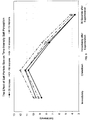
- FIG. 6 shows the effect of salt particle size on salt perception by measuring salt intensity determined by a trained sensory panel at four predetermined times. As best illustrated in FIG. 6 , salt having a mean particle size of 10 microns achieves the greatest salt intensity.
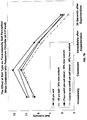
- FIG. 7A is a graph illustrating the effect of salt type on the intensity of salt taste perception at four predetermined times.
- FIG. 7B is a graph illustrating the effect of salt type on the intensity of salt type at four predetermined times wherein potassium chloride is blended with the salt at a ratio of 0.5 potassium chloride to the amount of salt removed.
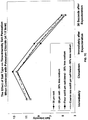
- 7C is a graph illustrating the effect of salt particle size on the intensity of salt type at four predetermined times wherein potassium chloride is blended with the salt at a ratio of 1.0 potassium chloride to the amount of salt removed.
- the flour salt was 152 microns while the coarse sea salt was 510 microns. This is a large difference in particle size; however, there is still a saltier perception for the much coarser sea salt. This is best displayed in FIG. 7B where the coarse sea salt blend is perceived to be 1 full hedonic point greater in saltiness than the flour salt blend.
- FIG. 7A and 7C demonstrate similar saltiness between the two blends, despite the much larger granulation of the sea salt.
- FIG. 8 shows the results of a descriptive analysis that used the same methodology described with respect to the results of Figures 6 and 7A-C .
- An analysis of the smaller particle sea salt was conducted, utilizing a control sample microwave popcorn product having typical levels of sodium from an industry standard salt.
- the test samples of popcorn product were formulated to have overall less sodium than compared to the control by using sea salt (OF-57LSB) specially milled to 10 microns.
- FIG. 8 shows that using 10 micron sea salt achieves a popcorn product with 30% less sodium than the control, while having similar saltiness perception to that of the control.
- a sea salt formulation achieving a 50% overall reduced sodium popcorn product displayed similar results. It will be appreciated by one of skill in the art that other sea salt variations are included and comtemplated to achieve similar overall results.
- seasoning less than 20 microns including sodium chloride, potassium chloride, sea salt, and combinations thereof were tested on consumers. The methodology and results of the test are discussed below.
- a sequential monadic serving procedure was used.
- a computerized ballot using Compusense testing software was used for the collection of responses.
- a total of six questions were asked with four regarding whether the product was liked and two regarding flavor intensity.
- a 9-point anchored hedonic scale was used for the liking questions and a 10-point intensity scale was used for the intensity questions.
- Results were analyzed using SAS Statistical software for the Analysis of Variance. A 90% confidence level was used to determine significant statistical difference between samples.
- Table 3 displays the results of the consumer testing described above.
- Test formulas included: 30% reduced sodium using a 10 micron sea salt/pulverized salt blend, 50% reduced sodium using 10 micron sea salt, and 30% reduced sodium using 10 micron sea salt. Results indicate that all test formulas had similar or greater saltiness intensity than the control formula. In particular, significantly higher saltiness was perceived in the 30% reduced sodium samples containing sea salt alone. The product was likely far too salty, thus overall product liking was significantly lower than the control as a result. Reducing sodium by 50% using 10 micron sea salt resulted in similar saltiness intensity to the control. Overall liking scores were at parity with the control, however directionally lower. The blended test formula performed the best with slightly higher saltiness and similar overall liking compared to the control.
- This example presents an application of small particle sea salt as a component of breadings or toppings for frozen or refrigerated foods. Further in the following example, the use of small particle sea salt in exchange of the existing salt will produce a saltier flavor than using the industry-standard salt. Alternatively, salt (or sodium) levels may be decreased using small particle sea salt and still achieve similar saltiness taste perception.
- the sea salt may additionally be encapsulated in an edible fat or oil.
- the food products may include poultry, red meat, fish, baked goods, vegetables, or other appetizers including potatoes, onions, or cheeses, and may contain seasoning, flour, wheat, cornmeal, nuts (tree or legumes), and/or soybeans. Processes may include frying, baking, roasting, partial or fully cooking, or extrusion. Specific examples may include breaded zucchini, mozzarella, mushrooms, or chicken, flavored or unflavored onion rings, potato products (i.e., French fries), pastry pie crumb topping, or breaded pasta (i.e., toasted ravioli).
- This example presents an application of small particle sea salt as a component for dry mix breadings for the covering of food products. Further in the following example, the use of small particle sea salt in exchange of the existing salt will produce a saltier flavor than using the industry-standard salt. Alternatively, salt (or sodium) levels may be decreased using small particle sea salt and still achieve similar saltiness taste perception.
- the sea salt may additionally be encapsulated in an edible fat or oil.
- the food products may include poultry, red meat, fish, baked goods, vegetables, or other appetizers including potatoes, onions, or cheeses, and may contain seasoning, flour, wheat, cornmeal, nuts (tree or legumes), and/or soybeans. Processes may include frying, baking, roasting, partial or fully cooking, or extrusion.
- a specific example includes SHAKE 'N BAKE®, manufactured by Kraft Foods, Inc.
- This example presents an application of small particle sea salt as a component in a seasoning blend for a topical application. Further in the following example, the use of small particle sea salt in exchange of the existing salt will produce a saltier flavor than using the industry-standard salt. Alternatively, salt (or sodium) levels may be decreased using small particle sea salt and still achieve similar saltiness taste perception.
- the sea salt may additionally be encapsulated in an edible fat or oil.
- the food products may include poultry, red meat, fish, baked goods, vegetables, or other appetizers including potatoes, onions, or cheeses (topical or non-aqueous).
- the topical application may include seasonings or bulking agents. A specific example may include seasoning salt.
- This example presents an application of small particle sea salt as a component in cured and non-cured dried meats as a topical additive. Further in the following example, the use of small particle sea salt in exchange of the existing salt will produce a saltier flavor than using the industry-standard salt. Alternatively, salt (or sodium) levels may be decreased using small particle sea salt and still, achieve similar saltiness taste perception.
- the sea salt may additionally be encapsulated in an edible fat or oil.
- the meats may include beef, bacon, or bacon-flavored mimics.
- the dried meats may be dried, freeze-dried, extruded or baked. A specific example includes bacon bits.
- This example presents an application of small particle sea salt as a component in non-snack, cereal-based food compliments. Further in the following example, the use of small particle sea salt in exchange of the existing salt will produce a saltier flavor than using the industry-standard salt. Alternatively, salt (or sodium) levels may be decreased using small particle sea salt and still achieve similar saltiness taste perception.
- the sea salt may additionally be encapsulated in an edible fat or oil.
- the cereal-based food compliments may include bread, wheat, corn, oats, millet, rye, soybeans, cornmeal, seasoning, nuts (tree or legumes), and/or rice, and may be processed by baking, frying, extruding, puffing, drying, or may be left unprocessed. Specific examples may include croutons or bread crumbs.
- This example presents an application of small particle sea salt as a direct addition to natural and artificial spreads. Further in the following example, the use of small particle sea salt in exchange of the existing salt will produce a saltier flavor than using the industry-standard salt. Alternatively, salt (or sodium) levels may be decreased using small particle sea salt and still achieve similar saltiness taste perception.
- the sea salt may additionally be encapsulated in an edible fat or oil.
- the natural or artificial spreads may contain nuts (tree or legumes), nut ingredients, soybeans, and/or seeds. Specific examples may include hazelnut spread, soy butter, or peanut butter.
- This example presents an application of small particle sea salt for use as a direct addition or part of articles in non-aqueous batters. Further in the following example, the use of small particle sea salt in exchange of the existing salt will produce a saltier flavor than using the industry-standard salt. Alternatively, salt (or sodium) levels may be decreased using small particle sea salt and still achieve similar saltiness taste perception.
- the sea salt may additionally be encapsulated in an edible fat or oil.
- the batters may include edible fats and oils, flour, salt, seasoning, wheat, corn, cornmeal, nuts (tree or legume), and/or soybeans. Specific examples include potato wedges, onion rings, fish, and cheese sticks.
- This example presents an application of small particle sea salt for use as a direct addition to prepared pie crusts. Further in the following example, the use of small particle sea salt in exchange of the existing salt will produce a saltier flavor than using the industry-standard salt. Alternatively, salt (or sodium) levels may be decreased using small particle sea salt and still achieve similar saltiness taste perception.
- the sea salt may additionally be encapsulated in an edible fat or oil.
- the pie crusts may contain seasoning, flour, wheat, corn, cornmeal, nuts (trees or legumes), and/or soybeans. A specific example is a graham cracker pie crust.
- This example presents an application of small particle sea salt added to a dried, grated, or shredded cheese for topical use. Further in the following example, the use of small particle sea salt in exchange of the existing salt will produce a saltier flavor than using the industry-standard salt. Alternatively, salt (or sodium) levels may be decreased using small particle sea salt and still achieve similar saltiness taste perception.
- the sea salt may additionally be encapsulated in an edible fat or oil.
- the cheese may be dried or dehydrated. Specific examples include parmesan, romano, asiago, or other dried, grated or, shredded cheeses with salt and other ingredients.
- This example presents an application for the direct addition of small particle sea salt into oil or fat-based products. Further in the following example, the use of small particle sea salt in exchange of the existing salt will produce a saltier flavor than using the industry-standard salt. Alternatively, salt (or sodium) levels may be decreased using small particle sea salt and still achieve similar saltiness taste perception.
- the oil or fat based products may be natural, conditioned, de-gummed, stabilized, deodorized, homogenized, bleached, or winterized.
- the oil or fat products may contain partially or fully hydrogenated oil and fat based products. Uses may include confectionary non-aqueous fillings, sprays, liquid or solid flavored edible cooking oils or fats.
- Oreo filling manufactured by Nabisco
- PAM spray manufactured by ConAgra Foods, Inc.
- butter flavored vegetable shortening An oil based slurry, such as PAM with small particle salt, may be topically applied to French fries, potato chips, or the like.
- This example presents an application of small particle sea salt as an application for cereals and cereal bars. Further in the following example, the use of small particle sea salt in exchange of the existing salt will produce a saltier flavor than using the industry-standard salt. Alternatively, salt (or sodium) levels may be decreased using small particle sea salt and still achieve similar saltiness taste perception.
- the sea salt may additionally be encapsulated in an edible fat or oil.
- the cereal or cereal bars may include bread, wheat, corn, oat, millet, rye, soybeans, cornmeal, seasoning, nuts (tree or legumes), rice, and/or granola processed by baking, extruding, roasting, toasting, frying, drying, or puffing. Specific examples may include any type of breakfast cereal, or any type of granola bar that is non-aqueous, pressed, and formed.
- This example presents a topical application of small particle sea salt for vegetables and fruits. Further in the following example, the use of small particle sea salt in exchange of the existing salt will produce a saltier flavor than using the industry-standard salt. Alternatively, salt (or sodium) levels may be decreased using small particle sea salt and still achieve similar saltiness taste perception.
- the sea salt may additionally be encapsulated in an edible fat or oil.
- the vegetables and fruits may be freeze-dried or processed other ways. A specific example is Gerber freeze-dried sweet corn for babies, manufactured by the Gerber Products Company.
- This example presents a topical application of small particle sea salt for snack foods. Further in the following example, the use of small particle sea salt in exchange of the existing salt will produce a saltier flavor than using the industry-standard salt. Alternatively, salt (or sodium) levels may be decreased using small particle sea salt and still achieve similar saltiness taste perception.
- the sea salt may additionally be encapsulated in an edible fat or oil.
- the snack foods may contain rice, oats, corn, soybeans, wheat, cornmeal, flour, seasoning, potato, rye, millet, and/or nuts (tree and legumes).
- the snack foods may be flavored and unflavored snack crackers, crisps, cakes, mixes, chips, shells, cookies, crackers, pork rinds, and may be toasted, roasted, baked, fried, extruded, puffed, and the like.
- Specific examples may include potato chips (i.e. Pringles, manufactured by Procter & Gamble), Chex mix, manufactured by General Mills, Inc., pork rinds, corn chips, popcorn, soy or rice cakes, popcorn that is microwavable or ready-to-eat, saltines, Chips Ahoy cookies, manufactured by Nabisco, bagel chips, pita chips, Planters peanuts, manufactured by Kraft Foods Global, Inc., and other similar products.
Landscapes
- Life Sciences & Earth Sciences (AREA)
- Chemical & Material Sciences (AREA)
- Health & Medical Sciences (AREA)
- Engineering & Computer Science (AREA)
- Food Science & Technology (AREA)
- Polymers & Plastics (AREA)
- Nutrition Science (AREA)
- Inorganic Chemistry (AREA)
- Mycology (AREA)
- Biophysics (AREA)
- Molecular Biology (AREA)
- Seasonings (AREA)
Description
- The present invention generally relates to the field of food seasoning technology, and more particularly to a food seasoning utilizing small sea salt.
- Salt has a rich history as a preservative, spice, flavor enhancer, and chemical feedstock. Salt is an essential nutrient which acts to maintain (1) concentration and volume of extracellular fluid, (2) osmotic pressure and body water balance, (3) acid-base equilibrium, (4) nerve and muscle function, and (5) glucose and other nutrient absorption.
- From a dietary perspective, individuals may respond differently to varying intake levels of sodium, a prominent ingredient in table salt. Excessive sodium consumption may lead to detrimental effects on the circulatory system, such as high blood pressure, as well as kidney affections, water retention, and stomach ulcers. While excessive sodium intake is not a direct link to hypertension in all individuals, some individuals are deemed to be "salt-sensitive." Salt-sensitive individuals may have blood pressure increases when sodium intake is high or decreases when sodium intake is low. For people who are salt-sensitive, the risk of dying from cardiovascular problems is increased with high dietary salt, whether or not they are hypertensive. Salt may increase the reactivity of blood platelets in these individuals, causing more frequent blood clots. As a result, there may be an increased risk of stroke, heart attack, and kidney disease, even in the absence of hypertension. Consequently, a reduction in dietary sodium may be warranted for certain individuals.
- Despite health concerns and nutrition recommendations, many people frequently consume an excessive amount of salt. The palatability and flavor of salt have ensured its continued demand, consumption, and use. While there is a recommendation for reduced dietary sodium intake, there is a strong demand for the flavor and organoleptic qualities of salt.
- A number of products have attempted a solution to this problem; however, some of these products ineffectually attempt to simulate a salty flavor by producing composite substances that mimic the flavor of salt. An example includes combining an ammonium salt with a proteolyzed protein containing free amino acids. Consequently, there remains the need for a seasoning with similar salty taste and/or taste enhancement to that of sodium chloride, which may reduce the amount of dietary sodium.
- Sea salt, having a mean particle size less than 20 microns, for flavoring a food product, enhancing or potentiating flavor, and/or reducing the amount of dietary sodium is described in accordance with exemplary embodiments of the present invention. Also described is a method for seasoning food products, whereby a second seasoning component may be selected for at least one of complementing a first seasoning component and reducing the amount of the first seasoning component required for producing a desirably flavored food product. For example, a snack food may require less sea salt with a mean particle size less than 20 microns as a component in a seasoning or as a separate seasoning while retaining or increasing the desirable salty flavor associated with sea salt when combined with other salts and/or flavorings.
- Further described is a salty snack product, such as microwave popcorn, ready-to-eat popcorn, crackers, and cookies, including a sea salt seasoning with a mean particle size less than about 20 microns. Additionally, a seasoning including a first seasoning component and a second seasoning component selected for at least one of complementing the first seasoning component and reducing the amount of the first seasoning component required for producing a desirably flavored food product is described, wherein the second seasoning component may be potassium chloride, sodium chloride, larger sea salt, and/or other salts used for giving a saltier perception. The second seasoning may include other materials, such as bitterness maskers. The first seasoning component has a mean particle size less than 20 microns.
- The accompanying drawings, which are incorporated in and constitute a part of the specification, illustrate an embodiment of the invention and together with the general description, serve to explain the principles of the invention.
- The numerous advantages of the present invention may be better understood by those skilled in the art by reference to the accompanying figures in which:
-
FIG. 1 is a model dose-response curve for determining a response for given concentrations of tastant A; -
FIG. 2 is a model concentration versus time graph for a zero order reaction, a first order reaction, and a second order reaction for two initial concentrations of a given solute; -
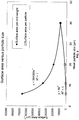
FIG. 3 is a graph illustrating salt particle surface area versus salt particle size, wherein the graph illustrates that the total surface area of a constant weight of salt increases when the mean particle size decreases; -
FIG. 4 is a graphical representation illustrating elemental components that constitute sea salt; -
FIG. 5 is a graphical representation illustrating elemental components constituting a sea salt blend with 57% less sodium; -
FIG. 6 is a graph illustrating the effect of salt mean particle size on the intensity of salt perception at four predetermined times; -
FIG. 7A is a graph illustrating the effect of salt type on the intensity of salt taste perception at four predetermined times; -
FIG. 7B is a graph illustrating the effect of salt type on the intensity of salt taste perception at four predetermined times wherein potassium chloride is blended with the salt at a ratio of 0.5 potassium chloride to the amount of salt removed; -
FIG. 7C is a graph illustrating the effect of salt type on the intensity of salt taste perception at four predetermined times wherein potassium chloride is blended with the salt at a ratio of 1.0 potassium chloride to the amount of salt removed; -
FIG. 8 is a graph illustrating the effect of ten micron sea salt on the intensity of sea salt perception after four predetermined times; - Reference will now be made in detail to the presently preferred embodiments of the invention, examples of which are illustrated in the accompanying drawings.
- Referring generally to
FIGS. 1 through 8 , a seasoning and method for seasoning, including sea salt, having a mean particle size less than 20 µm, which provides, enhances, and potentiates flavor, is described in accordance with exemplary embodiments of the present invention. For instance, the food product may include seasoned snack foods, such as peanuts, pretzels, popcorn, and potato chips; meat products, such as beef, pork, and poultry; cheese products in liquid, solid, and semi-solid states; and other foods as required. In a specific embodiment, the food product is a charge of popcorn kernels disposed within a bag configured for microwave cooking. In this embodiment, the seasoning is selected and may be dispensed on the food product before the food product is in a ready-to-eat state, such as before microwave cooking. Additionally, the seasoning may be dispensed after the food product is cooked, similar to the use of table salt or a salt spray in a cookware release composition. Sea salt having a mean particle size less than about 20 µm is not currently available for commercial sale. - In one embodiment, sea salt is applied to a food product for reducing sodium and/or enhancing and potentiating the food product flavor. Sea salt is often obtained from evaporating seawater, but may be created in other ways. Different salts derived from seawater may also be blended and processed to produce other sea salt products, such as reduced sodium sea salt. It has a mineral content that may give a different taste than common table salt. Sea salt, as referenced herein, may be defined in the following manner: 1) salt obtained by evaporating sea water; 2) mixture of salt obtained by evaporating sea water; 3) modified salt obtained by evaporating sea water, such as removing or altering a component; and 4) synthetic sea salt, such as a salt with added components, for replicating sea salt obtained by evaporating sea water.
- Sea salt is often extracted from sea water by pumping the water into shallow pans. The salt content of the water is increased as the sun and wind evaporate the water. During the manufacturing process, the sea water is moved by gravity through a sequence of pans steadily increasing in salinity. Deposition of the sea salt begins when the water is saturated with salt. During deposition, many of the undesirable components precipitate, including calcium carbonate and gypsum. After the sea salt is crystallized, the salt is often further washed for human consumption.
- Sea salt contains minerals and trace elements that are nutritionally beneficial, which may be missing from processed common table salt. Elements often present in sea salt include potassium and magnesium. Potassium may be effective for reducing blood pressure, reducing the incidence of kidney stones and heart arrhythmias, increasing muscle strength, and benefiting bones. Magnesium is a vital mineral and aids in the body's absorption of calcium, plays a key role in the strength and formation of bones and teeth, lower the chance of heart attack and stroke, and maintain proper muscle function. Moreover, sea salt often contains a reduced amount of sodium, sodium being detrimental to health in some people.
- Sea salt may contain sodium chloride, potassium chloride, magnesium, calcium, sulfates, and/or other constituents. Sea water salinity ranges from 3.2% to 4.0%, with the average salinity being about 3.5%. At 3.5% salinity, the sea salt composition comprising the salinity in sea water is about 58.1% chloride, 31.6% sodium, 3.4% magnesium, 3.2% sulfur, 1.2% potassium, 0.6% calcium, 0.2% bromine, and about 1.7% other minor constituents, as is shown in
FIG. 4 . Approximately 75 trace elements have been found in sea salt. Other important minor constituents of sea salt may include bromine, iron, aluminum, zinc, fluoride, silicon, copper, manganese, and rubidium. The ratio between elements in sea water is generally constant even though the amount of water may vary, which results in a fairly constant ratio between the elements existing in sea salt. Sea salt may also include any sea salt blend containing less than 45% by weight sodium, where the other composition may include potassium, magnesium, chloride, sulfur, and other elements found in sea water. For example, a sea salt blend, with 57% less sodium than ordinary salt, may be obtained from Ocean's Flavor Foods LLCA, Asheville, North Carolina, 28803, product code OF-57LSB. The total amount of sodium in the Ocean's Flavor sea salt blend is 16.58 % (w/w). The Ocean's Flavor Foods, LLC., sea salt blend composition is shown below, in Table 1, as well as inFIG. 5 , illustrating 57% less sodium. An additional list of elements discovered in sea water and sea salt may be found in The Handbook of Chemistry and Physics, CRC Publishing, 87th Edition, 2006, p.p. 14-16 to 14-17.Table 1 - Composition of Ocean's Flavor Natural Sea Salt™ 57% Less Sodium Sea Salt BlendChemical Analysis %(w/w) Calcium Sulfate, as CaSO4 0.017 Magnesium Chloride, as MgQl2·6H2O 2.84 Potassium Chloride, as KCl 55.00 Sodium Chloride, as NACl 42.14 Water Insoluble 0.003 TOTAL 100.0 - Reduced sodium sea salt, at least for some Ocean's Flavor Foods sea salt products, differs markedly from normal sodium chloride. For instance, OF-57LSB (less sodium natural blend) is a blend of natural sodium chloride and potassium chloride. Furthermore, magnesium chloride and calcium sulfate are present in small amounts. The chemical formula of this salt (NaCl-KCl-MgCl x H2O) suggests the ingredient goes under physical processing, not chemical processing as claimed. Bench tests indicate if a NaCl/KCl blend was prepared at the same ratio to that found in OF-57LSB, it would taste far more bitter and not as salty as the sea salt. It is possible that processing sets up "mixed crystals." This may potentially hinder taste reception of sour and/or bitter notes associated with these other compounds and still allow salty taste reception. One relevant theory for hindering taste reception is explained in Lawless, Henry T., et al. "The Taste of Calcium and Magnesium Salts and Anionic Modifications." Food Quality and Preference 14:4 (2003): 319-325, incorporated herein by reference. Lawless describes that these compounds, other than sodium chloride, carry at least some salty taste, which may explain why this salt could be perceived as much saltier. Additionally, further reducing the particle size of the ingredient to a preferred 10 microns may increase the salty taste perception.
- The taste of sea salt often depends on the source. Sources of sea salt may include Cape Cod, the Cayman Islands, France, Ireland, Italy, the Gulf of Mexico, and Hawaii, as well as many other locations. The flavor, mouthfeel, and color may vary from each source, which is advantageous to a consumer base with differing tastes.
- In one embodiment, a seasoning of sea salt, having a mean particle size less than 20 microns, is surrounded, or encapsulated, by a non-aqueous coating. In a specific embodiment, a core of sea salt, having a mean particle size less than 20 microns is encapsulated by a shell composed of edible fat or oil. A sea salt with low copper and iron components is desirable because copper and iron are prooxidants that may contribute to the rancidity of oils. When applied to a surface with aqueous properties, the shell of edible fat or oil prevents the sea salt from dissociating and preserves the crystal structure of the sea salt encapsulate core. During mastication, the shell of the edible fat or oil is ruptured and the sea salt is available for use. The sea salt may be used alone, or in combination with or in replacement of other salts or variety of other ingredients. It will be appreciated that the seasoning may consist of a variety of different seasonings, alone or in combination, without departing from the scope and spirit of the present invention. For example, sea salt may be blended with sodium chloride in ratios ranging from about 1 part sea salt to 1 part sodium chloride to about 7 parts sea salt to 1 part sodium chloride. Potassium chloride, as well as other salts, may be utilized in addition to or with sodium chloride and sea salt.
- In another embodiment, large particle seasoning, having a mean particle size greater than 20 microns, and encapsulated small particle sea salt seasoning, having a mean particle size less than 20 microns, may be mixed together. The small particle seasoning and the large particle seasoning may include sodium chloride and/or potassium chloride from sea or land sources. The large particle seasoning may or may not be encapsulated. In a specific embodiment, small encapsulated particles of sea salt, having a mean particle size less than about 20 microns, are mixed with large encapsulated particles of sodium chloride, having a mean particle size of 250 microns. In a separate embodiment, small encapsulated sea salt particles, having a mean particle size of less than 20 microns, are mixed with large particles of sodium chloride without an encapsulating shell, having a mean particle size of 250 microns. Sea salt having a mean particle size less than 20 microns may be combined with other sizes of salt and seasonings.
- The encapsulating shell on the particles of sea salt prevents dissociation. Using sea salt having a mean particle size less than about 20 microns distinguishes the seasoning from a normal salt ingredient. The different sizes of the salt particles allow for a constant flavor impact because the small particles dissolve quicker than the larger particles allowing for a greater time period for salt dissolution.
- Particle size may refer to the size of a single particle, an agglomerated particle, and/or the core of a coated or partially coated particle. The particle size refers to the mean or average particle size when referring to a designated population of particles, such as in a random distribution of seasoning particles. The term "particle" may refer to a crystalline or lattice structure, regular three dimensional shapes (referring to coordination geometry), and/or irregular shapes having no predefined or specific particle orientation or geometry.
- Particle size may be evaluated through use of a particle analyzer. For example, a Malvern Laser Particle Size Analyzer or an optical particle image analyzer may be used to obtain a particle size distribution. The mean particle size may then be determined from the particle size distribution. Particle size in this invention is measured by a laser particle size analyzer.
- Herein, particle size generally refers to the size of a single particle, an agglomerated particle, the core of a coated or partially coated particle, and the like. The term "particle" may refer to a crystalline or lattice structure, regular three-dimensional shapes (referring to coordination geometry), and irregular shapes having no predefined or specific particle orientation or geometry. The particle size may be evaluated through use of a particle analyzer. For example, a Malvern Laser Particle Size Analyzer or an optical particle image analyzer may be used to obtain a particle size. The mean particle size may then be determined from the particle size distribution. Hereinafter, particle size refers to mean particle size on a distribution curve, and not a sieve analysis. Thus, mean particle size refers to particle size as valued on a distribution curve constructed or plotted utilizing, for example: 1) number of objects, 2) percent by number, 3) percent by mass, or 4) percent by volume (most preferred). Those skilled in the art of particle size analysis will recognize that mean distribution particle size may be determined dry or in a solvent. Additionally, those skilled in the art will appreciate that median particle size may be calculated and utilized herein. The mean is preferred herein. Pursuant to the description of the invention herein, particle size is particle size measured by utilizing a laser particle size analyzer.
- Although sieve analysis methodology is an old and often used technique, it does not provide good resolution or repeatability for analysis of finer particle sizes, especially at and under 38 microns (#400 mesh). The salts described herein are measured by particle size analysis because the preferred mean particle size is 10 microns (#1250 mesh). Particle size analysis is a more suitable analysis method because it provides greater resolution and repeatability. An excellent description for calculating and characterizing particle size may be found at: Rawle, A., Basic Principles of Particle Size Analysis, Malvern Instruments Limited, Enigma Business Park, Grovewood Road, Malvern, Worcestershire, WR14 1XZ, UK, incorporated herein by reference. The article may be located at: http://www.malvern.co.uk/malvern/kbase.nsf/allbyno/KB000021/Sfile/Bas ic_principles_of_particle_size_analysis_MRK034-low_res.pdf. Additionally, measuring mean particle size analysis by these two methods will provide two different values. For instance, Cargill's Microsized® 95 Extra Fine Salt is claimed to have an average particle size of 10 microns. However, the sieve analysis methodology uses only one sieve for measurement. Ninety-five percent of the salt falls through a #325 mesh sieve. This indicates that 95% of the salt has a particle size of less than 44 microns. There is no way for calculating an average without including a second, finer sieve placed below the #325 mesh sieve. Particle size analysis of this salt is shown in Table 2 below. Plotting a particle size distribution of this salt suggests the mean particle size is between 18.4 and 20.9 microns. This is a very large difference from a specification standpoint. Shown below is a comparison of the salts described herein with Cargill salt theoretically calculated from a particle size distribution utilizing sieve analysis.
Table 2 - Salt measurement comparing particle size analysis versus sieve analysis methods U.S.S. Mesh Opening (microns) Cargill Microsized® 95 Extra Fine Salt(%) Small Particle Salt(%) 325 44 8.8 0 400 37 5.0 0.1 550 25 10.0 2.3 800 15 30.2 22.0 1250 10 15.0 15.4 Pan --- 31.0 60.2 NOTE: Calculated sieve analysis is reported as percent retained. - The food seasoning may further comprise a second seasoning component selected for complementing the taste impact of the first seasoning component and/or reducing the amount of the first seasoning component required for producing the desired taste impact. In this embodiment, the second seasoning component includes potassium chloride, a bulking agent, and/or a bitterness masking agent. The second seasoning component may include salt, nutrients, coloring, flavoring, anti-caking agents, bulking agents, other functional ingredients, and other flavorings and seasonings as needed. For example, in another specific embodiment, the second seasoning component is potassium chloride, which may additionally include a bitterness masking agent commonly used in the art. The bitterness masking agent may be any additive commonly used in the art to at least one of mask, inhibit, and mitigate the bitter sensation associated with potassium chloride. An exemplary bitterness masking agent is trehalose, as disclosed in
U.S. Patent Publication No. 2006/0088649 andU.S. Patent No. 6,159,529 . While only sodium chloride elicits a true salt taste, it is foreseeable that an amount of potassium chloride may be used to complement the flavor of sea salt, while reducing the dietary intake of sodium. Because the potassium chloride may impart a bitter flavor to the mixture, however, a bitterness masking agent may be utilized to mitigate this bitter sensation as needed. - Multiple views exist of the mechanism by which tastants elicit taste. For instance, this result may be supported by the lock and key view or the shallow contour view, which are similar to an enzyme/substrate relationship. Under these models, the relationship between the amount of seasoning consumed and the taste impact may be approximated by a simplified dose-response curve, as depicted in
FIG. 1 . According to these models, a normalized response may be of the form
- Retaining a desired taste impact may also be approximated by the chemical tastant-receptor interaction model. As explained above, tastes are differentiated by the symmetrical nature of the interactions, in which no chemical products are formed. Thus, the interactions of this model may be approximated by chemical reaction equations solely dependent upon the concentration of the tastant. As shown in
FIG. 2 , approximate concentration versus time curves for three reaction orders and two initial concentrations are depicted.FIG. 2 is a theoretical graph, where the units for concentration and time are dependant on a theoretical rate constant k, which differs for each reaction order. While no products are formed, the interaction between the chemical tastant and the receptor can be approximated as a product for the purposes of modeling. Also, since the taste receptor cells remain fixed and essentially unchanged by the interaction, the concentration of the tastant is the limiting factor of the reaction rate. So according to this model, the initial concentration of tastant is the driving force for the subsequent "reactions." Since the chemical tastant-receptor interaction model is theoretical, the reaction rate for the tasting "reaction" must also be approximated.FIG. 2 displays three possible reaction rates: zero order (rate is constant), first order (rate ∝ [A]), and second order (rate ∝ [A]2), where [A] is the concentration of a chemical tastant, such as sodium chloride. These reaction curves are approximate and account for initial doses of tastant, rather than a slow dissolving process. Therefore, this approximation may be viewed in two ways. First, the tastants are given a short time to dissolve before interacting with taste receptors, where no additional tastants are allowed to dissolve. In this instance, smaller particle size seasoning, such as a sea salt blend, will dissolve rapidly, resulting in a larger initial concentration when compared to larger mean particle solutions. When comparing like ordered reactions, the higher initial concentration remains at a higher level throughout the "reaction." Taste cell receptors can distinguish between varying concentrated solutions and may recognize this difference as a difference in taste impact. Second, the tastants are allowed to fully dissolve before interacting with the taste receptors. In this instance, where two different particle sizes are used, the initial concentration would remain the same if the same mass of tastants is used. There would be no difference in the concentrations of the two solutions over time. However, suppose less mass was used for the smaller particle size solution. In this case, the initial concentration would be less. For reaction orders greater than zero, the difference in concentrations between the smaller mean particle solution and the larger mean particle solution becomes smaller as time progresses. The taste impact difference becomes less apparent to an individual with time. These two alternative ways to view this model support using less seasoning with smaller particle size. The smaller particle size will allow a higher concentration solution after a short period of time, and, with regard to total concentration, the difference between a higher concentration and a lower concentration becomes less evident over time (for reaction orders greater than zero). Therefore, less sea salt blend of a smaller particle size (e.g. 10 microns) may be used as a seasoning component, while maintaining the desired taste impact and/or increasing salt taste perception. - As described previously, the second seasoning component may include a bulking agent. The bulking agent may be utilized to further reduce the amount of the first seasoning component required to impart the desired flavor. The bulking agent may comprise starch, maltodextrin, dextrose, other starch derivatives, or other suitable bulking agents which may not adversely affect the flavor and organoleptic properties of the first seasoning component. The bulking agent may further be necessary when applied to a surface with moisture for minimizing salt dissociation.
- As illustrated in
FIG. 3 , when mean sea salt particle size decreases for a constant weight, the total surface area increases. Smaller diameter sea salt provides more particles per unit area. This provides the same salt perception with less salt mass. Employing a mean particle size of less than 20 microns, such as a mean particle size of 10 microns, is essential to maximizing the taste impact of the seasoning. Many theories agree that tastants must be water soluble to be tasted. Taste cell receptors exist within taste buds grouped together on the human tongue. These receptors allow humans to detect differences in varying concentrations of materials. For example, taste cell receptors enable an individual to differentiate between a highly concentrated or saturated solution of sea salt dissolved in water and a significantly lesser amount of sea salt fully dissolved in water. A weight of sea salt comprising a small particle size provides more surface area than the same weight of sea salt comprising a larger particle size and the same crystal structure. - In an additional embodiment, a microwave popcorn product is disclosed. The microwave popcorn product includes a charge of popcorn kernels, a charge of sea salt for flavoring the charge of popcorn kernels, and a bag for containing the charge of popcorn kernels and the charge of sea salt, wherein the charge of sea salt has a mean particle size of less than 20 microns. The microwave popcorn product also may include an edible oil, fat, or adhesive configured to adhere the charge of sea salt to the charge of popcorn kernels. Additionally, the edible oil or fat may cover popped popcorn kernels such that the charge of sea salt adheres to the popcorn during microwave cooking: Alternatively, the charge of sea salt may be deposited onto the charge of popcorn kernels prior to microwave cooking. Deposition of the charge of sea salt may replace the need for an adhesive prior to microwave cooking, since deposition methods result in direct adherence of the charge of sea salt to the charge of popcorn kernels.
- In another embodiment, a seasoning of sea salt, having a mean particle size less than 20 microns, is surrounded, or encapsulated, by a non-aqueous coating. For example, a particle of sea salt having a mean particle size less than 20 microns may be encapsulated by an edible oil or fat. When applied to a surface with aqueous properties, the layer of edible oil or fat prevents the sea salt from dissociating and preserves the crystal structure of the sea salt encapsulate core. During consumption, the oil or fat layer is ruptured and the sea salt is available for use.
- In yet another embodiment, a method for utilizing a sea salt seasoning on microwave popcorn is disclosed. The method for utilizing a sea salt seasoning on microwave popcorn includes the steps selecting a suitable sea salt seasoning, blending the sea salt seasoning with an edible oil or fat, and dispensing the sea salt seasoning into a microwave popcorn bag. A similar embodiment discloses a method for topically utilizing a sea salt seasoning on a food product. The current method includes selecting a suitable sea salt seasoning, placing and/or combining the sea salt seasoning in a dispensing container, and topically dispensing the sea salt seasoning on a suitable food product. The sea salt may be combined with a suitable cookware release composition, such as a liquid edible fat or oil. The sea salt may be dispensed from the dispensing container in different ways.
- Descriptive analyses have shown that smaller salt gives a greater taste impact over larger salt and that salt is better distributed when smaller. The methodology of each descriptive analysis is strictly followed to ensure consistent results. Prior to popcorn presentation to taste panelists, a panel technician pops the popcorn in a microwave according to established parameters. Immediately after popping, the popcorn is transferred into a large bowl for a 2 minute wait. After that time, the panel technician scoops popcorn from the main container using a 3.25 ounce translucent polystyrene soufflé cup, filling the cup. The sample portions are immediately presented to the panelists. Due to the nature of the sample and its preparation, samples are presented in a sequential monadic manner.
- Each panelist selects four popped kernels from the sample portion and is instructed to choose pieces that best represent the sample presented. For example, if panelist's sample is evenly mixed with highly coated yellow pieces and less coated white pieces, the panelist would choose 2 yellow & 2 white pieces for evaluation. All four pieces are put into the mouth. The panelist evaluates salt impact immediately after putting the pieces into the mouth, defined as within the first two chews, and at the highest point in chewdown, defined as the highest salt impact observed during chewdown.
- The panelist is next instructed to collect the sample into a bolus in the center of the mouth and to forcefully expectorate the sample after evaluation. Expectoration is used to ensure that the majority of sample is removed from mouth. Using an individual timer, each panelist starts the timer and further evaluates salt impact immediately after expectoration and thirty seconds after expectoration. Each panelist records the data using a paper ballot with the evaluation attributes preprinted on the ballot as well as places to record the date, panelist number, sample number, and attribute intensities by sample.
- At the beginning of each session, the panelists are instructed not to lick their lips during evaluation, to rinse the mouth thoroughly with room temperature spring water after evaluations, and to wipe their lips between evaluations. The samples are staggered for evaluation at least five minutes apart. The strength of each attribute is rated on a 0 - 15 point intensity scale with zero being no strength and fifteen being high strength. This scale incorporates the ability to use tenths of a point and has the potential of 150 scale differentiations. If needed, intensities may be rated greater than fifteen using the same scaling criteria.
- Descriptive analyses have shown smaller particle salt delivers a greater taste impact over larger particle salt. The results of one descriptive analysis are illustrated in
FIG. 6. FIG. 6 shows the effect of salt particle size on salt perception by measuring salt intensity determined by a trained sensory panel at four predetermined times. As best illustrated inFIG. 6 , salt having a mean particle size of 10 microns achieves the greatest salt intensity. - It has been shown by descriptive analyses that that coarse sea salt has a saltier flavor than coarse sodium chloride. For testing purposes, the coarse sea salt utilitized was product code OF-57LSB, by Ocean's Flavor Foods LLCA. However, other forms of coarse sea salt are available and exemplary.
FIG. 7A is a graph illustrating the effect of salt type on the intensity of salt taste perception at four predetermined times.FIG. 7B is a graph illustrating the effect of salt type on the intensity of salt type at four predetermined times wherein potassium chloride is blended with the salt at a ratio of 0.5 potassium chloride to the amount of salt removed.FIG. 7C is a graph illustrating the effect of salt particle size on the intensity of salt type at four predetermined times wherein potassium chloride is blended with the salt at a ratio of 1.0 potassium chloride to the amount of salt removed. The flour salt was 152 microns while the coarse sea salt was 510 microns. This is a large difference in particle size; however, there is still a saltier perception for the much coarser sea salt. This is best displayed inFIG. 7B where the coarse sea salt blend is perceived to be 1 full hedonic point greater in saltiness than the flour salt blend.FIG. 7A and7C demonstrate similar saltiness between the two blends, despite the much larger granulation of the sea salt. -
FIG. 8 shows the results of a descriptive analysis that used the same methodology described with respect to the results ofFigures 6 and7A-C . An analysis of the smaller particle sea salt was conducted, utilizing a control sample microwave popcorn product having typical levels of sodium from an industry standard salt. The test samples of popcorn product were formulated to have overall less sodium than compared to the control by using sea salt (OF-57LSB) specially milled to 10 microns.FIG. 8 shows that using 10 micron sea salt achieves a popcorn product with 30% less sodium than the control, while having similar saltiness perception to that of the control. A sea salt formulation achieving a 50% overall reduced sodium popcorn product displayed similar results. It will be appreciated by one of skill in the art that other sea salt variations are included and comtemplated to achieve similar overall results. - The positive effect of seasoning less than 20 microns, including sodium chloride, potassium chloride, sea salt, and combinations thereof were tested on consumers. The methodology and results of the test are discussed below.
- A total of one hundred consumers in Chicago, Illinois were recruited to participate in the Butter flavor microwave popcorn comparison taste tests. The panelists were recruited from those who purchase and consume Butter Flavor Microwave Popcorn at least twice every month. Also, panelists had no food allergies, and no one in their immediate family who worked for a food company, in advertising, or for a market research company. Panelists were between the ages of 18-55 years of age (78% female; 22% male), and had not participated in a taste test within the last two months. Products were prepared as instructed on the bag. Multiple microwaves were used in the preparation of the product and samples were rotated evenly among the microwaves used. Each panelist tasted and consumed 4 samples of Butter Flavor microwave popcorn. Serving orders were randomized and balanced for order and position effects. A sequential monadic serving procedure was used. A computerized ballot using Compusense testing software was used for the collection of responses. A total of six questions were asked with four regarding whether the product was liked and two regarding flavor intensity. A 9-point anchored hedonic scale was used for the liking questions and a 10-point intensity scale was used for the intensity questions. Results were analyzed using SAS Statistical software for the Analysis of Variance. A 90% confidence level was used to determine significant statistical difference between samples.
- Table 3 displays the results of the consumer testing described above. Test formulas included: 30% reduced sodium using a 10 micron sea salt/pulverized salt blend, 50% reduced sodium using 10 micron sea salt, and 30% reduced sodium using 10 micron sea salt. Results indicate that all test formulas had similar or greater saltiness intensity than the control formula. In particular, significantly higher saltiness was perceived in the 30% reduced sodium samples containing sea salt alone. The product was likely far too salty, thus overall product liking was significantly lower than the control as a result. Reducing sodium by 50% using 10 micron sea salt resulted in similar saltiness intensity to the control. Overall liking scores were at parity with the control, however directionally lower. The blended test formula performed the best with slightly higher saltiness and similar overall liking compared to the control.
Table 3 - Mean Liking Scores of Orville Butter Made with Small Particle Sea Salts Control (Morton 200) 10 µm sea salt & Morton 200 blend (30% reduced sodium) 10 µm sea salt (50% reduced sodium) 10 µm sea salt (30% reduced sodium) Overall product liking (9pt) 7.2a 6.9 ab 6.8 ab 6.5 b Flavor liking (9pt) 7.2a 6.7 ab 6.8 ab 6.4 b Butter flavor liking (9pt) 7.0a 6.5 ab 6.7 ab 6.4 b Saltiness liking (9pt) 6.6a 6.3 a 6.2 ab 5.7 b Butter flavor intensity (10pt) 6.5a 5.9 ab 5.8 b 5.4 b Saltiness intensity (10pt) 5.3b 6.0 b 5.5 b 7.0 a Means having different letters are significantly different at alpha=0.1 N=100
For Hedonic measures: A 9-point hedonic scale was used (ranging from 1=dislike extremely to 9=like extremely).
For intensity measures: A 10-cm line scale was used.
Note: Intensity scales measure the degree to which consumers rate products as different or not different in amount or intensity of specific attributes. It does not indicate liking. - The following list of examples and tables is exemplary and explanatory only and is not necessarily restrictive of the invention as claimed.
- The following four tables disclose examples of small particle sea salt and sodium chloride utilized in microwave popcorn recipes. These formulations represent a 50% reduction in sodium compared to current products. Sea salt to salt ratios may change depending on the amount of sodium reduction desired. Additionally, salty flavor may be greatly enhanced when replacing standard salt with sea salt when a sodium reduction is not desired.
Table 4 - Orville Redenbacher's® Smart Pop! Gourmet®, Butter Ingredient Typical Wt.% Ultra low fat Wt.% in preferred composition Ultra low fat Example (grams per bag) Ultra low fat Unpopped Popcorn 93-97 93-96 76.4 Oil/Fat 1.5-4 1.5-3.5 2.13 Sea Salt 1-6 1-3 1.49 Salt 0-3 0.1-1.5 0.37 Flavor 0.05-3 0.2-1 0.37 Color 0.01-1 0.01-0.08 0.02 Table 5 - Orville Redenbacher's® Light Gourmet®, Butter Ingredient Typical Wt.% Low fat or light fat Wt.% in preferred composition Low fat or light fat Example (grams per bag) Low fat or light fat Unpopped Popcorn 75-90 80-86 67.9 Oil/Fat 9-17 11-15 10.5 Sea Salt 1-6 1-3 1.64 Salt 0-3 0.2-1.0 0.41 Flavor 0.1-0.5 0.2-0.4 0.28 Color 0.01-2 0.02-1 0.04 Table 6 - Orville Redenbacher's® Gourmet®, Butter Ingredient Typical Wt.% Typical fat Wt.% in preferred composition Typical fat Example (grams per bag) Typical fat Unpopped Popcorn 60-70 64-67 61.5 Oil/Fat 25-37 29-33 28.91 Sea Salt 1-6 1-4 1.97 Salt 0-3 0.3-2 0.49 Flavor 1-3 0.25-1 0.43 Color 0.01-0.1 0.02-0.6 0.04 Table 7 - Orville Redenbacher's®, Sweet N' Buttery Ingredient Typical Wt.% High fat Wt.% in preferred composition High fat Example (grams per bag) High fat Unpopped Popcorn 52-66 57-61 54.8 Oil/Fat 28-39 31-36 31.48 Sea Salt 1-6 1-4 1.3 Salt 0-3 0.25-2 0.33 Flavor 0.1-4 0.3-1 0.47 Color 0.02-1.5 0.03-1 0.06 - This example presents an application of small particle sea salt as a component of breadings or toppings for frozen or refrigerated foods. Further in the following example, the use of small particle sea salt in exchange of the existing salt will produce a saltier flavor than using the industry-standard salt. Alternatively, salt (or sodium) levels may be decreased using small particle sea salt and still achieve similar saltiness taste perception. The sea salt may additionally be encapsulated in an edible fat or oil. The food products may include poultry, red meat, fish, baked goods, vegetables, or other appetizers including potatoes, onions, or cheeses, and may contain seasoning, flour, wheat, cornmeal, nuts (tree or legumes), and/or soybeans. Processes may include frying, baking, roasting, partial or fully cooking, or extrusion. Specific examples may include breaded zucchini, mozzarella, mushrooms, or chicken, flavored or unflavored onion rings, potato products (i.e., French fries), pastry pie crumb topping, or breaded pasta (i.e., toasted ravioli).
- This example presents an application of small particle sea salt as a component for dry mix breadings for the covering of food products. Further in the following example, the use of small particle sea salt in exchange of the existing salt will produce a saltier flavor than using the industry-standard salt. Alternatively, salt (or sodium) levels may be decreased using small particle sea salt and still achieve similar saltiness taste perception. The sea salt may additionally be encapsulated in an edible fat or oil. The food products may include poultry, red meat, fish, baked goods, vegetables, or other appetizers including potatoes, onions, or cheeses, and may contain seasoning, flour, wheat, cornmeal, nuts (tree or legumes), and/or soybeans. Processes may include frying, baking, roasting, partial or fully cooking, or extrusion. A specific example includes SHAKE 'N BAKE®, manufactured by Kraft Foods, Inc.
- This example presents an application of small particle sea salt as a component in a seasoning blend for a topical application. Further in the following example, the use of small particle sea salt in exchange of the existing salt will produce a saltier flavor than using the industry-standard salt. Alternatively, salt (or sodium) levels may be decreased using small particle sea salt and still achieve similar saltiness taste perception. The sea salt may additionally be encapsulated in an edible fat or oil. The food products may include poultry, red meat, fish, baked goods, vegetables, or other appetizers including potatoes, onions, or cheeses (topical or non-aqueous). The topical application may include seasonings or bulking agents. A specific example may include seasoning salt.
- This example presents an application of small particle sea salt as a component in cured and non-cured dried meats as a topical additive. Further in the following example, the use of small particle sea salt in exchange of the existing salt will produce a saltier flavor than using the industry-standard salt. Alternatively, salt (or sodium) levels may be decreased using small particle sea salt and still, achieve similar saltiness taste perception. The sea salt may additionally be encapsulated in an edible fat or oil. The meats may include beef, bacon, or bacon-flavored mimics. The dried meats may be dried, freeze-dried, extruded or baked. A specific example includes bacon bits.
- This example presents an application of small particle sea salt as a component in non-snack, cereal-based food compliments. Further in the following example, the use of small particle sea salt in exchange of the existing salt will produce a saltier flavor than using the industry-standard salt. Alternatively, salt (or sodium) levels may be decreased using small particle sea salt and still achieve similar saltiness taste perception. The sea salt may additionally be encapsulated in an edible fat or oil. The cereal-based food compliments may include bread, wheat, corn, oats, millet, rye, soybeans, cornmeal, seasoning, nuts (tree or legumes), and/or rice, and may be processed by baking, frying, extruding, puffing, drying, or may be left unprocessed. Specific examples may include croutons or bread crumbs.
- This example presents an application of small particle sea salt as a direct addition to natural and artificial spreads. Further in the following example, the use of small particle sea salt in exchange of the existing salt will produce a saltier flavor than using the industry-standard salt. Alternatively, salt (or sodium) levels may be decreased using small particle sea salt and still achieve similar saltiness taste perception. The sea salt may additionally be encapsulated in an edible fat or oil. The natural or artificial spreads may contain nuts (tree or legumes), nut ingredients, soybeans, and/or seeds. Specific examples may include hazelnut spread, soy butter, or peanut butter.
- This example presents an application of small particle sea salt for use as a direct addition or part of articles in non-aqueous batters. Further in the following example, the use of small particle sea salt in exchange of the existing salt will produce a saltier flavor than using the industry-standard salt. Alternatively, salt (or sodium) levels may be decreased using small particle sea salt and still achieve similar saltiness taste perception. The sea salt may additionally be encapsulated in an edible fat or oil. The batters may include edible fats and oils, flour, salt, seasoning, wheat, corn, cornmeal, nuts (tree or legume), and/or soybeans. Specific examples include potato wedges, onion rings, fish, and cheese sticks.
- This example presents an application of small particle sea salt for use as a direct addition to prepared pie crusts. Further in the following example, the use of small particle sea salt in exchange of the existing salt will produce a saltier flavor than using the industry-standard salt. Alternatively, salt (or sodium) levels may be decreased using small particle sea salt and still achieve similar saltiness taste perception. The sea salt may additionally be encapsulated in an edible fat or oil. The pie crusts may contain seasoning, flour, wheat, corn, cornmeal, nuts (trees or legumes), and/or soybeans. A specific example is a graham cracker pie crust.
- This example presents an application of small particle sea salt added to a dried, grated, or shredded cheese for topical use. Further in the following example, the use of small particle sea salt in exchange of the existing salt will produce a saltier flavor than using the industry-standard salt. Alternatively, salt (or sodium) levels may be decreased using small particle sea salt and still achieve similar saltiness taste perception. The sea salt may additionally be encapsulated in an edible fat or oil. The cheese may be dried or dehydrated. Specific examples include parmesan, romano, asiago, or other dried, grated or, shredded cheeses with salt and other ingredients.
- This example presents an application for the direct addition of small particle sea salt into oil or fat-based products. Further in the following example, the use of small particle sea salt in exchange of the existing salt will produce a saltier flavor than using the industry-standard salt. Alternatively, salt (or sodium) levels may be decreased using small particle sea salt and still achieve similar saltiness taste perception. The oil or fat based products may be natural, conditioned, de-gummed, stabilized, deodorized, homogenized, bleached, or winterized. The oil or fat products may contain partially or fully hydrogenated oil and fat based products. Uses may include confectionary non-aqueous fillings, sprays, liquid or solid flavored edible cooking oils or fats. Specific examples may include Oreo filling, manufactured by Nabisco, PAM spray, manufactured by ConAgra Foods, Inc., or butter flavored vegetable shortening. An oil based slurry, such as PAM with small particle salt, may be topically applied to French fries, potato chips, or the like.
- This example presents an application of small particle sea salt as an application for cereals and cereal bars. Further in the following example, the use of small particle sea salt in exchange of the existing salt will produce a saltier flavor than using the industry-standard salt. Alternatively, salt (or sodium) levels may be decreased using small particle sea salt and still achieve similar saltiness taste perception. The sea salt may additionally be encapsulated in an edible fat or oil. The cereal or cereal bars may include bread, wheat, corn, oat, millet, rye, soybeans, cornmeal, seasoning, nuts (tree or legumes), rice, and/or granola processed by baking, extruding, roasting, toasting, frying, drying, or puffing. Specific examples may include any type of breakfast cereal, or any type of granola bar that is non-aqueous, pressed, and formed.
- This example presents a topical application of small particle sea salt for vegetables and fruits. Further in the following example, the use of small particle sea salt in exchange of the existing salt will produce a saltier flavor than using the industry-standard salt. Alternatively, salt (or sodium) levels may be decreased using small particle sea salt and still achieve similar saltiness taste perception. The sea salt may additionally be encapsulated in an edible fat or oil. The vegetables and fruits may be freeze-dried or processed other ways. A specific example is Gerber freeze-dried sweet corn for babies, manufactured by the Gerber Products Company.
- This example presents a topical application of small particle sea salt for snack foods. Further in the following example, the use of small particle sea salt in exchange of the existing salt will produce a saltier flavor than using the industry-standard salt. Alternatively, salt (or sodium) levels may be decreased using small particle sea salt and still achieve similar saltiness taste perception. The sea salt may additionally be encapsulated in an edible fat or oil. The snack foods may contain rice, oats, corn, soybeans, wheat, cornmeal, flour, seasoning, potato, rye, millet, and/or nuts (tree and legumes). The snack foods may be flavored and unflavored snack crackers, crisps, cakes, mixes, chips, shells, cookies, crackers, pork rinds, and may be toasted, roasted, baked, fried, extruded, puffed, and the like. Specific examples may include potato chips (i.e. Pringles, manufactured by Procter & Gamble), Chex mix, manufactured by General Mills, Inc., pork rinds, corn chips, popcorn, soy or rice cakes, popcorn that is microwavable or ready-to-eat, saltines, Chips Ahoy cookies, manufactured by Nabisco, bagel chips, pita chips, Planters peanuts, manufactured by Kraft Foods Global, Inc., and other similar products.
Claims (15)
- Use of a seasoning composition, comprising small particle sea salt having a mean particle size of less than 20 microns, for reducing dietary sodium intake.
- Use of the seasoning composition of claim 1, wherein the seasoning composition comprises one or more of potassium chloride salt, a bulking agent, a bitterness masking agent, a flavouring agent, or a colouring agent.
- Use of the seasoning composition of claim 2, wherein the potassium chloride salt comprises a mean particle size of 20 microns or less.
- Use of the seasoning composition of claim 2 or claim 3, wherein the seasoning comprises an amount of potassium chloride salt that is 0.5 or 1.0 times the amount of reduced sodium.
- Use of the seasoning composition of any one of claims 2 to 4, wherein the bulking agent comprises starch, maltodextrin, or dextrose.
- Use of the seasoning composition of any one of claims 1 to 5, wherein the small particle sea salt comprises sea salt obtained from evaporated sea water, a mixture of salt obtained from evaporated sea water, a modified salt obtained by evaporating sea water, or synthetic sea salt.
- Use of the seasoning composition of any one of claims 1 to 6, wherein the small particle sea salt comprises less than 45% sodium by weight.
- Use of the seasoning composition of any one of claims 1 to 7, wherein the small particle sea salt comprises a mean particle size of 15 microns, 10 microns, or 5 microns.
- Use of the seasoning composition of any one of claims 1 to 8, wherein the seasoning composition is deposited on a surface of a food product.
- Use of a seasoned food product, comprising a food product and a seasoning composition according to any one of claims 1 to 8 deposited on a surface of the food product, for reducing dietary sodium intake.
- Use of the seasoned food product of claim 10, wherein the seasoning composition is deposited on the food product via a sprayed oil and seasoning dispersion.
- Use of the seasoned food product of claim 10 or claim 11, wherein the food product is a snack food product.
- Use of the seasoned food product of claim 12, wherein the snack food product is a peanut, pretzel, popcorn, cracker, chip, crisp, pork rind, or soy or rice cake product.
- Use of the seasoned food product of any one of claims 10 to 13, wherein the food product is one or more of toasted, roasted, baked, fried, extruded, and puffed.
- Use of the seasoning composition of claim 9, wherein the small particle sea salt is deposited on the food product via a sprayed oil and seasoning dispersion.
Applications Claiming Priority (7)
| Application Number | Priority Date | Filing Date | Title |
|---|---|---|---|
| US84772406P | 2006-09-27 | 2006-09-27 | |
| US84773406P | 2006-09-27 | 2006-09-27 | |
| US84773906P | 2006-09-27 | 2006-09-27 | |
| US84772506P | 2006-09-27 | 2006-09-27 | |
| US11/708,667 US7923047B2 (en) | 2006-06-30 | 2007-02-20 | Seasoning and method for seasoning a food product while reducing dietary sodium intake |
| US11/820,530 US20080003339A1 (en) | 2006-06-30 | 2007-06-20 | Seasoning and method for seasoning a food product utilizing small particle sea salt |
| PCT/US2007/020669 WO2008039453A2 (en) | 2006-09-27 | 2007-09-25 | Seasoning and method for seasoning a food product utilizing small particle sea salt |
Publications (3)
| Publication Number | Publication Date |
|---|---|
| EP2083640A2 EP2083640A2 (en) | 2009-08-05 |
| EP2083640A4 EP2083640A4 (en) | 2011-05-04 |
| EP2083640B1 true EP2083640B1 (en) | 2017-09-20 |
Family
ID=39230799
Family Applications (1)
| Application Number | Title | Priority Date | Filing Date |
|---|---|---|---|
| EP07838801.4A Revoked EP2083640B1 (en) | 2006-09-27 | 2007-09-25 | Seasoning and method for seasoning a food product utilizing small particle sea salt |
Country Status (6)
| Country | Link |
|---|---|
| US (1) | US20080003339A1 (en) |
| EP (1) | EP2083640B1 (en) |
| AU (1) | AU2007300474A1 (en) |
| CA (1) | CA2664561A1 (en) |
| MX (1) | MX2009003331A (en) |
| WO (1) | WO2008039453A2 (en) |
Families Citing this family (34)
| Publication number | Priority date | Publication date | Assignee | Title |
|---|---|---|---|---|
| US20070059428A1 (en) * | 2005-09-14 | 2007-03-15 | Chigurupati Sambasiva R | Low-sodium salt composition |
| US9629384B2 (en) | 2005-09-14 | 2017-04-25 | S & P Ingredient Development, Llc | Low sodium salt composition |
| US20110097449A1 (en) * | 2006-06-30 | 2011-04-28 | Conagra Foods Rdm, Inc. | Seasoning and method for seasoning a food product while reducing dietary sodium intake |
| US7923047B2 (en) * | 2006-06-30 | 2011-04-12 | Conagra Foods Rdm, Inc. | Seasoning and method for seasoning a food product while reducing dietary sodium intake |
| MX2009003329A (en) * | 2006-09-27 | 2009-07-31 | Conagra Foods Rdm Inc | Seasoning and method for enhancing and potentiating food flavor utilizing microencapsulation. |
| US8802181B2 (en) | 2006-10-05 | 2014-08-12 | S & P Ingredient Development, Llc | Low sodium salt composition |
| US7989016B2 (en) * | 2006-10-05 | 2011-08-02 | Sambasiva Rao Chigurupati | Method for producing a low sodium salt composition |
| EP2134194B1 (en) * | 2008-03-05 | 2012-05-02 | B.R.A.I.N. Biotechnology Research And Information Network AG | Method for modulating the taste of material compositions containing at least one high intensity sweetener (his) |
| US20110229607A1 (en) * | 2010-03-18 | 2011-09-22 | S K Patil & Associates, Inc. | Low-Sodium Salt Compositions |
| US8900650B1 (en) | 2010-03-18 | 2014-12-02 | Ya-Jane Wang | Low-sodium salt compositions |
| US20120114805A1 (en) | 2010-11-10 | 2012-05-10 | Frito-Lay North America, Inc. | Salted food product |
| US9808030B2 (en) | 2011-02-11 | 2017-11-07 | Grain Processing Corporation | Salt composition |
| US8790736B2 (en) * | 2012-10-01 | 2014-07-29 | Frito-Lay North America, Inc. | Savory granola cluster snack food |
| WO2014081968A1 (en) | 2012-11-21 | 2014-05-30 | S&P Ingredient Development Llc | Compostions of low sodium salt and methods of making and using |
| GB2520370B (en) * | 2014-05-01 | 2016-09-14 | Frito Lay Trading Co Gmbh | Snack food seasoning |
| US9247762B1 (en) | 2014-09-09 | 2016-02-02 | S & P Ingredient Development, Llc | Salt substitute with plant tissue carrier |
| US9678015B2 (en) | 2014-09-26 | 2017-06-13 | Frito-Lay North America, Inc. | Method for elemental analysis of a snack food product in a dynamic production line |
| US10281406B1 (en) * | 2014-09-26 | 2019-05-07 | Applied Spectra, Inc. | Method for elemental analysis in a production line |
| USD767242S1 (en) | 2015-09-03 | 2016-09-27 | The J.M Smucker Company | Coated food product |
| USD767243S1 (en) | 2015-09-03 | 2016-09-27 | The J.M. Smucker Company | Coated food product |
| USD767244S1 (en) | 2015-09-03 | 2016-09-27 | The J.M. Smucker Company | Coated food product |
| USD767241S1 (en) | 2015-09-03 | 2016-09-27 | The J.M. Smucker Company | Coated food product |
| US11243190B2 (en) | 2015-09-24 | 2022-02-08 | Frito-Lay North America, Inc. | Quantitative liquid texture measurement method |
| US10598648B2 (en) | 2015-09-24 | 2020-03-24 | Frito-Lay North America, Inc. | Quantitative texture measurement apparatus and method |
| US10070661B2 (en) * | 2015-09-24 | 2018-09-11 | Frito-Lay North America, Inc. | Feedback control of food texture system and method |
| US10969316B2 (en) | 2015-09-24 | 2021-04-06 | Frito-Lay North America, Inc. | Quantitative in-situ texture measurement apparatus and method |
| US9541537B1 (en) | 2015-09-24 | 2017-01-10 | Frito-Lay North America, Inc. | Quantitative texture measurement apparatus and method |
| US10107785B2 (en) | 2015-09-24 | 2018-10-23 | Frito-Lay North America, Inc. | Quantitative liquid texture measurement apparatus and method |
| WO2017123916A1 (en) * | 2016-01-13 | 2017-07-20 | Wm. Wrigley Jr. Company | Reduced salt mixtures for confections |
| WO2017164875A1 (en) | 2016-03-24 | 2017-09-28 | General Mills, Inc. | Dough-based food product and method of preparing |
| CN106174662B (en) * | 2016-08-25 | 2019-02-19 | 浙江大学 | A kind of thermally stable mannose erythritol lipid carrier and its preparation method and application |
| MX2020002891A (en) | 2017-09-18 | 2021-01-08 | S & P Ingredient Dev Llc | Low sodium salt substitute with potassium chloride. |
| CN114343160A (en) * | 2021-12-31 | 2022-04-15 | 山东寒亭第一盐场有限公司 | A kind of zinc-rich sea salt and preparation method thereof |
| CN116998697A (en) * | 2023-09-01 | 2023-11-07 | 中盐工程技术研究院有限公司 | Lemon flavored ground seasoning salt and preparation method thereof |
Citations (8)
| Publication number | Priority date | Publication date | Assignee | Title |
|---|---|---|---|---|
| US4375483A (en) | 1981-04-23 | 1983-03-01 | The Procter & Gamble Company | Fat composition containing salt, lecithin and hydrophilic silica |
| US5094862A (en) | 1989-08-25 | 1992-03-10 | Warner-Lambert Company | Salt substitute granule and method of making same |
| EP0518507A1 (en) | 1991-06-13 | 1992-12-16 | Richard Seal | Method for flavouring snack products |
| WO1998009540A1 (en) | 1996-09-05 | 1998-03-12 | The Procter & Gamble Company | Separately milling nut solids and particulate water soluble solids to reduce stickiness and improve flavor intensity of nut spreads |
| US5866608A (en) | 1990-06-01 | 1999-02-02 | Bioresearch, Inc. | Specific eatable taste modifiers |
| GB2351647A (en) | 1999-07-07 | 2001-01-10 | Shade Foods Inc | Shelf-stable food products with an average particle size of 15-31 microns |
| US20060286239A1 (en) | 2005-05-20 | 2006-12-21 | Philip Morris Usa Inc. | Nanoscale materials |
| WO2008005237A2 (en) | 2006-06-30 | 2008-01-10 | Conagra Food, Inc. | Seasoning and method for seasoning a food product while reducing dietary sodium intake |
Family Cites Families (36)
| Publication number | Priority date | Publication date | Assignee | Title |
|---|---|---|---|---|
| US3097952A (en) * | 1961-02-09 | 1963-07-16 | Pauline Lobb Parrish | Process for purifying salt and product thereof |
| US3758311A (en) * | 1970-11-27 | 1973-09-11 | Pennwalt Corp | Preparing of baked goods with coated salt |
| US4068006A (en) * | 1976-10-07 | 1978-01-10 | Akzona Incorporated | Salt seasoning mixture |
| US4220667A (en) * | 1978-08-04 | 1980-09-02 | The Procter & Gamble Company | Zinc containing condiments |
| US4515769A (en) * | 1981-12-01 | 1985-05-07 | Borden, Inc. | Encapsulated flavorant material, method for its preparation, and food and other compositions incorporating same |
| EP0081236B1 (en) * | 1981-12-07 | 1986-04-23 | Ajinomoto Co., Inc. | A compound seasoning composition, a process for its production and its use as a food component |
| US5139794A (en) * | 1989-04-19 | 1992-08-18 | Wm. Wrigley Jr. Company | Use of encapsulated salts in chewing gum |
| US5098723A (en) * | 1989-09-15 | 1992-03-24 | Dubois Grant E | Low sodium salt composition and method of preparing |
| US5230915A (en) * | 1990-10-24 | 1993-07-27 | Fereidoon Shahidi | Process for preparing a powdered cooked cured-meat pigment |
| US5298268A (en) * | 1992-08-21 | 1994-03-29 | Beatreme Foods Inc. | Seasoned snack foods and methods for production thereof |
| US5370882A (en) * | 1993-01-26 | 1994-12-06 | Nestec S.A. | Taste-enhancement of sodium chloride-reduced compositions |
| US6149953A (en) * | 1993-11-08 | 2000-11-21 | Delta Food Group, Inc. | Seeded microcapsules |
| US5919505A (en) * | 1997-01-15 | 1999-07-06 | General Mills, Inc. | Shelf-stable butter containing microwave popcorn article and method of preparation |
| US5958488A (en) * | 1997-04-25 | 1999-09-28 | Nestec S.A. | Process for preparing shelf stable pasta |
| US6291004B1 (en) * | 1997-09-11 | 2001-09-18 | The Nutrasweet Company | Basic salts of n-[n-(3,3-dimethylbutyl)-l-α-aspartyl]-l-phenylalanine 1-methyl ester |
| EP0948902A1 (en) * | 1998-03-13 | 1999-10-13 | Societe Des Produits Nestle S.A. | Food composition comprising a mesomorphic phase of monoglyceride |
| US5997916A (en) * | 1998-03-16 | 1999-12-07 | General Mills, Inc. | Microwave popcorn fortified with calcium and method of preparation |
| US6214402B1 (en) * | 1998-09-17 | 2001-04-10 | The Nutrasweet Company | Co-crystallization of sugar and n-[n-(3,3-dimethylbutyl)-l αaspartyl]-l-phenylalanine 1-methyl ester |
| US6541050B1 (en) * | 1998-11-27 | 2003-04-01 | Campbell Soup Company | Salt flavor enhancing compositions, food products including such compositions, and methods for preparing such products |
| DE19856680C1 (en) * | 1998-12-09 | 2000-08-17 | Effem Gmbh | Process for vacuum coating an extruded food |
| US20030008046A1 (en) * | 1998-12-18 | 2003-01-09 | Paula A. Gerlat | Use of n-neohexyl-a-aspartyl-l-phenylalanine methyl ester as a flavor modifier |
| US6259004B1 (en) * | 1999-02-25 | 2001-07-10 | Pioneer Hi-Bred International, Inc. | Inbred maize line PH2VE |
| US6207205B1 (en) * | 1999-03-22 | 2001-03-27 | Kiritkumar J. Patel | Spicy popcorn with natural ingredients |
| GB9916698D0 (en) * | 1999-07-16 | 1999-09-15 | Kerry Ingredients Uk Limited | Food composition |
| DE69912421T2 (en) * | 1999-09-06 | 2004-08-05 | Ferrero Ohg Mbh | Compound, edible product made up of at least three separate parts |
| US6259079B1 (en) * | 2000-01-18 | 2001-07-10 | General Mills, Inc. | Microwave food package and method |
| US6534102B2 (en) * | 2001-03-05 | 2003-03-18 | Massoud Kazemzadeh | Method of making high protein savory seasoning bits |
| US7435436B2 (en) * | 2002-11-18 | 2008-10-14 | Conagra Foods Pdm, Inc. | Microwave popcorn package |
| US20050031717A1 (en) * | 2003-07-09 | 2005-02-10 | Desimone John A. | Salt taste modification |
| JP2007520235A (en) * | 2004-02-06 | 2007-07-26 | マコーミック アンド カンパニー,インコーポレイティド | Flavoring matrix composition, method for producing the same, method of using the same, and food produced therefrom |
| US7455865B2 (en) * | 2004-04-22 | 2008-11-25 | Wynn Starr Flavors, Inc. | Shelf-stable flavored oil encapsulated salt |
| US20060088648A1 (en) * | 2004-10-15 | 2006-04-27 | Teoh Heidi M | Microwave popcorn with thaumatin and method of preparation |
| US7452563B2 (en) * | 2005-06-20 | 2008-11-18 | Redpoint Bio Corporation | Compositions and methods for producing flavored seasonings that contain reduced quantities of common salt |
| US20070292592A1 (en) * | 2006-06-15 | 2007-12-20 | Mccormick & Company | Salt replacing composition, process for its preparation and food systems containing such composition |
| MX2009003329A (en) * | 2006-09-27 | 2009-07-31 | Conagra Foods Rdm Inc | Seasoning and method for enhancing and potentiating food flavor utilizing microencapsulation. |
| JP4960161B2 (en) * | 2006-10-11 | 2012-06-27 | 日東電工株式会社 | Inspection data processing apparatus and inspection data processing method |
-
2007
- 2007-06-20 US US11/820,530 patent/US20080003339A1/en not_active Abandoned
- 2007-09-25 CA CA002664561A patent/CA2664561A1/en not_active Abandoned
- 2007-09-25 WO PCT/US2007/020669 patent/WO2008039453A2/en not_active Ceased
- 2007-09-25 AU AU2007300474A patent/AU2007300474A1/en not_active Abandoned
- 2007-09-25 EP EP07838801.4A patent/EP2083640B1/en not_active Revoked
- 2007-09-25 MX MX2009003331A patent/MX2009003331A/en active IP Right Grant
Patent Citations (8)
| Publication number | Priority date | Publication date | Assignee | Title |
|---|---|---|---|---|
| US4375483A (en) | 1981-04-23 | 1983-03-01 | The Procter & Gamble Company | Fat composition containing salt, lecithin and hydrophilic silica |
| US5094862A (en) | 1989-08-25 | 1992-03-10 | Warner-Lambert Company | Salt substitute granule and method of making same |
| US5866608A (en) | 1990-06-01 | 1999-02-02 | Bioresearch, Inc. | Specific eatable taste modifiers |
| EP0518507A1 (en) | 1991-06-13 | 1992-12-16 | Richard Seal | Method for flavouring snack products |
| WO1998009540A1 (en) | 1996-09-05 | 1998-03-12 | The Procter & Gamble Company | Separately milling nut solids and particulate water soluble solids to reduce stickiness and improve flavor intensity of nut spreads |
| GB2351647A (en) | 1999-07-07 | 2001-01-10 | Shade Foods Inc | Shelf-stable food products with an average particle size of 15-31 microns |
| US20060286239A1 (en) | 2005-05-20 | 2006-12-21 | Philip Morris Usa Inc. | Nanoscale materials |
| WO2008005237A2 (en) | 2006-06-30 | 2008-01-10 | Conagra Food, Inc. | Seasoning and method for seasoning a food product while reducing dietary sodium intake |
Non-Patent Citations (3)
| Title |
|---|
| "Particle size analysis", WIKIPEDIA, 18 April 2018 (2018-04-18), XP055484554, Retrieved from the Internet <URL:https://en.wikipedia.org/w/index.php?title=Particle_size_analysis&oldid=837078138> |
| KILCAST AND ANGUS: "Reducing salt in foods - Practical Strategies", 2007, CRC PRESS, article D. KILCAST AND C. DEN RIDDER: "Chapter 10 - Sensory issues in reducing salt in food products", pages: 201 - 220, XP055484542 |
| R. SHEPHERD ET AL.: "The effect of a surface coating of table salt of varying grain size on perceived saltiness and liking for pate", INTERNATIONAL JOURNAL OF FOOD SCIENCE AND TECHNOLOGY, vol. 24, no. 3, 1989, pages 333 - 340, XP055484548 |
Also Published As
| Publication number | Publication date |
|---|---|
| CA2664561A1 (en) | 2008-04-03 |
| EP2083640A4 (en) | 2011-05-04 |
| MX2009003331A (en) | 2009-07-31 |
| US20080003339A1 (en) | 2008-01-03 |
| WO2008039453A2 (en) | 2008-04-03 |
| AU2007300474A1 (en) | 2008-04-03 |
| EP2083640A2 (en) | 2009-08-05 |
| WO2008039453A3 (en) | 2008-07-10 |
Similar Documents
| Publication | Publication Date | Title |
|---|---|---|
| US20080003339A1 (en) | Seasoning and method for seasoning a food product utilizing small particle sea salt | |
| AU2007269893B2 (en) | Seasoning and method for seasoning a food product while reducing dietary sodium intake | |
| US20080008790A1 (en) | Seasoned food, seasoning, and method for seasoning a food product | |
| AU2007300463B2 (en) | Seasoning and method for enhancing and potentiating food flavor utilizing microencapsulation | |
| US4084016A (en) | Preparation of legume chips | |
| US20080038411A1 (en) | Seasoning and method for enhancing and potentiating food flavor | |
| JP2015006190A (en) | Salt composition and manufacturing method of salt | |
| US20140093628A1 (en) | Seasoning and method for seasoning a food product while reducing dietary sodium intake | |
| Bhattacharya | Snack foods: Processing and technology | |
| CN107751917A (en) | Beef composite flavor soup-stock condiment, its preparation method and application | |
| CN101361551B (en) | Pepper food and processing method thereof | |
| US20230217973A1 (en) | Low sodium salt composition | |
| US5536520A (en) | Substantially oil free fried flavor food product and method of making | |
| JPH099871A (en) | Confectionery | |
| Lestari et al. | Addition of squid ink (Loligo vulgaris Lamarck, 1798) on tortilla chips to favorite levels | |
| TWI889001B (en) | Fried food crust material, method for producing fried food crust material using the same, method for producing fried food using the same, method for improving the taste and flavor of fried food using the same, and use of granulated material containing wheat flour and wheat protein in the production thereof | |
| Zahra et al. | International Journal of Medical Science and Clinical Research Studies | |
| Habwe et al. | Acceptable food products processed from underutilized crops | |
| JP2024008480A (en) | Batter, fried foods and their manufacturing methods | |
| CN110584004A (en) | Fragrance-increasing base material and preparation process thereof | |
| CN116998697A (en) | Lemon flavored ground seasoning salt and preparation method thereof | |
| JPH11155527A (en) | Diet food | |
| JPH09308467A (en) | Croquette of buckwheat and production of the same | |
| JPH10191894A (en) | Seed cake |
Legal Events
| Date | Code | Title | Description |
|---|---|---|---|
| PUAI | Public reference made under article 153(3) epc to a published international application that has entered the european phase |
Free format text: ORIGINAL CODE: 0009012 |
|
| 17P | Request for examination filed |
Effective date: 20090427 |
|
| AK | Designated contracting states |
Kind code of ref document: A2 Designated state(s): AT BE BG CH CY CZ DE DK EE ES FI FR GB GR HU IE IS IT LI LT LU LV MC MT NL PL PT RO SE SI SK TR |
|
| DAX | Request for extension of the european patent (deleted) | ||
| A4 | Supplementary search report drawn up and despatched |
Effective date: 20110406 |
|
| REG | Reference to a national code |
Ref country code: DE Ref legal event code: R079 Ref document number: 602007052439 Country of ref document: DE Free format text: PREVIOUS MAIN CLASS: A23L0001237000 Ipc: A23L0027400000 |
|
| GRAP | Despatch of communication of intention to grant a patent |
Free format text: ORIGINAL CODE: EPIDOSNIGR1 |
|
| RIC1 | Information provided on ipc code assigned before grant |
Ipc: A23L 27/40 20160101AFI20160830BHEP Ipc: A23P 10/35 20160101ALI20160830BHEP Ipc: A23L 27/00 20160101ALI20160830BHEP Ipc: A23L 33/16 20160101ALI20160830BHEP Ipc: A23L 7/191 20160101ALI20160830BHEP |
|
| INTG | Intention to grant announced |
Effective date: 20160930 |
|
| GRAS | Grant fee paid |
Free format text: ORIGINAL CODE: EPIDOSNIGR3 |
|
| STAA | Information on the status of an ep patent application or granted ep patent |
Free format text: STATUS: GRANT OF PATENT IS INTENDED |
|
| RAP1 | Party data changed (applicant data changed or rights of an application transferred) |
Owner name: GIVAUDAN SA |
|
| GRAA | (expected) grant |
Free format text: ORIGINAL CODE: 0009210 |
|
| STAA | Information on the status of an ep patent application or granted ep patent |
Free format text: STATUS: THE PATENT HAS BEEN GRANTED |
|
| AK | Designated contracting states |
Kind code of ref document: B1 Designated state(s): AT BE BG CH CY CZ DE DK EE ES FI FR GB GR HU IE IS IT LI LT LU LV MC MT NL PL PT RO SE SI SK TR |
|
| REG | Reference to a national code |
Ref country code: GB Ref legal event code: FG4D |
|
| REG | Reference to a national code |
Ref country code: FR Ref legal event code: PLFP Year of fee payment: 11 |
|
| REG | Reference to a national code |
Ref country code: CH Ref legal event code: EP |
|
| REG | Reference to a national code |
Ref country code: AT Ref legal event code: REF Ref document number: 929454 Country of ref document: AT Kind code of ref document: T Effective date: 20171015 |
|
| REG | Reference to a national code |
Ref country code: IE Ref legal event code: FG4D |
|
| REG | Reference to a national code |
Ref country code: DE Ref legal event code: R096 Ref document number: 602007052439 Country of ref document: DE |
|
| REG | Reference to a national code |
Ref country code: CH Ref legal event code: NV Representative=s name: GIVAUDAN INTERNATIONAL SA, CH |
|
| REG | Reference to a national code |
Ref country code: NL Ref legal event code: FP |
|
| PG25 | Lapsed in a contracting state [announced via postgrant information from national office to epo] |
Ref country code: FI Free format text: LAPSE BECAUSE OF FAILURE TO SUBMIT A TRANSLATION OF THE DESCRIPTION OR TO PAY THE FEE WITHIN THE PRESCRIBED TIME-LIMIT Effective date: 20170920 Ref country code: SE Free format text: LAPSE BECAUSE OF FAILURE TO SUBMIT A TRANSLATION OF THE DESCRIPTION OR TO PAY THE FEE WITHIN THE PRESCRIBED TIME-LIMIT Effective date: 20170920 Ref country code: LT Free format text: LAPSE BECAUSE OF FAILURE TO SUBMIT A TRANSLATION OF THE DESCRIPTION OR TO PAY THE FEE WITHIN THE PRESCRIBED TIME-LIMIT Effective date: 20170920 |
|
| REG | Reference to a national code |
Ref country code: LT Ref legal event code: MG4D |
|
| REG | Reference to a national code |
Ref country code: AT Ref legal event code: MK05 Ref document number: 929454 Country of ref document: AT Kind code of ref document: T Effective date: 20170920 |
|
| PG25 | Lapsed in a contracting state [announced via postgrant information from national office to epo] |
Ref country code: BG Free format text: LAPSE BECAUSE OF FAILURE TO SUBMIT A TRANSLATION OF THE DESCRIPTION OR TO PAY THE FEE WITHIN THE PRESCRIBED TIME-LIMIT Effective date: 20171220 Ref country code: LV Free format text: LAPSE BECAUSE OF FAILURE TO SUBMIT A TRANSLATION OF THE DESCRIPTION OR TO PAY THE FEE WITHIN THE PRESCRIBED TIME-LIMIT Effective date: 20170920 Ref country code: GR Free format text: LAPSE BECAUSE OF FAILURE TO SUBMIT A TRANSLATION OF THE DESCRIPTION OR TO PAY THE FEE WITHIN THE PRESCRIBED TIME-LIMIT Effective date: 20171221 |
|
| PG25 | Lapsed in a contracting state [announced via postgrant information from national office to epo] |
Ref country code: CZ Free format text: LAPSE BECAUSE OF FAILURE TO SUBMIT A TRANSLATION OF THE DESCRIPTION OR TO PAY THE FEE WITHIN THE PRESCRIBED TIME-LIMIT Effective date: 20170920 Ref country code: ES Free format text: LAPSE BECAUSE OF FAILURE TO SUBMIT A TRANSLATION OF THE DESCRIPTION OR TO PAY THE FEE WITHIN THE PRESCRIBED TIME-LIMIT Effective date: 20170920 Ref country code: PL Free format text: LAPSE BECAUSE OF FAILURE TO SUBMIT A TRANSLATION OF THE DESCRIPTION OR TO PAY THE FEE WITHIN THE PRESCRIBED TIME-LIMIT Effective date: 20170920 Ref country code: RO Free format text: LAPSE BECAUSE OF FAILURE TO SUBMIT A TRANSLATION OF THE DESCRIPTION OR TO PAY THE FEE WITHIN THE PRESCRIBED TIME-LIMIT Effective date: 20170920 |
|
| REG | Reference to a national code |
Ref country code: DE Ref legal event code: R026 Ref document number: 602007052439 Country of ref document: DE |
|
| PG25 | Lapsed in a contracting state [announced via postgrant information from national office to epo] |
Ref country code: EE Free format text: LAPSE BECAUSE OF FAILURE TO SUBMIT A TRANSLATION OF THE DESCRIPTION OR TO PAY THE FEE WITHIN THE PRESCRIBED TIME-LIMIT Effective date: 20170920 Ref country code: IT Free format text: LAPSE BECAUSE OF FAILURE TO SUBMIT A TRANSLATION OF THE DESCRIPTION OR TO PAY THE FEE WITHIN THE PRESCRIBED TIME-LIMIT Effective date: 20170920 Ref country code: IS Free format text: LAPSE BECAUSE OF FAILURE TO SUBMIT A TRANSLATION OF THE DESCRIPTION OR TO PAY THE FEE WITHIN THE PRESCRIBED TIME-LIMIT Effective date: 20180120 Ref country code: AT Free format text: LAPSE BECAUSE OF FAILURE TO SUBMIT A TRANSLATION OF THE DESCRIPTION OR TO PAY THE FEE WITHIN THE PRESCRIBED TIME-LIMIT Effective date: 20170920 Ref country code: SK Free format text: LAPSE BECAUSE OF FAILURE TO SUBMIT A TRANSLATION OF THE DESCRIPTION OR TO PAY THE FEE WITHIN THE PRESCRIBED TIME-LIMIT Effective date: 20170920 |
|
| PLBI | Opposition filed |
Free format text: ORIGINAL CODE: 0009260 |
|
| REG | Reference to a national code |
Ref country code: IE Ref legal event code: MM4A |
|
| REG | Reference to a national code |
Ref country code: BE Ref legal event code: MM Effective date: 20170930 |
|
| PG25 | Lapsed in a contracting state [announced via postgrant information from national office to epo] |
Ref country code: LU Free format text: LAPSE BECAUSE OF NON-PAYMENT OF DUE FEES Effective date: 20170925 Ref country code: MC Free format text: LAPSE BECAUSE OF FAILURE TO SUBMIT A TRANSLATION OF THE DESCRIPTION OR TO PAY THE FEE WITHIN THE PRESCRIBED TIME-LIMIT Effective date: 20170920 |
|
| PLAX | Notice of opposition and request to file observation + time limit sent |
Free format text: ORIGINAL CODE: EPIDOSNOBS2 |
|
| 26 | Opposition filed |
Opponent name: PEPSICO, INC. Effective date: 20180530 |
|
| PG25 | Lapsed in a contracting state [announced via postgrant information from national office to epo] |
Ref country code: DK Free format text: LAPSE BECAUSE OF FAILURE TO SUBMIT A TRANSLATION OF THE DESCRIPTION OR TO PAY THE FEE WITHIN THE PRESCRIBED TIME-LIMIT Effective date: 20170920 Ref country code: IE Free format text: LAPSE BECAUSE OF NON-PAYMENT OF DUE FEES Effective date: 20170925 |
|
| PG25 | Lapsed in a contracting state [announced via postgrant information from national office to epo] |
Ref country code: BE Free format text: LAPSE BECAUSE OF NON-PAYMENT OF DUE FEES Effective date: 20170930 |
|
| REG | Reference to a national code |
Ref country code: FR Ref legal event code: PLFP Year of fee payment: 12 |
|
| PG25 | Lapsed in a contracting state [announced via postgrant information from national office to epo] |
Ref country code: MT Free format text: LAPSE BECAUSE OF NON-PAYMENT OF DUE FEES Effective date: 20170925 |
|
| PGFP | Annual fee paid to national office [announced via postgrant information from national office to epo] |
Ref country code: DE Payment date: 20180920 Year of fee payment: 12 Ref country code: FR Payment date: 20180925 Year of fee payment: 12 |
|
| PLBB | Reply of patent proprietor to notice(s) of opposition received |
Free format text: ORIGINAL CODE: EPIDOSNOBS3 |
|
| PG25 | Lapsed in a contracting state [announced via postgrant information from national office to epo] |
Ref country code: SI Free format text: LAPSE BECAUSE OF FAILURE TO SUBMIT A TRANSLATION OF THE DESCRIPTION OR TO PAY THE FEE WITHIN THE PRESCRIBED TIME-LIMIT Effective date: 20170920 |
|
| PGFP | Annual fee paid to national office [announced via postgrant information from national office to epo] |
Ref country code: NL Payment date: 20180919 Year of fee payment: 12 Ref country code: GB Payment date: 20180919 Year of fee payment: 12 Ref country code: CH Payment date: 20180919 Year of fee payment: 12 |
|
| PG25 | Lapsed in a contracting state [announced via postgrant information from national office to epo] |
Ref country code: HU Free format text: LAPSE BECAUSE OF FAILURE TO SUBMIT A TRANSLATION OF THE DESCRIPTION OR TO PAY THE FEE WITHIN THE PRESCRIBED TIME-LIMIT; INVALID AB INITIO Effective date: 20070925 |
|
| REG | Reference to a national code |
Ref country code: DE Ref legal event code: R064 Ref document number: 602007052439 Country of ref document: DE Ref country code: DE Ref legal event code: R103 Ref document number: 602007052439 Country of ref document: DE |
|
| REG | Reference to a national code |
Ref country code: CH Ref legal event code: PCAR Free format text: NEW ADDRESS: KEMPTPARK 50, 8310 KEMPTTHAL (CH) |
|
| RDAF | Communication despatched that patent is revoked |
Free format text: ORIGINAL CODE: EPIDOSNREV1 |
|
| PG25 | Lapsed in a contracting state [announced via postgrant information from national office to epo] |
Ref country code: CY Free format text: LAPSE BECAUSE OF NON-PAYMENT OF DUE FEES Effective date: 20170920 |
|
| RDAG | Patent revoked |
Free format text: ORIGINAL CODE: 0009271 |
|
| STAA | Information on the status of an ep patent application or granted ep patent |
Free format text: STATUS: PATENT REVOKED |
|
| REG | Reference to a national code |
Ref country code: CH Ref legal event code: PL |
|
| 27W | Patent revoked |
Effective date: 20190715 |
|
| GBPR | Gb: patent revoked under art. 102 of the ep convention designating the uk as contracting state |
Effective date: 20190715 |
|
| REG | Reference to a national code |
Ref country code: FI Ref legal event code: MGE |
|
| PG25 | Lapsed in a contracting state [announced via postgrant information from national office to epo] |
Ref country code: PT Free format text: LAPSE BECAUSE OF FAILURE TO SUBMIT A TRANSLATION OF THE DESCRIPTION OR TO PAY THE FEE WITHIN THE PRESCRIBED TIME-LIMIT Effective date: 20170920 |
|
| PG25 | Lapsed in a contracting state [announced via postgrant information from national office to epo] |
Ref country code: TR Free format text: LAPSE BECAUSE OF FAILURE TO SUBMIT A TRANSLATION OF THE DESCRIPTION OR TO PAY THE FEE WITHIN THE PRESCRIBED TIME-LIMIT Effective date: 20170920 |