EP2075532A2 - Portable electronic device with electronic compass and method for calibrating compass - Google Patents
Portable electronic device with electronic compass and method for calibrating compass Download PDFInfo
- Publication number
- EP2075532A2 EP2075532A2 EP08022566A EP08022566A EP2075532A2 EP 2075532 A2 EP2075532 A2 EP 2075532A2 EP 08022566 A EP08022566 A EP 08022566A EP 08022566 A EP08022566 A EP 08022566A EP 2075532 A2 EP2075532 A2 EP 2075532A2
- Authority
- EP
- European Patent Office
- Prior art keywords
- magnetic field
- sensor
- operation status
- magnetic
- electronic device
- Prior art date
- Legal status (The legal status is an assumption and is not a legal conclusion. Google has not performed a legal analysis and makes no representation as to the accuracy of the status listed.)
- Granted
Links
Images

Classifications
-
- G—PHYSICS
- G01—MEASURING; TESTING
- G01C—MEASURING DISTANCES, LEVELS OR BEARINGS; SURVEYING; NAVIGATION; GYROSCOPIC INSTRUMENTS; PHOTOGRAMMETRY OR VIDEOGRAMMETRY
- G01C17/00—Compasses; Devices for ascertaining true or magnetic north for navigation or surveying purposes
- G01C17/02—Magnetic compasses
- G01C17/28—Electromagnetic compasses
- G01C17/30—Earth-inductor compasses
-
- G—PHYSICS
- G01—MEASURING; TESTING
- G01C—MEASURING DISTANCES, LEVELS OR BEARINGS; SURVEYING; NAVIGATION; GYROSCOPIC INSTRUMENTS; PHOTOGRAMMETRY OR VIDEOGRAMMETRY
- G01C17/00—Compasses; Devices for ascertaining true or magnetic north for navigation or surveying purposes
- G01C17/38—Testing, calibrating, or compensating of compasses
-
- G—PHYSICS
- G06—COMPUTING OR CALCULATING; COUNTING
- G06F—ELECTRIC DIGITAL DATA PROCESSING
- G06F3/00—Input arrangements for transferring data to be processed into a form capable of being handled by the computer; Output arrangements for transferring data from processing unit to output unit, e.g. interface arrangements
- G06F3/01—Input arrangements or combined input and output arrangements for interaction between user and computer
- G06F3/03—Arrangements for converting the position or the displacement of a member into a coded form
- G06F3/033—Pointing devices displaced or positioned by the user, e.g. mice, trackballs, pens or joysticks; Accessories therefor
- G06F3/0354—Pointing devices displaced or positioned by the user, e.g. mice, trackballs, pens or joysticks; Accessories therefor with detection of two-dimensional [2D] relative movements between the device, or an operating part thereof, and a plane or surface, e.g. 2D mice, trackballs, pens or pucks
- G06F3/03545—Pens or stylus
Definitions
- the present invention relates to a calibration method and related portable electronic device according to the pre-characterizing clauses of claims 1, 7.
- Electronic compass in electronic products with navigation and positioning functions is easy to be affected by combinational magnetic field, including the geomagnetic field and other magnetic fields, and sometimes needs calibration to exclude any interference by surrounding magnetic field to ensure the ability to detect the geomagnetic field.
- those surrounding magnetic fields such as the condition when the electronic compass is locating in a car, under a pylon, near an electrical facility with magnet, can cause an abnormal magnetic field that is many times in magnitude than the geomagnetic field and because of that, signal overflow occurs in the electronic compass.
- the electronic compass must widen the range of detection for obtaining a better geomagnetic signal, which also leads to the downgrade of precision. When the abnormal magnetic field vanishes, the electronic compass must first carry out calibration before narrowing the range of detection for high geomagnetic precision. The electronic compass may not function during calibration as well.
- the present invention aims at providing a method and related portable electronic device that check if an operation status of a sensor changes to determine if calibration of a magnetic detector is needed under an abnormal magnetic field.
- the claimed method includes steps that detect the magnetic field according to a preset value when the operation status of the sensor has changed, and the claimed portable electronic device includes a sensor having different operation statuses when a stylus has movement.
- the present invention configures a detector for detecting movement of a stylus or magnetic accessories in a portable electronic device having an electronic compass for determining if an abnormal magnetic field is temporal and if there is a need for calibration of the electronic compass.
- the portable electronic device in the present invention can be personal digital assistant (PDA), mobile phone, smart phone, or global positioning system (GPS) device that has navigating function.
- PDA personal digital assistant
- GPS global positioning system
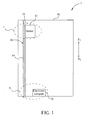
- Fig.1 is an illustration of a first embodiment of a portable electronic device 1 capable of calibrating magnetic detector according to the present invention.
- the portable electronic device 1 includes an electronic compass 13 disposed at a second position II inside a housing 10.
- the electronic compass 13 is set for detecting the geomagnetic field and provides azimuth data for the portable electronic device 1.
- the calibrating method of the present invention can also be applied on any magnetic detector that is highly sensitive to change of magnetic field.
- the portable electronic device 1 further includes a magnetic stylus 14 (or magnetic accessories for the portable electronic device) that is contained in a container 16 inside the housing 10.
- the stylus 14 can move relative to the housing 10 and to the electronic compass 13 along direction N1 or N2 when a user pulls out the stylus 14 from the container 16 or inserts the stylus 14 into the container 16.
- the stylus 14 has a magnetic section 15 at one end (or the accessories are magnetic at one end or for the whole part) that forms a local magnetic field around.
- the electronic compass 13 is designed for detecting the geomagnetic field according to a predetermined setting value under the environment that the geomagnetic field can be normally detected, meaning no existence of other abnormal magnetic field, change of the magnetic field caused by the magnetic section 15 as the stylus 14 moves inside the container 16 can cause interference and signal overflow to the electronic compass 13 such that the electronic compass 13 is unable to correctly output the azimuth data.
- a sensor 11 is disposed at a first position I of the portable electronic device 1, for which case in the embodiment the first position I is where a magnetic section 15 locates when the stylus 14 is totally inserted into the container 16.
- the sensor 11 can be sensor of mechanical type (such as a mechanical switch) or of electrical type (such as a Hall component capable of detecting magnetic field).
- the sensor 11 is defined to operate in a first operation status, for example, an opened status for the mechanical switch or a status for the electrical type sensor that has sensed a magnetic magnitude greater than a threshold value.
- the sensor 11 When the magnetic section 1 5 of the stylus 14 is away from the first position I, the sensor 11 is defined to operate in a second operation status, for example, a closed status for the mechanical switch or a status for the electrical type sensor that has sensed magnetic magnitude smaller than the threshold value. Therefore, whenever the magnetic section 15 moves to or moves away from the first position I, the sensor 11 is caused to have change in its operation status, from the first operation status to the second operation status or vice verse. The electronic compass 11 then views the detected abnormal magnetic field as a temporal and predictable change of magnetic field based on the status change of the sensor 11 and ignores following calibration process.
- a second operation status for example, a closed status for the mechanical switch or a status for the electrical type sensor that has sensed magnetic magnitude smaller than the threshold value. Therefore, whenever the magnetic section 15 moves to or moves away from the first position I, the sensor 11 is caused to have change in its operation status, from the first operation status to the second operation status or vice verse.
- the electronic compass 11 views the detected abnormal magnetic field as
- the electronic compass 13 After the abnormal magnetic field vanishes, i.e., the stylus 14 has totally left the housing 10 or completely inserted into the container 16, the electronic compass 13 goes on to detect the geomagnetic field according to the predetermined setting value and output azimuth data accordingly.
- Fig.2 is a flowchart of a calibrating method for the electronic compass 13 of the portable electronic device 1 according to the first embodiment of the present invention. The steps are as followed: Step 100: initiating measurement of an electronic compass; Step 110: detecting the operation status of a sensor and storing a status parameter corresponding to the detected operation status; Step 120: the electronic compass detects the geomagnetic field according to a predetermined setting value and outputs azimuth data accordingly; Step 130: the electronic compass detects if there is an abnormal magnetic field; if an abnormal magnetic field is detected, executing Step 140; otherwise, executing Step 180; Step 140: checking the status parameter and determining if the operation status of the sensor has changed; if it has changed, executing Step 150; otherwise, executing Step 160; Step 150: determining that the abnormal magnetic field detected in Step 130 is caused by the movement of a magnetic stylus (or other magnetic accessories) inside the electronic device, keeping the setting value of the electronic compass for detecting the geo
- Step 110 the initial operation status of the sensor 11, either the first operation status or the second operation status, is detected and a status parameter corresponding to the detected operation status is stored.
- the electronic compass 13 detects an abnormal magnetic field as in Step 130, practically when the abnormal magnetic field is greater than the threshold value and causes signal overflow to the electronic compass 13, the electronic compass 13 then checks the status parameter and determines if the operation status of the sensor has changed, as described in Step 140.
- Step 150 the electronic compass 13 keeps its setting value if the operation status of the sensor 11 has changed, which can be verified as the movement of the magnetic stylus 14 inside the housing 10.
- the electronic compass 13 detects if the magnetic field recovers to be normal, or practically the magnitude of the abnormal magnetic field is smaller than the threshold value and no longer causes any signal overflow to the electronic compass 13, and goes back to Step 120 to detect the geomagnetic field according to the predetermined setting value and output azimuth data after the detected magnetic field turns to be normal.
- Step 150 there are two conditions that can make the surrounding magnetic field to recover to be normal: one is that the stylus 14 totally left the portable electronic device 1 and the other one is that the stylus 14 goes back to completely insert into container 16 such that the magnetic section 1 5 again locates in the first position I.
- the operation status of the sensor 11 changes again.
- Step 180 will require that in Step 180 to store the status parameter corresponding to the current operation status of the sensor 11 for follow-up status detection.
- the electronic compass 13 detects the abnormal magnetic field in Step 130 but no change in the operation status of the sensor 11 in Step 140, the abnormal magnetic field is then determined to be not a temporal and predictable magnetic field change and the electronic compass 13 needs to calibrate according to a calibration procedure, as described in Step 160.
- the setting value is further modified in Step 170 and then the electronic compass 13 can detect the geomagnetic field according to the modified setting value and output azimuth data accordingly.
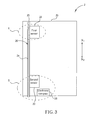
- Fig.3 is an illustration of a second embodiment of a portable electronic device 2 capable of calibrating magnetic detector according to the present invention.
- the portable electronic device 2 includes an electronic compass 23 disposed at a second position II inside a housing 20 and a stylus 24 contained in a container 26 inside the housing 20.
- the stylus 24 can move relative to the housing 20 and to the electronic compass 23 along direction N1 or N2 when the user pulls out the stylus 24 from the container 26 or inserts the stylus 24 into the container 26.
- a first sensor 21 is disposed at a first position I of the portable electronic device 2, for which case in the embodiment the first position I is where a magnetic section 25 of the stylus 24 locates when the stylus 24 is totally inserted into the container 26.
- a second sensor 22 is disposed at the second position II.
- the first sensor 21 and the second sensor 22 can be sensors of mechanical type or of electrical type, such as a Hall component capable of detecting magnetic field.
- the second sensor 22 When the magnetic section 25 of the stylus 24 is at the second position II, the second sensor 22 is defined to operate in a third operation status and when the magnetic section 25 is away from the second position II, the second sensor 22 is defined to operate in a fourth operation status. Since either the operation status of the first sensor 21 or the operation status of the second sensor 22 changes due to the movement of the magnetic section 25 of the stylus 24 moving in or away from the first position I or the second position II, the electronic compass 23 then views the detected abnormal magnetic field as temporal and predictable change of magnetic field based on the status change of the first sensor 21 or the second sensor 22 and ignores following calibration process.
- the electronic compass 23 goes on to detect the geomagnetic field according to the predetermined setting value and output azimuth data accordingly.
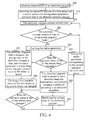
- Fig.4 is a flowchart of a calibrating method for the electronic compass 23 of the portable electronic device 2 according to the second embodiment of the present invention. The steps are as followed: Step 200: initiating measurement of the electronic compass; Step 210: detecting the operation statuses of a first sensor and a second sensor and storing status parameters corresponding to the detected operation statuses; Step 220: the electronic compass detects the geomagnetic field according to a predetermined setting value and outputs azimuth data accordingly; Step 230: the electronic compass detects if there is an abnormal magnetic field; if an abnormal magnetic field is detected, executing Step 240; otherwise, executing Step 280; Step 240: checking the status parameters and determining if the operation status of the first sensor or the second sensor has changed; if it has changed, executing Step 250; otherwise, executing Step 260; Step 250: determining that the abnormal magnetic field detected in Step 230 is caused by the movement of a magnetic stylus (or other magnetic accessories).
- Step 210 the initial operation statuses, i.e. the first status or the second status, of the first sensor 21 and the initial operation statuses, i.e. the third status or the fourth status, of the second sensor 22 are detected, and status parameters corresponding to the detected operation statuses are stored.
- Step 240 the electronic compass 23 then checks the status parameters and determines if the operation status of the first sensor 21 or the second sensor 22 has changed.
- the electronic compass 23 will keep its setting value and stores the status parameter corresponding to the changed operation status of the sensor (Step 250). Afterwards, the electronic compass 23 then determines if the magnetic field recovers to be normal by checking if there is a follow-up change in the operation status of the sensor (Step 255).
- the first sensor 21 changes its operation status accordingly (Step 240) and a status parameter corresponding to the changed operation status is stored (Step 250).
- the second sensor 22 also changes its operation status (Step 255, actually the operation status of the second sensor 22 changes from the third operation status to the fourth operation status, and then from the fourth operation status back to the third operation status) such that the electronic compass 23 can verify that the stylus 24 has completely left the portable electronic device 2 and the abnormal magnetic field caused by the stylus 24 is no longer existing.
- the electronic compass 23 detects the geomagnetic field according to the predetermined setting value and outputs azimuth data accordingly in Step 220.
- the second sensor 22 changes its operation status accordingly (Step 240) and a status parameter corresponding to the changed operation status is stored (Step 250, actually the operation status of the second sensor 22 changes from the third operation status to the fourth operation status, and then from the fourth operation status back to the third operation status).
- the first sensor 21 When the magnetic section 25 goes on to move to the first position I along direction N1, the first sensor 21 also changes its operation status (Step 255) such that the electronic compass 23 can verify that the stylus 24 has completely inserted into the portable electronic device 2 and the abnormal magnetic field caused by the stylus 24 is no longer existing. The electronic compass 23 then detects the geomagnetic field according to the predetermined setting value and outputs azimuth data accordingly in Step 220.
- a sensor changes its operation status twice in sequence and the present invention can also apply on such condition.
- any condition mentioned above requires the operation statuses of the first sensor 21 and the second sensor 22 to be stored as corresponding status parameters in Step 280.
- the electronic compass 13 in the first embodiment also serves as magnetic detection
- the electronic compass 13 can provide magnetic detection function like the second sensor 22 does in the second embodiment.
- the detection by the extra second sensor 22 in the second embodiment can further lower the operational load of the electronic compass 23 and have higher control precision.
- the electronic compass 23 detects the abnormal magnetic field in Step 230 but no status change of the first sensor 21 or the second sensor 22 in Step 240, the abnormal magnetic field is then determined to be caused by some abnormal magnetic material in the surround, not by a temporal and predictable magnetic field change, and the electronic compass 23 needs to be calibrated according to a calibration procedure in Step 260.
- the setting value is further modified in Step 270 and then the electronic compass 23 detects the geomagnetic field according to the calibrated setting value and outputs azimuth data accordingly.
- a calibrating method can apply on a portable electronic device having azimuth device such as an electronic compass and be achieved by checking one or more mechanical or electrical sensors in the portable electronic device incorporating the electronic compass configured in the portable electronic device, so as to effectively detect and verify a temporary abnormal magnetic field caused by a stylus movement.
- the electronic compass detects an abnormal magnetic field
- the operation status of the sensor is checked for any change existence. If the operation status of the sensors changes, the abnormal magnetic field is verified as a temporary magnetic filed due to the movement of the stylus or magnetic accessory inside the device, in which case the electronic compass passes the calibration and goes on detecting the geomagnetic field according to its default setting value so that the number of times for calibrating the electronic compass is reduced. All combinations and sub-combinations of the above-described features also belong to the invention.
Landscapes
- Engineering & Computer Science (AREA)
- Radar, Positioning & Navigation (AREA)
- Remote Sensing (AREA)
- Physics & Mathematics (AREA)
- General Physics & Mathematics (AREA)
- Theoretical Computer Science (AREA)
- General Engineering & Computer Science (AREA)
- Human Computer Interaction (AREA)
- Life Sciences & Earth Sciences (AREA)
- Environmental & Geological Engineering (AREA)
- General Life Sciences & Earth Sciences (AREA)
- Geology (AREA)
- Electromagnetism (AREA)
- Measuring Magnetic Variables (AREA)
- Electric Clocks (AREA)
Abstract
Description
- The present invention relates to a calibration method and related portable electronic device according to the pre-characterizing clauses of
claims 1, 7. - Electronic compass in electronic products with navigation and positioning functions is easy to be affected by combinational magnetic field, including the geomagnetic field and other magnetic fields, and sometimes needs calibration to exclude any interference by surrounding magnetic field to ensure the ability to detect the geomagnetic field. Generally, those surrounding magnetic fields, such as the condition when the electronic compass is locating in a car, under a pylon, near an electrical facility with magnet, can cause an abnormal magnetic field that is many times in magnitude than the geomagnetic field and because of that, signal overflow occurs in the electronic compass. The electronic compass must widen the range of detection for obtaining a better geomagnetic signal, which also leads to the downgrade of precision. When the abnormal magnetic field vanishes, the electronic compass must first carry out calibration before narrowing the range of detection for high geomagnetic precision. The electronic compass may not function during calibration as well.
- In many cases, such abnormal magnetic field is usually temporal and causes no effect to the electronic compass being away from a certain distance. Calibration for the electronic compass becomes needless under such condition. In the prior art, calibration for the electronic compass is determined to activate or not by checking the time of existence of the abnormal magnetic field. The electronic compass determines an abnormal magnetic field as temporal interference and ignores the calibration if the abnormal magnetic field vanishes after a predetermined time; otherwise, the calibration will be executed. Such solution often has limitation due to different situations. Additionally, for portable electronic devices that have navigating function such as personal digital assistant (PDA), mobile phone, smart phone, or global positioning system (GPS) device, more and more magnetic accessories such as the stylus are detachably configured at the portable electronic devices for convenience reason. High frequency pull-and-insert movement of such accessories on the portable electronic device, however, generates frequent abnormal magnetic field around. Calibration for electronic compass in such case is needed quite often.
- This in mind, the present invention aims at providing a method and related portable electronic device that check if an operation status of a sensor changes to determine if calibration of a magnetic detector is needed under an abnormal magnetic field.
- This is achieved by a method and related portable electronic device according to
claims 1, 7. The dependent claims pertain to corresponding further developments and improvements. - As will be seen more clearly from the detailed description following below, the claimed method includes steps that detect the magnetic field according to a preset value when the operation status of the sensor has changed, and the claimed portable electronic device includes a sensor having different operation statuses when a stylus has movement.
- In the following, the invention is further illustrated by way of example, taking reference to the accompanying drawings. Thereof
- Fig.1 is
- an illustration of a first embodiment of a portable electronic device capable of calibrating magnetic detector according to the present invention,
- Fig.2 is
- a flowchart of a calibrating method for an electronic compass of a portable electronic device according to the first embodiment of the present invention,
- Fig.3 is
- an illustration of a second embodiment of the portable electronic device capable of calibrating magnetic detector according to the present invention, and
- Fig.4 is
- a flowchart of a second embodiment of the calibrating method for an electronic compass of a portable electronic device according to the second embodiment of the present invention.
- The present invention configures a detector for detecting movement of a stylus or magnetic accessories in a portable electronic device having an electronic compass for determining if an abnormal magnetic field is temporal and if there is a need for calibration of the electronic compass. The portable electronic device in the present invention can be personal digital assistant (PDA), mobile phone, smart phone, or global positioning system (GPS) device that has navigating function.
- Please refer to
Fig.1. Fig.1 is an illustration of a first embodiment of a portableelectronic device 1 capable of calibrating magnetic detector according to the present invention. The portableelectronic device 1 includes anelectronic compass 13 disposed at a second position II inside ahousing 10. Theelectronic compass 13 is set for detecting the geomagnetic field and provides azimuth data for the portableelectronic device 1. In addition to theelectronic compass 13, the calibrating method of the present invention can also be applied on any magnetic detector that is highly sensitive to change of magnetic field. The portableelectronic device 1 further includes a magnetic stylus 14 (or magnetic accessories for the portable electronic device) that is contained in acontainer 16 inside thehousing 10. Thestylus 14 can move relative to thehousing 10 and to theelectronic compass 13 along direction N1 or N2 when a user pulls out thestylus 14 from thecontainer 16 or inserts thestylus 14 into thecontainer 16. Thestylus 14 has amagnetic section 15 at one end (or the accessories are magnetic at one end or for the whole part) that forms a local magnetic field around. Since theelectronic compass 13 is designed for detecting the geomagnetic field according to a predetermined setting value under the environment that the geomagnetic field can be normally detected, meaning no existence of other abnormal magnetic field, change of the magnetic field caused by themagnetic section 15 as thestylus 14 moves inside thecontainer 16 can cause interference and signal overflow to theelectronic compass 13 such that theelectronic compass 13 is unable to correctly output the azimuth data. - The change of the magnetic field generated by the movement of the
stylus 14 inside thecontainer 16 should be viewed as temporal and predictable. Asensor 11 is disposed at a first position I of the portableelectronic device 1, for which case in the embodiment the first position I is where amagnetic section 15 locates when thestylus 14 is totally inserted into thecontainer 16. Thesensor 11 can be sensor of mechanical type (such as a mechanical switch) or of electrical type (such as a Hall component capable of detecting magnetic field). When themagnetic section 15 of thestylus 14 is at the first position I, thesensor 11 is defined to operate in a first operation status, for example, an opened status for the mechanical switch or a status for the electrical type sensor that has sensed a magnetic magnitude greater than a threshold value. When themagnetic section 1 5 of thestylus 14 is away from the first position I, thesensor 11 is defined to operate in a second operation status, for example, a closed status for the mechanical switch or a status for the electrical type sensor that has sensed magnetic magnitude smaller than the threshold value. Therefore, whenever themagnetic section 15 moves to or moves away from the first position I, thesensor 11 is caused to have change in its operation status, from the first operation status to the second operation status or vice verse. Theelectronic compass 11 then views the detected abnormal magnetic field as a temporal and predictable change of magnetic field based on the status change of thesensor 11 and ignores following calibration process. After the abnormal magnetic field vanishes, i.e., thestylus 14 has totally left thehousing 10 or completely inserted into thecontainer 16, theelectronic compass 13 goes on to detect the geomagnetic field according to the predetermined setting value and output azimuth data accordingly. - Please refer to
Fig.2. Fig.2 is a flowchart of a calibrating method for theelectronic compass 13 of the portableelectronic device 1 according to the first embodiment of the present invention. The steps are as followed:Step 100: initiating measurement of an electronic compass; Step 110: detecting the operation status of a sensor and storing a status parameter corresponding to the detected operation status; Step 120: the electronic compass detects the geomagnetic field according to a predetermined setting value and outputs azimuth data accordingly; Step 130: the electronic compass detects if there is an abnormal magnetic field; if an abnormal magnetic field is detected, executing Step 140; otherwise, executingStep 180;Step 140: checking the status parameter and determining if the operation status of the sensor has changed; if it has changed, executing Step 150; otherwise, executingStep 160;Step 150: determining that the abnormal magnetic field detected in Step 130 is caused by the movement of a magnetic stylus (or other magnetic accessories) inside the electronic device, keeping the setting value of the electronic compass for detecting the geomagnetic field, and detecting if the magnetic field detected by the electronic compass recovers to be normal; if yes, executingStep 180;Step 160: determining that the abnormal magnetic field detected in Step 130 is caused by some abnormal magnetic material in the surrounding and calibrating the electronic compass according to a calibration procedure;Step 170: the electronic compass modifies the setting value according to a combination magnetic field of the geomagnetic field and the abnormal magnetic field; Step 180: storing the status parameter corresponding to the current operation status of the sensor. - In
Step 110, the initial operation status of thesensor 11, either the first operation status or the second operation status, is detected and a status parameter corresponding to the detected operation status is stored. When theelectronic compass 13 detects an abnormal magnetic field as inStep 130, practically when the abnormal magnetic field is greater than the threshold value and causes signal overflow to theelectronic compass 13, theelectronic compass 13 then checks the status parameter and determines if the operation status of the sensor has changed, as described inStep 140. InStep 150, theelectronic compass 13 keeps its setting value if the operation status of thesensor 11 has changed, which can be verified as the movement of themagnetic stylus 14 inside thehousing 10. Theelectronic compass 13 then detects if the magnetic field recovers to be normal, or practically the magnitude of the abnormal magnetic field is smaller than the threshold value and no longer causes any signal overflow to theelectronic compass 13, and goes back toStep 120 to detect the geomagnetic field according to the predetermined setting value and output azimuth data after the detected magnetic field turns to be normal. - In
Step 150, there are two conditions that can make the surrounding magnetic field to recover to be normal: one is that thestylus 14 totally left the portableelectronic device 1 and the other one is that thestylus 14 goes back to completely insert intocontainer 16 such that themagnetic section 1 5 again locates in the first position I. For the latter condition, the operation status of thesensor 11 changes again. Either condition will require that inStep 180 to store the status parameter corresponding to the current operation status of thesensor 11 for follow-up status detection. - If the
electronic compass 13 detects the abnormal magnetic field inStep 130 but no change in the operation status of thesensor 11 inStep 140, the abnormal magnetic field is then determined to be not a temporal and predictable magnetic field change and theelectronic compass 13 needs to calibrate according to a calibration procedure, as described inStep 160. The setting value is further modified inStep 170 and then theelectronic compass 13 can detect the geomagnetic field according to the modified setting value and output azimuth data accordingly. - Please refer to
Fig.3. Fig.3 is an illustration of a second embodiment of a portableelectronic device 2 capable of calibrating magnetic detector according to the present invention. The portableelectronic device 2 includes anelectronic compass 23 disposed at a second position II inside ahousing 20 and astylus 24 contained in acontainer 26 inside thehousing 20. Thestylus 24 can move relative to thehousing 20 and to theelectronic compass 23 along direction N1 or N2 when the user pulls out thestylus 24 from thecontainer 26 or inserts thestylus 24 into thecontainer 26. - A
first sensor 21 is disposed at a first position I of the portableelectronic device 2, for which case in the embodiment the first position I is where amagnetic section 25 of thestylus 24 locates when thestylus 24 is totally inserted into thecontainer 26. Asecond sensor 22 is disposed at the second position II. Thefirst sensor 21 and thesecond sensor 22 can be sensors of mechanical type or of electrical type, such as a Hall component capable of detecting magnetic field. When themagnetic section 25 of thestylus 24 is at the first position I, thefirst sensor 21 is defined to operate in a first operation status and when themagnetic section 25 is away from the first position I, thefirst sensor 21 is defined to operate in a second operation status. When themagnetic section 25 of thestylus 24 is at the second position II, thesecond sensor 22 is defined to operate in a third operation status and when themagnetic section 25 is away from the second position II, thesecond sensor 22 is defined to operate in a fourth operation status. Since either the operation status of thefirst sensor 21 or the operation status of thesecond sensor 22 changes due to the movement of themagnetic section 25 of thestylus 24 moving in or away from the first position I or the second position II, theelectronic compass 23 then views the detected abnormal magnetic field as temporal and predictable change of magnetic field based on the status change of thefirst sensor 21 or thesecond sensor 22 and ignores following calibration process. After the abnormal magnetic field vanishes, i.e., thestylus 24 has totally left thehousing 20 or completely inserted into thecontainer 26, theelectronic compass 23 goes on to detect the geomagnetic field according to the predetermined setting value and output azimuth data accordingly. - Please refer to
Fig.4. Fig.4 is a flowchart of a calibrating method for theelectronic compass 23 of the portableelectronic device 2 according to the second embodiment of the present invention. The steps are as followed:Step 200: initiating measurement of the electronic compass; Step 210: detecting the operation statuses of a first sensor and a second sensor and storing status parameters corresponding to the detected operation statuses; Step 220: the electronic compass detects the geomagnetic field according to a predetermined setting value and outputs azimuth data accordingly; Step 230: the electronic compass detects if there is an abnormal magnetic field; if an abnormal magnetic field is detected, executing Step 240; otherwise, executing Step 280; Step 240: checking the status parameters and determining if the operation status of the first sensor or the second sensor has changed; if it has changed, executing Step 250; otherwise, executing Step 260; Step 250: determining that the abnormal magnetic field detected in Step 230 is caused by the movement of a magnetic stylus (or other magnetic accessories) inside the electronic device, keeping the setting value of the electronic compass for detecting the geomagnetic field, and storing the status parameter corresponding to the changed operation status of the sensor; Step 255: checking the status parameter and determining if the operation status of the first sensor or the second sensor has changed; if it has changed, executing Step 280; Step 260: determining that the abnormal magnetic field is caused by some abnormal magnetic material in the surrounding and calibrating the electronic compass according to a calibration procedure; Step 270: the electronic compass modifies the setting value according to a combination magnetic field of the geomagnetic field and the abnormal magnetic field; Step 280: storing the status parameter corresponding the current status of each sensor. - In
Step 210, the initial operation statuses, i.e. the first status or the second status, of thefirst sensor 21 and the initial operation statuses, i.e. the third status or the fourth status, of thesecond sensor 22 are detected, and status parameters corresponding to the detected operation statuses are stored. InStep 240, theelectronic compass 23 then checks the status parameters and determines if the operation status of thefirst sensor 21 or thesecond sensor 22 has changed. If the status parameter corresponding to the operation status of thefirst sensor 21 has changed (maybe when thestylus 24 moves away from the container 26) or if the status parameter corresponding to the operation status of thesecond sensor 22 has changed (maybe when thestylus 24 moves into the container 26), which can be verified as the movement of themagnetic stylus 24 inside thehousing 20, theelectronic compass 23 will keep its setting value and stores the status parameter corresponding to the changed operation status of the sensor (Step 250). Afterwards, theelectronic compass 23 then determines if the magnetic field recovers to be normal by checking if there is a follow-up change in the operation status of the sensor (Step 255). - For example, if the
magnetic section 25 of thestylus 24 is moved away from the first position I along direction N2 when thepen 24 begins to leave thecontainer 26, thefirst sensor 21 changes its operation status accordingly (Step 240) and a status parameter corresponding to the changed operation status is stored (Step 250). When themagnetic section 25 goes on to move to the second position II and then totally leaves thecontainer 26, thesecond sensor 22 also changes its operation status (Step 255, actually the operation status of thesecond sensor 22 changes from the third operation status to the fourth operation status, and then from the fourth operation status back to the third operation status) such that theelectronic compass 23 can verify that thestylus 24 has completely left the portableelectronic device 2 and the abnormal magnetic field caused by thestylus 24 is no longer existing. Theelectronic compass 23 then detects the geomagnetic field according to the predetermined setting value and outputs azimuth data accordingly inStep 220. When thestylus 24 inserts into thecontainer 26 from the second position II, thesecond sensor 22 changes its operation status accordingly (Step 240) and a status parameter corresponding to the changed operation status is stored (Step 250, actually the operation status of thesecond sensor 22 changes from the third operation status to the fourth operation status, and then from the fourth operation status back to the third operation status). When themagnetic section 25 goes on to move to the first position I along direction N1, thefirst sensor 21 also changes its operation status (Step 255) such that theelectronic compass 23 can verify that thestylus 24 has completely inserted into the portableelectronic device 2 and the abnormal magnetic field caused by thestylus 24 is no longer existing. Theelectronic compass 23 then detects the geomagnetic field according to the predetermined setting value and outputs azimuth data accordingly inStep 220. Additionally, as for the condition that themagnetic section 25 is moved away from the first position I along direction N2 (Step 240) and then moved backward to the first position I from a position before the second position II (Step 255) or that themagnetic section 25 inserts into thecontainer 26 from the second position II (Step 240) and then returns to the second position II along the direction N2 from a position before the first position I and finally leaves away from the container 26 (Step 255), a sensor (thefirst sensor 21 or the second sensor 22) changes its operation status twice in sequence and the present invention can also apply on such condition. In order to properly use the status parameters for determining any change in operation statuses of thefirst sensor 21 and thesecond sensor 22, any condition mentioned above requires the operation statuses of thefirst sensor 21 and thesecond sensor 22 to be stored as corresponding status parameters inStep 280. - Additionally, since the
electronic compass 13 in the first embodiment also serves as magnetic detection, theelectronic compass 13 can provide magnetic detection function like thesecond sensor 22 does in the second embodiment. In addition, the detection by the extrasecond sensor 22 in the second embodiment can further lower the operational load of theelectronic compass 23 and have higher control precision. - If the
electronic compass 23 detects the abnormal magnetic field inStep 230 but no status change of thefirst sensor 21 or thesecond sensor 22 inStep 240, the abnormal magnetic field is then determined to be caused by some abnormal magnetic material in the surround, not by a temporal and predictable magnetic field change, and theelectronic compass 23 needs to be calibrated according to a calibration procedure inStep 260. The setting value is further modified in Step 270 and then theelectronic compass 23 detects the geomagnetic field according to the calibrated setting value and outputs azimuth data accordingly. - The invention can be summarized as that a calibrating method can apply on a portable electronic device having azimuth device such as an electronic compass and be achieved by checking one or more mechanical or electrical sensors in the portable electronic device incorporating the electronic compass configured in the portable electronic device, so as to effectively detect and verify a temporary abnormal magnetic field caused by a stylus movement. When the electronic compass detects an abnormal magnetic field, the operation status of the sensor is checked for any change existence. If the operation status of the sensors changes, the abnormal magnetic field is verified as a temporary magnetic filed due to the movement of the stylus or magnetic accessory inside the device, in which case the electronic compass passes the calibration and goes on detecting the geomagnetic field according to its default setting value so that the number of times for calibrating the electronic compass is reduced. All combinations and sub-combinations of the above-described features also belong to the invention.
Claims (10)
- A method for calibrating a magnetic detector (13,23) in a portable electronic device (1,2) having a first sensor (11,21), the method characterized by comprising:detecting a first magnetic field by the magnetic detector (13,23)
according to a setting value;checking if an operation status of the first sensor (11,21) changes
when a second magnetic field is detected by the magnetic detector (13,23) and the strength of the second magnetic field
is greater than a threshold value; anddetecting the first magnetic field according to the setting value and
outputting corresponding data by the magnetic detector (13,23) according to the first magnetic field when the operation status of the first sensor (11,21) changes. - The method of claim 1, characterized in that the step of detecting the first magnetic field according to the setting value and outputting corresponding data when the operation status of the first sensor (11,21) changes further comprises: checking if the strength of the second magnetic field is smaller than the threshold value, and detecting the first magnetic field according to the setting value and outputting the corresponding data when the strength of the second magnetic field is smaller than the threshold value.
- The method of claim 1, further characterized by: calibrating the magnetic detector (13,23) when the strength of the detected second magnetic field is greater than the threshold value and when the operation status of the first sensor (11,21) does not change.
- The method of claim 1, characterized in that the step of detecting the first magnetic field according to the setting value and outputting corresponding data is detecting geomagnetic field and outputting azimuth data according to the detected geomagnetic field.
- The method of claim 1, characterized in that the portable electronic device (1,2) has a second sensor (22) and the method further comprises:checking if a operation status of the second sensor (22) changes
when the strength of the second magnetic field is greater than
the threshold value; anddetecting the first magnetic field according to the setting value and
outputting corresponding data when the operation status of
the second sensor (22) changes. - The method of claim 5, characterized in that the step of detecting the first magnetic field according to the setting value and outputting corresponding data when the operation status of the second sensor (22) changes further comprises: checking if the strength of the second magnetic field is smaller than the threshold value, and detecting the first magnetic field according to the setting value and outputting the corresponding data when the strength of the second magnetic field is smaller than the threshold value.
- A portable electronic device (1,2), comprising:a housing (10,20);a magnetic detector (1 3,23) disposed inside the housing (10,20) for
detecting a first magnetic field according to a setting value; andthe portable electronic device characterized by further comprising:a magnetic element (15,25) disposed in the housing (10,20) and
capable of moving relative to the magnetic detector (13,23) and
being selectively positioned at a first position (I) inside the housing (10,20), wherein the magnetic element (15,25)
generates a second magnetic field to the magnetic detector
(13,23) when moving relative to the magnetic detector (13,23);
anda first sensor (11,21) disposed at the first position (I) inside the
housing (10,20) and operating in a first operation status when
the magnetic element (1 5,25) is positioned at the first position
(I) and in a second operation status when the magnetic element
(1 5,25) is positioned out of the first position;
wherein when the operation status of the first sensor (11,21)
changes, the magnetic detector (13,23) detects the first
magnetic field according to the setting value and outputs
corresponding data. - The portable electronic device (1,2) of claim 7, characterized in that the magnetic detector (13,23) is utilized for checking the second magnetic field when the operation status of the first sensor (11,21) changes, and for detecting the first magnetic field according to the setting value and outputting the corresponding data when the strength of the second magnetic field is smaller than a threshold value.
- The portable electronic device (1,2) of claim 7, characterized in that the magnetic detector (13,23) is calibrated when the strength of the detected second magnetic field is greater than a threshold value and when the operation status of the first sensor does not change.
- The portable electronic device (1,2) of claim 7, further characterized by a second sensor (22) disposed at a second position (II) inside the housing (10,20) and operating in a third operation status when the magnetic element (15,25) is positioned at the second position (II) and in a fourth operation status when the magnetic element (15,25) is positioned out of the second position (II), wherein when the operation status of the second sensor (22) changes, the magnetic detector (13,23) detects the first magnetic field according to the setting value and outputs the corresponding data.
Applications Claiming Priority (1)
| Application Number | Priority Date | Filing Date | Title |
|---|---|---|---|
| TW096151638A TWI362482B (en) | 2007-12-31 | 2007-12-31 | Portable electronic device with electronic compass and method for calibrating compass |
Publications (3)
| Publication Number | Publication Date |
|---|---|
| EP2075532A2 true EP2075532A2 (en) | 2009-07-01 |
| EP2075532A3 EP2075532A3 (en) | 2010-09-01 |
| EP2075532B1 EP2075532B1 (en) | 2012-12-26 |
Family
ID=40549668
Family Applications (1)
| Application Number | Title | Priority Date | Filing Date |
|---|---|---|---|
| EP08022566A Active EP2075532B1 (en) | 2007-12-31 | 2008-12-30 | Portable electronic device with electronic compass and method for calibrating compass |
Country Status (3)
| Country | Link |
|---|---|
| US (1) | US8339123B2 (en) |
| EP (1) | EP2075532B1 (en) |
| TW (1) | TWI362482B (en) |
Cited By (1)
| Publication number | Priority date | Publication date | Assignee | Title |
|---|---|---|---|---|
| CN102507141A (en) * | 2011-09-28 | 2012-06-20 | 北京遥感设备研究所 | Indoor calibration method for optical sights |
Families Citing this family (15)
| Publication number | Priority date | Publication date | Assignee | Title |
|---|---|---|---|---|
| KR101220600B1 (en) * | 2006-03-30 | 2013-01-10 | 교세라 가부시키가이샤 | Mobile electronic device and method for calibrating terrestrial magnetism sensor |
| US8645093B2 (en) * | 2009-11-04 | 2014-02-04 | Qualcomm Incorporated | Calibrating multi-dimensional sensor for offset, sensitivity, and non-orthogonality |
| US8880373B2 (en) | 2009-11-04 | 2014-11-04 | Qualcomm Incorporated | Accurate magnetic compass in mobile electronic device |
| US8825426B2 (en) | 2010-04-09 | 2014-09-02 | CSR Technology Holdings Inc. | Method and apparatus for calibrating a magnetic sensor |
| EP2447667B1 (en) | 2010-10-26 | 2015-11-11 | BlackBerry Limited | System and method for calibrating a magnetometer according to a quality threshold |
| US8676528B2 (en) | 2011-02-08 | 2014-03-18 | Blackberry Limited | System and method for calibrating an accelerometer |
| US9541393B2 (en) | 2011-06-30 | 2017-01-10 | Qualcomm Incorporated | Reducing power consumption or error of digital compass |
| US9329038B2 (en) * | 2011-09-30 | 2016-05-03 | Apple Inc. | Electronic devices with calibrated compasses |
| US9146285B2 (en) | 2012-02-03 | 2015-09-29 | Blackberry Limited | Methods and devices for detecting magnetic interference affecting the operation of a magnetometer |
| US9303991B2 (en) | 2013-09-27 | 2016-04-05 | Apple Inc. | Electronic device with calibrated compass |
| US9939545B2 (en) * | 2014-05-30 | 2018-04-10 | Motorola Solutions, Inc. | Communication system having proximity detector of ferrous materials |
| US10135480B1 (en) * | 2015-12-04 | 2018-11-20 | Jzm Technologies, Inc. | Coupling mechanisms for enhancing the functionality of smart phones and tablet computers |
| KR102577509B1 (en) * | 2016-09-29 | 2023-09-12 | 삼성전자주식회사 | electronic device including input module |
| CN115236571A (en) * | 2022-07-15 | 2022-10-25 | 维沃移动通信有限公司 | Magnetic attraction function management method of electronic equipment and electronic equipment |
| TWI854421B (en) * | 2022-12-30 | 2024-09-01 | 愛盛科技股份有限公司 | Angle sensing device |
Family Cites Families (10)
| Publication number | Priority date | Publication date | Assignee | Title |
|---|---|---|---|---|
| JPH03201016A (en) * | 1989-12-27 | 1991-09-02 | Sony Corp | Handwriting input device |
| KR100580628B1 (en) | 2003-11-08 | 2006-05-16 | 삼성전자주식회사 | Method and system for estimating moving direction of moving object |
| KR100594971B1 (en) * | 2004-01-09 | 2006-06-30 | 삼성전자주식회사 | Input device using geomagnetic sensor and input signal generation method using same |
| JP4049125B2 (en) * | 2004-05-20 | 2008-02-20 | コニカミノルタオプト株式会社 | Position detection device, camera shake correction mechanism, and imaging device |
| JP2006005540A (en) | 2004-06-16 | 2006-01-05 | Yamaha Corp | Mobile terminal |
| WO2006011238A1 (en) * | 2004-07-29 | 2006-02-02 | Yamaha Corporation | Azimuth data arithmetic method, azimuth sensor unit, and mobile electronic device |
| CN1871496B (en) * | 2004-09-29 | 2010-04-28 | 阿莫善斯有限公司 | Magnetic sensor control method, control device, and mobile terminal device |
| KR20080092463A (en) | 2006-01-30 | 2008-10-15 | 교세라 가부시키가이샤 | How to display portable electronic devices and their bearings |
| JP5014645B2 (en) | 2006-02-27 | 2012-08-29 | 京セラ株式会社 | Portable electronic device and control method thereof |
| US8514066B2 (en) * | 2006-11-25 | 2013-08-20 | Trimble Navigation Limited | Accelerometer based extended display |
-
2007
- 2007-12-31 TW TW096151638A patent/TWI362482B/en active
-
2008
- 2008-12-23 US US12/343,416 patent/US8339123B2/en active Active
- 2008-12-30 EP EP08022566A patent/EP2075532B1/en active Active
Non-Patent Citations (1)
| Title |
|---|
| None |
Cited By (2)
| Publication number | Priority date | Publication date | Assignee | Title |
|---|---|---|---|---|
| CN102507141A (en) * | 2011-09-28 | 2012-06-20 | 北京遥感设备研究所 | Indoor calibration method for optical sights |
| CN102507141B (en) * | 2011-09-28 | 2013-11-13 | 北京遥感设备研究所 | Indoor calibration method for optical sights |
Also Published As
| Publication number | Publication date |
|---|---|
| US20090167295A1 (en) | 2009-07-02 |
| TW200928305A (en) | 2009-07-01 |
| TWI362482B (en) | 2012-04-21 |
| EP2075532A3 (en) | 2010-09-01 |
| US8339123B2 (en) | 2012-12-25 |
| EP2075532B1 (en) | 2012-12-26 |
Similar Documents
| Publication | Publication Date | Title |
|---|---|---|
| EP2075532B1 (en) | Portable electronic device with electronic compass and method for calibrating compass | |
| EP2075533A2 (en) | Portable electronic device capable of re-calibrating azimuth and method thereof | |
| CN101487705A (en) | Portable electronic device with electronic compass and electronic compass correction method | |
| KR102173296B1 (en) | Magnetic field sensor and associated method that can store a measured threshold value in a memory device during a time when the magnetic field sensor is powered off | |
| US9759564B2 (en) | Temperature and power supply calibration | |
| US9520871B2 (en) | Methods and apparatus for supply voltage transient protection for maintaining a state of a sensor output signal | |
| KR100561849B1 (en) | Method and device for azimuth correction of moving body | |
| WO2015172530A1 (en) | Interference elimination method for electronic compass | |
| EP3091335B1 (en) | Calibration of temperature effect on magnetometer | |
| CN101487707B (en) | Portable electronic device with correctable azimuth and correction method thereof | |
| EP2547073B1 (en) | Methods and devices to determine a mobile device housing position | |
| EP1422504A1 (en) | Liquid level sensor device | |
| EP3211380B1 (en) | Rotation detection device | |
| KR20160106769A (en) | Accelerometer autocalibration in a mobile device | |
| US20130221759A1 (en) | Electronic Device and Method for Start-Up of an Electronic Device | |
| CN110553625B (en) | Inclination angle sensor and detection method thereof | |
| US10209069B2 (en) | Offset calculation circuit and azimuth sensor using the same | |
| CN112328082B (en) | Slip terminal and correction method for displacement detection of slip terminal | |
| JP5073252B2 (en) | Calibration method for portable electronic device and geomagnetic sensor | |
| US9625290B1 (en) | Dynamic calibration of MEMS sensors | |
| KR101185095B1 (en) | Apparatus for temperature compensation of magnetism | |
| CN105841682A (en) | Pointing equipment based pointing method, device and mobile terminal | |
| KR101153539B1 (en) | Position measuring appratus for vehicle and position measuring method using there of | |
| KR100686459B1 (en) | Slide type mobile communication terminal with built-in geomagnetic sensor and its operation method | |
| JP5302099B2 (en) | Automotive compass |
Legal Events
| Date | Code | Title | Description |
|---|---|---|---|
| PUAI | Public reference made under article 153(3) epc to a published international application that has entered the european phase |
Free format text: ORIGINAL CODE: 0009012 |
|
| AK | Designated contracting states |
Kind code of ref document: A2 Designated state(s): AT BE BG CH CY CZ DE DK EE ES FI FR GB GR HR HU IE IS IT LI LT LU LV MC MT NL NO PL PT RO SE SI SK TR |
|
| AX | Request for extension of the european patent |
Extension state: AL BA MK RS |
|
| 17P | Request for examination filed |
Effective date: 20100219 |
|
| PUAL | Search report despatched |
Free format text: ORIGINAL CODE: 0009013 |
|
| AK | Designated contracting states |
Kind code of ref document: A3 Designated state(s): AT BE BG CH CY CZ DE DK EE ES FI FR GB GR HR HU IE IS IT LI LT LU LV MC MT NL NO PL PT RO SE SI SK TR |
|
| AX | Request for extension of the european patent |
Extension state: AL BA MK RS |
|
| RIC1 | Information provided on ipc code assigned before grant |
Ipc: G01C 17/30 20060101AFI20090424BHEP Ipc: G01C 17/38 20060101ALI20100727BHEP Ipc: G06F 3/033 20060101ALI20100727BHEP Ipc: G06F 1/16 20060101ALI20100727BHEP |
|
| 17Q | First examination report despatched |
Effective date: 20110329 |
|
| AKX | Designation fees paid |
Designated state(s): AT BE BG CH CY CZ DE DK EE ES FI FR GB GR HR HU IE IS IT LI LT LU LV MC MT NL NO PL PT RO SE SI SK TR |
|
| GRAP | Despatch of communication of intention to grant a patent |
Free format text: ORIGINAL CODE: EPIDOSNIGR1 |
|
| GRAS | Grant fee paid |
Free format text: ORIGINAL CODE: EPIDOSNIGR3 |
|
| GRAA | (expected) grant |
Free format text: ORIGINAL CODE: 0009210 |
|
| AK | Designated contracting states |
Kind code of ref document: B1 Designated state(s): AT BE BG CH CY CZ DE DK EE ES FI FR GB GR HR HU IE IS IT LI LT LU LV MC MT NL NO PL PT RO SE SI SK TR |
|
| REG | Reference to a national code |
Ref country code: GB Ref legal event code: FG4D |
|
| REG | Reference to a national code |
Ref country code: CH Ref legal event code: EP |
|
| REG | Reference to a national code |
Ref country code: AT Ref legal event code: REF Ref document number: 590713 Country of ref document: AT Kind code of ref document: T Effective date: 20130115 |
|
| REG | Reference to a national code |
Ref country code: DE Ref legal event code: R096 Ref document number: 602008021092 Country of ref document: DE Effective date: 20130307 |
|
| PG25 | Lapsed in a contracting state [announced via postgrant information from national office to epo] |
Ref country code: NO Free format text: LAPSE BECAUSE OF FAILURE TO SUBMIT A TRANSLATION OF THE DESCRIPTION OR TO PAY THE FEE WITHIN THE PRESCRIBED TIME-LIMIT Effective date: 20130326 Ref country code: LT Free format text: LAPSE BECAUSE OF FAILURE TO SUBMIT A TRANSLATION OF THE DESCRIPTION OR TO PAY THE FEE WITHIN THE PRESCRIBED TIME-LIMIT Effective date: 20121226 Ref country code: SE Free format text: LAPSE BECAUSE OF FAILURE TO SUBMIT A TRANSLATION OF THE DESCRIPTION OR TO PAY THE FEE WITHIN THE PRESCRIBED TIME-LIMIT Effective date: 20121226 Ref country code: HR Free format text: LAPSE BECAUSE OF FAILURE TO SUBMIT A TRANSLATION OF THE DESCRIPTION OR TO PAY THE FEE WITHIN THE PRESCRIBED TIME-LIMIT Effective date: 20121226 Ref country code: FI Free format text: LAPSE BECAUSE OF FAILURE TO SUBMIT A TRANSLATION OF THE DESCRIPTION OR TO PAY THE FEE WITHIN THE PRESCRIBED TIME-LIMIT Effective date: 20121226 |
|
| REG | Reference to a national code |
Ref country code: NL Ref legal event code: T3 |
|
| REG | Reference to a national code |
Ref country code: AT Ref legal event code: MK05 Ref document number: 590713 Country of ref document: AT Kind code of ref document: T Effective date: 20121226 |
|
| REG | Reference to a national code |
Ref country code: LT Ref legal event code: MG4D |
|
| PG25 | Lapsed in a contracting state [announced via postgrant information from national office to epo] |
Ref country code: GR Free format text: LAPSE BECAUSE OF FAILURE TO SUBMIT A TRANSLATION OF THE DESCRIPTION OR TO PAY THE FEE WITHIN THE PRESCRIBED TIME-LIMIT Effective date: 20130327 Ref country code: LV Free format text: LAPSE BECAUSE OF FAILURE TO SUBMIT A TRANSLATION OF THE DESCRIPTION OR TO PAY THE FEE WITHIN THE PRESCRIBED TIME-LIMIT Effective date: 20121226 Ref country code: SI Free format text: LAPSE BECAUSE OF FAILURE TO SUBMIT A TRANSLATION OF THE DESCRIPTION OR TO PAY THE FEE WITHIN THE PRESCRIBED TIME-LIMIT Effective date: 20121226 |
|
| PG25 | Lapsed in a contracting state [announced via postgrant information from national office to epo] |
Ref country code: BE Free format text: LAPSE BECAUSE OF FAILURE TO SUBMIT A TRANSLATION OF THE DESCRIPTION OR TO PAY THE FEE WITHIN THE PRESCRIBED TIME-LIMIT Effective date: 20121226 Ref country code: BG Free format text: LAPSE BECAUSE OF FAILURE TO SUBMIT A TRANSLATION OF THE DESCRIPTION OR TO PAY THE FEE WITHIN THE PRESCRIBED TIME-LIMIT Effective date: 20130326 Ref country code: EE Free format text: LAPSE BECAUSE OF FAILURE TO SUBMIT A TRANSLATION OF THE DESCRIPTION OR TO PAY THE FEE WITHIN THE PRESCRIBED TIME-LIMIT Effective date: 20121226 Ref country code: CZ Free format text: LAPSE BECAUSE OF FAILURE TO SUBMIT A TRANSLATION OF THE DESCRIPTION OR TO PAY THE FEE WITHIN THE PRESCRIBED TIME-LIMIT Effective date: 20121226 Ref country code: AT Free format text: LAPSE BECAUSE OF FAILURE TO SUBMIT A TRANSLATION OF THE DESCRIPTION OR TO PAY THE FEE WITHIN THE PRESCRIBED TIME-LIMIT Effective date: 20121226 Ref country code: SK Free format text: LAPSE BECAUSE OF FAILURE TO SUBMIT A TRANSLATION OF THE DESCRIPTION OR TO PAY THE FEE WITHIN THE PRESCRIBED TIME-LIMIT Effective date: 20121226 Ref country code: IS Free format text: LAPSE BECAUSE OF FAILURE TO SUBMIT A TRANSLATION OF THE DESCRIPTION OR TO PAY THE FEE WITHIN THE PRESCRIBED TIME-LIMIT Effective date: 20130426 Ref country code: ES Free format text: LAPSE BECAUSE OF FAILURE TO SUBMIT A TRANSLATION OF THE DESCRIPTION OR TO PAY THE FEE WITHIN THE PRESCRIBED TIME-LIMIT Effective date: 20130406 Ref country code: MC Free format text: LAPSE BECAUSE OF NON-PAYMENT OF DUE FEES Effective date: 20121231 |
|
| REG | Reference to a national code |
Ref country code: CH Ref legal event code: PL |
|
| PG25 | Lapsed in a contracting state [announced via postgrant information from national office to epo] |
Ref country code: PL Free format text: LAPSE BECAUSE OF FAILURE TO SUBMIT A TRANSLATION OF THE DESCRIPTION OR TO PAY THE FEE WITHIN THE PRESCRIBED TIME-LIMIT Effective date: 20121226 Ref country code: RO Free format text: LAPSE BECAUSE OF FAILURE TO SUBMIT A TRANSLATION OF THE DESCRIPTION OR TO PAY THE FEE WITHIN THE PRESCRIBED TIME-LIMIT Effective date: 20121226 Ref country code: PT Free format text: LAPSE BECAUSE OF FAILURE TO SUBMIT A TRANSLATION OF THE DESCRIPTION OR TO PAY THE FEE WITHIN THE PRESCRIBED TIME-LIMIT Effective date: 20130426 |
|
| REG | Reference to a national code |
Ref country code: IE Ref legal event code: MM4A |
|
| PG25 | Lapsed in a contracting state [announced via postgrant information from national office to epo] |
Ref country code: LI Free format text: LAPSE BECAUSE OF NON-PAYMENT OF DUE FEES Effective date: 20121231 Ref country code: DK Free format text: LAPSE BECAUSE OF FAILURE TO SUBMIT A TRANSLATION OF THE DESCRIPTION OR TO PAY THE FEE WITHIN THE PRESCRIBED TIME-LIMIT Effective date: 20121226 Ref country code: IE Free format text: LAPSE BECAUSE OF NON-PAYMENT OF DUE FEES Effective date: 20121230 Ref country code: CH Free format text: LAPSE BECAUSE OF NON-PAYMENT OF DUE FEES Effective date: 20121231 |
|
| PLBE | No opposition filed within time limit |
Free format text: ORIGINAL CODE: 0009261 |
|
| STAA | Information on the status of an ep patent application or granted ep patent |
Free format text: STATUS: NO OPPOSITION FILED WITHIN TIME LIMIT |
|
| PG25 | Lapsed in a contracting state [announced via postgrant information from national office to epo] |
Ref country code: CY Free format text: LAPSE BECAUSE OF FAILURE TO SUBMIT A TRANSLATION OF THE DESCRIPTION OR TO PAY THE FEE WITHIN THE PRESCRIBED TIME-LIMIT Effective date: 20121226 Ref country code: MT Free format text: LAPSE BECAUSE OF FAILURE TO SUBMIT A TRANSLATION OF THE DESCRIPTION OR TO PAY THE FEE WITHIN THE PRESCRIBED TIME-LIMIT Effective date: 20121226 |
|
| 26N | No opposition filed |
Effective date: 20130927 |
|
| PG25 | Lapsed in a contracting state [announced via postgrant information from national office to epo] |
Ref country code: IT Free format text: LAPSE BECAUSE OF FAILURE TO SUBMIT A TRANSLATION OF THE DESCRIPTION OR TO PAY THE FEE WITHIN THE PRESCRIBED TIME-LIMIT Effective date: 20121226 |
|
| REG | Reference to a national code |
Ref country code: DE Ref legal event code: R097 Ref document number: 602008021092 Country of ref document: DE Effective date: 20130927 |
|
| PG25 | Lapsed in a contracting state [announced via postgrant information from national office to epo] |
Ref country code: TR Free format text: LAPSE BECAUSE OF FAILURE TO SUBMIT A TRANSLATION OF THE DESCRIPTION OR TO PAY THE FEE WITHIN THE PRESCRIBED TIME-LIMIT Effective date: 20121226 |
|
| PG25 | Lapsed in a contracting state [announced via postgrant information from national office to epo] |
Ref country code: LU Free format text: LAPSE BECAUSE OF NON-PAYMENT OF DUE FEES Effective date: 20121230 |
|
| PG25 | Lapsed in a contracting state [announced via postgrant information from national office to epo] |
Ref country code: HU Free format text: LAPSE BECAUSE OF FAILURE TO SUBMIT A TRANSLATION OF THE DESCRIPTION OR TO PAY THE FEE WITHIN THE PRESCRIBED TIME-LIMIT Effective date: 20081230 |
|
| REG | Reference to a national code |
Ref country code: FR Ref legal event code: PLFP Year of fee payment: 8 |
|
| REG | Reference to a national code |
Ref country code: FR Ref legal event code: PLFP Year of fee payment: 9 |
|
| REG | Reference to a national code |
Ref country code: FR Ref legal event code: PLFP Year of fee payment: 10 |
|
| P01 | Opt-out of the competence of the unified patent court (upc) registered |
Effective date: 20230602 |
|
| PGFP | Annual fee paid to national office [announced via postgrant information from national office to epo] |
Ref country code: NL Payment date: 20251112 Year of fee payment: 18 |
|
| PGFP | Annual fee paid to national office [announced via postgrant information from national office to epo] |
Ref country code: DE Payment date: 20251104 Year of fee payment: 18 |
|
| PGFP | Annual fee paid to national office [announced via postgrant information from national office to epo] |
Ref country code: GB Payment date: 20251114 Year of fee payment: 18 |
|
| PGFP | Annual fee paid to national office [announced via postgrant information from national office to epo] |
Ref country code: FR Payment date: 20251117 Year of fee payment: 18 |