EP2075225A2 - Reformer, Brennstoffzellensystem und zugehöriges Betriebsverfahren - Google Patents
Reformer, Brennstoffzellensystem und zugehöriges Betriebsverfahren Download PDFInfo
- Publication number
- EP2075225A2 EP2075225A2 EP08167687A EP08167687A EP2075225A2 EP 2075225 A2 EP2075225 A2 EP 2075225A2 EP 08167687 A EP08167687 A EP 08167687A EP 08167687 A EP08167687 A EP 08167687A EP 2075225 A2 EP2075225 A2 EP 2075225A2
- Authority
- EP
- European Patent Office
- Prior art keywords
- reformer
- afterburner
- oxidizer
- fuel cell
- gas
- Prior art date
- Legal status (The legal status is an assumption and is not a legal conclusion. Google has not performed a legal analysis and makes no representation as to the accuracy of the status listed.)
- Granted
Links
Images

Classifications
-
- C—CHEMISTRY; METALLURGY
- C01—INORGANIC CHEMISTRY
- C01B—NON-METALLIC ELEMENTS; COMPOUNDS THEREOF; METALLOIDS OR COMPOUNDS THEREOF NOT COVERED BY SUBCLASS C01C
- C01B3/00—Hydrogen; Gaseous mixtures containing hydrogen; Separation of hydrogen from mixtures containing it; Purification of hydrogen; Reversible storage of hydrogen
- C01B3/02—Production of hydrogen; Production of gaseous mixtures containing hydrogen
- C01B3/32—Production of hydrogen; Production of gaseous mixtures containing hydrogen by reaction of gaseous or liquid organic compounds with gasifying agents, e.g. water, carbon dioxide or air
- C01B3/34—Production of hydrogen; Production of gaseous mixtures containing hydrogen by reaction of gaseous or liquid organic compounds with gasifying agents, e.g. water, carbon dioxide or air by reaction of hydrocarbons with gasifying agents
- C01B3/38—Production of hydrogen; Production of gaseous mixtures containing hydrogen by reaction of gaseous or liquid organic compounds with gasifying agents, e.g. water, carbon dioxide or air by reaction of hydrocarbons with gasifying agents using catalysts
- C01B3/386—Catalytic partial combustion
-
- H—ELECTRICITY
- H01—ELECTRIC ELEMENTS
- H01M—PROCESSES OR MEANS, e.g. BATTERIES, FOR THE DIRECT CONVERSION OF CHEMICAL ENERGY INTO ELECTRICAL ENERGY
- H01M8/00—Fuel cells; Manufacture thereof
- H01M8/06—Combination of fuel cells with means for production of reactants or for treatment of residues
- H01M8/0606—Combination of fuel cells with means for production of reactants or for treatment of residues with means for production of gaseous reactants
- H01M8/0612—Combination of fuel cells with means for production of reactants or for treatment of residues with means for production of gaseous reactants from carbon-containing material
- H01M8/0618—Reforming processes, e.g. autothermal, partial oxidation or steam reforming
-
- H—ELECTRICITY
- H01—ELECTRIC ELEMENTS
- H01M—PROCESSES OR MEANS, e.g. BATTERIES, FOR THE DIRECT CONVERSION OF CHEMICAL ENERGY INTO ELECTRICAL ENERGY
- H01M8/00—Fuel cells; Manufacture thereof
- H01M8/06—Combination of fuel cells with means for production of reactants or for treatment of residues
- H01M8/0606—Combination of fuel cells with means for production of reactants or for treatment of residues with means for production of gaseous reactants
- H01M8/0612—Combination of fuel cells with means for production of reactants or for treatment of residues with means for production of gaseous reactants from carbon-containing material
- H01M8/0625—Combination of fuel cells with means for production of reactants or for treatment of residues with means for production of gaseous reactants from carbon-containing material in a modular combined reactor/fuel cell structure
- H01M8/0631—Reactor construction specially adapted for combination reactor/fuel cell
-
- C—CHEMISTRY; METALLURGY
- C01—INORGANIC CHEMISTRY
- C01B—NON-METALLIC ELEMENTS; COMPOUNDS THEREOF; METALLOIDS OR COMPOUNDS THEREOF NOT COVERED BY SUBCLASS C01C
- C01B2203/00—Integrated processes for the production of hydrogen or synthesis gas
- C01B2203/02—Processes for making hydrogen or synthesis gas
- C01B2203/025—Processes for making hydrogen or synthesis gas containing a partial oxidation step
- C01B2203/0261—Processes for making hydrogen or synthesis gas containing a partial oxidation step containing a catalytic partial oxidation step [CPO]
-
- C—CHEMISTRY; METALLURGY
- C01—INORGANIC CHEMISTRY
- C01B—NON-METALLIC ELEMENTS; COMPOUNDS THEREOF; METALLOIDS OR COMPOUNDS THEREOF NOT COVERED BY SUBCLASS C01C
- C01B2203/00—Integrated processes for the production of hydrogen or synthesis gas
- C01B2203/06—Integration with other chemical processes
- C01B2203/066—Integration with other chemical processes with fuel cells
-
- C—CHEMISTRY; METALLURGY
- C01—INORGANIC CHEMISTRY
- C01B—NON-METALLIC ELEMENTS; COMPOUNDS THEREOF; METALLOIDS OR COMPOUNDS THEREOF NOT COVERED BY SUBCLASS C01C
- C01B2203/00—Integrated processes for the production of hydrogen or synthesis gas
- C01B2203/16—Controlling the process
- C01B2203/1604—Starting up the process
-
- C—CHEMISTRY; METALLURGY
- C01—INORGANIC CHEMISTRY
- C01B—NON-METALLIC ELEMENTS; COMPOUNDS THEREOF; METALLOIDS OR COMPOUNDS THEREOF NOT COVERED BY SUBCLASS C01C
- C01B2203/00—Integrated processes for the production of hydrogen or synthesis gas
- C01B2203/16—Controlling the process
- C01B2203/1614—Controlling the temperature
-
- C—CHEMISTRY; METALLURGY
- C01—INORGANIC CHEMISTRY
- C01B—NON-METALLIC ELEMENTS; COMPOUNDS THEREOF; METALLOIDS OR COMPOUNDS THEREOF NOT COVERED BY SUBCLASS C01C
- C01B2203/00—Integrated processes for the production of hydrogen or synthesis gas
- C01B2203/16—Controlling the process
- C01B2203/1685—Control based on demand of downstream process
-
- H—ELECTRICITY
- H01—ELECTRIC ELEMENTS
- H01M—PROCESSES OR MEANS, e.g. BATTERIES, FOR THE DIRECT CONVERSION OF CHEMICAL ENERGY INTO ELECTRICAL ENERGY
- H01M2250/00—Fuel cells for particular applications; Specific features of fuel cell system
- H01M2250/20—Fuel cells in motive systems, e.g. vehicle, ship, plane
-
- Y—GENERAL TAGGING OF NEW TECHNOLOGICAL DEVELOPMENTS; GENERAL TAGGING OF CROSS-SECTIONAL TECHNOLOGIES SPANNING OVER SEVERAL SECTIONS OF THE IPC; TECHNICAL SUBJECTS COVERED BY FORMER USPC CROSS-REFERENCE ART COLLECTIONS [XRACs] AND DIGESTS
- Y02—TECHNOLOGIES OR APPLICATIONS FOR MITIGATION OR ADAPTATION AGAINST CLIMATE CHANGE
- Y02E—REDUCTION OF GREENHOUSE GAS [GHG] EMISSIONS, RELATED TO ENERGY GENERATION, TRANSMISSION OR DISTRIBUTION
- Y02E60/00—Enabling technologies; Technologies with a potential or indirect contribution to GHG emissions mitigation
- Y02E60/30—Hydrogen technology
- Y02E60/50—Fuel cells
-
- Y—GENERAL TAGGING OF NEW TECHNOLOGICAL DEVELOPMENTS; GENERAL TAGGING OF CROSS-SECTIONAL TECHNOLOGIES SPANNING OVER SEVERAL SECTIONS OF THE IPC; TECHNICAL SUBJECTS COVERED BY FORMER USPC CROSS-REFERENCE ART COLLECTIONS [XRACs] AND DIGESTS
- Y02—TECHNOLOGIES OR APPLICATIONS FOR MITIGATION OR ADAPTATION AGAINST CLIMATE CHANGE
- Y02T—CLIMATE CHANGE MITIGATION TECHNOLOGIES RELATED TO TRANSPORTATION
- Y02T90/00—Enabling technologies or technologies with a potential or indirect contribution to GHG emissions mitigation
- Y02T90/40—Application of hydrogen technology to transportation, e.g. using fuel cells
Definitions
- the present invention relates to a reformer for generating a reformate gas containing hydrogen gas, having the features of the preamble of claim 1.
- the invention also relates to a fuel cell system equipped with such a reformer and an associated operating method.
- a heating apparatus for a vehicle including a reformer for generating a reformed gas containing hydrogen gas from a hydrogen-containing fuel and an oxidizer. Further, an oxidizer line connected to an input side of the reformer for supplying the oxidizer to the reformer is provided. Furthermore, a reformate gas line connected to an output side of the reformer for discharging reformate gas from the reformer is provided. In addition, the heating device includes an afterburner incorporated into the reformate gas line for reacting at least a portion of the reformate gas with an oxidizer.
- a Nachbrennerebenauertrager is provided, on the one hand downstream the afterburner is integrated into the reformed gas line and the other hand in the known heating device is incorporated in a heating circuit for heating a vehicle interior or for heating an internal combustion engine of the vehicle.
- Another heater is from the DE 102 17 675 A1 known.
- the present invention is concerned with the problem of providing an improved embodiment for a reformer of the type mentioned at the outset or for a fuel cell system equipped therewith or for an associated operating method, which is characterized in particular by the fact that the reformer is operated at low temperatures, ie in particular during a cold start, has an improved heat balance, produces higher quality reformate gas and has a shortened warm-up phase.
- the invention is based on the general idea, with the help of Nachbrennerebenntontragers preheat the reformer supplied oxidizer demand.
- the reformer By heating or preheating the oxidizer supplied to the reformer, the reformer more quickly achieves stable conditions for mixture formation, especially for fuel vaporization. as well as for the partial oxidation of the mixture.
- the reformer can thereby achieve its operating temperature faster.
- the heated oxidizer favors the evaporation of a liquid fuel and thereby reduces the otherwise required for this electrical energy.
- the shortened start-up phase allows the reformer to reach its full load more quickly and generate sufficient reformat gas.
- the afterburning in the afterburner increases the quality of the reformate gas, which reduces soot formation in the subsequent path.
- the afterburner is preferably operated substoichiometrically, whereby any hydrocarbons still present in the reformate gas can be converted by partial oxidation into hydrogen gas and carbon monoxide and water.
- the quality of the reformate gas can thereby be increased, which is a significant improvement in the prevention of soot formation, e.g. contributes in a downstream fuel cell.
- FIG. 1 Show, in each case schematically, Fig. 1
- FIG. 2 Show, in each case schematically, Fig. 1
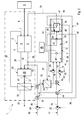
- FIG. 1 Each of us 2 is a greatly simplified schematic diagram-like representation of a fuel cell system, in different embodiments.
- a fuel cell system 1 comprises at least one fuel cell 2 and at least one reformer 3.
- the fuel cell 2 usually comprises a cathode side 4 and an anode side 5, which are separated from one another via an electrolyte 6.
- the fuel cell 2 at the electrolyte 6 a hydrogen gas-containing anode gas with oxygen gas containing cathode gas, eg air, to, wherein electric current can be tapped at least one electrical connection 7.
- an electrical line 8 leads to an electrical load 9.
- the fuel cell system 1 can be arranged, for example, in a motor vehicle and serve there as an additional or as a sole power source in order to supply electric loads 9 of the vehicle with electrical energy.
- the reformer 3 is designed to be composed of a hydrogen-containing fuel, which may in principle be any hydrocarbon, and a suitable oxidizer, e.g. Air, a hydrogen gas containing reformate gas generated, which can be preferably supplied to the fuel cell 2 as an anode gas within the fuel cell system 1.
- a suitable oxidizer e.g. Air
- a hydrogen gas containing reformate gas generated which can be preferably supplied to the fuel cell 2 as an anode gas within the fuel cell system 1.
- the reformer 3 contains a mixture-forming section 10 and a reforming section 11.
- the mixture formation of fuel and oxidizer takes place.
- the fuel is a liquid fuel, for example gasoline, diesel or biofuel
- the mixture-forming section 10 there is also an evaporation of the fuel.
- the mixture forming section 10 may operate, for example, with a cold flame.
- the partial oxidation of the mixture takes place, whereby the hydrocarbons e.g. be decomposed with oxygen into hydrogen gas, carbon monoxide, carbon dioxide and water.
- the reforming section 11 contains a catalyst 12 suitable for this purpose.
- a fuel supply 13 which comprises a fuel line 15 connected to an input side 14 of the reformer 3 and a delivery device 16, eg a pump, arranged therein.
- an oxidator feed 17 is provided, which is connected via an oxidizer line 18 is connected to the input side 14.
- the same Oxidatorzu Installation 17 is in the example according to Fig. 1 also used to supply the fuel cell 2 with cathode gas, which is preferably air.
- a cathode gas line 20 branches off from the oxidizer line 18 or branch the oxidizer line 18 and the cathode gas line 20 z. B. via a suitable valve device 21 from a common supply line 19 from.
- a conveyor 22, such as a fan may be arranged.
- a separate second Oxidatorzu entry 49 the oxidizer directly forms the cathode gas line 20.
- This second Oxidatorzu Entry 49 includes in the cathode gas line 20, a suitable conveyor 50, z.
- a blower whereby the supply of the fuel cell 2 with oxidant gas is independent of the Oxidatormakers the reformer 3.
- the supply line 19 passes directly into the Oxidatortechnisch 18 or is identical to this.
- a Reformatgastechnische 24 connected via which the reformate gas from the reformer 3 can be discharged.
- the reformate gas line 24 is connected to the anode side 5 of the fuel cell 2 and can also be referred to as anode gas line 24 in the following.
- the fuel cell system 1 here also has a residual gas burner 25, which converts cathode exhaust gas and anode exhaust gas in a combustion chamber 26.
- a residual gas burner 25 which converts cathode exhaust gas and anode exhaust gas in a combustion chamber 26.
- the residual gas burner 26 is connected via a cathode exhaust gas line 28 to the cathode side 4 of the fuel cell 2.
- the residual gas burner 25 is connected via an anode exhaust gas line 29 to the anode side 5 of the fuel cell 2.
- a heat exchanger 30 is incorporated in the example, which is also involved in the cathode gas line 20.
- At least one further heat exchanger may be arranged, for example to heat a vehicle interior and / or to warm up an internal combustion engine.
- exhaust treatment devices such as e.g. an oxidation catalyst.
- a cooling gas line 51 is connected to the residual gas burner 25 on the input side via which a cooling gas, eg air, can be supplied to the residual gas burner 25 as needed.
- a cooling gas eg air
- the cooling gas can be added to the cathode exhaust gas.
- the cooling gas line 51 branches off from the supply line 19 via the valve device 21.
- the cooling gas line 51 branches off from the cathode gas line 20 via a corresponding control valve 52.
- a recirculation line 31 is provided, via which the reformer 3 anode exhaust gas is traceable.
- the recirculation line 31 is connected at 32 to the anode exhaust gas line 29.
- a Rezirkulationskorübertrager 33 is arranged in the example, which is also involved in the Oxidatortechnisch 18. In this way, a heating of serving for the supply of the reformer 3 oxidizer can be realized. At the same time a cooling of the recycled anode exhaust gas can be realized.
- the recirculation heat exchanger 33 may additionally or alternatively also be integrated into the cathode gas line 20 and / or into the fuel line 15.
- a conveyor 34 is also arranged, which may be, for example, a pump, a fan or a compressor or the like or the like.
- the reformer 3 presented here is additionally equipped with an afterburner 35 which is integrated into the reformate gas line 24.
- an afterburner 35 In the afterburner 35, hydrocarbons still contained in the reformate gas can be reacted, for example. Also, in the afterburner 35 at least partially carried out a conversion of the reformate gas.
- an oxidizer is needed, in particular oxygen.
- This oxidizer which is preferably air, is supplied to the afterburner 35 via an additional Oxidator ein 36.
- This afterburner oxidizer line 36 branches in accordance with the example Fig. 1 via the valve device 21 from the supply line 19 from. Likewise, it is basically possible to branch off this afterburner oxidizer line 36 from the cathode gas line 20 or from the reformer oxidizer line 18.
- the example shown branches off the Nachbrenneroxidatortechnisch 36 via a further control valve 37 from the cathode gas line 20 from.
- the afterburner oxidizer line 36 is connected to a combustion chamber 38 of the afterburner 35 in both examples.
- a corresponding ignition aid 39 may be provided, which may be a glow plug, a glow plug or a spark plug or any other ignition device.
- the reformer 3 shown here is equipped with an afterburner heat exchanger 49.
- This is coupled on the one hand with the afterburner 35 heat transfer and additionally or alternatively in the reformate 24, namely downstream of the afterburner 35 and on the other hand in the Reformeroxidatortechnisch 18, namely incorporated upstream of the reformer 3.
- the reformer oxidizer line 18 has a heat exchanger branch 41 with a feed 42 leading to the heat exchanger 40 and a return 43 coming back from the heat exchanger 40.
- the flow 42 branches via a flow valve device 44 from the main strand the Reformeroxidator effet 18 from.
- the return 43 is connected via a return valve device 45 to the main branch of the Reformeroxidatortechnisch 18, downstream of the flow valve device 44th
- the feed 42 branches off the reformer oxidizer line 18 downstream of the valve device 21.
- the flow valve device 44 is integrated into the supply line 19 or arranged at the transition between the supply line 19 and the oxidizer line 18.
- one of the valve devices 44 and 45 can be omitted; likewise, the one or the respective valve device can be arranged within the feed 42 or within the return 43.
- About the flow resistance results in the desired flow guidance even when using only one valve means 44 and 45th
- the flow 42 branches off upstream of the recirculation heat exchanger 33 from the oxidizer line 18 and from the supply line 19, respectively.
- a control 46 is provided, which in a suitable manner with the controllable components of the fuel cell system 1, so for example with the conveyors 16, 22, 34, 50 and with the valve means 37, 44, 45, 52 and connected to the ignition aid 39.
- the controller 46 may be coupled to various sensors 47, which may be, for example, temperature sensors or pressure sensors or the like.
- the afterburner 35 and the afterburner heat exchanger 40 form a structural unit.
- the afterburner heat exchanger 40 encloses the afterburner 35 or its combustion chamber 38 at least partially in the circumferential direction.
- a common tubular body 48 is symbolically indicated by a broken line.
- This common tubular body 48 serves as a common housing for the afterburner heat exchanger 40 and the afterburner 35.
- this tubular body 38 forms a portion of the reformate gas line 24, namely at least the extending between the reformer 3 and afterburner 35 section. Said section is here designated by 24 '.
- the reformer 3 is also housed in said tubular body 48. This results in a particularly compact construction for the reformer 3 equipped with the afterburner 35 and the afterburner heat exchanger 40.
- the afterburner 35 heat is generated by the conversion of the reformate, which can be used to heat the reformer. This is done here in that the valve means 44 and 45 are switched so that the Oxidatorstrom not directly passes through the main strand of the Reformeroxidatortechnisch 18 to the reformer 3, but on the flow 42, on the afterburner heat exchanger 40 and the return line 43 must flow before it over the still active part of the Oxidator effet 18 to the input side 14 of the reformer 3 arrives.
- the afterburner heat exchanger 40 there is a heating of the reformer 3 supplied oxidizer.
- the heated oxidizer simplifies in particular the evaporation of the liquid fuel, simplifies the implementation of the fuel-oxidizer mixture and increases the overall temperature level of the reformer 3.
- valve devices 44 and 45 are switched such that the branch 41 is deactivated, so that the oxidizer gas can now be supplied to the reformer 3 directly via the main branch of the reformer oxidizer line 18.
- the afterburner 35 can also be operated to increase the quality of the reformate gas.
- the improved quality of the reformate gas can reduce the tendency for soot formation in the subsequent path.
- a suitable temperature sensor 47 can be arranged in the afterburner 35 or in the reformate gas line 24.
Landscapes
- Chemical & Material Sciences (AREA)
- Chemical Kinetics & Catalysis (AREA)
- Engineering & Computer Science (AREA)
- Electrochemistry (AREA)
- Organic Chemistry (AREA)
- Life Sciences & Earth Sciences (AREA)
- Manufacturing & Machinery (AREA)
- Sustainable Development (AREA)
- Sustainable Energy (AREA)
- Combustion & Propulsion (AREA)
- General Chemical & Material Sciences (AREA)
- Health & Medical Sciences (AREA)
- General Health & Medical Sciences (AREA)
- Inorganic Chemistry (AREA)
- Hydrogen, Water And Hydrids (AREA)
- Fuel Cell (AREA)
Abstract
Description
- Die vorliegende Erfindung betrifft einen Reformer zum Generieren eines Wasserstoffgas enthaltenden Reformatgases, mit den Merkmalen des Oberbegriffs des Anspruchs 1. Die Erfindung betrifft außerdem ein mit einem derartigen Reformer ausgestattetes Brennstoffzellensystem sowie ein zugehöriges Betriebsverfahren.
- Aus der
DE 102 44 883 B4 ist eine Heizeinrichtung für ein Fahrzeug bekannt, die einen Reformer zum Generieren eines Wasserstoffgas enthaltenden Reformatgases aus einem Wasserstoff enthaltenden Brennstoff und einem Oxidator enthält. Ferner ist eine an eine Eingangsseite des Reformers angeschlossene Oxidatorleitung zum Zuführen des Oxidators zum Reformer vorgesehen. Des weiteren ist eine an eine Ausgangsseite des Reformers angeschlossene Reformatgasleitung zum Abführen von Reformatgas vom Reformer vorgesehen. Außerdem umfasst die Heizeinrichtung einen in die Reformatgasleitung eingebundenen Nachbrenner zum Umsetzen zumindest eines Teils des Reformatgases mit einem Oxidator. Ferner ist ein Nachbrennerwärmeübertrager vorgesehen, der einerseits stromab des Nachbrenners in die Reformatgasleitung eingebunden ist und der bei der bekannten Heizeinrichtung andererseits in einen Heizkreis zum Beheizen eines Fahrzeuginnenraums oder zum Anwärmen einer Brennkraftmaschine des Fahrzeugs eingebunden ist. - Eine weitere Heizeinrichtung ist aus der
DE 102 17 675 A1 bekannt. - Die vorliegende Erfindung beschäftigt sich mit dem Problem, für einen Reformer der eingangs genannten Art bzw. für ein damit ausgestattetes Brennstoffzellensystem bzw. für ein zugehöriges Betriebsverfahren eine verbesserte Ausführungsform anzugeben, die sich insbesondere dadurch auszeichnet, dass der Reformer bei niedrigen Temperaturen, also insbesondere während eines Kaltstarts, einen verbesserten Wärmehaushalt aufweist, hochwertigeres Reformatgas erzeugt und eine verkürzte Warmlaufphase besitzt.
- Dieses Problem wird erfindungsgemäß durch die Gegenstände der unabhängigen Ansprüche gelöst. Vorteilhafte Ausführungsformen sind Gegenstand der abhängigen Ansprüche.
- Die Erfindung beruht auf dem allgemeinen Gedanken, mit Hilfe des Nachbrennerwärmeübertragers den dem Reformer zugeführten Oxidator bedarfsabhängig vorzuwärmen. Durch die Aufheizung oder Vorwärmung des dem Reformer zugeführten Oxidators erreicht der Reformer schneller stabile Zustände für die Gemischbildung, insbesondere für die Brennstoffverdampfung, sowie für die partielle Oxidation des Gemischs. Ferner kann der Reformer dadurch rascher seine Betriebstemperatur erreichen. Insbesondere begünstigt der aufgeheizte Oxidator die Verdampfung eines flüssigen Brennstoffs und reduziert dadurch die anderenfalls hierzu erforderliche elektrische Energie.
- Durch die verkürzte Startphase kann der Reformer rascher seine Volllast erreichen und ausreichend Reformatgas generieren. Die Nachverbrennung im Nachbrenner erhöht dabei die Qualität des Reformatgases, was eine Rußbildung im nachfolgenden Pfad reduziert.
- Entsprechend einer vorteilhaften Ausführungsform wird der Nachbrenner bevorzugt unterstöchiometrisch betrieben, wodurch gegebenenfalls im Reformatgas noch enthaltene Kohlenwasserstoffe durch partielle Oxidation in Wasserstoffgas und Kohlenmonoxid sowie Wasser umsetzbar sind. Die Qualität des Reformatgases lässt sich dadurch steigern, was eine signifikante Verbesserung hinsichtlich der Vermeidung einer Rußbildung z.B. in einer nachgeordneten Brennstoffzelle beiträgt.
- Weitere wichtige Merkmale und Vorteile der Erfindung ergeben sich aus den Unteransprüchen, aus den Zeichnungen und aus der zugehörigen Figurenbeschreibung anhand der Zeichnungen.
- Es versteht sich, dass die vorstehend genannten und die nachstehend noch zu erläuternden Merkmale nicht nur in der jeweils angegebenen Kombination, sondern auch in anderen Kombinationen oder in Alleinstellung verwendbar sind, ohne den Rahmen der vorliegenden Erfindung zu verlassen.
- Bevorzugte Ausführungsbeispiele der Erfindung sind in den Zeichnungen dargestellt und werden in der nachfolgenden Beschreibung näher erläutert, wobei sich gleiche Bezugszeichen auf gleiche oder ähnliche oder funktional gleiche Komponenten beziehen.
- Es zeigen, jeweils schematisch,
Fig. 1 uns 2 jeweils eine stark vereinfachte, schaltplanartige Prinzipdarstellung eines Brennstoffzellensystems, bei unterschiedlichen Ausführungsformen. - Entsprechend den
Fig. 1 und2 umfasst ein Brennstoffzellensystem 1 zumindest eine Brennstoffzelle 2 sowie wenigstens einen Reformer 3. Die Brennstoffzelle 2 umfasst üblicherweise eine Kathodenseite 4 sowie eine Anodenseite 5, die über ein Elektrolyt 6 voneinander getrennt sind. Im Betrieb setzt die Brennstoffzelle 2 am Elektrolyt 6 ein Wasserstoffgas enthaltendes Anodengas mit Sauerstoffgas enthaltendem Kathodengas, z.B. Luft, um, wobei elektrischer Strom an wenigstens einem elektrischen Anschluss 7 abgreifbar ist. Im Beispiel führt eine elektrische Leitung 8 zu einem elektrischen Verbraucher 9. Das Brennstoffzellensystem 1 kann beispielsweise in einem Kraftfahrzeug angeordnet sein und dort als zusätzliche oder als einzige Stromquelle dienen, um elektrische Verbraucher 9 des Fahrzeugs mit elektrischer Energie zu versorgen. - Der Reformer 3 ist so ausgestaltet, dass er aus einem Wasserstoff enthaltenden Brennstoff, bei dem es sich grundsätzlich um einen beliebigen Kohlenwasserstoff handeln kann, und einem geeigneten Oxidator, z.B. Luft, ein Wasserstoffgas enthaltendes Reformatgas generiert, das innerhalb des Brennstoffzellensystems 1 bevorzugt der Brennstoffzelle 2 als Anodengas zugeführt werden kann. Der Reformer 3 enthält hierzu einen Gemischbildungsabschnitt 10 und einen Reformierungsabschnitt 11. Im Gemischbildungsabschnitt 10 erfolgt die Gemischbildung aus Brennstoff und Oxidator. Sofern es sich beim Brennstoff um einen flüssigen Brennstoff handelt, beispielsweise Benzin, Diesel oder Biokraftstoff, erfolgt im Gemischbildungsabschnitt 10 außerdem eine Verdampfung des Brennstoffs. Hierbei kann der Gemischbildungsabschnitt 10 beispielsweise mit einer kalten Flamme arbeiten. Im Reformierungsabschnitt 11 erfolgt die partielle Oxidation des Gemischs, wodurch die Kohlenwasserstoffe z.B. mit Sauerstoff in Wasserstoffgas, Kohlenmonoxid, Kohlendioxid und Wasser aufgespalten werden. Hierzu enthält der Reformationsabschnitt 11 einen hierfür geeigneten Katalysator 12.
- Zur Versorgung des Reformers 3 mit Brennstoff ist eine Brennstoffzuführung 13 vorgesehen, die eine an eine Eingangsseite 14 des Reformers 3 angeschlossene Brennstoffleitung 15 und eine darin angeordnete Fördereinrichtung 16, z.B. eine Pumpe, umfasst. Zur Versorgung des Reformers 3 mit Oxidator, der insbesondere Luft sein kann, ist eine Oxidatorzuführung 17 vorgesehen, die über eine Oxidatorleitung 18 an die Eingangsseite 14 angeschlossen ist. Die gleiche Oxidatorzuführung 17 wird im Beispiel gemäß
Fig. 1 auch zur Versorgung der Brennstoffzelle 2 mit Kathodengas verwendet, bei dem es sich bevorzugt um Luft handelt. Hierzu zweigt eine Kathodengasleitung 20 von der Oxidatorleitung 18 ab bzw. zweigen die Oxidatorleitung 18 und die Kathodengasleitung 20 z. B. über eine geeignete Ventileinrichtung 21 von einer gemeinsamen Versorgungsleitung 19 ab. In dieser Versorgungsleitung 19 kann eine Fördereinrichtung 22, z.B. ein Gebläse, angeordnet sein. - Alternativ kann bei der in
Fig. 2 gezeigten Ausführungsform zur Versorgung der Brennstoffzelle 2 mit Oxidatorgas eine separate zweite Oxidatorzuführung 49 vorgesehen sein, deren Oxidatorleitung direkt die Kathodengasleitung 20 bildet. Diese zweite Oxidatorzuführung 49 enthält in der Kathodengasleitung 20 eine geeignete Fördereinrichtung 50, z. B. ein Gebläse, wodurch die Versorgung der Brennstoffzelle 2 mit Oxidatorgas unabhängig von der Oxidatorversorgung des Reformers 3 ist. Bei der Ausführungsform gemäßFig. 2 geht die Versorgungsleitung 19 direkt in die Oxidatorleitung 18 über oder ist mit dieser identisch. - An eine Ausgangsseite 23 des Reformers 3 ist gemäß den
Fig. 1 und2 eine Reformatgasleitung 24 angeschlossen, über die das Reformatgas vom Reformer 3 abführbar ist. In den Beispielen ist die Reformatgasleitung 24 an die Anodenseite 5 der Brennstoffzelle 2 angeschlossen und kann in der Folge auch als Anodengasleitung 24 bezeichnet werden. - Das Brennstoffzellensystem 1 weist hier außerdem einen Restgasbrenner 25 auf, der in einem Brennraum 26 Kathodenabgas und Anodenabgas umsetzt. Bei dieser Verbrennungsreaktion, die mit offener Flamme oder katalytisch erfolgen kann, entsteht Brennerabgas, das über eine Abgasleitung 27 vom Restgasbrenner 25 abgeführt wird. Der Restgasbrenner 26 ist über eine Kathodenabgasleitung 28 an die Kathodenseite 4 der Brennstoffzelle 2 angeschlossen. Ferner ist der Restgasbrenner 25 über eine Anodenabgasleitung 29 an die Anodenseite 5 der Brennstoffzelle 2 angeschlossen. In die Abgasleitung 27 ist im Beispiel ein Wärmeübertrager 30 eingebunden, der außerdem in die Kathodengasleitung 20 eingebunden ist. Auf diese Weise kann die Wärme des Brennerabgases zum Aufheizen des Kathodengases 20 genutzt werden, was die Effektivität der Brennstoffzelle 2 erhöht. In der Abgasleitung 27 kann wenigstens ein weiterer Wärmeübertrager angeordnet sein, beispielsweise um einen Fahrzeuginnenraum zu beheizen und/oder um eine Brennkraftmaschine aufzuwärmen. Des weiteren können in der Abgasleitung 27 Abgasbehandlungseinrichtungen, wie z.B. ein Oxidationskatalysator, angeordnet sein.
- An den Restgasbrenner 25 ist eingangsseitig außerdem eine Kühlgasleitung 51 angeschlossen, über die dem Restgasbrenner 25 bedarfsabhängig ein Kühlgas, z.B. Luft, zugeführt werden kann. Insbesondere kann das Kühlgas dem Kathodenabgas zugemischt werden. Bei der Ausführungsform gemäß
Fig. 1 zweigt die Kühlgasleitung 51 über die Ventileinrichtung 21 von der Versorgungsleitung 19 ab. Bei der inFig. 2 gezeigten Ausführungsform zweigt die Kühlgasleitung 51 über ein entsprechendes Steuerventil 52 von der Kathodengasleitung 20 ab. - Bei den hier gezeigten Ausführungsformen der
Fig. 1 und2 ist außerdem eine Rezirkulationsleitung 31 vorgesehen, über die dem Reformer 3 Anodenabgas rückführbar ist. Hierzu ist die Rezirkulationsleitung 31 bei 32 an die Anodenabgasleitung 29 angeschlossen. In der Rezirkulationsleitung 31 ist im Bespiel ein Rezirkulationswärmeübertrager 33 angeordnet, der außerdem in die Oxidatorleitung 18 eingebunden ist. Hierdurch kann eine Aufheizung des zur Versorgung des Reformers 3 dienenden Oxidators realisiert werden. Gleichzeitig kann dadurch eine Abkühlung des rückgeführten Anodenabgases realisiert werden. Es ist klar, dass der Rezirkulationswärmeübertrager 33 zusätzlich oder alternativ auch in die Kathodengasleitung 20 und/oder in die Brennstoffleitung 15 eingebunden sein kann. - In der Rezirkulationsleitung 31 ist außerdem eine Fördereinrichtung 34 angeordnet, bei der es sich beispielsweise um eine Pumpe, um ein Gebläse oder um einen Verdichter oder Kompressor oder dergleichen handeln kann.
- Der hier vorgestellte Reformer 3 ist zusätzlich mit einem Nachbrenner 35 ausgestattet, der in die Reformatgasleitung 24 eingebunden ist. Im Nachbrenner 35 können beispielweise im Reformatgas noch enthaltene Kohlenwasserstoffe umgesetzt werden. Ebenfalls kann im Nachbrenner 35 zumindest teilweise eine Umsetzung des Reformatgases erfolgen. In jedem Fall wird hierzu ein Oxidator benötigt, insbesondere Sauerstoff. Dieser Oxidator, der bevorzugt Luft ist, wird dem Nachbrenner 35 über eine zusätzliche Oxidatorleitung 36 zugeführt. Diese Nachbrenneroxidatorleitung 36 zweigt im Beispiel gemäß
Fig. 1 über die Ventileinrichtung 21 von der Versorgungsleitung 19 ab. Ebenso ist es grundsätzlich möglich, diese Nachbrenneroxidatorleitung 36 von der Kathodengasleitung 20 oder von der Reformeroxidatorleitung 18 abzuzweigen. Bei dem inFig. 2 gezeigten Beispiel zweigt die Nachbrenneroxidatorleitung 36 über ein weiteres Steuerventil 37 von der Kathodengasleitung 20 ab. Die Nachbrenneroxidatorleitung 36 ist bei beiden Beispielen an eine Brennkammer 38 des Nachbrenners 35 angeschlossen. Zur Zündung der Nachbrenner-Verbrennungs-reaktion kann eine entsprechende Zündhilfe 39 vorgesehen sein, bei der es sich um eine Glühkerze, einen Glühstift oder eine Zündkerze oder ein beliebiges anderes Zündorgan handeln kann. - Des weiteren ist der hier gezeigte Reformer 3 mit einem Nachbrennerwärmeübertrager 49 ausgestattet. Dieser ist einerseits mit dem Nachbrenner 35 wärmeübertragend gekoppelt und zusätzlich oder alternativ in die Reformatgasleitung 24, und zwar stromab des Nachbrenners 35 und andererseits in die Reformeroxidatorleitung 18, und zwar stromauf des Reformers 3 eingebunden. Zu diesem Zweck weist die Reformeroxidatorleitung 18 einen Wärmeübertragerzweig 41 mit einem zum Wärmeübertrager 40 führenden Vorlauf 42 und einem vom Wärmeübertrager 40 zurückkommenden Rücklauf 43 auf. Der Vorlauf 42 zweigt über eine Vorlaufventileinrichtung 44 vom Hauptstrang der Reformeroxidatorleitung 18 ab. Der Rücklauf 43 ist über eine Rücklaufventileinrichtung 45 an den Hauptstrang der Reformeroxidatorleitung 18 angeschlossen, und zwar stromab der Vorlaufventileinrichtung 44.
- Bei der in
Fig. 1 gezeigten Ausführungsform zweigt der Vorlauf 42 stromab der Ventileinrichtung 21 von der Reformeroxidatorleitung 18 ab. Im Unterschied dazu ist bei der inFig. 2 gezeigten Ausführungsform die Vorlaufventileinrichtung 44 in die Versorgungsleitung 19 eingebunden bzw. am Übergang zwischen der Versorgungsleitung 19 und der Oxidatorleitung 18 angeordnet. - Grundsätzlich kann auch eine der Ventileinrichtungen 44 und 45 entfallen; ebenso kann die eine bzw. die jeweilige Ventileinrichtung innerhalb des Vorlaufs 42 oder innerhalb des Rücklaufs 43 angeordnet sein. Über den Strömungswiderstand ergibt sich die gewünschte Strömungsführung auch bei der Verwendung nur einer Ventileinrichtung 44 bzw. 45.
- Bemerkenswert ist außerdem, dass bei den hier gezeigten Ausführungsformen der Vorlauf 42 jeweils stromauf des Rezirkulationswärmeübertragers 33 von der Oxidatorleitung 18 bzw. von der Versorgungsleitung 19 abzweigt.
- Des weiteren ist hier eine Steuerung 46 vorgesehen, die auf geeignete Weise mit den steuerbaren Komponenten des Brennstoffzellensystems 1, also beispielsweise mit den Fördereinrichtungen 16, 22, 34, 50 und mit den Ventileinrichtung 37, 44, 45, 52 sowie mit der Zündhilfe 39 verbunden ist. Außerdem kann die Steuerung 46 mit diversen Sensoren 47 gekoppelt sein, bei denen es sich beispielsweise um Temperatursensoren oder um Drucksensoren oder dergleichen handeln kann.
- Im gezeigten, bevorzugten Beispiel bilden der Nachbrenner 35 und der Nachbrennerwärmeübertrager 40 eine bauliche Einheit. Hierbei umschließt der Nachbrennerwärmeübertrager 40 den Nachbrenner 35 bzw. dessen Brennkammer 38 zumindest teilweise in der Umfangsrichtung. Ferner ist bei der hier gezeigten Ausführungsform ein gemeinsamer Rohrkörper 48 durch eine unterbrochene Linie symbolisch angedeutet. Dieser gemeinsame Rohrkörper 48 dient als gemeinsames Gehäuse für den Nachbrennerwärmeübertrager 40 und den Nachbrenner 35. Ferner bildet dieser Rohrkörper 38 einen Abschnitt der Reformatgasleitung 24, nämlich zumindest den sich zwischen Reformer 3 und Nachbrenner 35 erstreckenden Abschnitt. Besagter Abschnitt ist hier mit 24' bezeichnet. Im Beispiel ist außerdem der Reformer 3 in besagtem Rohrkörper 48 untergebracht. Hierdurch ergibt sich eine besonders kompakte Bauweise für den mit dem Nachbrenner 35 und dem Nachbrennerwärmeübertrager 40 ausgestatteten Reformer 3.
- Das hier gezeigte Brennstoffzellensystem 1 bzw. der hier gezeigte Reformer 3 lässt sich zweckmäßig wie folgt betreiben:
- Während eines Kaltstarts, bei dem die Komponenten des Brennstoffzellensystems 1 bzw. des Reformers 3 Umgebungstemperatur aufweisen, wird der Reformer 3 zunächst als Brenner gestartet und betrieben, solange bis sein Katalysator 12 die Aktivierungstemperatur erreicht. Dieser Brennerbetrieb des Reformers 3 wird durch Überstöchiometrie erreicht. Anschließend wird in den Reformerbetrieb umgeschaltet, wofür in Unterstöchiometrie übergegangen wird, beispielsweise zu einer Luftzahl von ca. 0,4. Anschließend kann im Nachbrenner 35 Reformatgas, das bereits vom Reformer 3 erzeugt worden ist, zumindest teilweise mit Oxidator umgesetzt werden. Der hierzu benötigte Oxidator wird über die Nachbrenneroxidatorleitung 36 zugeführt. Der hierbei von der Versorgungsleitung 19 (
Fig. 1 ) bzw. von der Kathodengasleitung 20 (Fig. 2 ) teilweise abgezweigte Oxidator wird von der Brennstoffzelle 2 in diesem Zeitpunkt der Warmlaufphase nur bedingt benötigt. Beispielsweise wird im Restgasbrenner 25 nicht umgesetztes Reformatgas mit Oxidator, also Kathodengas, umgesetzt. Zweckmäßig wird als Oxidator für den Reformer 3 sowie für den Nachbrenner 35 sowie optional als Kathodengas Luft verwendet, wodurch gemäßFig. 1 grundsätzlich eine gemeinsame Oxidatorzuführung 17 realisierbar ist. - Im Nachbrenner 35 wird durch die Umsetzung des Reformatgases Wärme erzeugt, die zum Aufheizen des Reformers genutzt werden kann. Dies erfolgt hier dadurch, dass die Ventileinrichtungen 44 und 45 so geschaltet werden, dass der Oxidatorstrom nicht direkt durch den Hauptstrang der Reformeroxidatorleitung 18 zum Reformer 3 gelangt, sondern über den Vorlauf 42, über den Nachbrennerwärmeübertrager 40 und über den Rücklauf 43 strömen muss, bevor es über den noch aktiven Teil der Oxidatorleitung 18 zur Eingangsseite 14 des Reformers 3 gelangt. Im Nachbrennerwärmeübertrager 40 erfolgt eine Aufheizung des dem Reformer 3 zugeführten Oxidators. Der erhitzte Oxidator vereinfacht insbesondere die Verdampfung des flüssigen Brennstoffs, vereinfacht die Umsetzung des Brennstoff-Oxidator-Gemischs und erhöht insgesamt das Temperaturniveau des Reformers 3. Vorzugsweise wird bei diesem Warmlaufbetrieb nur ein Teil des Reformatgases umgesetzt, so dass der übrige und insbesondere größere Teil des Reformatgases als Anodengas der Brennstoffzelle 2 zuführbar ist. Hierdurch lässt sich auch eine Aufheizung der Brennstoffzelle 2 realisieren. Da im Nachbrenner 35 insbesondere nur ein Teil des Reformatgases umgesetzt wird, kann zusätzlich bevorzugt während dieser Startphase Anodenabgas, das bei geringer oder fehlender Umsetzung in der Brennstoffzelle 2 einen relativ hohen Anteil an Reformatgas enthält, über die Rezirkulationsleitung 31 ebenfalls dem Reformer 3 zugeführt werden. Auch diese Maßnahme kann zum schnelleren Aufheizen des Reformers 3 genutzt werden. Da zweckmäßig auch nur ein Teil des Anodenabgases rezirkuliert wird, kann im Restgasbrenner 25 vorzugsweise eine Verbrennung des Anodenabgases, das bei fehlender Umsetzung in der Brennstoffzelle 2 dem Anodengas entspricht, durchgeführt werden.
- Sobald der Reformer 3 seine Betriebstemperatur erreicht hat, werden die Ventileinrichtungen 44 und 45 so geschaltet, dass der Zweig 41 deaktiviert wird, so dass das Oxidatorgas nunmehr wieder direkt über den Hauptstrang der Reformeroxidatorleitung 18 dem Reformer 3 zuführbar ist.
- Für den Normalbetrieb kann der Nachbrenner 35 ebenfalls betrieben werden, um die Qualität des Reformatgases zu steigern. Hierzu ist es insbesondere vorteilhaft, den Nachbrenner 35 unterstöchiometrisch zu betreiben. Durch die verbesserte Qualität des Reformatgases kann die Neigung zur Rußbildung im nachfolgenden Pfad reduziert werden.
- Um eine Überhitzung des Nachbrenners 35 bzw. des Nachbrennerwärmeübertragers 40 bzw. der Brennstoffzelle 2 zu vermeiden, kann im Nachbrenner 35 bzw. in der Reformatgasleitung 24 ein geeigneter Temperatursensor 47 angeordnet sein.
Claims (11)
- Reformer zum Generieren eines Wasserstoffgas enthaltenden Reformatgases aus einem Wasserstoff enthaltenden Brennstoff und einem Oxidator, insbesondere für ein Brennstoffzellensystem,- mit einer an eine Eingangsseite (14) des Reformers (3) angeschlossenen Oxidatorleitung (18) zum Zuführen des Oxidators zum Reformer (3),- mit einer an eine Ausgangsseite (23) des Reformers (3) angeschlossenen Reformatgasleitung (24) zum Abführen des Reformatgases vom Reformer (3),- mit einem in die Reformatgasleitung (24) eingebundenen Nachbrenner (35),- mit einem Nachbrennerwärmeübertrager (40), der einerseits stromab des Nachbrenners (35) in die Reformatgasleitung (24) eingebunden und/oder wärmeübertragend mit dem Nachbrenner (35) gekoppelt ist,dadurch gekennzeichnet,
dass der Nachbrennerwärmeübertrager (40) andererseits stromauf des Reformers (3) in einen Zweig (41) der Oxidatorleitung (18) eingebunden ist. - Reformer nach Anspruch 1,
dadurch gekennzeichnet,
dass der Nachbrenner (35) und der Nachbrennerwärmeübertrager (40) eine bauliche Einheit bilden. - Reformer nach Anspruch 1 oder 2,
dadurch gekennzeichnet,
dass der Nachbrennerwärmeübertrager (40) den Nachbrenner (35) zumindest teilweise umfangsmäßig umschließt. - Reformer nach einem der Ansprüche 1 bis 3,
dadurch gekennzeichnet,
dass der Nachbrennerwärmeübertrager (40) und der Nachbrenner (35) in einem gemeinsamen Rohrkörper (48) angeordnet sind, der einen Abschnitt (24') der Reformatgasleitung (24) bildet. - Reformer nach Anspruch 4,
dadurch gekennzeichnet,
dass auch der Reformer (3) im Rohrkörper (48) angeordnet ist. - Reformer nach einem der Ansprüche 1 bis 5,
dadurch gekennzeichnet,
dass eine Steuerung (46) vorgesehen ist, die mit den Komponenten des Reformers (3) oder eines den Reformer (3) umfassenden Brennstoffzellensystems (1) so zusammenwirkt und die so ausgestaltet ist, dass sie den Reformer (3) oder das Brennstoffzellensystem (1) zum Ausführen des Verfahrens nach einem der Ansprüche 7 bis 10 betreiben kann. - Verfahren zum Betreiben eines zum Generieren eines Wasserstoffgas enthaltenden Reformatgases aus einem Wasserstoff enthaltenden Brennstoff und einem Oxidator dienenden Reformers (3), insbesondere eines Brennstoffzellensystems, bei dem während eines Kaltstarts vom Reformer (3) erzeugtes Reformatgas zumindest teilweise mit Oxidator umgesetzt wird und die dabei erzeugte Wärme zumindest teilweise dem zur Versorgung des Reformers (3) bestimmten Oxidator zugeführt wird.
- Verfahren nach Anspruch 7,
dadurch gekennzeichnet,
dass die zumindest teilweise Umsetzung des Reformatgases mit Oxidator unterstöchiometrisch durchgeführt wird. - Verfahren nach Anspruch 7 oder 8,
dadurch gekennzeichnet,
dass der zum zumindest teilweisen Umsetzen des Reformatgases verwendete Oxidator einem Oxidatorstrom abgezweigt wird, der zur Versorgung des Reformers (3) oder einer Brennstoffzelle (2) eines den Reformer (3) umfassenden Brennstoffzellensystems (1) dient. - Verfahren nach einem der Ansprüche 7 bis 9,
dadurch gekennzeichnet,
dass ein Nachbrenner (35), in dem die zumindest teilweise Umsetzung des Reformatgases mit Oxidator durchgeführt wird, während des Kaltstarts und/oder während eines Normalbetriebs unterstöchiometrisch betrieben wird. - Brennstoffzellensystem, insbesondere in einem Kraftfahrzeug,- mit wenigstens einem Reformer (3) nach einem der Ansprüche 1 bis 6,- mit wenigstens einer Brennstoffzelle (2) zum Generieren von elektrischem Strom aus einem durch das Reformatgas gebildeten Anodengas und einem Sauerstoffgas enthaltenden Kathodengas.
Applications Claiming Priority (1)
| Application Number | Priority Date | Filing Date | Title |
|---|---|---|---|
| DE102007053141A DE102007053141A1 (de) | 2007-11-08 | 2007-11-08 | Reformer, Brennstoffzellensystem und zugehöriges Betriebsverfahren |
Publications (3)
| Publication Number | Publication Date |
|---|---|
| EP2075225A2 true EP2075225A2 (de) | 2009-07-01 |
| EP2075225A3 EP2075225A3 (de) | 2012-02-29 |
| EP2075225B1 EP2075225B1 (de) | 2015-01-07 |
Family
ID=40377203
Family Applications (1)
| Application Number | Title | Priority Date | Filing Date |
|---|---|---|---|
| EP08167687.6A Active EP2075225B1 (de) | 2007-11-08 | 2008-10-28 | Reformer, Brennstoffzellensystem und zugehöriges Betriebsverfahren |
Country Status (2)
| Country | Link |
|---|---|
| EP (1) | EP2075225B1 (de) |
| DE (1) | DE102007053141A1 (de) |
Families Citing this family (1)
| Publication number | Priority date | Publication date | Assignee | Title |
|---|---|---|---|---|
| DE102013106682A1 (de) * | 2012-11-29 | 2014-06-18 | Krones Ag | Verfahren zum Betreiben einer Brennkammer und Brennkammer |
Citations (4)
| Publication number | Priority date | Publication date | Assignee | Title |
|---|---|---|---|---|
| DE10217675A1 (de) | 2002-04-19 | 2003-11-13 | Eberspaecher J Gmbh & Co | Verdampferanordnung zur Erzeugung eines in einem Reformer zur Wasserstoffgewinnung zersetzbaren Kohlenwasserstoff/Luft-Gemisches und Verfahren zum Betreiben einer derartigen Verdampferanordnung |
| DE10244883B4 (de) | 2002-09-26 | 2005-02-17 | J. Eberspächer GmbH & Co. KG | Heizsystem für ein Fahrzeug |
| DE102005030474A1 (de) | 2005-06-28 | 2007-01-04 | J. Eberspächer GmbH & Co. KG | Brennstoffzellensystem für ein Fahrzeug |
| EP1795499A2 (de) | 2005-12-08 | 2007-06-13 | J. Eberspächer GmbH Co. KG | Reformeranordnung, System mit dieser Reformeranordnung und Verfahren zum Betreiben einer Reformeranordnung |
Family Cites Families (1)
| Publication number | Priority date | Publication date | Assignee | Title |
|---|---|---|---|---|
| DE202006008898U1 (de) * | 2005-06-28 | 2006-11-02 | J. Eberspächer GmbH & Co. KG | Brennstoffzellensystem für ein Fahrzeug |
-
2007
- 2007-11-08 DE DE102007053141A patent/DE102007053141A1/de not_active Withdrawn
-
2008
- 2008-10-28 EP EP08167687.6A patent/EP2075225B1/de active Active
Patent Citations (4)
| Publication number | Priority date | Publication date | Assignee | Title |
|---|---|---|---|---|
| DE10217675A1 (de) | 2002-04-19 | 2003-11-13 | Eberspaecher J Gmbh & Co | Verdampferanordnung zur Erzeugung eines in einem Reformer zur Wasserstoffgewinnung zersetzbaren Kohlenwasserstoff/Luft-Gemisches und Verfahren zum Betreiben einer derartigen Verdampferanordnung |
| DE10244883B4 (de) | 2002-09-26 | 2005-02-17 | J. Eberspächer GmbH & Co. KG | Heizsystem für ein Fahrzeug |
| DE102005030474A1 (de) | 2005-06-28 | 2007-01-04 | J. Eberspächer GmbH & Co. KG | Brennstoffzellensystem für ein Fahrzeug |
| EP1795499A2 (de) | 2005-12-08 | 2007-06-13 | J. Eberspächer GmbH Co. KG | Reformeranordnung, System mit dieser Reformeranordnung und Verfahren zum Betreiben einer Reformeranordnung |
Also Published As
| Publication number | Publication date |
|---|---|
| EP2075225B1 (de) | 2015-01-07 |
| EP2075225A3 (de) | 2012-02-29 |
| DE102007053141A1 (de) | 2009-05-14 |
Similar Documents
| Publication | Publication Date | Title |
|---|---|---|
| DE102008018152B4 (de) | Brennstoffzellensystem und zugehöriges Betriebsverfahren | |
| EP1679757B1 (de) | Brennstoffzellensystem | |
| DE10142578A1 (de) | System zum Erzeugen elektrischer Energie und Verfahren zum Betreiben eines Systems zum Erzeugen elektrischer Energie | |
| EP2058885B1 (de) | Brennstoffzellensystem | |
| EP1947723B1 (de) | Energiebereitstellungssystem | |
| EP1986263B1 (de) | Brennstoffzellensystem und zugehöriges Startverfahren | |
| EP1845576B1 (de) | Brennstoffzellensystem | |
| EP1845578A2 (de) | Brennstoffzellensystem | |
| EP2075225B1 (de) | Reformer, Brennstoffzellensystem und zugehöriges Betriebsverfahren | |
| EP1228999A2 (de) | Gaserzeugungssystem für ein Brennstoffzellensystem und Verfahren zum Betrieb eines Gaserzeugungssystem | |
| EP2028709B1 (de) | Brennstoffzellensystem | |
| EP1905510B1 (de) | Brennstoffzellensystem und zugehöriges Betriebsverfahren | |
| EP1919018B1 (de) | Brennstoffzellensystem | |
| DE102012220082A1 (de) | Fahrzeugbrennstoffzellensystem und zugehöriges Betriebsverfahren | |
| EP2075226B1 (de) | Reformer, Brennstoffzelle und zugehörige Betriebsverfahren | |
| EP1739777B1 (de) | Brennstoffzellensystem für ein Fahrzeug | |
| EP1845577B1 (de) | Brennstoffzellensystem | |
| DE102005030474A1 (de) | Brennstoffzellensystem für ein Fahrzeug | |
| DE102008008907A1 (de) | Brennstoffzellensystem | |
| EP1925790B1 (de) | Brennkraftmaschinensystem | |
| EP2033251A1 (de) | Brennstoffzellensystem | |
| DE102007033151B4 (de) | Betriebsverfahren für ein Brennstoffzellensystem | |
| EP1524240A1 (de) | Verdampferanordnung zur Erzeugung eines in einem Reformer zur Wasserstoffgewinnung zersetzbaren Kohlenwasserstoff/Wasserdampfgemisches | |
| DE102008005838B4 (de) | Kraftfahrzeug mit Reformer | |
| DE202006008898U1 (de) | Brennstoffzellensystem für ein Fahrzeug |
Legal Events
| Date | Code | Title | Description |
|---|---|---|---|
| PUAI | Public reference made under article 153(3) epc to a published international application that has entered the european phase |
Free format text: ORIGINAL CODE: 0009012 |
|
| AK | Designated contracting states |
Kind code of ref document: A2 Designated state(s): AT BE BG CH CY CZ DE DK EE ES FI FR GB GR HR HU IE IS IT LI LT LU LV MC MT NL NO PL PT RO SE SI SK TR |
|
| AX | Request for extension of the european patent |
Extension state: AL BA MK RS |
|
| PUAL | Search report despatched |
Free format text: ORIGINAL CODE: 0009013 |
|
| AK | Designated contracting states |
Kind code of ref document: A3 Designated state(s): AT BE BG CH CY CZ DE DK EE ES FI FR GB GR HR HU IE IS IT LI LT LU LV MC MT NL NO PL PT RO SE SI SK TR |
|
| AX | Request for extension of the european patent |
Extension state: AL BA MK RS |
|
| RIC1 | Information provided on ipc code assigned before grant |
Ipc: H01M 8/06 20060101ALI20120125BHEP Ipc: C01B 3/38 20060101AFI20120125BHEP |
|
| 17P | Request for examination filed |
Effective date: 20120829 |
|
| AKX | Designation fees paid |
Designated state(s): AT BE BG CH CY CZ DE DK EE ES FI FR GB GR HR HU IE IS IT LI LT LU LV MC MT NL NO PL PT RO SE SI SK TR |
|
| 17Q | First examination report despatched |
Effective date: 20121019 |
|
| RAP1 | Party data changed (applicant data changed or rights of an application transferred) |
Owner name: EBERSPAECHER CLIMATE CONTROL SYSTEMS GMBH & CO. KG |
|
| GRAP | Despatch of communication of intention to grant a patent |
Free format text: ORIGINAL CODE: EPIDOSNIGR1 |
|
| INTG | Intention to grant announced |
Effective date: 20141001 |
|
| GRAS | Grant fee paid |
Free format text: ORIGINAL CODE: EPIDOSNIGR3 |
|
| GRAA | (expected) grant |
Free format text: ORIGINAL CODE: 0009210 |
|
| AK | Designated contracting states |
Kind code of ref document: B1 Designated state(s): AT BE BG CH CY CZ DE DK EE ES FI FR GB GR HR HU IE IS IT LI LT LU LV MC MT NL NO PL PT RO SE SI SK TR |
|
| REG | Reference to a national code |
Ref country code: GB Ref legal event code: FG4D Free format text: NOT ENGLISH |
|
| REG | Reference to a national code |
Ref country code: CH Ref legal event code: EP |
|
| REG | Reference to a national code |
Ref country code: IE Ref legal event code: FG4D Free format text: LANGUAGE OF EP DOCUMENT: GERMAN |
|
| REG | Reference to a national code |
Ref country code: AT Ref legal event code: REF Ref document number: 705560 Country of ref document: AT Kind code of ref document: T Effective date: 20150215 |
|
| REG | Reference to a national code |
Ref country code: DE Ref legal event code: R096 Ref document number: 502008012587 Country of ref document: DE Effective date: 20150226 |
|
| REG | Reference to a national code |
Ref country code: NL Ref legal event code: VDEP Effective date: 20150107 |
|
| REG | Reference to a national code |
Ref country code: LT Ref legal event code: MG4D |
|
| PG25 | Lapsed in a contracting state [announced via postgrant information from national office to epo] |
Ref country code: NO Free format text: LAPSE BECAUSE OF FAILURE TO SUBMIT A TRANSLATION OF THE DESCRIPTION OR TO PAY THE FEE WITHIN THE PRESCRIBED TIME-LIMIT Effective date: 20150407 Ref country code: FI Free format text: LAPSE BECAUSE OF FAILURE TO SUBMIT A TRANSLATION OF THE DESCRIPTION OR TO PAY THE FEE WITHIN THE PRESCRIBED TIME-LIMIT Effective date: 20150107 Ref country code: LT Free format text: LAPSE BECAUSE OF FAILURE TO SUBMIT A TRANSLATION OF THE DESCRIPTION OR TO PAY THE FEE WITHIN THE PRESCRIBED TIME-LIMIT Effective date: 20150107 Ref country code: ES Free format text: LAPSE BECAUSE OF FAILURE TO SUBMIT A TRANSLATION OF THE DESCRIPTION OR TO PAY THE FEE WITHIN THE PRESCRIBED TIME-LIMIT Effective date: 20150107 Ref country code: HR Free format text: LAPSE BECAUSE OF FAILURE TO SUBMIT A TRANSLATION OF THE DESCRIPTION OR TO PAY THE FEE WITHIN THE PRESCRIBED TIME-LIMIT Effective date: 20150107 Ref country code: BG Free format text: LAPSE BECAUSE OF FAILURE TO SUBMIT A TRANSLATION OF THE DESCRIPTION OR TO PAY THE FEE WITHIN THE PRESCRIBED TIME-LIMIT Effective date: 20150407 Ref country code: SE Free format text: LAPSE BECAUSE OF FAILURE TO SUBMIT A TRANSLATION OF THE DESCRIPTION OR TO PAY THE FEE WITHIN THE PRESCRIBED TIME-LIMIT Effective date: 20150107 |
|
| PG25 | Lapsed in a contracting state [announced via postgrant information from national office to epo] |
Ref country code: LV Free format text: LAPSE BECAUSE OF FAILURE TO SUBMIT A TRANSLATION OF THE DESCRIPTION OR TO PAY THE FEE WITHIN THE PRESCRIBED TIME-LIMIT Effective date: 20150107 Ref country code: NL Free format text: LAPSE BECAUSE OF FAILURE TO SUBMIT A TRANSLATION OF THE DESCRIPTION OR TO PAY THE FEE WITHIN THE PRESCRIBED TIME-LIMIT Effective date: 20150107 Ref country code: IS Free format text: LAPSE BECAUSE OF FAILURE TO SUBMIT A TRANSLATION OF THE DESCRIPTION OR TO PAY THE FEE WITHIN THE PRESCRIBED TIME-LIMIT Effective date: 20150507 Ref country code: GR Free format text: LAPSE BECAUSE OF FAILURE TO SUBMIT A TRANSLATION OF THE DESCRIPTION OR TO PAY THE FEE WITHIN THE PRESCRIBED TIME-LIMIT Effective date: 20150408 Ref country code: PL Free format text: LAPSE BECAUSE OF FAILURE TO SUBMIT A TRANSLATION OF THE DESCRIPTION OR TO PAY THE FEE WITHIN THE PRESCRIBED TIME-LIMIT Effective date: 20150107 |
|
| REG | Reference to a national code |
Ref country code: DE Ref legal event code: R097 Ref document number: 502008012587 Country of ref document: DE |
|
| REG | Reference to a national code |
Ref country code: FR Ref legal event code: PLFP Year of fee payment: 8 |
|
| PG25 | Lapsed in a contracting state [announced via postgrant information from national office to epo] |
Ref country code: SK Free format text: LAPSE BECAUSE OF FAILURE TO SUBMIT A TRANSLATION OF THE DESCRIPTION OR TO PAY THE FEE WITHIN THE PRESCRIBED TIME-LIMIT Effective date: 20150107 Ref country code: CZ Free format text: LAPSE BECAUSE OF FAILURE TO SUBMIT A TRANSLATION OF THE DESCRIPTION OR TO PAY THE FEE WITHIN THE PRESCRIBED TIME-LIMIT Effective date: 20150107 Ref country code: EE Free format text: LAPSE BECAUSE OF FAILURE TO SUBMIT A TRANSLATION OF THE DESCRIPTION OR TO PAY THE FEE WITHIN THE PRESCRIBED TIME-LIMIT Effective date: 20150107 Ref country code: RO Free format text: LAPSE BECAUSE OF FAILURE TO SUBMIT A TRANSLATION OF THE DESCRIPTION OR TO PAY THE FEE WITHIN THE PRESCRIBED TIME-LIMIT Effective date: 20150107 Ref country code: DK Free format text: LAPSE BECAUSE OF FAILURE TO SUBMIT A TRANSLATION OF THE DESCRIPTION OR TO PAY THE FEE WITHIN THE PRESCRIBED TIME-LIMIT Effective date: 20150107 |
|
| PLBE | No opposition filed within time limit |
Free format text: ORIGINAL CODE: 0009261 |
|
| STAA | Information on the status of an ep patent application or granted ep patent |
Free format text: STATUS: NO OPPOSITION FILED WITHIN TIME LIMIT |
|
| 26N | No opposition filed |
Effective date: 20151008 |
|
| PG25 | Lapsed in a contracting state [announced via postgrant information from national office to epo] |
Ref country code: IT Free format text: LAPSE BECAUSE OF FAILURE TO SUBMIT A TRANSLATION OF THE DESCRIPTION OR TO PAY THE FEE WITHIN THE PRESCRIBED TIME-LIMIT Effective date: 20150107 |
|
| PGFP | Annual fee paid to national office [announced via postgrant information from national office to epo] |
Ref country code: GB Payment date: 20151026 Year of fee payment: 8 |
|
| PG25 | Lapsed in a contracting state [announced via postgrant information from national office to epo] |
Ref country code: SI Free format text: LAPSE BECAUSE OF FAILURE TO SUBMIT A TRANSLATION OF THE DESCRIPTION OR TO PAY THE FEE WITHIN THE PRESCRIBED TIME-LIMIT Effective date: 20150107 |
|
| PGFP | Annual fee paid to national office [announced via postgrant information from national office to epo] |
Ref country code: FR Payment date: 20151026 Year of fee payment: 8 |
|
| PG25 | Lapsed in a contracting state [announced via postgrant information from national office to epo] |
Ref country code: LU Free format text: LAPSE BECAUSE OF FAILURE TO SUBMIT A TRANSLATION OF THE DESCRIPTION OR TO PAY THE FEE WITHIN THE PRESCRIBED TIME-LIMIT Effective date: 20151028 |
|
| REG | Reference to a national code |
Ref country code: CH Ref legal event code: PL |
|
| PG25 | Lapsed in a contracting state [announced via postgrant information from national office to epo] |
Ref country code: MC Free format text: LAPSE BECAUSE OF FAILURE TO SUBMIT A TRANSLATION OF THE DESCRIPTION OR TO PAY THE FEE WITHIN THE PRESCRIBED TIME-LIMIT Effective date: 20150107 |
|
| REG | Reference to a national code |
Ref country code: IE Ref legal event code: MM4A |
|
| PG25 | Lapsed in a contracting state [announced via postgrant information from national office to epo] |
Ref country code: CH Free format text: LAPSE BECAUSE OF NON-PAYMENT OF DUE FEES Effective date: 20151031 Ref country code: LI Free format text: LAPSE BECAUSE OF NON-PAYMENT OF DUE FEES Effective date: 20151031 |
|
| PG25 | Lapsed in a contracting state [announced via postgrant information from national office to epo] |
Ref country code: IE Free format text: LAPSE BECAUSE OF NON-PAYMENT OF DUE FEES Effective date: 20151028 |
|
| REG | Reference to a national code |
Ref country code: AT Ref legal event code: MM01 Ref document number: 705560 Country of ref document: AT Kind code of ref document: T Effective date: 20151028 |
|
| PG25 | Lapsed in a contracting state [announced via postgrant information from national office to epo] |
Ref country code: AT Free format text: LAPSE BECAUSE OF NON-PAYMENT OF DUE FEES Effective date: 20151028 |
|
| PG25 | Lapsed in a contracting state [announced via postgrant information from national office to epo] |
Ref country code: HU Free format text: LAPSE BECAUSE OF FAILURE TO SUBMIT A TRANSLATION OF THE DESCRIPTION OR TO PAY THE FEE WITHIN THE PRESCRIBED TIME-LIMIT; INVALID AB INITIO Effective date: 20081028 |
|
| GBPC | Gb: european patent ceased through non-payment of renewal fee |
Effective date: 20161028 |
|
| PG25 | Lapsed in a contracting state [announced via postgrant information from national office to epo] |
Ref country code: CY Free format text: LAPSE BECAUSE OF FAILURE TO SUBMIT A TRANSLATION OF THE DESCRIPTION OR TO PAY THE FEE WITHIN THE PRESCRIBED TIME-LIMIT Effective date: 20150107 |
|
| REG | Reference to a national code |
Ref country code: FR Ref legal event code: ST Effective date: 20170630 |
|
| PG25 | Lapsed in a contracting state [announced via postgrant information from national office to epo] |
Ref country code: FR Free format text: LAPSE BECAUSE OF NON-PAYMENT OF DUE FEES Effective date: 20161102 Ref country code: GB Free format text: LAPSE BECAUSE OF NON-PAYMENT OF DUE FEES Effective date: 20161028 Ref country code: BE Free format text: LAPSE BECAUSE OF NON-PAYMENT OF DUE FEES Effective date: 20151031 |
|
| PG25 | Lapsed in a contracting state [announced via postgrant information from national office to epo] |
Ref country code: TR Free format text: LAPSE BECAUSE OF FAILURE TO SUBMIT A TRANSLATION OF THE DESCRIPTION OR TO PAY THE FEE WITHIN THE PRESCRIBED TIME-LIMIT Effective date: 20150107 Ref country code: MT Free format text: LAPSE BECAUSE OF FAILURE TO SUBMIT A TRANSLATION OF THE DESCRIPTION OR TO PAY THE FEE WITHIN THE PRESCRIBED TIME-LIMIT Effective date: 20150107 |
|
| PG25 | Lapsed in a contracting state [announced via postgrant information from national office to epo] |
Ref country code: PT Free format text: LAPSE BECAUSE OF FAILURE TO SUBMIT A TRANSLATION OF THE DESCRIPTION OR TO PAY THE FEE WITHIN THE PRESCRIBED TIME-LIMIT Effective date: 20150107 |
|
| PGFP | Annual fee paid to national office [announced via postgrant information from national office to epo] |
Ref country code: DE Payment date: 20241031 Year of fee payment: 17 |