EP2075109A2 - System for integrating rivet nuts into plastic components - Google Patents
System for integrating rivet nuts into plastic components Download PDFInfo
- Publication number
- EP2075109A2 EP2075109A2 EP08380070A EP08380070A EP2075109A2 EP 2075109 A2 EP2075109 A2 EP 2075109A2 EP 08380070 A EP08380070 A EP 08380070A EP 08380070 A EP08380070 A EP 08380070A EP 2075109 A2 EP2075109 A2 EP 2075109A2
- Authority
- EP
- European Patent Office
- Prior art keywords
- plastic
- rivet
- integrating
- components
- rivet nuts
- Prior art date
- Legal status (The legal status is an assumption and is not a legal conclusion. Google has not performed a legal analysis and makes no representation as to the accuracy of the status listed.)
- Withdrawn
Links
- 229910052751 metal Inorganic materials 0.000 claims abstract description 17
- 239000002184 metal Substances 0.000 claims abstract description 17
- 210000002445 nipple Anatomy 0.000 claims abstract description 17
- 238000002604 ultrasonography Methods 0.000 claims abstract description 15
- 238000004519 manufacturing process Methods 0.000 claims abstract description 5
- 238000001746 injection moulding Methods 0.000 claims abstract description 4
- 239000000463 material Substances 0.000 claims description 9
- 238000000034 method Methods 0.000 claims description 8
- 238000000465 moulding Methods 0.000 claims description 3
- 230000004927 fusion Effects 0.000 claims description 2
- 229910052755 nonmetal Inorganic materials 0.000 claims description 2
- 238000010438 heat treatment Methods 0.000 claims 1
- 238000010297 mechanical methods and process Methods 0.000 abstract description 7
- 238000005260 corrosion Methods 0.000 description 3
- 238000003466 welding Methods 0.000 description 3
- 239000011248 coating agent Substances 0.000 description 2
- 238000000576 coating method Methods 0.000 description 2
- 239000002131 composite material Substances 0.000 description 2
- OKTJSMMVPCPJKN-UHFFFAOYSA-N Carbon Chemical compound [C] OKTJSMMVPCPJKN-UHFFFAOYSA-N 0.000 description 1
- 230000009286 beneficial effect Effects 0.000 description 1
- 229910052799 carbon Inorganic materials 0.000 description 1
- 230000000295 complement effect Effects 0.000 description 1
- 238000005336 cracking Methods 0.000 description 1
- 230000000694 effects Effects 0.000 description 1
- 239000000835 fiber Substances 0.000 description 1
- 238000002347 injection Methods 0.000 description 1
- 239000007924 injection Substances 0.000 description 1
- 239000002905 metal composite material Substances 0.000 description 1
- 150000002739 metals Chemical class 0.000 description 1
- 238000003825 pressing Methods 0.000 description 1
Images

Classifications
-
- B—PERFORMING OPERATIONS; TRANSPORTING
- B29—WORKING OF PLASTICS; WORKING OF SUBSTANCES IN A PLASTIC STATE IN GENERAL
- B29C—SHAPING OR JOINING OF PLASTICS; SHAPING OF MATERIAL IN A PLASTIC STATE, NOT OTHERWISE PROVIDED FOR; AFTER-TREATMENT OF THE SHAPED PRODUCTS, e.g. REPAIRING
- B29C66/00—General aspects of processes or apparatus for joining preformed parts
- B29C66/70—General aspects of processes or apparatus for joining preformed parts characterised by the composition, physical properties or the structure of the material of the parts to be joined; Joining with non-plastics material
- B29C66/74—Joining plastics material to non-plastics material
- B29C66/742—Joining plastics material to non-plastics material to metals or their alloys
-
- B—PERFORMING OPERATIONS; TRANSPORTING
- B29—WORKING OF PLASTICS; WORKING OF SUBSTANCES IN A PLASTIC STATE IN GENERAL
- B29C—SHAPING OR JOINING OF PLASTICS; SHAPING OF MATERIAL IN A PLASTIC STATE, NOT OTHERWISE PROVIDED FOR; AFTER-TREATMENT OF THE SHAPED PRODUCTS, e.g. REPAIRING
- B29C65/00—Joining or sealing of preformed parts, e.g. welding of plastics materials; Apparatus therefor
- B29C65/02—Joining or sealing of preformed parts, e.g. welding of plastics materials; Apparatus therefor by heating, with or without pressure
- B29C65/08—Joining or sealing of preformed parts, e.g. welding of plastics materials; Apparatus therefor by heating, with or without pressure using ultrasonic vibrations
-
- B—PERFORMING OPERATIONS; TRANSPORTING
- B29—WORKING OF PLASTICS; WORKING OF SUBSTANCES IN A PLASTIC STATE IN GENERAL
- B29C—SHAPING OR JOINING OF PLASTICS; SHAPING OF MATERIAL IN A PLASTIC STATE, NOT OTHERWISE PROVIDED FOR; AFTER-TREATMENT OF THE SHAPED PRODUCTS, e.g. REPAIRING
- B29C65/00—Joining or sealing of preformed parts, e.g. welding of plastics materials; Apparatus therefor
- B29C65/56—Joining or sealing of preformed parts, e.g. welding of plastics materials; Apparatus therefor using mechanical means or mechanical connections, e.g. form-fits
- B29C65/60—Riveting or staking
- B29C65/606—Riveting or staking the rivets being integral with one of the parts to be joined, i.e. staking
-
- B—PERFORMING OPERATIONS; TRANSPORTING
- B29—WORKING OF PLASTICS; WORKING OF SUBSTANCES IN A PLASTIC STATE IN GENERAL
- B29C—SHAPING OR JOINING OF PLASTICS; SHAPING OF MATERIAL IN A PLASTIC STATE, NOT OTHERWISE PROVIDED FOR; AFTER-TREATMENT OF THE SHAPED PRODUCTS, e.g. REPAIRING
- B29C65/00—Joining or sealing of preformed parts, e.g. welding of plastics materials; Apparatus therefor
- B29C65/56—Joining or sealing of preformed parts, e.g. welding of plastics materials; Apparatus therefor using mechanical means or mechanical connections, e.g. form-fits
- B29C65/64—Joining a non-plastics element to a plastics element, e.g. by force
- B29C65/645—Joining a non-plastics element to a plastics element, e.g. by force using friction or ultrasonic vibrations
-
- B—PERFORMING OPERATIONS; TRANSPORTING
- B29—WORKING OF PLASTICS; WORKING OF SUBSTANCES IN A PLASTIC STATE IN GENERAL
- B29C—SHAPING OR JOINING OF PLASTICS; SHAPING OF MATERIAL IN A PLASTIC STATE, NOT OTHERWISE PROVIDED FOR; AFTER-TREATMENT OF THE SHAPED PRODUCTS, e.g. REPAIRING
- B29C66/00—General aspects of processes or apparatus for joining preformed parts
- B29C66/01—General aspects dealing with the joint area or with the area to be joined
- B29C66/05—Particular design of joint configurations
- B29C66/20—Particular design of joint configurations particular design of the joint lines, e.g. of the weld lines
- B29C66/21—Particular design of joint configurations particular design of the joint lines, e.g. of the weld lines said joint lines being formed by a single dot or dash or by several dots or dashes, i.e. spot joining or spot welding
-
- B—PERFORMING OPERATIONS; TRANSPORTING
- B29—WORKING OF PLASTICS; WORKING OF SUBSTANCES IN A PLASTIC STATE IN GENERAL
- B29C—SHAPING OR JOINING OF PLASTICS; SHAPING OF MATERIAL IN A PLASTIC STATE, NOT OTHERWISE PROVIDED FOR; AFTER-TREATMENT OF THE SHAPED PRODUCTS, e.g. REPAIRING
- B29C66/00—General aspects of processes or apparatus for joining preformed parts
- B29C66/50—General aspects of joining tubular articles; General aspects of joining long products, i.e. bars or profiled elements; General aspects of joining single elements to tubular articles, hollow articles or bars; General aspects of joining several hollow-preforms to form hollow or tubular articles
- B29C66/51—Joining tubular articles, profiled elements or bars; Joining single elements to tubular articles, hollow articles or bars; Joining several hollow-preforms to form hollow or tubular articles
- B29C66/53—Joining single elements to tubular articles, hollow articles or bars
- B29C66/532—Joining single elements to the wall of tubular articles, hollow articles or bars
-
- B—PERFORMING OPERATIONS; TRANSPORTING
- B29—WORKING OF PLASTICS; WORKING OF SUBSTANCES IN A PLASTIC STATE IN GENERAL
- B29C—SHAPING OR JOINING OF PLASTICS; SHAPING OF MATERIAL IN A PLASTIC STATE, NOT OTHERWISE PROVIDED FOR; AFTER-TREATMENT OF THE SHAPED PRODUCTS, e.g. REPAIRING
- B29C66/00—General aspects of processes or apparatus for joining preformed parts
- B29C66/80—General aspects of machine operations or constructions and parts thereof
- B29C66/81—General aspects of the pressing elements, i.e. the elements applying pressure on the parts to be joined in the area to be joined, e.g. the welding jaws or clamps
- B29C66/814—General aspects of the pressing elements, i.e. the elements applying pressure on the parts to be joined in the area to be joined, e.g. the welding jaws or clamps characterised by the design of the pressing elements, e.g. of the welding jaws or clamps
- B29C66/8141—General aspects of the pressing elements, i.e. the elements applying pressure on the parts to be joined in the area to be joined, e.g. the welding jaws or clamps characterised by the design of the pressing elements, e.g. of the welding jaws or clamps characterised by the surface geometry of the part of the pressing elements, e.g. welding jaws or clamps, coming into contact with the parts to be joined
- B29C66/81411—General aspects of the pressing elements, i.e. the elements applying pressure on the parts to be joined in the area to be joined, e.g. the welding jaws or clamps characterised by the design of the pressing elements, e.g. of the welding jaws or clamps characterised by the surface geometry of the part of the pressing elements, e.g. welding jaws or clamps, coming into contact with the parts to be joined characterised by its cross-section, e.g. transversal or longitudinal, being non-flat
- B29C66/81421—General aspects of the pressing elements, i.e. the elements applying pressure on the parts to be joined in the area to be joined, e.g. the welding jaws or clamps characterised by the design of the pressing elements, e.g. of the welding jaws or clamps characterised by the surface geometry of the part of the pressing elements, e.g. welding jaws or clamps, coming into contact with the parts to be joined characterised by its cross-section, e.g. transversal or longitudinal, being non-flat being convex or concave
- B29C66/81423—General aspects of the pressing elements, i.e. the elements applying pressure on the parts to be joined in the area to be joined, e.g. the welding jaws or clamps characterised by the design of the pressing elements, e.g. of the welding jaws or clamps characterised by the surface geometry of the part of the pressing elements, e.g. welding jaws or clamps, coming into contact with the parts to be joined characterised by its cross-section, e.g. transversal or longitudinal, being non-flat being convex or concave being concave
-
- B—PERFORMING OPERATIONS; TRANSPORTING
- B29—WORKING OF PLASTICS; WORKING OF SUBSTANCES IN A PLASTIC STATE IN GENERAL
- B29C—SHAPING OR JOINING OF PLASTICS; SHAPING OF MATERIAL IN A PLASTIC STATE, NOT OTHERWISE PROVIDED FOR; AFTER-TREATMENT OF THE SHAPED PRODUCTS, e.g. REPAIRING
- B29C66/00—General aspects of processes or apparatus for joining preformed parts
- B29C66/80—General aspects of machine operations or constructions and parts thereof
- B29C66/83—General aspects of machine operations or constructions and parts thereof characterised by the movement of the joining or pressing tools
- B29C66/832—Reciprocating joining or pressing tools
- B29C66/8322—Joining or pressing tools reciprocating along one axis
-
- F—MECHANICAL ENGINEERING; LIGHTING; HEATING; WEAPONS; BLASTING
- F16—ENGINEERING ELEMENTS AND UNITS; GENERAL MEASURES FOR PRODUCING AND MAINTAINING EFFECTIVE FUNCTIONING OF MACHINES OR INSTALLATIONS; THERMAL INSULATION IN GENERAL
- F16B—DEVICES FOR FASTENING OR SECURING CONSTRUCTIONAL ELEMENTS OR MACHINE PARTS TOGETHER, e.g. NAILS, BOLTS, CIRCLIPS, CLAMPS, CLIPS OR WEDGES; JOINTS OR JOINTING
- F16B37/00—Nuts or like thread-engaging members
- F16B37/04—Devices for fastening nuts to surfaces, e.g. sheets, plates
- F16B37/06—Devices for fastening nuts to surfaces, e.g. sheets, plates by means of welding or riveting
- F16B37/062—Devices for fastening nuts to surfaces, e.g. sheets, plates by means of welding or riveting by means of riveting
- F16B37/064—Devices for fastening nuts to surfaces, e.g. sheets, plates by means of welding or riveting by means of riveting with the use of separate rivets
-
- F—MECHANICAL ENGINEERING; LIGHTING; HEATING; WEAPONS; BLASTING
- F16—ENGINEERING ELEMENTS AND UNITS; GENERAL MEASURES FOR PRODUCING AND MAINTAINING EFFECTIVE FUNCTIONING OF MACHINES OR INSTALLATIONS; THERMAL INSULATION IN GENERAL
- F16B—DEVICES FOR FASTENING OR SECURING CONSTRUCTIONAL ELEMENTS OR MACHINE PARTS TOGETHER, e.g. NAILS, BOLTS, CIRCLIPS, CLAMPS, CLIPS OR WEDGES; JOINTS OR JOINTING
- F16B37/00—Nuts or like thread-engaging members
- F16B37/04—Devices for fastening nuts to surfaces, e.g. sheets, plates
- F16B37/06—Devices for fastening nuts to surfaces, e.g. sheets, plates by means of welding or riveting
- F16B37/062—Devices for fastening nuts to surfaces, e.g. sheets, plates by means of welding or riveting by means of riveting
- F16B37/068—Devices for fastening nuts to surfaces, e.g. sheets, plates by means of welding or riveting by means of riveting by deforming the material of the support, e.g. the sheet or plate
-
- B—PERFORMING OPERATIONS; TRANSPORTING
- B29—WORKING OF PLASTICS; WORKING OF SUBSTANCES IN A PLASTIC STATE IN GENERAL
- B29C—SHAPING OR JOINING OF PLASTICS; SHAPING OF MATERIAL IN A PLASTIC STATE, NOT OTHERWISE PROVIDED FOR; AFTER-TREATMENT OF THE SHAPED PRODUCTS, e.g. REPAIRING
- B29C65/00—Joining or sealing of preformed parts, e.g. welding of plastics materials; Apparatus therefor
- B29C65/56—Joining or sealing of preformed parts, e.g. welding of plastics materials; Apparatus therefor using mechanical means or mechanical connections, e.g. form-fits
- B29C65/60—Riveting or staking
- B29C65/601—Riveting or staking using extra riveting elements, i.e. the rivets being non-integral with the parts to be joined
-
- B—PERFORMING OPERATIONS; TRANSPORTING
- B29—WORKING OF PLASTICS; WORKING OF SUBSTANCES IN A PLASTIC STATE IN GENERAL
- B29C—SHAPING OR JOINING OF PLASTICS; SHAPING OF MATERIAL IN A PLASTIC STATE, NOT OTHERWISE PROVIDED FOR; AFTER-TREATMENT OF THE SHAPED PRODUCTS, e.g. REPAIRING
- B29C66/00—General aspects of processes or apparatus for joining preformed parts
- B29C66/01—General aspects dealing with the joint area or with the area to be joined
- B29C66/05—Particular design of joint configurations
- B29C66/10—Particular design of joint configurations particular design of the joint cross-sections
- B29C66/11—Joint cross-sections comprising a single joint-segment, i.e. one of the parts to be joined comprising a single joint-segment in the joint cross-section
- B29C66/112—Single lapped joints
-
- B—PERFORMING OPERATIONS; TRANSPORTING
- B29—WORKING OF PLASTICS; WORKING OF SUBSTANCES IN A PLASTIC STATE IN GENERAL
- B29C—SHAPING OR JOINING OF PLASTICS; SHAPING OF MATERIAL IN A PLASTIC STATE, NOT OTHERWISE PROVIDED FOR; AFTER-TREATMENT OF THE SHAPED PRODUCTS, e.g. REPAIRING
- B29C66/00—General aspects of processes or apparatus for joining preformed parts
- B29C66/01—General aspects dealing with the joint area or with the area to be joined
- B29C66/05—Particular design of joint configurations
- B29C66/10—Particular design of joint configurations particular design of the joint cross-sections
- B29C66/13—Single flanged joints; Fin-type joints; Single hem joints; Edge joints; Interpenetrating fingered joints; Other specific particular designs of joint cross-sections not provided for in groups B29C66/11 - B29C66/12
- B29C66/131—Single flanged joints, i.e. one of the parts to be joined being rigid and flanged in the joint area
-
- B—PERFORMING OPERATIONS; TRANSPORTING
- B29—WORKING OF PLASTICS; WORKING OF SUBSTANCES IN A PLASTIC STATE IN GENERAL
- B29C—SHAPING OR JOINING OF PLASTICS; SHAPING OF MATERIAL IN A PLASTIC STATE, NOT OTHERWISE PROVIDED FOR; AFTER-TREATMENT OF THE SHAPED PRODUCTS, e.g. REPAIRING
- B29C66/00—General aspects of processes or apparatus for joining preformed parts
- B29C66/70—General aspects of processes or apparatus for joining preformed parts characterised by the composition, physical properties or the structure of the material of the parts to be joined; Joining with non-plastics material
- B29C66/73—General aspects of processes or apparatus for joining preformed parts characterised by the composition, physical properties or the structure of the material of the parts to be joined; Joining with non-plastics material characterised by the intensive physical properties of the material of the parts to be joined, by the optical properties of the material of the parts to be joined, by the extensive physical properties of the parts to be joined, by the state of the material of the parts to be joined or by the material of the parts to be joined being a thermoplastic or a thermoset
- B29C66/739—General aspects of processes or apparatus for joining preformed parts characterised by the composition, physical properties or the structure of the material of the parts to be joined; Joining with non-plastics material characterised by the intensive physical properties of the material of the parts to be joined, by the optical properties of the material of the parts to be joined, by the extensive physical properties of the parts to be joined, by the state of the material of the parts to be joined or by the material of the parts to be joined being a thermoplastic or a thermoset characterised by the material of the parts to be joined being a thermoplastic or a thermoset
- B29C66/7392—General aspects of processes or apparatus for joining preformed parts characterised by the composition, physical properties or the structure of the material of the parts to be joined; Joining with non-plastics material characterised by the intensive physical properties of the material of the parts to be joined, by the optical properties of the material of the parts to be joined, by the extensive physical properties of the parts to be joined, by the state of the material of the parts to be joined or by the material of the parts to be joined being a thermoplastic or a thermoset characterised by the material of the parts to be joined being a thermoplastic or a thermoset characterised by the material of at least one of the parts being a thermoplastic
-
- B—PERFORMING OPERATIONS; TRANSPORTING
- B29—WORKING OF PLASTICS; WORKING OF SUBSTANCES IN A PLASTIC STATE IN GENERAL
- B29K—INDEXING SCHEME ASSOCIATED WITH SUBCLASSES B29B, B29C OR B29D, RELATING TO MOULDING MATERIALS OR TO MATERIALS FOR MOULDS, REINFORCEMENTS, FILLERS OR PREFORMED PARTS, e.g. INSERTS
- B29K2305/00—Use of metals, their alloys or their compounds, as reinforcement
-
- B—PERFORMING OPERATIONS; TRANSPORTING
- B29—WORKING OF PLASTICS; WORKING OF SUBSTANCES IN A PLASTIC STATE IN GENERAL
- B29L—INDEXING SCHEME ASSOCIATED WITH SUBCLASS B29C, RELATING TO PARTICULAR ARTICLES
- B29L2031/00—Other particular articles
- B29L2031/737—Articles provided with holes, e.g. grids, sieves
Definitions
- the present invention refers to a system for integrating rivet nuts into plastic components. It is based on riveting by ultrasound or any other mechanical method, to avoid possible damage or cracking of the plastic components into which the rivet nuts are incorporated. These are intended to allow union with other components or fixing by means of screws to other components.
- the system can be applied to all types of industry in which it is necessary or convenient to join plastic components to other components that may or may not be metallic.
- one of the preferred applications may be in the aeronautical sector.
- plastic materials to make structures or parts of structures is becoming increasingly common. They are used extensively in the aeronautical sector, where the combination of plastic and metal composites are seen to be beneficial in terms of their cost, their properties and for the possibilities offered by plastic.
- the rivet nuts are fixed to one of the components or parts by means of metal studs, based on applying an axial force on the rivet, thereby producing the expansion of the shaft inside the hole in the component and forming a protuberance on the other side, at the opposite end from the original head of the rivet, the rivet nut thereby being secured to the other component to which it is joined or fixed.
- the system that is the object of the invention is intended to solve the problems and inconveniences referred to above.
- Riveting is then carried out by ultrasound, or by any other mechanical method that is appropriate.
- the invention consists of a new riveting process for fixing a metal rivet nut onto a component made of plastic.
- the corresponding injection mould for making the plastic component, or any other method or process of making the plastic component is designed in such a way that the component produced has nipples that, in short, will constitute the studs in place of the traditional metal studs normally used.
- riveting is based on the ultrasound welding technique, although in the riveting there is only fusion of one of the elements.
- the heat and pressure end of the tool or machine that carries out this riveting has a specific shape, namely a concave curve, so that on applying pressure and flattening the nipple this concave part shapes the heated and melted surplus material into the form of a cap, forming a joint analogous to a rivet.
- the rivet nut can be created in different ways. The following can be stated as the most important alternatives:
- the invention's system is based on carrying out riveting, preferably by ultrasound, as can be seen in figures (2) and (3 ), or by any other mechanical method that is appropriate.
- the plastic component on which the rivet nut (1) is to be riveted is made with a number of nipples (4) formed as part of the manufacturing process of the plastic component (2), preferably by injection moulding. These nipples (4) are made to pass through the corresponding holes made for the purpose in the rivet nut (1).
- the riveting (3') is then carried out by ultrasound or other methods, as shown in figure 3 .
- the ultrasound riveting tool incorporates a part (5) by means of which heat and pressure are applied on the respective nipple (4) part (5) the end of which has a concave area (6) in which the surplus part of the melted and pressed nipple is collected, to form the end of the stud (7) into the shape of a cap, as can be clearly seen in figure 5 .
- the corresponding plastic component (2) will have a projection (2') that can be added to the component (2) or can form an integral part of it, positioning the rivet nut on top of this projection so that the tightening torque is supported by this projection (2').
- This projection could also be created through moulding the plastic component (2) itself.
Landscapes
- Engineering & Computer Science (AREA)
- Mechanical Engineering (AREA)
- General Engineering & Computer Science (AREA)
- Insertion Pins And Rivets (AREA)
- Connection Of Plates (AREA)
- Lining Or Joining Of Plastics Or The Like (AREA)
- Injection Moulding Of Plastics Or The Like (AREA)
Abstract
The system is intended for fixing metal rivet nuts (1) to plastic components (2), achieving the fixing by means of ultrasound riveting or any other mechanical method. Each plastic component (1), made through the relevant manufacturing process, preferably by injection moulding, has a number of nipples (4) that are placed in the rivet nut holes (1). Riveting is subsequently carried out by ultrasound or other mechanical method on these nipples (4), fusing them and their corresponding union with the rivet nut (1) and in short, fixing the nut onto and integrating it into the plastic component (2). The riveting system referred to for integrating rivet nuts into plastic components creates a union between the rivet nuts and other components that are part of a structure. These other components can be metallic or non-metallic.
Description
- The present invention, as stated in the heading of this descriptive report, refers to a system for integrating rivet nuts into plastic components. It is based on riveting by ultrasound or any other mechanical method, to avoid possible damage or cracking of the plastic components into which the rivet nuts are incorporated. These are intended to allow union with other components or fixing by means of screws to other components.
- The system can be applied to all types of industry in which it is necessary or convenient to join plastic components to other components that may or may not be metallic. In particular, one of the preferred applications may be in the aeronautical sector.
- The use of plastic materials to make structures or parts of structures is becoming increasingly common. They are used extensively in the aeronautical sector, where the combination of plastic and metal composites are seen to be beneficial in terms of their cost, their properties and for the possibilities offered by plastic.
- In addition, the use of composite materials based on carbon fibre in structures has become widespread, as a consequence of their ability to provide a greater specific resistance and a better resistance to fatigue than metal.
- For this reason, in many structures in industry, and specifically structures in the aeronautical sector, it is useful to use plastic components that are joined to other components, metal and non-metal, through the use of rivet nuts. This makes it possible to create non-structural joints that can be dismantled, in such a way that these rivet nuts remain solidly joined by means of studs to one of the components or parts to be fixed. This enormously facilitates the assembly and dismantling of the joint established between these components or parts.
- Conventionally, the rivet nuts are fixed to one of the components or parts by means of metal studs, based on applying an axial force on the rivet, thereby producing the expansion of the shaft inside the hole in the component and forming a protuberance on the other side, at the opposite end from the original head of the rivet, the rivet nut thereby being secured to the other component to which it is joined or fixed.
- It is very common for the rivet to become deformed inside plastic material causing damage to the material, such as the creation of cracks, making it necessary to throw away components, with the consequent loss of time and a notable increase in costs.
- In addition, the use of metal studs makes it necessary to prime the ends of the rivets with an anti-corrosion coating, which involves additional costs to add to those referred to above.
- The system that is the object of the invention is intended to solve the problems and inconveniences referred to above. To do this, when riveting rivet nuts to pieces of plastic, instead of using metal studs, nipples that project from of the plastic component itself are used. These are introduced into the respective holes of the nut to be fixed. Riveting is then carried out by ultrasound, or by any other mechanical method that is appropriate.
- That is to say, the invention consists of a new riveting process for fixing a metal rivet nut onto a component made of plastic. To achieve this, the corresponding injection mould for making the plastic component, or any other method or process of making the plastic component, is designed in such a way that the component produced has nipples that, in short, will constitute the studs in place of the traditional metal studs normally used.
- By using the appropriate ultrasound welding machine, heat and pressure is applied to the nipples, after they have been introduced into and passed through the rivet nut holes. In this way the welding of these nipples to the rivet nuts is achieved, fixing them to the plastic component.
- In this invention, riveting is based on the ultrasound welding technique, although in the riveting there is only fusion of one of the elements. The heat and pressure end of the tool or machine that carries out this riveting has a specific shape, namely a concave curve, so that on applying pressure and flattening the nipple this concave part shapes the heated and melted surplus material into the form of a cap, forming a joint analogous to a rivet.
- On the basis of this system of ultrasound riveting, the cost of manufacturing the type of components referred to is reduced substantially, without affecting their functioning and without any negative effect, as the risk of damaging the plastic component that is associated with the mechanical deforming of the rivets is eliminated. In addition, conventional metal rivets are eliminated and so the subsequent application of an anti-corrosion coating is also eliminated, as this is a manual process that is not part of the standard process of plastic injection moulding fabrication.
- The same results and advantages are obtained whether riveting is carried out by means of pressure and heat or by other appropriate mechanical methods.
- However, it is significant that the use of rivet nuts made of plastic material leads to a loss in the reaction capacity of the tightening torque, as a consequence of the resistance of plastic materials being less than that of metals. This loss is produced when the section of the "plastic stud" is kept identical in size to the original metal rivet.
- Therefore, to avoid this loss in the reaction capacity of the tightening torque and to achieve a component that is functionally equivalent, the rivet nut can be created in different ways. The following can be stated as the most important alternatives:
- 1. A special rivet nut is used, in which the diameter of the stud is over-sized in comparison with a metal stud, and suitable for the tightening torque and material required in each case, using for this a section of structurally equivalent material.
- 2. A standard rivet nut is used, in which case the receiving plastic component has additional means of support that influence the tightening torque. These additional means of support can be produced by a simple fixed projection either forming an integral part of the plastic component itself, or by moulding the plastic component, in such a way that in either case the additional means of support will be what supports the pair, the rivet nut being situated on it.
- To complement the description that is given below, and with the objective of providing a better understanding of the characteristics of the invention, the present report is accompanied by a set of drawings by means of which the innovations and the advantages of the system that is the object of the invention can be understood more easily.
-
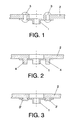
Figure 1 .- Shows in detail a cross section of the fixing of a rivet nut to a plastic component, by means of the conventional riveting system; that is, by means of metal studs. -
Figure 2 .- Shows in detail a cross section of a plastic component with nipples projecting from it situated in the holes of a rivet nut in the position for being fixed by means of riveting carried out in accordance with the invention. -
Figure 3 .- Shows in detail a cross section of the riveting by means of ultrasound or other mechanical method, of the rivet nut into the plastic component represented in the previous figure. -
Figure 4 .- Shows in detail a cross section of the end of the tool by means of which the ultrasound riveting is carried out. -
Figure 5 .- Shows the same cross section in detail represented by the previous figure, with the shape that the end of the stud acquires when it has been riveted by ultrasound. -
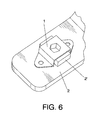
Figure 6 .- Shows a perspective view of the arrangement of a standard rivet nut on a plastic component that has a projection to affect the tightening torque. - As can be seen in
figure 1 , the traditional system of carrying out the fixing of a rivet nut (1) to a piece of composite plastic (2), is achieved by conventional metal studs (3), it being necessary to provide anti-corrosion protection on the ends of these studs (3), as well as having the problem of possibly causing cracks in the plastic component (2) when the riveting operation is carried out. - So, to avoid these problems and inconveniences, the invention's system is based on carrying out riveting, preferably by ultrasound, as can be seen in
figures (2) and (3 ), or by any other mechanical method that is appropriate. For this, the plastic component on which the rivet nut (1) is to be riveted is made with a number of nipples (4) formed as part of the manufacturing process of the plastic component (2), preferably by injection moulding. These nipples (4) are made to pass through the corresponding holes made for the purpose in the rivet nut (1). The riveting (3') is then carried out by ultrasound or other methods, as shown infigure 3 . - As can be seen in
figures 4 and 5 , the ultrasound riveting tool incorporates a part (5) by means of which heat and pressure are applied on the respective nipple (4) part (5) the end of which has a concave area (6) in which the surplus part of the melted and pressed nipple is collected, to form the end of the stud (7) into the shape of a cap, as can be clearly seen infigure 5 . - Finally, as can be seen in
figure 6 , to avoid a loss in the reaction capacity of the tightening torque, it is intended that when using a standard 1 rivet nut, the corresponding plastic component (2) will have a projection (2') that can be added to the component (2) or can form an integral part of it, positioning the rivet nut on top of this projection so that the tightening torque is supported by this projection (2'). This projection could also be created through moulding the plastic component (2) itself. - Clearly, instead of using a standard 1 rivet nut, it would be possible to use nipples designed to have a larger diameter than the equivalent metal rivet, in which case the possible loss in the reaction capacity of the tightening torque on the corresponding plastic component (2) would be solved.
Claims (8)
- A SYSTEM FOR INTEGRATING RIVET NUTS INTO PLASTIC COMPONENTS to fix a metal rivet nut (1) to a plastic component (2), to thereby join this component to other components, metal or non-metal, and to form diverse structures, is characterised by the plastic component (2) that is made during the corresponding process of manufacturing, preferably by injection moulding, having a number of nipples (4) intended to be riveted onto the rivet nut (1), these nipples (4) previously being passed through the holes provided for them for this purpose in the rivet nut itself (1).
- A SYSTEM FOR INTEGRATING RIVET NUTS INTO PLASTIC COMPONENTS, in accordance with claim 1, characterised by the rivet nut (1) having the diameter of an over-sized stud and suitable for the tightening torque and material required in each case.
- A SYSTEM FOR INTEGRATING RIVET NUTS INTO PLASTIC COMPONENTS, in accordance with claim 1, characterised by the rivet nut (2) being standard, while the plastic component (2) incorporates an additional means of support that influences the tightening torque.
- A SYSTEM FOR INTEGRATING RIVET NUTS INTO PLASTIC COMPONENTS, in accordance with claim 3, characterised by the additional means of support being able to be made in the form of a projection (2') of the plastic component itself (2).
- A SYSTEM FOR INTEGRATING RIVET NUTS INTO PLASTIC COMPONENTS, in accordance with claim 3, characterised by the additional means of support being able to be made through moulding the plastic component itself (2).
- A SYSTEM FOR INTEGRATING RIVET NUTS INTO PLASTIC COMPONENTS, in accordance with any of the above claims, characterised by the riveting being carried out by ultrasound.
- A SYSTEM FOR INTEGRATING RIVET NUTS INTO PLASTIC COMPONENTS, in accordance with claim 6, characterised by the part (5) of the ultrasound machine used for applying heat and pressure on the nipples (4) of the plastic component (2), having a concave area (6) at the end by means of which one end of each stud (7) is formed into a cap after heating, pressure being applied and fusion occurring in each of the plastic component's (2) respective nipples (4).
- A SYSTEM FOR INTEGRATING RIVET NUTS INTO PLASTIC COMPONENTS, in accordance with any of the above claims 1 to 5, characterised by riveting being carried out by mechanical means.
Applications Claiming Priority (1)
| Application Number | Priority Date | Filing Date | Title |
|---|---|---|---|
| ES200703465A ES2349217B1 (en) | 2007-12-28 | 2007-12-28 | INTEGRATION SYSTEM OF REMACHABLE NUTS IN PLASTIC PARTS. |
Publications (1)
| Publication Number | Publication Date |
|---|---|
| EP2075109A2 true EP2075109A2 (en) | 2009-07-01 |
Family
ID=39831944
Family Applications (1)
| Application Number | Title | Priority Date | Filing Date |
|---|---|---|---|
| EP08380070A Withdrawn EP2075109A2 (en) | 2007-12-28 | 2008-03-07 | System for integrating rivet nuts into plastic components |
Country Status (7)
| Country | Link |
|---|---|
| US (1) | US20090169325A1 (en) |
| EP (1) | EP2075109A2 (en) |
| CN (1) | CN101469734A (en) |
| BR (1) | BRPI0800764A2 (en) |
| CA (1) | CA2624874A1 (en) |
| EA (1) | EA015230B1 (en) |
| ES (1) | ES2349217B1 (en) |
Cited By (1)
| Publication number | Priority date | Publication date | Assignee | Title |
|---|---|---|---|---|
| CN102114707A (en) * | 2011-01-18 | 2011-07-06 | 苏州工业园区协利塑胶有限公司 | Plastic product and cast copper nut embedding method and processing device thereof |
Families Citing this family (17)
| Publication number | Priority date | Publication date | Assignee | Title |
|---|---|---|---|---|
| CN102909860B (en) * | 2011-08-01 | 2014-09-03 | 舒能(苏州)工业技术有限公司 | Riveting and shaping processing apparatus |
| CN104647741B (en) * | 2013-11-21 | 2018-04-20 | 上海航空电器有限公司 | A method of inlaying transparent organic thermoplastic materials on metal panels |
| DE102014203761A1 (en) | 2014-02-28 | 2015-09-03 | Bayerische Motoren Werke Aktiengesellschaft | Method for mounting a component made of a fiber composite material in the power flow of a clamping connection |
| DE102014216001A1 (en) * | 2014-08-13 | 2016-02-18 | Bayerische Motoren Werke Aktiengesellschaft | Component connection and method for plastically forming a ball |
| WO2017055548A1 (en) * | 2015-09-30 | 2017-04-06 | Woodwelding Ag | Securing a second object to a first object |
| CN105538694A (en) * | 2015-12-14 | 2016-05-04 | 芜湖恒信汽车内饰制造有限公司 | Injection molding process using metal annular bushing |
| EP3433500B1 (en) * | 2016-03-21 | 2023-12-13 | Multimaterial-Welding AG | Securing a second object to a first object |
| DE102016125660A1 (en) * | 2016-12-23 | 2018-06-28 | Böllhoff Verbindungstechnik GmbH | Fastening insert for a component made of plastic, foam or composite material |
| CN109821674A (en) * | 2019-03-21 | 2019-05-31 | 中信戴卡股份有限公司 | A kind of die lubricant rotation spray spray coating disk device |
| CN109968680B (en) * | 2019-04-12 | 2023-09-08 | 吉林大学 | A rivet-less riveting device and method for carbon fiber composite materials and aluminum alloys based on pulse current |
| TR201920958A2 (en) * | 2019-12-20 | 2021-06-21 | Bsh Ev Aletleri San Ve Tic As | Bearing bracket for a cooling device and a related production method |
| HRP20251616T1 (en) | 2020-09-28 | 2026-02-13 | Springfield, Inc. | RIFLE STOCK |
| USD963099S1 (en) | 2020-09-28 | 2022-09-06 | Springfield, Inc. | Rifle |
| CN113954371A (en) * | 2021-09-27 | 2022-01-21 | 惠州市壹品科技有限公司 | Ultrasonic hot-melt welding method and ultrasonic hot-melt welded assembly |
| CN113954372A (en) * | 2021-09-28 | 2022-01-21 | 惠州市壹品科技有限公司 | Ultrasonic welding treatment method and ultrasonic welding preheating assembly |
| USD1086349S1 (en) | 2023-07-24 | 2025-07-29 | Springfield, Inc. | Firearm |
| USD1072996S1 (en) | 2023-07-24 | 2025-04-29 | Springfield, Inc. | Firearm |
Family Cites Families (14)
| Publication number | Priority date | Publication date | Assignee | Title |
|---|---|---|---|---|
| US2385991A (en) * | 1943-09-14 | 1945-10-02 | Solar Aircraft Co | Anchor nut |
| GB994947A (en) * | 1963-05-17 | 1965-06-10 | Thermostatic Controls Company | Improvements in or relating to screw attachments for moulded materials |
| US3367809A (en) * | 1964-05-08 | 1968-02-06 | Branson Instr | Sonics |
| FR2258555A1 (en) * | 1974-01-18 | 1975-08-18 | Garnier Ets | Assembling plastic sheet to other sheet - by engaging lug on plastic sheet in hole in other sheet and deforming lug |
| FR2416371A1 (en) * | 1978-02-03 | 1979-08-31 | Chrysler France | IMPROVEMENTS TO MEANS OF FIXING A SCREW THROUGH AN ORIFICE SHAPED IN A WALL AND COOPERATING WITH A PRISONER NUT |
| JPS6231712A (en) * | 1985-07-31 | 1987-02-10 | ドイツチエ.フアスナ−.コ−ポレ−シヨン | Fixing device and assembly thereof |
| US4761871A (en) * | 1986-11-21 | 1988-08-09 | Phillips Petroleum Company | Method of joining two thermoplastic articles |
| US4822671A (en) * | 1987-12-31 | 1989-04-18 | Gencorp Inc. | Heat riveting rubber for effecting a mechanical lock |
| US5666988A (en) * | 1996-02-06 | 1997-09-16 | Siemens Electric Limited | Throttle shaft and plate construction |
| SE511704C2 (en) * | 1998-03-19 | 1999-11-08 | Saab Ab | Method and apparatus for mounting the wing |
| DE10012781A1 (en) * | 2000-03-16 | 2001-09-27 | Boellhoff Gmbh | Connection arrangement for attaching a fastener to a component |
| FR2807737B1 (en) * | 2000-04-14 | 2002-07-12 | Aerospatiale Matra Airbus | PRESSURE TAKING DEVICE AND ITS IMPLEMENTATION METHOD ON AN AIRCRAFT FUSELAGE PANEL |
| DE102006012043A1 (en) * | 2006-03-16 | 2007-09-20 | Braun Gmbh | Rivet connection on plastic basis |
| DE202007009145U1 (en) * | 2007-06-29 | 2007-09-06 | Atlanta Elektrosysteme Gmbh | Ultraschallschweißsonotrode |
-
2007
- 2007-12-28 ES ES200703465A patent/ES2349217B1/en not_active Expired - Fee Related
-
2008
- 2008-03-07 CA CA002624874A patent/CA2624874A1/en not_active Abandoned
- 2008-03-07 US US12/044,374 patent/US20090169325A1/en not_active Abandoned
- 2008-03-07 EP EP08380070A patent/EP2075109A2/en not_active Withdrawn
- 2008-03-13 EA EA200800589A patent/EA015230B1/en not_active IP Right Cessation
- 2008-03-14 BR BRPI0800764-0A patent/BRPI0800764A2/en not_active IP Right Cessation
- 2008-03-17 CN CNA2008100861611A patent/CN101469734A/en active Pending
Cited By (2)
| Publication number | Priority date | Publication date | Assignee | Title |
|---|---|---|---|---|
| CN102114707A (en) * | 2011-01-18 | 2011-07-06 | 苏州工业园区协利塑胶有限公司 | Plastic product and cast copper nut embedding method and processing device thereof |
| CN102114707B (en) * | 2011-01-18 | 2013-03-20 | 苏州工业园区协利塑胶有限公司 | Plastic product and cast copper nut embedding method and processing device thereof |
Also Published As
| Publication number | Publication date |
|---|---|
| CN101469734A (en) | 2009-07-01 |
| ES2349217B1 (en) | 2011-10-24 |
| CA2624874A1 (en) | 2009-06-28 |
| US20090169325A1 (en) | 2009-07-02 |
| BRPI0800764A2 (en) | 2009-08-25 |
| ES2349217A1 (en) | 2010-12-29 |
| EA200800589A1 (en) | 2009-06-30 |
| EA015230B1 (en) | 2011-06-30 |
Similar Documents
| Publication | Publication Date | Title |
|---|---|---|
| US20090169325A1 (en) | System for integrating rivet nuts into plastic components | |
| CN106103051B (en) | Method for joining one of the components made of fiber-reinforced plastic | |
| US20140356101A1 (en) | Weld Rivet Joint | |
| US10704584B2 (en) | Process for joining fiber composite materials using self-piercing rivets | |
| US9925717B2 (en) | Method for connecting a surface-structured workpiece and a plastic workpiece | |
| JP2016528044A (en) | Resistance welding fastener, apparatus and method | |
| US8518198B2 (en) | Method for connecting a plastic workpiece to a further workpiece | |
| WO2013094008A1 (en) | Method for connecting members and connection structure | |
| CN104023869A (en) | Method for joining workpiece layers and connecting element and joining device | |
| US9839955B2 (en) | Amorphous metal permanent fastener utilizing a thermoplastically swaged retainer | |
| US20090113708A1 (en) | Method for joining components | |
| CN107297909A (en) | Method for joining polymer composites and other materials using self-tapping rivets | |
| CN205255328U (en) | Preparation mould of carbon -fibre composite board and rivet mould with dashing certainly of aluminium alloy plate thereof | |
| CN104067006B (en) | Fastening element and method for installing said fastening element | |
| CN110253900A (en) | Double Attach Self Piercing Rivets | |
| US20180169961A1 (en) | System and method for bonding structures | |
| CN104827661A (en) | Heating connection method for thermoplastic plastic adopting rivet | |
| CN106335183B (en) | It is designed for the connector of plastics and composite-joint strength improving | |
| CN106964741B (en) | A kind of staking clinching method between aluminium alloy plate and carbon fibre composite plate | |
| KR102605914B1 (en) | Joining method of panel | |
| WO2016205541A1 (en) | Fastener and method for joining dissimilar materials | |
| KR101558208B1 (en) | Spot welding method of panel | |
| JP2017070995A (en) | Method for joining heterogeneous metal plate and component for joining heterogeneous metal plate | |
| JP2018099713A (en) | Method for bonding metallic component and resin member | |
| CN110582650A (en) | Joined body, automotive seat frame, and joining method |
Legal Events
| Date | Code | Title | Description |
|---|---|---|---|
| PUAI | Public reference made under article 153(3) epc to a published international application that has entered the european phase |
Free format text: ORIGINAL CODE: 0009012 |
|
| AK | Designated contracting states |
Kind code of ref document: A2 Designated state(s): AT BE BG CH CY CZ DE DK EE ES FI FR GB GR HR HU IE IS IT LI LT LU LV MC MT NL NO PL PT RO SE SI SK TR |
|
| AX | Request for extension of the european patent |
Extension state: AL BA MK RS |
|
| RAP1 | Party data changed (applicant data changed or rights of an application transferred) |
Owner name: AIRBUS OPERATIONS S.L. |
|
| STAA | Information on the status of an ep patent application or granted ep patent |
Free format text: STATUS: THE APPLICATION IS DEEMED TO BE WITHDRAWN |
|
| 18D | Application deemed to be withdrawn |
Effective date: 20131001 |