EP2069552B1 - Pyrochlore materials and a thermal barrier coating with these pyrochlore materials - Google Patents
Pyrochlore materials and a thermal barrier coating with these pyrochlore materials Download PDFInfo
- Publication number
- EP2069552B1 EP2069552B1 EP07730289A EP07730289A EP2069552B1 EP 2069552 B1 EP2069552 B1 EP 2069552B1 EP 07730289 A EP07730289 A EP 07730289A EP 07730289 A EP07730289 A EP 07730289A EP 2069552 B1 EP2069552 B1 EP 2069552B1
- Authority
- EP
- European Patent Office
- Prior art keywords
- thermal barrier
- barrier coating
- coating according
- replaced
- samarium
- Prior art date
- Legal status (The legal status is an assumption and is not a legal conclusion. Google has not performed a legal analysis and makes no representation as to the accuracy of the status listed.)
- Not-in-force
Links
- 239000012720 thermal barrier coating Substances 0.000 title claims abstract description 51
- 239000000463 material Substances 0.000 title claims abstract description 28
- 239000010936 titanium Substances 0.000 claims abstract description 109
- 239000011777 magnesium Substances 0.000 claims abstract description 98
- 239000000919 ceramic Substances 0.000 claims abstract description 19
- 229910052719 titanium Inorganic materials 0.000 claims abstract description 13
- RTAQQCXQSZGOHL-UHFFFAOYSA-N Titanium Chemical compound [Ti] RTAQQCXQSZGOHL-UHFFFAOYSA-N 0.000 claims abstract description 11
- FYYHWMGAXLPEAU-UHFFFAOYSA-N Magnesium Chemical compound [Mg] FYYHWMGAXLPEAU-UHFFFAOYSA-N 0.000 claims abstract description 6
- 229910052749 magnesium Inorganic materials 0.000 claims abstract description 6
- 229910052772 Samarium Inorganic materials 0.000 claims description 19
- 229910052688 Gadolinium Inorganic materials 0.000 claims description 11
- 238000000576 coating method Methods 0.000 claims description 11
- KZUNJOHGWZRPMI-UHFFFAOYSA-N samarium atom Chemical compound [Sm] KZUNJOHGWZRPMI-UHFFFAOYSA-N 0.000 claims description 10
- UIWYJDYFSGRHKR-UHFFFAOYSA-N gadolinium atom Chemical compound [Gd] UIWYJDYFSGRHKR-UHFFFAOYSA-N 0.000 claims description 9
- XAGFODPZIPBFFR-UHFFFAOYSA-N aluminium Chemical compound [Al] XAGFODPZIPBFFR-UHFFFAOYSA-N 0.000 claims description 8
- 229910052782 aluminium Inorganic materials 0.000 claims description 8
- 230000004888 barrier function Effects 0.000 claims description 7
- 239000011575 calcium Substances 0.000 claims description 7
- 239000011248 coating agent Substances 0.000 claims description 7
- 229910052735 hafnium Inorganic materials 0.000 claims description 6
- 229910052791 calcium Inorganic materials 0.000 claims description 5
- VBJZVLUMGGDVMO-UHFFFAOYSA-N hafnium atom Chemical compound [Hf] VBJZVLUMGGDVMO-UHFFFAOYSA-N 0.000 claims description 5
- RVTZCBVAJQQJTK-UHFFFAOYSA-N oxygen(2-);zirconium(4+) Chemical compound [O-2].[O-2].[Zr+4] RVTZCBVAJQQJTK-UHFFFAOYSA-N 0.000 claims description 5
- 229910001928 zirconium oxide Inorganic materials 0.000 claims description 5
- 229910052693 Europium Inorganic materials 0.000 claims description 4
- 229910052769 Ytterbium Inorganic materials 0.000 claims description 4
- OGPBJKLSAFTDLK-UHFFFAOYSA-N europium atom Chemical compound [Eu] OGPBJKLSAFTDLK-UHFFFAOYSA-N 0.000 claims description 3
- NAWDYIZEMPQZHO-UHFFFAOYSA-N ytterbium Chemical compound [Yb] NAWDYIZEMPQZHO-UHFFFAOYSA-N 0.000 claims description 3
- VSZWPYCFIRKVQL-UHFFFAOYSA-N selanylidenegallium;selenium Chemical compound [Se].[Se]=[Ga].[Se]=[Ga] VSZWPYCFIRKVQL-UHFFFAOYSA-N 0.000 claims 5
- OYPRJOBELJOOCE-UHFFFAOYSA-N Calcium Chemical compound [Ca] OYPRJOBELJOOCE-UHFFFAOYSA-N 0.000 claims 2
- 229910001233 yttria-stabilized zirconia Inorganic materials 0.000 claims 2
- 229910010293 ceramic material Inorganic materials 0.000 abstract 1
- 239000010410 layer Substances 0.000 description 21
- 239000000203 mixture Substances 0.000 description 13
- PXHVJJICTQNCMI-UHFFFAOYSA-N Nickel Chemical compound [Ni] PXHVJJICTQNCMI-UHFFFAOYSA-N 0.000 description 12
- 239000013078 crystal Substances 0.000 description 11
- 229910000601 superalloy Inorganic materials 0.000 description 9
- 238000002485 combustion reaction Methods 0.000 description 8
- 239000000758 substrate Substances 0.000 description 7
- MCMNRKCIXSYSNV-UHFFFAOYSA-N Zirconium dioxide Chemical compound O=[Zr]=O MCMNRKCIXSYSNV-UHFFFAOYSA-N 0.000 description 6
- 229910052727 yttrium Inorganic materials 0.000 description 6
- 229910045601 alloy Inorganic materials 0.000 description 5
- 239000000956 alloy Substances 0.000 description 5
- 239000010941 cobalt Substances 0.000 description 5
- 229910017052 cobalt Inorganic materials 0.000 description 5
- GUTLYIVDDKVIGB-UHFFFAOYSA-N cobalt atom Chemical compound [Co] GUTLYIVDDKVIGB-UHFFFAOYSA-N 0.000 description 5
- 238000005328 electron beam physical vapour deposition Methods 0.000 description 5
- 229910052759 nickel Inorganic materials 0.000 description 5
- 239000000126 substance Substances 0.000 description 5
- VWQVUPCCIRVNHF-UHFFFAOYSA-N yttrium atom Chemical compound [Y] VWQVUPCCIRVNHF-UHFFFAOYSA-N 0.000 description 5
- 239000004411 aluminium Substances 0.000 description 4
- 230000007797 corrosion Effects 0.000 description 4
- 238000005260 corrosion Methods 0.000 description 4
- 150000001669 calcium Chemical class 0.000 description 3
- BRPQOXSCLDDYGP-UHFFFAOYSA-N calcium oxide Chemical compound [O-2].[Ca+2] BRPQOXSCLDDYGP-UHFFFAOYSA-N 0.000 description 3
- 239000000292 calcium oxide Substances 0.000 description 3
- ODINCKMPIJJUCX-UHFFFAOYSA-N calcium oxide Inorganic materials [Ca]=O ODINCKMPIJJUCX-UHFFFAOYSA-N 0.000 description 3
- CMIHHWBVHJVIGI-UHFFFAOYSA-N gadolinium(III) oxide Inorganic materials [O-2].[O-2].[O-2].[Gd+3].[Gd+3] CMIHHWBVHJVIGI-UHFFFAOYSA-N 0.000 description 3
- 238000000034 method Methods 0.000 description 3
- TWNQGVIAIRXVLR-UHFFFAOYSA-N oxo(oxoalumanyloxy)alumane Chemical compound O=[Al]O[Al]=O TWNQGVIAIRXVLR-UHFFFAOYSA-N 0.000 description 3
- 230000008569 process Effects 0.000 description 3
- 229910052710 silicon Inorganic materials 0.000 description 3
- 238000007711 solidification Methods 0.000 description 3
- 230000008023 solidification Effects 0.000 description 3
- VYZAMTAEIAYCRO-UHFFFAOYSA-N Chromium Chemical compound [Cr] VYZAMTAEIAYCRO-UHFFFAOYSA-N 0.000 description 2
- XEEYBQQBJWHFJM-UHFFFAOYSA-N Iron Chemical compound [Fe] XEEYBQQBJWHFJM-UHFFFAOYSA-N 0.000 description 2
- 229910052779 Neodymium Inorganic materials 0.000 description 2
- 238000005266 casting Methods 0.000 description 2
- 229910052804 chromium Inorganic materials 0.000 description 2
- 239000011651 chromium Substances 0.000 description 2
- 230000001419 dependent effect Effects 0.000 description 2
- CJNBYAVZURUTKZ-UHFFFAOYSA-N hafnium(IV) oxide Inorganic materials O=[Hf]=O CJNBYAVZURUTKZ-UHFFFAOYSA-N 0.000 description 2
- 229910052746 lanthanum Inorganic materials 0.000 description 2
- 239000000395 magnesium oxide Substances 0.000 description 2
- CPLXHLVBOLITMK-UHFFFAOYSA-N magnesium oxide Inorganic materials [Mg]=O CPLXHLVBOLITMK-UHFFFAOYSA-N 0.000 description 2
- AXZKOIWUVFPNLO-UHFFFAOYSA-N magnesium;oxygen(2-) Chemical compound [O-2].[Mg+2] AXZKOIWUVFPNLO-UHFFFAOYSA-N 0.000 description 2
- 230000003647 oxidation Effects 0.000 description 2
- 238000007254 oxidation reaction Methods 0.000 description 2
- SIWVEOZUMHYXCS-UHFFFAOYSA-N oxo(oxoyttriooxy)yttrium Chemical compound O=[Y]O[Y]=O SIWVEOZUMHYXCS-UHFFFAOYSA-N 0.000 description 2
- 239000011241 protective layer Substances 0.000 description 2
- 229910052761 rare earth metal Inorganic materials 0.000 description 2
- 229910052702 rhenium Inorganic materials 0.000 description 2
- WUAPFZMCVAUBPE-UHFFFAOYSA-N rhenium atom Chemical compound [Re] WUAPFZMCVAUBPE-UHFFFAOYSA-N 0.000 description 2
- 239000010703 silicon Substances 0.000 description 2
- 239000007787 solid Substances 0.000 description 2
- 230000008646 thermal stress Effects 0.000 description 2
- 241000588731 Hafnia Species 0.000 description 1
- 241000251131 Sphyrna Species 0.000 description 1
- 229910009474 Y2O3—ZrO2 Inorganic materials 0.000 description 1
- 239000008186 active pharmaceutical agent Substances 0.000 description 1
- 230000006978 adaptation Effects 0.000 description 1
- 238000006555 catalytic reaction Methods 0.000 description 1
- 238000005524 ceramic coating Methods 0.000 description 1
- 229910000420 cerium oxide Inorganic materials 0.000 description 1
- 230000008859 change Effects 0.000 description 1
- 239000000470 constituent Substances 0.000 description 1
- 239000002826 coolant Substances 0.000 description 1
- 238000001816 cooling Methods 0.000 description 1
- 230000003247 decreasing effect Effects 0.000 description 1
- 230000005611 electricity Effects 0.000 description 1
- AEBZCFFCDTZXHP-UHFFFAOYSA-N europium(3+);oxygen(2-) Chemical compound [O-2].[O-2].[O-2].[Eu+3].[Eu+3] AEBZCFFCDTZXHP-UHFFFAOYSA-N 0.000 description 1
- 230000002349 favourable effect Effects 0.000 description 1
- 238000005242 forging Methods 0.000 description 1
- 239000000446 fuel Substances 0.000 description 1
- 229910000449 hafnium oxide Inorganic materials 0.000 description 1
- WIHZLLGSGQNAGK-UHFFFAOYSA-N hafnium(4+);oxygen(2-) Chemical compound [O-2].[O-2].[Hf+4] WIHZLLGSGQNAGK-UHFFFAOYSA-N 0.000 description 1
- 239000007788 liquid Substances 0.000 description 1
- 239000000155 melt Substances 0.000 description 1
- 229910001092 metal group alloy Inorganic materials 0.000 description 1
- 239000007769 metal material Substances 0.000 description 1
- 238000003801 milling Methods 0.000 description 1
- 229910052758 niobium Inorganic materials 0.000 description 1
- BMMGVYCKOGBVEV-UHFFFAOYSA-N oxo(oxoceriooxy)cerium Chemical compound [Ce]=O.O=[Ce]=O BMMGVYCKOGBVEV-UHFFFAOYSA-N 0.000 description 1
- 230000009467 reduction Effects 0.000 description 1
- 238000009419 refurbishment Methods 0.000 description 1
- FKTOIHSPIPYAPE-UHFFFAOYSA-N samarium(iii) oxide Chemical compound [O-2].[O-2].[O-2].[Sm+3].[Sm+3] FKTOIHSPIPYAPE-UHFFFAOYSA-N 0.000 description 1
- 238000005488 sandblasting Methods 0.000 description 1
- 239000007921 spray Substances 0.000 description 1
- 230000035882 stress Effects 0.000 description 1
- 229910052712 strontium Inorganic materials 0.000 description 1
- 229910052715 tantalum Inorganic materials 0.000 description 1
- 230000007704 transition Effects 0.000 description 1
- 229910052726 zirconium Inorganic materials 0.000 description 1
Images


Classifications
-
- C—CHEMISTRY; METALLURGY
- C23—COATING METALLIC MATERIAL; COATING MATERIAL WITH METALLIC MATERIAL; CHEMICAL SURFACE TREATMENT; DIFFUSION TREATMENT OF METALLIC MATERIAL; COATING BY VACUUM EVAPORATION, BY SPUTTERING, BY ION IMPLANTATION OR BY CHEMICAL VAPOUR DEPOSITION, IN GENERAL; INHIBITING CORROSION OF METALLIC MATERIAL OR INCRUSTATION IN GENERAL
- C23C—COATING METALLIC MATERIAL; COATING MATERIAL WITH METALLIC MATERIAL; SURFACE TREATMENT OF METALLIC MATERIAL BY DIFFUSION INTO THE SURFACE, BY CHEMICAL CONVERSION OR SUBSTITUTION; COATING BY VACUUM EVAPORATION, BY SPUTTERING, BY ION IMPLANTATION OR BY CHEMICAL VAPOUR DEPOSITION, IN GENERAL
- C23C28/00—Coating for obtaining at least two superposed coatings either by methods not provided for in a single one of groups C23C2/00 - C23C26/00 or by combinations of methods provided for in subclasses C23C and C25C or C25D
-
- C—CHEMISTRY; METALLURGY
- C04—CEMENTS; CONCRETE; ARTIFICIAL STONE; CERAMICS; REFRACTORIES
- C04B—LIME, MAGNESIA; SLAG; CEMENTS; COMPOSITIONS THEREOF, e.g. MORTARS, CONCRETE OR LIKE BUILDING MATERIALS; ARTIFICIAL STONE; CERAMICS; REFRACTORIES; TREATMENT OF NATURAL STONE
- C04B35/00—Shaped ceramic products characterised by their composition; Ceramics compositions; Processing powders of inorganic compounds preparatory to the manufacturing of ceramic products
- C04B35/01—Shaped ceramic products characterised by their composition; Ceramics compositions; Processing powders of inorganic compounds preparatory to the manufacturing of ceramic products based on oxide ceramics
- C04B35/46—Shaped ceramic products characterised by their composition; Ceramics compositions; Processing powders of inorganic compounds preparatory to the manufacturing of ceramic products based on oxide ceramics based on titanium oxides or titanates
- C04B35/462—Shaped ceramic products characterised by their composition; Ceramics compositions; Processing powders of inorganic compounds preparatory to the manufacturing of ceramic products based on oxide ceramics based on titanium oxides or titanates based on titanates
-
- C—CHEMISTRY; METALLURGY
- C04—CEMENTS; CONCRETE; ARTIFICIAL STONE; CERAMICS; REFRACTORIES
- C04B—LIME, MAGNESIA; SLAG; CEMENTS; COMPOSITIONS THEREOF, e.g. MORTARS, CONCRETE OR LIKE BUILDING MATERIALS; ARTIFICIAL STONE; CERAMICS; REFRACTORIES; TREATMENT OF NATURAL STONE
- C04B35/00—Shaped ceramic products characterised by their composition; Ceramics compositions; Processing powders of inorganic compounds preparatory to the manufacturing of ceramic products
- C04B35/01—Shaped ceramic products characterised by their composition; Ceramics compositions; Processing powders of inorganic compounds preparatory to the manufacturing of ceramic products based on oxide ceramics
- C04B35/46—Shaped ceramic products characterised by their composition; Ceramics compositions; Processing powders of inorganic compounds preparatory to the manufacturing of ceramic products based on oxide ceramics based on titanium oxides or titanates
- C04B35/462—Shaped ceramic products characterised by their composition; Ceramics compositions; Processing powders of inorganic compounds preparatory to the manufacturing of ceramic products based on oxide ceramics based on titanium oxides or titanates based on titanates
- C04B35/465—Shaped ceramic products characterised by their composition; Ceramics compositions; Processing powders of inorganic compounds preparatory to the manufacturing of ceramic products based on oxide ceramics based on titanium oxides or titanates based on titanates based on alkaline earth metal titanates
-
- C—CHEMISTRY; METALLURGY
- C04—CEMENTS; CONCRETE; ARTIFICIAL STONE; CERAMICS; REFRACTORIES
- C04B—LIME, MAGNESIA; SLAG; CEMENTS; COMPOSITIONS THEREOF, e.g. MORTARS, CONCRETE OR LIKE BUILDING MATERIALS; ARTIFICIAL STONE; CERAMICS; REFRACTORIES; TREATMENT OF NATURAL STONE
- C04B35/00—Shaped ceramic products characterised by their composition; Ceramics compositions; Processing powders of inorganic compounds preparatory to the manufacturing of ceramic products
- C04B35/01—Shaped ceramic products characterised by their composition; Ceramics compositions; Processing powders of inorganic compounds preparatory to the manufacturing of ceramic products based on oxide ceramics
- C04B35/48—Shaped ceramic products characterised by their composition; Ceramics compositions; Processing powders of inorganic compounds preparatory to the manufacturing of ceramic products based on oxide ceramics based on zirconium or hafnium oxides, zirconates, zircon or hafnates
- C04B35/486—Fine ceramics
-
- C—CHEMISTRY; METALLURGY
- C04—CEMENTS; CONCRETE; ARTIFICIAL STONE; CERAMICS; REFRACTORIES
- C04B—LIME, MAGNESIA; SLAG; CEMENTS; COMPOSITIONS THEREOF, e.g. MORTARS, CONCRETE OR LIKE BUILDING MATERIALS; ARTIFICIAL STONE; CERAMICS; REFRACTORIES; TREATMENT OF NATURAL STONE
- C04B35/00—Shaped ceramic products characterised by their composition; Ceramics compositions; Processing powders of inorganic compounds preparatory to the manufacturing of ceramic products
- C04B35/01—Shaped ceramic products characterised by their composition; Ceramics compositions; Processing powders of inorganic compounds preparatory to the manufacturing of ceramic products based on oxide ceramics
- C04B35/48—Shaped ceramic products characterised by their composition; Ceramics compositions; Processing powders of inorganic compounds preparatory to the manufacturing of ceramic products based on oxide ceramics based on zirconium or hafnium oxides, zirconates, zircon or hafnates
- C04B35/49—Shaped ceramic products characterised by their composition; Ceramics compositions; Processing powders of inorganic compounds preparatory to the manufacturing of ceramic products based on oxide ceramics based on zirconium or hafnium oxides, zirconates, zircon or hafnates containing also titanium oxides or titanates
-
- C—CHEMISTRY; METALLURGY
- C23—COATING METALLIC MATERIAL; COATING MATERIAL WITH METALLIC MATERIAL; CHEMICAL SURFACE TREATMENT; DIFFUSION TREATMENT OF METALLIC MATERIAL; COATING BY VACUUM EVAPORATION, BY SPUTTERING, BY ION IMPLANTATION OR BY CHEMICAL VAPOUR DEPOSITION, IN GENERAL; INHIBITING CORROSION OF METALLIC MATERIAL OR INCRUSTATION IN GENERAL
- C23C—COATING METALLIC MATERIAL; COATING MATERIAL WITH METALLIC MATERIAL; SURFACE TREATMENT OF METALLIC MATERIAL BY DIFFUSION INTO THE SURFACE, BY CHEMICAL CONVERSION OR SUBSTITUTION; COATING BY VACUUM EVAPORATION, BY SPUTTERING, BY ION IMPLANTATION OR BY CHEMICAL VAPOUR DEPOSITION, IN GENERAL
- C23C28/00—Coating for obtaining at least two superposed coatings either by methods not provided for in a single one of groups C23C2/00 - C23C26/00 or by combinations of methods provided for in subclasses C23C and C25C or C25D
- C23C28/30—Coatings combining at least one metallic layer and at least one inorganic non-metallic layer
- C23C28/32—Coatings combining at least one metallic layer and at least one inorganic non-metallic layer including at least one pure metallic layer
- C23C28/321—Coatings combining at least one metallic layer and at least one inorganic non-metallic layer including at least one pure metallic layer with at least one metal alloy layer
- C23C28/3215—Coatings combining at least one metallic layer and at least one inorganic non-metallic layer including at least one pure metallic layer with at least one metal alloy layer at least one MCrAlX layer
-
- C—CHEMISTRY; METALLURGY
- C23—COATING METALLIC MATERIAL; COATING MATERIAL WITH METALLIC MATERIAL; CHEMICAL SURFACE TREATMENT; DIFFUSION TREATMENT OF METALLIC MATERIAL; COATING BY VACUUM EVAPORATION, BY SPUTTERING, BY ION IMPLANTATION OR BY CHEMICAL VAPOUR DEPOSITION, IN GENERAL; INHIBITING CORROSION OF METALLIC MATERIAL OR INCRUSTATION IN GENERAL
- C23C—COATING METALLIC MATERIAL; COATING MATERIAL WITH METALLIC MATERIAL; SURFACE TREATMENT OF METALLIC MATERIAL BY DIFFUSION INTO THE SURFACE, BY CHEMICAL CONVERSION OR SUBSTITUTION; COATING BY VACUUM EVAPORATION, BY SPUTTERING, BY ION IMPLANTATION OR BY CHEMICAL VAPOUR DEPOSITION, IN GENERAL
- C23C28/00—Coating for obtaining at least two superposed coatings either by methods not provided for in a single one of groups C23C2/00 - C23C26/00 or by combinations of methods provided for in subclasses C23C and C25C or C25D
- C23C28/30—Coatings combining at least one metallic layer and at least one inorganic non-metallic layer
- C23C28/34—Coatings combining at least one metallic layer and at least one inorganic non-metallic layer including at least one inorganic non-metallic material layer, e.g. metal carbide, nitride, boride, silicide layer and their mixtures, enamels, phosphates and sulphates
- C23C28/345—Coatings combining at least one metallic layer and at least one inorganic non-metallic layer including at least one inorganic non-metallic material layer, e.g. metal carbide, nitride, boride, silicide layer and their mixtures, enamels, phosphates and sulphates with at least one oxide layer
-
- C—CHEMISTRY; METALLURGY
- C23—COATING METALLIC MATERIAL; COATING MATERIAL WITH METALLIC MATERIAL; CHEMICAL SURFACE TREATMENT; DIFFUSION TREATMENT OF METALLIC MATERIAL; COATING BY VACUUM EVAPORATION, BY SPUTTERING, BY ION IMPLANTATION OR BY CHEMICAL VAPOUR DEPOSITION, IN GENERAL; INHIBITING CORROSION OF METALLIC MATERIAL OR INCRUSTATION IN GENERAL
- C23C—COATING METALLIC MATERIAL; COATING MATERIAL WITH METALLIC MATERIAL; SURFACE TREATMENT OF METALLIC MATERIAL BY DIFFUSION INTO THE SURFACE, BY CHEMICAL CONVERSION OR SUBSTITUTION; COATING BY VACUUM EVAPORATION, BY SPUTTERING, BY ION IMPLANTATION OR BY CHEMICAL VAPOUR DEPOSITION, IN GENERAL
- C23C28/00—Coating for obtaining at least two superposed coatings either by methods not provided for in a single one of groups C23C2/00 - C23C26/00 or by combinations of methods provided for in subclasses C23C and C25C or C25D
- C23C28/30—Coatings combining at least one metallic layer and at least one inorganic non-metallic layer
- C23C28/34—Coatings combining at least one metallic layer and at least one inorganic non-metallic layer including at least one inorganic non-metallic material layer, e.g. metal carbide, nitride, boride, silicide layer and their mixtures, enamels, phosphates and sulphates
- C23C28/345—Coatings combining at least one metallic layer and at least one inorganic non-metallic layer including at least one inorganic non-metallic material layer, e.g. metal carbide, nitride, boride, silicide layer and their mixtures, enamels, phosphates and sulphates with at least one oxide layer
- C23C28/3455—Coatings combining at least one metallic layer and at least one inorganic non-metallic layer including at least one inorganic non-metallic material layer, e.g. metal carbide, nitride, boride, silicide layer and their mixtures, enamels, phosphates and sulphates with at least one oxide layer with a refractory ceramic layer, e.g. refractory metal oxide, ZrO2, rare earth oxides or a thermal barrier system comprising at least one refractory oxide layer
-
- C—CHEMISTRY; METALLURGY
- C23—COATING METALLIC MATERIAL; COATING MATERIAL WITH METALLIC MATERIAL; CHEMICAL SURFACE TREATMENT; DIFFUSION TREATMENT OF METALLIC MATERIAL; COATING BY VACUUM EVAPORATION, BY SPUTTERING, BY ION IMPLANTATION OR BY CHEMICAL VAPOUR DEPOSITION, IN GENERAL; INHIBITING CORROSION OF METALLIC MATERIAL OR INCRUSTATION IN GENERAL
- C23C—COATING METALLIC MATERIAL; COATING MATERIAL WITH METALLIC MATERIAL; SURFACE TREATMENT OF METALLIC MATERIAL BY DIFFUSION INTO THE SURFACE, BY CHEMICAL CONVERSION OR SUBSTITUTION; COATING BY VACUUM EVAPORATION, BY SPUTTERING, BY ION IMPLANTATION OR BY CHEMICAL VAPOUR DEPOSITION, IN GENERAL
- C23C28/00—Coating for obtaining at least two superposed coatings either by methods not provided for in a single one of groups C23C2/00 - C23C26/00 or by combinations of methods provided for in subclasses C23C and C25C or C25D
- C23C28/30—Coatings combining at least one metallic layer and at least one inorganic non-metallic layer
- C23C28/36—Coatings combining at least one metallic layer and at least one inorganic non-metallic layer including layers graded in composition or physical properties
-
- C—CHEMISTRY; METALLURGY
- C23—COATING METALLIC MATERIAL; COATING MATERIAL WITH METALLIC MATERIAL; CHEMICAL SURFACE TREATMENT; DIFFUSION TREATMENT OF METALLIC MATERIAL; COATING BY VACUUM EVAPORATION, BY SPUTTERING, BY ION IMPLANTATION OR BY CHEMICAL VAPOUR DEPOSITION, IN GENERAL; INHIBITING CORROSION OF METALLIC MATERIAL OR INCRUSTATION IN GENERAL
- C23C—COATING METALLIC MATERIAL; COATING MATERIAL WITH METALLIC MATERIAL; SURFACE TREATMENT OF METALLIC MATERIAL BY DIFFUSION INTO THE SURFACE, BY CHEMICAL CONVERSION OR SUBSTITUTION; COATING BY VACUUM EVAPORATION, BY SPUTTERING, BY ION IMPLANTATION OR BY CHEMICAL VAPOUR DEPOSITION, IN GENERAL
- C23C30/00—Coating with metallic material characterised only by the composition of the metallic material, i.e. not characterised by the coating process
-
- C—CHEMISTRY; METALLURGY
- C04—CEMENTS; CONCRETE; ARTIFICIAL STONE; CERAMICS; REFRACTORIES
- C04B—LIME, MAGNESIA; SLAG; CEMENTS; COMPOSITIONS THEREOF, e.g. MORTARS, CONCRETE OR LIKE BUILDING MATERIALS; ARTIFICIAL STONE; CERAMICS; REFRACTORIES; TREATMENT OF NATURAL STONE
- C04B2235/00—Aspects relating to ceramic starting mixtures or sintered ceramic products
- C04B2235/02—Composition of constituents of the starting material or of secondary phases of the final product
- C04B2235/30—Constituents and secondary phases not being of a fibrous nature
- C04B2235/32—Metal oxides, mixed metal oxides, or oxide-forming salts thereof, e.g. carbonates, nitrates, (oxy)hydroxides, chlorides
- C04B2235/3205—Alkaline earth oxides or oxide forming salts thereof, e.g. beryllium oxide
- C04B2235/3206—Magnesium oxides or oxide-forming salts thereof
-
- C—CHEMISTRY; METALLURGY
- C04—CEMENTS; CONCRETE; ARTIFICIAL STONE; CERAMICS; REFRACTORIES
- C04B—LIME, MAGNESIA; SLAG; CEMENTS; COMPOSITIONS THEREOF, e.g. MORTARS, CONCRETE OR LIKE BUILDING MATERIALS; ARTIFICIAL STONE; CERAMICS; REFRACTORIES; TREATMENT OF NATURAL STONE
- C04B2235/00—Aspects relating to ceramic starting mixtures or sintered ceramic products
- C04B2235/02—Composition of constituents of the starting material or of secondary phases of the final product
- C04B2235/30—Constituents and secondary phases not being of a fibrous nature
- C04B2235/32—Metal oxides, mixed metal oxides, or oxide-forming salts thereof, e.g. carbonates, nitrates, (oxy)hydroxides, chlorides
- C04B2235/3224—Rare earth oxide or oxide forming salts thereof, e.g. scandium oxide
-
- C—CHEMISTRY; METALLURGY
- C04—CEMENTS; CONCRETE; ARTIFICIAL STONE; CERAMICS; REFRACTORIES
- C04B—LIME, MAGNESIA; SLAG; CEMENTS; COMPOSITIONS THEREOF, e.g. MORTARS, CONCRETE OR LIKE BUILDING MATERIALS; ARTIFICIAL STONE; CERAMICS; REFRACTORIES; TREATMENT OF NATURAL STONE
- C04B2235/00—Aspects relating to ceramic starting mixtures or sintered ceramic products
- C04B2235/70—Aspects relating to sintered or melt-casted ceramic products
- C04B2235/74—Physical characteristics
- C04B2235/76—Crystal structural characteristics, e.g. symmetry
-
- Y—GENERAL TAGGING OF NEW TECHNOLOGICAL DEVELOPMENTS; GENERAL TAGGING OF CROSS-SECTIONAL TECHNOLOGIES SPANNING OVER SEVERAL SECTIONS OF THE IPC; TECHNICAL SUBJECTS COVERED BY FORMER USPC CROSS-REFERENCE ART COLLECTIONS [XRACs] AND DIGESTS
- Y02—TECHNOLOGIES OR APPLICATIONS FOR MITIGATION OR ADAPTATION AGAINST CLIMATE CHANGE
- Y02T—CLIMATE CHANGE MITIGATION TECHNOLOGIES RELATED TO TRANSPORTATION
- Y02T50/00—Aeronautics or air transport
- Y02T50/60—Efficient propulsion technologies, e.g. for aircraft
Definitions
- the invention relates to pyrochlore materials and thermal barrier coatings with these pyrochlore materials.
- EP 0 992 603 A1 discloses (Gd, La, Y) 2 (Ti, Zr, Hf) 2 O 7 pyrochlore structures.
- EP 1 321 542 A1 discloses an oxide mixture of Gd 2 O 3 and HfO 2 , wherein Hafnia or gadolinia can be replaced by oxides like Zirconia, Samaria, Europia, Ytterbia or neodynia.
- EP 1 607 379 A1 discloses a structure with the formula A 2 B 2 O 7 wherein A is selected from the elements La, Nd and Sr and wherein B is selected from the elements Ti, Si, Nb and Ta.
- US 6,258,467 B1 discloses pyrochlore-structures in a non-stochiometric composition.
- WO 02/053492 A1 and EP 987 348 A1 disclose compositions of pyrochlores used for catalytic reactions.
- the inventive pyrochlore material comprises: Gd 2-x Mg x Zr 2 O 7-a or Gd 2-x Mg x Hf 2 O 7-a or Gd 2-x Mg x Ti 2 O 7-a or Gd 2-x Mg x Zr 2-y Ti y O 7-a or Gd 2-x Mg x Zr 2-y Hf y O 7-a or Gd 2-x Mg x Hf 2-y Ti y O 7-a or Gd 2-x Mg x Hf 2-y Ti y O 7-a or Gd 2-x Mg x Hf 2- y -z Zr z Ti y O 7-a or Gd 2 Hf 2-y Ti y O 7-a or Gd 2 Hf 2-y-z Zr y Ti z O 7-a , wherein Gd can preferably be replaced by Sm, especially totally replaced by Sm: Sm 2-x Mg x Hf 2 O 7-a or Sm 2-x Mg x Ti 2 O 7-a or
- the magnesium (Mg) can preferably be replaced by Calzium (Ca).
- Titanium (Ti) can preferably be replaced by Aluminium (Al).
- Al Aluminium
- Gd 2 Zr 2-x Ti x O 7 and Sm 2-x Mg x Zr 2 O 7-a are not claimed as pyrochlore materials.
- the pyrochlore material consists of one of the following materials: Gd 2-x Mg x Zr 2 O 7-a or Gd 2-x Mg x Hf 2 0 7-a or Gd 2-x Mg x Ti 2 0 7-a or Gd 2-x Mg x Zr 2-y Ti y O 7-a or Gd 2-x Mg x Zr 2-y HfO 7-a or Gd 2-x Mg x Hf 2-y Ti y O 7-a or Gd 2-x Mg x Hf 2-y-z Zr z Ti y O 7-a or Gd 2 Hf 2-y Ti y O 7-a or Gd 2 Hf 2-y-z Zr y Ti z O 7-a , wherein Gd can preferably be replaced by Sm, especially totally replaced by Sm: Sm 2-x Mg x Hf 2 O 7-a or Sm 2-x Mg x Ti 2 O 7-a or Sm 2-x Mg x Zr 2-y Ti y
- Gadolinium (Gd) or Samarium (Sm) can be replaced by Neodynium (Nd) or Europium (Eu), Ytterbium (Yb), especially totally replaced by Nd, Eu or Yb.
- compositions for pyrochlore materials itself or for coating which contain Gd and Sm as major constituent are not claimed.
- a component 1, 120, 130 ( Fig. 3 , 4 ), 155 ( Fig. 5 ) which comprises a substrate 4.
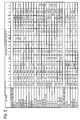
- the substrate 4 can be a nickel- or cobalt-based super alloy. Especially a nickel-based super-alloy is used ( Fig. 6 ).
- TBC thermal barrier 10 coating
- This thermal barrier coating 10 comprises preferably one of the materials like: Gd 2-x Mg x Zr 2 O 7-a or Gd 2-x Mg x Hf 2 O 7-a or Gd 2-x Mg x Ti 2 O 7-a or Gd 2-x Mg x Zr 2-y Ti y O 7-a or Gd 2-x Mg x Zr 2-y Hf y O 7-a or Gd 2-x Mg x Hf 2-y Ti y O 7-a or Gd 2-x Mg x Hf 2-y-z Zr z Ti y O 7-a or Gd 2 Hf 2-y Ti y O 7-a or Gd 2 Hf 2-y-z Zr y Ti z O 7-a , wherein Gd can be replaced by Sm, especially totally replaced by Sm: Sm 2-x Mg x Hf 2 O 7-a or Sm 2-x Mg x Ti 2 O 7-a or Sm 2-x Mg x Zr 2-y Ti y O 7-a or
- Gadolinium Gd) or Samarium (Sm) can be replaced by Neodynium (Nd), Europium (Eu) or by Ytterbium (Yb).
- Gd 2 Zr 2-x Ti x O 7 and Sm 2-x Mg x Zr 2 O 7-a are not claimed as pyrochlore materials in a single layered system.
- the thermal barrier coating 10 preferably consists of one of the materials: Gd 2-x Mg x Zr 2 O 7-a or Gd 2-x Mg x Hf 2 O 7-a or Gd 2-x Mg x Ti 2 O 7-a or Gd 2-x Mg x Zr 2-y Ti y O 7-a or Gd 2-x Mg x Zr2-yHf z O 7-a or Gd 2-x Mg x Hf 2-y Ti y O 7-a or Gd 2-x Mg x Hf 2-y-z Zr z Ti y O 7-a or Gd 2 Hf 2-y Ti y O 7-a or Gd 2 Hf 2-y-z Zr y Ti z O 7-a , wherein Gd can preferably be replaced by Sm, especially totally replaced by Sm: Sm 2-x Mg x Hf 2 O 7-a or Sm 2-x Mg x Ti 2 O 7-a or Sm 2-x Mg x Zr 2-y Ti y O 7
- the magnesium (Mg) can preferably be replaced by Calzium (Ca).
- Titanium (Ti) can preferably be replaced by Aluminium (Al).
- Figure 2 shows a layered ceramic barrier coating 19, especially a two layered system which comprises, especially consists of an inner ceramic thermal barrier 13 and an outer ceramic thermal barrier 16.
- Especially the ceramic thermal barrier coating 16 is the outermost coating of the layered system.
- the inner ceramic thermal barrier coating 13 comprises one of the materials Sm 2-x Mg x Zr 2 O 7-a or Sm 2-x Mg x Hf 2 O 7-a or Sm 2-x Mg x Ti 2 O 7-a or Sm 2-x Mg x Zr 2-y Ti y O 7-a or Sm 2-x Mg x Zr 2-z Hf z O 7-a or Sm 2-x Mg x Hf 2-y Ti y O 7-a or Sm 2-x Mg x Hf 2-y-z Zr z Ti y O 7-a or Sm 2 Hf 2-y Ti y O 7-a or Sm 2 Zr 2-y Ti y O 7-a or Sm 2 Hf 2-y-z Zr z Ti y O 7-a with 0 ⁇ x ⁇ 2; 0 ⁇ y ⁇ 2; 0 ⁇ a ⁇ 1; 0 ⁇ z ⁇ 2; y + z ⁇ 2.
- the inner TBC 13 consists of one of the materials Sm 2-x Mg x Zr 2 O 7-a or Sm 2-x Mg x Hf 2 O 7-a or Sm 2-x Mg x Ti 2 O 7-a or Sm 2-x Mg x Zr 2-y Ti y O 7-a or Sm 2-x Mg x Zr 2-z Hf z O 7-a or Sm 2-x Mg x Hf 2-y Ti y O 7-a or Sm 2-x Mg x Hf 2-y-z Zr z Ti y O 7-a or Sm 2 Hf 2-y Ti y O 7-a or Sm 2 Zr 2-y Ti y O 7-a or Sm 2 Hf 2-y-z Zr z Ti y O 7-a with 0 ⁇ x ⁇ 2; 0 ⁇ y ⁇ 2; 0 ⁇ a ⁇ 1; 0 ⁇ z ⁇ 2; y + z ⁇ 2.
- the magnesium (Mg) can preferably be replaced by Calzium (Ca). Titanium (Ti) can preferably be replaced by Aluminium (Al). The titanium (Ti) leads to reduction of spallation of the ceramic coating.
- the Mg leads to an adaptation of the thermal expansion coefficient to the coefficients of the superalloys and/or metallic layers.
- the inner ceramic thermal barrier coating 13 can also comprise or consist of YSZ.
- the outer ceramic thermal barrier 16 coating comprises Gd 2-x M g Zr 2 O 7-a or Gd 2-x Mg x Hf 2 O 7-a or Gd 2-x Mg x Ti 2 O 7-a or Gd 2-x Mg x Zr 2-y Ti y O 7-a or Gd 2-x Mg x Zr 2-y Hf z O 7-a or Gd 2-x Mg x Hf 2-y Ti y O 7-a or Gd 2-x Mg x Hf 2-y-z Zr z Ti y O 7-a or Gd 2 Hf 2-y-z Zr y Ti z O 7-a or Gd 2 Zr 2-x Ti x O 7-a or Gd 2 Hf 2-y Ti y O 7-a .
- the outer TBC 16 consists of one of the materials Gd 2-x Mg x Zr 2 O 7-a or Gd 2-x Mg x Hf 2 O 7-a or Gd 2-x Mg x Ti 2 O 7-a or Gd 2-x Mg x Zr 2-y Ti y O 7-a or Gd 2-x Mg x Zr 2-y Hf z O 7-a or Gd 2-x Mg x Hf 2-y Ti y O 7-a or Gd 2-x Mg x Hf 2-y-z Zr z Ti y O 7-a or Gd 2 Hf 2-y-z Zr y Ti z O 7-a or Gd 2 Zr 2-x Ti x O 7-a or Gd 2 Zr 2-x Ti x O 7-a or Gd 2 Hf 2-y Ti y O 7-a .
- Titanium (Ti) can preferably be replaced by Aluminium (Al).
- the ceramic barrier coating 10, 13, 16 can have a gradient in the composition.
- the gradient in the composition can be achieved by increasing or decreasing the values for the parameter x, y, z.
- the composition can also change especially gradually from Gd 2-x Mg x Hf 2 O 7-a to Gd 2-x Mg x Hf 2-y Ti y O 7-a and finally at the outermost surface area to Gd 2 Hf 2-y Ti y O 7-a .
- Figure 1 shows a layer system 1 according to the invention.
- the layer system 1 comprises a metallic substrate 4, which in particular for components used at high temperatures consists of a nickel-base or cobalt-base superalloy.
- a metallic bonding layer 7 which consists either of 11wt% 13wt% cobalt, 20wt% - 22wt% chromium, 10.5wt% - 11.5wt% aluminum, 0.3wt% - 0.5wt% yttrium, 1.5wt% - 2.5wt% rhenium, remainder nickel, or 24wt% - 26wt% cobalt, 16wt% - 18wt% chromium, 9.5wt% - 11wt% aluminum, 0.3wt% - 0.5wt% yttrium, 0.5wt% - 2wt% rhenium, remainder nickel.
- an aluminum oxide layer has formed on this metallic bonding layer 7, or an aluminum oxide layer of this type is formed during operation.
- a fully or partially stabilized zirconium oxide layer can be present as inner ceramic layer 10 on the metallic bonding layer 7 or on the aluminum oxide layer (not shown). It is preferable to use yttrium-stabilized zirconium oxide. It is also possible to use calcium oxide, cerium oxide or hafnium oxide to stabilize zirconium oxide.
- the zirconium oxide is preferably applied as a plasma-spray layer, but also may be applied as a columnar structure by means of electron beam physical vapor deposition.
- Figure 3 shows, by way of example, a partial longitudinal section through a gas turbine 100.
- the gas turbine 100 has a rotor 103 which is mounted such that it can rotate about an axis of rotation 102 and has a shaft 101 and is also referred to as the turbine rotor.
- the annular combustion chamber 110 is in communication with a, for example, annular hot-gas passage 111, where, by way of example, four successive turbine stages 112 form the turbine 108.
- Each turbine stage 112 is formed, for example, from two blade or vane rings. As seen in the direction of flow of a working medium 113, in the hot-gas passage 111 a row of guide vanes 115 is followed by a row 125 formed from rotor blades 120.
- the guide vanes 130 are secured to an inner housing 138 of a stator 143, whereas the rotor blades 120 of a row 125 are fitted to the rotor 103 for example by means of a turbine disk 133.
- a generator (not shown) is coupled to the rotor 103.
- the compressor 105 While the gas turbine 100 is operating, the compressor 105 sucks in air 135 through the intake housing 104 and compresses it. The compressed air provided at the turbine-side end of the compressor 105 is passed to the burners 107, where it is mixed with a fuel. The mix is then burnt in the combustion chamber 110, forming the working medium 113. From there, the working medium 113 flows along the hot-gas passage 111 past the guide vanes 130 and the rotor blades 120. The working medium 113 is expanded at the rotor blades 120, transferring its momentum, so that the rotor blades 120 drive the rotor 103 and the latter in turn drives the generator coupled to it.
- Substrates of the components may likewise have a directional structure, i.e. they are in single-crystal form (SX structure) or have only longitudinally oriented grains (DS structure).
- SX structure single-crystal form
- DS structure longitudinally oriented grains
- iron-base, nickel-base or cobalt-base superalloys are used as material for the components, in particular for the turbine blade or vane 120, 130 and components of the combustion chamber 110.
- the blades or vanes 120, 130 may also have coatings which protect against corrosion (MCrAlX; M is at least one element selected from the group consisting of iron (Fe), cobalt (Co), nickel (Ni), X is an active element and represents yttrium (Y) and/or silicon and/or at least one rare earth element and/or hafnium).
- M is at least one element selected from the group consisting of iron (Fe), cobalt (Co), nickel (Ni)
- X is an active element and represents yttrium (Y) and/or silicon and/or at least one rare earth element and/or hafnium).
- EP 0 786 017 B1 , EP 0 412 397 B1 or EP 1 306 454 A1 which are intended to form part of the present disclosure with regard to the chemical composition.
- a thermal barrier coating may also be present on the MCrAlX, consisting, for example, of ZrO 2 , Y 2 O 3 -ZrO 2 , i.e. unstabilized, partially stabilized or fully stabilized by yttrium oxide and/or calcium oxide and/or magnesium oxide.
- Columnar grains are produced in the thermal barrier coating by suitable coating processes, such as for example electron beam physical vapor deposition (EB-PVD).
- EB-PVD electron beam physical vapor deposition
- the guide vane 130 has a guide vane root (not shown here) facing the inner housing 138 of the turbine 108 and a guide vane head at the opposite end from the guide vane root.
- the guide vane head faces the rotor 103 and is fixed to a securing ring 140 of the stator 143.
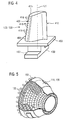
- Figure 4 shows a perspective view of a rotor blade 120 or guide vane 130 of a turbomachine, which extends along a longitudinal axis 121.
- the turbomachine may be a gas turbine of an aircraft or of a power plant for generating electricity, a steam turbine or a compressor.
- the blade or vane 120, 130 has, in succession along the longitudinal axis 121, a securing region 400, an adjoining blade or vane platform 403 and a main blade or vane part 406.
- the vane 130 may have a further platform (not shown) at its vane tip 415.
- a blade or vane root 183 which is used to secure the rotor blades 120, 130 to a shaft or a disk (not shown), is formed in the securing region 400.
- the blade or vane root 183 is designed, for example, in hammerhead form. Other configurations as a fir-tree root or dovetail root are possible.
- the blade or vane 120, 130 has a leading edge 409 and a trailing edge 412 for a medium which flows past the main blade or vane part 406.
- the blade or vane 120, 130 may in this case be produced by a casting process, also by means of directional solidification, by a forging process, by a milling process or combinations thereof.
- Single-crystal workpieces of this type are produced, for example, by directional solidification from the melt. This involves casting processes in which the liquid metallic alloy solidifies to form the single-crystal structure, i.e. the single-crystal workpiece, or solidifies directionally.
- dendritic crystals are oriented along the direction of heat flow and form either a columnar crystalline grain structure (i.e. grains which run over the entire length of the workpiece and are referred to here, in accordance with the language customarily used, as directionally solidified) or a single-crystal structure, i.e. the entire workpiece consists of one single crystal.
- a transition to globular (polycrystalline) solidification needs to be avoided, since non-directional growth inevitably forms transverse and longitudinal grain boundaries, which negate the favorable properties of the directionally solidified or single-crystal component.
- directionally solidified microstructures refers in general terms to directionally solidified microstructures, this is to be understood as meaning both single crystals, which do not have any grain boundaries or at most have small-angle grain boundaries, and columnar crystal structures, which do have grain boundaries running in the longitudinal direction but do not have any transverse grain boundaries.
- This second form of crystalline structures is also described as directionally solidified microstructures (directionally solidified structures). Processes of this type are known from US-A 6,024,792 and EP 0 892 090 A1 ; these documents form part of the present disclosure.
- the blades or vanes 120, 130 may also have coatings protecting against corrosion or oxidation, e.g. (MCrAlX; M is at least one element selected from the group consisting of iron (Fe), cobalt (Co), nickel (Ni), X is an active element and stands for yttrium (Y) and/or silicon and/or at least one rare earth element, or hafnium (Hf)). Alloys of this type are known-from EP 0 486 489 B1 , EP 0 786 017 B1 , EP 0 412 397 B1 or EP 1 306 454 A1 , which are intended to form part of the present disclosure with regard to the chemical composition of the alloy.
- MrAlX M is at least one element selected from the group consisting of iron (Fe), cobalt (Co), nickel (Ni)
- X is an active element and stands for yttrium (Y) and/or silicon and/or at least one rare earth element, or hafnium (Hf
- thermal barrier coating consisting, for example, of ZrO 2 , Y 2 O 4 -ZrO 3 , i.e. unstabilized, partially stabilized or fully stabilized by yttrium oxide and/or calcium oxide and/or magnesium oxide, on the MCrAlX.
- Columnar grains are produced in the thermal barrier coating by suitable coating processes, such as for example electron beam physical vapor deposition (EB-PVD).
- EB-PVD electron beam physical vapor deposition
- Refurbishment means that after they have been used, protective layers may have to be removed from components 120, 130 (e.g. by sand-blasting). Then, the corrosion and/or oxidation layers and products are removed. If appropriate, cracks in the component 120, 130 are also repaired. This is followed by recoating of the component 120, 130, after which the component 120, 130 can be reused.
- the blade or vane 120, 130 may be hollow or solid in form. If the blade or vane 120, 130 is to be cooled, it is hollow and may also have film-cooling holes 418 (illustrated in dashed lines).
Landscapes
- Chemical & Material Sciences (AREA)
- Engineering & Computer Science (AREA)
- Materials Engineering (AREA)
- Organic Chemistry (AREA)
- Ceramic Engineering (AREA)
- Chemical Kinetics & Catalysis (AREA)
- Mechanical Engineering (AREA)
- Metallurgy (AREA)
- Inorganic Chemistry (AREA)
- Manufacturing & Machinery (AREA)
- Structural Engineering (AREA)
- Composite Materials (AREA)
- Turbine Rotor Nozzle Sealing (AREA)
- Other Surface Treatments For Metallic Materials (AREA)
- Compositions Of Oxide Ceramics (AREA)
- Laminated Bodies (AREA)
- Physical Vapour Deposition (AREA)
Abstract
Description
- The invention relates to pyrochlore materials and thermal barrier coatings with these pyrochlore materials.
- Metallic components which are exposed to a high temperature must be protected against heat and corrosion. This is especially needed for parts of gas turbines like combustions chambers, turbine blades or vanes. These parts are commonly coated with an intermediated MCrAlY-layer and a ceramic thermal barrier coating (TBC) which is applied on top of the intermediate layer.
- It is known to use either Gd2Zr207 or Gd2Hf207 as thermal barrier coating.
-
EP 0 992 603 A1 discloses (Gd, La, Y)2 (Ti, Zr, Hf)2 O7 pyrochlore structures. -
EP 1 321 542 A1 discloses an oxide mixture of Gd2O3 and HfO2, wherein Hafnia or gadolinia can be replaced by oxides like Zirconia, Samaria, Europia, Ytterbia or neodynia. -
EP 1 607 379 A1 discloses a structure with the formula A2B2O7 wherein A is selected from the elements La, Nd and Sr and wherein B is selected from the elements Ti, Si, Nb and Ta. -
US 6,258,467 B1 discloses pyrochlore-structures in a non-stochiometric composition. -
WO 02/053492 A1 EP 987 348 A1 - These materials known in the state of art can also be further improved according to their thermal expansion coefficient and spallation behaviour.
- It is therefore the aim of the invention to solve the problem mentioned above.
- The problem is solved by the pyrochlore materials as given in claim 1 and a thermal barrier coating as given in
claim 17, 19. - In the dependent claims further advantages of the invention are listed whereby the dependent claims can be combined with each other in order to achieve further advantages.
- It shows
- Figure 1, 2
- examples of layer systems,
- Figure 3
- a gas turbine,
- Figure 4
- a turbine blade or vane,
- Figure 5
- a combustion chamber and
- Figure 6
- list of superalloy.
- The inventive pyrochlore material comprises:
Gd2-xMgxZr2O7-a
or
Gd2-xMgxHf2O7-a
or
Gd2-xMgxTi2O7-a
or
Gd2-xMgxZr2-yTiyO7-a
or
Gd2-xMgxZr2-yHfyO7-a
or
Gd2-xMgxHf2-yTiyO7-a
or
Gd2-xMgxHf2-y-zZrzTiyO7-a
or
Gd2Hf2-yTiyO7-a
or
Gd2Hf2-y-zZryTizO7-a,
wherein Gd can preferably be replaced by Sm, especially totally replaced by Sm:
Sm2-xMgxHf2O7-a
or
Sm2-xMgxTi2O7-a
or
Sm2-xMgxZr2-yTiyO7-a
or
Sm2-xMgxZr2-zHfzO7-a
or
Sm2-xMgxHf2-yTiyO7-a
or
Sm2-xMgxHf2-y-zZrzTiyO7-a
or
Sm2Zr2-yTiyO7-a
or
Sm2Hf2-yTiyO7-a
or
Sm2Hf2-y-zZrzTiyO7-a
with 0 < x < 2; 0 < y < 2; 0 ≤ a ≤ 1; 0 < z < 2; y + z < 2. - The magnesium (Mg) can preferably be replaced by Calzium (Ca).
- Titanium (Ti) can preferably be replaced by Aluminium (Al). Gd2Zr2-xTixO7 and Sm2-xMgxZr2O7-a are not claimed as pyrochlore materials.
- Especially the pyrochlore material consists of one of the following materials:
Gd2-xMgxZr2O7-a
or
Gd2-xMgxHf207-a
or
Gd2-xMgxTi207-a
or
Gd2-xMgxZr2-yTiyO7-a
or
Gd2-xMgxZr2-yHfO7-a
or
Gd2-xMgxHf2-yTiyO7-a
or
Gd2-xMgxHf2-y-zZrzTiyO7-a
or
Gd2Hf2-yTiyO7-a
or
Gd2Hf2-y-zZryTizO7-a,
wherein Gd can preferably be replaced by Sm, especially totally replaced by Sm:
Sm2-xMgxHf2O7-a
or
Sm2-xMgxTi2O7-a
or
Sm2-xMgxZr2-yTiyO7-a
or
Sm2-xMgxZr2-zHfzO7-a
or
Sm2-xMgxHf2-yTiyO7-a
or
Sm2-xMgxHf2-y-zZrzTiyO7-a
or
Sm2Hf2-yTiyO7-a
or
Sm2Zr2-yTiyO7-a
or
SM2Hf2-y-zZrzTiyO7-a
with 0 < x < 2; 0 < y < 2; 0 ≤ a ≤ 1; 0 < z < 2; y + z < 2. - Gadolinium (Gd) or Samarium (Sm) can be replaced by Neodynium (Nd) or Europium (Eu), Ytterbium (Yb), especially totally replaced by Nd, Eu or Yb.
- Compositions for pyrochlore materials itself or for coating which contain Gd and Sm as major constituent are not claimed.
- In
Figur 1 acomponent 1, 120, 130 (Fig. 3 ,4 ), 155 (Fig. 5 ) is shown which comprises asubstrate 4. - The
substrate 4 can be a nickel- or cobalt-based super alloy. Especially a nickel-based super-alloy is used (Fig. 6 ). - On this
substrate 4, especially direct on the substrate 4 a bonding and/orprotective layer 7 is applied, especially a MCrAlX-layer is used, which forms or has an oxide layer (TGO). Especially Yttrium is used (X=Y). - On this
intermediate layer 7 an outer single layered ceramicthermal barrier 10 coating (TBC) 10 is applied. - This
thermal barrier coating 10 comprises preferably one of the materials like:
Gd2-xMgxZr2O7-a
or
Gd2-xMgxHf2O7-a
or
Gd2-xMgxTi2O7-a
or
Gd2-xMgxZr2-yTiyO7-a
or
Gd2-xMgxZr2-yHfyO7-a
or
Gd2-xMgxHf2-yTiyO7-a
or
Gd2-xMgxHf2-y-zZrzTiyO7-a
or
Gd2Hf2-yTiyO7-a
or
Gd2Hf2-y-zZryTizO7-a,
wherein Gd can be replaced by Sm, especially totally replaced by Sm:
Sm2-xMgxHf2O7-a
or
Sm2-xMgxTi2O7-a
or
Sm2-xMgxZr2-yTiyO7-a
or
Sm2-xMgxZr2-zHfzO7-a
or
Sm2-xMgxHf2-yTiyO7-a
or
Sm2-xMgxHf2-y-zZrzTiyO7-a
or
Sm2Hf2-yTiyO7-a
or
Sm2Zr2-yTiyO7-a
or
Sm2Hf2-y-zZrzTiyO7-a
with 0 < x < 2; 0 < y < 2; 0 ≤ a ≤ 1; 0 < z < 2; y + z < 2, - Gadolinium Gd) or Samarium (Sm) can be replaced by Neodynium (Nd), Europium (Eu) or by Ytterbium (Yb).
- Also mixtures of these materials are possible.
- Gd2Zr2-xTixO7 and Sm2-xMgxZr2O7-a are not claimed as pyrochlore materials in a single layered system.
- Especially the
thermal barrier coating 10 preferably consists of one of the materials:
Gd2-xMgxZr2O7-a
or
Gd2-xMgxHf2O7-a
or
Gd2-xMgxTi2O7-a
or
Gd2-xMgxZr2-yTiyO7-a
or
Gd2-xMgxZr2-yHfzO7-a
or
Gd2-xMgxHf2-yTiyO7-a
or
Gd2-xMgxHf2-y-zZrzTiyO7-a
or
Gd2Hf2-yTiyO7-a
or
Gd2Hf2-y-zZryTizO7-a,
wherein Gd can preferably be replaced by Sm, especially totally replaced by Sm:
Sm2-xMgxHf2O7-a
or
Sm2-xMgxTi2O7-a
or
Sm2-xMgxZr2-yTiyO7-a
or
Sm2-xMgxZr2-zHfzO7-a
or
Sm2-xMgxHf2-yTiyO7-a
or
Sm2-xMgxHf2-y-zZrzTiyO7-a
or
Sm2Hf2-yTiyO7-a
or
Sm2Zr2-yTiyO7-a
or
Sm2Hf2-y-zZrzTiyO7-a
with 0 < x < 2; 0 < y < 2; 0 ≤ a ≤ 1; 0 < z < 2; y + z < 2. - The magnesium (Mg) can preferably be replaced by Calzium (Ca).
- Titanium (Ti) can preferably be replaced by Aluminium (Al).
-
Figure 2 shows a layeredceramic barrier coating 19, especially a two layered system which comprises, especially consists of an inner ceramicthermal barrier 13 and an outer ceramicthermal barrier 16. - Especially the ceramic
thermal barrier coating 16 is the outermost coating of the layered system. - The inner ceramic
thermal barrier coating 13 comprises one of the materials
Sm2-xMgxZr2O7-a
or
Sm2-xMgxHf2O7-a
or
Sm2-xMgxTi2O7-a
or
Sm2-xMgxZr2-yTiyO7-a
or
Sm2-xMgxZr2-zHfzO7-a
or
Sm2-xMgxHf2-yTiyO7-a
or
Sm2-xMgxHf2-y-zZrzTiyO7-a
or
Sm2Hf2-yTiyO7-a
or
Sm2Zr2-yTiyO7-a
or
Sm2Hf2-y-zZrzTiyO7-a
with 0 < x < 2; 0 < y < 2; 0 ≤ a ≤ 1; 0 < z < 2; y + z < 2. - Especially the
inner TBC 13 consists of one of the materials
Sm2-xMgxZr2O7-a
or
Sm2-xMgxHf2O7-a
or
Sm2-xMgxTi2O7-a
or
Sm2-xMgxZr2-yTiyO7-a
or
Sm2-xMgxZr2-zHfzO7-a
or
Sm2-xMgxHf2-yTiyO7-a
or
Sm2-xMgxHf2-y-zZrzTiyO7-a
or
Sm2Hf2-yTiyO7-a
or
Sm2Zr2-yTiyO7-a
or
Sm2Hf2-y-zZrzTiyO7-a
with 0 < x < 2; 0 < y < 2; 0 ≤ a ≤ 1; 0 < z < 2; y + z < 2. - Especially a = x/2 is chosen.
- The magnesium (Mg) can preferably be replaced by Calzium (Ca). Titanium (Ti) can preferably be replaced by Aluminium (Al). The titanium (Ti) leads to reduction of spallation of the ceramic coating.
- The Mg leads to an adaptation of the thermal expansion coefficient to the coefficients of the superalloys and/or metallic layers.
- The inner ceramic
thermal barrier coating 13 can also comprise or consist of YSZ. - The outer ceramic
thermal barrier 16 coating comprises
Gd2-xMgZr2O7-a
or
Gd2-xMgxHf2O7-a
or
Gd2-xMgxTi2O7-a
or
Gd2-xMgxZr2-yTiyO7-a
or
Gd2-xMgxZr2-yHfzO7-a
or
Gd2-xMgxHf2-yTiyO7-a
or
Gd2-xMgxHf2-y-zZrzTiyO7-a
or
Gd2Hf2-y-zZryTizO7-a
or
Gd2Zr2-xTixO7-a
or
Gd2Hf2-yTiyO7-a.
- Especially the
outer TBC 16 consists of one of the materials
Gd2-xMgxZr2O7-a
or
Gd2-xMgxHf2O7-a
or
Gd2-xMgxTi2O7-a
or
Gd2-xMgxZr2-yTiyO7-a
or
Gd2-xMgxZr2-yHfzO7-a
or
Gd2-xMgxHf2-yTiyO7-a
or
Gd2-xMgxHf2-y-zZrzTiyO7-a
or
Gd2Hf2-y-zZryTizO7-a
or
Gd2Zr2-xTixO7-a
or
Gd2Hf2-yTiyO7-a.
- Titanium (Ti) can preferably be replaced by Aluminium (Al).
- In the layer system similar to
figure 1 or figure 2 theceramic barrier coating - The composition can also change especially gradually from Gd2-xMgxHf2O7-a to
Gd2-xMgxHf2-yTiyO7-a and finally at the outermost surface area to Gd2Hf2-yTiyO7-a. -
Figure 1 shows a layer system 1 according to the invention. - The layer system 1 comprises a
metallic substrate 4, which in particular for components used at high temperatures consists of a nickel-base or cobalt-base superalloy. - Directly on the
substrate 4 there is ametallic bonding layer 7, which consists either of
11wt% 13wt% cobalt, 20wt% - 22wt% chromium, 10.5wt% - 11.5wt% aluminum, 0.3wt% - 0.5wt% yttrium, 1.5wt% - 2.5wt% rhenium, remainder nickel, or 24wt% - 26wt% cobalt, 16wt% - 18wt% chromium, 9.5wt% - 11wt% aluminum, 0.3wt% - 0.5wt% yttrium, 0.5wt% - 2wt% rhenium, remainder nickel. - Even before the application of further ceramic layers, an aluminum oxide layer has formed on this
metallic bonding layer 7, or an aluminum oxide layer of this type is formed during operation. - A fully or partially stabilized zirconium oxide layer can be present as inner
ceramic layer 10 on themetallic bonding layer 7 or on the aluminum oxide layer (not shown). It is preferable to use yttrium-stabilized zirconium oxide. It is also possible to use calcium oxide, cerium oxide or hafnium oxide to stabilize zirconium oxide. - The zirconium oxide is preferably applied as a plasma-spray layer, but also may be applied as a columnar structure by means of electron beam physical vapor deposition.
-
Figure 3 shows, by way of example, a partial longitudinal section through agas turbine 100. - In the interior, the
gas turbine 100 has arotor 103 which is mounted such that it can rotate about an axis ofrotation 102 and has a shaft 101 and is also referred to as the turbine rotor. - An
intake housing 104, acompressor 105, a, for example,toroidal combustion chamber 110, in particular an annular combustion chamber, with a plurality of coaxially arrangedburners 107, aturbine 108 and the exhaust-gas housing 109 follow one another along therotor 103. - The
annular combustion chamber 110 is in communication with a, for example, annular hot-gas passage 111, where, by way of example, four successive turbine stages 112 form theturbine 108. - Each
turbine stage 112 is formed, for example, from two blade or vane rings. As seen in the direction of flow of a workingmedium 113, in the hot-gas passage 111 a row ofguide vanes 115 is followed by arow 125 formed fromrotor blades 120. - The guide vanes 130 are secured to an
inner housing 138 of astator 143, whereas therotor blades 120 of arow 125 are fitted to therotor 103 for example by means of aturbine disk 133. - A generator (not shown) is coupled to the
rotor 103. - While the
gas turbine 100 is operating, thecompressor 105 sucks inair 135 through theintake housing 104 and compresses it. The compressed air provided at the turbine-side end of thecompressor 105 is passed to theburners 107, where it is mixed with a fuel. The mix is then burnt in thecombustion chamber 110, forming the workingmedium 113. From there, the workingmedium 113 flows along the hot-gas passage 111 past theguide vanes 130 and therotor blades 120. The workingmedium 113 is expanded at therotor blades 120, transferring its momentum, so that therotor blades 120 drive therotor 103 and the latter in turn drives the generator coupled to it. - While the
gas turbine 100 is operating, the components which are exposed to the hot workingmedium 113 are subject to thermal stresses. The guide vanes 130 androtor blades 120 of thefirst turbine stage 112, as seen in the direction of flow of the workingmedium 113, together with the heat shield elements which line theannular combustion chamber 110, are subject to the highest thermal stresses. - To be able to withstand the temperatures which prevail there, they may be cooled by means of a coolant.
- Substrates of the components may likewise have a directional structure, i.e. they are in single-crystal form (SX structure) or have only longitudinally oriented grains (DS structure).
- By way of example, iron-base, nickel-base or cobalt-base superalloys are used as material for the components, in particular for the turbine blade or
vane combustion chamber 110. - Superalloys of this type are known, for example, from
-
EP 1 204 776 B1 ,EP 1 306 454 ,EP 1 319 729 A1 ,WO 99/67435 WO 00/44949 - The blades or
vanes - Alloys of this type are known from
EP 0 486 489 B1 , -
EP 0 786 017 B1 ,EP 0 412 397 B1 orEP 1 306 454 A1 , which are intended to form part of the present disclosure with regard to the chemical composition. - A thermal barrier coating may also be present on the MCrAlX, consisting, for example, of ZrO2, Y2O3-ZrO2, i.e. unstabilized, partially stabilized or fully stabilized by yttrium oxide and/or calcium oxide and/or magnesium oxide.
- Columnar grains are produced in the thermal barrier coating by suitable coating processes, such as for example electron beam physical vapor deposition (EB-PVD).
- The
guide vane 130 has a guide vane root (not shown here) facing theinner housing 138 of theturbine 108 and a guide vane head at the opposite end from the guide vane root. The guide vane head faces therotor 103 and is fixed to a securingring 140 of thestator 143. -
Figure 4 shows a perspective view of arotor blade 120 or guidevane 130 of a turbomachine, which extends along alongitudinal axis 121. - The turbomachine may be a gas turbine of an aircraft or of a power plant for generating electricity, a steam turbine or a compressor.
- The blade or
vane longitudinal axis 121, a securingregion 400, an adjoining blade orvane platform 403 and a main blade orvane part 406. As aguide vane 130, thevane 130 may have a further platform (not shown) at itsvane tip 415. - A blade or
vane root 183, which is used to secure therotor blades region 400. - The blade or
vane root 183 is designed, for example, in hammerhead form. Other configurations as a fir-tree root or dovetail root are possible. - The blade or
vane leading edge 409 and a trailingedge 412 for a medium which flows past the main blade orvane part 406. - In the case of conventional blades or
vanes regions vane - Superalloys of this type are known, for example, from
EP 1 204 776 B1 ,EP 1 306 454 ,EP 1 319 729 A1 ,WO 99/67435 WO 00/44949 - The blade or
vane - Workpieces with a single-crystal structure or structures are used as components for machines which, in operation, are exposed to high mechanical, thermal and/or chemical stresses. Single-crystal workpieces of this type are produced, for example, by directional solidification from the melt. This involves casting processes in which the liquid metallic alloy solidifies to form the single-crystal structure, i.e. the single-crystal workpiece, or solidifies directionally.
- In this case, dendritic crystals are oriented along the direction of heat flow and form either a columnar crystalline grain structure (i.e. grains which run over the entire length of the workpiece and are referred to here, in accordance with the language customarily used, as directionally solidified) or a single-crystal structure, i.e. the entire workpiece consists of one single crystal. In these processes, a transition to globular (polycrystalline) solidification needs to be avoided, since non-directional growth inevitably forms transverse and longitudinal grain boundaries, which negate the favorable properties of the directionally solidified or single-crystal component.
- Where the text refers in general terms to directionally solidified microstructures, this is to be understood as meaning both single crystals, which do not have any grain boundaries or at most have small-angle grain boundaries, and columnar crystal structures, which do have grain boundaries running in the longitudinal direction but do not have any transverse grain boundaries. This second form of crystalline structures is also described as directionally solidified microstructures (directionally solidified structures). Processes of this type are known from
US-A 6,024,792 andEP 0 892 090 A1 ; these documents form part of the present disclosure. - The blades or
vanes EP 0 486 489 B1 ,EP 0 786 017 B1 ,EP 0 412 397 B1 orEP 1 306 454 A1 , which are intended to form part of the present disclosure with regard to the chemical composition of the alloy. - There may also be a thermal barrier coating consisting, for example, of ZrO2, Y2O4-ZrO3, i.e. unstabilized, partially stabilized or fully stabilized by yttrium oxide and/or calcium oxide and/or magnesium oxide, on the MCrAlX. Columnar grains are produced in the thermal barrier coating by suitable coating processes, such as for example electron beam physical vapor deposition (EB-PVD).
- Refurbishment means that after they have been used, protective layers may have to be removed from
components 120, 130 (e.g. by sand-blasting). Then, the corrosion and/or oxidation layers and products are removed. If appropriate, cracks in thecomponent component component - The blade or
vane vane
Claims (26)
- Thermal barrier coating (10, 19) which comprises
a pyrochlore material
which comprises Gd2-xMgxZr2O7-a
with 0 < x < 2 and 0 ≤ a ≤ 1. - Thermal barrier coating according to claim 1,
wherein titanium (Ti) is further added so that the pyrochlore material comprises Gd2-xMgxZr2-yTiyO7-a, with 0 < y < 2 and 0 < x < 2 and 0 ≤ a ≤ 1. - Thermal barrier coating according to claim 1 or 2,
wherein a = 0. - Thermal barrier coating according to claim 2,
wherein x=0 and the Zirconium (Zr) is replaced by Hafnium (Hf). - Thermal barrier coating according to claim 1 or 2,
wherein the Zirconium (Zr) is partially replaced by Hafnium (Hf). - Thermal barrier coating according to claim 1 or 4,
wherein the Zirconium (Zr) is totally replaced by Hafnium (Hf). - Thermal barrier coating according to claim 1, 4 or 5,
wherein Zirconium (Zr) is partially replaced by Titanium (Ti). - Thermal barrier coating according to claim 1, 4 or 5,
wherein Zirconium (Zr) is totally replaced by Titanium (Ti). - Thermal barrier coating according to one or more of the preceding claims,
wherein the Gadolinium (Gd) is replaced by Neodynium (Nd), Europium (Eu) or Ytterbium (Yb). - Thermal barrier coating according to one or more of the preceding claims,
wherein Gadolinium (Gd) is partially replaced by Samarium (Sm). - Thermal barrier coating according to one or more of the preceding claims,
wherein Gadolinium (Gd) is totally replaced by Samarium (Sm). - Thermal barrier coating according to one or more of the preceding claims,
wherein Magnesium (Mg) is partially replaced by Calcium (Ca). - Thermal barrier coating according to one or more of the preceding claims,
wherein Magnesium (Mg) is totally replaced by Calcium (Ca). - Thermal barrier coating according to one or more of the preceding claims 2, 7 or 8,
wherein Titanium (Ti) is partially replaced by Aluminum (Al). - Thermal barrier coating according to one or more of the preceding claims 2, 7 or 8,
wherein Titanium (Ti) is totally replaced by Aluminum (Al). - Thermal barrier coating consisting of one single material according to any of the preceding claims.
- Thermal barrier coating according to one or more of the preceding claims,
which consists of
a pyrochlore material
which comprises Gd2-xMgxZr2O7-a
with 0 < x < 2 and 0 ≤ a ≤ 1. - Thermal barrier coating according to one or more of the preceding claims 1 to 16,
wherein the thermal barrier coating (19) comprises a double layer (13, 16. - Thermal barrier coating according to claim 18,
wherein the thermal barrier coating (10) consists of a double layer (13, 16). - Thermal barrier coating according to claim 18 or 19, wherein an inner ceramic thermal barrier coating (13) comprises a material
wherein Gadolinium (Gd) is partially replaced by Samarium (Sm) or
wherein Gadolinium (Gd) is totally replaced by Samarium (Sm) or
Sm2-xMgxZr207-a with 0 < x < 2 and 0 ≤ a ≤ 1. - Thermal barrier coating according to claim 19,
wherein an inner ceramic thermal barrier coating (13) consists of a material,
wherein Gadolinium (Gd) is partially replaced by Samarium (Sm) or
wherein Gadolinium (Gd) is totally replaced by Samarium (Sm) or
Sm2-xMgxZr207-a with 0 < x < 2 and 0 ≤ a ≤ 1. - Thermal barrier coating according to claim 20 or 21, wherein the Samarium (Sm) is partially replaced by Gadalinium (Gd).
- Thermal barrier coating according to claim 20 or 21, wherein the Samarium (Sm) is totally replaced by Gadalinium (Gd).
- Thermal barrier coating according to claim 18 or 19, wherein an inner ceramic thermal barrier (13) coating comprises a zirconium oxide, especially an Yttria stabilized Zirconia (YSZ).
- Thermal barrier coating according to claim 18, 19, 20, 21, 22, 23 or 24,
wherein an outer ceramic thermal barrier coating (16) comprises one material according to one of the claims 2 to 9 or 12 to 16 or Gd2Zr1-yTiyO7-a with O < y 2 and 0 ≤ a ≤ 1. - Thermal barrier coating according to claim 25,
wherein an outer ceramic thermal barrier coating (16) consists of one material,
of one of the claims 2 to 9 or 12 to 16 or Gd2Zr1-yTiyO7-a with 0 < y < 2 and 0 ≤ a ≤ 1.
Priority Applications (6)
| Application Number | Priority Date | Filing Date | Title |
|---|---|---|---|
| EP11000131.0A EP2309034B1 (en) | 2006-10-02 | 2007-06-21 | Pyrochlore materials and a thermal barrier coating with these pyrochlore materials |
| EP11000130.2A EP2309033B1 (en) | 2006-10-02 | 2007-06-21 | Pyrochlore materials |
| EP11000129.4A EP2309032B1 (en) | 2006-10-02 | 2007-06-21 | Pyrochlore materials |
| EP11000104A EP2309031A3 (en) | 2006-10-02 | 2007-06-21 | Pyrochlore materials and a thermal barrier coating |
| EP11000201A EP2302101A1 (en) | 2006-10-02 | 2007-06-21 | Pyrochlore materials and a thermal barrier coating with these pyrochlore materials |
| EP07730289A EP2069552B1 (en) | 2006-10-02 | 2007-06-21 | Pyrochlore materials and a thermal barrier coating with these pyrochlore materials |
Applications Claiming Priority (3)
| Application Number | Priority Date | Filing Date | Title |
|---|---|---|---|
| EP06020703A EP1908859A1 (en) | 2006-10-02 | 2006-10-02 | Pyrochlore materials and a thermal barrier coating with these pyrochlore materials |
| PCT/EP2007/056188 WO2008040574A1 (en) | 2006-10-02 | 2007-06-21 | Pyrochlore materials and a thermal barrier coating with these pyrochlore materials |
| EP07730289A EP2069552B1 (en) | 2006-10-02 | 2007-06-21 | Pyrochlore materials and a thermal barrier coating with these pyrochlore materials |
Related Child Applications (8)
| Application Number | Title | Priority Date | Filing Date |
|---|---|---|---|
| EP11000129.4A Division EP2309032B1 (en) | 2006-10-02 | 2007-06-21 | Pyrochlore materials |
| EP11000131.0A Division EP2309034B1 (en) | 2006-10-02 | 2007-06-21 | Pyrochlore materials and a thermal barrier coating with these pyrochlore materials |
| EP11000130.2A Division EP2309033B1 (en) | 2006-10-02 | 2007-06-21 | Pyrochlore materials |
| EP11000104.7 Division-Into | 2011-01-07 | ||
| EP11000131.0 Division-Into | 2011-01-10 | ||
| EP11000129.4 Division-Into | 2011-01-10 | ||
| EP11000130.2 Division-Into | 2011-01-10 | ||
| EP11000201.1 Division-Into | 2011-01-12 |
Publications (2)
| Publication Number | Publication Date |
|---|---|
| EP2069552A1 EP2069552A1 (en) | 2009-06-17 |
| EP2069552B1 true EP2069552B1 (en) | 2012-03-14 |
Family
ID=37719371
Family Applications (7)
| Application Number | Title | Priority Date | Filing Date |
|---|---|---|---|
| EP06020703A Ceased EP1908859A1 (en) | 2006-10-02 | 2006-10-02 | Pyrochlore materials and a thermal barrier coating with these pyrochlore materials |
| EP11000131.0A Not-in-force EP2309034B1 (en) | 2006-10-02 | 2007-06-21 | Pyrochlore materials and a thermal barrier coating with these pyrochlore materials |
| EP11000104A Withdrawn EP2309031A3 (en) | 2006-10-02 | 2007-06-21 | Pyrochlore materials and a thermal barrier coating |
| EP11000129.4A Not-in-force EP2309032B1 (en) | 2006-10-02 | 2007-06-21 | Pyrochlore materials |
| EP11000130.2A Not-in-force EP2309033B1 (en) | 2006-10-02 | 2007-06-21 | Pyrochlore materials |
| EP07730289A Not-in-force EP2069552B1 (en) | 2006-10-02 | 2007-06-21 | Pyrochlore materials and a thermal barrier coating with these pyrochlore materials |
| EP11000201A Withdrawn EP2302101A1 (en) | 2006-10-02 | 2007-06-21 | Pyrochlore materials and a thermal barrier coating with these pyrochlore materials |
Family Applications Before (5)
| Application Number | Title | Priority Date | Filing Date |
|---|---|---|---|
| EP06020703A Ceased EP1908859A1 (en) | 2006-10-02 | 2006-10-02 | Pyrochlore materials and a thermal barrier coating with these pyrochlore materials |
| EP11000131.0A Not-in-force EP2309034B1 (en) | 2006-10-02 | 2007-06-21 | Pyrochlore materials and a thermal barrier coating with these pyrochlore materials |
| EP11000104A Withdrawn EP2309031A3 (en) | 2006-10-02 | 2007-06-21 | Pyrochlore materials and a thermal barrier coating |
| EP11000129.4A Not-in-force EP2309032B1 (en) | 2006-10-02 | 2007-06-21 | Pyrochlore materials |
| EP11000130.2A Not-in-force EP2309033B1 (en) | 2006-10-02 | 2007-06-21 | Pyrochlore materials |
Family Applications After (1)
| Application Number | Title | Priority Date | Filing Date |
|---|---|---|---|
| EP11000201A Withdrawn EP2302101A1 (en) | 2006-10-02 | 2007-06-21 | Pyrochlore materials and a thermal barrier coating with these pyrochlore materials |
Country Status (7)
| Country | Link |
|---|---|
| US (1) | US8278232B2 (en) |
| EP (7) | EP1908859A1 (en) |
| KR (1) | KR20090096417A (en) |
| CN (1) | CN101522949B (en) |
| AT (1) | ATE549432T1 (en) |
| RU (1) | RU2454477C2 (en) |
| WO (1) | WO2008040574A1 (en) |
Families Citing this family (12)
| Publication number | Priority date | Publication date | Assignee | Title |
|---|---|---|---|---|
| KR102113356B1 (en) * | 2011-12-19 | 2020-05-20 | 프랙스에어 에스.티. 테크놀로지, 인코포레이티드 | Aqueous slurry for the production of thermal and environmental barrier coatings and processes for making and applying the same |
| US9347126B2 (en) | 2012-01-20 | 2016-05-24 | General Electric Company | Process of fabricating thermal barrier coatings |
| ES2733111T3 (en) | 2013-03-14 | 2019-11-27 | Shepherd Color Co | Pyrochloro pigments substituted simultaneously |
| US9409150B2 (en) | 2013-05-09 | 2016-08-09 | Sabic Global Technologies B.V. | Clay mineral supported catalysts |
| DE102015223576A1 (en) | 2015-11-27 | 2017-06-01 | Siemens Aktiengesellschaft | Local two-layer thermal barrier coating |
| WO2017218759A1 (en) * | 2016-06-15 | 2017-12-21 | The Penn State Research Foundation | Thermal barrier coatings |
| US11105000B2 (en) | 2017-03-20 | 2021-08-31 | General Electric Company | Articles for high temperature service |
| CN111978087B (en) * | 2019-05-22 | 2022-04-15 | 北京理工大学 | Composite material and preparation method and application thereof |
| US20260088260A1 (en) * | 2022-09-21 | 2026-03-26 | Lam Research Corporation | Pyrochlore component for plasma processing chamber |
| CN116477940B (en) * | 2023-03-17 | 2024-04-12 | 电子科技大学 | Yttrium titanate doped zirconia ceramic material and preparation method and application thereof |
| CN118345325A (en) * | 2024-03-14 | 2024-07-16 | 电子科技大学 | A cerium-doped yttrium titanate thermal barrier coating material and preparation method thereof |
| CN118684490A (en) * | 2024-07-05 | 2024-09-24 | 苏州璋驰光电科技有限公司 | A method for preparing europium-doped Gd2Zr2O7 transparent ceramic optical fiber |
Family Cites Families (26)
| Publication number | Priority date | Publication date | Assignee | Title |
|---|---|---|---|---|
| US602479A (en) | 1898-04-19 | Joseph w | ||
| DE3926479A1 (en) | 1989-08-10 | 1991-02-14 | Siemens Ag | RHENIUM-PROTECTIVE COATING, WITH GREAT CORROSION AND / OR OXIDATION RESISTANCE |
| DE58908611D1 (en) | 1989-08-10 | 1994-12-08 | Siemens Ag | HIGH-TEMPERATURE-RESISTANT CORROSION PROTECTION COATING, IN PARTICULAR FOR GAS TURBINE COMPONENTS. |
| RU1776089C (en) * | 1990-12-06 | 1995-01-09 | Институт Электросварки Им.Е.О.Патона | Two-layer ceramic coating |
| RU2147624C1 (en) | 1994-10-14 | 2000-04-20 | Сименс АГ | Protective layer for protecting part against corrosion, oxidation, and thermal overloading, and method of preparation thereof |
| RU2218451C2 (en) * | 1996-12-10 | 2003-12-10 | Сименс Акциенгезелльшафт | Article with heat-insulating layer subjected to action of hot gas and method of manufacture of such article |
| US6258467B1 (en) * | 2000-08-17 | 2001-07-10 | Siemens Westinghouse Power Corporation | Thermal barrier coating having high phase stability |
| US6946208B2 (en) | 1996-12-10 | 2005-09-20 | Siemens Westinghouse Power Corporation | Sinter resistant abradable thermal barrier coating |
| US6177200B1 (en) * | 1996-12-12 | 2001-01-23 | United Technologies Corporation | Thermal barrier coating systems and materials |
| US6924040B2 (en) | 1996-12-12 | 2005-08-02 | United Technologies Corporation | Thermal barrier coating systems and materials |
| US6117560A (en) | 1996-12-12 | 2000-09-12 | United Technologies Corporation | Thermal barrier coating systems and materials |
| US6238816B1 (en) * | 1996-12-30 | 2001-05-29 | Technology Management, Inc. | Method for steam reforming hydrocarbons using a sulfur-tolerant catalyst |
| EP0892090B1 (en) | 1997-02-24 | 2008-04-23 | Sulzer Innotec Ag | Method for manufacturing single crystal structures |
| EP0861927A1 (en) | 1997-02-24 | 1998-09-02 | Sulzer Innotec Ag | Method for manufacturing single crystal structures |
| EP1306454B1 (en) | 2001-10-24 | 2004-10-06 | Siemens Aktiengesellschaft | Rhenium containing protective coating protecting a product against corrosion and oxidation at high temperatures |
| WO1999067435A1 (en) | 1998-06-23 | 1999-12-29 | Siemens Aktiengesellschaft | Directionally solidified casting with improved transverse stress rupture strength |
| DE19841872A1 (en) * | 1998-09-14 | 2000-03-16 | Creavis Tech & Innovation Gmbh | Electrocatalytic selective oxidation of hydrocarbons |
| US6231692B1 (en) | 1999-01-28 | 2001-05-15 | Howmet Research Corporation | Nickel base superalloy with improved machinability and method of making thereof |
| JP2003529677A (en) | 1999-07-29 | 2003-10-07 | シーメンス アクチエンゲゼルシヤフト | Heat resistant structural member and method of manufacturing the same |
| DE10026940A1 (en) * | 2000-05-30 | 2001-12-06 | Creavis Tech & Innovation Gmbh | Electrochemical cell for the oxidation of organic compounds and electrocatalytic oxidation process |
| CA2432065C (en) * | 2001-01-02 | 2009-10-27 | Technology Management, Inc. | Method for steam reforming hydrocarbons using a sulfur-tolerant catalyst |
| US6632554B2 (en) * | 2001-04-10 | 2003-10-14 | Hybrid Power Generation Systems, Llc | High performance cathodes for solid oxide fuel cells |
| US7541005B2 (en) * | 2001-09-26 | 2009-06-02 | Siemens Energy Inc. | Catalytic thermal barrier coatings |
| DE50112339D1 (en) | 2001-12-13 | 2007-05-24 | Siemens Ag | High-temperature resistant component made of monocrystalline or polycrystalline nickel-based superalloy |
| JP2005154885A (en) * | 2003-03-26 | 2005-06-16 | Mitsubishi Heavy Ind Ltd | Material for thermal barrier coating |
| CN1329551C (en) * | 2003-12-16 | 2007-08-01 | 中国科学院长春应用化学研究所 | Novel heat barrier coating material |
-
2006
- 2006-10-02 EP EP06020703A patent/EP1908859A1/en not_active Ceased
-
2007
- 2007-06-21 EP EP11000131.0A patent/EP2309034B1/en not_active Not-in-force
- 2007-06-21 EP EP11000104A patent/EP2309031A3/en not_active Withdrawn
- 2007-06-21 US US12/311,544 patent/US8278232B2/en not_active Expired - Fee Related
- 2007-06-21 EP EP11000129.4A patent/EP2309032B1/en not_active Not-in-force
- 2007-06-21 CN CN2007800368219A patent/CN101522949B/en not_active Expired - Fee Related
- 2007-06-21 EP EP11000130.2A patent/EP2309033B1/en not_active Not-in-force
- 2007-06-21 WO PCT/EP2007/056188 patent/WO2008040574A1/en not_active Ceased
- 2007-06-21 KR KR1020097009172A patent/KR20090096417A/en not_active Ceased
- 2007-06-21 AT AT07730289T patent/ATE549432T1/en active
- 2007-06-21 EP EP07730289A patent/EP2069552B1/en not_active Not-in-force
- 2007-06-21 EP EP11000201A patent/EP2302101A1/en not_active Withdrawn
- 2007-06-21 RU RU2009116606/02A patent/RU2454477C2/en not_active IP Right Cessation
Also Published As
| Publication number | Publication date |
|---|---|
| WO2008040574A1 (en) | 2008-04-10 |
| EP2309033A2 (en) | 2011-04-13 |
| EP2309031A3 (en) | 2011-11-16 |
| RU2009116606A (en) | 2010-11-10 |
| US8278232B2 (en) | 2012-10-02 |
| CN101522949A (en) | 2009-09-02 |
| US20100093516A1 (en) | 2010-04-15 |
| EP2309033A3 (en) | 2011-11-16 |
| EP2309032A2 (en) | 2011-04-13 |
| EP2309032A3 (en) | 2011-11-16 |
| EP2309032B1 (en) | 2015-03-18 |
| EP2309034B1 (en) | 2015-03-18 |
| EP2309033B1 (en) | 2015-03-18 |
| EP2309031A2 (en) | 2011-04-13 |
| EP2069552A1 (en) | 2009-06-17 |
| KR20090096417A (en) | 2009-09-10 |
| EP2309034A2 (en) | 2011-04-13 |
| EP1908859A1 (en) | 2008-04-09 |
| RU2454477C2 (en) | 2012-06-27 |
| EP2302101A1 (en) | 2011-03-30 |
| CN101522949B (en) | 2011-12-21 |
| EP2309034A3 (en) | 2011-11-16 |
| ATE549432T1 (en) | 2012-03-15 |
Similar Documents
| Publication | Publication Date | Title |
|---|---|---|
| EP2309032B1 (en) | Pyrochlore materials | |
| US7592071B2 (en) | Layer system | |
| EP2128306B1 (en) | Ceramic thermal barrier coating system with two ceramic layers | |
| US8057924B2 (en) | Layer system comprising two pyrochlore phases | |
| EP2519659B1 (en) | Nano and micro structured ceramic thermal barrier coating | |
| US20090311508A1 (en) | Layered thermal barrier coating with a high porosity, and a component | |
| US8084382B2 (en) | Ceramic powder, ceramic layer and layer system with pyrochlore phase and oxides | |
| US20120003460A1 (en) | Two-Layer Porous Layer System Having a Pyrochlore Phase | |
| WO2011103927A1 (en) | Two layered metallic bondcoat | |
| CA2630690C (en) | Layer system comprising gadolinium solid solution pyrochlore phase | |
| US20100009144A1 (en) | Two-Level Layer Thermal Protection System With Pyrochlore Phase | |
| KR20140094659A (en) | Alloy, protective layer and component | |
| US8034469B1 (en) | Two-level layer system with pyrochlore phase and oxides | |
| GB2439312A (en) | Protective coating for turbine components |
Legal Events
| Date | Code | Title | Description |
|---|---|---|---|
| PUAI | Public reference made under article 153(3) epc to a published international application that has entered the european phase |
Free format text: ORIGINAL CODE: 0009012 |
|
| 17P | Request for examination filed |
Effective date: 20090203 |
|
| AK | Designated contracting states |
Kind code of ref document: A1 Designated state(s): AT BE BG CH CY CZ DE DK EE ES FI FR GB GR HU IE IS IT LI LT LU LV MC MT NL PL PT RO SE SI SK TR |
|
| AX | Request for extension of the european patent |
Extension state: AL BA HR MK RS |
|
| RIN1 | Information on inventor provided before grant (corrected) |
Inventor name: OECHSNER, MATTHIAS Inventor name: MALOW, THOMAS |
|
| 17Q | First examination report despatched |
Effective date: 20090814 |
|
| DAX | Request for extension of the european patent (deleted) | ||
| GRAP | Despatch of communication of intention to grant a patent |
Free format text: ORIGINAL CODE: EPIDOSNIGR1 |
|
| RIN1 | Information on inventor provided before grant (corrected) |
Inventor name: MALOW, THOMAS Inventor name: OECHSNER, MATTHIAS |
|
| GRAS | Grant fee paid |
Free format text: ORIGINAL CODE: EPIDOSNIGR3 |
|
| GRAA | (expected) grant |
Free format text: ORIGINAL CODE: 0009210 |
|
| AK | Designated contracting states |
Kind code of ref document: B1 Designated state(s): AT BE BG CH CY CZ DE DK EE ES FI FR GB GR HU IE IS IT LI LT LU LV MC MT NL PL PT RO SE SI SK TR |
|
| REG | Reference to a national code |
Ref country code: GB Ref legal event code: FG4D |
|
| REG | Reference to a national code |
Ref country code: AT Ref legal event code: REF Ref document number: 549432 Country of ref document: AT Kind code of ref document: T Effective date: 20120315 Ref country code: CH Ref legal event code: EP |
|
| REG | Reference to a national code |
Ref country code: IE Ref legal event code: FG4D |
|
| REG | Reference to a national code |
Ref country code: CH Ref legal event code: NV Representative=s name: SIEMENS SCHWEIZ AG |
|
| REG | Reference to a national code |
Ref country code: DE Ref legal event code: R096 Ref document number: 602007021297 Country of ref document: DE Effective date: 20120510 |
|
| REG | Reference to a national code |
Ref country code: NL Ref legal event code: T3 |
|
| PG25 | Lapsed in a contracting state [announced via postgrant information from national office to epo] |
Ref country code: LT Free format text: LAPSE BECAUSE OF FAILURE TO SUBMIT A TRANSLATION OF THE DESCRIPTION OR TO PAY THE FEE WITHIN THE PRESCRIBED TIME-LIMIT Effective date: 20120314 |
|
| LTIE | Lt: invalidation of european patent or patent extension |
Effective date: 20120314 |
|
| PG25 | Lapsed in a contracting state [announced via postgrant information from national office to epo] |
Ref country code: FI Free format text: LAPSE BECAUSE OF FAILURE TO SUBMIT A TRANSLATION OF THE DESCRIPTION OR TO PAY THE FEE WITHIN THE PRESCRIBED TIME-LIMIT Effective date: 20120314 Ref country code: LV Free format text: LAPSE BECAUSE OF FAILURE TO SUBMIT A TRANSLATION OF THE DESCRIPTION OR TO PAY THE FEE WITHIN THE PRESCRIBED TIME-LIMIT Effective date: 20120314 Ref country code: GR Free format text: LAPSE BECAUSE OF FAILURE TO SUBMIT A TRANSLATION OF THE DESCRIPTION OR TO PAY THE FEE WITHIN THE PRESCRIBED TIME-LIMIT Effective date: 20120615 |
|
| REG | Reference to a national code |
Ref country code: AT Ref legal event code: MK05 Ref document number: 549432 Country of ref document: AT Kind code of ref document: T Effective date: 20120314 |
|
| PG25 | Lapsed in a contracting state [announced via postgrant information from national office to epo] |
Ref country code: CY Free format text: LAPSE BECAUSE OF FAILURE TO SUBMIT A TRANSLATION OF THE DESCRIPTION OR TO PAY THE FEE WITHIN THE PRESCRIBED TIME-LIMIT Effective date: 20120314 |
|
| PGFP | Annual fee paid to national office [announced via postgrant information from national office to epo] |
Ref country code: IT Payment date: 20120626 Year of fee payment: 6 |
|
| PG25 | Lapsed in a contracting state [announced via postgrant information from national office to epo] |
Ref country code: SE Free format text: LAPSE BECAUSE OF FAILURE TO SUBMIT A TRANSLATION OF THE DESCRIPTION OR TO PAY THE FEE WITHIN THE PRESCRIBED TIME-LIMIT Effective date: 20120314 Ref country code: IS Free format text: LAPSE BECAUSE OF FAILURE TO SUBMIT A TRANSLATION OF THE DESCRIPTION OR TO PAY THE FEE WITHIN THE PRESCRIBED TIME-LIMIT Effective date: 20120714 Ref country code: RO Free format text: LAPSE BECAUSE OF FAILURE TO SUBMIT A TRANSLATION OF THE DESCRIPTION OR TO PAY THE FEE WITHIN THE PRESCRIBED TIME-LIMIT Effective date: 20120314 Ref country code: SI Free format text: LAPSE BECAUSE OF FAILURE TO SUBMIT A TRANSLATION OF THE DESCRIPTION OR TO PAY THE FEE WITHIN THE PRESCRIBED TIME-LIMIT Effective date: 20120314 Ref country code: CZ Free format text: LAPSE BECAUSE OF FAILURE TO SUBMIT A TRANSLATION OF THE DESCRIPTION OR TO PAY THE FEE WITHIN THE PRESCRIBED TIME-LIMIT Effective date: 20120314 Ref country code: BE Free format text: LAPSE BECAUSE OF FAILURE TO SUBMIT A TRANSLATION OF THE DESCRIPTION OR TO PAY THE FEE WITHIN THE PRESCRIBED TIME-LIMIT Effective date: 20120314 Ref country code: EE Free format text: LAPSE BECAUSE OF FAILURE TO SUBMIT A TRANSLATION OF THE DESCRIPTION OR TO PAY THE FEE WITHIN THE PRESCRIBED TIME-LIMIT Effective date: 20120314 Ref country code: PL Free format text: LAPSE BECAUSE OF FAILURE TO SUBMIT A TRANSLATION OF THE DESCRIPTION OR TO PAY THE FEE WITHIN THE PRESCRIBED TIME-LIMIT Effective date: 20120314 |
|
| PG25 | Lapsed in a contracting state [announced via postgrant information from national office to epo] |
Ref country code: PT Free format text: LAPSE BECAUSE OF FAILURE TO SUBMIT A TRANSLATION OF THE DESCRIPTION OR TO PAY THE FEE WITHIN THE PRESCRIBED TIME-LIMIT Effective date: 20120716 Ref country code: SK Free format text: LAPSE BECAUSE OF FAILURE TO SUBMIT A TRANSLATION OF THE DESCRIPTION OR TO PAY THE FEE WITHIN THE PRESCRIBED TIME-LIMIT Effective date: 20120314 |
|
| PLBE | No opposition filed within time limit |
Free format text: ORIGINAL CODE: 0009261 |
|
| STAA | Information on the status of an ep patent application or granted ep patent |
Free format text: STATUS: NO OPPOSITION FILED WITHIN TIME LIMIT |
|
| PG25 | Lapsed in a contracting state [announced via postgrant information from national office to epo] |
Ref country code: AT Free format text: LAPSE BECAUSE OF FAILURE TO SUBMIT A TRANSLATION OF THE DESCRIPTION OR TO PAY THE FEE WITHIN THE PRESCRIBED TIME-LIMIT Effective date: 20120314 Ref country code: DK Free format text: LAPSE BECAUSE OF FAILURE TO SUBMIT A TRANSLATION OF THE DESCRIPTION OR TO PAY THE FEE WITHIN THE PRESCRIBED TIME-LIMIT Effective date: 20120314 Ref country code: MC Free format text: LAPSE BECAUSE OF NON-PAYMENT OF DUE FEES Effective date: 20120630 |
|
| 26N | No opposition filed |
Effective date: 20121217 |
|
| REG | Reference to a national code |
Ref country code: IE Ref legal event code: MM4A |
|
| REG | Reference to a national code |
Ref country code: DE Ref legal event code: R097 Ref document number: 602007021297 Country of ref document: DE Effective date: 20121217 |
|
| PG25 | Lapsed in a contracting state [announced via postgrant information from national office to epo] |
Ref country code: IE Free format text: LAPSE BECAUSE OF NON-PAYMENT OF DUE FEES Effective date: 20120621 Ref country code: ES Free format text: LAPSE BECAUSE OF FAILURE TO SUBMIT A TRANSLATION OF THE DESCRIPTION OR TO PAY THE FEE WITHIN THE PRESCRIBED TIME-LIMIT Effective date: 20120625 |
|
| PG25 | Lapsed in a contracting state [announced via postgrant information from national office to epo] |
Ref country code: MT Free format text: LAPSE BECAUSE OF FAILURE TO SUBMIT A TRANSLATION OF THE DESCRIPTION OR TO PAY THE FEE WITHIN THE PRESCRIBED TIME-LIMIT Effective date: 20120314 Ref country code: BG Free format text: LAPSE BECAUSE OF FAILURE TO SUBMIT A TRANSLATION OF THE DESCRIPTION OR TO PAY THE FEE WITHIN THE PRESCRIBED TIME-LIMIT Effective date: 20120614 |
|
| PG25 | Lapsed in a contracting state [announced via postgrant information from national office to epo] |
Ref country code: TR Free format text: LAPSE BECAUSE OF FAILURE TO SUBMIT A TRANSLATION OF THE DESCRIPTION OR TO PAY THE FEE WITHIN THE PRESCRIBED TIME-LIMIT Effective date: 20120314 |
|
| PG25 | Lapsed in a contracting state [announced via postgrant information from national office to epo] |
Ref country code: LU Free format text: LAPSE BECAUSE OF NON-PAYMENT OF DUE FEES Effective date: 20120621 Ref country code: IT Free format text: LAPSE BECAUSE OF NON-PAYMENT OF DUE FEES Effective date: 20130621 |
|
| PG25 | Lapsed in a contracting state [announced via postgrant information from national office to epo] |
Ref country code: HU Free format text: LAPSE BECAUSE OF FAILURE TO SUBMIT A TRANSLATION OF THE DESCRIPTION OR TO PAY THE FEE WITHIN THE PRESCRIBED TIME-LIMIT Effective date: 20070621 |
|
| PGFP | Annual fee paid to national office [announced via postgrant information from national office to epo] |
Ref country code: GB Payment date: 20140609 Year of fee payment: 8 |
|
| PGFP | Annual fee paid to national office [announced via postgrant information from national office to epo] |
Ref country code: NL Payment date: 20140603 Year of fee payment: 8 |
|
| PGFP | Annual fee paid to national office [announced via postgrant information from national office to epo] |
Ref country code: DE Payment date: 20140819 Year of fee payment: 8 Ref country code: CH Payment date: 20140904 Year of fee payment: 8 |
|
| PGFP | Annual fee paid to national office [announced via postgrant information from national office to epo] |
Ref country code: FR Payment date: 20140617 Year of fee payment: 8 |
|
| REG | Reference to a national code |
Ref country code: DE Ref legal event code: R119 Ref document number: 602007021297 Country of ref document: DE |
|
| REG | Reference to a national code |
Ref country code: CH Ref legal event code: PL |
|
| GBPC | Gb: european patent ceased through non-payment of renewal fee |
Effective date: 20150621 |
|
| REG | Reference to a national code |
Ref country code: NL Ref legal event code: MM Effective date: 20150701 |
|
| REG | Reference to a national code |
Ref country code: FR Ref legal event code: ST Effective date: 20160229 |
|
| PG25 | Lapsed in a contracting state [announced via postgrant information from national office to epo] |
Ref country code: CH Free format text: LAPSE BECAUSE OF NON-PAYMENT OF DUE FEES Effective date: 20150630 Ref country code: NL Free format text: LAPSE BECAUSE OF NON-PAYMENT OF DUE FEES Effective date: 20150701 Ref country code: GB Free format text: LAPSE BECAUSE OF NON-PAYMENT OF DUE FEES Effective date: 20150621 Ref country code: DE Free format text: LAPSE BECAUSE OF NON-PAYMENT OF DUE FEES Effective date: 20160101 Ref country code: LI Free format text: LAPSE BECAUSE OF NON-PAYMENT OF DUE FEES Effective date: 20150630 |
|
| PG25 | Lapsed in a contracting state [announced via postgrant information from national office to epo] |
Ref country code: FR Free format text: LAPSE BECAUSE OF NON-PAYMENT OF DUE FEES Effective date: 20150630 |