EP2065222B1 - Pneumatic radial tire - Google Patents
Pneumatic radial tire Download PDFInfo
- Publication number
- EP2065222B1 EP2065222B1 EP08019422A EP08019422A EP2065222B1 EP 2065222 B1 EP2065222 B1 EP 2065222B1 EP 08019422 A EP08019422 A EP 08019422A EP 08019422 A EP08019422 A EP 08019422A EP 2065222 B1 EP2065222 B1 EP 2065222B1
- Authority
- EP
- European Patent Office
- Prior art keywords
- elastic fiber
- fiber yarn
- highly
- yarn
- low
- Prior art date
- Legal status (The legal status is an assumption and is not a legal conclusion. Google has not performed a legal analysis and makes no representation as to the accuracy of the status listed.)
- Ceased
Links
Images

Classifications
-
- B—PERFORMING OPERATIONS; TRANSPORTING
- B60—VEHICLES IN GENERAL
- B60C—VEHICLE TYRES; TYRE INFLATION; TYRE CHANGING; CONNECTING VALVES TO INFLATABLE ELASTIC BODIES IN GENERAL; DEVICES OR ARRANGEMENTS RELATED TO TYRES
- B60C9/00—Reinforcements or ply arrangement of pneumatic tyres
- B60C9/18—Structure or arrangement of belts or breakers, crown-reinforcing or cushioning layers
- B60C9/20—Structure or arrangement of belts or breakers, crown-reinforcing or cushioning layers built-up from rubberised plies each having all cords arranged substantially parallel
- B60C9/22—Structure or arrangement of belts or breakers, crown-reinforcing or cushioning layers built-up from rubberised plies each having all cords arranged substantially parallel the plies being arranged with all cords disposed along the circumference of the tyre
- B60C9/2204—Structure or arrangement of belts or breakers, crown-reinforcing or cushioning layers built-up from rubberised plies each having all cords arranged substantially parallel the plies being arranged with all cords disposed along the circumference of the tyre obtained by circumferentially narrow strip winding
-
- B—PERFORMING OPERATIONS; TRANSPORTING
- B60—VEHICLES IN GENERAL
- B60C—VEHICLE TYRES; TYRE INFLATION; TYRE CHANGING; CONNECTING VALVES TO INFLATABLE ELASTIC BODIES IN GENERAL; DEVICES OR ARRANGEMENTS RELATED TO TYRES
- B60C9/00—Reinforcements or ply arrangement of pneumatic tyres
- B60C9/005—Reinforcements made of different materials, e.g. hybrid or composite cords
-
- D—TEXTILES; PAPER
- D02—YARNS; MECHANICAL FINISHING OF YARNS OR ROPES; WARPING OR BEAMING
- D02G—CRIMPING OR CURLING FIBRES, FILAMENTS, THREADS, OR YARNS; YARNS OR THREADS
- D02G3/00—Yarns or threads, e.g. fancy yarns; Processes or apparatus for the production thereof, not otherwise provided for
- D02G3/44—Yarns or threads characterised by the purpose for which they are designed
- D02G3/48—Tyre cords
-
- B—PERFORMING OPERATIONS; TRANSPORTING
- B60—VEHICLES IN GENERAL
- B60C—VEHICLE TYRES; TYRE INFLATION; TYRE CHANGING; CONNECTING VALVES TO INFLATABLE ELASTIC BODIES IN GENERAL; DEVICES OR ARRANGEMENTS RELATED TO TYRES
- B60C9/00—Reinforcements or ply arrangement of pneumatic tyres
- B60C9/18—Structure or arrangement of belts or breakers, crown-reinforcing or cushioning layers
- B60C9/20—Structure or arrangement of belts or breakers, crown-reinforcing or cushioning layers built-up from rubberised plies each having all cords arranged substantially parallel
- B60C9/22—Structure or arrangement of belts or breakers, crown-reinforcing or cushioning layers built-up from rubberised plies each having all cords arranged substantially parallel the plies being arranged with all cords disposed along the circumference of the tyre
- B60C2009/2214—Structure or arrangement of belts or breakers, crown-reinforcing or cushioning layers built-up from rubberised plies each having all cords arranged substantially parallel the plies being arranged with all cords disposed along the circumference of the tyre characterised by the materials of the zero degree ply cords
-
- D—TEXTILES; PAPER
- D10—INDEXING SCHEME ASSOCIATED WITH SUBLASSES OF SECTION D, RELATING TO TEXTILES
- D10B—INDEXING SCHEME ASSOCIATED WITH SUBLASSES OF SECTION D, RELATING TO TEXTILES
- D10B2331/00—Fibres made from polymers obtained otherwise than by reactions only involving carbon-to-carbon unsaturated bonds, e.g. polycondensation products
- D10B2331/02—Fibres made from polymers obtained otherwise than by reactions only involving carbon-to-carbon unsaturated bonds, e.g. polycondensation products polyamides
-
- Y—GENERAL TAGGING OF NEW TECHNOLOGICAL DEVELOPMENTS; GENERAL TAGGING OF CROSS-SECTIONAL TECHNOLOGIES SPANNING OVER SEVERAL SECTIONS OF THE IPC; TECHNICAL SUBJECTS COVERED BY FORMER USPC CROSS-REFERENCE ART COLLECTIONS [XRACs] AND DIGESTS
- Y10—TECHNICAL SUBJECTS COVERED BY FORMER USPC
- Y10T—TECHNICAL SUBJECTS COVERED BY FORMER US CLASSIFICATION
- Y10T152/00—Resilient tires and wheels
- Y10T152/10—Tires, resilient
- Y10T152/10495—Pneumatic tire or inner tube
- Y10T152/10765—Characterized by belt or breaker structure
Definitions
- the present invention relates to a pneumatic radial tire.
- the present invention relates to a pneumatic radial tire which includes a belt auxiliary reinforcement layer using general-purpose nylon fibers while its flat spot resistance is improved without sacrificing its high-speed durability.
- a conventional method for concurrently securing the high-speed durability and reducing the road noise of the tire has been to arrange a belt auxiliary reinforcement layer in the outer periphery of the belt layer of the tire.
- the belt auxiliary reinforcement layer is obtained by helically winding a heat-shrinkable organic fiber cord made of nylon or the like around the belt layer in the tire circumferential direction.
- the hybrid fiber cord for the belt auxiliary reinforcement layer (Japanese Patent Application Kokai Publications No. 2004-276840 and No. 2005-205933 , for example) and US-A-5 558 144 .
- the hybrid fiber cord is obtained by twisting together a highly-elastic fiber yarn made of polyketone or the like and a low-elastic fiber yarn made of a general-purpose nylon (such as nylon 66 and nylon 6).
- a general-purpose nylon such as nylon 66 and nylon 6
- the use of the general-purpose nylon 66 or nylon 6 for the low-elastic fiber yarn is advantageous in view of the high-speed durability because the general purpose nylon thermally shrinks to a large extent at higher temperature.
- the glass transition points of nylon 66 and nylon 6 are low, deformation once caused in the general-purpose nylon due to high heat generated during high-speed running is set into the general purpose nylon. This is likely to cause a problem so called flat spot phenomenon, in which the tire irregularly vibrates when the tire resumes running after stopping for a certain length of time.
- An object of the present invention is to solve the problems with the conventional radial tires by providing a pneumatic radial tire with a belt auxiliary reinforcement layer constituted of a hybrid fiber cord including a low-elastic fiber yarn using general-purpose nylon fibers.
- the radial tire has improved flat spot resistance without sacrificing its high-speed durability.
- a pneumatic radial tire of the present invention is characterized by including: multiple belt layers arranged in the outer periphery of a carcass layer in a tread part, an extending direction of cords in each of the belt layers intersecting that of cords in another one of the belt layers; and a belt auxiliary reinforcement layer formed by helically winding, in a tire circumferential direction, an organic fiber cord around the entire outer periphery of the belt layers and/or in the two end areas of the belt layers.
- the pneumatic radial tire is also characterized in that the organic fiber cord is constituted of a hybrid fiber cord obtained by twisting together a highly-elastic fiber yarn with an elastic modulus of 10000 MPa and a low-elastic fiber yarn made of nylon 46.
- the pneumatic radial tire configured in the above-described manner is further configured in such a way as to satisfy the following conditions (1) to (4).
- the belt auxiliary reinforcement layer is constituted of the hybrid fiber cord including the highly-elastic fiber yarn and the low-elastic fiber yarn, and the nylon 46 fibers having high glass transition point is used for the low-elastic fiber yarn. Accordingly, in the present invention, the elongation of the nylon 46 fibers prevents the cord from cutting into the belt layer during curing while the arresting effect of the highly-elastic fiber yarn secures high-speed durability.
- the low-elastic fiber yarn is made of nylon 46 having high glass transition point, the present invention is capable of ameliorating the set characteristics which is a deformation set by high heat generated during high-speed driving, thus improving the flat spot resistance of the pneumatic radial tire.
- Fig. 1 is a cross-sectional view showing a pneumatic radial tire according to an embodiment of the present invention.
- Fig. 2 is a cross-sectional view showing an example of a hybrid fiber cord constituting a belt auxiliary reinforcement layer.
- a pneumatic radial tire 1 includes plural belt layers (two in Fig. 1 ) 4, 5 which are arranged in the outer periphery of a carcass layer 3 in a tread part 3. The directions in which the cords extend in the belt layer 4 and the belt layer 5 intersect each other.
- a belt auxiliary reinforcement layer 6 is formed by helically winding an organic fiber cord, in the tire circumferential direction, around the entire outer periphery of the belt layers 4, 5 and at the two end areas of the belt layers 4, 5. As shown in Fig.
- the organic fiber cord is constituted of a hybrid fiber cord 6z obtained by twisting together a highly-elastic fiber yarn 6P with an elastic modulus of 10000Mpa or more and a low-elastic fiber yarn 6q made of nylon 46.
- the belt auxiliary reinforcement layers 6 are each constituted of the hybrid fiber cord 6z obtained by twisting together the highly-elastic fiber yarn 6P with an elastic modulus of 10000Mpa or more and the low-elastic fiber yarn 6q made of nylon 46, it is possible to prevent the belt auxiliary reinforcement layer 6 from cutting into the belt layers 4, 5 during curing by elongation of nylon 46 fibers constituting the low-elastic fiber yarn 6q, while securing the high-speed durability for the pneumatic radial tire by the arresting effect of the highly-elastic fiber yarn 6p.
- the low-elastic fiber yarn 6q is made of nylon 46 having high glass transition point, the use of nylon 46 prevents deformation from being set into the belt auxiliary reinforcement layer due to high heat generated during high-speed driving. Thus, the flat spot resistance of the pneumatic radial tire is improved.
- the elastic modulus of the above-described highly-elastic fiber yarn 6p was obtained through a tensile test applied to a yarn in accordance with JIS (Japanese Industrial Standards) L1017-2002 "Test Methods for Chemical Fiber Tire Cords.”
- the yarn was obtained by untwisting the cord taken from the tire.
- the angle between the extending direction of a cord in each of the belt layers 4, 5 and the tire circumferential direction is desirable to set the angle between the extending direction of a cord in each of the belt layers 4, 5 and the tire circumferential direction to 24° to 35°. It is more desirable to set the angle to 27° to 33°. The angle thus selected makes it possible to improve both the high-speed durability and the flat spot resistance in a balanced manner.
- the hybrid fiber cord 6z with a three-yarn twisted structure in which two highly-elastic fiber yarns 6p and one low-elastic fiber yarn 6q are twisted together.
- the three-yarn twisted structure stabilizes the form of the cord, and thus further improves the flat spot resistance of the tire.
- the three-yarn twisted structure improves the fatigue resistance, and thus further enhances the high-speed durability of the tire.
- the number of first twists of the low-elastic fiber yarn 6q is smaller than that of the highly-elastic fiber yarn 6p.
- the ratio L/H is controlled so as to be set between 0.60 and 0.90.
- L denotes the first twist coefficient of the low-elastic fiber yarn 6q
- H denotes the first twist coefficient of the highly-elastic fiber yarn 6p. It is more desirable that the ratio L/H is controlled so as to be set between 0.69 and 0.80.
- the controlling of the ratio L/H in this manner increases the shrink properties of the hybrid fiber cord 6z, and thus enhances the hoop effects of the respective belt layers 4, 5 during high speed drive, and improves the high-speed durability of the tire.
- the permanent tensile deformation of a sample taken from a coating rubber coating the cord of each of the belt layers 4, 5 is controlled so as to be 3.0% or less. It is more desirable to control the permanent tensile deformation so as to be 2.5% or less.
- the controlling of the permanent tensile deformation in this manner eases the heat setting of the cords in the belt layers 4, 5 at the footprint part of the tire, and thus further improves the flat spot resistance.
- NR natural rubber
- SBR stylene-butadiene rubber
- BR butadiene rubber
- IR isoplene rubber
- the amount of sulfur used for the coating rubber should be 4.0 to 8.0 parts by weight, more preferably 5.0 to 7.5 parts by weight, per 100 parts by weight of rubber.
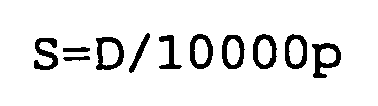
- the above-described permanent tensile deformation is obtained by calculating L ⁇ 1 - L ⁇ 0 / L ⁇ 0 ⁇ 100 % where L0 denotes the length of a rubber piece sampled out from the tire after curing, and L1 denotes the length of a rubber piece which is obtained by: applying tensile deformation, by 25% of its original length, to the rubber piece with a length L0 sampled out from the post-cured tire; subsequently leaving the rubber piece thus deformed in an atmosphere of 70°C for 1 hour; thereafter leaving the resultant rubber piece in an atmosphere of 25°C for 22 hours; after that, releasing the rubber piece from the deformation; and then leaving the thus-released rubber piece in an atmosphere of 25°C for 1 hour.
- the belt auxiliary reinforcement layers 6 is arranged in the entire outer periphery of the belt layer 5 and in the two end areas thereof.
- the arrangement of the belt auxiliary reinforcement layers 6 is not limited to this case.
- the belt auxiliary reinforcement layer 6 may be arranged only in the entire outer periphery of the belt layer 5 or only in the each of two end areas of the belt layer 5.
- the belt auxiliary reinforcement layer 6 may be arranged in such a way as to be divided into multiple blocks in the tire width direction.
- Fig. 4 is a cross-sectional view schematically showing an arrangement relationship between the belt layers 4, 5 and the belt auxiliary reinforcement layer 6 in a pneumatic radial tire according to another embodiment of the present invention by spreading out the belt layers 4, 5 and the belt auxiliary reinforcement layer 6 into flat sheets.
- the belt auxiliary reinforcement layer 6 is divided into: a block located in the center area of the tire; and two blocks located in the respective two end areas of the tire.
- a belt auxiliary reinforcement layer 6a arranged in the center area of the tire and belt auxiliary reinforcement layers 6b, 6b arranged in the respective two end areas of the tire may be constituted of the same type of organic fiber cord or may be of different types between the center area of the tire and the two end areas of the tire.
- the hybrid fiber cord obtained by twisting together the highly-elastic fiber yarn 6P with an elastic modulus of 10000 MPa or more and the low-elastic fiber yarn 6q made of nylon 46 is used for any one of the belt auxiliary reinforcement layers 6a and 6b.
- the belt auxiliary reinforcement layer 6a and the belt auxiliary reinforcement layer 6b, 6b may be arranged with a predetermined interval between each two neighboring belt auxiliary reinforcement layers as shown in Fig. 4 , or with no interval between each two neighboring belt auxiliary reinforcement layers.
- the hybrid fiber cord 6z obtained by twisting together the above mentioned highly-elastic fiber yarn 6p with an elastic modulus of 10000 MPa or more and the low-elastic fiber yarn 6q made of nylon 46 may be used for the belt auxiliary reinforcement layer 6a arranged in the center area.
- an organic fiber cord made of fibers such as aramid fibers having higher elastic modulus may be used for the belt auxiliary reinforcement layers 6b, 6b arranged in the respective two end areas.
- the hybrid fiber cord 6z obtained by twisting together the highly-elastic fiber yarn 6p with an elastic modulus of 10000 MPa or more and the low-elastic fiber yarn 6q made of nylon 46 may be used for the belt auxiliary reinforcement layer 6b, 6b arranged in the respective two end areas, whereas an organic fiber cord having lower elastic modulus than the elastic modulus may be used for the belt auxiliary reinforcement layer 6a arranged in the center area.
- the pneumatic radial tire according to the present invention uses the nylon 46 fibers having higher glass transition point instead of the general-purpose nylon fibers which, in the conventional type of tire, is included in the hybrid fiber cord that constitute the belt auxiliary reinforcement layer. Thereby, a high-level high-speed durability is secured while the flat spot resistance of the pneumatic radial tire is improved. For this reason, the pneumatic radial tire according to the present invention is applicable to high-performance automobiles of recent years in a desirable manner.
- a conventional tire (Conventional Example 1) using a hybrid fiber cord obtained by twisting together an aramid fiber yarn and a nylon 66 fiber yarn for the belt auxiliary reinforcement layer and a tire according to the present invention (Example 1) using a hybrid fiber cord obtained by twisting together an aramid fiber yarn and a nylon 46 fiber yarn for the belt auxiliary reinforcement layer were produced, as shown in Table 1. Both tires have tire sizes of 245/40R18 and tire structures as shown in Fig. 1 . In addition, in each tire, the angle between the direction in which the cord extended in the belt layer and the tire circumferential direction was set at 27°, and the total width of the belt layer was set at 220mm.
- Each type of tire was mounted on a rim with a rim size of 18 ⁇ 7.0JJ, and was inflated to an air pressure of 230kPa.
- the uniformity (RFV) of each type of tire was measured in accordance with JASO (Japan Automobile Standards Organization) C607.
- each type of tire was caused to preliminarily run on the drum at a speed of 150km/h for 30 minutes, and thereafter was stopped. Subsequently, each type of tire was left with a load (6.37kN) being applied onto the tire for 1 hour. After that, the uniformity (RFV) of each type of tire was measured again.
- Example 1 For each type of tire, the difference between the uniformity measured before and after the preliminary run was used as an evaluation index.
- the result of the evaluation of Example 1 was indexed in comparison with that of Comparative Example 1 which was indexed as 100, and was included in Table 1.
- a smaller index value means a better flat spot resistance.
- Each type of tire was mounted on a rim with a rim size of 18 ⁇ 7. OJJ, and was inflated to an air pressure of 280kPa.
- each type of tire was caused to run, for 1 hour, on the drum at an initial speed of 120km/h with 88% of the maximum load specified in JATMA (Japan Automobile Tyre Manufacturers Association) being applied onto the tire, and subsequently was caused to run on the drum at the speed which was increased by 10km/h every 20 minutes until the tire was broken.
- JATMA Japanese Automobile Tyre Manufacturers Association
- Example 1 the tire according to the present invention maintained almost equal level of the high-speed durability as the conventional type of tire (Conventional Example 1), while improving the flat spot resistance compared to the conventional type of tire.
- Examples 2 to 9 Eight types of tires according to the present invention (Examples 2 to 9) were produced with their hybrid fiber cords used for the respective belt auxiliary reinforcement layers being made different from one another, as shown in Table 2.
- all types of tires have tire sizes of 245/40R18 and tire structures as shown in Fig. 1 .
- the hybrid fiber cord of each of Examples 3 to 9 was formed with a three-yarn twisted structure in which two highly-elastic fiber yarns and one low-elastic fiber yarn were twisted together.
- the highly-elastic fiber yarns respectively of Examples 2 to 9 had the same end count.
- the angle between the direction in which the cord extends in the belt layer and the tire circumferential direction was set at 27°, and the total width of the belt layer was set at 220mm.
- Example 3 to 9 each using the hybrid fiber cord formed with the three-yarn twisted structure had improved flat spot resistance and high-speed durability than those of Example 2 using the hybrid fiber cord formed with the two-yarn twisted structure.
- the ratio L/H of the first twist coefficient L of the low-elastic fiber yarn to the first twist coefficient H of the highly-elastic fiber yarn (which is shortened to Ratio between First Twist Coefficients L/H in Table 2) was set in a range of 0.60 to 0.90.
- Example 5 and 6 had improved high-speed durability than that of Example 4 for which the ratio L/H was set smaller than 0.60, and also than that of each of Examples 3 and 7 to 9 for which the ratio l/H was set more than 0.90.
- the other type of tire (Example 10) according to the present invention was produced with a tire size of 245/40R18, and a tire structure shown in Fig. 1 .
- a hybrid fiber cord obtained by twisting together an aramid fiber yarn and a nylon 46 fiber yarn is used for its belt auxiliary reinforcement layer.
- the tire was produced so that a coating rubber coating a cord of a belt layer after curing has the permanent tensile deformation (%) as shown in Table 3.
- the tire according to the present invention (Example 10) used the hybrid fiber cord obtained by twisting together two aramid fiber yarns and one nylon 46 fiber yarn.
- the angle between the direction in which the cord extends in the belt layer and the tire circumferential direction was set at 27°, and the total width of the belt layer was set at 220mm.
- the permanent tensile deformation (%) of the above-mentioned coating rubber was measured as follows. Permanent Tensile Deformation
- Example 10 including the belt layer whose cord was coated with a coating rubber that has permanent tensile deformation of 3% or less had improved flat spot resistance than Example 3 including the belt layer whose cord was coated with a coating rubber that has permanent tensile deformation of 4.2%.
Landscapes
- Engineering & Computer Science (AREA)
- Mechanical Engineering (AREA)
- Textile Engineering (AREA)
- Tires In General (AREA)
- Yarns And Mechanical Finishing Of Yarns Or Ropes (AREA)
Description
- The present invention relates to a pneumatic radial tire. Particularly, the present invention relates to a pneumatic radial tire which includes a belt auxiliary reinforcement layer using general-purpose nylon fibers while its flat spot resistance is improved without sacrificing its high-speed durability.
- A conventional method for concurrently securing the high-speed durability and reducing the road noise of the tire has been to arrange a belt auxiliary reinforcement layer in the outer periphery of the belt layer of the tire. The belt auxiliary reinforcement layer is obtained by helically winding a heat-shrinkable organic fiber cord made of nylon or the like around the belt layer in the tire circumferential direction.
- Recently, there has been an increasingly strong demand for further reducing the road noise of a tire with a growing demand for more luxurious and quieter automobiles. To meet the demand, a highly-elastic fiber yarn cord is used for the belt auxiliary reinforcement layer (see Japanese Patent Application Kokai Publication No.
2004-308023 - To solve this problem, a proposal has been made on use of a hybrid fiber cord for the belt auxiliary reinforcement layer (Japanese Patent Application Kokai Publications No.
2004-276840 2005-205933 US-A-5 558 144 . Here, the hybrid fiber cord is obtained by twisting together a highly-elastic fiber yarn made of polyketone or the like and a low-elastic fiber yarn made of a general-purpose nylon (such as nylon 66 and nylon 6). Thus obtained hybrid fiber cord has enough elongation percentage while the hybrid fiber cord is prevented from cutting into the belt layer during the curing and the effect of reducing road noise of the tire is maintained. - The use of the general-purpose nylon 66 or
nylon 6 for the low-elastic fiber yarn is advantageous in view of the high-speed durability because the general purpose nylon thermally shrinks to a large extent at higher temperature. However, because the glass transition points of nylon 66 andnylon 6 are low, deformation once caused in the general-purpose nylon due to high heat generated during high-speed running is set into the general purpose nylon. This is likely to cause a problem so called flat spot phenomenon, in which the tire irregularly vibrates when the tire resumes running after stopping for a certain length of time. - An object of the present invention is to solve the problems with the conventional radial tires by providing a pneumatic radial tire with a belt auxiliary reinforcement layer constituted of a hybrid fiber cord including a low-elastic fiber yarn using general-purpose nylon fibers. Here, the radial tire has improved flat spot resistance without sacrificing its high-speed durability.
- To achieve the foregoing object, a pneumatic radial tire of the present invention is characterized by including: multiple belt layers arranged in the outer periphery of a carcass layer in a tread part, an extending direction of cords in each of the belt layers intersecting that of cords in another one of the belt layers; and a belt auxiliary reinforcement layer formed by helically winding, in a tire circumferential direction, an organic fiber cord around the entire outer periphery of the belt layers and/or in the two end areas of the belt layers. The pneumatic radial tire is also characterized in that the organic fiber cord is constituted of a hybrid fiber cord obtained by twisting together a highly-elastic fiber yarn with an elastic modulus of 10000 MPa and a low-elastic fiber yarn made of nylon 46.
- In addition, it is desirable that the pneumatic radial tire configured in the above-described manner is further configured in such a way as to satisfy the following conditions (1) to (4).
- (1) The highly-elastic fiber yarn is made of any one of aramid fibers, polyparaphenylene benzobis oxazole fibers and polyketone fibers.
- (2) The hybrid fiber cord is formed with a three-yarn twisted structure in which two highly-elastic fiber yarns and one low-elastic fiber yarn are twisted together.
- (3) The number of first twists of the low-elastic fiber yarn is smaller than the number of first twists of the highly-elastic fiber yarn. Concurrently, the ratio L/H of a first twist coefficient L of the low-elastic fiber yarn to a first twist coefficient H of the highly-elastic fiber yarn is 0.60 to 0. 90, the coefficient L and the coefficient H being respectively expressed with


where TL denotes the number of first twists (twists/10cm) of the low-elastic fiber yarn; DL denotes the fineness (dtex) of the low-elastic fiber yarn; TH denotes the number of first twists (twists/10cm) of the highly-elastic fiber yarn; and DH denotes the fineness (dtex) of the highly-elastic fiber yarn. - (4) A sample taken from a coating rubber of the cord in each of the belt layers after curing has a permanent tensile deformation of not more than 3.0%.
- According to the present invention, the belt auxiliary reinforcement layer is constituted of the hybrid fiber cord including the highly-elastic fiber yarn and the low-elastic fiber yarn, and the nylon 46 fibers having high glass transition point is used for the low-elastic fiber yarn. Accordingly, in the present invention, the elongation of the nylon 46 fibers prevents the cord from cutting into the belt layer during curing while the arresting effect of the highly-elastic fiber yarn secures high-speed durability. In addition, since the low-elastic fiber yarn is made of nylon 46 having high glass transition point, the present invention is capable of ameliorating the set characteristics which is a deformation set by high heat generated during high-speed driving, thus improving the flat spot resistance of the pneumatic radial tire.
-
-
Fig. 1 is a cross-sectional view showing a pneumatic radial tire according to an embodiment of the present invention. -
Fig. 2 is a cross-sectional view showing an example of a hybrid fiber cord constituting a belt auxiliary reinforcement layer according to the embodiment of the present invention. -
Fig. 3 is a cross-sectional view showing another example of the hybrid fiber cord constituting a belt auxiliary reinforcement layer according to the embodiment of the present invention. -
Fig. 4 is a cross-sectional view schematically showing an arrangement relationship between belt layers and a belt auxiliary reinforcement layer in a pneumatic radial tire according to another embodiment of the present invention by spreading out the belt layers and the belt auxiliary reinforcement layer into flat sheets. - Detailed descriptions will be provided hereinblow for the configurations of the present invention by referring to the attached drawings.
-
Fig. 1 is a cross-sectional view showing a pneumatic radial tire according to an embodiment of the present invention.Fig. 2 is a cross-sectional view showing an example of a hybrid fiber cord constituting a belt auxiliary reinforcement layer. - As shown in
Fig. 1 , a pneumaticradial tire 1 includes plural belt layers (two inFig. 1 ) 4, 5 which are arranged in the outer periphery of a carcass layer 3 in a tread part 3. The directions in which the cords extend in thebelt layer 4 and thebelt layer 5 intersect each other. A beltauxiliary reinforcement layer 6 is formed by helically winding an organic fiber cord, in the tire circumferential direction, around the entire outer periphery of thebelt layers belt layers Fig. 2 , the organic fiber cord is constituted of a hybrid fiber cord 6z obtained by twisting together a highly-elastic fiber yarn 6P with an elastic modulus of 10000Mpa or more and a low-elastic fiber yarn 6q made of nylon 46. - Because the belt
auxiliary reinforcement layers 6 are each constituted of the hybrid fiber cord 6z obtained by twisting together the highly-elastic fiber yarn 6P with an elastic modulus of 10000Mpa or more and the low-elastic fiber yarn 6q made of nylon 46, it is possible to prevent the beltauxiliary reinforcement layer 6 from cutting into thebelt layers elastic fiber yarn 6q, while securing the high-speed durability for the pneumatic radial tire by the arresting effect of the highly-elastic fiber yarn 6p. In addition, because the low-elastic fiber yarn 6q is made of nylon 46 having high glass transition point, the use of nylon 46 prevents deformation from being set into the belt auxiliary reinforcement layer due to high heat generated during high-speed driving. Thus, the flat spot resistance of the pneumatic radial tire is improved. - The elastic modulus of the above-described highly-
elastic fiber yarn 6p was obtained through a tensile test applied to a yarn in accordance with JIS (Japanese Industrial Standards) L1017-2002 "Test Methods for Chemical Fiber Tire Cords." Here, the yarn was obtained by untwisting the cord taken from the tire. Specifically, the elastic modulus E was obtained by using an equation expressed with
- In the present invention, no specific restriction is imposed on the material for the highly-
elastic fiber yarn 6p constituting the beltauxiliary reinforcement layer 6. However, it is desirable to use an aramid fiber, a polyparaphenylene benzobis oxazole fiber (PBO fiber), a polyketone fiber (POK fiber) or like as the material for the highly-elastic fiber yarn 6p. - In the case of the pneumatic
radial tire 1 according to the present invention, it is desirable to set the angle between the extending direction of a cord in each of thebelt layers - In the present invention, as shown in
Fig. 3 , it is desirable to form the hybrid fiber cord 6z with a three-yarn twisted structure in which two highly-elastic fiber yarns 6p and one low-elastic fiber yarn 6q are twisted together. The three-yarn twisted structure stabilizes the form of the cord, and thus further improves the flat spot resistance of the tire. In addition, the three-yarn twisted structure improves the fatigue resistance, and thus further enhances the high-speed durability of the tire. - In the present invention, it is more desirable that the number of first twists of the low-
elastic fiber yarn 6q is smaller than that of the highly-elastic fiber yarn 6p. In addition, it is desirable that the ratio L/H is controlled so as to be set between 0.60 and 0.90. Here, L denotes the first twist coefficient of the low-elastic fiber yarn 6q, and H denotes the first twist coefficient of the highly-elastic fiber yarn 6p. It is more desirable that the ratio L/H is controlled so as to be set between 0.69 and 0.80. The first twist coefficient L of the low-elastic fiber yarn 6q and the first twist coefficient H of the highly-elastic fiber yarn 6p are expressed with the respective equations

- The controlling of the ratio L/H in this manner increases the shrink properties of the hybrid fiber cord 6z, and thus enhances the hoop effects of the
respective belt layers - In the pneumatic
radial tire 1 according to the present invention, it is desirable that the permanent tensile deformation of a sample taken from a coating rubber coating the cord of each of the belt layers 4, 5 is controlled so as to be 3.0% or less. It is more desirable to control the permanent tensile deformation so as to be 2.5% or less. The controlling of the permanent tensile deformation in this manner eases the heat setting of the cords in the belt layers 4, 5 at the footprint part of the tire, and thus further improves the flat spot resistance. - As a coating rubber for coating the cords of the belt layers 4, 5, it is desirable to use one or more rubber selected from a group consisted of NR (natural rubber), SBR (stylene-butadiene rubber), BR (butadiene rubber) and IR (isoplene rubber). It is most desirable to use NR as the coating rubber.
- Furthermore, the amount of sulfur used for the coating rubber should be 4.0 to 8.0 parts by weight, more preferably 5.0 to 7.5 parts by weight, per 100 parts by weight of rubber.
- The above-described permanent tensile deformation is obtained by calculating

- In the embodiment shown in
Fig. 1 , the belt auxiliary reinforcement layers 6 is arranged in the entire outer periphery of thebelt layer 5 and in the two end areas thereof. However, the arrangement of the belt auxiliary reinforcement layers 6 is not limited to this case. The beltauxiliary reinforcement layer 6 may be arranged only in the entire outer periphery of thebelt layer 5 or only in the each of two end areas of thebelt layer 5. Moreover, the beltauxiliary reinforcement layer 6 may be arranged in such a way as to be divided into multiple blocks in the tire width direction. -
Fig. 4 is a cross-sectional view schematically showing an arrangement relationship between the belt layers 4, 5 and the beltauxiliary reinforcement layer 6 in a pneumatic radial tire according to another embodiment of the present invention by spreading out the belt layers 4, 5 and the beltauxiliary reinforcement layer 6 into flat sheets. In this case, the beltauxiliary reinforcement layer 6 is divided into: a block located in the center area of the tire; and two blocks located in the respective two end areas of the tire. - In
Fig. 4 , a beltauxiliary reinforcement layer 6a arranged in the center area of the tire and beltauxiliary reinforcement layers elastic fiber yarn 6q made of nylon 46 is used for any one of the belt auxiliary reinforcement layers 6a and 6b. In these cases, the beltauxiliary reinforcement layer 6a and the beltauxiliary reinforcement layer Fig. 4 , or with no interval between each two neighboring belt auxiliary reinforcement layers. - In the above embodiment shown in
Fig. 4 , the hybrid fiber cord 6z obtained by twisting together the above mentioned highly-elastic fiber yarn 6p with an elastic modulus of 10000 MPa or more and the low-elastic fiber yarn 6q made of nylon 46 may be used for the beltauxiliary reinforcement layer 6a arranged in the center area. Meanwhile, an organic fiber cord made of fibers such as aramid fibers having higher elastic modulus may be used for the beltauxiliary reinforcement layers - Otherwise, the hybrid fiber cord 6z obtained by twisting together the highly-
elastic fiber yarn 6p with an elastic modulus of 10000 MPa or more and the low-elastic fiber yarn 6q made of nylon 46 may be used for the beltauxiliary reinforcement layer auxiliary reinforcement layer 6a arranged in the center area. - As described above, the pneumatic radial tire according to the present invention uses the nylon 46 fibers having higher glass transition point instead of the general-purpose nylon fibers which, in the conventional type of tire, is included in the hybrid fiber cord that constitute the belt auxiliary reinforcement layer. Thereby, a high-level high-speed durability is secured while the flat spot resistance of the pneumatic radial tire is improved. For this reason, the pneumatic radial tire according to the present invention is applicable to high-performance automobiles of recent years in a desirable manner.
- A conventional tire (Conventional Example 1) using a hybrid fiber cord obtained by twisting together an aramid fiber yarn and a nylon 66 fiber yarn for the belt auxiliary reinforcement layer and a tire according to the present invention (Example 1) using a hybrid fiber cord obtained by twisting together an aramid fiber yarn and a nylon 46 fiber yarn for the belt auxiliary reinforcement layer were produced, as shown in Table 1. Both tires have tire sizes of 245/40R18 and tire structures as shown in
Fig. 1 . In addition, in each tire, the angle between the direction in which the cord extended in the belt layer and the tire circumferential direction was set at 27°, and the total width of the belt layer was set at 220mm. - For each of the two types of tires, the flat spot resistance and the high-speed durability were evaluated by using the below-described test methods. Results of the evaluations of Example 1 were indexed in comparison with results of the corresponding evaluations of Conventional Example 1 which were indexed as 100. These results are included in Table 1.
- Each type of tire was mounted on a rim with a rim size of 18 × 7.0JJ, and was inflated to an air pressure of 230kPa. By using an indoor drum test method (using a drum with a diameter of 1707mm), the uniformity (RFV) of each type of tire was measured in accordance with JASO (Japan Automobile Standards Organization) C607. In addition, each type of tire was caused to preliminarily run on the drum at a speed of 150km/h for 30 minutes, and thereafter was stopped. Subsequently, each type of tire was left with a load (6.37kN) being applied onto the tire for 1 hour. After that, the uniformity (RFV) of each type of tire was measured again. For each type of tire, the difference between the uniformity measured before and after the preliminary run was used as an evaluation index. The result of the evaluation of Example 1 was indexed in comparison with that of Comparative Example 1 which was indexed as 100, and was included in Table 1. A smaller index value means a better flat spot resistance.
- Each type of tire was mounted on a rim with a rim size of 18 × 7. OJJ, and was inflated to an air pressure of 280kPa. By using an indoor drum test method (using a drum with a diameter of 1707mm), each type of tire was caused to run, for 1 hour, on the drum at an initial speed of 120km/h with 88% of the maximum load specified in JATMA (Japan Automobile Tyre Manufacturers Association) being applied onto the tire, and subsequently was caused to run on the drum at the speed which was increased by 10km/h every 20 minutes until the tire was broken. Thus, the distance which each type of tire ran until the tire was broken was measured. The result of the test of Example 1 was indexed in comparison with that of Conventional Example 1 which was indexed as 100. A larger index value means a better high-speed durability.
Table 1 CONVENTIONAL EXAMPLE EXAMPLE 1 HYBRID FIBER CORD END COUNT (ENDS PER 50MM WIDTH) 50 50 YARN TWISTED STRUCTURE TWO-YARN TWISTED TWO-YARN TWISTED NUMBER OF SECOND TWISTS (TWISTS PER 10CM) 38 38 COEFFICIENT K REPRESENTING SECOND TWIST 2105 2105 HIGHLY-ELAS TIC FIBER YARN MATERIAL ARAMID ARAMID FINENESS(dtex) 1670 1670 NUMBER OF TWISTS (TWISTS PER 10CM) 38 38 LOW-ELASTIC FIBER YARN MATERIAL NYLON 66 NYLON 46 FINENESS (dtex) 1400 1400 NUMBER OF TWISTS (TWISTS PER 10CM) 38 38 EVALUATION FLAT SPOT RESISTANCE 100 90 HIGH-SPEED DURABILITY 100 98 - It is learned from Table 1 that the tire according to the present invention (Example 1) maintained almost equal level of the high-speed durability as the conventional type of tire (Conventional Example 1), while improving the flat spot resistance compared to the conventional type of tire.
- Eight types of tires according to the present invention (Examples 2 to 9) were produced with their hybrid fiber cords used for the respective belt auxiliary reinforcement layers being made different from one another, as shown in Table 2. Here, all types of tires have tire sizes of 245/40R18 and tire structures as shown in
Fig. 1 . The hybrid fiber cord of each of Examples 3 to 9 was formed with a three-yarn twisted structure in which two highly-elastic fiber yarns and one low-elastic fiber yarn were twisted together. In addition, the highly-elastic fiber yarns respectively of Examples 2 to 9 had the same end count. Furthermore, in each of Examples 2 to 9, the angle between the direction in which the cord extends in the belt layer and the tire circumferential direction was set at 27°, and the total width of the belt layer was set at 220mm. - For each of these 8 types of tires, the high-speed durability and the flat spot resistance were evaluated by using same test methods as described above. For each of Examples 3 to 9, results of the evaluations were indexed in comparison with results of the evaluations of Example 2 which is indexed as 100.
Table 2 EXAMPLE 2 EXAMPLE 3 EXAMPLE 4 EXAMPLE 5 EXAMPLE 6 EXAMPLE 7 EXAMPLE 8 EXAMPLE 9 HYBRID FIBER CORD END COUNT (ENDS PER 50MM WIDTH) 50 38 38 38 38 38 38 38 YARN TWISTED STRUCTURE TWO-YARN TWISTED THREE-YARN TWISTED THREE-YARN TWISTED THREE-YARN TWISTED THREE-YARN TWISTED THREE-YARN TWISTED THREE-YARN TWISTED THREE-YARN TWISTED NUMBER OF SECOND TWISTS (TWISTS PER 10CM) 36 36 36 36 36 36 36 36 COEFFICIENT K REPRESENTING SECOND TWIST 1995 2017 2017 2017 2017 2017 2017 2017 HIGHLY-ELA STIC FIBER YARN MATERIAL ARAMID ARAMID ARAMID ARAMID ARAMID ARAMID POK PBO FINENESS(dtex) 1670 1100 1100 1100 1100 1100 1100 1100 NUMBER OF TWISTS (TWISTS PER 10CM) 36 36 36 36 36 36 36 36 LOW-ELASTI C FIBER YARN MATERIAL NYLON 46 NYLON 46 NYLON 46 NYLON 46 NYLON 46 NYLON 46 NYLON 46 NYLON 46 FINENESS(dtex) 1400 940 940 940 940 940 940 940 NUMBER OF TWISTS (TWISTS PER 10CM) 36 36 23 27 31 40 36 36 RATIO L/H BETWEEN FIRST TWIST COEFFICIENTS 0.92 0.92 0.59 0.69 0.80 1.03 0.92 0.92 EVALUATION FLAT SPOT RESISTANCE 100 87 82 84 85 89 87 87 HIGH-SPEED DURABILITY 100 120 105 130 140 103 120 126 - It is learned from Table 2 that Examples 3 to 9 each using the hybrid fiber cord formed with the three-yarn twisted structure had improved flat spot resistance and high-speed durability than those of Example 2 using the hybrid fiber cord formed with the two-yarn twisted structure. In addition, in Examples 5 and 6 of table 2, the ratio L/H of the first twist coefficient L of the low-elastic fiber yarn to the first twist coefficient H of the highly-elastic fiber yarn (which is shortened to Ratio between First Twist Coefficients L/H in Table 2) was set in a range of 0.60 to 0.90. Example 5 and 6 had improved high-speed durability than that of Example 4 for which the ratio L/H was set smaller than 0.60, and also than that of each of Examples 3 and 7 to 9 for which the ratio l/H was set more than 0.90.
- The other type of tire (Example 10) according to the present invention was produced with a tire size of 245/40R18, and a tire structure shown in
Fig. 1 . In the tire, a hybrid fiber cord obtained by twisting together an aramid fiber yarn and a nylon 46 fiber yarn is used for its belt auxiliary reinforcement layer. Also, the tire was produced so that a coating rubber coating a cord of a belt layer after curing has the permanent tensile deformation (%) as shown in Table 3. In addition, the tire according to the present invention (Example 10) used the hybrid fiber cord obtained by twisting together two aramid fiber yarns and one nylon 46 fiber yarn. Furthermore, the angle between the direction in which the cord extends in the belt layer and the tire circumferential direction was set at 27°, and the total width of the belt layer was set at 220mm. - The high-speed durability and the flat spot resistance of the tire were evaluated by using same test methods as described above. Results of the evaluations of the tire were indexed in comparison with those of Example 3 which is indexed as 100. These results are also included in Table 3.
- The permanent tensile deformation (%) of the above-mentioned coating rubber was measured as follows. Permanent Tensile Deformation
- Tensile deformation, by 25% of its original length, was applied to a rubber piece with a length L0 sampled out from the tire after curing. Subsequently, the thus-deformed rubber piece was left in an atmosphere of 70°C for 1 hour. Thereafter, the resultant rubber piece was left in an atmosphere of 25°C for 22 hours. After that, the rubber piece was released from the deformation and was left in an atmosphere of 25°C for 1 hour. Subsequently, the length L1 of the resultant rubber piece was measured. On the result of the foregoing measurements, the permanent tensile deformation S was calculated using a following equation:

Table 3 EXAMPLE 3 EXAMPLE 10 HYBRID FIBER CORD END COUNT (ENDS PER 50MM WIDTH) 38 38 YARN TWISTED STRUCTURE THREE-YARN TWISTED THREE-YARN TWITED NUMBER OF SECOND TWISTS (TWISTS PER 10CM) 36 36 COEFFICIENT K REPRESENTING SECOND TWIST 2017 2017 HIGHLY-ELAS TIC FIBER YARN MATERIAL ARAMID ARAMID FINENESS(dtex) 1100 1100 NUMBER OF TWISTS (TWISTS PER 10CM) 36 36 LOW-ELASTIC FIBER YARN MATERIAL NYLON 46 NYLON 46 FINENESS(dtex) 940 940 NUMBER OF TWISTS (TWISTS PER 10CM) 36 36 RATIO L/H BETWEEN FIRST TWIST COEFFICIENTS 0.92 0.92 PERMANENT TENSILE DEFORMATION OF A COATING RUBBER FOR BELT LAYER (%) 4.2 2.3 EVALUATION FLAT SPOT RESISTANCE 100 90 HIGH-SPEED DURABILITY 100 100 - It is learned from Table 3 that Example 10 including the belt layer whose cord was coated with a coating rubber that has permanent tensile deformation of 3% or less had improved flat spot resistance than Example 3 including the belt layer whose cord was coated with a coating rubber that has permanent tensile deformation of 4.2%.
Claims (5)
- A pneumatic radial tire comprising:a plurality of belt layers (4,5) arranged in an outer periphery of a carcass layer (3) in a tread part (2), an extending direction of cords in each of the belt layers (4, 5) intersecting that of cords in another one of the belt layers (4,5); anda belt auxiliary reinforcement layer (6) formed by helically winding, in a tire circumferential direction, an organic fiber cord around the entire outer periphery of the belt layers (4, 5) and/or in the two end areas of the belt layers (4, 5),wherein the organic fiber cord is constituted of a hybrid fiber cord (6z) obtained by twisting together a highly-elastic fiber yarn (6p) with a low-elastic fiber yarn (6q),characterised in that the highly-elastic fiber yarn has an elastic modulus of not less than 10000 MPa and the low-elastic fiber yarn is made of nylon 46.
- The pneumatic radial according to claim 1, wherein the highly-elastic fiber yarn (6p) is made of any one of aramid fibers, polyparaphenylene benzobis oxazole fibers and polyketone fibers.
- The pneumatic radial tire according to any one of claims 1 and 2, wherein the hybrid fiber cord (6z) is formed with a three-yarn twisted structure in which two aforementioned highly-elastic fiber yarns (6p) and one aforementioned low-elastic fiber yarn 6q are twisted together.
- The pneumatic radial tire according to any one of claims 1 to 3, wherein
the number of first twists of the low-elastic fiber yarn (6q) is smaller than the number of first twists of the highly-elastic fiber yarn (6p), and
a ratio L/H of a first twist coefficient L of the low-elastic fiber yarn (6q) to a first twist coefficient H of the highly-elastic fiber yarn (6p) is 0.60 to 0.90, the coefficient L and the coefficient H being respectively expressed with

- The pneumatic radial tire according to any one of claims 1 to 4, wherein a sample taken from a coating rubber of the cord in each of the belt layers (4,5) after curing has a permanent tensile deformation of not more than 3.0%.
Applications Claiming Priority (1)
| Application Number | Priority Date | Filing Date | Title |
|---|---|---|---|
| JP2007311320A JP4361111B2 (en) | 2007-11-30 | 2007-11-30 | Pneumatic radial tire |
Publications (2)
| Publication Number | Publication Date |
|---|---|
| EP2065222A1 EP2065222A1 (en) | 2009-06-03 |
| EP2065222B1 true EP2065222B1 (en) | 2010-06-02 |
Family
ID=40282419
Family Applications (1)
| Application Number | Title | Priority Date | Filing Date |
|---|---|---|---|
| EP08019422A Ceased EP2065222B1 (en) | 2007-11-30 | 2008-11-06 | Pneumatic radial tire |
Country Status (4)
| Country | Link |
|---|---|
| US (1) | US8376009B2 (en) |
| EP (1) | EP2065222B1 (en) |
| JP (1) | JP4361111B2 (en) |
| DE (1) | DE602008001427D1 (en) |
Cited By (2)
| Publication number | Priority date | Publication date | Assignee | Title |
|---|---|---|---|---|
| JP2013531107A (en) * | 2010-07-07 | 2013-08-01 | コンティネンタル・ライフェン・ドイチュラント・ゲゼルシャフト・ミト・ベシュレンクテル・ハフツング | Elastomer products with straight textile structure for reinforcement |
| DE102021207531A1 (en) | 2021-07-15 | 2023-01-19 | Continental Reifen Deutschland Gmbh | Duplex cord for use as a reinforcement in a belt bandage of a pneumatic vehicle tire |
Families Citing this family (19)
| Publication number | Priority date | Publication date | Assignee | Title |
|---|---|---|---|---|
| JP5568952B2 (en) * | 2009-10-28 | 2014-08-13 | 横浜ゴム株式会社 | Pneumatic radial tire |
| JP5379032B2 (en) * | 2010-01-29 | 2013-12-25 | 帝人株式会社 | Composite cord for rubber reinforcement |
| KR101260390B1 (en) | 2011-07-25 | 2013-05-21 | 한국타이어 주식회사 | Hybride cord comprised of Aramid cord and Nylon 66, and Pneumatic Tire Using it as a Reinforcing Cord |
| KR101580352B1 (en) * | 2012-12-27 | 2015-12-23 | 코오롱인더스트리 주식회사 | Hybrid Fiber Cord and Method for Manufacturing The Same |
| JP6214911B2 (en) * | 2013-04-25 | 2017-10-18 | 株式会社ブリヂストン | Pneumatic tire |
| CN105517814B (en) * | 2013-08-08 | 2018-01-30 | 倍耐力轮胎股份公司 | Improve the method for the performance of the tire for wheel of vehicle and the tire for wheel of vehicle |
| DE102013223573A1 (en) * | 2013-11-19 | 2015-05-21 | Continental Reifen Deutschland Gmbh | Thin hybrid strength support for elastomeric products, in particular for the belt bandage of a pneumatic vehicle tire, and method of manufacture |
| US20170100964A1 (en) * | 2014-04-22 | 2017-04-13 | Sumitomo Rubber Industries, Ltd. | Pneumatic tire, and pneumatic tire production method |
| JP6164236B2 (en) * | 2015-02-26 | 2017-07-19 | 横浜ゴム株式会社 | Pneumatic radial tire |
| KR101602605B1 (en) * | 2015-06-29 | 2016-03-21 | 코오롱인더스트리 주식회사 | Hybrid Tire Cord and Method for Manufacturing The Same |
| KR20180054520A (en) * | 2015-09-17 | 2018-05-24 | 코드사 테크닉 테크스틸 아노님 시르케티 | Cap fly reinforcement cord |
| EP3529403B1 (en) | 2016-10-19 | 2025-06-18 | Firestone Fibers & Textiles Company, LLC | Hybrid twisted cord |
| IT201600117754A1 (en) | 2016-11-22 | 2018-05-22 | Pirelli | Motorcycle tire |
| JP7119879B2 (en) * | 2018-10-12 | 2022-08-17 | 住友ゴム工業株式会社 | Composite cord and tire using it |
| US20220009287A1 (en) * | 2018-12-20 | 2022-01-13 | Pirelli Tyre S.P.A. | Tyre for vehicle wheels |
| US20200391554A1 (en) * | 2019-06-17 | 2020-12-17 | The Goodyear Tire & Rubber Company | Hybrid cord reinforcement for a tire and a tire comprising a hybrid cord reinforcement |
| JP7572167B2 (en) * | 2020-05-26 | 2024-10-23 | Toyo Tire株式会社 | Pneumatic tires |
| JP7010356B1 (en) | 2020-12-07 | 2022-02-10 | 横浜ゴム株式会社 | Pneumatic tires |
| JP7560771B2 (en) * | 2023-01-18 | 2024-10-03 | 横浜ゴム株式会社 | Pneumatic tires |
Family Cites Families (33)
| Publication number | Priority date | Publication date | Assignee | Title |
|---|---|---|---|---|
| JPS61232902A (en) * | 1985-04-08 | 1986-10-17 | Bridgestone Corp | Pneumatic tire |
| JPH06442B2 (en) | 1985-06-05 | 1994-01-05 | 横浜ゴム株式会社 | Pneumatic radial tires for passenger cars |
| US4745955A (en) * | 1986-05-28 | 1988-05-24 | The Yokohama Rubber Co., Ltd. | Pneumatic tire for passenger car |
| JPH0651805B2 (en) | 1987-02-20 | 1994-07-06 | 株式会社ブリヂストン | Rubber-code composite |
| JP2757940B2 (en) * | 1988-03-28 | 1998-05-25 | 住友ゴム工業株式会社 | Pneumatic tire |
| JPH0261129A (en) * | 1988-08-24 | 1990-03-01 | Sumitomo Rubber Ind Ltd | Tire |
| JPH0764163B2 (en) | 1990-07-06 | 1995-07-12 | 住友ゴム工業株式会社 | Pneumatic tire |
| JPH04249554A (en) * | 1990-12-28 | 1992-09-04 | Yokohama Rubber Co Ltd:The | Rubber composition |
| JPH0596907A (en) | 1991-10-04 | 1993-04-20 | Sumitomo Rubber Ind Ltd | Pneumatic tire |
| JP2544555B2 (en) * | 1991-10-14 | 1996-10-16 | 住友ゴム工業株式会社 | Motorcycle tires |
| JP2667763B2 (en) | 1992-04-16 | 1997-10-27 | 住友ゴム工業株式会社 | Pneumatic radial tire for rally |
| DE4216695A1 (en) * | 1992-05-20 | 1993-12-02 | Sp Reifenwerke Gmbh | Vehicle tires with reinforcement inserts |
| JPH05338404A (en) | 1992-06-09 | 1993-12-21 | Sumitomo Rubber Ind Ltd | Radial tire |
| JPH0616005A (en) | 1992-06-30 | 1994-01-25 | Sumitomo Rubber Ind Ltd | Radial tire |
| US5382621A (en) | 1993-01-21 | 1995-01-17 | Cabot Corporation | Skim compounds incorporating low ash carbon blacks |
| DE69403315T2 (en) * | 1993-12-28 | 1997-08-28 | Sumitomo Rubber Ind | Radial pneumatic tire |
| JP3113592B2 (en) * | 1996-02-15 | 2000-12-04 | 住友ゴム工業株式会社 | Pneumatic radial tire |
| KR100276360B1 (en) | 1997-09-29 | 2000-12-15 | 신형인 | Carcass fly of a tire |
| ES2384258T3 (en) | 1998-12-17 | 2012-07-03 | Bridgestone Corporation | Tire |
| US6601378B1 (en) * | 1999-09-08 | 2003-08-05 | Honeywell International Inc. | Hybrid cabled cord and a method to make it |
| AU2001279773A1 (en) | 2000-07-24 | 2002-02-05 | Michelin Recherche Et Technique S.A. | Tyre with aramid fibre protective crown ply |
| JP2003026857A (en) * | 2001-07-23 | 2003-01-29 | Yokohama Rubber Co Ltd:The | Rubber composition excellent in adhesive property with iron |
| JP2003096242A (en) * | 2001-09-26 | 2003-04-03 | Bridgestone Corp | Adhesive rubber composition and pneumatic tire |
| FR2834724A1 (en) | 2002-01-17 | 2003-07-18 | Michelin Soc Tech | GUIDED HYBRID CABLES, PROCESS FOR OBTAINING SAME, AND COMPOSITE FABRICS FOR TIRES INCORPORATING THE SAME |
| US6799618B2 (en) | 2002-12-18 | 2004-10-05 | The Goodyear Tire & Rubber Company | Pneumatic tire having an overlay reinforcement |
| JP2004276840A (en) | 2003-03-18 | 2004-10-07 | Bridgestone Corp | Pneumatic radial tire |
| JP4544829B2 (en) | 2003-04-02 | 2010-09-15 | 株式会社ブリヂストン | Polyketone fiber cord and tire using the same |
| DE50302702D1 (en) | 2003-05-09 | 2006-05-11 | Continental Ag | Belt bandage with hybrid cord and tire with it |
| JP4170821B2 (en) | 2003-05-30 | 2008-10-22 | 住友ゴム工業株式会社 | Pneumatic radial tire |
| JP4249554B2 (en) * | 2003-07-18 | 2009-04-02 | 大日本印刷株式会社 | Authenticator |
| JP4428060B2 (en) | 2004-01-20 | 2010-03-10 | 横浜ゴム株式会社 | Pneumatic radial tire |
| JP2006035926A (en) * | 2004-07-23 | 2006-02-09 | Yokohama Rubber Co Ltd:The | Pneumatic radial tire |
| JP2006264666A (en) * | 2005-02-28 | 2006-10-05 | Yokohama Rubber Co Ltd:The | Pneumatic radial tire |
-
2007
- 2007-11-30 JP JP2007311320A patent/JP4361111B2/en active Active
-
2008
- 2008-11-06 DE DE602008001427T patent/DE602008001427D1/en active Active
- 2008-11-06 EP EP08019422A patent/EP2065222B1/en not_active Ceased
- 2008-11-06 US US12/266,242 patent/US8376009B2/en not_active Expired - Fee Related
Cited By (3)
| Publication number | Priority date | Publication date | Assignee | Title |
|---|---|---|---|---|
| JP2013531107A (en) * | 2010-07-07 | 2013-08-01 | コンティネンタル・ライフェン・ドイチュラント・ゲゼルシャフト・ミト・ベシュレンクテル・ハフツング | Elastomer products with straight textile structure for reinforcement |
| DE102021207531A1 (en) | 2021-07-15 | 2023-01-19 | Continental Reifen Deutschland Gmbh | Duplex cord for use as a reinforcement in a belt bandage of a pneumatic vehicle tire |
| WO2023284924A1 (en) | 2021-07-15 | 2023-01-19 | Continental Reifen Deutschland Gmbh | Duplex cord for use as a reinforcement in a belt bandage of a pneumatic vehicle tyre |
Also Published As
| Publication number | Publication date |
|---|---|
| JP2009132329A (en) | 2009-06-18 |
| JP4361111B2 (en) | 2009-11-11 |
| DE602008001427D1 (en) | 2010-07-15 |
| US20090139625A1 (en) | 2009-06-04 |
| EP2065222A1 (en) | 2009-06-03 |
| US8376009B2 (en) | 2013-02-19 |
Similar Documents
| Publication | Publication Date | Title |
|---|---|---|
| EP2065222B1 (en) | Pneumatic radial tire | |
| EP2065223B1 (en) | Pneumatic radial tire | |
| JP5662997B2 (en) | Tire with radial carcass reinforcement | |
| EP2098385B1 (en) | Pneumatic tire | |
| JP4316660B2 (en) | Pneumatic tire | |
| EP2783842B1 (en) | Method for manufacturing pneumatic tire | |
| EP3196343B1 (en) | Hybrid cord and tire using the same | |
| US20180154695A1 (en) | Pneumatic Tire | |
| US20020017351A1 (en) | Pneumatic tire | |
| US6926053B2 (en) | Pneumatic tire variable elasticity modules metallic band cord | |
| US20040221937A1 (en) | Ply with strength carriers embedded in a rubber mixture and vehicle pneumatic tires with a belt bandage thereof | |
| EP2431196A2 (en) | A pneumatic tire and method for making a pneumatic tire | |
| US20220134803A1 (en) | Pneumatic tire | |
| US20220126629A1 (en) | Pneumatic radial tire | |
| US5906693A (en) | Pneumatic radial tire with specified organic fiber carcass cords | |
| JP4428098B2 (en) | Pneumatic radial tire for passenger cars | |
| JP2004168118A (en) | Pneumatic tire | |
| EP2380755B1 (en) | Overlay ply covering the belt ply for a pneumatic tire | |
| JP3497030B2 (en) | Pneumatic tire | |
| KR101041670B1 (en) | Hybrid Cords for Tire Reinforcement Belts and Pneumatic Tires Comprising the Same | |
| JP4188406B1 (en) | Pneumatic tire | |
| JP2824653B2 (en) | Pneumatic radial tire | |
| WO2021039793A1 (en) | Pneumatic tire | |
| JP2001171311A (en) | Pneumatic radial tire for passenger car | |
| US20130118670A1 (en) | Pneumatic tire with tackified wrapped reinforcement |
Legal Events
| Date | Code | Title | Description |
|---|---|---|---|
| PUAI | Public reference made under article 153(3) epc to a published international application that has entered the european phase |
Free format text: ORIGINAL CODE: 0009012 |
|
| AK | Designated contracting states |
Kind code of ref document: A1 Designated state(s): AT BE BG CH CY CZ DE DK EE ES FI FR GB GR HR HU IE IS IT LI LT LU LV MC MT NL NO PL PT RO SE SI SK TR |
|
| AX | Request for extension of the european patent |
Extension state: AL BA MK RS |
|
| 17P | Request for examination filed |
Effective date: 20090904 |
|
| GRAP | Despatch of communication of intention to grant a patent |
Free format text: ORIGINAL CODE: EPIDOSNIGR1 |
|
| AKX | Designation fees paid |
Designated state(s): DE FR |
|
| RBV | Designated contracting states (corrected) |
Designated state(s): DE FR |
|
| GRAS | Grant fee paid |
Free format text: ORIGINAL CODE: EPIDOSNIGR3 |
|
| GRAA | (expected) grant |
Free format text: ORIGINAL CODE: 0009210 |
|
| AK | Designated contracting states |
Kind code of ref document: B1 Designated state(s): DE FR |
|
| REF | Corresponds to: |
Ref document number: 602008001427 Country of ref document: DE Date of ref document: 20100715 Kind code of ref document: P |
|
| REG | Reference to a national code |
Ref country code: DE Ref legal event code: R096 Ref document number: 602008001427 Country of ref document: DE Effective date: 20100715 |
|
| PLBE | No opposition filed within time limit |
Free format text: ORIGINAL CODE: 0009261 |
|
| STAA | Information on the status of an ep patent application or granted ep patent |
Free format text: STATUS: NO OPPOSITION FILED WITHIN TIME LIMIT |
|
| 26N | No opposition filed |
Effective date: 20110303 |
|
| REG | Reference to a national code |
Ref country code: DE Ref legal event code: R097 Ref document number: 602008001427 Country of ref document: DE Effective date: 20110302 Ref country code: DE Ref legal event code: R097 Ref document number: 602008001427 Country of ref document: DE Effective date: 20110303 |
|
| REG | Reference to a national code |
Ref country code: FR Ref legal event code: PLFP Year of fee payment: 8 |
|
| REG | Reference to a national code |
Ref country code: FR Ref legal event code: PLFP Year of fee payment: 9 |
|
| REG | Reference to a national code |
Ref country code: FR Ref legal event code: PLFP Year of fee payment: 10 |
|
| REG | Reference to a national code |
Ref country code: FR Ref legal event code: PLFP Year of fee payment: 11 |
|
| PGFP | Annual fee paid to national office [announced via postgrant information from national office to epo] |
Ref country code: FR Payment date: 20201013 Year of fee payment: 13 |
|
| PG25 | Lapsed in a contracting state [announced via postgrant information from national office to epo] |
Ref country code: FR Free format text: LAPSE BECAUSE OF NON-PAYMENT OF DUE FEES Effective date: 20211130 |
|
| P01 | Opt-out of the competence of the unified patent court (upc) registered |
Effective date: 20230512 |
|
| PGFP | Annual fee paid to national office [announced via postgrant information from national office to epo] |
Ref country code: DE Payment date: 20230929 Year of fee payment: 16 |
|
| REG | Reference to a national code |
Ref country code: DE Ref legal event code: R119 Ref document number: 602008001427 Country of ref document: DE |
|
| PG25 | Lapsed in a contracting state [announced via postgrant information from national office to epo] |
Ref country code: DE Free format text: LAPSE BECAUSE OF NON-PAYMENT OF DUE FEES Effective date: 20250603 |