EP2061803B2 - Process for the purification of fc-containing proteins - Google Patents
Process for the purification of fc-containing proteins Download PDFInfo
- Publication number
- EP2061803B2 EP2061803B2 EP07802925.3A EP07802925A EP2061803B2 EP 2061803 B2 EP2061803 B2 EP 2061803B2 EP 07802925 A EP07802925 A EP 07802925A EP 2061803 B2 EP2061803 B2 EP 2061803B2
- Authority
- EP
- European Patent Office
- Prior art keywords
- protein
- seq
- taci
- cation exchange
- column
- Prior art date
- Legal status (The legal status is an assumption and is not a legal conclusion. Google has not performed a legal analysis and makes no representation as to the accuracy of the status listed.)
- Active
Links
Images

Classifications
-
- C—CHEMISTRY; METALLURGY
- C07—ORGANIC CHEMISTRY
- C07K—PEPTIDES
- C07K1/00—General methods for the preparation of peptides, i.e. processes for the organic chemical preparation of peptides or proteins of any length
- C07K1/14—Extraction; Separation; Purification
- C07K1/16—Extraction; Separation; Purification by chromatography
- C07K1/18—Ion-exchange chromatography
-
- C—CHEMISTRY; METALLURGY
- C07—ORGANIC CHEMISTRY
- C07K—PEPTIDES
- C07K1/00—General methods for the preparation of peptides, i.e. processes for the organic chemical preparation of peptides or proteins of any length
- C07K1/14—Extraction; Separation; Purification
- C07K1/16—Extraction; Separation; Purification by chromatography
- C07K1/22—Affinity chromatography or related techniques based upon selective absorption processes
-
- C—CHEMISTRY; METALLURGY
- C07—ORGANIC CHEMISTRY
- C07K—PEPTIDES
- C07K1/00—General methods for the preparation of peptides, i.e. processes for the organic chemical preparation of peptides or proteins of any length
- C07K1/14—Extraction; Separation; Purification
- C07K1/36—Extraction; Separation; Purification by a combination of two or more processes of different types
-
- C—CHEMISTRY; METALLURGY
- C07—ORGANIC CHEMISTRY
- C07K—PEPTIDES
- C07K16/00—Immunoglobulins [IG], e.g. monoclonal or polyclonal antibodies
- C07K16/06—Immunoglobulins [IG], e.g. monoclonal or polyclonal antibodies from serum
- C07K16/065—Purification, fragmentation
-
- C—CHEMISTRY; METALLURGY
- C07—ORGANIC CHEMISTRY
- C07K—PEPTIDES
- C07K16/00—Immunoglobulins [IG], e.g. monoclonal or polyclonal antibodies
- C07K16/18—Immunoglobulins [IG], e.g. monoclonal or polyclonal antibodies against material from animals or humans
-
- C—CHEMISTRY; METALLURGY
- C07—ORGANIC CHEMISTRY
- C07K—PEPTIDES
- C07K19/00—Hybrid peptides, i.e. peptides covalently bound to nucleic acids, or non-covalently bound protein-protein complexes
Definitions
- the present invention is in the field of protein purification. More specifically, it relates to the purification of an Fc-containing protein via cation exchange chromatography, in particular for reduction of the amount of free Fc-moieties in an Fc-containing protein preparation.
- Proteins have become commercially important as drugs that are generally called "biologicals".
- biologicals One of the greatest challenges is the development of cost effective and efficient processes for purification of proteins on a commercial scale. While many methods are now available for large-scale production of proteins, crude products, such as cell culture supernatants, contain not only the desired product but also impurities, which are difficult to separate from the desired product. Although cell culture supernatants of cells expressing recombinant protein products may contain less impurities if the cells are grown in serum-free medium, the host cell proteins (HCPs) still remain to be eliminated during the purification process. Additionally, the health authorities request high standards of purity for proteins intended for human administration.
- HCPs host cell proteins
- Ion exchange chromatography systems are used for separation of proteins primarily on the basis of differences in charge.
- WO 2004/076485 A1 discloses a method of antibody purification using Protein A and ion exchange chromatography.
- Anion exchangers can be classified as either weak or strong.
- the charge group on a weak anion exchanger is a weak base, which becomes de-protonated and, therefore, loses its charge at high pH.
- DEAE-sepharose is an example of a weak anion exchanger, where the amino group can be positively charged below pH ⁇ 9 and gradually loses its charge at higher pH values.
- Diethylaminoethyl (DEAE) or diethyl-(2-hydroxy-propyl)aminoethyl (QAE) have chloride as counter ion, for instance.
- a strong anion exchanger on the other hand, contains a strong base, which remains positively charged throughout the pH range normally used for ion exchange chromatography (pH 1-14).
- Q-sepharose (Q stands for quaternary ammonium) is an example for a strong anion exchanger.
- Cation exchangers can also be classified as either weak or strong.
- a strong cation exchanger contains a strong acid (such as a sulfopropyl group) that remains charged from pH 1 - 14; whereas a weak cation exchanger contains a weak acid (such as a carboxymethyl group), which gradually loses its charge as the pH decreases below 4 or 5.
- Carboxymethyl (CM) and sulphopropyl (SP) have sodium as counter ion, for example.
- hydroxyapatite A different chromatography resin is based on an insoluble hydroxylated calcium phosphate matrix called hydroxyapatite.
- Hydroxyapatite chromatography is a method of purifying proteins that utilizes an insoluble hydroxylated calcium phosphate (Ca 5 (PO 4 ) 3 OH) 2 , which forms both the matrix and ligand.
- Functional groups consist of pairs of positively charged calcium ions (C-sites) and clusters of negatively charged phosphate groups (P-sites). The interactions between hydroxyapatite and proteins are complex and multi-mode. In one method of interaction, positively charged amino groups on proteins associate with the negatively charged P-sites and protein carboxyl groups interact by coordination complexation to C-sites (Shepard et al., 2000).
- Crystalline hydroxyapatite was the first type of hydroxyapatite used in chromatography.
- Ceramic Hydroxyapatite (CHA) chromatography is a further development in hydroxyapatite chromatography. Ceramic hydroxyapatite has high durability, good protein binding capacity, and can be used at higher flow rates and pressures than crystalline hydroxyapatite. (Vola et al., 1993).
- Hydroxyapatite has been used in the chromatographic separation of proteins, nucleic acids, as well as antibodies.
- the column is normally equilibrated, and the sample applied, in a low concentration of phosphate buffer and the adsorbed proteins are then eluted in a concentration gradient of phosphate buffer (Giovannini et al., 2000).
- a further way of purifying proteins is based on the affinity of a protein of interest to another protein that is immobilized to a chromatography resin.
- immobilized ligands are the bacterial cell wall proteins Protein A and Protein G, having specificity to the Fc portion of certain immunoglobulins.
- Protein A and Protein G have a strong affinity for IgG antibodies, they have varying affinities to other immunoglobulin classes and isotypes as well.
- Protein A is a 43,000 Dalton protein that is produced by the bacteria Staphylcoccus aureus and contains four binding sites to the Fc regions of IgG.
- Protein G is produced from group G Streptococci and has two binding sites for the IgG Fc region. Both proteins have been widely characterized for their affinity to various types of immunoglobulins.
- Protein A/G a genetically engineered protein that combines the binding capacities of Protein A and G.
- Protein L is a further bacterial protein, originating from Peptostreptococcus, binding to Immunoglobulins and fragments thereof containing Ig light chains (Akerstrom and Bjork, 1989).
- Protein A, Protein G, and Protein L affinity chromatography are widely used for isolation and purification of antibodies.
- Protein A and Protein G (or Protein A/G) affinity chromatography also allows purification of so-called Fc-fusion proteins.
- Protein L binds to Ig light chains and can thus be used for the purification of light chain containing antibodies.
- Antibodies, or immunoglobulins consist of light chains and heavy chains linked together by disulphide bonds.
- the first domain located at the amino terminus of each chain is variable in amino acid sequence, providing the vast spectrum of antibody binding specificities. These domains are known as variable heavy (VH) and variable light (VL) regions.
- the other domains of each chain are relatively invariant in amino acid sequence and are known as constant heavy (CH) and constant light (CL) regions.
- the major classes of antibodies are IgA, IgD, IgE, IgG and IgM; and these classes may be further divided into subclasses (isotypes).
- the IgG class has four subclasses, namely, IgG 1 , IgG 2 , IgG 3 , and IgG 4 .
- the differences between antibody classes are derived from differences in the heavy chain constant regions, containing between 1 and 4 constant domains (CH1-CH4), depending on the immunoglobulin class.
- a so-called hinge region is located between the CH1 and CH2 domains.
- the hinge region is particularly sensitive to proteolytic cleavage; such proteolysis yields two or three fragments depending on the precise site of cleavage.
- the part of the heavy chain constant region containing the CH2 and CH3 domains is also called the "Fc" part of the immunoglobulin.
- Antibodies are thus Fc-containing proteins.
- Another type of Fc-containing proteins are the so-called Fc-fusion proteins.
- antibodies that are used as therapeutic proteins are known. Examples for recombinant antibodies on the market are for instance: Abciximab, Rituximab, Basiliximab, Daclizumab, Palivizumab, Infliximab, Trastuzumab, Alemtuzumab, Adalimumab, Cetuximab, Efalizumab, Ibritumomab, Bevacizumab, or Omalizumab.
- Fc-fusion proteins are chimeric proteins consisting of the effector region of a protein, such as the Fab region of an antibody or the binding region of a receptor, fused to the Fc region of an immunoglobulin that is frequently an immunoglobulin G (IgG). Fc-fusion proteins are widely used as therapeutics as they offer advantages conferred by the Fc region, such as:
- Serum half-life and effector functions can be modulated by engineering the Fc region to increase or reduce its binding to FcRn, Fc ⁇ Rs and C1q respectively, depending on the therapeutic use intended for the Fc-fusion protein.
- the Fc region of an antibody binds to Fc receptors (Fc ⁇ Rs) on the surface of immune effector cells such as natural killers and macrophages, leading to the phagocytosis or lysis of the targeted cells.
- Fc ⁇ Rs Fc receptors
- the antibodies kill the targeted cells by triggering the complement cascade at the cell surface.
- IgG isoforms exert different levels of effector functions increasing in the order of IgG 4 ⁇ IgG 2 ⁇ IgG 1 ⁇ IgG 3 .
- Human IgG 1 displays high ADCC and CDC, and is the most suitable for therapeutic use against pathogens and cancer cells.
- Modifying effector functions can be achieved by engineering the Fc region to either improve or reduce binding of Fc ⁇ Rs or the complement factors.
- the binding of IgG to the activating (Fc ⁇ RI, Fc ⁇ RIIa, Fc ⁇ RIIIa and Fc ⁇ RIIIb) and inhibitory (Fc ⁇ RIIb) Fc ⁇ Rs or the first component of complement (C1q) depends on residues located in the hinge region and the CH2 domain. Two regions of the CH2 domain are critical for Fc ⁇ Rs and complement C1q binding, and have unique sequences in IgG 2 and IgG 4 . For instance, substitution of IgG 2 residues at positions 233-236 into human IgG 1 greatly reduced ADCC and CDC (Armour et al., 1999 and Shields et al., 2001).
- Increasing the serum half-life of a therapeutic antibody is another way to improve its efficacy, allowing higher circulating levels, less frequent administration and reduced doses. This can be achieved by enhancing the binding of the Fc region to neonatal FcR (FcRn).
- FcRn which is expressed on the surface of endothelial cells, binds the IgG in a pH-dependent manner and protects it from degradation.
- Several mutations located at the interface between the CH2 and CH3 domains have been shown to increase the half-life of IgG 1 (Hinton et al., 2004 and Vaccaro et al., 2005).
- Fc-regions have been fused to extracellular domains of certain receptors belonging to the tumor necrosis factor receptor (TNF-R) superfamily (Locksley et al., 2001, Bodmer et al., 2002, Bossen et al., 2006).
- TNF-R tumor necrosis factor receptor
- a hallmark of the members of the TNFR family is the presence of cysteine-rich pseudo-repeats in the extracellular domain, as described e.g. by Naismith and Sprang, 1998.
- the two TNF receptors, p55 (TNFR1) and p75 TNFR (TNFR2) are examples of such members of the TNFR superfamily.
- Etanercept is an Fc-fusion protein containing the soluble part of the p75 TNFR (e.g. WO91/03553 , WO 94/06476 ).
- Enbrel ® it is marketed for treatment of Endometriosis, Hepatitis C virus infection, HIV infection, Psoriatic arthritis, Psoriasis, Rheumatoid arthritis, Asthma, Ankylosing spondylitis, Cardiac failure, Graft versus host disease, Pulmonary fibrosis, Crohns disease.
- Lenercept is a fusion protein containing extracellular components of human p55 TNF receptor and the Fc portion of human IgG, and is intended for the potential treatment of severe sepsis and multiple sclerosis.
- OX40 is also a member of the TNFR superfamily.
- OX40-IgG1 and OX40-hIG4mut fusion proteins have been prepared for treatment of inflammatory and autoimmune diseases such as Crohn's Disease.
- An Fc-fusion protein of the BAFF-R also called BR3, designated BR3-Fc, is a soluble decoy receptor from a series of inhibitors of BAFF (B-cell activating factor of the TNF family), is being developed for the potential treatment of autoimmune diseases such as rheumatoid arthritis (RA) and systemic lupus erythematosus (SLE).
- RA rheumatoid arthritis
- SLE systemic lupus erythematosus
- BCMA is a further receptor belonging to the TNFR superfamily.
- a BCMA-Ig fusion protein has been described to inhibit autoimmune disease (Melchers, 2006).
- TNF-R superfamily Another receptor of the TNF-R superfamily is TACI, the transmembrane activator and CAML-interactor (von Bülow and Bram, 1997; US 5,969,102 , Gross et al., 2000), which has an extracellular domain containing two cysteine-rich pseudo-repeats.
- TACI binds two members of the tumor necrosis factor (TNF) ligand family.
- TNF tumor necrosis factor
- One ligand is designated BLyS, BAFF, neutrokine-a, TALL-1, zTNF4, or THANK (Moore et al., 1999).
- the other ligand has been designated as APRIL, TNRF death ligand-1 or ZTNF2 ( Hahne et al., J. Exp.Med. 188: 1185 (1998 ).
- Fusion proteins containing soluble forms of the TACI receptor fused to an IgG Fc region are known as well and were designated TACI-Fc ( WO 00/40716 , WO 02/094852 ).
- TACI-Fc inhibits the binding of BLyS and APRIL to B-cells (Xia et al., 2000). It is being developed for the treatment of autoimmune diseases, including systemic lupus erythematosus (SLE), rheumatoid arthritis (RA) and hematological malignancies, as well as for treatment of multiple sclerosis (MS).
- SLE systemic lupus erythematosus
- RA rheumatoid arthritis
- MS multiple sclerosis
- TACI-Fc is being developed in multiple myeloma (MM) (Novak et al., 2004; Moreau et al., 2004) and non-Hodgkin's lymphoma (NHL), chronic lymphocytic leukemia (CLL) and Waldenstrom's macroglobulemia (WM).
- MM myeloma
- NHL non-Hodgkin's lymphoma
- CLL chronic lymphocytic leukemia
- WM Waldenstrom's macroglobulemia
- Fc-containing proteins particularly antibodies and Fc-fusion proteins
- Fc-fusion proteins there is a need for significant amounts of highly purified protein that is adequate for human administration.
- Fc-containing proteins One of the problems that may be encountered during production of Fc-containing proteins is the presence of "free Fc-moieties", i.e. polypeptide fragments derived from the Fc-containing protein, which does not contain a substantial portion derived from an antibody variable region or from another specific protein or domain normally present in the Fc-fusion protein.
- the present invention addresses this problem. It is based on the development of a purification process for a fluid, composition or preparation of an Fc-containing protein, by which the amount of free Fc-moieties that may be present as an impurity can be reduced.
- the invention relates to a method for reducing the concentration of free Fc-moieties in a fluid comprising an Fc-containing protein, the method comprising subjecting said fluid to cation exchange chromatography, according to the claims.
- the present invention is based on the finding that cation exchange chromatography can reduce the amount or extent of free Fc-moieties that may be present in a fluid or composition of an Fc-containing protein.
- the invention therefore relates to a method for reducing the concentration of free Fc-moieties in a fluid comprising an Fc-containing protein, the method comprising subjecting said fluid to cation exchange chromatography, according to the claims.
- the fluid comprising the Fc-containing protein may be any composition or preparation, such as e.g. a body fluid derived from a human or animal, or a fluid derived from a cell culture, such as e.g. a cell culture supernatant. It may also be a fluid derived from another purification step, such as e.g. the eluate orflow-through from a capture step or any other suitable purification step such as the ones explained in more detail below.
- Fc-containing protein refers to any protein having at least one immunoglobulin constant domain selected from the CH1, hinge, CH2, CH3, CH4 domain, or any combination thereof, and preferably a hinge, CH2 and CH3 domain.
- the immunoglobulin constant domain may be derived from any of IgG, IgA, IgE, IgM, or combination or isotype thereof.
- the IgG of the invention is human IgG 1 .
- An Fc-containing protein in accordance with the present method, is an antibody or an Fc-fusion protein.
- the Fc-containing protein may be a monomer, dimer or multimer.
- the Fc-containing protein may also be a "pseudo-dimer" (sometimes called “monomer"), containing a dimeric Fc-moiety (e.g. a dimer of two disulfide-bridged hinge-CH2-CH3 constructs), of which only one is fused to a further moiety such as an immunoglobulin variable domain, a ligand binding and optionally inhibiting fragment of a receptor, or any other protein.
- a pseudo-dimer is an Fc-fusion protein having Interferon- ⁇ fused to one of the two IgG hinge-CH2-CH3 constructs such as e.g. the one described in WO 2005/001025 .
- the Fc-containing protein may also be a heterodimer, containing two different non-immunoglobulin portions or immunoglobulin variable domains, or a homodimer, containing two copies of a single non-immunoglobulin portion or immunoglobulin variable domain.
- the Fc-containing protein is a dimer or a homo-dimer.
- the Fc-moiety may also be modified in order to modulate effector functions.
- Fc mutations according to EU index positions (Kabat et al., 1991), can be introduced if the Fc-moiety is derived from IgG 1 :
- Fc mutations may e.g. be the substitutions at EU index positions selected from 330, 331 234, or 235, or combinations thereof.
- An amino acid substitution at EU index position 297 located in the CH2 domain may also be introduced into the Fc-moiety in the context of the present invention, eliminating a potential site of N-linked carbohydrate attachment.
- the cysteine residue at EU index position 220 may also be replaced with a serine residue, eliminating the cysteine residue that normally forms disulfide bonds with the immunoglobulin light chain constant region.
- the Fc-moiety comprises or consists of SEQ ID NO: 3 or is encoded by a polynucleotide comprising or consisting of SEQ ID NO: 6.
- the Fc-containing protein comprises an immunoglobulin variable region, e.g. one or more heavy chain variable domains and/or one or more light chain variable domains.
- the antibody contains one or two heavy chain variable domains. More preferably, the antibody additionally contains one or two light chain constant and/or variable domains.
- Fc-fusion proteins are Fc-containing proteins that are subjected to the method of the invention.
- Fc-fusion protein is meant to encompass proteins, in particular therapeutic proteins, comprising an immunoglobulin-derived moiety, which will be called herein the “Fc-moiety”, and a moiety derived from a second, non-immunoglobulin protein, which will be called herein the “therapeutic moiety", irrespective of whether or not treatment of disease is intended.
- Fc-fusion proteins i.e. Fc-fusion proteins intended for treatment or prevention of disease of an animal or for human treatment or administration, are especially suitable to be purified.
- the method of the invention is for purifying an Fc-fusion protein comprising a ligand binding fragment, such as all or part of an extracellular domain, of a member of the tumor necrosis factor receptor (TNFR) superfamily.
- a ligand binding fragment such as all or part of an extracellular domain, of a member of the tumor necrosis factor receptor (TNFR) superfamily.
- the therapeutic moiety is derived from the extracellular domain of BAFFR, BCMA, TACI.
- the therapeutic moiety derived from a member of the TNFR superfamily comprises or consists of all or part of the extracellular domain of the member of the TNFR, and more preferably comprises a ligand binding fragment of such a member of the TNFR.
- a "ligand binding fragment" of a member of the TNFR family can easily be determined by the person skilled in the art, e.g. in a simple in vitro assay measuring binding between protein fragment of a given receptor and the respective ligand.
- Such an assay can e.g. be a simple in vitro RIA-or ELISA-type sandwich assay wherein one of the proteins, e.g. the receptor fragment, is immobilized to a carrier (e.g. an ELISA plate) and is incubated, following appropriate blocking of the protein binding sites on the carrier, with the second protein, e.g. the ligand.
- ligand binding is detected e.g. by way of radioactive labeling of the ligand and determination of the bound radioactivity, after appropriate washing, in a scintillation counter. Binding of the ligand can also be determined with a labeled antibody, or a first ligand-specific antibody and a second, labeled antibody directed against the constant part of the first antibody. Ligand binding can thus be easily determined, depending of the label used, e.g. in a color reaction.
- the Fc-fusion protein comprises a therapeutic moiety selected from an extracellular domain of BAFF-R, BCMA, or TACI, or a fragment thereof binding at least one of Blys or APRIL.
- the therapeutic moiety is derived from TACI.
- TACI is preferably human TACI.
- SEQ ID NO: 2 which corresponds to the amino acid sequence of human full-length TACI receptor (SwissProt entry 014836).
- the therapeutic moiety comprises a soluble portion of TACI, preferably derived from the extracellular domain of TACI.
- the Fc-fusion protein comprises a polypeptide selected from
- the Fc-containing protein is subjected to cation exchange chromatography in order to reduce, decrease, or eliminate free Fc-moieties.
- free Fc moieties are meant to encompass any part of the Fc-containing protein to be purified in accordance with the present invention, which is derived from the immunoglobulin constant domain or domains without comprising complete further domains. Thus, if the Fc-containing protein comprises immunoglobulin variable domains, free Fc does not contain significant portions of the variable domains. If the Fc-containing protein is an Fc-fusion protein, free Fc does not contain significant portions of the therapeutic moiety of the Fc-fusion protein. Free Fc may e.g.
- dimers of the IgG hinge, CH2 and CH3 domains which are not linked or bound to significant portions of a therapeutic moiety or immunoglobulin variable domains, such as e.g. the Fc part that is generated by papain cleavage.
- a "significant portion” may e.g. be no less than 80, 85, 90, 95, 98 or 99 % of the full-length variable domain or therapeutic moiety present in the Fc-containing protein.
- Monomers derived from the Fc-moiety may also be contained in the free Fc fraction. It is understood that free Fc may still contain a number of amino acid residues from the therapeutic moiety or the Ig variable domains, such as e.g. one to fifty or one to twenty, or one to ten, or one to five amino acids, or one or two single amino acids, belonging to the therapeutic moiety or variable domain, still fused to the Fc-moiety.
- the cation exchange chromatography may be carried out on any suitable cation exchange resin, such as e.g. weak or strong cation exchangers as explained above in the Background of the Invention.
- the cation exchange chromatography is carried out on a strong cation exchange resin.
- the cation exchange material comprises a cross-linked methacrylate modified with SO 3 - groups.
- a commercially available column under the name Fractogel ® EMD SO 3 - is an example of a cation exchange resin that is particularly suitable in the context of the present method.
- the fluid or composition comprising the Fc-containing protein is loaded to a cation exchange resin at a pH of at least one unit below the isoelectric point (pi) of said Fc-fusion protein.
- the cation exchange resin is washed with a buffer having a conductivity of 8.2 to 8.6 mS/cm and at a pH of 5.5 to 7.5.
- the washing step is preferably carried out at a pH ranging from 6.0 to 7.0.
- the washing step is carried out in a buffer comprising 75 to 125 mM sodium phosphate.
- the cation exchange column is eluted at a pH ranging from 7.0 to 8.5.
- Elution may preferably be carried out at a conductivity ranging from 15 to 22 mS/cm.
- the conductivity may be selected from 15, 16, 17, 18, 19, 20, 21, or 22 mS/cm.
- a preferred buffer for elution is a phosphate buffer.
- cation exchange chromatography can preferably be used for elimination or reduction of free Fc in the range of 5 to 15 fold.
- a reduction of the concentration of free Fc in the Fc-containing protein comprising fluid, preparation or composition to less than 20 % or less than 15 % or less than 10 % or less than 5 % or less than 2 % or less than 1 % or less than 0.8 % or less than 0.5 % or less than 0.3 % or less than 0.2 % or less than 0.1 % of the total protein concentration can be achieved.
- the cation exchange chromatography may be used in a purification method having one or more additional steps, preferably selected from affinity chromatography, anion exchange chromatography and hydroxyapatite chromatography.
- a preferred Fc-containing protein to be purified in accordance with the present method is a fusion protein having a therapeutic moiety derived from human TACI (SEQ ID NO: 2), and in particular a fragment derived from its extracellular domain (amino acids 1 to 165 of SEQ ID NO: 2).
- a preferred fragment comprises amino acids 30 to 110 of SEQ ID NO: 2.
- therapeutic moieties derived from the extracellular domain of TACI will be called “soluble TACI” or "sTACI”.
- a preferred Fc-moiety comprises SEQ ID NO: 3, resulting in an Fc-fusion protein according to SEQ ID NO: 4, in the following called "TACI-Fc".
- TACI-Fc also encompasses muteins of TACI-Fc.
- mutants refers to analogs of sTACI or TACI-Fc, in which one or more of the amino acid residues of sTACI or TACI-Fc are replaced by different amino acid residues, or are deleted, or one or more amino acid residues are added to the original sequence of sTACI or TACI-Fc without changing considerably the activity of the resulting products as compared with the original sTACI or TACI-Fc.
- muteins are prepared by known synthesis and/or by site-directed mutagenesis techniques, or any other known technique suitable therefor.
- Muteins in accordance with the present method include proteins encoded by a nucleic acid, such as DNA or RNA, which hybridizes to the complement of a DNA or RNA, which encodes a sTACI or TACI-Fc according to any of SEQ ID NOs: 2 or 4 under stringent conditions.
- a DNA sequence encoding a TACI-Fc is SEQ ID NO: 7.
- stringent conditions refers to hybridization and subsequent washing conditions, which those of ordinary skill in the art conventionally refer to as “stringent”. See Ausubel et al., Current Protocols in Molecular Biology, supra, Interscience, N.Y., ⁇ 6.3 and 6.4 (1987, 1992 ).
- examples of stringent conditions include washing conditions 12-20°C below the calculated Tm of the hybrid under study in, e.g., 2 x SSC and 0.5% SDS for 5 minutes, 2 x SSC and 0.1% SDS for 15 minutes; 0.1 x SSC and 0.5% SDS at 37°C for 30-60 minutes and then, a 0.1 x SSC and 0.5% SDS at 68°C for 30-60 minutes.
- stringency conditions also depend on the length of the DNA sequences, oligonucleotide probes (such as 10-40 bases) or mixed oligonucleotide probes. If mixed probes are used, it is preferable to use tetramethyl ammonium chloride (TMAC) instead of SSC. See Ausubel, supra.
- Identity reflects a relationship between two or more polypeptide sequences or two or more polynucleotide sequences, determined by comparing the sequences. In general, identity refers to an exact nucleotide to nucleotide or amino acid to amino acid correspondence of the two polynucleotides or two polypeptide sequences, respectively, over the length of the sequences being compared.
- a "% identity" may be determined.
- the two sequences to be compared are aligned to give a maximum correlation between the sequences. This may include inserting "gaps" in either one or both sequences, to enhance the degree of alignment.
- a % identity may be determined over the whole length of each of the sequences being compared (so-called global alignment), that is particularly suitable for sequences of the same or very similar length, or over shorter, defined lengths (so-called local alignment), that is more suitable for sequences of unequal length.
- any such mutein preferably has a sequence of amino acids sufficiently duplicative of that of sTACI or TACI-Fc, such as to have substantially similar ligand binding activity as a protein of SEQ ID NO: 2 or 4.
- one activity of TACI is its capability of binding to Blys or APRIL (Hymowitz et al., 2006).
- the mutein has substantial APRIL or Blys binding activity, it can be considered to have substantially similar activity to TACI.
- it can be easily determined by the person skilled in the art whether any given mutein has substantially the same activity as a protein of SEQ ID NO: 2 or 4 by means of routine experimentation.
- any such mutein has at least 80%, at least 85%, at least 90%, or at least 95% idetity thereto.
- amino acids may include synonymous amino acids within a group which have sufficiently similar physicochemical properties that substitution between members of the group will preserve the biological function of the molecule (Grantham, 1974). It is clear that insertions and deletions of amino acids may also be made in the above-defined sequences without altering their function, particularly if the insertions or deletions only involve a few amino acids, e.g. under thirty, under twenty, or preferably under ten and do not remove or displace amino acids which are critical to a functional conformation, e.g. cysteine residues. Proteins and muteins produced by such deletions and/or insertions come within the purview of the present method.
- the conservative amino acid groups are those defined in Table 2. More preferably, the synonymous amino acid groups are those defined in Table 3; and most preferably the synonymous amino acid groups are those defined in Table 4. TABLE 2 Preferred Groups of Synonymous Amino Acids Amino Acid Synonymous Group Ser Ser, Thr, Gly, Asn Arg Arg, Gln, Lys, Glu, His Leu Ile, Phe, Tyr, Met, Val, Leu Pro Gly, Ala, Thr, Pro Thr Pro, Ser, Ala, Gly, His, Gin, Thr Ala Gly, Thr, Pro, Ala Val Met, Tyr, Phe, Ile, Leu, Val Gly Ala, Thr, Pro, Ser, Gly Ile Met, Tyr, Phe, Val, Leu, Ile Phe Trp, Met, Tyr, Ile, Val, Leu, Phe Tyr Trp, Met, Phe, Ile, Val, Leu, Tyr Trp, Met, Phe, Ile, Val, Leu, Tyr Cys Ser,
- a functional derivative may be prepared from an Fc-fusion protein purified in accordance with the present invention.
- “Functional derivatives” as used herein cover derivatives of the Fc-containing protein to be purified in accordance with the present invention, which may be prepared from the functional groups which occur as side chains on the residues or the N- or C-terminal groups, by means known in the art, and are included in the invention as long as they remain pharmaceutically acceptable, i.e. they do not destroy the activity of the protein which is substantially similar to the activity of the unmodified Fc-containing protein as defined above, and do not confer toxic properties on compositions containing it.
- Functional derivatives of an Fc-containing protein can e.g. be conjugated to polymers in order to improve the properties of the protein, such as the stability, half-life, bioavailability, tolerance by the human body, or immunogenicity.
- the Fc-containing protein may be linked e.g. to polyethylene glycol (PEG). PEGylation may be carried out by known methods, described in WO 92/13095 , for example.
- Functional derivatives may also, for example, include aliphatic esters of the carboxyl groups, amides of the carboxyl groups by reaction with ammonia or with primary or secondary amines, N-acyl derivatives of free amino groups of the amino acid residues formed with acyl moieties (e.g. alkanoyl or carbocyclic aroyl groups) or O-acyl derivatives of free hydroxyl groups (for example that of seryl or threonyl residues) formed with acyl moieties.
- acyl moieties e.g. alkanoyl or carbocyclic aroyl groups
- O-acyl derivatives of free hydroxyl groups for example that of seryl or threonyl residues
- Purified Fc-containing protein is preferably highly purified Fc-containing protein. Highly purified Fc-fusion protein is determined e.g. by the presence of a single band in a silver-stained, non-reduced SDS-PAGE-gel after loading of protein in the amount of 2 mcg per lane. Purified Fc-fusion protein may also be defined as eluting as a single peak in HPLC.
- the Fc-containing protein preparation obtained from the purification process of the invention may contain less than 20 % of impurities, preferably less than 10%, 5%, 3%, 2% or 1% of impurities, or it may be purified to homogeneity, i.e. being free from any detectable proteinaceous contaminants contaminants as determined e.g. by silver stained SDS-PAGE or HPLC, as explained above.
- the Capture Step on a MabSelect Xtra TM column (GE Healthcare 17-5269-03) was carried out according to the following protocol, on a column having a bed height of 17cm. All operations were performed at room temperature, except for the load solution, which was kept at a temperature below 15°C. The UV signal at 280 nm was recorded.
- the column was sanitised with at least 3BV of 0.1M acetic acid + 20% ethanol in reverse flow at 250cm/h. The flow was stopped for 1 hour.
- the column was washed with at least 2BV of RO water in reverse flow at 250cm/h.
- the column was equilibrated with at least 5BV of 25mM sodium phosphate + 150mM NaCl pH7.0 (until conductivity and pH parameters are within specified range: pH 7.0 ⁇ 0.1, conductivity 18 ⁇ 2 mS/cm) in down flow at 450cm/h.
- the column was loaded with clarified harvest kept at a temperature below 15°C to a capacity of up to 15mg total TACI-Fc as determined by Biacore assay per ml of packed resin at a flow rate of 350cm/h.
- the material was eluted with different elution buffers as shown in Table I at a flow rate of 350 cm/h.
- the eluate fraction was collected from start of UV signal increase to 6.0 ⁇ 0.5BV of elution.
- the eluate was incubated for 1 hour at room temperature at a pH below 4.1 (adjused by addition of citric acid solution, if necessary) and then the pH was adjusted to 5.0 ⁇ 0.1 by addition of 32% NaOH solution.
- the column was regenerated with at least 3BV of 50mM NaOH + 1M NaCl in reverse flow at 450cm/h, stop the flow for 15min then re-start the flow at 450cm/h for at least 3BV (until the UV signal is back to baseline).
- the column was washed with at least 2BV of RO water at 450cm/h.
- the column was santitised with at least 3BV of sanitisation buffer at 250cm/h, the flow stopped and the column incubated for 60min.
- the column was washed with at least 1BV of RO water at 250cm/h, then with at least 3BV of equilibration buffer at 250cm/h and finally with at least 2BV of RO water at 250cm/h.
- TACI-Fc5 in clarified harvest was captured directly on a MabSelect Xtra column at a dynamic capacity of 15g total TACI-Fc5 per L of packed resin at a flow rate of 350 cm/h.
- Elution conditions, especially pH, were optimized to maximize recovery of product while providing significant reduction in aggregate levels.
- An elution buffer of 0.1 M sodium citrate pH 3.9 was selected giving about 5-10% aggregate levels starting from about 25-40% in clarified harvest and with no turbidity observed.
- HCP levels were typically 1500-2000ppm. The HCP levels were measured by ELISA using polyclonal antibodies.
- the antibod mixture w generated against host cell proteins derived from clarified and concentrated cell culture supernatant of non-transfected CHO cells.
- a Fractogel EMD SO 3 - column (Merck 1.16882.0010) having a bed height of 10 cm was used in this step.
- a Fractogel SO 3 - column with a bed height of 15 cm may be used as well. In the latter case, the dynamic capacity and flow rate may need adaptation, which is well within routine knowledge of the person skilled in the art.
- the column was washed with at least 1BV of WRO (water reverse osmosis).
- the column was sanitised with at least 3BV of 0.5M NaOH + 1.5M NaCl in up-flow mode.
- the column was rinsed with at least 4BV of WRO in down-flow mode.
- the column was equilibrated with at least 4BV of 100mM sodium citrate pH5.0 (or until the target conductivity of 12 ⁇ 1 mS/cm and pH 5.0 ⁇ 0.1 are reached).
- the column was loaded with post capture material at pH 5.0 (pH at 5.0 ⁇ 0.1, conductivity at 12 ⁇ 1mS/cm) and at a capacity of no more than 50mg TACI-Fc, as determined by SE-HPLC assay per ml of packed resin.
- the column was then washed with at least 5BV of 100mM sodium phosphate pH6.5.
- the column was eluted with different buffers and under different conditions as reported in tables II - IV below.
- the column was regenerated and sanitised with 4BV of 0.5M NaOH + 1.5M NaCl in up-flow mode. Then, the flow was stopped for 30min.
- the column was rinsed with at least 4BV of WRO.
- the column was stored in at least 3BV of 20% ethanol.
- Table II Effect of elution pH and conductivity HCP levels in the load: 189ppm pH Conductivity (mS/cm) TACI-Fc recovery HCPs (ppm) HCP clearance (x) 6.5 15.0 25% 118 1.6 7.3 22.5 100% 50 3.8 8.0 15.0 95% 34 5.5 7.3 22.5 100% 56 3.4 7.3 33.0 98% 133 1.4 7.3 22.5 96% 45 4.2 7.3 22.5 97% 53 3.6 7.3 12.0 54% 79 2.4 6.3 22.5 83% 47 4.1 8.0 30.0 96% 108 1.8 8.2 22.5 97% 46 4.2 6.5 30.0 91% 116 1.6 7.3 22.5 93% 48 3.9 7.3 22.5 95% 40 4.8
- Table III shows the TACI-Fc recovery and HCP clearance when loading at a capacity of 10 and 32 mg TACI-Fc per ml of resin and eluting in a phosphate buffer at a conductivity of between 12 to 33 mS/cm. Collection of the peak was done from the beginning of the UV increase for 10 ⁇ 0.5 BV.
- Table III Effect of optimal elution pH and conductivity when loading at capacity HCP levels in load: 201 ppm Loading capacity (mg/ml) pH Conductivity (mS/cm) TACI-Fc recovery HCPs (ppm) HCP clearance (x) 10 8.0 15.0 91% 67 3.0 20.7 93% 61 3.3 32 8.0 20.7 88% 54 3.7
- Table IV shows the effect of a wash step with 50 or 100 or 150mM sodium phosphate pH 6.5 on TACI-Fc recovery and HCP clearance.
- Table IV Effect of wash step conditions on column performance HCP levels in the load: 190ppm and aggregate levels: 2.0% Sodium Phosphate concentration in wash (mM) TACI-Fc yield in wash TACI-Fc yield in eluate Aggregates in eluate HCPs in eluate (ppm) wash 1 50 0.7% 99% 2.8% 62 wash 2 100 2.1% 98% 2.9% 59 wash 3 150 9.1% 90% 2.7% 49
- the buffer used in wash 2 containing 100 mM sodium phosphate pH 6.5, had a conductivity of 8.4 mS/cm.
- Fig. 1 shows a silver stained, non-reduced SDS-PAGE gel of samples derived from experiments using the three wash step conditions shown in Table IV on the free Fc clearance.
- Fig. 2 shows overlapping chromatograms of the wash step experiments with sodium phosphate at different concentrations.
- the wash step was optimized at pH 6.5 with increasing concentrations of sodium phosphate (50 to 150mM). As can be seen in Fig. 1 , a wash buffer concentration of 150mM (wash 3, lane 6) resulted in losses of TACI-Fc. A wash buffer concentration of 50 mM (wash 1, lane 8) resulted in a peak of pure TACI-Fc, however, the eluate contained traces of free Fc. A wash step with 100mM sodium phosphate pH 6.5 resulted in 98% recovery in the main peak of elution and only 2% losses in the wash ( Fig. 2 ). HCP clearance was 3.2 fold.
- wash step contained Free Fc with some intact TACI-Fc at buffer concentrations of 100 mM or above ( Fig. 1 , lanes 4 and 6). A concentration of 100 mM or more is necessary to completely remove Free Fc from the eluate fraction ( Fig. 1 , lanes 5 and 7).
- a cation-exchange step was developed as a second purification step, after the capture step.
- the capture eluate was at low pH (5.0) and low conductivity and could be directly loaded onto the cation-exchanger.
- a Fractogel EMD SO3 - resin was selected with a loading capacity of 50 mg/ml.
- the non-bioactive degradation product free Fc could be efficiently removed in a wash step with 0.1 M sodium phosphate pH 6.5.
- Elution conditions were optimised for best clearance of HCPs and high TACI-Fc recovery (179 mM sodium phosphate pH 8.0, conductivity 20.7 mS/cm).
- elution can be carried out in 10 BV of 20 mM sodium phosphate and 180 mM NaCl pH8.0 from the start of the rise in absorbance at 280 nm.
- the starting material used for this purification step was the eluate from the cation exchange step on Fractogel SO - 3 (see Example 2), dialysed or diluted into suitable loading buffer.
- This anion-exchange chromatography step was carried out on a SOURCE 30Q column (GE Healthcare 17-1275-01) with a bed height of 10 cm.
- a SOURCE 30Q column with a bed height of 15 cm may be used as well in this step.
- the dynamic capacity and flow rate may need adaptation, which is well within routine knowledge of the person skilled in the art.
- the column was rinsed with at least 1BV of RO water at a flow rate of 150cm/h.
- the column was sanitised with at least 3BV of 0.5M NaOH + 1.5M NaCl.
- the column was washed with at least 3BV, preferably 4 to 10BV, of 0.5M Na phosphate pH 7.5 at a flow rate of 200cm/h.
- the column was equilibrated with at least 5 BV of 10, 15, 20, 25, or 30 mM sodium phosphate pH 7.5.
- the column can be pre-equilibrated with 3 BV of 0.5M sodium phosphate pH7.5.
- the column was loaded with post-cation exchange material diluted to obtain a phosphate concentration of 10 to 30 mM, pH 7.5, at a capacity of no more than 50 mg TACI-Fc as determined by SE-HPLC assay per ml of packed resin, collecting the flow-through from start of UV increase until the end of the wash step, which is carried out in 4 ⁇ 0.5 BV of equilibration buffer.
- the column was regenerated and sanitised with at least 3BV of 0.5M NaOH + 1.5M NaCl in reverse flow mode (until UV signal is back to the baseline) at a flow rate of 150cm/h. At the end of the regeneration, the pump is stopped for 30min.
- the column was washed with at least 3BV of RO water at a flow rate of 200cm/h.
- the column is stored in at least 3BV of 20% ethanol (v/v) at a flow rate of 150cm/h.
- Table V Effect of loading phosphate concentation Load pH Load phosphate conc (mM) Load TACI-Fc conc (mg/L) Load capacity (mg/ml) TACI-Fc recovery Aggregates HCPs (ppm) 7.5 30 773 39 94% 10.4% 82.8 7.5 25 639 39 90% 6.9% 50.4 7.5 20 651 49 90% 5.6% 43.9 7.5 15 437 46 88% 3.4% 45.0 7.5 10 283 n./d. 82% 2.8% 26.3
- the anion-exchange step on a Source 30Q column in flow-through mode was optimised to maximise clearance of HCPs and aggregates.
- Loading cation-exchange eluate either diluted or diafiltered in 20mM sodium phosphate buffer at pH7.5 gave the best compromise between product recovery (90%) and clearance of HCPs (from about 2000ppm to 44ppm) and aggregates (from about 25% to 5.6%).
- Dynamic capacity of 50mg TACI-Fc per ml of packed resin at a flow rate of 150-200cm/h was used.
- the starting material used for this purification step was anion-exchange chromatography flow-through (see Example 3).
- the column was washed with at least 1BV of 20mM sodium phosphate pH7.5 buffer, and then with at least 3BV of 0.5M sodium phosphate buffer pH7.5 to lower the pH.
- the column was equilibrated with at least 5BV of 20mM sodium phosphate pH7.5 (or until the target conductivity of 3.0 ⁇ 0.3 mS/cm and pH 7.5 ⁇ 0.1 were reached).
- the column was loaded with the SOURCE 30Q flow-through with calcium chloride added to 0.1mM final concentration from a stock solution at 0.5M and pH adjusted to 7.0 by addition of 85% ortho-phosphoric acid, at a capacity of NMT 50mg TACI-Fc as determined by SE-HPLC assay per ml of packed resin. It is also possible to load the SOURCE 30Q flow-through without calcium chloride, adjusted to pH 7.0, on the hydroxyapatite column.
- the column was washed with at least 4BV of 3, 4 or 5 mM sodium phosphate, 10mM MES, 0.1mM CaCl 2 pH6.5. it is also possible to use the same buffer without calcium chloride.
- the column was eluted with 5, 4, 3 or 2 mM sodium phosphate (see Table VI), 10mM MES, 0.1mM CaCl 2 , and 0.6, 0.7, 0.8 or 0.9 M KCI pH 6.5 buffer (see Table VII) from the beginning of the UV increase for different BV (see Tables VI and VII). It is also possible to use the same buffer without calcium chloride for the elution.
- the column was rinsed with:
- the column was stored in at least 3BV of 0.5M NaOH.
- Table VI shows the effect of phosphate concentration (from 2 to 5mM) in the elution buffer on the clearance of aggregates and product recovery. Elution peak fractions were pooled and analysed by SE-HPLC for TACI-Fc concentration and aggregate levels.
- Table VII shows the effect of KCI concentration in the elution buffer on the clearance of aggregates and product recovery.
- Two sodium phosphate concentrations were investigated: 2 and 3mM.
- Elution peak fractions were pooled and analysed by SE-HPLC for TACI-Fc concentration and aggregate levels.
- Hydroxyapatite chromatography provides a reliable, efficient way of reducing TACl-Fc aggregate levels. Starting from anion-exchange chromatography purified material (see Example 3) with aggregate levels of about 5-8%, hydroxyapatite chromatography can reduce these levels to below 0.8% with a recovery of TACI-Fc of 85-90%.
Landscapes
- Chemical & Material Sciences (AREA)
- Organic Chemistry (AREA)
- Health & Medical Sciences (AREA)
- Life Sciences & Earth Sciences (AREA)
- Biochemistry (AREA)
- General Health & Medical Sciences (AREA)
- Biophysics (AREA)
- Genetics & Genomics (AREA)
- Medicinal Chemistry (AREA)
- Molecular Biology (AREA)
- Proteomics, Peptides & Aminoacids (AREA)
- Analytical Chemistry (AREA)
- Immunology (AREA)
- Peptides Or Proteins (AREA)
- Preparation Of Compounds By Using Micro-Organisms (AREA)
Description
- The present invention is in the field of protein purification. More specifically, it relates to the purification of an Fc-containing protein via cation exchange chromatography, in particular for reduction of the amount of free Fc-moieties in an Fc-containing protein preparation.
- Proteins have become commercially important as drugs that are generally called "biologicals". One of the greatest challenges is the development of cost effective and efficient processes for purification of proteins on a commercial scale. While many methods are now available for large-scale production of proteins, crude products, such as cell culture supernatants, contain not only the desired product but also impurities, which are difficult to separate from the desired product. Although cell culture supernatants of cells expressing recombinant protein products may contain less impurities if the cells are grown in serum-free medium, the host cell proteins (HCPs) still remain to be eliminated during the purification process. Additionally, the health authorities request high standards of purity for proteins intended for human administration.
- A number of chromatographic systems are known that are widely used for protein purification.
- Ion exchange chromatography systems are used for separation of proteins primarily on the basis of differences in charge. For example,
WO 2004/076485 A1 discloses a method of antibody purification using Protein A and ion exchange chromatography. - Anion exchangers can be classified as either weak or strong. The charge group on a weak anion exchanger is a weak base, which becomes de-protonated and, therefore, loses its charge at high pH. DEAE-sepharose is an example of a weak anion exchanger, where the amino group can be positively charged below pH ∼ 9 and gradually loses its charge at higher pH values. Diethylaminoethyl (DEAE) or diethyl-(2-hydroxy-propyl)aminoethyl (QAE) have chloride as counter ion, for instance. A strong anion exchanger, on the other hand, contains a strong base, which remains positively charged throughout the pH range normally used for ion exchange chromatography (pH 1-14). Q-sepharose (Q stands for quaternary ammonium) is an example for a strong anion exchanger.
- Cation exchangers can also be classified as either weak or strong. A strong cation exchanger contains a strong acid (such as a sulfopropyl group) that remains charged from pH 1 - 14; whereas a weak cation exchanger contains a weak acid (such as a carboxymethyl group), which gradually loses its charge as the pH decreases below 4 or 5. Carboxymethyl (CM) and sulphopropyl (SP) have sodium as counter ion, for example.
- A different chromatography resin is based on an insoluble hydroxylated calcium phosphate matrix called hydroxyapatite. Hydroxyapatite chromatography is a method of purifying proteins that utilizes an insoluble hydroxylated calcium phosphate (Ca5(PO4)3OH)2, which forms both the matrix and ligand. Functional groups consist of pairs of positively charged calcium ions (C-sites) and clusters of negatively charged phosphate groups (P-sites). The interactions between hydroxyapatite and proteins are complex and multi-mode. In one method of interaction, positively charged amino groups on proteins associate with the negatively charged P-sites and protein carboxyl groups interact by coordination complexation to C-sites (Shepard et al., 2000).
- Crystalline hydroxyapatite was the first type of hydroxyapatite used in chromatography. Ceramic Hydroxyapatite (CHA) chromatography is a further development in hydroxyapatite chromatography. Ceramic hydroxyapatite has high durability, good protein binding capacity, and can be used at higher flow rates and pressures than crystalline hydroxyapatite. (Vola et al., 1993).
- Hydroxyapatite has been used in the chromatographic separation of proteins, nucleic acids, as well as antibodies. In hydroxyapatite chromatography, the column is normally equilibrated, and the sample applied, in a low concentration of phosphate buffer and the adsorbed proteins are then eluted in a concentration gradient of phosphate buffer (Giovannini et al., 2000).
- Yet a further way of purifying proteins is based on the affinity of a protein of interest to another protein that is immobilized to a chromatography resin. Examples for such immobilized ligands are the bacterial cell wall proteins Protein A and Protein G, having specificity to the Fc portion of certain immunoglobulins. Although both Protein A and Protein G have a strong affinity for IgG antibodies, they have varying affinities to other immunoglobulin classes and isotypes as well.
- Protein A is a 43,000 Dalton protein that is produced by the bacteria Staphylcoccus aureus and contains four binding sites to the Fc regions of IgG. Protein G is produced from group G Streptococci and has two binding sites for the IgG Fc region. Both proteins have been widely characterized for their affinity to various types of immunoglobulins. Another development is Protein A/G, a genetically engineered protein that combines the binding capacities of Protein A and G. Protein L is a further bacterial protein, originating from Peptostreptococcus, binding to Immunoglobulins and fragments thereof containing Ig light chains (Akerstrom and Bjork, 1989).
- Protein A, Protein G, and Protein L affinity chromatography are widely used for isolation and purification of antibodies.
- Since the binding sites for Protein A and Protein G reside in the Fc region of an immunoglobulin, Protein A and Protein G (or Protein A/G) affinity chromatography also allows purification of so-called Fc-fusion proteins. Protein L binds to Ig light chains and can thus be used for the purification of light chain containing antibodies.
- Antibodies, or immunoglobulins (Igs) consist of light chains and heavy chains linked together by disulphide bonds. The first domain located at the amino terminus of each chain is variable in amino acid sequence, providing the vast spectrum of antibody binding specificities. These domains are known as variable heavy (VH) and variable light (VL) regions. The other domains of each chain are relatively invariant in amino acid sequence and are known as constant heavy (CH) and constant light (CL) regions.
- The major classes of antibodies are IgA, IgD, IgE, IgG and IgM; and these classes may be further divided into subclasses (isotypes). For example, the IgG class has four subclasses, namely, IgG1, IgG2, IgG3, and IgG4.
- The differences between antibody classes are derived from differences in the heavy chain constant regions, containing between 1 and 4 constant domains (CH1-CH4), depending on the immunoglobulin class. A so-called hinge region is located between the CH1 and CH2 domains. The hinge region is particularly sensitive to proteolytic cleavage; such proteolysis yields two or three fragments depending on the precise site of cleavage. The part of the heavy chain constant region containing the CH2 and CH3 domains is also called the "Fc" part of the immunoglobulin. Antibodies are thus Fc-containing proteins. Another type of Fc-containing proteins are the so-called Fc-fusion proteins.
- Several antibodies that are used as therapeutic proteins are known. Examples for recombinant antibodies on the market are for instance: Abciximab, Rituximab, Basiliximab, Daclizumab, Palivizumab, Infliximab, Trastuzumab, Alemtuzumab, Adalimumab, Cetuximab, Efalizumab, Ibritumomab, Bevacizumab, or Omalizumab.
- Fc-fusion proteins are chimeric proteins consisting of the effector region of a protein, such as the Fab region of an antibody or the binding region of a receptor, fused to the Fc region of an immunoglobulin that is frequently an immunoglobulin G (IgG). Fc-fusion proteins are widely used as therapeutics as they offer advantages conferred by the Fc region, such as:
- The possibility of purification using protein A or protein G affinity chromatography with affinities varying according to the IgG isotype. Human IgG1, IgG2 and IgG4 bind strongly to Protein A and all human IgGs including IgG3 bind strongly to Protein G;
- An increased half-life in the circulatory system, since the Fc region binds to the salvage receptor FcRn which protects from lysosomal degradation;
- Depending on the medical use of the Fc-fusion protein, the Fc effector functions may be desirable. Such effector functions include antibody-dependent cellular cytotoxicity (ADCC) through interactions with Fc receptors (FcγRs) and complement-dependent cytotoxicity (CDC) by binding to the complement component 1q (C1q). IgG isoforms exert different levels of effector functions. Human IgG1 and IgG3 have strong ADCC and CDC effects while human IgG2 exerts weak ADCC and CDC effects. Human IgG4 displays weak ADCC and no CDC effects.
- Serum half-life and effector functions can be modulated by engineering the Fc region to increase or reduce its binding to FcRn, FcγRs and C1q respectively, depending on the therapeutic use intended for the Fc-fusion protein.
- In ADCC, the Fc region of an antibody binds to Fc receptors (FcγRs) on the surface of immune effector cells such as natural killers and macrophages, leading to the phagocytosis or lysis of the targeted cells.
- In CDC, the antibodies kill the targeted cells by triggering the complement cascade at the cell surface. IgG isoforms exert different levels of effector functions increasing in the order of IgG4 < IgG2 < IgG1 ≤ IgG3. Human IgG1 displays high ADCC and CDC, and is the most suitable for therapeutic use against pathogens and cancer cells.
- Under certain circumstances, for example when depletion of the target cell is undesirable, abrogating or diminishing effector functions may be required. On the contrary, in the case of antibodies intended for oncology use, increasing effector functions may improve their therapeutic activity (Carter et al., 2006).
- Modifying effector functions can be achieved by engineering the Fc region to either improve or reduce binding of FcγRs or the complement factors.
- The binding of IgG to the activating (FcγRI, FcγRIIa, FcγRIIIa and FcγRIIIb) and inhibitory (FcγRIIb) FcγRs or the first component of complement (C1q) depends on residues located in the hinge region and the CH2 domain. Two regions of the CH2 domain are critical for FcγRs and complement C1q binding, and have unique sequences in IgG2 and IgG4. For instance, substitution of IgG2 residues at positions 233-236 into human IgG1 greatly reduced ADCC and CDC (Armour et al., 1999 and Shields et al., 2001).
- Numerous mutations have been made in the CH2 domain of IgG and their effect on ADCC and CDC was tested in vitro (Shields et al., 2001, Idusogie et al., 2001 and 2000, Steurer et al., 1995). In particular, a mutation to alanine at E333 was reported to increase both ADCC and CDC (Idusogie et al., 2001 and 2000).
- Increasing the serum half-life of a therapeutic antibody is another way to improve its efficacy, allowing higher circulating levels, less frequent administration and reduced doses. This can be achieved by enhancing the binding of the Fc region to neonatal FcR (FcRn). FcRn, which is expressed on the surface of endothelial cells, binds the IgG in a pH-dependent manner and protects it from degradation. Several mutations located at the interface between the CH2 and CH3 domains have been shown to increase the half-life of IgG1 (Hinton et al., 2004 and Vaccaro et al., 2005).
- The following Table 1 summarizes some known mutations of the IgG Fc-region
Engineered Fc IgG Isotype Mutations Properties Potential Benefits Applications hlgG1e1 human IgG1 T250Q/M428L Increased plasma half-life Improved localization to target; increased efficacy; reduced dose or frequency of administration Vaccination; therapeutic use hlgG1e2 human IgG1 M252Y/S254T/T256 E + H433K/N434F Increased plasma half-life Improved localization to target; increased efficacy; reduced dose or frequency of administration Vaccination; therapeutic us hlgG1e3 human IgG1 E233P/L234V/L235 A/ ΔG236 + A327G/A330S/P331S Reduced ADCC and CDC Reduced adverse events Therapeutic use without cell depletion hlgG1e4 human IgG1 E333A Increased ADCC and CDC Increased efficacy Therapeutic use with cell depletion hlgG2e1 human IgG2 K322A Reduced CDC Reduced adverse events Vaccination; therapeutic use - A class of Fc-fusion proteins having therapeutic utility, Fc-regions have been fused to extracellular domains of certain receptors belonging to the tumor necrosis factor receptor (TNF-R) superfamily (Locksley et al., 2001, Bodmer et al., 2002, Bossen et al., 2006). A hallmark of the members of the TNFR family is the presence of cysteine-rich pseudo-repeats in the extracellular domain, as described e.g. by Naismith and Sprang, 1998.
- The two TNF receptors, p55 (TNFR1) and p75 TNFR (TNFR2) are examples of such members of the TNFR superfamily. Etanercept is an Fc-fusion protein containing the soluble part of the p75 TNFR (e.g.
WO91/03553 WO 94/06476 - OX40 is also a member of the TNFR superfamily. OX40-IgG1 and OX40-hIG4mut fusion proteins have been prepared for treatment of inflammatory and autoimmune diseases such as Crohn's Disease.
- An Fc-fusion protein of the BAFF-R, also called BR3, designated BR3-Fc, is a soluble decoy receptor from a series of inhibitors of BAFF (B-cell activating factor of the TNF family), is being developed for the potential treatment of autoimmune diseases such as rheumatoid arthritis (RA) and systemic lupus erythematosus (SLE).
- BCMA is a further receptor belonging to the TNFR superfamily. A BCMA-Ig fusion protein has been described to inhibit autoimmune disease (Melchers, 2006).
- Another receptor of the TNF-R superfamily is TACI, the transmembrane activator and CAML-interactor (von Bülow and Bram, 1997;
US 5,969,102 , Gross et al., 2000), which has an extracellular domain containing two cysteine-rich pseudo-repeats. TACI binds two members of the tumor necrosis factor (TNF) ligand family. One ligand is designated BLyS, BAFF, neutrokine-a, TALL-1, zTNF4, or THANK (Moore et al., 1999). The other ligand has been designated as APRIL, TNRF death ligand-1 or ZTNF2 (Hahne et al., J. Exp.Med. 188: 1185 (1998). - Fusion proteins containing soluble forms of the TACI receptor fused to an IgG Fc region are known as well and were designated TACI-Fc (
WO 00/40716 WO 02/094852 - Given the therapeutic utility of Fc-containing proteins, particularly antibodies and Fc-fusion proteins, there is a need for significant amounts of highly purified protein that is adequate for human administration.
- The present invention is defined by the claims. Any subject matter falling outside the scope of the claims is provided for information only.
- One of the problems that may be encountered during production of Fc-containing proteins is the presence of "free Fc-moieties", i.e. polypeptide fragments derived from the Fc-containing protein, which does not contain a substantial portion derived from an antibody variable region or from another specific protein or domain normally present in the Fc-fusion protein.
- The present invention addresses this problem. It is based on the development of a purification process for a fluid, composition or preparation of an Fc-containing protein, by which the amount of free Fc-moieties that may be present as an impurity can be reduced.
- Therefore the invention relates to a method for reducing the concentration of free Fc-moieties in a fluid comprising an Fc-containing protein, the method comprising subjecting said fluid to cation exchange chromatography, according to the claims.
-
- Fig. 1
- shows a non-reduced silver stained SDS-PAGE of different fractions stemming from the cation exchange chromatography described in Example 2. Lane 1: Molecular weight markers, Lane 2: purified TACI-Fc, Lane 3: load, Lane 4: wash 2, Lane 5:
eluate 2, Lane 6: wash 3, Lane 7:eluate 3, Lane 8: wash 1, Lane 9:eluate 1, Lane 10: purified free Fc; - Fig. 2
- shows the chromatographic profile of the cation exchange chromatography described in Example 2.
-
- SEQ ID NO: 1 is a Cysteine fingerprint sequence (cysteine rich pseudo repeat) common to members of the TNFR superfamily;
- SEQ ID NO: 2 is the full length sequence of the human TACI receptor (e.g. described in
WO 98/39361 - SEQ ID NO: 3 is an example of a human Fc sequence (described in
WO 02/094852 - SEQ ID NO: 4 Fc-fusion protein comprising sequences derived from the extracellular portion of TACI and a human IgG1 Fc portion (described in
WO 02/094852 - SEQ ID NO: 5 is a polynucleotide coding for a polypeptide of SEQ ID NO: 2;
- SEQ ID NO: 6 is a polynucleotide coding for a polypeptide of SEQ ID NO: 3;
- SEQ ID NO: 7 is a polynucleotide coding for a polypeptide of SEQ ID NO: 4.
- The present invention is based on the finding that cation exchange chromatography can reduce the amount or extent of free Fc-moieties that may be present in a fluid or composition of an Fc-containing protein.
- The invention therefore relates to a method for reducing the concentration of free Fc-moieties in a fluid comprising an Fc-containing protein, the method comprising subjecting said fluid to cation exchange chromatography, according to the claims.
- The fluid comprising the Fc-containing protein may be any composition or preparation, such as e.g. a body fluid derived from a human or animal, or a fluid derived from a cell culture, such as e.g. a cell culture supernatant. It may also be a fluid derived from another purification step, such as e.g. the eluate orflow-through from a capture step or any other suitable purification step such as the ones explained in more detail below.
- The term "Fc-containing protein", as used herein, refers to any protein having at least one immunoglobulin constant domain selected from the CH1, hinge, CH2, CH3, CH4 domain, or any combination thereof, and preferably a hinge, CH2 and CH3 domain. The immunoglobulin constant domain may be derived from any of IgG, IgA, IgE, IgM, or combination or isotype thereof. The IgG of the invention is human IgG1.
- An Fc-containing protein, in accordance with the present method, is an antibody or an Fc-fusion protein. The Fc-containing protein may be a monomer, dimer or multimer. The Fc-containing protein may also be a "pseudo-dimer" (sometimes called "monomer"), containing a dimeric Fc-moiety (e.g. a dimer of two disulfide-bridged hinge-CH2-CH3 constructs), of which only one is fused to a further moiety such as an immunoglobulin variable domain, a ligand binding and optionally inhibiting fragment of a receptor, or any other protein. An example for such a pseudo-dimer is an Fc-fusion protein having Interferon-β fused to one of the two IgG hinge-CH2-CH3 constructs such as e.g. the one described in
WO 2005/001025 . - The Fc-containing protein may also be a heterodimer, containing two different non-immunoglobulin portions or immunoglobulin variable domains, or a homodimer, containing two copies of a single non-immunoglobulin portion or immunoglobulin variable domain.
- In one embodiment, the Fc-containing protein is a dimer or a homo-dimer.
- The Fc-moiety may also be modified in order to modulate effector functions.
- For instance, the following Fc mutations, according to EU index positions (Kabat et al., 1991), can be introduced if the Fc-moiety is derived from IgG1:
- T250Q/M428L
- M252Y/S254T/T256E + H433K/N434F
- E233P/L234V/L235A/ΔG236 + A327G/A330S/P331S
- E333A; K322A.
- Further Fc mutations may e.g. be the substitutions at EU index positions selected from 330, 331 234, or 235, or combinations thereof. An amino acid substitution at EU index position 297 located in the CH2 domain may also be introduced into the Fc-moiety in the context of the present invention, eliminating a potential site of N-linked carbohydrate attachment. Furthermore, the cysteine residue at EU index position 220 may also be replaced with a serine residue, eliminating the cysteine residue that normally forms disulfide bonds with the immunoglobulin light chain constant region.
- It is preferred that the Fc-moiety comprises or consists of SEQ ID NO: 3 or is encoded by a polynucleotide comprising or consisting of SEQ ID NO: 6.
- In a preferred embodiment, the Fc-containing protein comprises an immunoglobulin variable region, e.g. one or more heavy chain variable domains and/or one or more light chain variable domains. Preferably, the antibody contains one or two heavy chain variable domains. More preferably, the antibody additionally contains one or two light chain constant and/or variable domains.
- Fc-fusion proteins are Fc-containing proteins that are subjected to the method of the invention.
- The term "Fc-fusion protein", as used herein, is meant to encompass proteins, in particular therapeutic proteins, comprising an immunoglobulin-derived moiety, which will be called herein the "Fc-moiety", and a moiety derived from a second, non-immunoglobulin protein, which will be called herein the "therapeutic moiety", irrespective of whether or not treatment of disease is intended.
- Therapeutic Fc-fusion proteins, i.e. Fc-fusion proteins intended for treatment or prevention of disease of an animal or for human treatment or administration, are especially suitable to be purified.
- The method of the invention is for purifying an Fc-fusion protein comprising a ligand binding fragment, such as all or part of an extracellular domain, of a member of the tumor necrosis factor receptor (TNFR) superfamily.
- The therapeutic moiety is derived from the extracellular domain of BAFFR, BCMA, TACI.
- The therapeutic moiety derived from a member of the TNFR superfamily comprises or consists of all or part of the extracellular domain of the member of the TNFR, and more preferably comprises a ligand binding fragment of such a member of the TNFR.
- The following Table 5 lists members of the TNFR superfamily and their respective ligands. A "ligand binding fragment" of a member of the TNFR family can easily be determined by the person skilled in the art, e.g. in a simple in vitro assay measuring binding between protein fragment of a given receptor and the respective ligand. Such an assay can e.g. be a simple in vitro RIA-or ELISA-type sandwich assay wherein one of the proteins, e.g. the receptor fragment, is immobilized to a carrier (e.g. an ELISA plate) and is incubated, following appropriate blocking of the protein binding sites on the carrier, with the second protein, e.g. the ligand. After incubation, ligand binding is detected e.g. by way of radioactive labeling of the ligand and determination of the bound radioactivity, after appropriate washing, in a scintillation counter. Binding of the ligand can also be determined with a labeled antibody, or a first ligand-specific antibody and a second, labeled antibody directed against the constant part of the first antibody. Ligand binding can thus be easily determined, depending of the label used, e.g. in a color reaction.
Table 5: The TNFR superfamily (according to Locksley et al., 2001 and Bossen et al., 2006) Member of TNFR superfamily Ligand NGFR NGF EDAR EDA-A1 XEDAR EDA-A2 CD40 CD40L Fas FasL Ox40 OX40L AITR AITRL GITR GITRL CD30 CD30L CD40 CD40L HveA LIGHT, LT-alpha 4-1BB 4-1 BBL TNFR2 TNF-alpha, LT-alpha, LT-alpha-beta LT-betaR LIGHT, LT-alpha, LT-alpha-beta DR3 TL1A CD27 CD27L TNFR1 TNF-alpha, LT-alpha, LT-alpha-beta LTBR LT-beta RANK RANKL TACI BlyS, APRIL BCMA BlyS, APRIL BAFF-R BAFF (= BlyS) TRAILR1 TRAIL TRAILR2 TRAIL TRAILR3 TRAIL TRAILR4 TRAIL Fn14 TWEAK OPG RANKL, TRAIL DR4 TRAIL DR5 TRAIL DcR1 TRAIL DcR2 TRAIL DcR3 FasL, LIGHT, TL1A - The Fc-fusion protein comprises a therapeutic moiety selected from an extracellular domain of BAFF-R, BCMA, or TACI, or a fragment thereof binding at least one of Blys or APRIL.
- An assay for testing the capability of binding to Blys or APRIL is described e.g. in Hymowitz et al., 2006.
- It is further preferred that the therapeutic moiety is derived from TACI. TACI is preferably human TACI. SEQ ID NO: 2, which corresponds to the amino acid sequence of human full-length TACI receptor (SwissProt entry 014836). More preferably, the therapeutic moiety comprises a soluble portion of TACI, preferably derived from the extracellular domain of TACI.
- Hence, the Fc-fusion protein comprises a polypeptide selected from
- a. amino acids 34 to 66 of SEQ ID NO: 2;
- b. amino acids 71 to 104 of SEQ ID NO: 2;
- c. amino acids 34 to 104 of SEQ ID NO: 2;
- d. amino acids 30 to 110 of SEQ ID NO: 2;
- e. SEQ ID NO: 3;
- f. SEQ ID NO: 4;
- g. a polypeptide encoded by a polynucleotide hybridizing to the complement of SEQ ID NO: 5 or 6 or 7 under highly stringent conditions; and
- h. a mutein of any of (c), (d), (e), or (f) having at least 80 % or 85 % or 90 % or 95 % sequence identity to the polypeptide of (c), (d), (e) or (f);
- In accordance with the present method, the Fc-containing protein is subjected to cation exchange chromatography in order to reduce, decrease, or eliminate free Fc-moieties.
- The term "free Fc moieties", "free Fc moiety", or simply "free Fc", as used herein, is meant to encompass any part of the Fc-containing protein to be purified in accordance with the present invention, which is derived from the immunoglobulin constant domain or domains without comprising complete further domains. Thus, if the Fc-containing protein comprises immunoglobulin variable domains, free Fc does not contain significant portions of the variable domains. If the Fc-containing protein is an Fc-fusion protein, free Fc does not contain significant portions of the therapeutic moiety of the Fc-fusion protein. Free Fc may e.g. contain dimers of the IgG hinge, CH2 and CH3 domains, which are not linked or bound to significant portions of a therapeutic moiety or immunoglobulin variable domains, such as e.g. the Fc part that is generated by papain cleavage. A "significant portion" may e.g. be no less than 80, 85, 90, 95, 98 or 99 % of the full-length variable domain or therapeutic moiety present in the Fc-containing protein.
- Monomers derived from the Fc-moiety may also be contained in the free Fc fraction. It is understood that free Fc may still contain a number of amino acid residues from the therapeutic moiety or the Ig variable domains, such as e.g. one to fifty or one to twenty, or one to ten, or one to five amino acids, or one or two single amino acids, belonging to the therapeutic moiety or variable domain, still fused to the Fc-moiety.
- The cation exchange chromatography may be carried out on any suitable cation exchange resin, such as e.g. weak or strong cation exchangers as explained above in the Background of the Invention.
- Preferably, the cation exchange chromatography is carried out on a strong cation exchange resin. More preferably, the cation exchange material comprises a cross-linked methacrylate modified with SO3 - groups. A commercially available column under the name Fractogel® EMD SO3 - is an example of a cation exchange resin that is particularly suitable in the context of the present method.
- The fluid or composition comprising the Fc-containing protein is loaded to a cation exchange resin at a pH of at least one unit below the isoelectric point (pi) of said Fc-fusion protein.
- The cation exchange resin is washed with a buffer having a conductivity of 8.2 to 8.6 mS/cm and at a pH of 5.5 to 7.5.
- The washing step is preferably carried out at a pH ranging from 6.0 to 7.0.
- In a further preferred embodiment, the washing step is carried out in a buffer comprising 75 to 125 mM sodium phosphate.
- In a further preferred embodiment, the cation exchange column is eluted at a pH ranging from 7.0 to 8.5.
- Elution may preferably be carried out at a conductivity ranging from 15 to 22 mS/cm. For instance, the conductivity may be selected from 15, 16, 17, 18, 19, 20, 21, or 22 mS/cm. A preferred buffer for elution is a phosphate buffer.
- In accordance with the present method, cation exchange chromatography can preferably be used for elimination or reduction of free Fc in the range of 5 to 15 fold. Thus, a reduction of the concentration of free Fc in the Fc-containing protein comprising fluid, preparation or composition to less than 20 % or less than 15 % or less than 10 % or less than 5 % or less than 2 % or less than 1 % or less than 0.8 % or less than 0.5 % or less than 0.3 % or less than 0.2 % or less than 0.1 % of the total protein concentration can be achieved.
- In a preferred embodiment, the cation exchange chromatography may be used in a purification method having one or more additional steps, preferably selected from affinity chromatography, anion exchange chromatography and hydroxyapatite chromatography.
- A preferred Fc-containing protein to be purified in accordance with the present method is a fusion protein having a therapeutic moiety derived from human TACI (SEQ ID NO: 2), and in particular a fragment derived from its extracellular domain (
amino acids 1 to 165 of SEQ ID NO: 2). A preferred fragment comprises amino acids 30 to 110 of SEQ ID NO: 2. In the following, therapeutic moieties derived from the extracellular domain of TACI will be called "soluble TACI" or "sTACI". A preferred Fc-moiety comprises SEQ ID NO: 3, resulting in an Fc-fusion protein according to SEQ ID NO: 4, in the following called "TACI-Fc". The term TACI-Fc, as used herein, also encompasses muteins of TACI-Fc. - The term "muteins", as used herein, refers to analogs of sTACI or TACI-Fc, in which one or more of the amino acid residues of sTACI or TACI-Fc are replaced by different amino acid residues, or are deleted, or one or more amino acid residues are added to the original sequence of sTACI or TACI-Fc without changing considerably the activity of the resulting products as compared with the original sTACI or TACI-Fc. These muteins are prepared by known synthesis and/or by site-directed mutagenesis techniques, or any other known technique suitable therefor.
- Muteins in accordance with the present method include proteins encoded by a nucleic acid, such as DNA or RNA, which hybridizes to the complement of a DNA or RNA, which encodes a sTACI or TACI-Fc according to any of SEQ ID NOs: 2 or 4 under stringent conditions. An example for a DNA sequence encoding a TACI-Fc is SEQ ID NO: 7. The term "stringent conditions" refers to hybridization and subsequent washing conditions, which those of ordinary skill in the art conventionally refer to as "stringent". See Ausubel et al., Current Protocols in Molecular Biology, supra, Interscience, N.Y., §§6.3 and 6.4 (1987, 1992). Without limitation, examples of stringent conditions include washing conditions 12-20°C below the calculated Tm of the hybrid under study in, e.g., 2 x SSC and 0.5% SDS for 5 minutes, 2 x SSC and 0.1% SDS for 15 minutes; 0.1 x SSC and 0.5% SDS at 37°C for 30-60 minutes and then, a 0.1 x SSC and 0.5% SDS at 68°C for 30-60 minutes. Those of ordinary skill in this art understand that stringency conditions also depend on the length of the DNA sequences, oligonucleotide probes (such as 10-40 bases) or mixed oligonucleotide probes. If mixed probes are used, it is preferable to use tetramethyl ammonium chloride (TMAC) instead of SSC. See Ausubel, supra.
- Identity reflects a relationship between two or more polypeptide sequences or two or more polynucleotide sequences, determined by comparing the sequences. In general, identity refers to an exact nucleotide to nucleotide or amino acid to amino acid correspondence of the two polynucleotides or two polypeptide sequences, respectively, over the length of the sequences being compared.
- For sequences where there is not an exact correspondence, a "% identity" may be determined. In general, the two sequences to be compared are aligned to give a maximum correlation between the sequences. This may include inserting "gaps" in either one or both sequences, to enhance the degree of alignment. A % identity may be determined over the whole length of each of the sequences being compared (so-called global alignment), that is particularly suitable for sequences of the same or very similar length, or over shorter, defined lengths (so-called local alignment), that is more suitable for sequences of unequal length.
- Methods for comparing the identity and homology of two or more sequences are well known in the art. Thus for instance, programs available in the Wisconsin Sequence Analysis Package, version 9.1 (Devereux J et al., 1984), for example the programs BESTFIT and GAP, may be used to determine the % identity between two polynucleotides and the % identity and the % homology between two polypeptide sequences. BESTFIT uses the "local homology" algorithm of Smith and Waterman (1981) and finds the best single region of similarity between two sequences. Other programs for determining identity and/or similarity between sequences are also known in the art, for instance the BLAST family of programs (Altschul S F et al, 1990, Altschul S F et al, 1997, accessible through the home page of the NCBI at www.ncbi.nlm.nih.gov) and FASTA (Pearson W R, 1990).
- Any such mutein preferably has a sequence of amino acids sufficiently duplicative of that of sTACI or TACI-Fc, such as to have substantially similar ligand binding activity as a protein of SEQ ID NO: 2 or 4. For instance, one activity of TACI is its capability of binding to Blys or APRIL (Hymowitz et al., 2006). As long as the mutein has substantial APRIL or Blys binding activity, it can be considered to have substantially similar activity to TACI. Thus, it can be easily determined by the person skilled in the art whether any given mutein has substantially the same activity as a protein of SEQ ID NO: 2 or 4 by means of routine experimentation.
- According to the invention, any such mutein has at least 80%, at least 85%, at least 90%, or at least 95% idetity thereto.
- Preferred changes for muteins in accordance with the present invention are what are known as "conservative" substitutions. Conservative amino acid substitutions of sTACI or TACI-Fc, may include synonymous amino acids within a group which have sufficiently similar physicochemical properties that substitution between members of the group will preserve the biological function of the molecule (Grantham, 1974). It is clear that insertions and deletions of amino acids may also be made in the above-defined sequences without altering their function, particularly if the insertions or deletions only involve a few amino acids, e.g. under thirty, under twenty, or preferably under ten and do not remove or displace amino acids which are critical to a functional conformation, e.g. cysteine residues. Proteins and muteins produced by such deletions and/or insertions come within the purview of the present method.
- Preferably, the conservative amino acid groups are those defined in Table 2. More preferably, the synonymous amino acid groups are those defined in Table 3; and most preferably the synonymous amino acid groups are those defined in Table 4.
TABLE 2 Preferred Groups of Synonymous Amino Acids Amino Acid Synonymous Group Ser Ser, Thr, Gly, Asn Arg Arg, Gln, Lys, Glu, His Leu Ile, Phe, Tyr, Met, Val, Leu Pro Gly, Ala, Thr, Pro Thr Pro, Ser, Ala, Gly, His, Gin, Thr Ala Gly, Thr, Pro, Ala Val Met, Tyr, Phe, Ile, Leu, Val Gly Ala, Thr, Pro, Ser, Gly Ile Met, Tyr, Phe, Val, Leu, Ile Phe Trp, Met, Tyr, Ile, Val, Leu, Phe Tyr Trp, Met, Phe, Ile, Val, Leu, Tyr Cys Ser, Thr, Cys His Glu, Lys, Gln, Thr, Arg, His Gln Glu, Lys, Asn, His, Thr, Arg, Gln Asn Gln, Asp, Ser, Asn Lys Glu, Gln, His, Arg, Lys Asp Glu, Asn, Asp Glu Asp, Lys, Asn, Gln, His, Arg, Glu Met Phe, Ile, Val, Leu, Met Trp Trp TABLE 3 More Preferred Groups of Synonymous Amino Acids Amino Acid Synonymous Group Ser Ser Arg His, Lys, Arg Leu Leu, Ile, Phe, Met Pro Ala, Pro Thr Thr Ala Pro, Ala Val Val, Met, Ile Gly Gly Ile Ile, Met, Phe, Val, Leu Phe Met, Tyr, Ile, Leu, Phe Tyr Phe, Tyr Cys Cys, Ser His His, Gin, Arg Gln Glu, Gin, His Asn Asp, Asn Lys Lys, Arg Asp Asp, Asn Glu Glu, Gln Met Met, Phe, Ile, Val, Leu Trp Trp TABLE 4 Most Preferred Groups of Synonymous Amino Acids Amino Acid Synonymous Group Ser Ser Arg Arg Leu Leu, Ile, Met Pro Pro Thr Thr Ala Ala Val Val Gly Gly Ile Ile, Met, Leu Phe Phe Tyr Tyr Cys Cys, Ser His His Gln Gln Asn Asn Lys Lys Asp Asp Glu Glu Met Met, Ile, Leu Trp Met - A functional derivative may be prepared from an Fc-fusion protein purified in accordance with the present invention. "Functional derivatives" as used herein cover derivatives of the Fc-containing protein to be purified in accordance with the present invention, which may be prepared from the functional groups which occur as side chains on the residues or the N- or C-terminal groups, by means known in the art, and are included in the invention as long as they remain pharmaceutically acceptable, i.e. they do not destroy the activity of the protein which is substantially similar to the activity of the unmodified Fc-containing protein as defined above, and do not confer toxic properties on compositions containing it.
- Functional derivatives of an Fc-containing protein can e.g. be conjugated to polymers in order to improve the properties of the protein, such as the stability, half-life, bioavailability, tolerance by the human body, or immunogenicity. To achieve this goal, the Fc-containing protein may be linked e.g. to polyethylene glycol (PEG). PEGylation may be carried out by known methods, described in
WO 92/13095 - Functional derivatives may also, for example, include aliphatic esters of the carboxyl groups, amides of the carboxyl groups by reaction with ammonia or with primary or secondary amines, N-acyl derivatives of free amino groups of the amino acid residues formed with acyl moieties (e.g. alkanoyl or carbocyclic aroyl groups) or O-acyl derivatives of free hydroxyl groups (for example that of seryl or threonyl residues) formed with acyl moieties.
- Purified Fc-containing protein is preferably highly purified Fc-containing protein. Highly purified Fc-fusion protein is determined e.g. by the presence of a single band in a silver-stained, non-reduced SDS-PAGE-gel after loading of protein in the amount of 2 mcg per lane. Purified Fc-fusion protein may also be defined as eluting as a single peak in HPLC.
- The Fc-containing protein preparation obtained from the purification process of the invention may contain less than 20 % of impurities, preferably less than 10%, 5%, 3%, 2% or 1% of impurities, or it may be purified to homogeneity, i.e. being free from any detectable proteinaceous contaminants contaminants as determined e.g. by silver stained SDS-PAGE or HPLC, as explained above.
-
- BV: bed volume
- CHO: Chinese Hamster Ovary
- DSP: Downstream Process
- EDTA: Ethylene Diamine Tetraacetic Acid
- ELISA: Enzyme-Linked ImmunoSorbent Assay
- HAC: Hydroxyapatite Chromatography
- HCP: Host Cell Protein
- HPLC: High Performance Liquid Chromatography
- id: internal diameter
- K: potassium
- kD: kilo Dalton
- MES: 2-Morpholinoethanesulfonic acid
- Na: sodium
- NaAc: Sodium Acetate
- n/d: not determined
- PA-SE-HPLC: Protein A Size-Exclusion High Performance Liquid Chromatography
- ppm: parts per million
- RO: Reverse Osmosis
- RT: Room Temperature
- SDS-PAGE: Sodium Dodecyl Sulphate Polyacrylamide Gel Electrophoresis
- SE-HPLC: Size-Exclusion High Performance Liquid Chromatography
- T°C: Temperature
- TMAC: Tetra-Methyl Ammonium Chloride
- UV: Ultra-Violet
- WFI: Water For Injection
- WRO Water Reverse Osmosis
- Starting material was clarified harvest of a TACI-Fc expressing CHO cell clone cultured under serum-free conditions and stored frozen until use.
- The Capture Step on a MabSelect Xtra™ column (GE Healthcare 17-5269-03) was carried out according to the following protocol, on a column having a bed height of 17cm. All operations were performed at room temperature, except for the load solution, which was kept at a temperature below 15°C. The UV signal at 280 nm was recorded.
- The column was sanitised with at least 3BV of 0.1M acetic acid + 20% ethanol in reverse flow at 250cm/h. The flow was stopped for 1 hour.
- The column was washed with at least 2BV of RO water in reverse flow at 250cm/h.
- The column was equilibrated with at least 5BV of 25mM sodium phosphate + 150mM NaCl pH7.0 (until conductivity and pH parameters are within specified range: pH 7.0 ± 0.1, conductivity 18 ± 2 mS/cm) in down flow at 450cm/h.
- The column was loaded with clarified harvest kept at a temperature below 15°C to a capacity of up to 15mg total TACI-Fc as determined by Biacore assay per ml of packed resin at a flow rate of 350cm/h.
- Wash the column with at least 2BV of equilibration buffer at 350cm/h then with at least 4BV of equilibration buffer (until the UV signal is back to baseline) at 450cm/h.
- The material was eluted with different elution buffers as shown in Table I at a flow rate of 350 cm/h. The eluate fraction was collected from start of UV signal increase to 6.0±0.5BV of elution. The eluate was incubated for 1 hour at room temperature at a pH below 4.1 (adjused by addition of citric acid solution, if necessary) and then the pH was adjusted to 5.0±0.1 by addition of 32% NaOH solution.
- The column was regenerated with at least 3BV of 50mM NaOH + 1M NaCl in reverse flow at 450cm/h, stop the flow for 15min then re-start the flow at 450cm/h for at least 3BV (until the UV signal is back to baseline).
- From this step, the column was operated in reverse flow mode.
- The column was washed with at least 2BV of RO water at 450cm/h.
- The column was santitised with at least 3BV of sanitisation buffer at 250cm/h, the flow stopped and the column incubated for 60min.
- The column was washed with at least 1BV of RO water at 250cm/h, then with at least 3BV of equilibration buffer at 250cm/h and finally with at least 2BV of RO water at 250cm/h.
- Finally, the column was stored after flushing with at least 3BV of 20% ethanol at 250cm/h.
-
Table I: Results using different elution buffers Run # Elution buffer TACI-Fc yield (%) Aggregates (%) HCPs (ppm) 1 50mM NaAc pH3.7 47.7 30.3 5558 2 100mM NaAc pH3.8 55.7 25.2 n/d 3 200mM NaAc pH3.8 58.0 28.2 n/d 4 100mM NaAc pH3.7 68 30.0 n/d 5 0.2M NaAc+150mM NaCI pH4 75.1 3.8 n/d 6 100mM NaAc pH3.7 84.6 22 3491 7 250mM NaAc pH3.7 82.8 18.7 3318 8 100mM Na citrate pH3.7 79.2 8.8 4710 9 250mM Na citrate pH3.7 71.9 23 2347 10 100mM Na citrate pH3.75 82.8 8.5 1576 11 100mM Na citrate pH3.75 66.6 9.0 664 12 100mM NaAc pH3.85 83.3 15.0 n/d 13 100mM Na citrate pH3.75 81.0 9.1 3490 14 100mM Na citrate pH3.65 75.1 14.6 2580 14 100mM Na citrate pH3.75 44.7 18.4 3783 16 100mM Na citrate pH3.75 47.1 15.8 3217 17 100mM Na citrate pH3.75 50.7 9.4 2349 18 100mM Na citrate pH3.75 58.0 10.4 2550 19 100mM Na citrate pH3.75 67.1 28.7 2372 20 100mM Na citrate pH3.75 65.6 17.5 2353 21 100mM Na citrate pH3.75 75.6 19.4 1807 22 100mM Na citrate pH3.75 57.1 20.7 2465 23 100mM Na citrate pH3.75 51.9 18.4 2030 24 100mM Na citrate pH3.75 58 11.5 1746 25 100mM Na citrate pH3.75 41.8 22.9 3029 26 100mM Na citrate pH3.9 39.4 6.0 2424 27 100mM Na citrate pH3.9 31.0 8.8 2936 28 100mM Na Ac pH4.1 28.3 25.0 3311 29 100mM Na citrate pH3.9 46.4 9.1 n/d 30 100mM NaAc pH4.1 42.8 13.4 n/d 31 100mM Na citrate pH3.75 57.5 26.5 n/d 32 100mM NaAc pH4.2 38.1 10.1 n/d 33 100mM Na citrate pH3.9 43.3 8.3 2011 34 100mM Na citrate pH3.9 63.6 6.6 1749 35 100mM Na citrate pH3.9 65.7 7.3 1689 36 100mM Na citrate pH3.9 62.7 7.4 1609 37 100mM Na citrate pH3.9 61.6 7.4 1479 38 100mM Na citrate pH3.9 60.6 7.4 1623 39 100mM Na citrate pH3.9 64.6 8.0 1497 - TACI-Fc5 in clarified harvest was captured directly on a MabSelect Xtra column at a dynamic capacity of 15g total TACI-Fc5 per L of packed resin at a flow rate of 350 cm/h. Elution conditions, especially pH, were optimized to maximize recovery of product while providing significant reduction in aggregate levels. An elution buffer of 0.1 M sodium citrate pH 3.9 was selected giving about 5-10% aggregate levels starting from about 25-40% in clarified harvest and with no turbidity observed. HCP levels were typically 1500-2000ppm. The HCP levels were measured by ELISA using polyclonal antibodies. The antibod mixture w generated against host cell proteins derived from clarified and concentrated cell culture supernatant of non-transfected CHO cells.
- The eluate from the capture step on Protein A, dialysed into suitable loading buffer, was used as a starting material for the cation exchange chromatography.
- A Fractogel EMD SO3 - column (Merck 1.16882.0010) having a bed height of 10 cm was used in this step. A Fractogel SO3 - column with a bed height of 15 cm may be used as well. In the latter case, the dynamic capacity and flow rate may need adaptation, which is well within routine knowledge of the person skilled in the art.
- All the operations were performed at room temperature and the flow rate was kept constant at 150 cm/h. The UV signal at 280 nm was recorded at all time.
- The column was washed with at least 1BV of WRO (water reverse osmosis).
- Then, the column was sanitised with at least 3BV of 0.5M NaOH + 1.5M NaCl in up-flow mode.
- The column was rinsed with at least 4BV of WRO in down-flow mode.
- The column was equilibrated with at least 4BV of 100mM sodium citrate pH5.0 (or until the target conductivity of 12±1 mS/cm and pH 5.0 ± 0.1 are reached).
- The column was loaded with post capture material at pH 5.0 (pH at 5.0±0.1, conductivity at 12±1mS/cm) and at a capacity of no more than 50mg TACI-Fc, as determined by SE-HPLC assay per ml of packed resin.
- The column was then washed with at least 5BV of 100mM sodium phosphate pH6.5.
- The column was eluted with different buffers and under different conditions as reported in tables II - IV below.
- The column was regenerated and sanitised with 4BV of 0.5M NaOH + 1.5M NaCl in up-flow mode. Then, the flow was stopped for 30min.
- The column was rinsed with at least 4BV of WRO.
- The column was stored in at least 3BV of 20% ethanol.
-
Table II : Effect of elution pH and conductivity HCP levels in the load: 189ppm pH Conductivity (mS/cm) TACI-Fc recovery HCPs (ppm) HCP clearance (x) 6.5 15.0 25% 118 1.6 7.3 22.5 100% 50 3.8 8.0 15.0 95% 34 5.5 7.3 22.5 100% 56 3.4 7.3 33.0 98% 133 1.4 7.3 22.5 96% 45 4.2 7.3 22.5 97% 53 3.6 7.3 12.0 54% 79 2.4 6.3 22.5 83% 47 4.1 8.0 30.0 96% 108 1.8 8.2 22.5 97% 46 4.2 6.5 30.0 91% 116 1.6 7.3 22.5 93% 48 3.9 7.3 22.5 95% 40 4.8 - Table III shows the TACI-Fc recovery and HCP clearance when loading at a capacity of 10 and 32 mg TACI-Fc per ml of resin and eluting in a phosphate buffer at a conductivity of between 12 to 33 mS/cm. Collection of the peak was done from the beginning of the UV increase for 10 ± 0.5 BV.
Table III : Effect of optimal elution pH and conductivity when loading at capacity HCP levels in load: 201 ppm Loading capacity (mg/ml) pH Conductivity (mS/cm) TACI-Fc recovery HCPs (ppm) HCP clearance (x) 10 8.0 15.0 91% 67 3.0 20.7 93% 61 3.3 32 8.0 20.7 88% 54 3.7 - Table IV shows the effect of a wash step with 50 or 100 or 150mM sodium phosphate pH 6.5 on TACI-Fc recovery and HCP clearance.
Table IV : Effect of wash step conditions on column performance HCP levels in the load: 190ppm and aggregate levels: 2.0% Sodium Phosphate concentration in wash (mM) TACI-Fc yield in wash TACI-Fc yield in eluate Aggregates in eluate HCPs in eluate (ppm) wash 1 50 0.7% 99% 2.8% 62 wash 2100 2.1% 98% 2.9% 59 wash 3150 9.1% 90% 2.7% 49 - The buffer used in
wash 2, containing 100 mM sodium phosphate pH 6.5, had a conductivity of 8.4 mS/cm. -
Fig. 1 shows a silver stained, non-reduced SDS-PAGE gel of samples derived from experiments using the three wash step conditions shown in Table IV on the free Fc clearance. -
Fig. 2 shows overlapping chromatograms of the wash step experiments with sodium phosphate at different concentrations. - The wash step was optimized at pH 6.5 with increasing concentrations of sodium phosphate (50 to 150mM). As can be seen in
Fig. 1 , a wash buffer concentration of 150mM (wash 3, lane 6) resulted in losses of TACI-Fc. A wash buffer concentration of 50 mM (wash 1, lane 8) resulted in a peak of pure TACI-Fc, however, the eluate contained traces of free Fc. A wash step with 100mM sodium phosphate pH 6.5 resulted in 98% recovery in the main peak of elution and only 2% losses in the wash (Fig. 2 ). HCP clearance was 3.2 fold. Analysis of wash and eluate fractions by SDS-PAGE show that the wash step contained Free Fc with some intact TACI-Fc at buffer concentrations of 100 mM or above (Fig. 1 ,lanes 4 and 6). A concentration of 100 mM or more is necessary to completely remove Free Fc from the eluate fraction (Fig. 1 , lanes 5 and 7). - A cation-exchange step was developed as a second purification step, after the capture step. The capture eluate was at low pH (5.0) and low conductivity and could be directly loaded onto the cation-exchanger. A Fractogel EMD SO3- resin was selected with a loading capacity of 50 mg/ml. The non-bioactive degradation product free Fc could be efficiently removed in a wash step with 0.1 M sodium phosphate pH 6.5. Elution conditions were optimised for best clearance of HCPs and high TACI-Fc recovery (179 mM sodium phosphate pH 8.0, conductivity 20.7 mS/cm).
- Alternatively, elution can be carried out in 10 BV of 20 mM sodium phosphate and 180 mM NaCl pH8.0 from the start of the rise in absorbance at 280 nm.
- The starting material used for this purification step was the eluate from the cation exchange step on Fractogel SO- 3 (see Example 2), dialysed or diluted into suitable loading buffer.
- This anion-exchange chromatography step was carried out on a SOURCE 30Q column (GE Healthcare 17-1275-01) with a bed height of 10 cm. A SOURCE 30Q column with a bed height of 15 cm may be used as well in this step. In the latter case, the dynamic capacity and flow rate may need adaptation, which is well within routine knowledge of the person skilled in the art.
- All operations were carried out at room temperature and the UV signal at 280 nm was recorded. The steps were carried out at a flow rate of either 150 or 200cm/h.
- First, the column was rinsed with at least 1BV of RO water at a flow rate of 150cm/h.
- Then, the column was sanitised with at least 3BV of 0.5M NaOH + 1.5M NaCl.
- The column was washed with at least 3BV, preferably 4 to 10BV, of 0.5M Na phosphate pH 7.5 at a flow rate of 200cm/h.
- The column was equilibrated with at least 5 BV of 10, 15, 20, 25, or 30 mM sodium phosphate pH 7.5. Optionally, the column can be pre-equilibrated with 3 BV of 0.5M sodium phosphate pH7.5.
- Loading, washing and concomitant collection of TACI-Fc in the flow-through
- The column was loaded with post-cation exchange material diluted to obtain a phosphate concentration of 10 to 30 mM, pH 7.5, at a capacity of no more than 50 mg TACI-Fc as determined by SE-HPLC assay per ml of packed resin, collecting the flow-through from start of UV increase until the end of the wash step, which is carried out in 4±0.5 BV of equilibration buffer.
- The column was regenerated and sanitised with at least 3BV of 0.5M NaOH + 1.5M NaCl in reverse flow mode (until UV signal is back to the baseline) at a flow rate of 150cm/h. At the end of the regeneration, the pump is stopped for 30min.
- The column was washed with at least 3BV of RO water at a flow rate of 200cm/h.
- The column is stored in at least 3BV of 20% ethanol (v/v) at a flow rate of 150cm/h.
- The following Table V summarizes the results obtained with the purification process described above.
Table V: Effect of loading phosphate concentation Load pH Load phosphate conc (mM) Load TACI-Fc conc (mg/L) Load capacity (mg/ml) TACI-Fc recovery Aggregates HCPs (ppm) 7.5 30 773 39 94% 10.4% 82.8 7.5 25 639 39 90% 6.9% 50.4 7.5 20 651 49 90% 5.6% 43.9 7.5 15 437 46 88% 3.4% 45.0 7.5 10 283 n./d. 82% 2.8% 26.3 - The anion-exchange step on a Source 30Q column in flow-through mode was optimised to maximise clearance of HCPs and aggregates. Loading cation-exchange eluate either diluted or diafiltered in 20mM sodium phosphate buffer at pH7.5 gave the best compromise between product recovery (90%) and clearance of HCPs (from about 2000ppm to 44ppm) and aggregates (from about 25% to 5.6%). Dynamic capacity of 50mg TACI-Fc per ml of packed resin at a flow rate of 150-200cm/h was used.
- The starting material used for this purification step was anion-exchange chromatography flow-through (see Example 3).
- A CHT Ceramic Hydroxyapatite Type I, 40 µm column (Biorad 157-0040) with a bed height of 10cm was used.
- All operations were carried out at room temperature. The flow rate was kept constant at 175 cm/h and the UV signal at 280 nm was recorded. All solutions were sterile filtered and the equipment sanitised with sodium hydroxide before use. The column was stored in 0.5M NaOH solution when not in use.
- The column was washed with at least 1BV of 20mM sodium phosphate pH7.5 buffer, and then with at least 3BV of 0.5M sodium phosphate buffer pH7.5 to lower the pH.
- The column was equilibrated with at least 5BV of 20mM sodium phosphate pH7.5 (or until the target conductivity of 3.0±0.3 mS/cm and pH 7.5 ± 0.1 were reached).
- The column was loaded with the SOURCE 30Q flow-through with calcium chloride added to 0.1mM final concentration from a stock solution at 0.5M and pH adjusted to 7.0 by addition of 85% ortho-phosphoric acid, at a capacity of NMT 50mg TACI-Fc as determined by SE-HPLC assay per ml of packed resin. It is also possible to load the SOURCE 30Q flow-through without calcium chloride, adjusted to pH 7.0, on the hydroxyapatite column.
- The column was washed with at least 4BV of 3, 4 or 5 mM sodium phosphate, 10mM MES, 0.1mM CaCl2 pH6.5. it is also possible to use the same buffer without calcium chloride.
- The column was eluted with 5, 4, 3 or 2 mM sodium phosphate (see Table VI), 10mM MES, 0.1mM CaCl2, and 0.6, 0.7, 0.8 or 0.9 M KCI pH 6.5 buffer (see Table VII) from the beginning of the UV increase for different BV (see Tables VI and VII). It is also possible to use the same buffer without calcium chloride for the elution.
- The column was rinsed with:
- at least 1BV of 20mM sodium phosphate pH7.5 buffer;
- at least 3BV of 0.5M sodium phosphate pH7.5 buffer; and
- with at least 1BV of 20mM sodium phosphate pH7.5 buffer.
- The column was stored in at least 3BV of 0.5M NaOH.
- Table VI shows the effect of phosphate concentration (from 2 to 5mM) in the elution buffer on the clearance of aggregates and product recovery. Elution peak fractions were pooled and analysed by SE-HPLC for TACI-Fc concentration and aggregate levels.
Table VI: Effect of phosphate concentration in the elution buffer Phosphate conc (mM) BV of elution TACI-Fc yield Aggregates 5 12 73% 0.49% 13 74% 0.52% 14 68% 0.65% 15 77% 0.67% 16 77% 0.70% 17 70% 0.73% 18 76% 0.85% 4 12 68% 0.34% 13 67% 0.29% 14 66% 0.36% 15 67% 0.39% 16 66% 0.38% 17 66% 0.32% 18 66% 0.40% 3 12 70% 0.46% 13 76% 0.42% 14 73% 0.51% 15 71% 0.52% 16 69% 0.55% 17 69% 0.50% 18 70% 0.53% 2 12 65% 0.19% 13 66% 0.00% 14 66% 0.18% 15 68% 0.14% 16 66% 0.17% 17 71% 0.19% 18 65% 0.16% - Table VII shows the effect of KCI concentration in the elution buffer on the clearance of aggregates and product recovery. Two sodium phosphate concentrations were investigated: 2 and 3mM. Elution peak fractions were pooled and analysed by SE-HPLC for TACI-Fc concentration and aggregate levels.
Table VII : Effect of potassium chloride concentration in the elution buffer Phosphate conc (mM) KCI conc (M) BV of elution TACI-Fc yield aggregates 3 0.6 10 102% 0.48% 11 109% 0.46% 12 106% 0.43% 13 105% 0.42% 14 103% 0.43% 3 0.7 10 96% 0.42% 11 97% 0.40% 12 98% 0.41% 13 96% 0.40% 14 96% 0.43% 3 0.8 10 106% 0.58% 11 110% 0.55% 12 112% 0.57% 13 101% 0.59% 14 110% 0.57% 2 0.6 10 71% 0.29% 11 79% 0.28% 12 80% 0.29% 13 80% 0.29% 14 81% 0.26% 2 0.9 10 64% 0.27% 11 72% 0.25% 12 73% 0.29% 13 70% 0.33% 14 66% 0.24% - Hydroxyapatite chromatography provides a reliable, efficient way of reducing TACl-Fc aggregate levels. Starting from anion-exchange chromatography purified material (see Example 3) with aggregate levels of about 5-8%, hydroxyapatite chromatography can reduce these levels to below 0.8% with a recovery of TACI-Fc of 85-90%.
-
- 1. Akerstrom and Bjork, J Biol Chem. 1989 Nov 25;264(33): 19740-6.
- 2. Altschul S F et al, J Mol Biol, 215, 403-410, 1990
- 3. Altschul S F et al, Nucleic Acids Res., 25:389-3402, 1997
- 4. Armour KL. et al., 1999. Recombinant human IgG molecules lacking Fcgamma receptor I binding and monocyte triggering activities. Eur J Immunol. 29(8):2613-24
- 5. Bodmer et al., TIBS 27(1), 19-24
- 6. Boschetti, E., Jungbauer, Sep. Sci. & Tech. 2 No. 15, Acad. Press (2000) 53
- 7. Boschetti et al., Genetic Engineering Vol. 20, No. 13, July, 2000
- 8. Bossen et al., JBC 281(2), 13964-13971
- 9.
Bram and von Bülow, US 5,969,102 (1999 ) - 10.
Bram et al., WO 98/39361 - 11. Carter PJ., 2006. Potent antibody therapeutics by design. Nature Reviews Immunology. Advance online publication
- 12. Devereux J et al, Nucleic Acids Res, 12, 387-395, 1984
- 13. Feng et al., Bioprocessing 2005, 1-7
- 14. Giovannini, Biotechnology and Bioengineering 73:522-529 (2000)
- 15. Grantham et al., Science, Vol. 185, pp. 862-864 (1974)
- 16. Gross et al., Nature 404(27), 995-999
- 17.
Gross et al., WO 00/40716 - 18. Hinton PR. et al., 2004. Engineered human IgG antibodies with longer serum half-lives in primates. J Biol Chem. 279(8):6213-6
- 19. Hymowitz et al., JBC 280(8), 7218-7227
- 20. Idusogie EE. et al., 2000. Mapping of the C1q binding site on rituxan, a chimeric antibody with a human IgG1 Fc. J Immunol. 164(8):4178-84
- 21. Idusogie EE. et al., 2001. Engineered antibodies with increased activity to recruit complement. J Immunol. 166(4):2571-5
- 22. Kabat, E. A., Wu, T. T., Perry, H. M., Gottesman, K. S., and Foeller, C. (1991), Sequences of Proteins of Immunological Interest, 5th Ed., National Institutes of Health, Bethesda, MD
- 23.
Kochanek et al., EP 1 230 354 - 24. Locksley et al., Cell 104, 487-501, 2001
- 25. Melchers, Ann. Rheum. Dis 2003, 62, 25-27.
- 26. Moore et al., Science 285: 260-3
- 27. Moreau et al., Blood 103(8), 3148-3157
- 28. Naismith and Sprang, TIBS 23, 74-79, 1998
- 29. Novak et al., Blood 103(2), 689-694
- 30.
Parker et al., WO 02/094852 - 31. Pearson, Methods Enzymol. 1990;183:63-98
- 32. Porath, J. Carlsson, I. Olsson, and G. Belfrage, Nature (London) 258, 598-599 (1975)
- 33. Porath and B. Olin, Biochemistry 22, 1621-1630 (1983)
- 34. Puren et al., Proc Natl Acad Sci USA. 1999
- 35. Shepard, J. of Chromatography 891:93- 98 (2000)
- 36. Shields RL. et al., 2001. High resolution mapping of the binding site on human IgG1 for Fc gamma RI, Fc gamma RII, Fc gamma RIII, and FcRn and design of IgG1 variants with improved binding to the Fc gamma R. J Biol Chem. 276(9):6591-604.
- 37.
Smith et al., WO 91/03553 - 38.
Smith et al., WO 94/06476 - 39. Stanker, J. Immunological Methods 76:157-169 (1985) (10 mM to 30 mM sodium phosphate elusion gradient)
- 40. SteurerW. et al., 1995. Ex vivo coating of islet cell allografts with murine CTLA4/Fc promotes graft tolerance. J Immunol. 155(3):1165-74
- 41.
Sun et al., WO 2005/044856 - 42. Tarditi, J. Chromatography 599:13-20 (1992)
- 43. Vaccaro C. et al., 2005. Engineering the Fc region of immunoglobulin G to modulate in vivo antibody levels. Nat Biotechnol. 23(10):1283-8
- 44. Vigers et al., Nature. 1997 Mar 13;386(6621):190-4
- 45.
Vedantham et al., WO 03/59935 - 46. Vola et al., BioTechniques 14:650-655 (1993)
- 47. von Bülow and Bram, Science 228 : 138 (1997)
- 48. Xia et al., J. Exp. Med. 2000, 137-143.
-
- <110> Ares Trading S.A.
- <120> Process for the purification of Fc-containing proteins
- <130> 1146 WO/PCT
- <150>
EP06119611.9
<151> 2006-08-28 - <150>
US60/842,542
<151> 2006-09-06 - <160> 7
- <170> PatentIn version 3.3
- <210> 1
<211> 40
<212> PRT
<213> artificial sequence - <220>
<221> source
<223> /note=description of artificial sequence: consensus sequence, in which the specific amino acids atpositions 3, 12, 14, 15, 18, 21, 25, 34 and 38 are spaced by any amino acid - <220>
<221> variant
<222> (1)..(2), (4)..(11), 13, (16)..(17), (19)..(20), (22)..(24), (26)..(33), (35)..(37) and (39)..(40)
<223< Xaa can be any naturally occurring amino acid - <400> 1

- <210> 2
<211> 293
<212> PRT
<213> homo sapiens - <400> 2


- <210> 3
<211> 251
<212> PRT
<213> artificial sequence - <220>
<221> source
<223> /note=description of artificial sequence: this is a portion of a human immunoglobulin heavy chain - <400> 3

- <210> 4
<211> 348
<212> PRT
<213> artificial sequence - <220>
<221> source
<223> /note=description of artificial sequence: this is a fusion protein sequence containing a portion of a human TACI receptor and a portion of a human immunoglobulin heavy chain sequence. - <400> 4


- <210> 5
<211> 879
<212> DNA
<213> homo sapiens - <400> 5
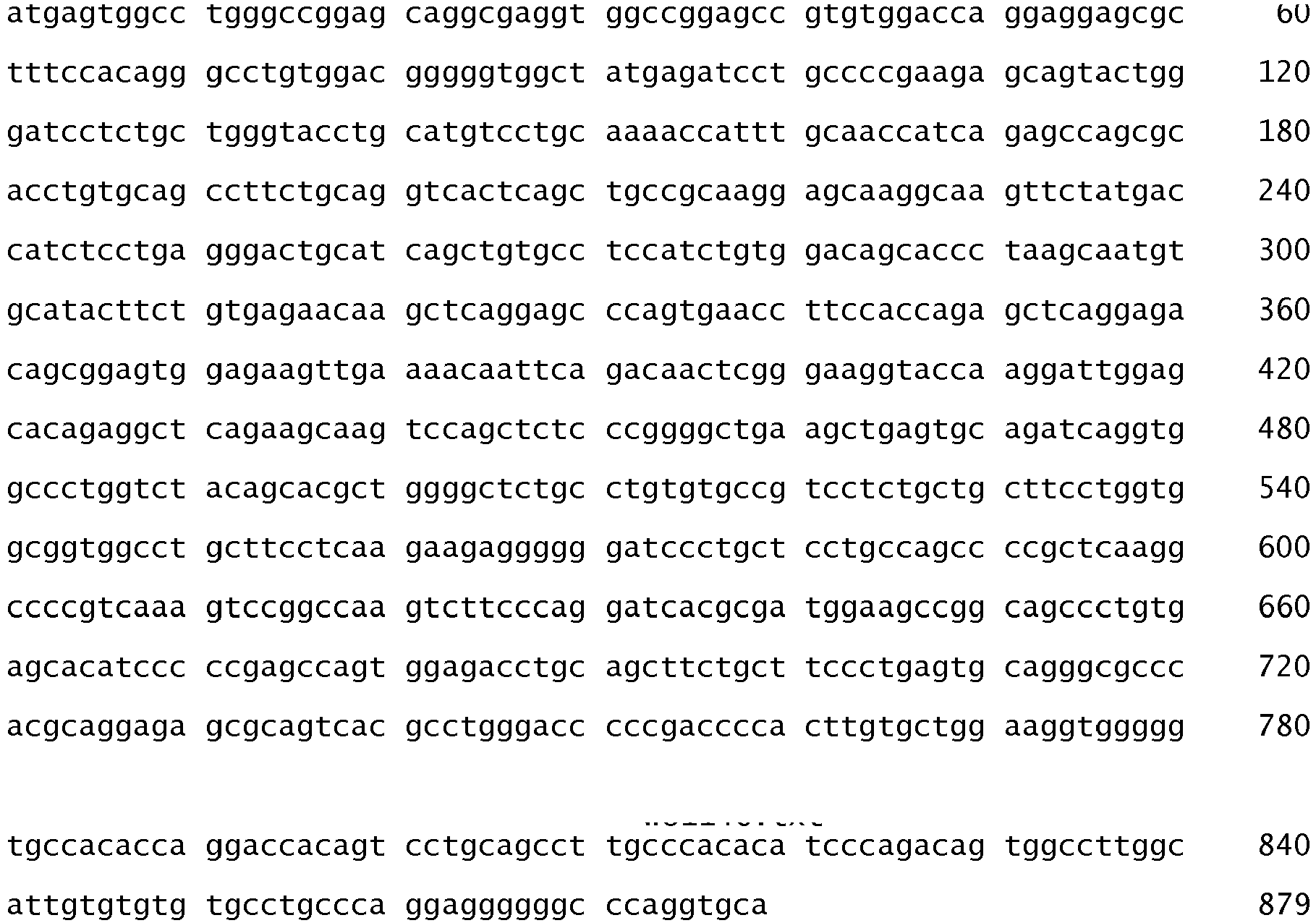
- <210> 6
<211> 753
<212> DNA
<213> artificial sequence - <220>
<221> source
<223> /note=description of artificial sequence: DNA encoding SEQ ID No:3 - <400> 6

- <210> 7
<211> 1044
<212> DNA
<213> artificial sequence - <220>
<221> source
<223> /note=description of artificial sequence: DNA encoding the protein of SEQ ID NO: 4 - <400> 7

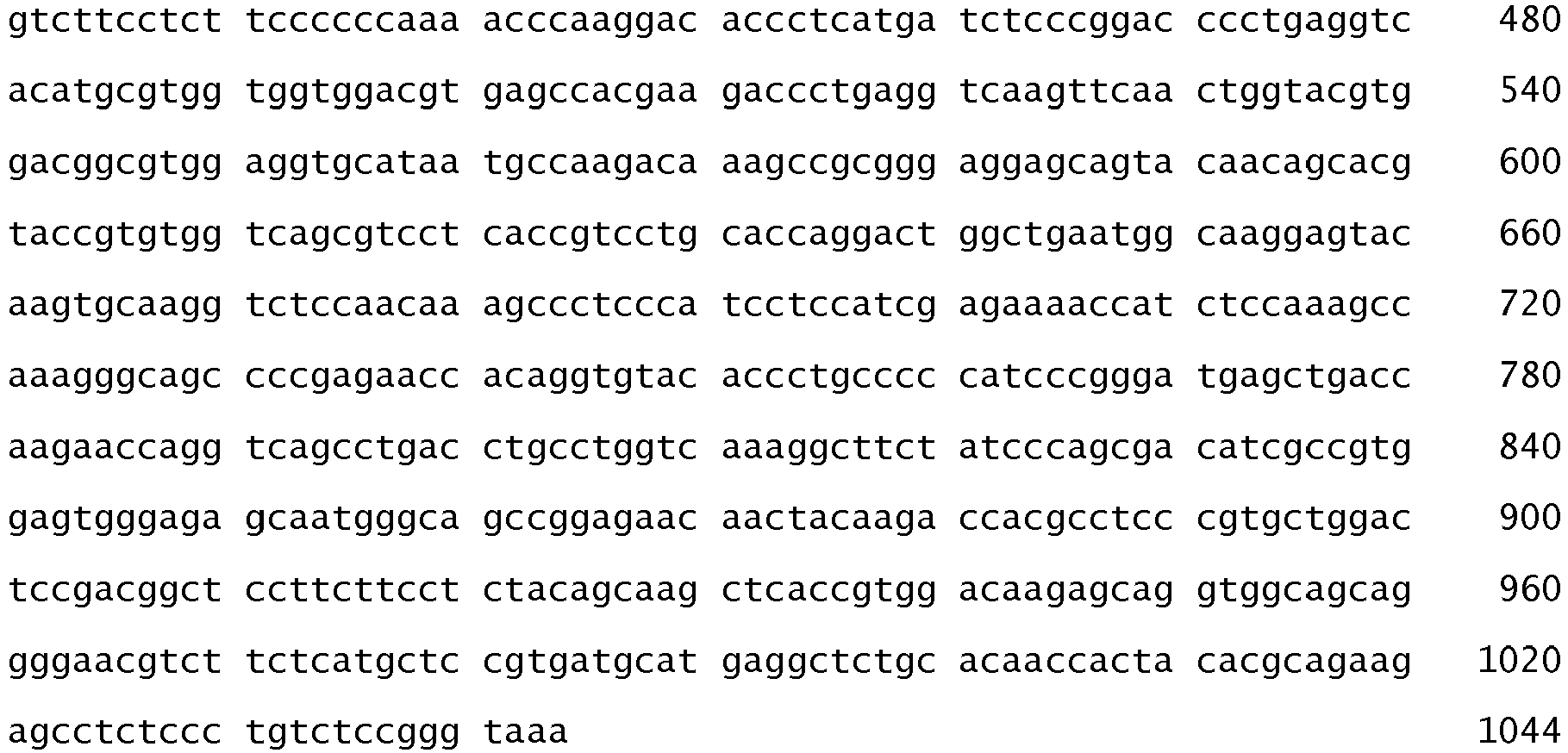
Claims (8)
- Method for reducing the concentration of free Fc-moieties in a fluid comprising an Fc-containing protein, the method comprising subjecting said fluid to cation exchange chromatography on a cation exchange resin at a pH of at least one unit below the isoelectric point (pl) of said Fc-containing protein and washing the cation exchange resin with a buffer having a conductivity of 8.2 to 8.6 mS/cm and at a pH of 5.5 to 7.5,wherein the Fc-containing protein is an Fc-fusion protein that comprises a ligand binding portion of a member of the tumor necrosis factor receptor (TNFR) superfamily selected from an extracellular domain of BAFF-R, BCMA, TACI, or a fragment thereof binding at least one of Blys or APRIL,wherein the Fc-fusion protein comprises a polypeptide selected froma. amino acids 34 to 66 of SEQ ID NO: 2;b. amino acids 71 to 104 of SEQ ID NO: 2;c. amino acids 34 to 104 of SEQ ID NO: 2;d. amino acids 30 to 110 of SEQ ID NO: 2;e. SEQ ID NO: 3;f. SEQ ID NO: 4;g. a polypeptide encoded by a polynucleotide hybridizing to the complement of SEQ ID NO: 5 or 6 or 7 under highly stringent conditions; andh. a mutein of any of (c), (d), (e), or (f) having at least 80 % or 85 % or 90 % or 95 % sequence identity to the polypeptide of (c), (d), (e) or (f);wherein the polypeptide binds to at least one of Blys or APRIL,and wherein the Fc-containing protein comprises a human IgG1 constant region.
- The method according to claims 1, wherein the washing step is carried out at a pH of 6.0 to 7.0.
- The method according to claim 1 or claim 2, wherein the washing step is carried out in a buffer comprising 75 to 125 mM sodium phosphate.
- The method according to any of the preceding claims, comprising the step of:
Eluting the Fc-containing protein at a pH ranging from 7.0 to 8.5, wherein the eluting step is carried out at a conductivity of 15 to 22 mS/cm. - The method according to any of the preceding claims, wherein the cation exchange chromatography is carried out on a cation exchange resin comprising SO3 - groups.
- The method according to claim 5, wherein the resin comprises a cross-linked methacrylate matrix.
- The method according to any of the preceding claims, further comprising a purification step selected from affinity chromatography, anion exchange chromatography and hydroxyapatite chromatography.
- The method according to any of claims 1 to 7, wherein the constant region comprises a CH2 and a CH3 domain.
Priority Applications (3)
| Application Number | Priority Date | Filing Date | Title |
|---|---|---|---|
| PL07802925.3T PL2061803T5 (en) | 2006-08-28 | 2007-08-27 | Process for the purification of fc-containing proteins |
| EP07802925.3A EP2061803B2 (en) | 2006-08-28 | 2007-08-27 | Process for the purification of fc-containing proteins |
| SI200732135T SI2061803T2 (en) | 2006-08-28 | 2007-08-27 | Process for the purification of fc-containing proteins |
Applications Claiming Priority (4)
| Application Number | Priority Date | Filing Date | Title |
|---|---|---|---|
| EP06119611 | 2006-08-28 | ||
| US84254206P | 2006-09-06 | 2006-09-06 | |
| EP07802925.3A EP2061803B2 (en) | 2006-08-28 | 2007-08-27 | Process for the purification of fc-containing proteins |
| PCT/EP2007/058887 WO2008025748A1 (en) | 2006-08-28 | 2007-08-27 | Process for the purification of fc-containing proteins |
Publications (3)
| Publication Number | Publication Date |
|---|---|
| EP2061803A1 EP2061803A1 (en) | 2009-05-27 |
| EP2061803B1 EP2061803B1 (en) | 2019-08-14 |
| EP2061803B2 true EP2061803B2 (en) | 2022-11-16 |
Family
ID=38610939
Family Applications (1)
| Application Number | Title | Priority Date | Filing Date |
|---|---|---|---|
| EP07802925.3A Active EP2061803B2 (en) | 2006-08-28 | 2007-08-27 | Process for the purification of fc-containing proteins |
Country Status (20)
| Country | Link |
|---|---|
| US (1) | US8513393B2 (en) |
| EP (1) | EP2061803B2 (en) |
| JP (1) | JP2010501623A (en) |
| KR (1) | KR101770312B1 (en) |
| AR (1) | AR062570A1 (en) |
| AU (1) | AU2007291283B2 (en) |
| CA (1) | CA2661748C (en) |
| DK (1) | DK2061803T4 (en) |
| EA (1) | EA017152B1 (en) |
| ES (1) | ES2755386T5 (en) |
| FI (1) | FI2061803T4 (en) |
| HU (1) | HUE045898T2 (en) |
| IL (1) | IL197220A (en) |
| LT (1) | LT2061803T (en) |
| MX (1) | MX2009002014A (en) |
| PL (1) | PL2061803T5 (en) |
| PT (1) | PT2061803T (en) |
| SI (1) | SI2061803T2 (en) |
| UA (1) | UA99262C2 (en) |
| WO (1) | WO2008025748A1 (en) |
Families Citing this family (28)
| Publication number | Priority date | Publication date | Assignee | Title |
|---|---|---|---|---|
| AR058568A1 (en) | 2005-12-20 | 2008-02-13 | Bristol Myers Squibb Co | METHODS TO PRODUCE A COMPOSITION WITH CTLA4-IG MOLECULES FROM A CROP MEANS |
| PT2253644E (en) | 2005-12-20 | 2014-01-23 | Bristol Myers Squibb Co | Compositions and methods for producing a composition |
| JP2010501623A (en) † | 2006-08-28 | 2010-01-21 | アレス トレーディング ソシエテ アノニム | Purification method of Fc-containing protein |
| HUE024877T2 (en) * | 2007-10-30 | 2016-02-29 | Genentech Inc | Antibody purification by cation exchange chromatography |
| CN104974251A (en) * | 2008-10-20 | 2015-10-14 | Abbvie公司 | Viral inactivation during purification of antibodies |
| CN102257004A (en) * | 2008-10-20 | 2011-11-23 | 雅培制药有限公司 | Antibody binding to IL-12 and purification method thereof |
| CA2739077A1 (en) * | 2008-10-20 | 2010-04-29 | Robert K. Hickman | Antibodies that bind to il-18 and methods of purifying the same |
| CA2932207A1 (en) * | 2008-10-20 | 2010-12-09 | Abbvie Inc. | Isolation and purification of antibodies using protein a affinity chromatography |
| US8536316B2 (en) * | 2009-08-07 | 2013-09-17 | Emd Millipore Corporation | Methods for purifying a target protein from one or more impurities in a sample |
| BR112012014937B1 (en) | 2009-12-18 | 2021-01-19 | Novartis Ag | method of producing an antibody, antibody fragment or purified fc fusion protein using an affinity chromatography matrix |
| CA2787009C (en) | 2010-01-15 | 2018-04-03 | Bio-Rad Laboratories, Inc. | Surface neutralization of apatite |
| US8895707B2 (en) * | 2010-08-18 | 2014-11-25 | Bio-Rad Laboratories, Inc. | Elution of proteins from hydroxyapatite resins without resin deterioration |
| JP5798307B2 (en) * | 2010-09-03 | 2015-10-21 | 国立大学法人名古屋大学 | Monoclonal antibody specifically recognizing globotriaosylceramide and its production method |
| WO2012084829A1 (en) | 2010-12-21 | 2012-06-28 | F. Hoffmann-La Roche Ag | Isoform enriched antibody preparation and method for obtaining it |
| JP5881744B2 (en) | 2011-02-02 | 2016-03-09 | バイオ−ラッド ラボラトリーズ インコーポレーティッド | Surface neutralization method of apatite with alkaline solution |
| EP2691411B1 (en) | 2011-03-29 | 2020-02-26 | GlaxoSmithKline LLC | Buffer system for protein purification |
| SG10201701224UA (en) * | 2012-03-12 | 2017-04-27 | Merck Patent Gmbh | Removal of protein aggregates from biopharmaceutical preparations in a flowthrough mode |
| US9815695B2 (en) | 2012-05-30 | 2017-11-14 | Bio-Rad Laboratories, Inc. | In situ restoration of apatite-based chromatography resins |
| EP2682168A1 (en) | 2012-07-02 | 2014-01-08 | Millipore Corporation | Purification of biological molecules |
| WO2015189832A1 (en) * | 2014-06-13 | 2015-12-17 | Lupin Limited | Process for the purification of tnfr:fc fusion protein |
| EP3157863B1 (en) | 2014-06-23 | 2023-06-21 | Bio-Rad Laboratories, Inc. | Apatite in-situ restoration |
| CN105392569B (en) | 2014-06-23 | 2019-08-20 | 生物辐射实验室股份有限公司 | Apatite pretreatment |
| EP2975050B1 (en) * | 2014-07-18 | 2019-05-29 | Sandoz Ag | Quantification of misfolded TNFR2:Fc |
| CA2959629C (en) * | 2014-09-03 | 2023-10-31 | Boehringer Ingelheim International Gmbh | Compound targeting il-23a and tnf-alpha and uses thereof |
| BR112017018365A2 (en) * | 2015-03-13 | 2018-04-10 | Bristol-Myers Squibb Company | use of alkaline washes during chromatography to remove impurities |
| EP3694870A1 (en) | 2017-10-10 | 2020-08-19 | Alpine Immune Sciences, Inc. | Ctla-4 variant immunomodulatory proteins and uses thereof |
| US12202882B2 (en) | 2020-05-08 | 2025-01-21 | Alpine Immune Sciences, Inc. | APRIL and BAFF inhibitory immunomodulatory proteins and methods of use thereof |
| CN116322775A (en) | 2020-06-02 | 2023-06-23 | 阿雷斯贸易股份有限公司 | Related methods of IgA nephropathy treatment |
Citations (8)
| Publication number | Priority date | Publication date | Assignee | Title |
|---|---|---|---|---|
| WO1999018130A1 (en) † | 1997-10-07 | 1999-04-15 | Israel Nur | A method for the purification of immunoglobulins |
| WO1999057134A1 (en) † | 1998-05-06 | 1999-11-11 | Genentech, Inc. | Protein purification by ion exchange chromatography |
| WO1999064462A1 (en) † | 1998-06-09 | 1999-12-16 | Statens Serum Institut | Process for producing immunoglobulins for intravenous administration and other immunoglobulin products |
| WO2003002713A2 (en) † | 2001-06-26 | 2003-01-09 | Abgenix, Inc. | Antibodies to opgl |
| US20030229212A1 (en) † | 2002-04-26 | 2003-12-11 | Robert Fahrner | Non-affinity purification of proteins |
| WO2004024866A2 (en) † | 2002-09-11 | 2004-03-25 | Genentech, Inc. | Protein purification |
| WO2008025748A1 (en) † | 2006-08-28 | 2008-03-06 | Ares Trading S.A. | Process for the purification of fc-containing proteins |
| WO2009017491A1 (en) † | 2006-06-14 | 2009-02-05 | Smithkline Beecham Corporation | Methods for purifying antibodies using ceramic hydroxyapatite |
Family Cites Families (24)
| Publication number | Priority date | Publication date | Assignee | Title |
|---|---|---|---|---|
| CA2065346C (en) | 1989-09-05 | 2005-03-29 | Craig A. Smith | Tumor necrosis factor-.alpha. and-.beta. receptors |
| US5447851B1 (en) * | 1992-04-02 | 1999-07-06 | Univ Texas System Board Of | Dna encoding a chimeric polypeptide comprising the extracellular domain of tnf receptor fused to igg vectors and host cells |
| NZ256293A (en) | 1992-09-15 | 1997-06-24 | Immunex Corp | Method of treating tumour necrosis factor - mediated inflammation by use of tnf antagonist |
| ATE175979T1 (en) * | 1993-12-27 | 1999-02-15 | Rotkreuzstiftung Zentrallab | METHOD FOR PRODUCING A CONCENTRATE OF ANTI-D IMMUNOGLOBULIN G AND PHARMACEUTICAL COMPOSITION CONTAINING THE SAME |
| ES2227598T3 (en) * | 1995-06-08 | 2005-04-01 | Immunex Corporation | CONVERSIVE ENZYME OF TNF-ALFA. |
| US6406901B1 (en) | 1995-06-08 | 2002-06-18 | Immunex Corporation | TNF-a converting enzyme |
| US5969102A (en) | 1997-03-03 | 1999-10-19 | St. Jude Children's Research Hospital | Lymphocyte surface receptor that binds CAML, nucleic acids encoding the same and methods of use thereof |
| ES2228052T3 (en) | 1998-06-01 | 2005-04-01 | Genentech, Inc. | SEPARATION OF DEMONOMERS OF ANTIBODIES OF THEIR MULTIMERS USING ION EXCHANGE CHROMATOGRAPHY. |
| CZ303272B6 (en) | 1999-01-07 | 2012-07-11 | Zymogenetics, Inc. | Pharmaceutical composition comprising fusion protein, isolated molecule of polynucleotide, expression vector, cultivated cell, process for preparing a polypeptide and isolated polypeptide |
| DE19955558C2 (en) | 1999-11-18 | 2003-03-20 | Stefan Kochanek | Permanent amniocyte cell line, its production and use for the production of gene transfer vectors |
| AU2001263114A1 (en) * | 2000-05-12 | 2001-11-26 | Amgen Inc | Methods and compositions of matter concerning april/g70, bcma, blys/agp-3, and taci |
| PL403488A1 (en) * | 2001-05-24 | 2013-07-08 | Zymogenetics, Inc. | Use of a fusion protein TACI-immunoglobulin fusion protein, a nucleic acid molecule encoding a fusion protein, the pharmaceutical composition and a method for producing the fusion protein TACI-immunoglobulin |
| JP4363986B2 (en) | 2001-12-21 | 2009-11-11 | イミュネックス・コーポレーション | Protein purification method |
| CN100522989C (en) | 2002-09-11 | 2009-08-05 | 中外制药株式会社 | Method of purifying protein |
| WO2004076485A1 (en) | 2003-02-28 | 2004-09-10 | Lonza Biologics Plc. | Antibody purification by protein a and ion exchange chromatography |
| US20060257972A1 (en) * | 2003-03-31 | 2006-11-16 | Takashi Ishihara | Purification of human monoclonal antibody and human polyclonal antibody |
| TWI353991B (en) * | 2003-05-06 | 2011-12-11 | Syntonix Pharmaceuticals Inc | Immunoglobulin chimeric monomer-dimer hybrids |
| BRPI0415887B1 (en) | 2003-10-27 | 2021-01-26 | Wyeth | methods for removing high molecular weight aggregates using hydroxyapatite chromatography |
| BRPI0406605B8 (en) * | 2003-11-13 | 2021-05-25 | Hanmi Holdings Co Ltd | protein conjugate, method for its preparation and pharmaceutical composition to enhance the duration and in vivo stability of a physiologically active polypeptide |
| CN1946739A (en) * | 2004-04-14 | 2007-04-11 | 豪夫迈-罗氏公司 | Purified interleukin-15/fc fusion protein and preparation thereof |
| BRPI0608584B8 (en) | 2005-03-11 | 2021-05-25 | Wyeth Corp | methods of recovering a purified product |
| WO2006110277A1 (en) * | 2005-04-11 | 2006-10-19 | Medarex, Inc. | Protein purification using hcic amd ion exchange chromatography |
| BRPI0611600B8 (en) * | 2005-06-17 | 2021-05-25 | Wyeth Corp | method for purifying a protein having an fc region from a source liquid comprising the protein and one or more impurities, and kit |
| JP2010516651A (en) * | 2007-01-17 | 2010-05-20 | メルク セローノ ソシエテ アノニム | Methods for purification of Fc-containing proteins |
-
2007
- 2007-08-27 JP JP2009526068A patent/JP2010501623A/en active Pending
- 2007-08-27 KR KR1020097006443A patent/KR101770312B1/en active Active
- 2007-08-27 AU AU2007291283A patent/AU2007291283B2/en active Active
- 2007-08-27 CA CA2661748A patent/CA2661748C/en active Active
- 2007-08-27 MX MX2009002014A patent/MX2009002014A/en active IP Right Grant
- 2007-08-27 WO PCT/EP2007/058887 patent/WO2008025748A1/en not_active Ceased
- 2007-08-27 US US12/377,122 patent/US8513393B2/en active Active
- 2007-08-27 LT LT07802925T patent/LT2061803T/en unknown
- 2007-08-27 DK DK07802925.3T patent/DK2061803T4/en active
- 2007-08-27 PL PL07802925.3T patent/PL2061803T5/en unknown
- 2007-08-27 PT PT78029253T patent/PT2061803T/en unknown
- 2007-08-27 EP EP07802925.3A patent/EP2061803B2/en active Active
- 2007-08-27 SI SI200732135T patent/SI2061803T2/en unknown
- 2007-08-27 EA EA200970231A patent/EA017152B1/en not_active IP Right Cessation
- 2007-08-27 FI FIEP07802925.3T patent/FI2061803T4/en active
- 2007-08-27 ES ES07802925T patent/ES2755386T5/en active Active
- 2007-08-27 UA UAA200902854A patent/UA99262C2/en unknown
- 2007-08-27 HU HUE07802925A patent/HUE045898T2/en unknown
- 2007-08-28 AR ARP070103817A patent/AR062570A1/en not_active Application Discontinuation
-
2009
- 2009-02-24 IL IL197220A patent/IL197220A/en active IP Right Grant
Patent Citations (9)
| Publication number | Priority date | Publication date | Assignee | Title |
|---|---|---|---|---|
| WO1999018130A1 (en) † | 1997-10-07 | 1999-04-15 | Israel Nur | A method for the purification of immunoglobulins |
| WO1999057134A1 (en) † | 1998-05-06 | 1999-11-11 | Genentech, Inc. | Protein purification by ion exchange chromatography |
| US6417335B1 (en) † | 1998-05-06 | 2002-07-09 | Genentech, Inc. | Protein purification |
| WO1999064462A1 (en) † | 1998-06-09 | 1999-12-16 | Statens Serum Institut | Process for producing immunoglobulins for intravenous administration and other immunoglobulin products |
| WO2003002713A2 (en) † | 2001-06-26 | 2003-01-09 | Abgenix, Inc. | Antibodies to opgl |
| US20030229212A1 (en) † | 2002-04-26 | 2003-12-11 | Robert Fahrner | Non-affinity purification of proteins |
| WO2004024866A2 (en) † | 2002-09-11 | 2004-03-25 | Genentech, Inc. | Protein purification |
| WO2009017491A1 (en) † | 2006-06-14 | 2009-02-05 | Smithkline Beecham Corporation | Methods for purifying antibodies using ceramic hydroxyapatite |
| WO2008025748A1 (en) † | 2006-08-28 | 2008-03-06 | Ares Trading S.A. | Process for the purification of fc-containing proteins |
Non-Patent Citations (14)
| Title |
|---|
| "Ion Exchange Chromatography & Chromatofocusing - Principles and Methods", AMERSHAM BIOSCIENCES, 2004, pages 1 - 188 † |
| "Product Monograph of ORENCIA", BRISTOL -MYERS SQUIBB CANADA, 2019, pages 1 - 73 † |
| A WILLIAMS, FRASCA, V.: "lon-Exchange Chromatography", CURRENT PROTOCOLS IN PROTEIN SCIENCE, 1 January 1999 (1999-01-01), pages 8.2.1 - 8.2.30 † |
| C JOCHHEIM, ET AL: "Separation of Enbrel® (rhuTNFR: Fc) Isoforms by Capillary Isoelectric Focusing", CE IN BIOTECHNOLOGY: PRACTICAL APPLICATIONS FOR PROTEIN AND PEPTIDE ANALYSES, vol. 53, 1 January 2001 (2001-01-01), pages s59 - s65 † |
| CHIODI ET AL.: "Isoelectric focusing of monoclonal immunoglobulin G, A and M followed by detection with the avidin-biotin system", ELECTROPHORESIS, vol. 6, 1985, pages 124 - 128, DOI: 10.1002/elps.1150060305 † |
| ELECTRICAL CONDUCTIVITY OF AQUEOUS SOLUTIONS, Retrieved from the Internet <URL:https://sites.chem.colostate.edu/diverdi/all- cou rses/CRC%20refe rence%20data/electrical%20cond uctivity%20of%20aq ueous%20 solutions.pdf> † |
| FAHRNER ET AL.: "Industrial Purification of Pharmaceutical Antibodies: Development, Operation, and Validation of Chromatography Processes", BIOTECHNOLOGY AND GENETIC ENGINEERING REVIEWS, vol. 18, no. 1, 2001, pages 301 - 327, DOI: 10.1080/02648725.2001.10648017 † |
| FENG LI ET AL: "Current therapeutic antibody production and process optimization", BIOPROCESSING: ADVANCES AND TRENDS IN BIOLOGICAL PRODUCTDEVELOPMENT, WILLIAMSBURG BIOPROCESSING FOUNDATION, US, 1 September 2005 (2005-09-01) - 01-10-2005, US, pages 1 - 8, ISSN: 1538-8786 † |
| Ghosc ct al.. Biotechnology and Bioengineering. Vol. 92. No. 6. December 20. 2005 (published online on October 4.2005). DOI: 10 1002/bit.20729 † |
| GOYON ALEXANDRE ET AL: "Determination of isoelectric points and relative charge variants of 23 therapeutic monoclonal antibodies", JOURNAL OF CHROMATOGRAPHY B: BIOMEDICAL SCIENCES & APPLICATIONS., ELSEVIER, AMSTERDAM., NL, vol. 1065, 15 October 2017 (2017-10-15), pages 119 - 128, ISSN: 1570-0232, DOI: 10.1016/j.jchromb.2017.09.033 † |
| MARIANA P. MIRANDA-HERNÁNDEZ ET AL: "Pharmacokinetic Comparability of a Biosimilar Trastuzumab Anticipated from Its Physicochemical and Biological Characterization", BIOMED RESEARCH INTERNATIONAL, HINDAWI PUBLISHING CORPORATION, vol. 2015, 1 January 2015 (2015-01-01), pages 1 - 7, ISSN: 2314-6133, DOI: 10.1155/2015/874916 † |
| P PARREN, ET AL: "Changes to International Nonproprietary Names for antibody therapeutics 2017 and beyond: of mice, men and more", MABS, vol. 9, no. 6, 1 January 2017 (2017-01-01), pages 898 - 906 † |
| P. W. ATKINS: "Physical Chemistry. Third Edition. Passage", OXFORD UNIVERSITY PRESS, 1 January 1986 (1986-01-01), pages 666 † |
| WILLEN: "Identifizierung, Charakterisierung und funktionelle Analyse der Bindungspartner von APRIL und TACI auf Monozyten und Dendritischen Zellen", INAUGURAL-DISSERTATION ZUR ERLANGUNG DER DOKTORWÜRDE DER NATURWISSENSCHAFTLICH-MATHEMATISCHEN-GESAMTFAKULTÄT DER RUPRECHT–KARLS–UNIVERSITÄT HEIDELBERG, May 2006 (2006-05-01), Heidelberg, pages 1 - 159 † |
Also Published As
| Publication number | Publication date |
|---|---|
| FI2061803T4 (en) | 2023-03-14 |
| CA2661748C (en) | 2016-02-09 |
| US8513393B2 (en) | 2013-08-20 |
| CA2661748A1 (en) | 2008-03-06 |
| SI2061803T2 (en) | 2023-01-31 |
| HK1131400A1 (en) | 2010-01-22 |
| PL2061803T5 (en) | 2023-03-27 |
| EA017152B1 (en) | 2012-10-30 |
| WO2008025748A1 (en) | 2008-03-06 |
| KR101770312B1 (en) | 2017-08-22 |
| AU2007291283B2 (en) | 2012-09-20 |
| LT2061803T (en) | 2019-11-25 |
| US20100190961A1 (en) | 2010-07-29 |
| EP2061803B1 (en) | 2019-08-14 |
| AU2007291283A1 (en) | 2008-03-06 |
| EA200970231A1 (en) | 2009-08-28 |
| ES2755386T5 (en) | 2023-04-05 |
| UA99262C2 (en) | 2012-08-10 |
| KR20090057296A (en) | 2009-06-04 |
| DK2061803T3 (en) | 2019-11-18 |
| IL197220A0 (en) | 2009-12-24 |
| AR062570A1 (en) | 2008-11-19 |
| SI2061803T1 (en) | 2019-12-31 |
| PT2061803T (en) | 2019-11-21 |
| MX2009002014A (en) | 2009-03-09 |
| HUE045898T2 (en) | 2020-01-28 |
| DK2061803T4 (en) | 2022-12-05 |
| EP2061803A1 (en) | 2009-05-27 |
| ES2755386T3 (en) | 2020-04-22 |
| IL197220A (en) | 2013-06-27 |
| JP2010501623A (en) | 2010-01-21 |
| PL2061803T3 (en) | 2020-02-28 |
Similar Documents
| Publication | Publication Date | Title |
|---|---|---|
| EP2061803B1 (en) | Process for the purification of fc-containing proteins | |
| AU2007291282B2 (en) | Process for the purification of Fc-fusion proteins | |
| US8168185B2 (en) | Process for the purification of anti CD-25 antibodies | |
| US20100249381A1 (en) | Method for Purifying FC-Fusion Proteins | |
| US20100256337A1 (en) | Method for purifying an fc-containing protein | |
| NZ574626A (en) | Process for removing free Fc-moieties from fluids comprising Fc-containing proteins using ion exchange chromatography | |
| JP2010501622A (en) | Purification method of Fc-fusion protein | |
| HK1131400B (en) | Process for the purification of fc-containing proteins | |
| HK1131399A (en) | Process for the purification of fc-fusion proteins |
Legal Events
| Date | Code | Title | Description |
|---|---|---|---|
| PUAI | Public reference made under article 153(3) epc to a published international application that has entered the european phase |
Free format text: ORIGINAL CODE: 0009012 |
|
| 17P | Request for examination filed |
Effective date: 20090318 |
|
| AK | Designated contracting states |
Kind code of ref document: A1 Designated state(s): AT BE BG CH CY CZ DE DK EE ES FI FR GB GR HU IE IS IT LI LT LU LV MC MT NL PL PT RO SE SI SK TR |
|
| AX | Request for extension of the european patent |
Extension state: AL BA HR MK RS |
|
| 17Q | First examination report despatched |
Effective date: 20091215 |
|
| RIC1 | Information provided on ipc code assigned before grant |
Ipc: C07K 16/00 20060101ALI20150831BHEP Ipc: C07K 1/36 20060101ALI20150831BHEP Ipc: C07K 1/18 20060101AFI20150831BHEP |
|
| STAA | Information on the status of an ep patent application or granted ep patent |
Free format text: STATUS: EXAMINATION IS IN PROGRESS |
|
| REG | Reference to a national code |
Ref country code: DE Ref legal event code: R079 Ref document number: 602007059046 Country of ref document: DE Free format text: PREVIOUS MAIN CLASS: C07K0001360000 Ipc: C07K0001180000 |
|
| GRAJ | Information related to disapproval of communication of intention to grant by the applicant or resumption of examination proceedings by the epo deleted |
Free format text: ORIGINAL CODE: EPIDOSDIGR1 |
|
| STAA | Information on the status of an ep patent application or granted ep patent |
Free format text: STATUS: GRANT OF PATENT IS INTENDED |
|
| GRAP | Despatch of communication of intention to grant a patent |
Free format text: ORIGINAL CODE: EPIDOSNIGR1 |
|
| RIC1 | Information provided on ipc code assigned before grant |
Ipc: C07K 1/18 20060101AFI20181122BHEP Ipc: C07K 16/06 20060101ALI20181122BHEP Ipc: C07K 1/36 20060101ALI20181122BHEP |
|
| INTG | Intention to grant announced |
Effective date: 20181214 |
|
| GRAS | Grant fee paid |
Free format text: ORIGINAL CODE: EPIDOSNIGR3 |
|
| GRAA | (expected) grant |
Free format text: ORIGINAL CODE: 0009210 |
|
| STAA | Information on the status of an ep patent application or granted ep patent |
Free format text: STATUS: THE PATENT HAS BEEN GRANTED |
|
| AK | Designated contracting states |
Kind code of ref document: B1 Designated state(s): AT BE BG CH CY CZ DE DK EE ES FI FR GB GR HU IE IS IT LI LT LU LV MC MT NL PL PT RO SE SI SK TR |
|
| AX | Request for extension of the european patent |
Extension state: AL BA HR MK RS |
|
| REG | Reference to a national code |
Ref country code: GB Ref legal event code: FG4D |
|
| REG | Reference to a national code |
Ref country code: AT Ref legal event code: REF Ref document number: 1166889 Country of ref document: AT Kind code of ref document: T Effective date: 20190815 Ref country code: CH Ref legal event code: EP |
|
| REG | Reference to a national code |
Ref country code: IE Ref legal event code: FG4D |
|
| REG | Reference to a national code |
Ref country code: DE Ref legal event code: R096 Ref document number: 602007059046 Country of ref document: DE |
|
| REG | Reference to a national code |
Ref country code: DK Ref legal event code: T3 Effective date: 20191113 |
|
| REG | Reference to a national code |
Ref country code: NL Ref legal event code: FP |
|
| REG | Reference to a national code |
Ref country code: PT Ref legal event code: SC4A Ref document number: 2061803 Country of ref document: PT Date of ref document: 20191121 Kind code of ref document: T Free format text: AVAILABILITY OF NATIONAL TRANSLATION Effective date: 20191112 |
|
| REG | Reference to a national code |
Ref country code: SE Ref legal event code: TRGR |
|
| REG | Reference to a national code |
Ref country code: EE Ref legal event code: FG4A Ref document number: E018396 Country of ref document: EE Effective date: 20191112 |
|
| REG | Reference to a national code |
Ref country code: HU Ref legal event code: AG4A Ref document number: E045898 Country of ref document: HU |
|
| PG25 | Lapsed in a contracting state [announced via postgrant information from national office to epo] |
Ref country code: BG Free format text: LAPSE BECAUSE OF FAILURE TO SUBMIT A TRANSLATION OF THE DESCRIPTION OR TO PAY THE FEE WITHIN THE PRESCRIBED TIME-LIMIT Effective date: 20191114 |
|
| REG | Reference to a national code |
Ref country code: SK Ref legal event code: T3 Ref document number: E 32693 Country of ref document: SK |
|
| PG25 | Lapsed in a contracting state [announced via postgrant information from national office to epo] |
Ref country code: IS Free format text: LAPSE BECAUSE OF FAILURE TO SUBMIT A TRANSLATION OF THE DESCRIPTION OR TO PAY THE FEE WITHIN THE PRESCRIBED TIME-LIMIT Effective date: 20191214 Ref country code: GR Free format text: LAPSE BECAUSE OF FAILURE TO SUBMIT A TRANSLATION OF THE DESCRIPTION OR TO PAY THE FEE WITHIN THE PRESCRIBED TIME-LIMIT Effective date: 20191115 |
|
| REG | Reference to a national code |
Ref country code: ES Ref legal event code: FG2A Ref document number: 2755386 Country of ref document: ES Kind code of ref document: T3 Effective date: 20200422 |
|
| PG25 | Lapsed in a contracting state [announced via postgrant information from national office to epo] |
Ref country code: RO Free format text: LAPSE BECAUSE OF FAILURE TO SUBMIT A TRANSLATION OF THE DESCRIPTION OR TO PAY THE FEE WITHIN THE PRESCRIBED TIME-LIMIT Effective date: 20190814 |
|
| REG | Reference to a national code |
Ref country code: DE Ref legal event code: R026 Ref document number: 602007059046 Country of ref document: DE |
|
| PLBI | Opposition filed |
Free format text: ORIGINAL CODE: 0009260 |
|
| PG25 | Lapsed in a contracting state [announced via postgrant information from national office to epo] |
Ref country code: MC Free format text: LAPSE BECAUSE OF FAILURE TO SUBMIT A TRANSLATION OF THE DESCRIPTION OR TO PAY THE FEE WITHIN THE PRESCRIBED TIME-LIMIT Effective date: 20190814 Ref country code: IS Free format text: LAPSE BECAUSE OF FAILURE TO SUBMIT A TRANSLATION OF THE DESCRIPTION OR TO PAY THE FEE WITHIN THE PRESCRIBED TIME-LIMIT Effective date: 20200224 |
|
| PLAX | Notice of opposition and request to file observation + time limit sent |
Free format text: ORIGINAL CODE: EPIDOSNOBS2 |
|
| REG | Reference to a national code |
Ref country code: FI Ref legal event code: MDE Opponent name: HOFFMAN EITLE PATENT- UND RECHTSANWA LTE PARTNERSCHAFTSGESELLSCHAFT MBB Ref country code: FI Ref legal event code: MDE Opponent name: NEUEFEIND, REGINA |
|
| 26 | Opposition filed |
Opponent name: HOFFMAN EITLE PATENT- UND RECHTSANWAELTE PARTNERSCHAFTSGESELLSCHAFT MBB Effective date: 20200514 Opponent name: NEUEFEIND, REGINA Effective date: 20200514 |
|
| PG2D | Information on lapse in contracting state deleted |
Ref country code: IS |
|
| PLBB | Reply of patent proprietor to notice(s) of opposition received |
Free format text: ORIGINAL CODE: EPIDOSNOBS3 |
|
| PG25 | Lapsed in a contracting state [announced via postgrant information from national office to epo] |
Ref country code: CY Free format text: LAPSE BECAUSE OF FAILURE TO SUBMIT A TRANSLATION OF THE DESCRIPTION OR TO PAY THE FEE WITHIN THE PRESCRIBED TIME-LIMIT Effective date: 20190814 |
|
| PG25 | Lapsed in a contracting state [announced via postgrant information from national office to epo] |
Ref country code: SI Free format text: LAPSE BECAUSE OF FAILURE TO SUBMIT A TRANSLATION OF THE DESCRIPTION OR TO PAY THE FEE WITHIN THE PRESCRIBED TIME-LIMIT Effective date: 20190814 |
|
| REG | Reference to a national code |
Ref country code: FR Ref legal event code: PLFP Year of fee payment: 16 |
|
| PUAH | Patent maintained in amended form |
Free format text: ORIGINAL CODE: 0009272 |
|
| STAA | Information on the status of an ep patent application or granted ep patent |
Free format text: STATUS: PATENT MAINTAINED AS AMENDED |
|
| 27A | Patent maintained in amended form |
Effective date: 20221116 |
|
| AK | Designated contracting states |
Kind code of ref document: B2 Designated state(s): AT BE BG CH CY CZ DE DK EE ES FI FR GB GR HU IE IS IT LI LT LU LV MC MT NL PL PT RO SE SI SK TR |
|
| REG | Reference to a national code |
Ref country code: DE Ref legal event code: R102 Ref document number: 602007059046 Country of ref document: DE |
|
| REG | Reference to a national code |
Ref country code: DK Ref legal event code: T4 Effective date: 20221201 |
|
| REG | Reference to a national code |
Ref country code: NL Ref legal event code: FP |
|
| REG | Reference to a national code |
Ref country code: SE Ref legal event code: RPEO |
|
| REG | Reference to a national code |
Ref country code: EE Ref legal event code: LD4A Ref document number: E018396 Country of ref document: EE |
|
| REG | Reference to a national code |
Ref country code: SK Ref legal event code: T5 Ref document number: E 32693 Country of ref document: SK |
|
| REG | Reference to a national code |
Ref country code: ES Ref legal event code: DC2A Ref document number: 2755386 Country of ref document: ES Kind code of ref document: T5 Effective date: 20230405 |
|
| P01 | Opt-out of the competence of the unified patent court (upc) registered |
Effective date: 20230510 |
|
| REG | Reference to a national code |
Ref country code: AT Ref legal event code: UEP Ref document number: 1166889 Country of ref document: AT Kind code of ref document: T Effective date: 20190814 |
|
| PGFP | Annual fee paid to national office [announced via postgrant information from national office to epo] |
Ref country code: NL Payment date: 20250704 Year of fee payment: 19 |
|
| PGFP | Annual fee paid to national office [announced via postgrant information from national office to epo] |
Ref country code: LU Payment date: 20250814 Year of fee payment: 19 |
|
| PGFP | Annual fee paid to national office [announced via postgrant information from national office to epo] |
Ref country code: HU Payment date: 20250728 Year of fee payment: 19 |
|
| PGFP | Annual fee paid to national office [announced via postgrant information from national office to epo] |
Ref country code: FI Payment date: 20250814 Year of fee payment: 19 Ref country code: ES Payment date: 20250902 Year of fee payment: 19 Ref country code: PT Payment date: 20250822 Year of fee payment: 19 |
|
| PGFP | Annual fee paid to national office [announced via postgrant information from national office to epo] |
Ref country code: LT Payment date: 20250723 Year of fee payment: 19 Ref country code: DK Payment date: 20250814 Year of fee payment: 19 Ref country code: DE Payment date: 20250702 Year of fee payment: 19 |
|
| PGFP | Annual fee paid to national office [announced via postgrant information from national office to epo] |
Ref country code: TR Payment date: 20250811 Year of fee payment: 19 Ref country code: IT Payment date: 20250722 Year of fee payment: 19 |
|
| PGFP | Annual fee paid to national office [announced via postgrant information from national office to epo] |
Ref country code: BE Payment date: 20250703 Year of fee payment: 19 Ref country code: GB Payment date: 20250703 Year of fee payment: 19 |
|
| PGFP | Annual fee paid to national office [announced via postgrant information from national office to epo] |
Ref country code: FR Payment date: 20250703 Year of fee payment: 19 Ref country code: AT Payment date: 20250725 Year of fee payment: 19 |
|
| PGFP | Annual fee paid to national office [announced via postgrant information from national office to epo] |
Ref country code: MT Payment date: 20250818 Year of fee payment: 19 Ref country code: CH Payment date: 20250901 Year of fee payment: 19 Ref country code: SE Payment date: 20250702 Year of fee payment: 19 |
|
| PGFP | Annual fee paid to national office [announced via postgrant information from national office to epo] |
Ref country code: CZ Payment date: 20250820 Year of fee payment: 19 Ref country code: EE Payment date: 20250730 Year of fee payment: 19 |
|
| PGFP | Annual fee paid to national office [announced via postgrant information from national office to epo] |
Ref country code: SK Payment date: 20250714 Year of fee payment: 19 |
|
| PGFP | Annual fee paid to national office [announced via postgrant information from national office to epo] |
Ref country code: PL Payment date: 20260529 Year of fee payment: 20 |
|
| PGFP | Annual fee paid to national office [announced via postgrant information from national office to epo] |
Ref country code: IE Payment date: 20260619 Year of fee payment: 20 |
|
| PGFP | Annual fee paid to national office [announced via postgrant information from national office to epo] |
Ref country code: LV Payment date: 20260619 Year of fee payment: 20 |
|
| PGFP | Annual fee paid to national office [announced via postgrant information from national office to epo] |
Ref country code: SI Payment date: 20260629 Year of fee payment: 20 |