EP2060381A1 - Article made of biodegradable resin and method of making the same - Google Patents
Article made of biodegradable resin and method of making the same Download PDFInfo
- Publication number
- EP2060381A1 EP2060381A1 EP20080163131 EP08163131A EP2060381A1 EP 2060381 A1 EP2060381 A1 EP 2060381A1 EP 20080163131 EP20080163131 EP 20080163131 EP 08163131 A EP08163131 A EP 08163131A EP 2060381 A1 EP2060381 A1 EP 2060381A1
- Authority
- EP
- European Patent Office
- Prior art keywords
- metal plate
- adhesive
- insulating material
- heat insulating
- resin
- Prior art date
- Legal status (The legal status is an assumption and is not a legal conclusion. Google has not performed a legal analysis and makes no representation as to the accuracy of the status listed.)
- Withdrawn
Links
Images


Classifications
-
- B—PERFORMING OPERATIONS; TRANSPORTING
- B29—WORKING OF PLASTICS; WORKING OF SUBSTANCES IN A PLASTIC STATE IN GENERAL
- B29C—SHAPING OR JOINING OF PLASTICS; SHAPING OF MATERIAL IN A PLASTIC STATE, NOT OTHERWISE PROVIDED FOR; AFTER-TREATMENT OF THE SHAPED PRODUCTS, e.g. REPAIRING
- B29C45/00—Injection moulding, i.e. forcing the required volume of moulding material through a nozzle into a closed mould; Apparatus therefor
- B29C45/14—Injection moulding, i.e. forcing the required volume of moulding material through a nozzle into a closed mould; Apparatus therefor incorporating preformed parts or layers, e.g. injection moulding around inserts or for coating articles
- B29C45/14778—Injection moulding, i.e. forcing the required volume of moulding material through a nozzle into a closed mould; Apparatus therefor incorporating preformed parts or layers, e.g. injection moulding around inserts or for coating articles the article consisting of a material with particular properties, e.g. porous, brittle
-
- B—PERFORMING OPERATIONS; TRANSPORTING
- B29—WORKING OF PLASTICS; WORKING OF SUBSTANCES IN A PLASTIC STATE IN GENERAL
- B29C—SHAPING OR JOINING OF PLASTICS; SHAPING OF MATERIAL IN A PLASTIC STATE, NOT OTHERWISE PROVIDED FOR; AFTER-TREATMENT OF THE SHAPED PRODUCTS, e.g. REPAIRING
- B29C65/00—Joining or sealing of preformed parts, e.g. welding of plastics materials; Apparatus therefor
- B29C65/48—Joining or sealing of preformed parts, e.g. welding of plastics materials; Apparatus therefor using adhesives, i.e. using supplementary joining material; solvent bonding
-
- B—PERFORMING OPERATIONS; TRANSPORTING
- B29—WORKING OF PLASTICS; WORKING OF SUBSTANCES IN A PLASTIC STATE IN GENERAL
- B29C—SHAPING OR JOINING OF PLASTICS; SHAPING OF MATERIAL IN A PLASTIC STATE, NOT OTHERWISE PROVIDED FOR; AFTER-TREATMENT OF THE SHAPED PRODUCTS, e.g. REPAIRING
- B29C65/00—Joining or sealing of preformed parts, e.g. welding of plastics materials; Apparatus therefor
- B29C65/56—Joining or sealing of preformed parts, e.g. welding of plastics materials; Apparatus therefor using mechanical means or mechanical connections, e.g. form-fits
- B29C65/562—Joining or sealing of preformed parts, e.g. welding of plastics materials; Apparatus therefor using mechanical means or mechanical connections, e.g. form-fits using extra joining elements, i.e. which are not integral with the parts to be joined
-
- B—PERFORMING OPERATIONS; TRANSPORTING
- B29—WORKING OF PLASTICS; WORKING OF SUBSTANCES IN A PLASTIC STATE IN GENERAL
- B29C—SHAPING OR JOINING OF PLASTICS; SHAPING OF MATERIAL IN A PLASTIC STATE, NOT OTHERWISE PROVIDED FOR; AFTER-TREATMENT OF THE SHAPED PRODUCTS, e.g. REPAIRING
- B29C66/00—General aspects of processes or apparatus for joining preformed parts
- B29C66/01—General aspects dealing with the joint area or with the area to be joined
- B29C66/05—Particular design of joint configurations
- B29C66/10—Particular design of joint configurations particular design of the joint cross-sections
- B29C66/11—Joint cross-sections comprising a single joint-segment, i.e. one of the parts to be joined comprising a single joint-segment in the joint cross-section
- B29C66/112—Single lapped joints
- B29C66/1122—Single lap to lap joints, i.e. overlap joints
-
- B—PERFORMING OPERATIONS; TRANSPORTING
- B29—WORKING OF PLASTICS; WORKING OF SUBSTANCES IN A PLASTIC STATE IN GENERAL
- B29C—SHAPING OR JOINING OF PLASTICS; SHAPING OF MATERIAL IN A PLASTIC STATE, NOT OTHERWISE PROVIDED FOR; AFTER-TREATMENT OF THE SHAPED PRODUCTS, e.g. REPAIRING
- B29C66/00—General aspects of processes or apparatus for joining preformed parts
- B29C66/50—General aspects of joining tubular articles; General aspects of joining long products, i.e. bars or profiled elements; General aspects of joining single elements to tubular articles, hollow articles or bars; General aspects of joining several hollow-preforms to form hollow or tubular articles
- B29C66/51—Joining tubular articles, profiled elements or bars; Joining single elements to tubular articles, hollow articles or bars; Joining several hollow-preforms to form hollow or tubular articles
- B29C66/54—Joining several hollow-preforms, e.g. half-shells, to form hollow articles, e.g. for making balls, containers; Joining several hollow-preforms, e.g. half-cylinders, to form tubular articles
- B29C66/545—Joining several hollow-preforms, e.g. half-shells, to form hollow articles, e.g. for making balls, containers; Joining several hollow-preforms, e.g. half-cylinders, to form tubular articles one hollow-preform being placed inside the other
-
- B—PERFORMING OPERATIONS; TRANSPORTING
- B29—WORKING OF PLASTICS; WORKING OF SUBSTANCES IN A PLASTIC STATE IN GENERAL
- B29C—SHAPING OR JOINING OF PLASTICS; SHAPING OF MATERIAL IN A PLASTIC STATE, NOT OTHERWISE PROVIDED FOR; AFTER-TREATMENT OF THE SHAPED PRODUCTS, e.g. REPAIRING
- B29C66/00—General aspects of processes or apparatus for joining preformed parts
- B29C66/70—General aspects of processes or apparatus for joining preformed parts characterised by the composition, physical properties or the structure of the material of the parts to be joined; Joining with non-plastics material
- B29C66/73—General aspects of processes or apparatus for joining preformed parts characterised by the composition, physical properties or the structure of the material of the parts to be joined; Joining with non-plastics material characterised by the intensive physical properties of the material of the parts to be joined, by the optical properties of the material of the parts to be joined, by the extensive physical properties of the parts to be joined, by the state of the material of the parts to be joined or by the material of the parts to be joined being a thermoplastic or a thermoset
- B29C66/737—General aspects of processes or apparatus for joining preformed parts characterised by the composition, physical properties or the structure of the material of the parts to be joined; Joining with non-plastics material characterised by the intensive physical properties of the material of the parts to be joined, by the optical properties of the material of the parts to be joined, by the extensive physical properties of the parts to be joined, by the state of the material of the parts to be joined or by the material of the parts to be joined being a thermoplastic or a thermoset characterised by the state of the material of the parts to be joined
- B29C66/7379—General aspects of processes or apparatus for joining preformed parts characterised by the composition, physical properties or the structure of the material of the parts to be joined; Joining with non-plastics material characterised by the intensive physical properties of the material of the parts to be joined, by the optical properties of the material of the parts to be joined, by the extensive physical properties of the parts to be joined, by the state of the material of the parts to be joined or by the material of the parts to be joined being a thermoplastic or a thermoset characterised by the state of the material of the parts to be joined degradable
-
- B—PERFORMING OPERATIONS; TRANSPORTING
- B29—WORKING OF PLASTICS; WORKING OF SUBSTANCES IN A PLASTIC STATE IN GENERAL
- B29C—SHAPING OR JOINING OF PLASTICS; SHAPING OF MATERIAL IN A PLASTIC STATE, NOT OTHERWISE PROVIDED FOR; AFTER-TREATMENT OF THE SHAPED PRODUCTS, e.g. REPAIRING
- B29C66/00—General aspects of processes or apparatus for joining preformed parts
- B29C66/70—General aspects of processes or apparatus for joining preformed parts characterised by the composition, physical properties or the structure of the material of the parts to be joined; Joining with non-plastics material
- B29C66/73—General aspects of processes or apparatus for joining preformed parts characterised by the composition, physical properties or the structure of the material of the parts to be joined; Joining with non-plastics material characterised by the intensive physical properties of the material of the parts to be joined, by the optical properties of the material of the parts to be joined, by the extensive physical properties of the parts to be joined, by the state of the material of the parts to be joined or by the material of the parts to be joined being a thermoplastic or a thermoset
- B29C66/737—General aspects of processes or apparatus for joining preformed parts characterised by the composition, physical properties or the structure of the material of the parts to be joined; Joining with non-plastics material characterised by the intensive physical properties of the material of the parts to be joined, by the optical properties of the material of the parts to be joined, by the extensive physical properties of the parts to be joined, by the state of the material of the parts to be joined or by the material of the parts to be joined being a thermoplastic or a thermoset characterised by the state of the material of the parts to be joined
- B29C66/7379—General aspects of processes or apparatus for joining preformed parts characterised by the composition, physical properties or the structure of the material of the parts to be joined; Joining with non-plastics material characterised by the intensive physical properties of the material of the parts to be joined, by the optical properties of the material of the parts to be joined, by the extensive physical properties of the parts to be joined, by the state of the material of the parts to be joined or by the material of the parts to be joined being a thermoplastic or a thermoset characterised by the state of the material of the parts to be joined degradable
- B29C66/73791—General aspects of processes or apparatus for joining preformed parts characterised by the composition, physical properties or the structure of the material of the parts to be joined; Joining with non-plastics material characterised by the intensive physical properties of the material of the parts to be joined, by the optical properties of the material of the parts to be joined, by the extensive physical properties of the parts to be joined, by the state of the material of the parts to be joined or by the material of the parts to be joined being a thermoplastic or a thermoset characterised by the state of the material of the parts to be joined degradable biodegradable
-
- B—PERFORMING OPERATIONS; TRANSPORTING
- B32—LAYERED PRODUCTS
- B32B—LAYERED PRODUCTS, i.e. PRODUCTS BUILT-UP OF STRATA OF FLAT OR NON-FLAT, e.g. CELLULAR OR HONEYCOMB, FORM
- B32B1/00—Layered products having a non-planar shape
-
- B—PERFORMING OPERATIONS; TRANSPORTING
- B32—LAYERED PRODUCTS
- B32B—LAYERED PRODUCTS, i.e. PRODUCTS BUILT-UP OF STRATA OF FLAT OR NON-FLAT, e.g. CELLULAR OR HONEYCOMB, FORM
- B32B15/00—Layered products comprising a layer of metal
- B32B15/04—Layered products comprising a layer of metal comprising metal as the main or only constituent of a layer, which is next to another layer of the same or of a different material
- B32B15/08—Layered products comprising a layer of metal comprising metal as the main or only constituent of a layer, which is next to another layer of the same or of a different material of synthetic resin
-
- B—PERFORMING OPERATIONS; TRANSPORTING
- B32—LAYERED PRODUCTS
- B32B—LAYERED PRODUCTS, i.e. PRODUCTS BUILT-UP OF STRATA OF FLAT OR NON-FLAT, e.g. CELLULAR OR HONEYCOMB, FORM
- B32B23/00—Layered products comprising a layer of cellulosic plastic substances, i.e. substances obtained by chemical modification of cellulose, e.g. cellulose ethers, cellulose esters, viscose
- B32B23/04—Layered products comprising a layer of cellulosic plastic substances, i.e. substances obtained by chemical modification of cellulose, e.g. cellulose ethers, cellulose esters, viscose comprising such cellulosic plastic substance as the main or only constituent of a layer, which is next to another layer of the same or of a different material
-
- B—PERFORMING OPERATIONS; TRANSPORTING
- B32—LAYERED PRODUCTS
- B32B—LAYERED PRODUCTS, i.e. PRODUCTS BUILT-UP OF STRATA OF FLAT OR NON-FLAT, e.g. CELLULAR OR HONEYCOMB, FORM
- B32B23/00—Layered products comprising a layer of cellulosic plastic substances, i.e. substances obtained by chemical modification of cellulose, e.g. cellulose ethers, cellulose esters, viscose
- B32B23/20—Layered products comprising a layer of cellulosic plastic substances, i.e. substances obtained by chemical modification of cellulose, e.g. cellulose ethers, cellulose esters, viscose comprising esters
-
- B—PERFORMING OPERATIONS; TRANSPORTING
- B32—LAYERED PRODUCTS
- B32B—LAYERED PRODUCTS, i.e. PRODUCTS BUILT-UP OF STRATA OF FLAT OR NON-FLAT, e.g. CELLULAR OR HONEYCOMB, FORM
- B32B27/00—Layered products comprising a layer of synthetic resin
- B32B27/36—Layered products comprising a layer of synthetic resin comprising polyesters
-
- B—PERFORMING OPERATIONS; TRANSPORTING
- B32—LAYERED PRODUCTS
- B32B—LAYERED PRODUCTS, i.e. PRODUCTS BUILT-UP OF STRATA OF FLAT OR NON-FLAT, e.g. CELLULAR OR HONEYCOMB, FORM
- B32B7/00—Layered products characterised by the relation between layers; Layered products characterised by the relative orientation of features between layers, or by the relative values of a measurable parameter between layers, i.e. products comprising layers having different physical, chemical or physicochemical properties; Layered products characterised by the interconnection of layers
- B32B7/04—Interconnection of layers
- B32B7/06—Interconnection of layers permitting easy separation
-
- B—PERFORMING OPERATIONS; TRANSPORTING
- B32—LAYERED PRODUCTS
- B32B—LAYERED PRODUCTS, i.e. PRODUCTS BUILT-UP OF STRATA OF FLAT OR NON-FLAT, e.g. CELLULAR OR HONEYCOMB, FORM
- B32B7/00—Layered products characterised by the relation between layers; Layered products characterised by the relative orientation of features between layers, or by the relative values of a measurable parameter between layers, i.e. products comprising layers having different physical, chemical or physicochemical properties; Layered products characterised by the interconnection of layers
- B32B7/04—Interconnection of layers
- B32B7/12—Interconnection of layers using interposed adhesives or interposed materials with bonding properties
-
- G—PHYSICS
- G06—COMPUTING OR CALCULATING; COUNTING
- G06F—ELECTRIC DIGITAL DATA PROCESSING
- G06F1/00—Details not covered by groups G06F3/00 - G06F13/00 and G06F21/00
- G06F1/16—Constructional details or arrangements
- G06F1/1613—Constructional details or arrangements for portable computers
- G06F1/1615—Constructional details or arrangements for portable computers with several enclosures having relative motions, each enclosure supporting at least one I/O or computing function
- G06F1/1616—Constructional details or arrangements for portable computers with several enclosures having relative motions, each enclosure supporting at least one I/O or computing function with folding flat displays, e.g. laptop computers or notebooks having a clamshell configuration, with body parts pivoting to an open position around an axis parallel to the plane they define in closed position
-
- G—PHYSICS
- G06—COMPUTING OR CALCULATING; COUNTING
- G06F—ELECTRIC DIGITAL DATA PROCESSING
- G06F1/00—Details not covered by groups G06F3/00 - G06F13/00 and G06F21/00
- G06F1/16—Constructional details or arrangements
- G06F1/1613—Constructional details or arrangements for portable computers
- G06F1/1633—Constructional details or arrangements of portable computers not specific to the type of enclosures covered by groups G06F1/1615 - G06F1/1626
- G06F1/1656—Details related to functional adaptations of the enclosure, e.g. to provide protection against EMI, shock, water, or to host detachable peripherals like a mouse or removable expansions units like PCMCIA cards, or to provide access to internal components for maintenance or to removable storage supports like CDs or DVDs, or to mechanically mount accessories
-
- B—PERFORMING OPERATIONS; TRANSPORTING
- B29—WORKING OF PLASTICS; WORKING OF SUBSTANCES IN A PLASTIC STATE IN GENERAL
- B29C—SHAPING OR JOINING OF PLASTICS; SHAPING OF MATERIAL IN A PLASTIC STATE, NOT OTHERWISE PROVIDED FOR; AFTER-TREATMENT OF THE SHAPED PRODUCTS, e.g. REPAIRING
- B29C37/00—Component parts, details, accessories or auxiliary operations, not covered by group B29C33/00 or B29C35/00
- B29C37/0025—Applying surface layers, e.g. coatings, decorative layers, printed layers, to articles during shaping, e.g. in-mould printing
-
- B—PERFORMING OPERATIONS; TRANSPORTING
- B29—WORKING OF PLASTICS; WORKING OF SUBSTANCES IN A PLASTIC STATE IN GENERAL
- B29C—SHAPING OR JOINING OF PLASTICS; SHAPING OF MATERIAL IN A PLASTIC STATE, NOT OTHERWISE PROVIDED FOR; AFTER-TREATMENT OF THE SHAPED PRODUCTS, e.g. REPAIRING
- B29C45/00—Injection moulding, i.e. forcing the required volume of moulding material through a nozzle into a closed mould; Apparatus therefor
- B29C45/14—Injection moulding, i.e. forcing the required volume of moulding material through a nozzle into a closed mould; Apparatus therefor incorporating preformed parts or layers, e.g. injection moulding around inserts or for coating articles
- B29C45/14639—Injection moulding, i.e. forcing the required volume of moulding material through a nozzle into a closed mould; Apparatus therefor incorporating preformed parts or layers, e.g. injection moulding around inserts or for coating articles for obtaining an insulating effect, e.g. for electrical components
-
- B—PERFORMING OPERATIONS; TRANSPORTING
- B29—WORKING OF PLASTICS; WORKING OF SUBSTANCES IN A PLASTIC STATE IN GENERAL
- B29C—SHAPING OR JOINING OF PLASTICS; SHAPING OF MATERIAL IN A PLASTIC STATE, NOT OTHERWISE PROVIDED FOR; AFTER-TREATMENT OF THE SHAPED PRODUCTS, e.g. REPAIRING
- B29C65/00—Joining or sealing of preformed parts, e.g. welding of plastics materials; Apparatus therefor
- B29C65/48—Joining or sealing of preformed parts, e.g. welding of plastics materials; Apparatus therefor using adhesives, i.e. using supplementary joining material; solvent bonding
- B29C65/4805—Joining or sealing of preformed parts, e.g. welding of plastics materials; Apparatus therefor using adhesives, i.e. using supplementary joining material; solvent bonding characterised by the type of adhesives
- B29C65/483—Reactive adhesives, e.g. chemically curing adhesives
-
- B—PERFORMING OPERATIONS; TRANSPORTING
- B29—WORKING OF PLASTICS; WORKING OF SUBSTANCES IN A PLASTIC STATE IN GENERAL
- B29C—SHAPING OR JOINING OF PLASTICS; SHAPING OF MATERIAL IN A PLASTIC STATE, NOT OTHERWISE PROVIDED FOR; AFTER-TREATMENT OF THE SHAPED PRODUCTS, e.g. REPAIRING
- B29C66/00—General aspects of processes or apparatus for joining preformed parts
- B29C66/50—General aspects of joining tubular articles; General aspects of joining long products, i.e. bars or profiled elements; General aspects of joining single elements to tubular articles, hollow articles or bars; General aspects of joining several hollow-preforms to form hollow or tubular articles
- B29C66/51—Joining tubular articles, profiled elements or bars; Joining single elements to tubular articles, hollow articles or bars; Joining several hollow-preforms to form hollow or tubular articles
- B29C66/53—Joining single elements to tubular articles, hollow articles or bars
- B29C66/534—Joining single elements to open ends of tubular or hollow articles or to the ends of bars
- B29C66/5346—Joining single elements to open ends of tubular or hollow articles or to the ends of bars said single elements being substantially flat
-
- B—PERFORMING OPERATIONS; TRANSPORTING
- B29—WORKING OF PLASTICS; WORKING OF SUBSTANCES IN A PLASTIC STATE IN GENERAL
- B29C—SHAPING OR JOINING OF PLASTICS; SHAPING OF MATERIAL IN A PLASTIC STATE, NOT OTHERWISE PROVIDED FOR; AFTER-TREATMENT OF THE SHAPED PRODUCTS, e.g. REPAIRING
- B29C66/00—General aspects of processes or apparatus for joining preformed parts
- B29C66/70—General aspects of processes or apparatus for joining preformed parts characterised by the composition, physical properties or the structure of the material of the parts to be joined; Joining with non-plastics material
- B29C66/71—General aspects of processes or apparatus for joining preformed parts characterised by the composition, physical properties or the structure of the material of the parts to be joined; Joining with non-plastics material characterised by the composition of the plastics material of the parts to be joined
-
- B—PERFORMING OPERATIONS; TRANSPORTING
- B29—WORKING OF PLASTICS; WORKING OF SUBSTANCES IN A PLASTIC STATE IN GENERAL
- B29C—SHAPING OR JOINING OF PLASTICS; SHAPING OF MATERIAL IN A PLASTIC STATE, NOT OTHERWISE PROVIDED FOR; AFTER-TREATMENT OF THE SHAPED PRODUCTS, e.g. REPAIRING
- B29C66/00—General aspects of processes or apparatus for joining preformed parts
- B29C66/70—General aspects of processes or apparatus for joining preformed parts characterised by the composition, physical properties or the structure of the material of the parts to be joined; Joining with non-plastics material
- B29C66/71—General aspects of processes or apparatus for joining preformed parts characterised by the composition, physical properties or the structure of the material of the parts to be joined; Joining with non-plastics material characterised by the composition of the plastics material of the parts to be joined
- B29C66/712—General aspects of processes or apparatus for joining preformed parts characterised by the composition, physical properties or the structure of the material of the parts to be joined; Joining with non-plastics material characterised by the composition of the plastics material of the parts to be joined the composition of one of the parts to be joined being different from the composition of the other part
-
- B—PERFORMING OPERATIONS; TRANSPORTING
- B29—WORKING OF PLASTICS; WORKING OF SUBSTANCES IN A PLASTIC STATE IN GENERAL
- B29C—SHAPING OR JOINING OF PLASTICS; SHAPING OF MATERIAL IN A PLASTIC STATE, NOT OTHERWISE PROVIDED FOR; AFTER-TREATMENT OF THE SHAPED PRODUCTS, e.g. REPAIRING
- B29C66/00—General aspects of processes or apparatus for joining preformed parts
- B29C66/70—General aspects of processes or apparatus for joining preformed parts characterised by the composition, physical properties or the structure of the material of the parts to be joined; Joining with non-plastics material
- B29C66/74—Joining plastics material to non-plastics material
- B29C66/742—Joining plastics material to non-plastics material to metals or their alloys
-
- B—PERFORMING OPERATIONS; TRANSPORTING
- B29—WORKING OF PLASTICS; WORKING OF SUBSTANCES IN A PLASTIC STATE IN GENERAL
- B29K—INDEXING SCHEME ASSOCIATED WITH SUBCLASSES B29B, B29C OR B29D, RELATING TO MOULDING MATERIALS OR TO MATERIALS FOR MOULDS, REINFORCEMENTS, FILLERS OR PREFORMED PARTS, e.g. INSERTS
- B29K2021/00—Use of unspecified rubbers as moulding material
-
- B—PERFORMING OPERATIONS; TRANSPORTING
- B29—WORKING OF PLASTICS; WORKING OF SUBSTANCES IN A PLASTIC STATE IN GENERAL
- B29K—INDEXING SCHEME ASSOCIATED WITH SUBCLASSES B29B, B29C OR B29D, RELATING TO MOULDING MATERIALS OR TO MATERIALS FOR MOULDS, REINFORCEMENTS, FILLERS OR PREFORMED PARTS, e.g. INSERTS
- B29K2305/00—Use of metals, their alloys or their compounds, as reinforcement
-
- B—PERFORMING OPERATIONS; TRANSPORTING
- B29—WORKING OF PLASTICS; WORKING OF SUBSTANCES IN A PLASTIC STATE IN GENERAL
- B29K—INDEXING SCHEME ASSOCIATED WITH SUBCLASSES B29B, B29C OR B29D, RELATING TO MOULDING MATERIALS OR TO MATERIALS FOR MOULDS, REINFORCEMENTS, FILLERS OR PREFORMED PARTS, e.g. INSERTS
- B29K2705/00—Use of metals, their alloys or their compounds, for preformed parts, e.g. for inserts
-
- B—PERFORMING OPERATIONS; TRANSPORTING
- B29—WORKING OF PLASTICS; WORKING OF SUBSTANCES IN A PLASTIC STATE IN GENERAL
- B29K—INDEXING SCHEME ASSOCIATED WITH SUBCLASSES B29B, B29C OR B29D, RELATING TO MOULDING MATERIALS OR TO MATERIALS FOR MOULDS, REINFORCEMENTS, FILLERS OR PREFORMED PARTS, e.g. INSERTS
- B29K2715/00—Condition, form or state of preformed parts, e.g. inserts
- B29K2715/006—Glues or adhesives, e.g. hot melts or thermofusible adhesives
-
- B—PERFORMING OPERATIONS; TRANSPORTING
- B29—WORKING OF PLASTICS; WORKING OF SUBSTANCES IN A PLASTIC STATE IN GENERAL
- B29K—INDEXING SCHEME ASSOCIATED WITH SUBCLASSES B29B, B29C OR B29D, RELATING TO MOULDING MATERIALS OR TO MATERIALS FOR MOULDS, REINFORCEMENTS, FILLERS OR PREFORMED PARTS, e.g. INSERTS
- B29K2995/00—Properties of moulding materials, reinforcements, fillers, preformed parts or moulds
- B29K2995/0012—Properties of moulding materials, reinforcements, fillers, preformed parts or moulds having particular thermal properties
-
- B—PERFORMING OPERATIONS; TRANSPORTING
- B29—WORKING OF PLASTICS; WORKING OF SUBSTANCES IN A PLASTIC STATE IN GENERAL
- B29K—INDEXING SCHEME ASSOCIATED WITH SUBCLASSES B29B, B29C OR B29D, RELATING TO MOULDING MATERIALS OR TO MATERIALS FOR MOULDS, REINFORCEMENTS, FILLERS OR PREFORMED PARTS, e.g. INSERTS
- B29K2995/00—Properties of moulding materials, reinforcements, fillers, preformed parts or moulds
- B29K2995/0037—Other properties
- B29K2995/0059—Degradable
-
- B—PERFORMING OPERATIONS; TRANSPORTING
- B29—WORKING OF PLASTICS; WORKING OF SUBSTANCES IN A PLASTIC STATE IN GENERAL
- B29K—INDEXING SCHEME ASSOCIATED WITH SUBCLASSES B29B, B29C OR B29D, RELATING TO MOULDING MATERIALS OR TO MATERIALS FOR MOULDS, REINFORCEMENTS, FILLERS OR PREFORMED PARTS, e.g. INSERTS
- B29K2995/00—Properties of moulding materials, reinforcements, fillers, preformed parts or moulds
- B29K2995/0037—Other properties
- B29K2995/0059—Degradable
- B29K2995/006—Bio-degradable, e.g. bioabsorbable, bioresorbable or bioerodible
-
- B—PERFORMING OPERATIONS; TRANSPORTING
- B29—WORKING OF PLASTICS; WORKING OF SUBSTANCES IN A PLASTIC STATE IN GENERAL
- B29L—INDEXING SCHEME ASSOCIATED WITH SUBCLASS B29C, RELATING TO PARTICULAR ARTICLES
- B29L2031/00—Other particular articles
- B29L2031/30—Vehicles, e.g. ships or aircraft, or body parts thereof
- B29L2031/3002—Superstructures characterized by combining metal and plastics, i.e. hybrid parts
-
- B—PERFORMING OPERATIONS; TRANSPORTING
- B29—WORKING OF PLASTICS; WORKING OF SUBSTANCES IN A PLASTIC STATE IN GENERAL
- B29L—INDEXING SCHEME ASSOCIATED WITH SUBCLASS B29C, RELATING TO PARTICULAR ARTICLES
- B29L2031/00—Other particular articles
- B29L2031/34—Electrical apparatus, e.g. sparking plugs or parts thereof
- B29L2031/3425—Printed circuits
-
- B—PERFORMING OPERATIONS; TRANSPORTING
- B29—WORKING OF PLASTICS; WORKING OF SUBSTANCES IN A PLASTIC STATE IN GENERAL
- B29L—INDEXING SCHEME ASSOCIATED WITH SUBCLASS B29C, RELATING TO PARTICULAR ARTICLES
- B29L2031/00—Other particular articles
- B29L2031/34—Electrical apparatus, e.g. sparking plugs or parts thereof
- B29L2031/3431—Telephones, Earphones
- B29L2031/3437—Cellular phones
-
- B—PERFORMING OPERATIONS; TRANSPORTING
- B29—WORKING OF PLASTICS; WORKING OF SUBSTANCES IN A PLASTIC STATE IN GENERAL
- B29L—INDEXING SCHEME ASSOCIATED WITH SUBCLASS B29C, RELATING TO PARTICULAR ARTICLES
- B29L2031/00—Other particular articles
- B29L2031/34—Electrical apparatus, e.g. sparking plugs or parts thereof
- B29L2031/3481—Housings or casings incorporating or embedding electric or electronic elements
-
- B—PERFORMING OPERATIONS; TRANSPORTING
- B32—LAYERED PRODUCTS
- B32B—LAYERED PRODUCTS, i.e. PRODUCTS BUILT-UP OF STRATA OF FLAT OR NON-FLAT, e.g. CELLULAR OR HONEYCOMB, FORM
- B32B2255/00—Coating on the layer surface
- B32B2255/06—Coating on the layer surface on metal layer
-
- B—PERFORMING OPERATIONS; TRANSPORTING
- B32—LAYERED PRODUCTS
- B32B—LAYERED PRODUCTS, i.e. PRODUCTS BUILT-UP OF STRATA OF FLAT OR NON-FLAT, e.g. CELLULAR OR HONEYCOMB, FORM
- B32B2255/00—Coating on the layer surface
- B32B2255/10—Coating on the layer surface on synthetic resin layer or on natural or synthetic rubber layer
-
- B—PERFORMING OPERATIONS; TRANSPORTING
- B32—LAYERED PRODUCTS
- B32B—LAYERED PRODUCTS, i.e. PRODUCTS BUILT-UP OF STRATA OF FLAT OR NON-FLAT, e.g. CELLULAR OR HONEYCOMB, FORM
- B32B2307/00—Properties of the layers or laminate
- B32B2307/30—Properties of the layers or laminate having particular thermal properties
- B32B2307/304—Insulating
-
- B—PERFORMING OPERATIONS; TRANSPORTING
- B32—LAYERED PRODUCTS
- B32B—LAYERED PRODUCTS, i.e. PRODUCTS BUILT-UP OF STRATA OF FLAT OR NON-FLAT, e.g. CELLULAR OR HONEYCOMB, FORM
- B32B2307/00—Properties of the layers or laminate
- B32B2307/70—Other properties
- B32B2307/716—Degradable
- B32B2307/7163—Biodegradable
-
- B—PERFORMING OPERATIONS; TRANSPORTING
- B32—LAYERED PRODUCTS
- B32B—LAYERED PRODUCTS, i.e. PRODUCTS BUILT-UP OF STRATA OF FLAT OR NON-FLAT, e.g. CELLULAR OR HONEYCOMB, FORM
- B32B2457/00—Electrical equipment
-
- Y—GENERAL TAGGING OF NEW TECHNOLOGICAL DEVELOPMENTS; GENERAL TAGGING OF CROSS-SECTIONAL TECHNOLOGIES SPANNING OVER SEVERAL SECTIONS OF THE IPC; TECHNICAL SUBJECTS COVERED BY FORMER USPC CROSS-REFERENCE ART COLLECTIONS [XRACs] AND DIGESTS
- Y10—TECHNICAL SUBJECTS COVERED BY FORMER USPC
- Y10T—TECHNICAL SUBJECTS COVERED BY FORMER US CLASSIFICATION
- Y10T156/00—Adhesive bonding and miscellaneous chemical manufacture
- Y10T156/10—Methods of surface bonding and/or assembly therefor
-
- Y—GENERAL TAGGING OF NEW TECHNOLOGICAL DEVELOPMENTS; GENERAL TAGGING OF CROSS-SECTIONAL TECHNOLOGIES SPANNING OVER SEVERAL SECTIONS OF THE IPC; TECHNICAL SUBJECTS COVERED BY FORMER USPC CROSS-REFERENCE ART COLLECTIONS [XRACs] AND DIGESTS
- Y10—TECHNICAL SUBJECTS COVERED BY FORMER USPC
- Y10T—TECHNICAL SUBJECTS COVERED BY FORMER US CLASSIFICATION
- Y10T428/00—Stock material or miscellaneous articles
- Y10T428/31504—Composite [nonstructural laminate]
-
- Y—GENERAL TAGGING OF NEW TECHNOLOGICAL DEVELOPMENTS; GENERAL TAGGING OF CROSS-SECTIONAL TECHNOLOGIES SPANNING OVER SEVERAL SECTIONS OF THE IPC; TECHNICAL SUBJECTS COVERED BY FORMER USPC CROSS-REFERENCE ART COLLECTIONS [XRACs] AND DIGESTS
- Y10—TECHNICAL SUBJECTS COVERED BY FORMER USPC
- Y10T—TECHNICAL SUBJECTS COVERED BY FORMER US CLASSIFICATION
- Y10T428/00—Stock material or miscellaneous articles
- Y10T428/31504—Composite [nonstructural laminate]
- Y10T428/31511—Of epoxy ether
- Y10T428/31515—As intermediate layer
-
- Y—GENERAL TAGGING OF NEW TECHNOLOGICAL DEVELOPMENTS; GENERAL TAGGING OF CROSS-SECTIONAL TECHNOLOGIES SPANNING OVER SEVERAL SECTIONS OF THE IPC; TECHNICAL SUBJECTS COVERED BY FORMER USPC CROSS-REFERENCE ART COLLECTIONS [XRACs] AND DIGESTS
- Y10—TECHNICAL SUBJECTS COVERED BY FORMER USPC
- Y10T—TECHNICAL SUBJECTS COVERED BY FORMER US CLASSIFICATION
- Y10T428/00—Stock material or miscellaneous articles
- Y10T428/31504—Composite [nonstructural laminate]
- Y10T428/31511—Of epoxy ether
- Y10T428/31515—As intermediate layer
- Y10T428/31522—Next to metal
-
- Y—GENERAL TAGGING OF NEW TECHNOLOGICAL DEVELOPMENTS; GENERAL TAGGING OF CROSS-SECTIONAL TECHNOLOGIES SPANNING OVER SEVERAL SECTIONS OF THE IPC; TECHNICAL SUBJECTS COVERED BY FORMER USPC CROSS-REFERENCE ART COLLECTIONS [XRACs] AND DIGESTS
- Y10—TECHNICAL SUBJECTS COVERED BY FORMER USPC
- Y10T—TECHNICAL SUBJECTS COVERED BY FORMER US CLASSIFICATION
- Y10T428/00—Stock material or miscellaneous articles
- Y10T428/31504—Composite [nonstructural laminate]
- Y10T428/31652—Of asbestos
- Y10T428/31663—As siloxane, silicone or silane
-
- Y—GENERAL TAGGING OF NEW TECHNOLOGICAL DEVELOPMENTS; GENERAL TAGGING OF CROSS-SECTIONAL TECHNOLOGIES SPANNING OVER SEVERAL SECTIONS OF THE IPC; TECHNICAL SUBJECTS COVERED BY FORMER USPC CROSS-REFERENCE ART COLLECTIONS [XRACs] AND DIGESTS
- Y10—TECHNICAL SUBJECTS COVERED BY FORMER USPC
- Y10T—TECHNICAL SUBJECTS COVERED BY FORMER US CLASSIFICATION
- Y10T428/00—Stock material or miscellaneous articles
- Y10T428/31504—Composite [nonstructural laminate]
- Y10T428/31855—Of addition polymer from unsaturated monomers
- Y10T428/31935—Ester, halide or nitrile of addition polymer
Definitions
- the present invention relates to an article made of resin often utilized as the enclosure of an electronic apparatus such as a notebook personal computer, a cellular or mobile phone terminal, or the like.
- a notebook personal computer includes an enclosure.
- the enclosure is made of a petroleum resin such as acrylonitrile butadiene styrene (ABS), polycarbonate (PC), or the like.
- ABS acrylonitrile butadiene styrene
- PC polycarbonate
- a molding process is employed to form the enclosure.
- Heat generating elements such as a hard disk drive (HDD), a motherboard, and the like are incorporated in an inner space defined in the enclosure. Heat radiated from the heat generating elements is transferred to the enclosure.
- a petroleum resin has relatively low heat conductivity.
- a notebook personal computer can often be utilized on the lap of a user, for example. Heat is inevitably transferred from the enclosure to the body of the user. The user feels discomfort because of the heat.
- the enclosure made of a petroleum resin is incinerated for thermal recycling, for example, a large amount of carbon-dioxide is emitted, which impacts the environment.
- an article comprising: a body made of a biodegradable resin; a heat insulating material covering the surface of the body; and a resin adhesive interposed between the body and the heat insulating material.
- the article allows the surface of the body to be covered with the heat insulating material. Heat insulation is achieved with such a simplified structure. A heating process is employed to melt the resin adhesive, for example. The heat insulating material can thus easily be detached from the surface of the body. Since the body is made of a biodegradable resin, the body is easily degraded in soil, for example. No waste is generated. When the body is incinerated for thermal recycling, for example, emission of carbon-dioxide is reduced to half an amount of the case where a petroleum resin is incinerated, which is more environmentally friendly.
- the method of making an article may comprise covering a body made of a biodegradable resin in a predetermined shape with a resin adhesive so that a heat insulating material is bonded to the surface of the body.
- the method serves to provide an article capable of achieving a function of heat insulation with a simplified structure and with less impact on the environment.
- the article may further comprise a paint film interposed between the body and the resin adhesive, the paint film being made of a primer paint.
- the paint film serves to enhance the bonding strength between the resin adhesive and the heat insulating material in the article.
- a specific method is provided to produce such an article.
- the method of making an article comprises: applying a primer paint to the surface of a body made of a biodegradable resin in a predetermined shape so as to form a paint film covering over the surface of the body; and covering the surface of the paint film with a resin adhesive so that a heat insulatingmaterial is bonded to the surface of the paint film.
- the method serves to provide an article capable of achieving a function of heat insulation with a simplified structure and more environmentally-friendly in the same manner as described above.
- the aforementioned resin adhesive may be made of at least one of an acrylic adhesive, an epoxy adhesive and a silicone adhesive.
- the resin adhesive serves to bond the heat insulating material to the surface of the body with a high bonding strength. Unintentional detachment of the heat insulating material is thus prevented.
- the heat insulating material is allowed to achieve an excellent heat insulation performance.
- a double-sided adhesive tape may be replaced with the resin adhesive, for example.
- an article comprising: a body made of a biodegradable resin; a metal plate covering over the surface of the body; a resin adhesive interposed between the body and the metal plate; and a heat insulating material bonded to the surface of the metal plate.
- the article allows the resin adhesive to be interposed between the body and the metal plate.
- the body and the metal plate are united together with a sufficient bonding strength. Unintentional detachment of the metal plate is thus prevented.
- the metal plate serves to improve the rigidity of the article.
- a heating process is employed to melt the resin adhesive, for example.
- the metal plate and the heat insulating material can thus easily be detached from the surface of the body. Since the body is made of a biodegradable resin, the body is easily degraded in soil, for example. No waste is generated. When the body is incinerated for thermal recycle, for example, emission of carbon-dioxide is reduced to half an amount of the case where a petroleum resin is incinerated. This results in less deterioration of the environment. It should be noted that a double-sided adhesive tape may be replaced with the resin adhesive, for example.
- a specific method is provided to produce such an article.
- the method of making an article comprises: setting a metal plate in a predetermined shape within a cavity defined in a mold, a resin adhesive being applied to the surface of the metal plate; forming a body in a predetermined shape by curing a biodegradable resin in a fluid state poured into the cavity, the body being united with the metal plate; and bonding a heat insulting element to the surface of the metal plate at the opposite side to the body after the body and the metal plate are taken out of the cavity.
- the method serves to provide an article capable of achieving a function of heat insulation with a simplified structure and less impact on the environment.
- the article may further comprise a paint film interposed between the metal plate and the heat insulating material, the paint film being made of a primer paint.
- the paint film allows the adhesive and the heat insulating material to be bonded with a higher bonding strength.
- a specific method is provided to produce such an article.
- the method of making an article comprises: setting a metal plate in a predetermined shape within a cavity defined in a mold, a resin adhesive being applied to the surface of the metal plate; forming a body in a predetermined shape by curing a biodegradable resin in a fluid state poured into the cavity, while the body is united with the metal plate; applying a primer paint to the surface of the metal plate at the opposite side of the body after the body and the metal plate are taken out of the cavity so as to form a paint film covering over the surface of the metal plate; and bonding a heat insulating material to the surface of the paint film.
- the method has the same effects as above.
- the aforementioned resin adhesive may be made of at least one of an acrylic adhesive, an epoxy adhesive and a silicone adhesive.
- the resin adhesive serves to bond the metal element to the surface of the body with a high bonding strength. Unintentional detachment of the metal plate is prevented. It should be noted that a double-sided adhesive tape may replaced with the resin adhesive, for example.
- Fig. 1 schematically illustrates a notebook personal computer 11 as a specific example of an electronic apparatus according to the present invention.
- the notebook personal computer 11 includes a thin main enclosure 12 and a display enclosure 13.
- the display enclosure 13 is coupled to the main enclosure 12 for relative swinging or pivotal movement.
- the main enclosure 12 includes a molded article made of a biodegradable resin, namely a base 14, and a cover 15 removably coupled to the base 14.
- An input device such as a keyboard 16 is embedded in the front surface of the cover 15. Users manipulate the keyboard 16 to input commands and/or data.
- a liquid crystal display (LCD) panel module 17 is incorporated in the display enclosure 13, for example.
- the screen of the LCD panel module 17 gets exposed in a window opening 18 defined in the display enclosure 13. Text data and graphics appear on the screen. Users can see the ongoing operation of the notebook personal computer 11 based on the appearing text data and graphics.
- the display enclosure 13 can be superposed on the main enclosure 12 through the pivotal movement relative to the main enclosure 12.
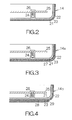
- Fig. 2 schematically illustrates the cross-section of the base 14 according to a first embodiment of the present invention.
- the base 14 includes a body 21.
- the body 21 is made of a biodegradable resin. Polylactic acid, cellulose acetate, cellulose polyacetate, or the like, is utilized as the biodegradable resin.
- the back surface or inner surface of the body 21 faces an inner space (interior) defined in the main enclosure 12.
- a heat insulating material 22 covers the front surface or outer surface of the body 21.
- the heat insulating material 22 is made of skin, rubber, elastomer, cloth, paper, resin, or the like. These materials are made of petroleum, oil, grease, mineral, plant, an inorganic material, an organic material, a biodegradable material, or the like.
- the thickness of the heat insulating material 22 is set within a range approximately between 0.1 [ ⁇ m] and 50 [ ⁇ m], for example.
- the thickness of the heat insulating material 22 may preferably be set at 10 [ ⁇ m] or more, for example.
- An adhesive 23 is interposed between the body 21 and the heat insulating material 22 so that the heat insulating material 22 is bonded to the front surface of the body 21.
- a resin adhesive such as an acrylic adhesive, an epoxy adhesive or a silicone adhesive may be utilized as the adhesive 23, for example.
- the adhesive 23 is interposed uniformly all over between the body 21 and the heat insulating material 22. A high bonding strength is established between the heat insulating material 22 and the outer surface of the body 21.
- a boss 24 is defined in the inner surface of the body 21, for example.
- a printed wiring board 25 of a motherboard is received on the boss 24, for example.
- a screw 26 is screwed into the boss 24 so that the printed wiring board 25 is fixed to the body 21.
- Electronic components, not shown, such as a central processing unit (CPU) chip and a graphic chip are mounted on the surface of the printed wiring board 25, for example. The electronic components generate heat during operation.
- CPU central processing unit
- the front surface of the body 21 is covered with the heat insulating material 22.
- Heat (a temperature rise) of approximately 0.1 degrees Celsius to 15 degrees Celsius is thus insulated (suppressed) depending on the thickness and the material of the heat insulating material 22.
- Heat radiated from the electronic components is kept inside the interior of the main enclosure 12.
- Heat insulation is established with a simplified structure.
- a fan, not shown, is utilized to discharge the heat into the outside through the side surface of the main enclosure 12, for example. Even when the notebook personal computer 11 is utilized on the lap of a user, heat transfer to the user is suppressed. The user can use the notebook personal computer 11 with less discomfort.
- a heating process is employed to melt the adhesive 23, for example.
- the heat insulating material 22 is thus easily detached from the outer surface of the body 21.
- a dryer or an oven is utilized for the heating process, for example. Since the body 21 is made of a biodegradable resin, the body 21 is easily degraded in soil. No waste is generated.
- emission of carbon-dioxide is reduced to approximately half an amount of the case where a petroleum resin is incinerated. This results in less deterioration of the environment.
- a resin adhesive such as an acrylic adhesive, an epoxy adhesive or a silicone adhesive is utilized to bond the heat insulating material 22, for example.
- the heat insulating material 22 is thus bonded to the outer surface of the body 21 with a high bonding strength. Unintentional detachment of the heat insulating material 22 is prevented.
- the heat insulating material 22 is allowed to achieve an excellent heat insulation performance.
- a double-sided adhesive tape may be utilized as the adhesive 23 in place of a resin adhesive, for example.
- a mold is first prepared for forming the body 21.
- a biodegradable resin melted from pellets, for example, is poured into the mold.
- a cooling process is applied to the biodegradable resin within the mold.
- the biodegradable resin is thus hardened or cured.
- the biodegradable resin is then taken out of the mold.
- the adhesive 23 is applied to the outer surface of the body 21.
- the heat insulating material 22 is then bonded to the outer surface of the body 21.
- the base 14 is in this manner produced.
- Fig. 3 schematically illustrates the cross-section of a base 14a according to a second embodiment of the present invention.
- a paint film 27 is interposed between the body 21 and the adhesive 23.
- a primer paint such as an acrylic paint, an urethane paint, a polyester paint or an epoxy paint is utilized as the paint film 27, for example.
- the thickness of the paint film 27 is set within a range approximately between 0.1 [ ⁇ m] to 50 [ ⁇ m], for example.
- the thickness of the paint film 27 may be preferably set at 10 [ ⁇ m] or more, for example.
- Like reference numerals are attached to the structure or components equivalent to those of the aforementioned base 14.
- the paint film 27 serves to enhance the bonding strength between the adhesive 23 and the heat insulating material 22.
- the heat insulating material 22 can easily be detached from the outer surface of the body 21 in the same manner as described above.
- the heat insulating material 22 serves to suppress heat transfer to a user.
- the body 21 is easily degraded in soil, for example. No waste is generated.
- emission of carbon-dioxide is reduced to approximately half an amount of the case where a petroleum resin is incinerated, with less impact on the environment.
- the body 21 is molded in the same manner as described above.
- a primer paint is applied to the outer surface of the body 21. Spraying may be employed for the application of a primer paint, for example.
- a primer paint is sprayed on the outer surface of the body 21.
- the paint film 27 is in this manner formed on the outer surface of the body 21.
- the adhesive 23 is applied to the surface of the paint film 27.
- the heat insulating material 22 is then bonded to the surface of the paint film 27.
- the base 14a is in this manner produced.
- Fig. 4 schematically illustrates the cross-section of a base 14b according to a third embodiment of the present invention.
- the base 14b includes a metal plate 28 bonded to the outer surface of the body 21.
- the metal plate 28 may be made of one of aluminium, copper, nickel, chromium, cobalt, zinc, titanium, magnesium, tin, gold, silver, platinum, and a platinum group metal, or made of a metal alloy containing any of these metallic materials, for example.
- the thickness of the metal plate 28 is set at 5 [mm] or smaller, for example.
- the extent of the metal plate 28 is set smaller than that of the body 21, for example.
- the contour of the metal plate 28 is located inside the contour of the body 21.
- the aforementioned adhesive 23 is utilized to bond the metal plate 28 to the body 21.
- the aforementioned heat insulating material 22 is bonded to the front surface or outer surface of the metal plate 28.
- the heat insulating material 22 is bonded to the outer surface of the body 21 outside the contour of the metal plate 28.
- An adhesive 29 is utilized for the bonding.
- the adhesive 29 is a substance identical to the adhesive 23.
- Like reference numerals are attached to the structure or components equivalent to those of the aforementioned base 14.
- the adhesives 23, 29 are utilized to bond the body 21, the metal plate 28 and the heat insulating material 22 to one another.
- the body 21, the metal plate 28 and the heat insulating material 22 are thus united together with a sufficient bonding strength. Unintentional detachment of the metal plate 28 and the heat insulating material 22 is prevented.
- the heat insulating material 22 is thus allowed to achieve an excellent heat insulation performance.
- the metal plate 28 serves to improve the rigidity of the base 14b. It should be noted that a double-sided adhesive tape may be utilized as the adhesive 23 and/or the adhesive 29 in place of a resin adhesive, for example.
- the contour of the metal plate 28 is set smaller than that of the body 21.
- the metal plate 28 serves to improve the rigidity of a part of the base 14b.
- a through hole and/or depression can easily be formed outside the contour of the metal plate 28, for example.
- the base 14b can thus be designed in various shapes. Alternatively, a through hole and/or depression may be formed in the metal plate 28.
- the base 14b can thus be designed in widely various shapes.
- the metal plate 28 and the heat insulating material 22 can easily be detached from the front surface of the base 14b by heating process, for example.
- a dryer or an oven is utilized for the heating process, for example.
- the heat insulating material 22 serves to suppress heat transfer to a user.
- the body 21 is easily degraded in soil, for example. No waste is generated. When the body 21 is incinerated for thermal recycle, for example, emission of carbon-dioxide is reduced to approximately half an amount of the case where a petroleum resin is incinerated, helping to preserve the environment.
- a mold 31 is prepared.
- the metal plate 28 has been set in a cavity 32 formed in the mold 31.
- the adhesive 23 is applied to the back surface or inner surface of the metal plate 28.
- a biodegradable resin in a fluid state is poured into the cavity 32. Cooling process is applied to the biodegradable resin within the mold 31. The biodegradable resin is thus hardened or cured.
- the biodegradable resin is then taken out of the mold 31.
- the adhesive 29 is applied to the outer surface of the body 21 and the outer surface of the metal plate 28.
- the heat insulating material 22 is then bonded to the outer surface of the body 21 and the outer surface of the metal plate 28.
- the base 14b is in this manner produced.
- Fig. 6 schematically illustrates the cross-section of a base 14c according to a fourth embodiment of the present invention.
- a paint film 33 is interposed between the metal plate 28 and adhesive 29 of the aforementioned base 14b.
- the paint film 33 is interposed between the outer surface of the body 21 and the adhesive 29 outside the contour of the metal plate 28.
- the paint film 33 is a substance identical to the aforementioned paint film 27.
- Like reference numerals are attached to the structure or components equivalent to those of the aforementioned base 14b.
- the body 21, the metal plate 28 and the heat insulating material 22 are united together with a higher bonding strength.
- the base 14c is allowed to enjoy the advantages identical to those obtained in the aforementioned embodiments.
- a primer paint may be applied to the body 21 and the metal plate 28 for producing the base 14c.
- the paint film 33 may be formed in the same manner as the aforementioned paint film 27.
- the adhesive 29 is then applied to the surface of the paint film 33.
- the heating insulating material 22 is thus bonded to the surface of the paint film 33.
- the base 14c is in this manner produced.
- the molded article made of a biodegradable resin according to the present invention may be applied to the cover 15 and/or the display enclosure 13.
- the molded article made of a biodegradable resin according to the present invention can be applied to various purposes including the enclosure of an electronic device such as a mobile phone terminal or a personal digital assistant (PDA), a component of an automobile, a building material, a component of a home appliance, an electrode of a fuel cell, a catalyst, or the like.
- PDA personal digital assistant
Landscapes
- Engineering & Computer Science (AREA)
- Mechanical Engineering (AREA)
- Computer Hardware Design (AREA)
- Theoretical Computer Science (AREA)
- General Engineering & Computer Science (AREA)
- Physics & Mathematics (AREA)
- Human Computer Interaction (AREA)
- General Physics & Mathematics (AREA)
- Manufacturing & Machinery (AREA)
- Mathematical Physics (AREA)
- Life Sciences & Earth Sciences (AREA)
- Biodiversity & Conservation Biology (AREA)
- Biological Depolymerization Polymers (AREA)
- Casings For Electric Apparatus (AREA)
- Injection Moulding Of Plastics Or The Like (AREA)
- Manufacture Of Macromolecular Shaped Articles (AREA)
- Laminated Bodies (AREA)
Abstract
An environmentally-friendly casing for electronic devices. An article has a body (21) made of a biodegradable resin. A heat insulating material (22) covers the surface of the body. A resin adhesive (23) is interposed between the body (21) and the heat insulating material (22). Heat insulation is achieved with such a simplified structure. A heating process is employed to melt the resin adhesive (23), for example. The heat insulating material(22) can thus easily be detached from the surface of the body (21). Since the body is made of a biodegradable resin, the body is easily degraded in soil, for example. No waste is generated. When the body is incinerated for thermal recycling, for example, emission of carbon-dioxide is reduced to half an amount of the case where a petroleum resin is incinerated, reducing the impact on the environment.
Description
- The present invention relates to an article made of resin often utilized as the enclosure of an electronic apparatus such as a notebook personal computer, a cellular or mobile phone terminal, or the like.
- A notebook personal computer includes an enclosure. The enclosure is made of a petroleum resin such as acrylonitrile butadiene styrene (ABS), polycarbonate (PC), or the like. A molding process is employed to form the enclosure. Heat generating elements such as a hard disk drive (HDD), a motherboard, and the like are incorporated in an inner space defined in the enclosure. Heat radiated from the heat generating elements is transferred to the enclosure.
- A petroleum resin has relatively low heat conductivity. However, a notebook personal computer can often be utilized on the lap of a user, for example. Heat is inevitably transferred from the enclosure to the body of the user. The user feels discomfort because of the heat. In addition, when the enclosure made of a petroleum resin is incinerated for thermal recycling, for example, a large amount of carbon-dioxide is emitted, which impacts the environment.
- It is accordingly desirable to provide an article made of a biodegradable resin, and a method of making the same, capable of achieving a function of heat insulation with a simplified structure and contributing to less deterioration of the environment.
- According to a first aspect of the present invention, there is provided an article comprising: a body made of a biodegradable resin; a heat insulating material covering the surface of the body; and a resin adhesive interposed between the body and the heat insulating material.
- The article allows the surface of the body to be covered with the heat insulating material. Heat insulation is achieved with such a simplified structure. A heating process is employed to melt the resin adhesive, for example. The heat insulating material can thus easily be detached from the surface of the body. Since the body is made of a biodegradable resin, the body is easily degraded in soil, for example. No waste is generated. When the body is incinerated for thermal recycling, for example, emission of carbon-dioxide is reduced to half an amount of the case where a petroleum resin is incinerated, which is more environmentally friendly.
- A specific method is provided to produce such an article. The method of making an article may comprise covering a body made of a biodegradable resin in a predetermined shape with a resin adhesive so that a heat insulating material is bonded to the surface of the body. The method serves to provide an article capable of achieving a function of heat insulation with a simplified structure and with less impact on the environment.
- The article may further comprise a paint film interposed between the body and the resin adhesive, the paint film being made of a primer paint. The paint film serves to enhance the bonding strength between the resin adhesive and the heat insulating material in the article.
- A specific method is provided to produce such an article. The method of making an article comprises: applying a primer paint to the surface of a body made of a biodegradable resin in a predetermined shape so as to form a paint film covering over the surface of the body; and covering the surface of the paint film with a resin adhesive so that a heat insulatingmaterial is bonded to the surface of the paint film. The method serves to provide an article capable of achieving a function of heat insulation with a simplified structure and more environmentally-friendly in the same manner as described above.
- In the article, the aforementioned resin adhesive may be made of at least one of an acrylic adhesive, an epoxy adhesive and a silicone adhesive. The resin adhesive serves to bond the heat insulating material to the surface of the body with a high bonding strength. Unintentional detachment of the heat insulating material is thus prevented. The heat insulating material is allowed to achieve an excellent heat insulation performance. It should be noted that a double-sided adhesive tape may be replaced with the resin adhesive, for example.
- According to a second aspect of the present invention, there is provided an article comprising: a body made of a biodegradable resin; a metal plate covering over the surface of the body; a resin adhesive interposed between the body and the metal plate; and a heat insulating material bonded to the surface of the metal plate.
- The article allows the resin adhesive to be interposed between the body and the metal plate. The body and the metal plate are united together with a sufficient bonding strength. Unintentional detachment of the metal plate is thus prevented. The metal plate serves to improve the rigidity of the article. Moreover, a heating process is employed to melt the resin adhesive, for example. The metal plate and the heat insulating material can thus easily be detached from the surface of the body. Since the body is made of a biodegradable resin, the body is easily degraded in soil, for example. No waste is generated. When the body is incinerated for thermal recycle, for example, emission of carbon-dioxide is reduced to half an amount of the case where a petroleum resin is incinerated. This results in less deterioration of the environment. It should be noted that a double-sided adhesive tape may be replaced with the resin adhesive, for example.
- A specific method is provided to produce such an article. The method of making an article comprises: setting a metal plate in a predetermined shape within a cavity defined in a mold, a resin adhesive being applied to the surface of the metal plate; forming a body in a predetermined shape by curing a biodegradable resin in a fluid state poured into the cavity, the body being united with the metal plate; and bonding a heat insulting element to the surface of the metal plate at the opposite side to the body after the body and the metal plate are taken out of the cavity. The method serves to provide an article capable of achieving a function of heat insulation with a simplified structure and less impact on the environment.
- The article may further comprise a paint film interposed between the metal plate and the heat insulating material, the paint film being made of a primer paint. The paint film allows the adhesive and the heat insulating material to be bonded with a higher bonding strength.
- A specific method is provided to produce such an article. The method of making an article comprises: setting a metal plate in a predetermined shape within a cavity defined in a mold, a resin adhesive being applied to the surface of the metal plate; forming a body in a predetermined shape by curing a biodegradable resin in a fluid state poured into the cavity, while the body is united with the metal plate; applying a primer paint to the surface of the metal plate at the opposite side of the body after the body and the metal plate are taken out of the cavity so as to form a paint film covering over the surface of the metal plate; and bonding a heat insulating material to the surface of the paint film. The method has the same effects as above.
- In the article, the aforementioned resin adhesive may be made of at least one of an acrylic adhesive, an epoxy adhesive and a silicone adhesive. The resin adhesive serves to bond the metal element to the surface of the body with a high bonding strength. Unintentional detachment of the metal plate is prevented. It should be noted that a double-sided adhesive tape may replaced with the resin adhesive, for example.
- The above and other features and advantages of the present invention will become apparent from the following description of the preferred embodiments in conjunction with the accompanying drawings, wherein:
-
Fig. 1 is a perspective view schematically illustrating a notebook personal computer as an example of an electronic apparatus; -
Fig. 2 is an enlarged partial sectional view schematically illustrating a molded article according to a first embodiment of the present invention; -
Fig. 3 is an enlarged partial sectional view schematically illustrating a molded article according to a second embodiment of the present invention; -
Fig. 4 is an enlarged partial sectional view schematically illustrating a molded article according to a third embodiment of the present invention; -
Fig. 5 is an enlarged partial sectional view schematically illustrating a metal plate set in a mold; and -
Fig. 6 is an enlarged partial sectional view schematically illustrating a molded article according to a fourth embodiment of the present invention. -
Fig. 1 schematically illustrates a notebookpersonal computer 11 as a specific example of an electronic apparatus according to the present invention. The notebookpersonal computer 11 includes a thinmain enclosure 12 and adisplay enclosure 13. Thedisplay enclosure 13 is coupled to themain enclosure 12 for relative swinging or pivotal movement. Themain enclosure 12 includes a molded article made of a biodegradable resin, namely abase 14, and acover 15 removably coupled to thebase 14. An input device such as akeyboard 16 is embedded in the front surface of thecover 15. Users manipulate thekeyboard 16 to input commands and/or data. - A liquid crystal display (LCD) panel module 17 is incorporated in the
display enclosure 13, for example. The screen of the LCD panel module 17 gets exposed in awindow opening 18 defined in thedisplay enclosure 13. Text data and graphics appear on the screen. Users can see the ongoing operation of the notebookpersonal computer 11 based on the appearing text data and graphics. Thedisplay enclosure 13 can be superposed on themain enclosure 12 through the pivotal movement relative to themain enclosure 12. -
Fig. 2 schematically illustrates the cross-section of the base 14 according to a first embodiment of the present invention. Thebase 14 includes abody 21. Thebody 21 is made of a biodegradable resin. Polylactic acid, cellulose acetate, cellulose polyacetate, or the like, is utilized as the biodegradable resin. The back surface or inner surface of thebody 21 faces an inner space (interior) defined in themain enclosure 12. - A
heat insulating material 22 covers the front surface or outer surface of thebody 21. Theheat insulating material 22 is made of skin, rubber, elastomer, cloth, paper, resin, or the like. These materials are made of petroleum, oil, grease, mineral, plant, an inorganic material, an organic material, a biodegradable material, or the like. The thickness of theheat insulating material 22 is set within a range approximately between 0.1 [µm] and 50 [µm], for example. The thickness of theheat insulating material 22 may preferably be set at 10 [µm] or more, for example. - An adhesive 23 is interposed between the
body 21 and theheat insulating material 22 so that theheat insulating material 22 is bonded to the front surface of thebody 21. A resin adhesive such as an acrylic adhesive, an epoxy adhesive or a silicone adhesive may be utilized as the adhesive 23, for example. Here, the adhesive 23 is interposed uniformly all over between thebody 21 and theheat insulating material 22. A high bonding strength is established between theheat insulating material 22 and the outer surface of thebody 21. - A
boss 24 is defined in the inner surface of thebody 21, for example. A printedwiring board 25 of a motherboard is received on theboss 24, for example. Ascrew 26 is screwed into theboss 24 so that the printedwiring board 25 is fixed to thebody 21. Electronic components, not shown, such as a central processing unit (CPU) chip and a graphic chip are mounted on the surface of the printedwiring board 25, for example. The electronic components generate heat during operation. - In the
base 14, the front surface of thebody 21 is covered with theheat insulating material 22. Heat (a temperature rise) of approximately 0.1 degrees Celsius to 15 degrees Celsius is thus insulated (suppressed) depending on the thickness and the material of theheat insulating material 22. Heat radiated from the electronic components is kept inside the interior of themain enclosure 12. Heat insulation is established with a simplified structure. A fan, not shown, is utilized to discharge the heat into the outside through the side surface of themain enclosure 12, for example. Even when the notebookpersonal computer 11 is utilized on the lap of a user, heat transfer to the user is suppressed. The user can use the notebookpersonal computer 11 with less discomfort. - A heating process is employed to melt the adhesive 23, for example. The
heat insulating material 22 is thus easily detached from the outer surface of thebody 21. A dryer or an oven is utilized for the heating process, for example. Since thebody 21 is made of a biodegradable resin, thebody 21 is easily degraded in soil. No waste is generated. When thebody 21 is incinerated for thermal recycling, for example, emission of carbon-dioxide is reduced to approximately half an amount of the case where a petroleum resin is incinerated. This results in less deterioration of the environment. - A resin adhesive such as an acrylic adhesive, an epoxy adhesive or a silicone adhesive is utilized to bond the
heat insulating material 22, for example. Theheat insulating material 22 is thus bonded to the outer surface of thebody 21 with a high bonding strength. Unintentional detachment of theheat insulating material 22 is prevented. Theheat insulating material 22 is allowed to achieve an excellent heat insulation performance. A double-sided adhesive tape may be utilized as the adhesive 23 in place of a resin adhesive, for example. - Next, description will be made on a method of making the
base 14. A mold is first prepared for forming thebody 21. A biodegradable resin, melted from pellets, for example, is poured into the mold. A cooling process is applied to the biodegradable resin within the mold. The biodegradable resin is thus hardened or cured. The biodegradable resin is then taken out of the mold. The adhesive 23 is applied to the outer surface of thebody 21. Theheat insulating material 22 is then bonded to the outer surface of thebody 21. Thebase 14 is in this manner produced. -
Fig. 3 schematically illustrates the cross-section of abase 14a according to a second embodiment of the present invention. In thebase 14a, apaint film 27 is interposed between thebody 21 and the adhesive 23. A primer paint such as an acrylic paint, an urethane paint, a polyester paint or an epoxy paint is utilized as thepaint film 27, for example. The thickness of thepaint film 27 is set within a range approximately between 0.1 [µm] to 50 [µm], for example. The thickness of thepaint film 27 may be preferably set at 10 [µm] or more, for example. Like reference numerals are attached to the structure or components equivalent to those of theaforementioned base 14. - In the
base 14a, thepaint film 27 serves to enhance the bonding strength between the adhesive 23 and theheat insulating material 22. Moreover, theheat insulating material 22 can easily be detached from the outer surface of thebody 21 in the same manner as described above. Theheat insulating material 22 serves to suppress heat transfer to a user. Thebody 21 is easily degraded in soil, for example. No waste is generated. When thebody 21 is incinerated for thermal recycle, for example, emission of carbon-dioxide is reduced to approximately half an amount of the case where a petroleum resin is incinerated, with less impact on the environment. - Next, description will be made of a method of making the
base 14a. Thebody 21 is molded in the same manner as described above. A primer paint is applied to the outer surface of thebody 21. Spraying may be employed for the application of a primer paint, for example. A primer paint is sprayed on the outer surface of thebody 21. Thepaint film 27 is in this manner formed on the outer surface of thebody 21. The adhesive 23 is applied to the surface of thepaint film 27. Theheat insulating material 22 is then bonded to the surface of thepaint film 27. Thebase 14a is in this manner produced. -
Fig. 4 schematically illustrates the cross-section of a base 14b according to a third embodiment of the present invention. Thebase 14b includes ametal plate 28 bonded to the outer surface of thebody 21. Themetal plate 28 may be made of one of aluminium, copper, nickel, chromium, cobalt, zinc, titanium, magnesium, tin, gold, silver, platinum, and a platinum group metal, or made of a metal alloy containing any of these metallic materials, for example. The thickness of themetal plate 28 is set at 5 [mm] or smaller, for example. - Here, the extent of the
metal plate 28 is set smaller than that of thebody 21, for example. Specifically, the contour of themetal plate 28 is located inside the contour of thebody 21. Theaforementioned adhesive 23 is utilized to bond themetal plate 28 to thebody 21. The aforementionedheat insulating material 22 is bonded to the front surface or outer surface of themetal plate 28. Theheat insulating material 22 is bonded to the outer surface of thebody 21 outside the contour of themetal plate 28. An adhesive 29 is utilized for the bonding. The adhesive 29 is a substance identical to the adhesive 23. Like reference numerals are attached to the structure or components equivalent to those of theaforementioned base 14. - In the
base 14b, theadhesives body 21, themetal plate 28 and theheat insulating material 22 to one another. Thebody 21, themetal plate 28 and theheat insulating material 22 are thus united together with a sufficient bonding strength. Unintentional detachment of themetal plate 28 and theheat insulating material 22 is prevented. Theheat insulating material 22 is thus allowed to achieve an excellent heat insulation performance. In addition, themetal plate 28 serves to improve the rigidity of thebase 14b. It should be noted that a double-sided adhesive tape may be utilized as the adhesive 23 and/or the adhesive 29 in place of a resin adhesive, for example. - The contour of the
metal plate 28 is set smaller than that of thebody 21. Themetal plate 28 serves to improve the rigidity of a part of thebase 14b. A through hole and/or depression can easily be formed outside the contour of themetal plate 28, for example. Thebase 14b can thus be designed in various shapes. Alternatively, a through hole and/or depression may be formed in themetal plate 28. Thebase 14b can thus be designed in widely various shapes. - The
metal plate 28 and theheat insulating material 22 can easily be detached from the front surface of thebase 14b by heating process, for example. A dryer or an oven is utilized for the heating process, for example. Theheat insulating material 22 serves to suppress heat transfer to a user. Thebody 21 is easily degraded in soil, for example. No waste is generated. When thebody 21 is incinerated for thermal recycle, for example, emission of carbon-dioxide is reduced to approximately half an amount of the case where a petroleum resin is incinerated, helping to preserve the environment. - Next, description will be made on a method of making the
base 14b. As shown inFig. 5 , amold 31 is prepared. Themetal plate 28 has been set in acavity 32 formed in themold 31. The adhesive 23 is applied to the back surface or inner surface of themetal plate 28. A biodegradable resin in a fluid state is poured into thecavity 32. Cooling process is applied to the biodegradable resin within themold 31. The biodegradable resin is thus hardened or cured. The biodegradable resin is then taken out of themold 31. The adhesive 29 is applied to the outer surface of thebody 21 and the outer surface of themetal plate 28. Theheat insulating material 22 is then bonded to the outer surface of thebody 21 and the outer surface of themetal plate 28. Thebase 14b is in this manner produced. -
Fig. 6 schematically illustrates the cross-section of abase 14c according to a fourth embodiment of the present invention. In thebase 14c, apaint film 33 is interposed between themetal plate 28 andadhesive 29 of theaforementioned base 14b. Thepaint film 33 is interposed between the outer surface of thebody 21 and the adhesive 29 outside the contour of themetal plate 28. Thepaint film 33 is a substance identical to theaforementioned paint film 27. Like reference numerals are attached to the structure or components equivalent to those of theaforementioned base 14b. - In the
base 14c, thebody 21, themetal plate 28 and theheat insulating material 22 are united together with a higher bonding strength. Thebase 14c is allowed to enjoy the advantages identical to those obtained in the aforementioned embodiments. A primer paint may be applied to thebody 21 and themetal plate 28 for producing thebase 14c. Thepaint film 33 may be formed in the same manner as theaforementioned paint film 27. The adhesive 29 is then applied to the surface of thepaint film 33. Theheating insulating material 22 is thus bonded to the surface of thepaint film 33. Thebase 14c is in this manner produced. - The molded article made of a biodegradable resin according to the present invention may be applied to the
cover 15 and/or thedisplay enclosure 13. The molded article made of a biodegradable resin according to the present invention can be applied to various purposes including the enclosure of an electronic device such as a mobile phone terminal or a personal digital assistant (PDA), a component of an automobile, a building material, a component of a home appliance, an electrode of a fuel cell, a catalyst, or the like.
Claims (10)
- An article comprising:a body made of a biodegradable resin;a heat insulating material covering over a surface of the body; anda resin adhesive interposed between the body and the heat insulating material.
- The article according to claim 1, further comprising a paint film interposed between the body and the resin adhesive, the paint film being made of a primer paint.
- The article according to claim 1 or 2, wherein the resin adhesive is made of at least one of an acrylic adhesive, an epoxy adhesive and a silicone adhesive.
- An article comprising:a body made of a biodegradable resin;a metal plate covering over a surface of the body;a resin adhesive interposed between the body and the metal plate; anda heat insulating material bonded to a surface of the metal plate.
- The article according to claim 4, further comprising a paint film interposed between the metal plate and the heat insulating material, the paint film being made of a primer paint.
- The article according to claim 4 or 5, wherein the resin adhesive is made of at least one of an acrylic adhesive, an epoxy adhesive and a silicone adhesive.
- A method of making an article, comprising covering a body made of a biodegradable resin in a predetermined shape with a resin adhesive so that a heat insulating material is bonded to a surface of the body.
- A method of making an article, comprising:applying a primer paint to a surface of a body made of a biodegradable resin in a predetermined shape so as to form a paint film covering over the surface of the body; andcovering a surface of the paint film with a resin adhesive so that a heat insulating material is bonded to the surface of the paint film.
- A method of making an article, comprising:setting a metal plate in a predetermined shape within a cavity defined in a mold, a resin adhesive applied to a surface of the metal plate;forming a body in a predetermined shape by curing a biodegradable resin in a fluid state poured into the cavity, the body united with the metal plate; andbonding a heat insulting element to the surface of the metal plate at an opposite side to the body after the body and the metal plate are taken out of the cavity.
- A method of making an article, comprising:setting a metal plate in a predetermined shape within a cavity defined in a mold, a resin adhesive applied to a surface of the metal plate;forming a body in a predetermined shape by curing a biodegradable resin in a fluid state poured into the cavity, the body united with the metal plate;applying a primer paint to the surface of the metal plate at an opposite side of the body after the body and the metal plate are taken out of the cavity so as to form a paint film covering over the surface of the metal plate; andbonding a heat insulating material to a surface of the paint film.
Applications Claiming Priority (1)
| Application Number | Priority Date | Filing Date | Title |
|---|---|---|---|
| JP2007294889A JP2009119672A (en) | 2007-11-13 | 2007-11-13 | Biodegradable resin molded product and manufacturing method thereof |
Publications (1)
| Publication Number | Publication Date |
|---|---|
| EP2060381A1 true EP2060381A1 (en) | 2009-05-20 |
Family
ID=40344604
Family Applications (1)
| Application Number | Title | Priority Date | Filing Date |
|---|---|---|---|
| EP20080163131 Withdrawn EP2060381A1 (en) | 2007-11-13 | 2008-08-28 | Article made of biodegradable resin and method of making the same |
Country Status (4)
| Country | Link |
|---|---|
| US (1) | US20090123760A1 (en) |
| EP (1) | EP2060381A1 (en) |
| JP (1) | JP2009119672A (en) |
| CN (1) | CN101437372B (en) |
Cited By (2)
| Publication number | Priority date | Publication date | Assignee | Title |
|---|---|---|---|---|
| EP2387297A2 (en) * | 2010-05-11 | 2011-11-16 | Ensto Finland Oy | Plastic enclosure and joint of a plastic enclosure |
| EP3479988A1 (en) * | 2017-11-06 | 2019-05-08 | Guangdong OPPO Mobile Telecommunications Corp., Ltd. | Housing, manufacturing method of the same, and electronic device with such a housing |
Families Citing this family (4)
| Publication number | Priority date | Publication date | Assignee | Title |
|---|---|---|---|---|
| US8194400B2 (en) | 2009-12-11 | 2012-06-05 | Kabushiki Kaisha Toshiba | Electronic device |
| KR101101491B1 (en) * | 2010-02-25 | 2012-01-03 | 삼성전기주식회사 | Antenna pattern frame, electronic device case and manufacturing mold thereof |
| TWI551208B (en) * | 2011-10-26 | 2016-09-21 | 仁寶電腦工業股份有限公司 | cabinet |
| US12212355B2 (en) * | 2022-09-05 | 2025-01-28 | Mirza Faizan | Biodegradable cover for a portable electronic device |
Citations (2)
| Publication number | Priority date | Publication date | Assignee | Title |
|---|---|---|---|---|
| US20070056472A1 (en) * | 2005-09-14 | 2007-03-15 | Fujitsu Limited | Molded resin component |
| US20070224408A1 (en) * | 2006-03-27 | 2007-09-27 | Fujitsu Limited | Resin molded article and production method thereof |
Family Cites Families (17)
| Publication number | Priority date | Publication date | Assignee | Title |
|---|---|---|---|---|
| JPS6099138A (en) * | 1983-11-02 | 1985-06-03 | Mitsui Petrochem Ind Ltd | Undercoating agent for coating of polyolefin molded article |
| JP3016331B2 (en) * | 1993-09-07 | 2000-03-06 | 富士通株式会社 | Manufacturing method of electronic equipment housing |
| JP2001057478A (en) * | 1997-05-16 | 2001-02-27 | Mitsubishi Electric Corp | Portable electronic devices |
| JP3106120B2 (en) * | 1997-05-16 | 2000-11-06 | 三菱電機株式会社 | Portable electronic devices |
| US6172786B1 (en) * | 1997-09-03 | 2001-01-09 | Konica Corporation | Optical deflection device and image forming apparatus therewith |
| JP2000085054A (en) * | 1998-09-14 | 2000-03-28 | Daicel Chem Ind Ltd | Disintegrable laminate and method for producing the same |
| JP4345183B2 (en) * | 1999-12-20 | 2009-10-14 | ソニー株式会社 | Electric appliances |
| JP4097566B2 (en) * | 2001-10-16 | 2008-06-11 | 東洋紡績株式会社 | Disassembly method of adhesive composite |
| JP4188071B2 (en) * | 2001-12-21 | 2008-11-26 | 大成プラス株式会社 | Composite of metal and thermoplastic composition and method for producing the same |
| JP2003342365A (en) * | 2002-05-24 | 2003-12-03 | Yokohama Rubber Co Ltd:The | Degradable resin and degradable resin composition comprising the same |
| JP2004002549A (en) * | 2002-05-31 | 2004-01-08 | Sekisui Chem Co Ltd | Adhesive structure peeling method and adhesive |
| JP2004051701A (en) * | 2002-07-17 | 2004-02-19 | Konishi Co Ltd | Heat peelable one-pack moisture curable elastic adhesive composition |
| JP4736314B2 (en) * | 2003-01-23 | 2011-07-27 | 住友金属工業株式会社 | Heat-dissipating surface-treated metal plate and housing for electronic equipment |
| DE602004026482D1 (en) * | 2003-12-05 | 2010-05-20 | Mitsui Chemicals Inc | Astomer |
| JP2005187533A (en) * | 2003-12-24 | 2005-07-14 | Asahi Kasei Chemicals Corp | Molded product of polylactic acid resin composition with excellent impact resistance and heat resistance |
| JP5007504B2 (en) * | 2006-01-25 | 2012-08-22 | 富士通株式会社 | Biodegradable resin molded product and manufacturing method thereof |
| CN101013338A (en) * | 2007-02-02 | 2007-08-08 | 林远镜 | Silicon rubber nanometer pad of hand-held computer and uses thereof |
-
2007
- 2007-11-13 JP JP2007294889A patent/JP2009119672A/en not_active Ceased
-
2008
- 2008-08-27 US US12/230,324 patent/US20090123760A1/en not_active Abandoned
- 2008-08-28 EP EP20080163131 patent/EP2060381A1/en not_active Withdrawn
- 2008-09-19 CN CN2008101491950A patent/CN101437372B/en not_active Expired - Fee Related
Patent Citations (2)
| Publication number | Priority date | Publication date | Assignee | Title |
|---|---|---|---|---|
| US20070056472A1 (en) * | 2005-09-14 | 2007-03-15 | Fujitsu Limited | Molded resin component |
| US20070224408A1 (en) * | 2006-03-27 | 2007-09-27 | Fujitsu Limited | Resin molded article and production method thereof |
Cited By (3)
| Publication number | Priority date | Publication date | Assignee | Title |
|---|---|---|---|---|
| EP2387297A2 (en) * | 2010-05-11 | 2011-11-16 | Ensto Finland Oy | Plastic enclosure and joint of a plastic enclosure |
| EP3479988A1 (en) * | 2017-11-06 | 2019-05-08 | Guangdong OPPO Mobile Telecommunications Corp., Ltd. | Housing, manufacturing method of the same, and electronic device with such a housing |
| US10875223B2 (en) | 2017-11-06 | 2020-12-29 | Guangdong Oppo Mobile Telecommunications Corp., Ltd. | Housing, manufacturing method of the same, and electronic device |
Also Published As
| Publication number | Publication date |
|---|---|
| US20090123760A1 (en) | 2009-05-14 |
| JP2009119672A (en) | 2009-06-04 |
| CN101437372B (en) | 2011-07-20 |
| CN101437372A (en) | 2009-05-20 |
Similar Documents
| Publication | Publication Date | Title |
|---|---|---|
| EP2060381A1 (en) | Article made of biodegradable resin and method of making the same | |
| CN101588709B (en) | Shielding structure | |
| JP5091947B2 (en) | Heat dissipating device for composite housing using biodegradable plastic | |
| US20100315399A1 (en) | Flexible Electronic Device and Method of Manufacture | |
| JP2004509448A (en) | Integrated shield for electronic component compositions and methods of making and using same | |
| JP2009016822A (en) | Cover for electronic equipment | |
| US20150070838A1 (en) | Bumper for a computing device and related assembly and method | |
| US7626133B2 (en) | Metallic panel assembly having ripple luster | |
| JPWO2008053967A1 (en) | Protection panel with touch input function for electronic device display window | |
| JP2001298277A (en) | Housing for electronic apparatus and method of manufacture | |
| US8081433B2 (en) | Electronic apparatus | |
| TWI543686B (en) | Shell for electronic machine and method for manufacturing the same | |
| TWI392437B (en) | Cover plate | |
| JP5239556B2 (en) | Molded product | |
| WO2008080533A1 (en) | An electronic device and method of assembling an electronic device | |
| WO2014105730A1 (en) | Foam core chassis | |
| KR100983065B1 (en) | Conductive Paste and Manufacturing Method Thereof | |
| CN102723315A (en) | Core radiation structure and liquid crystal display device with core radiation structure | |
| EP1813652B1 (en) | Article made of biodegradable resin and method of making the same | |
| CN212649966U (en) | Display device | |
| JPH11274793A (en) | Electromagnetic wave shielding packing and production thereof | |
| CN105676979A (en) | Terminal with display function | |
| CN201094169Y (en) | Vacuum forming's waterproof dustproof construction | |
| CN208104275U (en) | A single-sided conductive tape | |
| WO2021006901A1 (en) | Electronic device housings with shock absorbers |
Legal Events
| Date | Code | Title | Description |
|---|---|---|---|
| PUAI | Public reference made under article 153(3) epc to a published international application that has entered the european phase |
Free format text: ORIGINAL CODE: 0009012 |
|
| AK | Designated contracting states |
Kind code of ref document: A1 Designated state(s): AT BE BG CH CY CZ DE DK EE ES FI FR GB GR HR HU IE IS IT LI LT LU LV MC MT NL NO PL PT RO SE SI SK TR |
|
| AX | Request for extension of the european patent |
Extension state: AL BA MK RS |
|
| 17P | Request for examination filed |
Effective date: 20091116 |
|
| AKX | Designation fees paid |
Designated state(s): DE FR GB |
|
| STAA | Information on the status of an ep patent application or granted ep patent |
Free format text: STATUS: THE APPLICATION IS DEEMED TO BE WITHDRAWN |
|
| 18D | Application deemed to be withdrawn |
Effective date: 20150303 |