EP2054094B1 - Method to repair a damaged intervertebral disc through the use of a bioadhesive, thermogelling hydrogel - Google Patents
Method to repair a damaged intervertebral disc through the use of a bioadhesive, thermogelling hydrogel Download PDFInfo
- Publication number
- EP2054094B1 EP2054094B1 EP07841161A EP07841161A EP2054094B1 EP 2054094 B1 EP2054094 B1 EP 2054094B1 EP 07841161 A EP07841161 A EP 07841161A EP 07841161 A EP07841161 A EP 07841161A EP 2054094 B1 EP2054094 B1 EP 2054094B1
- Authority
- EP
- European Patent Office
- Prior art keywords
- groups
- aldehyde
- composition
- component
- polymer
- Prior art date
- Legal status (The legal status is an assumption and is not a legal conclusion. Google has not performed a legal analysis and makes no representation as to the accuracy of the status listed.)
- Active
Links
- 0 *[C@@](CC(C*=*[*+]C(*)CC1)C1I=C)CN Chemical compound *[C@@](CC(C*=*[*+]C(*)CC1)C1I=C)CN 0.000 description 1
Images





Classifications
-
- A—HUMAN NECESSITIES
- A61—MEDICAL OR VETERINARY SCIENCE; HYGIENE
- A61L—METHODS OR APPARATUS FOR STERILISING MATERIALS OR OBJECTS IN GENERAL; DISINFECTION, STERILISATION OR DEODORISATION OF AIR; CHEMICAL ASPECTS OF BANDAGES, DRESSINGS, ABSORBENT PADS OR SURGICAL ARTICLES; MATERIALS FOR BANDAGES, DRESSINGS, ABSORBENT PADS OR SURGICAL ARTICLES
- A61L27/00—Materials for grafts or prostheses or for coating grafts or prostheses
- A61L27/50—Materials characterised by their function or physical properties, e.g. injectable or lubricating compositions, shape-memory materials, surface modified materials
-
- A—HUMAN NECESSITIES
- A61—MEDICAL OR VETERINARY SCIENCE; HYGIENE
- A61L—METHODS OR APPARATUS FOR STERILISING MATERIALS OR OBJECTS IN GENERAL; DISINFECTION, STERILISATION OR DEODORISATION OF AIR; CHEMICAL ASPECTS OF BANDAGES, DRESSINGS, ABSORBENT PADS OR SURGICAL ARTICLES; MATERIALS FOR BANDAGES, DRESSINGS, ABSORBENT PADS OR SURGICAL ARTICLES
- A61L27/00—Materials for grafts or prostheses or for coating grafts or prostheses
- A61L27/14—Macromolecular materials
-
- A—HUMAN NECESSITIES
- A61—MEDICAL OR VETERINARY SCIENCE; HYGIENE
- A61L—METHODS OR APPARATUS FOR STERILISING MATERIALS OR OBJECTS IN GENERAL; DISINFECTION, STERILISATION OR DEODORISATION OF AIR; CHEMICAL ASPECTS OF BANDAGES, DRESSINGS, ABSORBENT PADS OR SURGICAL ARTICLES; MATERIALS FOR BANDAGES, DRESSINGS, ABSORBENT PADS OR SURGICAL ARTICLES
- A61L27/00—Materials for grafts or prostheses or for coating grafts or prostheses
- A61L27/50—Materials characterised by their function or physical properties, e.g. injectable or lubricating compositions, shape-memory materials, surface modified materials
- A61L27/52—Hydrogels or hydrocolloids
-
- C—CHEMISTRY; METALLURGY
- C08—ORGANIC MACROMOLECULAR COMPOUNDS; THEIR PREPARATION OR CHEMICAL WORKING-UP; COMPOSITIONS BASED THEREON
- C08L—COMPOSITIONS OF MACROMOLECULAR COMPOUNDS
- C08L101/00—Compositions of unspecified macromolecular compounds
- C08L101/02—Compositions of unspecified macromolecular compounds characterised by the presence of specified groups, e.g. terminal or pendant functional groups
-
- A—HUMAN NECESSITIES
- A61—MEDICAL OR VETERINARY SCIENCE; HYGIENE
- A61L—METHODS OR APPARATUS FOR STERILISING MATERIALS OR OBJECTS IN GENERAL; DISINFECTION, STERILISATION OR DEODORISATION OF AIR; CHEMICAL ASPECTS OF BANDAGES, DRESSINGS, ABSORBENT PADS OR SURGICAL ARTICLES; MATERIALS FOR BANDAGES, DRESSINGS, ABSORBENT PADS OR SURGICAL ARTICLES
- A61L2430/00—Materials or treatment for tissue regeneration
- A61L2430/38—Materials or treatment for tissue regeneration for reconstruction of the spine, vertebrae or intervertebral discs
Definitions
- the present invention relates to an apparatus and/or method for repairing or supplementing an intervertebral disc and more particularly to an apparatus and/or method for repairing or supplementing a nucleus pulposus of an intervertebral disc using a bioadhesive thermogelling hydrogel.
- the human intervertebral disc is comprised of two major structures, an outer or peripheral tendinous structure, and an inner gelatinous nucleus pulposus located in a generally central region. Degeneration of the nucleus, typically associated with natural aging, leads to disc degradation and loss of function.
- a composition may be provided for repairing a damaged intervertebral disc through the use of a bioadhesive, thermoresponsive hydrogel that can be cross linked with the surrounding tissue so as to potentially serve as a nucleus pulposus replacement or augmentation along with serving to repair annular tears or fissure.
- the bioadhesive thermogelling hydrogel composition may be formulated with a thermoresponsive polymer component, an amine-containing polymer component and a crosslinking component.
- the composition may include a thermoresponsive polymer component, an amine-containing polymer component, and a crosslinker.
- the composition is provided in such a manner that the amine-containing polymer and the crosslinker do not react to create crosslinkage until after they have been injected into the desired location.
- the crosslinker reacts with the amine-containing polymer in the intervertebral disc.
- the amine-containing polymer is preferably separated from the crosslinker until the thermoresponsive polymer, the amine-containing polymer and the crosslinker are inserted into the intervertebral disc.
- the thermoresponsive polymer component and the amine-containing component may be inserted into the intervertebral disc collectively and the crosslinker may be inserted into the intervertebral disc after the thermoresponsive polymer component and the amine-containing component have been inserted into the intervertebral disc.
- thermoresponsive polymer component and the crosslinker may be inserted into the intervertebral disc collectively and the amine-containing component may be inserted into the intervertebral disc after the thermoresponsive polymer component and the crosslinker have been inserted into the intervertebral disc.
- thermoresponsive polymer composition may be grafted with an amino functional group and a crosslinker.
- the thermoresponsive polymer component may be reacted to include aldehyde groups to promote crosslinkage.
- the thermoresponsive polymer may be coupled with a poly(ethylene imine) (PEI).
- PEI poly(ethylene imine)
- the thermoresponsive polymer can be either blended with PEI or grafted with PEI.
- thermoresponsive polymer component and the amine-containing polymer component may be blended in an aqueous solution.
- the thermoresponsive polymer component and the amine-containing polymer component may exist as copolymers.
- the thermoresponsive polymer component may be grafted with a whole or parts of the amine-containing polymer.
- the amine-containing polymer component may be an amino functional monomer, the amino functional monomer may be attached to the thermoresponsive polymer component.
- kits for repairing or augmenting an intervertebral disc may also be provided, the kit may include a first compartment having an injectable solution incorporating a thermoresponsive polymer and a first component, and a second compartment incorporating a second component, wherein the first component is selected from one of an amine-containing polymer or a di-functional or multi-functional aldehyde and the second component is the other one of an amine-containing polymer or a di-functional/multi-functional aldehyde.
- the kit for repairing or augmenting an intervertebral disc may include three compartments wherein the first compartment contains a thermoresponsive polymer, the second compartment incorporates an amine-containing polymer and the third compartment contains a di-functional or multi-functional aldehyde.
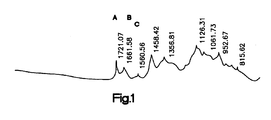
- FIG. 1 is a FTIR spectrum for a PEI mixture with glutaraldehyde
- FIG. 2 is a 1 H NMR spectrum for PNIPAAm-PEG/PEI blend, in accordance with an exemplary embodiment of the composition
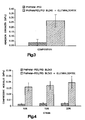
- FIG. 3 is a graph showing the comparative adhesion strength between PNIPAAM-PEG and PNIPAAm-PEG/PEI blend + glutaraldehyde;
- FIG. 4 is a graph showing the comparative modulus between PNIPAAM-PEG and PNIPAAm-PEG/PEI blend + glutaraldehyde;
- FIG. 5 is a FTIR spectrum for PNIPAAm-PEG/PEI blends injected with glutaraldehyde;
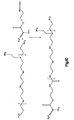
- FIG. 6 is a reaction scheme for synthesis of PEG monomethacrylate aldehyde
- FIG. 7 is a chemical formula of PEG-dialdehyde
- FIG. 8 is a reaction scheme for synthesis of urethane linkage by reacting amine terminated PEG monomethacrylate with a carbonate;
- FIG. 9 is a reaction scheme for synthesis of urethane linkage by reacting PEG monomethacrylate with an isocyanate
- FIG. 10 is a reaction scheme for coupling of 2-isocyanatoethyl methacrylate and PEI;
- FIG. 11 is a FTIR spectrum for 2-isocyanatoethyl methacrylate and methacrylate functionalized PEI;
- FIG. 12 is a 13 C NMR spectrum for methacrylate functionalized PEI
- FIG. 13 is a 1 H NMR spectrum for methacrylate functionalized PEI
- FIG. 14 is a reaction scheme for synthesis of PNIPAAm-PEI branched copolymer
- FIG. 15 is a 1 H NMR spectrum for PNIPAAm-PEI grafted copolymer
- FIG. 16 is a reaction scheme for synthesis of PEG monomethacrylate aldehyde
- FIG. 17 is a reaction scheme for synthesis of PEG dialdehyde
- FIG. 18 is a reaction scheme for synthesis of PEG dialdehyde.
- FIG. 19 is a FTIR spectrum for PEG dialdehyde.
- thermogelling hydrogel composition may be formulated with a thermoresponsive polymer component, an amine-containing polymer component and a crosslinking component.
- bioadhesive thermogelling hydrogel composition will be described as and may generally be used in the spine (for example, in the lumbar, thoracic or cervical regions), those skilled in the art will appreciate that the bioadhesive thermogelling hydrogel composition may be used in other parts of the body such as, for example, joints, long bones or bones in the hand, face, feet, extremities, cranium, etc.
- the bioadhesive thermogelling hydrogel composition may include three main components: a thermal responsive polymer, an amine-containing polymer and a crosslinking di-functional or multi-functional aldehyde. All three components can be modified and combined in numerous ways to serve the need of the system as long as the amine-containing component is kept separate from the crosslinking component until the components are injected to the desired in situ location.
- thermoresponsive polymer component, the amine-containing polymer component and the crosslinking component may be individually stored in solution form (e.g. liquid form) allowing for easier injection into the body.
- the thermoresponsive polymer and the amine-containing polymer component may be simultaneously injected into the intervertebral disc.
- the thermoresponsive polymer and the amine-containing polymer component may be sequentially injected into the intervertebral disc.
- the injected amine-containing polymer component may become trapped within the thermoresponsive polymer as gelation occurs. Because amine-containing polymer can be hydrophilic, the hydrogel can swell. The resulting hydrogel may have properties that mimic the biomechanical function of a healthy nucleus. The resulting hydrogel can have the requisite water content and mechanical properties to restore the function of the nucleus.
- the hydrogel may then be self-cross linked and reacted to the surrounding tissues, including annular and nucleus tissue through the addition of the crosslinking component, such as a small amount of di-functional dialdehyde monomers or macromers.
- the amine-containing component and crosslinking component react and create cross-linkages with each other and the surrounding tissue.
- the crosslinking component may be injected without waiting for gelation to occur.
- thermoresponsive polymer and the crosslinking component may be simultaneously or sequentially injected into the intervertebral disc, followed by injection of the amine-containing polymer component.
- the solutions may be injected into the intervertebral disc space by any means including, but not limited to, via a cannula, needle, syringe, etc.
- the crosslinking component may be injected into thermal responsive polymer component and the amine-containing component thus enabling the creation of cross linking between the amine-containing component and the crosslinking component to preferably occur from the inner region to the periphery as the crosslinking component (e.g. dialdehyde) slowly diffuses through the hydrogel network.
- the amine-containing component may be injected into thermal responsive polymer component and the crosslinking component.
- the thermoresponsive polymer component may be any thermoresponsive polymer including, but not limited to, copolymers of poly(ethylene oxide) (PEO) and poly(propylene oxide) (PPO), copolymers of PEO and poly(lactic acid) (PLA) as well as other polymers that exhibit a phase transformation between 27-35°C.
- the thermoresponsive copolymer may be PNIPAAm-PEG - a poly(n-isopropyl acrylamide) (PNIPAAm) or its copolymers with poly(ethylene glycol) (PEG).
- An exemplary embodiment of the thermoresponsive polymer is provided in United States Patent Application No. 10/837, 082 entitled "Thermogelling polymer blends for biomaterial applications". It is believed that at a physiological temperature, hydrogel is formed by physical crosslinks.
- Cationic polymers may be any cationic polymer.
- the cationic polymer may be poly(ethylene imine) (PEI) as it has a high density of cationic groups along the chain.
- a crosslinking component may also be included in the bioadhesive composition.
- the crosslinking component may be, but is not limited to, multifunctional aldehyde molecules.
- the crosslinking molecule may be di-functional dialdehyde molecules such as, for example, 1-4 butanedial, 1-5 pentanedial, (also called glutaraldehyde), and macromers of di-functionalized PEG-dials.
- the crosslinking component preferably serves to crosslink the cationic polymer to itself as well as to connect the cationic polymer to the natural tissues that the polymers may contact, promoting overall tissue adhesion. The formation of crosslinks may increase the stiffness of the resulting system and further stabilize the hydrogel network.
- FIG. 1 shows the Fourier Transform Infrared (FTIR) difference spectroscopy for the PEI/glutaraldehyde mixture.
- FTIR Fourier Transform Infrared
- the samples were loaded in an Instron mechanical testing system (Instron Model 4442, Park Ridge, IL) and compressed at a strain rate of 100%•min -1 while submerged in a 37°C phosphate buffer saline (PBS) bath. Load and displacement data were recorded with the Instron Series IX software and converted to stress and strain values. The compressive moduli at 10, 15, and 20% strain were approximated as the slope of the chord drawn between 5 and 15% strain, 10 and 20% strain, and 15 and 20% strain, respectively.
- Instron mechanical testing system Instron Model 4442, Park Ridge, IL
- PBS 37°C phosphate buffer saline
- FIG. 3 shows the adhesion strength of PNIPAAm-PEG/PEI hydrogels with and without glutaraldehyde injection. Hydrogels that were injected with glutaraldehyde show much greater adhesion strength than hydrogels without glutaraldehyde injection.
- FIG. 4 shows the compressive modulus of PNIPAAm-PEG/PEI hydrogels with and without glutaraldehyde injection. Hydrogels that were injected with glutaraldehyde showed significant increase in stiffness as a result of crosslinking between the aldehyde and amine groups.
- FIG. 5 shows the FTIR spectrum for PNIPAAm-PEG/PEI hydrogels cross-linked by glutaraldehyde.
- the peaks for the Amide I and II bands on PNIPAAm (1652 and 1540 cm -1 , respectively) have been subtracted out due to overlap with peaks of interest for the crosslinking chemistry.
- Each of the three components can be modified. Either the amine-containing polymer component or the crosslinking component can be blended or reacted with the thermoresponsive polymer component before injection. However, amine-containing polymer component must be kept separately from crosslinking component until in situ injection.
- PNIPAAm-PEG is blended with PEI.
- copolymers of PNIPAAm-PEG are grafted with PEI, in which the PEI is covalently attached to the PNIPAAm-PEG. This can potentially allow for better chain interpenetration into the tissue allowing for a better connection to the tissue.
- aldehyde groups can be conjugated to one end of a PEG chain that possesses a methacrylate group on the other end, as shown in Fig. 6 .
- the methacrylate group can be reacted in the presence of NIPAAm monomer to form a copolymer.
- the aldehyde can then be further reacted to crosslink the material or covalently linked with surrounding tissues.
- aldehyde groups can be conjugated to the ends of PEG chains to synthesize PEG-dialdehyde.
- FIG. 7 shows the chemical formula of PEG-dialdehyde.
- urethane linkages can be used to incorporate tissue adhesive group to PEG chains. This involves reacting a PEG containing a primary amine end group on one or both ends of the chain with a carbonate to form a urethane carbamate linkage, as shown in FIG. 8 .
- PEG-diol can be reacted with isocyanates to create stable urethane linkages. This example involves reacting a PEG containing an alcohol end group on one or both ends of the chain with an isocyanate to form a urethane carbamate linkage (as shown in FIG. 9 ).
- the IR spectrum for 2-isocyanatoethyl methacrylate shows absorption for the isocyanate at 2271 cm -1 and one for the urethane carbonyl at 1719 cm -1 .
- the IR spectrum for the product shows a peak at 1620 cm -1 for the urea bond formed from linking the 2-isocyanateothyl methacrylate and PEI and an absence of the peak for the isocyanate.
- FIG. 12 shows the 13 C NMR spectrum for the same reaction product.
- the spectrum shows a characteristic signal at 159 ppm for the urea carbonyl (A) and an absence of the signal at 122 ppm for the urethane carbonyl (B) on the unreacted isocyanate group.
- FIG. 13 shows the 1 H NMR spectrum for the methacrylate functionalized PEI.
- the methacrylate functionalized PEI and N-isopropylacrylamide (NIPAAm) monomers (Acros Organics) were copolymerized in chloroform at 65°C for 48 hours ( FIG. 14 ).
- the reaction was initiated by 2,2'-azobisisobutyronitrile (AIBN).
- AIBN 2,2'-azobisisobutyronitrile
- the chloroform was evaporated from the reaction mixtures after polymerization was complete.
- the unreacted NIPAAm monomer was removed by heating the product to 45°C in n-hexane.
- the purified polymer was isolated by vacuum filtration and dried under vacuum overnight. 1 H NMR and 13 C NMR spectrum were recorded in chloroform (Varian 300, Palo Alto, CA).
- FIG. 15 shows the 1 H NMR spectrum for a PNIPAAm-PEI graft copolymer. Characteristic peaks are present for both components in the copolymer.
- PEG monomethacrylate 400 g/mol (Polysciences) was reacted in the presence of 10x molar excess acetic anhydride (Sigma-Aldrich) and triethylamine (Sigma-Aldrich) in dimethyl sulfoxide at room temperature for 48 hours (see FIG. 16 ). The reaction mixture was then added drop wise to ethyl ether and precipitated two more times from methylene chloride in ethyl ether.
- the PEG monomethacrylate aldehyde and NIPAAm monomer (Acros Organics) were copolymerized in methanol at 65°C for 48 hours. The reaction was initiated by AIBN. The methanol was evaporated from the reaction mixtures after polymerization was complete. The unreacted NIPAAm monomer was removed by heating the product to 45°C in n-hexane. The purified polymer was isolated by vacuum filtration and dried under vacuum overnight.
- FIG. 17 shows the reaction scheme of for synthesis of PEG-dialdehyde.
- the reaction starts with PEG diol, acetic anhydride (Sigma-Aldrich) and triethylamine (Sigma-Aldrich) in dimethyl sulfoxide (DMSO) for 48 hours at room temperature.
- DMSO dimethyl sulfoxide
- the reaction mixture was then added drop wise to ethyl ether and precipitated two more times from methylene chloride in ethyl ether.
- the reaction produces a PEG-dialdehyde with aldehyde groups on each end of the chain that can be precipitated in ether and ethyl acetate.
- These PEG-dialdehyde chains can be blended with PNIPAAm and/or copolymers of PNIPAAm. Crosslinking can then be initiated to form an interpenetrating network by the injection of PEI.
- FIG. 18 shows a second method for synthesis of PEG-dialdehyde by oxidation of PEG diol.
- the NMR spectrum did not have a peak at 9.5 ppm for the aldehyde proton (data not shown).
- any or all of the components described herein such as, for example, the thermoresponsive polymer component, the amine-containing polymer component, the crosslinking component, etc . may be provided in sets or kits so that the surgeon may select various combinations of components to perform a repair and/or augmentation which is configured specifically for the particular needs/anatomy of a patient. It should be noted that one or more of each component may be provided in a kit or set. In some kits or sets, the same components may be provided in different amounts, compositions, etc .
Landscapes
- Health & Medical Sciences (AREA)
- Chemical & Material Sciences (AREA)
- Medicinal Chemistry (AREA)
- Animal Behavior & Ethology (AREA)
- Public Health (AREA)
- Transplantation (AREA)
- Epidemiology (AREA)
- Life Sciences & Earth Sciences (AREA)
- Dermatology (AREA)
- General Health & Medical Sciences (AREA)
- Oral & Maxillofacial Surgery (AREA)
- Veterinary Medicine (AREA)
- Chemical Kinetics & Catalysis (AREA)
- Polymers & Plastics (AREA)
- Organic Chemistry (AREA)
- Dispersion Chemistry (AREA)
- Materials For Medical Uses (AREA)
- Prostheses (AREA)
- Application Of Or Painting With Fluid Materials (AREA)
Abstract
Description
- The present invention relates to an apparatus and/or method for repairing or supplementing an intervertebral disc and more particularly to an apparatus and/or method for repairing or supplementing a nucleus pulposus of an intervertebral disc using a bioadhesive thermogelling hydrogel.
- The human intervertebral disc is comprised of two major structures, an outer or peripheral tendinous structure, and an inner gelatinous nucleus pulposus located in a generally central region. Degeneration of the nucleus, typically associated with natural aging, leads to disc degradation and loss of function.
- Chronic back pain caused by injury or age-related degeneration of an intervertebral disc is a condition experience by many patients. Current treatments range from bed rest to highly invasive surgical procedures, including spinal fusion and total disc replacement.
- Replacement or supplementation of the nucleus pulposus can relieve pain, restore healthy physiologic function to the disc and/or prevent additional wear or deterioration on the annulus. Currently, few minimally invasive techniques exist for implantation of hydrogels into a selected site of a mammal. Even fewer techniques can provide the physiological/mechanical properties to restore the damaged disc to its full capacity.
From XP 005272771 XU et al. a thermoresponsive polymer is known in which the hydroxyl groups are cross-linked with glutaraldehyde. The tertiary amino groups of that polymer cannot react with the aldehyde groups of the glutaraldhyde. - Accordingly, it is desirable to provide a way for repairing a damaged intervertebral disc that overcomes drawbacks of conventional systems and methods. Other objects and advantages of the present invention shall become apparent from the accompanying description and examples.
- Generally speaking, a composition may be provided for repairing a damaged intervertebral disc through the use of a bioadhesive, thermoresponsive hydrogel that can be cross linked with the surrounding tissue so as to potentially serve as a nucleus pulposus replacement or augmentation along with serving to repair annular tears or fissure. The bioadhesive thermogelling hydrogel composition may be formulated with a thermoresponsive polymer component, an amine-containing polymer component and a crosslinking component.
- In an exemplary embodiment, the composition may include a thermoresponsive polymer component, an amine-containing polymer component, and a crosslinker. Preferably, the composition is provided in such a manner that the amine-containing polymer and the crosslinker do not react to create crosslinkage until after they have been injected into the desired location.
- Preferably, the crosslinker reacts with the amine-containing polymer in the intervertebral disc. The amine-containing polymer is preferably separated from the crosslinker until the thermoresponsive polymer, the amine-containing polymer and the crosslinker are inserted into the intervertebral disc. The thermoresponsive polymer component and the amine-containing component may be inserted into the intervertebral disc collectively and the crosslinker may be inserted into the intervertebral disc after the thermoresponsive polymer component and the amine-containing component have been inserted into the intervertebral disc. Alternatively, the thermoresponsive polymer component and the crosslinker may be inserted into the intervertebral disc collectively and the amine-containing component may be inserted into the intervertebral disc after the thermoresponsive polymer component and the crosslinker have been inserted into the intervertebral disc.
- The thermoresponsive polymer composition may be grafted with an amino functional group and a crosslinker. The thermoresponsive polymer component may be reacted to include aldehyde groups to promote crosslinkage. The thermoresponsive polymer may be coupled with a poly(ethylene imine) (PEI). The thermoresponsive polymer can be either blended with PEI or grafted with PEI.
- The thermoresponsive polymer component and the amine-containing polymer component may be blended in an aqueous solution. The thermoresponsive polymer component and the amine-containing polymer component may exist as copolymers. The thermoresponsive polymer component may be grafted with a whole or parts of the amine-containing polymer.
- The amine-containing polymer component may be an amino functional monomer, the amino functional monomer may be attached to the thermoresponsive polymer component.
- A kit for repairing or augmenting an intervertebral disc may also be provided, the kit may include a first compartment having an injectable solution incorporating a thermoresponsive polymer and a first component, and a second compartment incorporating a second component, wherein the first component is selected from one of an amine-containing polymer or a di-functional or multi-functional aldehyde and the second component is the other one of an amine-containing polymer or a di-functional/multi-functional aldehyde.
- In yet another exemplary embodiment, the kit for repairing or augmenting an intervertebral disc may include three compartments wherein the first compartment contains a thermoresponsive polymer, the second compartment incorporates an amine-containing polymer and the third compartment contains a di-functional or multi-functional aldehyde.
- The system is explained in even greater detail in the following exemplary drawings. The drawings are merely exemplary to illustrate the structure of preferred devices and certain features that may be used singularly or in combination with other features. The invention should not be limited to the embodiments shown.
-
FIG. 1 is a FTIR spectrum for a PEI mixture with glutaraldehyde; -
FIG. 2 is a 1H NMR spectrum for PNIPAAm-PEG/PEI blend, in accordance with an exemplary embodiment of the composition; -
FIG. 3 is a graph showing the comparative adhesion strength between PNIPAAM-PEG and PNIPAAm-PEG/PEI blend + glutaraldehyde; -
FIG. 4 is a graph showing the comparative modulus between PNIPAAM-PEG and PNIPAAm-PEG/PEI blend + glutaraldehyde; -
FIG. 5 is a FTIR spectrum for PNIPAAm-PEG/PEI blends injected with glutaraldehyde; -
FIG. 6 is a reaction scheme for synthesis of PEG monomethacrylate aldehyde; -
FIG. 7 is a chemical formula of PEG-dialdehyde; -
FIG. 8 is a reaction scheme for synthesis of urethane linkage by reacting amine terminated PEG monomethacrylate with a carbonate; -
FIG. 9 is a reaction scheme for synthesis of urethane linkage by reacting PEG monomethacrylate with an isocyanate; -
FIG. 10 is a reaction scheme for coupling of 2-isocyanatoethyl methacrylate and PEI; -
FIG. 11 is a FTIR spectrum for 2-isocyanatoethyl methacrylate and methacrylate functionalized PEI; -
FIG. 12 is a 13C NMR spectrum for methacrylate functionalized PEI; -
FIG. 13 is a 1H NMR spectrum for methacrylate functionalized PEI; -
FIG. 14 is a reaction scheme for synthesis of PNIPAAm-PEI branched copolymer; -
FIG. 15 is a 1H NMR spectrum for PNIPAAm-PEI grafted copolymer; -
FIG. 16 is a reaction scheme for synthesis of PEG monomethacrylate aldehyde; -
FIG. 17 is a reaction scheme for synthesis of PEG dialdehyde; -
FIG. 18 is a reaction scheme for synthesis of PEG dialdehyde; and -
FIG. 19 is a FTIR spectrum for PEG dialdehyde. - Certain exemplary embodiments of the invention will now be described with reference to the drawings. In general, such embodiments relate to a bioadhesive thermogelling hydrogel composition. The bioadhesive thermogelling hydrogel composition may be formulated with a thermoresponsive polymer component, an amine-containing polymer component and a crosslinking component.
- While the bioadhesive thermogelling hydrogel composition will be described as and may generally be used in the spine (for example, in the lumbar, thoracic or cervical regions), those skilled in the art will appreciate that the bioadhesive thermogelling hydrogel composition may be used in other parts of the body such as, for example, joints, long bones or bones in the hand, face, feet, extremities, cranium, etc.
- The bioadhesive thermogelling hydrogel composition may include three main components: a thermal responsive polymer, an amine-containing polymer and a crosslinking di-functional or multi-functional aldehyde. All three components can be modified and combined in numerous ways to serve the need of the system as long as the amine-containing component is kept separate from the crosslinking component until the components are injected to the desired in situ location.
- At room temperature and prior to injection, the thermoresponsive polymer component, the amine-containing polymer component and the crosslinking component may be individually stored in solution form (e.g. liquid form) allowing for easier injection into the body. The thermoresponsive polymer and the amine-containing polymer component may be simultaneously injected into the intervertebral disc. Alternatively, the thermoresponsive polymer and the amine-containing polymer component may be sequentially injected into the intervertebral disc. Once the thermoresponsive polymer solution warms to body temperature, the thermoresponsive polymer solution undergoes a thermal phase transition to form a solid hydrogel in situ in the body. Specifically, at physiological temperatures, the thermoresponsive polymer solution may undergo a phase transformation to become a hydrophobic polymer, thus forming a hydrogel. The injected amine-containing polymer component may become trapped within the thermoresponsive polymer as gelation occurs. Because amine-containing polymer can be hydrophilic, the hydrogel can swell. The resulting hydrogel may have properties that mimic the biomechanical function of a healthy nucleus. The resulting hydrogel can have the requisite water content and mechanical properties to restore the function of the nucleus.
- Next, the hydrogel may then be self-cross linked and reacted to the surrounding tissues, including annular and nucleus tissue through the addition of the crosslinking component, such as a small amount of di-functional dialdehyde monomers or macromers. The amine-containing component and crosslinking component react and create cross-linkages with each other and the surrounding tissue. Alternatively, following injection of the thermally responsive polymer and the amine-containing polymer, the crosslinking component may be injected without waiting for gelation to occur.
- Alternatively, the thermoresponsive polymer and the crosslinking component may be simultaneously or sequentially injected into the intervertebral disc, followed by injection of the amine-containing polymer component.
- The solutions may be injected into the intervertebral disc space by any means including, but not limited to, via a cannula, needle, syringe, etc.
- By separating the amine-containing component from the crosslinking component until injection, the crosslinking component may be injected into thermal responsive polymer component and the amine-containing component thus enabling the creation of cross linking between the amine-containing component and the crosslinking component to preferably occur from the inner region to the periphery as the crosslinking component (e.g. dialdehyde) slowly diffuses through the hydrogel network. Alternatively, the amine-containing component may be injected into thermal responsive polymer component and the crosslinking component. Once the cross linking component reaches the interface between the hydrogel and the tissue, crosslinking of the hydrogel to the tissue preferably occurs and serves to anchor the hydrogel into the intervertebral disc. Such an approach may permit the hydrogel to serve as a nucleus replacement or augmentation device as well as an annular repair or sealant device. The cross linked hydrogel can be applied alone to repair both the annulus and nucleus or in conjunction with another nucleus repair device.
- This approach of using multiple part crosslinking thermal responsive hydrogel system permits the use of substantially smaller amounts of the crosslinking component as compared to known in situ curing materials. In addition, using a multiple part crosslinking thermal responsive hydrogel system permits the compositions to be delivered locally into the tissue that will react with the hydrogel. This aids in preventing damage to tissues away from the hydrogel.
- The thermoresponsive polymer component may be any thermoresponsive polymer including, but not limited to, copolymers of poly(ethylene oxide) (PEO) and poly(propylene oxide) (PPO), copolymers of PEO and poly(lactic acid) (PLA) as well as other polymers that exhibit a phase transformation between 27-35°C. Preferably, the thermoresponsive copolymer may be PNIPAAm-PEG - a poly(n-isopropyl acrylamide) (PNIPAAm) or its copolymers with poly(ethylene glycol) (PEG). An exemplary embodiment of the thermoresponsive polymer is provided in United States Patent Application No.
10/837, 082 - An amine-containing, cationic polymer, preferably hydrophilic, component may also be included. Cationic polymers may be any cationic polymer. Preferably, the cationic polymer may be poly(ethylene imine) (PEI) as it has a high density of cationic groups along the chain.
- A crosslinking component may also be included in the bioadhesive composition. The crosslinking component may be, but is not limited to, multifunctional aldehyde molecules. Preferably, the crosslinking molecule may be di-functional dialdehyde molecules such as, for example, 1-4 butanedial, 1-5 pentanedial, (also called glutaraldehyde), and macromers of di-functionalized PEG-dials. The crosslinking component preferably serves to crosslink the cationic polymer to itself as well as to connect the cationic polymer to the natural tissues that the polymers may contact, promoting overall tissue adhesion. The formation of crosslinks may increase the stiffness of the resulting system and further stabilize the hydrogel network.
- The crosslinking chemistry may be illustrated in the following example: in one exemplary embodiment, 8 wt% glutaraldehyde solution (Sigma-Aldrich) was mixed with poly(ethylene imine)(PEI) (Sigma-Aldrich, Mn= 10,000) in a 1:1 volumetric ratio. An increase in viscosity of the mixture was observed qualitatively within one minute. A color change to light red also occurred. The mixture was lyophilized overnight and analyzed with FTIR (Nicolet Magna IR 560) to verify the amine-aldehyde crosslinking chemistry.
FIG. 1 shows the Fourier Transform Infrared (FTIR) difference spectroscopy for the PEI/glutaraldehyde mixture. The crosslinking chemistry between aldehyde groups on the glutaraldehyde and the amine groups on the PEI was verified by the presence of a peak at 1661 cm-1 (A), characteristic of the new -C=N- linkage, and 1560 cm-1, characteristic of the Amide II band on PEI. - The importance of the crosslinkage and the resulting benefit can be illustrated through the comparison of hydrogel samples injected and not injected with glutaraldehyde. Two sets of hydrogel samples were prepared from an aqueous solution comprising 15% PNIPAAm-PEG (4600 g/mol), 8.5% PEI (Sigma-Aldrich, Mn=10,000) was heated to 37°C to simulate physiological temperature. After gelation occurred, 0.03 mL of aqueous 30 wt% glutaraldehyde (Sigma-Aldrich) was injected into the center of certain cylindrical samples using an 18 gauge needle. Unconfined uniaxial compression tests were then performed. The samples were loaded in an Instron mechanical testing system (Instron Model 4442, Park Ridge, IL) and compressed at a strain rate of 100%•min-1 while submerged in a 37°C phosphate buffer saline (PBS) bath. Load and displacement data were recorded with the Instron Series IX software and converted to stress and strain values. The compressive moduli at 10, 15, and 20% strain were approximated as the slope of the chord drawn between 5 and 15% strain, 10 and 20% strain, and 15 and 20% strain, respectively.
- For comparison, compression tests were also performed on a second set of samples that were not injected with glutaraldehyde. Both sets were lyophilized for 12 hours following the compression testing. The dry polymer from the second set of hydrogels was dissolved in chloroform (Sigma-Aldrich) and analyzed with nuclear magnetic resonance (NMR) (Varian 300, Palo Alto, CA) to quantify the PEI content. Fourier Transform Infrared (FTIR) difference spectroscopy was used to verify the crosslinking chemistry for those hydrogels injected with glutaraldehyde. The infrared (IR) spectrum for PNIPAAm-PEG/PEI blends was subtracted from the spectrum for hydrogels injected with glutaraldehyde to reveal the new bonds formed as a result of the crosslinking.
- The successful incorporation of PEI in the PNIPAAm-PEG (4600 g/mol) network was verified with the 1H NMR spectrum of the PNIPAAm-PEG/PEI blend in chloroform in
FIG. 2 . The area of the peak at δ= 96 ppm for the CH3 protons on isopropyl group of the N-isopropylacrylamide (NIPAAm) was compared to the area of the peak for the CH2 protons on the PEI at δ=2.2 ppm. The calculated ratio of NIPAAm to ethylene imine (EI) monomer units was 6.3:1. -
FIG. 3 shows the adhesion strength of PNIPAAm-PEG/PEI hydrogels with and without glutaraldehyde injection. Hydrogels that were injected with glutaraldehyde show much greater adhesion strength than hydrogels without glutaraldehyde injection. -
FIG. 4 shows the compressive modulus of PNIPAAm-PEG/PEI hydrogels with and without glutaraldehyde injection. Hydrogels that were injected with glutaraldehyde showed significant increase in stiffness as a result of crosslinking between the aldehyde and amine groups. -
FIG. 5 shows the FTIR spectrum for PNIPAAm-PEG/PEI hydrogels cross-linked by glutaraldehyde. The peak at 1668 cm-1 represents the new -C=N- cross-linked formed from the free amine NH2 on PEI and the HC=O aldehyde group on the glutaraldehyde. The peak at 1541 cm-1 represents the Amide II band for PEI (HN=C). The peaks for the Amide I and II bands on PNIPAAm (1652 and 1540 cm-1, respectively) have been subtracted out due to overlap with peaks of interest for the crosslinking chemistry. - Each of the three components can be modified. Either the amine-containing polymer component or the crosslinking component can be blended or reacted with the thermoresponsive polymer component before injection. However, amine-containing polymer component must be kept separately from crosslinking component until in situ injection.
- In one embodiment, PNIPAAm-PEG is blended with PEI. In another embodiment of the invention, copolymers of PNIPAAm-PEG are grafted with PEI, in which the PEI is covalently attached to the PNIPAAm-PEG. This can potentially allow for better chain interpenetration into the tissue allowing for a better connection to the tissue.
- Furthermore, aldehyde groups can be conjugated to one end of a PEG chain that possesses a methacrylate group on the other end, as shown in
Fig. 6 . The methacrylate group can be reacted in the presence of NIPAAm monomer to form a copolymer. The aldehyde can then be further reacted to crosslink the material or covalently linked with surrounding tissues. Alternatively, aldehyde groups can be conjugated to the ends of PEG chains to synthesize PEG-dialdehyde.FIG. 7 shows the chemical formula of PEG-dialdehyde. - In addition to the modifications to the components, there can be a number of methods to promote the in situ curing/tissue adhesion. These methods include reacting amino functionalized materials with a carbonate group to promote crosslinking and tissue adhesion by the creation of stable urethane linkages. The urethane linkages can be used to incorporate tissue adhesive group to PEG chains. This involves reacting a PEG containing a primary amine end group on one or both ends of the chain with a carbonate to form a urethane carbamate linkage, as shown in
FIG. 8 . In addition, PEG-diol can be reacted with isocyanates to create stable urethane linkages. This example involves reacting a PEG containing an alcohol end group on one or both ends of the chain with an isocyanate to form a urethane carbamate linkage (as shown inFIG. 9 ). - Preferred embodiments of the invention will be illustrated with reference to the following examples of polymer formulations, which are presented by way of illustration only and should not be construed as limiting.
- 2-Isocyanatoethyl methacrylate (Sigma-Aldrich) and 10x molar excess PEI (Sigma Aldrich, Mn=600 g/mol) were dissolved in dry chloroform and reacted for 12 hours at 60°C (see
FIG. 10 ). The chloroform was removed from the reaction mixture with a rotary evaporator. This reaction product was then characterized using spectroscopic methods. 1H NMR and 13C NMR spectra were recorded in chloroform (Varian 300, Palo Alto, CA). FTIR was conducted on a Nicolet Magna IR 560. - The IR spectrum for 2-isocyanatoethyl methacrylate (see
FIG. 11 , top) shows absorption for the isocyanate at 2271 cm-1 and one for the urethane carbonyl at 1719 cm-1. After the reaction, the IR spectrum for the product (seeFIG. 11 , bottom) shows a peak at 1620 cm-1 for the urea bond formed from linking the 2-isocyanateothyl methacrylate and PEI and an absence of the peak for the isocyanate. -
FIG. 12 shows the 13C NMR spectrum for the same reaction product. The spectrum shows a characteristic signal at 159 ppm for the urea carbonyl (A) and an absence of the signal at 122 ppm for the urethane carbonyl (B) on the unreacted isocyanate group. These results are consistent with the FTIR spectrum inFIG. 11 and indicate successful coupling of the PEI and 2-isocyanatoethyl methacrylate. -
FIG. 13 shows the 1H NMR spectrum for the methacrylate functionalized PEI. There are characteristic peaks for the vinyl protons on the methacrylate end group (C) at 5.5 and 6.1 ppm, methyl protons on the methacrylate group (D) at 1.6 ppm, -(O-CH2-CH2) protons on the 2-isocyanatoethyl methacrylate (E) at 4.0 ppm, and the multi-amino groups on the PEI (F) at 2.2 ppm. - The methacrylate functionalized PEI and N-isopropylacrylamide (NIPAAm) monomers (Acros Organics) were copolymerized in chloroform at 65°C for 48 hours (
FIG. 14 ). The reaction was initiated by 2,2'-azobisisobutyronitrile (AIBN). The chloroform was evaporated from the reaction mixtures after polymerization was complete. The unreacted NIPAAm monomer was removed by heating the product to 45°C in n-hexane. The purified polymer was isolated by vacuum filtration and dried under vacuum overnight. 1H NMR and 13C NMR spectrum were recorded in chloroform (Varian 300, Palo Alto, CA). -
FIG. 15 shows the 1H NMR spectrum for a PNIPAAm-PEI graft copolymer. Characteristic peaks are present for both components in the copolymer. - PEG monomethacrylate (400 g/mol) (Polysciences) was reacted in the presence of 10x molar excess acetic anhydride (Sigma-Aldrich) and triethylamine (Sigma-Aldrich) in dimethyl sulfoxide at room temperature for 48 hours (see
FIG. 16 ). The reaction mixture was then added drop wise to ethyl ether and precipitated two more times from methylene chloride in ethyl ether. - The PEG monomethacrylate aldehyde and NIPAAm monomer (Acros Organics) were copolymerized in methanol at 65°C for 48 hours. The reaction was initiated by AIBN. The methanol was evaporated from the reaction mixtures after polymerization was complete. The unreacted NIPAAm monomer was removed by heating the product to 45°C in n-hexane. The purified polymer was isolated by vacuum filtration and dried under vacuum overnight.
-
FIG. 17 shows the reaction scheme of for synthesis of PEG-dialdehyde. The reaction starts with PEG diol, acetic anhydride (Sigma-Aldrich) and triethylamine (Sigma-Aldrich) in dimethyl sulfoxide (DMSO) for 48 hours at room temperature. The reaction mixture was then added drop wise to ethyl ether and precipitated two more times from methylene chloride in ethyl ether. The reaction produces a PEG-dialdehyde with aldehyde groups on each end of the chain that can be precipitated in ether and ethyl acetate. These PEG-dialdehyde chains can be blended with PNIPAAm and/or copolymers of PNIPAAm. Crosslinking can then be initiated to form an interpenetrating network by the injection of PEI. -
FIG. 18 shows a second method for synthesis of PEG-dialdehyde by oxidation of PEG diol. - The IR spectrum of the PEG dialdehyde shows a peak for the HC=O stretch for the aldehyde group at 1721cm-1 (see
FIG. 19 ). The NMR spectrum did not have a peak at 9.5 ppm for the aldehyde proton (data not shown). - As will be appreciated by those skilled in the art, any or all of the components described herein such as, for example, the thermoresponsive polymer component, the amine-containing polymer component, the crosslinking component, etc. may be provided in sets or kits so that the surgeon may select various combinations of components to perform a repair and/or augmentation which is configured specifically for the particular needs/anatomy of a patient. It should be noted that one or more of each component may be provided in a kit or set. In some kits or sets, the same components may be provided in different amounts, compositions, etc.
Claims (18)
- A composition for repairing or augmenting an intervertebral disc, the composition comprising the following components:A) a thermoresponsive polymer having amino-groups crosslinkable with aldehyde groups; andB) a multi-functional aldehyde as a crosslinker.
- A composition for repairing or augmenting an intervertebral disc, the composition comprising the following components:A) a thermoresponsive polymer having aldehyde groups; andB) an additional polymer having amino-groups crosslinkable with aldehyde groups.
- The composition of claim 1, wherein said multi-functional aldehyde reacts as a cross-linker with the amino-groups of said thermoresponsive polymer having amino-groups crosslinkable with aldehyde groups.
- The composition of claim 1, wherein said thermoresponsive polymer component is selected from the group consisting of homopolymers of poly-N-isopropylacrylamide, copolymers of poly-N-isopropylacrylamide with polyethylene glycol, copolymers of polyethylene oxide and polypropylene oxide, copolymers of polyethylene glycol and polylactides, and a mixture thereof.
- The composition of claim 1, wherein said thermoresponsive polymer component is a copolymer of PNIPAAm-PEG.
- The composition of one of the claims 1 to 5, wherein said amino-groups crosslinkable with aldehyde groups are primary or secondary amino-groups.
- The composition of claim 2, wherein said additional polymer having amino-groups crosslinkable with aldehyde groups is poly(ethylene imine).
- The composition of claim 1, wherein said multi-functional aldehyde is selected from the group consisting of butanedial, 1-5 pentanedial, and macromers of di-functionalized polyethylene glycol dialdehyde, and a mixture thereof.
- The composition of claim 1, wherein the said multi-functional aldehyde is glutaraldehyde.
- The composition of claim 2, further comprising a carbonate group, wherein the carbonate group can react with said additional polymer having amino-groups crosslinkable with aldehyde groups by the creation of stable urethane linkages.
- A kit for repairing or augmenting an intervertebral disc, the kit comprising:a first compartment comprising an injectable solution incorporating a thermoresponsive polymer and a first component; anda second compartment incorporating a second component; wherein the first component is selected from one of an amine-containing polymer crosslinkable with aldehyde groups or a di-functional dialdehyde and the second component is the other one of an amine-containing polymer crosslinkable with aldehyde groups or a di-functional dialdehyde.
- The kit of claim 11, wherein said thermoresponsive polymer is selected from the group consisting of homopolymers of poly-N-isopropylacrylamide, copolymers of poly-N-isopropylacrylamide with polyethylene glycol, copolymers of polyethylene oxide and polypropylene oxide, copolymers of polyethylene glycol and polylactides, and a mixture thereof.
- The kit of claim 11, wherein the amine-containing polymer crosslinkable with aldehyde groups is polyethyleneimine.
- The kit of claim 11, wherein the di-functional dialdehyde is selected from the group consisting of butanedial, 1-5 pentanedial, and macromers of di- functionalized polyethylene glycol dialdehyde, and a mixture thereof.
- A kit for repairing or augmenting an intervertebral disc, the kit comprising:a first compartment including an injectable solution incorporating a thermoresponsive polymer; anda second compartment including an injectable solution incorporating an amine-containing polymer crosslinkable with aldehyde groups; anda third compartment including an injection solution incorporating a multi-functional aldehyde as a crosslinker.
- The kit of claim 15, wherein said thermoresponsive polymer is selected from the group consisting of homopolymers of poly-N-isopropylacrylamide, copolymers of poly-N-isopropylacrylamide with polyethylene glycol, copolymers of polyethylene oxide and polypropylene oxide, copolymers of polyethylene glycol and polylactides, and a mixture thereof.
- The kit of claim 15, wherein the amine-containing polymer crosslinkable with aldehyde groups is polyethyleneimine.
- The kit of claim 15, wherein said multi-functional aldehyde is selected from the group consisting of butanedial, 1-5 pentanedial, and macromers of di-functionalized polyethylene glycol dialdehyde, and a mixture thereof.
Applications Claiming Priority (2)
| Application Number | Priority Date | Filing Date | Title |
|---|---|---|---|
| US84038306P | 2006-08-25 | 2006-08-25 | |
| PCT/US2007/076417 WO2008024771A2 (en) | 2006-08-25 | 2007-08-21 | Method to repair a damaged intervertebral disc through the use of a bioadhesive, thermogelling hydrogel |
Publications (2)
| Publication Number | Publication Date |
|---|---|
| EP2054094A2 EP2054094A2 (en) | 2009-05-06 |
| EP2054094B1 true EP2054094B1 (en) | 2010-09-29 |
Family
ID=38961859
Family Applications (1)
| Application Number | Title | Priority Date | Filing Date |
|---|---|---|---|
| EP07841161A Active EP2054094B1 (en) | 2006-08-25 | 2007-08-21 | Method to repair a damaged intervertebral disc through the use of a bioadhesive, thermogelling hydrogel |
Country Status (6)
| Country | Link |
|---|---|
| US (1) | US8420740B2 (en) |
| EP (1) | EP2054094B1 (en) |
| JP (1) | JP2010501318A (en) |
| AT (1) | ATE482728T1 (en) |
| DE (1) | DE602007009543D1 (en) |
| WO (1) | WO2008024771A2 (en) |
Families Citing this family (13)
| Publication number | Priority date | Publication date | Assignee | Title |
|---|---|---|---|---|
| BRPI0822088A2 (en) | 2007-12-17 | 2019-09-24 | Univ Drexel | solid polymer gel composition, and kit for forming a solidifying polymer gel composition |
| EP2227262B1 (en) | 2008-01-11 | 2017-03-01 | Synthes GmbH | Bioadhesive hydrogels |
| JP5988588B2 (en) * | 2009-03-10 | 2016-09-07 | ザ ジョーンズ ホプキンズ ユニバーシティThe Johns Hopkins University | Biological tissue bonding and repair device and method of use thereof |
| WO2013086523A2 (en) * | 2011-12-09 | 2013-06-13 | William Marsh Rice University | Injectable hydrogels |
| WO2014059446A1 (en) * | 2012-10-12 | 2014-04-17 | Case Western Reserve University | Biodegradable hydrogel for polynucleotide delivery |
| CN103170008B (en) * | 2013-01-30 | 2014-12-03 | 天津市第三中心医院 | Bio-artificial liver three-dimensional porous non-enzymatic cell-free carrier and preparation method thereof |
| WO2017176973A1 (en) * | 2016-04-07 | 2017-10-12 | Rowan University | Methods and compositions for inducing multi-targeted healing of intervertebral disc defects |
| US20190307379A1 (en) | 2018-04-06 | 2019-10-10 | Zense-Life Inc. | Enhanced glucose limiting membrane for a working electrode of a continuous biological sensor |
| US12357727B2 (en) | 2019-01-07 | 2025-07-15 | Regeltec, Inc. | Hydrogels and method of making the same |
| CN109646723B (en) * | 2019-02-02 | 2020-05-22 | 上海瑞凝生物科技有限公司 | Medical hydrogel with radiation protection effect |
| US12369822B2 (en) | 2020-06-10 | 2025-07-29 | Allez Health Inc. | Method of manufacturing a metabolic sensor |
| US20230257463A1 (en) * | 2020-07-13 | 2023-08-17 | Georgia Tech Research Corporation | In situ thiol-maleimide crosslinked hydrogel for immune checkpoint blockade delivery |
| EP4225141A4 (en) * | 2020-10-06 | 2024-10-23 | Allez Health Inc. | WORKING THREAD FOR A CONTINUOUS BIOLOGICAL SENSOR WITH AN ENZYME IMMOBILIZATION NETWORK |
Family Cites Families (9)
| Publication number | Priority date | Publication date | Assignee | Title |
|---|---|---|---|---|
| US6818018B1 (en) * | 1998-08-14 | 2004-11-16 | Incept Llc | In situ polymerizable hydrogels |
| AU2584199A (en) | 1999-02-05 | 2000-08-25 | Regents Of The University Of California, The | Thermo-reversible polymer for intralumenal implant |
| US6770740B1 (en) * | 1999-07-13 | 2004-08-03 | The Regents Of The University Of Michigan | Crosslinked DNA condensate compositions and gene delivery methods |
| US6719797B1 (en) * | 1999-08-13 | 2004-04-13 | Bret A. Ferree | Nucleus augmentation with in situ formed hydrogels |
| EP1626799B1 (en) * | 2003-04-30 | 2010-04-14 | Drexel University | Thermogelling polymer blends for biomaterial applications |
| JP4824911B2 (en) * | 2004-01-30 | 2011-11-30 | 一般財団法人川村理化学研究所 | Hydrogel, cross-linked hydrogel and method for producing them |
| US8945223B2 (en) * | 2004-03-12 | 2015-02-03 | Warsaw Orthopedic, Inc. | In-situ formable nucleus pulposus implant with water absorption and swelling capability |
| JP2005278711A (en) * | 2004-03-26 | 2005-10-13 | Cardio Corp | Production of functional artificial tissue using honeycomb film |
| EP1957089A4 (en) * | 2005-12-06 | 2012-06-20 | Tyco Healthcare | Carbodiimide crosslinking of functionalized polethylene glycols |
-
2007
- 2007-08-21 US US11/842,705 patent/US8420740B2/en active Active
- 2007-08-21 DE DE602007009543T patent/DE602007009543D1/en active Active
- 2007-08-21 JP JP2009526811A patent/JP2010501318A/en not_active Ceased
- 2007-08-21 EP EP07841161A patent/EP2054094B1/en active Active
- 2007-08-21 WO PCT/US2007/076417 patent/WO2008024771A2/en not_active Ceased
- 2007-08-21 AT AT07841161T patent/ATE482728T1/en not_active IP Right Cessation
Also Published As
| Publication number | Publication date |
|---|---|
| DE602007009543D1 (en) | 2010-11-11 |
| ATE482728T1 (en) | 2010-10-15 |
| EP2054094A2 (en) | 2009-05-06 |
| WO2008024771A2 (en) | 2008-02-28 |
| US20080076852A1 (en) | 2008-03-27 |
| JP2010501318A (en) | 2010-01-21 |
| WO2008024771A3 (en) | 2009-02-26 |
| US8420740B2 (en) | 2013-04-16 |
Similar Documents
| Publication | Publication Date | Title |
|---|---|---|
| US8420740B2 (en) | Method to repair a damaged intervertebral disc through the use of a bioadhesive, thermogelling hydrogel | |
| JP5285215B2 (en) | Bioabsorbable surgical composition | |
| US12144906B2 (en) | Bioadhesive hydrogels | |
| EP2314323A2 (en) | Bioabsorbable surgical composition | |
| EP2177552B1 (en) | Bioabsorbable surgical composition | |
| JP2010158521A (en) | Bioabsorbable surgical composition | |
| JP2011509713A (en) | Bioadhesive hydrogel | |
| CN110267690B (en) | Antimicrobial Shape Memory Polymer | |
| CN1816357A (en) | Thermogelling polymer blends for biomaterial applications | |
| JP2009518142A (en) | Biocompatible surgical composition | |
| JP5527968B2 (en) | Hydrophilic / hydrophobic polymer networks based on poly (caprolactone fumarate), poly (ethylene glycol fumarate) and copolymers thereof | |
| JP5485551B2 (en) | Bioabsorbable compounds and compositions containing them | |
| CN111053946A (en) | Bi-component tissue adhesive based on polysaccharide and hyperbranched polypeptide and preparation method thereof | |
| AU2012202139B2 (en) | Bioabsorbable surgical composition | |
| CN121775188A (en) | Degradable biological adhesive material and preparation method and application thereof | |
| CN118903527A (en) | Medical adhesive for repairing bone wounds and preparation method thereof | |
| CN101173034A (en) | Polyacrylamide polyurethane/urea and preparation method thereof |
Legal Events
| Date | Code | Title | Description |
|---|---|---|---|
| PUAI | Public reference made under article 153(3) epc to a published international application that has entered the european phase |
Free format text: ORIGINAL CODE: 0009012 |
|
| 17P | Request for examination filed |
Effective date: 20081216 |
|
| AK | Designated contracting states |
Kind code of ref document: A2 Designated state(s): AT BE BG CH CY CZ DE DK EE ES FI FR GB GR HU IE IS IT LI LT LU LV MC MT NL PL PT RO SE SI SK TR |
|
| AX | Request for extension of the european patent |
Extension state: AL BA HR MK RS |
|
| 17Q | First examination report despatched |
Effective date: 20090617 |
|
| DAX | Request for extension of the european patent (deleted) | ||
| GRAP | Despatch of communication of intention to grant a patent |
Free format text: ORIGINAL CODE: EPIDOSNIGR1 |
|
| GRAS | Grant fee paid |
Free format text: ORIGINAL CODE: EPIDOSNIGR3 |
|
| GRAA | (expected) grant |
Free format text: ORIGINAL CODE: 0009210 |
|
| AK | Designated contracting states |
Kind code of ref document: B1 Designated state(s): AT BE BG CH CY CZ DE DK EE ES FI FR GB GR HU IE IS IT LI LT LU LV MC MT NL PL PT RO SE SI SK TR |
|
| REG | Reference to a national code |
Ref country code: GB Ref legal event code: FG4D |
|
| REG | Reference to a national code |
Ref country code: CH Ref legal event code: EP |
|
| REG | Reference to a national code |
Ref country code: CH Ref legal event code: NV Representative=s name: DR. LUSUARDI AG |
|
| REG | Reference to a national code |
Ref country code: IE Ref legal event code: FG4D |
|
| REF | Corresponds to: |
Ref document number: 602007009543 Country of ref document: DE Date of ref document: 20101111 Kind code of ref document: P |
|
| PG25 | Lapsed in a contracting state [announced via postgrant information from national office to epo] |
Ref country code: FI Free format text: LAPSE BECAUSE OF FAILURE TO SUBMIT A TRANSLATION OF THE DESCRIPTION OR TO PAY THE FEE WITHIN THE PRESCRIBED TIME-LIMIT Effective date: 20100929 Ref country code: AT Free format text: LAPSE BECAUSE OF FAILURE TO SUBMIT A TRANSLATION OF THE DESCRIPTION OR TO PAY THE FEE WITHIN THE PRESCRIBED TIME-LIMIT Effective date: 20100929 Ref country code: LT Free format text: LAPSE BECAUSE OF FAILURE TO SUBMIT A TRANSLATION OF THE DESCRIPTION OR TO PAY THE FEE WITHIN THE PRESCRIBED TIME-LIMIT Effective date: 20100929 |
|
| REG | Reference to a national code |
Ref country code: NL Ref legal event code: VDEP Effective date: 20100929 |
|
| LTIE | Lt: invalidation of european patent or patent extension |
Effective date: 20100929 |
|
| PG25 | Lapsed in a contracting state [announced via postgrant information from national office to epo] |
Ref country code: SI Free format text: LAPSE BECAUSE OF FAILURE TO SUBMIT A TRANSLATION OF THE DESCRIPTION OR TO PAY THE FEE WITHIN THE PRESCRIBED TIME-LIMIT Effective date: 20100929 |
|
| PG25 | Lapsed in a contracting state [announced via postgrant information from national office to epo] |
Ref country code: LV Free format text: LAPSE BECAUSE OF FAILURE TO SUBMIT A TRANSLATION OF THE DESCRIPTION OR TO PAY THE FEE WITHIN THE PRESCRIBED TIME-LIMIT Effective date: 20100929 Ref country code: GR Free format text: LAPSE BECAUSE OF FAILURE TO SUBMIT A TRANSLATION OF THE DESCRIPTION OR TO PAY THE FEE WITHIN THE PRESCRIBED TIME-LIMIT Effective date: 20101230 Ref country code: SE Free format text: LAPSE BECAUSE OF FAILURE TO SUBMIT A TRANSLATION OF THE DESCRIPTION OR TO PAY THE FEE WITHIN THE PRESCRIBED TIME-LIMIT Effective date: 20100929 |
|
| PG25 | Lapsed in a contracting state [announced via postgrant information from national office to epo] |
Ref country code: EE Free format text: LAPSE BECAUSE OF FAILURE TO SUBMIT A TRANSLATION OF THE DESCRIPTION OR TO PAY THE FEE WITHIN THE PRESCRIBED TIME-LIMIT Effective date: 20100929 Ref country code: PT Free format text: LAPSE BECAUSE OF FAILURE TO SUBMIT A TRANSLATION OF THE DESCRIPTION OR TO PAY THE FEE WITHIN THE PRESCRIBED TIME-LIMIT Effective date: 20110131 Ref country code: NL Free format text: LAPSE BECAUSE OF FAILURE TO SUBMIT A TRANSLATION OF THE DESCRIPTION OR TO PAY THE FEE WITHIN THE PRESCRIBED TIME-LIMIT Effective date: 20100929 Ref country code: CZ Free format text: LAPSE BECAUSE OF FAILURE TO SUBMIT A TRANSLATION OF THE DESCRIPTION OR TO PAY THE FEE WITHIN THE PRESCRIBED TIME-LIMIT Effective date: 20100929 Ref country code: SK Free format text: LAPSE BECAUSE OF FAILURE TO SUBMIT A TRANSLATION OF THE DESCRIPTION OR TO PAY THE FEE WITHIN THE PRESCRIBED TIME-LIMIT Effective date: 20100929 Ref country code: RO Free format text: LAPSE BECAUSE OF FAILURE TO SUBMIT A TRANSLATION OF THE DESCRIPTION OR TO PAY THE FEE WITHIN THE PRESCRIBED TIME-LIMIT Effective date: 20100929 Ref country code: IS Free format text: LAPSE BECAUSE OF FAILURE TO SUBMIT A TRANSLATION OF THE DESCRIPTION OR TO PAY THE FEE WITHIN THE PRESCRIBED TIME-LIMIT Effective date: 20110129 |
|
| PG25 | Lapsed in a contracting state [announced via postgrant information from national office to epo] |
Ref country code: BE Free format text: LAPSE BECAUSE OF FAILURE TO SUBMIT A TRANSLATION OF THE DESCRIPTION OR TO PAY THE FEE WITHIN THE PRESCRIBED TIME-LIMIT Effective date: 20100929 |
|
| PG25 | Lapsed in a contracting state [announced via postgrant information from national office to epo] |
Ref country code: ES Free format text: LAPSE BECAUSE OF FAILURE TO SUBMIT A TRANSLATION OF THE DESCRIPTION OR TO PAY THE FEE WITHIN THE PRESCRIBED TIME-LIMIT Effective date: 20110109 |
|
| PLBE | No opposition filed within time limit |
Free format text: ORIGINAL CODE: 0009261 |
|
| STAA | Information on the status of an ep patent application or granted ep patent |
Free format text: STATUS: NO OPPOSITION FILED WITHIN TIME LIMIT |
|
| PG25 | Lapsed in a contracting state [announced via postgrant information from national office to epo] |
Ref country code: PL Free format text: LAPSE BECAUSE OF FAILURE TO SUBMIT A TRANSLATION OF THE DESCRIPTION OR TO PAY THE FEE WITHIN THE PRESCRIBED TIME-LIMIT Effective date: 20100929 Ref country code: DK Free format text: LAPSE BECAUSE OF FAILURE TO SUBMIT A TRANSLATION OF THE DESCRIPTION OR TO PAY THE FEE WITHIN THE PRESCRIBED TIME-LIMIT Effective date: 20100929 |
|
| REG | Reference to a national code |
Ref country code: DE Ref legal event code: R097 Ref document number: 602007009543 Country of ref document: DE Effective date: 20110630 |
|
| PG25 | Lapsed in a contracting state [announced via postgrant information from national office to epo] |
Ref country code: MT Free format text: LAPSE BECAUSE OF FAILURE TO SUBMIT A TRANSLATION OF THE DESCRIPTION OR TO PAY THE FEE WITHIN THE PRESCRIBED TIME-LIMIT Effective date: 20100929 |
|
| PG25 | Lapsed in a contracting state [announced via postgrant information from national office to epo] |
Ref country code: MC Free format text: LAPSE BECAUSE OF NON-PAYMENT OF DUE FEES Effective date: 20110831 |
|
| REG | Reference to a national code |
Ref country code: IE Ref legal event code: MM4A |
|
| PG25 | Lapsed in a contracting state [announced via postgrant information from national office to epo] |
Ref country code: IE Free format text: LAPSE BECAUSE OF NON-PAYMENT OF DUE FEES Effective date: 20110821 |
|
| PGFP | Annual fee paid to national office [announced via postgrant information from national office to epo] |
Ref country code: IT Payment date: 20120810 Year of fee payment: 6 |
|
| PG25 | Lapsed in a contracting state [announced via postgrant information from national office to epo] |
Ref country code: LU Free format text: LAPSE BECAUSE OF NON-PAYMENT OF DUE FEES Effective date: 20110821 Ref country code: CY Free format text: LAPSE BECAUSE OF EXPIRATION OF PROTECTION Effective date: 20100929 |
|
| PG25 | Lapsed in a contracting state [announced via postgrant information from national office to epo] |
Ref country code: BG Free format text: LAPSE BECAUSE OF FAILURE TO SUBMIT A TRANSLATION OF THE DESCRIPTION OR TO PAY THE FEE WITHIN THE PRESCRIBED TIME-LIMIT Effective date: 20101229 Ref country code: TR Free format text: LAPSE BECAUSE OF FAILURE TO SUBMIT A TRANSLATION OF THE DESCRIPTION OR TO PAY THE FEE WITHIN THE PRESCRIBED TIME-LIMIT Effective date: 20100929 |
|
| PG25 | Lapsed in a contracting state [announced via postgrant information from national office to epo] |
Ref country code: HU Free format text: LAPSE BECAUSE OF FAILURE TO SUBMIT A TRANSLATION OF THE DESCRIPTION OR TO PAY THE FEE WITHIN THE PRESCRIBED TIME-LIMIT Effective date: 20100929 |
|
| PG25 | Lapsed in a contracting state [announced via postgrant information from national office to epo] |
Ref country code: IT Free format text: LAPSE BECAUSE OF NON-PAYMENT OF DUE FEES Effective date: 20130821 |
|
| REG | Reference to a national code |
Ref country code: FR Ref legal event code: PLFP Year of fee payment: 10 |
|
| REG | Reference to a national code |
Ref country code: FR Ref legal event code: PLFP Year of fee payment: 11 |
|
| PGFP | Annual fee paid to national office [announced via postgrant information from national office to epo] |
Ref country code: DE Payment date: 20170815 Year of fee payment: 11 Ref country code: FR Payment date: 20170714 Year of fee payment: 11 |
|
| REG | Reference to a national code |
Ref country code: DE Ref legal event code: R119 Ref document number: 602007009543 Country of ref document: DE |
|
| PG25 | Lapsed in a contracting state [announced via postgrant information from national office to epo] |
Ref country code: DE Free format text: LAPSE BECAUSE OF NON-PAYMENT OF DUE FEES Effective date: 20190301 |
|
| PG25 | Lapsed in a contracting state [announced via postgrant information from national office to epo] |
Ref country code: FR Free format text: LAPSE BECAUSE OF NON-PAYMENT OF DUE FEES Effective date: 20180831 |
|
| P01 | Opt-out of the competence of the unified patent court (upc) registered |
Effective date: 20230601 |
|
| PGFP | Annual fee paid to national office [announced via postgrant information from national office to epo] |
Ref country code: GB Payment date: 20250820 Year of fee payment: 19 |
|
| PGFP | Annual fee paid to national office [announced via postgrant information from national office to epo] |
Ref country code: CH Payment date: 20250901 Year of fee payment: 19 |