EP2052341B1 - Protecting users from malicious pop-up advertisements - Google Patents
Protecting users from malicious pop-up advertisements Download PDFInfo
- Publication number
- EP2052341B1 EP2052341B1 EP07788220A EP07788220A EP2052341B1 EP 2052341 B1 EP2052341 B1 EP 2052341B1 EP 07788220 A EP07788220 A EP 07788220A EP 07788220 A EP07788220 A EP 07788220A EP 2052341 B1 EP2052341 B1 EP 2052341B1
- Authority
- EP
- European Patent Office
- Prior art keywords
- pop
- window
- command button
- action
- user
- Prior art date
- Legal status (The legal status is an assumption and is not a legal conclusion. Google has not performed a legal analysis and makes no representation as to the accuracy of the status listed.)
- Not-in-force
Links
Images


Classifications
-
- G—PHYSICS
- G06—COMPUTING OR CALCULATING; COUNTING
- G06F—ELECTRIC DIGITAL DATA PROCESSING
- G06F21/00—Security arrangements for protecting computers, components thereof, programs or data against unauthorised activity
- G06F21/50—Monitoring users, programs or devices to maintain the integrity of platforms, e.g. of processors, firmware or operating systems
- G06F21/52—Monitoring users, programs or devices to maintain the integrity of platforms, e.g. of processors, firmware or operating systems during program execution, e.g. stack integrity ; Preventing unwanted data erasure; Buffer overflow
-
- G—PHYSICS
- G06—COMPUTING OR CALCULATING; COUNTING
- G06F—ELECTRIC DIGITAL DATA PROCESSING
- G06F21/00—Security arrangements for protecting computers, components thereof, programs or data against unauthorised activity
-
- G—PHYSICS
- G06—COMPUTING OR CALCULATING; COUNTING
- G06F—ELECTRIC DIGITAL DATA PROCESSING
- G06F15/00—Digital computers in general; Data processing equipment in general
-
- G—PHYSICS
- G06—COMPUTING OR CALCULATING; COUNTING
- G06F—ELECTRIC DIGITAL DATA PROCESSING
- G06F9/00—Arrangements for program control, e.g. control units
- G06F9/06—Arrangements for program control, e.g. control units using stored programs, i.e. using an internal store of processing equipment to receive or retain programs
-
- G—PHYSICS
- G06—COMPUTING OR CALCULATING; COUNTING
- G06Q—INFORMATION AND COMMUNICATION TECHNOLOGY [ICT] SPECIALLY ADAPTED FOR ADMINISTRATIVE, COMMERCIAL, FINANCIAL, MANAGERIAL OR SUPERVISORY PURPOSES; SYSTEMS OR METHODS SPECIALLY ADAPTED FOR ADMINISTRATIVE, COMMERCIAL, FINANCIAL, MANAGERIAL OR SUPERVISORY PURPOSES, NOT OTHERWISE PROVIDED FOR
- G06Q50/00—Information and communication technology [ICT] specially adapted for implementation of business processes of specific business sectors, e.g. utilities or tourism
- G06Q50/10—Services
Definitions
- the present invention relates generally to preventing undesired effects of advertisements on the Internet. Particularly, the present invention relates to detecting any undesired follow-up action potentially triggered by selecting a command button on a pop-up advertisement window on a web browser during an online session. More particularly, the present invention relates to the prevention of an undesired follow-up action triggered by closing such a pop-up window.
- pop-up windows advertising all possible kinds of products and services. These advertisements usually "pop-up" in a separate window on top of the current web browser window. Some pop-up advertisements are harmless and can be easily closed with the click of a command button provided as part of the pop-up window.
- other pop-up windows may provide a command button that is spoofed. The spoofed command button may trigger a hidden action like installing "spyware", “adware”, stealing computer cycles, sending spam via the user's computer or other undesirable applications.
- Figure 3 is an example of a pop-up window appearing to warn of adware or spyware, but may itself have spoofed buttons that would install a malicious program irrespective of whether the "Yes" or "No” button is selected.
- pop-up advertisements may have a system-supplied "Cancel” button that cannot be spoofed, namely the "X" button on the corner of a window, such a system-supplied button can be grayed-out, concealed or disabled.
- Some users may not know the difference between an explicit command button and a system-supplied "Cancel” button.
- pop-up windows that do not provide any command buttons to close the pop-up window other than affirmative command buttons like "Yes” or "Confirm” buttons.
- Figure 4 is an example of such a pop-up window. This restricts user options to close the pop-up window, which would inevitably trigger possible undesirable follow-up actions unknown to the user. In attempting to close such malicious pop-up windows, a computer user risks authorizing a malicious action, which the computer would take to be an action consciously made by the user.
- the present invention provides a method, a system and a computer program product, as defined in the appended claims, for detecting a spoofed command button in a pop-up window and forewarning the user of potential harm in selecting the spoofed command button to close the pop-up window.
- One aspect of the present invention provides a method for detecting a spoofed command button, the method comprises the steps of: tracking a pop-up window creation process; detecting a command button created in the pop-up window; checking an assigned value of the command button; and determining a follow-up action generated on selection of the command button.
- the present invention provides a method wherein the step of detecting comprises performing a background source code validation.
- the present invention provides a method further comprises the step of verifying that the follow-up action generated closes the pop-up window.
- the present invention provides a method further comprising the step of alerting a user that the pop-up window poses a potential danger when the follow-up action from selecting the command button is an action other than closing the pop-up window.
- the present invention provides a method further comprising the step of alerting a user to proceed with caution when the assigned value of the command button restricts user selection.
- a further aspect of the present invention provides a method for detecting a spoofed command button comprising: validating a closing action of pop-up window against a web browser Application Program Interface (API) for closing a window to detect an anomaly; and alerting a user on detecting that a follow-up action generated by the user on selecting the command button fails to communicate with the web browser API.
- API Application Program Interface
- the present invention provides a method further comprising the step of closing the pop-up window on alerting the user.
- a further aspect of the present invention provides a system for detecting a spoofed command button comprising: a component for tracking a pop-up window creation process; a component for detecting creation of a command button in the pop-up window; a component for checking an assigned value of the command button; and a component for determining a follow-up action generated on selection of the command button.
- the system is a computer program that can be added to an existing computer program as a plug-in, extension, agent or any means that can be applied in conjunction with a web browser.
- the present invention provides a system wherein the component for detecting performs a background source code validation.
- the present invention provides a system further comprising a component for verifying that the follow up action generated closes the pop-up window.
- the present invention provides a system further comprising a component for alerting a user that the pop-up window poses a potential danger when the follow-up action performs an action other than closing the pop-up window.
- the present invention provides a system further comprising a component for alerting the user to proceed with caution when the assigned value of the command button restricts user selection.
- the present invention provides a system further comprising: a component for validating the pop-up window against a web browser Application Program Interface (API) for closing a window; a component for alerting the user on detecting the follow-up action generated by the user on selecting the command button omits communicating with the web browser API; and a component for closing the pop-up window.
- API Application Program Interface
- a further aspect of the present invention provides a computer program stored on a machine-readable medium for detecting a spoofed command button, the computer readable program performing: tracking a pop-up window creation process; detecting a command button created in the pop-up window; checking an assigned value of the command button; and determining a follow-up action generated on selection of the command button.
- a further aspect of the present invention provides a method for deploying an application for detecting a spoofed command button comprising: providing a computer infrastructure being operable to: track a pop-up window creation process; detect a command button created in the pop-up window; check an assigned value of the command button; and determine a follow-up action generated on selection of the command button.
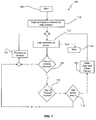
- FIG. 1 illustrates a process flow of an algorithm 100 for the detection of a pop-up window with a spoofed command button.
- a spoofed button is one where the result generated by clicking on the button does not return an expected result.
- the spoofed command button has the appearance of a typical command button, usually appearing in pairs (e.g. "Yes” and "No” as illustrated in Figure 3 ) on a pop-up window.
- a user would be led to believe that such a command button provides an avenue for issuing a desired command by simply clicking on the button. However, a different action may be triggered on clicking on the command button in the pop-up window.
- the algorithm 100 is on stand-by 110 upon connection to the Internet via a web browser from the start 108.
- the algorithm 100 tracks a call to open a window (e.g. "window.open” in Java) to determine 114 if a pop-up window is being created.
- the algorithm 100 includes a step 116 to detect if a command button is created as part of the pop-up window by conducting a background page source code validation. The value of the command button is compared to the value of a "No" or "Cancel” button. Where the value matches, a further check 118 is conducted to determine if the follow-up action is simply "return false" (e.g. close the window without performing any other action) on clicking the command button. If so, the follow-up action is processed 122 without any interruption.
- the algorithm 100 is then reset to be on stand-by again in anticipation of another user action that will trigger creation of a new pop-up window creation. If it is determined 114 that a pop-up window is not created, the algorithm 100 returns to the stand-by mode while the web browser processes the user command as desired 122. If the user elects to quit from the online session, the algorithm 100 registers the command and stops detecting the creation of pop-up windows 124.
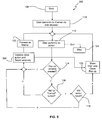
- the algorithm 200 has, in addition to the process flow set out in the algorithm 100 in FIG. 1 , an additional process flow 202 following from the logic step 116 to address the situation where a pop-up window does not provide a "Cancel" button.
- This essentially means that there is no command button created with a value that is comparable with the value of a "No" or "Cancel” button for closing the pop-up window.
- the pop-up window may include a command button that restricts the user option leading to compliance and increasing the risks of triggering malicious or undesirable follow-up actions.
- the web browser would forewarn the user with a message like: " The pop-up window you are browsing doesn't have an appropriate Cancel function, please proceed with caution. " However, no additional action would be taken by the web browser to minimize the risks as the command, once issue by the user, will be processed. Alternatively, the command is processed without alerting the user.
- FIG. 5 illustrates another embodiment of the present invention in which an algorithm 300 for validating the close action against the standard Operating System (OS) or web browser Application Program Interface (API) to close a window in the process flow is provided.
- the process flow from step 116 or step 118 to step 122 includes an additional step 302, which validates the close action issued by the command button against the OS of API in order to detect any anomaly. Where the command button to close the pop-up window does not call on the web browser API, this will be detected as an anomaly.
- the algorithm 300 will then initiate a warning message to the user and close the pop-up window automatically 120.
- This alternative step 302 can be applied independently as an alternative to the algorithms 100 or 200 set-out above or as a safeguard measure from any accidental selection of the spoofed command button.
- this algorithm 300 can be implemented immediately before the logic step 122 to ensure that even where the command button does not appear to be spoofed, should the behavior of the follow-up actions not conform to an expected mode of operation, the user will be alerted and the pop-up window will be closed by the web browser immediately.
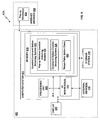
- FIG. 6 shows an illustrative system 400 for detecting a spoofed command button in a pop-up window and forewarning a user of potential harm when selecting the spoofed command button in accordance with embodiment(s) of the present invention.
- the system 400 includes a computer infrastructure 402 that can perform the various process steps described herein for detecting a spoofed command button.
- the computer infrastructure 402 is shown including a computer system 404 that comprises a spoofed command button detecting system 430, which enables the computer system 404 to detect the creation of a spoofed command button when a pop-up window is created by performing the process steps of the invention.
- the computer system 404 as shown includes a processing unit 408, a memory 410, at least one input/output (I/O) interface 414, and a bus 412. Further, the computer system 404 is shown in communication with at least one external device 416 and a storage system 418.
- the processing unit 408 executes computer program code, such as spoofed command button detecting system 430, that is stored in memory 410 and/or storage system 418. While executing computer program code, the processing unit 408 can read and/or write data from/to the memory 410, storage system 418, and/or I/O interface(s) 414.
- Bus 412 provides a communication link between each of the components in the computer system 404.
- the at least one external device 416 can comprise any device (e.g., display 420) that enables a user (not shown) to interact with the computer system 404 or any device that enables the computer system 404 to communicate with one or more other computer systems.
- the computer system 404 can comprise any general purpose computing article of manufacture capable of executing computer program code installed by a user (e.g., a personal computer, server, handheld device, etc.).
- a user e.g., a personal computer, server, handheld device, etc.
- the computer system 404 and spoofed command button detecting system 430 are only representative of various possible computer systems that may perform the various process steps of the invention.
- the computer system 404 can comprise any specific purpose computing article of manufacture comprising hardware and/or computer program code for performing specific functions, any computing article of manufacture that comprises a combination of specific purpose and general purpose hardware/software, or the like.
- the program code and hardware can be created using standard programming and engineering techniques, respectively.
- the computer infrastructure 402 is only illustrative of various types of computer infrastructures that can be used to implement the invention.
- the computer infrastructure 402 comprises two or more computer systems (e.g., a server cluster) that communicate over any type of wired and/or wireless communications link, such as a network, a shared memory, or the like, to perform the various process steps of the invention.
- the communications link comprises a network
- the network can comprise any combination of one or more types of networks (e.g., the Internet, a wide area network, a local area network, a virtual private network, etc.).
- communications between the computer systems may utilize any combination of various types of transmission techniques.
- the spoofed command button detecting system 430 enables the computer system 404 to perform a return false action check 432 when a command button of a pop-up window 434 is selected by the user.
- the pop-up window "popping-up" within a web browser 440.
- the spoofed command button detecting system 430 is shown as including a pop-up window creation detecting system 436 for detecting the generation of a pop-up window 434 on the web browser 440, and a command button creation system 438 for performing a return false action check 432 for each command button in pop-up windows 434, based on the value assigned to the command button. Operation of each of these systems is discussed above. It is understood that some of the various systems shown in FIG.
- 6 can be implemented independently, combined, and/or stored in memory for one or more separate computer systems 404 that communicate over a network. Further, it is understood that some of the systems and/or functionality may not be implemented, or additional systems and/or functionality may be included as part of the system 400.
- the invention provides a computer-readable medium that includes computer program code to enable a computer infrastructure to determine the follow-up action that will be triggered on selecting a command button of a pop-up window.
- the computer-readable medium includes program code, such as the spoofed command button detecting system 430, which implements each of the various process steps of the invention.
- the term "computer-readable medium" comprises one or more of any type of physical embodiment of the program code.
- the computer-readable medium can comprise program code embodied on one or more portable storage articles of manufacture (e.g., a compact disc, a magnetic disk, a tape, etc.), on one or more data storage portions of a computer system, such as the memory 410 and/or storage system 418 (e.g., a fixed disk, a read-only memory, a random access memory, a cache memory, etc.), and/or as a data signal traveling over a network (e.g., during a wired/wireless electronic distribution of the program code).
- portable storage articles of manufacture e.g., a compact disc, a magnetic disk, a tape, etc.
- data storage portions of a computer system such as the memory 410 and/or storage system 418 (e.g., a fixed disk, a read-only memory, a random access memory, a cache memory, etc.), and/or as a data signal traveling over a network (e.g., during a wired/wireless electronic distribution of the program code).
- the invention provides a business method that performs the process steps of the invention on a subscription, advertising, and/or fee basis. That is, a service provider could offer to determine if a pop-up window carries with it spoofed command buttons that may trigger malicious actions if a user selects the command button.
- the service provider can create, maintain, support, etc., a computer infrastructure, such as the computer infrastructure 402, that performs the process steps of the invention for one or more customers.
- the service provider can receive payment from the customer(s) under a subscription and/or fee agreement and/or the service provider can receive payment from the sale of advertising space to one or more third parties.
- the invention provides a method of detecting a spoofed command button of a pop-up window.
- a computer infrastructure such as the computer infrastructure 402
- one or more systems for performing the process steps of the invention can be obtained (e.g., created, purchased, used, modified, etc.) and deployed to the computer infrastructure.
- each system can comprise one or more of (1) installing program code on a computer system, such as the computer system 404, from a computer-readable medium; (2) adding one or more computer systems to the computer infrastructure; and (3) incorporating and/or modifying one or more existing systems of the computer infrastructure, to enable the computer infrastructure to perform the process steps of the invention.
- program code and "computer program code” are synonymous and mean any expression, in any language, code or notation, of a set of instructions intended to cause a computer system having an information processing capability to perform a particular function either directly or after either or both of the following: (a) conversion to another language, code or notation; and (b) reproduction in a different material form.
- program code can be embodied as one or more types of program products, such as an application/software program, component software/a library of functions, an operating system, a basic I/O system/driver for a particular computing and/or I/O device, and the like.
Landscapes
- Engineering & Computer Science (AREA)
- Theoretical Computer Science (AREA)
- Software Systems (AREA)
- Computer Security & Cryptography (AREA)
- Physics & Mathematics (AREA)
- General Physics & Mathematics (AREA)
- General Engineering & Computer Science (AREA)
- Computer Hardware Design (AREA)
- Business, Economics & Management (AREA)
- Tourism & Hospitality (AREA)
- General Health & Medical Sciences (AREA)
- Human Resources & Organizations (AREA)
- Marketing (AREA)
- Primary Health Care (AREA)
- Strategic Management (AREA)
- General Business, Economics & Management (AREA)
- Economics (AREA)
- Health & Medical Sciences (AREA)
- User Interface Of Digital Computer (AREA)
- Acyclic And Carbocyclic Compounds In Medicinal Compositions (AREA)
- Catching Or Destruction (AREA)
- Display Devices Of Pinball Game Machines (AREA)
Applications Claiming Priority (2)
| Application Number | Priority Date | Filing Date | Title |
|---|---|---|---|
| US11/464,581 US7962955B2 (en) | 2006-08-15 | 2006-08-15 | Protecting users from malicious pop-up advertisements |
| PCT/EP2007/058088 WO2008019961A1 (en) | 2006-08-15 | 2007-08-03 | Protecting users from malicious pop-up advertisements |
Publications (2)
| Publication Number | Publication Date |
|---|---|
| EP2052341A1 EP2052341A1 (en) | 2009-04-29 |
| EP2052341B1 true EP2052341B1 (en) | 2011-11-30 |
Family
ID=38684471
Family Applications (1)
| Application Number | Title | Priority Date | Filing Date |
|---|---|---|---|
| EP07788220A Not-in-force EP2052341B1 (en) | 2006-08-15 | 2007-08-03 | Protecting users from malicious pop-up advertisements |
Country Status (10)
| Country | Link |
|---|---|
| US (1) | US7962955B2 (enExample) |
| EP (1) | EP2052341B1 (enExample) |
| JP (1) | JP4588111B2 (enExample) |
| KR (1) | KR101038898B1 (enExample) |
| CN (1) | CN101490691B (enExample) |
| AT (1) | ATE535878T1 (enExample) |
| CA (1) | CA2663232C (enExample) |
| IL (1) | IL195213A (enExample) |
| TW (1) | TWI416364B (enExample) |
| WO (1) | WO2008019961A1 (enExample) |
Cited By (1)
| Publication number | Priority date | Publication date | Assignee | Title |
|---|---|---|---|---|
| CN108154030A (zh) * | 2017-11-22 | 2018-06-12 | 努比亚技术有限公司 | 应用窗口管控方法、终端及计算机可读存储介质 |
Families Citing this family (19)
| Publication number | Priority date | Publication date | Assignee | Title |
|---|---|---|---|---|
| US7873915B2 (en) * | 2006-06-16 | 2011-01-18 | Microsoft Corporation | Suppressing dialog boxes |
| US20080162527A1 (en) * | 2006-12-29 | 2008-07-03 | Ceelox Inc. | System and method for secure and/or interactive dissemination of information |
| US8756422B2 (en) * | 2006-12-29 | 2014-06-17 | Ceelox Patents, LLC | System and method for secure and/or interactive dissemination of information |
| US20080244293A1 (en) * | 2007-03-29 | 2008-10-02 | Morris Robert P | Methods, Systems, And Computer Program Products For Providing For Automatically Closing Application Widgets Based On Markup Language Elements |
| US20090307079A1 (en) * | 2008-06-09 | 2009-12-10 | Cross Commerce Media, Inc. | Methods and systems for providing advertisements |
| US8312539B1 (en) * | 2008-07-11 | 2012-11-13 | Symantec Corporation | User-assisted security system |
| US8667417B1 (en) * | 2008-09-01 | 2014-03-04 | Google Inc. | Methods and systems for pop-up suppression |
| US9152790B1 (en) * | 2009-05-21 | 2015-10-06 | Symantec Corporation | Systems and methods for detecting fraudulent software applications that generate misleading notifications |
| US8566950B1 (en) * | 2010-02-15 | 2013-10-22 | Symantec Corporation | Method and apparatus for detecting potentially misleading visual representation objects to secure a computer |
| US8898591B2 (en) * | 2010-04-06 | 2014-11-25 | F-Secure Corporation | Program removal |
| US8776227B1 (en) * | 2010-10-21 | 2014-07-08 | Symantec Corporation | User interface based malware detection |
| US8745759B2 (en) * | 2011-01-31 | 2014-06-03 | Bank Of America Corporation | Associated with abnormal application-specific activity monitoring in a computing network |
| CN103188137B (zh) * | 2011-12-30 | 2017-05-10 | 阿里巴巴集团控股有限公司 | 基于疲劳控制的消息浮出方法、服务器和即时通讯客户端 |
| CN103902292B (zh) * | 2014-03-27 | 2017-08-01 | 广东欧珀移动通信有限公司 | 显示窗口的屏蔽方法和系统 |
| US10185480B1 (en) * | 2015-06-15 | 2019-01-22 | Symantec Corporation | Systems and methods for automatically making selections in user interfaces |
| US9807111B1 (en) * | 2015-07-29 | 2017-10-31 | Symantec Corporation | Systems and methods for detecting advertisements displayed to users via user interfaces |
| US11176242B2 (en) * | 2018-09-28 | 2021-11-16 | Malwarebytes Inc. | Intelligent pop-up blocker |
| CN111158811B (zh) * | 2019-12-16 | 2022-06-21 | 珠海格力电器股份有限公司 | 一种广告处理的方法、装置、电子设备及存储介质 |
| WO2023032113A1 (ja) * | 2021-09-02 | 2023-03-09 | 日本電信電話株式会社 | 表示制御装置、表示制御方法、および、表示制御プログラム |
Family Cites Families (19)
| Publication number | Priority date | Publication date | Assignee | Title |
|---|---|---|---|---|
| US5535422A (en) * | 1992-03-26 | 1996-07-09 | International Business Machines Corporation | Interactive online tutorial system for software products |
| JPH11242548A (ja) | 1998-02-25 | 1999-09-07 | Oki Electric Ind Co Ltd | ブラウザ装置 |
| US6407759B1 (en) * | 1998-11-30 | 2002-06-18 | Sun Microsystems, Inc. | Method and apparatus for modal dialog box management in applets on information appliances |
| US7162739B2 (en) * | 2001-11-27 | 2007-01-09 | Claria Corporation | Method and apparatus for blocking unwanted windows |
| US6968507B2 (en) | 2001-11-27 | 2005-11-22 | Claria Corporation | Method and apparatus for defeating a mechanism that blocks windows |
| EP1690210A2 (en) * | 2003-07-07 | 2006-08-16 | Metatomix, Inc. | Surveillance, monitoring and real-time events platform |
| US20050066290A1 (en) * | 2003-09-16 | 2005-03-24 | Chebolu Anil Kumar | Pop-up capture |
| KR20050044070A (ko) * | 2003-11-07 | 2005-05-12 | 네투스테크놀로지 주식회사 | 메시지 또는 광고 데이터의 전송방법 |
| WO2005053271A2 (en) | 2003-11-24 | 2005-06-09 | America Online, Inc. | Systems and methods for authenticated communications |
| US7111246B2 (en) * | 2004-02-17 | 2006-09-19 | Microsoft Corporation | User interface accorded to tiered object-related trust decisions |
| US7324167B2 (en) * | 2004-03-02 | 2008-01-29 | Magenta Research | High-quality twisted-pair transmission line system for high-resolution video |
| JP4448724B2 (ja) | 2004-03-31 | 2010-04-14 | アライド・ブレインズ株式会社 | ウェブブラウザのアクセシビリティ検査プログラム |
| US7386807B2 (en) * | 2004-05-17 | 2008-06-10 | Microsoft Corporation | System and method for monitoring application response and providing visual treatment |
| TW200601074A (en) * | 2004-06-22 | 2006-01-01 | Fitim Blaku | Method and apparatus for preventing unwanted information to be displayed to a user of a computer |
| TWI250452B (en) * | 2004-08-19 | 2006-03-01 | Inventec Appliances Corp | Method to block Internet advertisement |
| US20060070008A1 (en) * | 2004-09-29 | 2006-03-30 | Microsoft Corporation | Preserving browser window integrity |
| JP2006221242A (ja) * | 2005-02-08 | 2006-08-24 | Fujitsu Ltd | 認証情報詐取防止システム、プログラム及び方法 |
| US20060224677A1 (en) * | 2005-04-01 | 2006-10-05 | Baytsp | Method and apparatus for detecting email fraud |
| US8280867B2 (en) * | 2005-10-20 | 2012-10-02 | Teradata Us, Inc. | Identifying database request sources |
-
2006
- 2006-08-15 US US11/464,581 patent/US7962955B2/en not_active Expired - Fee Related
-
2007
- 2007-08-03 CA CA2663232A patent/CA2663232C/en not_active Expired - Fee Related
- 2007-08-03 CN CN2007800273064A patent/CN101490691B/zh not_active Expired - Fee Related
- 2007-08-03 KR KR1020097002533A patent/KR101038898B1/ko not_active Expired - Fee Related
- 2007-08-03 TW TW096128736A patent/TWI416364B/zh not_active IP Right Cessation
- 2007-08-03 AT AT07788220T patent/ATE535878T1/de active
- 2007-08-03 JP JP2009524165A patent/JP4588111B2/ja not_active Expired - Fee Related
- 2007-08-03 EP EP07788220A patent/EP2052341B1/en not_active Not-in-force
- 2007-08-03 WO PCT/EP2007/058088 patent/WO2008019961A1/en not_active Ceased
-
2008
- 2008-11-11 IL IL195213A patent/IL195213A/en active IP Right Grant
Non-Patent Citations (1)
| Title |
|---|
| VARIOUS: "best Practices: Protecting Against the Growing Threat of Phising Scams", INET, 1 January 2006 (2006-01-01), INET, Retrieved from the Internet <URL:http://www.ca.com/files/whitepapers/29394_phishing_whitepaper.pdf> [retrieved on 20100831] * |
Cited By (2)
| Publication number | Priority date | Publication date | Assignee | Title |
|---|---|---|---|---|
| CN108154030A (zh) * | 2017-11-22 | 2018-06-12 | 努比亚技术有限公司 | 应用窗口管控方法、终端及计算机可读存储介质 |
| CN108154030B (zh) * | 2017-11-22 | 2021-06-25 | 努比亚技术有限公司 | 应用窗口管控方法、终端及计算机可读存储介质 |
Also Published As
| Publication number | Publication date |
|---|---|
| ATE535878T1 (de) | 2011-12-15 |
| CA2663232A1 (en) | 2008-02-21 |
| WO2008019961A1 (en) | 2008-02-21 |
| KR101038898B1 (ko) | 2011-06-07 |
| US20080046975A1 (en) | 2008-02-21 |
| KR20090035587A (ko) | 2009-04-09 |
| CA2663232C (en) | 2016-01-05 |
| TWI416364B (zh) | 2013-11-21 |
| JP4588111B2 (ja) | 2010-11-24 |
| US7962955B2 (en) | 2011-06-14 |
| IL195213A0 (en) | 2009-08-03 |
| IL195213A (en) | 2014-04-30 |
| CN101490691B (zh) | 2013-04-17 |
| EP2052341A1 (en) | 2009-04-29 |
| TW200820038A (en) | 2008-05-01 |
| CN101490691A (zh) | 2009-07-22 |
| JP2010500674A (ja) | 2010-01-07 |
Similar Documents
| Publication | Publication Date | Title |
|---|---|---|
| CA2663232C (en) | Protecting users from malicious pop-up advertisements | |
| US10599843B2 (en) | Identifying whether an application is malicious | |
| US11222110B2 (en) | Detecting malicious code received from malicious client side injection vectors | |
| US9607093B2 (en) | Method and system for operating multiple web pages with anti-spoofing protection | |
| US8392992B1 (en) | Method and apparatus for preventing sensitive data leakage due to input focus misappropriation | |
| US12363164B2 (en) | Method and system for detection of phishing emails and suspect malicious executable hyperlinks | |
| JP5736305B2 (ja) | ソフトウェア評価を確立し監視するシステムおよびプログラム | |
| US20090165136A1 (en) | Detection of Window Replacement by a Malicious Software Program | |
| US8181224B2 (en) | Method for recognizing information flow and detecting information leakage by analyzing user's behaviors | |
| US20200356667A1 (en) | Injection attack identification and mitigation | |
| US20190394236A1 (en) | Protecting against notification based phishing attacks | |
| Fassl et al. | Comparing User Perceptions of {Anti-Stalkerware} Apps with the Technical Reality | |
| US20030120950A1 (en) | Dealing with a computer virus which self-propagates by email | |
| CN109543407B (zh) | 一种Activity劫持的拦截方法及装置 | |
| US12229774B2 (en) | Detecting malware by monitoring client-side memory stacks | |
| CN103294949A (zh) | 一种检测木马程序的方法及装置 | |
| Flinn et al. | Omnivore: Risk management through bidirectional transparency | |
| KR101723099B1 (ko) | 브라우저 공격에 대한 방어 | |
| CN107766723A (zh) | 抑制恶意应用安装的方法、装置、设备和可读存储介质 | |
| CN115567238A (zh) | 网络银行电子数据源代码泄露监测系统 | |
| CN115481391A (zh) | 模拟外设消息防护方法、装置、设备及存储介质 | |
| KR20090086890A (ko) | 씨크릿씰 제공 방법 |
Legal Events
| Date | Code | Title | Description |
|---|---|---|---|
| PUAI | Public reference made under article 153(3) epc to a published international application that has entered the european phase |
Free format text: ORIGINAL CODE: 0009012 |
|
| 17P | Request for examination filed |
Effective date: 20090211 |
|
| AK | Designated contracting states |
Kind code of ref document: A1 Designated state(s): AT BE BG CH CY CZ DE DK EE ES FI FR GB GR HU IE IS IT LI LT LU LV MC MT NL PL PT RO SE SI SK TR |
|
| AX | Request for extension of the european patent |
Extension state: AL BA HR MK RS |
|
| 17Q | First examination report despatched |
Effective date: 20091016 |
|
| GRAP | Despatch of communication of intention to grant a patent |
Free format text: ORIGINAL CODE: EPIDOSNIGR1 |
|
| GRAS | Grant fee paid |
Free format text: ORIGINAL CODE: EPIDOSNIGR3 |
|
| GRAA | (expected) grant |
Free format text: ORIGINAL CODE: 0009210 |
|
| AK | Designated contracting states |
Kind code of ref document: B1 Designated state(s): AT BE BG CH CY CZ DE DK EE ES FI FR GB GR HU IE IS IT LI LT LU LV MC MT NL PL PT RO SE SI SK TR |
|
| DAX | Request for extension of the european patent (deleted) | ||
| REG | Reference to a national code |
Ref country code: GB Ref legal event code: FG4D Ref country code: CH Ref legal event code: EP |
|
| REG | Reference to a national code |
Ref country code: IE Ref legal event code: FG4D |
|
| REG | Reference to a national code |
Ref country code: DE Ref legal event code: R084 Ref document number: 602007019111 Country of ref document: DE |
|
| REG | Reference to a national code |
Ref country code: GB Ref legal event code: 746 Effective date: 20120130 |
|
| REG | Reference to a national code |
Ref country code: DE Ref legal event code: R084 Ref document number: 602007019111 Country of ref document: DE Effective date: 20120110 Ref country code: DE Ref legal event code: R096 Ref document number: 602007019111 Country of ref document: DE Effective date: 20120301 |
|
| REG | Reference to a national code |
Ref country code: NL Ref legal event code: VDEP Effective date: 20111130 |
|
| LTIE | Lt: invalidation of european patent or patent extension |
Effective date: 20111130 |
|
| PG25 | Lapsed in a contracting state [announced via postgrant information from national office to epo] |
Ref country code: LT Free format text: LAPSE BECAUSE OF FAILURE TO SUBMIT A TRANSLATION OF THE DESCRIPTION OR TO PAY THE FEE WITHIN THE PRESCRIBED TIME-LIMIT Effective date: 20111130 Ref country code: IS Free format text: LAPSE BECAUSE OF FAILURE TO SUBMIT A TRANSLATION OF THE DESCRIPTION OR TO PAY THE FEE WITHIN THE PRESCRIBED TIME-LIMIT Effective date: 20120330 |
|
| PG25 | Lapsed in a contracting state [announced via postgrant information from national office to epo] |
Ref country code: PT Free format text: LAPSE BECAUSE OF FAILURE TO SUBMIT A TRANSLATION OF THE DESCRIPTION OR TO PAY THE FEE WITHIN THE PRESCRIBED TIME-LIMIT Effective date: 20120330 Ref country code: LV Free format text: LAPSE BECAUSE OF FAILURE TO SUBMIT A TRANSLATION OF THE DESCRIPTION OR TO PAY THE FEE WITHIN THE PRESCRIBED TIME-LIMIT Effective date: 20111130 Ref country code: GR Free format text: LAPSE BECAUSE OF FAILURE TO SUBMIT A TRANSLATION OF THE DESCRIPTION OR TO PAY THE FEE WITHIN THE PRESCRIBED TIME-LIMIT Effective date: 20120301 Ref country code: BE Free format text: LAPSE BECAUSE OF FAILURE TO SUBMIT A TRANSLATION OF THE DESCRIPTION OR TO PAY THE FEE WITHIN THE PRESCRIBED TIME-LIMIT Effective date: 20111130 Ref country code: SI Free format text: LAPSE BECAUSE OF FAILURE TO SUBMIT A TRANSLATION OF THE DESCRIPTION OR TO PAY THE FEE WITHIN THE PRESCRIBED TIME-LIMIT Effective date: 20111130 Ref country code: NL Free format text: LAPSE BECAUSE OF FAILURE TO SUBMIT A TRANSLATION OF THE DESCRIPTION OR TO PAY THE FEE WITHIN THE PRESCRIBED TIME-LIMIT Effective date: 20111130 Ref country code: SE Free format text: LAPSE BECAUSE OF FAILURE TO SUBMIT A TRANSLATION OF THE DESCRIPTION OR TO PAY THE FEE WITHIN THE PRESCRIBED TIME-LIMIT Effective date: 20111130 |
|
| PG25 | Lapsed in a contracting state [announced via postgrant information from national office to epo] |
Ref country code: CY Free format text: LAPSE BECAUSE OF FAILURE TO SUBMIT A TRANSLATION OF THE DESCRIPTION OR TO PAY THE FEE WITHIN THE PRESCRIBED TIME-LIMIT Effective date: 20111130 |
|
| PG25 | Lapsed in a contracting state [announced via postgrant information from national office to epo] |
Ref country code: BG Free format text: LAPSE BECAUSE OF FAILURE TO SUBMIT A TRANSLATION OF THE DESCRIPTION OR TO PAY THE FEE WITHIN THE PRESCRIBED TIME-LIMIT Effective date: 20120229 Ref country code: SK Free format text: LAPSE BECAUSE OF FAILURE TO SUBMIT A TRANSLATION OF THE DESCRIPTION OR TO PAY THE FEE WITHIN THE PRESCRIBED TIME-LIMIT Effective date: 20111130 Ref country code: EE Free format text: LAPSE BECAUSE OF FAILURE TO SUBMIT A TRANSLATION OF THE DESCRIPTION OR TO PAY THE FEE WITHIN THE PRESCRIBED TIME-LIMIT Effective date: 20111130 Ref country code: CZ Free format text: LAPSE BECAUSE OF FAILURE TO SUBMIT A TRANSLATION OF THE DESCRIPTION OR TO PAY THE FEE WITHIN THE PRESCRIBED TIME-LIMIT Effective date: 20111130 Ref country code: DK Free format text: LAPSE BECAUSE OF FAILURE TO SUBMIT A TRANSLATION OF THE DESCRIPTION OR TO PAY THE FEE WITHIN THE PRESCRIBED TIME-LIMIT Effective date: 20111130 |
|
| PG25 | Lapsed in a contracting state [announced via postgrant information from national office to epo] |
Ref country code: IT Free format text: LAPSE BECAUSE OF FAILURE TO SUBMIT A TRANSLATION OF THE DESCRIPTION OR TO PAY THE FEE WITHIN THE PRESCRIBED TIME-LIMIT Effective date: 20111130 Ref country code: RO Free format text: LAPSE BECAUSE OF FAILURE TO SUBMIT A TRANSLATION OF THE DESCRIPTION OR TO PAY THE FEE WITHIN THE PRESCRIBED TIME-LIMIT Effective date: 20111130 Ref country code: PL Free format text: LAPSE BECAUSE OF FAILURE TO SUBMIT A TRANSLATION OF THE DESCRIPTION OR TO PAY THE FEE WITHIN THE PRESCRIBED TIME-LIMIT Effective date: 20111130 |
|
| REG | Reference to a national code |
Ref country code: AT Ref legal event code: MK05 Ref document number: 535878 Country of ref document: AT Kind code of ref document: T Effective date: 20111130 |
|
| PLBE | No opposition filed within time limit |
Free format text: ORIGINAL CODE: 0009261 |
|
| STAA | Information on the status of an ep patent application or granted ep patent |
Free format text: STATUS: NO OPPOSITION FILED WITHIN TIME LIMIT |
|
| 26N | No opposition filed |
Effective date: 20120831 |
|
| REG | Reference to a national code |
Ref country code: DE Ref legal event code: R097 Ref document number: 602007019111 Country of ref document: DE Effective date: 20120831 |
|
| PG25 | Lapsed in a contracting state [announced via postgrant information from national office to epo] |
Ref country code: AT Free format text: LAPSE BECAUSE OF FAILURE TO SUBMIT A TRANSLATION OF THE DESCRIPTION OR TO PAY THE FEE WITHIN THE PRESCRIBED TIME-LIMIT Effective date: 20111130 |
|
| REG | Reference to a national code |
Ref country code: CH Ref legal event code: PL |
|
| PG25 | Lapsed in a contracting state [announced via postgrant information from national office to epo] |
Ref country code: MC Free format text: LAPSE BECAUSE OF NON-PAYMENT OF DUE FEES Effective date: 20120831 |
|
| PG25 | Lapsed in a contracting state [announced via postgrant information from national office to epo] |
Ref country code: ES Free format text: LAPSE BECAUSE OF FAILURE TO SUBMIT A TRANSLATION OF THE DESCRIPTION OR TO PAY THE FEE WITHIN THE PRESCRIBED TIME-LIMIT Effective date: 20120311 Ref country code: LI Free format text: LAPSE BECAUSE OF NON-PAYMENT OF DUE FEES Effective date: 20120831 Ref country code: CH Free format text: LAPSE BECAUSE OF NON-PAYMENT OF DUE FEES Effective date: 20120831 |
|
| REG | Reference to a national code |
Ref country code: IE Ref legal event code: MM4A |
|
| PG25 | Lapsed in a contracting state [announced via postgrant information from national office to epo] |
Ref country code: FI Free format text: LAPSE BECAUSE OF FAILURE TO SUBMIT A TRANSLATION OF THE DESCRIPTION OR TO PAY THE FEE WITHIN THE PRESCRIBED TIME-LIMIT Effective date: 20111130 |
|
| PG25 | Lapsed in a contracting state [announced via postgrant information from national office to epo] |
Ref country code: IE Free format text: LAPSE BECAUSE OF NON-PAYMENT OF DUE FEES Effective date: 20120803 |
|
| PG25 | Lapsed in a contracting state [announced via postgrant information from national office to epo] |
Ref country code: MT Free format text: LAPSE BECAUSE OF FAILURE TO SUBMIT A TRANSLATION OF THE DESCRIPTION OR TO PAY THE FEE WITHIN THE PRESCRIBED TIME-LIMIT Effective date: 20111130 |
|
| PG25 | Lapsed in a contracting state [announced via postgrant information from national office to epo] |
Ref country code: TR Free format text: LAPSE BECAUSE OF FAILURE TO SUBMIT A TRANSLATION OF THE DESCRIPTION OR TO PAY THE FEE WITHIN THE PRESCRIBED TIME-LIMIT Effective date: 20111130 |
|
| PG25 | Lapsed in a contracting state [announced via postgrant information from national office to epo] |
Ref country code: LU Free format text: LAPSE BECAUSE OF NON-PAYMENT OF DUE FEES Effective date: 20120803 |
|
| PG25 | Lapsed in a contracting state [announced via postgrant information from national office to epo] |
Ref country code: HU Free format text: LAPSE BECAUSE OF FAILURE TO SUBMIT A TRANSLATION OF THE DESCRIPTION OR TO PAY THE FEE WITHIN THE PRESCRIBED TIME-LIMIT Effective date: 20070803 |
|
| REG | Reference to a national code |
Ref country code: FR Ref legal event code: PLFP Year of fee payment: 10 |
|
| REG | Reference to a national code |
Ref country code: FR Ref legal event code: PLFP Year of fee payment: 11 |
|
| REG | Reference to a national code |
Ref country code: FR Ref legal event code: PLFP Year of fee payment: 12 |
|
| PGFP | Annual fee paid to national office [announced via postgrant information from national office to epo] |
Ref country code: FR Payment date: 20210825 Year of fee payment: 15 |
|
| PGFP | Annual fee paid to national office [announced via postgrant information from national office to epo] |
Ref country code: GB Payment date: 20210827 Year of fee payment: 15 Ref country code: DE Payment date: 20210827 Year of fee payment: 15 |
|
| REG | Reference to a national code |
Ref country code: DE Ref legal event code: R119 Ref document number: 602007019111 Country of ref document: DE |
|
| GBPC | Gb: european patent ceased through non-payment of renewal fee |
Effective date: 20220803 |
|
| PG25 | Lapsed in a contracting state [announced via postgrant information from national office to epo] |
Ref country code: FR Free format text: LAPSE BECAUSE OF NON-PAYMENT OF DUE FEES Effective date: 20220831 Ref country code: DE Free format text: LAPSE BECAUSE OF NON-PAYMENT OF DUE FEES Effective date: 20230301 |
|
| PG25 | Lapsed in a contracting state [announced via postgrant information from national office to epo] |
Ref country code: GB Free format text: LAPSE BECAUSE OF NON-PAYMENT OF DUE FEES Effective date: 20220803 |