EP2050622A1 - On-vehicle display system and display panel control device - Google Patents
On-vehicle display system and display panel control device Download PDFInfo
- Publication number
- EP2050622A1 EP2050622A1 EP07791226A EP07791226A EP2050622A1 EP 2050622 A1 EP2050622 A1 EP 2050622A1 EP 07791226 A EP07791226 A EP 07791226A EP 07791226 A EP07791226 A EP 07791226A EP 2050622 A1 EP2050622 A1 EP 2050622A1
- Authority
- EP
- European Patent Office
- Prior art keywords
- vehicle
- data
- processor
- display
- display system
- Prior art date
- Legal status (The legal status is an assumption and is not a legal conclusion. Google has not performed a legal analysis and makes no representation as to the accuracy of the status listed.)
- Withdrawn
Links
- 238000003384 imaging method Methods 0.000 claims abstract description 54
- 230000015654 memory Effects 0.000 claims abstract description 33
- 230000004044 response Effects 0.000 claims abstract description 8
- 239000004973 liquid crystal related substance Substances 0.000 abstract description 29
- 238000001444 catalytic combustion detection Methods 0.000 description 9
- 230000010365 information processing Effects 0.000 description 7
- 238000010586 diagram Methods 0.000 description 5
- 238000000034 method Methods 0.000 description 5
- 230000005540 biological transmission Effects 0.000 description 4
- 238000001514 detection method Methods 0.000 description 3
- 230000006870 function Effects 0.000 description 2
- 238000010438 heat treatment Methods 0.000 description 2
- 238000004519 manufacturing process Methods 0.000 description 1
- 230000008054 signal transmission Effects 0.000 description 1
- 230000001052 transient effect Effects 0.000 description 1
Images


Classifications
-
- G—PHYSICS
- G01—MEASURING; TESTING
- G01C—MEASURING DISTANCES, LEVELS OR BEARINGS; SURVEYING; NAVIGATION; GYROSCOPIC INSTRUMENTS; PHOTOGRAMMETRY OR VIDEOGRAMMETRY
- G01C21/00—Navigation; Navigational instruments not provided for in groups G01C1/00 - G01C19/00
- G01C21/26—Navigation; Navigational instruments not provided for in groups G01C1/00 - G01C19/00 specially adapted for navigation in a road network
- G01C21/34—Route searching; Route guidance
- G01C21/36—Input/output arrangements for on-board computers
- G01C21/3667—Display of a road map
-
- G—PHYSICS
- G09—EDUCATION; CRYPTOGRAPHY; DISPLAY; ADVERTISING; SEALS
- G09G—ARRANGEMENTS OR CIRCUITS FOR CONTROL OF INDICATING DEVICES USING STATIC MEANS TO PRESENT VARIABLE INFORMATION
- G09G5/00—Control arrangements or circuits for visual indicators common to cathode-ray tube indicators and other visual indicators
- G09G5/36—Control arrangements or circuits for visual indicators common to cathode-ray tube indicators and other visual indicators characterised by the display of a graphic pattern, e.g. using an all-points-addressable [APA] memory
- G09G5/363—Graphics controllers
-
- G—PHYSICS
- G09—EDUCATION; CRYPTOGRAPHY; DISPLAY; ADVERTISING; SEALS
- G09G—ARRANGEMENTS OR CIRCUITS FOR CONTROL OF INDICATING DEVICES USING STATIC MEANS TO PRESENT VARIABLE INFORMATION
- G09G2340/00—Aspects of display data processing
- G09G2340/04—Changes in size, position or resolution of an image
- G09G2340/0407—Resolution change, inclusive of the use of different resolutions for different screen areas
-
- G—PHYSICS
- G09—EDUCATION; CRYPTOGRAPHY; DISPLAY; ADVERTISING; SEALS
- G09G—ARRANGEMENTS OR CIRCUITS FOR CONTROL OF INDICATING DEVICES USING STATIC MEANS TO PRESENT VARIABLE INFORMATION
- G09G3/00—Control arrangements or circuits, of interest only in connection with visual indicators other than cathode-ray tubes
- G09G3/20—Control arrangements or circuits, of interest only in connection with visual indicators other than cathode-ray tubes for presentation of an assembly of a number of characters, e.g. a page, by composing the assembly by combination of individual elements arranged in a matrix no fixed position being assigned to or needed to be assigned to the individual characters or partial characters
- G09G3/34—Control arrangements or circuits, of interest only in connection with visual indicators other than cathode-ray tubes for presentation of an assembly of a number of characters, e.g. a page, by composing the assembly by combination of individual elements arranged in a matrix no fixed position being assigned to or needed to be assigned to the individual characters or partial characters by control of light from an independent source
- G09G3/36—Control arrangements or circuits, of interest only in connection with visual indicators other than cathode-ray tubes for presentation of an assembly of a number of characters, e.g. a page, by composing the assembly by combination of individual elements arranged in a matrix no fixed position being assigned to or needed to be assigned to the individual characters or partial characters by control of light from an independent source using liquid crystals
- G09G3/3611—Control of matrices with row and column drivers
Definitions
- the present invention relates to an on-vehicle display system (e.g., display system for an instrument panel) to be implemented on a moving object that can be controlled, such as vehicles.
- an on-vehicle display system e.g., display system for an instrument panel
- a moving object that can be controlled, such as vehicles.
- an on-vehicle wide display 1010 disclosed in patent document 1 is connected with an information processing device 1016, via an image processing device 1012 having a VRAM or the like.
- the information processing device 1016 includes a CPU that performs predetermined arithmetic processing; ROM on which a processing program is written; and I/O interface, connected thereto.
- information is provided from a navigation system 1022, traffic information communication system 1024, monitor system 1026, sensor system 1028, and diag system 1030.
- the information processing device 1016 judges driving condition based on the above information and receives required information, and then displays various information items on the wide display 1010 via the image processing device 1012.
- an instrument panel display system disclosed in patent document 2 includes an LSI 102, CAN microcomputer 103, and image memory 104, in a display platform section 101 thereof.
- the CAN microcomputer 103 and image memory 104 are connected via CPU buses 107 and 109, respectively.
- the CAN microcomputer 103 receives information about the vehicle state via a LAN for CAN 105 and then controls the image data processing that is performed in the LSI 102. Also, image data from a 6 port is inputted into the LSI 102. After subjected to size processing or the like in the LSI 102, the image data is sent to a memory bus (not illustrated), and then stored in the image memory 104.
- An imaging controller 118, to which the memory bus is connected, is connected to the control bus 107.
- the control bus 107 is controlled by the CAN microcomputer 103.
- the CAN microcomputer 103 shown in Fig.4 judges a vehicle state (e.g., speed, engine revolution speed, oil amount, door state, and state of the air conditioner) based on the vehicle data sent from the LAN for CAN. Then, based on the judged vehicle state, the CAN microcomputer 103 judges whether the layout needs to be changed. If the layout needs to be changed, the CAN microcomputer 103 decides the display layout according to the judged vehicle state. And then the CAN microcomputer 103 activates a layout creating program. At this time, the CAN microcomputer 103 activates a layout creating program corresponding to the decided display layout.
- the program has been read out from a flash memory 108 and deployed on the DRAM in advance. In the flash memory 108, the layout creating programs for creating display layouts of a plurality of patterns are stored by each display layout. The program is deployed onto the DRAM when it is booted.
- each layout creating program contains at least information of the type of the image to be displayed (e.g., moving images of navigation display and speed meter, and still image of background image); information of the size of the image to be displayed (e.g., 640 pixel x 480 pixel); and information of the location of the image to be displayed (e.g., location of a dot at the upper left, and vertical and horizontal length of the image).
- information of the type of the image to be displayed e.g., moving images of navigation display and speed meter, and still image of background image
- information of the size of the image to be displayed e.g., 640 pixel x 480 pixel
- information of the location of the image to be displayed e.g., location of a dot at the upper left, and vertical and horizontal length of the image.
- the CAN microcomputer 103 commands a Scaler 117 to enlarge or contract the image outputted from DVI, HDCP, or a capture buffer to the predetermined size, based on the information indicating the size of the image (the information contained in the layout creating program).
- the Scaler 117 enlarges or contracts the image to the commanded size and outputs it to the image memory 104.
- the CAN microcomputer 103 Based on the layout creating program, the CAN microcomputer 103 outputs a control signal to a bitblt 119, thereby to cause the bitblt 119 to receive the image data from the image memory 104.
- the CAN microcomputer 103 also outputs a control signal via the imaging controller 118 to the bitblt 119, thereby to cause the bitblt 119 to create an image on which each image is located in the predetermined location, based on the information of the location of the image (the information contained in the layout creating program).
- the bitblt 119 creates a piece of image data based on the control signals. In this process, the image data goes through predetermined process via an image improvement 102a, and then is outputted to a liquid crystal panel 127.
- the liquid crystal panel 127 displays the image according to the image data.
- the configuration shown in the patent document 1 imposes a heavy load on the information processing device 1016, because the information processing device 1016 has to judge vehicle state after receiving various information and then display the various information items on the wide display 1010 via the image processing device 1012. And if an error or thermal runaway occurred to CPU or the like of the information processing device 1016 due to the heavy load, this would result in a trouble in which even important information of the vehicle that is required for control (e.g., speed information and warning information) cannot be displayed anymore.
- important information of the vehicle that is required for control e.g., speed information and warning information
- An object of the invention is to provide a configuration that can reduce the load on a processor, which receives vehicle data in the on-vehicle display system.
- An on-vehicle display system of the invention is an on-vehicle display system comprising:
- the first processor autonomously creates screen data from the imaging data read out from the memory and the image data inputted in the first processor, so all the second processor needs to do is to receive vehicle data, create the imaging operation switching command based on the vehicle data, and then issue the imaging operation switching command to the first processor.
- the load imposed on the second processor that receives vehicle data can be reduced compared to a conventional configuration. This makes it possible to lower the heating value and power consumption of the second processor.
- the on-vehicle display system may be configured such that the second processor is connected to an in-vehicle network, and the vehicle data is inputted from the in-vehicle network.
- the on-vehicle display system may be configured such that the image data contains moving image data.
- the on-vehicle display system may be configured such that the imaging data contains an imaging program.
- the on-vehicle display system may be configured such that the imaging data contains still image data.
- the on-vehicle display system may be configured such that the moving image data contains video picture data obtained from a CCD provided on a vehicle.
- the on-vehicle display system may be configured such that the moving image data contains at least one video picture data from the group consisting of navigation, DVD, and TV.
- the on-vehicle display system may be configured such that the in-vehicle network is CAN (Controller Area Network), LIN (Local Interconnect network) or FlexRay (registered trademark).
- CAN Controller Area Network
- LIN Local Interconnect network
- FlexRay registered trademark
- the on-vehicle display system may be configured such that the image data is inputted into the first processor via a network other than the above in-vehicle network.
- the on-vehicle display system may be configured such that the first processor is formed from a graphic LSI and the second processor is formed from a control LSI.
- the first processor autonomously creates the screen data from the imaging data read out from the memory and the image data inputted in the first processor, so all the second processor needs to do is to receive vehicle data, create the imaging operation switching command based on the vehicle data, and then issue the imaging operation switching command to the first processor.
- the load imposed on the second processor that receives vehicle data can be reduced compared to a conventional configuration. This makes it possible to lower the heating value and power consumption of the second processor.
- a display panel control device of the invention is a display panel control device for controlling an on-vehicle display panel.
- the display panel control device comprises a control processor for receiving vehicle data and outputting an imaging operation switching command corresponding to the vehicle data; and a graphic processor for creating screen data from imaging data read out from a memory and image data inputted in the graphic processor, the screen data corresponding to the imaging operation switching command.
- the display panel control device may be configured such that the control processor receives the vehicle data from an in-vehicle network.
- the display panel control device may be configured such that the image data is inputted into the graphic processor from an in-vehicle network.
- An on-vehicle display system (on-vehicle display device) according to the present invention is configured such that it includes a display panel and the above display panel control device.
- Fig.1 shows a block diagram of an instrument panel control system.
- the instrument panel control system includes an instrument panel display system 1 (on-vehicle display system); I/O system (Amenity system 4) for amenity such as DVD, TV, GPS, and Audio; I/O system (Safety system 5) for safety such as CCDs and sensor; and in-vehicle LAN 21.
- I/O system Amenity system 4 for amenity such as DVD, TV, GPS, and Audio
- I/O system Safety system 5 for safety such as CCDs and sensor
- in-vehicle LAN 21 in-vehicle LAN 21.
- the in-vehicle LAN 21 includes an in-vehicle LAN for power train system 21x (hereinafter, power train system in-vehicle LAN 21x) and in-vehicle LAN for body system 21y (hereinafter, body system in-vehicle LAN 21y).
- the power train system in-vehicle LAN 21x is connected with an electric control unit (ECU) 28a that controls engine system, electric control unit (ECU) 28b that controls gear system, and the like.
- the body system in-vehicle LAN 21y is connected with an electric control unit (ECU) 29a that controls door system, electric control unit (ECU) 29b that controls light system, electric control unit (ECU) 29c that controls air conditioner system, and the like.
- the instrument panel display system 1 includes a display platform section 6 and liquid crystal panel 7.
- the display platform section 6 includes a liquid crystal controller 11 (a section for generating data), power supply circuit 18, timing generator 12, and backlight control circuit 13.
- the liquid crystal controller 11 includes a control LSI 66 (a second processor, a control processor), graphic LSI 80 (a first processor, a graphic processor), and memory 90.
- a vehicle system 3 includes a graphic display controller (GDC) for vehicle system 34 (hereinafter, vehicle system GDC 34), processor (CPU, a processor) for vehicle system 35 (hereinafter, vehicle system processor 35), and microcomputer for vehicle system 36 (hereinafter, vehicle system microcomputer 36) that supports in-vehicle LAN.
- the amenity system 4 includes a graphic display controller (GDC) for amenity system 37 (hereinafter, amenity system GDC 37), processor (CPU, a processor) for amenity system 38 (hereinafter, amenity system processor 38), and microcomputer for amenity system 39 (hereinafter, amenity system microcomputer 39) that supports in-vehicle LAN.
- GDC graphic display controller
- the safety system 5 includes a graphic display controller (GDC) for safety system 40 (hereinafter, safety system GDC 40), processor (CPU, a processor) for safety system 41 (hereinafter, safety system processor 41), and microcomputer for safety system 42 (hereinafter, safety system microcomputer 42) that supports in-vehicle LAN.
- GDC graphic display controller
- CPU CPU
- processor CPU
- microcomputer for safety system 42
- the vehicle system microcomputer 36 is connected to the in-vehicle LAN 21 (power train system in-vehicle LAN 21x and body system in-vehicle LAN 21y). And the control LSI 66 in the display platform section 6, vehicle system microcomputer 36 in the vehicle system 3, amenity system microcomputer 39 in the amenity system 4, and safety system microcomputer 42 in the safety system 5 are connected to an in-vehicle LAN 32, the LAN for CAN.
- the vehicle system GDC 34, amenity system GDC 37, safety system GDC 40, and graphic LSI 80 in the display platform section 6 are connected to an in-vehicle LAN 31 that is used for transmitting image data.
- the in-vehicle LAN 31 is a high-speed LAN (e.g., MOST, IDB1394) or direct connection of signals.
- the power train system in-vehicle LAN 21x of the in-vehicle LAN 21 is connected with the ECU for engine system 28a (hereinafter, engine system ECU 28a), ECU for gear system 28b (hereinafter, gear system ECU 28b), and the like.
- the engine system ECU 28a performs transmission of numeric data about engine control and numeric data about the engine, and reception of control data from the other ECU.
- the gear system ECU 28b performs transmission of numeric data about gear control and numeric data about the gear, and reception of control data from the other ECU.
- the power train system in-vehicle LAN 21x transmits real-time data (that is required to be sent in real time with high credibility, such as data about warning information, blinkers, speed, and revolution speed) to the vehicle system microcomputer 36 of the vehicle system 3, as vehicle data.
- real-time data that is required to be sent in real time with high credibility, such as data about warning information, blinkers, speed, and revolution speed
- the body system in-vehicle LAN 21y of the in-vehicle LAN 21 is connected with the ECU for door system 29a (hereinafter, door system ECU 29a), ECU for light system 29b (hereinafter, light system ECU 29b), ECU for air conditioner system 29c (hereinafter, air conditioner system ECU 29c), and the like.
- the door system ECU 29a performs transmission of switching signals to open or close the door and reception of control data from the other ECU.
- the light system ECU 29b performs transmission of signals to switch on or off the light and reception of control data from the other ECU.
- the air conditioner system ECU 29c performs transmission of data about air conditioner control and data about the air conditioner, and reception of control data from the other ECU.
- the body system in-vehicle LAN 21y transmits data (that can be transmitted at low speed without any problem, such as data about light, opening or closing the door, and controlling the air conditioner) to the vehicle system microcomputer 36 of the vehicle system 3, as vehicle data.
- the vehicle system microcomputer 36 of the vehicle system 3 is a micro controller that includes an interface for CAN (or the other vehicle-specific LAN, such as LIN and FlexRay).
- the vehicle system microcomputer 36 receives various vehicle data (the vehicle data of power train system and body system), and then sends the data to the vehicle system processor 35.
- the vehicle system microcomputer 36 sends the various vehicle data, which is received from the in-vehicle LAN 21 (the data about go straight, stop, turn right, turn left, go back, driving speed, or the like), to the amenity system microcomputer 39, to the safety system microcomputer 42, and to the control LSI 66 of the display platform section 6, via the in-vehicle LAN 32 (CAN).
- the in-vehicle LAN 21 the data about go straight, stop, turn right, turn left, go back, driving speed, or the like
- the vehicle system processor 35 of the vehicle system 3 controls the vehicle system GDC 34 so as to generate image data (moving image data of the speed meter, tachometer, or the like).
- the vehicle system GDC 34 performs imaging operation to prepare image data of two or three-dimensional graphics in response to a command from the vehicle system processor 35, and then sends out the generated image data to the in-vehicle LAN 31.
- the amenity system microcomputer 39 of the amenity system 4 is a microcontroller that includes an interface for CAN (or the other vehicle-specific LAN such as LIN and FlexRay).
- the amenity system microcomputer 39 receives the vehicle data sent from the vehicle system microcomputer 36 via the in-vehicle LAN 32, and then sends the data to the amenity system processor 38.
- the amenity system processor 38 of the amenity system 4 controls the amenity system GDC 37 so as to generate image data (moving image data for navigation image, TV image, DVD image, or the like).
- the image data for a navigation image is generated by the amenity system processor 38, by using a combination of map data from DVD and vehicle location information from GPS.
- the amenity system GDC 37 performs imaging operation to prepare image data of two or three-dimensional graphics in response to a command from the amenity system processor 38, and then sends out the generated image data to the in-vehicle LAN 31.
- the safety system microcomputer 42 of the safety system 5 is a microcontroller that includes an interface for CAN (or the other vehicle-specific LAN such as LIN and FlexRay).
- the safety system microcomputer 42 receives the vehicle data sent from the vehicle system microcomputer 36 via the in-vehicle LAN 32, and then sends the data to the safety system processor 41.
- the safety system processor 41 of the safety system 5 controls the safety system GDC 40 so as to generate image data (moving image data for each CCD image or the like). More specifically, the safety system processor 41 performs safety detection processes such as obstacle detection and white line detection, by using data inputted from each CCD, and then generates warning image data of obstacles or the like. In this step, the safety system GDC 40 performs imaging operation to prepare image data of two or three-dimensional graphics in response to a command from the safety system processor 41, and then sends out the generated image data to the in-vehicle LAN 31.
- safety detection processes such as obstacle detection and white line detection
- the control LSI 66 of the instrument panel display system 1 is a microcontroller that includes an interface for CAN.
- the control LSI 66 receives the vehicle data sent out from the vehicle system microcomputer 36 to the in-vehicle LAN 32 and creates an imaging operation switching command based on the received vehicle data, and then sends out the imaging operation switching command to the graphic LSI 80.
- the liquid crystal panel 7 of the instrument panel display system 1 is a liquid crystal panel module that includes a driver IC and backlight.
- the timing generator 12 generates a signal that is specific for the liquid crystal panel.
- the backlight control circuit 13 controls the backlight of the liquid crystal panel 7.
- the power supply circuit 18 provides the liquid crystal panel 7 with power supply voltage.
- the memory 90 is used as a storage area for the imaging data (i.e., data for use in the imaging operation), and also as a working area for the graphic LSI 80 to perform image processing or the like (explained later). Note that at least a part of the memory 90 may be set within the graphic LSI 80.
- the liquid crystal controller 11 of the instrument panel section display system 1 outputs display data to the liquid crystal panel 7. That is, the liquid crystal controller 11 receives vehicle data from the in-vehicle LAN 32 and generates data for a screen based on the various image data generated in such systems as the vehicle system 3, amenity system 4, and safety system 5. In addition, the liquid crystal controller 11 optimizes the screen data (image improvement) according to the characteristics of the liquid crystal panel 7, and then outputs the data to the liquid crystal panel 7 as display data.
- liquid crystal controller 11 is described more precisely.
- the display platform section 6 includes the control LSI 66, graphic LSI 80, and memory 90 (a program/still image memory 88 and a frame memory 89).
- the control LSI 66 creates an imaging operation switching command (a display switching command) after extracting vehicle data (warnings about vehicle speed, engine revolution speed, whether the seatbelt is fastened or not, whether the door is closed or opened, or the like) from the in-vehicle LAN 32 via a CAN interface (not illustrated), and then outputs the command to the graphic LSI 80.
- the imaging operation switching command is issued as a single command directed to a single screen (e.g., a screen on which images of objects such as meter, oil, shift lever, CCD, navigation are arranged).
- the graphic LSI 80 In response to the imaging operation switching command issued by the control LSI 66, the graphic LSI 80 creates screen data by performing imaging operation to allocate image data of each object in appropriate locations. Then, the graphic LSI 80 outputs the data to the liquid crystal panel 7 as display data.
- the graphic LSI 80 includes a port, from which moving images (images of CCD, navigation, DVD, TV or the like) can be inputted, while the graphic LSI 80 is connected to the memory 88, in which imaging data (imaging program for preparing still images such as background and each object) is stored; and to the memory 89, which is a transient memory for the imaging operation. This makes it possible for the graphic LSI 80 to prepare image data while receiving and sending the data from/to the memories 88 and 89 in response to the imaging operation switching command.
- the control LSI 66 judges the vehicle state based on the vehicle information sent from the LAN for CAN 32.
- the vehicle state represents all the states indicating information about the vehicle (e.g., all kinds of vehicle-related information such as speed, engine revolution speed, oil amount, door state, and state of air conditioner).
- the control LSI 66 judges whether the imaging operation needs to be switched. And if the imaging operation needs to be switched, the control LSI 66 issues an imaging operation switching command to the graphic LSI 80. For example, if the control LSI 66 judged that a vehicle that has been driving has just stopped, the display at driving state needs to be switched to the display at stopping state, and so the control LSI 66 issues an imaging operation switching command for switching the display.
- the graphic LSI 80 reads out, from the memory 88, a layout creating program corresponding to the imaging operation switching command.
- layout creating programs for creating a plurality of patterns of display layouts are stored by each imaging operation switching command.
- Each layout creating program at least contains information about the type of the object to be displayed, size of the object to be displayed (e.g., 640 pixel x 480 pixel), and location of the object to be displayed (e.g., a location of a dot at the upper left, and vertical and horizontal length of the image).
- the program may contain image data of the object that is to be displayed as a still image, such as background.
- an imaging controller 94 commands a Scaler 97 to enlarge or contract an image outputted from DVI, HDCP, or capture buffer, to the predetermined size.
- the Scaler 97 enlarges or contracts the image to the predetermined size, and then outputs it to the frame memory 89.
- the imaging controller 94 outputs a control signal to a bitblt 95, thereby to cause the bitblt 95 to receive the image data of each object from the memory 90 (88, 89) and place the objects in the predetermined locations, and then create a screen.
- the bitblt 95 then creates a screen data indicating a piece of screen, based on the control signal.
- the screen data goes through a prescribed process via a liquid crystal image improvement circuit 14, and then is outputted to the liquid crystal panel 7 as display data.
- the liquid crystal panel 7 displays the image based on the display data.
- all the control LSI 66 needs to do is to receive vehicle data from the LAN 32 and then issue an imaging operation switching command per screen to the graphic LSI 80.
- the amount of the data can be much less than that sent from the CAN microcomputer 103 to the LSI 102 in Fig. 4 .
- This process can reduce the load on the control LSI 66 and also can reduce heat value and power consumption of the control LSI 66.
- the instrument panel display system 1 includes the processors 35, 38, and 41 corresponding to the information about vehicle, amenity, and safety, respectively.
- Each processor generates image data that is assigned to each of them.
- the processing loads on the each processor (vehicle system processor 35, amenity system processor 38, and safety system processor 41) are reduced compared to a conventional configuration, in which the loads are imposed on one single processor.
- a processor that has a function or capability to handle assigned information may also be employed as the vehicle system processor 35, amenity system processor 38, or safety system processor 41. This makes it possible to improve display stability as well as to reduce the cost of manufacturing.
- a display system of the present invention can be employed widely as an information display system of vehicles, trains, aircrafts, vessels, and the like.
Landscapes
- Engineering & Computer Science (AREA)
- Radar, Positioning & Navigation (AREA)
- Remote Sensing (AREA)
- Physics & Mathematics (AREA)
- General Physics & Mathematics (AREA)
- Computer Hardware Design (AREA)
- Theoretical Computer Science (AREA)
- Computer Graphics (AREA)
- Automation & Control Theory (AREA)
- Controls And Circuits For Display Device (AREA)
- Instrument Panels (AREA)
- Control Of Indicators Other Than Cathode Ray Tubes (AREA)
- Fittings On The Vehicle Exterior For Carrying Loads, And Devices For Holding Or Mounting Articles (AREA)
Abstract
An instrument panel display system (1) includes a liquid crystal panel (7) and a liquid crystal controller (11) for generating display data to be inputted into the liquid crystal panel (7). The liquid crystal controller (11) includes: a graphic LSI (80) for autonomously creating screen data from imaging data read out from a memory (90) and image data inputted in the graphic LSI (80); and control LSI (66) for receiving vehicle data and creating an imaging operation switching command according to the vehicle data. The graphic LSI (80) creates the screen data in response to the imaging operation switching command, and outputs the screen data as the display data. This configuration can reduce the load on a processor (control LSI (66)) connected to the vehicle network.
Description
- The present invention relates to an on-vehicle display system (e.g., display system for an instrument panel) to be implemented on a moving object that can be controlled, such as vehicles.
- In recent years, an on-vehicle instrument panel display system, which displays vehicle states such as vehicle speed and engine revolution speed, as well as displays information such as navigation image and CCD picture on a display panel within an instrument panel of vehicles or the like, has been suggested.
- For example, as shown in
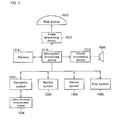
Fig. 3 , an on-vehiclewide display 1010 disclosed inpatent document 1 is connected with aninformation processing device 1016, via animage processing device 1012 having a VRAM or the like. Theinformation processing device 1016 includes a CPU that performs predetermined arithmetic processing; ROM on which a processing program is written; and I/O interface, connected thereto. To theinformation processing device 1016, information is provided from anavigation system 1022, trafficinformation communication system 1024,monitor system 1026,sensor system 1028, anddiag system 1030. Theinformation processing device 1016 judges driving condition based on the above information and receives required information, and then displays various information items on thewide display 1010 via theimage processing device 1012. - Furthermore, as shown in
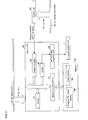
Fig. 4 , an instrument panel display system disclosed in patent document 2 includes anLSI 102,CAN microcomputer 103, andimage memory 104, in adisplay platform section 101 thereof. To theLSI 102, theCAN microcomputer 103 andimage memory 104 are connected viaCPU buses microcomputer 103 receives information about the vehicle state via a LAN for CAN 105 and then controls the image data processing that is performed in theLSI 102. Also, image data from a 6 port is inputted into theLSI 102. After subjected to size processing or the like in theLSI 102, the image data is sent to a memory bus (not illustrated), and then stored in theimage memory 104. Animaging controller 118, to which the memory bus is connected, is connected to thecontrol bus 107. Thecontrol bus 107 is controlled by the CANmicrocomputer 103. - In this arrangement, the CAN
microcomputer 103 shown inFig.4 judges a vehicle state (e.g., speed, engine revolution speed, oil amount, door state, and state of the air conditioner) based on the vehicle data sent from the LAN for CAN. Then, based on the judged vehicle state, the CANmicrocomputer 103 judges whether the layout needs to be changed. If the layout needs to be changed, the CANmicrocomputer 103 decides the display layout according to the judged vehicle state. And then the CANmicrocomputer 103 activates a layout creating program. At this time, the CANmicrocomputer 103 activates a layout creating program corresponding to the decided display layout. The program has been read out from aflash memory 108 and deployed on the DRAM in advance. In theflash memory 108, the layout creating programs for creating display layouts of a plurality of patterns are stored by each display layout. The program is deployed onto the DRAM when it is booted. - As explained above, based on the received vehicle data, the CAN
microcomputer 103 decides which display layout to use and then activates a layout creating program for creating the decided display layout. At this point, each layout creating program contains at least information of the type of the image to be displayed (e.g., moving images of navigation display and speed meter, and still image of background image); information of the size of the image to be displayed (e.g., 640 pixel x 480 pixel); and information of the location of the image to be displayed (e.g., location of a dot at the upper left, and vertical and horizontal length of the image). - Moreover, via the
imaging controller 118, theCAN microcomputer 103 commands a Scaler 117 to enlarge or contract the image outputted from DVI, HDCP, or a capture buffer to the predetermined size, based on the information indicating the size of the image (the information contained in the layout creating program). The Scaler 117 enlarges or contracts the image to the commanded size and outputs it to theimage memory 104. - Based on the layout creating program, the
CAN microcomputer 103 outputs a control signal to abitblt 119, thereby to cause thebitblt 119 to receive the image data from theimage memory 104. TheCAN microcomputer 103 also outputs a control signal via theimaging controller 118 to thebitblt 119, thereby to cause thebitblt 119 to create an image on which each image is located in the predetermined location, based on the information of the location of the image (the information contained in the layout creating program). Thebitblt 119 creates a piece of image data based on the control signals. In this process, the image data goes through predetermined process via animage improvement 102a, and then is outputted to aliquid crystal panel 127. Theliquid crystal panel 127 displays the image according to the image data. -
PATENT DOCUMENT 1
Japanese Unexamined Patent Application Publication, Tokukaihei, No.9-123848 - PATENT DOCUMENT 2
International Patent Publication,WO 2006/022191 A1 (Disclosed on March 2, 2006) - However, the configuration shown in the
patent document 1 imposes a heavy load on theinformation processing device 1016, because theinformation processing device 1016 has to judge vehicle state after receiving various information and then display the various information items on thewide display 1010 via theimage processing device 1012. And if an error or thermal runaway occurred to CPU or the like of theinformation processing device 1016 due to the heavy load, this would result in a trouble in which even important information of the vehicle that is required for control (e.g., speed information and warning information) cannot be displayed anymore. - And in the configuration shown in the patent document 2, there was also a problem in which the
CAN microcomputer 103 suffers a heavy load because the CANmicrocomputer 103 judges vehicle state after receiving vehicle data and also creates image data, by using theLSI 102. - The invention is made to solve the above problem. An object of the invention is to provide a configuration that can reduce the load on a processor, which receives vehicle data in the on-vehicle display system.
- An on-vehicle display system of the invention (on-vehicle display device) is an on-vehicle display system comprising:
- a display panel; and a data generating section for generating display data to be inputted into the display panel, the data generating section comprising: a first processor for autonomously creating screen data from imaging data (data for use in imaging operation) read out from a memory and image data inputted in the first processor; and a second processor for receiving vehicle data and creating an imaging operation switching command according to the vehicle data, the first processor creating the screen data in response to the imaging operation switching command, and outputting the screen data as the display data.
- In the above configuration, the first processor autonomously creates screen data from the imaging data read out from the memory and the image data inputted in the first processor, so all the second processor needs to do is to receive vehicle data, create the imaging operation switching command based on the vehicle data, and then issue the imaging operation switching command to the first processor. As a result, the load imposed on the second processor that receives vehicle data can be reduced compared to a conventional configuration. This makes it possible to lower the heating value and power consumption of the second processor.
- The on-vehicle display system may be configured such that the second processor is connected to an in-vehicle network, and the vehicle data is inputted from the in-vehicle network.
- The on-vehicle display system may be configured such that the image data contains moving image data.
- The on-vehicle display system may be configured such that the imaging data contains an imaging program.
- The on-vehicle display system may be configured such that the imaging data contains still image data.
- The on-vehicle display system may be configured such that the moving image data contains video picture data obtained from a CCD provided on a vehicle.
- The on-vehicle display system may be configured such that the moving image data contains at least one video picture data from the group consisting of navigation, DVD, and TV.
- The on-vehicle display system may be configured such that the in-vehicle network is CAN (Controller Area Network), LIN (Local Interconnect network) or FlexRay (registered trademark).
- The on-vehicle display system may be configured such that the image data is inputted into the first processor via a network other than the above in-vehicle network.
- The on-vehicle display system may be configured such that the first processor is formed from a graphic LSI and the second processor is formed from a control LSI.
- As explained above, in the display system, the first processor autonomously creates the screen data from the imaging data read out from the memory and the image data inputted in the first processor, so all the second processor needs to do is to receive vehicle data, create the imaging operation switching command based on the vehicle data, and then issue the imaging operation switching command to the first processor. As a result, the load imposed on the second processor that receives vehicle data can be reduced compared to a conventional configuration. This makes it possible to lower the heating value and power consumption of the second processor.
- A display panel control device of the invention is a display panel control device for controlling an on-vehicle display panel. The display panel control device comprises a control processor for receiving vehicle data and outputting an imaging operation switching command corresponding to the vehicle data; and a graphic processor for creating screen data from imaging data read out from a memory and image data inputted in the graphic processor, the screen data corresponding to the imaging operation switching command.
- The display panel control device may be configured such that the control processor receives the vehicle data from an in-vehicle network.
- The display panel control device may be configured such that the image data is inputted into the graphic processor from an in-vehicle network.
- An on-vehicle display system (on-vehicle display device) according to the present invention is configured such that it includes a display panel and the above display panel control device.
-
-
Fig. 1 shows a block diagram of a configuration of an instrument panel control system that includes an instrument panel display system of the present invention. -
Fig. 2 shows a block diagram of a configuration of a liquid crystal controller that is provided in the instrument panel display system. -
Fig. 3 shows a block diagram of a configuration of a conventional on-vehicle display system. -
Fig. 4 shows a block diagram of a configuration of a conventional on-vehicle display system. -
- 1 Instrument panel display system
- 3 Vehicle system
- 4 Amenity system
- 5 Safety system
- 6 Display platform section
- 7 Liquid crystal panel
- 11 Liquid crystal controller
- 21 31 32 in-vehicle LAN
- 34 GDC for vehicle system
- 35 Processor for vehicle system
- 36 Microcomputer for vehicle system
- 37 GDC for amenity system
- 38 Processor for amenity system
- 39 Microcomputer for amenity system
- 40 GDC for safety system
- 41 Processor for safety system
- 66 Control LSI
- 80 Graphic LSI
- 88 Program/ Still image memory
- 89 Frame memory
- 92 Memory control section
- 94 Imaging controller
- One embodiment of the invention is described below with reference to
Figs. 1 and2 .Fig.1 shows a block diagram of an instrument panel control system. As described inFig.1 , the instrument panel control system includes an instrument panel display system 1 (on-vehicle display system); I/O system (Amenity system 4) for amenity such as DVD, TV, GPS, and Audio; I/O system (Safety system 5) for safety such as CCDs and sensor; and in-vehicle LAN 21. The in-vehicle LAN 21 includes an in-vehicle LAN for power train system 21x (hereinafter, power train system in-vehicle LAN 21x) and in-vehicle LAN forbody system 21y (hereinafter, body system in-vehicle LAN 21y). The power train system in-vehicle LAN 21x is connected with an electric control unit (ECU) 28a that controls engine system, electric control unit (ECU) 28b that controls gear system, and the like. The body system in-vehicle LAN 21y is connected with an electric control unit (ECU) 29a that controls door system, electric control unit (ECU) 29b that controls light system, electric control unit (ECU) 29c that controls air conditioner system, and the like. - The instrument
panel display system 1 includes adisplay platform section 6 andliquid crystal panel 7. Thedisplay platform section 6 includes a liquid crystal controller 11 (a section for generating data),power supply circuit 18,timing generator 12, andbacklight control circuit 13. Theliquid crystal controller 11 includes a control LSI 66 (a second processor, a control processor), graphic LSI 80 (a first processor, a graphic processor), andmemory 90. - A
vehicle system 3 includes a graphic display controller (GDC) for vehicle system 34 (hereinafter, vehicle system GDC 34), processor (CPU, a processor) for vehicle system 35 (hereinafter, vehicle system processor 35), and microcomputer for vehicle system 36 (hereinafter, vehicle system microcomputer 36) that supports in-vehicle LAN. Theamenity system 4 includes a graphic display controller (GDC) for amenity system 37 (hereinafter, amenity system GDC 37), processor (CPU, a processor) for amenity system 38 (hereinafter, amenity system processor 38), and microcomputer for amenity system 39 (hereinafter, amenity system microcomputer 39) that supports in-vehicle LAN. Thesafety system 5 includes a graphic display controller (GDC) for safety system 40 (hereinafter, safety system GDC 40), processor (CPU, a processor) for safety system 41 (hereinafter, safety system processor 41), and microcomputer for safety system 42 (hereinafter, safety system microcomputer 42) that supports in-vehicle LAN. - In the above configuration, the
vehicle system microcomputer 36 is connected to the in-vehicle LAN 21 (power train system in-vehicle LAN 21x and body system in-vehicle LAN 21y). And thecontrol LSI 66 in thedisplay platform section 6,vehicle system microcomputer 36 in thevehicle system 3,amenity system microcomputer 39 in theamenity system 4, andsafety system microcomputer 42 in thesafety system 5 are connected to an in-vehicle LAN 32, the LAN for CAN. - Also, the
vehicle system GDC 34,amenity system GDC 37,safety system GDC 40, andgraphic LSI 80 in thedisplay platform section 6 are connected to an in-vehicle LAN 31 that is used for transmitting image data. The in-vehicle LAN 31 is a high-speed LAN (e.g., MOST, IDB1394) or direct connection of signals. - The in-
vehicle LAN 21,vehicle system 3,amenity system 4,safety system 5, and instrument panel section 2 are described below in terms of their functions. - The power train system in-vehicle LAN 21x of the in-
vehicle LAN 21 is connected with the ECU forengine system 28a (hereinafter,engine system ECU 28a), ECU forgear system 28b (hereinafter,gear system ECU 28b), and the like. Theengine system ECU 28a performs transmission of numeric data about engine control and numeric data about the engine, and reception of control data from the other ECU. Thegear system ECU 28b performs transmission of numeric data about gear control and numeric data about the gear, and reception of control data from the other ECU. And, the power train system in-vehicle LAN 21x transmits real-time data (that is required to be sent in real time with high credibility, such as data about warning information, blinkers, speed, and revolution speed) to thevehicle system microcomputer 36 of thevehicle system 3, as vehicle data. - The body system in-
vehicle LAN 21y of the in-vehicle LAN 21 is connected with the ECU fordoor system 29a (hereinafter,door system ECU 29a), ECU forlight system 29b (hereinafter,light system ECU 29b), ECU forair conditioner system 29c (hereinafter, airconditioner system ECU 29c), and the like. Thedoor system ECU 29a performs transmission of switching signals to open or close the door and reception of control data from the other ECU. Thelight system ECU 29b performs transmission of signals to switch on or off the light and reception of control data from the other ECU. The airconditioner system ECU 29c performs transmission of data about air conditioner control and data about the air conditioner, and reception of control data from the other ECU. And, the body system in-vehicle LAN 21y transmits data (that can be transmitted at low speed without any problem, such as data about light, opening or closing the door, and controlling the air conditioner) to thevehicle system microcomputer 36 of thevehicle system 3, as vehicle data. - The
vehicle system microcomputer 36 of thevehicle system 3 is a micro controller that includes an interface for CAN (or the other vehicle-specific LAN, such as LIN and FlexRay). - The
vehicle system microcomputer 36 receives various vehicle data (the vehicle data of power train system and body system), and then sends the data to thevehicle system processor 35. - Also, the
vehicle system microcomputer 36 sends the various vehicle data, which is received from the in-vehicle LAN 21 (the data about go straight, stop, turn right, turn left, go back, driving speed, or the like), to theamenity system microcomputer 39, to thesafety system microcomputer 42, and to thecontrol LSI 66 of thedisplay platform section 6, via the in-vehicle LAN 32 (CAN). - After receiving various vehicle data sent via the
vehicle system microcomputer 36, thevehicle system processor 35 of thevehicle system 3 controls thevehicle system GDC 34 so as to generate image data (moving image data of the speed meter, tachometer, or the like). In this step, thevehicle system GDC 34 performs imaging operation to prepare image data of two or three-dimensional graphics in response to a command from thevehicle system processor 35, and then sends out the generated image data to the in-vehicle LAN 31. - The
amenity system microcomputer 39 of theamenity system 4 is a microcontroller that includes an interface for CAN (or the other vehicle-specific LAN such as LIN and FlexRay). Theamenity system microcomputer 39 receives the vehicle data sent from thevehicle system microcomputer 36 via the in-vehicle LAN 32, and then sends the data to theamenity system processor 38. - After receiving either data sent from DVD or TV via an
interface 46 or data sent from GPS or Audio via anSCI 47; and vehicle data sent from theamenity system microcomputer 39, theamenity system processor 38 of theamenity system 4 controls theamenity system GDC 37 so as to generate image data (moving image data for navigation image, TV image, DVD image, or the like). The image data for a navigation image is generated by theamenity system processor 38, by using a combination of map data from DVD and vehicle location information from GPS. In this step, theamenity system GDC 37 performs imaging operation to prepare image data of two or three-dimensional graphics in response to a command from theamenity system processor 38, and then sends out the generated image data to the in-vehicle LAN 31. - The
safety system microcomputer 42 of thesafety system 5 is a microcontroller that includes an interface for CAN (or the other vehicle-specific LAN such as LIN and FlexRay). Thesafety system microcomputer 42 receives the vehicle data sent from thevehicle system microcomputer 36 via the in-vehicle LAN 32, and then sends the data to thesafety system processor 41. - After receiving data sent from a front CCD, rear CCD, and the other sensors, via an
interface 48; and vehicle data sent via thesafety system microcomputer 42, thesafety system processor 41 of thesafety system 5 controls thesafety system GDC 40 so as to generate image data (moving image data for each CCD image or the like). More specifically, thesafety system processor 41 performs safety detection processes such as obstacle detection and white line detection, by using data inputted from each CCD, and then generates warning image data of obstacles or the like. In this step, thesafety system GDC 40 performs imaging operation to prepare image data of two or three-dimensional graphics in response to a command from thesafety system processor 41, and then sends out the generated image data to the in-vehicle LAN 31. - The
control LSI 66 of the instrumentpanel display system 1 is a microcontroller that includes an interface for CAN. Thecontrol LSI 66 receives the vehicle data sent out from thevehicle system microcomputer 36 to the in-vehicle LAN 32 and creates an imaging operation switching command based on the received vehicle data, and then sends out the imaging operation switching command to thegraphic LSI 80. - The
liquid crystal panel 7 of the instrumentpanel display system 1 is a liquid crystal panel module that includes a driver IC and backlight. Thetiming generator 12 generates a signal that is specific for the liquid crystal panel. Thebacklight control circuit 13 controls the backlight of theliquid crystal panel 7. Thepower supply circuit 18 provides theliquid crystal panel 7 with power supply voltage. Thememory 90 is used as a storage area for the imaging data (i.e., data for use in the imaging operation), and also as a working area for thegraphic LSI 80 to perform image processing or the like (explained later). Note that at least a part of thememory 90 may be set within thegraphic LSI 80. - The
liquid crystal controller 11 of the instrument panel section display system 1 (display panel control device) outputs display data to theliquid crystal panel 7. That is, theliquid crystal controller 11 receives vehicle data from the in-vehicle LAN 32 and generates data for a screen based on the various image data generated in such systems as thevehicle system 3,amenity system 4, andsafety system 5. In addition, theliquid crystal controller 11 optimizes the screen data (image improvement) according to the characteristics of theliquid crystal panel 7, and then outputs the data to theliquid crystal panel 7 as display data. - Hereinafter the
liquid crystal controller 11 is described more precisely. - As shown in
Figs. 1 and2 , thedisplay platform section 6 includes thecontrol LSI 66,graphic LSI 80, and memory 90 (a program/stillimage memory 88 and a frame memory 89). - The
control LSI 66 creates an imaging operation switching command (a display switching command) after extracting vehicle data (warnings about vehicle speed, engine revolution speed, whether the seatbelt is fastened or not, whether the door is closed or opened, or the like) from the in-vehicle LAN 32 via a CAN interface (not illustrated), and then outputs the command to thegraphic LSI 80. At this point, the imaging operation switching command is issued as a single command directed to a single screen (e.g., a screen on which images of objects such as meter, oil, shift lever, CCD, navigation are arranged). - In response to the imaging operation switching command issued by the
control LSI 66, thegraphic LSI 80 creates screen data by performing imaging operation to allocate image data of each object in appropriate locations. Then, thegraphic LSI 80 outputs the data to theliquid crystal panel 7 as display data. In other words, thegraphic LSI 80 includes a port, from which moving images (images of CCD, navigation, DVD, TV or the like) can be inputted, while thegraphic LSI 80 is connected to thememory 88, in which imaging data (imaging program for preparing still images such as background and each object) is stored; and to thememory 89, which is a transient memory for the imaging operation. This makes it possible for thegraphic LSI 80 to prepare image data while receiving and sending the data from/to thememories - On the
liquid crystal controller 11, first, thecontrol LSI 66 judges the vehicle state based on the vehicle information sent from the LAN forCAN 32. The vehicle state represents all the states indicating information about the vehicle (e.g., all kinds of vehicle-related information such as speed, engine revolution speed, oil amount, door state, and state of air conditioner). - Next, based on the judged vehicle state, the
control LSI 66 judges whether the imaging operation needs to be switched. And if the imaging operation needs to be switched, thecontrol LSI 66 issues an imaging operation switching command to thegraphic LSI 80. For example, if thecontrol LSI 66 judged that a vehicle that has been driving has just stopped, the display at driving state needs to be switched to the display at stopping state, and so thecontrol LSI 66 issues an imaging operation switching command for switching the display. - Once received the imaging operation switching command, the
graphic LSI 80 reads out, from thememory 88, a layout creating program corresponding to the imaging operation switching command. In thememory 88, layout creating programs for creating a plurality of patterns of display layouts are stored by each imaging operation switching command. Each layout creating program at least contains information about the type of the object to be displayed, size of the object to be displayed (e.g., 640 pixel x 480 pixel), and location of the object to be displayed (e.g., a location of a dot at the upper left, and vertical and horizontal length of the image). The program may contain image data of the object that is to be displayed as a still image, such as background. - Then, based on the information about the size of the object contained in the layout creating program, an
imaging controller 94 commands aScaler 97 to enlarge or contract an image outputted from DVI, HDCP, or capture buffer, to the predetermined size. TheScaler 97 enlarges or contracts the image to the predetermined size, and then outputs it to theframe memory 89. - And then, based on the layout creating program, the
imaging controller 94 outputs a control signal to abitblt 95, thereby to cause thebitblt 95 to receive the image data of each object from the memory 90 (88, 89) and place the objects in the predetermined locations, and then create a screen. Thebitblt 95 then creates a screen data indicating a piece of screen, based on the control signal. The screen data goes through a prescribed process via a liquid crystalimage improvement circuit 14, and then is outputted to theliquid crystal panel 7 as display data. Theliquid crystal panel 7 displays the image based on the display data. - As described above, with the instrument panel display system, all the
control LSI 66 needs to do is to receive vehicle data from theLAN 32 and then issue an imaging operation switching command per screen to thegraphic LSI 80. This makes it possible to considerably reduce the amount of data to be sent from thecontrol LSI 66 to thegraphic LSI 80. For example, the amount of the data can be much less than that sent from theCAN microcomputer 103 to theLSI 102 inFig. 4 . This process can reduce the load on thecontrol LSI 66 and also can reduce heat value and power consumption of thecontrol LSI 66. - Moreover, the instrument
panel display system 1 includes theprocessors vehicle system processor 35,amenity system processor 38, and safety system processor 41) are reduced compared to a conventional configuration, in which the loads are imposed on one single processor. Furthermore, a processor that has a function or capability to handle assigned information may also be employed as thevehicle system processor 35,amenity system processor 38, orsafety system processor 41. This makes it possible to improve display stability as well as to reduce the cost of manufacturing. - The invention is not limited to the description of the embodiments above, but may be altered within the scope of the claims. An embodiment based on a proper combination of technical means disclosed in different embodiments is encompassed in the technical scope of the invention.
- A display system of the present invention can be employed widely as an information display system of vehicles, trains, aircrafts, vessels, and the like.
Claims (14)
- An on-vehicle display system comprising:a display panel; anda data generating section for generating display data to be inputted into the display panel,
the data generating section comprising:a first processor for autonomously creating screen data from imaging data read out from a memory and image data inputted in the first processor; anda second processor for receiving vehicle data and creating an imaging operation switching command according to the vehicle data,the first processor creating the screen data in response to the imaging operation switching command, and outputting the screen data as the display data. - The on-vehicle display system according to claim 1, wherein the second processor is connected to an in-vehicle network, and the vehicle data is inputted from the in-vehicle network.
- The on-vehicle display system according to claim 1, wherein the image data contains moving image data.
- The on-vehicle display system according to claim 1, wherein the imaging data contains an imaging program.
- The on-vehicle display system according to claim 4, wherein the imaging data contains still image data.
- The on-vehicle display system according to claim 3, wherein the moving image data contains video picture data obtained from a CCD provided on a vehicle.
- The on-vehicle display system according to claim 3, wherein the moving image data contains at least one video picture data from the group consisting of navigation, DVD, or TV.
- The on-vehicle display system according to claim 2, wherein the in-vehicle network is CAN (Controller Area Network), LIN (Local Interconnect Network), or FlexRay (registered trademark).
- The on-vehicle display system according to claim 8, wherein the image data is inputted into the first processor via a network other than the in-vehicle network.
- The on-vehicle display system according to claim 1, wherein the first processor is formed from a graphic LSI and the second processor is formed from a control LSI.
- A display panel control device for controlling an on-vehicle display panel, the display panel control device comprising:a control processor for receiving vehicle data and outputting an imaging operation switching command corresponding to the vehicle data; anda graphic processor for creating screen data from imaging data read out from a memory and image data inputted in the graphic processor, the screen data corresponding to the imaging operation switching command.
- The display panel control device according to claim 11, wherein the control processor receives the vehicle data from an in-vehicle network.
- The display panel control device according to claim 11, wherein the image data is inputted into the graphic processor from an in-vehicle network.
- An on-vehicle display system, comprising a display panel and a display panel control device of claim 11.
Applications Claiming Priority (2)
| Application Number | Priority Date | Filing Date | Title |
|---|---|---|---|
| JP2006220570 | 2006-08-11 | ||
| PCT/JP2007/064501 WO2008018292A1 (en) | 2006-08-11 | 2007-07-24 | On-vehicle display system and display panel control device |
Publications (1)
| Publication Number | Publication Date |
|---|---|
| EP2050622A1 true EP2050622A1 (en) | 2009-04-22 |
Family
ID=39032826
Family Applications (1)
| Application Number | Title | Priority Date | Filing Date |
|---|---|---|---|
| EP07791226A Withdrawn EP2050622A1 (en) | 2006-08-11 | 2007-07-24 | On-vehicle display system and display panel control device |
Country Status (4)
| Country | Link |
|---|---|
| US (1) | US8073620B2 (en) |
| EP (1) | EP2050622A1 (en) |
| CN (1) | CN101489833A (en) |
| WO (1) | WO2008018292A1 (en) |
Families Citing this family (13)
| Publication number | Priority date | Publication date | Assignee | Title |
|---|---|---|---|---|
| JP2009276943A (en) * | 2008-05-13 | 2009-11-26 | Digital Media Professional:Kk | Display device for vehicle |
| CN103186500A (en) * | 2011-12-29 | 2013-07-03 | 上海博泰悦臻电子设备制造有限公司 | Car-mounted terminal multiprocessor communication interface system and communication method |
| US9037341B2 (en) * | 2012-06-03 | 2015-05-19 | Jerry Alex James | Traction control enable/disable feature |
| US9811247B2 (en) * | 2013-11-25 | 2017-11-07 | Lg Electronics Inc. | In-vehicle infotainment device and image display method using the same |
| JP6549892B2 (en) * | 2014-05-19 | 2019-07-24 | 株式会社堀場製作所 | Vehicle test system, test management device, test management program, and vehicle test method |
| CN106143154B (en) * | 2014-10-10 | 2019-06-18 | 现代摩比斯株式会社 | Vehicle cluster information output device and control method thereof |
| EP3113169B1 (en) * | 2015-07-02 | 2018-11-14 | OpenSynergy GmbH | Method for controlling a graphic processing unit in a control unit, in particular of a vehicle, computer program product and system for an embedded control unit |
| CN105890613A (en) * | 2016-04-01 | 2016-08-24 | 乐视控股(北京)有限公司 | Display method and device for navigation information |
| CN105857218A (en) * | 2016-06-14 | 2016-08-17 | 京东方科技集团股份有限公司 | Vehicle-mounted display system |
| JP6658391B2 (en) * | 2016-08-02 | 2020-03-04 | 株式会社デンソー | Video display system for vehicles |
| CN106515450A (en) * | 2016-11-22 | 2017-03-22 | 天津韶乐科技有限公司 | Vehicle navigation video displaying system based on fuel quantity detection |
| CN107521344A (en) * | 2017-09-01 | 2017-12-29 | 浙江汽车仪表有限公司 | Based on TFT screen intelligent vehicle combination instruments |
| JP7314632B2 (en) * | 2019-06-11 | 2023-07-26 | 株式会社デンソー | vehicle equipment |
Family Cites Families (41)
| Publication number | Priority date | Publication date | Assignee | Title |
|---|---|---|---|---|
| JPS6258110A (en) | 1985-09-09 | 1987-03-13 | Mazda Motor Corp | Multiple display apparatus for vehicle |
| JP3181333B2 (en) * | 1990-11-30 | 2001-07-03 | 株式会社リコー | Folding order image forming device |
| JPH04328420A (en) | 1991-04-26 | 1992-11-17 | Nippondenso Co Ltd | Display device for vehicle |
| JP3267993B2 (en) | 1991-11-27 | 2002-03-25 | 本田技研工業株式会社 | Air conditioning system for vehicles |
| EP0614104A3 (en) | 1993-03-05 | 1995-12-20 | Hughes Aircraft Co | Virtual image display management system with head-up display system. |
| US5615080A (en) | 1993-03-17 | 1997-03-25 | Yazaki Corporation | Meter module, connecting device thereof, wiring harness protector, and connecting device of instrument wiring harness |
| JPH09123848A (en) | 1995-11-06 | 1997-05-13 | Toyota Motor Corp | Information display device for vehicles |
| JPH09153195A (en) | 1995-12-01 | 1997-06-10 | Toyota Motor Corp | Information display device for vehicles |
| JPH1075437A (en) | 1996-08-30 | 1998-03-17 | Yamatake Honeywell Co Ltd | Tracking device |
| JPH10116086A (en) | 1996-10-08 | 1998-05-06 | Aqueous Res:Kk | Car karaoke |
| JPH10297319A (en) | 1997-05-01 | 1998-11-10 | Furukawa Electric Co Ltd:The | Instrument panel image creation apparatus and method |
| JPH11281375A (en) | 1998-03-26 | 1999-10-15 | Mitsubishi Electric Corp | Information display control device |
| JPH11339195A (en) | 1998-05-22 | 1999-12-10 | Kansei Corp | Lane abnormality detection circuit, and rear-end collision alarm device using the same |
| JP2000238552A (en) | 1999-02-19 | 2000-09-05 | Yazaki Corp | Vehicle instrument, method of displaying the instrument, and recording medium storing an instrument display program |
| JP4132484B2 (en) | 1999-10-15 | 2008-08-13 | アルパイン株式会社 | In-vehicle audio visual playback device |
| JP2001320616A (en) | 2000-02-29 | 2001-11-16 | Matsushita Electric Ind Co Ltd | Imaging system |
| DE60106997T2 (en) | 2000-02-29 | 2005-12-01 | Matsushita Electric Industrial Co., Ltd., Kadoma | Image recording system and vehicle-mounted sensor system |
| US6411898B2 (en) | 2000-04-24 | 2002-06-25 | Matsushita Electric Industrial Co., Ltd. | Navigation device |
| JP2001343929A (en) | 2000-06-02 | 2001-12-14 | Canon Inc | Image display device |
| JP2002140065A (en) | 2000-10-31 | 2002-05-17 | Toshiba Corp | Display controller of wireless communication terminal |
| JP4618522B2 (en) | 2000-11-22 | 2011-01-26 | マツダ株式会社 | Vehicle failure display device |
| JP3715224B2 (en) | 2001-09-18 | 2005-11-09 | 本田技研工業株式会社 | Entertainment system mounted on the vehicle |
| JP2003137007A (en) | 2001-11-05 | 2003-05-14 | Denso Corp | Vehicle instrument |
| JP2003320911A (en) | 2002-04-26 | 2003-11-11 | Sumitomo Electric Ind Ltd | On-vehicle control system, control device, and relay device |
| JP2004155395A (en) | 2002-11-08 | 2004-06-03 | Denso Corp | Vehicle peripheral image processing device |
| JP2004157434A (en) | 2002-11-08 | 2004-06-03 | Calsonic Kansei Corp | Display device for vehicles |
| JP3770229B2 (en) * | 2002-11-29 | 2006-04-26 | ソニー株式会社 | Video data recording apparatus, metadata providing method, video data reproducing apparatus, video data processing method, program, recording medium |
| JP2004246525A (en) * | 2003-02-13 | 2004-09-02 | Matsushita Electric Ind Co Ltd | Sequential circuit, storage element, clock generation circuit and clock control method, circuit change method and circuit design support device, semiconductor integrated circuit and electronic device having the same, and electronic control device and moving body having the same |
| JP4340455B2 (en) * | 2003-03-10 | 2009-10-07 | 富士通株式会社 | Image processing program creation method, image processing program creation program, and image processing program creation device |
| JP4048994B2 (en) * | 2003-04-10 | 2008-02-20 | ソニー株式会社 | Navigation device |
| JP2004356962A (en) | 2003-05-29 | 2004-12-16 | Denso Corp | Video display device for vehicles |
| JP2005022590A (en) | 2003-07-01 | 2005-01-27 | Nissan Motor Co Ltd | Vehicle display device |
| JP4334314B2 (en) * | 2003-10-09 | 2009-09-30 | 株式会社ケンウッド | Display processing device, navigation device, program, and display processing method |
| US20050102098A1 (en) * | 2003-11-07 | 2005-05-12 | Montealegre Steve E. | Adaptive navigation system with artificial intelligence |
| EP1548573A1 (en) | 2003-12-23 | 2005-06-29 | Barco N.V. | Hierarchical control system for a tiled large-screen emissive display |
| JP2005205997A (en) | 2004-01-21 | 2005-08-04 | Denso Corp | In-vehicle system |
| JP2005252511A (en) * | 2004-03-03 | 2005-09-15 | Nec Corp | System for transferring image and voice of videophone, mobile communication terminal, and method for transferring image and voice of videophone used for them |
| EP2204302A1 (en) | 2004-08-24 | 2010-07-07 | Sharp Kabushiki Kaisha | Display system |
| WO2006022228A1 (en) | 2004-08-24 | 2006-03-02 | Sharp Kabushiki Kaisha | Simulation apparatus, simulation program, and simulation method |
| JP4251141B2 (en) | 2005-02-23 | 2009-04-08 | 株式会社デンソー | Meters and instrument pointer display methods |
| JP2006027613A (en) | 2005-08-29 | 2006-02-02 | Hitachi Ltd | Vehicle travel control device |
-
2007
- 2007-07-24 WO PCT/JP2007/064501 patent/WO2008018292A1/en not_active Ceased
- 2007-07-24 US US12/305,002 patent/US8073620B2/en not_active Expired - Fee Related
- 2007-07-24 CN CNA2007800259777A patent/CN101489833A/en active Pending
- 2007-07-24 EP EP07791226A patent/EP2050622A1/en not_active Withdrawn
Non-Patent Citations (1)
| Title |
|---|
| See references of WO2008018292A1 * |
Also Published As
| Publication number | Publication date |
|---|---|
| CN101489833A (en) | 2009-07-22 |
| WO2008018292A1 (en) | 2008-02-14 |
| US20090204290A1 (en) | 2009-08-13 |
| US8073620B2 (en) | 2011-12-06 |
Similar Documents
| Publication | Publication Date | Title |
|---|---|---|
| US8073620B2 (en) | On-vehicle display system and display panel control device | |
| JP5148326B2 (en) | Display system | |
| CN101278332B (en) | Display system, display device, and display method | |
| US7969294B2 (en) | Onboard display device, onboard display system and vehicle | |
| KR100950008B1 (en) | Image display control device | |
| US7965177B2 (en) | Display system, screen design setting tool, display system program, screen design setting program, and recording medium | |
| US20190168610A1 (en) | Vehicular display control apparatus and vehicle driving assistance system | |
| US20180272944A1 (en) | System for and method of dynamically displaying images on a vehicle electronic display | |
| US20200357203A1 (en) | Vehicle control apparatus and dispiay control method | |
| US20090135199A1 (en) | Display system, display system display control method, data display program, and recording medium | |
| JP7509077B2 (en) | Vehicle display system, vehicle display method, and vehicle display program | |
| US12459357B2 (en) | Vehicle display device | |
| CN218228833U (en) | Vehicle-mounted display device and vehicle | |
| CN113433695A (en) | Head-up display method and system based on WHUD | |
| WO2007032487A1 (en) | Data i/o control system and display system to be mounted on moving body | |
| JP2023010075A (en) | Vehicle monitor display method and vehicle monitor display device |
Legal Events
| Date | Code | Title | Description |
|---|---|---|---|
| PUAI | Public reference made under article 153(3) epc to a published international application that has entered the european phase |
Free format text: ORIGINAL CODE: 0009012 |
|
| 17P | Request for examination filed |
Effective date: 20081218 |
|
| AK | Designated contracting states |
Kind code of ref document: A1 Designated state(s): AT BE BG CH CY CZ DE DK EE ES FI FR GB GR HU IE IS IT LI LT LU LV MC MT NL PL PT RO SE SI SK TR |
|
| AX | Request for extension of the european patent |
Extension state: AL BA HR MK RS |
|
| DAX | Request for extension of the european patent (deleted) | ||
| STAA | Information on the status of an ep patent application or granted ep patent |
Free format text: STATUS: THE APPLICATION HAS BEEN WITHDRAWN |
|
| 18W | Application withdrawn |
Effective date: 20150330 |