EP2048803A2 - Method and system for scaling content for playback with variable duration - Google Patents
Method and system for scaling content for playback with variable duration Download PDFInfo
- Publication number
- EP2048803A2 EP2048803A2 EP08253253A EP08253253A EP2048803A2 EP 2048803 A2 EP2048803 A2 EP 2048803A2 EP 08253253 A EP08253253 A EP 08253253A EP 08253253 A EP08253253 A EP 08253253A EP 2048803 A2 EP2048803 A2 EP 2048803A2
- Authority
- EP
- European Patent Office
- Prior art keywords
- content
- time
- duration
- piece
- segments
- Prior art date
- Legal status (The legal status is an assumption and is not a legal conclusion. Google has not performed a legal analysis and makes no representation as to the accuracy of the status listed.)
- Granted
Links
Images




Classifications
-
- H—ELECTRICITY
- H04—ELECTRIC COMMUNICATION TECHNIQUE
- H04H—BROADCAST COMMUNICATION
- H04H20/00—Arrangements for broadcast or for distribution combined with broadcast
- H04H20/10—Arrangements for replacing or switching information during the broadcast or the distribution
- H04H20/106—Receiver-side switching
-
- H—ELECTRICITY
- H04—ELECTRIC COMMUNICATION TECHNIQUE
- H04H—BROADCAST COMMUNICATION
- H04H60/00—Arrangements for broadcast applications with a direct linking to broadcast information or broadcast space-time; Broadcast-related systems
- H04H60/02—Arrangements for generating broadcast information; Arrangements for generating broadcast-related information with a direct linking to broadcast information or to broadcast space-time; Arrangements for simultaneous generation of broadcast information and broadcast-related information
- H04H60/06—Arrangements for scheduling broadcast services or broadcast-related services
Definitions
- the present invention relates to scaling content for playback with variable duration.
- Growth of the Internet has provided users many different options in the types and scheduling of content that may be viewed or interacted with by a user. For example, users may download content for viewing at a time immediately following the download, or for storing the content and viewing it at a later time.
- the content that users can access from a wide area network such as the Internet can be variable in size or length, and can also be scheduled or unscheduled.
- Some types of content occur, or become available, on a fixed schedule.
- content that is provided by a broadcast network such as a television broadcast network
- a broadcast network a particular program may begin at a fixed time, such as 7:00 pm every Tuesday evening.
- a user who wishes to view this particular program receives streaming video of the broadcast at the scheduled time, for example, 7:00 pm on Tuesday evening.
- variable length and unscheduled content such as downloadable content
- scheduled, fixed-length content such as broadcast content
- the user needs to coordinate the viewing of this content. Coordination of variable and fixed length content, and scheduled and unscheduled broadcast times, may result in lapses or dead times between the end of one piece of content and beginning of a second piece of content. These gaps between the content may be undesirable or unacceptable to viewer.
- some of the content may include material that a user considers objectionable. A user may wish to view the content but wants the objectionable material removed. Removable of the objectionable material will vary the length of the content which will increase the difficulties in scheduling various content that a user views and can compound the problems of lapses or gaps between the content.
- Embodiments of the present invention provide for scaling the duration of media or content.
- a method of adjusting the duration of first content having a plurality of segments is disclosed. The method includes: identifying at least one segment of the first content; deleting the at least one identified segment from the first content to form modified content; and inserting transition periods between segments remaining in the modified content, wherein the transition periods are inserted to adjust the duration of the modified content to a desired duration.
- a method of rendering content segments including: determining a first duration of time between an end time of a first piece of content and a start time of a second subsequent piece of content; identifying the content segments to render during the first duration of time, wherein an accumulated time of the content segments is identified to be less than the first duration of time; determining an amount of time that the first duration of time exceeds the accumulated time of the content segments; and inserting transition periods to account for the amount of time that the first duration of time exceeds the accumulated time of the content segments.
- a method of rendering content segments having scenes including: determining a first duration of time between an end time of a first piece of content and a start time of a second subsequent piece of content; identifying the content segments to render during the first duration of time, wherein an accumulated time of the content segments is identified to be less than the first duration of time; determining an amount of time that the first duration of time exceeds the accumulated time of the content segments; and inserting transition periods between the scenes in the content segments to account for the amount of time that the first duration of time exceeds the accumulated time of the content segments.
- a computing device including: an input that receives commands identifying at least one selected scene to be deleted from an original piece of content; and a processor configured to: delete the at least one selected scene from the original piece of content to generate a modified piece of content, and insert transition periods between scenes remaining in the modified piece of content to adjust the duration of the modified piece of content to a desired duration.
- a computing device including: a processor configured to determine a first duration of time between an end time of a first piece of content and a start time of a second subsequent piece of content; an input that receives commands identifying content segments to render during the first duration of time, wherein an accumulated time of the content segments is identified to be less than the first duration of time; and wherein the processor determines an amount of time that the first duration of time exceeds the accumulated time of the content segments and inserts transition periods to account for the amount of time that the first duration of time exceeds the accumulated time of the content segments.
- FIG. 1 is a block diagram of an embodiment of a content distribution network.
- a user 102 can be in communication with a wide area network 104 such as the Internet.
- content providers 106 and 108 are also in communication with the wide area network 104.
- one content provider 106 can provide downloadable content that the user 102 can download and watch at a later time as selected by the user 102.
- Another content provider 108 can broadcast content to be streamed to the user 102 on a fixed schedule. While the content providers 106 and 108 are illustrated as providing either downloadable content or broadcast content, a content provider can provide both downloadable and broadcast content.
- FIG. 1 Only a single user and two content providers are illustrated in Figure 1 , but in a typical system there would be many users and many content providers.
- content is generally described herein as viewable content, but can include any type of content, such as games, movies, music, and the like.
- a user 102 downloads content from the wide area network 104 and stores the content for later viewing by the user 102.
- the user 102 is also able to receive streaming content from a broadcast content provider 108 which is viewed on a fixed schedule when the content is broadcast or streamed.
- the user 102 schedules the viewing of the downloadable content such that it has been completed prior to, or viewed after, the scheduled broadcast time of the broadcast content.
- the scheduling by the user can result in gaps of time between the two pieces of content. For example, if the downloaded content is being viewed it may end before the beginning of the scheduled broadcast content.
- the content downloaded from the content provider 106 or broadcast by the content provider 108 may include material that is objectionable to a particular user 102.
- content downloaded or broadcast by content providers 106 and 108 may include love scenes, or other material, that a parent believes is undesirable for their children to watch.
- the parent may request that a modified version of the content be provided by the content providers 106 and 108.
- the content providers 106 and 108 can provide content with particular scenes deleted.
- Deletion of the scenes will vary the length of the content further compounding the scheduling problem. For example, if a broadcast network content provider 108 broadcasts one show beginning at 7:00 pm and another show beginning at 8:00 pm, and a user desires to have content deleted from the broadcast beginning at 7:00 pm, that particular portion of the broadcast will end prior to the beginning of the 8:00 pm broadcast. In this situation there will be a gap of time between the end of the broadcast content at 7:00 pm and the beginning of the broadcast content at 8:00 pm. This gap in the content could, for example, result in a blank screen being displayed to user which the user would find objectionable.
- Figure 2 is a diagram illustrating an example of adjusting the duration of a portion of content 200.
- the content includes a series of variable length clips or scenes indicated by the vertical lines in the portion of content 200.
- the content 200 is tailored to a specific audience by editing or removing portions 202, 204 and 206 of the content 200. Even though portions of the content are removed, it is still desired that the content 200 start and finish on a set or fixed schedule. To compensate for removal of content and still maintain the fixed schedule, variable length delays as described further below will be inserted into the content. In this way the two different versions of the content stream can be synchronized to start and end at the same time. By spreading the delay out over a large number of scenes in the content, the audience will generally not be aware of the fact that their presentation is being synchronized to fixed schedule.
- a scene may be approximately 15 seconds in duration. If a piece of content is two hours in duration, that means there will be approximately four scenes per minute for 120 minutes for a total of 480 scenes. If an extra period of time, for example, 100 milliseconds were inserted between each scene, there could be approximately 48 seconds difference in the duration of content contained in two different streams yet the two streams would begin and end at the same times. If the extra period is selected such that it is a duration that is not detectable by a typical user, for example, 100 milliseconds, the two different streams would have different durations but the difference would not be irritating, or noticeable, to the user.
- this could be the difference between an R-rated version of a piece of content that includes three extra sexual scenes totaling approximately 48 seconds duration and a G-rated version with 100 milliseconds between each scene transition that does not include the three sexual scenes.
- the three sexual scenes are represented as two 15-second scenes 202, 206 and one 18-second scene 204 in content stream 200, these three scenes could be removed from content stream 200 to make a new content stream 210.
- the new content stream 210 does not include the sexual scenes 202, 204, and 206 and does include scene transition periods 212 inserted between each of the remaining 477 scenes.
- the duration of some of the transition periods 212 can be adjusted slightly so that the accumulated duration of all of the transition inserts 212 will be a desired period, for example, 48 seconds.
- one user can watch a first content stream 200 and a second user can watch a second content stream 210 which both begin and end at the same scheduled times even though the first content stream 200 includes 48 seconds more content than second content stream 210.
- FIG 3 is a block diagram illustrating another embodiment of adjusting the duration of content.
- a user has downloaded content 302 that he wishes to watch prior to the beginning at a broadcast content 304.
- the broadcast content 304 begins at a fixed time 306.
- the downloaded content 302 may end prior to the beginning of the broadcast content 304. This can result in a gap 310 between the end of the downloaded content and the beginning of the fixed schedule broadcast content 304.
- the gap 310 may be long enough in duration for additional content to be displayed to the user.
- the gap may be long enough to provide for advertisements, commercials, or other content, to be broadcast or presented to the user.
- the gap 310 may be long enough to include several commercials. Commercials are typically fixed length with periods of one minute or 30 seconds or any other fixed length desired by the broadcaster. In the example of Figure 3 , the gap 310 may be three minutes and 33 seconds long. In this example, three fixed size commercials, each one-minute in duration, 310, 312 and 314 and one thirty second duration commercial 316 can be provided to the user. In this example, there remains a 3-second period 320 at the end of the variable period 310. In one embodiment, the 3-second period 310 can be distributed throughout the gap period 310 so that the user will only see shorter duration blanks in the broadcast of the commercials.
- the 3-second period 310 could be distributed as three one-second cut scenes, or gaps, between the commercials 310, 312, 314 and 316.
- other distributions of time between commercials can be used to distribute and expand the content in the gap period 310 to show the entire period.
- transition periods, or cut scenes can be inserted between scenes in the commercials to extend the accumulated duration of the commercials 310, 312, 314, and 316 to fill, or substantially match, the duration of the gap 310.
- Figure 4 is a flow diagram illustrating an embodiment of adjusting the duration of content.
- the duration of time between the end time of a first piece of content and the start time of a second subsequent piece of content is determined.
- the first piece of content could be variable in length and a user can select a start time while the second piece of content may be broadcast to the user on a fixed schedule.
- the duration between the end of the first piece of content and the beginning of the second piece of content is variable.
- Content segments that are desired to be rendered between the two pieces of content are then identified, at block 404.
- the content segments could include advertisements, commercials, or other types of content to be broadcast to a user.
- the amount of time that the duration between the two pieces of content exceeds the total accumulated time of the content desired to be rendered between the pieces of content is determined.
- the first content stream may end three minutes and 33 seconds before the second content stream. It may be desired to render three minutes and 30 seconds worth of commercials during that period. This will result in the duration of the period between the first and second content stream exceeding the desired content by three seconds.
- transition periods are added to the first piece of content to add or extend the duration of the first piece of content to account for the amount of time that the duration exceeds the accumulated time of the desired content.
- transition periods can be added to the first piece of content to extend its time.
- transition periods can be added in gaps between the desired content and the first and second pieces of content.
- transition periods can be added to the commercial content itself to extend each of the commercials by a desired amount of time.
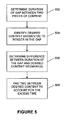
- Figure 5 is a flow diagram of another embodiment of adjusting the duration of content.
- duration of time between the end of the first piece of content and the beginning of a second subsequent piece of content is determined, at block 502.
- desired content segments to render between the two pieces of content are identified.
- An amount of time that the duration between the first and second piece of content exceeds the total accumulated time of the desired content segments to render is then determined, at block 506.
- transition periods, or scenes are used to pad between scenes in the first piece of content to extend the duration of the first piece of content to account for the amount of time that the duration between the first and second pieces of content exceeds the accumulated time of the content desired to show between the first and second pieces of content.
- Figure 6 is a flow diagram of another embodiment of adjusting the duration of content.
- duration of time for a piece of content is determined, at block 602.
- scenes that are to be removed from the content are identified. For example, a user may identify particular scenes (or category or types of scenes) that the user does not want to have as part of the received or viewed content.
- the identified scenes are removed from the content, at block 606, and transition periods, or cut scenes, are inserted between the remaining scenes in the content, at block 608, so that the overall duration of the content with deleted scenes is a desired duration.
- the desired duration is a duration that is the same, or substantially the same, as the original content that included the scenes.
- FIG. 7 is a block diagram of a computing system 700, such as a computer, game console, or set-top box, that may be used to implement various embodiments described herein.
- the computing system 700 may include a processor module 701 and a memory module 702.
- memory module 702 may be RAM, DRAM, ROM and the like.
- the computing system 700 may have multiple processor modules 701 if parallel processing is to be implemented.
- the processor module 701 can include a central processing unit 703.
- the processor module 701 can include local storage or a cache 704 to store executable programs.
- the memory module 702 can include program storage 705.
- the memory module 702 can include signal data storage 706 and player data storage 708
- the system 700 may also include well-known support function module 710 such as input/output elements 711, power supplies 712, a clock 713, cache memory 714, and the like.
- the system 700 may also optionally include mass storage module 715 such as a disc drive, CD ROM drive, DVD drive, tape drive or the like to store programs and/or data.
- the system 700 may also optionally include a display module 716 as well as a user interface module 718 to facilitate interaction between the system 700 and the user.
- Display module 716 may be in the form of a cathode ray tube, a flat panel screen or any other display module.
- the user interface module 718 may include a keyboard, mouse, joystick, write pen or other device such as a microphone, video camera or other user input device.
- the processor, memory, and other components within the system 700 may exchange signals such as code instructions and data with each other via a system bus 720.
- a hardware implementation may include using, for example, components such as application specific integrated circuits ("ASICs"), or field programmable gate arrays ("FPGAs").
- ASICs application specific integrated circuits
- FPGAs field programmable gate arrays
- module means, but is not limited to a software or hardware component, such as an FPGA or an ASIC, which performs certain tasks.
- a module may advantageously be configured to reside on an addressable storage medium and configured to execute on one or more network enabled devices or processors.
- a module may include, by way of example, components, processes, functions, attributes, procedures, subroutines, segments of program code, drivers, firmware, microcode, circuitry, data, databases, data structures, tables, arrays, variables, and the like.
- the functionality provided for in the components and modules may be combined into fewer components and modules or further separated into additional components and modules. Additionally, the components and modules may advantageously be implemented to execute on one or more network enabled devices or computers.
- DSP digital signal processor
- a general-purpose processor can be a microprocessor, but in the alternative, the processor can be any processor, controller, microcontroller, or state machine.
- a processor can also be implemented as a combination of computing devices, for example, a combination of a DSP and a microprocessor, a plurality of microprocessors, one or more microprocessors in conjunction with a DSP core, or any other such configuration.
- a software module can reside in RAM memory, flash memory, ROM memory, EPROM memory, EEPROM memory, registers, hard disk, a removable disk, a CD-ROM, or any other form of storage medium including a network storage medium.
- An exemplary storage medium can be coupled to the processor such the processor can read information from, and write information to, the storage medium.
- the storage medium can be integral to the processor.
- the processor and the storage medium can also reside in an ASIC.
Landscapes
- Engineering & Computer Science (AREA)
- Signal Processing (AREA)
- Two-Way Televisions, Distribution Of Moving Picture Or The Like (AREA)
Abstract
Description
- The present invention relates to scaling content for playback with variable duration.
- Growth of the Internet has provided users many different options in the types and scheduling of content that may be viewed or interacted with by a user. For example, users may download content for viewing at a time immediately following the download, or for storing the content and viewing it at a later time. The content that users can access from a wide area network such as the Internet can be variable in size or length, and can also be scheduled or unscheduled.
- Some types of content occur, or become available, on a fixed schedule. For example, content that is provided by a broadcast network such as a television broadcast network, may occur on a fixed schedule. Typically, in a broadcast network, a particular program may begin at a fixed time, such as 7:00 pm every Tuesday evening. A user who wishes to view this particular program receives streaming video of the broadcast at the scheduled time, for example, 7:00 pm on Tuesday evening.
- Because users now have access to variable length and unscheduled content, such as downloadable content, and also access to scheduled, fixed-length content such as broadcast content, the user needs to coordinate the viewing of this content. Coordination of variable and fixed length content, and scheduled and unscheduled broadcast times, may result in lapses or dead times between the end of one piece of content and beginning of a second piece of content. These gaps between the content may be undesirable or unacceptable to viewer.
- In addition, some of the content may include material that a user considers objectionable. A user may wish to view the content but wants the objectionable material removed. Removable of the objectionable material will vary the length of the content which will increase the difficulties in scheduling various content that a user views and can compound the problems of lapses or gaps between the content.
- Therefore, there is a need for techniques to scale content and to improve scheduling of content.
- Various respective aspects and features of the invention are defined in the appended claims.
- Embodiments of the present invention provide for scaling the duration of media or content. In one embodiment, a method of adjusting the duration of first content having a plurality of segments is disclosed. The method includes: identifying at least one segment of the first content; deleting the at least one identified segment from the first content to form modified content; and inserting transition periods between segments remaining in the modified content, wherein the transition periods are inserted to adjust the duration of the modified content to a desired duration.
- In another embodiment, a method of rendering content segments is disclosed. The method_including: determining a first duration of time between an end time of a first piece of content and a start time of a second subsequent piece of content; identifying the content segments to render during the first duration of time, wherein an accumulated time of the content segments is identified to be less than the first duration of time; determining an amount of time that the first duration of time exceeds the accumulated time of the content segments; and inserting transition periods to account for the amount of time that the first duration of time exceeds the accumulated time of the content segments.
- In another embodiment, a method of rendering content segments having scenes is disclosed. The method including: determining a first duration of time between an end time of a first piece of content and a start time of a second subsequent piece of content; identifying the content segments to render during the first duration of time, wherein an accumulated time of the content segments is identified to be less than the first duration of time; determining an amount of time that the first duration of time exceeds the accumulated time of the content segments; and inserting transition periods between the scenes in the content segments to account for the amount of time that the first duration of time exceeds the accumulated time of the content segments.
- In yet another embodiment, a computing device is disclosed. The computing device including: an input that receives commands identifying at least one selected scene to be deleted from an original piece of content; and a processor configured to: delete the at least one selected scene from the original piece of content to generate a modified piece of content, and insert transition periods between scenes remaining in the modified piece of content to adjust the duration of the modified piece of content to a desired duration.
- In yet another embodiment, a computing device is disclosed. The computer device including: a processor configured to determine a first duration of time between an end time of a first piece of content and a start time of a second subsequent piece of content; an input that receives commands identifying content segments to render during the first duration of time, wherein an accumulated time of the content segments is identified to be less than the first duration of time; and wherein the processor determines an amount of time that the first duration of time exceeds the accumulated time of the content segments and inserts transition periods to account for the amount of time that the first duration of time exceeds the accumulated time of the content segments.
- Embodiments of the invention will now be described, by way of example only, with reference to the accompanying drawings in which:
-
Figure 1 is a block diagram of an embodiment of a content distribution network; -
Figure 2 is a diagram illustrating an example of adjusting the duration of a portion of content; -
Figure 3 is a block diagram illustrating another embodiment of adjusting the duration of content; -
Figure 4 is a flow diagram illustrating an embodiment of adjusting the duration of content; -
Figure 5 is a flow diagram of another embodiment of adjusting the duration of content; -
Figure 6 is a flow diagram of another embodiment of adjusting the duration of content; and -
Figure 7 is a block diagram of a computing system, such as a computer, game console, or set-top box, that may be used to implement various embodiments described herein. - After reading the following description it would become apparent to one skilled in the art how to implement the invention in various alternative embodiments and alternative applications. However, although various embodiments of the present invention will be described herein, it is to be understood that these embodiments are presented by way of example only, and not limitations. As such, this detailed description of various embodiments should not be construed to limit the scope or breadth of the present invention.
-
Figure 1 is a block diagram of an embodiment of a content distribution network. As shown inFigure 1 , auser 102 can be in communication with awide area network 104 such as the Internet. Also in communication with thewide area network 104 arecontent providers content provider 106 can provide downloadable content that theuser 102 can download and watch at a later time as selected by theuser 102. Anothercontent provider 108 can broadcast content to be streamed to theuser 102 on a fixed schedule. While thecontent providers Figure 1 , but in a typical system there would be many users and many content providers. Also, content is generally described herein as viewable content, but can include any type of content, such as games, movies, music, and the like. - In one embodiment, a
user 102 downloads content from thewide area network 104 and stores the content for later viewing by theuser 102. Theuser 102 is also able to receive streaming content from abroadcast content provider 108 which is viewed on a fixed schedule when the content is broadcast or streamed. In this embodiment, theuser 102 schedules the viewing of the downloadable content such that it has been completed prior to, or viewed after, the scheduled broadcast time of the broadcast content. The scheduling by the user can result in gaps of time between the two pieces of content. For example, if the downloaded content is being viewed it may end before the beginning of the scheduled broadcast content. - In another embodiment, the content downloaded from the
content provider 106 or broadcast by thecontent provider 108 may include material that is objectionable to aparticular user 102. For example, content downloaded or broadcast bycontent providers content providers content providers - Deletion of the scenes will vary the length of the content further compounding the scheduling problem. For example, if a broadcast
network content provider 108 broadcasts one show beginning at 7:00 pm and another show beginning at 8:00 pm, and a user desires to have content deleted from the broadcast beginning at 7:00 pm, that particular portion of the broadcast will end prior to the beginning of the 8:00 pm broadcast. In this situation there will be a gap of time between the end of the broadcast content at 7:00 pm and the beginning of the broadcast content at 8:00 pm. This gap in the content could, for example, result in a blank screen being displayed to user which the user would find objectionable. -
Figure 2 is a diagram illustrating an example of adjusting the duration of a portion ofcontent 200. In this example, the content includes a series of variable length clips or scenes indicated by the vertical lines in the portion ofcontent 200. In one embodiment, thecontent 200 is tailored to a specific audience by editing or removingportions content 200. Even though portions of the content are removed, it is still desired that thecontent 200 start and finish on a set or fixed schedule. To compensate for removal of content and still maintain the fixed schedule, variable length delays as described further below will be inserted into the content. In this way the two different versions of the content stream can be synchronized to start and end at the same time. By spreading the delay out over a large number of scenes in the content, the audience will generally not be aware of the fact that their presentation is being synchronized to fixed schedule. - In one embodiment, on average, a scene may be approximately 15 seconds in duration. If a piece of content is two hours in duration, that means there will be approximately four scenes per minute for 120 minutes for a total of 480 scenes. If an extra period of time, for example, 100 milliseconds were inserted between each scene, there could be approximately 48 seconds difference in the duration of content contained in two different streams yet the two streams would begin and end at the same times. If the extra period is selected such that it is a duration that is not detectable by a typical user, for example, 100 milliseconds, the two different streams would have different durations but the difference would not be irritating, or noticeable, to the user.
- For example, in one embodiment, this could be the difference between an R-rated version of a piece of content that includes three extra sexual scenes totaling approximately 48 seconds duration and a G-rated version with 100 milliseconds between each scene transition that does not include the three sexual scenes. As shown in
Figure 2 , if the three sexual scenes are represented as two 15-second scenes second scene 204 incontent stream 200, these three scenes could be removed fromcontent stream 200 to make anew content stream 210. Thenew content stream 210 does not include thesexual scenes scene transition periods 212 inserted between each of the remaining 477 scenes. - In this example, because there are 477 100-millisecond inserts 212, this results in
content stream 210 be extended an additional 47.7 seconds so that the total duration ofcontent steam 210 is nearly the same ascontent stream 200 even though the modifiedcontent stream 210 has removed the two 15-second content scenes second content stream 204. In another embodiment, the duration of some of thetransition periods 212 can be adjusted slightly so that the accumulated duration of all of the transition inserts 212 will be a desired period, for example, 48 seconds. In these examples, one user can watch afirst content stream 200 and a second user can watch asecond content stream 210 which both begin and end at the same scheduled times even though thefirst content stream 200 includes 48 seconds more content thansecond content stream 210. -
Figure 3 is a block diagram illustrating another embodiment of adjusting the duration of content. In the embodiment ofFigure 3 , a user has downloadedcontent 302 that he wishes to watch prior to the beginning at abroadcast content 304. Thebroadcast content 304 begins at afixed time 306. The downloadedcontent 302 may end prior to the beginning of thebroadcast content 304. This can result in agap 310 between the end of the downloaded content and the beginning of the fixedschedule broadcast content 304. In the example illustrated inFigure 3 thegap 310 may be long enough in duration for additional content to be displayed to the user. For example, the gap may be long enough to provide for advertisements, commercials, or other content, to be broadcast or presented to the user. - In one embodiment, the
gap 310 may be long enough to include several commercials. Commercials are typically fixed length with periods of one minute or 30 seconds or any other fixed length desired by the broadcaster. In the example ofFigure 3 , thegap 310 may be three minutes and 33 seconds long. In this example, three fixed size commercials, each one-minute in duration, 310, 312 and 314 and one thirty second duration commercial 316 can be provided to the user. In this example, there remains a 3-second period 320 at the end of thevariable period 310. In one embodiment, the 3-second period 310 can be distributed throughout thegap period 310 so that the user will only see shorter duration blanks in the broadcast of the commercials. For example, the 3-second period 310 could be distributed as three one-second cut scenes, or gaps, between thecommercials gap period 310 to show the entire period. In another embodiment, transition periods, or cut scenes, can be inserted between scenes in the commercials to extend the accumulated duration of thecommercials gap 310. -
Figure 4 is a flow diagram illustrating an embodiment of adjusting the duration of content. Atblock 402, the duration of time between the end time of a first piece of content and the start time of a second subsequent piece of content is determined. For example, the first piece of content could be variable in length and a user can select a start time while the second piece of content may be broadcast to the user on a fixed schedule. In this example, the duration between the end of the first piece of content and the beginning of the second piece of content is variable. Content segments that are desired to be rendered between the two pieces of content are then identified, atblock 404. For example, the content segments could include advertisements, commercials, or other types of content to be broadcast to a user. - At
block 406, the amount of time that the duration between the two pieces of content exceeds the total accumulated time of the content desired to be rendered between the pieces of content is determined. For example, the first content stream may end three minutes and 33 seconds before the second content stream. It may be desired to render three minutes and 30 seconds worth of commercials during that period. This will result in the duration of the period between the first and second content stream exceeding the desired content by three seconds. - At
block 408, transition periods, or cut scenes, are added to the first piece of content to add or extend the duration of the first piece of content to account for the amount of time that the duration exceeds the accumulated time of the desired content. For example, transition periods can be added to the first piece of content to extend its time. In an alternative embodiment, transition periods can be added in gaps between the desired content and the first and second pieces of content. Likewise, in another embodiment, transition periods can be added to the commercial content itself to extend each of the commercials by a desired amount of time. -
Figure 5 is a flow diagram of another embodiment of adjusting the duration of content. In the embodiment ofFigure 5 , duration of time between the end of the first piece of content and the beginning of a second subsequent piece of content is determined, atblock 502. Atblock 504, desired content segments to render between the two pieces of content are identified. An amount of time that the duration between the first and second piece of content exceeds the total accumulated time of the desired content segments to render is then determined, atblock 506. Then, atblock 508, transition periods, or scenes, are used to pad between scenes in the first piece of content to extend the duration of the first piece of content to account for the amount of time that the duration between the first and second pieces of content exceeds the accumulated time of the content desired to show between the first and second pieces of content. -
Figure 6 is a flow diagram of another embodiment of adjusting the duration of content. In the embodiment ofFigure 6 , duration of time for a piece of content is determined, atblock 602. Then, atblock 604, scenes that are to be removed from the content are identified. For example, a user may identify particular scenes (or category or types of scenes) that the user does not want to have as part of the received or viewed content. The identified scenes are removed from the content, atblock 606, and transition periods, or cut scenes, are inserted between the remaining scenes in the content, atblock 608, so that the overall duration of the content with deleted scenes is a desired duration. In one example, the desired duration is a duration that is the same, or substantially the same, as the original content that included the scenes. -
Figure 7 is a block diagram of acomputing system 700, such as a computer, game console, or set-top box, that may be used to implement various embodiments described herein. As shown inFigure 7 , thecomputing system 700 may include aprocessor module 701 and amemory module 702. In one embodiment,memory module 702 may be RAM, DRAM, ROM and the like. In addition, thecomputing system 700 may havemultiple processor modules 701 if parallel processing is to be implemented. Theprocessor module 701 can include acentral processing unit 703. In addition, theprocessor module 701 can include local storage or acache 704 to store executable programs. Thememory module 702 can includeprogram storage 705. In addition, thememory module 702 can includesignal data storage 706 andplayer data storage 708 - The
system 700 may also include well-knownsupport function module 710 such as input/output elements 711,power supplies 712, aclock 713,cache memory 714, and the like. Thesystem 700 may also optionally includemass storage module 715 such as a disc drive, CD ROM drive, DVD drive, tape drive or the like to store programs and/or data. Thesystem 700 may also optionally include adisplay module 716 as well as auser interface module 718 to facilitate interaction between thesystem 700 and the user.Display module 716 may be in the form of a cathode ray tube, a flat panel screen or any other display module. Theuser interface module 718 may include a keyboard, mouse, joystick, write pen or other device such as a microphone, video camera or other user input device. The processor, memory, and other components within thesystem 700 may exchange signals such as code instructions and data with each other via asystem bus 720. - Various embodiments described may be implemented primarily in hardware, or software, or a combination of hardware and software. For example, a hardware implementation may include using, for example, components such as application specific integrated circuits ("ASICs"), or field programmable gate arrays ("FPGAs"). Implementation of a hardware state machine capable of performing the functions described herein will also be apparent to those skilled in the relevant art.
- The term "module" as used herein means, but is not limited to a software or hardware component, such as an FPGA or an ASIC, which performs certain tasks. A module may advantageously be configured to reside on an addressable storage medium and configured to execute on one or more network enabled devices or processors. Thus, a module may include, by way of example, components, processes, functions, attributes, procedures, subroutines, segments of program code, drivers, firmware, microcode, circuitry, data, databases, data structures, tables, arrays, variables, and the like. The functionality provided for in the components and modules may be combined into fewer components and modules or further separated into additional components and modules. Additionally, the components and modules may advantageously be implemented to execute on one or more network enabled devices or computers.
- Furthermore, those of skill in the art will appreciate that the various illustrative logical blocks, modules, circuits, and method steps described in connection with the above described figures and the embodiments disclosed herein can often be implemented as electronic hardware, computer software, or combinations of both. To clearly illustrate this interchangeability of hardware and software, various illustrative components, blocks, modules, circuits, and steps have been described above generally in terms of their functionality. Whether such functionality is implemented as hardware or software depends upon the particular application and design constraints imposed on the overall system. Skilled persons can implement the described functionality in varying ways for each particular application, but such implementation decisions should not be interpreted as causing a departure from the scope of the invention. In addition, the grouping of functions within a module, block, circuit or step is for ease of description. Specific functions or steps can be moved from one module, block or circuit to another without departing from the invention.
- Moreover, the various illustrative logical blocks, modules, and methods described in connection with the embodiments disclosed herein can be implemented or performed with a general purpose processor, a digital signal processor ("DSP"), an ASIC, FPGA or other programmable logic device, discrete gate or transistor logic, discrete hardware components, or any combination thereof designed to perform the functions described herein. A general-purpose processor can be a microprocessor, but in the alternative, the processor can be any processor, controller, microcontroller, or state machine. A processor can also be implemented as a combination of computing devices, for example, a combination of a DSP and a microprocessor, a plurality of microprocessors, one or more microprocessors in conjunction with a DSP core, or any other such configuration.
- Additionally, the steps of a method or algorithm described in connection with the embodiments disclosed herein can be embodied directly in hardware, in a software module executed by a processor, or in a combination of the two. A software module can reside in RAM memory, flash memory, ROM memory, EPROM memory, EEPROM memory, registers, hard disk, a removable disk, a CD-ROM, or any other form of storage medium including a network storage medium. An exemplary storage medium can be coupled to the processor such the processor can read information from, and write information to, the storage medium. In the alternative, the storage medium can be integral to the processor. The processor and the storage medium can also reside in an ASIC.
- While the above is a complete description of the preferred embodiment of the present invention, it is possible to use various alternatives, modifications and equivalents. Therefore, the scope of the present invention should be determined not with reference to the above description but should, instead, be determined with reference to the appended claims, along with their full scope of equivalents. Any feature described herein, whether preferred or not, may be combined with any other feature described herein, whether preferred or not. Thus, the invention is not intended to be limited to the embodiment shown herein but is to be accorded the widest scope consistent with those features disclosed in the appended claims.
Claims (15)
- A method of adjusting the duration of first content having a plurality of segments, the method comprising:identifying at least one segment of the first content;deleting the at least one identified segment from the first content to form modified content; andinserting transition periods between segments remaining in the modified content,
wherein the transition periods are inserted to adjust the duration of the modified content to a desired duration. - The method of claim 1, wherein the desired duration of the modified content is substantially similar to the duration of the first content.
- The method of claim 1 or claim 2, wherein each transition period is about 100 milliseconds in length.
- The method of any one of claims 1 to 3, wherein the at least one segment is identified by a user.
- The method of claim 4, wherein the user identifies the at least one segment by identifying a category of the at least one segment.
- A method of rendering content segments, the method comprising:determining a first duration of time between an end time of a first piece of content and a start time of a second subsequent piece of content;identifying the content segments to render during the first duration of time,
wherein an accumulated time of the content segments is identified to be less than the first duration of time;determining an amount of time that the first duration of time exceeds the accumulated time of the content segments; andinserting transition periods to account for the amount of time that the first duration of time exceeds the accumulated time of the content segments. - The method of claim 6, wherein said inserting transition periods includes inserting transition periods between the content segments.
- The method of claim 6 or claim 7, wherein said inserting transition periods comprises inserting transition periods within the first piece of content.
- The method of any one of claims 6 to 8, wherein said inserting transition periods comprises inserting transition periods within gaps between the contents segments and the first and second pieces of content.
- The method of any one of claims 6 to 9, wherein the second piece of content is delivered at a fixed schedule.
- The method of any one of claims 6 to 10, wherein the second piece of content comprises broadcast content.
- The method of any one of claims 6 to 11, in which:the content segments have scenes; andthe transition periods are inserted between the scenes in the content segments.
- Computer software having program code for carrying out a method according to any one of the preceding claims.
- A computing device comprising:an input that receives commands identifying at least one selected scene to be deleted from an original piece of content; anda processor configured to:delete the at least one selected scene from the original piece of content to generate a modified piece of content, andinsert transition periods between scenes remaining in the modified piece of content to adjust the duration of the modified piece of content to a desired duration.
- A computing device comprising:a processor configured to determine a first duration of time between an end time of a first piece of content and a start time of a second subsequent piece of content;an input that receives commands identifying content segments to render during the first duration of time, wherein an accumulated time of the content segments is identified to be less than the first duration of time; and
wherein the processor determines an amount of time that the first duration of time exceeds the accumulated time of the content segments and inserts transition periods to account for the amount of time that the first duration of time-exceeds the accumulated time of the content segments.
Applications Claiming Priority (1)
| Application Number | Priority Date | Filing Date | Title |
|---|---|---|---|
| US97831607P | 2007-10-08 | 2007-10-08 |
Publications (3)
| Publication Number | Publication Date |
|---|---|
| EP2048803A2 true EP2048803A2 (en) | 2009-04-15 |
| EP2048803A3 EP2048803A3 (en) | 2013-02-20 |
| EP2048803B1 EP2048803B1 (en) | 2017-09-27 |
Family
ID=40361663
Family Applications (1)
| Application Number | Title | Priority Date | Filing Date |
|---|---|---|---|
| EP08253253.2A Active EP2048803B1 (en) | 2007-10-08 | 2008-10-07 | Method and system for adjusting the duration of content and scheduling content for playback |
Country Status (4)
| Country | Link |
|---|---|
| US (1) | US8295684B2 (en) |
| EP (1) | EP2048803B1 (en) |
| JP (1) | JP5173726B2 (en) |
| CN (1) | CN101431647B (en) |
Cited By (3)
| Publication number | Priority date | Publication date | Assignee | Title |
|---|---|---|---|---|
| WO2015120333A1 (en) * | 2014-02-10 | 2015-08-13 | Google Inc. | Method and system for providing a transition between video clips that are combined with a sound track |
| US9977643B2 (en) | 2013-12-10 | 2018-05-22 | Google Llc | Providing beat matching |
| US10490099B2 (en) | 2013-11-26 | 2019-11-26 | At&T Intellectual Property I, L.P. | Manipulation of media content to overcome user impairments |
Families Citing this family (5)
| Publication number | Priority date | Publication date | Assignee | Title |
|---|---|---|---|---|
| US10908794B2 (en) * | 2010-08-16 | 2021-02-02 | Iheartmedia Management Services, Inc. | Automated scheduling of multimedia content avoiding adjacency conflicts |
| WO2020125723A1 (en) * | 2018-12-20 | 2020-06-25 | 青岛海信电器股份有限公司 | Receiving device and method, transmitting device and method, and transceiving system |
| KR102663873B1 (en) * | 2019-01-07 | 2024-05-08 | 삼성전자주식회사 | Electronic apparatus and control method thereof |
| CN114070442A (en) * | 2020-07-30 | 2022-02-18 | 上海诺基亚贝尔股份有限公司 | Automatic alignment of presentation time offsets in different communication directions |
| GB2603751B (en) * | 2021-01-28 | 2025-07-30 | Openwave Mobility Inc | A Method for Determining a Play Duration Estimate of an Adaptive Bit Rate Media Presentation |
Citations (2)
| Publication number | Priority date | Publication date | Assignee | Title |
|---|---|---|---|---|
| US20030084442A1 (en) | 2001-11-01 | 2003-05-01 | Jamie Kellner | TV receiver providing alternative audio tracks for a program |
| WO2003077546A2 (en) | 2002-03-14 | 2003-09-18 | Koninklijke Philips Electronics N.V. | Method to select recordings by their duration |
Family Cites Families (19)
| Publication number | Priority date | Publication date | Assignee | Title |
|---|---|---|---|---|
| US5583652A (en) * | 1994-04-28 | 1996-12-10 | International Business Machines Corporation | Synchronized, variable-speed playback of digitally recorded audio and video |
| GB9413169D0 (en) * | 1994-06-30 | 1994-08-24 | Thomson Consumer Electronics | Modulator data frame interfacing |
| US5778135A (en) * | 1994-12-30 | 1998-07-07 | International Business Machines Corporation | Real-time edit control for video program material |
| US20020120925A1 (en) * | 2000-03-28 | 2002-08-29 | Logan James D. | Audio and video program recording, editing and playback systems using metadata |
| AU3369400A (en) * | 1999-03-02 | 2000-09-21 | Comunic. T.V. Ltd. | System and method for serving local and global media content |
| US6677961B1 (en) * | 1999-09-24 | 2004-01-13 | Lg Electronics, Inc. | Method and apparatus for identifying a predetermined number of representative data pieces from within a selected data segment |
| US20020065678A1 (en) * | 2000-08-25 | 2002-05-30 | Steven Peliotis | iSelect video |
| CA2443837C (en) * | 2001-04-13 | 2012-06-19 | Dolby Laboratories Licensing Corporation | High quality time-scaling and pitch-scaling of audio signals |
| EP1394762B1 (en) * | 2001-06-06 | 2011-10-26 | Sony Corporation | Advertisement insert apparatus and advertisement insert method and storage medium |
| CN1203418C (en) * | 2001-12-30 | 2005-05-25 | 利文劲 | Method of realizing interactive cartoon system on Internet |
| US7130528B2 (en) * | 2002-03-01 | 2006-10-31 | Thomson Licensing | Audio data deletion and silencing during trick mode replay |
| JP2004023589A (en) * | 2002-06-19 | 2004-01-22 | Funai Electric Co Ltd | Cm deletion apparatus |
| US7142645B2 (en) * | 2002-10-04 | 2006-11-28 | Frederick Lowe | System and method for generating and distributing personalized media |
| US20050094965A1 (en) * | 2003-09-05 | 2005-05-05 | Chen Jing Y. | Methods and apparatus to improve the rate control during splice transitions |
| US20060130119A1 (en) * | 2004-12-15 | 2006-06-15 | Candelore Brant L | Advanced parental control for digital content |
| US7895617B2 (en) * | 2004-12-15 | 2011-02-22 | Sony Corporation | Content substitution editor |
| US7827491B2 (en) * | 2006-05-12 | 2010-11-02 | Tran Bao Q | Systems and methods for video editing |
| US7793535B2 (en) * | 2006-10-31 | 2010-09-14 | Johnson & Johnson Vision Care, Inc. | Devices and methods to simulate an ocular environment |
| CA2676769A1 (en) * | 2007-02-02 | 2008-08-14 | Thomson Licensing | Method and system for improved transition between alternating individual and common channel programming via synchronized playlists |
-
2008
- 2008-10-06 US US12/246,393 patent/US8295684B2/en active Active
- 2008-10-07 EP EP08253253.2A patent/EP2048803B1/en active Active
- 2008-10-08 JP JP2008261291A patent/JP5173726B2/en active Active
- 2008-10-08 CN CN2008101778522A patent/CN101431647B/en active Active
Patent Citations (2)
| Publication number | Priority date | Publication date | Assignee | Title |
|---|---|---|---|---|
| US20030084442A1 (en) | 2001-11-01 | 2003-05-01 | Jamie Kellner | TV receiver providing alternative audio tracks for a program |
| WO2003077546A2 (en) | 2002-03-14 | 2003-09-18 | Koninklijke Philips Electronics N.V. | Method to select recordings by their duration |
Cited By (6)
| Publication number | Priority date | Publication date | Assignee | Title |
|---|---|---|---|---|
| US10490099B2 (en) | 2013-11-26 | 2019-11-26 | At&T Intellectual Property I, L.P. | Manipulation of media content to overcome user impairments |
| US10943502B2 (en) | 2013-11-26 | 2021-03-09 | At&T Intellectual Property I, L.P. | Manipulation of media content to overcome user impairments |
| US9977643B2 (en) | 2013-12-10 | 2018-05-22 | Google Llc | Providing beat matching |
| WO2015120333A1 (en) * | 2014-02-10 | 2015-08-13 | Google Inc. | Method and system for providing a transition between video clips that are combined with a sound track |
| US9747949B2 (en) | 2014-02-10 | 2017-08-29 | Google Inc. | Providing video transitions |
| US9972359B2 (en) | 2014-02-10 | 2018-05-15 | Google Llc | Providing video transitions |
Also Published As
| Publication number | Publication date |
|---|---|
| JP5173726B2 (en) | 2013-04-03 |
| JP2009111994A (en) | 2009-05-21 |
| CN101431647B (en) | 2013-07-31 |
| CN101431647A (en) | 2009-05-13 |
| EP2048803A3 (en) | 2013-02-20 |
| US20090092371A1 (en) | 2009-04-09 |
| US8295684B2 (en) | 2012-10-23 |
| EP2048803B1 (en) | 2017-09-27 |
Similar Documents
| Publication | Publication Date | Title |
|---|---|---|
| US8295684B2 (en) | Method and system for scaling content for playback with variable duration | |
| US11463768B2 (en) | Adaptive digital media content presentation and control platform | |
| JP3852568B2 (en) | Apparatus and method for creating multimedia presentation | |
| EP2127293B1 (en) | Media demand and playback system | |
| CA2332851C (en) | Personalized time-shifted programming | |
| US8775256B2 (en) | System for pause ads | |
| US7917477B2 (en) | Media content removal system and method | |
| JP7015163B2 (en) | Continuous reinsertion of ads in video content | |
| US20100017820A1 (en) | Realtime insertion of video content in live broadcasting | |
| US10812839B2 (en) | Techniques for automated data record generation from live programs | |
| US20080033990A1 (en) | Media playback system and method | |
| US10455258B2 (en) | Video-broadcast system with DVE-related alert feature | |
| EP3151549A1 (en) | A digital video recorder and a method for dynamic management of advertising content on a digital video recorder | |
| CN112184324A (en) | Personalized advertisement putting method and device suitable for live broadcast scene and controller | |
| CN1969536A (en) | Method for displaying audiovisual sequences at receiver level and receiver for displaying sequences | |
| JP2015027044A (en) | Information processing apparatus, information processing method, and program | |
| JP4886279B2 (en) | Method, apparatus, and computer-readable recording medium for presenting supplemental content along with recorded content | |
| JP2004007026A (en) | Content management system and method, viewer apparatus, and computer program | |
| GB2466693A (en) | Simultaneous playback of recorded and received digital media content | |
| CN104837061A (en) | Method and device for modifying and managing video playlist | |
| Maiorani | Selling the past and the present alike: streaming ballet for live audiences during lockdown | |
| TWI853240B (en) | Video and audio playback system and method providing perspective switching | |
| JP2024027039A (en) | Information processing device, information processing method, and information processing program | |
| WO2025120970A1 (en) | Video distribution device, video distribution method, recording medium, and video distribution system | |
| JP2009077251A (en) | Video recording and playback device and video recording and playback method |
Legal Events
| Date | Code | Title | Description |
|---|---|---|---|
| PUAI | Public reference made under article 153(3) epc to a published international application that has entered the european phase |
Free format text: ORIGINAL CODE: 0009012 |
|
| AK | Designated contracting states |
Kind code of ref document: A2 Designated state(s): AT BE BG CH CY CZ DE DK EE ES FI FR GB GR HR HU IE IS IT LI LT LU LV MC MT NL NO PL PT RO SE SI SK TR |
|
| AX | Request for extension of the european patent |
Extension state: AL BA MK RS |
|
| RTI1 | Title (correction) |
Free format text: METHOD AND SYSTEM FOR ADJUSTING THE DURATION OF CONTENT AND SCHEDULING CONTENT FOR PLAYBACK |
|
| RAP1 | Party data changed (applicant data changed or rights of an application transferred) |
Owner name: SONY COMPUTER ENTERTAINMENT AMERICA LLC |
|
| PUAL | Search report despatched |
Free format text: ORIGINAL CODE: 0009013 |
|
| AK | Designated contracting states |
Kind code of ref document: A3 Designated state(s): AT BE BG CH CY CZ DE DK EE ES FI FR GB GR HR HU IE IS IT LI LT LU LV MC MT NL NO PL PT RO SE SI SK TR |
|
| AX | Request for extension of the european patent |
Extension state: AL BA MK RS |
|
| RIC1 | Information provided on ipc code assigned before grant |
Ipc: H04H 20/10 20080101AFI20130117BHEP |
|
| 17P | Request for examination filed |
Effective date: 20130814 |
|
| RBV | Designated contracting states (corrected) |
Designated state(s): AT BE BG CH CY CZ DE DK EE ES FI FR GB GR HR HU IE IS IT LI LT LU LV MC MT NL NO PL PT RO SE SI SK TR |
|
| AKX | Designation fees paid |
Designated state(s): AT BE BG CH CY CZ DE DK EE ES FI FR GB GR HR HU IE IS IT LI LT LU LV MC MT NL NO PL PT RO SE SI SK TR |
|
| 17Q | First examination report despatched |
Effective date: 20140610 |
|
| RAP1 | Party data changed (applicant data changed or rights of an application transferred) |
Owner name: SONY COMPUTER ENTERTAINMENT AMERICA LLC |
|
| GRAP | Despatch of communication of intention to grant a patent |
Free format text: ORIGINAL CODE: EPIDOSNIGR1 |
|
| STAA | Information on the status of an ep patent application or granted ep patent |
Free format text: STATUS: GRANT OF PATENT IS INTENDED |
|
| INTG | Intention to grant announced |
Effective date: 20170302 |
|
| GRAS | Grant fee paid |
Free format text: ORIGINAL CODE: EPIDOSNIGR3 |
|
| GRAJ | Information related to disapproval of communication of intention to grant by the applicant or resumption of examination proceedings by the epo deleted |
Free format text: ORIGINAL CODE: EPIDOSDIGR1 |
|
| GRAL | Information related to payment of fee for publishing/printing deleted |
Free format text: ORIGINAL CODE: EPIDOSDIGR3 |
|
| STAA | Information on the status of an ep patent application or granted ep patent |
Free format text: STATUS: EXAMINATION IS IN PROGRESS |
|
| INTC | Intention to grant announced (deleted) | ||
| GRAR | Information related to intention to grant a patent recorded |
Free format text: ORIGINAL CODE: EPIDOSNIGR71 |
|
| STAA | Information on the status of an ep patent application or granted ep patent |
Free format text: STATUS: GRANT OF PATENT IS INTENDED |
|
| GRAA | (expected) grant |
Free format text: ORIGINAL CODE: 0009210 |
|
| STAA | Information on the status of an ep patent application or granted ep patent |
Free format text: STATUS: THE PATENT HAS BEEN GRANTED |
|
| INTG | Intention to grant announced |
Effective date: 20170817 |
|
| AK | Designated contracting states |
Kind code of ref document: B1 Designated state(s): AT BE BG CH CY CZ DE DK EE ES FI FR GB GR HR HU IE IS IT LI LT LU LV MC MT NL NO PL PT RO SE SI SK TR |
|
| REG | Reference to a national code |
Ref country code: GB Ref legal event code: FG4D |
|
| REG | Reference to a national code |
Ref country code: CH Ref legal event code: EP |
|
| REG | Reference to a national code |
Ref country code: AT Ref legal event code: REF Ref document number: 932890 Country of ref document: AT Kind code of ref document: T Effective date: 20171015 |
|
| REG | Reference to a national code |
Ref country code: IE Ref legal event code: FG4D |
|
| REG | Reference to a national code |
Ref country code: DE Ref legal event code: R096 Ref document number: 602008052238 Country of ref document: DE |
|
| PG25 | Lapsed in a contracting state [announced via postgrant information from national office to epo] |
Ref country code: LT Free format text: LAPSE BECAUSE OF FAILURE TO SUBMIT A TRANSLATION OF THE DESCRIPTION OR TO PAY THE FEE WITHIN THE PRESCRIBED TIME-LIMIT Effective date: 20170927 Ref country code: FI Free format text: LAPSE BECAUSE OF FAILURE TO SUBMIT A TRANSLATION OF THE DESCRIPTION OR TO PAY THE FEE WITHIN THE PRESCRIBED TIME-LIMIT Effective date: 20170927 Ref country code: NO Free format text: LAPSE BECAUSE OF FAILURE TO SUBMIT A TRANSLATION OF THE DESCRIPTION OR TO PAY THE FEE WITHIN THE PRESCRIBED TIME-LIMIT Effective date: 20171227 Ref country code: SE Free format text: LAPSE BECAUSE OF FAILURE TO SUBMIT A TRANSLATION OF THE DESCRIPTION OR TO PAY THE FEE WITHIN THE PRESCRIBED TIME-LIMIT Effective date: 20170927 Ref country code: HR Free format text: LAPSE BECAUSE OF FAILURE TO SUBMIT A TRANSLATION OF THE DESCRIPTION OR TO PAY THE FEE WITHIN THE PRESCRIBED TIME-LIMIT Effective date: 20170927 |
|
| REG | Reference to a national code |
Ref country code: NL Ref legal event code: MP Effective date: 20170927 |
|
| REG | Reference to a national code |
Ref country code: LT Ref legal event code: MG4D |
|
| REG | Reference to a national code |
Ref country code: AT Ref legal event code: MK05 Ref document number: 932890 Country of ref document: AT Kind code of ref document: T Effective date: 20170927 |
|
| PG25 | Lapsed in a contracting state [announced via postgrant information from national office to epo] |
Ref country code: GR Free format text: LAPSE BECAUSE OF FAILURE TO SUBMIT A TRANSLATION OF THE DESCRIPTION OR TO PAY THE FEE WITHIN THE PRESCRIBED TIME-LIMIT Effective date: 20171228 Ref country code: LV Free format text: LAPSE BECAUSE OF FAILURE TO SUBMIT A TRANSLATION OF THE DESCRIPTION OR TO PAY THE FEE WITHIN THE PRESCRIBED TIME-LIMIT Effective date: 20170927 Ref country code: BG Free format text: LAPSE BECAUSE OF FAILURE TO SUBMIT A TRANSLATION OF THE DESCRIPTION OR TO PAY THE FEE WITHIN THE PRESCRIBED TIME-LIMIT Effective date: 20171227 |
|
| REG | Reference to a national code |
Ref country code: FR Ref legal event code: PLFP Year of fee payment: 10 |
|
| PG25 | Lapsed in a contracting state [announced via postgrant information from national office to epo] |
Ref country code: NL Free format text: LAPSE BECAUSE OF FAILURE TO SUBMIT A TRANSLATION OF THE DESCRIPTION OR TO PAY THE FEE WITHIN THE PRESCRIBED TIME-LIMIT Effective date: 20170927 |
|
| PG25 | Lapsed in a contracting state [announced via postgrant information from national office to epo] |
Ref country code: CZ Free format text: LAPSE BECAUSE OF FAILURE TO SUBMIT A TRANSLATION OF THE DESCRIPTION OR TO PAY THE FEE WITHIN THE PRESCRIBED TIME-LIMIT Effective date: 20170927 Ref country code: ES Free format text: LAPSE BECAUSE OF FAILURE TO SUBMIT A TRANSLATION OF THE DESCRIPTION OR TO PAY THE FEE WITHIN THE PRESCRIBED TIME-LIMIT Effective date: 20170927 Ref country code: RO Free format text: LAPSE BECAUSE OF FAILURE TO SUBMIT A TRANSLATION OF THE DESCRIPTION OR TO PAY THE FEE WITHIN THE PRESCRIBED TIME-LIMIT Effective date: 20170927 |
|
| PG25 | Lapsed in a contracting state [announced via postgrant information from national office to epo] |
Ref country code: IT Free format text: LAPSE BECAUSE OF FAILURE TO SUBMIT A TRANSLATION OF THE DESCRIPTION OR TO PAY THE FEE WITHIN THE PRESCRIBED TIME-LIMIT Effective date: 20170927 Ref country code: SK Free format text: LAPSE BECAUSE OF FAILURE TO SUBMIT A TRANSLATION OF THE DESCRIPTION OR TO PAY THE FEE WITHIN THE PRESCRIBED TIME-LIMIT Effective date: 20170927 Ref country code: AT Free format text: LAPSE BECAUSE OF FAILURE TO SUBMIT A TRANSLATION OF THE DESCRIPTION OR TO PAY THE FEE WITHIN THE PRESCRIBED TIME-LIMIT Effective date: 20170927 Ref country code: EE Free format text: LAPSE BECAUSE OF FAILURE TO SUBMIT A TRANSLATION OF THE DESCRIPTION OR TO PAY THE FEE WITHIN THE PRESCRIBED TIME-LIMIT Effective date: 20170927 Ref country code: IS Free format text: LAPSE BECAUSE OF FAILURE TO SUBMIT A TRANSLATION OF THE DESCRIPTION OR TO PAY THE FEE WITHIN THE PRESCRIBED TIME-LIMIT Effective date: 20180127 |
|
| REG | Reference to a national code |
Ref country code: CH Ref legal event code: PL |
|
| REG | Reference to a national code |
Ref country code: DE Ref legal event code: R097 Ref document number: 602008052238 Country of ref document: DE |
|
| PG25 | Lapsed in a contracting state [announced via postgrant information from national office to epo] |
Ref country code: MC Free format text: LAPSE BECAUSE OF FAILURE TO SUBMIT A TRANSLATION OF THE DESCRIPTION OR TO PAY THE FEE WITHIN THE PRESCRIBED TIME-LIMIT Effective date: 20170927 |
|
| REG | Reference to a national code |
Ref country code: IE Ref legal event code: MM4A |
|
| PG25 | Lapsed in a contracting state [announced via postgrant information from national office to epo] |
Ref country code: DK Free format text: LAPSE BECAUSE OF FAILURE TO SUBMIT A TRANSLATION OF THE DESCRIPTION OR TO PAY THE FEE WITHIN THE PRESCRIBED TIME-LIMIT Effective date: 20170927 Ref country code: LI Free format text: LAPSE BECAUSE OF NON-PAYMENT OF DUE FEES Effective date: 20171031 Ref country code: CH Free format text: LAPSE BECAUSE OF NON-PAYMENT OF DUE FEES Effective date: 20171031 Ref country code: LU Free format text: LAPSE BECAUSE OF NON-PAYMENT OF DUE FEES Effective date: 20171007 |
|
| PLBE | No opposition filed within time limit |
Free format text: ORIGINAL CODE: 0009261 |
|
| STAA | Information on the status of an ep patent application or granted ep patent |
Free format text: STATUS: NO OPPOSITION FILED WITHIN TIME LIMIT |
|
| REG | Reference to a national code |
Ref country code: BE Ref legal event code: MM Effective date: 20171031 |
|
| PG25 | Lapsed in a contracting state [announced via postgrant information from national office to epo] |
Ref country code: BE Free format text: LAPSE BECAUSE OF NON-PAYMENT OF DUE FEES Effective date: 20171031 Ref country code: PL Free format text: LAPSE BECAUSE OF FAILURE TO SUBMIT A TRANSLATION OF THE DESCRIPTION OR TO PAY THE FEE WITHIN THE PRESCRIBED TIME-LIMIT Effective date: 20170927 |
|
| 26N | No opposition filed |
Effective date: 20180628 |
|
| PG25 | Lapsed in a contracting state [announced via postgrant information from national office to epo] |
Ref country code: MT Free format text: LAPSE BECAUSE OF NON-PAYMENT OF DUE FEES Effective date: 20171007 |
|
| REG | Reference to a national code |
Ref country code: FR Ref legal event code: PLFP Year of fee payment: 11 |
|
| PG25 | Lapsed in a contracting state [announced via postgrant information from national office to epo] |
Ref country code: IE Free format text: LAPSE BECAUSE OF NON-PAYMENT OF DUE FEES Effective date: 20171007 |
|
| PG25 | Lapsed in a contracting state [announced via postgrant information from national office to epo] |
Ref country code: SI Free format text: LAPSE BECAUSE OF FAILURE TO SUBMIT A TRANSLATION OF THE DESCRIPTION OR TO PAY THE FEE WITHIN THE PRESCRIBED TIME-LIMIT Effective date: 20170927 |
|
| PG25 | Lapsed in a contracting state [announced via postgrant information from national office to epo] |
Ref country code: HU Free format text: LAPSE BECAUSE OF FAILURE TO SUBMIT A TRANSLATION OF THE DESCRIPTION OR TO PAY THE FEE WITHIN THE PRESCRIBED TIME-LIMIT; INVALID AB INITIO Effective date: 20081007 |
|
| PG25 | Lapsed in a contracting state [announced via postgrant information from national office to epo] |
Ref country code: CY Free format text: LAPSE BECAUSE OF NON-PAYMENT OF DUE FEES Effective date: 20170927 |
|
| PG25 | Lapsed in a contracting state [announced via postgrant information from national office to epo] |
Ref country code: TR Free format text: LAPSE BECAUSE OF FAILURE TO SUBMIT A TRANSLATION OF THE DESCRIPTION OR TO PAY THE FEE WITHIN THE PRESCRIBED TIME-LIMIT Effective date: 20170927 |
|
| PG25 | Lapsed in a contracting state [announced via postgrant information from national office to epo] |
Ref country code: PT Free format text: LAPSE BECAUSE OF FAILURE TO SUBMIT A TRANSLATION OF THE DESCRIPTION OR TO PAY THE FEE WITHIN THE PRESCRIBED TIME-LIMIT Effective date: 20170927 |
|
| P01 | Opt-out of the competence of the unified patent court (upc) registered |
Effective date: 20230519 |
|
| PGFP | Annual fee paid to national office [announced via postgrant information from national office to epo] |
Ref country code: GB Payment date: 20250923 Year of fee payment: 18 |
|
| PGFP | Annual fee paid to national office [announced via postgrant information from national office to epo] |
Ref country code: FR Payment date: 20250924 Year of fee payment: 18 |
|
| PGFP | Annual fee paid to national office [announced via postgrant information from national office to epo] |
Ref country code: DE Payment date: 20250923 Year of fee payment: 18 |