EP2048518A2 - Autonome Datenverarbeitung von seismischen Daten - Google Patents
Autonome Datenverarbeitung von seismischen Daten Download PDFInfo
- Publication number
- EP2048518A2 EP2048518A2 EP08166489A EP08166489A EP2048518A2 EP 2048518 A2 EP2048518 A2 EP 2048518A2 EP 08166489 A EP08166489 A EP 08166489A EP 08166489 A EP08166489 A EP 08166489A EP 2048518 A2 EP2048518 A2 EP 2048518A2
- Authority
- EP
- European Patent Office
- Prior art keywords
- seismic data
- attributes
- datasets
- attribute
- dataset
- Prior art date
- Legal status (The legal status is an assumption and is not a legal conclusion. Google has not performed a legal analysis and makes no representation as to the accuracy of the status listed.)
- Withdrawn
Links
Images



Classifications
-
- G—PHYSICS
- G01—MEASURING; TESTING
- G01V—GEOPHYSICS; GRAVITATIONAL MEASUREMENTS; DETECTING MASSES OR OBJECTS; TAGS
- G01V1/00—Seismology; Seismic or acoustic prospecting or detecting
- G01V1/28—Processing seismic data, e.g. for interpretation or for event detection
Definitions
- Implementations of various technologies described herein generally relate to methods and systems for autonomous seismic data processing.
- Data processing is a complex, time-consuming and costly exercise that obtains useful information from acquired seismic data.
- Data processing workflows may include many stages (e.g., five to ten processing stages) and each stage requires many parameters. Before running a data processing job, which may take many months to finish, many test runs are performed on a small portion of the seismic dataset such that optimum processing parameters and work flow can be determined.
- Testing is performed in general by the use of batch jobs with a suite of parameters to test. These test jobs are then run overnight and evaluated the following day to see that the test jobs have run correctly. Test data "panels," which are images of seismic data generated by the test jobs, may then be passed to an analyst for a final decision on the parameters to use for the next production processing run. As test jobs often run in parallel, it is almost impossible to measure the true impact of testing on the turnaround time for a full production run. The permutations of stages and parameters potentially produce voluminous test runs.
- a 6-stage, 10-parameter data processing workflow could have 1 million different testing scenarios.
- the method may include receiving a record of seismic data.
- the record of seismic data may have a plurality of attributes.
- a first seismic data process may be performed on the record of seismic data.
- the first seismic data process may generate a plurality of datasets.
- a selection of a portion of the plurality of attributes for ranking the datasets may be received.
- a quality score may be determined for each attribute of the portion of the plurality of attributes for each dataset.
- the quality score may be determined by comparing the values of the attributes in the record of seismic data to the values of the attributes in the generated datasets.
- a ranking may be determined for each dataset based on the quality score.
- a control dataset may be received.
- the attributes of the generated datasets may be compared to the attributes of the control dataset.
- the quality score may be based on the comparison.
- the quality scores may be normalized across the datasets.
- the ranking for each dataset may be determined based on the normalized quality scores.
- One or more of the highest ranked datasets may then be selected for a second seismic data process.
- the second seismic data process may be performed on the one or more highest ranked datasets.
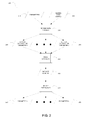
- Figure 1 illustrates a flowchart of a method for autonomous seismic data processing in accordance with one or more implementations of various techniques described herein.
- Figure 2 illustrates a data flow diagram of a method for selecting parameters for an autonomous seismic data processing system according to implementations described herein.
- FIG. 3 illustrates a flowchart of an autonomous seismic data processing system according to implementations described herein.
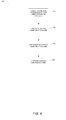
- Figure 4 illustrates a flowchart of a method for ranking datasets in an autonomous seismic data processing system according to implementations described herein.
- Figure 5 illustrates a computer network into which implementations of various technologies described herein may be implemented.
- various techniques described herein are directed to a system for autonomous seismic data processing.
- the autonomous processing system may evaluate seismic data at each stage of processing to reduce data processing scenarios.
- multiple datasets may be generated.
- Each of the generated datasets may represent a possible path in the data processing workflow.
- the generated datasets may be ranked based on the values of specified attributes within each of the datasets.
- the processing workflows may then be limited to the datasets with the highest rankings.
- suites of parameters may be tested against samples of seismic data to limit the parameters used in the production processing.
- Figure 1 illustrates a flowchart of a method 100 for autonomous seismic data processing in accordance with one or more implementations of various techniques described herein. It should be understood that while the method 100 indicates a particular order of execution of the operations, in some implementations, certain portions of the operations might be executed in a different order.
- seismic data processing takes place in multiple stages. Seismic data may be processed in numerous ways, depending on the needs of a user. For example, a user may want to perform noise reduction and demultiples processing on the seismic data. Each of these processes may take place in different stages of seismic data processing. For example, the seismic data may first undergo noise reduction, then the noise reduced data may be input to the demultiples process. Accordingly, steps 110-120 may be repeated for each stage of the seismic data processing.
- each stage may be processed with numerous parameters. Testing a full gather of seismic data or other seismic data volume against a large suite of parameters may use resources that overwhelm a typical seismic data processing system. Accordingly, at step 120, a portion of the parameters may be selected from the larger suite. Step 120 is described in greater detail with reference to Figure 2 .
- steps 130-140 may be repeated for each stage of the autonomous seismic data processing.
- the seismic data may be processed with the parameters selected for the particular stage. Step 140 is described in greater detail with reference to Figure 3 .
- Figure 2 illustrates a data flow diagram of a method 200 for selecting parameters for an autonomous seismic data processing system according to implementations described herein. As mentioned above, method 200 may be an implementation of step 120.
- a suite of parameters 210 and a seismic data sample 220 may be input to a seismic data process 230.
- the seismic data sample 220 may be collected in a seismic survey.
- the seismic data sample 220 may be a sampling of seismic data that is used for synthetic seismogram generation, or velocity modeling.
- the seismic data sample 220 may include a number of attributes that describe seismic data. Such attributes may include signal to noise ratio, seismic frequency, continuity, bandwidth, uncertainty and the like. It should be noted that these are merely examples of attributes, and are not intended to limit implementations of various technologies described herein.
- the seismic data process 230 may be any one of a number of seismic data processes, such as a remove multiples process, band pass filtering process, frequency and wavenumber (FK) filtering process, seismic stacking process, deconvolution process, migration process and the like. It should be noted that these are merely examples of seismic data processes. The examples listed are not intended to limit implementations of various technologies described herein.
- the seismic data process 230 may generate an output dataset 240 for each of the parameters 210.
- the parameters 210 may be a number of data values used in a particular seismic data process.
- parameters in a seismic stacking process may include a number of different mutes.
- m output datasets 240 are generated, indicating m parameters in the parameters 210.
- more than one seismic data process 230 may be used to process the seismic data sample 220.
- the parameters 210 only include one value and thus, each seismic data process 230 will generate one output dataset 240.
- the output datasets 240 may then be input to a rank datasets process 250.
- the rank datasets process 250 may generate a dataset ranking 260 that ranks the output datasets 240 according to specified rules. These rules may indicate how to rank the output datasets 240 based on the values of attributes within the output datasets 240. For example, one rule may rank the output datasets 240 according to the values of the signal to noise ratio attribute. In such a scenario, the output datasets 240 with high signal to noise ratios may be ranked higher than output datasets 240 with lower signal to noise ratios.
- the rank datasets process 250 is described in greater detail with reference to Figure 4 .
- the dataset ranking 260 may be input to a select parameters process 270.
- the select parameters process 270 may determine the selected parameters 280 that are used to generate the highest ranked datasets in the dataset ranking 260.
- the select parameters process 270 may determine the seismic data processes 230 that generate the highest ranked datasets.
- n parameters are shown, indicating that n parameters are selected from the m parameters in the original parameters 210, where n parameters are a portion of m parameters.
- Figure 3 illustrates a flowchart of a method 300 for autonomous seismic data processing according to implementations described herein.
- method 300 may be an implementation of step 140.
- Method 300 may represent the actual production run of seismic data processing, using the selected parameters 280 from the method 200.
- the selected parameters 280 and a seismic data 320 may be input to a seismic data process 330. Similar to the seismic data sample 220, the seismic data 320 may include a number of attributes for describing seismic data. However, the seismic data 320 may include a full shot of seismic data instead of a sampling.
- the seismic data process 330 may generate an output dataset 340 for each selected parameter 280.
- the seismic data process 330 may correspond with the seismic data process 230 used in method 200 for that stage.
- the seismic noise reduction process is the seismic data process 230 in method 200
- the seismic noise reduction process is the seismic data process 330 in method 300.
- the method 300 may be used without benefit of the method 200 for selecting parameters.
- the selected parameters 280 may include the full suite of parameters 210.
- the selected parameters 280 may be a limited set of parameters selected by the user from the full suite of parameters 210.
- the seismic data process 330 may generate an output dataset 340 for each parameter in the selected parameters 280.
- the output datasets 340 may be input to a rank datasets process 350.
- the rank datasets process 350 may generate a dataset ranking 360 that ranks the output datasets 340 according to the rules described above.
- the rank datasets process 350 is described in greater detail with reference to Figure 4 .
- the dataset ranking 360 may be input to a select highest ranked dataset process 370, where a highest ranked dataset 390 of the output datasets 340 is selected.
- the highest ranked dataset 390 may be input to a second seismic data process in the next stage of the autonomous seismic data processing.
- the dataset ranking 360 may be insufficient to select the highest ranked dataset.
- the select highest ranked dataset process 370 may incorporate an Andon process.
- the user may specify conditions under which there is no highest ranked dataset 390 selected, and conditions under which the user intervenes to select the highest ranked dataset 390.
- the multi-stage seismic data process (described in Figure 1 ) may be halted.
- Figure 4 illustrates a flowchart of a method 400 for ranking datasets in an autonomous seismic data processing system according to implementations described herein.
- the method 400 may be performed by the rank datasets processes 250, 350.
- a portion of the attributes may be selected from the output datasets 240, 340.
- the selected attributes may be used for ranking the output datasets 240, 340. More specifically, values in the selected attributes may be compared across the output datasets 240, 340 in order to rank the output datasets 240, 340 against each other.
- a rule may be assigned to each of the selected attributes.
- the rule may specify how to score a particular value of an attribute for one of the output datasets 240, 340.
- the score is also referred to herein as a quality score.
- the quality score may indicate the quality of data in the output datasets. In other words, the quality score may indicate a preference level for certain values of the selected attribute in the ranking of the output datasets 240, 340. For example, high values in the high frequency bandwidth attribute may be preferred over low values. In this instance, a rule may specify that a high value in the high frequency bandwidth attribute is scored higher than a low value in the high frequency bandwidth attribute.
- the rule may be based on how the value of the attribute is changed by the seismic data processes 230, 330.
- the rule may specify that the score for an increase in the signal to noise ratio is higher than the score for a decrease.
- the value of the noise to signal ratio in the input dataset e.g., the seismic data sample 220
- the value of the noise to signal ratio in the input dataset may be compared to the value in the output dataset 240.
- the score for the signal to noise ratio attribute may then be scored accordingly.
- the rule may be based on a range of expected values for the selected attribute.
- values of the attribute within a specified range of expected values may be scored higher than values outside of the range.
- the score may be based on where the value of the attribute lies within the range.
- the quality score may be determined for each selected attribute for each dataset based on the rule for the selected attribute.
- a control dataset may be used to determine the quality score for the selected attribute.
- the control dataset may be used in comparison with the output datasets 240, 340 in determining the score of selected attributes.
- the control dataset may have a threshold value for the high frequency bandwidth.
- the high frequency bandwidth value in each of the output datasets 240, 340 may be compared to the high frequency bandwidth value in the control dataset. If the high frequency bandwidth value in the output datasets 240, 340 is greater than the high frequency bandwidth value in the control dataset, the high frequency bandwidth attribute may be scored higher. Similarly, if the high frequency bandwidth value in the output datasets 240, 340 is less than the high frequency bandwidth value in the control dataset, the high frequency bandwidth attribute may be scored lower.
- the quality scores of each selected attribute may be normalized across the output datasets 240, 340.
- the normalization may map the quality scores to a 0-100 scale. On the 0-100 scale, the selected attribute for the output dataset 240, 340 with the lowest score may be normalized as 0. Similarly, the selected attribute for the output dataset 240, 340 with the highest score may be normalized as 100. The quality scores that fall between the highest and lowest scores may be apportioned accordingly between 0 and 100.
- the ranking for each dataset may be determined based on the quality scores for each attribute of the output datasets 240, 340. For example, after the quality scores for each attribute have been determined, each dataset may include a number of quality scores, one for each of the selected attributes. The ranking may be based on the cumulative scores for each of the output datasets 240, 340. In one implementation, the scores for each of the selected attributes may be weighted before added into a fuzzy logic control system that determines the ranking.
- Fuzzy logic is a form of multi-valued logic to deal with reasoning that is approximate rather than precise. Fuzzy logic is best explained in opposition to binary logic.
- binary logic the truth of a statement can be evaluated as a binary number. In other words, the truth of a statement is exclusively 0 (false) or 1 (true). With binary logic, a statement is true or it is not.
- fuzzy logic a degree of truth can be determined, where the truth of a statement, expressed numerically, can range between 0 and 1.
- the truth of a statement is not constrained to the two truth values ⁇ true, false ⁇ as in binary logic. Instead, the truth of a statement can range between 0 and 1, inclusively.
- the ranking may be based on categories of attributes where each of the attributes may belong to higher level categories.
- a bandwidth category may include a high frequency bandwidth attribute, and a low frequency bandwidth attribute.
- cumulative scores for each category may be determined by a fuzzy logic control system based on the scores of the attributes within each category. The ranking may then be determined by a second fuzzy logic control system that uses the cumulative scores for the categories for each dataset.
- the scores for each of the selected attributes may be weighted within each category to determine the cumulative scores for the categories.
- the categories themselves may also be weighted before determining the rankings based on the categories.
- the categories may be normalized across the datasets. The normalization of the categories of the datasets may be performed in a manner similar to the normalization of the attributes described above.
- FIG. 5 illustrates a computing system 500, into which implementations of various technologies described herein may be implemented.
- the computing system 500 may include one or more system computers 530, which may be implemented as any conventional personal computer or server.
- system computers 530 may be implemented as any conventional personal computer or server.
- HTTP hypertext transfer protocol
- the system computer 530 may be in communication with disk storage devices 529, 531, and 533, which may be external hard disk storage devices. It is contemplated that disk storage devices 529, 531, and 533 are conventional hard disk drives, and as such, will be implemented by way of a local area network or by remote access. Of course, while disk storage devices 529, 531, and 533 are illustrated as separate devices, a single disk storage device may be used to store any and all of the program instructions, measurement data, and results as desired.
- seismic data from the receivers may be stored in disk storage device 531.
- the system computer 530 may retrieve the appropriate data from the disk storage device 531 to process seismic data according to program instructions that correspond to implementations of various technologies described herein.
- the program instructions may be written in a computer programming language, such as C++, Java and the like.
- the program instructions may be stored in a computer-readable medium, such as program disk storage device 533.
- Such computer-readable media may include computer storage media and communication media.
- Computer storage media may include volatile and non-volatile, and removable and non-removable media implemented in any method or technology for storage of information, such as computer-readable instructions, data structures, program modules or other data.
- Computer storage media may further include RAM, ROM, erasable programmable read-only memory (EPROM), electrically erasable programmable read-only memory (EEPROM), flash memory or other solid state memory technology, CD-ROM, digital versatile disks (DVD), or other optical storage, magnetic cassettes, magnetic tape, magnetic disk storage or other magnetic storage devices, or any other medium which can be used to store the desired information and which can be accessed by the system computer 530.
- RAM random access memory
- ROM read-only memory
- EPROM erasable programmable read-only memory
- EEPROM electrically erasable programmable read-only memory
- flash memory or other solid state memory technology
- CD-ROM compact discs
- DVD digital versatile disks
- magnetic cassettes magnetic tape
- magnetic disk storage magnetic disk storage devices
- Communication media may embody computer readable instructions, data structures, program modules or other data in a modulated data signal, such as a carrier wave or other transport mechanism and may include any information delivery media.
- modulated data signal may mean a signal that has one or more of its characteristics set or changed in such a manner as to encode information in the signal.
- communication media may include wired media such as a wired network or direct-wired connection, and wireless media such as acoustic, RF, infrared and other wireless media. Combinations of any of the above may also be included within the scope of computer readable media.
- system computer 530 may present output primarily onto graphics display 527, or alternatively via printer 528.
- the system computer 530 may store the results of the methods described above on disk storage 529, for later use and further analysis.
- the keyboard 526 and the pointing device (e.g., a mouse, trackball, or the like) 525 may be provided with the system computer 530 to enable interactive operation.
- the system computer 530 may be located at a data center remote from the survey region.
- the system computer 530 may be in communication with the receivers (either directly or via a recording unit, not shown), to receive signals indicative of the reflected seismic energy. These signals, after conventional formatting and other initial processing, may be stored by the system computer 530 as digital data in the disk storage 531 for subsequent retrieval and processing in the manner described above. While Figure 5 illustrates the disk storage 531 as directly connected to the system computer 530, it is also contemplated that the disk storage device 531 may be accessible through a local area network or by remote access.
- disk storage devices 529, 531 are illustrated as separate devices for storing input seismic data and analysis results, the disk storage devices 529, 531 may be implemented within a single disk drive (either together with or separately from program disk storage device 533), or in any other conventional manner as will be fully understood by one of skill in the art having reference to this specification.
Landscapes
- Engineering & Computer Science (AREA)
- Remote Sensing (AREA)
- Physics & Mathematics (AREA)
- Life Sciences & Earth Sciences (AREA)
- Acoustics & Sound (AREA)
- Environmental & Geological Engineering (AREA)
- Geology (AREA)
- General Life Sciences & Earth Sciences (AREA)
- General Physics & Mathematics (AREA)
- Geophysics (AREA)
- Geophysics And Detection Of Objects (AREA)
Applications Claiming Priority (2)
| Application Number | Priority Date | Filing Date | Title |
|---|---|---|---|
| US97980407P | 2007-10-12 | 2007-10-12 | |
| US12/246,855 US8954282B2 (en) | 2007-10-12 | 2008-10-07 | Autonomic seismic data processing |
Publications (2)
| Publication Number | Publication Date |
|---|---|
| EP2048518A2 true EP2048518A2 (de) | 2009-04-15 |
| EP2048518A3 EP2048518A3 (de) | 2012-02-01 |
Family
ID=40292523
Family Applications (1)
| Application Number | Title | Priority Date | Filing Date |
|---|---|---|---|
| EP08166489A Withdrawn EP2048518A3 (de) | 2007-10-12 | 2008-10-13 | Autonome Datenverarbeitung von seismischen Daten |
Country Status (2)
| Country | Link |
|---|---|
| US (1) | US8954282B2 (de) |
| EP (1) | EP2048518A3 (de) |
Families Citing this family (5)
| Publication number | Priority date | Publication date | Assignee | Title |
|---|---|---|---|---|
| US8949249B2 (en) * | 2010-06-15 | 2015-02-03 | Sas Institute, Inc. | Techniques to find percentiles in a distributed computing environment |
| WO2013055359A1 (en) * | 2011-10-14 | 2013-04-18 | Hewlett-Packard Development Company, L.P. | Geological seismic sensing node stimulus event storage |
| WO2013055366A1 (en) * | 2011-10-14 | 2013-04-18 | Hewlett-Packard Development Company, L.P. | Geological seismic sensing node stimulus event summary information |
| US10891311B2 (en) * | 2016-10-14 | 2021-01-12 | Red Hat, Inc. | Method for generating synthetic data sets at scale with non-redundant partitioning |
| CN113009573B (zh) * | 2021-02-25 | 2023-07-18 | 中国石油集团东方地球物理勘探有限责任公司 | 地震数据采集方法、装置、计算机设备及存储介质 |
Family Cites Families (4)
| Publication number | Priority date | Publication date | Assignee | Title |
|---|---|---|---|---|
| US5361379A (en) | 1991-10-03 | 1994-11-01 | Rockwell International Corporation | Soft-decision classifier |
| GB2304895B (en) * | 1995-08-25 | 1999-05-19 | Geco Prakla | Method of and apparatus for controlling the quality of processed seismic data |
| US6016462A (en) | 1997-08-29 | 2000-01-18 | Exxon Production Research Company | Analysis of statistical attributes for parameter estimation |
| US7826973B2 (en) | 2007-06-15 | 2010-11-02 | Chevron U.S.A. Inc. | Optimizing seismic processing and amplitude inversion utilizing statistical comparisons of seismic to well control data |
-
2008
- 2008-10-07 US US12/246,855 patent/US8954282B2/en not_active Expired - Fee Related
- 2008-10-13 EP EP08166489A patent/EP2048518A3/de not_active Withdrawn
Also Published As
| Publication number | Publication date |
|---|---|
| US8954282B2 (en) | 2015-02-10 |
| EP2048518A3 (de) | 2012-02-01 |
| US20090099779A1 (en) | 2009-04-16 |
Similar Documents
| Publication | Publication Date | Title |
|---|---|---|
| EP2048519A2 (de) | Arbeitsflussentscheidungsverzeichnis für seismische Datenverarbeitung | |
| Stork et al. | Application of machine learning to microseismic event detection in distributed acoustic sensing data | |
| RU2746691C1 (ru) | Система интеллектуального определения тектонических нарушений по сейсмическим данным на основе сверточных нейронных сетей | |
| US11536866B2 (en) | Diffracted wave imaging method, device and electronic apparatus | |
| García et al. | Performance of deep learning pickers in routine network processing applications | |
| US7124054B2 (en) | System and method for mining model accuracy display | |
| US8954282B2 (en) | Autonomic seismic data processing | |
| CN114114421B (zh) | 基于深度学习的导向自学习地震数据去噪方法及装置 | |
| CA3109021C (en) | Facilitating hydrocarbon exploration by applying a machine-learning model to basin data | |
| Pita‐Sllim et al. | Parametric testing of EQTransformer’s performance against a high‐quality, manually picked catalog for reliable and accurate seismic phase picking | |
| CN108226997A (zh) | 一种基于叠前地震数据的地震相划分方法 | |
| CN117910883B (zh) | 测井数据质量检测方法、装置、计算设备及存储介质 | |
| US12140652B2 (en) | Systems and methods for provisioning training data to enable neural networks to analyze signals in NMR measurements | |
| CN110794458A (zh) | 基于时频分析的含气性检测方法、装置及存储介质 | |
| US10605940B2 (en) | Method for selecting horizon surfaces | |
| Noda | Deep learning estimating of epicentral distance for earthquake early warning systems | |
| Bueno et al. | Recursive entropy method of segmentation for seismic signals | |
| Ibrahim et al. | Earthquake warning system: Detecting earthquake precursor signals using deep neural networks | |
| CN113050191A (zh) | 基于双参数的页岩油toc预测方法及装置 | |
| CN113466936A (zh) | 一种断层阴影区crp道集获取方法、装置、设备及存储介质 | |
| US20250307352A1 (en) | Method and systems for automatically building analytic computerized ensembles for outlier detection | |
| CN112346118B (zh) | 基于地震属性优选的储层特征预测方法及装置 | |
| Jiang et al. | Time window selection of seismic signals for waveform inversion based on deep learning | |
| CN117970493A (zh) | 消除复合avo影响的正演模拟方法、装置及电子设备 | |
| Kasburg et al. | Cross‐regional seismic event discrimination via convolutional neural networks: Exploring fine‐tuning and ensemble averaging |
Legal Events
| Date | Code | Title | Description |
|---|---|---|---|
| PUAI | Public reference made under article 153(3) epc to a published international application that has entered the european phase |
Free format text: ORIGINAL CODE: 0009012 |
|
| AK | Designated contracting states |
Kind code of ref document: A2 Designated state(s): AT BE BG CH CY CZ DE DK EE ES FI FR GB GR HR HU IE IS IT LI LT LU LV MC MT NL NO PL PT RO SE SI SK TR |
|
| AX | Request for extension of the european patent |
Extension state: AL BA MK RS |
|
| PUAL | Search report despatched |
Free format text: ORIGINAL CODE: 0009013 |
|
| AK | Designated contracting states |
Kind code of ref document: A3 Designated state(s): AT BE BG CH CY CZ DE DK EE ES FI FR GB GR HR HU IE IS IT LI LT LU LV MC MT NL NO PL PT RO SE SI SK TR |
|
| AX | Request for extension of the european patent |
Extension state: AL BA MK RS |
|
| RIC1 | Information provided on ipc code assigned before grant |
Ipc: G01V 1/28 20060101AFI20111227BHEP |
|
| 17P | Request for examination filed |
Effective date: 20120730 |
|
| AKX | Designation fees paid |
Designated state(s): GB NO |
|
| REG | Reference to a national code |
Ref country code: DE Ref legal event code: R108 |
|
| REG | Reference to a national code |
Ref country code: DE Ref legal event code: R108 Effective date: 20121010 |
|
| STAA | Information on the status of an ep patent application or granted ep patent |
Free format text: STATUS: THE APPLICATION IS DEEMED TO BE WITHDRAWN |
|
| 18D | Application deemed to be withdrawn |
Effective date: 20140501 |