EP2047864A1 - Use of rpn2 gene expression inhibitor - Google Patents
Use of rpn2 gene expression inhibitor Download PDFInfo
- Publication number
- EP2047864A1 EP2047864A1 EP07766944A EP07766944A EP2047864A1 EP 2047864 A1 EP2047864 A1 EP 2047864A1 EP 07766944 A EP07766944 A EP 07766944A EP 07766944 A EP07766944 A EP 07766944A EP 2047864 A1 EP2047864 A1 EP 2047864A1
- Authority
- EP
- European Patent Office
- Prior art keywords
- cancer
- gene expression
- rpn2
- sequence
- cell growth
- Prior art date
- Legal status (The legal status is an assumption and is not a legal conclusion. Google has not performed a legal analysis and makes no representation as to the accuracy of the status listed.)
- Granted
Links
Images




Classifications
-
- A—HUMAN NECESSITIES
- A61—MEDICAL OR VETERINARY SCIENCE; HYGIENE
- A61K—PREPARATIONS FOR MEDICAL, DENTAL OR TOILETRY PURPOSES
- A61K31/00—Medicinal preparations containing organic active ingredients
- A61K31/28—Compounds containing heavy metals
- A61K31/282—Platinum compounds
-
- A—HUMAN NECESSITIES
- A61—MEDICAL OR VETERINARY SCIENCE; HYGIENE
- A61K—PREPARATIONS FOR MEDICAL, DENTAL OR TOILETRY PURPOSES
- A61K31/00—Medicinal preparations containing organic active ingredients
- A61K31/33—Heterocyclic compounds
- A61K31/335—Heterocyclic compounds having oxygen as the only ring hetero atom, e.g. fungichromin
- A61K31/337—Heterocyclic compounds having oxygen as the only ring hetero atom, e.g. fungichromin having four-membered rings, e.g. taxol
-
- A—HUMAN NECESSITIES
- A61—MEDICAL OR VETERINARY SCIENCE; HYGIENE
- A61K—PREPARATIONS FOR MEDICAL, DENTAL OR TOILETRY PURPOSES
- A61K31/00—Medicinal preparations containing organic active ingredients
- A61K31/70—Carbohydrates; Sugars; Derivatives thereof
- A61K31/7088—Compounds having three or more nucleosides or nucleotides
- A61K31/713—Double-stranded nucleic acids or oligonucleotides
-
- A—HUMAN NECESSITIES
- A61—MEDICAL OR VETERINARY SCIENCE; HYGIENE
- A61K—PREPARATIONS FOR MEDICAL, DENTAL OR TOILETRY PURPOSES
- A61K45/00—Medicinal preparations containing active ingredients not provided for in groups A61K31/00 - A61K41/00
- A61K45/06—Mixtures of active ingredients without chemical characterisation, e.g. antiphlogistics and cardiaca
-
- A—HUMAN NECESSITIES
- A61—MEDICAL OR VETERINARY SCIENCE; HYGIENE
- A61P—SPECIFIC THERAPEUTIC ACTIVITY OF CHEMICAL COMPOUNDS OR MEDICINAL PREPARATIONS
- A61P13/00—Drugs for disorders of the urinary system
- A61P13/08—Drugs for disorders of the urinary system of the prostate
-
- A—HUMAN NECESSITIES
- A61—MEDICAL OR VETERINARY SCIENCE; HYGIENE
- A61P—SPECIFIC THERAPEUTIC ACTIVITY OF CHEMICAL COMPOUNDS OR MEDICINAL PREPARATIONS
- A61P35/00—Antineoplastic agents
-
- A—HUMAN NECESSITIES
- A61—MEDICAL OR VETERINARY SCIENCE; HYGIENE
- A61P—SPECIFIC THERAPEUTIC ACTIVITY OF CHEMICAL COMPOUNDS OR MEDICINAL PREPARATIONS
- A61P35/00—Antineoplastic agents
- A61P35/02—Antineoplastic agents specific for leukemia
-
- A—HUMAN NECESSITIES
- A61—MEDICAL OR VETERINARY SCIENCE; HYGIENE
- A61P—SPECIFIC THERAPEUTIC ACTIVITY OF CHEMICAL COMPOUNDS OR MEDICINAL PREPARATIONS
- A61P43/00—Drugs for specific purposes, not provided for in groups A61P1/00-A61P41/00
-
- C—CHEMISTRY; METALLURGY
- C12—BIOCHEMISTRY; BEER; SPIRITS; WINE; VINEGAR; MICROBIOLOGY; ENZYMOLOGY; MUTATION OR GENETIC ENGINEERING
- C12N—MICROORGANISMS OR ENZYMES; COMPOSITIONS THEREOF; PROPAGATING, PRESERVING, OR MAINTAINING MICROORGANISMS; MUTATION OR GENETIC ENGINEERING; CULTURE MEDIA
- C12N15/00—Mutation or genetic engineering; DNA or RNA concerning genetic engineering, vectors, e.g. plasmids, or their isolation, preparation or purification; Use of hosts therefor
- C12N15/09—Recombinant DNA-technology
- C12N15/11—DNA or RNA fragments; Modified forms thereof; Non-coding nucleic acids having a biological activity
- C12N15/113—Non-coding nucleic acids modulating the expression of genes, e.g. antisense oligonucleotides; Antisense DNA or RNA; Triplex- forming oligonucleotides; Catalytic nucleic acids, e.g. ribozymes; Nucleic acids used in co-suppression or gene silencing
-
- C—CHEMISTRY; METALLURGY
- C12—BIOCHEMISTRY; BEER; SPIRITS; WINE; VINEGAR; MICROBIOLOGY; ENZYMOLOGY; MUTATION OR GENETIC ENGINEERING
- C12N—MICROORGANISMS OR ENZYMES; COMPOSITIONS THEREOF; PROPAGATING, PRESERVING, OR MAINTAINING MICROORGANISMS; MUTATION OR GENETIC ENGINEERING; CULTURE MEDIA
- C12N2310/00—Structure or type of the nucleic acid
- C12N2310/10—Type of nucleic acid
- C12N2310/14—Type of nucleic acid interfering nucleic acids [NA]
Definitions
- the present invention relates to use of an RPN2 gene expression inhibitor, specifically a cancer cell growth inhibitor, an anti-cancer agent including the same cancer cell growth inhibitor, and a method of using an RPN2 gene expression inhibitor.
- Taxanes are one kind of anti-cancer agents used in the treatment of breast cancer, lung cancer, stomach cancer and the like.
- docetaxel is one of the most effective anti-cancer agents for the treatment of cancer, especially breast cancer (Non-patent Document 1, Non-patent Document 2).
- Docetaxel is used as a neoadjuvant since the administration of docetaxel before the surgical operation can lead to reduction of the tumor size and enhancing the success rate of the operation.
- Taxanes such as docetaxel function by inhibiting the kinetics of the microtubules, thereby stopping the cells at the M phase of the cell division, and subsequently activating the program of apoptosis (Non-patent Documents 2 to 5).
- taxanes are a very effective anti-cancer agent, it is known that about half of breast cancer patients do not respond to the chemical therapy by taxanes, only causing side-effect by the administration.
- the present inventors have conducted gene expression profile analysis for some breast cancer-derived samples which showed response to the treatment (chemical treatment by taxanes is effective) (hereinafter, referred to as "responsive sample”), and other breast cancer-derived samples which showed no response to the treatment (chemical treatment by taxanes is ineffective) (hereinafter, referred to as "resistant sample”), and found that specific gene expression is high in common in the resistant samples. Based on this finding, the present inventors have conducted extensive studies on the relation between the specific gene expression and effectiveness of chemical treatment, and as a result thereof, reached the completion of the present invention.
- the present invention provides those of (1) to (13) as described below.
- cancer cells collected from a cancer patient are treated with a drug showing an anti-cancer action, for example, at least one selected from taxanes such as docetaxel, paclitaxel and the like, they are divided into two groups: cancer cells which show response to the drug, and cancer cells which show no response.
- a drug showing an anti-cancer action for example, at least one selected from taxanes such as docetaxel, paclitaxel and the like
- they are divided into two groups: cancer cells which show response to the drug, and cancer cells which show no response.
- gene expression change was investigated for the cancer cells which show no response to the drug. As a result, there was found the expression level increase of various genes including RPN2 gene.
- the present invention provides a cancer cell growth inhibitor including an RPN2 gene expression inhibitor, or including an RPN2 gene expression inhibitor and a drug showing an anti-cancer action as described above.
- the drug showing an anti-cancer action includes not only a drug such as taxanes acting on the microtubule, but also a metabolic antagonist, a DNA-alkylating agent, a DNA binder (platinum-based chemotherapy drugs), anti-carcinogenic antibiotics and the like.
- a drug such as taxanes acting on the microtubule, but also a metabolic antagonist, a DNA-alkylating agent, a DNA binder (platinum-based chemotherapy drugs), anti-carcinogenic antibiotics and the like.
- it includes amrubicin hydrochloride, irinotecan hydrochloride, ifosfamide, etoposide, gefinitib, cyclophosphamide, cisplatin, trastuzumab, 5-fluorouracil, mitomycin C, imatinib mesylate, methotrexate, rituximab, adriamycin and the like.
- applicable cancer cell includes various cancer cells such as breast cancer cell, stomach cancer cell, colon cancer cell, lung cancer cell, prostate cancer cell and blood-cell cancer cell.
- RPN2 ribophorin II
- RPN2 ribophorin II
- STT3 oligosaccharyl transferase complex which is involved in glycosylation of a protein.
- RPN2 gene is a gene encoding this RPN2 subunit, which has a base sequence shown in Sequence No. 1.
- the RPN2 gene expression inhibitor is a drug which suppresses RPN2 gene expression, and a low molecular compound, for example, a low molecular compound which suppresses RPN2 gene expression by RNA interference.
- RNA interference is a phenomenon of suppressing gene expression specifically to the sequence by low molecular non-coding double chain (ds) RNA molecule.
- ds low molecular non-coding double chain
- RNA interference refers to target mRNA cleavage by si (small interfering) RNA, gene silencing of target DNA region by siRNA through heterochromatin formation, translation suppression by mi (micro) RNA, transcription suppression, mRNA breakdown and the like.
- siRNA is preferably used in the embodiments of the present invention from the view that it can be designed for its sequence based on the sequence of the subject gene, i.e., RPN2 gene, and can be prepared artificially.
- the low molecular compound used as the RPN2 gene expression inhibitor is preferably siRNA which has a sequence corresponding to the predetermined sequence of RPN2 gene, specifically a sequence corresponding to a part of the targeted mRNA.
- siRNA which has a sequence corresponding to the predetermined sequence of RPN2 gene, specifically a sequence corresponding to a part of the targeted mRNA.
- sequence includes dsRNA including RNA of Sequence No. 3 which becomes the sense chain, and RNA of Sequence No. 4 which becomes the antisense chain for the sequence of 1194 th to 1212 th (Sequence No. 2) in the RPN2 gene sequence shown in Sequence No. 1.
- the double chain moiety becomes 19 base lengths since the 3' end of each chain in this dsRNA has an overhang of 2 bases.
- siRNA is synthesized chemically. For example, it is obtained by successive condensation reaction per one base from 3' end toward 5' end by phosphoamidide method which is also used in DNA chemical synthesis. However, this reaction is carried out with the protection of the 2' end hydroxide group of respective ribonucleotide in order to prevent cleavage by RNase in the synthesis process.
- This protection group includes 2'-O-t-butyldimethylsilyl (2'-tBDMS) group, 2'-O-triisopropylsilyloxymethyl (2'-TOM) group, 5'-silyl-2'-acetoxyethoxy (2'-ACE) group and the like.
- siRNA double-stranded chain is incorporated into the intracellular protein complex RISC (RNA-induced Silencing Complex) and bound to it, and the sense chain is eliminated. Subsequently, the target mRNA is incorporated into RISC, and the antisense chain bound to RISC, recognizes the complimentary sequence of the mRNA and is bound to it. Furthermore, the mRNA bound to the antisense chain is specifically cleaved.
- RISC RNA-induced Silencing Complex
- an antisense method including binding to an antisense chain which is complimentary to the mRNA, thereby inhibiting the translation into a protein.
- this method has a problem that the artificial antisense nucleic acid has a weak activity since it may not be effectively bound to the target site by the influence of the mRNA conformation.
- RNA interference using siRNA the problem of weak activity depending on the local structure of mRNA is reduced due to the action regardless of the mRNA conformation.
- mRNA is known to be a low molecular RNA not encoding a protein, and exists on the genome in hundreds of kinds. miRNA is transcribed as a nucleotide of hundreds to thousands of bases, then subjected to a processing to be a final dimer nucleotide of 19 to 24 bases. This miRNA suppresses gene expression by mRNA translation control, mRNA cleavage, mRNA transcription control and the like wherein the mRNA has a base sequence complimentary to this miRNA. Since RPN2 is also known to be controlled in expression by multiple miRNAs, it is possible to artificially synthesize such miRNA, and use it to suppress RPN2 gene expression. A known miRNA sequence which is likely to suppress RPN2 gene expression can be searched through a published database (Target Scan Release 3.1 and the like).
- the present invention provides a drug delivery system of a cancer cell growth inhibitor.
- the cancer cell growth inhibitor further includes atelocollagen.
- atelocollagen is an enzyme-soluble collagen and a modification thereof.
- the modification includes chemical modification of side chain amino group or carboxyl group, or chemical/physical cross-linking.
- any collagen can be also used derived from a mammalian animal such as cow, pig, horse and human, a bird or a fish.
- the collagen is desired to be not changeable with the temperature of the environment to be used, i.e., to have thermal stability.
- the type of the collagen is not especially limited, but types I, II and III or the like can be used in view of availability.
- the combination with such atelocollagen makes it possible to effectively deliver the cancer cell growth inhibitor to the target cells, and effectively incorporate it into the cells.
- the present invention provides use of the RPN2 gene expression inhibitor as described above.
- an RPN2 gene expression inhibitor can be administered to a cancer patient, with the atelocollagen if desired, and used as an anti-cancer agent to promote apoptosis of the cancer cells.
- an RPN2 gene expression inhibitor can be administered to a cancer patient together with a drug showing an anti-cancer action, and with the atelocollagen if desired, and used as an anti-cancer agent to promote apoptosis of the cancer cells.
- the actions of the RPN2 gene expression inhibitor onto the cells are not limited to promoting apoptosis, but may induce ultimate cell death and suppress cell growth, and it is useful as a cancer cell growth inhibitor.
- the present invention provides a method of using an RPN2 gene expression inhibitor as an anti-cancer agent, and a method of using an RPN2 gene expression inhibitor in combination with a drug showing an anti-cancer action as an anti-cancer agent.
- the present invention provides an anti-cancer agent including the cancer cell growth inhibitor as described above.
- the dosages of the RPN2 gene expression inhibitor, the drug and the atelocollagen vary depending on administration method, and kind and size of the tumor.
- the amount is desirably equal to or more than 1 nmol/kg and equal to or less than 10 nmol/kg in the local administration, and equal to or more than 2 nmol/kg and equal to or less than 50 nmol/kg in the systemic administration.
- the drug amount to be used is desirably determined based on the amount to be used when each drug is used alone.
- the concentration of this atelocollagen is desirably, for example, equal to or more than 1 mg/ml (w/vol) and equal to or less than 50 mg/ml (w/vol) in the local administration, and equal to or more than 0.1 mg/ml (w/vol) and equal to or less than 30 mg/ml (w/vol) in the systemic administration.
- the amount to be used is desirably equal to or more than 5 ml and equal to or less than 100 ml in the local administration, and equal to or more than 10 ml and equal to or less than 500 ml in the systemic administration.
- an RPN2 gene expression inhibitor in combination with a drug showing an anti-cancer action if desired, induces cell death or suppresses cell growth with the mechanism of promoting apoptosis of the cancer cells or the like, and as a result, makes it possible to perform cancer treatment.
- ATAC-PCR analysis International Patent Application No. 2005/003352 pamphlet
- siRNA was synthesized for the 36 genes below which showed expression increase.
- JP-A Japanese Patent Application Laid-Open
- Luciferase gene (GL3) was stably transfected into multidrug-resistant MCF7-ADR cells of which the parental Cell line is MCF7 breast cancer cell.
- the cell line was expressing luciferase and designated as MCF7-ADR-Luc.
- the MCF7-ADR-LUC cell obtained in (2) was inoculated into the array prepared in (1) in 4 ⁇ 10 3 cell number/well, and cultured for 3 days in the presence of 1nM docetaxel (DOC). To the live cells were added luciferin, and from the luminescence value, cell growth inhibition rate and luciferase siRNA introduction efficiency were measured.
- DOC docetaxel
- the cell growth inhibition rate was calculated with the control siRNA (dsRNA including a sense chain of Sequence No. 5 and an antisense chain of Sequence No. 6) as 100%.
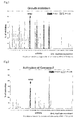
- the results are shown in Fig. 1 .
- the horizontal axis in Fig. 1 corresponds to the gene No. shown in Table 1.
- introduction of siRNA corresponding to each gene suppressed cell growth in several genes in addition to RPN2 gene (No. 12).
- siRNA introduction efficiency was evaluated with the suppression rate of the luciferase activity by introduction of luciferase siRNA (GL3 siRNA: dsRNA including a sense chain of Sequence No. 7 and an antisense chain of Sequence No. 8), separately from siRNA corresponding to each gene.
- luciferin 0.5 mM final concentration: Promega KK
- ARVO PerkinElmer, Inc.
- a reagent for measurement of apoptosis was added to the plate after the measurement of the luciferase activity in Test Example 1, and the Caspase activity was measured. Specifically, the assay was conducted according to the protocol suggested by Promega KK (Apo-ONE Homogeneous Caspase-3/7 Assay), and the Caspase activity was measured 90 minutes after the addition of the reagent by a fluorescence plate reader (ARVO: PerkinElmer, Inc.). The Caspase activation rate was calculated with the control siRNA as 0%.
- apoptosis induction was investigated with observation by Hoechst staining (the cells were washed with PBS (-), added with 4% PFA-0.1% Triton X-100-1 mg/ml Hoechst 33342 / in PBS (-), and fixed and stained at room temperature for 20 minutes. The cells were washed with PBS (-), and then observed under fluorescence microscope.).
- Fig. 2 The results are shown in Fig. 2 .
- introduction of siRNA for RPN2 gene RPN2 siRNA
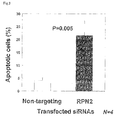
- the ratios of the apoptosis cells were compared by Hoechst staining between in the cells where RPN2 siRNA was introduced and in the cells where the control siRNA was introduced.
- Fig. 3 significant difference was seen. Specifically, it was suggested that apoptosis was induced by introduction of RPN2 siRNA.
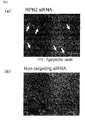
- Fig. 4 shows the results of the observation for nucleus morphology by Hoechst staining. Fig.
- FIG. 4(a) shows the results of the system to which RPN2 siRNA was introduced
- Fig. 4(b) shows the results of the system to which control siRNA not suppressing any gene expression was introduced. According to Fig. 4 , from the change of the nucleus morphology (aggregation, fragmentation), it was suggested that when RPN2 siRNA is introduced, apoptosis is induced.
- atelocollagen cell transfection array prepared in Test Example 1 (1) were inoculated MCF7-ADR-Luc cells. After 3 days, cDNA was synthesized directly from the cell lysate, and real-time PCR was conducted, to investigate the RUN2 gene expression amount (SuperScript III Platinum Cells Direct Two-Step qRT-PCR: Invitrogen). The results are shown in Fig. 5 . According to Fig. 5 , it was found that introduction of RPN2 siRNA ((dsRNA including a sense chain of Sequence No. 3 and an antisense chain of Sequence No. 4) suppressed RPN2 gene expression to about 25%.
- RPN2 siRNA (dsRNA including a sense chain of Sequence No. 3 and an antisense chain of Sequence No. 4) suppressed RPN2 gene expression to about 25%.
- atelocollagen in the final concentration of 5 mg/ml (w/vol) and siRNA in 1 nmol per tumor were mixed, and then 200 ⁇ l of atelocollagen (manufactured by KOKEN CO., LTD.)/siRNA was administered into the tumor.
- 20 mg/kg of docetaxel was administered into the abdominal cavity. After 7 days, the tumor radius was measured to compare the tumor volumes.
- Results are shown in Fig. 7 .
- Fig. 7 As a result of administration of RPN2 siRNA and DOC, significant tumor shrinkage was found in comparison with the control siRNA. It is considered that response to DOC was obtained by administration of RPN2 siRNA even in the cells showing no response to DOC.
- Fig. 8 The results are shown in Fig. 8 .
- RPN2 gene expression was suppressed by about 20% in the RPN2 siRNA administration group in comparison with the control siRNA administration group.
- the standard deviation is very small, thus not shown in the graph.
- the RPN2 gene expression amount was measured in the same method as Test Example 5 except that RPN2 siRNA and DOC were administered at 6 weeks after MCF7-ADR-Luc cells were transplanted into the mammary fat pad of the nude mouse (4 weeks old, scalpel).
- Fig. 9 The results are shown in Fig. 9 .
- RPN2 gene expression was suppressed by about 40% in the RPN2 siRNA administration group in comparison with the control siRNA administration group.
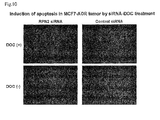
- Fig. 10 The results are shown in Fig. 10 . According to Fig. 10 , many apoptosis cells were found in the group to which both of DOC and RPN2 siRNA were administered.
- atelocollagen cell transfection array prepared in Test Example 1 (1) were inoculated MCF7-ADR-Luc cells in the presence of or in the absence of a drug which shows anti-cancer action. After 3 days, Caspase activity was measured in the same way as described in Test Example 2. The results are shown in Fig. 11 . According to Fig. 11 , it was suggested that apoptosis is induced in the RPN2 siRNA -transduced cells even in the absence of DOC.
- RPN2 siRNA was transduced into PC-9/CDDP cell which is a cell line of human lung cancer (small cell cancer, differentiated gland cancer), and resistant to cisplatin (Cis) that is a anti-cancer drug. Then, the cell was cultured for 3 days in the presence of or in the absence of cisplatin (0.3 ⁇ M). Then, Caspase activity was measured in the same way as described in Test Example 2. In addition, for comparison, the same test was conducted also for the system to which control siRNA not suppressing any gene expression was introduced. The results are shown in Fig. 12 . According to Fig.
- each Test Example showed an example wherein induction of cancer cell apoptosis was seen by silencing the RPN2 gene of MCF7-ADR of the breast cancer cells.
- RPN2 genes are highly expressed, for example, cells and tissues of colon cancer, esophagus cancer, ovary cancer, breast cancer or lung cancer, apoptosis is likely to be induced of cancer cells which are resistant to an anti-cancer agent (docetaxel and the like) by silencing the RPN2 gene.
- PC-9/CDDP cell of human lung cancer cell which shows resistance to cisplatin
- a cell line which shows resistance to anti-cancer agent By silencing the RPN2 gene of the PC-9/CDDP cell, induction of cancer cell apoptosis was seen.
- the parental cell line is a human lung cancer cell line such as PC-14 cell, SBC-3 cell and H69 cell, K562 cell (human leukemia cell line) or p388 cell (mouse lymphocyte-like cell line) and the like.
- the cell line is PC-14/CDDP, SBC-3/CDDP, SBC-3/ADM, H69/CDDP, K562/ADM, p388/MMC and the like (Herein CDDP refers to cisplatin resistance, ADM refers to adriamycin resistance and MMC refers to mitomycin C resistance). Silencing of RPN2 gene is likely to induce apoptosis as well as in these cells resistant to an anti-cancer agent.
- HepG2 which is a cell line of human liver cancer, was inoculated into a 96 well plate in 5000/well.
- RPN2 siRNA dsRNA including a sense chain of Sequence No. 3 and an antisense chain of Sequence No. 4
- the control siRNA dsRNA including a sense chain of Sequence No. 5 and an antisense chain of Sequence No. 6
- DOC was added in 1 nM of the final concentration.
- a quantification reagent for the live cells (CellTiter-Glo substrate: Promega KK) was added to each well, and the plate was stirred for 2 minutes, and left for 10 minutes.
- the luminescence was measured by a luminescence plate reader (ARVO: PerkinElmer).
- ARVO luminescence plate reader
- the results are shown in Fig. 13 as the luminescence intensity (RLU) subtracting the luminescence intensity of no cell well.
- RPN2 siRNA showed cancer cell growth suppression effects alone in HepG2 cell which shows sensitivity to DOC, and also showed actions of potentiating the cancer cell growth suppression effects of DOC.
- H29 which is a cell line of human colon cancer
- a gene introduction reagent Dharmafect: Dharmacon
- the control siRNA was introduced as the negative control.
- a quantification reagent Tetra Color ONE: Seikagaku Corporation
- the absorbance was measured per each well at 490 nM. The results are shown in Fig. 14 as ⁇ OD 490 subtracting the absorbance of no cell well excluded.
- the multiple RPN2 siRNAs (Sequences A to L) used in the test have sequences shown below respectively.
- Sequences A to L are dsRNAs including the sense chain and the antisense chain shown in Table 2.
Landscapes
- Health & Medical Sciences (AREA)
- Life Sciences & Earth Sciences (AREA)
- Chemical & Material Sciences (AREA)
- General Health & Medical Sciences (AREA)
- Veterinary Medicine (AREA)
- Medicinal Chemistry (AREA)
- Public Health (AREA)
- Pharmacology & Pharmacy (AREA)
- Animal Behavior & Ethology (AREA)
- Engineering & Computer Science (AREA)
- Epidemiology (AREA)
- Organic Chemistry (AREA)
- Genetics & Genomics (AREA)
- Bioinformatics & Cheminformatics (AREA)
- Biomedical Technology (AREA)
- Molecular Biology (AREA)
- General Engineering & Computer Science (AREA)
- Wood Science & Technology (AREA)
- Nuclear Medicine, Radiotherapy & Molecular Imaging (AREA)
- Chemical Kinetics & Catalysis (AREA)
- Biochemistry (AREA)
- General Chemical & Material Sciences (AREA)
- Zoology (AREA)
- Biotechnology (AREA)
- Physics & Mathematics (AREA)
- Plant Pathology (AREA)
- Microbiology (AREA)
- Biophysics (AREA)
- Oncology (AREA)
- Hematology (AREA)
- Urology & Nephrology (AREA)
- Pharmaceuticals Containing Other Organic And Inorganic Compounds (AREA)
- Medicines That Contain Protein Lipid Enzymes And Other Medicines (AREA)
- Acyclic And Carbocyclic Compounds In Medicinal Compositions (AREA)
Abstract
Description
- The present invention relates to use of an RPN2 gene expression inhibitor, specifically a cancer cell growth inhibitor, an anti-cancer agent including the same cancer cell growth inhibitor, and a method of using an RPN2 gene expression inhibitor.
- Taxanes (docetaxel, paclitaxel) are one kind of anti-cancer agents used in the treatment of breast cancer, lung cancer, stomach cancer and the like. For example, docetaxel is one of the most effective anti-cancer agents for the treatment of cancer, especially breast cancer (
Non-patent Document 1, Non-patent Document 2). Docetaxel is used as a neoadjuvant since the administration of docetaxel before the surgical operation can lead to reduction of the tumor size and enhancing the success rate of the operation. - It has been reported that taxanes (taxane class of drugs) such as docetaxel function by inhibiting the kinetics of the microtubules, thereby stopping the cells at the M phase of the cell division, and subsequently activating the program of apoptosis (Non-patent
Documents 2 to 5). - [Non-patent Document 1] Heys, S. D. et al., Clinical breast cancer, 2002,
- [Non-patent Document 2 ] Jordan, M. A. et al., Current medicinal chemistry. Anti-cancer agents, 2002, Vol. 2, p. 1-17
- [Non-patent Document 3] Rao, S. et al., Journal of the National Cancer Institute, 1992, Vol. 84, p. 785-788
- [Non-patent Document 4] Schiff, P. B. et al., Proceedings of the National Academy of Sciences of the United States of America, 1980, Vol. 77, p. 1561-1565
- [Non-patent Document 5] Stein, C. A., Seminars in oncology, 1999, Vol. 26, p. 3-7
- In the meantime, although taxanes are a very effective anti-cancer agent, it is known that about half of breast cancer patients do not respond to the chemical therapy by taxanes, only causing side-effect by the administration.
- Accordingly, the present inventors have conducted gene expression profile analysis for some breast cancer-derived samples which showed response to the treatment (chemical treatment by taxanes is effective) (hereinafter, referred to as "responsive sample"), and other breast cancer-derived samples which showed no response to the treatment (chemical treatment by taxanes is ineffective) (hereinafter, referred to as "resistant sample"), and found that specific gene expression is high in common in the resistant samples. Based on this finding, the present inventors have conducted extensive studies on the relation between the specific gene expression and effectiveness of chemical treatment, and as a result thereof, reached the completion of the present invention.
- Specifically, the present invention provides those of (1) to (13) as described below.
- (1) A cancer cell growth inhibitor including an RPN2 gene expression inhibitor;
- (2) A cancer cell growth inhibitor including an RPN2 gene expression inhibitor and a drug showing an anti-cancer action;
- (3) The cancer cell growth inhibitor as described in (1) or (2); wherein the cancer cell growth inhibitor further includes atelocollagen;
- (4) The cancer cell growth inhibitor as described in (1) or (2); wherein the RPN2 gene expression inhibitor is a low molecular compound;
- (5) The cancer cell growth inhibitor as described in (4); wherein the RPN2 gene expression inhibitor is a low molecular compound which suppresses RPN2 gene expression by RNA interference;
- (6) The cancer cell growth inhibitor as described in (5); wherein the low molecular compound is siRNA which has a sequence corresponding to a predetermined sequence of the RPN2 gene;
- (7) The cancer cell growth inhibitor as described in (2); wherein the drug showing an anti-cancer action is at least one selected from taxanes;
- (8) The cancer cell growth inhibitor as described in (2); wherein the drug showing an anti-cancer action is at least one selected from platinum-based chemotherapy drugs;
- (9) The cancer cell growth inhibitor as described in any one of (1) to (8); wherein the cancer cell growth inhibitor promotes the apoptosis of cancer cells;
- (10) An anti-cancer agent including the cancer cell growth inhibitor as described in any one of (1) to (9);
- (11) A method of using an RPN2 gene expression inhibitor as an anti-cancer agent;
- (12) A method of using an RPN2 gene expression inhibitor as an anti-cancer agent in combination with a drug showing an anti-cancer action;
- (13) The method of using an RPN2 gene expression inhibitor as described in (11) or (12); wherein atelocollagen is further combined.
- According to the present invention, there is provided novel use of an RPN2 gene expression inhibitor.
- The above and other objects, features and advantages of the present invention will be more apparent from the following description of certain preferred embodiments taken in conjunction with the accompanying drawings.
-
-
Fig. 1 is a graph showing the cell growth inhibition rate of the corresponding genes by introduction of siRNA which are targeted to each gene shown in Table 1 in a drug-resistant cell. -
Fig. 2 is a graph showing the apoptosis induction rate of the corresponding genes by introduction of siRNA which are targeted to each gene shown in Table 1 in a drug-resistant cell. -
Fig. 3 is a graph showing the ratio of apoptosis cells which has been induced by siRNA. -
Fig. 4 is a view of the apoptosis cells observed by cell nucleus Hoechst staining. -
Fig. 5 is a graph showing the expression amount of RPN2 gene suppressed by siRNA. -
Fig. 6 is a view showing a protocol of the tumor growth test in a nude mouse. -
Fig. 7 is a graph showing the test results conducted inFig. 6 . -
Fig. 8 is a graph showing the results of the RPN2 gene expression suppression test in a nude mouse. -
Fig. 9 is a graph showing the results of the RPN2 gene expression suppression test in a nude mouse. -
Fig. 10 is a view showing the results of the apoptosis induction test in a nude mouse. -
Fig. 11 is a graph showing the result of the RPN2 gene expression suppression test in the absence of the drug. -
Fig. 12 is a graph showing the result of the RPN2 gene expression suppression test in cancer cells which shows no response to other kinds of drugs. -
Fig. 13 is a graph showing the result of the RPN2 gene expression suppression test in human liver cancer cells. The test was conducted five times, and the average was taken. -
Fig. 14 is a graph showing the results of the RPN2 gene expression suppression test in human colon cancer cells using dsRNAs of various sequences. - The present invention will be now described herein with embodiments.
It has been found by the present inventors that when cancer cells collected from a cancer patient are treated with a drug showing an anti-cancer action, for example, at least one selected from taxanes such as docetaxel, paclitaxel and the like, they are divided into two groups: cancer cells which show response to the drug, and cancer cells which show no response. In addition, gene expression change was investigated for the cancer cells which show no response to the drug. As a result, there was found the expression level increase of various genes including RPN2 gene. - Accordingly, screening has been performed for the drug response of cancer cells by conducting a silencing experiment of the gene which has shown increase of expression level. As a result, it has been found that when RPN2 gene expression is suppressed in the cancer cells showing no drug response, the drug response is observed in these cancer cells, that is, apoptosis is promoted by a drug showing an anti-cancer action to the cancer cells.
- On the other hand, it has been also found that apoptosis of these cancer cells is promoted only with suppression of RPN2 gene expression, even without combination with a drug showing an anti-cancer action to cancer cells.
- Accordingly, in one aspect, the present invention provides a cancer cell growth inhibitor including an RPN2 gene expression inhibitor, or including an RPN2 gene expression inhibitor and a drug showing an anti-cancer action as described above.
- Herein, the drug showing an anti-cancer action includes not only a drug such as taxanes acting on the microtubule, but also a metabolic antagonist, a DNA-alkylating agent, a DNA binder (platinum-based chemotherapy drugs), anti-carcinogenic antibiotics and the like. Specifically, it includes amrubicin hydrochloride, irinotecan hydrochloride, ifosfamide, etoposide, gefinitib, cyclophosphamide, cisplatin, trastuzumab, 5-fluorouracil, mitomycin C, imatinib mesylate, methotrexate, rituximab, adriamycin and the like. In addition, such a drug which shows anti-cancer action may be used alone, or in combination of two or more kinds.
- Moreover, applicable cancer cell includes various cancer cells such as breast cancer cell, stomach cancer cell, colon cancer cell, lung cancer cell, prostate cancer cell and blood-cell cancer cell.
- Herein, RPN2 (ribophorin II) exists in the intracellular follicle, and is one of molecules (subunit) constituting a oligosaccharyl transferase complex which is involved in glycosylation of a protein. For activation of this enzyme, a subunit including STT3 is known as essential, but RPN2 is not clearly known for its function. In addition, RPN2 gene is a gene encoding this RPN2 subunit, which has a base sequence shown in Sequence No. 1.
- Moreover, the RPN2 gene expression inhibitor is a drug which suppresses RPN2 gene expression, and a low molecular compound, for example, a low molecular compound which suppresses RPN2 gene expression by RNA interference.
- Herein, RNA interference is a phenomenon of suppressing gene expression specifically to the sequence by low molecular non-coding double chain (ds) RNA molecule. For example, it refers to target mRNA cleavage by si (small interfering) RNA, gene silencing of target DNA region by siRNA through heterochromatin formation, translation suppression by mi (micro) RNA, transcription suppression, mRNA breakdown and the like.
- siRNA is preferably used in the embodiments of the present invention from the view that it can be designed for its sequence based on the sequence of the subject gene, i.e., RPN2 gene, and can be prepared artificially.
- Specifically, the low molecular compound used as the RPN2 gene expression inhibitor is preferably siRNA which has a sequence corresponding to the predetermined sequence of RPN2 gene, specifically a sequence corresponding to a part of the targeted mRNA. One specific example of such sequence includes dsRNA including RNA of Sequence No. 3 which becomes the sense chain, and RNA of Sequence No. 4 which becomes the antisense chain for the sequence of 1194th to 1212th (Sequence No. 2) in the RPN2 gene sequence shown in Sequence No. 1. The double chain moiety becomes 19 base lengths since the 3' end of each chain in this dsRNA has an overhang of 2 bases.
- Such siRNA is synthesized chemically. For example, it is obtained by successive condensation reaction per one base from 3' end toward 5' end by phosphoamidide method which is also used in DNA chemical synthesis. However, this reaction is carried out with the protection of the 2' end hydroxide group of respective ribonucleotide in order to prevent cleavage by RNase in the synthesis process. This protection group includes 2'-O-t-butyldimethylsilyl (2'-tBDMS) group, 2'-O-triisopropylsilyloxymethyl (2'-TOM) group, 5'-silyl-2'-acetoxyethoxy (2'-ACE) group and the like.
- Herein, target mRNA cleavage by siRNA is considered to proceed with the reaction mechanism as described below.
siRNA double-stranded chain is incorporated into the intracellular protein complex RISC (RNA-induced Silencing Complex) and bound to it, and the sense chain is eliminated. Subsequently, the target mRNA is incorporated into RISC, and the antisense chain bound to RISC, recognizes the complimentary sequence of the mRNA and is bound to it. Furthermore, the mRNA bound to the antisense chain is specifically cleaved. - For example, as a method of suppressing the gene expression by acting on mRNA, an antisense method is known including binding to an antisense chain which is complimentary to the mRNA, thereby inhibiting the translation into a protein. However, this method has a problem that the artificial antisense nucleic acid has a weak activity since it may not be effectively bound to the target site by the influence of the mRNA conformation.
- On the other hand, as for the RNA interference using siRNA, the problem of weak activity depending on the local structure of mRNA is reduced due to the action regardless of the mRNA conformation.
- Moreover, mRNA is known to be a low molecular RNA not encoding a protein, and exists on the genome in hundreds of kinds. miRNA is transcribed as a nucleotide of hundreds to thousands of bases, then subjected to a processing to be a final dimer nucleotide of 19 to 24 bases. This miRNA suppresses gene expression by mRNA translation control, mRNA cleavage, mRNA transcription control and the like wherein the mRNA has a base sequence complimentary to this miRNA. Since RPN2 is also known to be controlled in expression by multiple miRNAs, it is possible to artificially synthesize such miRNA, and use it to suppress RPN2 gene expression. A known miRNA sequence which is likely to suppress RPN2 gene expression can be searched through a published database (Target Scan Release 3.1 and the like).
- Moreover, in another aspect, the present invention provides a drug delivery system of a cancer cell growth inhibitor. Specifically, the cancer cell growth inhibitor further includes atelocollagen.
- Herein, atelocollagen is an enzyme-soluble collagen and a modification thereof. The modification includes chemical modification of side chain amino group or carboxyl group, or chemical/physical cross-linking. In addition, any collagen can be also used derived from a mammalian animal such as cow, pig, horse and human, a bird or a fish. However, the collagen is desired to be not changeable with the temperature of the environment to be used, i.e., to have thermal stability. Specifically, there can be used a collagen derived from a mammalian animal or a bird, or a collagen obtained by production from the culture cells or gene recombination thereof. The type of the collagen is not especially limited, but types I, II and III or the like can be used in view of availability.
- The combination with such atelocollagen makes it possible to effectively deliver the cancer cell growth inhibitor to the target cells, and effectively incorporate it into the cells.
- In still another aspect, the present invention provides use of the RPN2 gene expression inhibitor as described above.
For example, an RPN2 gene expression inhibitor can be administered to a cancer patient, with the atelocollagen if desired, and used as an anti-cancer agent to promote apoptosis of the cancer cells. Alternatively, an RPN2 gene expression inhibitor can be administered to a cancer patient together with a drug showing an anti-cancer action, and with the atelocollagen if desired, and used as an anti-cancer agent to promote apoptosis of the cancer cells. In addition, the actions of the RPN2 gene expression inhibitor onto the cells are not limited to promoting apoptosis, but may induce ultimate cell death and suppress cell growth, and it is useful as a cancer cell growth inhibitor. - Specifically, the present invention provides a method of using an RPN2 gene expression inhibitor as an anti-cancer agent, and a method of using an RPN2 gene expression inhibitor in combination with a drug showing an anti-cancer action as an anti-cancer agent. In addition, in another aspect, the present invention provides an anti-cancer agent including the cancer cell growth inhibitor as described above.
- For such applications, the dosages of the RPN2 gene expression inhibitor, the drug and the atelocollagen vary depending on administration method, and kind and size of the tumor. However, for example, for the RPN2 gene expression inhibitor, the amount is desirably equal to or more than 1 nmol/kg and equal to or less than 10 nmol/kg in the local administration, and equal to or more than 2 nmol/kg and equal to or less than 50 nmol/kg in the systemic administration. In addition, in case that the drug is used, the drug amount to be used is desirably determined based on the amount to be used when each drug is used alone. In case that the drug is combined with atelocollagen, the concentration of this atelocollagen is desirably, for example, equal to or more than 1 mg/ml (w/vol) and equal to or less than 50 mg/ml (w/vol) in the local administration, and equal to or more than 0.1 mg/ml (w/vol) and equal to or less than 30 mg/ml (w/vol) in the systemic administration. However, after the mixing with the RPN2 gene expression inhibitor, the amount to be used is desirably equal to or more than 5 ml and equal to or less than 100 ml in the local administration, and equal to or more than 10 ml and equal to or less than 500 ml in the systemic administration.
- According to such use, an RPN2 gene expression inhibitor, in combination with a drug showing an anti-cancer action if desired, induces cell death or suppresses cell growth with the mechanism of promoting apoptosis of the cancer cells or the like, and as a result, makes it possible to perform cancer treatment.
- The present invention will now be explained based on Test Examples, but the present invention is not limited to the Test Examples.
- ATAC-PCR analysis (International Patent Application No. 2005/003352 pamphlet) was carried out in the cancer tissue of a patient showing no drug response when treated with docetaxel as a drug showing an anti-cancer action. As a result, siRNA was synthesized for the 36 genes below which showed expression increase.
-
TABLE 1 No. rank* accession_number symbol description 1 2 B C005193 H P 12198 hypothetical protein 12198 2 4 A F052159 24416 Homo sapiens clone 24416 m RNA sequence 3 5 M 38591 S I 00A10 S100 calcium-bin ding protein A10 (annexin II ligand, calpactin I. light polypeptide (p11)) 4 6 Y 00486 APRT adenine phosphoribosyl transferase 5 7 X 95404 CFLI cofilin 1 (non-muscle) 6 8 M 24485 GSTP1 Homo sapiens glutathione S-transferase pi (GSTP1) gene 7 9 M 19645 GRP78 Hum an 78 kdaiton glucose-regulated protein (GRP78) gene 8 10 B C000672 GNB2L1 guanine nucleotide binding protein (G protein), beta polypeptide 2-like 1 9 11 B C001002 TUBB1 tubulin beta 10 12 M 33882 MX1 Homo sapiens inserferon-induced protein p78 (MX1) gene 11 13 B C001005 COX7C cytochrome coxidase subunit VII c12 15 Y 00282 RPN2 ribophorin II 13 16 U 32944 HDLC1 dynein, cytoplasmic, light polypeptide 14 18 U 25165 FXR1 fragile X mental retardation, autosomal homolog 115 19 A F151802 CGI-44 CGI-44 protein; sulfide dehydrogenase like (yeast) 16 20 A L135819 NDUFS3 Homo sapiens, NADH dehydrogenase (ubiquinone) Fe- S protein 317 21 A L358933 EST EST s 18 22 B C003639 R33729 Homo sapiens. Similar to hypothetical protein R33729 119 25 A F052955 ATP5E ATP synthase, H+ transporting, mitochondrial F1 complex, epsilon subunit 20 27 A F014955 TFAR19 programmed cell death 521 30 A L137440 CRR9p cisplatin resistance related protein CRR9p 22 31 X 91195 SOM 172 phospholipase C. beta 3,neighbor 23 32 A K026857 LOC63875 ribosomal protein L17 isolog 24 33 B C006481 TUBA1 tubulin, alpha, ubiquitous 25 34 X 02492 1FI-6-16 interferon, alpha-inducible protein (clone, IFI-6-16) 26 36 B C004319 GAPDH glyceraldehyde-3- phosphate dehydrogenase 27 37 B C006455 SLC25A3 solute carrier family 25 (mitochondrial carrier; phosphate carrier), member 328 38 A F157482 MAD 2L2 MAD2 (mitotic arrest deficient, yeast, homolog)-like 2 29 39 X 89593 CTNNB catenin (cadherin-associated protein), beta 1 (88kD) 30 41 M 84739 CALR calreticulin 31 42 B C000547 MRPS6 Homo sapiens, clone IM AGE:2958115, m RNA, partial c ds 32 44 A F007150 FLJ90245 Homo sapiens clone 23767 and 23782 m RNA sequences 33 46 Z26876 RL38 ribosomal protein L38 34 47 AY007104 EST EST 35 48 BC004325 ENO1 enolase 1. (alpha) 36 50 M 20456 ALDH2 aldehyde dehydrogenase 2 family (mitochondrial) - Subsequently, based on the method described in Japanese Patent Application Laid-Open (JP-A) No.
2006-6262 - Luciferase gene (GL3) was stably transfected into multidrug-resistant MCF7-ADR cells of which the parental Cell line is MCF7 breast cancer cell. The cell line was expressing luciferase and designated as MCF7-ADR-Luc.
- The MCF7-ADR-LUC cell obtained in (2) was inoculated into the array prepared in (1) in 4×10³ cell number/well, and cultured for 3 days in the presence of 1nM docetaxel (DOC). To the live cells were added luciferin, and from the luminescence value, cell growth inhibition rate and luciferase siRNA introduction efficiency were measured.
- The cell growth inhibition rate was calculated with the control siRNA (dsRNA including a sense chain of Sequence No. 5 and an antisense chain of Sequence No. 6) as 100%. The results are shown in
Fig. 1 . In addition, the horizontal axis inFig. 1 corresponds to the gene No. shown in Table 1. According toFig. 1 , introduction of siRNA corresponding to each gene suppressed cell growth in several genes in addition to RPN2 gene (No. 12). - Moreover, siRNA introduction efficiency was evaluated with the suppression rate of the luciferase activity by introduction of luciferase siRNA (GL3 siRNA: dsRNA including a sense chain of Sequence No. 7 and an antisense chain of Sequence No. 8), separately from siRNA corresponding to each gene. In addition, luciferin (0.5 mM final concentration: Promega KK) was added to the medium, and the luciferase activity was measured immediately by a luminescence plate reader (ARVO: PerkinElmer, Inc.). Introduction of GL3 siRNA suppressed the luciferase activity by 80% in comparison with the control siRNA.
- A reagent for measurement of apoptosis was added to the plate after the measurement of the luciferase activity in Test Example 1, and the Caspase activity was measured. Specifically, the assay was conducted according to the protocol suggested by Promega KK (Apo-ONE Homogeneous Caspase-3/7 Assay), and the Caspase activity was measured 90 minutes after the addition of the reagent by a fluorescence plate reader (ARVO: PerkinElmer, Inc.). The Caspase activation rate was calculated with the control siRNA as 0%.
- Moreover, in addition to the Caspase activity, apoptosis induction was investigated with observation by Hoechst staining (the cells were washed with PBS (-), added with 4% PFA-0.1% Triton X-100-1 mg/ml Hoechst 33342 / in PBS (-), and fixed and stained at room temperature for 20 minutes. The cells were washed with PBS (-), and then observed under fluorescence microscope.).
- The results are shown in
Fig. 2 . According toFig. 2 , introduction of siRNA for RPN2 gene (RPN2 siRNA) induced strongly Caspase activity. In addition, the ratios of the apoptosis cells (Apoptotic cells (%)) were compared by Hoechst staining between in the cells where RPN2 siRNA was introduced and in the cells where the control siRNA was introduced. As shown inFig. 3 , significant difference was seen. Specifically, it was suggested that apoptosis was induced by introduction of RPN2 siRNA.
Fig. 4 shows the results of the observation for nucleus morphology by Hoechst staining.Fig. 4(a) shows the results of the system to which RPN2 siRNA was introduced, andFig. 4(b) shows the results of the system to which control siRNA not suppressing any gene expression was introduced. According toFig. 4 , from the change of the nucleus morphology (aggregation, fragmentation), it was suggested that when RPN2 siRNA is introduced, apoptosis is induced. - Into the atelocollagen cell transfection array prepared in Test Example 1 (1) were inoculated MCF7-ADR-Luc cells. After 3 days, cDNA was synthesized directly from the cell lysate, and real-time PCR was conducted, to investigate the RUN2 gene expression amount (SuperScript III Platinum Cells Direct Two-Step qRT-PCR: Invitrogen).
The results are shown inFig. 5 . According toFig. 5 , it was found that introduction of RPN2 siRNA ((dsRNA including a sense chain of Sequence No. 3 and an antisense chain of Sequence No. 4) suppressed RPN2 gene expression to about 25%. - According to the protocol shown in
Fig. 6 , 1×10⁷ MCF7-ADR-Luc cells suspended in 100 µl PBS (-) were transplanted into the mammary fat pad of the nude mouse (4 weeks old, scalpel). After 7 days when the tumor radius reached about 5 mm, siRNA and DOC were administered. Herein, atelocollagen in the final concentration of 5 mg/ml (w/vol) and siRNA in 1 nmol per tumor were mixed, and then 200 µl of atelocollagen (manufactured by KOKEN CO., LTD.)/siRNA was administered into the tumor. At the same time, 20 mg/kg of docetaxel was administered into the abdominal cavity. After 7 days, the tumor radius was measured to compare the tumor volumes. - Results are shown in
Fig. 7 . According toFig. 7 , as a result of administration of RPN2 siRNA and DOC, significant tumor shrinkage was found in comparison with the control siRNA. It is considered that response to DOC was obtained by administration of RPN2 siRNA even in the cells showing no response to DOC. - 1×10⁷ MCF7-ADR-Luc cells suspended in 100 µl PBS (-) were transplanted into the mammary fat pad of the nude mouse (4 weeks old, scalpel). After 7 days, RPN2 siRNAand DOC were administered. Herein, atelocollagen in the final concentration of 5 mg/ml (w/vol) and RPN2 siRNA in 1 nmol per tumor were mixed, and then 200 µl of atelocollagen/siRNA was administered into the tumor. At the same time, 20 mg/kg of docetaxel was administered into the abdominal cavity. After 1 day, the tumor was collected and the total RNA was isolated, and RPN2 gene expression amount was measured with real-time RT-PCR (SYBR ExScript RT-PCR Kit: TaKaRa, LightCycler Real-Time PCR System: F. Hoffmann-La Roche Ltd.).
- The results are shown in
Fig. 8 . According toFig. 8 , RPN2 gene expression was suppressed by about 20% in the RPN2 siRNA administration group in comparison with the control siRNA administration group. In addition, the standard deviation is very small, thus not shown in the graph. - The RPN2 gene expression amount was measured in the same method as Test Example 5 except that RPN2 siRNA and DOC were administered at 6 weeks after MCF7-ADR-Luc cells were transplanted into the mammary fat pad of the nude mouse (4 weeks old, scalpel).
- The results are shown in
Fig. 9 . According toFig. 9 , RPN2 gene expression was suppressed by about 40% in the RPN2 siRNA administration group in comparison with the control siRNA administration group. - 1×10⁷ MCF7-ADR-Luc cells suspended in 100 µl PBS (-) were transplanted into the mammary fat pad of the nude mouse (4 weeks old, scalpel). After 6 weeks, siRNA and DOC, or siRNA alone was administered. Atelocollagen in the final concentration of 5 mg/ml (w/vol) and siRNA in 1 nmol per tumor were mixed, and then 200 µl of atelocollagen/siRNA was administered into the tumor. At the same time, 20 mg/kg of docetaxel was administered into the abdominal cavity. After 4 days, the tumor was collected, and subjected to TUNNEL staining (In Situ Cell Death Detection Kit: F. Hoffmann-La Roche Ltd.). The nucleus was subjected to counter staining with DAPI (4',6-diamidino-2-phenylindole).
- The results are shown in
Fig. 10 . According toFig. 10 , many apoptosis cells were found in the group to which both of DOC and RPN2 siRNA were administered. - Into the atelocollagen cell transfection array prepared in Test Example 1 (1) were inoculated MCF7-ADR-Luc cells in the presence of or in the absence of a drug which shows anti-cancer action. After 3 days, Caspase activity was measured in the same way as described in Test Example 2.
The results are shown inFig. 11 . According toFig. 11 , it was suggested that apoptosis is induced in the RPN2 siRNA -transduced cells even in the absence of DOC. - To suppress RPN2 gene expression RPN2 siRNA was transduced into PC-9/CDDP cell which is a cell line of human lung cancer (small cell cancer, differentiated gland cancer), and resistant to cisplatin (Cis) that is a anti-cancer drug. Then, the cell was cultured for 3 days in the presence of or in the absence of cisplatin (0.3 µM). Then, Caspase activity was measured in the same way as described in Test Example 2. In addition, for comparison, the same test was conducted also for the system to which control siRNA not suppressing any gene expression was introduced.
The results are shown inFig. 12 . According toFig. 12 , for control system, Caspase activity showed no difference both in the cisplatin (Cis)-untreated cells (Cis-) and the cisplatin-treated cells (Cis+). However, for the system into which RPN2 siRNA was introduced, it was suggested that apoptosis is induced regardless in the presence or absence of cisplatin. For the system into which RPN2 siRNA was introduced, significant apoptosis was induced, and cell death was found in the cisplatin-treated cells. Apoptosis increase was also found in the cisplatin-untreated cells, but it was slight as compared to the cisplatin-treated cells. Inaddition, through an example has been shown wherein cisplatin is used as a platinum-based chemotherapy drugs, it is considered that the same tendency will be seen for other platinum-based chemotherapy drugs which have less toxicity than that of cisplatin, for example, carboplatin and the like. - In addition, each Test Example showed an example wherein induction of cancer cell apoptosis was seen by silencing the RPN2 gene of MCF7-ADR of the breast cancer cells. However, even for other cells where RPN2 genes are highly expressed, for example, cells and tissues of colon cancer, esophagus cancer, ovary cancer, breast cancer or lung cancer, apoptosis is likely to be induced of cancer cells which are resistant to an anti-cancer agent (docetaxel and the like) by silencing the RPN2 gene.
- Moreover, an example was shown wherein PC-9/CDDP cell of human lung cancer cell, which shows resistance to cisplatin, was used as a cell line which shows resistance to anti-cancer agent. By silencing the RPN2 gene of the PC-9/CDDP cell, induction of cancer cell apoptosis was seen. However, in addition to PC-9/CDDP cell, there has been known a cell line which is resistant to an anti-cancer agent, and of which the parental cell line is a human lung cancer cell line such as PC-14 cell, SBC-3 cell and H69 cell, K562 cell (human leukemia cell line) or p388 cell (mouse lymphocyte-like cell line) and the like. For example, the cell line is PC-14/CDDP, SBC-3/CDDP, SBC-3/ADM, H69/CDDP, K562/ADM, p388/MMC and the like (Herein CDDP refers to cisplatin resistance, ADM refers to adriamycin resistance and MMC refers to mitomycin C resistance). Silencing of RPN2 gene is likely to induce apoptosis as well as in these cells resistant to an anti-cancer agent.
- HepG2, which is a cell line of human liver cancer, was inoculated into a 96 well plate in 5000/well. The next day, RPN2 siRNA (dsRNA including a sense chain of Sequence No. 3 and an antisense chain of Sequence No. 4) was introduced according to the protocol suggested by Invitrogen Corporation using a gene introduction reagent (Lipofectamine 2000: Invitrogen), to suppress RPN2 gene expression. The control siRNA (dsRNA including a sense chain of Sequence No. 5 and an antisense chain of Sequence No. 6) was introduced as the negative control. At the same time with the siRNA, DOC was added in 1 nM of the final concentration. After the culture for 3 days, in order to determine the cell survival rate in each well, a quantification reagent for the live cells (CellTiter-Glo substrate: Promega KK) was added to each well, and the plate was stirred for 2 minutes, and left for 10 minutes. The luminescence was measured by a luminescence plate reader (ARVO: PerkinElmer).
The results are shown inFig. 13 as the luminescence intensity (RLU) subtracting the luminescence intensity of no cell well. According toFig. 13 , RPN2 siRNA showed cancer cell growth suppression effects alone in HepG2 cell which shows sensitivity to DOC, and also showed actions of potentiating the cancer cell growth suppression effects of DOC. - H29, which is a cell line of human colon cancer, was inoculated into a 96 well plate in 500/well The next day, multiple sequences of RPN2 siRNA were introduced according to the protocol suggested by Dharmacon using a gene introduction reagent (Dharmafect: Dharmacon), to suppress RPN2 gene expression. The control siRNA (dsRNA including a sense chain of Sequence No. 5 and an antisense chain of Sequence No. 6) was introduced as the negative control. After the culture for 3 days, in order to determine the cell survival rate in each well, a quantification reagent (Tetra Color ONE: Seikagaku Corporation) for the live cells was added per 10 µl, and cultured further for 2 to 3 hours. The absorbance was measured per each well at 490 nM.
The results are shown inFig. 14 as ΔOD490 subtracting the absorbance of no cell well excluded. The multiple RPN2 siRNAs (Sequences A to L) used in the test have sequences shown below respectively. In addition, Sequences A to L are dsRNAs including the sense chain and the antisense chain shown in Table 2. -
- Sequence A (dsRNA including a sense chain of Sequence No. 3 and an antisense chain of Sequence No. 4);
- Sequence B (dsRNA including a sense chain of Sequence No. 9 and an antisense chain of Sequence No. 10);
- Sequence C (dsRNA including a sense chain of Sequence No. 11 and an antisense chain of Sequence No. 12);
- Sequence D (dsRNA including a sense chain of Sequence No. 13 and an antisense chain of Sequence No. 14);
- Sequence E (dsRNA including a sense chain of Sequence No. 15 and an antisense chain of Sequence No. 16);
- Sequence F (dsRNA including a sense chain of Sequence No. 17 and an antisense chain of Sequence No. 18);
- Sequence G (dsRNA including a sense chain of Sequence No. 19 and an antisense chain of Sequence No. 20);
- Sequence H (dsRNA including a sense chain of Sequence No. 21 and an antisense chain of Sequence No. 22);
- Sequence I (dsRNA including a sense chain of Sequence No. 23 and an antisense chain of Sequence No. 24);
- Sequence J (dsRNA including a sense chain of Sequence No. 25 and an antisense chain of Sequence No. 26);
- Sequence K (dsRNA including a sense chain of Sequence No. 27 and an antisense chain of Sequence No. 28);
- Sequence L (dsRNA including a sense chain of Sequence No. 29 and an antisense chain of Sequence No. 30)
- Any of the sequences showed alone actions of suppressing HT29 cell growth.
-
TABLE 2 SEQUENCE MAME Sense Antisense SEQUENCE NO. SEQUENCE NO. Control siRNA 5 UAGCGACUAAACACAUCAAUU 6 UUGAUGUGUUUAGUCGCUAUU SEQUENCE A 3 GGCCACUGUUAAACUAGAACA 4 UUCUAGUUUAACAGUGGCCUG SEQUENCE B 9 CGUGUACAACAUUUGAACUGdTdT 10 CAGUUCAAACUUGUACACGdTdT SEQUENCE C 11 GCCAUCCAUUAAGGAGGAUdTdT 12 AUCCUCCUUAAUGGAUGGCdTdC SEQUENCE D 13 GCAAUGUGGAUUCCCUCUUdTdT 14 AAGAGGGAAUCCACAUUGCdTdG SEQUENCE E 15 GGUGCCAGAUGCAAAGAAAdTdT 16 UUUCUUUGCAUCUGGCACCdTdG SEQUENCE F 17 GGAUGUGAGAUCUCUAUUUddTdT 18 AAAUAGAGAUCUCACAUCCdTdG SEQUENCE G 19 GGUGCCAGAUGCAAAGAAAdTdT 20 UUUCUUUGCAUCUGGCACCdTdG SEQUENCE H 21 GGCCACUGUUAAACUAGAAdTdT 22 UUCUAGUUUAACAGUGGCCdTdG SEQUENCE I 23 GGGUGACAUACCCAGCCAAdTdT 24 UUGGCUGGGUAUGUCACCCdGdG SEQUENCES J 25 GGGUAACAAUAGGAACAAAdTdT 26 UUUGUUCCUAUUGUUACCCdTdC SEQUENCES K 27 AAGAUAGCCUGUUCAUGAGUGUCGG 28 CCGACACUCAUGAACAGGCUAUCUU SEQUENCE L 29 UUAUGGAGUCGGACAAAUGUCUGGU 30 ACCAGACAUUUGUCCGACUCCAUAA 


Claims (13)
- A cancer cell growth inhibitor comprising an RPN2 gene expression inhibitor.
- A cancer cell growth inhibitor comprising an RPN2 gene expression inhibitor and a drug showing an anti-cancer action.
- The cancer cell growth inhibitor as set forth in Claims 1 or 2;
wherein the cancer cell growth inhibitor further comprises atelocollagen. - The cancer cell growth inhibitor as set forth in Claims 1 or 2;
wherein said RPN2 gene expression inhibitor is a low molecular compound. - The cancer cell growth inhibitor as set fourth in Claim 4;
wherein said RPN2 gene expression inhibitor is a low molecular compound which suppresses RPN2 gene expression by RNA interference. - The cancer cell growth inhibitor as set forth in Claim 5;
wherein said low molecular compound is siRNA which has a sequence corresponding to a predetermined sequence of the RPN2 gene. - The cancer cell growth inhibitor as set forth in Claim 2;
wherein said drug showing an anti-cancer action is at least one selected from taxanes. - The cancer cell growth inhibitor as set forth in Claim 2;
wherein said drug showing an anti-cancer action is at least one selected from platinum-based chemotherapy drugs. - The cancer cell growth inhibitor as described in any one of Claims 1 to 8;
wherein the cancer cell growth inhibitor promotes the apoptosis of cancer cells. - An anti-cancer agent comprising the cancer cell growth inhibitor as described in any one of Claims 1 to 9.
- A method of using an RPN2 gene expression inhibitor as an anti-cancer agent.
- A method of using an RPN2 gene expression inhibitor as an anti-cancer agent in combination with a drug showing an anti-cancer action.
- The method of using an RPN2 gene expression inhibitor as set forth in Claims 11 or 12;
wherein atelocollagen is further combined.
Applications Claiming Priority (2)
| Application Number | Priority Date | Filing Date | Title |
|---|---|---|---|
| JP2006167886 | 2006-06-16 | ||
| PCT/JP2007/000637 WO2007144985A1 (en) | 2006-06-16 | 2007-06-15 | Use of rpn2 gene expression inhibitor |
Publications (3)
| Publication Number | Publication Date |
|---|---|
| EP2047864A1 true EP2047864A1 (en) | 2009-04-15 |
| EP2047864A4 EP2047864A4 (en) | 2010-12-01 |
| EP2047864B1 EP2047864B1 (en) | 2017-04-05 |
Family
ID=38831508
Family Applications (1)
| Application Number | Title | Priority Date | Filing Date |
|---|---|---|---|
| EP07766944.8A Not-in-force EP2047864B1 (en) | 2006-06-16 | 2007-06-15 | Use of rpn2 gene expression inhibitor |
Country Status (5)
| Country | Link |
|---|---|
| US (1) | US8106024B2 (en) |
| EP (1) | EP2047864B1 (en) |
| JP (1) | JP5131927B2 (en) |
| CA (1) | CA2655355C (en) |
| WO (1) | WO2007144985A1 (en) |
Cited By (1)
| Publication number | Priority date | Publication date | Assignee | Title |
|---|---|---|---|---|
| EP2606909A4 (en) * | 2010-08-20 | 2014-08-13 | Nat Cancer Ct Res Inst | METHOD AND COMPOSITION FOR THE TREATMENT, PREVENTION AND DIAGNOSIS OF CANCER CONTAINING CANCER STEM CELLS OR THEREOF |
Families Citing this family (19)
| Publication number | Priority date | Publication date | Assignee | Title |
|---|---|---|---|---|
| EP1295611B1 (en) * | 2000-06-20 | 2010-08-25 | Dainippon Sumitomo Pharma Co., Ltd. | Oligonucleotide-transferring preparations |
| ATE429930T1 (en) * | 2001-06-20 | 2009-05-15 | Dainippon Sumitomo Pharma Co | METHOD FOR PROMOTING NUCLEIC ACID TRANSFER |
| EP2290073A3 (en) | 2004-05-28 | 2011-08-31 | Asuragen, Inc. | Methods and compositions involving microRNA |
| CA2857878A1 (en) | 2004-11-12 | 2006-12-28 | Asuragen, Inc. | Methods and compositions involving mirna and mirna inhibitor molecules |
| WO2008036765A2 (en) * | 2006-09-19 | 2008-03-27 | Asuragen, Inc. | Micrornas differentially expressed in pancreatic diseases and uses thereof |
| CN101622348A (en) * | 2006-12-08 | 2010-01-06 | 奥斯瑞根公司 | miR-20-regulated genes and pathways as targets for therapeutic intervention |
| EP2198050A1 (en) | 2007-09-14 | 2010-06-23 | Asuragen, INC. | Micrornas differentially expressed in cervical cancer and uses thereof |
| WO2009070805A2 (en) * | 2007-12-01 | 2009-06-04 | Asuragen, Inc. | Mir-124 regulated genes and pathways as targets for therapeutic intervention |
| WO2009100430A2 (en) * | 2008-02-08 | 2009-08-13 | Asuragen, Inc | miRNAs DIFFERENTIALLY EXPRESSED IN LYMPH NODES FROM CANCER PATIENTS |
| US20090233297A1 (en) * | 2008-03-06 | 2009-09-17 | Elizabeth Mambo | Microrna markers for recurrence of colorectal cancer |
| WO2009154835A2 (en) * | 2008-03-26 | 2009-12-23 | Asuragen, Inc. | Compositions and methods related to mir-16 and therapy of prostate cancer |
| WO2009126726A1 (en) * | 2008-04-08 | 2009-10-15 | Asuragen, Inc | Methods and compositions for diagnosing and modulating human papillomavirus (hpv) |
| US8258111B2 (en) * | 2008-05-08 | 2012-09-04 | The Johns Hopkins University | Compositions and methods related to miRNA modulation of neovascularization or angiogenesis |
| FR2934492B1 (en) * | 2008-07-31 | 2012-08-17 | Hospices Civils Lyon | ASSOCIATION OF A LIGAND OF TLR3 AND AN AGENT ACTING ON THE INTRINSIC PATHWAY OF "APOPTOSIS" IN THE TREATMENT OF CANCER. |
| WO2013040251A2 (en) | 2011-09-13 | 2013-03-21 | Asurgen, Inc. | Methods and compositions involving mir-135b for distinguishing pancreatic cancer from benign pancreatic disease |
| KR102011336B1 (en) * | 2015-12-31 | 2019-08-16 | 인터올리고 주식회사 | Complex For Stabilizing And Delivery Of Drugs And Processes For Preparing The Same |
| CN109486942B (en) * | 2018-12-26 | 2021-04-06 | 苏州大学 | Biomarker for rheumatoid arthritis diagnosis and application thereof |
| WO2022005155A1 (en) * | 2020-06-29 | 2022-01-06 | 인터올리고 주식회사 | Novel atelocollagen and use thereof |
| EP4174081A1 (en) * | 2020-06-29 | 2023-05-03 | Interoligo Corporation | Novel atelocollagen and use thereof |
Family Cites Families (6)
| Publication number | Priority date | Publication date | Assignee | Title |
|---|---|---|---|---|
| US5976790A (en) * | 1992-03-04 | 1999-11-02 | The Regents Of The University Of California | Comparative Genomic Hybridization (CGH) |
| JPWO2005007846A1 (en) * | 2003-04-25 | 2006-08-31 | 財団法人癌研究会 | Method for determining the sensitivity of tumor cells to anticancer agents |
| JP4486844B2 (en) | 2003-05-21 | 2010-06-23 | 株式会社Kri | Heat transport equipment |
| JP2006345701A (en) | 2003-07-01 | 2006-12-28 | Taisho Pharmaceut Co Ltd | Taxane responsiveness determination method |
| JP4585242B2 (en) | 2004-06-29 | 2010-11-24 | 株式会社高研 | Cell transfection array for nucleic acid introduction |
| US8008022B2 (en) * | 2005-03-16 | 2011-08-30 | University Of Medicine And Dentistry Of New Jersey | Methods and kit for detecting breast cancer |
-
2007
- 2007-06-15 EP EP07766944.8A patent/EP2047864B1/en not_active Not-in-force
- 2007-06-15 WO PCT/JP2007/000637 patent/WO2007144985A1/en not_active Ceased
- 2007-06-15 CA CA2655355A patent/CA2655355C/en active Active
- 2007-06-15 JP JP2008521096A patent/JP5131927B2/en not_active Expired - Fee Related
- 2007-06-15 US US12/304,888 patent/US8106024B2/en not_active Expired - Fee Related
Cited By (1)
| Publication number | Priority date | Publication date | Assignee | Title |
|---|---|---|---|---|
| EP2606909A4 (en) * | 2010-08-20 | 2014-08-13 | Nat Cancer Ct Res Inst | METHOD AND COMPOSITION FOR THE TREATMENT, PREVENTION AND DIAGNOSIS OF CANCER CONTAINING CANCER STEM CELLS OR THEREOF |
Also Published As
| Publication number | Publication date |
|---|---|
| US8106024B2 (en) | 2012-01-31 |
| CA2655355A1 (en) | 2007-12-21 |
| JP5131927B2 (en) | 2013-01-30 |
| WO2007144985A1 (en) | 2007-12-21 |
| EP2047864A4 (en) | 2010-12-01 |
| EP2047864B1 (en) | 2017-04-05 |
| US20100087507A1 (en) | 2010-04-08 |
| JPWO2007144985A1 (en) | 2009-10-29 |
| CA2655355C (en) | 2014-05-06 |
Similar Documents
| Publication | Publication Date | Title |
|---|---|---|
| EP2047864B1 (en) | Use of rpn2 gene expression inhibitor | |
| Gallardo et al. | Curcumin rescues breast cells from epithelial‑mesenchymal transition and invasion induced by anti‑miR‑34a | |
| Chang et al. | Small interfering RNA-induced suppression of ERCC1 enhances sensitivity of human cancer cells to cisplatin | |
| US20250057869A1 (en) | MicroRNA-Based Therapy Targeted Against LCP-1 Positive Cancers | |
| US9820987B2 (en) | Modulator compounds of drug resistance in epithelial tumor cells | |
| US9322016B2 (en) | MicroRNA-based methods and assays for osteosarcoma | |
| Ge et al. | AntagomiR-27a targets FOXO3a in glioblastoma and suppresses U87 cell growth in vitro and in vivo | |
| US10337012B2 (en) | Method and composition for the treatment, prevention, and diagnosis of cancer containing or derived from cancer stem cells | |
| EP2644199B1 (en) | Methods for detecting and modulating the sensitivity of tumour cells to anti-mitotic agents | |
| WO2015133522A1 (en) | Colorectal cancer drug, and method for predicting prognosis of colorectal cancer patient | |
| EP3168305A1 (en) | Antisense antineoplastic agent | |
| EP2486929A1 (en) | Therapeutic agent for tumor | |
| EP2810655A1 (en) | Novel antitumor agent and method for screening same | |
| Jinawath et al. | Identification of NOL8, a nucleolar protein containing an RNA recognition motif (RRM), which was overexpressed in diffuse‐type gastric cancer | |
| Wang et al. | miR-6126 modulates GRP78 to suppress the Warburg effect and mitochondrial dynamics in triple-negative breast cancer | |
| TWI719005B (en) | Cell death-inducing agent, cell growth-inhibiting agent, and pharmaceutical composition for treatment of disease caused by abnormal cell growth | |
| US8828964B2 (en) | Cancer cell identification marker and cancer cell proliferation inhibitor | |
| JP5091497B2 (en) | SiRNA specific to TBCE gene or CITED2 gene and use thereof | |
| US10905708B2 (en) | MicroRNA-based methods and assays for osteocarcinoma | |
| US11260072B2 (en) | MicroRNA-based methods and assays for osteocarcinoma | |
| TAKADA et al. | and Dnmt3b expression in primordial germ cells of female mouse embryos | |
| US9265787B2 (en) | Combined inhibition of the vitamin D receptor and DNA replication in the treatment of cancer | |
| WO2015123551A1 (en) | Microrna composition for the treatment of neuroblastoma | |
| Greer | Mechanisms of sensitization to chemotherapy in non-small cell lung cancer | |
| Chang et al. | International Journal of Molecular Sciences Article Estrogen Enhances the Expression of the Multidrug Transporter Gene ABCG2—Increasing Drug |
Legal Events
| Date | Code | Title | Description |
|---|---|---|---|
| PUAI | Public reference made under article 153(3) epc to a published international application that has entered the european phase |
Free format text: ORIGINAL CODE: 0009012 |
|
| 17P | Request for examination filed |
Effective date: 20090108 |
|
| AK | Designated contracting states |
Kind code of ref document: A1 Designated state(s): AT BE BG CH CY CZ DE DK EE ES FI FR GB GR HU IE IS IT LI LT LU LV MC MT NL PL PT RO SE SI SK TR |
|
| AX | Request for extension of the european patent |
Extension state: AL BA HR MK RS |
|
| A4 | Supplementary search report drawn up and despatched |
Effective date: 20101104 |
|
| DAX | Request for extension of the european patent (deleted) | ||
| RAP1 | Party data changed (applicant data changed or rights of an application transferred) |
Owner name: KOKEN CO., LTD. Owner name: DAINIPPON SUMITOMO PHARMA CO., LTD. Owner name: TAISHO PHARMACEUTICAL CO., LTD Owner name: JAPAN AS REPRESENTED BY PRESIDENT OF NATIONAL CANC |
|
| 17Q | First examination report despatched |
Effective date: 20140526 |
|
| RAP1 | Party data changed (applicant data changed or rights of an application transferred) |
Owner name: JAPAN AS REPRESENTED BY PRESIDENT OF NATIONAL CANC Owner name: SUMITOMO DAINIPPON PHARMA CO., LTD. Owner name: KOKEN CO., LTD. Owner name: TAISHO PHARMACEUTICAL CO., LTD |
|
| GRAP | Despatch of communication of intention to grant a patent |
Free format text: ORIGINAL CODE: EPIDOSNIGR1 |
|
| INTG | Intention to grant announced |
Effective date: 20161004 |
|
| GRAS | Grant fee paid |
Free format text: ORIGINAL CODE: EPIDOSNIGR3 |
|
| GRAA | (expected) grant |
Free format text: ORIGINAL CODE: 0009210 |
|
| RAP1 | Party data changed (applicant data changed or rights of an application transferred) |
Owner name: SUMITOMO DAINIPPON PHARMA CO., LTD. Owner name: TAISHO PHARMACEUTICAL CO., LTD Owner name: KOKEN CO., LTD. Owner name: NATIONAL CANCER CENTER |
|
| RAP1 | Party data changed (applicant data changed or rights of an application transferred) |
Owner name: TAISHO PHARMACEUTICAL CO., LTD. Owner name: NATIONAL CANCER CENTER Owner name: SUMITOMO DAINIPPON PHARMA CO., LTD. Owner name: KOKEN CO., LTD. |
|
| AK | Designated contracting states |
Kind code of ref document: B1 Designated state(s): AT BE BG CH CY CZ DE DK EE ES FI FR GB GR HU IE IS IT LI LT LU LV MC MT NL PL PT RO SE SI SK TR |
|
| REG | Reference to a national code |
Ref country code: GB Ref legal event code: FG4D |
|
| REG | Reference to a national code |
Ref country code: CH Ref legal event code: EP |
|
| REG | Reference to a national code |
Ref country code: AT Ref legal event code: REF Ref document number: 881171 Country of ref document: AT Kind code of ref document: T Effective date: 20170415 |
|
| REG | Reference to a national code |
Ref country code: IE Ref legal event code: FG4D |
|
| REG | Reference to a national code |
Ref country code: DE Ref legal event code: R096 Ref document number: 602007050488 Country of ref document: DE |
|
| REG | Reference to a national code |
Ref country code: FR Ref legal event code: PLFP Year of fee payment: 11 |
|
| REG | Reference to a national code |
Ref country code: NL Ref legal event code: MP Effective date: 20170405 |
|
| REG | Reference to a national code |
Ref country code: LT Ref legal event code: MG4D |
|
| REG | Reference to a national code |
Ref country code: AT Ref legal event code: MK05 Ref document number: 881171 Country of ref document: AT Kind code of ref document: T Effective date: 20170405 |
|
| PG25 | Lapsed in a contracting state [announced via postgrant information from national office to epo] |
Ref country code: NL Free format text: LAPSE BECAUSE OF FAILURE TO SUBMIT A TRANSLATION OF THE DESCRIPTION OR TO PAY THE FEE WITHIN THE PRESCRIBED TIME-LIMIT Effective date: 20170405 |
|
| PG25 | Lapsed in a contracting state [announced via postgrant information from national office to epo] |
Ref country code: GR Free format text: LAPSE BECAUSE OF FAILURE TO SUBMIT A TRANSLATION OF THE DESCRIPTION OR TO PAY THE FEE WITHIN THE PRESCRIBED TIME-LIMIT Effective date: 20170706 Ref country code: ES Free format text: LAPSE BECAUSE OF FAILURE TO SUBMIT A TRANSLATION OF THE DESCRIPTION OR TO PAY THE FEE WITHIN THE PRESCRIBED TIME-LIMIT Effective date: 20170405 Ref country code: FI Free format text: LAPSE BECAUSE OF FAILURE TO SUBMIT A TRANSLATION OF THE DESCRIPTION OR TO PAY THE FEE WITHIN THE PRESCRIBED TIME-LIMIT Effective date: 20170405 Ref country code: AT Free format text: LAPSE BECAUSE OF FAILURE TO SUBMIT A TRANSLATION OF THE DESCRIPTION OR TO PAY THE FEE WITHIN THE PRESCRIBED TIME-LIMIT Effective date: 20170405 Ref country code: LT Free format text: LAPSE BECAUSE OF FAILURE TO SUBMIT A TRANSLATION OF THE DESCRIPTION OR TO PAY THE FEE WITHIN THE PRESCRIBED TIME-LIMIT Effective date: 20170405 |
|
| PG25 | Lapsed in a contracting state [announced via postgrant information from national office to epo] |
Ref country code: BG Free format text: LAPSE BECAUSE OF FAILURE TO SUBMIT A TRANSLATION OF THE DESCRIPTION OR TO PAY THE FEE WITHIN THE PRESCRIBED TIME-LIMIT Effective date: 20170705 Ref country code: SE Free format text: LAPSE BECAUSE OF FAILURE TO SUBMIT A TRANSLATION OF THE DESCRIPTION OR TO PAY THE FEE WITHIN THE PRESCRIBED TIME-LIMIT Effective date: 20170405 Ref country code: IS Free format text: LAPSE BECAUSE OF FAILURE TO SUBMIT A TRANSLATION OF THE DESCRIPTION OR TO PAY THE FEE WITHIN THE PRESCRIBED TIME-LIMIT Effective date: 20170805 Ref country code: PL Free format text: LAPSE BECAUSE OF FAILURE TO SUBMIT A TRANSLATION OF THE DESCRIPTION OR TO PAY THE FEE WITHIN THE PRESCRIBED TIME-LIMIT Effective date: 20170405 Ref country code: LV Free format text: LAPSE BECAUSE OF FAILURE TO SUBMIT A TRANSLATION OF THE DESCRIPTION OR TO PAY THE FEE WITHIN THE PRESCRIBED TIME-LIMIT Effective date: 20170405 |
|
| REG | Reference to a national code |
Ref country code: DE Ref legal event code: R097 Ref document number: 602007050488 Country of ref document: DE |
|
| PG25 | Lapsed in a contracting state [announced via postgrant information from national office to epo] |
Ref country code: SK Free format text: LAPSE BECAUSE OF FAILURE TO SUBMIT A TRANSLATION OF THE DESCRIPTION OR TO PAY THE FEE WITHIN THE PRESCRIBED TIME-LIMIT Effective date: 20170405 Ref country code: MC Free format text: LAPSE BECAUSE OF FAILURE TO SUBMIT A TRANSLATION OF THE DESCRIPTION OR TO PAY THE FEE WITHIN THE PRESCRIBED TIME-LIMIT Effective date: 20170405 Ref country code: DK Free format text: LAPSE BECAUSE OF FAILURE TO SUBMIT A TRANSLATION OF THE DESCRIPTION OR TO PAY THE FEE WITHIN THE PRESCRIBED TIME-LIMIT Effective date: 20170405 Ref country code: EE Free format text: LAPSE BECAUSE OF FAILURE TO SUBMIT A TRANSLATION OF THE DESCRIPTION OR TO PAY THE FEE WITHIN THE PRESCRIBED TIME-LIMIT Effective date: 20170405 Ref country code: CZ Free format text: LAPSE BECAUSE OF FAILURE TO SUBMIT A TRANSLATION OF THE DESCRIPTION OR TO PAY THE FEE WITHIN THE PRESCRIBED TIME-LIMIT Effective date: 20170405 Ref country code: RO Free format text: LAPSE BECAUSE OF FAILURE TO SUBMIT A TRANSLATION OF THE DESCRIPTION OR TO PAY THE FEE WITHIN THE PRESCRIBED TIME-LIMIT Effective date: 20170405 |
|
| REG | Reference to a national code |
Ref country code: CH Ref legal event code: PL |
|
| PLBE | No opposition filed within time limit |
Free format text: ORIGINAL CODE: 0009261 |
|
| STAA | Information on the status of an ep patent application or granted ep patent |
Free format text: STATUS: NO OPPOSITION FILED WITHIN TIME LIMIT |
|
| PG25 | Lapsed in a contracting state [announced via postgrant information from national office to epo] |
Ref country code: IT Free format text: LAPSE BECAUSE OF FAILURE TO SUBMIT A TRANSLATION OF THE DESCRIPTION OR TO PAY THE FEE WITHIN THE PRESCRIBED TIME-LIMIT Effective date: 20170405 |
|
| 26N | No opposition filed |
Effective date: 20180108 |
|
| REG | Reference to a national code |
Ref country code: IE Ref legal event code: MM4A |
|
| PG25 | Lapsed in a contracting state [announced via postgrant information from national office to epo] |
Ref country code: LI Free format text: LAPSE BECAUSE OF NON-PAYMENT OF DUE FEES Effective date: 20170630 Ref country code: LU Free format text: LAPSE BECAUSE OF NON-PAYMENT OF DUE FEES Effective date: 20170615 Ref country code: IE Free format text: LAPSE BECAUSE OF NON-PAYMENT OF DUE FEES Effective date: 20170615 Ref country code: CH Free format text: LAPSE BECAUSE OF NON-PAYMENT OF DUE FEES Effective date: 20170630 |
|
| REG | Reference to a national code |
Ref country code: FR Ref legal event code: PLFP Year of fee payment: 12 |
|
| PG25 | Lapsed in a contracting state [announced via postgrant information from national office to epo] |
Ref country code: SI Free format text: LAPSE BECAUSE OF FAILURE TO SUBMIT A TRANSLATION OF THE DESCRIPTION OR TO PAY THE FEE WITHIN THE PRESCRIBED TIME-LIMIT Effective date: 20170405 |
|
| REG | Reference to a national code |
Ref country code: BE Ref legal event code: MM Effective date: 20170630 |
|
| PG25 | Lapsed in a contracting state [announced via postgrant information from national office to epo] |
Ref country code: BE Free format text: LAPSE BECAUSE OF NON-PAYMENT OF DUE FEES Effective date: 20170630 |
|
| PG25 | Lapsed in a contracting state [announced via postgrant information from national office to epo] |
Ref country code: MT Free format text: LAPSE BECAUSE OF NON-PAYMENT OF DUE FEES Effective date: 20170615 |
|
| PG25 | Lapsed in a contracting state [announced via postgrant information from national office to epo] |
Ref country code: HU Free format text: LAPSE BECAUSE OF FAILURE TO SUBMIT A TRANSLATION OF THE DESCRIPTION OR TO PAY THE FEE WITHIN THE PRESCRIBED TIME-LIMIT; INVALID AB INITIO Effective date: 20070615 |
|
| PG25 | Lapsed in a contracting state [announced via postgrant information from national office to epo] |
Ref country code: CY Free format text: LAPSE BECAUSE OF NON-PAYMENT OF DUE FEES Effective date: 20170405 |
|
| PG25 | Lapsed in a contracting state [announced via postgrant information from national office to epo] |
Ref country code: TR Free format text: LAPSE BECAUSE OF FAILURE TO SUBMIT A TRANSLATION OF THE DESCRIPTION OR TO PAY THE FEE WITHIN THE PRESCRIBED TIME-LIMIT Effective date: 20170405 |
|
| PG25 | Lapsed in a contracting state [announced via postgrant information from national office to epo] |
Ref country code: PT Free format text: LAPSE BECAUSE OF FAILURE TO SUBMIT A TRANSLATION OF THE DESCRIPTION OR TO PAY THE FEE WITHIN THE PRESCRIBED TIME-LIMIT Effective date: 20170405 |
|
| PGFP | Annual fee paid to national office [announced via postgrant information from national office to epo] |
Ref country code: GB Payment date: 20220428 Year of fee payment: 16 Ref country code: FR Payment date: 20220510 Year of fee payment: 16 Ref country code: DE Payment date: 20220505 Year of fee payment: 16 |
|
| REG | Reference to a national code |
Ref country code: DE Ref legal event code: R081 Ref document number: 602007050488 Country of ref document: DE Owner name: TAISHO PHARMACEUTICAL CO., LTD., JP Free format text: FORMER OWNERS: KOKEN CO. LTD., TOKYO, JP; NATIONAL CANCER CENTER, TOKIO/TOKYO, JP; SUMITOMO DAINIPPON PHARMA CO., LTD., OSAKA-SHI, JP; TAISHO PHARMACEUTICAL CO., LTD., TOKYO, JP Ref country code: DE Ref legal event code: R081 Ref document number: 602007050488 Country of ref document: DE Owner name: SUMITOMO PHARMA CO., LTD., JP Free format text: FORMER OWNERS: KOKEN CO. LTD., TOKYO, JP; NATIONAL CANCER CENTER, TOKIO/TOKYO, JP; SUMITOMO DAINIPPON PHARMA CO., LTD., OSAKA-SHI, JP; TAISHO PHARMACEUTICAL CO., LTD., TOKYO, JP Ref country code: DE Ref legal event code: R081 Ref document number: 602007050488 Country of ref document: DE Owner name: NATIONAL CANCER CENTER, JP Free format text: FORMER OWNERS: KOKEN CO. LTD., TOKYO, JP; NATIONAL CANCER CENTER, TOKIO/TOKYO, JP; SUMITOMO DAINIPPON PHARMA CO., LTD., OSAKA-SHI, JP; TAISHO PHARMACEUTICAL CO., LTD., TOKYO, JP Ref country code: DE Ref legal event code: R081 Ref document number: 602007050488 Country of ref document: DE Owner name: KOKEN CO. LTD., JP Free format text: FORMER OWNERS: KOKEN CO. LTD., TOKYO, JP; NATIONAL CANCER CENTER, TOKIO/TOKYO, JP; SUMITOMO DAINIPPON PHARMA CO., LTD., OSAKA-SHI, JP; TAISHO PHARMACEUTICAL CO., LTD., TOKYO, JP |
|
| REG | Reference to a national code |
Ref country code: DE Ref legal event code: R119 Ref document number: 602007050488 Country of ref document: DE |
|
| GBPC | Gb: european patent ceased through non-payment of renewal fee |
Effective date: 20230615 |
|
| PG25 | Lapsed in a contracting state [announced via postgrant information from national office to epo] |
Ref country code: DE Free format text: LAPSE BECAUSE OF NON-PAYMENT OF DUE FEES Effective date: 20240103 Ref country code: GB Free format text: LAPSE BECAUSE OF NON-PAYMENT OF DUE FEES Effective date: 20230615 |
|
| PG25 | Lapsed in a contracting state [announced via postgrant information from national office to epo] |
Ref country code: FR Free format text: LAPSE BECAUSE OF NON-PAYMENT OF DUE FEES Effective date: 20230630 |