EP2045243A1 - Tetrahydro isoquinoline derivatives, preparation methods and medicinal uses thereof - Google Patents
Tetrahydro isoquinoline derivatives, preparation methods and medicinal uses thereof Download PDFInfo
- Publication number
- EP2045243A1 EP2045243A1 EP07764022A EP07764022A EP2045243A1 EP 2045243 A1 EP2045243 A1 EP 2045243A1 EP 07764022 A EP07764022 A EP 07764022A EP 07764022 A EP07764022 A EP 07764022A EP 2045243 A1 EP2045243 A1 EP 2045243A1
- Authority
- EP
- European Patent Office
- Prior art keywords
- compound
- acid
- methylenedioxy
- methyl
- arh
- Prior art date
- Legal status (The legal status is an assumption and is not a legal conclusion. Google has not performed a legal analysis and makes no representation as to the accuracy of the status listed.)
- Withdrawn
Links
- HUUPVABNAQUEJW-UHFFFAOYSA-N CN(CC1)CCC1=O Chemical compound CN(CC1)CCC1=O HUUPVABNAQUEJW-UHFFFAOYSA-N 0.000 description 1
- SIKTVUHUQZNEPY-UHFFFAOYSA-N CN(CCC1)CC1=O Chemical compound CN(CCC1)CC1=O SIKTVUHUQZNEPY-UHFFFAOYSA-N 0.000 description 1
- 0 CN1CCC(*)CC1 Chemical compound CN1CCC(*)CC1 0.000 description 1
- IVBGIKDELJPMFD-UHFFFAOYSA-N C[N-](CCC1)CC1O Chemical compound C[N-](CCC1)CC1O IVBGIKDELJPMFD-UHFFFAOYSA-N 0.000 description 1
Images
Classifications
-
- C—CHEMISTRY; METALLURGY
- C07—ORGANIC CHEMISTRY
- C07D—HETEROCYCLIC COMPOUNDS
- C07D217/00—Heterocyclic compounds containing isoquinoline or hydrogenated isoquinoline ring systems
- C07D217/02—Heterocyclic compounds containing isoquinoline or hydrogenated isoquinoline ring systems with only hydrogen atoms or radicals containing only carbon and hydrogen atoms, directly attached to carbon atoms of the nitrogen-containing ring; Alkylene-bis-isoquinolines
- C07D217/06—Heterocyclic compounds containing isoquinoline or hydrogenated isoquinoline ring systems with only hydrogen atoms or radicals containing only carbon and hydrogen atoms, directly attached to carbon atoms of the nitrogen-containing ring; Alkylene-bis-isoquinolines with the ring nitrogen atom acylated by carboxylic or carbonic acids, or with sulfur or nitrogen analogues thereof, e.g. carbamates
-
- C—CHEMISTRY; METALLURGY
- C07—ORGANIC CHEMISTRY
- C07D—HETEROCYCLIC COMPOUNDS
- C07D401/00—Heterocyclic compounds containing two or more hetero rings, having nitrogen atoms as the only ring hetero atoms, at least one ring being a six-membered ring with only one nitrogen atom
- C07D401/02—Heterocyclic compounds containing two or more hetero rings, having nitrogen atoms as the only ring hetero atoms, at least one ring being a six-membered ring with only one nitrogen atom containing two hetero rings
- C07D401/06—Heterocyclic compounds containing two or more hetero rings, having nitrogen atoms as the only ring hetero atoms, at least one ring being a six-membered ring with only one nitrogen atom containing two hetero rings linked by a carbon chain containing only aliphatic carbon atoms
-
- A—HUMAN NECESSITIES
- A61—MEDICAL OR VETERINARY SCIENCE; HYGIENE
- A61K—PREPARATIONS FOR MEDICAL, DENTAL OR TOILETRY PURPOSES
- A61K31/00—Medicinal preparations containing organic active ingredients
- A61K31/33—Heterocyclic compounds
- A61K31/395—Heterocyclic compounds having nitrogen as a ring hetero atom, e.g. guanethidine or rifamycins
- A61K31/435—Heterocyclic compounds having nitrogen as a ring hetero atom, e.g. guanethidine or rifamycins having six-membered rings with one nitrogen as the only ring hetero atom
- A61K31/47—Quinolines; Isoquinolines
- A61K31/472—Non-condensed isoquinolines, e.g. papaverine
-
- A—HUMAN NECESSITIES
- A61—MEDICAL OR VETERINARY SCIENCE; HYGIENE
- A61K—PREPARATIONS FOR MEDICAL, DENTAL OR TOILETRY PURPOSES
- A61K31/00—Medicinal preparations containing organic active ingredients
- A61K31/33—Heterocyclic compounds
- A61K31/395—Heterocyclic compounds having nitrogen as a ring hetero atom, e.g. guanethidine or rifamycins
- A61K31/435—Heterocyclic compounds having nitrogen as a ring hetero atom, e.g. guanethidine or rifamycins having six-membered rings with one nitrogen as the only ring hetero atom
- A61K31/47—Quinolines; Isoquinolines
- A61K31/472—Non-condensed isoquinolines, e.g. papaverine
- A61K31/4725—Non-condensed isoquinolines, e.g. papaverine containing further heterocyclic rings
-
- A—HUMAN NECESSITIES
- A61—MEDICAL OR VETERINARY SCIENCE; HYGIENE
- A61P—SPECIFIC THERAPEUTIC ACTIVITY OF CHEMICAL COMPOUNDS OR MEDICINAL PREPARATIONS
- A61P13/00—Drugs for disorders of the urinary system
-
- A—HUMAN NECESSITIES
- A61—MEDICAL OR VETERINARY SCIENCE; HYGIENE
- A61P—SPECIFIC THERAPEUTIC ACTIVITY OF CHEMICAL COMPOUNDS OR MEDICINAL PREPARATIONS
- A61P17/00—Drugs for dermatological disorders
- A61P17/04—Antipruritics
-
- A—HUMAN NECESSITIES
- A61—MEDICAL OR VETERINARY SCIENCE; HYGIENE
- A61P—SPECIFIC THERAPEUTIC ACTIVITY OF CHEMICAL COMPOUNDS OR MEDICINAL PREPARATIONS
- A61P25/00—Drugs for disorders of the nervous system
-
- A—HUMAN NECESSITIES
- A61—MEDICAL OR VETERINARY SCIENCE; HYGIENE
- A61P—SPECIFIC THERAPEUTIC ACTIVITY OF CHEMICAL COMPOUNDS OR MEDICINAL PREPARATIONS
- A61P25/00—Drugs for disorders of the nervous system
- A61P25/04—Centrally acting analgesics, e.g. opioids
-
- A—HUMAN NECESSITIES
- A61—MEDICAL OR VETERINARY SCIENCE; HYGIENE
- A61P—SPECIFIC THERAPEUTIC ACTIVITY OF CHEMICAL COMPOUNDS OR MEDICINAL PREPARATIONS
- A61P25/00—Drugs for disorders of the nervous system
- A61P25/08—Antiepileptics; Anticonvulsants
-
- A—HUMAN NECESSITIES
- A61—MEDICAL OR VETERINARY SCIENCE; HYGIENE
- A61P—SPECIFIC THERAPEUTIC ACTIVITY OF CHEMICAL COMPOUNDS OR MEDICINAL PREPARATIONS
- A61P25/00—Drugs for disorders of the nervous system
- A61P25/20—Hypnotics; Sedatives
-
- A—HUMAN NECESSITIES
- A61—MEDICAL OR VETERINARY SCIENCE; HYGIENE
- A61P—SPECIFIC THERAPEUTIC ACTIVITY OF CHEMICAL COMPOUNDS OR MEDICINAL PREPARATIONS
- A61P25/00—Drugs for disorders of the nervous system
- A61P25/30—Drugs for disorders of the nervous system for treating abuse or dependence
- A61P25/36—Opioid-abuse
-
- A—HUMAN NECESSITIES
- A61—MEDICAL OR VETERINARY SCIENCE; HYGIENE
- A61P—SPECIFIC THERAPEUTIC ACTIVITY OF CHEMICAL COMPOUNDS OR MEDICINAL PREPARATIONS
- A61P29/00—Non-central analgesic, antipyretic or antiinflammatory agents, e.g. antirheumatic agents; Non-steroidal antiinflammatory drugs [NSAID]
-
- A—HUMAN NECESSITIES
- A61—MEDICAL OR VETERINARY SCIENCE; HYGIENE
- A61P—SPECIFIC THERAPEUTIC ACTIVITY OF CHEMICAL COMPOUNDS OR MEDICINAL PREPARATIONS
- A61P31/00—Antiinfectives, i.e. antibiotics, antiseptics, chemotherapeutics
- A61P31/12—Antivirals
- A61P31/14—Antivirals for RNA viruses
- A61P31/18—Antivirals for RNA viruses for HIV
-
- A—HUMAN NECESSITIES
- A61—MEDICAL OR VETERINARY SCIENCE; HYGIENE
- A61P—SPECIFIC THERAPEUTIC ACTIVITY OF CHEMICAL COMPOUNDS OR MEDICINAL PREPARATIONS
- A61P43/00—Drugs for specific purposes, not provided for in groups A61P1/00-A61P41/00
-
- A—HUMAN NECESSITIES
- A61—MEDICAL OR VETERINARY SCIENCE; HYGIENE
- A61P—SPECIFIC THERAPEUTIC ACTIVITY OF CHEMICAL COMPOUNDS OR MEDICINAL PREPARATIONS
- A61P9/00—Drugs for disorders of the cardiovascular system
- A61P9/12—Antihypertensives
-
- C—CHEMISTRY; METALLURGY
- C07—ORGANIC CHEMISTRY
- C07D—HETEROCYCLIC COMPOUNDS
- C07D217/00—Heterocyclic compounds containing isoquinoline or hydrogenated isoquinoline ring systems
- C07D217/12—Heterocyclic compounds containing isoquinoline or hydrogenated isoquinoline ring systems with radicals, substituted by hetero atoms, attached to carbon atoms of the nitrogen-containing ring
- C07D217/14—Heterocyclic compounds containing isoquinoline or hydrogenated isoquinoline ring systems with radicals, substituted by hetero atoms, attached to carbon atoms of the nitrogen-containing ring other than aralkyl radicals
-
- C—CHEMISTRY; METALLURGY
- C07—ORGANIC CHEMISTRY
- C07D—HETEROCYCLIC COMPOUNDS
- C07D471/00—Heterocyclic compounds containing nitrogen atoms as the only ring hetero atoms in the condensed system, at least one ring being a six-membered ring with one nitrogen atom, not provided for by groups C07D451/00 - C07D463/00
- C07D471/02—Heterocyclic compounds containing nitrogen atoms as the only ring hetero atoms in the condensed system, at least one ring being a six-membered ring with one nitrogen atom, not provided for by groups C07D451/00 - C07D463/00 in which the condensed system contains two hetero rings
- C07D471/10—Spiro-condensed systems
Definitions
- the present invention relates to medicine chemistry field, particularly relates to a kind of tetrahydro isoquinoline derivatives and the preparation methods, pharmaceutical compositions and medicinal uses thereof, more particularly relates to the use as ⁇ -opioid receptor agonist in analgesic.
- ⁇ -Receptor together with ⁇ -, ⁇ -, ⁇ -, and ORL-1 receptors, belongs to opioid receptor family.
- ⁇ -Receptor agonist medicine represented by morphine, has powerful analgesic efficacy, but has many limits in clinical uses due to its side effects, such as dependence and addiction.
- the central selective ⁇ -receptor agonist not only can be used for analgesic, but also can avoid morphine-like side effects.
- the present invention discloses a series of novel tetrahydro isoquinoline derivatives. According to radioligand binding assays, the compound of the invention has very high compatibility and selectivity for ⁇ -receptor. In analgesic test for mice, it shows good analgesic activity.
- R 1 represents: R 2 each independently represents: H, F, Cl, Br, C 1 -C 4 alkyl, OR 5 , or NR 6 R 7 , or form 5, 6-methylenedioxy, 6,7-methylenedioxy, or 7,8-methylenedioxy together.
- R 3 and R 4 each independently represent: H, F, Cl, Br, trifluoromethyl, C 1 -C 4 alkyl, OR 5 , NR 8 R 9 , or form 4,5-methylenedioxy, 5,6-methylenedioxy, or 6,7-methylenedioxy together.
- R 5 represents: H, C 1 -C 4 alkyl, allyl, C 3 -C 7 cycloalkyl (preferably cyclopropyl, cyclobutyl, or cyclopentyl);
- R 6 and R 7 each independently represent: H, C 1 -C 4 alkyl, C 1 -C 4 alkylacyl (preferably formyl, acetyl, or propionyl), or C 1 -C 4 alkylsulfonyl (preferably methylsulfonyl, or ethylsulfonyl);
- R 8 and R 9 each independently represent: H, C 1 -C 4 alkyl, allyl, C 1 -C 4 alkylacyl (preferably formyl, acetyl, or propionyl), or C 1 -C 4 alkylsulfonyl (preferably methylsulfonyl, or ethylsulfonyl); or form 3-7 membered ring group
- the compound of general formula I is:
- the compound is:
- R 1 represents: R 2 represents H, R 3 represents H, and R 4 represents Cl.
- the pharmaceutically acceptable salt comprises acid addition salt formed by the compound of the general formula I and the following acids: hydrochloric acid, hydrobromic acid, sulfuric acid, carbonic acid, citric acid, tartaric acid, phosphoric acid, lactic acid, pyruvic acid, acetic acid, maleic acid, mesylate, benzene sulfonic acid, p-toluene sulphonic acid, or arginine.
- Part compounds of the present invention are:
- the preparation method for the compound of general formula (I) of present invention is as below: acetonitrile, N,N-dimethylformamide, N,N-dimethylacetamide, or dimethyl sulfoxide) to obtain the compound of general formula (I).
- 1-(pyrrolidine-1-methyl)-1,2,3,4-tetrahydroisoquinoline series intermediate (VI) is synthesized from (substituted) ⁇ -phenylethylamine (general formula II), and the preparation method is as below:
- 2,3-dihydro-inden-3-keto-1-carboxylic acid series intermediate (XI) is synthesized from (substituted) benzaldehyde (general formula VII), and the preparation method is as below: Note: when the raw material is benzaldehyde, route A is adopted; when the raw material is substituted benzaldehyde, route B is adopted.
- the compound of general formula (I) and its pharmaceutically acceptable salt have very high affinity for ⁇ -receptor while having low or extremely low affinity for ⁇ -receptor, and exhibit good selectivity for ⁇ -receptor.
- analgesic ability test which model are mice hot plate method and mice writhing method, it shows good analgesic effect.
- the present invention further relates to a pharmaceutical composition for treating diseases relevant to ⁇ -opioid receptor agonist, which contains effective dose of the compound of general formula (I) and pharmaceutically acceptable carrier.
- the pharmaceutical composition can be in routine preparation forms, such as common tablet or capsule, sustained release tablet or capsule, controlled release tablet or capsule, or injection, etc.
- the present invention further relates to the application of the compound of general formula (I) in preparation of medicine for treating or preventing diseases relevant to ⁇ -opioid receptor agonist; wherein the medicine for treating or preventing diseases relevant to ⁇ -opioid receptor agonist is selected from medicines for analgesic, antiphlogistic and analgesic, anti-hyperpathia, and treating labor pain; or medicines for anticonvulsant treatment, anti-hypertension, neural protection, or treating HIV infection; or medicines for withdrawl of cocain and morphine addiction; or aquaretic agents, antipruritic.
- the disease related to ⁇ -opioid receptor agonist is surgical or cancer pain.
- the preparation embodiments for partial active compounds are as below: RY-1 type melting point tube; Nicolet Impact 410 IR spectrometer, KBr pellet; 1 H-NMR by Bruker AM-500 NMR spectrometer, internal standard TMS; HP1100 Mass spectrograph; Agilent 1100 series LC/MSD Trap SL; Carlo Erba 1106 element analyzer.
- the compound IX-b-2 is subjected to the same procedure as preparation of X-1, and refluxed for 8h under heat; the crude product is recrystallized with water, and decolored with activated carbon to give white solid X-2, with yield of 75% and m.p. 173-174 (reference value 172-174 ).
- the compound IX-b-3 is subjected to the same procedure as preparation of X-1, and refluxed for 8h under heat; the crude product is recrystallized with ethyl ether-petroleum ether, and decolored with activated carbon to give white solid X-3, with yield of 70% and m.p. 158-160 (reference value 161-162 ).
- the compound X-3 is subjected to same procedure as preparation of XI-1 to give carneous solid mixture of XI-3 and XI-4. After column chromatography separation, white solid XI-3 is obtained, with yield of 50% and mp 146-148 (reference value: 148-151 ); white solid XI-4 is also obtained, with yield of 10% and mp 171-174 (reference value 171-174 ).
- the compound 1-6 3g (7.35mmol) is dissolved in acetone, and dry HCl gas is introduced in ice bath to precipitate white solid I-6 ⁇ HCl 2.9g, with yield of 90% and mp 281-282 .
- the compound IX-b-4 is subjected to the same procedure as preparation of X-1, and refluxed for 8h under heat; the crude product is recrystallized with acetone, and decolored with activated carbon to give white solid X-4, with yield of 78% and m.p. 174-175 (reference value 174-175 ).
- the compound X-4 is subjected to same procedure as preparation of XI-2 to give white solid XI-5 with yield of 75% and mp 186-187.5 (reference value: 186-187.5 ).
- the compound III-2 is subjected to the same procedure as preparation of IV-1 to give yellow solid IV-2, with yield 64% and mp 138-141 (reference value 138-141 ).
- the compound IV-2 is subjected to the same procedure as preparation of V-1 to give brown yellow transparent liquid V-2 which is used directly for next step of reaction.
- the compound V-2 is subjected to the same procedure as preparation of VI-1 to give orange oil VI-2 crude product, with yield 60%, which is used directly for next step reaction.
- the compound III-3 is subjected to the same procedure as preparation of IV-1 to give yellow solid IV-3, with yield 57% and mp 194-196 (reference value 196 ).
- the compound IV-3 is subjected to the same procedure as preparation of V-1 to give brown yellow transparent liquid V-3 which is used directly for next step reaction.
- the compound V-3 is subjected to the same procedure as preparation of VI-1 to give orange oil VI-3 crude product, with yield 55%, which is used directly for next step reaction.
- the experiment test tubes are divided into total binding tubes and non-specific binding tubes, and several groups of sample tubes added with competitive ligand in different concentrations are provided.
- the total binding tube is added with expressed membrane receptor protein equivalent to 20 ⁇ g and [ 3 H] diprenorphine (0.5nM) (1.44Pbq/mol broad spectrum opioid antagonist, Amersham), the corresponding non-specific binding tubes are further added with 1 ⁇ M Naloxone (broad spectrum opioid antagonist, Sigma), the sample tubes are added with different concentrations compounds which are to be screened, the final volume is regulated to 100 ⁇ l with 50mM Tris(Amresco)-HCl (pH7.4). Incubation is performed at 30 for 30min, and the tubes are placed into ice water to stop reaction.
- Negative pressure filter is performed in Millipore sample collector via GF/(Whatman) glass fiber filter paper. Ice cold 50mM Tris-HCl (pH 7.4) is used to wash the filter paper for three times, each for 4ml; Dry the filter paper and place it in 0.5ml Eppendorff tube, and add 0.5ml of lipophilic scintillator liquid (Reagent No.1 Factory Of Shanghai Chemical Reagent Co. Ltd). Beckman LS 6500 multifunctional liquid scintillation counter is adopted for measuring radiation intensity, calculating inhibition rate is calculated, each concentration has three duplicated tubes, and each tube is independently tested for 3-4 times.
- IC 50 value is calculated by software Prism 4.0.
- Ki IC 50 /(1+[L]/K d ), ([L] is the concentration of added marked ligand, and K d is equilibrium dissociation constant of radioligand).
- Analgesic efficacy of the subject compound is determined by using model derived from mice hot plate method and mice writhing method (Methodology of Pharmacological Experiment, edition II, Xu Shuyun, People Medical Publishing Company, 1991).
- Acute toxicity of compound 1-6 is determined according to Methodology of Pharmacological Experiment, edition II, Xu Shuyun (People's Medical Publishing House, 1991 ), and An Introduction of the Assessment for Novel Drugs, edition II, Qin Boyi (People's Medical Publishing House, 1999 ).
- Kunming mice (body weight 18-22g, female 6 weeks old, male 4-5 weeks) are provided, randomly divided into groups each having 20 mice (half female, half male). The mice are subjected to adaptive feeding for 1-2 days before administration. Compound 1-6 is administered peritoneally for 4 dosage groups, 60mg/kg, 50mg/kg, 40mg/kg, and 30mg/kg. The mice are normally fed after administration, their conditions, such as drinking, feeding, excreting, activity, and hair color, are observed everyday, their body weights are weighed every other day, and the observation lasts for two weeks.
- the experiment result shows that peritoneal administration at 30mg/kg has no influence on drinking, feeding, excreting, activities, and hair color of mice.
- the LD 50 value of the compound I-6 is 40.147 (36.805-43.792)mg/kg.
- Kuming mice (18-20g, male) are selected for test, and divided into physiological saline group, morphine group, and I-6 group.
- physiological saline group subcutaneous administration, 0.2mL for each mice.
- Morphine group Day 1-3, subcutaneous injection, 7mg/kg Day 4-7, subcutaneous injection, 10mg/kg Day 8-9, subcutaneous injection, 15mg/kg I-6 group: Day 1-9, subcutaneous injection, 25 ⁇ g/kg
- Hot plate method in mice is adopted as model, administration lasts for 9 days, analgesic effects before and after administration are determined every day, and if analgesic effect is attenuated after continuous administration of 3 days, the drug concentration will be increased, and if analgesic effect don't change, the drug concentration will not be changed.
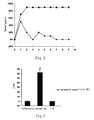
- morphine has attenuated analgesic effect from Day 2, and has no significant analgesic effect at dosage of 7mg/kg on Day 3, and higher dosage is required to restore its analgesic effect. While the compound I-6 has no such phenomena. The result is shown in Fig. 1 .
- Kuming mice (18-20g, male) are selected, and divided into physiological saline group, morphine group, and 1-6 group.
- the compound I-6 causes no physical dependence like morphine after continuous administration.
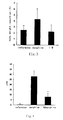
- Fig. 2 and Fig. 3 for the mice which are peritoneal administrated of Naloxone 3mg/kg after continuous administration of I-6 for 10 days, their jump test result and body weight reduction are similar to those of physiological saline group.
- Kuming mice (18-20g, male) are selected and divided into physiological saline group, morphine group, and I-6 + morphine group.
- the result shows that the compound I-6 can resist physical dependence caused by morphine.
- peritoneal administration of the compound 1-6 300 ⁇ g/kg 10min before administration of morphine every day can significantly reduce jump times of Naloxone-induced mice.
- the result is shown in Fig. 4 .
Landscapes
- Health & Medical Sciences (AREA)
- Chemical & Material Sciences (AREA)
- Organic Chemistry (AREA)
- Life Sciences & Earth Sciences (AREA)
- Public Health (AREA)
- Pharmacology & Pharmacy (AREA)
- Veterinary Medicine (AREA)
- Animal Behavior & Ethology (AREA)
- Medicinal Chemistry (AREA)
- General Health & Medical Sciences (AREA)
- Nuclear Medicine, Radiotherapy & Molecular Imaging (AREA)
- General Chemical & Material Sciences (AREA)
- Chemical Kinetics & Catalysis (AREA)
- Bioinformatics & Cheminformatics (AREA)
- Engineering & Computer Science (AREA)
- Biomedical Technology (AREA)
- Neurosurgery (AREA)
- Neurology (AREA)
- Pain & Pain Management (AREA)
- Addiction (AREA)
- Epidemiology (AREA)
- Virology (AREA)
- Tropical Medicine & Parasitology (AREA)
- Oncology (AREA)
- Communicable Diseases (AREA)
- Molecular Biology (AREA)
- AIDS & HIV (AREA)
- Rheumatology (AREA)
- Anesthesiology (AREA)
- Heart & Thoracic Surgery (AREA)
- Psychiatry (AREA)
- Urology & Nephrology (AREA)
- Dermatology (AREA)
- Cardiology (AREA)
- Pharmaceuticals Containing Other Organic And Inorganic Compounds (AREA)
- Plural Heterocyclic Compounds (AREA)
- Medicines That Contain Protein Lipid Enzymes And Other Medicines (AREA)
Abstract
Description
- The present invention relates to medicine chemistry field, particularly relates to a kind of tetrahydro isoquinoline derivatives and the preparation methods, pharmaceutical compositions and medicinal uses thereof, more particularly relates to the use as κ-opioid receptor agonist in analgesic.
- κ-Receptor, together with µ-,δ-,σ-, and ORL-1 receptors, belongs to opioid receptor family. µ-Receptor agonist medicine, represented by morphine, has powerful analgesic efficacy, but has many limits in clinical uses due to its side effects, such as dependence and addiction. The central selective κ-receptor agonist not only can be used for analgesic, but also can avoid morphine-like side effects. It can be used for analgesic, antiphlogistic and analgesic, anti-hyperpathia, treating labor pain; used as aquaretic agents, antipruritic; and used for anticonvulsant treatment, anti-hypertension, neural protection, treating HIV infection, and also used in withdrawl of cocain and morphine addiction. Therefore, selective κ-receptor agonist medicine has good application prospect.
- The present invention discloses a series of novel tetrahydro isoquinoline derivatives. According to radioligand binding assays, the compound of the invention has very high compatibility and selectivity for κ-receptor. In analgesic test for mice, it shows good analgesic activity.
- The general formula I of the compound of the invention is as below:


form 5, 6-methylenedioxy, 6,7-methylenedioxy, or 7,8-methylenedioxy together.
R3 and R4 each independently represent: H, F, Cl, Br, trifluoromethyl, C1-C4 alkyl, OR5, NR8R9, orform 4,5-methylenedioxy, 5,6-methylenedioxy, or 6,7-methylenedioxy together.
R5 represents: H, C1-C4 alkyl, allyl, C3-C7 cycloalkyl (preferably cyclopropyl, cyclobutyl, or cyclopentyl);
R6 and R7 each independently represent: H, C1-C4 alkyl, C1-C4 alkylacyl (preferably formyl, acetyl, or propionyl), or C1-C4 alkylsulfonyl (preferably methylsulfonyl, or ethylsulfonyl);
R8 and R9 each independently represent: H, C1-C4 alkyl, allyl, C1-C4 alkylacyl (preferably formyl, acetyl, or propionyl), or C1-C4 alkylsulfonyl (preferably methylsulfonyl, or ethylsulfonyl); or form 3-7 membered ring group together with N atom. - Preferably, the compound of general formula I is:
- R1 represents

- R2 each independently represents: H, F, Cl, methyl, hydrox, methoxy, dimethylamino, or
form 5,6-methylenedioxy or 6,7-methylenedioxy group together; - R3 and R4 each independently represent: H, F, Cl, methyl, hydroxyl, methoxy, dimethylamino, or
form 4,5-methylenedioxy, 5,6-methylenedioxy or 6,7-methylenedioxy together. - More preferably, the compound is:
- R1 represents

- Most preferably, the compound is
R1 represents:
- According to the present invention, the pharmaceutically acceptable salt comprises acid addition salt formed by the compound of the general formula I and the following acids: hydrochloric acid, hydrobromic acid, sulfuric acid, carbonic acid, citric acid, tartaric acid, phosphoric acid, lactic acid, pyruvic acid, acetic acid, maleic acid, mesylate, benzene sulfonic acid, p-toluene sulphonic acid, or arginine.
- Part compounds of the present invention are:
- 1-(pyrrolidine-1-methyl)-2-(2,3-dihydro-inden-3-keto-1-carbonyl)-1,2,3,4-tetrahydroisoquinoline (I-1)
- 1-(3-methyl-pyrrolidine-1-methyl)-2-(2,3-dihydro-inden-3-keto-1-carbonyl)-1,2,3,4-tetrahydroisoquinoline (I-2)
- 1-(3-hydroxy-pyrrolidine-1-methyl)-2-(2,3-dihydro-inden-3-keto-1-carbonyl)-1,2,3,4-tetrahydroisoquinoline (I-3)
- 1-(3-oxo-pyrrolidine-1-methyl)-2-(2,3-dihydro-inden-3-keto-1-carbonyl)-1,2,3,4-tetrahydroisoquinoline (I-4)
- 1-(pyrrolidine-1-methyl)-2-(5,6-dimethoxy-2,3-dihydro-inden-3-keto-1-carbonyl)-1,2,3,4-tetrahydroisoquinoline (I-5)
- 1-(pyrrolidine-1-methyl)-2-(6-chloro-2,3-dihydro-inden-3-keto-1-carbonyl)-1,2,3,4-tetrahydroisoquinoline (1-6)
- 1-(3-hydroxy-pyrrolidine-1-methyl)-2-(6-chloro-2,3-dihydro-inden-3-keto-1-carbonyl)-1,2,3,4-tetrahydroisoquinoline (I-7)
- 1-(3-methyl-pyrrolidine-1-methyl)-2-(6-chloro-2,3-dihydro-inden-3-keto-1-carbonyl)-1,2,3,4-tetrahydroisoquinoline (I-8)
- 1-(3-oxo-pyrrolidine-1-methyl)-2-(6-chloro-2,3-dihydro-inden-3-keto-1-carbonyl)-1,2,3,4-tetrahydroisoquinoline (I-9)
- 1-(pyrrolidine-1-methyl)-2-(5,6-dichloro-2,3-dihydro-inden-3-keto-1-carbonyl)-1,2,3,4-tetrahydroisoquinoline (I-10)
- 1-(pyrrolidine-1-methyl)-2-(5-fluoro-2,3-dihydro-inden-3-keto-1-carbonyl)-1,2,3,4-tetrahydroisoquinoline (I-11)
- 1-(pyrrolidine-1-methyl)-2-(4-chloro-2,3-dihydro-inden-3-keto-1-carbonyl)-1,2,3,4-tetrahydroisoquinoline (I-12)
- 1-(pyrrolidine-1-methyl)-2-(6-methoxy-2,3-dihydro-inden-3-keto-1-carbonyl)-1,2,3,4-tetrahydroisoquinoline (I-13)
- 7-methoxy-1-(pyrrolidine-1-methyl)-2-(2,3-dihydro-inden-3-keto-1-carbonyl)-1,2,3,4-tetrahydroisoquinoline (I-14)
- 7-methoxy-1-(pyrrolidine-1-methyl)-2-(5,6-dimethoxy-2,3-dihydro-inden-3-keto-1-ca rbonyl)-1,2,3,4-tetrahydroisoquinoline (I-15)
- 7-methoxy-1-(pyrrolidine-1-methyl)-2-(5,6-dichloro-2,3-dihydro-inden-3-keto-1-carb onyl)-1,2,3,4-tetrahydroisoquinoline (I-16)
- 7-methoxy-1-(pyrrolidine-1-methyl)-2-(5-fluoro-2,3-dihydro-inden-3-keto-1-carbonyl )-1,2,3,4-tetrahydroisoquinoline (I-17)
- 7-methoxy-1-(pyrrolidine-1-methyl)-2-(6-chloro-2,3-dihydro-inden-3-keto-1-carbonyl )-1,2,3,4-tetrahydroisoquinoline (I-18)
- 7-methoxy-1-(pyrrolidine-1-methyl)-2-(6-methoxy-2,3-dihydro-inden-3-keto-1-carbo nyl)-1,2,3,4-tetrahydroisoquinoline (I-19)
- 7-hydroxy-1-(pyrrolidine-1-methyl)-2-(2,3-dihydro-inden-3-keto-1-carbonyl)-1,2,3,4-tetrahydroisoquinoline (I-20)
- 7-hydroxy-1-(pyrrolidine-1-methyl)-2-(5,6-dimethoxy-2,3-dihydro-inden-3-keto-1-car bonyl)-1,2,3,4-tetrahydroisoquinoline (I-21)
- 7-hydroxy-1-(pyrrolidine-1-methyl)-2-(5,6-dichloro-2,3-dihydro-inden-3-keto-1-carb onyl)-1,2,3,4-tetrahydroisoquinoline (I-22)
- 7-hydroxy-1-(pyrrolidine-1-methyl)-2-(5-fluoro-2,3-dihydro-inden-3-keto-1-carbonyl) -1,2,3,4-tetrahydroisoquinoline (I-23)
- 7-hydroxy-1-(pyrrolidine-1-methyl)-2-(6-chloro-2,3-dihydro-inden-3-keto-1-carbonyl )-1,2,3,4-tetrahydroisoquinoline(I-24)
- 7-hydroxy-1-(pyrrolidine-1-methyl)-2-(6-methoxy-2,3-dihydro-inden-3-keto-1-carbon yl)-1,2,3,4-tetrahydroisoquinoline (I-25)
- 6,7-dimethoxy-1-(pyrrolidine-1-methyl)-2-(2,3-dihydro-inden-3-keto-1-carbonyl)-1,2, 3,4-tetrahydroisoquinoline (I-26)
- 6,7-dimethoxy-1-(pyliolidine-1-methyl)-2-(5,6-dimethoxy-2,3-dihydro-inden-3-keto-1-carbonyl)-1,2,3,4-tetrahydroisoquinoline (I-27)
- 6,7-dimethoxy-1-(pyrrolidine-1-methyl)-2-(5,6-dichloro-2,3-dihydro-inden-3-keto-1-c arbonyl)-1,2,3,4-tetrahydroisoquinoline (I-28)
- 6,7-dimethoxy-1-(pyrrolidine-1-methyl)-2-(5-fluoro-2,3-dihydro-inden-3-keto-1-carb onyl)-1,2,3,4-tetrahydroisoquinoline (I-29)
- 6,7-dimethoxy-1-(pyrrolidine-1-methyl)-2-(6-chloro-2,3-dihydro-inden-3-keto-1-carb onyl)-1,2,3,4-tetrahydroisoquinoline (I-30)
- 6,7-dimethoxy-1-(pyrrolidine-1-methyl)-2-(6-methoxy-2,3-dihydro-1H-inden-3-keto-1-carbonyl)-1,2,3,4-tetrahydroisoquinoline (I-31)
- The preparation method for the compound of general formula (I) of present invention is as below:

1-(pyrrolidine-1-methyl)-1,2,3,4-tetrahydroisoquinoline series intermediate (VI) is synthesized from (substituted)β-phenylethylamine (general formula II), and the preparation method is as below:


- According to the results of radioligand binding assays, the compound of general formula (I) and its pharmaceutically acceptable salt have very high affinity for κ-receptor while having low or extremely low affinity for µ-receptor, and exhibit good selectivity for κ-receptor. In the analgesic ability test which model are mice hot plate method and mice writhing method, it shows good analgesic effect.
- The present invention further relates to a pharmaceutical composition for treating diseases relevant to κ-opioid receptor agonist, which contains effective dose of the compound of general formula (I) and pharmaceutically acceptable carrier. The pharmaceutical composition can be in routine preparation forms, such as common tablet or capsule, sustained release tablet or capsule, controlled release tablet or capsule, or injection, etc.
- The present invention further relates to the application of the compound of general formula (I) in preparation of medicine for treating or preventing diseases relevant to κ-opioid receptor agonist; wherein the medicine for treating or preventing diseases relevant to κ-opioid receptor agonist is selected from medicines for analgesic, antiphlogistic and analgesic, anti-hyperpathia, and treating labor pain; or medicines for anticonvulsant treatment, anti-hypertension, neural protection, or treating HIV infection; or medicines for withdrawl of cocain and morphine addiction; or aquaretic agents, antipruritic. Preferably, the disease related to κ-opioid receptor agonist is surgical or cancer pain.
-
-
Fig. 1 is the comparison result of tolerance tests for different medicines. The lower rhombic line is morphine, and the upper square line is compound I-6 (25µg/kg); morphine shows tolerance and efficacy of zero after continuous injection of three days (7mg/kg), and the dosage is increased to 10mg/kg on the fourth day. -
Fig. 2 is mice jumping conditions for Naloxone administration 3mg/kg after the compound I6 is administered for 10 days. (**compared with reference group, p<0.01) -
Fig. 3 is mice weight reduction conditions for Naloxone administration 3mg/kg after the compound I6 is administered for 10 days. (**compared with reference group, p<0.05) -
Fig. 4 is the effect of the compound I6 for resisting morphine addiction (*compared with morphine group, p<0.05) - The preparation embodiments for partial active compounds are as below: RY-1 type melting point tube; Nicolet Impact 410 IR spectrometer, KBr pellet; 1H-NMR by Bruker AM-500 NMR spectrometer, internal standard TMS; HP1100 Mass spectrograph; Agilent 1100 series LC/MSD Trap SL; Carlo Erba 1106 element analyzer.
- Add β-phenylethylamine 36.3g (0.3mol), sodium carbonate 31.8g (0.3mol), and dichloromethane 300ml into 500ml three-necked bottle, controll temperature at 0 through ice bath, slowly dropwise add chloroacetyl chloride 40.68g (0.36mol) within 1h while stirring, further react at 10 for 2h while stirring to give white turbid solution, slowly add ice water 150ml, and separate organic layer. Wash the organic layer sequentially with 10% dilute hydrochloric acid solution and saturated salt water, dry with anhydrous sodium sulfate, vacuum evaporate to remove solvent, recrystallize the residue with methanol-water, filter, dry, obtain white needle crystal III-1 36g, with yield of 61% and mp 61-63 (reference value: 60-63 ).
- Add xylene 300ml and phosphorus pentoxide 28.4g (0.2mol) into 500ml three-necked bottle, increase temperature to 140 while mechanical stirring, add compound III-1 9.48g (0.048mol) in batch under nitrogen gas protection and immediately the solution turn yellow, react for 3h under reflux. Cool, and pour out xylene. Slowly add ice water 450ml into solid residue under ice bath cooling, stir solution for 0.5h, regulate pH to 11 with 50% NaOH, extract with ethyl ether, and dry with anhydrous sodium sulfate overnight. Filter, introduce dry HCl gas into the filtrate under ice bath, the solution turns from turbid to clear, yellow solid is precipitated on the bottle wall, pour out the solvent and dry it to obtain IV-1 5.3g, with yield of 51% and mp of 161-163 (reference value 163-164 ).
- Add methanol 40ml and tetrahydropyrrole 3.55g (0.05mol) under nitrogen gas protection into 100ml three-necked bottle, control temperature at 0 through ice bath, slowly dropwise add methanol solution of compound IV-1 2.66g(0.0123mol) while stirring. The temperature of reacting solution is increased to room temperature after dropwise addition, and react overnight to give red transparent solution V-1 which can be directly used for next step of reaction.
- controlling temperature at 0 through ice bath, add NaBH4 1.68g (0.025mol) in batch into the V-1 solution of the above step, release hydrogen gas and the solution turns to yellow turbid solution. The reacting solution temperature is increased to room temperature after 3h, evaporate to remove solvent, treat the residue with NaOH and extract it with ethyl ether. Dry the ether layer with anhydrous sodium sulfate overnight. Filter, and evaporate solvent to give orange oil VI-1 crude product 1.46g, with yield of 55%, which is directly used for next step of reaction.
- Add benzaldehyde 21.2g (0.2mol), diethyl malonate 32g (0.2mol), piperidine 1.2ml, benzoic acid 0.6g, and benzene 60ml into 250ml eggplant-shaped flask, increase temperature until intensive reflux occurs, use water separator to separate water, and react for 18h; vacuum evaporate to remove benzene, extract with chloroform-water, wash the organic layer sequentially with water, 1mol/l hydrochloric acid, and saturated sodium hydrogen carbonate solution, and dry with anhydrous sodium sulfate overnight. Filter, and vacuum evaporate to remove solvent to give orange oil component VIII-a 42.5g, with yield of 80%, which is directly used for next step of reaction (the pure ester can be obtained by distillation, b.p. 140-142°/4mm).
- Add 20ml aqueous solution of compound VIII-a 50g (0.2025mol) and KCN 14g (0.215mol), and 500ml ethanol into 1L three-necked flask, increase temperature to 65-75 , react for 18h while stirring. Cool to 15 after reaction, filter to remove KHCO3, wash the filter cake with 20ml ethanol and combine it with the filtrate. Carefully acidify with diluted hydrochloric acid 5ml, vacuum concentrate to semi-solid state. Cool, extract with ethyl ether-water, dry the organic layer with anhydrous calcium chloride, filter, and vacuum evaporate to remove solvent to give red oil component IX-a 27g, with yield of 66%, which is directly used for next step od reaction. (the pure ester can be obtained by distillation, b.p. 161-164°/8mm).
- Add compound IX-a 35g (0.172mol) and concentrated hydrochloric acid 125ml into 250ml eggplant-shaped flask, heat to reflux for 18h to precipitate orange solid, recrystallize with water, decolore with activated carbon to give pale orange liquid, and freeze to precipitate white solid X-1 27.5g, with yield of 70%, and m.p. 163-164°(reference value: 163-164°).
- Add compound X-1 crude product 3g (0.017mol) and SOCl2 3ml into 25ml three-necked flask, mechanically stir, increase temperature to reflux for 0.5h, slightly cool, add anhydrous nitrobenzene 6ml and anhydrous AlCl3 3g (0.0225mmol), react at 80 for 1.5h, pour to ice water 75ml, steam distill to remove all nitrobenzene, add activated carbon 1.5g for decoloring, hot filter, rapidly shake for cooling to give white water-containing acid with m.p. 84 . After drying, finally obtain anhydrous acid XI-1 1.2g, with yield of 61% and m.p. 119-120 (reference value 120 ).
- Add compound VI-1 0.97g (4.5mmol), compound XI-1 0.95g (5.4mmol), DMAP at catalyst quantity, and CH2Cl2 20ml into 50ml three-necked flask, control temperature at 0 through ice bath and stir for 0.5h, slowly dropwise add DCC 1.3g (6.3mmol) dissolved in 10ml of CH2Cl2 solution, react overnight under protection of nitrogen gas. React solution turns to orange turbid solution, filter to remove DCU. Subject to column chromatography with petroleum ether:ethyl acetate:triethylamine=4:1:0.1 to give white solid I-1 0.67g, with
yield 40% and mp.120-122 .
(Note: 1. As the molecule contains two chiral carbons, the product contains two pairs of diastereoisomers, i.e. RR/SS and RS/SR; therefore 1H-NMR spectrum shows two groups of hydrogen, this phenomena is also reported in literatures (Charles B K, Willem A L, Joseph P M. Tetrahedron, 2003, 59:8337-8345), and the underscore "_" represents isomers with relatively high content, the same below))
IR(cm-1): 3415, 2962, 2929, 2790, 1712(C=O), 1641(C=O), 1604, 1434, 1284, 1238, 1043, 761
MS(ESI(+)70V, m/z): 375.2([M+H]+, base peak)
Anal. Calcd. for C24H26N2O2: C 76.98, H 7.00, N 7.48; Found: C 76.88, H 7.07, N 7.43 - Add 3,4-dimethoxy benzaldehyde 26g (0.16mol), ethyl cyanoacetate 18g (0.16mol), piperidine 0.8ml, acetic acid 2.4g, and benzene 60ml into 250ml eggplant-shaped flask, increase temperature to 120-130 for intensive reflux, separate water with water separator, react for 12h. Vacuum evaporate to remove benzene, pour ice water into the reaction solution to precipitate yellow solid, filter and dry to obtain pale yellow crystal VIII-b-2 41g, with yield almost reaching theoretical value and m.p. 154-156 (reference value 156 ).
- Add the compound VIII-b-2 52.2g (0.2mol), 15ml of aqueous solution of KCN 14.3g (0.22mol), and ethanol 180ml, reflux react for 40min while stirring. Cool, carefully add diluted hydrochloric acid for acidification, stir at room temperature overnight. Filter and dry to give white solid. Place the filtrate in refrigerator to precipitate solid again, extract with chloroform-water, and vacuum evaporate to remove chloroform, totally obtain white solid IX-b-2 35g, with yield of 60% and mp 92-94 (reference value 93-95 ).
- The compound IX-b-2 is subjected to the same procedure as preparation of X-1, and refluxed for 8h under heat; the crude product is recrystallized with water, and decolored with activated carbon to give white solid X-2, with yield of 75% and m.p. 173-174 (reference value 172-174 ).
- Add PPA 30g (15 times of the reactant weight) into 25ml three-necked flask, increase temperature to 70 while mechanical stirring, add compound X-2 2g (8.47mmol), the color of the reaction system turns from gray to yellow, then to dark red, react at 70 for 4h under nitrogen protection, pour into ice water, extract with chloroform, evaporat to obtain pale yellow solid. Recrystallize with water to give white solid XI-2 1.3g, with yield of 70% and m.p. 190-190.5 (reference value 190-191 ).
- The compound VI-1 and X-2 are subjected to the same procedure as preparation of I-1 to give white solid I-5, with yield of 35% and mp 124-125 .
1H-NMR (500MHz,CDCl3),δ(ppm): 6.95∼7.27(10H,m,ArH19, 19 ,7, 7 ,8,8,6, 6 ,5, 5 ),6.30/6.95 (2H,s/S,22,22 ),5.80∼5.82/5.51∼5.53(2H,dd/dd,H1, 1 ),4.85∼88/4.55∼4.57(2H,dd,H 16 ,16),4.82∼ 4.83/4.21∼4.25(2H,m,H 3 ,3),3.09,3.84,3.91,3.95(12H,s,OCH3,OCH 3 ),3.38~3.48(1H,m,H 3' ),3. 13~3.17(1H,m,H 9 ),2.45~3.07(20H,m,H3',H9,9', 9' ,H17, 17 ,17', 17' ,H4, 4 ,4', 4' ,H11, 11 ,11', 11' ,H14, 14 ,14', 14 ),1.62∼1.81(8H,m,H12,12,12',12' ,H13, 13 ,13', 13' )
IR(cm-1): 3493,2961,2924,2805,2794,167.3(C=O),1635(C=O),1594,1503, 1442,1311(C-O-C),1266,1218,1191,1119,1044(C-O-C),854,771
MS(ESI(+)70V,m/z): 435.2([M+H]+,base peak)
Anal. Calcd. for C26H30N2O4·H2O: C 69.01, H 7.13, N 6.19; Found: C 68.94, H 7.08, N 6.14 - Use 3-chlorobenzaldehyde as raw material, and perform the same procedures as preparation of VIII-b-2 to give yellow crystal VIII-b-3, with yield almost of theoretic value and mp 100-101 (reference value 101 ).
- Add the compound VIII-b-3 53g (0.225mol), 16ml of aqueous solution of KCN 15.5g (0.237mol), and ethanol 330ml, react at room temperature for 18h while stirring. Carefully add diluted hydrochloric acid for acidification, filter to remove solid insoluble matter, vacuum concentrate, extract with chloroform-water, and vacuum evaporate to remove chloroform to give brown oil matter IX-b-3 36g, with yield of 62%.
- The compound IX-b-3 is subjected to the same procedure as preparation of X-1, and refluxed for 8h under heat; the crude product is recrystallized with ethyl ether-petroleum ether, and decolored with activated carbon to give white solid X-3, with yield of 70% and m.p. 158-160 (reference value 161-162 ).
- The compound X-3 is subjected to same procedure as preparation of XI-1 to give carneous solid mixture of XI-3 and XI-4. After column chromatography separation, white solid XI-3 is obtained, with yield of 50% and mp 146-148 (reference value: 148-151 ); white solid XI-4 is also obtained, with yield of 10% and mp 171-174 (reference value 171-174 ).
- The compound VI-1 and XI-3 are subjected to the same procedure as preparation of I-1 to give white solid I-6, with yield of 38% and mp 120 .

13C-NMR (500MHz,CDCl3),δ(ppm): 77.2/58.1(C-1),55.4(C-3),28.6(C-4),132.9/126.9 (C-4a),124.9∼129.4(C-5,C-6,C-7,C-8,C-19,C-20,C-22),154.9(C-8a),61.6/54.8(C-9), 41.6/40.6(C-11),24.0(C-12),23.7(C-13),40.9(C-14),179.9/171.4(C-15),40,5/40.4(C-16),36.0/29.6(C-17),203.9(C-18),134.8/134.2(C-18a),141.3(C-21),135.4/135.2(C-22a)
IR(cm-1):3471,3413,2964,2929,2790,1716(C=-O),1639(C=O),1596,1440, 825,744
MS(ESI+)70V,m/z): 409.2([M+H]+,base peak)
Anal. Calcd, for C24H25ClN2O2: C 70.49, H 6.16, N 6.85; Found: C 70.63, H 6.31, N 6.74 - The compound 1-6 3g (7.35mmol) is dissolved in acetone, and dry HCl gas is introduced in ice bath to precipitate white solid I-6·HCl 2.9g, with yield of 90% and mp 281-282 .
- Anal. Calcd. for C24H25ClN2O2·HCl·0.5H2O: C 63.44, H 5.99, N 6.16; Found: C 63.56, H 6.24, N 6.09
- The compound VI-1 and the compound XI-4 are subjected to the same procedures as preparation of I-1 to give white solid I-12, with yield of 40% and mp 135-136 .
1H-NMR (500MHz,CDCl3),δ(ppm): 7.14∼7.70(14H,m,ArH),5.71/5.13~5.15(2H, dd/dd,H1, 1 ),4.80∼4.83/4.53(2H,dd/dd,H 16 ,16),4.75∼4.79/4.02(2H,m/m,H3, 3 ),2.44∼3.17 (22H,m,H3', 3' ,H9, 9 ,9', 9' ,H17, 17 ,17', 17' ,H4, 4 ,4', 4' ,H11, 11 ,11', 11' ,H14, 14 ,14', 14' ),1.54∼1.87(8H,m,H12, 12 ,1 2', 12' ,H13, 13 ,13', 13' )
IR(cm-1): 3446,3425,2956,2925,2854,1724(C=O),1618(C=O),1460,1272, 1222,1068,821,779,754
MS(ESI(+)70V,m/z): 409.2((M+H)+,base peak)
Anal. Calcd. for C24H25ClN2O2: C 70.49, H 6.16, N 6.85; Found: C 70.42, H 6.93, N 6.56 - Use 3-methoxybenzaldehyde as raw material to carry out the same procedure as preparation of VIII-b-2 to give orange oil matter VIII-b-4, with yield of almost theoretical value, which can be directly used in next step of reaction.
- Add the compound VIII-b-4 69.3g (0.3mol), 2.5ml of aqueous solution of KCN 25.35g (0.39mol), and ethanol 480ml into 500ml three-necked flask, react at room temperature for 18h while stirring, carefully add diluted hydrochloric acid for acidification, refrigerate, filter, dry to obtain brown-yellow solid, recrystallize with ethanol-water to obtain white solid IX-b-4 46.44g, with yield of 60% and mp 73
- The compound IX-b-4 is subjected to the same procedure as preparation of X-1, and refluxed for 8h under heat; the crude product is recrystallized with acetone, and decolored with activated carbon to give white solid X-4, with yield of 78% and m.p. 174-175 (reference value 174-175 ).
- The compound X-4 is subjected to same procedure as preparation of XI-2 to give white solid XI-5 with yield of 75% and mp 186-187.5 (reference value: 186-187.5 ).
- The compound VI-1 and XI-5 are subjected to the same procedure as preparation of I-1 to give white solid I-13, with yield of 37% and mp 143-144 .
1H-NMR (500MHz,CDCl3),δ(ppm): 7.66∼7.67/7.62∼7.63(2H,d/d,ArH19, 19 ),7.12-7.25 (8H,m,ArH20, 20 ,7, 7 , 8 ,5, 5 ), 7.02/6.35(2H,s/s,ArH22,22),6.94∼6.95/6.81∼6.83(2H,dd/dd,ArH6, 6 ), 5.78/5.46∼5.49(2H,dd/dd,H1, 1 ),4.89∼4.91/4.57(2H,dd/dd,H 16 ,16),4.80∼4.84/4.20∼4.22(2H,m ,H 3 ,3),3.20,3.87(6H,s,OCH3,OCH3),3.36∼3.40/3.17(2H,m/m,H 3' ,3'),2.66∼3.04(16H,m,H9, 9 ,9', 9',H17, 17 ,17', 17' ,H4, 4 ,4', 4' ,H 11 ,11' ,H 14 , 14' ),2.45∼2.59(4H,m,H11,11',H14, 14'),1.60∼1.94(8H,m,H12, 12 ,12', 12' ,H13, 13 ,13', 13' )
IR(cm-1): 3463,3419,2931,2819,1701(C=O),1643(C=O),1596,1433,1286, 1244(C-O-C),1087(C-O-C),831,748
MS(ESI(+)70V,m/z): 405.1([M+H]+,base peak)
Anal. Calcd, for C25H28NaO3: C 74.23, H 6.98, N 6.93; Found: C 73.73, H 7.41, N 7.35 - Use 4-methoxyphenylethylamine as raw material, and carry out same procedure as preparation of III-1 to give white crystal III-2, with yield of 72% and mp 99-100 (reference value 99-100 ).
- The compound III-2 is subjected to the same procedure as preparation of IV-1 to give yellow solid IV-2, with yield 64% and mp 138-141 (reference value 138-141 ).
- The compound IV-2 is subjected to the same procedure as preparation of V-1 to give brown yellow transparent liquid V-2 which is used directly for next step of reaction.
- The compound V-2 is subjected to the same procedure as preparation of VI-1 to give orange oil VI-2 crude product, with
yield 60%, which is used directly for next step reaction. - The compound VI-2 and XI-1 are subjected to the same procedures as preparation of I-1 to give white solid I-14, with yield 42% and mp 135-136 .
1H-NMR (500MHz,CDCl3),δ(ppm): 7.59∼7.77(4H,m,ArH19, 19 ,20, 20 ),7.33∼7.44,7.12∼ 7.14(4H,m,ArH21,21,22,22),7.05∼7.06/7.00∼7.02(2H,d/d,ArH5,5),6.83∼6.85,6.73∼6.78(4H,m, ArH 6 ,6, 8 ,8),5.79/5.42∼5.44(2H,dd/dd,H1,1),4.97∼5.00/4.74∼4.76(2H,dd/dd,H 16 ,16),4.77∼4.78/ 4.26∼4.30(2H,m/m,H3, 3 ),3.88∼3.94/3.121∼3.129(2H,m,H 9 ,9),3.78,3.83(6H,s,OCH3,OCH3),3 .32∼3.36(1H,m,H 3' ),2.52∼3.01(19H,m,H3',H9',9',H17, 17 ,17', 17' ,H4, 4 ,4', 4' ,H11, 11 ,11', 11' ,H14, 14 , 14' ,14' ),1.69∼1.81(8H,m,H12, 12 ,12', 12' ,H13, 13 ,13', 13')
IR(cm-1): 3456,3417,2929,2806,1714(C=O),1639(C=O),1610,1502,1442, 1249(C-O-C),1153,1037(C-O-C),765,811,765
MS(ESI(+)70V,m/z): 405.2([M+H]+,base peak)
Anal. Calcd. for C25H28N2O3: C 74.23, H 6.98, N 6.93; Found: C 74.13, H 6.88, N 6.89 - The compound VI-2 and compound XI-2 are subjected to the same procedure as preparation of I-1 to give white solid I-15, with yield 39% and mp 122-124 .
1H-NMR (500MHz,CDCl3),δ(ppm): 7.20/7.15(2H,s/s,ArH19, 19 ),7.11∼7.13/7.03∼7.05 (2H,dd/dd,ArH 5 ,5),6.94/6.33(2H,s/s,ArH22, 22 ),6.80∼6.82(2H,m,ArH 6 , 8 ),6.763∼6.768(2H,m, ArH6,8),5.76∼5.79/5.46∼5.48(2H,dd/dd,H1, 1 ),4.84∼4.86/4.54∼4.57(2H,dd,H 16 ,16),4.80∼4.83/ 4.21∼4.24(2H,m/m,H 3 ,3),3.17,3.78,3.80,3.85,3.93,3.95(18H,s,OCH3,OCH3),3.38∼3.42(1H, m,H 3' ),2.65∼3.14(17H,m,H3',H9, 9 ,9', 9' ,H17, 17 ,17', 17' ,H4, 4 ,4', 4' ,H 11 , 11' ,H14, 14' ),2.44∼2.62(4H,m,H 11,11',H14,14'),1.63∼1.80(8H,m,H12, 12 , 12', 12' ,H13, 13 ,13', 13' )
IR(cm-1): 3460,2960,2794,1701(C=O),1639(C=O),1500,1440,1296
(C-O-C),1253,1215,1039(C-O-C),856,819
MS(ESI(+)70V,m/z): 465.5([M-H]+,base peak)
Anal. Calcd. for C27H32N2O5·1/2 H2O): C 68.48, H 7.02, N 5.92; Found: C 68.95, H 7.15, N 5.46 - The compound VI-2 and XI-3 are subjected to the same procedure as preparation of I-1 to give white solid I-18, with
yield 40% and mp 151-153 .
1H-NMR (500MHz,CDCl3),δ(ppm): 7.65∼7.69(2H,d/d,ArH20, 20 ),7.58/6.99(2H,s/s, ArH 22 ,22),7.39∼7.40/7.30∼7.32(2H,dd/dd,ArH 19 ,19),7.12∼7.14/7.03∼7.04(2H,d/dd,ArH5, 5 ),6. 83∼6.86,6.74∼6.77(4H,m,ArH6, 6 ,8, 8 ),5.76/5.31∼5.32(2H,dd/dd,H 1 ,1),4.89/4.62(2H,dd/dd,H16 , 16 ),4.69∼4.73/4.21∼4.24(2H,m/m,H3, 3 ),3.90∼3.96(1H,m,H9),3.78,3.82(6H,s,OCH3,OCH 3 ),3 .28∼3.32(1H,m,H3'),2.65∼3.03(16H,m,H 3' ,H 9 ,9', 9',H17, 17 ,17', 17' ,H4, 4 ,4', 4' ,H11,11',H14,14'),2.46∼2 .59(4H,m,H 11 , 11' ,H 14 , 14' ),1.64∼1.77(8H,m,H12, 12 ,12', 12' ,H13, 13 , 13', 13' )
IR(cm-1):3469,3411,2956,2794,1708(C=O),1641(C=O),1600,1436,1.311
(C-O-C),1242,1161,1035(C-O-C),881,835,806
MS(ESI(+)70V,m/z): 439.2([M+H]+,base peak)
Anal. Calcd. for C25H27ClN2O3: C 68.41, H 6.20, N 6.38; Found: C 68.08, H 6.32, N 6.11 - The compound VI-2 and the compound XI-5 are subjected to the same procedure as preparation of I-1 to give white solid I-19, with yield 34% and mp 144-145 .
1H-NMR (500MHz,CDCl3),δ(ppm): 7.71∼7.72/7.63∼7.64(2H,d/d,ArH19, 19 ),7.12,7.13 (1H,d/d,ArH 5 ),7.03∼7.05(2H,m,ArH5,22),6.94∼6.96(1H,dd/dd,ArH 20 ),6.76∼6.84/6.82∼6.84( 5H,m,ArH20,6, 6 ,8, 8 ,),6.36∼6.37(1H,s,ArH 22 ),5.75∼5.78/5.43∼5.45(2H,dd/dd,H1, 1 ),4.88∼4.90/ 4.58∼4.60(2H,dd/dd,H 16 ,16),4.80∼4.83/4.21∼4.25(2H,m/m,H 3 ,3),3.24,3.78, 3.81,3.87,(12H,s,OCH3,OCH 3 ),
3.37∼3.42(1H,m,H 3' ),2.64∼3.17(17H,m,H3',H9, 9 ,9', 9' ,H17, 17 ,17', 17' ,H4, 4 ,4', 4' ,H 11 , 11' ,H 14 , 14' ),2.45 ∼2.59(H,mH11,11',H14,14'),1.60∼1.80(8H,m,H12, 12 ,12', 12' ,H13, 13 ,13', 13' )
IR(cm-1): 3475,3415,2960,2921,2804,1704(C=O),1645(C=O),1598,1498, 1436,1284,1249(C-O-C),1037(C-O-C),827,775
MS(BSI(+)70V,m/z): 435.2([M+H]+,base peak)
Anal. Calcd. for C26H30N2O4 -1/2 H2O): C 70.41, H 7.04, N 6.32; Found: C 70.71, H 7.04, N 6.62 - N-[2-(3,4-dimethoxyphenethyl)-ethyl]-2-chloro acetamide (III-3) 3,4-dimethoxyphenylethylamine is adopted as raw material and subjected to the same procedure as preparation of III-1 to give white crystal III-3, with yield 62% and mp 94-95 (reference value 94-95 ).
- The compound III-3 is subjected to the same procedure as preparation of IV-1 to give yellow solid IV-3, with yield 57% and mp 194-196 (reference value 196 ).
- The compound IV-3 is subjected to the same procedure as preparation of V-1 to give brown yellow transparent liquid V-3 which is used directly for next step reaction.
- The compound V-3 is subjected to the same procedure as preparation of VI-1 to give orange oil VI-3 crude product, with yield 55%, which is used directly for next step reaction.
- The compound VI-3 and XI-1 are subjected to the same procedures as preparation of I-1 to give white solid I-26, with yield 42% and mp 174-175 .
1H-NMR (500MHz,CDCl3),δ(ppm): 7.74∼7.78(2H,m,ArH 19 , 20 ),7.58/7.61(2H,m, ArH19,20),7.34∼7.45(3H,m,ArH 21 ,21,22),7.00,7.01(1H,d/d,H 22 ),6.74,6.70(2H,s/s,ArH8, 8 ),6.68 ∼6.70,6.61(2H,s/s,ArH5, 5 ),5.71/5.37∼5.40(2H,dd/dd,H1, 1 ),4.96∼4.99/4.66(2H,dd/dd,H 16 ,16), 4.78∼4.82/4.27∼4.31(2H,m/m,H 3 ,3),3.85,3.90(12H,s,OCH3,OCH3),3.34∼ 3.38(1H,m,H 3' ),2.66∼3.14(17H,m,H3',H9, 9 ,9', 9' ,H17, 17 ,17', 17' ,H4, 4 ,4', 4' ,H11,11',H14,14'),2.47∼2.56 (4H,m,H 11 , 11' ,H 14 , 14' ),1.65∼1.78(8H,m,H12, 12 ,12', 12' ,H13, 13 ,13', 13' )
IR(cm-1): 3448,3406,2958,2790,1708(C=O),1639(C=O),1515,1436,1257, 1234(C-O-C),1120,1024(C-O-C),883,837,775
MS(ESI(+)70V,m/z): 435.5([M+H)+,base peak)
Anal. Calcd. for C26H30N2O4: C 71.87, H 6.96, N 6.45; Found: C 72.19, H 6.87, N 6.38 - The compound VI-3 and the compound XI-2 are subjected to the same procedure as preparation of I-1 to give white solid I-27, with yield 33% and mp 125 .
1H-NMR (500MHz,CDCl3),δ(ppm): 7.19/7.15(2H,s/s,ArH19, 19 ),6.94/6.75(2H,s/s, ArH22, 22 ),6.73/6.67(2H,s/s,ArH8, 8 ),6.59/6.36(2H,s/s,ArH5, 5 ),5.70∼5.73/5.40∼5.43(2H,dd/dd, H1,1),4.84∼4.85,4.54∼4.56(2H,dd,H 16 ,16),4.81∼4.83,4.20∼4.25(2H,m/m,H 3 ,3), 3.20,3.85∼3.95(24H,s,OCH3,OCH3),3.37∼3.42(1H,m,H 3' ),2.65∼3.13(17H,m,H3',H9, 9 , 9', 9' ,H17, 17 ,17', 17' ,H4, 4 ,4', 4' ,H 11 , 11' ,H 14 , 14' ),2.47∼2.59(4H,m,H11,11',H14,14'),1.58∼1.80(8H,m,H12, 12 ,12', 12' ,H13, 13 ,13', 13' )
IR(cm-1): 3415,2947,2800,1695(C=O),1633(C=O),1500,1442,1307
(C-O-C),1269,1251,1215,1116,1043(C-O-C),864,775
MS(BSI(+)70V,m/z): 495.5([M+H]+,base peak)
Anal. Calcd. for C28H34N2O6 ·H2O: C 65.61, H 7.08, N 5.47; Found: C 65.79, H 6.86, N 5.23 - The compound VI-3 and the compound XI-3 are subjected to the same procedure as preparation of I-1 to give white solid I-30, with
yield 35% and mp 178-179
1H-NMR (500MHz,CDCl3),δ(ppm): 7.66∼7.70(2H,d/d,ArH20,20),7.59/7.00(2H,s/s, ArH 22 ,22),7.40∼7.42/7.32∼7.33(2H,dd/dd,ArH 19 ,19),6.69,6.61(4H,s/s,ArH5,8, 8 , 5 ),5.72/ 5.28∼5.31(2H,dd/dd,H 1 ,1),4.90∼4.92/4.64(2H,dd/dd,H16, 16 ),473∼4.77/4.24∼4.28(2H,m/m,H 3, 3 ),3.86,3.90(12H,s,OCH3,OCH 3 ),3.30∼3.34(1H,m,H 3' ),2.6∼3.03(17H,m,H3',H9, 9 ,9', 9' ,H17, 1 7 ,17', 17' ,H4, 4 ,4', 4' ,H11,11',H14,14'),2.46∼2.59(4H,m,H 11 , 11' ,H 14 , 14' ),1.64∼1.79(8H,m,H12, 12 ,12', 12' ,H 13, 13 ,13', 13' )
IR(cm-1): 3456,3413,3328,2927,2796,1712(C=O),1637(C=O),1591,1517, 1438,1:313(C-O-C),1261,1238,1118(C-O-C), 887,840,777
MS(ESI(+)70V,m/z): 469.2([M+H]+,base peak)
Anal. Calcd. for C26H29ClN2O4: C 66.59, H 6.23, N 5.97; Found: C 66.48, H 6.67, N 5.93 - The compound VI-3 and the compound XI-5 are subjected to the same procedure as preparation of I-1 to give white solid I-31, with yield 44% and mp 19.3-195 .
1H-NMR (500MHz,CDCl3),δ(ppm): 7.70∼7.72/7.63∼7.64(2H,d/d,ArH19, 19 ),7.02∼7.03 /6.38∼6.39(2H,m/m,ArH22, 22 ),6.94∼6.96/6.82∼6.84(2H,dd/dd,ArH20, 20 ),6.73/6.67(2H,s/s,Ar H8,8),6.67/6.60(2H,s/s,ArH 5 ,5),5.69∼5.72/5.37∼5.40(2H,dd/dd,H1, 1 ),4.87∼4.90/ 4.57∼4.60(2H,dd/dd,H 16 ,16),4.81∼4.84/4.22∼4.26(2H,m/m,H 3 ,3),3.28,3.85∼3.88(18H,s,OCH 3,OCH3)3.36∼3.41(1H,m,H 3' ),2.64∼3.13(17H,m,H3',H9, 9 ,9', 9' ,H17, 17 ,17', 17' ,H4, 4 ,4', 4' ,H 11 , 11' ,H 1 4 , 14' ),2.46∼2.58(4H,m,H11,11',H14,14'),1.61∼1.79(8H,m,H12, 12 ,12', 12' ,H13, 13 ,13', 13' )
IR(cm-1): 3446,2960,2933,2796,1701(C=O),1637(C=O),1596,1515,1442, 1282,1253(C-O-C),1114,1022(C-O-C),837,775
MS(ESI(+)70V,m/z): 465.2([M+H]+,base peak)
Anal. Calcd. for C27H32N2O5: C 69.81, H 6.94, N 6.03; Found: C 70.04, H 6.96, N 5.90 - The experiment test tubes are divided into total binding tubes and non-specific binding tubes, and several groups of sample tubes added with competitive ligand in different concentrations are provided. The total binding tube is added with expressed membrane receptor protein equivalent to 20µg and [3H] diprenorphine (0.5nM) (1.44Pbq/mol broad spectrum opioid antagonist, Amersham), the corresponding non-specific binding tubes are further added with 1µM Naloxone (broad spectrum opioid antagonist, Sigma), the sample tubes are added with different concentrations compounds which are to be screened, the final volume is regulated to 100µl with 50mM Tris(Amresco)-HCl (pH7.4). Incubation is performed at 30 for 30min, and the tubes are placed into ice water to stop reaction. Negative pressure filter is performed in Millipore sample collector via GF/(Whatman) glass fiber filter paper. Ice cold 50mM Tris-HCl (pH 7.4) is used to wash the filter paper for three times, each for 4ml; Dry the filter paper and place it in 0.5ml Eppendorff tube, and add 0.5ml of lipophilic scintillator liquid (Reagent No.1 Factory Of Shanghai Chemical Reagent Co. Ltd). Beckman LS 6500 multifunctional liquid scintillation counter is adopted for measuring radiation intensity, calculating inhibition rate is calculated, each concentration has three duplicated tubes, and each tube is independently tested for 3-4 times.
- IC50 value is calculated by software Prism 4.0.
- Ki= IC50/(1+[L]/Kd), ([L] is the concentration of added marked ligand, and Kd is equilibrium dissociation constant of radioligand).
- Pharmacological test results of partial compounds are as below:
Table 1 competition binding experiment data of the partial compounds of the invention with κ-preceptor dpm inhibition rate %a dpm inhibition rate %a total binding 3353.96 total binding 3654.03 non specific binding 273.74 non specific binding 243.59 I-1 212.91 100 I-5 260.58 99.5 I-14 972.69 77.3 I-6 201.00 100 I-15 820.16 82.3 I-13 211.54 100 I-18 281.00 100 I-26 1883.77 51.9 I-19 799.91 82.9 I-30 2269.71 40.6 I-27 5257.44 0 I-31 3271.85 11.2 a represents inhibition rate of the compound at 1x10⁻⁵M . Table 2 Affinity (Ki) and competition binding (IC50) value of the partial compound of the present invention to κ-opioid receptor Compd. IC50 (M) κ Ki (M) κ I-1 1.53×10⁻⁹ 4.38×10⁻¹⁰ I-5 4.69×10⁻⁹ 1.34×10⁻⁹ I-6 1.05×10⁻¹⁰ 2.99×10⁻¹¹ I-13 3.18×10⁻⁹ 9.09×10⁻¹⁰ I-14 9.12×10⁻⁷ 2.70×10⁻⁷ I-18 5.99×10⁻⁸ 1.71×10⁻⁸ Table 3 Affinity (Ki) and competition binding (IC50) value of the partial compound of the present invention to µ-opioid receptor, and receptor selectivity µKi/κKi value. Compd. IC50 (M) µ Ki (M) µ µKi /κ Ki I-1 18.7% (-6)a / / I-5 3.18×10⁻⁷ 1.06×10⁻⁷ 79 I-6 2.00×10⁻⁶ 6.68×10⁻⁷ 22341 I-13 3.99×10⁻⁷ 1.33×10⁻⁷ 146 I-14 14.6%(-6)a / / I-15 11.7%(-6)a / / I-18 14.0%(-6)a / / a represents inhibition rate of medicine at 1x10⁻⁶M. - Analgesic efficacy of the subject compound is determined by using model derived from mice hot plate method and mice writhing method (Methodology of Pharmacological Experiment, edition II, Xu Shuyun, People Medical Publishing Company, 1991).
- Mice hot plate method:
- Experiment animal: Kuming mice (female, 18-22g)
-
- (1) Selection of normal mice: the test room temperature is controlled at about 22 , temperature of the hot plate of an pain threshold dector is regulated to 55 , the duration from the moment the mice is put on the hot plate to the moment the mice start to lick the hind paw is recorded as pain threshold value, the test is repeated twice at interval of 20min, and the mice with average pain threshold value no more than 30 sec is qualified mice.
- (2) Experimental mice: the qualified mice are randomly divided into groups each having 10 mice, and subjected to subcutaneous injection.
Each group is tested for mice pain response time once every 5, 15, 30, 50, and 60 minute after administration, and the medicine is believed to be effective which response time beyond 1min.
Mice writhing assay
1-6 is administered via subcutaneous injection, then 0.6% acetic acid solution (10ml/kg) is administered after 30min, and the number of the mice writhing within 15min is recorded. - Compared with morphine, compound I-1 and I-6 have powerful analgesic efficacy, and their analgesic activities for mice hot plate method and mice writhing method are shown in Table 4.
Table 4. Analgesic experiment result of compound I-1 and compound I-6 Mice hot plate method Mice writhing assay I-1 44.147(25.134-77.545) ug/kg 26.303(16.807-41.165) ug/kg I-6 25.000(18.675-33.467) ug/kg 3.313(1.775-6.183) ug/kg Morphine 6.949(5.682-8.500) mg/kg 0.840(0.558-1.265) mg/kg - Acute toxicity of compound 1-6 is determined according to Methodology of Pharmacological Experiment, edition II, Xu Shuyun (People's Medical Publishing House, 1991), and An Introduction of the Assessment for Novel Drugs, edition II, Qin Boyi (People's Medical Publishing House, 1999).
- Kunming mice (body weight 18-22g, female 6 weeks old, male 4-5 weeks) are provided, randomly divided into groups each having 20 mice (half female, half male). The mice are subjected to adaptive feeding for 1-2 days before administration. Compound 1-6 is administered peritoneally for 4 dosage groups, 60mg/kg, 50mg/kg, 40mg/kg, and 30mg/kg. The mice are normally fed after administration, their conditions, such as drinking, feeding, excreting, activity, and hair color, are observed everyday, their body weights are weighed every other day, and the observation lasts for two weeks.
- The experiment result shows that peritoneal administration at 30mg/kg has no influence on drinking, feeding, excreting, activities, and hair color of mice. The LD50 value of the compound I-6 is 40.147 (36.805-43.792)mg/kg.
- Kuming mice (18-20g, male) are selected for test, and divided into physiological saline group, morphine group, and I-6 group.
- physiological saline group: subcutaneous administration, 0.2mL for each mice.
- Morphine group: Day 1-3, subcutaneous injection, 7mg/kg
Day 4-7, subcutaneous injection, 10mg/kg
Day 8-9, subcutaneous injection, 15mg/kg
I-6 group: Day 1-9, subcutaneous injection, 25µg/kg - Hot plate method in mice is adopted as model, administration lasts for 9 days, analgesic effects before and after administration are determined every day, and if analgesic effect is attenuated after continuous administration of 3 days, the drug concentration will be increased, and if analgesic effect don't change, the drug concentration will not be changed.
- Compared with morphine, the compound 1-6 does not produce significant tolerance phenomena in mice test. The result is shown in the following figure, morphine has attenuated analgesic effect from
Day 2, and has no significant analgesic effect at dosage of 7mg/kg onDay 3, and higher dosage is required to restore its analgesic effect. While the compound I-6 has no such phenomena. The result is shown inFig. 1 . - Experiment embodiment 5: physical dependence test after chronic administration of compound I-6
- Kuming mice (18-20g, male) are selected, and divided into physiological saline group, morphine group, and 1-6 group.
-
- physiological saline group: subcutaneous injection, 0.2mL for each mice, continuous administration for 10 days.
- morphine group: subcutaneous injection, administration according to an escalating dose schedule, 20, 40, 60, 80, 100mg/kg, continuous administration for 10 days, two injections per day at 8 hours interval, administration with escalating concentration, and 100mg/kg is maintained from the fifth injection until
Day 10. - 1-6 group: subcutaneous injection, administration according to an escalating dose schedule, 50, 100, 150, 200, 300µg/kg, continuous administration for 10days, two injections per day at 8 hours interval, administration with escalating concentration, and 300µg/kg is maintained from the fifth injection until
Day 10. - 2 hours after the end administration on the
Day 10, each group is peritoneally administered with Naloxone 3mg/kg, and jump times and weight reduction of mice within 20min in each group are observed. - Compared with jump times and body weight reduction of mice caused by Naloxone-induced morphine physical dependence, the compound I-6 causes no physical dependence like morphine after continuous administration. As shown in
Fig. 2 andFig. 3 , for the mice which are peritoneal administrated of Naloxone 3mg/kg after continuous administration of I-6 for 10 days, their jump test result and body weight reduction are similar to those of physiological saline group. - Kuming mice (18-20g, male) are selected and divided into physiological saline group, morphine group, and I-6 + morphine group.
-
- physiological saline group: subcutaneous injection, 0.2mL for each mouse, continuous administration for 10days.
- morphine group: subcutaneous injection, administration according to an escalating dose schedule, 20, 40, 60, 80, 100mg/kg, continuous administration for 10days, two injections per day at 8 hours interval, administration with escalating concentration, and 100mg/kg is maintained from the fifth injection until
Day 10. - 1-6 + morphine group: subcutaneous injection of morphine according to 20, 40, 60, 80, 100mg/kg, continuous administration for 10 days, two injections per day at 8 hours interval, administration with escalating concentration, and 100mg/kg is maintained from the fifth injection until
Day 10; 300µg/kg of compound I-6 is administered peritonally 10min before administration of morphine every day. - 2 hours after the end administration on
Day 10, each group is peritoneally administered with Naloxone 3mg/kg, and jump times and weight reduction of mice within 20min in each group are observed. - The result shows that the compound I-6 can resist physical dependence caused by morphine. By using jump times of morphine physical dependence mice after Naloxone-induced as index, peritoneal administration of the compound 1-6 300µg/kg 10min before administration of morphine every day can significantly reduce jump times of Naloxone-induced mice. The result is shown in
Fig. 4 . - The symbol of the compound in the pharmacological experiment is same as that of the compound in the embodiment.
Claims (10)
- A compound of general formula (I) or its pharmaceutically acceptable salt:


R3 and R4 each independently represent H, F, Cl, Br, trifluoromethyl, C1-C4 alkyl, OR5, NR8R9, or form 4,5-methylenedioxy, 5,6-methylenedioxy, or 6,7-methylenedioxy together;
R5 represents H, C1-C4 alkyl, allyl, or C3-C7 cycloalkyl;
R6 and R7 each independently represent H, C1-C4 alkyl, C1-C4 alkylacyl, or C1-C4 alkylsulfonyl;
R8 and R9 each independently represent H, C1-C4 alkyl, allyl, C1-C4 alkylacyl, or C1-C4 alkylsulfonyl; or form 3-7 member ring group together with N atom. - The compound according to claim 1, wherein
R1 represents
R3 and R4 each independently represent H, F, Cl, methyl, methoxy, dimethylamino, or form 4,5-methylenedioxy, 5,6-methylenedioxy or 6,7-methylenedioxy together. - The compound according to claim 2, wherein R1 represents

- The compound according to claim 3, wherein R1 represents

- The compound according to claim 1, wherein the pharmaceutically acceptable salt is acid addition salt formed by the compound of the general formula I and the following acids: hydrochloric acid, hydrobromic acid, sulfuric acid, carbonic acid, citric acid, tartaric acid, phosphoric acid, lactic acid, pyruvic acid, acetic acid, maleic acid, methylsulfonic acid, phenylsulfonic acid, p-toluenesulfonic acid, or arginine.
- A preparation method for the compound of general formula (I) according to claim 1, comprising:

- A pharmaceutical composition, containing effective amount of the compound of general formula (I) and pharmaceutically acceptable carrier.
- The application of the compound in any one of claims 1-5 for preparation of medicine for treating or preventing diseases relevant to κ-opioid receptor agonist.
- The application according to claim 8, wherein the medicine for treating or preventing diseases relevant to κ-opioid receptor agonist is selected from medicine for analgesic, antiphlogistic and analgesic, anti-hyperpathia, and treating labor pain, or used for anticonvulsant treatment, anti-hypertension, neural protection, and treating HIV infection, or used in withdrawl of cocain and morphine addiction, or usedas aquaretic agents and antipruritic agent.
- The application of claim 9, wherein the diseases related to κ-opioid receptor agonist is surgical or cancer pain.
Applications Claiming Priority (2)
| Application Number | Priority Date | Filing Date | Title |
|---|---|---|---|
| CNB2006100883490A CN100503571C (en) | 2006-07-12 | 2006-07-12 | Tetrahydro isoquinoline derivative and its preparation process and medicine use |
| PCT/CN2007/002115 WO2008009215A1 (en) | 2006-07-12 | 2007-07-10 | Tetrahydro isoquinoline derivatives, preparation methods and medicinal uses thereof |
Publications (2)
| Publication Number | Publication Date |
|---|---|
| EP2045243A1 true EP2045243A1 (en) | 2009-04-08 |
| EP2045243A4 EP2045243A4 (en) | 2011-03-09 |
Family
ID=37577154
Family Applications (1)
| Application Number | Title | Priority Date | Filing Date |
|---|---|---|---|
| EP07764022A Withdrawn EP2045243A4 (en) | 2006-07-12 | 2007-07-10 | TETRAHYDRO ISOQUINOLINE DERIVATIVES AND METHODS OF PREPARATION THEREOF AND MEDICAL USES THEREOF |
Country Status (10)
| Country | Link |
|---|---|
| US (1) | US7820692B2 (en) |
| EP (1) | EP2045243A4 (en) |
| JP (1) | JP2009542731A (en) |
| KR (1) | KR20090040325A (en) |
| CN (1) | CN100503571C (en) |
| AU (1) | AU2007276557B2 (en) |
| CA (1) | CA2657355C (en) |
| MX (1) | MX2009000281A (en) |
| WO (1) | WO2008009215A1 (en) |
| ZA (1) | ZA200900617B (en) |
Families Citing this family (11)
| Publication number | Priority date | Publication date | Assignee | Title |
|---|---|---|---|---|
| CN100503571C (en) | 2006-07-12 | 2009-06-24 | 中国药科大学 | Tetrahydro isoquinoline derivative and its preparation process and medicine use |
| CN102040556B (en) * | 2009-10-09 | 2012-05-23 | 扬子江药业集团有限公司 | Optical isomers of indenequinoline, its preparation method and its medical application |
| CN102249937A (en) * | 2010-05-18 | 2011-11-23 | 上海京新生物医药有限公司 | Preparation method of 1-(S)-4, 5-dimethyamino-1-methylaminomethyl-benzocyclobutane |
| CN102190650A (en) * | 2011-03-30 | 2011-09-21 | 中国药科大学 | Method for preparing indoquinoline tartrate |
| CN103502207B (en) * | 2011-04-25 | 2016-01-27 | 凯基·霍尔穆斯吉·加尔达 | Process for preparing dicyanocarboxylate derivatives |
| EP2736887B1 (en) | 2011-07-29 | 2017-10-18 | Karyopharm Therapeutics, Inc. | Hydrazide containing nuclear transport modulators and uses thereof |
| IN2014DN09434A (en) | 2012-05-09 | 2015-07-17 | Karyopharm Therapeutics Inc | |
| CN103435545B (en) * | 2013-08-14 | 2015-10-07 | 中国药科大学 | Tetrahydroisoquinoline quaternary ammonium salt derivative, its preparation method and analgesia purposes thereof |
| CN103450079B (en) * | 2013-08-14 | 2015-07-29 | 中国药科大学 | Tetrahydroisoquinoline hydroxy derivatives, its preparation method and medicinal use thereof |
| CN103554021A (en) * | 2013-11-25 | 2014-02-05 | 中国药科大学 | Indanone tetrahydroisoquinoline derivative as well as preparation method and medical application thereof |
| CN109369523A (en) * | 2018-11-21 | 2019-02-22 | 安阳师范学院 | A kind of preparation method and use of tetrahydroisoquinoline derivatives |
Family Cites Families (9)
| Publication number | Priority date | Publication date | Assignee | Title |
|---|---|---|---|---|
| PT89780A (en) * | 1988-02-23 | 1989-10-04 | Glaxo Group Ltd | METHOD FOR THE PREPARATION OF TETRAHYDROISOQUINOLIN DERIVATIVES |
| GB8916395D0 (en) * | 1989-07-18 | 1989-09-06 | Zambeletti Spa L | Pharmaceuticals |
| SE9600769D0 (en) * | 1996-02-28 | 1996-02-28 | Astra Ab | Compounds useful as analgesic |
| PT929527E (en) * | 1996-09-27 | 2005-01-31 | Aventis Pharma Inc | REACTION OF PICTET-SPENGLER FOR THE SYNTHESIS OF TETRA-HYDROISOQUINOLINS AND RELATED HETEROCYCLIC COMPOUNDS |
| JP2004507456A (en) * | 2000-05-11 | 2004-03-11 | ブリストル−マイヤーズ スクイブ カンパニー | Tetrahydroisoquinoline analogs useful as growth hormone secretagogues |
| WO2003041641A2 (en) * | 2001-11-09 | 2003-05-22 | Bristol-Myers Squibb Company | Tetrahydroisoquinoline analogs as modulators of chemokine receptor activity |
| CN1300115C (en) * | 2004-03-26 | 2007-02-14 | 厦门大学 | Method for synthesizing 1,2,3,4 ramification of tetrahydro-isoquinoline |
| US20060104907A1 (en) * | 2004-11-16 | 2006-05-18 | Government Of The U.S.A., Represented By The Secretary, Department Of Health And Human Services | Biologically potent analogues of the Dmt-Tic pharmacophore and methods of use |
| CN100503571C (en) | 2006-07-12 | 2009-06-24 | 中国药科大学 | Tetrahydro isoquinoline derivative and its preparation process and medicine use |
-
2006
- 2006-07-12 CN CNB2006100883490A patent/CN100503571C/en not_active Expired - Fee Related
-
2007
- 2007-07-10 MX MX2009000281A patent/MX2009000281A/en active IP Right Grant
- 2007-07-10 AU AU2007276557A patent/AU2007276557B2/en not_active Ceased
- 2007-07-10 US US12/309,299 patent/US7820692B2/en active Active
- 2007-07-10 KR KR1020097002847A patent/KR20090040325A/en not_active Ceased
- 2007-07-10 WO PCT/CN2007/002115 patent/WO2008009215A1/en not_active Ceased
- 2007-07-10 EP EP07764022A patent/EP2045243A4/en not_active Withdrawn
- 2007-07-10 JP JP2009518705A patent/JP2009542731A/en not_active Ceased
- 2007-07-10 CA CA2657355A patent/CA2657355C/en not_active Expired - Fee Related
-
2009
- 2009-01-26 ZA ZA200900617A patent/ZA200900617B/en unknown
Also Published As
| Publication number | Publication date |
|---|---|
| WO2008009215A1 (en) | 2008-01-24 |
| KR20090040325A (en) | 2009-04-23 |
| JP2009542731A (en) | 2009-12-03 |
| ZA200900617B (en) | 2009-12-30 |
| US7820692B2 (en) | 2010-10-26 |
| US20090275607A1 (en) | 2009-11-05 |
| EP2045243A4 (en) | 2011-03-09 |
| MX2009000281A (en) | 2009-07-17 |
| CN100503571C (en) | 2009-06-24 |
| AU2007276557A1 (en) | 2008-01-24 |
| CA2657355C (en) | 2011-10-25 |
| CN1887872A (en) | 2007-01-03 |
| CA2657355A1 (en) | 2008-01-24 |
| AU2007276557B2 (en) | 2010-07-15 |
Similar Documents
| Publication | Publication Date | Title |
|---|---|---|
| US7820692B2 (en) | Tetrahydro isoquinoline derivatives, preparation methods and medicinal uses thereof | |
| US4490374A (en) | 5,6-Dialkoxy-3,4-optionally substituted-2(1H)quinazolinones, composition and method of use | |
| SK139696A3 (en) | New agonist compounds | |
| WO2018050052A1 (en) | Compound containing pyrimidine ring, egfr inhibitor and application thereof | |
| EA020658B1 (en) | Quaternary opioid carboxamides | |
| EP1627869A1 (en) | Amide derivative | |
| Gupta et al. | A convenient one pot synthesis of fentanyl | |
| TW200410695A (en) | Quinazolinone derivatives useful as anti-hyperalgesic agents | |
| JPH11514671A (en) | 1,4-Di-substituted piperidines as muscarinic antagonists | |
| ITTO970444A1 (en) | ANALOGHI DI BUPRENORFINA HAVING ANALGESIC PROPERTIES. | |
| Gao et al. | Design, synthesis and biological evaluation of benzyloxyphenyl-methylaminophenol derivatives as STAT3 signaling pathway inhibitors | |
| Ameta et al. | Synthetic studies on some 3-[(5-arylidene-4-oxo-1, 3-thiazolidin-2-yliden) amino]-2-phenylquinazolin-4 (3H)-ones and their ethoxyphthalimide derivatives | |
| CA3029911A1 (en) | Antimetastatic 2h-selenopheno[3,2-h]chromenes, synthesis thereof, and methods of using same agents | |
| AU2004277346B2 (en) | Bicyclo[3.1.1]heptane substituted benzimidazolone and quinazolinone derivatives as agonists on human ORL1 receptors | |
| US20040019079A1 (en) | Beta3-Adrenoreceptor agonists, agonist compositions and methods of using | |
| Brossi et al. | Mammalian alkaloids. 8. Synthesis and biological effects of tetrahydropapaveroline related 1-benzyltetrahydroisoquinolines | |
| Gan et al. | Discovery, stereospecific characterization and peripheral modification of 1-(pyrrolidin-1-ylmethyl)-2-[(6-chloro-3-oxo-indan)-formyl]-1, 2, 3, 4-tetrahydroisoquinolines as novel selective κ opioid receptor agonists | |
| AU2019214670A1 (en) | ALDH2 activator | |
| US4631283A (en) | Ortho substituted dihydroxy-2(1H)quinazolinone-1-alkanoic acids | |
| USRE38460E1 (en) | Huperzine A derivatives, their preparation and their use | |
| CN102936244B (en) | Tacrine-phenothiazine isodiad compound and preparation method thereof | |
| Dey et al. | 2-Methyltetrahydro-3-benzazepin-1-ols–The missing link in SAR of GluN2B selective NMDA receptor antagonists | |
| JP2000026426A (en) | Acridine derivative | |
| CN102040556B (en) | Optical isomers of indenequinoline, its preparation method and its medical application | |
| SU549083A3 (en) | Method for preparing bis (4- (1-quinazolinyl-4) -piperidyl) -alkanes derivatives |
Legal Events
| Date | Code | Title | Description |
|---|---|---|---|
| PUAI | Public reference made under article 153(3) epc to a published international application that has entered the european phase |
Free format text: ORIGINAL CODE: 0009012 |
|
| 17P | Request for examination filed |
Effective date: 20090212 |
|
| AK | Designated contracting states |
Kind code of ref document: A1 Designated state(s): AT BE BG CH CY CZ DE DK EE ES FI FR GB GR HU IE IS IT LI LT LU LV MC MT NL PL PT RO SE SI SK TR |
|
| AX | Request for extension of the european patent |
Extension state: AL BA HR MK RS |
|
| RBV | Designated contracting states (corrected) |
Designated state(s): DE FR GB |
|
| A4 | Supplementary search report drawn up and despatched |
Effective date: 20110208 |
|
| DAX | Request for extension of the european patent (deleted) | ||
| GRAP | Despatch of communication of intention to grant a patent |
Free format text: ORIGINAL CODE: EPIDOSNIGR1 |
|
| STAA | Information on the status of an ep patent application or granted ep patent |
Free format text: STATUS: THE APPLICATION IS DEEMED TO BE WITHDRAWN |
|
| 18D | Application deemed to be withdrawn |
Effective date: 20130201 |